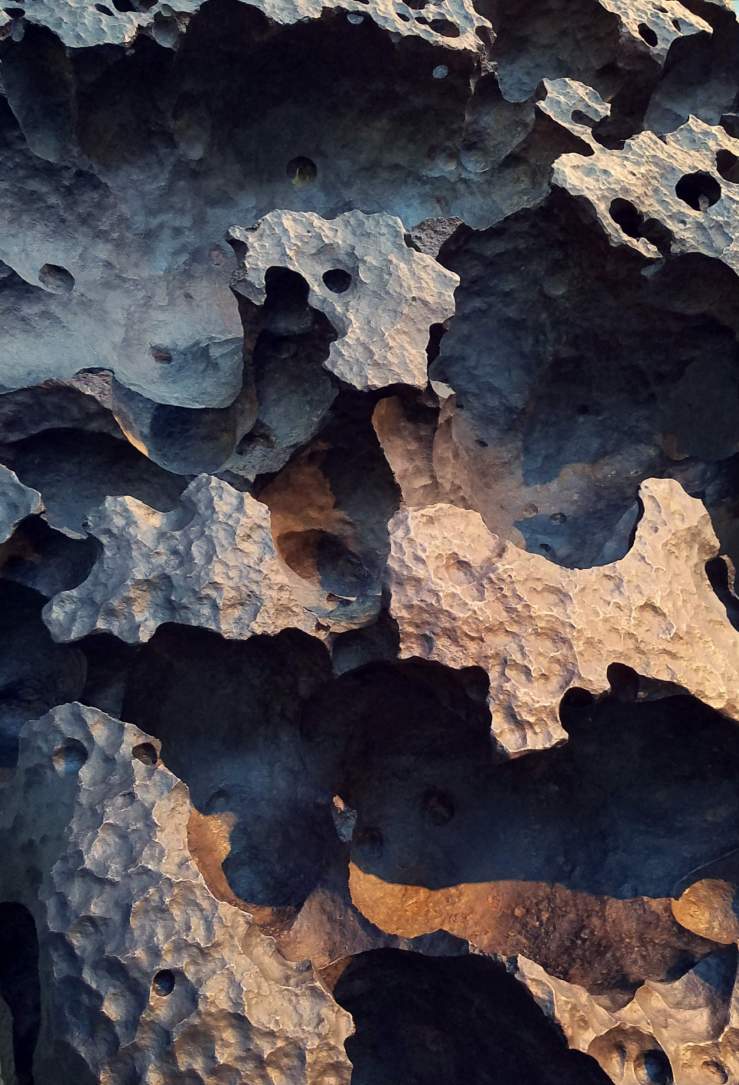
Billions of years ago, an early planet orbiting the Sun was shattered, perhaps in collision with another protoplanet. The fragment now known as the Willamette meteorite was probably part of the planet’s iron-nickel core.
Thousands of years ago, this meteorite, traveling some 64.000 kilometres per hour, crashed into Earth’s surface.
Over many centuries, rainwater interacting its iron sulfide deposits produced sulfuric acid, which slowly etched and carved large cavities.
Only about 600 of the 25.000 meteorites found on Earth are made of iron. The material was created deep inside stars, which produce energy by fusing lighter elements into heavier ones – for example hydrogen into helium.
Touching it is warmly encouraged.
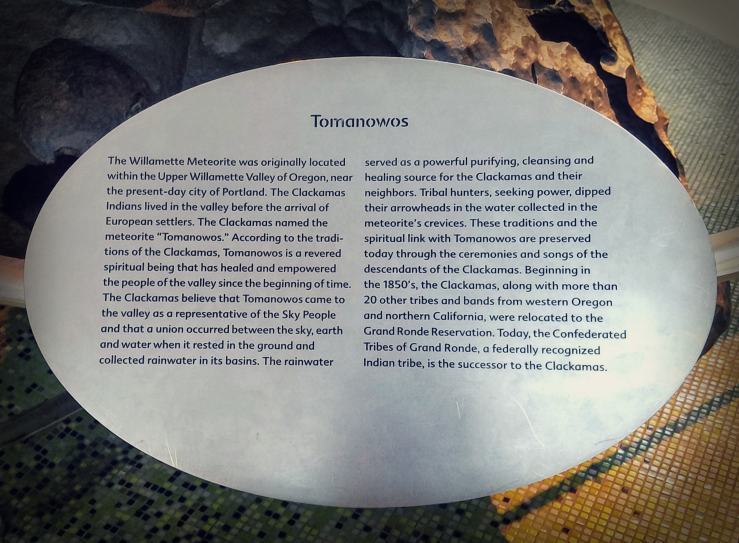
An influx of knowledge that raises even more questions; like, how to find out how much you weigh on the Moon:

Or, you can go on this scale:
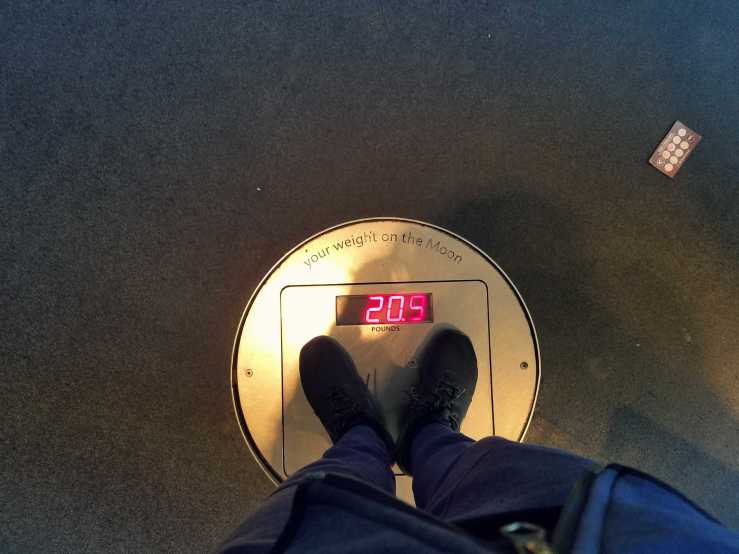
20,9 pounds equals almost 9,5 kilos (no diet necessary on the Moon…)
Learning is fun at the American Museum of Natural History
Upper West Side, Manhattan
November 13th, 2016
 The Humble Fabulist