


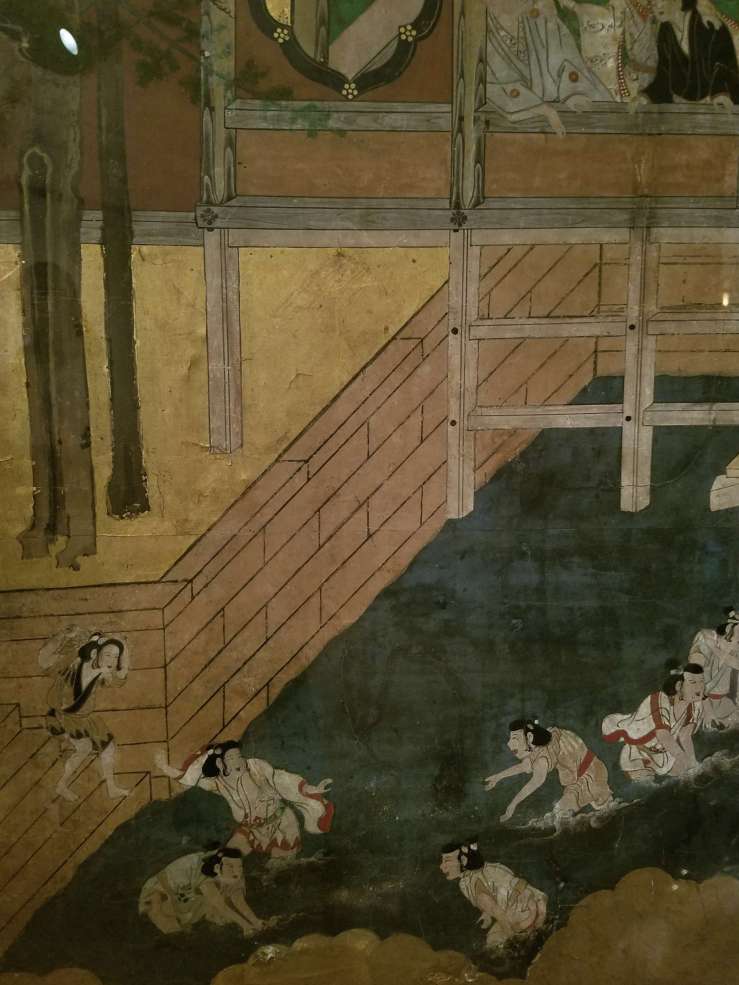
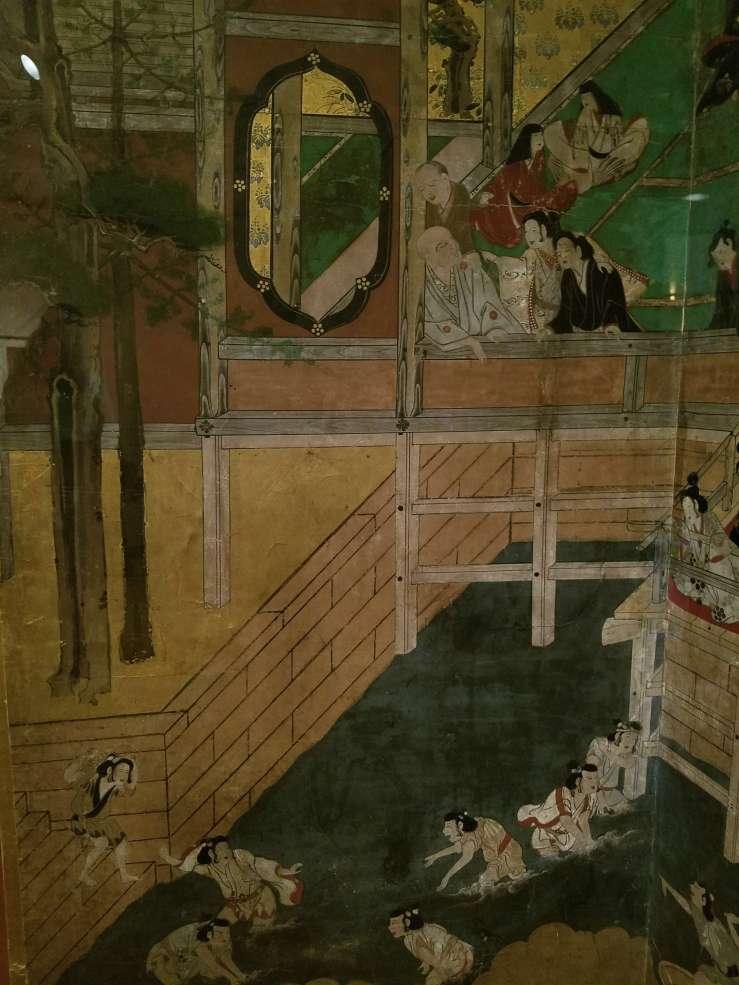
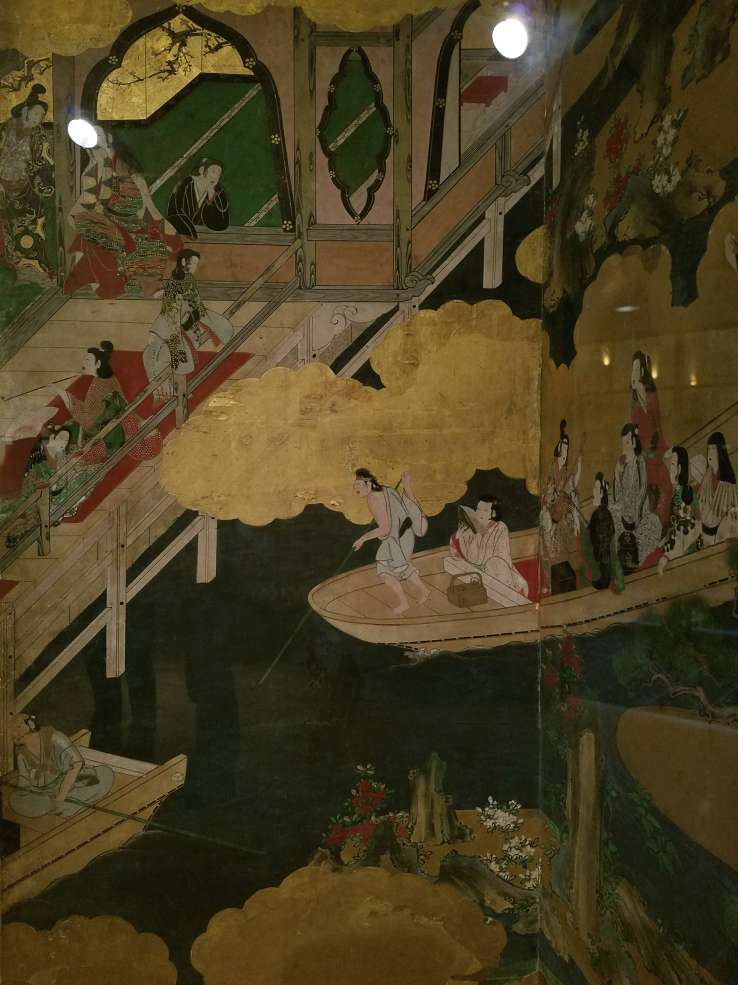
 Six-fold screen, gold and pigment on paper (detail)
Attributed to the Kan-ei Era (1624-1644)
“In this pansexual wonderworld, many beautiful women and wakashu are in the service of only a few men. The boat rowing in from the right carries one such man, who drinks sake while both a wakashu and a woman serenade him on shamisen. A group of wakashu frolic in the water, observed from above by other youths and some female prostitutes. On the gilded expanse to the left, a prostitute and her girl-servant (kamuro) chat up two wakashu while the multistoried pavilion above buzzes with music, drink and conversation between female prostitutes, wakashu and some men. To the right, a Buddhist monk topples over as a group of wakashu playfully hold down his hands and feet and ply him with wine; during the Edo period, monks were supposed to abstain from sex, even though nanshoku – sex between men and wakashu – was considered less karmically precarious than sex with women.”
From ”A Third Gender: Beautiful Youths in Japanese Prints” the first exhibition in North America devoted to the portrayal of wakashu, or beautiful youths—a “third gender” occupying a distinct position in the social and sexual hierarchy of Japan during the Edo period (1603-1868).
May 19th, 2017
 The Humble Fabulist