The way we go

in style, if it’s the last thing we do.

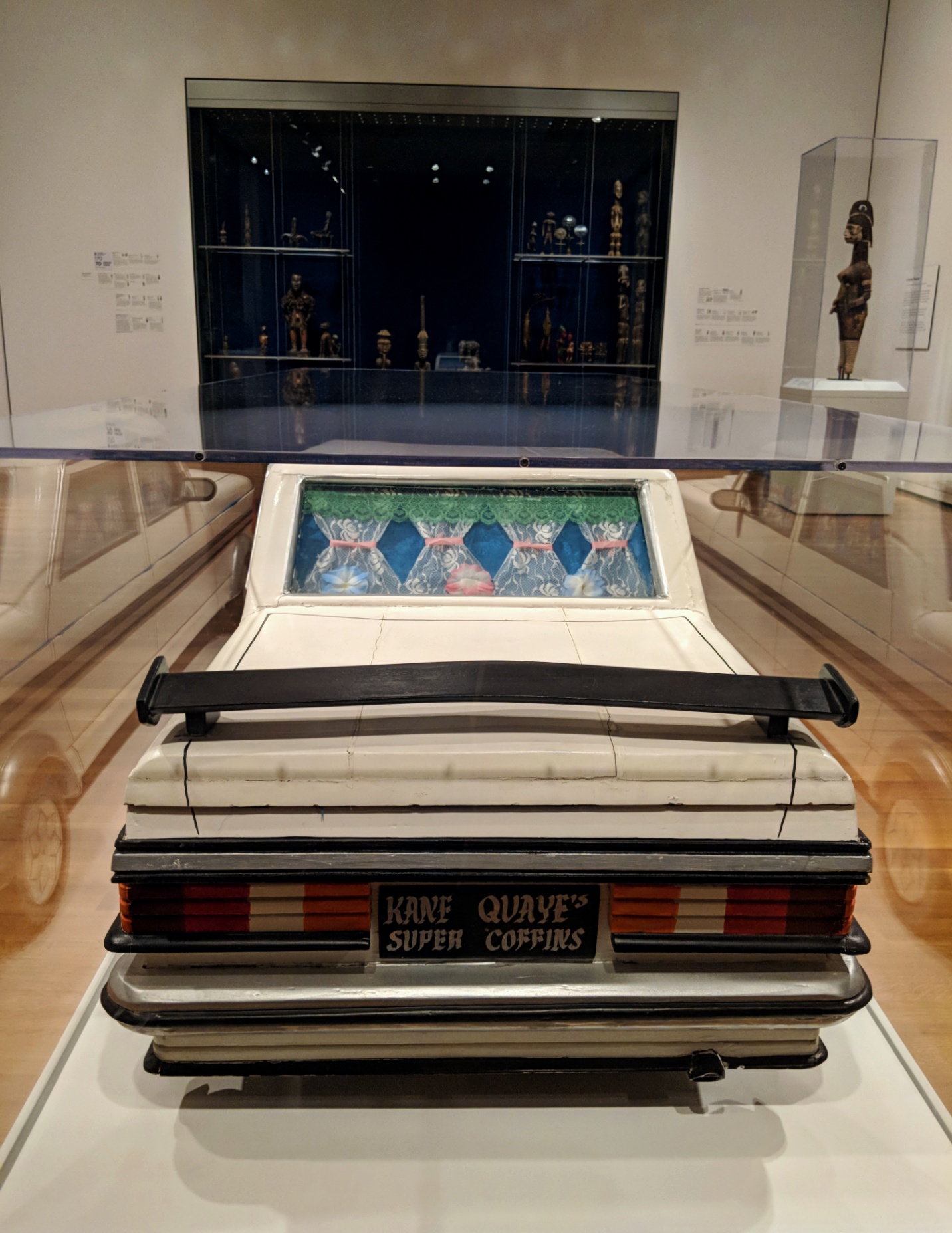
Coffin, 1991
Wood, paint
Kane Quaye, Ghana, 1922-1992

Kane Quaye was a carpenter who decided that a coffin could be more than a rectangular box. He began sculpting coffins in the 1980s, using fanciful forms that evoke memories of the deceased – his innovation was quickly a success in Ghana. 

”When death strikes in Ghana, those who can afford to choose a coffin, organize feasts and hire orchestras whose music helps see off the deceased in style.  Mourning turns to celebration as the coffin is carried to all the places that the deceased would want to say goodbye to.  Praise salutes, blessings, prayers and hymns fill the air as the coffin is taken to a burial site.  This manner of acknowledging death is one of many that involve art. In some communities, a figure memorializing or in honor of the deceased is buried or burned, concluding one phase of the grieving process.  In other communities, a portrait keeps the person’s image and memory alive forever.  Certain artists depict death by capturing reactions to its news; others create imaginary visions of its presence.”

Source: SAM Collections

Seattle Art Museum

June 15th, 2018
The way we disappear

Blending in / Standing out

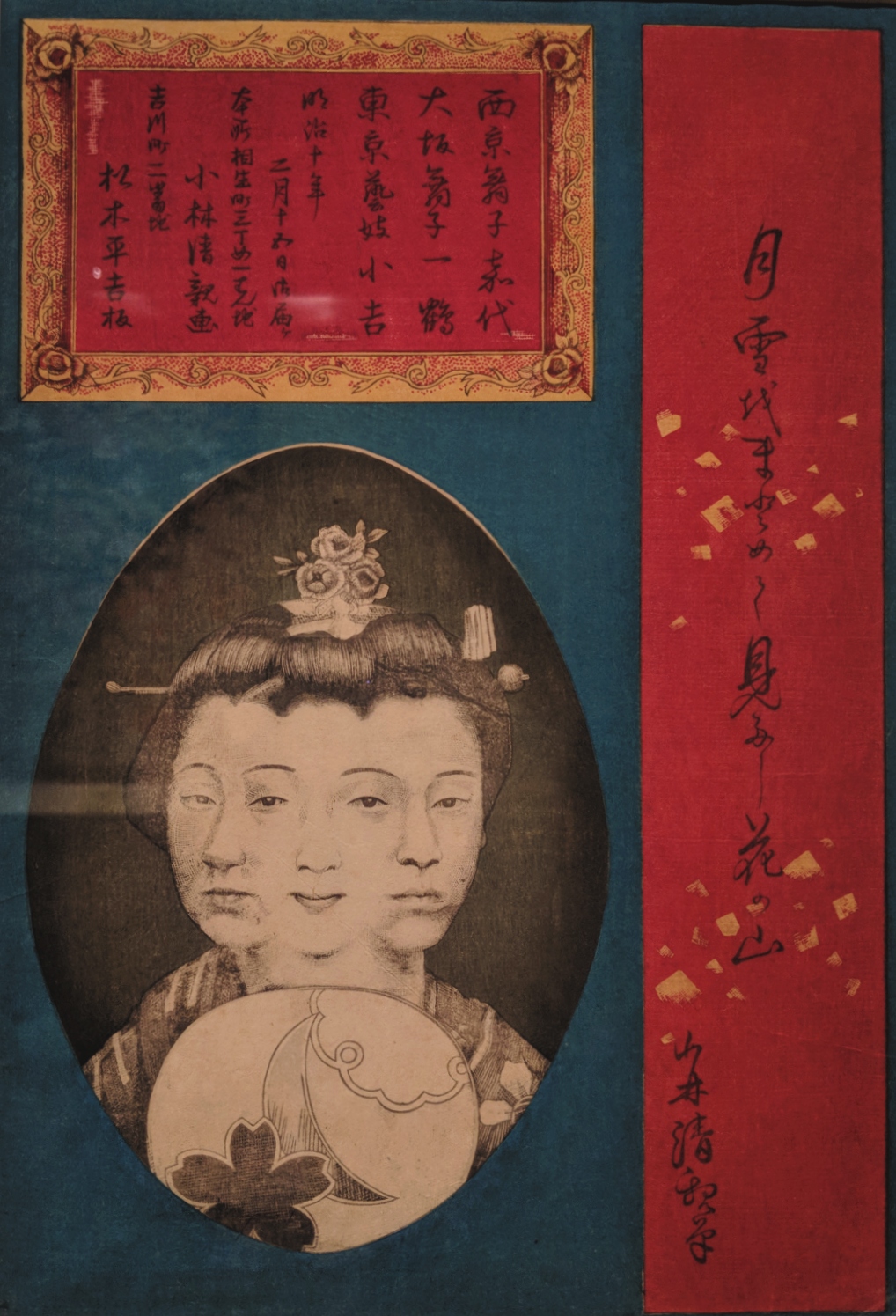
1/ Three Beauties: Kayo of Kyoto, Hitotsuru of Osaka, Kokichi of Tokyo, 1877
Woodblock print, ink and colour with metallic pigments
Kobayashi Kiyochika, 1847-1915
Meiji period, 1868-1912

There is a poem card above on the right, decorated with gold flakes, and inscribed with a haiku, which reads:

Oh to see moon and snow together
In the mountain of cherry blossoms

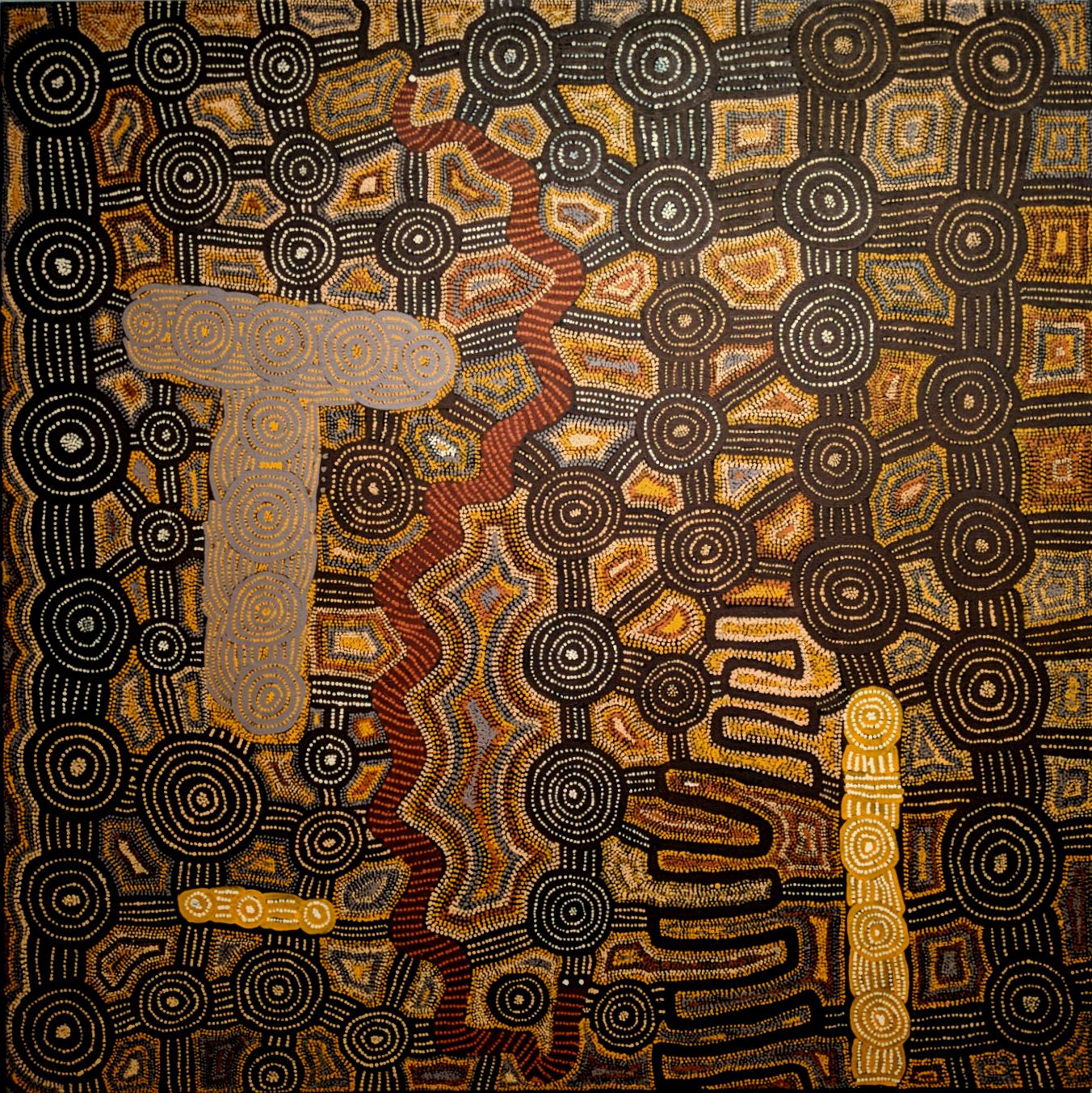
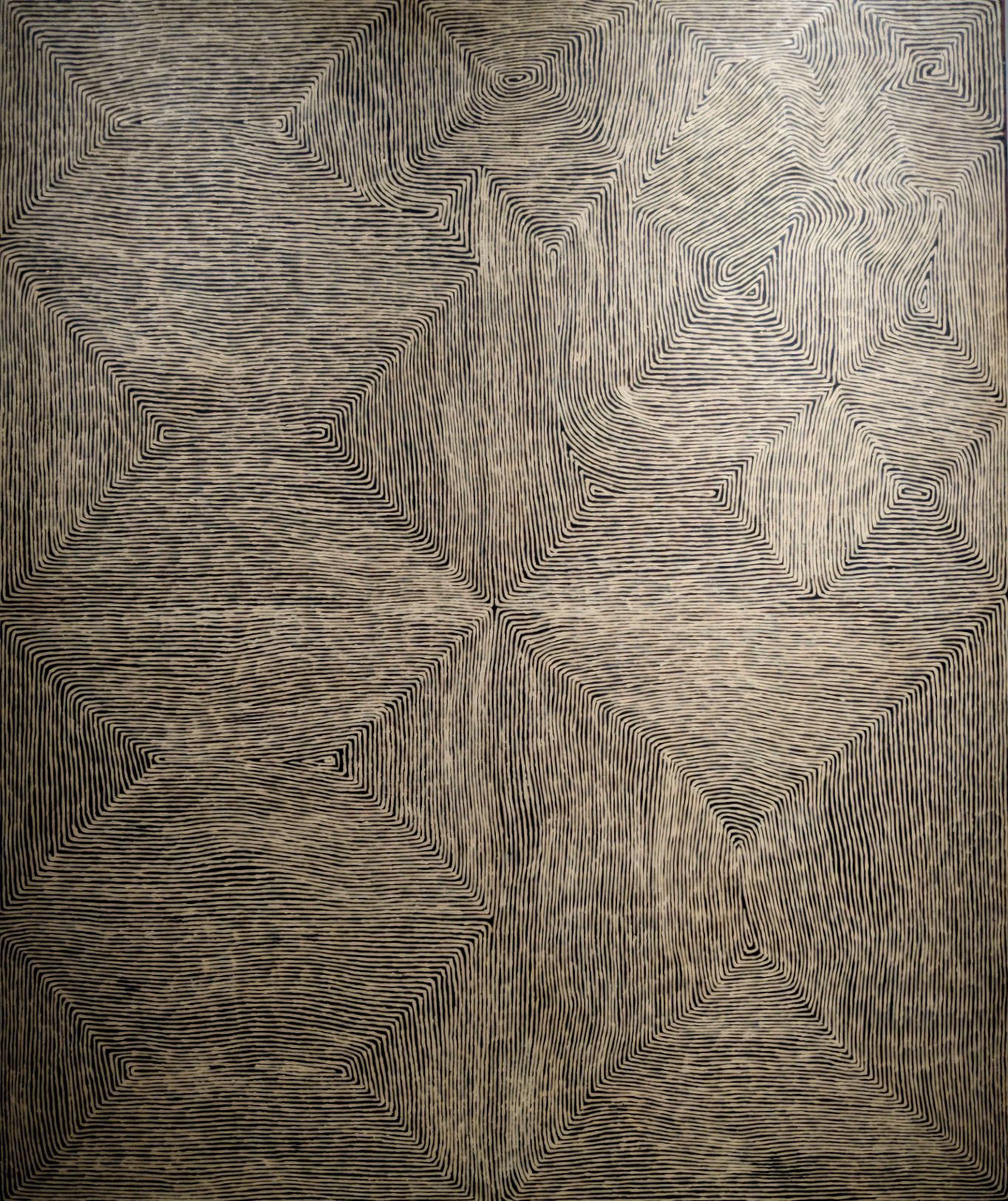
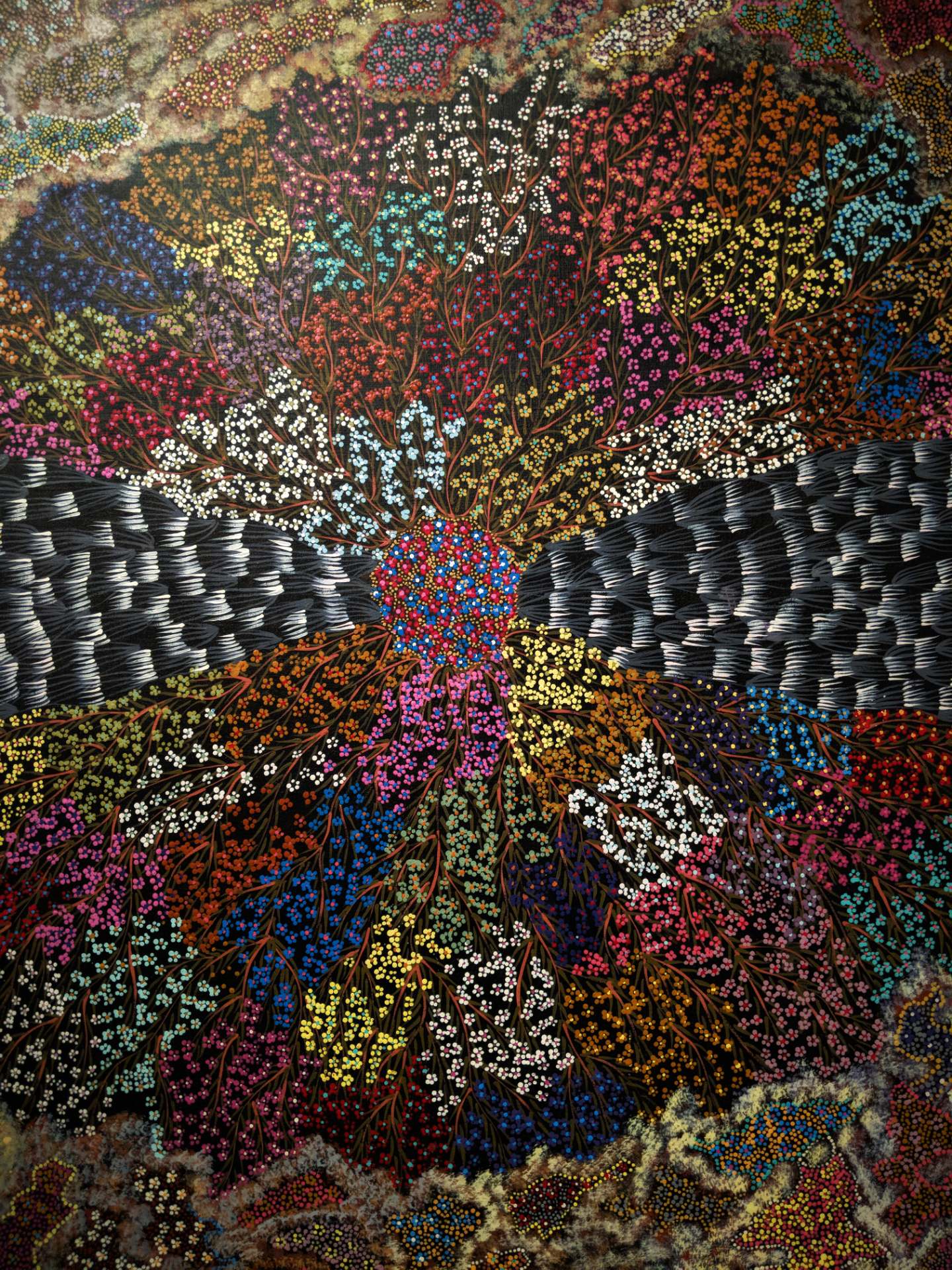
Works by Australian Aboriginal Artists: photos 2/ to 5/

2/Untitled, 1997
Synthetic polymer paint on canvas
Yala Yala Gibon Tjungurrayi

3/Untitled: Munglipa, 2014
Synthetic polymer paint on canvas
George Tjungurrayi

4/Swamps West of Nyirripi, 2006
Synthetic polymer paint on canvas
Ngoia Napaltjarri Polland

5/Yuparli (Bush Banana), 1993
Synthetic polymer paint on canvas
Dorothy Napangardi

6/- end
Project 42: Jono Vaughan 
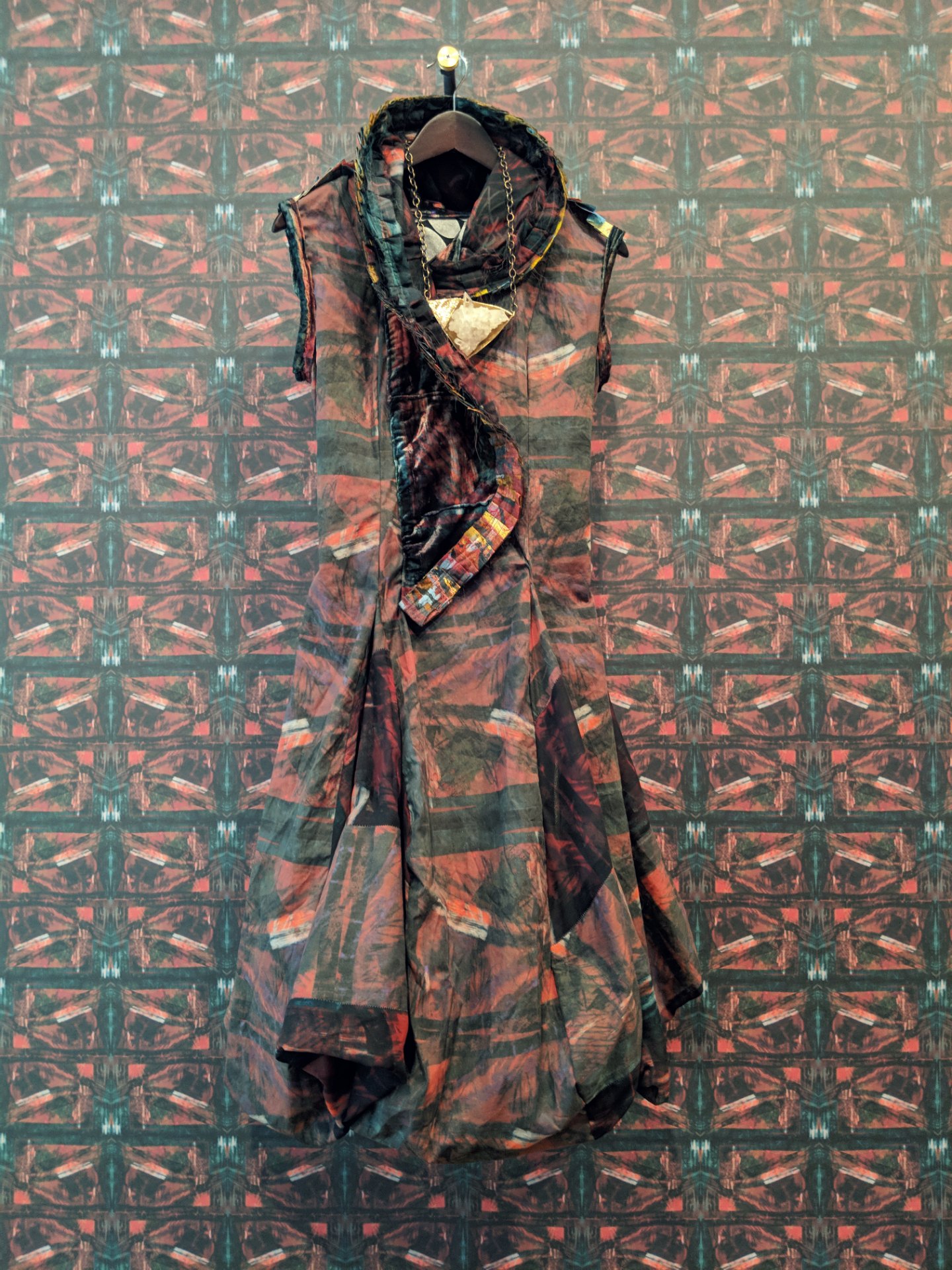
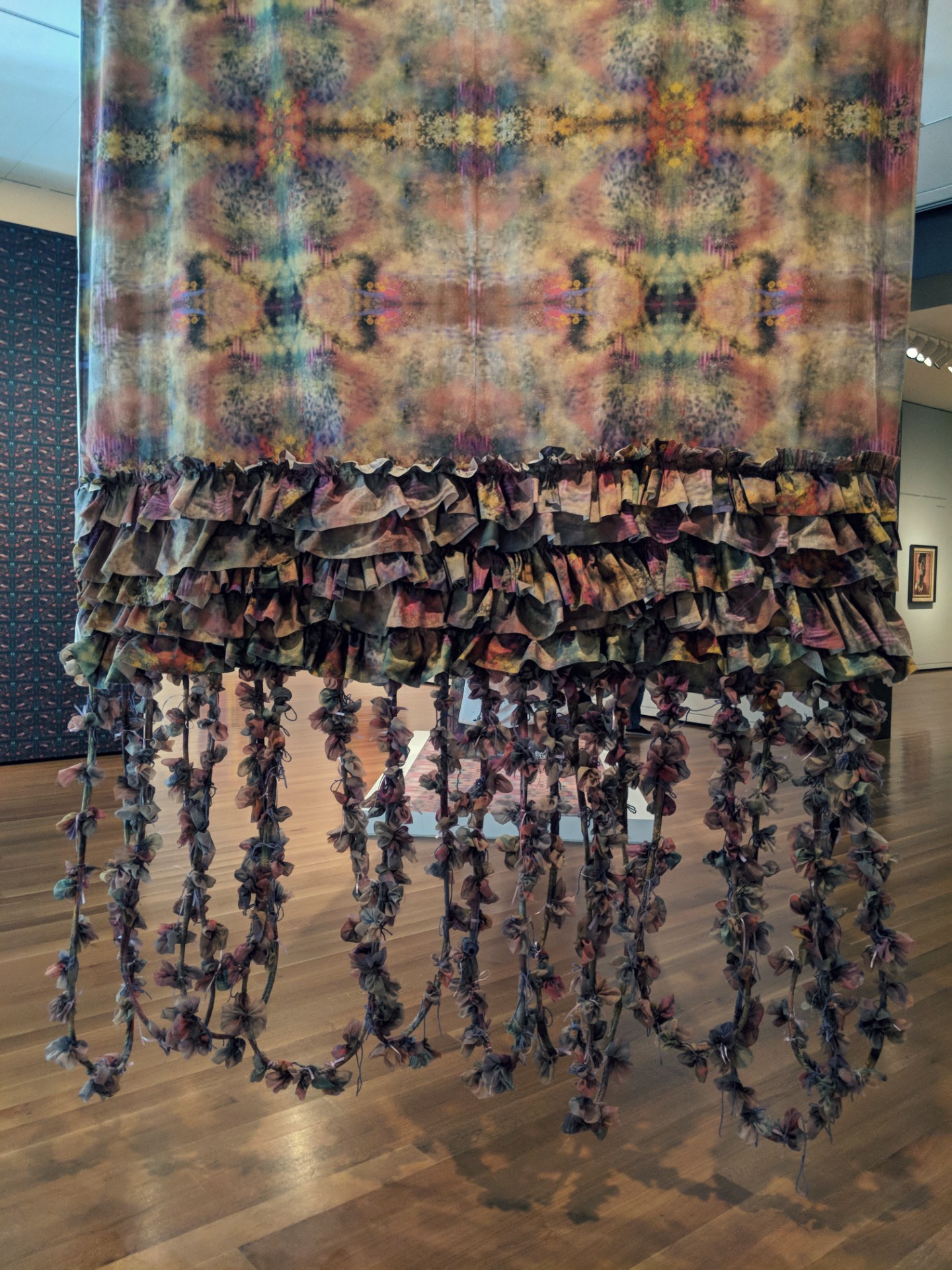
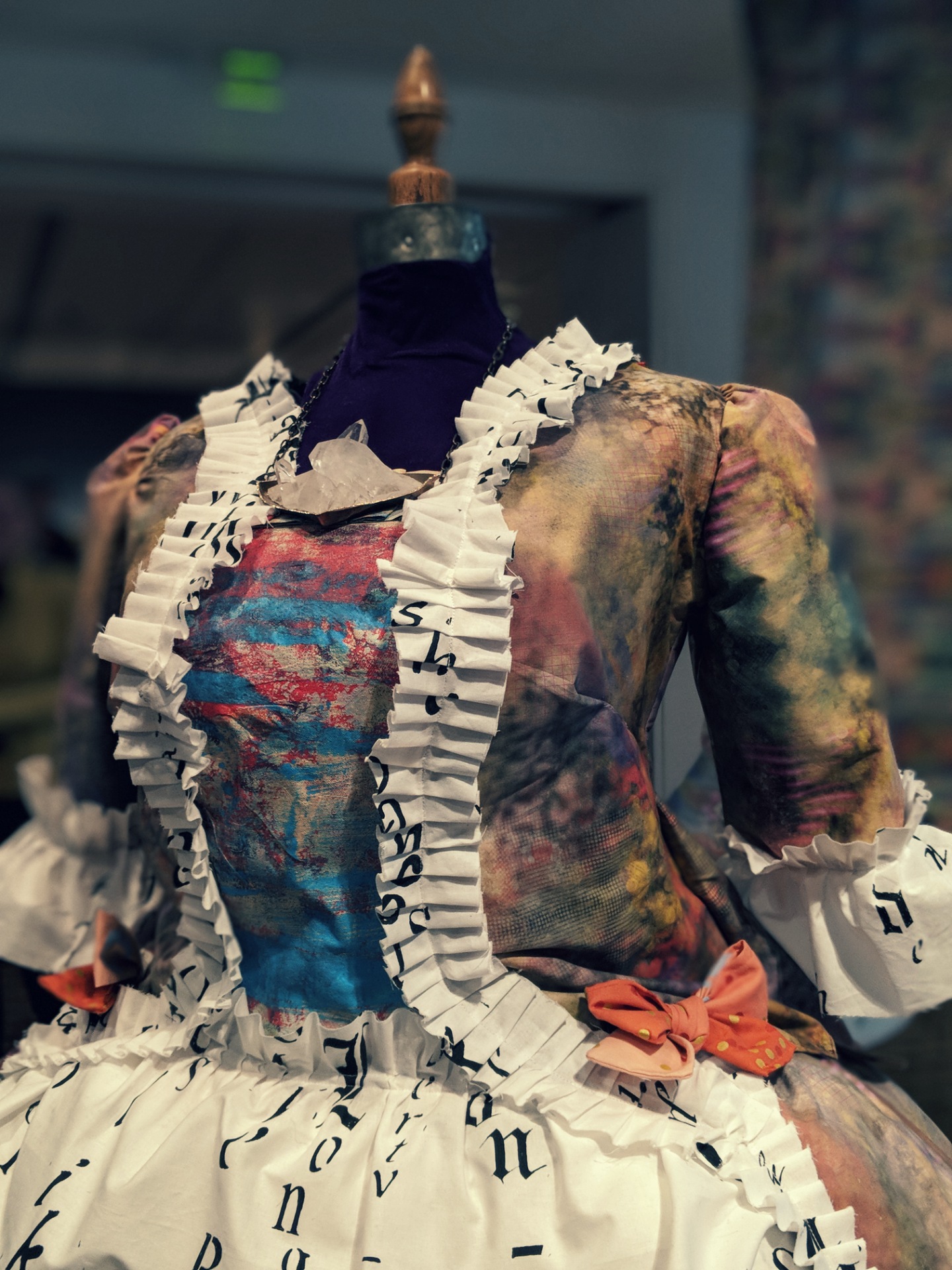
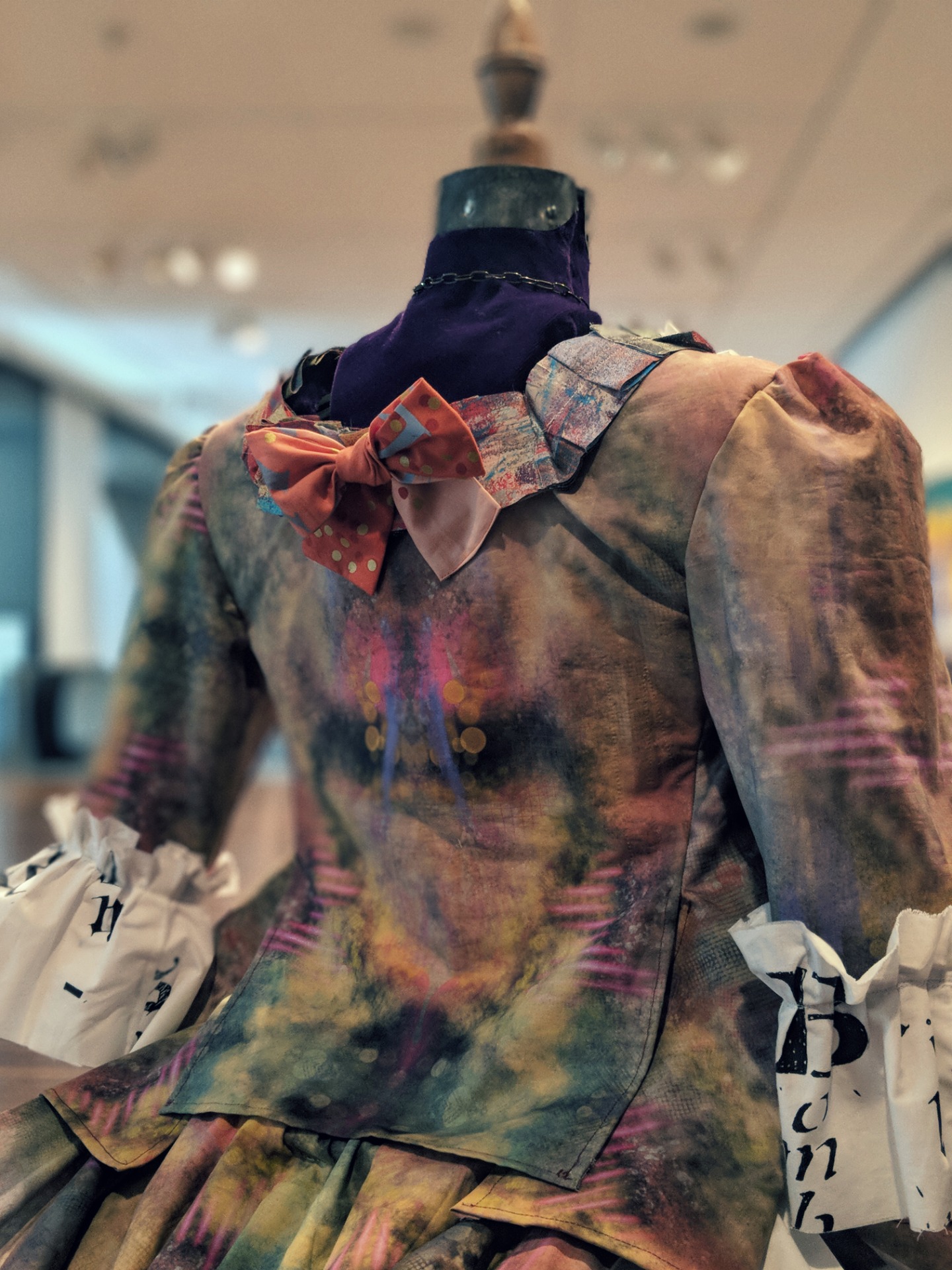
Seattle -based artist Jono Vaughan’s series Project 42 addresses the pattern of violence against transgender people in the United States, providing both a form of memorialization and an entry point for engagement and discussion. Begun in 2012, the project’s name is taken from the short life expectancy of transgender individuals in the United States, which the artist estimates is forty-two years, based—in lieu of official census data, which excludes trans identities—on third-party texts and research. Eventually the artist plans to make forty-two individual works.

Each of the three dresses in this exhibition memorializes the life and death of a transgender person who was murdered: Myra Ical, Deja Jones, and Lorena Escalera Xtravaganza. Vaughan alters images of the murder locations and turns them into abstract textile prints, which she then sews into a garment. The style of the garment is inspired by the life and history of the individuals. A collaborator wears each dress in a performance that commemorates and celebrates the individual, an act that Vaughan describes as “the returning of humanity and the sharing of missed opportunities.”

Seattle Art Museum

June 15th, 2018
The way we are

Our masks, our layers, our foolishness, our empathy, our togetherness.
The way we communicate, our body language, how we look at ourselves, at each other.
The way we love, we live, we exist. The way we are. Humanity.

Njenje (Walkabout) 

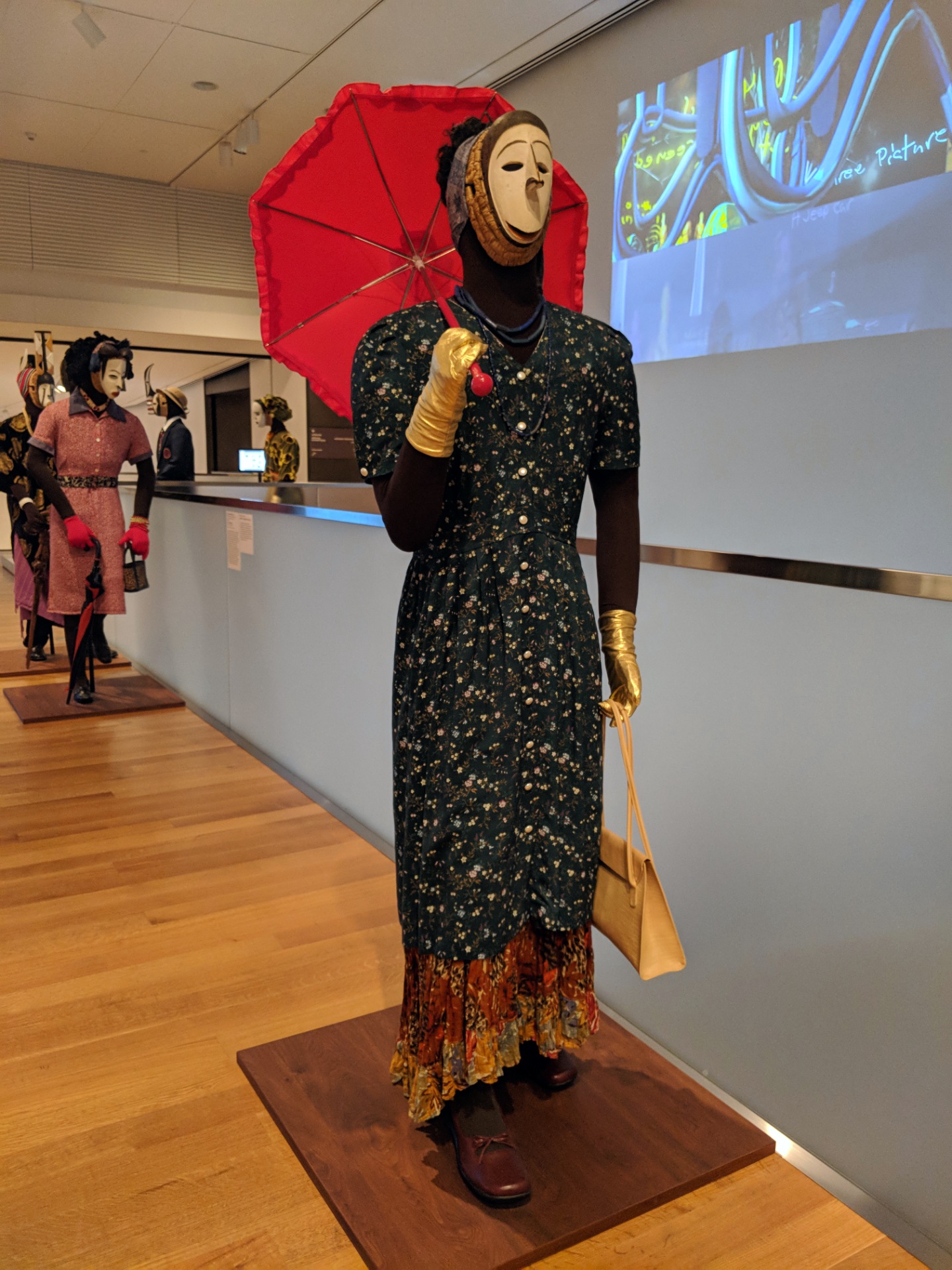
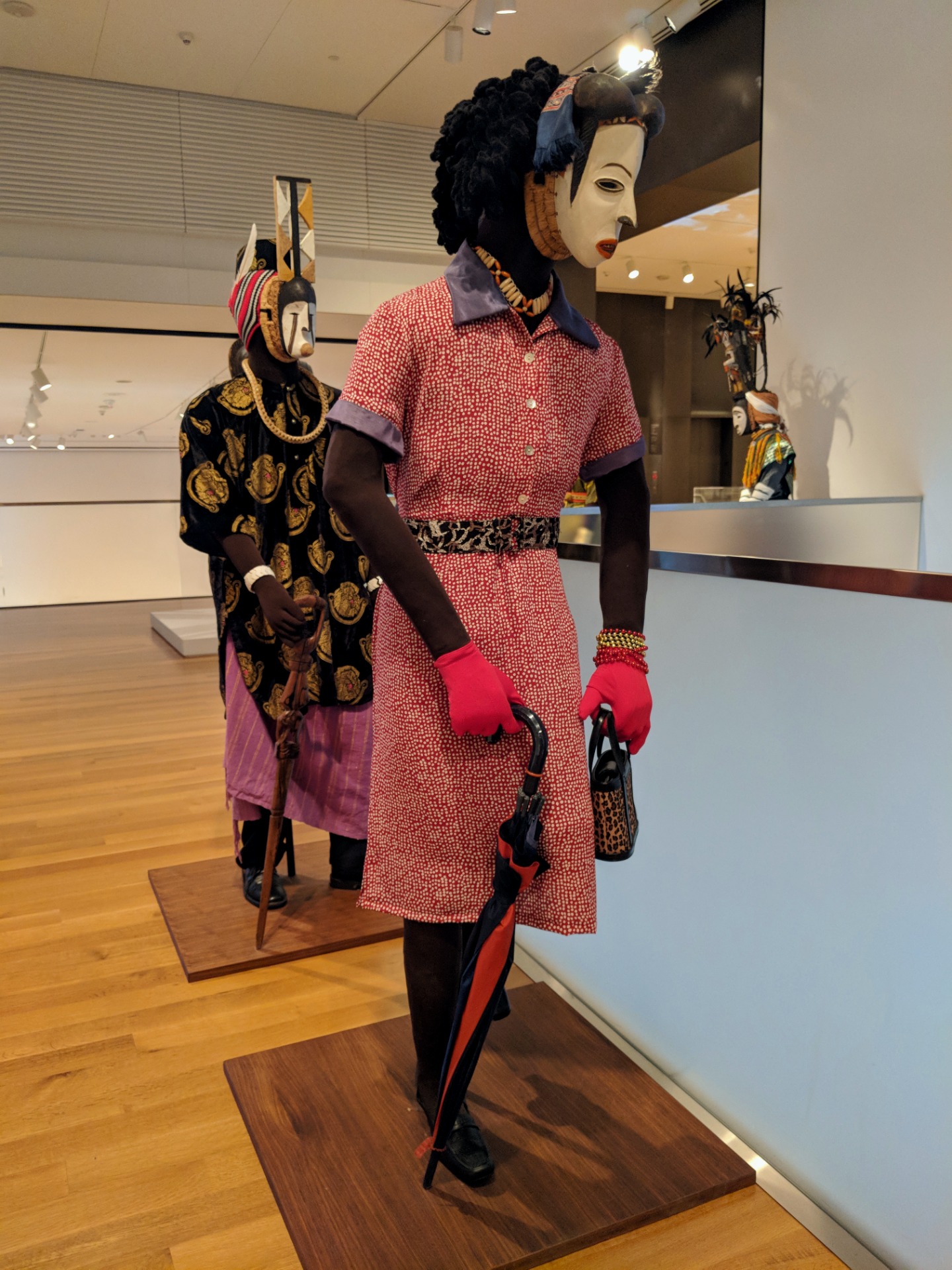
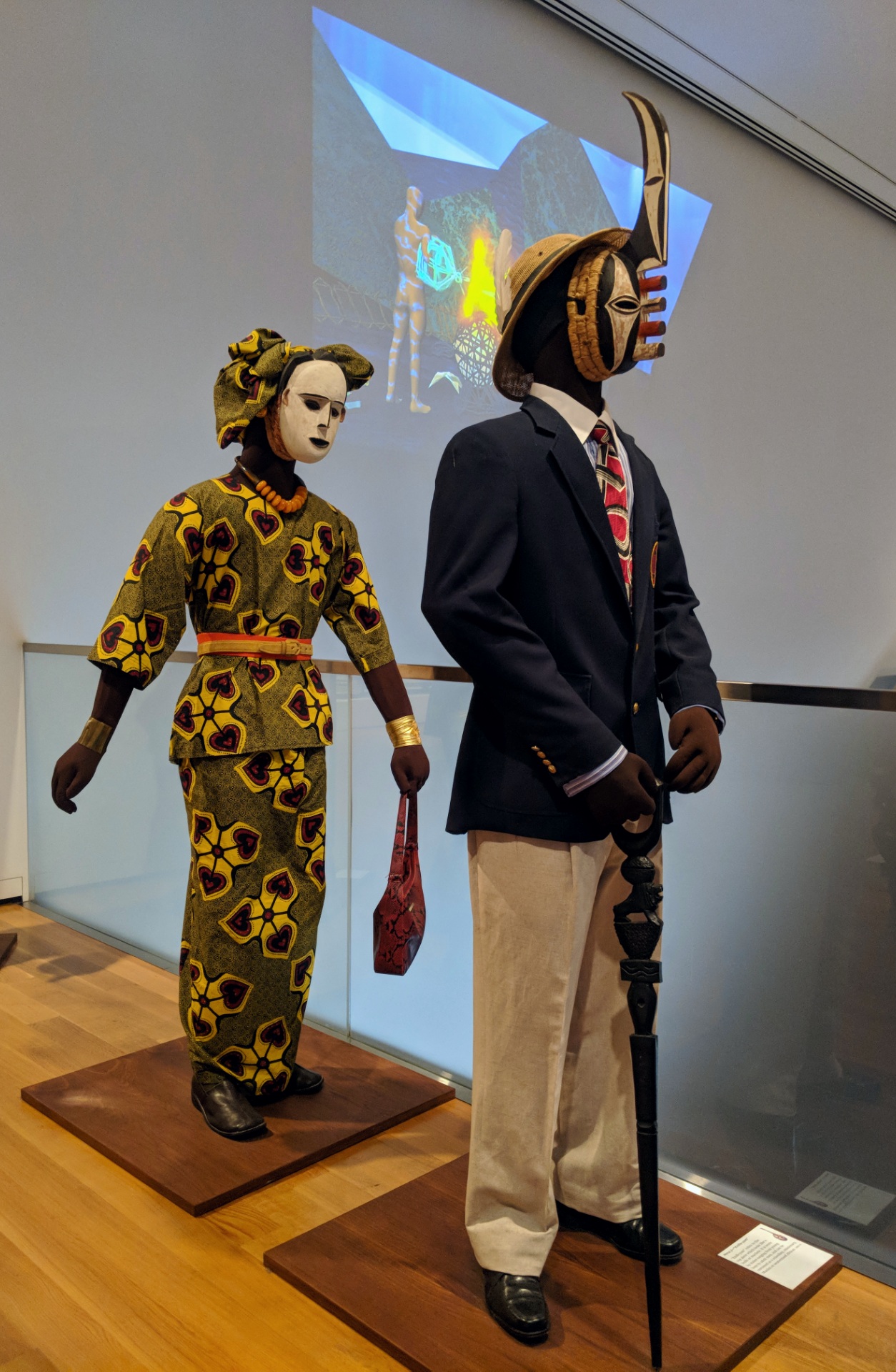
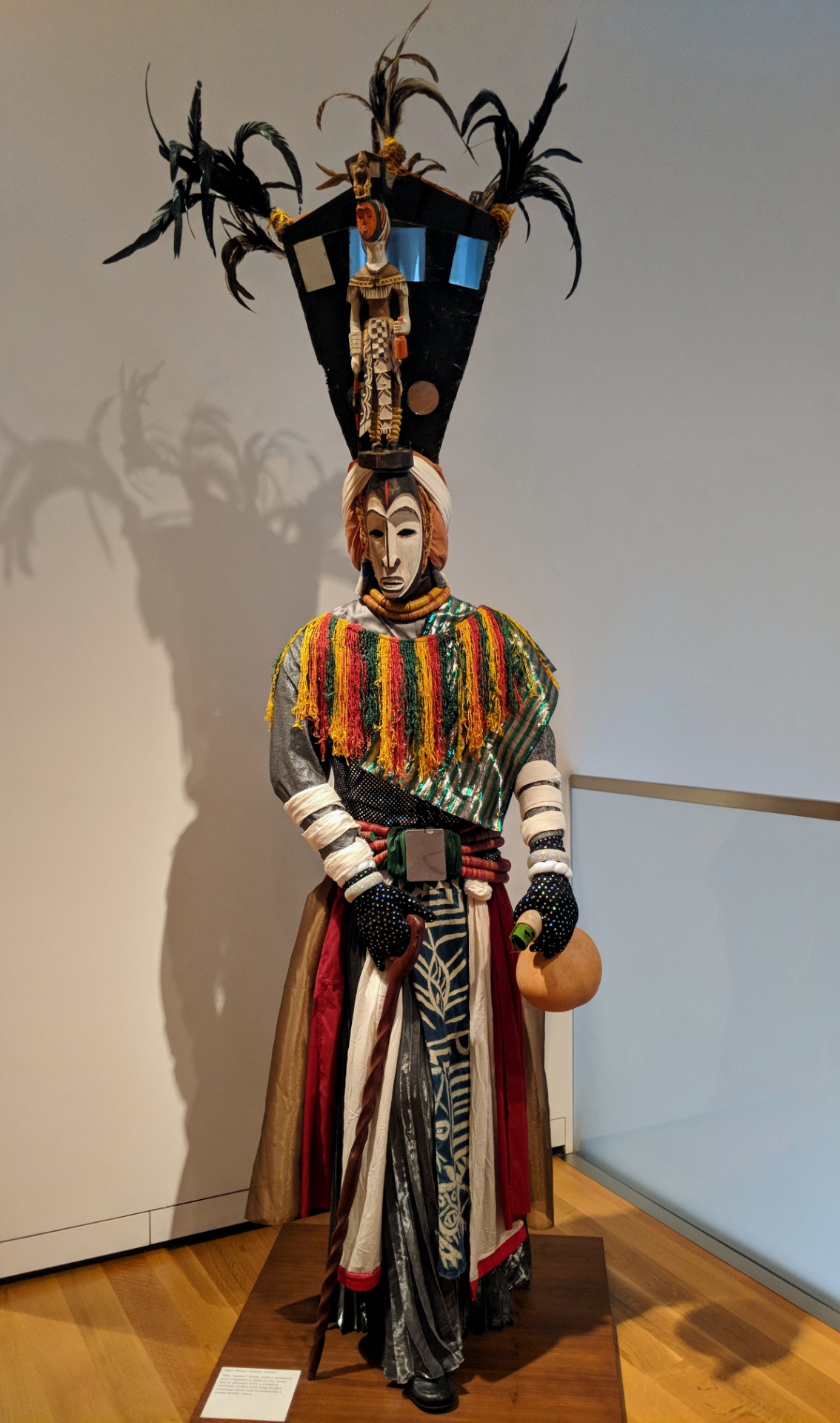
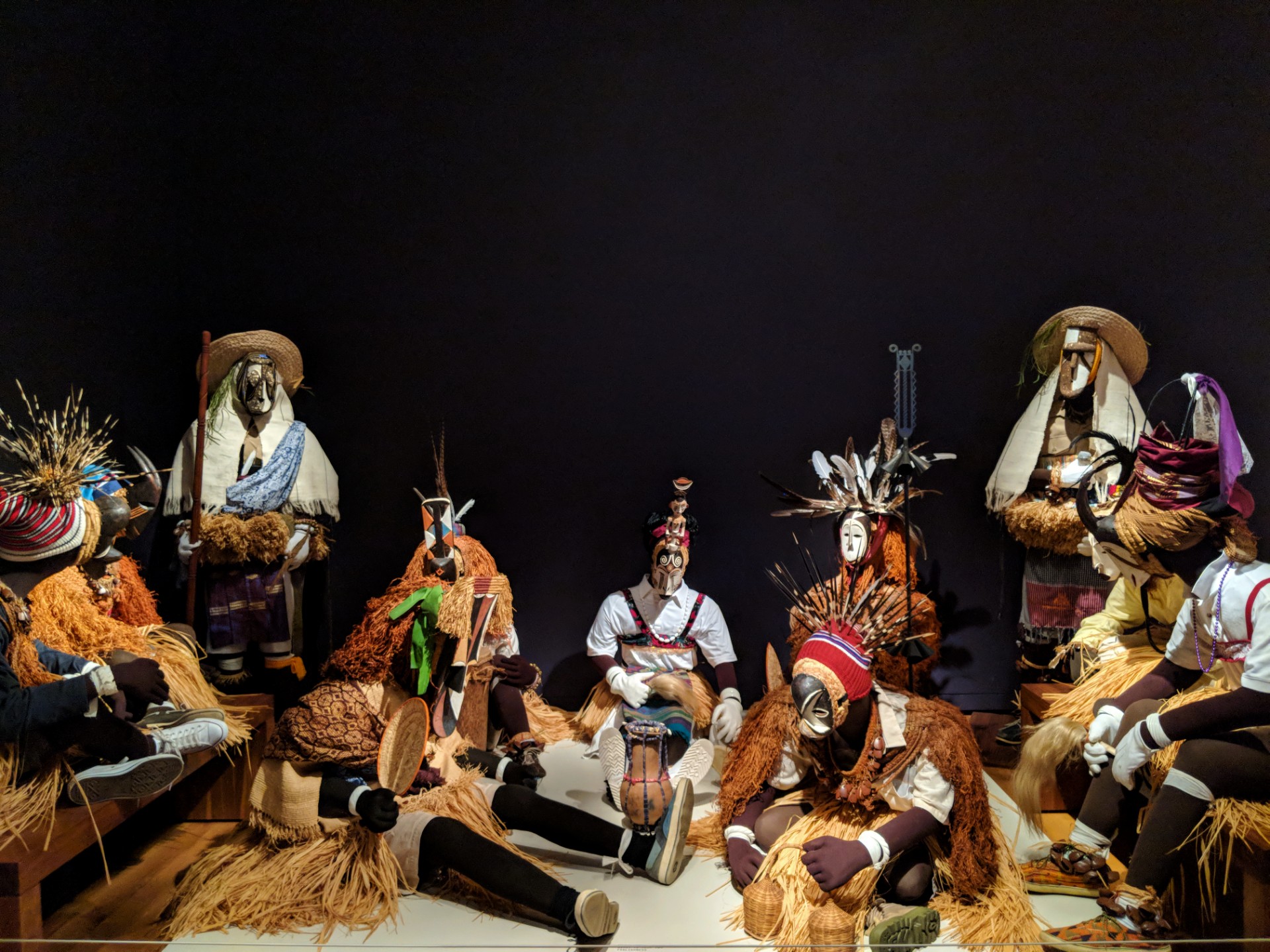
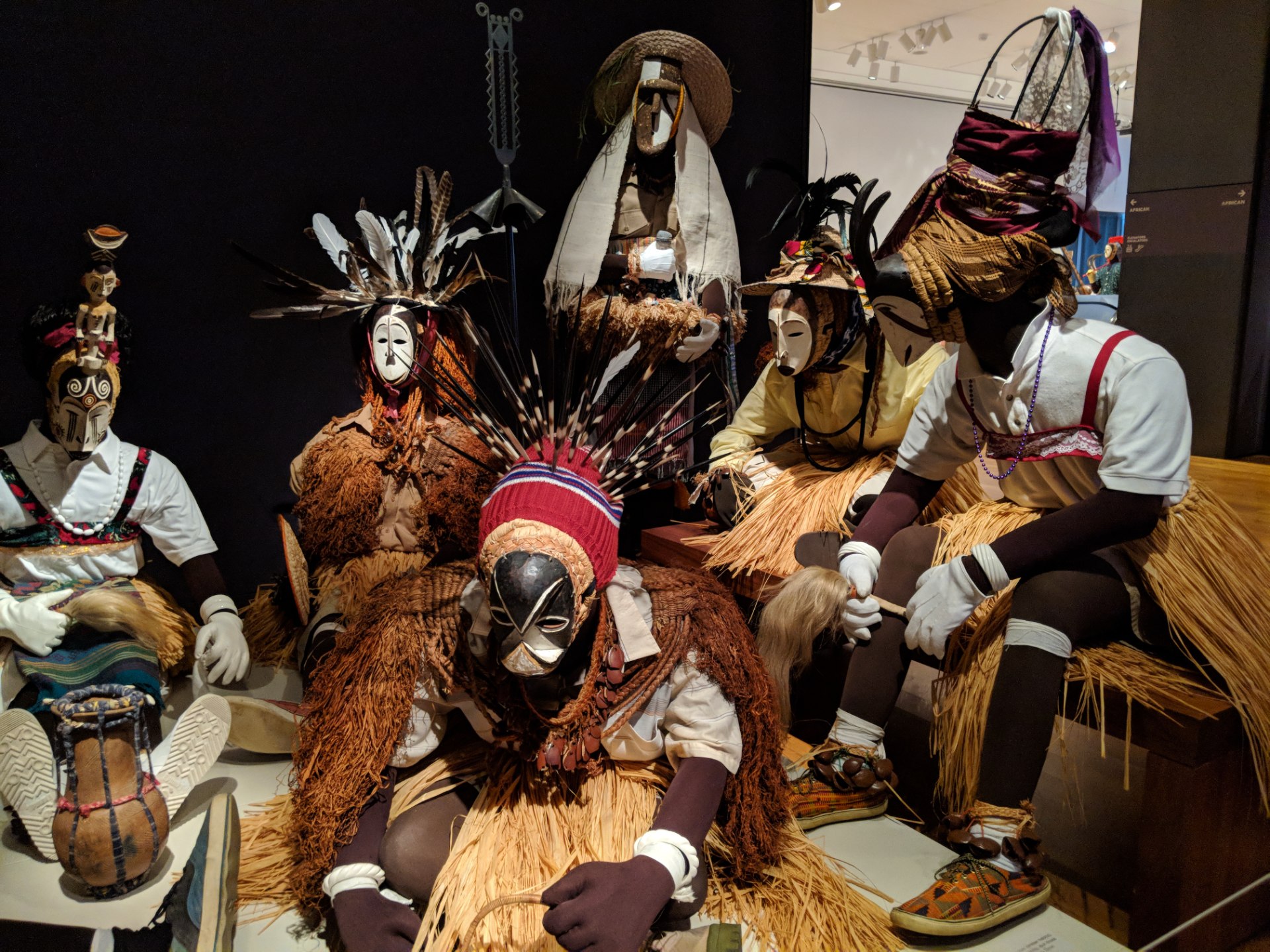
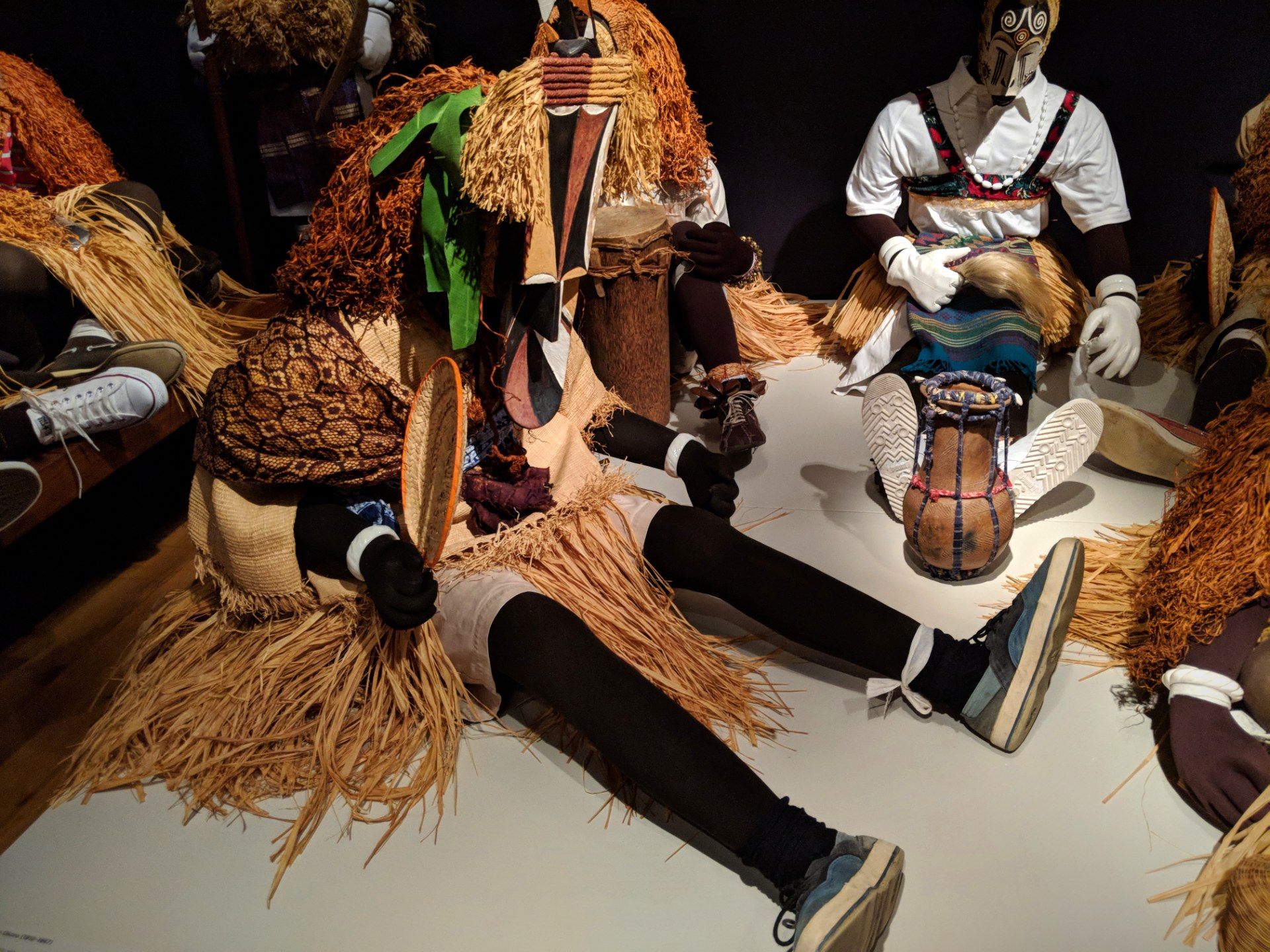
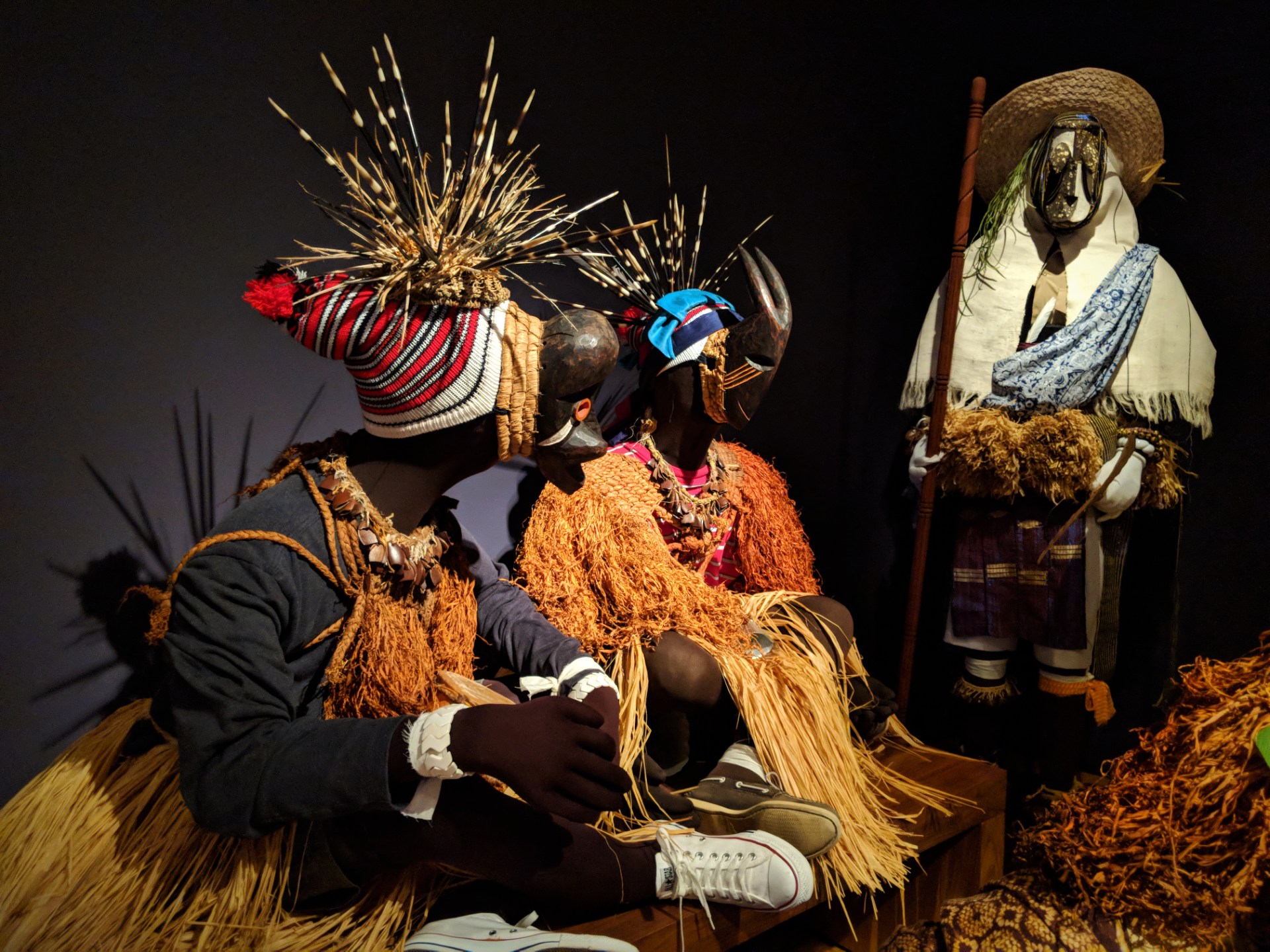
Njenje is a parade that involves virtually an entire village’s population. It opens the first day of a Dry Season Festival, a time Afikpo say is ”our Christmas”, when rich meals, visits and ceremonies prevail. Men create elaborate appearances by borrowing cloth and jewelry from sisters, wives, lovers and friends who eagerly await the parade. Secrecy from women and uninitiated men is strictly enforced throughout the dressing process. This adds to the suspense of the audience who watch players stroll through the village as masked unmarried girls, as Europeans, as Muslims and children. How well they imitate feminine guile in their stride and costume – or suggest a schoolteacher, minister, lawyer or office clerk – is a test of the persuasive skills of the men who put the parade together.

For details about the different masks please check this page.

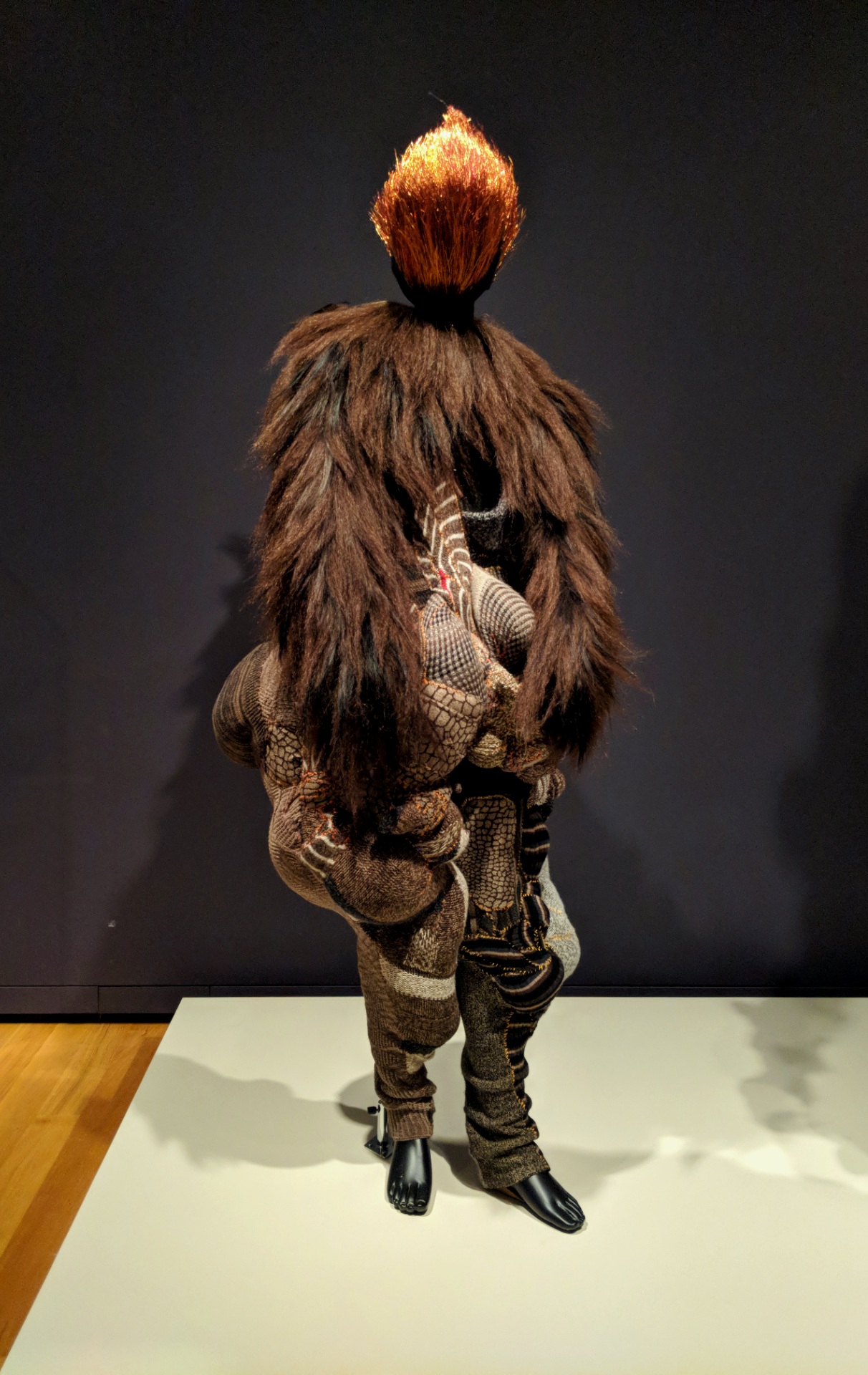
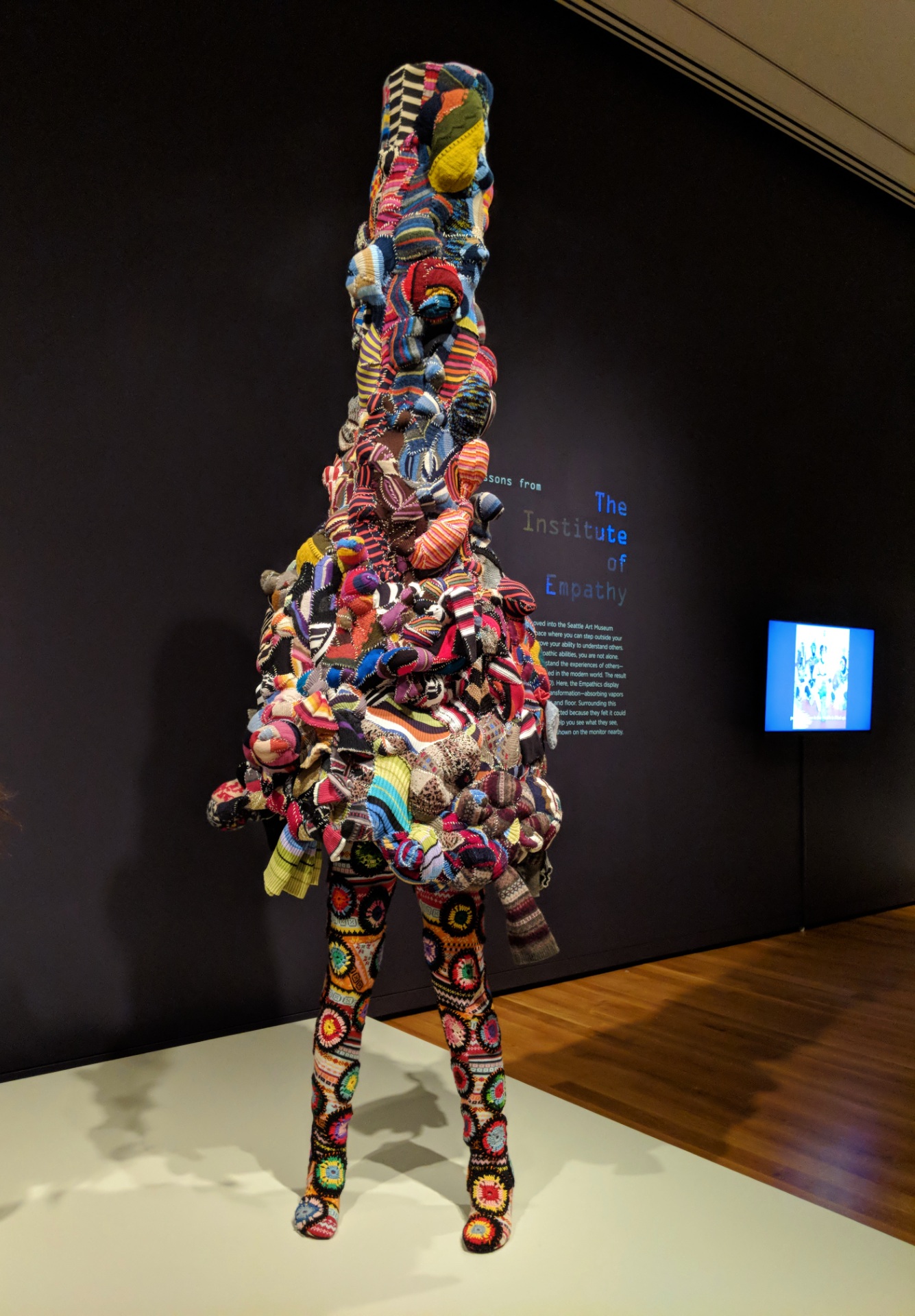
The weird figures made of piles of fabric, hair, beads and sweaters are Soundsuits, 2006, by Nick Cave

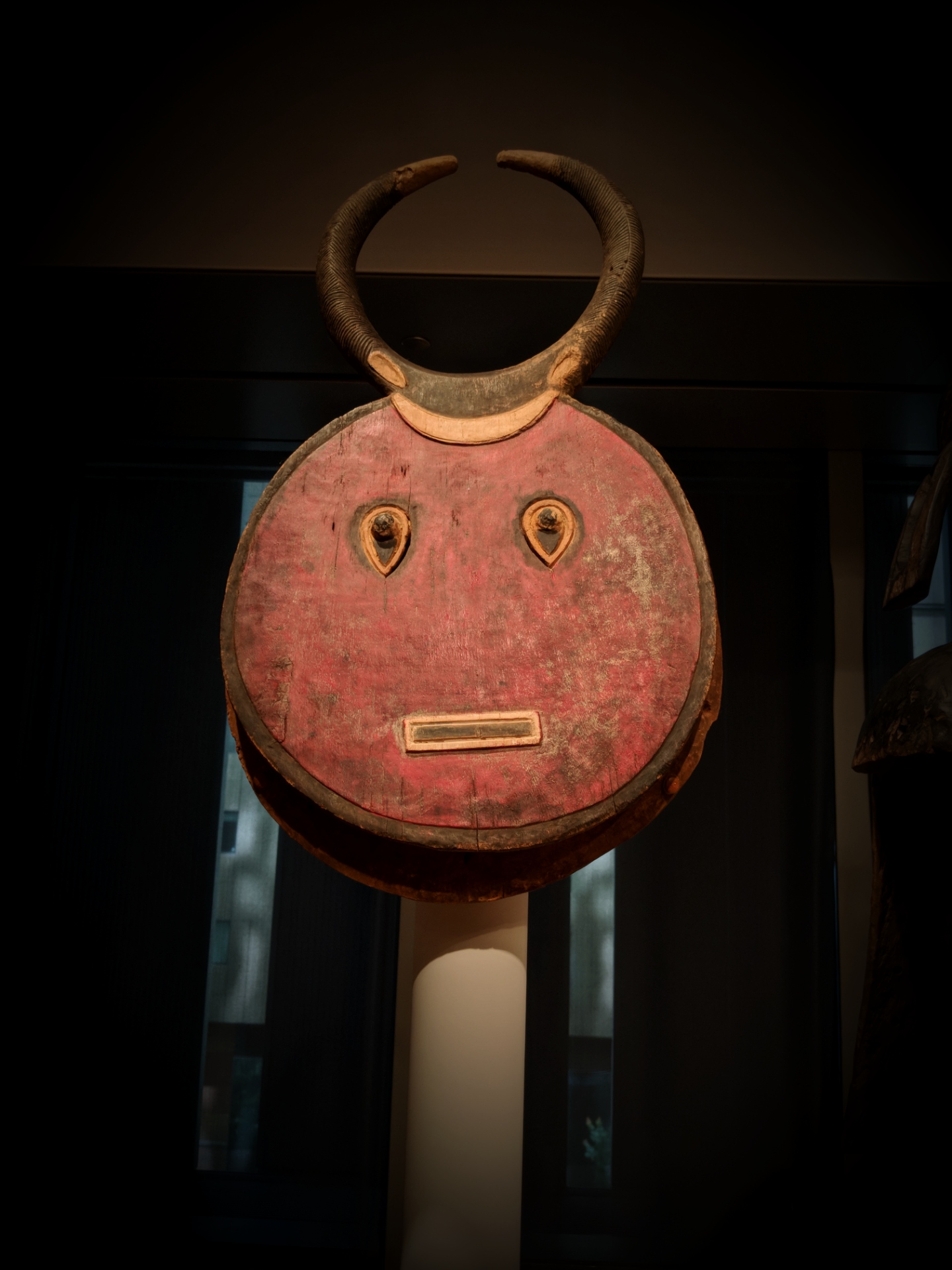
The last round gloomy mask is a female Goli mask of Kplekple, 20th century, from Ivory Coast, Africa.

Seattle Art Museum

June 15th, 2018
Roundup

An Ooh Oaah…! moment

Art: 

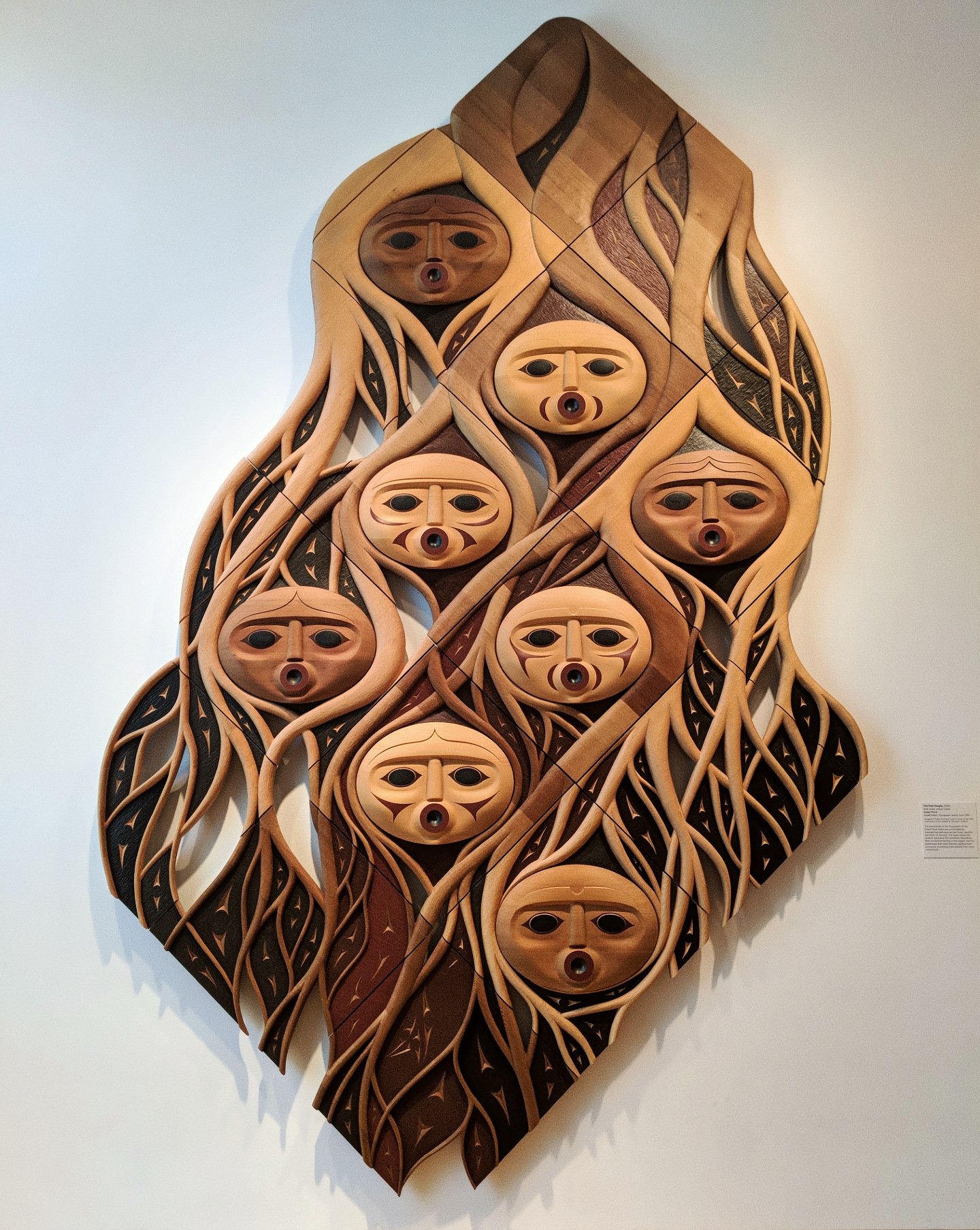
The First People, 2008
Red and yellow cedar
Susan Point

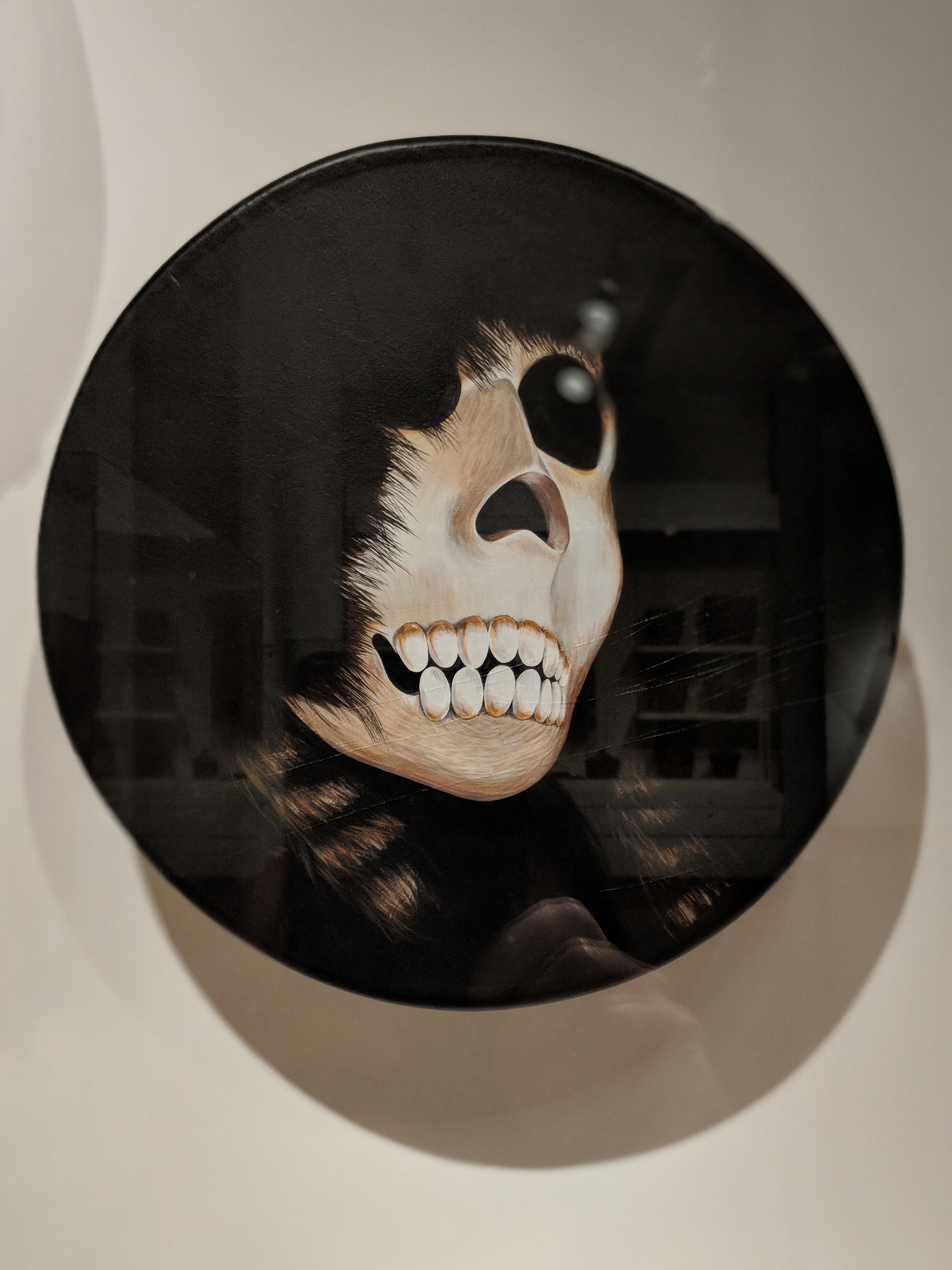
Drum with skull painting, 1991
Animal hide, acrylic, wood, bone
Susan Point

Mirror rack
Lacquer, bronze and cord
Japanese, 18th century
Edo period, 1603-1868

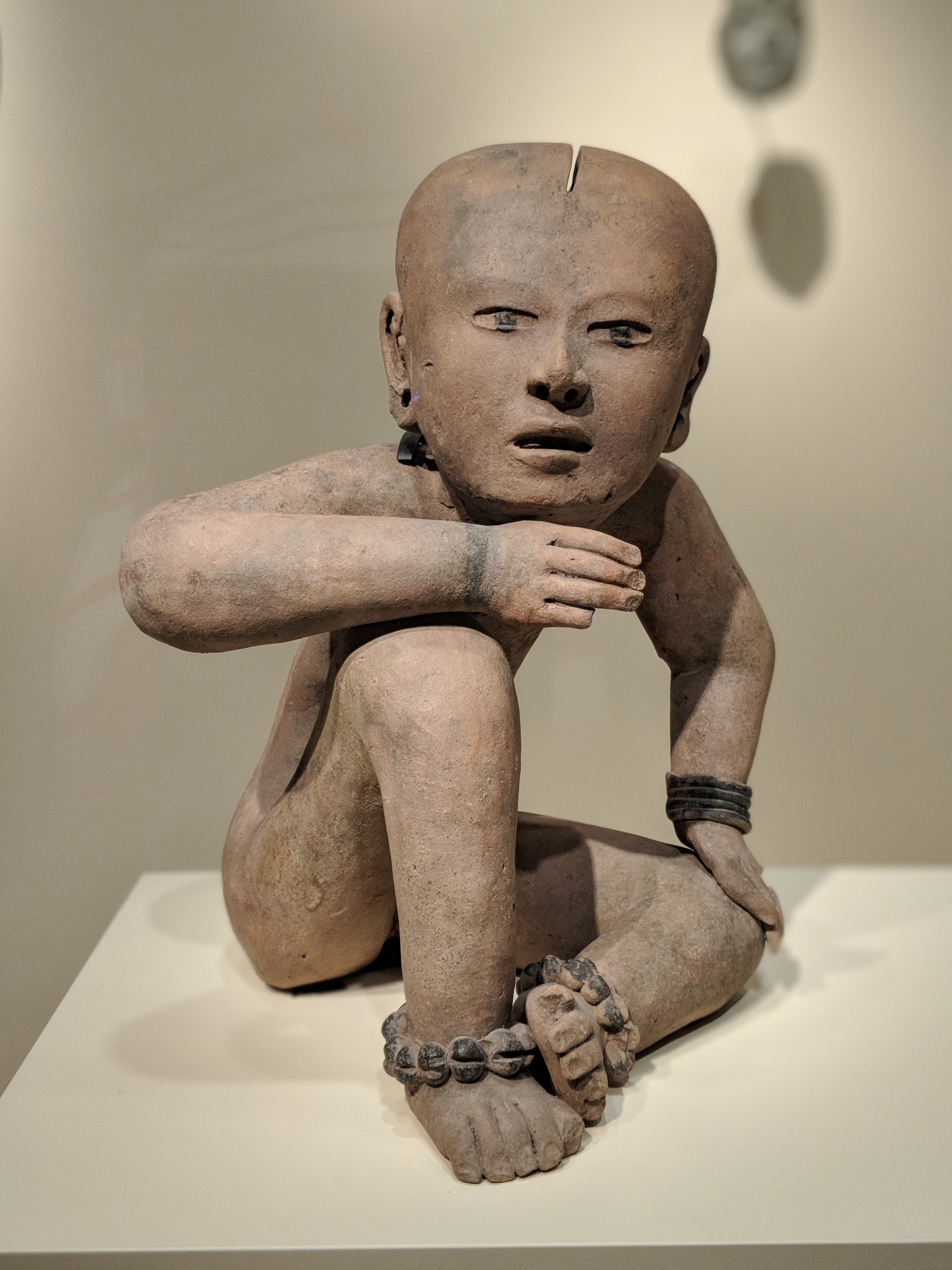
Seated figure, ca. 600-800
Ceramic and resin
Mexican, Veracruz

Crocodile headdress
Wood, skin, basketry
Nigerian/Cameroonian, Cross River, Ejagham

Seattle Art Museum

June 15th, 2018
 

Zymogenetics

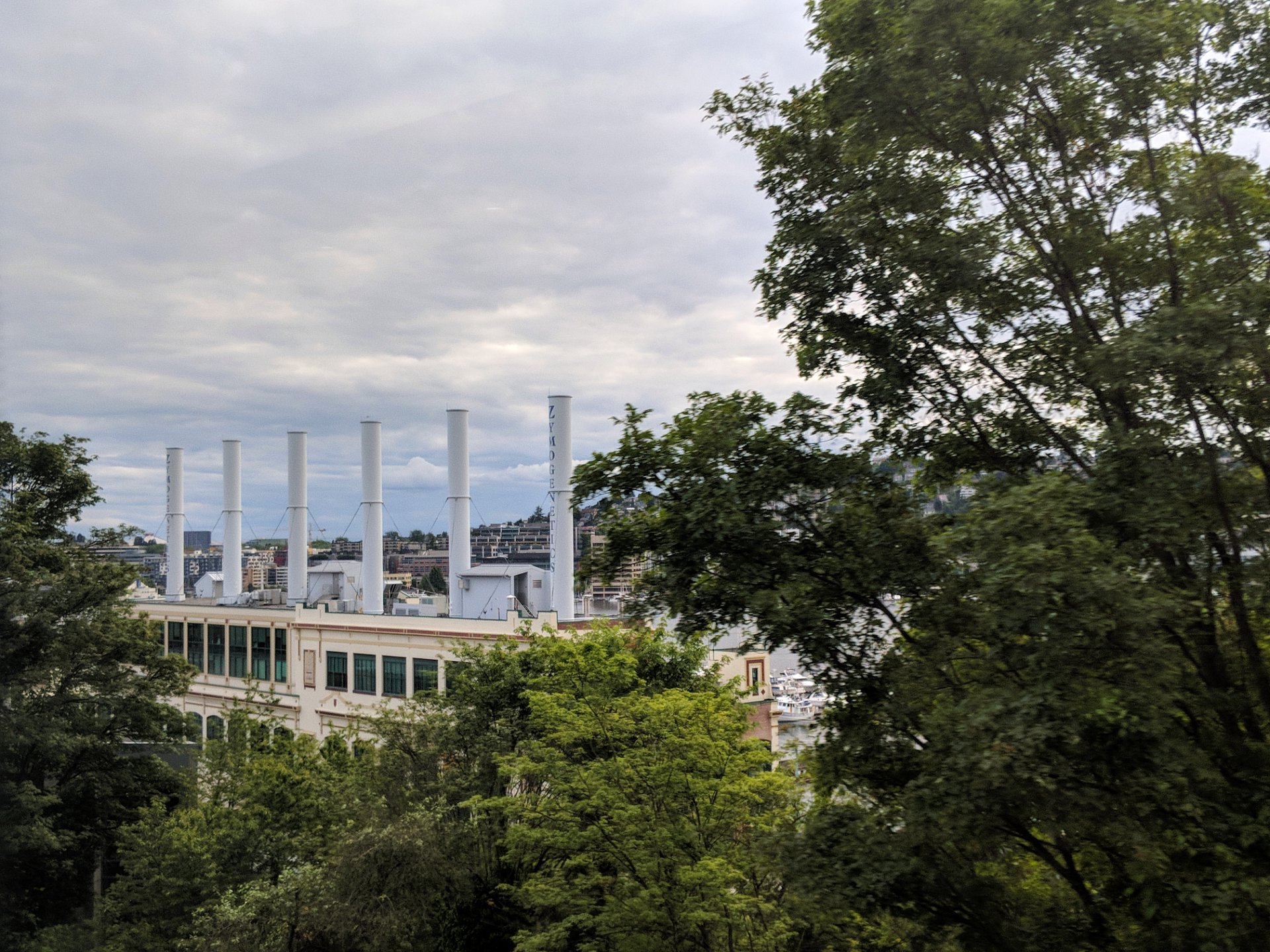
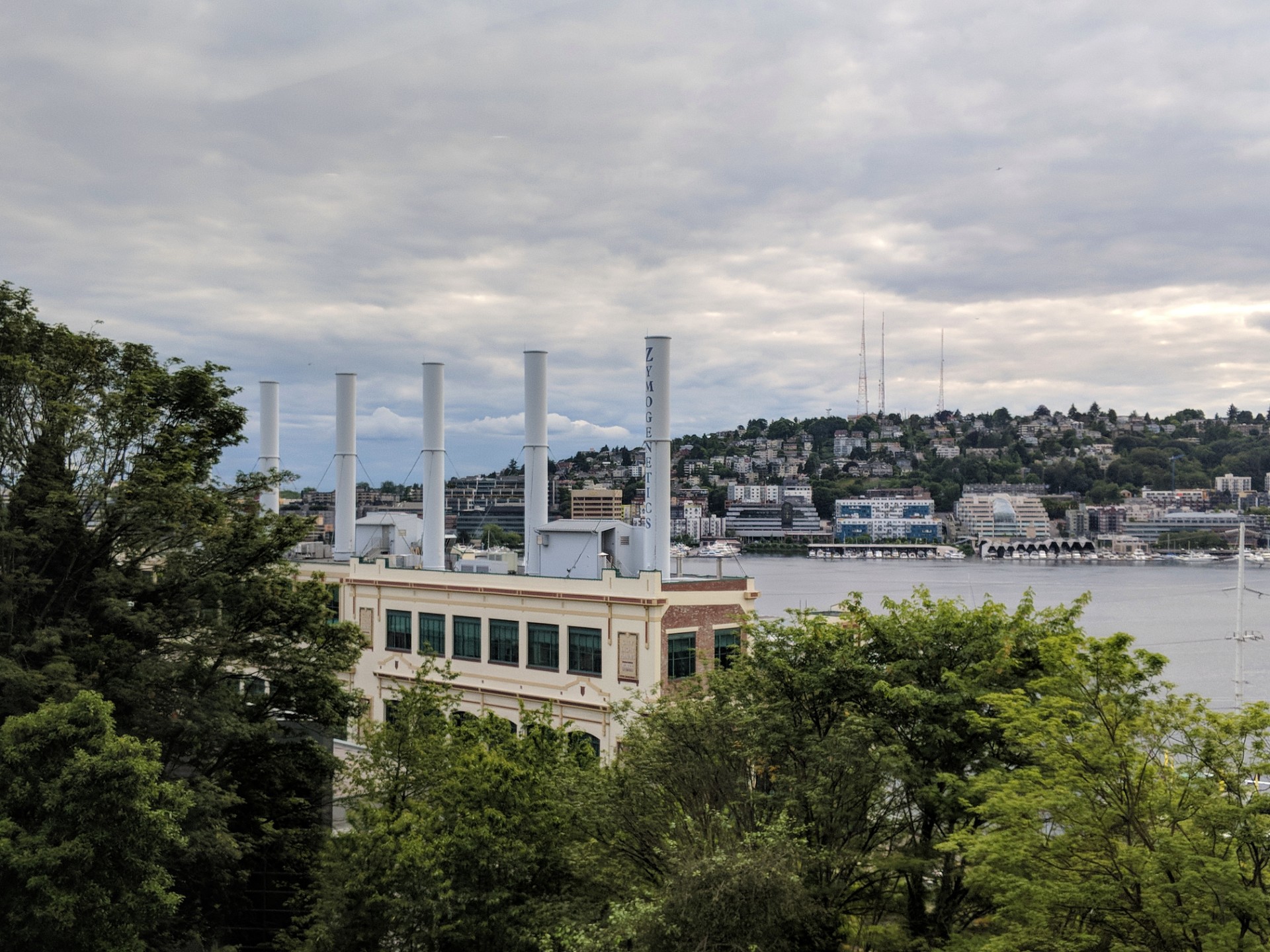
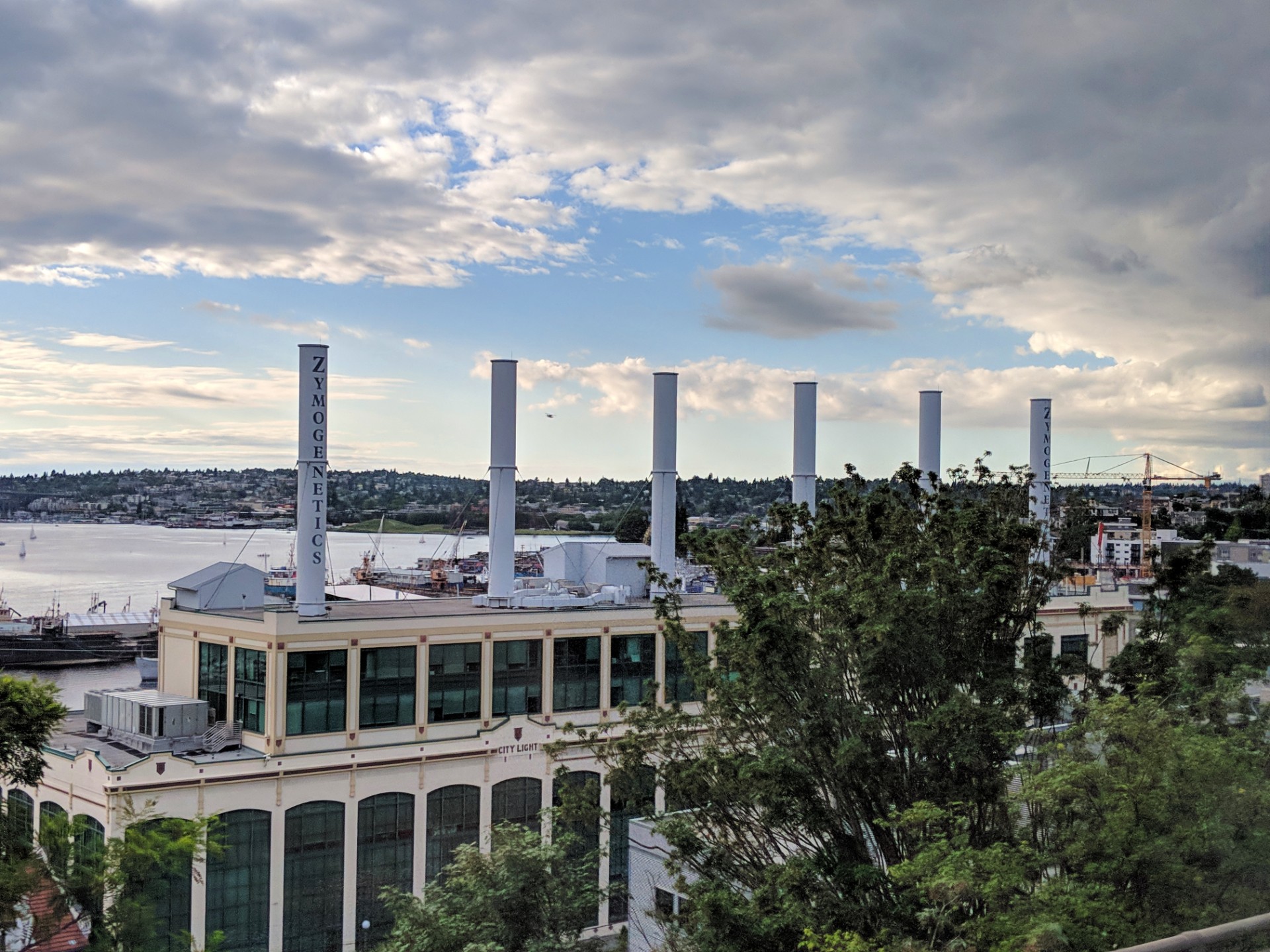
On the bus trip back to Seattle, I was absorbed by the (fairly) unobstructed views over Lake Union, thinking how clearly visible the Space Needle is even at such a distance, when this industrial building, looking very much like a power plant, with six smokestacks that didn’t seem to work, caught my eye. Then I saw Zymogenetics written on two of the smokestacks, covering their full length… What a strange name for a power plant, I thought, coming straight out of a science-fiction script. Somehow, it reminded me of the Zygons, those shape-shifting aliens from outer space, in Doctor Who.

Curious about the building (but mostly its alien-sounding name), I looked it up: ZymoGenetics, Inc was one of the oldest biotechnology/pharmaceutical companies in the USA, now closed at this address after its acquisition by Bristol-Myers Squibb Company, another American pharmaceutical company, headquartered in New York City. The building, or parts of it, was taken over by Fred Hutchinson Cancer Research Center, one of the country’s leading cancer research institutions. (source: Wikipedia & GeekWire)

Bus-ride from Everett to Seattle, WA

June 14th, 2018

Welcome to Everett

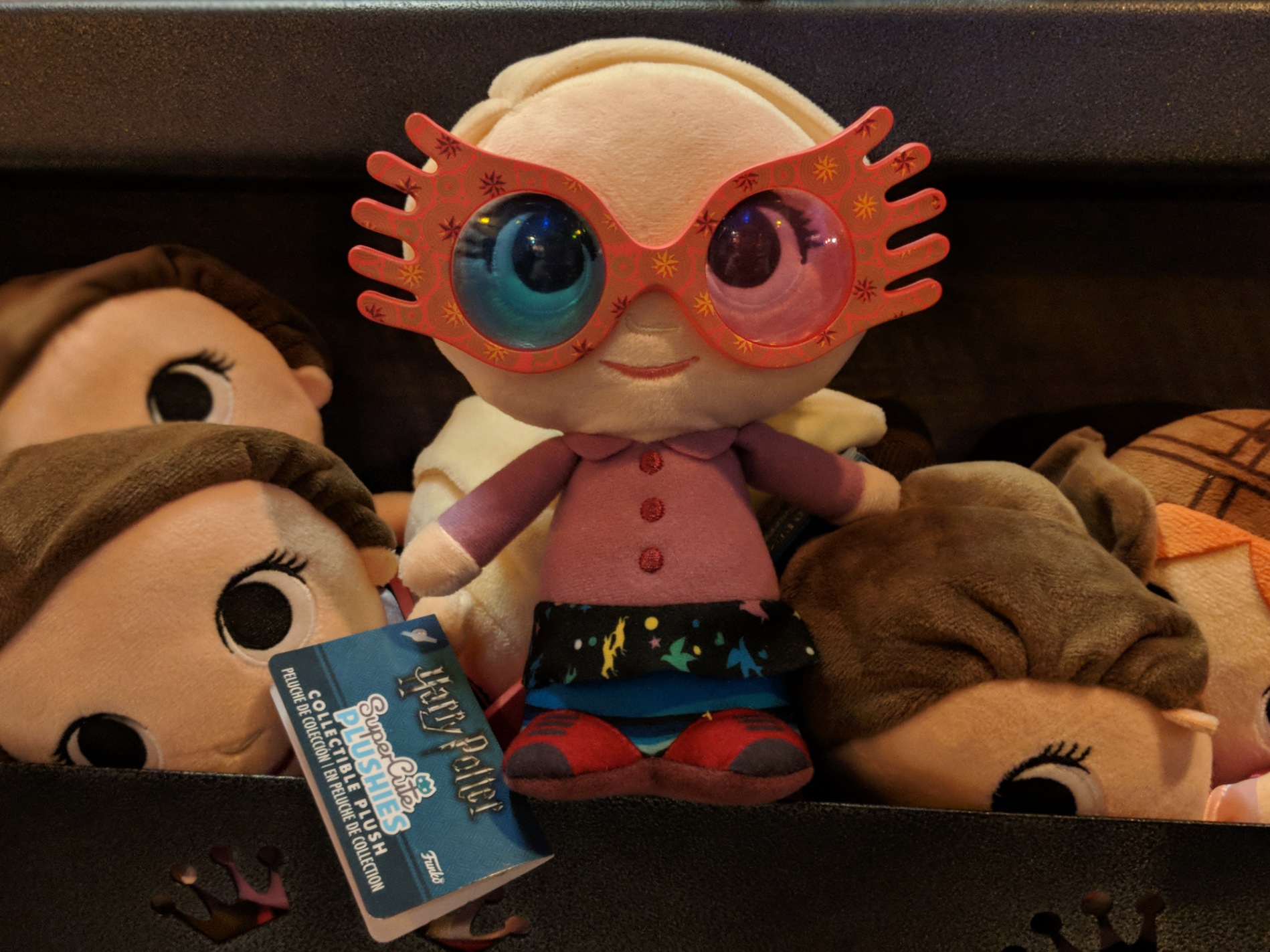
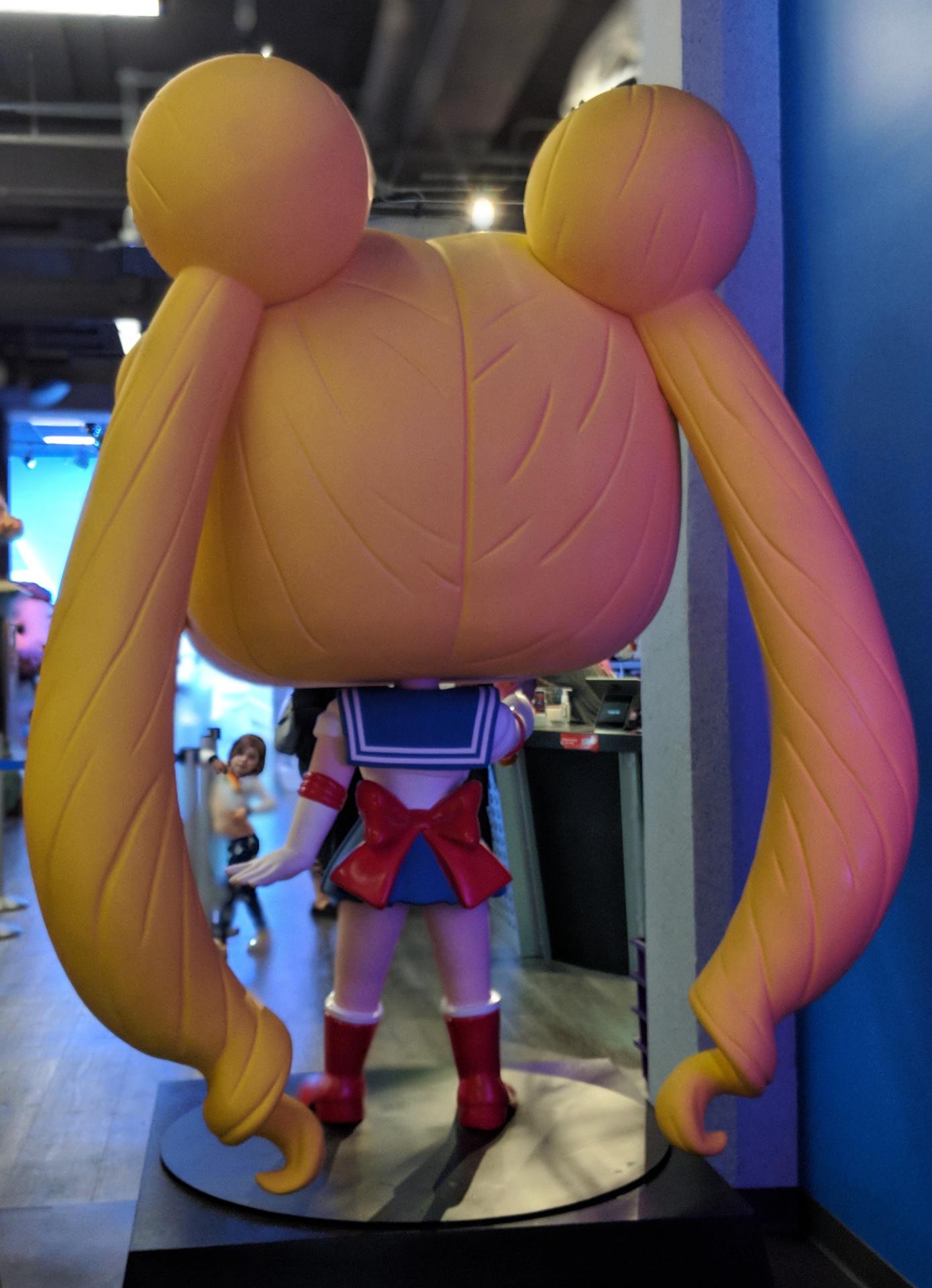
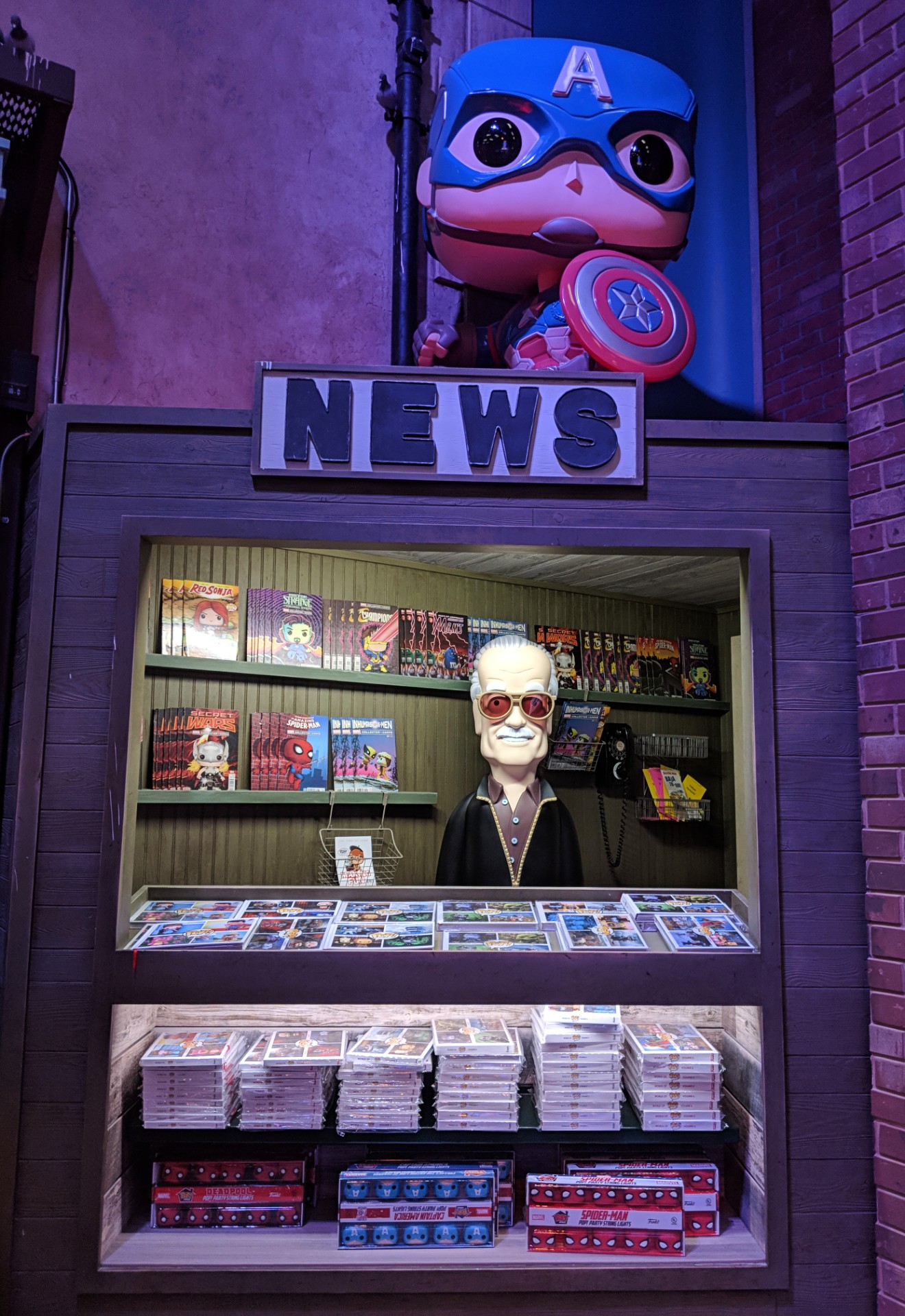
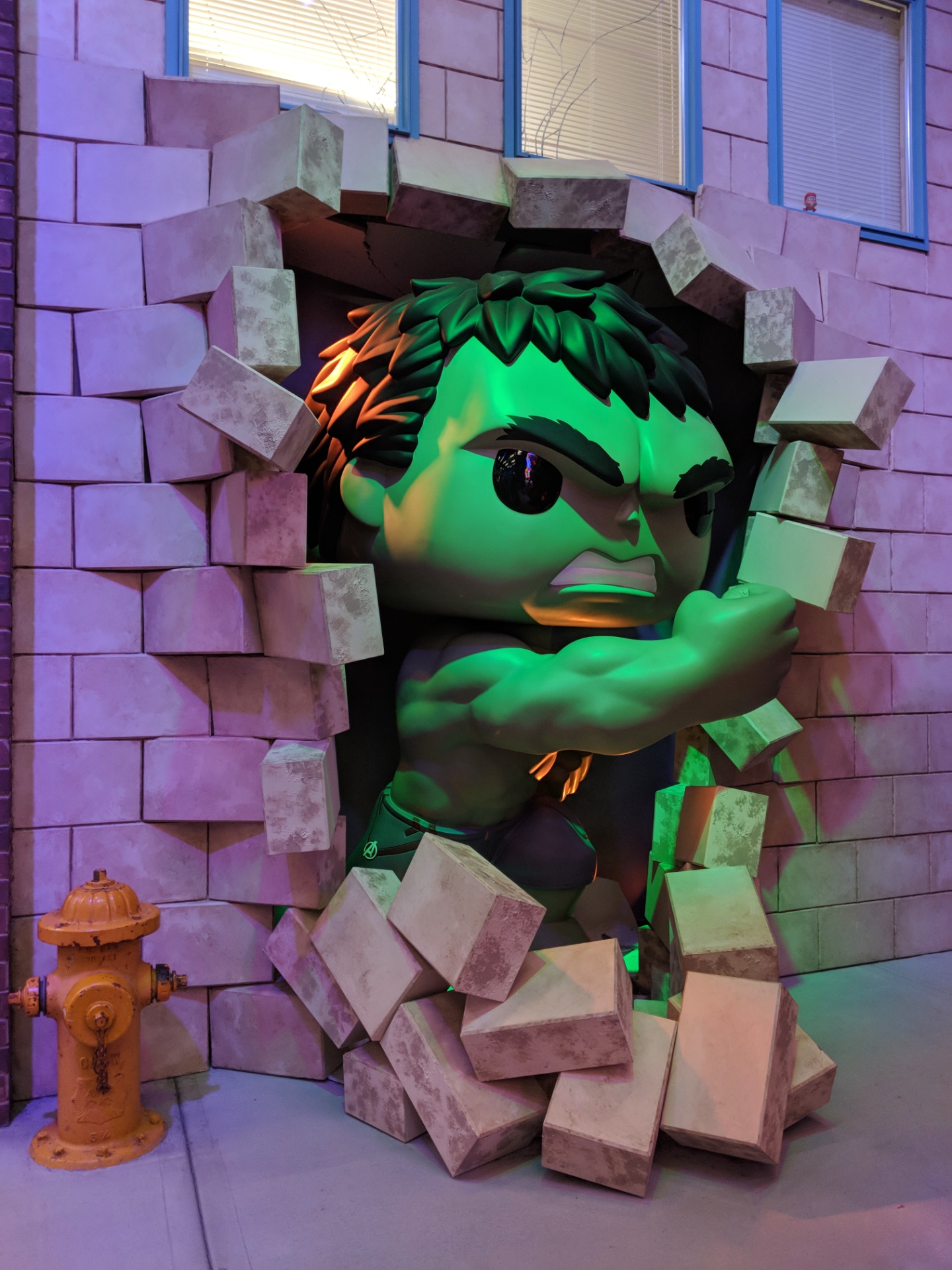
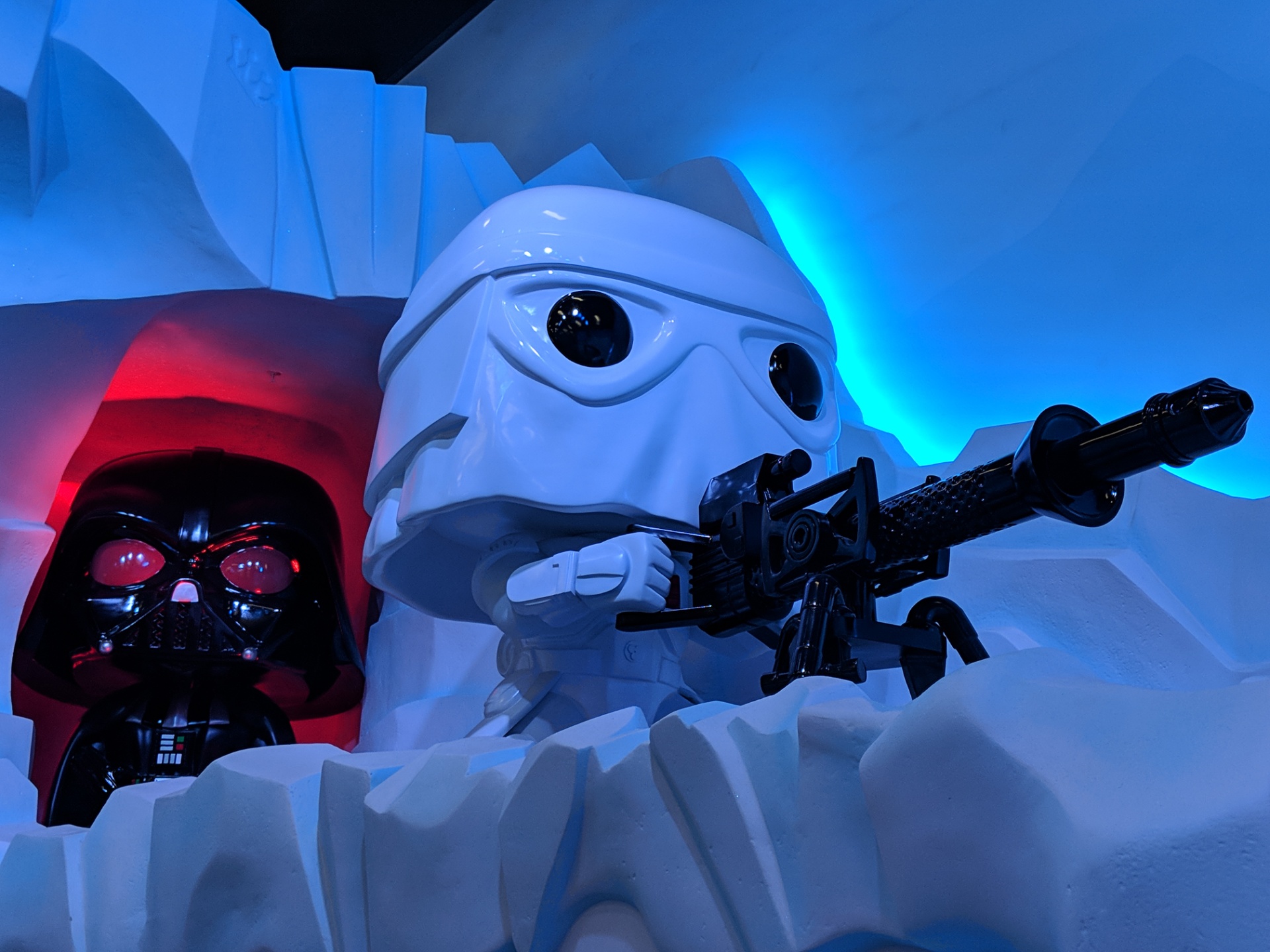
Home to Funko Headquarters and a giant flagship store with tons of those cute, square-headed figures, some of which cuter and more collectible than others, called Funko Pop!. I’m sure there are other interesting things to see and do in Everett, but it was Funko Pop! we wanted and by golly, Funko Pop! is what we got! And loads of great fun!

Everett, WA

June 14th, 2018
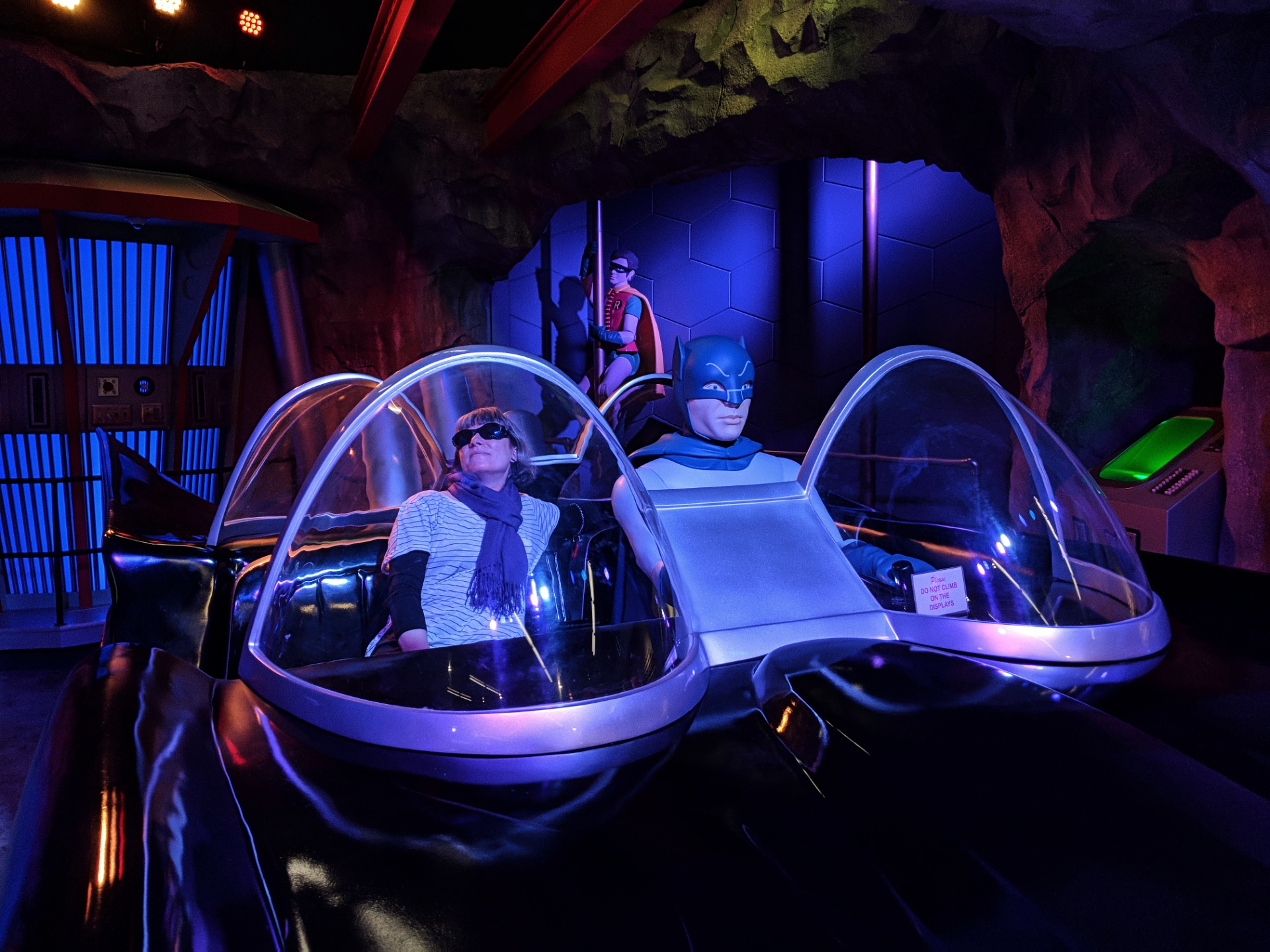
Sound Lab

On permanent view

Sound Lab: Interactive multimedia installations. Electric guitars, drums, samplers, mixing consoles are ready for jamming – all that’s missing is you.

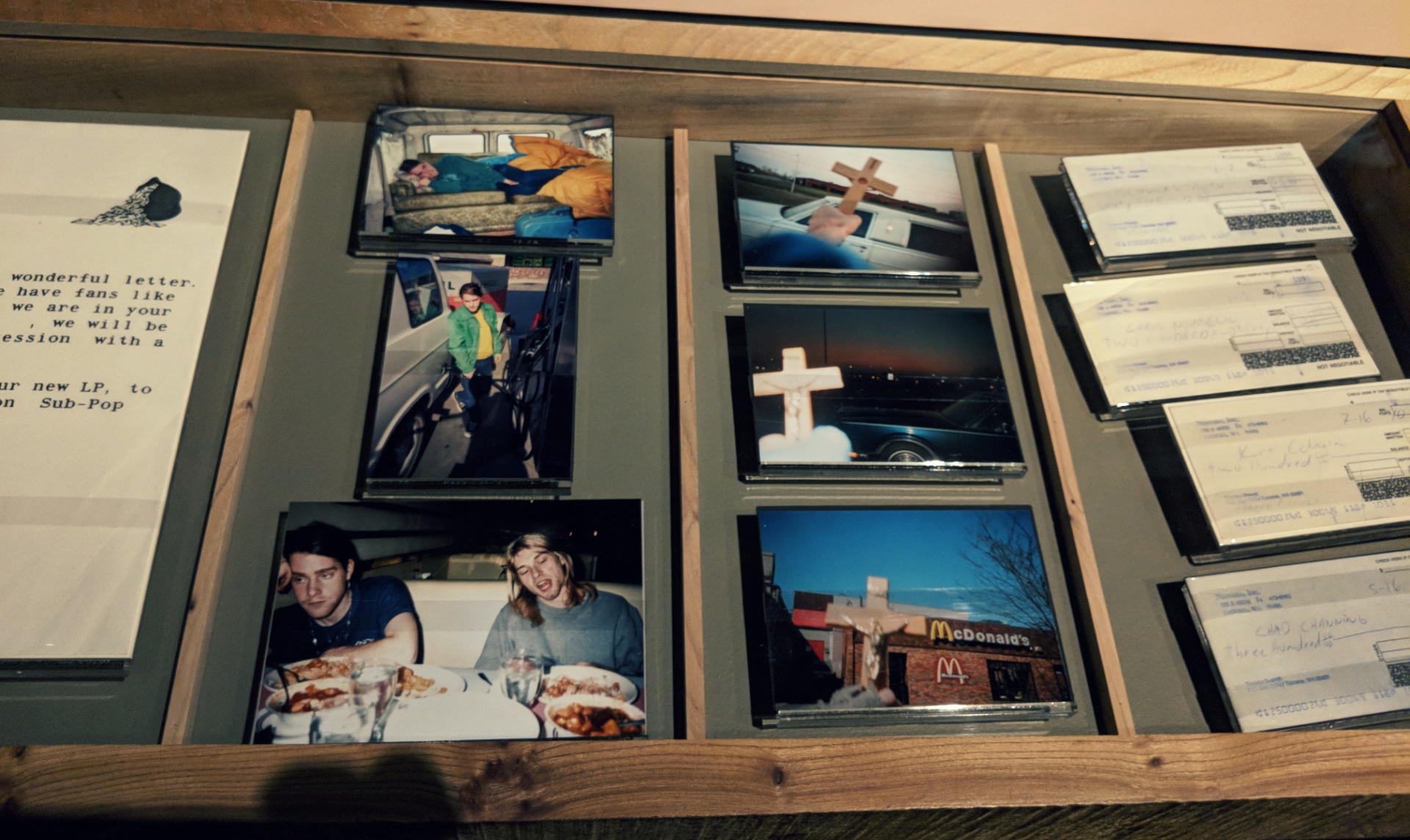
Nirvana: Taking Punk to the Masses. Who would’ve thought they’d be a museum item so soon!

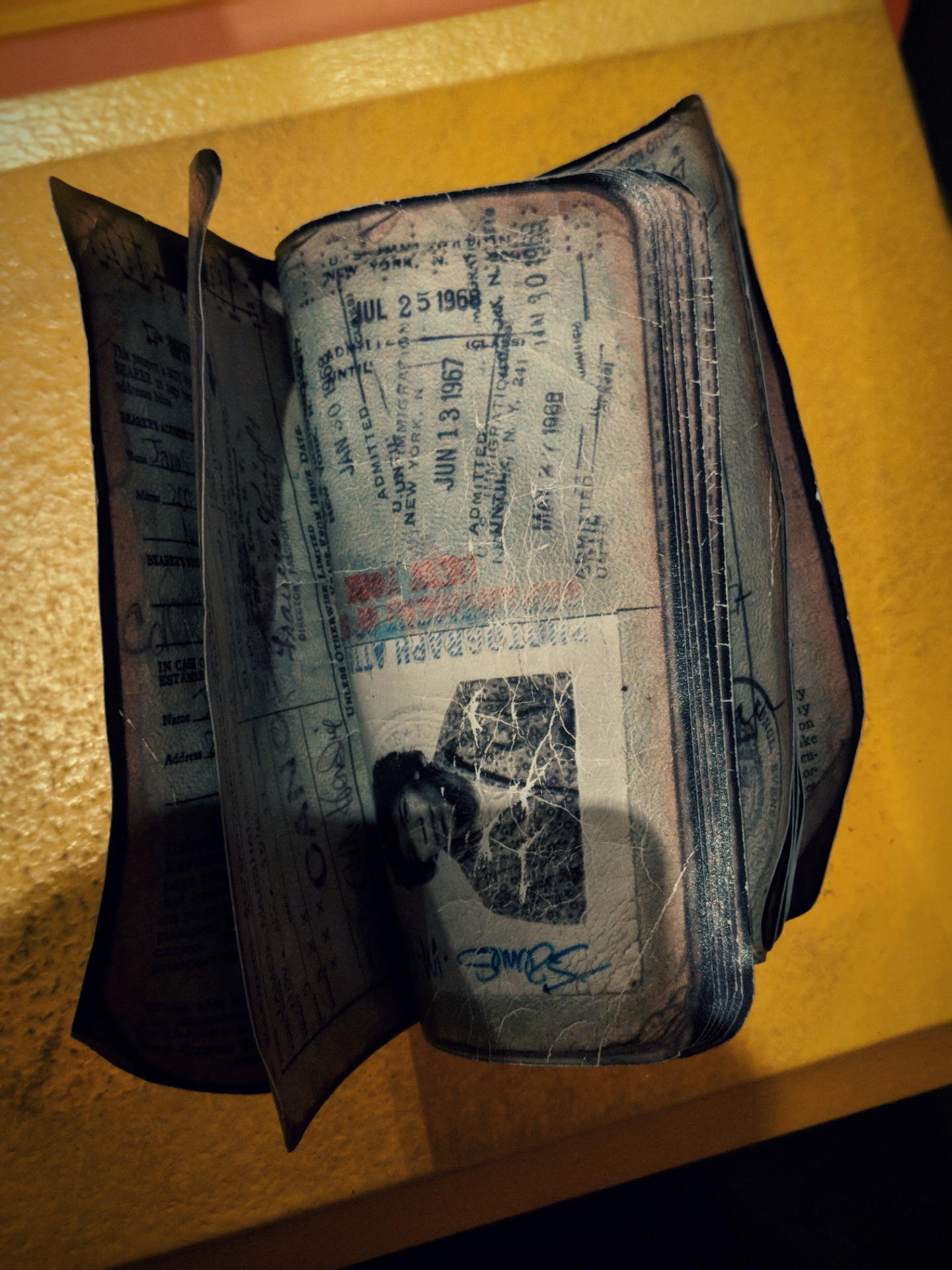
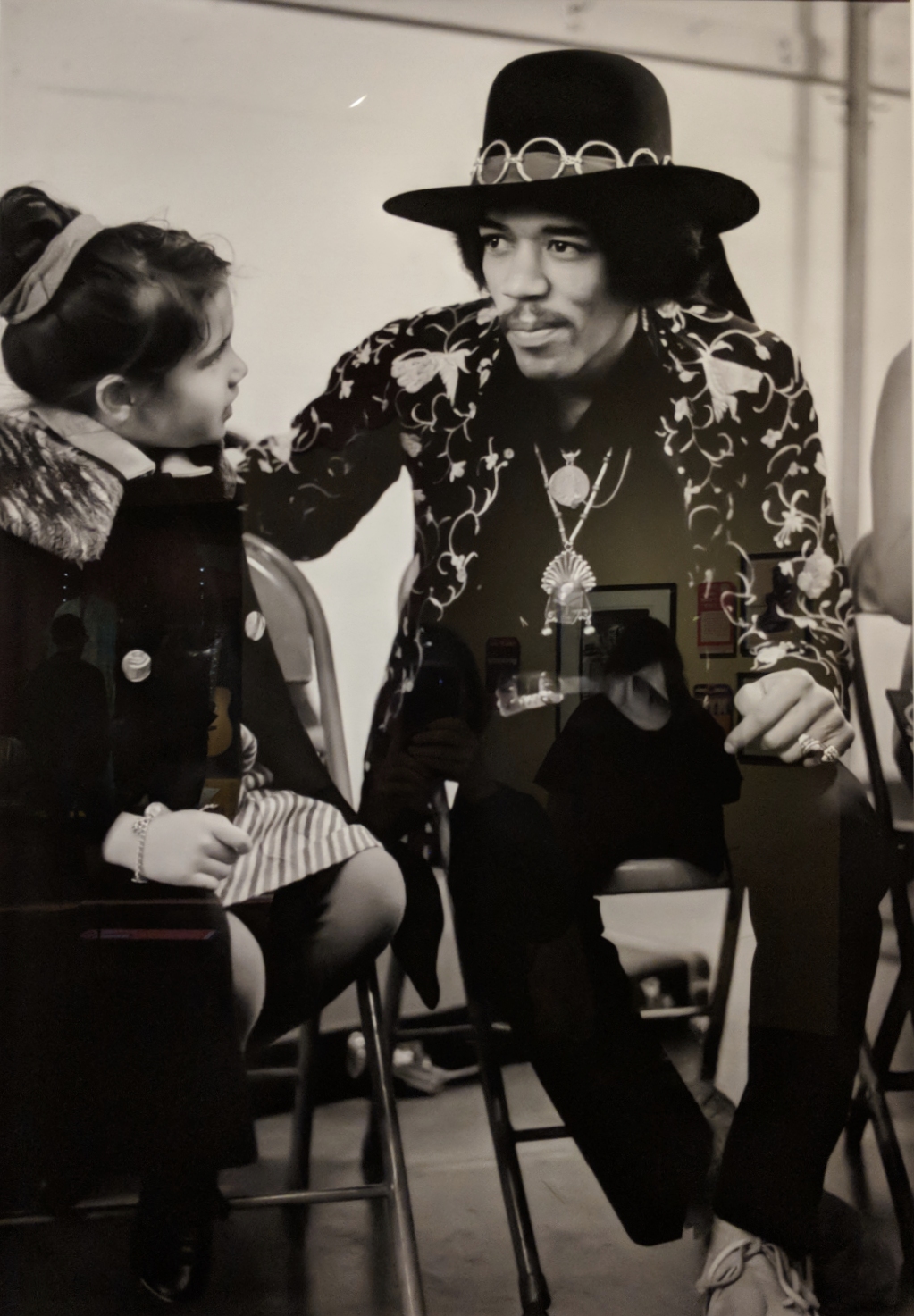
Wild Blue Angel: Hendrix Abroad, 1966-1970. A travelling legend, at home in Seattle.

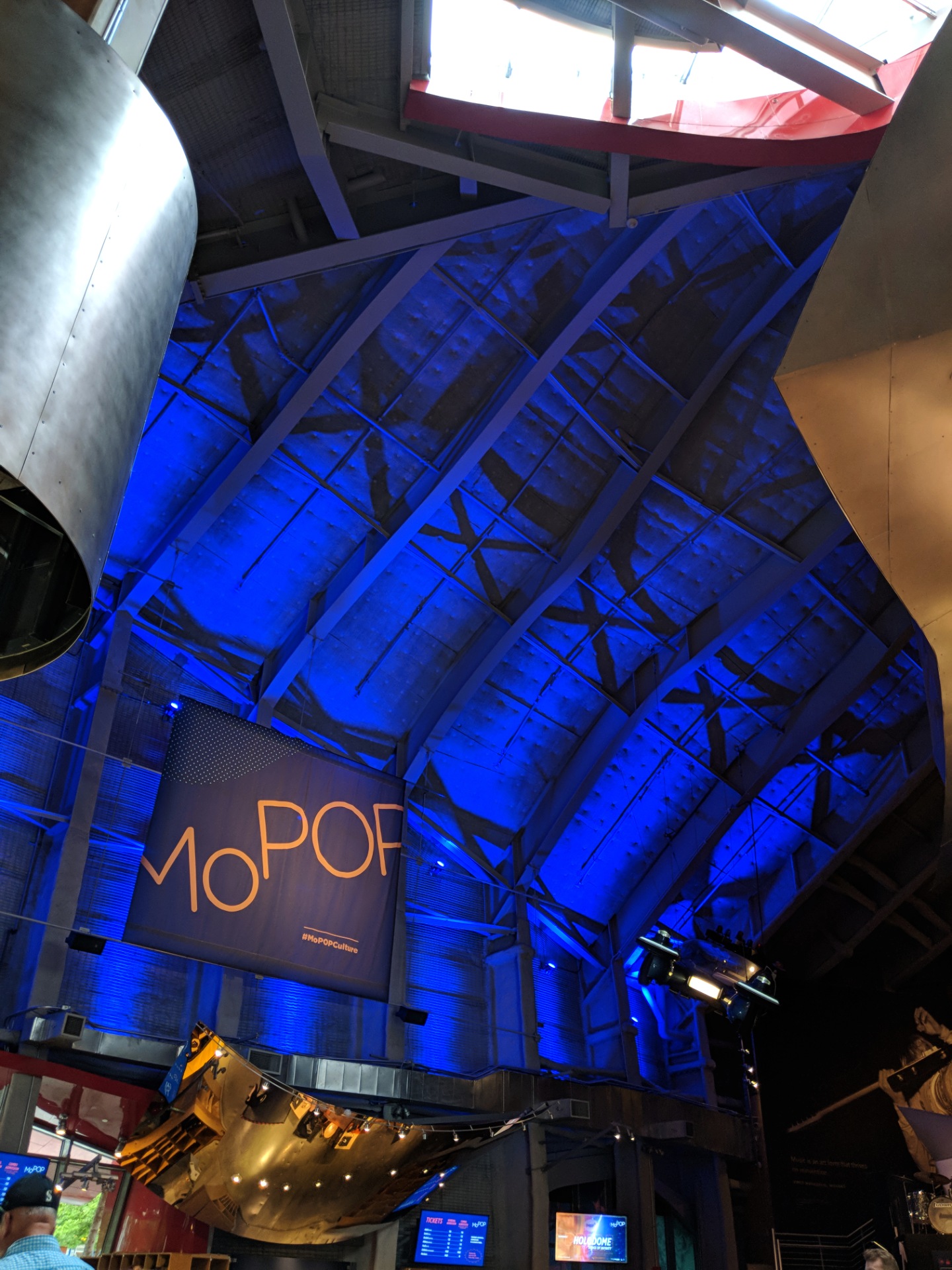
Museum of Pop Culture

June 13th, 2018