Rediscovering the French avant-garde artist whose body of work is so extensive, undergoing so many style changes, the average spectator would have a hard time in identifying the source had there not been for his signature or the accompanying tags.
No style or label could hold Picabia for long: skillfully shifting from Impressionism to Pointillism to Cubism and Dadaism, briefly touching upon Surrealism before succeeding to rid himself of labels and become the intriguing artist we know today.
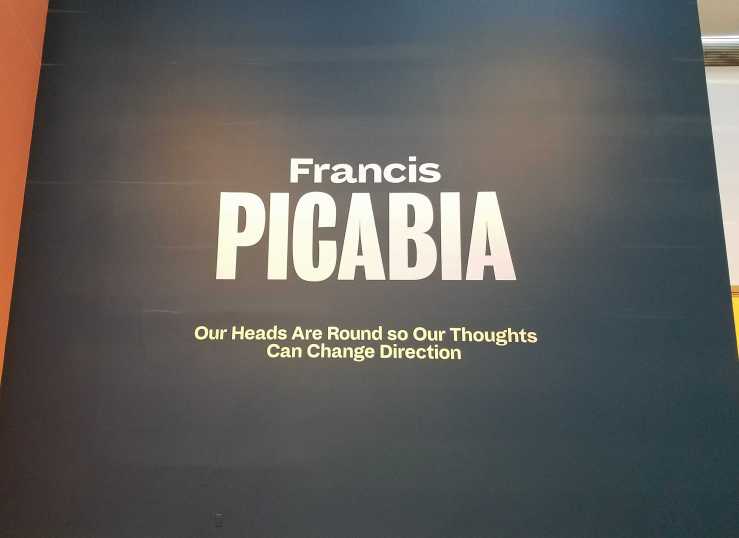
With all this versatility throughout his entire career curating a retrospective for Picabia is no mean feat. But then, MoMA is no mean institution either: for their exhibition that ran from November 2016 through March 2017 – the first of its kind in the United States – no less than 200 works of art were brought under one roof: paintings, periodicals and printed matter, illustrated letters and a film. Aptly named ”Our heads are round so our thoughts can change direction”, it was comprehensive, enlightening and entertaining, all at once.


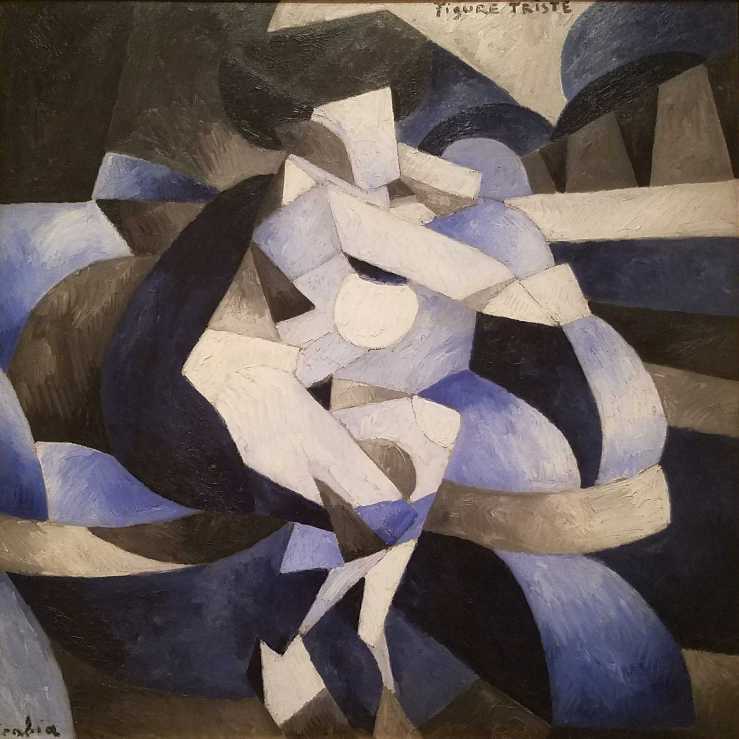
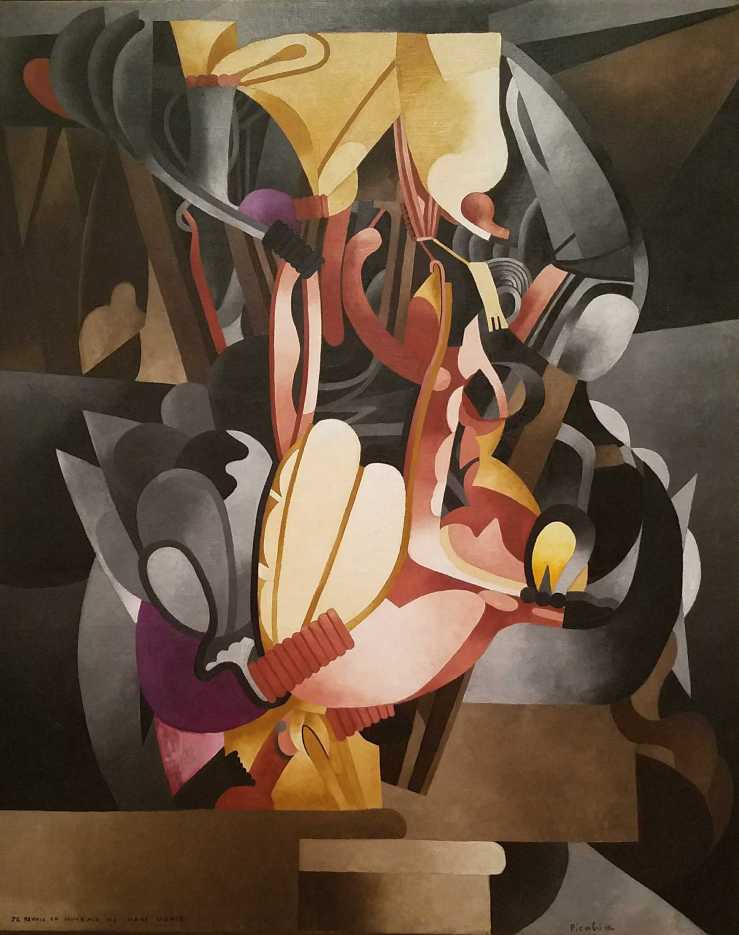
[Note from the accompanying tag: Picabia associated ”Udnie” – a name of his own invention – with memories of watching the dancer Stacia Napierkowska, whose suggestive performances subsequently provoked her arrest, rehearse onboard during his transatlantic journey to New York in 1913. ”Udnie” is also an anagram of the last name of Jean d’Udine, whose theory of synesthesia (published in 1910) linked painting with music and dance through the concept of rhythm. In this painting, rhythm is intimated via a series of repeated, interpenetrating pistons and quasi-visceral orifices, fusing the mechanical with the biological.]
***
The film shown was ‘‘Entr’Acte”, René Clair’s Dadaist Masterpiece (1924), originally designed to be screened between two acts of Francis Picabia’s 1924 opera Relâche. You can read all about it – and watch it – on Open Culture (film is on YouTube).
***
From a retrospective exhibition at MoMA.
January 30th, 2017





 The Humble Fabulist