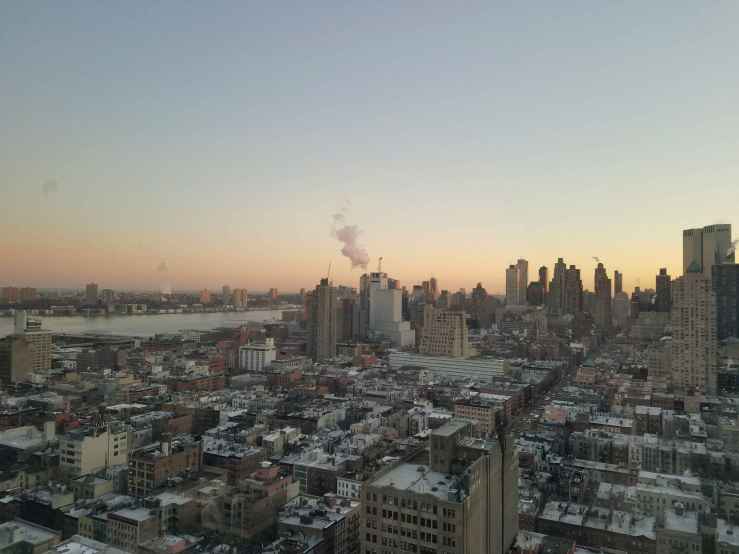
Voulkos: The Breakthrough Years @ MAD

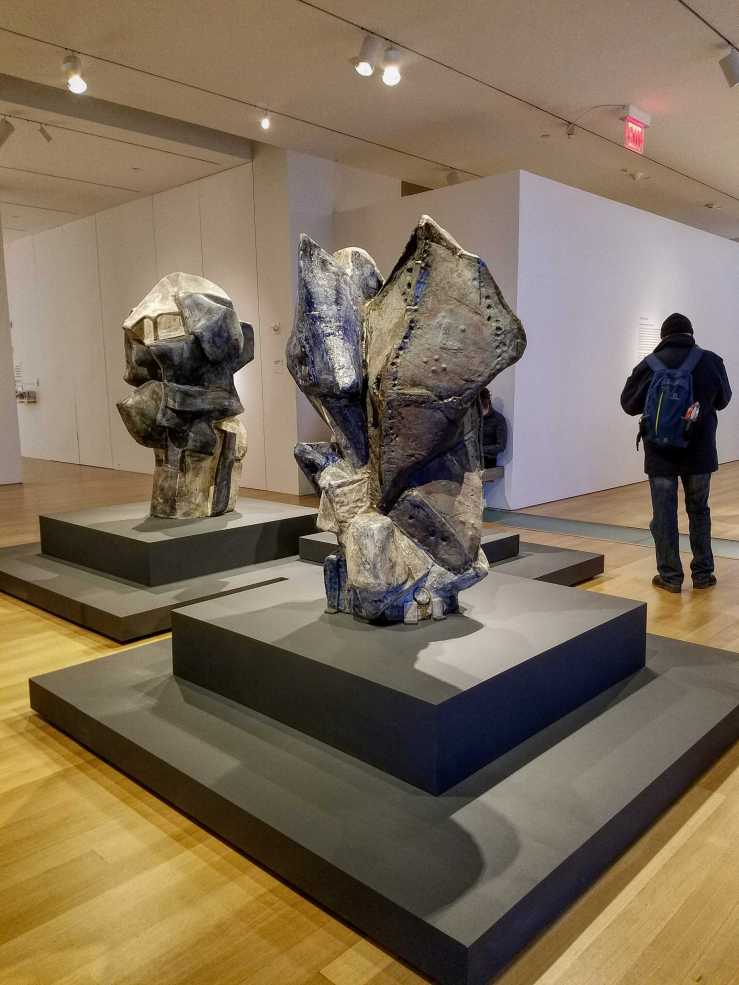
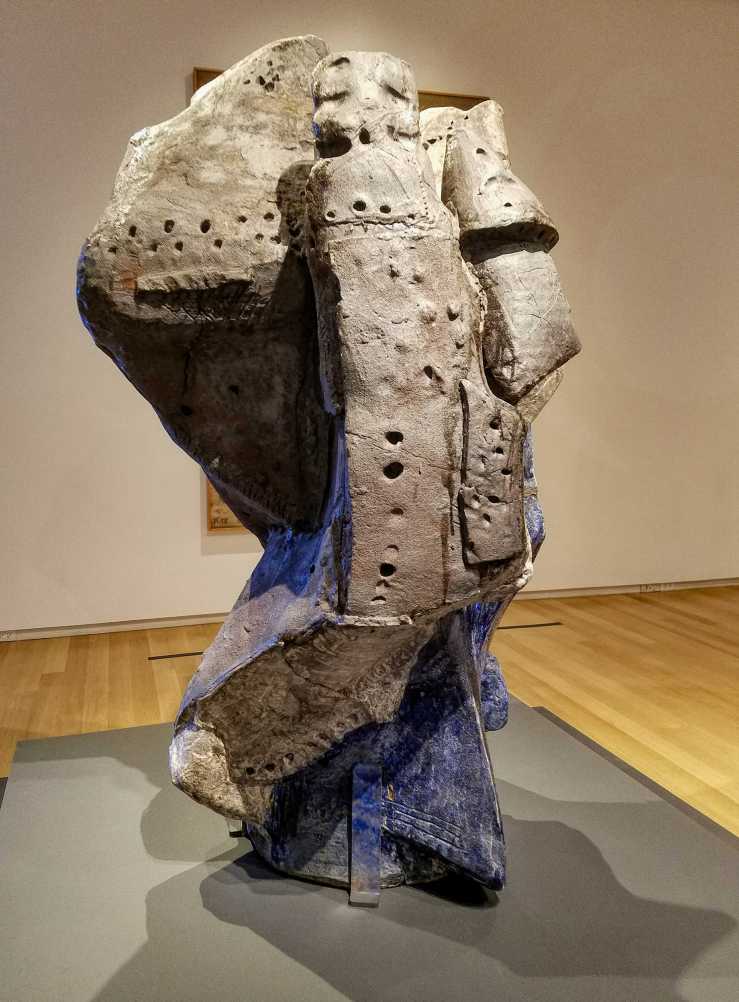
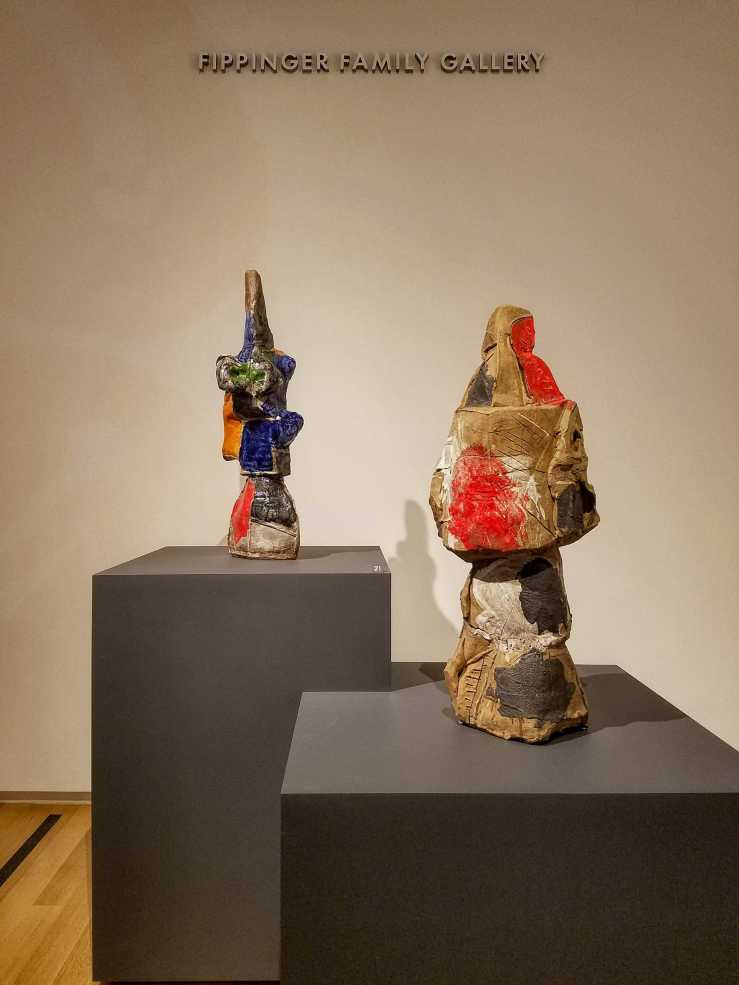
“Voulkos: The Breakthrough Years is the first exhibition to focus on the early career of Peter Voulkos, whose radical methods and ideas during this period opened up the possibilities for clay in ways that are still being felt today.”

A chance encounter with the work of an artist I had never heard of before – highly popular in this part of the world, less so in Europe it seems. Following a quick research, I now know that he was an American of Greek descent (as his name suggests), whose parents had migrated to Bozeman, Montana where he was born. He served in the U.S. Army during WWII and studied painting and printmaking in Montana State University where he was also introduced to ceramics. He died in 2002 doing what he loved best: demonstrating his skill to a live audience.

“Commissions for large-scale works in bronze occupied a good deal of Voulkos’ time in the early 1960s, but he continued to work in clay energetically and innovatively. Many of his ceramic works of this period were made in public demonstrations. Voulkos was a natural performer who loved working in front of a crowd. One observer who saw him make Josephine at Greenwich House Pottery in New York, remembers how ”he worked with total abandon and total focus all at the same time”, first pounding the piece as it rose on the wheel then slicing it in half, then welding it together with wet clay as he worked it with his fists from the inside, and finally splashing its surface with slip and glaze.

Voulkos’ demonstrations were great theater, and even the ceramic works that he was making in the studio at this time, such as a series of cracked and fissured plates, capture this sense of immediacy. They can be compared with contemporary Abstract Expressionist paintings, many of which project a similar, stereotypically masculine combination of authority and aggression. Yet Voulkos’ improvisations also relate to his interest in jazz and Spanish flamenco, which he played proficiently on the guitar. ”I think that working in the form of pottery is a very demanding thing” he said. ”The minute you touch a piece of clay it responds, it’s like music – you have to know all the structure and know how to make sound before you can come up with anything”.”

Voulkos: The Breakthrough Years was on show until March 15th, 2017 at 

The Museum of Arts and Design (MAD)
2, Columbus Circle
New York City

March 12th, 2017
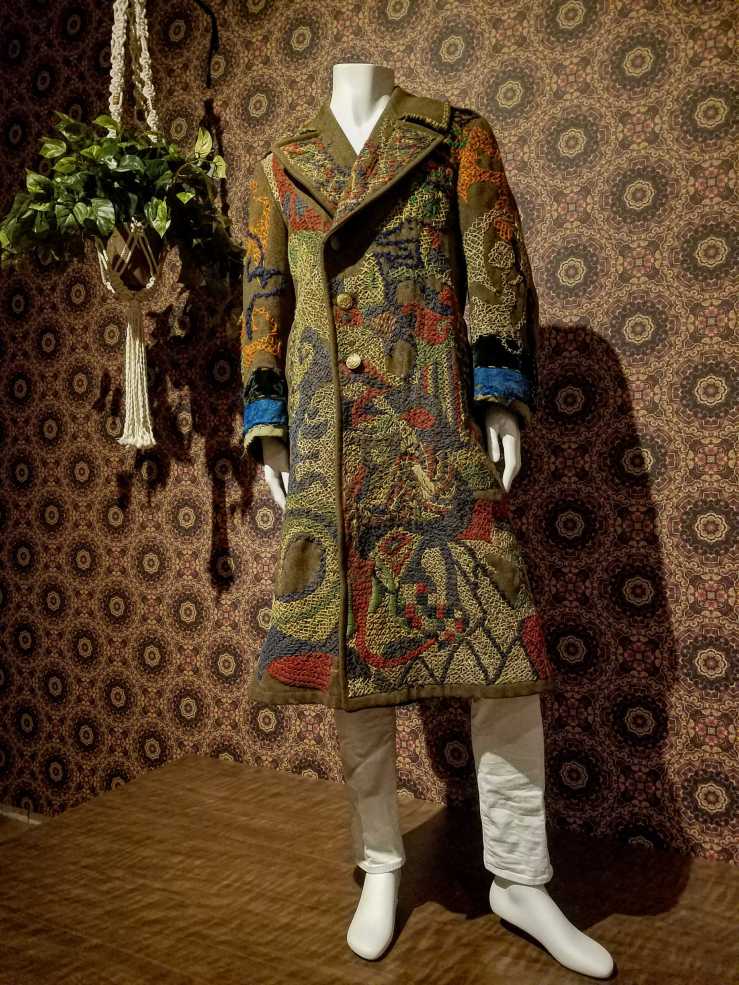
Counter-Couture @ MAD

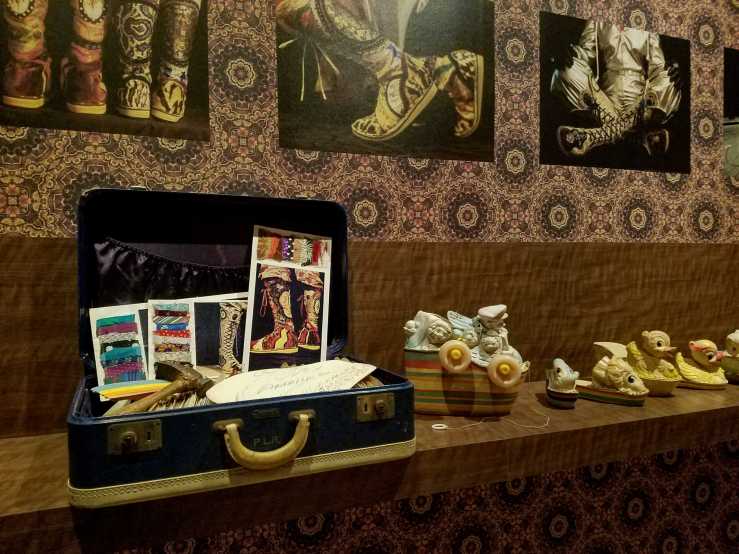
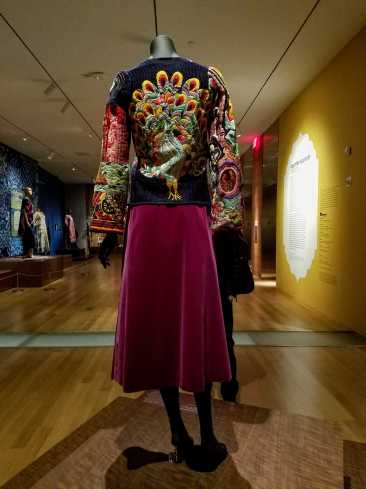
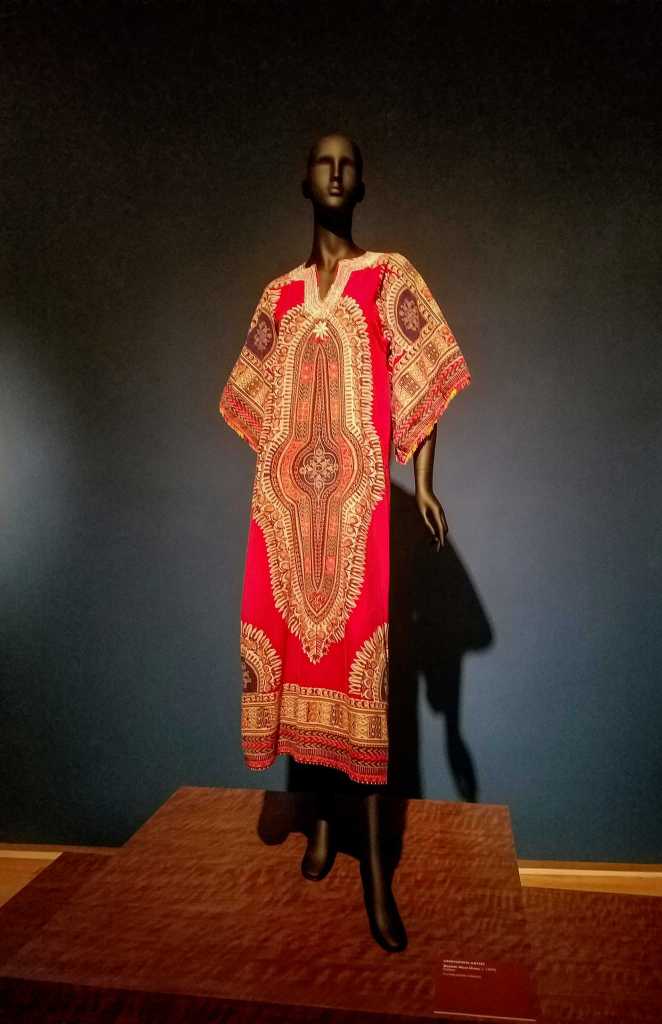
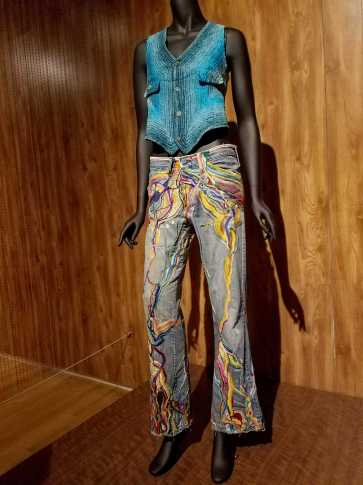
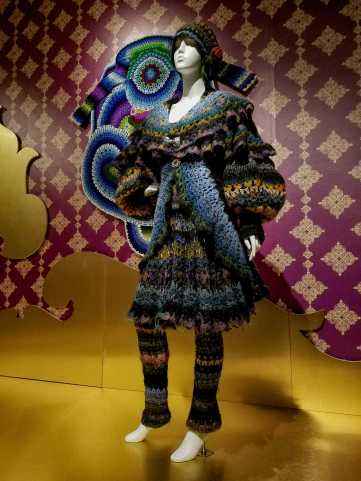
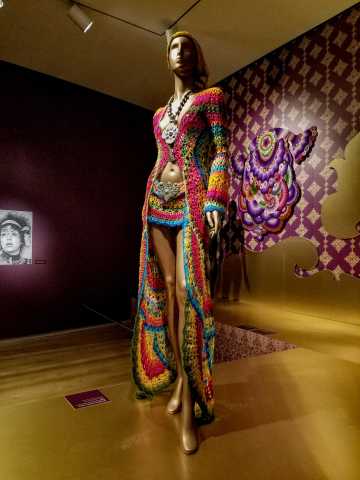
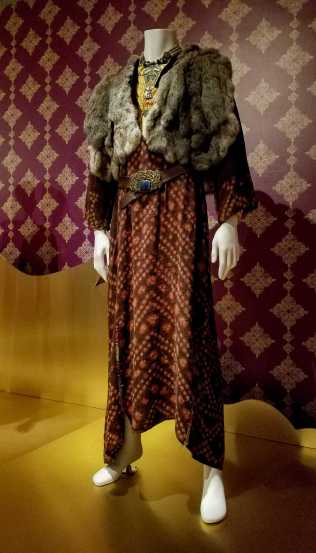
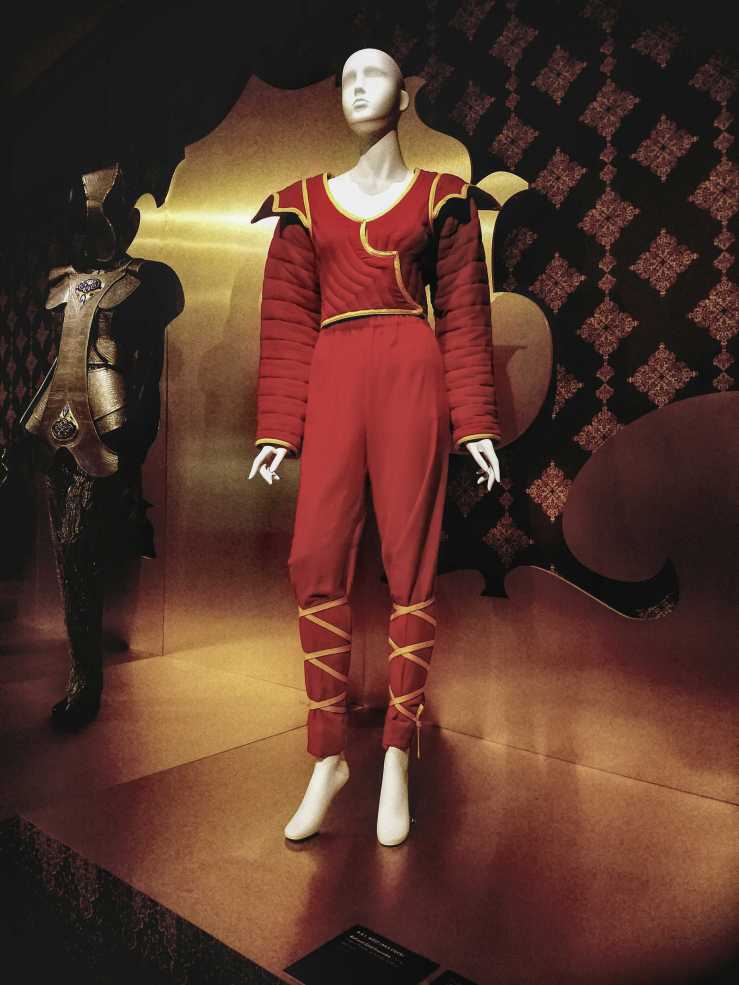
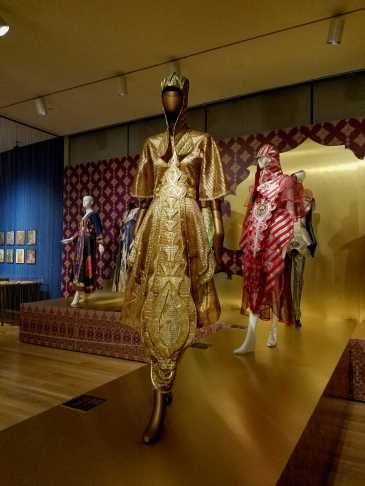
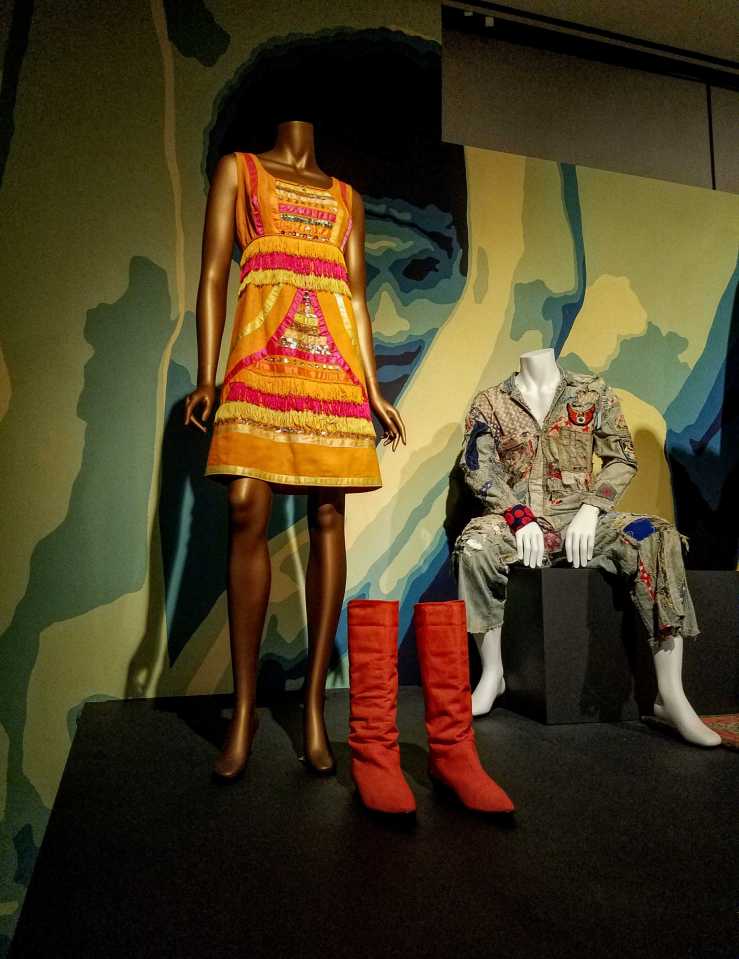
Mid-March was icy-cold here in New York; the City was covered in snow. But spring was around the corner and summer a hop, skip and a jump away. And not just any summer – this year marked the 50th anniversary of the legendary San Francisco Summer of Love, in 1967.  There would be a ton of events to celebrate it on West Coast later on but, here we were, in New York City, in full winter attire, off to see ”Counter-Couture: Handmade Fashion in an American Counterculture”, an exhibition of handmade dresses and accessories made by those free-spirited crafts-men and women who, in their rejection of the establishment of conformism, materialism and consumerism, went on to create some of the most original, superbly crafted designs, examples of which you are about to see below. They were the Hippies, the Flower Children, those young, idealists who struggled for equality and peace but got lost in their quest to reach those higher – LSD infused – levels of consciousness. They were men and women of my generation and they helped shaped me – and others like me – into the characters we have become today. Imagine how the world would have been, had they not got lost on their way.

Images from the exhibition

Michael Fajans
Hand-embroidered and appliqué Army Coat, 1967

Janet Lipkin
”Paisley”: Coat for Sylvia Bennett, c. 1970

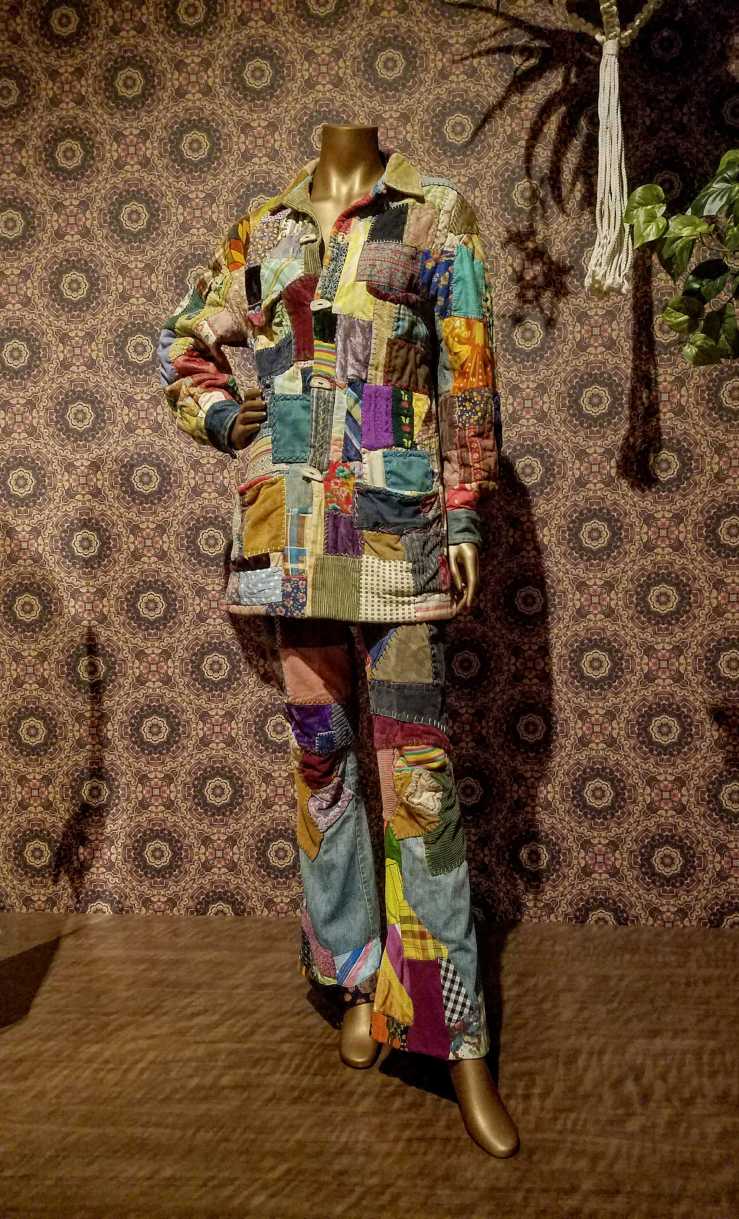
Barbara Ramsey’s coat and jeans exemplify the Counterculture’s resourcefulness and need for self-expression. Each small patch bears a story or memory of its own and forms a scrapbook of life experiences – worn by the person who lived them.

In 1971 Ramsey was given a ragged, wool-lined coat that she patched with fabric. As time passed, she sewed layers of patches made from other worn-out clothes onto the coat. Ramsey applied a similar process to a pair of jeans and eventually completed the outfit.

Barbara Ramsey
Medical School Outfit, 1971-75  


100% Birgitta (Birgitta Bjerke)’s crocheted coats for Roger Daltrey of The Who and his then wife Heather recall the psychedelic visual culture of the 1960s rock-and-roll scene. Displayed flat on the wall, the garments – constructed in fan shapes – vibrate with kaleidoscopic colours that suggest blossoming flowers, Tibetan mandalas, and patterns inspired by Indian textile traditions.

Dancepiece by Leslie Correll, 1971
Hammered brass, Turkish beads, African (Venetian) trade beads mounted on old Indonesia batik fabric


Kaisik Wong’s evening ensembles (above) and Yellow and Green Ray dress and headdress (below) from the ”Seven Ray” series, 1974. 

Mama Cass Elliot Dress (below left) c. 1967.
Cass Elliot was a member of The Mamas & the Papas. The panne velvet dress she wore, with its gentle ombré gradient colour, brings to light the dreamy character of her stage presence. Celebrated as a sex symbol and role model for young women of her generation, Elliot donned theatrical styles that showcased her dynamic personality and held the attention of her audiences and fans. The appliqué sunburst on the front of the bodice depicts Virgo, Elliot’s astrological sign, while reflecting the Counterculture’s interest in self-exploration through the study of cosmology. 

SAS Colby – Ruffle My Feathers, 1972

Fayette Hauser, Cosmic Gypsy Ensemble, 1970

Gretchen Fetchen (Paula Douglas). Acid Test Dress and Boots, 1965.

Gretchen Fetchen was one of the early participants in the San Francisco Acid Test happenings organized by Ken Kesey’s Merry Pranksters in the mid-1960s. The events were designed as gatherings to promote consciousness expansion and creativity through the use of LSD which was then legal. 

Counter-Couture: Handmade Fashion in an American Counterculture was on show at

The Museum of Arts and Design (MAD)
2, Columbus Circle
New York City

March 12th, 2017

Sunday in the park with George

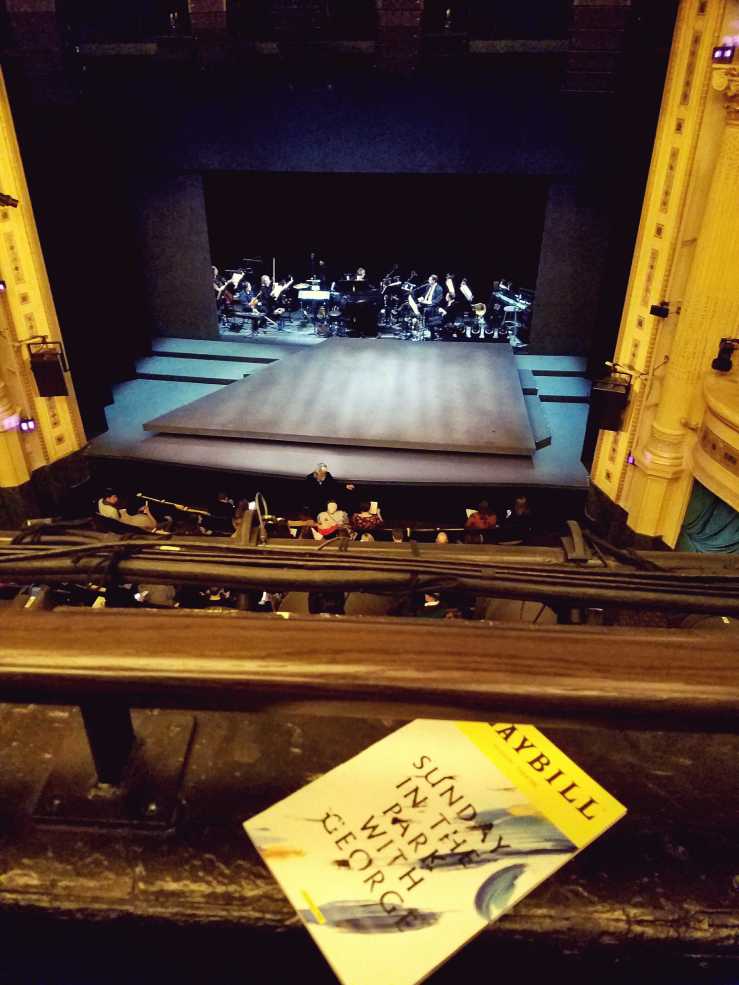
On a Saturday evening at the Hudson Theatre, exactly one month after its reopening on February 11th, 2017.

First opened in 1903 it served many a purpose: theatre, radio & television studio, club, porn cinema, events venue and, making a full round, a theatre again. And a Broadway one at that.

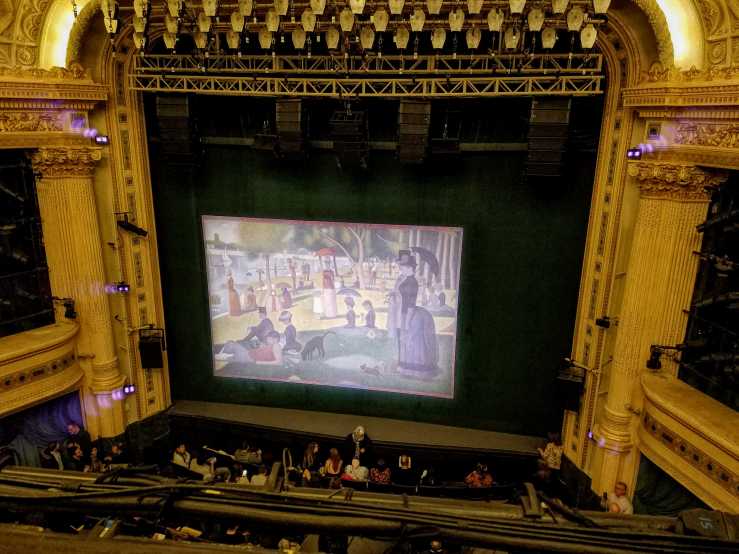
Many of its original features have been lovingly restored, like this magnificent Tiffany glass ceiling. But the seating has been completely redesigned with chairs adjusted to fit the average human measurements and not the other way round as in most (or all) other Broadway theatres.

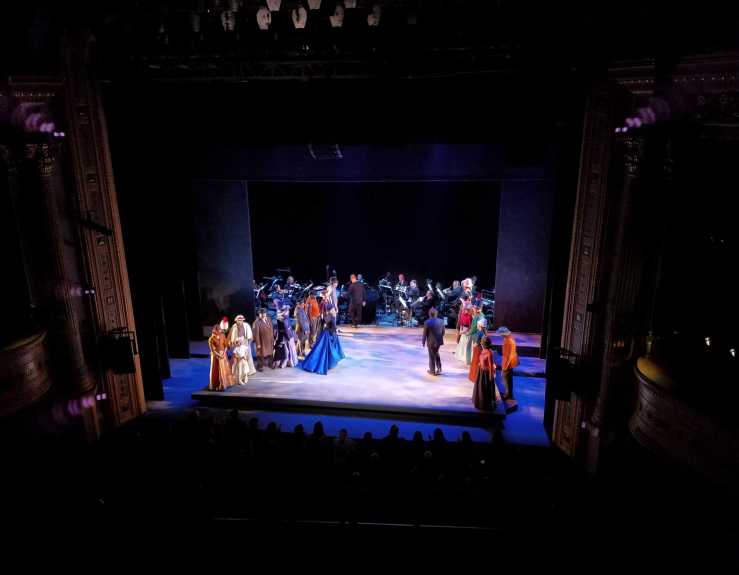
It opened with the revival of ”Sunday in the Park with George”, a play inspired by George Seurat’s masterpiece A Sunday Afternoon on the Island of La Grande Jatte.

Jake Gyllenhaal embodied the master of pointillism and, on his side, Annaleigh Ashford performed the role of his muse and lover, Dot. The story unfolds with the perfectionist master obsessing over his work to such an extend that he ends up alienating the bourgeoisie, his peers and even his lover. His relationship is damaged, his fellow artists have rejected him, and yet…

Nothing will stop him from his quest to ”finish the hat”.

The story kicks off like this:

ACT I
Time: 1884.
A white stage. George, an artist, is sketching.

GEORGE
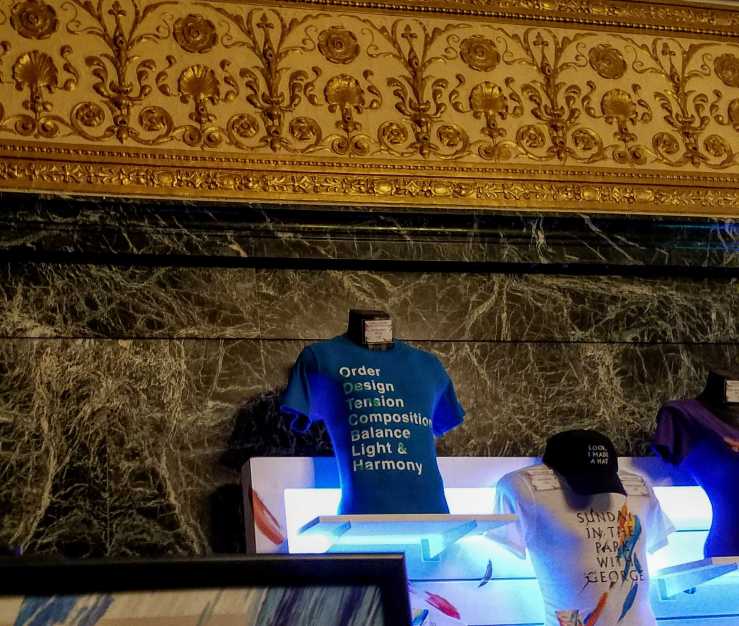
White. A blank page or canvas.
The challenge: bring order to the whole. (As he continues to speak, the white stage is transformed into a park on the island of La Grande Jatte. Trees descend onto the grass; a bottle glides into view; a cut out couple appear in the distance. The lighting gives the impression of early morning.)
Through design.
Composition.
Tension.
Balance.
Light.
And harmony.

1. SUNDAY IN THE PARK WITH GEORGE
George is sketching. Dot is posing.

DOT
George. (no response) Why is it you always get to sit in the shade while I have to stand in the sun? (still no response) Hello, George? There is someone in this dress! (twitches slightly, sighs, mutters to herself)
A trickle of sweat.
The back of the head.
He always does this.
(hisses)
[…]

Until the painting was complete.

[…]
Forever
By the blue
Purple yellow
red water
On the green
Orange violet mass
Of the grass

DOT
In our perfect park

GEORGE
Made of flecks of light
And dark

ALL
(except George end Dot)
And Parasols…

People strolling through the trees
Of a small suburban park
On an island in the river
On an ordinary Sunday…
(All begin to leave very slowly, except Dot, who remains in the park, and George, who steps outside the park.)
Sunday… (A blank white canvas descends.)

GEORGE
(looking in the book again)
“White. A blank page of canvas. His favorite. So many possibilities…”
(He looks up and sees Dot disappearing behind the white canvas.)

Sunday in the Park with George
Music: Stephen Sondheim
Lyrics: Stephen Sondheim
Book: James Lapine

The Hudson Theatre, Broadway
March 11th, 2017
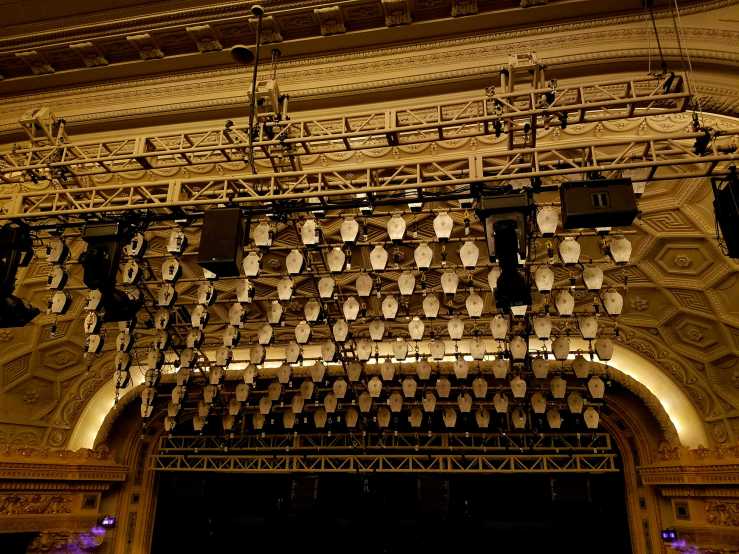
Dadan @ BAM

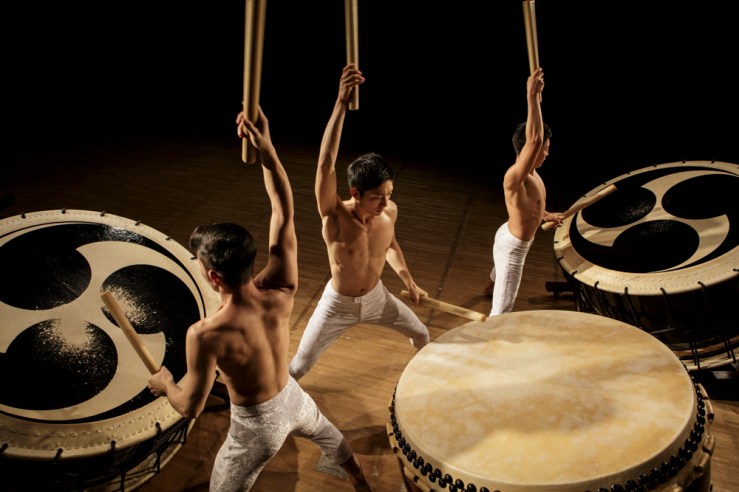
In order to create Dadan, I started rehearsals with the performers in the summer of 2007.  At that time we had no idea that we would create a piece like this. If a group of men who just wanted to strike the drums would gather and practice intensely, a performance would come out of that energy.

So we told ourselves.

As for the name of the piece, we didn’t have any assurance that we could complete it in the future. But fortunately, in 2009 we were able to create this work called Dadan, and show it to the public.

The word Dadan is written with the kanji characters that literally mean “men drumming,” but at the same time we tried to come up with a name which would put across the sense of drumming when written in roman letters, would feel dynamic, and be easy for people around the world to say.

Dadan saw its world premiere in Tokyo during September 2009, and the success of this initial run led to its foreign debut at Théâtre du Châtelet in Paris, France, with four sold-out performances in 2012.

Following such success abroad, Dadan toured across Japan in 2012 and was showcased twice at the “Earth Celebration” annual international performing arts festival on Sado Island. Tours in Spain and France followed during 2014, and then in October 2015, Dadan was performed in Hong Kong—a first in Asia outside of Japan. The South American debut took place in March of 2016 in Brazil. 

The 2017 Dadan performances are part of its first North American tour, and are presented as a part of Kodo’s 35th Anniversary celebrations. For Dadan’s US tour, I would like to express my gratitude to the sponsors who made this possible. I hope to be able to continue to create even better performances in the future. I will be very happy if you enjoy our performance.
—Tamasaburo Bando, Dadan Artistic Director

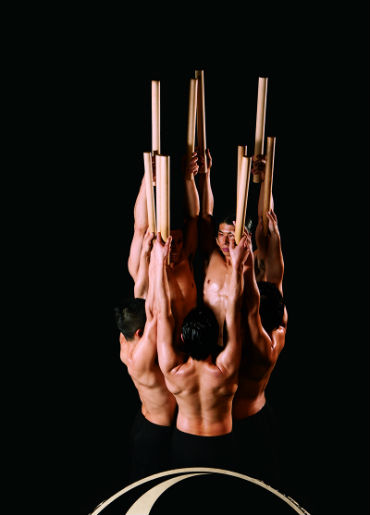
Never has drumming seemed so elegant, flawlessly coordinated, primal, powerful, precise and curiously meditative, until these guys came along.

*first three images from the net

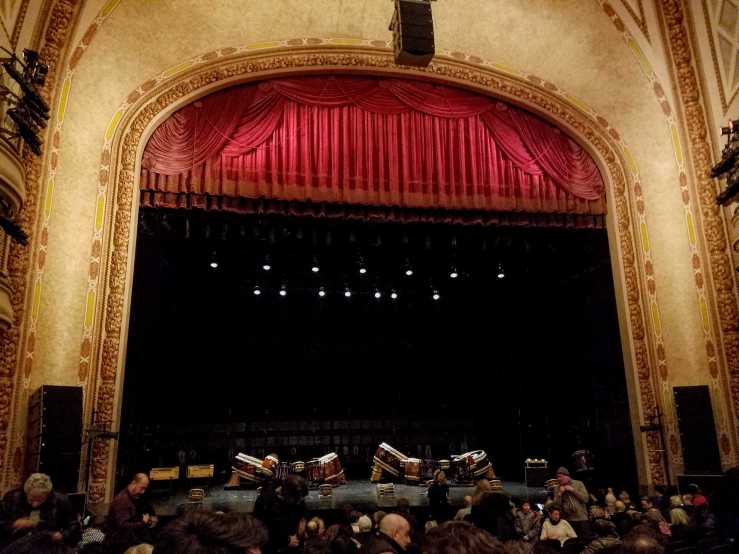
Kodo performed in BAM
March 4th, 2017