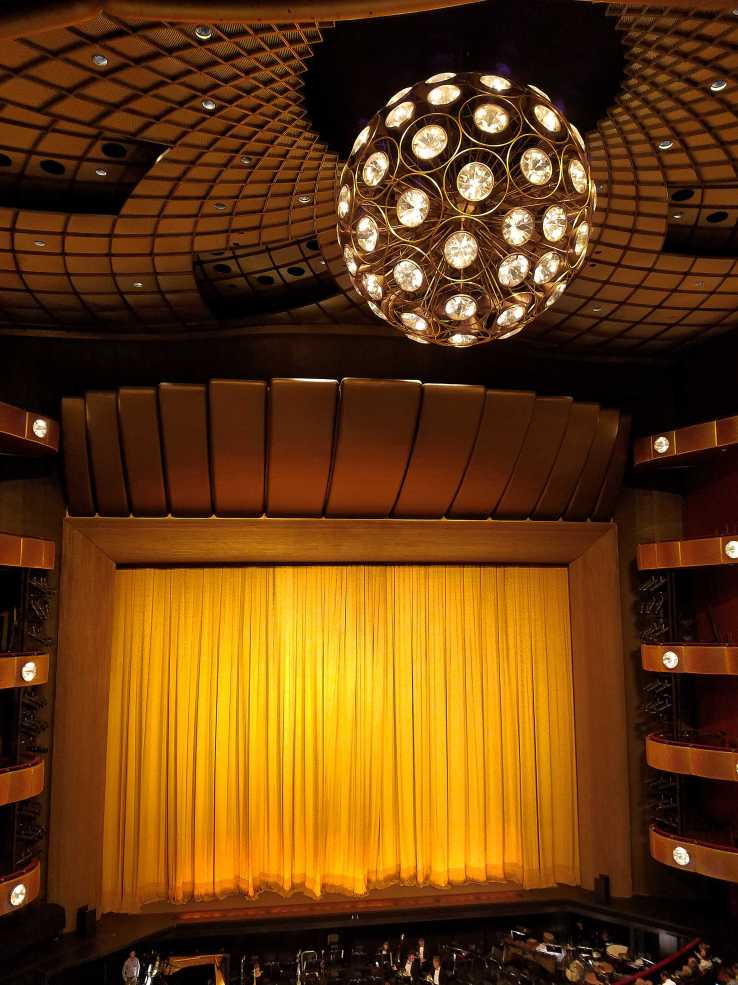
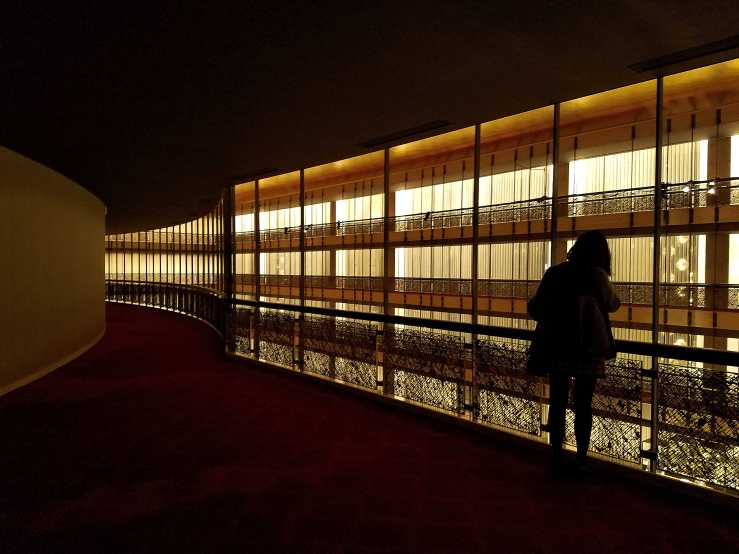
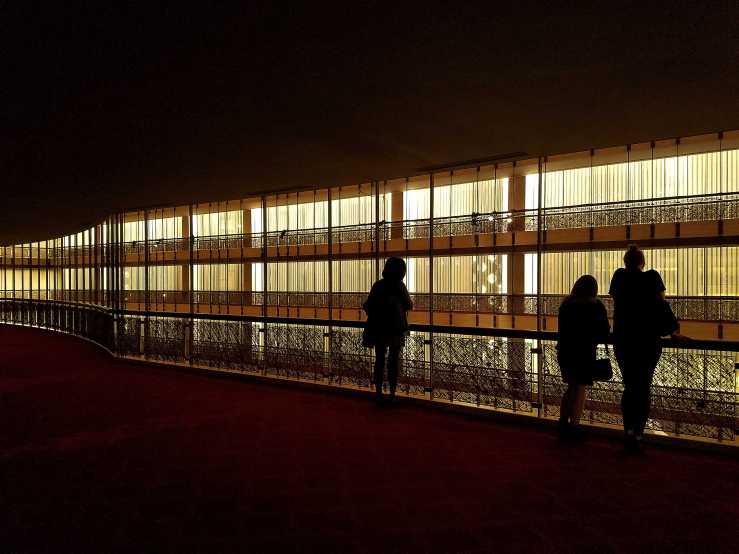
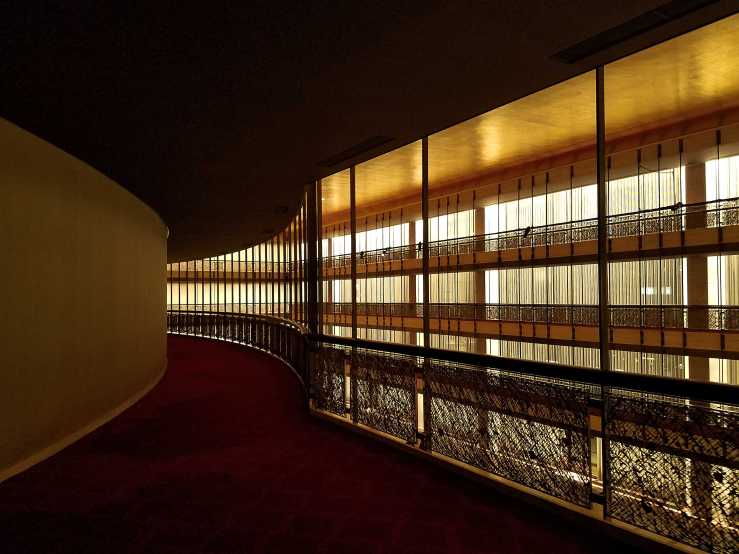
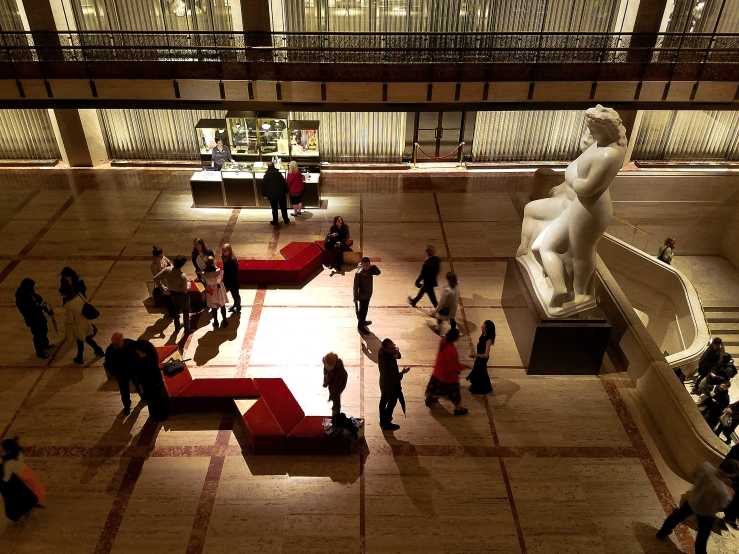
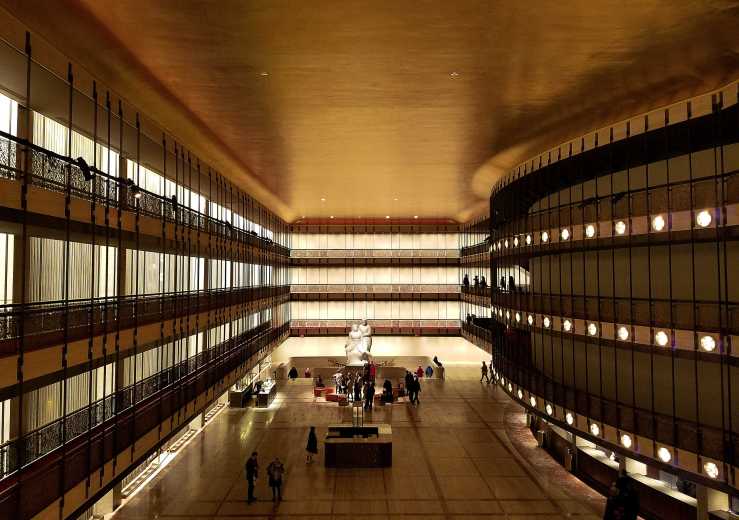
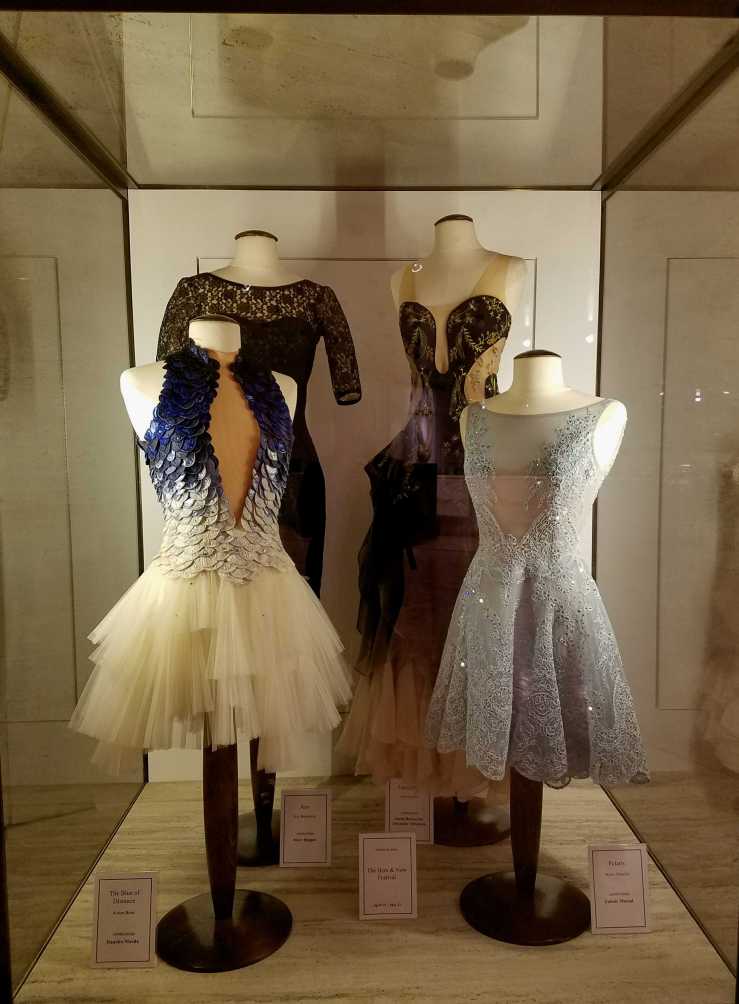
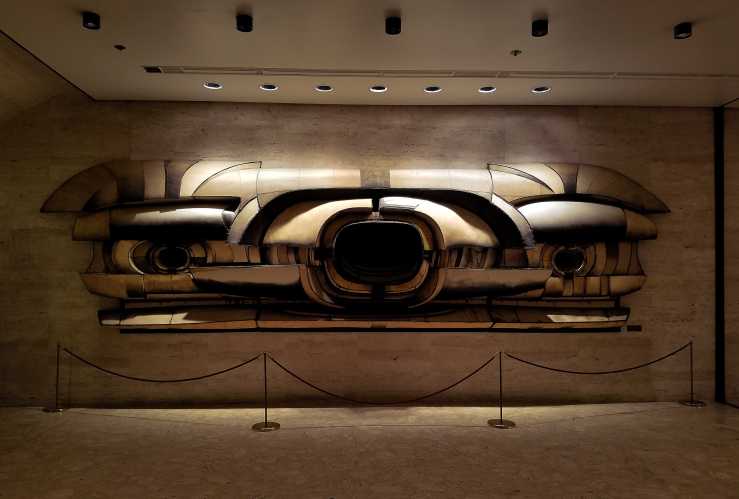
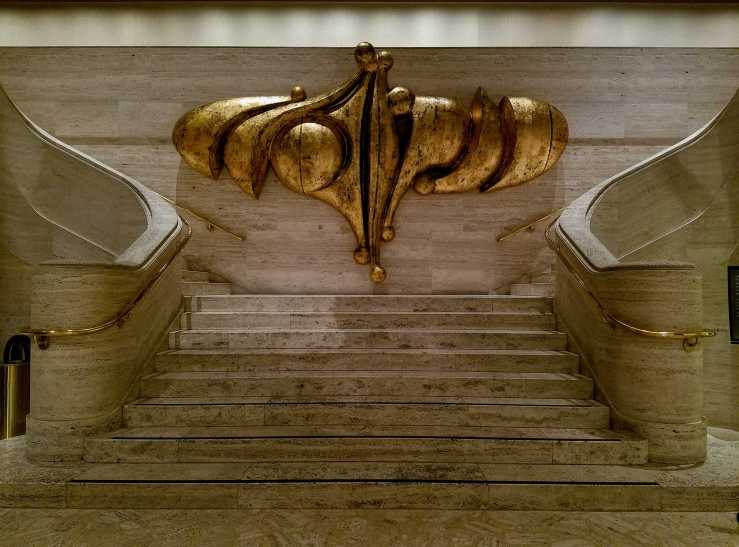
Venue: David H. Koch Theater
Performance: HERE/NOW No. 4
May 5th, 2017
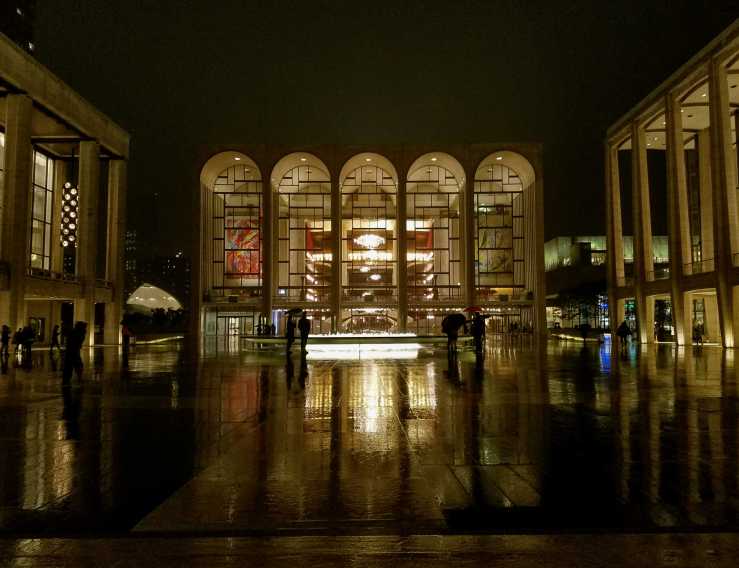
Venue: David H. Koch Theater
Performance: HERE/NOW No. 4
May 5th, 2017
Scotty the Bear (x2) and Cuddly the Cat, at a flower shop window.


Somewhere in Midtown.
May 7th, 2017
It’s been a great trip to Washington D.C., Baltimore and Boston, but – oh! – how I love coming back home; specially when home is this crazy, noisy, crowded, urban jungle of an island called Manhattan!
May All Your Pain be Champagne – I’ll drink to that!
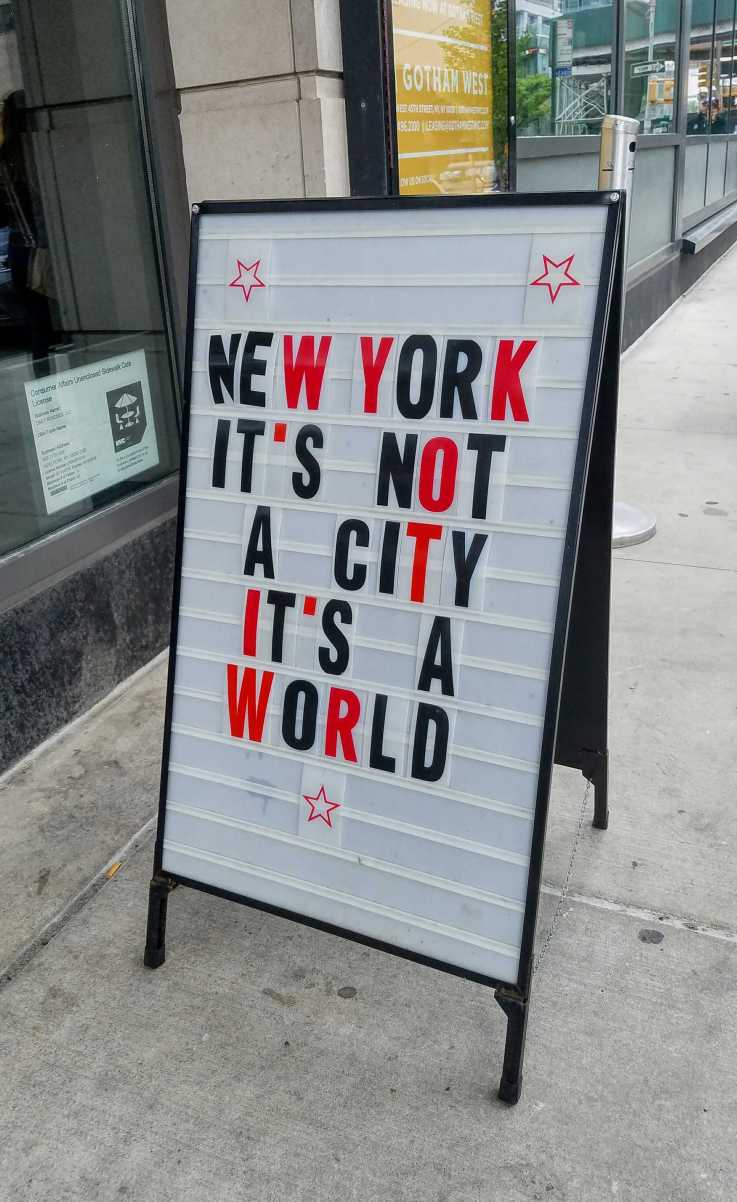

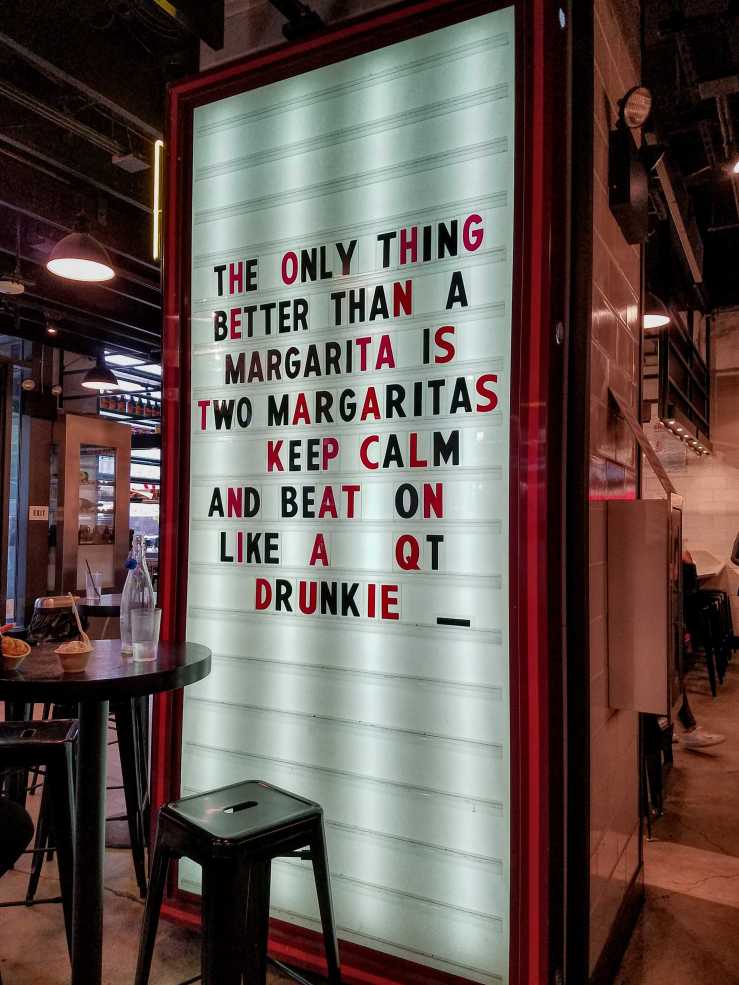
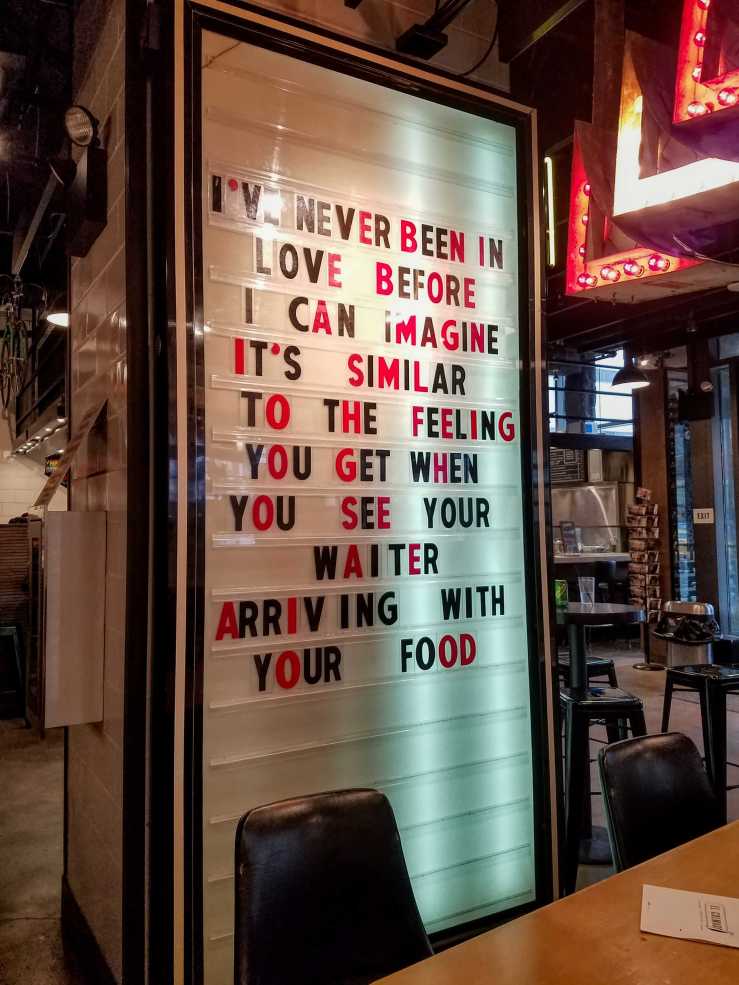

Gotham Market @ Hell’s Kitchen
May 6th, 2017
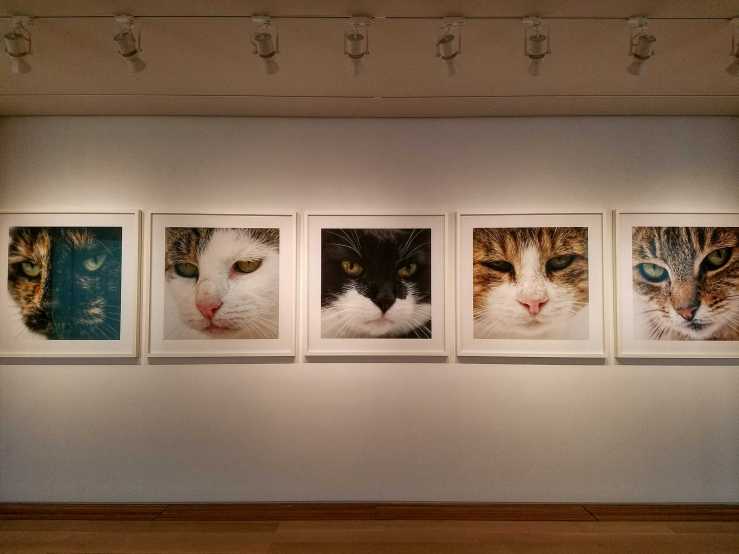
Su-Mei Tse (b. 1973) in collaboration with Jean-Lou Majerus
Sound for Insomniacs, 2007
5 Lambda digital prints on semi-glossy photo paper, two stools with integrated MP3 players, screens, and headphones.
For Su-Mei Tse, photographs alone are not enough to capture a cat’s unique personality. Here she presents large close-ups of five different cats, each with an expressive presence similar to traditional painted portraits, along with recordings of each cat purring.
Because every cat’s purr is unique but they all sooth, relax and may act as natural sleeping pills. Works for me, anytime!
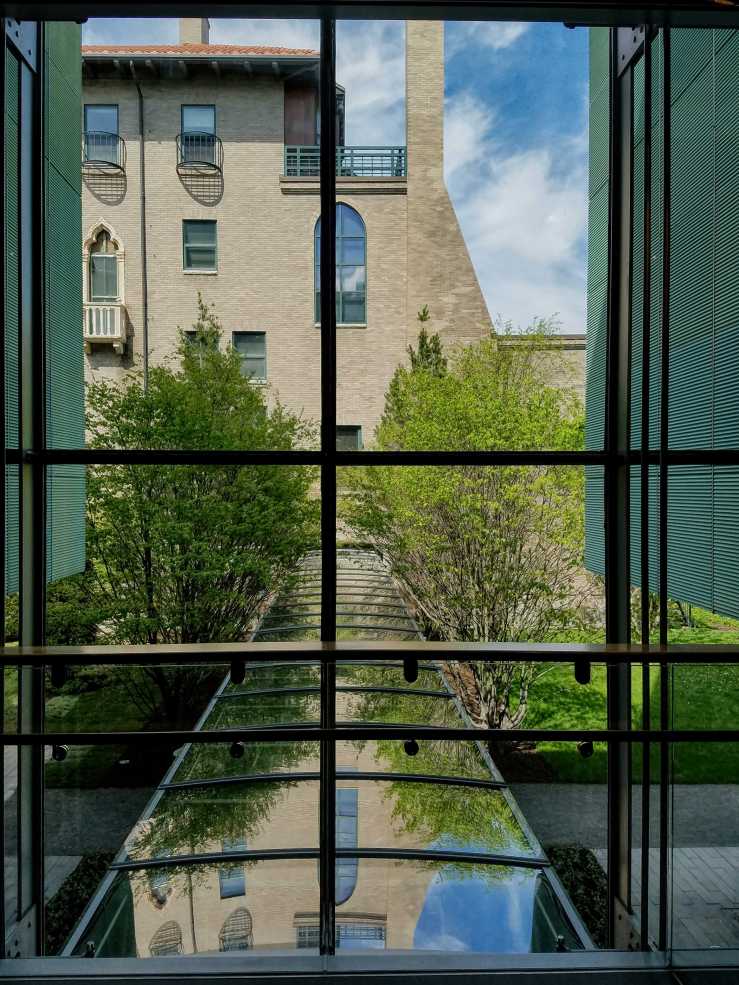
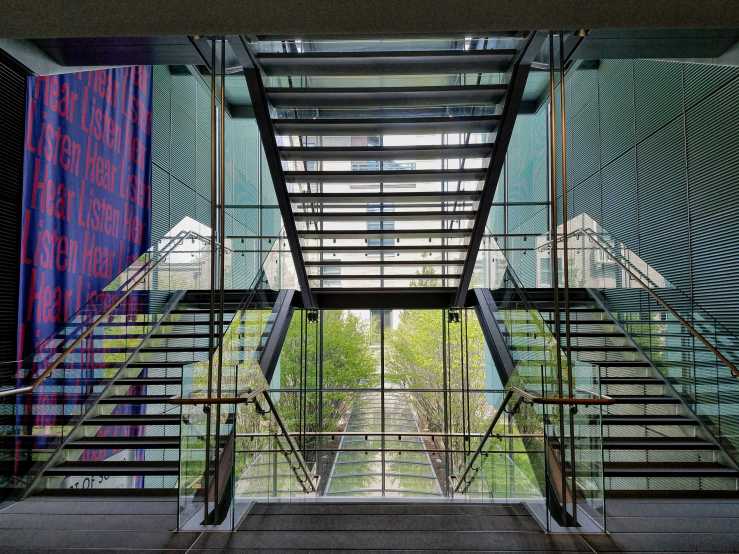
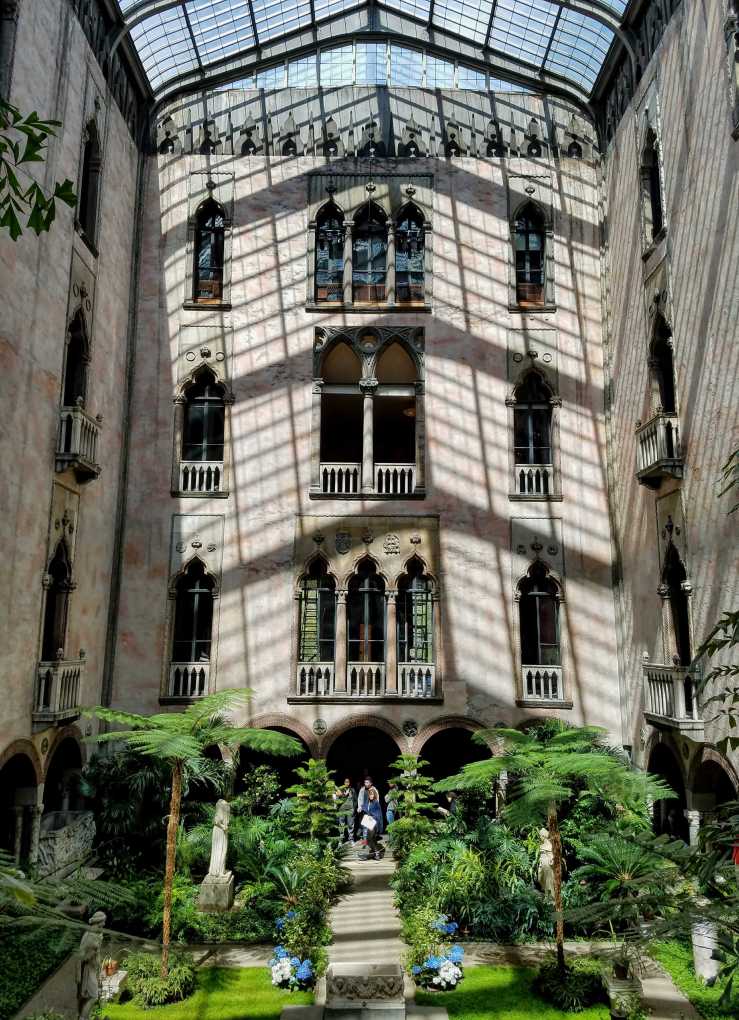
Isabella Stewart Gardner Museum
May 4th, 2017
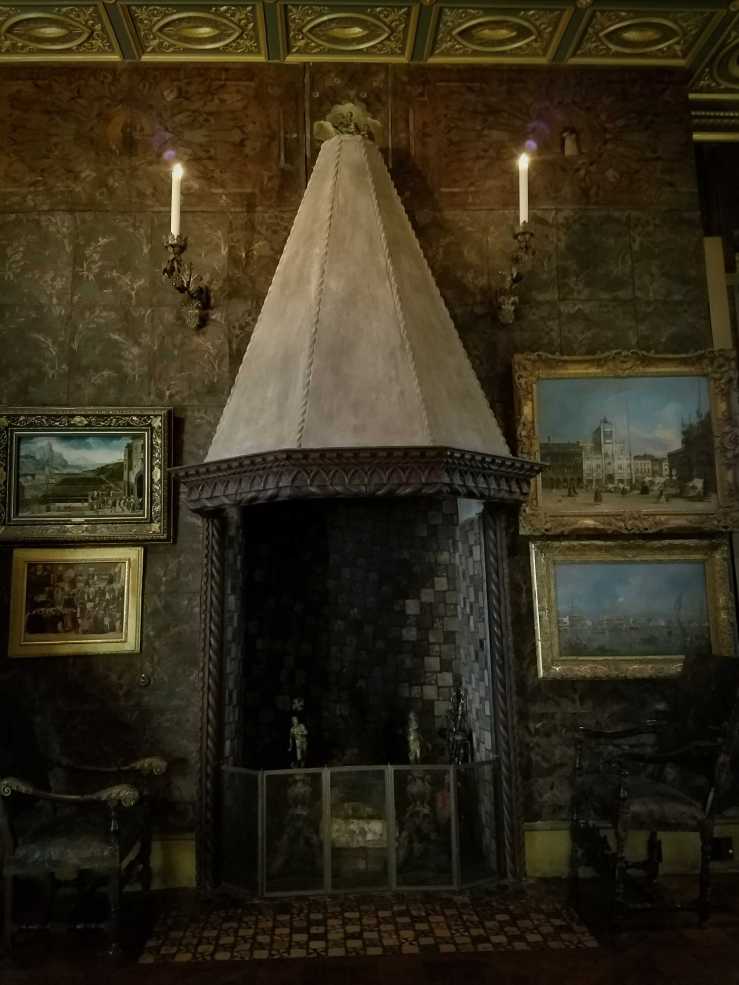
The title is highly subjective, of course; what we are looking at – and all we’ve seen so far – is but a fraction of The Gardner’s vast collection of artworks and beautiful objects.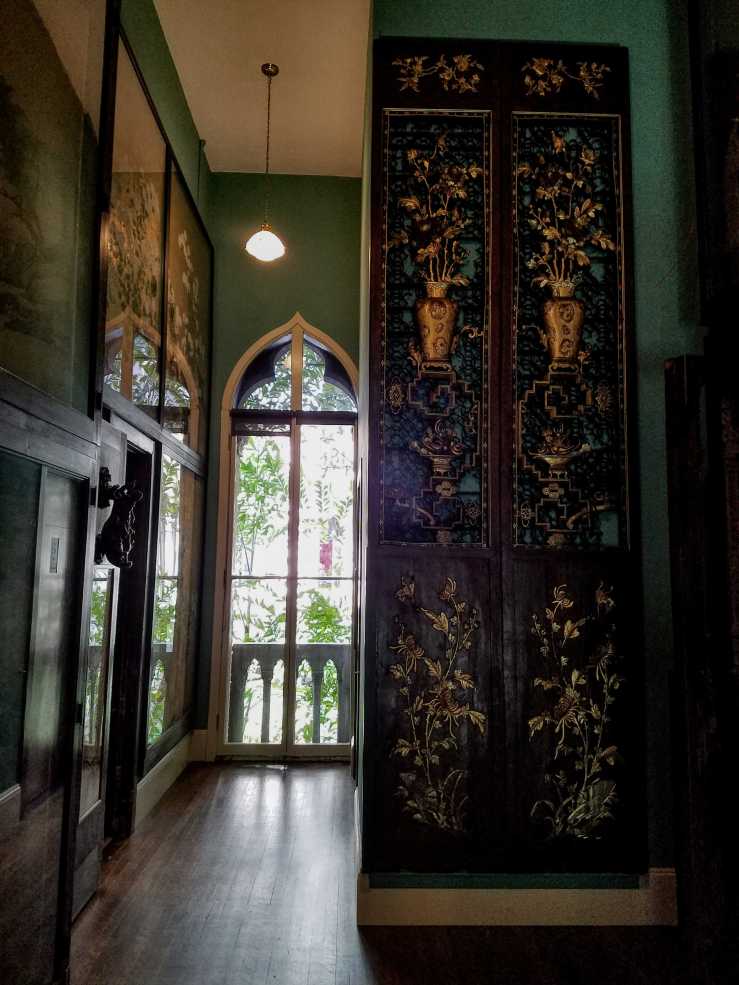
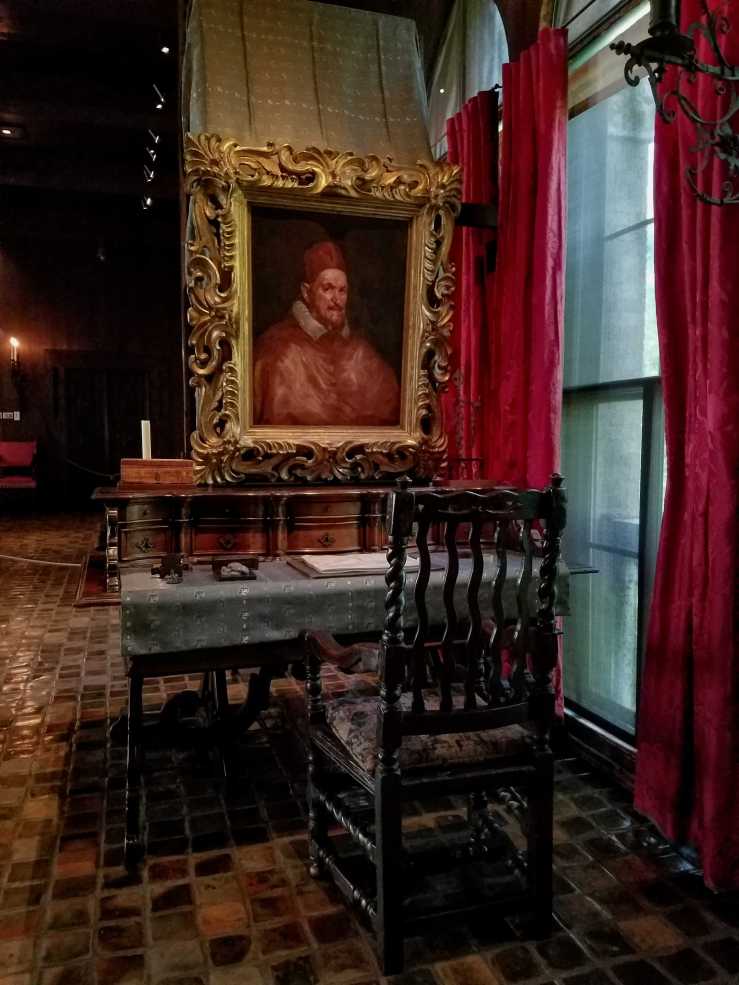
Look at the imposing Tapestry Room, for instance – imposing both in size and wealth – with its Flemish tapestries lining the walls…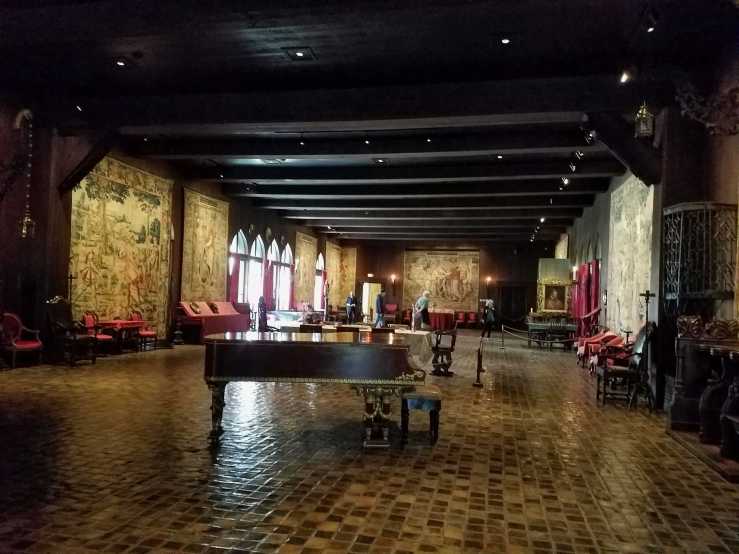 … and a portrait of Pope Innocent X, bearing an uncanny resemblance to a Velázquez but apparently it is not (but who the actually artist is, we know not)…
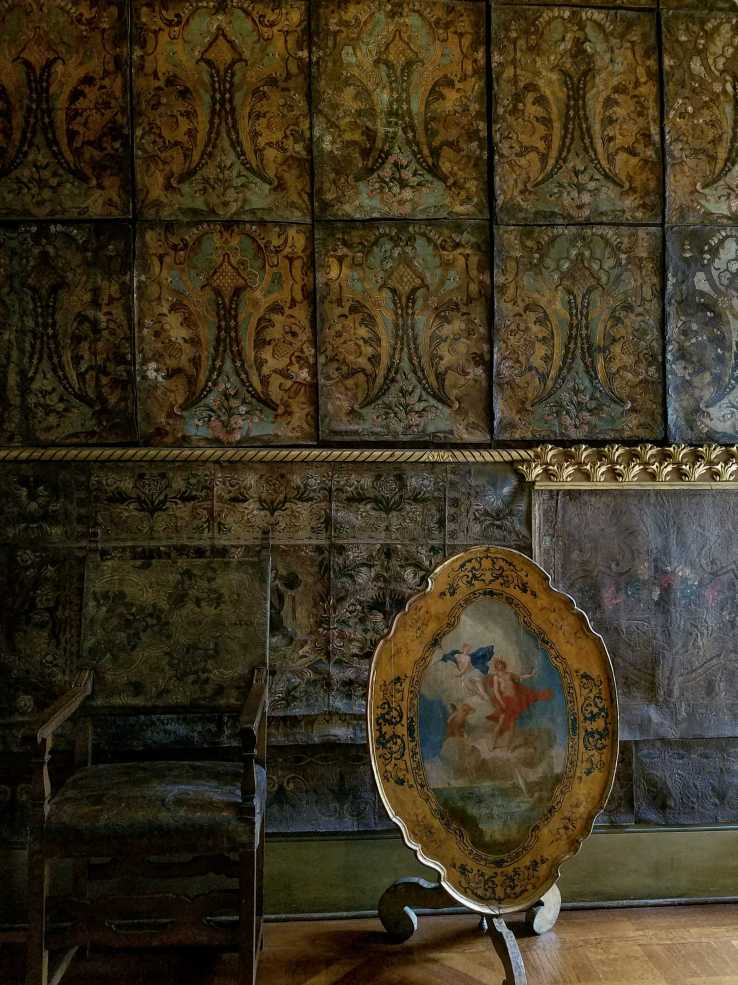
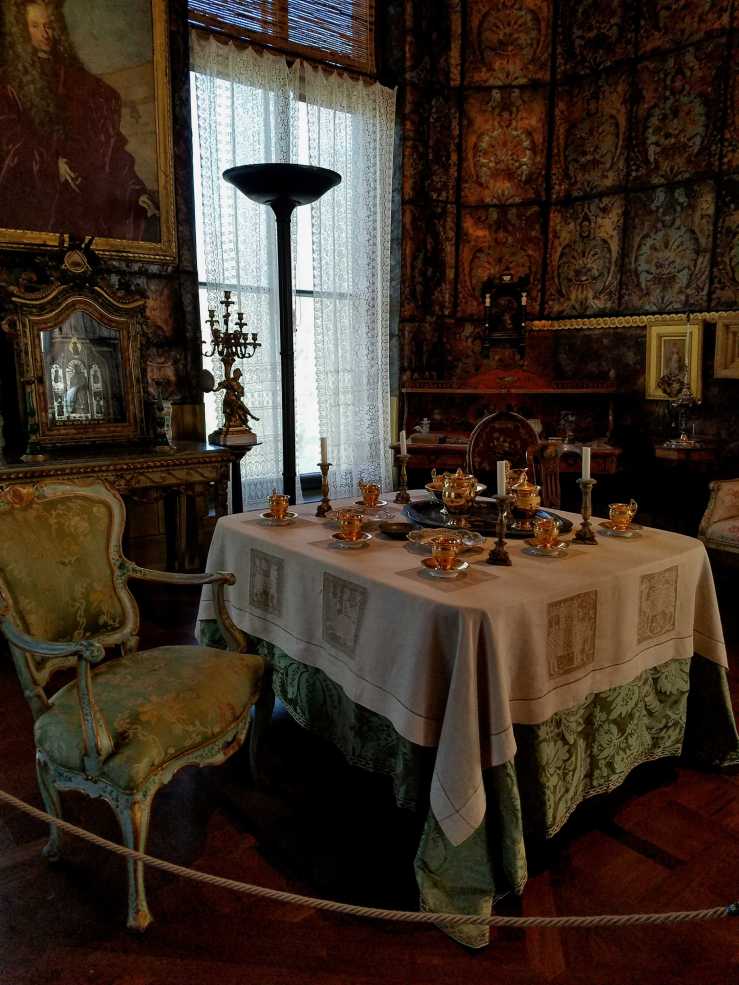
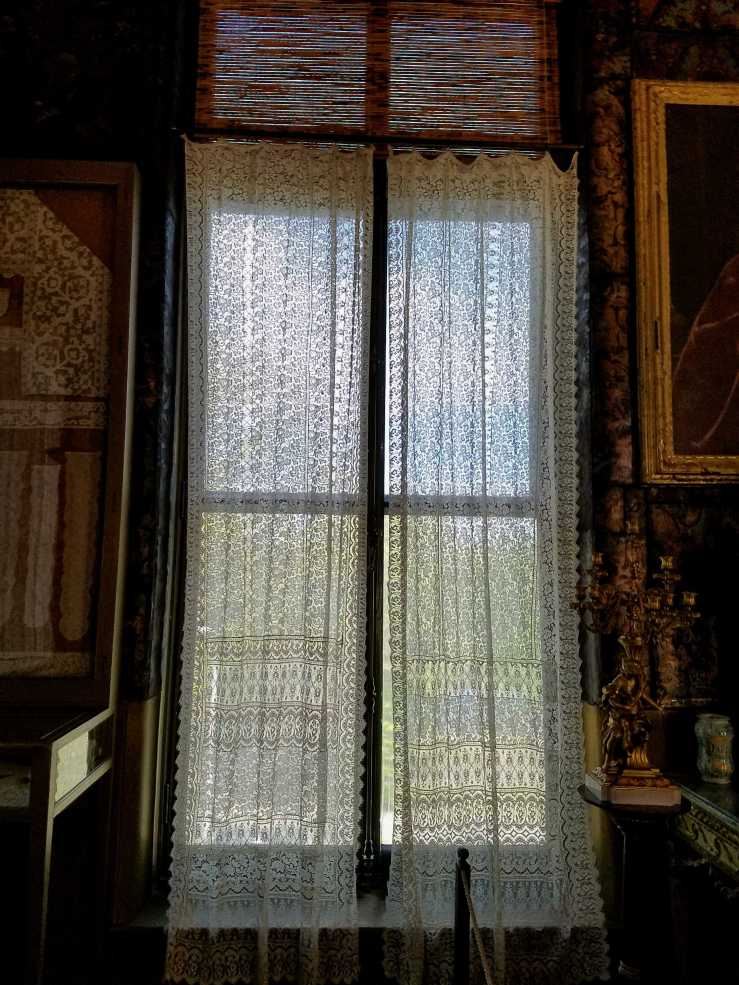
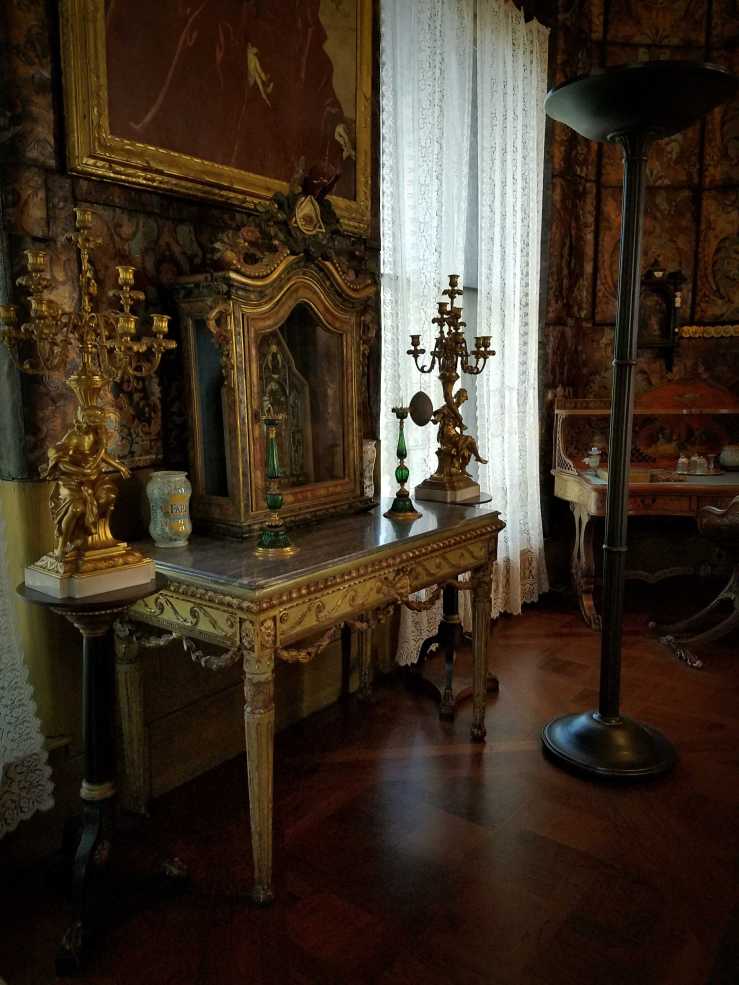
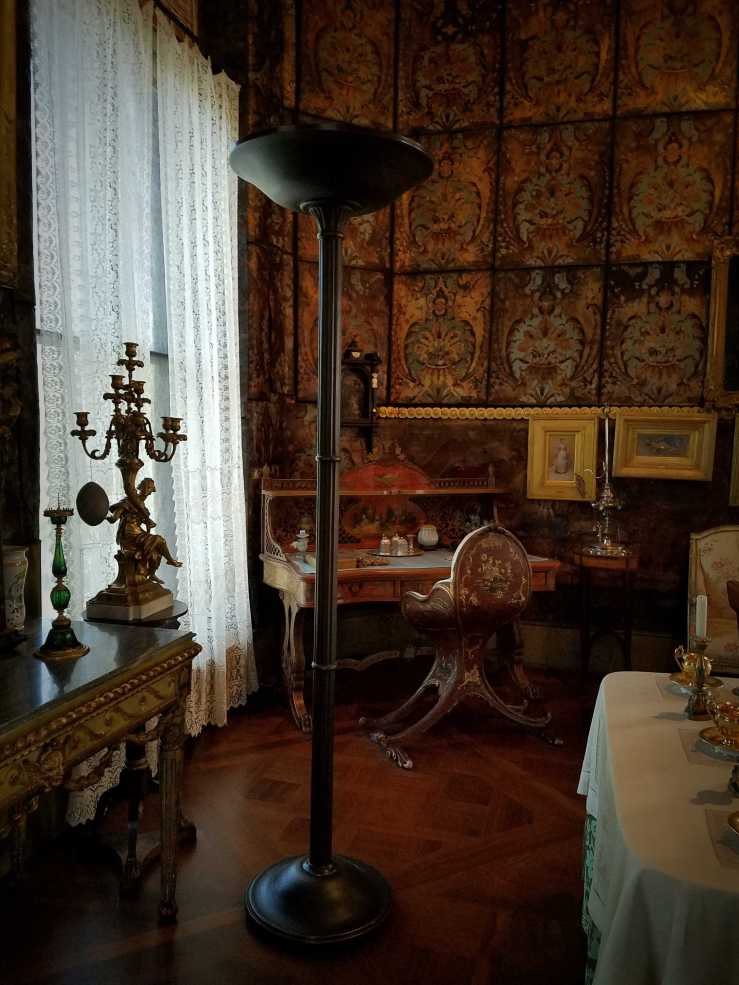
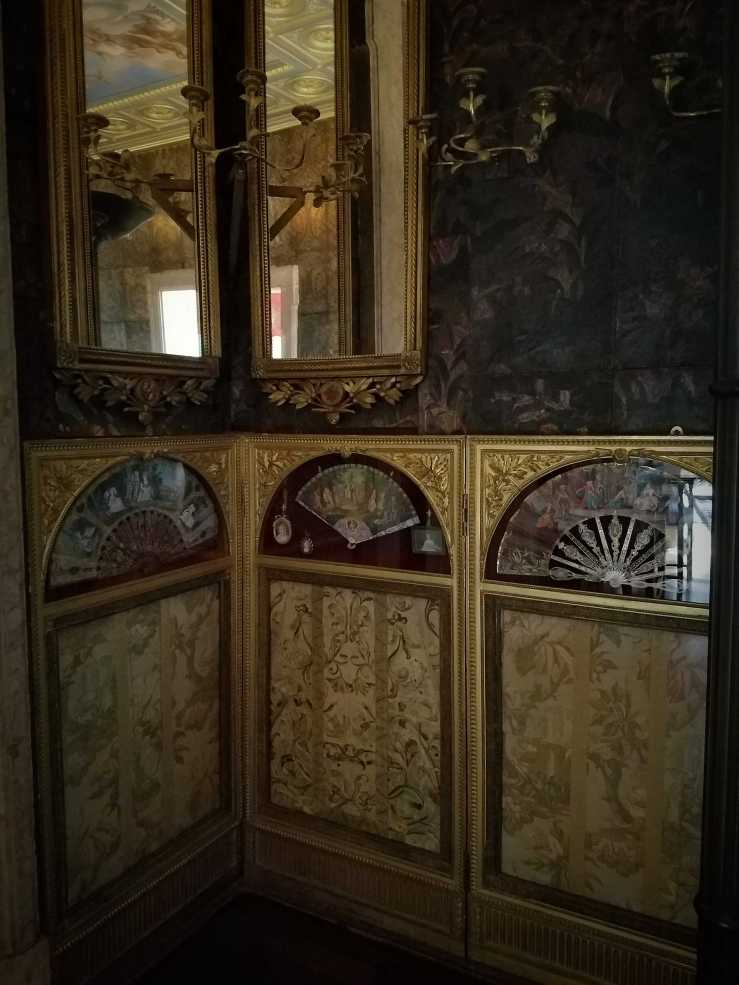
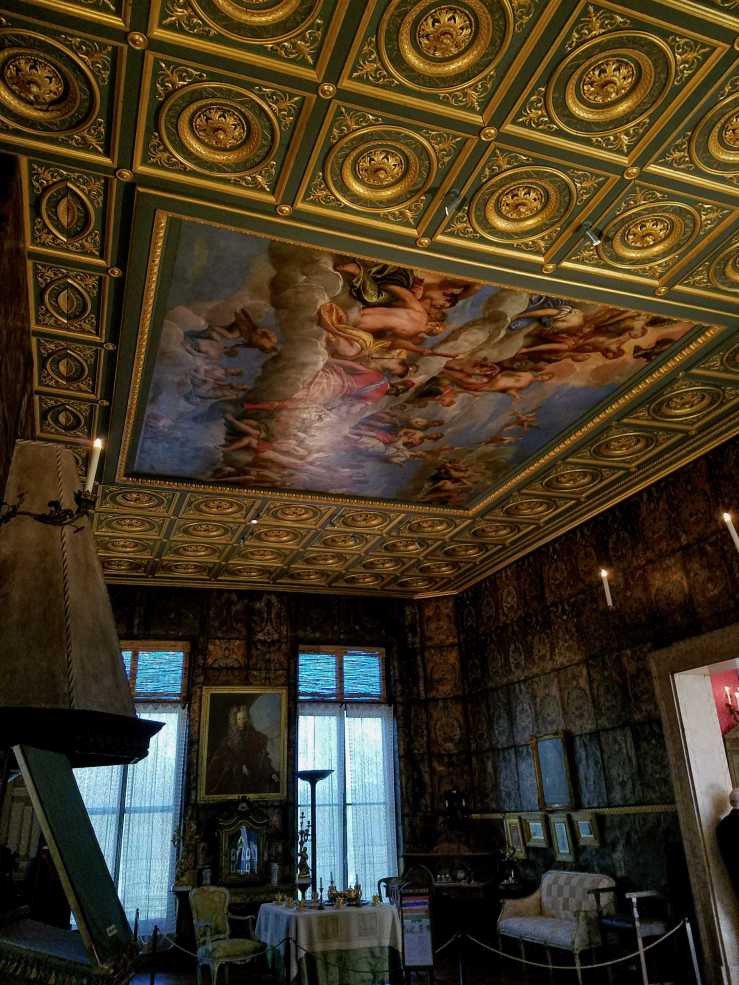
 Or the Veronese Room –
This room, which invites you to share Isabella Stewart Gardner’s love for Venice, takes its name from the painting on the ceiling. In 1899, while construction of the Museum was well under way, Isabella acquired The Coronation of Hebe, then attributed to Veronese. Gardner commissioned gilded paneling in Milan to frame the work in appropriate splendor. Rather than focusing on a single style or period, Isabella assembled around it a splendid mixture of objects that span diverse times and places. Stamped and painted leather panels from Spain, Italy, and the Netherlands line the walls. Gilded china saucers, cups, and a pitcher glisten on a small table at the room’s center. Balancing the stunning and huge Coronation on the ceiling are several pastels executed on an intimate scale by Isabella’s contemporary, James McNeill Whistler. 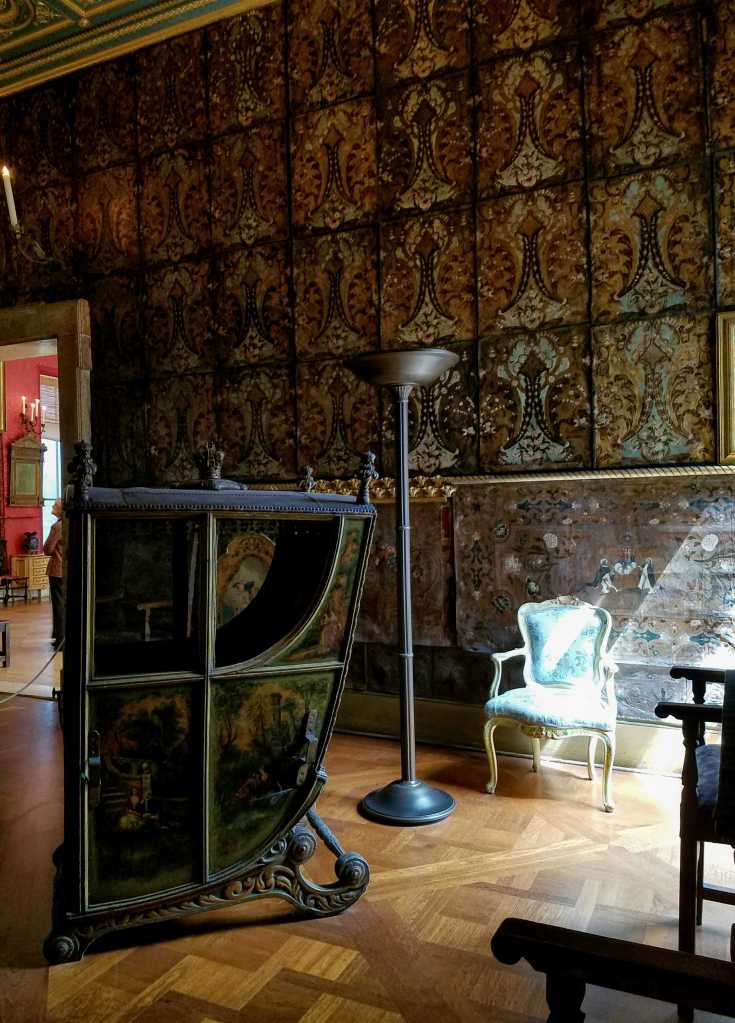
Crossing the Long Gallery, a young lady stops me in my tracks –
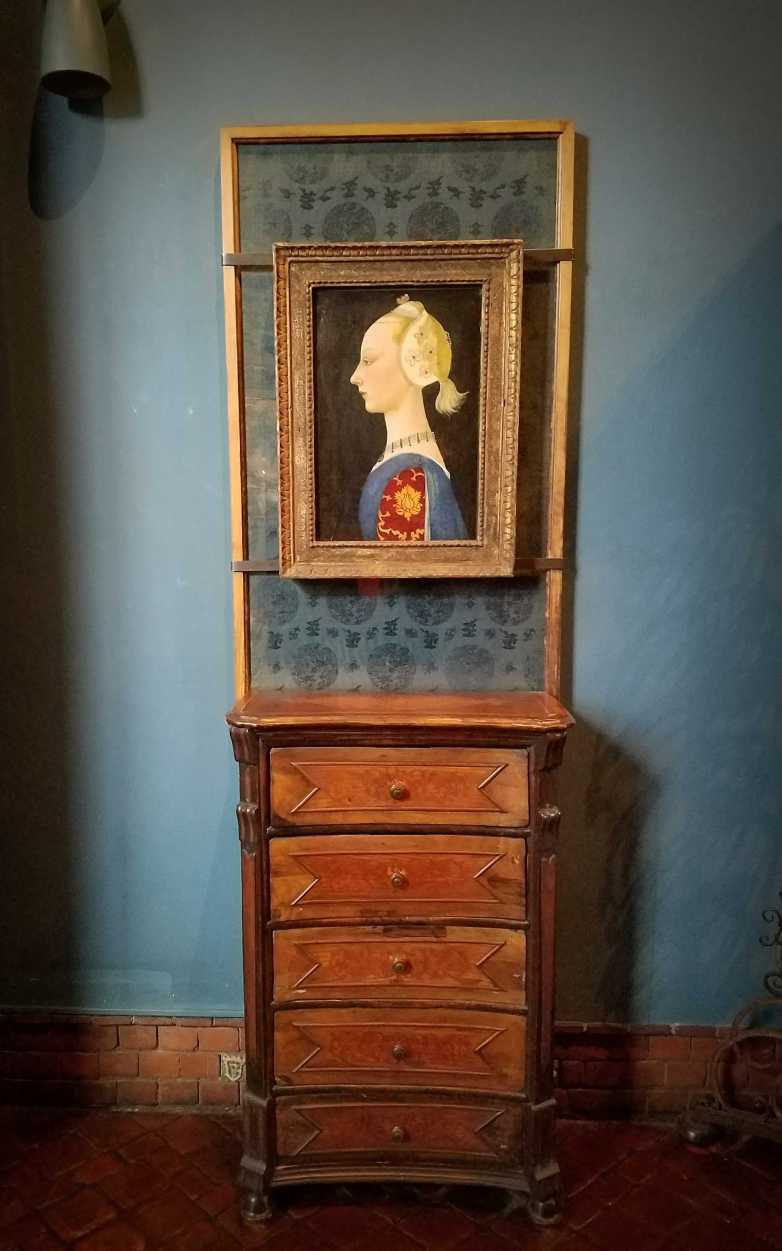
Attributed to Paolo Uccello (1397 – 1475)
A Young Lady of Fashion, early 1460s
The portrait has a highly decorative quality in which costume and ornament play a major role. The rather flatly modeled face is placed on an insubstantial bust set against a uniform blue background. The woman is portrayed both according to literary notions of female pulchritude, which called for fair skin and blonde hair, and the dictates of contemporary fashion. Costly brocaded fabrics, pearls, and precious stones serve not only to display the sitter’s familial wealth and status but also to enhance her physical appearance – in art, as in life. In addition to a red and gold brocade sleeve and a sleeveless overdress, the woman wears a head brooch, a pearl choker with jeweled pendant, and a white cap ornamented with pearls.
This fashionable beauty looks impassive, immobile, and immutable, as if she were outside space and time. Her portrait image has a static, stereotyped character, in which the sitter’s individuality is almost entirely suppressed in favor of the social ideals for which she stands.
Bought as a work by Domenico Veneziano, the portrait has also been attributed to Paolo Uccello and the so-called Master of the Castello Nativity.
Source: David Alan Brown, “A Young Lady of Fashion,” in Eye of the Beholder, edited by Alan Chong et al. (Boston: ISGM and Beacon Press, 2003): 50.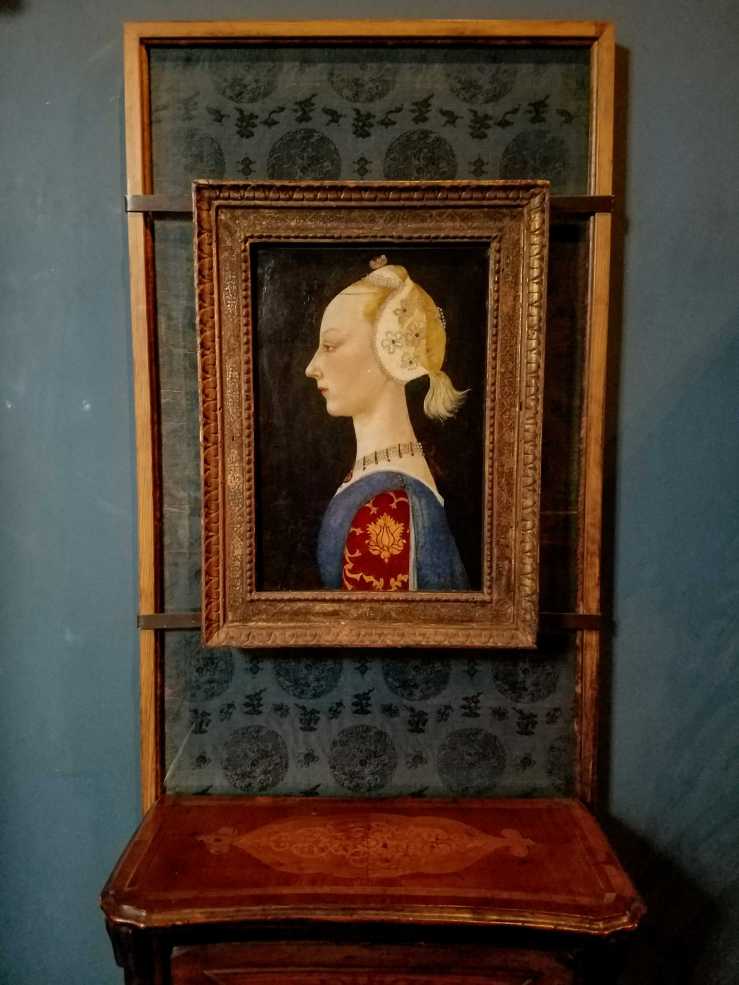
The Chapel –
at the far west end of the Long Gallery, houses a consecrated altar that was used by Isabella Stewart Gardner–a devout Anglo-Catholic–for the celebration of Mass. Its function as an active sacred space persists to this day. Every April, as specified in Isabella’s will, a memorial service honors her memory. Liturgical items, including an early 17th century Italian carved ivory crucifix and a cloth that Gardner crocheted herself, adorn the altar table. A magnificent Gothic stained-glass window from the cathedral of Soissons in France stands as the centerpiece of the Chapel.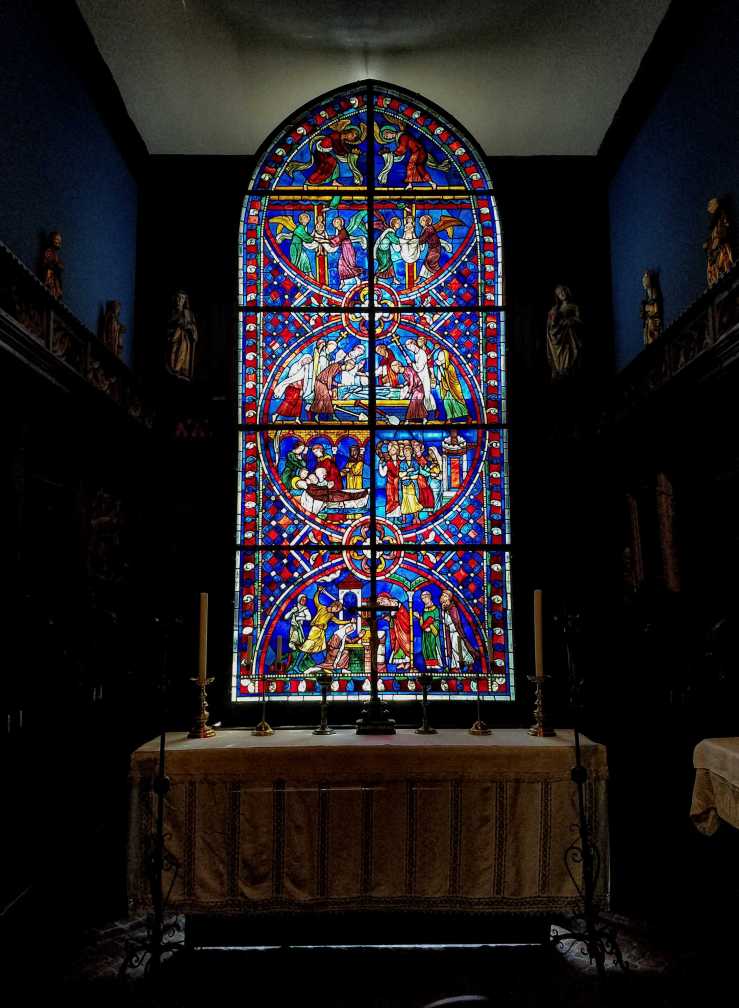
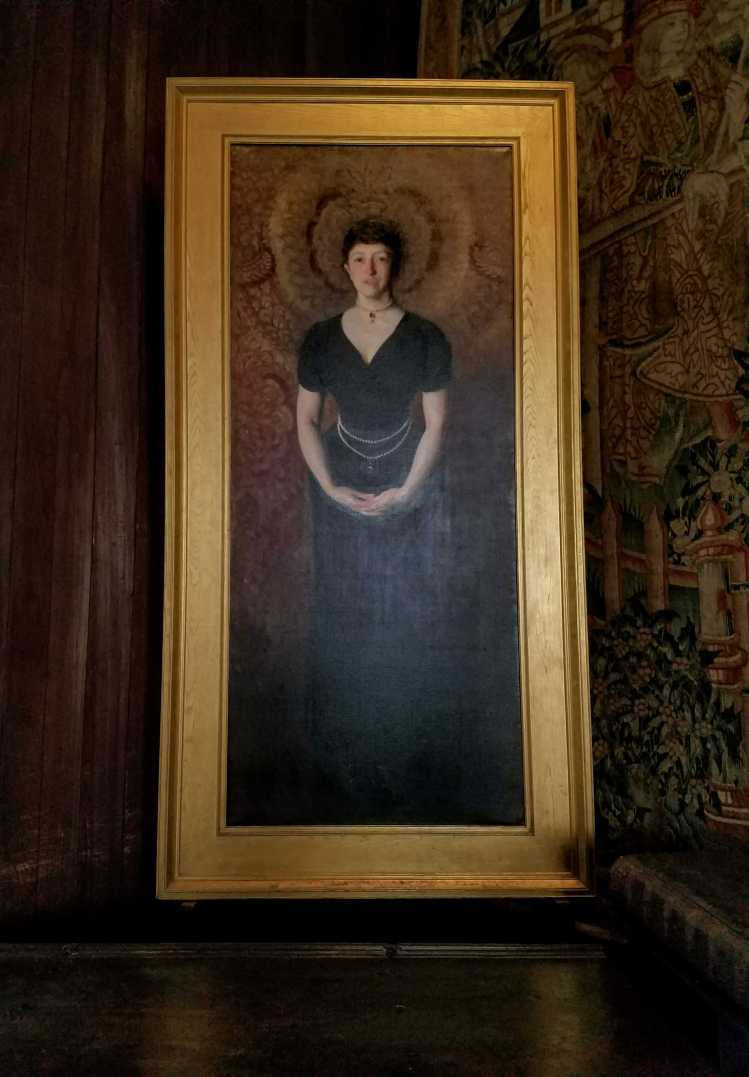
And last, but not least, Isabella Gardner herself, gracing the Gothic Room –
Mrs. Gardner sat for Sargent during his visit to Boston in January 1888. He was paid $3000 for the portrait, which was exhibited to great acclaim at Boston’s St. Botolph Club. The work also inspired gossip and legend: someone jokingly titled it “Woman: An Enigma,” while others believed that the sensuous display of flesh deliberately echoed the scandal recently created by Sargent’s Madame X. Mrs. Gardner herself said that she rejected eight renderings of the face until she was satisfied. Jack Gardner seems to have asked his wife not to publicly show the portrait again while he was alive, and indeed the portrait was placed in the Gothic Room, which remained private until Mrs. Gardner’s death. In its gallery, surrounded by altarpieces, stained glass, and religious statuary, the sacramental quality noted by nineteenth-century reviewers is even more pronounced.
Source: Eye of the Beholder, edited by Alan Chong et al. (Boston: ISGM and Beacon Press, 2003): 204.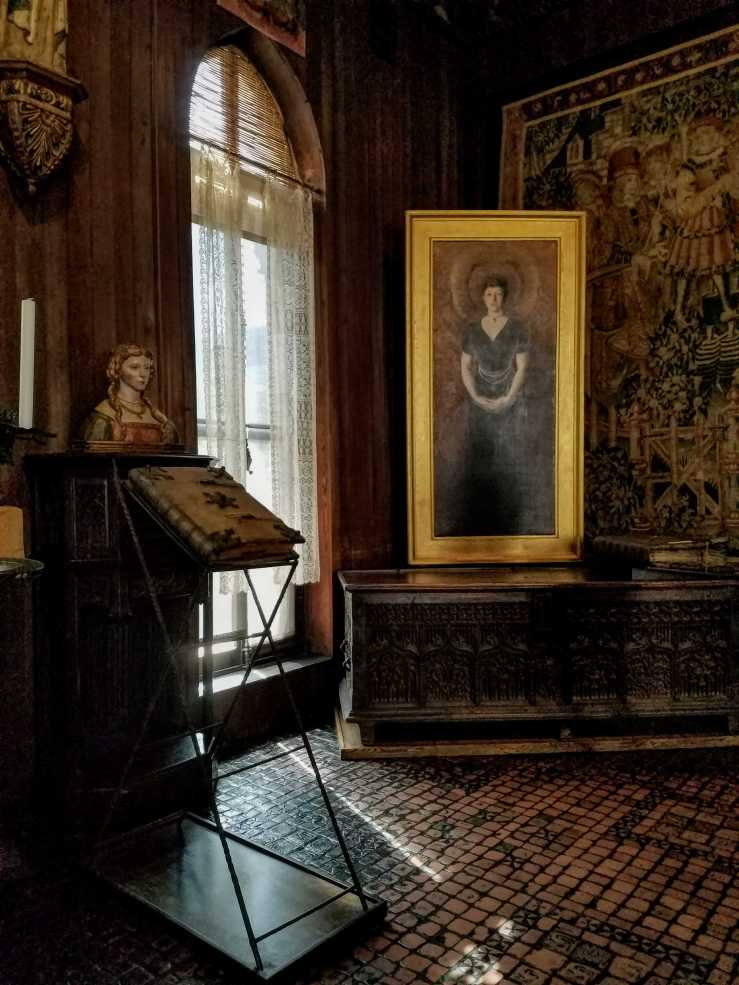
Isabella Stewart Gardner Museum
May 4th, 2017
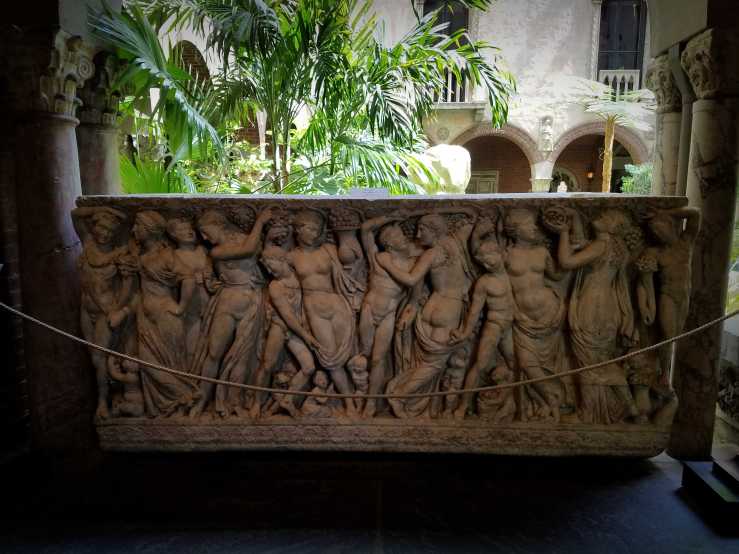
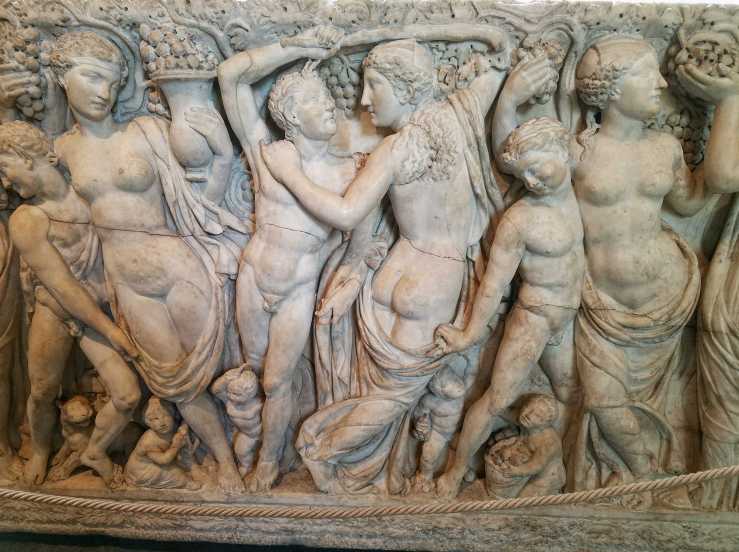
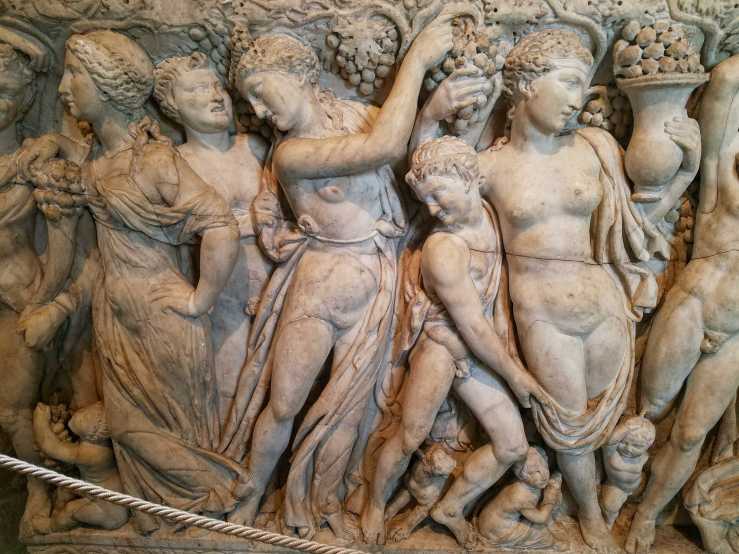
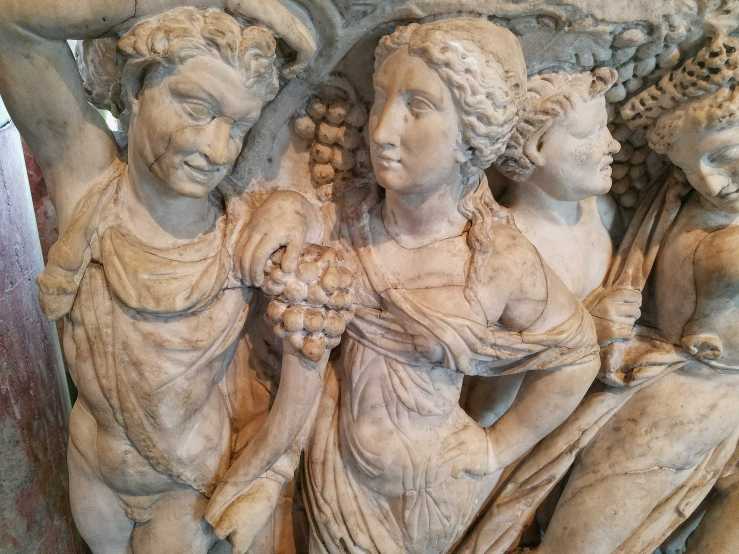
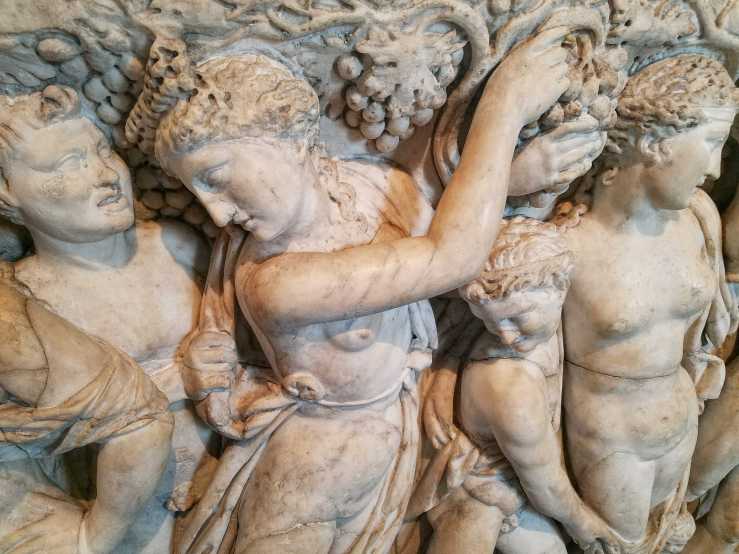
In terms of antiquarian fame—marbles copied in sketchbooks, paintings, or sculptures from the Renaissance on—the most important work of art in the Gardner collection, and perhaps of its type in America, is the sarcophagus with satyrs and maenads gathering grapes.
This large, rectangular coffin of Pentelic marble with one long side and both ends elaborately carved and polished (the second long side left in a less finished state because it stood against a wall in the funerary chamber), was exported from Athens to the area of Rome in the late Severan period, between circa 222 to 235 AD. The occupants of the monument are unknown, since the lid was lost or destroyed some time around 1500. The groups of reveling couples on all sides, combined with the type of lid found on other examples of this Attic imperial sarcophagus, suggest a husband and wife were shown on top, as if reclining at a symposium on an elaborate couch.
The art-historical diarist and cicerone of the mid-cinquecento, Ulisse Aldrovandi, reported that the sarcophagus came from Tivoli and was first to be seen in Rome in the Villa Farnesina in the 1550s. For over a quarter of a millennium the monument ornamented the courtyard of the Palazzo Farnese in the heart of the city, passing finally to the Villa Sciarra. In 1898 it was purchased from the Sciarra collection, through Richard Norton.
The carving of the satyrs and maenads was especially suited to the artistic tastes of Mannerist and Baroque Rome, providing one of the most elegant examples of Greek imperial optic elongation to have survived from ancient times. The Farnese-Gardner sarcophagus can be considered one of the latest expressions of monumental pagan sculpture used for non-historical and decorative funerary purposes. As such it makes a perfect transition through the sculptures of the Middle Ages at Fenway Court to the cinquecento paintings with antiquarian flavor, like Titian’s Europa, in the rooms upstairs.
Source: Cornelis C. Vermeule (1978), “Sarcophagus: Revelers Gathering Grapes”, in Eye of the Beholder, edited by Alan Chong, et al. (Boston: ISGM and Beacon Press, 2003): 12-13.
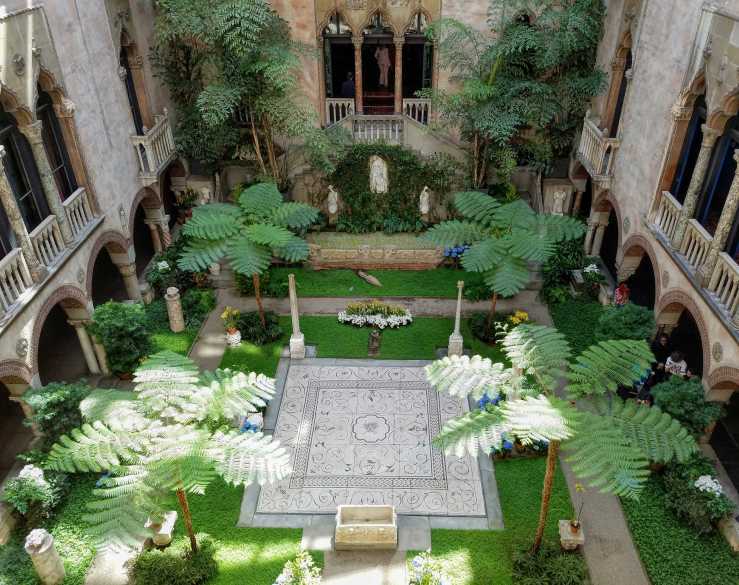
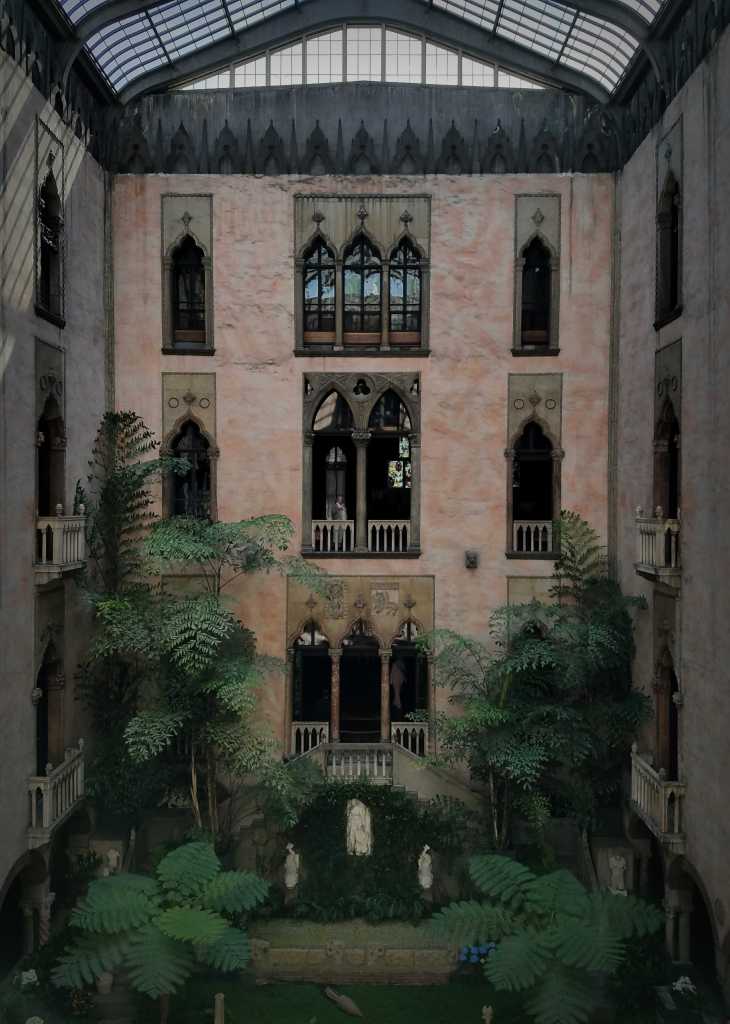
Isabella Stewart Gardner Museum
May 4th, 2017
We start at the Macknight Room, the only one in the Museum to be named after a contemporary artist. Dodge Macknight’s watercolours may be decorating all four walls but, today, let us focus on my favourite object adorning the room – a desk with two side cabinets (scrivania con due mobili da appoggio); second half of the 18th century. Next, a passage by Worthington Street Entrance –
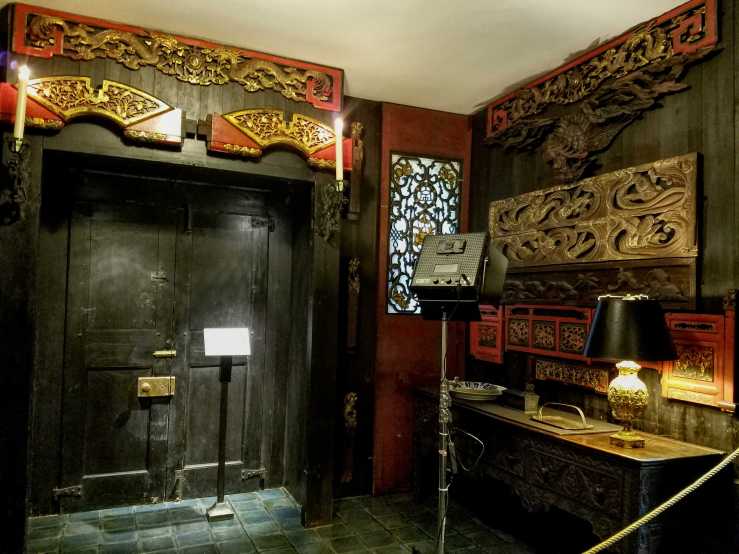
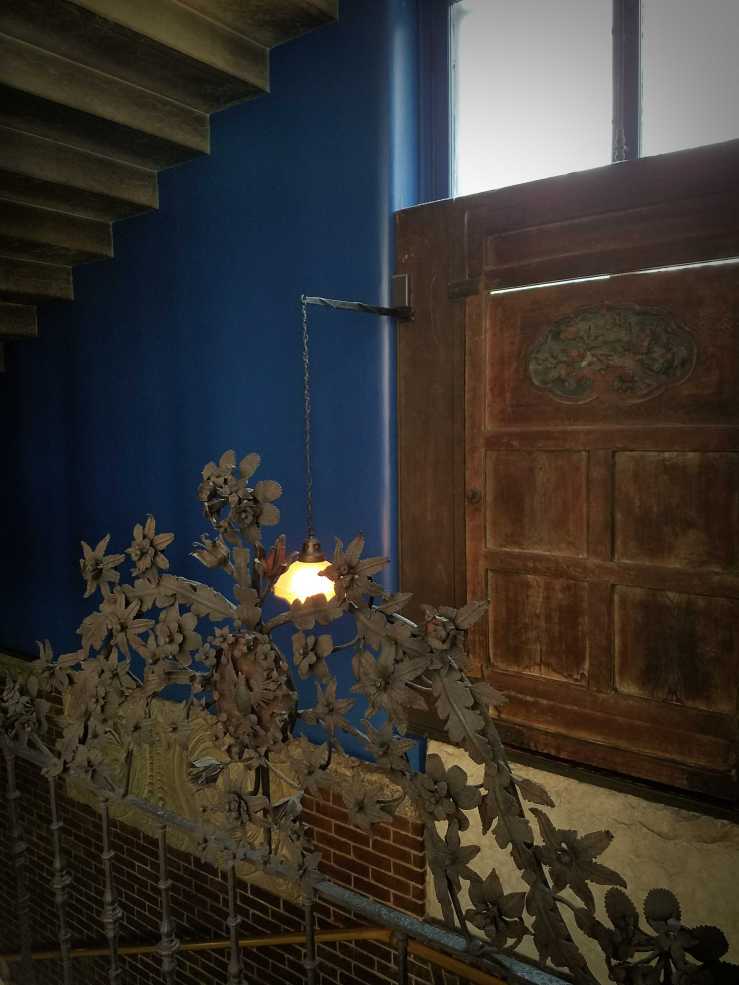
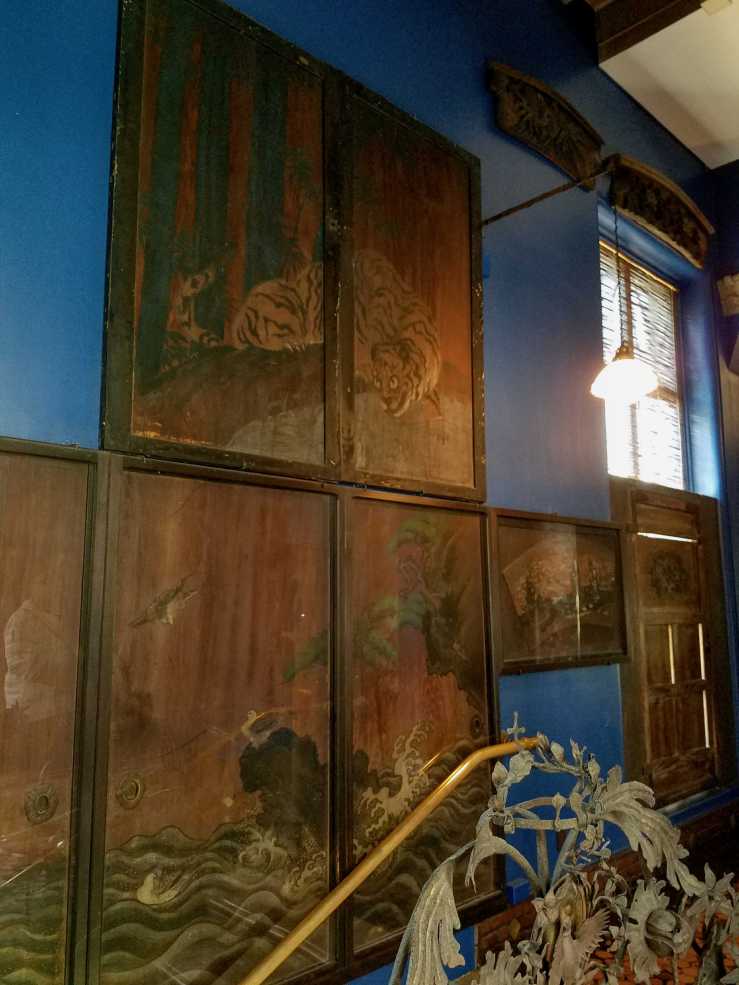
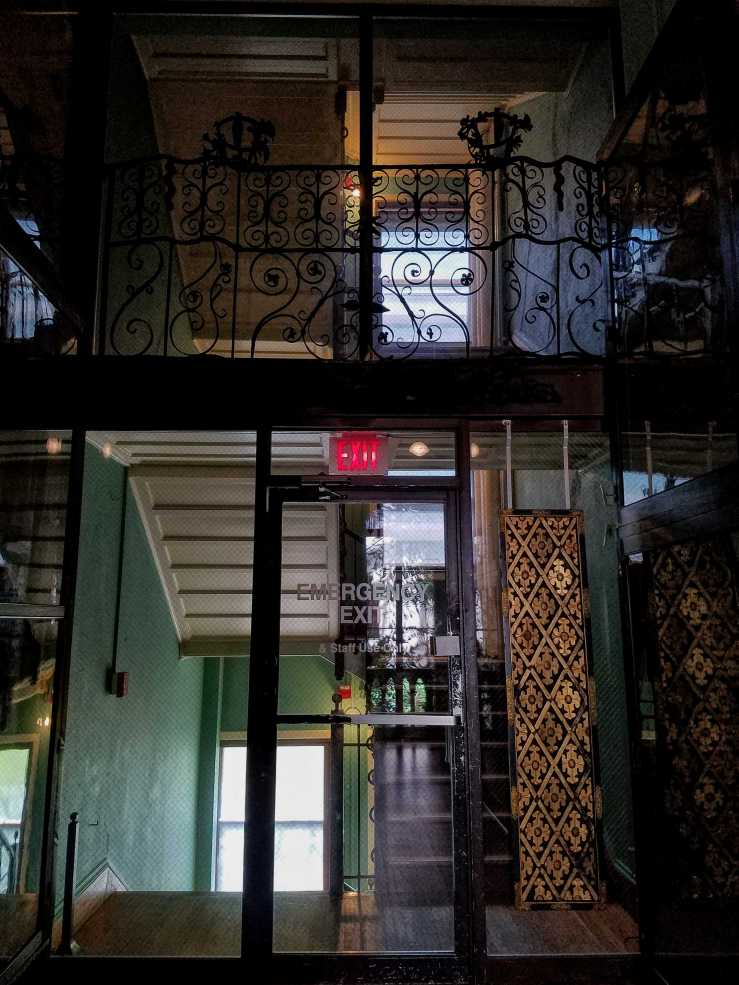
When Isabella Stewart Gardner built her museum, she made the top floor her residence and established a personal entrance to the building on Worthington Street (today Palace Road). In the spring of 2017 this space was restored to recreate her private foyer. Imagine Gardner shaking off her umbrella and enjoying artworks recently reinstalled as they were in her own time!
 But the Museum’ eclectic collection is not only renowned for its beauty; twenty-eight years ago, it also became the focus of the world’s largest heist. In the early morning hours of March 18, 1990, a pair of thieves disguised as Boston police officers entered the Gardner Museum, tied up the guards and stole 13 works of art. The entire operation took 81 minutes and the works have never been recovered. The Museum, however, remains optimistic and offers $10 million for any information leading to the stolen art.
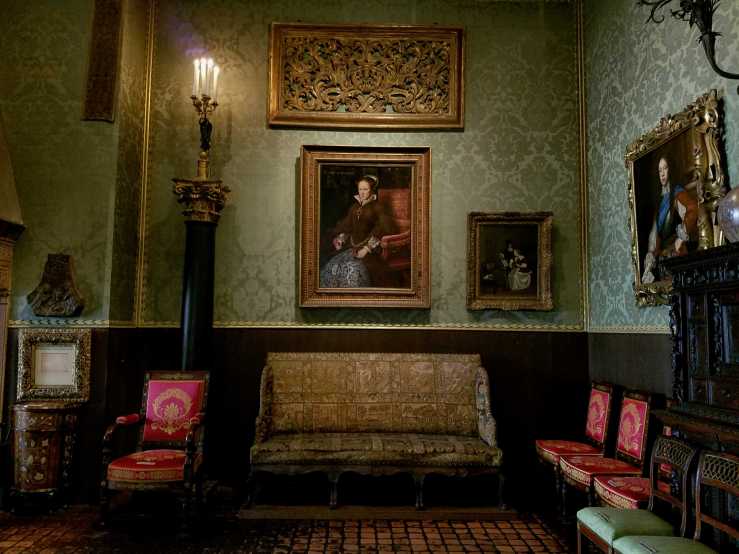
This is the Dutch Room, on the second floor. Six works of art were stolen from here, including a Rembrandt self-portrait; one of his finest narrative paintings, A Lady and Gentleman in Black; and his only seascape, Christ in the Storm on the Sea of Galilee; as well as Johannes Vermeer’s The Concert.
Empty frames remain in their original position, awaiting for the art to return.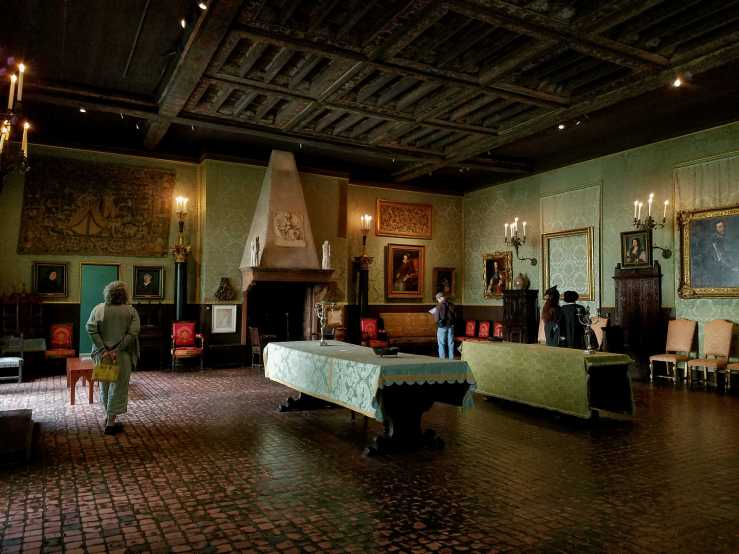
This is where Vermeer’s painting The Concert stood. One of only 36 by Vermeer in existence, this is the most valuable stolen painting—and perhaps the most valuable stolen object—in the world.
Isabella Gardner purchased The Concert in 1892 at auction in Paris. 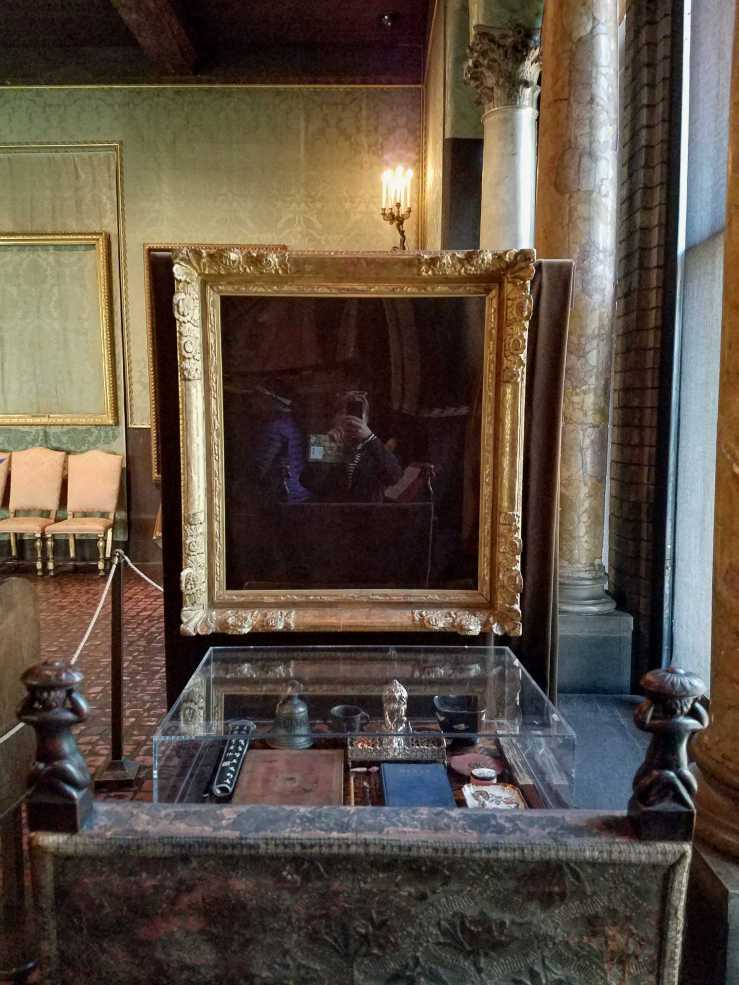
The Concert (c. 1664)
Johannes Vermeer
Oil on Canvas 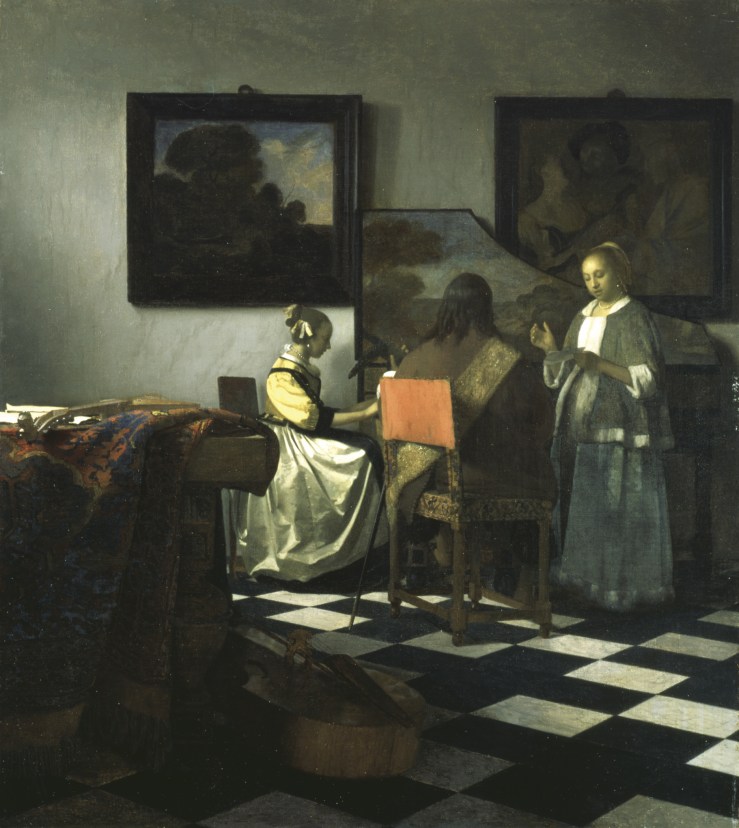
Isabella Stewart Gardner Museum
May 4th, 2017
We continue our walk with a brief stop by the Blue Room, one of the most intimate and personal spaces, with objects that reflect Isabella’s personal relationships. In the early days of the Museum the Blue Room welcomed concert goers, serving as the ladies’ reception area. We stop long enough to throw envious stares at the luxurious locks of the lady depicted in Howard Gardiner Cushing’s – aptly named – painting ”The Shower of Gold” (1908).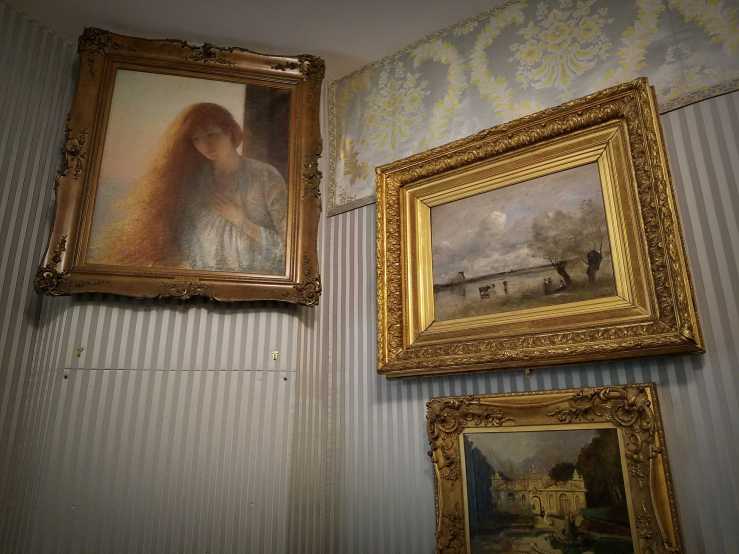
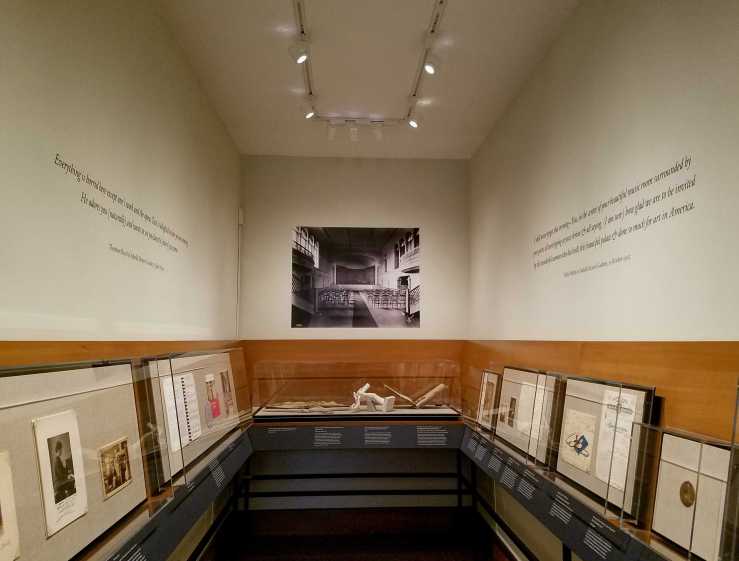
Next, we enter the ”Vatichino” (the Little Vatican), a small and narrow room, thus named teasingly by Isabella precisely because it is so tiny.
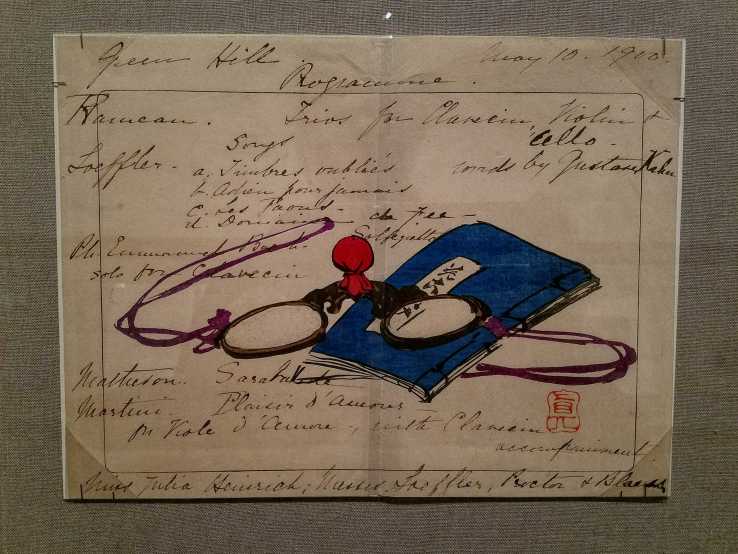
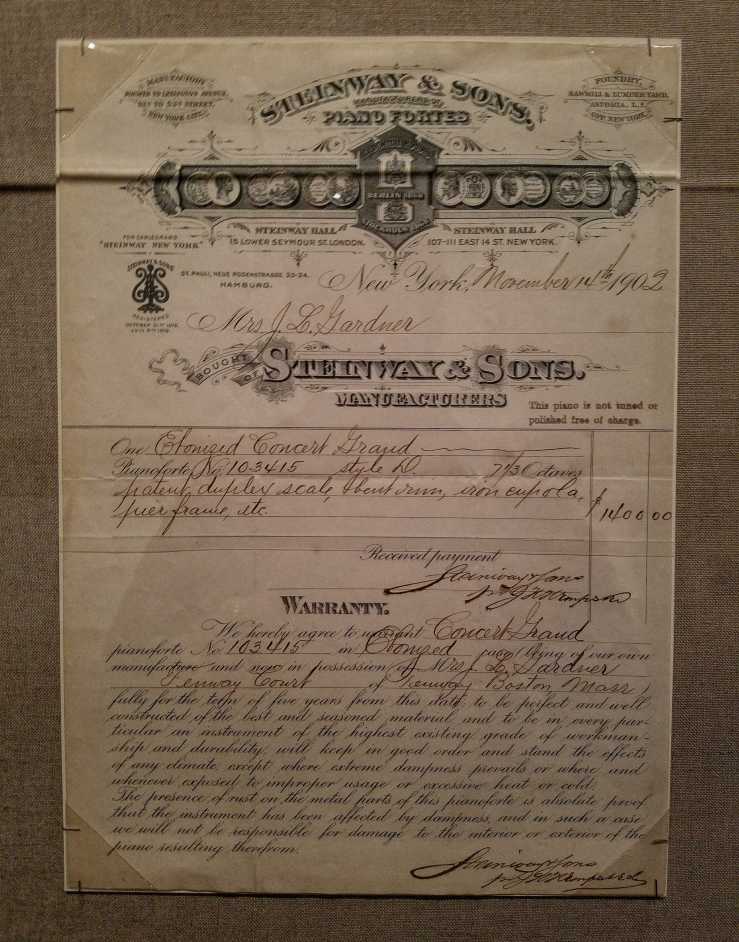
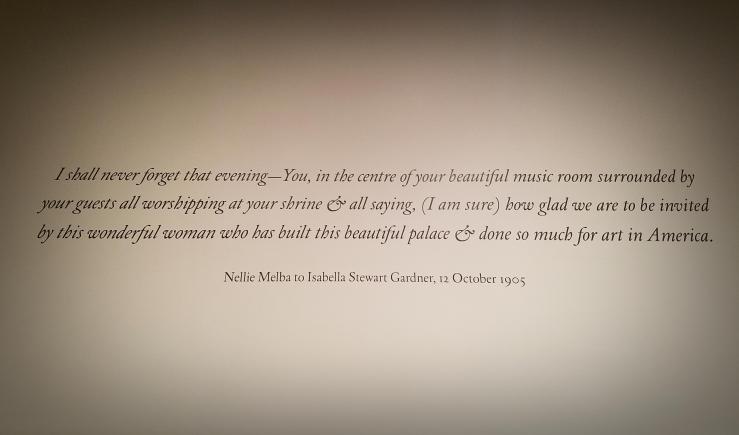
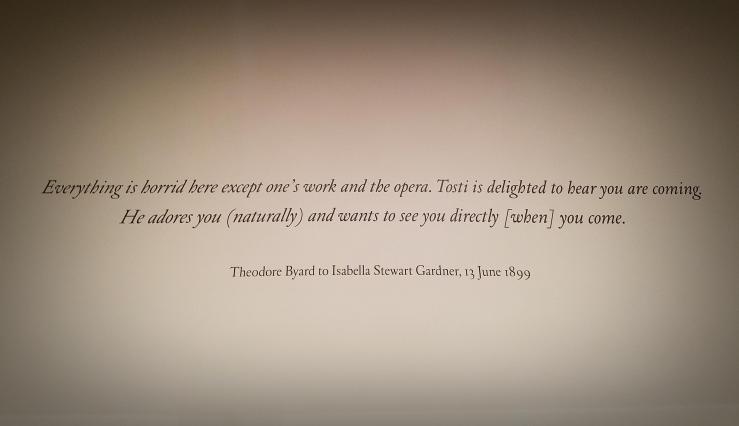
Here we can enjoy a collection of objects related to Gardner’s lifelong love of music. ”An avid traveler, her musical tastes were shaped by experiences around the world. In diaries and letters, Gardner described the sounds of different cultures – from the soaring voices of the Bayreuth Festival in Germany to the raucous singing of boatmen on the Nile. When in Boston, Gardner regularly invited friends and family to concerts at her home, often printing beautiful programs for her guests.”
Program for a concert, 10 May 1900
Ink on polychrome Japanese woodblock print
”At her homes in Boston and Brookline, Gardner hosted musical performances and concerts for a range of audiences. While they were private events, they set an important precedent to the public musical performances that would be hosted at her museum after 1903. This program for a concert at her Brookline estate, which as known as Green Hill, features work by her friend Charles Martin Loeffler.”
Victor George (active early 20th century)
Tamaki Miura, 1915
Platinum Print
”Tamaki Miura was the first internationally celebrated Japanese soprano. After training in her native Japan and in Europe, Miura was cast in the title role of Puccini’s Madama Butterfly in London in 1915. Acclaimed for her performances, Miura toured the United States to reprise her role for American audiences. Gardner was a great fan of the opera and friend to many singers; the fact that she collected a photographic portrait of Miura denotes her admiration for the path-breaking soprano.”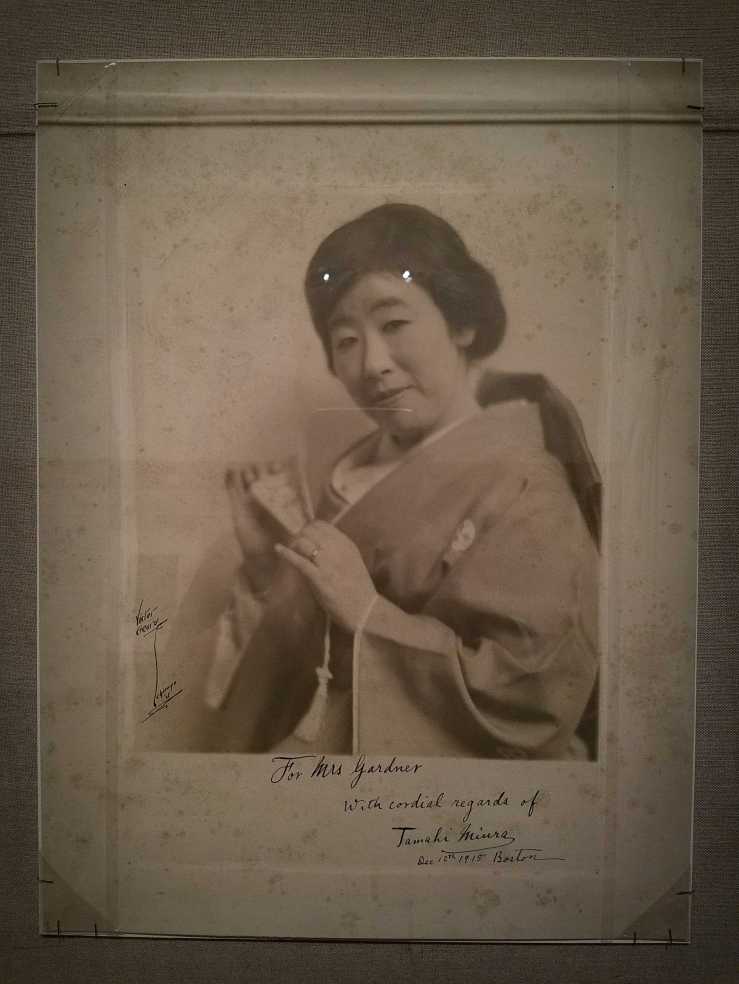
The Isabella Stewart Gardner Museum
May 4th, 2017
subjective worldview
Actor, writer, cook and author
Travel experiences & Strasbourg city guide
Writer
joy, happiness, travel, adventure, gratitude
"Rêve onirique & Bulle d'évasion"
makes pretty things on paper
This WordPress.com site is Pacific War era information
Welcome to my curious world of words....
Photographs, music and writing about daily life. Contact: elcheo@swcp.com
Free listening and free download (mp3) chill and down tempo music (album compilation ep single) for free (usually name your price). Full merged styles: trip-hop electro chill-hop instrumental hip-hop ambient lo-fi boombap beatmaking turntablism indie psy dub step d'n'b reggae wave sainte-pop rock alternative cinematic organic classical world jazz soul groove funk balkan .... Discover lots of underground and emerging artists from around the world.
A 365 analogue photography project
Barcelona's Multiverse | Art | Culture | Science
Een digitaal atelier aan de (zee)slag.
‘Doodling Ambiguity’s in Ink.’
Miscellaneous photography
Glimpses along the way on a journey of discovery into symmetry...

 The Humble Fabulist