Pre-fourth-of-July fireworks-on-Hudson. The sky was lit by dozens of ephemeral Chihuli chandeliers.
June 24th, 2018 was NYC Pride Day.
Parties were thrown; rainbows were drawn; glitter was blown.
The City became a giant party spot.
And then, there were fireworks.
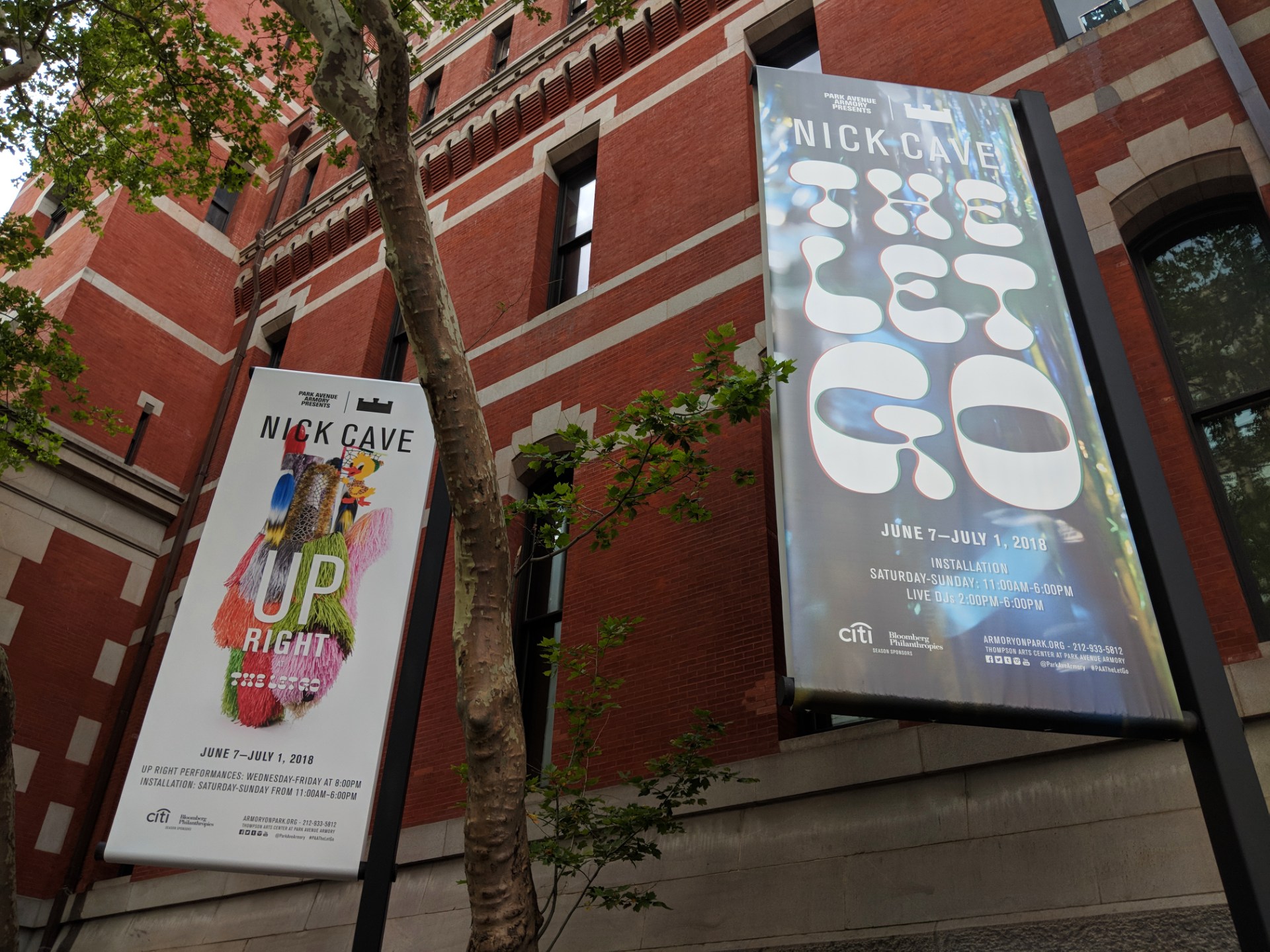
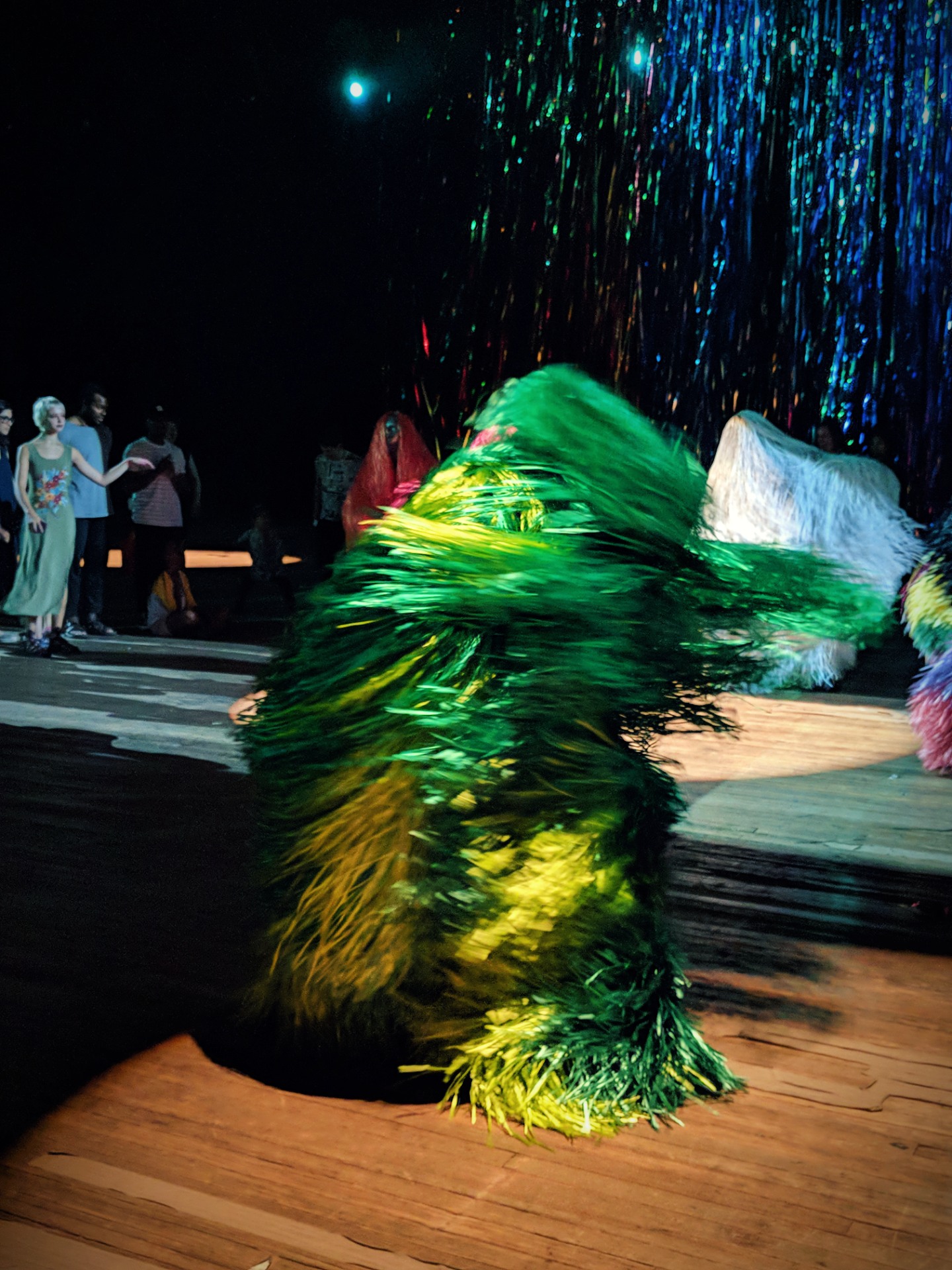
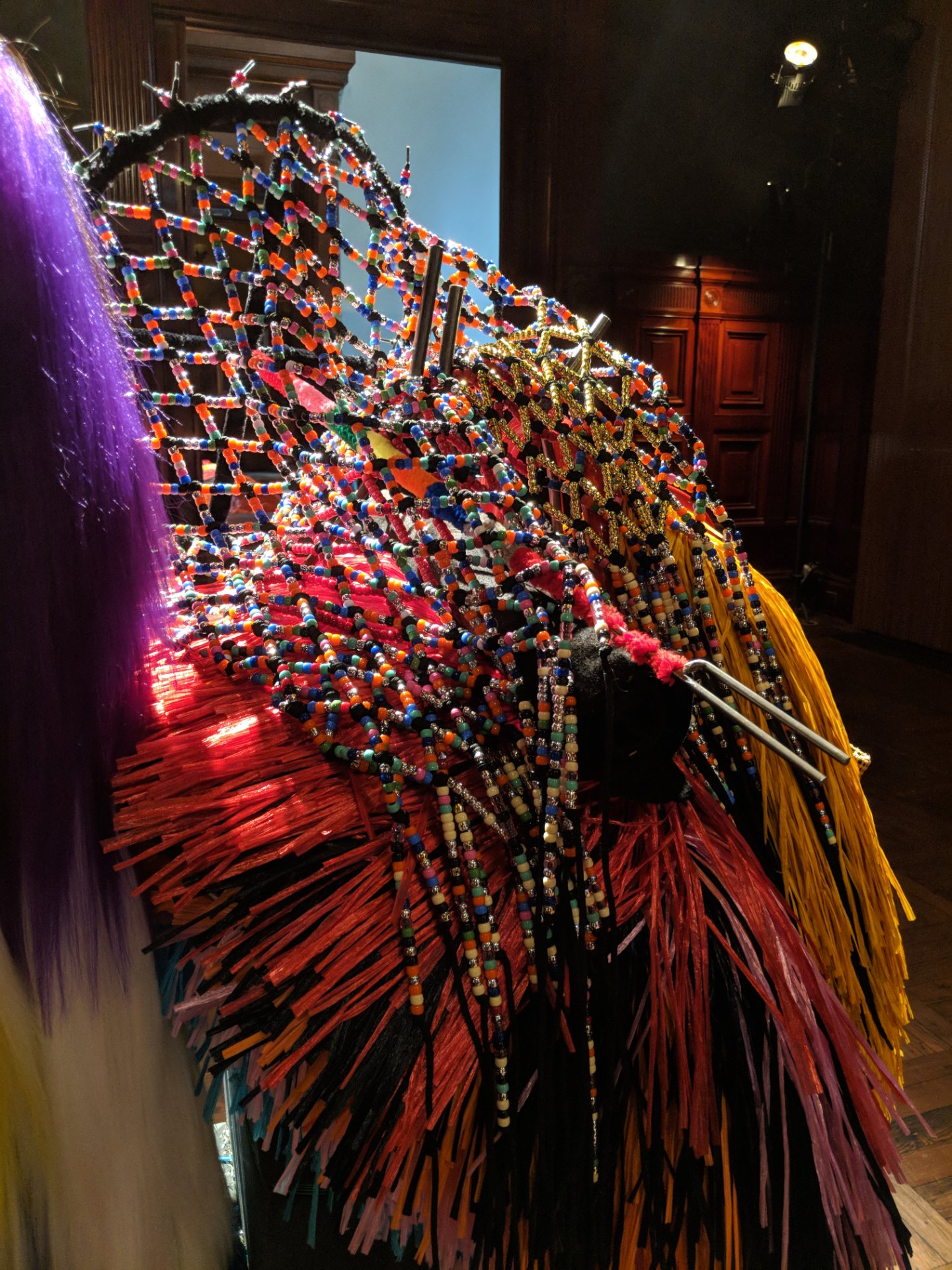
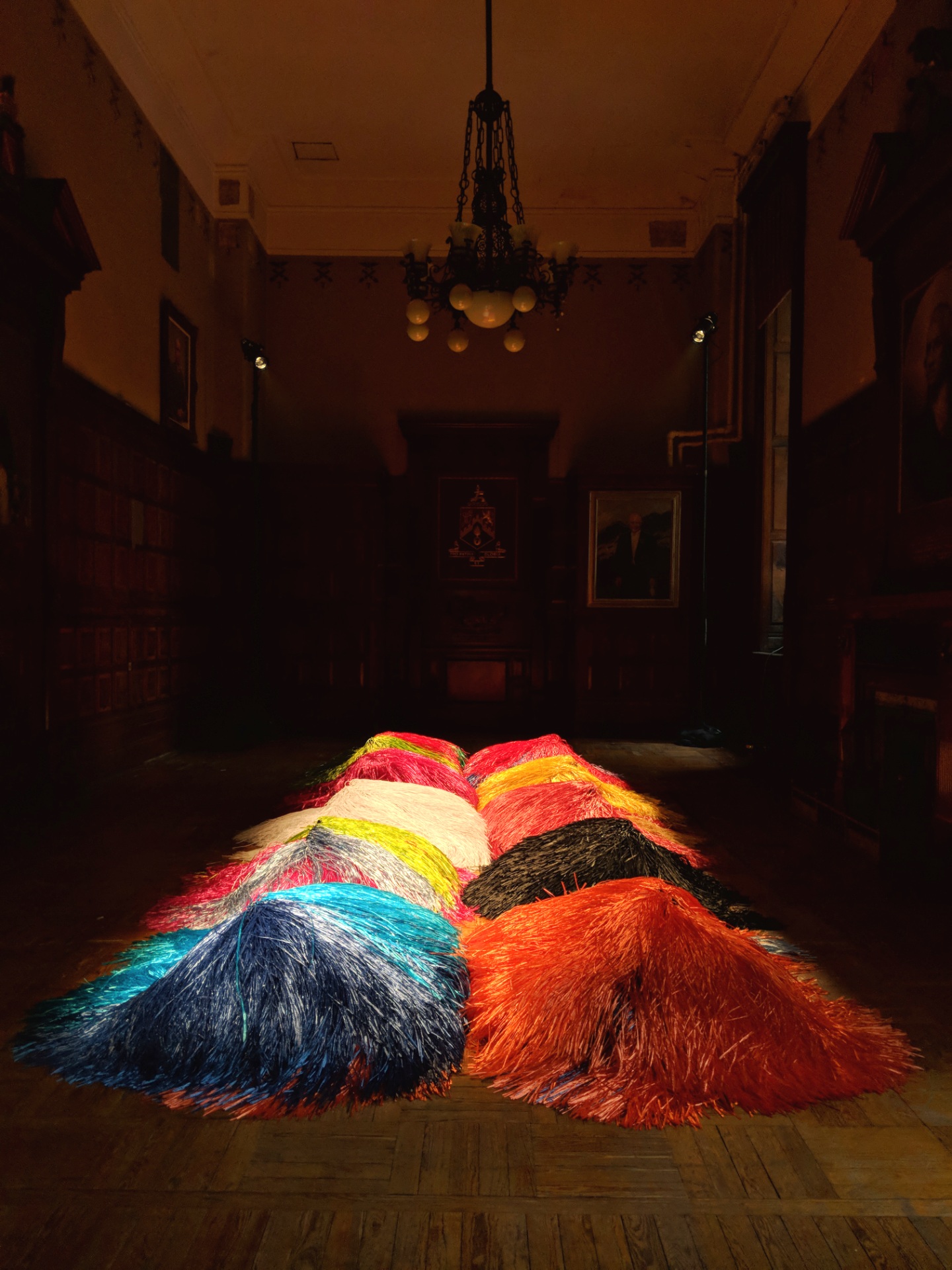
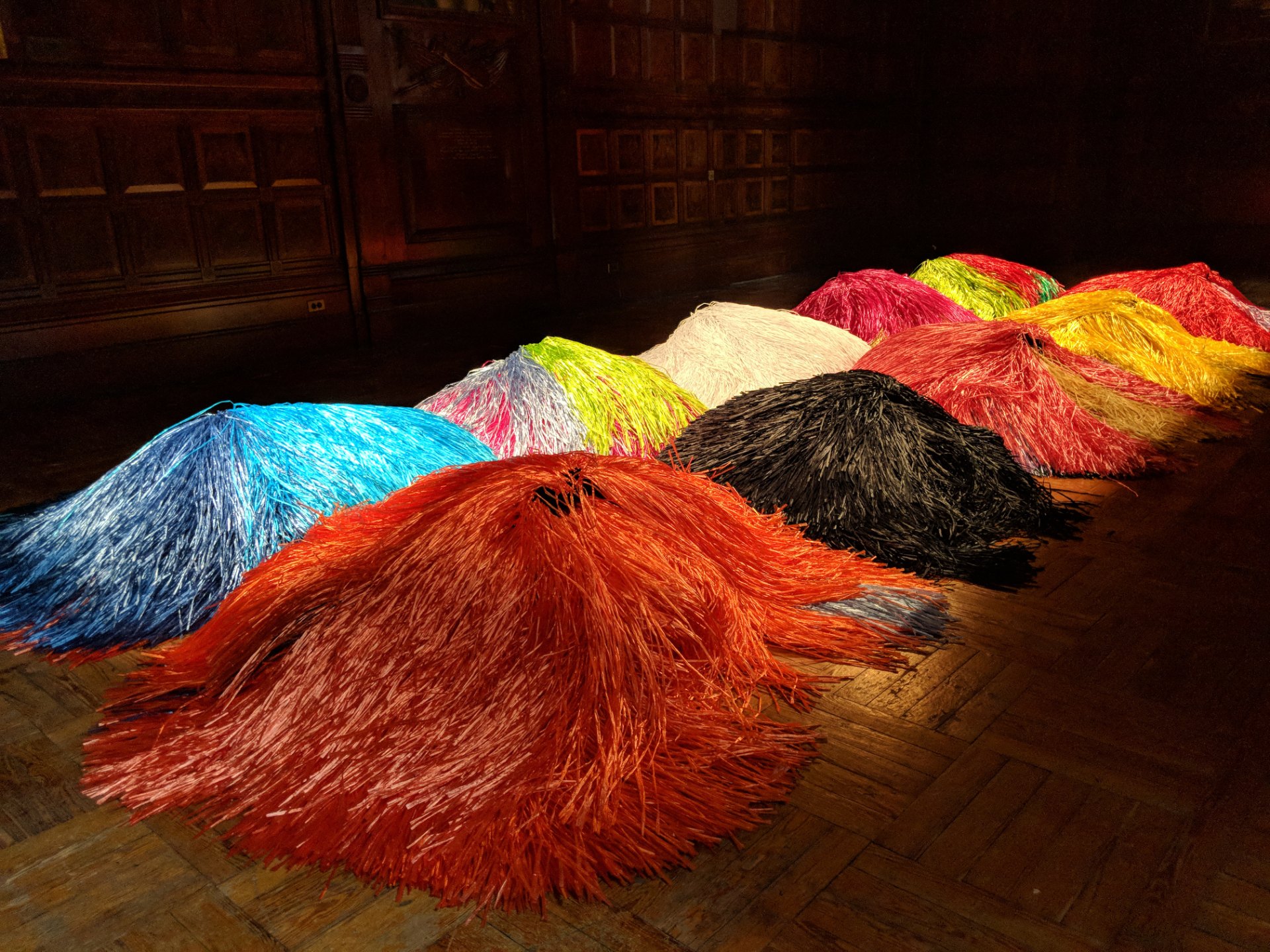
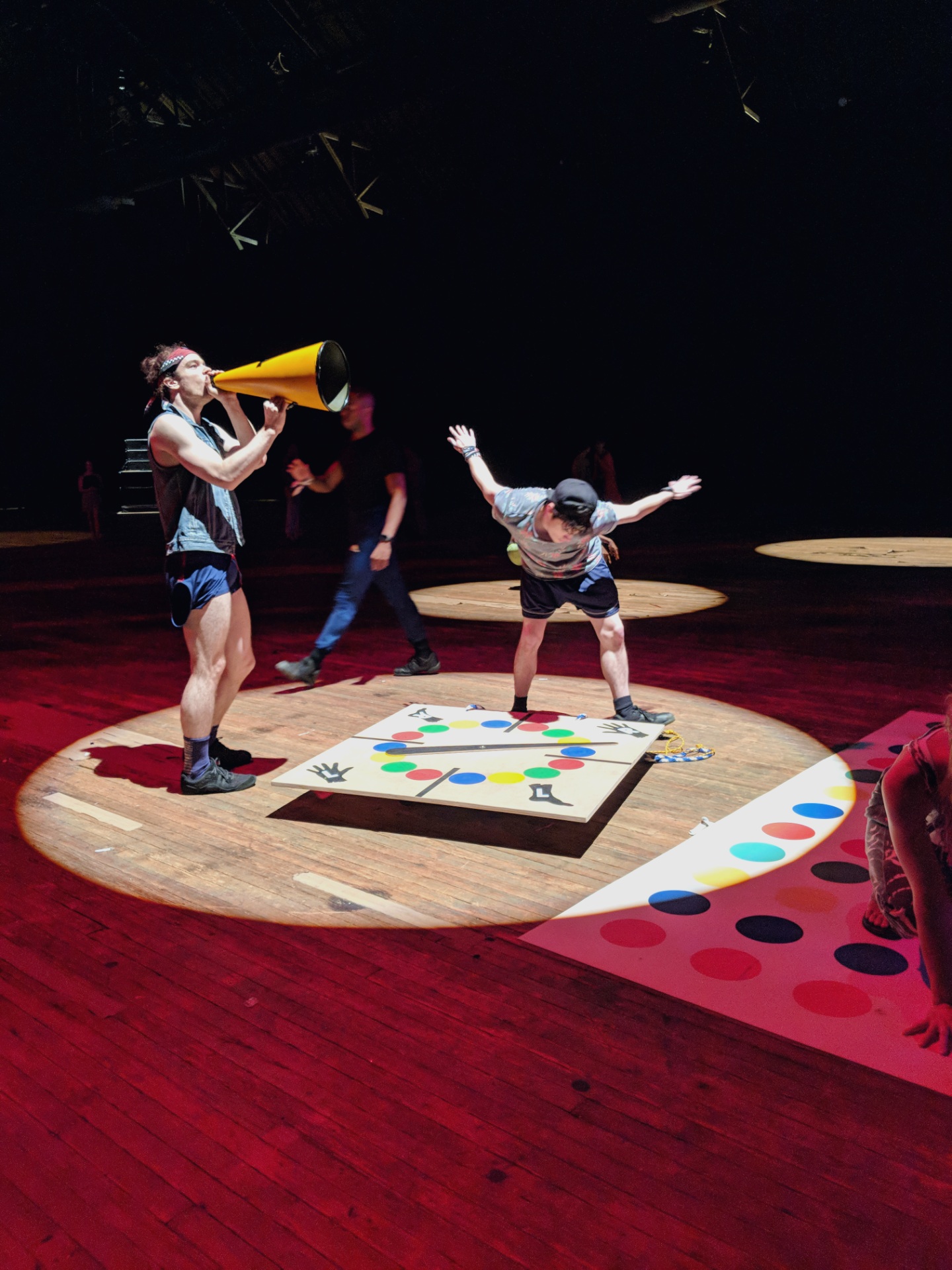
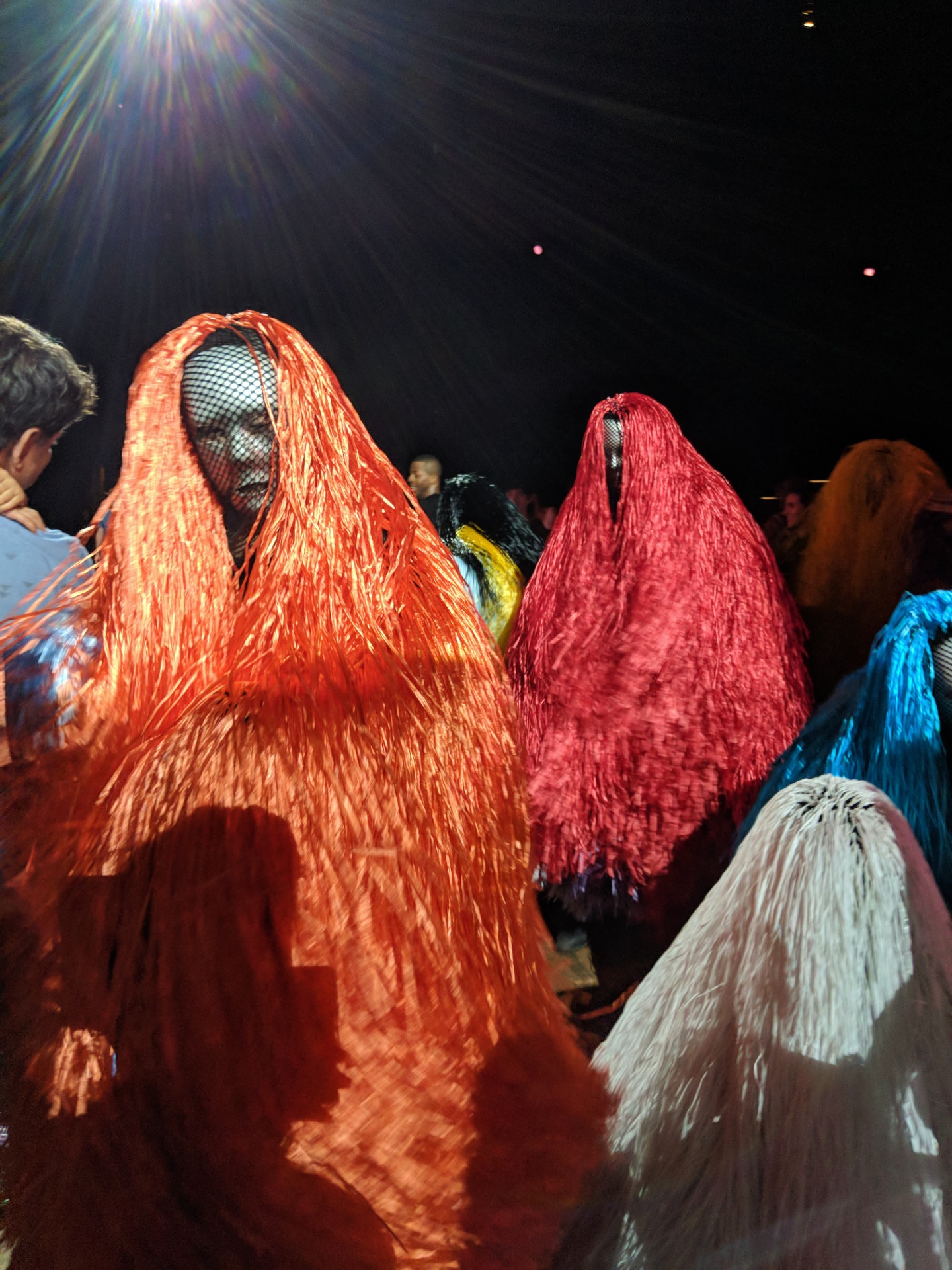
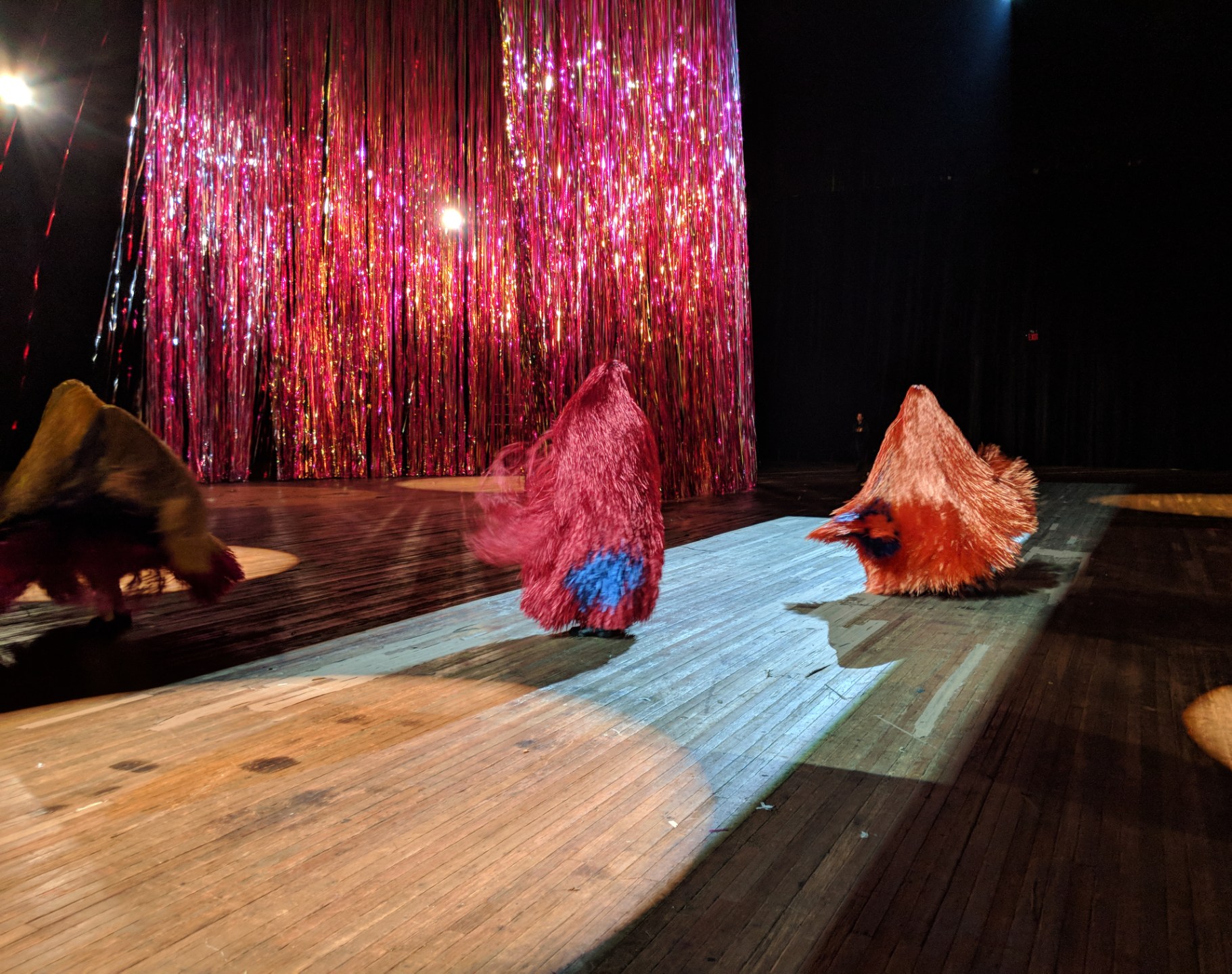
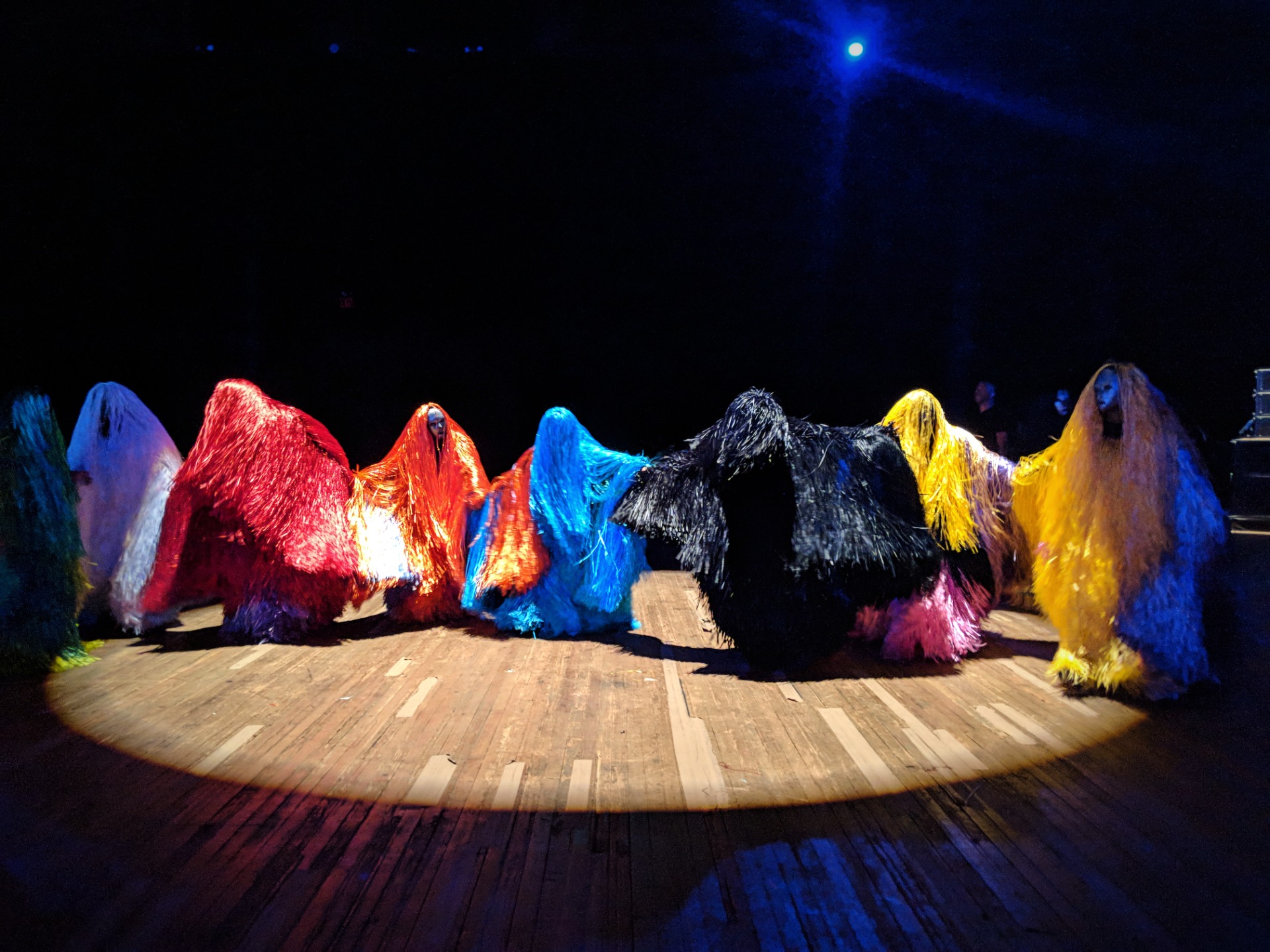
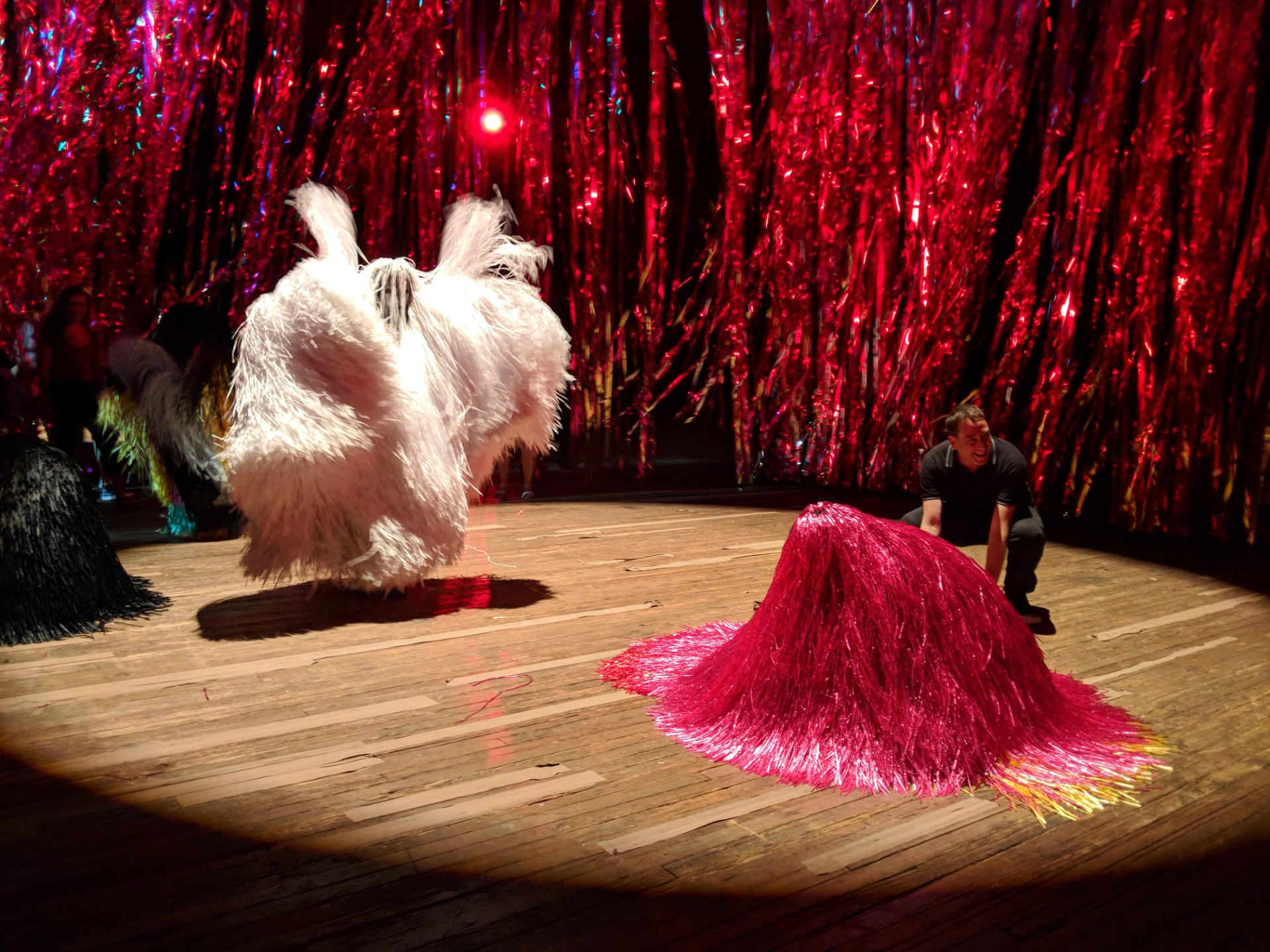
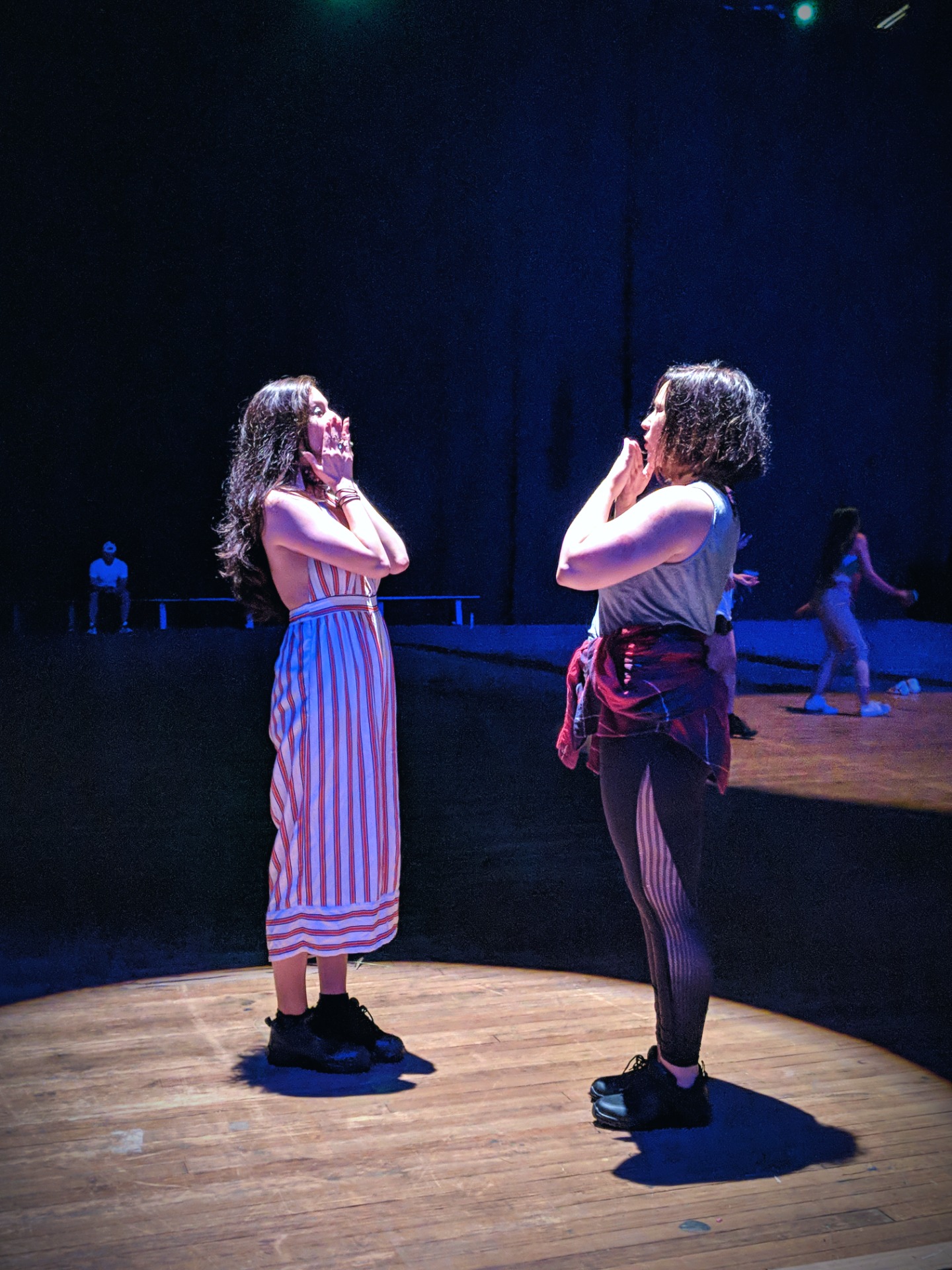
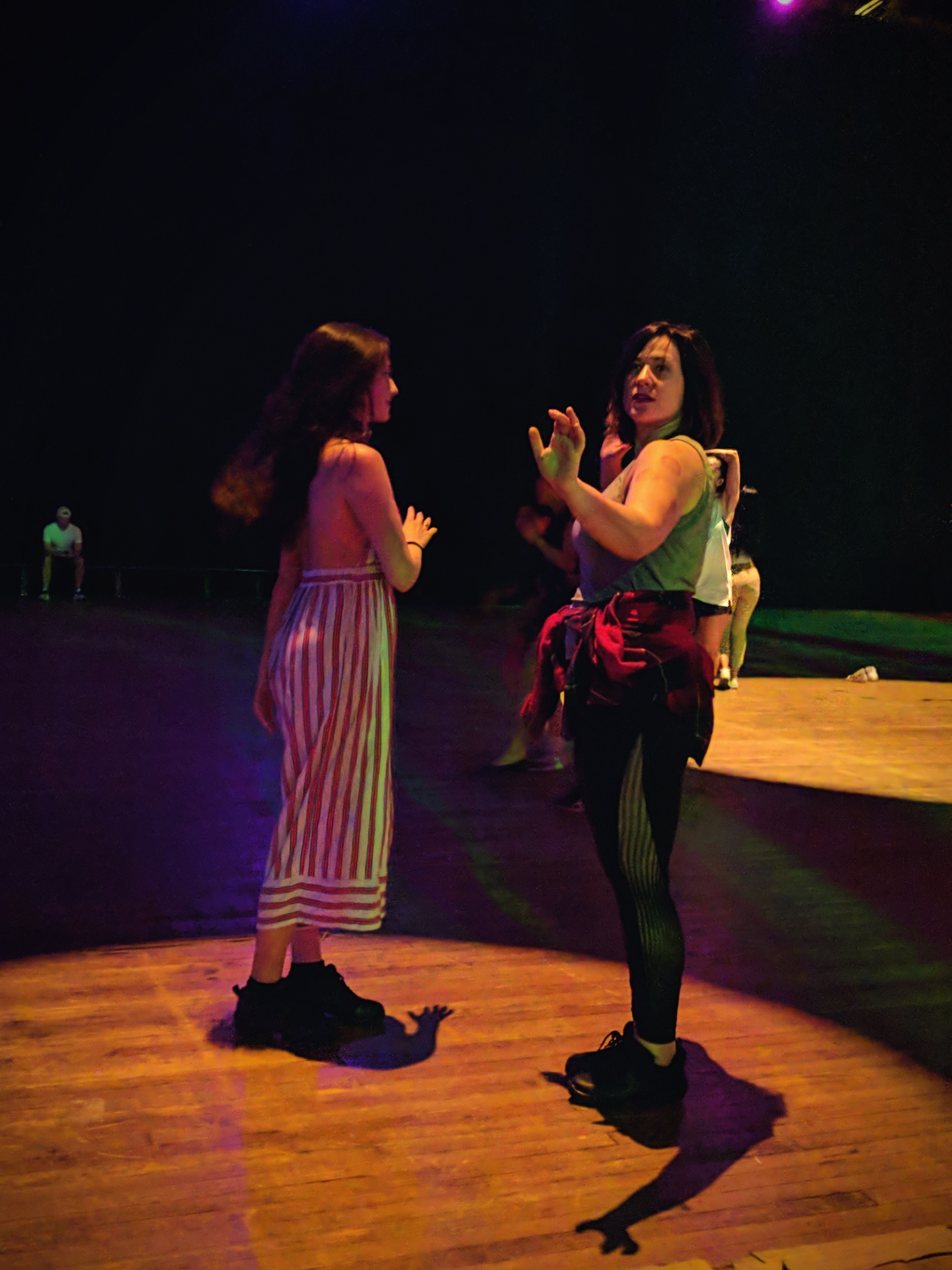
Interdisciplinary artist Nick Cave created a dance-based town hall—part installation, part performance—to which the community of New York was invited to “let go” and speak their minds through movement, work out frustrations, and celebrate independence as well as community.
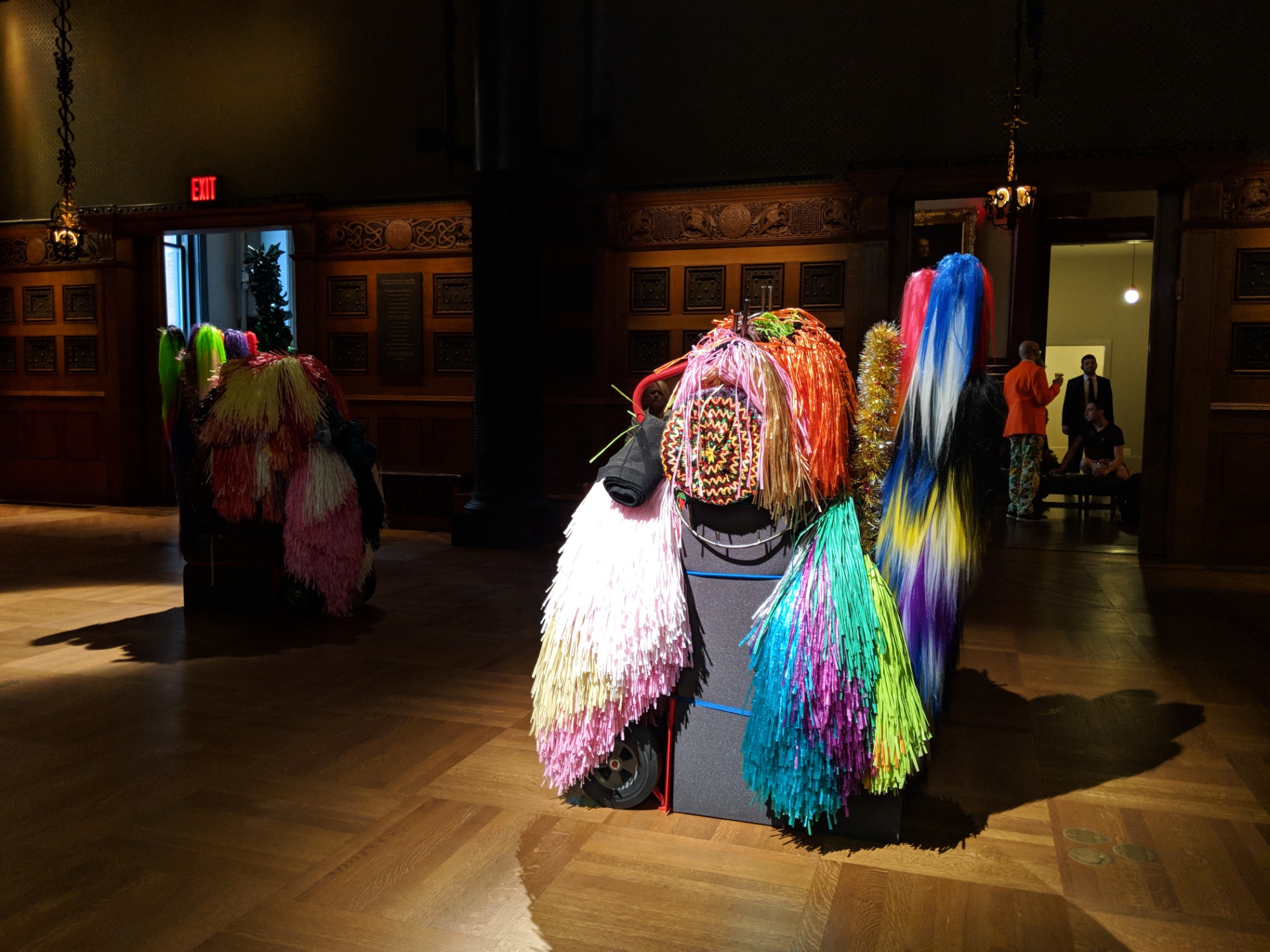
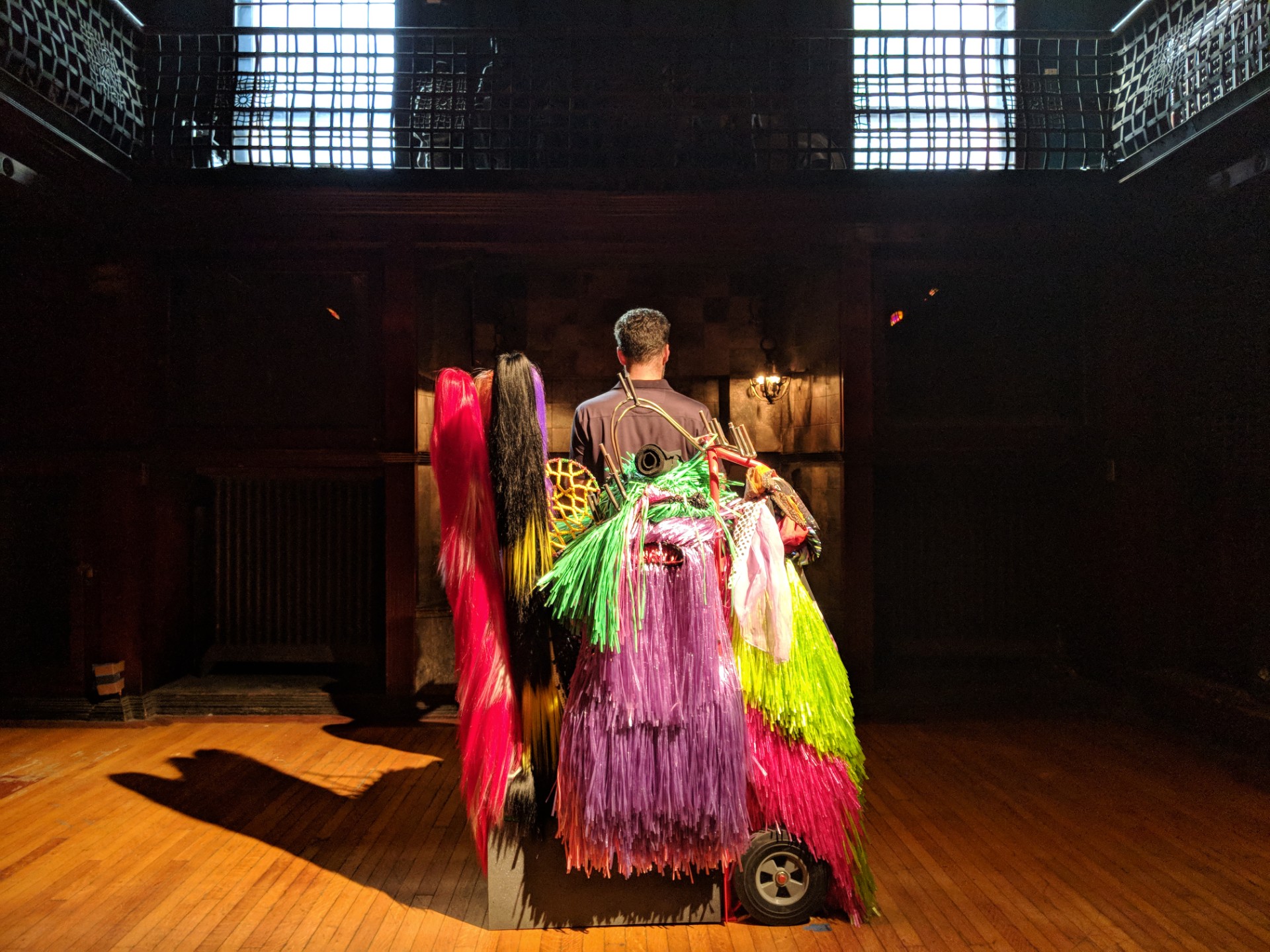
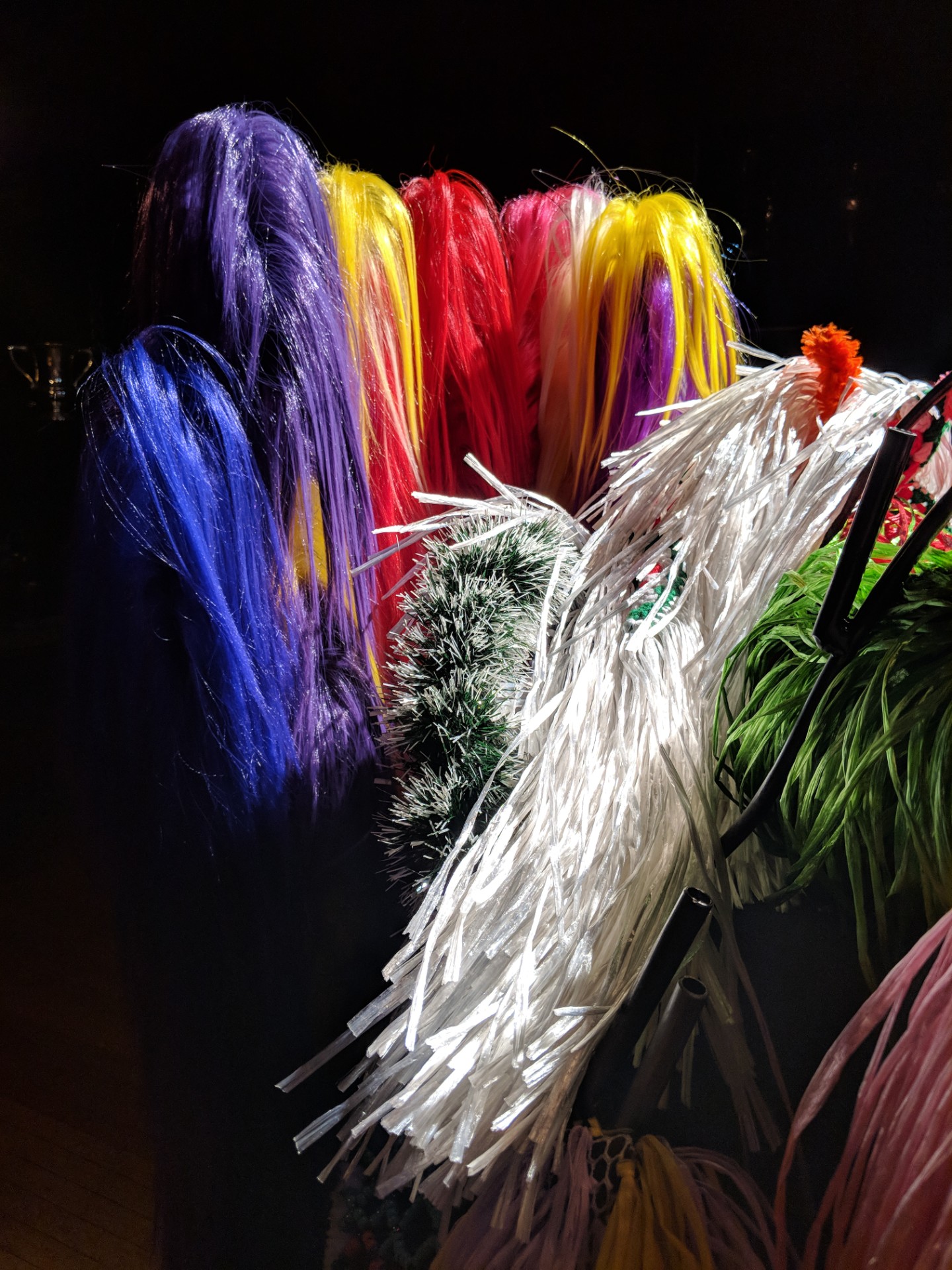
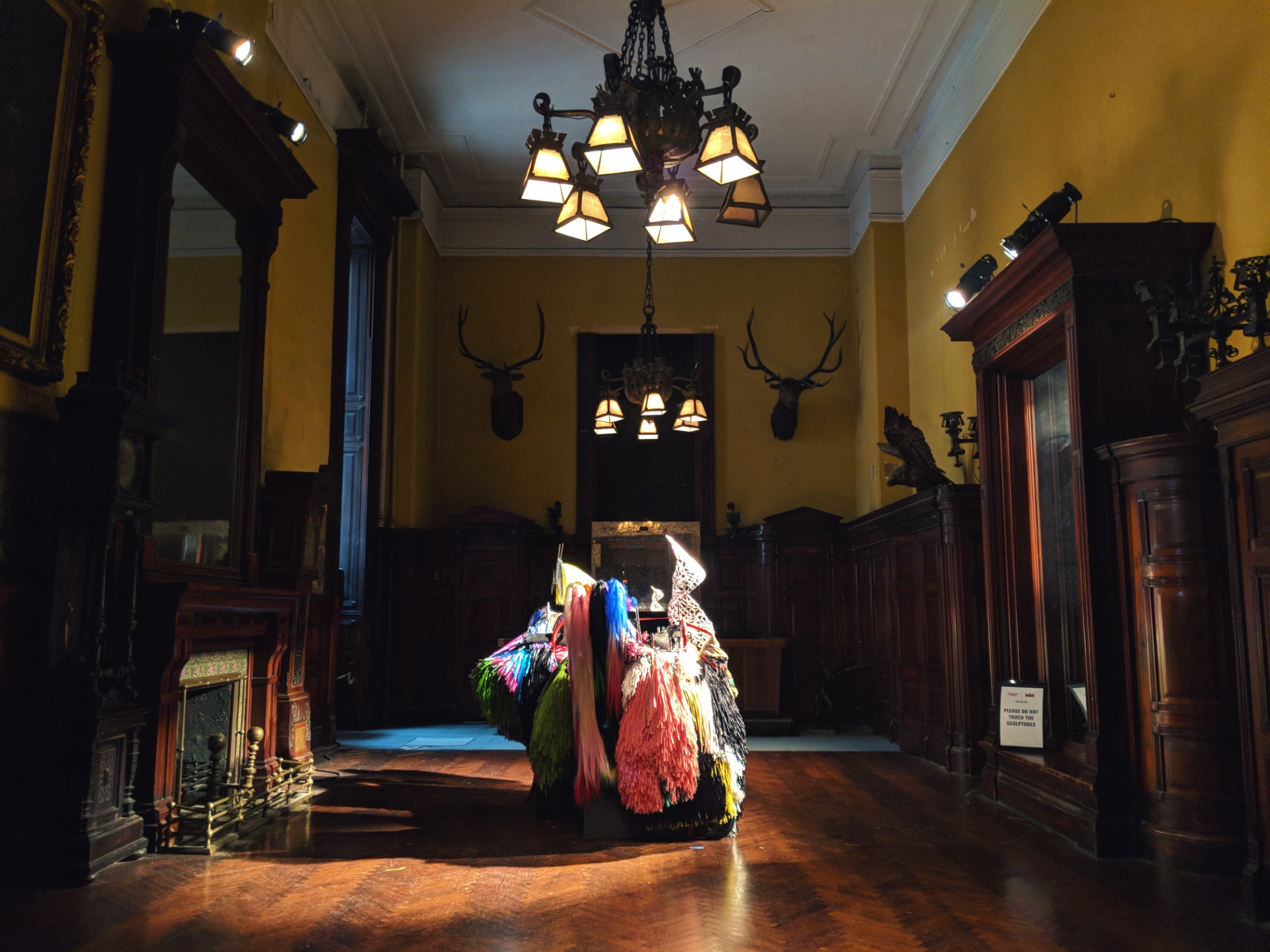
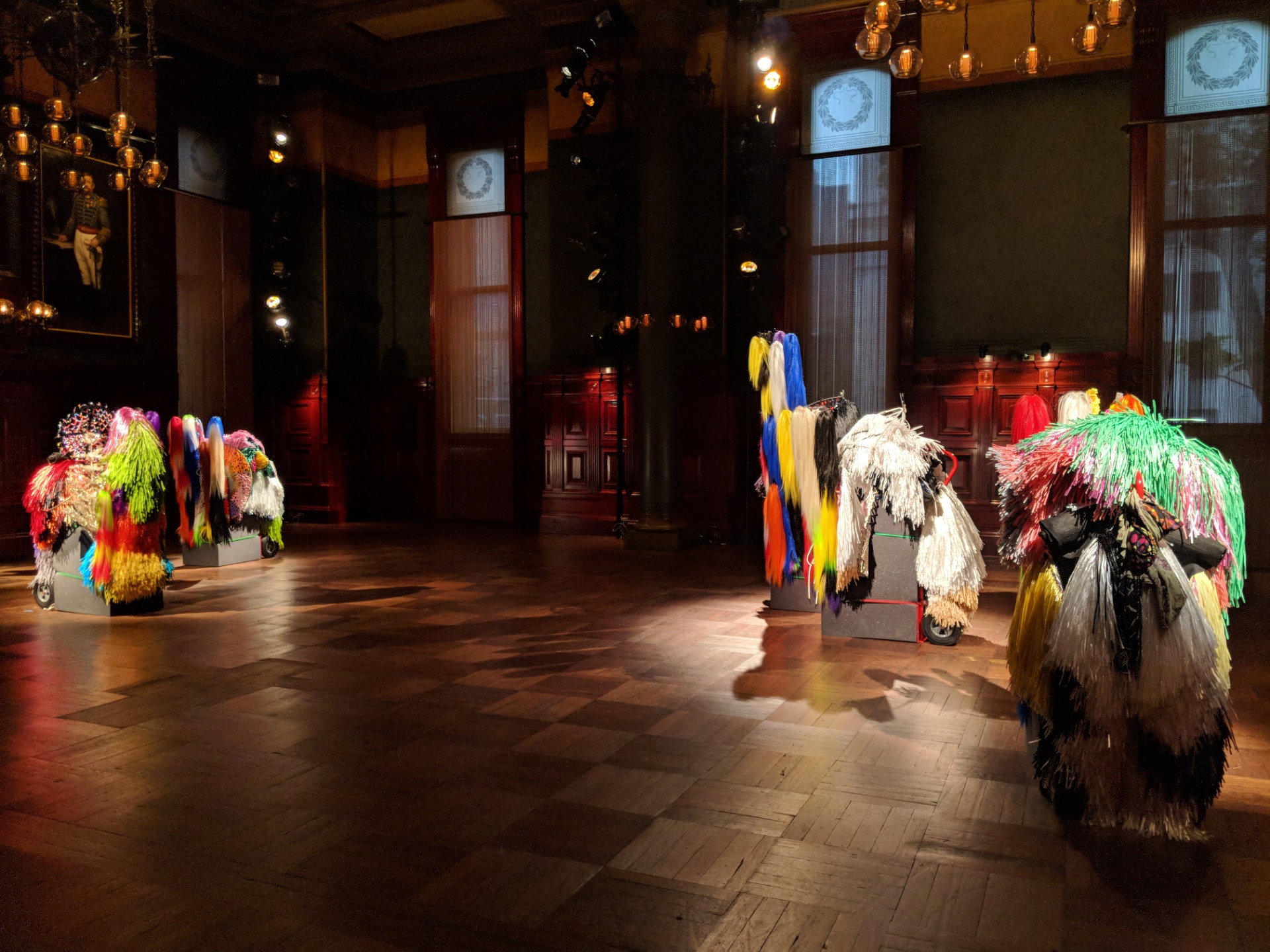
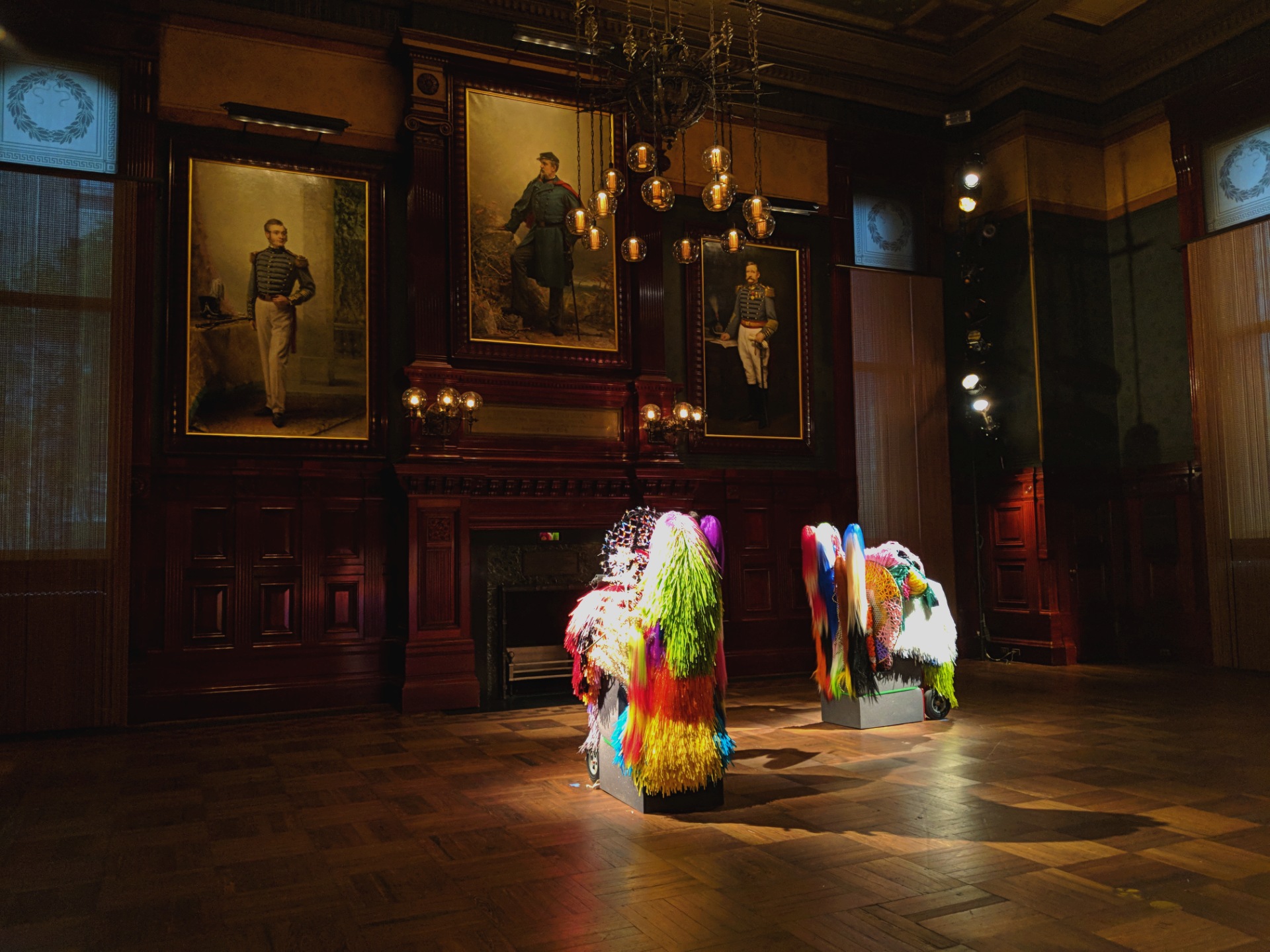
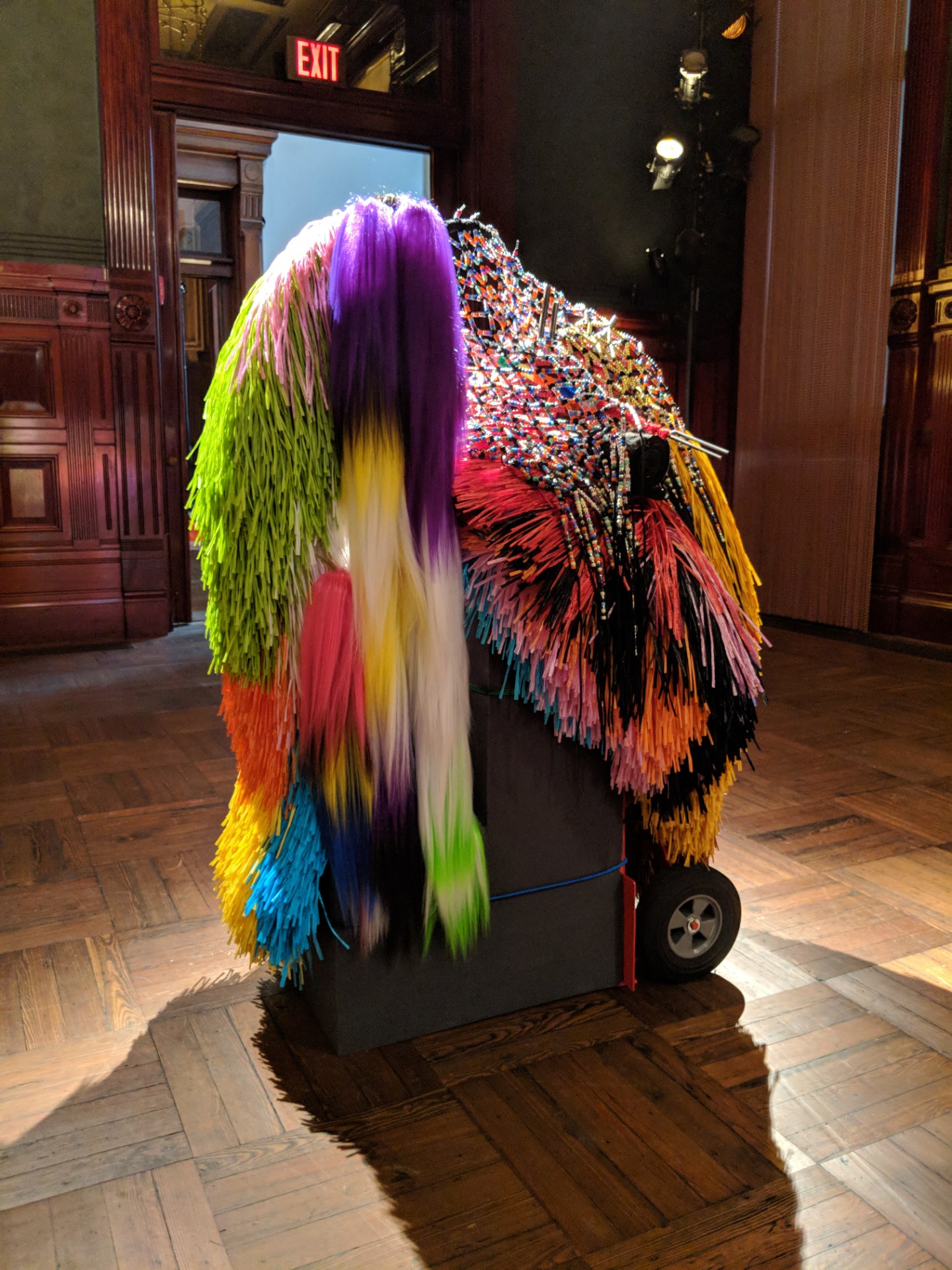
Nick Cave’s wearable mops soundsuits invaded the entire ground floor of the Park Avenue Armory. When they started dancing, they were mesmerizing.
Nick Cave’s Soundsuits are wearable sculptures that combine performance and textile art. They are named for the noise Cave’s first suit made, when he wore it and started dancing around. They are often made from found objects and cover the wearer completely, so as to mask their identity. The inspiration for the first Soundsuit, created in 1992, was the brutal beating of Rodney King. Since then, Cave has created over 500 Soundsuits.
Interdisciplinary artist Nick Cave created a dance-based town hall—part installation, part performance—to which the community of New York was invited to “let go” and speak their minds through movement, work out frustrations, and celebrate independence as well as community.
Interdisciplinary artist Nick Cave created a dance-based town hall—part installation, part performance—to which the community of New York was invited to “let go” and speak their minds through movement, work out frustrations, and celebrate independence as well as community.
Interdisciplinary artist Nick Cave created a dance-based town hall—part installation, part performance—to which the community of New York was invited to “let go” and speak their minds through movement, work out frustrations, and celebrate independence as well as community.
Interdisciplinary artist Nick Cave created a dance-based town hall—part installation, part performance—to which the community of New York was invited to “let go” and speak their minds through movement, work out frustrations, and celebrate independence as well as community.
That looks like an ornate, luxurious birthday cake.
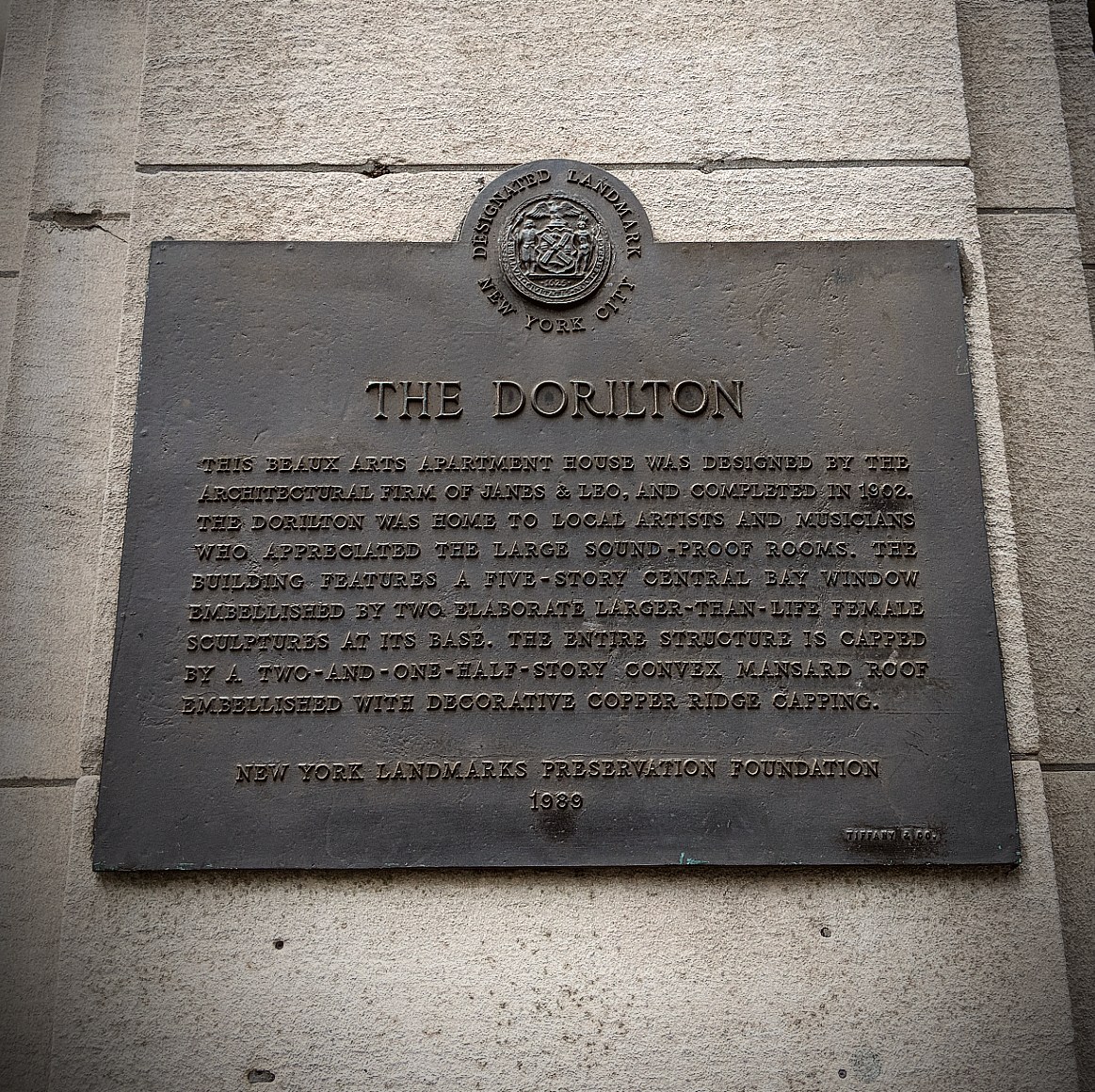
The plaque reads:
THE DORILTON
THIS BEAU ARTS APARTMENT HOUSE WAS DESIGNED BY THE
ARCHITECTURAL FIRM OF JANES & LEO, AND COMPLETED IN 1902.
THE DORILTON WAS HOME TO LOCAL ARTISTS AND MUSICIANS
WHO APPRECIATED THE LARGE SOUND-PROOF ROOMS. THE
BUILDING FEATURES A FIVE-STORY CENTRAL BAY WINDOW
EMBELLISHED BY TWO ELABORATE LARGER-THAN-LIFE FEMALE
SCULPTURES AT ITS BASE. THE ENTIRE STRUCTURE IS CAPPED
BY A TWO-AND-ONE-HALF-STORY CONVEX MANSARD ROOF
EMBELLISHED WITH DECORATIVE COPPER RIDGE CAPPING.
NEW YORK LANDMARKS PRESERVATION FOUNDATION
1989
W 71st Street & Broadway, Manhattan, New York City
Feathers: Fashion and the Fight for Wildlife, was an exhibition exploring the history of the ground-breaking Migratory Bird Treaty Act of 1918, which aimed to protect millions of migratory and song birds that were being driven to extinction, simply for fashion’s sake.
The exhibition ran between April and July 2018, commemorating the centennial of this landmark, lifesaving act. It delved into the circumstances that inspired environmentalists and activists, many of them women and New Yorkers, who lobbied for the legislation and was an eye-opener for me, as it threw light on the brutal killing with intent of millions of birds – on a yearly basis – for the delicate beauty of their feathers.
Aigrette hair ornament (from a Snowy or Great Egret), 1984 – J.H. Johnston & Co. (1844 – ca. 1910)
Aigrettes are elegant plumes worn as hair or hat ornaments. They became especially popular among fashionable women during the late nineteenth century. Mature Snowy and Great Egrets develop these wispy feathers along their breasts, heads and tails during breeding season. Because of this seasonal plumage, the feathers were highly coveted by milliners. This delicate example, accented with five tiny diamonds and mounted on a gold headband, was worn by a bride on her wedding day.
When plume and game hunters killed adult egrets for their feathers, they also condemned their offspring. The deaths of adult egrets during breeding season left their eggs unprotected. Unattended, orphaned eggs succumbed before reaching maturity, while baby egrets died of starvation. This cruel method of harvesting earned aigrettes the scornful moniker, the ”white badge of cruelty”.
Lady’s hat, ca. 1915 by Arnold, New York (ca. 1915-30). Felt, silk, ribbon, bird-of-paradise, glassRed-legged Honeycreeper earrings, ca. 1865, probably London, England. Preserved bird, gold metal
Late-nineteenth-century jewelers often used insects and animal parts to decorate jewelry. Exotic nectar feeders and native to the Americas like hummingbirds, honeycreepers are closely related to tropical tanagers and are found from Mexico to Brazil. They fascinated scientists, hunters and collectors. In 1865 London jeweler Harry Emanuel patented a method to inset hummingbird heads, skins and feathers into gold and silver mounts. As objects of beauty, hummingbird heads and feathers were prized as earrings, necklaces, brooches and fans. Earrings similar to this pair featuring male Red-legged Honeycreepers were shown at the 1876 Centennial Exhibition in Philadelphia.
Paddle fan of Marabou feathers with a Ruby-throated Hummingbird, 1869Feathers: Fashion and the Fight for Wildlife, an exhibition exploring the history of the ground-breaking Migratory Bird Treaty Act of 1918Evening dress with swans’ down accents, 1885 by R. H. White & Co. (1853-1957)Evening dress with swans’ down accents, 1885 by R. H. White & Co. (1853-1957)
This satin evening dress, with elegant back bustle and lavish paisley velvet underskirt, is adorned with the diaphanous under-feathers, or down, of a swan. Intended for formal winter events, the regal, body-hugging dress is ornamented with down accents at the neck and along the train. Swans were an attribute of Venus, the Roman goddess of love. A dress decorated with swans’ down connoted wealth, status and mysterious sensuality, but put swans in jeopardy.
Hat with Greater Bird-of-Paradise trim, ca. 1920-25, by Hickson, Inc. (1913-35)Folding fan of orange and tan Horned Grebe feathers, ca. 1905Hat with a Masked Booby, 1900-05Sheet music, The Bird on Nellie’s Hat, 1906. Jos. W. Stern & Co., New York (1894-1919), Arthur J. Lamb (1870-1928) and Alfred Solman (1868-1937)Under the auspices of The Audubon Society…… protection for the bird is being preached broadcast4:00 p.m. Mrs. Frances Rosep, 309 E 110 St., New York, 1991Making Hats for the Wholesale Trade, 1907-33Cluttered Workroom in a Feather Factory, 1907
Reproductions of photographs by Lewis Wickes Hine (1874-1940)
Female feather workers toiled in factories and in tenement apartments. Inside hot and unventilated workshops, labourers continuously inhaled feather dust and particles. Preparing and decorating plumes was dirty, arduous work, often carried out by immigrant women and children. Piece-workers who cleaned and dressed feathers at home often engaged their children in processing plumes. In the first photograph, Mrs. Frances Rosep teaches her son and daughters, ages 7, 10 and 12, to ”willow’ feathers, a painstaking process of lengthening plumes. Pay for willowing ostrich feathers was determined by the overall finished length. The Rosep family earned $ 2.50 a week. Ostrich feathers fell outside of the purview of the Migratory Bird Treaty Act.
Feathers: Fashion and the Fight for Wildlife, an exhibition exploring the history of the ground-breaking Migratory Bird Treaty Act of 1918Audubon Millinery
Mrs. Frothingham – Do you think that Audubon Millinery will ever be the vogue?
Mrs. Hungerford – Certainly I do. All that is necessary is to make the birdless bonnets the most expensive.
Waterbury Evening Democrat, April 23, 1898
Regional Audubon societies addressed the feather craze by promoting birdless hats trimmed with a variety of ribbons, flowers and fabric. State chapters extended invitations to leading milliners to manufacture ”Audobonnets”, which were often exhibited to the public. After the Pennsylvania Audubon Society’s 1896 exhibition of birdless millinery, Gimbel Brothers in Philadelphia sold the ”beautiful hats made without the help of plumage” in a separate department. Not to be outdone, Saks & Company in New York City offered humanitarian ”hats in the newest shapes”, ”gayest colourings” and ”richest of trimmings”.
Avian activism encouraged the invention of alternative trimmings. In New York, feather and ribbon traders promoted collections of colourful, textured decorations designed to emulate plumage. ”Ostraigrettes”, made of ostrich feathers in lieu of heron or egret, were among many clever imitations. Others were approved ”Audubon Society Millinery Feathers”, ”Neagrettes” and ”Pomponettes” fabricated from horse hair, patent leather, spun glass, chenille and silk, and hemp.
Shoppers on Sixth Avenue, New York City, ca. 1903 (unidentified photographer)
This image captures late nineteenth-century New York’s most stylish shopping district. Ladies’ Mile, as it was known, ran along Broadway and Sixth Avenue between 14th and 23rd Streets.
Men, Women & FeathersAccessory set, including muff and tippet, decorated with four adult Herring Gulls harvested during breeding seasonBird Reservation, U.S. Criminal Code, Section 84Roseate Spoonbill (Platalea ajaja), Study for Havell pl. 321, ca. 1831-32; 1836. John James Audubon (1785-1851)
John James Audubon, original name Fougère Rabin or Jean Rabin, baptismal name Jean-Jacques Fougère Audubon, (born April 26, 1785, Les Cayes, Saint-Domingue, West Indies [now in Haiti]—died January 27, 1851, New York, New York, U.S.), was an ornithologist, artist, and naturalist who became particularly well known for his drawings and paintings of North American birds. [source]
Free listening and free download (mp3) chill and down tempo music (album compilation ep single) for free (usually name your price). Full merged styles: trip-hop electro chill-hop instrumental hip-hop ambient lo-fi boombap beatmaking turntablism indie psy dub step d'n'b reggae wave sainte-pop rock alternative cinematic organic classical world jazz soul groove funk balkan .... Discover lots of underground and emerging artists from around the world.






































 The Humble Fabulist