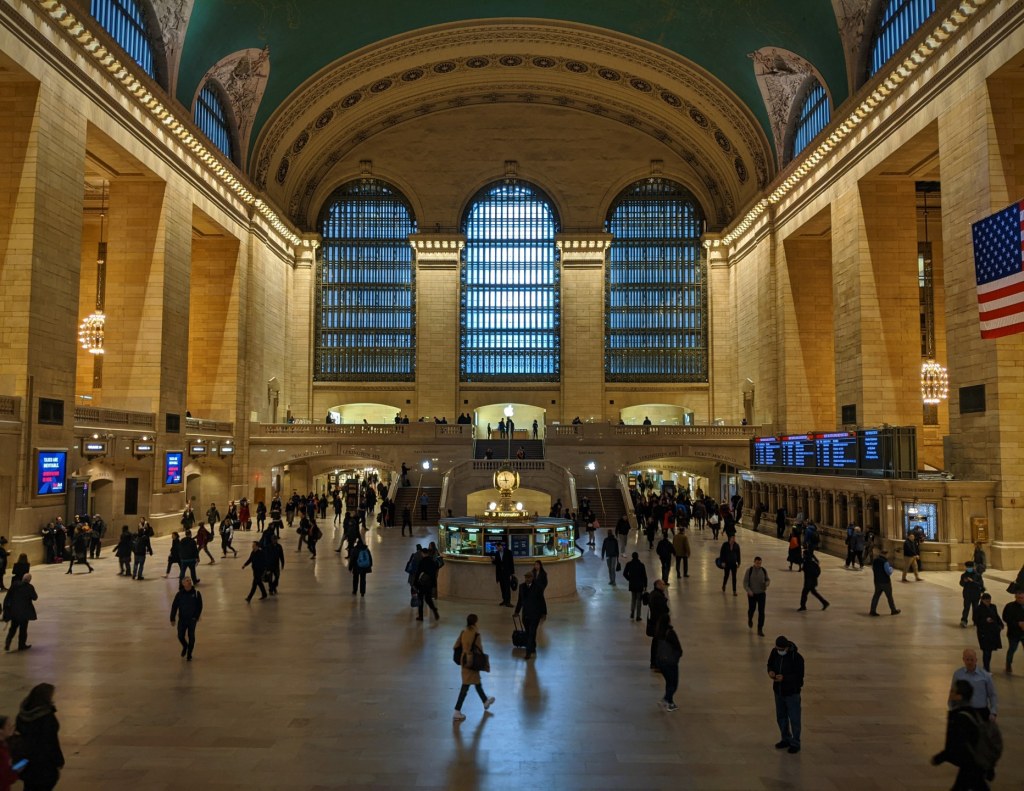
On my way to work, walking crosstown and taking a shortcut through the Terminal.
Normally absolutely packed at this time on a working day, it was almost empty. New Yorkers were being asked to avoid public transport and, those who could, were abiding by the guidelines.
Only the previous day, on March 11th, WHO had finally declared the outbreak a pandemic.
Infection numbers were on the rise, and new guidelines were issued daily: events with more than 500 people had to be cancelled or postponed.
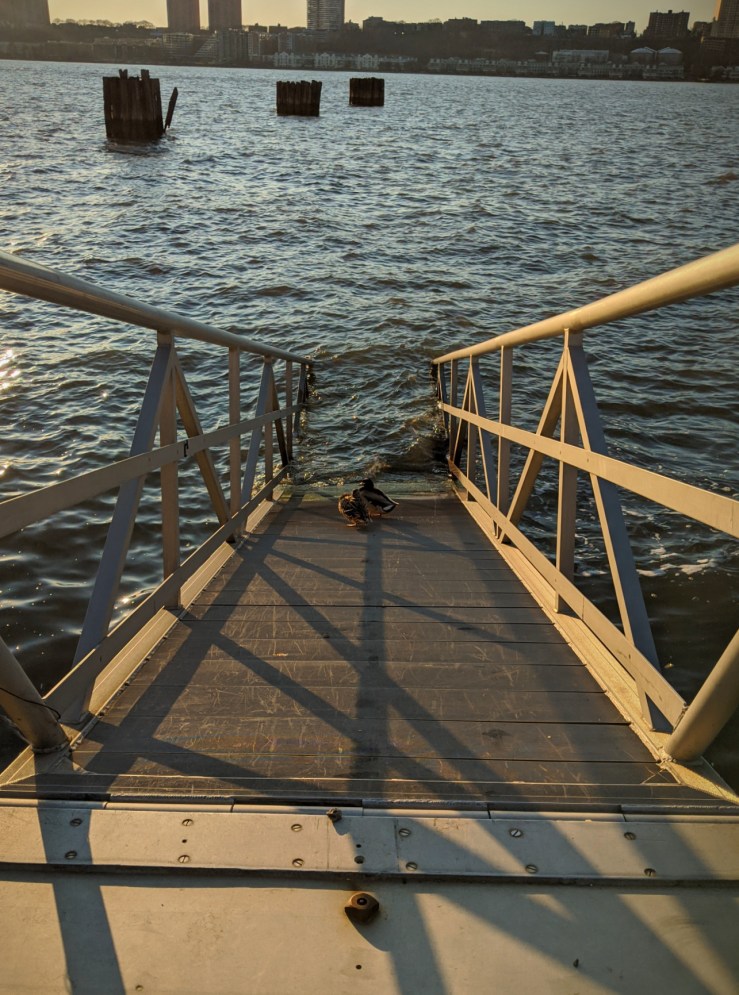
An impossible feat in Manhattan but, for a few days at the start of the pandemic – before New Yorkers were ordered to stay at home – Hudson River Greenway between Hell’s Kitchen and Lincoln Center, normally as busy as it gets, fell strangely quiet.
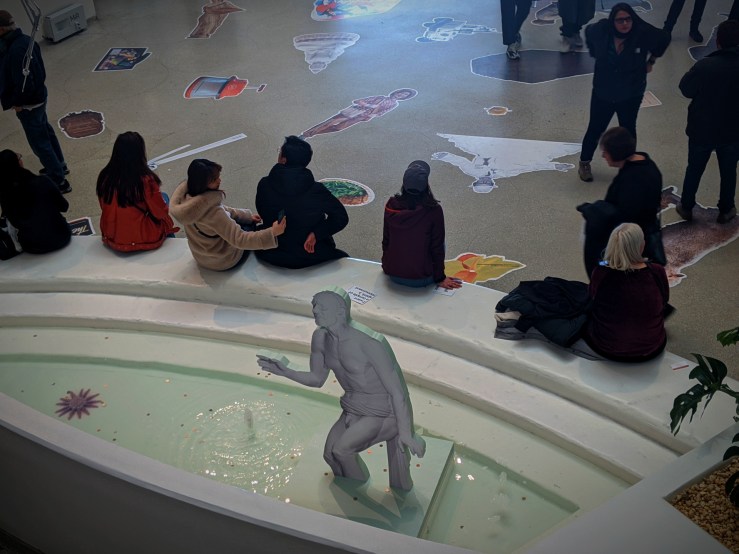
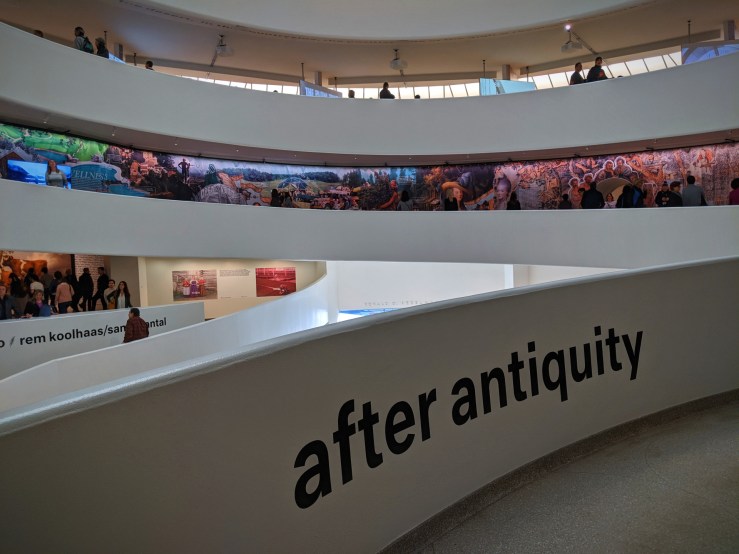
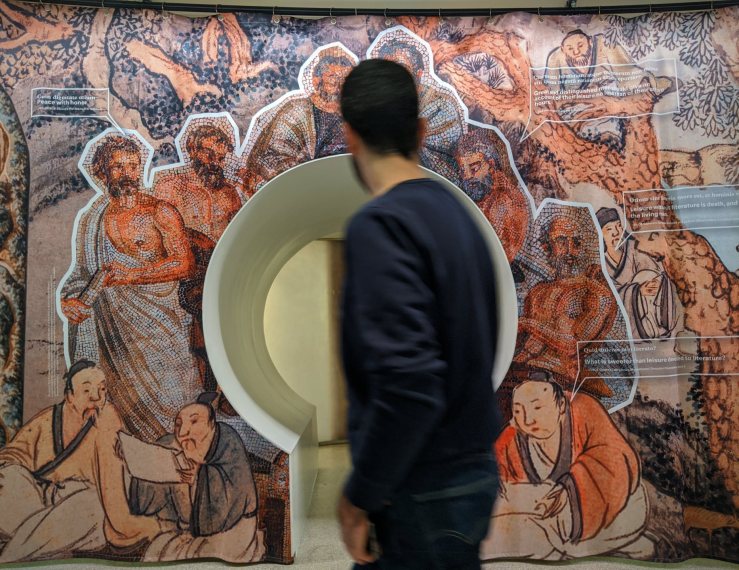
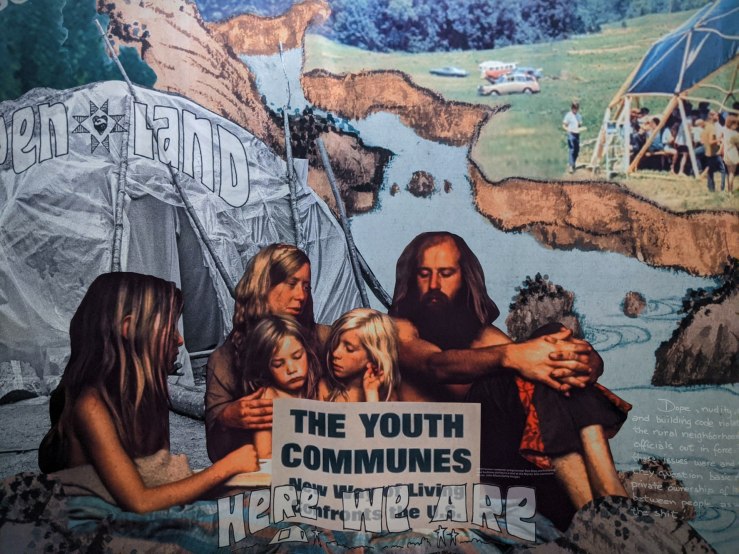
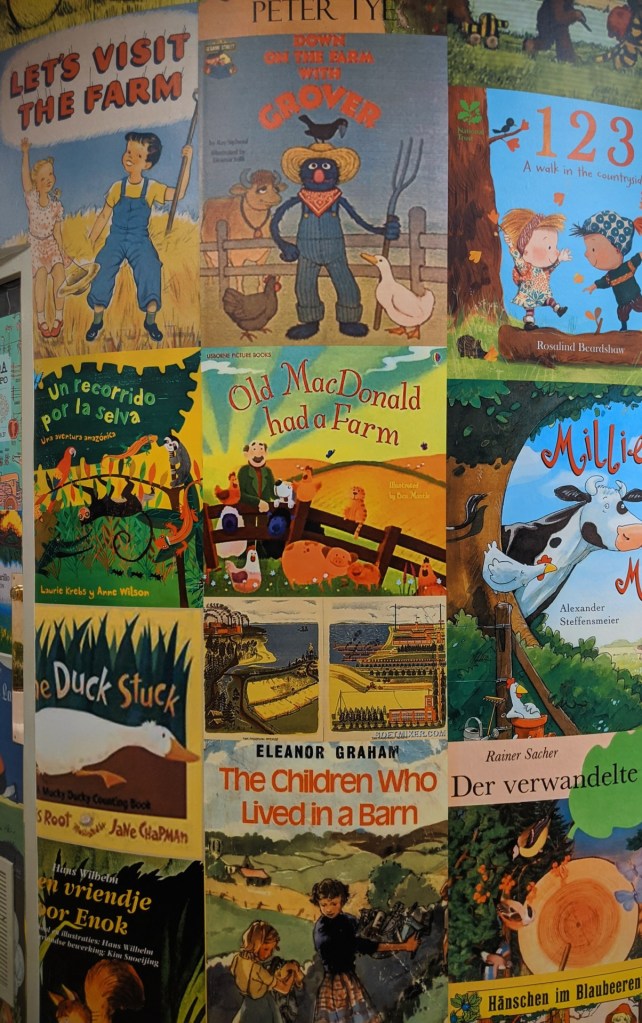
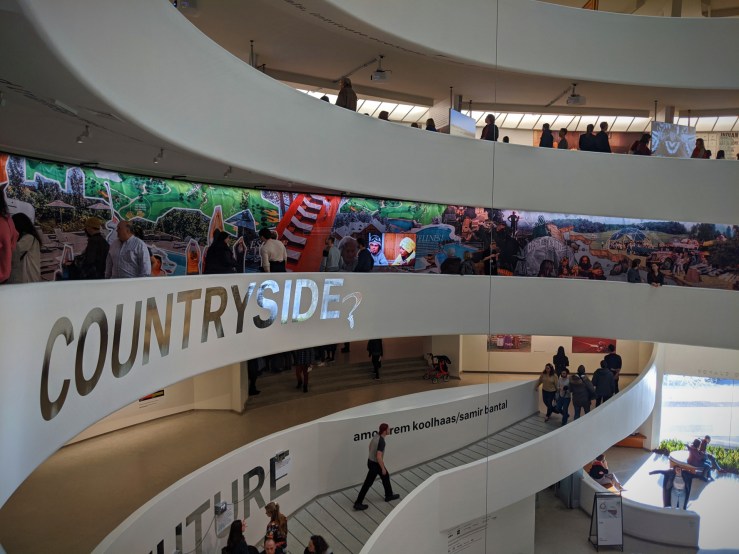
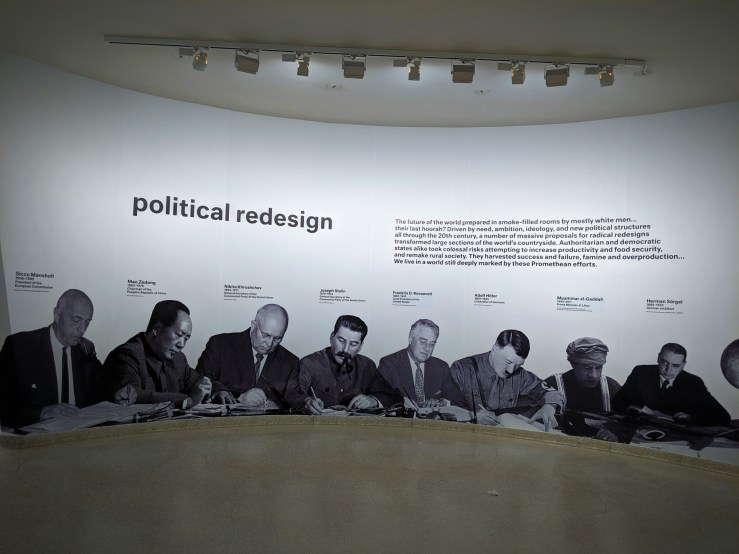
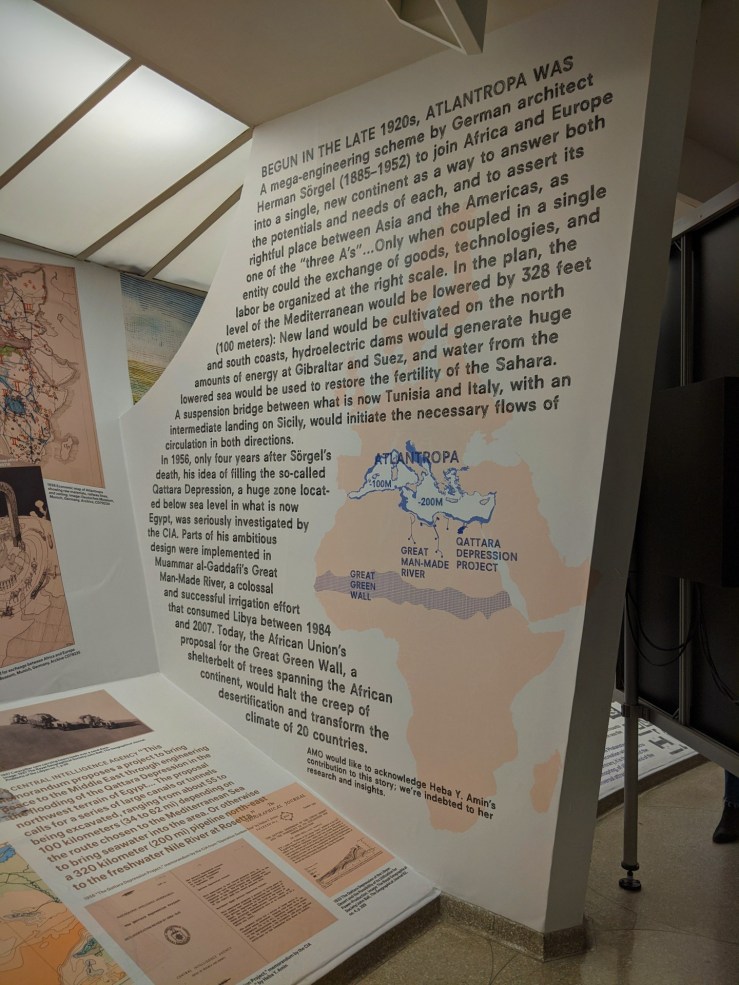
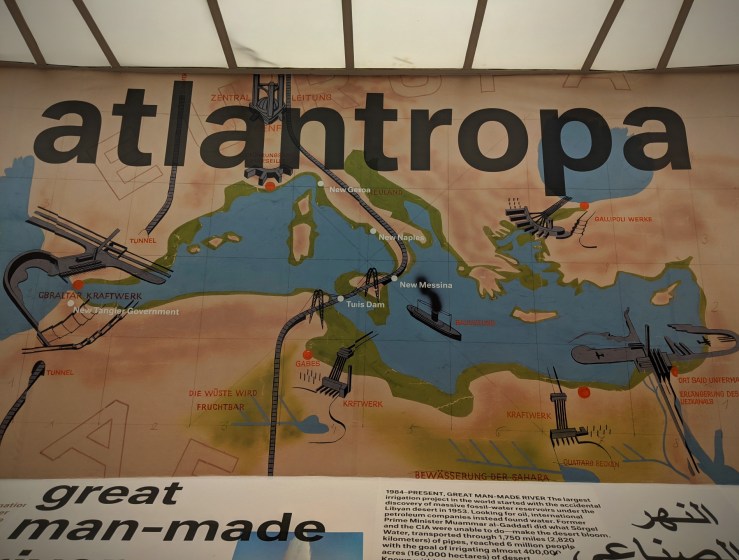
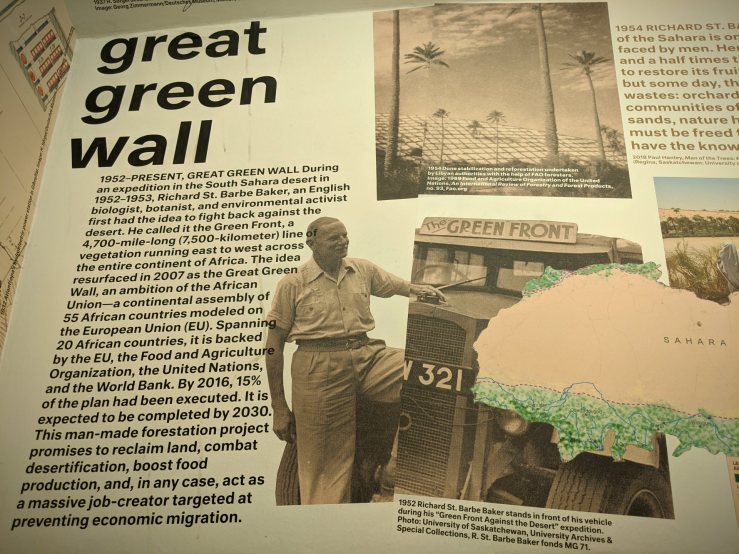
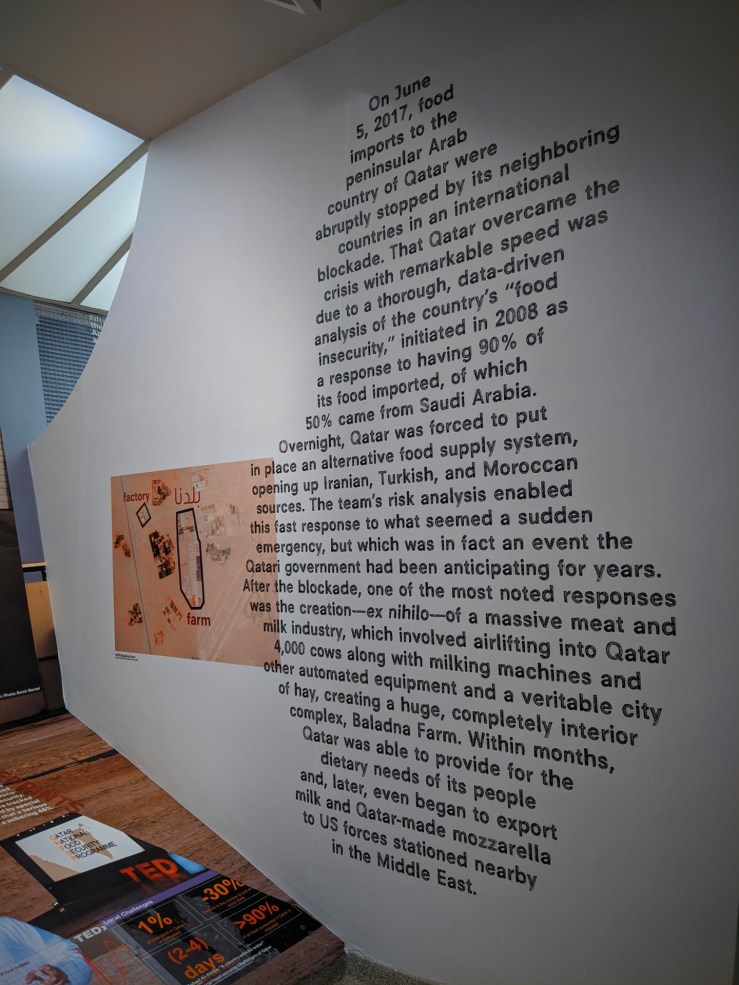
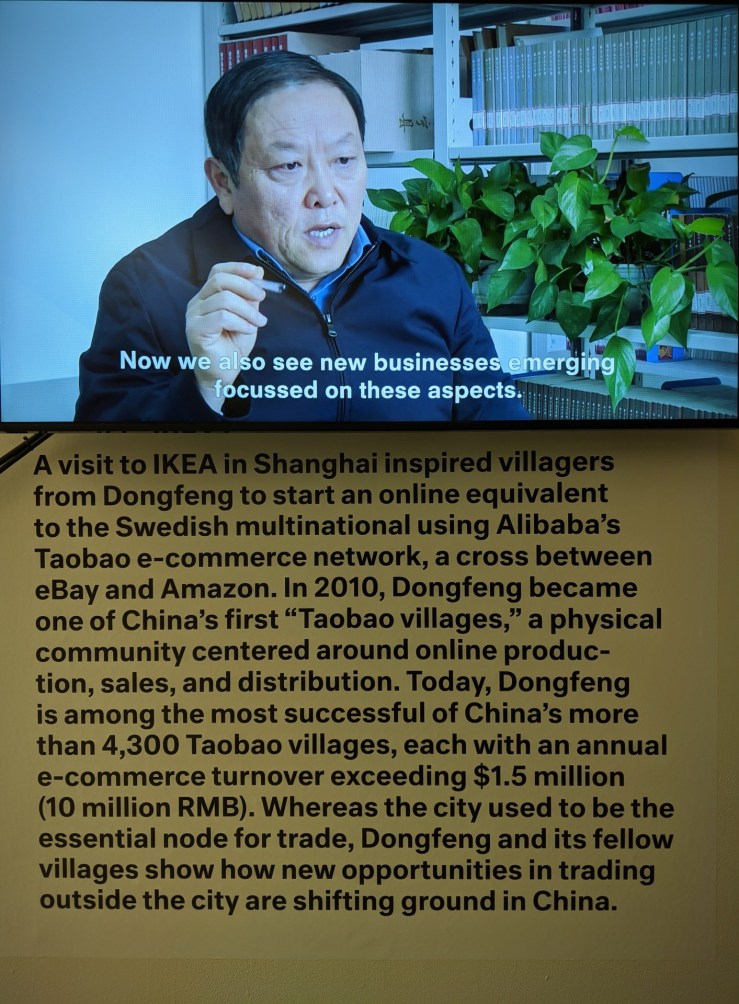
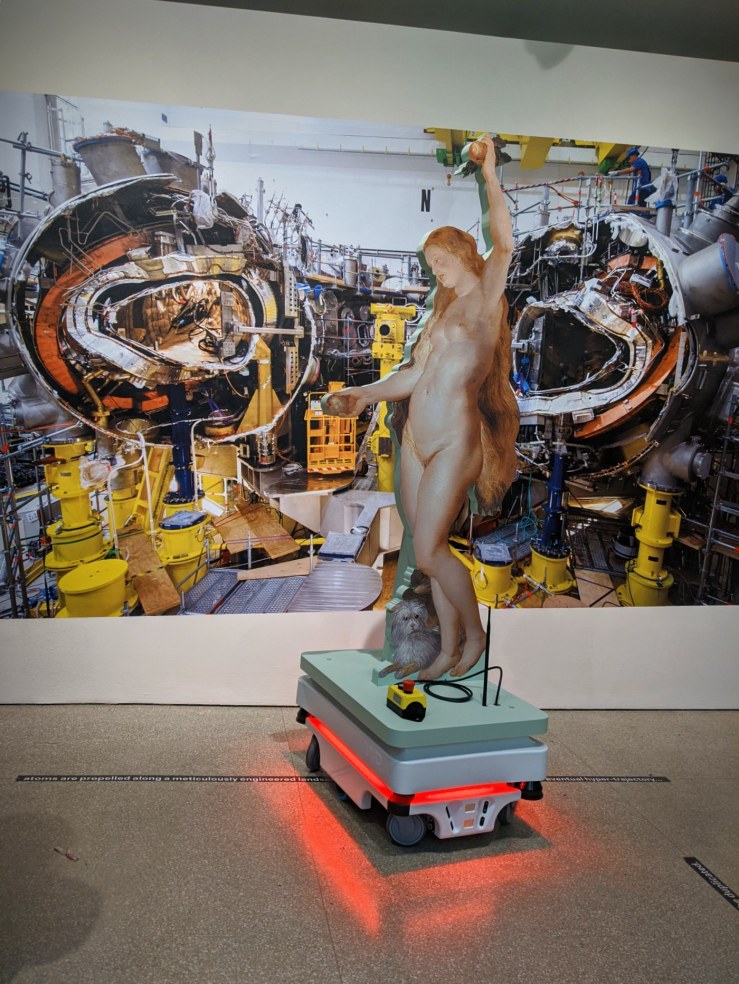
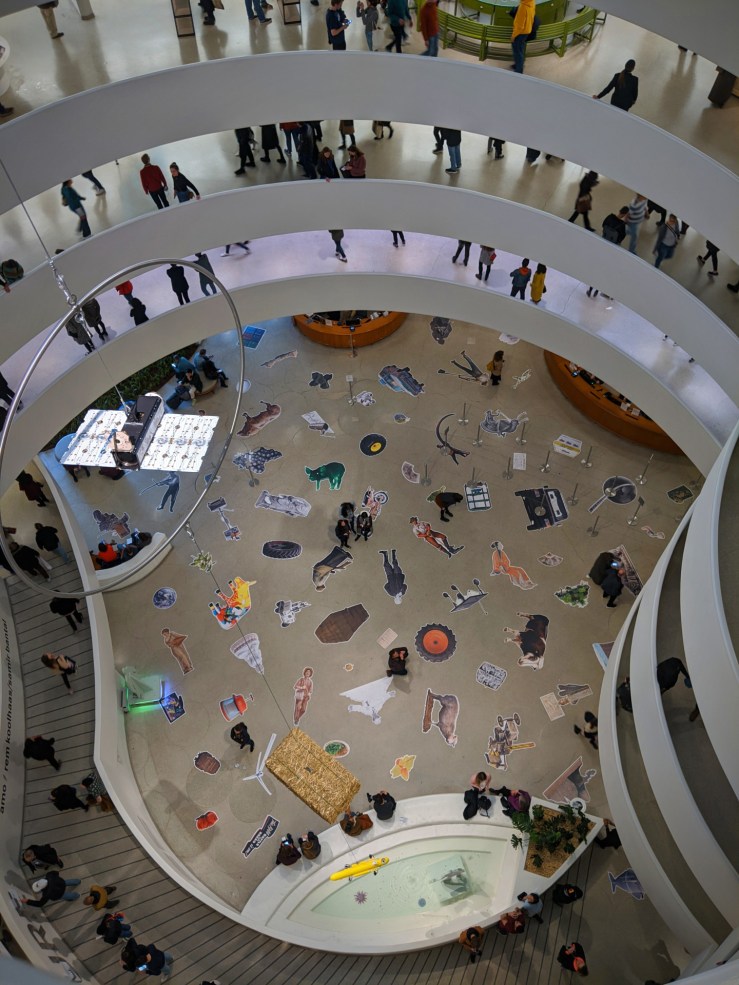
”Countryside, The Future was an exhibition addressing urgent environmental, political, and socioeconomic issues through the lens of architect and urbanist Rem Koolhaas and Samir Bantal, Director of AMO, the think tank of the Office for Metropolitan Architecture (OMA).
A unique exhibition for the Guggenheim Museum, Countryside, The Future explored radical changes in the rural, remote, and wild territories collectively identified as “countryside,” or the 98% of the Earth’s surface not occupied by cities, with a full rotunda installation premised on original research. The project presented investigations by AMO, Koolhaas, with students at the Harvard Graduate School of Design; the Central Academy of Fine Arts, Beijing; Wageningen University, Netherlands; and the University of Nairobi. The exhibition examined the modern conception of leisure, large-scale planning by political forces, climate change, migration, human and nonhuman ecosystems, market-driven preservation, artificial and organic coexistence, and other forms of radical experimentation that are altering landscapes across the world.” [source]
It would be our last pre-Covid-19 exhibition, and the last outing in a crowed place. On that same day, March 7th 2020, the then NY Governor Andrew Cuomo declared a state of emergency. One day later, on March 8th, NYC issued guidelines to avoid densely packed buses, subways, and trains.
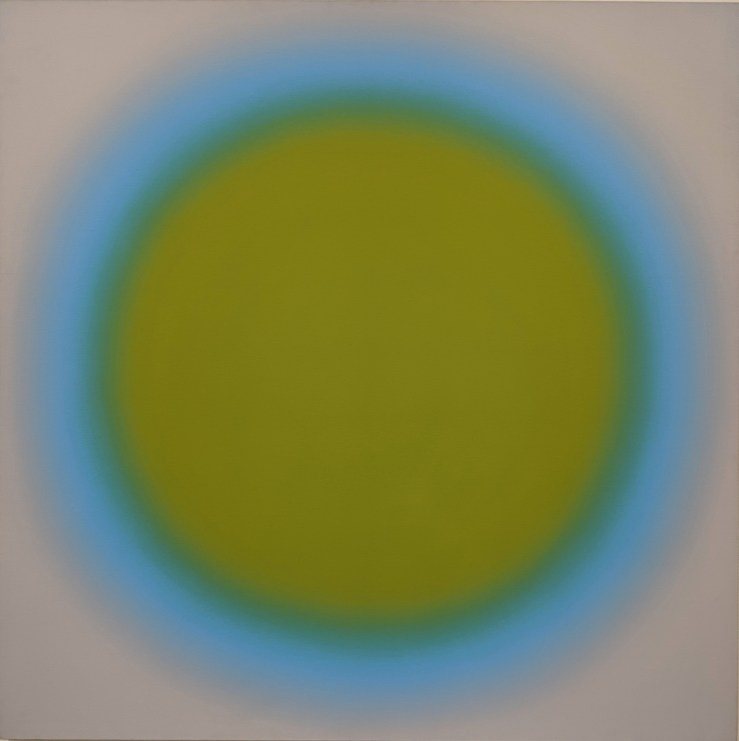
Wojciech Fangor, M 37, 1969, Oil on canvas
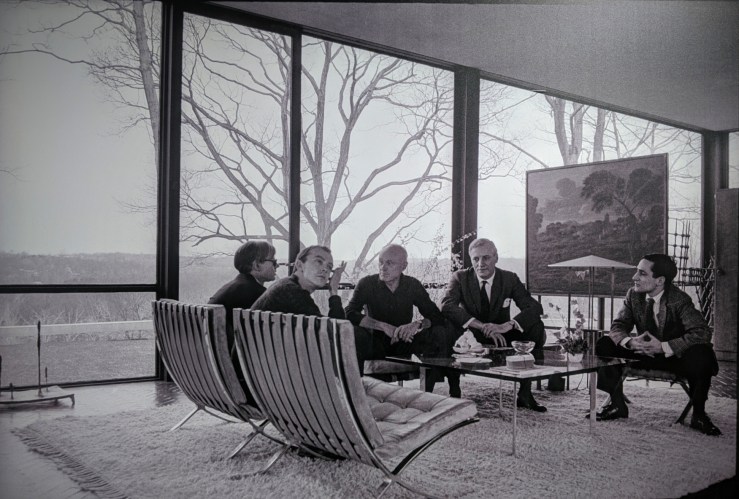
From left: Andy Warhol, David Whitney, Philip Johnson, Dr. John Dalton, and Robert A. M. Stern in the Glass House in 1964. Photograph by David McCabe
In 1949, American architect Philip Johnson built his Glass House in New Canaan, Connecticut. In some photographs, he staged himself as a hermit in the woods. But to Johnson, the countryside was not only a place of retreat and reflection – it was also the contrary: a place of feasts and banquets, of an ongoing discourse with artists and students and fellow gay friends, a salon, sometimes almost an academy, and a refuge.
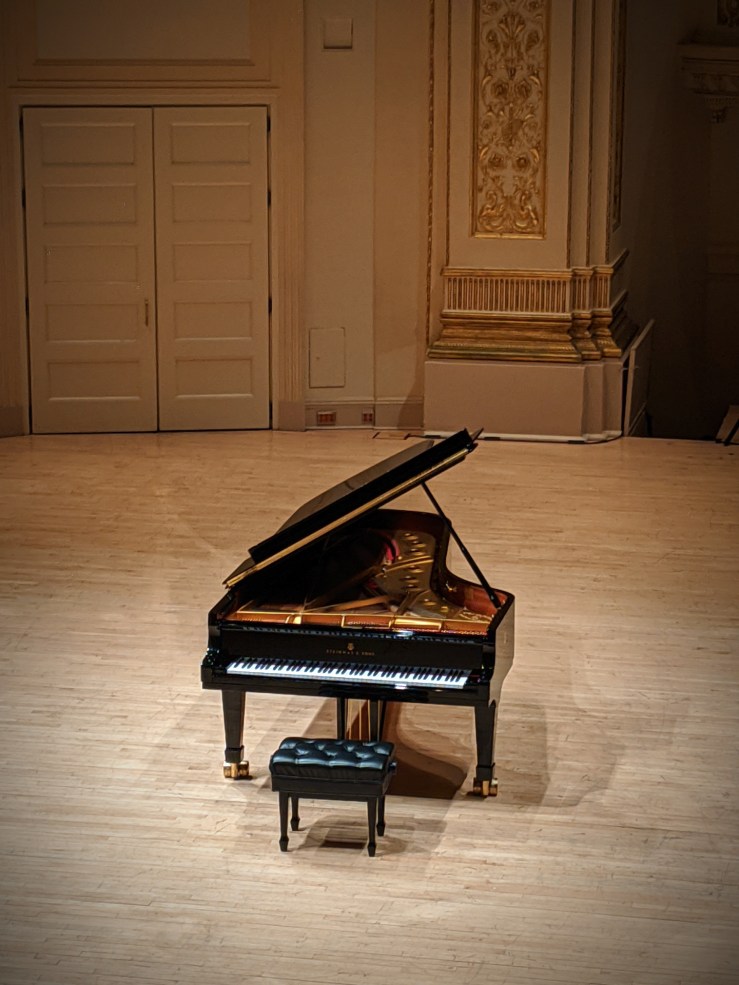
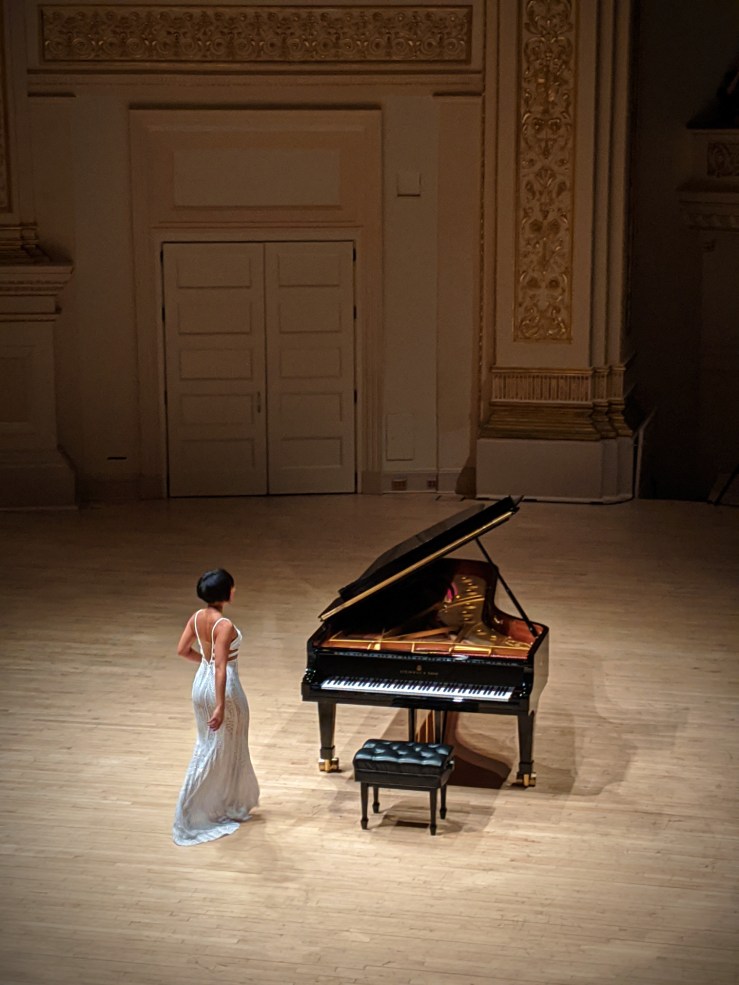
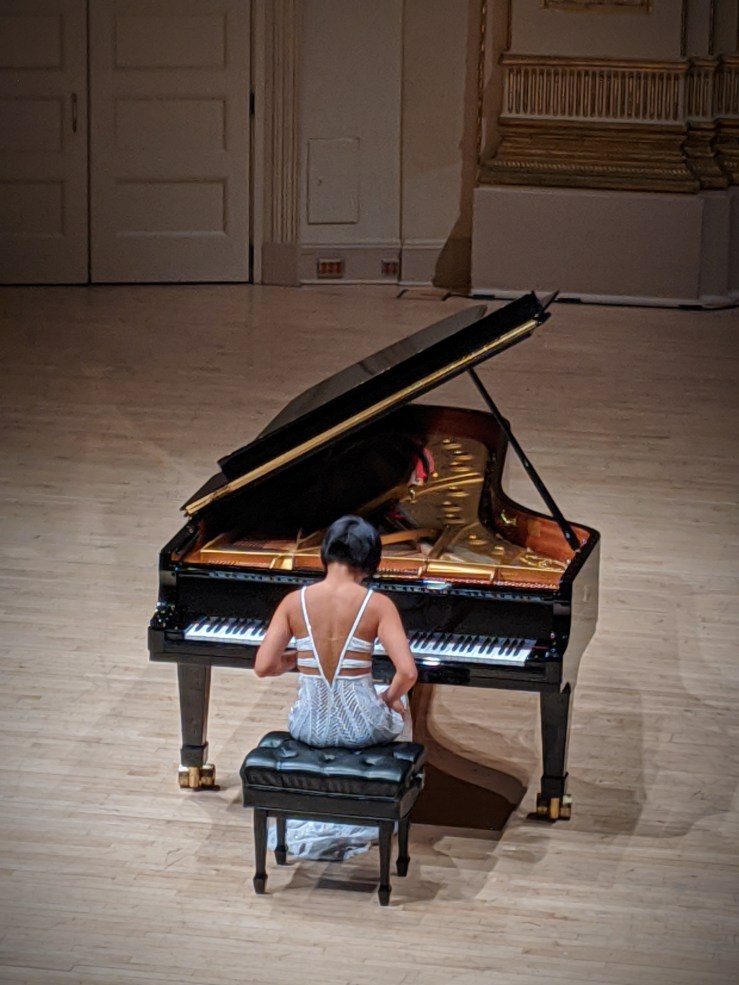
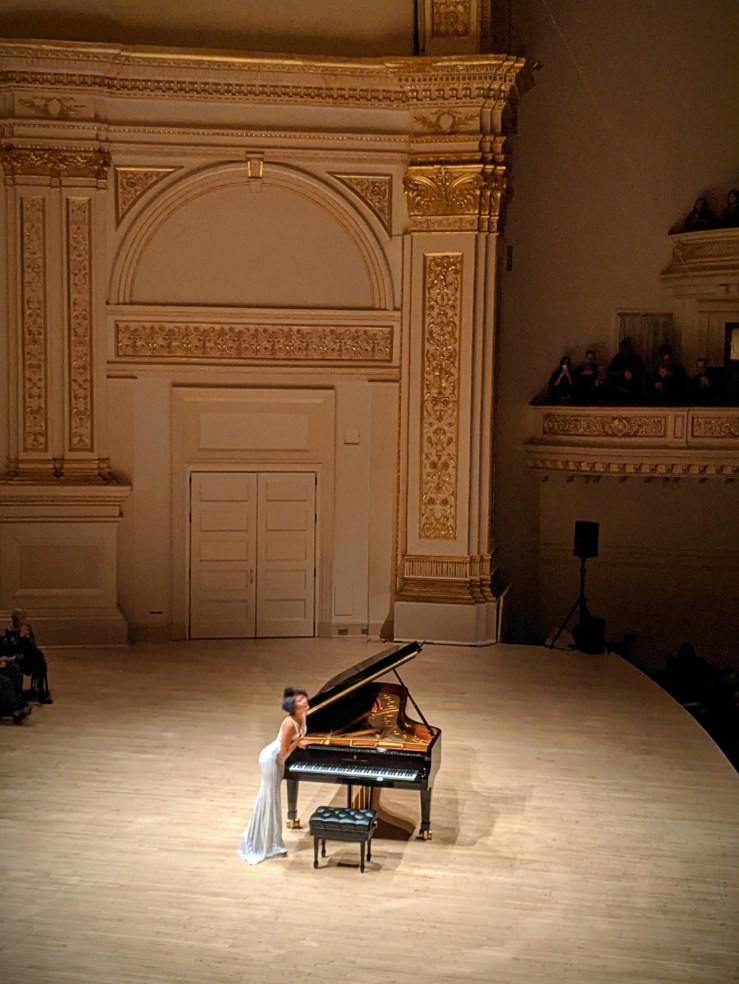
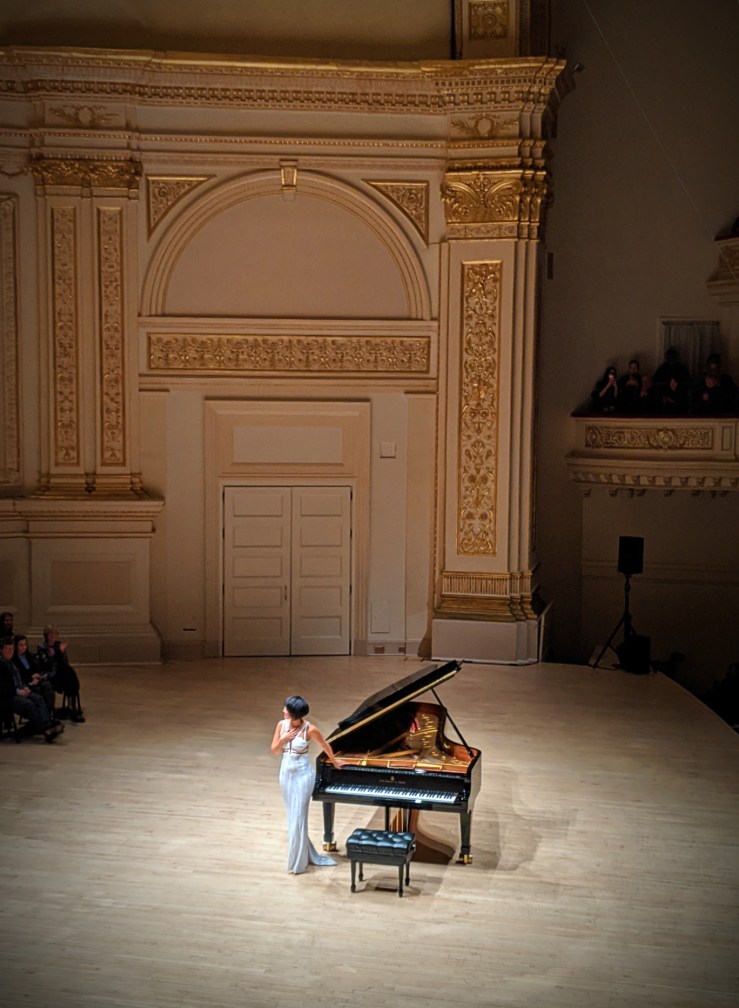
Yuja Wang, in an unforgettable recital. It would be our last pre-Covid-19 one.
“I believe that every program is a living organism, so it should be in sync with how I’m feeling in that moment, so it is truly alive. I want the music to surprise me and to surprise the audience” – said Miss Wang as she entered the stage, and she proceeded to do just that, changing the sequence of the printed programme and keeping the audience hanging from every move of her flying fingers hitting those notes, for the next two hours.
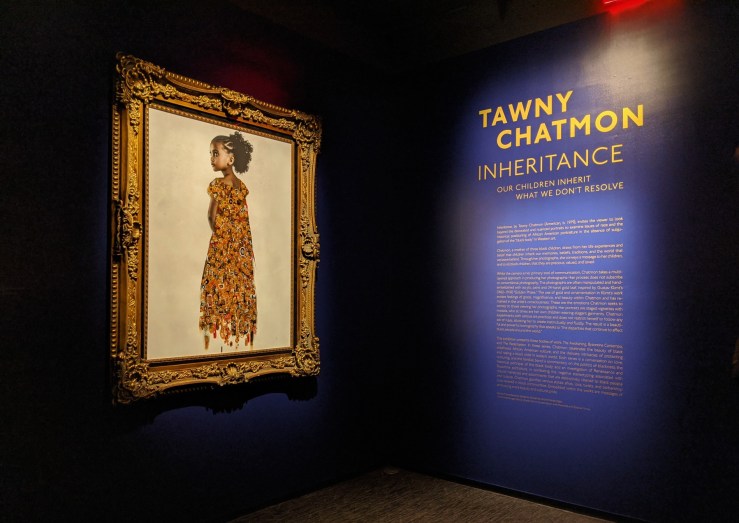
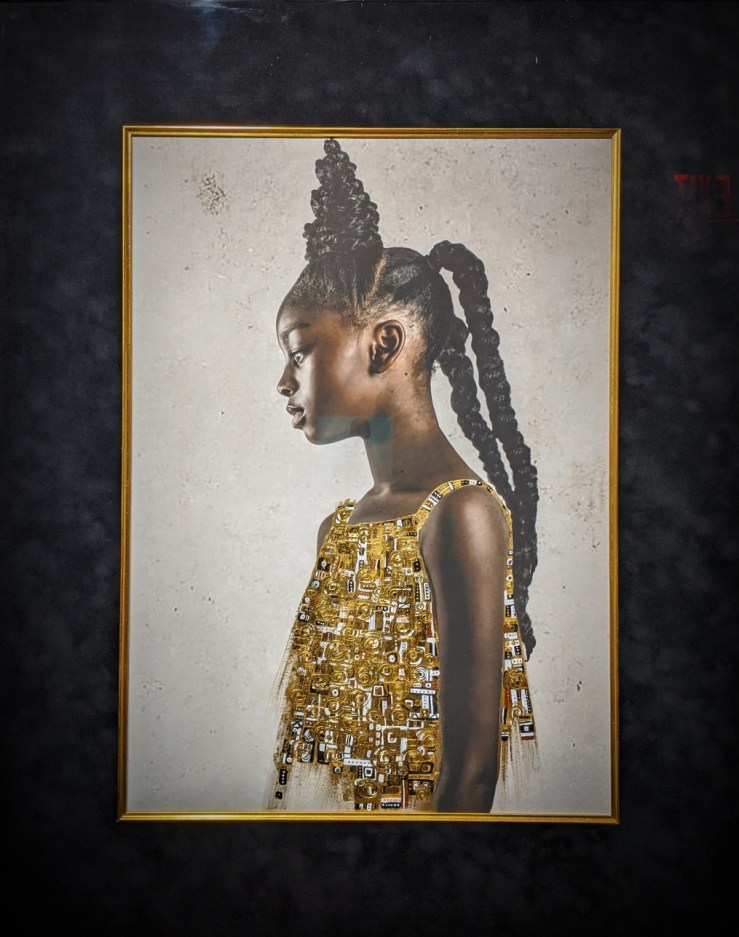
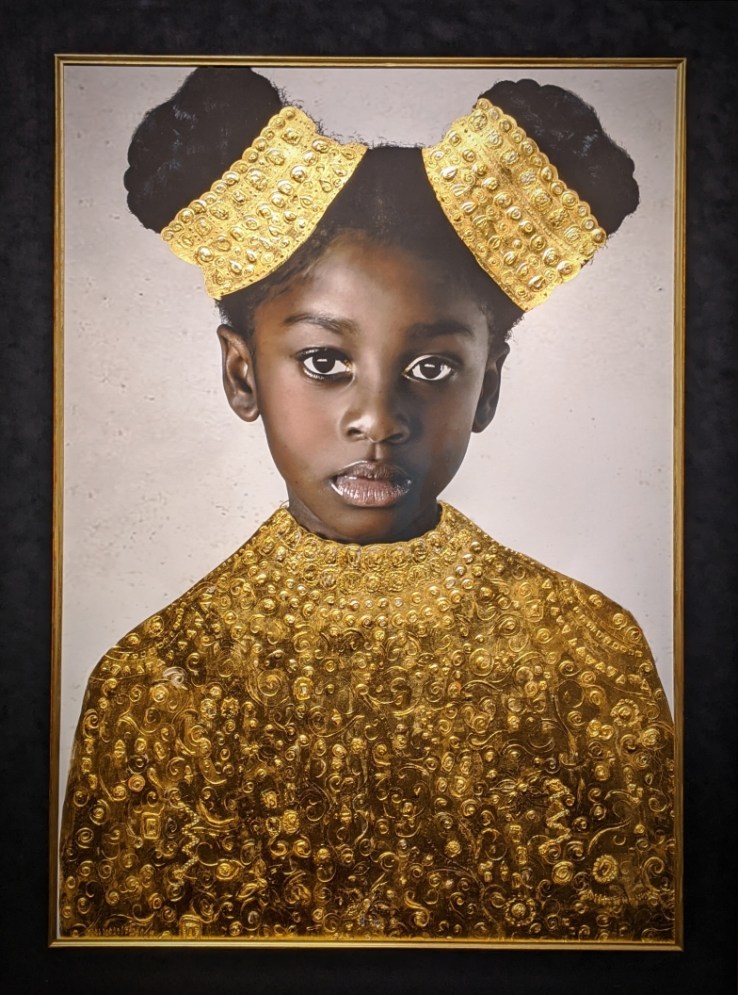
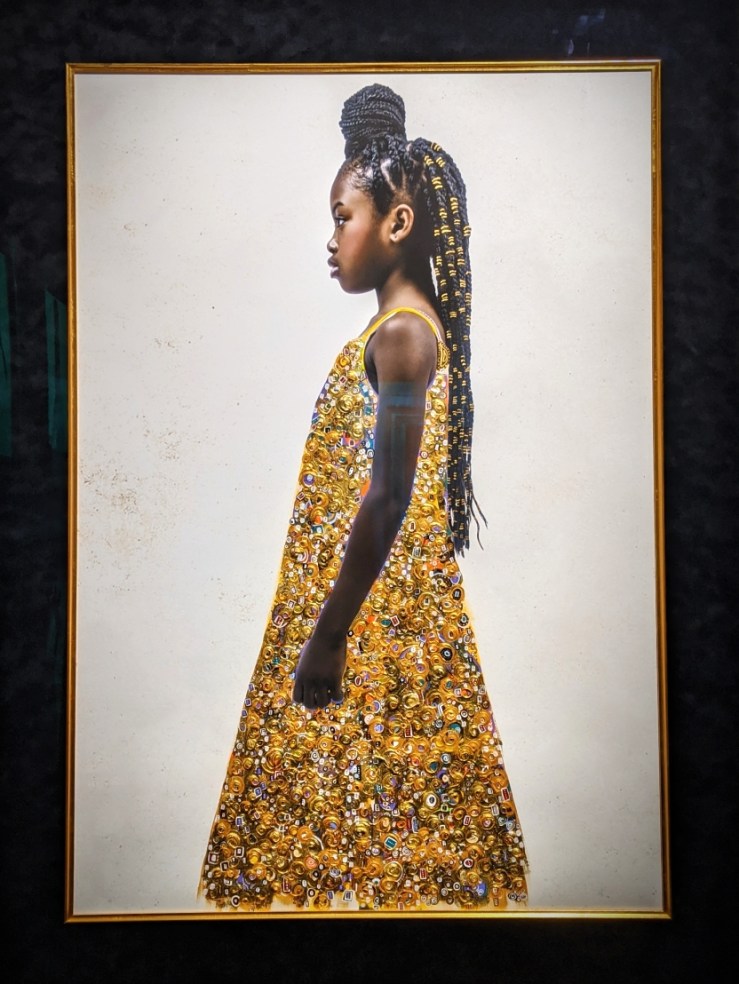
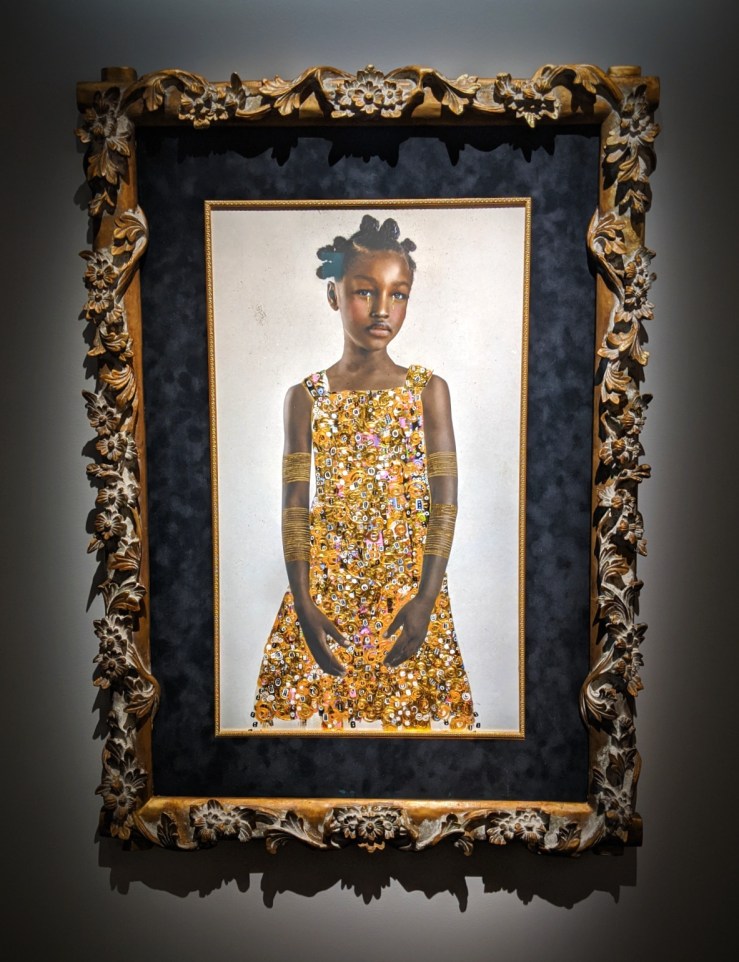
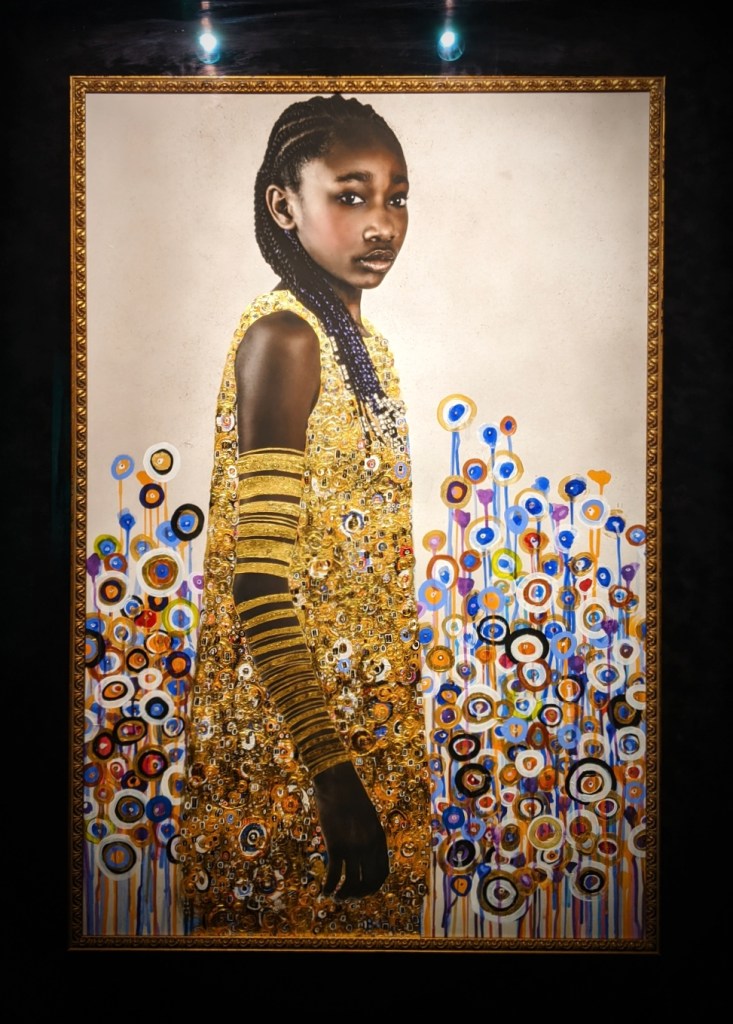
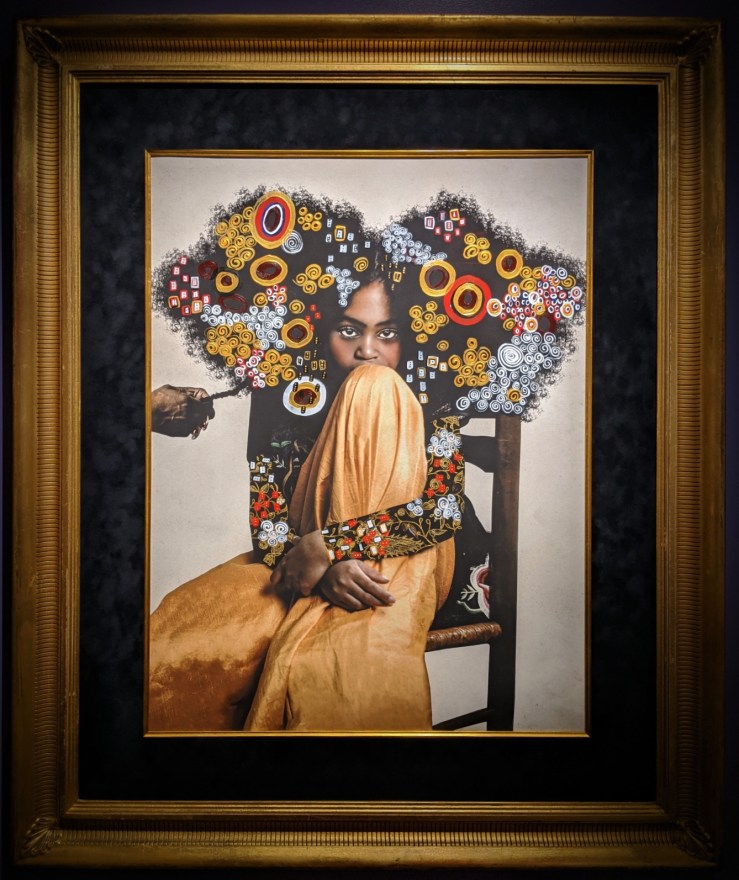
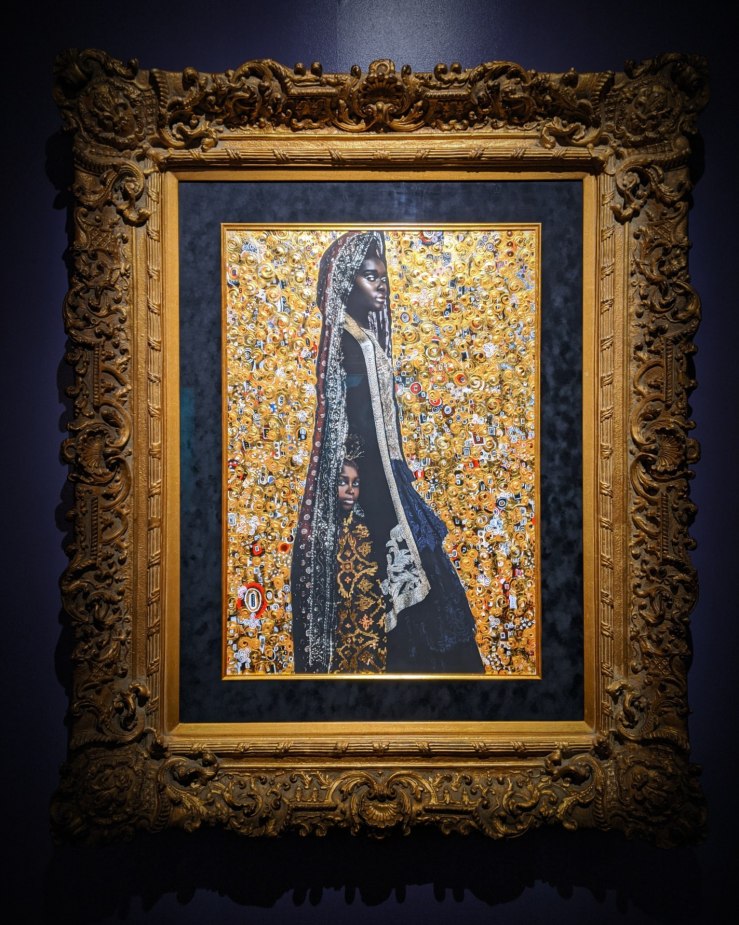
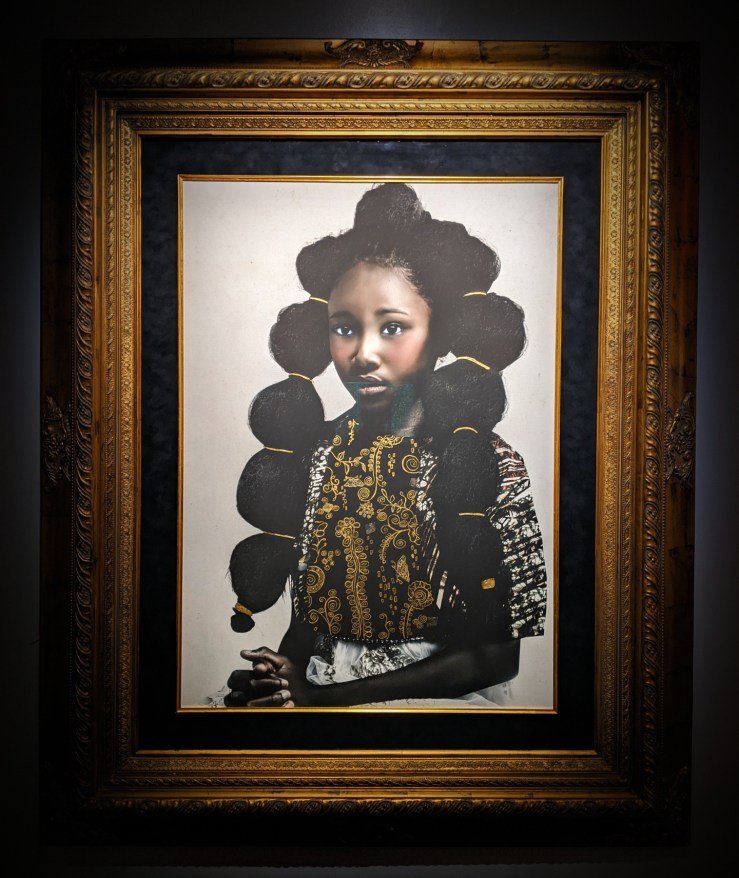
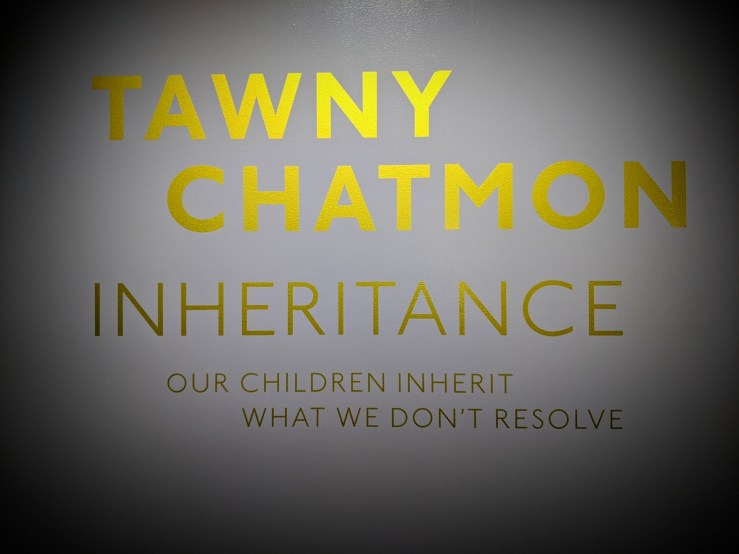
Inheritance, by Tawny Chatmon (American, b. 1979), invites the viewer to look beyond the decorated and nuanced portraits to examine issues of race and the historical positioning of African American portraiture in the absence of subjugation of the “black body” in Western art.
Chatmon, a mother of three black children, draws from her life experiences and belief that children inherit our memories, beliefs, traditions, and the world that we leave behind. Through her photographs, she conveys a message to her children, and to all black children, that they are precious, valued, and loved.
While the camera is her primary tool of communication, Chatmon takes a multi-layered approach in producing her photographs—her process does not subscribe to conventional photography. The photographs are often manipulated and hand-embellished with acrylic paint and 24-karat gold leaf, inspired by Gustav Klimt’s (1862-1918) “Golden Phase.” The use of gold and ornamentation in Klimt’s work evokes feelings of grace, magnificence, and beauty within Chatmon and has remained in the artist’s consciousness. These are the emotions Chatmon seeks to convey to those viewing her photographs. Her portraits are staged vignettes with models, who at times are her own children wearing elegant garments. Chatmon experiments with various art practices and does not restrict herself to follow any set of rules, allowing her to create instinctually and fluidly. The result is a beautiful and powerful iconography that speaks to “the disparities that continue to affect black people around the world.” [source]
Reaping the benefit of having MoMA at walking distance between home & work.
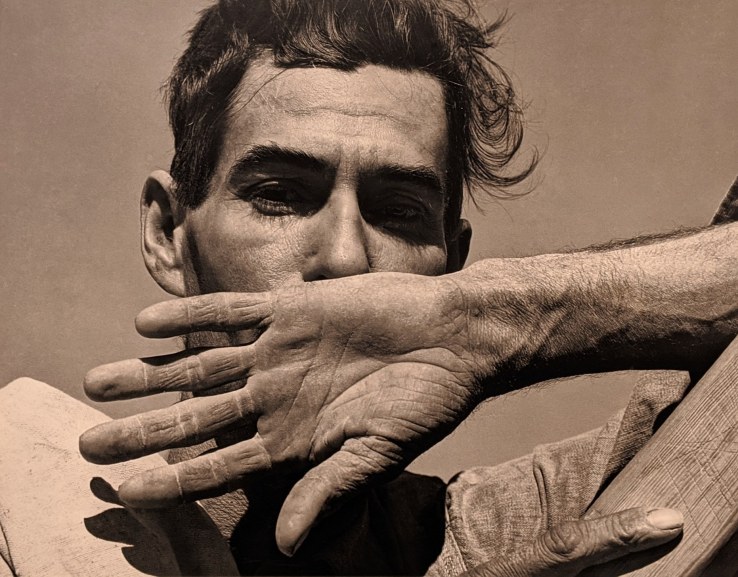
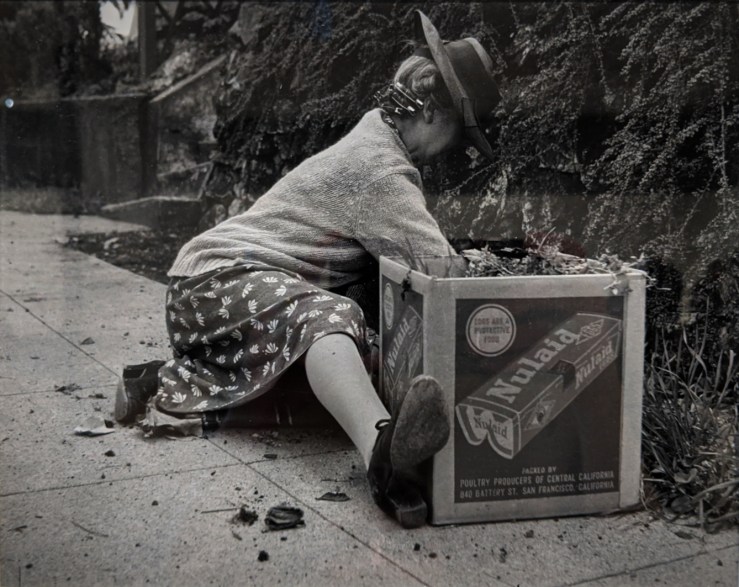
Dorothea Lange || Migratory Cotton Picker, Eloy, Arizona. November 1940
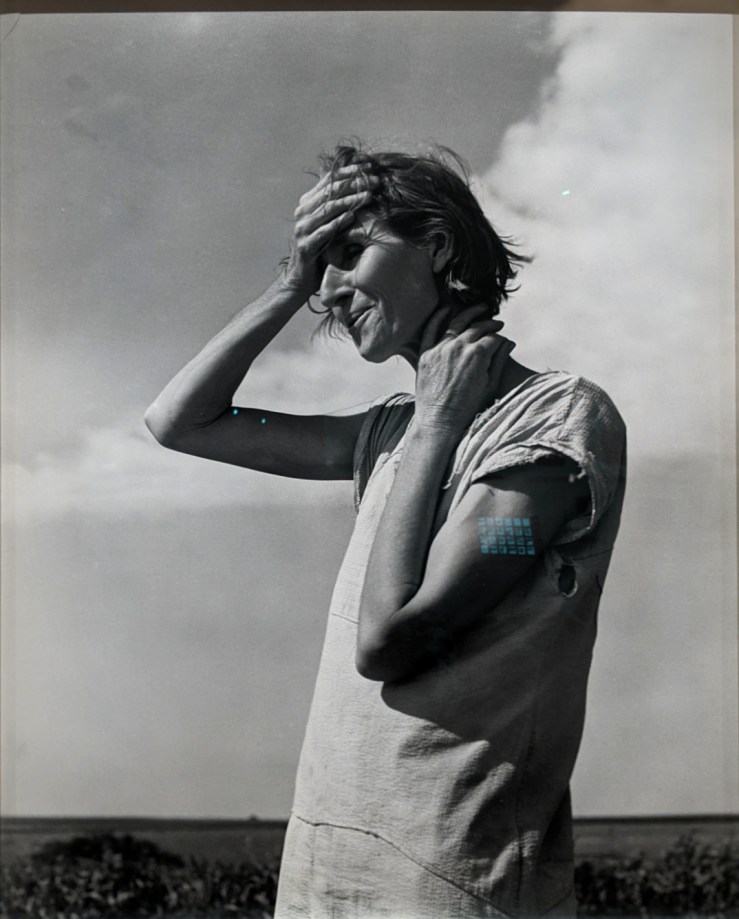
Dorothea Lange || Woman of the High Plains, Texas Panhandle. June 1938
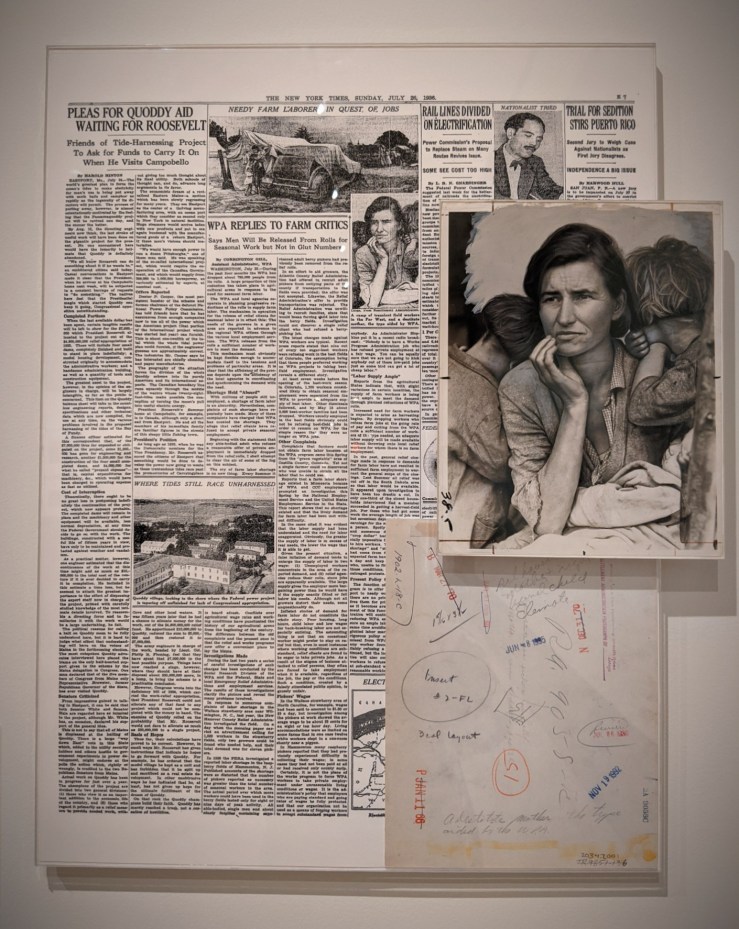
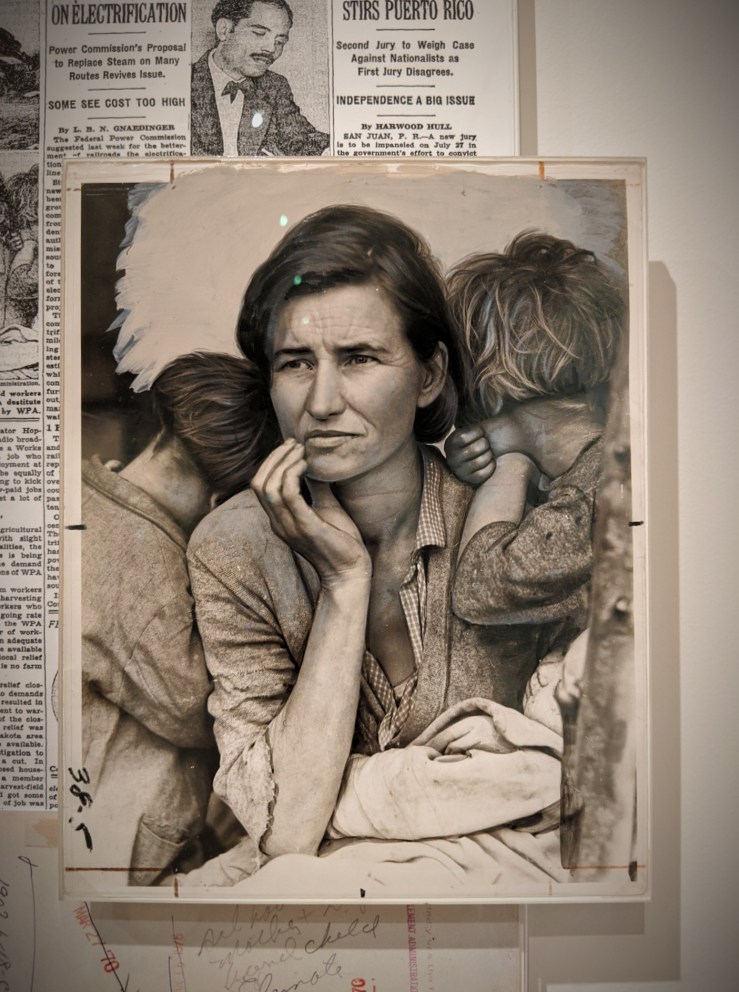
Dorothea Lange || Migrant Mother, Nipomo, California. March 1936
Dorothea Lange || Migrant Mother, Nipomo, California. March 1936
Dorothea Lange || A Destitute Mother: The Type Aided by the WPA. March 1936
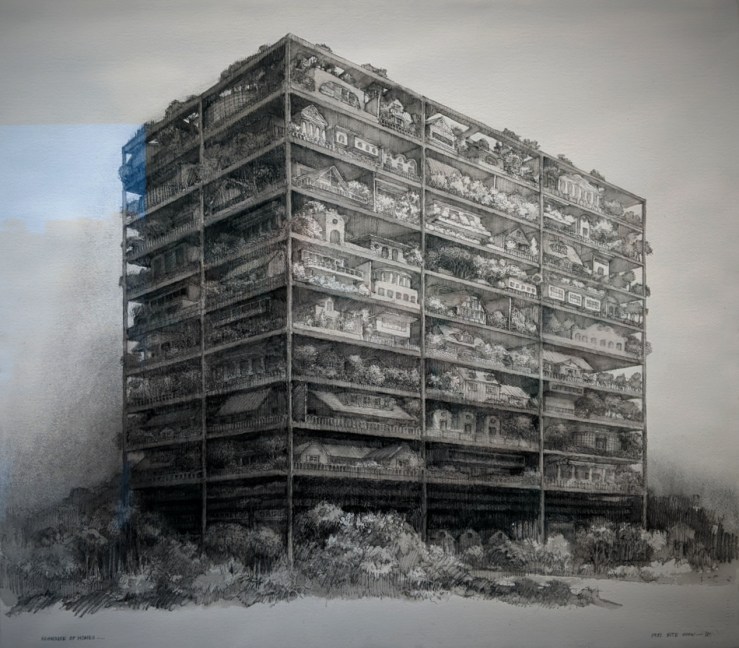
SITE, James Wines || Highrise of Homes, project (Exterior perspective)1981
James Wines, a founding member in 1970 of the SITE (Sculpture In The Environment) architectural group, described the Highrise of Homes project as a “vertical community” to “accommodate people’s conflicting desires to enjoy the cultural advantages of an urban center, without sacrificing the private home identity and garden space associated with suburbia.” The plan calls for a steel-and-concrete, eight-to-ten-story, U-shaped building frame erected in a densely populated urban area. The developer would sell lots within this frame, each lot the site for a house and garden in a style chosen by the purchaser. The result would be a distinct villagelike community on each floor, with interior streets. A central mechanical core would serve these homes and gardens, while shops, offices, and other facilities on the ground and middle floors would provide for the residents’ needs.
Developers considered Battery Park City, New York, as a possible location for the project, but it was never built.
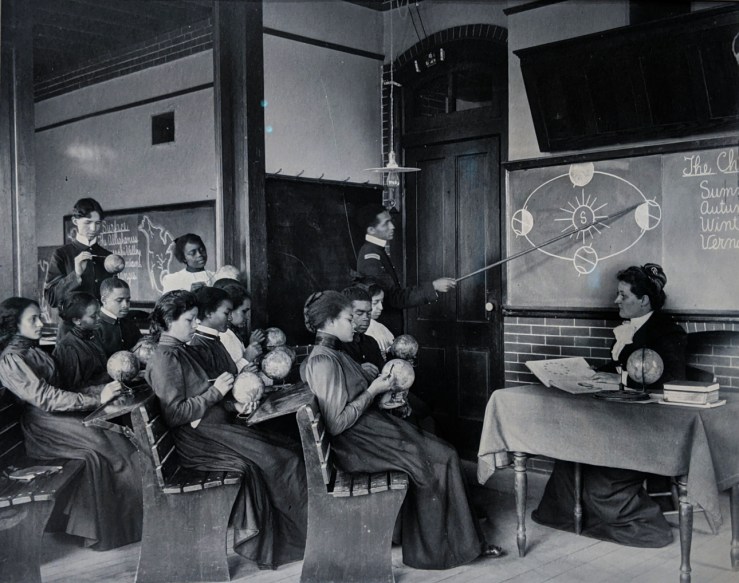
Frances Benjamin Johnston || From the Hampton Album 1899-1900. Geography: Studying the Seasons
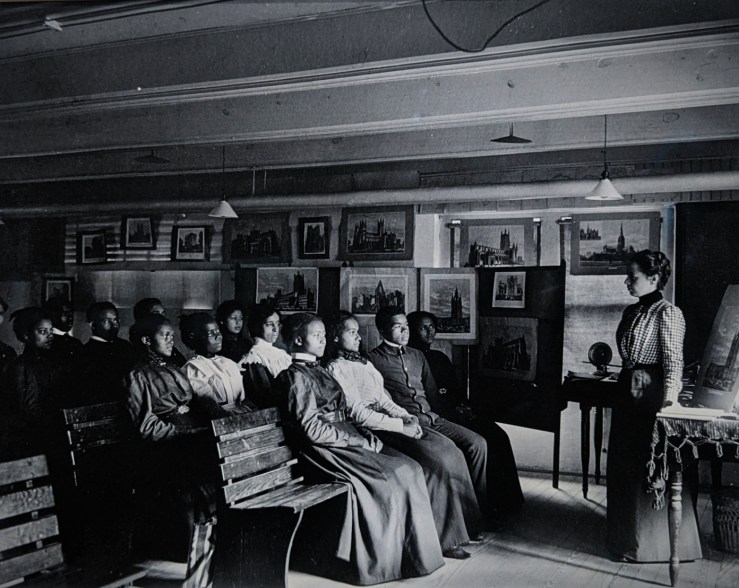
Frances Benjamin Johnston || From the Hampton Album 1899-1900. Geography: Studying the Cathedral Towns
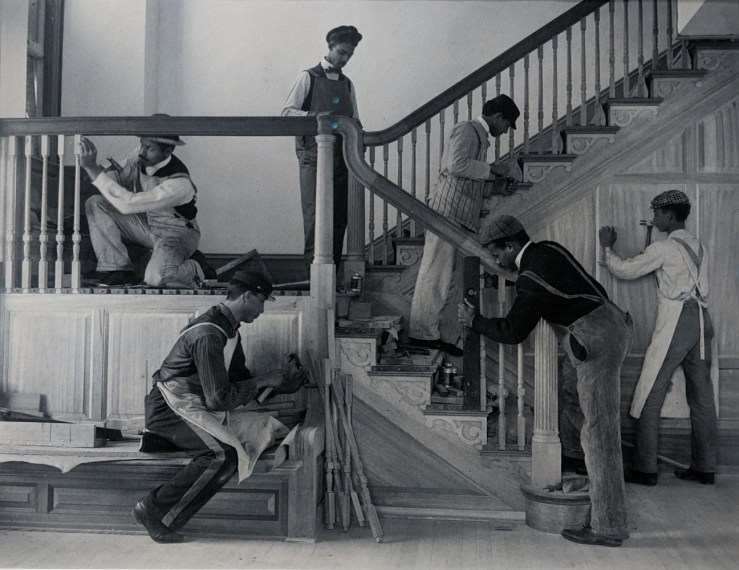
Frances Benjamin Johnston || From the Hampton Album 1899-1900. Stairway of Treasurer’s Residence: Students at Work
”After setting up her own photography studio in 1894, in Washington, D.C., Frances Benjamin Johnston was described by The Washington Times as “the only lady in the business of photography in the city.” Considered to be one of the first female press photographers in the United States, she took pictures of news events and architecture and made portraits of political and social leaders for over five decades.
In 1899, the principal of the Hampton Normal and Agricultural Institute in Virginia commissioned Johnston to take photographs at the school for the 1900 Exposition Universelle in Paris. The Hampton Institute was a preparatory and trade school dedicated to preparing African American and Native American students for professional careers. Johnston took more than 150 photographs and exhibited them in the Exposition Nègres d’Amerique (American Negro Exhibit) pavilion, which was meant to showcase improving race relations in America. The series won the grand prize and was lauded by both the public and the press.
Years later, writer and philanthropist Lincoln Kirstein discovered a leather-bound album of Johnston’s Hampton Institute photographs. He gave the album to The Museum of Modern Art, which reproduced 44 of its original 159 photographs in a book called The Hampton Album, published in 1966.” [source]
Free listening and free download (mp3) chill and down tempo music (album compilation ep single) for free (usually name your price). Full merged styles: trip-hop electro chill-hop instrumental hip-hop ambient lo-fi boombap beatmaking turntablism indie psy dub step d'n'b reggae wave sainte-pop rock alternative cinematic organic classical world jazz soul groove funk balkan .... Discover lots of underground and emerging artists from around the world.

 The Humble Fabulist