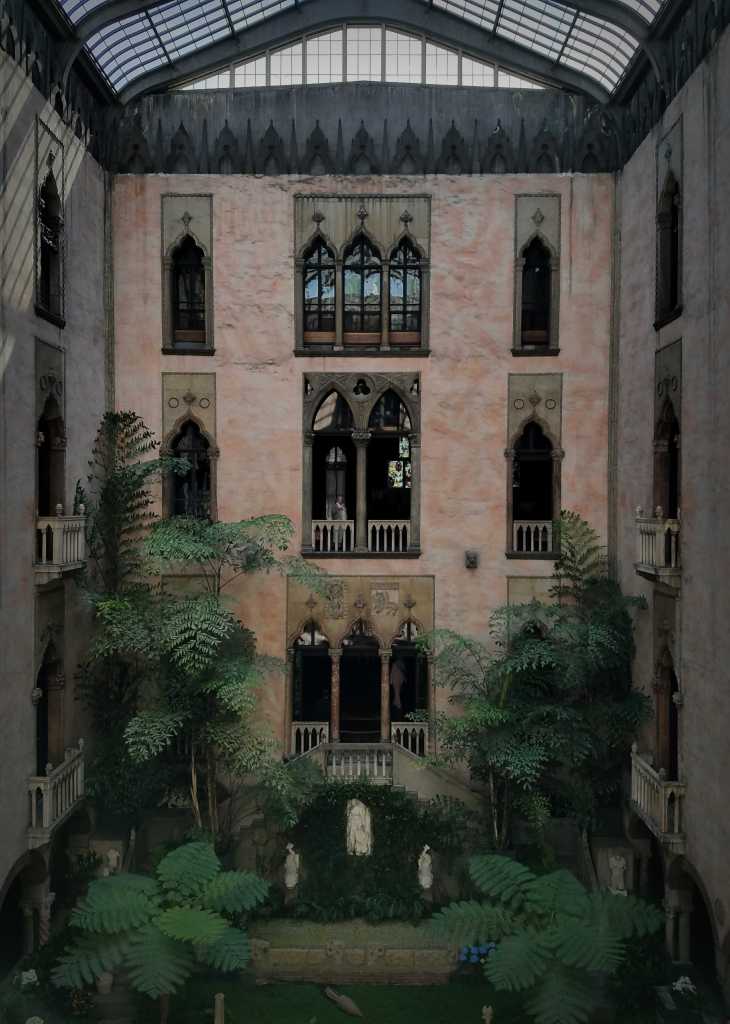
Fernand Khnopff || Illustrations for Pelléas et Mélisande

In the beginning

Golaud, a widower and grandson of King Arkel of Allemonde, has lost his way hunting in the forest. Near a fountain he discovers a weeping young girl, Mélisande. She can’t explain who she is or what has happened to her. She reluctantly agrees to follow Golaud.

In Arkel’s castle, Golaud’s mother, Geneviève, reads the old king a letter that her son has written to his half-brother, Pelléas. In it, Golaud explains the circumstances of his meeting with Mélisande six months ago. He has married her but knows no more of her story than he did then. He is afraid to return home because Arkel, though he accepts the marriage, had nevertheless hoped for Golaud to take a wife in a politically favorable union. Pelléas enters, asking to visit a dying friend. Arkel reminds him that his own father is seriously ill and persuades him to stay to greet Golaud’s new wife.

From the castle garden, Geneviève shows Mélisande the forests of Allemonde and the sea beyond. Pelléas joins them and Geneviève entrusts the girl to his care. Alone with Mélisande, Pelléas tells her that he may soon have to go on a journey.

Act 2

Pelléas takes Mélisande to a well in the park. As she plays by the water, fascinated by her reflection, her wedding ring falls in, the moment the clock strikes noon. She wonders how to explain it to Golaud. Pelléas advises her to tell the truth.

Golaud has been thrown from his horse on the stroke of midday. He lies in bed, tended by Mélisande. She tells him that she is not happy and longs to leave the castle. When Golaud takes her hand he notices the missing ring. Asked what happened to it, she replies she must have lost it in a cave by the sea. Golaud commands her to go and look for it at once, even though it is night. She is to take Pelléas with her.

Pelléas and Mélisande have gone to the cave so she will be able to describe the place to Golaud. As the moon appears, Mélisande is frightened by the sight of three beggars sleeping in the cave and asks to be taken back to the castle.
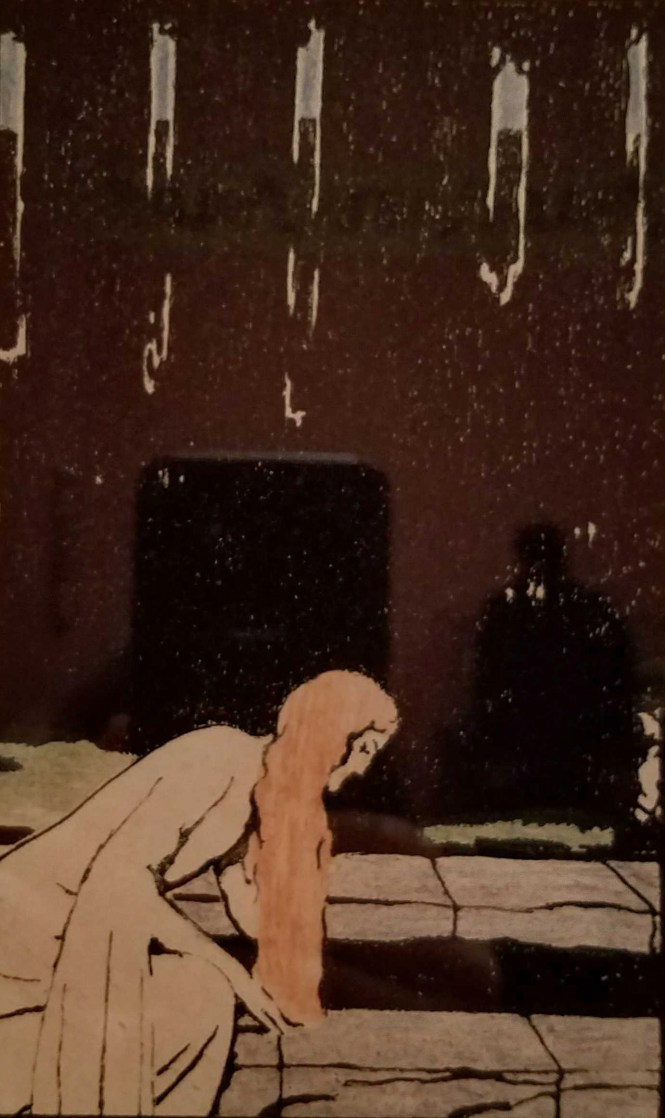
Act 3

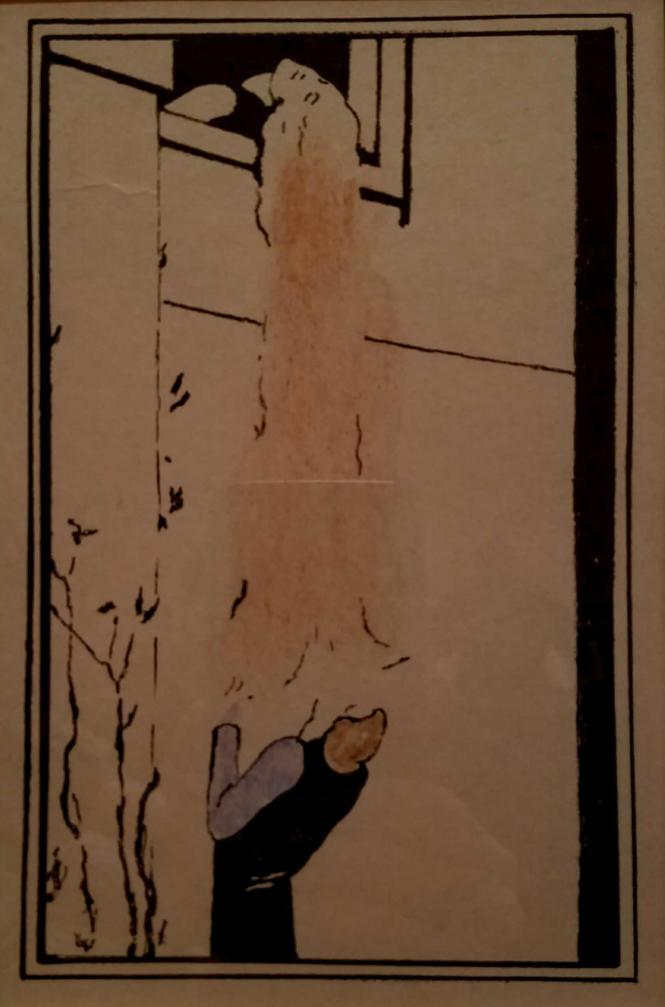
Pelléas appears below Mélisande’s window to tell her that he is leaving. She leans out and he reaches for her hair, marveling at how long it is. Suddenly Golaud appears and tells them to stop behaving like children.

Golaud leads Pelléas to a pool beneath the castle. Pelléas feels as if he was suffocating and they leave. Back on the surface, he gratefully breathes the fresh air. Golaud warns him to keep away from Mélisande, who is pregnant.

Golaud suspiciously questions Yniold, his son by his first marriage, about Pelléas and Mélisande. The boy innocently replies that they are always together but he has only seen them kiss once. When Mélisande’s window lights up, Golaud lifts Yniold to look into the room. Yniold sees Pelléas enter but he and Mélisande only look at the light and don’t talk.
Act 4

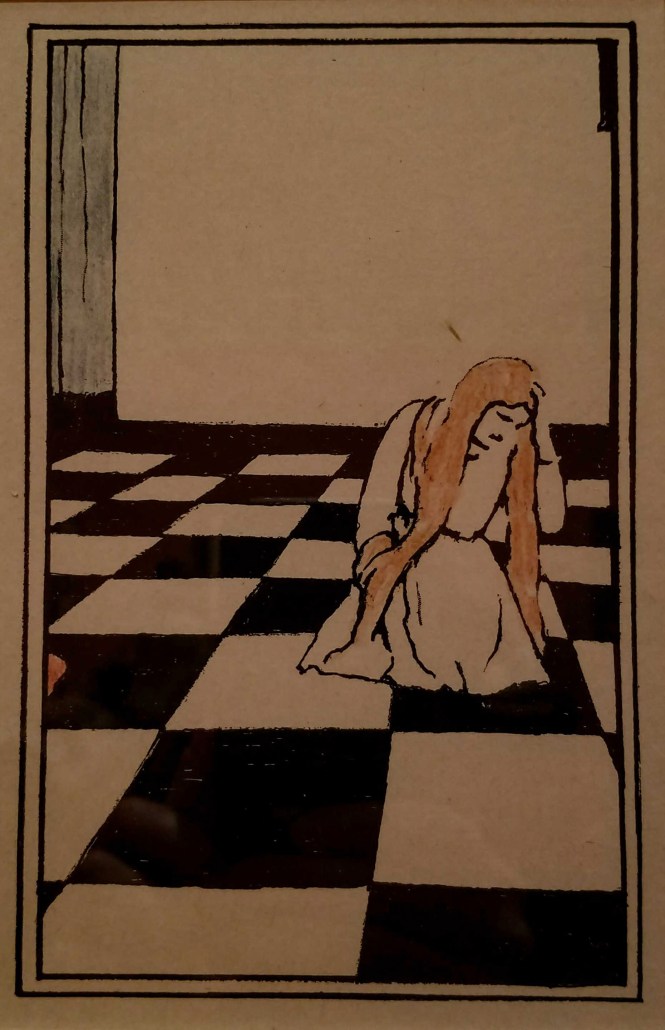
Pelléas tells Mélisande that his father has recovered and that he will leave the next day. They agree to meet by the well one last time to say goodbye. Arkel assures Mélisande that the castle will now be more cheerful. He hopes that her youth and beauty will bring about a new era. Golaud enters. He angrily confronts Mélisande, making ironic remarks about her innocence and throwing her to the ground. Arkel is horrified.

By the well, Yniold tries to recover his golden ball, which has fallen between the stones. A shepherd passes by with his sheep, on their way to slaughter. As night falls, Yniold leaves.

Pelléas arrives, soon followed by Mélisande, and they finally confess their love. Realizing there is someone waiting in the dark, they desperately kiss. Golaud enters and kills Pelléas, then pursues the fleeing Mélisande.
The end

Mélisande, who has prematurely given birth to a daughter, is dying. When Golaud, full of remorse, questions her about Pelléas, she innocently admits that she loved him. Golaud realizes there will be no resolution to his torment. Mélisande’s child is brought to her but she can see only sadness in its face. Then she quietly dies. Arkel leads Golaud away, observing that it is now the child’s turn.

Source: The Metropolitan Opera
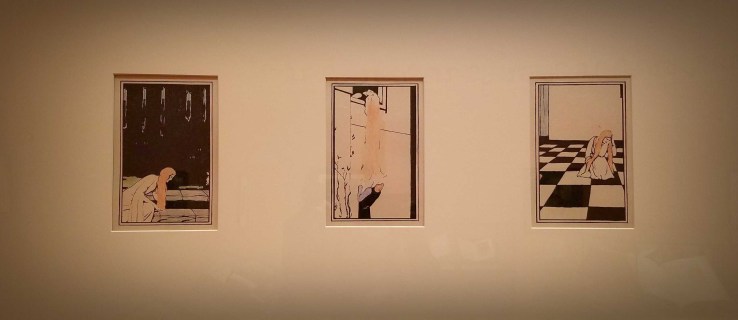
Fernand Khnopff (1858-1921)
Illustrations for Acts 2,3 and 4 of Pelléas et Mélisande
Hand-coloured photogravures

From Maurice Maeterlinck, Pelléas et Mélisande. Brussels: Edition de la Société de Bibliophiles, 1920


Images from ”Delirium: The Art of the Symbolist Book” exhibition @ The Morgan Library & Museum

May 7th, 2017
Delirium || The Art of the Symbolist Book @ The Morgan Library

Midtown Manhattan may seem too professional, flat, boring, touristy, UN-y, with nothing much moving after hours besides FDNY ladders and Mount Sinai ambulances – sirens full blast, but it has its share of interesting spots. Keep an open mind, look beyond the luxury shop windows of Fifth or Madison Avenues or the Broadway theatre district, and you may be surprised. And quite positively at that.

Take a look inside The Morgan Library, for instance, one of Midtown’s gems both architecturally and as an exhibition space.

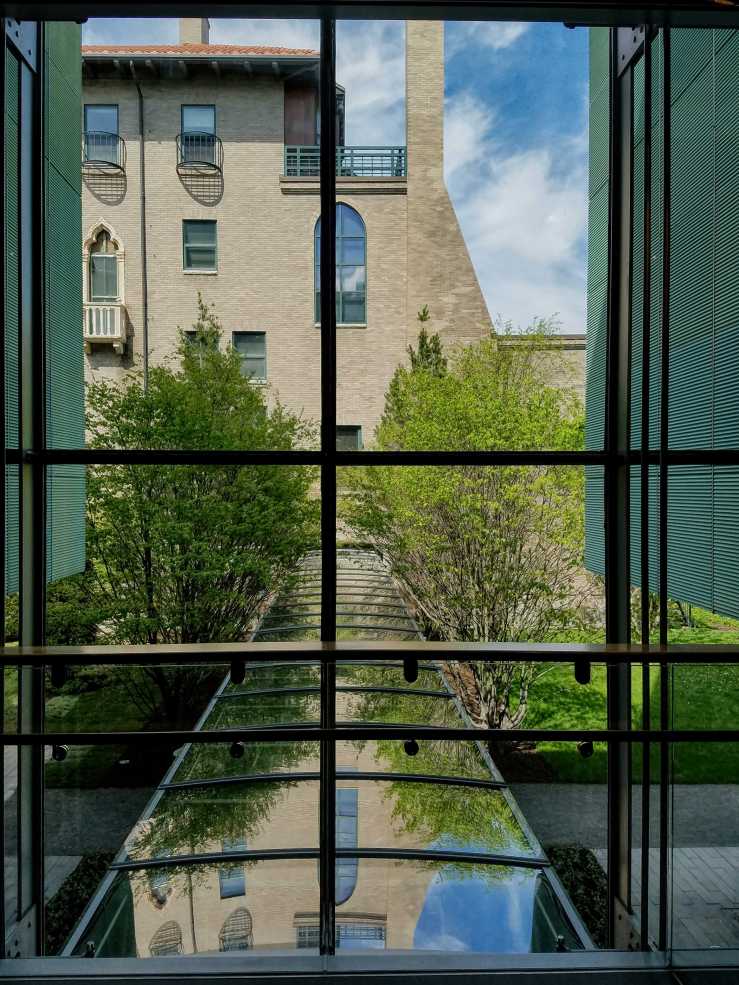
What began as an intimate palazzo-like structure intended to serve as the private library of financier Pierpont Morgan, became today’s complex of buildings of different styles, covering half a city block.

Mr. Morgan’s library was designed by Charles Follen McKim and built between 1902 and 1906, next to his residence. Later, as his collections grew, an Annex was added in 1928. More recently, in 1988, Mr. Morgan’s brownstone residence was added to the complex, followed by a garden in 1991, which united the three buildings. And, finally, there came the largest expansion yet with (surprise!) a Renzo Piano steel and glass design creating new spaces and connecting everything together.

The images that follow are from ”Delirium: The Art of the Symbolist Book”, an exhibition that featured works by authors and artists from the Symbolist movement.

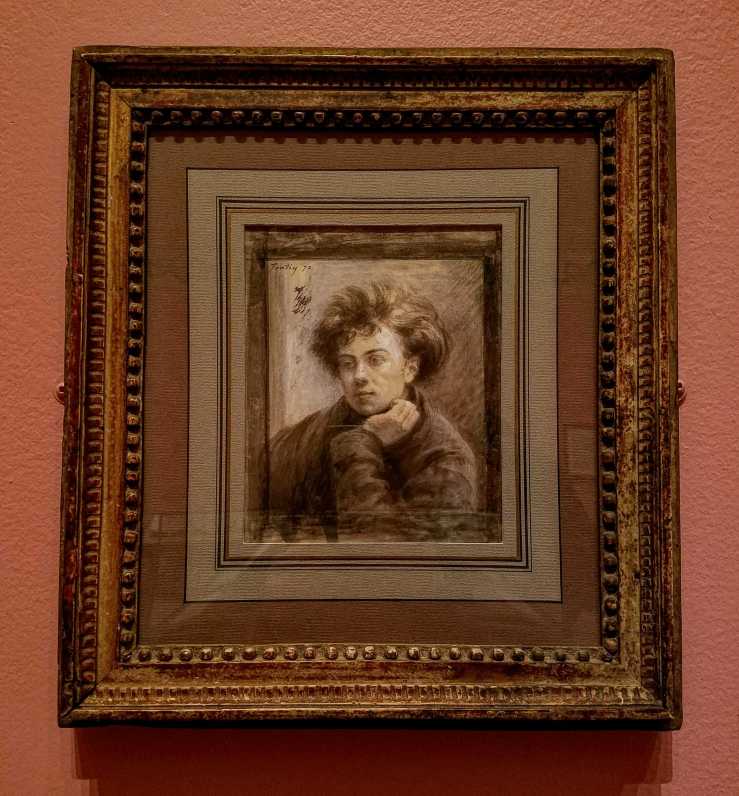
Henri Fantin-Latour (1836-1904)
Portrait of Arthur Rimbaud, 1872
Watercolour and white opaque wash over black chalk on paperboard


Odilon Redon (1840-1916)

Centaure lisant, ca. 1885
Charcoal sprayed with fixative on wove paper 


Marcel Schwob (1867-1905)
Georges de Feure, artist (1868-1943)
La porte des rêves

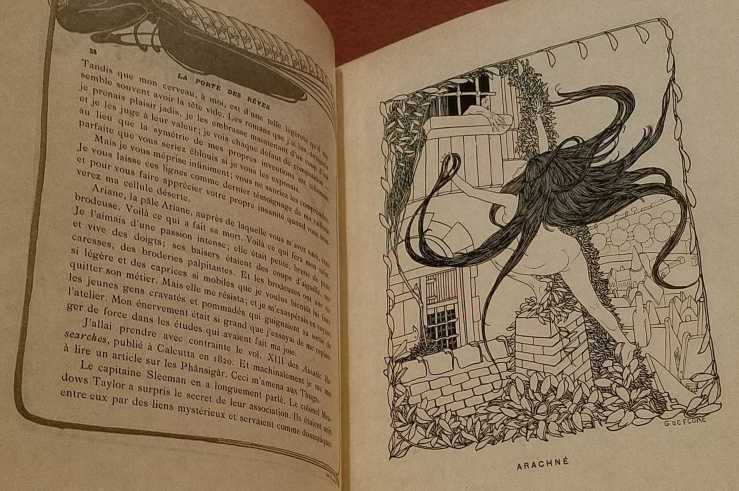
Edgar Allan Poe’s influence on Symbolist literature was most explicit in its prose. In Schwob’s Arachné, a man’s desire to possess his beloved leads him to strangle her to absorb her soul, exhaled in her dying breath. Things backfire. Transformed into a spidery creature, she uses his rope to ensnare him, confining his body and silencing his speech. Schwob’s fiction reflects a coterie of misogyny in the Symbolist movement. These authors explored the sinister artifice and automaton-like qualities of women as femmes fatales. Publisher Octave Uzanne, who relished the movement’s darker side, enlisted de Feure to illustrate Schwob’s fantastic tales for a livre de luxe. The artist’s elaborate ornamental borders, which manifest a stylistic progression from Symbolist decoration to Art Nouveau, were the only elements the writer praised.


Odilon Redon (1840-1916)
L’homme-arbre, ca. 1895
Charcoal and graphite pencil on paper


”Delirium” was but a fraction of what was to be discovered that day. The Morgan and its treasures will monopolize The Humble Fabulist’s upcoming pages. They are totally worth it, I promise!

The Morgan Library & Museum

May 7th, 2017

See || Purr || Listen

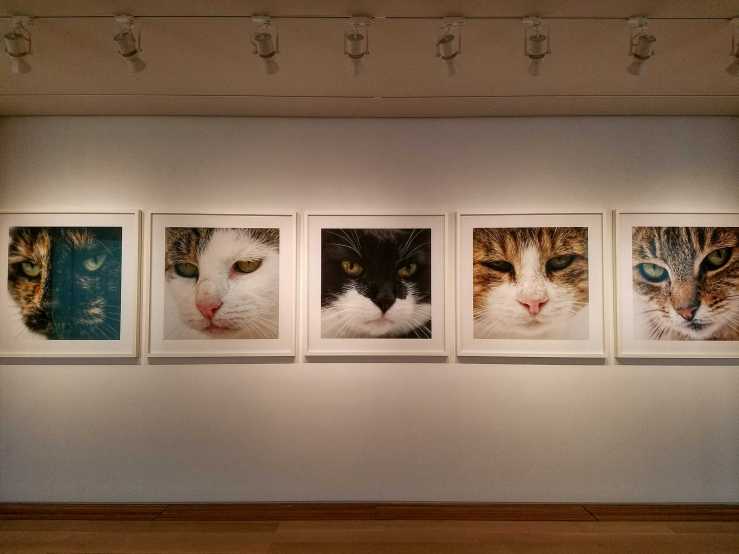
Su-Mei Tse (b. 1973) in collaboration with Jean-Lou Majerus
Sound for Insomniacs, 2007

5 Lambda digital prints on semi-glossy photo paper, two stools with integrated MP3 players, screens, and headphones.

For Su-Mei Tse, photographs alone are not enough to capture a cat’s unique personality. Here she presents large close-ups of five different cats, each with an expressive presence similar to traditional painted portraits, along with recordings of each cat purring. 

Because every cat’s purr is unique but they all sooth, relax and may act as natural sleeping pills. Works for me, anytime!

Isabella Stewart Gardner Museum

May 4th, 2017

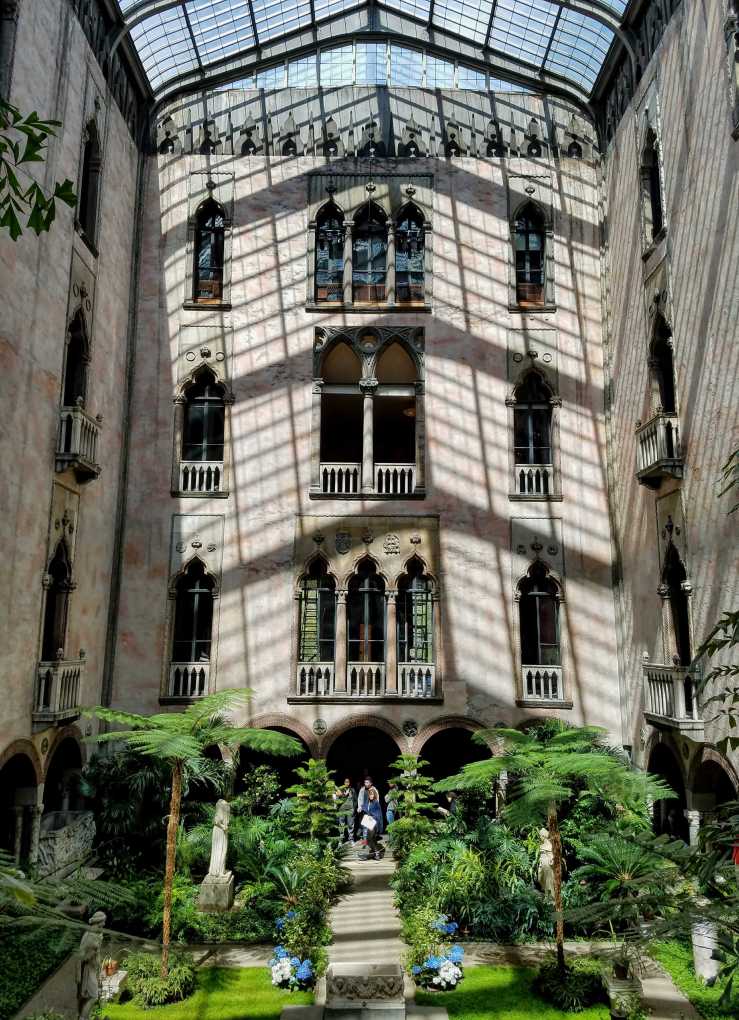
Isabella Stewart Gardner Museum, part V – The Best of the Rest

The title is highly subjective, of course; what we are looking at – and all we’ve seen so far –  is but a fraction of The Gardner’s vast collection of artworks and beautiful objects.

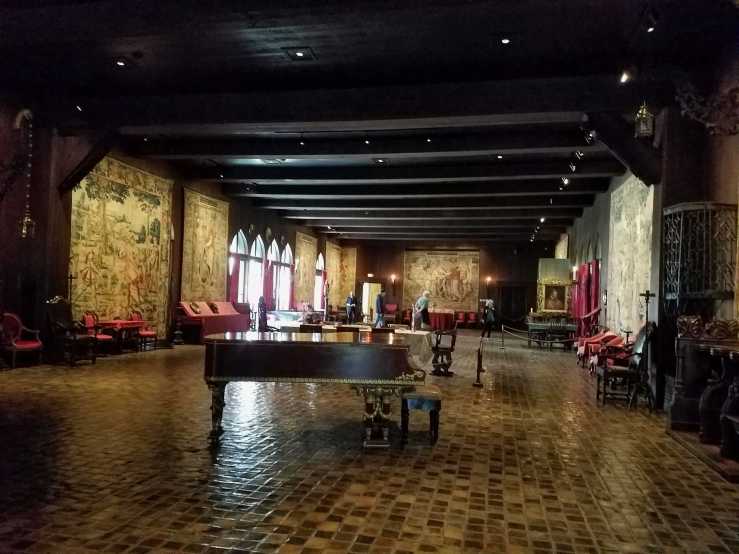
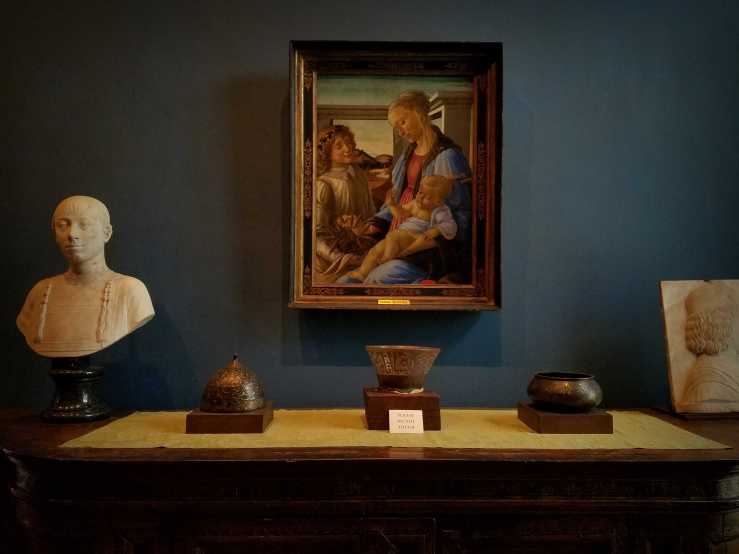
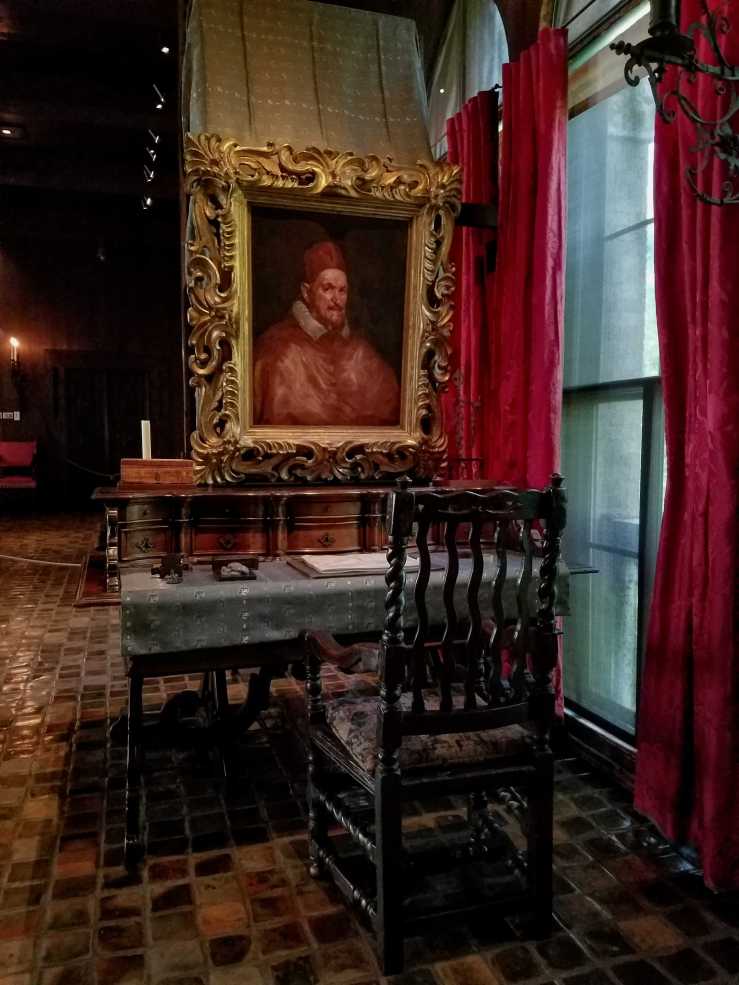
Look at the imposing Tapestry Room, for instance – imposing both in size and wealth – with its Flemish tapestries lining the walls…… and a portrait of Pope Innocent X, bearing an uncanny resemblance to a Velázquez but apparently it is not (but who the actually artist is, we know not)…Or the Veronese Room –
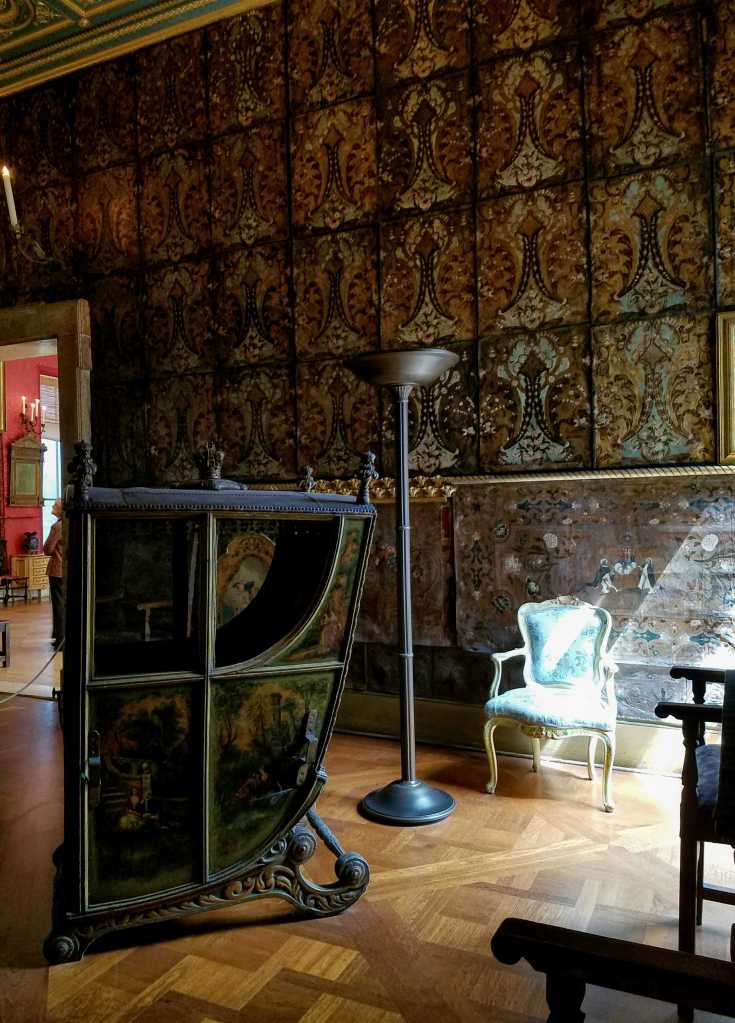
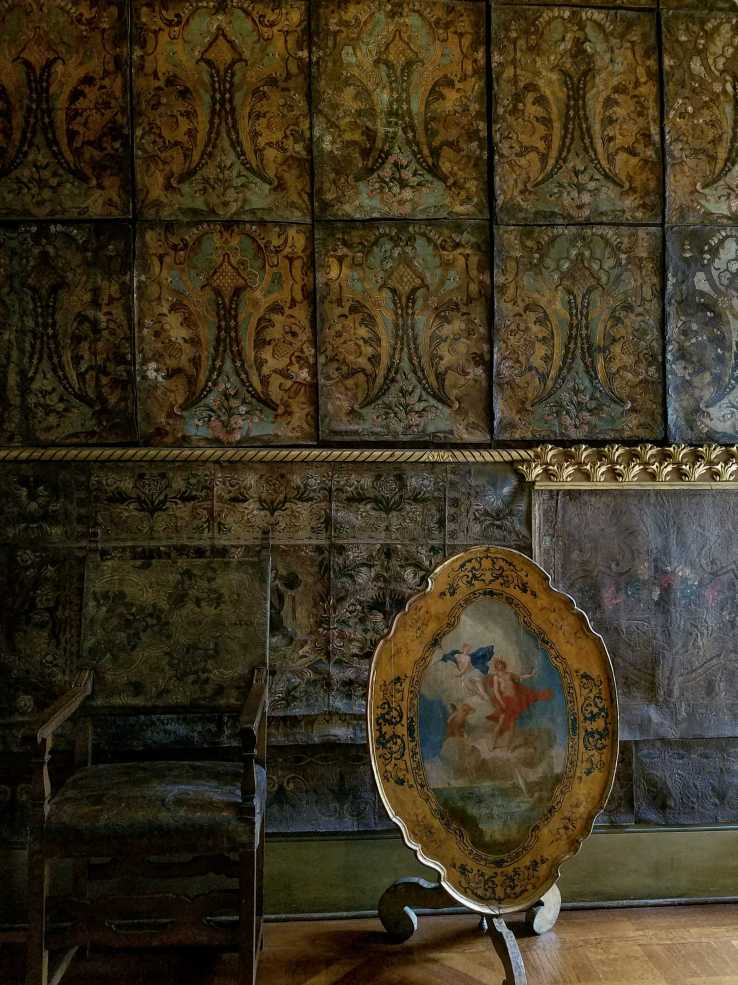
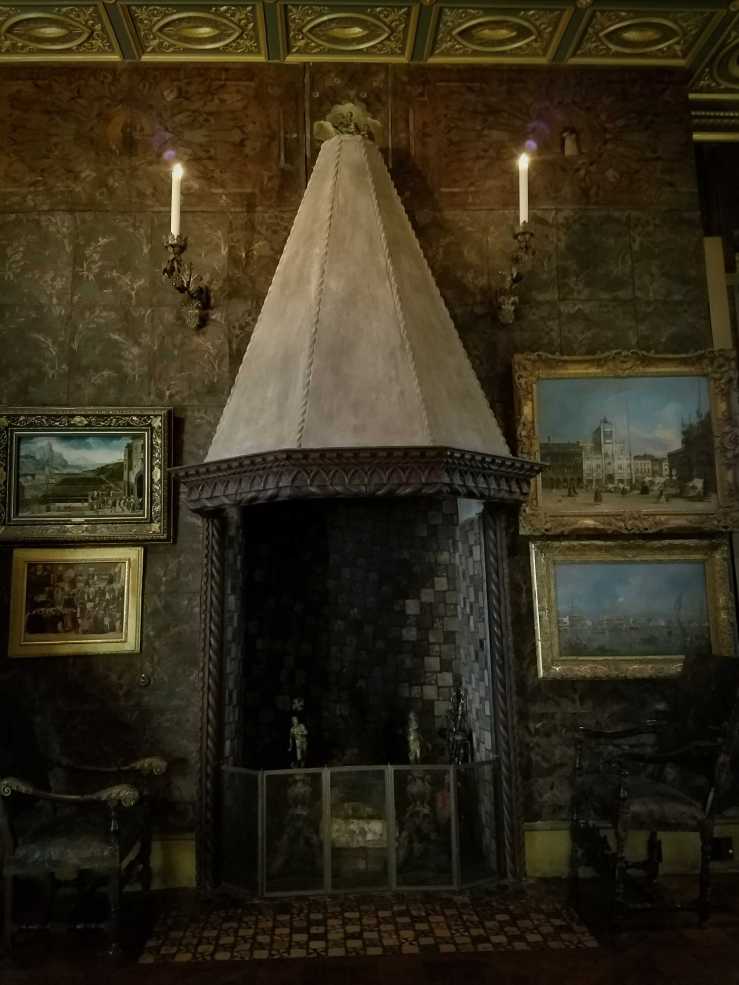
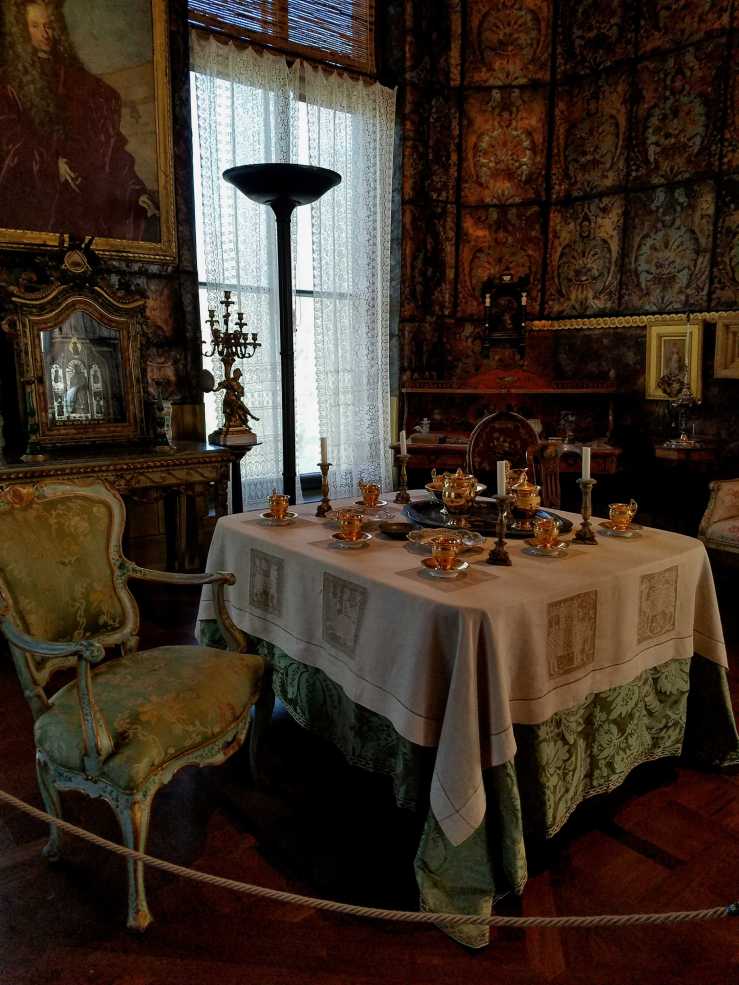
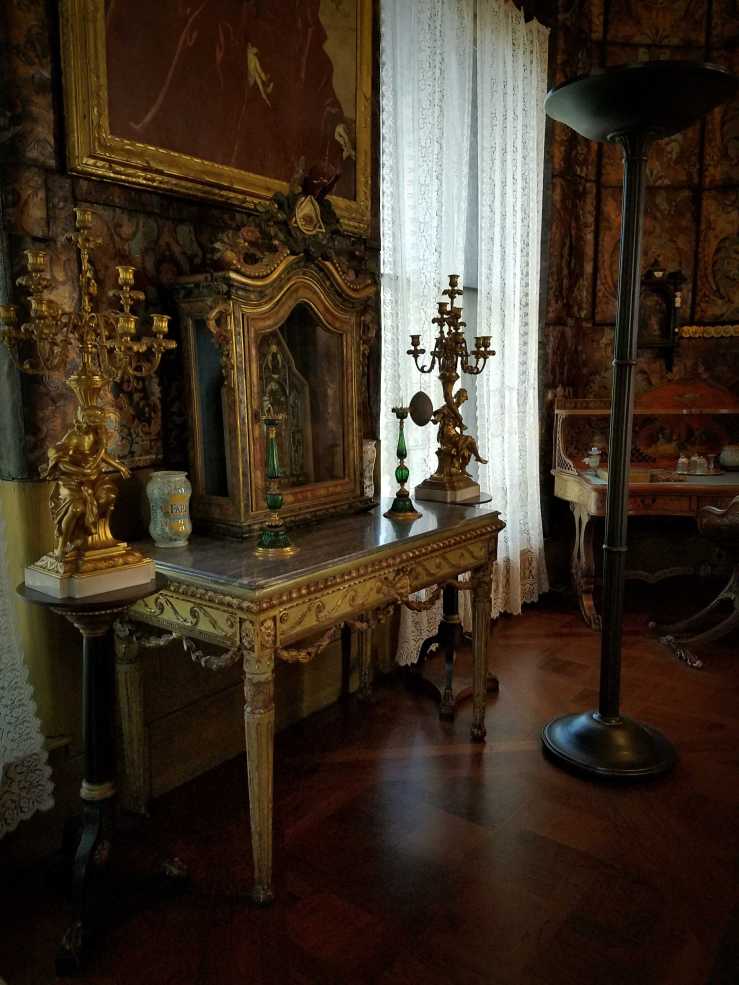
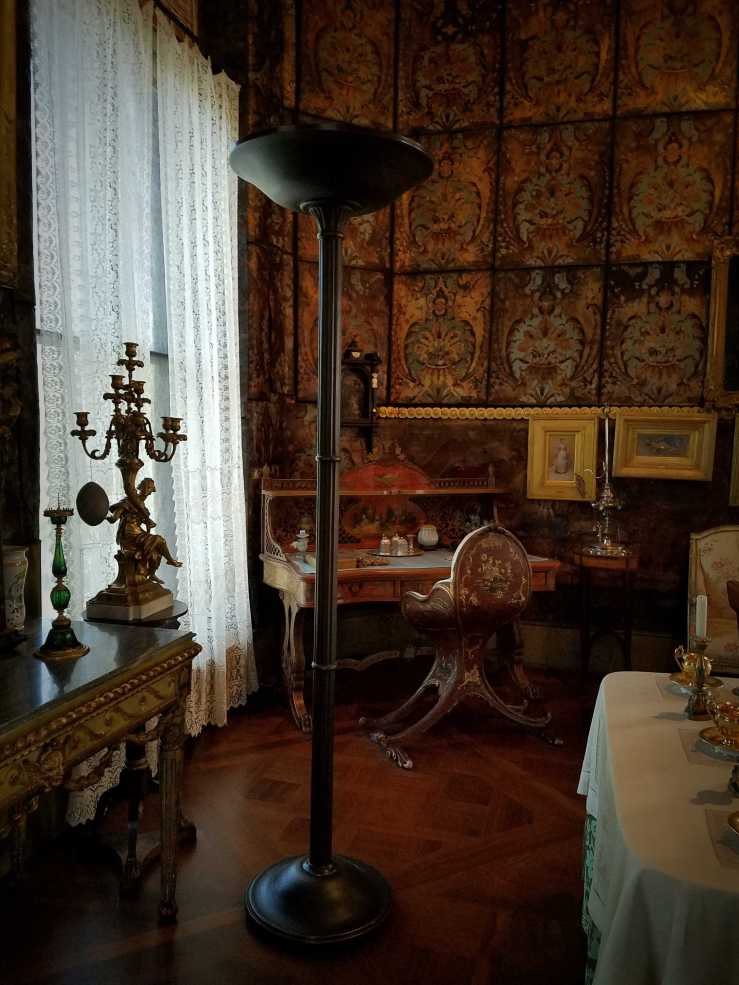
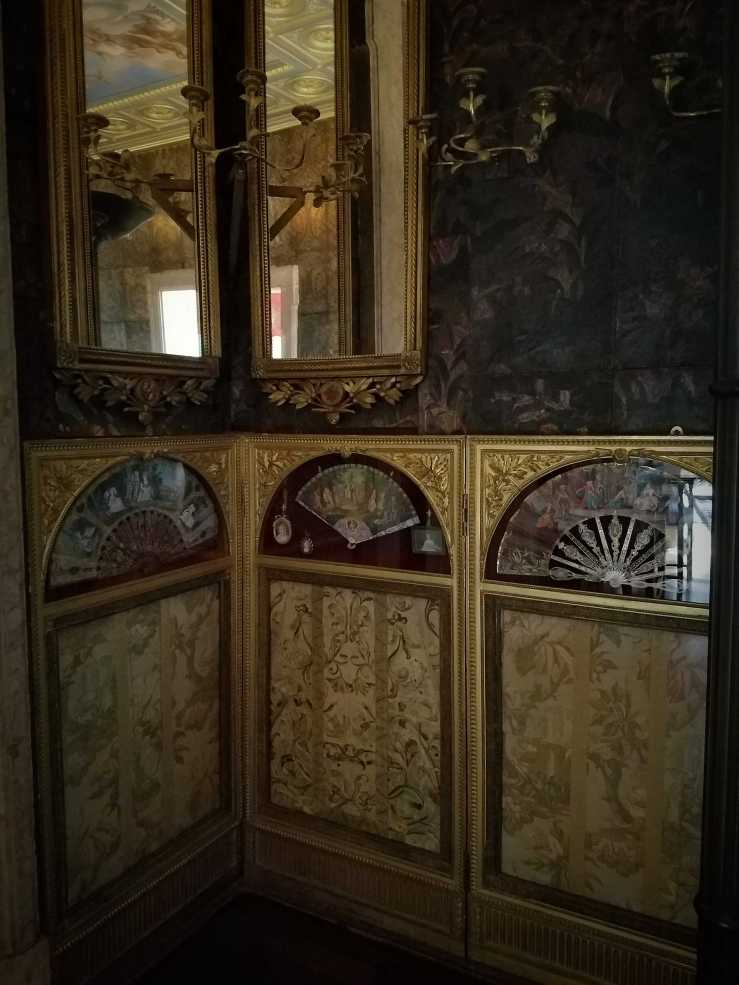
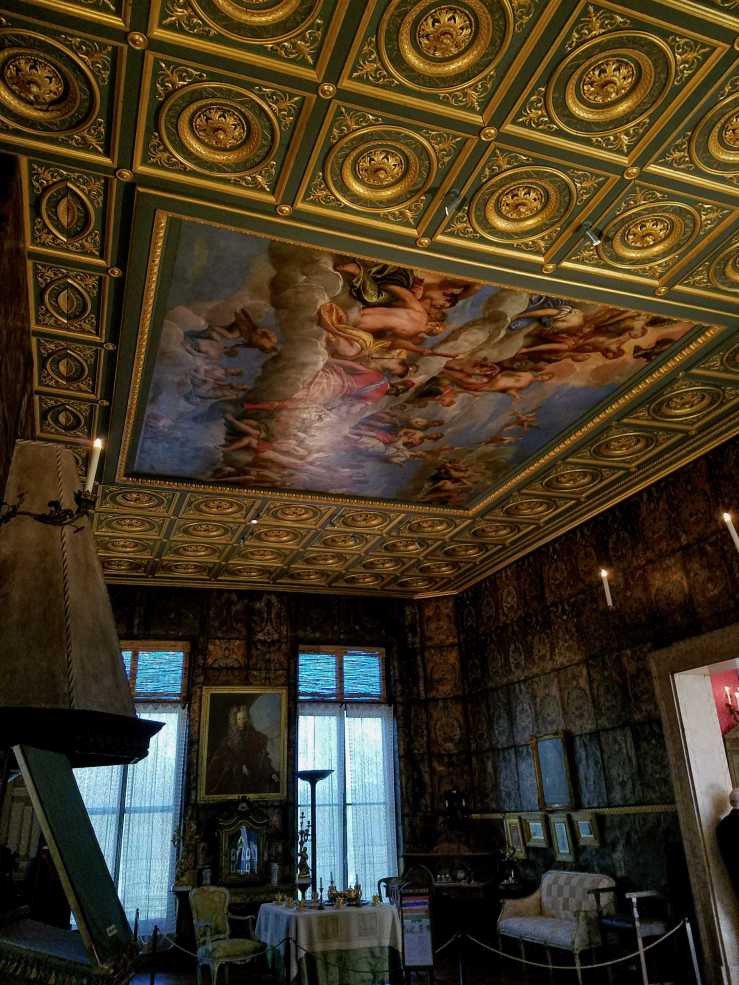
This room, which invites you to share Isabella Stewart Gardner’s love for Venice, takes its name from the painting on the ceiling. In 1899, while construction of the Museum was well under way, Isabella acquired The Coronation of Hebe, then attributed to Veronese. Gardner commissioned gilded paneling in Milan to frame the work in appropriate splendor. Rather than focusing on a single style or period, Isabella assembled around it a splendid mixture of objects that span diverse times and places. Stamped and painted leather panels from Spain, Italy, and the Netherlands line the walls. Gilded china saucers, cups, and a pitcher glisten on a small table at the room’s center. Balancing the stunning and huge Coronation on the ceiling are several pastels executed on an intimate scale by Isabella’s contemporary, James McNeill Whistler. 

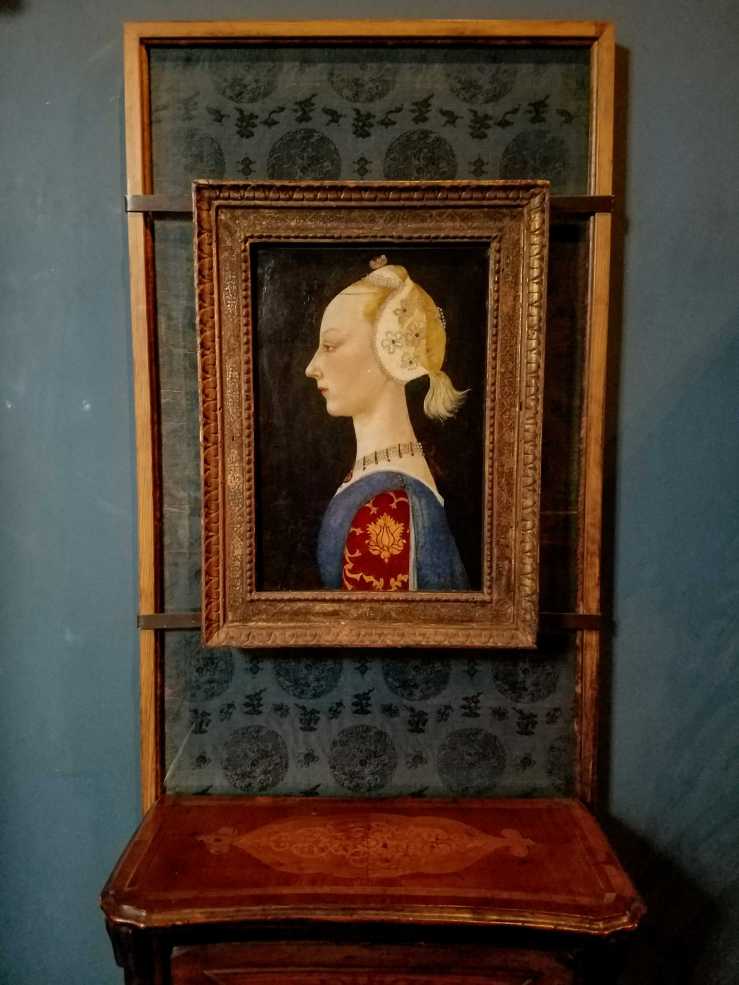
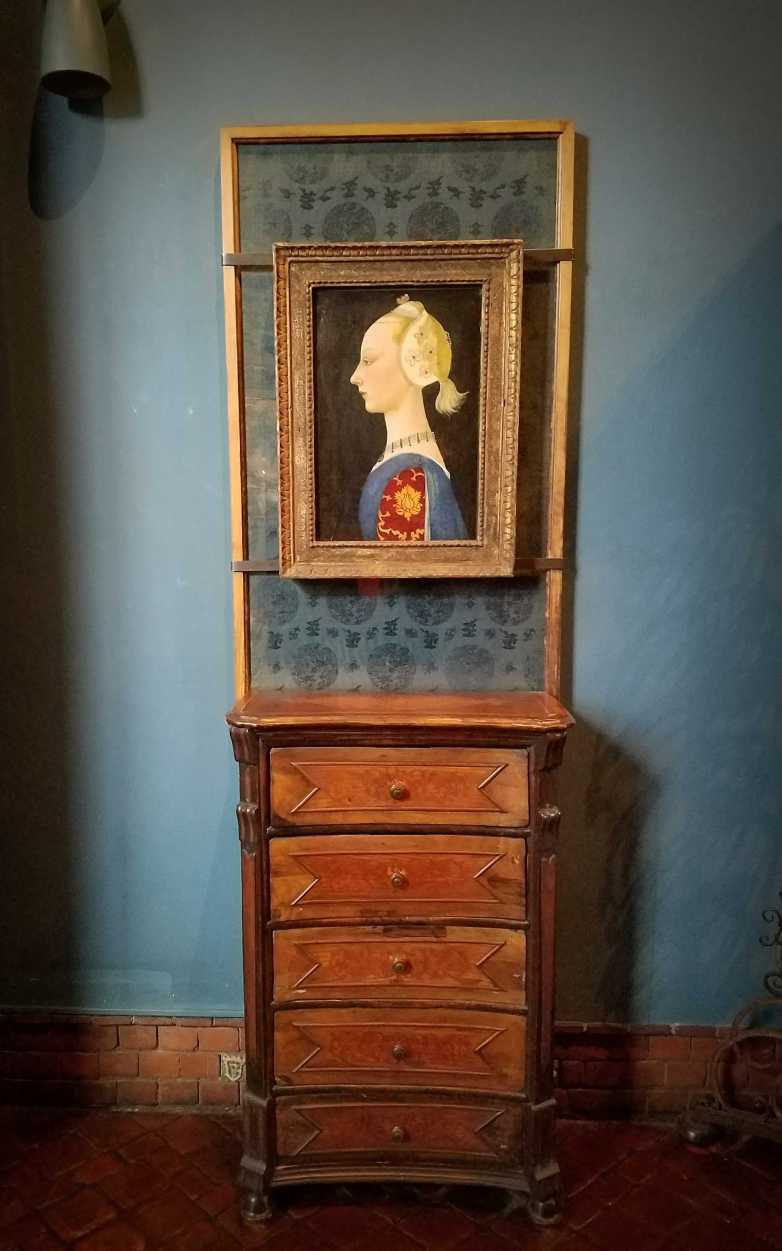
Crossing the Long Gallery, a young lady stops me in my tracks –

Attributed to Paolo Uccello (1397 – 1475)
A Young Lady of Fashion, early 1460s

The portrait has a highly decorative quality in which costume and ornament play a major role. The rather flatly modeled face is placed on an insubstantial bust set against a uniform blue background. The woman is portrayed both according to literary notions of female pulchritude, which called for fair skin and blonde hair, and the dictates of contemporary fashion. Costly brocaded fabrics, pearls, and precious stones serve not only to display the sitter’s familial wealth and status but also to enhance her physical appearance – in art, as in life. In addition to a red and gold brocade sleeve and a sleeveless overdress, the woman wears a head brooch, a pearl choker with jeweled pendant, and a white cap ornamented with pearls.

This fashionable beauty looks impassive, immobile, and immutable, as if she were outside space and time. Her portrait image has a static, stereotyped character, in which the sitter’s individuality is almost entirely suppressed in favor of the social ideals for which she stands.

Bought as a work by Domenico Veneziano, the portrait has also been attributed to Paolo Uccello and the so-called Master of the Castello Nativity.

Source: David Alan Brown, “A Young Lady of Fashion,” in Eye of the Beholder, edited by Alan Chong et al. (Boston: ISGM and Beacon Press, 2003): 50.

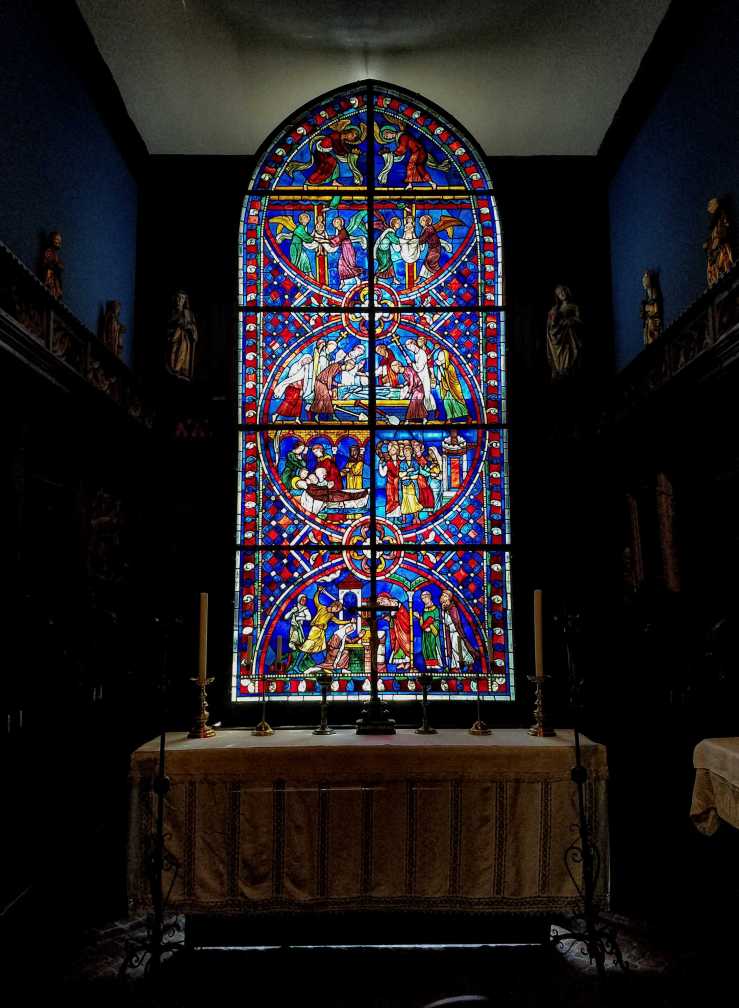
The Chapel –

at the far west end of the Long Gallery, houses a consecrated altar that was used by Isabella Stewart Gardner–a devout Anglo-Catholic–for the celebration of Mass. Its function as an active sacred space persists to this day. Every April, as specified in Isabella’s will, a memorial service honors her memory. Liturgical items, including an early 17th century Italian carved ivory crucifix and a cloth that Gardner crocheted herself, adorn the altar table. A magnificent Gothic stained-glass window from the cathedral of Soissons in France stands as the centerpiece of the Chapel.

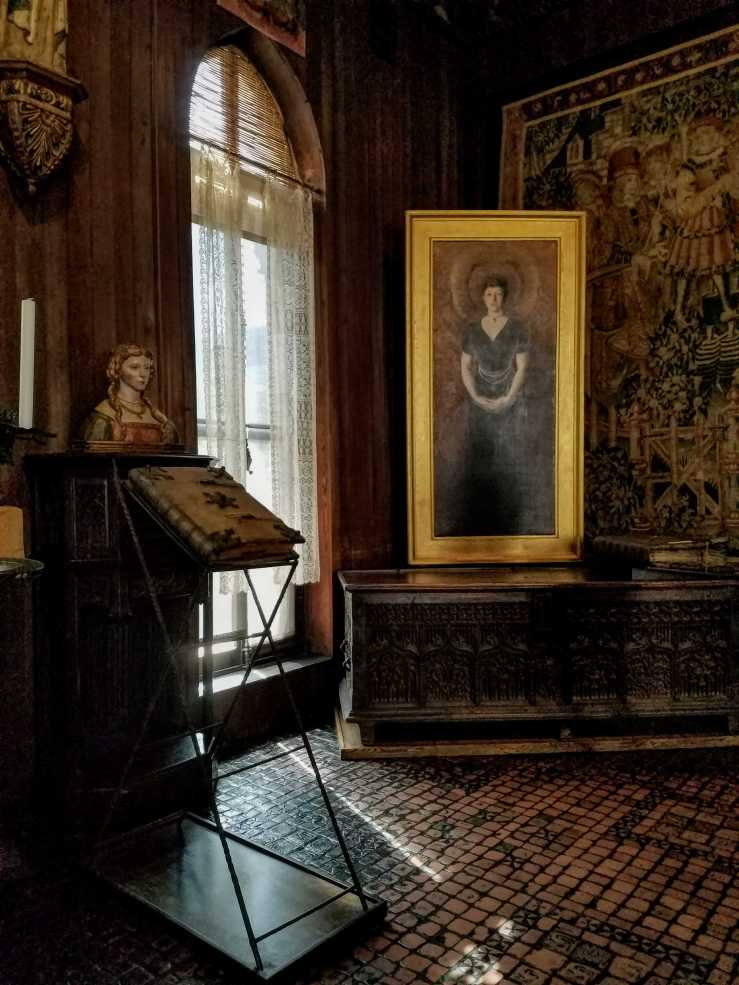
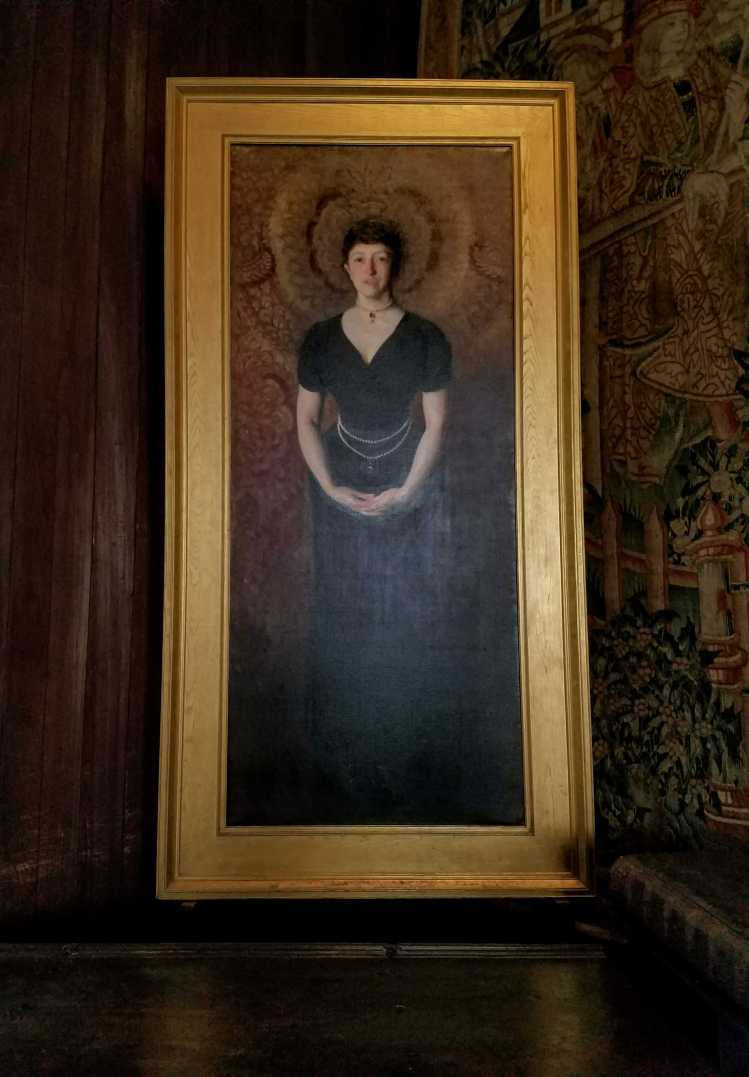
And last, but not least, Isabella Gardner herself, gracing the Gothic Room –

Mrs. Gardner sat for Sargent during his visit to Boston in January 1888. He was paid $3000 for the portrait, which was exhibited to great acclaim at Boston’s St. Botolph Club. The work also inspired gossip and legend: someone jokingly titled it “Woman: An Enigma,” while others believed that the sensuous display of flesh deliberately echoed the scandal recently created by Sargent’s Madame X. Mrs. Gardner herself said that she rejected eight renderings of the face until she was satisfied. Jack Gardner seems to have asked his wife not to publicly show the portrait again while he was alive, and indeed the portrait was placed in the Gothic Room, which remained private until Mrs. Gardner’s death. In its gallery, surrounded by altarpieces, stained glass, and religious statuary, the sacramental quality noted by nineteenth-century reviewers is even more pronounced.

Source: Eye of the Beholder, edited by Alan Chong et al. (Boston: ISGM and Beacon Press, 2003): 204.

Isabella Stewart Gardner Museum

May 4th, 2017

Isabella Stewart Gardner Museum, part IV – The Sarcophagus

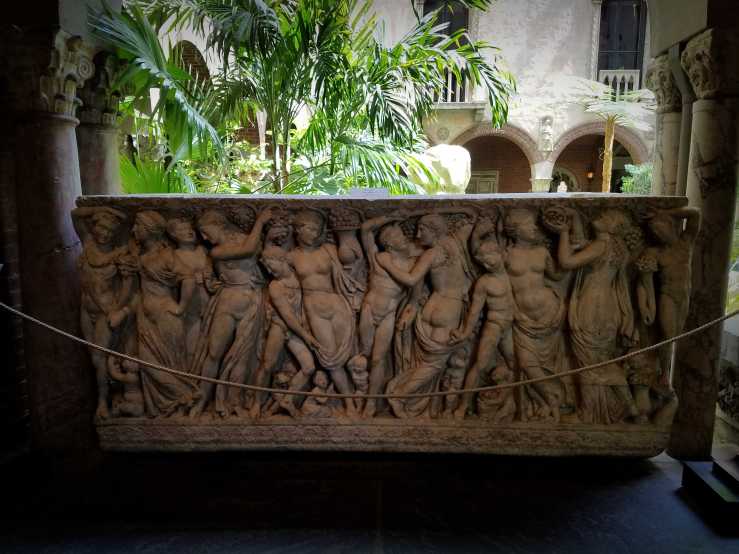
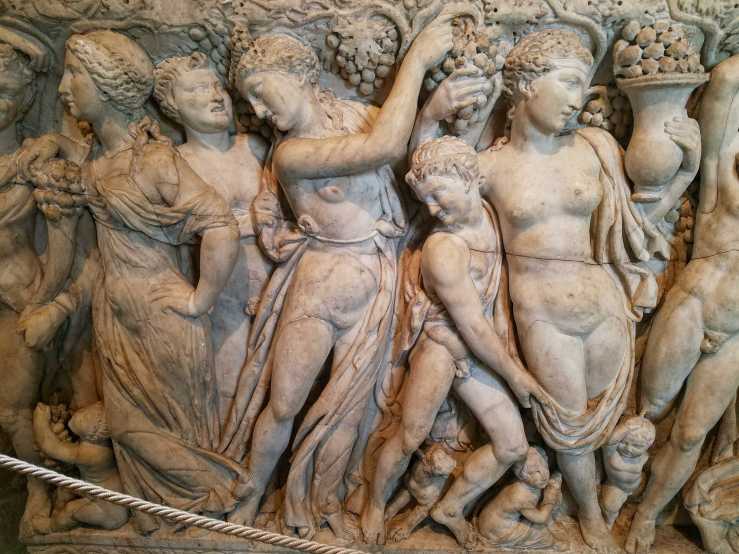
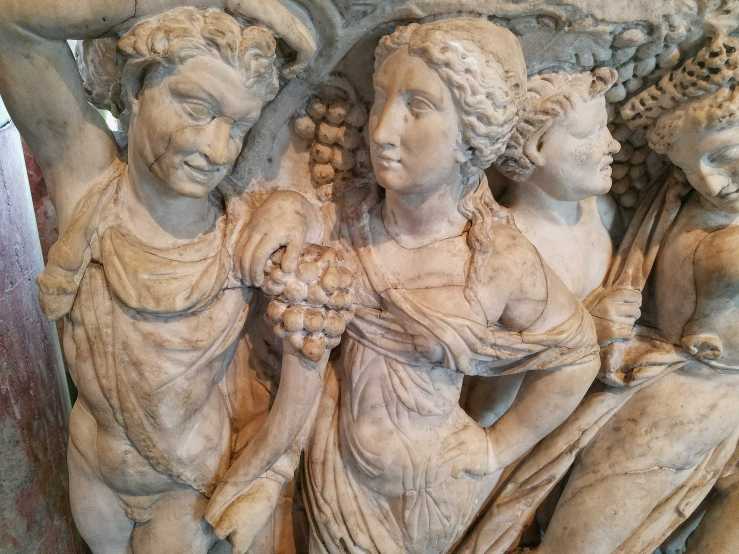
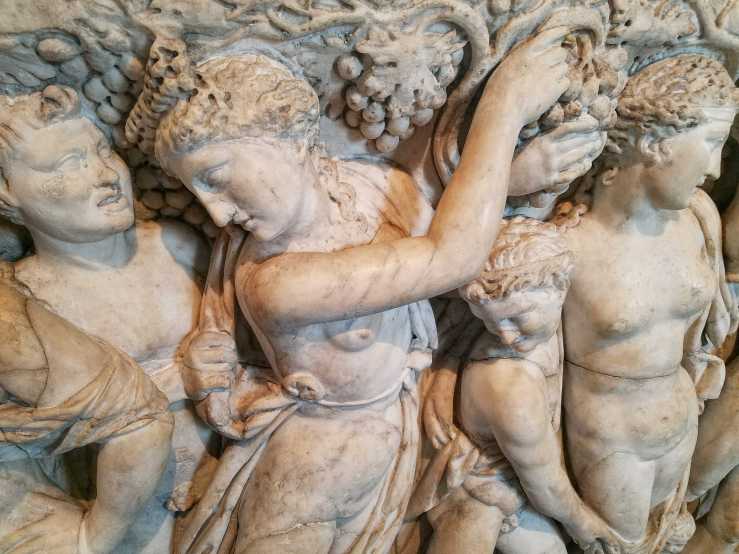
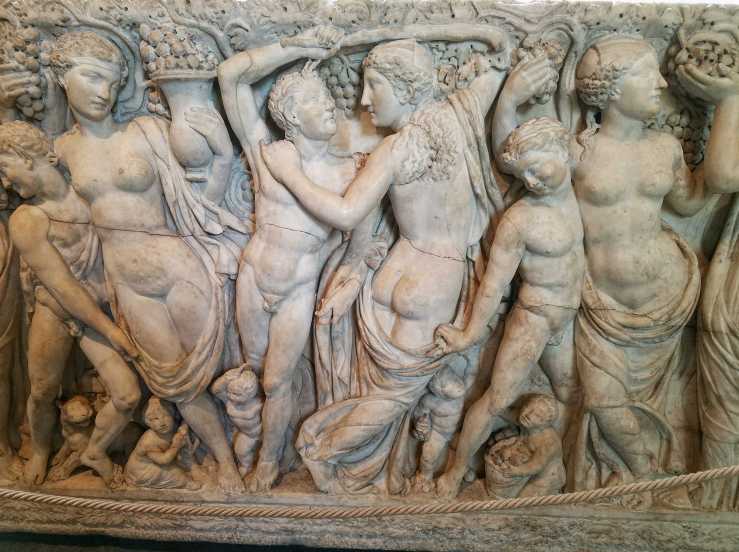
In terms of antiquarian fame—marbles copied in sketchbooks, paintings, or sculptures from the Renaissance on—the most important work of art in the Gardner collection, and perhaps of its type in America, is the sarcophagus with satyrs and maenads gathering grapes.

This large, rectangular coffin of Pentelic marble with one long side and both ends elaborately carved and polished (the second long side left in a less finished state because it stood against a wall in the funerary chamber), was exported from Athens to the area of Rome in the late Severan period, between circa 222 to 235 AD. The occupants of the monument are unknown, since the lid was lost or destroyed some time around 1500. The groups of reveling couples on all sides, combined with the type of lid found on other examples of this Attic imperial sarcophagus, suggest a husband and wife were shown on top, as if reclining at a symposium on an elaborate couch.

The art-historical diarist and cicerone of the mid-cinquecento, Ulisse Aldrovandi, reported that the sarcophagus came from Tivoli and was first to be seen in Rome in the Villa Farnesina in the 1550s. For over a quarter of a millennium the monument ornamented the courtyard of the Palazzo Farnese in the heart of the city, passing finally to the Villa Sciarra. In 1898 it was purchased from the Sciarra collection, through Richard Norton.

The carving of the satyrs and maenads was especially suited to the artistic tastes of Mannerist and Baroque Rome, providing one of the most elegant examples of Greek imperial optic elongation to have survived from ancient times. The Farnese-Gardner sarcophagus can be considered one of the latest expressions of monumental pagan sculpture used for non-historical and decorative funerary purposes. As such it makes a perfect transition through the sculptures of the Middle Ages at Fenway Court to the cinquecento paintings with antiquarian flavor, like Titian’s Europa, in the rooms upstairs.

Source: Cornelis C. Vermeule (1978), “Sarcophagus: Revelers Gathering Grapes”, in Eye of the Beholder, edited by Alan Chong, et al. (Boston: ISGM and Beacon Press, 2003): 12-13.

Isabella Stewart Gardner Museum

May 4th, 2017