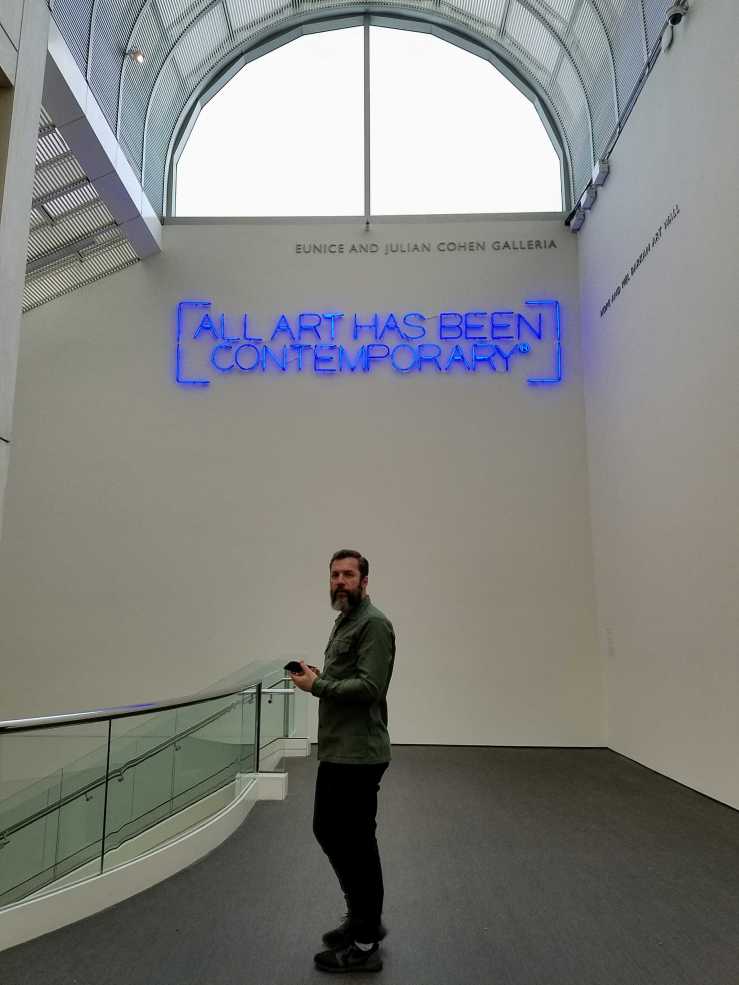
All Art Has Been Contemporary
Neon, transformer, clips; 1999, fabricated in 2011
Maurizio Nannucci
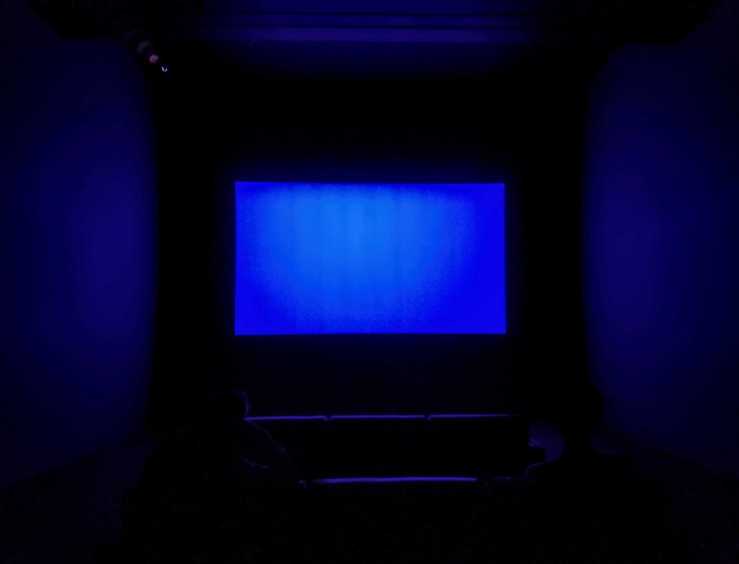
Darkness Made Visible, featuring:
Blue (1993), film
Derek Jarman
Spiderman (2015), video installation
Mark Bradford
The exhibition pairs Derek Jarman’s final feature-length film Blue (1993) with Mark Bradford’s video installation Spiderman (2015)—both riveting first-person accounts of the AIDS crisis that are distinctly subjective, lyrical, humorous, and dark. Through imageless projection and bold voiceovers, they both expose and defy the forces that have marginalized queer bodies since the 1980s.
Visual and emotional stimulation at the Linde Family Wing for Contemporary Art
Museum of Fine Arts, Boston
Judy Dater Imogen and Twinka, 1974 Gelatin silver print
Judy Dater is one of a younger generation of female photographers who credited Cunningham with having had a major impact on their work and on them as individuals. In this image, Dater’s most famous portrait, we see a sprightly Imogen, wearing her usual long dark dress and peace signs on her camera straps, with her favourite model, Twinka. Each appraises the other across a massive tree trunk in Yosemite – one young and the other old, one clothed and the other nude, a study in contrasts with a generous dose of humour mixed in.
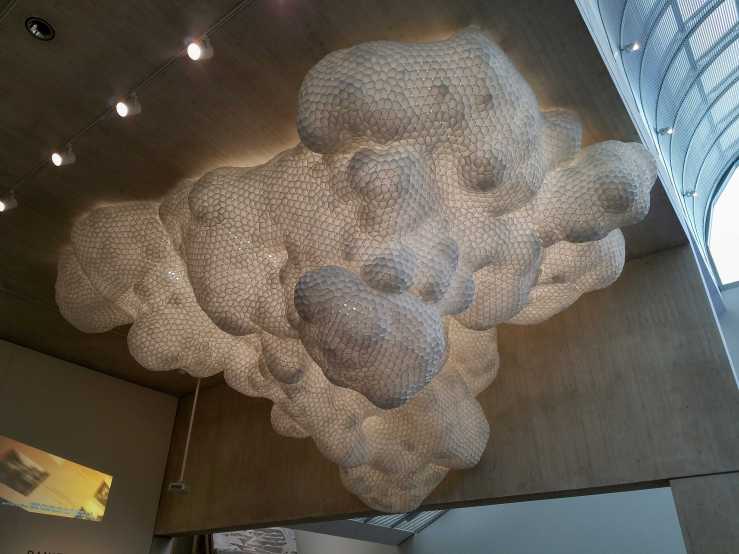
Walking into the galleries of the Linde Family Wing for Contemporary Art, I could hardly believe we were still in the same Museum. Tara Donovan Untitled, 2003 Styrofoam cups, hot glue
This undulating lattice of styrofoam drinking cups with glowing hollows and pliable rims was made to expand into the architecture of this particular space. To discover how they react to light and space in transcendent ways, Donovan experiments with huge volumes of manufactured materials. Clustered with an almost viral repetition, the cups above assume forms that both evoke natural systems and seem to defy the laws of nature. ”My work is mimicking the ways of nature, not necessarily mimicking nature” she notes. Here, it might suggest cellular growth or even the density of molecules in rolling clouds.
Jonathan Borofsky I Dreamed I Could Fly, 2000 Acrylic on fiberglass and incandescent lamp
Borofsky’s work is driven by the ideals of equality and harmony. Made especially for the wide open spaces of the Linde Family Wing, these flying figures ”are able to rise up and look down upon the whole planet… [they] see and feel that human beings are all connected together and that we are all one – no divisions and no walls.”
Always a pleasure to discover a work by Borofsky; you can see two more works we came across in earlier trips, in Philadelphia and Baltimore.
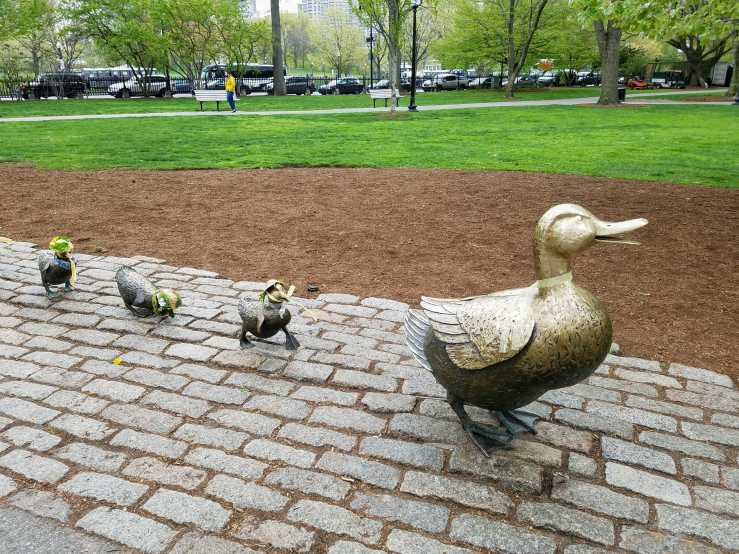
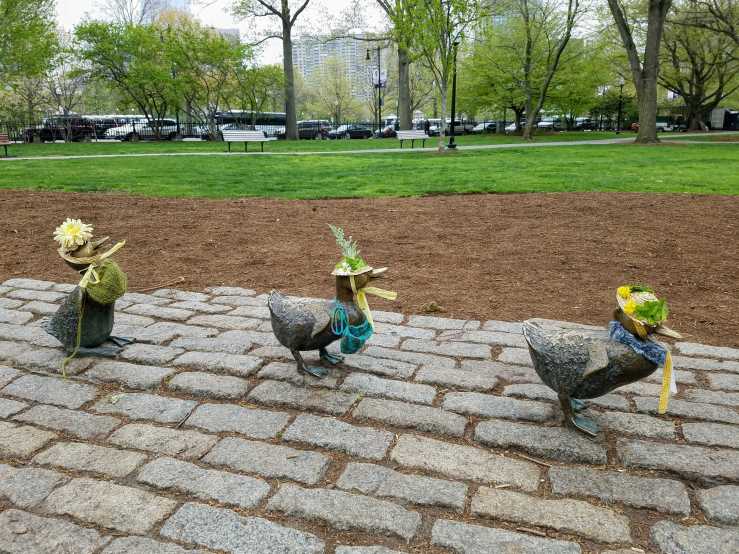
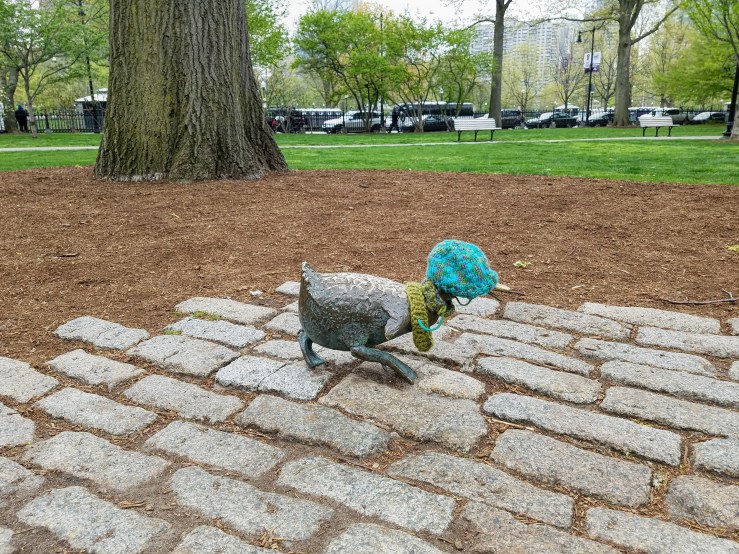
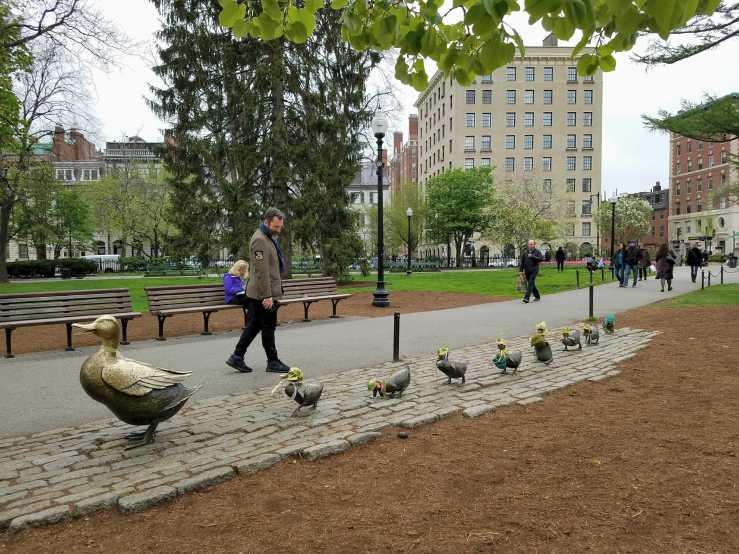
Mrs. Mallard with Jack, Kack, Lack, Mack, Nack, Ouack, Pack, and Quack, are out for a walk in the park. Dressed in their springly attire, daring the sun to come out (but – wisely – keeping their woolen shawls on, just in case it wouldn’t).
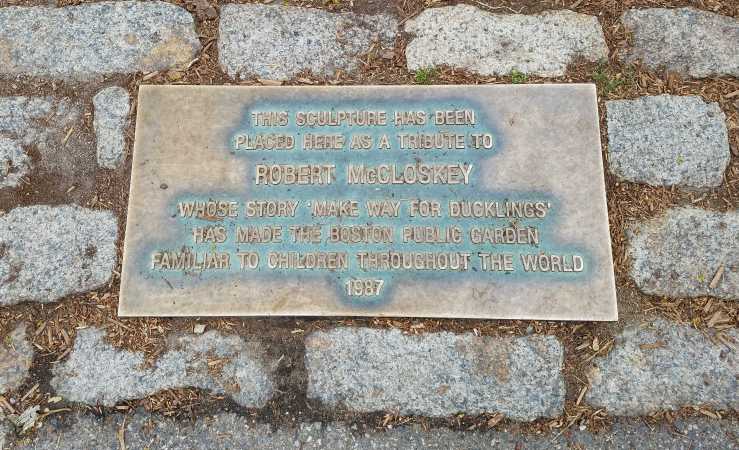
“Make Way for Ducklings” by Nancy Schön Bronze on Old Boston cobblestones Boston Public Garden, Boston
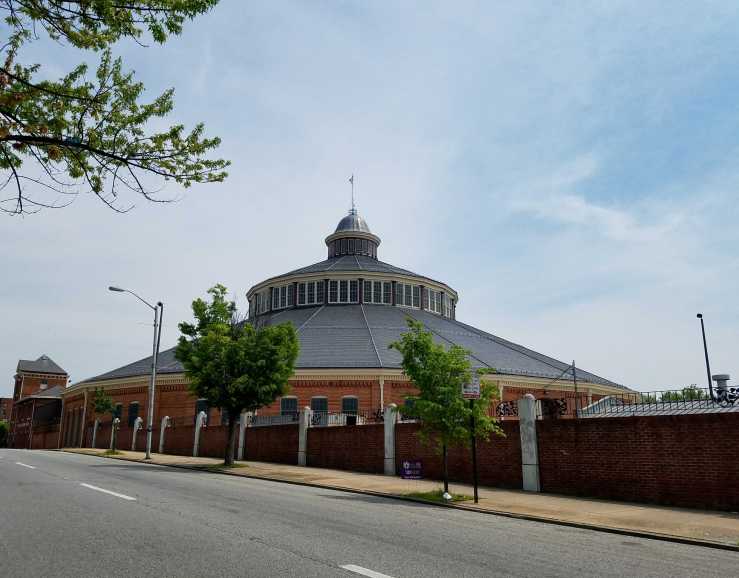
We attempted to visit the B&O Railroad Museum but found it closed in preparation of the ”Day Out with Thomas” which, by the way, is coming back this year on April 27-29 and May 4-6.
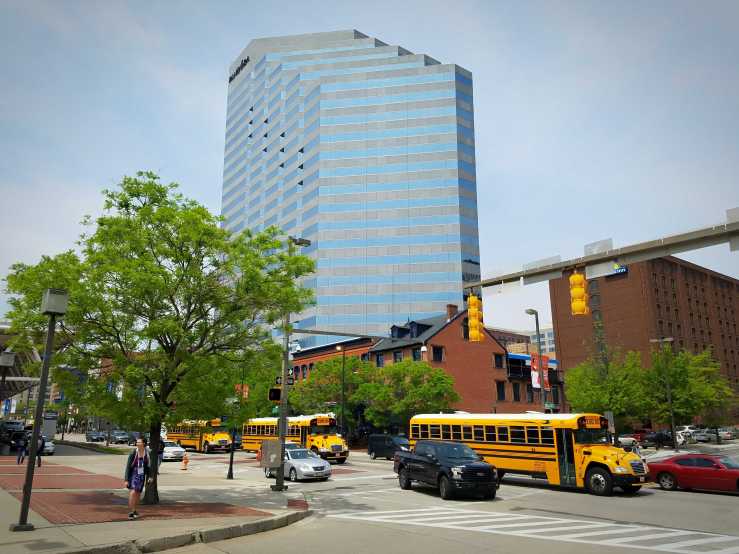
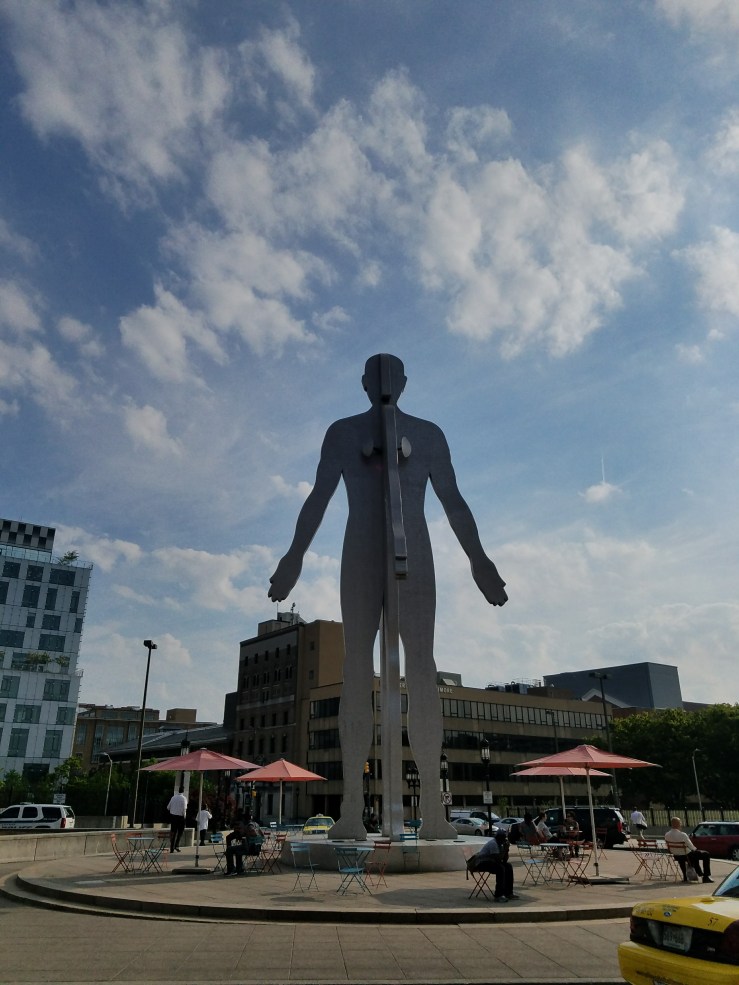
Instead, we walked back to Penn Station, taking in some city views along the way. But one of the most striking features was Jonathan Borofsky’s much debated Male/Female, a 51-foot (15,5m) of a sculpture overlooking – or, as some would say, clashing with – the classic Beaux-Arts building of the train station. It all depends on the point of view, I guess. Personally, I rather like this dialogue between two giants and was glad to have discovered another artwork by Borofsky (the first one was ”Humanity in Motion” inside the Comcast Center lobby, in Philadelphia).
That’s a wrap of our two-day trip in Baltimore. But stay tuned for more travels, because next, we go to Boston!
Go hand in hand. See, for instance, how beautifully these works complement each other –
From the powerful painting by Maynard Dixon, giving shape to fear,
Maynard Dixon, Shapes of Fear, 1930-32, oil on canvas
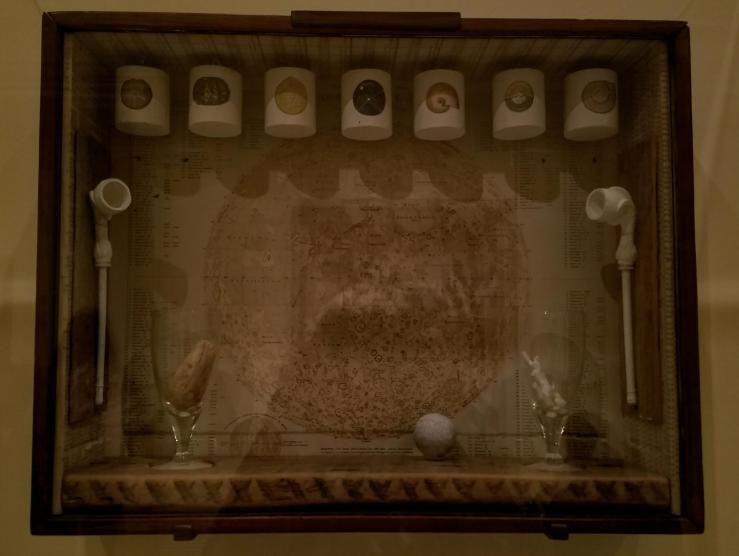
to the subdued and delicate works by Joseph Cornell, who took his fear of this world and placed it inside wooden boxes, each one containing a mini universe,
Joseph Cornell, Soap Bubble Set, 1949-50, glasses, pipes, printed paper and other media in a glass-fronted wood box
or his magical homages to Tamara Toumanova, Cornell’s way of expressing his great affection for the world of Romantic Ballet.
Joseph Cornell, Untitled (Marine Fantasy with Tamara Toumanova), c. 1940, collage and tempera on paperboardJoseph Cornell, Untitled (Tamara Toumanova), c. 1940, collage with tempera on paperboard
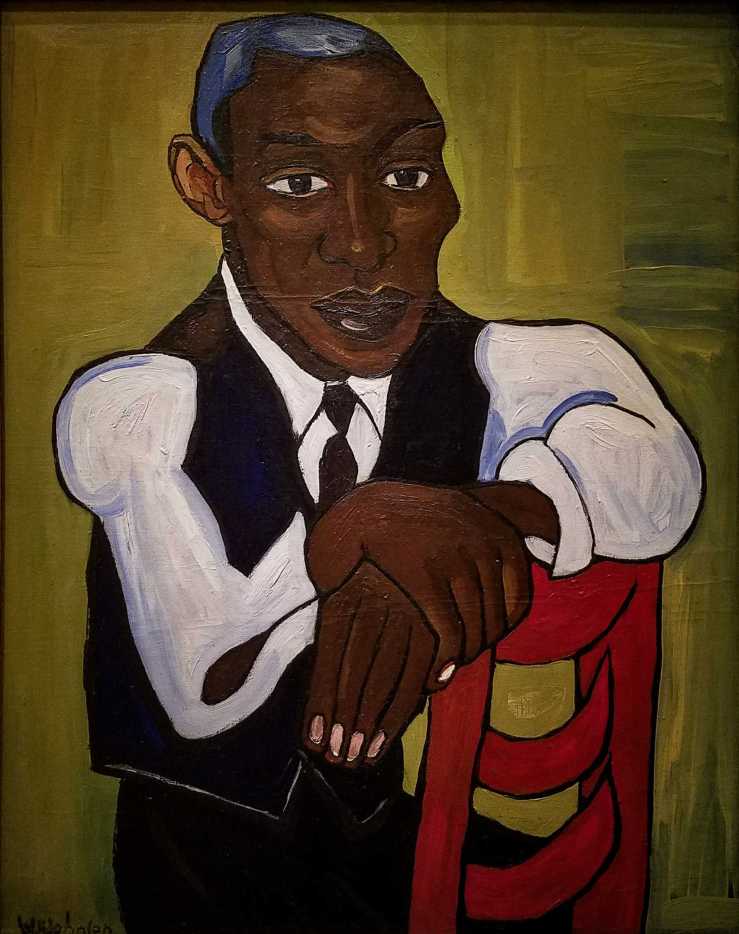
William H. Johnson, Man in a Vest, 1939-40, oil on canvas
“And even if I have studied for many years and all over the world, . . . I have still been able to preserve the primitive in me. . . . My aim is to express in a natural way what I feel, what is in me, both rhythmically and spiritually, all that which in time has been saved up in my family of primitiveness and tradition, and which is now concentrated in me.” — William H. Johnson
With its minimal palette of contrasting colours and clean, simple lines Man in a Vest expresses brilliantly Mr Johnson’s quote, don’t you find?
My, oh, my… those fans! This is one of the most exquisite quilts I have ever seen! I wonder if I could borrow it for a day or two…
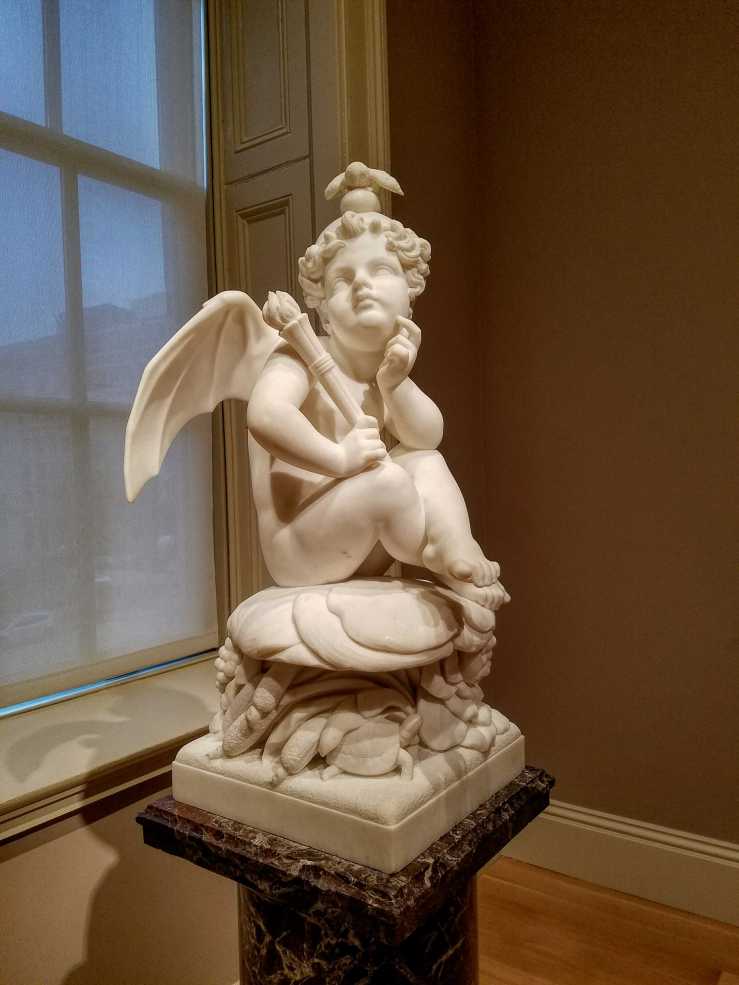
Harriet Hosmer, Will o’ the Wisp, modeled 1858, marbleResidents of Bourbon County, Kentucky – Fan Quilt, Mt. Carmel – 1893 – cotton, wool, silk, velvet, lace, ribbon, silk thread, paint, chromolithographic paper decals and canvasResidents of Bourbon County, Kentucky – Fan Quilt, Mt. Carmel – 1893 (detail)
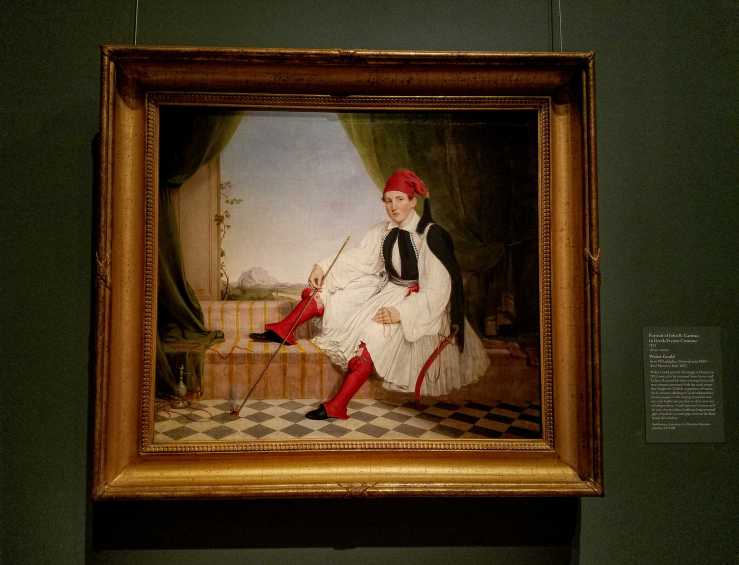
If not the quilt, how about this Greek Evzone costume?
Walter Gould, Portrait of John B. Carmac in Greek Evzone Costume, 1853, oil on canvas
”Walter Gould painted this image in Florence in 1853, soon after he returned from Greece and Turkey. He posed his sitter wearing Greek military costume associated with the crack troops that fought the Turkish occupation of Greece. Such costumes alluding to Greek independence became popular with visiting American tourists, who fondly saw parallels to their own war of independence. Gould portrays Carmac as if he were a local resident, holding a long-stemmed pipe; a hookah, or water pipe, rests on the floor beside the window.”
I seem to be in need of some counseling!
John Rogers, The Council of War, modeled c. 1873, painted plaster
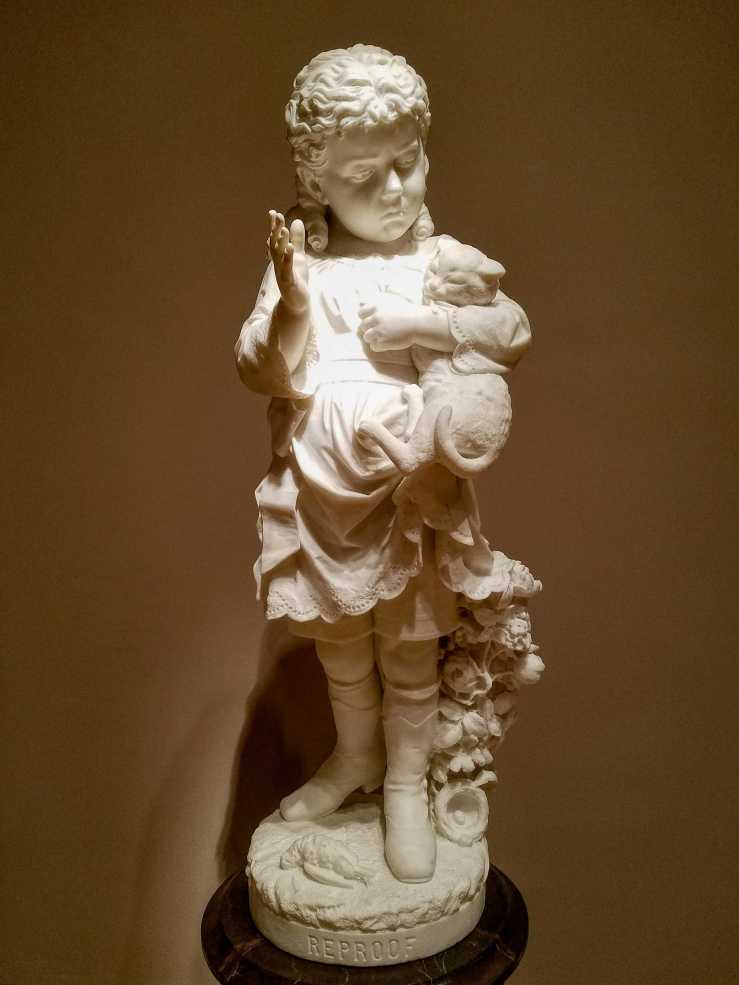
”In Reproof a young girl sternly scolds her cat who has just attacked a birds nest. She clutches the cat to her chest and looks at it disapprovingly while waving her hand in discipline. Meanwhile a dead bird lies at her feet and feathers hang limply from the cat’s mouth. This scene is a prelude to the responsibilities of motherhood the young girl who is now reprimanding her cat will have to ensure that her own children are well behaved in the future. Although Edward Thaxter’s life was short, he excelled in creating detailed neoclassical sculpture. He made at least five marble copies of Reproof.”
A breath of fresh spring air from the Smithsonian American Art Museum in D.C., in spite of the 6-10 inches snow accumulations we have been warned to expect today in New York City!
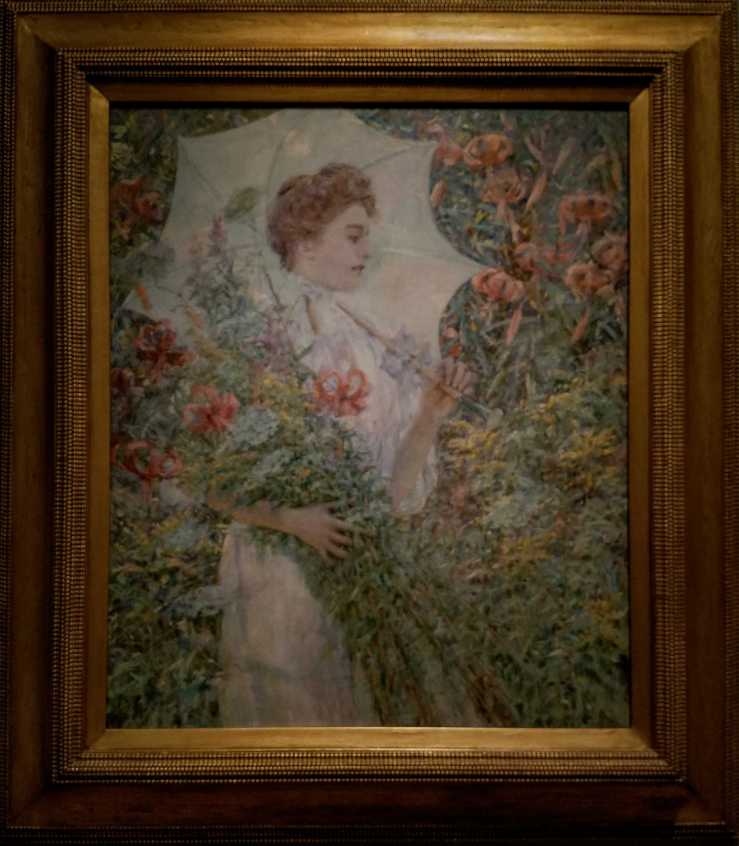
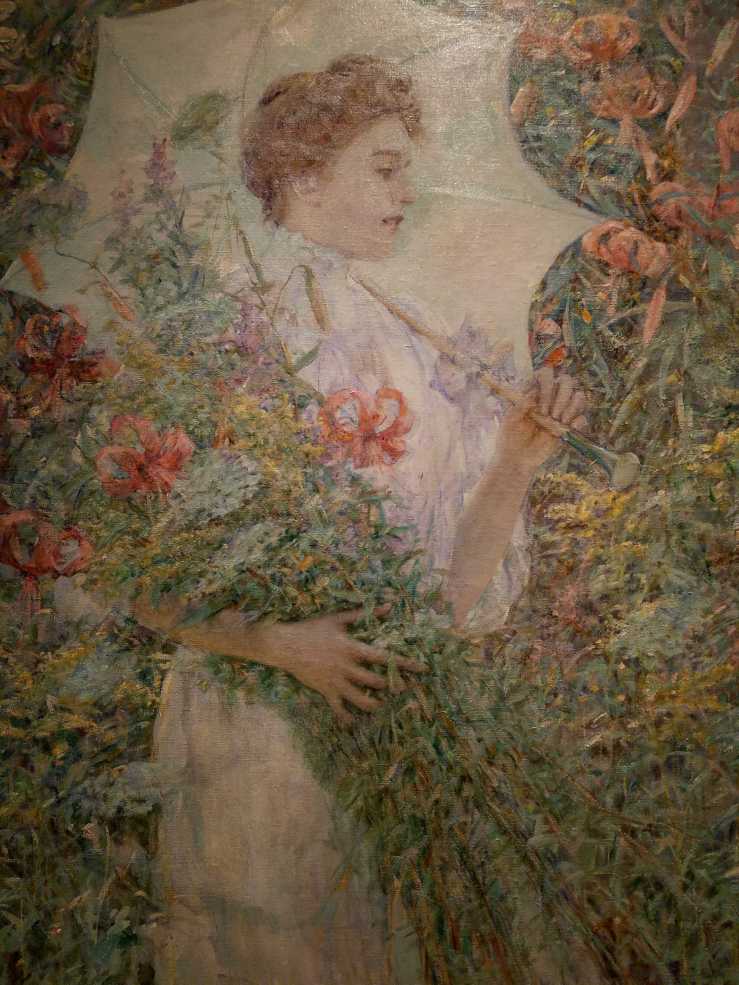
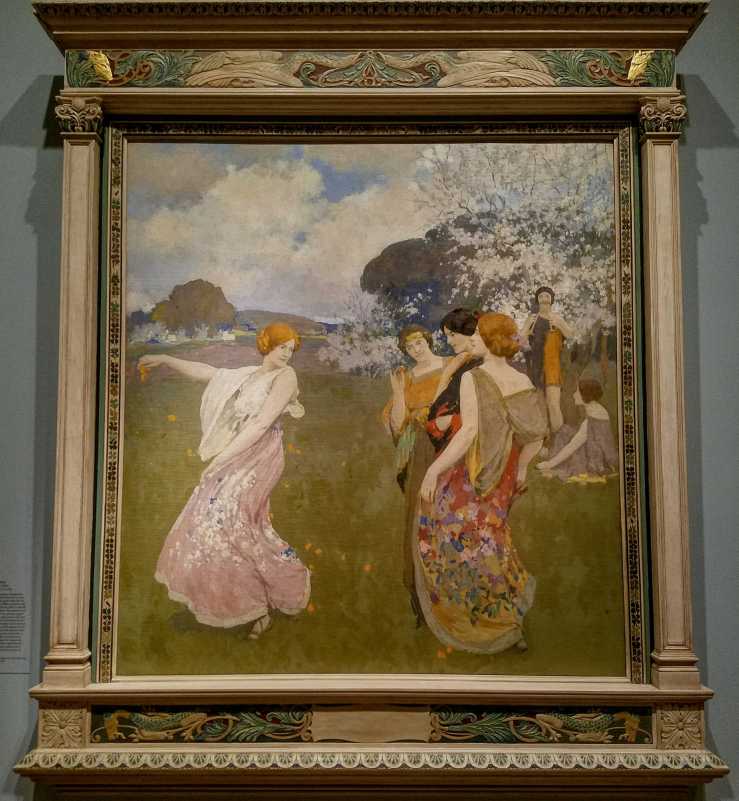
Kenyon Cox, An Eclogue, 1890, oil on canvasRobert Reid, The White Parasol, c. 1907, oil on canvasRobert Reid, The White Parasol, c. 1907, oil on canvas (detail)Arthur F. Mathews, Spring Dance, c. 1917, oil on canvas
”Arthur Mathews led a group of progressive Californians who believed that fine art and design served the public good. After the San Francisco earthquake of 1906, he and his wife, Lucia, also a designer, led the effort to rebuild the city’s fine public spaces. The pastoral scene in Spring Dance evokes civic murals created for museums, libraries and concert halls. But Mathews had more on his mind than ancient Greece or Rome. His Arcadia is the luminous landscape of California, and the planes of color and the graceful postures of the dancers show the artist is also looking across the Pacific to Japan for inspiration. The ornate frame is a reproduction of the original. It repeats the colors in the painting, reflecting Mathews’ commitment to designing complementary furniture, art and architecture to create an aesthetic whole.”
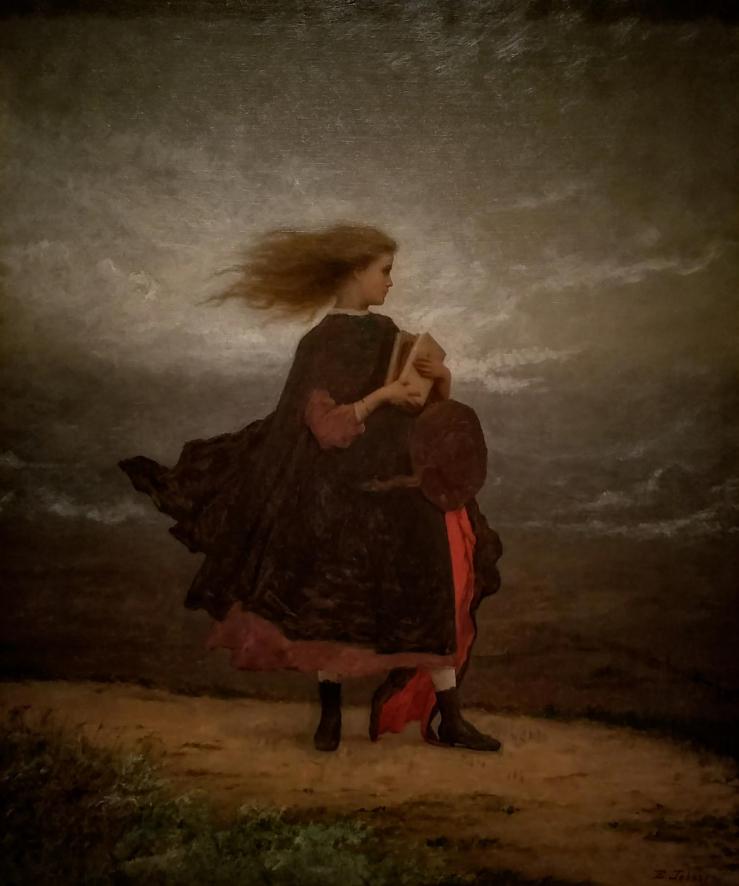
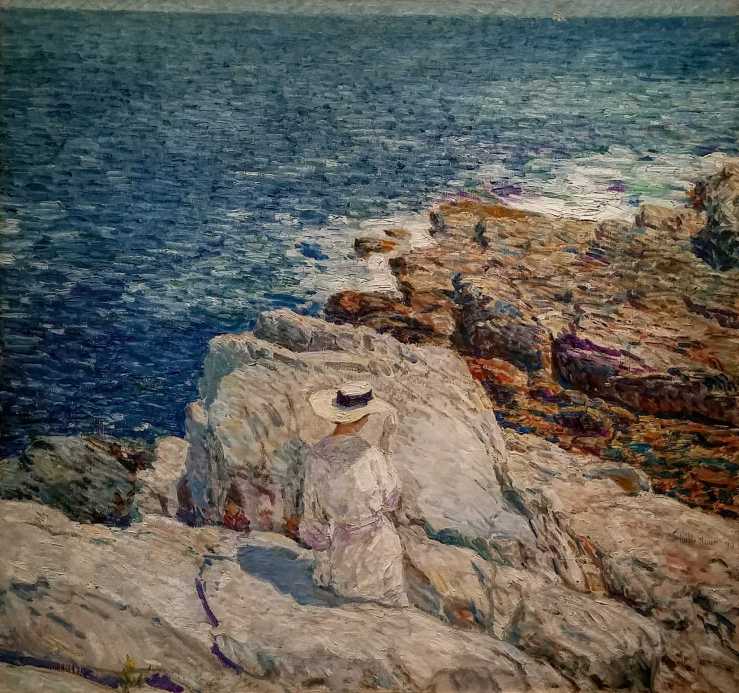
Eastman Johnson, The Girl I Left Behind Me, c. 1870, oil on canvasChilde Hassam, The South Ledges, Appledore, 1913, oil on canvas
”Childe Hassam spent many summers on Appledore Island off the coast of Maine. Every year, he and a circle of musicians, writers and other artists gathered as an informal colony based at the home of his friend, the poet Celia Thaxter. In Thaxter’s gardens and on the rocky beaches, Hassam used the flickering brushwork and brilliant colors he had adopted in France to capture the dappled light of Appledore’s brief summer. This painting evokes the leisurely, seasonal rhythms of America’s privileged families in the last years before the Great War. A beautifully dressed woman shields her face from the sun; she looks down and away, as if absorbed in the song of a sandpiper, the island bird that inspired Celia Thaxter’s most famous children’s poem.”
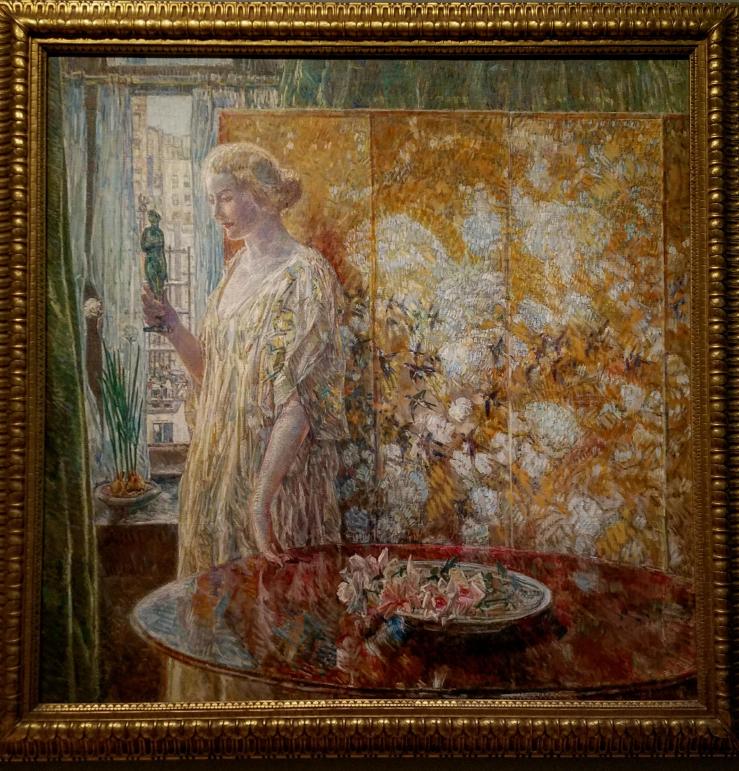
Childe Hassam, Tanagra (The Builders, New York), 1918, oil on canvas
”In Tanagra (The Builders, New York), Childe Hassam painted a complex image of modern life. At the turn of the twentieth century, the skyscraper symbolized all that was dynamic and powerful in America. Architects praised the new towers as symbols of mankind’s reach for the heavens. If the skyscraper represents worldly ambition, the other vertical elements in the painting – the lilies, the Hellenistic figurine, the panels of a beautiful oriental screen – suggest delight in the sophisticated cultural aspirations of American Society.
But as the United States grew in power and prestige, the workers who provided the nation’s muscle also seemed to threaten Hassam’s orderly and prosperous world. The artist had built his career picturing New York’s moneyed class; the art, music and fine manners surrounding what Hassam called a ”blond Aryan girl” are a world apart from the immigrants laboring to build the city’s future.”
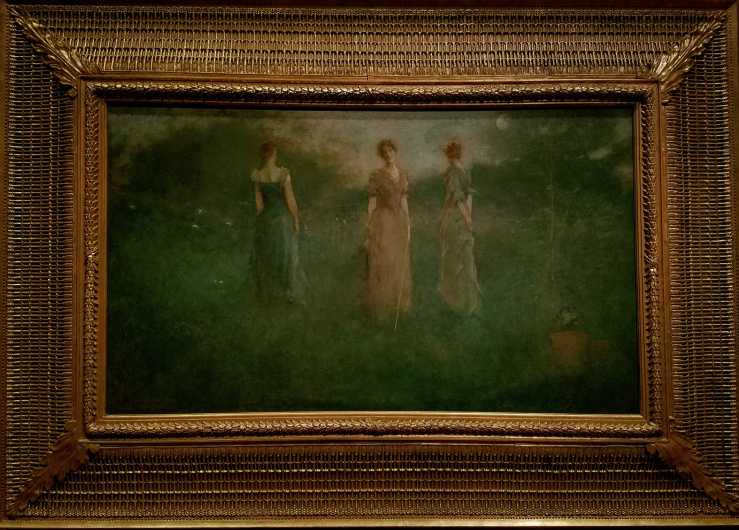
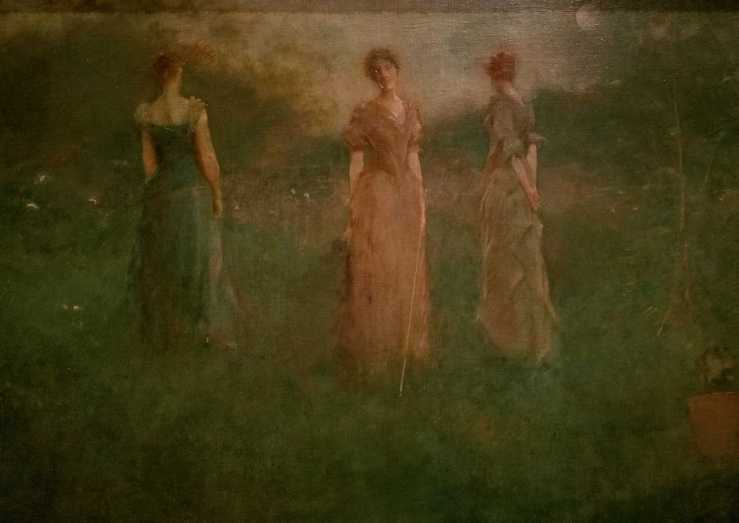
Thomas Wilmer Dewing, In the Garden, 1892-94, oil on canvasThomas Wilmer Dewing, In the Garden, 1892-94, oil on canvas (detail)John La Farge, Wreath of Flowers, 1866, oil on canvas
Free listening and free download (mp3) chill and down tempo music (album compilation ep single) for free (usually name your price). Full merged styles: trip-hop electro chill-hop instrumental hip-hop ambient lo-fi boombap beatmaking turntablism indie psy dub step d'n'b reggae wave sainte-pop rock alternative cinematic organic classical world jazz soul groove funk balkan .... Discover lots of underground and emerging artists from around the world.









 Judy Dater
 Tara Donovan
 Jonathan Borofsky










 The Humble Fabulist