The Best of the Rest @ MAD

From the  permanent collection.

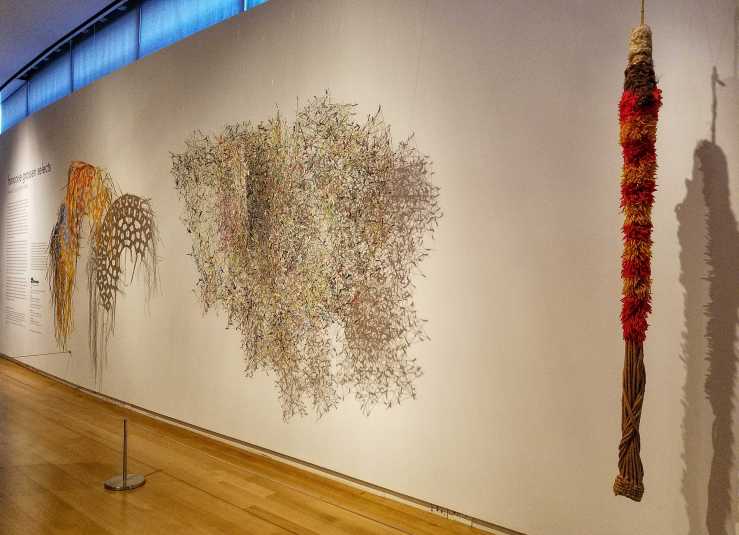
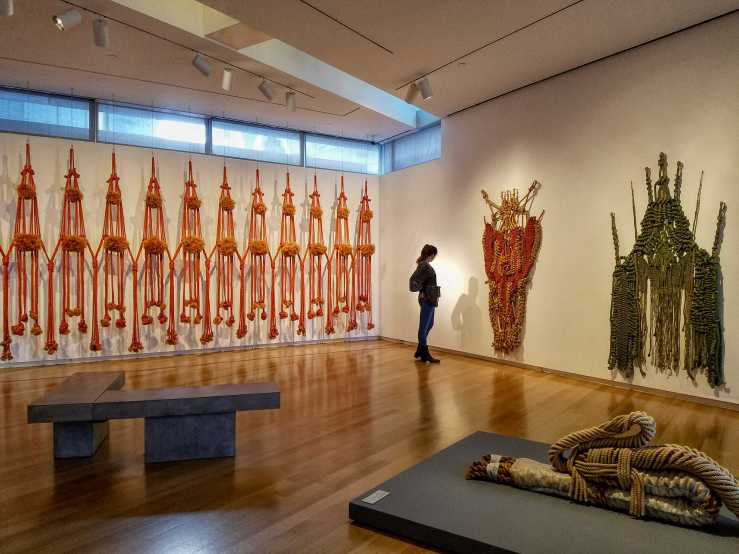
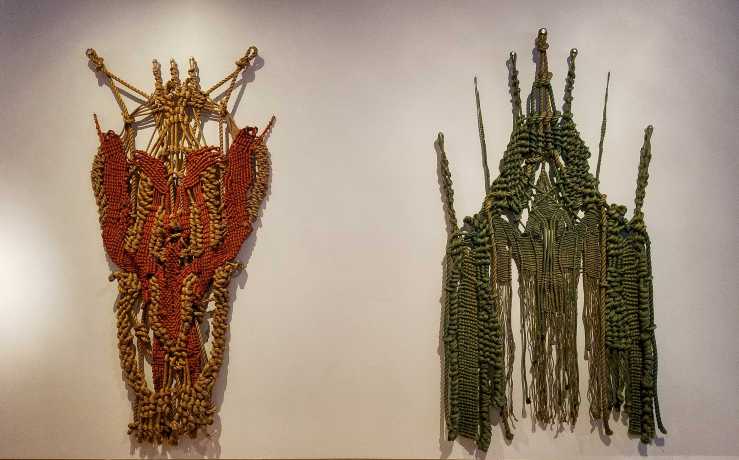
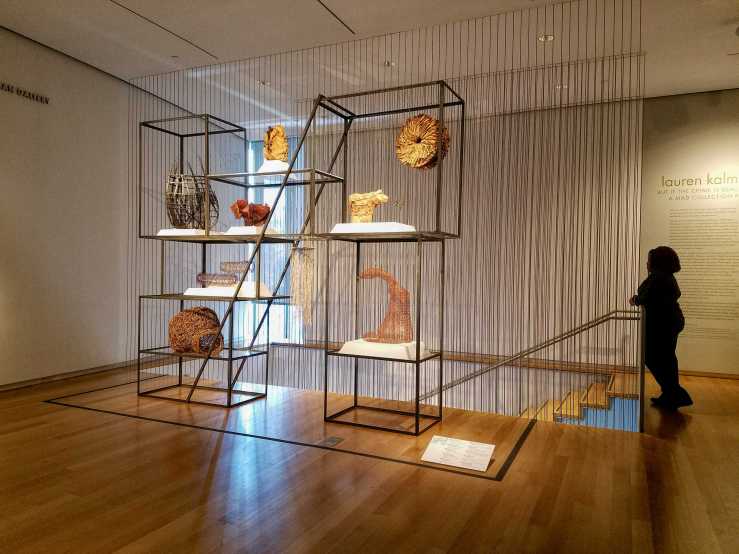
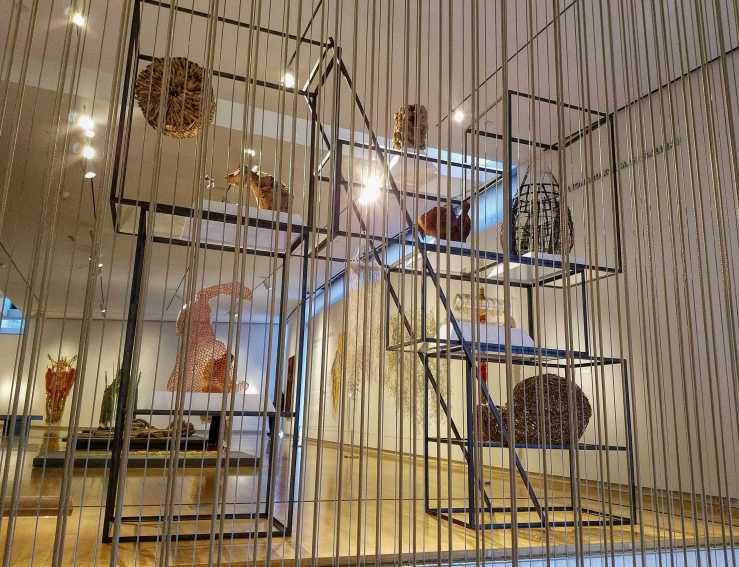
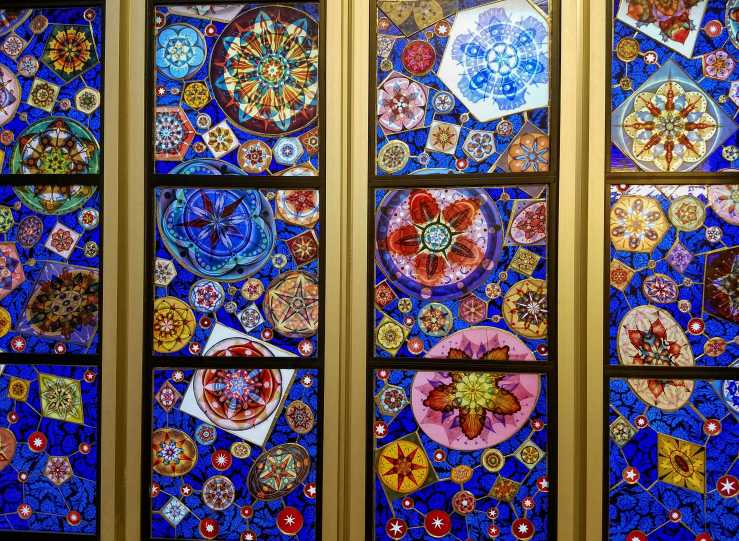
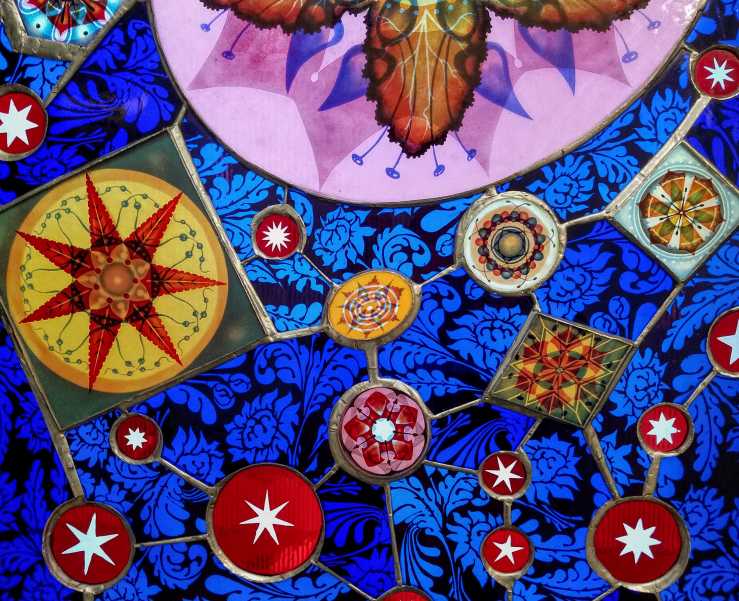
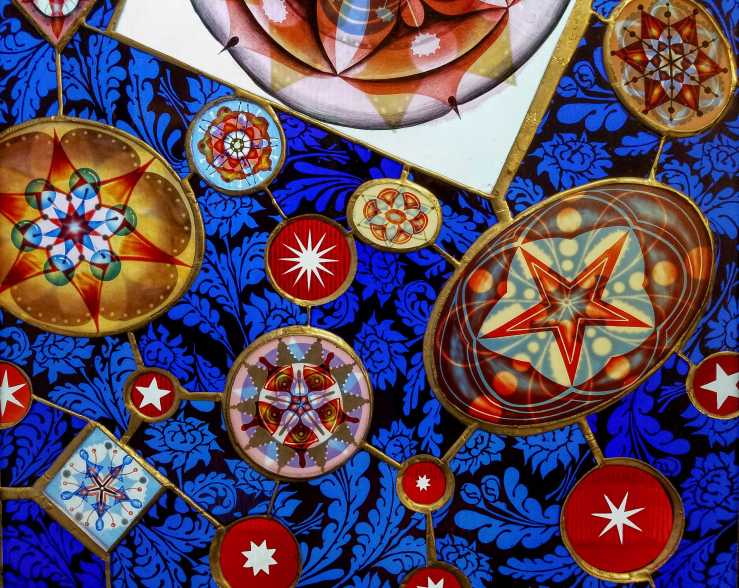
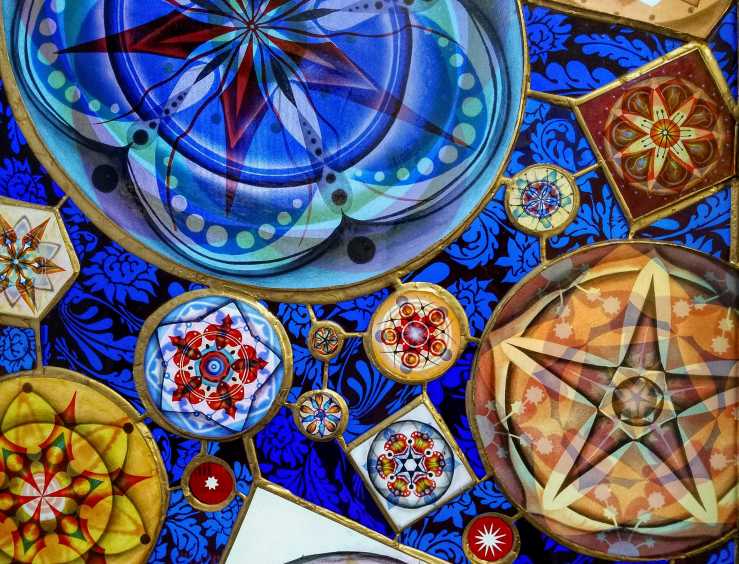
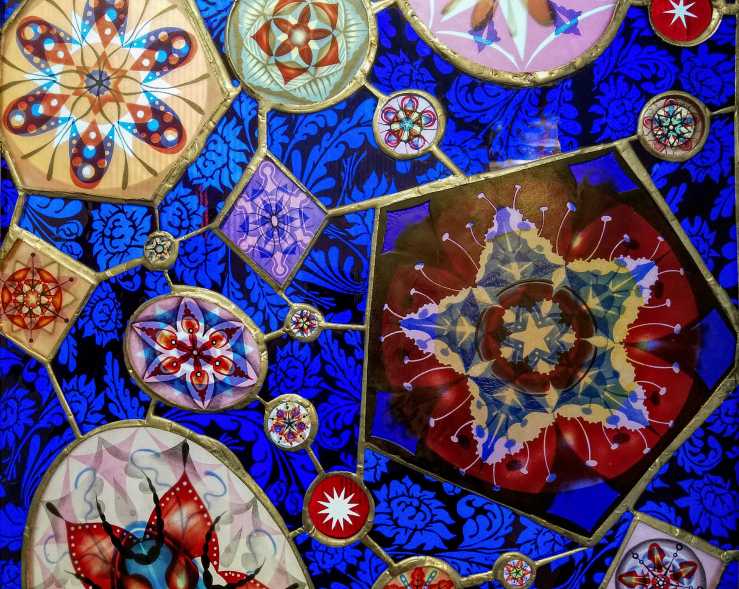
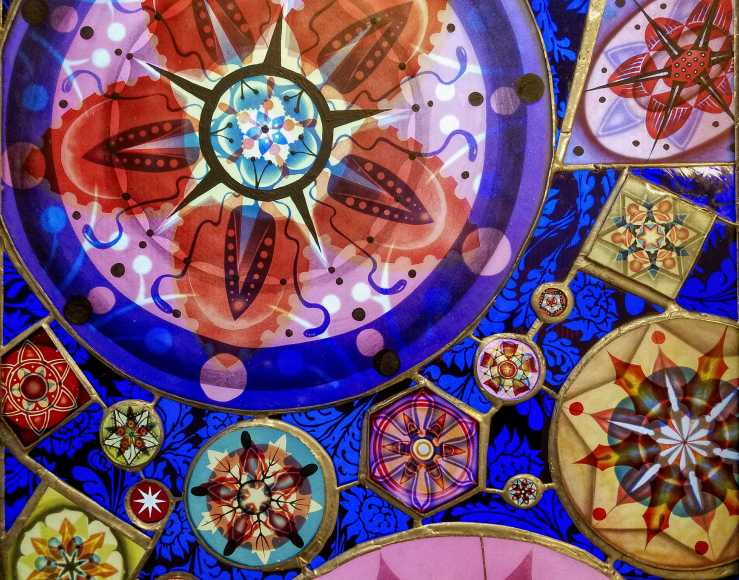
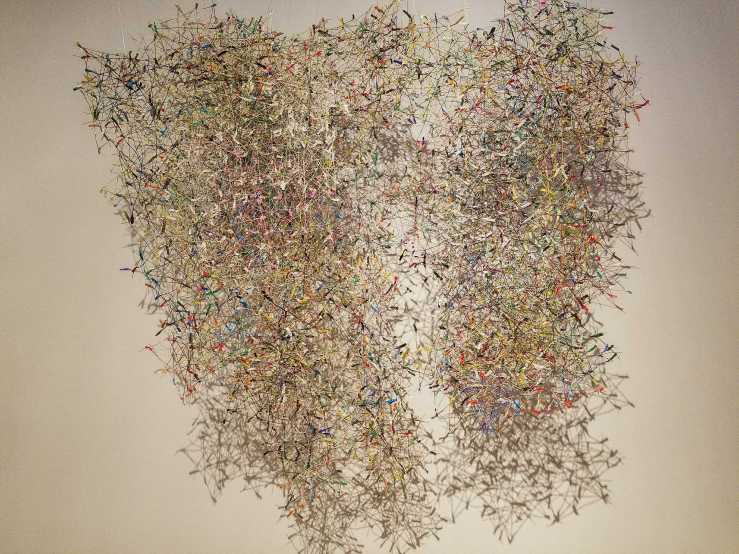
I was particularly drawn to the delicate work by Tomoko Ishida ”Co-twisted, 2003”, using paper and starch. The intricate Macramé knots and fringes by Françoise Grossen, like her Shield & Blu, c. 1968. And the most striking of them all,  Judith Shaechter’s stained glass kaleidoscope, adorning the second floor stairwell. Aptly titled ”Seeing is Believing” this site-specific permanent installation extends the art viewing to an otherwise bare and functional space and rewards those curious enough to peek behind closed doors. 

The Museum of Arts and Design (MAD)
2, Columbus Circle
New York City

March 12th, 2017

Voulkos: The Breakthrough Years @ MAD

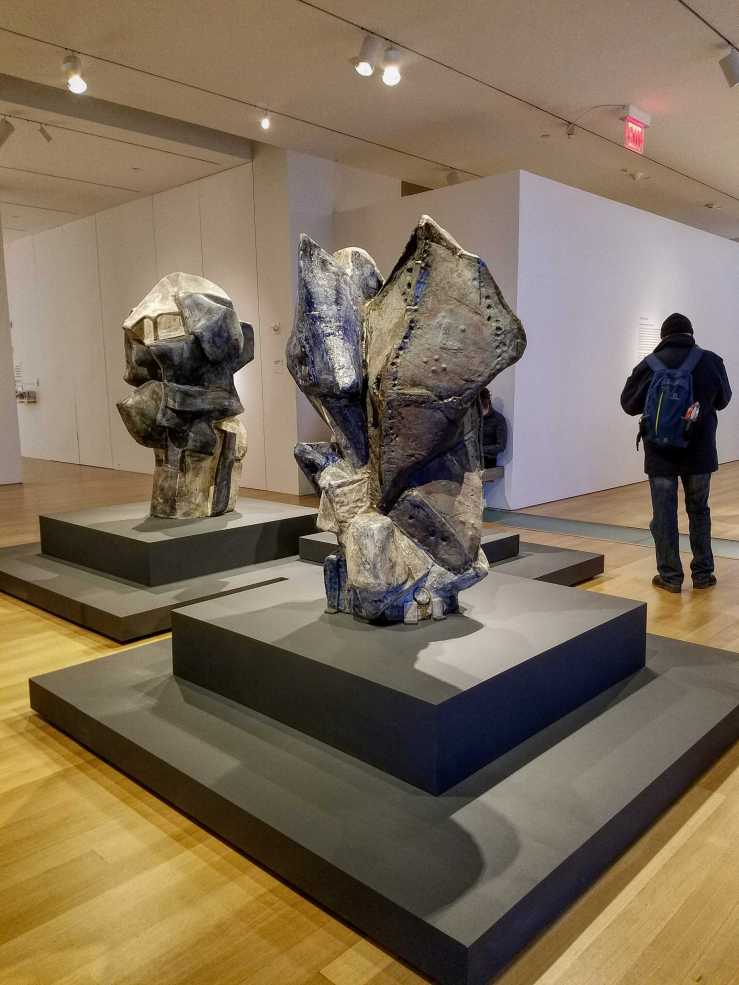
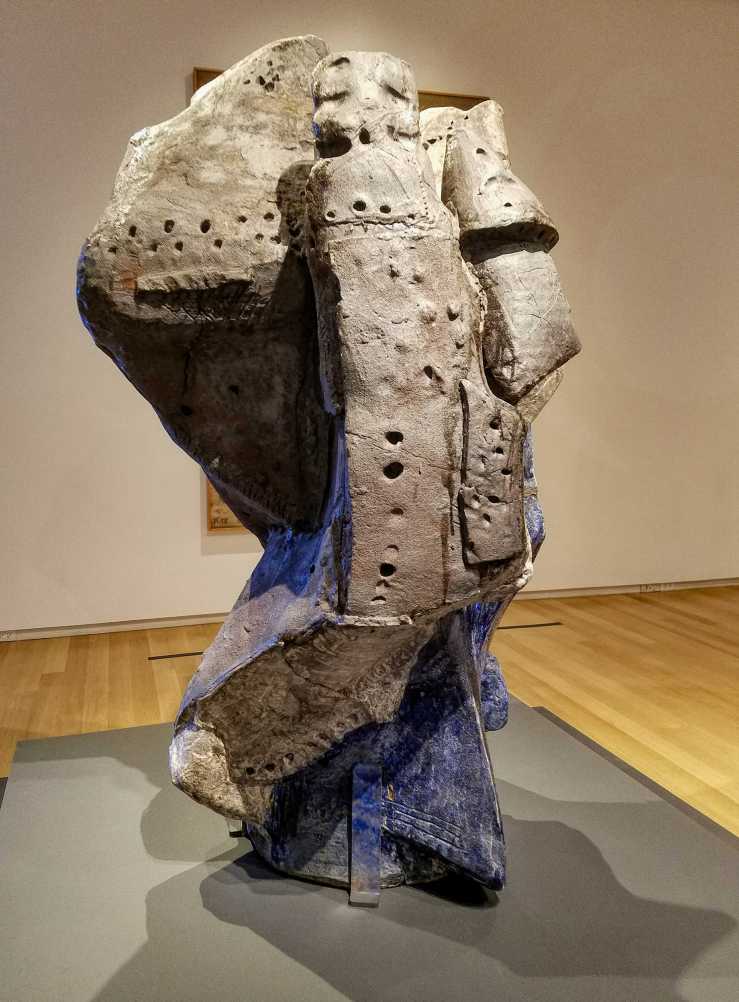
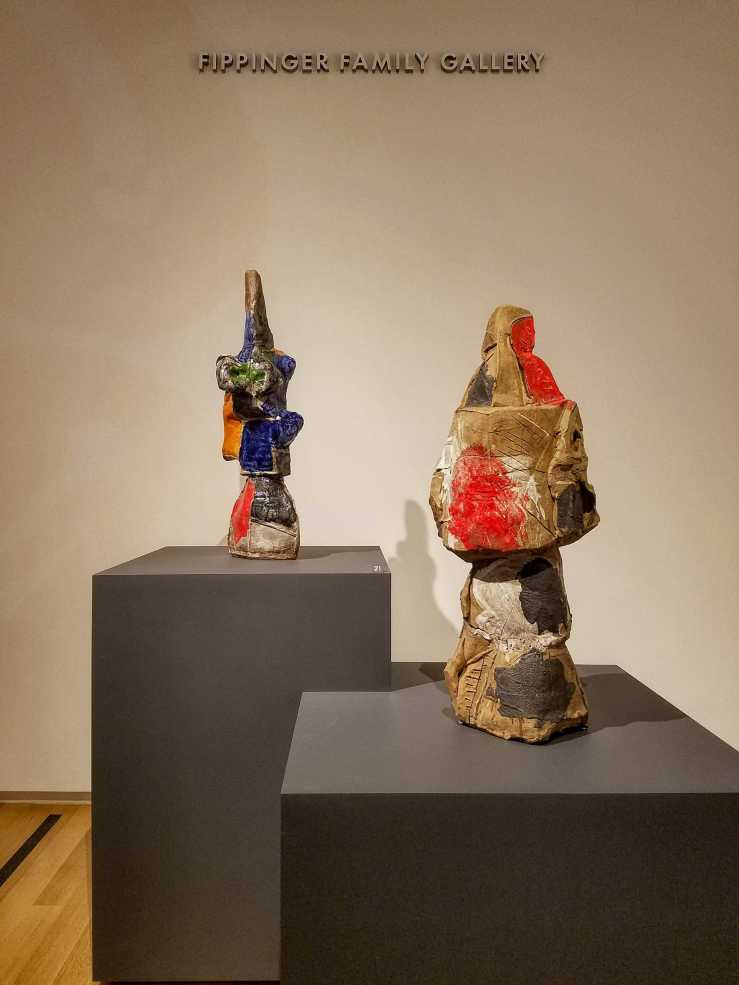
“Voulkos: The Breakthrough Years is the first exhibition to focus on the early career of Peter Voulkos, whose radical methods and ideas during this period opened up the possibilities for clay in ways that are still being felt today.”

A chance encounter with the work of an artist I had never heard of before – highly popular in this part of the world, less so in Europe it seems. Following a quick research, I now know that he was an American of Greek descent (as his name suggests), whose parents had migrated to Bozeman, Montana where he was born. He served in the U.S. Army during WWII and studied painting and printmaking in Montana State University where he was also introduced to ceramics. He died in 2002 doing what he loved best: demonstrating his skill to a live audience.

“Commissions for large-scale works in bronze occupied a good deal of Voulkos’ time in the early 1960s, but he continued to work in clay energetically and innovatively. Many of his ceramic works of this period were made in public demonstrations. Voulkos was a natural performer who loved working in front of a crowd. One observer who saw him make Josephine at Greenwich House Pottery in New York, remembers how ”he worked with total abandon and total focus all at the same time”, first pounding the piece as it rose on the wheel then slicing it in half, then welding it together with wet clay as he worked it with his fists from the inside, and finally splashing its surface with slip and glaze.

Voulkos’ demonstrations were great theater, and even the ceramic works that he was making in the studio at this time, such as a series of cracked and fissured plates, capture this sense of immediacy. They can be compared with contemporary Abstract Expressionist paintings, many of which project a similar, stereotypically masculine combination of authority and aggression. Yet Voulkos’ improvisations also relate to his interest in jazz and Spanish flamenco, which he played proficiently on the guitar. ”I think that working in the form of pottery is a very demanding thing” he said. ”The minute you touch a piece of clay it responds, it’s like music – you have to know all the structure and know how to make sound before you can come up with anything”.”

Voulkos: The Breakthrough Years was on show until March 15th, 2017 at 

The Museum of Arts and Design (MAD)
2, Columbus Circle
New York City

March 12th, 2017

Dadan @ BAM

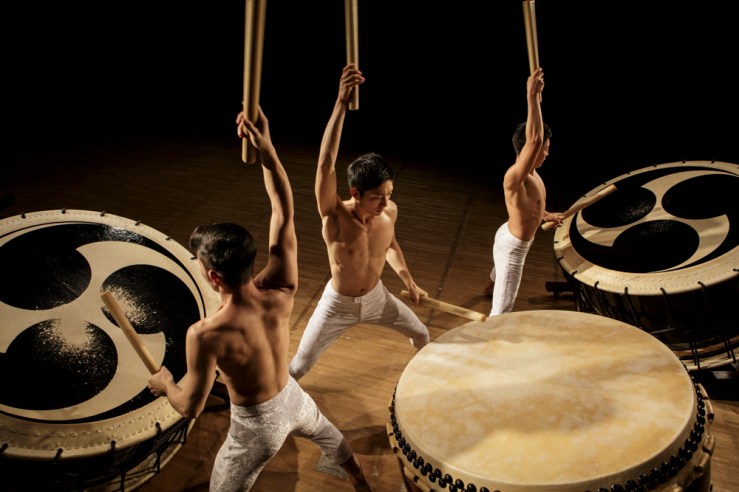
In order to create Dadan, I started rehearsals with the performers in the summer of 2007.  At that time we had no idea that we would create a piece like this. If a group of men who just wanted to strike the drums would gather and practice intensely, a performance would come out of that energy.

So we told ourselves.

As for the name of the piece, we didn’t have any assurance that we could complete it in the future. But fortunately, in 2009 we were able to create this work called Dadan, and show it to the public.

The word Dadan is written with the kanji characters that literally mean “men drumming,” but at the same time we tried to come up with a name which would put across the sense of drumming when written in roman letters, would feel dynamic, and be easy for people around the world to say.

Dadan saw its world premiere in Tokyo during September 2009, and the success of this initial run led to its foreign debut at Théâtre du Châtelet in Paris, France, with four sold-out performances in 2012.

Following such success abroad, Dadan toured across Japan in 2012 and was showcased twice at the “Earth Celebration” annual international performing arts festival on Sado Island. Tours in Spain and France followed during 2014, and then in October 2015, Dadan was performed in Hong Kong—a first in Asia outside of Japan. The South American debut took place in March of 2016 in Brazil. 

The 2017 Dadan performances are part of its first North American tour, and are presented as a part of Kodo’s 35th Anniversary celebrations. For Dadan’s US tour, I would like to express my gratitude to the sponsors who made this possible. I hope to be able to continue to create even better performances in the future. I will be very happy if you enjoy our performance.

—Tamasaburo Bando, Dadan Artistic Director
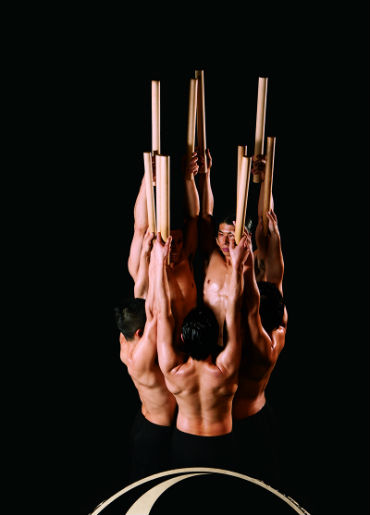
Never has drumming seemed so elegant, flawlessly coordinated, primal, powerful, precise and curiously meditative, until these guys came along.
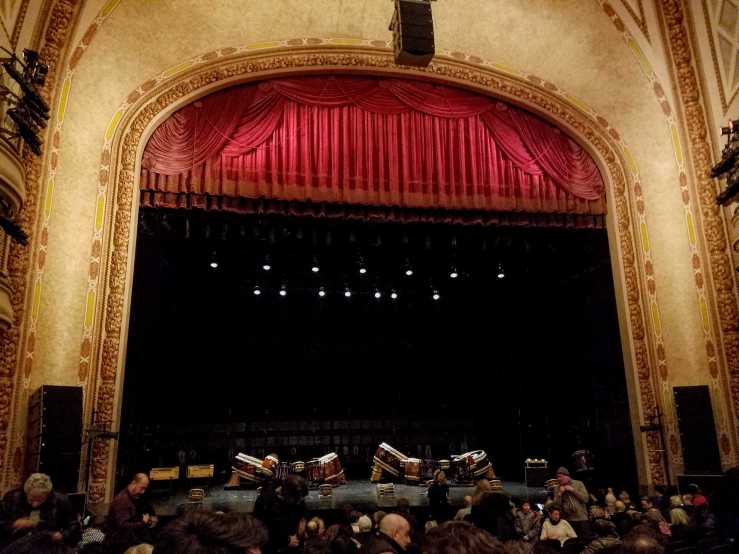
*first three images from the net

Kodo performed in BAM
March 4th, 2017
Philadelphia – A City Street || An Institution

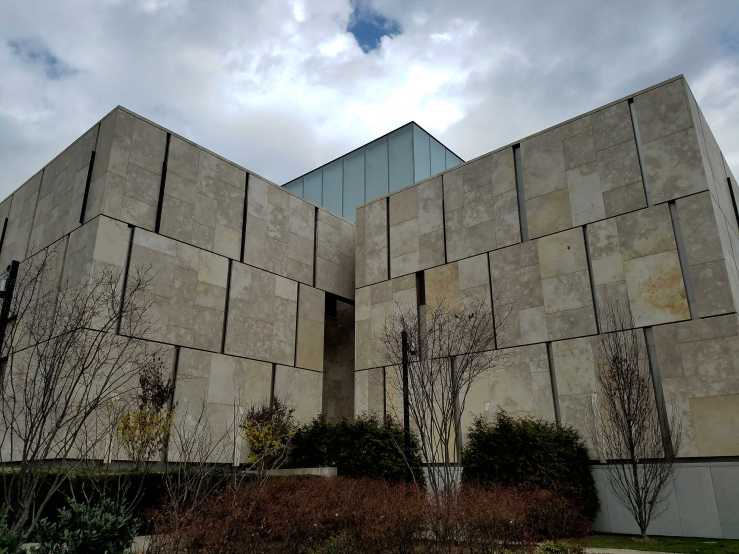
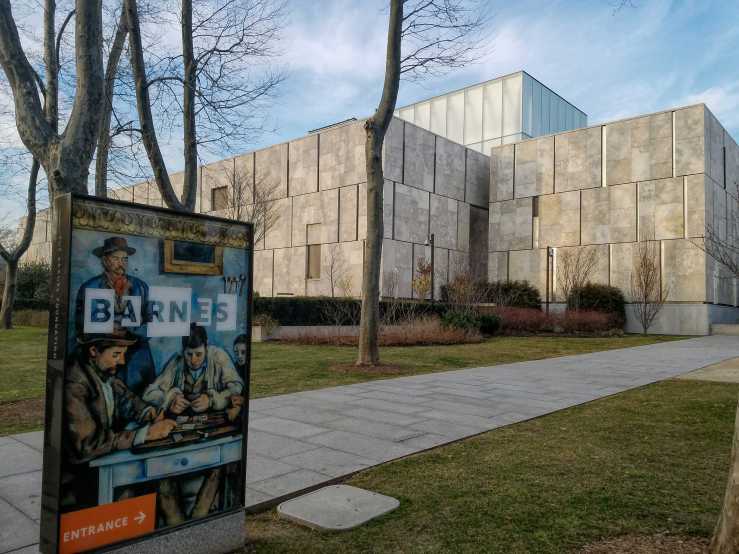
Albert Barnes taught people to look at works 
of art primarily in terms of their visual relationships.

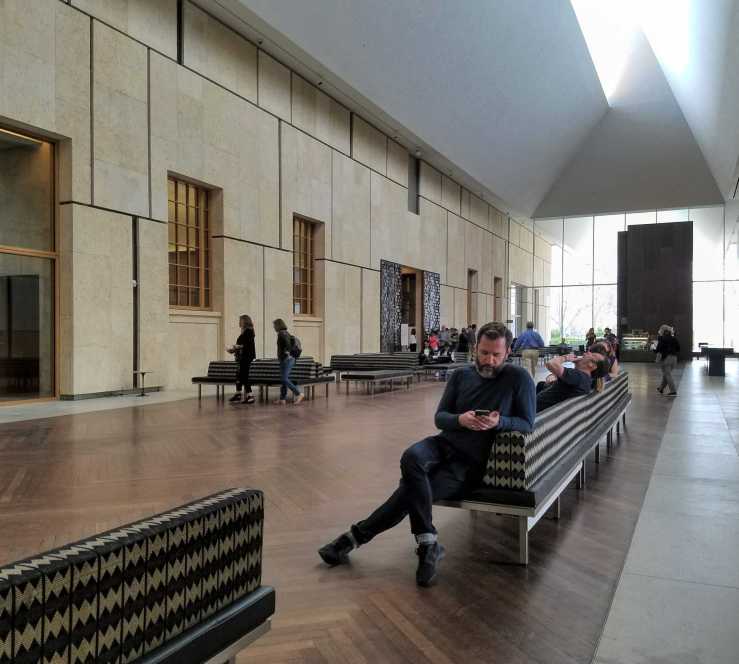
The Barnes is home to one of the world’s greatest collections of impressionist, post-impressionist, and modern European paintings, with especially deep holdings in Renoir, Cézanne, Matisse, and Picasso. Assembled by Dr. Albert C. Barnes between 1912 and 1951, the collection also includes important examples of African art, Native American pottery and jewelry, Pennsylvania German furniture, American avant-garde painting, and wrought-iron metalwork.

The minute you step into the galleries of the Barnes collection, you know you’re in for an experience like no other. Masterpieces by Vincent Van Gogh, Henri Matisse, and Pablo Picasso hang next to ordinary household objects—a door hinge, a spatula, a yarn spinner. On another wall, you might see a French medieval sculpture displayed with a Navajo textile. These dense groupings, in which objects from different cultures, time periods, and media are all mixed together, are what Dr. Barnes called his “ensembles.”

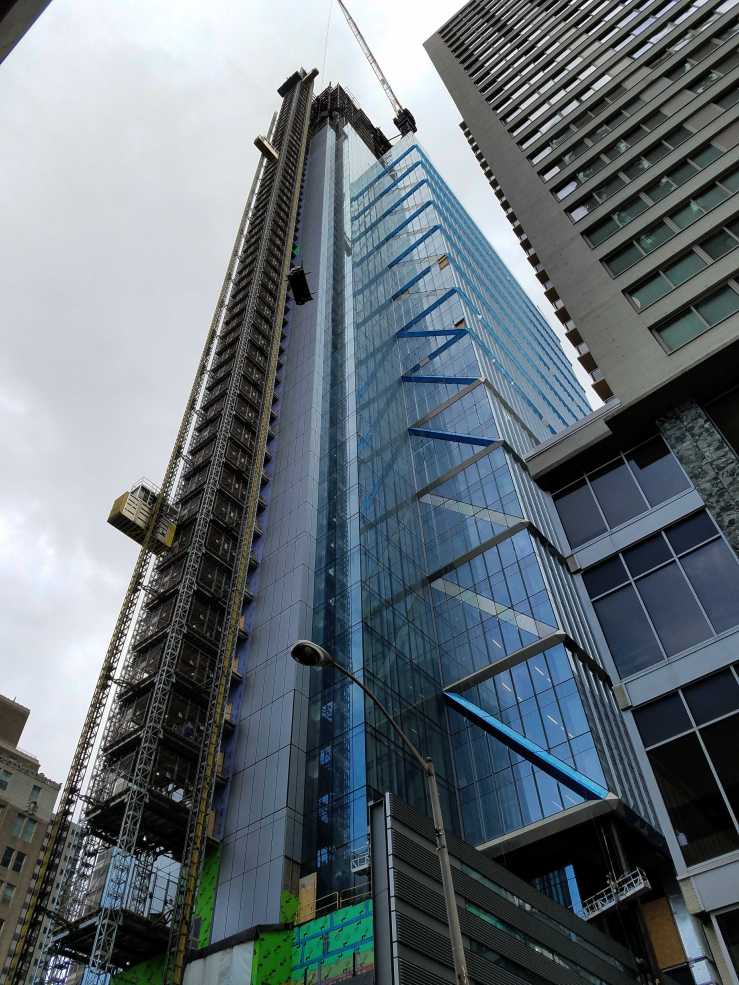
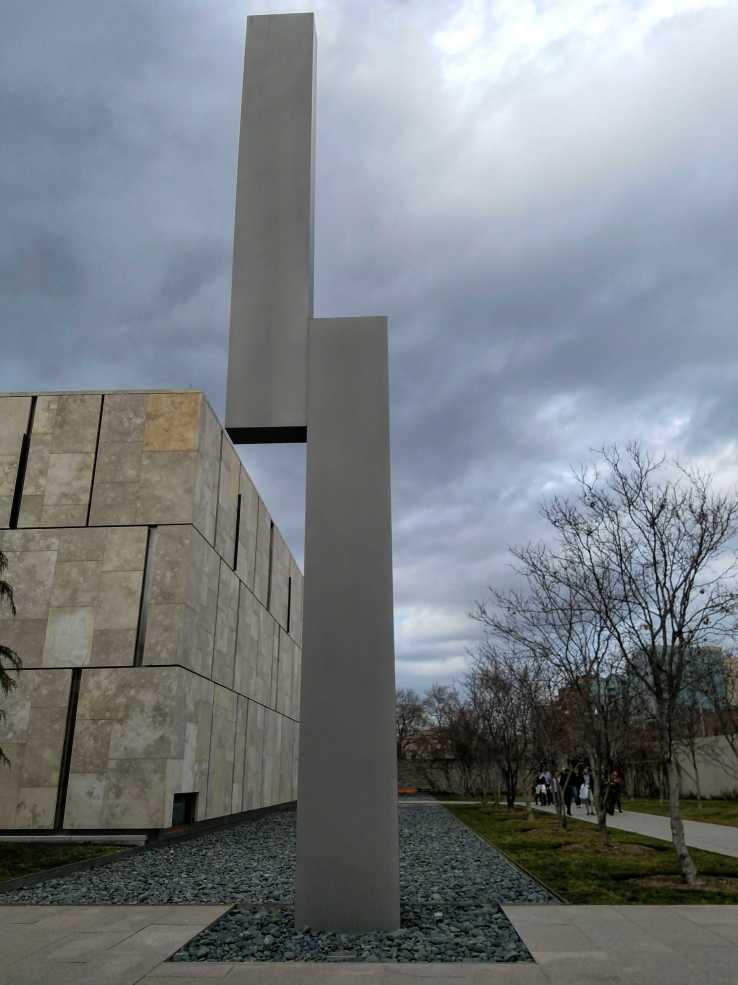
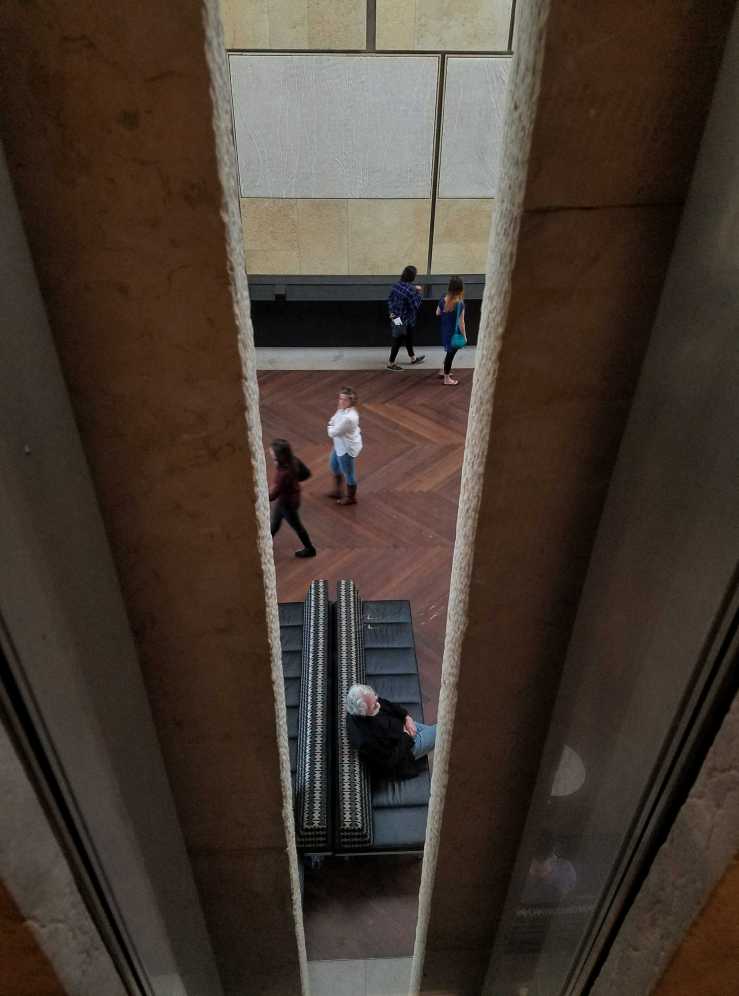
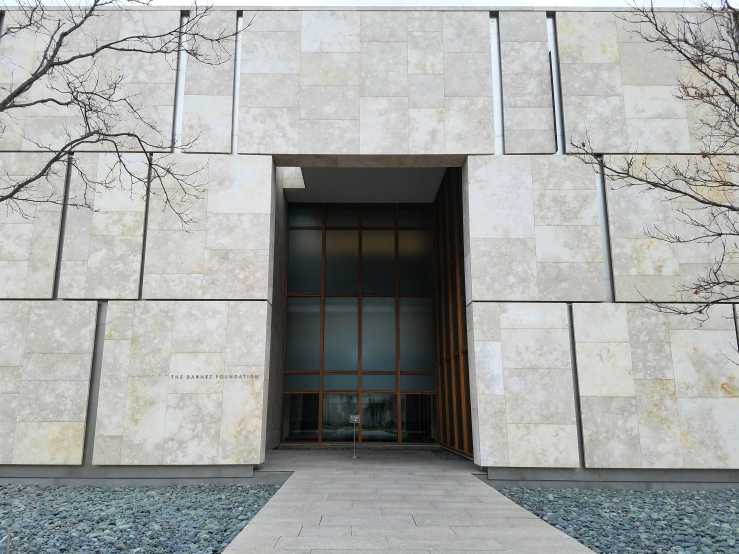
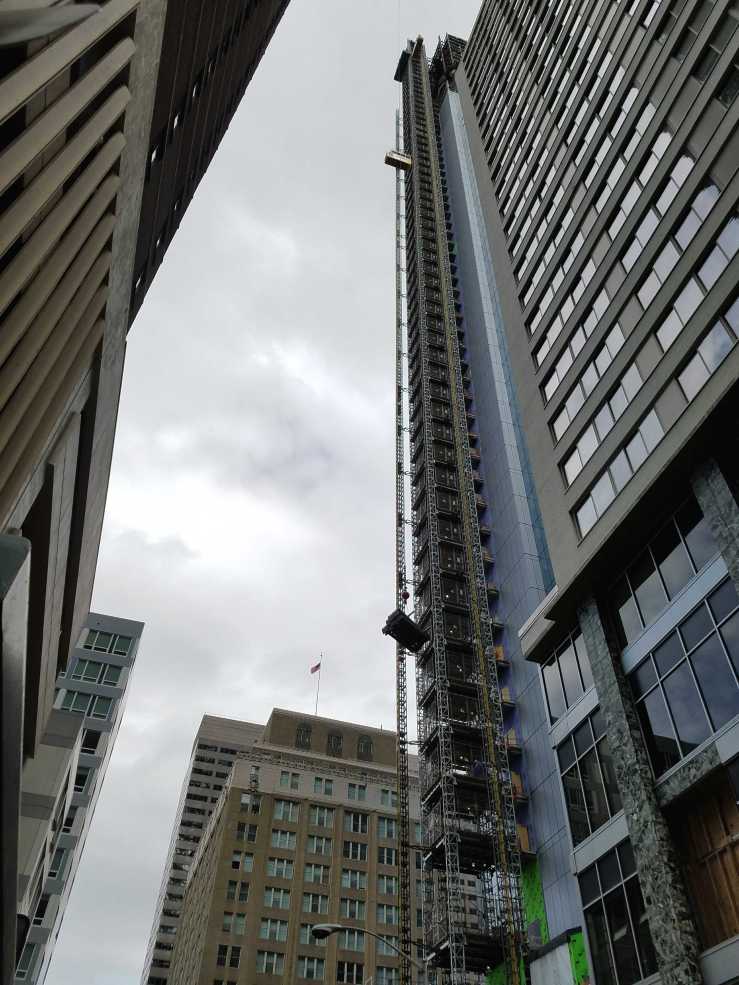
In this spirit, here is an ”ensemble” of my own, a compilation of images from the up and coming Comcast Technology Center – with its dangerous-looking platform lift – and the Barnes Foundation. Photography inside the galleries is not permitted and, for once, I understand. With its small rooms and artworks arranged over the entire length and width of the walls, the ”ensembles” are not easy to capture – at least not by the casual photographer.

The Barnes Foundation
Philadelphia

February 25th, 2017
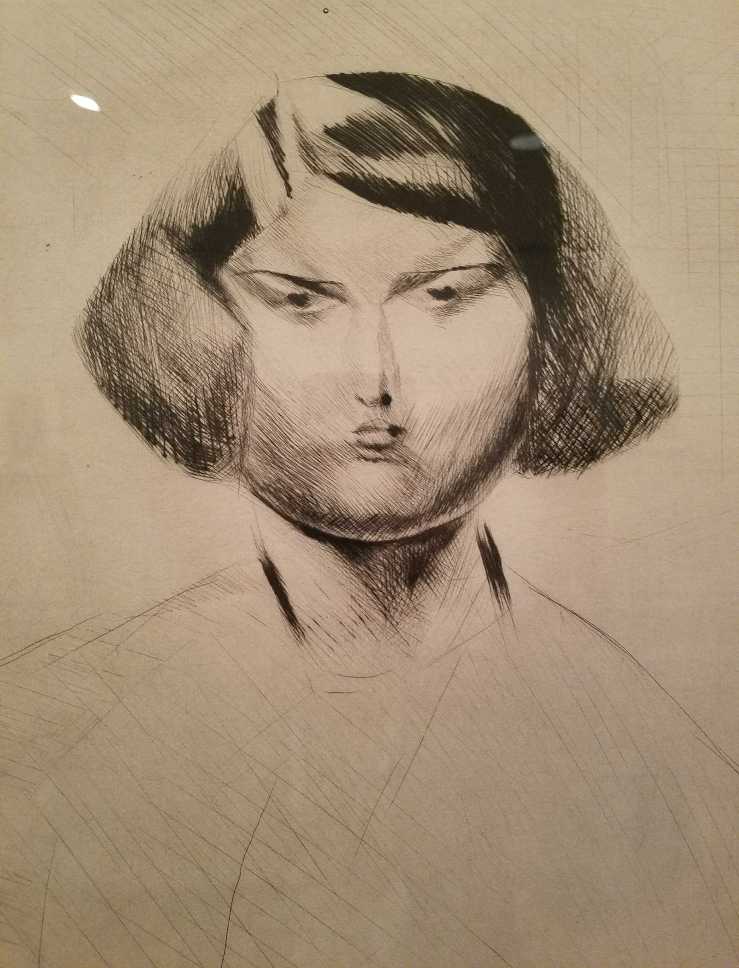
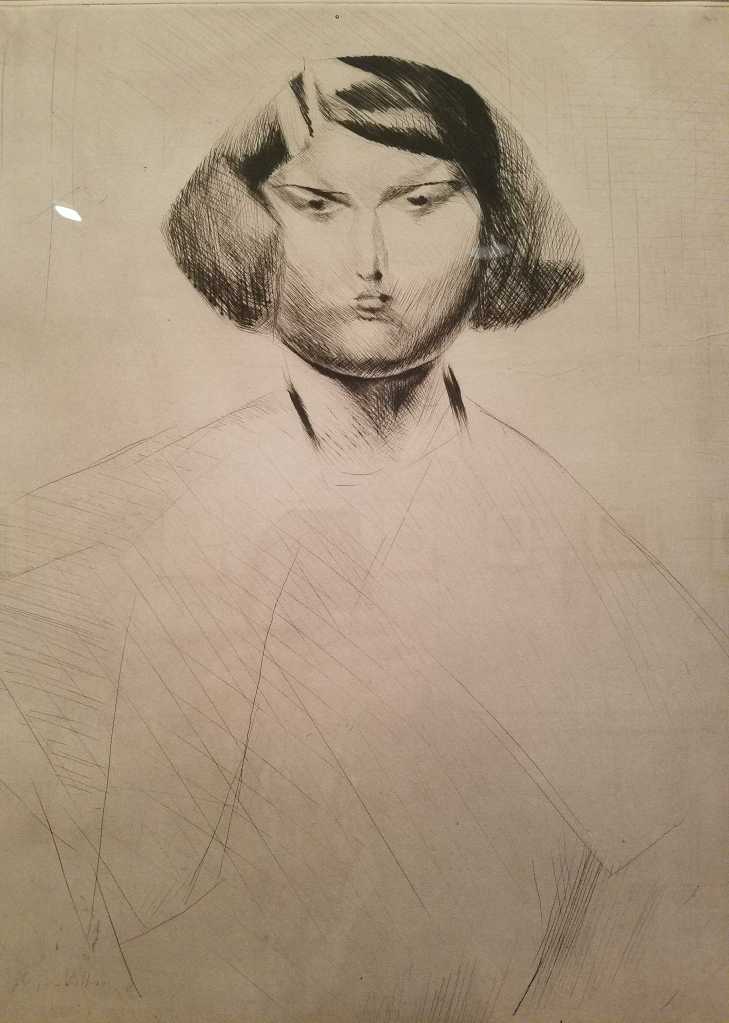
Two angry faces – in the Philadelphia Museum of Art

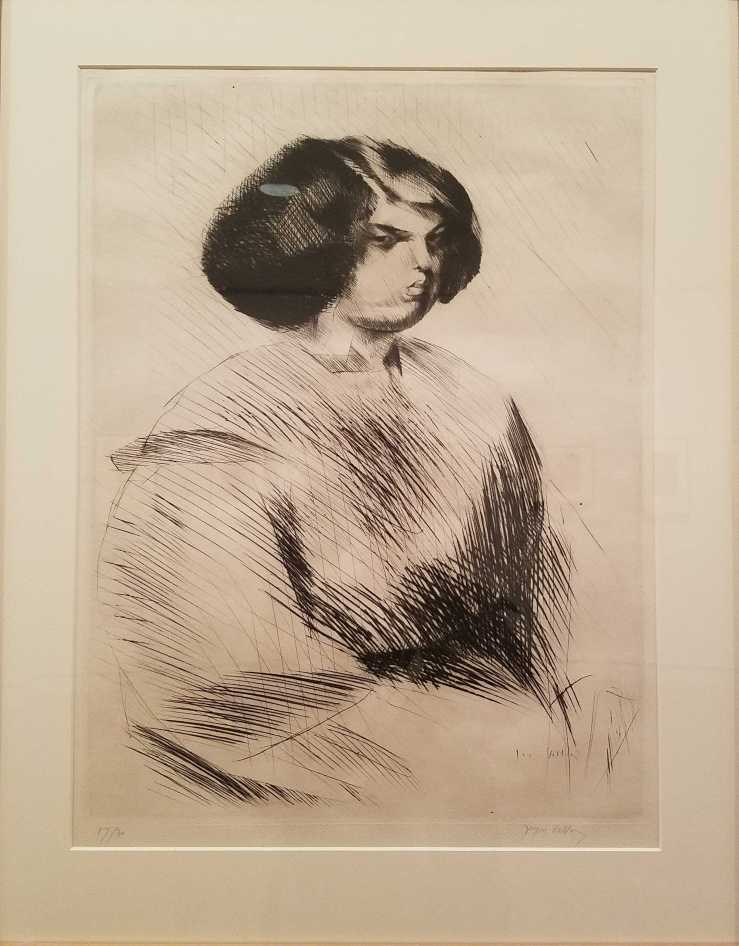
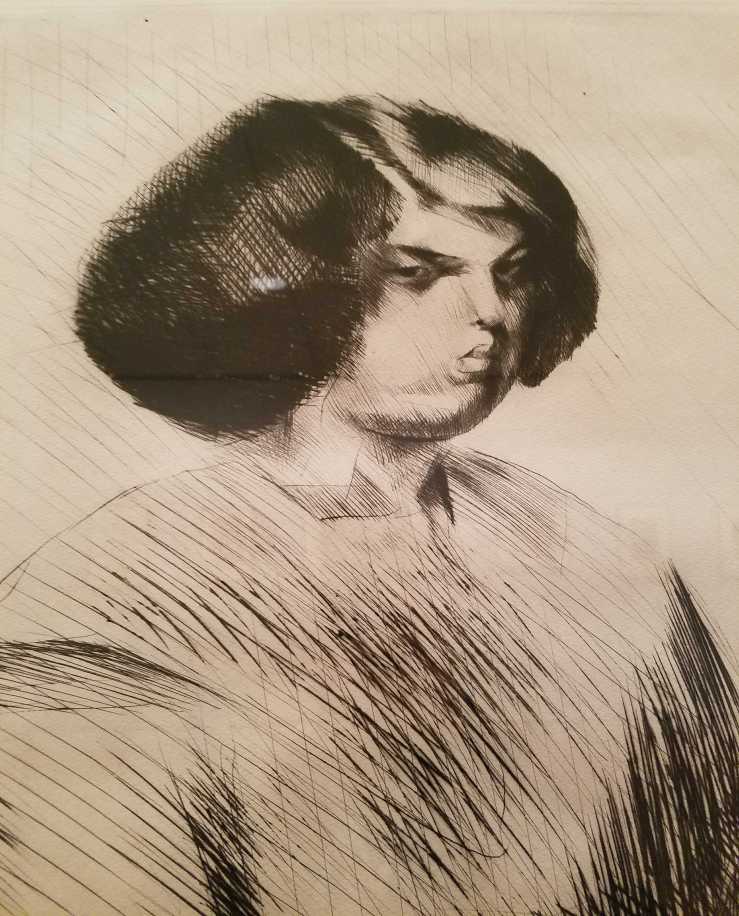
Both belong to Renée, drawn by French artist Jacques Villon.

Villon, also known as Gaston Duchamp, was one of Marcel Duchamp’s siblings but, in order to distinguish himself from them, he started using the pseudonym with which he became known.

Renée was the daughter of Villon’s cousin and the subject of several works by the artist.

Doesn’t she look angry in these drawings? I wonder what – or who – could be responsible for this frown on her face.

Renée. Three Quarter View, 1911. Jacques Villon

Renée. Three Quarter View, 1911 (detail). Jacques Villon
Renée. Full Face, 1911 (detail). Jacques Villon

Philadelphia Museum of Art
February, 22nd 2017


Philadelphia – Museum of Art

Vast in size, rich in collections with major works from European, American and Asian artists, from paintings and prints to decorative items and furniture, it will require at least three hours for a ”quick” overview – and that includes the main building only. For the museum manages several annexes such as the Rodin Museum and the Perelman Building across the street, which is why your ticket will be valid for two consecutive days – in case you have the stamina to visit them all (which we didn’t).

The images below show a very brief part of what you can expect to see in the museum; I skipped most of the paintings in favour of objects and furniture that got my attention.

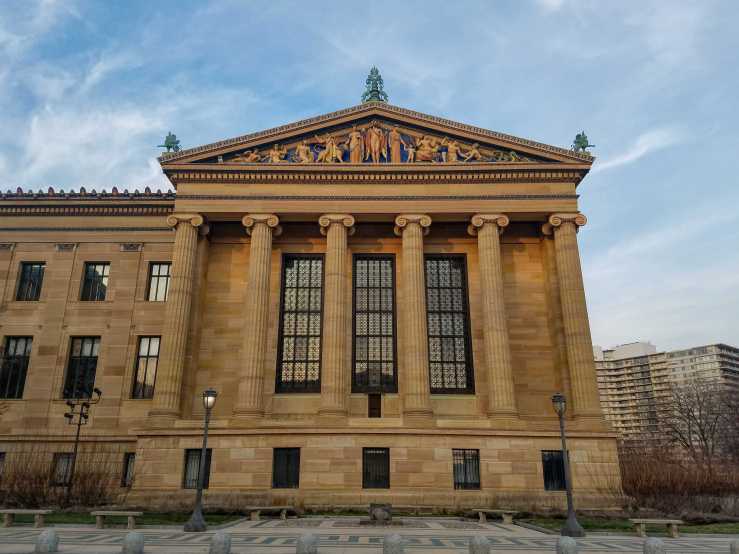
The Greek Revival facade.
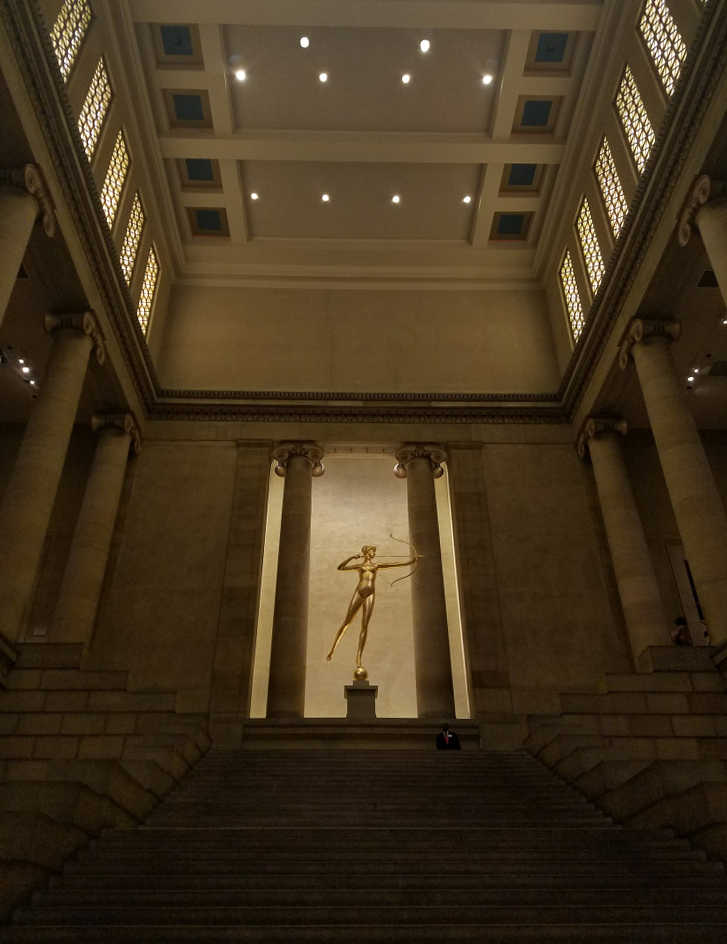
Diana, 1892-1893, in gilded copper sheets by Augustus Saint-Gaudens. Diana is arguably the best-known work of Augustus Saint-Gaudens, who was recognized at the turn of the century as the country’s finest sculptor. When installed in 1893 on the tower of New York’s Madison Square Garden to serve as a weather vane, Diana ruled the highest point in Manhattan. The sculpture’s gilded form caught the sun during the day and was illuminated at night by the city’s first electric floodlights. Madison Square Garden was demolished in 1925 and the Philadelphia Museum of Art adopted the sculpture in 1932. Diana has reigned as the goddess of the Museum’s Great Stair Hall ever since.
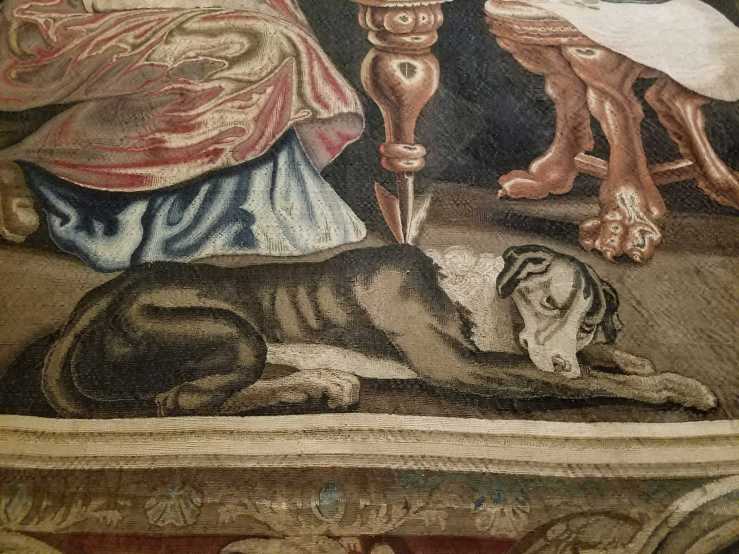
From a Tapestry showing Constantine Directing the Building of Constantinople, 1623-25. A composition designed by Peter Paul Rubens. Detail showing that some things never change.
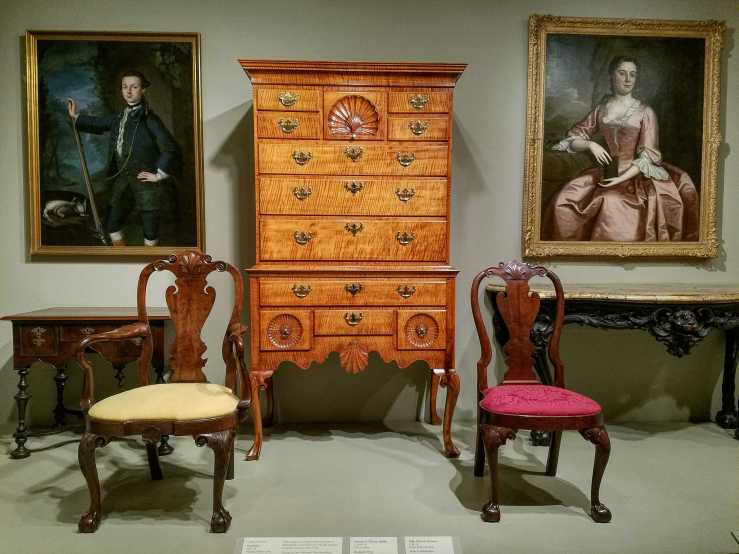
High Chest of Drawers, 1740-50. Curly maple, red pine. Armchair, 1745-55. Walnut. All made in Philadelphia.
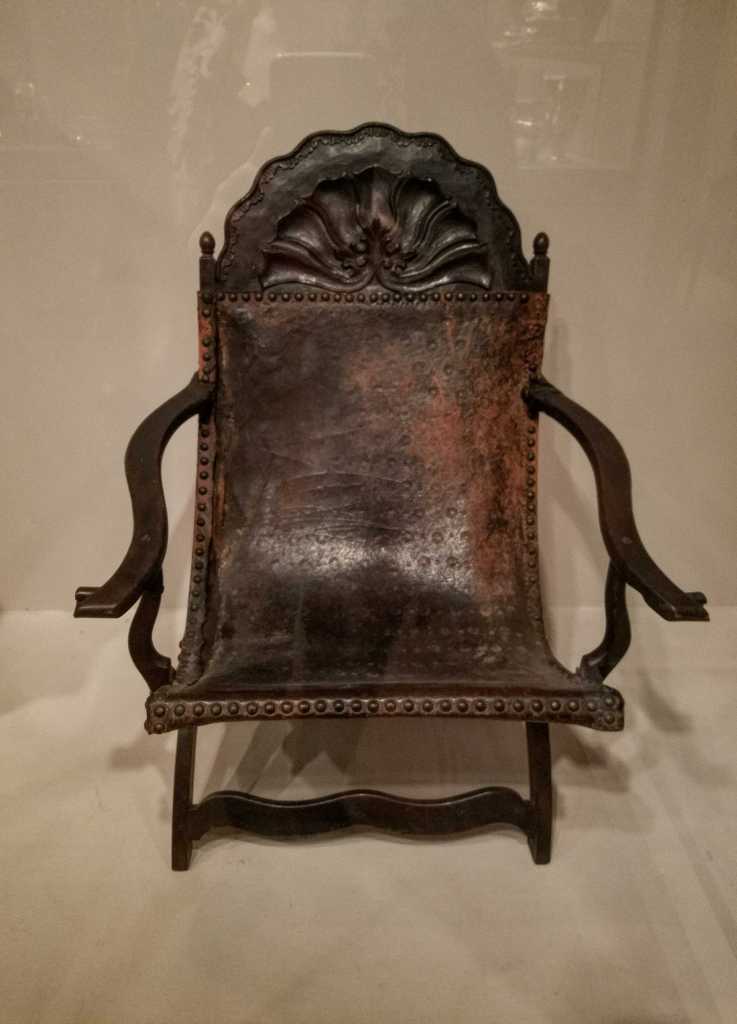
Butaca Chair, 1730-70. Mahogany, original leather upholstery and brass. Probably made in Mexico.
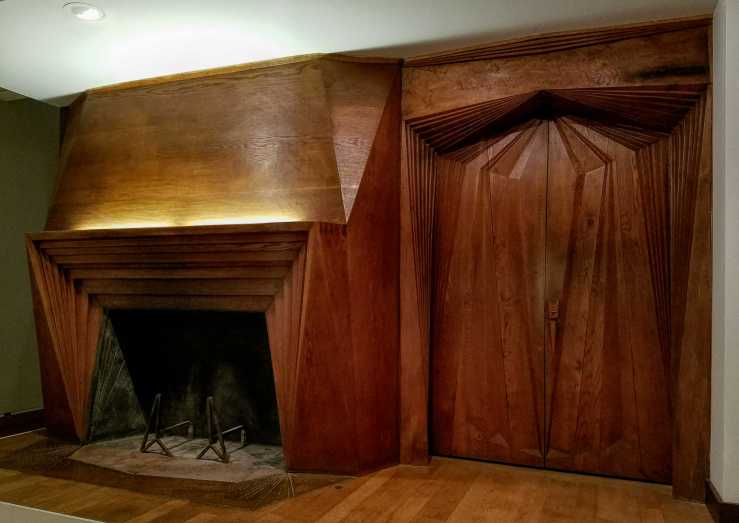
Fireplace, Doorway and Pair of Andirons, ca. 1936-37. Carved oak, stone, copper hearth, iron. Made by Wharton Esherick, American 1887-1970, in Pennsylvania.
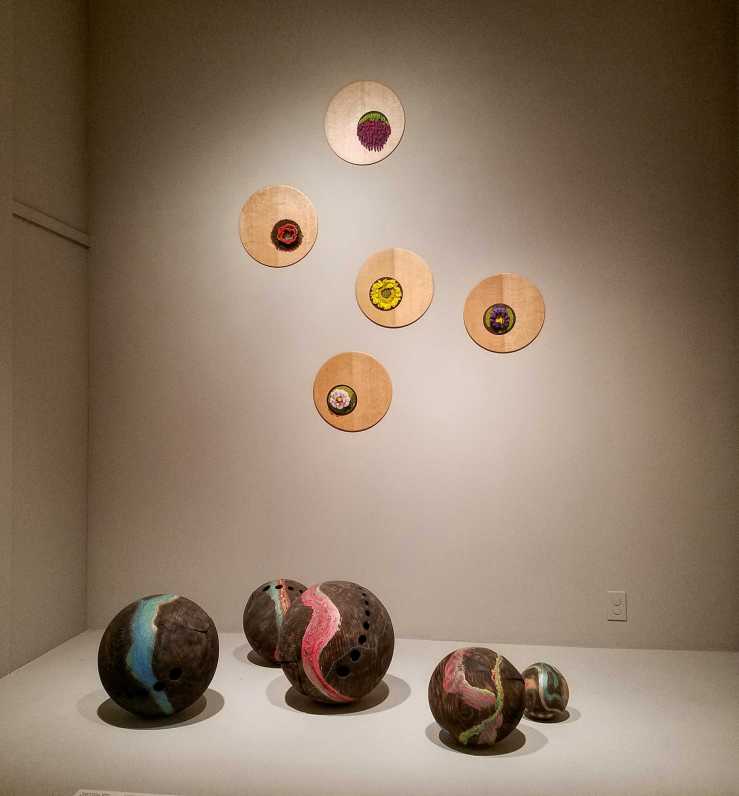
White oak and seed beads from the Mandala Series (on the wall), 2013 and 2016. A collaboration between David Ellsworth and his wife, Wendy Ellsworth, a seed bead artist. Burned and pained ash spheres (on the floor), symbolizing form in motion, from the Solstice Series, 1990-91. David Ellsworth. All made in Pennsylvania (Quakertown).
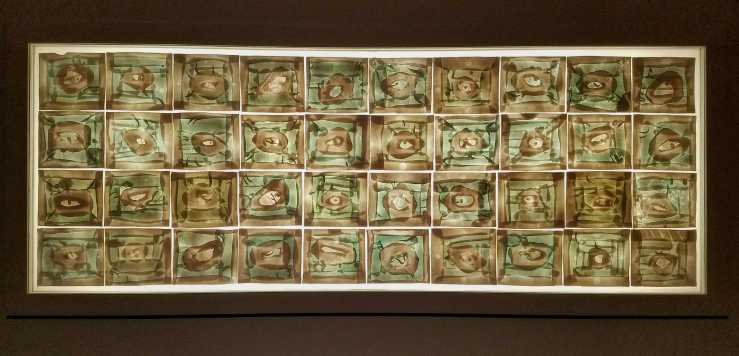
Window. Created for Magee Rehabilitation Hospital, installed 1983. Forty porcelain tiles washed with copper salts, each handcrafted and applied to frosted glass; wood frame. Made in Philadelphia by Rudolf Staffel.
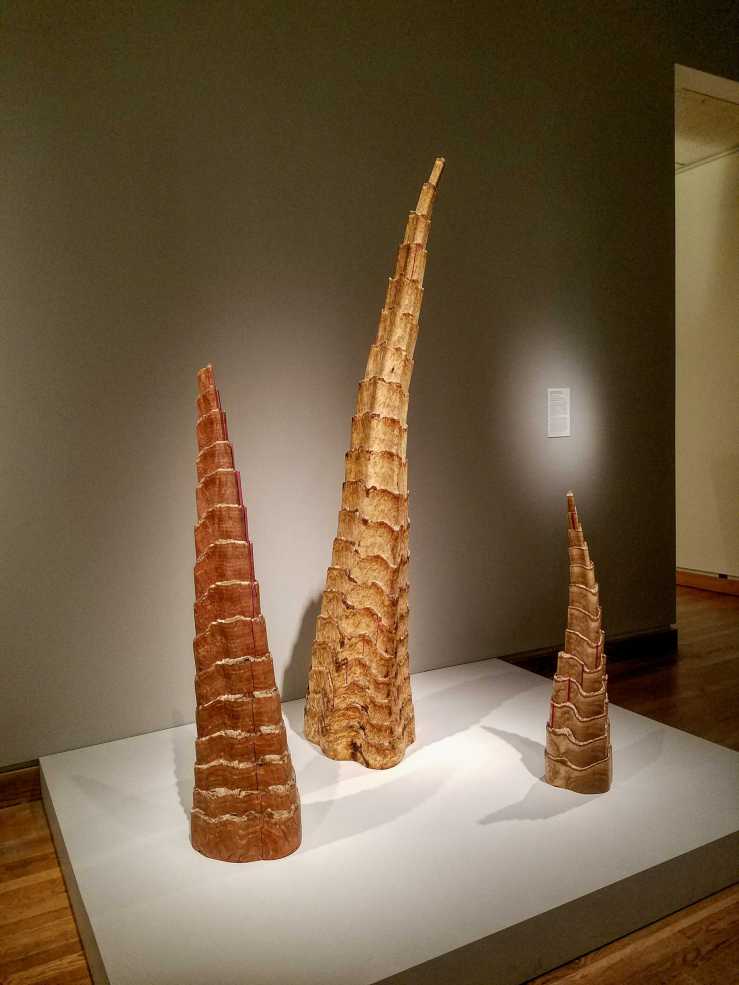
Line Ascending #5, #10, #11, from the Emergence Series 2013-15. Oak burl, black ash burl. Made by David Ellsworth in Pennsylvania (Quakertown).
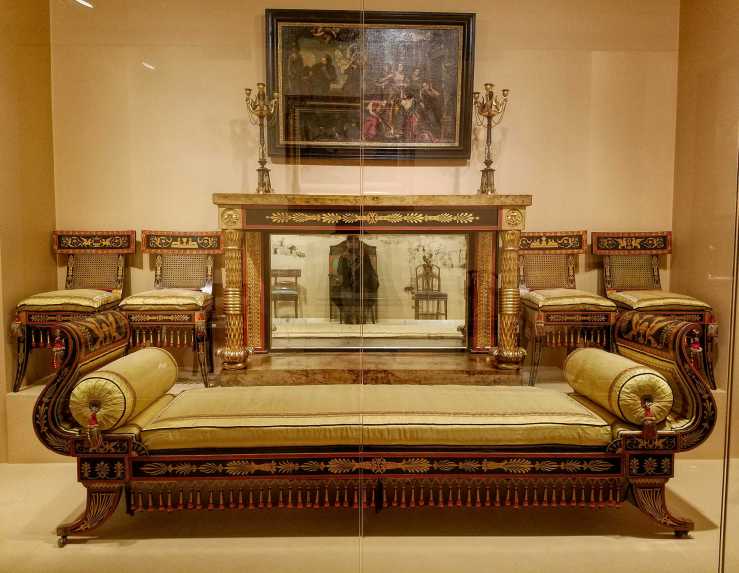
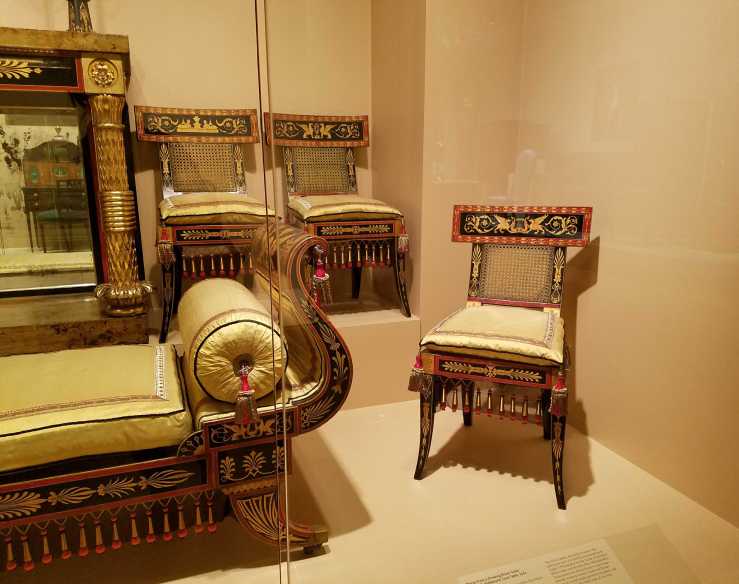
Furniture, part of a lavishly ornamented suite made in Philadelphia for the house of merchant William Waln and his wife, Mary Wilcocks Waln. Imitating ancient Greek and Roman furniture, sumptuously painted, gilded and upholstered in the latest style of the time. Designed in 1808 by Benjamin Henry Latrobe and made by John Aitken.
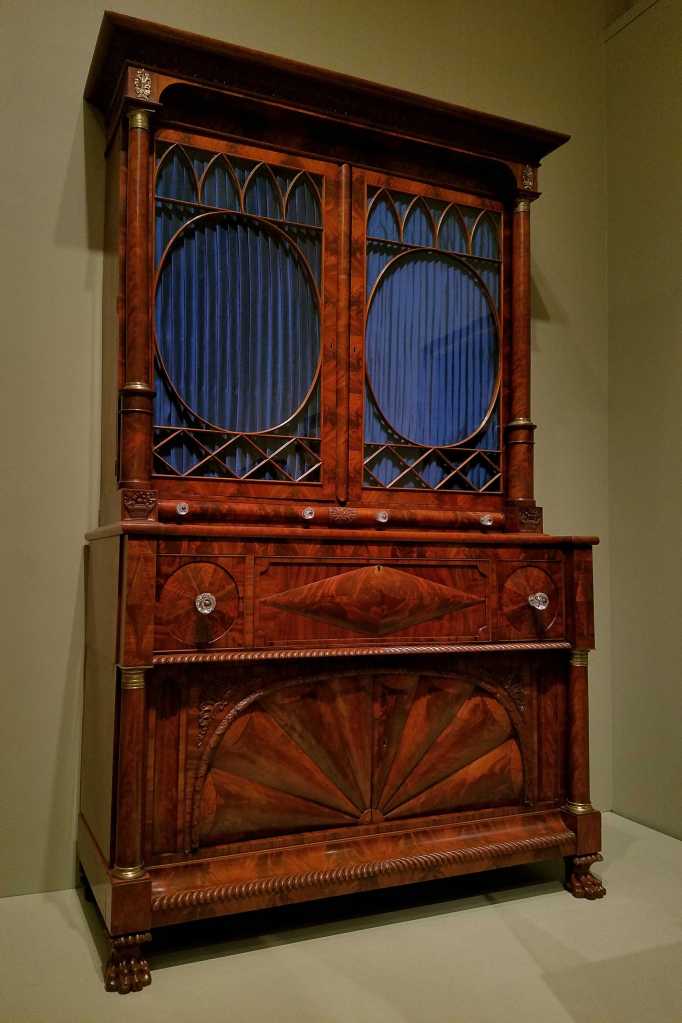
Secretary Bookcase, 1827. Mahogany, mahogany veneer, stained burl ash, white pine cedrela, red cedar, yellow poplar, dark wood stringing, brass, gilt decoration; glass doors and pulls; brass lock. Made in Philadelphia by Anthony G. Quervelle.
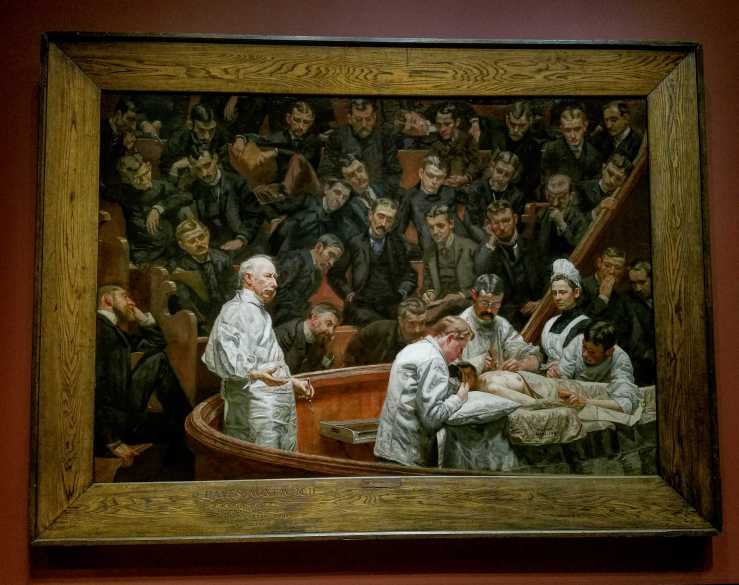
The Clinic of Dr. Agnew, 1889. Oil on canvas, by Philadelphia’s very own, Thomas Eakins.
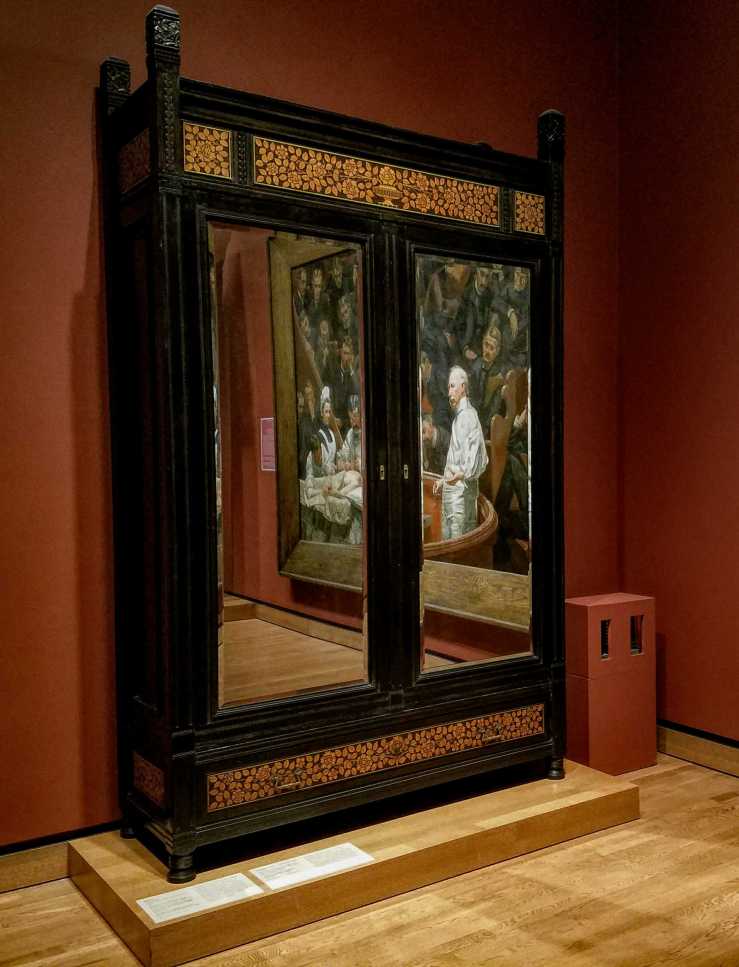
The Japanese Aesthetic was introduced to Americans following Japan’s opening to international trade in 1854. Favouring asymmetry, flat patterns and unfamiliar materials and colour harmonies, it presented a refreshing alternative to that of the West. Here, the reflection of Eakins’ Clinic of Dr. Agnew is a harmonious bridge connecting the two aesthetics.
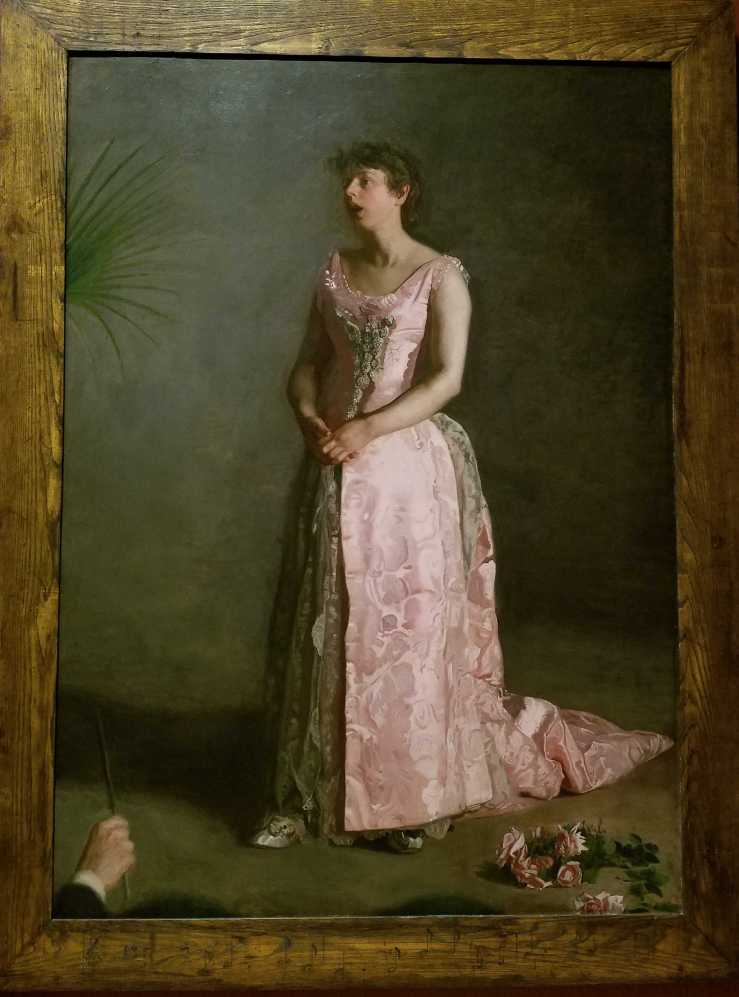
The Concert Signer, 1890-92. Oil on canvas by Thomas Eakins. Determined to suggest the sound of her voice and the emotions it invoked, Eakins asked his friend, soprano Weda Cook, to pose for hours while repeatedly singing the same few notes from ”O Rest in the Lord” by Felix Mendelssohn. Upon the painting’s completion, Eakins had these notes carved into its fame.
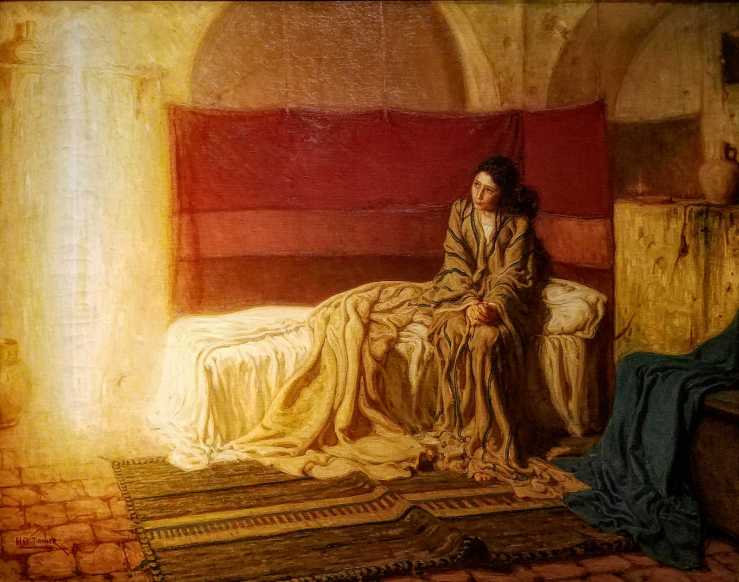
The Annunciation, 1898. Oil on canvas by Henry Ossawa Tanner.
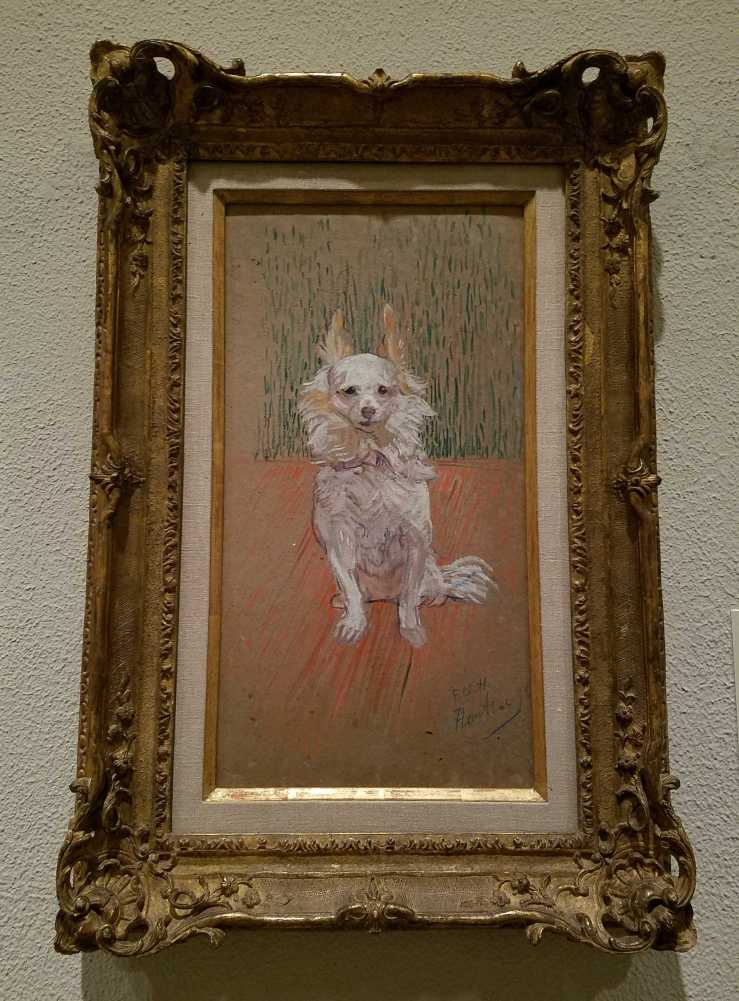
Follette, 1890. Oil on cardboard by Henri de Toulouse-Lautrec.
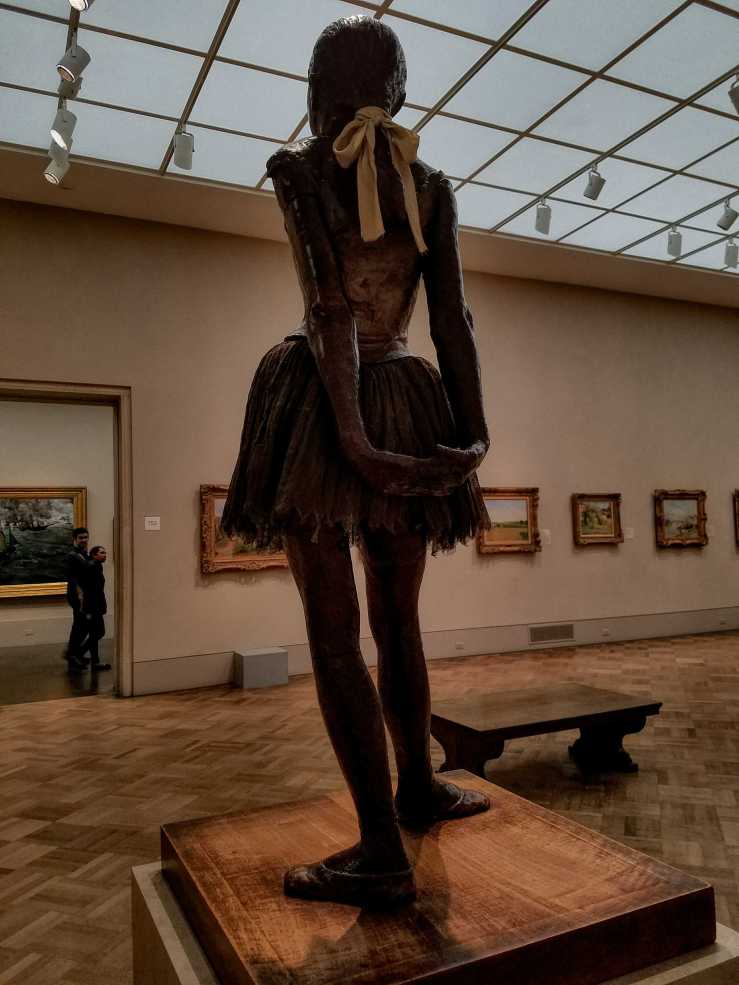
Oh, look!… another Fourteen-Year-Old Little Dancer, by Edgar Degas. If I don’t see one in a major museum, I will begin to worry.
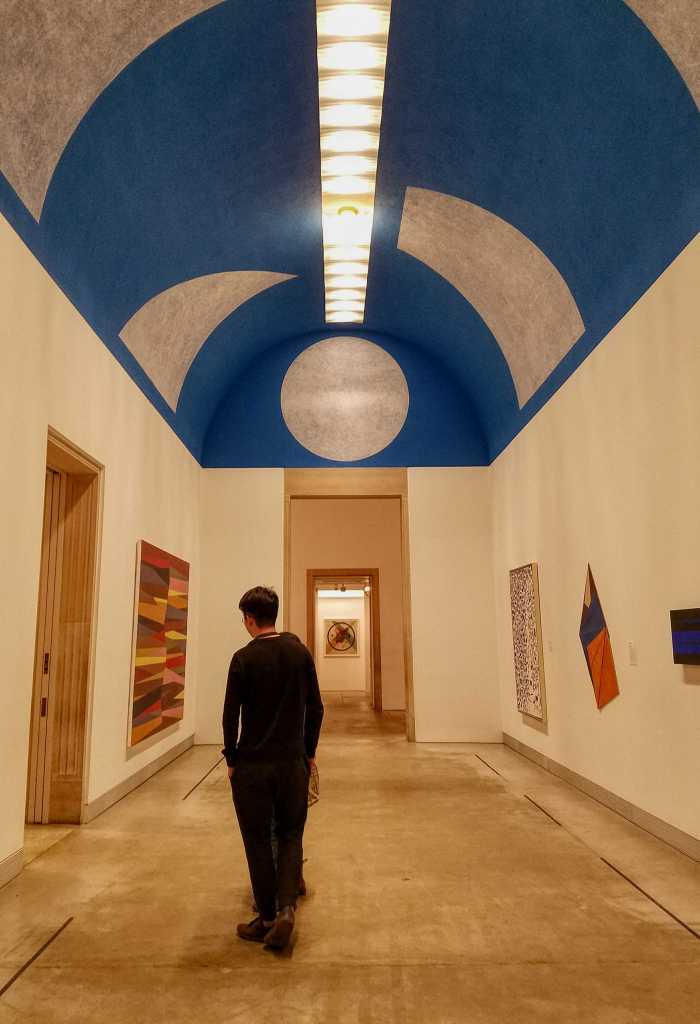
When the room becomes the canvas.
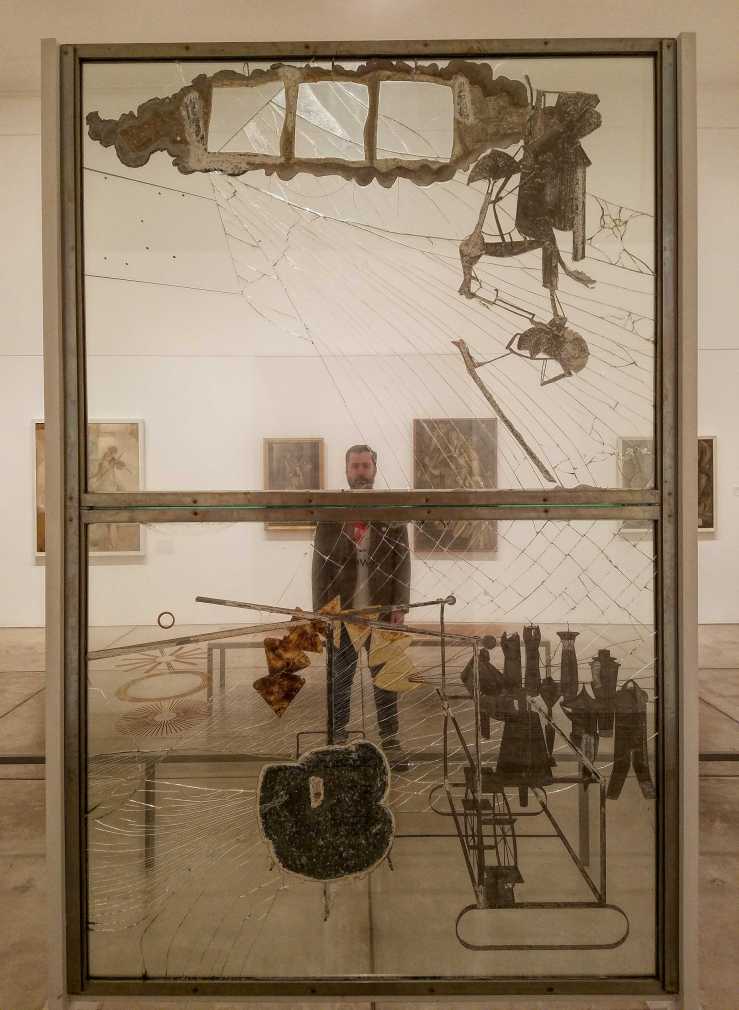
The Bride Stripped Bare by Her Bachelors, Even (The Large Glass) by Marcel Duchamp. A work of art to be looked both at and through, prompts the Museum of Art Handbook – and I made sure to follow the instructions. Duchamp started working on it in 1915 and stopped in 1923 stating that it was ”definitely unfinished”. A few years later, while in transit from an exhibition at the Brooklyn Museum in 1926-27, the two panels were shattered. Ten years would pass before Duchamp repaired the glass. Satisfied with the result and appearance of the eerily symmetrical cracks in the upper and lower sections, he declared the work finished!
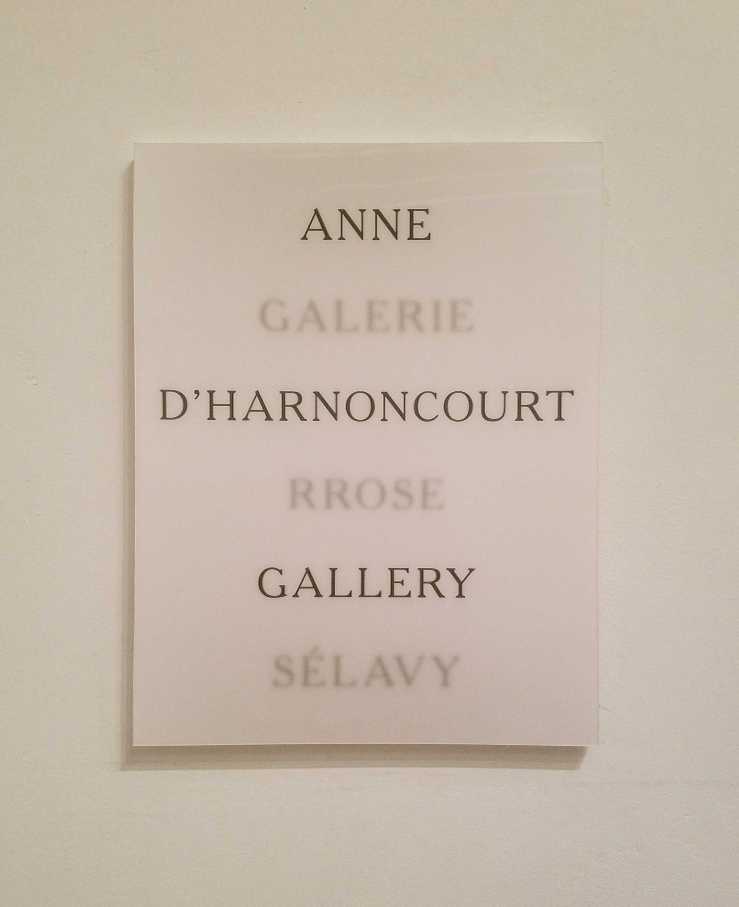
Marcel Duchamp’s alter ego.
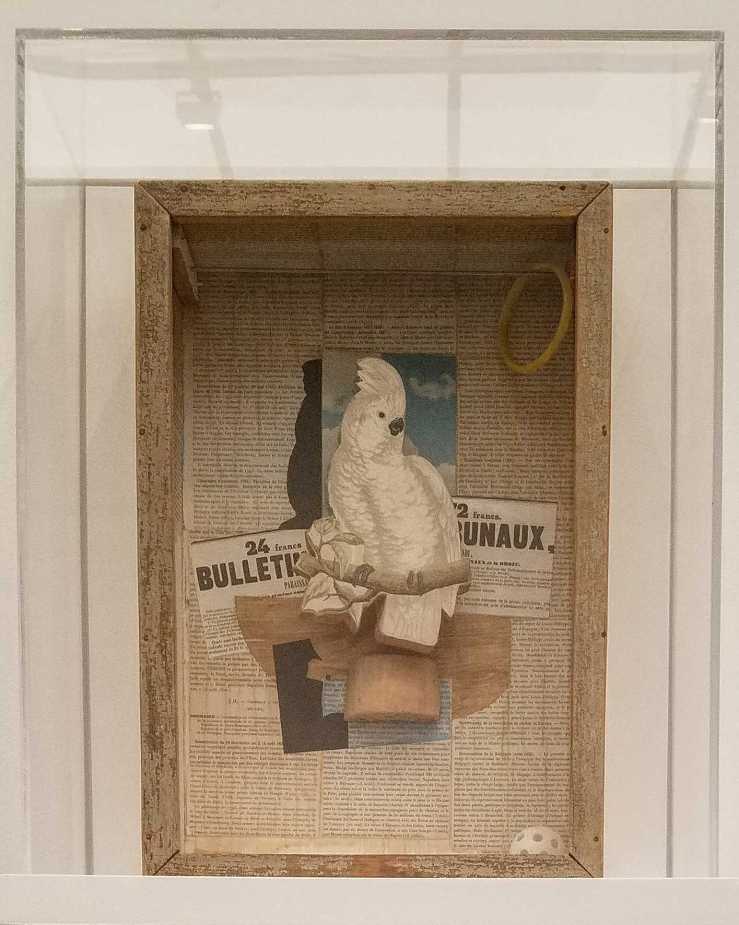
Homage to Juan Gris, 1953-54. A box construction by one of America’s most intriguing artists, Joseph Cornell.

***

I hope you enjoyed this very brief and – admittedly- subjective tour of the Philadelphia Museum of Art. Coming up next, two angry faces.

Philadelphia
February 22nd, 2017
Philadelphia – The Skywalkers

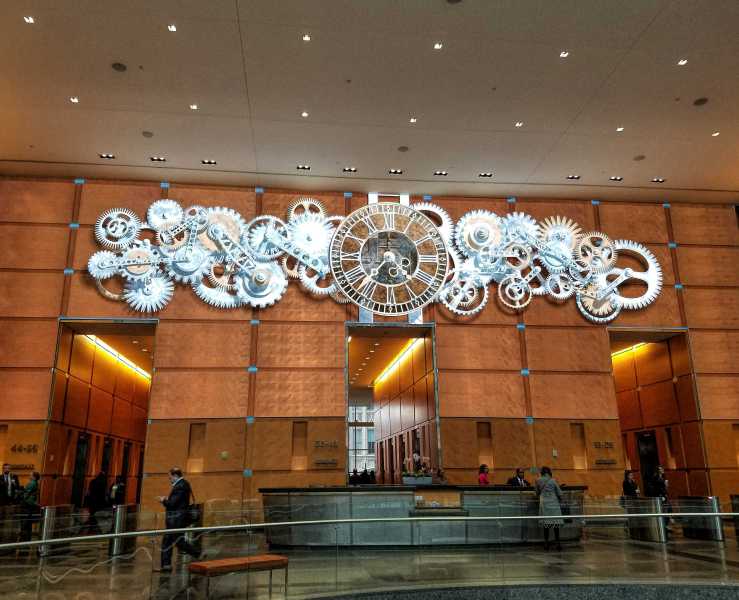
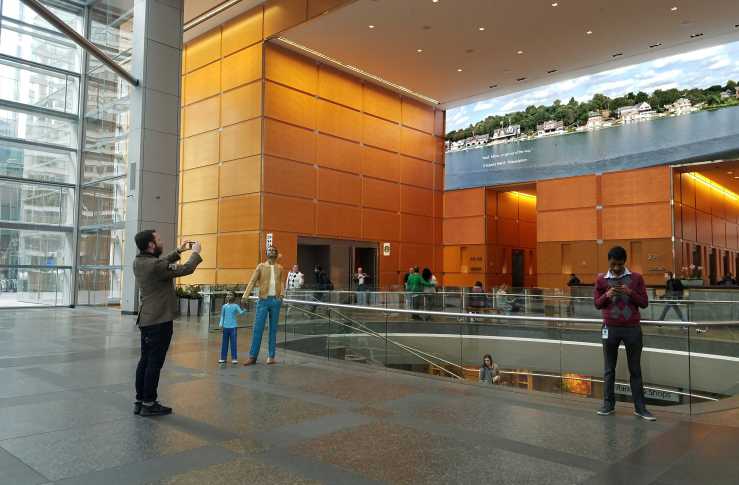
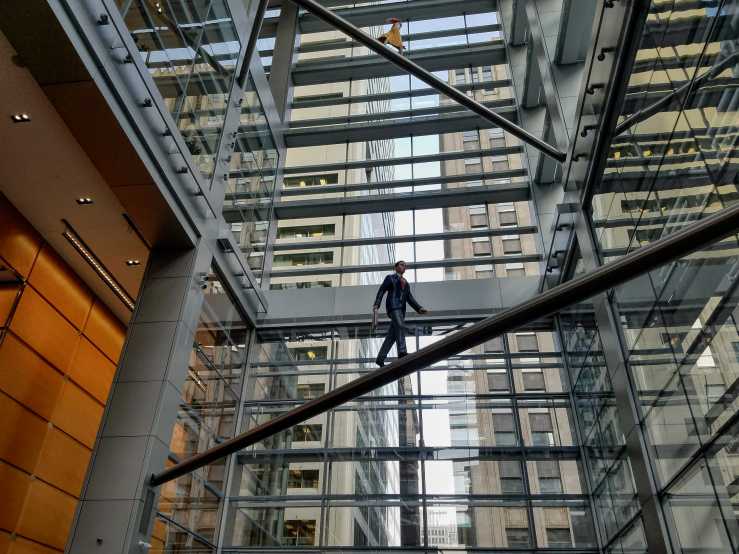
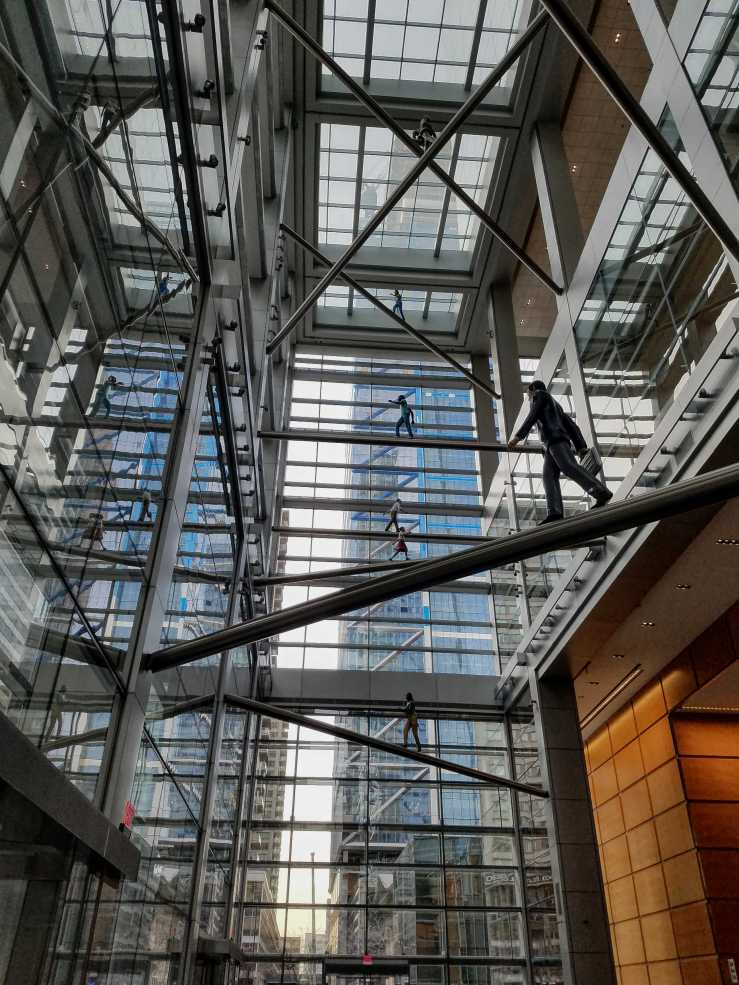
Inside the ”Winter Garden” aka main lobby of the Comcast Center. Two show-stopping public art installations.

The Comcast Experience, a 25.4ft tall, 83.3 feet, 2,000sf high-definition LED screen with incredibly clear, almost 3-D moving images, ranging from the clock wheels pictured here, to monumental natural landscapes to Betty Boop dancing.

And the permanent installation ”Humanity in Motion” by Jonathan Borofsky – 12 realistically painted life-size figures of stainless steel, walking on horizontal poles and two figures standing at ground level. Guess which ones?

Philadelphia,
February 22nd, 2017