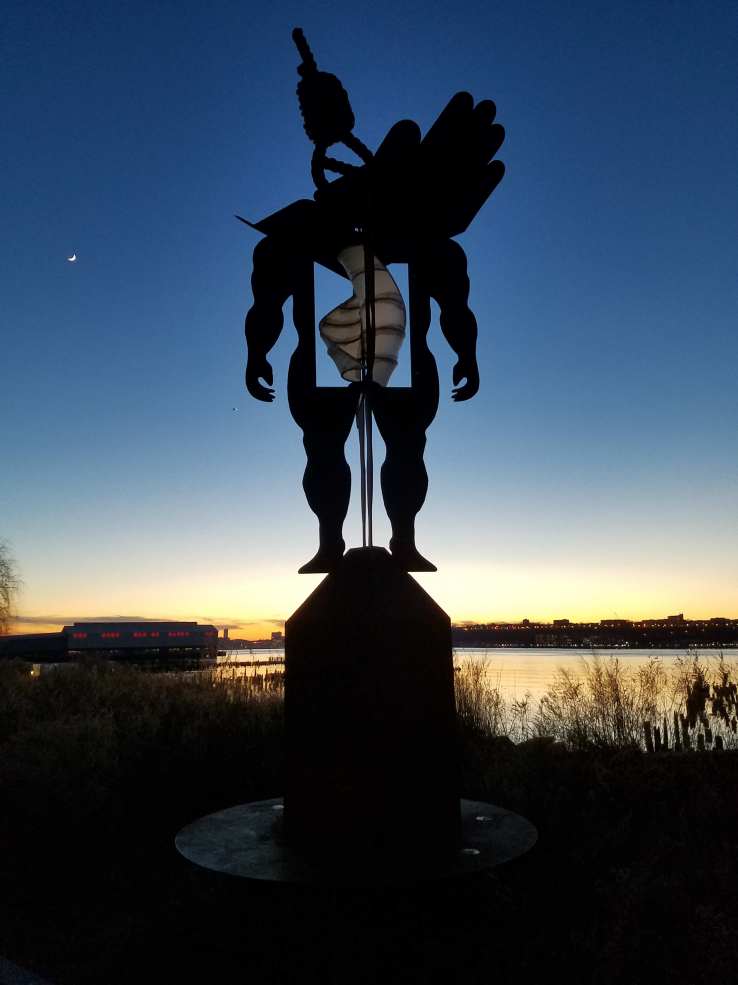
Censored at first by the NYC Department of Parks, the noose was considered ”problematic and a disturbance to the park’s visitors”. The artist was asked to come up with a replacement piece but before long, the Department reconsidered and agreed to display the artwork in its initial form. It was on display in Riverside Park until May 2017.
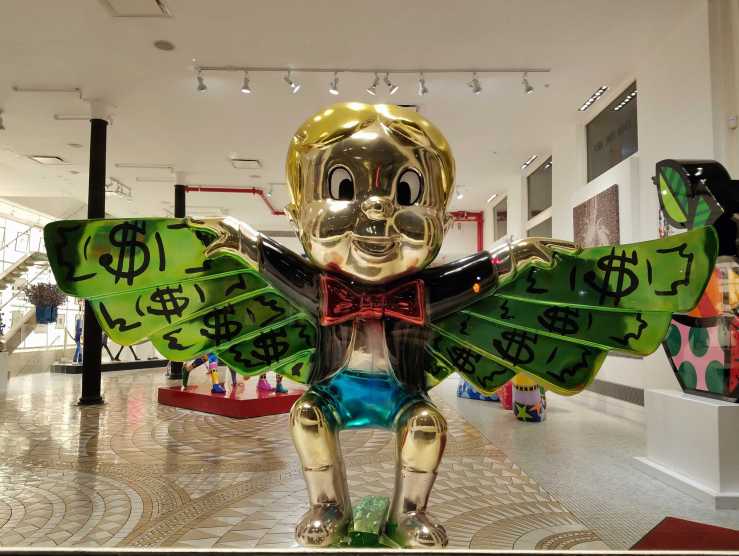
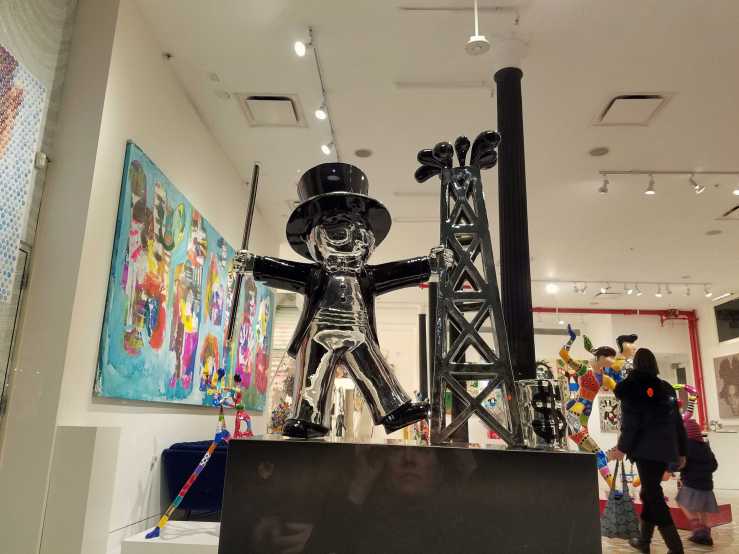
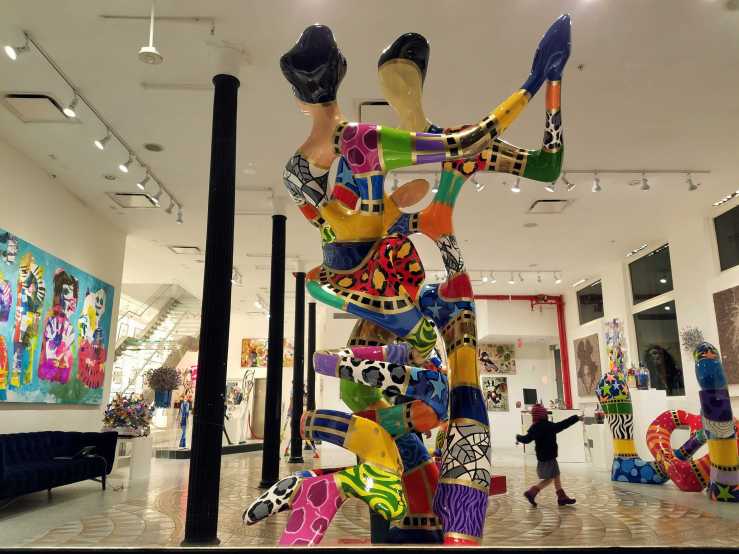
We were walking down Broome Street looking for Pi, a Greek bakery for a taste of nostalgia (it was approaching Christmas), when this shiny happy-creepy art display caught our attention. There were no accompanying tags, hence the working titles:
Arbitrary working title 1: Money grows wings and flies awayArbitrary working title 2: Not yet, no, not todayArbitrary working title 3: She danced the dance of stars and the dance of space. And then she danced the dance of flowers in the wind*
*From ”The Dancer”, a poem by Khalil Gibran
The cookies were good, if I may add. Provided Manhattan prices are not an issue or Astoria seems too far away just for a trip to the baker’s, Pi has your Greek phyllo-pie cravings well covered.
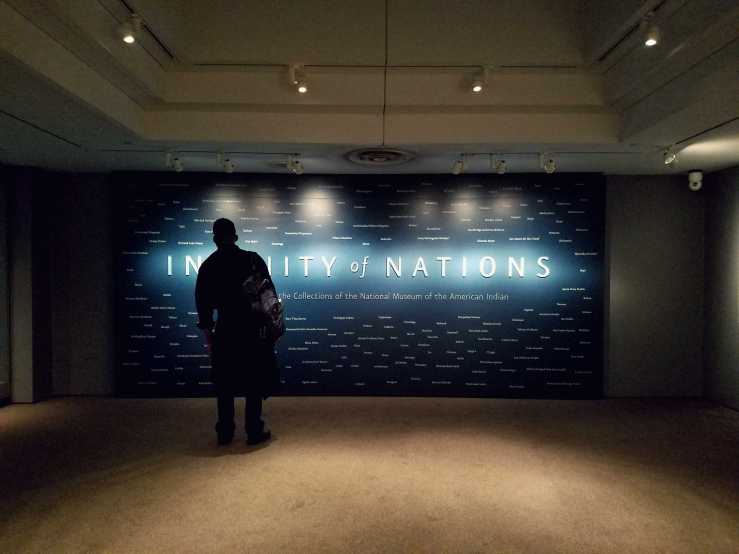
Going back to the roots and learning a bit more about Native Americans; peoples, traditions and art that were thriving here before America’s discovery by the Old World.
A sad necessity perhaps but such dedicated museums are the most effective means in rendering these cultures and their history more widely accessible to visitors.
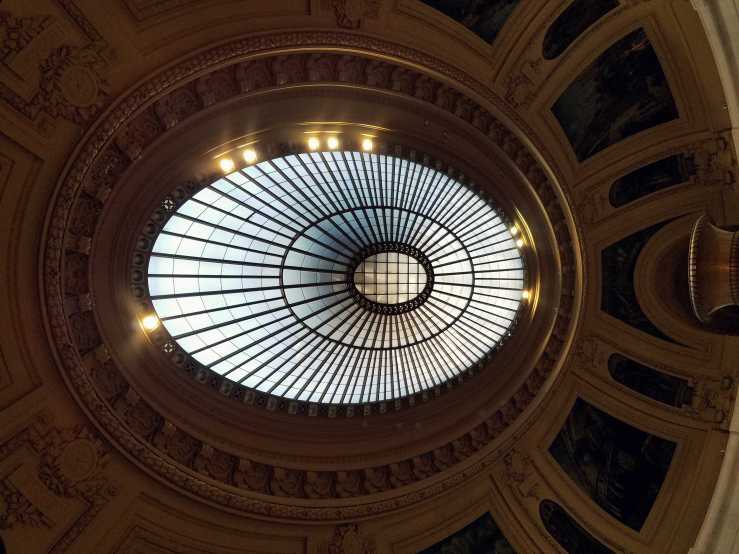
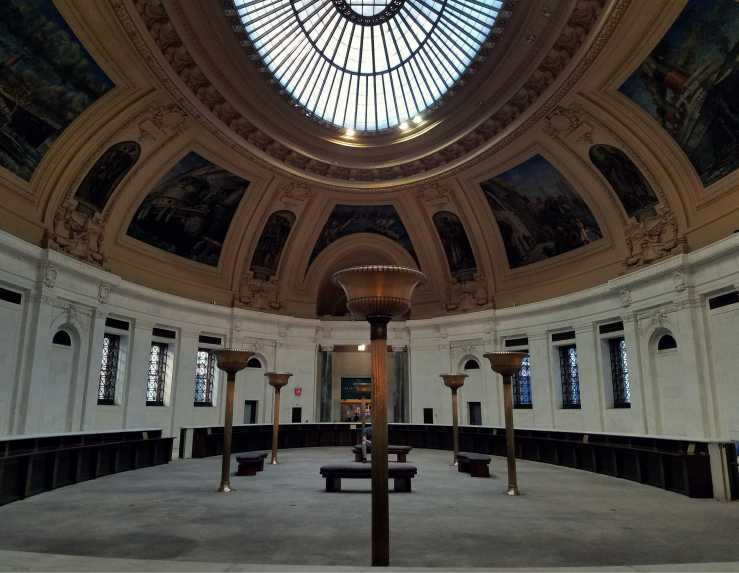
In New York, the museum is housed in the Alexander Hamilton U.S. Custom House, one of the most splendid Beaux Arts buildings in the City with a magnificent rotunda dome.
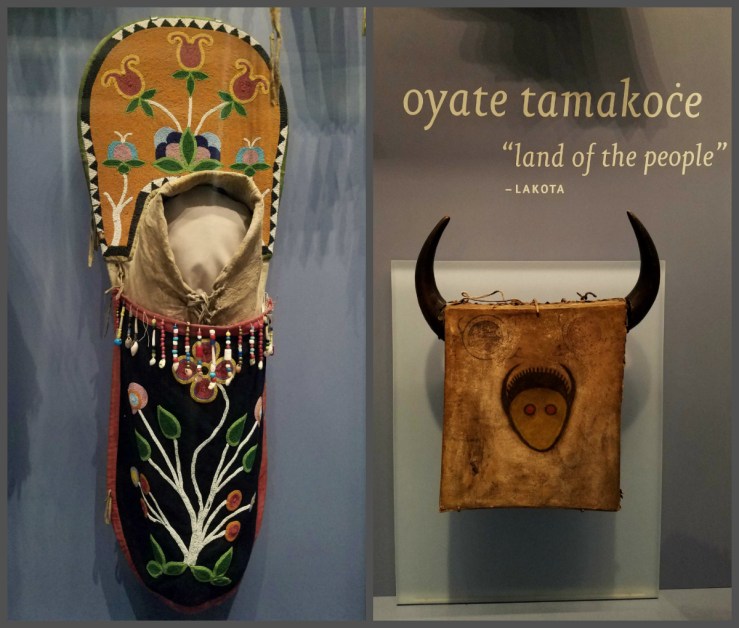
The rotunda skylightInuit Woman’s Inner Parka (amauti) also known as a tuilli. It was made from caribu skin for a mother to carry her infant. It incorporates almost 140.000 beads. It was made between 1890 and 1925 when whaling flourished on the west coast of Hudson Bay and the Inuit obtained glass beads from whalers through trade.
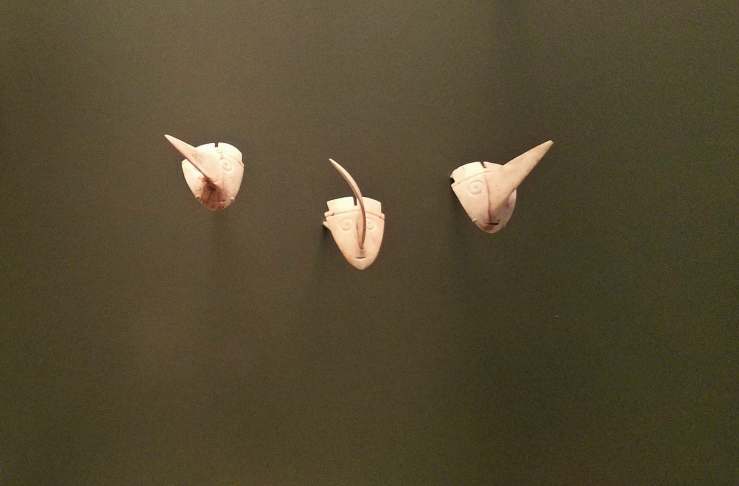
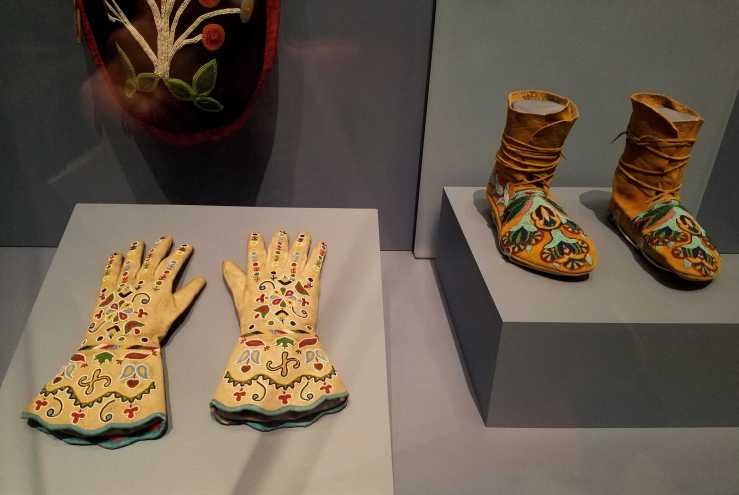
Mississippian effigy jar. 1350-1550 AD, ClayMississippian long-nosed god maskettes. 1100-1500 AD, marine shellSisitonwan Dakota (Sisseton Sioux) gauntlet gloves. South Dakota, ca. 1880. Deer hide, cotton cloth, glass beads, ribbon. Moccasins associated with Peo Peo T’olikt (Bird Alighting, Nimi’ipuu, 1857-1935). Idaho, ca. 1880. Deer hide, glass beads, cotton thread.
”Shortly after the outbreak of the 1877 war with the United States, Chief Looking Glass declared that he wanted peace and moved his camp to Clear Creek on the 1863 reservation. Peo Peo T’olikt, who was in his twenties, was instructed by the chief to parley with militiamen and soldiers who came to the camp on July 1. The Indian camp raised a white flag, but was attacked and destroyed.
Peo Peo T’olikt was wounded in the leg, but escaped and was involved in all the subsequent battles of 1877. He lost a wife and young son in the war, but his exploits were many. Capturing the cannon at Big Hole, stealing General Howard’s mules and horses at Camas Meadows, and protecting the camp at Bear Paw are just a few.”
Allen Pinkham, Sr. (Ni Mii Puu)
Tribal historian and former National Museum of the American Indian trustee
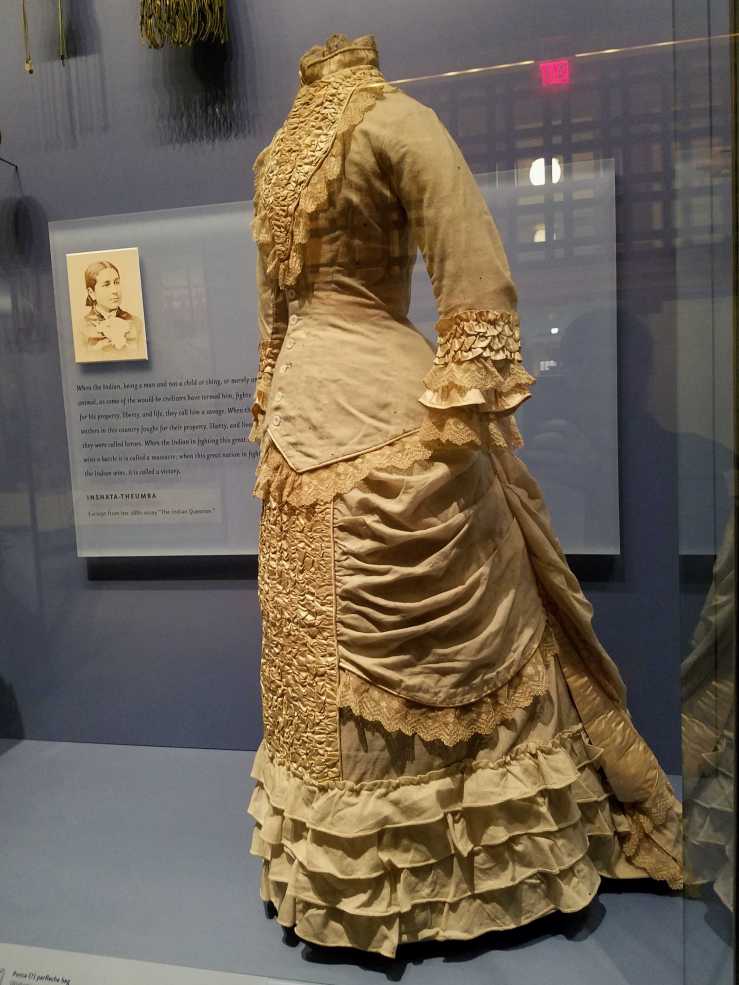
Chilkat Tlingit canoe prow effigy, Alaska ca. 1825-1875. Cedar wood, human hair, paint, abalone shell, opercula. The Haida decorated their boats with clan designs and insignia. A Tlingit might add a canoe prow figure carved in the form of a shaman who would guide the way and warn of the approach of enemies.Wedding dress worn by Inshata-Theumba (Susette La Flesche or Bright Eyes, Omaha, 1854-1903). Nebraska, ca. 1881. Wool
”Susette La Flesche descended from Omaha tribal leaders on both sides of her family. As a child she lived in an earth lodge, though she also attended a mission school. La Flesche witnessed the expulsion of the Ponca tribe from their homeland to Indian Territory in 1877, and the subsequent imprisonment of Standing Bear and other Poncas who had attempted to return to Nebraska. These events launched La Flesche’s career as a nationally known activist who argued against the involuntary removal of indigenous people from their homelands and for Indian citizenship rights.
La Flesche found a soulmate in Thomas Tibbles, a newspaper reporter for the Omaha Herald who followed the Ponca case. Schooled in Western and Omaha culture and bilingual, La Flesche chose an elegant cream-colored wool skirt and jacket when she married Tibbles in 1881.”
Brenda J. Child (Red Lake Ojibwe)
Historian, University of Minnesota
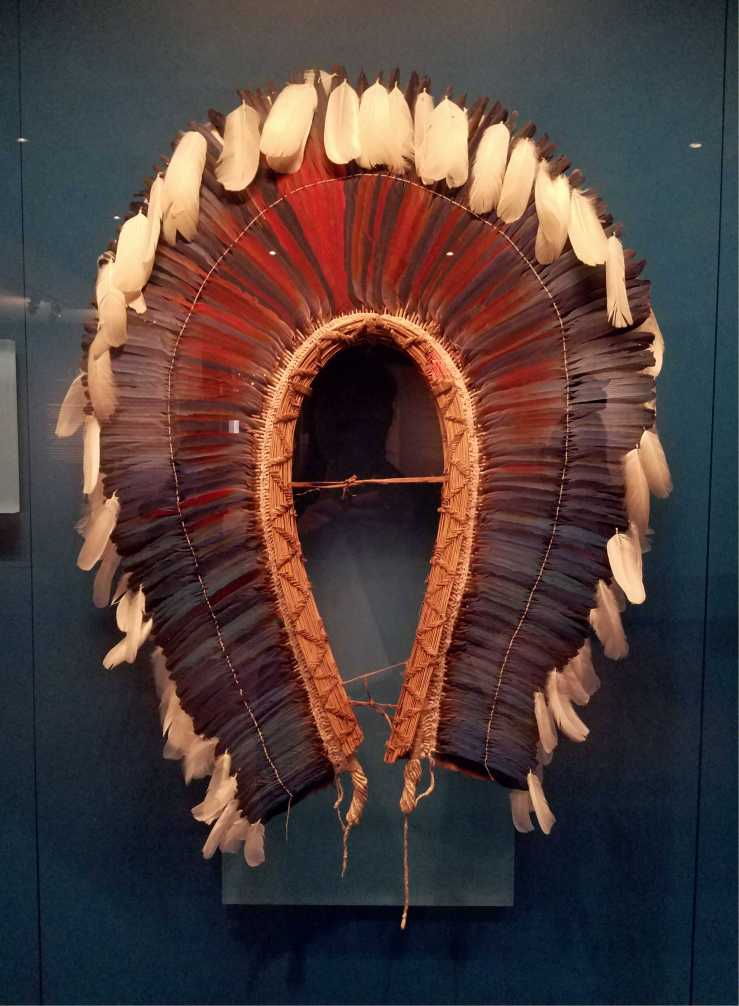
Mebêngôkre krokrokti (feather headdress or cape). Brazil, ca. 1990. Macaw feathers, heron feathers, cotton cordage.
Mebêngôkre men and women wear feather headdresses or capes during children’s naming ceremonies and boy’s initiation ceremonies.
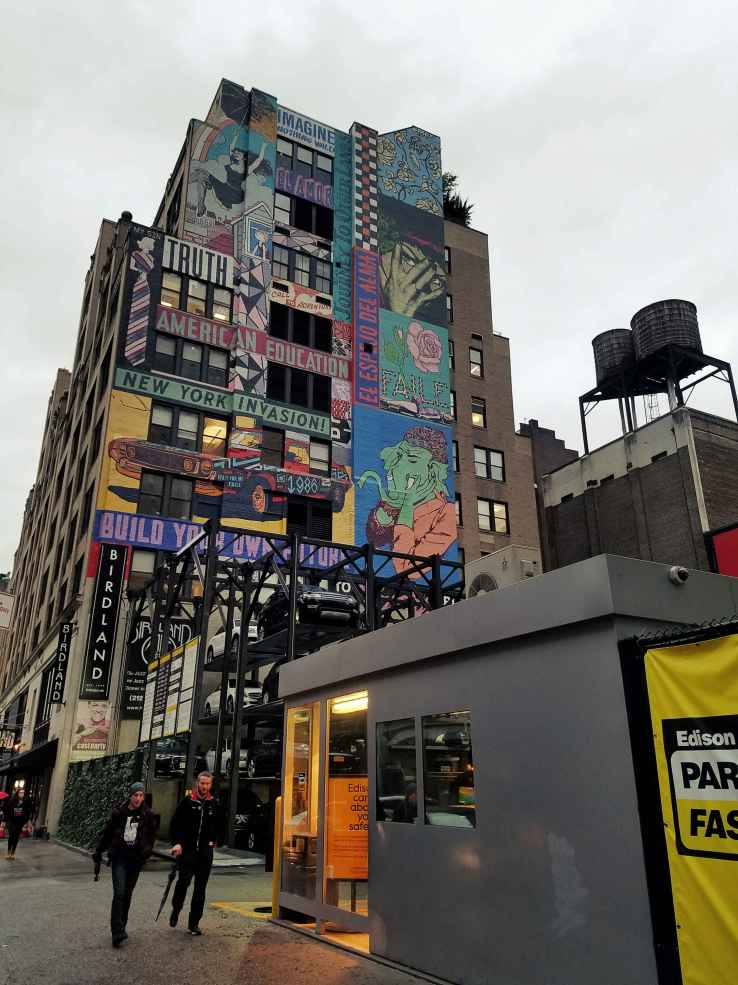
This giant mural is the work of FAILE, a Brooklyn-based artistic collaboration between Patrick McNeil and Patrick Miller. It covers an entire side wall of a building that happens to be The Record Plant, a legendary recording studio on 44th St. in Hell’s Kitchen, active from the late sixties until 1987, when it closed.
Imagine bumping into Aretha Franklin, Frank Zappa, Jimmy Hendrix, John Lennon, Cyndi Lauper, among others – they all recorded here; these are but a few of the names that emerged when I looked up the address.
Today, it is a high-tech business centre and I am desperate for a time-machine.
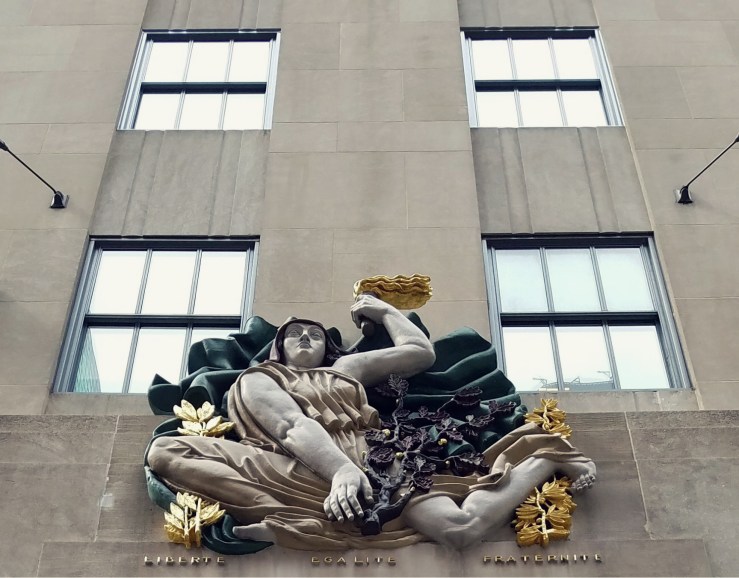
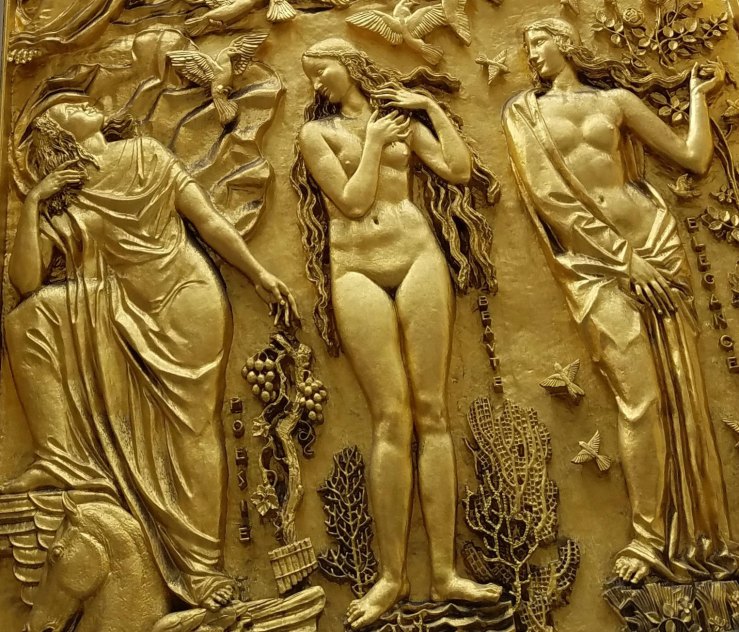
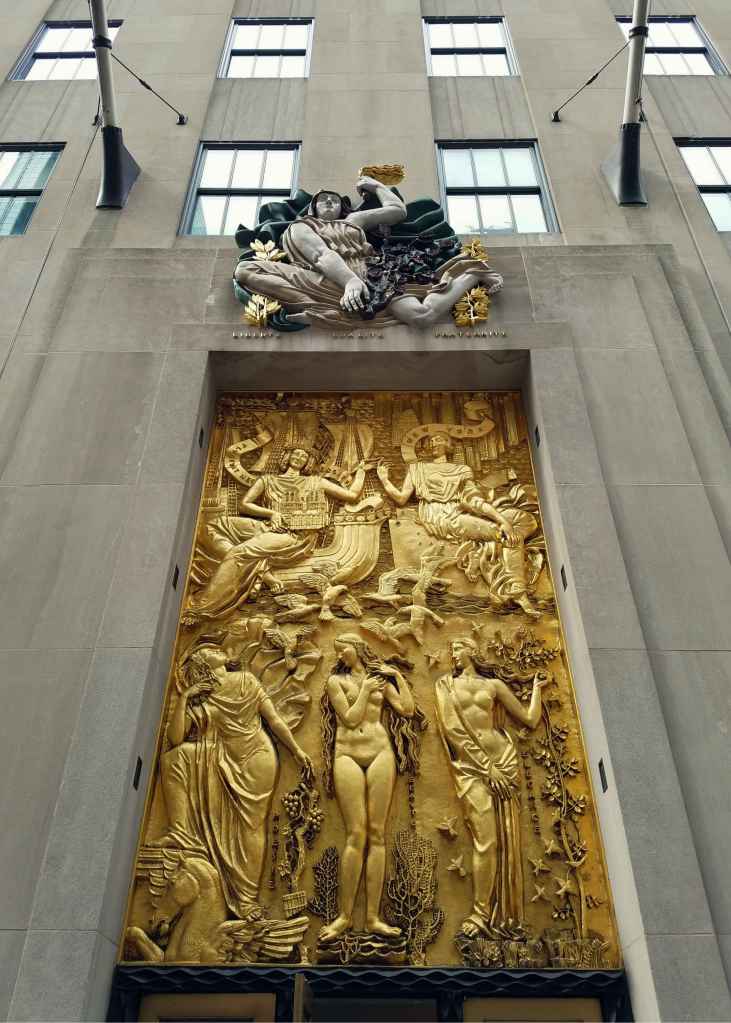
This magnificent gilded bronze relief graces the entrance of La Maison Française, part of the Rockefeller Center. A token of friendship between France and the United States, it depicts the two Cities – Paris and New York – reaching towards each other, showered with the gifts brought by the Three Graces, underneath.
According to Greek Mythology, the Three Graces were daughters of Zeus and the Oceanid (daughter of the Ocean) Eurynome. They were:
For the purposes of said friendship they became Poésie, Beauté & Elégance, an unwittingly apt transformation judging by their strategic location, watching over Saks Fifth Avenue right across the street.
Sculpture by Alfred Janniot, ca. 1934 (more reading here & here)
Westbeth Artists Housing is a nonprofit housing and commercial complex dedicated to providing affordable living and working space for artists and arts organizations in New York City.
Sleepwalker, 2014
Tony Matelli
Bronze, acrylic, paint
The Sleepwalker will be meandering about in a deep sleep until March 2017 on the High Line. In his dream, people walk past giving him strange looks. Some long to touch him. Others are afraid.
I want to dream like the Sleepwalker. Perhaps I do. Perhaps my whole life is but a long sleepwalk. I’ll know when I wake up. Perhaps I never will.
Free listening and free download (mp3) chill and down tempo music (album compilation ep single) for free (usually name your price). Full merged styles: trip-hop electro chill-hop instrumental hip-hop ambient lo-fi boombap beatmaking turntablism indie psy dub step d'n'b reggae wave sainte-pop rock alternative cinematic organic classical world jazz soul groove funk balkan .... Discover lots of underground and emerging artists from around the world.






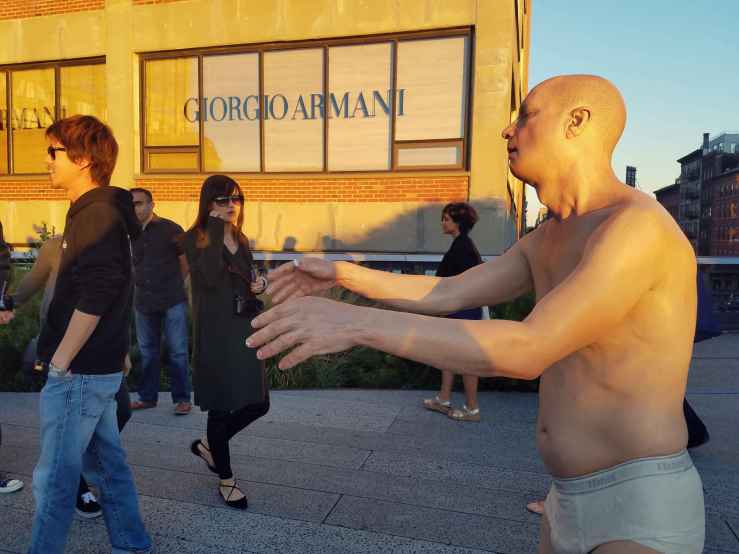
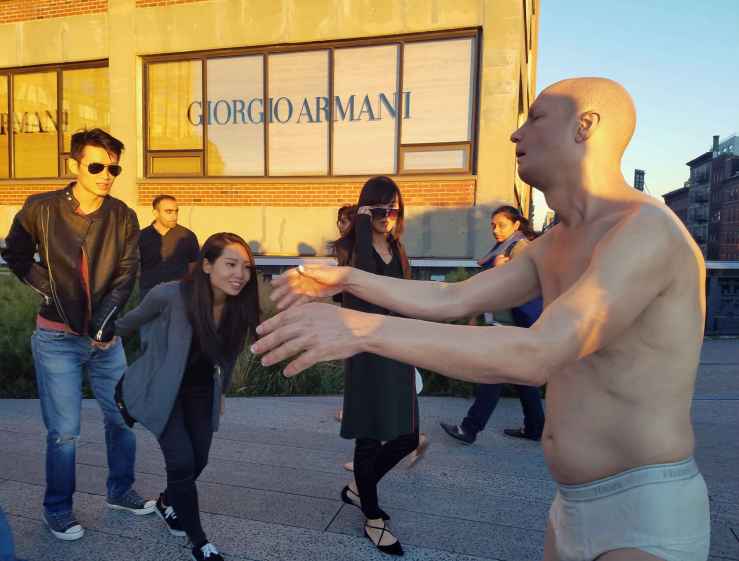
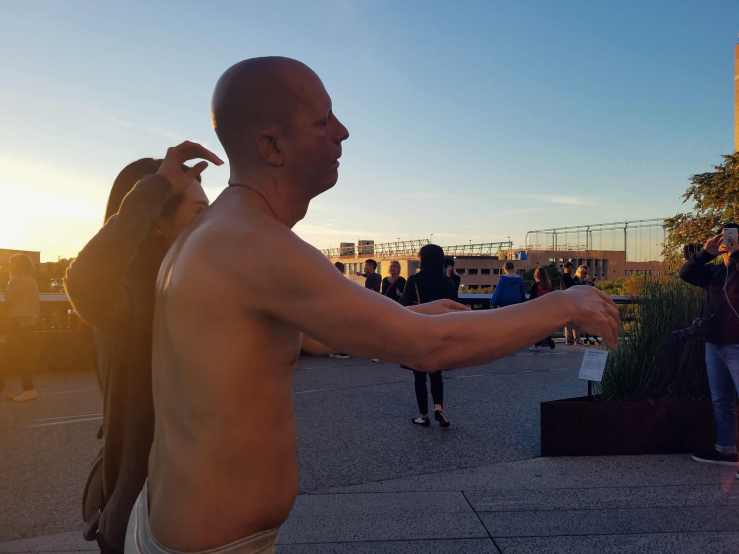 Sleepwalker, 2014

 The Humble Fabulist