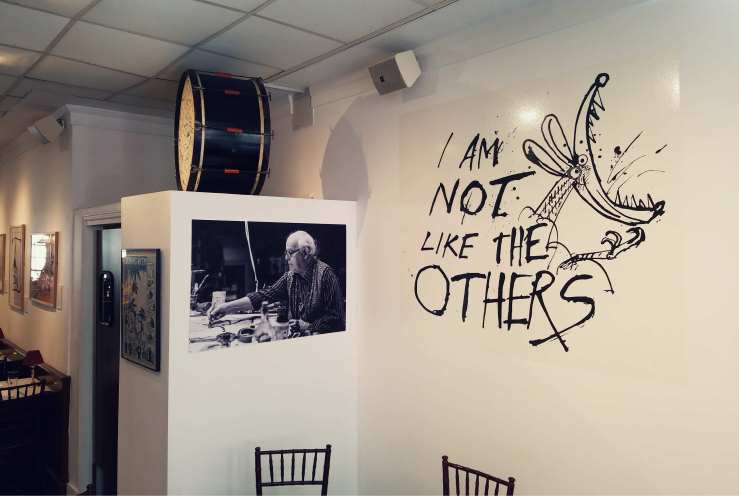
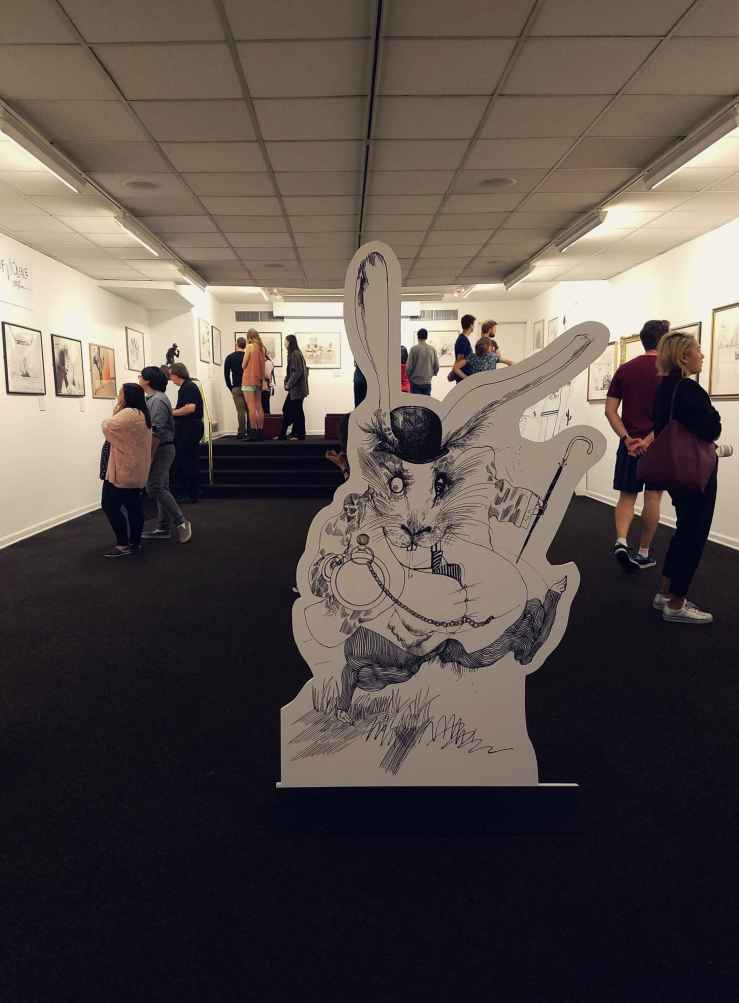
From A Retrospective: Ralph Steadman exhibition, held at The Society of Illustrators between September-October 2016
September 24th, 2016
From A Retrospective: Ralph Steadman exhibition, held at The Society of Illustrators between September-October 2016
September 24th, 2016
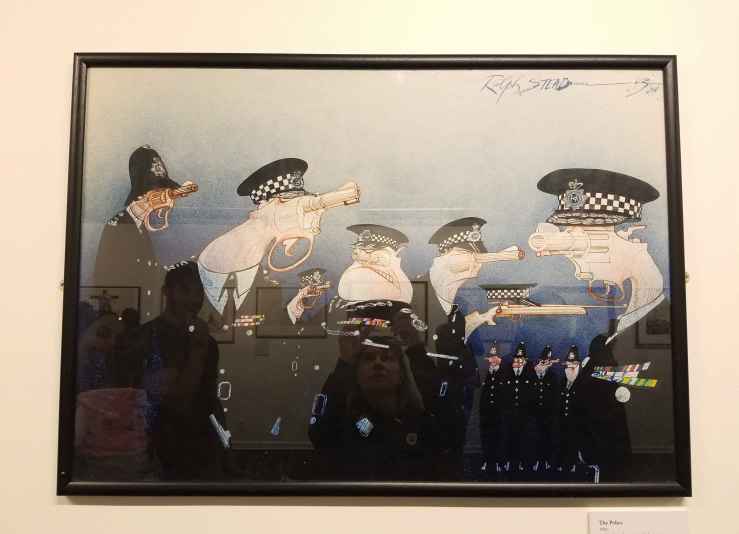
On 14 January 1983, 26-year old film editor Stephen Waldorf was mistakenly shot five times in the head and body by the Metropolitan Police in Earls Court, West London. The police thought he was an escaped prisoner, David Martin. In 1983 two officers were put on trial for attempted murder; they were both acquitted.
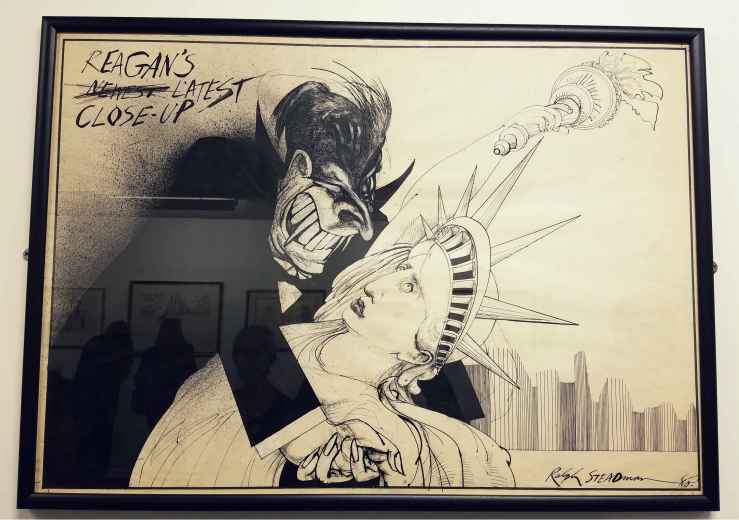
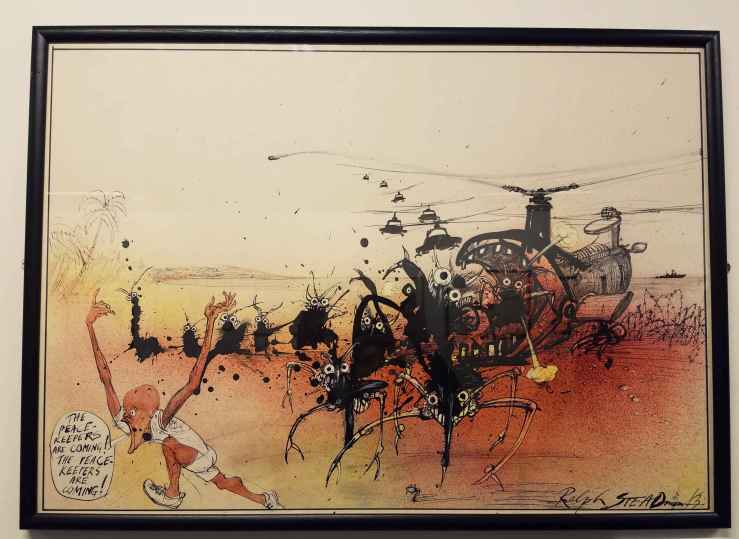
In October 1983 thousands of US troops and helicopter gunships invaded the tiny Caribbean island of Grenada after a left-wing coup. Reagan’s incursion into Grenada, a Commonwealth country, was the only occasion on which Margaret Thatcher and the US president had a serious fallout.
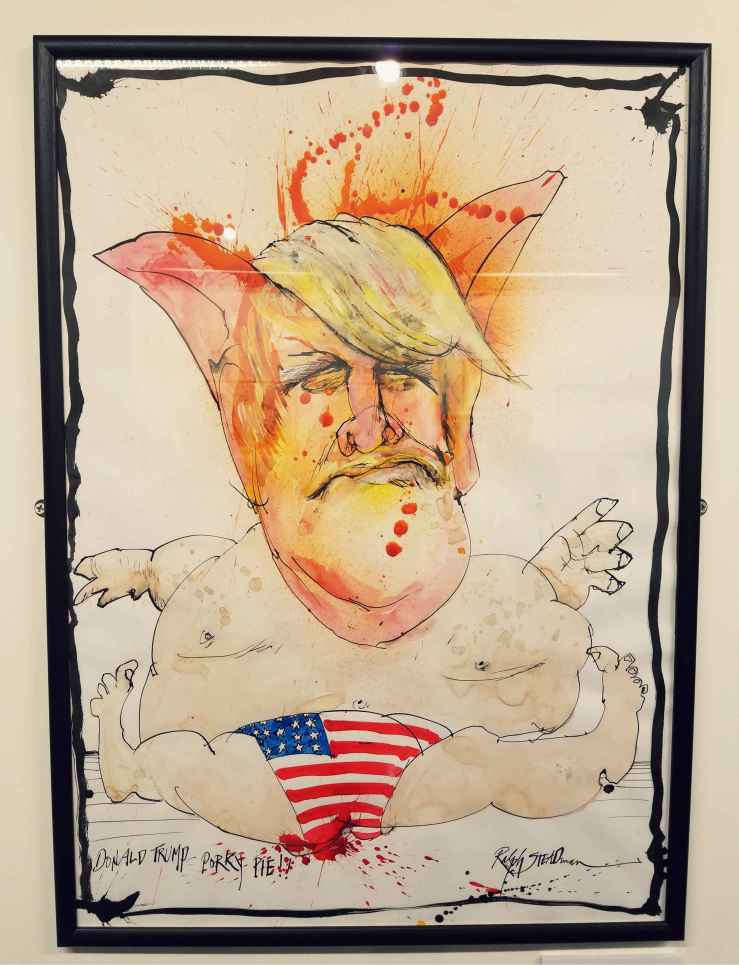
This porcine portrait of the real estate billionaire, reality TV game-show host and presidential hopeful [and, by now, President] Donald J. Trump accompanied an article by Laurie Penny, ”There is nothing funny about a Donald Trump rally”. ”By lying through his teeth”, she writes, ”he has managed to persuade thousands of people that he is the one truth-teller in American politics… Trump is selling fascism with a cartoon face”.
In November 2015, the mayor of Jersey City accused Trump of ”shameful politicizing” after the Republican made unsubstantiated claims that in 2001 the watched on TV ”thousands and thousands” of Arab Americans in New Jersey cheering the attacks on the World Trade Center.
”Porkie pie”, or ”porky”, is Cockney rhyming slang for ”lie”.
From A Retrospective: Ralph Steadman exhibition, held at The Society of Illustrators between September-October 2016.
September 24th, 2016


 Hogarth ’65: Marriage à la Mode: Breakfast Scene
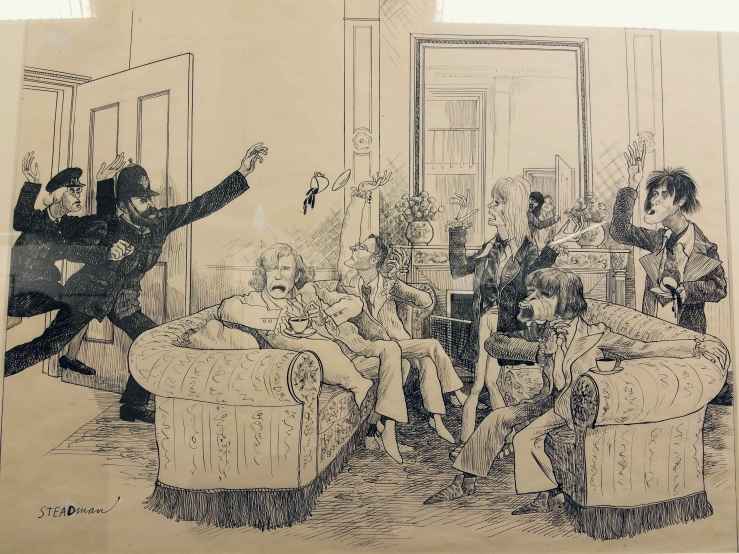 Weekend at West Wittering
On 12 February 1967 police raided a house-party at Redlands, Keith Richard’s manor hourse at West Wittering, near Chichester, on a tip-off from the News of the World. The police took away some Ambre Solaire suntan lotion, a quantity of Earl Grey tea, joss sticks and a minute amount of cannabis resin. […] Also present at Steadman’s soirée is Jagger’s girlfriend, Marianne Faithfull (the girl in the fur rug). George Harrison and Pattie Boyd can be spied in the mirror: the West Sussex constabulary discreetly waited for the Beatle to leave before they pounced.
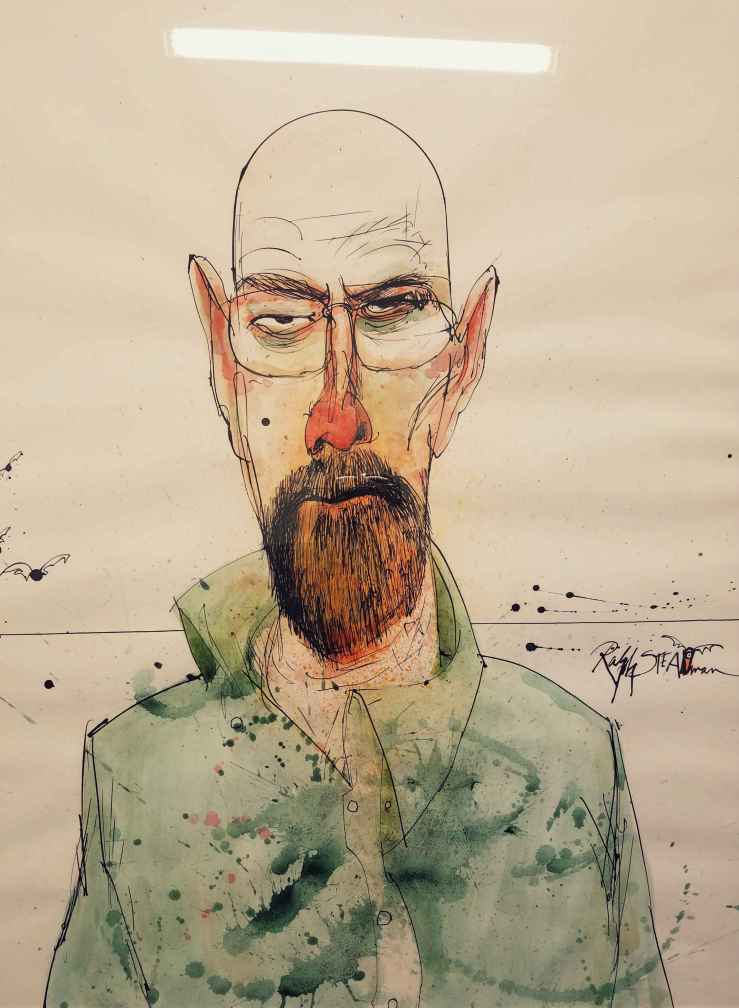 Breaking Bad: Walter White
The multi-award-winning, darkly comic TV drama ran on AMC for six seasons from 2008 to 2013. In 2014, Steadman was asked to create images of six main characters for the covers of limited-edition Blu-ray Steelbooks. […] Steadman says of Walt and the other characters, ”I printed out photographs of them and then watched all the series and some of it stayed in my head. Walt has a certain look to him. I realized that you can draw the top of his head with a compass. It’s perfect… Walt says he’s only doing it for his family, but one thing leads to another and he gets deeper and deeper and there’s no going back”.
 It’s a Free Country (detail)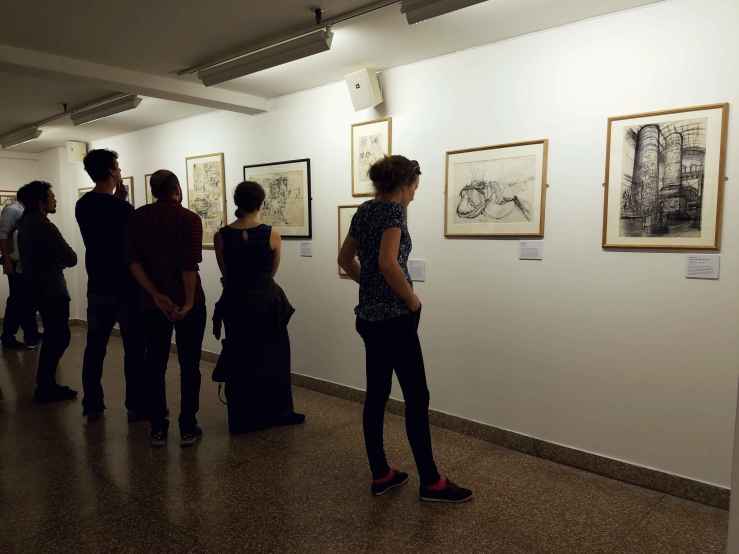
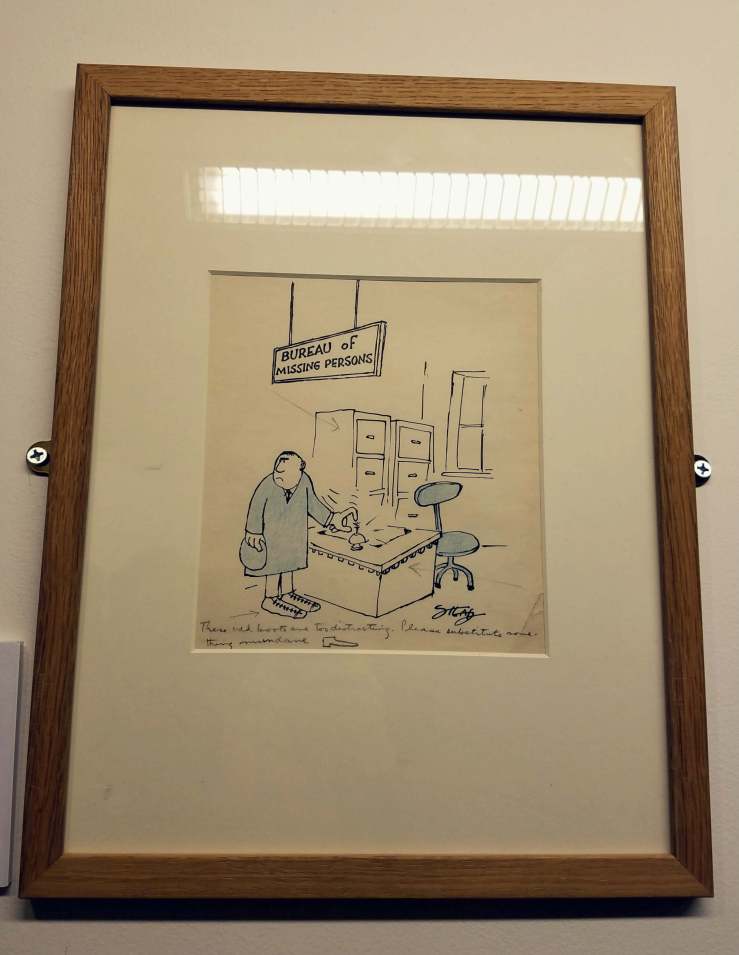 Bureau of Missing Persons
From A Retrospective: Ralph Steadman exhibition, held at The Society of Illustrators, September-October 2016
September 24th, 2016
September was a month of transition: just moved in from Brussels, apartment hunting, new office, new life. It was also the busiest month at work, I was quick to find out. Looking for a cool distraction amid the frenzy, I somehow happened upon an ad promoting Museum Day Live! hosted by Smithsonian magazine, which offered free entry to a number of participating museums.
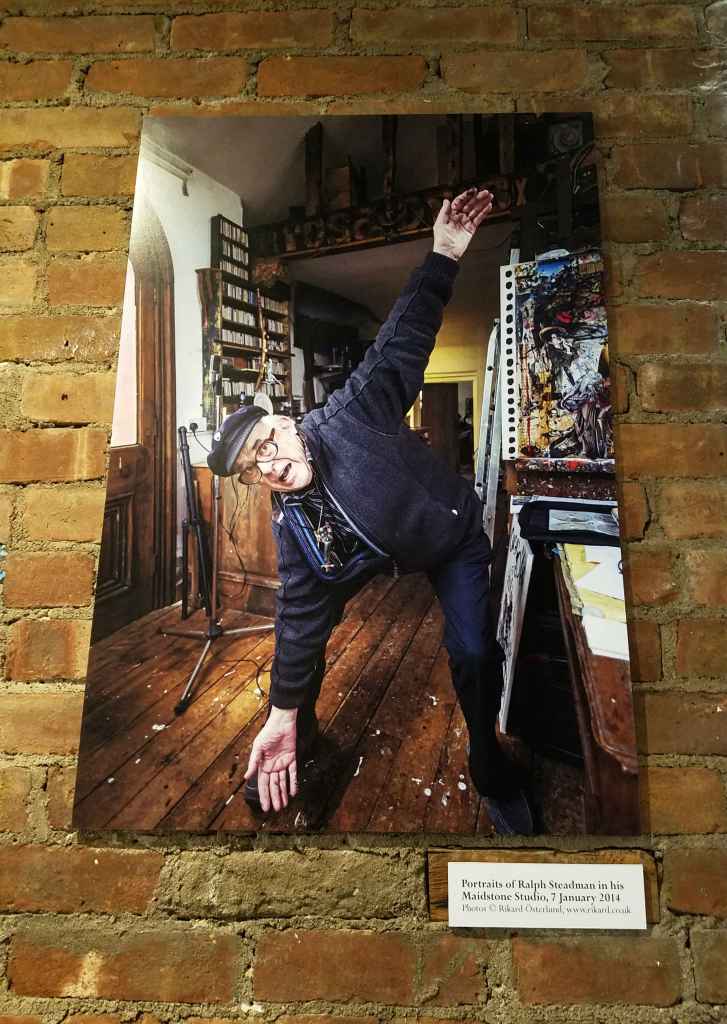
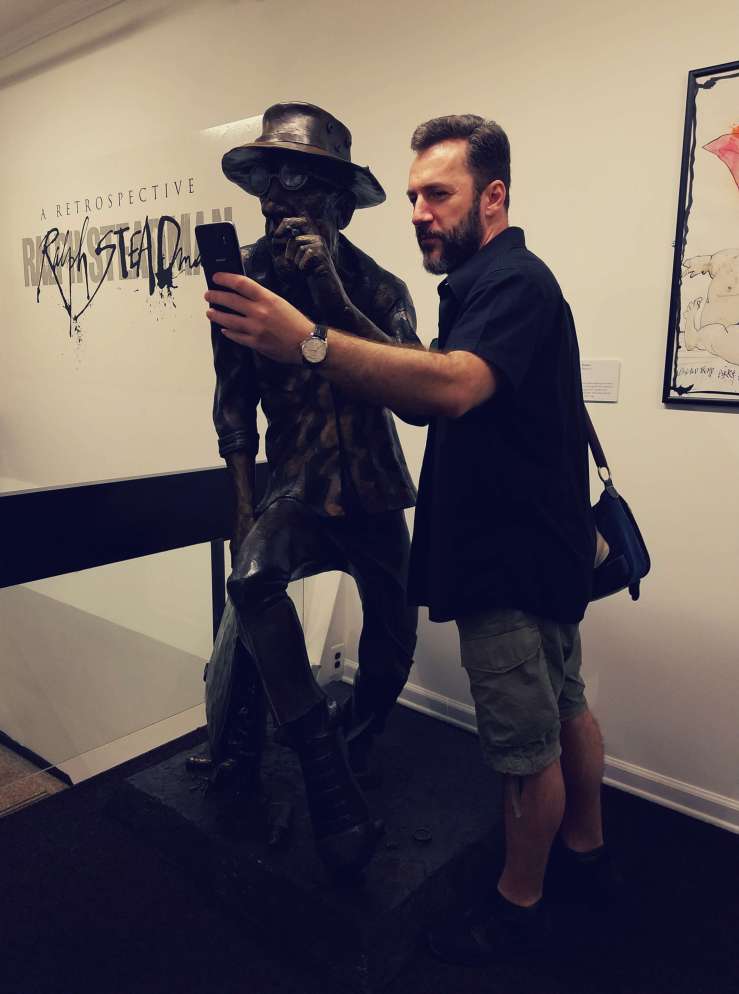
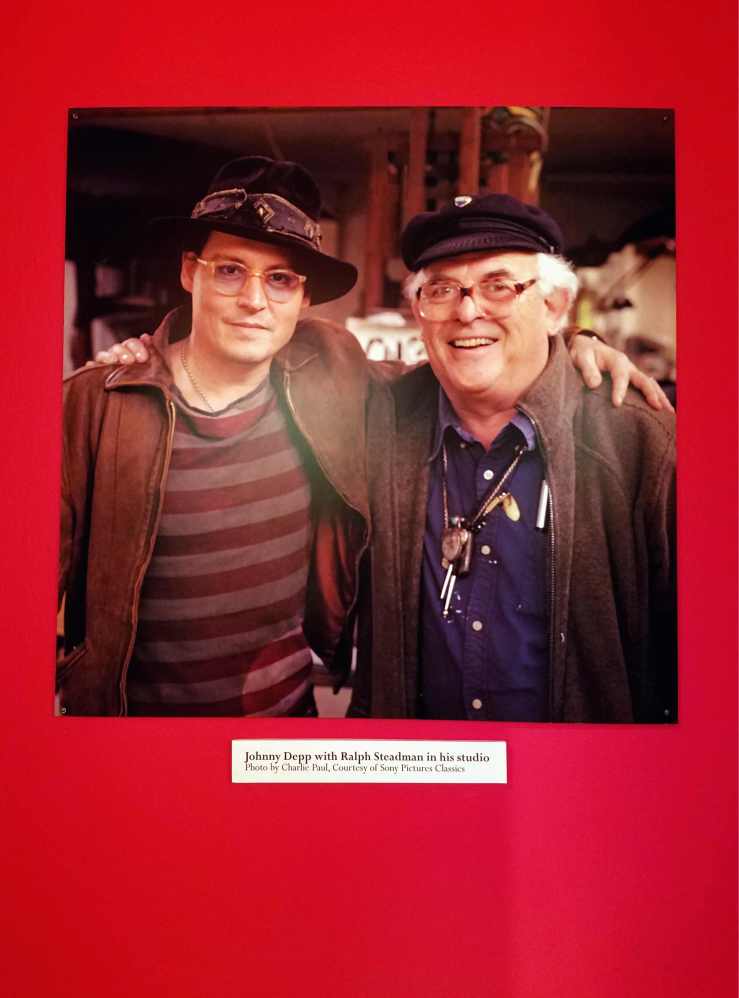
One of these was the Society of Illustrators which, at the time, was hosting a major retrospective to celebrate the work of the rather wonderful Mr. Ralph Steadman.
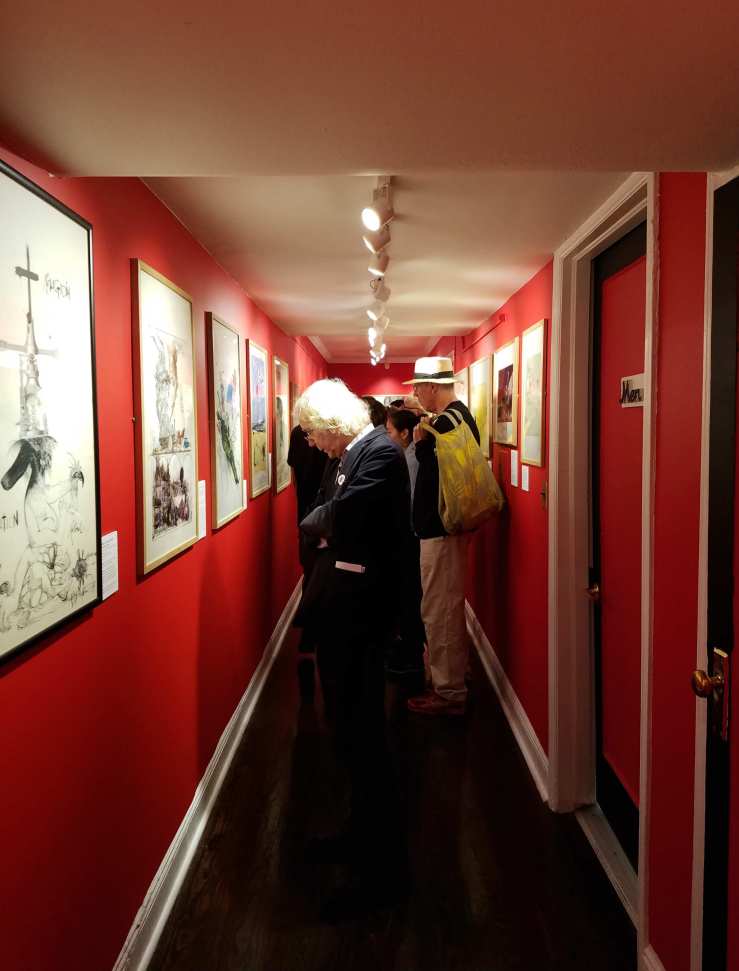
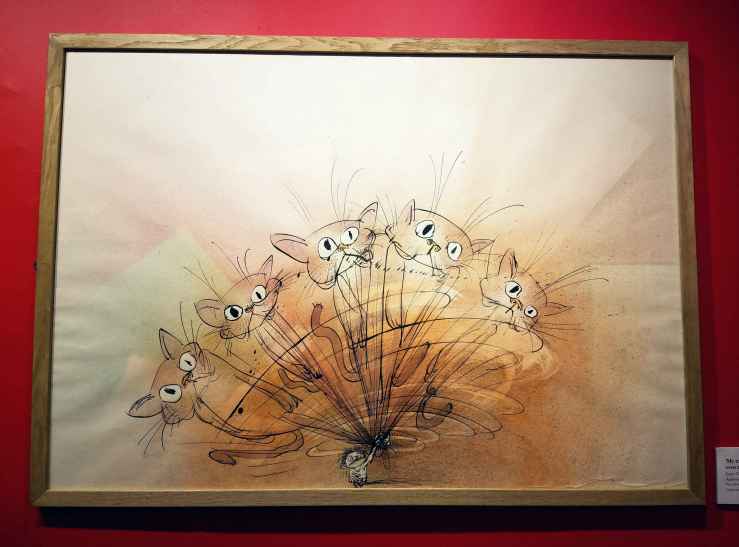
Mr. Steadman’s drawings had taken over almost the entire museum, its galleries, corridors and even part of the charming café on the top floor.
I could not have asked for a better free gift – nor a cooler distraction for that matter!



Hunter S. Thompson, 1937-2005. Rolling Stone, 24 March 2015.
Collage, Conté chalk and ink on board. Illustration by Ralph Steadman.
[It was February 2005 and to Hunter’s great dismay, George W. Bush had just been inaugurated for a second term. Now in his late sixties, Thompson was suffering from many ailments. There were the after-effects of hip replacements and other surgery. He had to have daily physiotherapy and was in significant pain. On 20 February 2005 he took his Magnum .44 and shot himself in the head. A month later Rolling Stone marked the passing of the one of their greatest contributors with s special memorial issue.]




The Society of Illustrators
128 East 63rd Street
September 24th, 2016
Looking at those little wonders of skill and craftsmanship that are the works of Henri-Charles Guérard, on show at the New York Public Library, is a pure pleasure and an excellent introduction to the artist. But the fact that felines (and other animals) were featured prominently in his work, warmed me up to the person too.
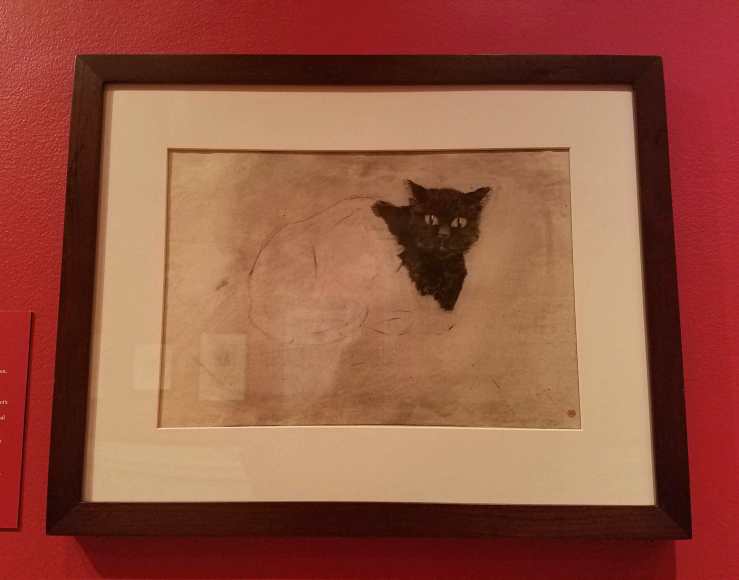
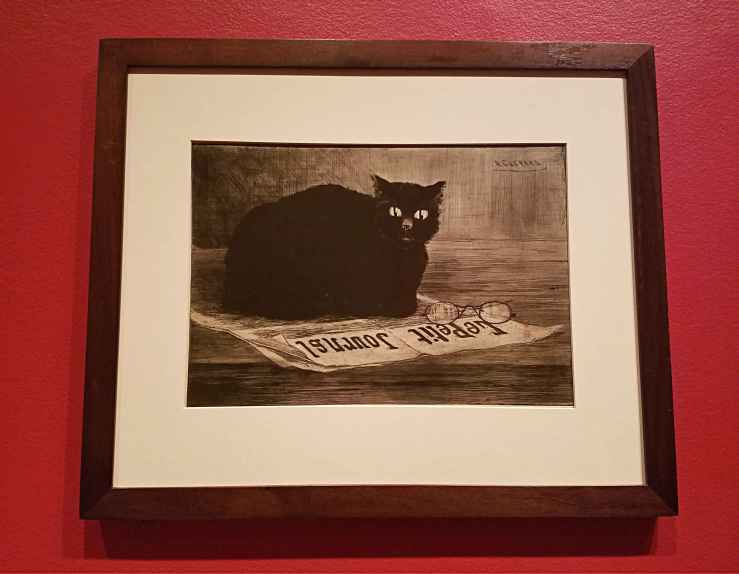
Here are the three stages of a Cat on a Newspaper:

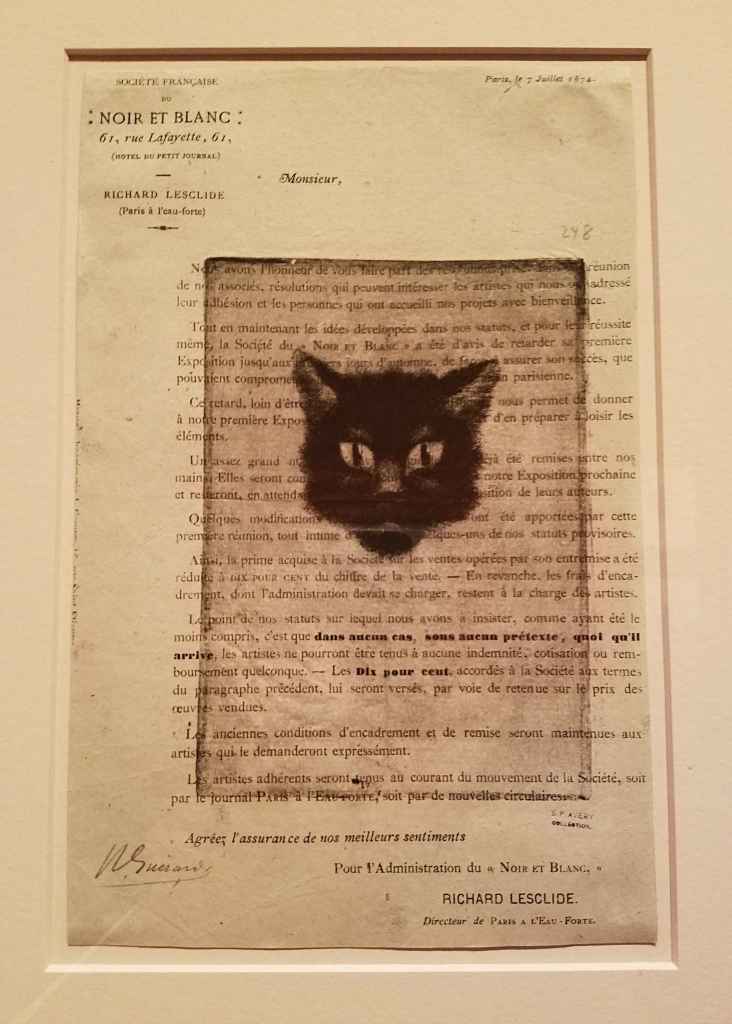
A Cat’s head sealing an announcement by the Black-and-White Society:
And a mouse:
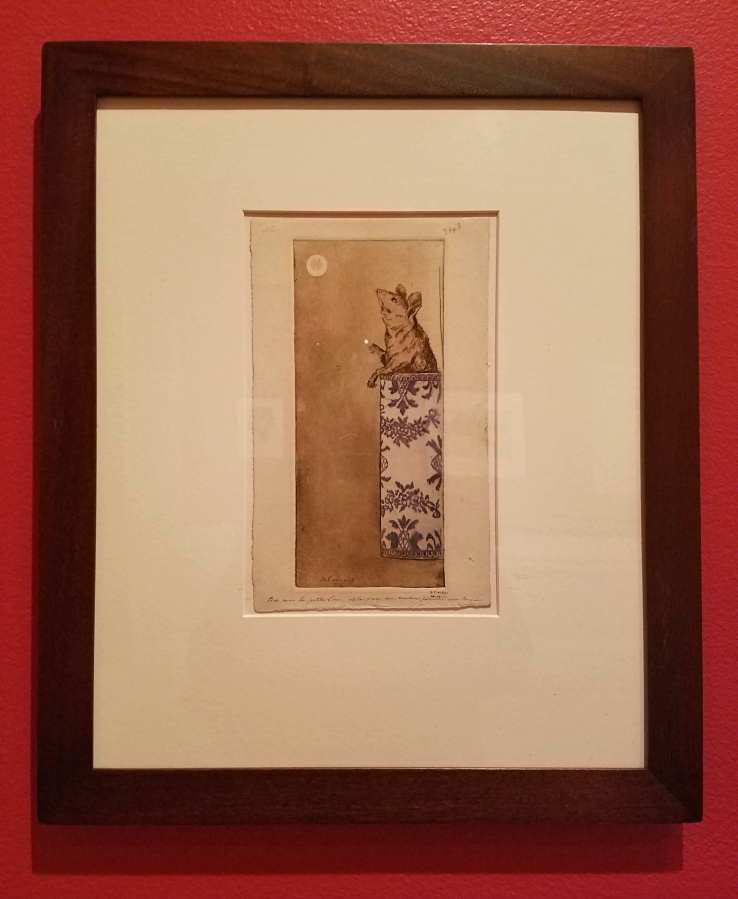
Accompanying caption: [Although Westerners generally have an aversion to rats, the creatures play an important role in Japanese culture, for the rat, or nazumi, is thought to be the messenger of the god Daikoku. It is said, moreover, that if rats eat the New Year cakes, there will be a good harvest. Guérard’s endearing treatment of this rodent climbing out of a vase decorated with Japanese motifs seems more closely aligned with Japanese than Western sentiments.]
A small consolation to weary New Yorkers, little impressed at the thought of having to share their homes, parks and subway with millions of them creatures…
A Curious Hand: The Prints of Henri-Charles Guérard (1846-1897)
New York, NY, 10018
November 27th, 2016
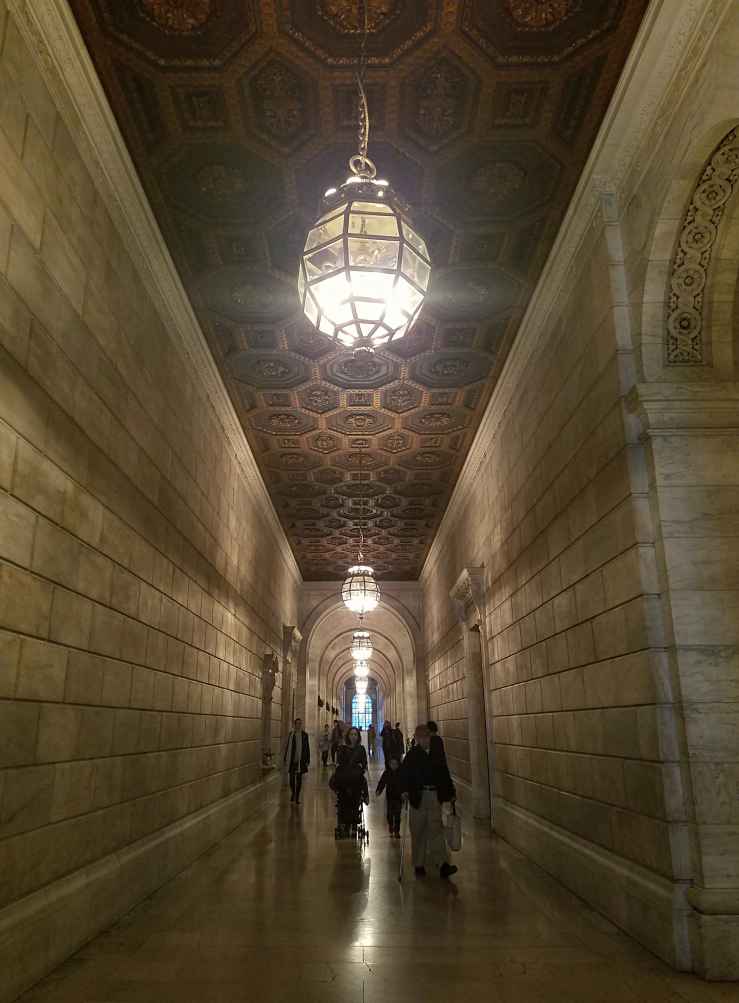
These and a lot more from ”the engraver of curiosity par excellence” can be viewed at the Stephen A. Schwarzman Building until February 26th, 2017.
Don’t go in a rush, the exhibition is more extensive than one might expect; although this was supposed to be an added bonus to my visit, it quickly became apparent that it merits a lot more attention than a mere skimming through.
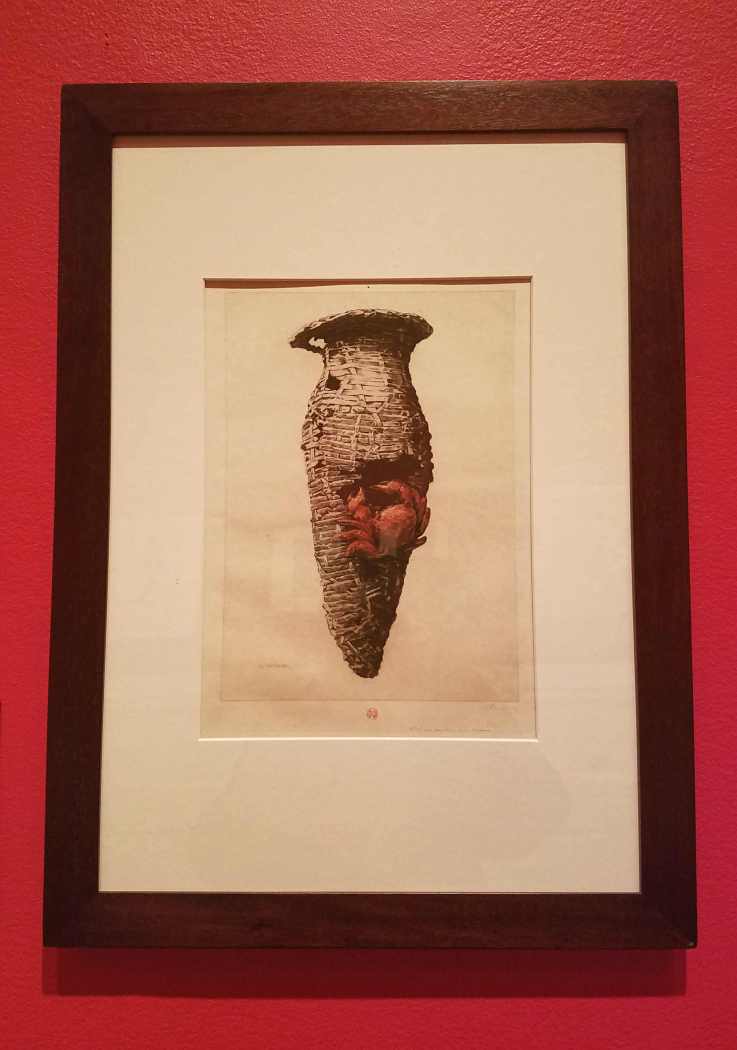


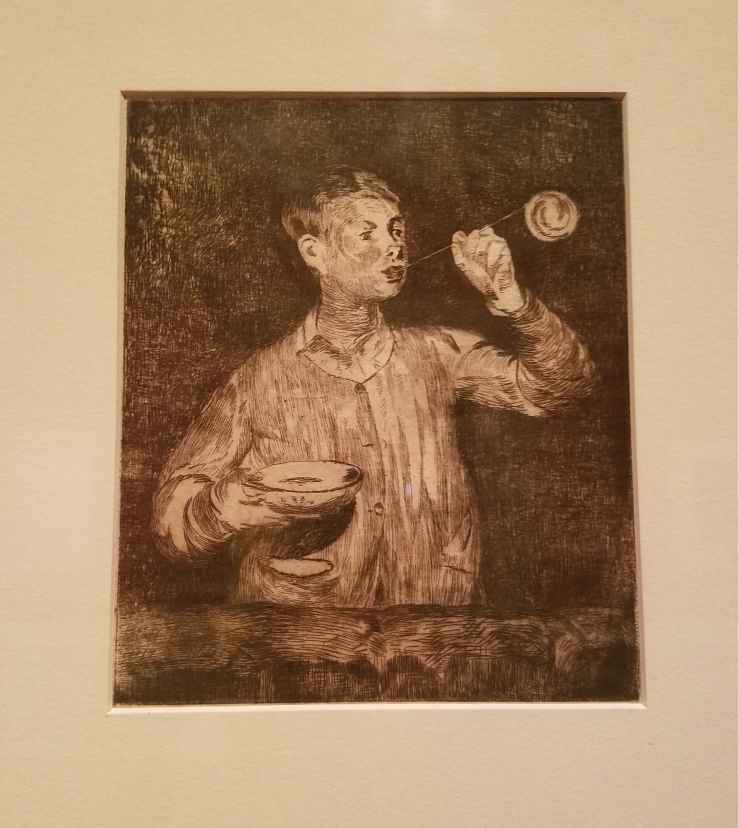
[Beginning in the 1870s, Guérard assisted Édouard Manet with biting and pulling his prints, and their working relationship eventually blossomed into a friendship. In 1879, Guérard married Eva Gonzalès, Manet’s favourite pupil, who died in childbirth in 1883 shortly after Manet’s own death. Manet was not only a friend and colleague of Guérard’s but also an important source of inspiration.]
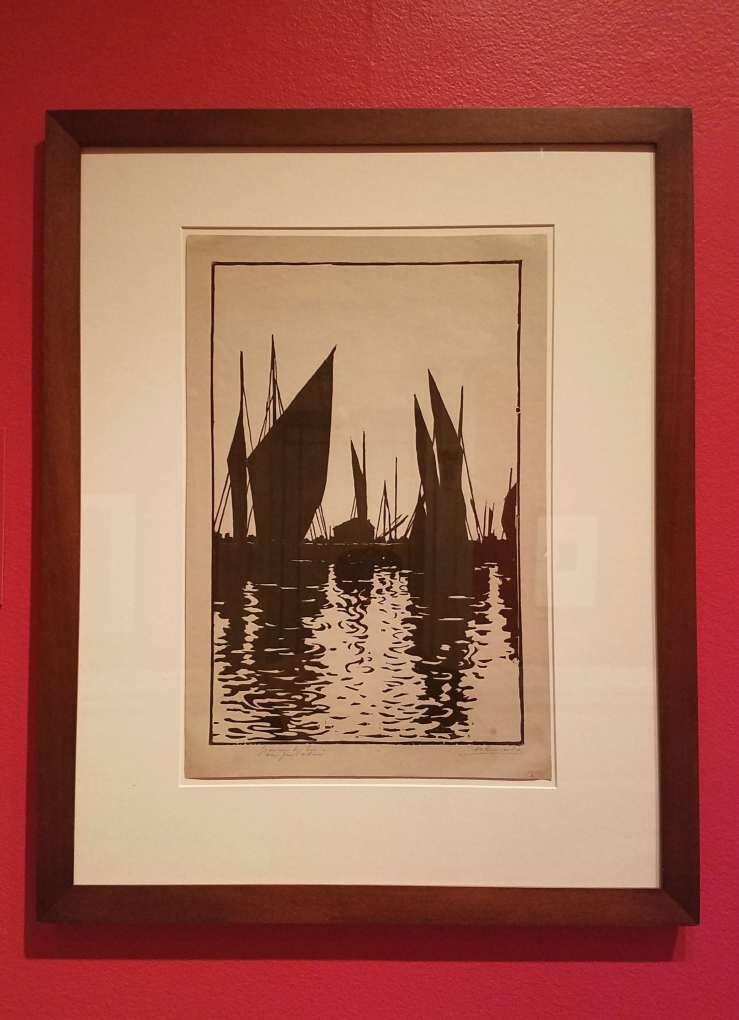
[The image, which shows a troop of tiny Japanese men climbing energetically over a woman’s shoe of Western style, captures the droll and occasionally baffling behaviour of the figures in Hokusai manga. Women’s feet and, especially, their shoes have long been fetishized in both the West and the East, and the conduct of the ”assailants”, which includes a figure clambering on the slipper’s ruffled pompom, is suggestive. The impression shown here reveal Guérard experimenting with jaunty colours, one hot pink, the other bright yellow.]


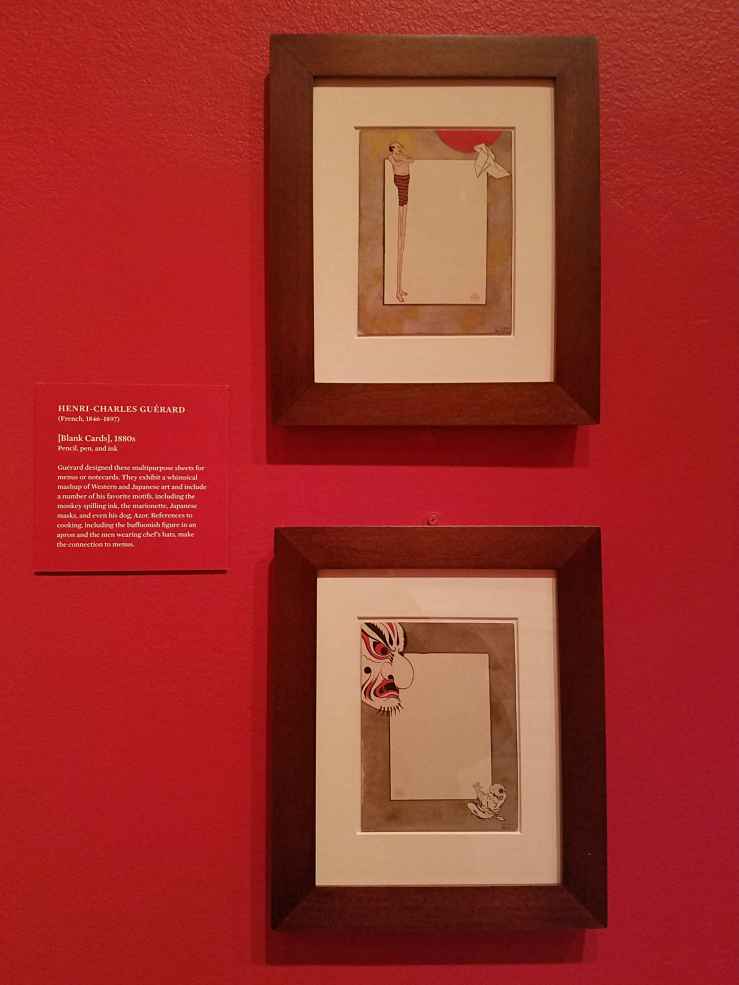

[Guérard designed these multipurpose sheets for menus or notecards. They exhibit a whimsical mashup of Western and Japanese art and include a number of his favourite motifs, including the monkey spilling ink, the marionette, Japanese masks, and even his dog, Azor. References to cooking, including the buffoonish figure in an apron and the men wearing chef’s hats, make the connection to menus.]
All notes are from the accompanying captions and brochure (available also on-line).
New York, NY, 10018
November 27th, 2016
My title, not the artist’s. The artist left it untitled so I thought, what if I call it ”Rain of Light”, isn’t it more fitting? Presumptuous may be, but it was the first thing that came to mind when I saw it illuminating the stairwell, making it an integral part of the museum rather than a solely utilitarian feature. I instantly thanked myself for choosing to take the stairs instead of the lift.


Felix Gonzalez-Torres
”Untitled” (America), 1994
Twelve light strings, each with forty-two 15-watt lightbulbs and rubber sockets, at the stairwell of The Whitney Museum of American aRt.
September 10th, 2016
Larger than Life.
 Day in Night out.
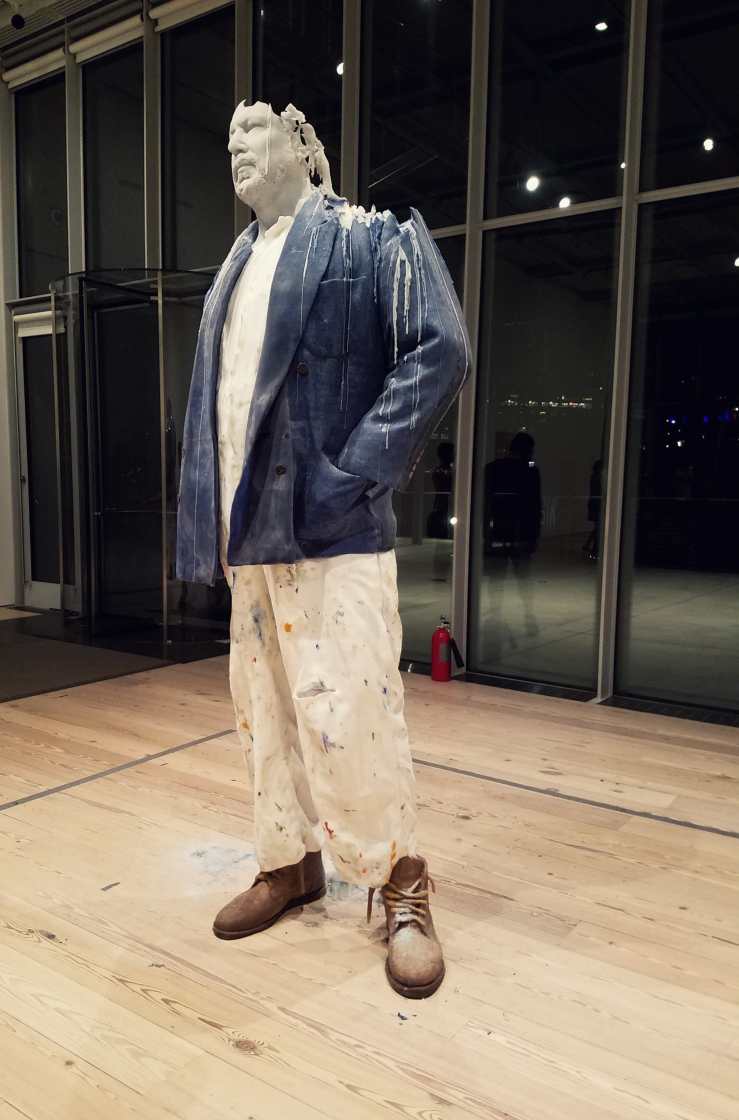
Recast and lit anew – the cycle of Life.
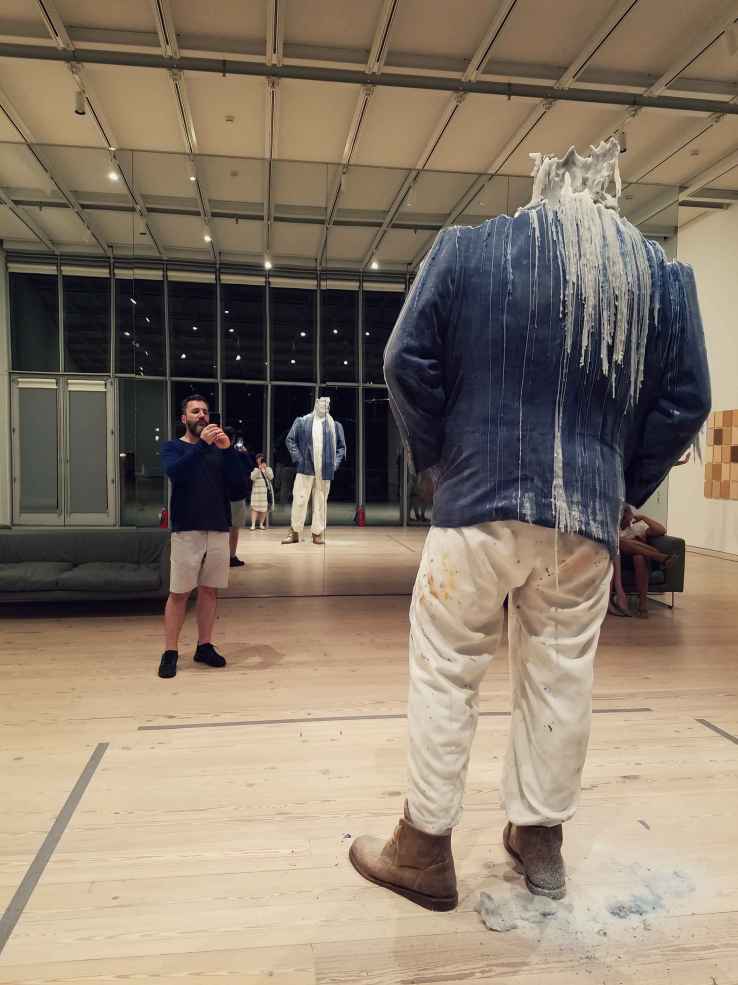
Caption accompanying Standing Julian:
Standing Julian is a portrait of Urs Fischer’s friend and fellow artist Julian Schnabel. The massive sculpture is also a wax candle: lit every morning and extinguished each night, Standing Julian will slowly melt over the course of the exhibition. Although this candle will eventually burn down and be discarded – a process that evokes the inevitable transience of life – the sculpture can also be recast and lit anew. As Fischer explained, his waxworks allow ”materials and images take on their own life.”
That was Julian, captured in September. Is there anything left of him today, I wonder. Is he still turning into a puddle of soft wax? Has a new Julian taken his place?
Would I know if nobody told me?
Standing Julian, 2015
Wax, pigment, steel and wicks
Urs Fischer
September 10th, 2016 at The Whitney Museum of American aRt
Whichever way you look at her she seems as real as the woman next door. Well, perhaps not Manhattan next door but a smaller city or town like, for instance, my other adoptive home Brussels. She could definitely be the lady that runs the bakery on the ground floor in my building in Brussels.
And yet, although the artist worked on real models making casts directly from their bodies, his sculptures are not really images of specific people. For example, the letters on her lap are addressed to Minnie Johnson, but the model was someone else who lived near Hanson’s studio in Florida. Woman with Dog is therefore a hyper-real figure constructed from different features and, because of that, doubly real in my eyes.


Duane Hanson
Woman with Dog, 1977
Acrylic and oil on cast polyvinyl with clothing, hair, eyeglasses, watch, shoes, upholstered wood chair, dog hair, leather collar, woven rug, postcard, letters, and envelopes
The Whitney Museum of American Art
September 10th, 2016

Steward Uoo
No Sex, No City: Miranda, 2013 (detail)
Polyurethane resin, epoxy, ink, pigment, acrylic paint, wires, cables, clothing, accessories, ferrofluid, razor wire, steel, feathers, human and synthetic hair, makeup, glitter, synthetic eyelashes, maggot cocoons, flies, dust, and other materials
When the unrelated, the unexpected and the repellent get together to form a thing of beauty.
At the Whitney Museum of American Art
September 10th, 2016
subjective worldview
Actor, writer, cook and author
Travel experiences & Strasbourg city guide
Writer
joy, happiness, travel, adventure, gratitude
"Rêve onirique & Bulle d'évasion"
makes pretty things on paper
This WordPress.com site is Pacific War era information
Welcome to my curious world of words....
Photographs, music and writing about daily life. Contact: elcheo@swcp.com
Free listening and free download (mp3) chill and down tempo music (album compilation ep single) for free (usually name your price). Full merged styles: trip-hop electro chill-hop instrumental hip-hop ambient lo-fi boombap beatmaking turntablism indie psy dub step d'n'b reggae wave sainte-pop rock alternative cinematic organic classical world jazz soul groove funk balkan .... Discover lots of underground and emerging artists from around the world.
A 365 analogue photography project
Barcelona's Multiverse | Art | Culture | Science
Een digitaal atelier aan de (zee)slag.
‘Doodling Ambiguity’s in Ink.’
Miscellaneous photography
Glimpses along the way on a journey of discovery into symmetry...
 The Humble Fabulist