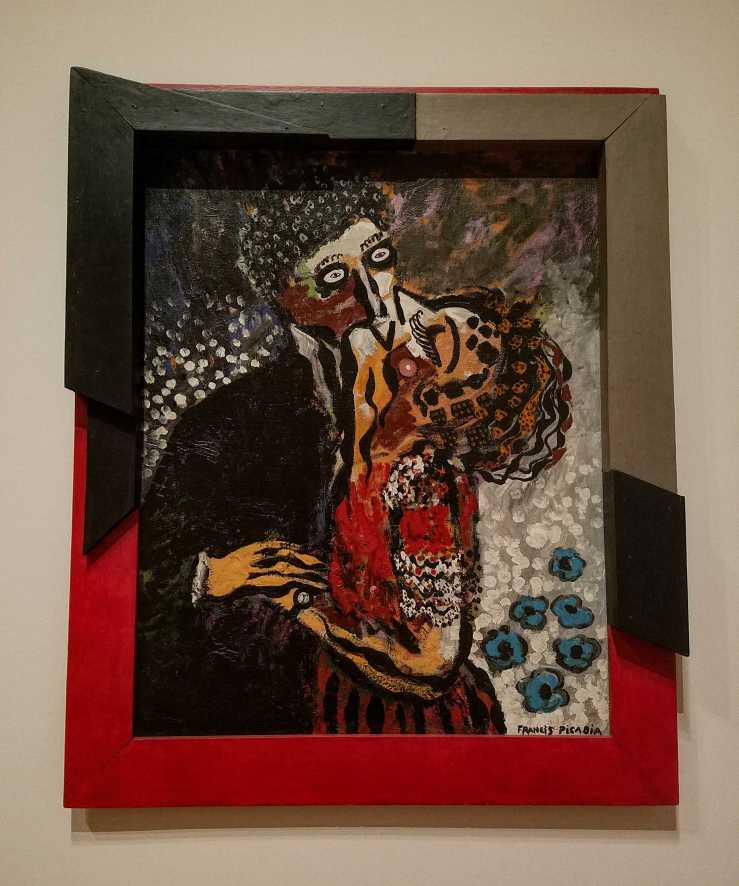
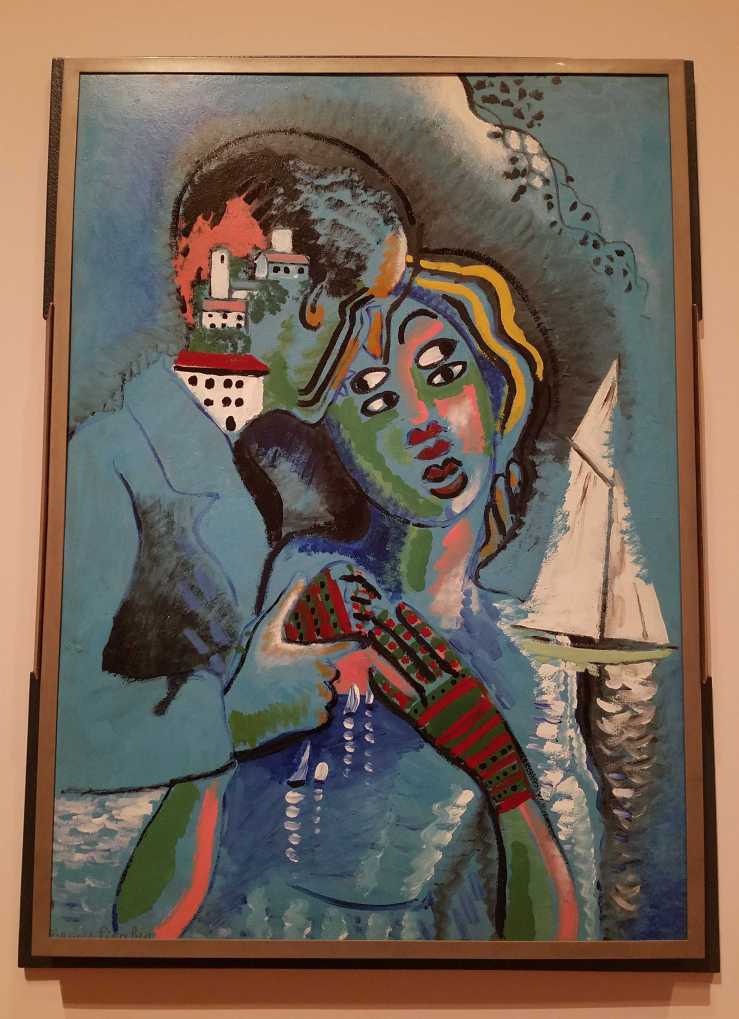
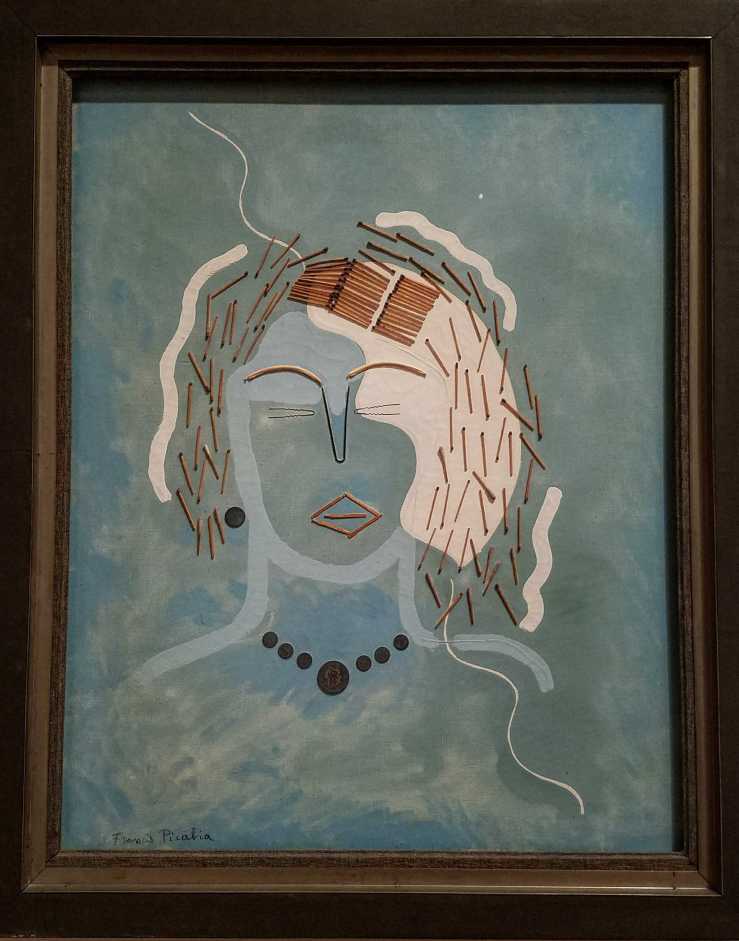
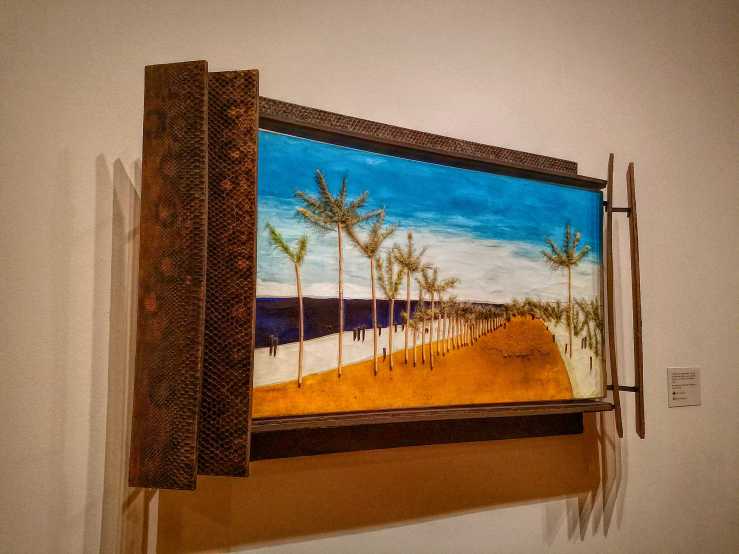
The Kiss (Le Baiser) c. 1925-26. Oil and enamel paint on canvas in a frame likely by Pierre LegrainIdyll (Idylle) c. 1925-27. Oil and enamel paint on woodWoman with Matches [II] (Portrait of a Woman on a Blue Background) (La Femme aux allumettes [II] [Portrait de femme sur fond bleu]) c. 1924-25. Oil, enamel paint, matches, coins, curlers and hairpins on canvasPromenade des Anglais (Midi) c. 1924-25. Oil, enamel paint, feathers, pasta and leather on canvas, in a snakeskin frame by Pierre Legrain
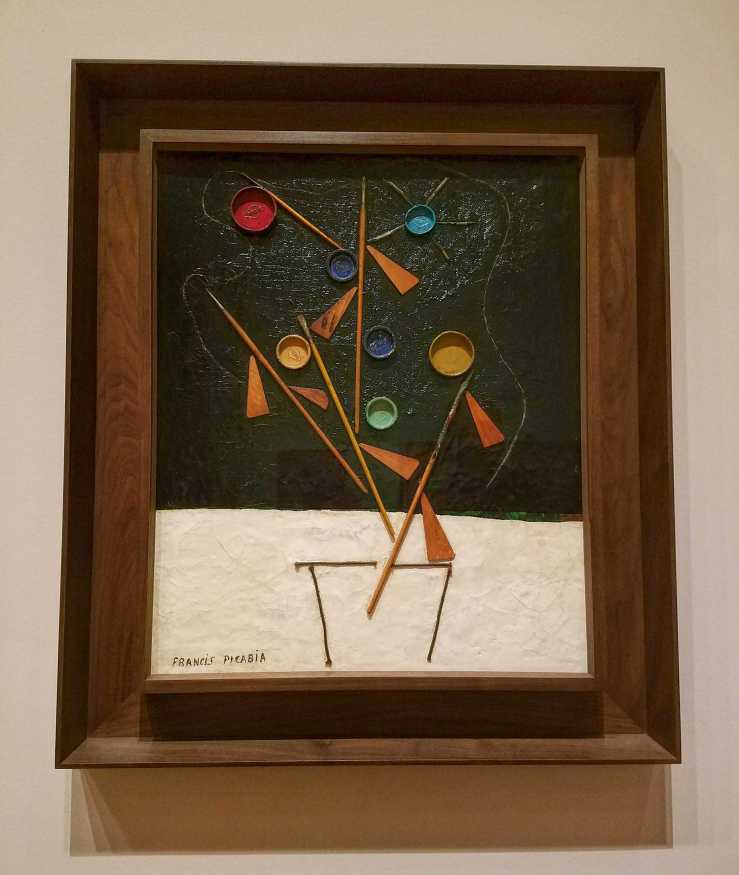
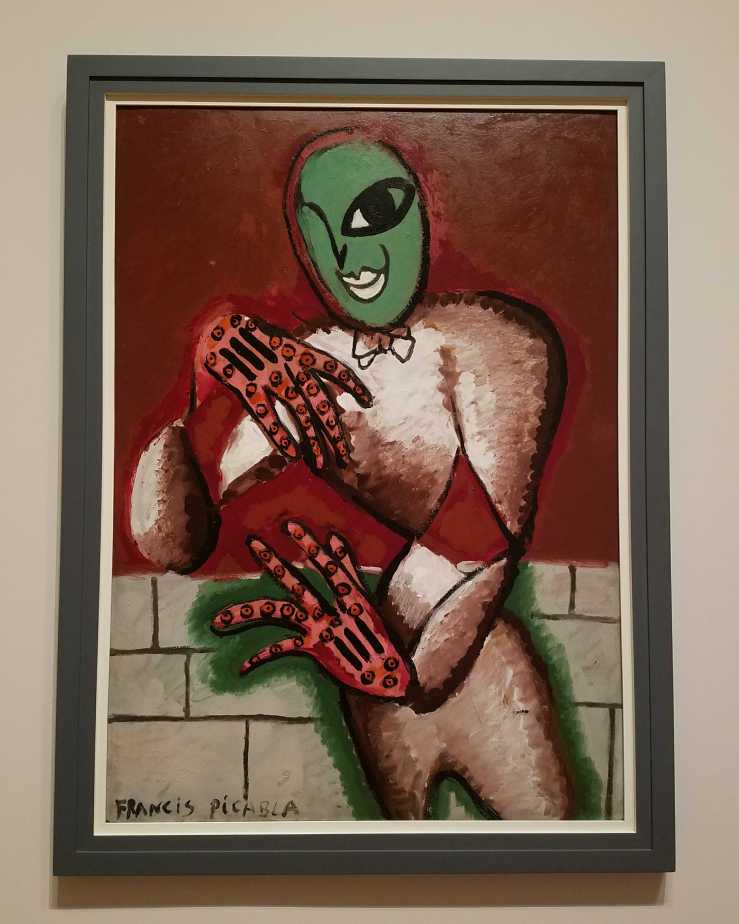
Painting (Flowerpot) (Peinture [Pot de fleurs]) c. 1924-25. Enamel paint, Ripolin paint-can lids, brushes, wooden stretcher wedges, string and quill toothpicks on canvasWoman with Monocle (La Femme au monocle). Alternative title: Woman with Pink Gloves (Man with Gloves) (La Femme aux gants roses [L’Homme aux gants]) c. 1925-26. Oil and enamel paint on boardFrom the accompanying tag: ”In 1926, the review ‘This Quarter’ reproduced thirteen of Picabia’s ‘Monster’ paintings, including this one, which bore the title ‘Woman with Pink Gloves’. By the time of the painting’s first known exhibition in 1956 however, it had acquired the title ‘Man with Gloves’. The work is displayed here with both titles restored. Although neither necessarily originated with Picabia, both speak to the androgynous character of his wasp-waisted, white-suited figure. With its green face, single oversized eye, and pustule-pink hands presumably clad in driving gloves, it is one of Picabia’s quintessential Côte d’Azur Monsters. The Surrealist André Breton was one of its early owners.”
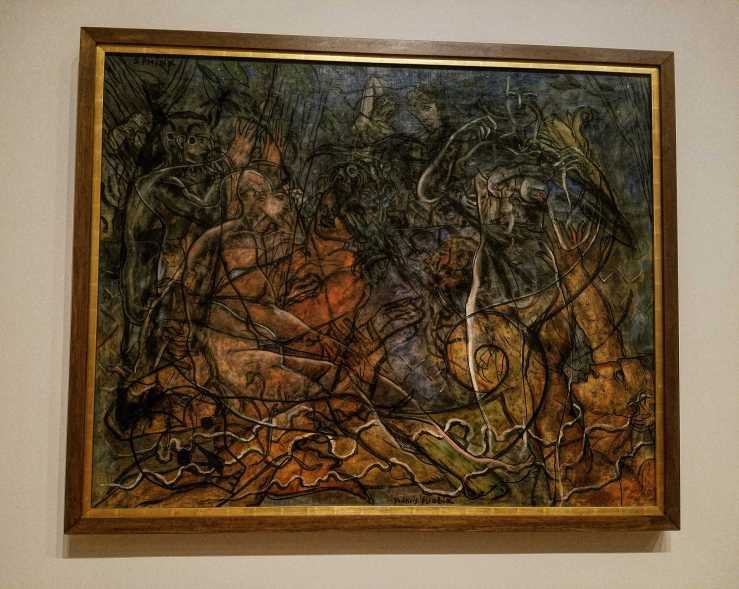
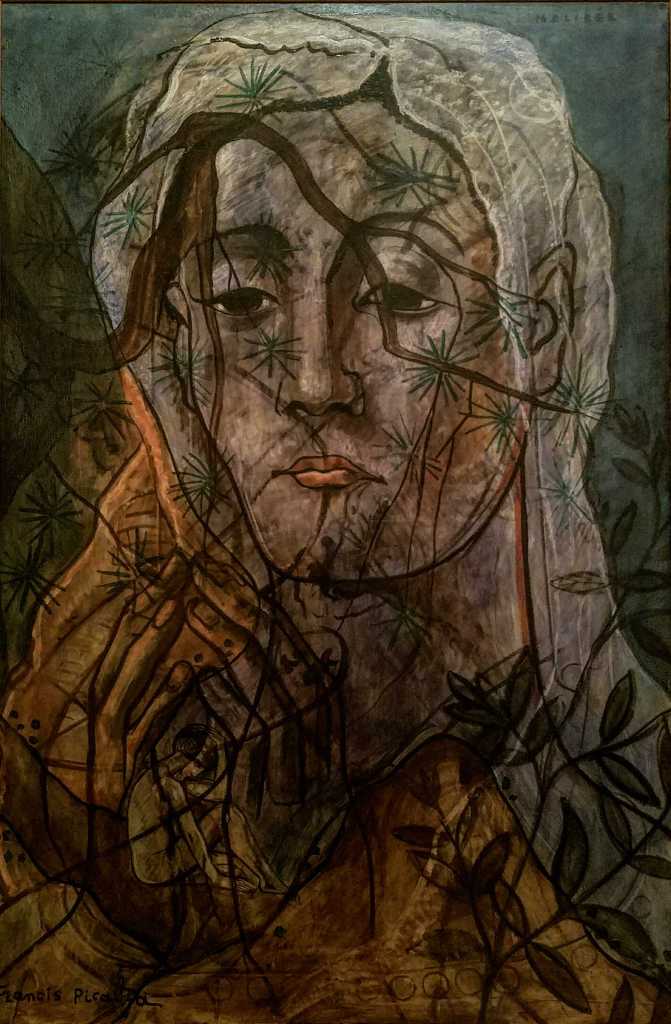
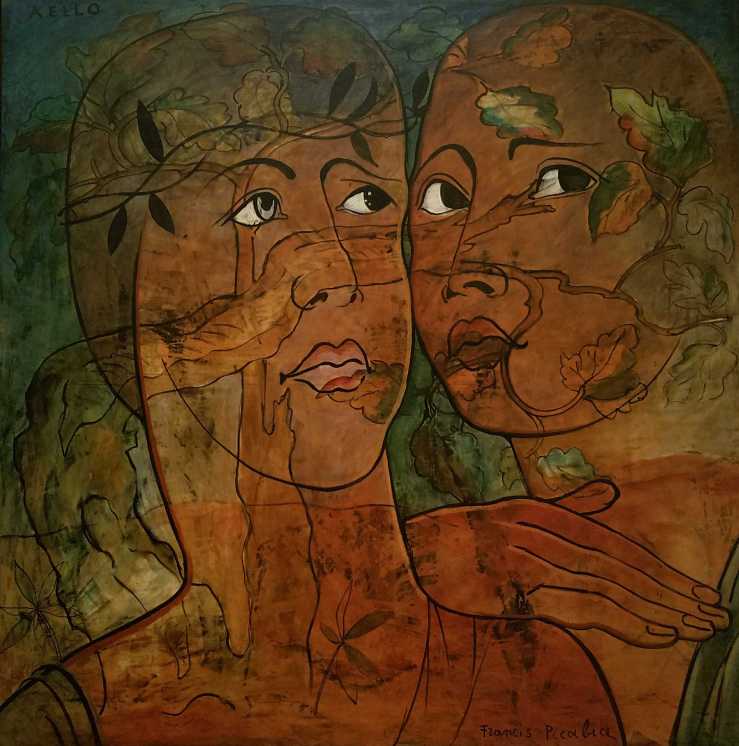
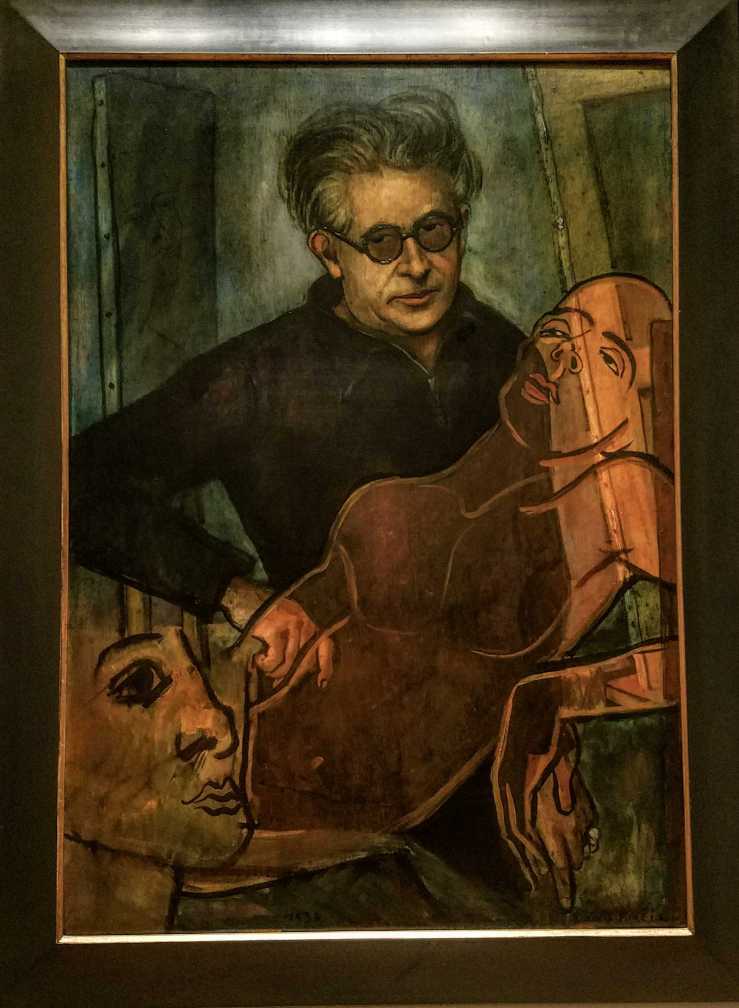
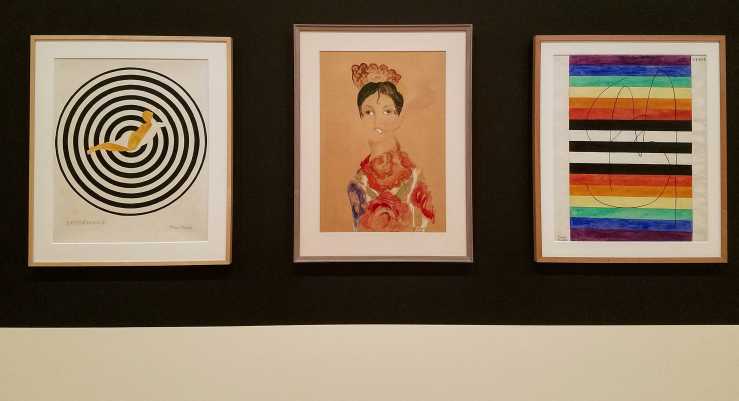
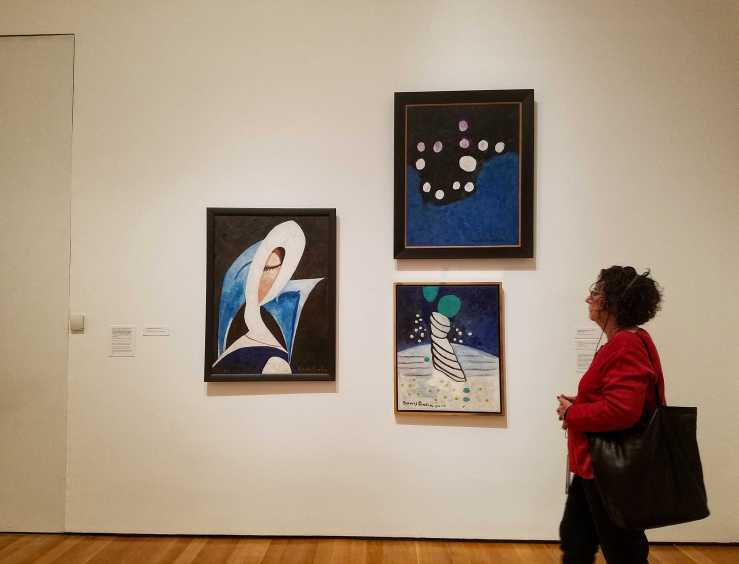
Sphinx, 1929. Oil on canvasΜélibée, 1930. Oil on canvasAello, 1930. Oil on canvasPortrait of the Artist (Portrait de l’artiste), 1934. Oil on wood
From the accompanying tag: ”This work began as a portrait of Picabia painted by the German artist Bruno Eggert in 1934. Eggert gave it to Picabia, who then added his own touches: a pair of dark-tinted glasses on his nose, a face in the lover left corner, a transparent female body across the picture, the edge of a stretcher in the upper right corner. He also signed and dated the work. Here, Picabia adopted another artist’s work as the support for his own, with over-painting used to assert rather than deny.”
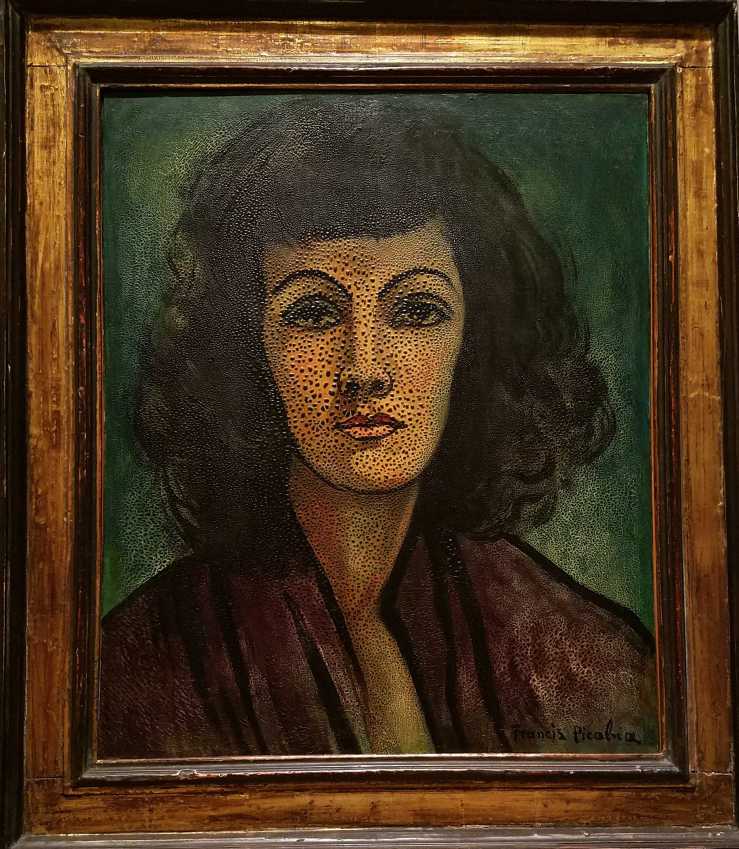
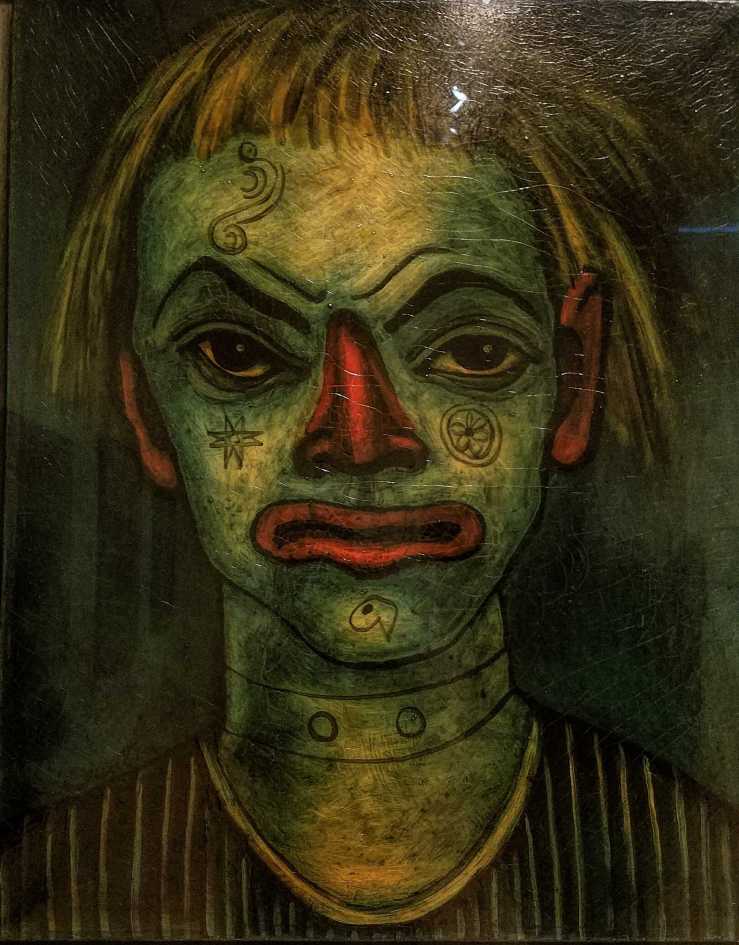
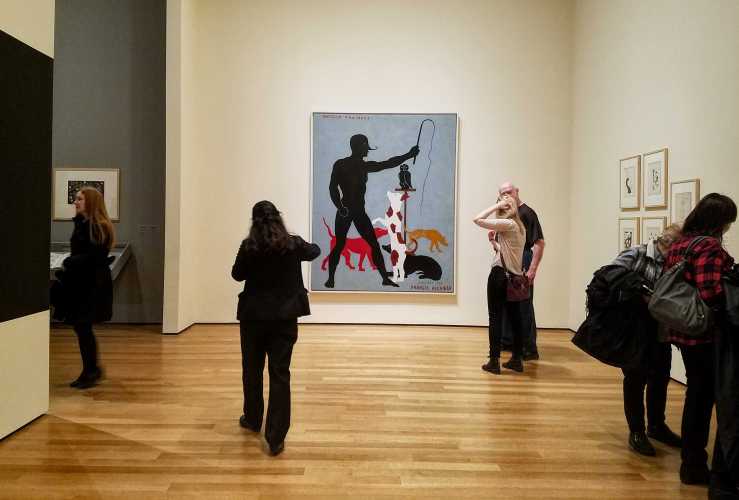
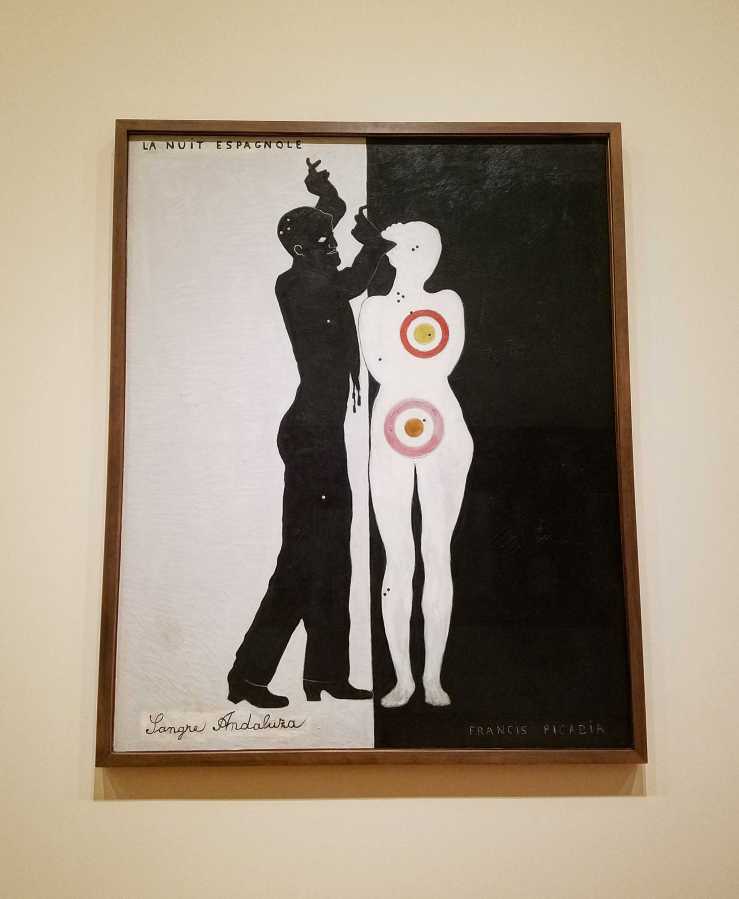
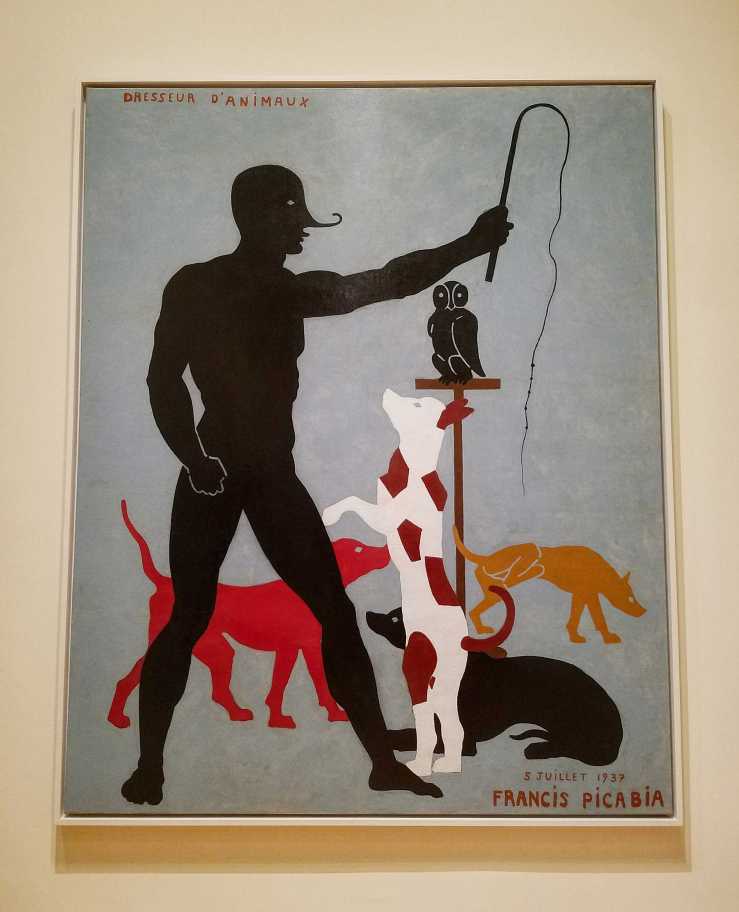
Portrait of a Woman (Portrait de femme), 1935-37. Oil on canvasFratellini Clown (Le Clown Fratellini), 1937-38. Oil on canvas
Part 5 concludes our round of Francis Picabia’s retrospective at MoMA.
”You are all indicted, stand up! It is impossible to talk to you unless you are standing up. Stand up as you would for the Marseillaise or God Save the King.
Stand up, as if the Flag were before you. Or as if you were in the presence of Dada, which signifies Life, and which accuses you of loving everything out of snobbery if only it is expensive enough.
One dies a hero’s death or an idiot’s death – which comes to the same thing. The only word that has more than a day-to-day value is the word Death. You love death – the death of others.
Kill them! Let them die! Only money does not die; it only goes away for a little while.
That is God! That is someone to respect: someone you can take seriously! Money is the prie-Dieu of entire families. Money for ever! Long live money! The man who has money is a man of honour.
Honour can be bought and sold like the arse. The arse, the arse, represents life like potato-chips, and all you who are serious-minded will smell worse than cow’s shit.
Dada alone does not smell: it is nothing, nothing, nothing. It is like your hopes: nothing like your paradise: nothing like your idols: nothing like your heroes: nothing like your artists: nothing like your religions: nothing.
Hiss, shout, kick my teeth in, so what? I shall still tell you that you are half-wits. In three months my friends and I will be selling you our pictures for a few francs.”
Manifeste Cannibale Dada
by Francis Picabia
27th March 1920
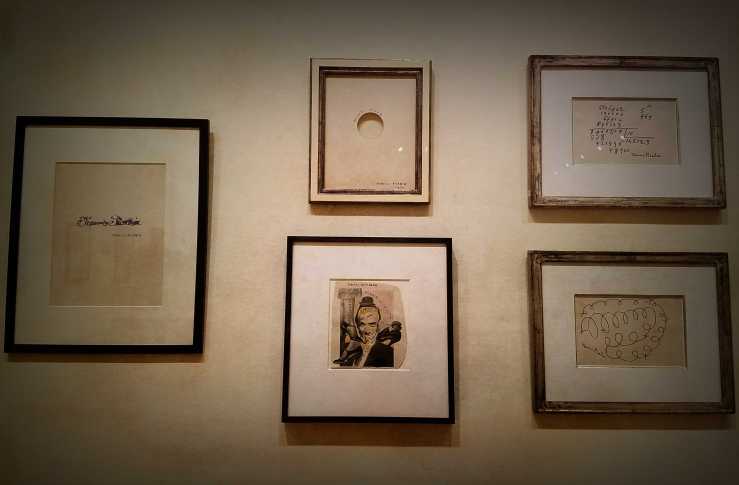
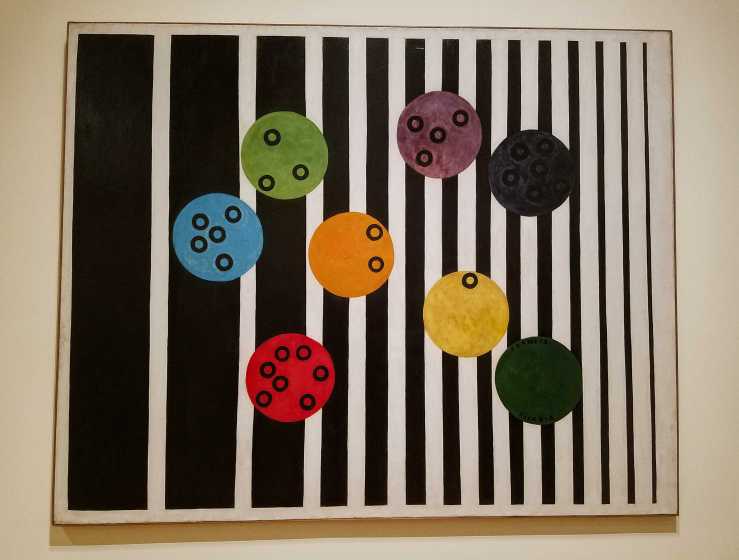
The work of Francis Picabia will remain our theme this week, as we follow the artist’s style shifts through the galleries of MoMA.
Rediscovering the French avant-garde artist whose body of work is so extensive, undergoing so many style changes, the average spectator would have a hard time in identifying the source had there not been for his signature or the accompanying tags.
No style or label could hold Picabia for long: skillfully shifting from Impressionism to Pointillism to Cubism and Dadaism, briefly touching upon Surrealism before succeeding to rid himself of labels and become the intriguing artist we know today.
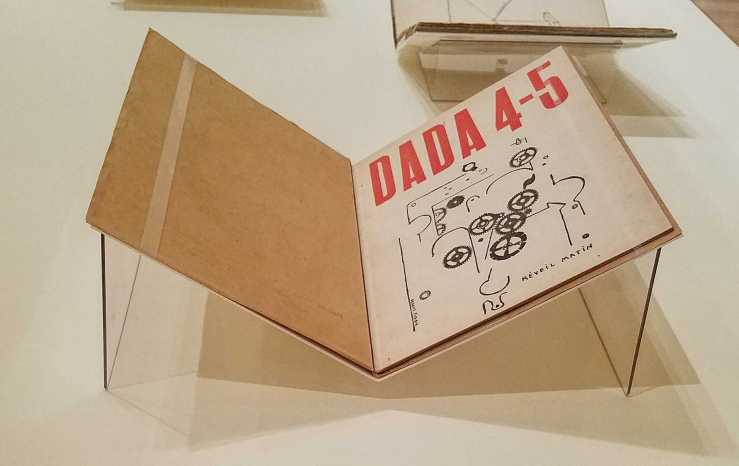
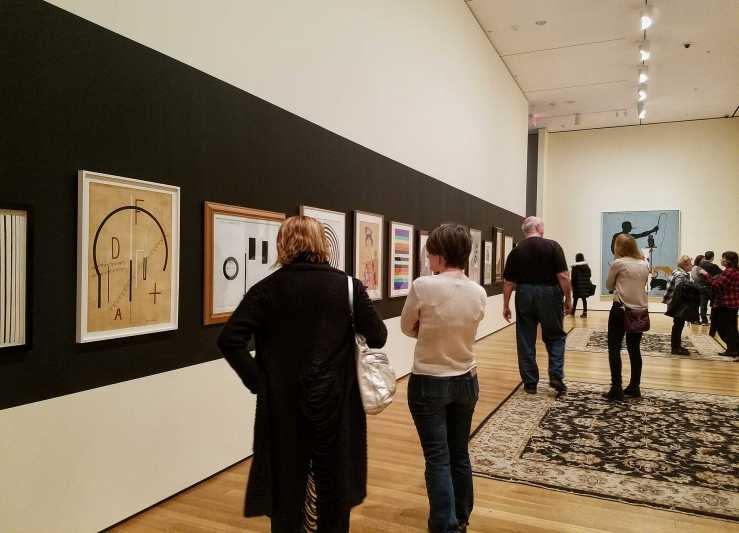
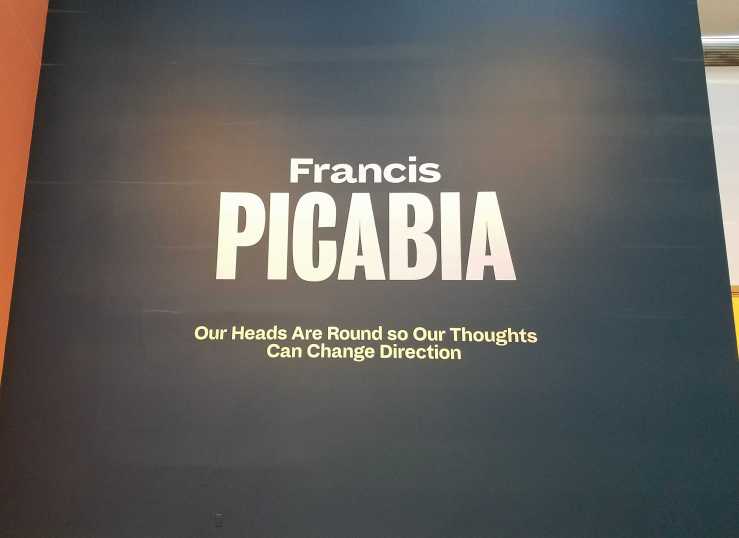
With all this versatility throughout his entire career curating a retrospective for Picabia is no mean feat. But then, MoMA is no mean institution either: for their exhibition that ran from November 2016 through March 2017 – the first of its kind in the United States – no less than 200 works of art were brought under one roof: paintings, periodicals and printed matter, illustrated letters and a film. Aptly named ”Our heads are round so our thoughts can change direction”, it was comprehensive, enlightening and entertaining, all at once.
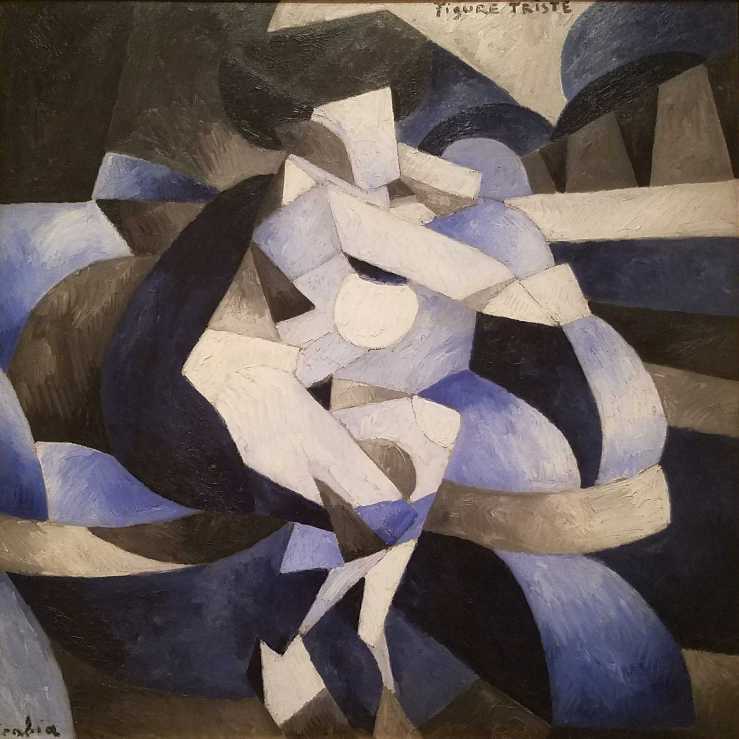
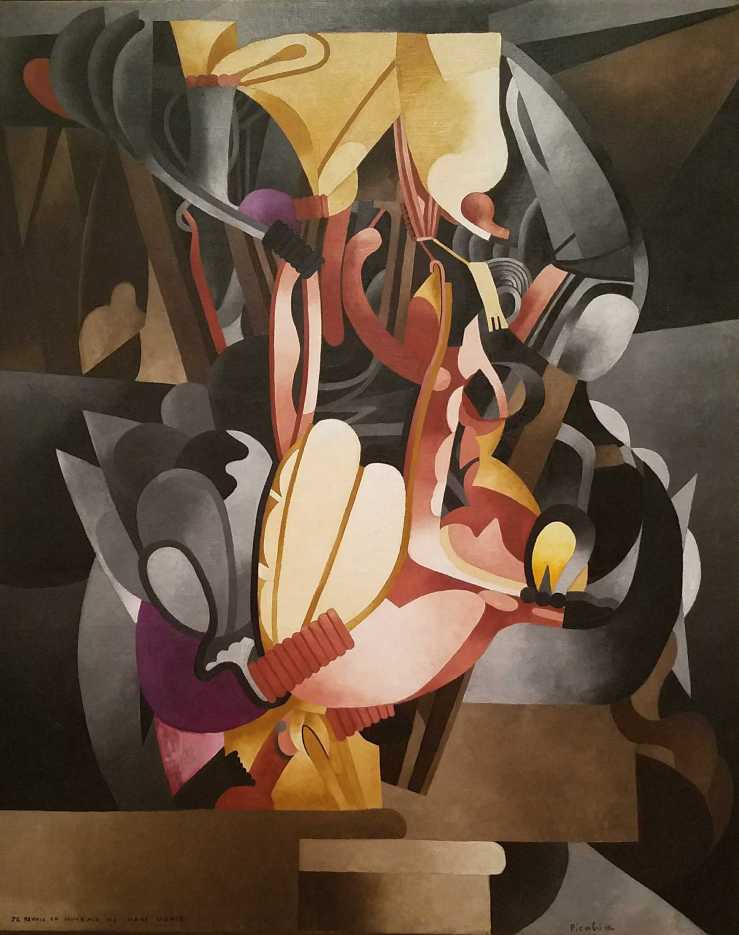
Untitled (Portrait of Mistinguett) c. 1909 – Oil on canvasPhysical Culture (Culture physique) 1913 – Oil on canvasComic Wedlock (Mariage comique) 1914 – Oil on canvasAd libitum – Your Choice; At Will (Ad libitum – au choix; à la volonté) c. 1914 – Watercolour, pencil and charcoal on paper mounted on boardSad Figure (Figure triste) 1912 – Oil on canvasI See Again in Memory My Dear Udnie (Je revois en souvenir ma chère Udnie) 1914 – Oil on canvas
[Note from the accompanying tag: Picabia associated ”Udnie” – a name of his own invention – with memories of watching the dancer Stacia Napierkowska, whose suggestive performances subsequently provoked her arrest, rehearse onboard during his transatlantic journey to New York in 1913. ”Udnie” is also an anagram of the last name of Jean d’Udine, whose theory of synesthesia (published in 1910) linked painting with music and dance through the concept of rhythm. In this painting, rhythm is intimated via a series of repeated, interpenetrating pistons and quasi-visceral orifices, fusing the mechanical with the biological.]
***
The film shown was ‘‘Entr’Acte”, René Clair’s Dadaist Masterpiece (1924), originally designed to be screened between two acts of Francis Picabia’s 1924 opera Relâche. You can read all about it – and watch it – on Open Culture (film is on YouTube).
Free listening and free download (mp3) chill and down tempo music (album compilation ep single) for free (usually name your price). Full merged styles: trip-hop electro chill-hop instrumental hip-hop ambient lo-fi boombap beatmaking turntablism indie psy dub step d'n'b reggae wave sainte-pop rock alternative cinematic organic classical world jazz soul groove funk balkan .... Discover lots of underground and emerging artists from around the world.


 The Humble Fabulist