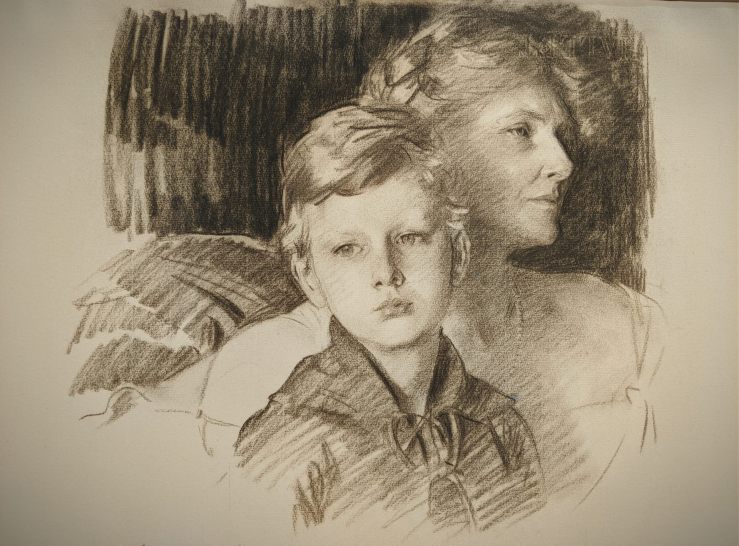
Charlotte Nichols Greene and Her Son Stephen Greene, 1924, Charcoal 
Daisy Fellowes, ca. 1920, charcoal 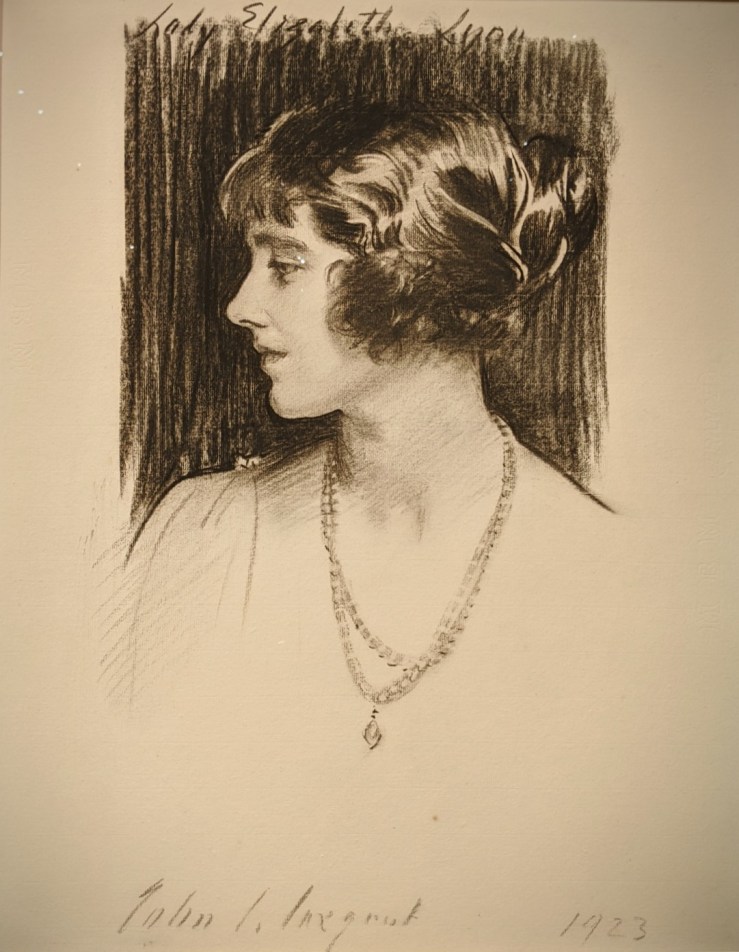
Lady Elizabeth Bowes-Lyon, Later Queen Elizabeth, The Queen Mother, 1923, charcoal 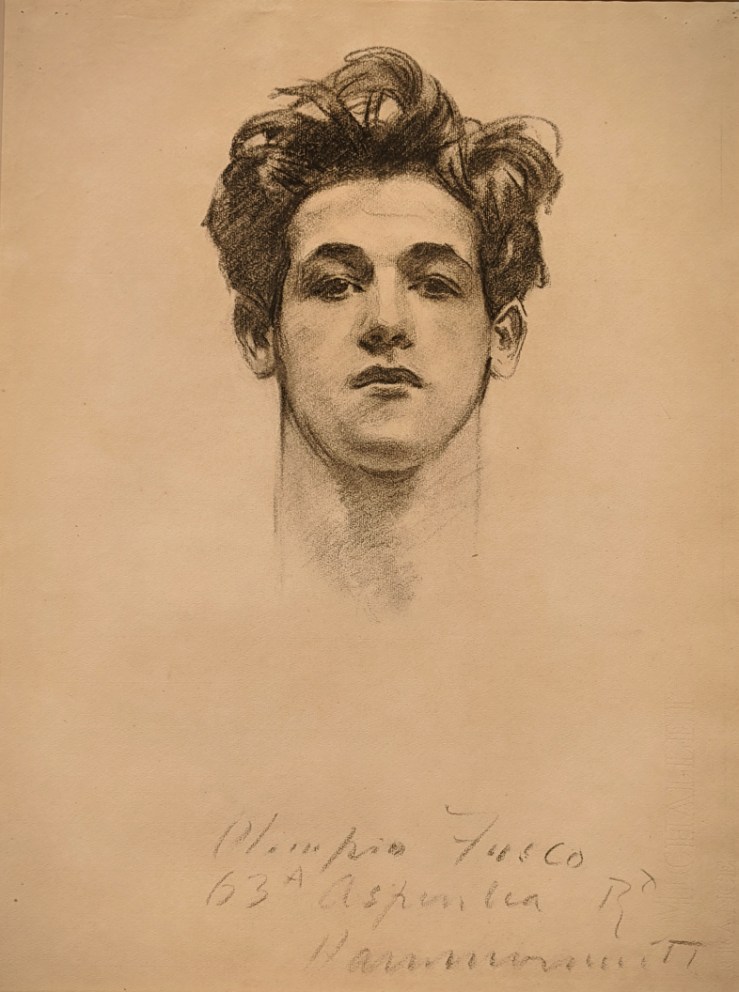
Olimpio Fusco, ca. 1900-1910, charcoal.
Olimpio Fusco was likely one of the numerous professional models, often Italians living in London, whom Sargent employed to pose for his mural cycles.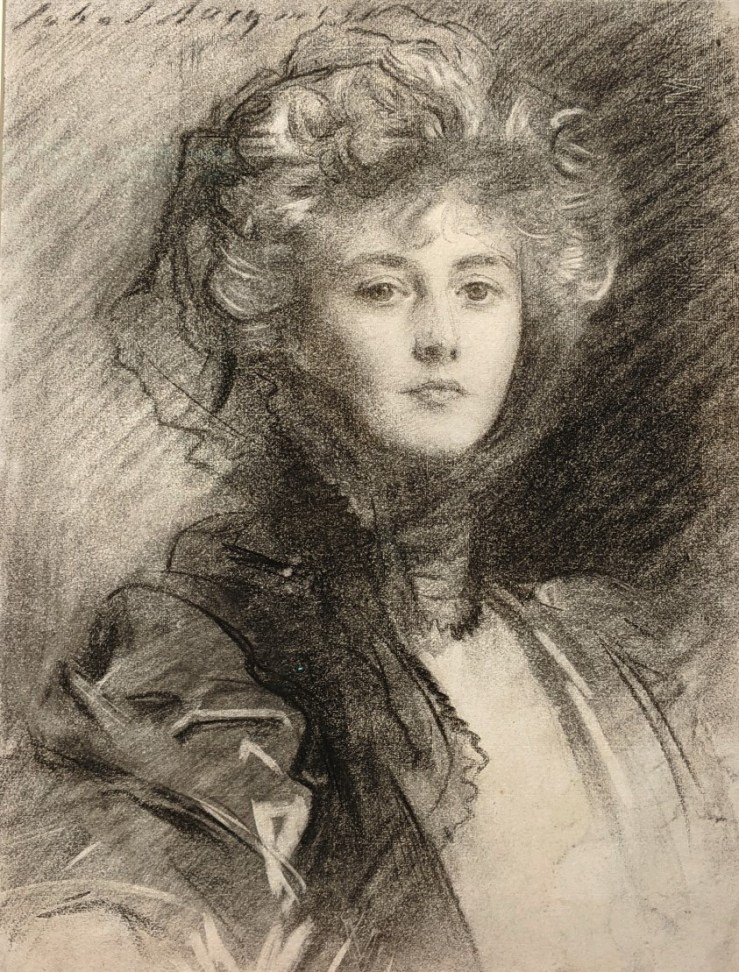
Lady Helen Venetia Vincent, ca. 1905, charcoal 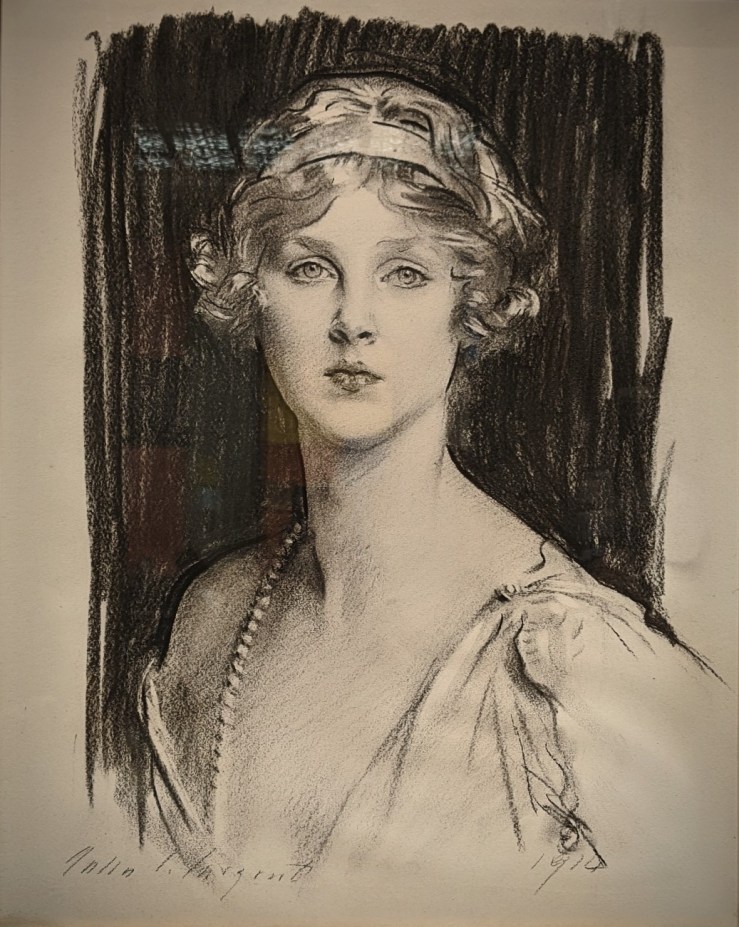
Lady Diana Manners, 1914, Charcoal
Lady Diana Manners was the youngest daughter of Violet Lindsay and Henry Manners, eight Duke of Rutland. Her mother, herself an exhibiting artist, was a central figure in the Souls. Along with other children of the Souls, Lady Diana became part of the ”Corrupt Coterie”, a group of aristocrats and intellectuals known for their extravagant parties in the years leading up to WWI. During the war, many members of this group would be killed; Lady Diana served as a nurse and married Alfred Duff Cooper, a fellow survivor, in 1919. Legendary for her beauty, she proved fascinating for authors like Evelyn Waugh and F. Scott Fitzgerald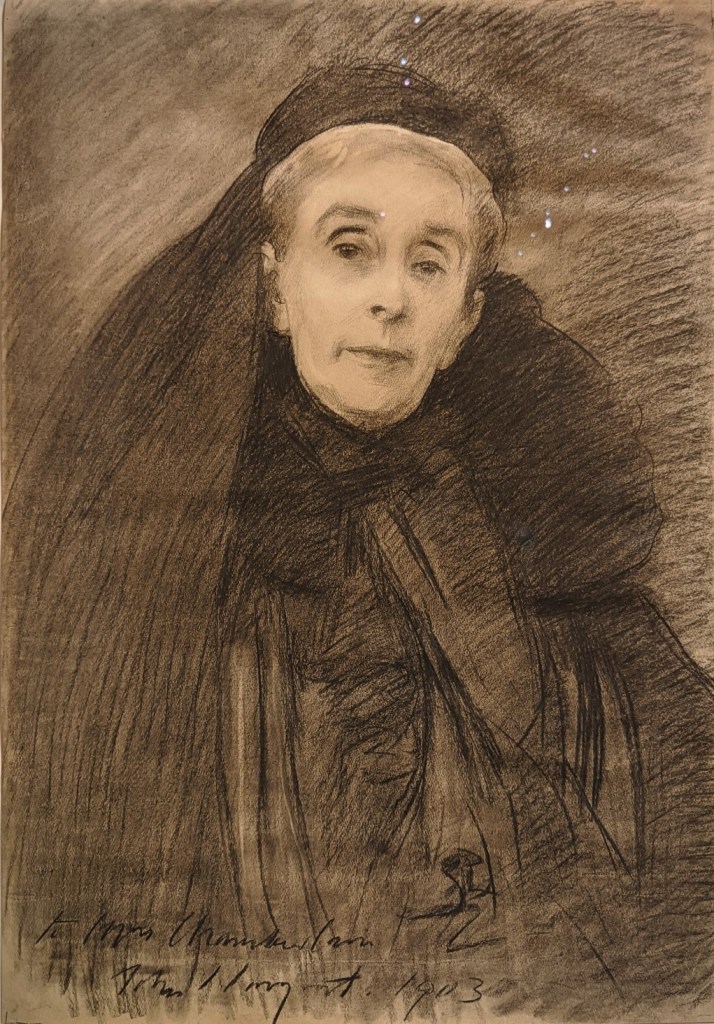
Ellen Peabody Endicott, 1903, Charcoal 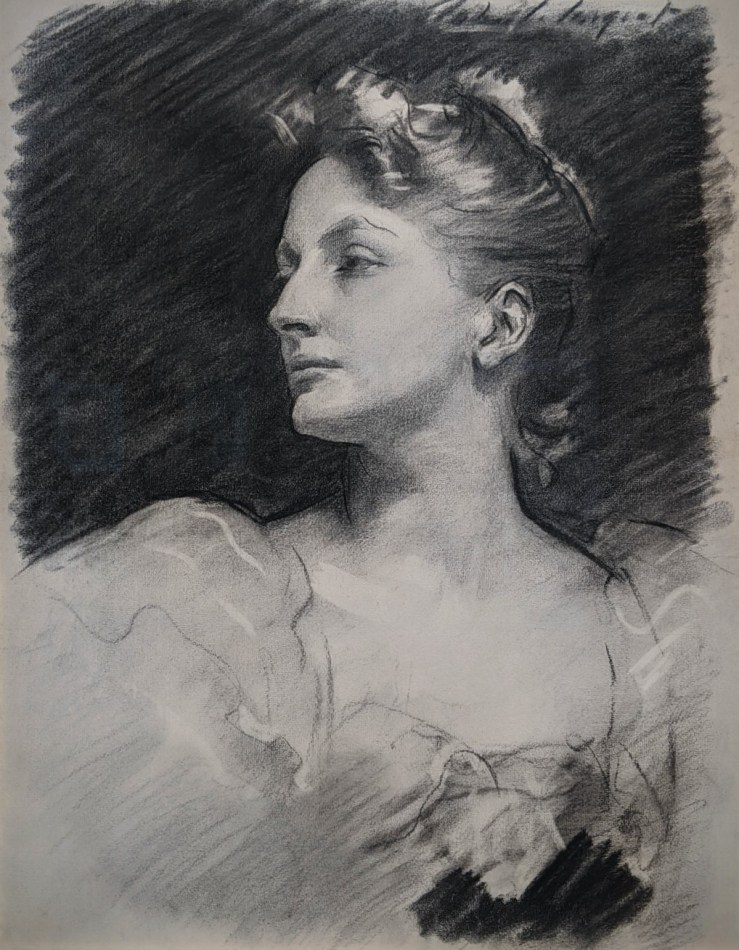
Helen Dunham, ca. 1895, charcoal 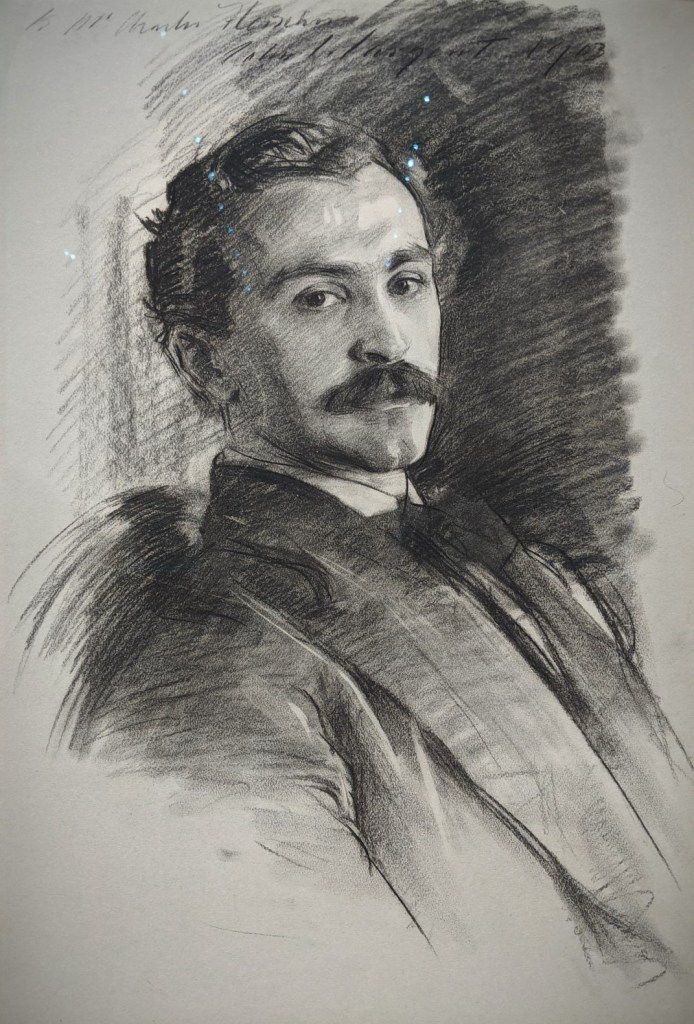
Dr. Charles Fleischer, 1903, charcoal
Sargent is said to have thought that Fleischer, with his prominent mustache, bore some resemblance to Edgar Allan Poe, which this relaxed portrait likewise suggests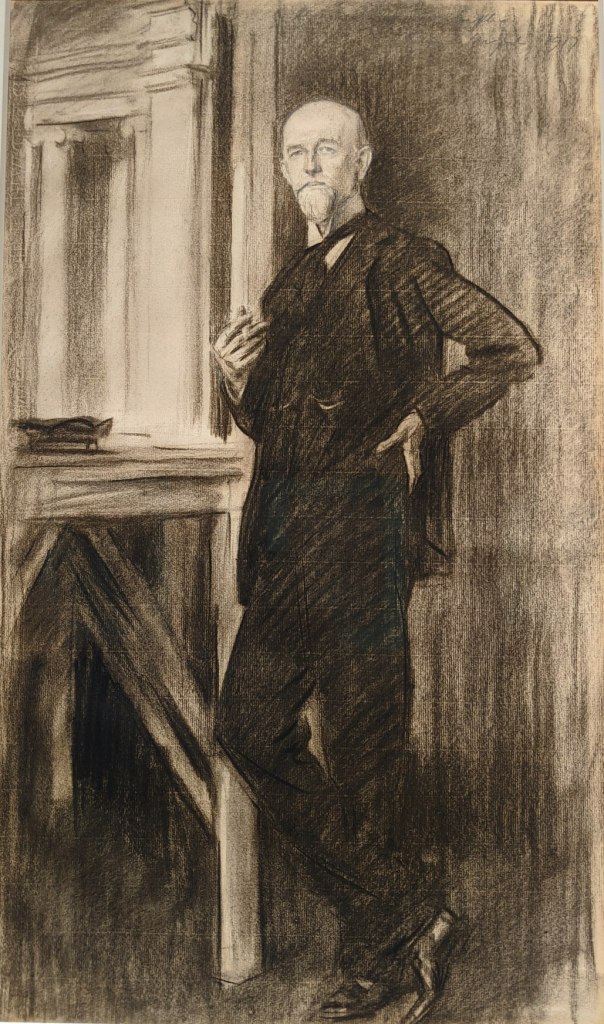
Charles Martin Loeffler, 1917, charcoal and graphite 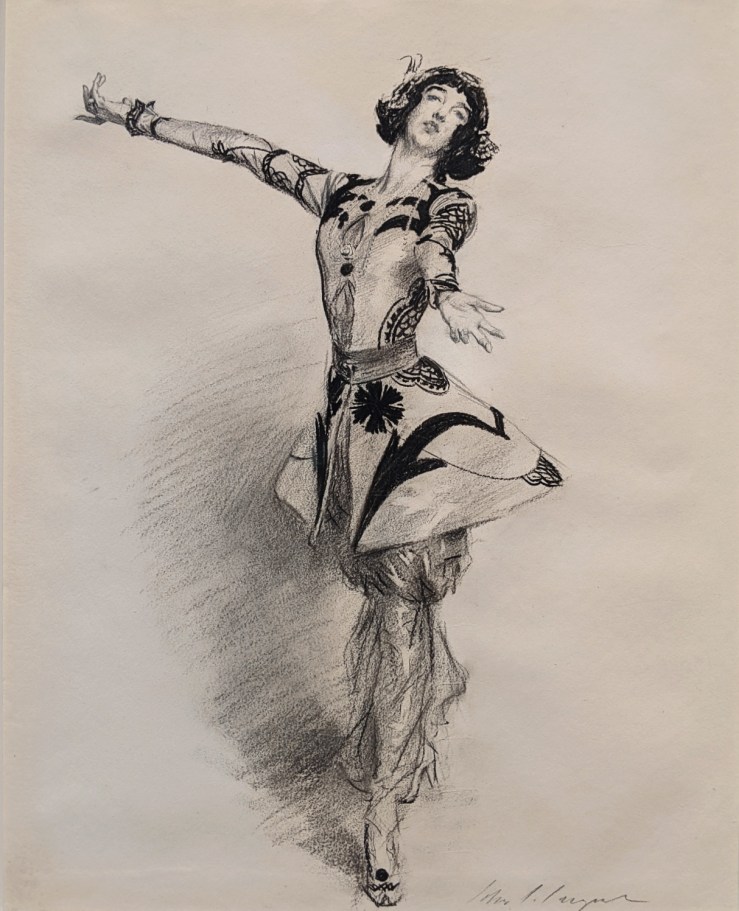
Gertrude Vanderbilt Whitney, ca. 1913, charcoal and graphite
In this joyful drawing, Sargent represented her in an outfit thought to have been designed by Bakst, the costume designer for the Ballets Russes. Whitney went on to found the Whitney Museum of American Art in 1930 with her collection of more than five hundred works by contemporary American artists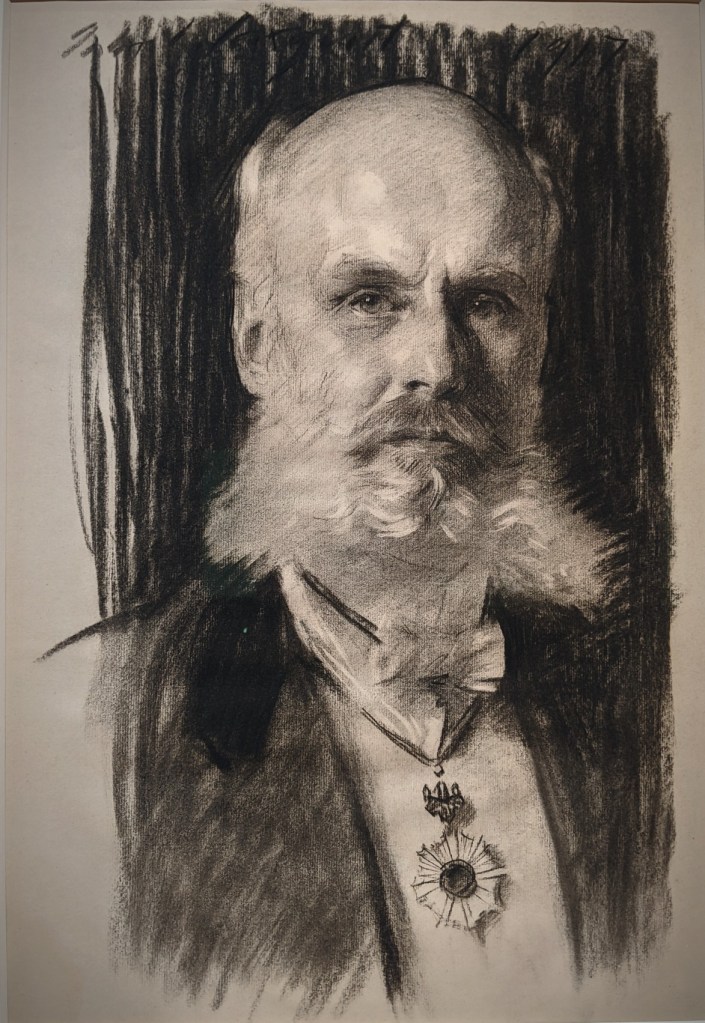
Dr. William Sturgis Bigelow, 1917, charcoal and white chalk 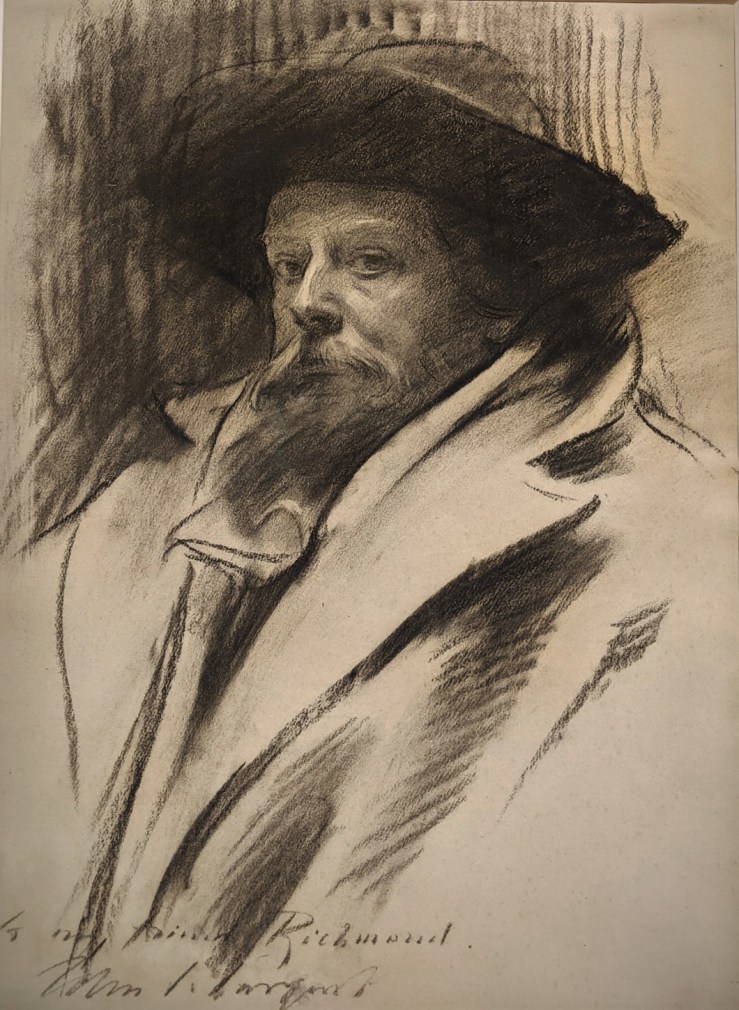
Sir William Blake Richmond, ca. 1910, charcoal
The son of portraitist George Richmond, he was named after his father’s friend and mentor, William Blake.
William Adams Delano, 1922, charcoal 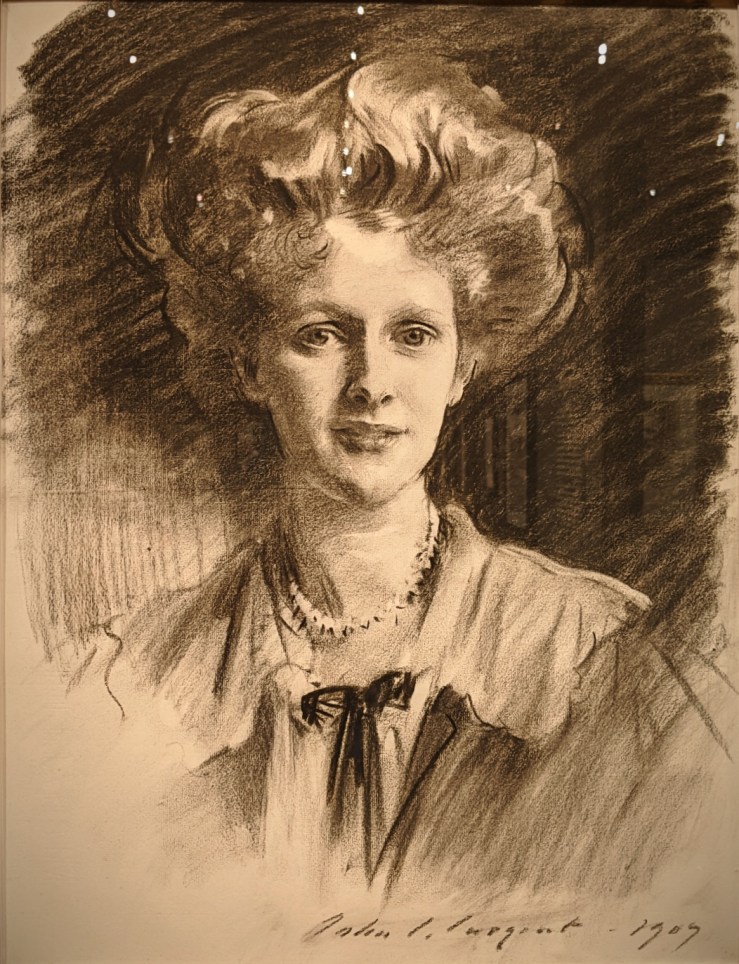
Nancy Astor, 1907, charcoal
Nancy Astor was the first woman to take a seat in British Parliament when, in 1919, she ran as a Conservative for the post previously held by her husband in the House of Commons.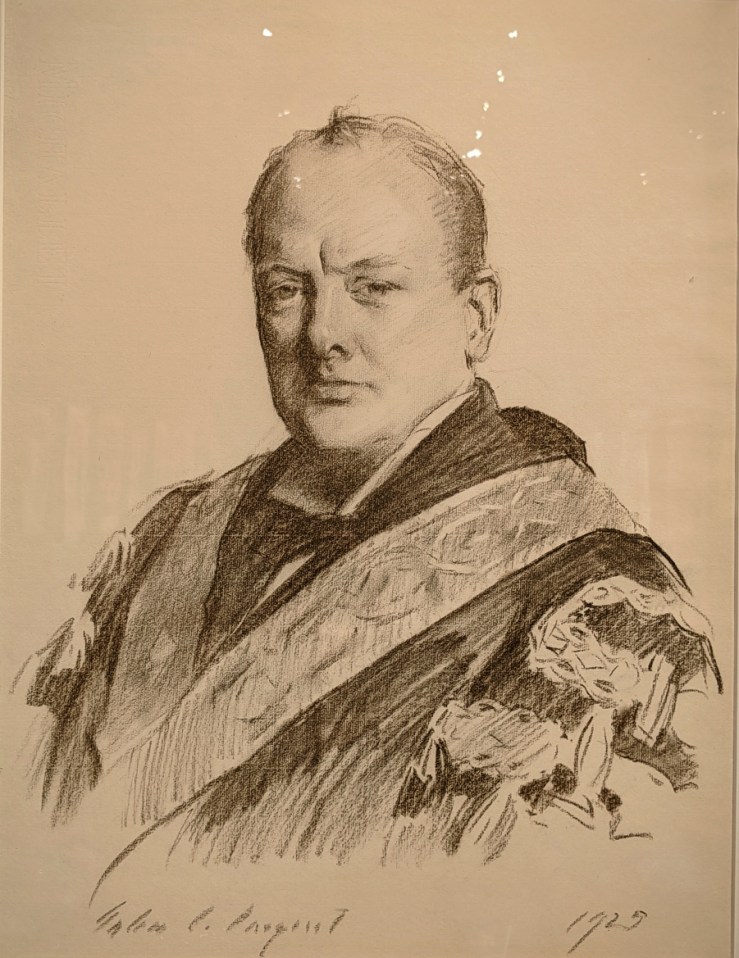
Winston Churchill, 1925, charcoal 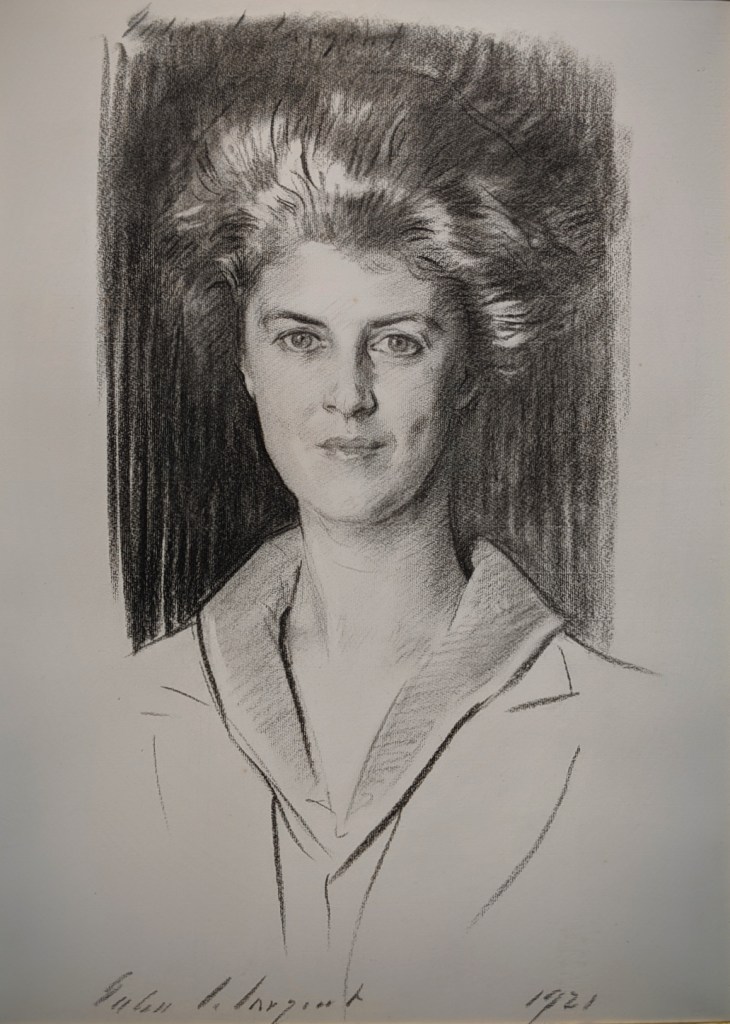
Eleonora Randolph Sears, 1921, charcoal
A devoted and successful athlete and a pioneering figure in women’s sports. She garnered as many as 240 athletic trophies during her lifetime, winning the US doubles tennis championship four times between 1911 and 1917 and becoming the first female national squash champion in 1928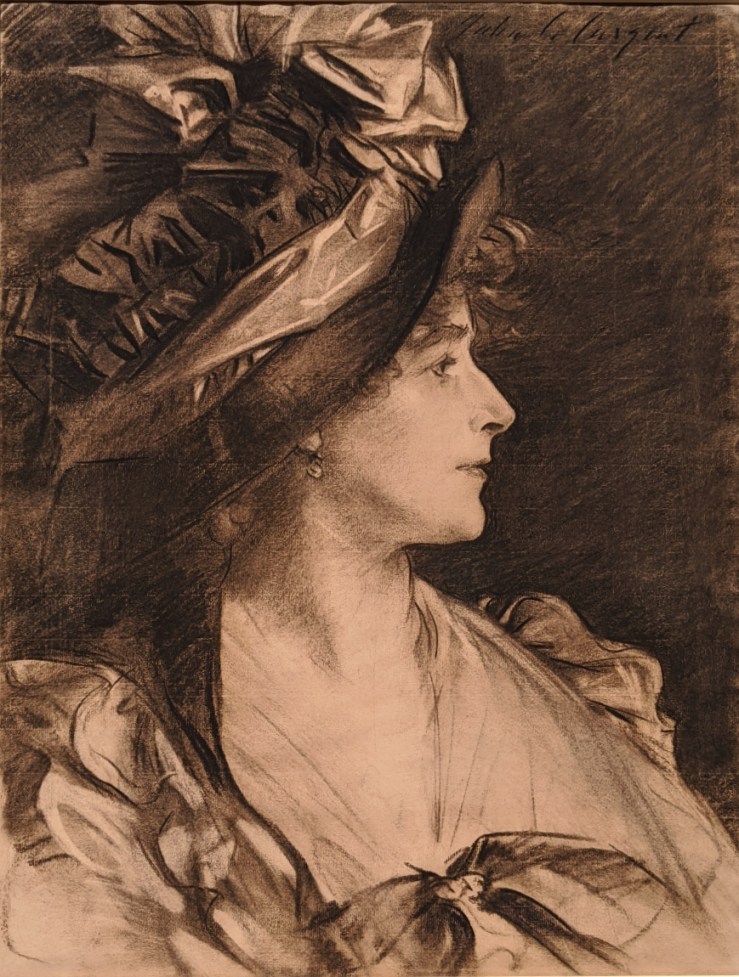
Gertrude Kingston, ca. 1909, charcoal 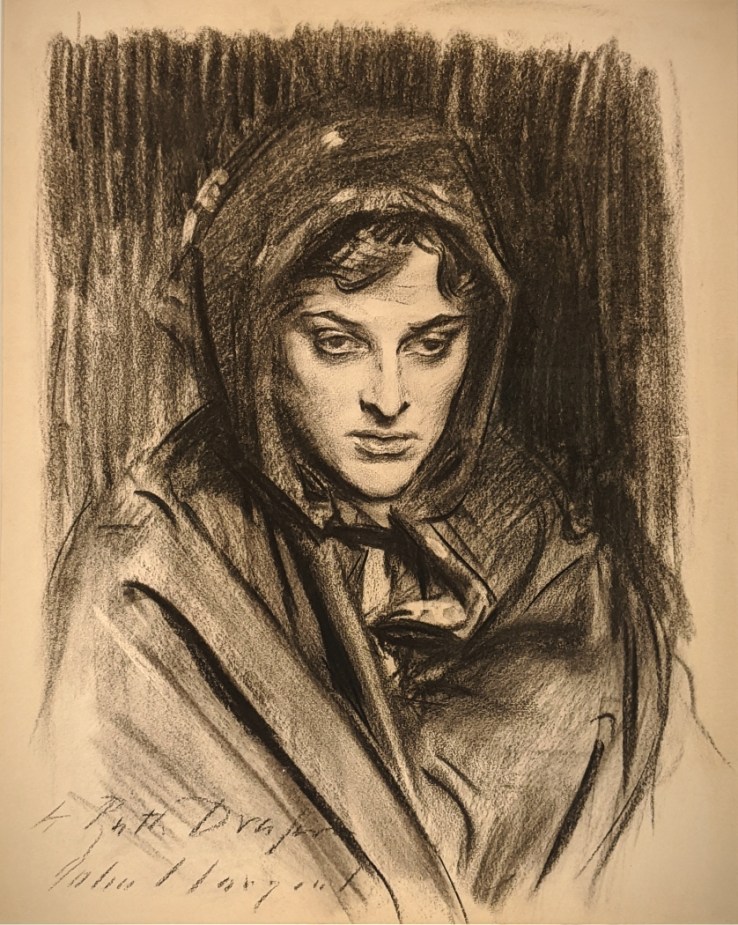
Ruth Draper as a Dalmatian Peasant, 1914, charcoal
The American actress Ruth Draper is credited with originating the now-familiar one-woman show. She wrote her own monologues and impersonations, both dramatic and comic, and gained fame in the United States and Europe. Sargent first drew a conventional portrait
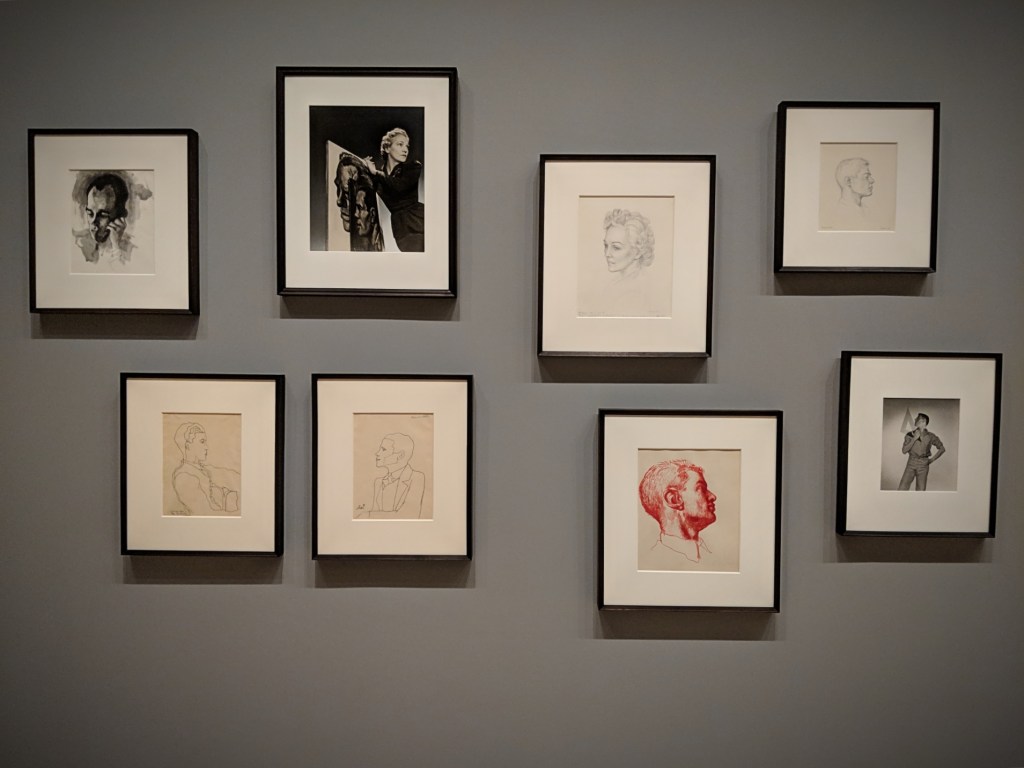
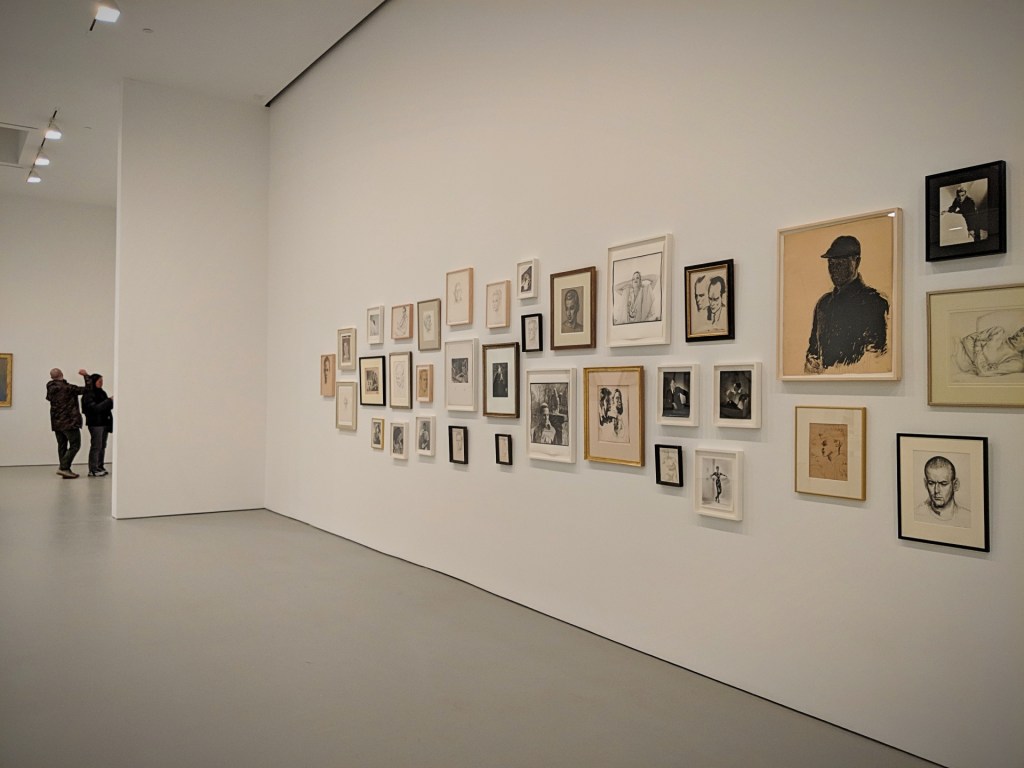
John Singer Sargent (1856–1925) was one of the greatest portrait artists of his time. While he is best known for his powerful paintings, he largely ceased painting portraits in 1907 and turned instead to charcoal drawings to satisfy portrait commissions.
The Morgan Library & Museum presented a major exhibition of his beautiful portraits of beautiful people, in charcoal.
November 10th, 2019







 The Humble Fabulist