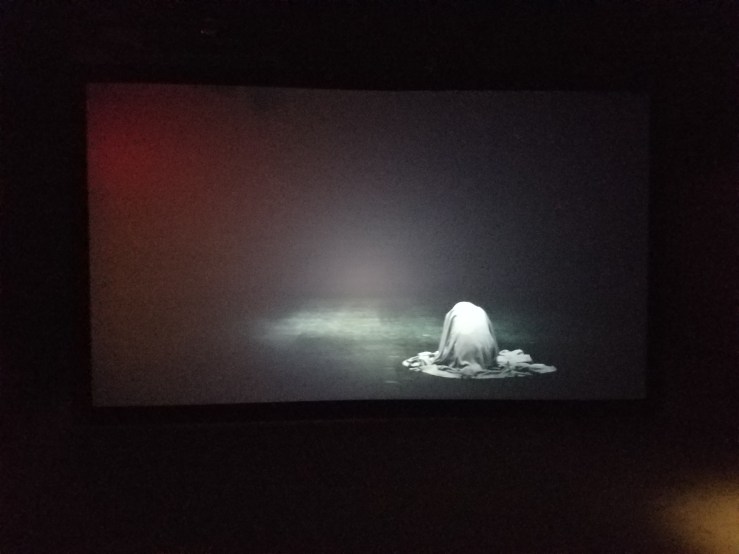
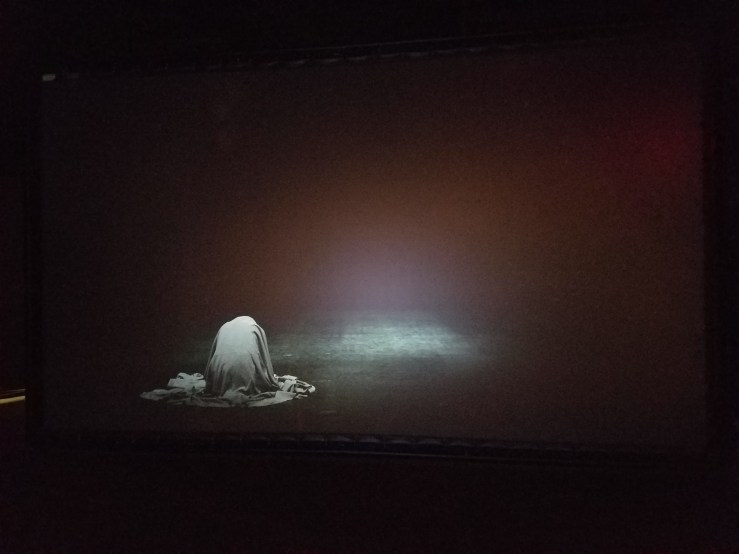
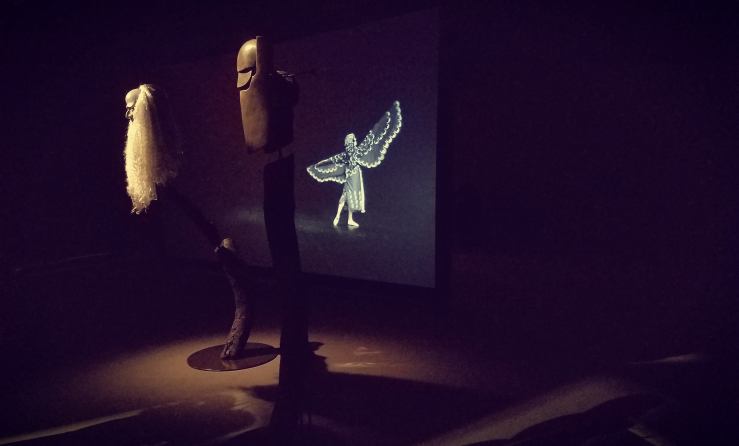
Simon Starling: At Twilight (After W. B. Yeats’ Noh Reincarnation), is a multimedia project in which the artist explores the influence of Noh on Western Modernism. It was displayed in the Japan Society’s galleries starting with a dimly lit room where a modern interpretation of At the Hawk’s Well, W.B. Yeats’ one-act dance play was showing alongside masks created by Noh Mask maker, Yasuo Miichi. The play was inspired by Yeats’ close collaborator and friend, the poet Ezra Pound who at the time, was translating Japanese Noh plays.
The installation continued in the ”mirror room”, a place Noh performers would traditionally use to change into their characters and, finally, concluded with an exhibit of photographs, prints, masks and other archival material – all related to Mr Starling’s project.
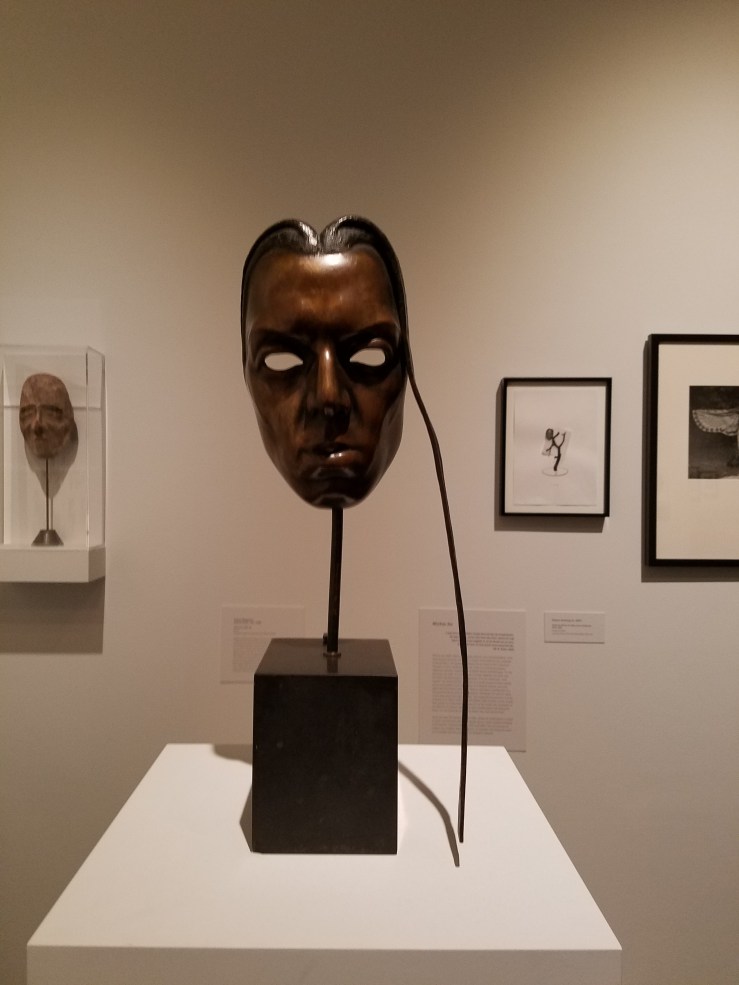
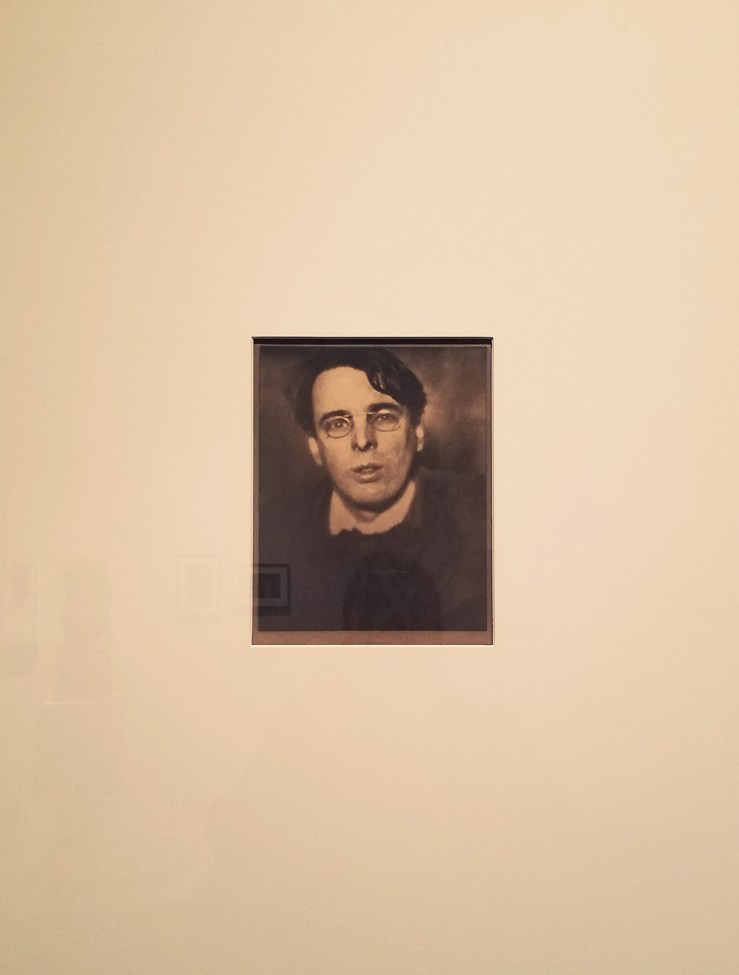
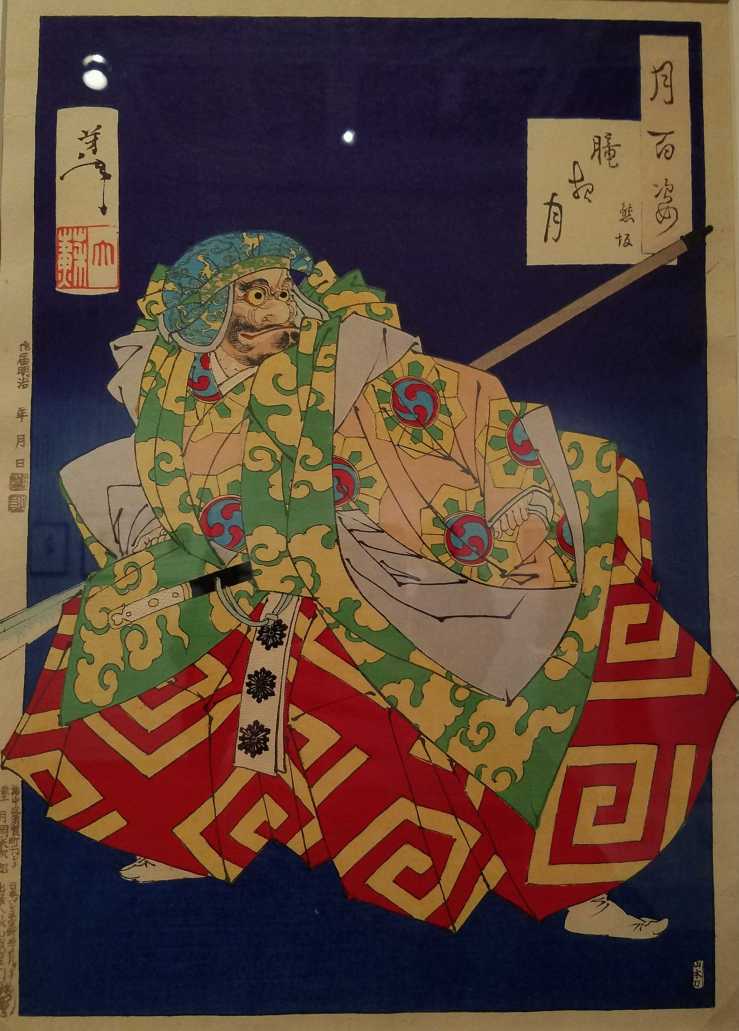
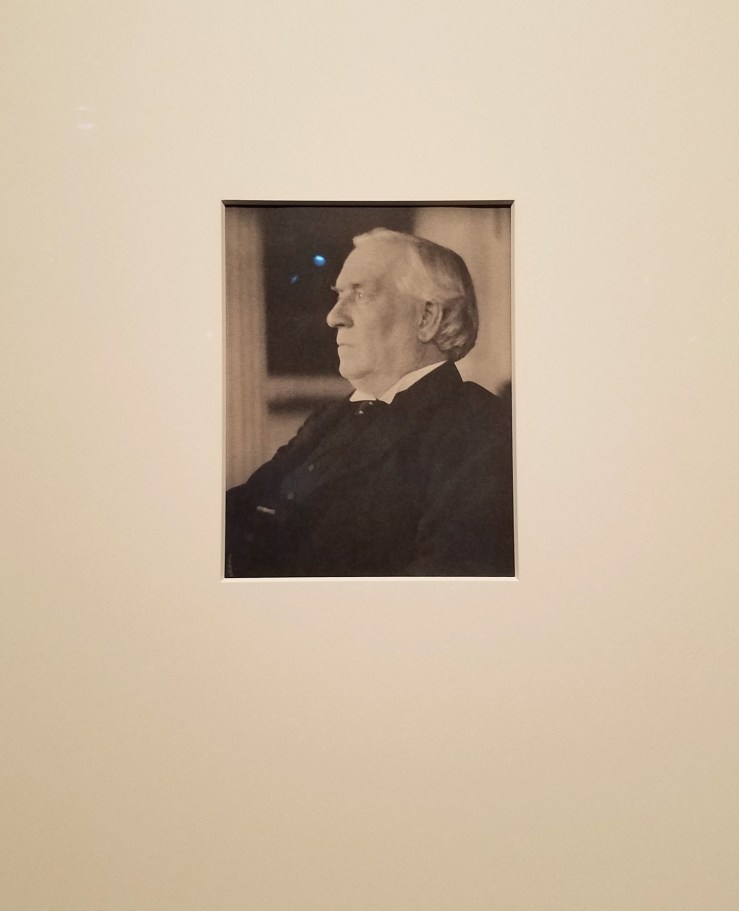
Bronze portrait of the dancer Michio Ito, who performed as the Hawk in the original 1916 staging of ”At the Hawk’s Well”, conceived as a Noh mask and created in the mid-1920s, around the time when Ito was collaborating with New York-based choreographer Martha Graham. Isamu Noguchi, 1904-1988.W.B. Yeats, 1913 by Alvin Langdon Coburn (1882-1966). Digital print.The hawk costume seen in the film.The elephant in the room.The Bamboo Gallery was converted into a mirror room (kagami-no-ma), traditionally used by Noh performers to change into their characters. Costumes reproduced based on archival materials from Yeat’s original play were displayed here.Rock Drill, 1913-14. Bronze by Jacob Epstein. One of the Modernist works that inspired the creation of the Noh masks…… and the creator, Jacob Epbstein. Photogravure by Alvin Langdon Coburn, in 1914.Kumasaka in the Misty Moonlight, undated. Polychrome woodblock print by Tsukioka Yoshitoshi (1839-1892).Noh Mask, Edo period (1603-1868) by an unknown artist.H.H. Asquith, 1914. Photogravure by Alvin Langdon Coburn (1882-1966). H.H. Asquith was Prime Minister of England between 1908 and 1916. Known for his indecisive leadership during the initial stages of WWI, he was a regular guest at the home of Lord and Lady Cunard and was among the intimate audience gathered at the premiere of ”At the Hawk’s Well”. Prior to this, Asquith met the Japanese dancer Michio Ito, who played the Hawk.
Ito later recalled: At supper, Lady Cunard, a refined, white-haired gentleman and I, all sat at a table together. The old man tried to carry on a conversation with me. However, it was in English, so I didn’t follow very well… I began to get frustrated, and interjected in halting English: ”If you allow me to speak in German I can answer a little more intelligently.” Hearing this, the old man let out a hearty laugh: ”I am an Englishman and can’t speak Japanese. You are Japanese and can’t speak English. If German mediates between us, then by all means let’s speak in German…” The person I had spoken to in German – the language of his enemy – had been the Prime Minister of England.”
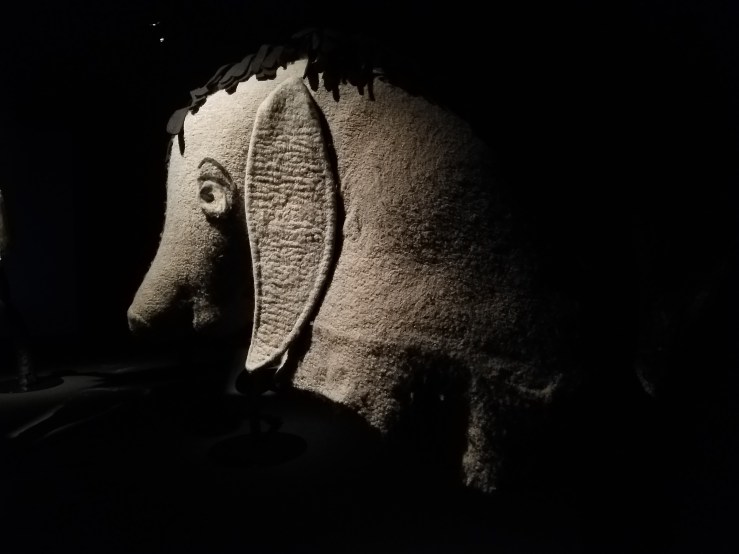
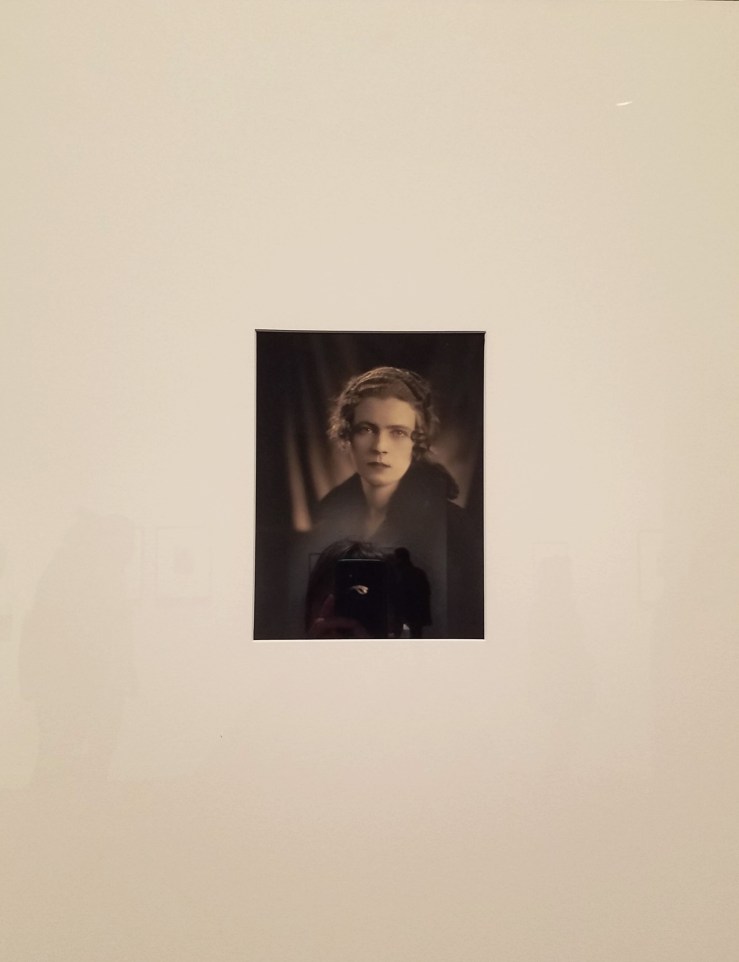
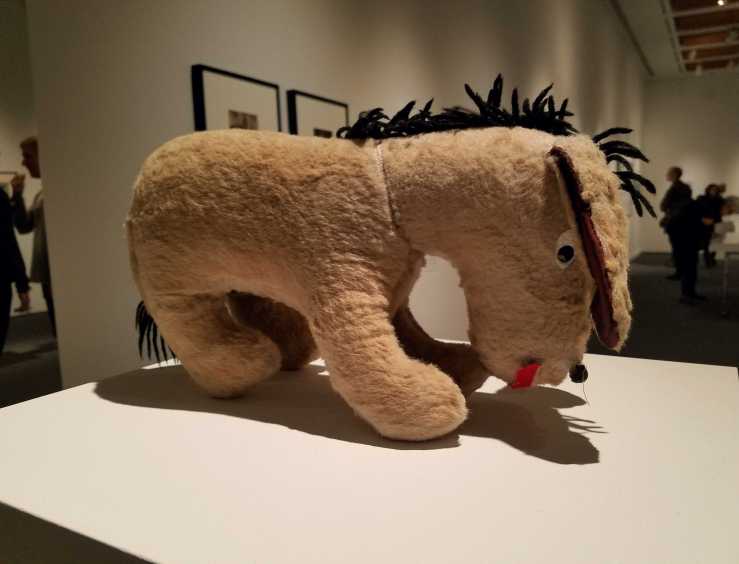
Noh mask by an unknown artist. Edo period (1603-1868).Nancy Cunard, 1916. Digital print by an unknown photographer.Eeyore. Ten years after the first performance of ”At the Hawk’s Well”, the trees of Ashdown Forest that surrounded W.B. Yeats and Ezra Pound’s wartime retreat, Stone Cottage, were immortalized in Ernest Shepard’s illustrations for A.A. Milne’s Winnie-the-Pooh books. Milne based Pooh’s One Hundred Acre Wood on Ashdown Forest, where he lived and where, at the time Yeats and Pound were there, he was writing wartime propaganda articles for the MI7b. Eeyore is the pessimistic, old grey donkey from the story.
Pessimistic, downward facing Eeyore concludes the three-part series about Simon Starling’s project shown at the Japan Society. For more inspirational views connecting the pieces, please click here and here.
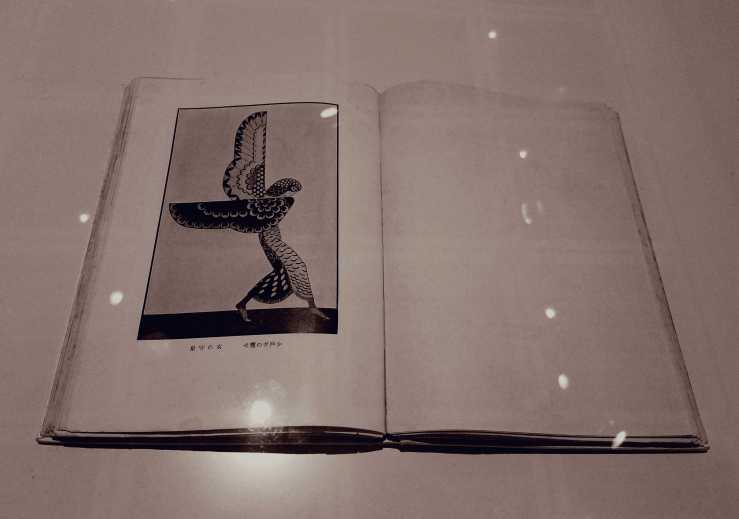
”At the Hawk’s Well”, W.B. Yeats’ dance play premiered in 1916 with Michio Ito at the role of the hawk. In its 2016 re-incarnation, the dance was co-choreographed by Javier de Frutos.Noh no Tenkai (The Evolution of Noh), 1954. By Jiro Nan’e (1902-1952).
Simon Starling: At Twilight
(After W.B. Yeats’ Noh Reincarnation)
A multimedia installation by Simon Starling to mark the centennial of W.B. Yeats’ staging of the Noh-inspired dance play ”At the Hawk’s Well”, in 1916. The project aimed to illustrate the influence of Noh on Western Modernism by pairing newly created masks, costumes and a video (from which the above stills) with Modernist works and archival material connected to Yeats and his circle.
It was on show at the Japan Society until mid January 2017.
*Title from Kino no Tabi – the Beautiful World anime series (2003)
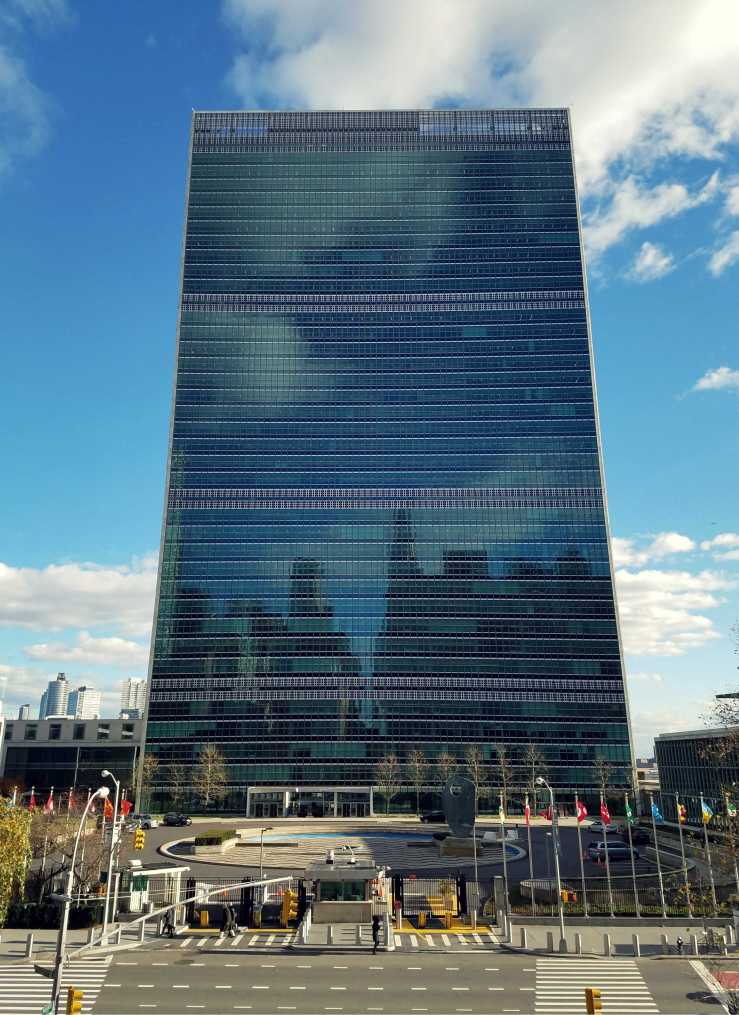
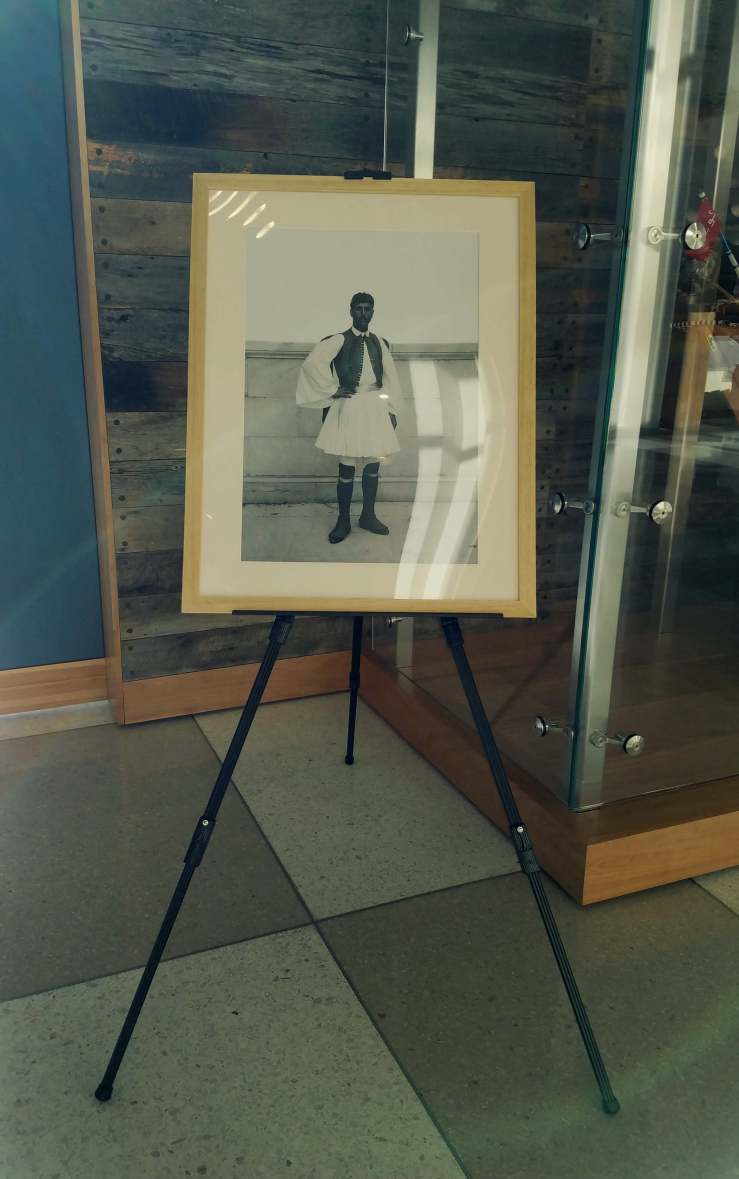
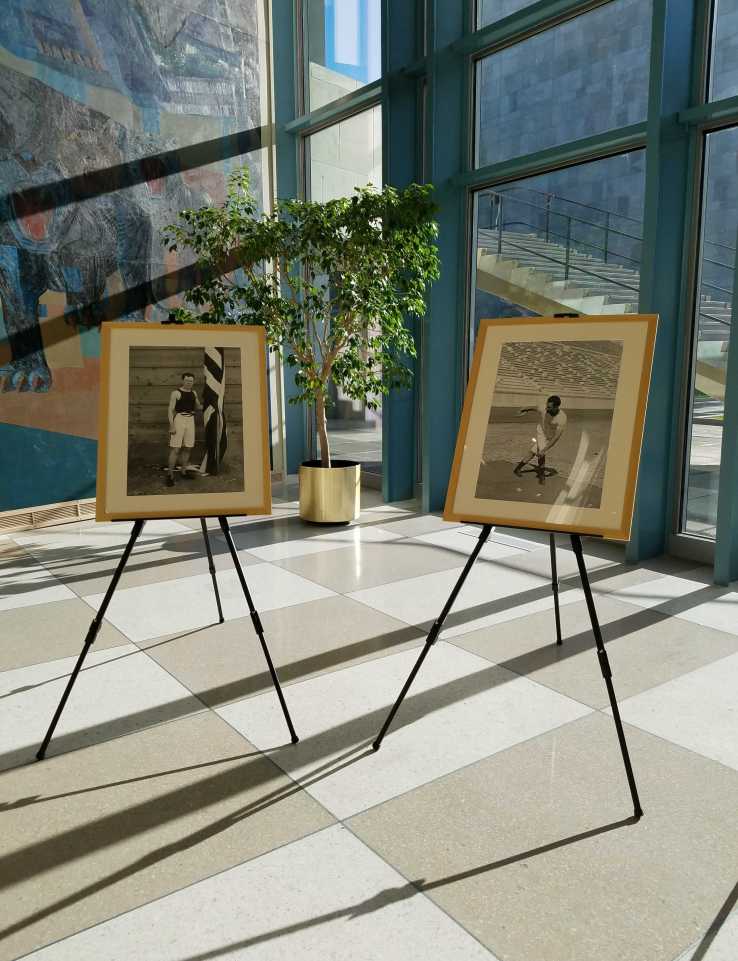
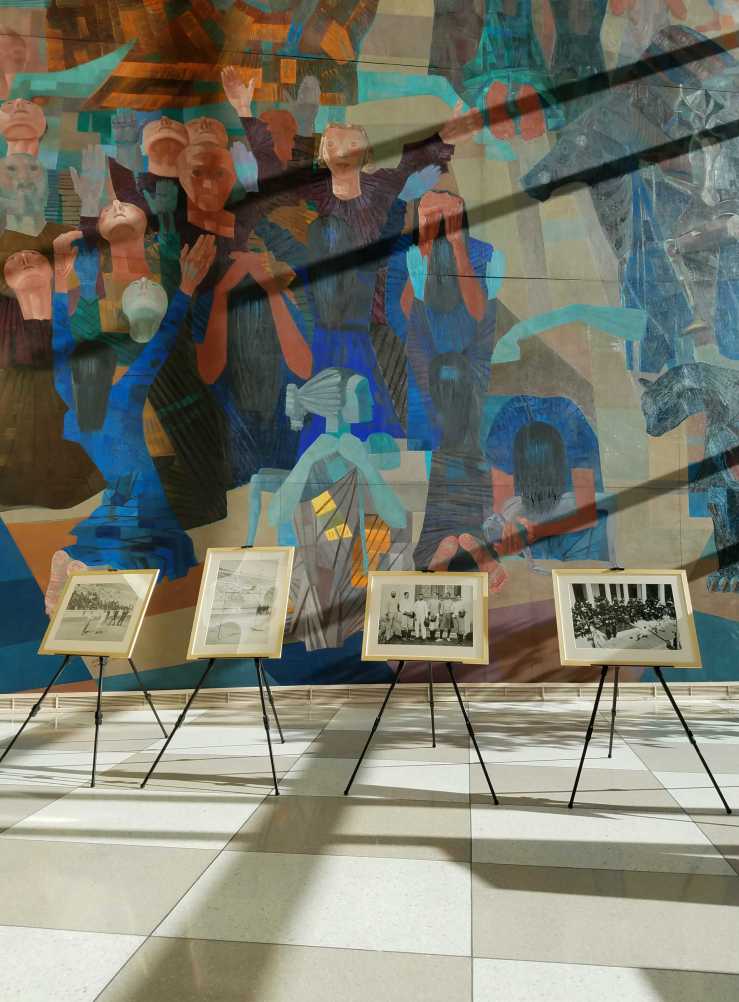
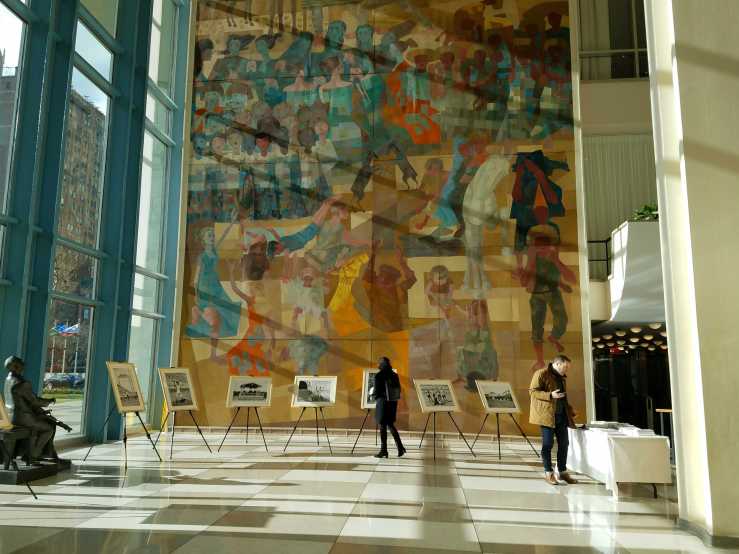
An exhibition of a series of photographs by the official photographer of the 1896 Olympic Games, Albert Meyer. Traveling in U.S. cities, it arrived in New York where it was hosted at the U.N. Headquarters and the N.Y. Greek Consulate.
A rare opportunity to get a glimpse into events and athletes of the first Modern Olympics.
Beautifully arranged at the sun-drenched exhibition space, in front of the magnificent Peace mural by Candido Portinari.
Athens 1896: The First Modern Olympic Games
The Olympic Games of 1896 constitute a breakthrough in the history of sports events. The revival of the ancient tradition transformed international sports meetings into the global events we know today. One of the famous photographers of that period was the well-travelled and American educated German, Albert Meyer (Dresden 1857-1924). Meyer traveled to Athens for the Games and became the official photographer of the German Team. The 25 rather Spartan photographs of his album capture the chronicles of the Games, documenting both athletic rituals and the athletic labors of the participants. The photographic studio and archive of Albert Meyer was destroyed in 1945, when allied bombings flattened Dresden, turning the original photographs into rare and priceless artifacts. Among the members of the organizing committee who received one of the rare leather albums was its Secretary George Streit, banker and minister of the Greek government of the period. Marinos Yeroulanos, his grandson and President of the Board of Trustees of the Benaki Museum, donated the album to the Historical Archives of Museum were it is safeguarded today as a unique token to both History and Art. [extract from the exhibition leaflet]
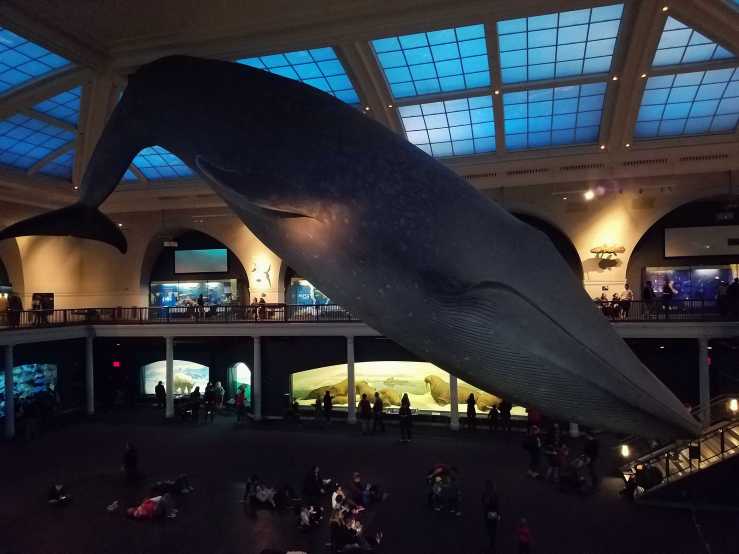
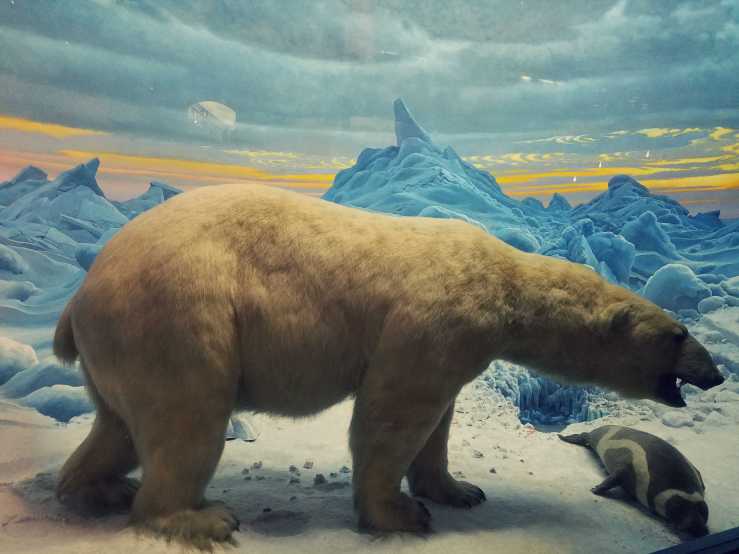
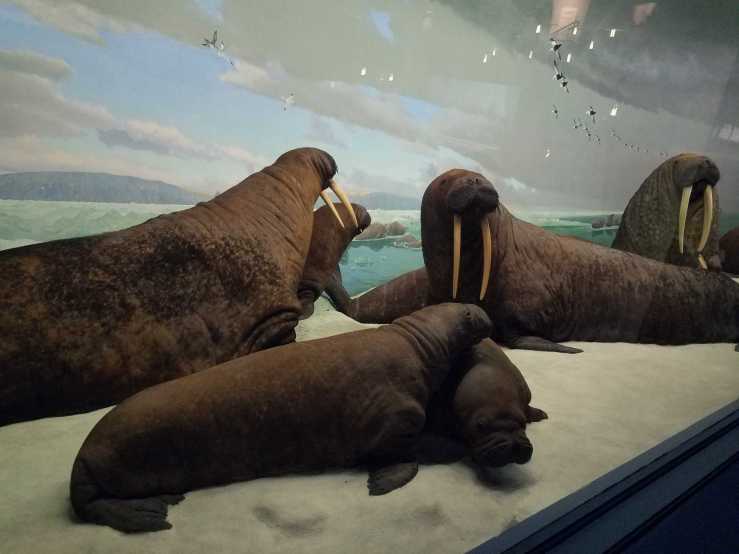
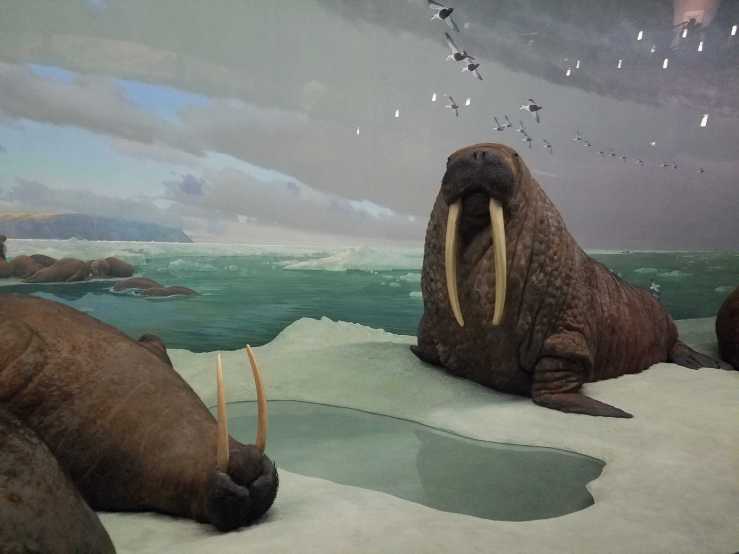
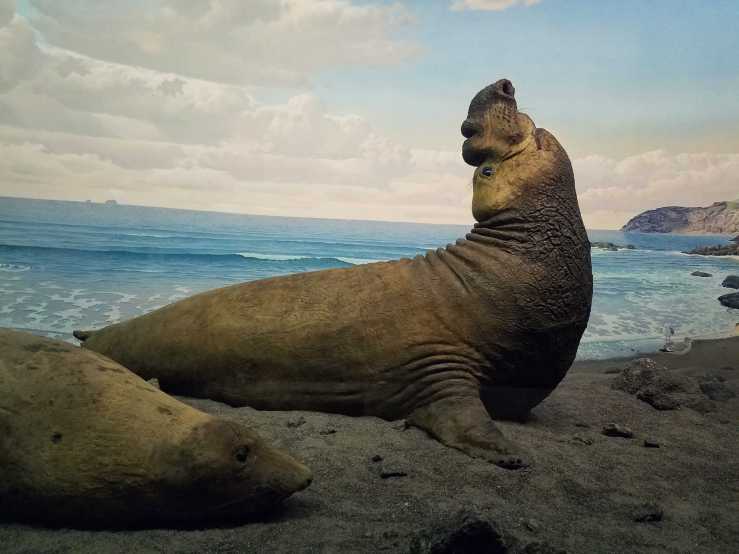
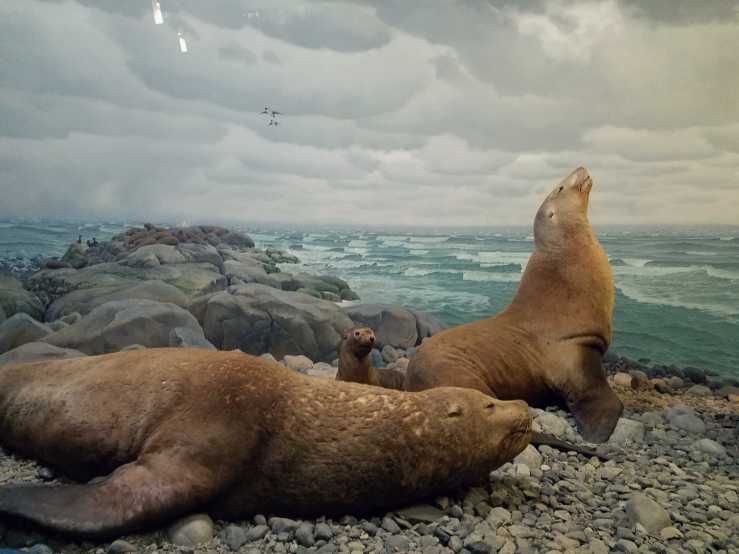
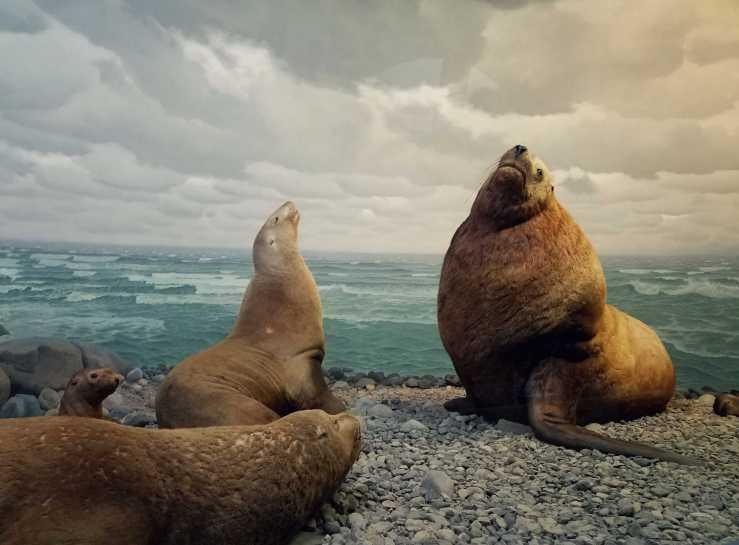
Walking through the immensity of the Museum of Natural History, in Upper West Side. Every room another wonder of our Cosmos.
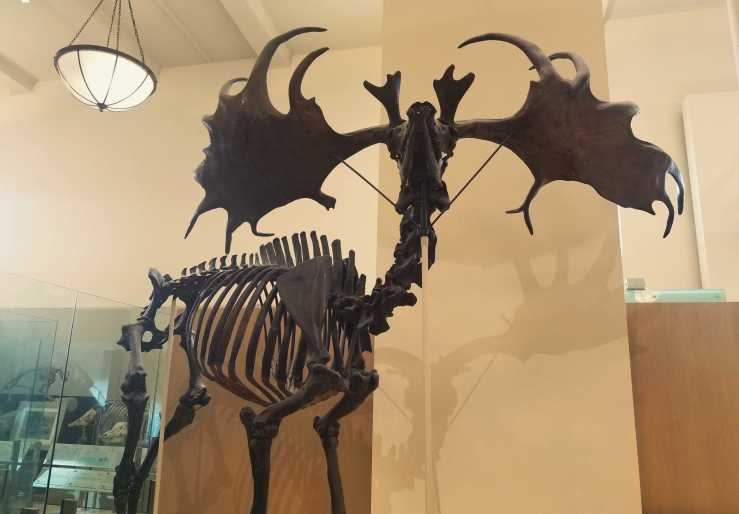
Megaloceros
Megaloceros (Greek: μεγάλος – megalos + κέρας – keras, meaning “Great Horn”) may be the largest deer ever to have lived. It belongs to the group called artiodactyls (Greek: άρτιος – ártios + δάκτυλος – dáktylos, meaning ‘even finger/toe’) – hoofed mammals that usually have an even number of toes. Generally, only male artiodactyls have antlers. In living deer, they are used during the mating season for wrestling with other males and attracting females. Then, they are shed. This means that Megaloceros regrew its enormous antlers every year!
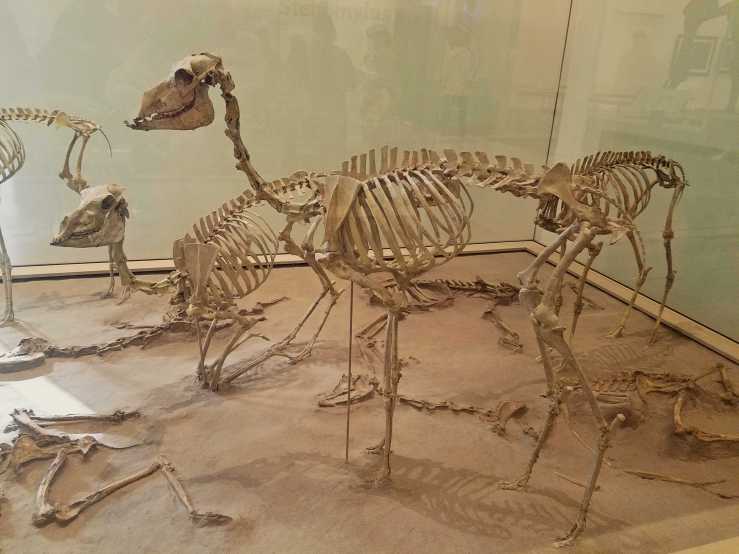
Stenomylus hitchcocki
Stenomylus (Greek στενός – stenos “narrow” and μύλος – milos [latin: mola] “molar” meaning ”narrow tooth”. This group of camel skeletons was buried in dune sand in western Nebraska 22 million years ago. These individuals are only some of the numerous completely preserved camel skeletons that were found together at a site in Agate Springs National Monument. Stenomylus lived in a region where dune fields extended widely. It was relatively primitive in its body skeleton, but had the more advanced feature of very high-crowned teeth – presumably to cope with sand-laden food, which rapidly wears down the teeth.
If I understood correctly, ”hitchcocki” was added in honour of Dr. Edward Hitchcock, a geologist and President of Amherst College, whose Ichnology Collection of dinosaur footprints and tracks is invaluable (read more about it here).
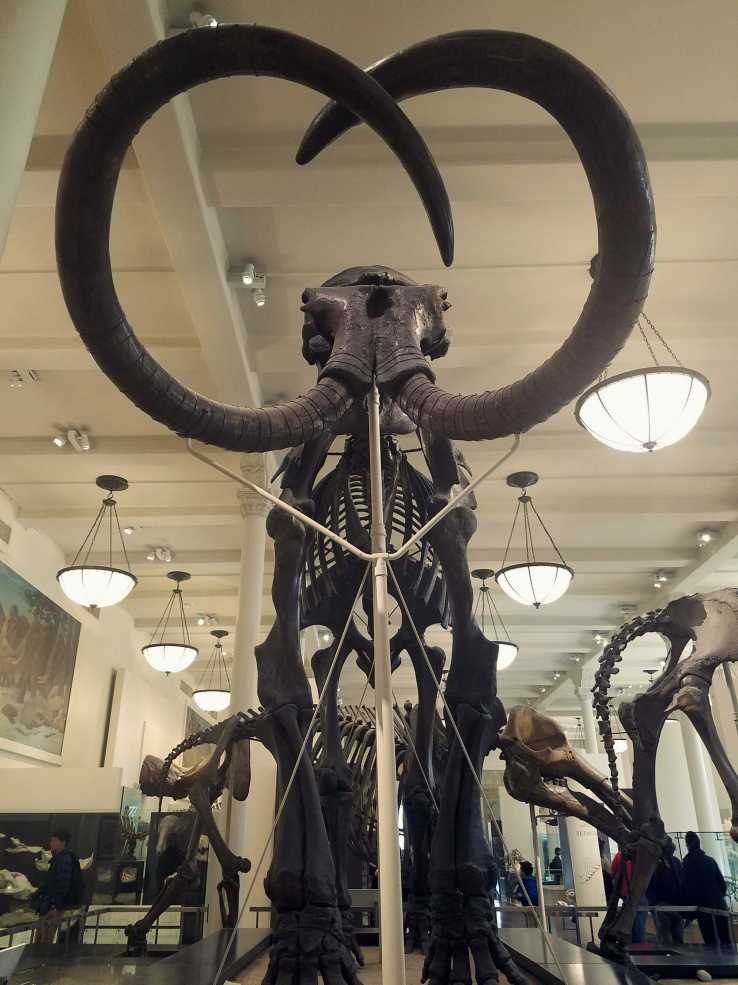
Mammuthus
Mammoths were widespread during the Ice Ages. Some had woolly fur to keep them warm. This is a ”non-woolly” mammoth that lived in southern parts of the United States, which were not covered by glaciers. Like living elephants, Mammoths had trunks. We can’t see it on this skeleton, because soft parts are rarely preserved as fossils. But we can see where the trunk was attached, at the large single opening high on the front of the skull. The Greek myth of one-eyed giants, the Cyclops, may have arisen when ancient people found fossil provoscidean skulls and mistook this nostril opening for an eye socket. Most mammoths died out by 11.000 years ago but a few somewhat dwarfed forms persisted until about 3.000 years ago on remote arctic islands.
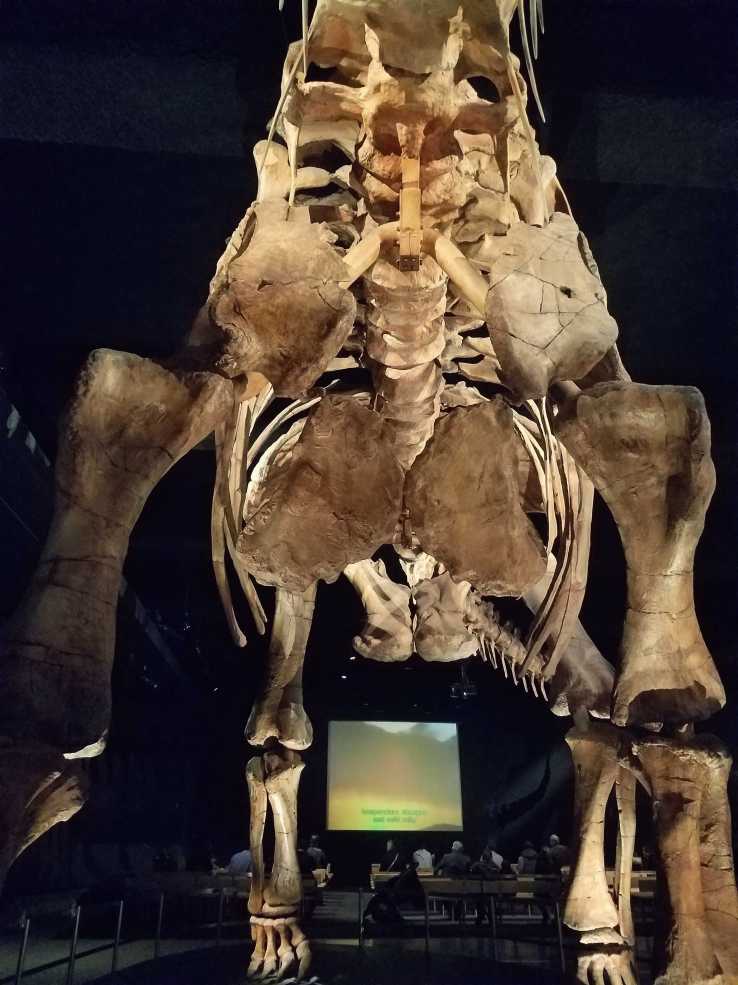
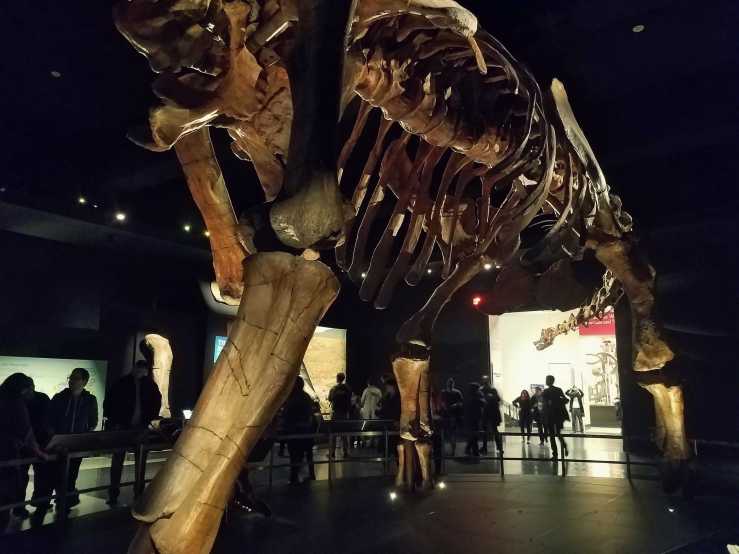
Titanosauria
(click on photo for a panoramic view and caption)
Around 100 million years ago, they lived in what is now Argentina. This huge dinosaur is a sauropod: a massive plant-eater with a long neck and a whip-like tail. Sauropods roamed the planet for 140 million years and include the largest land animals ever.
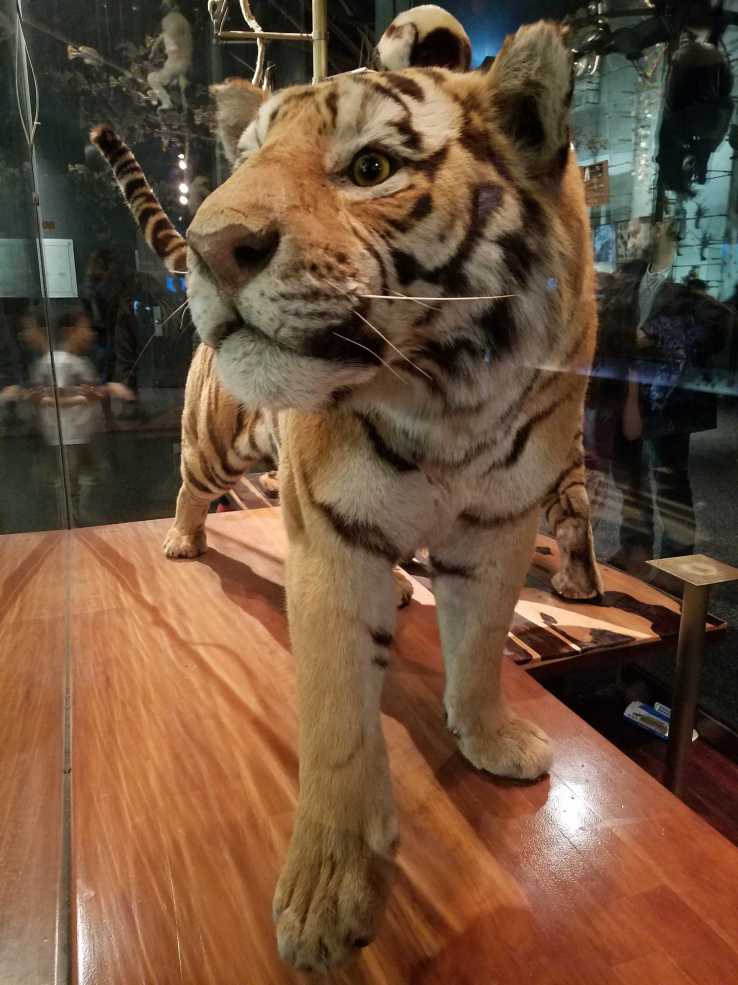
This stuffed beauty
(although I instinctively dislike stuffed animals)
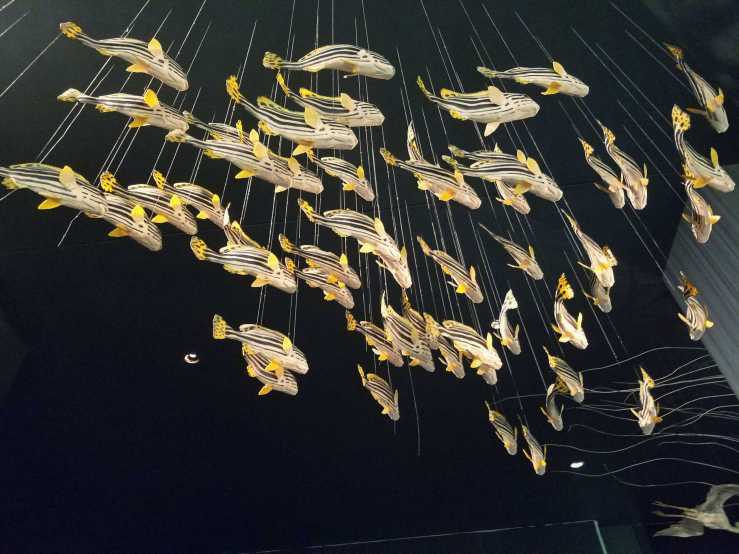
Creatures of the sea hanging in mid-air
And those that came from the cold
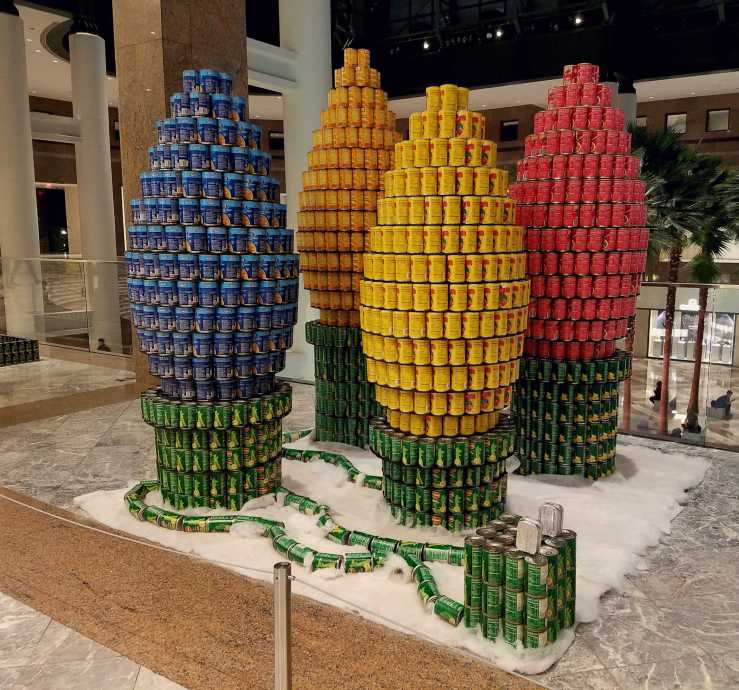
Part of an annual exhibition of structures made by unopened food cans which are later donated to local hunger relief organisations. This was at the Winter Garden, public space of the massive Brookfield Place in Battery Park, but later I learned that exhibitions, events and even design competitions are also held in other U.S. cities and internationally. And visitors can also take part by bringing their own cans for donation.
My favourite was the Guggenheim in front of a wall made out of Greek olive oil tins, but I don’t think it won the competition.
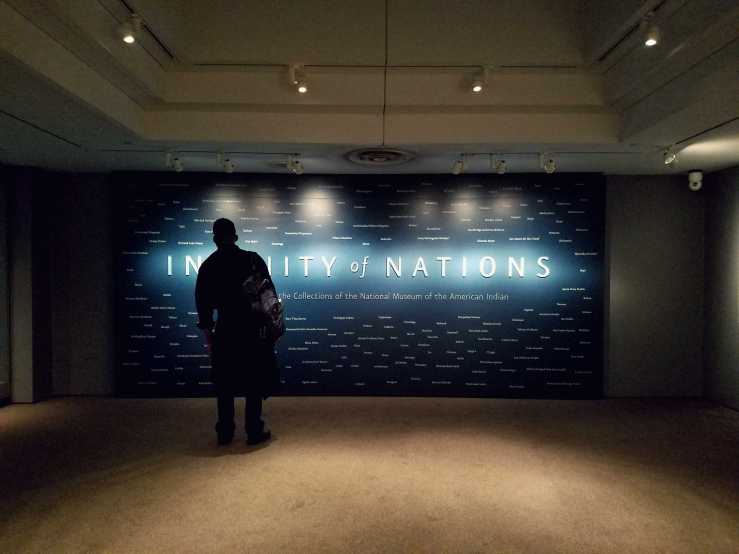
Going back to the roots and learning a bit more about Native Americans; peoples, traditions and art that were thriving here before America’s discovery by the Old World.
A sad necessity perhaps but such dedicated museums are the most effective means in rendering these cultures and their history more widely accessible to visitors.
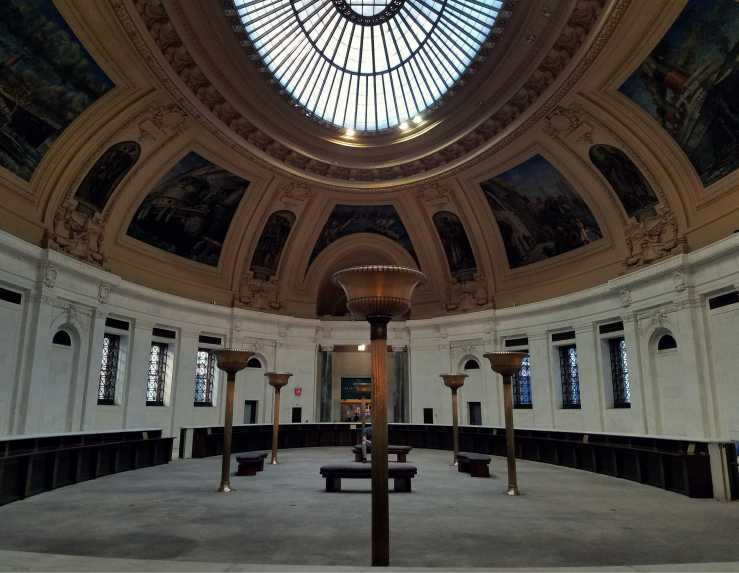
In New York, the museum is housed in the Alexander Hamilton U.S. Custom House, one of the most splendid Beaux Arts buildings in the City with a magnificent rotunda dome.
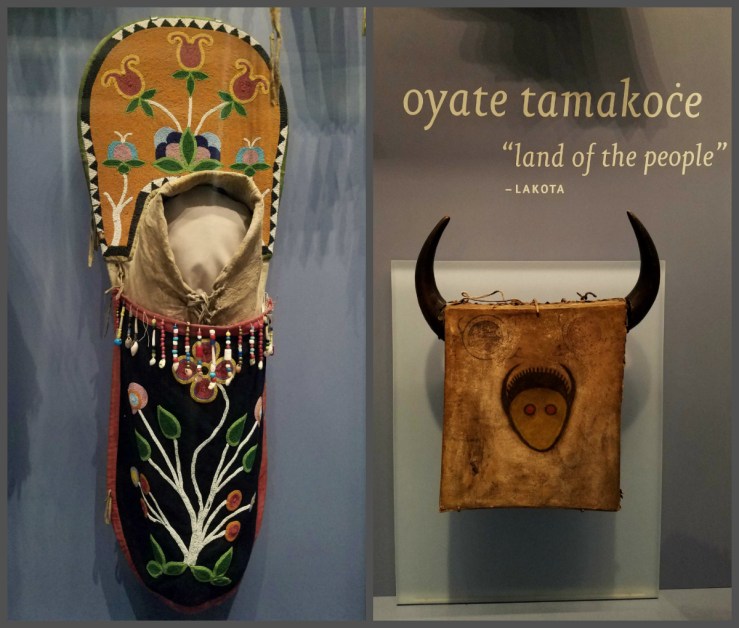
The rotunda skylightInuit Woman’s Inner Parka (amauti) also known as a tuilli. It was made from caribu skin for a mother to carry her infant. It incorporates almost 140.000 beads. It was made between 1890 and 1925 when whaling flourished on the west coast of Hudson Bay and the Inuit obtained glass beads from whalers through trade.
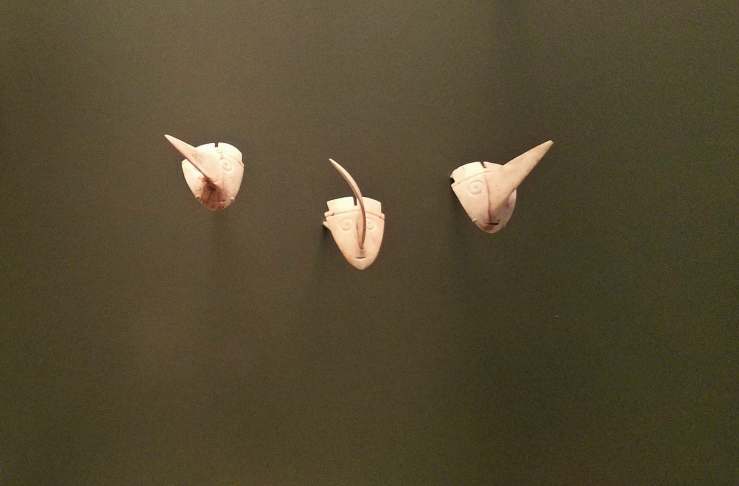
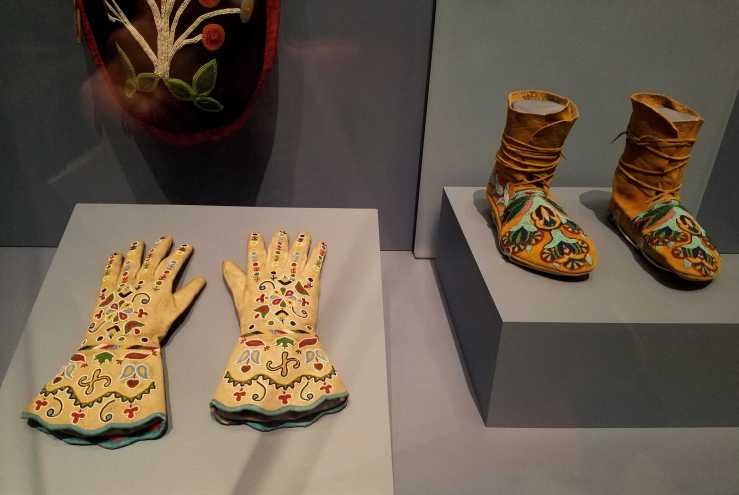
Mississippian effigy jar. 1350-1550 AD, ClayMississippian long-nosed god maskettes. 1100-1500 AD, marine shellSisitonwan Dakota (Sisseton Sioux) gauntlet gloves. South Dakota, ca. 1880. Deer hide, cotton cloth, glass beads, ribbon. Moccasins associated with Peo Peo T’olikt (Bird Alighting, Nimi’ipuu, 1857-1935). Idaho, ca. 1880. Deer hide, glass beads, cotton thread.
”Shortly after the outbreak of the 1877 war with the United States, Chief Looking Glass declared that he wanted peace and moved his camp to Clear Creek on the 1863 reservation. Peo Peo T’olikt, who was in his twenties, was instructed by the chief to parley with militiamen and soldiers who came to the camp on July 1. The Indian camp raised a white flag, but was attacked and destroyed.
Peo Peo T’olikt was wounded in the leg, but escaped and was involved in all the subsequent battles of 1877. He lost a wife and young son in the war, but his exploits were many. Capturing the cannon at Big Hole, stealing General Howard’s mules and horses at Camas Meadows, and protecting the camp at Bear Paw are just a few.”
Allen Pinkham, Sr. (Ni Mii Puu)
Tribal historian and former National Museum of the American Indian trustee
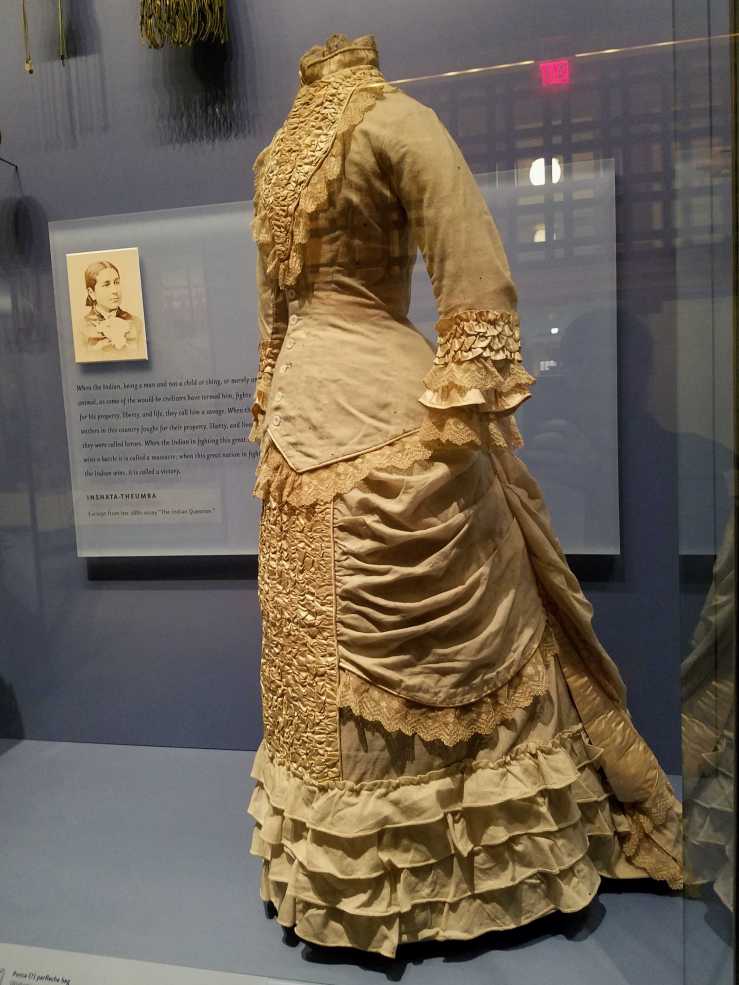
Chilkat Tlingit canoe prow effigy, Alaska ca. 1825-1875. Cedar wood, human hair, paint, abalone shell, opercula. The Haida decorated their boats with clan designs and insignia. A Tlingit might add a canoe prow figure carved in the form of a shaman who would guide the way and warn of the approach of enemies.Wedding dress worn by Inshata-Theumba (Susette La Flesche or Bright Eyes, Omaha, 1854-1903). Nebraska, ca. 1881. Wool
”Susette La Flesche descended from Omaha tribal leaders on both sides of her family. As a child she lived in an earth lodge, though she also attended a mission school. La Flesche witnessed the expulsion of the Ponca tribe from their homeland to Indian Territory in 1877, and the subsequent imprisonment of Standing Bear and other Poncas who had attempted to return to Nebraska. These events launched La Flesche’s career as a nationally known activist who argued against the involuntary removal of indigenous people from their homelands and for Indian citizenship rights.
La Flesche found a soulmate in Thomas Tibbles, a newspaper reporter for the Omaha Herald who followed the Ponca case. Schooled in Western and Omaha culture and bilingual, La Flesche chose an elegant cream-colored wool skirt and jacket when she married Tibbles in 1881.”
Brenda J. Child (Red Lake Ojibwe)
Historian, University of Minnesota
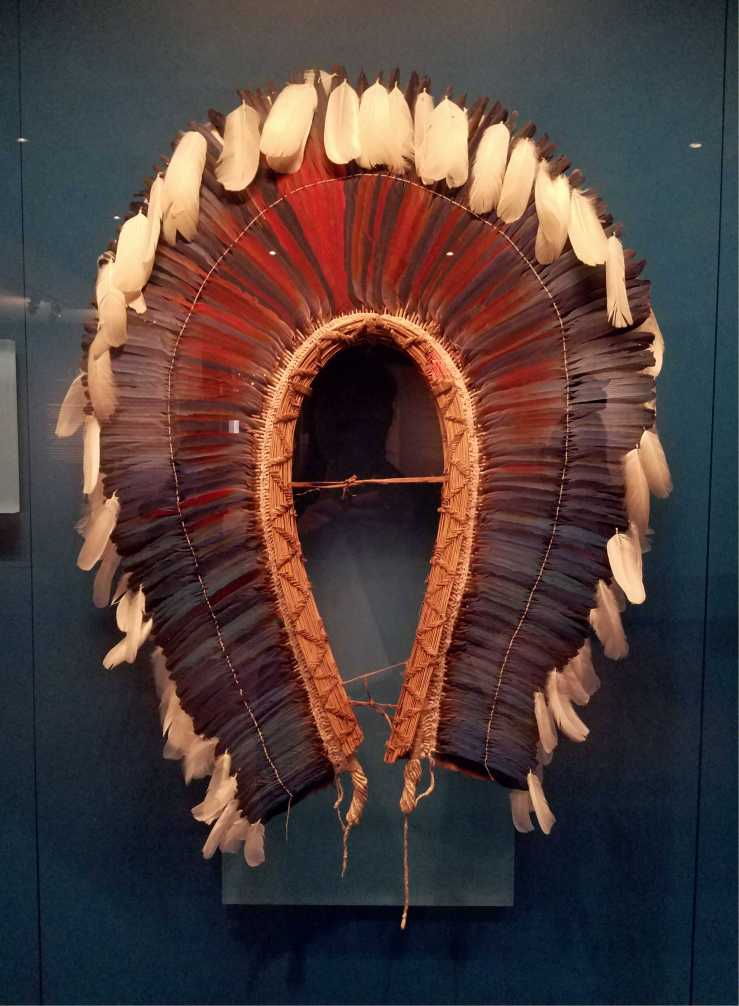
Mebêngôkre krokrokti (feather headdress or cape). Brazil, ca. 1990. Macaw feathers, heron feathers, cotton cordage.
Mebêngôkre men and women wear feather headdresses or capes during children’s naming ceremonies and boy’s initiation ceremonies.
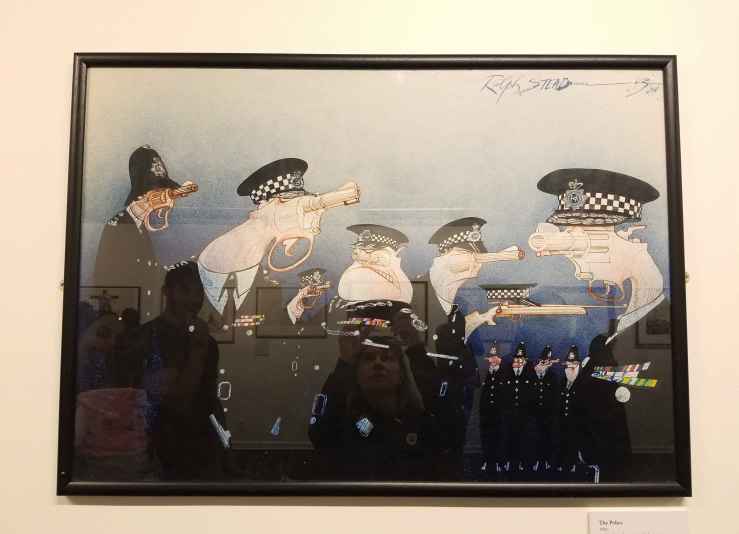
The Police
1983
Pen, brush mouth atomiser and ink on paper
On 14 January 1983, 26-year old film editor Stephen Waldorf was mistakenly shot five times in the head and body by the Metropolitan Police in Earls Court, West London. The police thought he was an escaped prisoner, David Martin. In 1983 two officers were put on trial for attempted murder; they were both acquitted.
Margaret Thatcher. The Last Supposition, 1985
Leonardo da Vinci after Ralph Steadman has had a go at it.. New Statesman, 11 October 1985
Pen and ink on paper
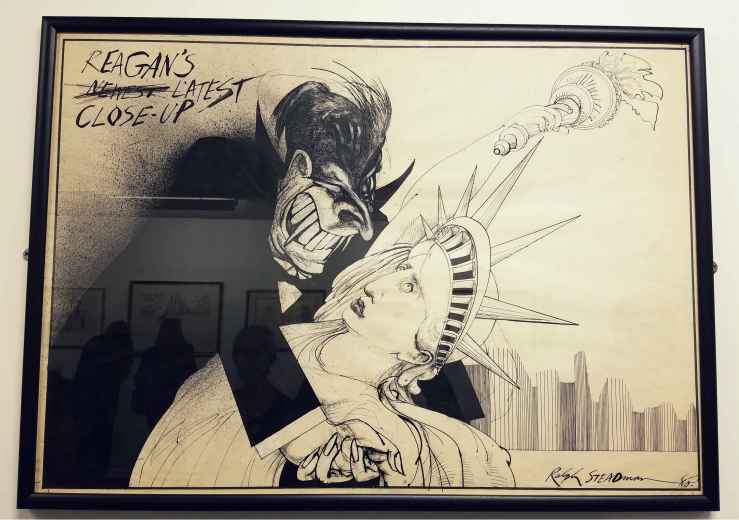
Reagan’s Latest Close-Up New Statesman, 7 March 1980
Pen and Indian ink on paper
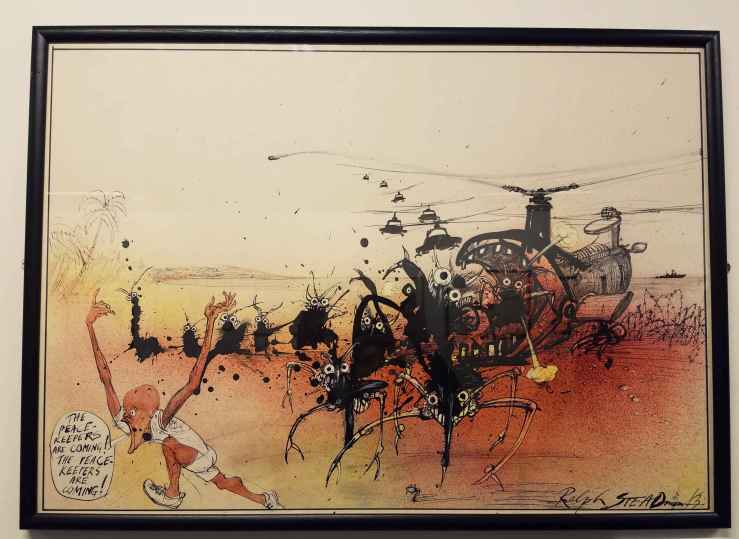
”The Peacekeepers Are Coming!
The Peacekeepers Are Coming!”
1983
Pen, mouth atomiser and ink on paper
In October 1983 thousands of US troops and helicopter gunships invaded the tiny Caribbean island of Grenada after a left-wing coup. Reagan’s incursion into Grenada, a Commonwealth country, was the only occasion on which Margaret Thatcher and the US president had a serious fallout.
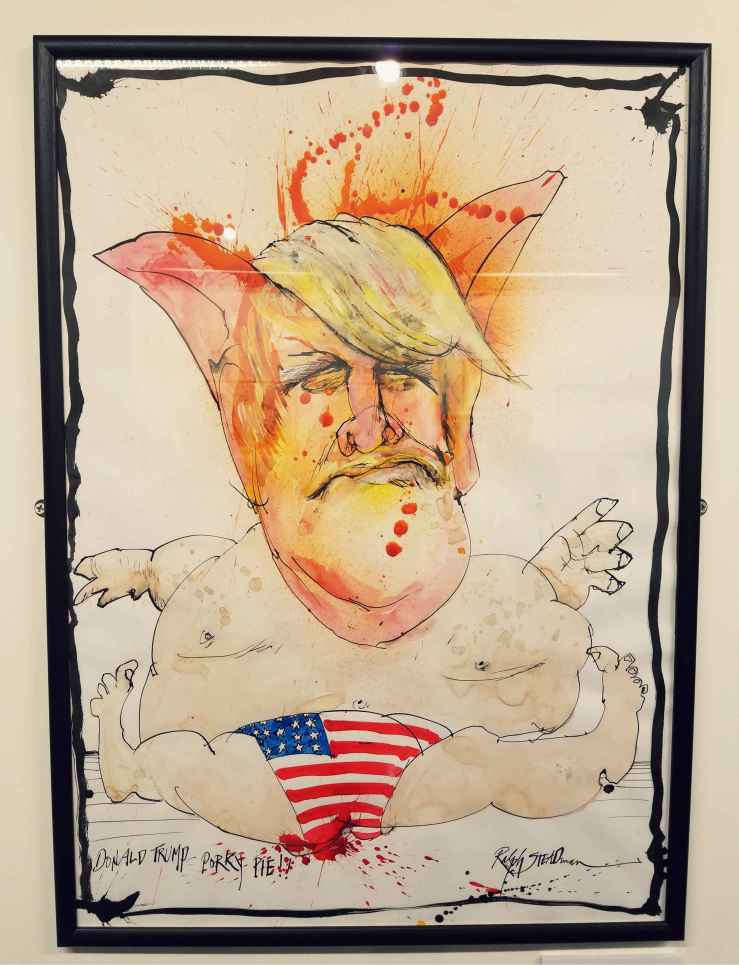
Donald Trump – Porky Pie!!! New Statesman, 17 December 2015
Pen, brush, mouth atomiser, acrylic and gesso on paper
This porcine portrait of the real estate billionaire, reality TV game-show host and presidential hopeful [and, by now, President] Donald J. Trump accompanied an article by Laurie Penny, ”There is nothing funny about a Donald Trump rally”. ”By lying through his teeth”, she writes, ”he has managed to persuade thousands of people that he is the one truth-teller in American politics… Trump is selling fascism with a cartoon face”.
In November 2015, the mayor of Jersey City accused Trump of ”shameful politicizing” after the Republican made unsubstantiated claims that in 2001 the watched on TV ”thousands and thousands” of Arab Americans in New Jersey cheering the attacks on the World Trade Center.
”Porkie pie”, or ”porky”, is Cockney rhyming slang for ”lie”.
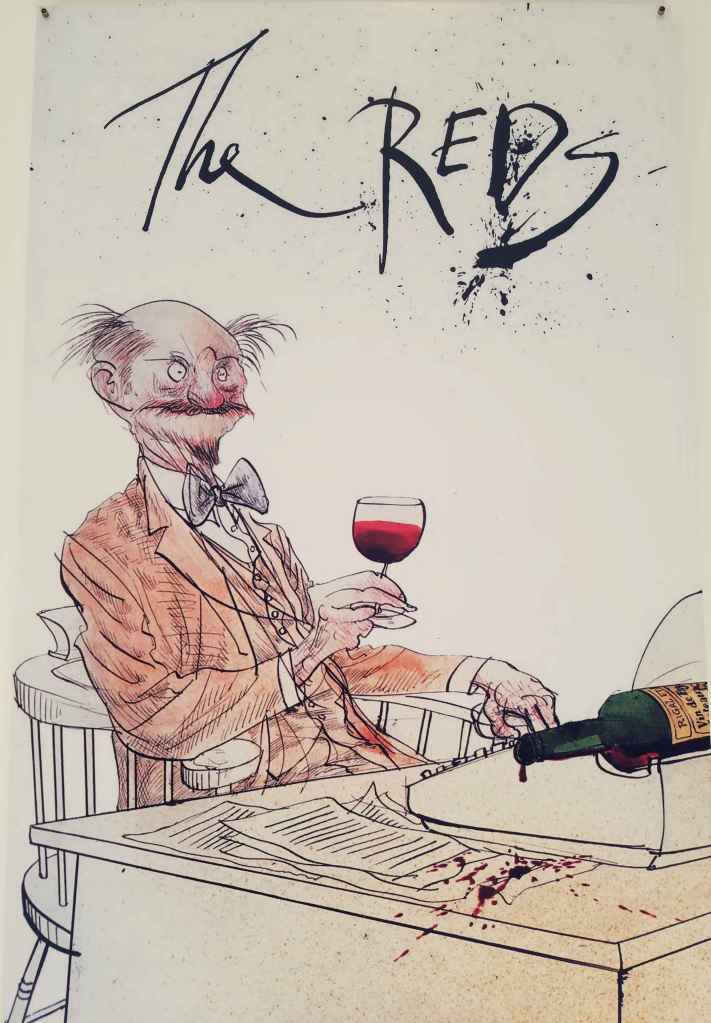
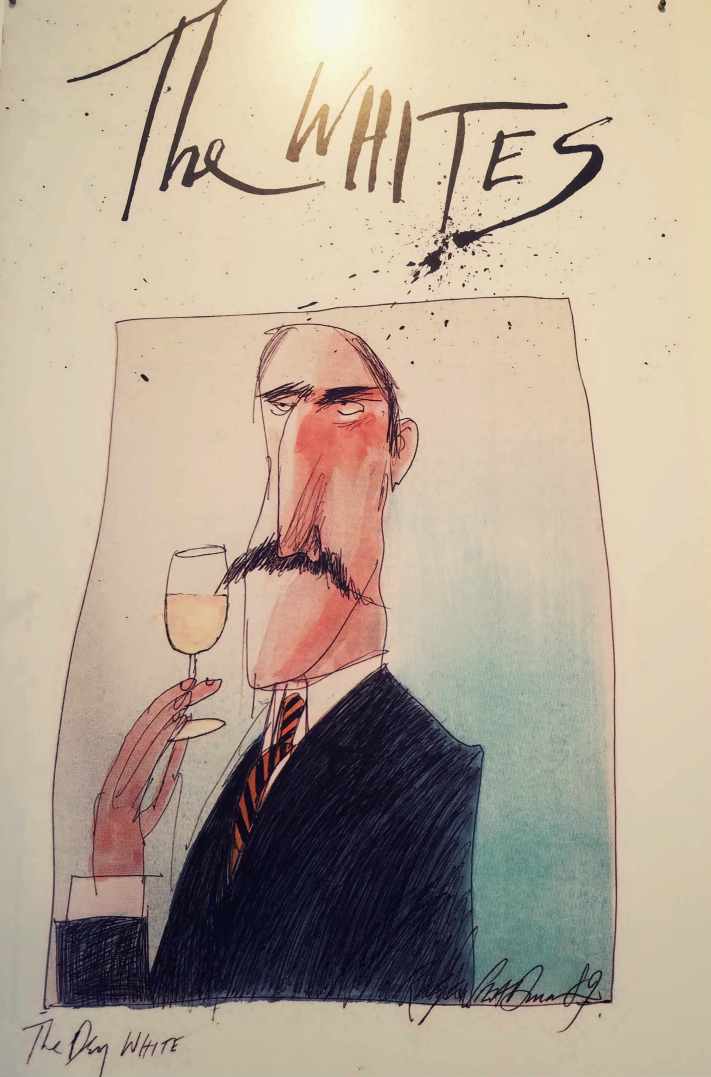
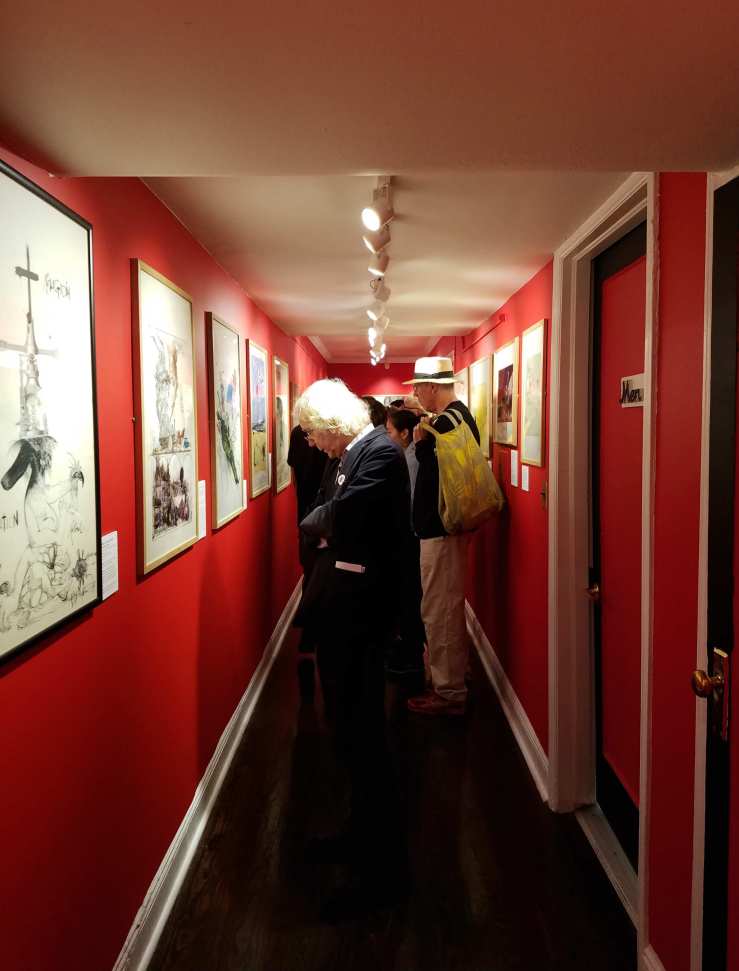
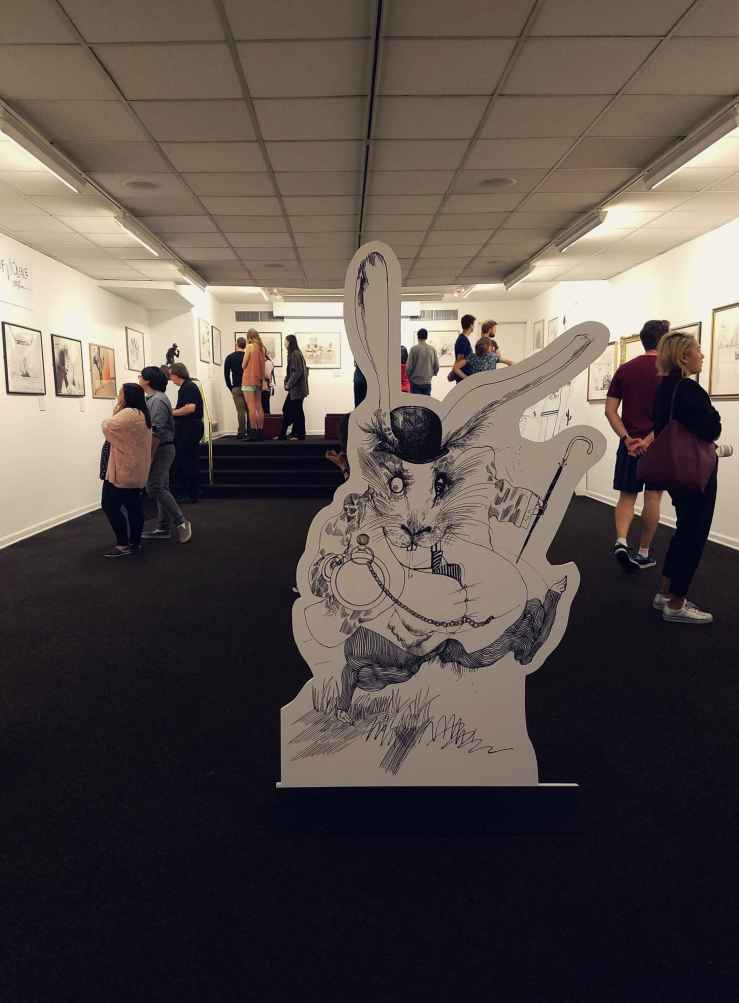
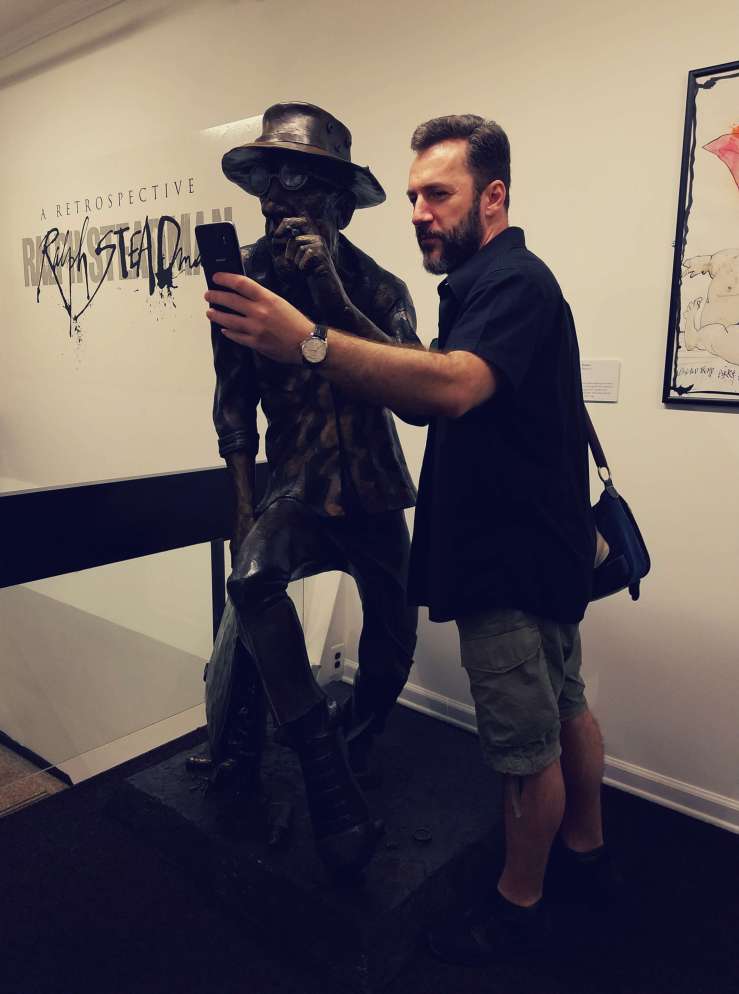
From A Retrospective: Ralph Steadman exhibition, held at The Society of Illustrators between September-October 2016.
September was a month of transition: just moved in from Brussels, apartment hunting, new office, new life. It was also the busiest month at work, I was quick to find out. Looking for a cool distraction amid the frenzy, I somehow happened upon an ad promoting Museum Day Live! hosted by Smithsonian magazine, which offered free entry to a number of participating museums.
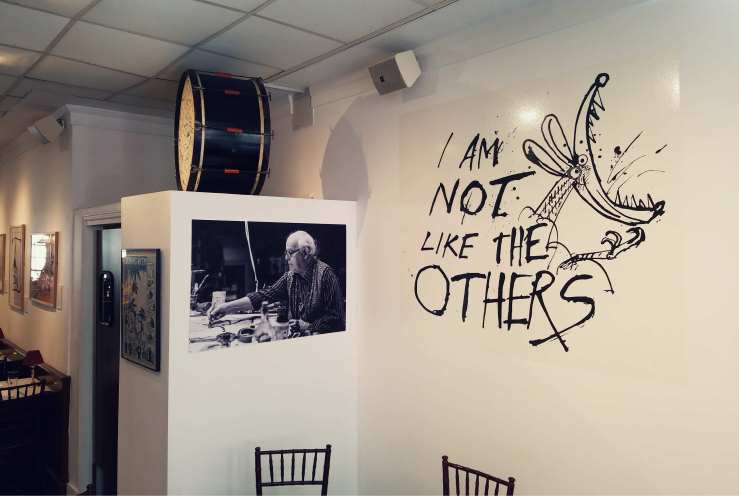
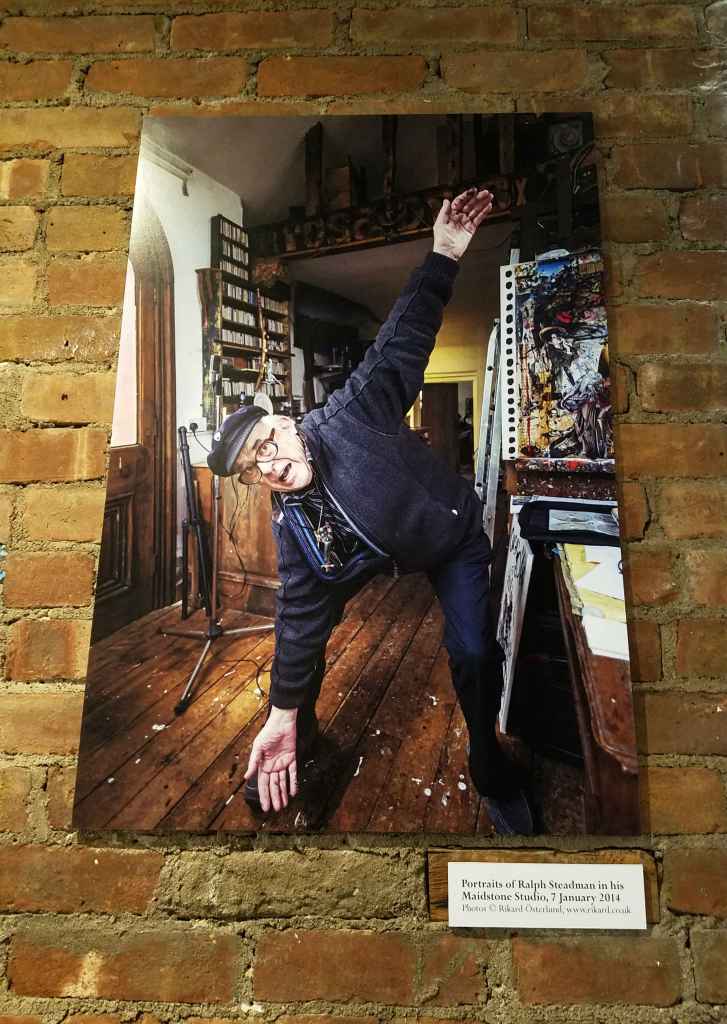
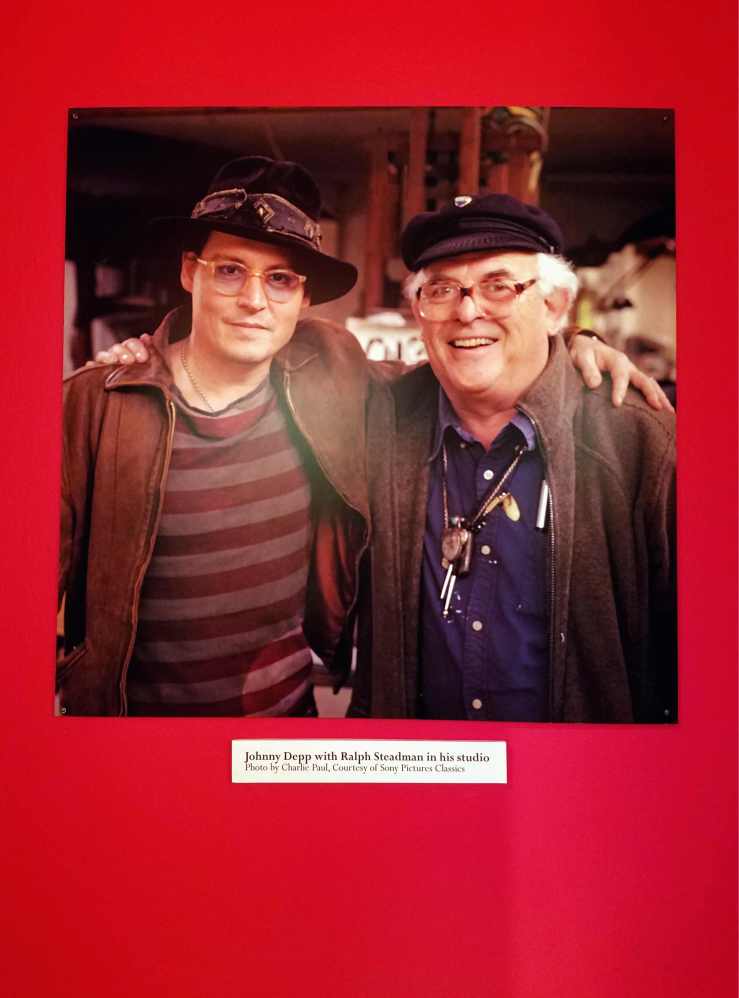
One of these was the Society of Illustrators which, at the time, was hosting a major retrospective to celebrate the work of the rather wonderful Mr. Ralph Steadman.
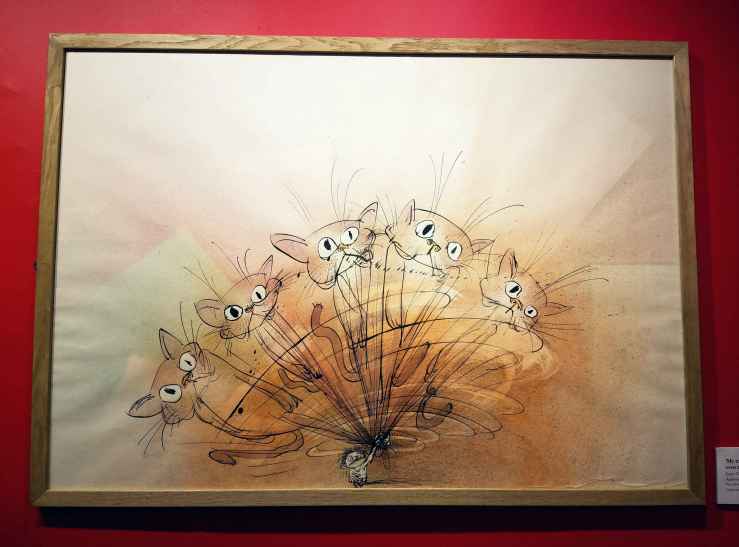
Mr. Steadman’s drawings had taken over almost the entire museum, its galleries, corridors and even part of the charming café on the top floor.
I could not have asked for a better free gift – nor a cooler distraction for that matter!
Hunter S. Thompson, 1937-2005. Rolling Stone, 24 March 2015. Collage, Conté chalk and ink on board. Illustration by Ralph Steadman.
[It was February 2005 and to Hunter’s great dismay, George W. Bush had just been inaugurated for a second term. Now in his late sixties, Thompson was suffering from many ailments. There were the after-effects of hip replacements and other surgery. He had to have daily physiotherapy and was in significant pain. On 20 February 2005 he took his Magnum .44 and shot himself in the head. A month later Rolling Stone marked the passing of the one of their greatest contributors with s special memorial issue.]
Free listening and free download (mp3) chill and down tempo music (album compilation ep single) for free (usually name your price). Full merged styles: trip-hop electro chill-hop instrumental hip-hop ambient lo-fi boombap beatmaking turntablism indie psy dub step d'n'b reggae wave sainte-pop rock alternative cinematic organic classical world jazz soul groove funk balkan .... Discover lots of underground and emerging artists from around the world.




















 The Humble Fabulist