Looking at those little wonders of skill and craftsmanship that are the works of Henri-Charles Guérard, on show at the New York Public Library, is a pure pleasure and an excellent introduction to the artist. But the fact that felines (and other animals) were featured prominently in his work, warmed me up to the person too.
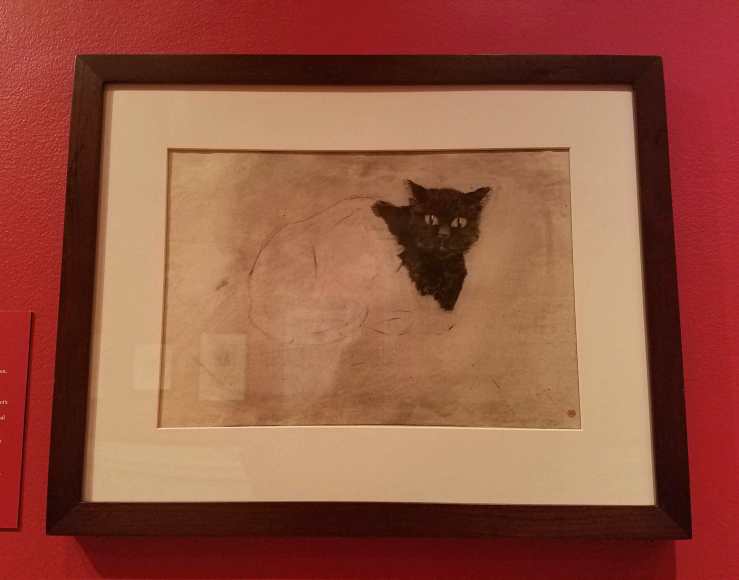
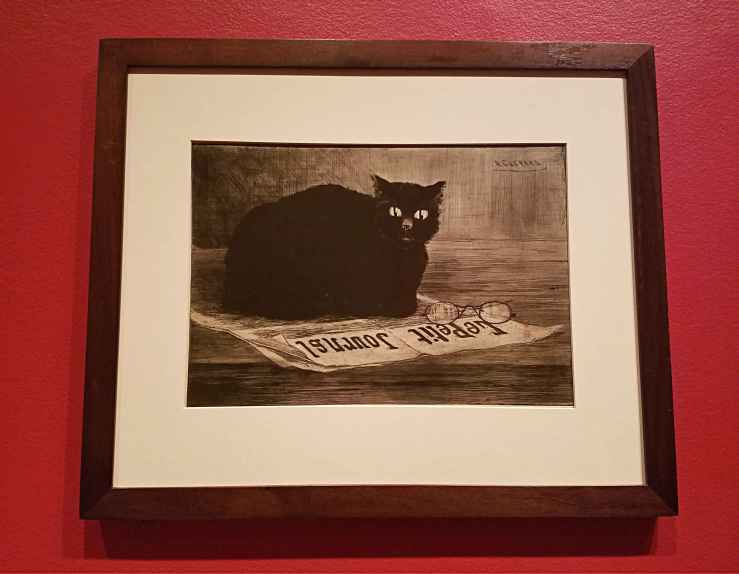
Here are the three stages of a Cat on a Newspaper:
Henri-Charles Guérard, Chat sur un journal (Cat on a Newspaper), before 1887. Etching and drypoint, unique proof impressionHenri-Charles Guérard, Chat sur un journal (Cat on a Newspaper), before 1887. Etching and drypoint, unique proof impression.Henri-Charles Guérard, Chat sur un journal (Cat on a Newspaper), before 1887. Etching and drypoint, unique proof impression.
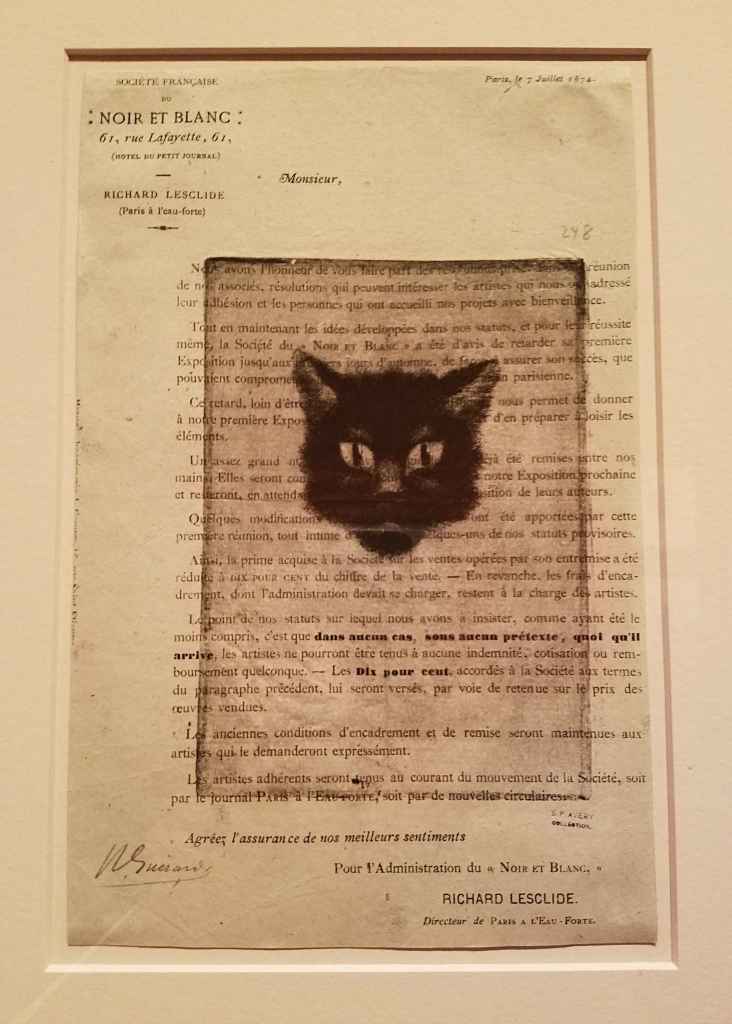
A Cat’s head sealing an announcement by the Black-and-White Society:
Henri-Charles Guérard, Tête de chat noir (Head of a Black Cat), before 1888. Etching and drypoint on found paper.
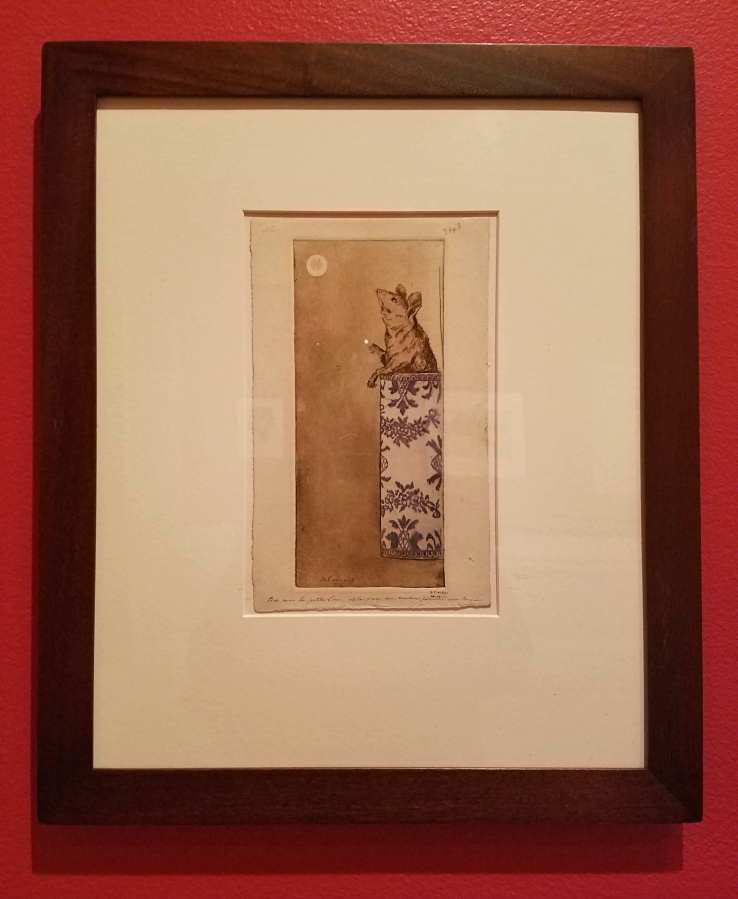
And a mouse:
Henri-Charles Guérard, Rat in a Vase Gazing at the Moon, ca. 1886. Colour etching and aquatint.
Accompanying caption: [Although Westerners generally have an aversion to rats, the creatures play an important role in Japanese culture, for the rat, or nazumi, is thought to be the messenger of the god Daikoku. It is said, moreover, that if rats eat the New Year cakes, there will be a good harvest. Guérard’s endearing treatment of this rodent climbing out of a vase decorated with Japanese motifs seems more closely aligned with Japanese than Western sentiments.]
A small consolation to weary New Yorkers, little impressed at the thought of having to share their homes, parks and subway with millions of them creatures…
A Curious Hand: The Prints of Henri-Charles Guérard (1846-1897)
These and a lot more from ”the engraver of curiosity par excellence” can be viewed at the Stephen A. Schwarzman Building until February 26th, 2017.
Don’t go in a rush, the exhibition is more extensive than one might expect; although this was supposed to be an added bonus to my visit, it quickly became apparent that it merits a lot more attention than a mere skimming through.
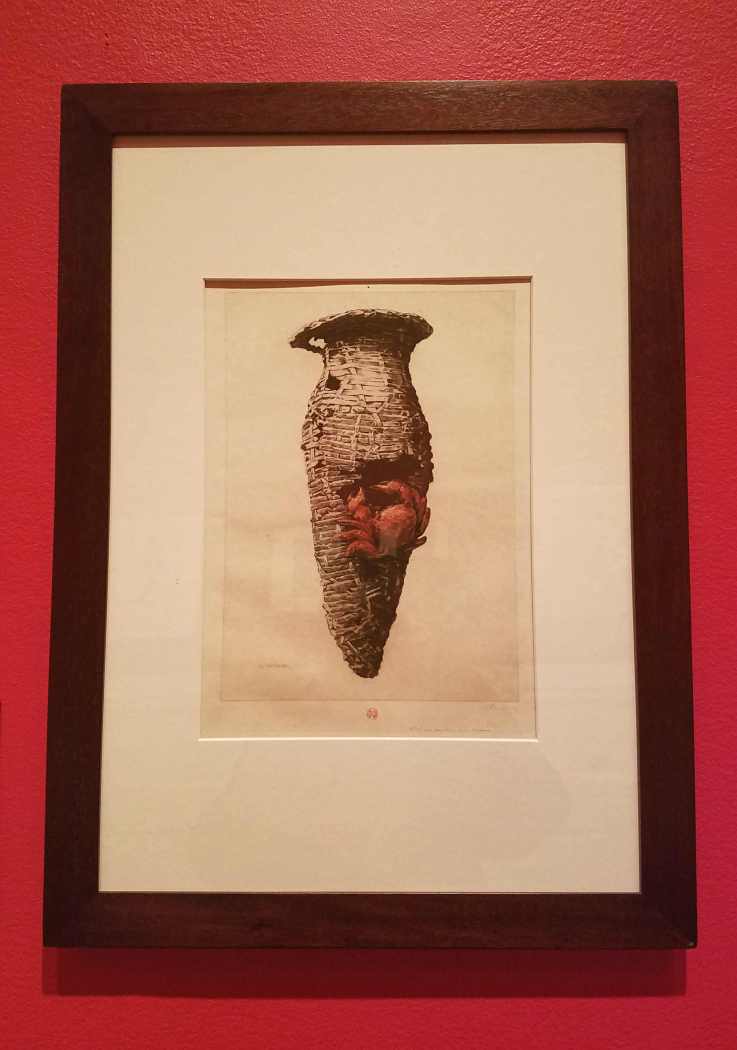
Henri-Charles Guérard, Porte-bouquet et crabe (Vase and Crab), 1882, Colour etching
Henri-Charles Guérard, After Diego Velásquez. Portrait du cardinal infant Don Fernando (Portrait of Cardinal Infante Don Fernando as a Hunter), 1888, Etching
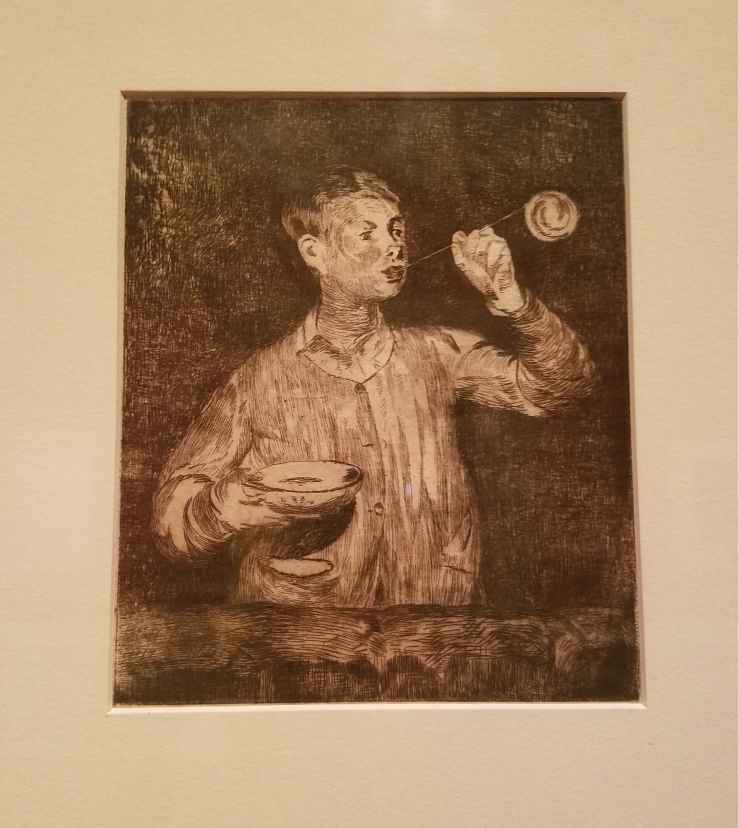
[Beginning in the 1870s, Guérard assisted Édouard Manet with biting and pulling his prints, and their working relationship eventually blossomed into a friendship. In 1879, Guérard married Eva Gonzalès, Manet’s favourite pupil, who died in childbirth in 1883 shortly after Manet’s own death. Manet was not only a friend and colleague of Guérard’s but also an important source of inspiration.]
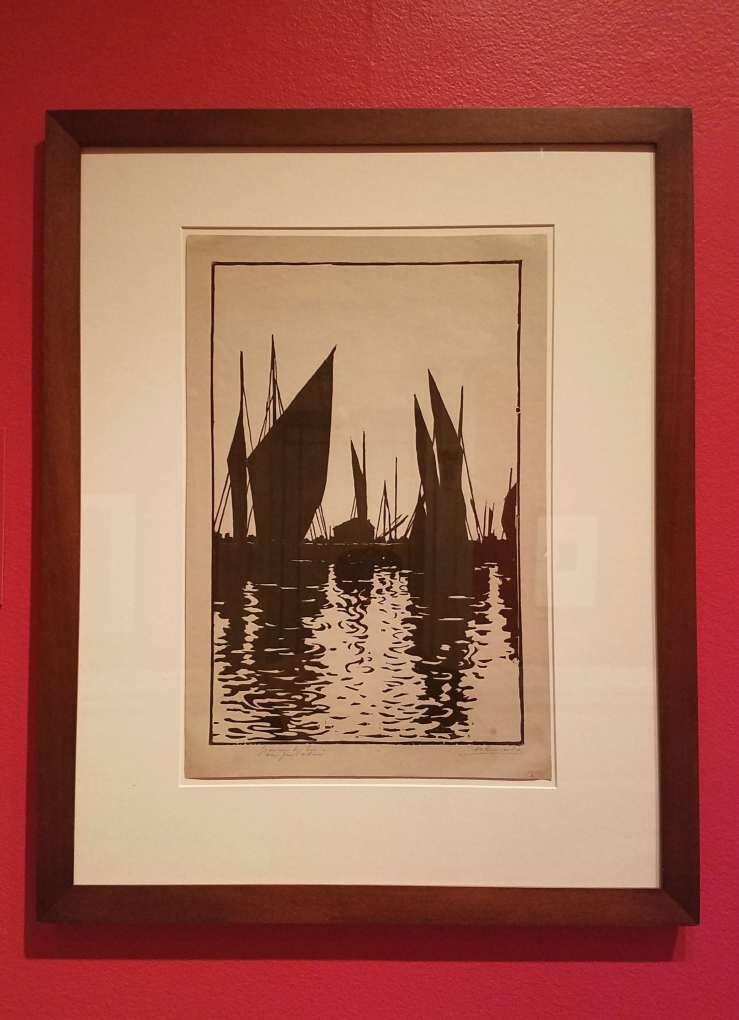
Eduard Manet, Printed by Henri-Charles Guérard. The Boy with Soap Bubbles, 1868-69, EtchingHenri-Charles Guérard, Soleil couchant (Setting Sun), 1895-96, Woodcut
[The image, which shows a troop of tiny Japanese men climbing energetically over a woman’s shoe of Western style, captures the droll and occasionally baffling behaviour of the figures in Hokusai manga. Women’s feet and, especially, their shoes have long been fetishized in both the West and the East, and the conduct of the ”assailants”, which includes a figure clambering on the slipper’s ruffled pompom, is suggestive. The impression shown here reveal Guérard experimenting with jaunty colours, one hot pink, the other bright yellow.]
Henri-Charles Guérard, L’Assaut du soulier (The Assault of the Shoe), ca. 1888. Etching, drypoint and aquatint with roulette in pink and yellow
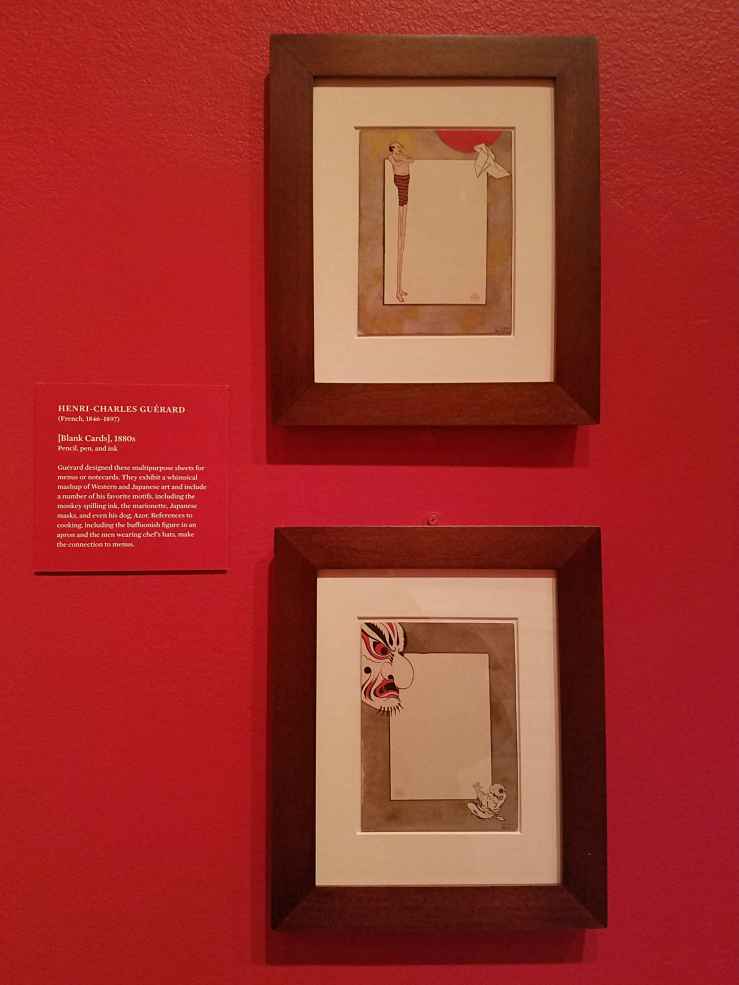
[Guérard designed these multipurpose sheets for menus or notecards. They exhibit a whimsical mashup of Western and Japanese art and include a number of his favourite motifs, including the monkey spilling ink, the marionette, Japanese masks, and even his dog, Azor. References to cooking, including the buffoonish figure in an apron and the men wearing chef’s hats, make the connection to menus.]
All notes are from the accompanying captions and brochure (available also on-line).
Whichever way you look at her she seems as real as the woman next door. Well, perhaps not Manhattan next door but a smaller city or town like, for instance, my other adoptive home Brussels. She could definitely be the lady that runs the bakery on the ground floor in my building in Brussels.
And yet, although the artist worked on real models making casts directly from their bodies, his sculptures are not really images of specific people. For example, the letters on her lap are addressed to Minnie Johnson, but the model was someone else who lived near Hanson’s studio in Florida. Woman with Dog is therefore a hyper-real figure constructed from different features and, because of that, doubly real in my eyes.
Duane Hanson
Woman with Dog, 1977
Acrylic and oil on cast polyvinyl with clothing, hair, eyeglasses, watch, shoes, upholstered wood chair, dog hair, leather collar, woven rug, postcard, letters, and envelopes
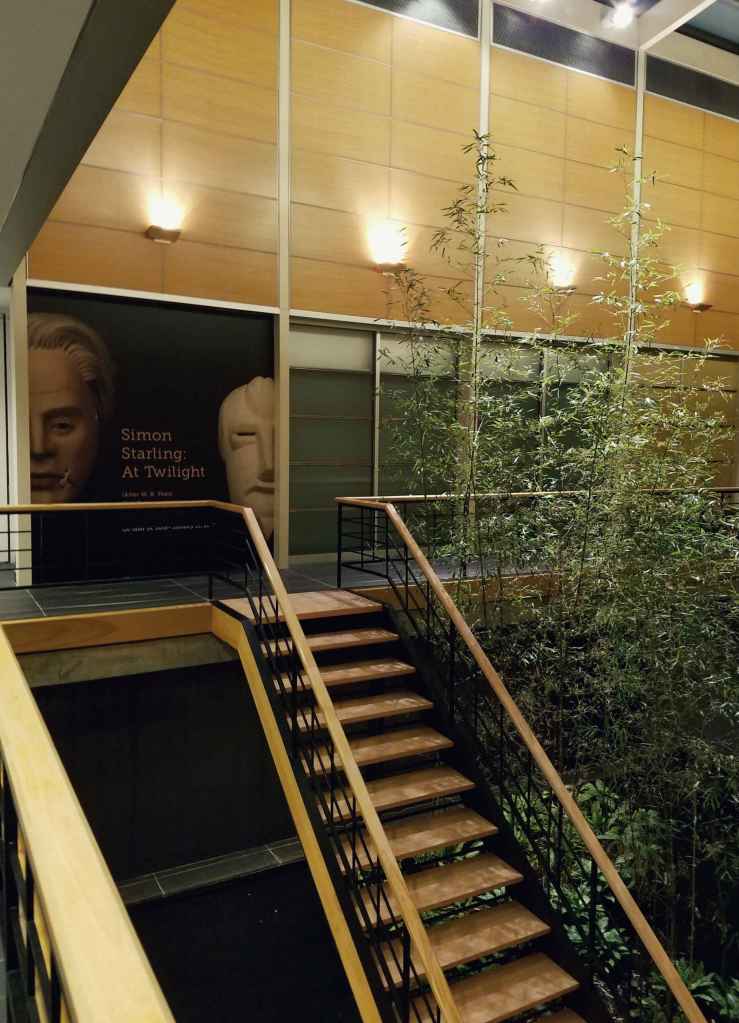
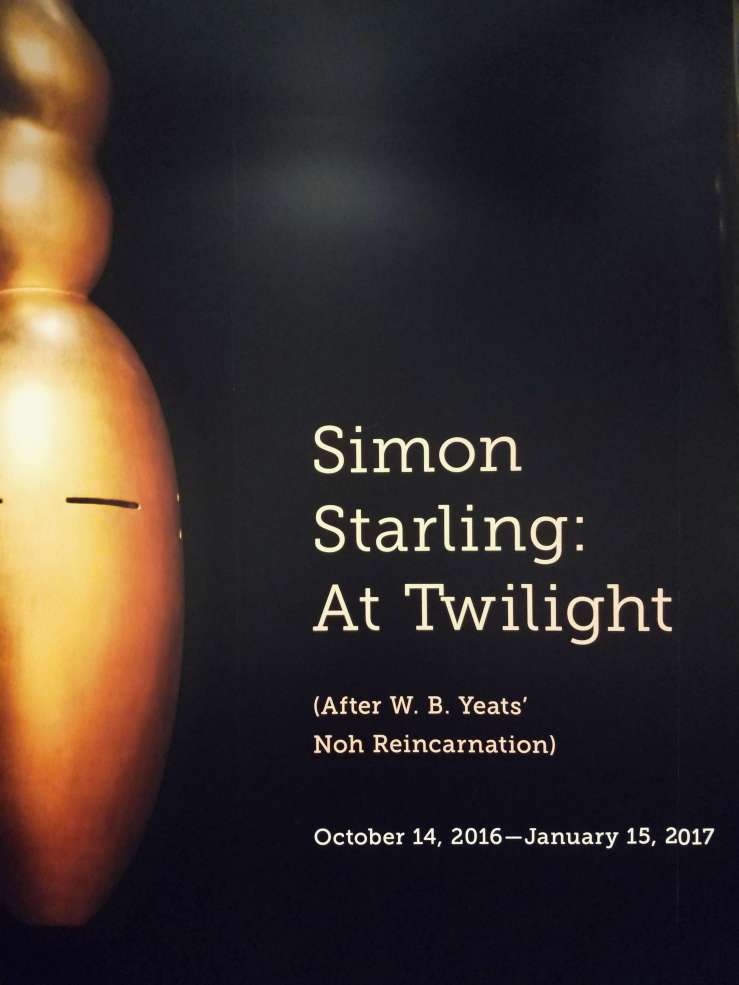
If curators at The Japan Society were seeking to communicate the perfect example of a cross-cultural fusion in arts, they could not have made a better choice than hosting Simon Starling’s project.
Starling took ”At the Hawk’s Well”, a dance play composed by Irish poet W. B. Yeats one hundred years ago amidst the horrors of World War I, and re-imagined it for us, contemporary audiences.
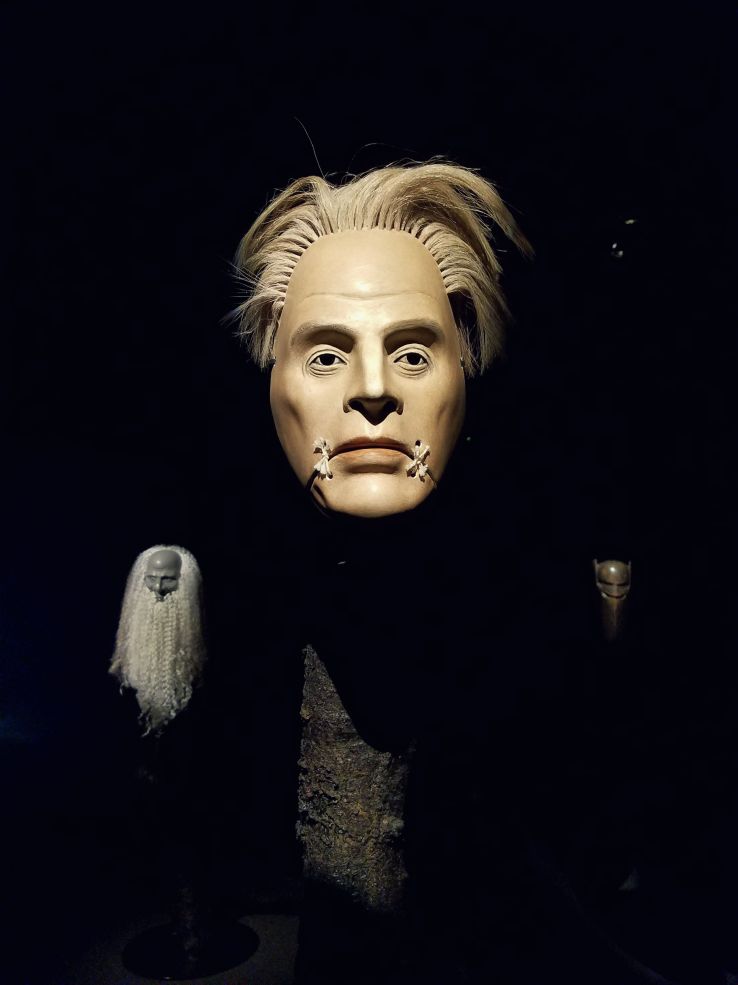
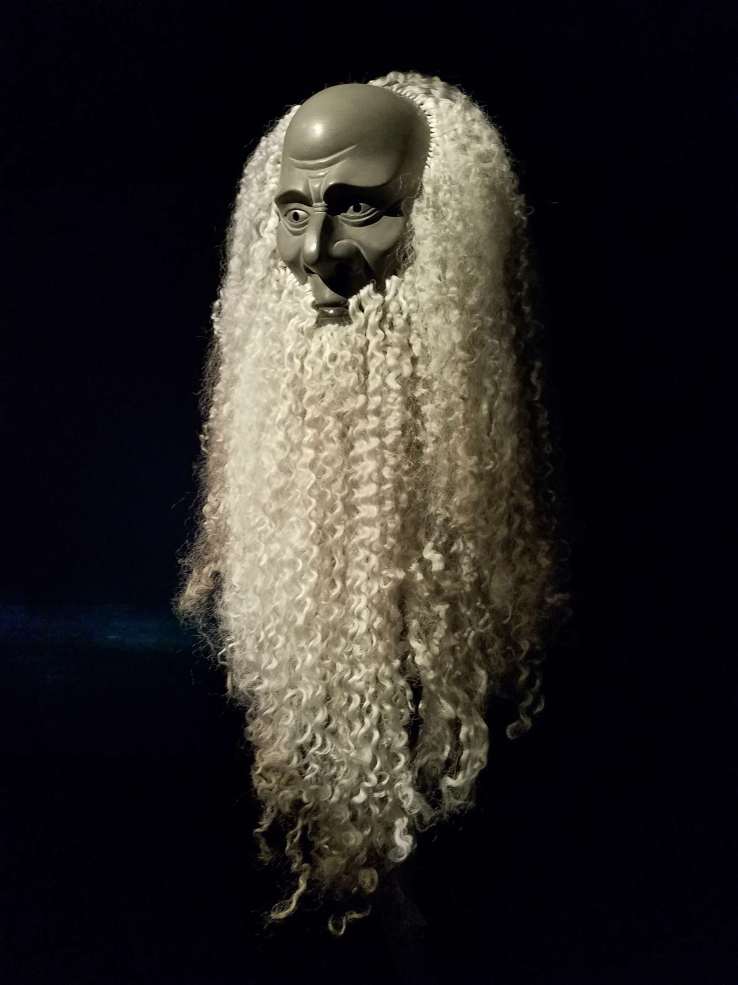
The exhibition/installation unfolds in two parts. These photos are only a few examples from the first gallery where masks and costumes, made in collaboration with Yasuo Michii and Kumi Sakurai, are placed in a darkened room in front of a screen. The masks represent fictional or real characters whom Starling has connected with ”At the Hawk’s Well”. On the screen at the background, one can watch a newly choreographed version of the climactic ”Hawk Dance” from the original play. The ”Hawk” headpiece stands next to the masks and the dancer’s costume can be seen (and touched) in the second gallery, before walking into a larger room with displays featuring those Western Modernist and traditional Japanese Masterworks that inspired Starling’s designs, with notes about each character or object and the role they played in the project.
Nancy Cunard
Born into the British upper class, Nancy Cunard was a writer, publisher and political activist who, through her vibrant intellect and characteristic style, became a muse of artists and writers such a Wyndham Lewis, Aldous Huxley, Ezra Pound, James Joyce (both Pound and Joyce were in the audience of ”At the Hawk’s Well”) and Louis Aragon.
Noted for her passion for African artefacts, she was often photographed wearing typically flamboyant bangles and necklaces – a style that became known as the ”barbaric look”. Nancy, whose capacity for alcohol and affairs became legendary, felt the need to dress in disguise when she went out wearing costumes of her own making. Once she was arrested for swimming at dawn in the Serpentine, emerging before the authorities drenched in a homemade outfit of velvet, chiffon, ribbons, feathers, spangles and artificial flowers.
Ezra Pound first met Nancy at her mother’s home in Cavendish Square as Pound and Yeats were preparing the performance of ”At the Hawk’s Well”. She was astonishingly beautiful and elegant regardless of what she was wearing. From the beginning Nancy found Pound physically and intellectually appealing. Later, when she became critically ill, Pound remained at her side, and their long love affair began.
W.B. Yeats
Between 1913 and 1916, Yeats and his fellow poet Ezra Pound (”a stimulating yet irritating friend”) spent three winters together in the Sussex countryside. Pound, twenty years his junior, was nominally Yeats’ secretary but as well as teaching the elder man how to fence, he was in large part responsible for introducing Yeats to Japanese Noh theater. In February 1916, Yeats began work on ”At the Hawk’s Well”, the first of a number of Noh inspired ”dance dramas”, which tells the story of a young Celtic warrior and his search for the well of immortality.
Michio Ito
Michio Ito, a Japanese dancer and choreographer with little formal training, arrived in London from Paris at the outbreak of World War I. He gained notoriety for his work at the Coliseum Theatre in 1915, creating a ”furore” with his hybrid European/Japanese dances, inspired by the Ballets Russes and Nijinski. He attracted the attention of a small group of avant-garde artists and writers and was asked by Ezra Pound and W.B. Yeats to recreate a semblance of a Noh performance. After the war, Ito moved to New York, where he established a career in both commercial and avant-garde dance, most notably working with Martha Graham between 1923 and 1925.
Ezra Pound
Vital to Yeats’ initiation into the ways of Noh theater was Pound’s fearless or perhaps foolhardy involvement in the completion of the American philosopher, art historian and economist Ernest Fenollosa’s groundbreaking work Noh, or Accomplishment: A Study of the Classical Stage of Japan (1916), which was entrusted to him by Fenollosa’s widow following her husband’s sudden death in 1908. It is clear that Pound’s knowledge of the Japanese language and of Noh plays was extremely limited when he started on the manuscript that Fenollosa had left. Pound himself wrote: The Vision and the plan are Fenollosa’s. In the prose I have had but the part of literary executor; in the plays my work has been that of translator who has found all the heavy work done for him and who has but the pleasure of arranging beauty in the words.
Old Man
Arriving at the Well of Immortality, the young warrior Cuchulain finds a withered old man who has been waiting some fifty years on the desolate mountainside for the waters to rise from the dry well. This obstructive old man (the waki, or supporting actor in Noh plays), who like Cuchulain was young in mind and body when he was blown there by what seemed like a lucky sail, has been constantly frustrated in his attempts to drink from the well, which only releases its life-giving waters when he falls asleep. In part out of self-interest, in part out of pity born of hard-won experience, he warns the confident young man about wasting his life in the vain pursuit of immortality.
*All captions are excerpted from the brochure accompanying the exhibition.
I found ”At Twilight” a stimulating experience, successful in bridging cultures, artistic styles & languages, history & mythology, merging impeccably the wisdom of ”then” with the urgency and creativity of ”now”.
Still on for a few days until Sunday January 15th, 2017.
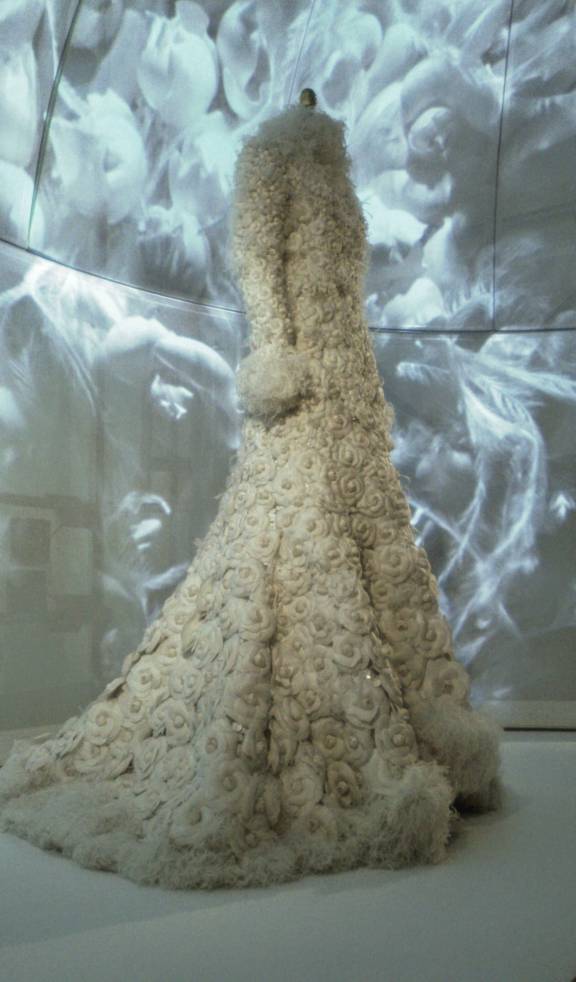
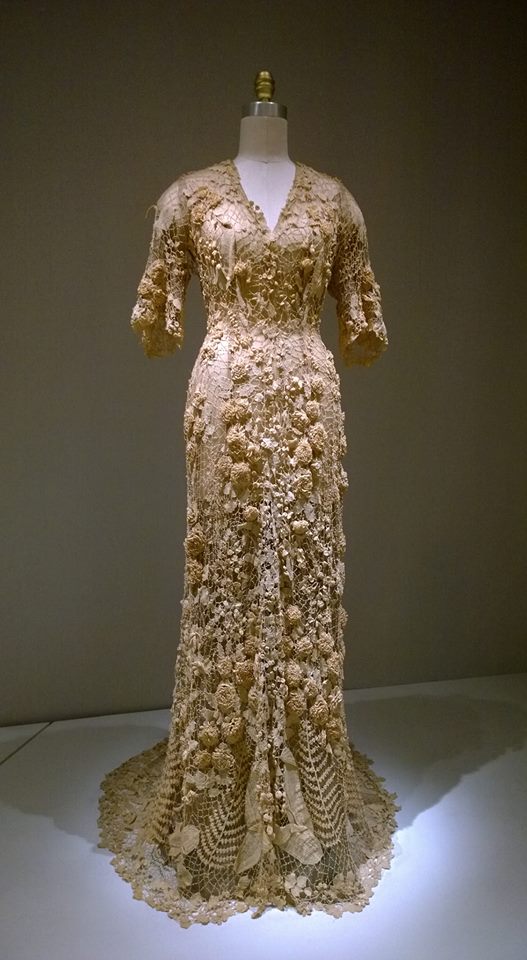
House of Chanel, Karl Lagerfeld Wedding Ensemble, A/W 2014-15, haute couture. Manus & Machina. Made from scuba knit, a synthetic material, the dress is hand molded, machine sewn and hand finished.M x MIris van Herpen, Ensemble, S/S 2010, haute couture, 3-D printed with machine-sewn white goat leather, hand-cut acrylic fringeHouse of Chanel, Karl Lagerfeld, Wedding Ensemble, A/W 2005-6, haute couture. Made by hand from start to finish, covered entirely with flowers. Despite the sense of ethereal case, the artificial flowers, embroidery and featherwork together required seven hundred hours of handwork.Irish Wedding Dress, ca. 1870. Hand-crocheted cream cotton lace with three-dimensional motifs, including roses, lilies of the valley, hanging fuchsias, morning glories, buds and berries, and flat and folded leaves and ferns. Incomparable!
From the ‘Manus x Machina: Fashion in an Age of Technology” exhibition, at The Met.
The skill, the superb craftsmanship
The artistry, the stitching, the minute attention to detail
The hours of work, the zealousness, the passion, the tears
The vision
Integrating modern technology into fashion and using it to transform garments into wearable sculptures
The fun trying to tell Manus from Machina and failing
Free listening and free download (mp3) chill and down tempo music (album compilation ep single) for free (usually name your price). Full merged styles: trip-hop electro chill-hop instrumental hip-hop ambient lo-fi boombap beatmaking turntablism indie psy dub step d'n'b reggae wave sainte-pop rock alternative cinematic organic classical world jazz soul groove funk balkan .... Discover lots of underground and emerging artists from around the world.











 Edward Hopper


 The Humble Fabulist