Even more than the obvious joy of coming up close with works by renowned artists, I enjoy discovering those I had never seen before; especially the work of an artist that has something to say and does so in such a striking way, as Ms. Lorraine O’Grady.
This is her story:
[”In 1980, artist and critic Lorraine O’Grady left her apartment wearing an evening gown and cape made out of 180 pairs of white dinner gloves and carrying a white whip studded with white chrysanthemums. She was going to a party at Just Above Midtown (JAM), an avant-garde art space in Manhattan representing work by African American and other artists of color.”]
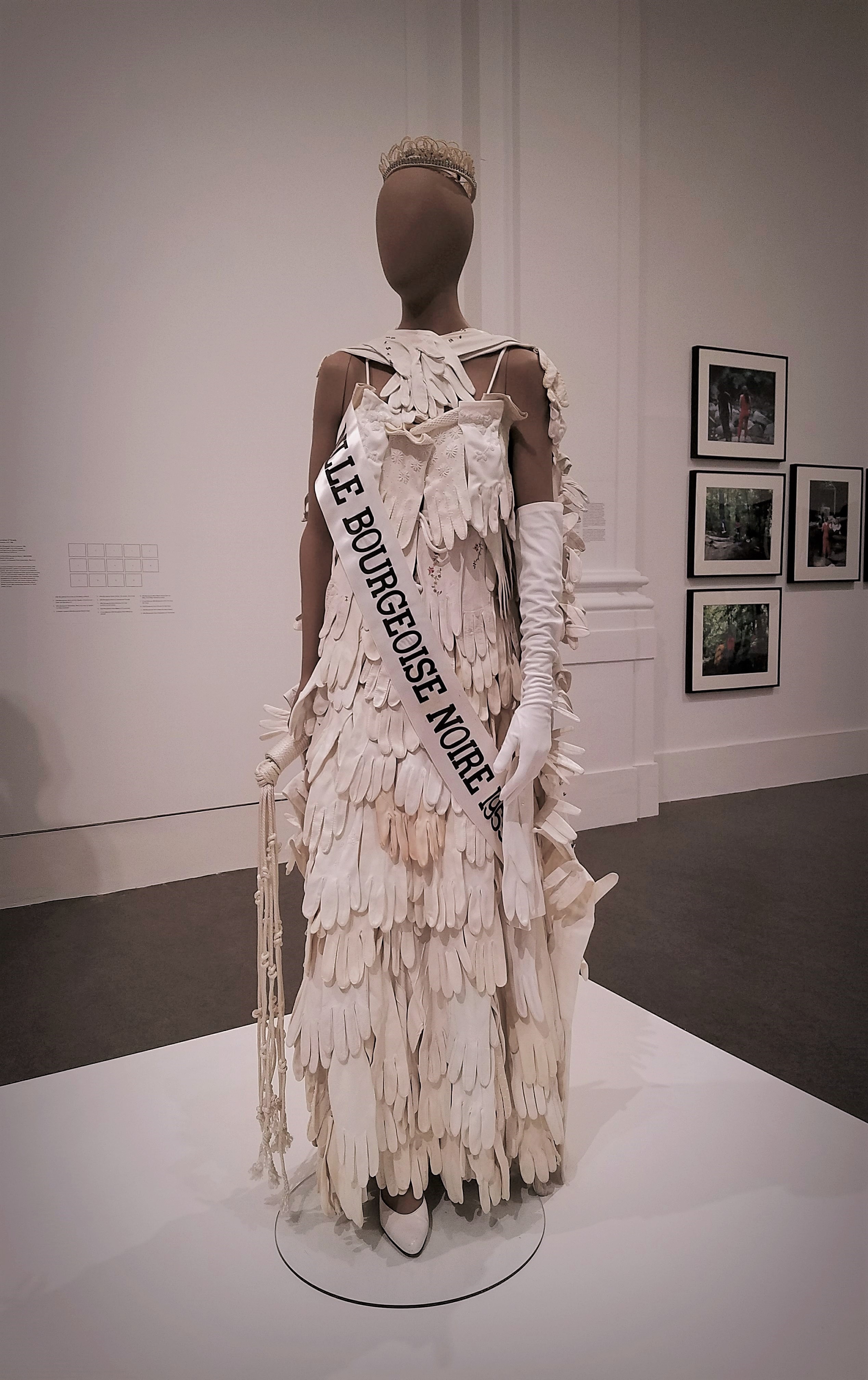
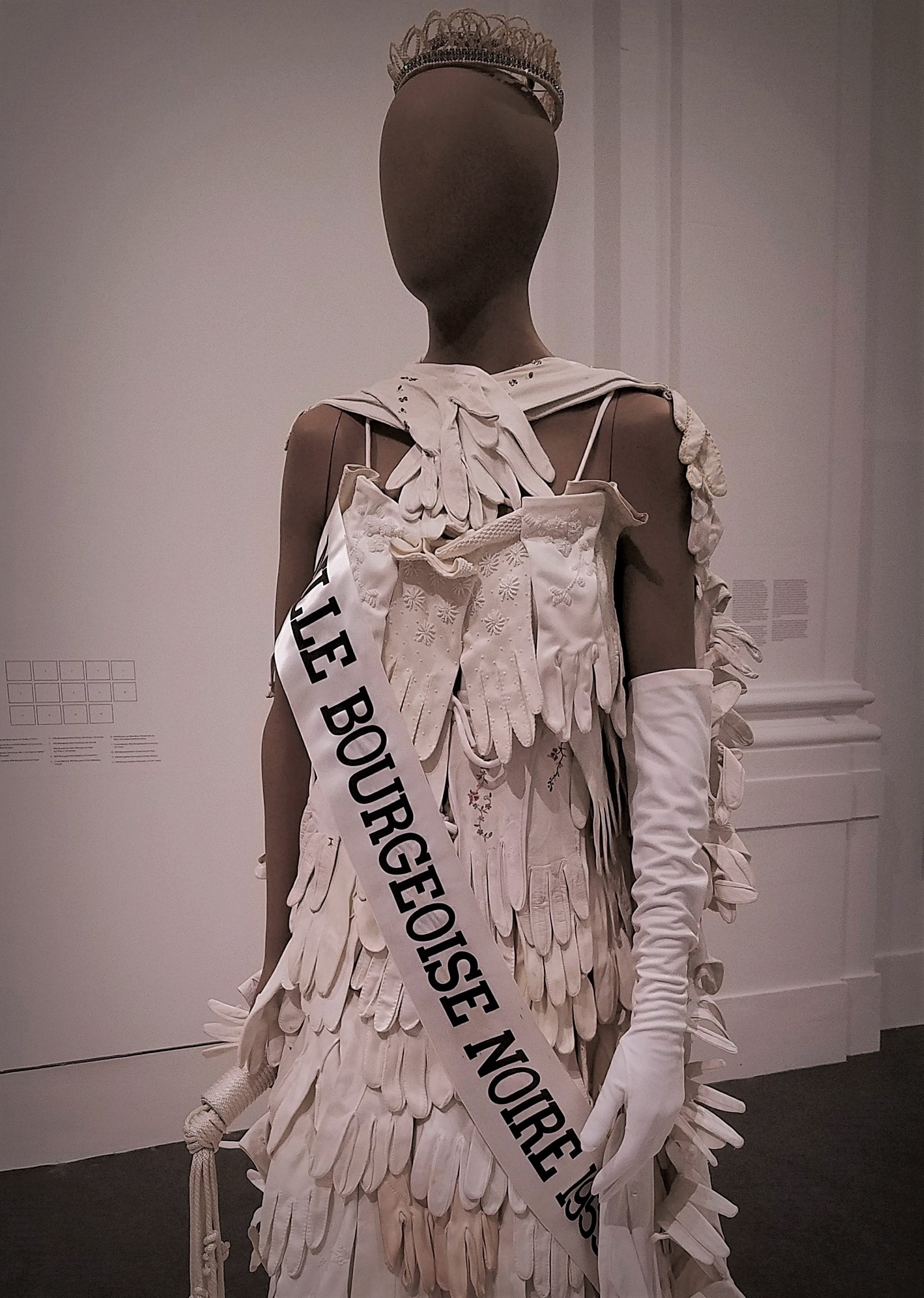
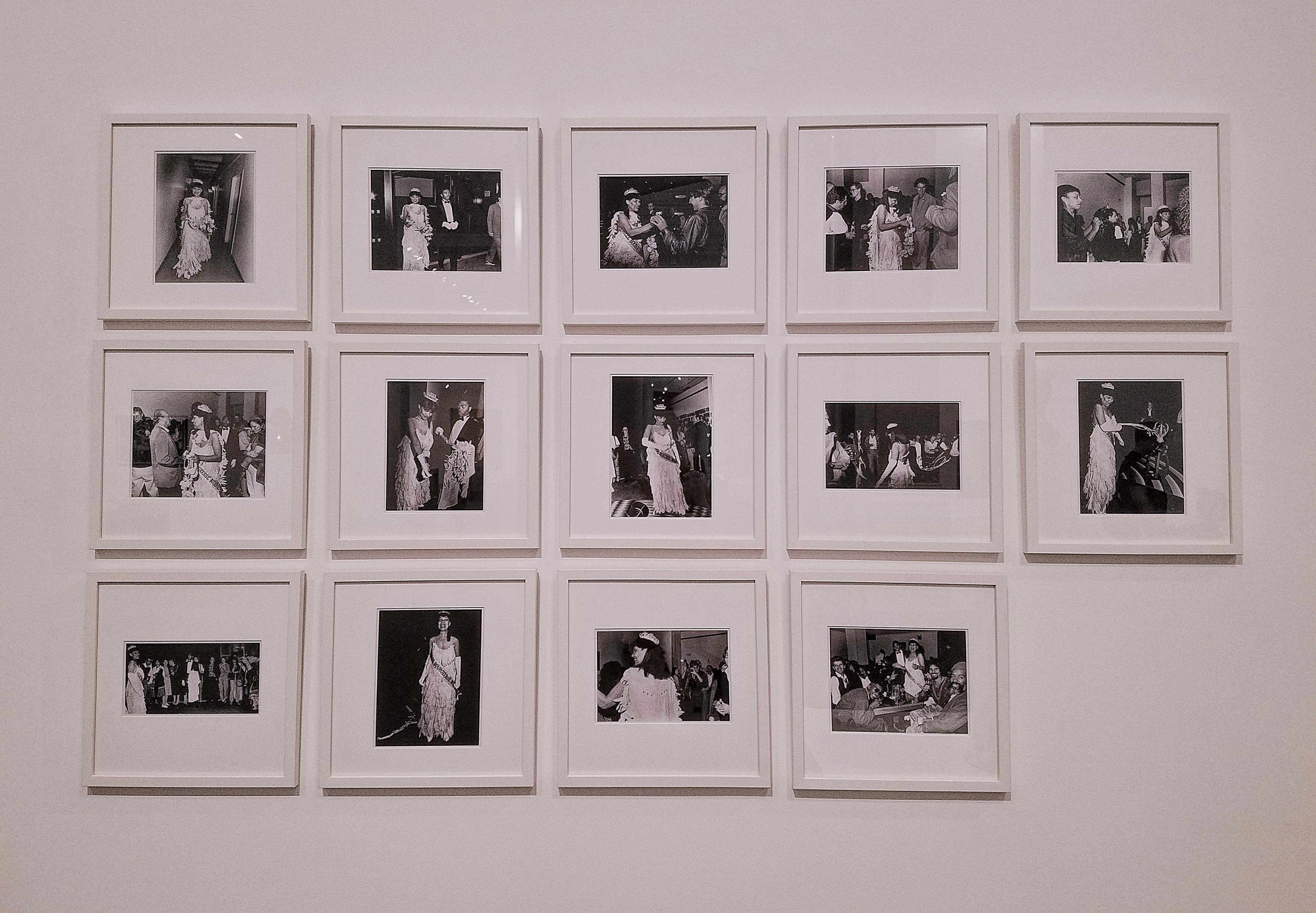
[”At the gallery, O’Grady turned heads. She raised her whip—which she called “the whip-that-made-plantations-move,”referencing the slave drivers on Southern plantations—and gave herself 100 lashes. And she shouted poems of protest—against the exclusion of black people from the mainstream art world in New York, and against black artists who she believed were compromising their identities to make work that was agreeable to white curators and audiences. The white gloves covering her body represented the work growing out of this system as “art with white gloves on.”]
Enough is Enough for Mlle Bourgeoise Noire
Among the poems that Mlle Bourgeoise Noire shouted at the Just Above Midtown (JAM) gallery reception was:
THAT’S ENOUGH!
No more boot-licking…
No more ass-kissing…
No more buttering-up…
No more pos…turing
of super-ass..imilates…
BLACK ART MUST TAKE MORE RISKS!!
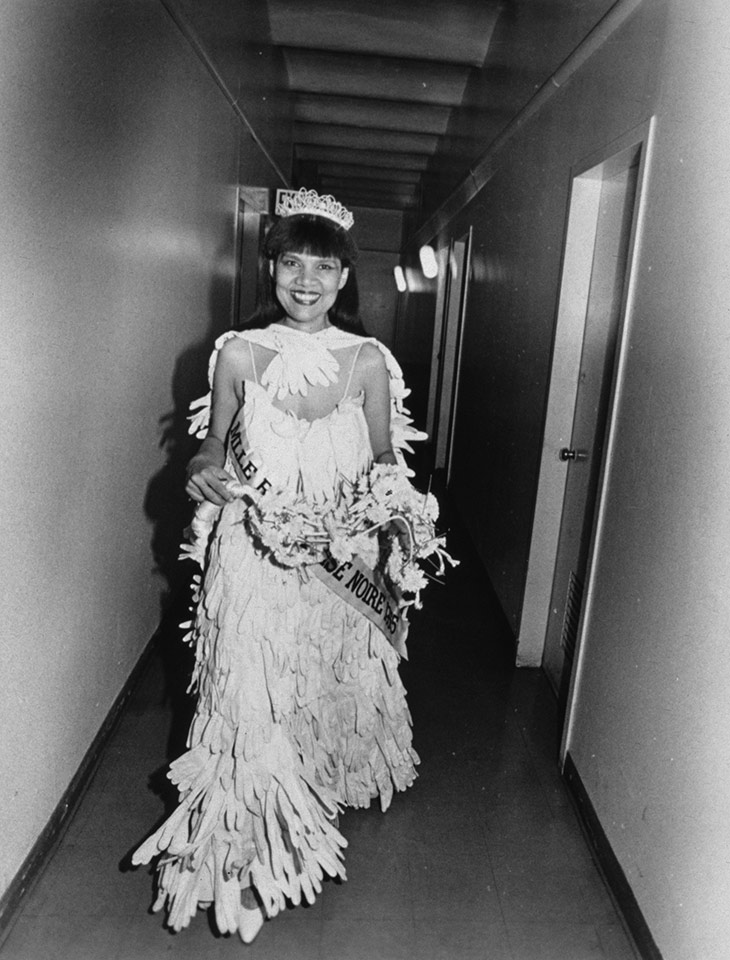
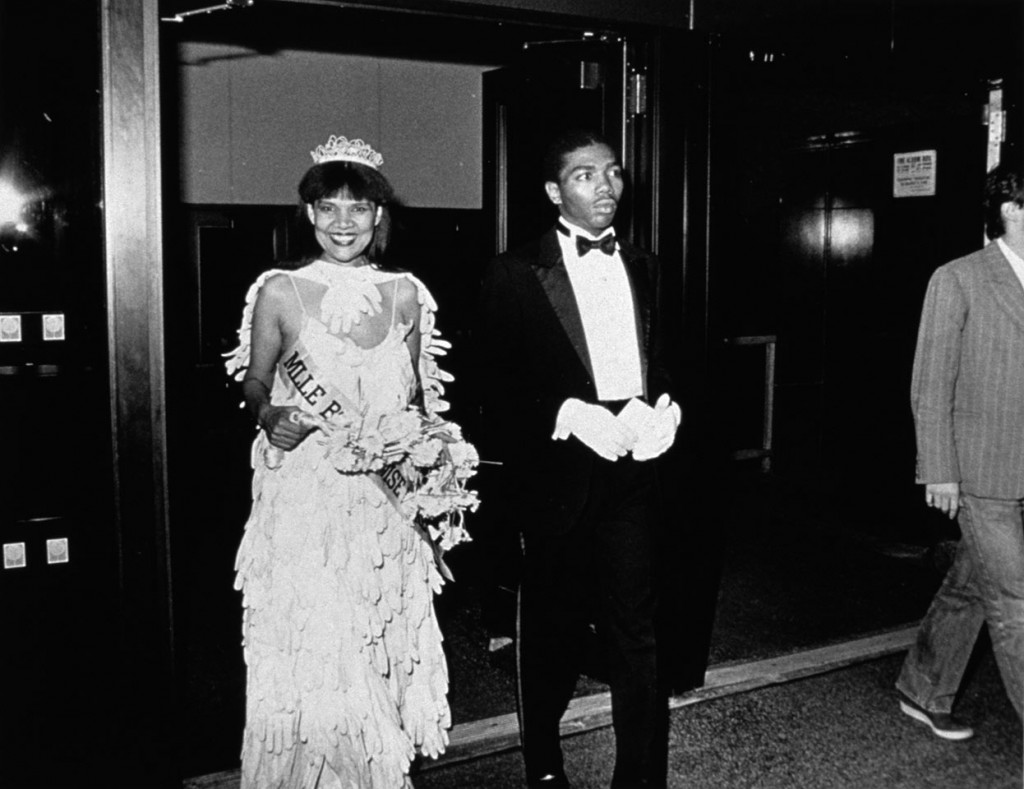
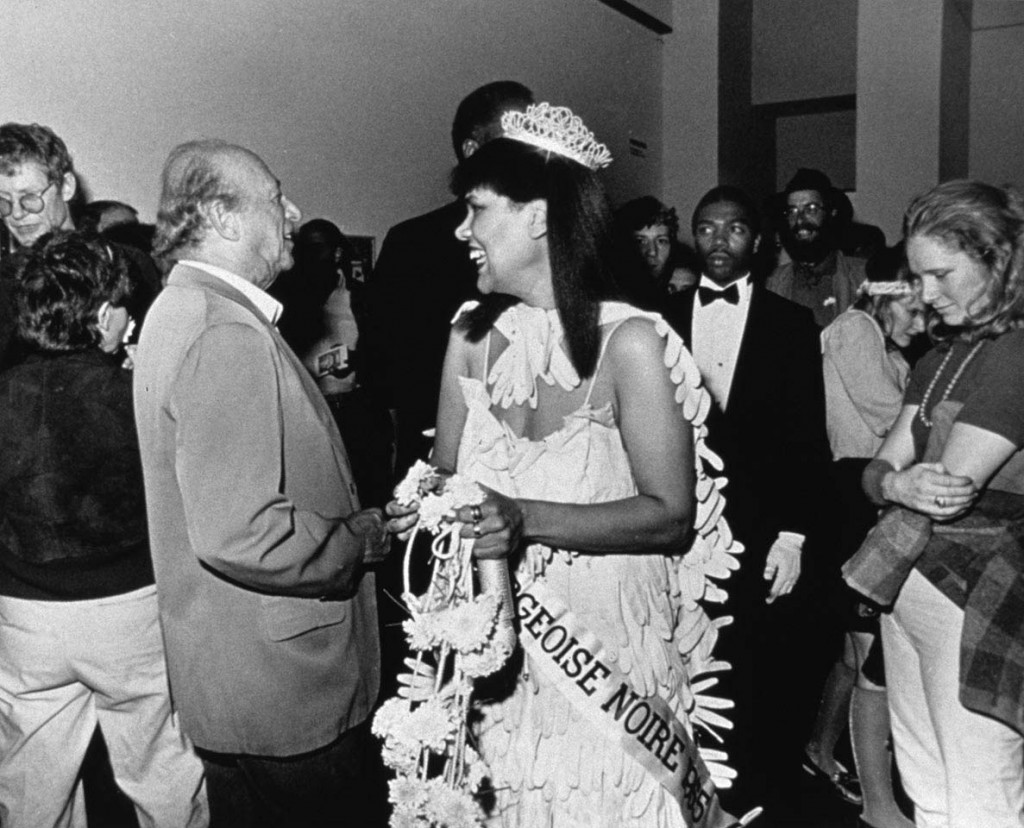
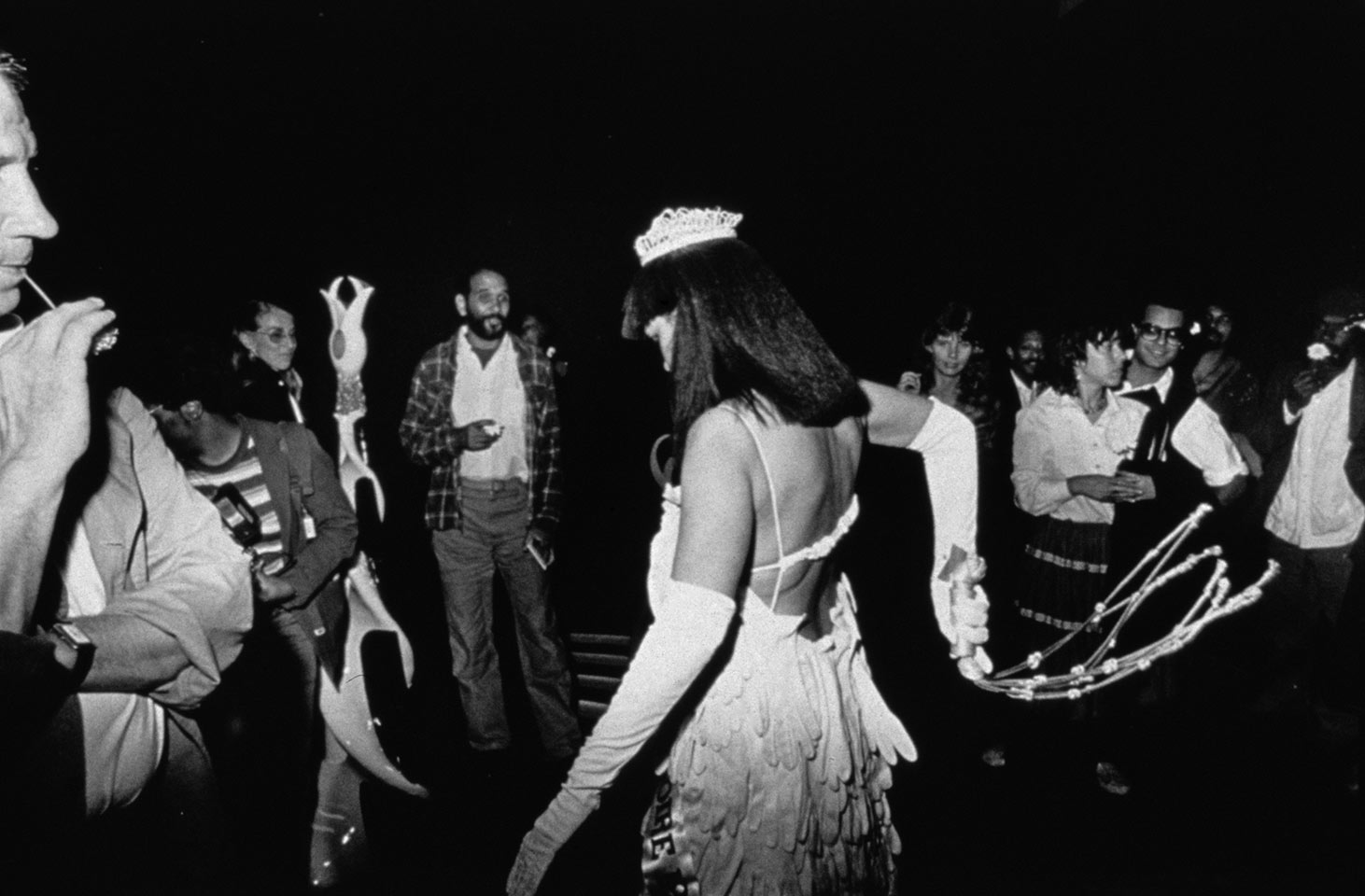
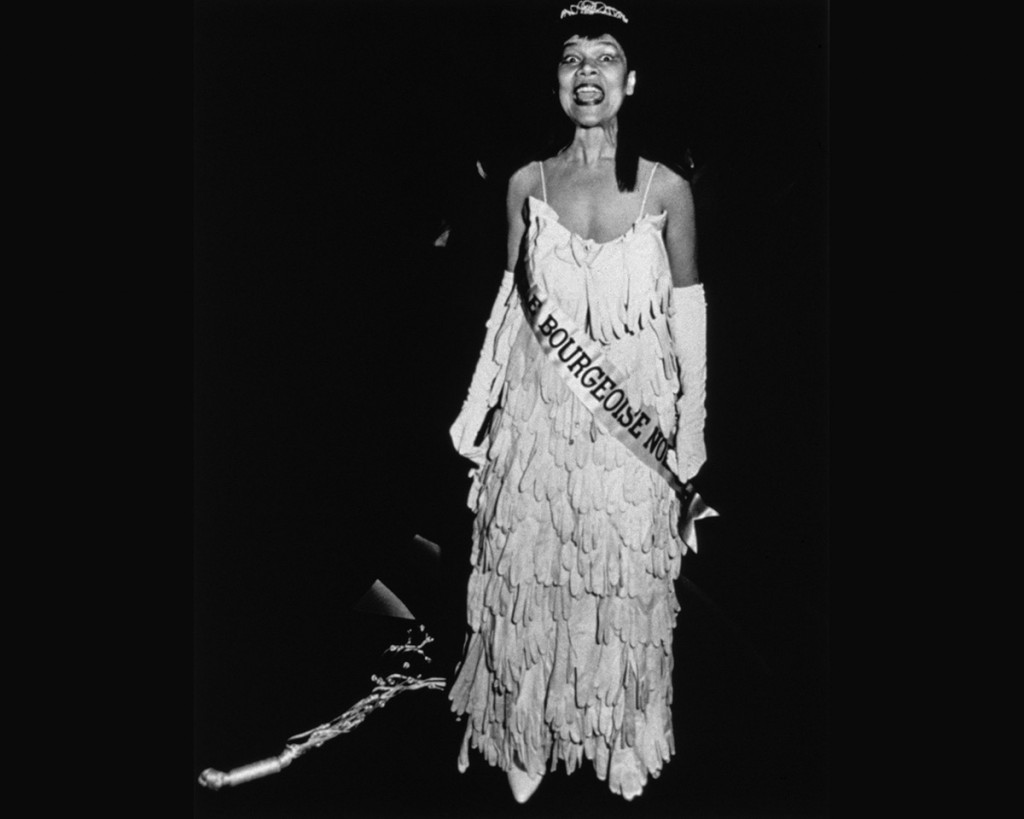
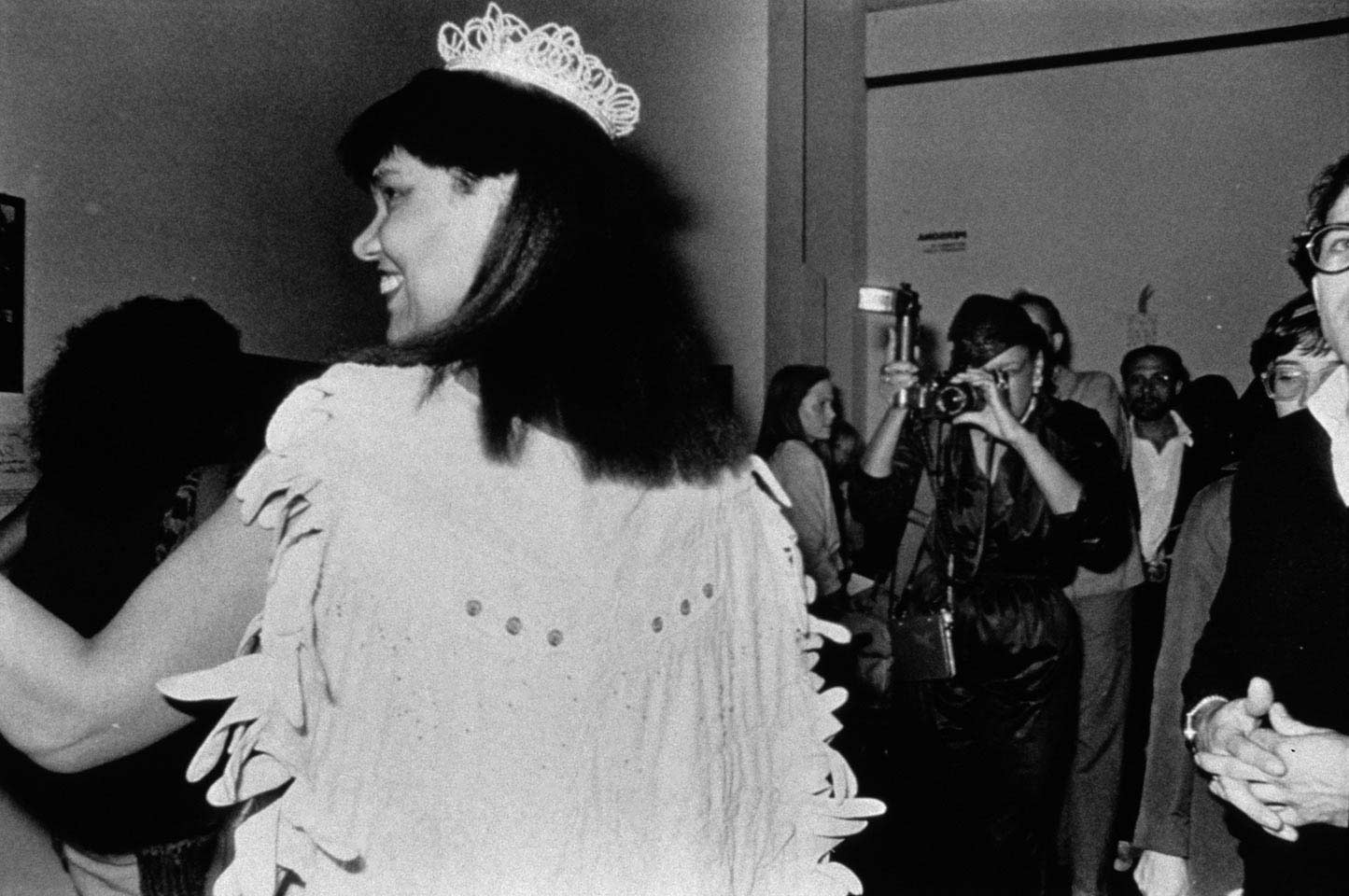
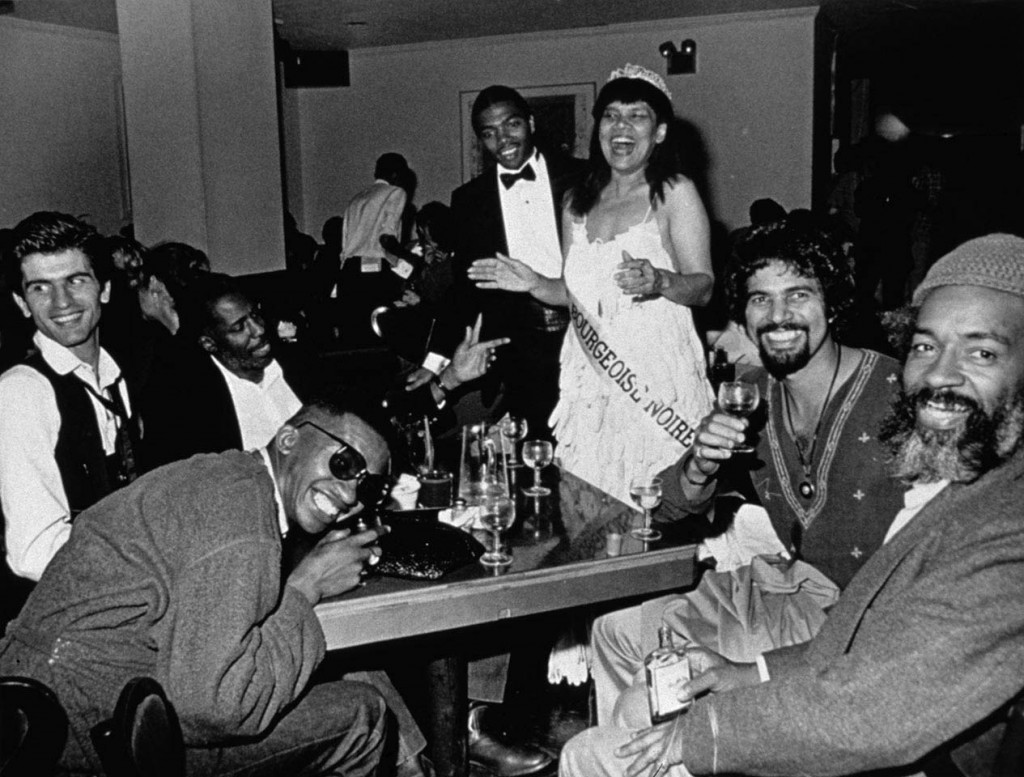
[”With this performance, O’Grady introduced a new, fictional persona to the art world: a tempestuous 1950s beauty queen named Mlle Bourgeoise Noire, or Miss Black Middle-Class. She has explained that Mlle Bourgeoise Noire was inspired by the Futurist declaration that art has the power to change the world. The persona was generated out of O’Grady’s anger at the racism and sexism then prevalent in the art world, and her own, complex relationship to race. The daughter of Jamaican immigrants, she was raised in a privileged environment that contrasted with what she described as the “neighboring black working-class culture” and the disadvantaged position of blacks in American society. Through Mlle Bourgeoise Noire, she expressed the conflicts in her own identity, while also, as she stated, “invading art openings to give people a piece of her mind.”]
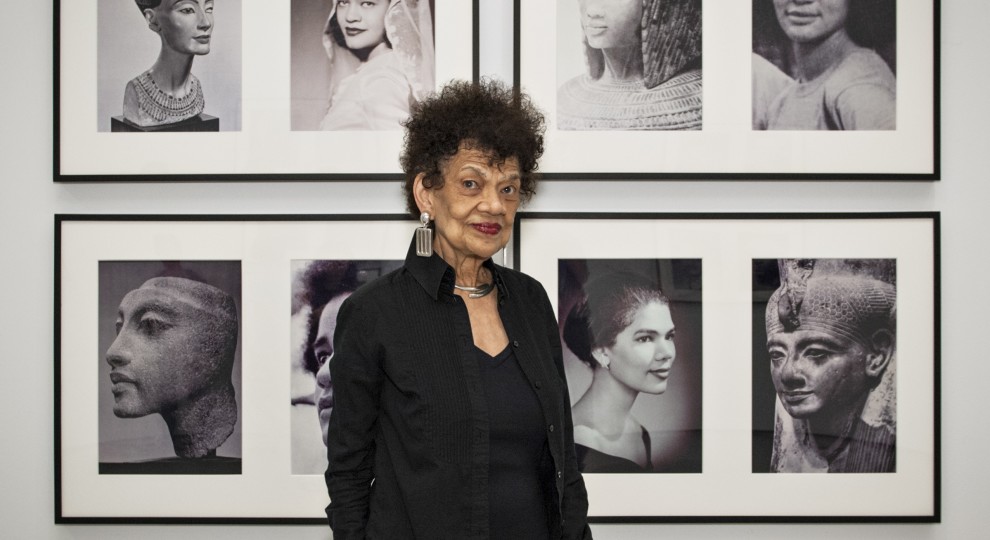
The glove dress and b&w photos of Mlle Bourgeoise Noire’s performance, were part of We Wanted a Revolution: Black Radical Women, 1965–85, an exhibition that focused on the work of black women artists. It was on show at the Brooklyn Museum until September 2017.
Black & White highlights from Lorraine O’ Grady’s website. Please view the gallery for more.
Source of Mlle Bourgeoise Noire’s story & poem : MoMA Learning
Brooklyn Museum
July 22nd, 2017
 Belle Greene, Librarian





 The Humble Fabulist