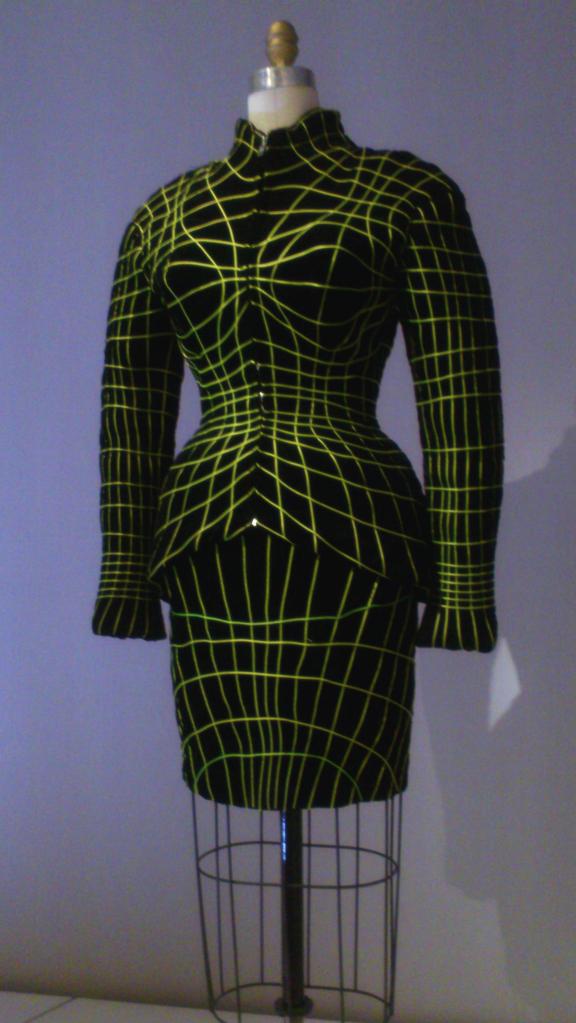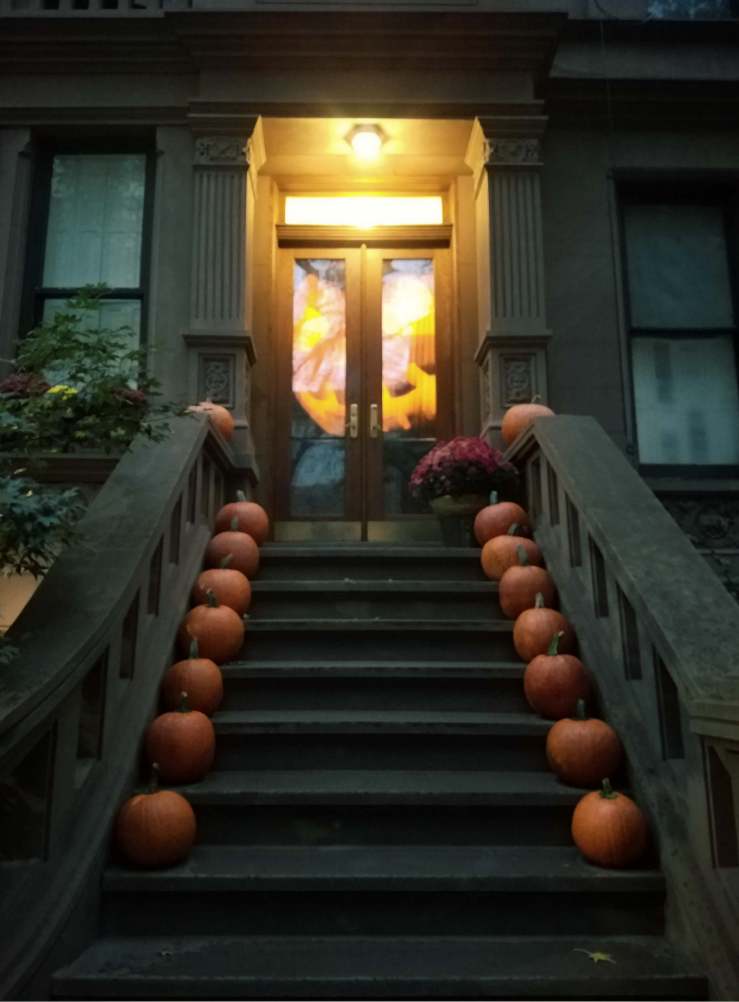
The time is nigh…

wp20161022_180953

… and so it has been since end of August. It was then that some gorgeous, huge, perfectly rounded pumpkins made their annual front raw appearance in their thousands, taking position on shelves in- and outside grocery shops and supermarkets. Although they are supposed to be picked up in October, they couldn’t wait to mark the beginning of Halloween Season and start the countdown to every child’s favourite spooky night. No matter the sweltering heat of the last days of August, the magic ”pompions” were there to remind that the time is nigh.

Will and Fred went to the barn.
They got a pumpkin.
The pumpkin was large.
The pumpkin was yellow.
The boys cut the top off.
They cut the seeds out.
They cut four holes in the pumpkin.
They put a candle in the pumpkin.
The light shone out.
The boys said, “See our Jack-o’-Lantern.”

Narrative from a turn-of-the-century schoolbook, Victoire and Perdue’s The New Century First Reader via urbanlegends.

October 22nd, 2016

On the bright side

comp20160828_173611

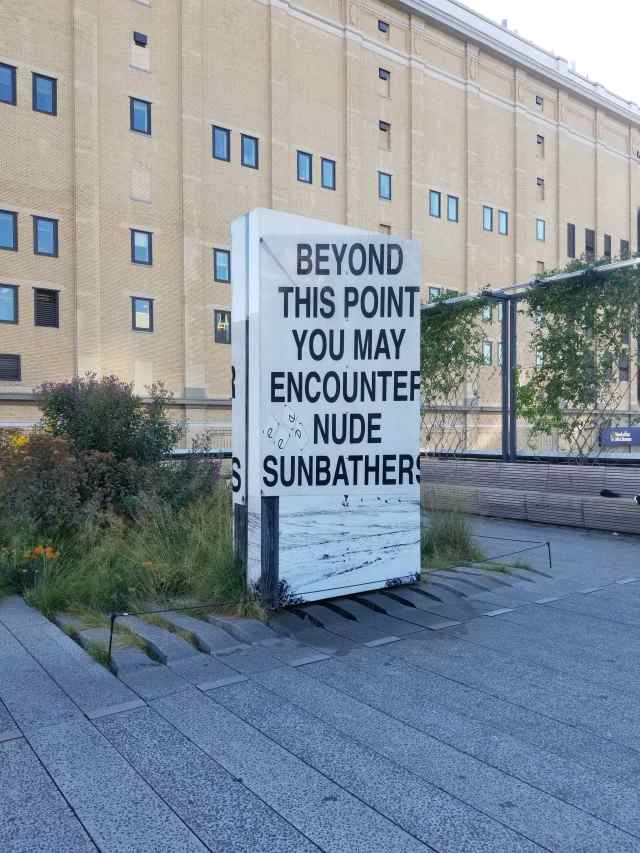
Walking the High Line can be a real challenge with endless rows of tourists obstructing annoyed New Yorkers obstructing desperate joggers realising only too late that their choice of running track couldn’t have been worse (actually it could but I’ll come back on that later).

But step aside, look left or right away from this nuisance and a broader – brighter – perspective will lay ahead.

Shine

The High Line, Chelsea, Aug 28th 2016


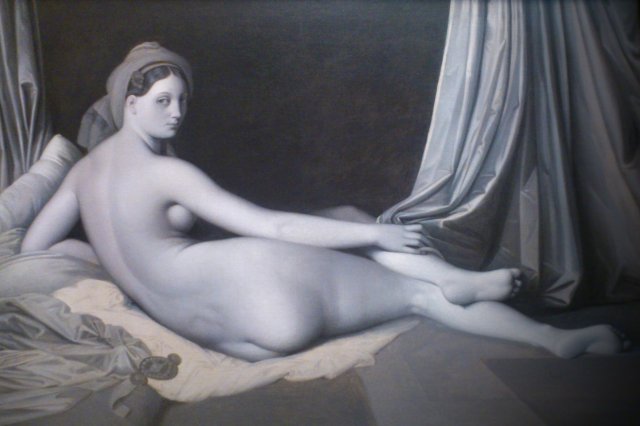
Odalisque in Grisaille

wpimg_20160827_154350
Jean Auguste Dominique Ingres, Odalisque in Grisaille, ca. 1834-34, Oil on Canvas

This painting is an unfinished repetition, reduced in size and much simplified, of the celebrated Grande Odalisque of 1814 (Musée du Louvre, Paris), a work that was central to Ingres’s conception of ideal beauty. Ingres cited it in a list of works he executed in Paris between 1824 and 1834, a period bracketed by lengthy sojourns in Italy. Paintings in shades of gray—en grisaille—were often made to establish variations in tone as a guide to engravers of black and white reproductive prints. As this work has not been linked definitively to known reproductions of the Grande Odalisque, its intended purpose remains uncertain.

Description: The Metropolitan Museum of Art

The simplicity, minimalism and cool monochromatic palette of this study, void of all embellishment and focussing on the model`s brilliantly lit-up body, fascinates me even more than the celebrated finished work.

August 27th, 2016

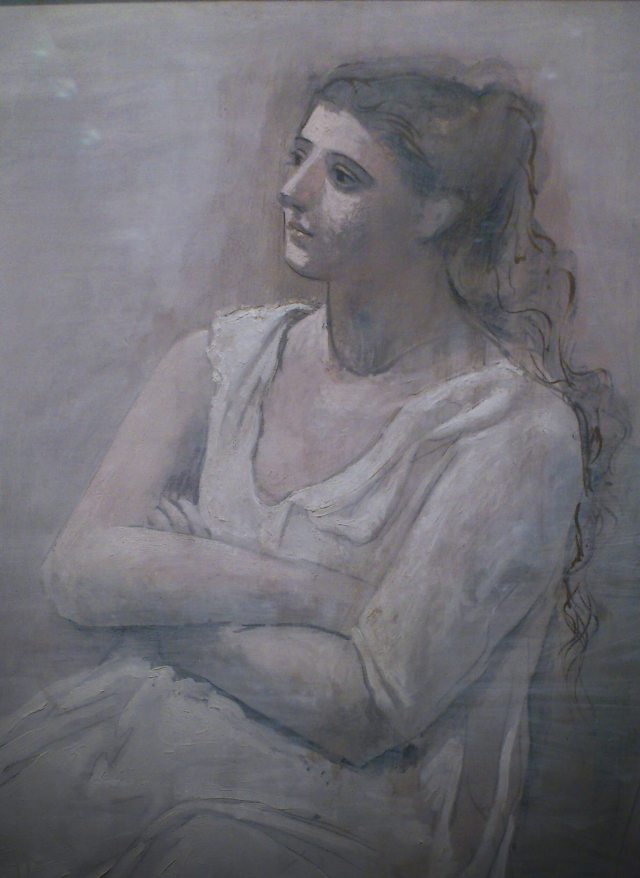
Woman in White

wpimg_20160827_153029
Pablo Picasso, Woman in White, 1923, oil on canvas

Picasso’s Woman in White is a masterpiece of his Neoclassical Period, which lasted from 1918 to 1925. Here, the artist depicts a seated figure as a dreamlike vision of fragile perfection and refinement. He achieves this effect through the application of several layers of white wash and superimposed contours in soft shades of brown and gray. As in many of his other figures of the period, the idealized treatment of her facial features reflects Picasso’s study of classical art. Her informal pose, along with the loose-fitting, almost diaphanous dress, gives the figure a gentle and relaxed air. The muted color scheme adds a romantic and pensive tone.

On view at The Metropolitan Museum of Art.

It is such exquisite examples of his work that remind me what a superb artist Picasso really was.

August 27th, 2016