MoMA, From the Collection, 1960 – 1969.
January 30th, 2017
«…Looking at You
I can read Your Mind
I am the maker of rules
Dealing with fools
I can cheat you blind…»
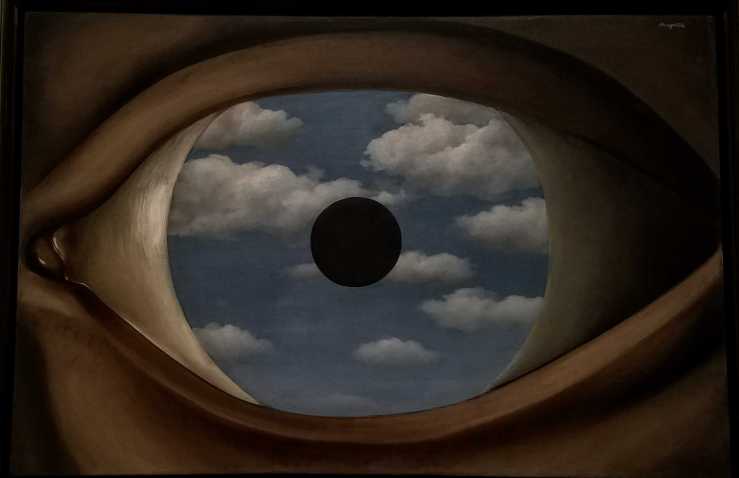
<<”Le Faux Miroir” presents an enormous lashless eye with a luminous cloud-swept blue sky filling the iris and an opaque, dead-black disc for a pupil. The allusive title, provided by the Belgian Surrealist writer Paul Nougé, seems to insinuate limits to the authority of optical vision: a mirror provides a mechanical reflection, but the eye is selective and subjective. Magritte’s single eye functions on multiple enigmatic levels: the viewer both looks through it, as through a window, and is looked at by it, thus seeing and being seen simultaneously. The Surrealist photographer Man Ray, who owned the work from 1933 to 1936, recognized this compelling duality when he memorably described ‘”Le Faux Miroir” as a painting that “sees as much as it itself is seen.”>>
MoMA, views from the permanent collection.
January 30th, 2017
Speaking of American friends ~ since Labor Day was very inappropriately coupled with two very European artists, today we will appropriately balance it out with some quintessentially American art.
A vibrant painting where the artist is exploring his African-American roots:
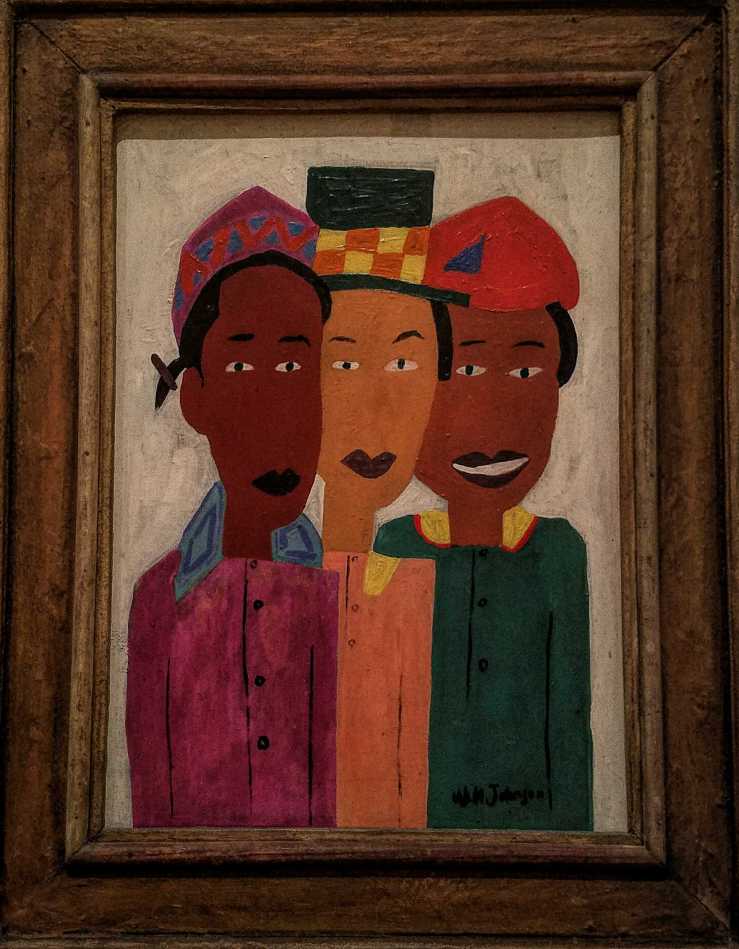
When the eye has to wander away from the target, and one begins to wonder which the real target be:
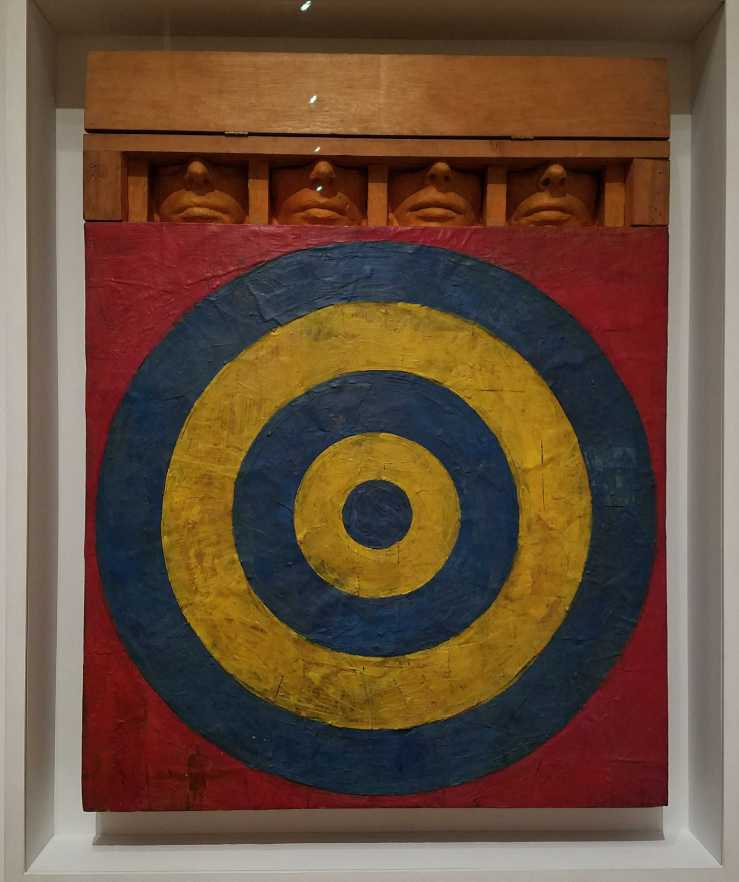
<<In the mid-1950s Johns incorporated symbols such as numbers, flags, maps, and targets into his paintings. Here, he transforms the familiar image of a target into a tangible object by building up the surface with wax encaustic. As a result, the concentric circles have become less precise and more tactile. Above the target Johns has added four cropped and eyeless faces, plaster casts taken from a single model over a period of several months. Their sculptural presence reinforces the objectness of the painting, particularly as the faces may be shut away in their niches behind a hinged wooden door.>>
The power of the thin white line:

<<Stella used commercial black enamel paint and a house painter’s brush to make The Marriage of Reason and Squalor, II. The thick black bands are the same width as the paintbrush he used. The thin white lines are not painted; they are gaps between the black bands in which the raw canvas is visible. Stella painted the black bands parallel to each other, and to the canvas’s edges, rejecting expressive brushstrokes in favor of an overall structure that recognized the canvas as both a flat surface and a three-dimensional object.
Stella identified his materials and process with those of a factory laborer. About his manner of painting, Stella famously said, “My painting is based on the fact that only what can be seen there is there… What you see is what you see.” Instead of painting something recognizable, Stella’s painting is about the act of painting, and its result.>>
Is this a flag or a painting?
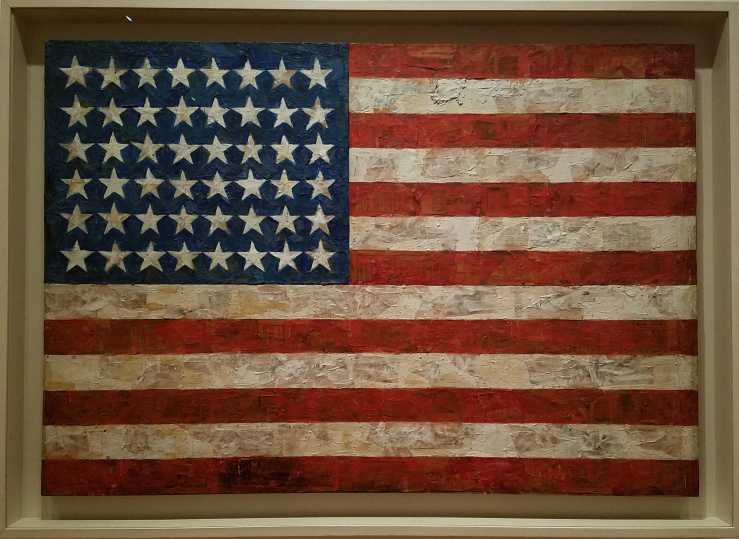
<<“One night I dreamed that I painted a large American flag,” Johns has said of this work, “and the next morning I got up and I went out and bought the materials to begin it.” Those materials included three canvases that he mounted on plywood, strips of newspaper, and encaustic paint—a mixture of pigment and molten wax that has formed a surface of lumps and smears. The newspaper scraps visible beneath the stripes and forty-eight stars lend this icon historical specificity. The American flag is something “the mind already knows,” Johns has said, but its execution complicates the representation and invites close inspection. A critic of the time encapsulated this painting’s ambivalence, asking, “Is this a flag or a painting?”>>
MoMA, views from the permanent collection.
January 30th, 2017
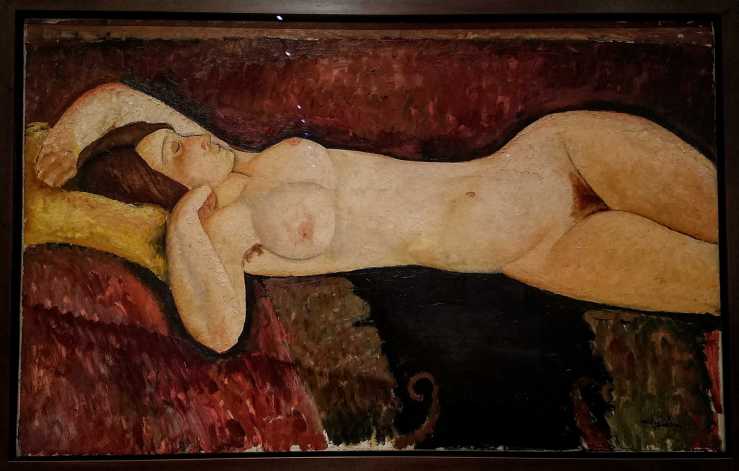
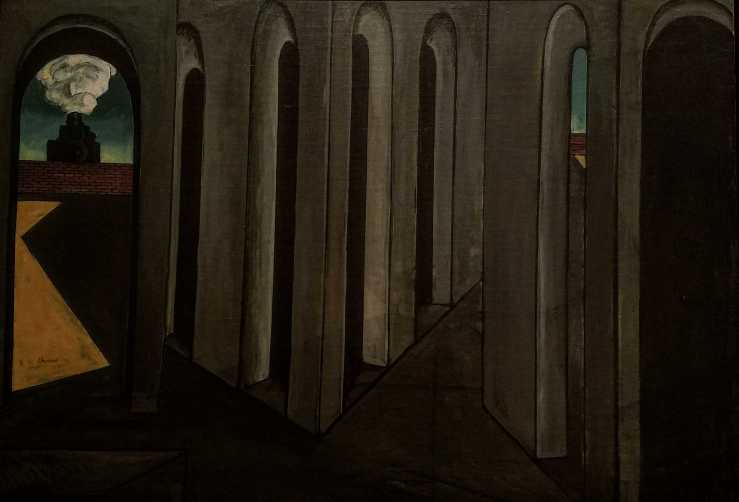
Lay back, relax, let go, dream. Let your fantasy guide you to places unknown. This Day is for You.
Happy Labor Day!
(exceptionally dropping the ”u” in honor of my American friends [Labour Day in Europe is celebrated on May 1st – May Day])
MoMA, views from the permanent collection.
January 30th, 2017
How subtle and feather-light, how wonderfully surreal, how utterly refreshing from his later work where drawing gave way, drowned under thick layers of colour.
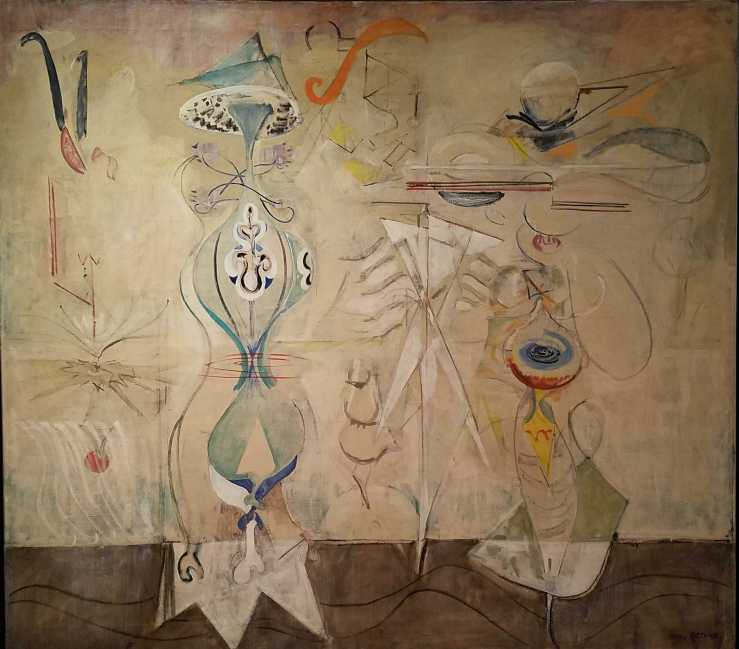
<<”Slow Swirl at the Edge of the Sea” pictures two creatures dancing between sea and sky, surrounded by arabesques, spirals, and stripes. The forms ”have no direct association with any particular visible experience, but in them one recognizes the principle and passion of organisms,” Rothko said. For him art was ”an adventure into an unknown world”; like the Surrealists before him, Rothko looked inward, to his own unconscious mind, for inspiration and material for his work.>>
MoMA, views from the permanent collection.
January 30th, 2017
By Meret Oppenheim.
Another perfectly unusable, utterly memorable object. Because one can always trust the Swiss to strike a balance between the simplicity of Surrealism and the surreal Simplicity.

<<It began with a joke over lunch. In 1936, Meret Oppenheim was at a Paris café with Dora Maar and Pablo Picasso, who noticed the fur-lined, polished metal bracelet she was wearing and joked that anything could be covered with fur. “Even this cup and saucer,” Oppenheim replied and, carrying the merriment further, called out, “Waiter, a little more fur!” Her devilish imagination duly sparked, the artist went to a department store not long after this meal, bought a white teacup, saucer, and spoon, wrapped them in the speckled tan fur of a Chinese gazelle, and titled this ensemble Object. In doing so, she transformed items traditionally associated with decorum and feminine refinement into a confounding Surrealist sculpture. Object exemplifies the poet and founder of Surrealism André Breton’s argument that mundane things presented in unexpected ways had the power to challenge reason, to urge the inhibited and uninitiated (that is, the rest of society) to connect to their subconscious—whether they were ready for it or, more likely, not.>>
MoMA, views from the permanent collection.
January 30th, 2017
Artistic interventions by Yayoi Kusama and Lucas Samaras on everyday objects rendering them unusable, thereby transforming them into memorable works of art.
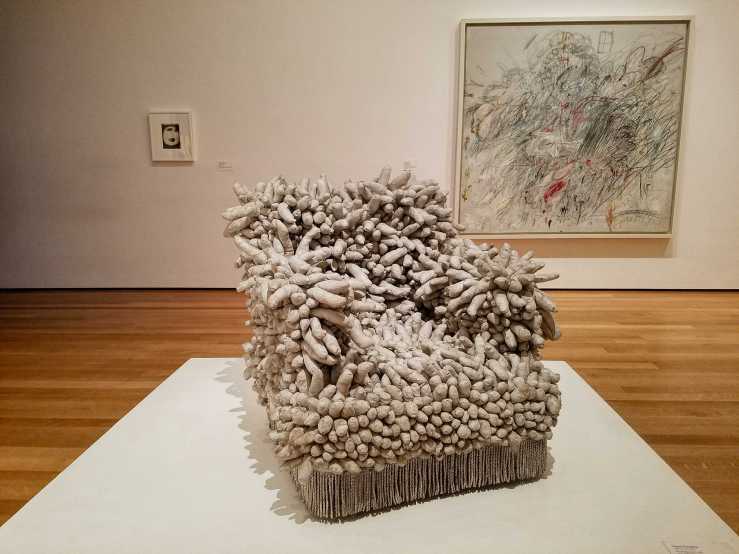
<<To make ”Accumulation No. 1”, her earliest sculpture, Kusama covered an armchair with stuffed and painted phallic protrusions. She hand-sewed each of these elements, later explaining, ”I make them and make them and keep on making them, until I bury myself in the process. I call this obliteration.” When she first exhibited this work, critics were shocked by the humorous, sexualized transformation of an ordinary domestic object. Since then, over the course of her fifty-year career, Kusama has created ”accumulations” of various materials on furniture, domestic objects, clothing and even room-sized environments.>>
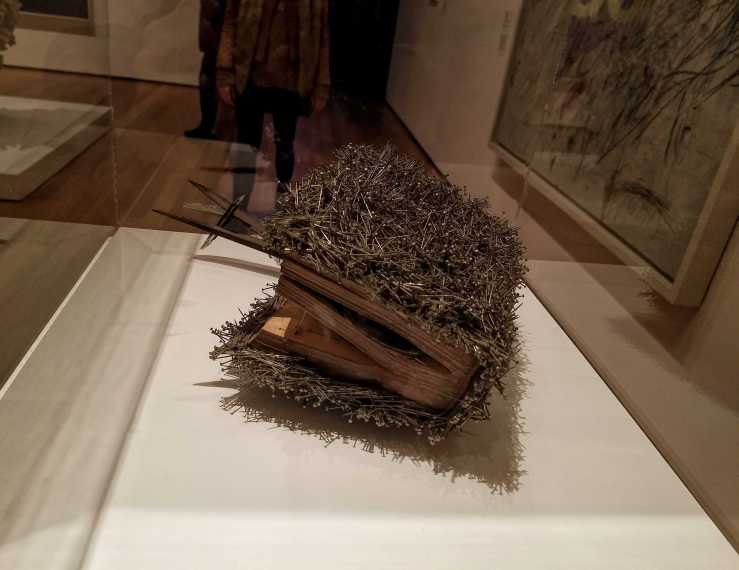
<<”Book 4” is a multifaceted object and a miniature world in itself. Although it includes eight fictional narratives written by the artist and surprises such as pop-ups, pockets, interlocking layers, foldouts and hidden pamphlets, it is not a storybook. Encrusted with needles and shards of glass in addition to brightly coloured beads and pieces of mirror, it is difficult, if not dangerous, to handle – the better, perhaps, to guard the secrets that it might contain.>>
MoMA, views from the permanent collection.
January 30th, 2017
Fascinated as I was with the depth, width and length of Picabia’s work retrospective, you didn’t think I’d leave MoMA without taking a long, refreshing look into the treasures of their permanent collection, did you?
In this series, we will walk through the sleek minimalist galleries, explore highlights, share favourites, be inspired and intrigued by some very stimulating works of art indeed.
Beginning with this charming postman, his suave royal blue uniform in contrast with the dark leaf green backdrop, the swirl of his beard echoed in the wind-swept flowers, the healthy colour of his skin reflected in their petals:
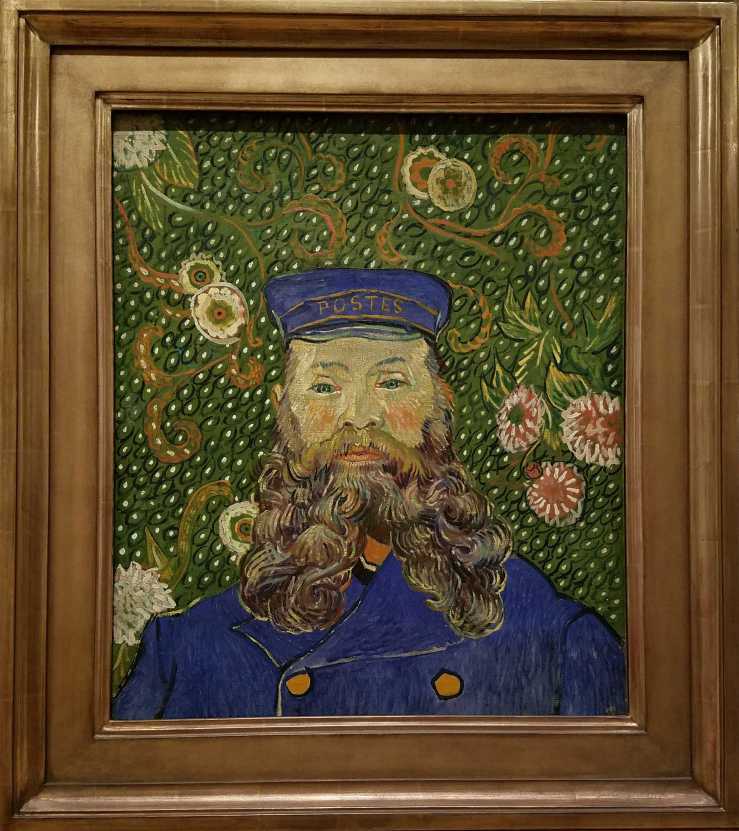
<<This portrait of Joseph Roulin is one of six Van Gogh painted of his close friend, a postal employee in the southern French town of Arles. Van Gogh had moved to Arles in 1888, hoping to create an artists’ cooperative. The plan never came to fruition and Van Gogh became lonely and isolated. He found comfort and companionship with the Roulin family and they are the subjects of many of his paintings. In this portrait, Roulin is depicted in the uniform he always wore, proudly, set against an imaginative backdrop of swirling flowers. In a letter to his brother Theo, the artist wrote that, of all genres, ”the modern portrait” excited him the most: ”I want to paint men and women with that something of the eternal which the halo used to symbolize, and which we try to convey by the actual radiance and vibration of our colouring.”>>
***
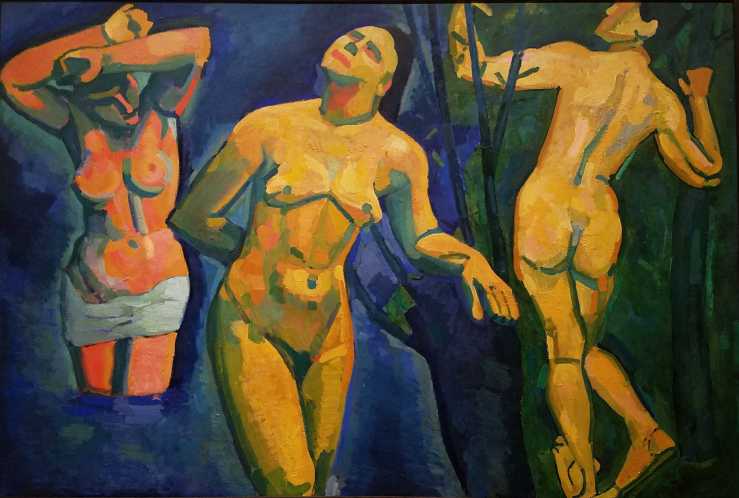
Something about the strong, almost geometric lines; the contrasting colours; the warmth and energy; the bright yellow light falling sideways on the bodies and making them glow:
***
Of all the paintings by Gauguin, this is my favourite one:
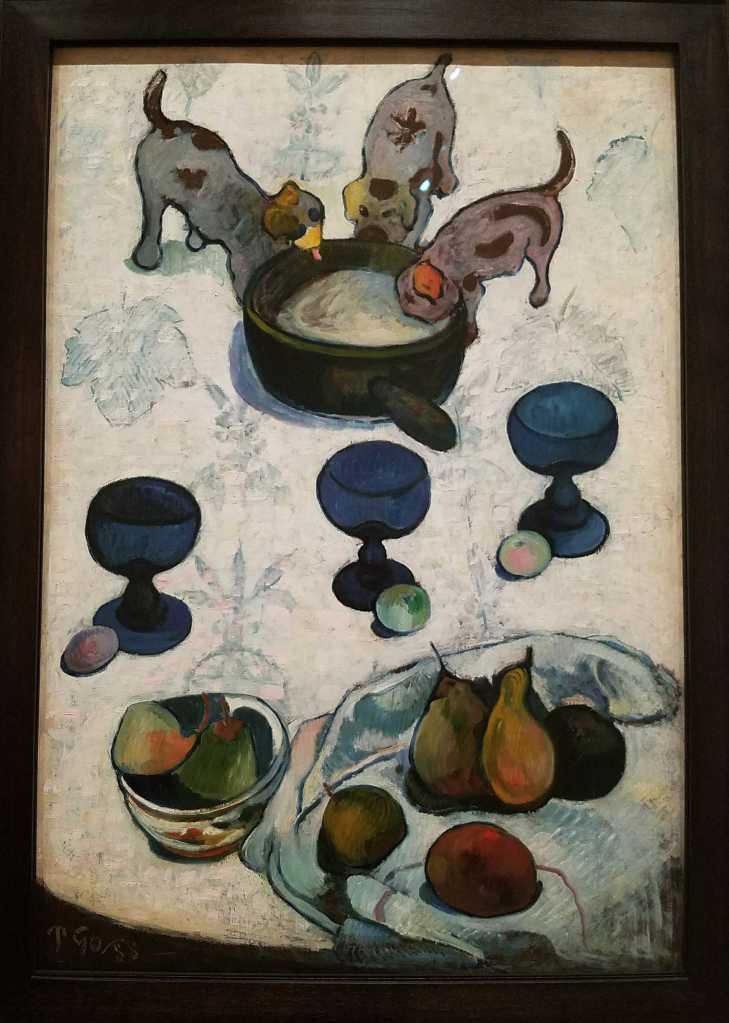
<<When Gauguin painted ”Still Life with Three Puppies”, he was living in Brittany among a group of experimental painters. He abandoned naturalistic depictions and colours, declaring that ”art is an abstraction” to be derived ”from nature while dreaming before it.” The puppies’ bodies, for example, are outlined in bold blue, and the patterning of their coats mirrors the botanic print of the tablecloth. It is thought that Gauguin drew stylistic inspiration for this painting from children’s book illustrations and from Japanese prints, which were introduced to him by his friend Vincent van Gogh that same year.>>
***
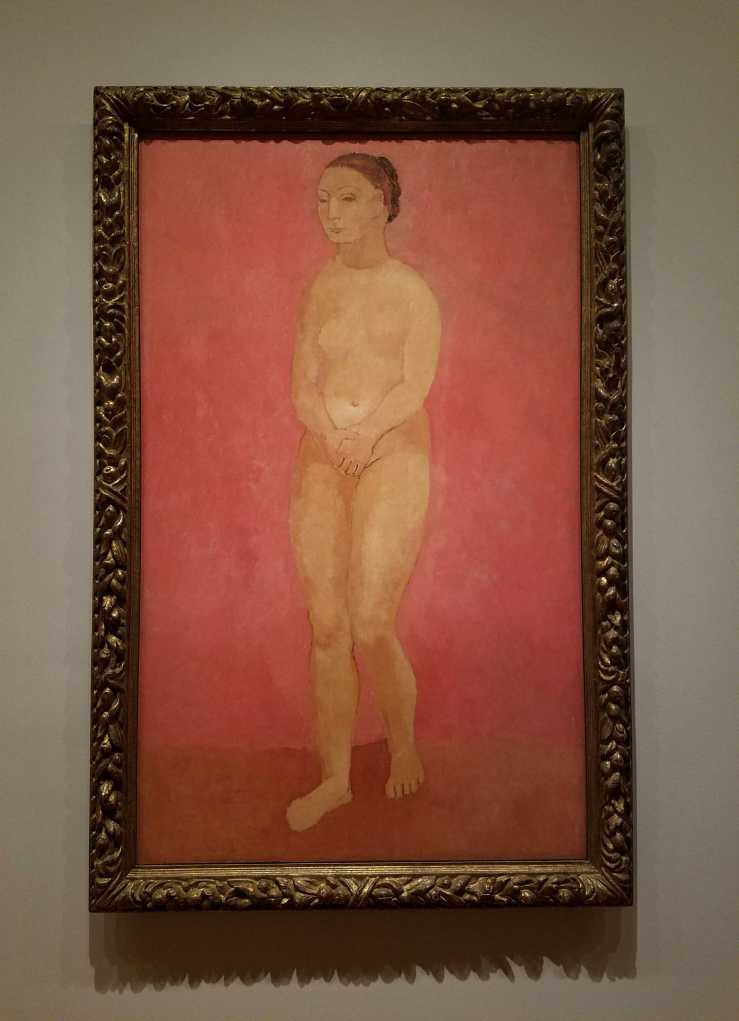
I am captivated by the fine elegance of Picasso’s work during his Blue and Rose periods. Anything beyond that leaves me indifferent:
***
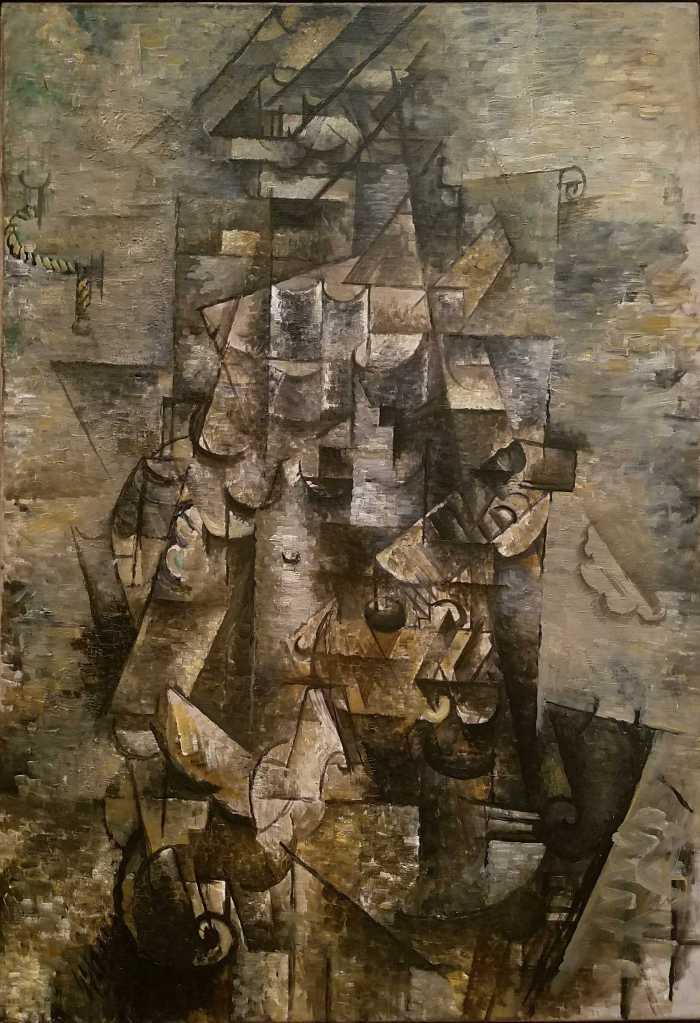
Au contraire, all due respect to the real master of Cubism and his hypnotic, geometric perspectives:
***
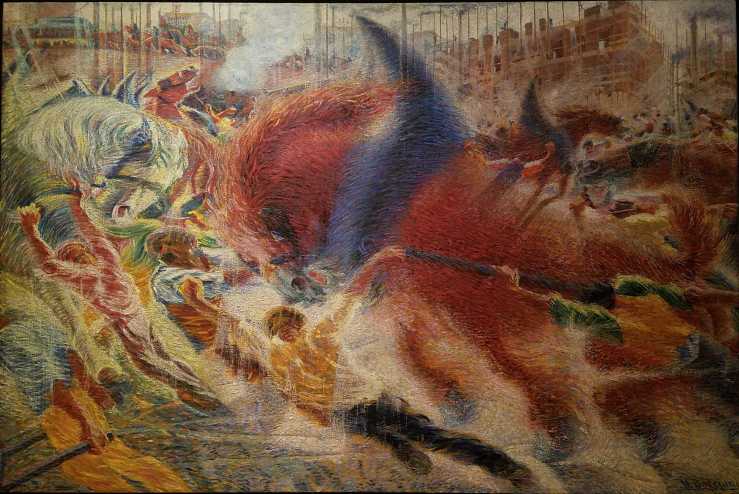
The dynamism and violence and forces of nature, all in one picture:
***
And all the sadness of the world, in one body:
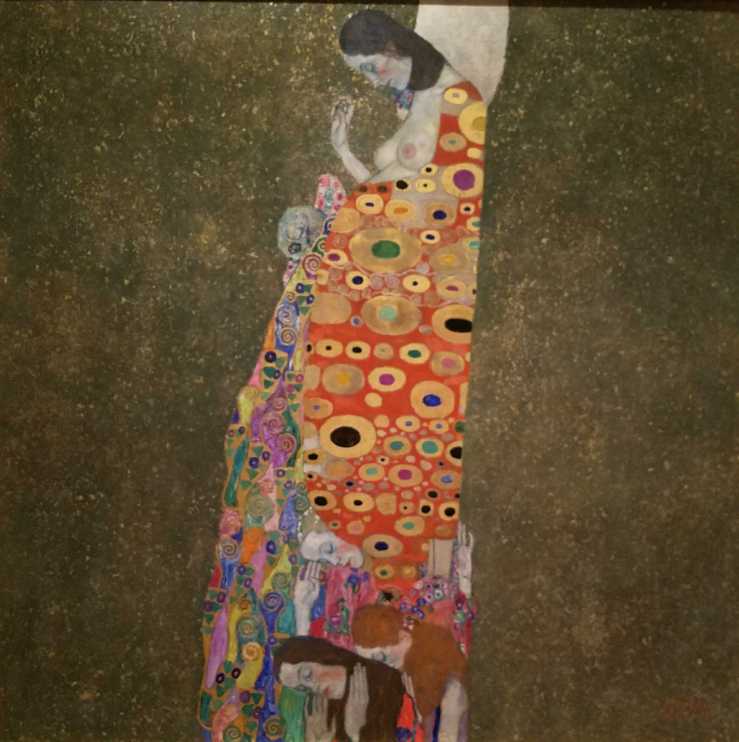
<<A pregnant woman bows her head and closes her eyes, as if praying for the safety of her child. Peeping out from behind her stomach is a death’s head, sign of the danger she faces. At her feet, three women with bowed heads raise their hands, presumably also in prayer—although their solemnity might also imply mourning, as if they foresaw the child’s fate.>>
***
These Munch-like faces with a neon colour palette:
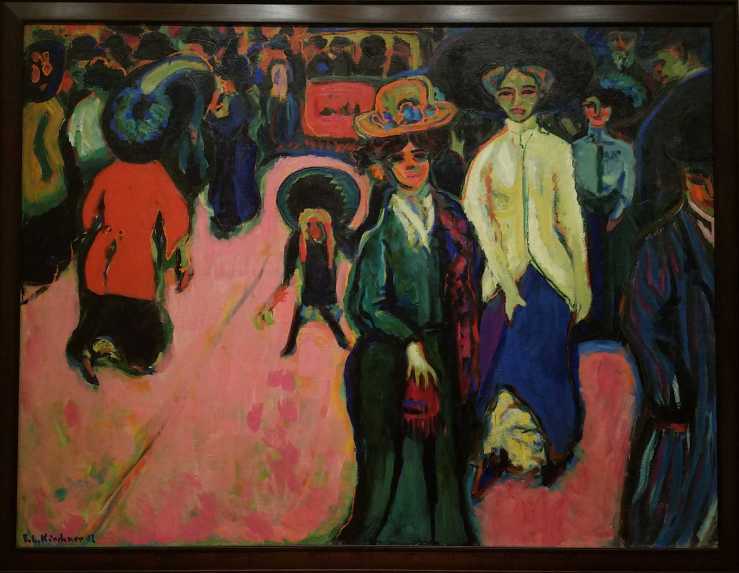
<<At the time he made this painting, Ernst Ludwig Kirchner was living in Dresden, a large city in southeast Germany. In a letter to fellow painter Erich Heckel, he wrote of the Dresden crowds, “Completely strange faces pop up as interesting points through the crowd. I am carried along with the current, lacking will. To move becomes an unacceptable effort.” Kirchner heightened the colors of this city scene, depicting the figures with masklike faces and vacant eyes in order to capture the excitement and psychological alienation wrought by modernization.”>>
***
This couple looking bizarrely distant in their two separate worlds, gazing in different directions had me wondering about their pose – until I read the accompanying note:
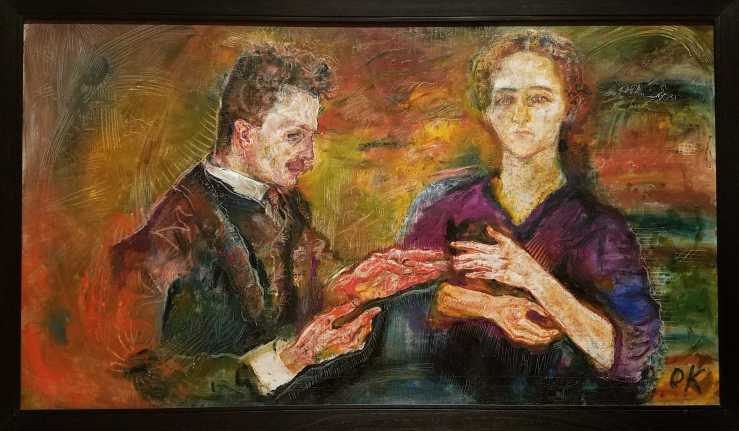
<<In 1909 the Viennese art historians Hans and Erica Tietze asked 23-year-old Oskar Kokoschka to paint a marriage portrait for their mantelpiece. They were strong supporters of contemporary art in Vienna and together helped organize the Vienna Society for the Advancement of Contemporary Art. Mrs. Tietze recalled that she and her husband were painted individually, a fact suggested by their separate poses and gazes. Kokoschka used thin layers of color to create the hazy atmosphere surrounding the couple, and added a sense of crackling energy by scratching the paint with his fingernails.>>
Extracts from accompanying tags, either on site or on line (under the ”Artists” section)
MoMA, views from the permanent collection.
January 30th, 2017
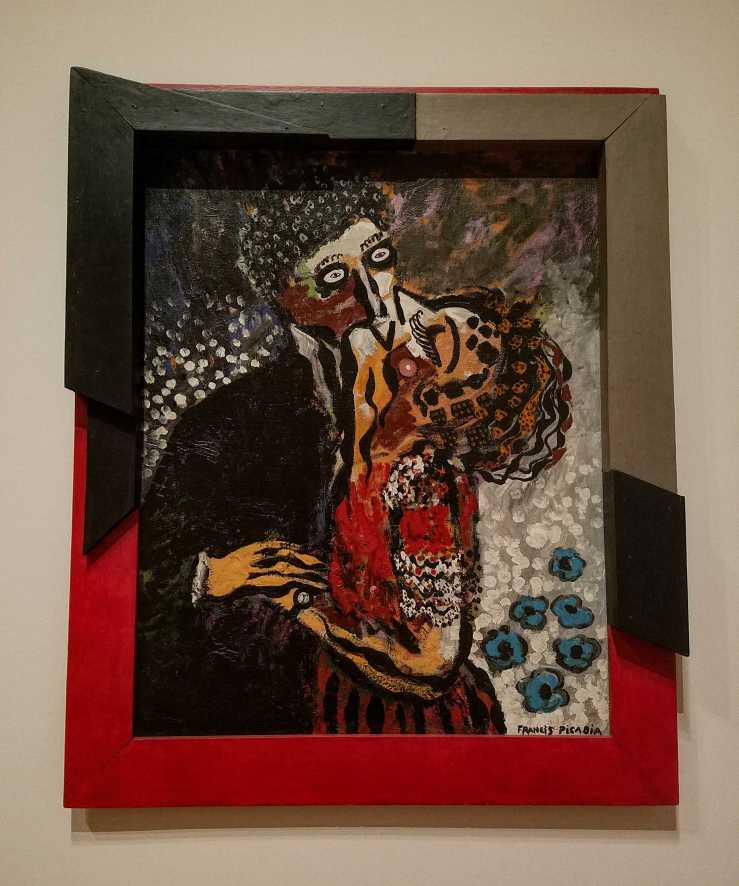
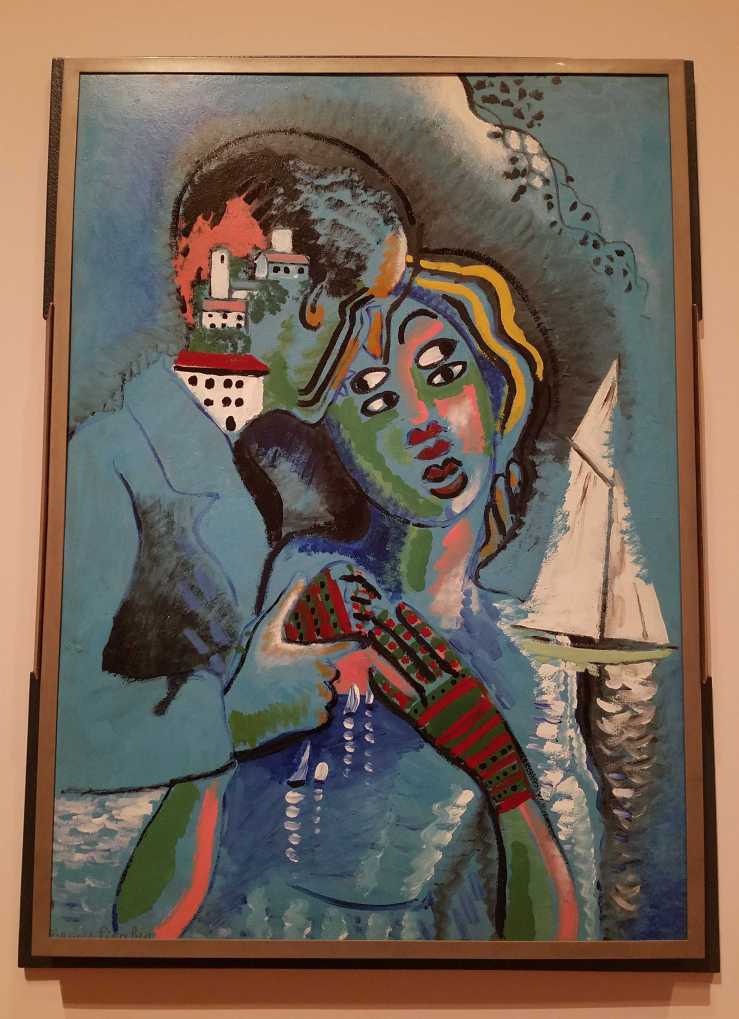
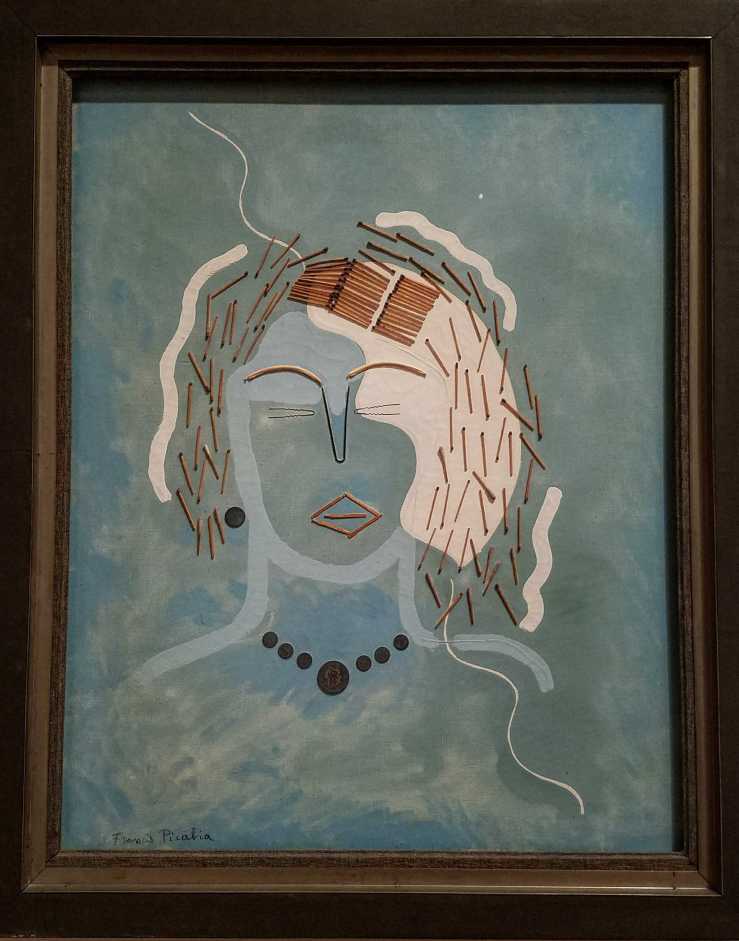
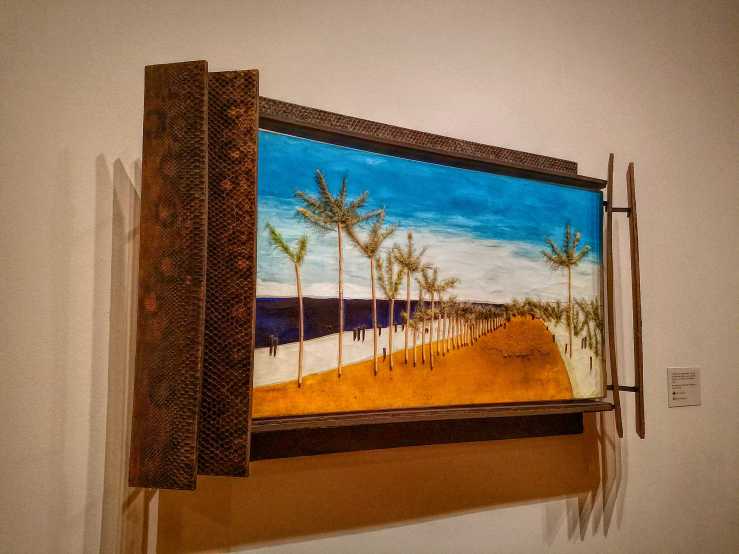
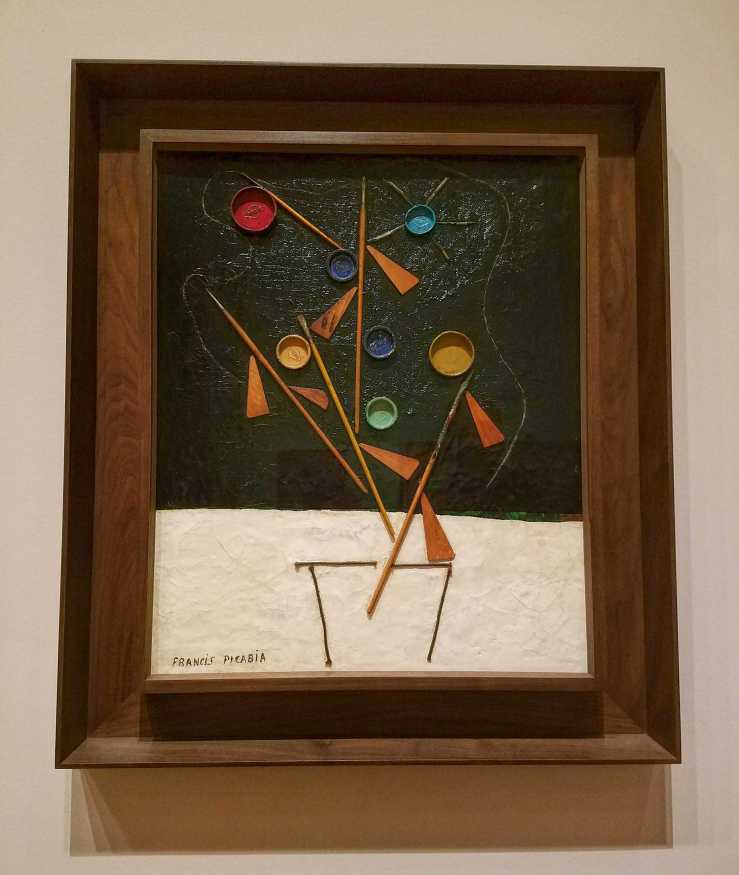
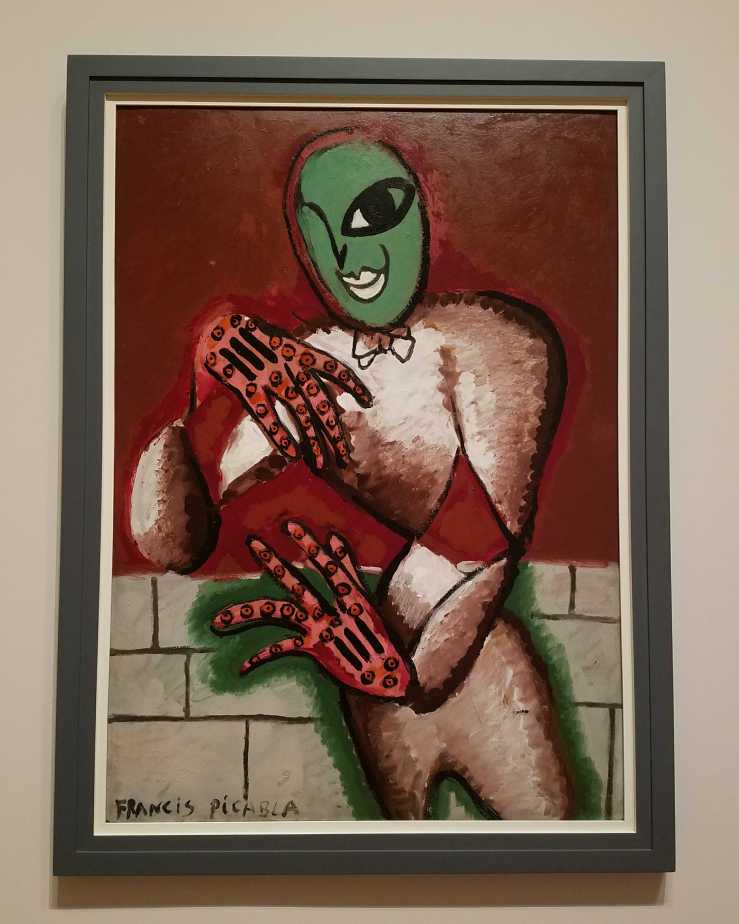
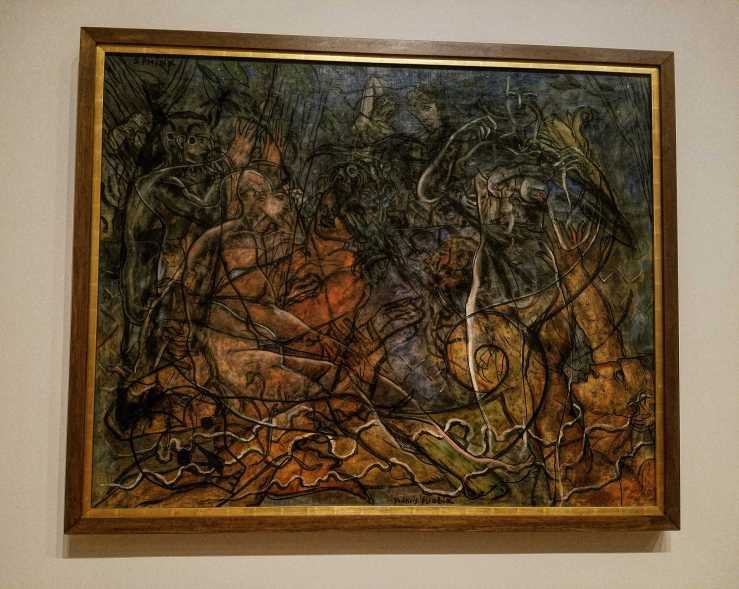
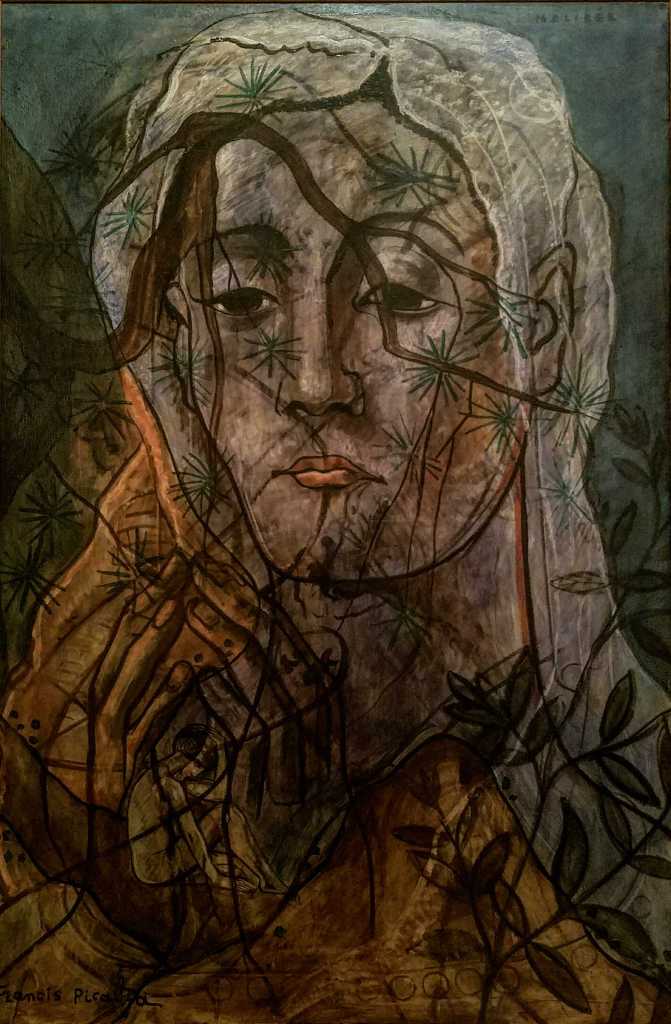
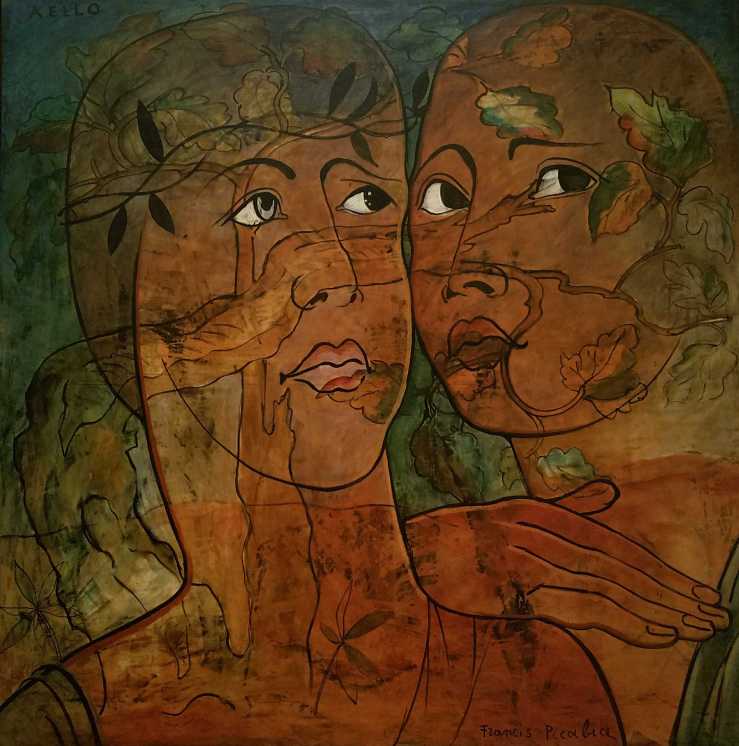
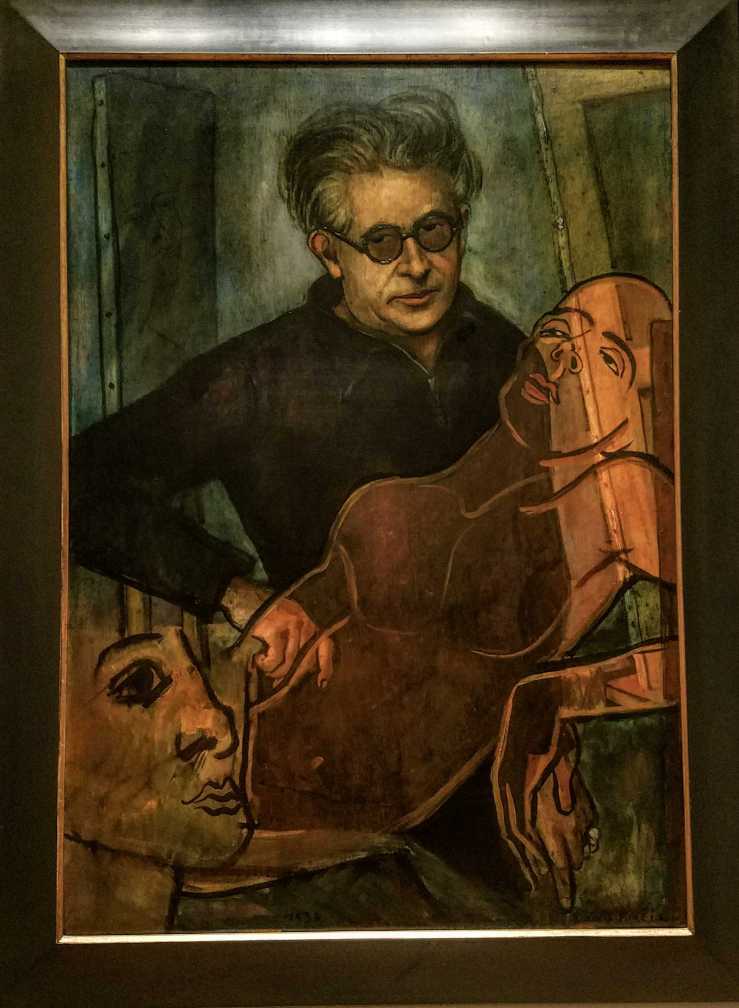
From the accompanying tag: ”This work began as a portrait of Picabia painted by the German artist Bruno Eggert in 1934. Eggert gave it to Picabia, who then added his own touches: a pair of dark-tinted glasses on his nose, a face in the lover left corner, a transparent female body across the picture, the edge of a stretcher in the upper right corner. He also signed and dated the work. Here, Picabia adopted another artist’s work as the support for his own, with over-painting used to assert rather than deny.”
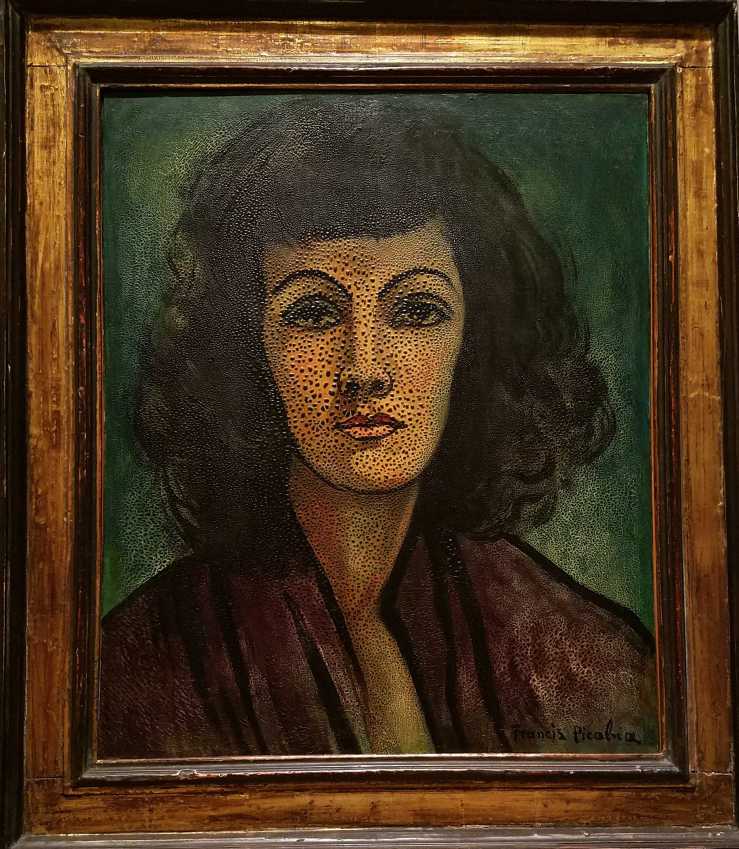
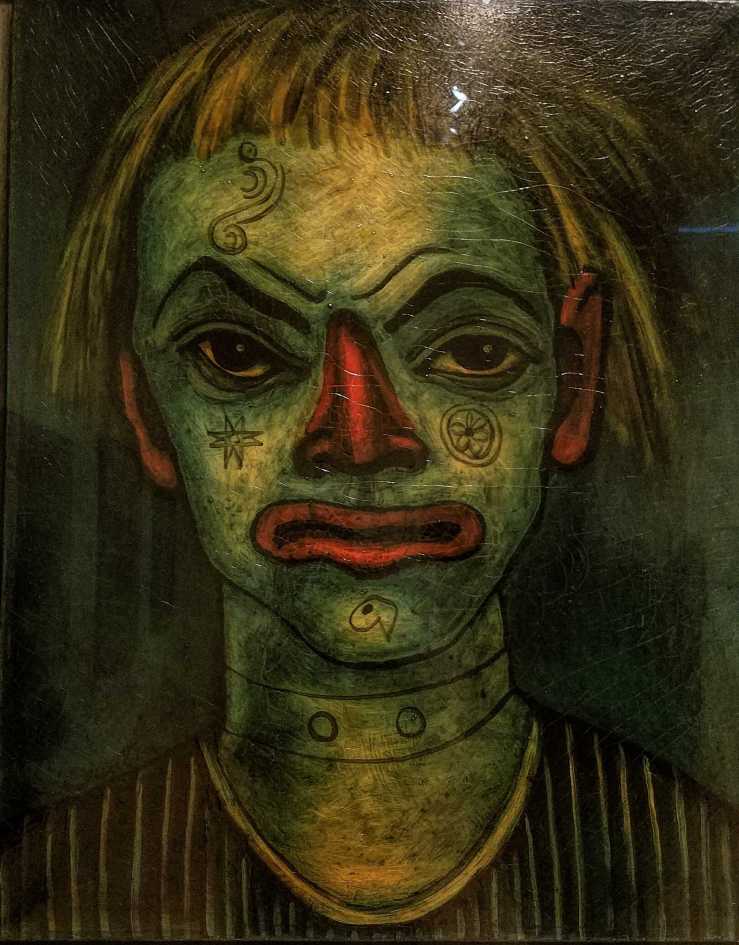
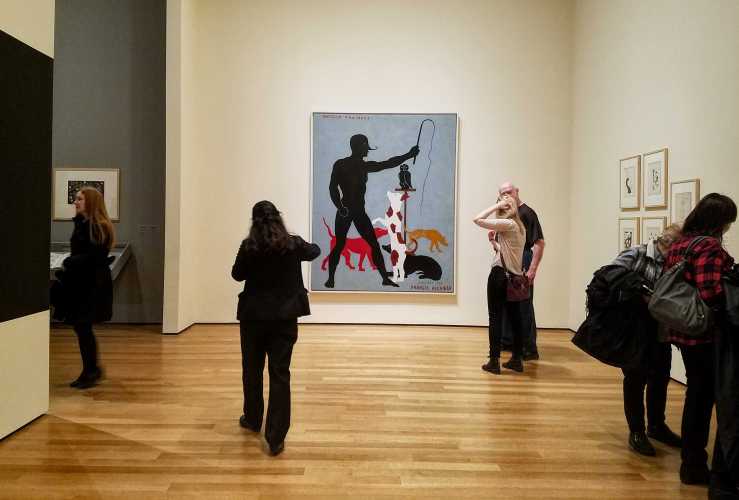
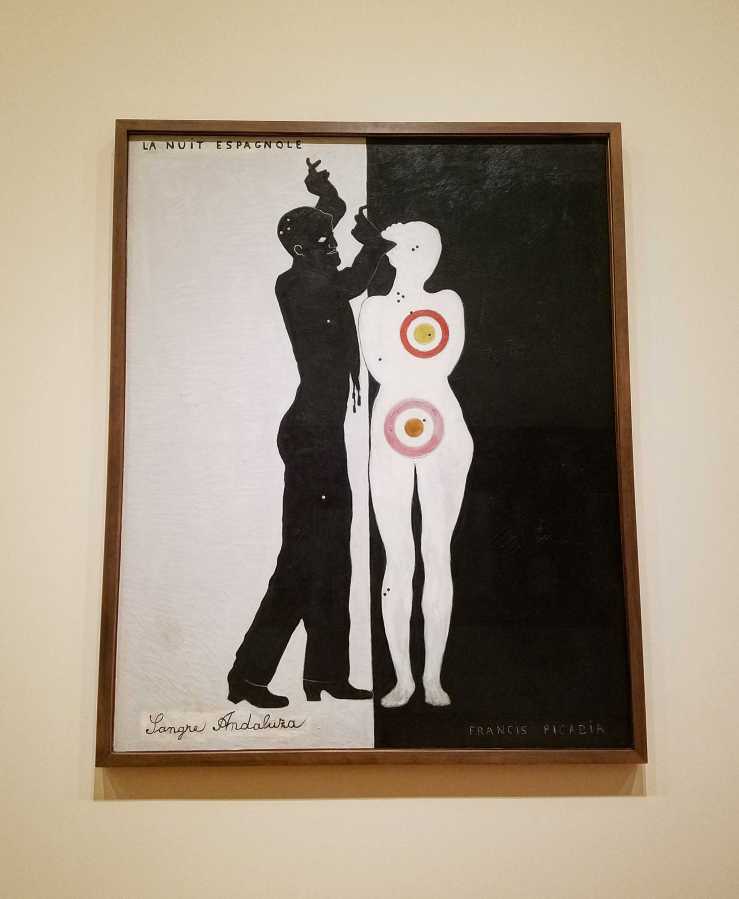
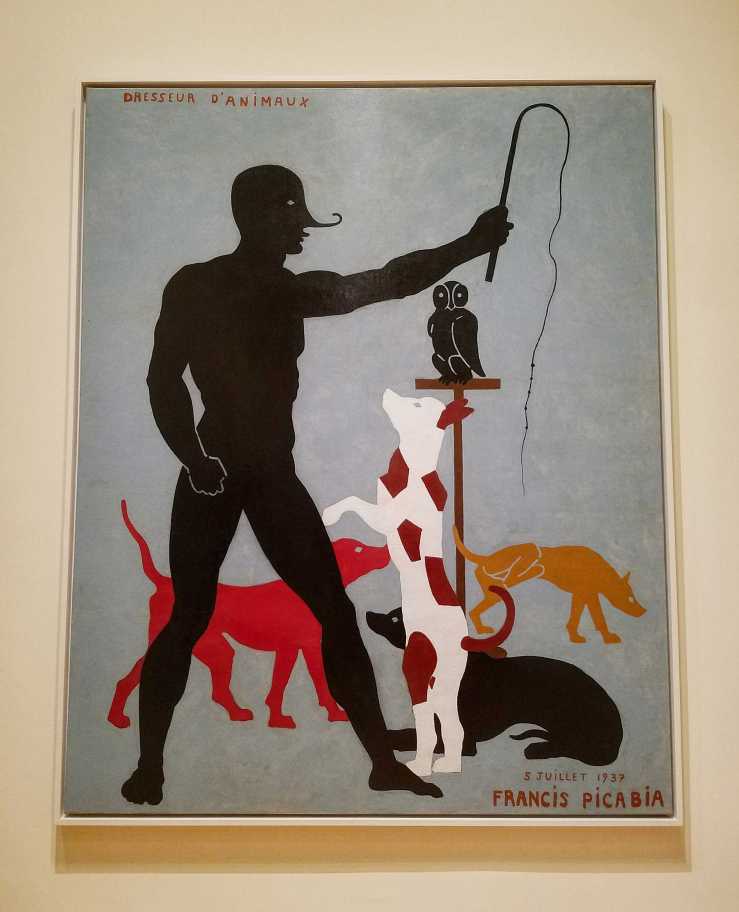
Part 5 concludes our round of Francis Picabia’s retrospective at MoMA.
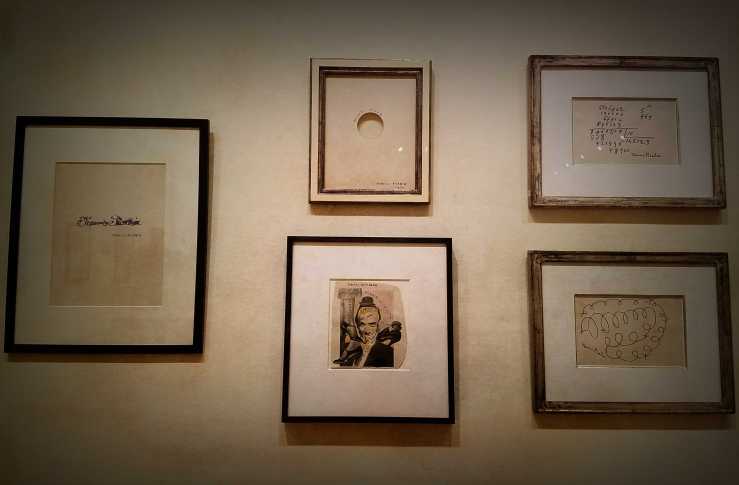
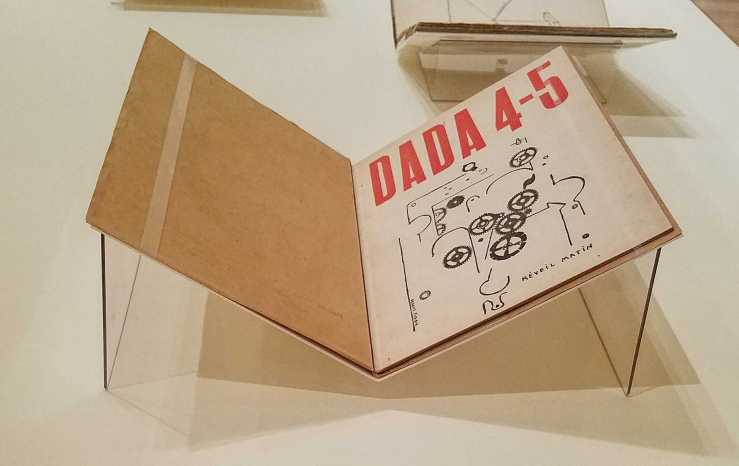
Connecting the pieces:
January 30th, 2017
”You are all indicted, stand up! It is impossible to talk to you unless you are standing up.
Stand up as you would for the Marseillaise or God Save the King.
Stand up, as if the Flag were before you. Or as if you were in the presence of Dada, which signifies Life, and which accuses you of loving everything out of snobbery if only it is expensive enough.
One dies a hero’s death or an idiot’s death – which comes to the same thing. The only word that has more than a day-to-day value is the word Death. You love death – the death of others.
Kill them! Let them die! Only money does not die; it only goes away for a little while.
That is God! That is someone to respect: someone you can take seriously! Money is the prie-Dieu of entire families. Money for ever! Long live money! The man who has money is a man of honour.
Honour can be bought and sold like the arse. The arse, the arse, represents life like potato-chips, and all you who are serious-minded will smell worse than cow’s shit.
Dada alone does not smell: it is nothing, nothing, nothing.
It is like your hopes: nothing
like your paradise: nothing
like your idols: nothing
like your heroes: nothing
like your artists: nothing
like your religions: nothing.
Hiss, shout, kick my teeth in, so what? I shall still tell you that you are half-wits. In three months my friends and I will be selling you our pictures for a few francs.”
Manifeste Cannibale Dada
subjective worldview
Actor, writer, cook and author
Travel experiences & Strasbourg city guide
Writer
joy, happiness, travel, adventure, gratitude
"Rêve onirique & Bulle d'évasion"
makes pretty things on paper
This WordPress.com site is Pacific War era information
Welcome to my curious world of words....
Photographs, music and writing about daily life. Contact: elcheo@swcp.com
Free listening and free download (mp3) chill and down tempo music (album compilation ep single) for free (usually name your price). Full merged styles: trip-hop electro chill-hop instrumental hip-hop ambient lo-fi boombap beatmaking turntablism indie psy dub step d'n'b reggae wave sainte-pop rock alternative cinematic organic classical world jazz soul groove funk balkan .... Discover lots of underground and emerging artists from around the world.
A 365 analogue photography project
Barcelona's Multiverse | Art | Culture | Science
Een digitaal atelier aan de (zee)slag.
‘Doodling Ambiguity’s in Ink.’
Miscellaneous photography
Glimpses along the way on a journey of discovery into symmetry...
 The Humble Fabulist