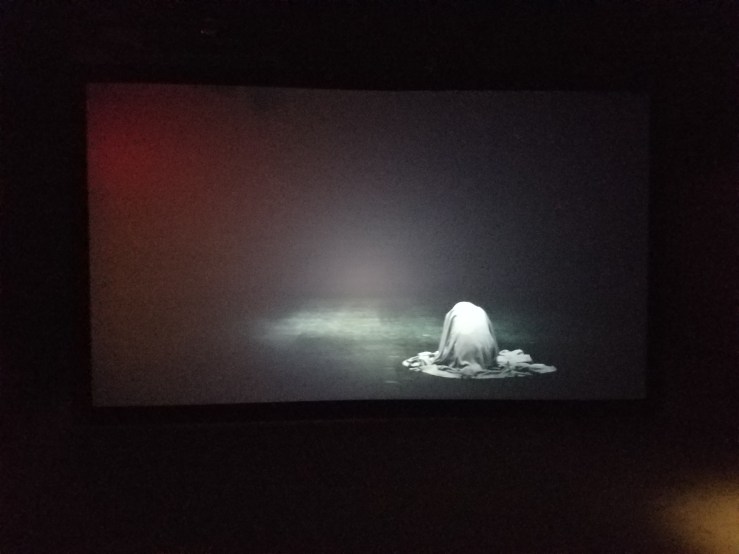
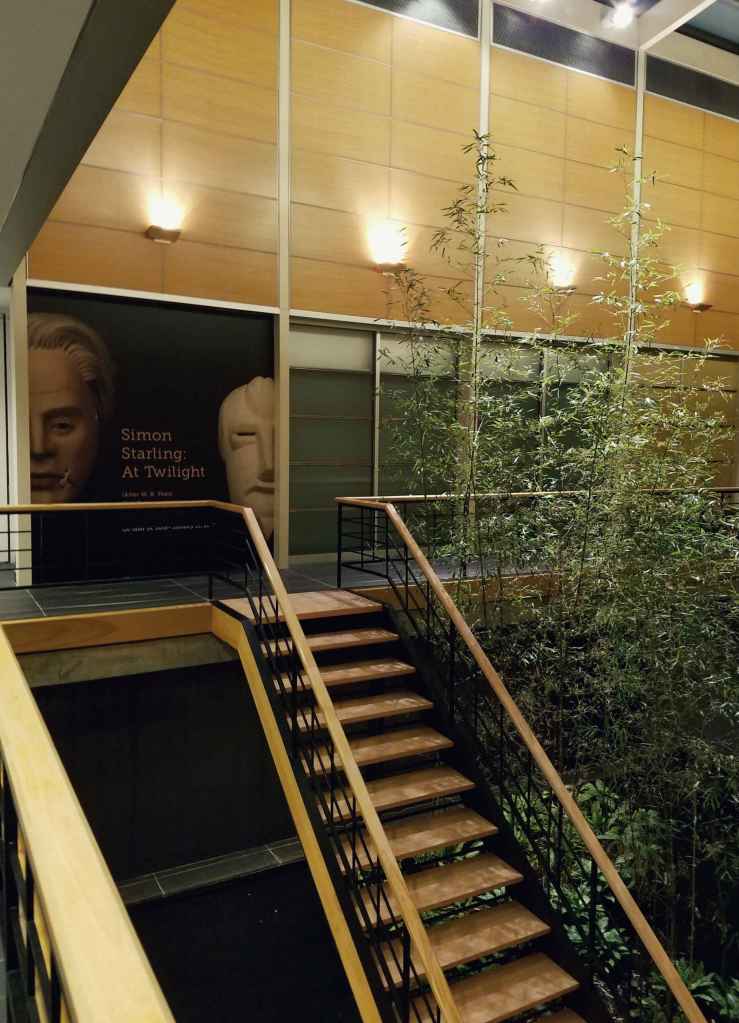
Simon Starling: At Twilight (After W. B. Yeats’ Noh Reincarnation), is a multimedia project in which the artist explores the influence of Noh on Western Modernism. It was displayed in the Japan Society’s galleries starting with a dimly lit room where a modern interpretation of At the Hawk’s Well, W.B. Yeats’ one-act dance play was showing alongside masks created by Noh Mask maker, Yasuo Miichi. The play was inspired by Yeats’ close collaborator and friend, the poet Ezra Pound who at the time, was translating Japanese Noh plays.
The installation continued in the ”mirror room”, a place Noh performers would traditionally use to change into their characters and, finally, concluded with an exhibit of photographs, prints, masks and other archival material – all related to Mr Starling’s project.
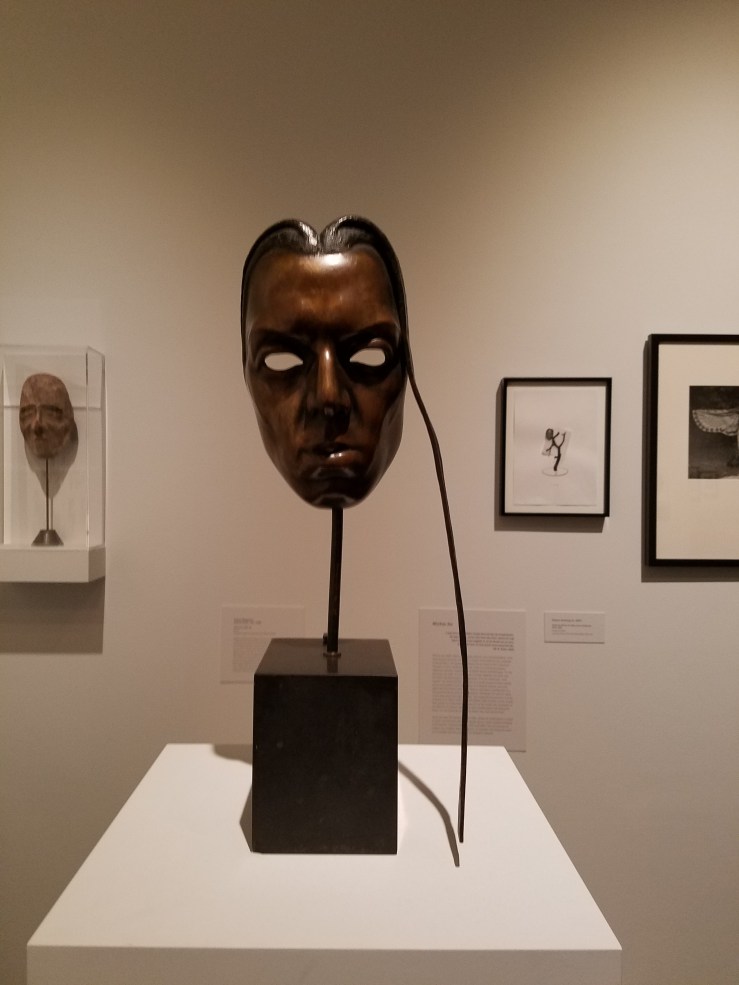
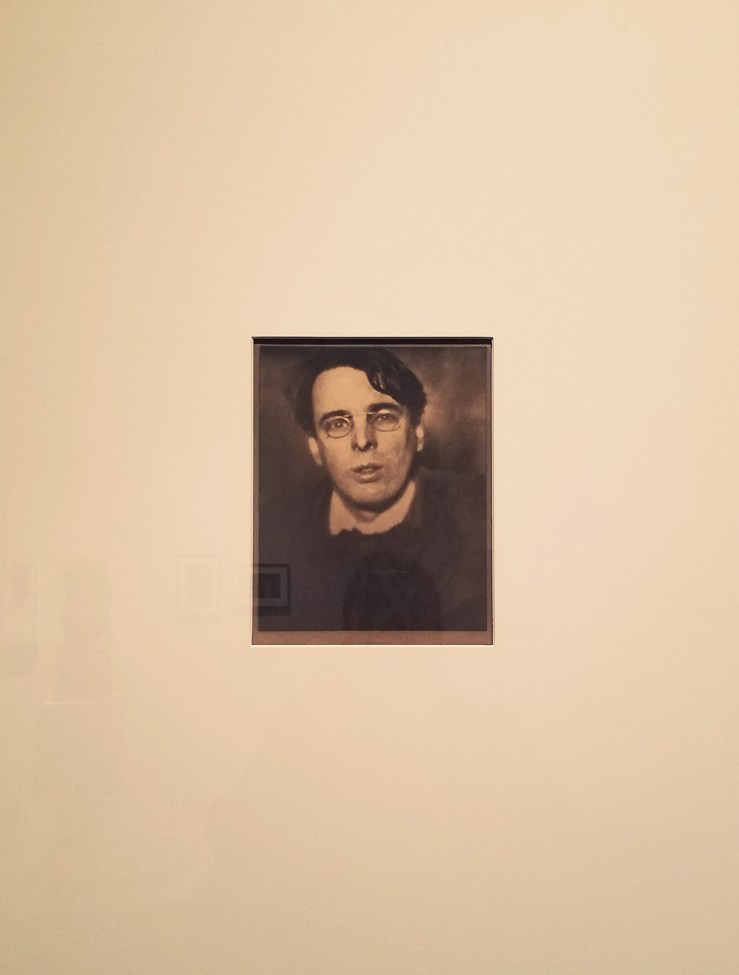
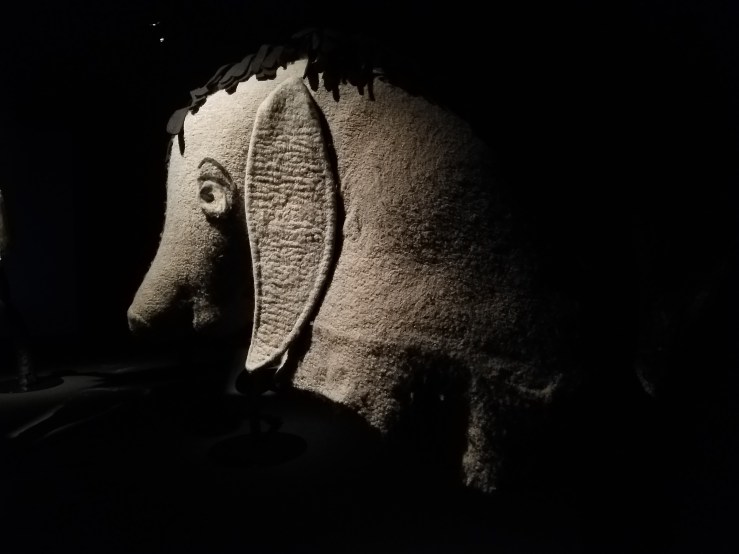
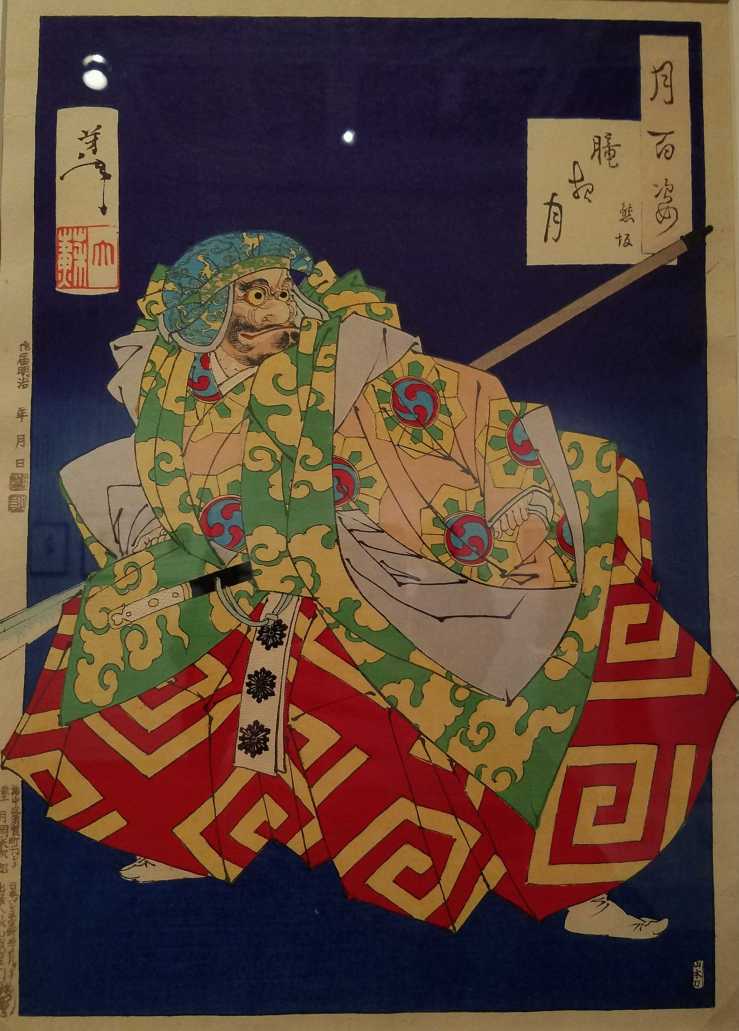
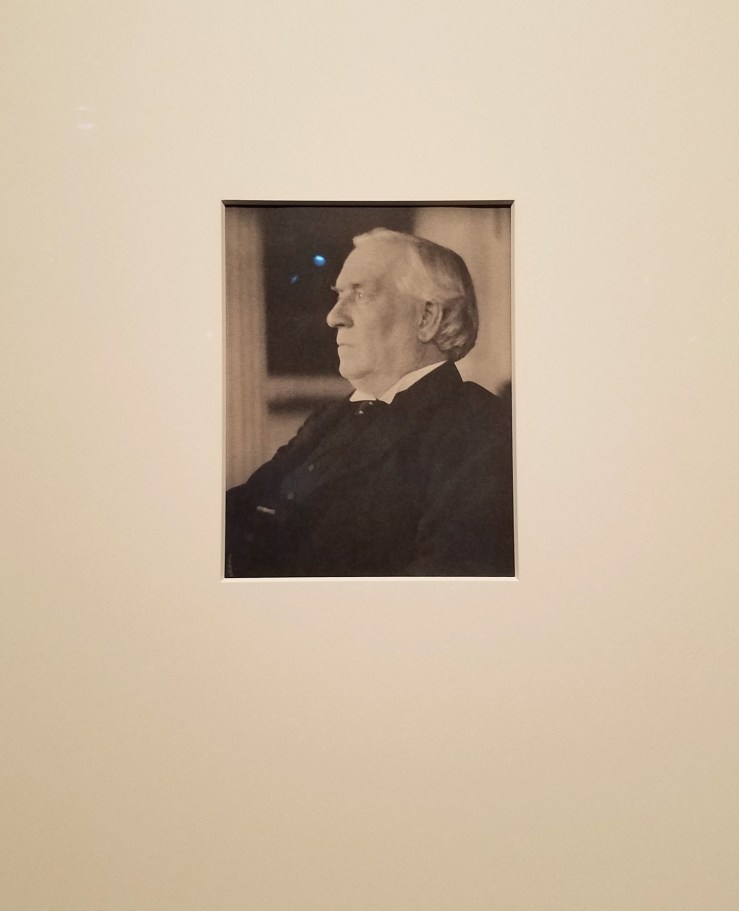
Bronze portrait of the dancer Michio Ito, who performed as the Hawk in the original 1916 staging of ”At the Hawk’s Well”, conceived as a Noh mask and created in the mid-1920s, around the time when Ito was collaborating with New York-based choreographer Martha Graham. Isamu Noguchi, 1904-1988.W.B. Yeats, 1913 by Alvin Langdon Coburn (1882-1966). Digital print.The hawk costume seen in the film.The elephant in the room.The Bamboo Gallery was converted into a mirror room (kagami-no-ma), traditionally used by Noh performers to change into their characters. Costumes reproduced based on archival materials from Yeat’s original play were displayed here.Rock Drill, 1913-14. Bronze by Jacob Epstein. One of the Modernist works that inspired the creation of the Noh masks…… and the creator, Jacob Epbstein. Photogravure by Alvin Langdon Coburn, in 1914.Kumasaka in the Misty Moonlight, undated. Polychrome woodblock print by Tsukioka Yoshitoshi (1839-1892).Noh Mask, Edo period (1603-1868) by an unknown artist.H.H. Asquith, 1914. Photogravure by Alvin Langdon Coburn (1882-1966). H.H. Asquith was Prime Minister of England between 1908 and 1916. Known for his indecisive leadership during the initial stages of WWI, he was a regular guest at the home of Lord and Lady Cunard and was among the intimate audience gathered at the premiere of ”At the Hawk’s Well”. Prior to this, Asquith met the Japanese dancer Michio Ito, who played the Hawk.
Ito later recalled: At supper, Lady Cunard, a refined, white-haired gentleman and I, all sat at a table together. The old man tried to carry on a conversation with me. However, it was in English, so I didn’t follow very well… I began to get frustrated, and interjected in halting English: ”If you allow me to speak in German I can answer a little more intelligently.” Hearing this, the old man let out a hearty laugh: ”I am an Englishman and can’t speak Japanese. You are Japanese and can’t speak English. If German mediates between us, then by all means let’s speak in German…” The person I had spoken to in German – the language of his enemy – had been the Prime Minister of England.”
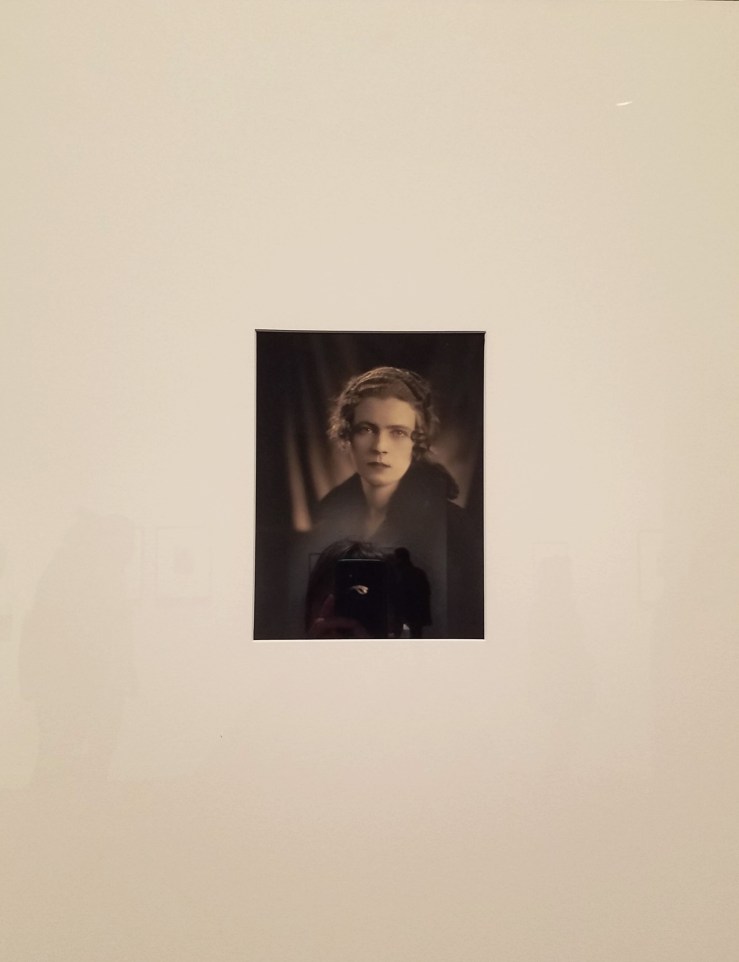
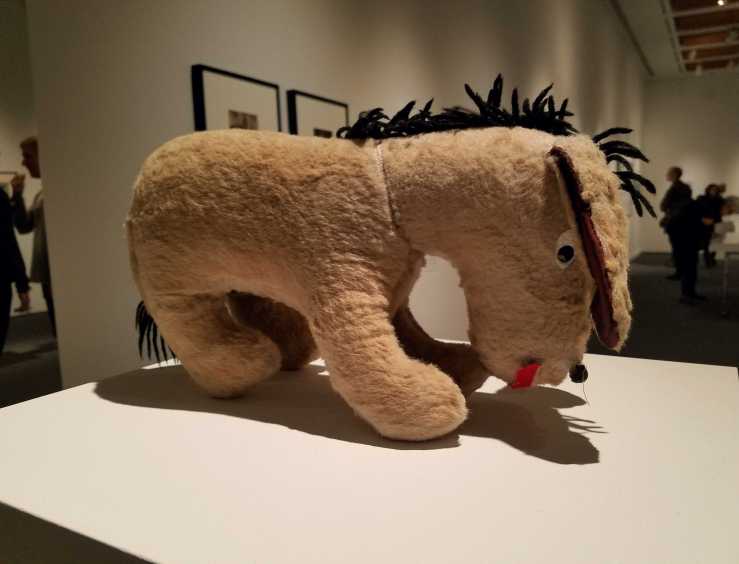
Noh mask by an unknown artist. Edo period (1603-1868).Nancy Cunard, 1916. Digital print by an unknown photographer.Eeyore. Ten years after the first performance of ”At the Hawk’s Well”, the trees of Ashdown Forest that surrounded W.B. Yeats and Ezra Pound’s wartime retreat, Stone Cottage, were immortalized in Ernest Shepard’s illustrations for A.A. Milne’s Winnie-the-Pooh books. Milne based Pooh’s One Hundred Acre Wood on Ashdown Forest, where he lived and where, at the time Yeats and Pound were there, he was writing wartime propaganda articles for the MI7b. Eeyore is the pessimistic, old grey donkey from the story.
Pessimistic, downward facing Eeyore concludes the three-part series about Simon Starling’s project shown at the Japan Society. For more inspirational views connecting the pieces, please click here and here.
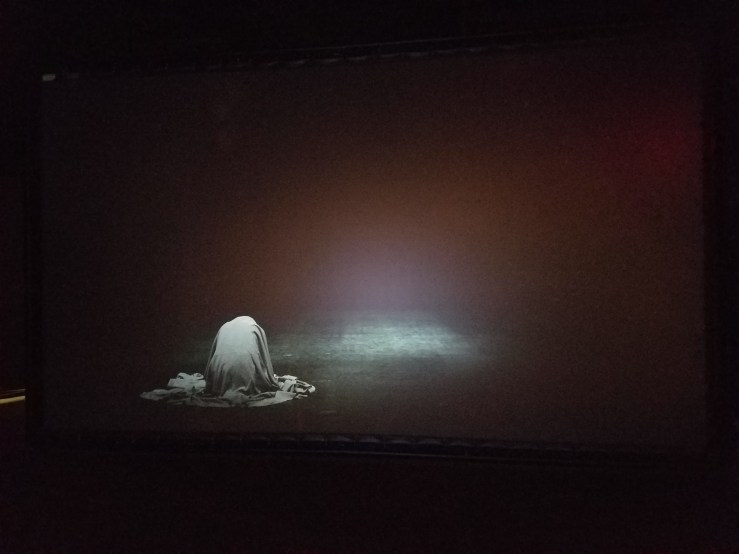
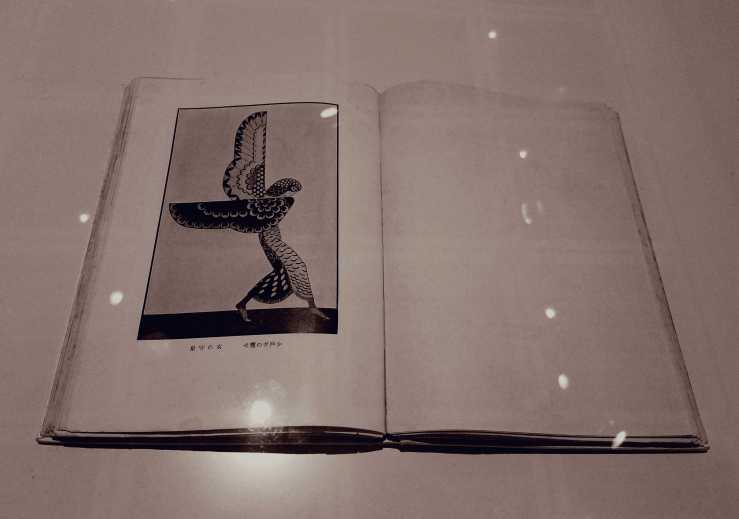
”At the Hawk’s Well”, W.B. Yeats’ dance play premiered in 1916 with Michio Ito at the role of the hawk. In its 2016 re-incarnation, the dance was co-choreographed by Javier de Frutos.Noh no Tenkai (The Evolution of Noh), 1954. By Jiro Nan’e (1902-1952).
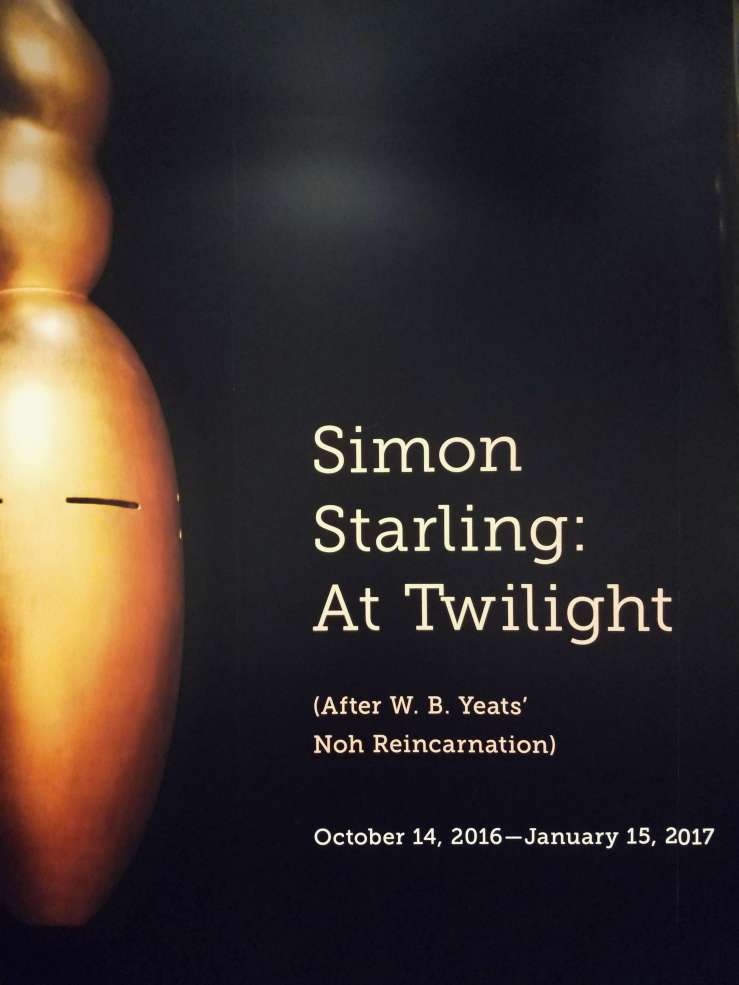
Simon Starling: At Twilight
(After W.B. Yeats’ Noh Reincarnation)
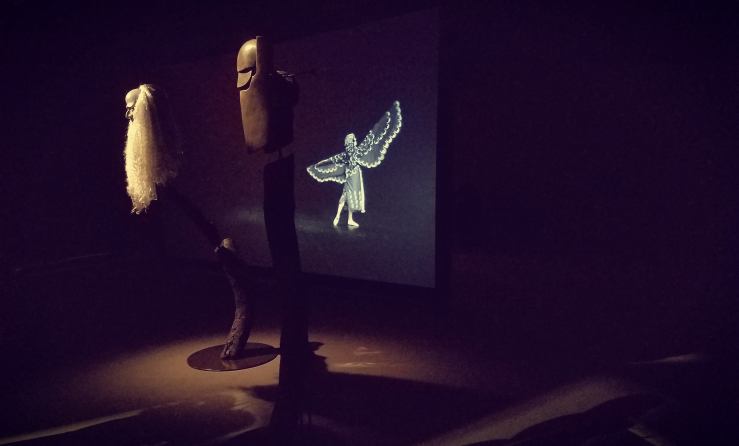
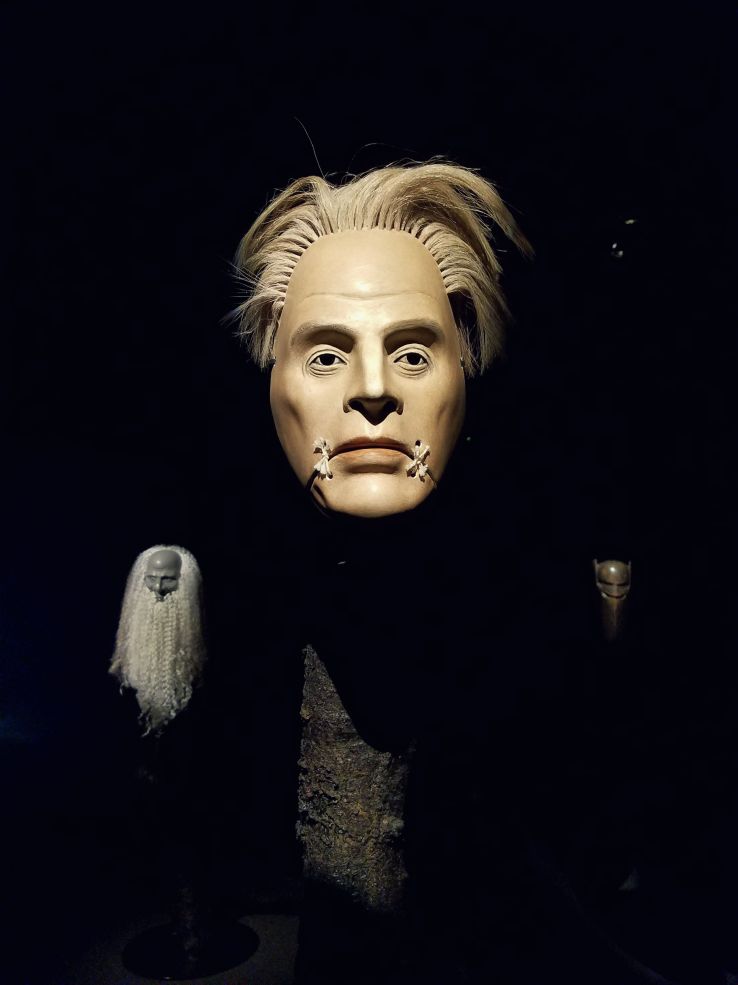
A multimedia installation by Simon Starling to mark the centennial of W.B. Yeats’ staging of the Noh-inspired dance play ”At the Hawk’s Well”, in 1916. The project aimed to illustrate the influence of Noh on Western Modernism by pairing newly created masks, costumes and a video (from which the above stills) with Modernist works and archival material connected to Yeats and his circle.
It was on show at the Japan Society until mid January 2017.
*Title from Kino no Tabi – the Beautiful World anime series (2003)
If curators at The Japan Society were seeking to communicate the perfect example of a cross-cultural fusion in arts, they could not have made a better choice than hosting Simon Starling’s project.
Starling took ”At the Hawk’s Well”, a dance play composed by Irish poet W. B. Yeats one hundred years ago amidst the horrors of World War I, and re-imagined it for us, contemporary audiences.
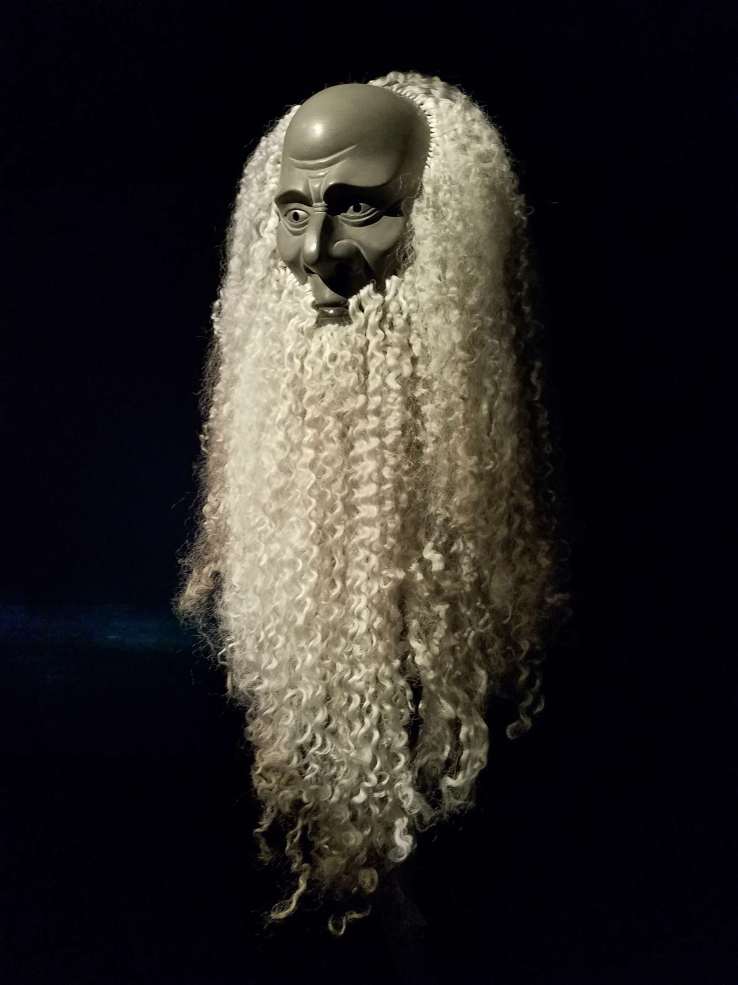
The exhibition/installation unfolds in two parts. These photos are only a few examples from the first gallery where masks and costumes, made in collaboration with Yasuo Michii and Kumi Sakurai, are placed in a darkened room in front of a screen. The masks represent fictional or real characters whom Starling has connected with ”At the Hawk’s Well”. On the screen at the background, one can watch a newly choreographed version of the climactic ”Hawk Dance” from the original play. The ”Hawk” headpiece stands next to the masks and the dancer’s costume can be seen (and touched) in the second gallery, before walking into a larger room with displays featuring those Western Modernist and traditional Japanese Masterworks that inspired Starling’s designs, with notes about each character or object and the role they played in the project.
Nancy Cunard
Born into the British upper class, Nancy Cunard was a writer, publisher and political activist who, through her vibrant intellect and characteristic style, became a muse of artists and writers such a Wyndham Lewis, Aldous Huxley, Ezra Pound, James Joyce (both Pound and Joyce were in the audience of ”At the Hawk’s Well”) and Louis Aragon.
Noted for her passion for African artefacts, she was often photographed wearing typically flamboyant bangles and necklaces – a style that became known as the ”barbaric look”. Nancy, whose capacity for alcohol and affairs became legendary, felt the need to dress in disguise when she went out wearing costumes of her own making. Once she was arrested for swimming at dawn in the Serpentine, emerging before the authorities drenched in a homemade outfit of velvet, chiffon, ribbons, feathers, spangles and artificial flowers.
Ezra Pound first met Nancy at her mother’s home in Cavendish Square as Pound and Yeats were preparing the performance of ”At the Hawk’s Well”. She was astonishingly beautiful and elegant regardless of what she was wearing. From the beginning Nancy found Pound physically and intellectually appealing. Later, when she became critically ill, Pound remained at her side, and their long love affair began.
W.B. Yeats
Between 1913 and 1916, Yeats and his fellow poet Ezra Pound (”a stimulating yet irritating friend”) spent three winters together in the Sussex countryside. Pound, twenty years his junior, was nominally Yeats’ secretary but as well as teaching the elder man how to fence, he was in large part responsible for introducing Yeats to Japanese Noh theater. In February 1916, Yeats began work on ”At the Hawk’s Well”, the first of a number of Noh inspired ”dance dramas”, which tells the story of a young Celtic warrior and his search for the well of immortality.
Michio Ito
Michio Ito, a Japanese dancer and choreographer with little formal training, arrived in London from Paris at the outbreak of World War I. He gained notoriety for his work at the Coliseum Theatre in 1915, creating a ”furore” with his hybrid European/Japanese dances, inspired by the Ballets Russes and Nijinski. He attracted the attention of a small group of avant-garde artists and writers and was asked by Ezra Pound and W.B. Yeats to recreate a semblance of a Noh performance. After the war, Ito moved to New York, where he established a career in both commercial and avant-garde dance, most notably working with Martha Graham between 1923 and 1925.
Ezra Pound
Vital to Yeats’ initiation into the ways of Noh theater was Pound’s fearless or perhaps foolhardy involvement in the completion of the American philosopher, art historian and economist Ernest Fenollosa’s groundbreaking work Noh, or Accomplishment: A Study of the Classical Stage of Japan (1916), which was entrusted to him by Fenollosa’s widow following her husband’s sudden death in 1908. It is clear that Pound’s knowledge of the Japanese language and of Noh plays was extremely limited when he started on the manuscript that Fenollosa had left. Pound himself wrote: The Vision and the plan are Fenollosa’s. In the prose I have had but the part of literary executor; in the plays my work has been that of translator who has found all the heavy work done for him and who has but the pleasure of arranging beauty in the words.
Old Man
Arriving at the Well of Immortality, the young warrior Cuchulain finds a withered old man who has been waiting some fifty years on the desolate mountainside for the waters to rise from the dry well. This obstructive old man (the waki, or supporting actor in Noh plays), who like Cuchulain was young in mind and body when he was blown there by what seemed like a lucky sail, has been constantly frustrated in his attempts to drink from the well, which only releases its life-giving waters when he falls asleep. In part out of self-interest, in part out of pity born of hard-won experience, he warns the confident young man about wasting his life in the vain pursuit of immortality.
*All captions are excerpted from the brochure accompanying the exhibition.
I found ”At Twilight” a stimulating experience, successful in bridging cultures, artistic styles & languages, history & mythology, merging impeccably the wisdom of ”then” with the urgency and creativity of ”now”.
Still on for a few days until Sunday January 15th, 2017.
Free listening and free download (mp3) chill and down tempo music (album compilation ep single) for free (usually name your price). Full merged styles: trip-hop electro chill-hop instrumental hip-hop ambient lo-fi boombap beatmaking turntablism indie psy dub step d'n'b reggae wave sainte-pop rock alternative cinematic organic classical world jazz soul groove funk balkan .... Discover lots of underground and emerging artists from around the world.










 The Humble Fabulist