“This Section Contains Explicit Material. Young visitors should be accompanied by an adult.” A sign, elegantly placed at the entrance of the gallery, warning visitors that they were about to step into Japan’s most intimate world. 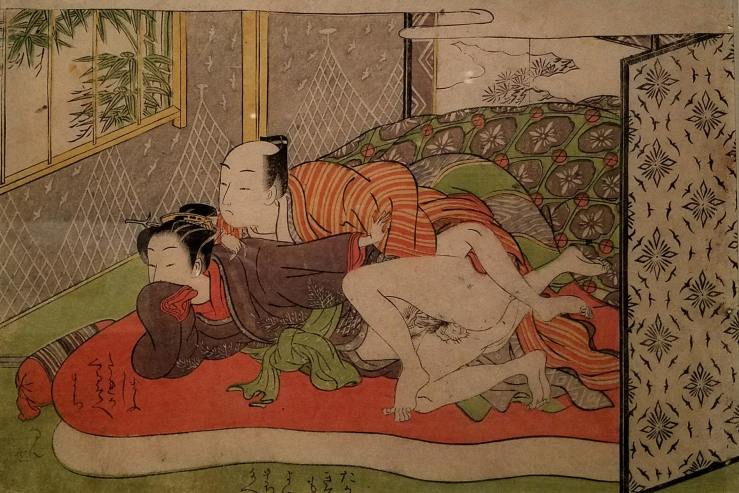
 Ukiyo-e (pictures of the floating world), flourished as an artistic genre during the Edo period. Catering to a clientele drawn from the rising middle classes, ukiyo-e artists focused on subjects closely associated with the fashionable, worldly pleasures of Edo itself, rather than the prescribed themes of Japan’s classical painting schools, traditional patronized by the nobility and samurai elite. The woodblock print, more affordable than paintings and easily reproducible, proliferated in concert with the rise of the ukiyo-e genre. Beauties, wrestlers, actors were typical subjects of ukiyo-e prints, as were erotic scenes known as shunga.
Most master printmakers designed shunga. Varying in style and explicitness, these prints were appreciated privately rather than being displayed on walls.
The examples on view here, by the artist Koryūsai, portray a variety of sexual pairings.
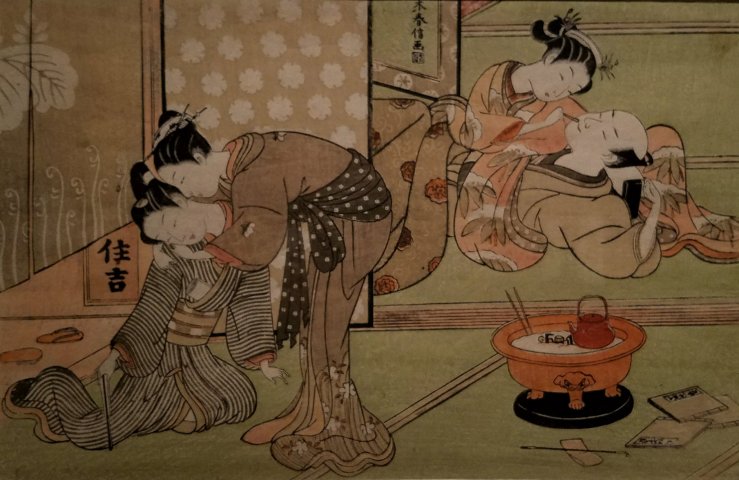 Suzuki Harunobu (1725-1770)
Two Couples in a Brothel, 1769-70
Two separate encounters in a brothel are staggered across this skillfully composed print by Harunobu. In the background, an adult man with a fully shaved pate is having his moustache tweezed by a female prostitute, an act of intimacy. In the foreground, a slightly more mature prostitute attempts to woo a coy young wakashu who fiddles with a folded fan and diffidently resists her embrace.
 Attributed to the Utamaro School
Woman and Wakashu, ca. 1790s
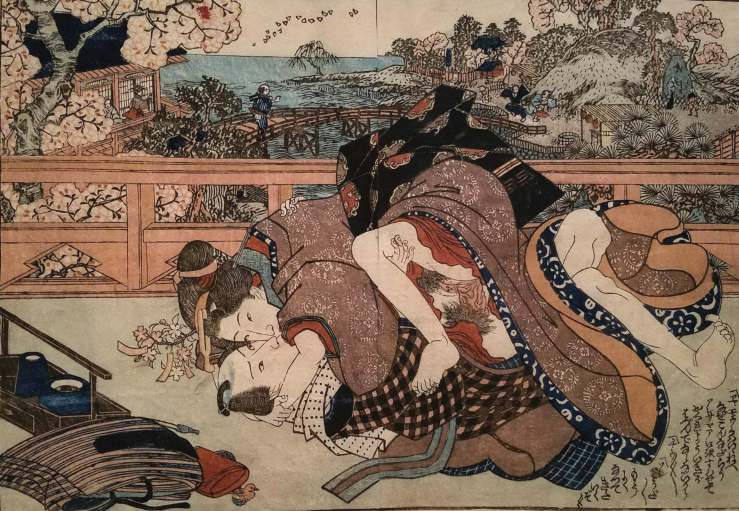 Pages from an unidentified Utagawa-school erotic book, ca. 1850s
Two half-sheets glued together from a printed book with colour illustrations
In this illustration, a prostitute sporting the shaved sot and forelocks of a wakashu takes charge with a male client. Her display of aggressiveness – conventionally gender-coded as a male prerogative – would have been typical of female sex workers, like haori-geisha, who sported the wakashu hairstyle.
 Attributed to Nishikawa Sukenobu (1671-1750)
A Prostitute with a Man, late 17th century
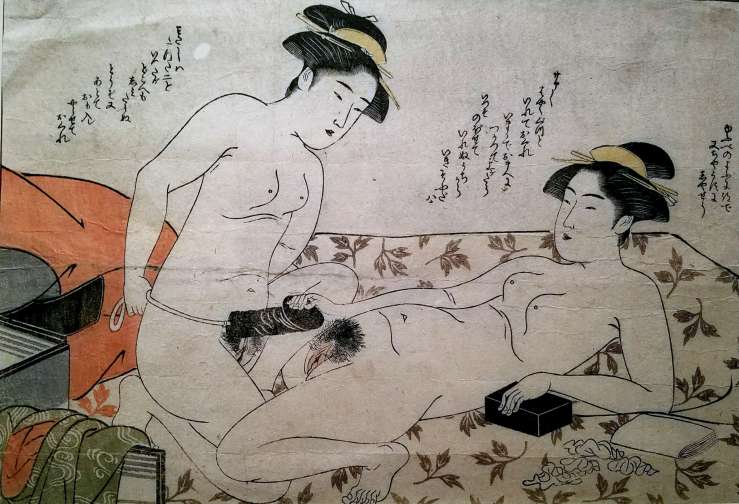 Women Using a Dildo, ca. early 1800s
The two women in this print appear to be ladies-in-waiting of a daimyō’s (feudal lord’s) household. Sequestered in inner chambers where men were not allowed, such women were required to be abstinent but encouraged to engage in self- and mutual-pleasuring for their health.
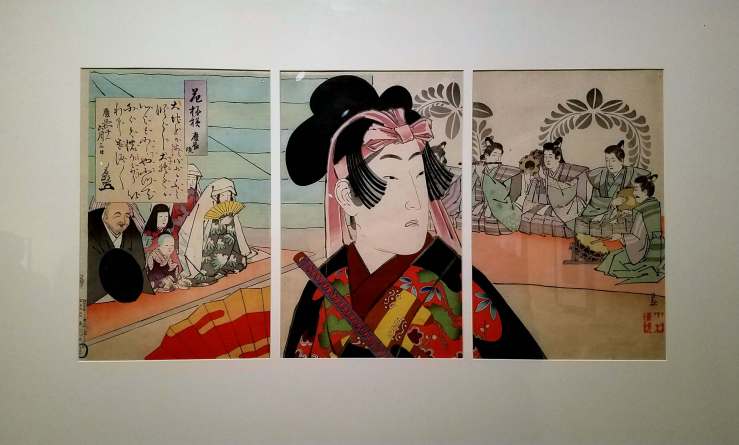


”A Third Gender: Beautiful Youths in Japanese Prints”, has been an enlightening exhibition and a very interesting look into the erotic life of the Edo-period Japan. Multilayered, complicated and, in many ways, much more progressive than one would have thought.
Japan Society, May 19th 2017








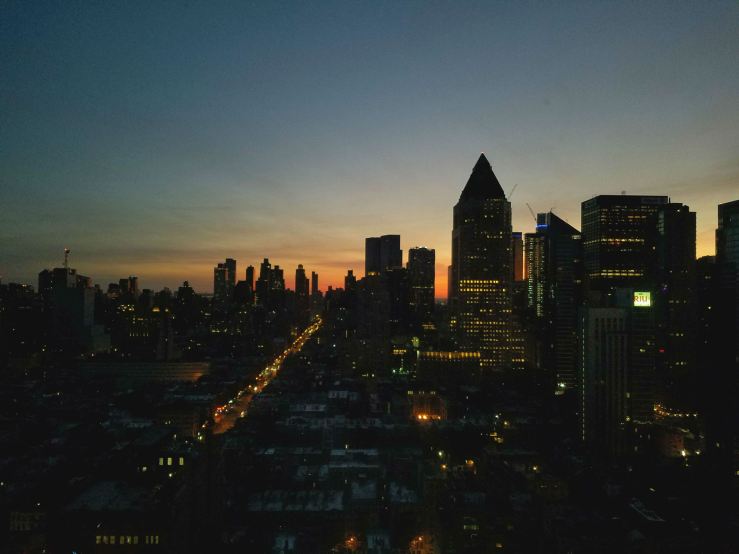







 9th Avenue, Hell’s Kitchen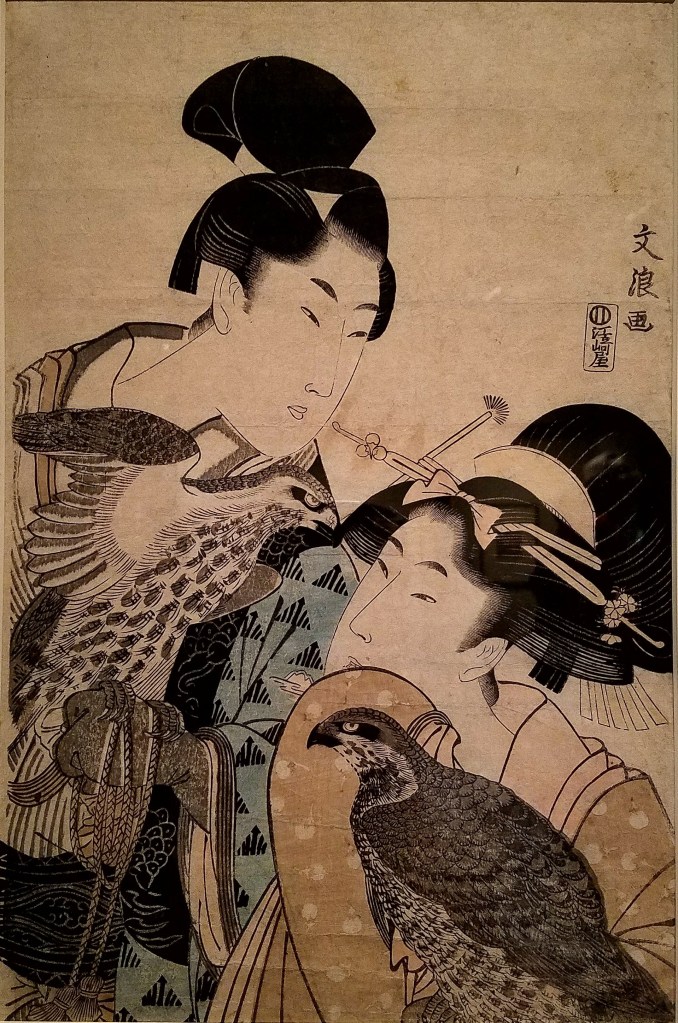


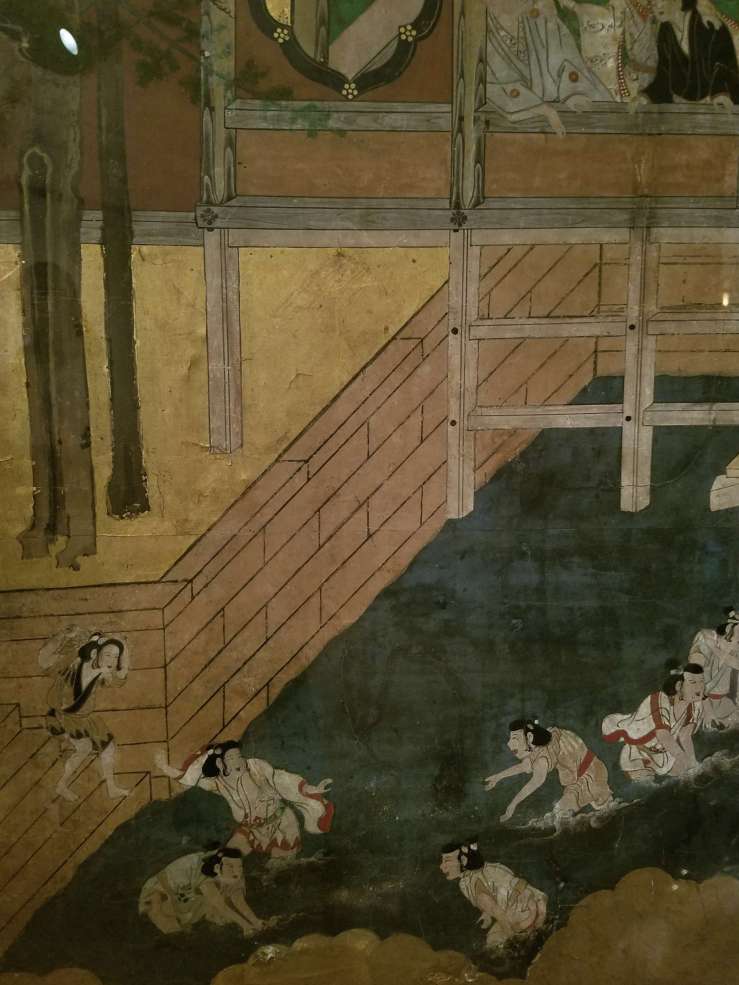
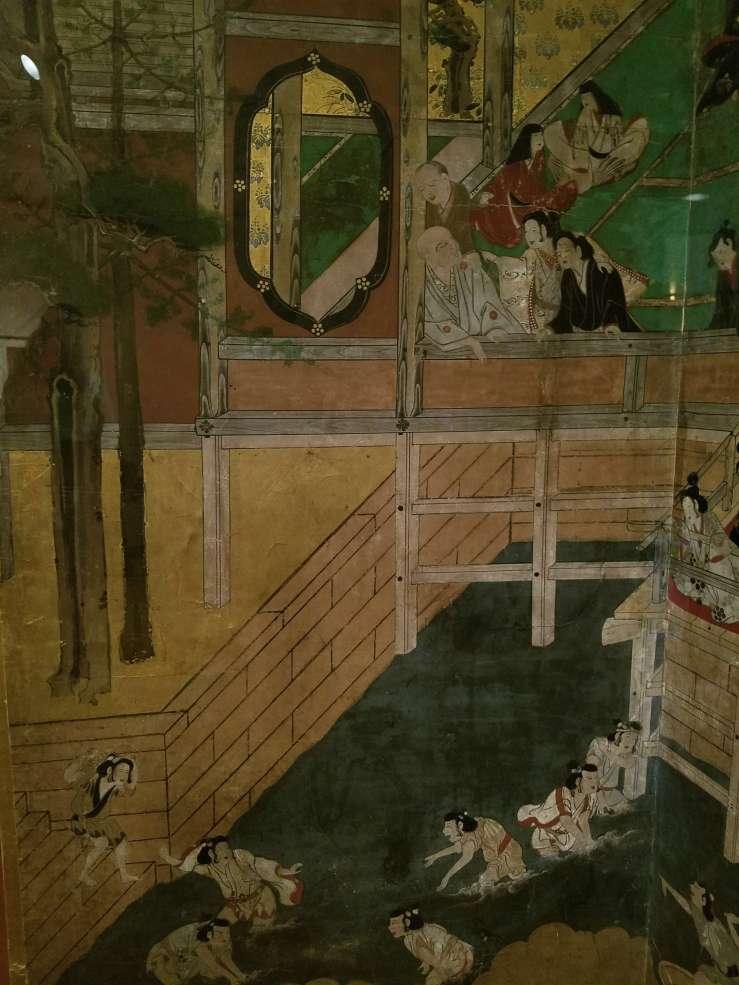
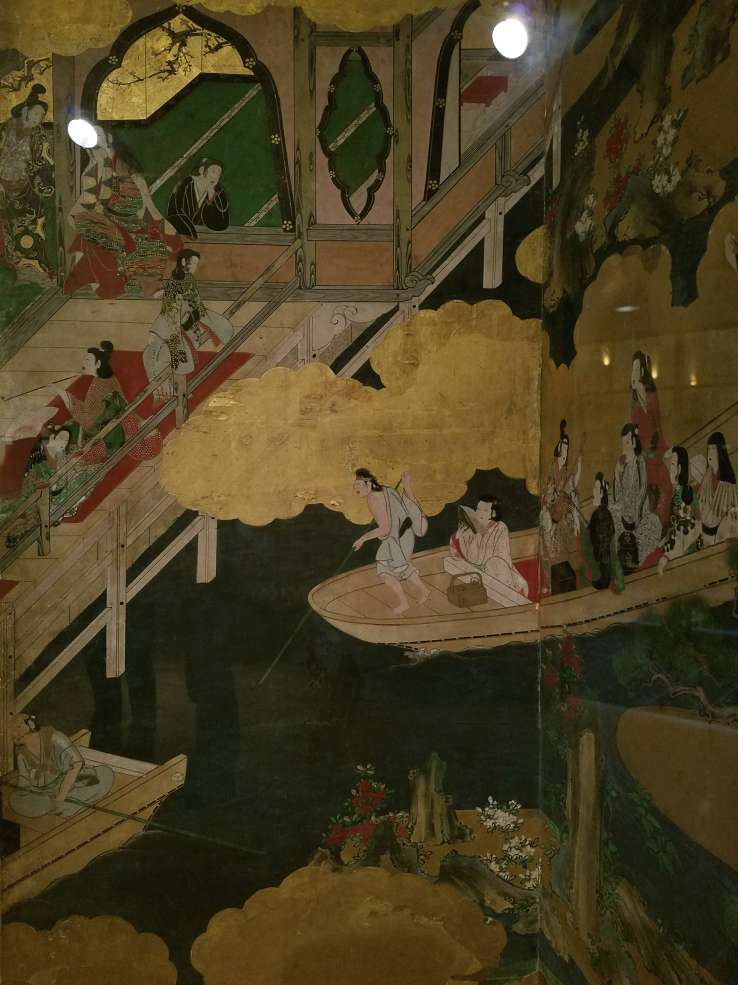
 Six-fold screen, gold and pigment on paper (detail)




 The Humble Fabulist