Looking at those little wonders of skill and craftsmanship that are the works of Henri-Charles Guérard, on show at the New York Public Library, is a pure pleasure and an excellent introduction to the artist. But the fact that felines (and other animals) were featured prominently in his work, warmed me up to the person too.
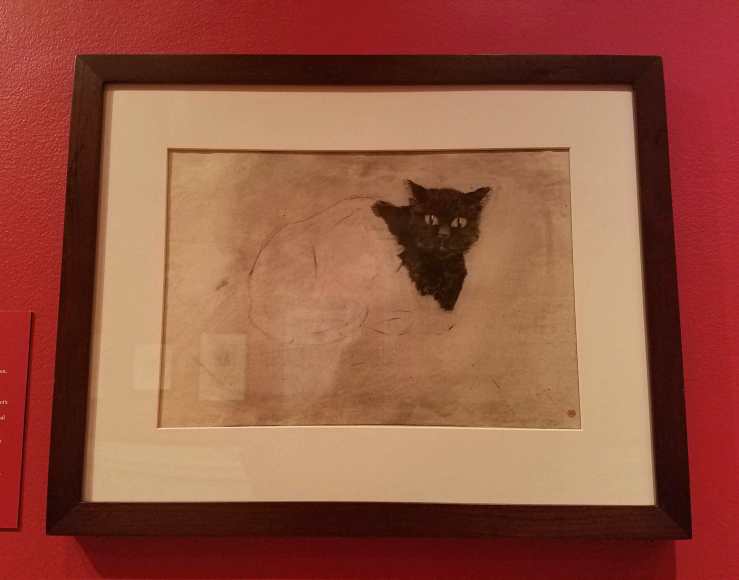
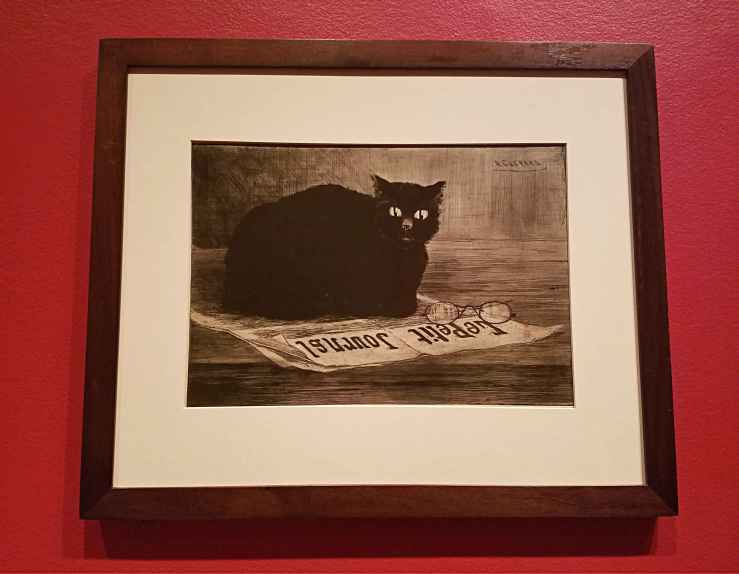
Here are the three stages of a Cat on a Newspaper:
Henri-Charles Guérard, Chat sur un journal (Cat on a Newspaper), before 1887. Etching and drypoint, unique proof impressionHenri-Charles Guérard, Chat sur un journal (Cat on a Newspaper), before 1887. Etching and drypoint, unique proof impression.Henri-Charles Guérard, Chat sur un journal (Cat on a Newspaper), before 1887. Etching and drypoint, unique proof impression.
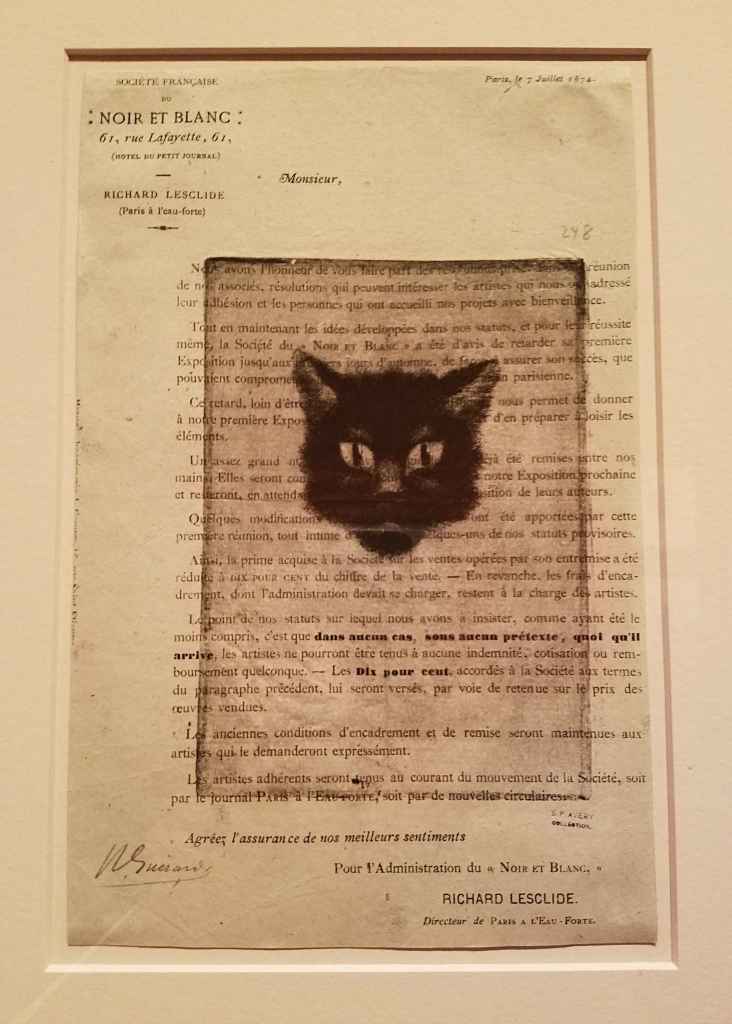
A Cat’s head sealing an announcement by the Black-and-White Society:
Henri-Charles Guérard, Tête de chat noir (Head of a Black Cat), before 1888. Etching and drypoint on found paper.
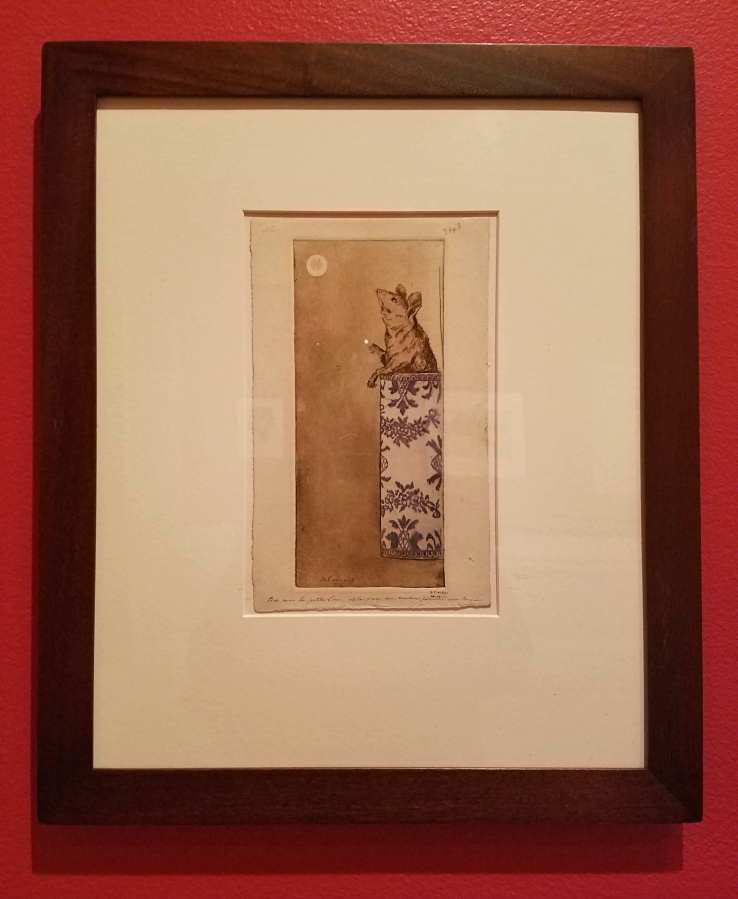
And a mouse:
Henri-Charles Guérard, Rat in a Vase Gazing at the Moon, ca. 1886. Colour etching and aquatint.
Accompanying caption: [Although Westerners generally have an aversion to rats, the creatures play an important role in Japanese culture, for the rat, or nazumi, is thought to be the messenger of the god Daikoku. It is said, moreover, that if rats eat the New Year cakes, there will be a good harvest. Guérard’s endearing treatment of this rodent climbing out of a vase decorated with Japanese motifs seems more closely aligned with Japanese than Western sentiments.]
A small consolation to weary New Yorkers, little impressed at the thought of having to share their homes, parks and subway with millions of them creatures…
A Curious Hand: The Prints of Henri-Charles Guérard (1846-1897)
These and a lot more from ”the engraver of curiosity par excellence” can be viewed at the Stephen A. Schwarzman Building until February 26th, 2017.
Don’t go in a rush, the exhibition is more extensive than one might expect; although this was supposed to be an added bonus to my visit, it quickly became apparent that it merits a lot more attention than a mere skimming through.
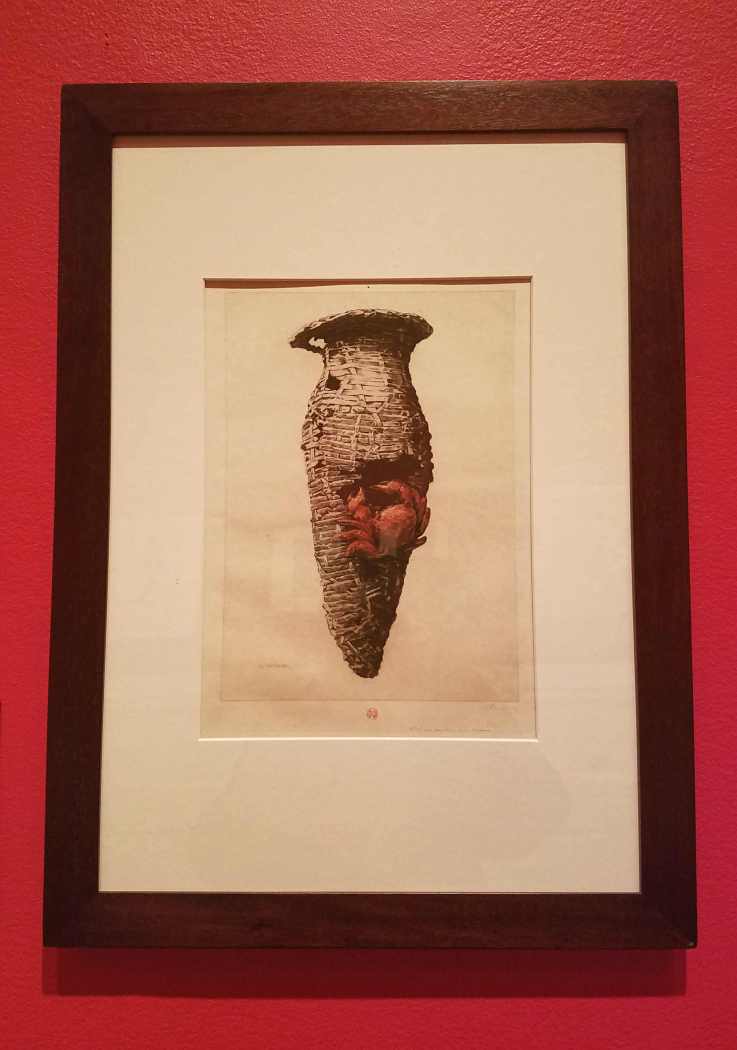
Henri-Charles Guérard, Porte-bouquet et crabe (Vase and Crab), 1882, Colour etching
Henri-Charles Guérard, After Diego Velásquez. Portrait du cardinal infant Don Fernando (Portrait of Cardinal Infante Don Fernando as a Hunter), 1888, Etching
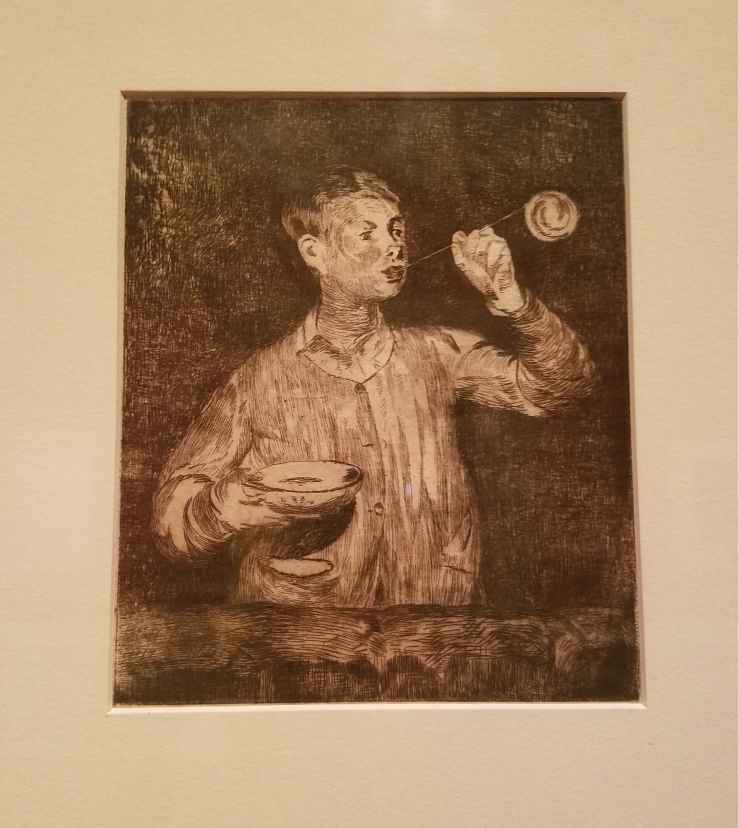
[Beginning in the 1870s, Guérard assisted Édouard Manet with biting and pulling his prints, and their working relationship eventually blossomed into a friendship. In 1879, Guérard married Eva Gonzalès, Manet’s favourite pupil, who died in childbirth in 1883 shortly after Manet’s own death. Manet was not only a friend and colleague of Guérard’s but also an important source of inspiration.]
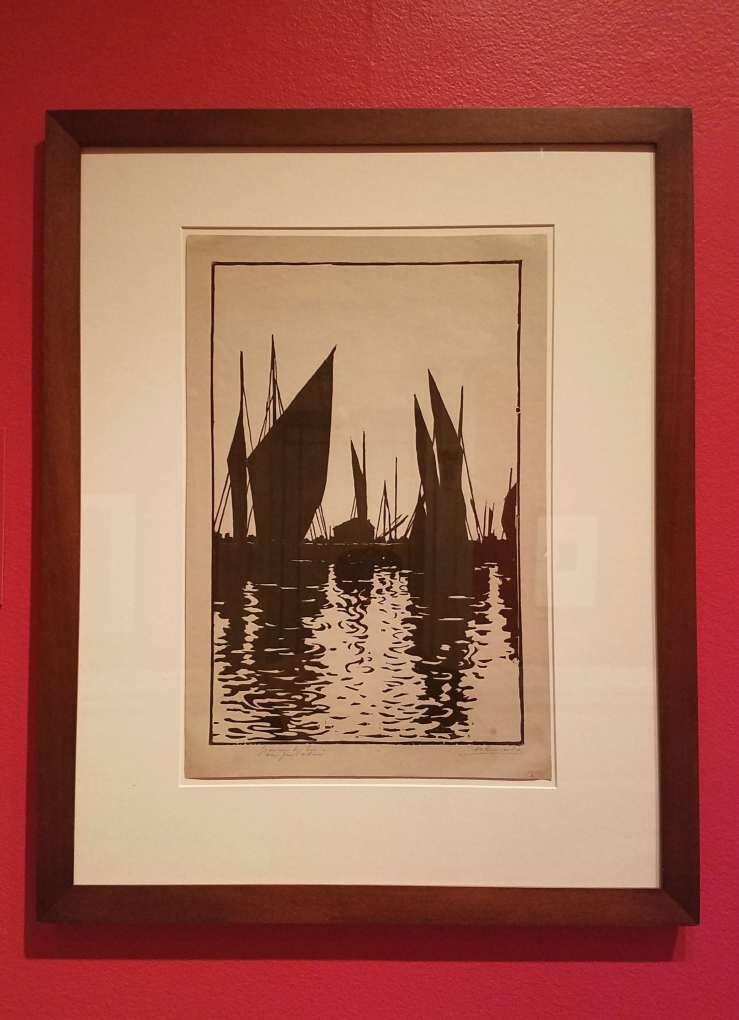
Eduard Manet, Printed by Henri-Charles Guérard. The Boy with Soap Bubbles, 1868-69, EtchingHenri-Charles Guérard, Soleil couchant (Setting Sun), 1895-96, Woodcut
[The image, which shows a troop of tiny Japanese men climbing energetically over a woman’s shoe of Western style, captures the droll and occasionally baffling behaviour of the figures in Hokusai manga. Women’s feet and, especially, their shoes have long been fetishized in both the West and the East, and the conduct of the ”assailants”, which includes a figure clambering on the slipper’s ruffled pompom, is suggestive. The impression shown here reveal Guérard experimenting with jaunty colours, one hot pink, the other bright yellow.]
Henri-Charles Guérard, L’Assaut du soulier (The Assault of the Shoe), ca. 1888. Etching, drypoint and aquatint with roulette in pink and yellow
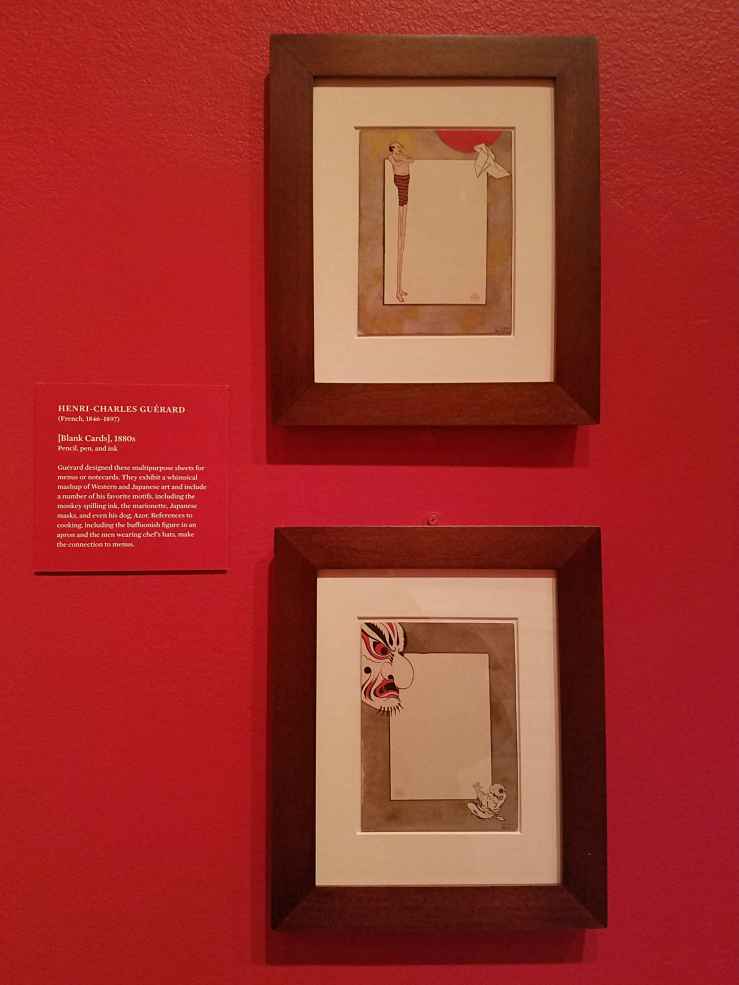
[Guérard designed these multipurpose sheets for menus or notecards. They exhibit a whimsical mashup of Western and Japanese art and include a number of his favourite motifs, including the monkey spilling ink, the marionette, Japanese masks, and even his dog, Azor. References to cooking, including the buffoonish figure in an apron and the men wearing chef’s hats, make the connection to menus.]
All notes are from the accompanying captions and brochure (available also on-line).
After a hard day’s work, an office drink to wind down. I’d sooner put my feet up at home to be honest, but when an office offers sunset views on the Empire and the Chrysler, an office drink is most welcome indeed!
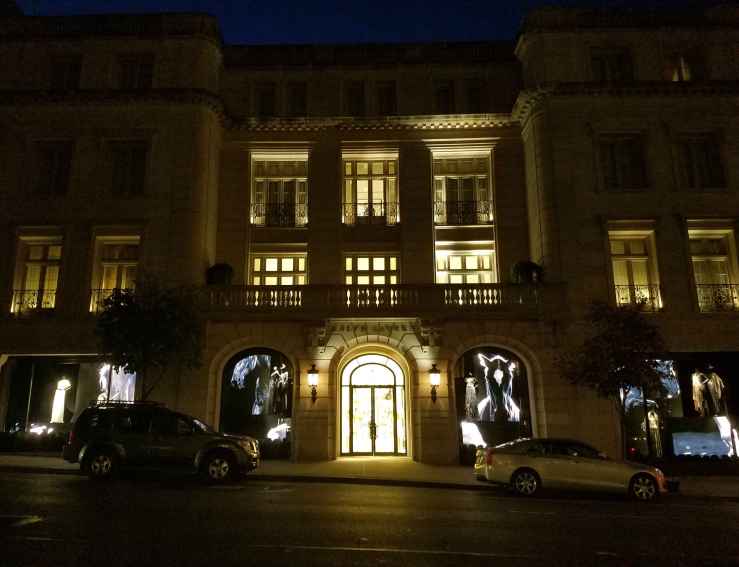
In the glorious Gertrude Rhinelander Waldo House, a French Renaissance revival mansion located at 867 Madison Avenue.
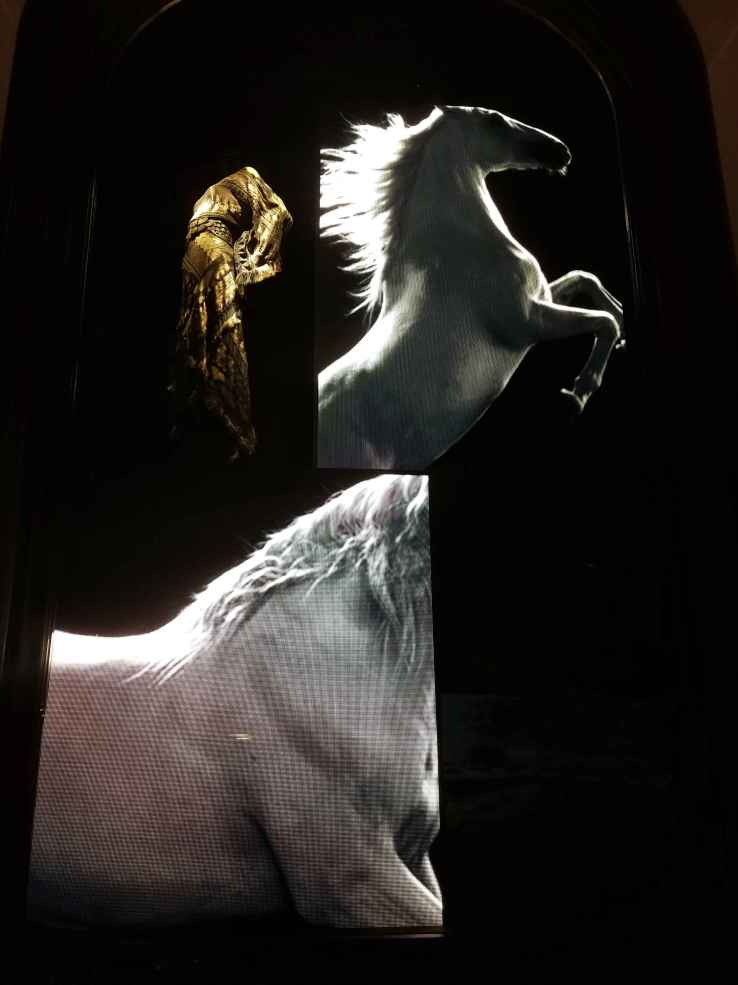
It is home to the Ralph Lauren Men’s Flagship store and had me wondering whether it looks as glorious on the inside. Could I just step in to have a look? Although, who am I kidding, I’d probably spend hours browsing through the apparel; I usually find their Men’s collections much more interesting than the Women’s, anyway.
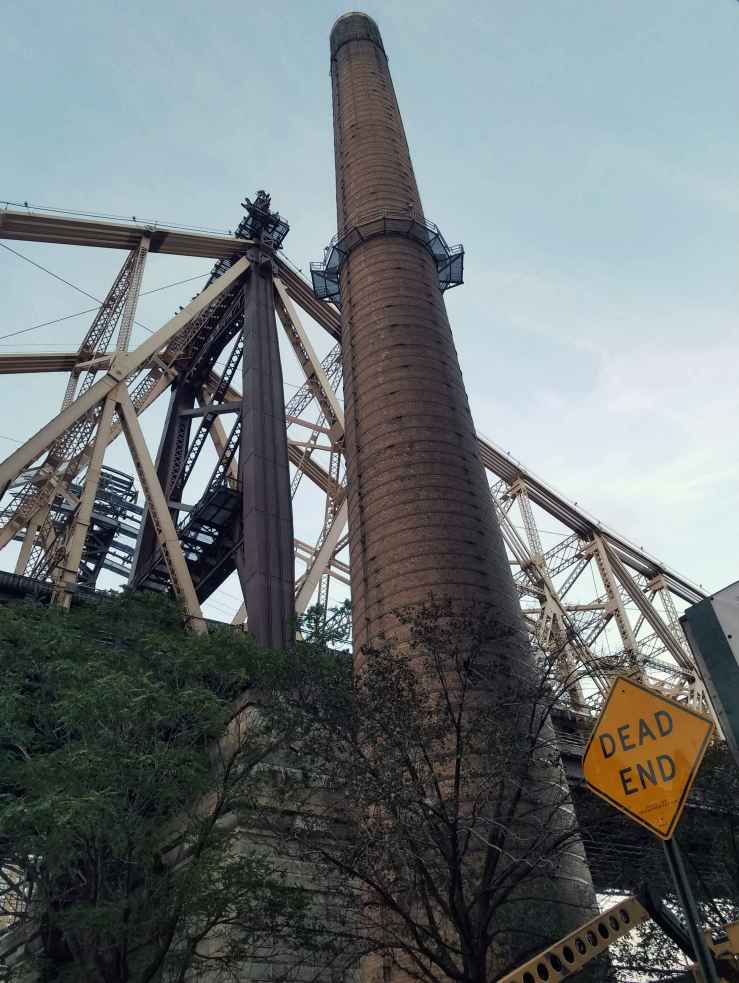
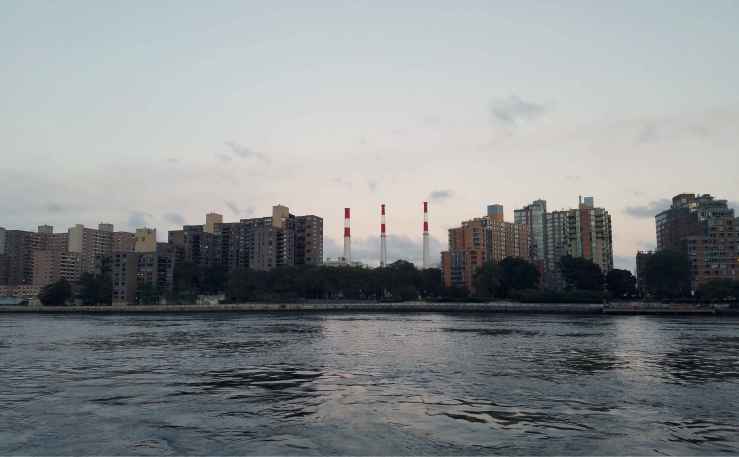
of the Ravenswood Generating Station, or Big Allis to friends. Actually there are four, but only three are visible from this angle.
When it opened in 1965, it was the “world’s first million kilowatt unit…big enough to serve 3.000.000 people”. In today’s figures, it has the capacity of providing around 20% of the electricity consumed by New York City.
At the time of its installation, it was also the world’s largest steam energy generating facitly. Today, when necessary, steam is supplied from the plant to the Manhattan steam system via the Ravenswood tunnel which runs under the East River.
Taken from the John Finley Walk on the Upper East Side. The trees and buildings left and right are actually closer, on Roosevelt Island; Big Allis is located further away on Vernon Blvd and 36th Avenue, in Queens.
Manhattan is one noisy island, that much is true. With traffic and horns, helicopters above and subway trains below, some of the most expressive people in the world discussing announcing their life’s issues in a matter-of-fact stentorian voice commanding attention wherever they may happen to be, lousy wall soundproofing and crazy neighbours, clubs and private parties going on into or – worse – starting in the wee hours, New York is the very definition of the city that doesn’t sleep. But the noise that stands out above all to my untrained ear is the loud, penetrating sound of the Sirens. And the most penetrating one of all, the FDNY truck Blazing Siren.
Don’t get me wrong, I am a fervent admirer of the oftentimes heroic efforts of New York’s Bravest and Best rushing to the rescue, fighting not only with fire but all kinds of hazards relative to such incidents. What strikes me as odd is the frequency and number of these sizable trucks speeding around, all blazing sirens and air horns, for calls that may be of inversely proportional gravity.
I took these pictures as an example: on an otherwise ”quiet” afternoon the – by now familiar – deafening sound coming from at least four fire trucks; they rush past, stop around the corner, one firefighter gets out of the truck and into a building; the other trucks wait for a while, then drive off and disappear.
How do they respond to calls? I wonder. How is the level of alarm determined and the dispatch coordinated? Is it necessary to dispatch so many trucks when there is no fire or major gas leak? Whatever the answer, one thing is sure: our world is safer with them around, they are an integral part of our daily lives, a part for which we are grateful.
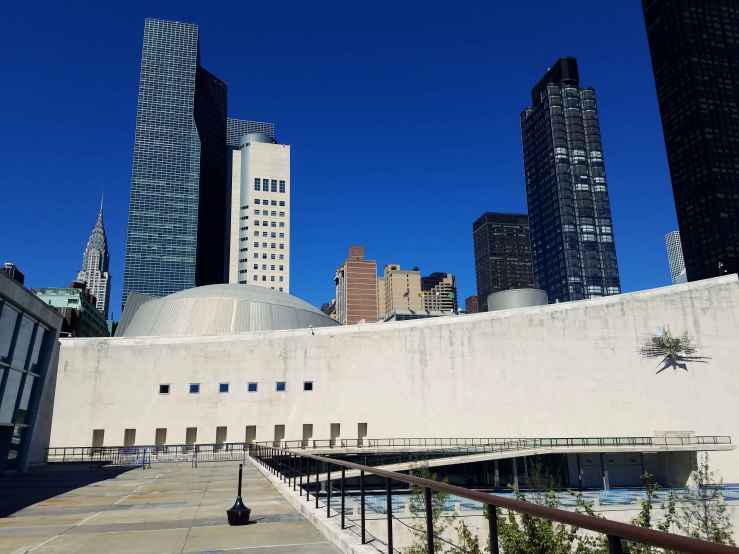
View from the terrace outside the Delegates’ Lounge. East River is on my back and Le Corbusier’s oblique design of the General Assembly building in the foreground. The Chrysler Building at the back looks so small because it sits half a mile away.
Free listening and free download (mp3) chill and down tempo music (album compilation ep single) for free (usually name your price). Full merged styles: trip-hop electro chill-hop instrumental hip-hop ambient lo-fi boombap beatmaking turntablism indie psy dub step d'n'b reggae wave sainte-pop rock alternative cinematic organic classical world jazz soul groove funk balkan .... Discover lots of underground and emerging artists from around the world.














 The Humble Fabulist