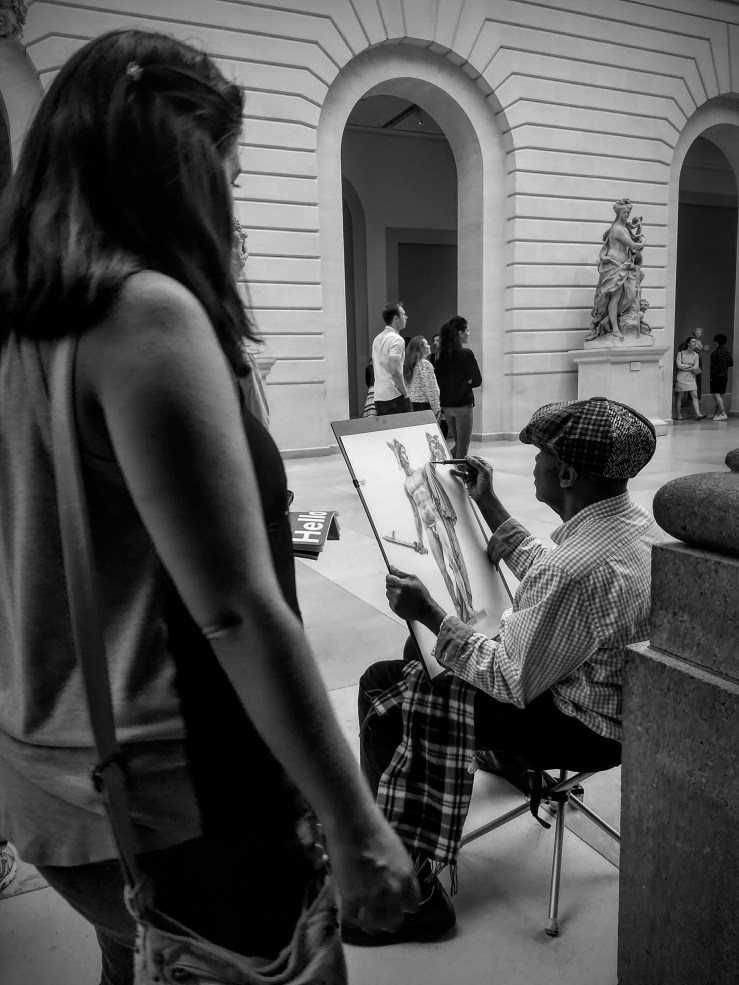
That’s The Spirit…!

Of being an old soul but never wanting to grow up.
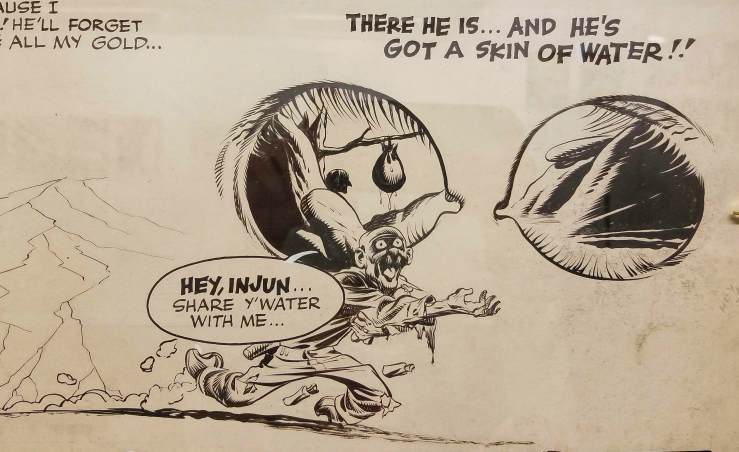
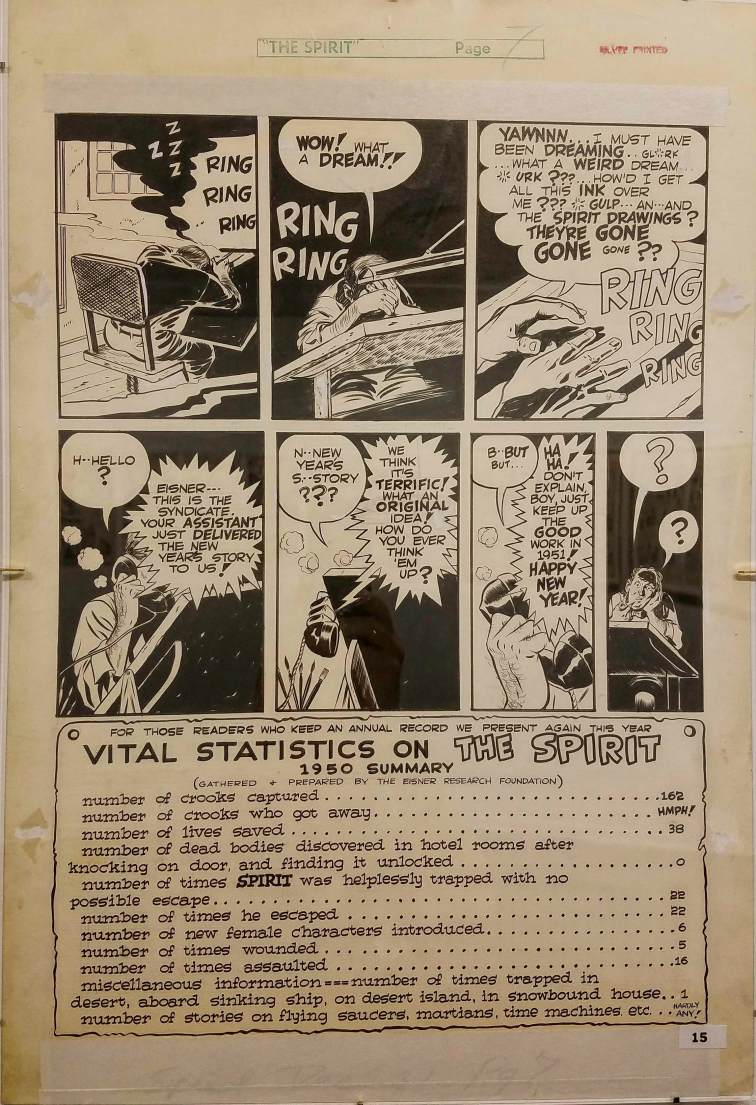
The Spirit: ”Il Duce’s Locket” page 1
May 25, 1947
Ink on paper

P’Gell, a femme fatale with an impossibly narrow waist, was among the more prominent and persistent in a series of beautiful criminals in Eisner’s long-running Spirit. P’Gell, though a deadly adversary couldn’t shake her love interest in The Spirit. He seldom returned her affectionate overtures. P’Gell was named after the Quartier Pigalle, the notorious red light district of Paris


The Spirit: ”Quirte” seven-page story
November 21, 1948
Ink on paper


The Spirit: ”John Lindsay’s Mayoral Race”, five-page story
New York Herald Tribune magazine (January 9, 1966)
Will Eisner and Chuck Kramer
Ink on paper with wash

Will Eisner had not drawn a new Spirit story since 1952 when the New York Herald Tribune’s Sunday magazine contacted him in late 1965 to create a story based on the city’s mayoral election. The lettering (done on clear acetate) is missing from the original pages, but the story can be read on the smaller reproductions of the published version.
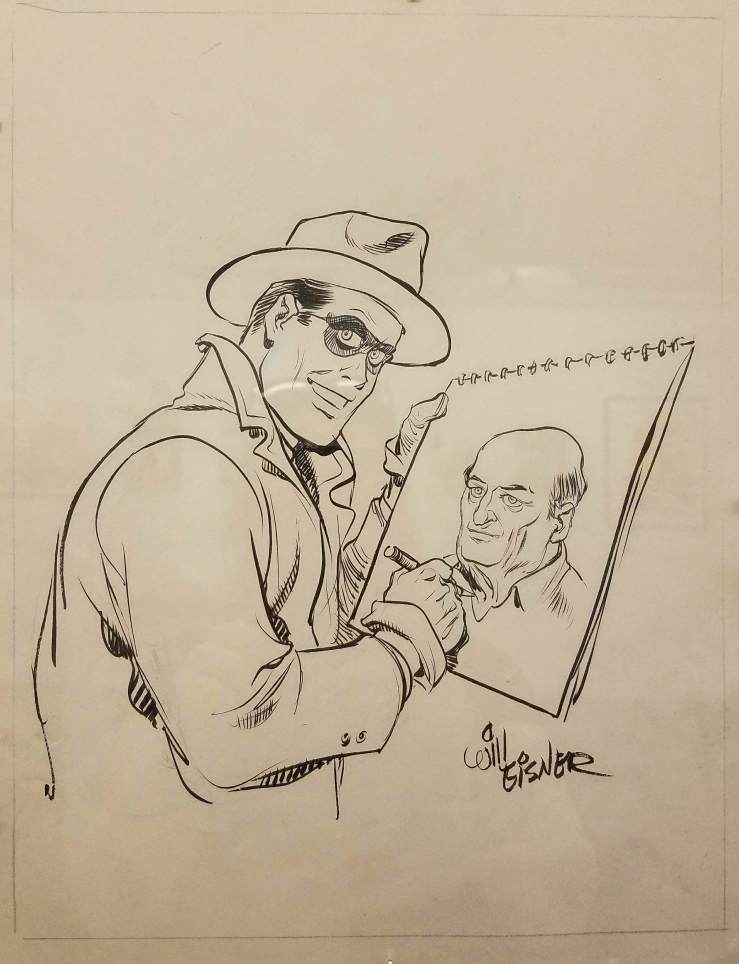

Portrait of Will Eisner by The Spirit
circa 1985
Ink on paper
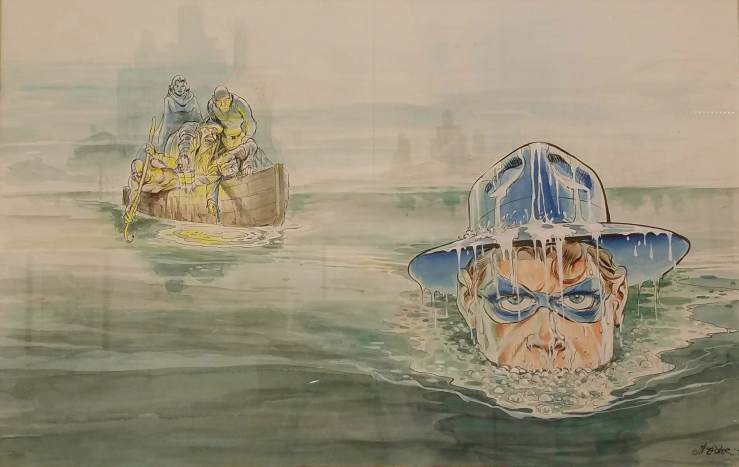

Spirit Magazine #20 cover art
1979

Ink with watercolour on board


Samples of Eisner’s used pens and brushes
Jules Feiffer script for unpublished Spirit Story
1952
manuscript 


Smash Comics #8: ”Espionage”, page 3
1940
Ink on paper

This original ”Espionage” page on display is among a very small handful of Will Eisner’s surviving comic book pages from the 1930s when the Eisner & Iger Studio ”packaged” stories for client publishers. During that period (and later) publishers routinely destroyed original art after publication. Decades before organized fandom saw value in both vintage comics and art, publishers saw no reason to save such ”production” material. As a result, original art from the comic book industry’s early years is extremely rare. 
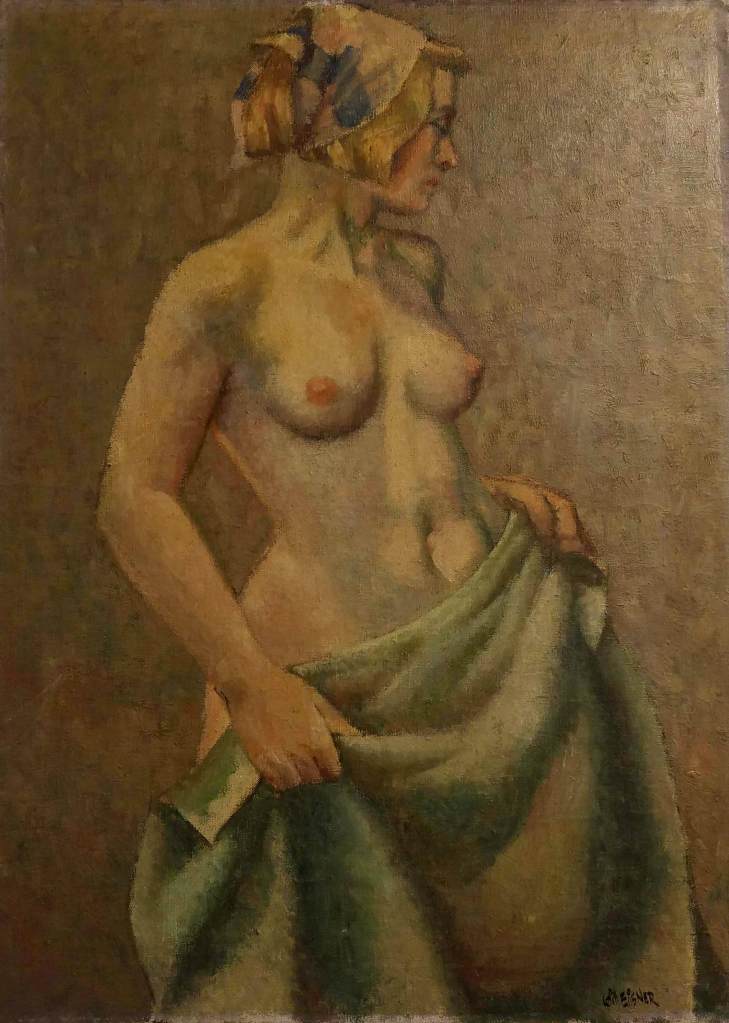

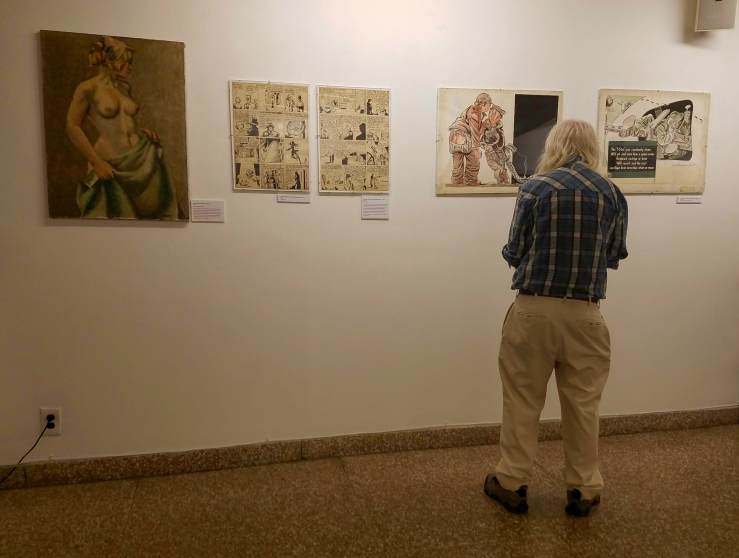
Portrait of a Nude Woman
1936

Oil on stretched canvas

A teen-aged Will Eisner painted this model while attending life drawing classes at the Art Students League in New York. Eisner’s disapproving and practical mother was shocked to learn that her young son was painting naked women and she discouraged him from pursuing art, a career she felt would be unremunerative. Eisner’s father, who when younger had aspired to be an artist, quietly gave his son encouragement. 


Late Train
New York City lithograph series
1988
Ink with watercolour on board


Turf War
New York City lithograph series
1988
Ink with watercolour on board


A Contract with God and Other Tenement Stories: ”The Super”, ten-page excerpt
1978
Ink on vellum, adhered to board
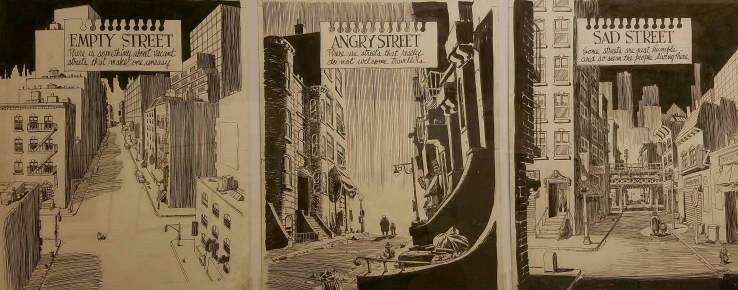
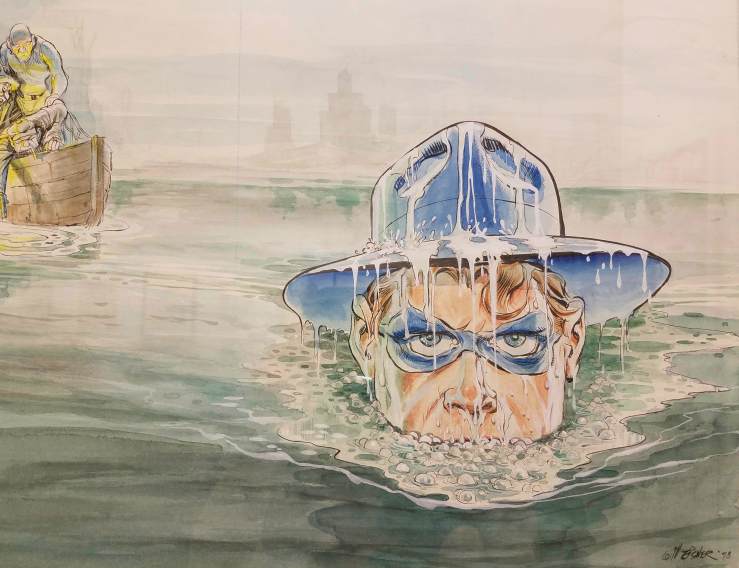
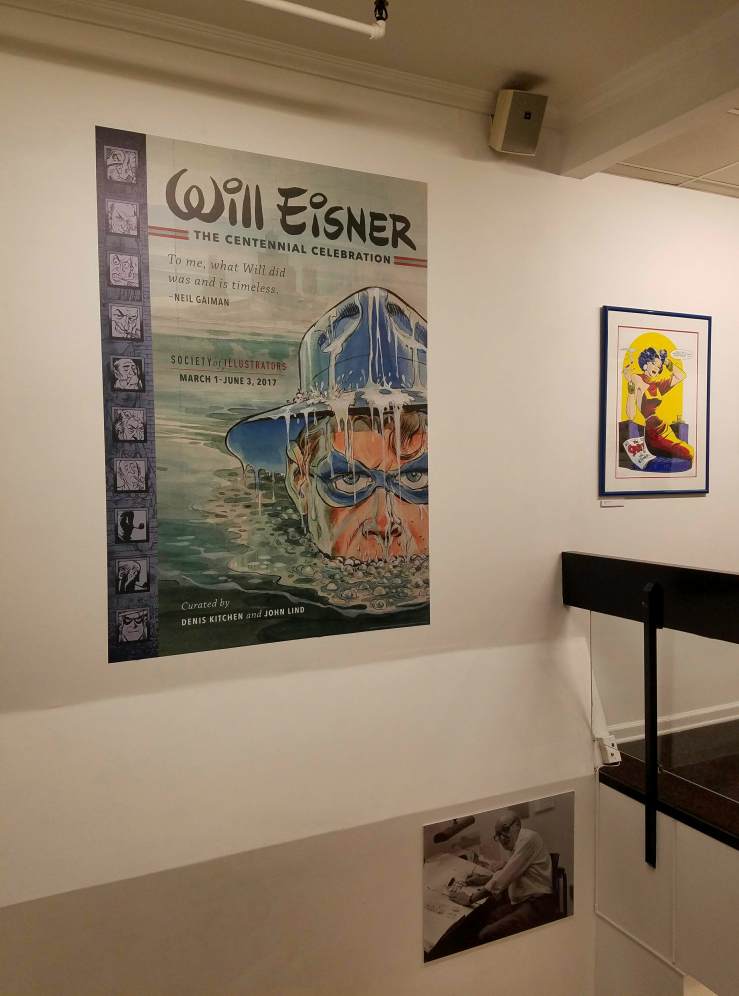
Images from WILL EISNER: The Centennial Celebration 1917-2017, a retrospective comprising over 150 pieces of artwork, graphic novel sequences, original pages of The Spirit and Mr. Eisner’s personal items. The exhibition was curated by Denis Kitchen and John Lind and ran between March & June 2017 at the Society of Illustrators. It was the largest Eisner exhibition ever in the United States and made me very happy indeed.

June 3rd, 2017
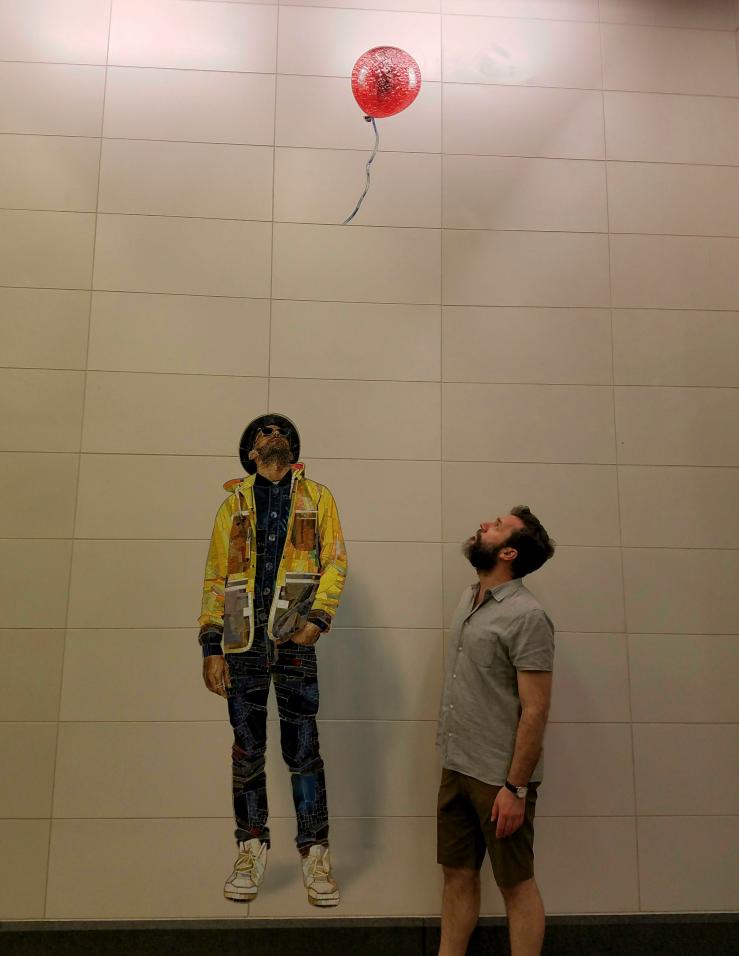
True Beauty

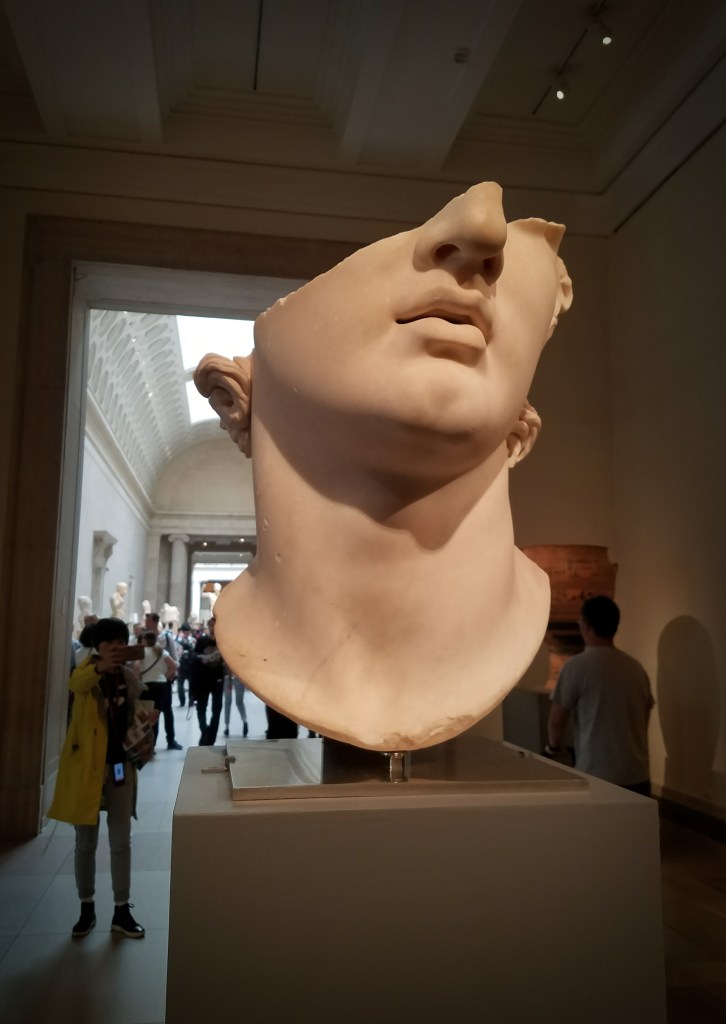
Shines from within, pure, timeless, immortal. No makeup, no cosmetics – not even a whole face – required.

Fragmentary colossal marble head of a youth
Greek, Hellenistic period, 2nd century B.C.
Discovered at Pergamon, on upper terrace of gymnasium, 1879

Although this extraordinary head has long been known, its function and importance have only recently been understood. The youth, with long curling locks and a brooding expression, was originally part of a draped bust set into a marble roundel almost four feet in diameter. It is probably among the earliest known sculptures of this type (imagines clipeatae) in marble and over life-size in scale. It would have been one of several that adorned the walls of a particularly grand space in the gymnasium of ancient Pergamon. He may represent a young god or possibly Alexander the Great. Even in its damaged condition, the head exemplifies the combination of sensitivity and presence characteristic of the finest Hellenistic Pergamene sculpture. 

The Metropolitan Museum of Art

May 28th, 2017

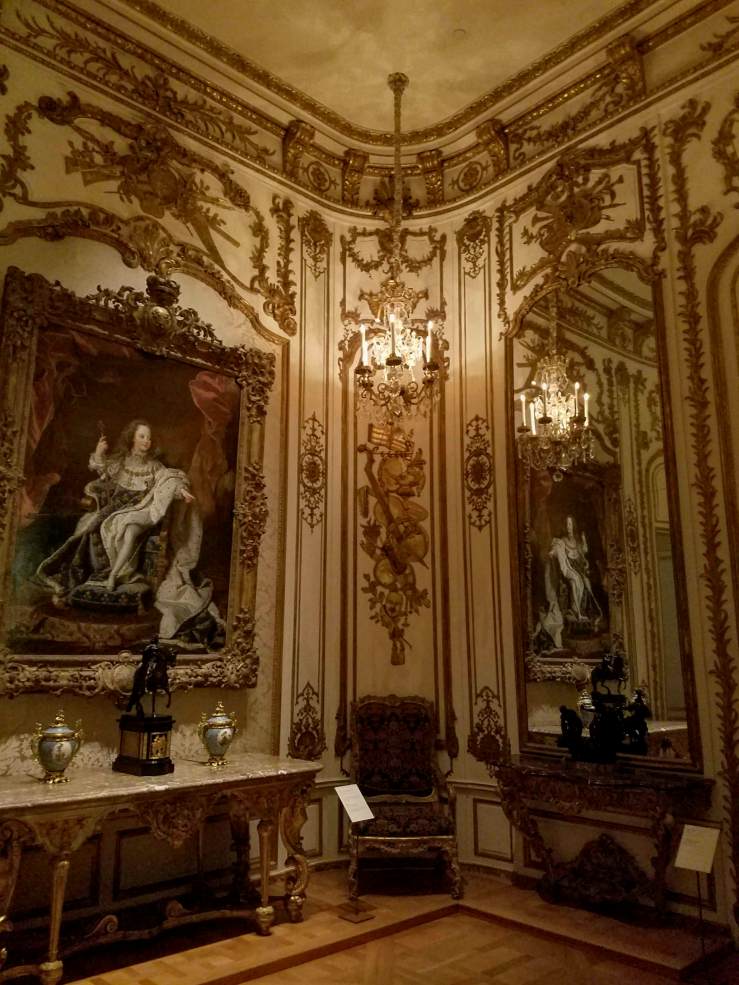
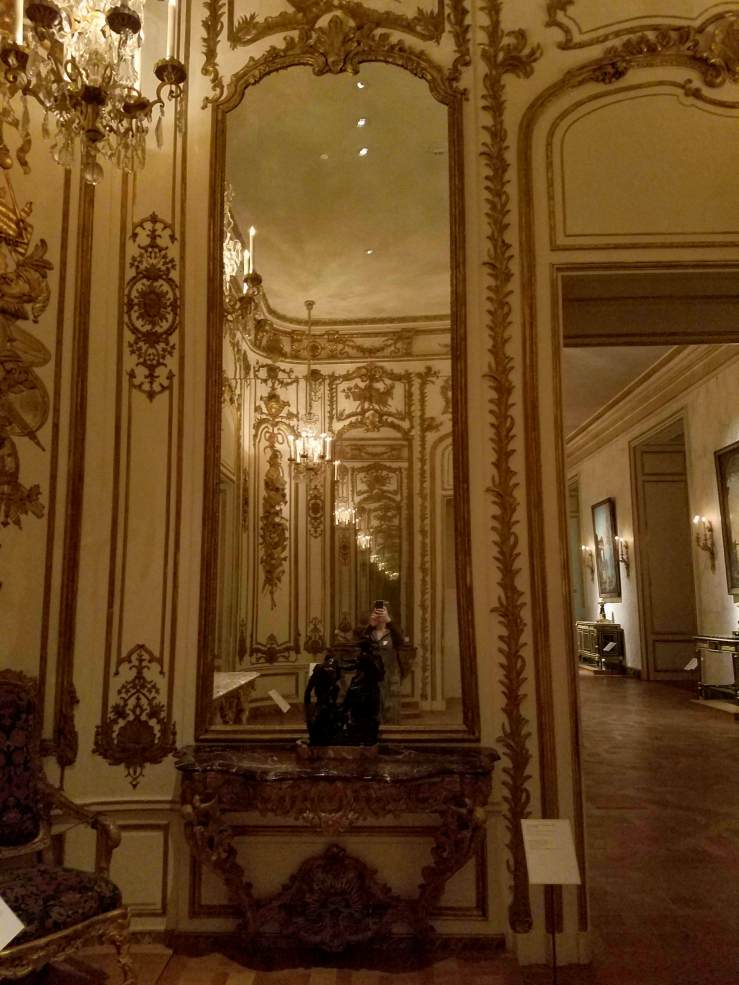
Room Service @ The Metropolitan Museum of Art

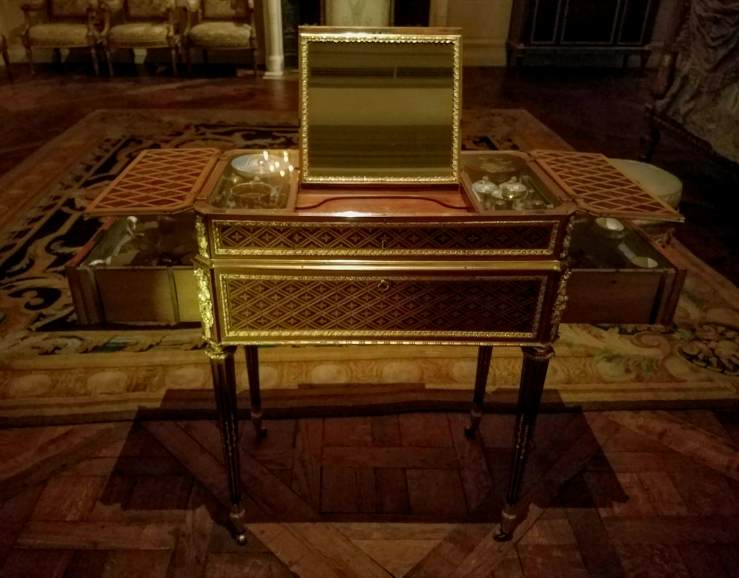
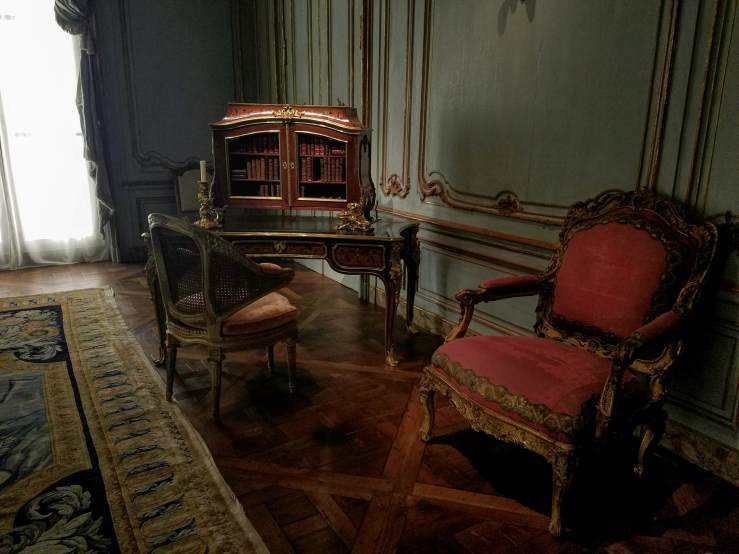
Sometimes I like to wander in and out of the period rooms, so elegant and opulent, so meticulously arranged down to the last detail, and imagine how it would be to live in places like these:  Formal Reception Room from the Hôtel de Tessé at 1, quai Voltaire, Paris.
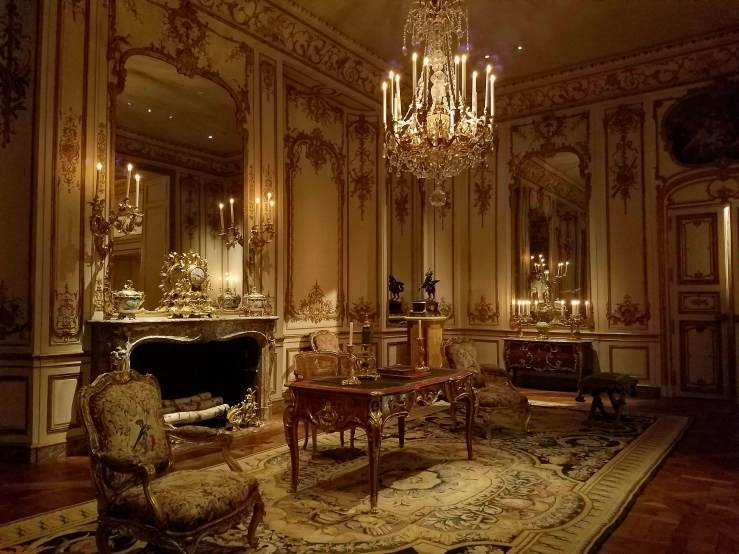

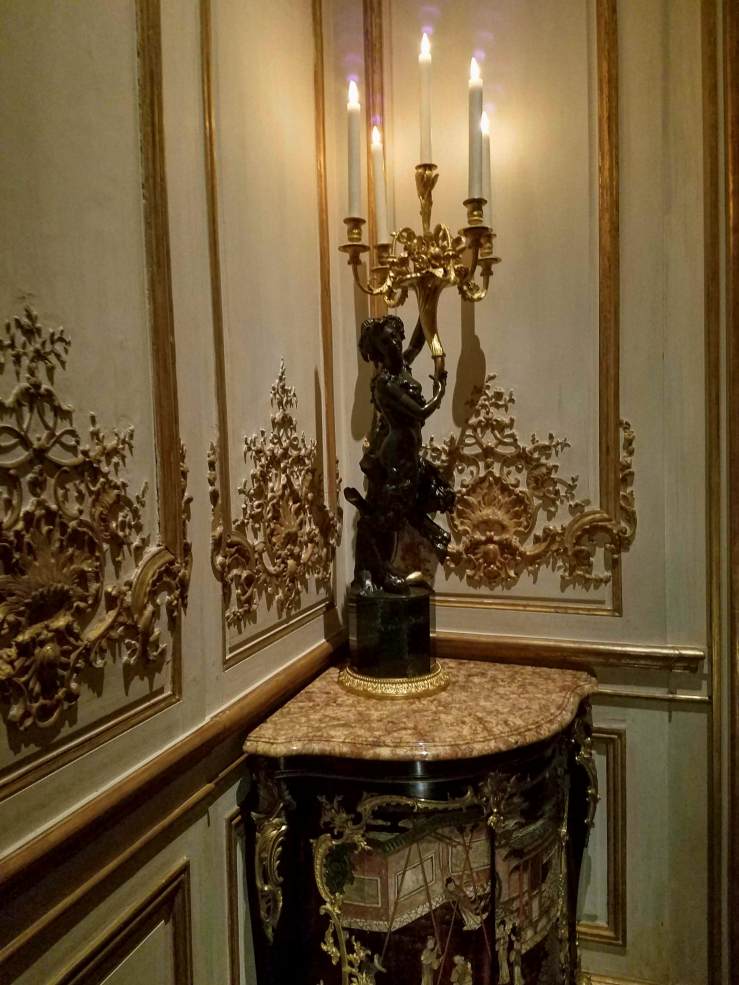
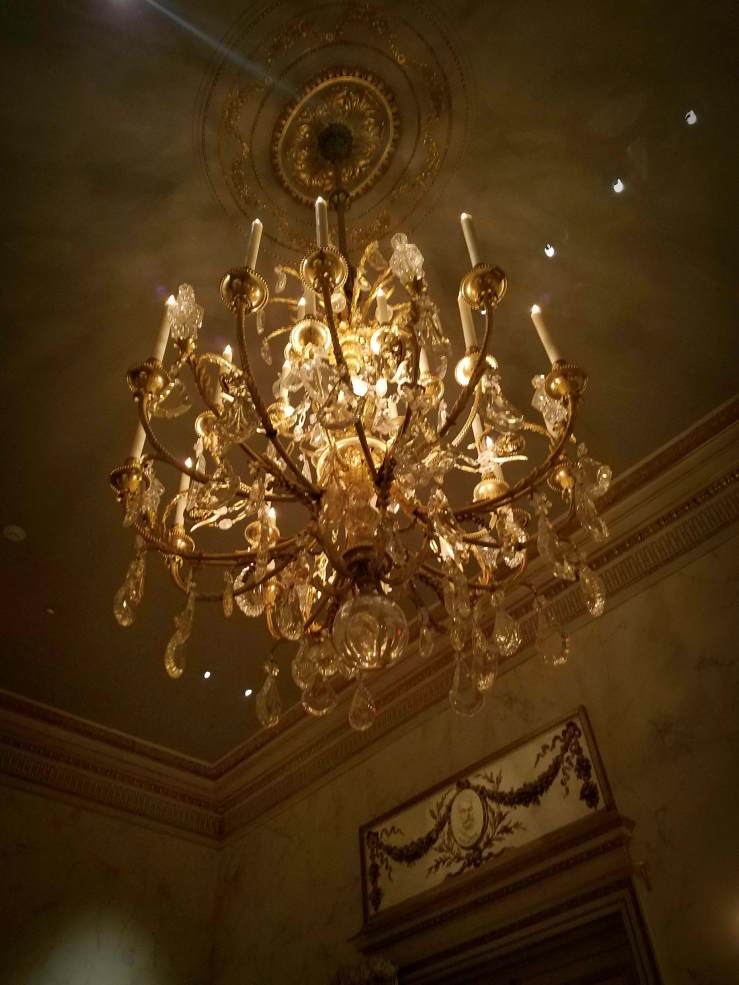
Room from the Hôtel de Varengeville at 217, boulevard Saint-Germain, Paris.

The Lauzun Room (Hôtel Lauzun at 17, quai d’Anjou, Ile Saint-Louis).

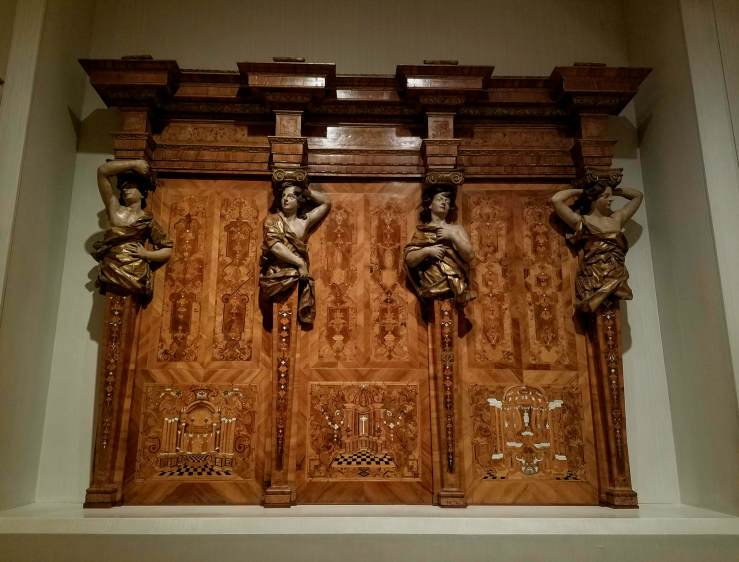
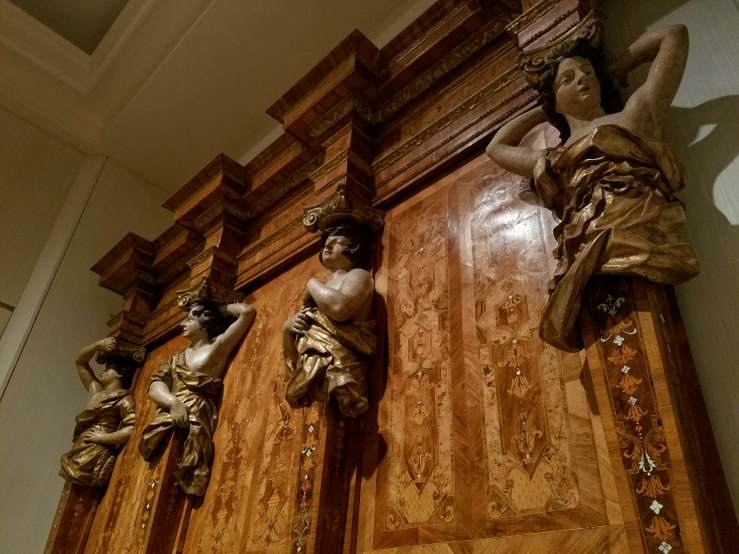
Back Panels of Choir Stalls
From choir stalls made by the cabinetmaker Johan Justus Schacht with the help of twenty-one assistants for the church of the Carthusian monastery in Mainz.
Panels: oak veneered with walnut, boxwood, rosewood, ebony, maple and other woods, ivory, green-stained horn and pewter.
Figures: carved and painted limewood
Mainz, 1723-26 with additions from 1787


Would my dreams be any different under this canopy?

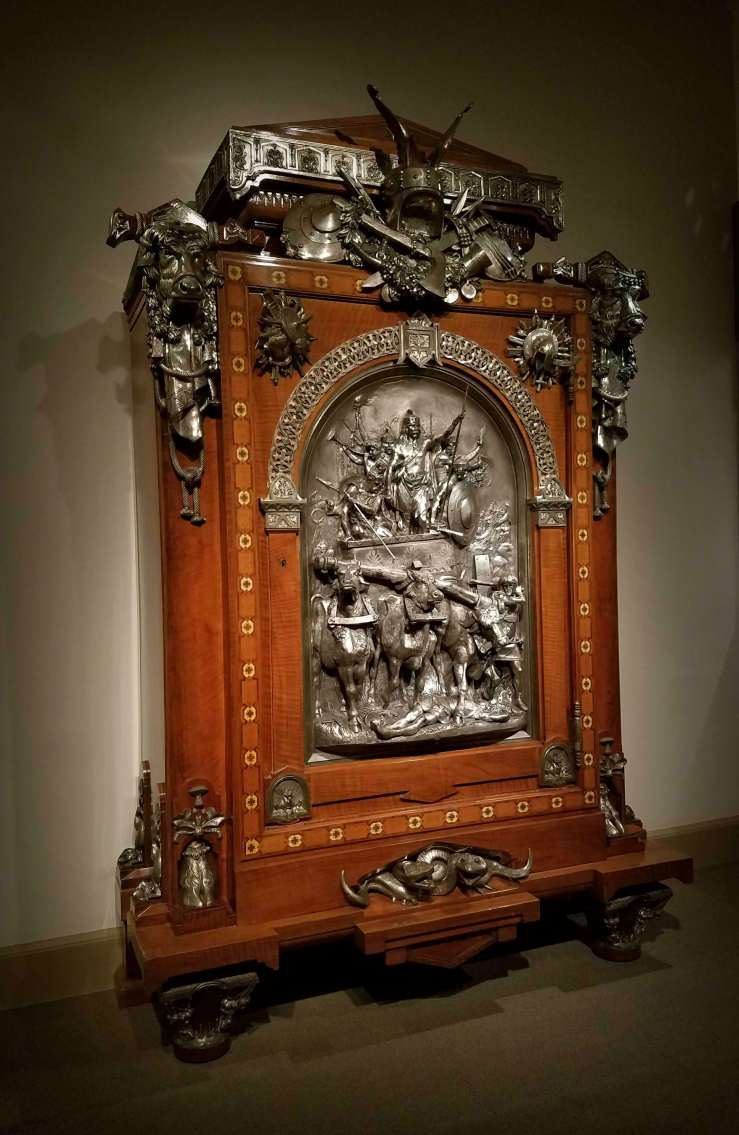
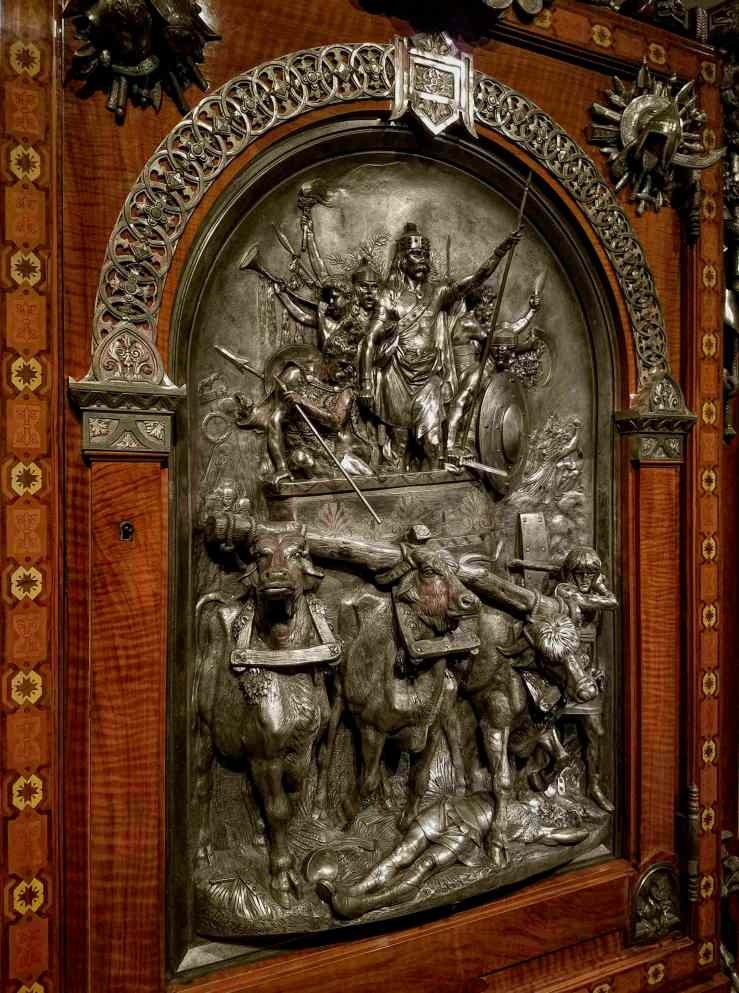
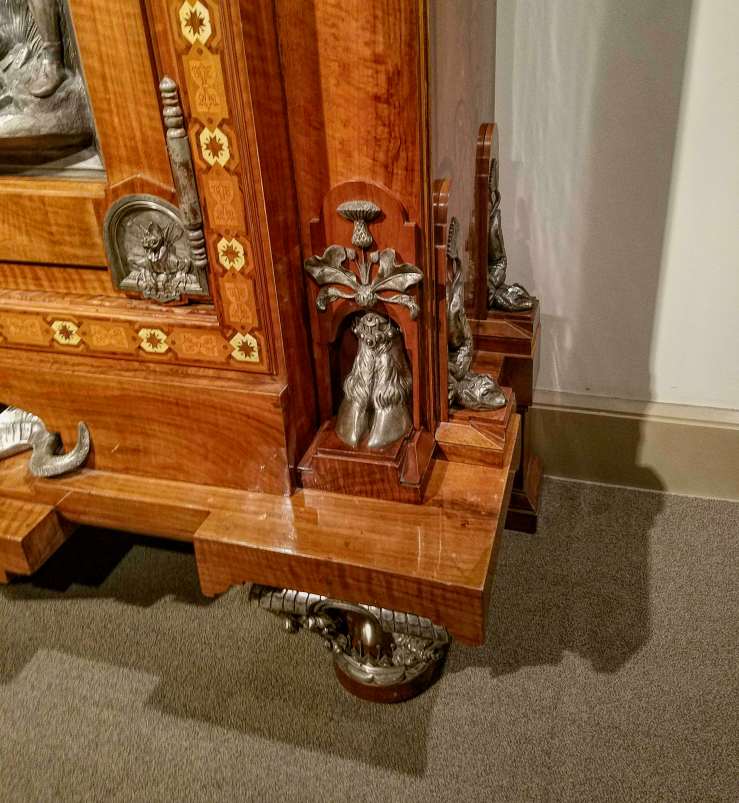
This armoire had me wondering how much more detail could one squeeze on a single piece of furniture: Armoire
Oak veneered with walnut and marquetry woods and set with silvered-bronze mounts
Design by Jean Brandley (active 1855-67)
Woodwork by Charles-Guillaume Diehl (1811-about 1885)
Mounts by Emmanuel Frémiet (1824-1910)
French (Paris), 1867

The central plaque of this ”Merovingian” armoire depicts the victory of the troops of King Merovech over the forces of Attila the Hun in 451. The prototype, a medal cabinet made for the Paris Exposition Universelle of 1867, is in the Musée d’Orsay, Paris. This armoire was commissioned by the cabinetmaker Diehl for his country house at Lagny.


Secrétaire à abattant
Walnut, parcel-ebonized and inlaid with various woods; mounted with gilt bronze; leather, glass, brass
Austrian, ca. 1815-20, with later additions.

Pair of side chairs
Attributed to Josef Danhauser (1780-1829)
Beech and pine wood, cherry wood veneer and ebonized mahogany; covered in silk not original to chair
Austrian (Vienna), ca. 1815-20


The Metropolitan Museum of Art

May 28th, 2017

Irving Penn || Centennial

In 2017, Irving Penn (1917–2009) would have been one hundred years old. To mark the occasion, The Metropolitan Museum of Art hosted ”Irving Penn: Centennial”, in collaboration with The Irving Penn Foundation. It was the most comprehensive retrospective to date of the work of the great American photographer.

Here are some photos of the photos (and reflections thereof) which I hope you’ll enjoy :-

Image titles:

1/ Irving Penn: Centennial
2-3/ Roleiflex 3.5 E3 Twin-Lens Reflex Camera with 75 mm Carl Zeiss Planar Lens, 1961-64. Irving Penn acquired this camera in 1964 and used it and other similar models for portrait sittings for the next four decades. It is topped with a modified Hasselblad chimney viewfinder and mounted on a Tiltall pan/tilt head above a table tripod of the artist’s own design.
4/Carl Erickson and Elise Daniels, New York, 1947
5/Charles James, New York, 1948
6/
Marcel Duchamp, New York, 1948
7/
Alfred Hitchcock, New York, 1947
8/
Dusek Brothers, New York, ca. 1948
9/
Ballet Society, New York, 1948
10/
The Tarot Reader (Bridget Tichenor and Jean Patchett), New York, 1949
11/
Black and White Fashion with Handbag (Jean Patchett), New York, 1950
12/
Vogue covers: Between 1943 and 2004 Penn produced photographs for 165 Vogue magazine covers, more than any other artist to date.
13/
Vogue Fashion Photography (Jean Patchett), New York, 1949
14/
Woman with Roses (Lisa Fonssagrives-Penn in Lafaurie Dress), Paris, 1950
15/
Girl Drinking (Mary Jane Russell), New York, 1949
16/Man Lighting Girl’s Cigarette (Jean Patchett), New York, 1949
17/
Many Skirted Indian Woman, Cuzco, 1948
18/
Cuzco Children, 1948
19/
Butcher, London, 1950
20/
Facteur (Mailman), Paris, 1950
21/
Yves Saint Laurent, Paris, 1957
22/
Francis Bacon, London, 1962
23/
Cecil Beaton, London, 1950
24/
Cat Woman, New Guinea, 1970
25/
Two Guedras, Morocco, 1971
26/
Four Guedras, Morocco, 1971
27/
Not an Irvin Penn image but the type of background he would frequently use, New York, 2017
28/
Birgitta Klercker – Long Hair with Bathing Suit, New York, 1966
29/
Clockwise from left: Ingmar Bergmann, Stockholm, 1964 – Alvin Ailey, New York, 1971 – S. J. Perelman, New York, 1962 – Tom Wolfe, New York, 1966
30/
Truman Capote, New York, 1965
31/
Justice Ruth Bader Ginsburg, New York, 1993
32/
Three Poppies ‘Arab Chief’, New York, 1969
33/
Girl with Tobacco on Tongue (Mary Jane Russell), New York, 1951

The Met

May 28th, 2017

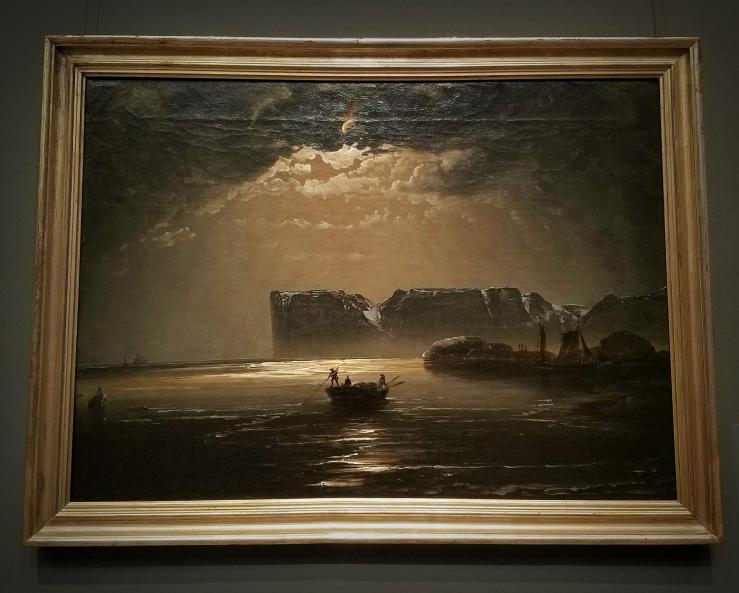
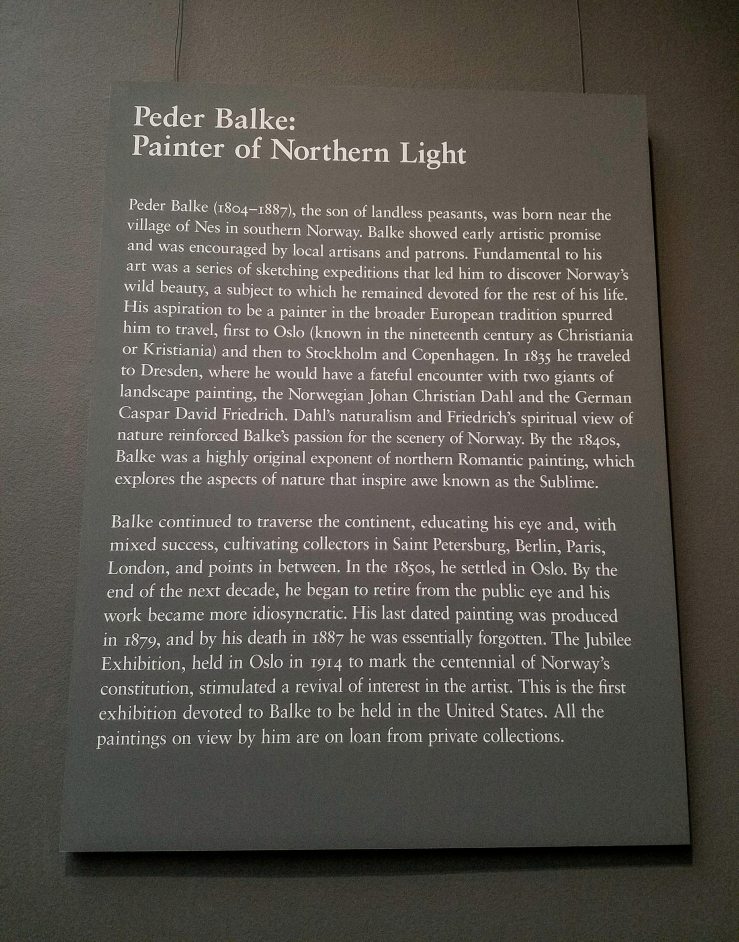
Meet Peder Balke || Painter of Northern Light

The North Cape by Moonlight, 1848
Oil on canvas


Finnmark Landscape, ca. 1860
Oil on canvas


Seascape, 1870s
Oil on wood


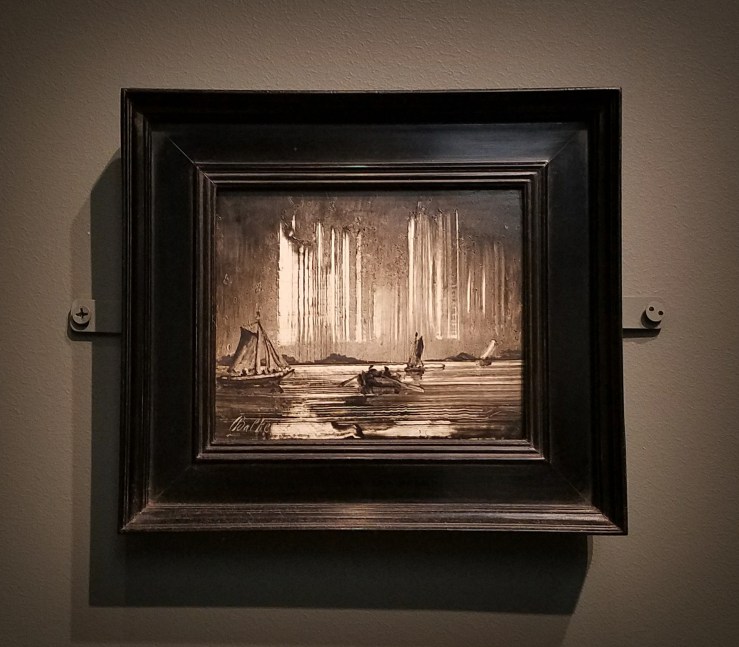
Northern Lights, 1870s
Oil on wood

To produce this striking image, Balke first applied a thin layer of paint for the sky and then a thicker one for the water. Subsequently, he removed paint with a serrated device to reveal the white ground layer, producing the effects of the lights. Finally, he added details such as the coastline and boats with a brush. 


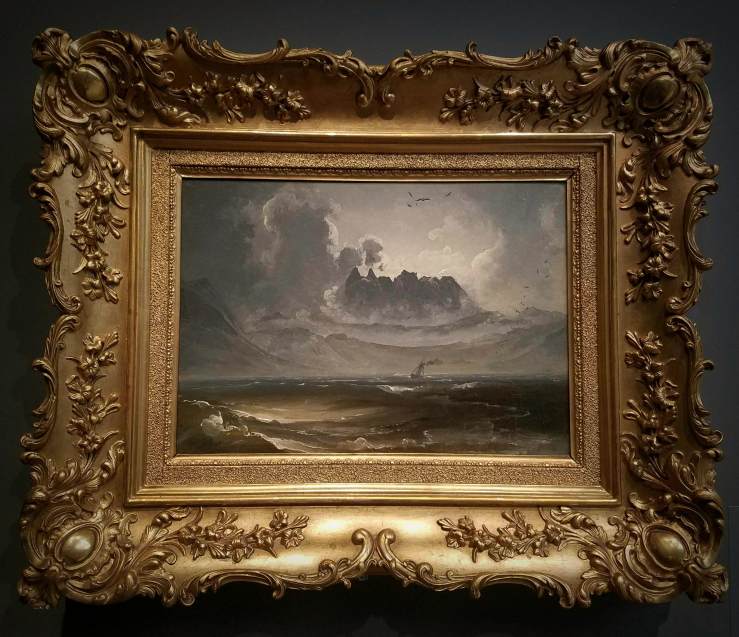
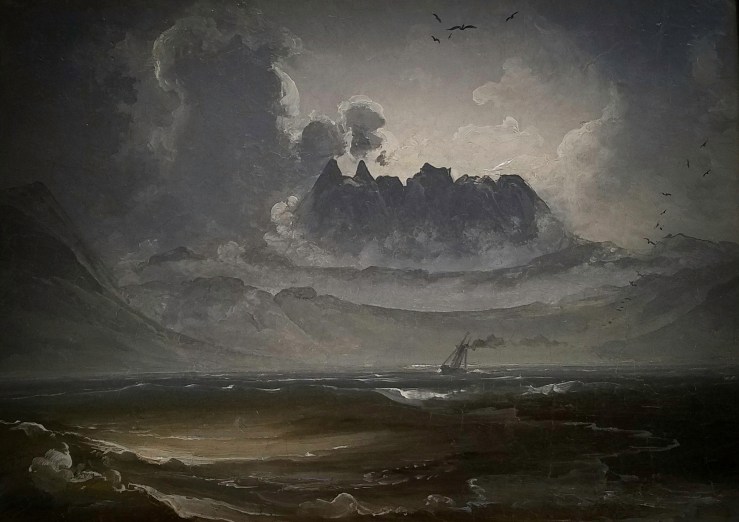
Seascape, ca. 1845
Oil on canvas, mounted on masonite

Majestic mountains and immense, churning clouds are indifferent to the course of a steamer chugging along the coast, trailed by gulls. This work, a tour de force of Balke’s ability to dematerialize form through the use of a limited palette, strikes a balance between painterly effect and a poetic vision that aspires to the Sublime. 


Moonlit View of Stockholm, ca. 1850
Oil on panel


Incredibly, I had to cross the Atlantic to see these wonderfully poetic works and even learn about the existence of this artist.

Images from an exhibition of 17 paintings by Peder Balke, presented at The Met in 2017.

May 28th, 2017