The Glass House

“In the case of the Glass House, the stylistic approach is perfectly clear. Mies van der Rohe and I had discussed how you could build a glass house and each of us built one. Mies’ was, of course, primary and mine was an adoption from the master, although it’s quite a different approach. In my case, there were a lot of historical influences at work. The Glass House stylistically is a mixture of Mies van der Rohe, Malevich, the Parthenon, the English garden, the whole Romantic Movement, the asymmetry of the 19th century. In other words, all these things are mixed up in it but basically it is the last of the modern, in the sense of the historic way we treat modern architecture today, the simple cube.” – Philip Johnson, 1991

And so it was that Johnson’s famed masterpiece came to be. But it’s not just the house: a Studio, a Painting Gallery, a Sculpture Gallery, Da Monsta, a Brick House and a Pavillion in the Pond complete the picture.

But first things first:

The Gate

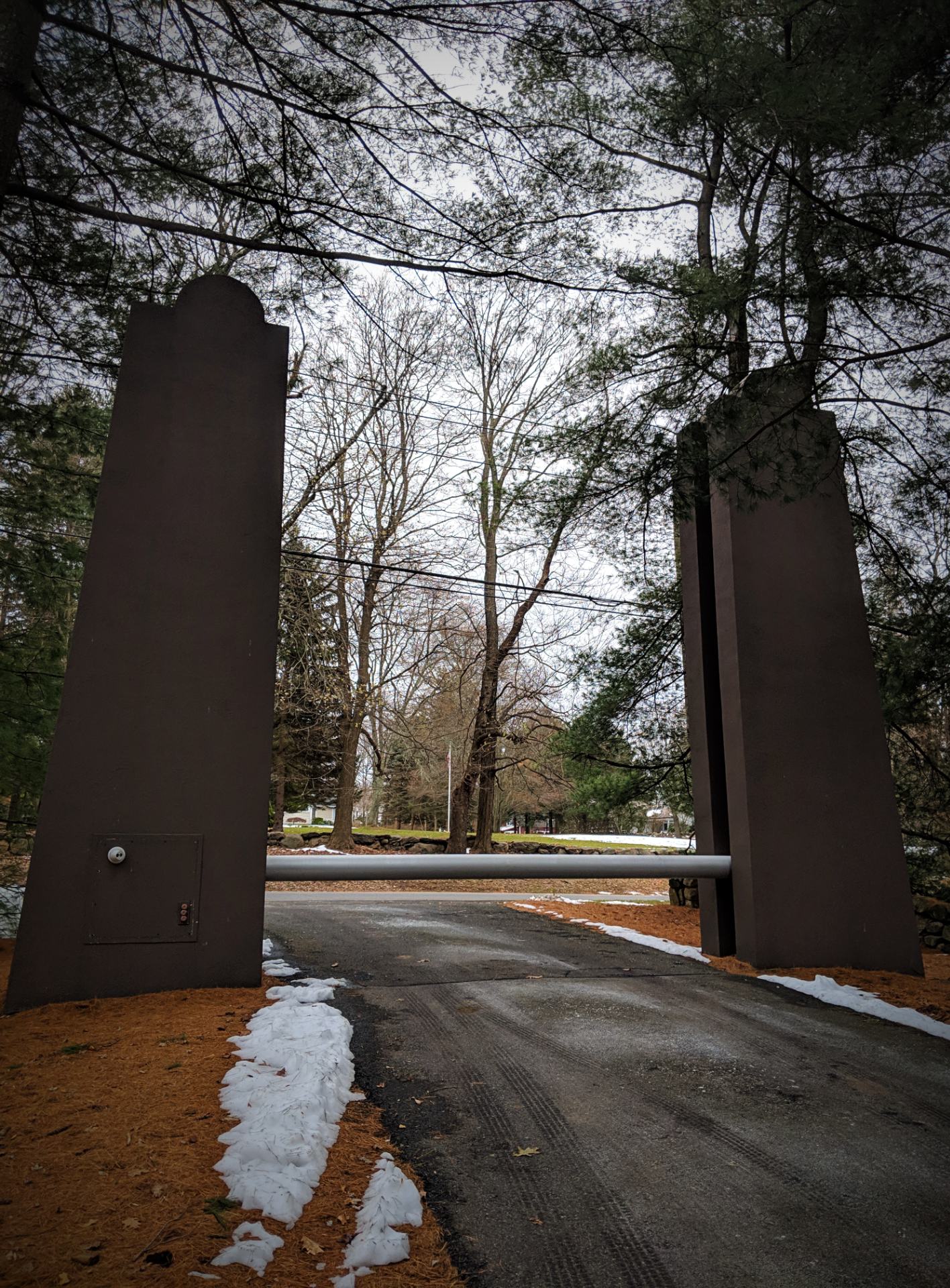
A standalone structure with no fence, so anyone can just walk by. Still, quite impressive in size and mechanics, with the bar sliding up to let our shuttle bus enter, and down again behind it. It was a sailboat boom in a previous life.
The Brick House

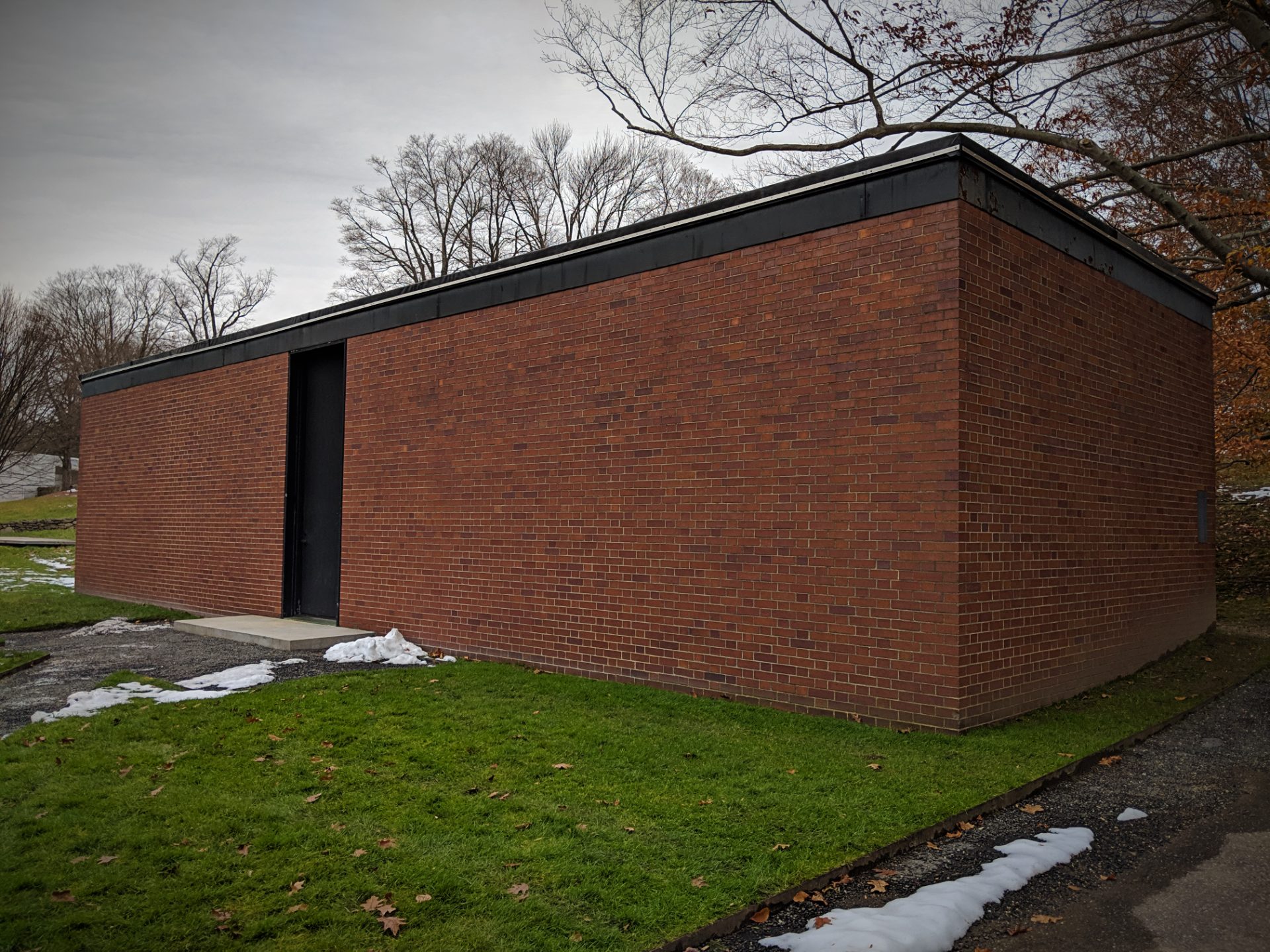
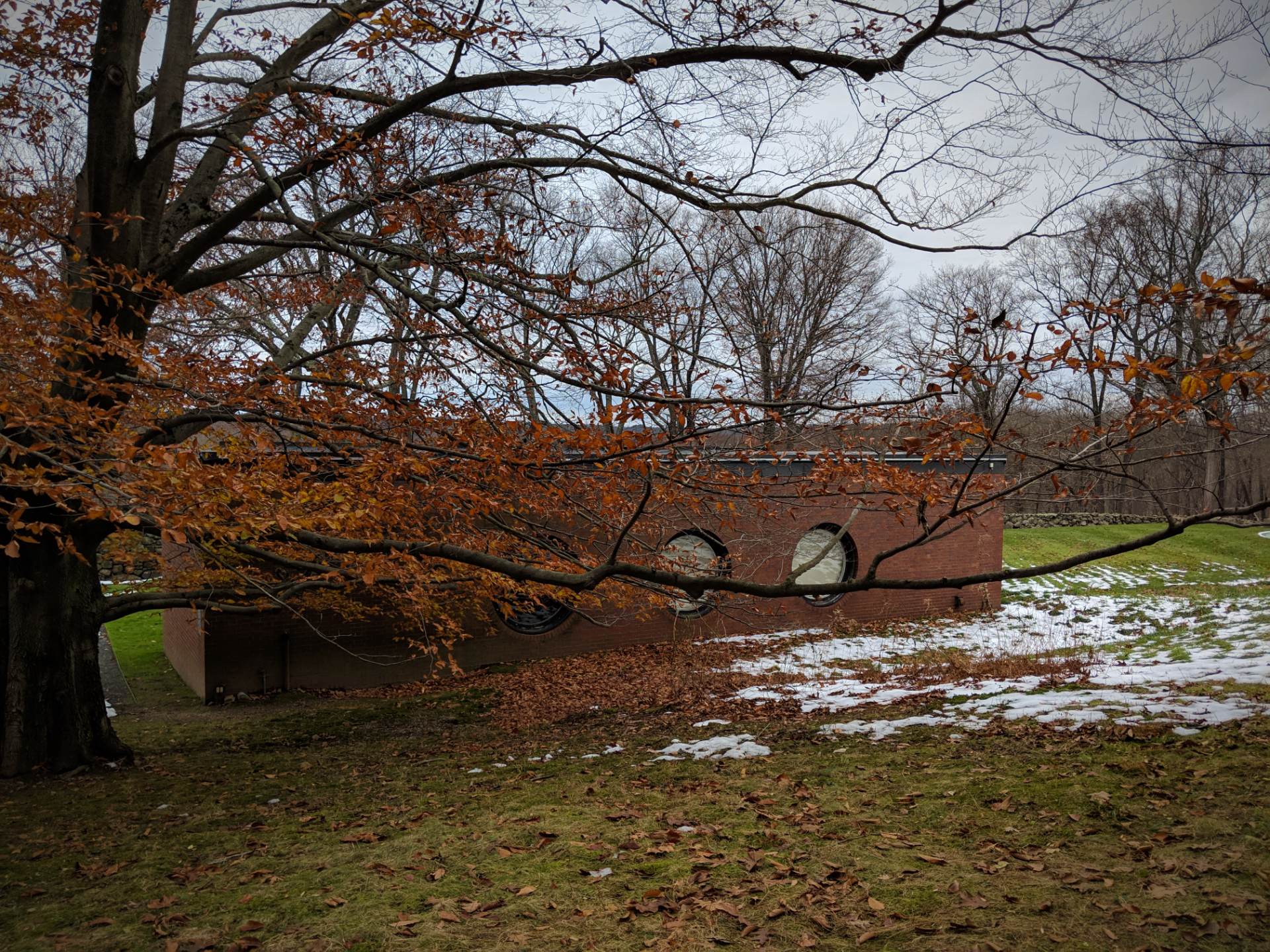
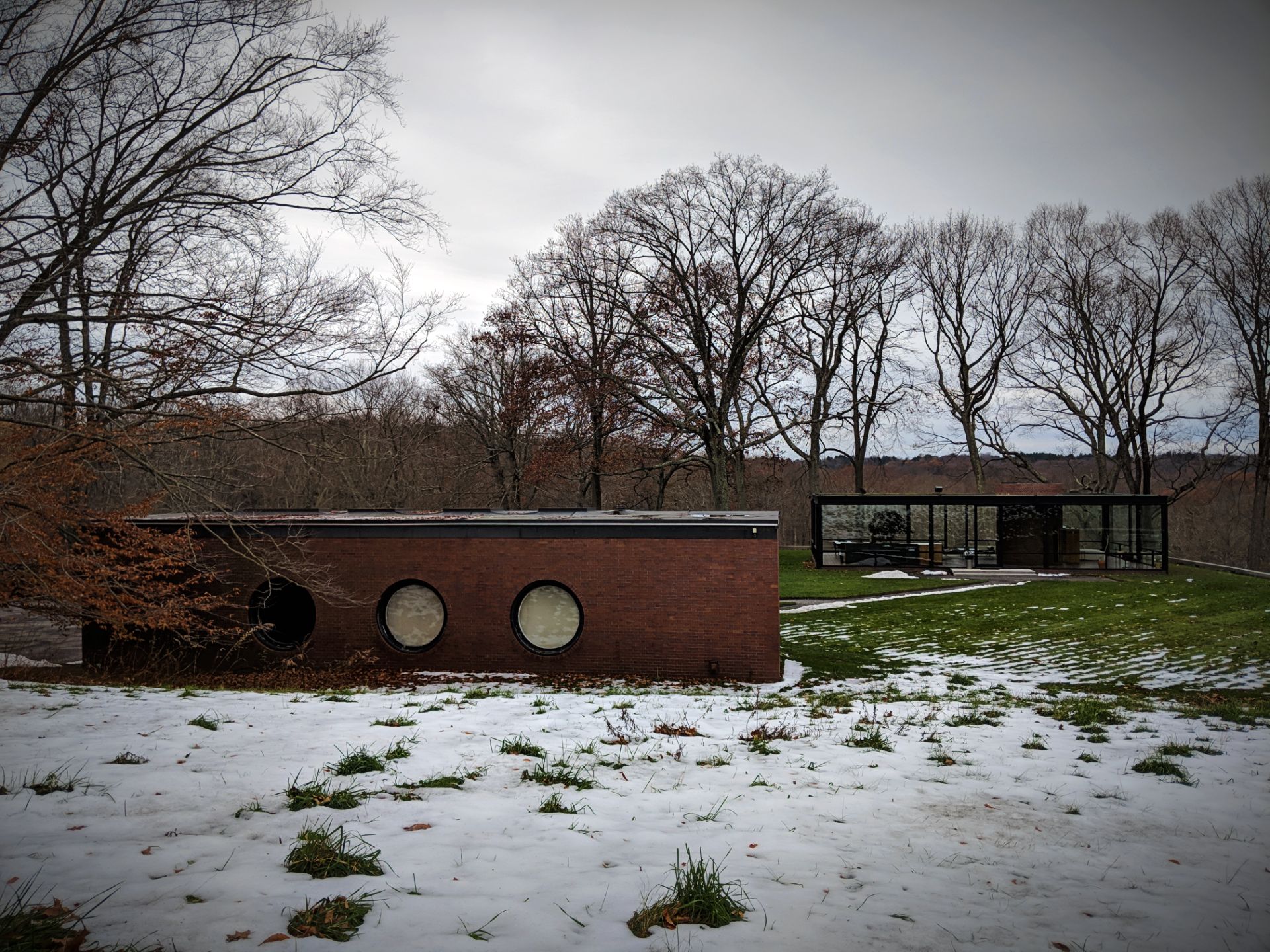
In contrast to the diaphanous Glass House, it was conceived as a guest house offering total privacy – light pours in from skylights and the only windows were placed at the rear.
The Glass House

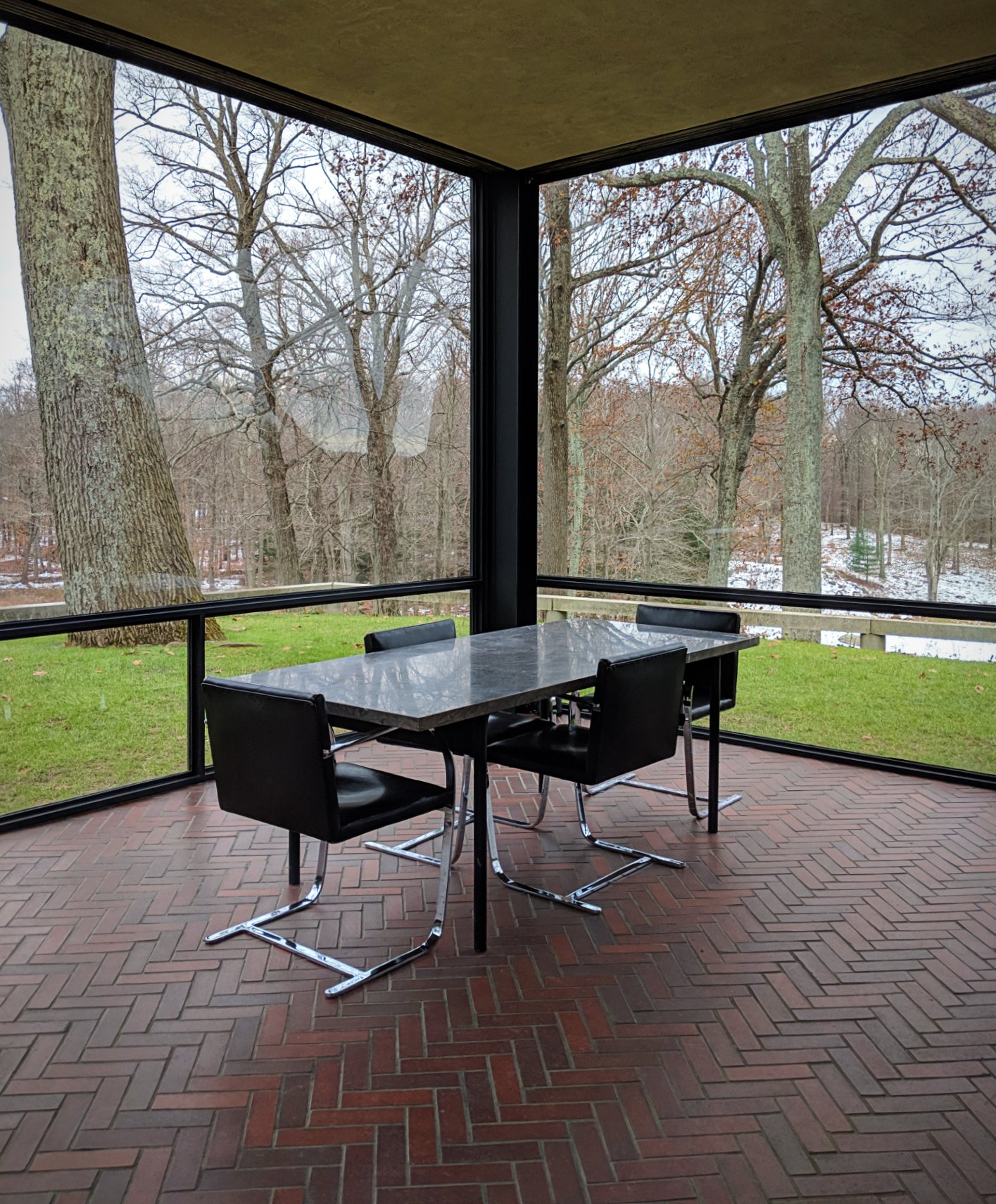
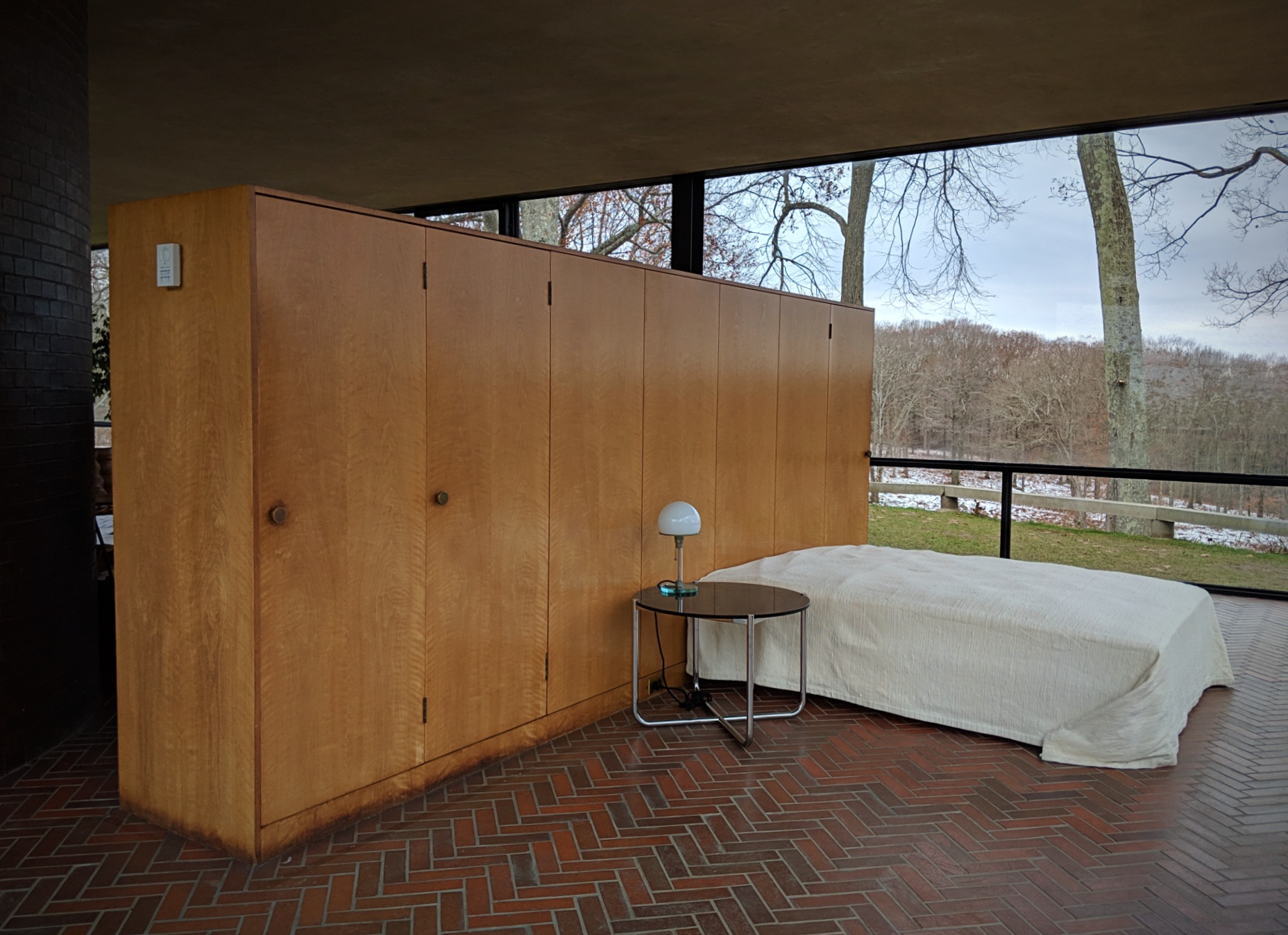
Although there are no walls separating them, Philip Johnson referred to areas within the space as “rooms.” So we have the living room, dining room, kitchen, bedroom and an entrance area – their limits defined by furniture or objects.

And, yes, it gets really hot when the sun shines. In order to avoid suffocation from the greenhouse effect, Johnson had special modular wooden panels placed on the glass ones for shade; they would be moved according to the hour of day or season.
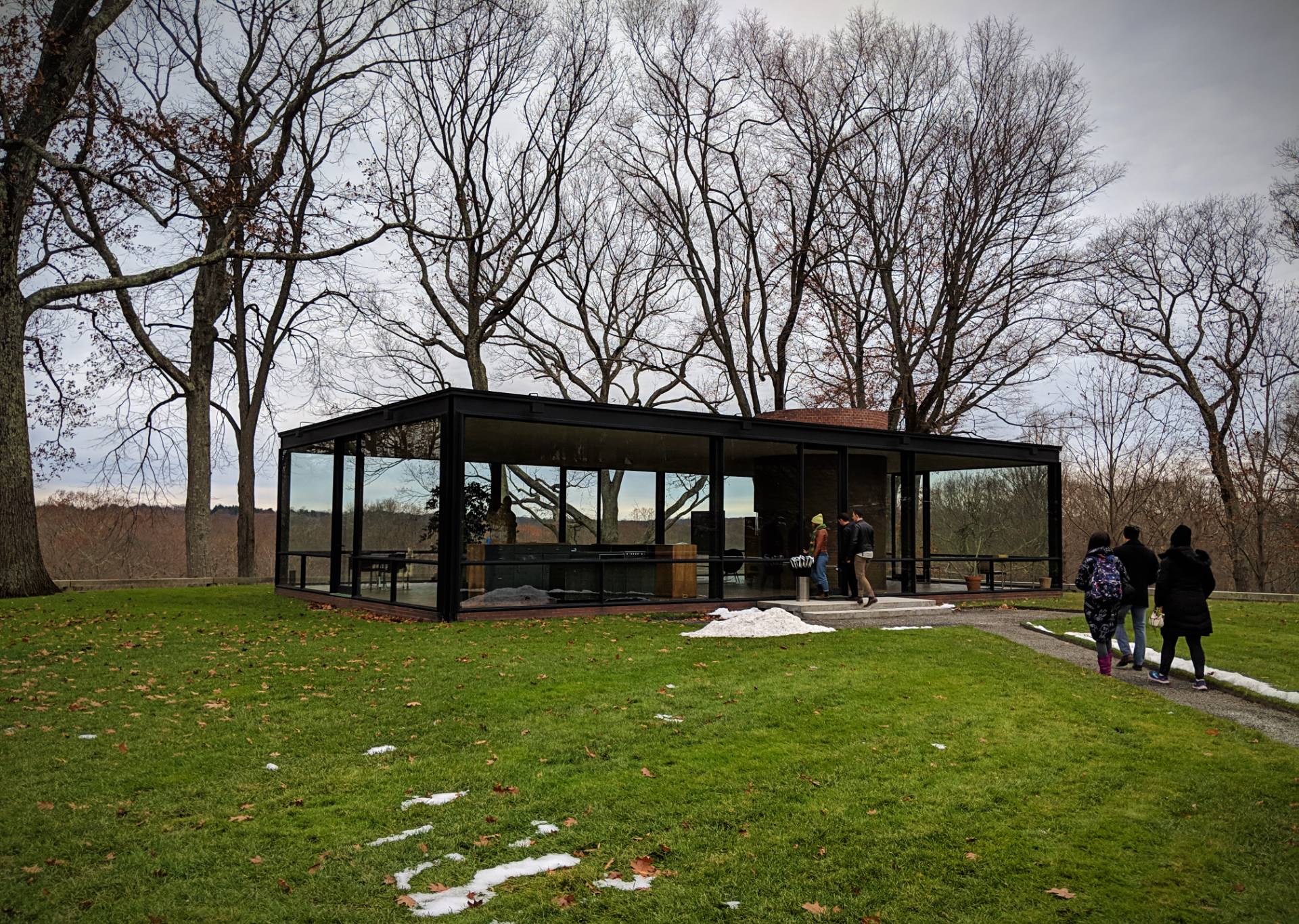
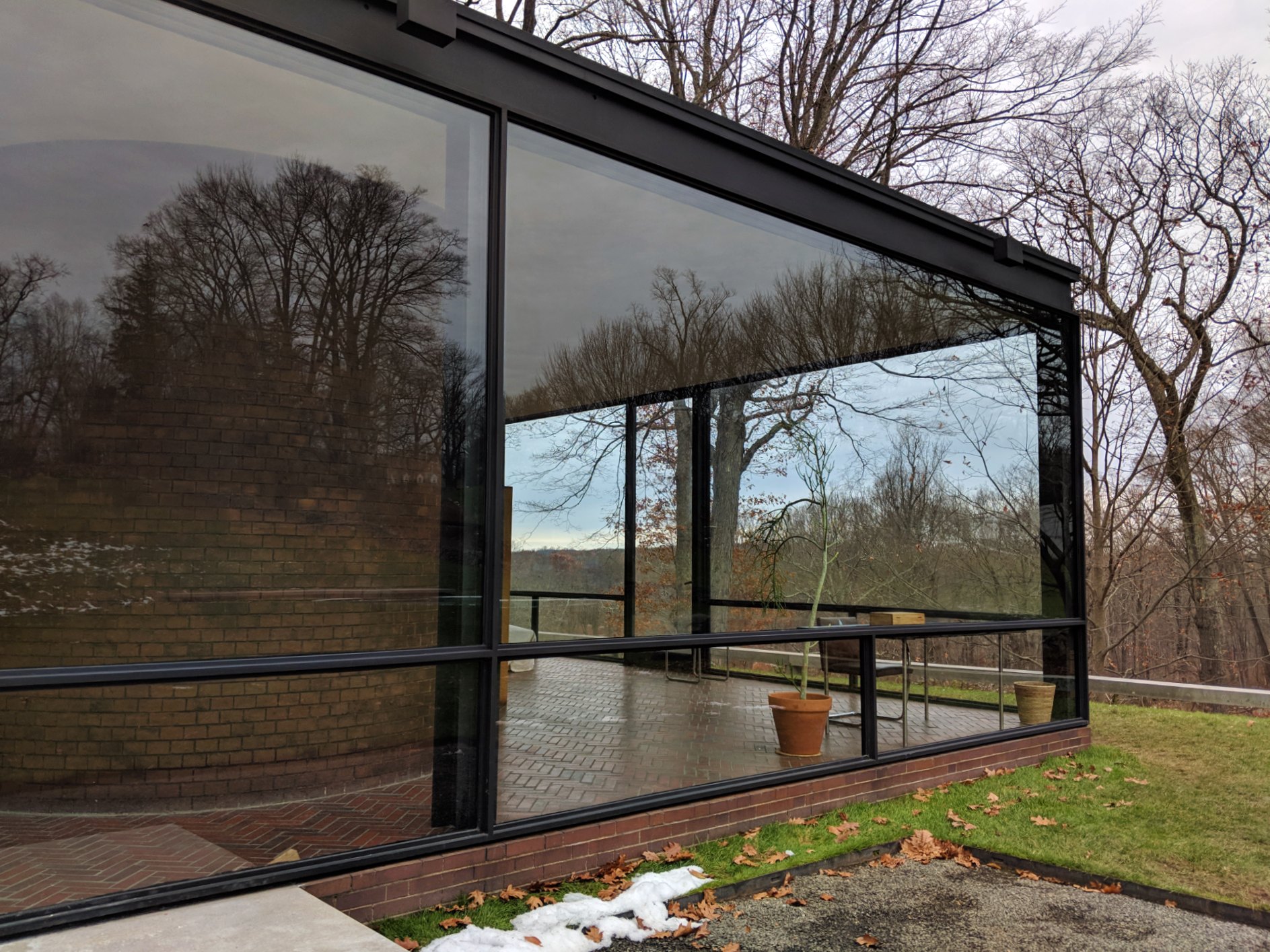
The painting in the ”living room” is ”Burial of Phocion” ca. 1648-49, by Nicolas Poussin. It was selected specifically for the house by Alfred H. Barr, Jr., the first director of the Museum of Modern Art.
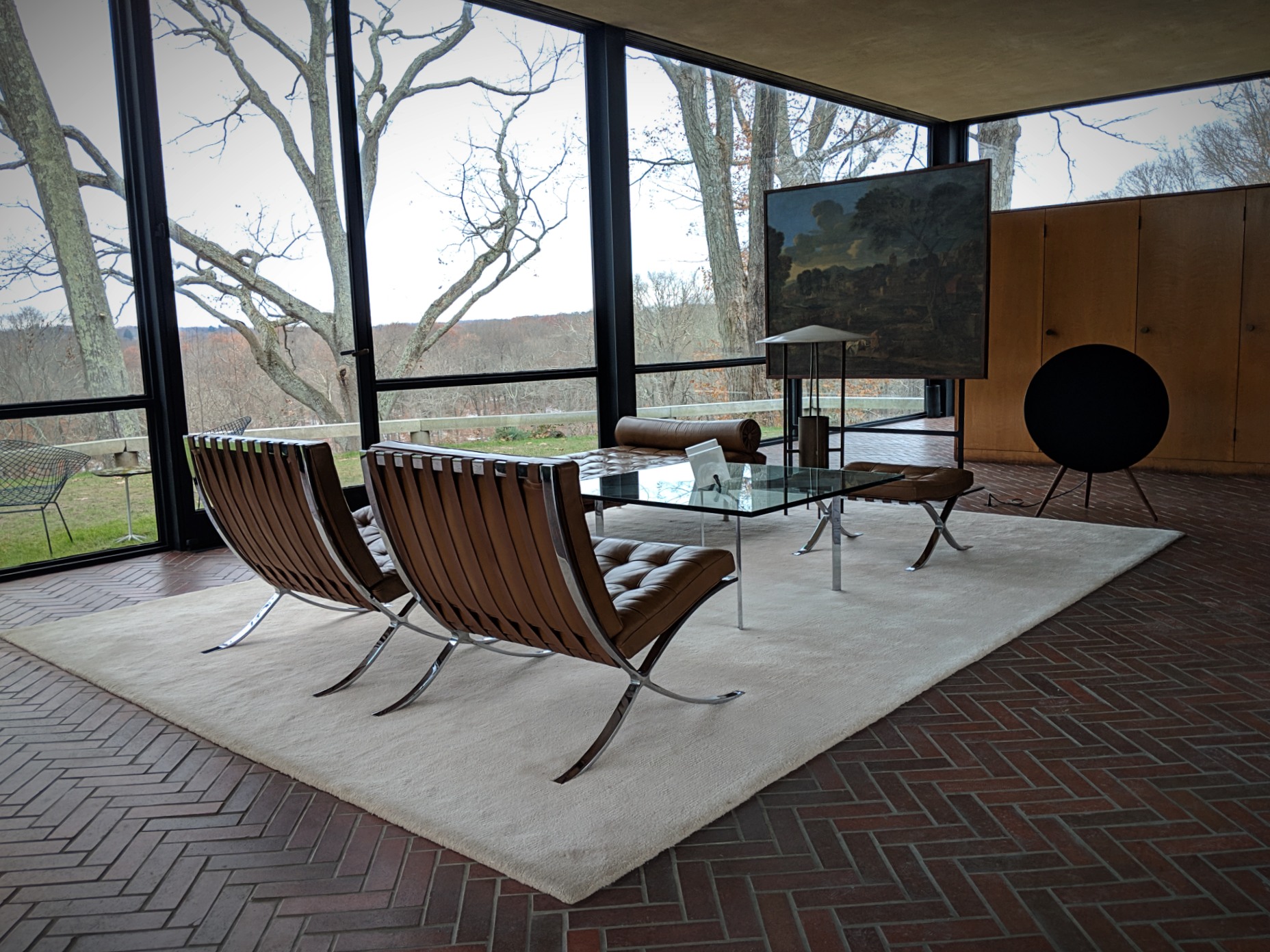
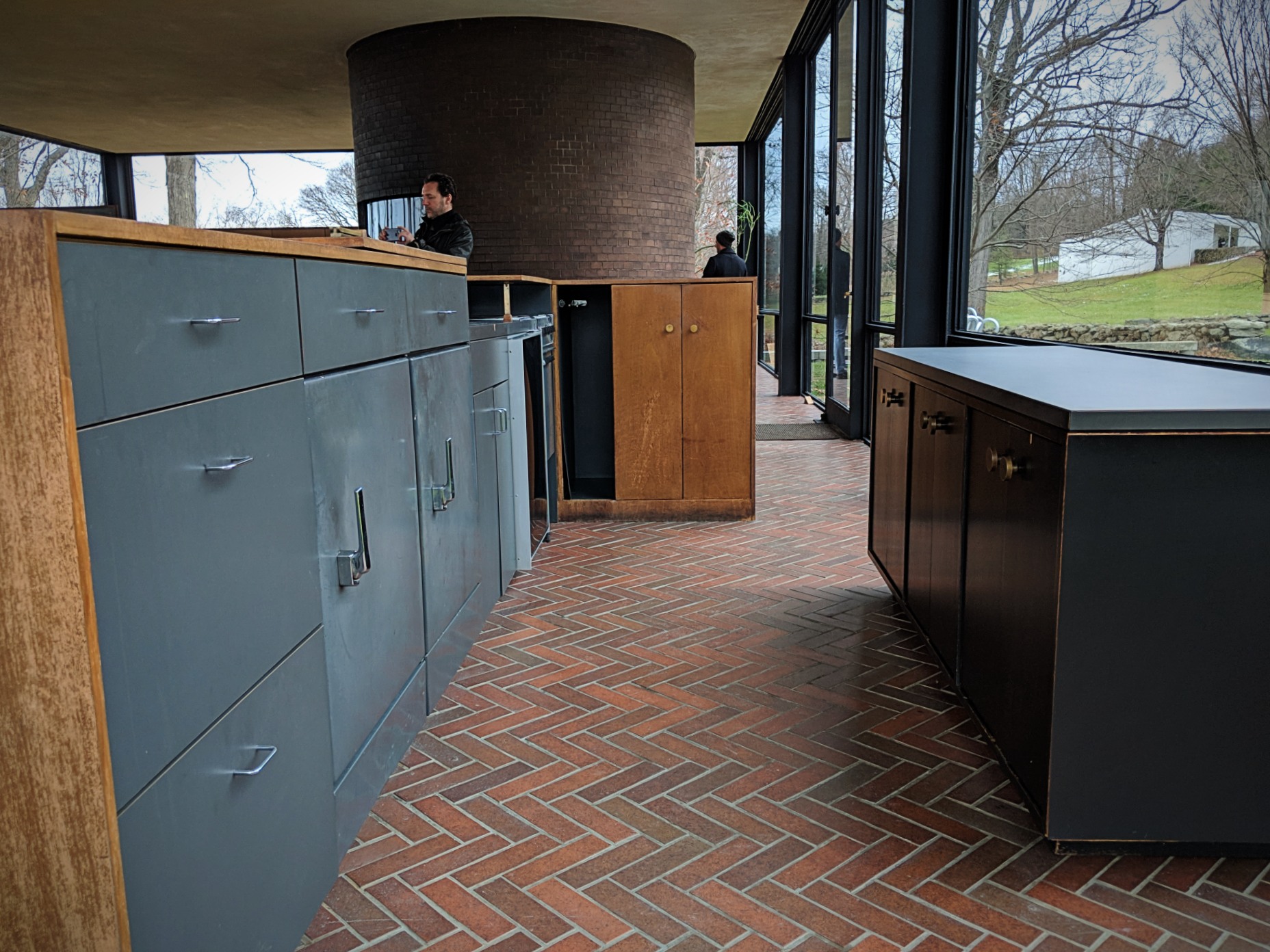
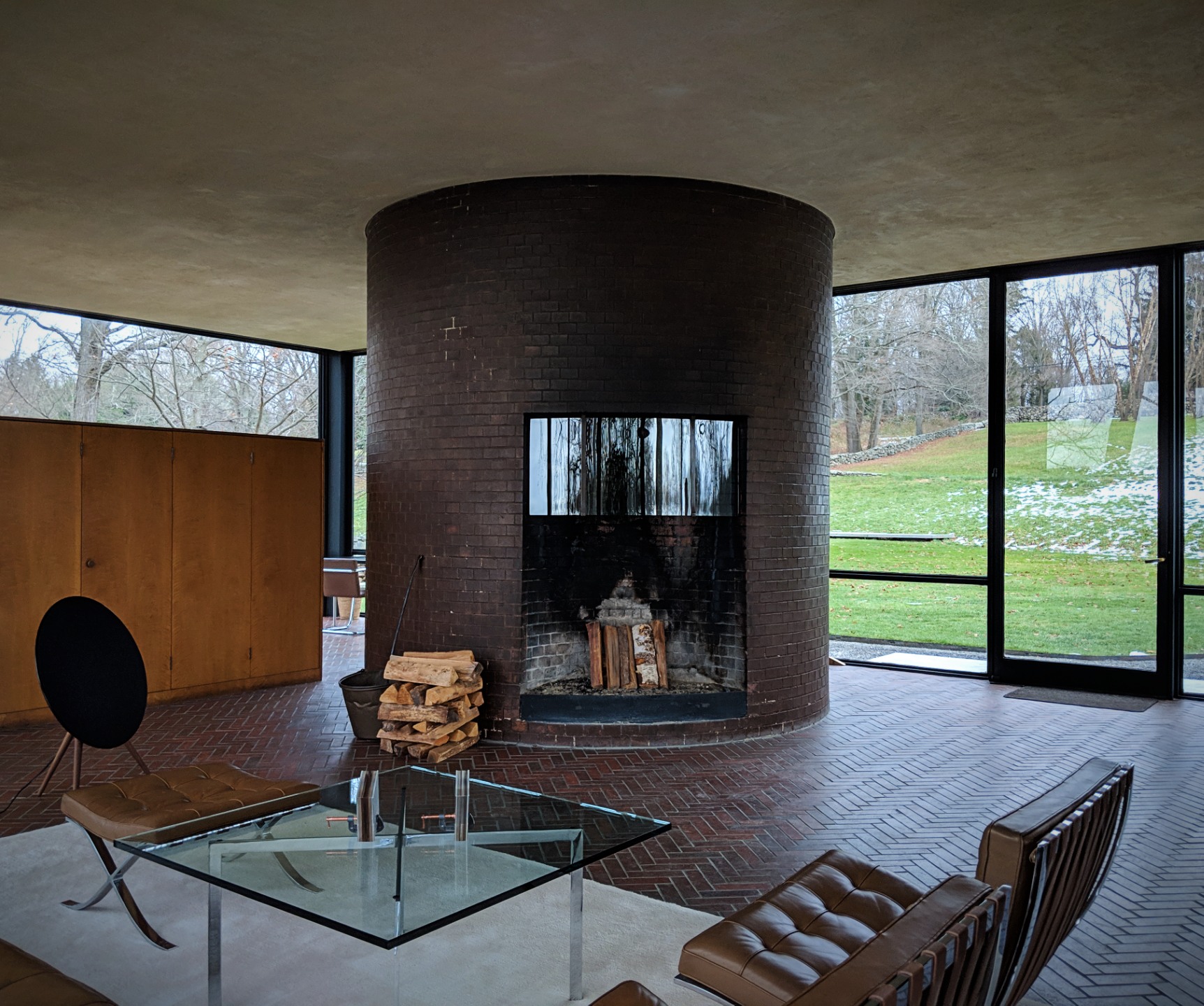
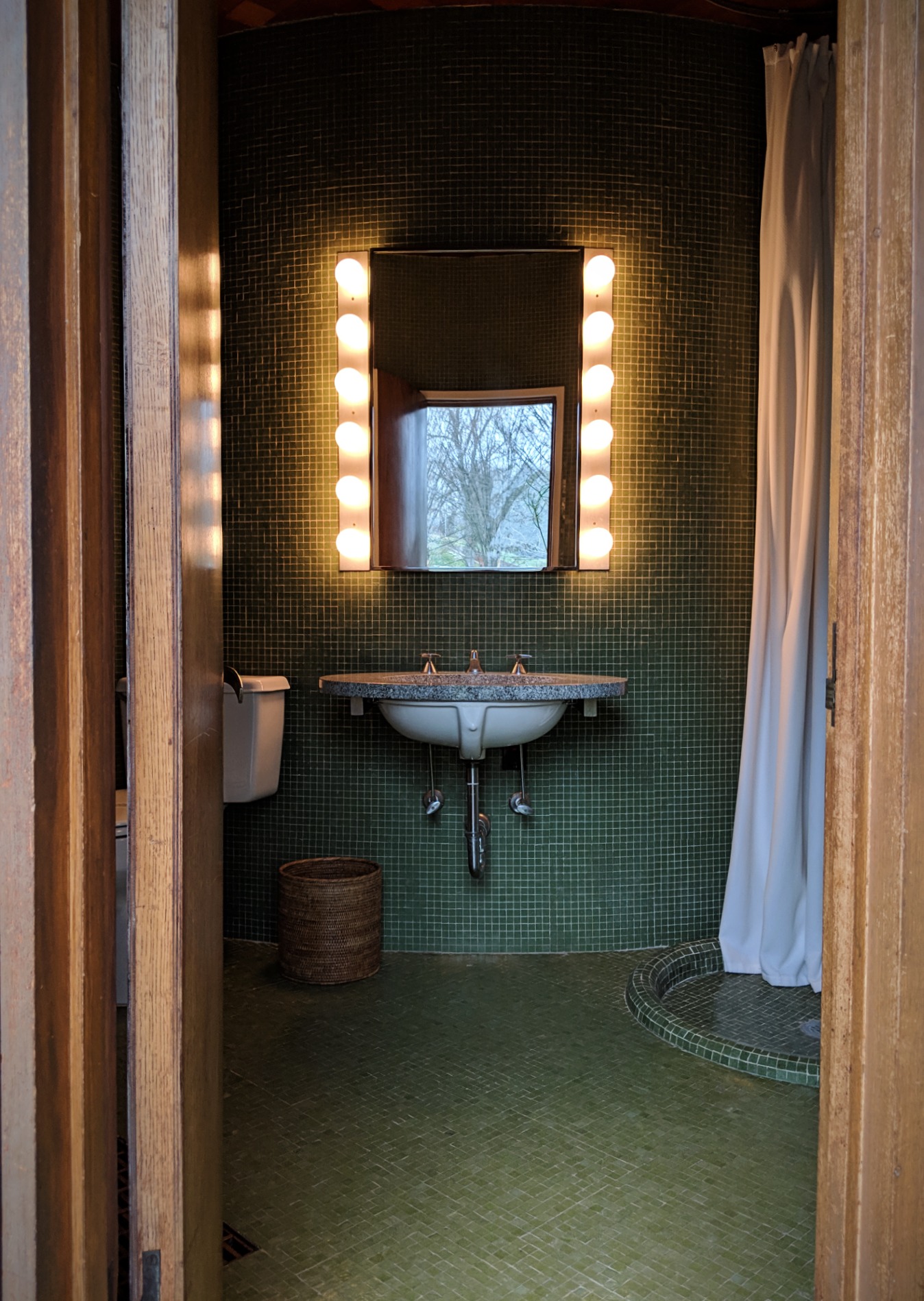
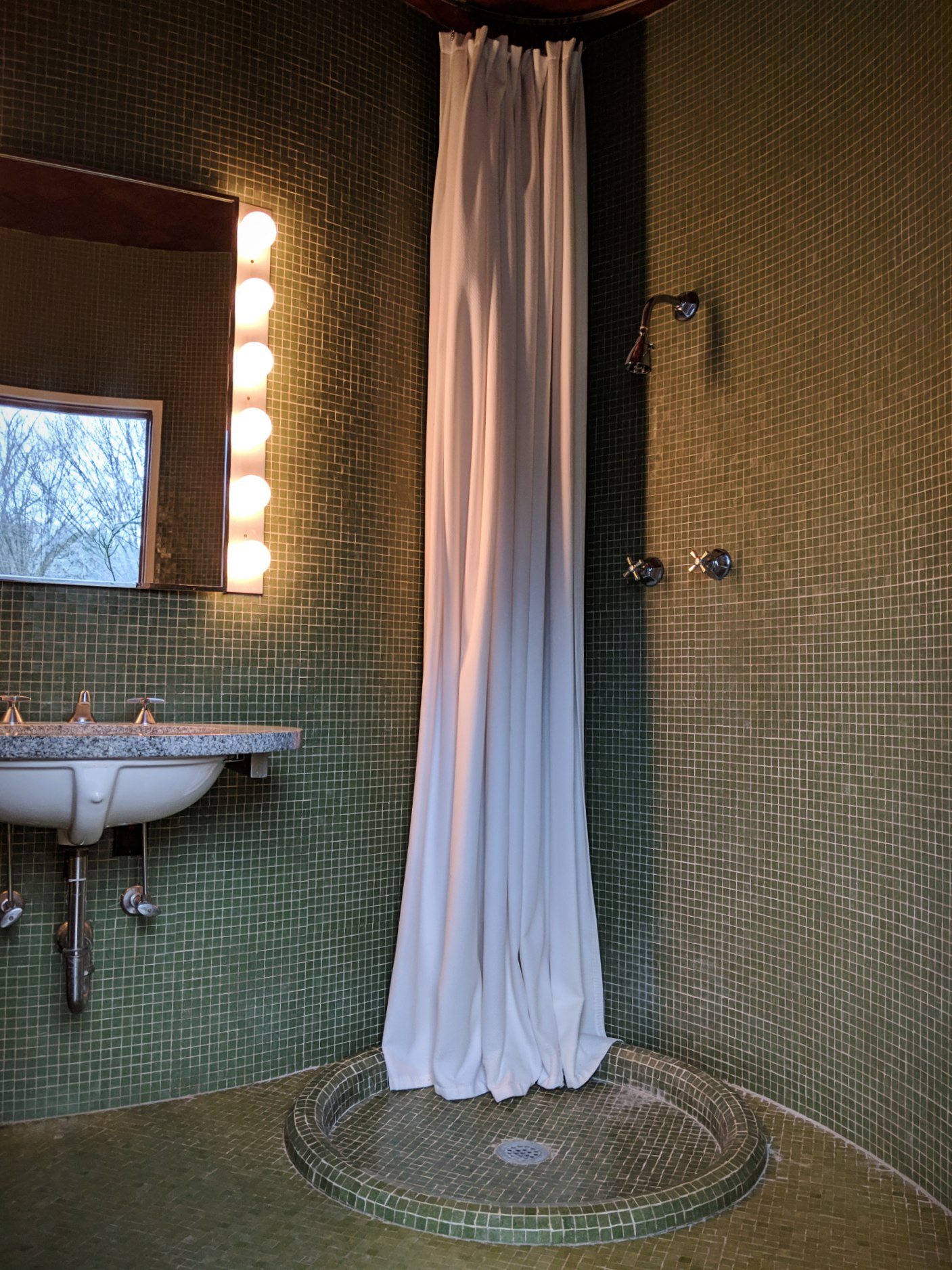
The only really private room is the bathroom enclosed in a rounded brick structure that holds the fireplace on the other side.
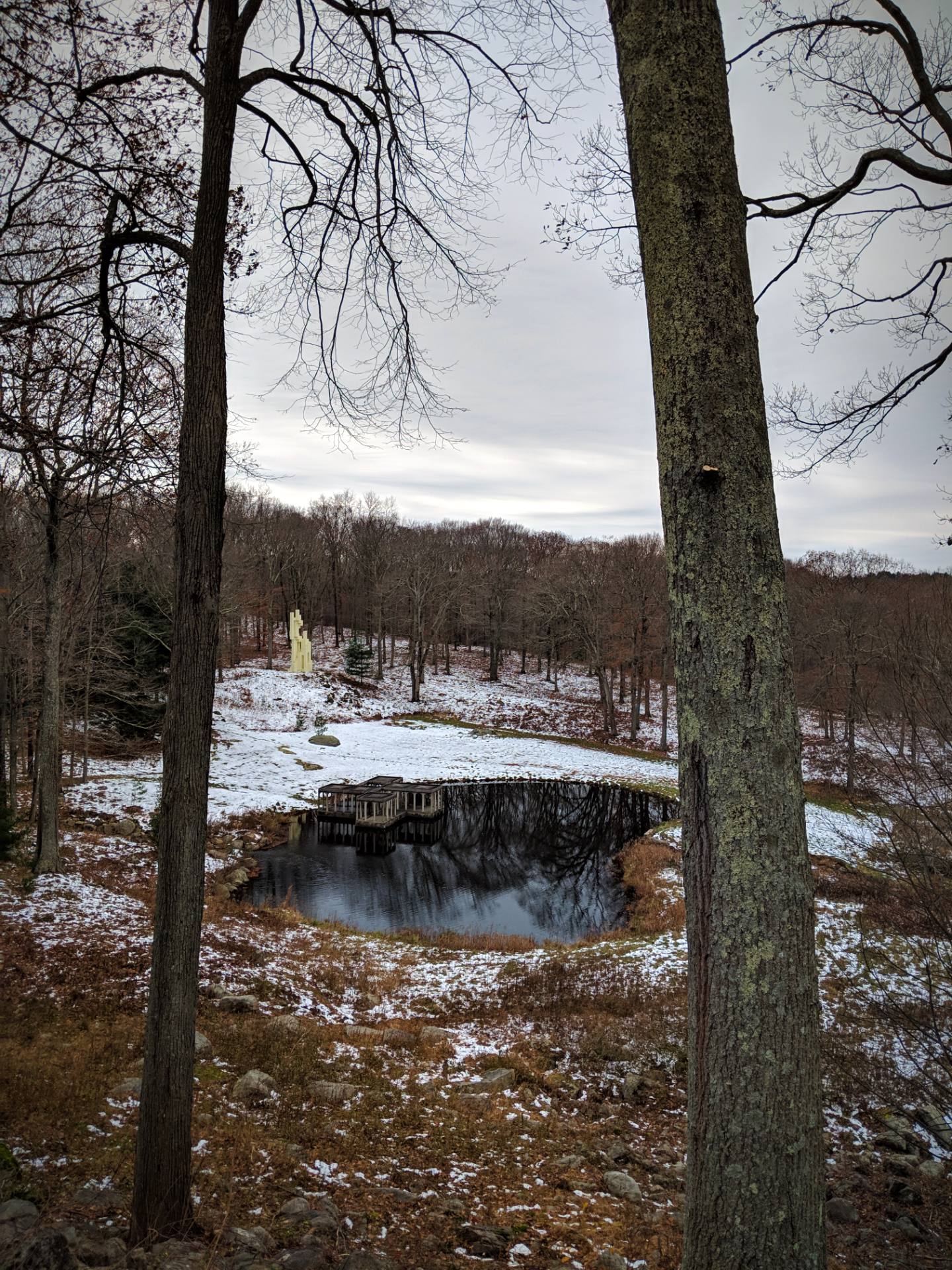
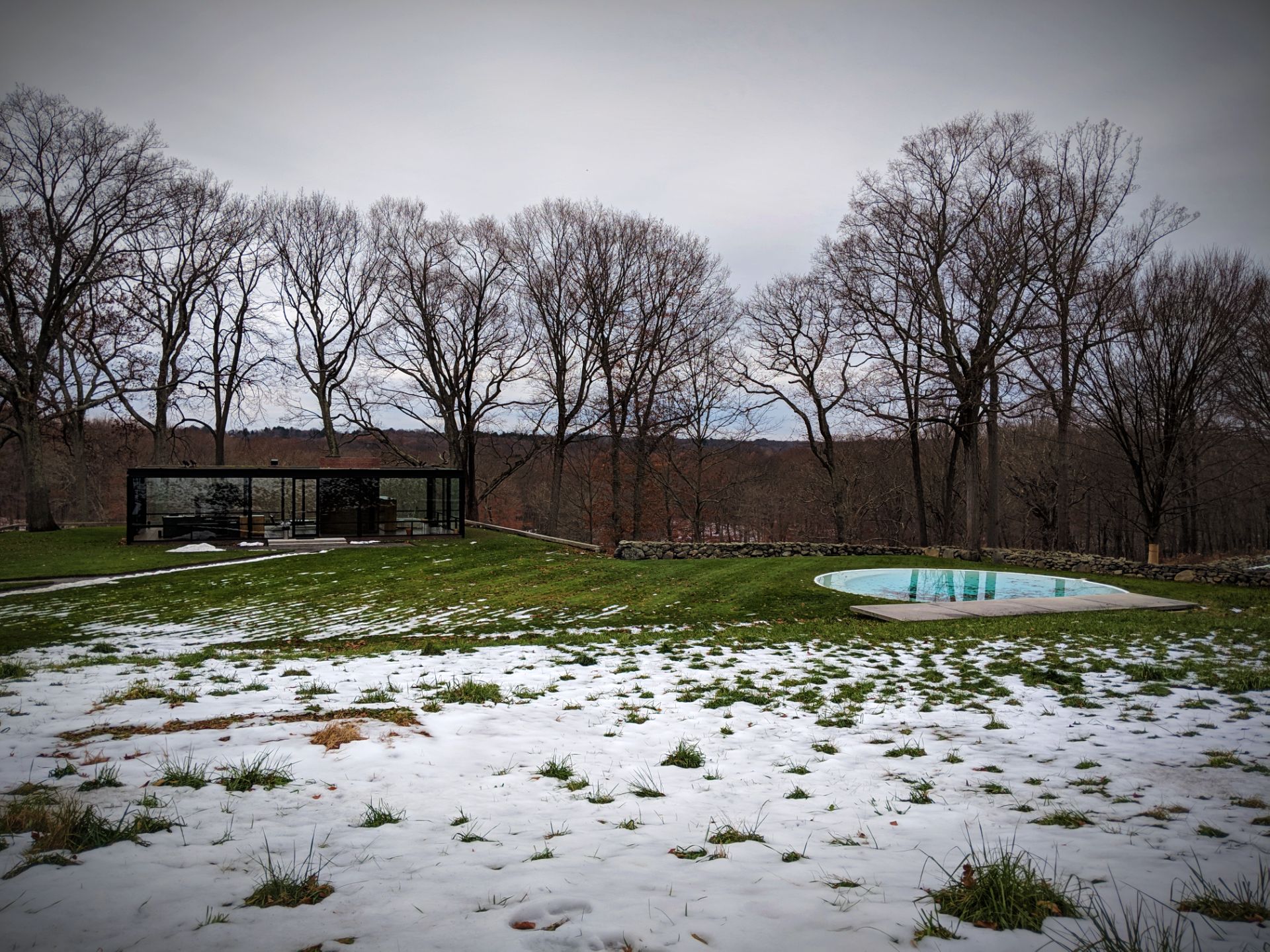
View to the Pavillion in the Pond and the Monument to Lincoln Kirstein, 1985 – a 30 feet high tower, which Johnson frequently climbed, describing it “a staircase to nowhere.”
The Grounds

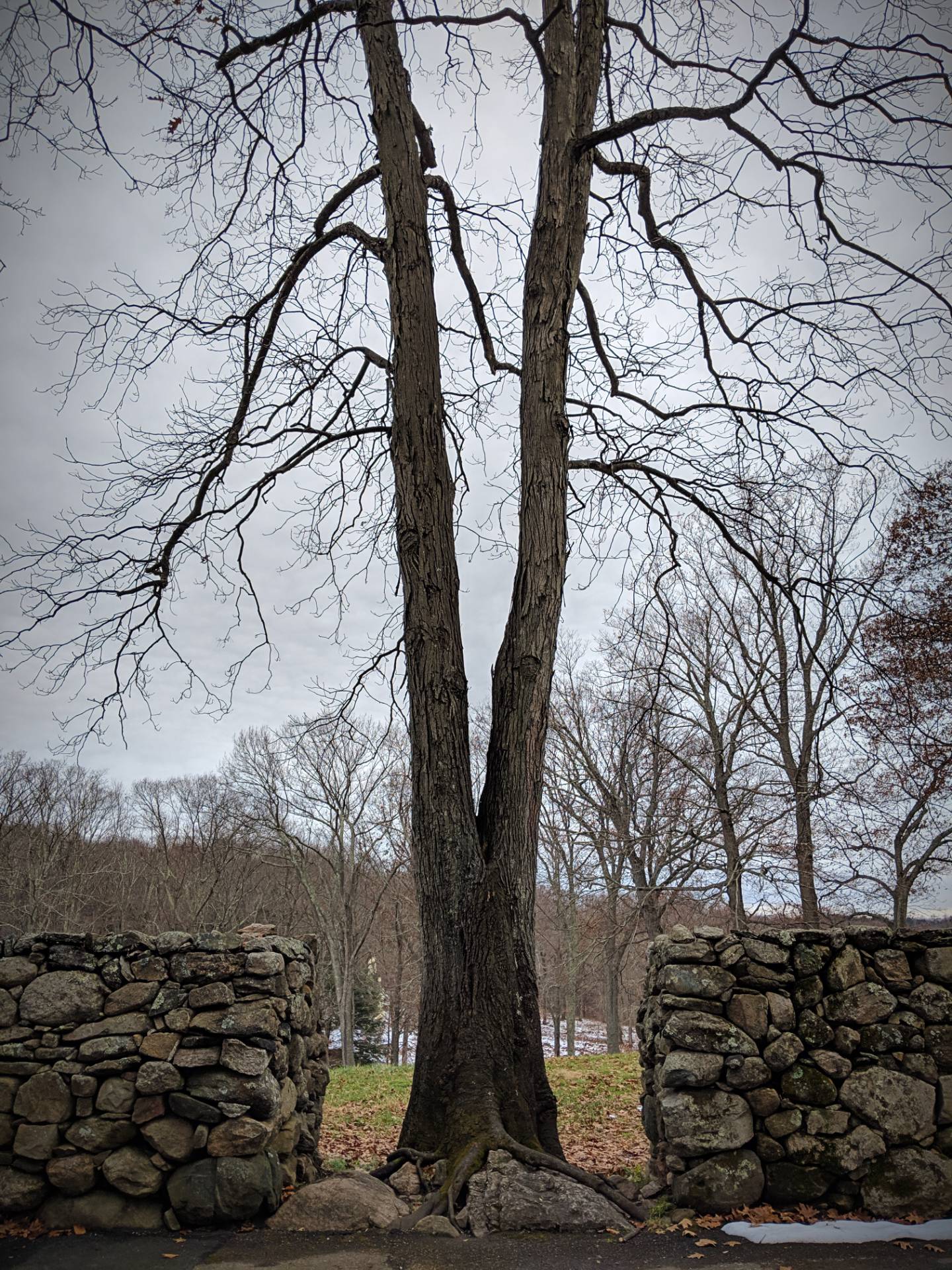
Artwork by Donald Judd, Untitled (1971).
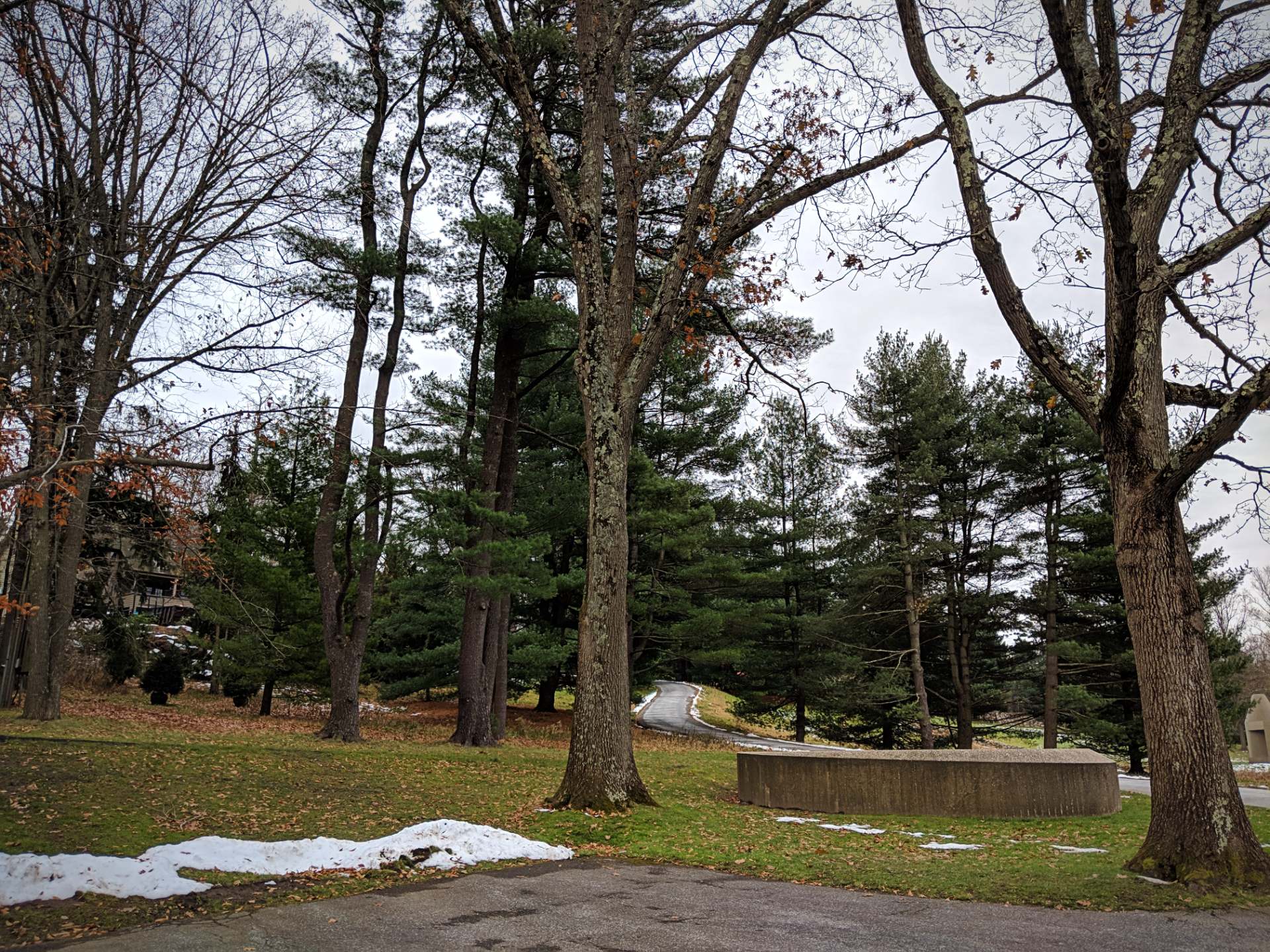
Concrete
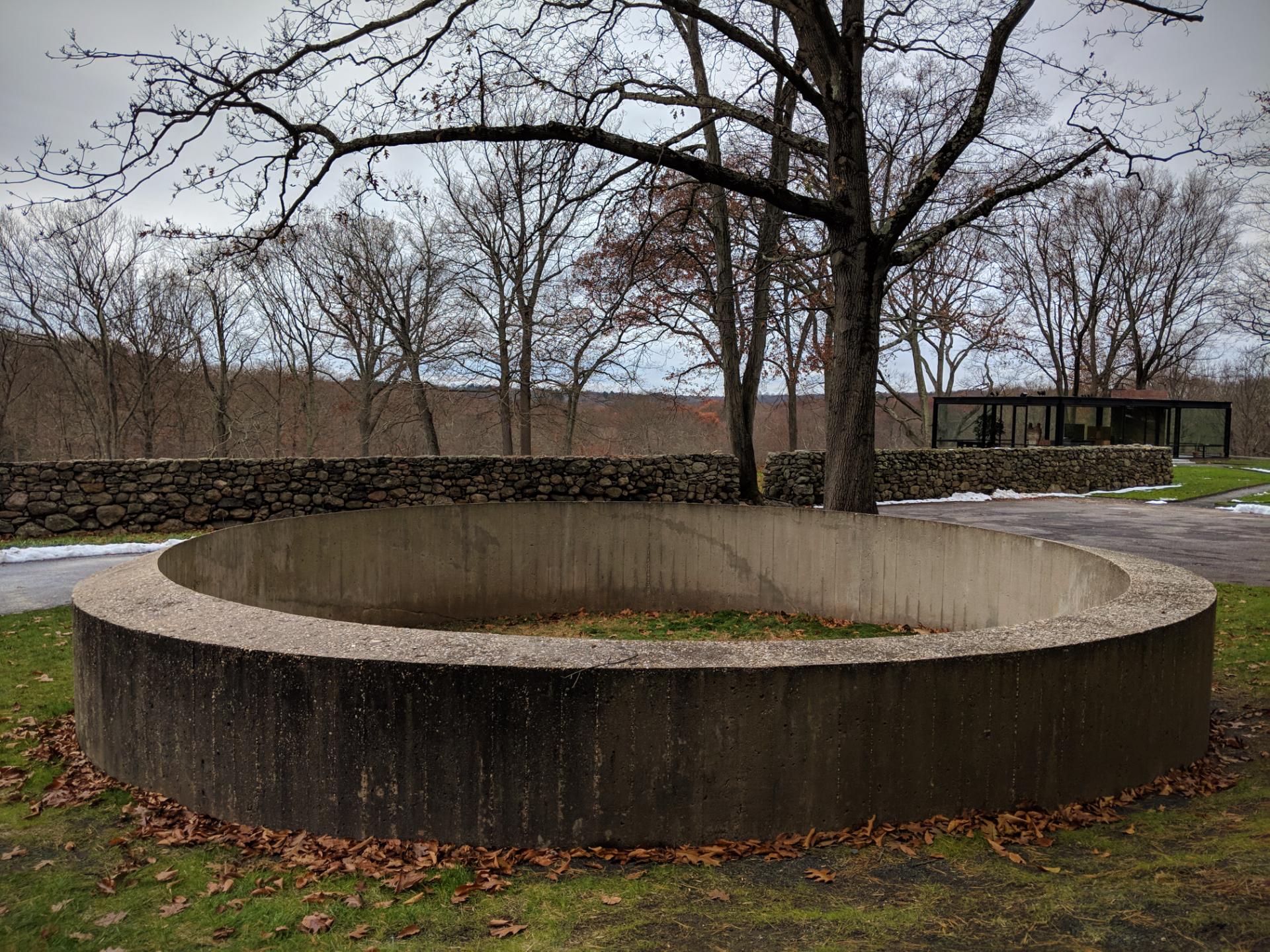
Rear view of the Brick House and its round windows.
Let’s take a breath here because, next, we’ll take a look at the art.

The Glass House

New Canaan, CT

November 18th, 2018
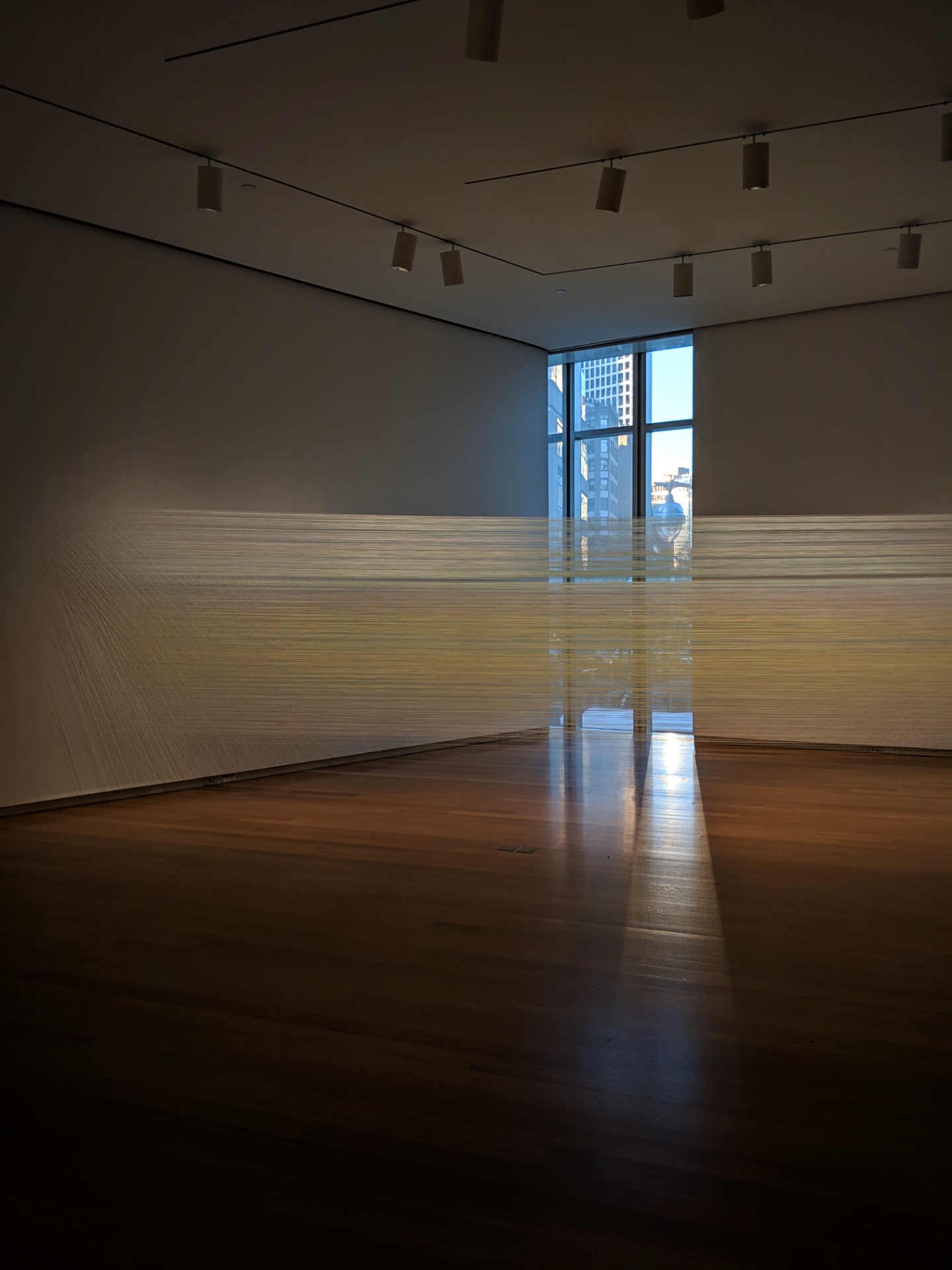
RoundAbout

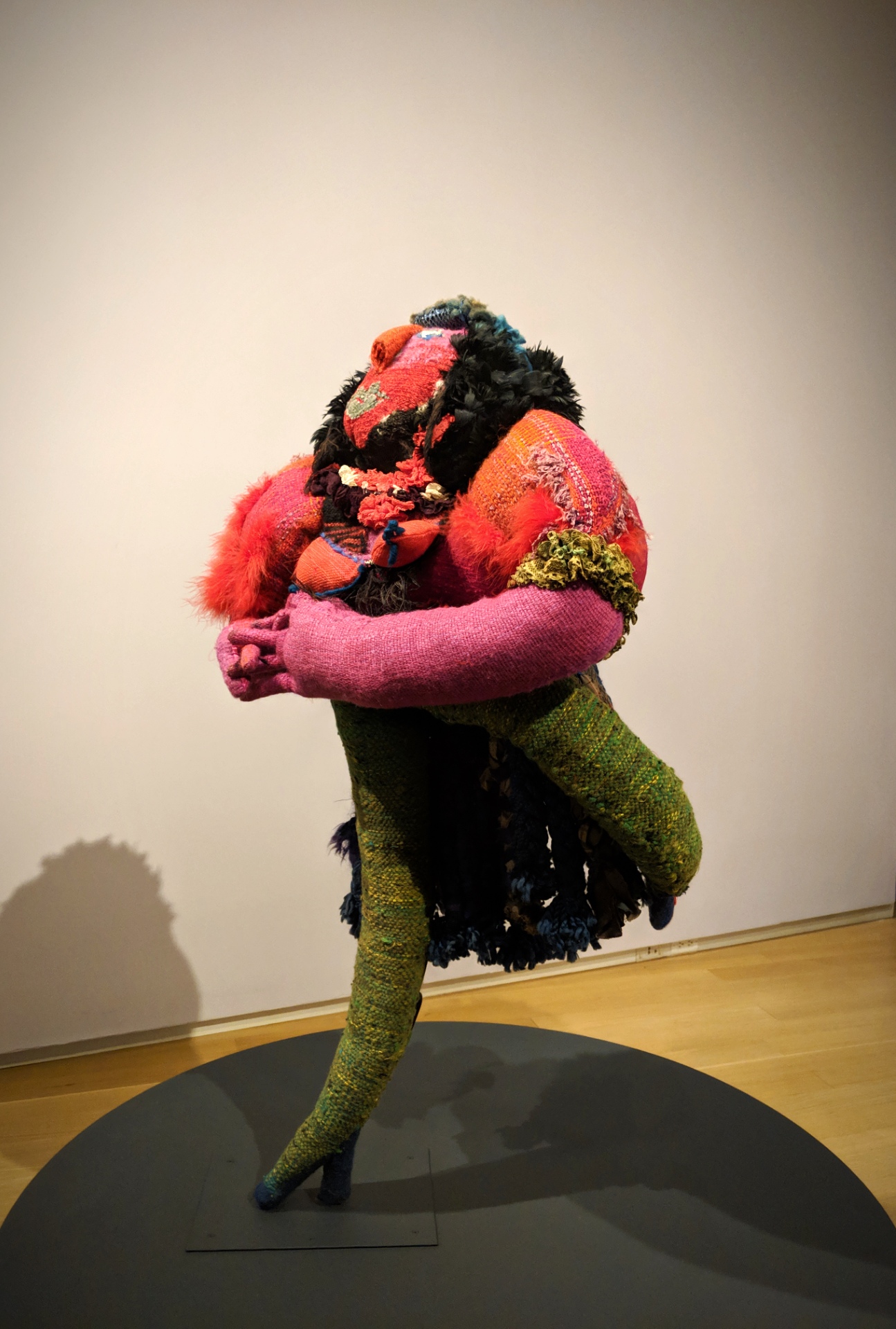
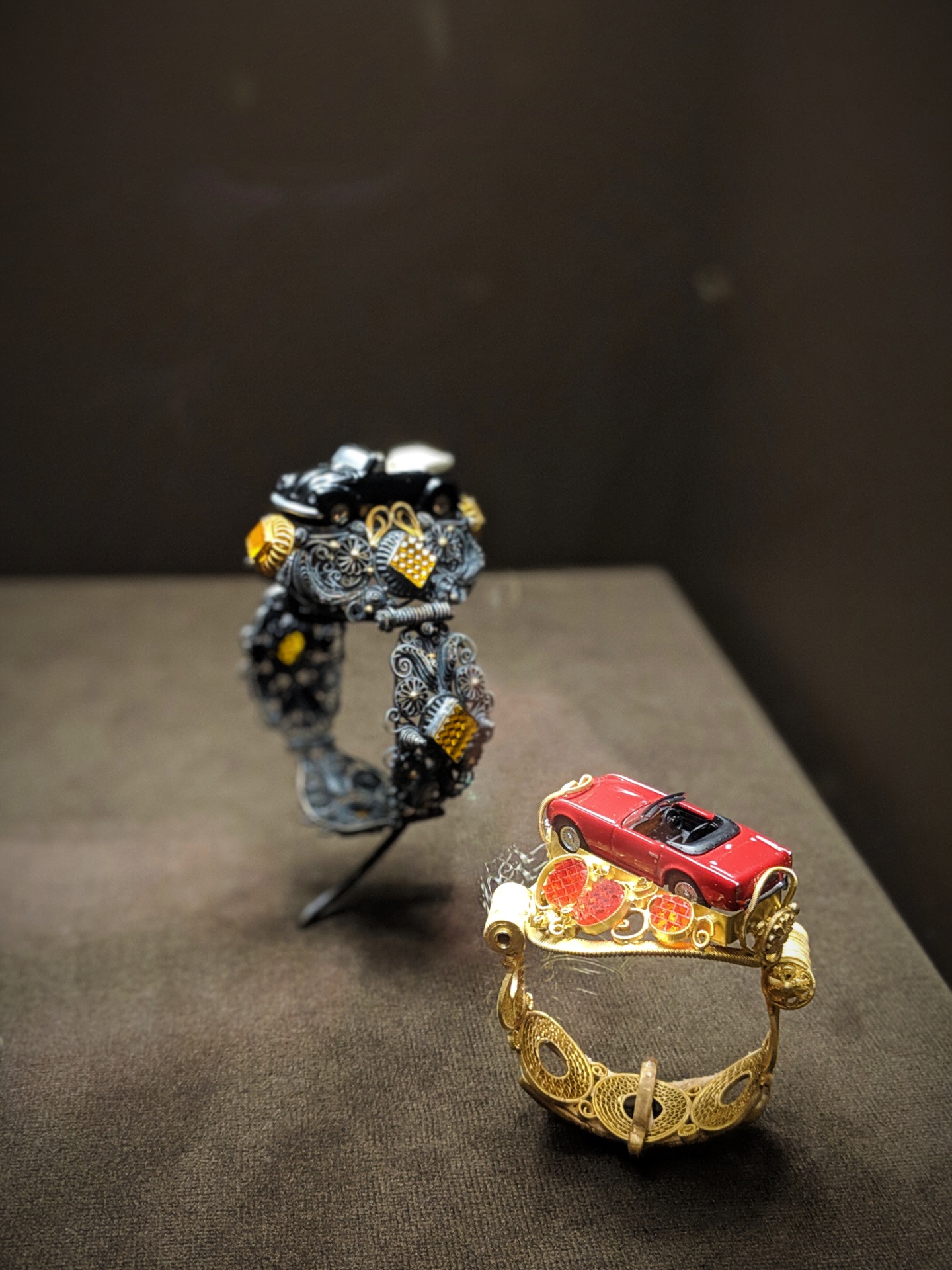
A cabinet of curiosities in a MAD gallery.Dorian Zachai (United States, 1932-2015)
Lady Performing, 1971
Wool, rayon, silk, metallic lace, Dacron stuffing, wire and feathers


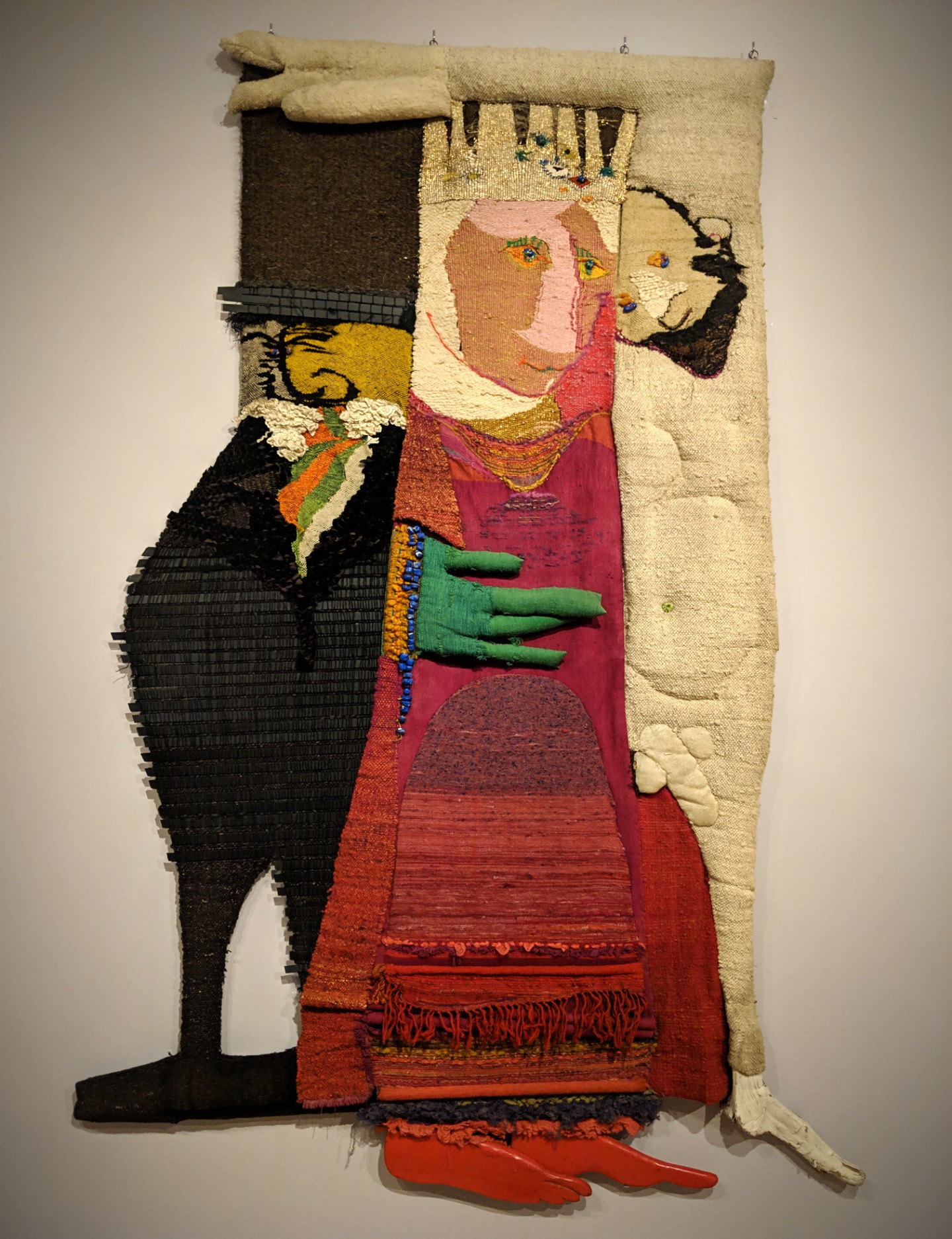
Dorian Zachai (United States, 1932-2015)
Allegory of Three Men, 1962-65
Wool, silk, rayon, wood, cotton, ceramic, metallic threads and Dacron stuffing


El Anatsui (Ghana, b. 1944)
Soleme, 2005
Aluminum liquor bottle caps and copper wire


David R. Harper (Canada, b. 1984)
Encyclopedia of the Familiar, 2015
Polyurethane, cowhide, linen, cotton embroidery floss, steel, synthetic hair, horsehair, epoxy clay and enamel

Combining David R. Harper’s primary working methods of sculpture and embroidery, Encyclopedia of the Familiar is a large-scale sculpture of a cross-sectioned horse, populated with a graphic, ordered collage of embroidered images from or in reference to medical texts and mathematical treatises.


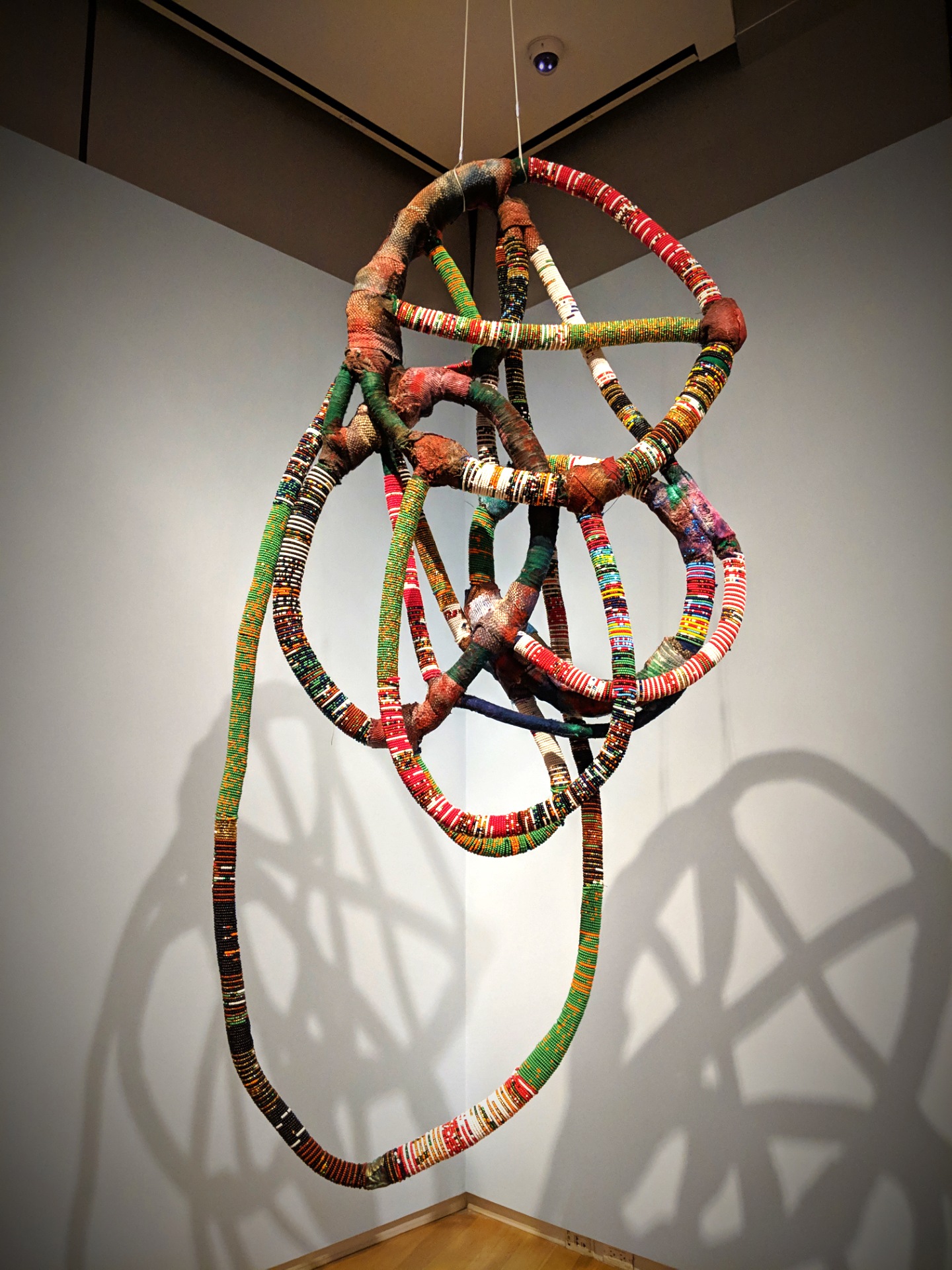
Leonardo Benzant (United States, b. 1972)
The Chameleon’s Journey: Galveston, 2017
Textiles, string, monofilament, leather, acrylic, gel medium, glass seed beads and miscellaneous

Benzant creates his sculptures through a slow and labour-intensive ritualistic process, rolling and sewing fabric into tubular forms, wrapping them with string and strands of glass beads, and adding paint, glitter and other elements or ornament to entwine history, memory and imagination. These signature forms, while abstract, resemble chromosomes and roots, visually conveying his ties to an ancestral lineage. As a practitioner of the Yoruba faith, Benzant uses glass beads based on the eleke necklaces worn by practitioners during ceremonies for their symbolic spiritual power.


Ibrahim Said (Egypt, b. 1976)
Devotion, 2018
White earthenware and glaze

Said’s work represents a marriage between ancient and contemporary Egypt, where most of the population is Muslim. Devotion is an abstraction of two birds in flight, based on the ancient Egyptian deity Horus, traditionally depicted as a falcon.


Annie Evelyn (United States, b. 1976)
Nest, 2017
Vintage jewelry findings, leather and foam


Sterling Ruby (Germany, b. 1972)
Basin Theolody/The Pipe, 2018 & Basin Theology/Pentedrone, 2014

Sterling Ruby: Ceramics, was the first museum exhibition to focus on the ceramic works of the Los Angeles-based artist.

Museum of Arts and Design

November 11th, 2018
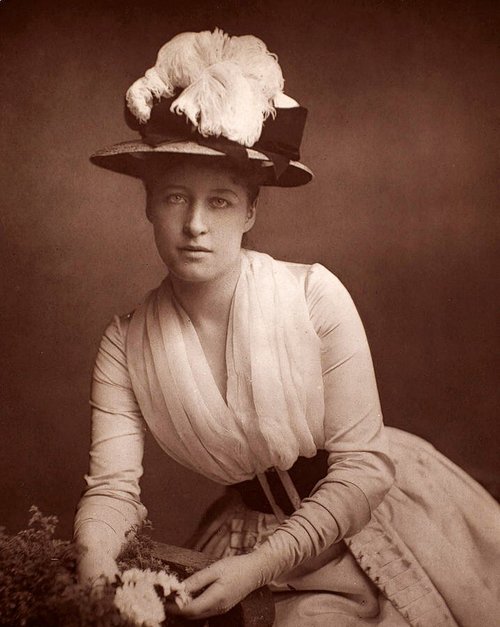
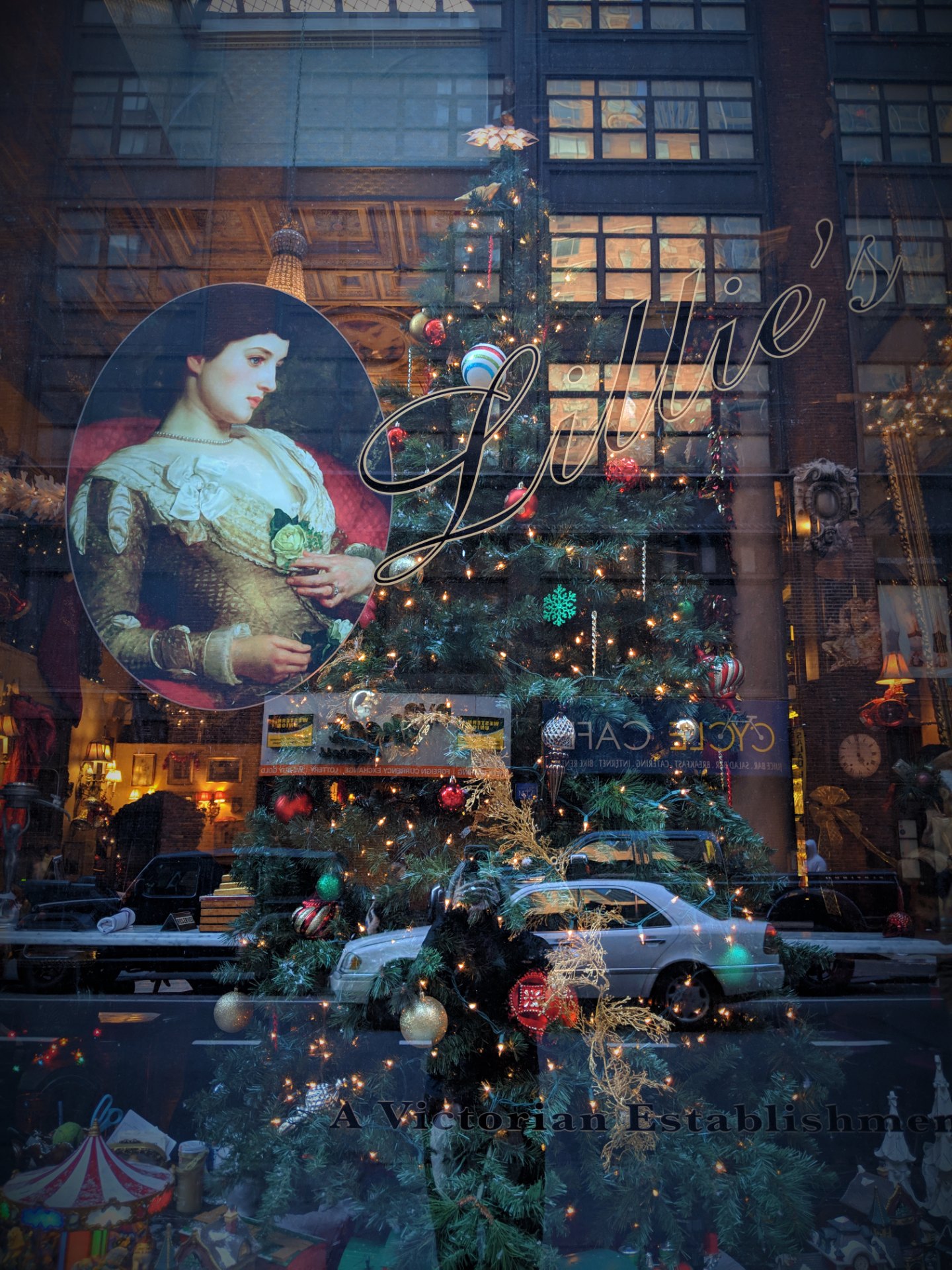
Miss Lillie

and her Victorian Establishment

@ Times_Square

”ABOUT LILLIE”

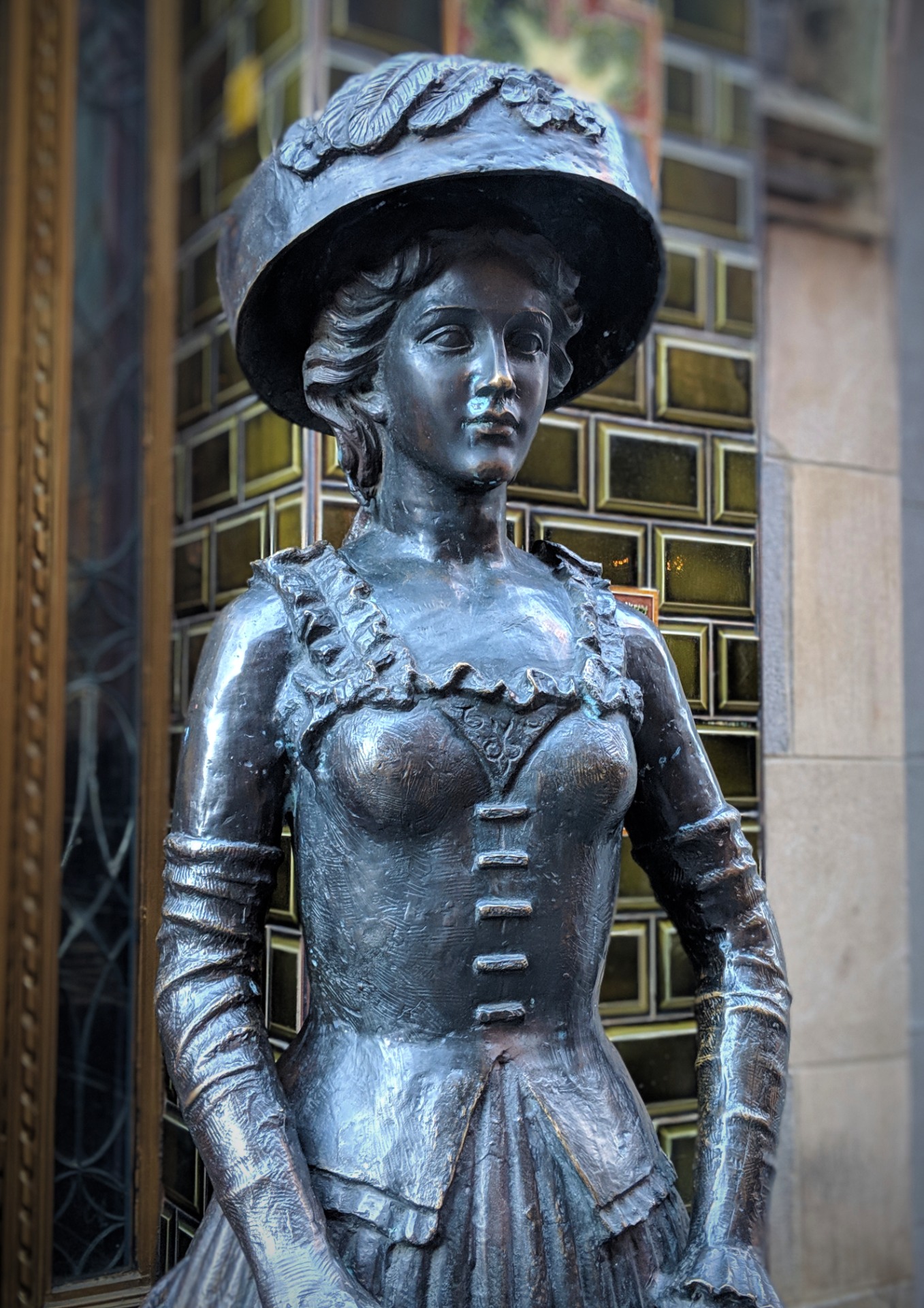
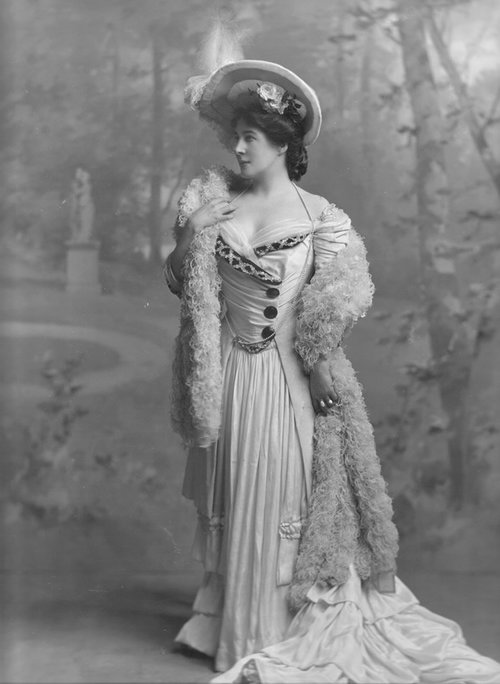
Lillie Langtry was a highly successful British actress, a renowned beauty, and socialite of the late 19th century. She was notorious for her long list of prominent suitors, which included the future King of England, Edward VII. She was born on the Isle of Jersey, which lies off the southern coast of England, and was later known as the “Jersey Lillie”.

CukrDv-WYAAenv3.jpgCuqPAbAWAAAZq9i.jpgLillie landed on the shores of America in 1882 to fulfill her dream of becoming a world-renowned actress. On the evening of her debut, An Unequaled Match, at the New York Park Theatre, the building burned to the ground, leaving only a charred sign bearing the words “Lillie Langtry”. This incident assured Lillie’s everlasting fame throughout the states.

Lillie was at home in the company of princes and presidents, artists and poets, or simply alone in her garden. Envied, respected, adored, and lampooned, her fame spanned over half a century. A controversial figure who challenged Victorian society’s attitudes to women, Lillie Langtry was years ahead of her time. We created Lillie’s Victorian Establishment in honor of her legacy.

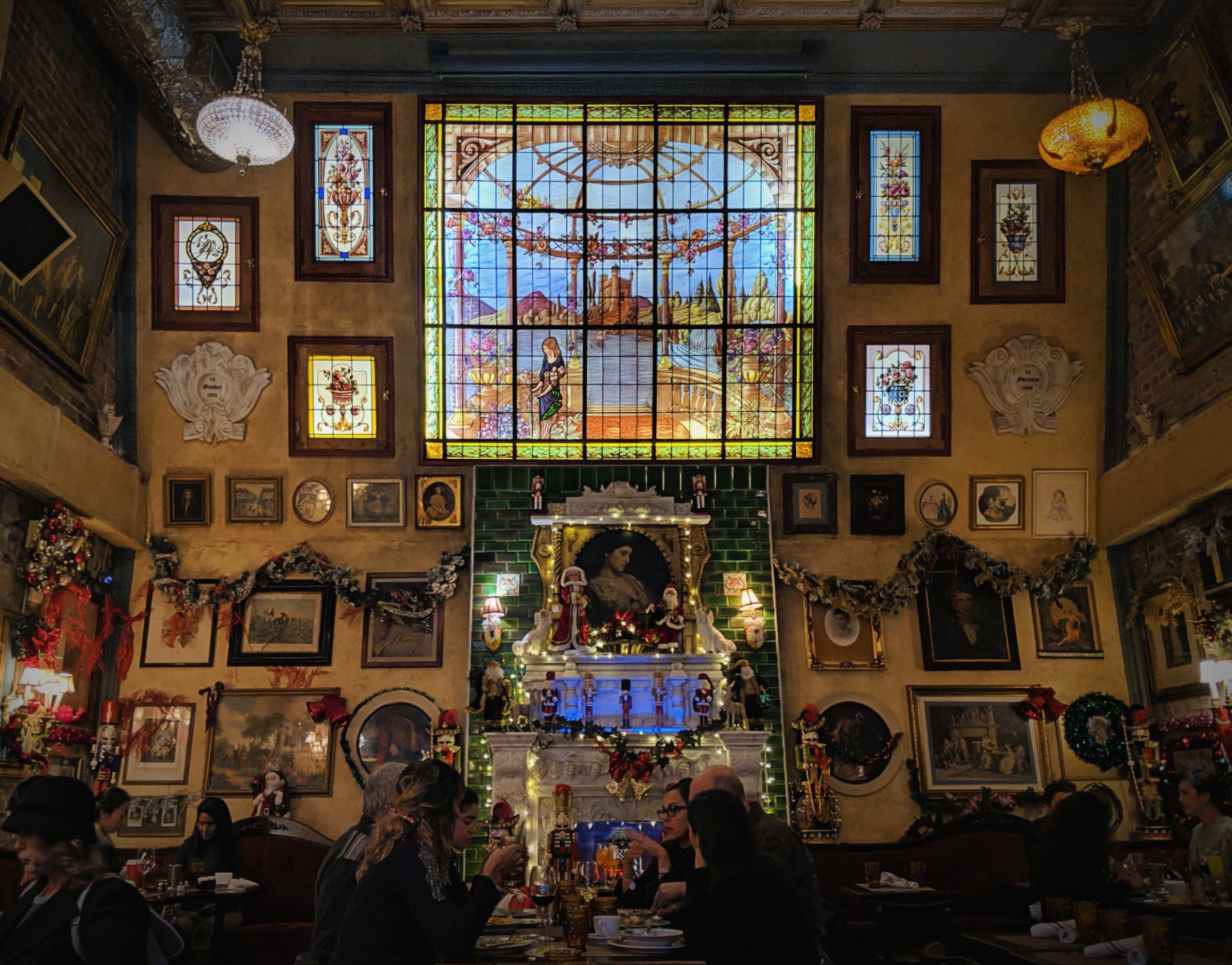
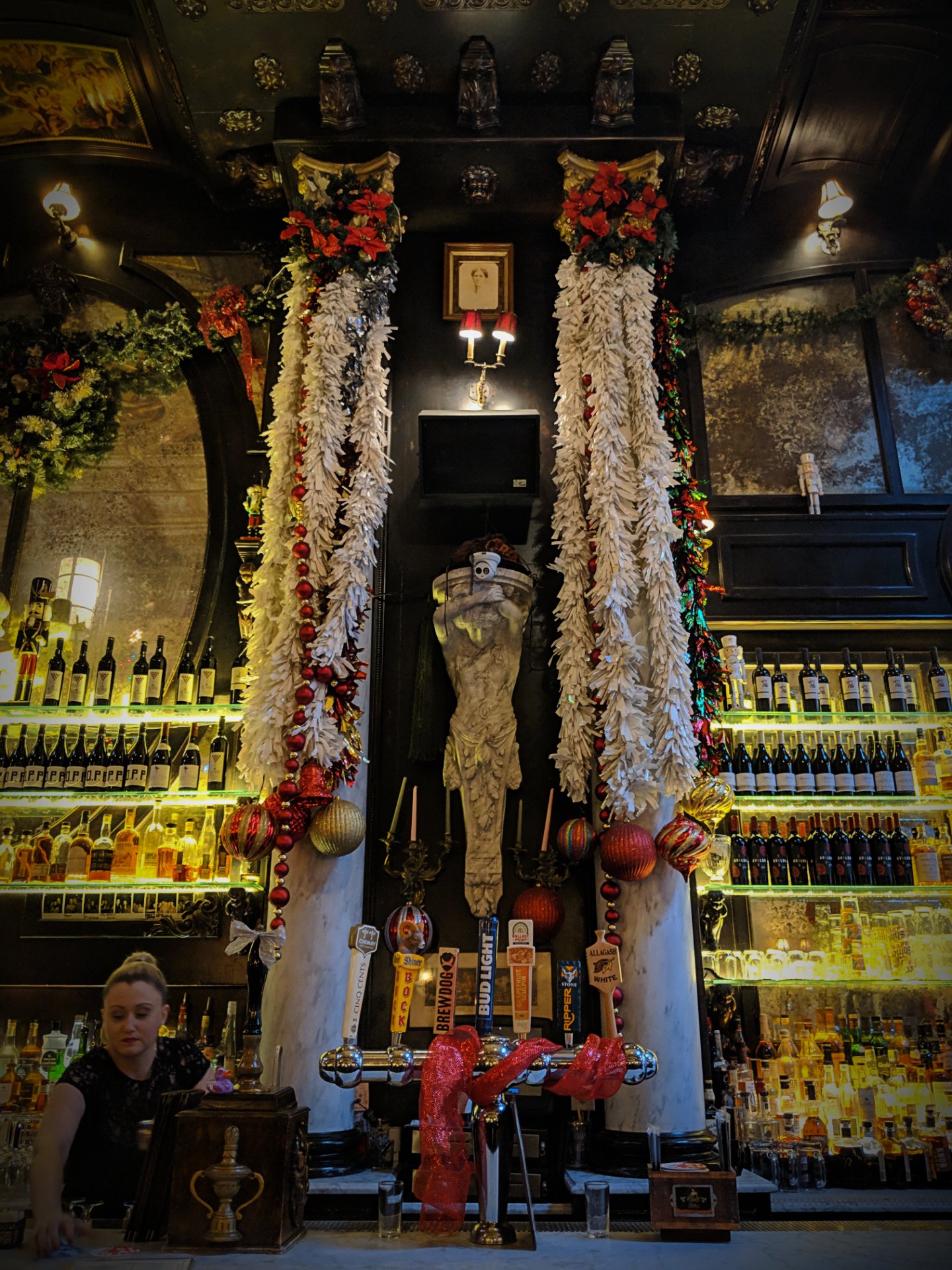
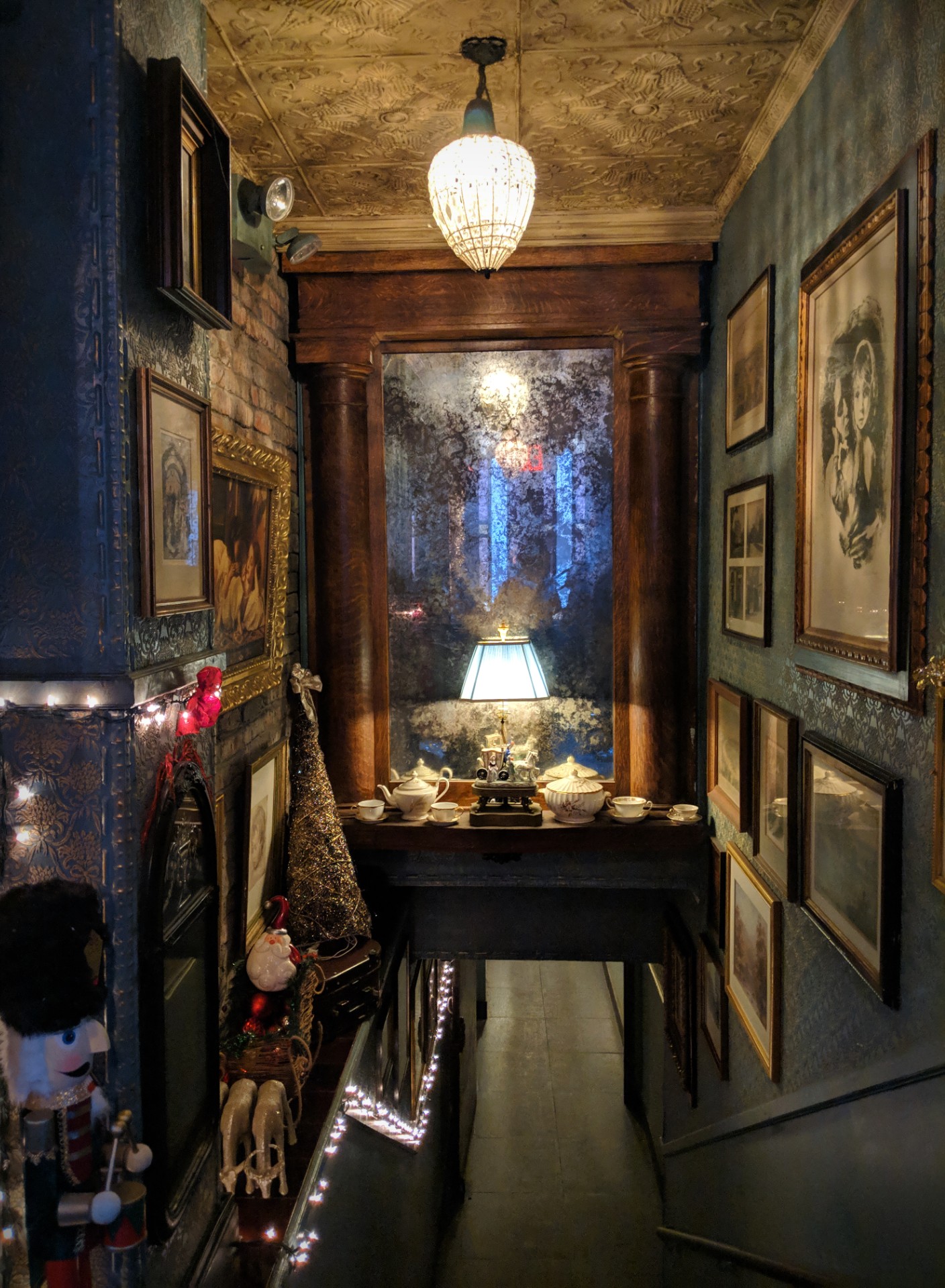
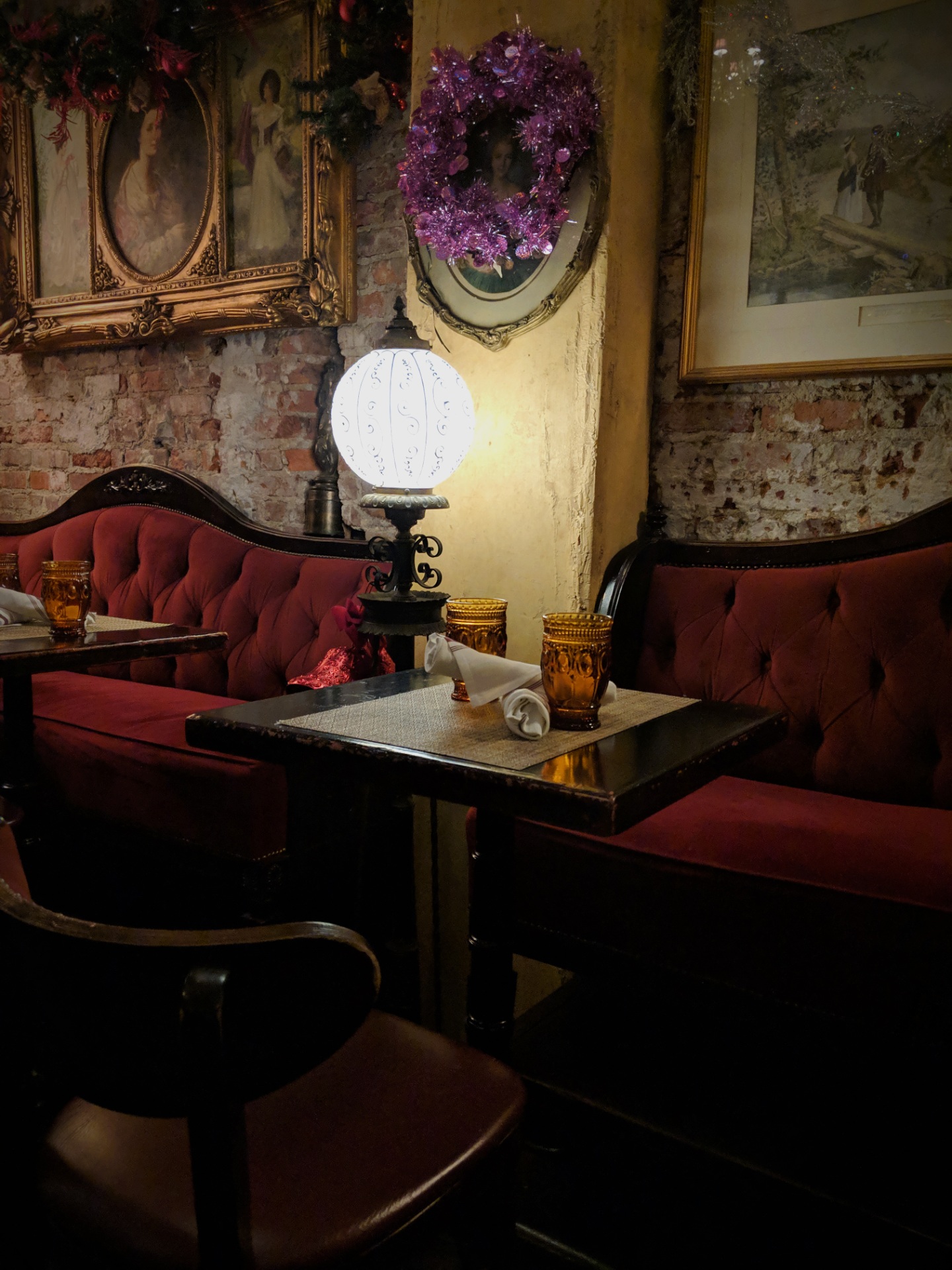
The ornate wooden carvings and antiquities you’ll find at Lillie’s were procured from a ballroom in an 1800′s estate in Northern Ireland. The establishment combines an authentic ostentatious decor with a down-to-earth, mellow ambiance, that represents one of the last great Victorian “gin palaces” that once flourished in the industrial cities of Northern Ireland and England.

The antique marble bar and furnishings, the likes of which have not been seen in many years, were acquired from a Victorian mansion in Belfast, Ireland. Great care was taken to have them wrapped, packed and shipped across the Atlantic to their new home in the heart of New York City. [source: Lillie’s Victorian Establishment]

November 11th, 2018 (and already dressed for Christmas)
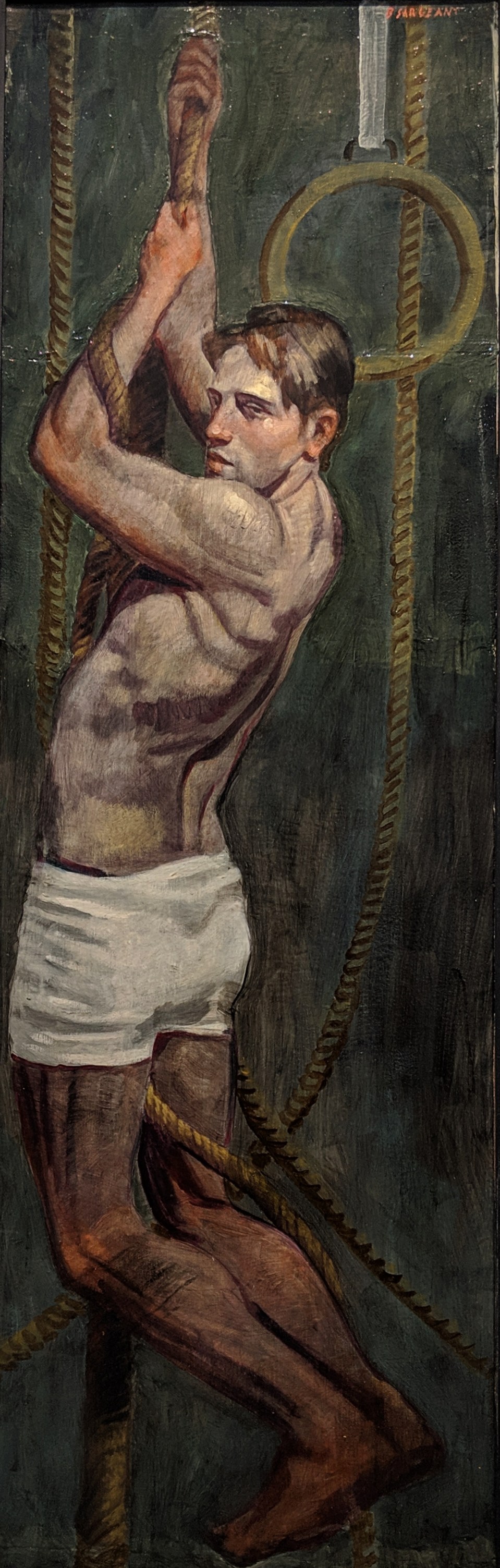
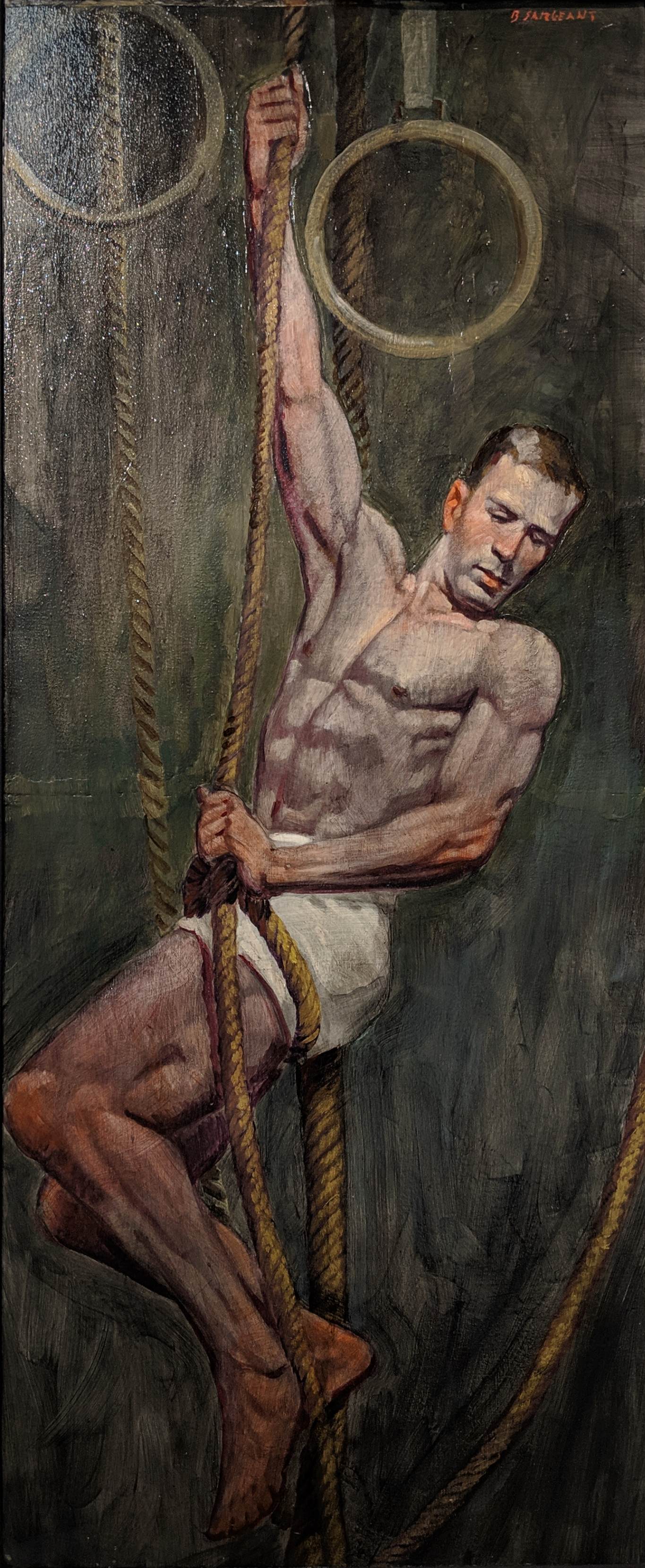
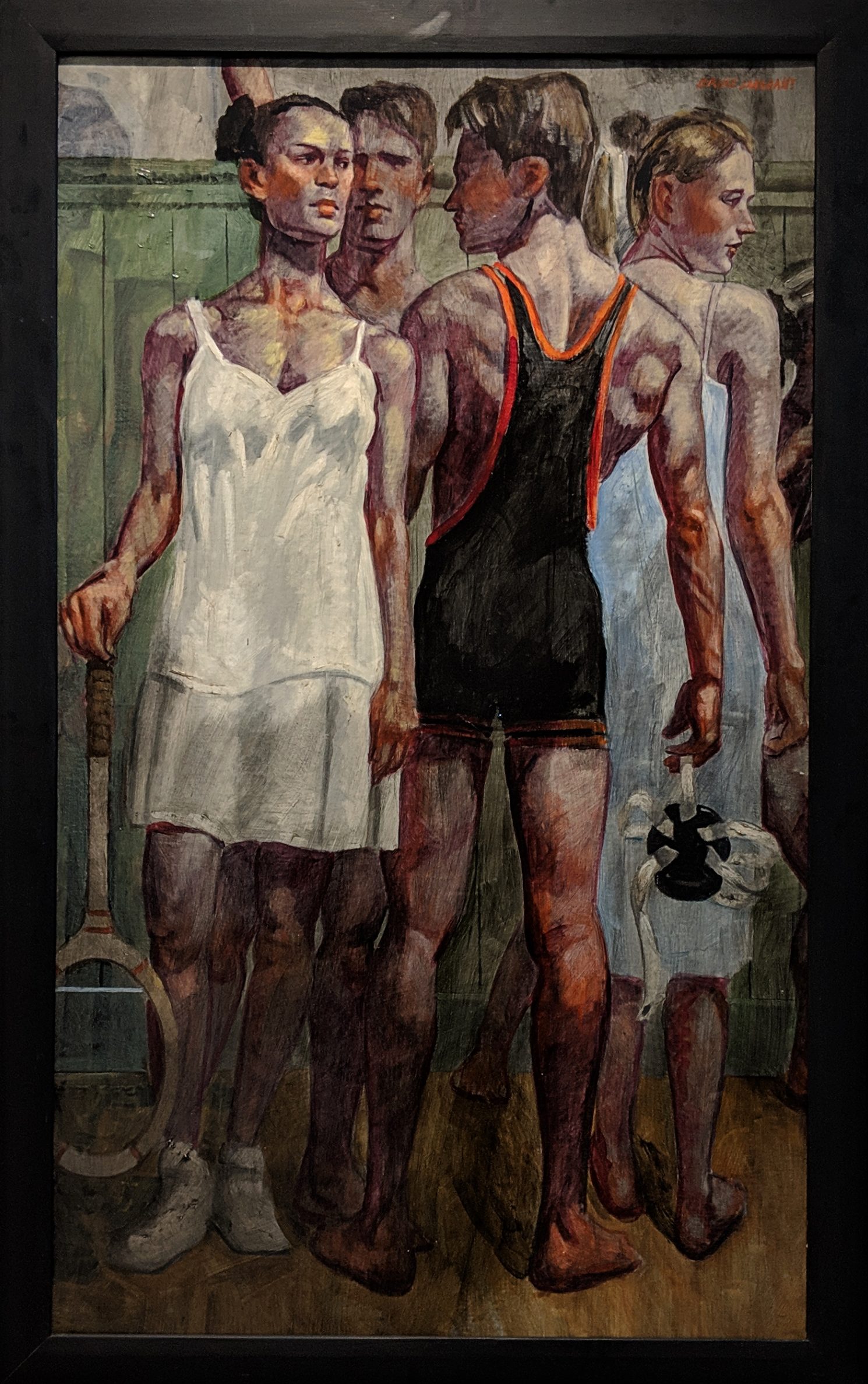
Bruce Sargeant (1898-1938): The Lost Murals

@ClampArt Gallery, curated by New York artist Mark Beard (Bruce Sargeant’s great nephew).

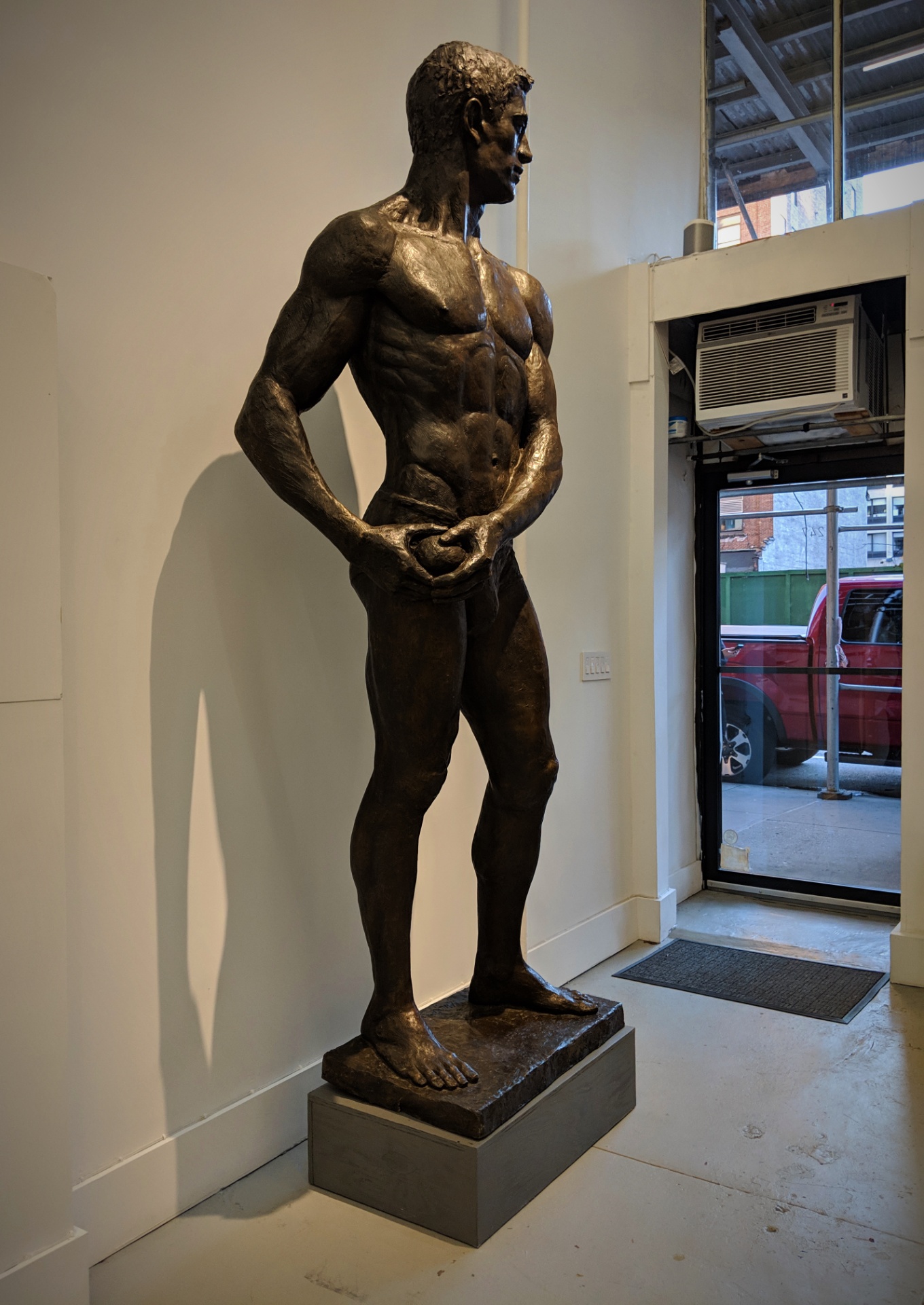
”Mark Beard has devoted more than two decades of his life to researching and collecting the work of Bruce Sargeant, a painter who largely concentrated on the idealization and celebration of the male form.” […]

”The Lost Murals brings together large-scale canvases that were known to exist but hidden from public view for over half a century. After years of meticulous research, Beard located the murals and painstakingly arranged for their return from a number of locations around the globe. In the murals, Beard’s great-uncle portrays his favorite subject: muscular young men at the peak of form and athletic prowess.” – Source & more: ClampArt

November 10th, 2018
Corona Park

Long before the virus, there was the park.

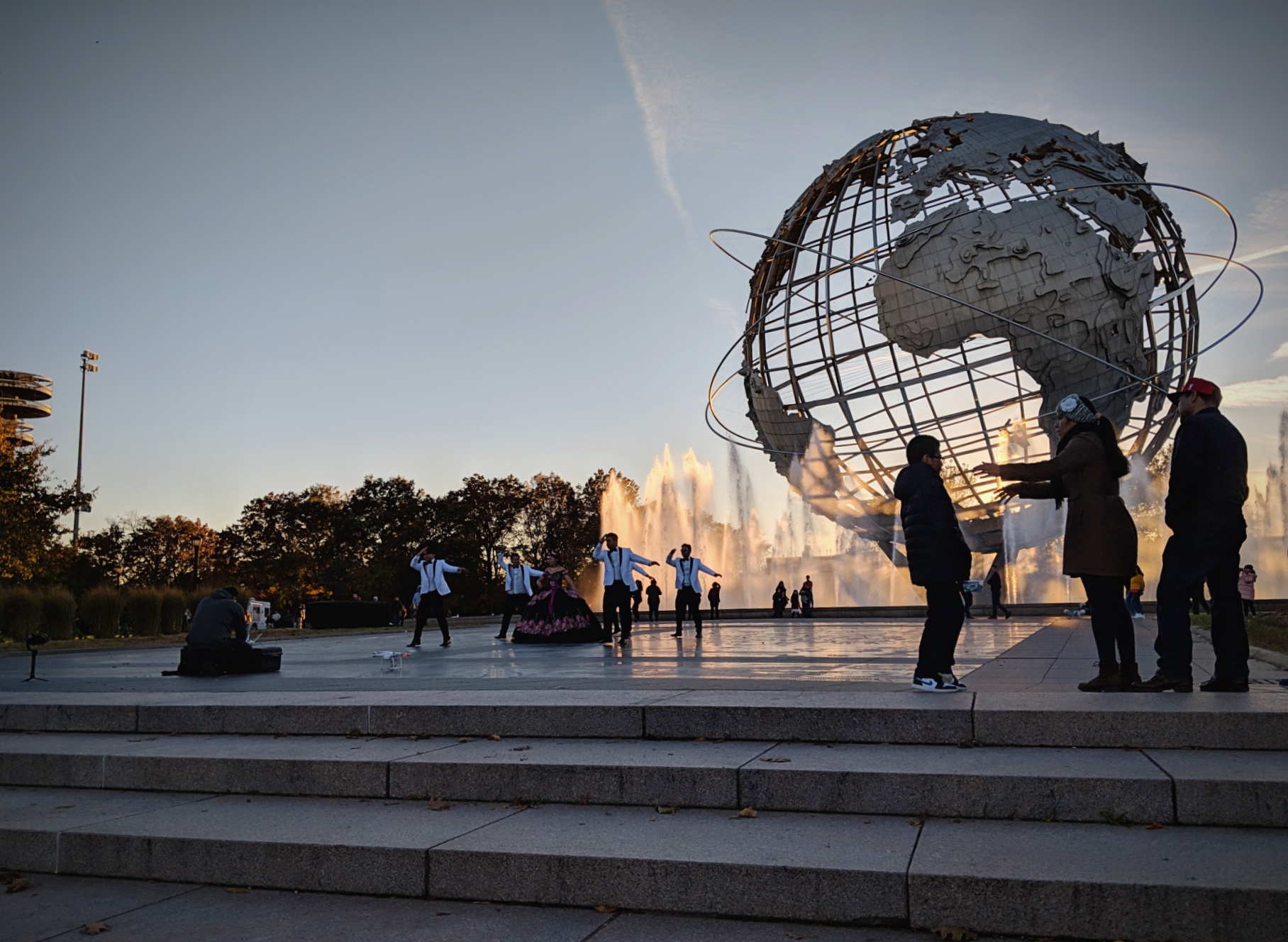
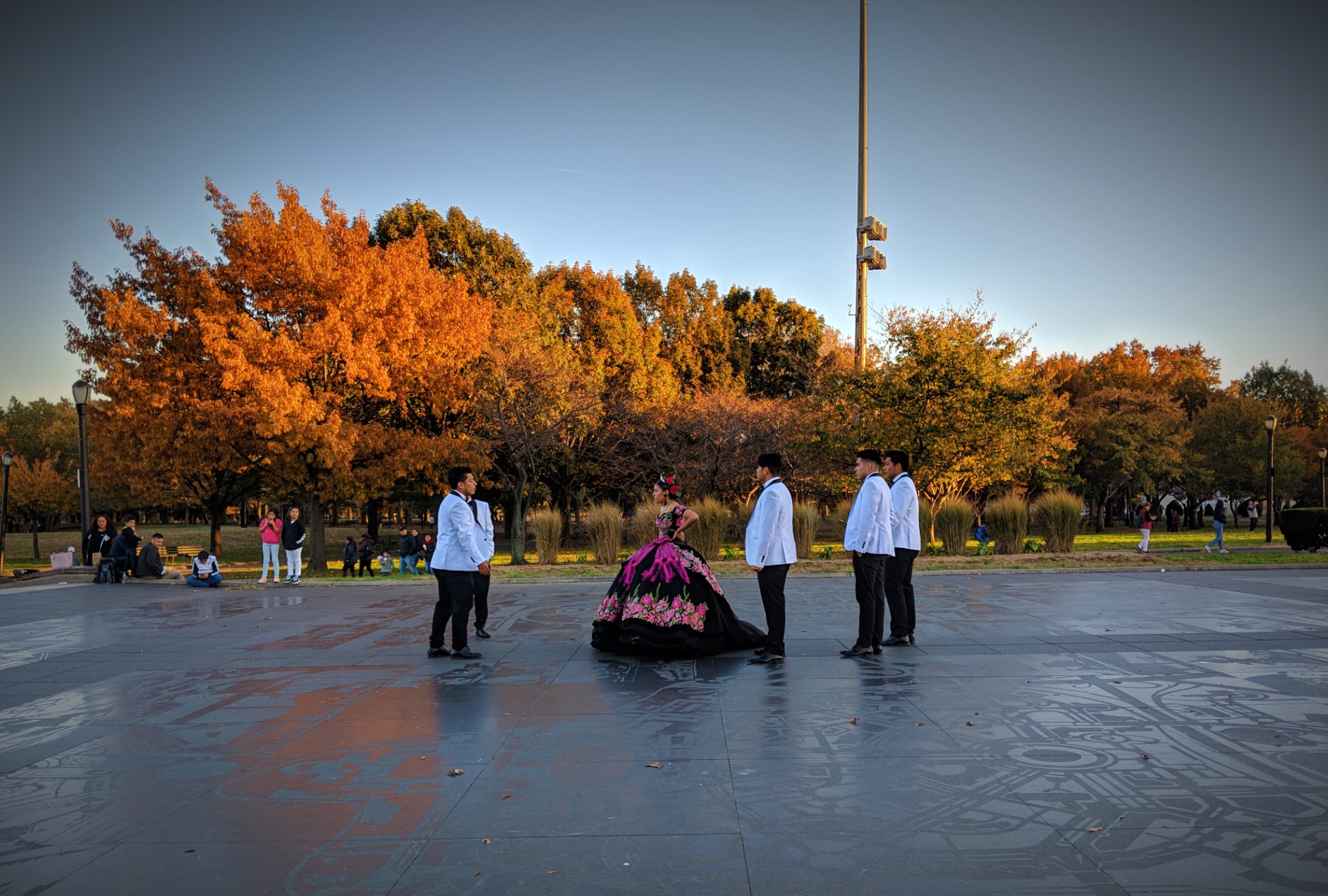
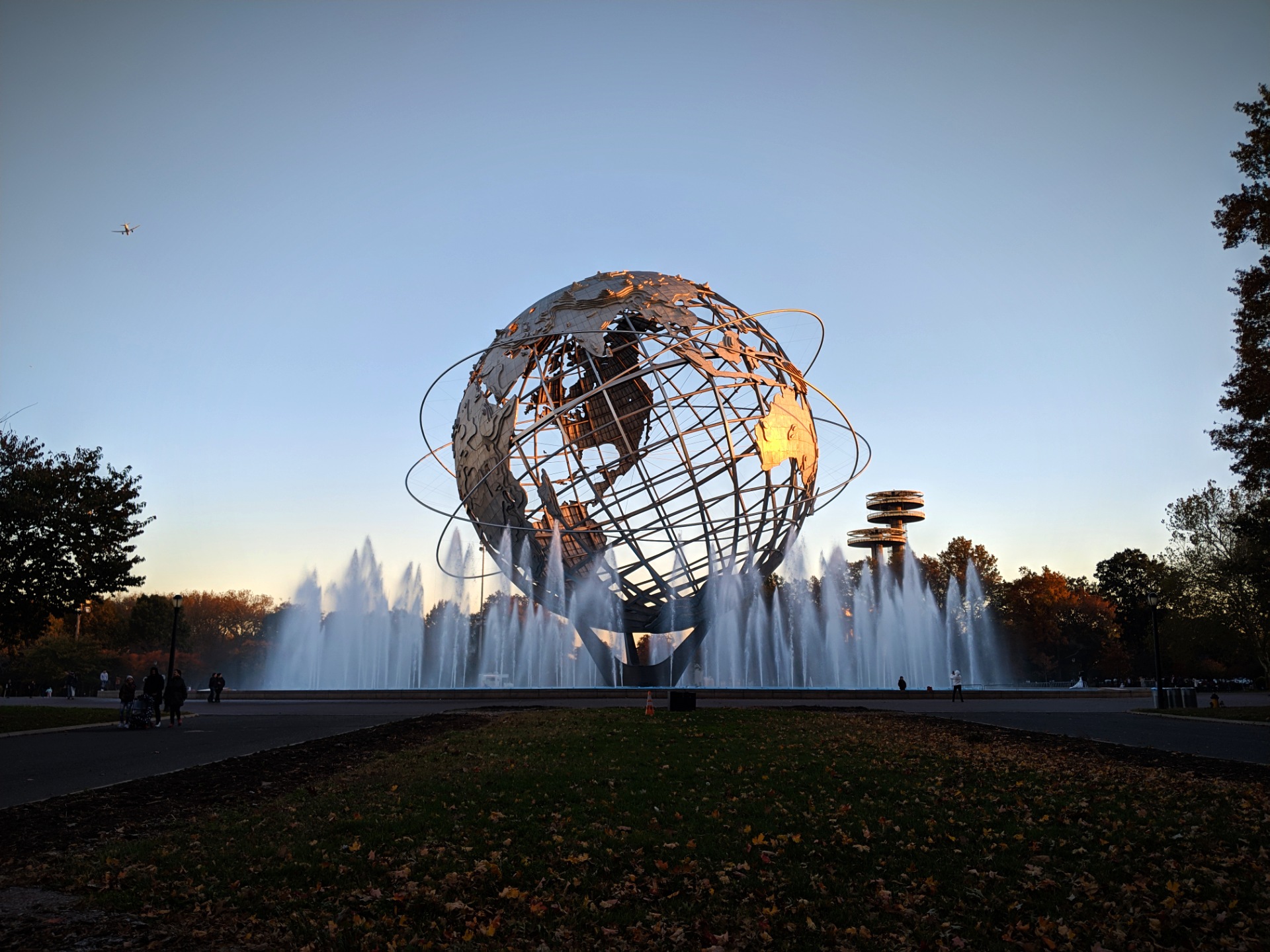
It was here, at Flushing Meadows-Corona Park that the 1964 World’s Fair took place. Most of the futuristic structures created for the fair survive only in vintage photos. Yet, there are still a few remnants so striking they have become iconic symbols of the borough of Queens.

Like the New York State Pavillion, designed by Philip Johnson and Richard Foster, which stayed because it was too expense to demolish.

Or the Unisphere, dedicated to “Man’s Achievements on a Shrinking Globe in an Expanding Universe”. Designed by Gilmore Clarke and made of stainless steel so it would never rust, its three rings represent the orbits of Cosmonaut Yuri Gagarin (the first Russian), Astronaut John Glenn (the first American), and Telstar 1 (the first communications satellite that enabled the first transatlantic television transmission, linking the United States and France).

Finally, the Rocket Thrower, a 43-foot bronze figure designed by sculptor Donald De Lue; a giant launching a rocket with the one hand and reaching for the stars with the other.

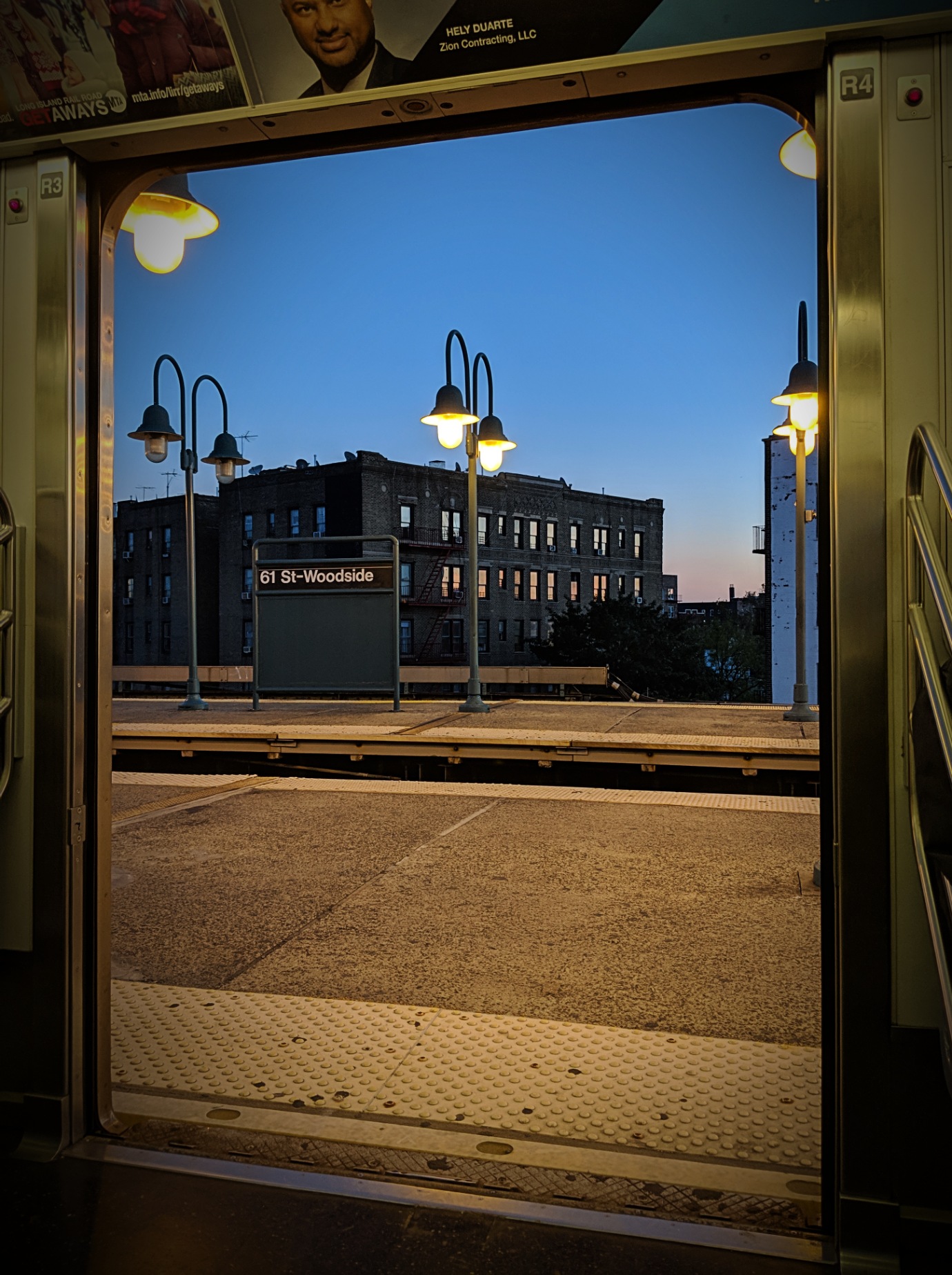
Imagine what it would be like to step out of the subway and see these gigantic structures, all new and fully functioning, for the first time!

Flushing Meadows-Corona Park, Queens N.Y.

November 4th, 2018
The House of Jazz

“We’re right out here with the rest of the colored folk and the Puerto Ricans and Italians and the Hebrew cats. We don’t need to move out in the suburbs to some big mansion with lots of servants and yardmen and things.”

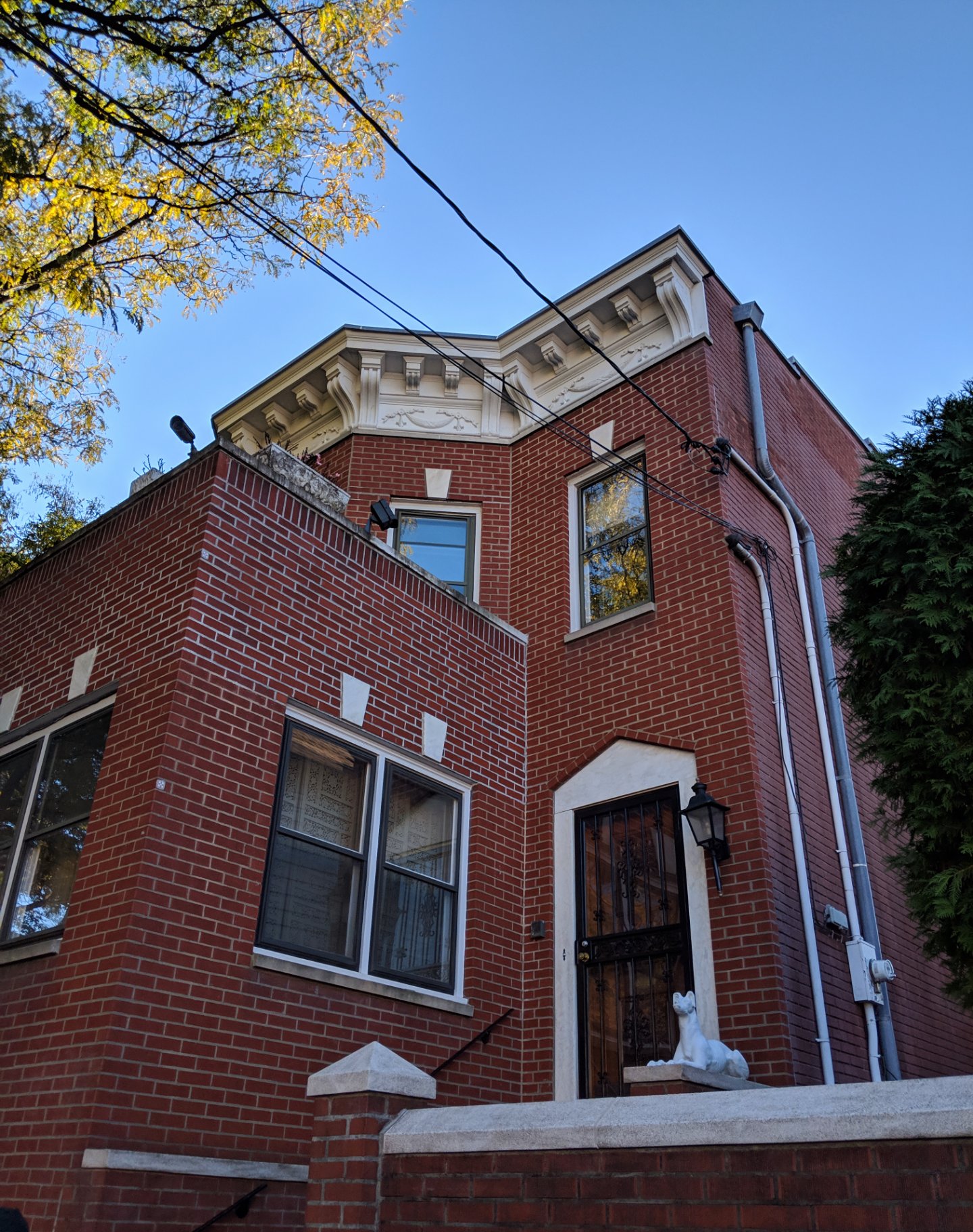
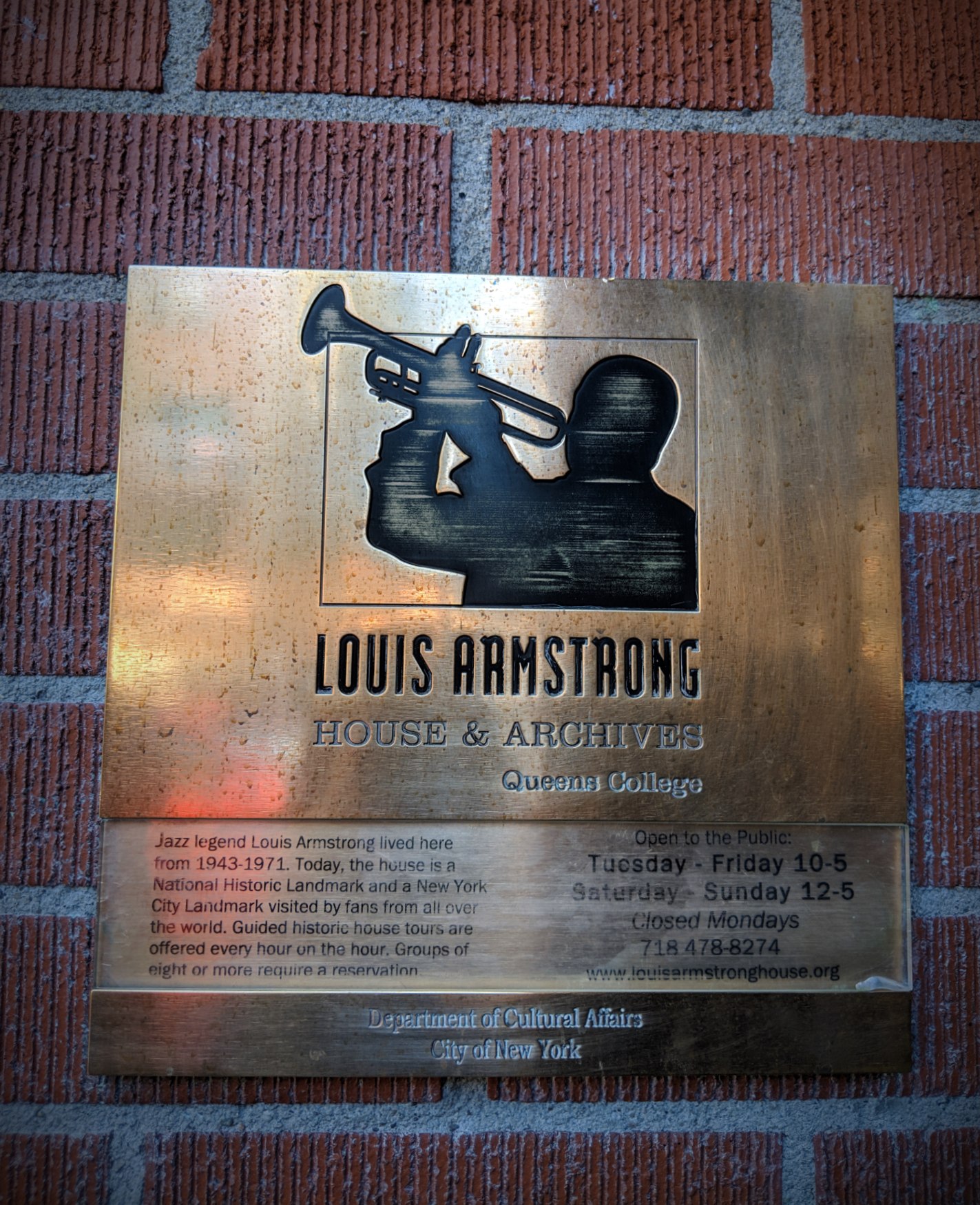
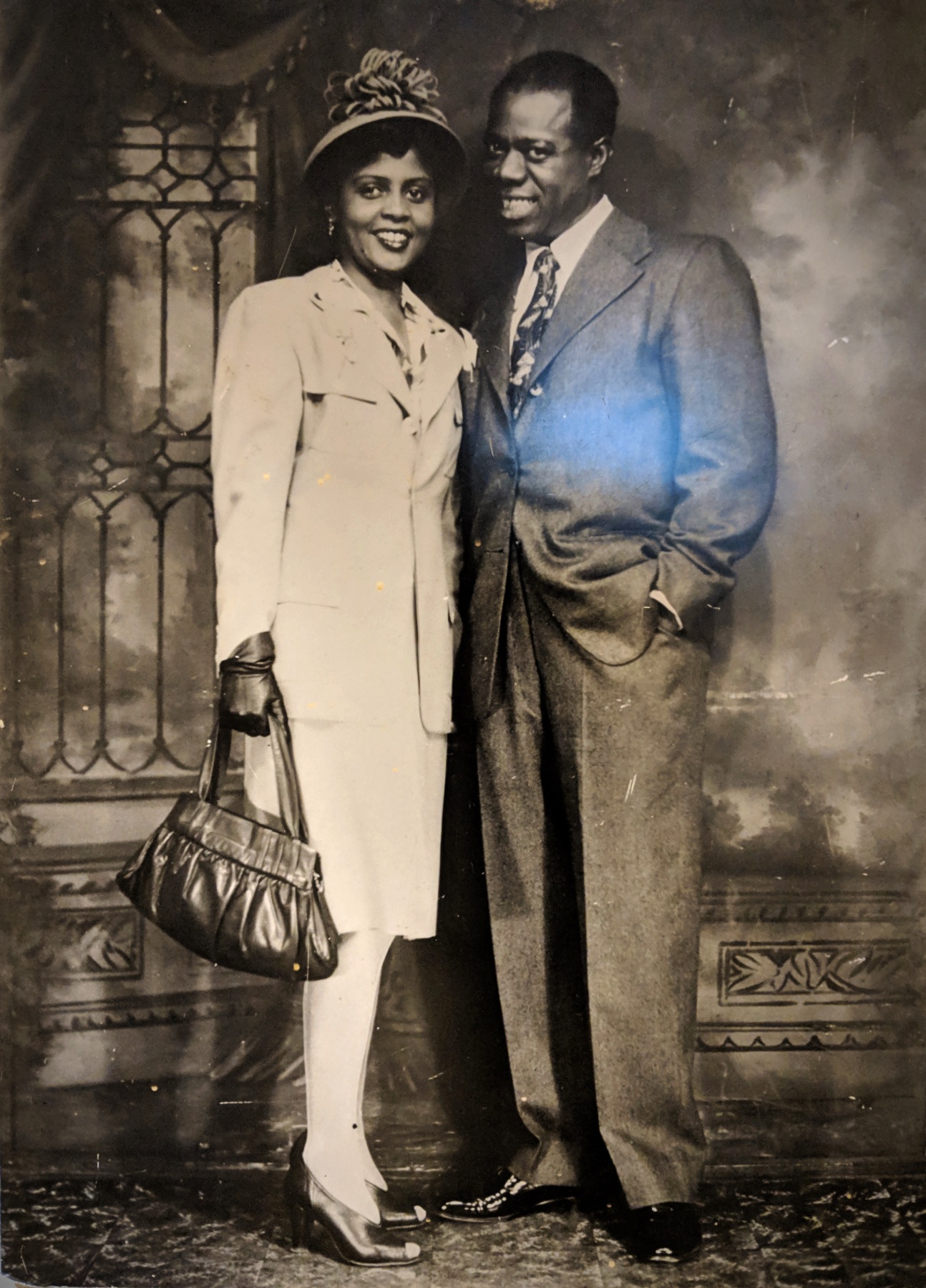
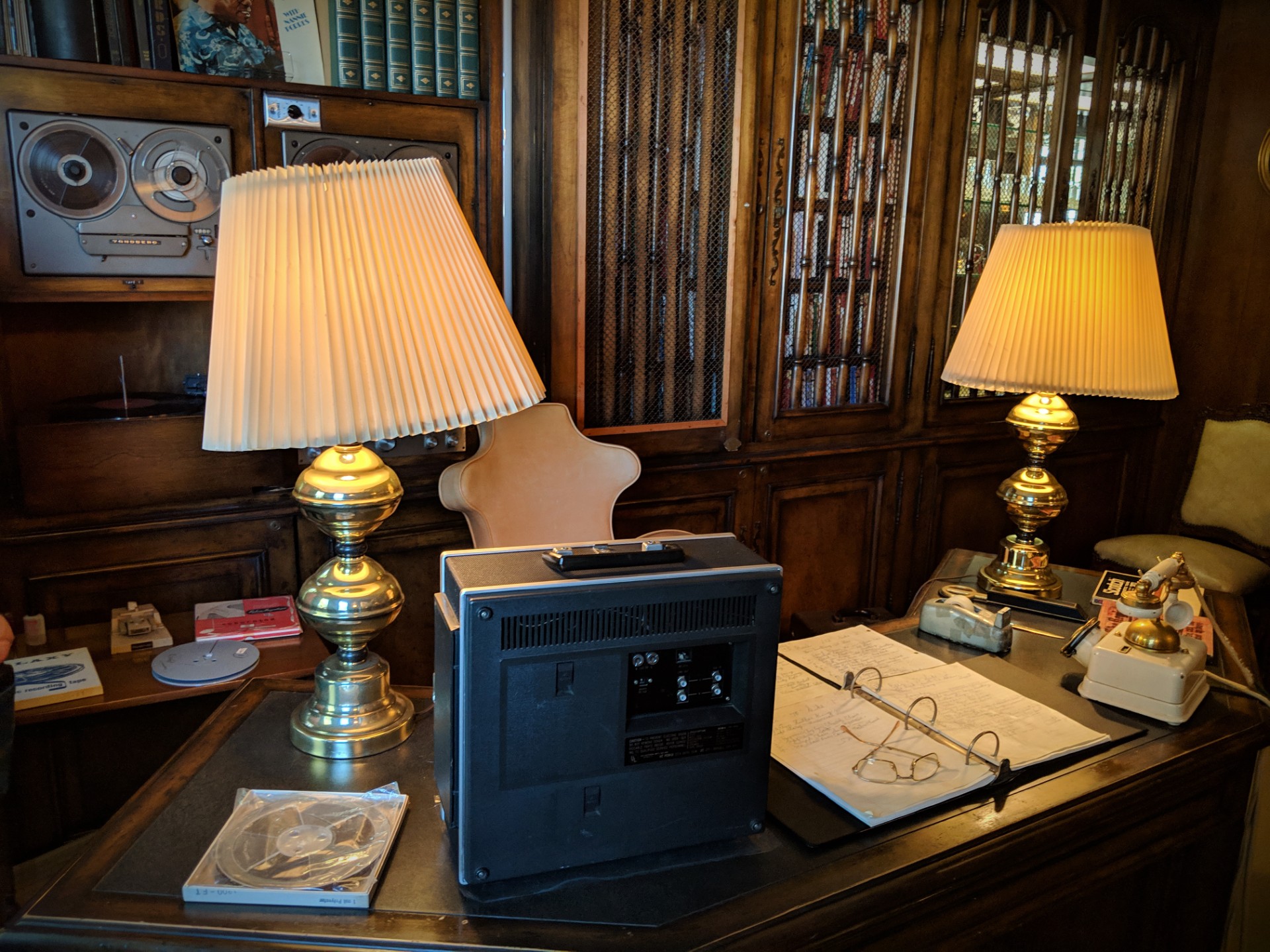
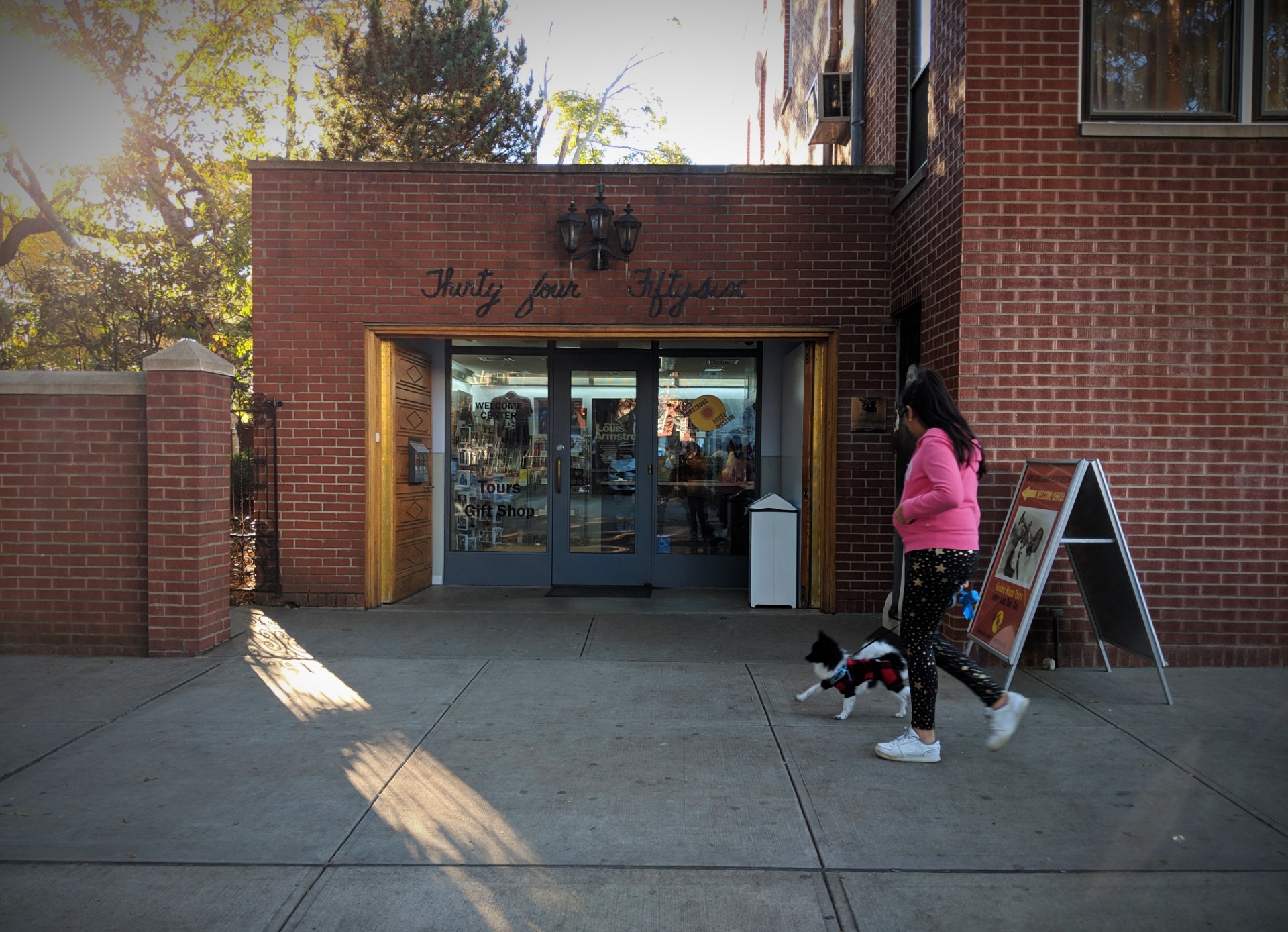
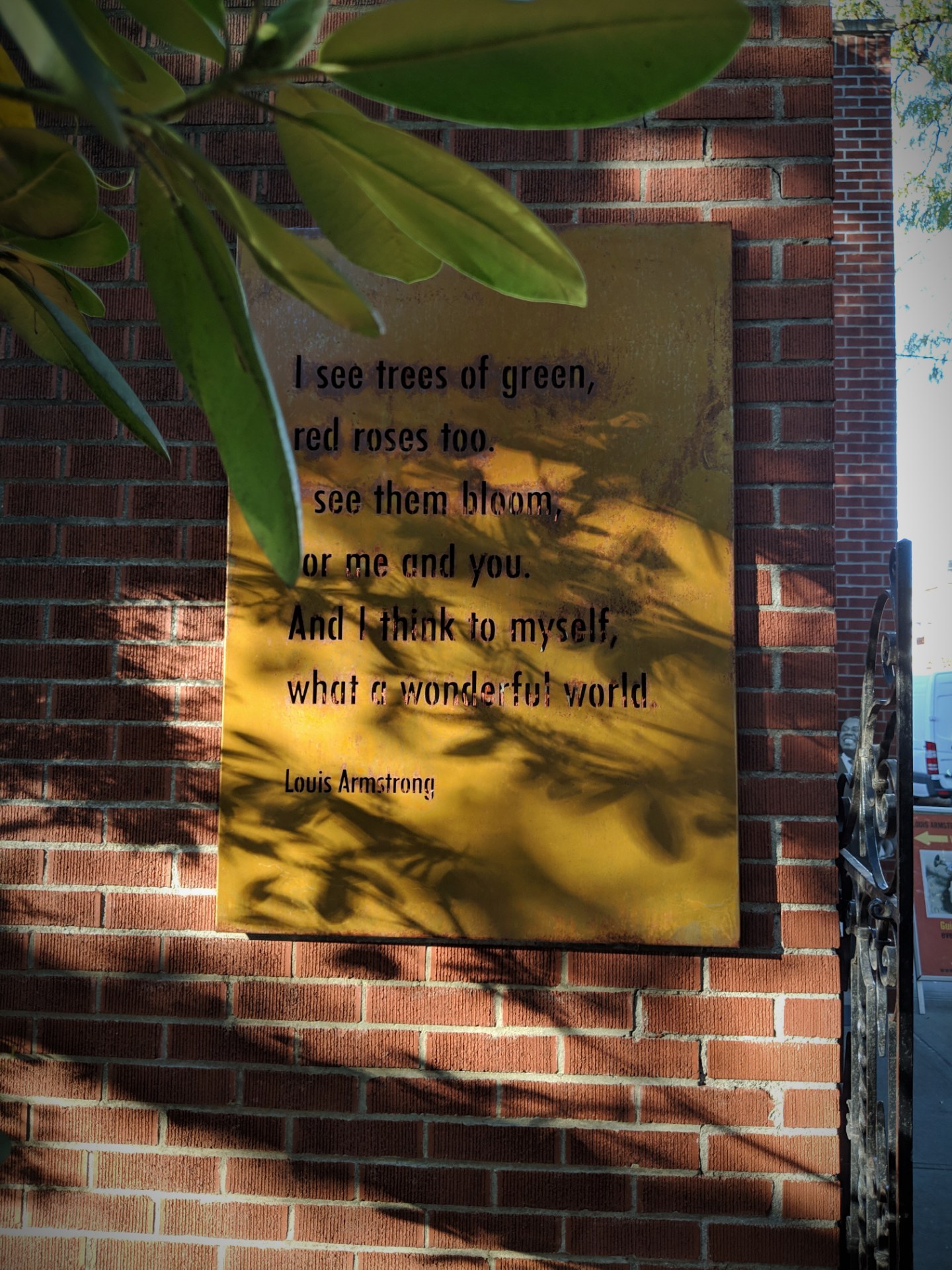
And so it was in 1943 that Louis Armstrong and his wife Lucille came to live in this modest house in the working-class neighbourhood of Corona, Queens. They lived here for the remainder of their lives.

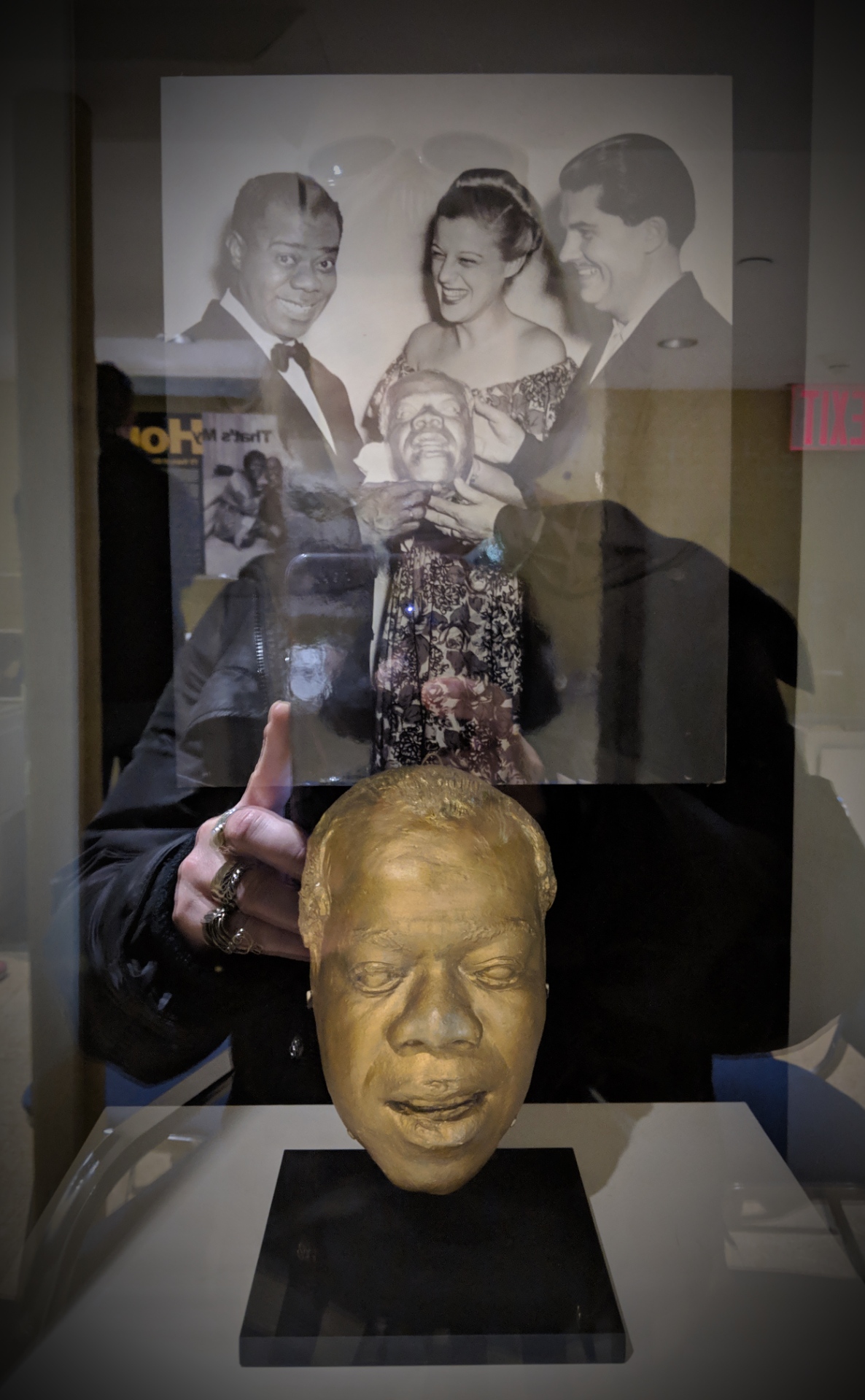
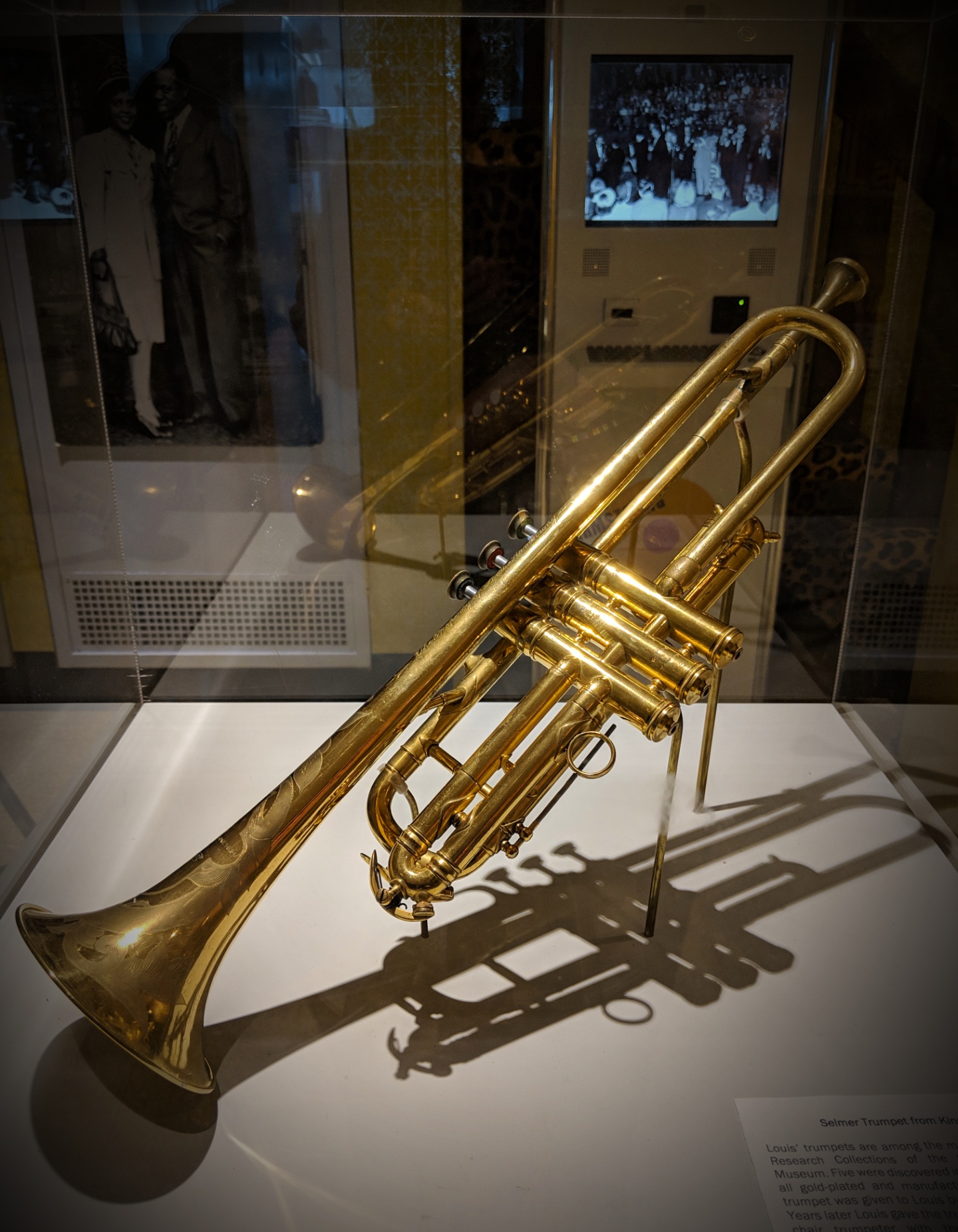
Today, the Louis Armstrong House Museum & Archives is open to the public, offering guided tours while audio clips from Louis’s homemade recordings are played, and visitors hear Louis practicing his trumpet, enjoying a meal, or talking with his friends.

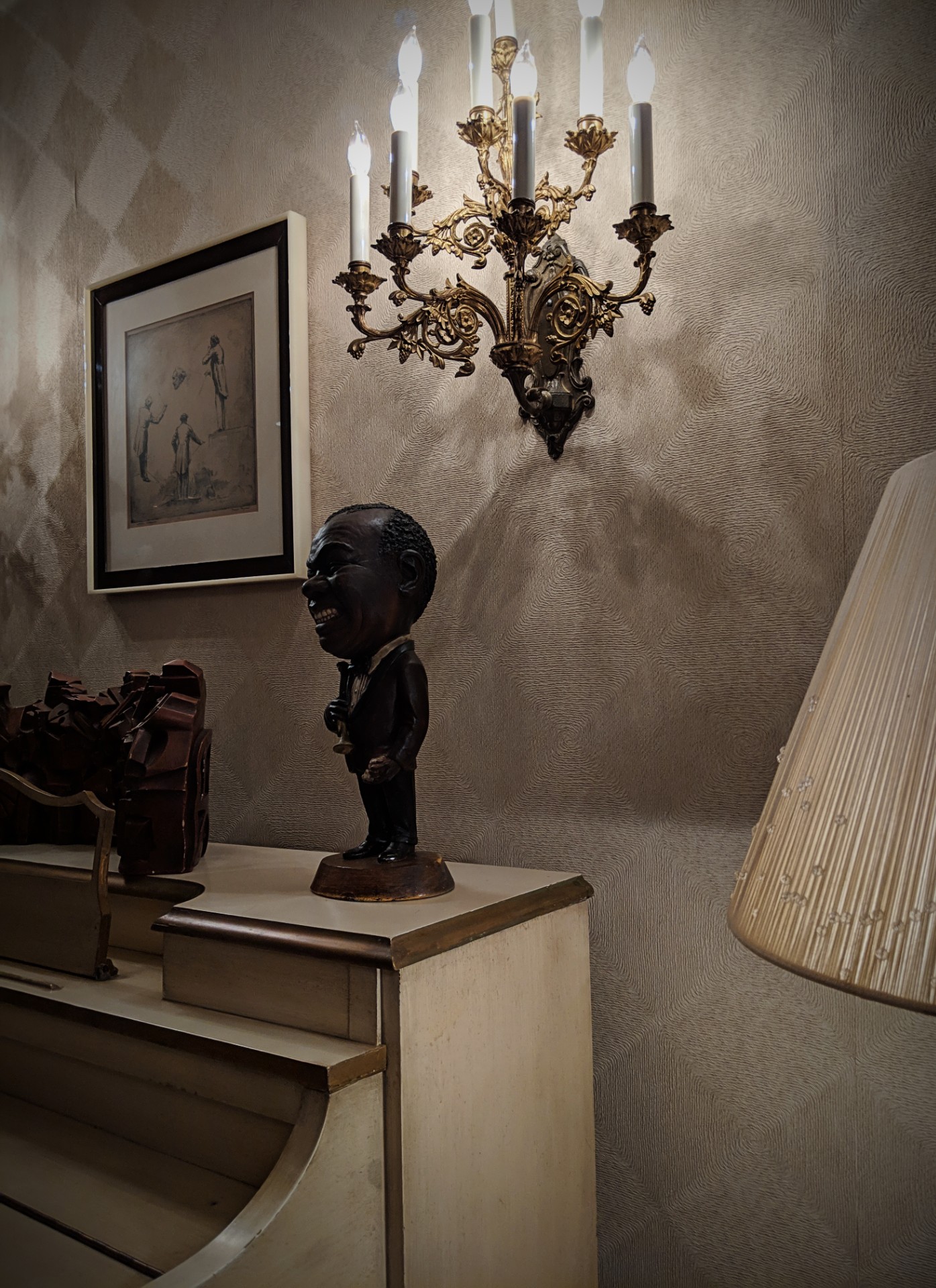
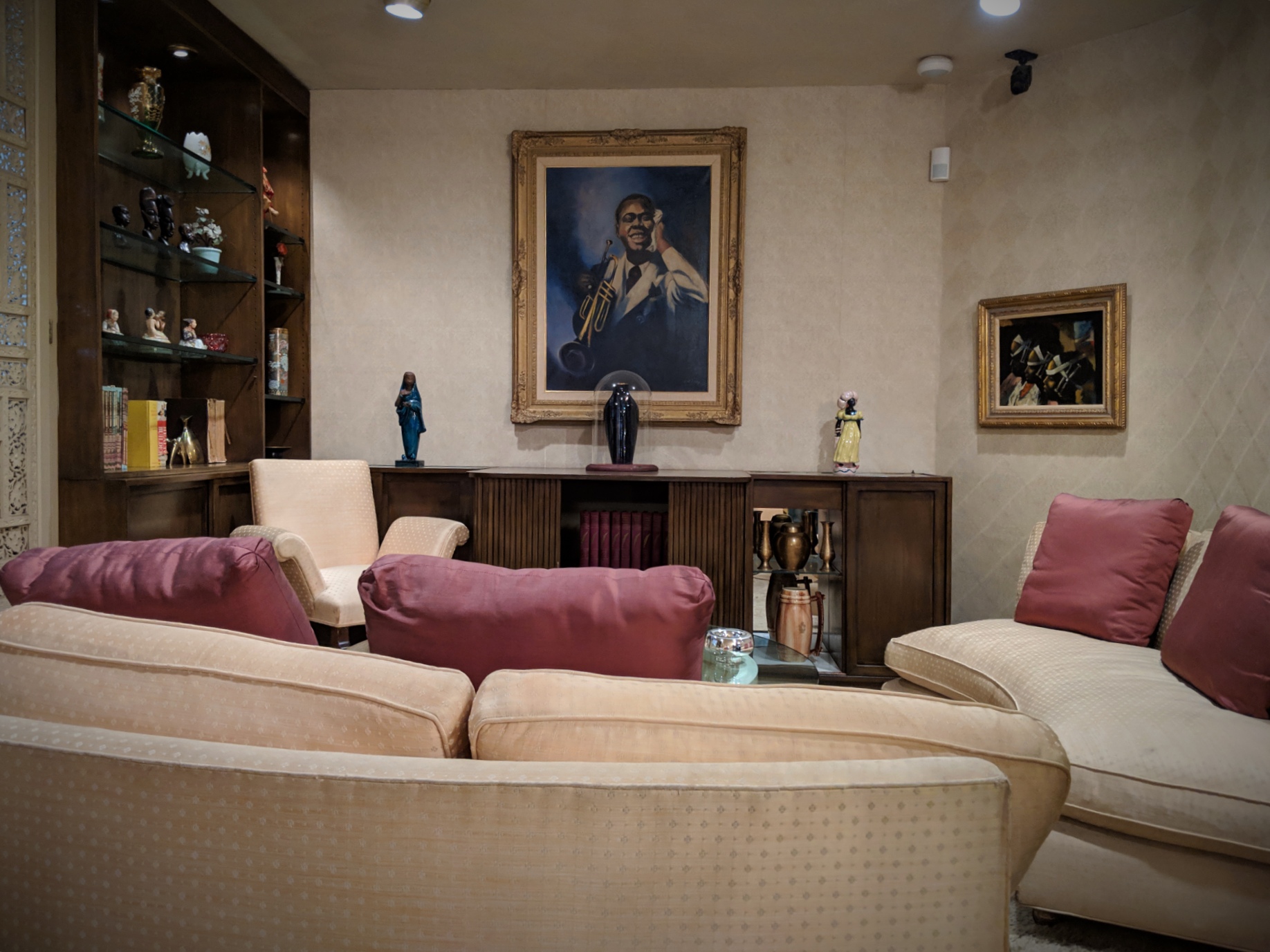
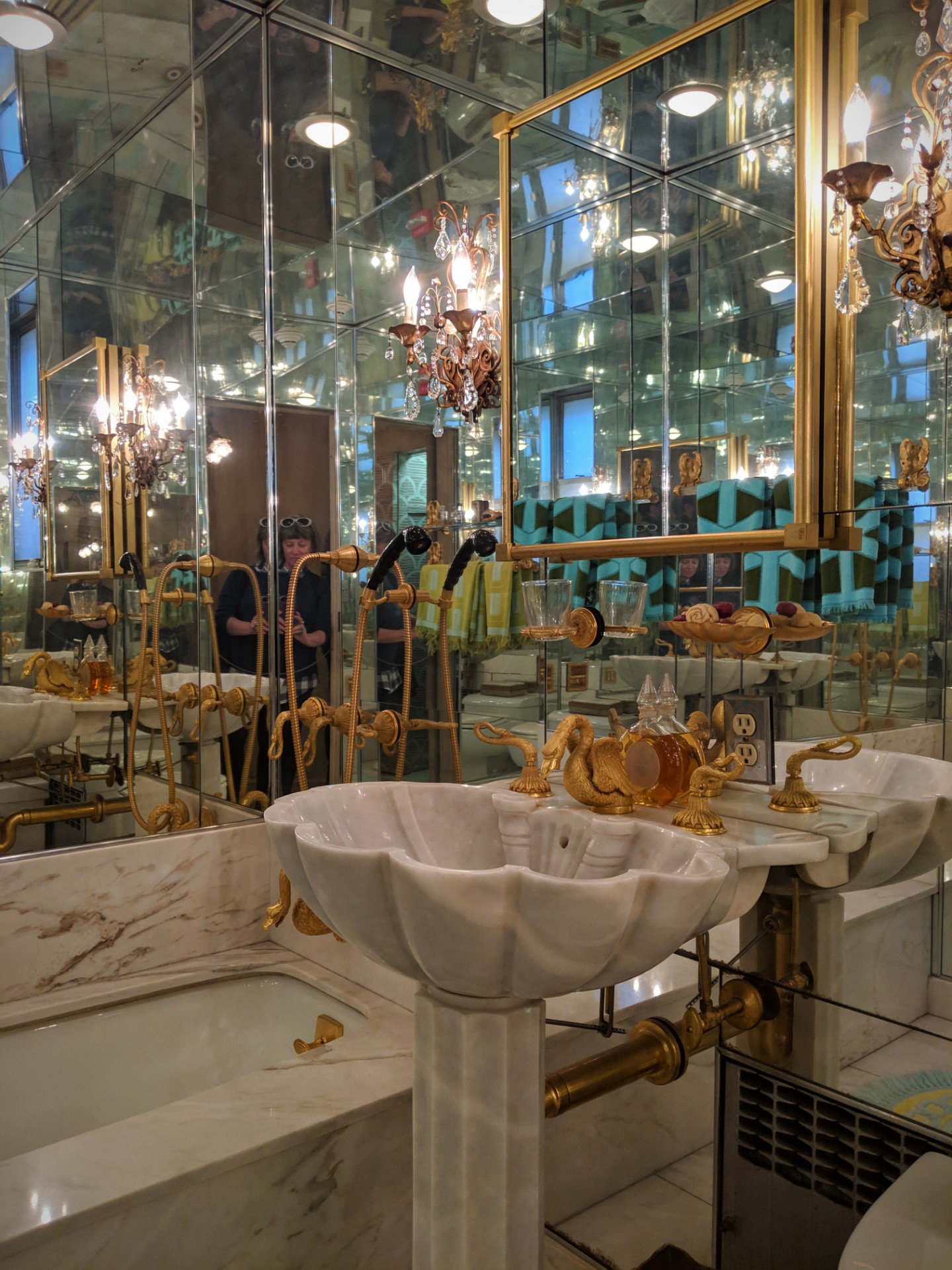
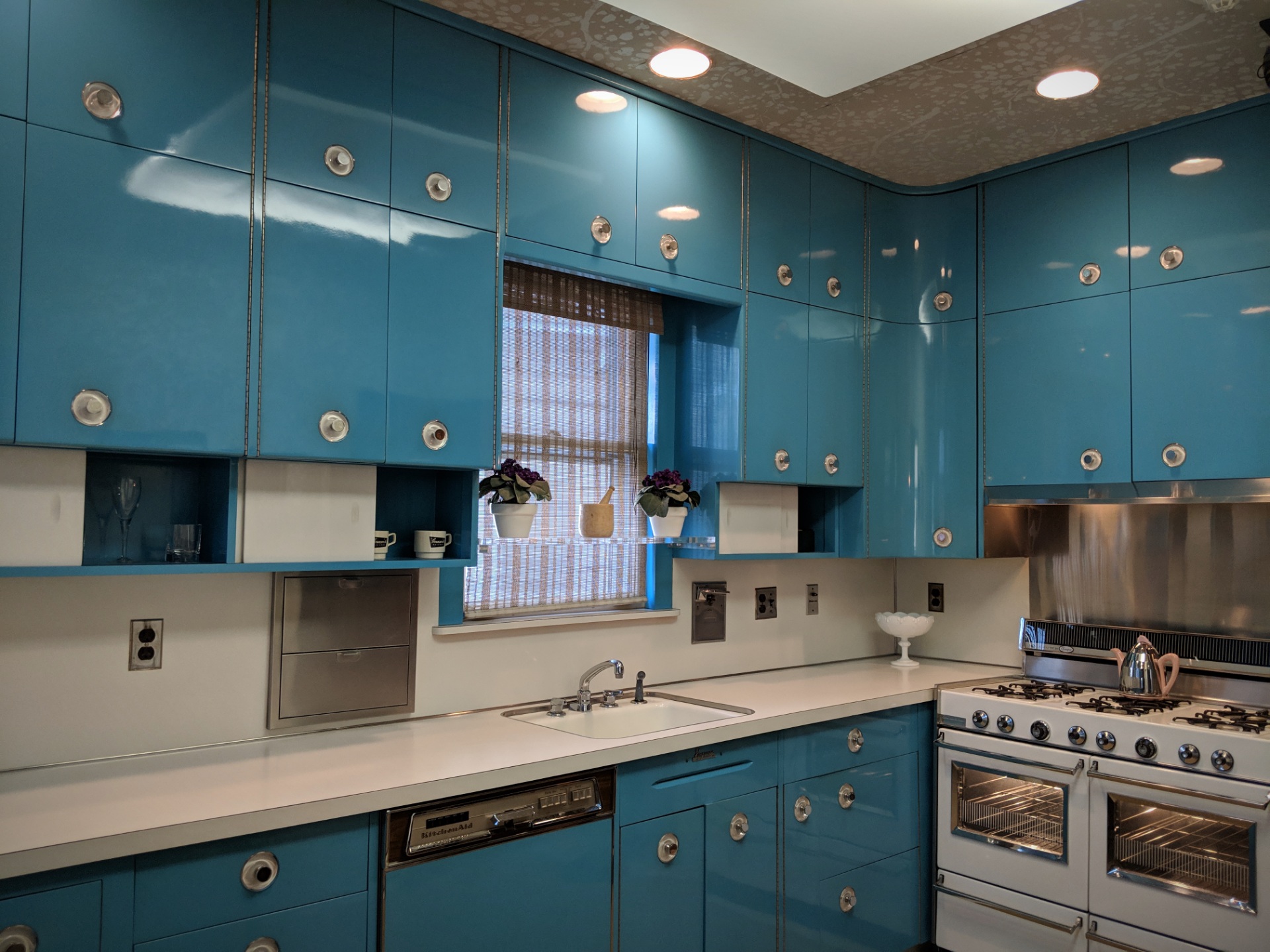
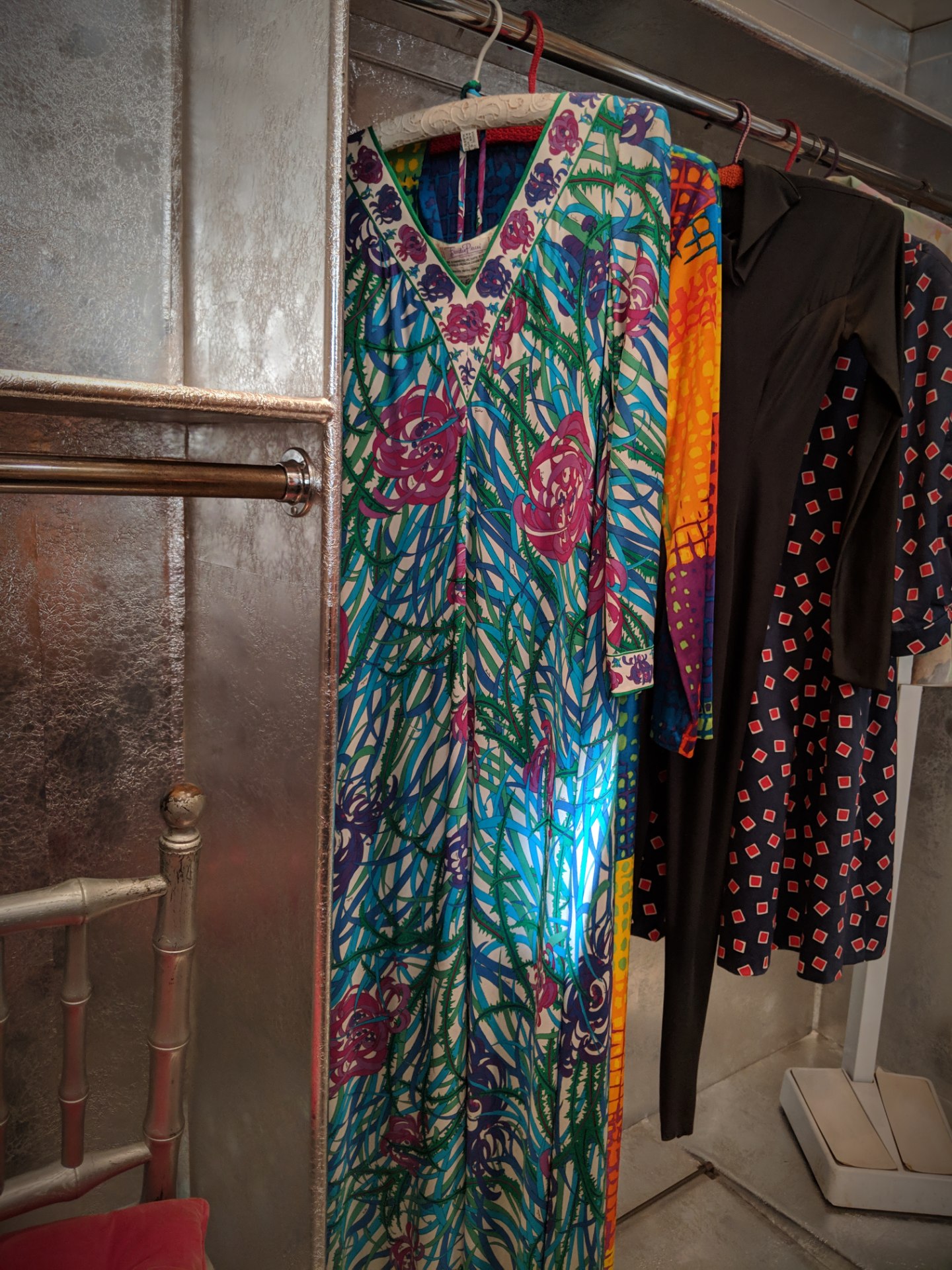
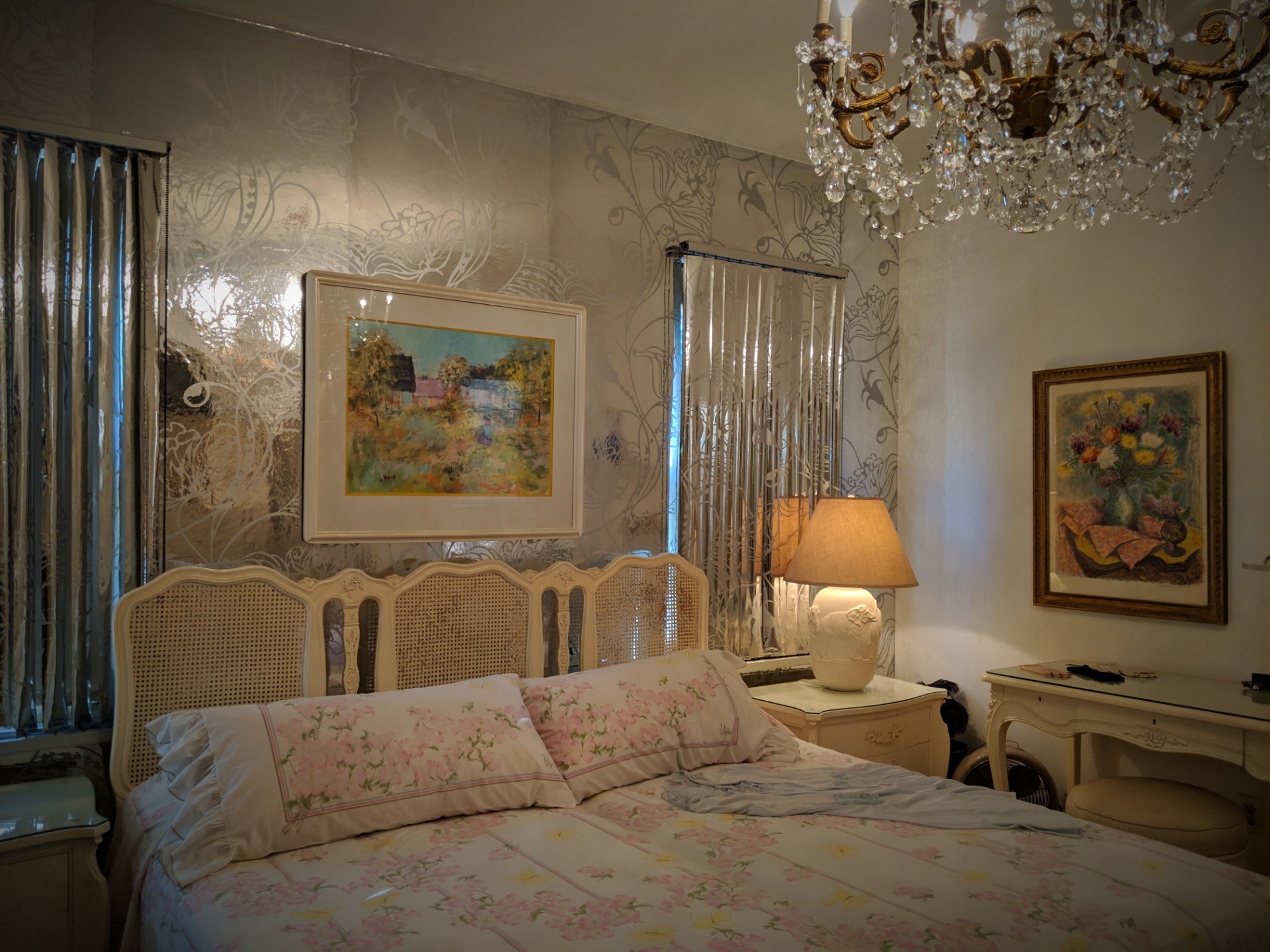
No one else has lived in the house since the Armstrongs passed away; the rooms, furnishings, ornaments, the all-mirrored bathroom and that lovely show-stealing turquoise kitchen reflect their personalities, taste and times they lived in. I tried to stay behind every time our guide moved on, to take a better look at each room. I was sure that if I touched the walls I would hear the echo of Louis’ trumpet playing – and not from the audio clip.

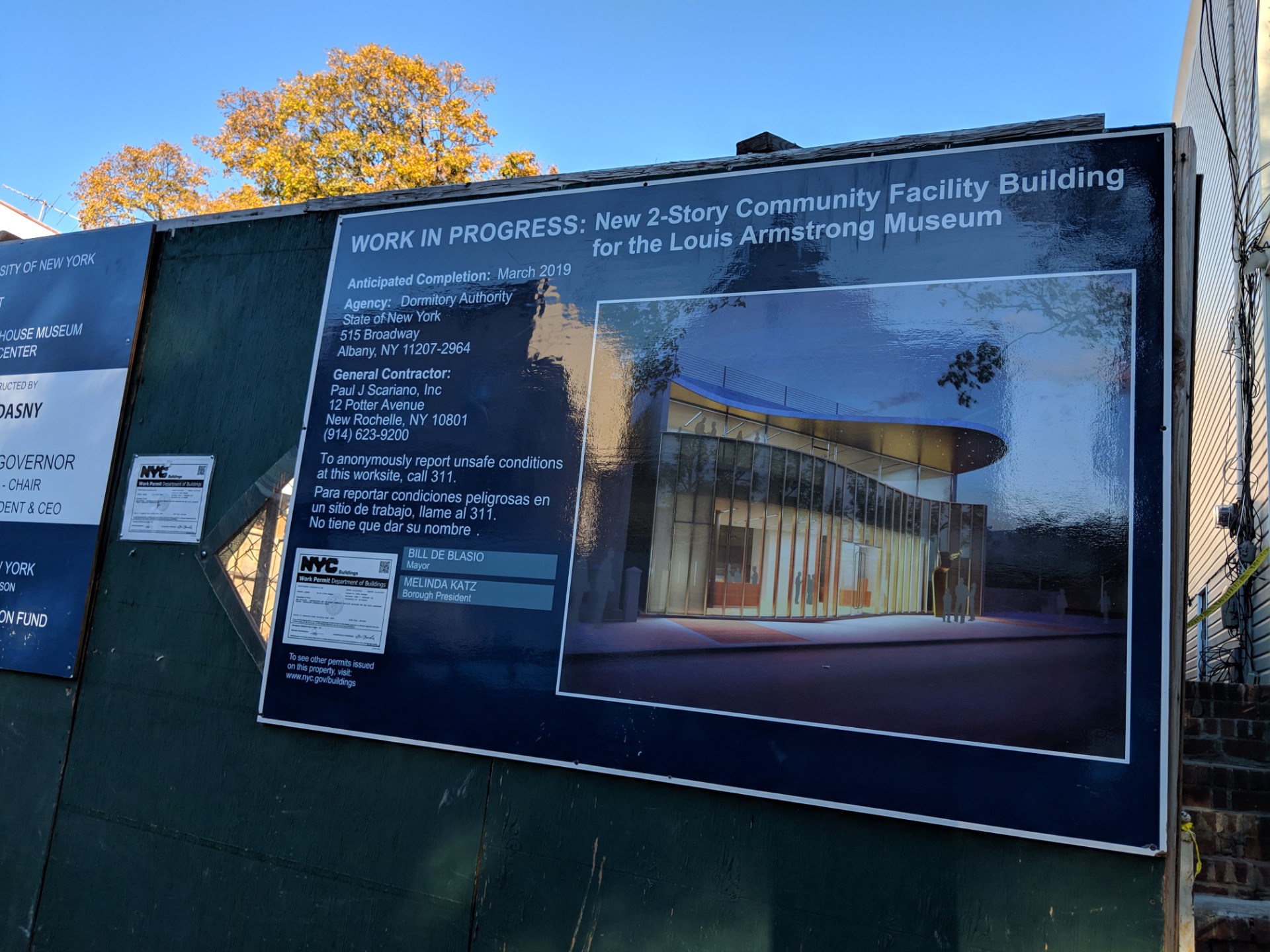
The Museum is expanding across the street from the House. The new Education Center will complement the existing experience with an exhibition gallery, a jazz club where musicians will rehearse and perform their music, and a store. The museum’s research collections, currently housed at Queens College’s library, will move into an Archival Center on the second floor.

The anticipated completion was pushed back to 2021 (pre-Covid-19).

With the Louis Armstrong House Museum and Archives currently closed because of Covid-19, the Museum has launched “That’s My Home,” their first online exhibition – absolutely worth a visit.

November 4th, 2018