Haunted

By benign spirits.

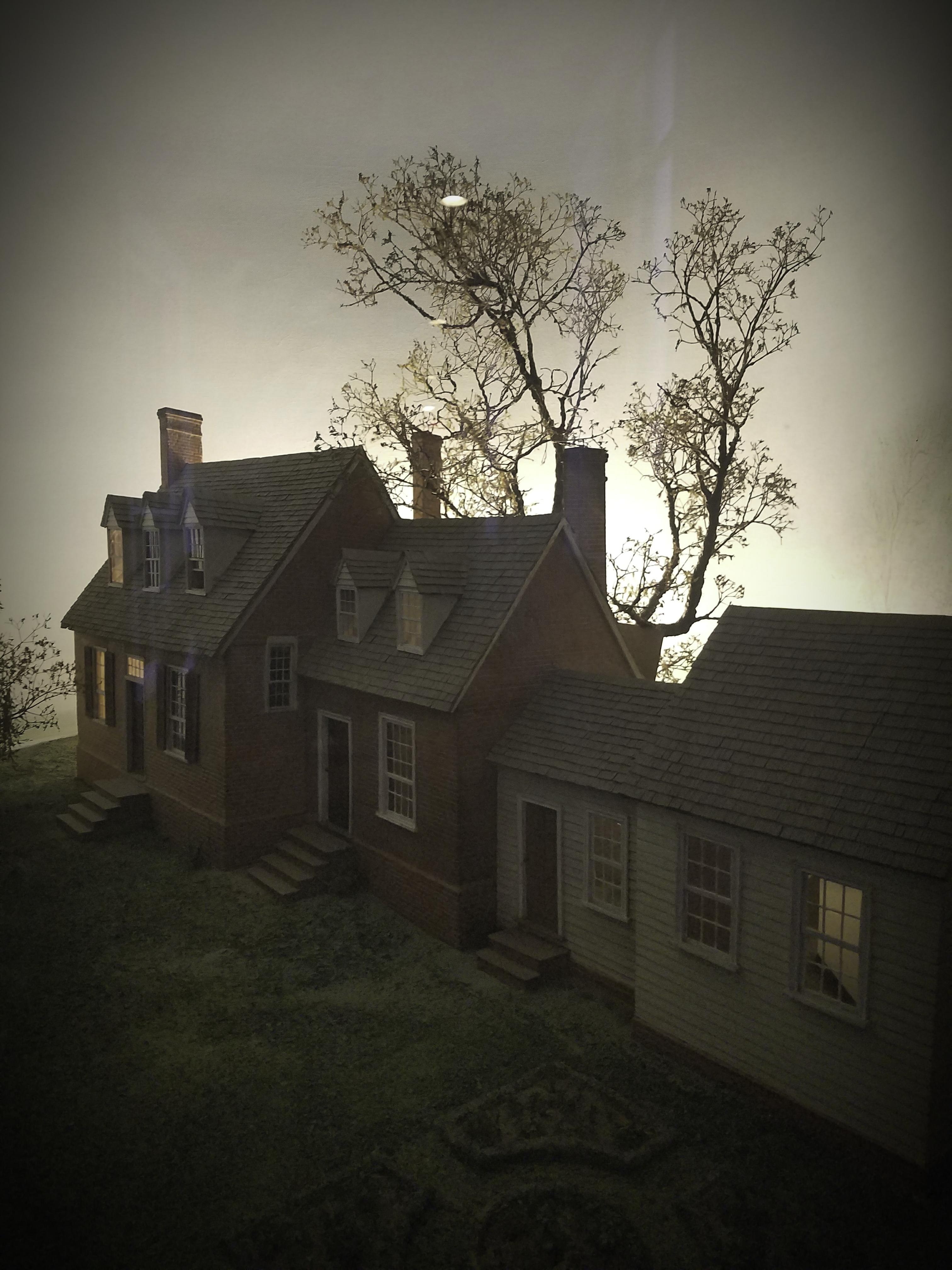
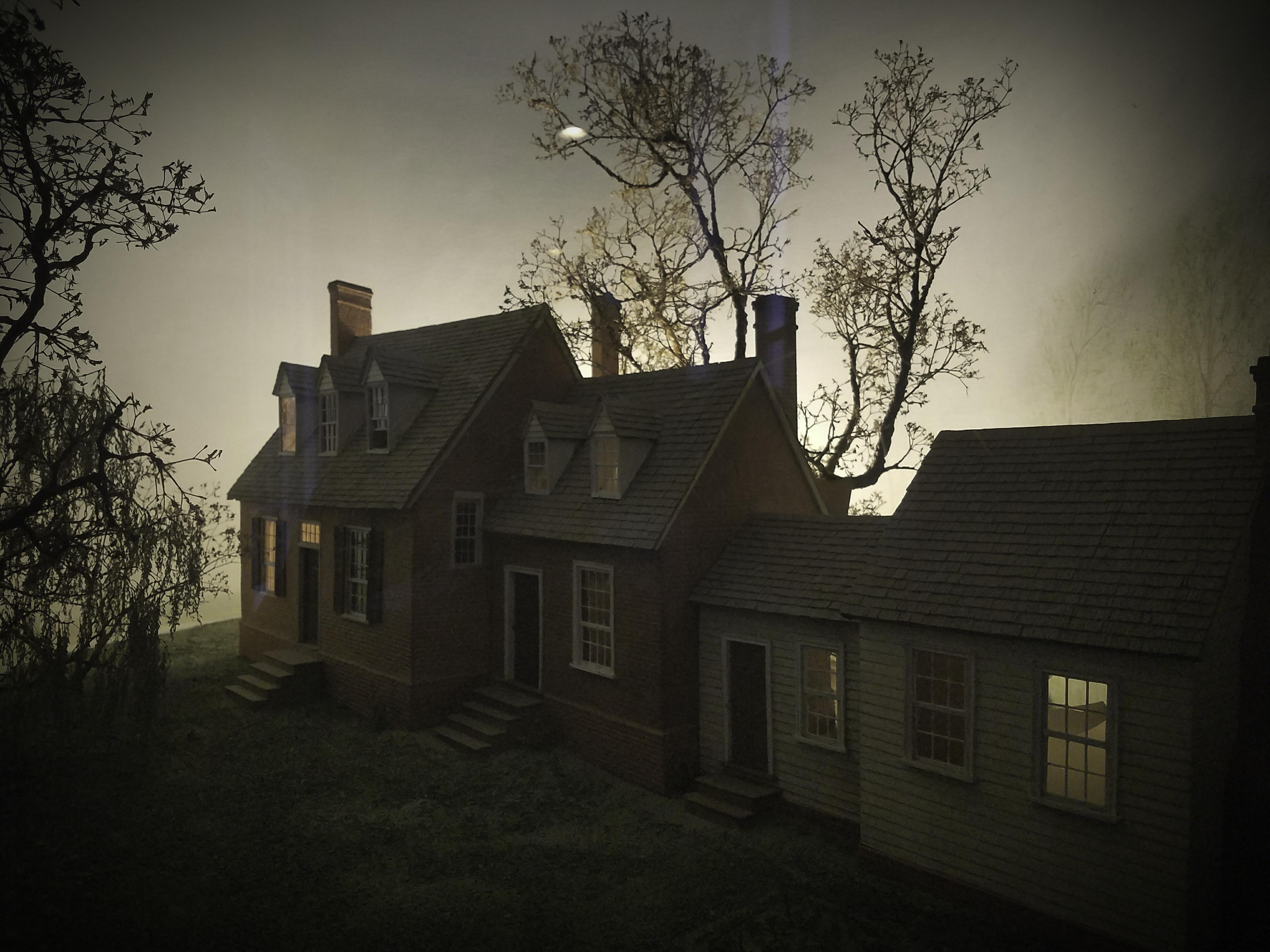
1/Henry Trippe House; Secretary, Maryland; c. 1730
Major Henry Trippe, a gentleman landowner and planter of English origin, built this one-and-a-half story brick home he called ”Carthagena” between 1724 and 1731 on land he head inherited from his father. The house faced the head of Secretary Creek on the eastern shore of Maryland. This orientation indicates the importance of water access before the development of good roads.

Greatly altered, the house still stands on its original site. A model and its living room can be viewed at the Brooklyn Museum, one of the twenty-three American period rooms installed as part of the Museum’s decorative arts collection.

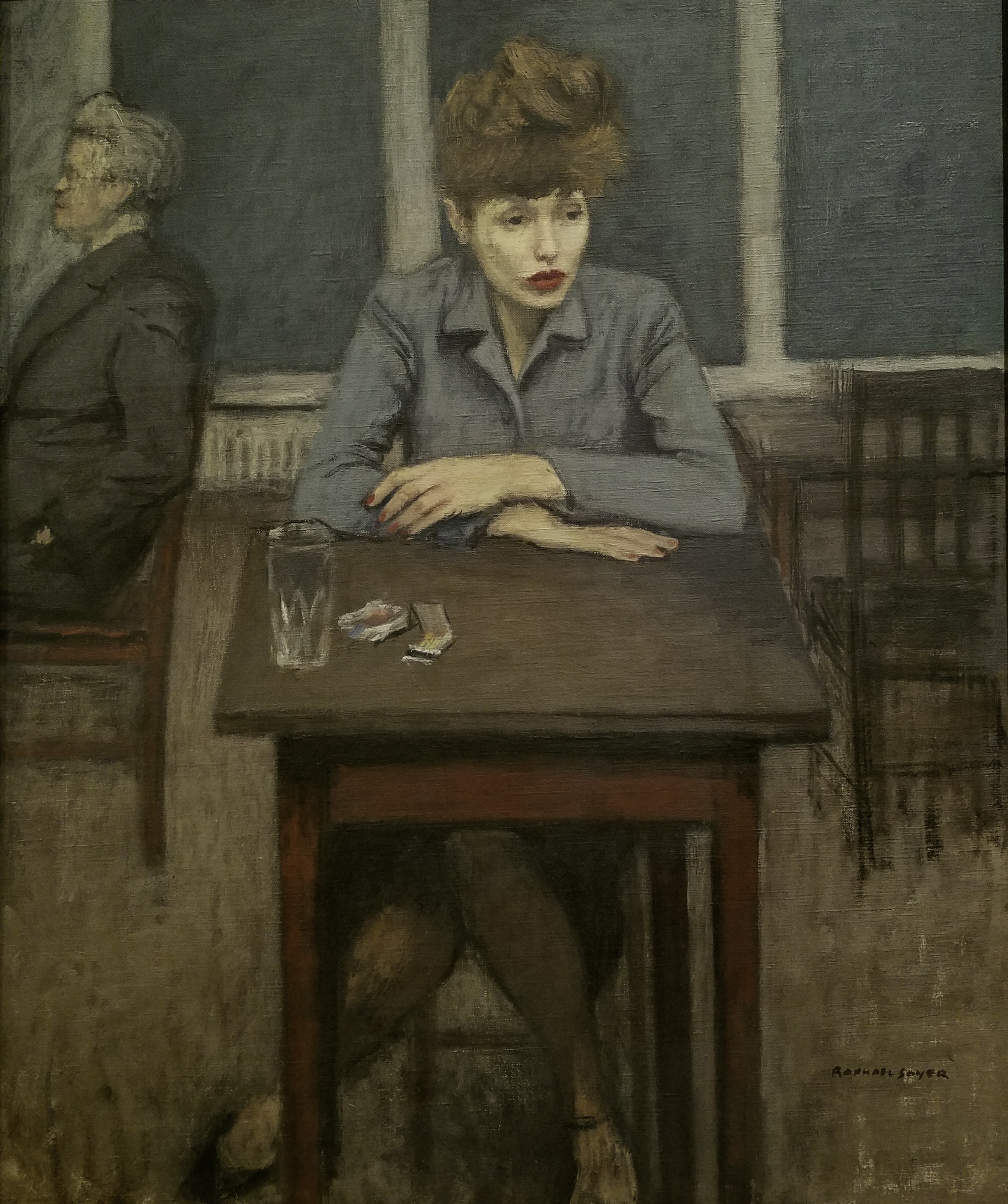
2/Raphael Soyer (American, born Russia, 1899-1987); Café Scene, ca. 1940; oil on canvas
Raphael Soyer had a lifelong interest in the daily lives of working-class New Yorkers. His paintings of lone women in the early 1940s suggest the absence of husbands or sweethearts who had been called up to serve in WWII.

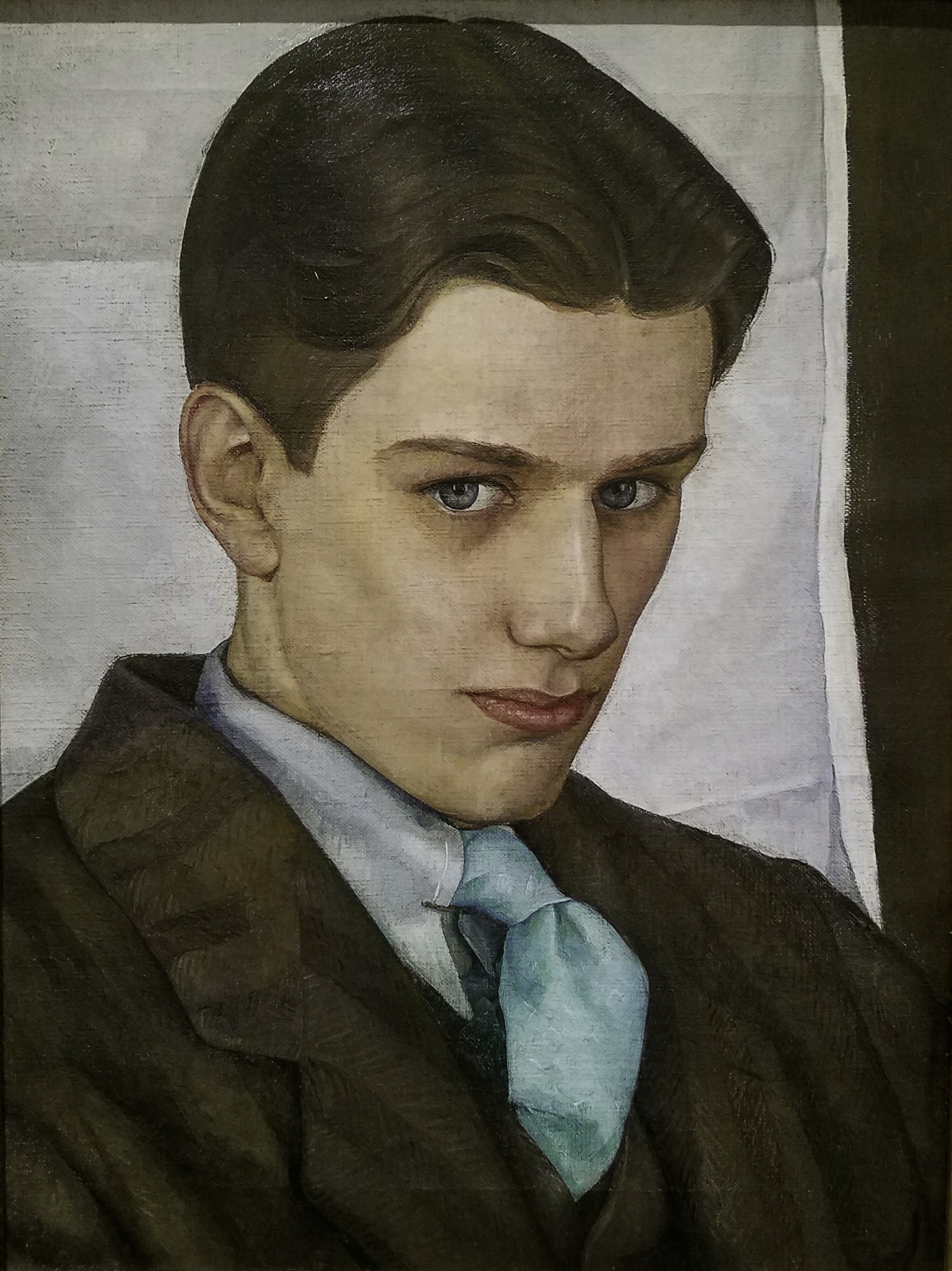
3/Luigi Lucioni (American, born Italy, 1900-1988); Paul Cadmus, 1928; oil on canvas
Luigi Lucioni and Paul Cadmus probably met as students, and they doubtless shared acquaintances within New York’s circles of gay artists and writers.

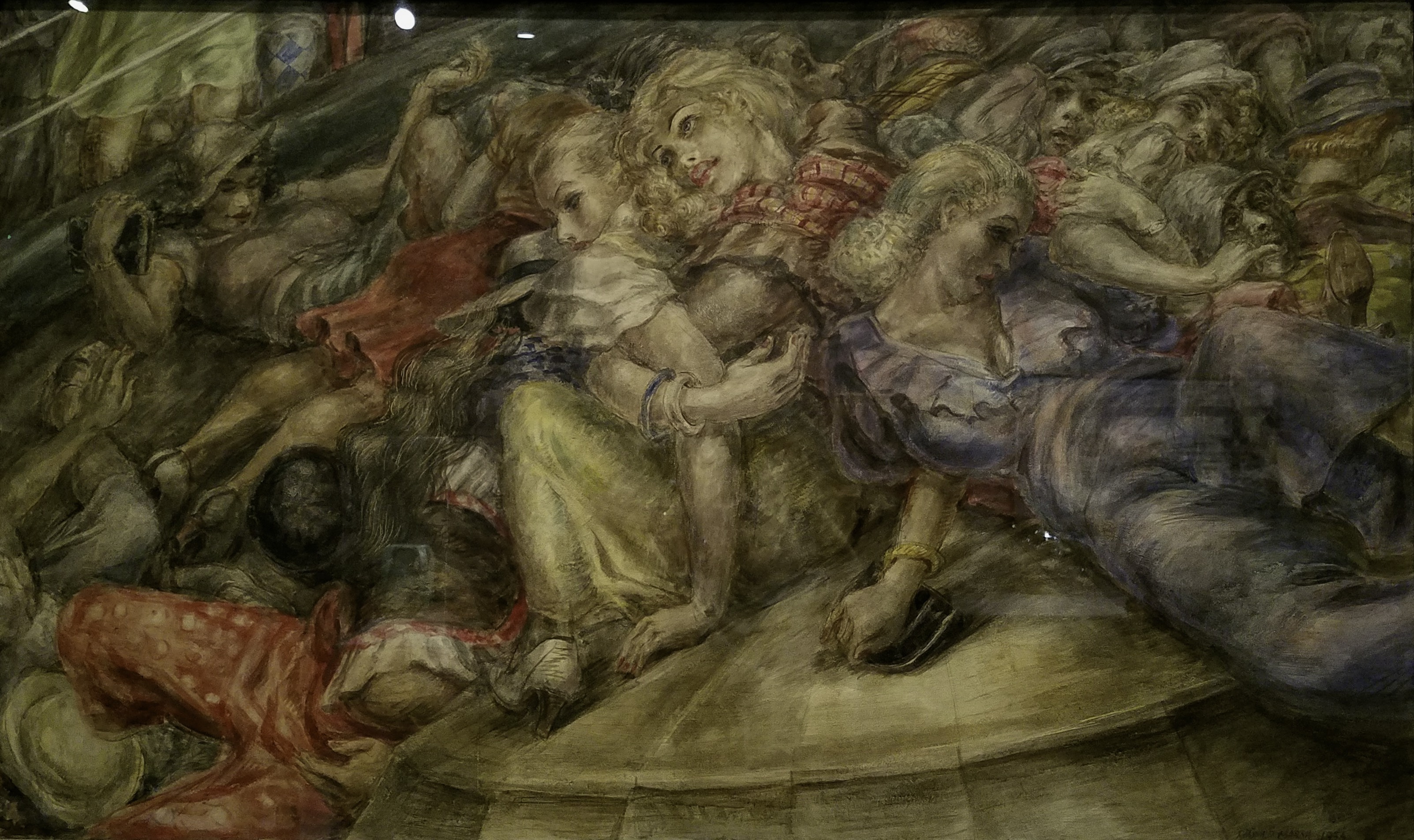
4/Reginald Marsh (American, 1898-1954); The Bowl, 1933; egg tempera on pressed wood panel
In this vivid Depression-era painting of one of the wild “bowl” rides at Coney Island, friends and strangers alike are thrown into contact by the overpowering centrifugal force. Reginald Marsh described the chaotic tangle of female bodies with the sensual physicality for which his work was best known.

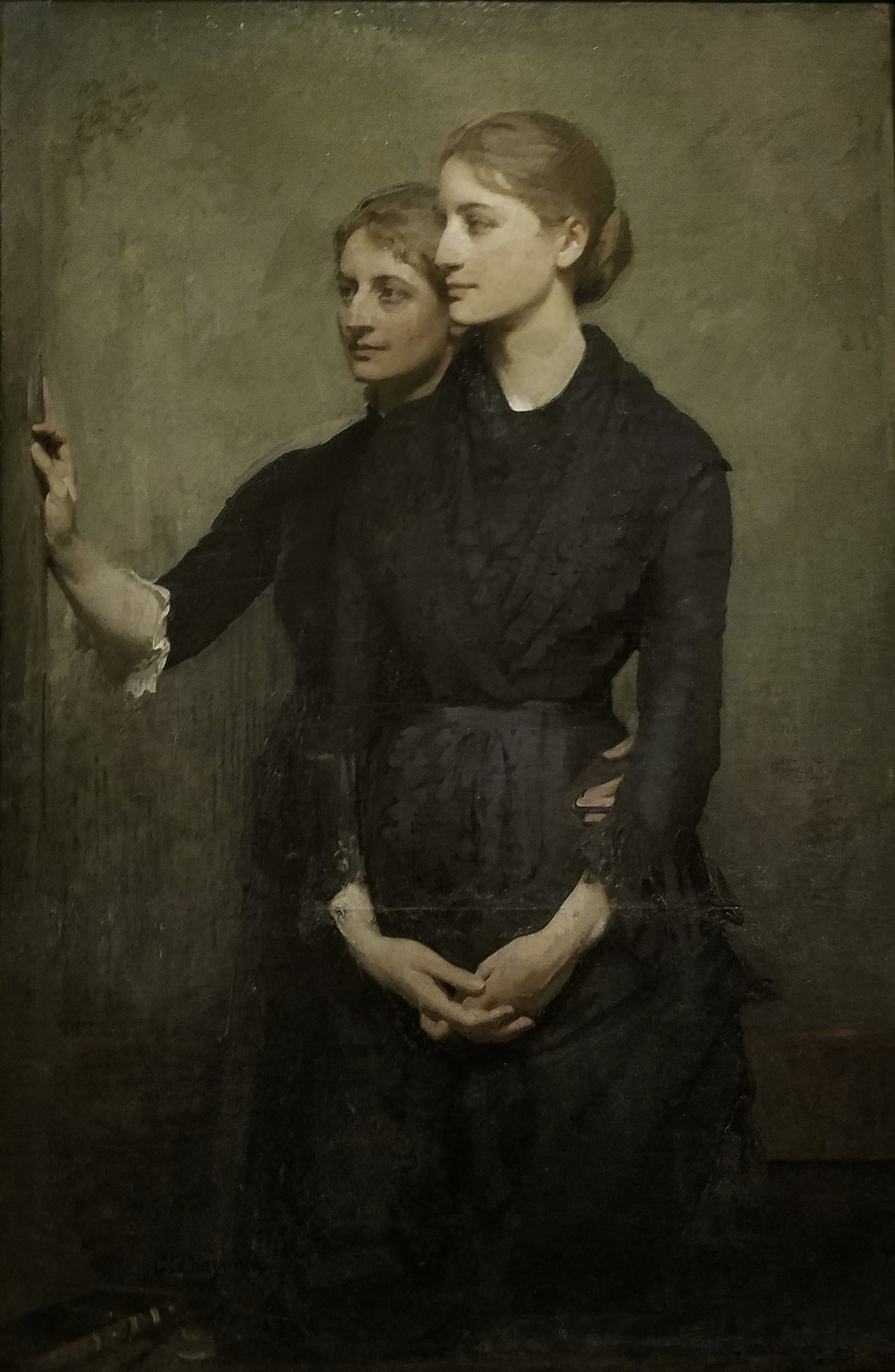
5/Abbott H. Thayer (American, 1849-1921); The Sisters, 1884; oil on canvas
The women in this portrait were Bessie (left) and Clara Stillman, the sisters of the powerful financier James Stillman. 

The Huntington | Art Collections | Red buttons

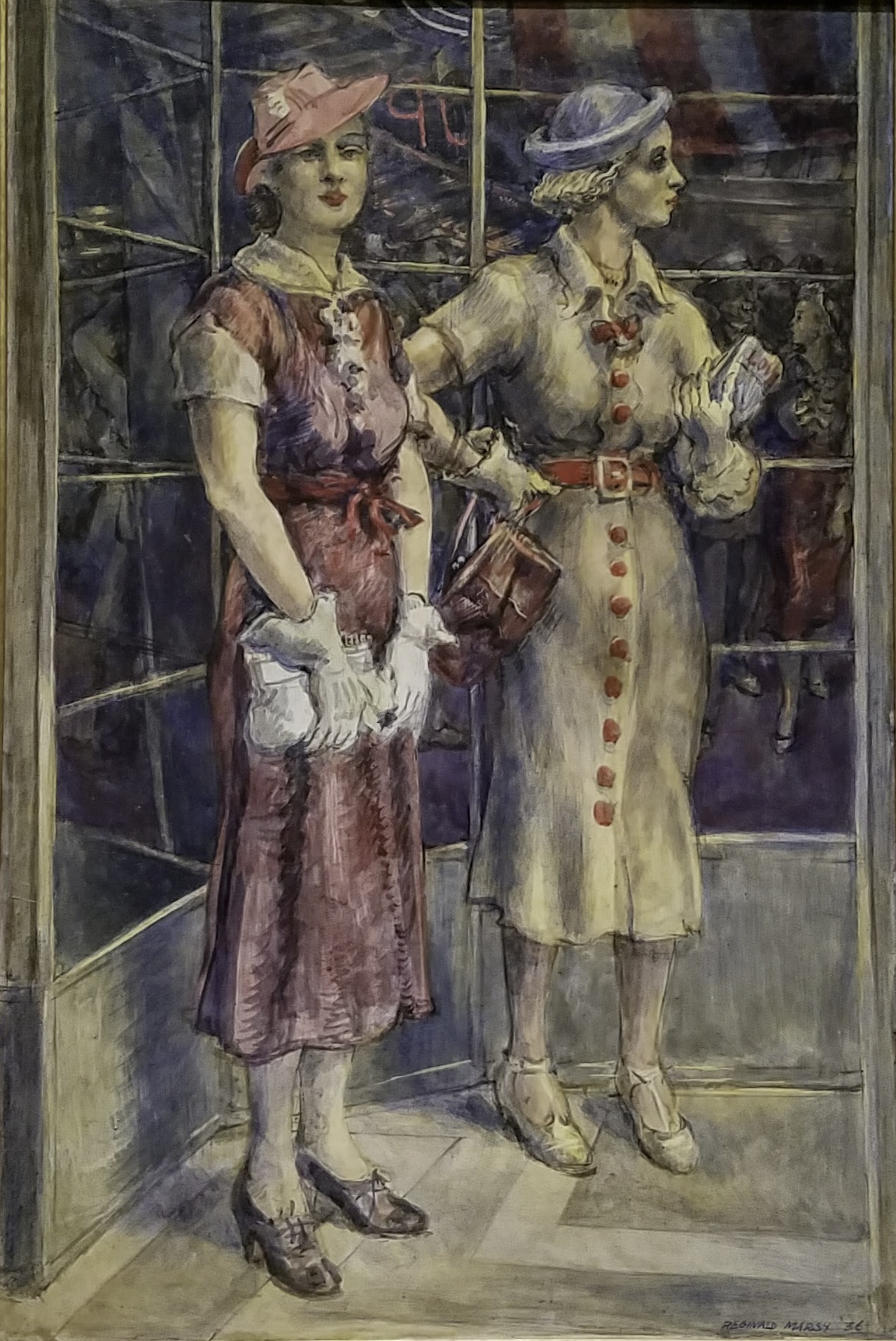
Reginald Marsh
Girls (Red Buttons), 1936
Egg tempera on board

Marsh first pursued a career as an illustrator, working for the New York Daily News and The New Yorker, and only later began taking painting classes at the Art Students League. Many of his best images are about seeing and being seen in New York City’s public spaces. In Girls (Red Buttons), one of the women looks at the viewer while the other glances to the right, outside the painting, her dominant red buttons supplying the painting’s title. 


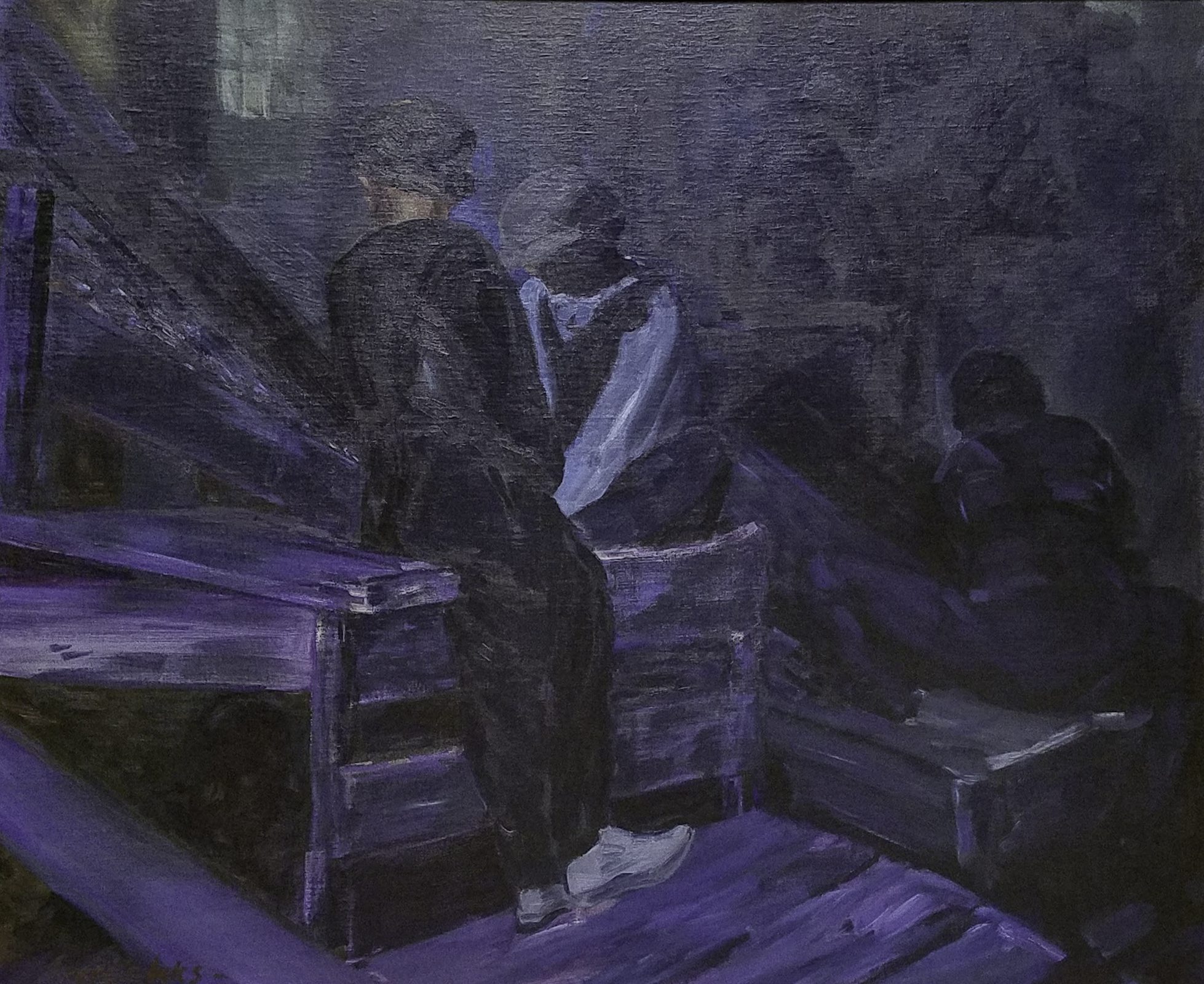
George Luks
The Breaker Boys, ca. 1925
Oil on canvas

Breaker Boys is a bleak picture of unremitting toil. ”Breaker boys” were children who removed debris and sorted chunks of coal according to size and grade. They were poorly paid for their dangerous labour and suffered injuries or even death from falling down coal chutes. The painting’s large size (50 by 60 in. – 127 by 152.4 cm) speaks to the gravity of Luks’ message, which he reinforced with slashing diagonals and thickly applied paint that allude to the noise, chaos and mess of the boys’ working conditions. (In 1938, Federal regulation of child labour was achieved in the ”Fair Labor Standards Act”, which imposed minimum ages of employment and hours of work for children.)


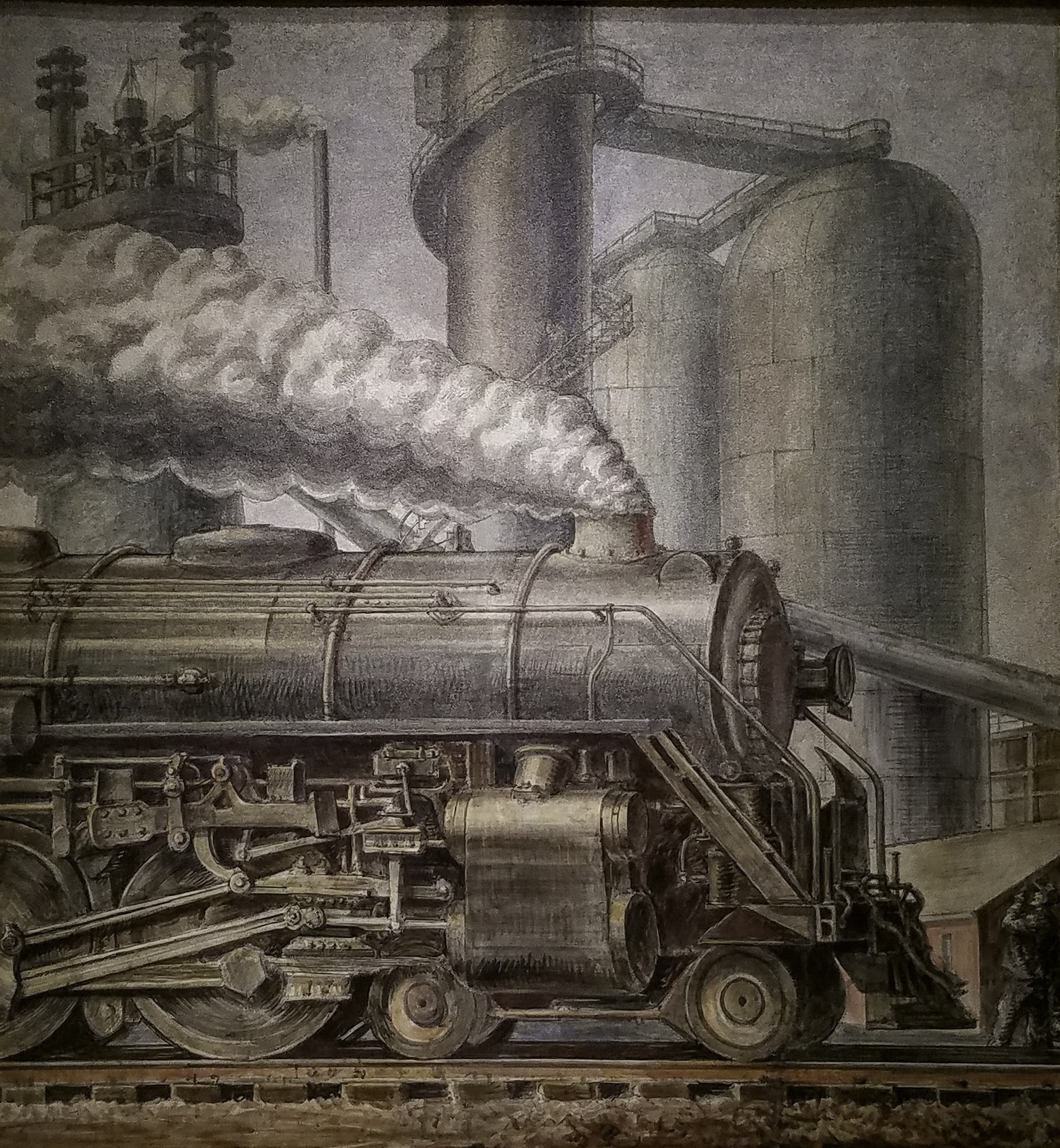
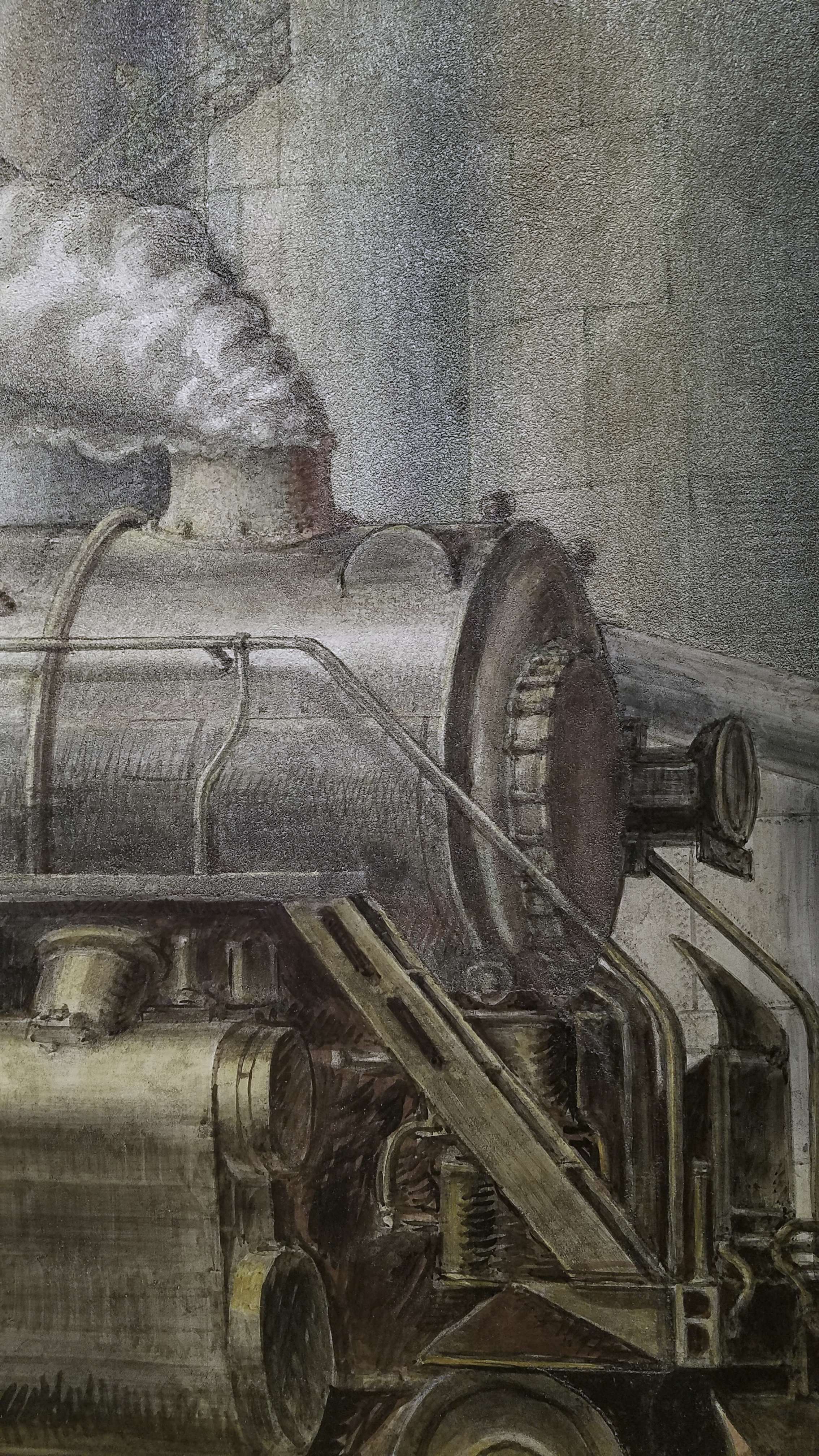
Reginald Marsh
The Locomotive, 1935
Tempera on concrete plaster

Marsh made ”The Locomotive” as a study for a commission he received from the Treasury Department to design and execute two murals for the Post Office Building in Washington, D.C. Although the building’s architect suggested that Marsh complete his paintings on canvases that would later be affixed to the walls, Marsh sought permission to execute the murals in fresco, a technique of applying pigment on freshly laid plaster largely associated with Renaissance masters.

The Huntington

July 16th, 2017

More Harvard Art

”So this is their home”, I silently exclaimed! A lot of the art in these galleries has been bequeathed to the Museums by former students. Please enjoy a fraction of this unimaginable wealth!

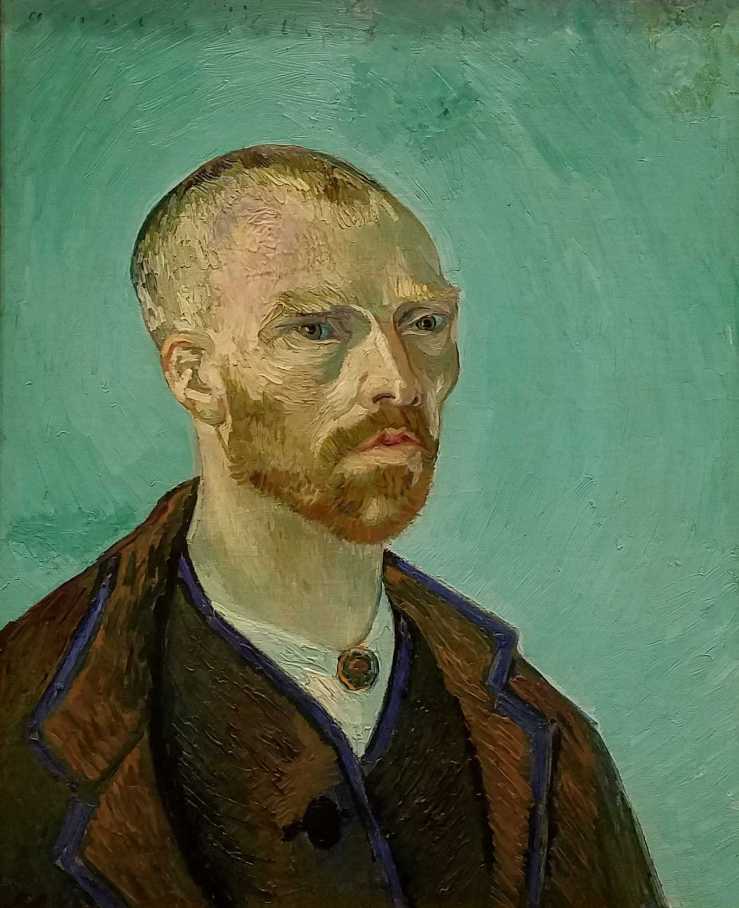
Vincent van Gogh (1853-1890), Self-Portrait Dedicated to Paul Gauguin, 1888. Oil on canvas. Dedicating this work, van Gogh inscribed it ”To my friend Paul Gauguin” and send it to him. Shortly afterwards, however, their friendship deteriorated and Gauguin sold it for three hundred francs.
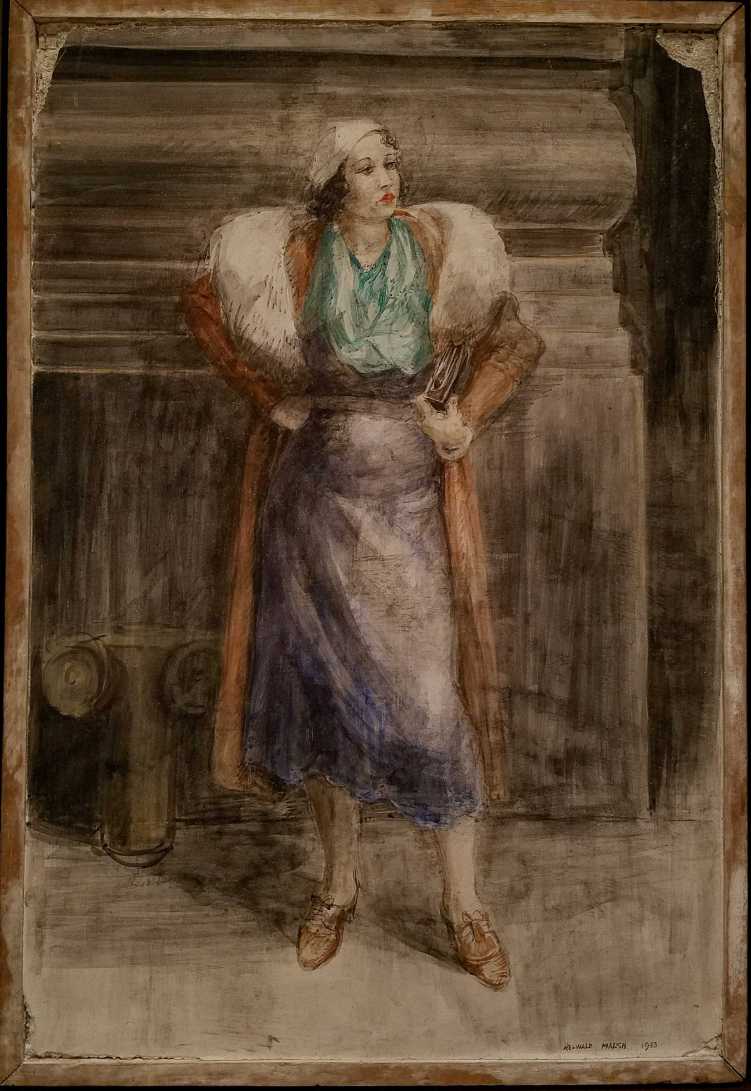
Reginald Marsh (1898-1954), Astor Hotel, 1933. Mezzo-fresco (lime wash on plaster). Marsh’s Depression-era work focuses on urban landscapes and everyday life in America; his subjects include burlesque performers, unemployed workers on the Bowery and Coney Island beach scenes. He was particularly concerned with the exploitation of the nation’s millions of unemployed women and portrayed them as independent figures.
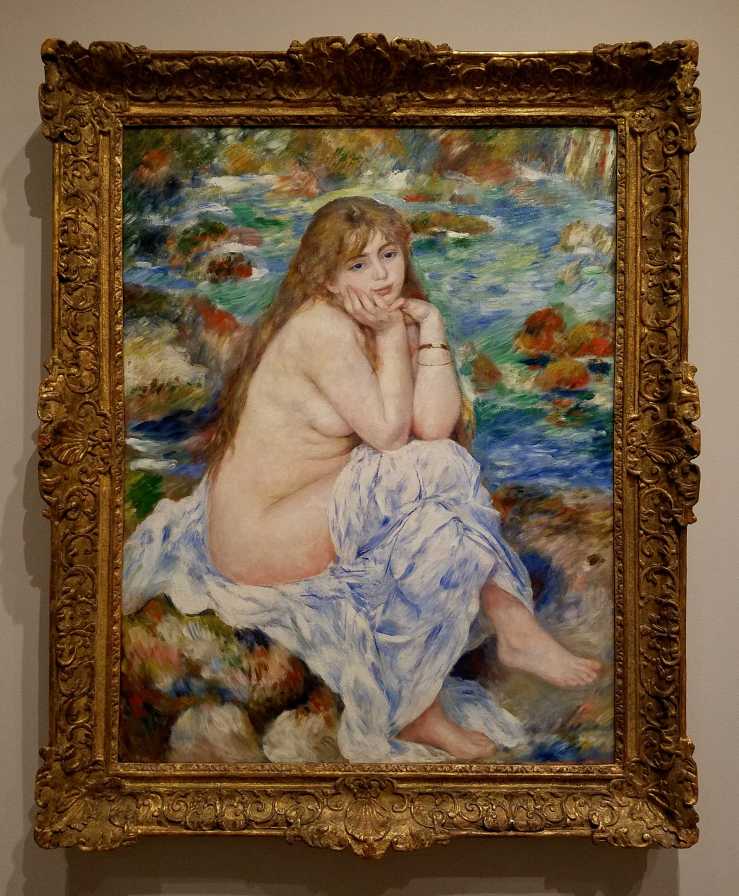
Pierre-Auguste Renoir (1841-1919), Seated Bather, ca. 1883-84. Oil on canvas. Renoir painted this figure and her drapery differently from the landscape, so that she appears to float in the setting. He also left her right foot unresolved where it meets the fabric, signaling that his pictorial approach was no longer a purely naturalistic enterprise.
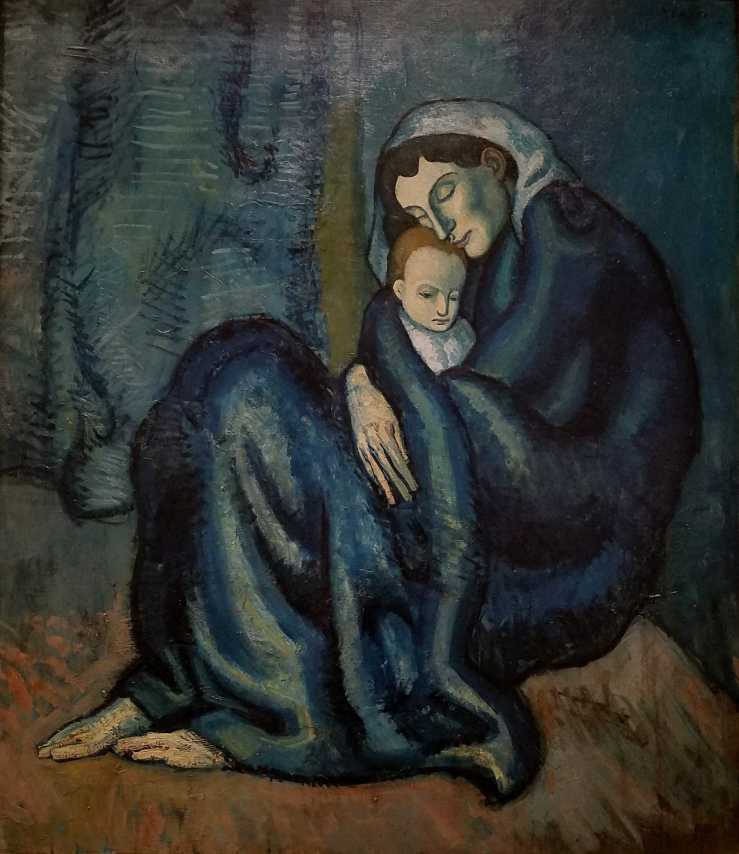
Pablo Ruiz Picasso (1881-1973), Mother and Child, ca. 1901. Oil on canvas. Following his visit to the Saint-Lazare prison hospital, an institution for Parisian prostitutes with venereal disease, Picasso produced a number of paintings of destitute mothers embracing their small children. This painting was executed on a reused canvas and another composition lies beneath this scene. That painting is a portrait of Picasso’s friend, the poet Max Jacob, who sits in his study surrounded by books. Some evidence of the image is still visible, particularly the contours of the face, which is roughly the same size as the mother’s head and is located above her knees.
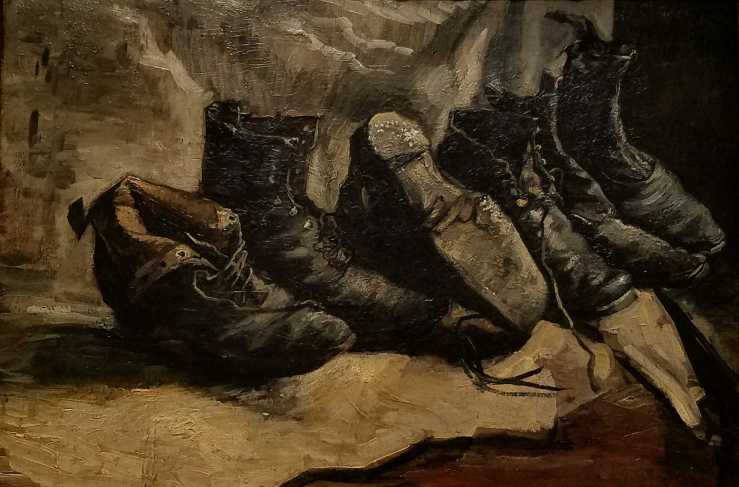
Vincent van Gogh (1853-1890), Three Pairs of Shoes, 1886-87. Oil on canvas. Made at a time when van Gogh was deeply engaged with still life, this composition is painted over another image of a large bouquet of flowers in a vase. It is one of a series of five paintings of shoes by the artist.
Pablo Ruiz Picasso (1881-1973), Woman with a Chignon, 1901. Oil on canvas. Picasso painted this portrait during his early-career ”Blue Period”, so named for the colour that predominated in his work at the time. The muted palette, blocks of interrupted colour and abstracted forms with strong outlines typify the artist’s approach at this stage, one of the most celebrated of his career.

Harvard Art Museums

May 3rd, 2017