They knew it all along
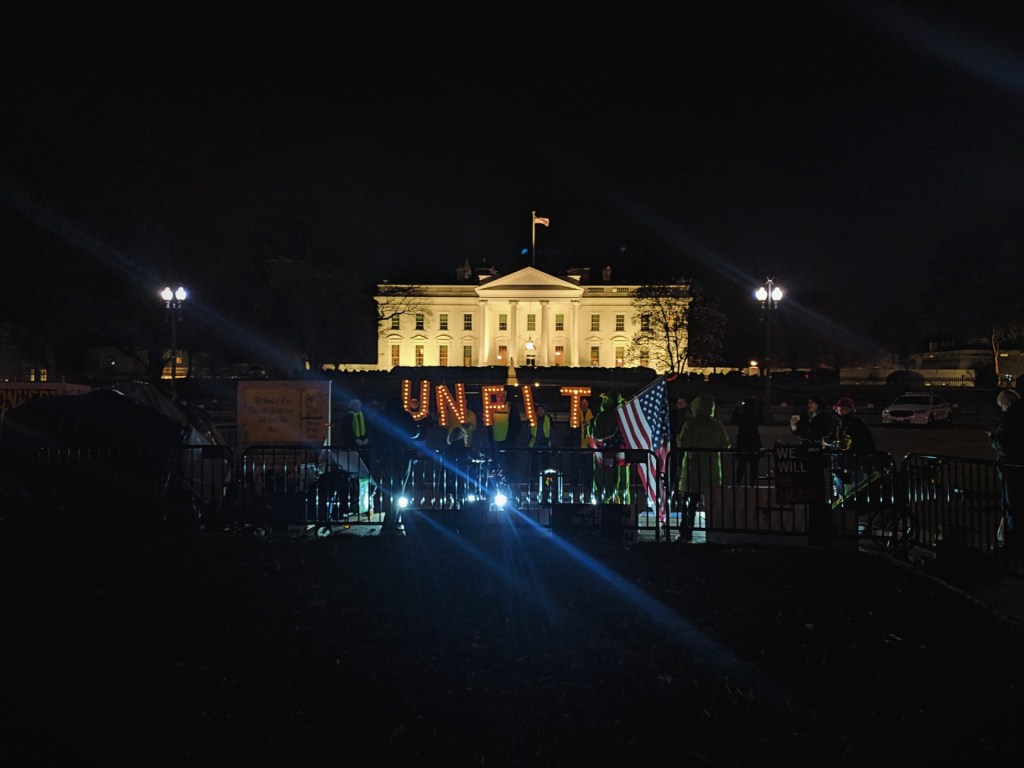


Night walks in Washington, D.C.
March 19th, 2019
They knew it all along
Night walks in Washington, D.C.
March 19th, 2019
Then again, don’t.
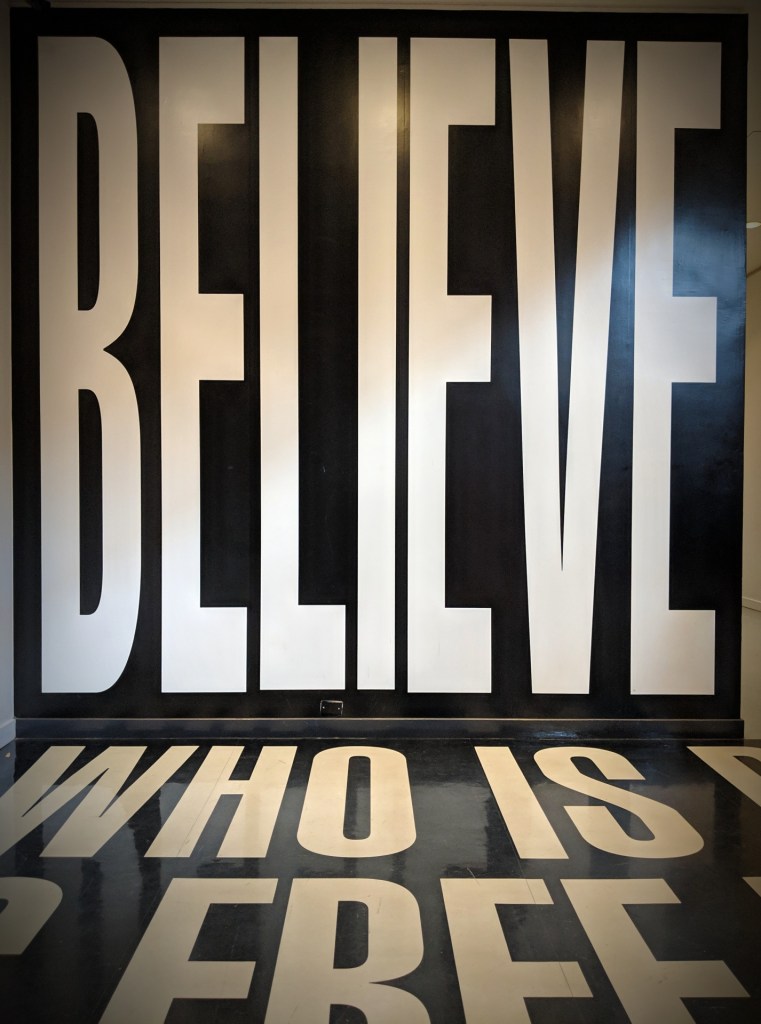

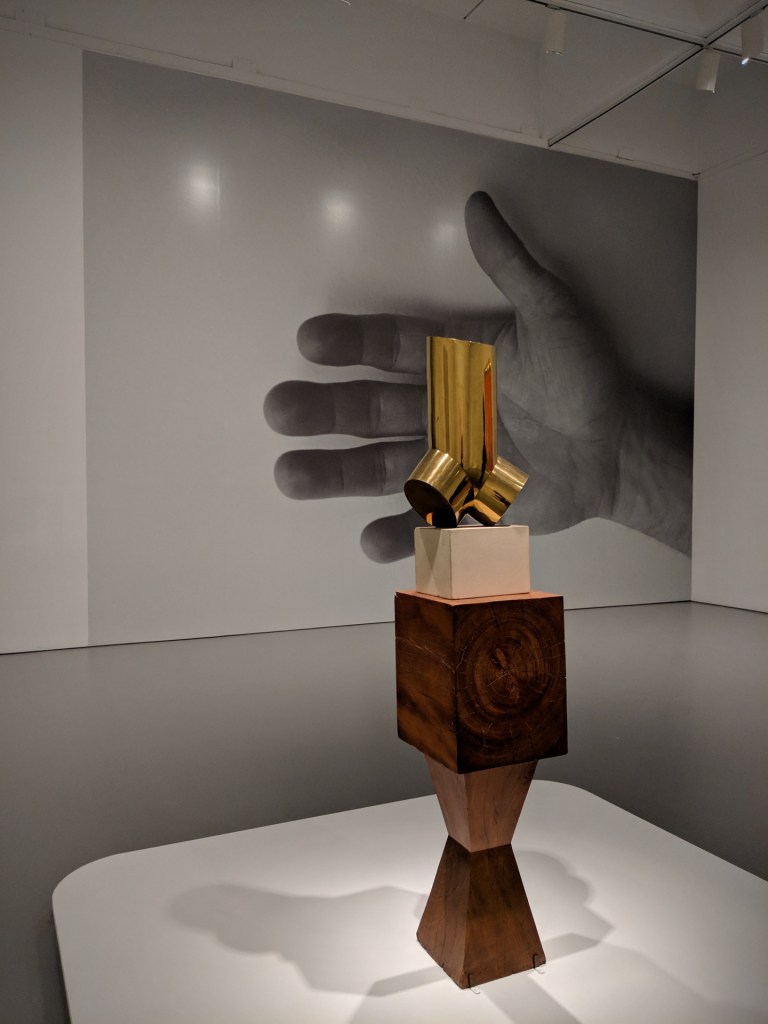
During his relatively brief career, Felix Gonzales-Torres expanded the language of Conceptual art by rethinking the reproduction, circulation, and presentation of artwork. ”Untitled” (For Jeff) belongs to the artist’s Billboard series which consists of works displayed simultaneously in multiple locations around a city. Collectively, the series creates a viewing community that spans several neighbourhoods and demographic groups. Dedicated to Jeff, a healthcare worker who cared for the artist’s dying partner, this particular work publicly addresses the AIDS crisis of the early 1990s.

Hung from a nearly transparent nylon string, the steel disc becomes a mere tool to demarcate the small, blank space beneath it. The artist’s aim is to make the void palpable, to create a presence from absence, and to overcome the materialization of ideas.

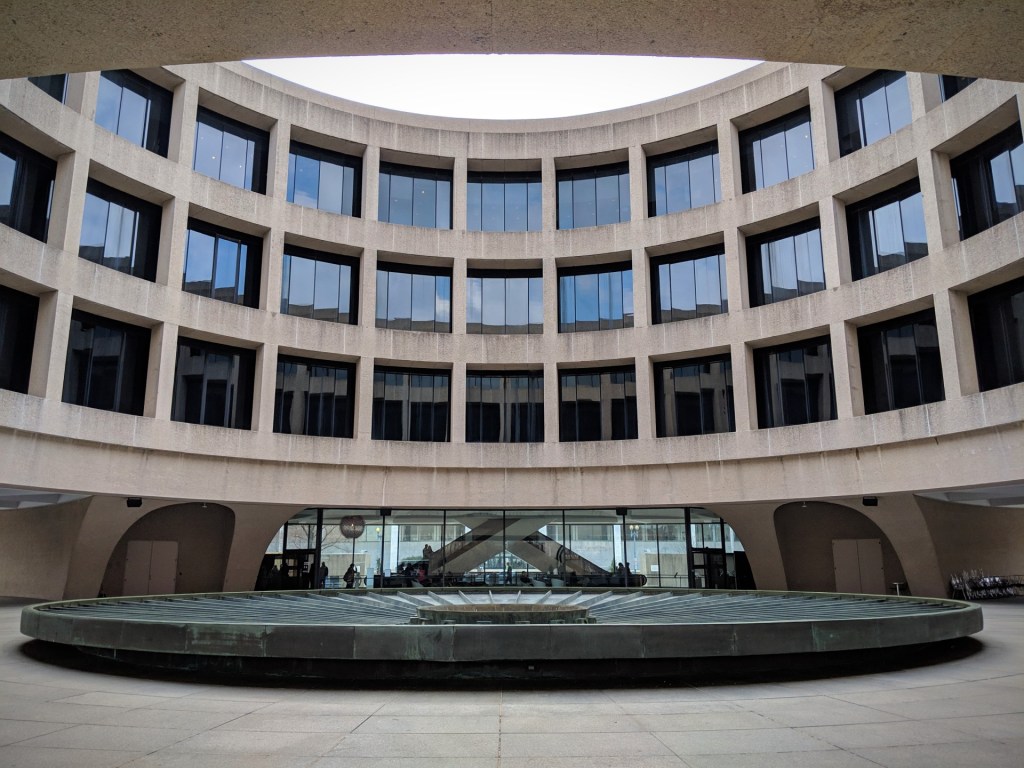
The Hirshhorn, Washington D.C.
March 18th, 2019
U.S. Elections 2020
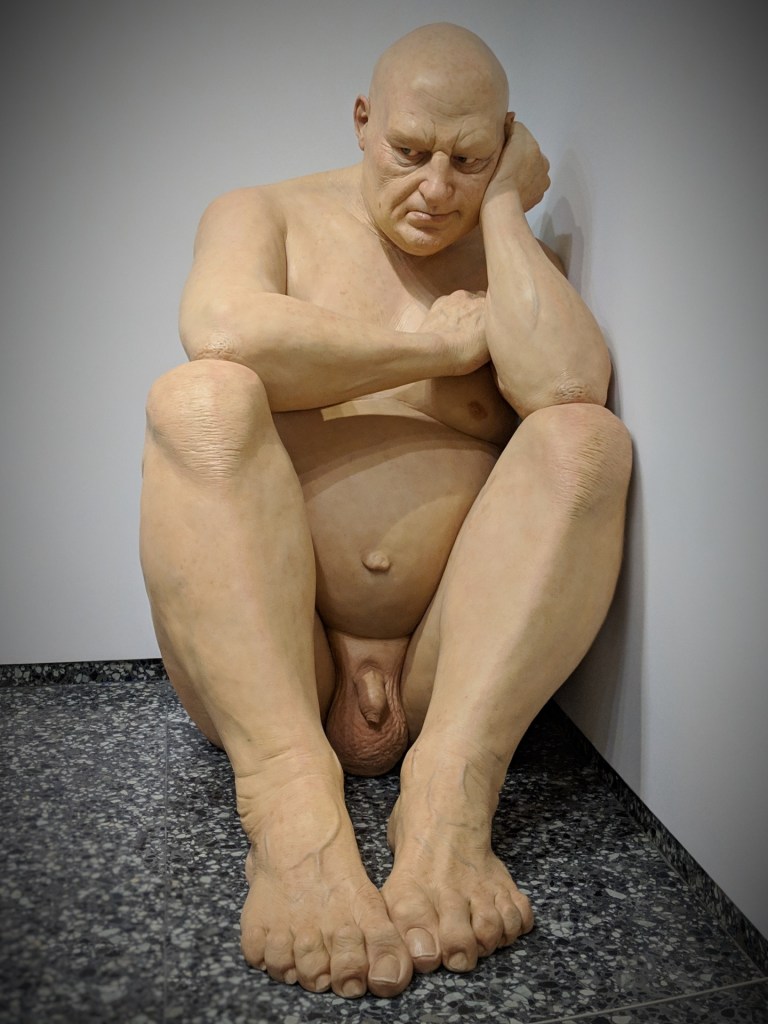


Ron Mueck
Untitled (Big Man), 2000
Pigmented polyester resin on fiberglass
The Hirshhorn, Washington D.C.
March 18th, 2019

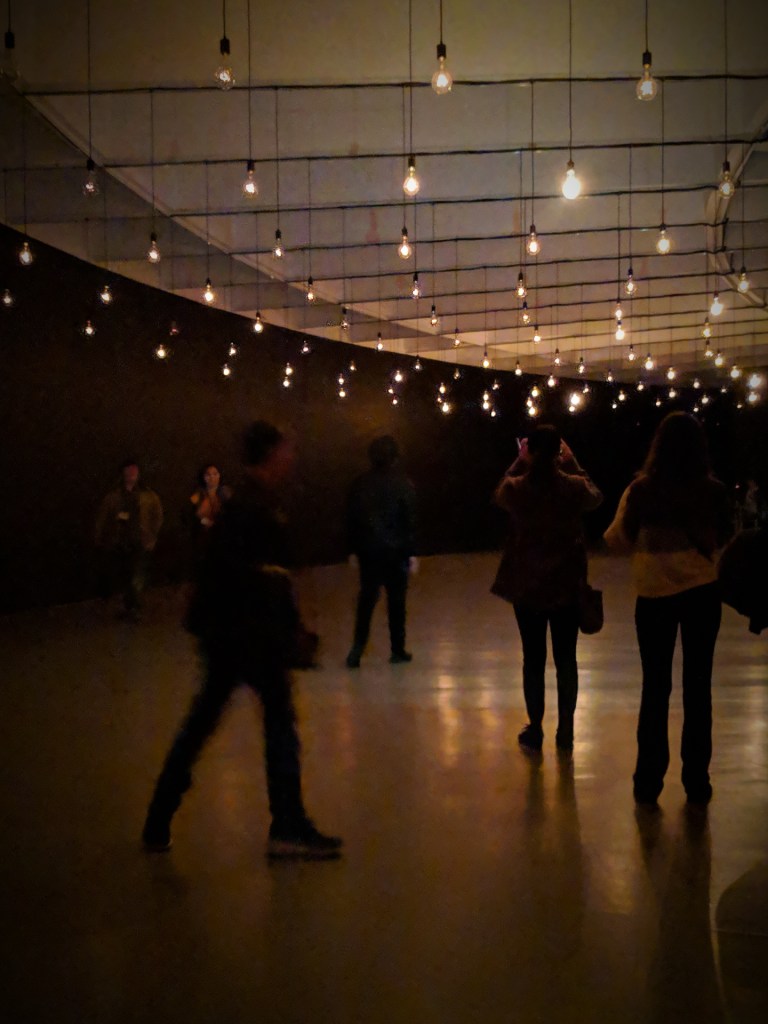
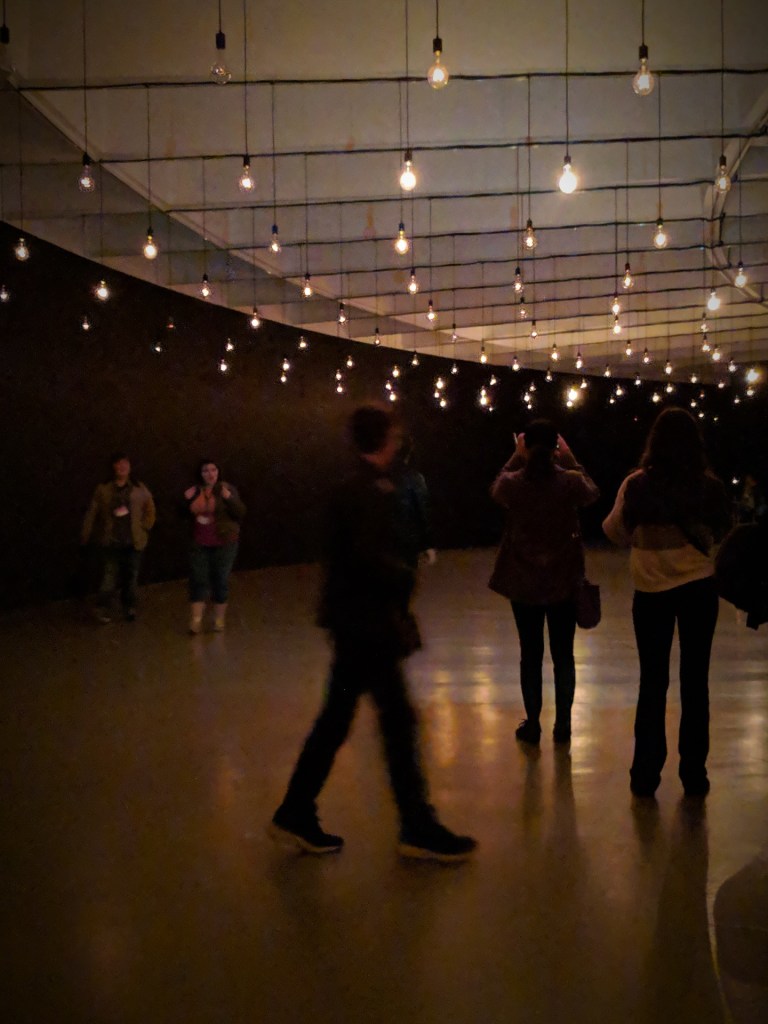
The third work from Rafael Lozano-Hemmer’s Pulse series, the Pulse Room (2006) rounded out the exhibition, featuring hundreds of clear, incandescent light bulbs hanging from the ceiling in even rows, pulsing with the heartbeats of past visitors. Visitors could add their heartbeat to the installation by touching a sensor, which transmitted the pulse to the first bulb. Additional heartbeats continued to register on the first bulb, advancing earlier recordings ahead one bulb at a time. The sound of the collected heartbeats joined the light display to amplify the physical impact of the installation.
(More about the artist and his works in the last two posts).
Pulse was on view at The Hirshhorn from November 2018 to April 2019.
March 18th, 2019

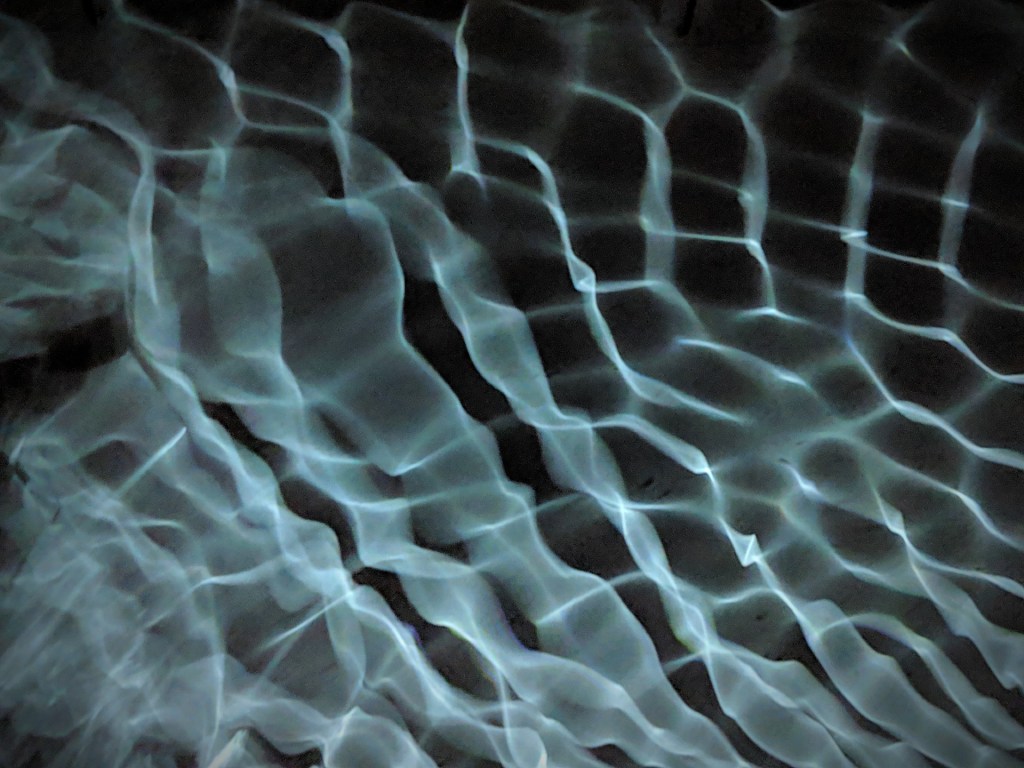

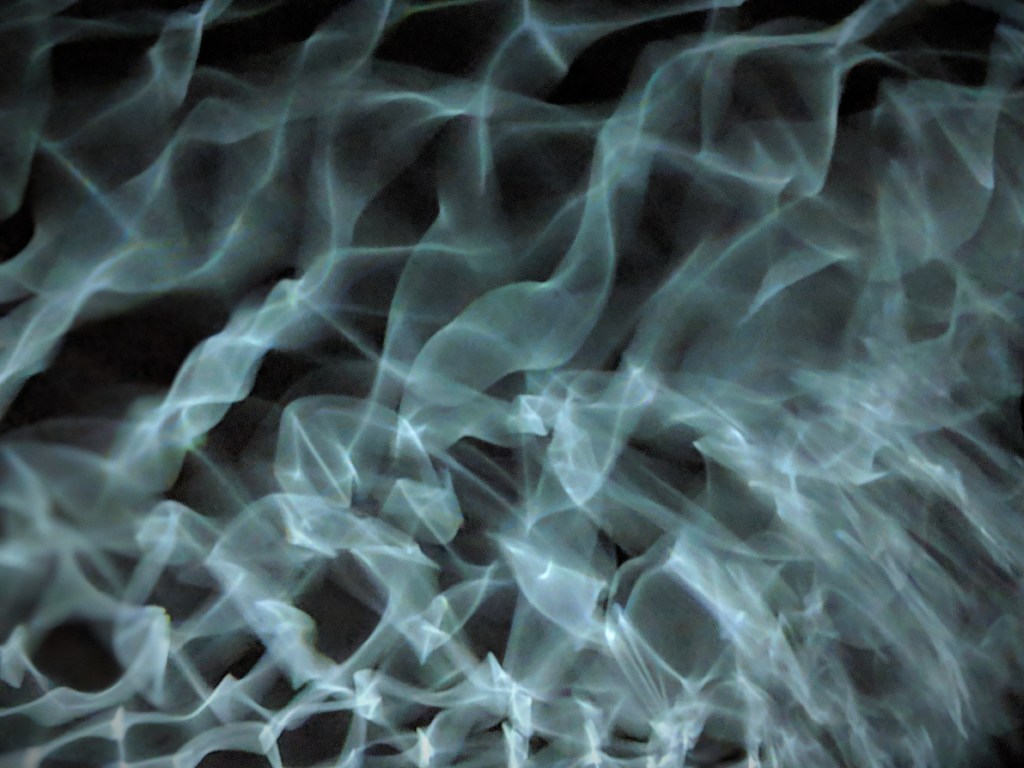

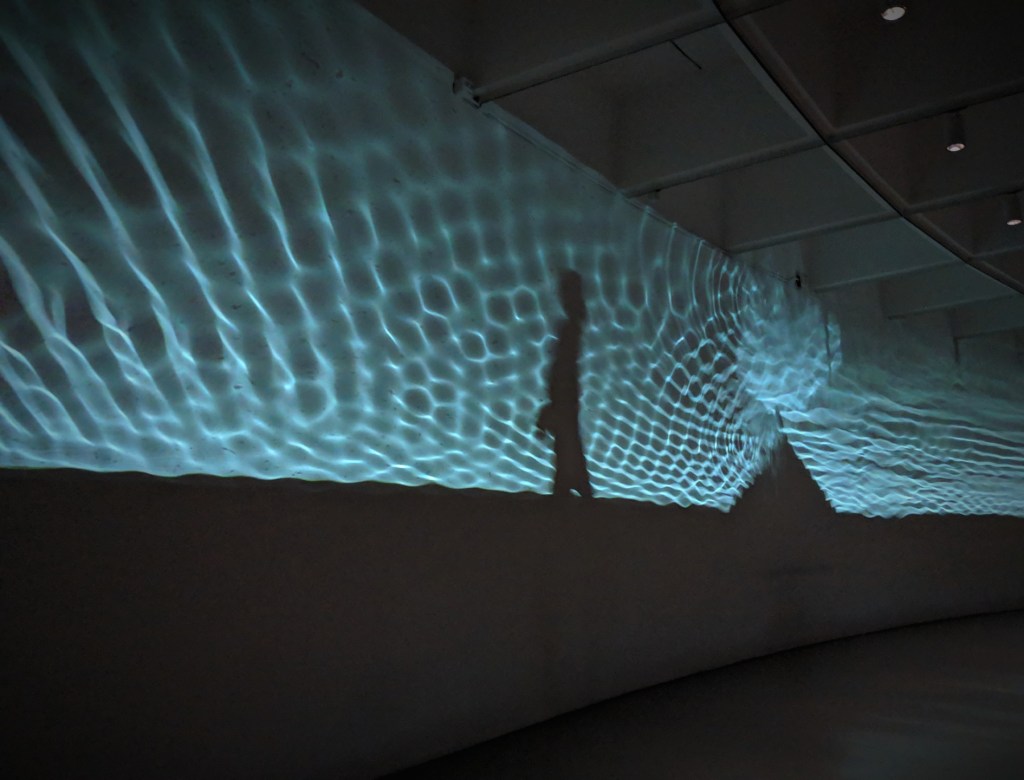
The second work from Rafael Lozano-Hemmer’s Pulse series, Pulse Tank (2008), which premiered at Prospect.1, New Orleans Biennial, was updated and expanded for the exhibition at the Hirshhorn. Sensors turned viewers’ pulse into ripples on illuminated water tanks, creating ever-changing patterns that were reflected on the gallery walls.
(More about the artist and his works in yesterday’s post).
Pulse was on view at The Hirshhorn from November 2018 to April 2019.
March 18th, 2019


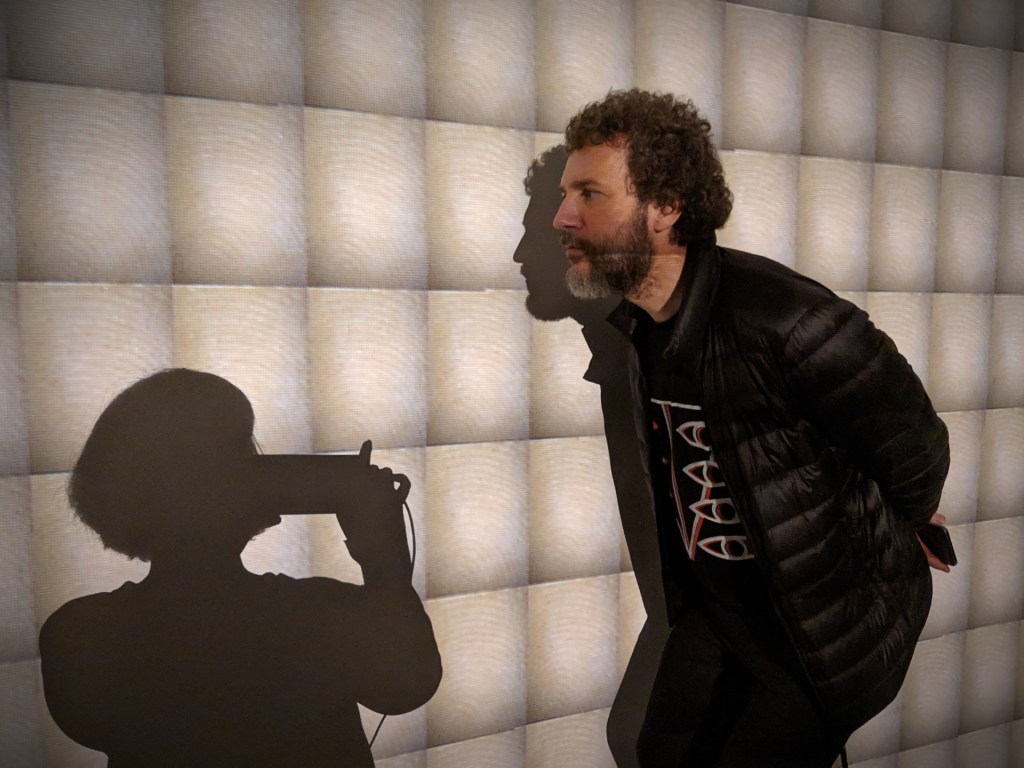
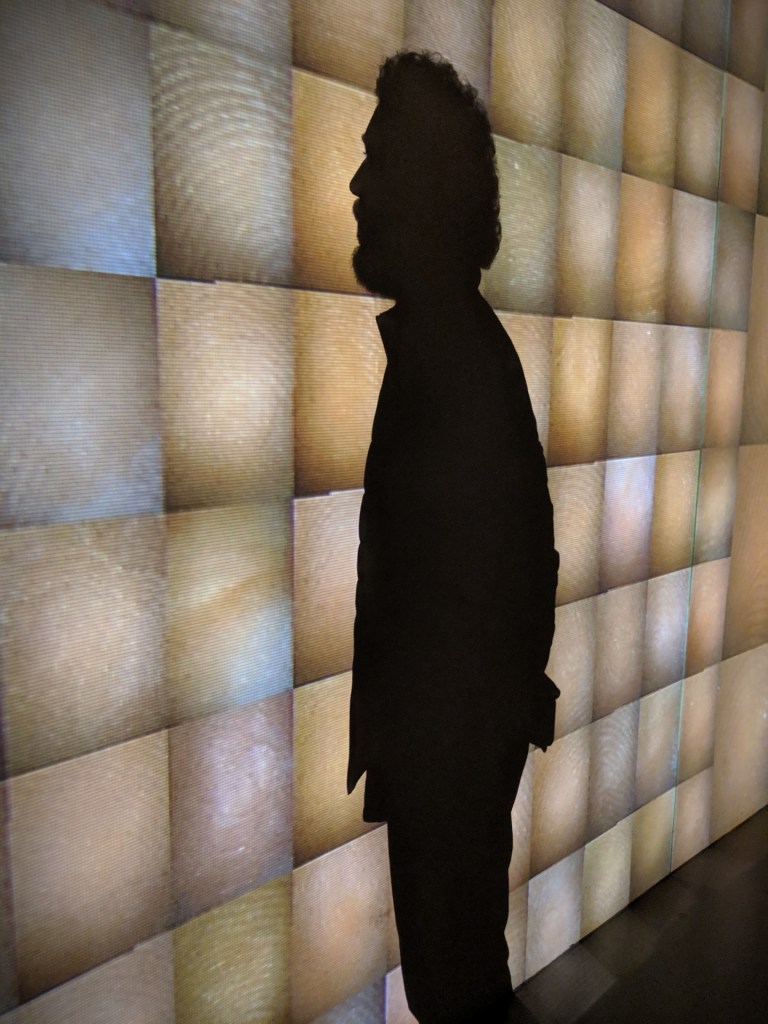

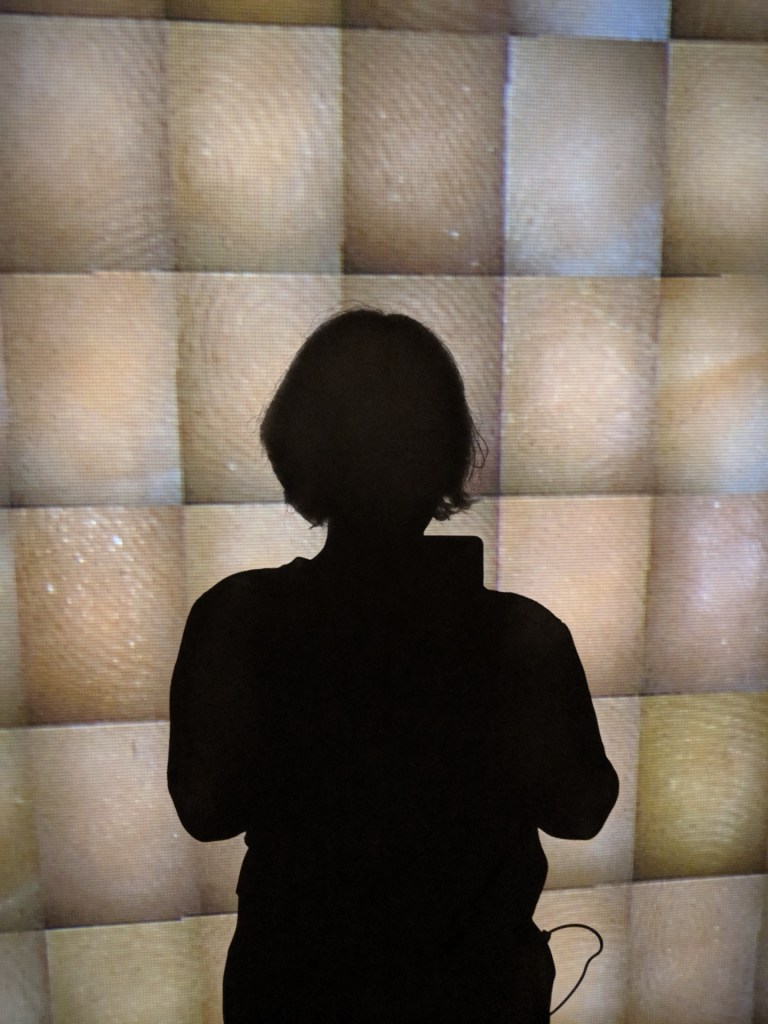
Playing with Rafael Lozano-Hemmer’s artwork.
In the Hirshhorn’s largest interactive technology exhibition to date, three major installations from Rafael Lozano-Hemmer’s Pulse series came together for the artist’s DC debut. A Mexican Canadian artist known for straddling the line between art, technology, and design, Lozano-Hemmer filled the Museum’s entire Second Level with immersive environments that used heart-rate sensors to create kinetic and audiovisual experiences from visitors’ own biometric data. Over the course of six months, Pulse animated the vital signs of hundreds of thousands of participants.
With Lozano-Hemmer’s trademark sensitivities to audience engagement and architectural scale, each installation captured biometric signatures and visualized them as repetitive sequences of flashing lights, panning soundscapes, rippling waves, and animated fingerprints. These intimate “portraits,” or “snapshots,” of electrical activity were then added to a live archive of prior recordings to create an environment of syncopated rhythms. At a time when biometry is increasingly used for identification and control, this data constituted a new way of representing both anonymity and community.
The exhibition began with Pulse Index (2010), which was presented at its largest scale to date. The work recorded participants’ fingerprints at the same time that it detected their heart rates, displaying data from the last 10,000 users on a scaled grid of massive projections.
Pulse was on view at The Hirshhorn from November 2018 to April 2019.
March 18th, 2019
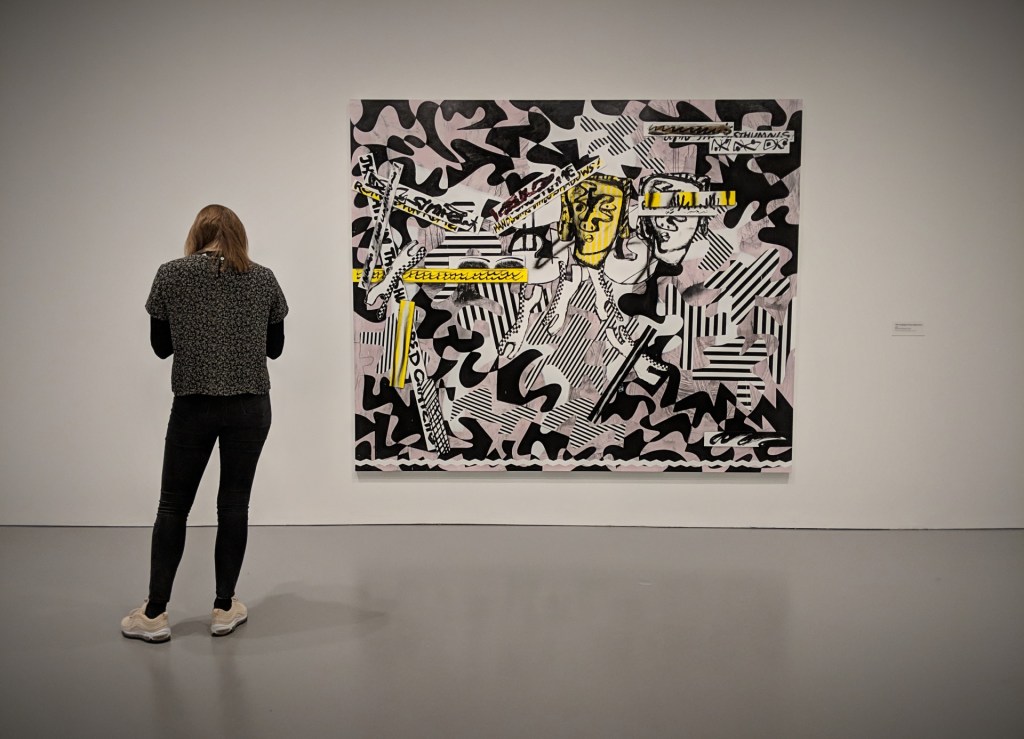
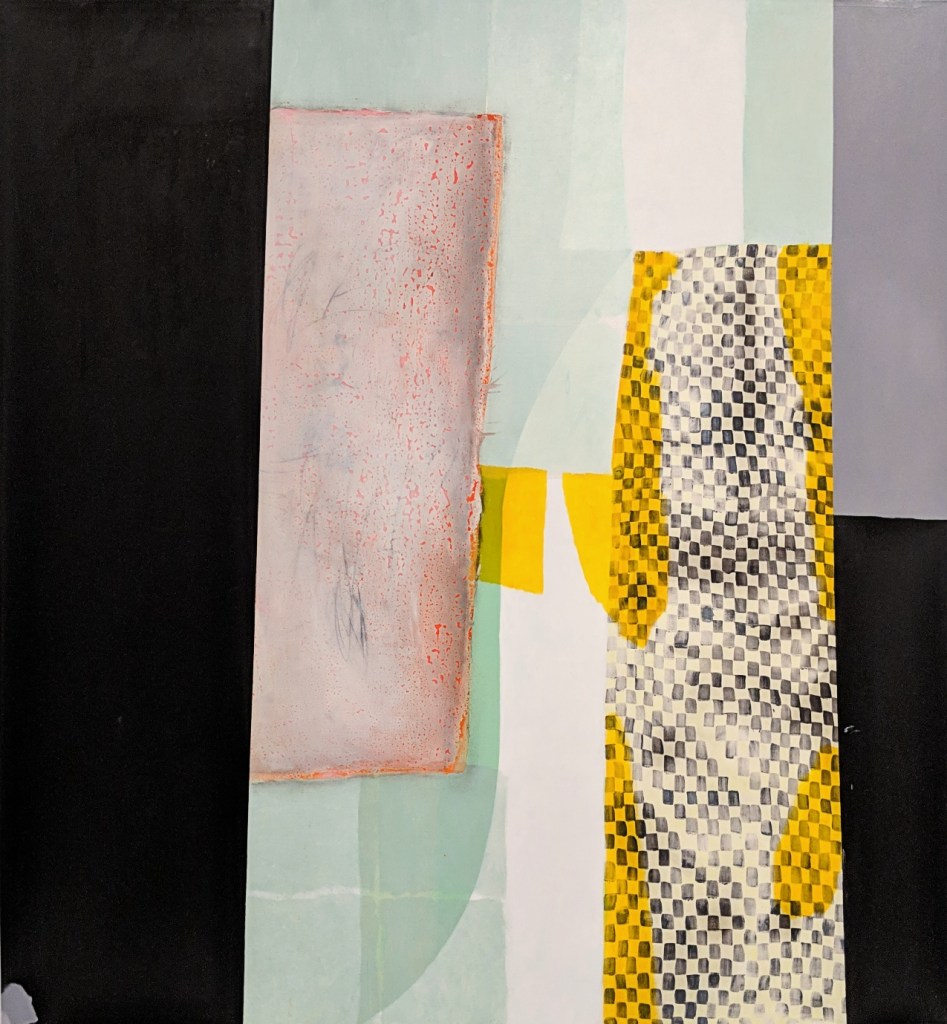
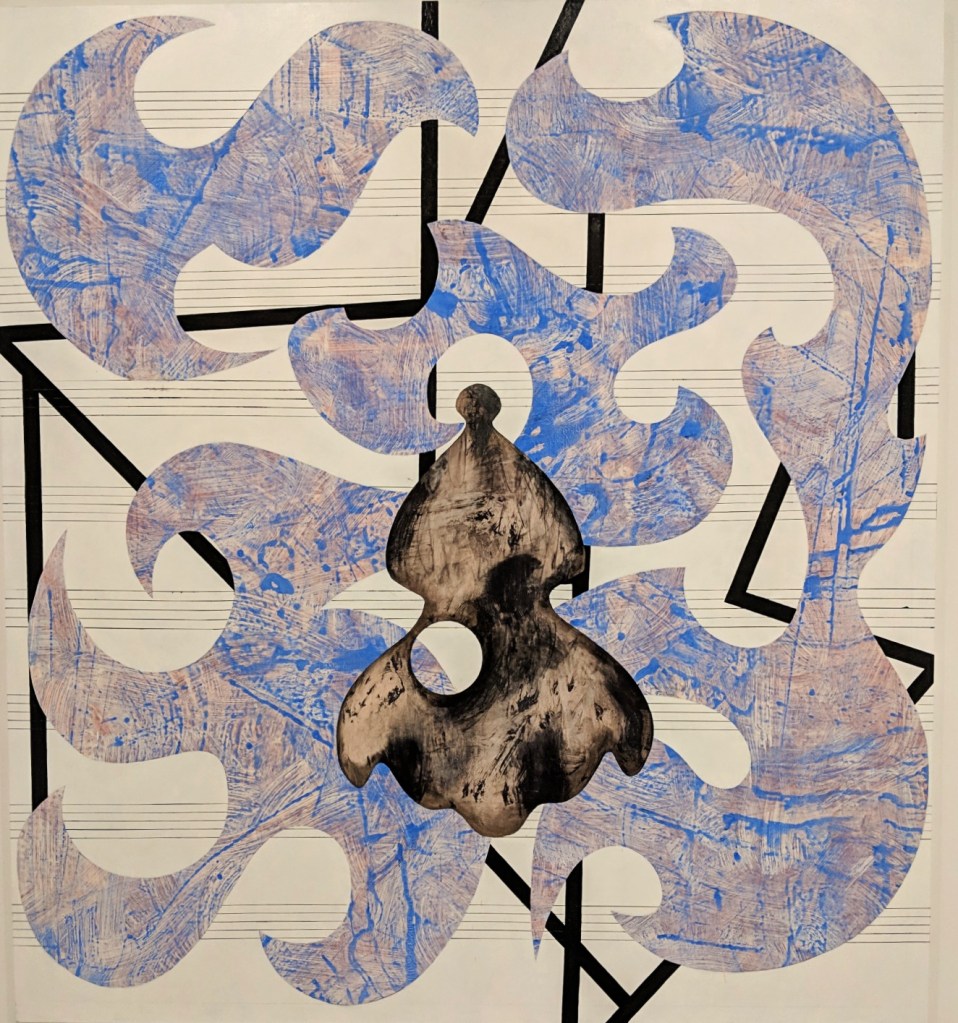
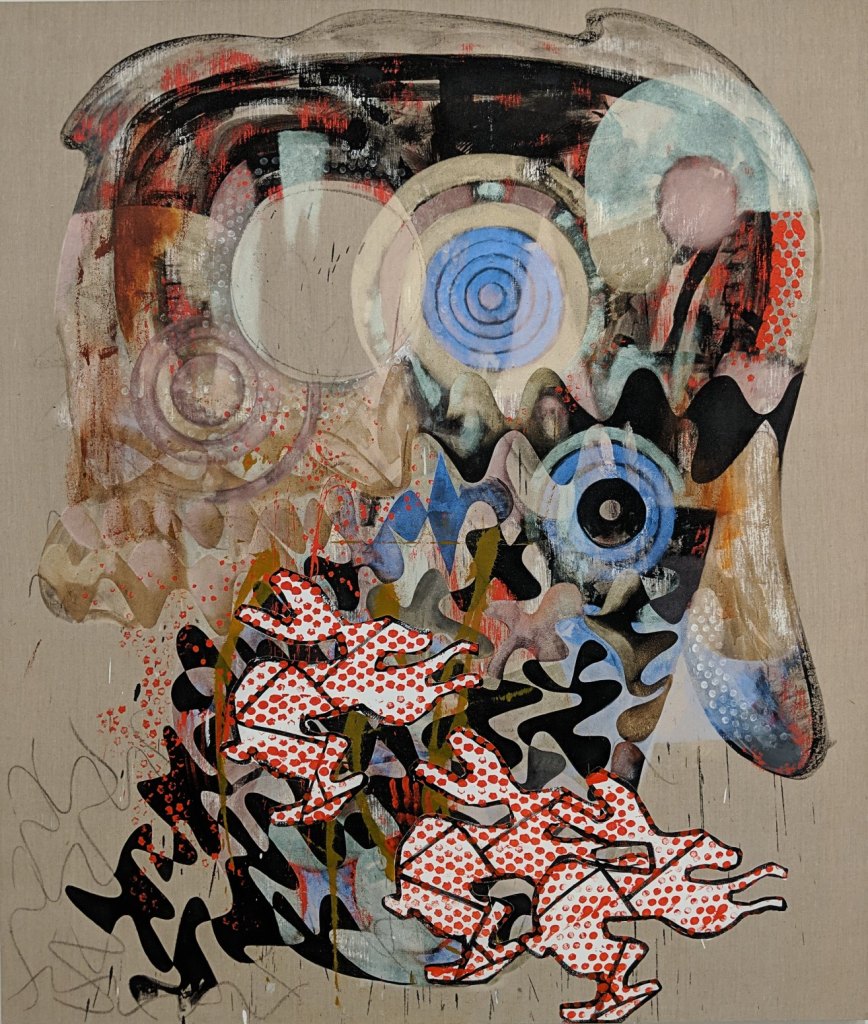
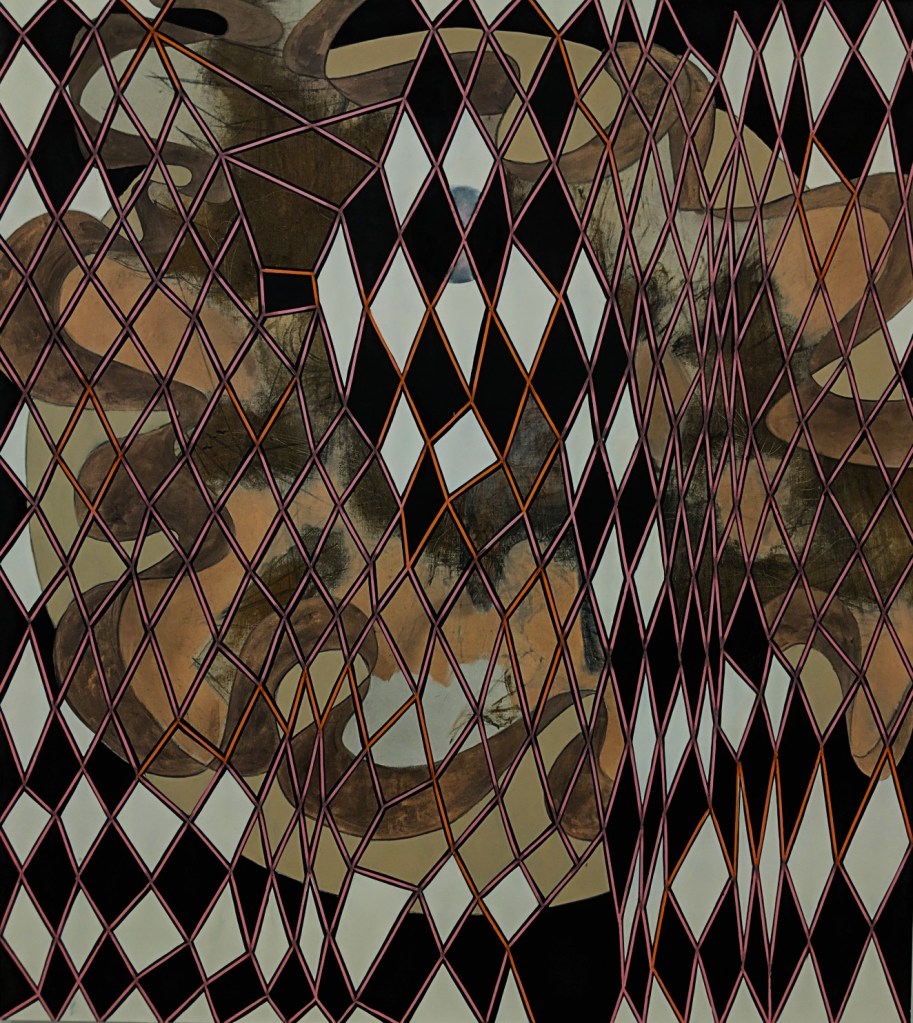
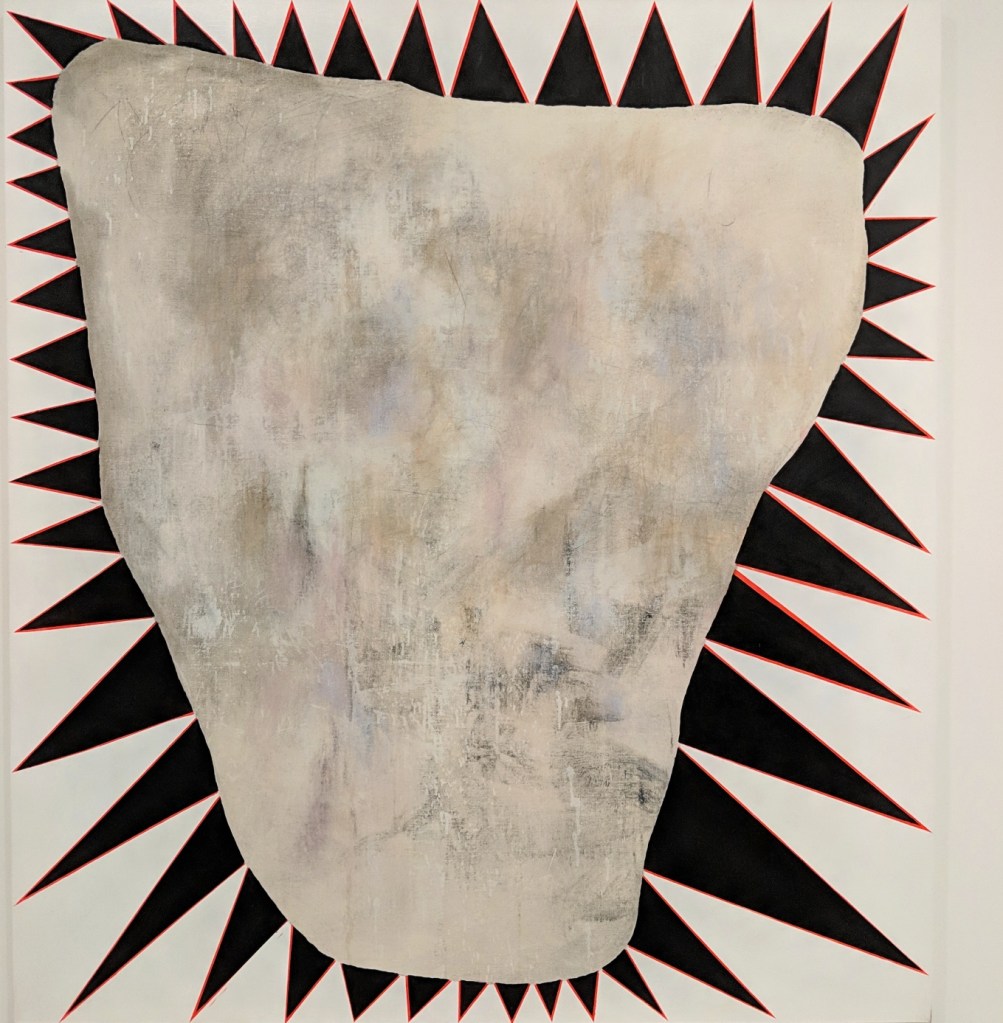
The largest US museum survey of this pioneering artist to date, Charline von Heyl: Snake Eyes featured more than thirty large-scale paintings that revealed the artist’s considerable influence in the field of contemporary art.
One of the most inventive artists working today, von Heyl has earned international acclaim for continually rethinking the possibilities of contemporary painting. Her cerebral yet deeply visceral artworks upend longstanding assumptions about composition, beauty, and narrative. Drawing inspiration from a vast and surprising array of sources—including literature, pop culture, metaphysics, and personal history—von Heyl creates paintings that are seemingly familiar yet impossible to classify, offering, in her words, “a new image that stands for itself as fact.”
In studios in New York and Marfa, Texas, von Heyl combines a rigorous, process-based practice that demands each painting develop through the act of painting itself. The spellbinding results invite viewers to explore a unique visual language that is both exuberant and insistent.
Snake Eyes ran at The Hirshhorn from November 2018 to April 2019.
March 18th, 2019

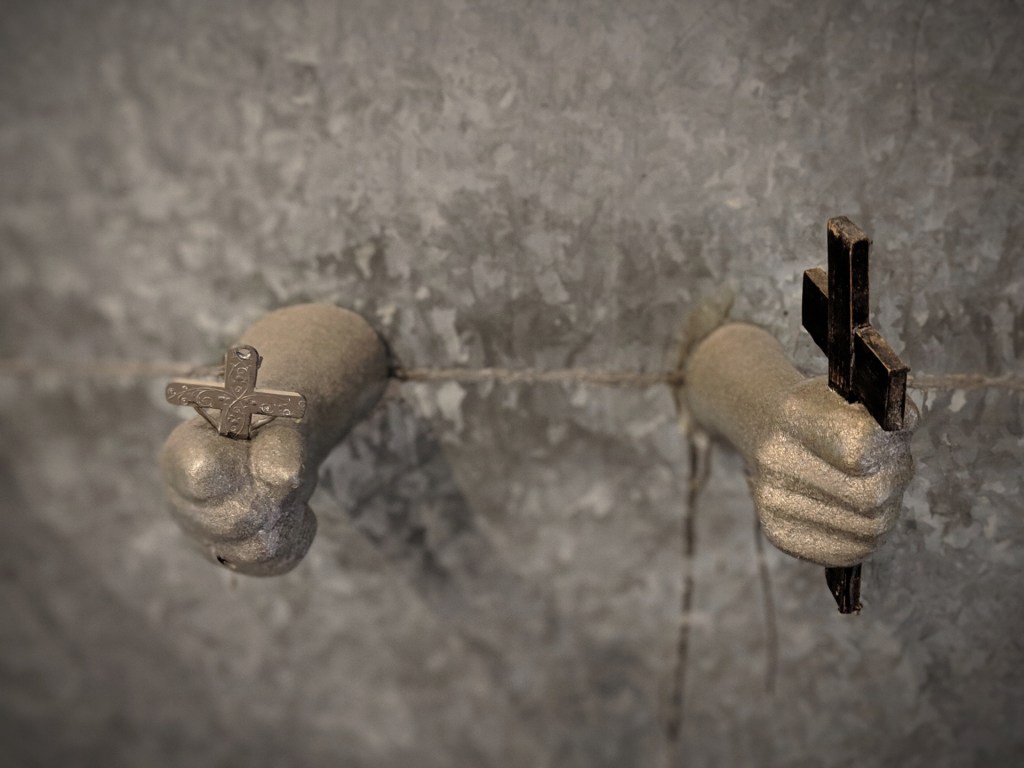


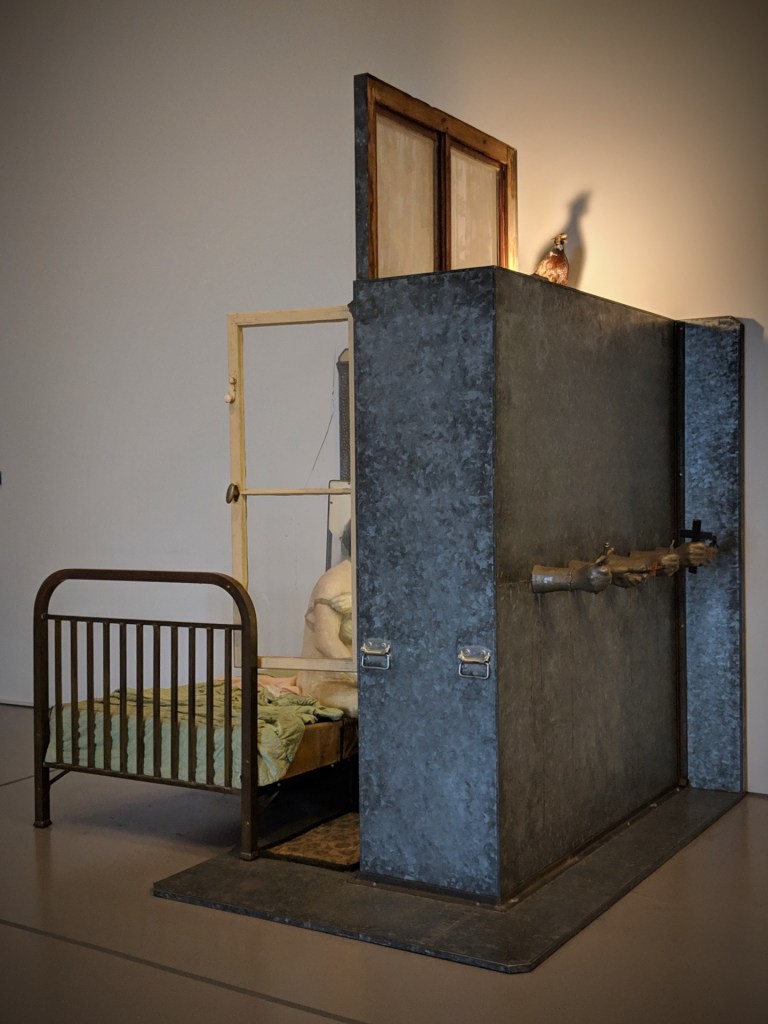
One of the first collaborations between the two artists, In The Infield Was Patty Peccavi depicts a pregnant woman looking through a window lit by a high-intensity headlamp, which spirals in front of her. Described by Nancy Reddin Kienholz as addressing religious attitudes toward birth control, the woman looking into a void evokes hope, despair, and anxiety, even as she faces a future of limited choices.
The Hirshhorn, Washington D.C.
March 18th, 2019
subjective worldview
Actor, writer, cook and author
Travel experiences & Strasbourg city guide
Writer
joy, happiness, travel, adventure, gratitude
"Rêve onirique & Bulle d'évasion"
makes pretty things on paper
This WordPress.com site is Pacific War era information
Welcome to my curious world of words....
Photographs, music and writing about daily life. Contact: elcheo@swcp.com
Free listening and free download (mp3) chill and down tempo music (album compilation ep single) for free (usually name your price). Full merged styles: trip-hop electro chill-hop instrumental hip-hop ambient lo-fi boombap beatmaking turntablism indie psy dub step d'n'b reggae wave sainte-pop rock alternative cinematic organic classical world jazz soul groove funk balkan .... Discover lots of underground and emerging artists from around the world.
A 365 analogue photography project
Barcelona's Multiverse | Art | Culture | Science
Een digitaal atelier aan de (zee)slag.
‘Doodling Ambiguity’s in Ink.’
Miscellaneous photography
Glimpses along the way on a journey of discovery into symmetry...


 The Humble Fabulist