The Sugar House of El Paso

“You are visiting El Paso…? No one visits El Paso, people come here for work or to catch a flight – no one stays here”… said a man who first came in El Paso thirty years ago!

Where are you from?” People kept asking us, as if tourists are few and far between in this part of the world. The truth is, we didn’t see any either. Maybe because it was foggy and rainy and people stayed inside. Or maybe because we only stayed for a day-and-a-half.

What we did see was a delightful Mexican touch, evident everywhere: the food, the people, the history, the culture.

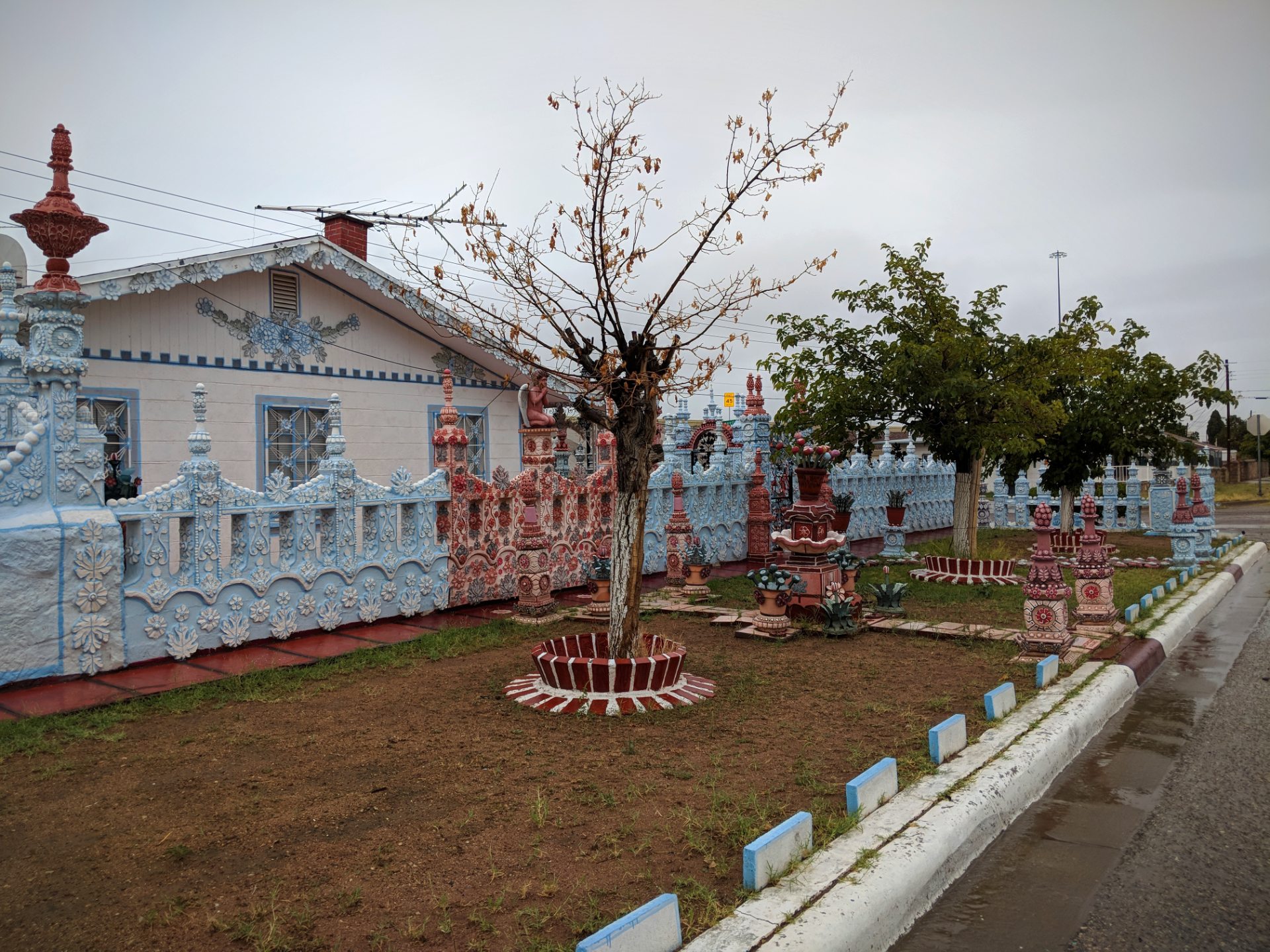
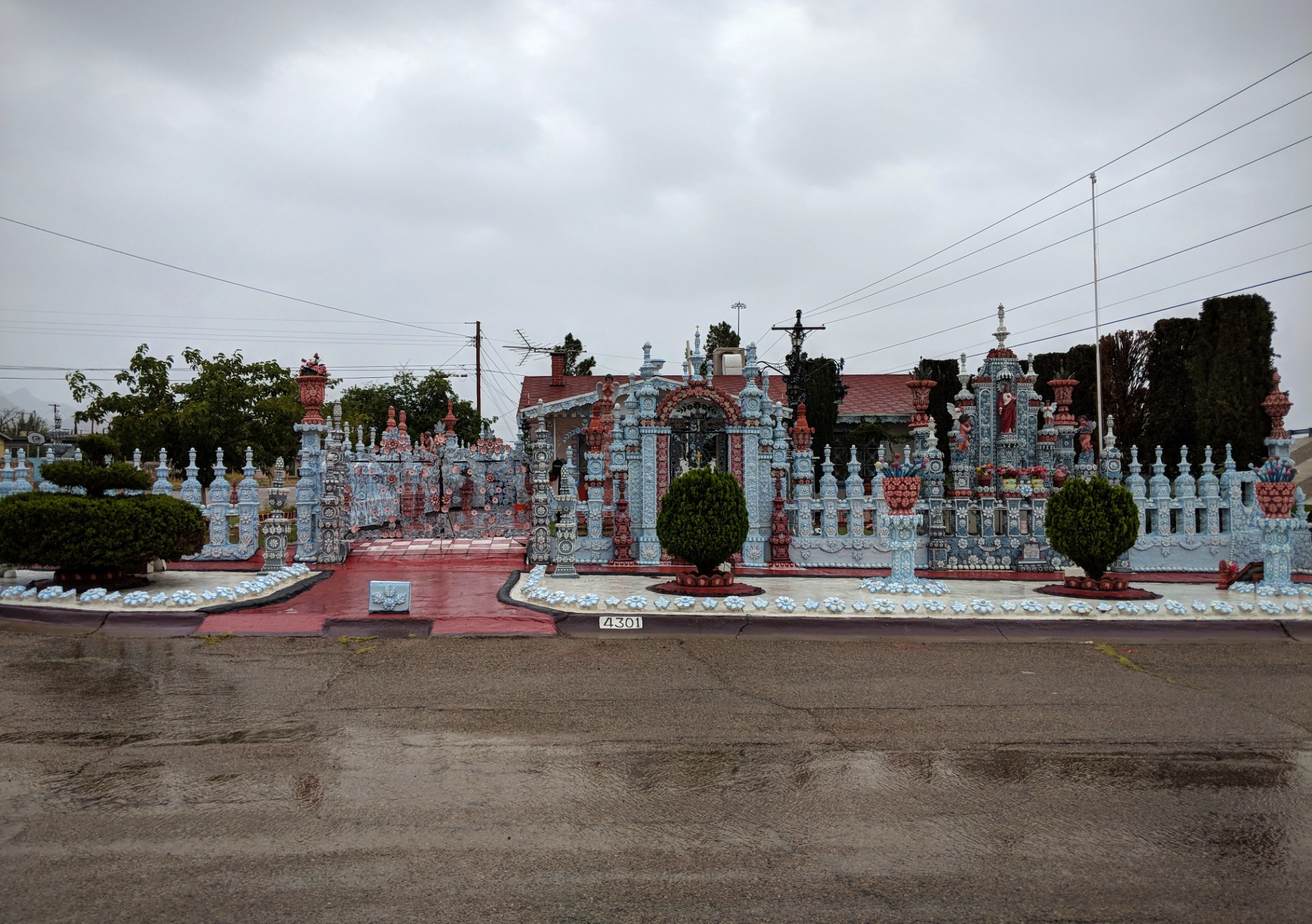
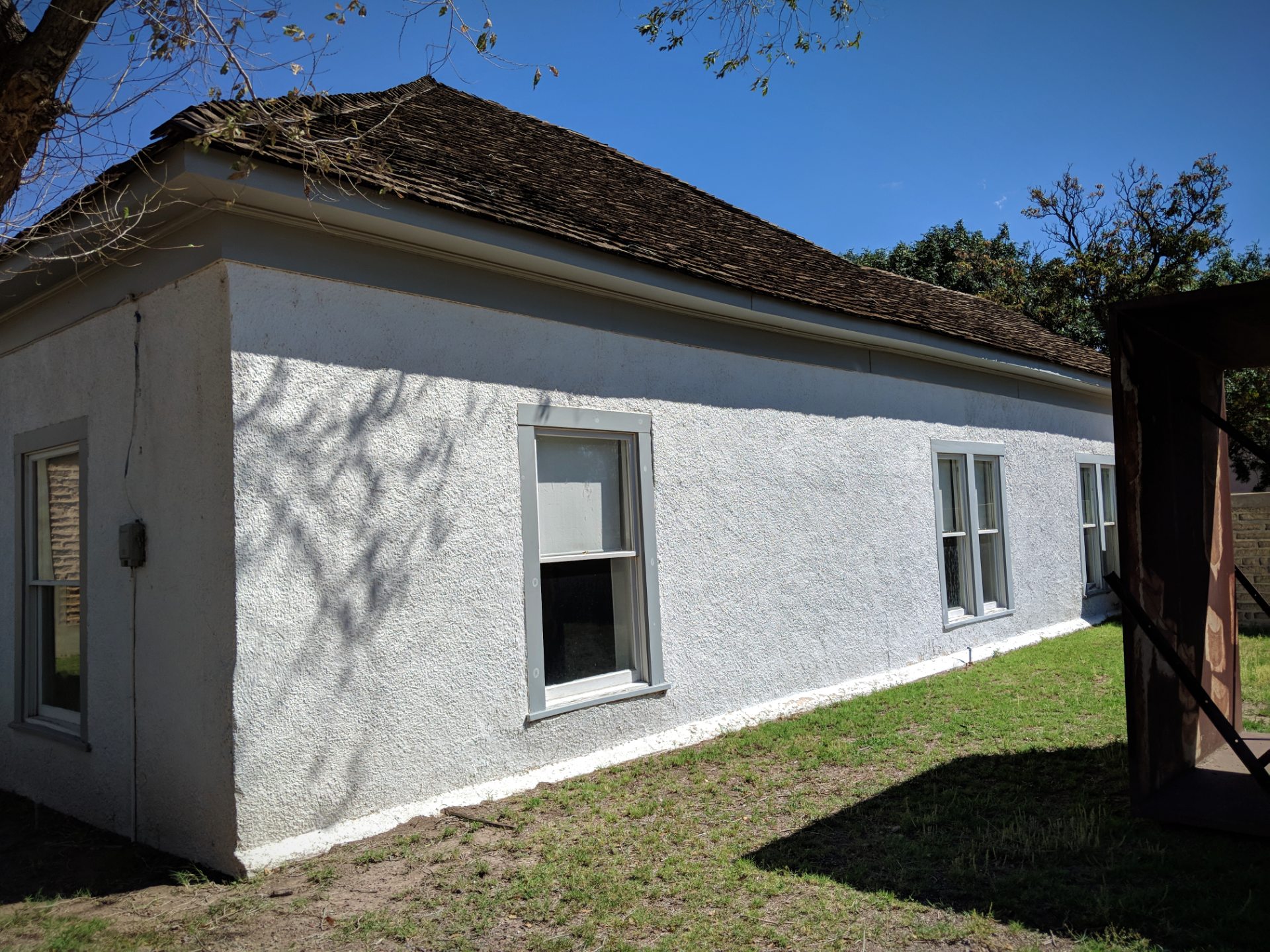
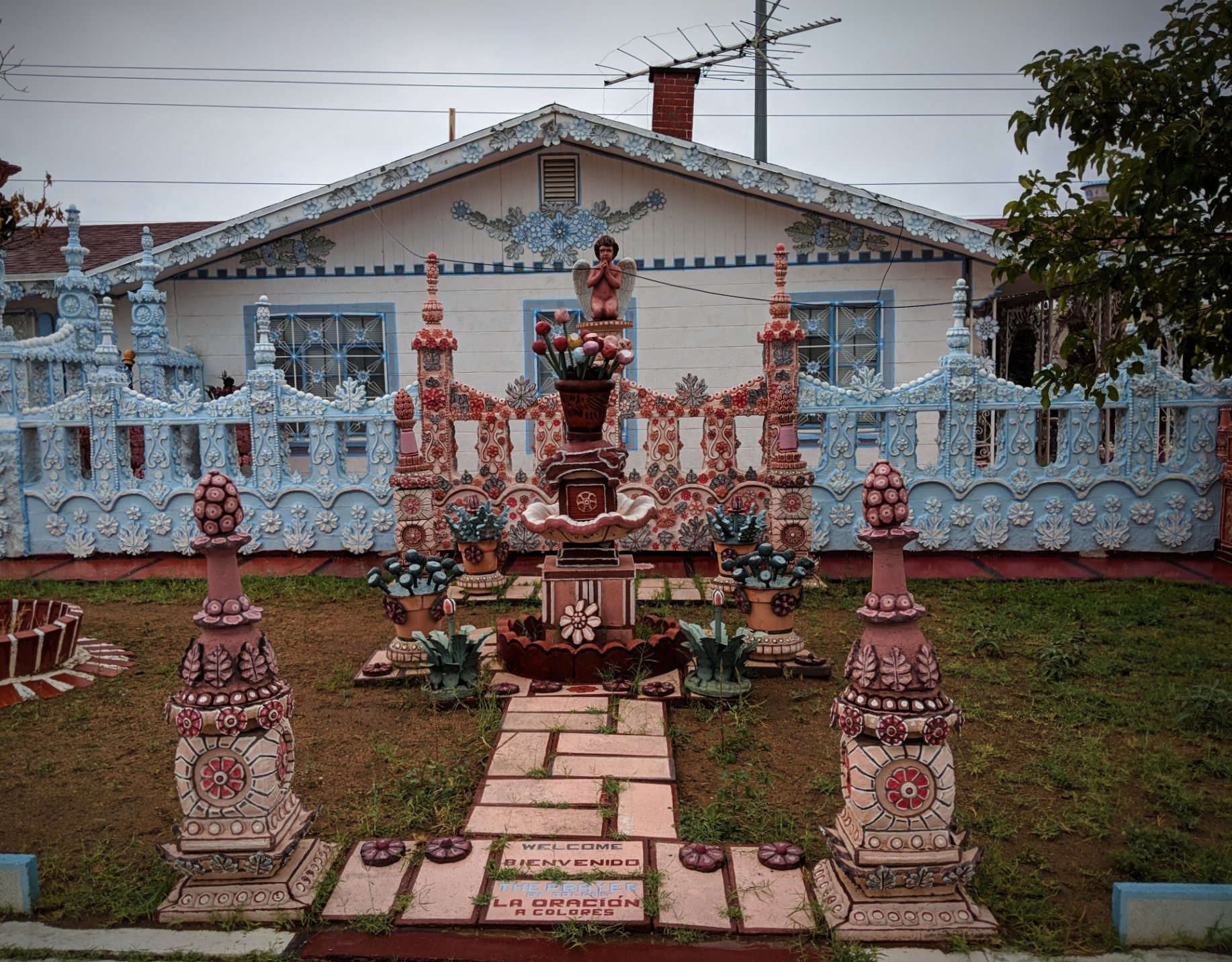
And this house.

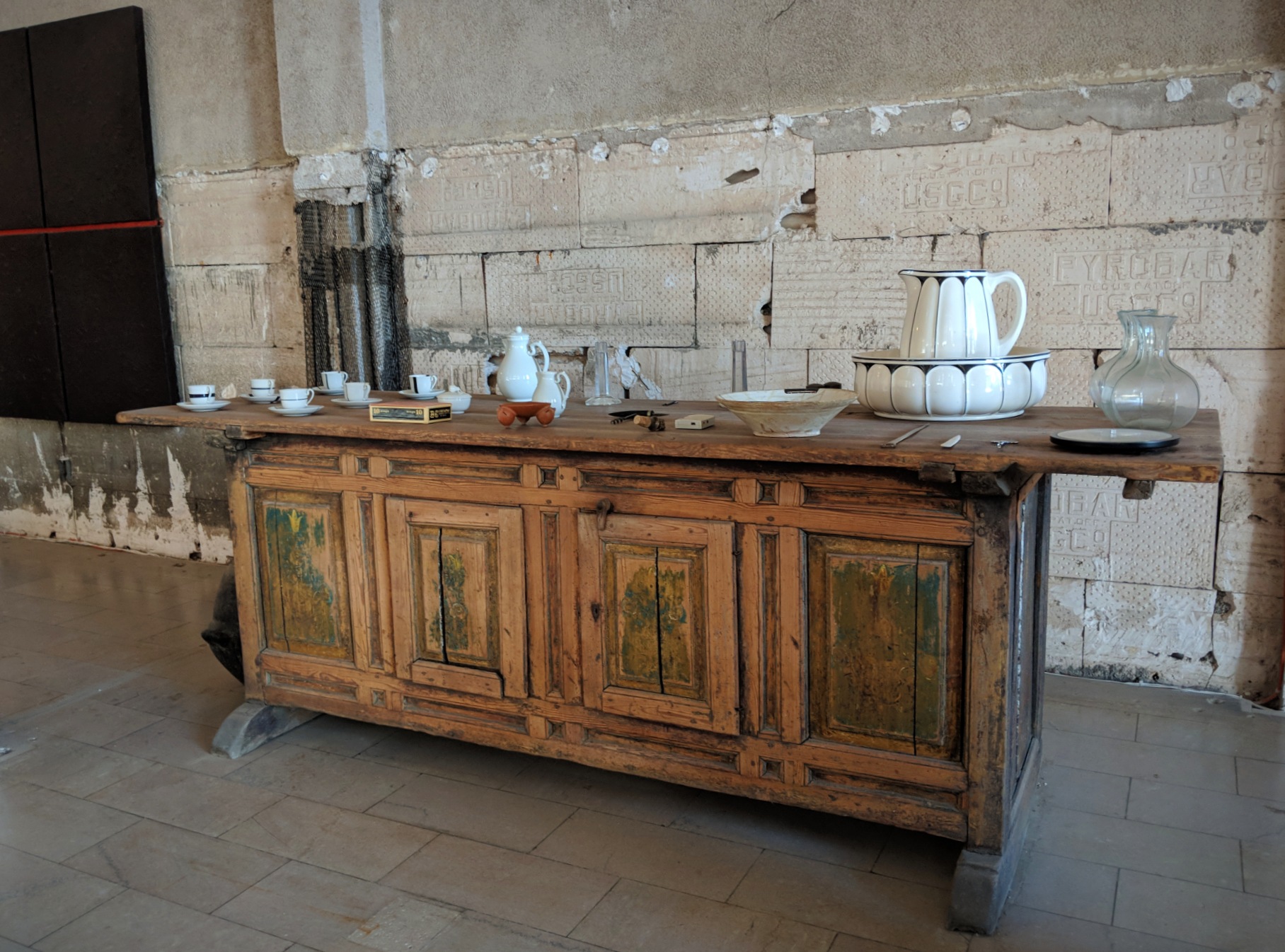
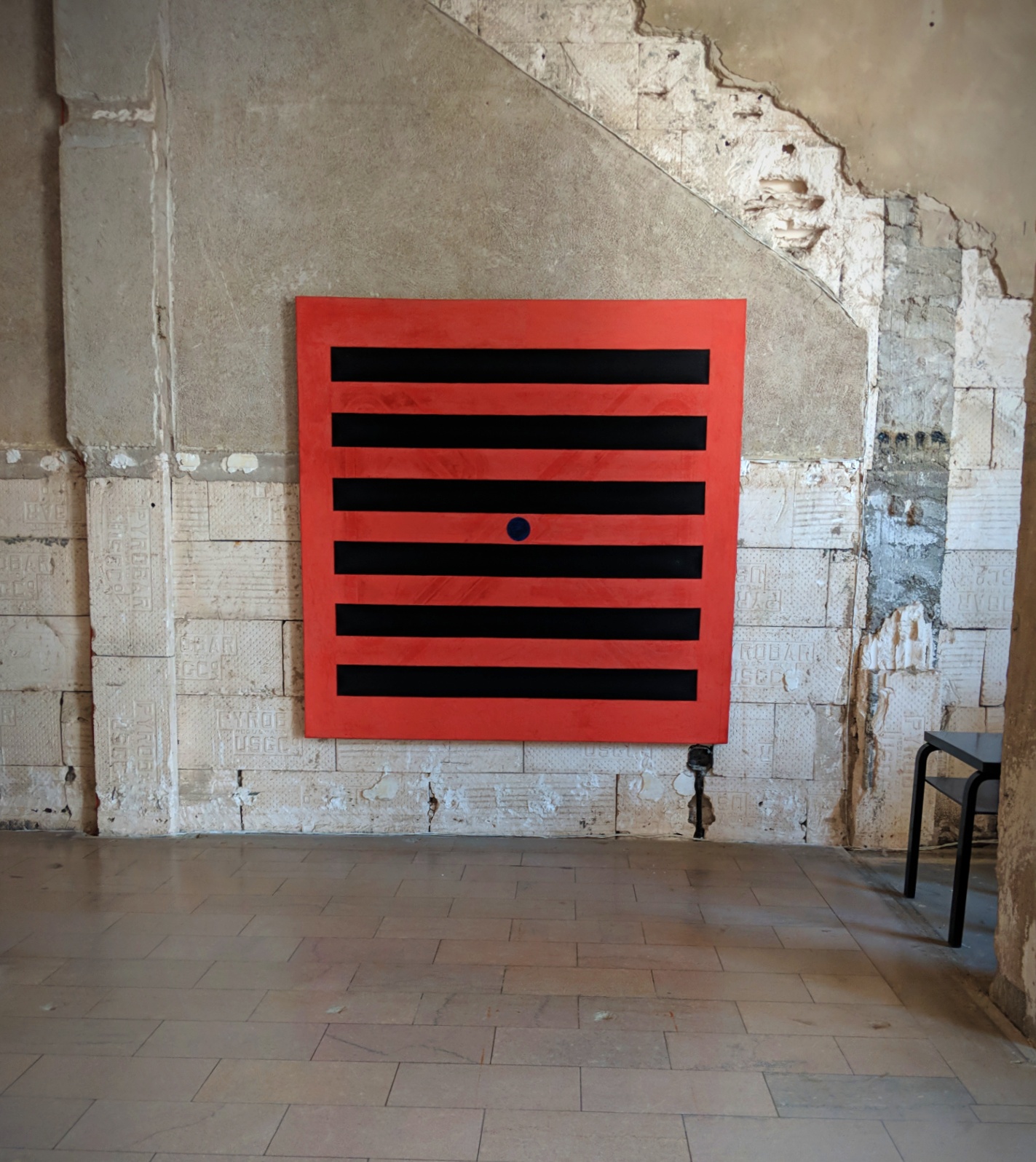
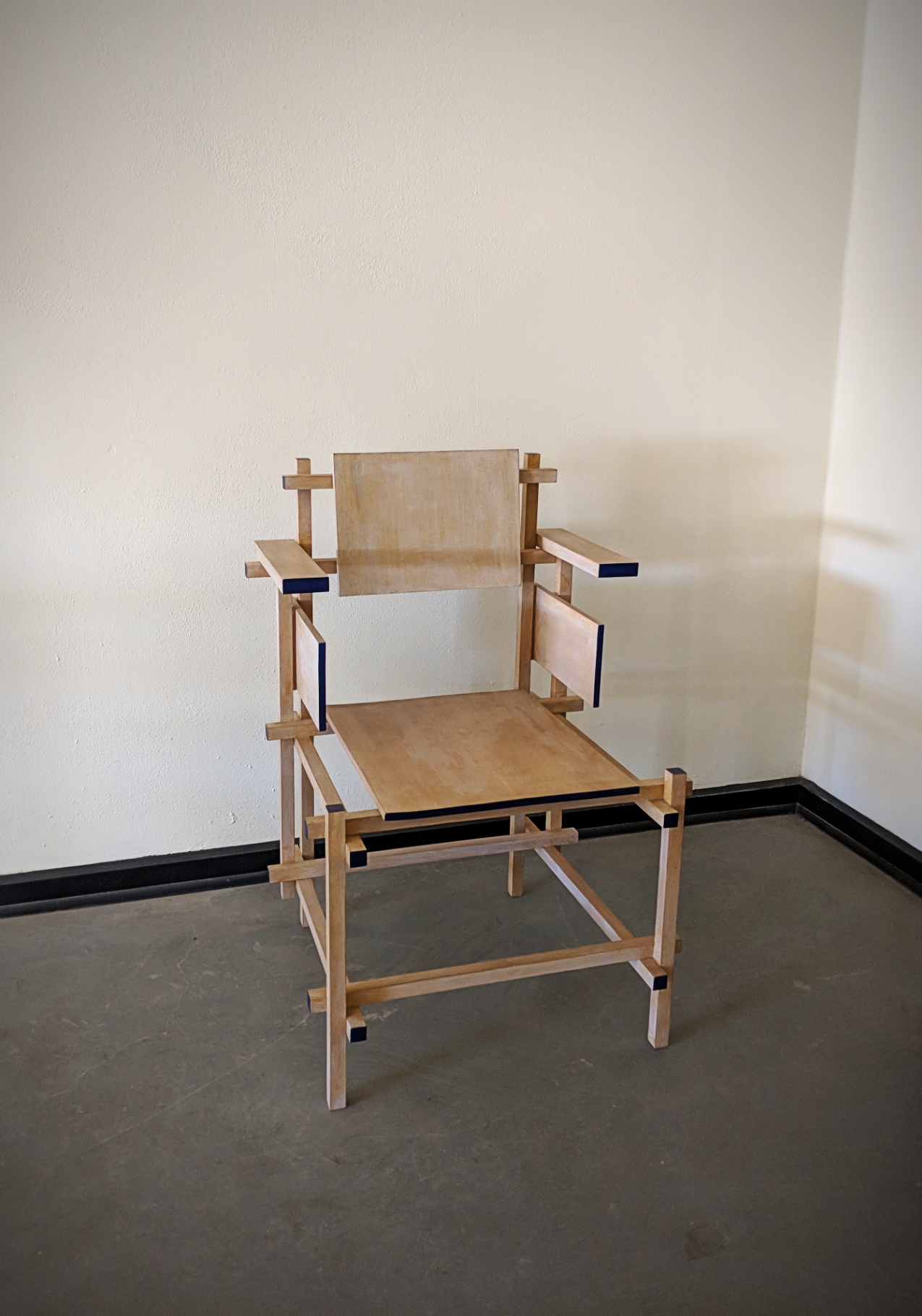
In an otherwise dull neighbourhood, close to a busy highway, Rufino Loya Rivas, a Levi Strauss worker from Mexico and his wife Celia, bought a modest house. Deciding he would add a personal touch, Rivas began to carve and paint these intricate designs that soon surrounded the house, spending twenty five years and hundreds of hours of work and devotion to his project.

Art can be found in the most unexpected places.

El Paso, TX

October 12th, 2018

Truth or Consequences?

I’ll take both…

Starting point for a drive to the Very Large Array or White Sands National Park, this little town in Sierra County, New Mexico, boasts not only the strangest possible name, but also a large number of geothermal hot springs and luxury spas for the weary city people. In fact, the town was called ”Hot Springs” before changing its name to the catchier ”Truth or Consequences”, all because of a radio game!?!

Here is the hard-to-believe-but-true story: ”The city changed its name to “Truth or Consequences” as the result of a radio show contest. In March 1950, Ralph Edwards, the host of the popular NBC Radio quiz show Truth or Consequences, announced that he would air the program on its 10th anniversary from the first town that renamed itself after the show; Hot Springs officially changed its name on March 31, 1950, and the program was broadcast from there the following evening. Edwards visited the town during the first weekend of May for the next 50 years.”

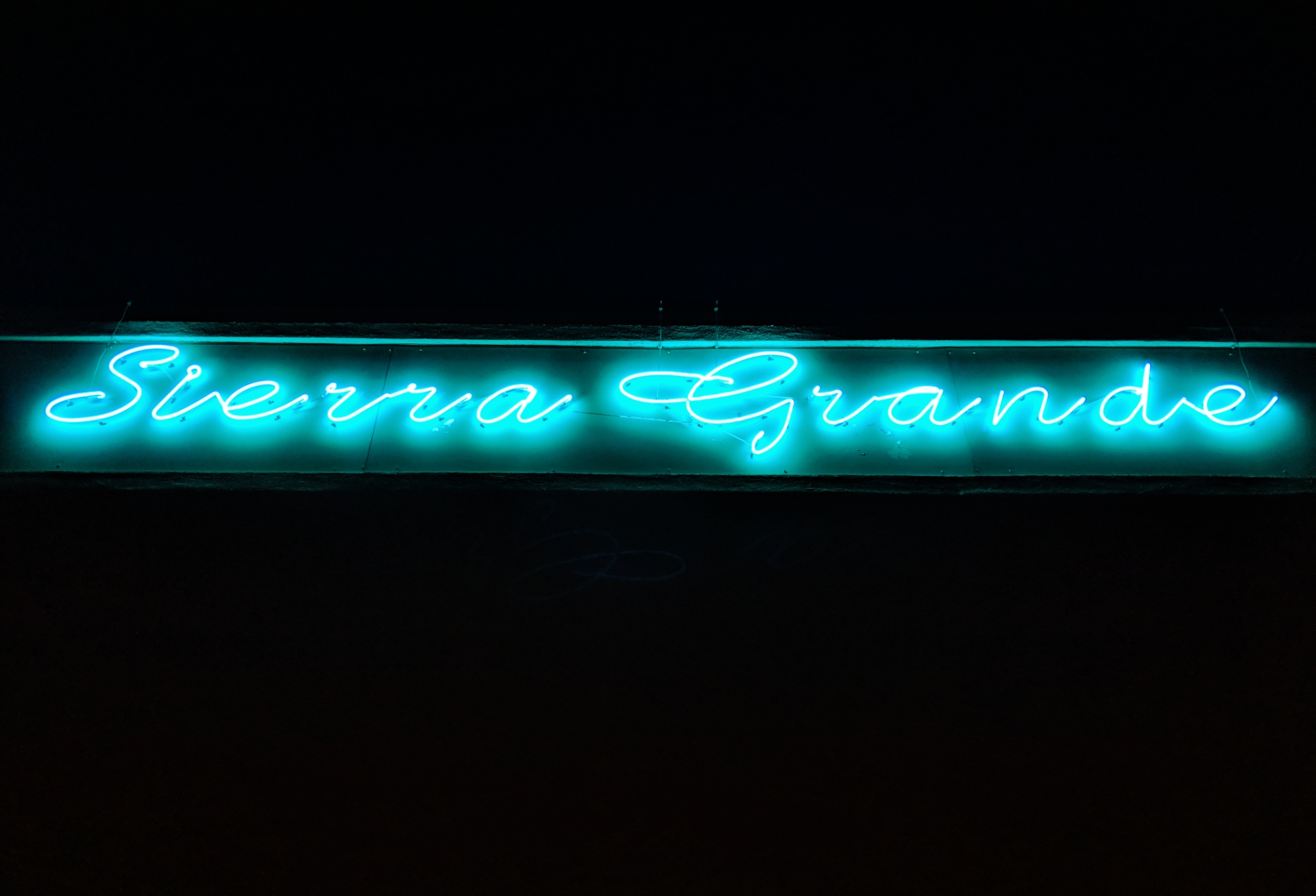
It could have also changed its name to ”Turner Town” judging by the extensive presence of Turner Enterprises, with the Ladder Ranch and Sierra Grande Retreat (where we stayed) dominating the area.

Having had no prior knowledge of the media mogul’s work on the protection and conservation of ecosystems, it was interesting to learn that:

”With approximately two million acres of personal and ranch land, Ted Turner is the second largest individual landholder in North America. Turner lands are innovatively managed to unite economic viability with ecological sustainability. Turner ranches operate as working businesses, relying on bison, hunting and fishing, and ecotourism as principal enterprises. In addition, Turner ranches support many progressive environmental projects including water resource and timber management, and the reintroduction of native species to the land.

Turner Enterprises also manages over 51,000 bison across the various Turner ranches.”*

*The ranges span two million acres in nine states and in Argentina.

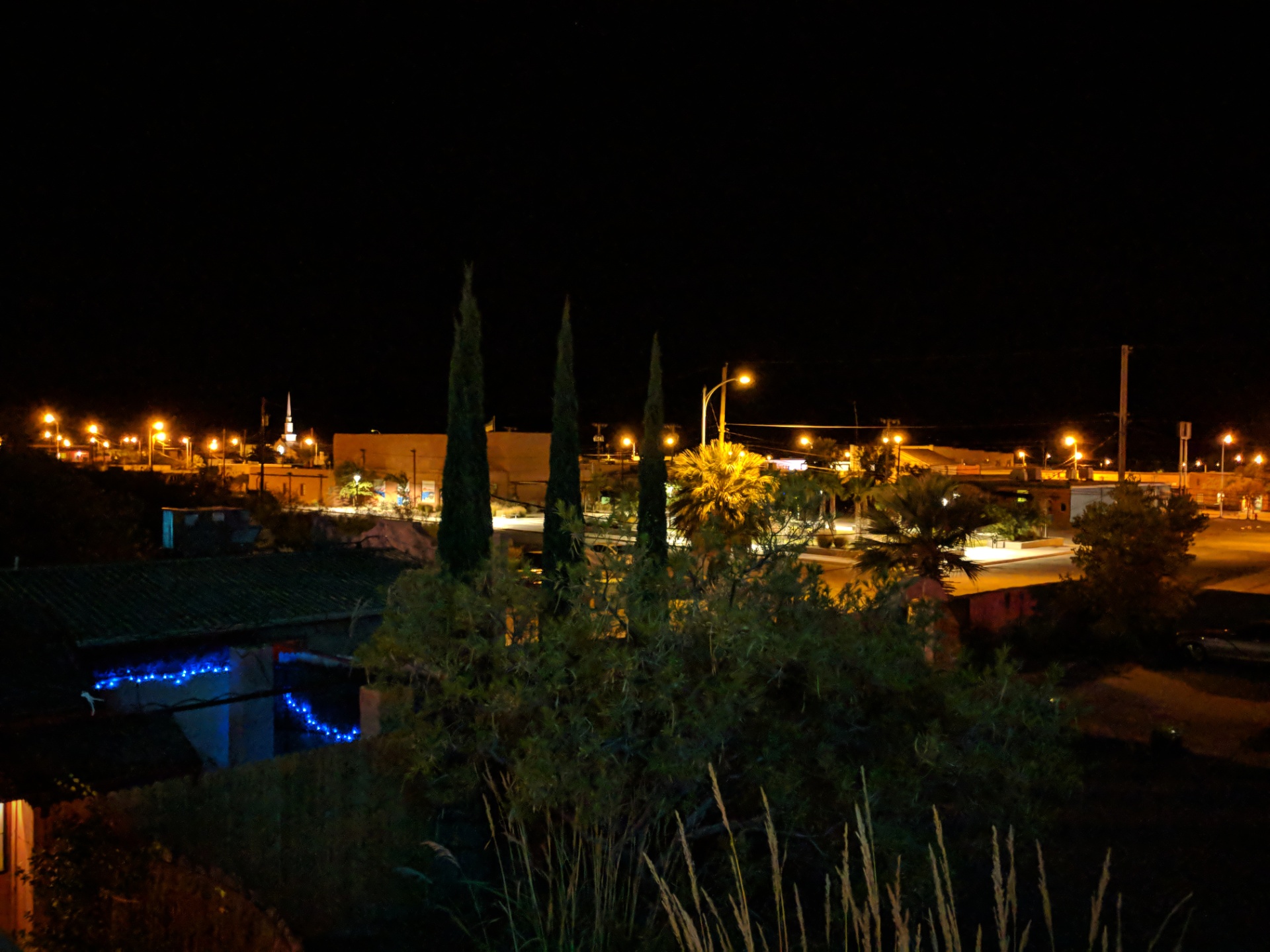
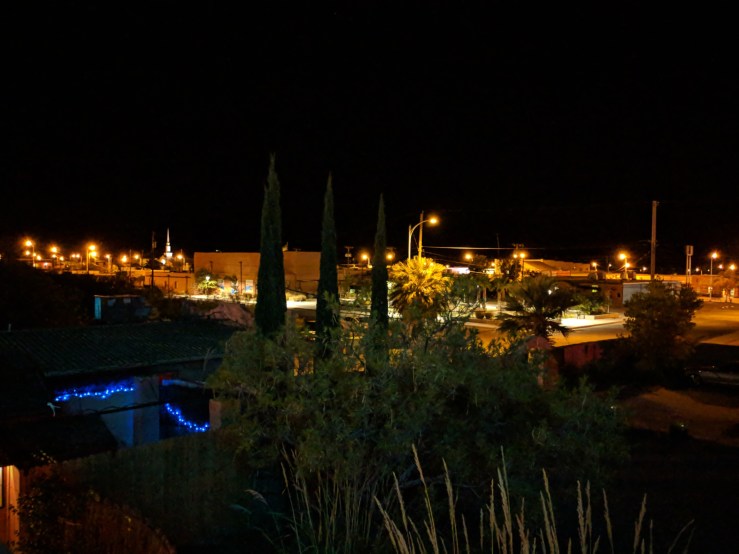
**No photos from ToC, except these two from the Reserve because, the Truth is we never really walked this town as a Consequence of being awestruck by the VLA and White Sands.

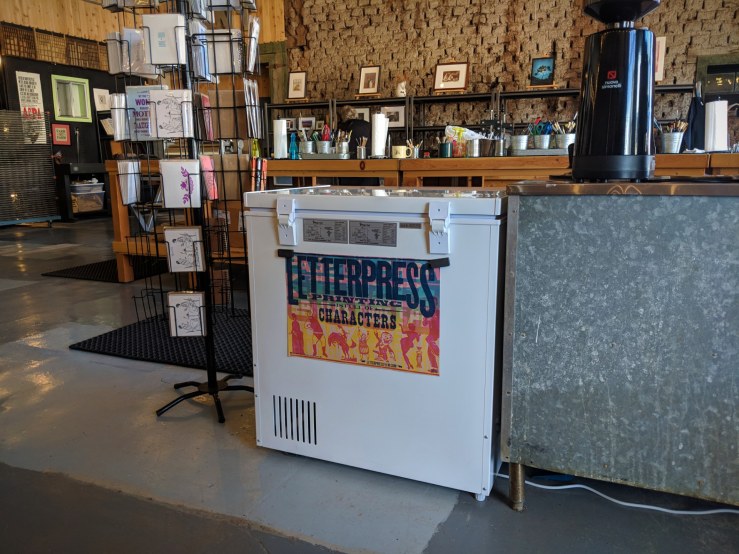
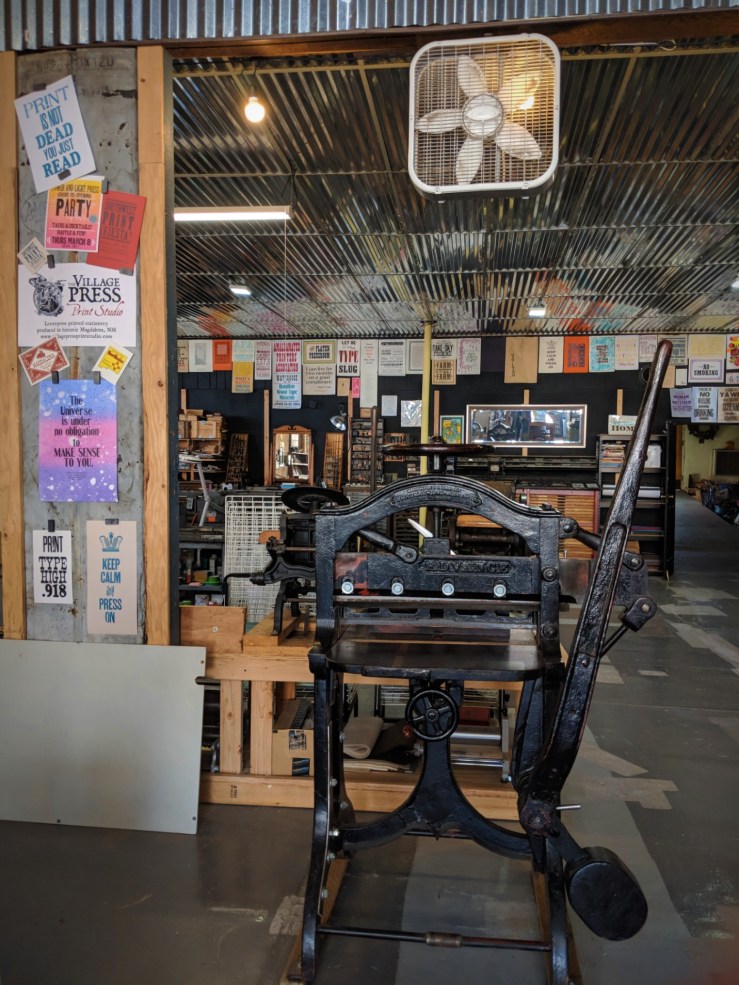
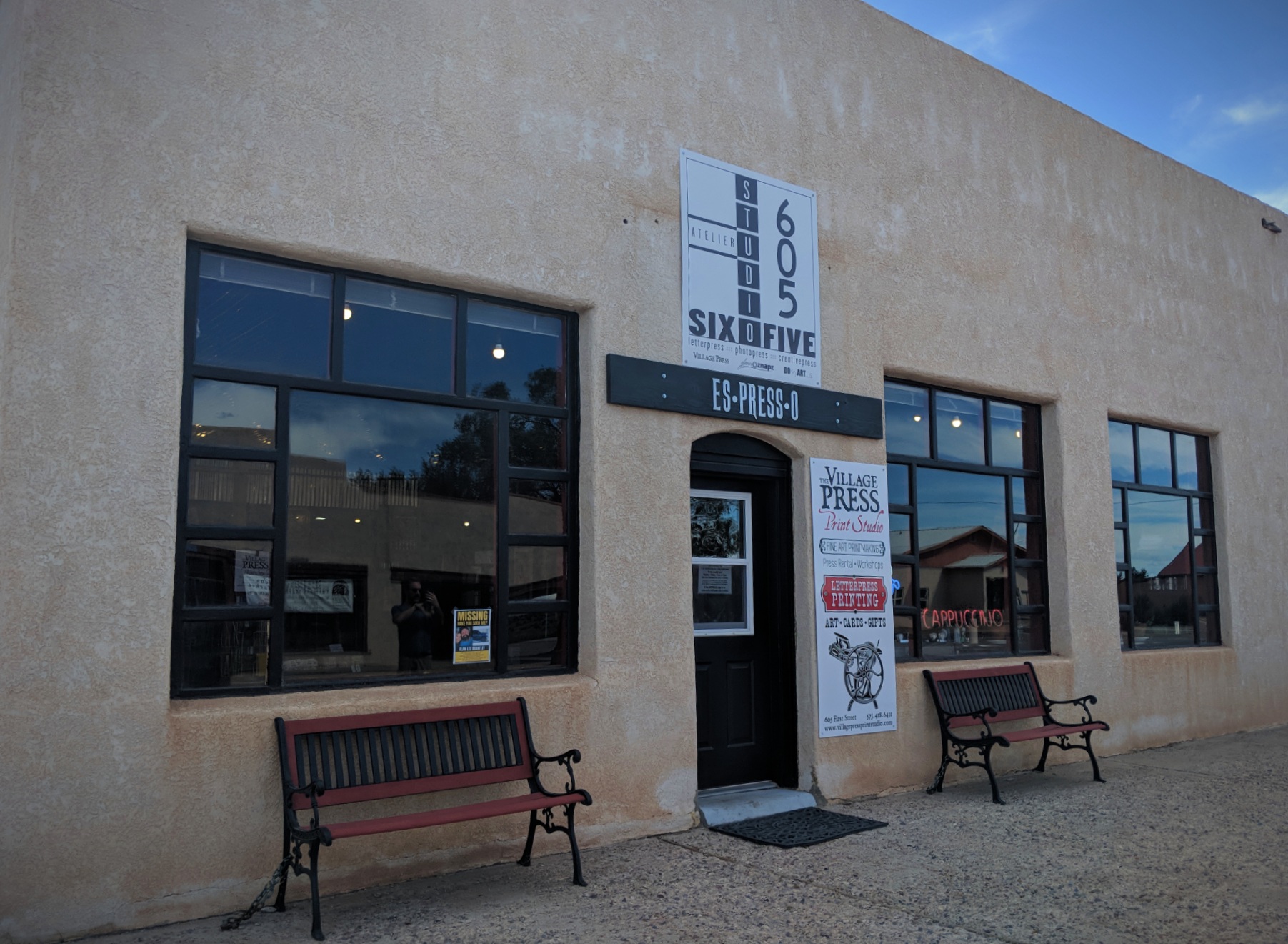
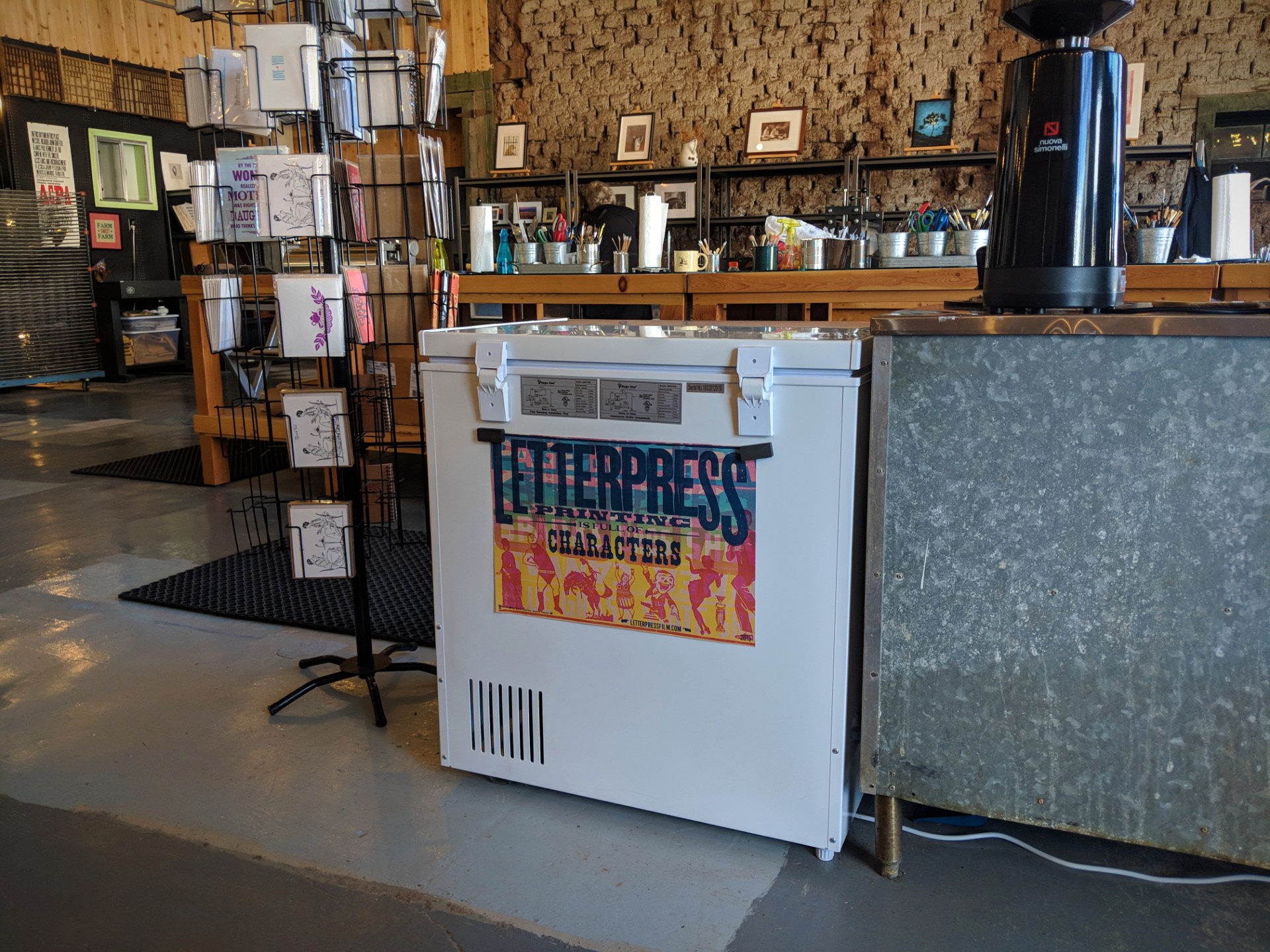
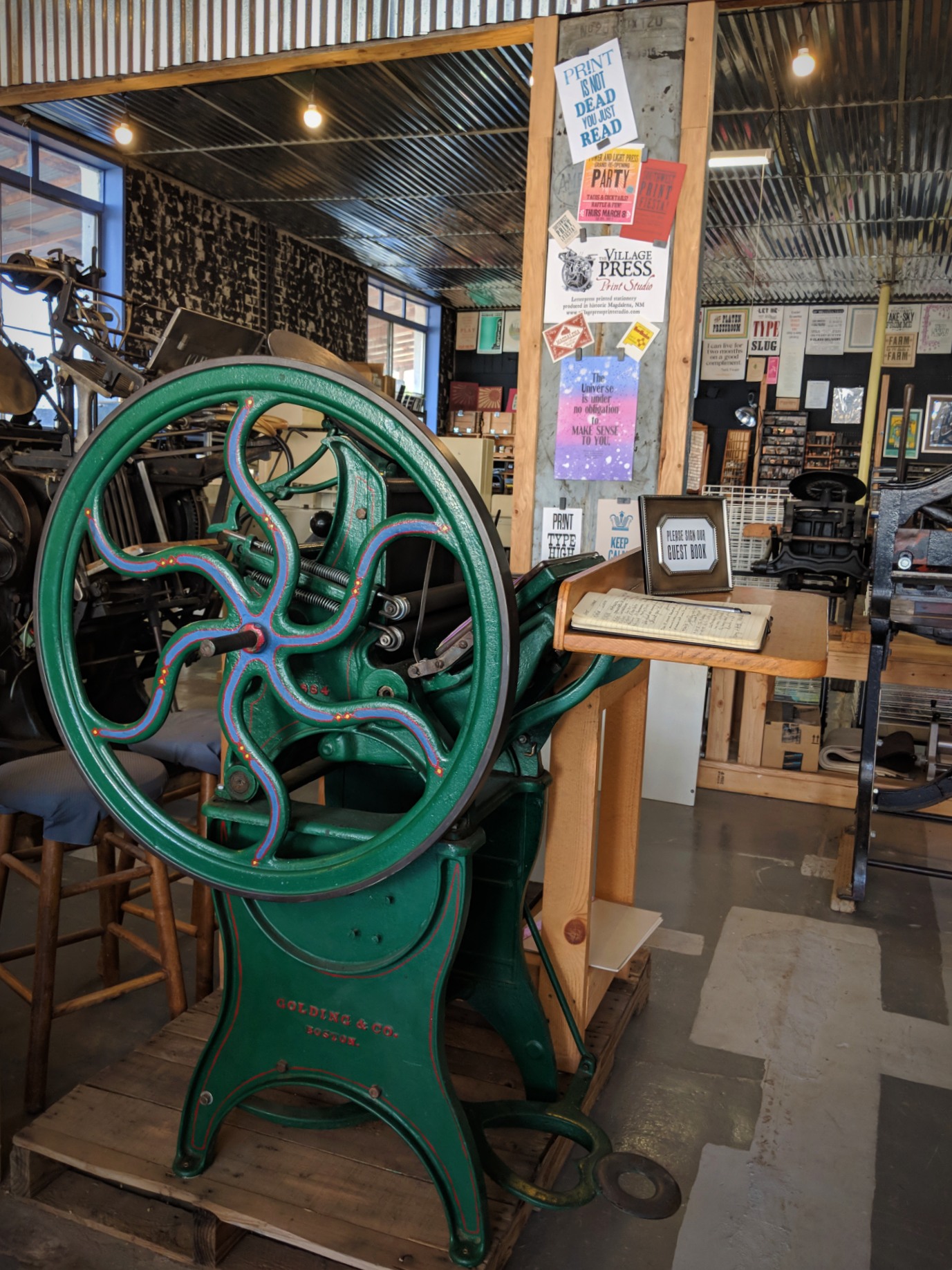
A quick stop for coffee in the last village before reaching the Very Large Array, was as surprising as the rest of the trip: Atelier Studio 605 ES•PRESS•O, is an art and printmaking space in disguise with etching presses, a studio for printmaking classes and workshops, and some fine antique presses still in use.

P.S.: The coffee is fresh from the press, and great too!

Truth or Consequences to Magdalena, NM

October 10th, 2018
We Stand in Awe

In White Sands.

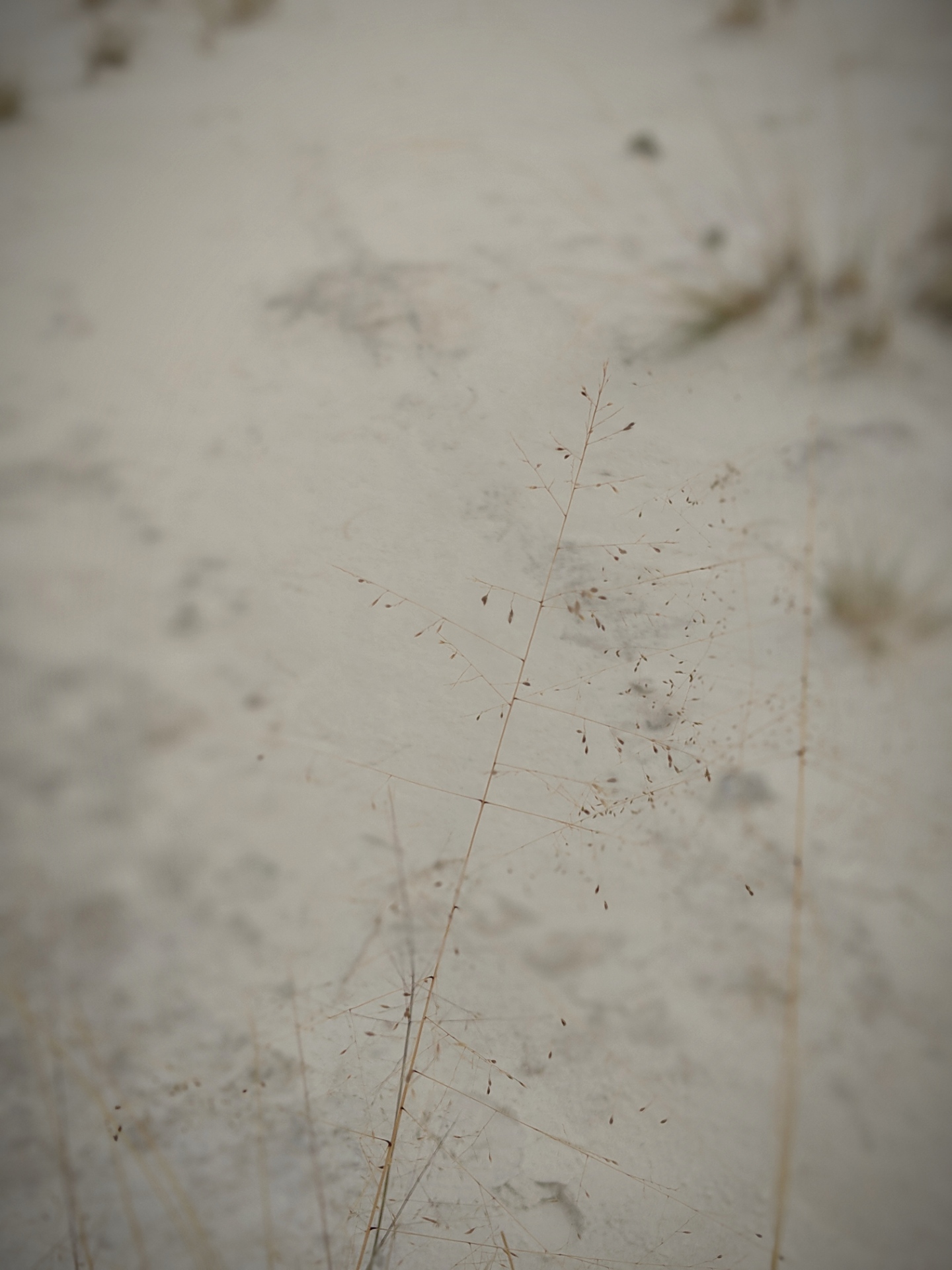
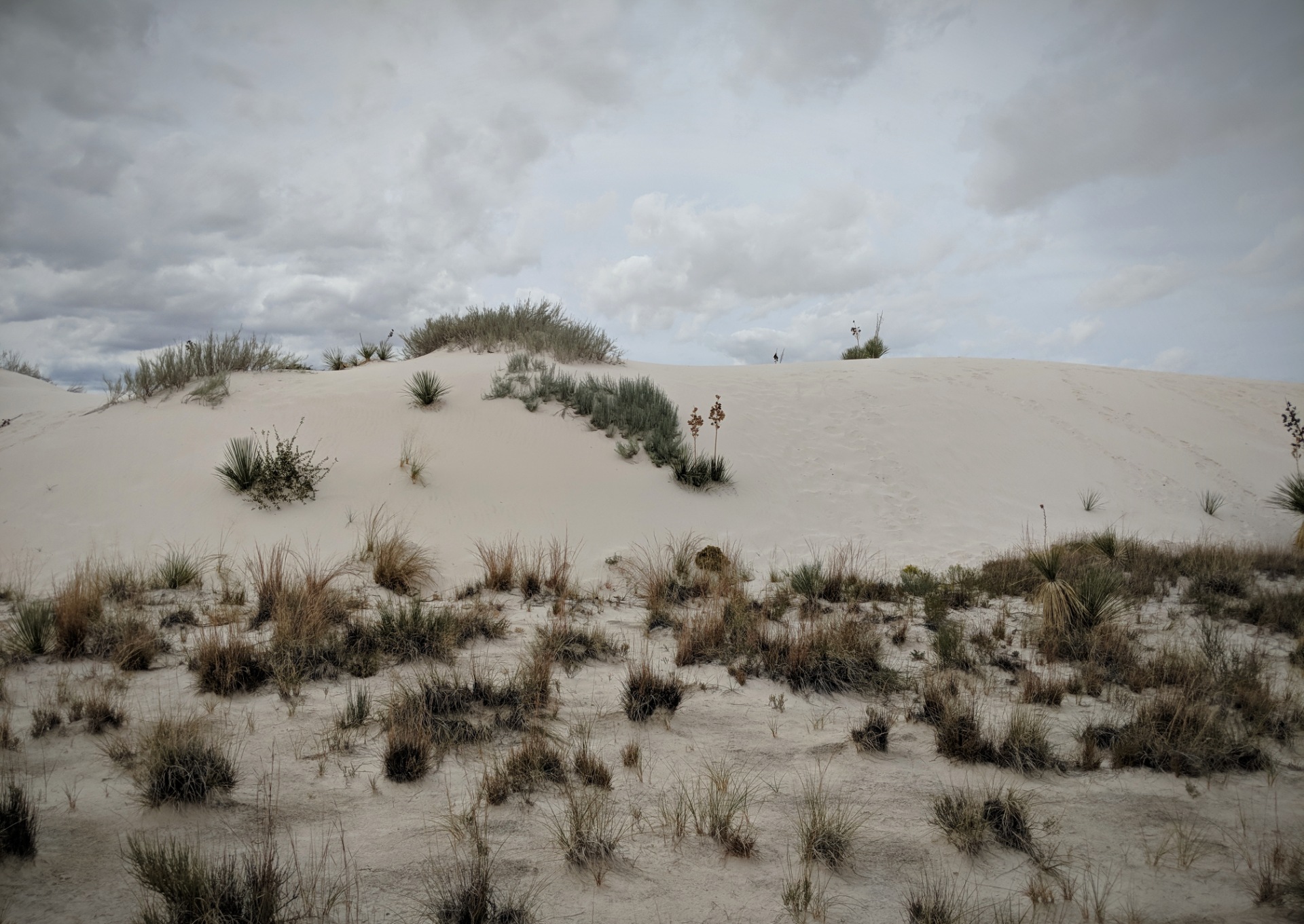
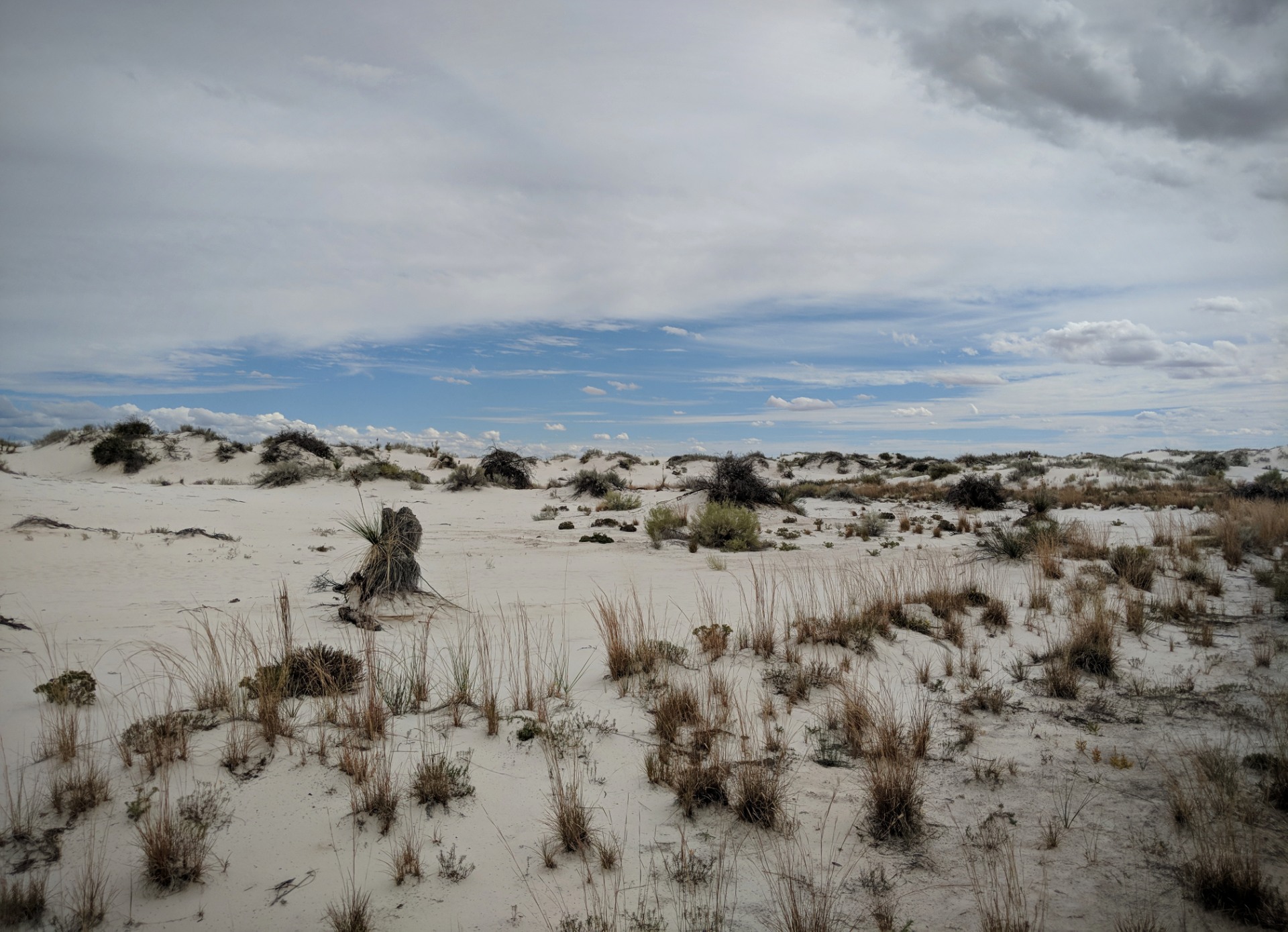
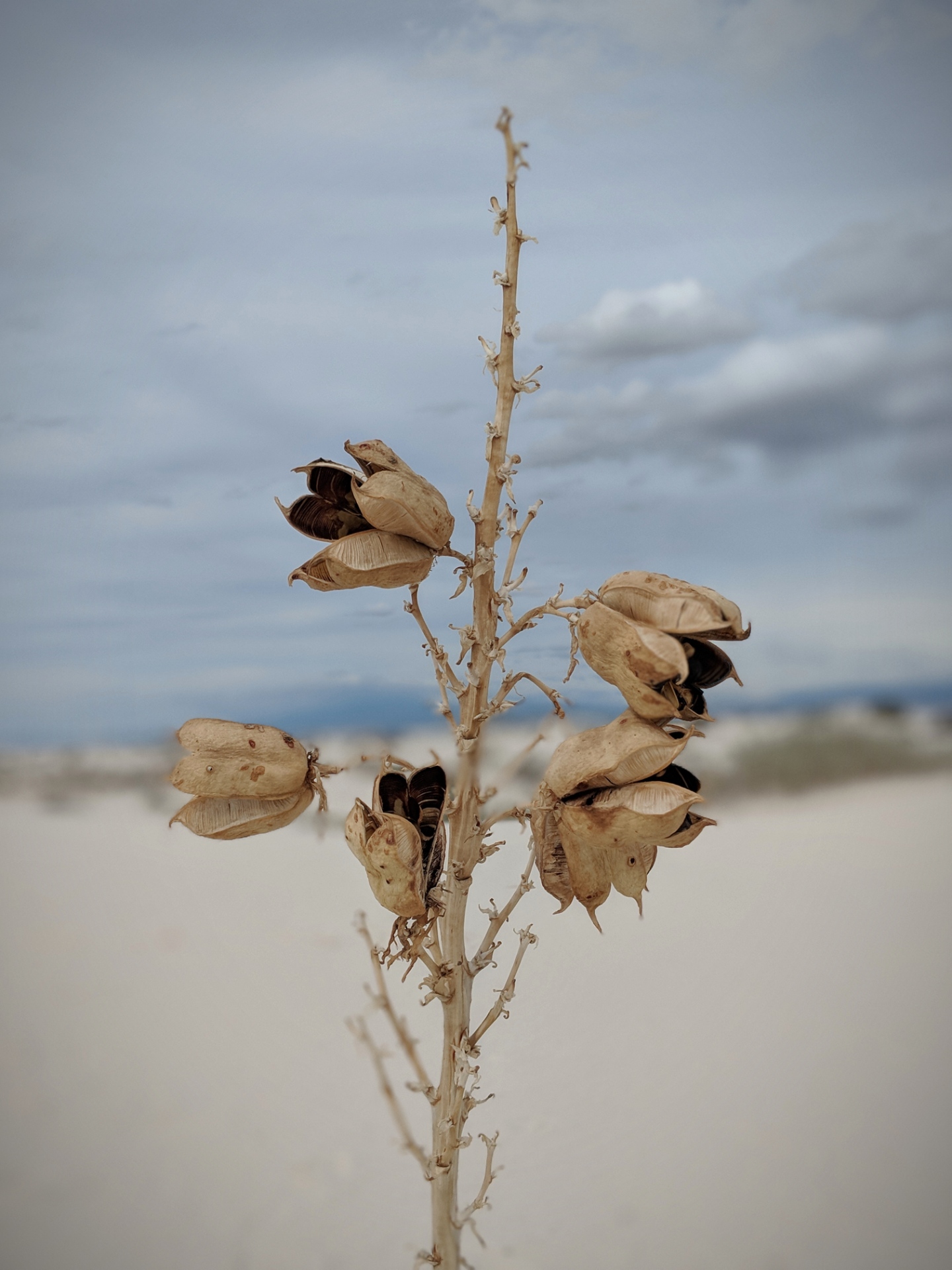
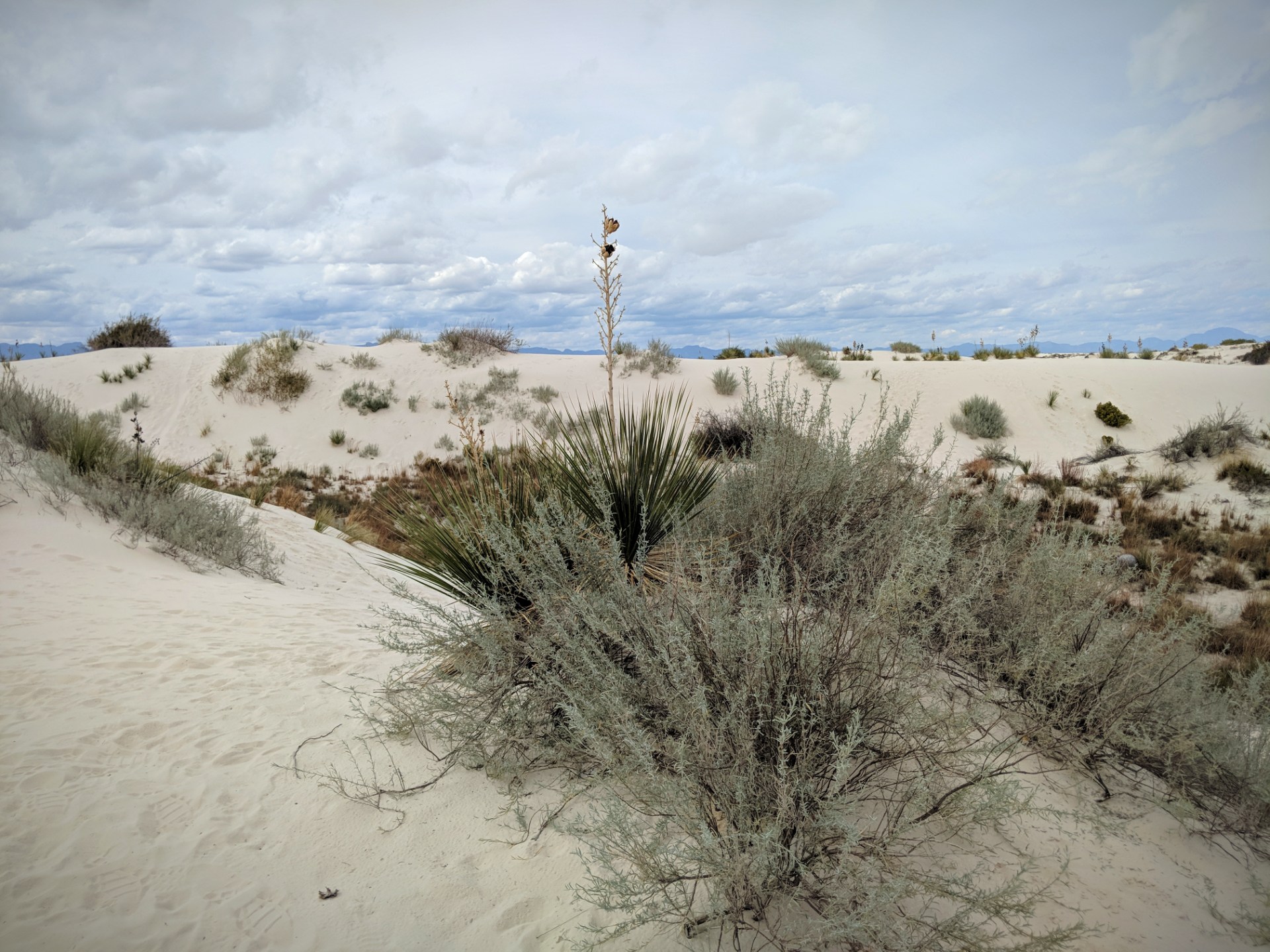
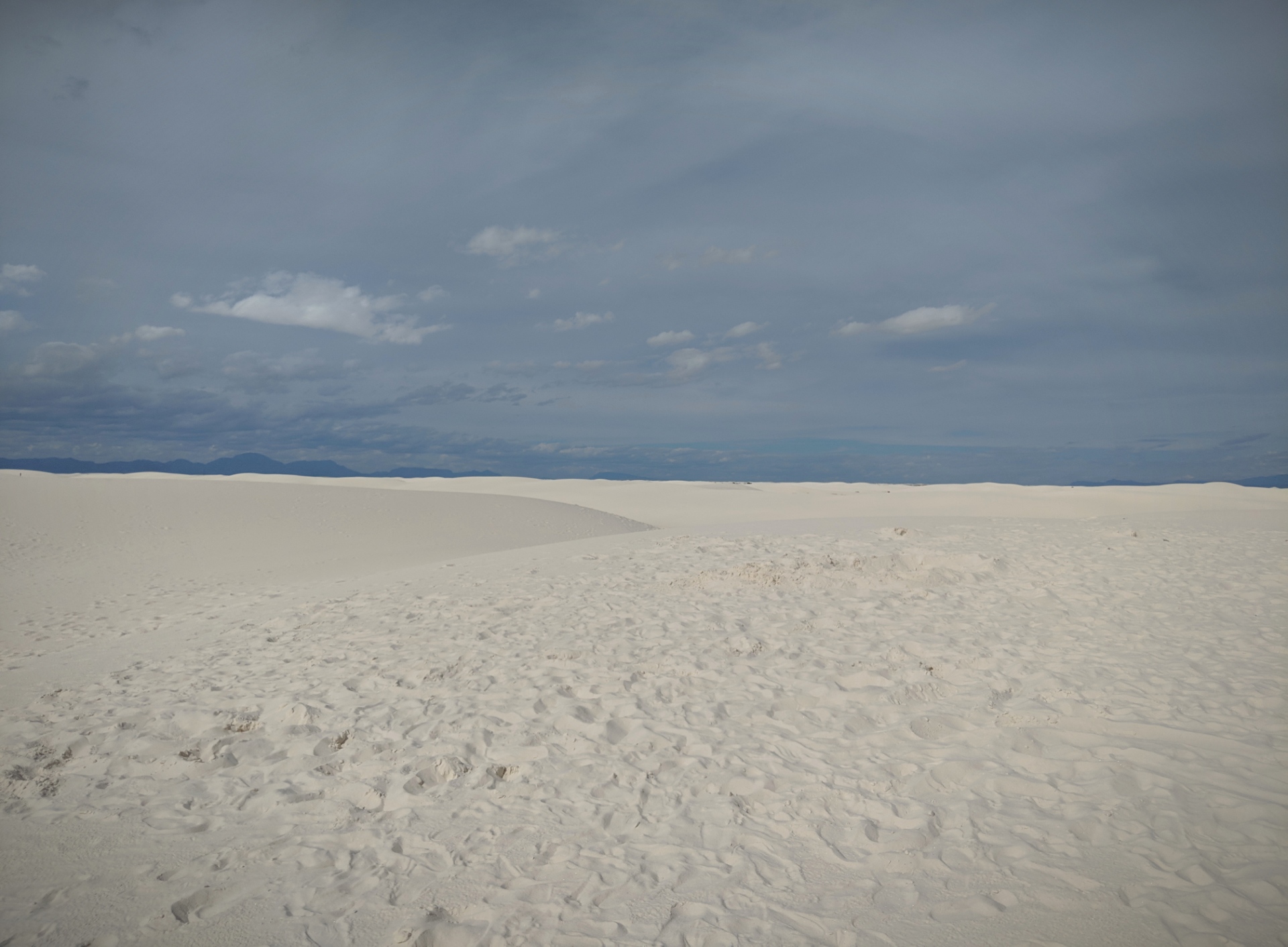
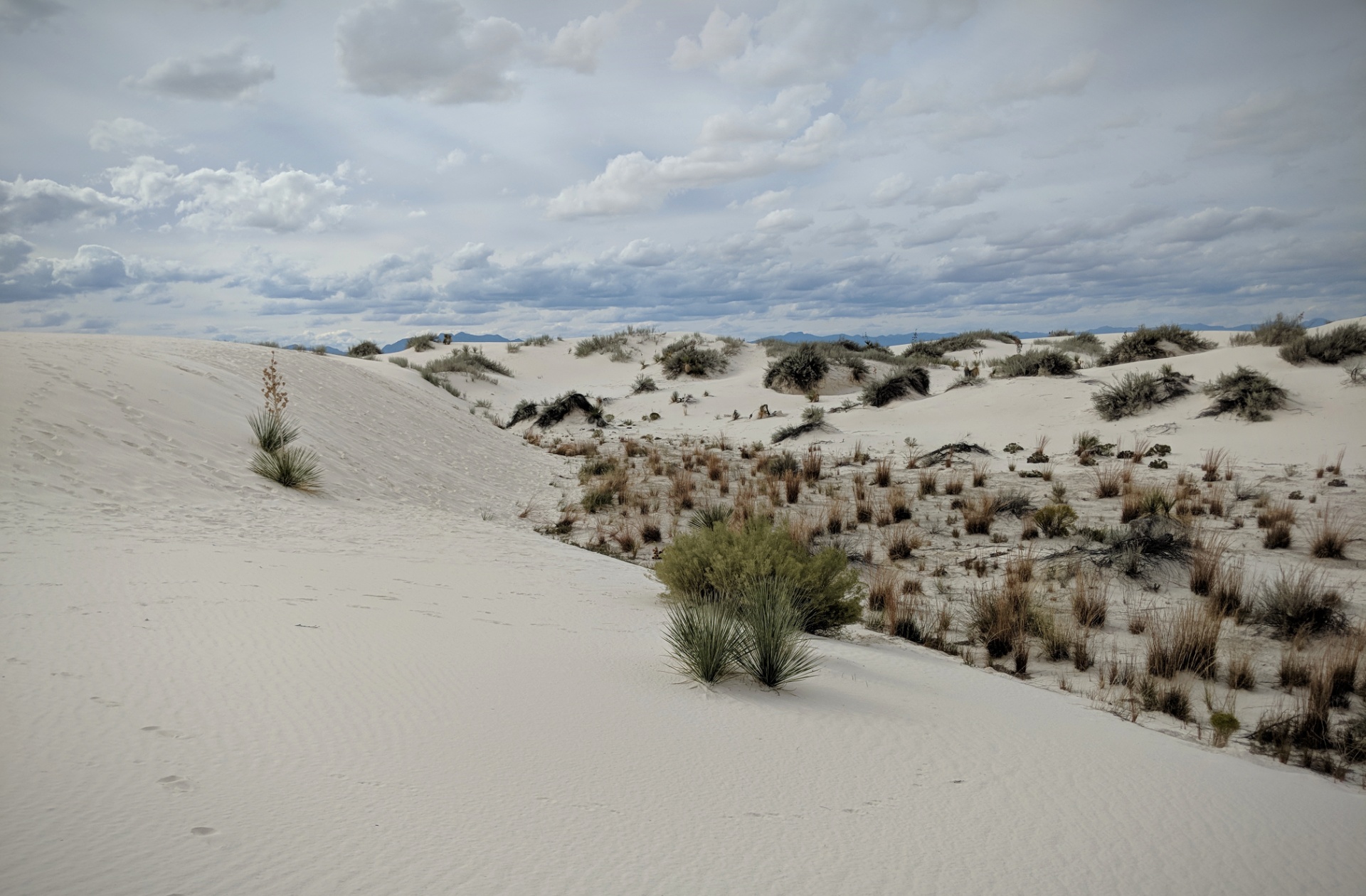
Like a mirage, dazzling white sand dunes shimmer in the tucked-way Tularosa Basin in southern New Mexico. They shift and settle over the Chihuahuan Desert, covering 275 square miles—the largest gypsum dunefield in the world. White Sands National Monument preserves more than half of this oasis, its shallow water supply, and the plants and animals living here.

The sand feels like satin and is surprisingly cool to the touch, even on a hot summer day. Gypsum does not absorb heat.

When it rains, it dissolves in water and flows down on the basin floor where it stays until it dries up and becomes sand forming the dunes that surround us, in a perpetual cycle.

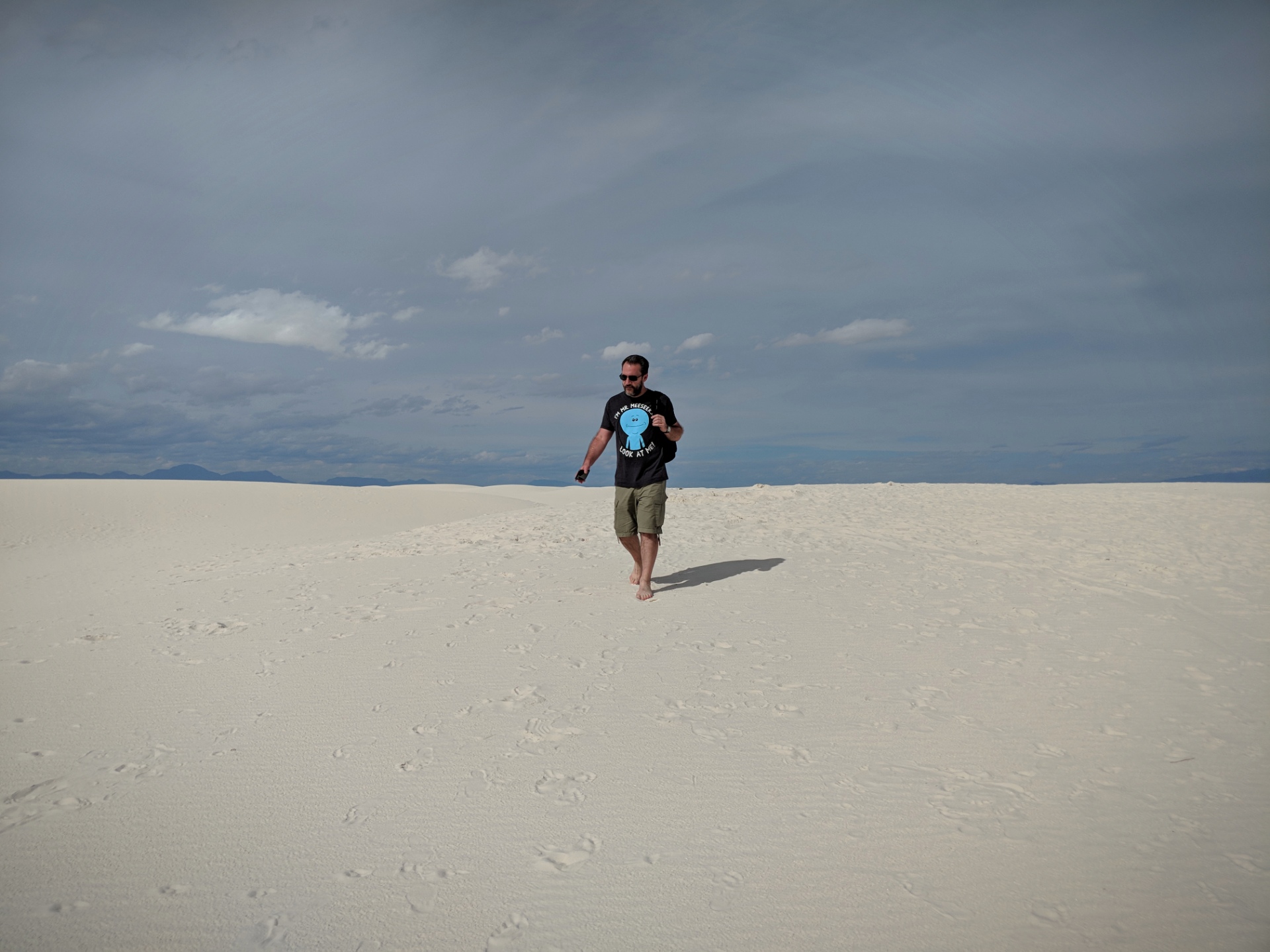
We simply stand in awe as this divine natural beauty unfolds before our eyes.

(In stark contrast to the destructive powers prevalent in the adjacent military site; the White Sands Missile Range.)

Good to know: apart from unexpected closures due to weather conditions, the park may also be inaccessible due to missile testing! Because of the adjacent White Sands Missile Range, the road is occasionally closed for safety and closures can last up to three hours. U.S. Highway 70 between Alamogordo and Las Cruces is also closed during times of missile testing.

Please always consult the park closure web page  before visiting, to confirm access.

White Sands National Park, NM
(formely a “National Monument”, it transitioned to a “National Park” in 2019)

October 11th, 2018

We Listen to the Universe

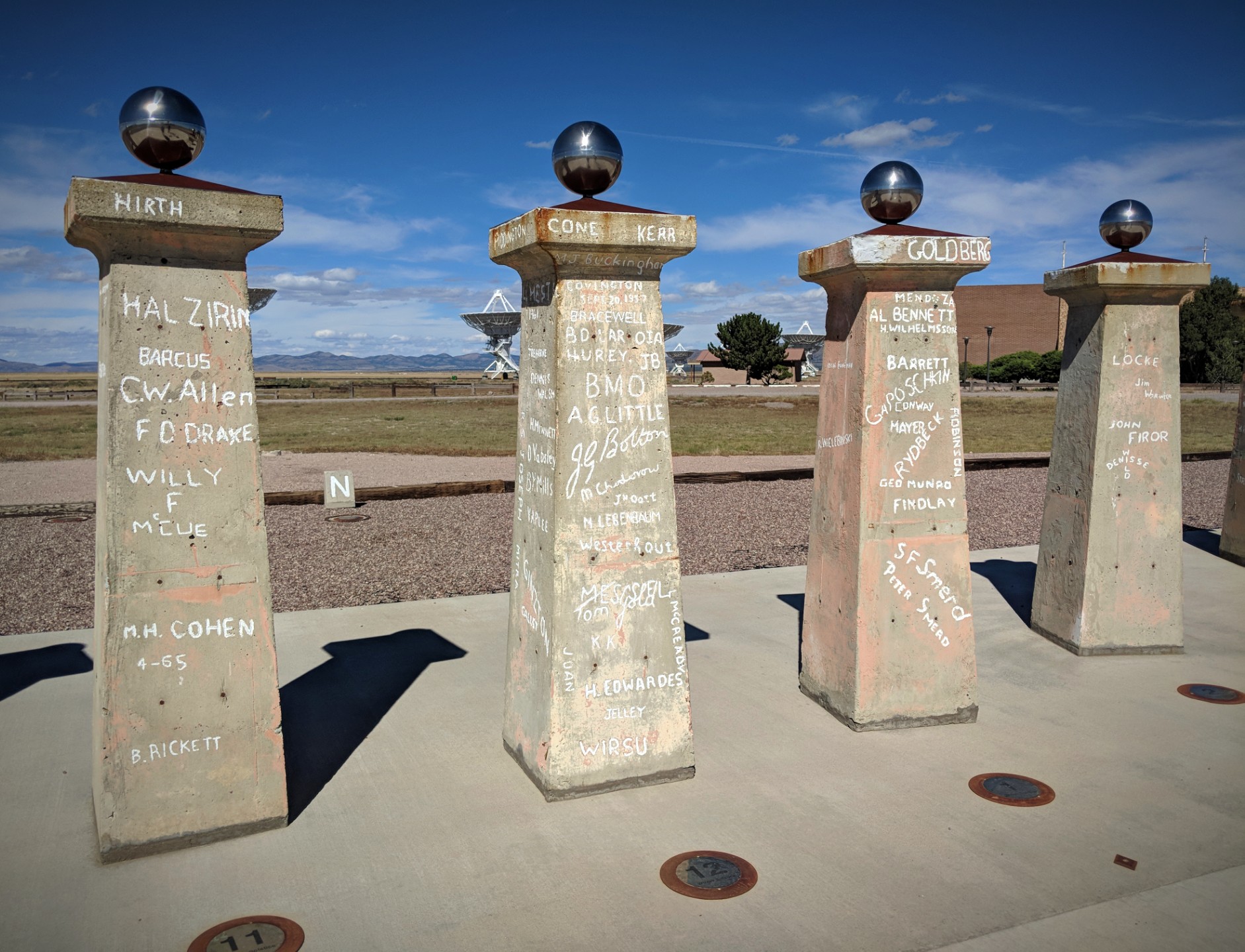
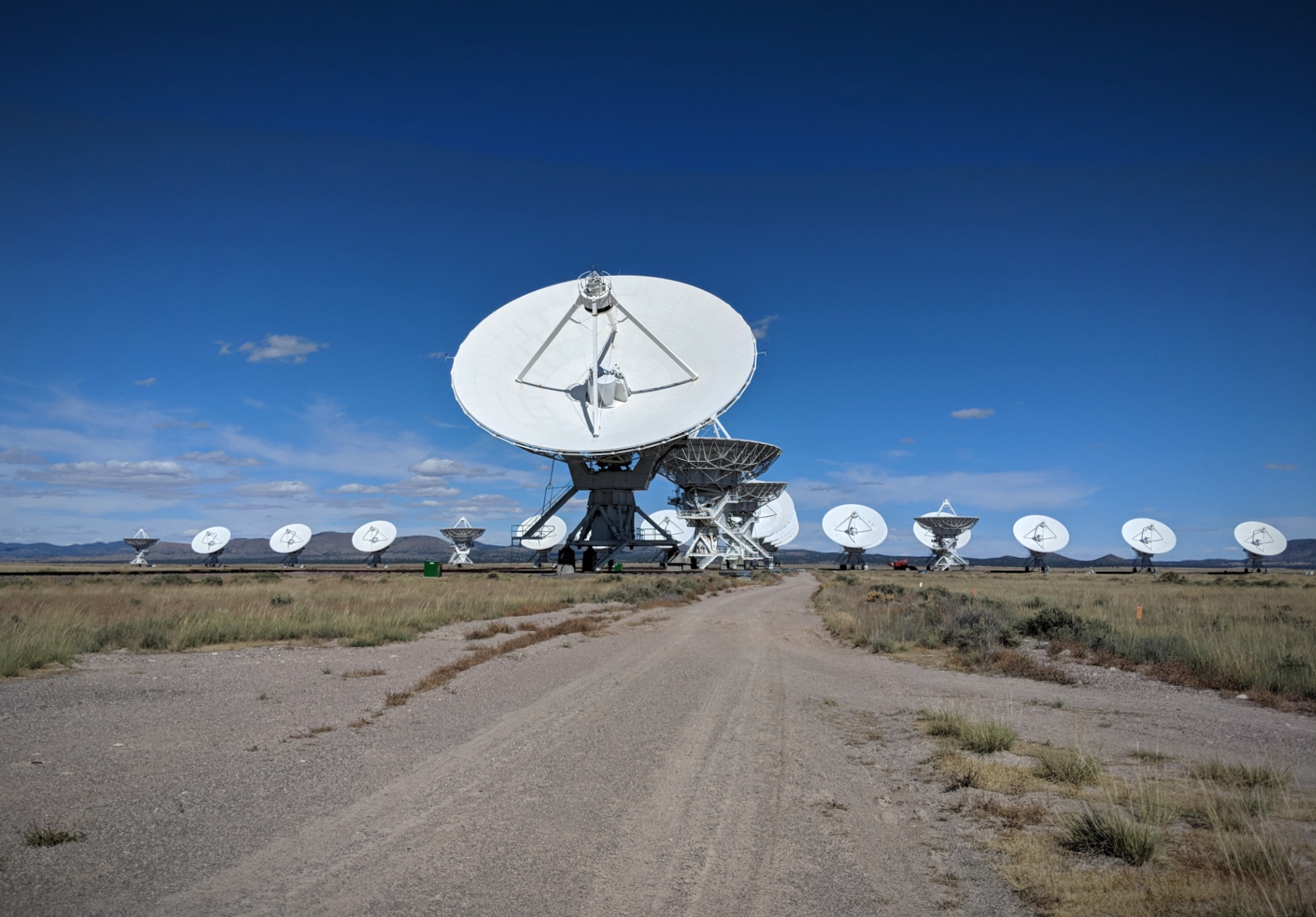
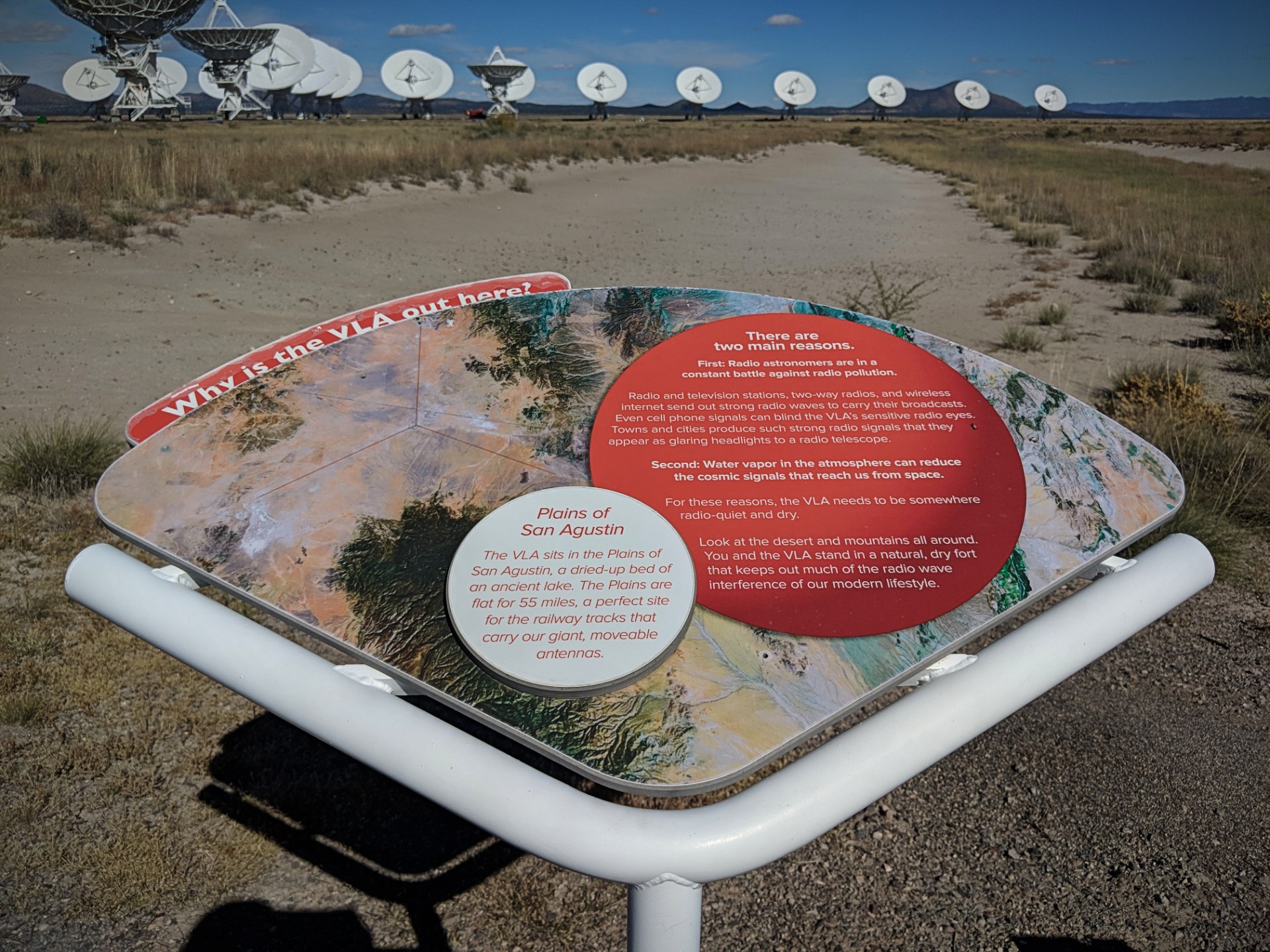
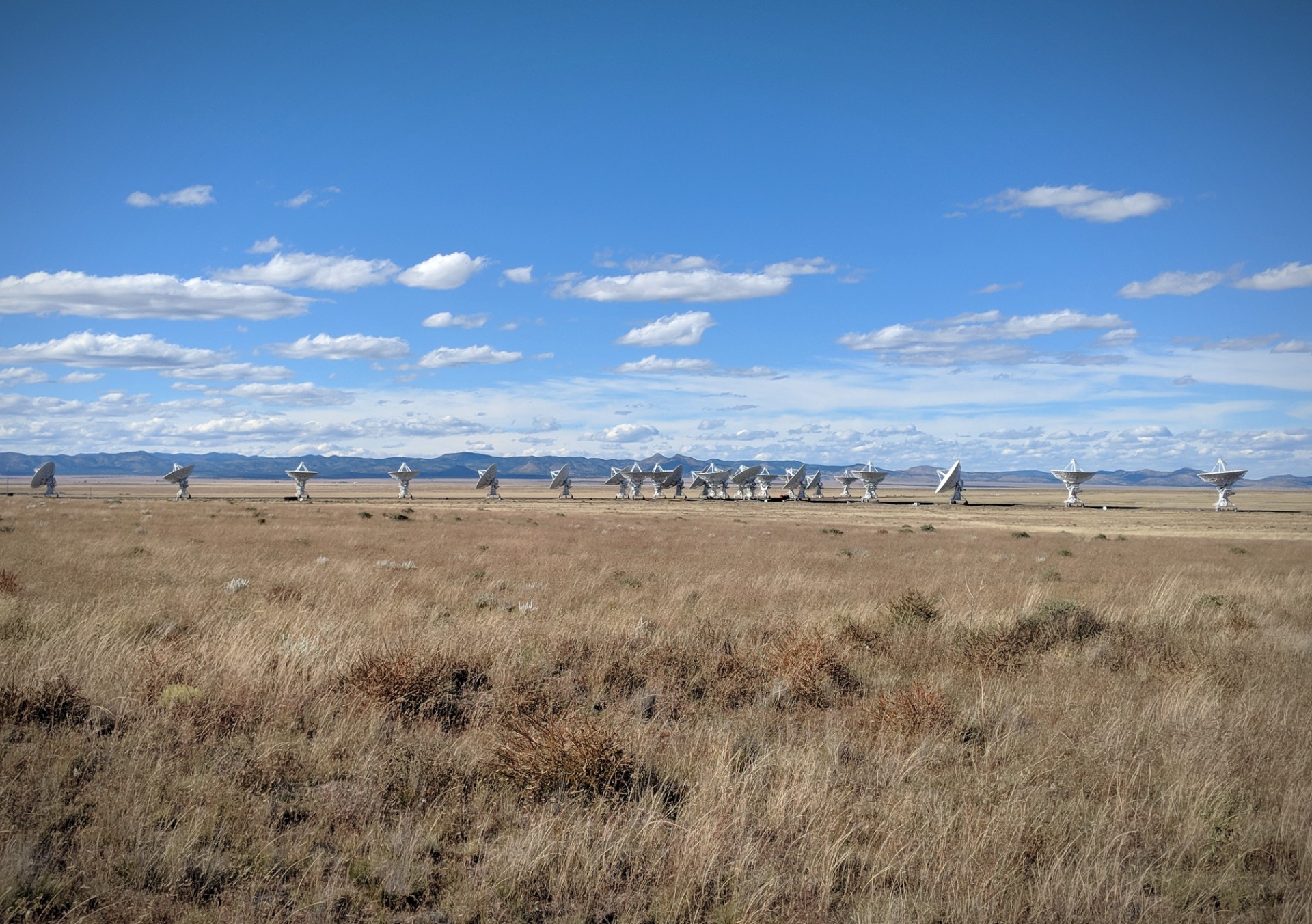
High up in New Mexico, at an altitude of 6,969 ft (2,124 m), the Plains of San Agustin; the  centre of a basin, a dried-up bed created by a lake in the Pleistocene Epoch – a time that lasted from about 2,580,000 to 11,700 years ago.

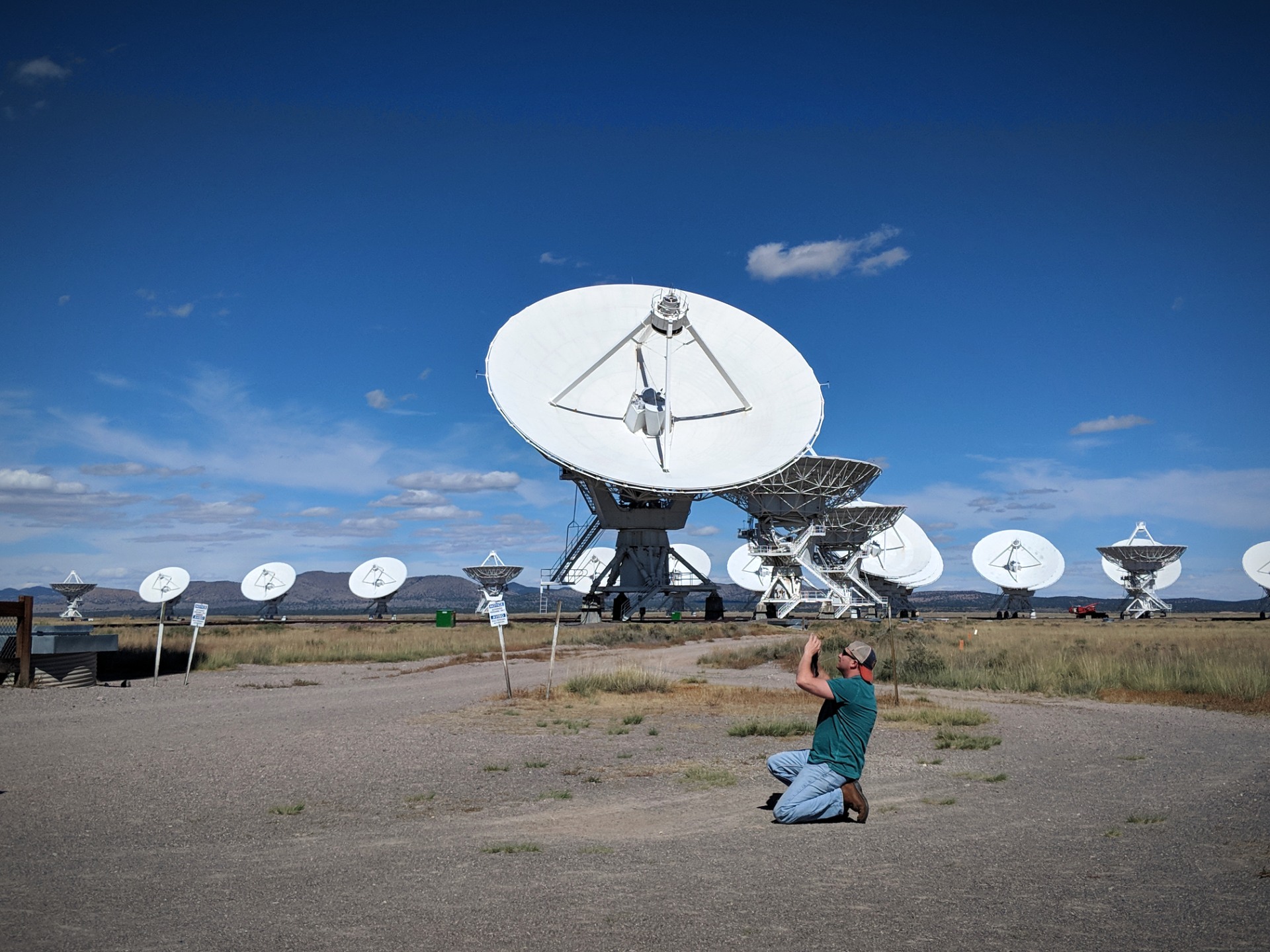
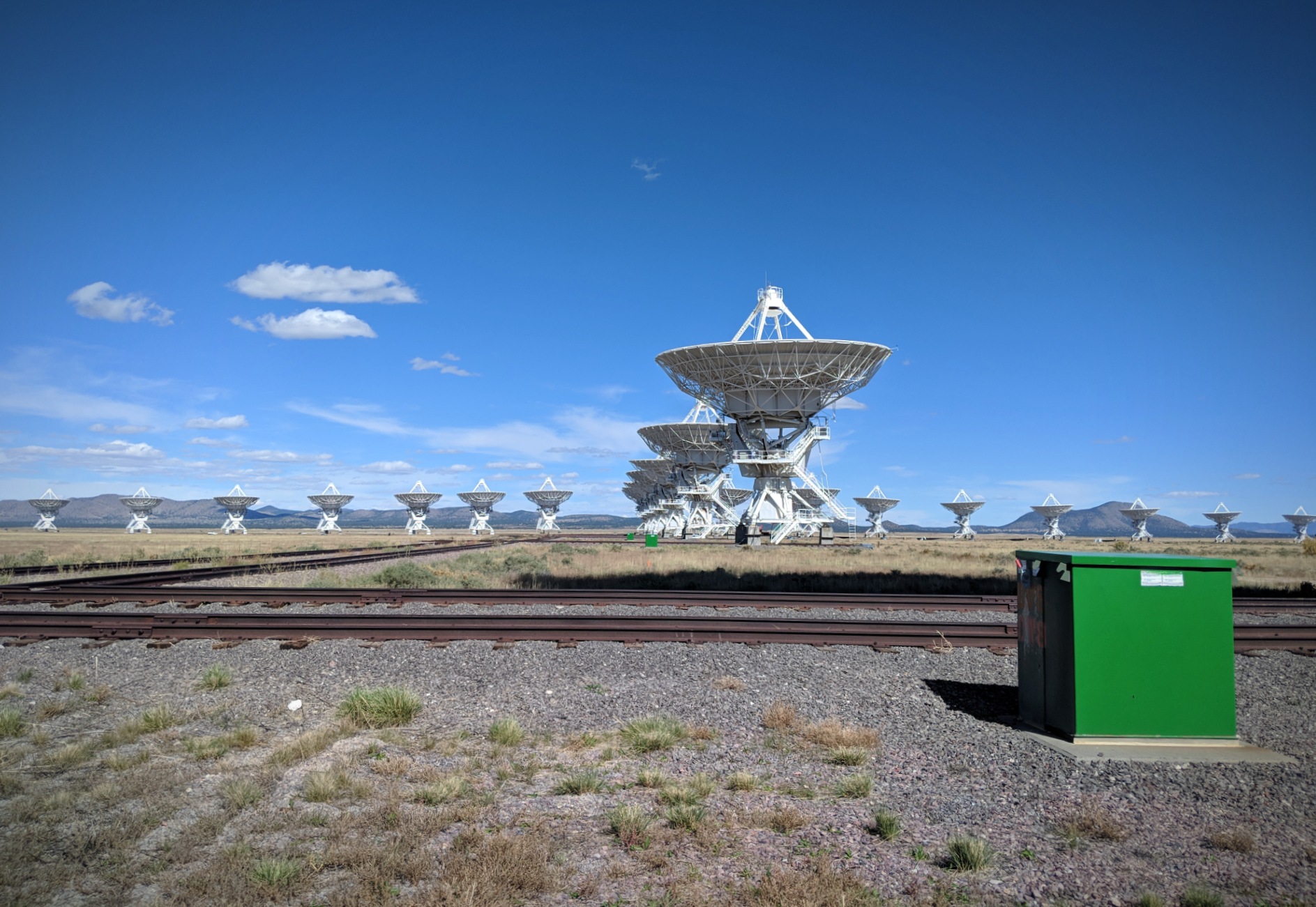
Amid this ancient, remote landscape, the Very Large Array. 27 radio antennas in a Y-shaped configuration, one of the world’s premier astronomical radio observatories, reaching out, listening to the cosmos.

Your Humble Fabulist is still in awe.

The Rail System

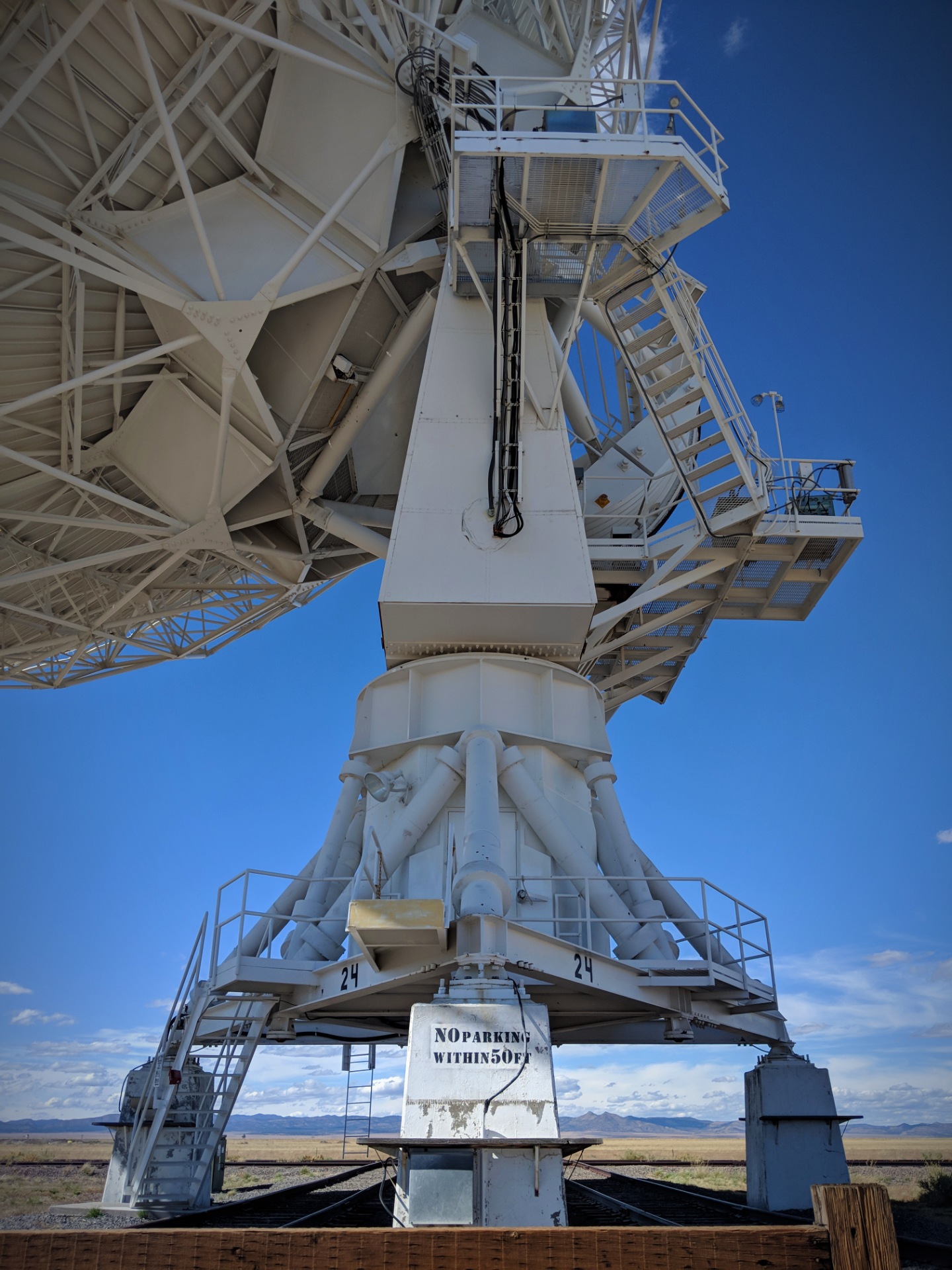
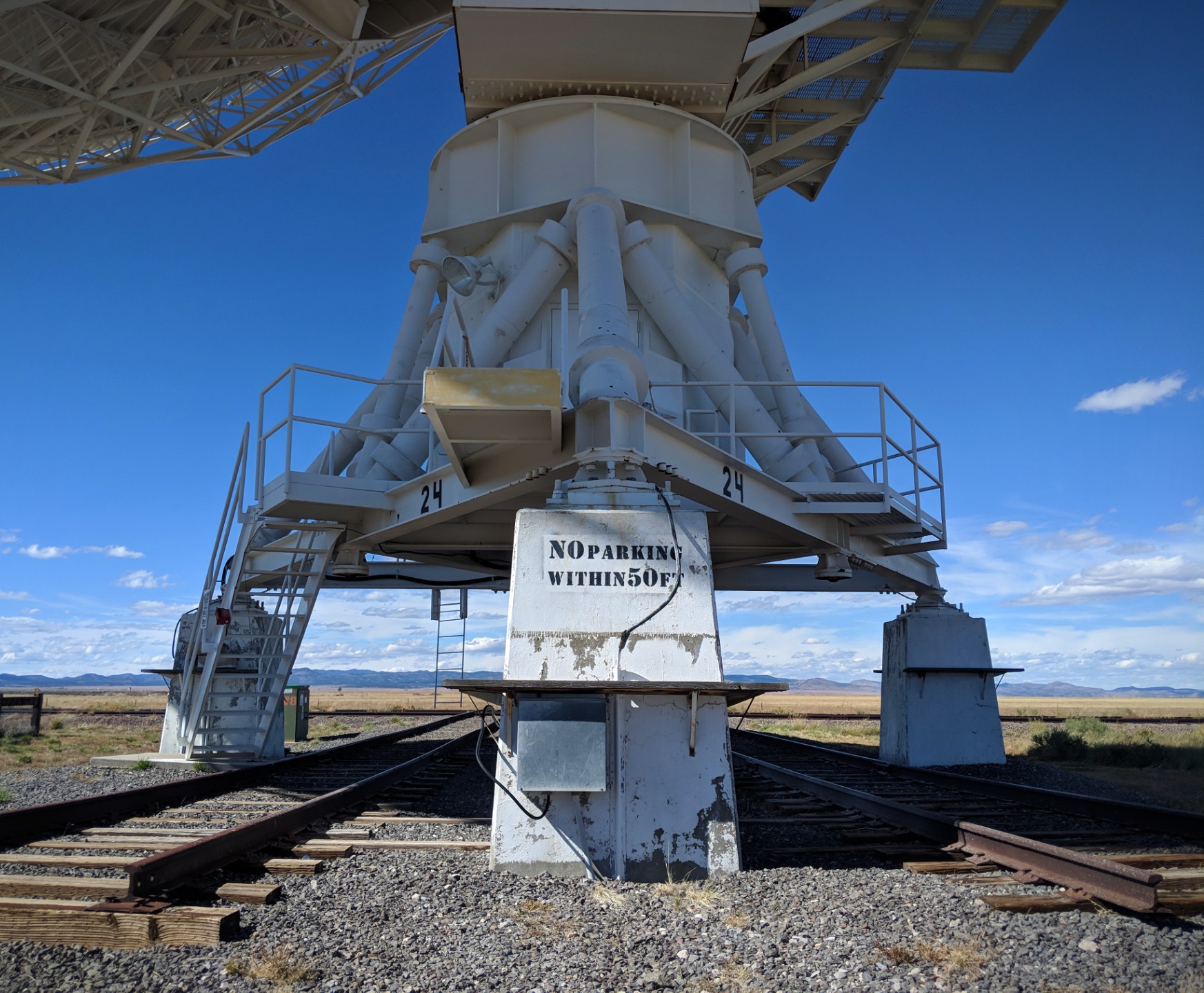
The antennas are moved along the array arms by rail. Two giant transporters carry the antennas on 63 kilometres (39 miles) of double, standard gauge track. These transporters are specially designed to negotiate the 90 degree turns onto spurs at each antenna station. A fleet of special purpose rail vehicles is used for servicing and repairing antennas.

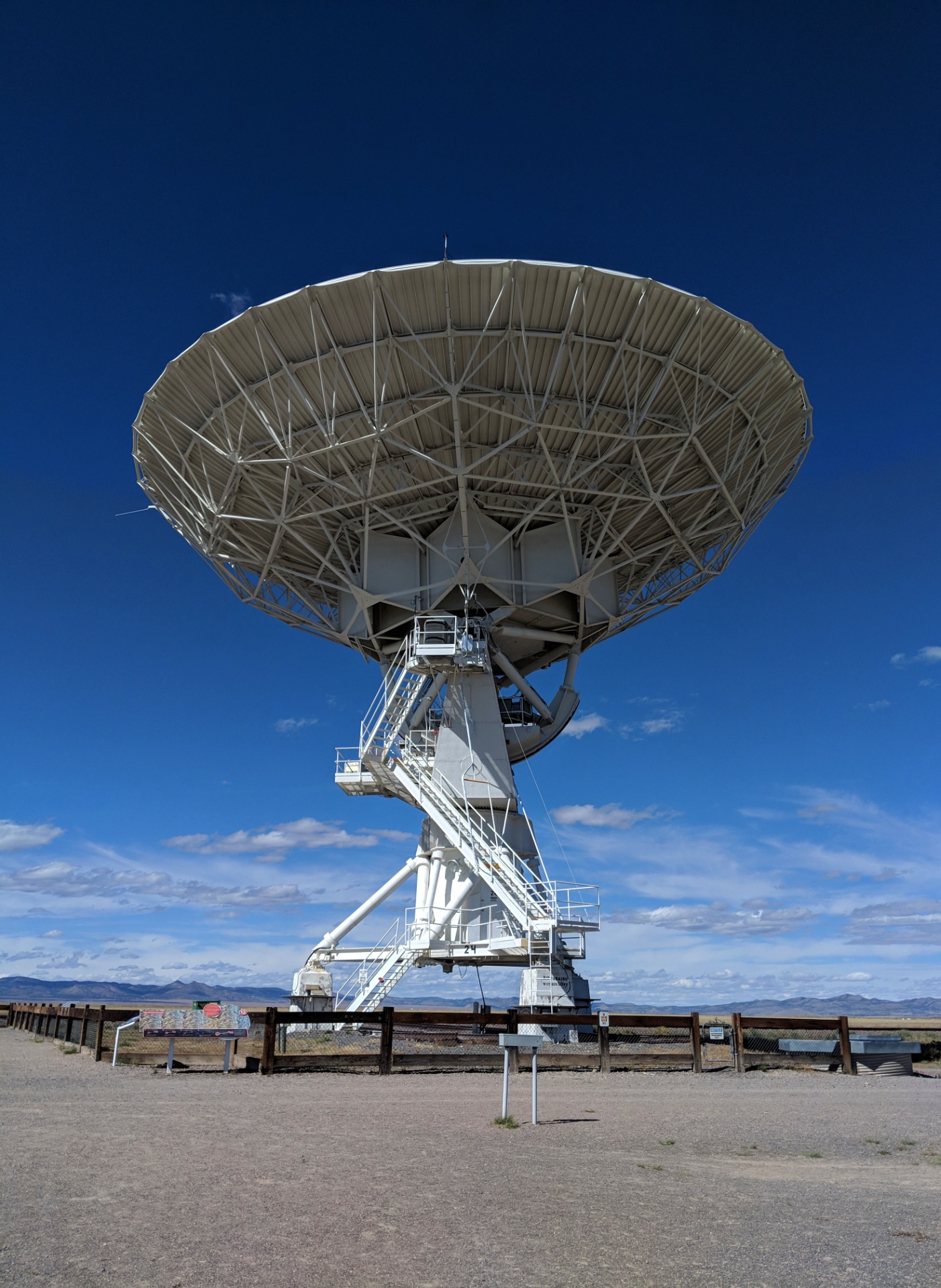
Weak radio waves from celestial sources are collected by the highly directional antennas. The waves are focused into the receiver by the main dish, subreflector and feedhorns. The receiver is cooled to -427 degrees F (18 deg. K) to reduce the internally generated noise which otherwise would mask the very weak radio signals from space. These weak signals are amplified several million times, converted to an intermediate frequency and carried to the Control Building via a buried waveguide transmission system.

These giant antennas, with 25 metre (82 ft.) diametre dishes, were specially designed for the VLA. The aluminium panels of the dish are formed into a parabolic surface accurate to 0.5 millimetre (20 thousandths of an inch). Most of the time the antenna drive system is precisely tracking a radio source across the sky. Occasionally you will see the antenna rapidly slew from one radio source to another.

Antenna Assembly Building

During the VLA construction period, from 1975 to 1980, the antennas were assembled in this building. It now is used as a service facility. The transporters bring antennas in from the array for periodic maintenance and overhaul. Typically, each antenna is brought in once every 3 to 4 years.

Very Large Array

Socorro, NM

October 10th, 2018

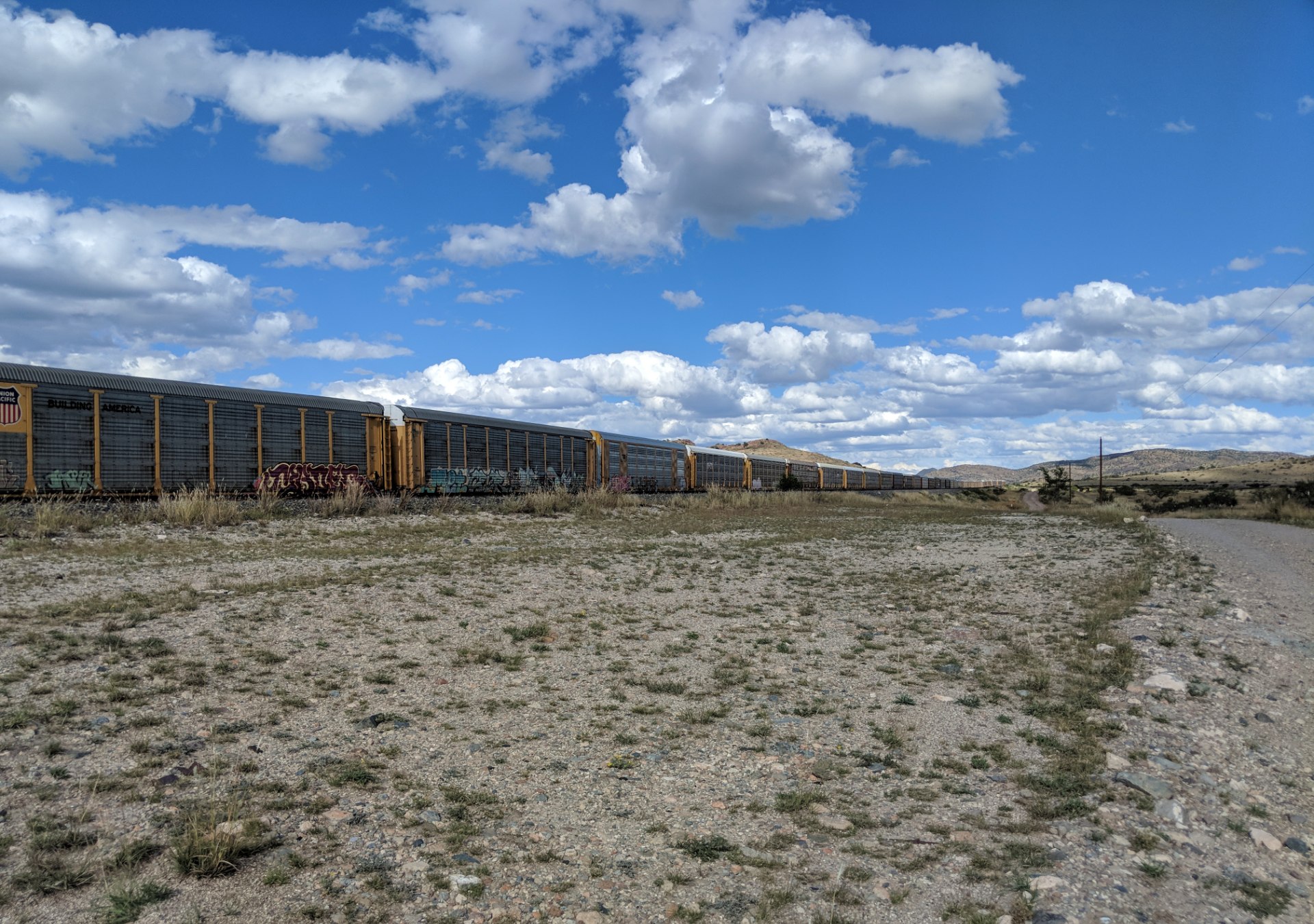
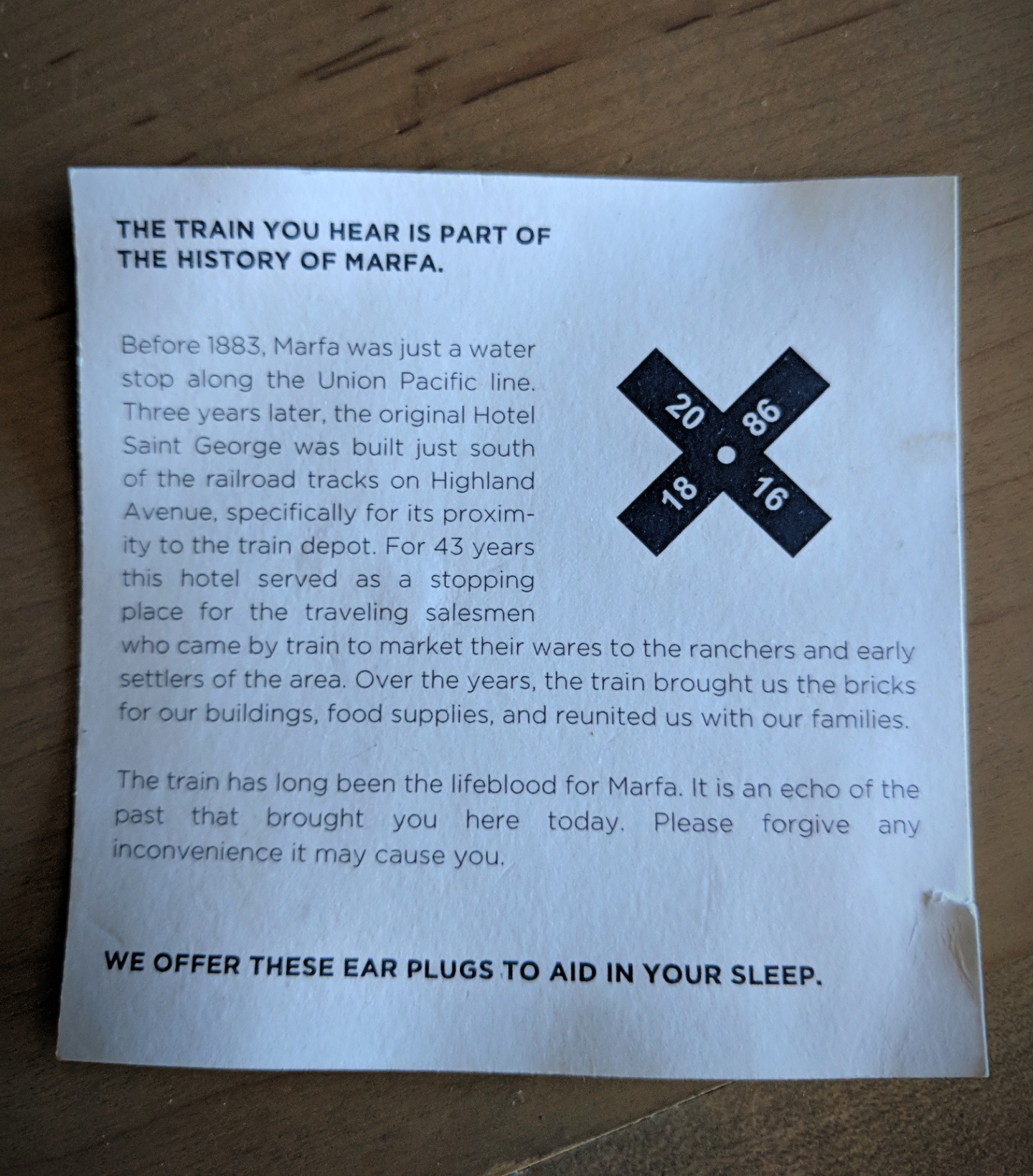
The Train You Hear

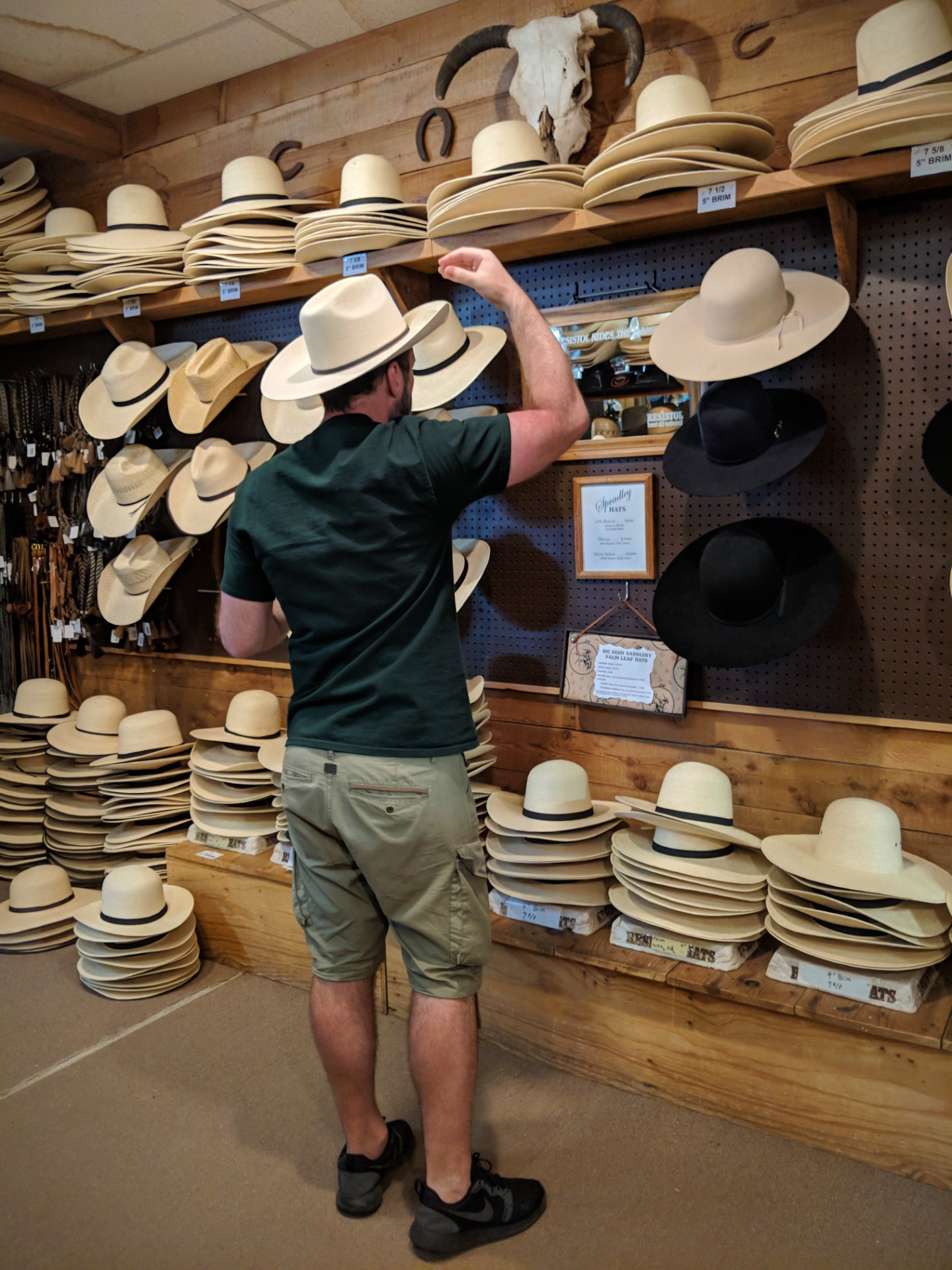
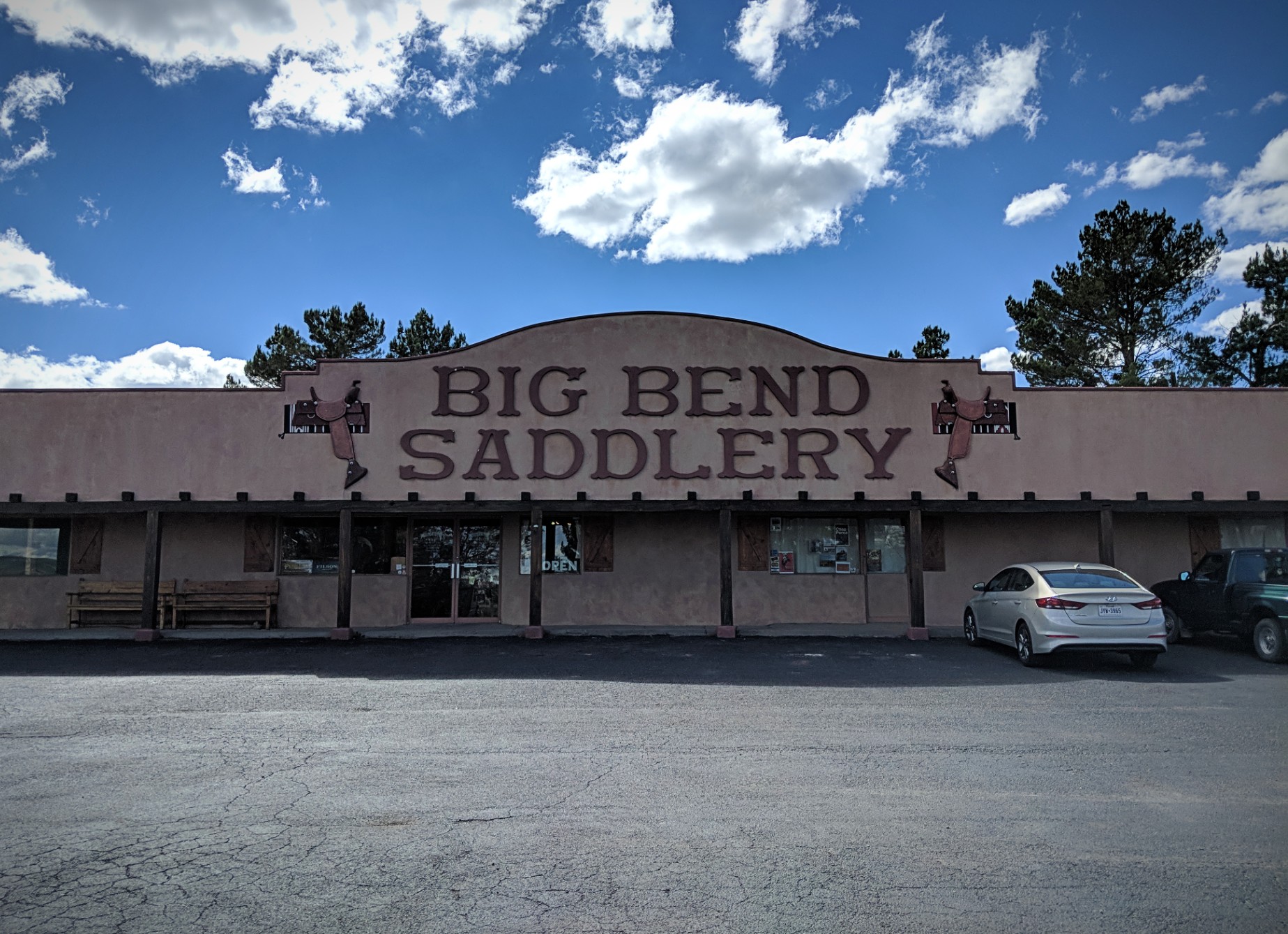
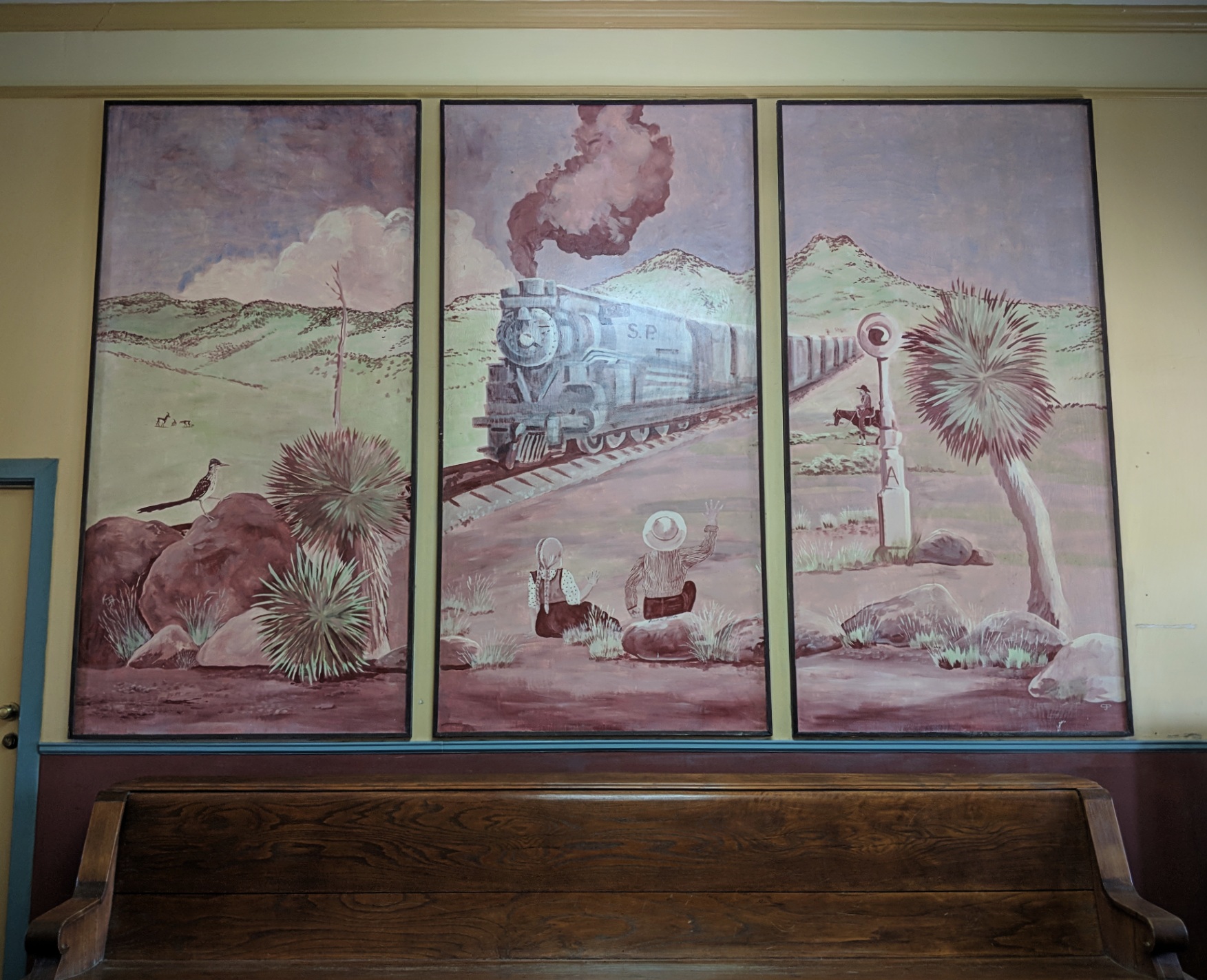
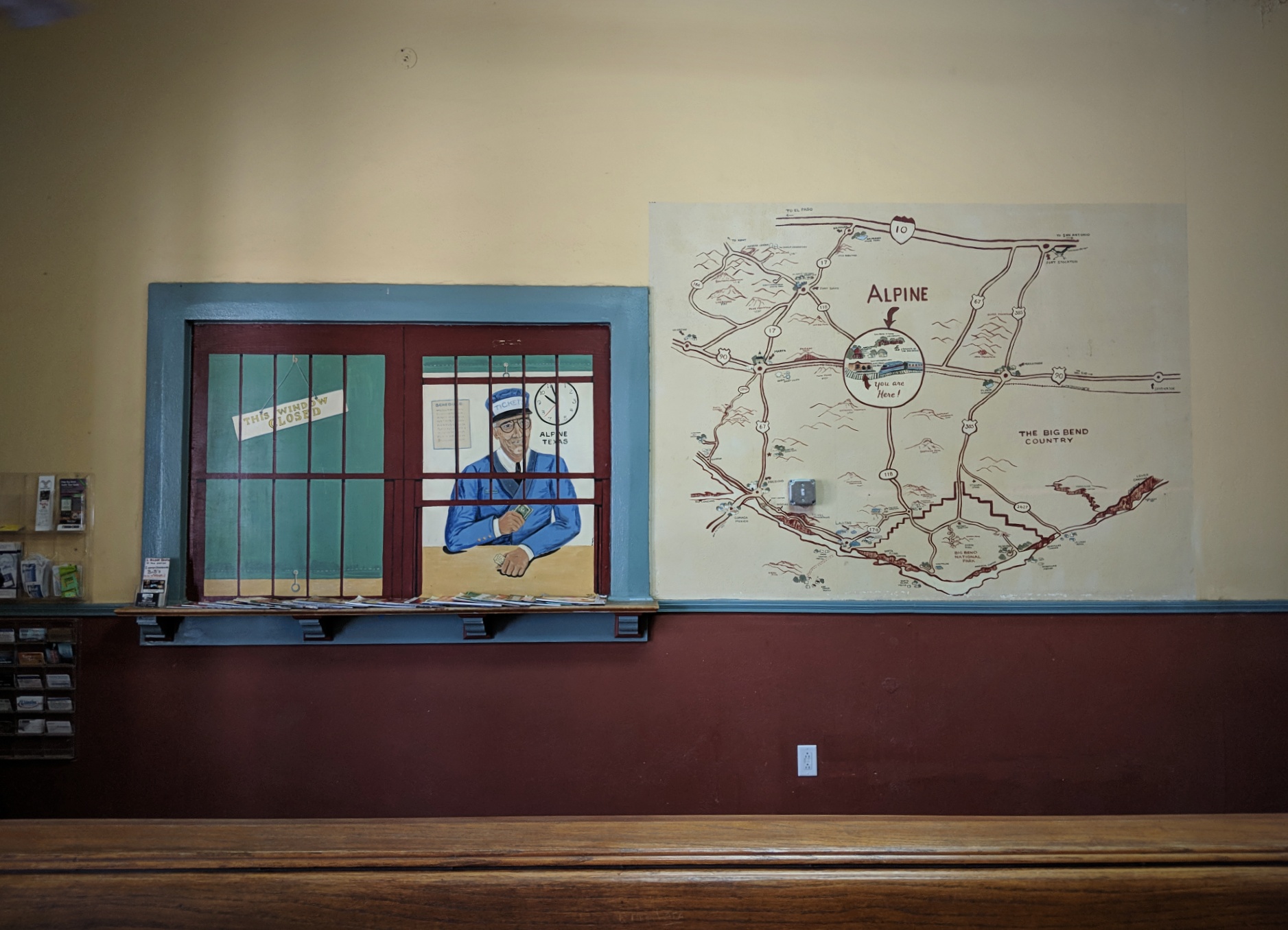
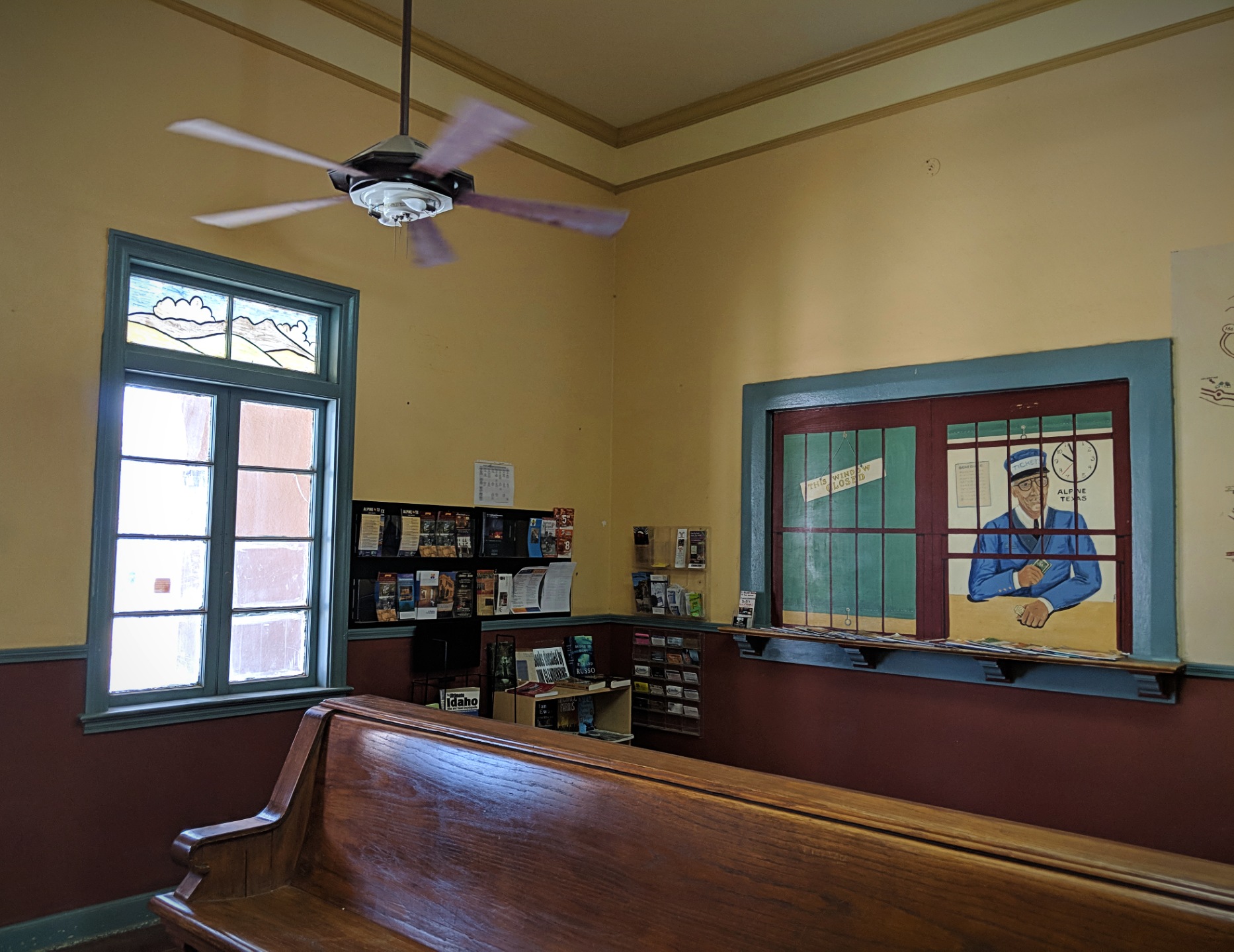
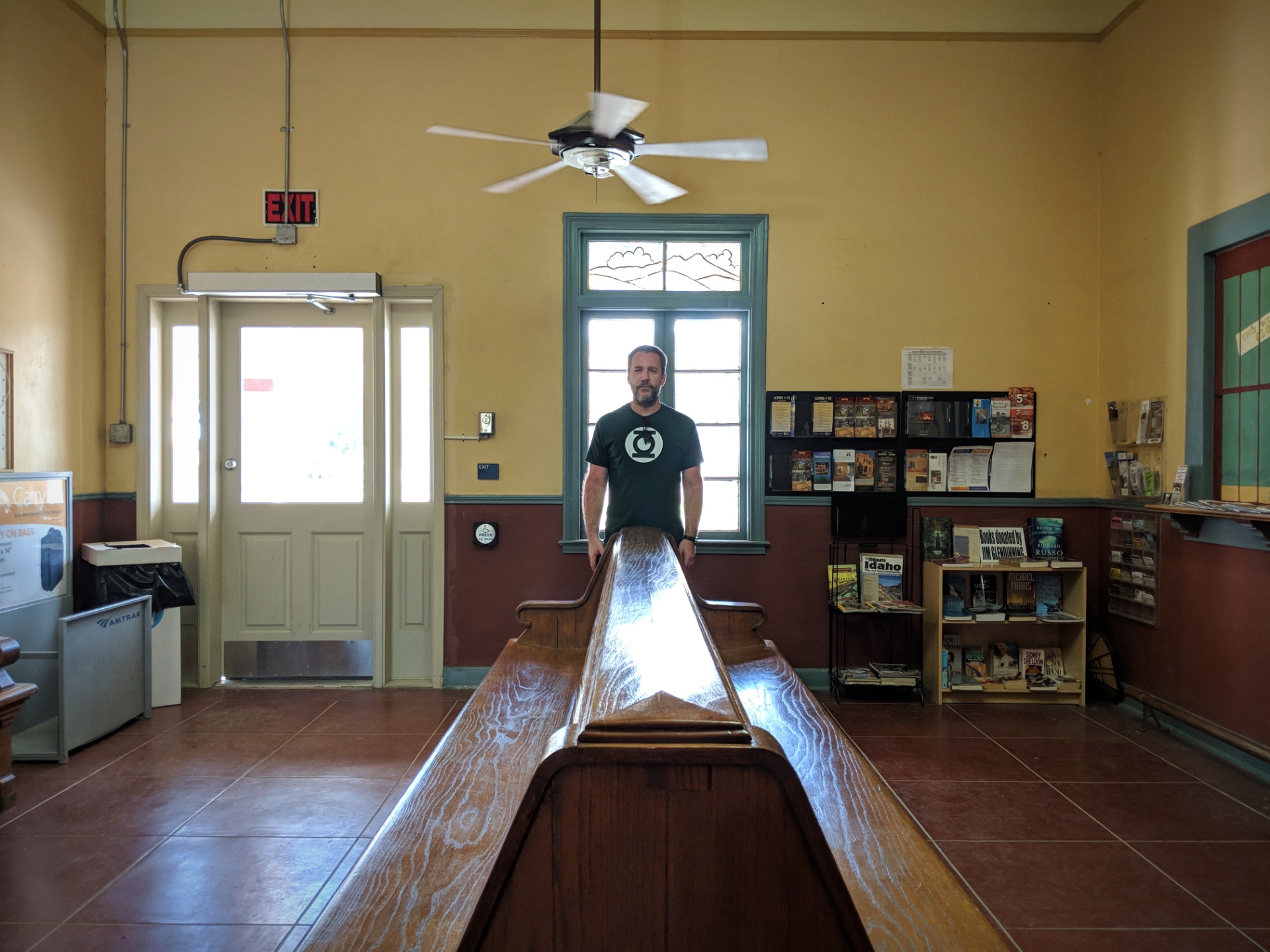
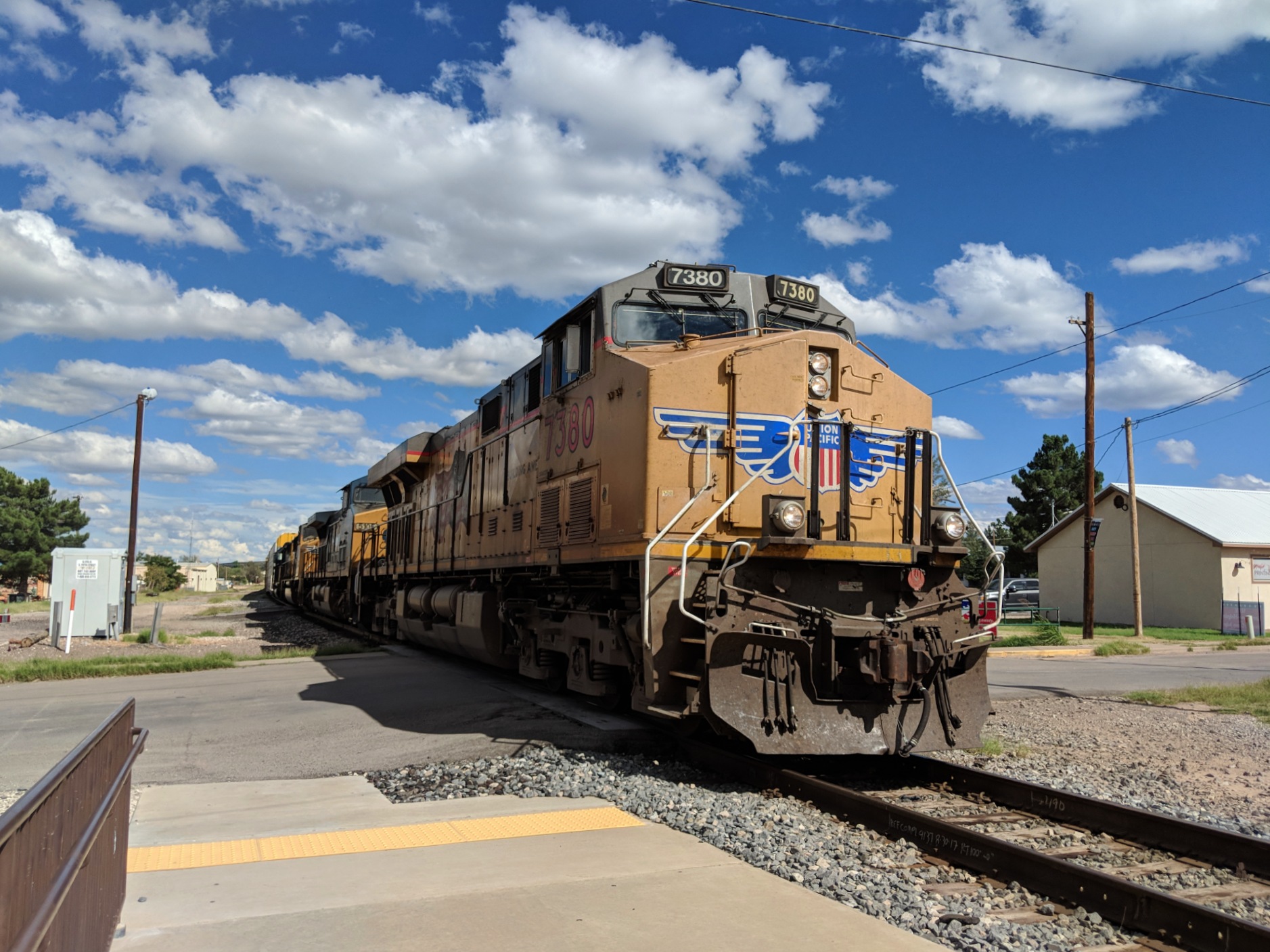
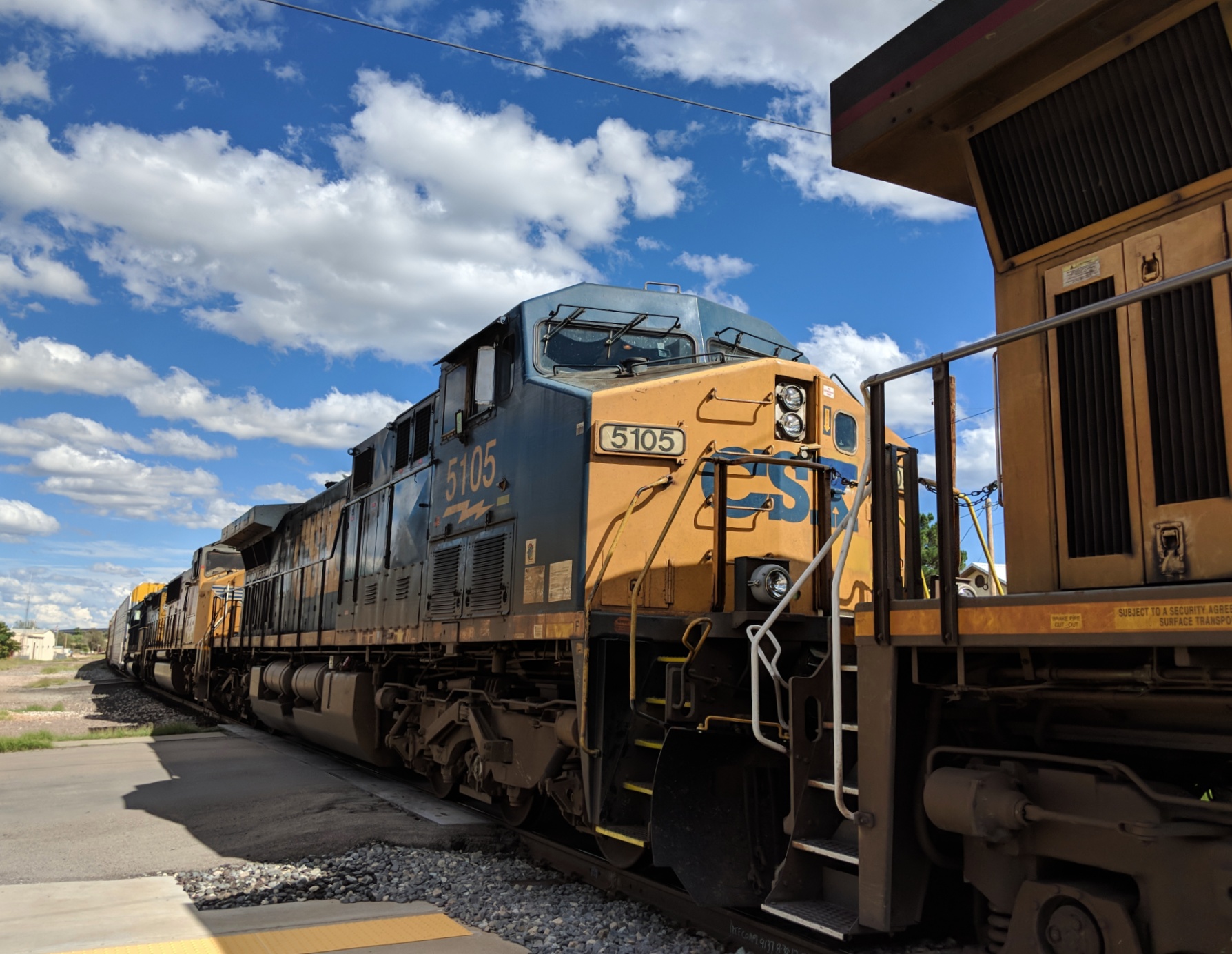
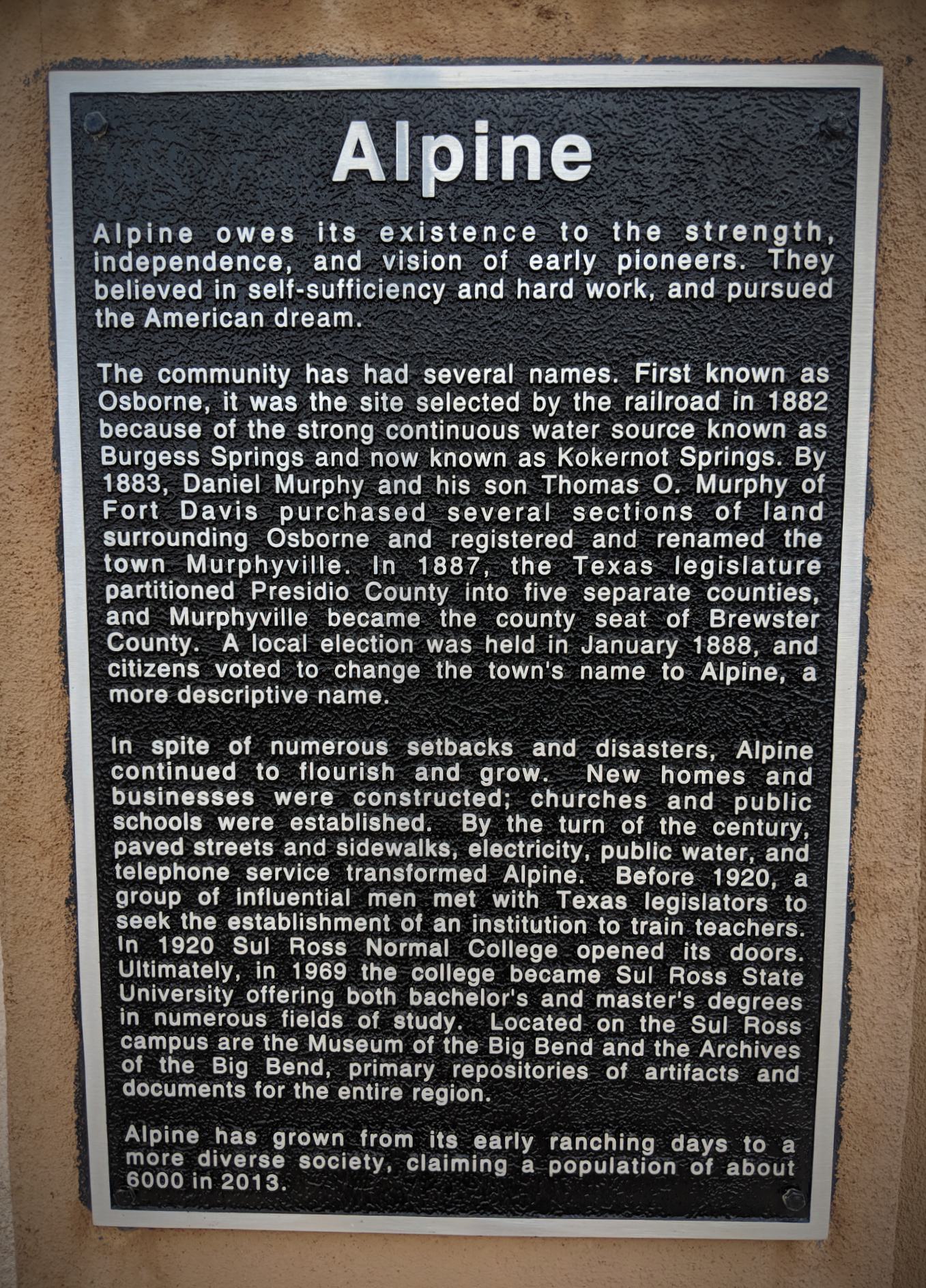
Has long been the lifeblood for Marfa… but it no longer stops there. You can hear it coming in the middle of the night but it will only stop at Alpine, the next town about thirty minutes drive from Marfa. Alpine will be of no interest to art aficionados, other than finding more affordable accommodation during the Chinati Weekend when the crowds invade the tiny town and all of its 12 hotels; but we simply had to have a look at its quaint little train station and the much larger Big Bend Saddlery, where we shopped for hats, ties and the like (not saddles, no…)

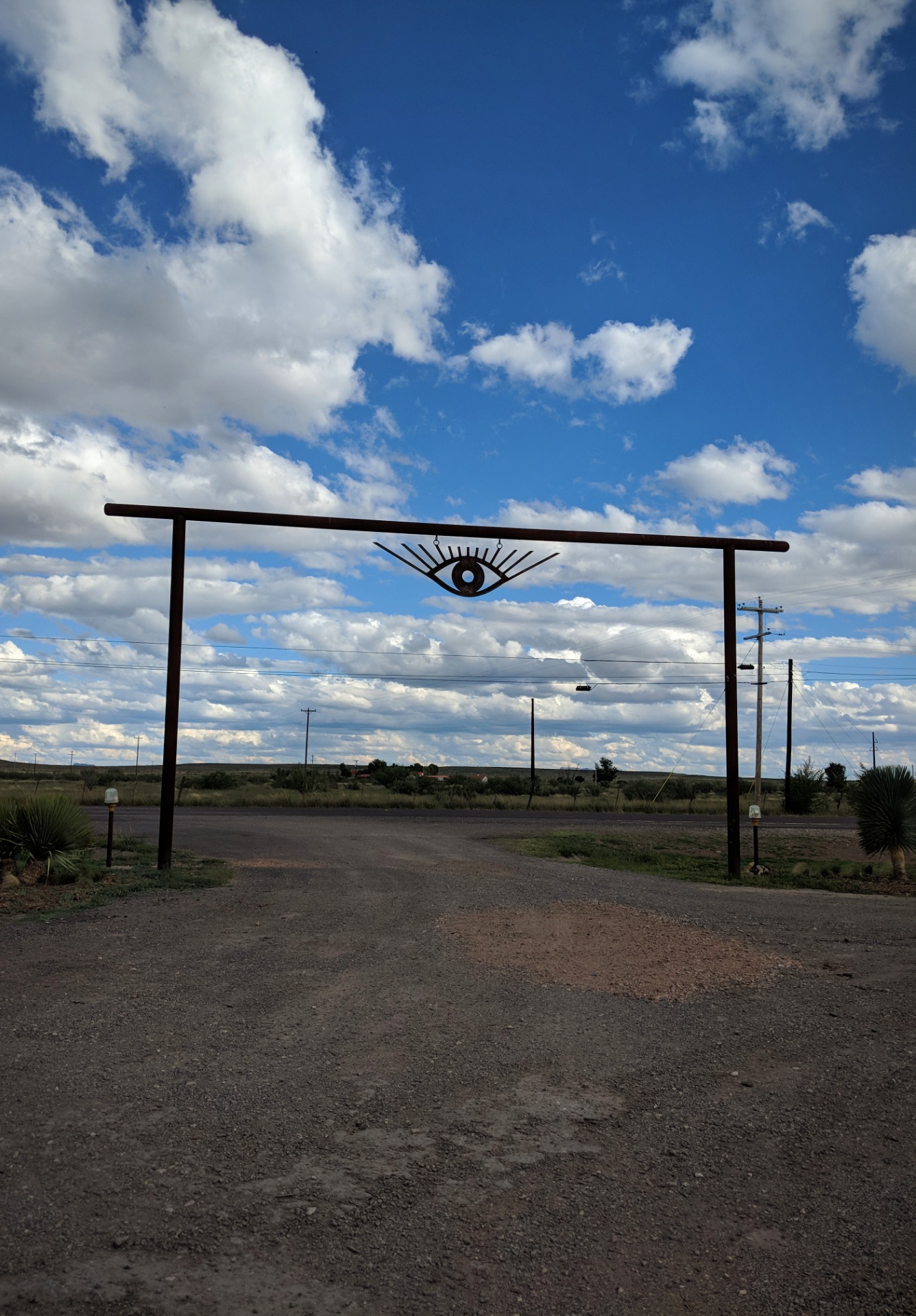
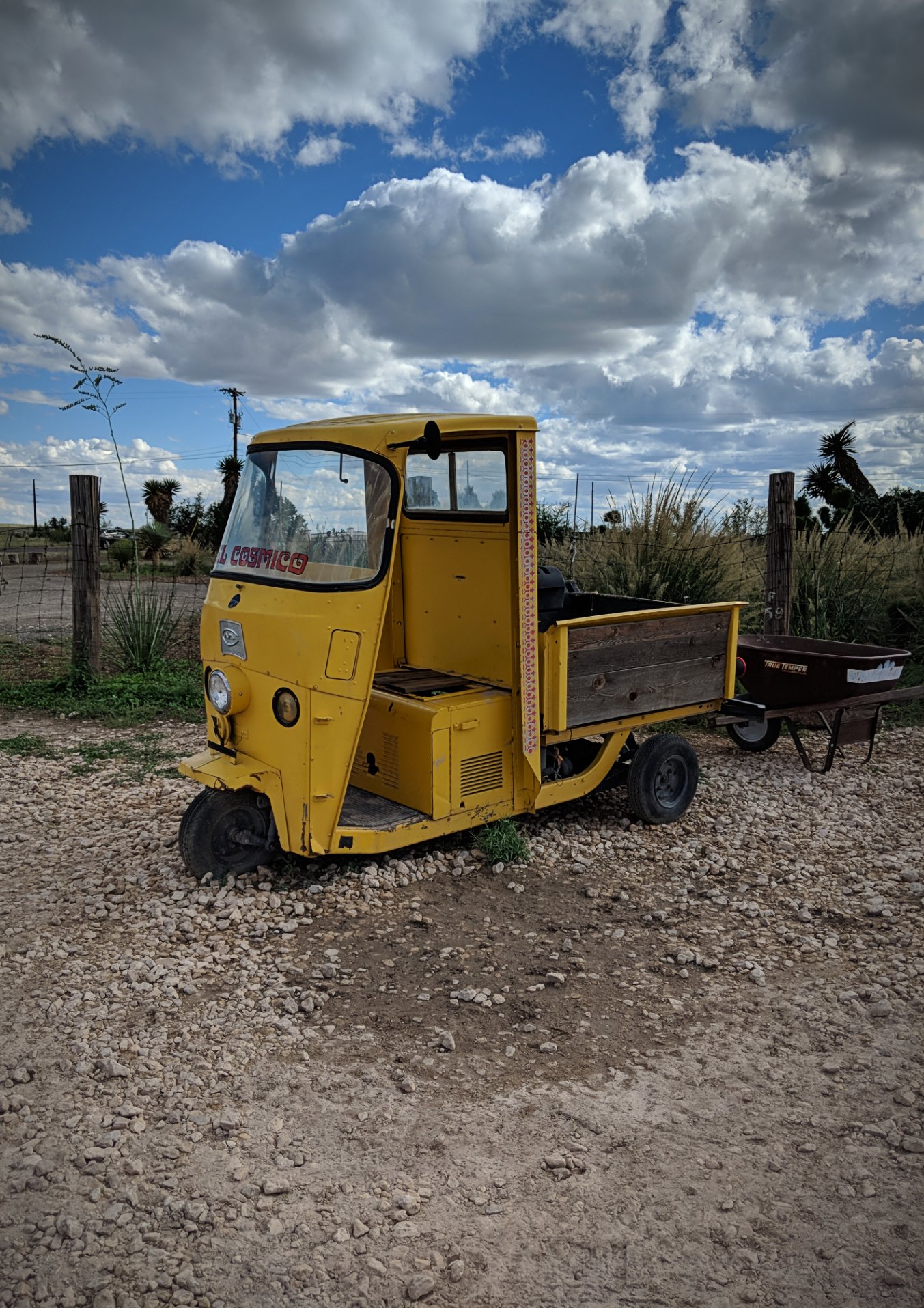
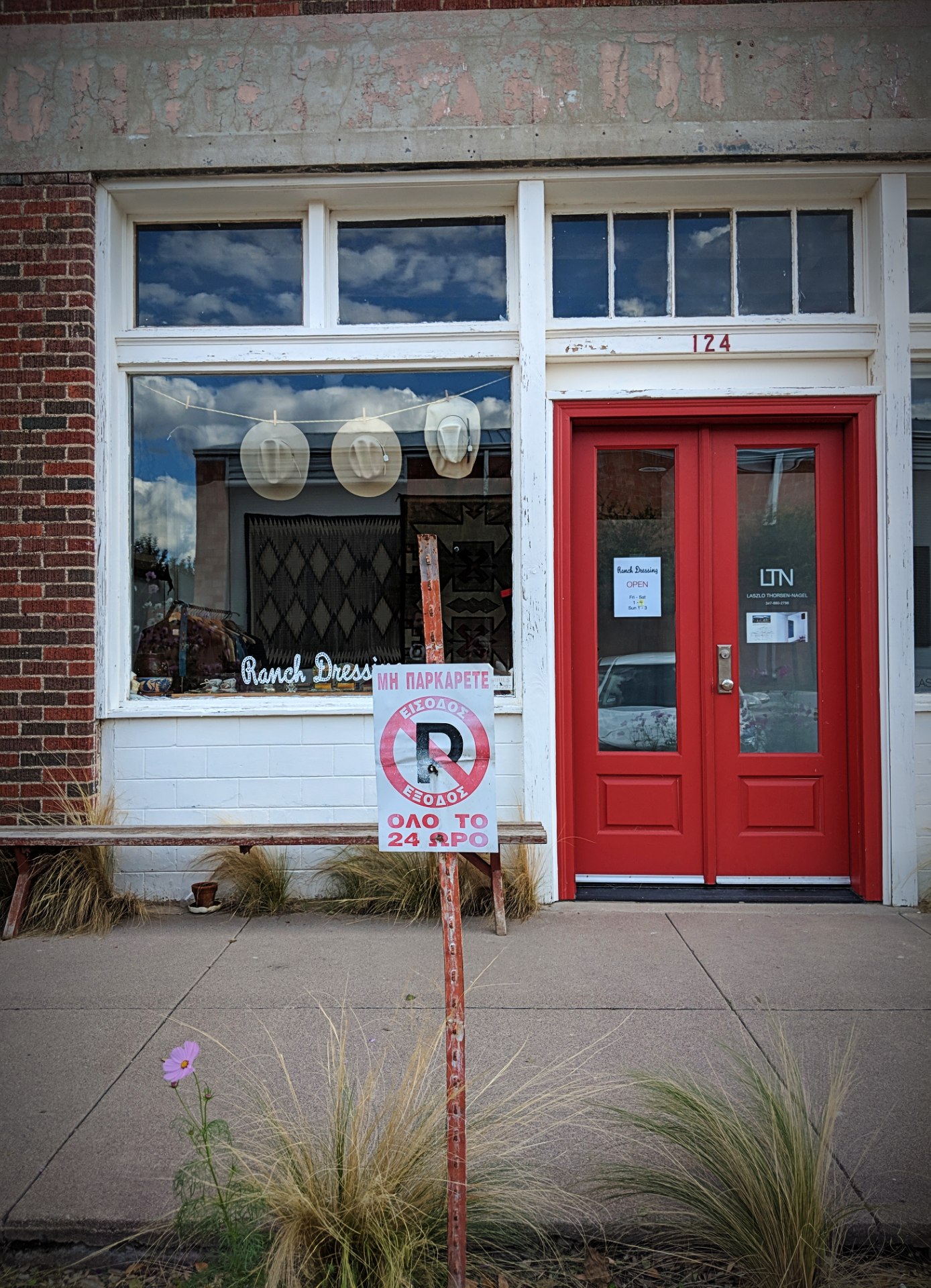
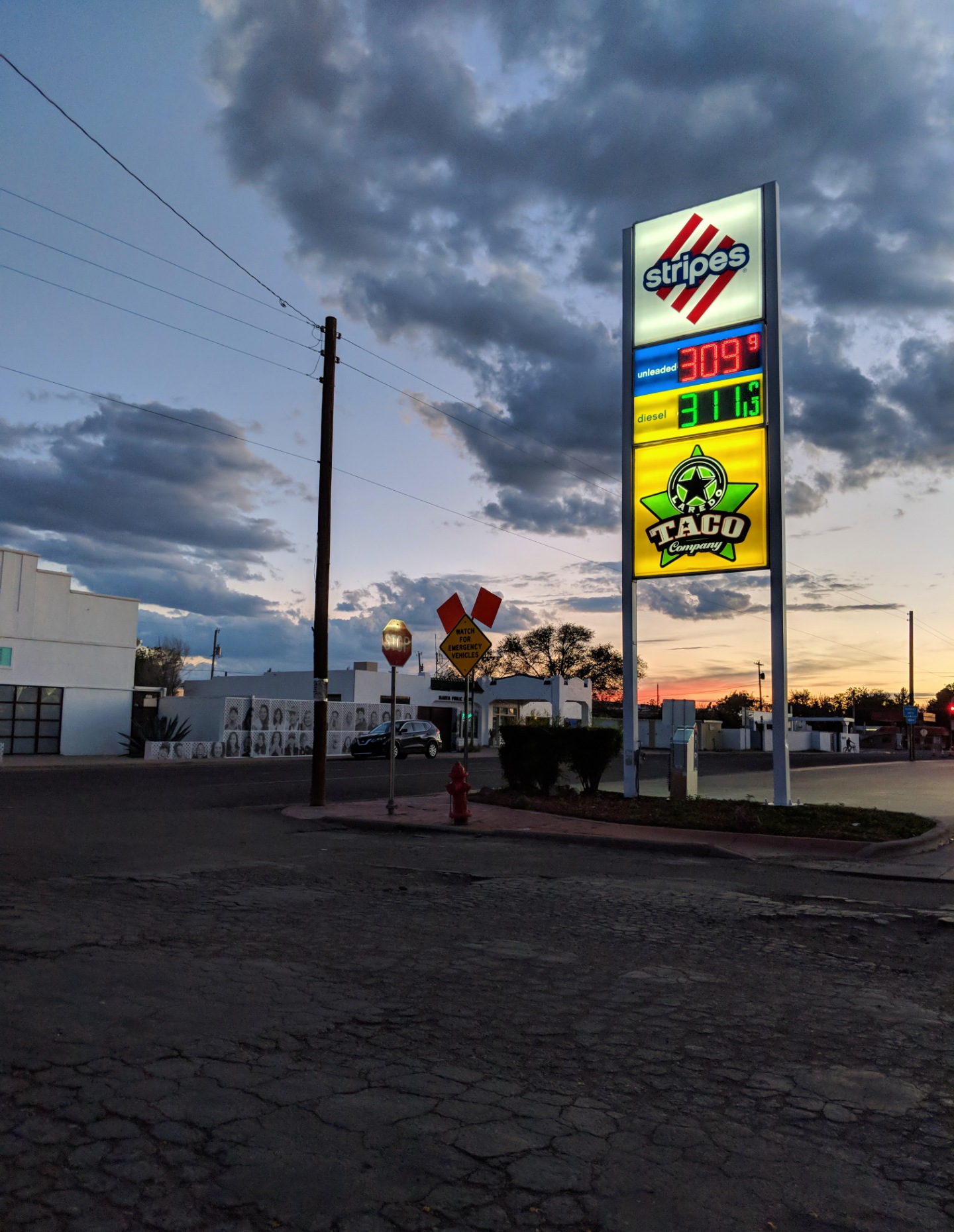
Back in Marfa, we walked under the watchful eye of El Cosmico before returning to the town centre – where we came across a “No Parking” sign in perfect Greek… Only in Marfa!

And, finally, back to where we started; a full round. It was an unforgettable trip – and, yet, there was more to come!

Marfa, TX

October 08-09, 2018

The Judd Way of Life

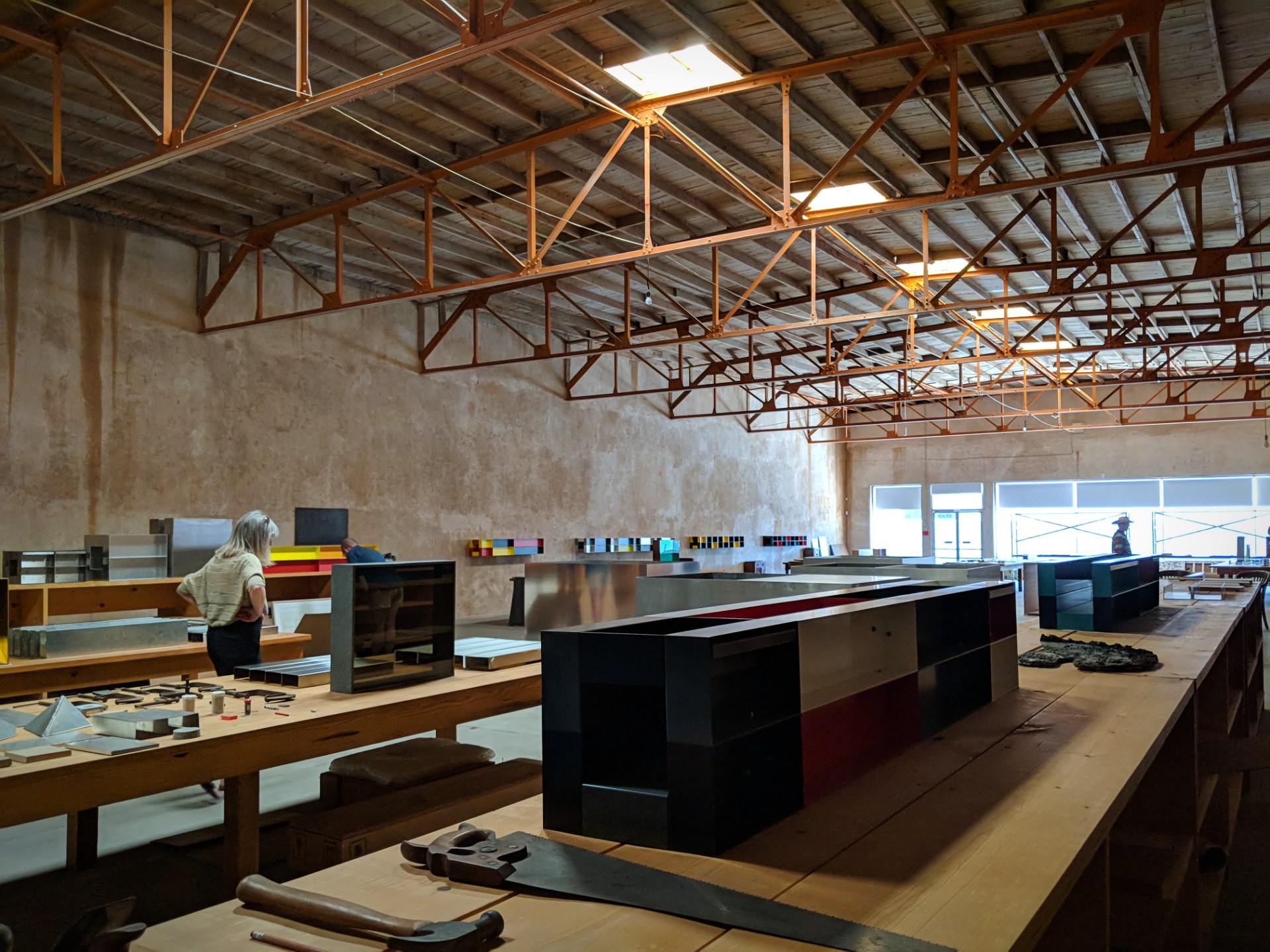
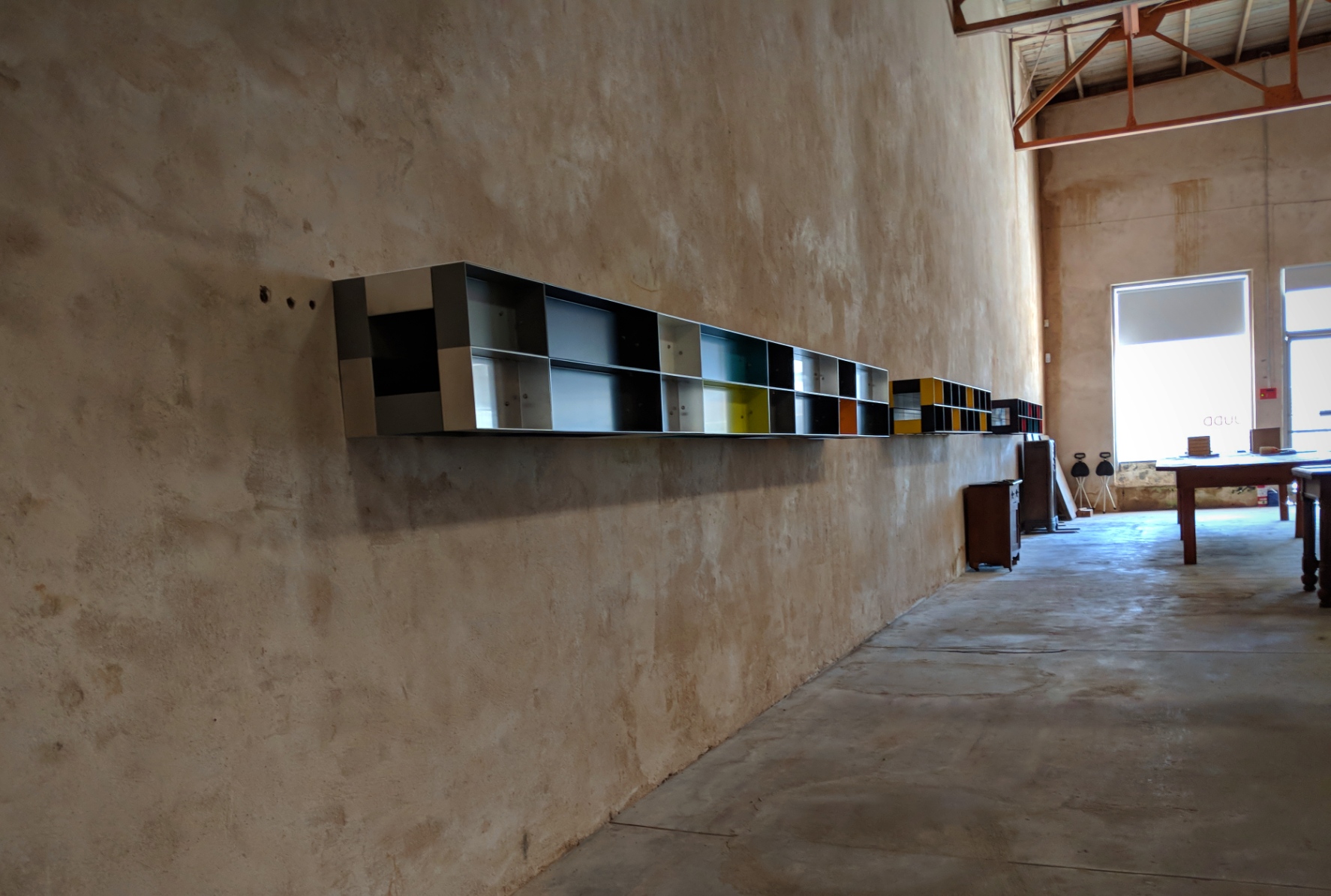
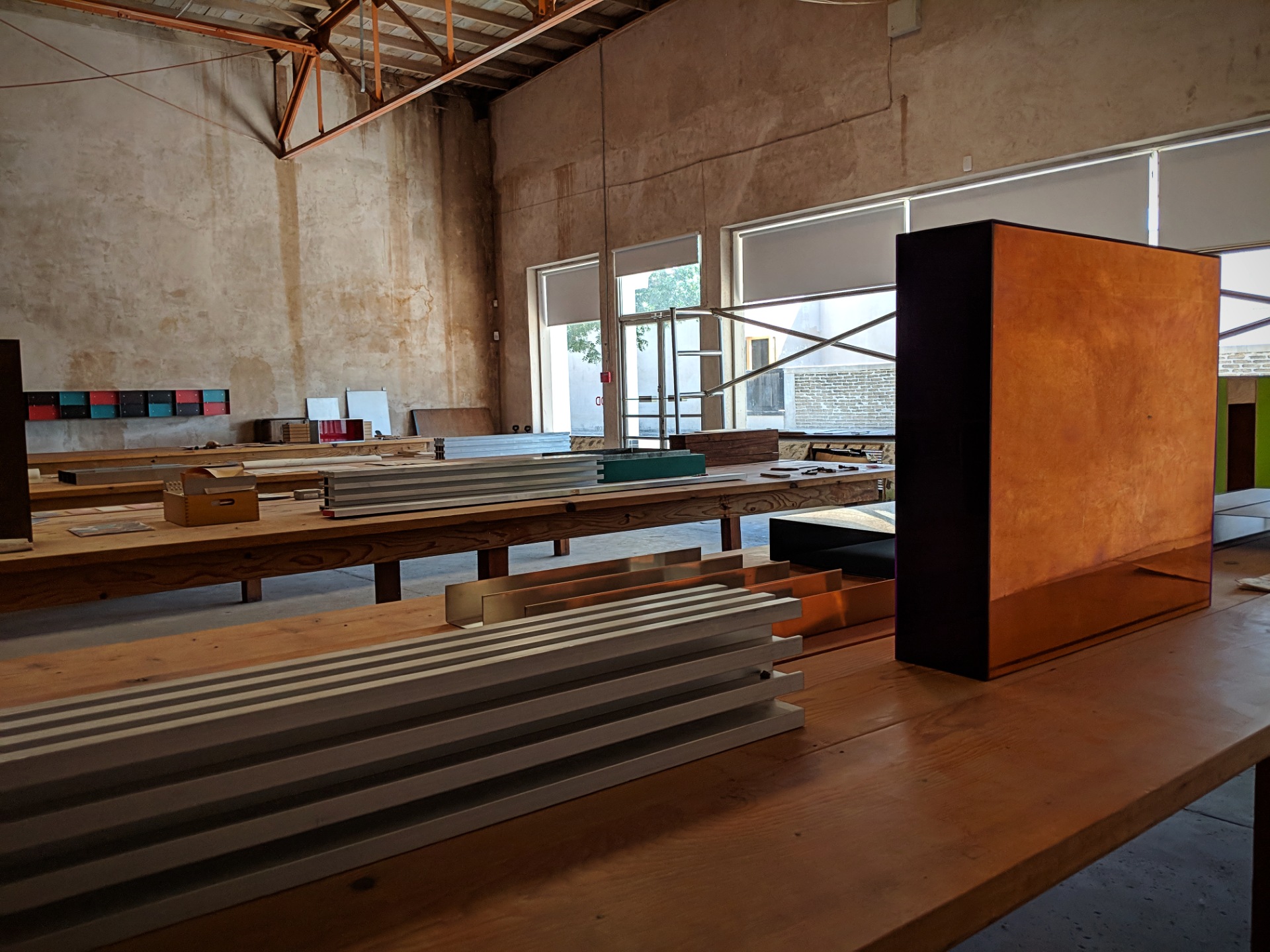
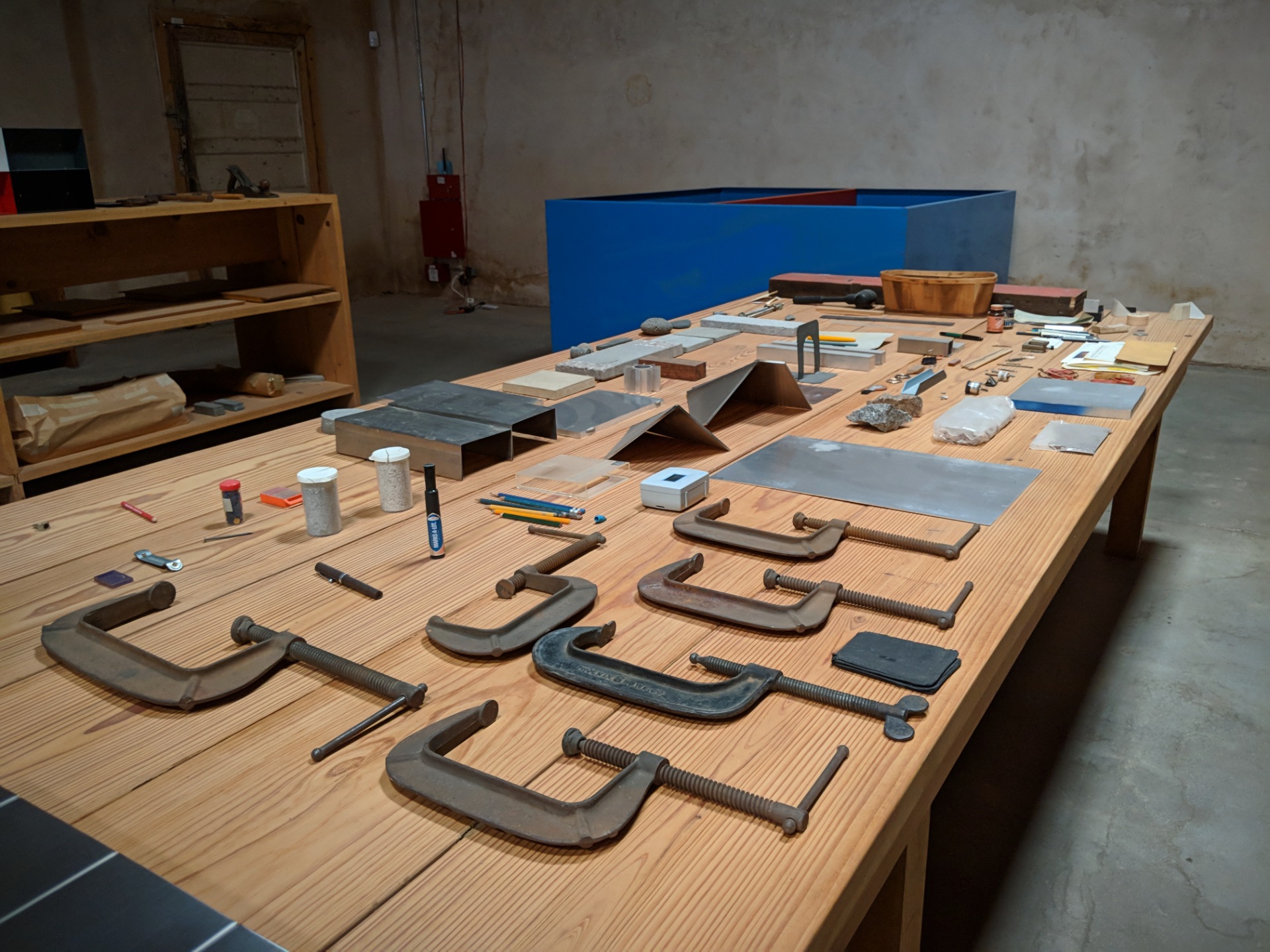
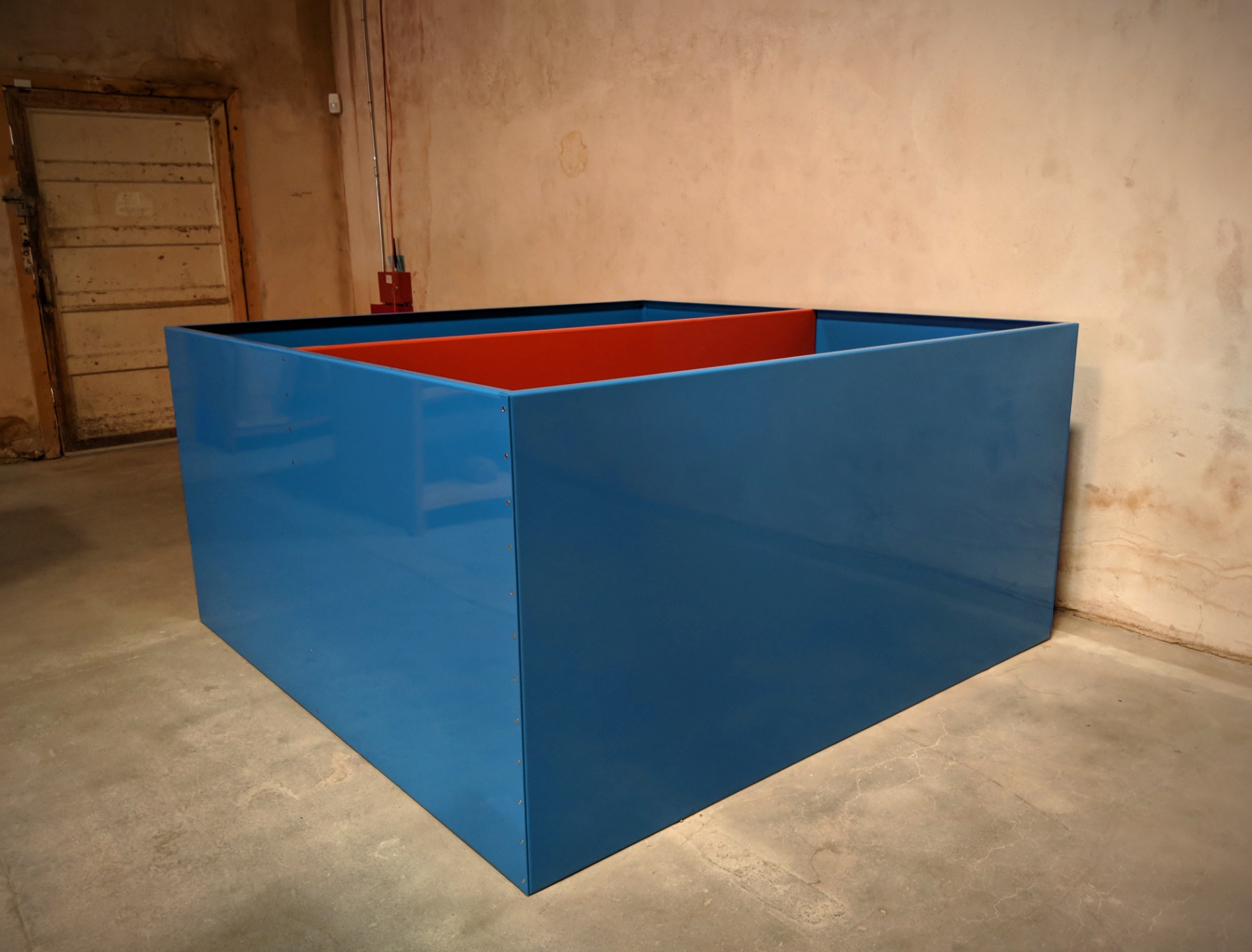
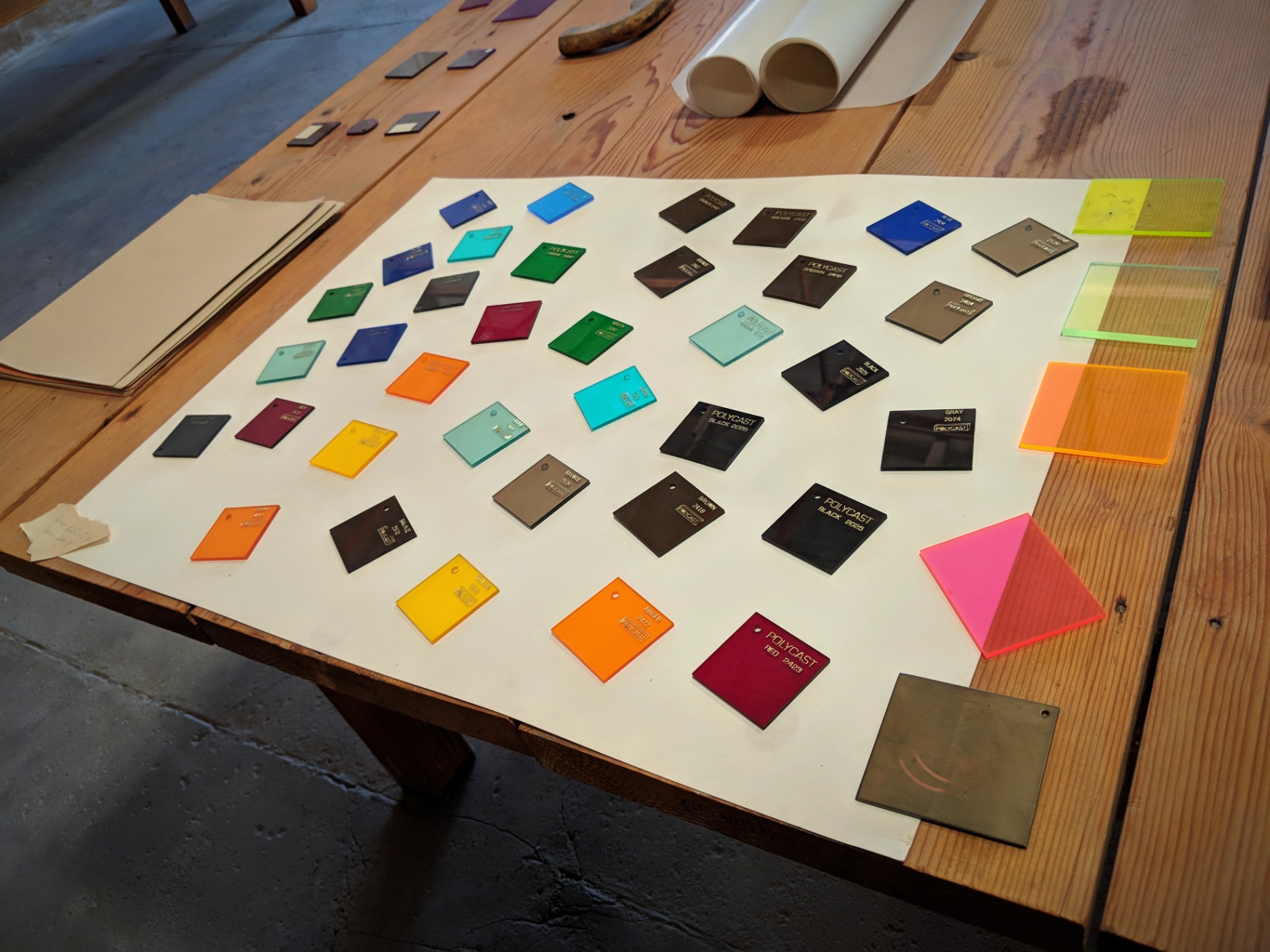
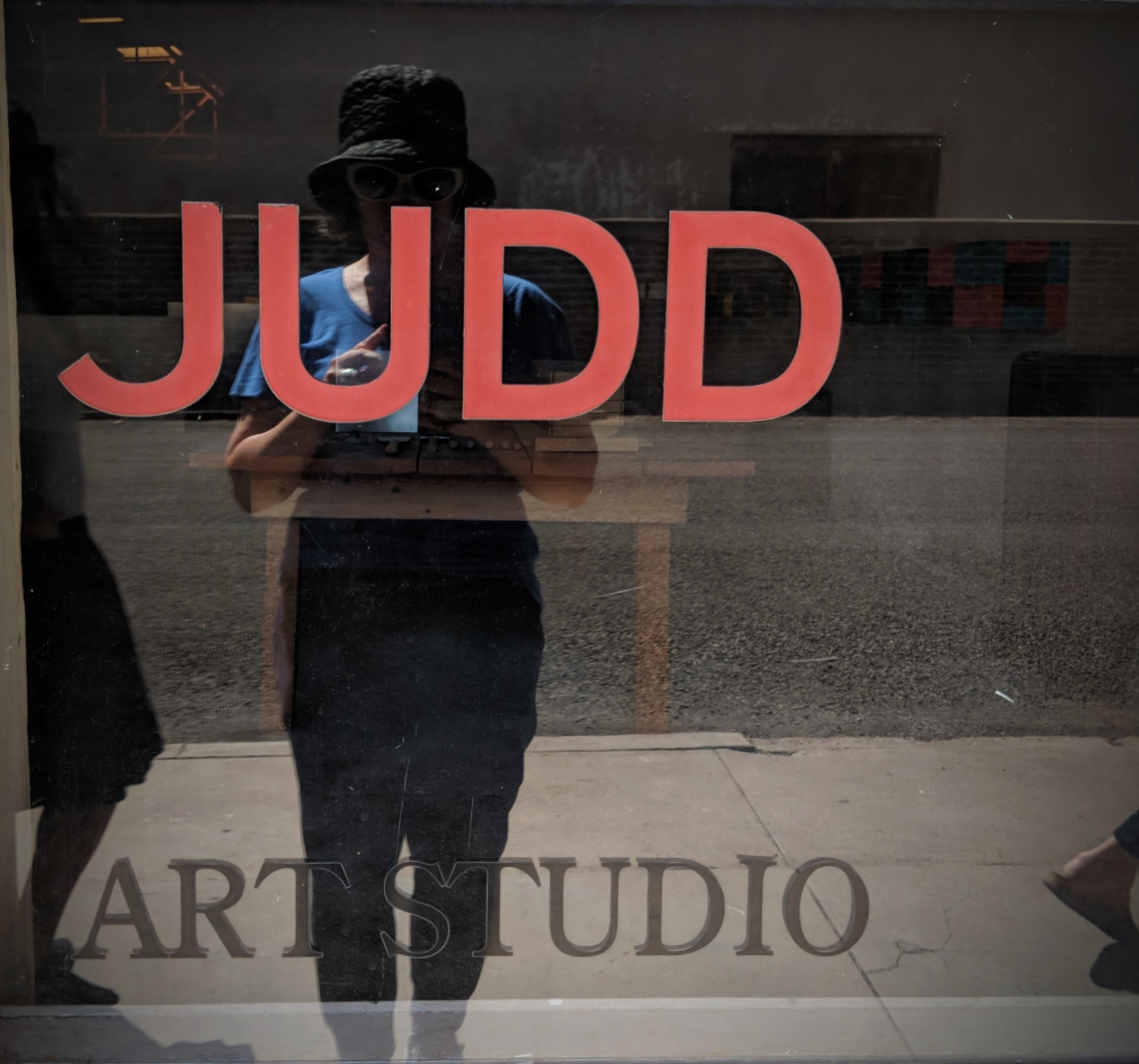
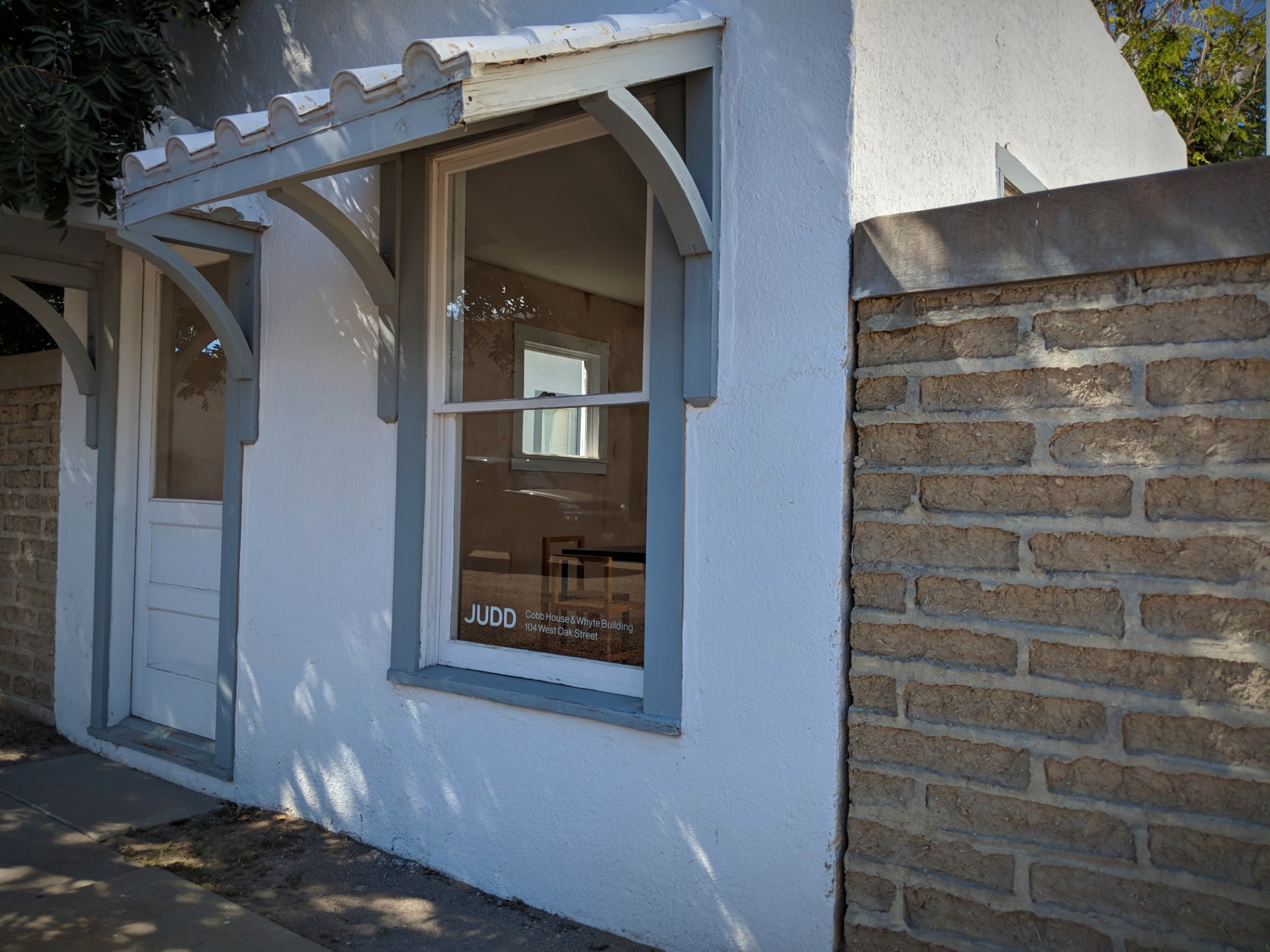
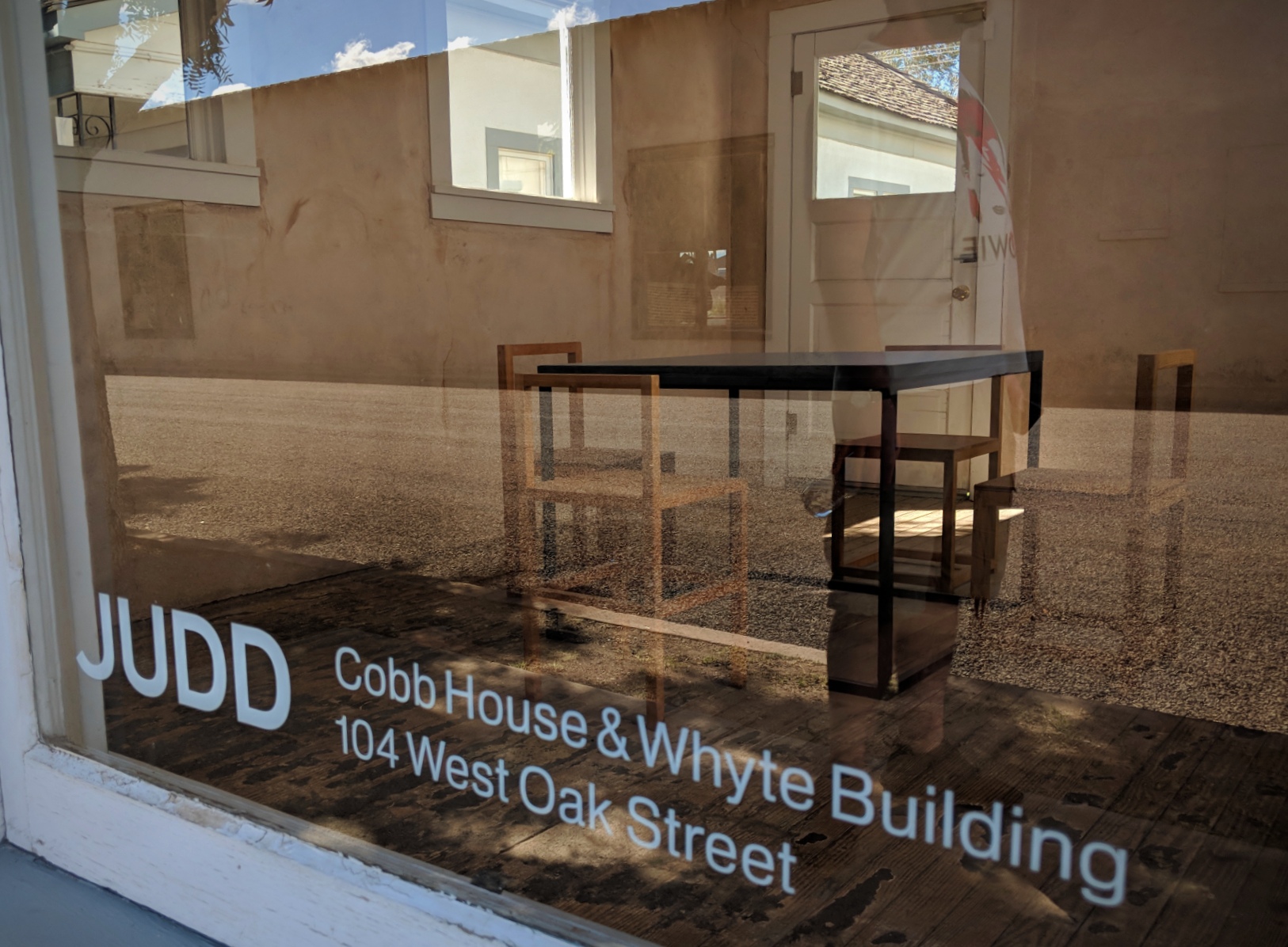
Conceived by Judd in 1977 and created in 1996, the Judd Foundation maintains and preserves Donald Judd’s permanently installed living and working spaces, libraries, and archives in New York and Marfa, Texas. The Foundation promotes a wider understanding of Judd’s artistic legacy by providing access to these spaces and resources and by developing scholarly and educational programs.

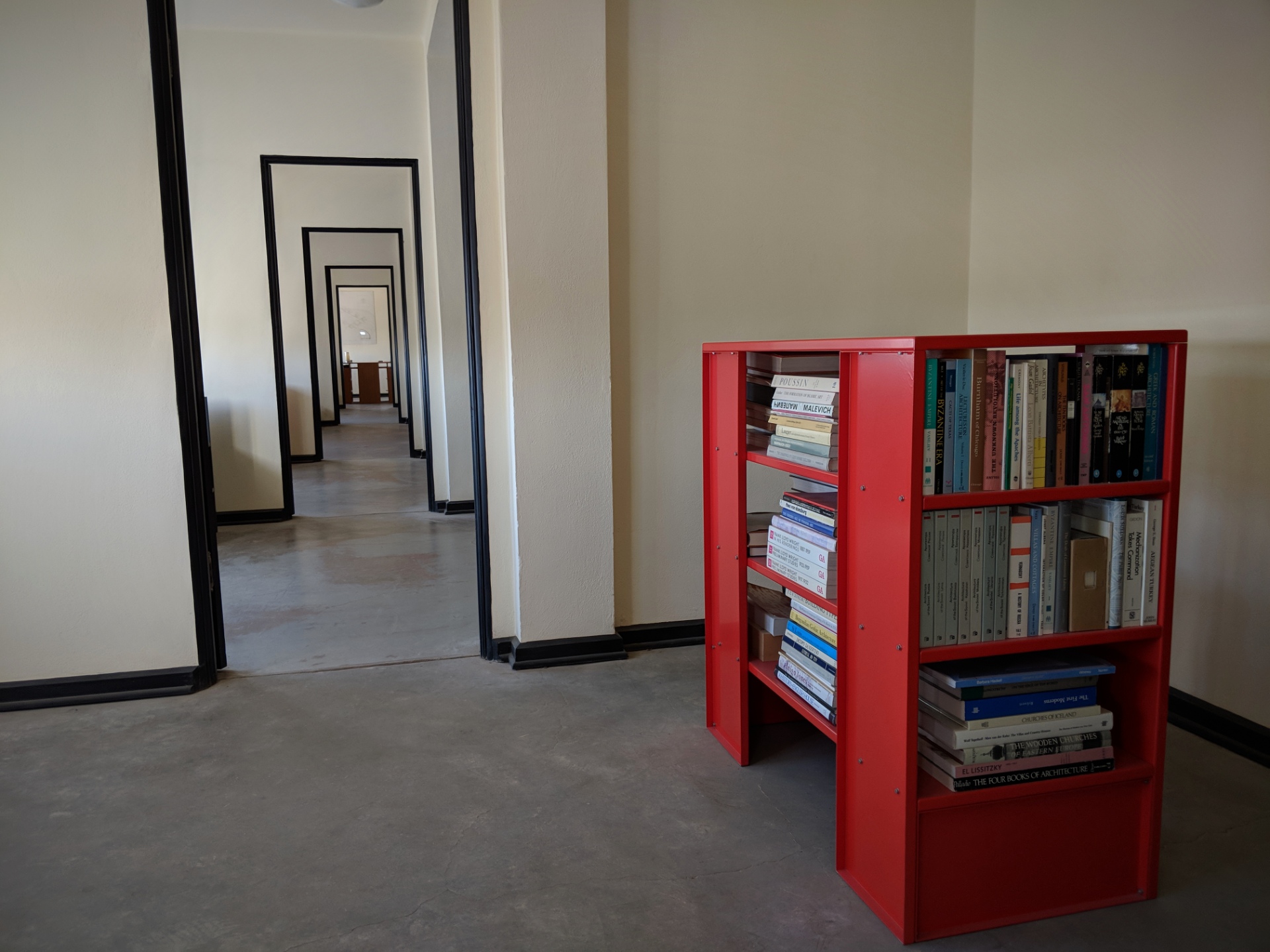
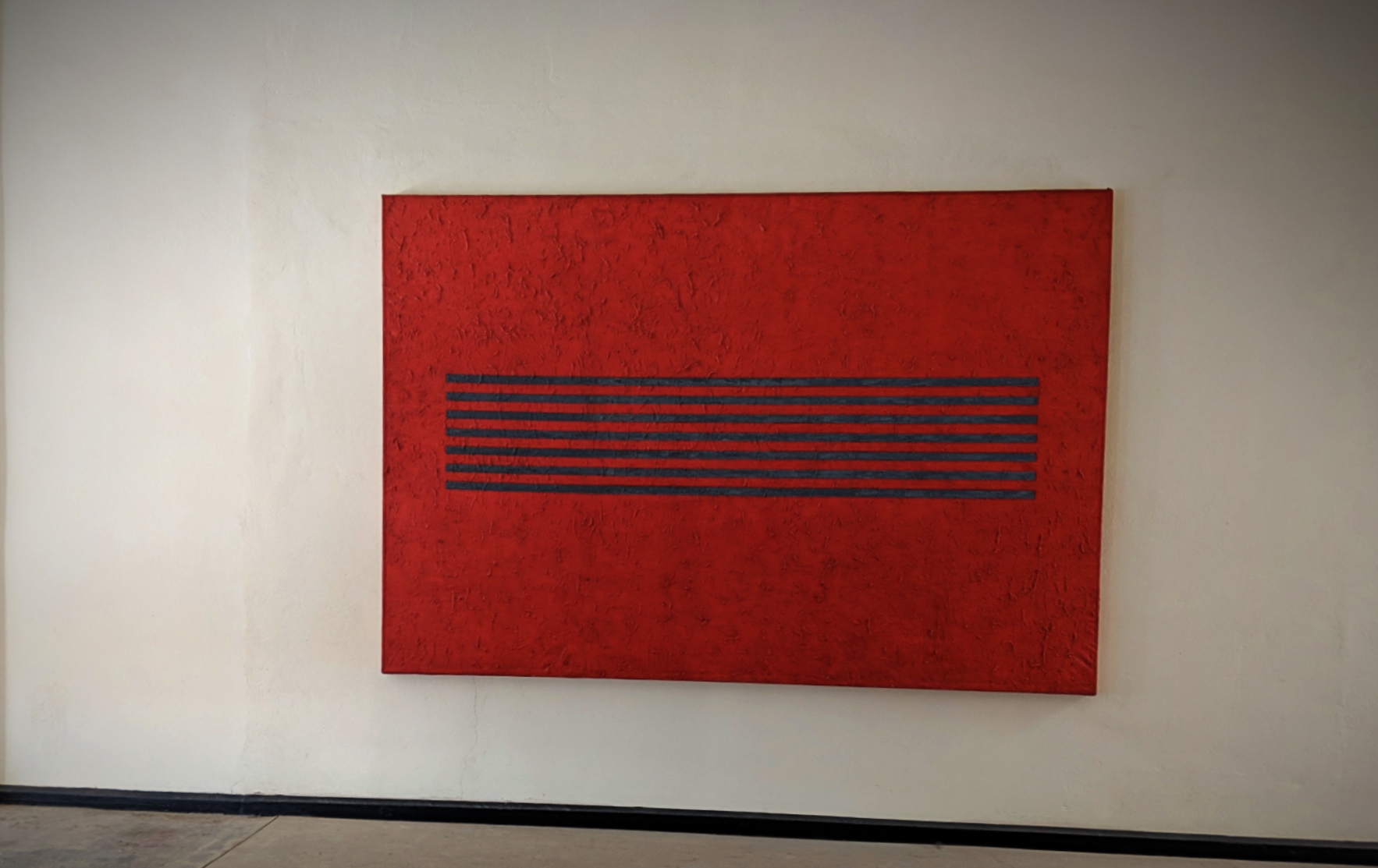
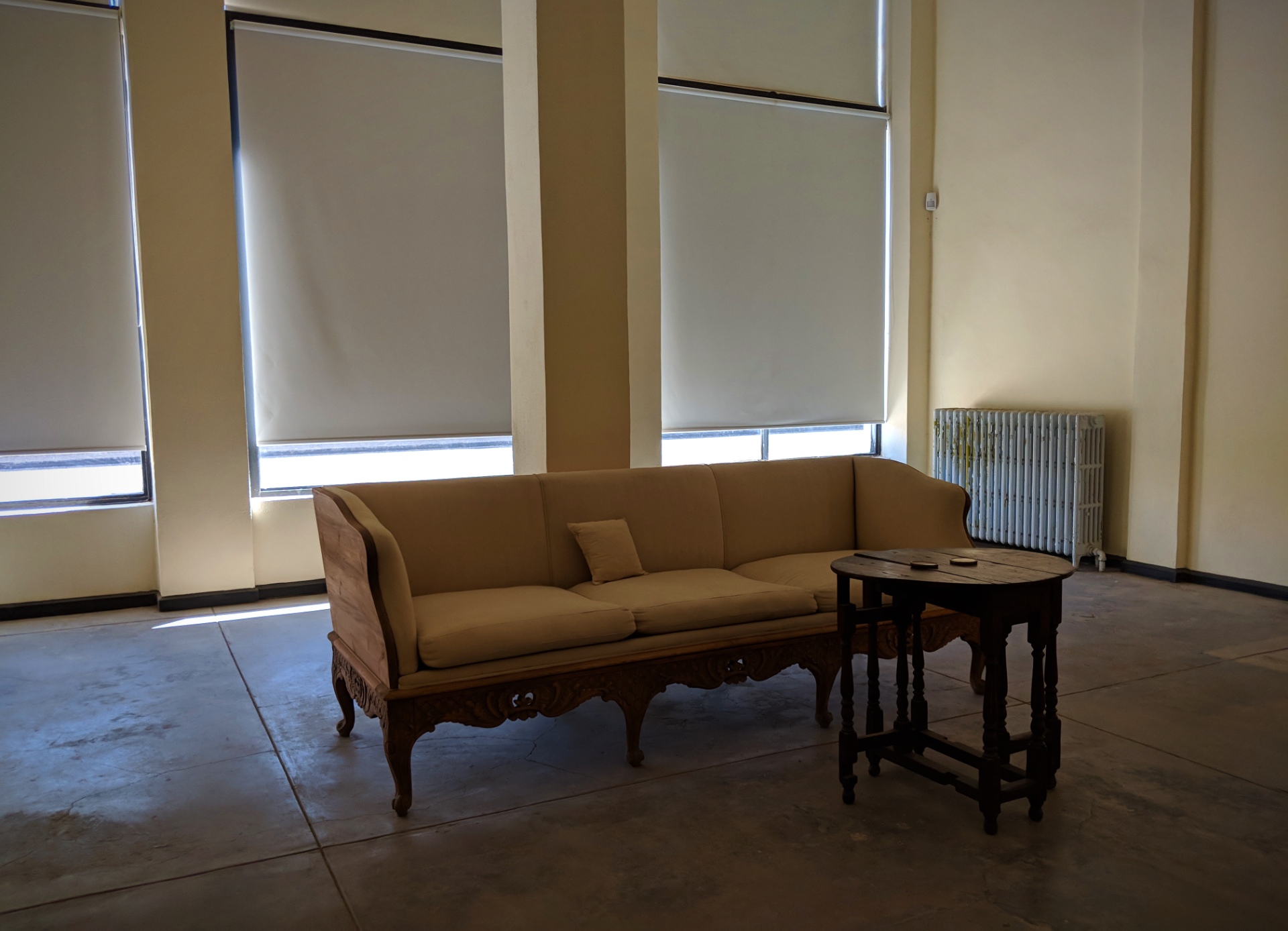
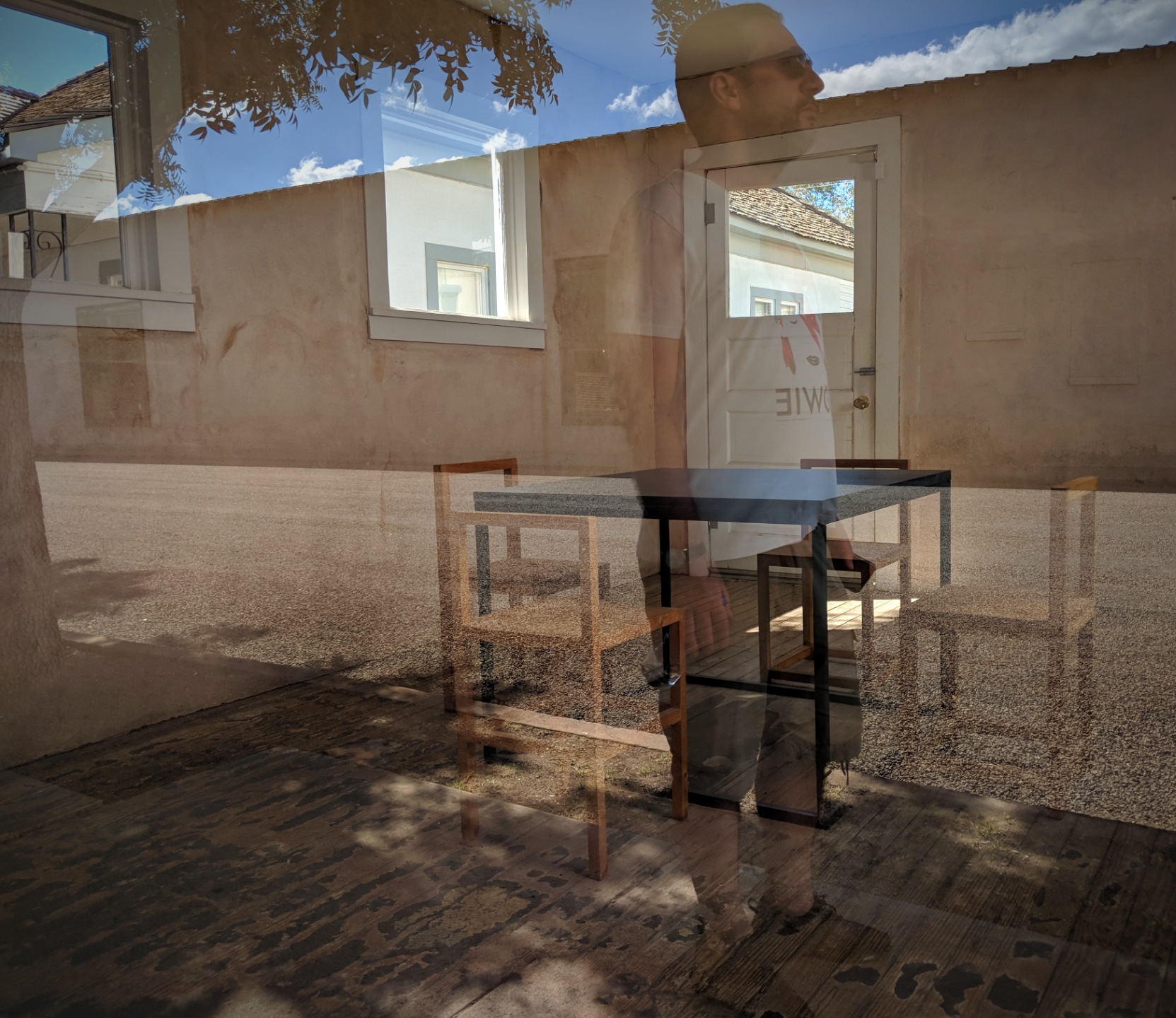
Access is provided by way of guided tours offering a good look in Judd’s working and living spaces, his art, tools, books, his way of life. Photography is not permitted in any of the buildings. These are a few sneak pics I managed to smuggle from our tour at the Architecture Studio, the Art Studio, the Cobb House and the Block, Judd’s Marfa residence.

Marfa, TX

October 7th, 2018

Out of the Box

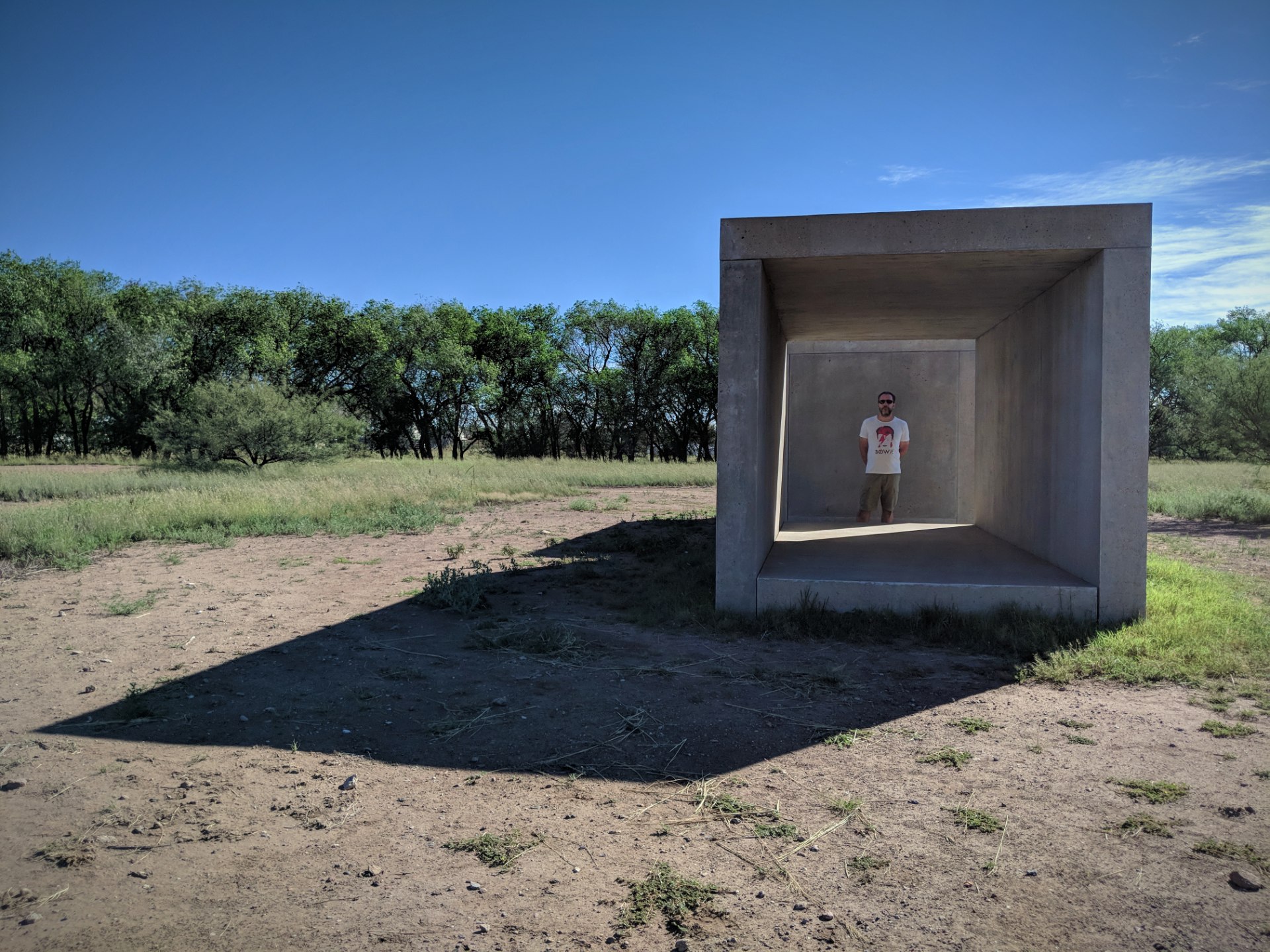
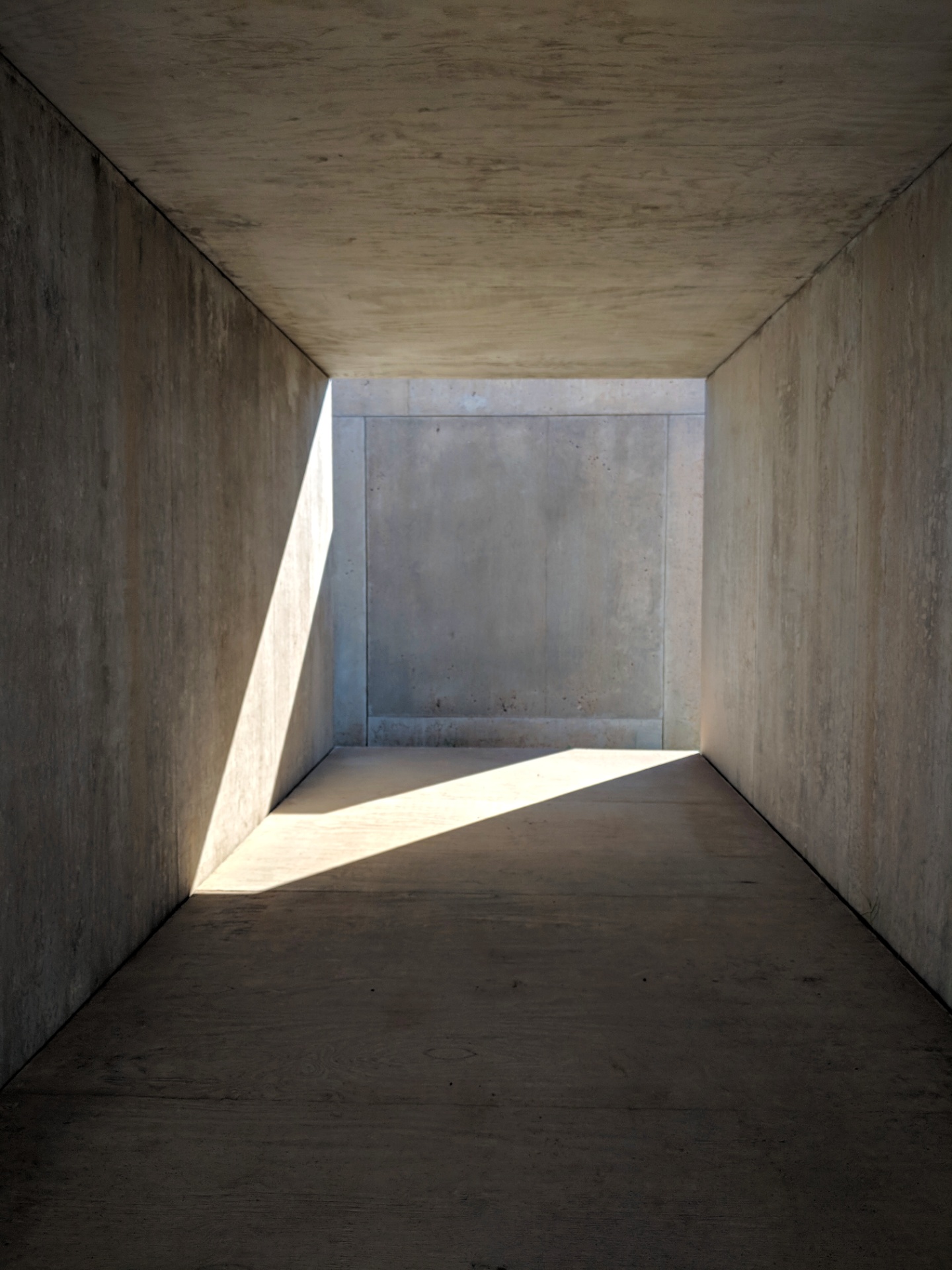
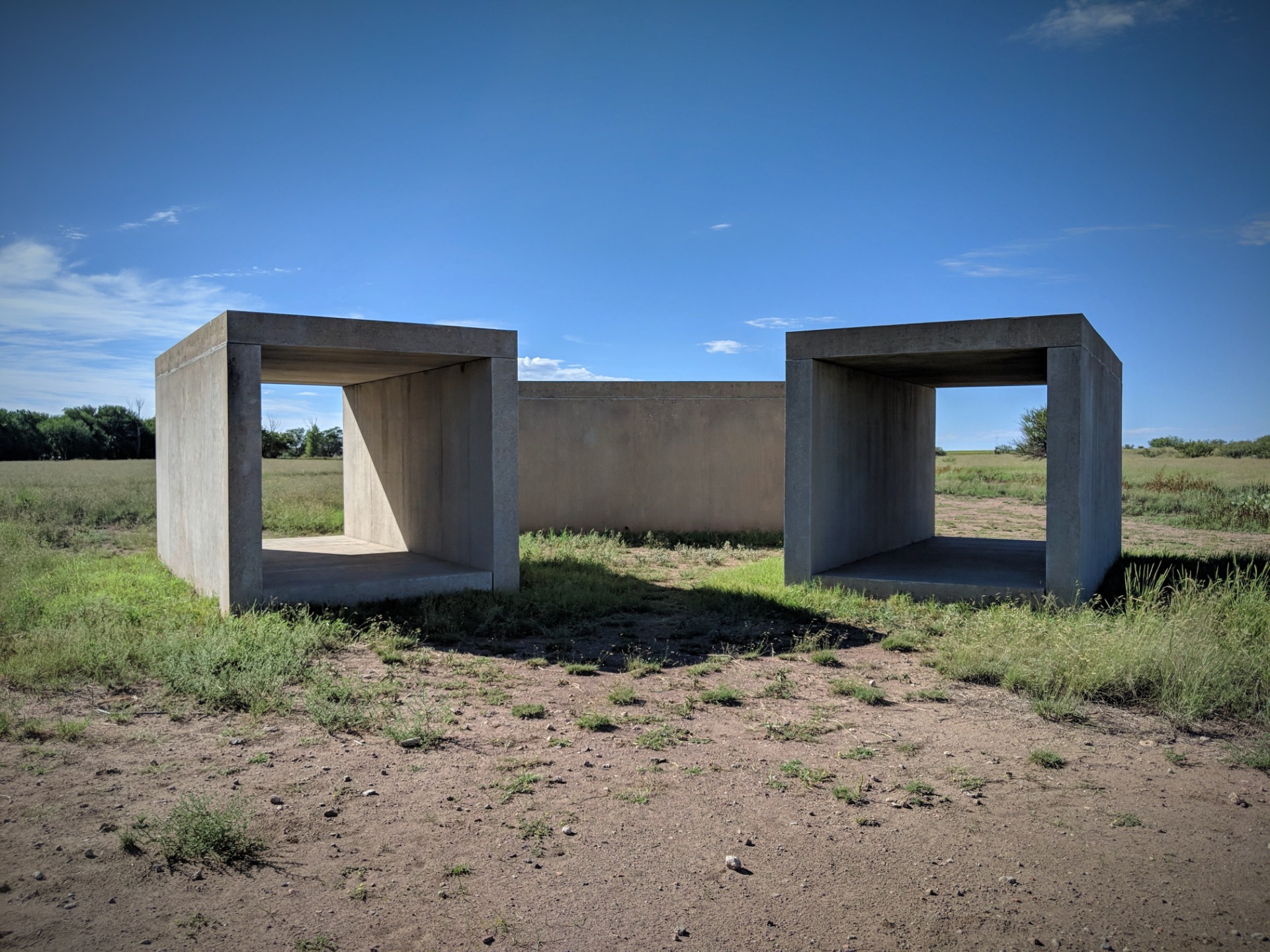
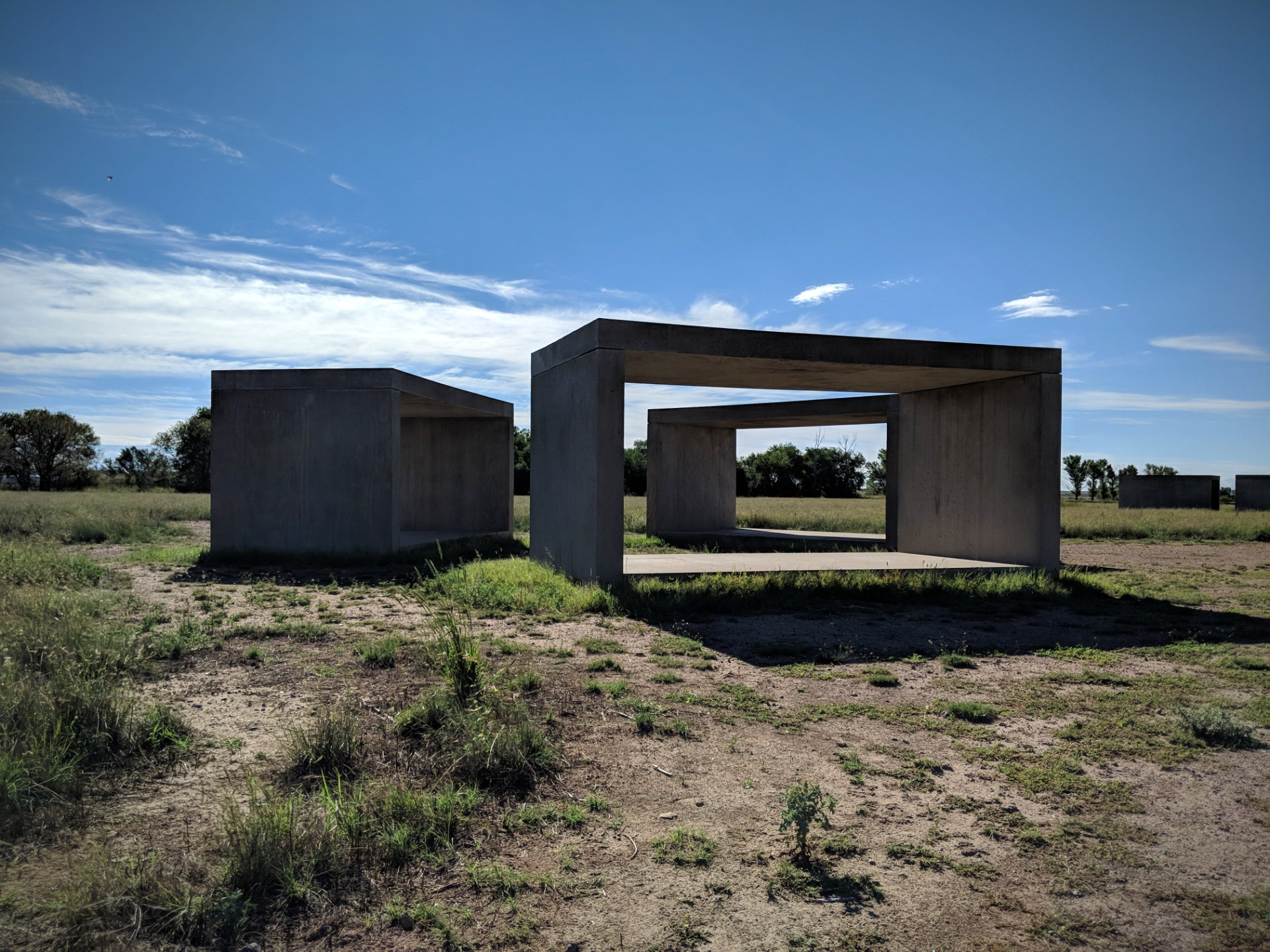
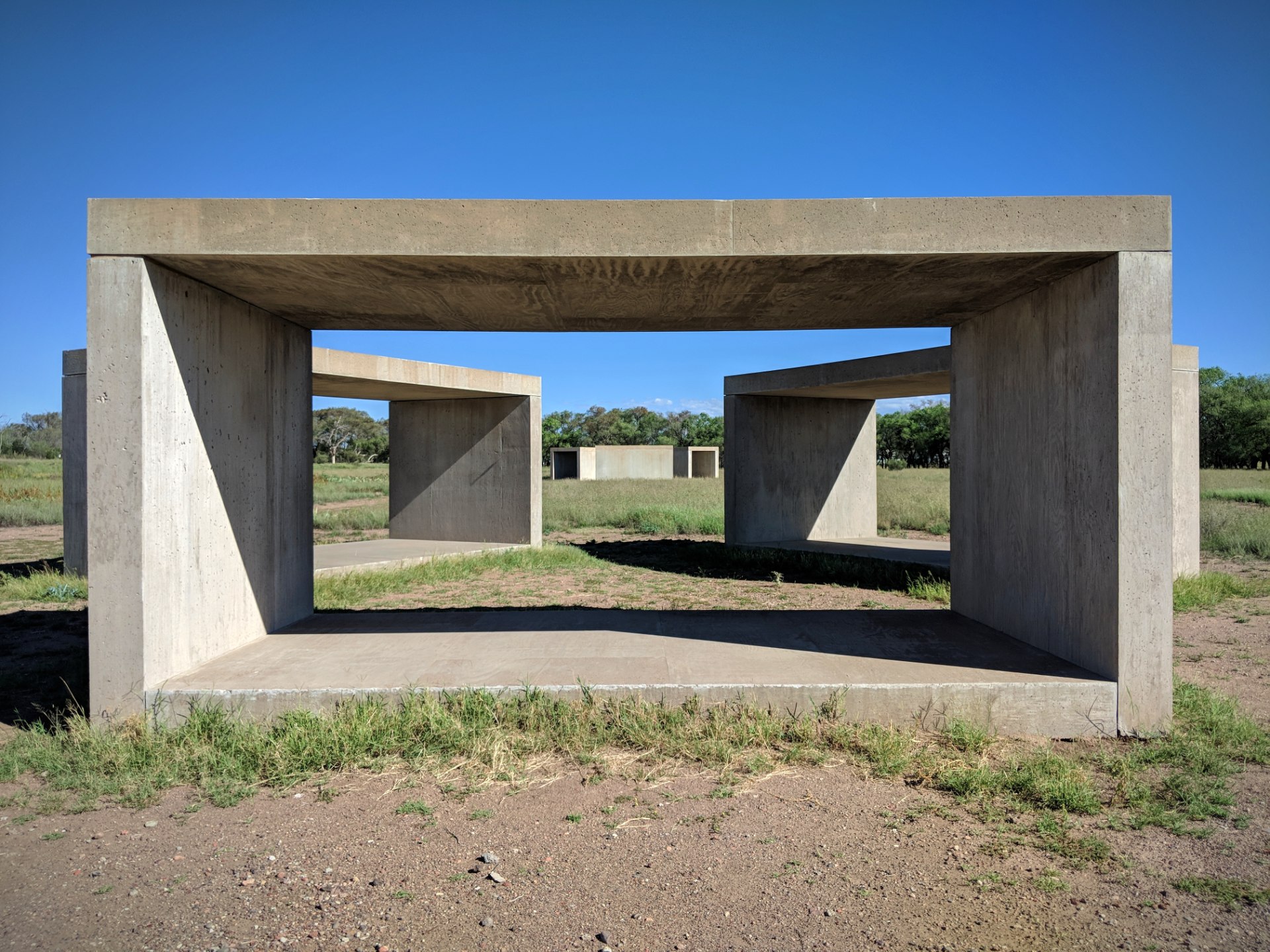
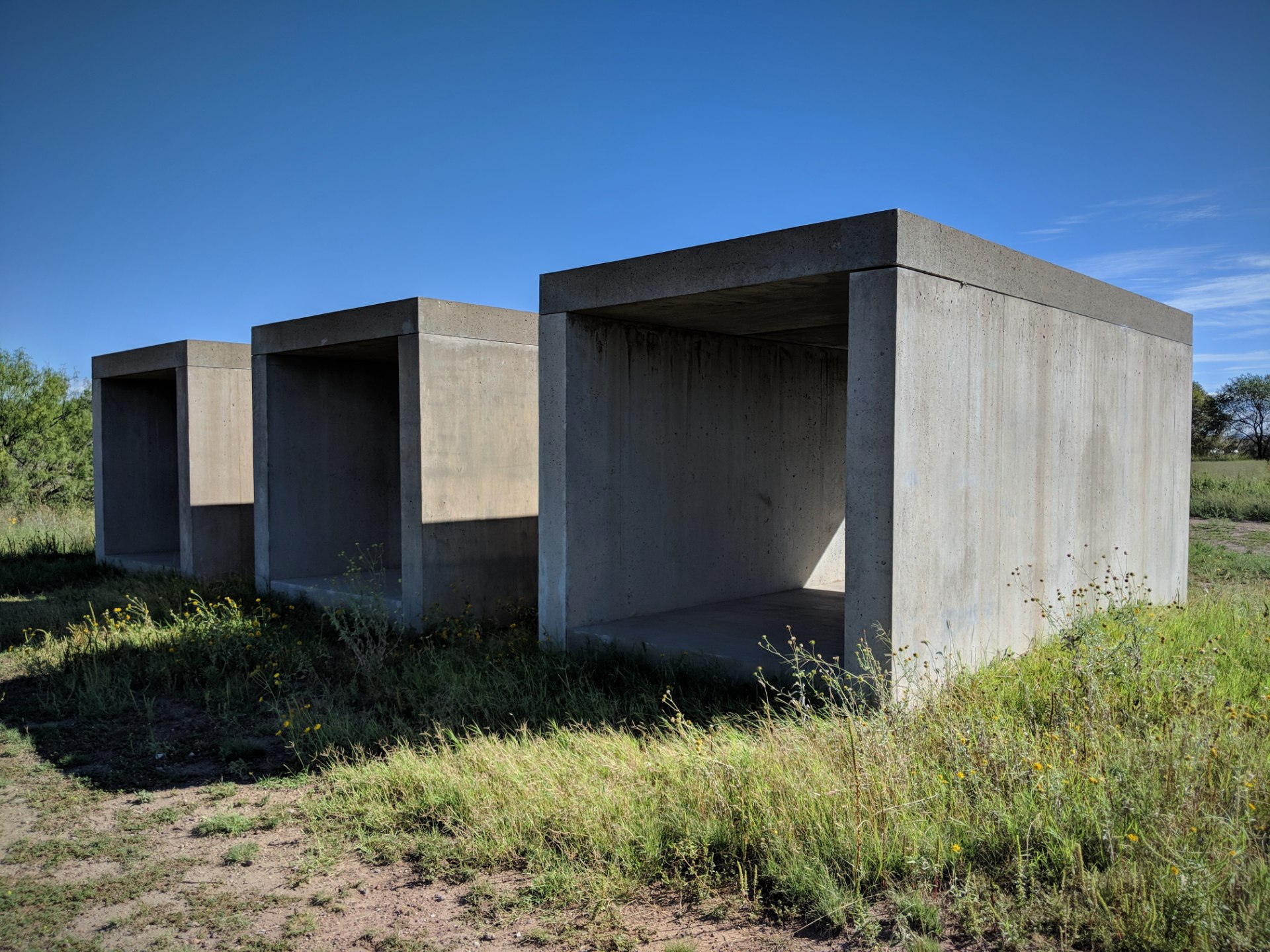
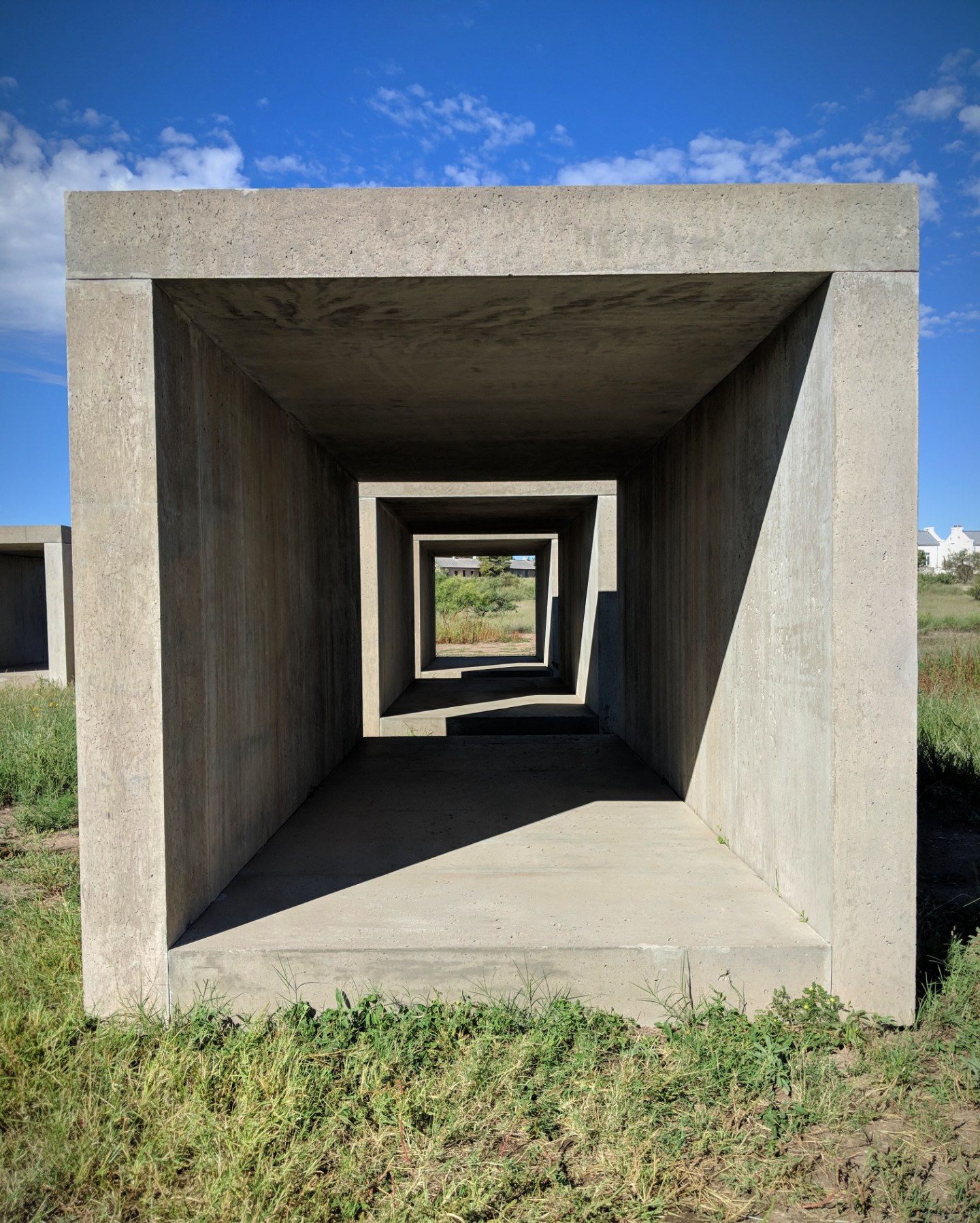
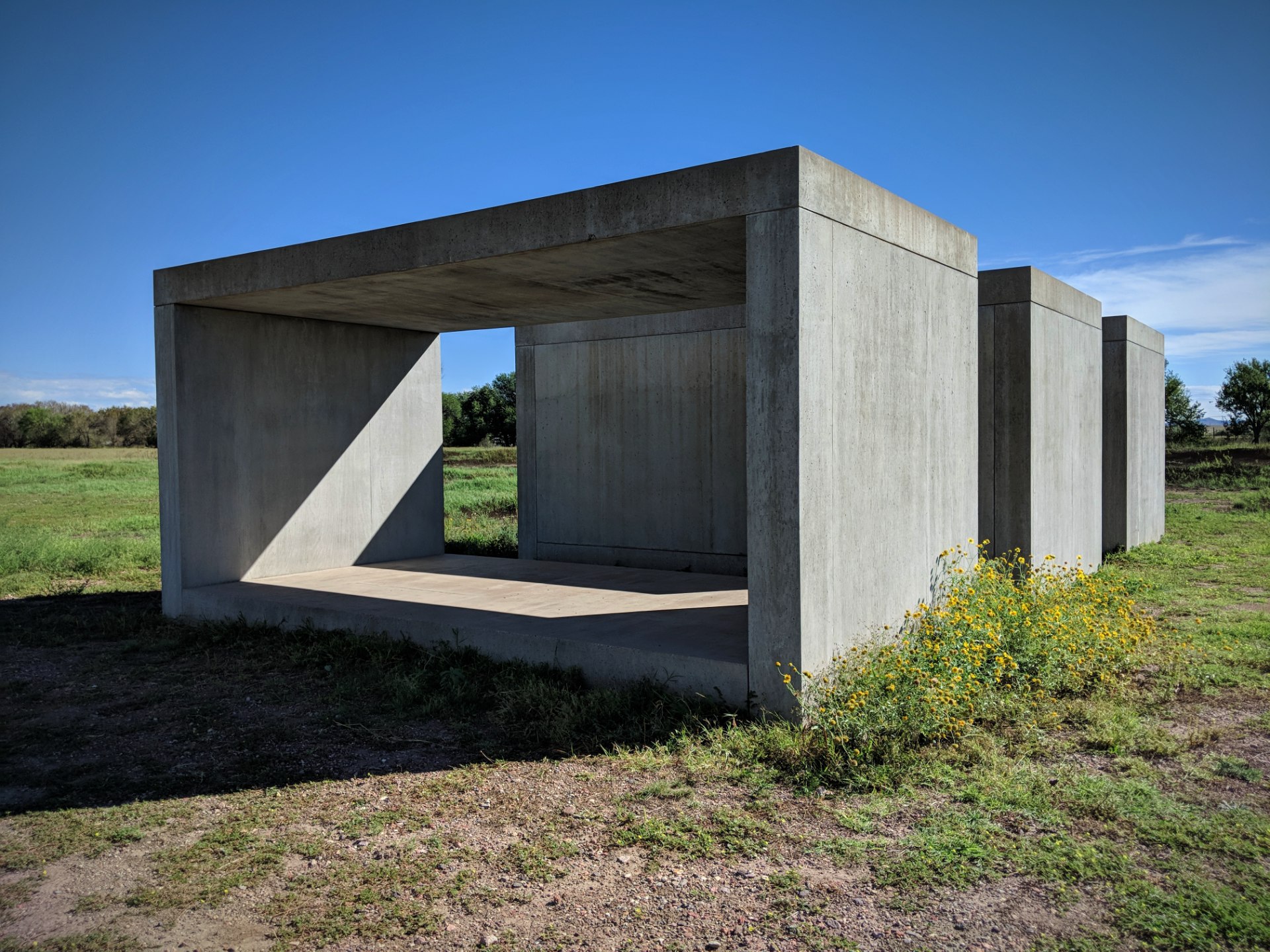
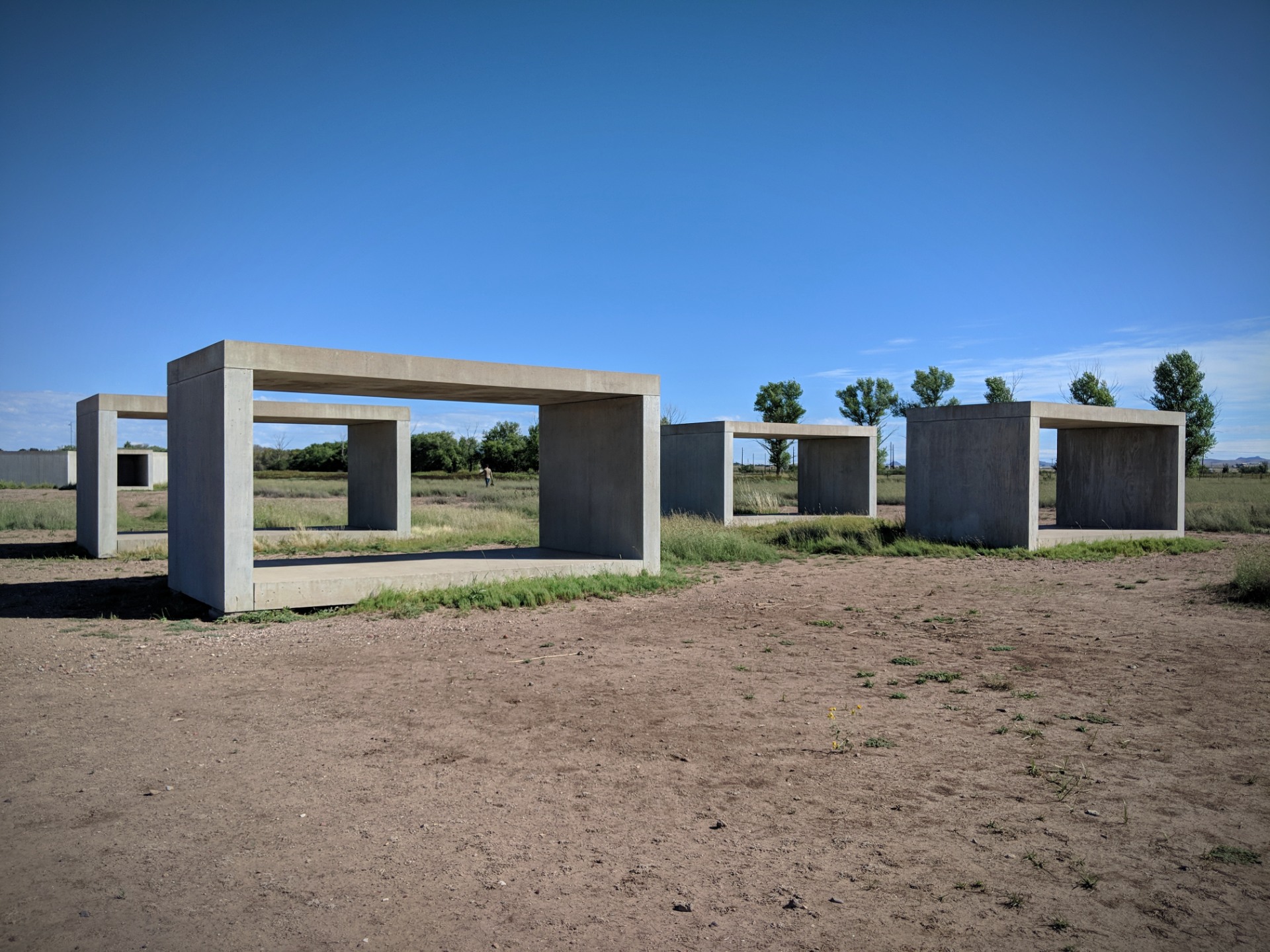
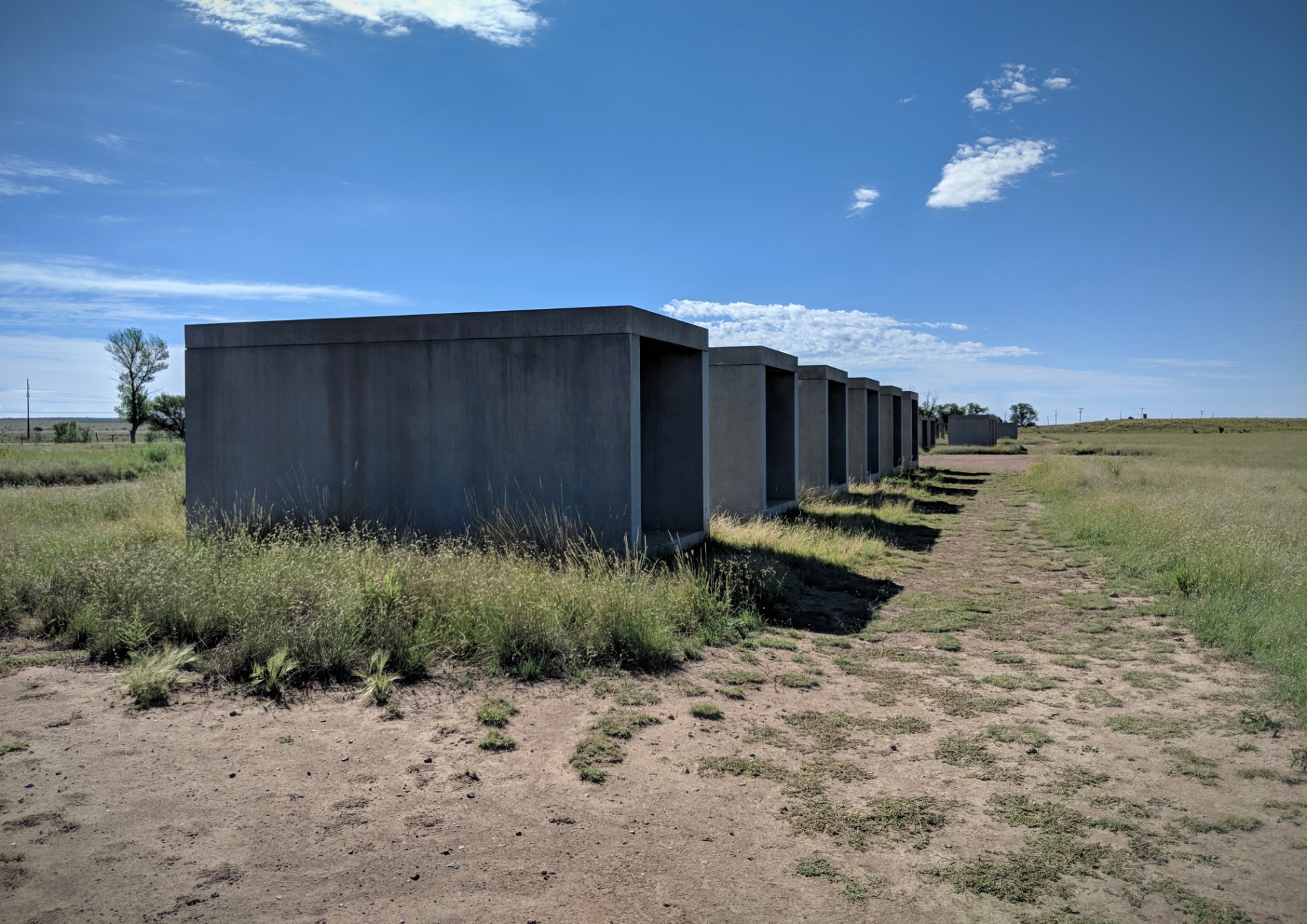
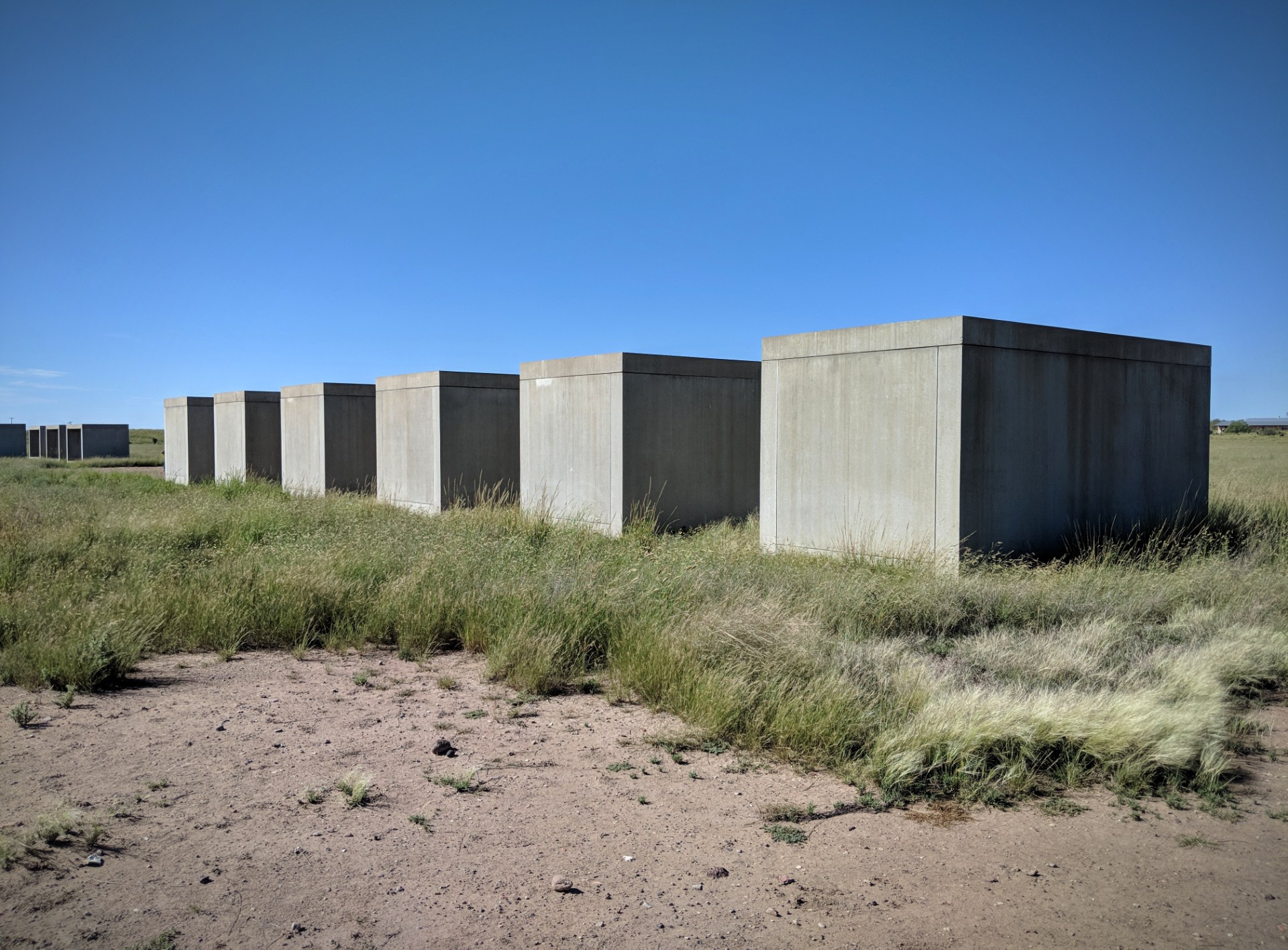
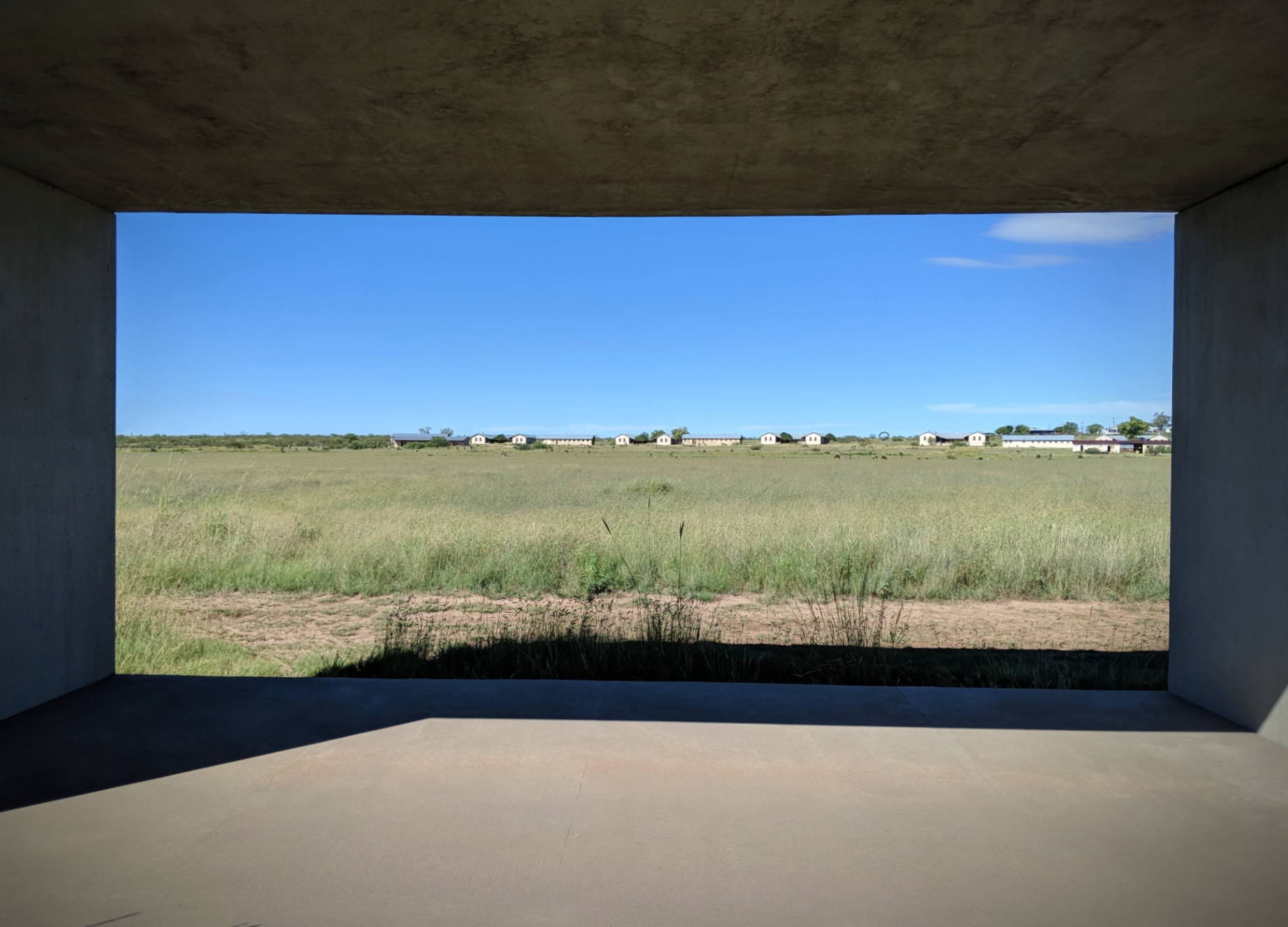
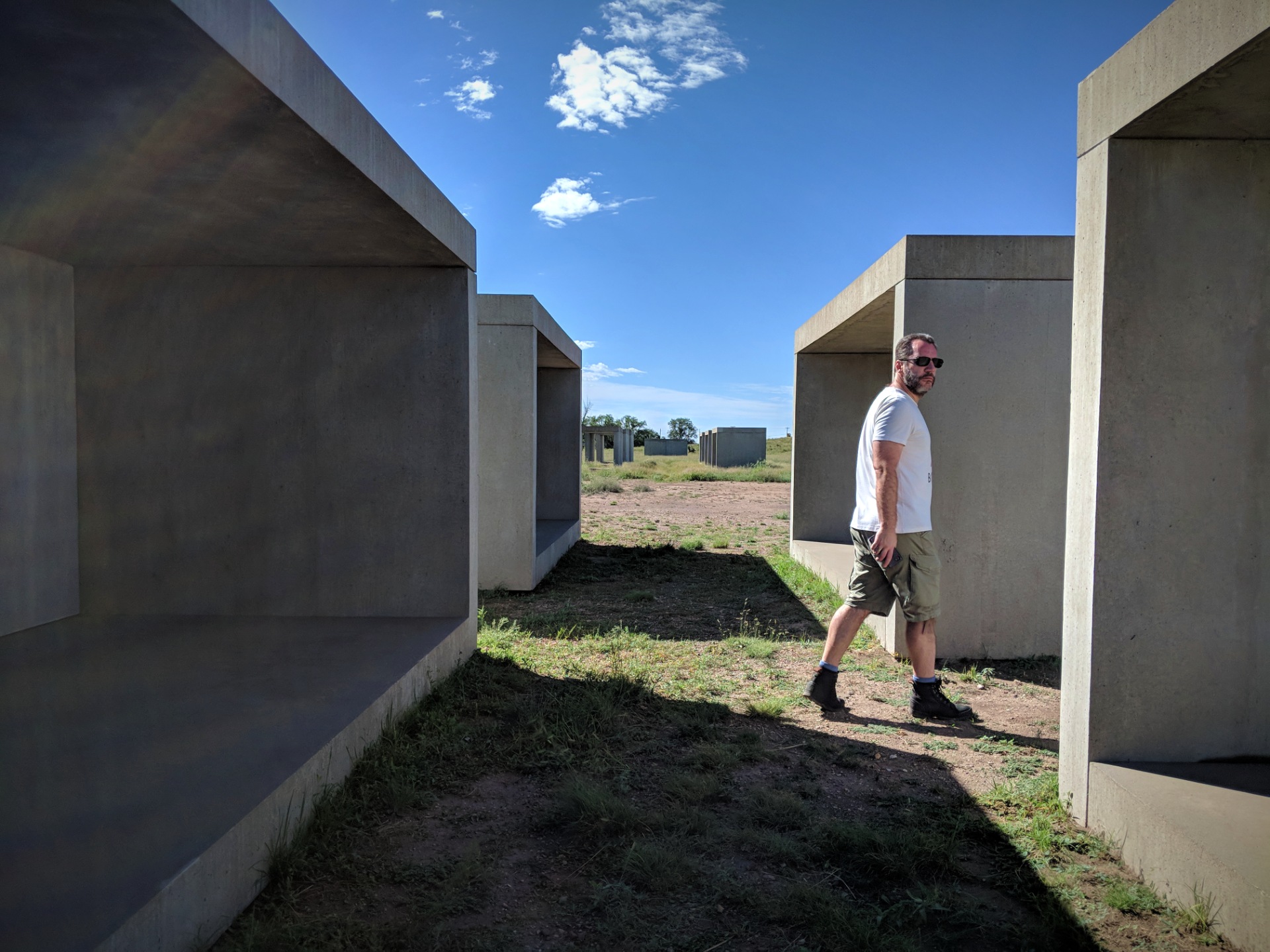
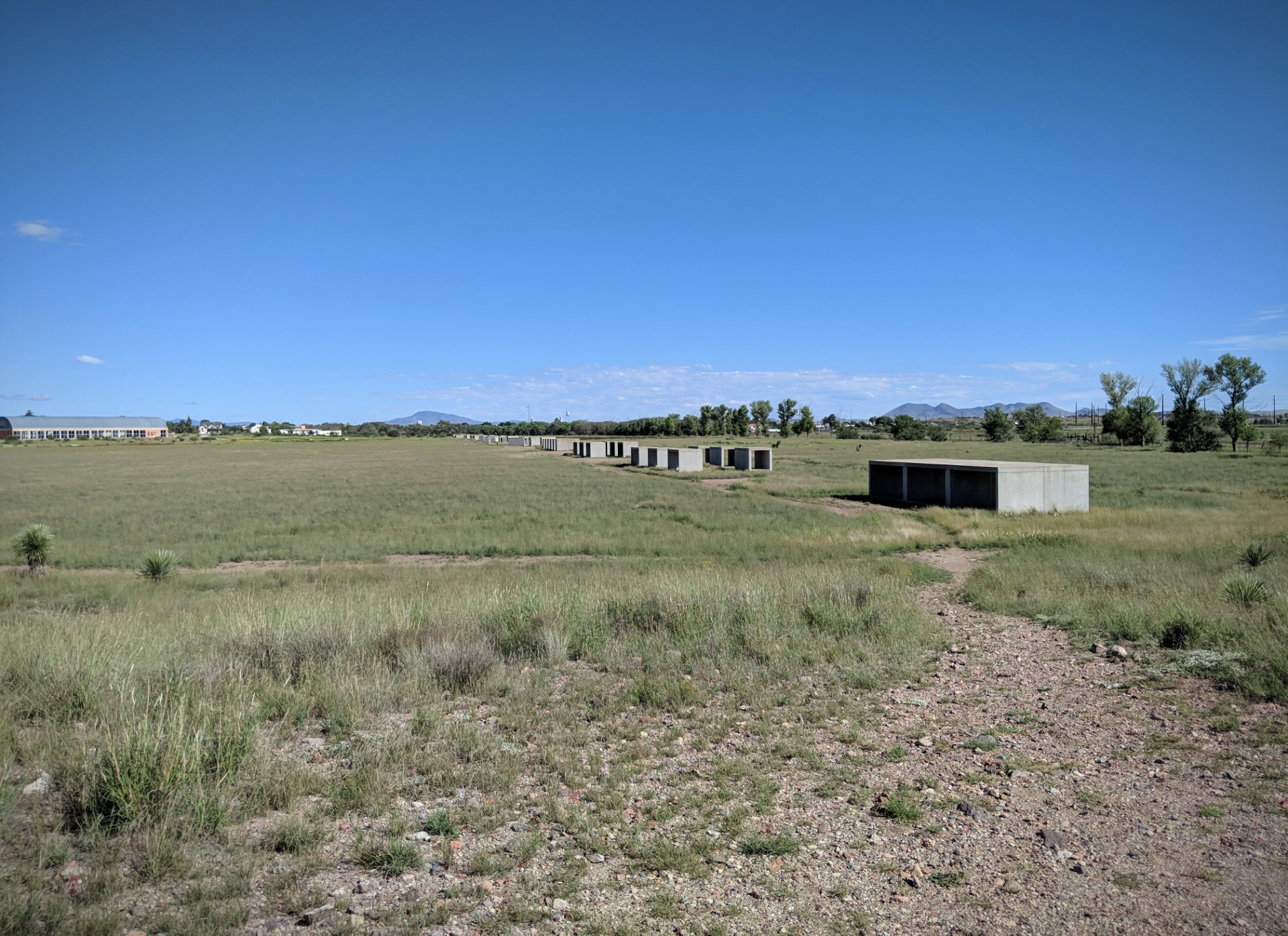
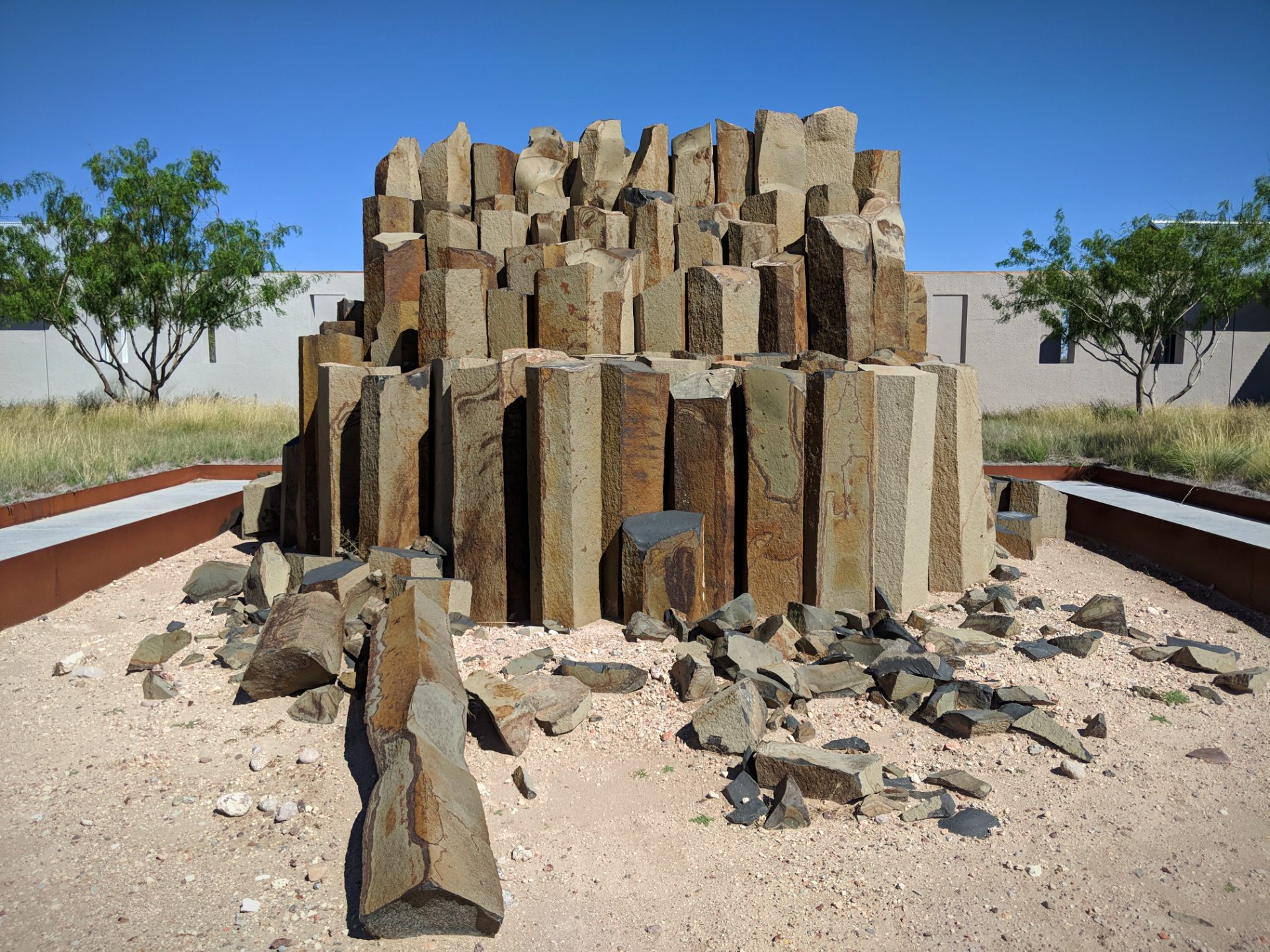
15 untitled works in concrete, 1980–1984

“The fifteen concrete works by Donald Judd that run along the border of Chinati’s property were the first works to be installed at the museum and were cast and assembled on the site over a four-year period, from 1980 through 1984. The individual units that comprise each work have the same measurements of 2.5 x 2.5 x 5 meters, and are made from concrete slabs that are each 25 centimeters thick. Funding for the project was provided by the Dia Art Foundation.”

Are they only fifteen…? One loses count after the first pair or three… It took us an hour to complete the walk; looking back, they stretch as far as the eye can see. And, despite their, well… concreteness, they seem lightweight, blending into the landscape as if they sprouted from the earth, growing organically, effortlessly, in their own time. Nowhere does there seem to be so fitting a place for these squares than here – Judd knew exactly what he was doing.

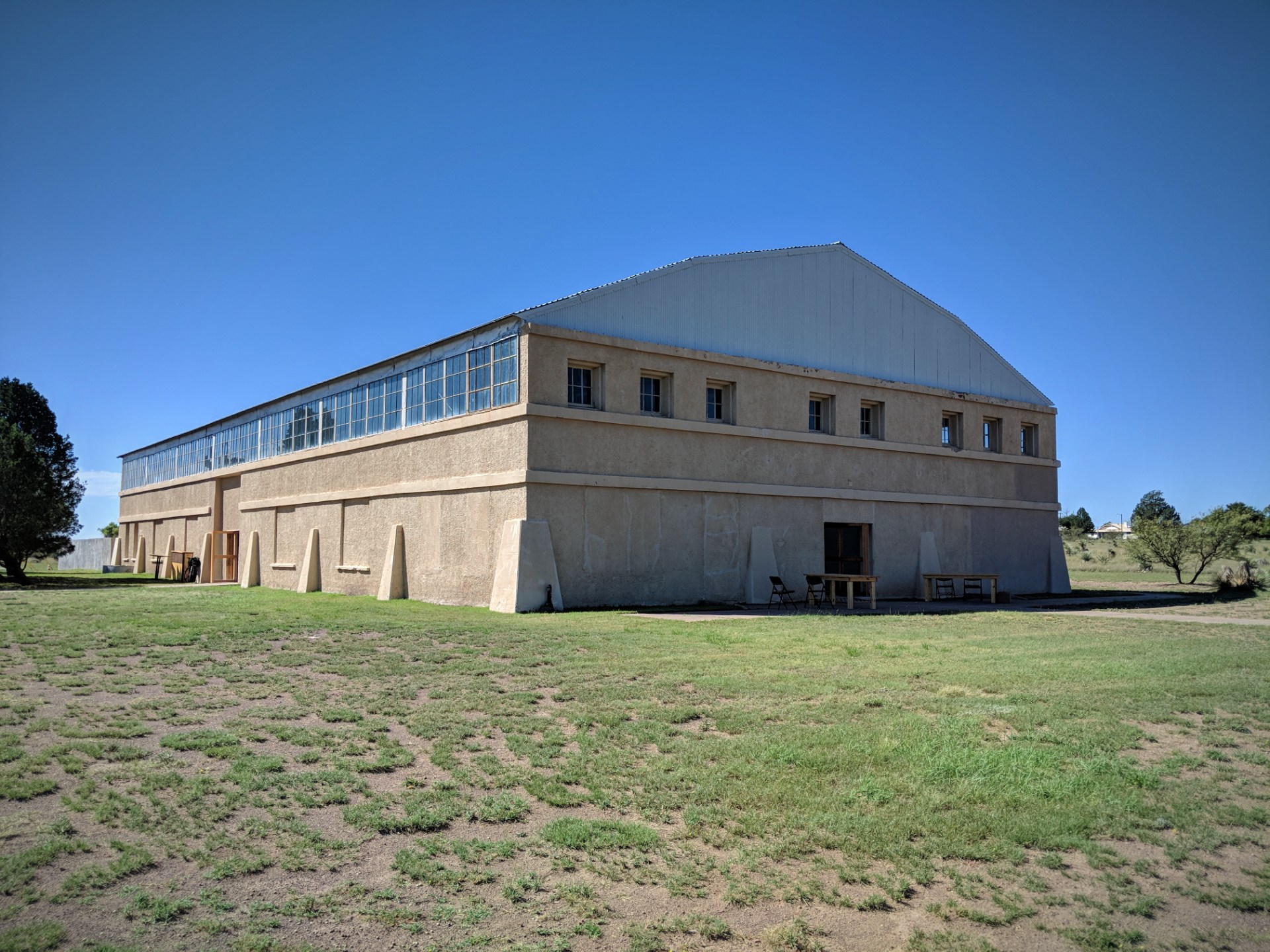
The Arena, 1980–1987

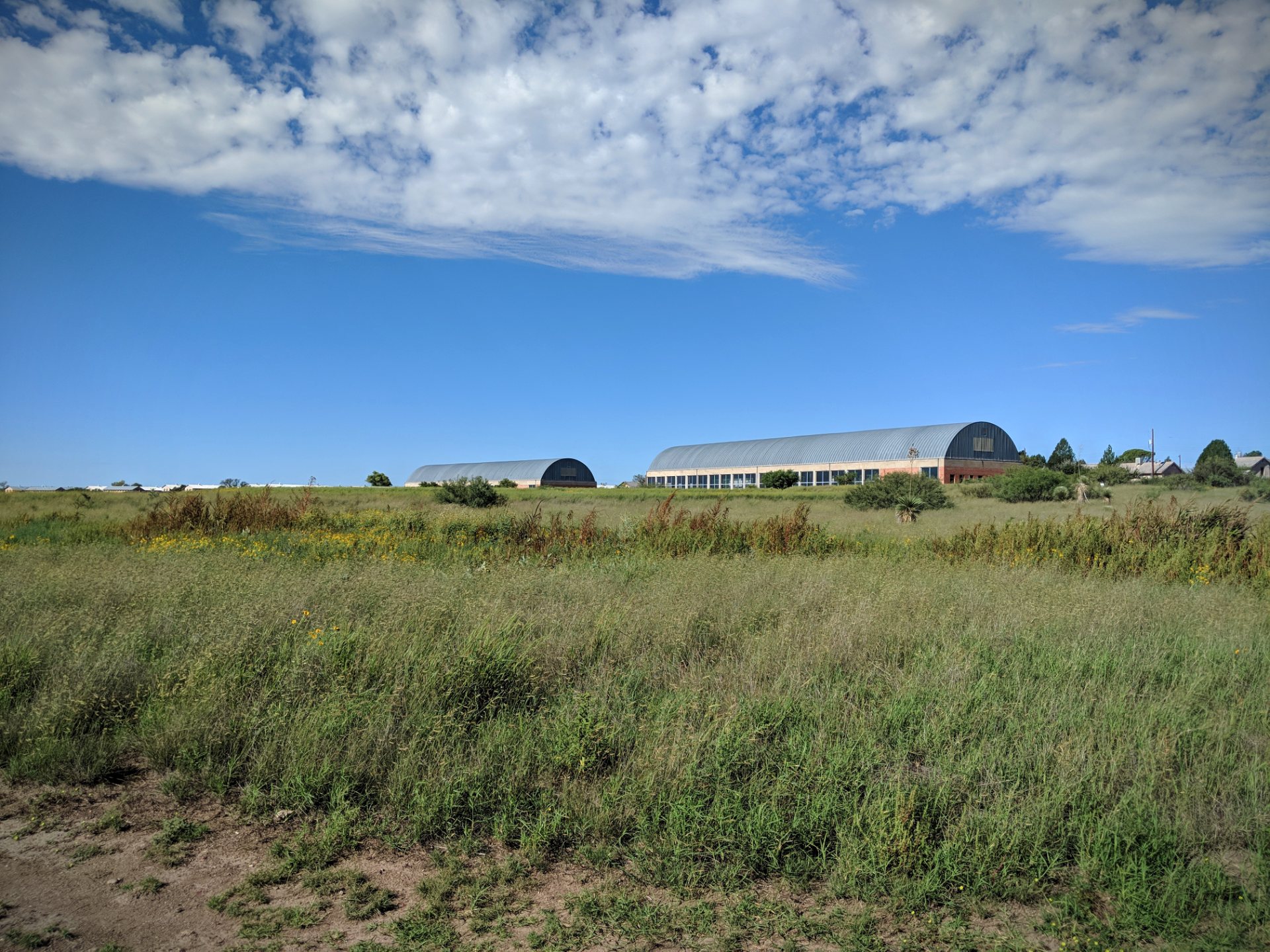
“The Arena was built in the 1930s as a gymnasium for the soldiers at Fort D.A. Russell. After the fort closed in 1946, the gym floor was torn up for the wood, and sand was laid to provide an indoor arena for horses. In the mid-1980s, Judd restored the building, which was largely dilapidated. Judd left the long strips of concrete that had originally supported the wooden floor, and filled the intervening spaces with gravel. For practical considerations, Judd poured a large concrete area by the kitchen at the south end, and a smaller area at the north end of the building’s interior. These two areas comprise half of the total area of the building. Judd also added a sleeping loft and designed the outer courtyard, which includes areas for eating, bathing, and a barbecue.”↓↓

Robert Irwin
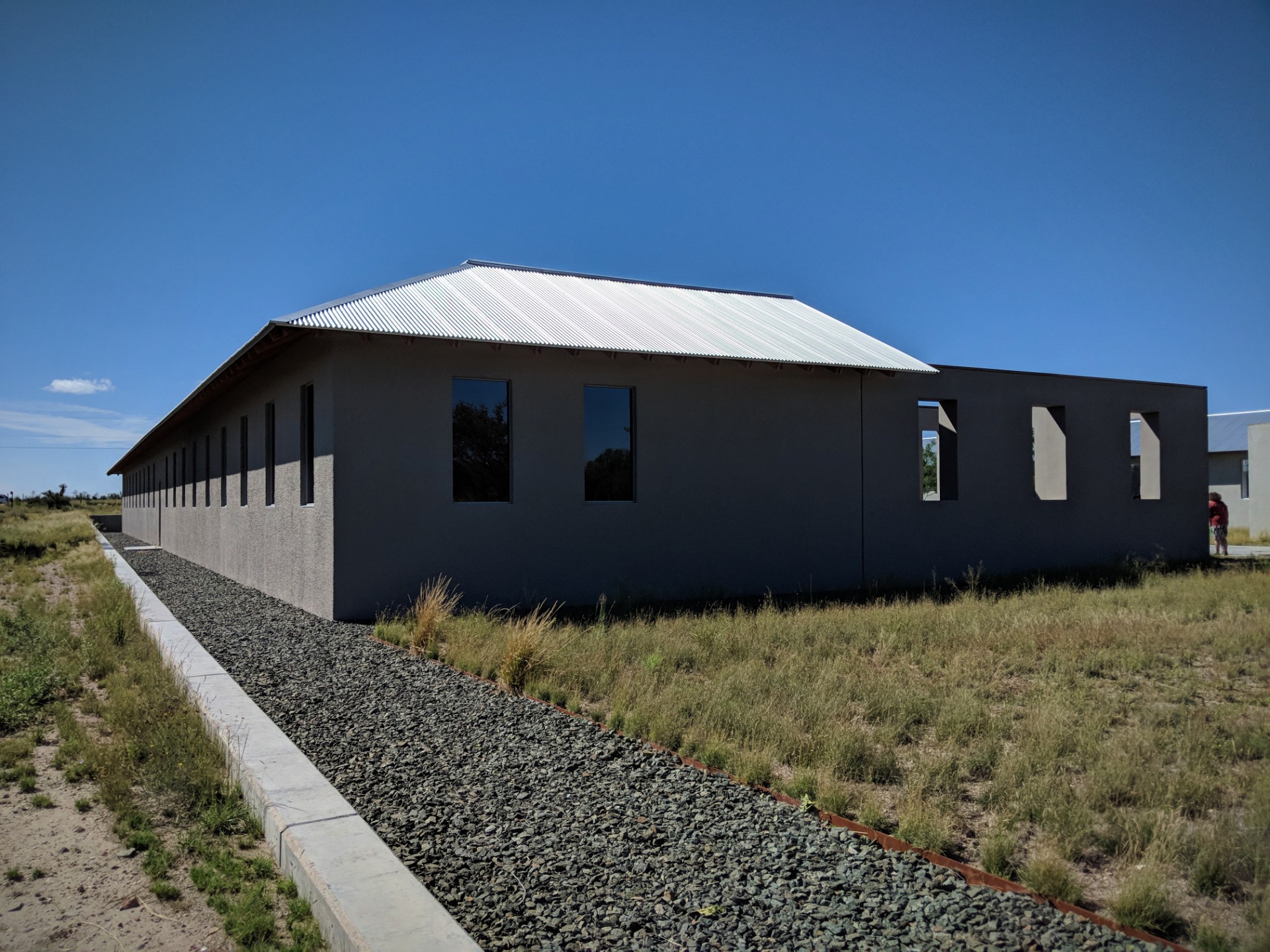
untitled (dawn to dusk), 2016

“In July 2016, the Chinati Foundation opened a new large-scale artwork by Robert Irwin. It is the only permanent, freestanding structure conceived and designed by Irwin as a total work of art.

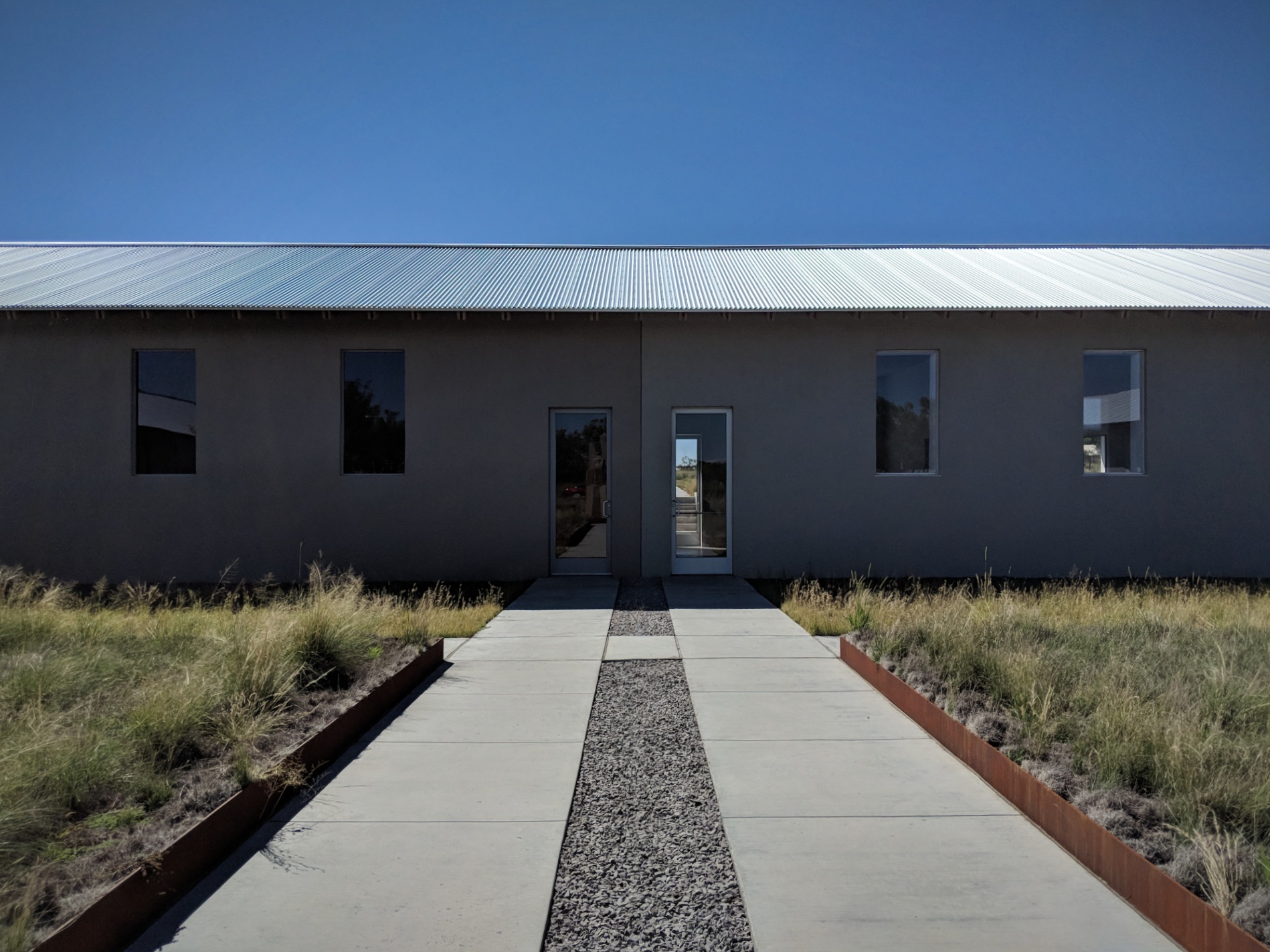
Irwin had been developing and refining a design for the long-abandoned former army hospital site since 1999. Situated adjacent to the museum’s campus, the site was a C-shaped concrete structure, lined on all sides with a long sequence of windows that surrounded a central courtyard.

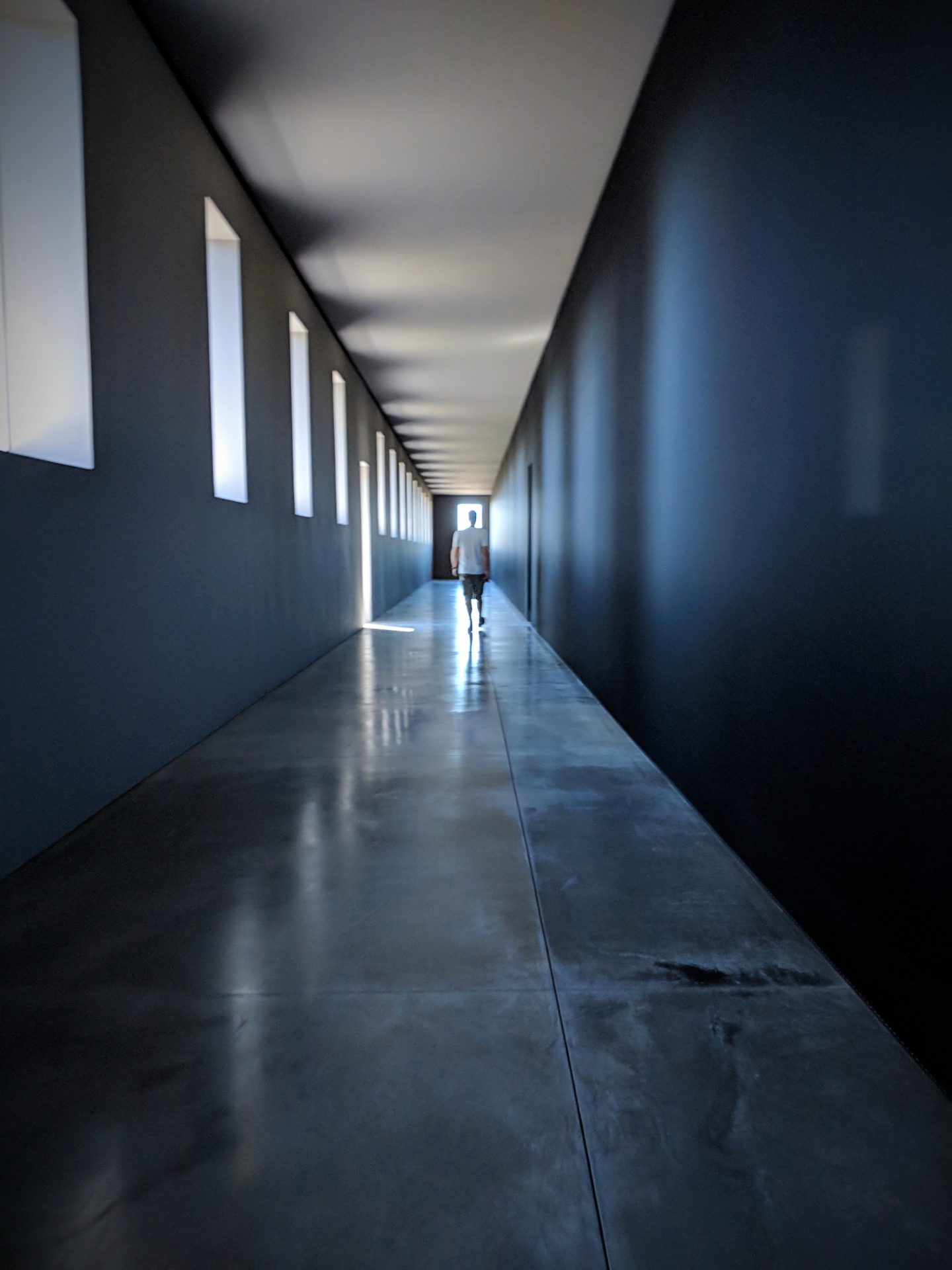
The building is formally divided in half, with one side dark, the other light. Inside, transparent scrim walls are stretched taut from floor to ceiling in black or white respectively, bisecting each long wing and capturing the always-changing natural light. The connecting corridor has a progression of scrim walls that sequentially cross and fill the space, with an enfilade of doors for passage.”↓↓

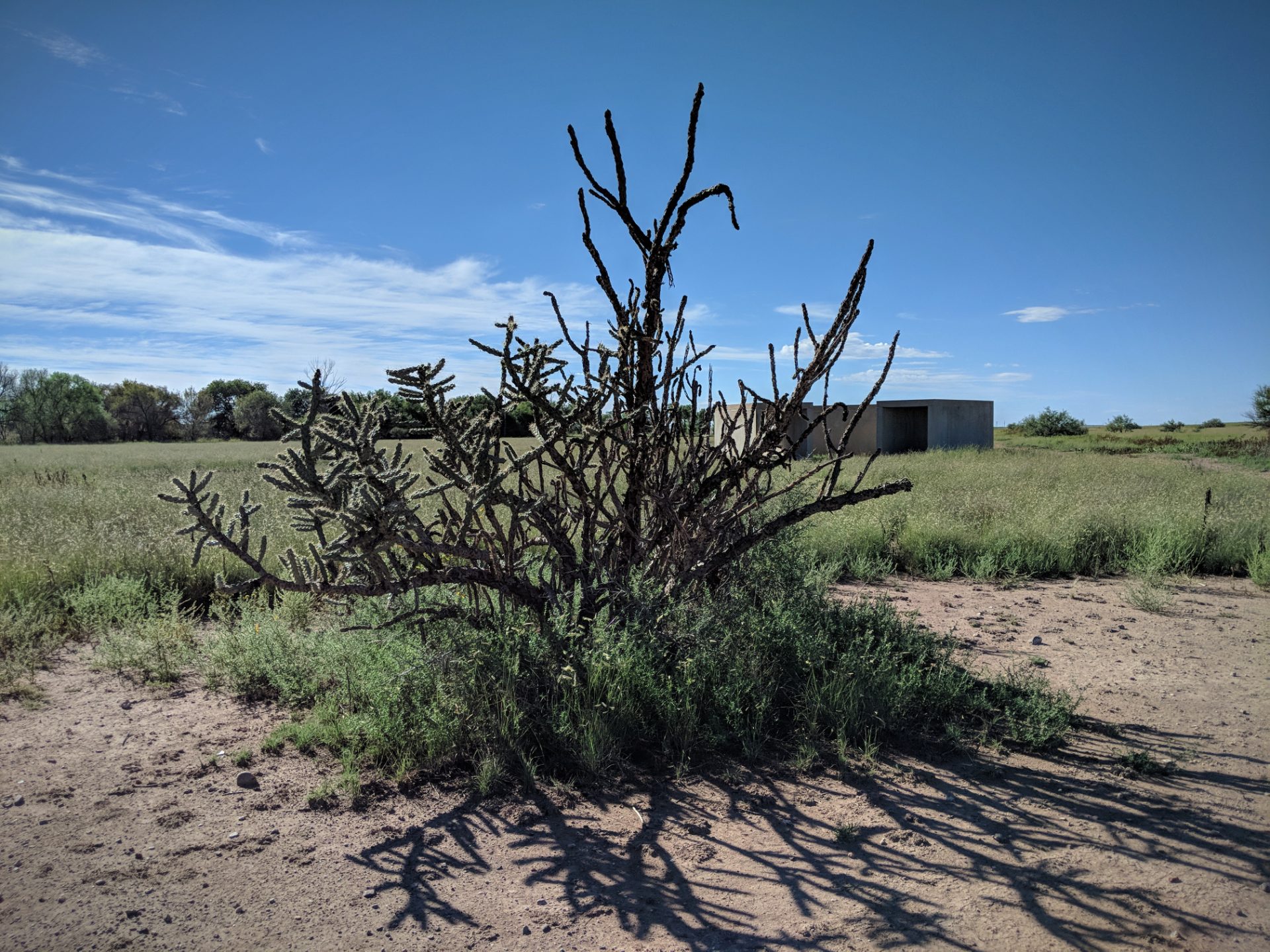
It has been one of the most rewarding, unforgettable ”museum walks” we could have ever hoped for. Not the most comfortable perhaps, as a large part of it involves field walking, with rattlesnakes and cacti being an integral part of the ecosystem, extra-ordinary nonetheless.

**

Dress appropriately: boots, long thick trousers and long sleeves will do the trick.
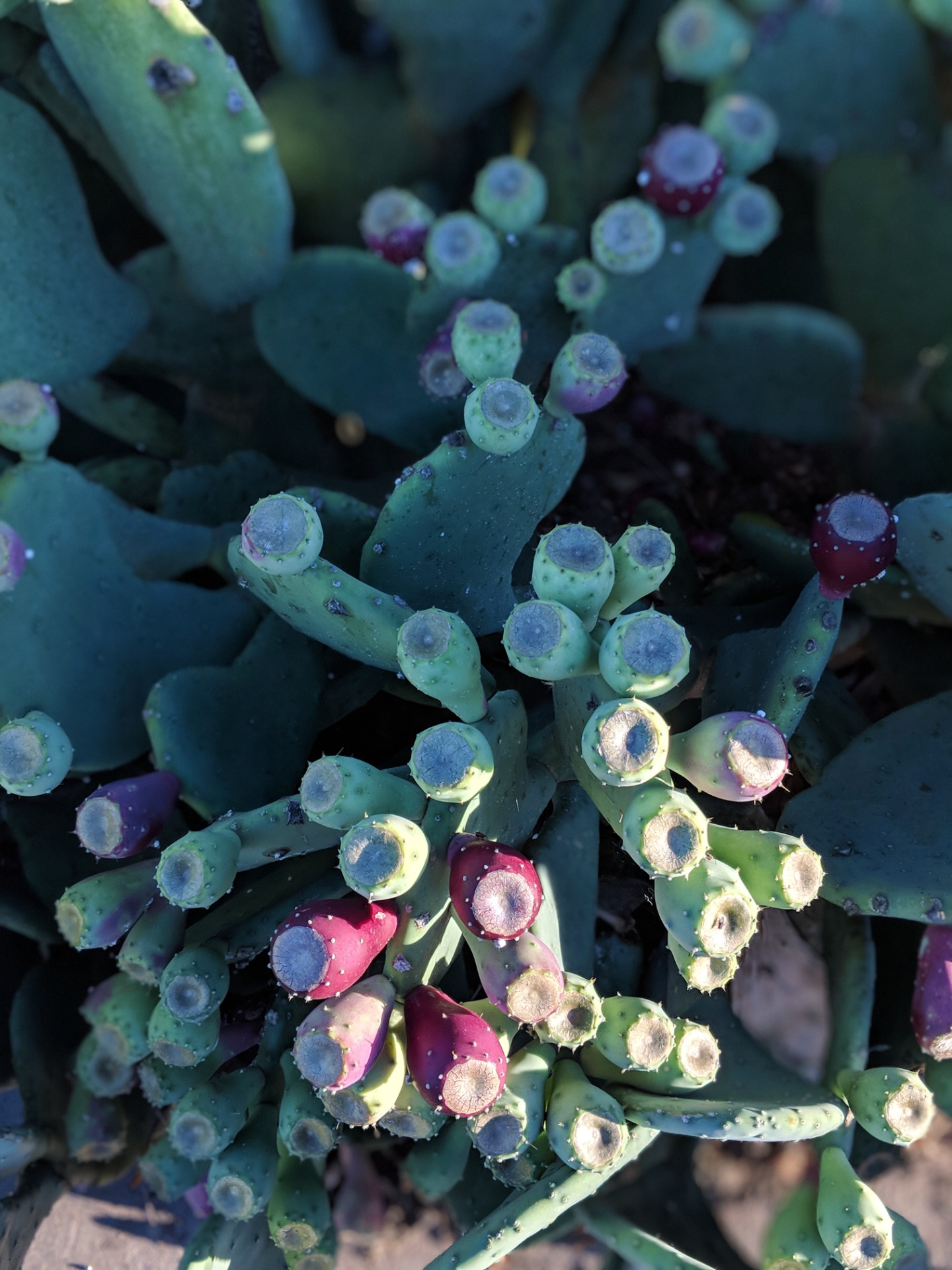
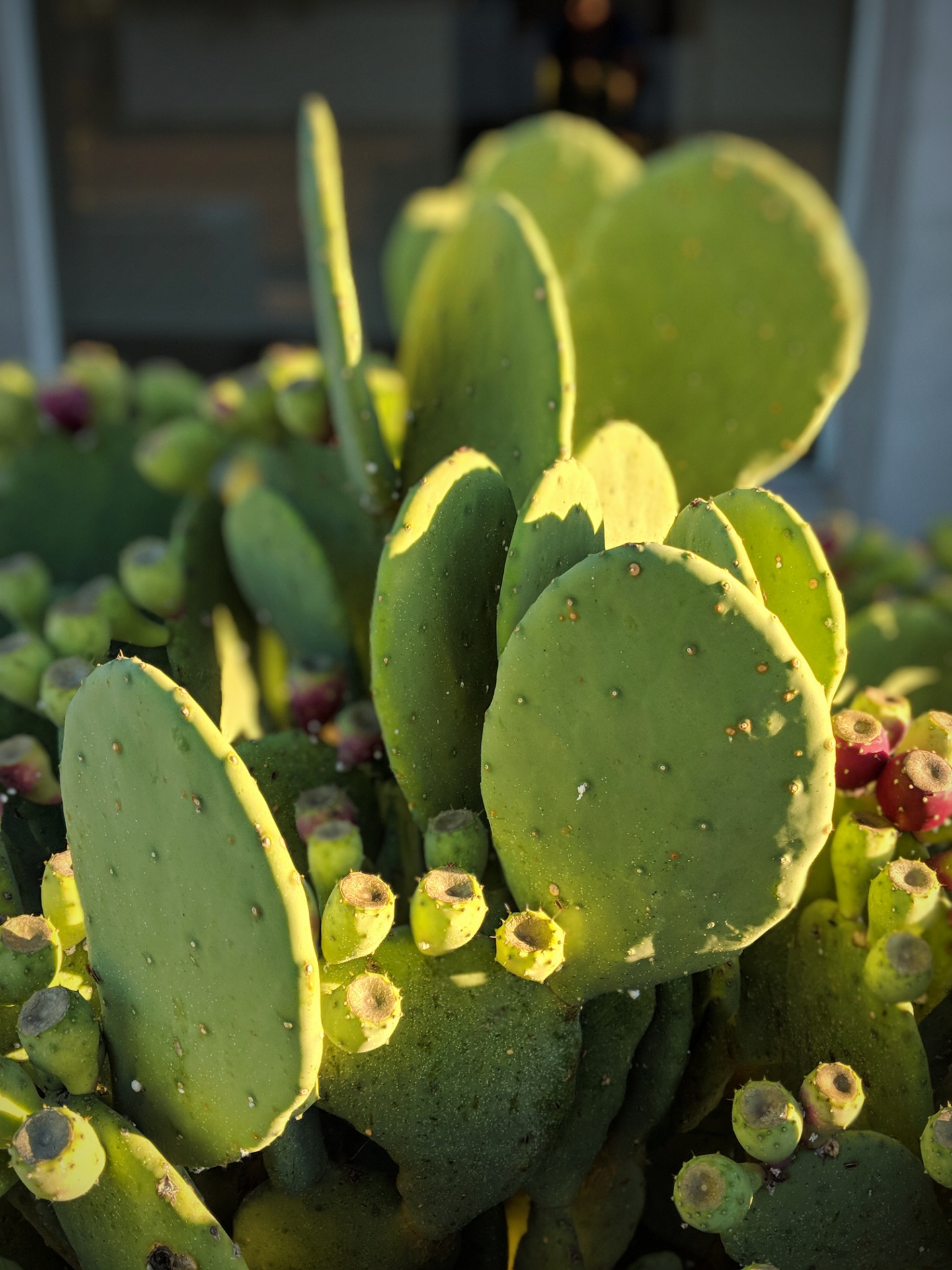
Beware of what you don’t see: some cacti have two kinds of thorns, those you see and can avoid touching but also those tiny, hair-like, invisible ones called glochids that will stick to your skin even if you don’t touch the cacti and will sting and itch for days. Worse yet, they will stick to the fabric of whatever you happen to be wearing and will only go away after a couple of machine washes.

The Chinati Foundation – Marfa, TX

October 7th, 2018
The Artist’s Den

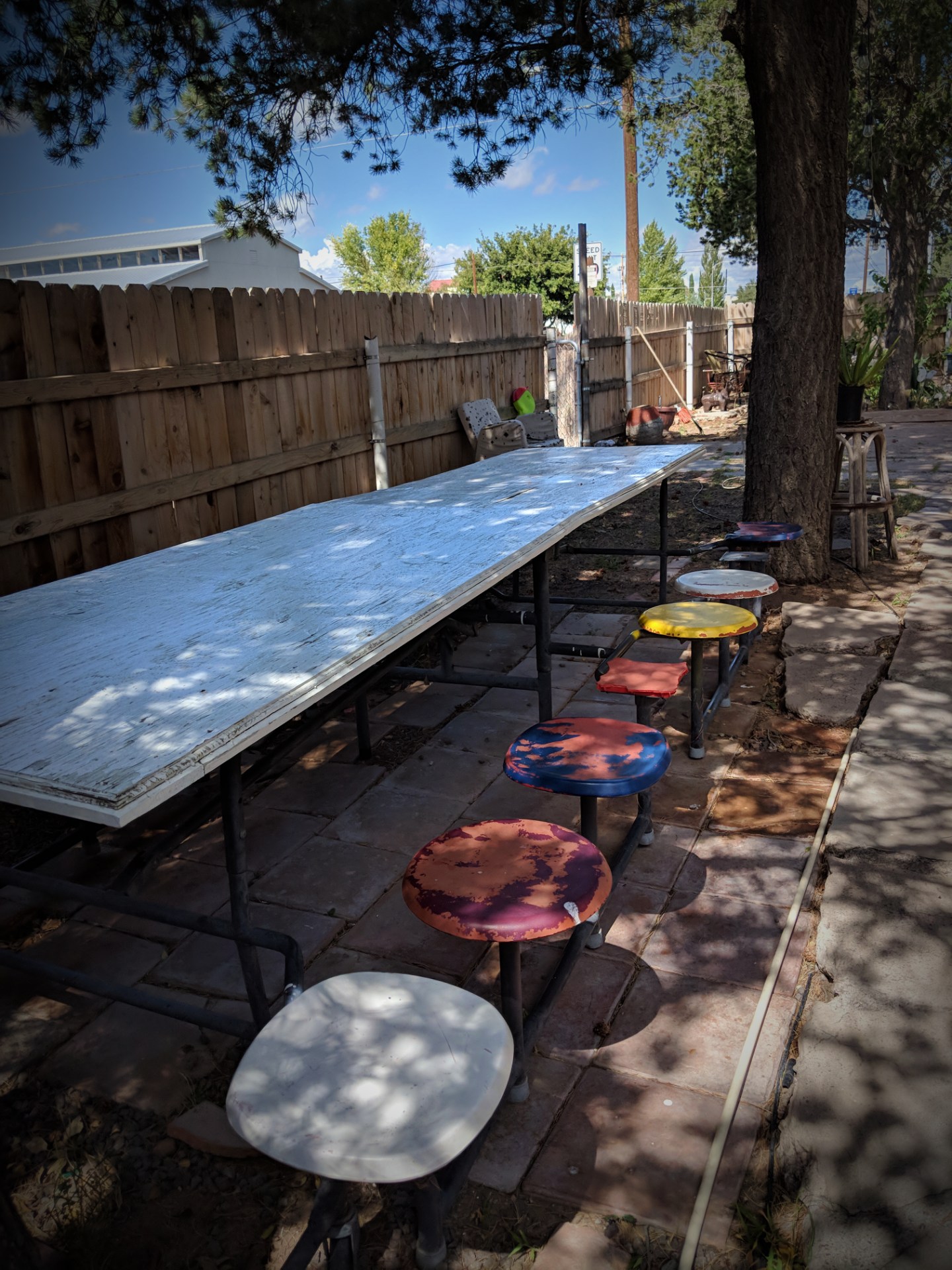
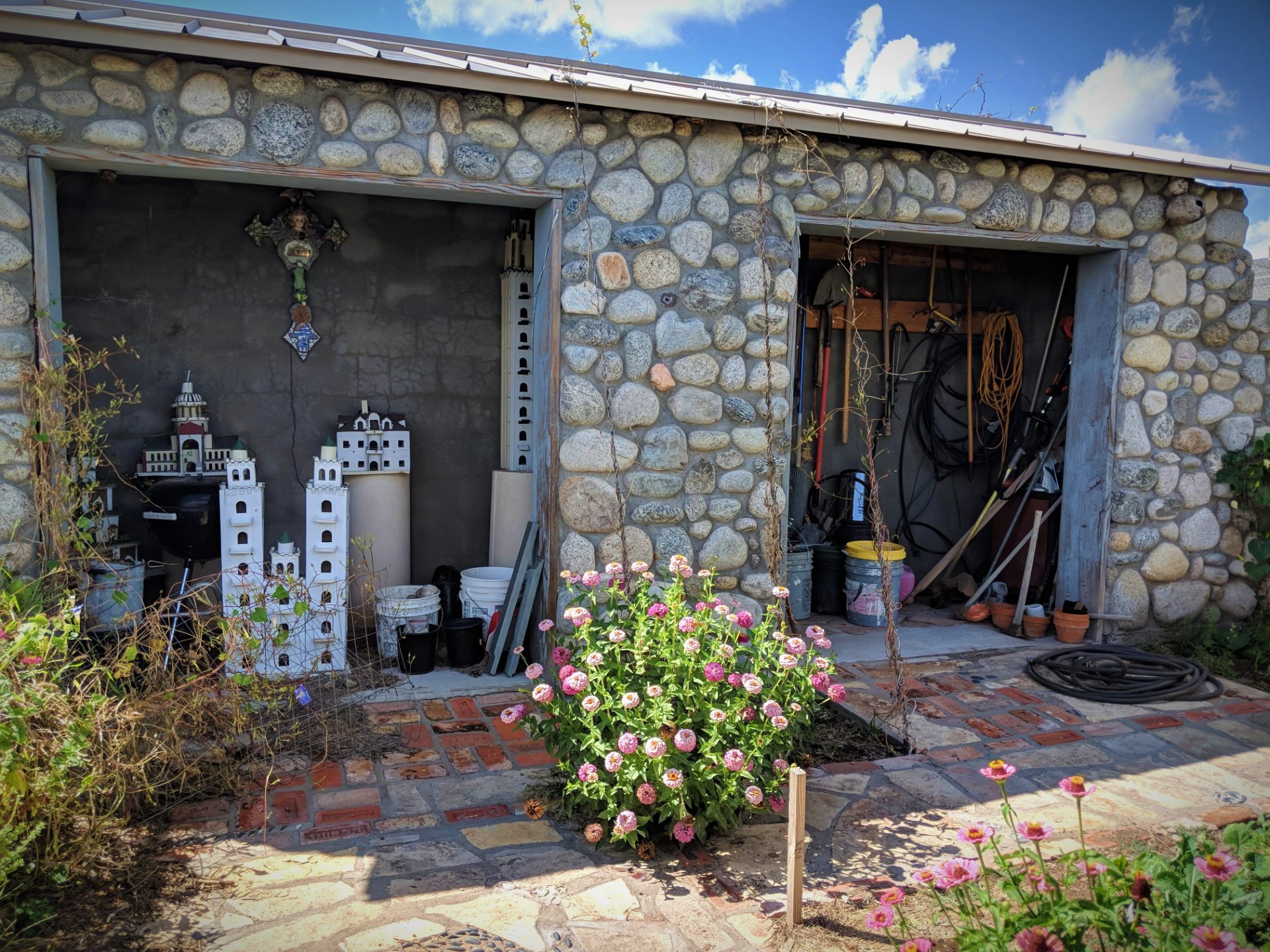
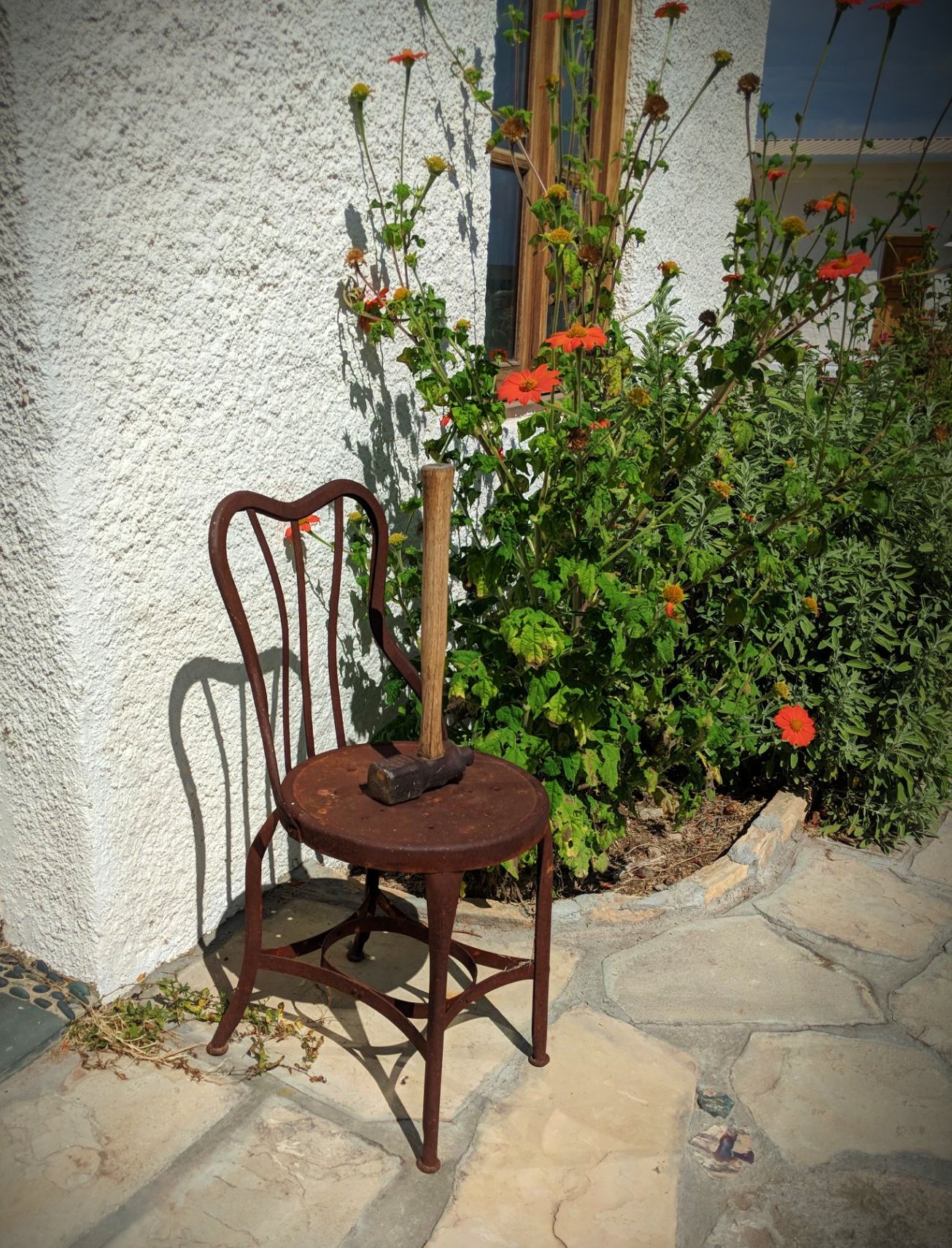
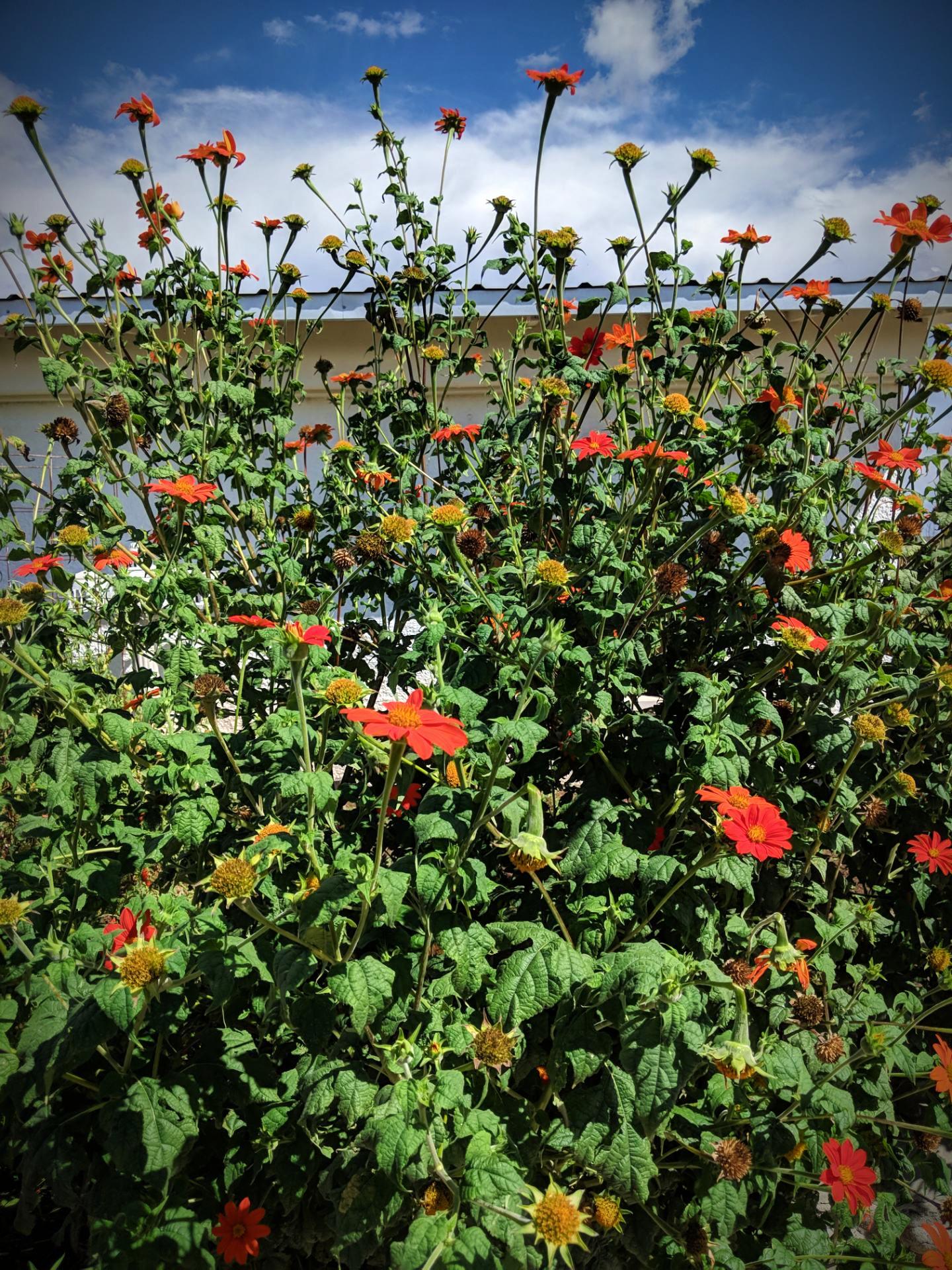
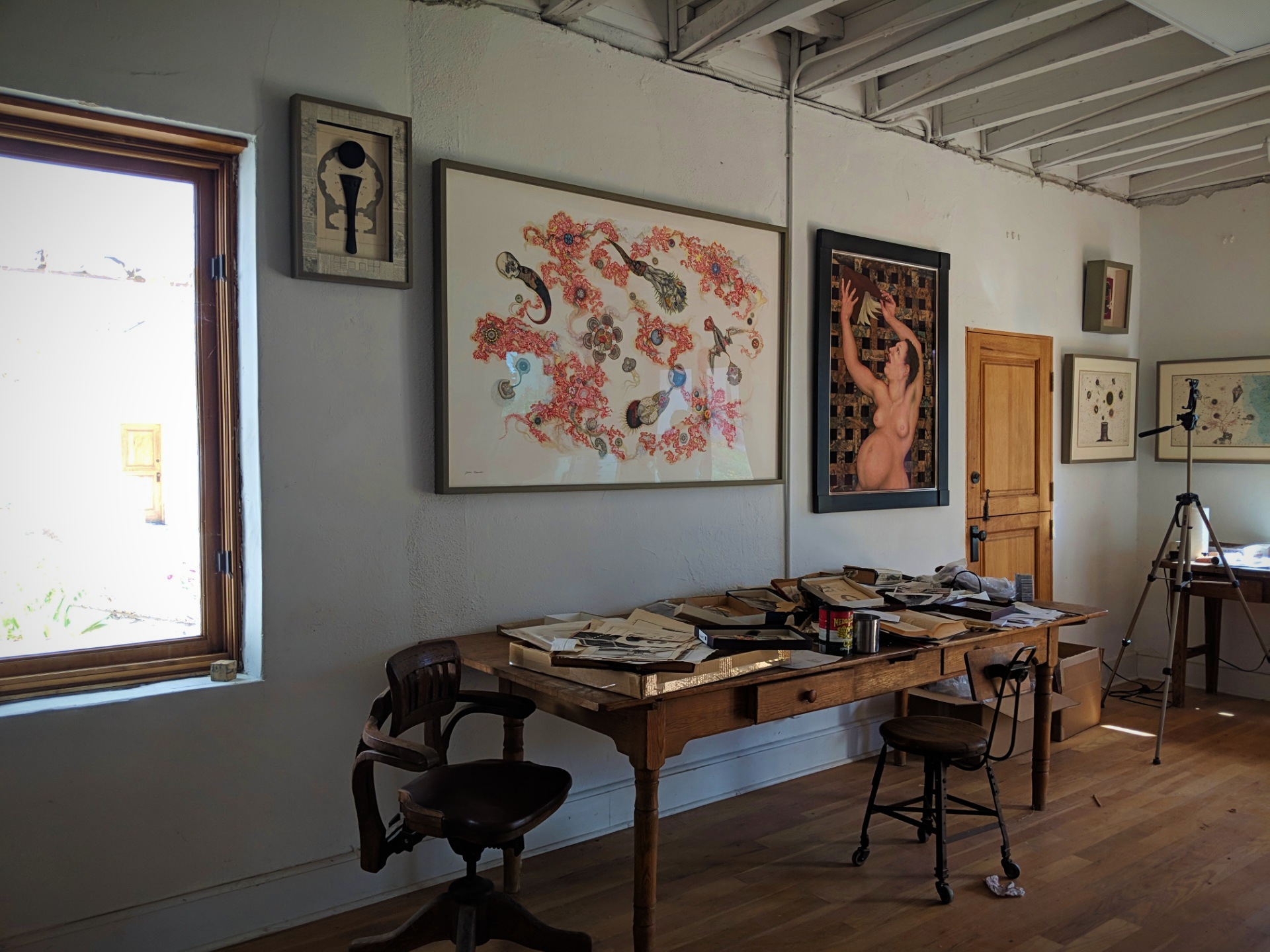
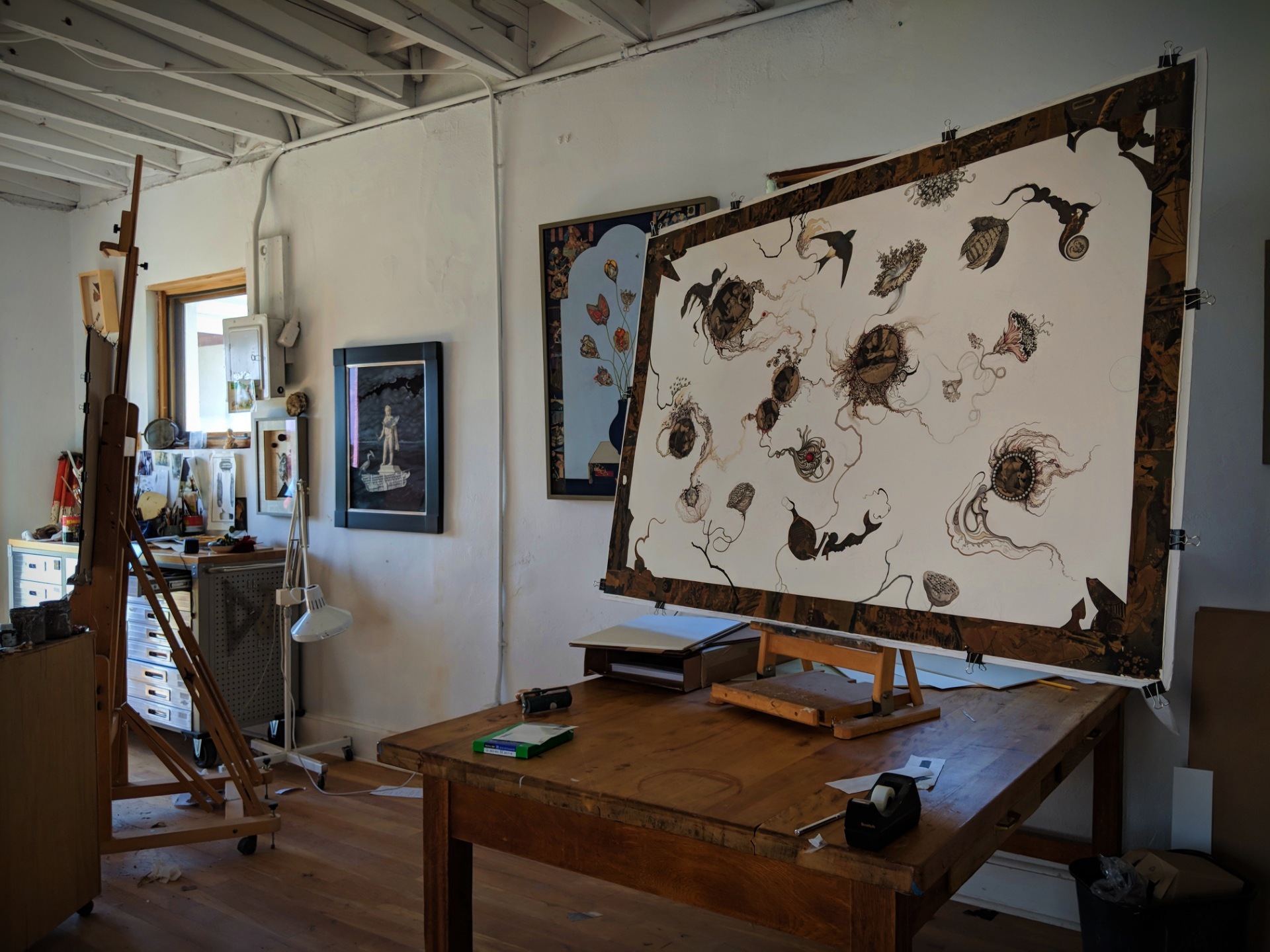
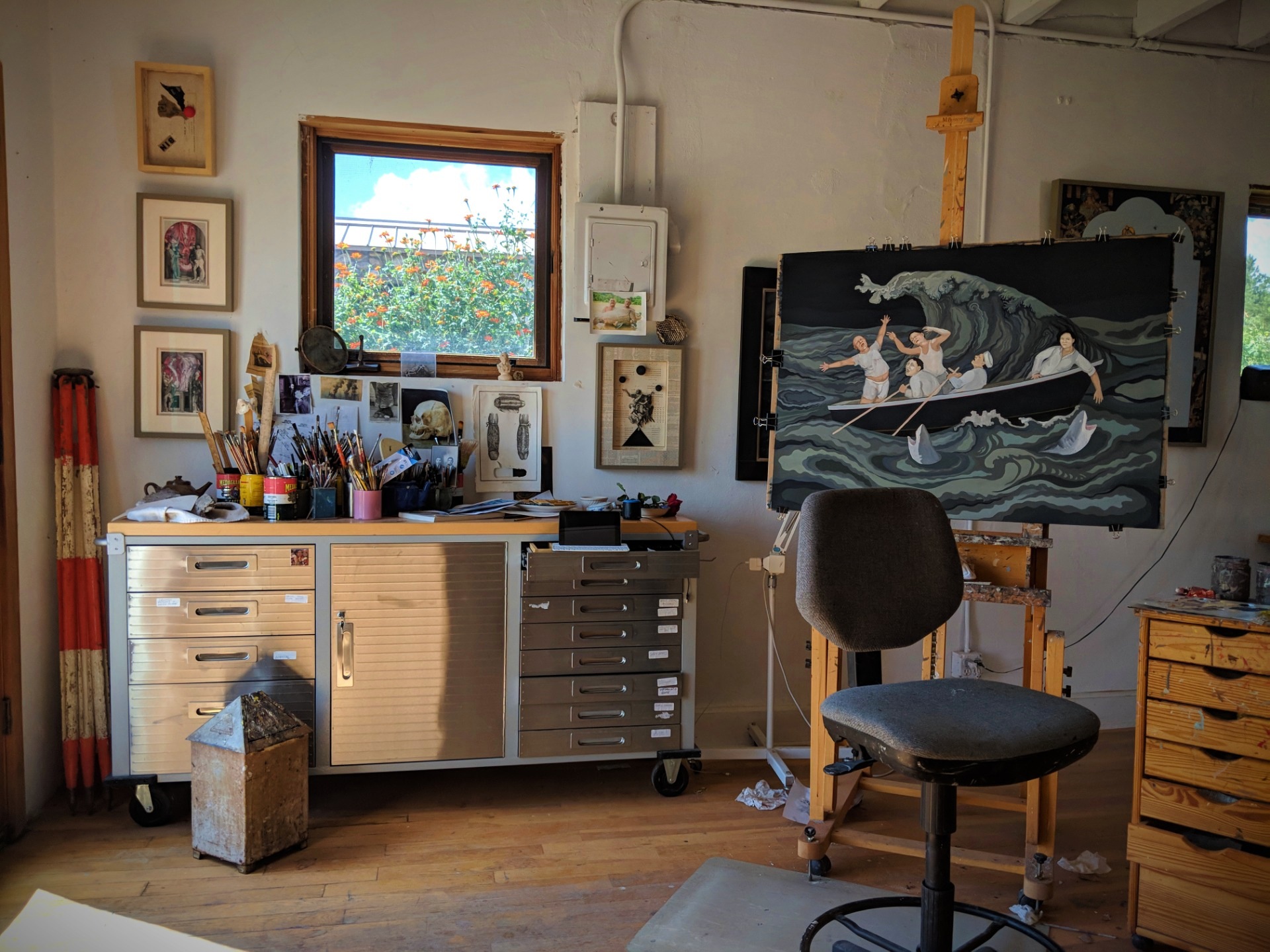
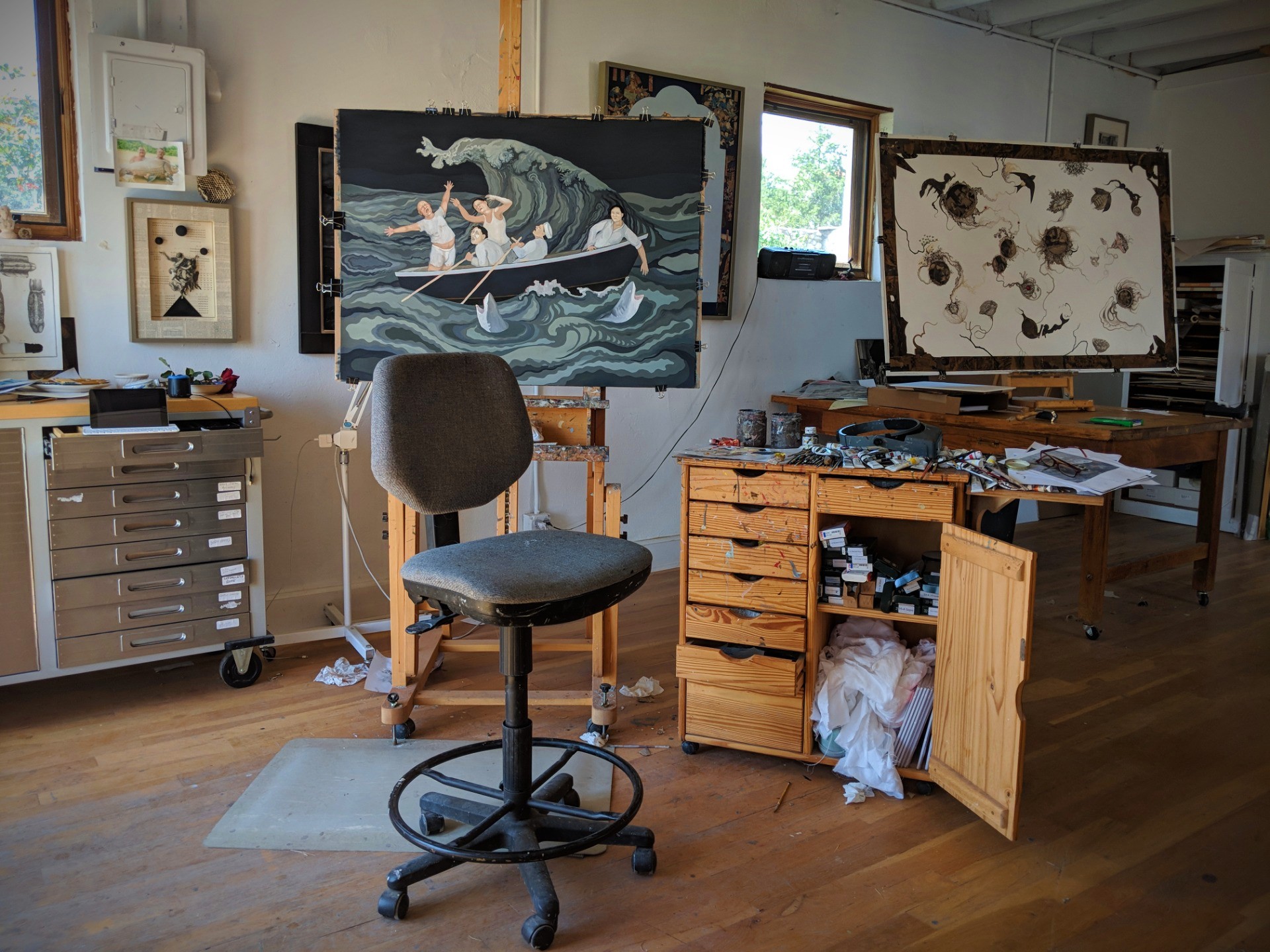
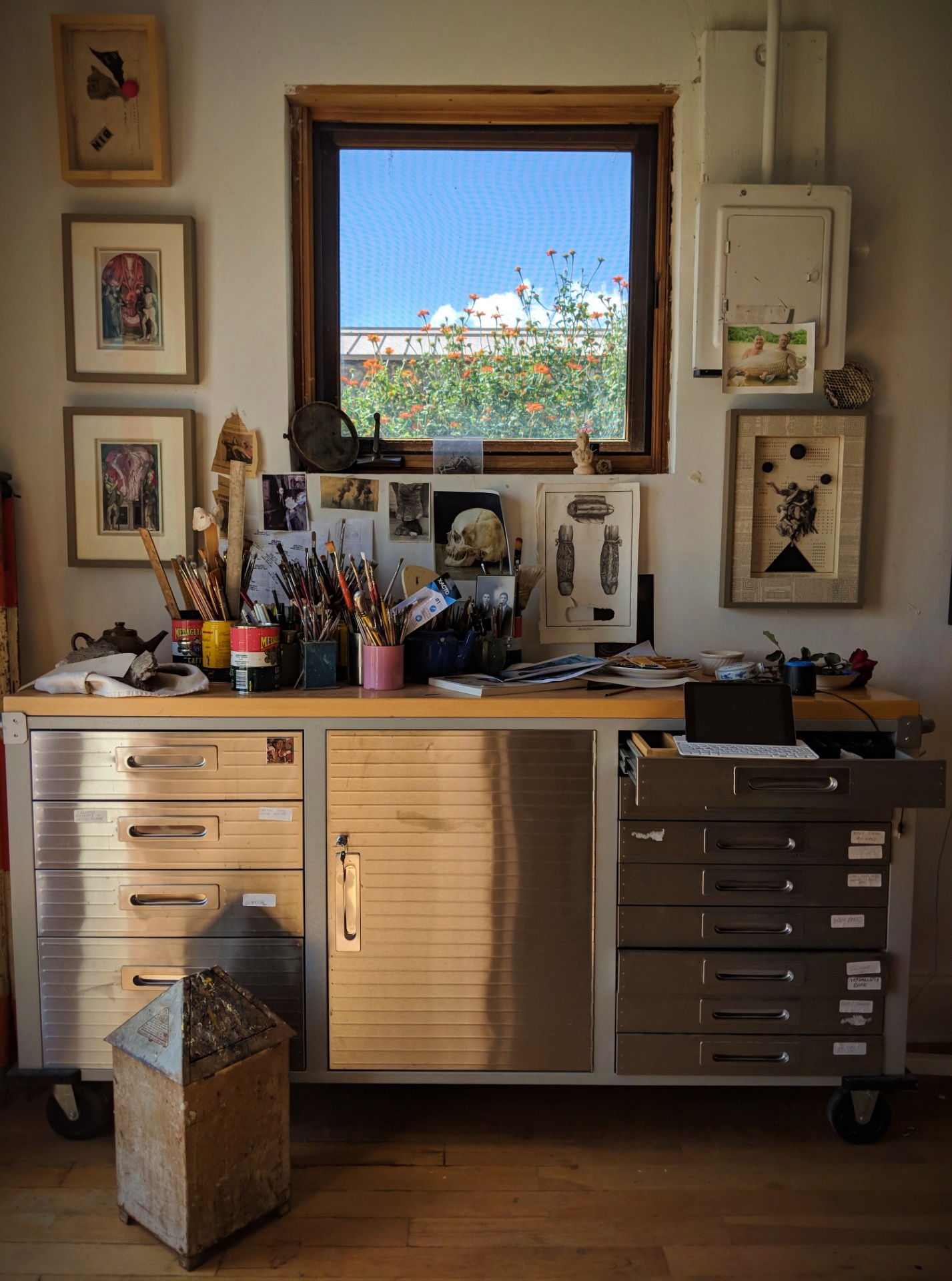
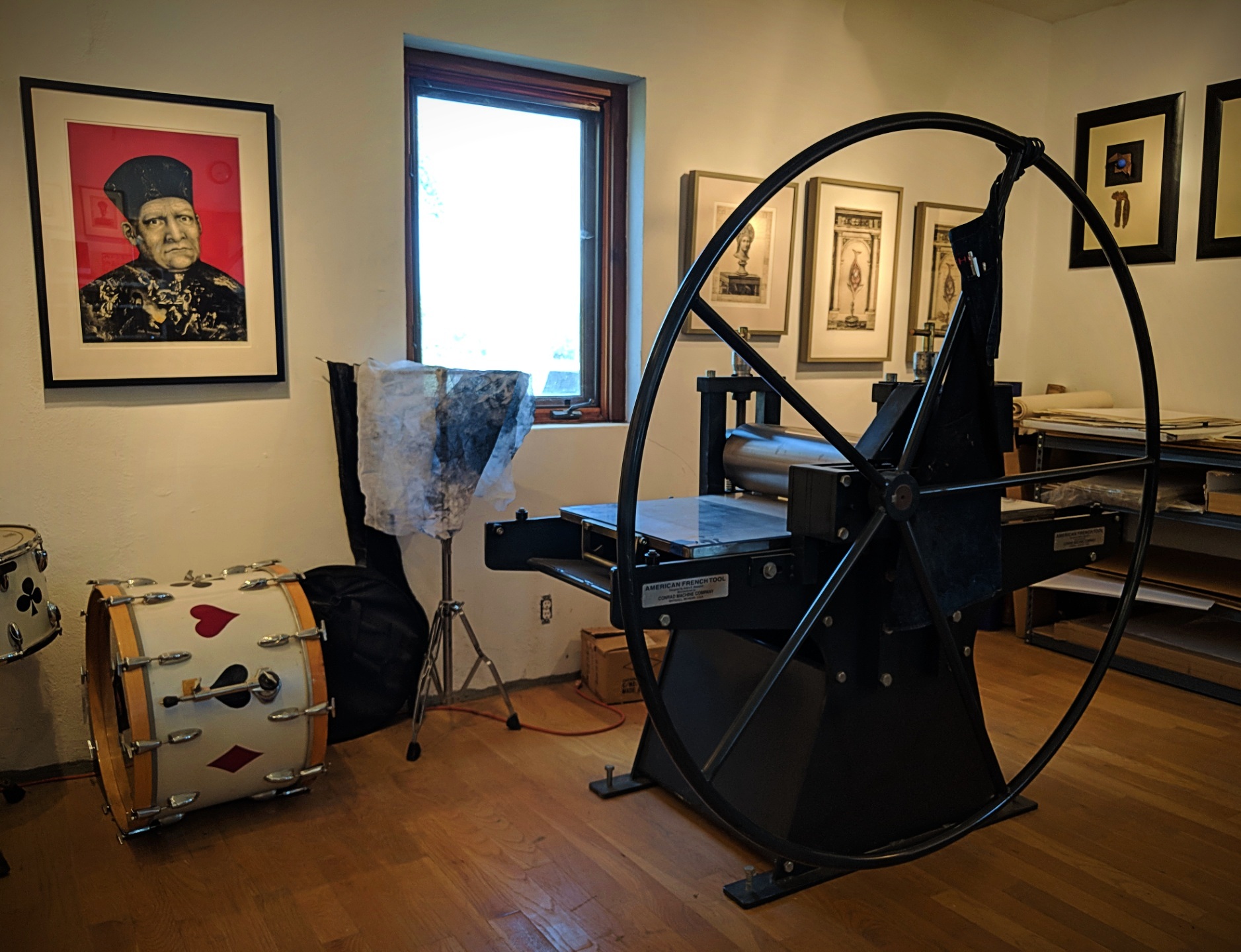
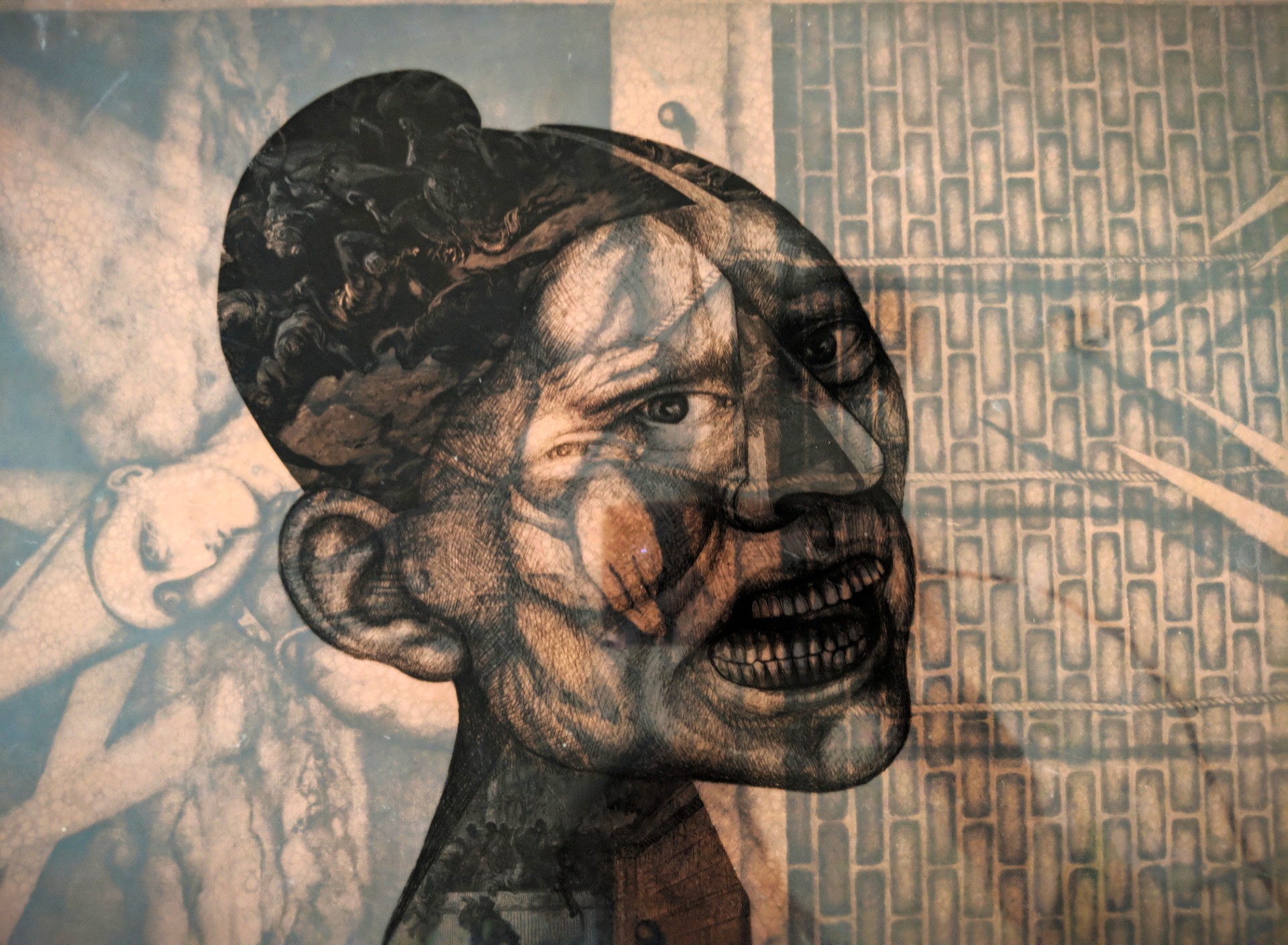
I quite enjoy visiting an artist’s studio, there is something very charming and simultaneously voyeuristic about it. Going ”behind the scenes”, walking amidst art and creative clutter, the excitement of getting to see first-hand new works in progress, not to mention meeting the artists themselves.

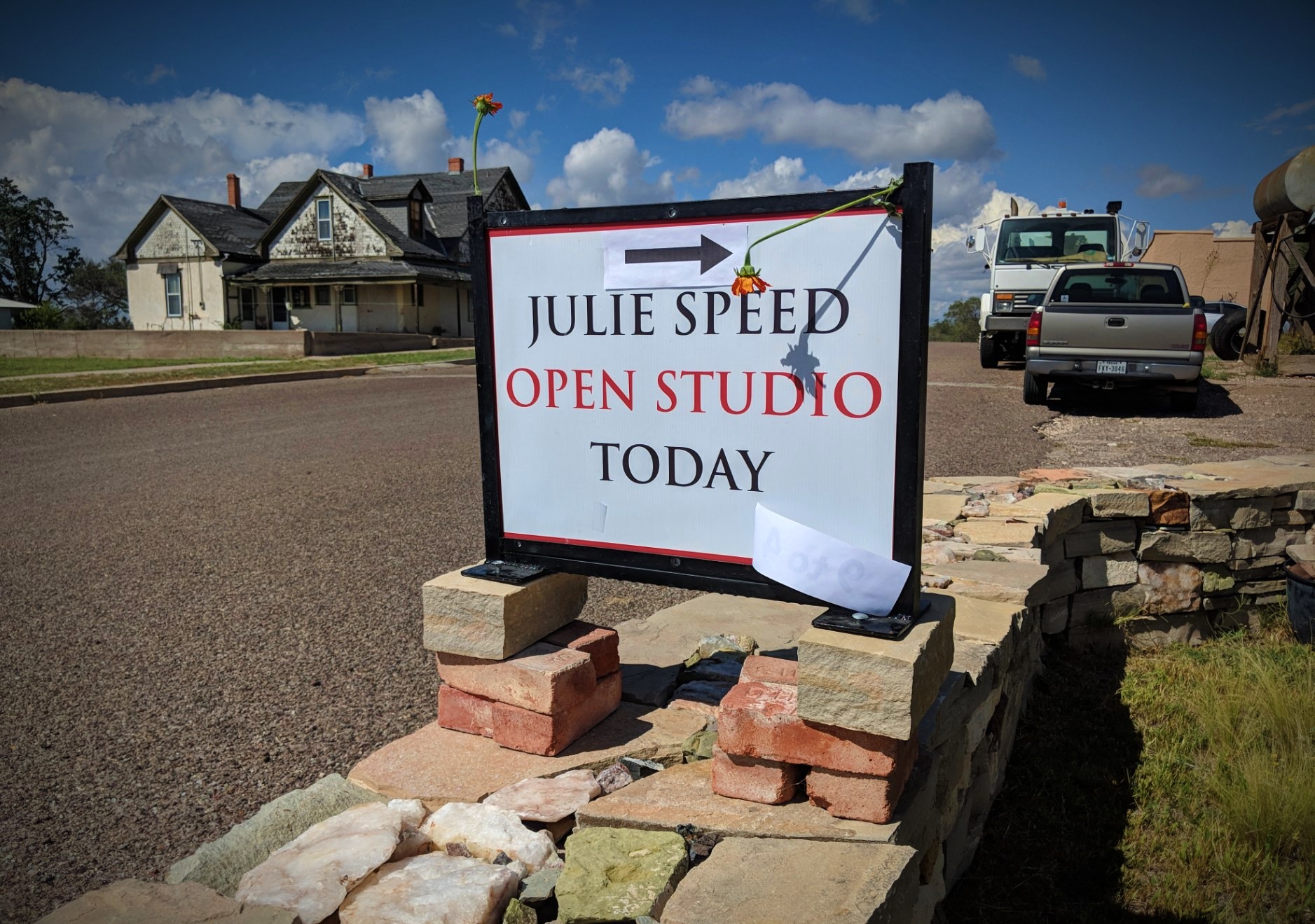
If you time your trip to Marfa during the Chinati Weekend (which is actually a three-day event extending into Monday), you will find many artists opening their studios, which are also their homes, to the public.

Julie Speed Studio – Marfa, TX

October 6th, 2018