Name-calling

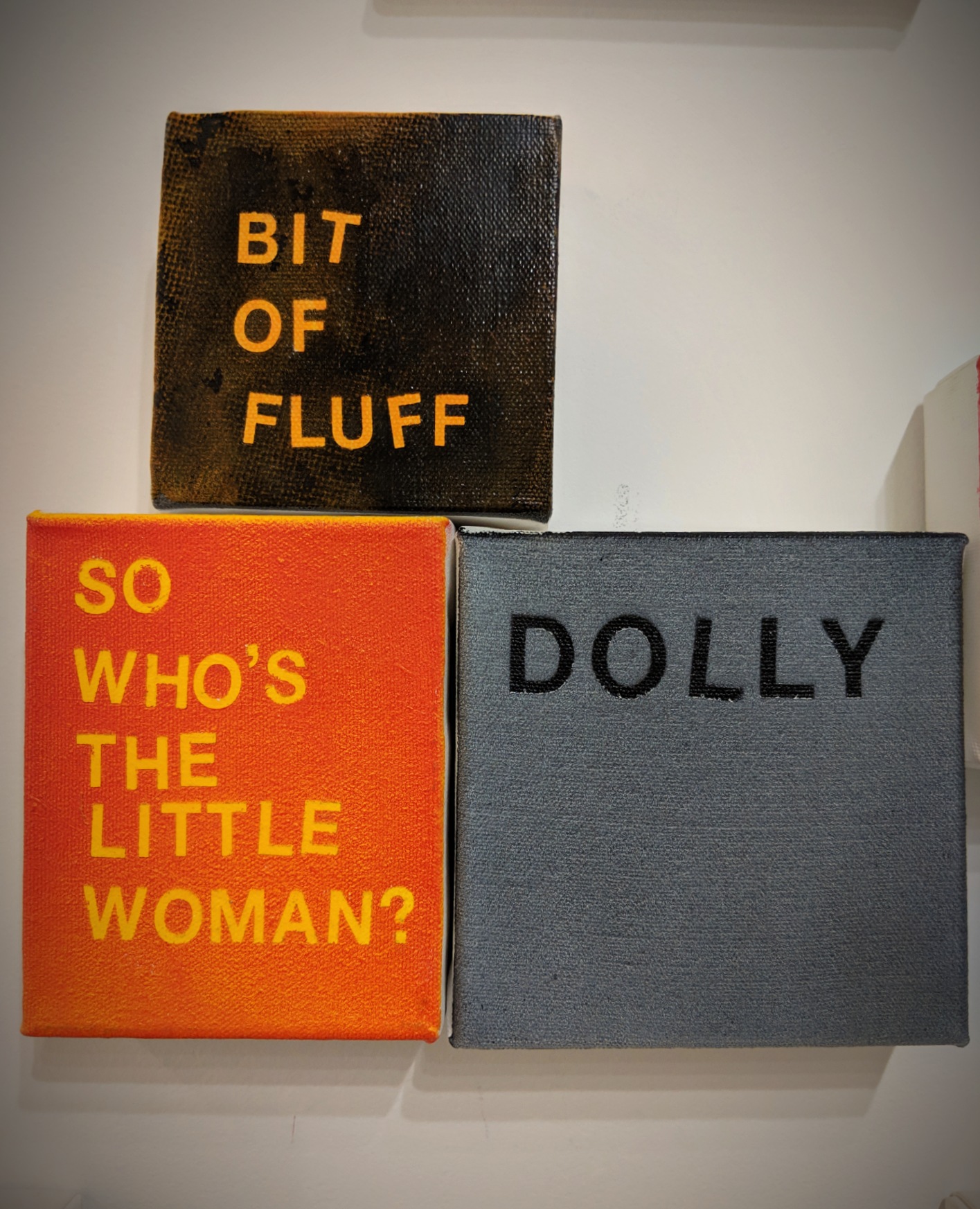
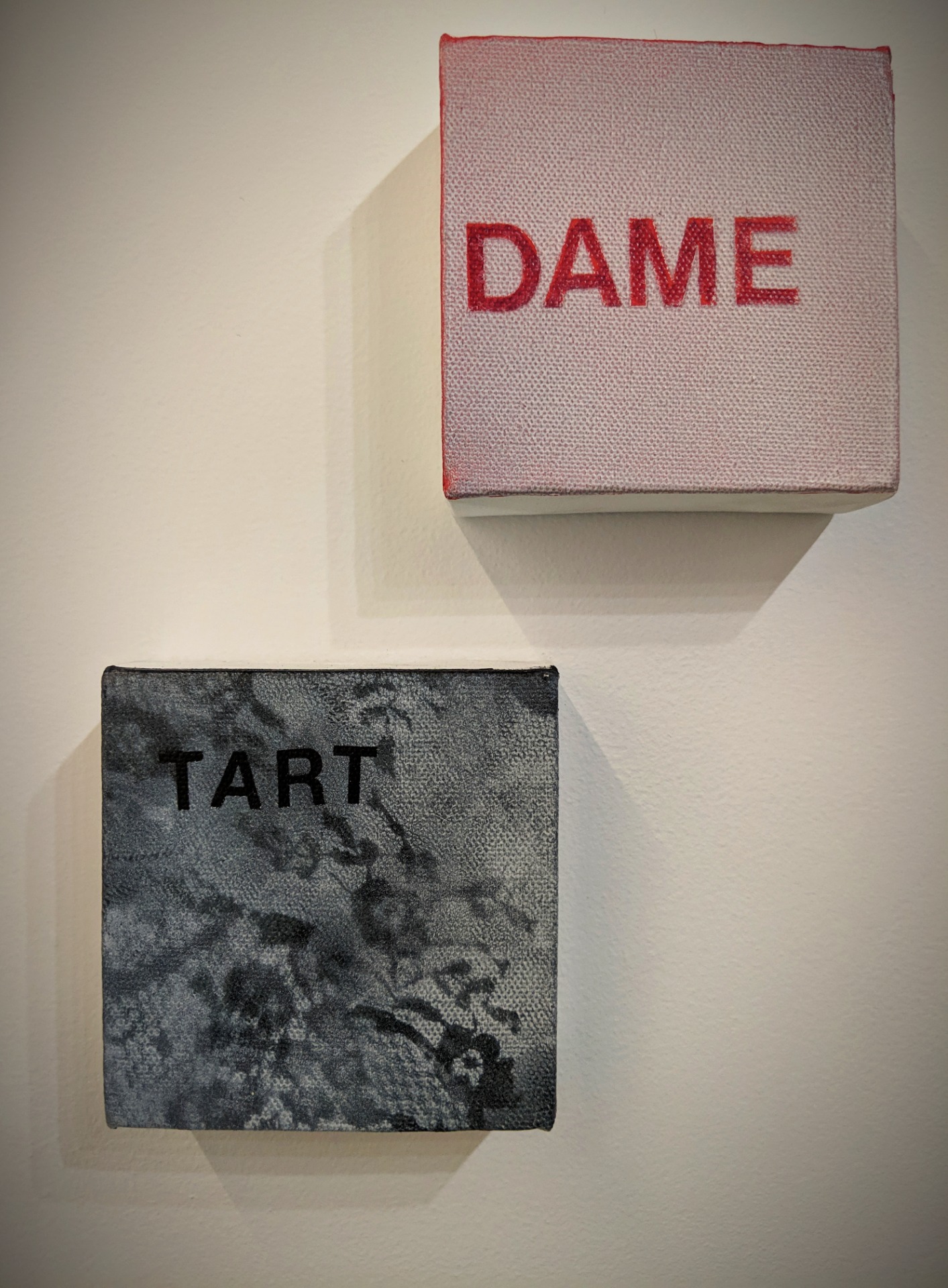
Women’s Words

Betty Tompkins’ Women’s Words, 2016. Installation, acryl on paper, acryl on canvas

∼paired with∼

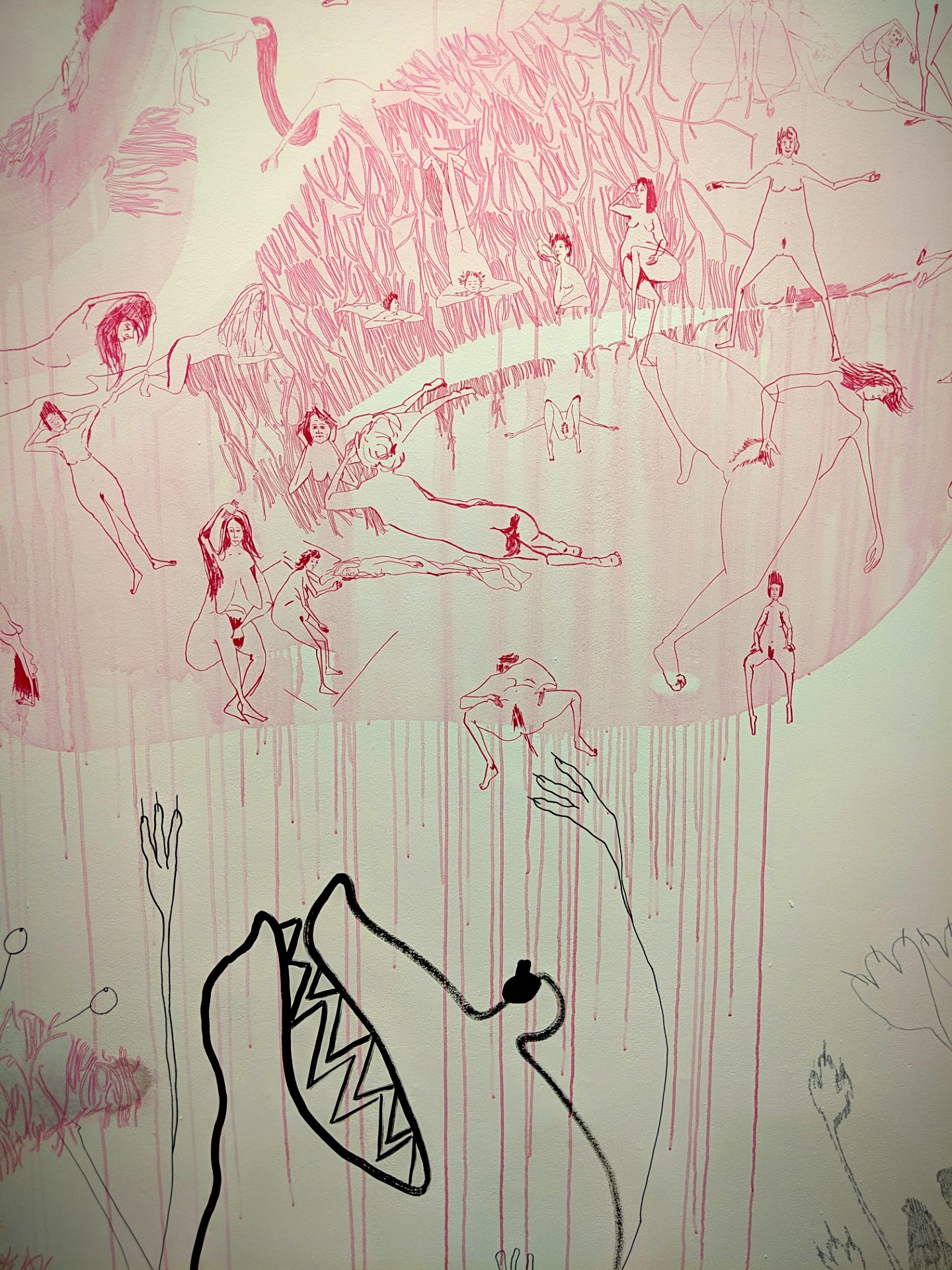
Sevda Chkoutova’s Untitled, 2018 (Detail). India ink, painted on wall over two floors

From WOMEN.NOW, a group exhibition showcasing contemporary female artists based in Austria and the United States. On view from September 2018 to February 2019, the show united artists from different generations, commenting on women’s role in society and the arts.

Austrian Cultural Forum

December 8th, 2018

I remember

being a part of you

Body-Self
by Tia Forsman

Body-Self references a 1994 paper, ”How Bodies Remember: Social Memory and Bodily Experience of Criticism, Resistance and Delegitimation following China’s Cultural Revolution” by Arthur and Joan Kleinman.

Tia Forsman graduated from Brown University in May 2019.

∼.∼

Brown University – The List Art Building

Providence, RI

November 24th, 2018

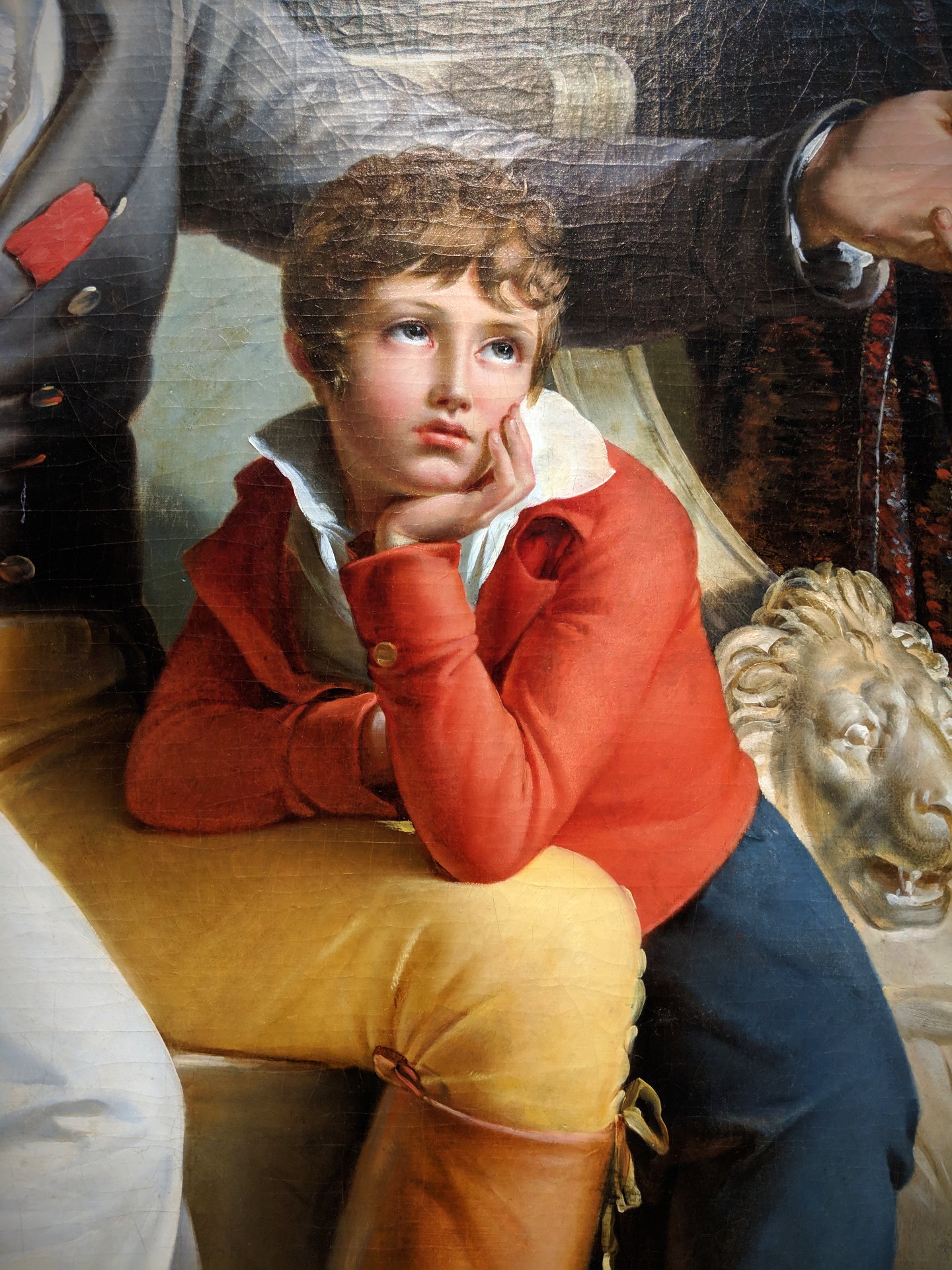
Ennui

Jacques-Luc Barbier-Walbonne (1769-1860)
Portrait of Antoine-Georges-François de Chabaud-Latour and His Family, 1806
Oil on canvas

Portraiture and history painting come together in this tribute to family devotion. Tenderly instructing his daughter and son, Antoine-Georges-François de Chabaud-Latour gestures toward a monument to his own father, a distinguished military man and engineer. The carved epitaph—he lived and died without reproach—provides a lesson in virtue for the following generations. Chabaud-Latour’s wife, Juliette, stands beside him, nursing their infant son, demonstrating the importance of maternal strength to the future of family and nation. The portrait is situated in the landscape of Nîmes in southern France, home to both the artist and the Chabaud-Latour family. – Museum label

… and a bit of eye-rolling demonstrating that kids will forever be kids (and that boredom is a privilege).

RISD Museum, Providence, RI

November 23rd, 2018

The Power of Beauty

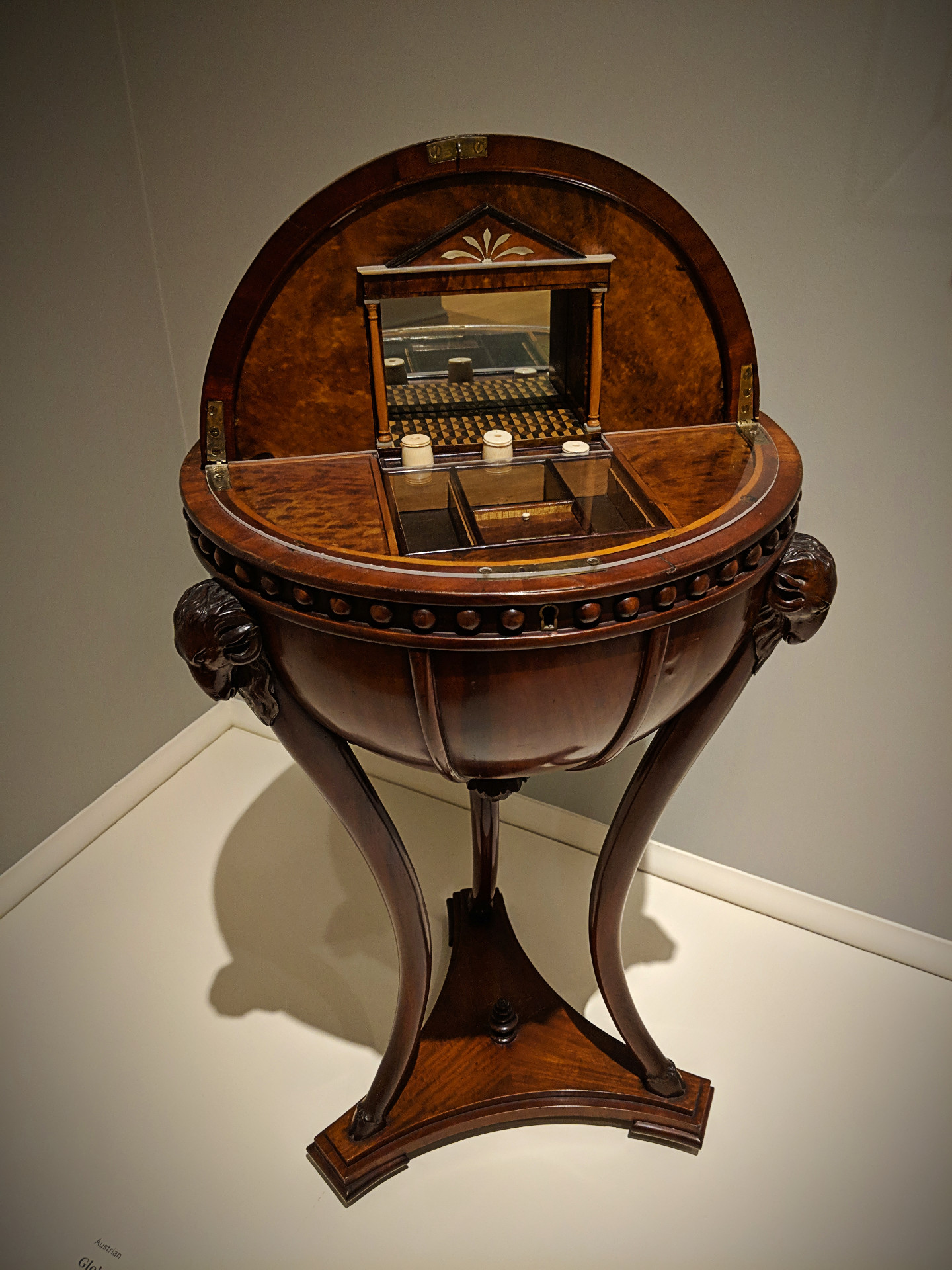
Imagine visiting Rome and coming back home with a micromosaic tabletop as a souvenir; being sister, wife, and mother to three different emperors; or an average woman going about her daily handwork with a ”globustisch” as your workstation.

Nothing average about the objects.
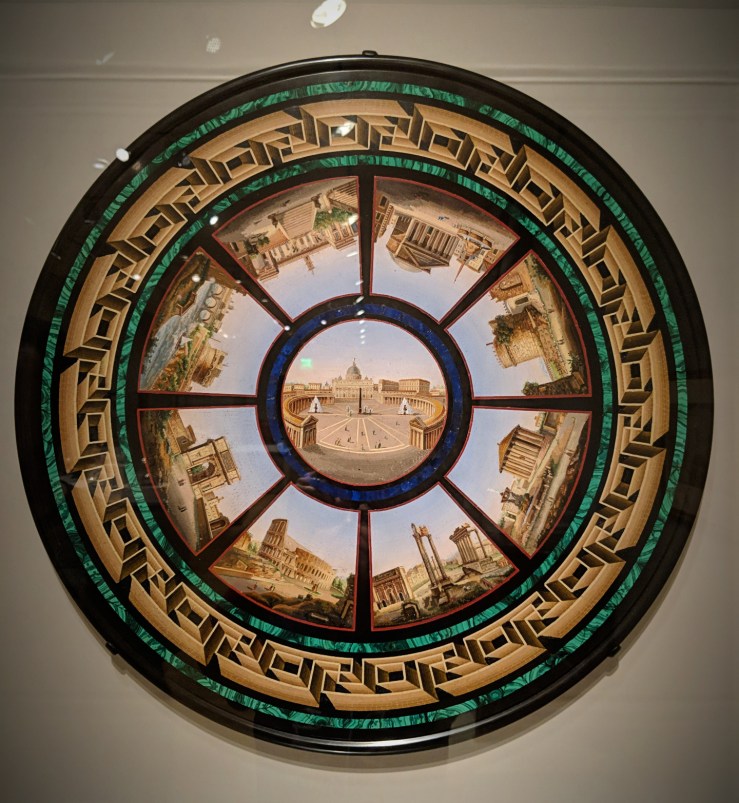
Micromosaic Tabletop with Nine Views of Rome, ca. 1830-1850
Glass tesserae with marble, lapis lazuli and malachite

Marble tables with elaborate decorations of inlaid precious stones and micro-mosaic pictures were among the most prized souvenirs available to 19th-century tourists. This table-top features nine vignettes of Rome’s chief attractions: the Pantheon, Tomb of Cecilia Metella, Temple of Vesta, Forum, Coliseum, Arch of Titus, Castel Sant’Angelo, and Capitoline Hill, with St. Peter’s Basilica in the center. 

Each micro-mosaic vignette is composed of remarkably thin rods of brightly colored glass (smalti filati) cut into tiny pieces (tesserae), and arranged with as many as 1,400 tesserae per inch. Greek patterns and borders of malachite and lapis lazuli complete the composition. This table top was probably made in the mosaic studio at St. Peter’s Basilica, which had been in operation since the late 16th century. Tourists would purchase the table top in Italy, then commission a local furniture-maker to construct an appropriate base after returning from their travels.
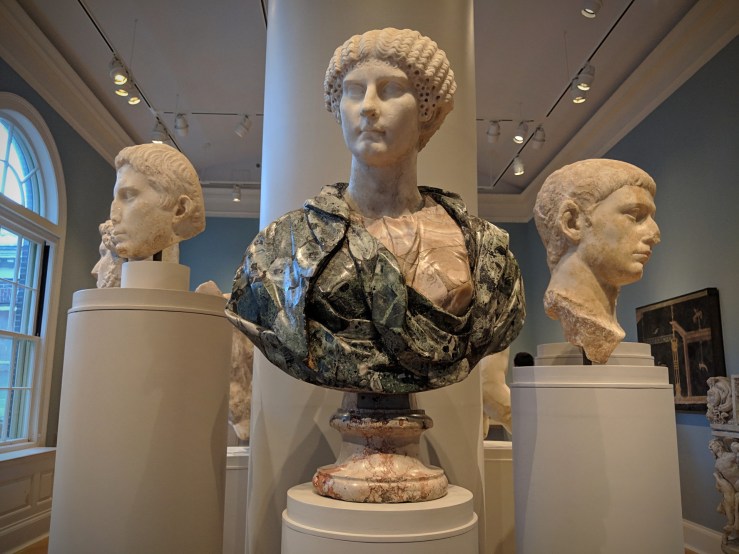
Portrait of Agrippina the Younger, ca. 40 CE
Marble (from Paros) heaed, 18th-century coloured marble bust

Agrippina the Younger (AD 15 – 59) was a powerful woman: the sister, wife, and mother to three different emperors. According to ancient authors, Agrippina’s brother Caligula sent her into exile for involvement in a conspiracy in AD 39. Her uncle Claudius recalled her from banishment and married her in AD 49. Agrippina is said to have poisoned Claudius so that her son Nero might become emperor. The empress ruled in Nero’s name while he was young, but he eventually turned against her, ordering assassins to murder her. While Agrippina is said to have written an autobiography, it has not survived. Her portraits provide the only remaining clues as to how she wished to be represented during her lifetime. These depict her with a slightly protruding upper lip and chin that are reminiscent of Caligula’s portraits. Of the RISD version, only the head is ancient.
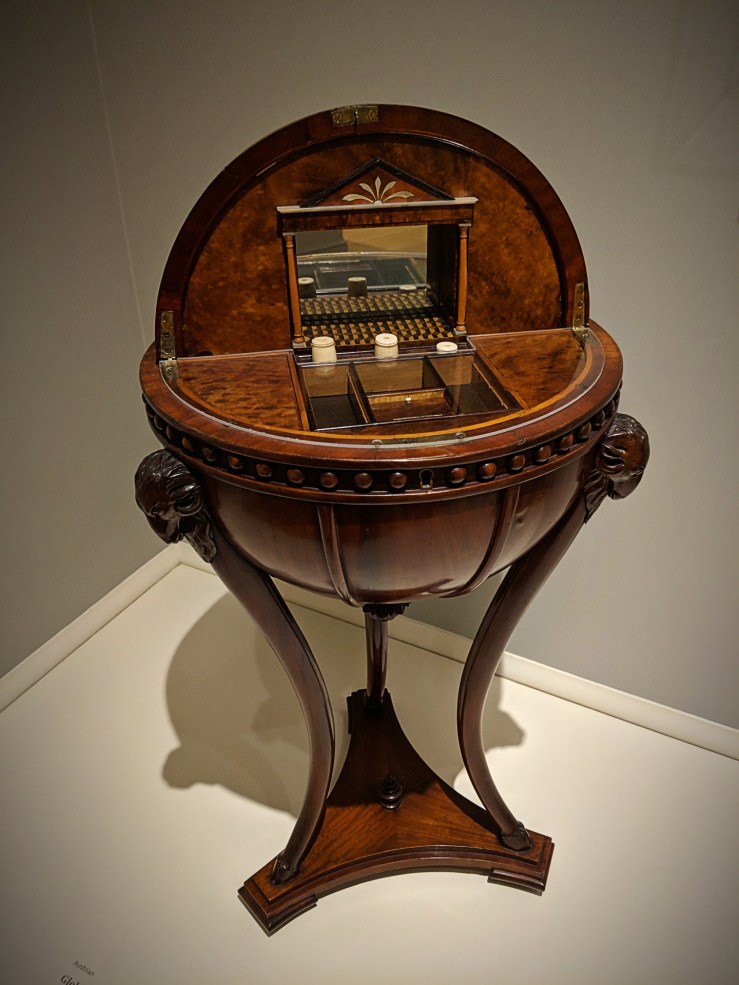
Globe Table (Globustisch), 1810-1820
Mahogany, burl mahogany, oak, ebony and boxwood with brass, mirror, ivory, mother of pearl, pewter, tortoiseshell, painted faux tortoiseshell, engravings and velvet

Fashioned from a profusion of costly materials, this table spotlights the virtuosic skills of its makers. Designed to provide a space for sewing and other handwork, the upper half of the burled mahogany globe rotates into the lower half to reveal ivory bobbins and compartments for materials.

Neoclassical style is seen in the three curved legs topped with ram heads, as well as the interior replica of a Greek temple with a geometric inlaid floor. Engravings of the Roman goddesses Minerva and Flora flank the mirrored back, reflecting the owner’s education and appreciation of the ancient world.

RISD Museum, Providence, RI

November 23rd, 2018

Spot the Difference

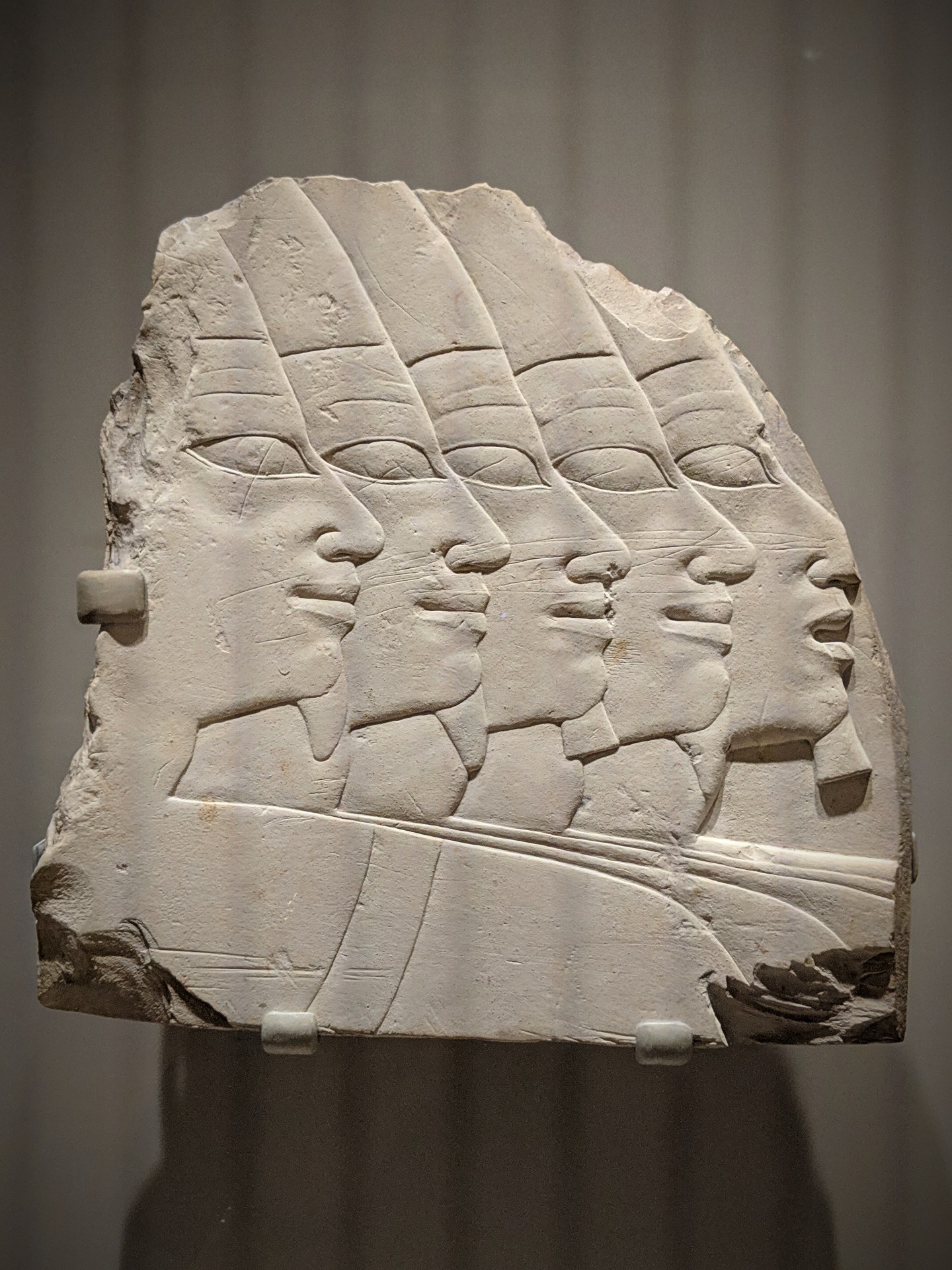
Fragment of Relief with Captives, 1525-1504 BCE
Limestone
Egyptian, Dynasty 18, Reign of Amenhotep I – From the Karnak Temple Complex

This fragment was once part of a temple relief depicting King Amenhotep I grasping bound captives by the hair. The seemingly identical appearance of the bearded captives functioned as visual shorthand for foreign enemies of the Egyptian state. Closer inspection, however, reveals some individualized features, including different beard styles.

RISD Museum, Providence, RI

November 23rd, 2018

Caustic

James Montford, b. 1951
Holocaust Blankets with Smallpox, 2015
Cotton and wool blankets, vinyl lettering

Holocaust Blankets with Smallpox is part of a larger body of work focused on the notion of who “owns” the use of the word holocaust. . . . I see this as being part of a longstanding tradition in art of addressing inequality, injustice, and intolerance, reaching as far back as Goya’s time-honored painting The Third of May 1808. As a Black Indian, the oppression I have experienced is due, in part, to the ongoing power we subscribe to hate words. I created this work to present a multilayered approach to the demystification of racial, ethnic, and gender-based discrimination.

–James Montford

RISD Museum, Providence, RI

November 23rd, 2018

Politics are More Scary and Hideous than Ever

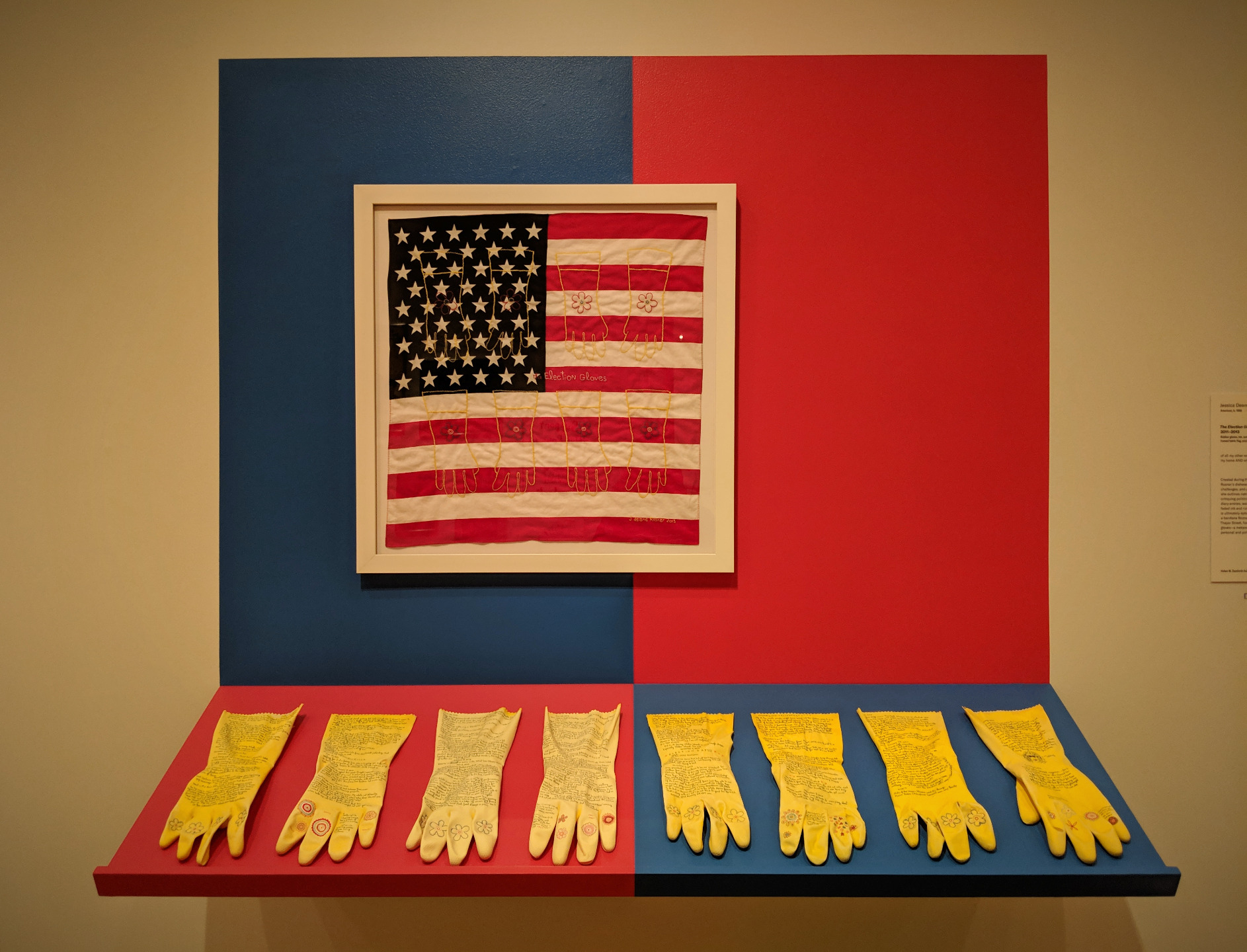
The artwork was created during President Obama’s re-election campaign [description below and on gloves (zoom to read)]. If ”politics were more scary and hideous than ever” then, which words would better describe the situation today?

Jessica Deane Rosner
The Election Gloves, 2011-2013

“You would think that worrying about who is going to lead our country would make all other concerns vanish or at least fade to a pale gray. But, for me, a huge crisis only piles on top of all my other worries. I find myself anxious about cleaning my home AND what happens if Roe v. Wade is overturned.” –Jessica Deane Rosner

Created during President Obama’s re-election campaign, Rosner’s dishwashing gloves recount her daily chores, creative challenges, and personal anxieties on one side. On the other, she outlines national and international headlines, sometimes critiquing political affairs. This text, initially written in detailed diary entries, was edited and rewritten on the gloves. The faded ink and rubber deterioration remind us that everything is ultimately ephemeral. The more permanent-looking flag, a bandana Rosner bought at the Army/Navy Surplus on Thayer Street, features simplified versions of the dishwashing gloves—a metanarrative on the interconnectedness of personal and political obligations.

Paired with:

Dr. Martens
Men’s Shoes with Flag
Pattern, ca. 1990

RISD Museum, Providence, RI

November 23rd, 2018