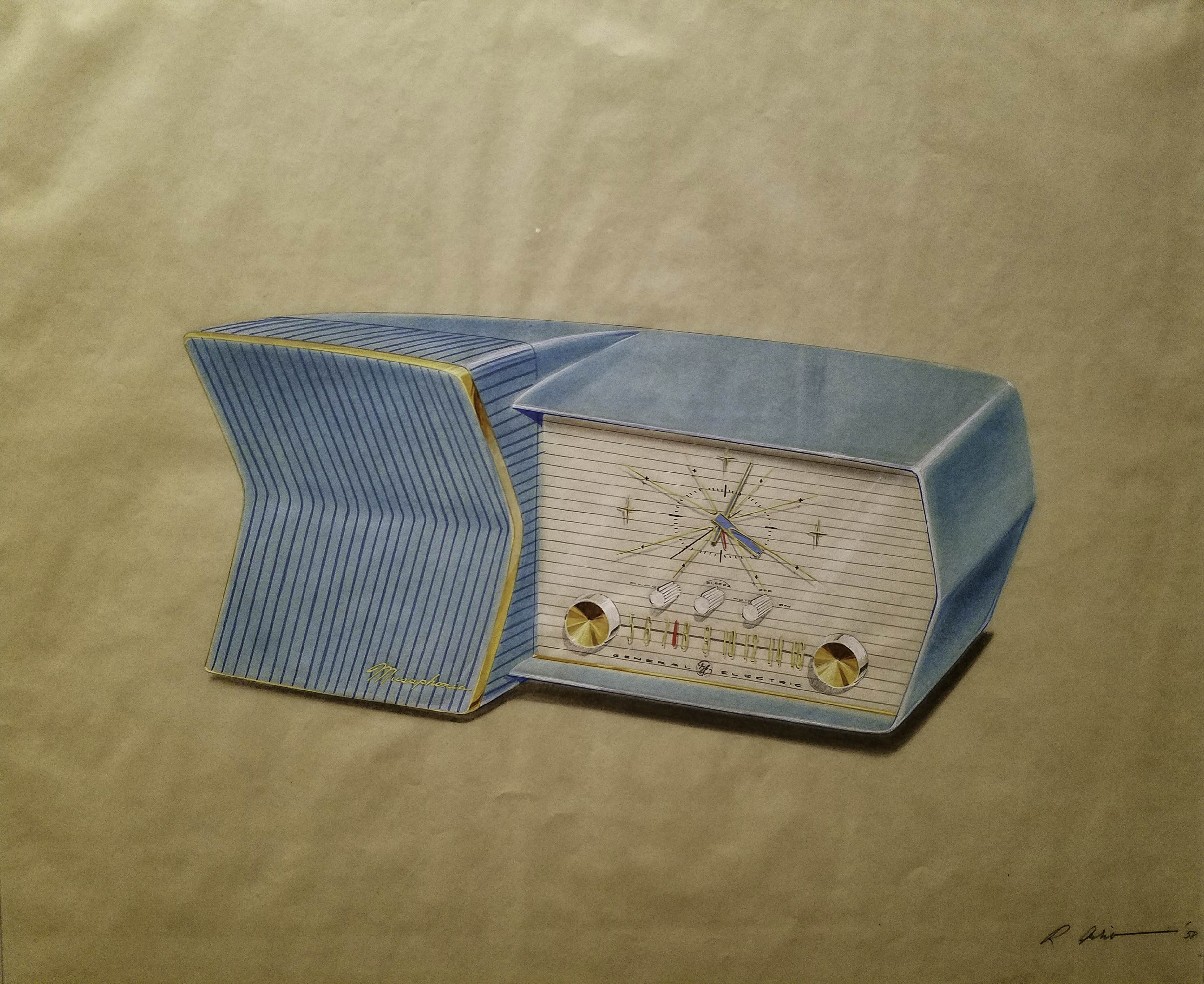
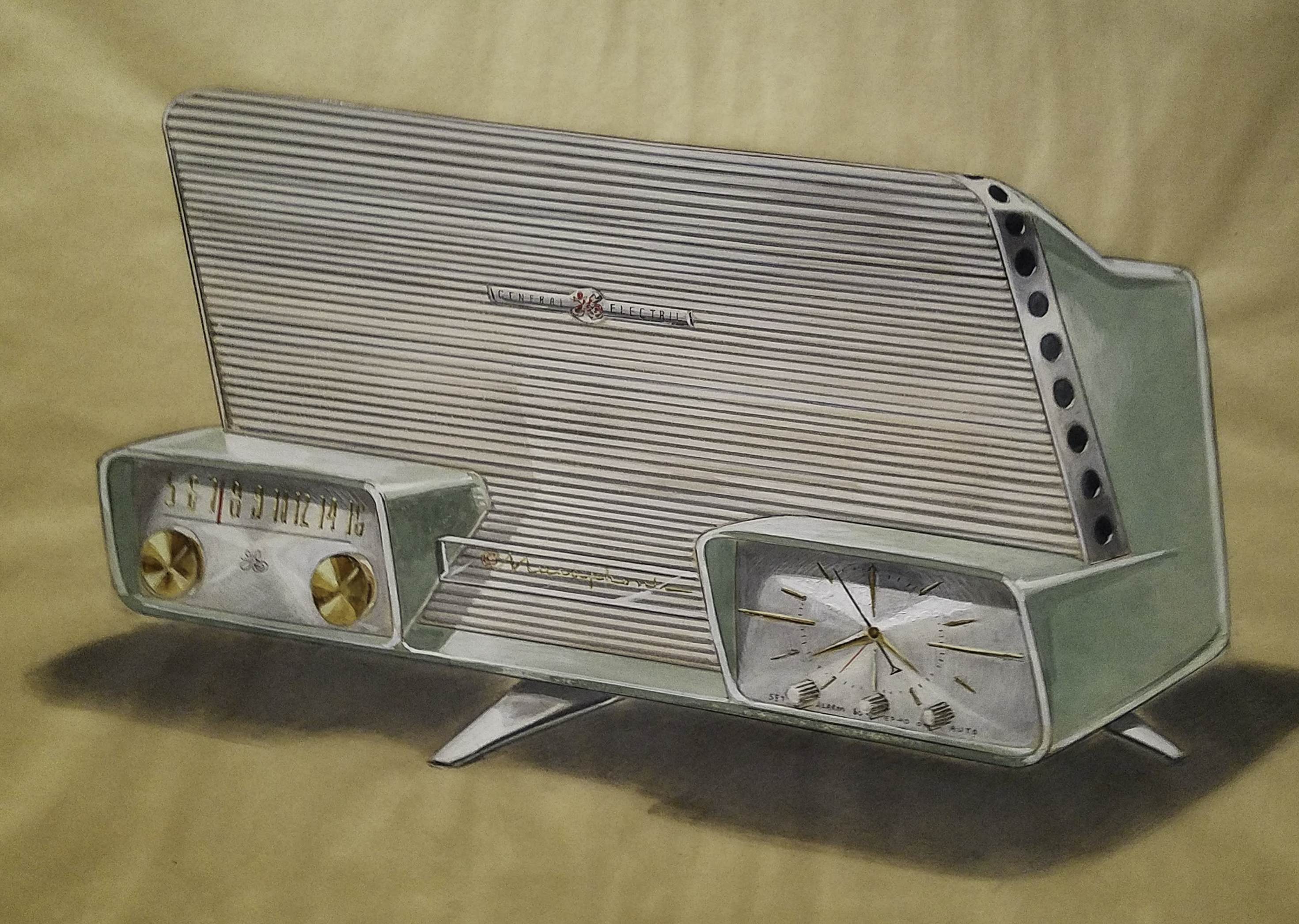
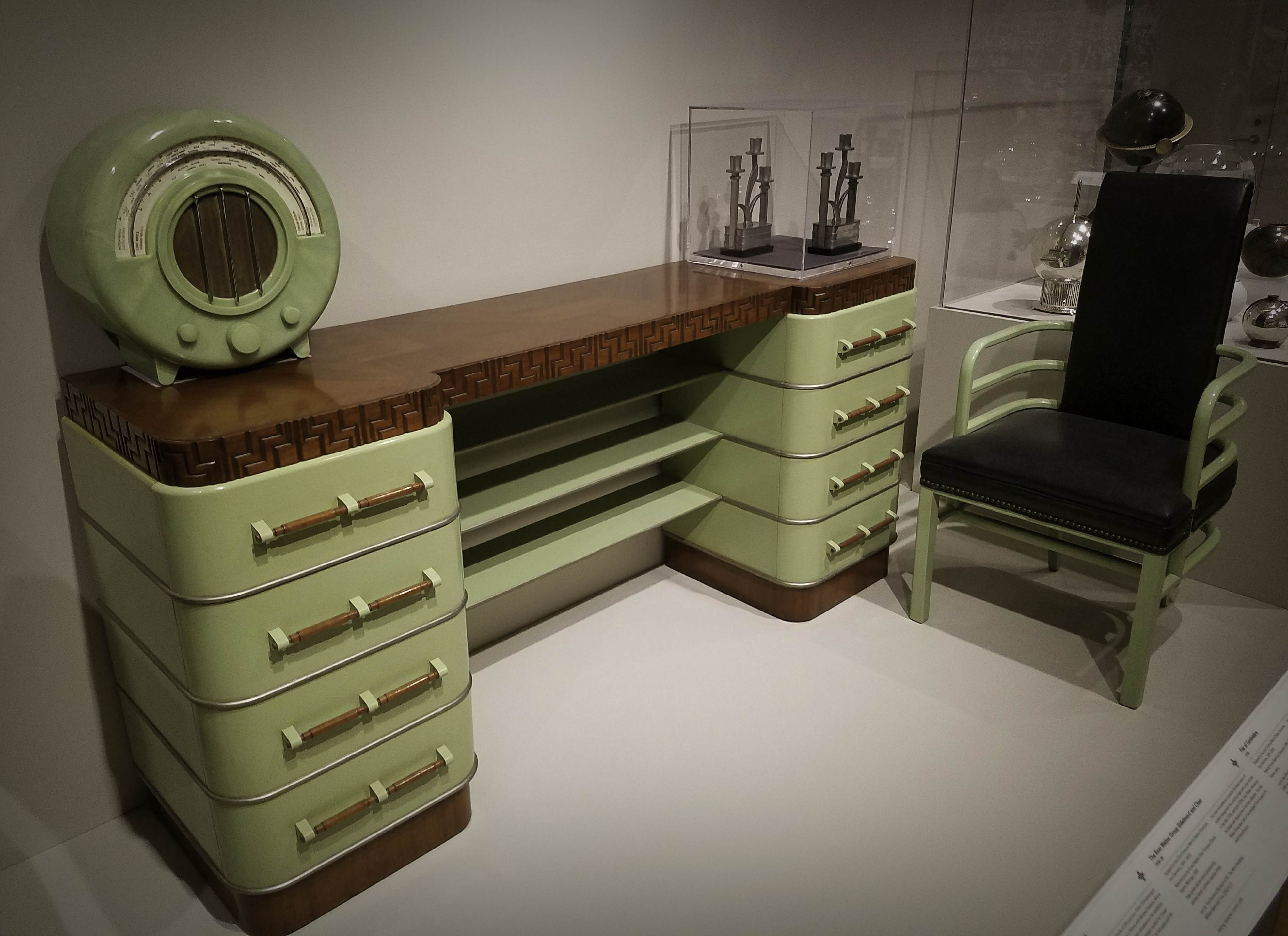
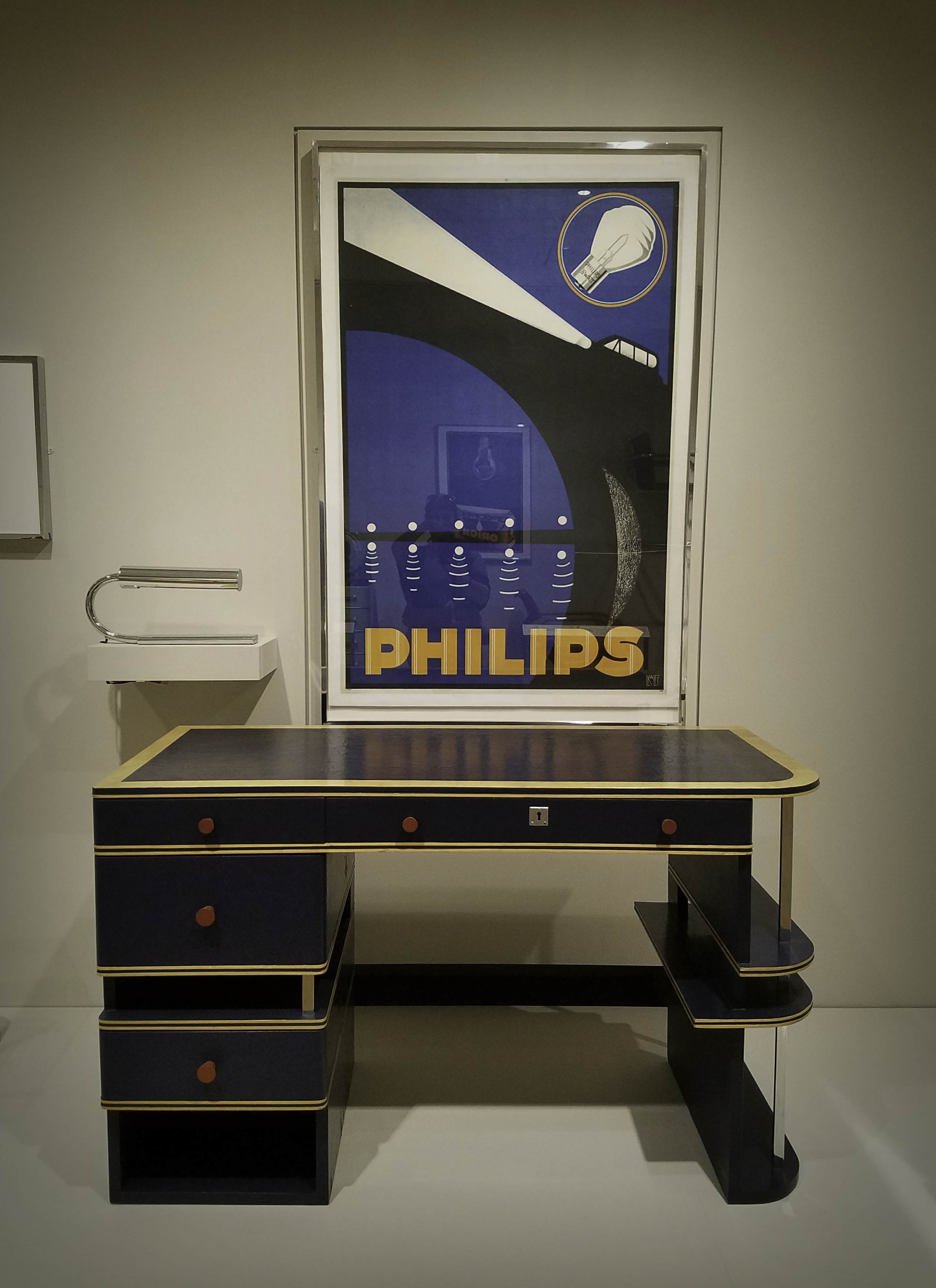
From The Jazz Age: American Style in the 1920s, an exhibition at the Cooper Hewitt, April through August 2017
July 30th, 2017
From The Jazz Age: American Style in the 1920s, an exhibition at the Cooper Hewitt, April through August 2017
July 30th, 2017
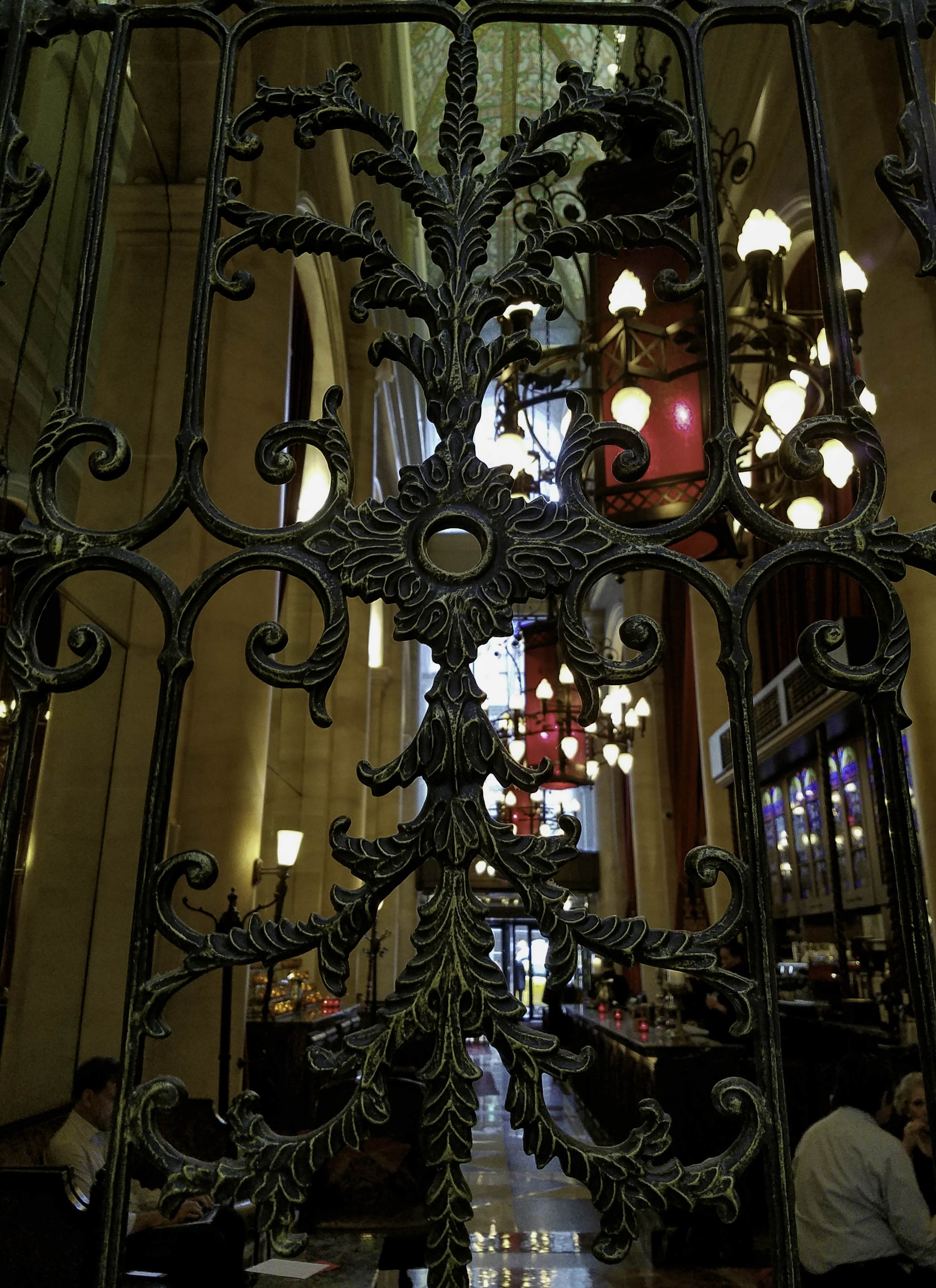
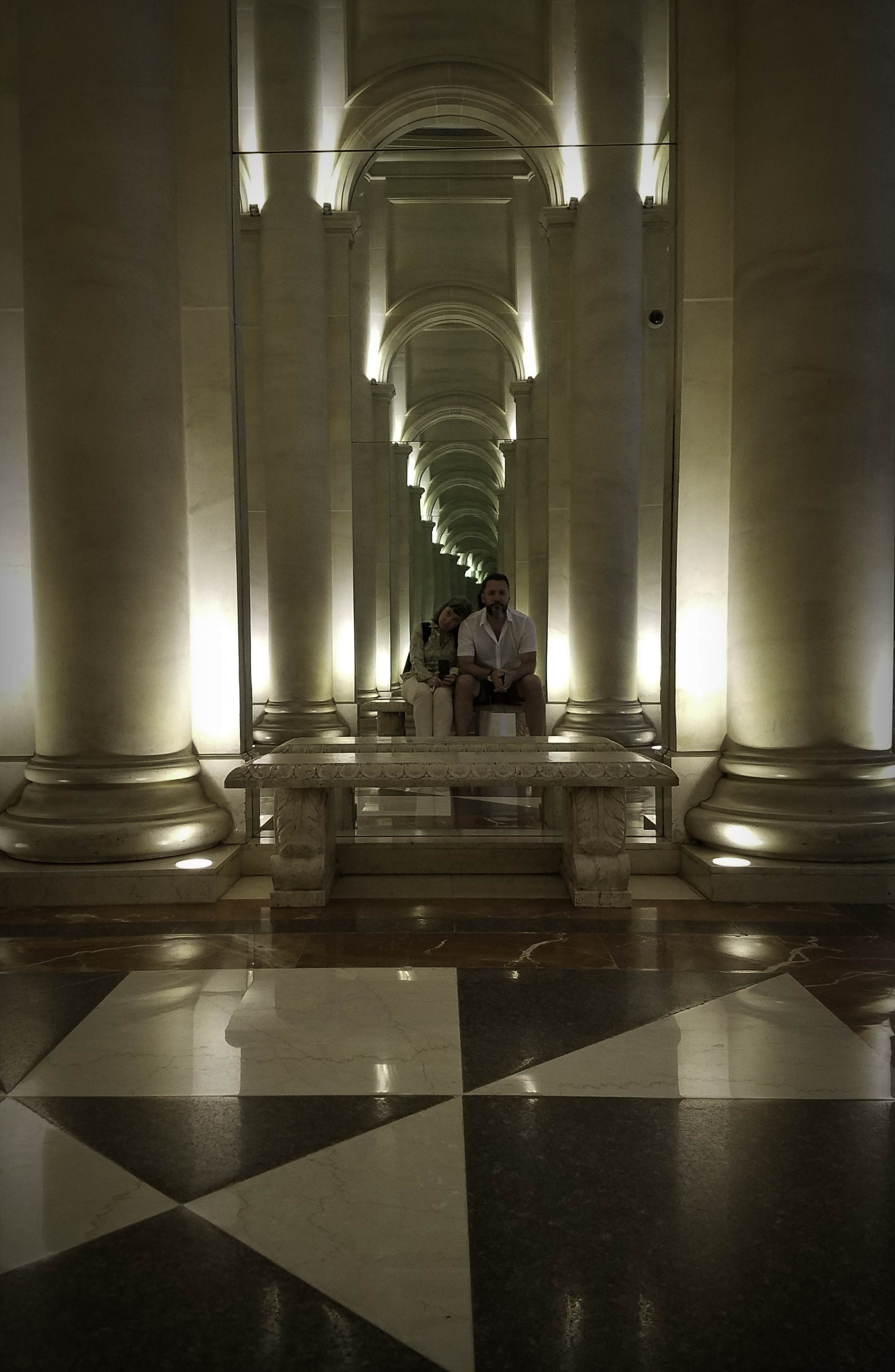
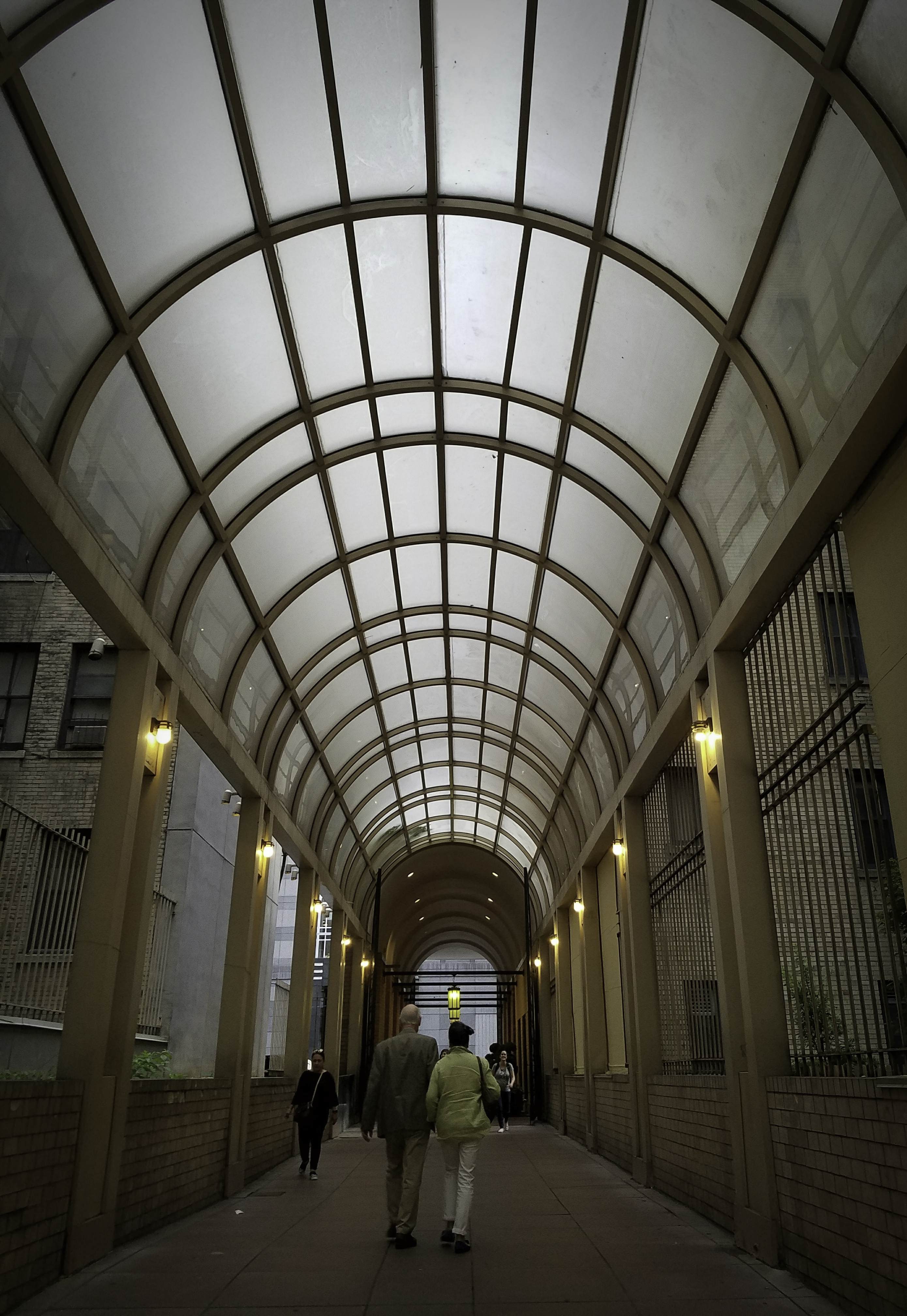
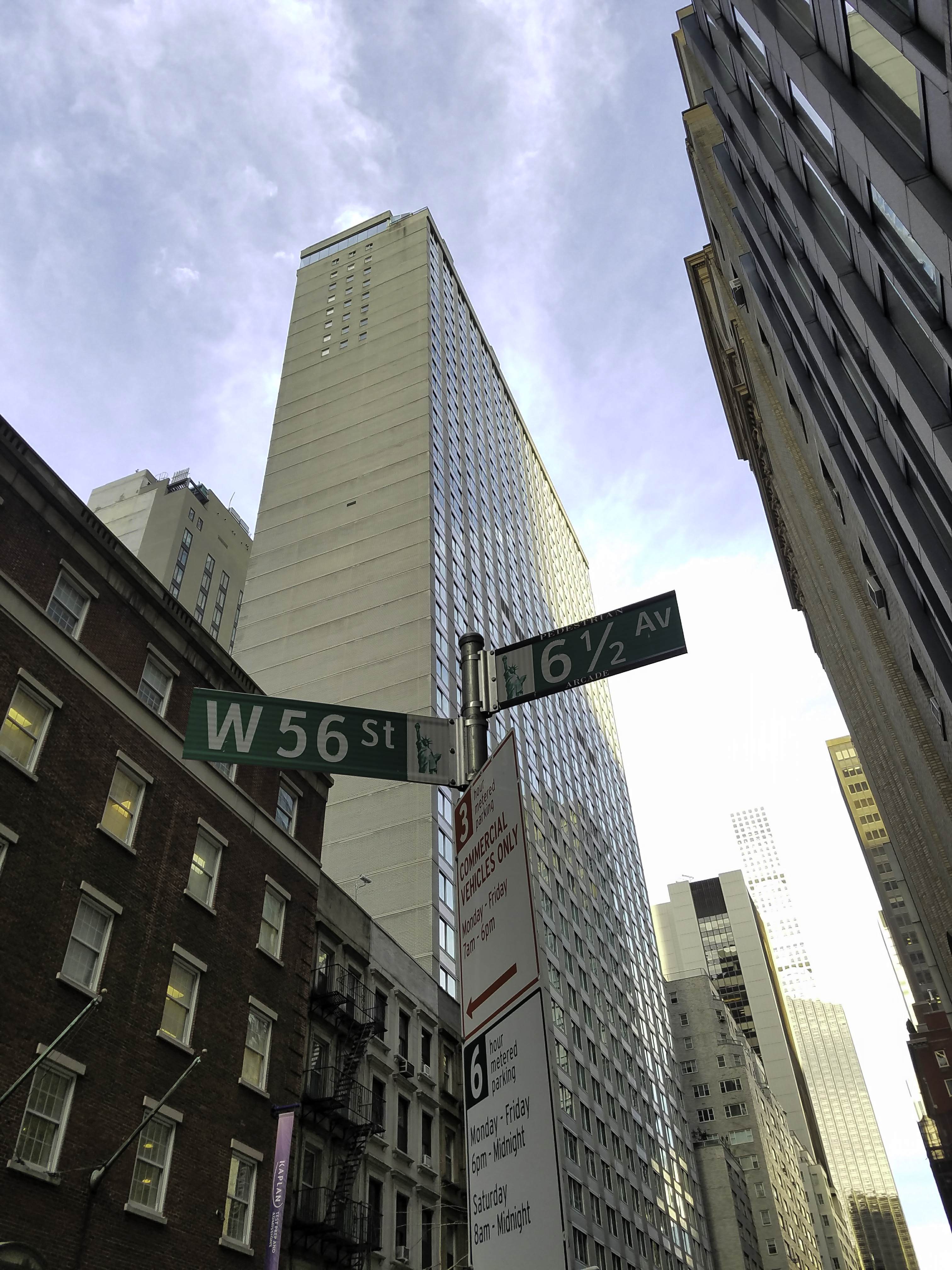
Times Fifty Sixth, equals the magic number that unlocks the mysteries of the Avenue That Does Not Exist.
You too can uncover its mysteries; but tread gently or you might upset the kind denizens of this strange, parallel world.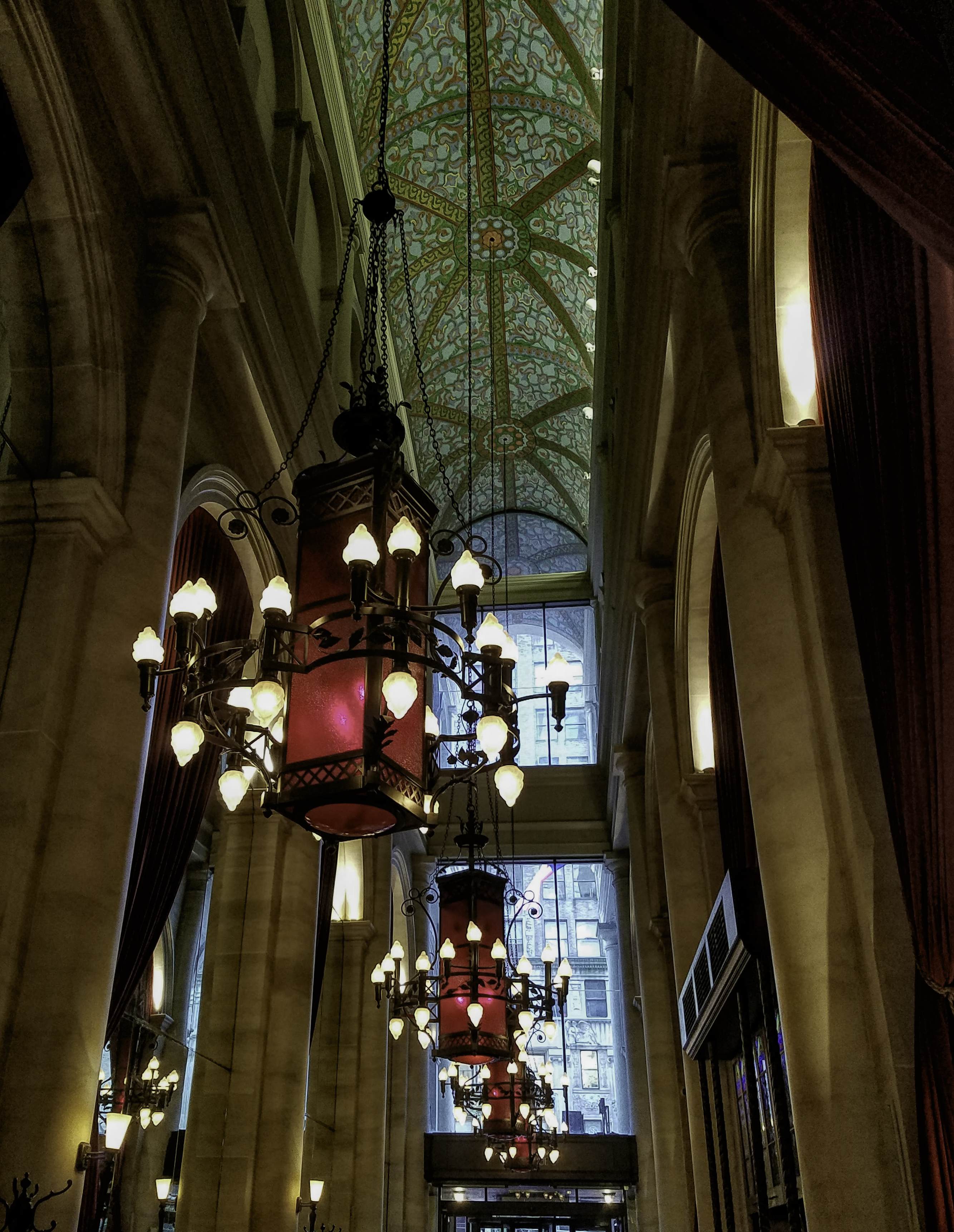
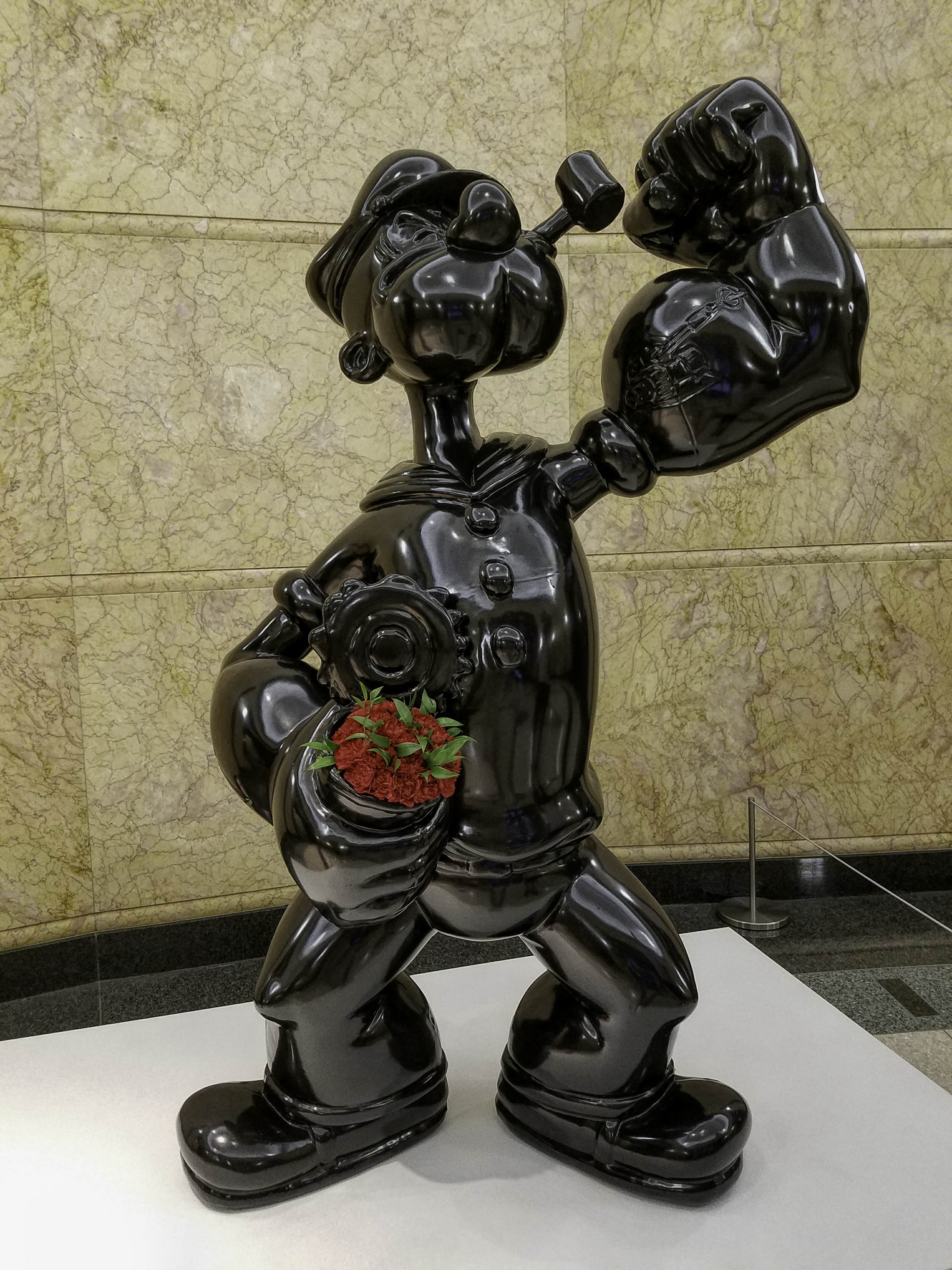
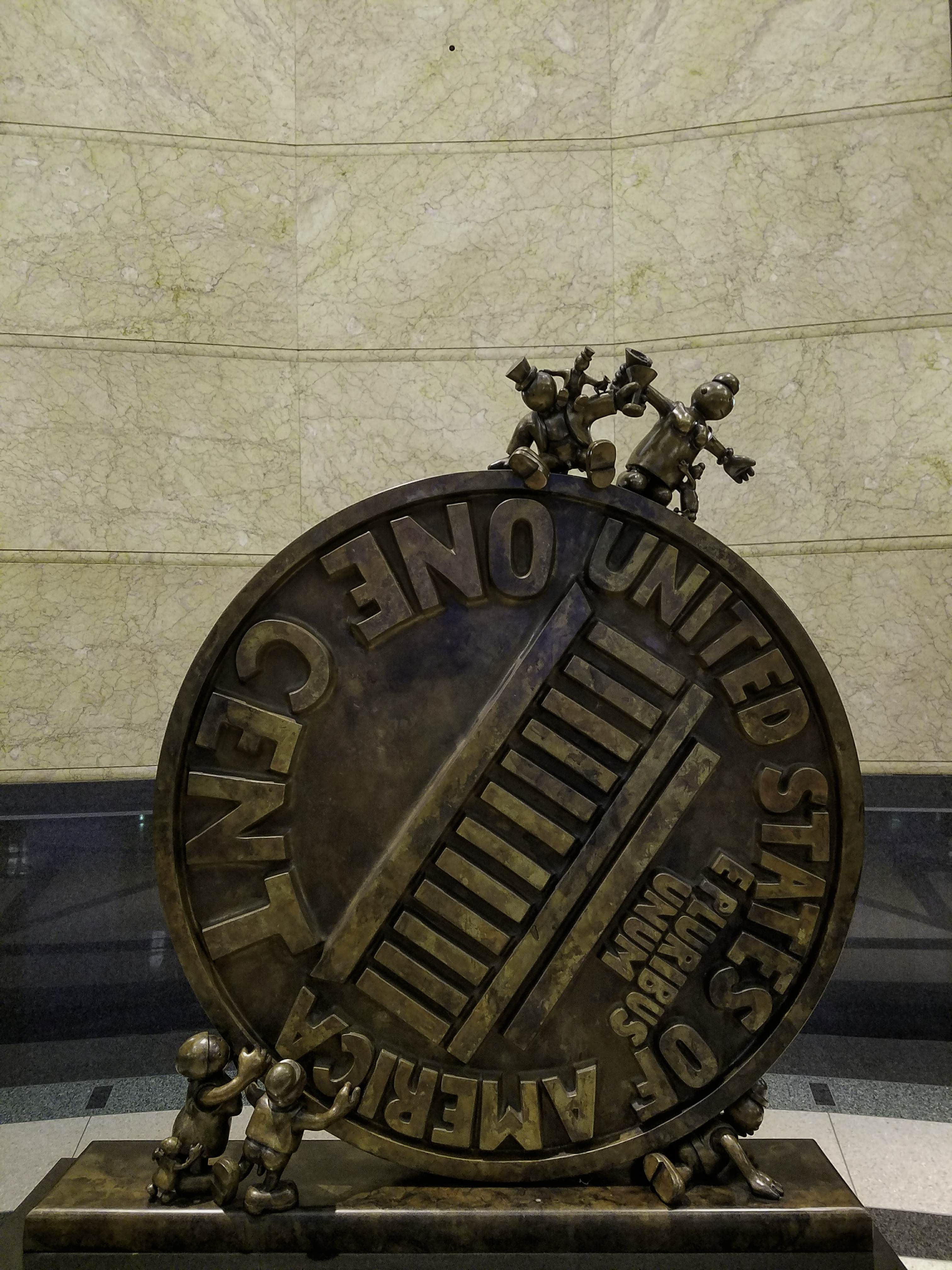

Popeye by Jeff Koons, 2009-2012
Granite and live flowers
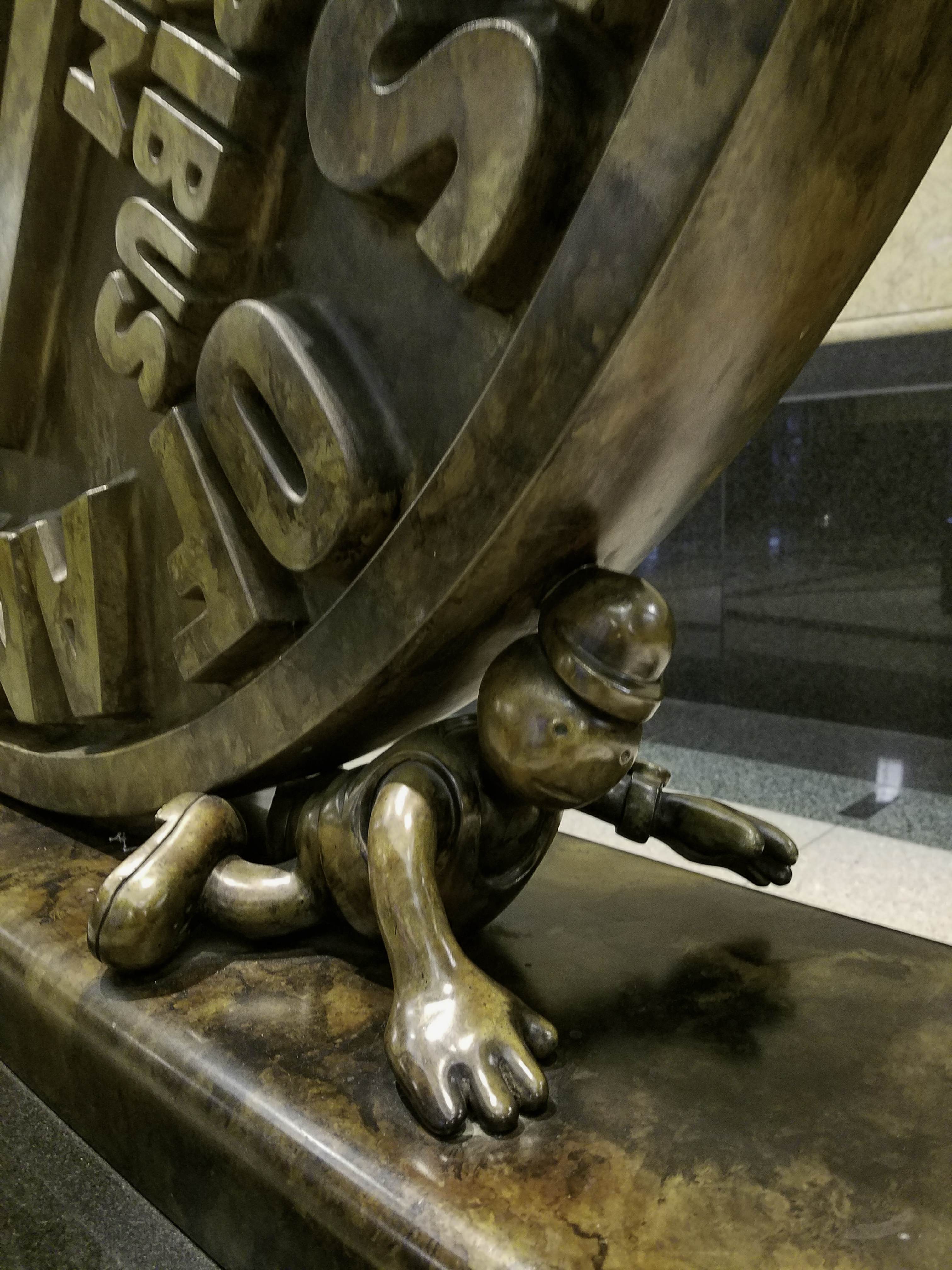
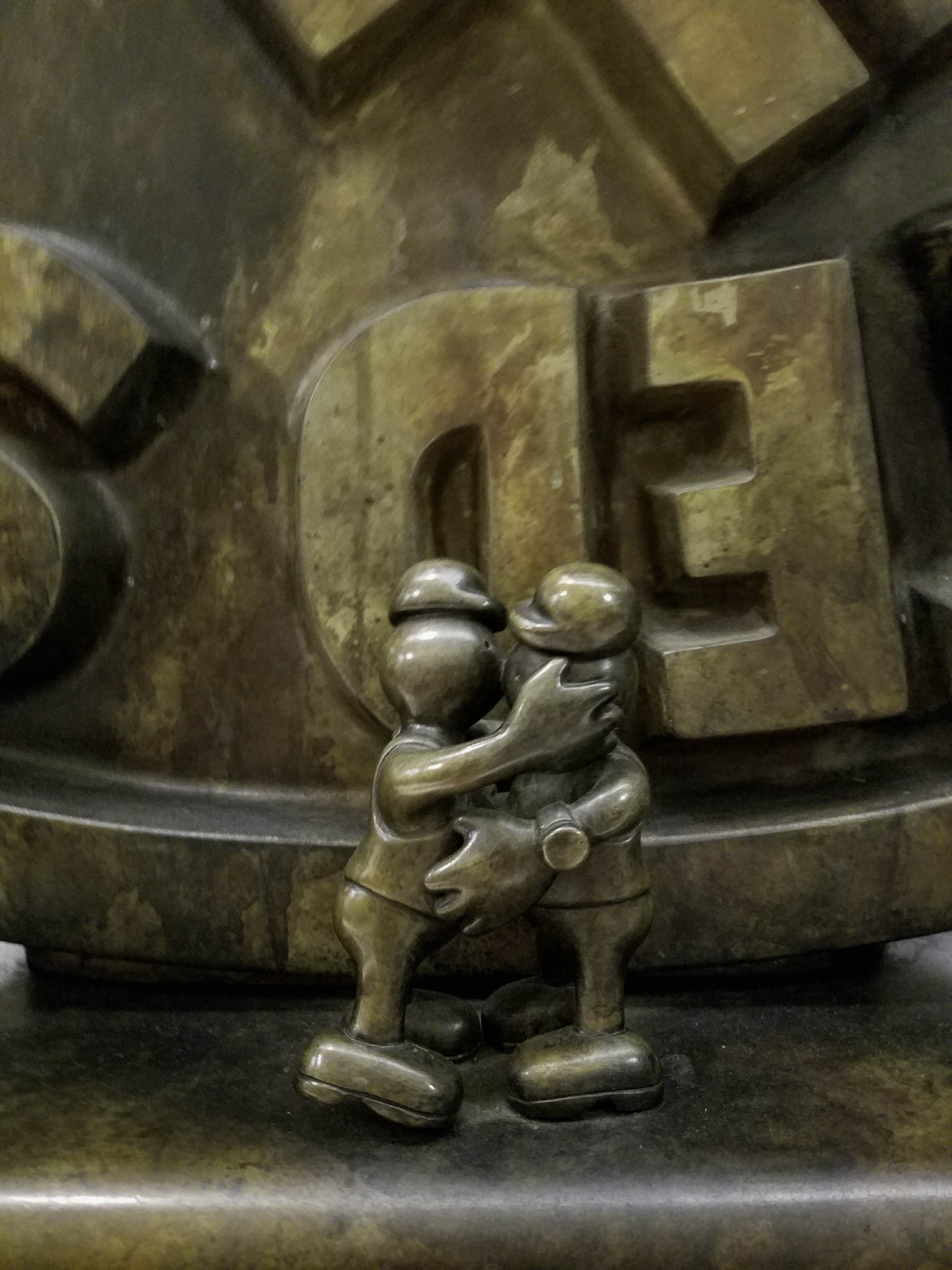
Big, big Penny by Tom Otterness, 1993
Bronze
July 26th, 2017
Museums come in all shapes and sizes, integral parts of our society and pivotal in preserving, studying and expanding knowledge about the culture, heritage and nature of our world. And in an ethnically diverse metropolis of the magnitude of New York City, Museums come in every conceivable type: from the matchbox Mmuseumm to the jewel box Frick Collection, the Ambassador of Modernism that is the MoMA to the National Museum of the American Indian, advocate of Native American heritage, there are weird museums, pop up museums, museums of gigantic proportions like The Met; there is something for every interest, taste and even physical condition.
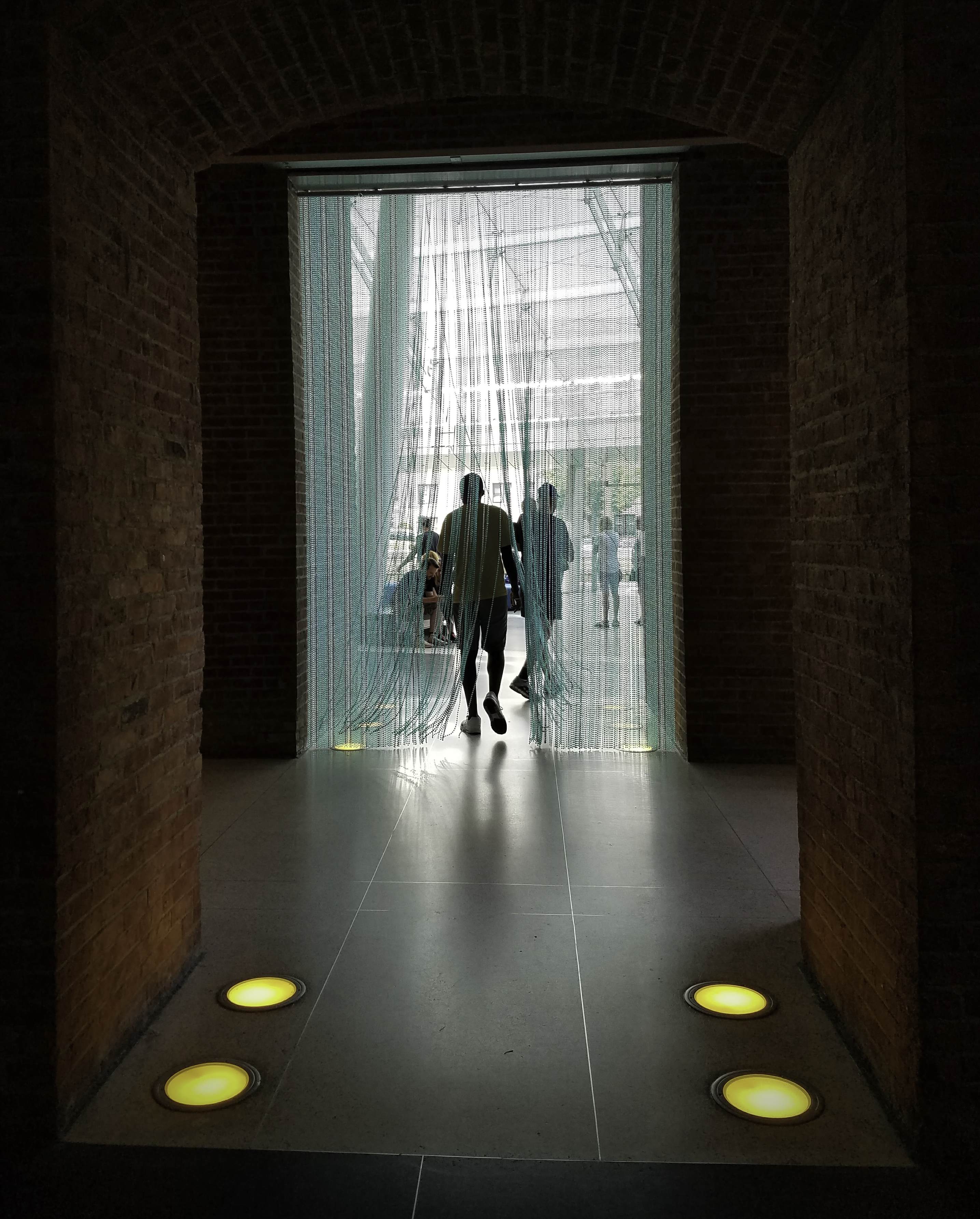 The Brooklyn Museum falls under the category of those Tardis-like structures that are surprisingly ”bigger on the inside”. How else can I explain the seemingly endless space when, after going through the galleries hosting the extensive Georgia O’Keeffe exhibition occupying -what we thought was- the largest part of the Museum, we found ourselves walking through corridors and galleries, monumental installations and even reconstructed period rooms, only to end up in this vast open space, its glass-tile floor reflecting the natural light coming from a skylight as large as the ceiling, enhanced by a huge chandelier?
It was only afterwards I looked it up and realised we had just visited the third largest Museum in New York City! 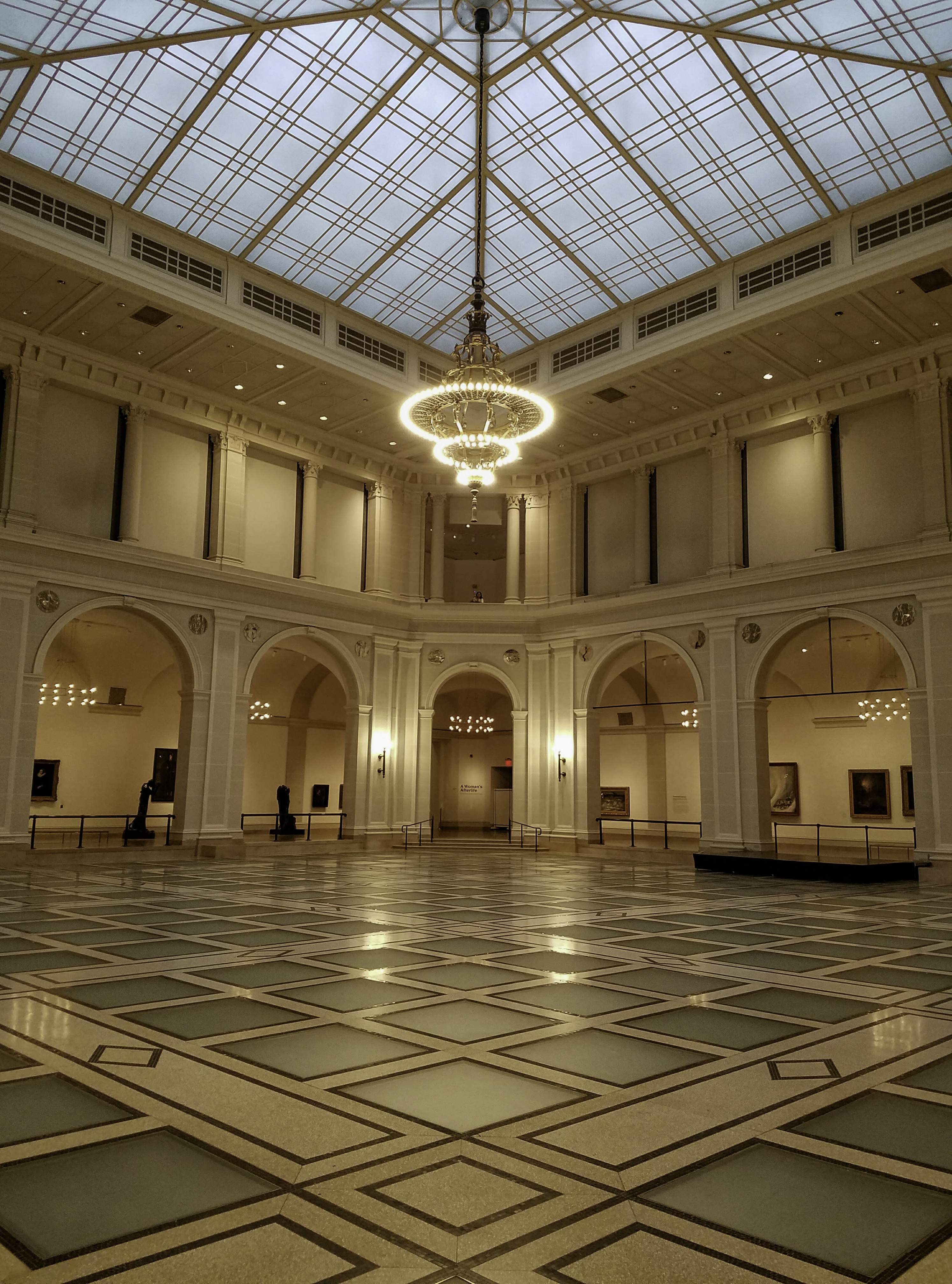
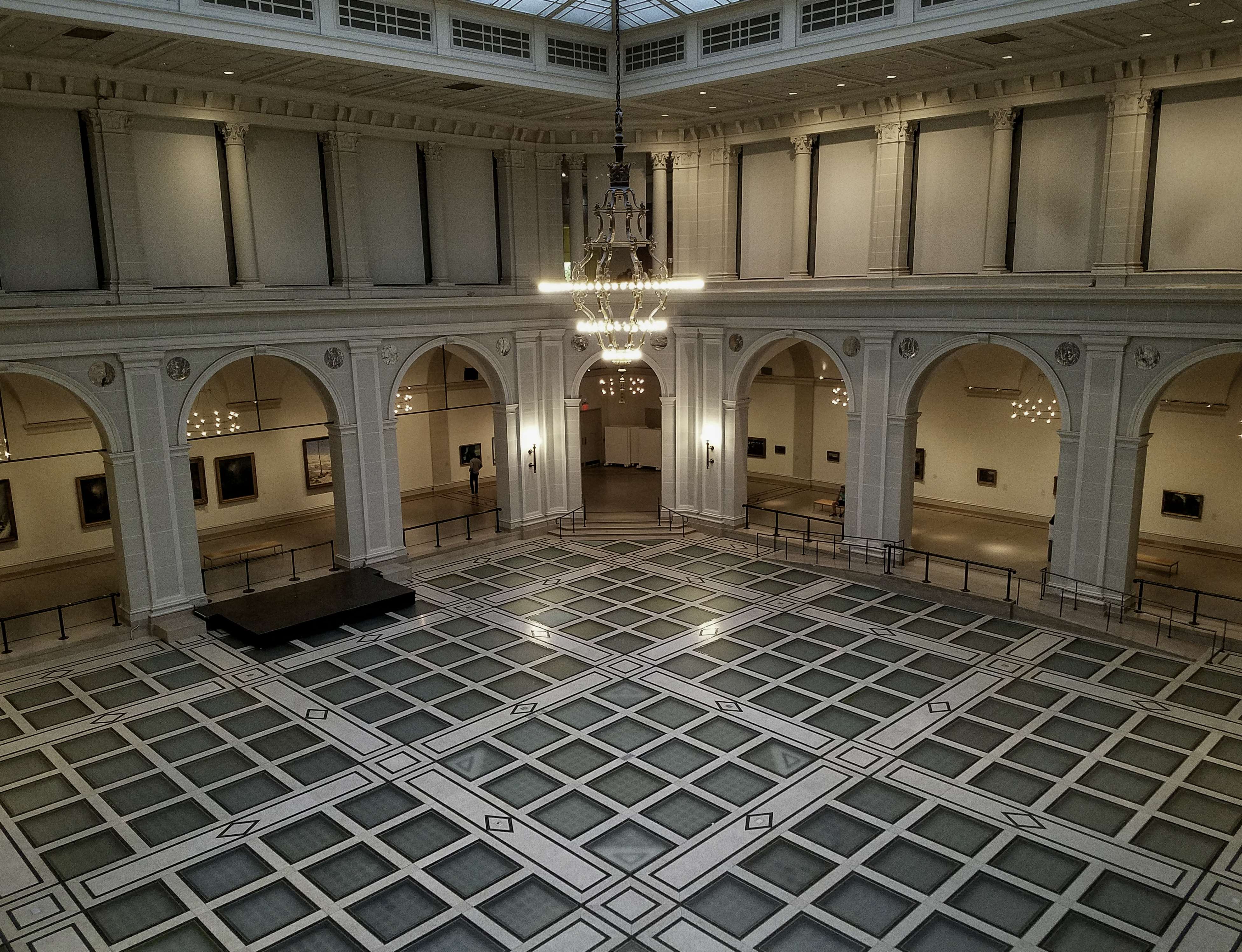
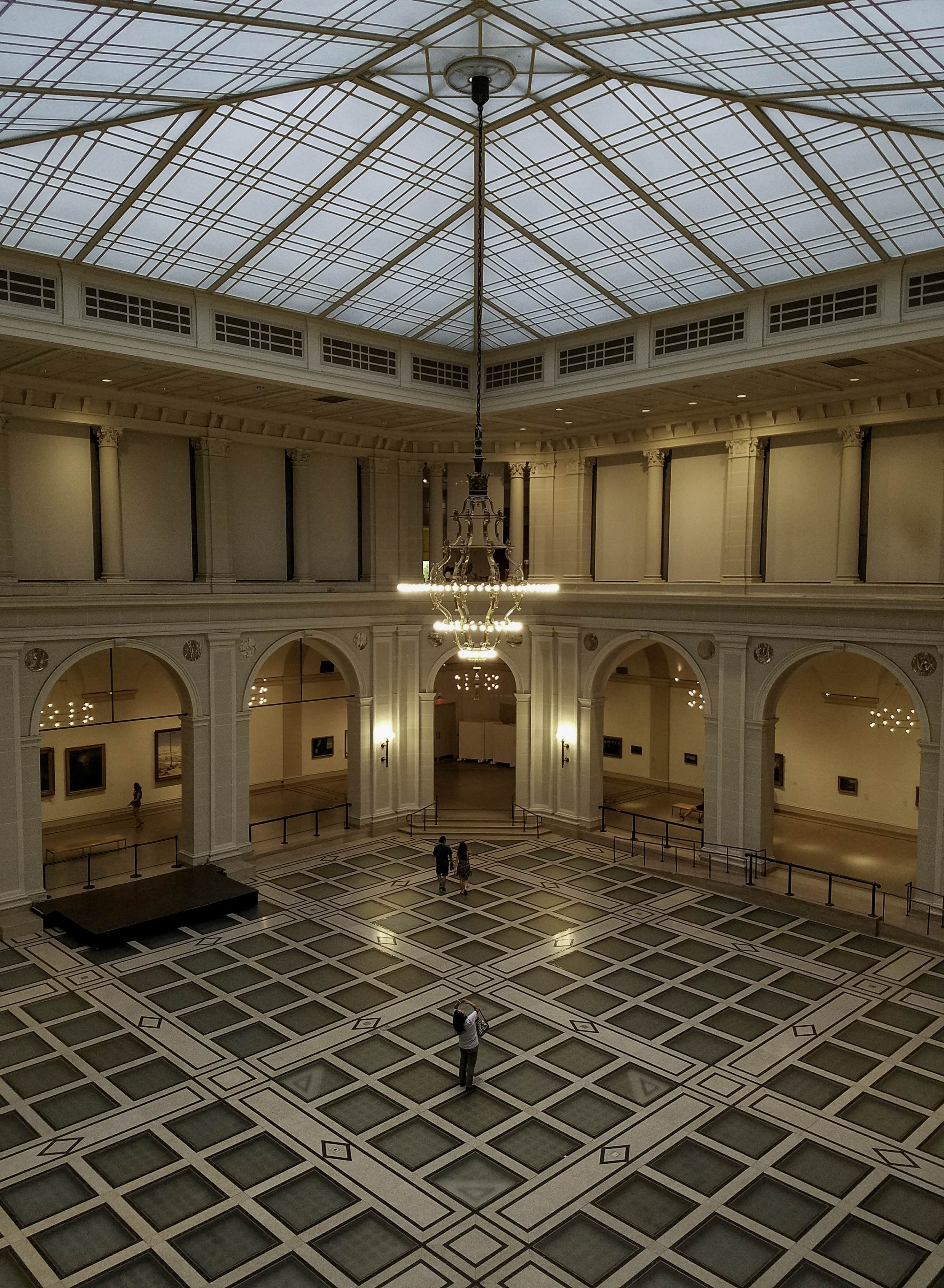 This is the ”Beaux-Arts Court”, where the portraits of Washington A. Roebling and his wife, Emily Warren Roebling, fittingly hang side-by-side. Mr. Roebling was the chief engineer during the construction of Brooklyn Bridge, visible through the window in his portrait. When he fell ill, it was his wife who stepped in and oversaw its completion. Mrs. Roebling was the first person to cross the bridge, carrying a rooster for good luck.
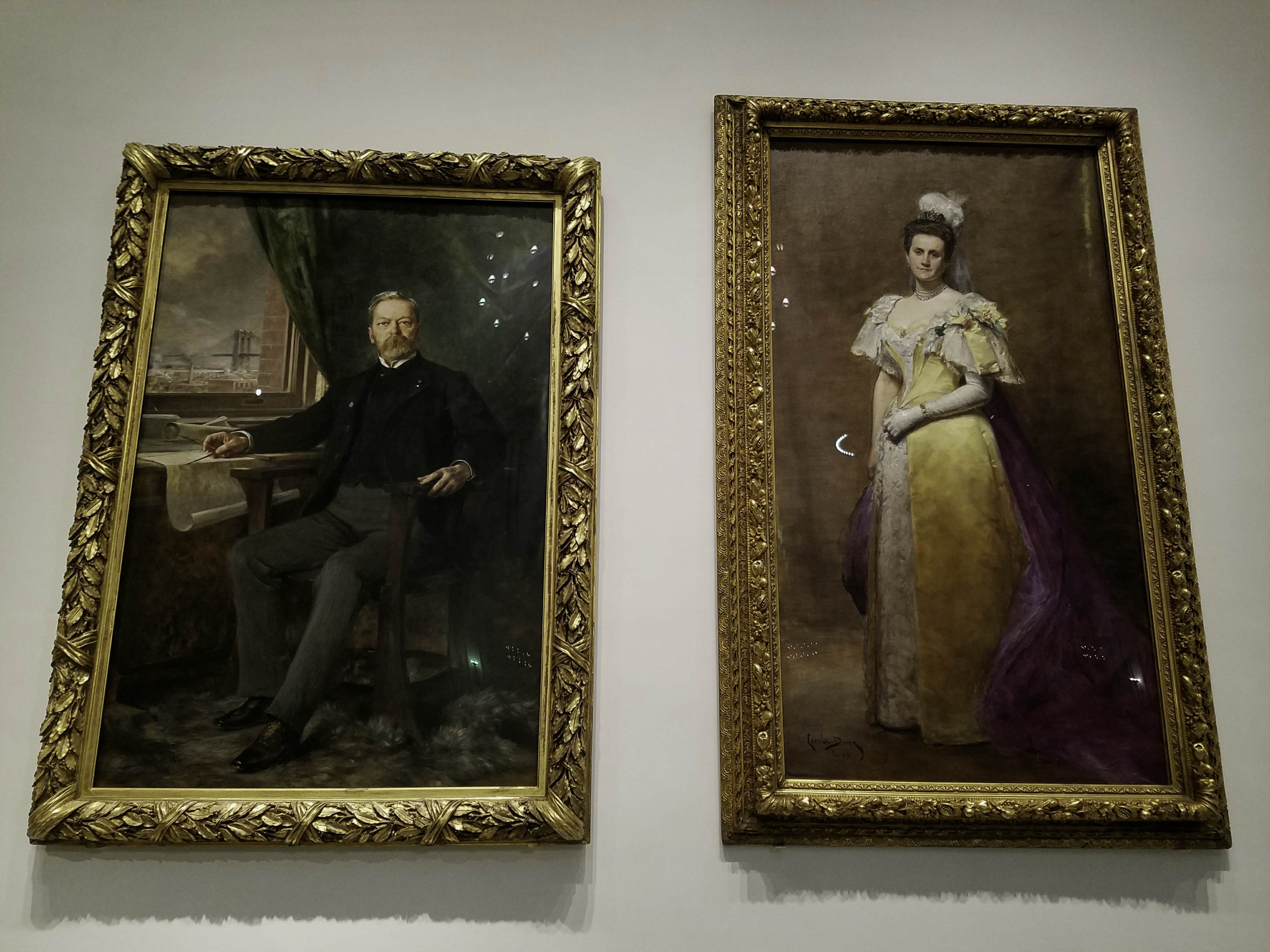 Portrait of Washington A. Roebling, 1899 by Théobald Chartran
Portrait of Emily Warren Roebling, 1896, by Charles-Émile-Auguste Carolus-Duran
Brooklyn Museum
July 22nd, 2017
By benign spirits.

1/Henry Trippe House; Secretary, Maryland; c. 1730
Major Henry Trippe, a gentleman landowner and planter of English origin, built this one-and-a-half story brick home he called ”Carthagena” between 1724 and 1731 on land he head inherited from his father. The house faced the head of Secretary Creek on the eastern shore of Maryland. This orientation indicates the importance of water access before the development of good roads.
Greatly altered, the house still stands on its original site. A model and its living room can be viewed at the Brooklyn Museum, one of the twenty-three American period rooms installed as part of the Museum’s decorative arts collection.
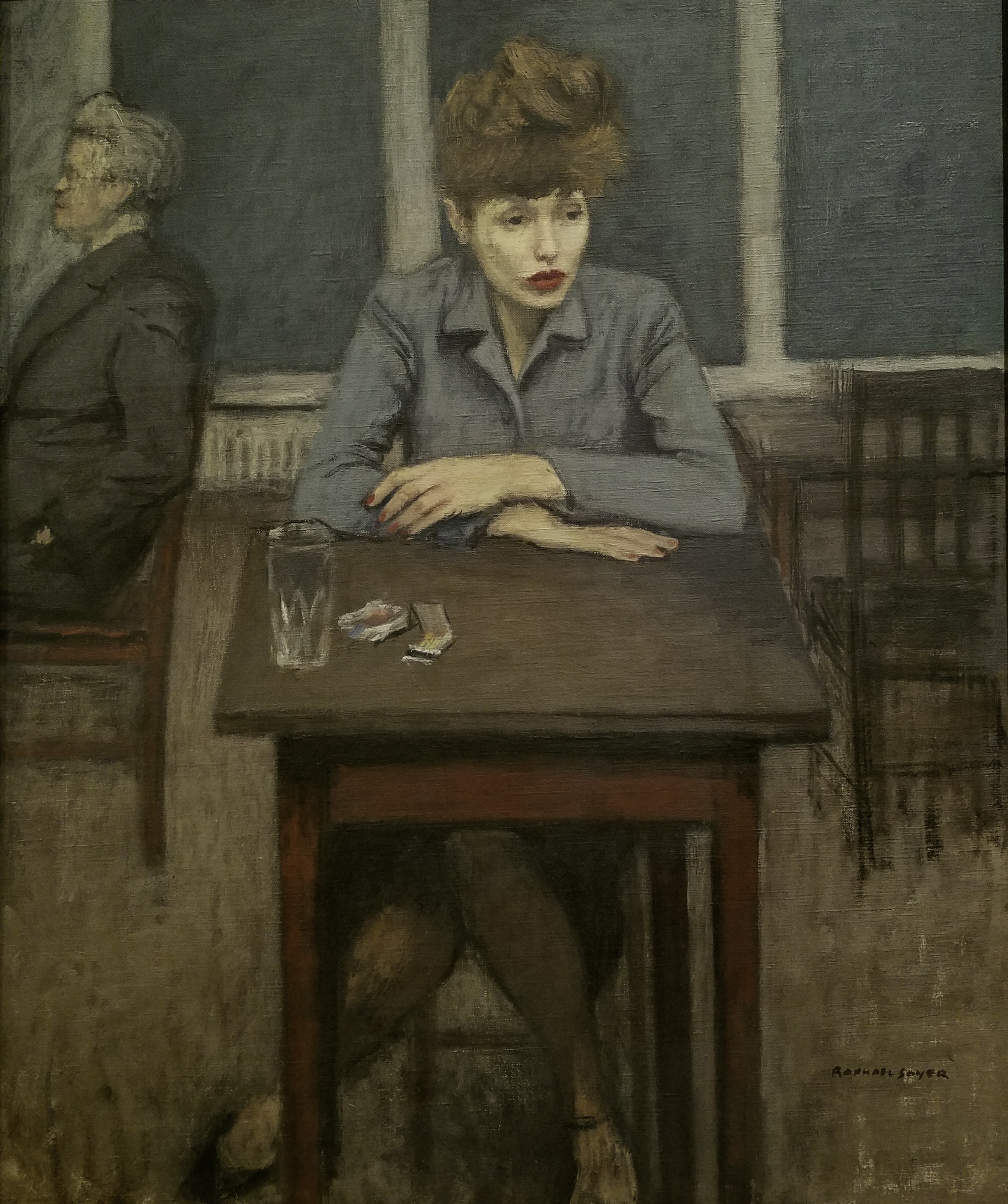
2/Raphael Soyer (American, born Russia, 1899-1987); Café Scene, ca. 1940; oil on canvas
Raphael Soyer had a lifelong interest in the daily lives of working-class New Yorkers. His paintings of lone women in the early 1940s suggest the absence of husbands or sweethearts who had been called up to serve in WWII.
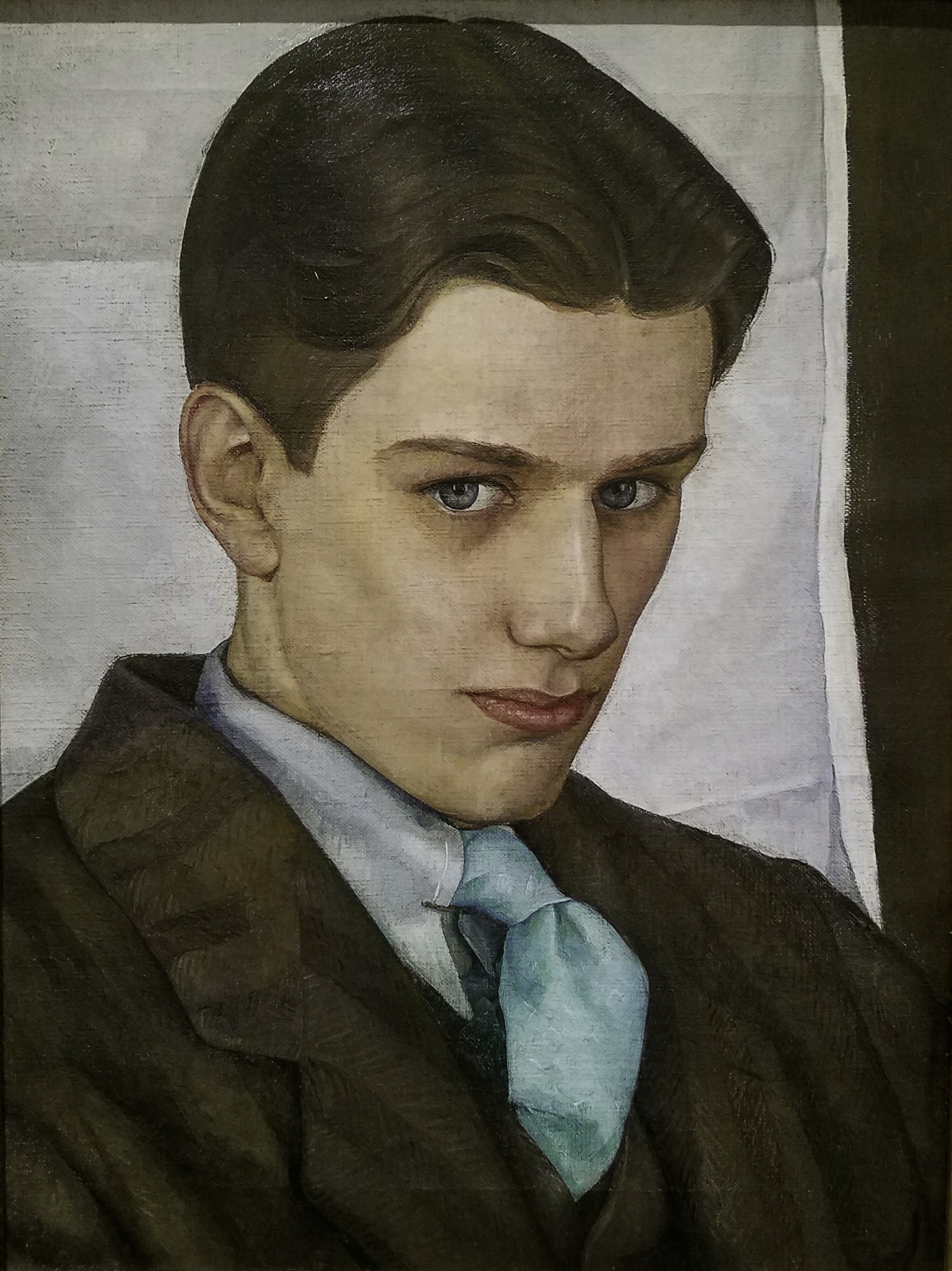
3/Luigi Lucioni (American, born Italy, 1900-1988); Paul Cadmus, 1928; oil on canvas
Luigi Lucioni and Paul Cadmus probably met as students, and they doubtless shared acquaintances within New York’s circles of gay artists and writers.
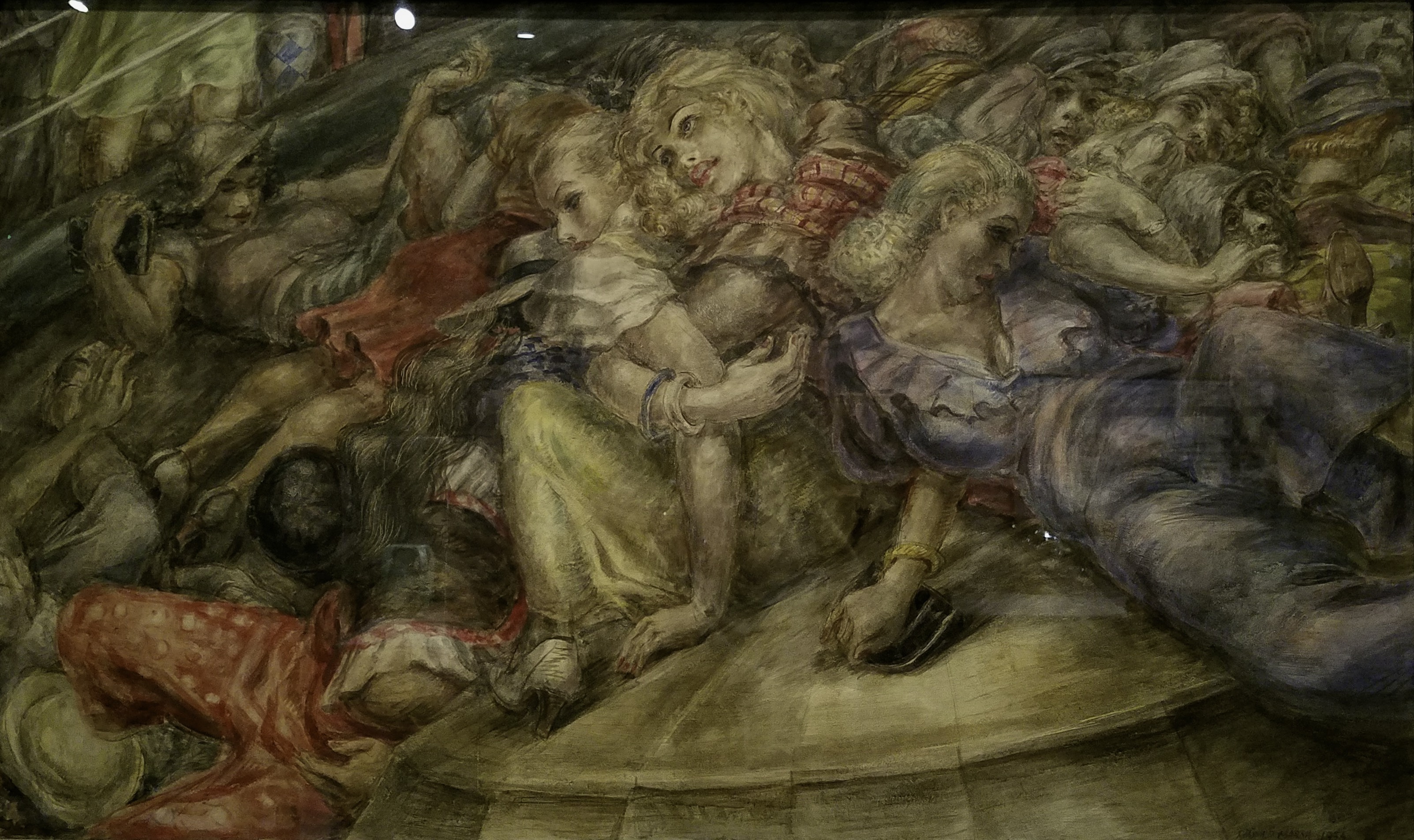
4/Reginald Marsh (American, 1898-1954); The Bowl, 1933; egg tempera on pressed wood panel
In this vivid Depression-era painting of one of the wild “bowl” rides at Coney Island, friends and strangers alike are thrown into contact by the overpowering centrifugal force. Reginald Marsh described the chaotic tangle of female bodies with the sensual physicality for which his work was best known.
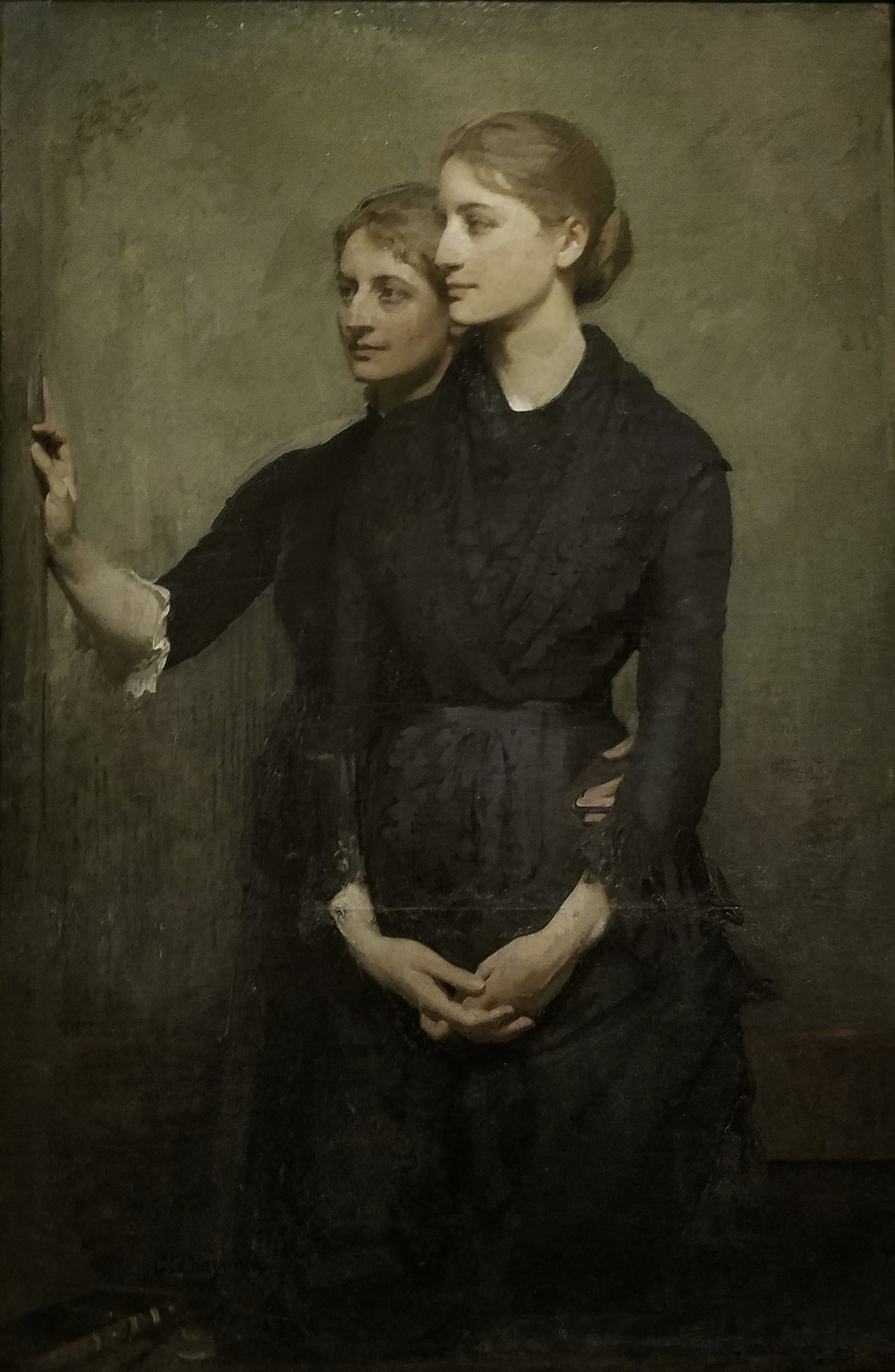
5/Abbott H. Thayer (American, 1849-1921); The Sisters, 1884; oil on canvas
The women in this portrait were Bessie (left) and Clara Stillman, the sisters of the powerful financier James Stillman.
Abbott Handerson Thayer’s biographer, Nelson C. White, recorded an anecdote about his own experience of viewing this painting at an exhibition in 1922: “I was looking at the picture when two elderly women came and stood before it. As I glanced from the canvas to their faces I suddenly realized that they were the subjects of the portrait. Thayer had rendered their character in their youth with such insight and feeling that the likenesses survived the modulations of age and easily identified them.”
Brooklyn Museum
July 22nd, 2017
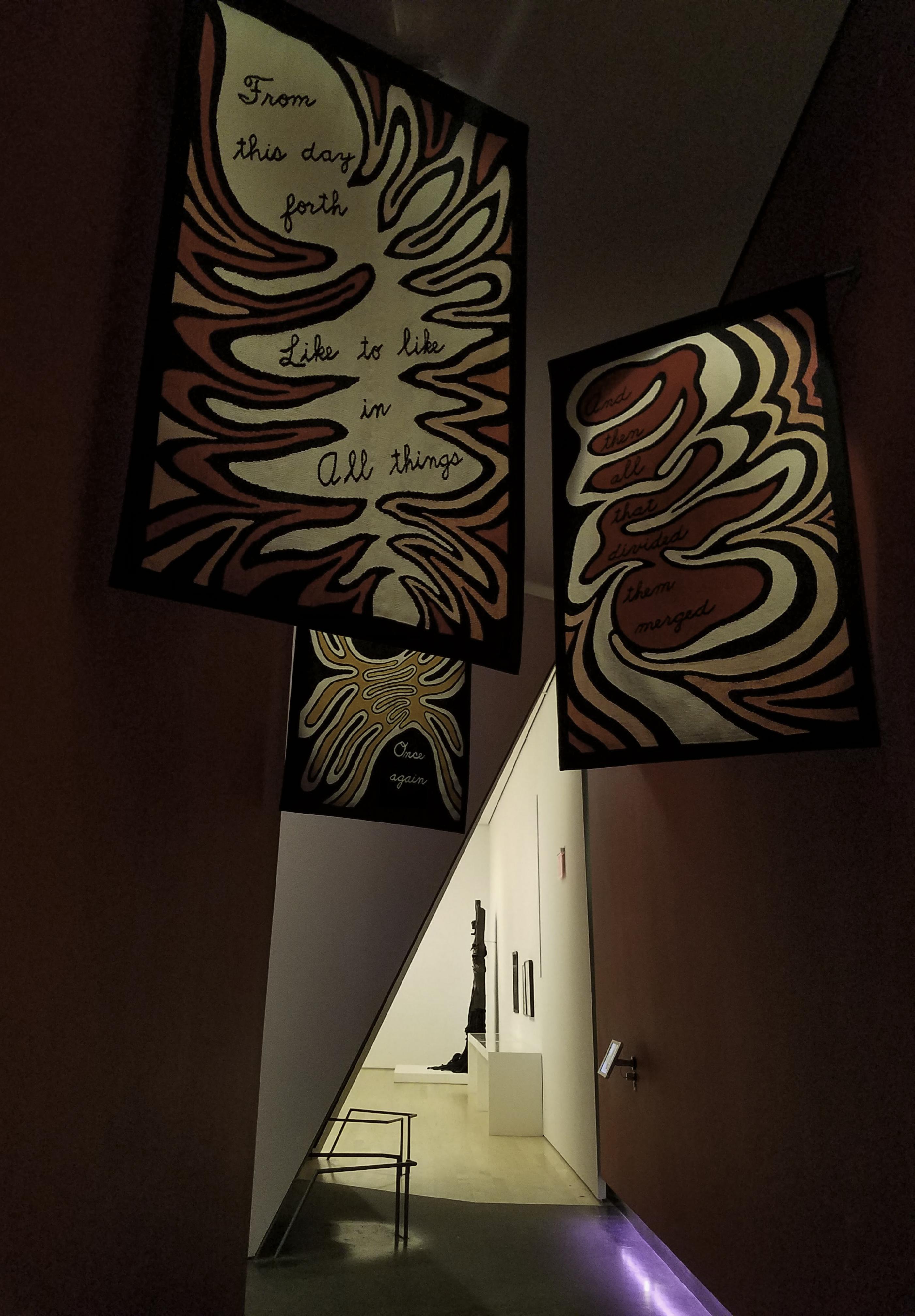
Yesterday’s ”seating plan” was drawn in preparation of today’s ”Dinner Party”. Please come in, make yourself at home – but don’t get too comfortable – and meet our guests of honour. 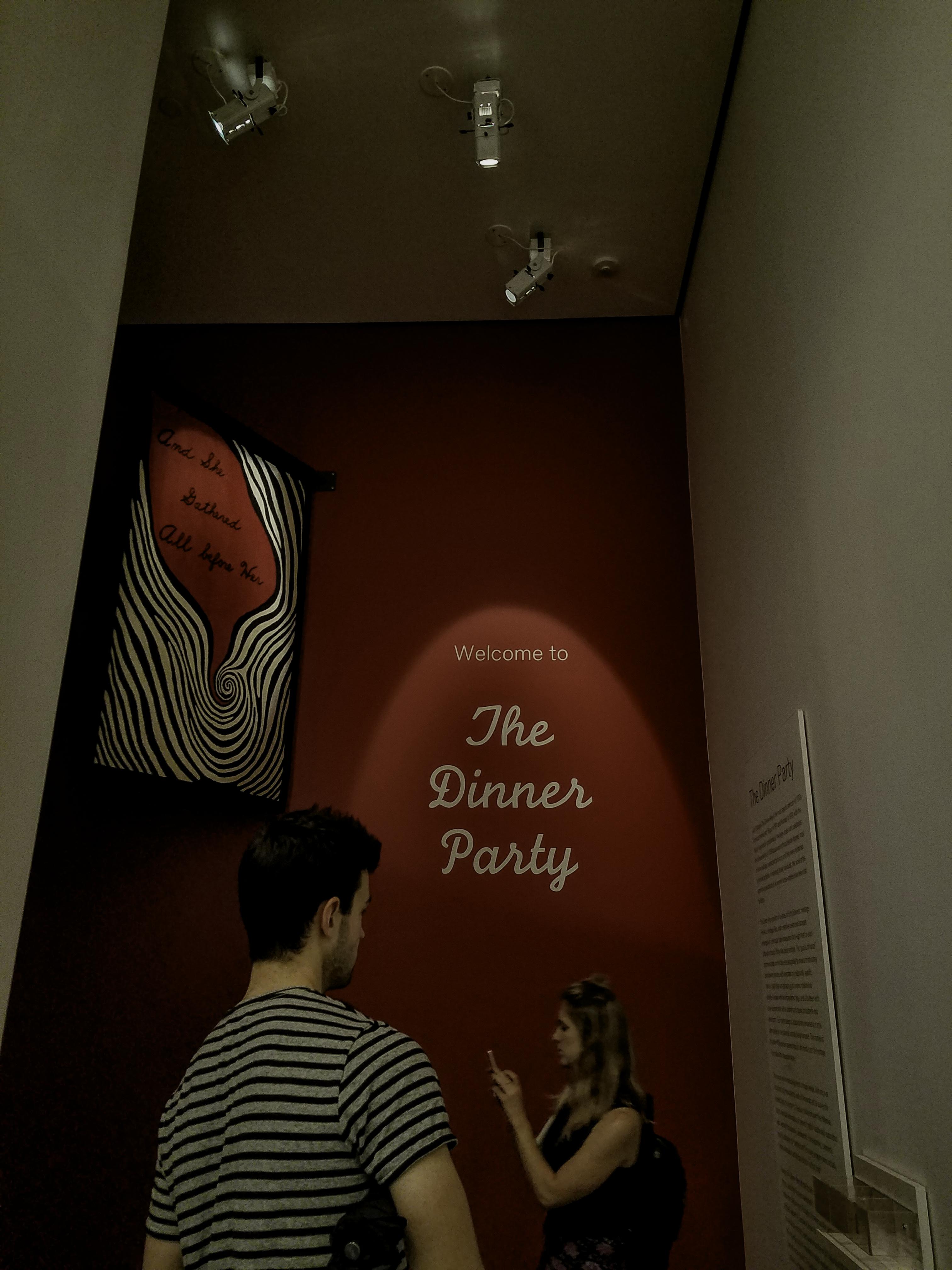
Blending in
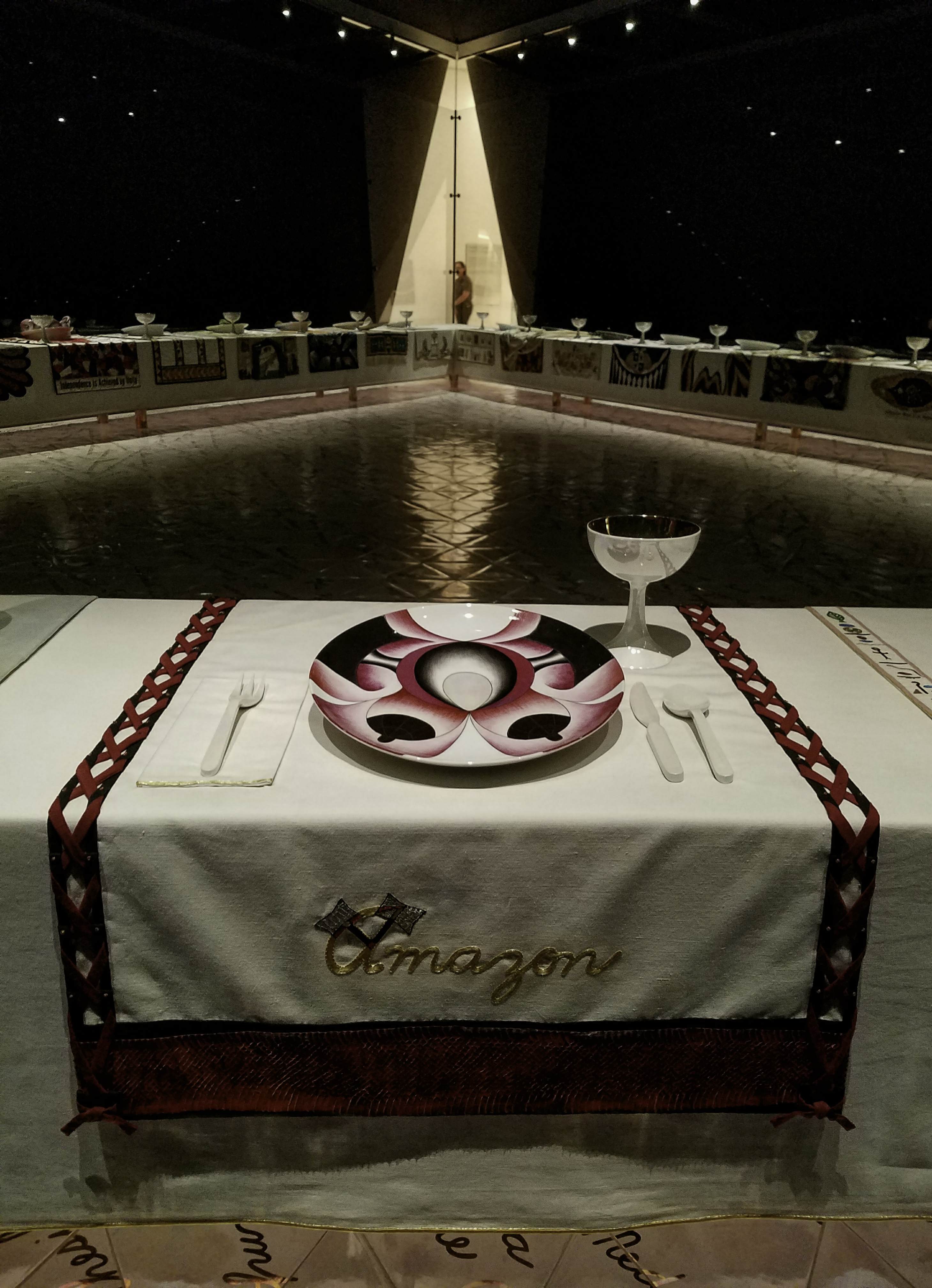 Amazon
On the plate is an image of breasts covered in gold and silver, representing the breastplates that the warriors wore in battle. The image may also refer to the legend that Amazon warriors cut off one of their breasts to be better archers. The plate also depicts two double-headed axes, a white egg, a red crescent, and a black stone, all of which are associated with the Amazons.
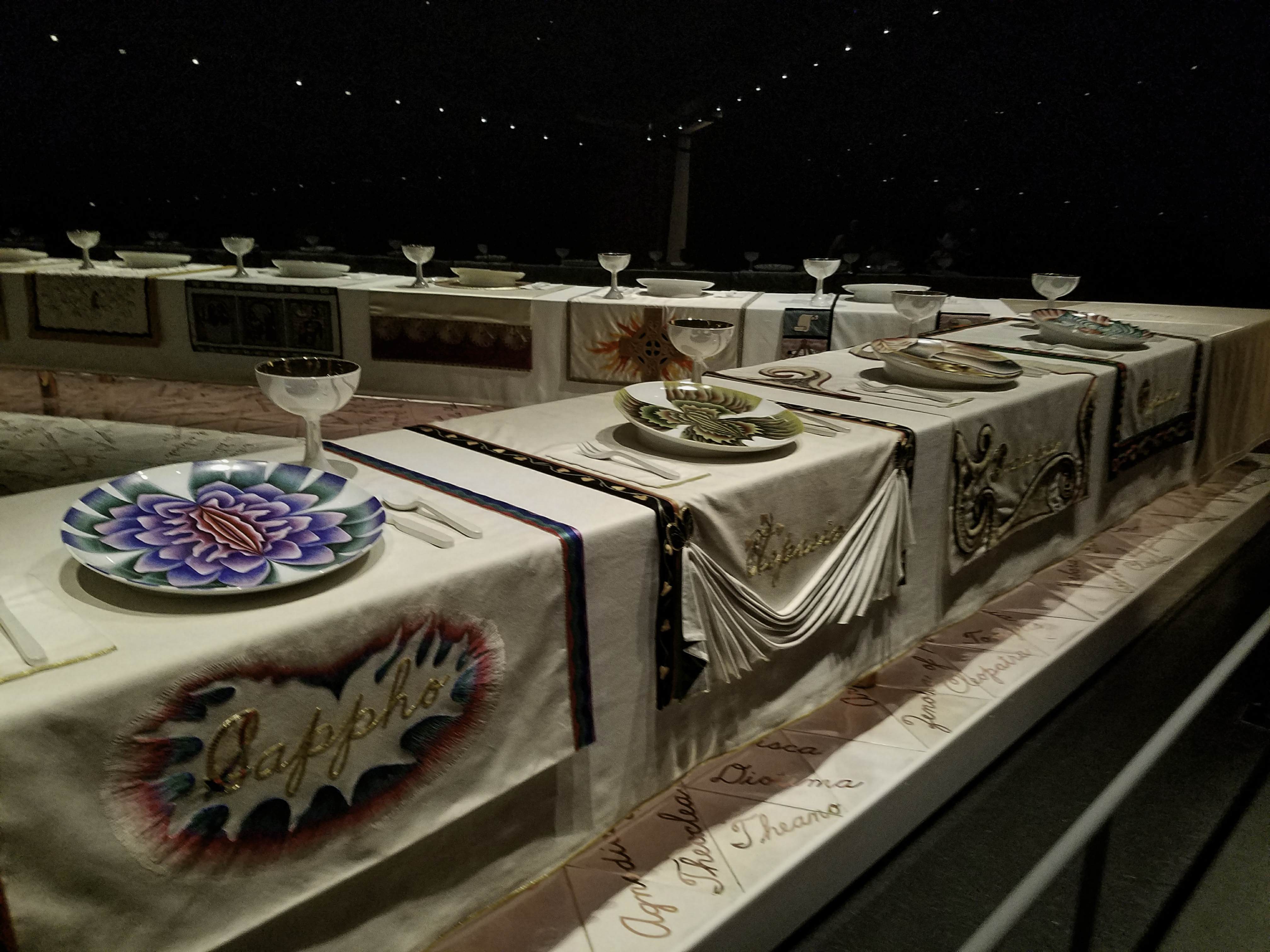 Sappho
Called the Tenth Muse by Plato, Sappho was a prolific poet of ancient Greece. She innovated the form of poetry through her first-person narration (instead of writing from the vantage point of the gods) and by refining the lyric meter. The details of Sappho’s life have been obscured by legend and mythology, and the best source of information is the Suidas, a Greek lexicon compiled in the 10th century.
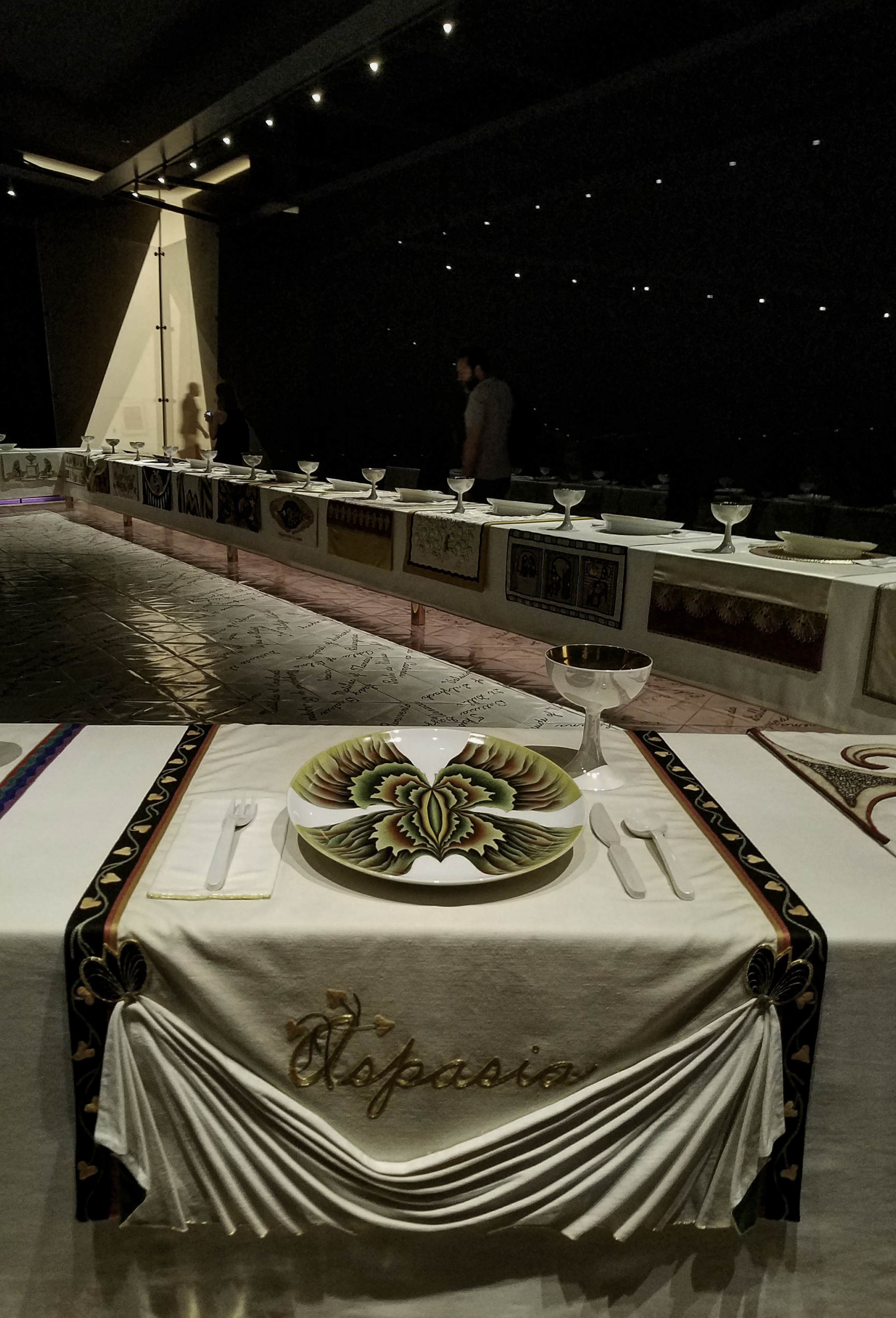 Aspasia
Aspasia of Miletus was a scholar and philosopher whose intellectual influence distinguished her in Athenian culture, which treated women as second-class citizens during the 5th century B.C.E. She used her status to open a school of philosophy and rhetoric, and she is known to have had enormous influence over such prominent leaders and philosophers as Pericles, Plato, and Socrates.
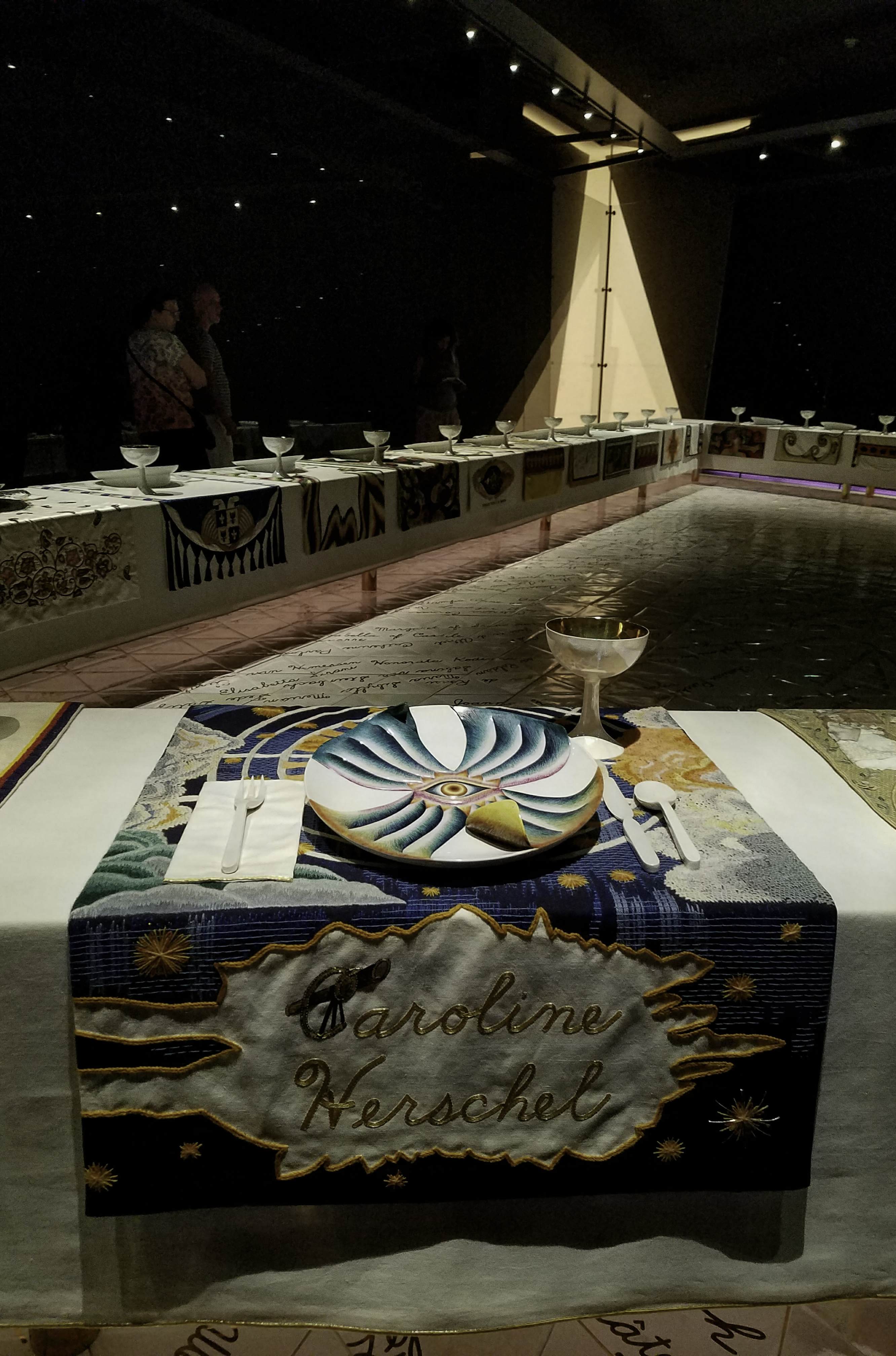 Caroline Herschel
Caroline Herschel was a pioneering female astronomer, and the first woman to discover a comet. Her achievements enabled generations of women to develop a career in the sciences, a field that was once exclusively reserved for men.
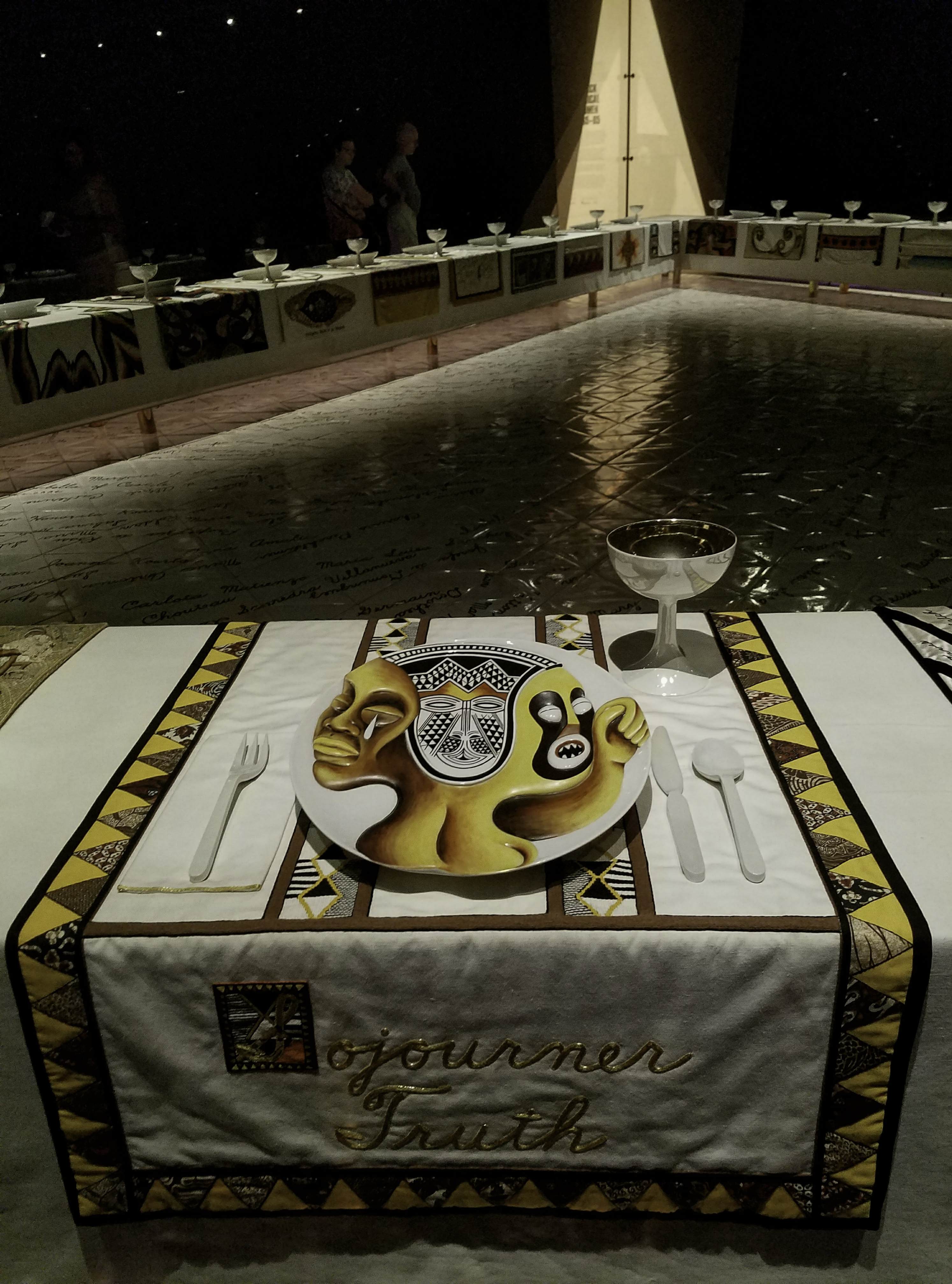 Sojourner Truth
Sojourner Truth, born Isabella Baumfree, was recognized as one of the first people to identify the similarities between the struggles of black slaves and the struggles of women. As an abolitionist and suffragist, she was a powerful force in the fight for justice and equality for both African Americans and women in the U.S.
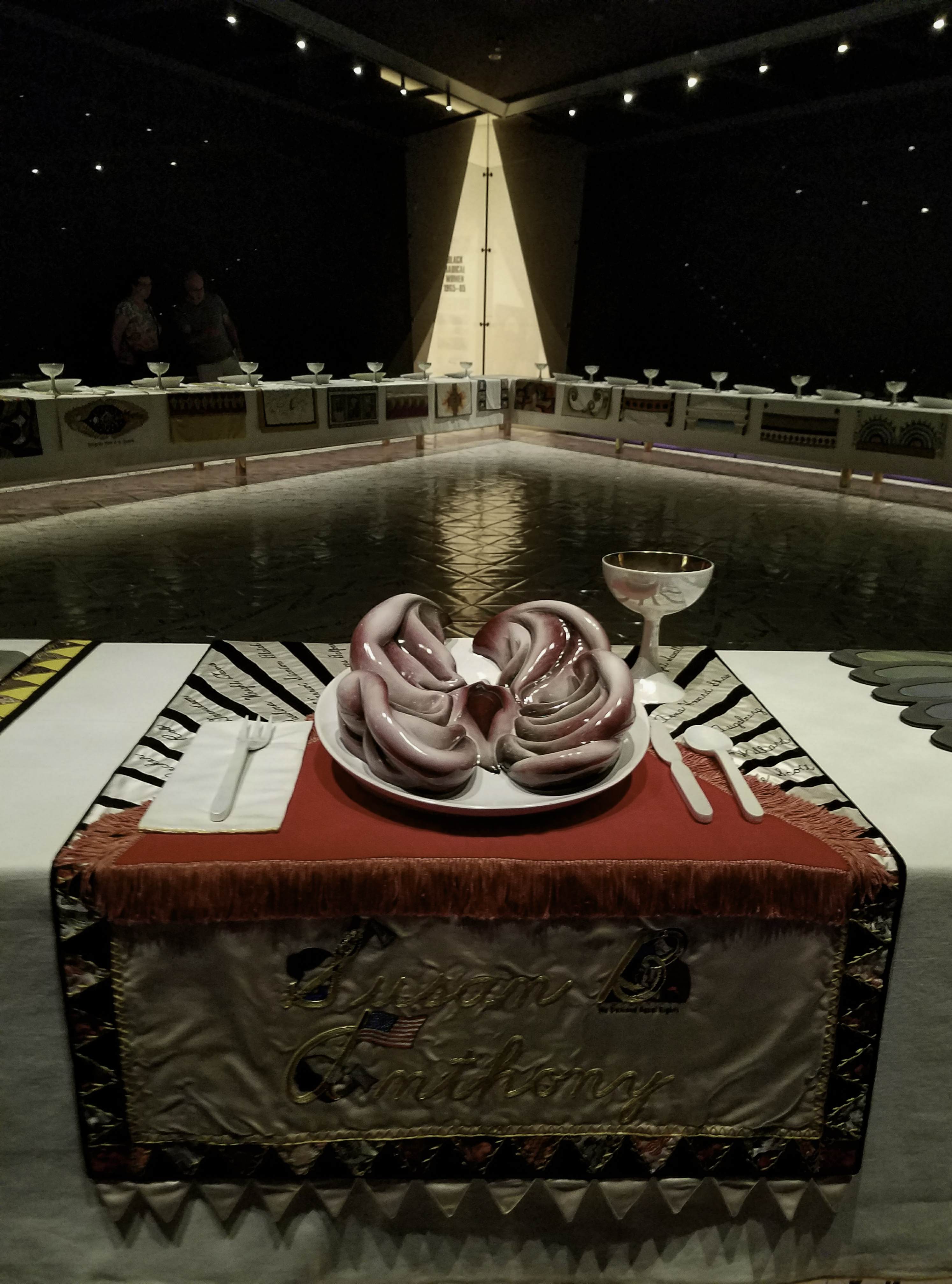 Susan B. Anthony
Susan B. Anthony’s life and work offer a glimpse into the extraordinary events of both the abolitionist movement and the women’s suffrage movement in the late nineteenth century. Anthony was the face of the American suffrage movement and one of its primary organizers. Her actions contributed to significant progress in the inclusion of women in the United States political process.
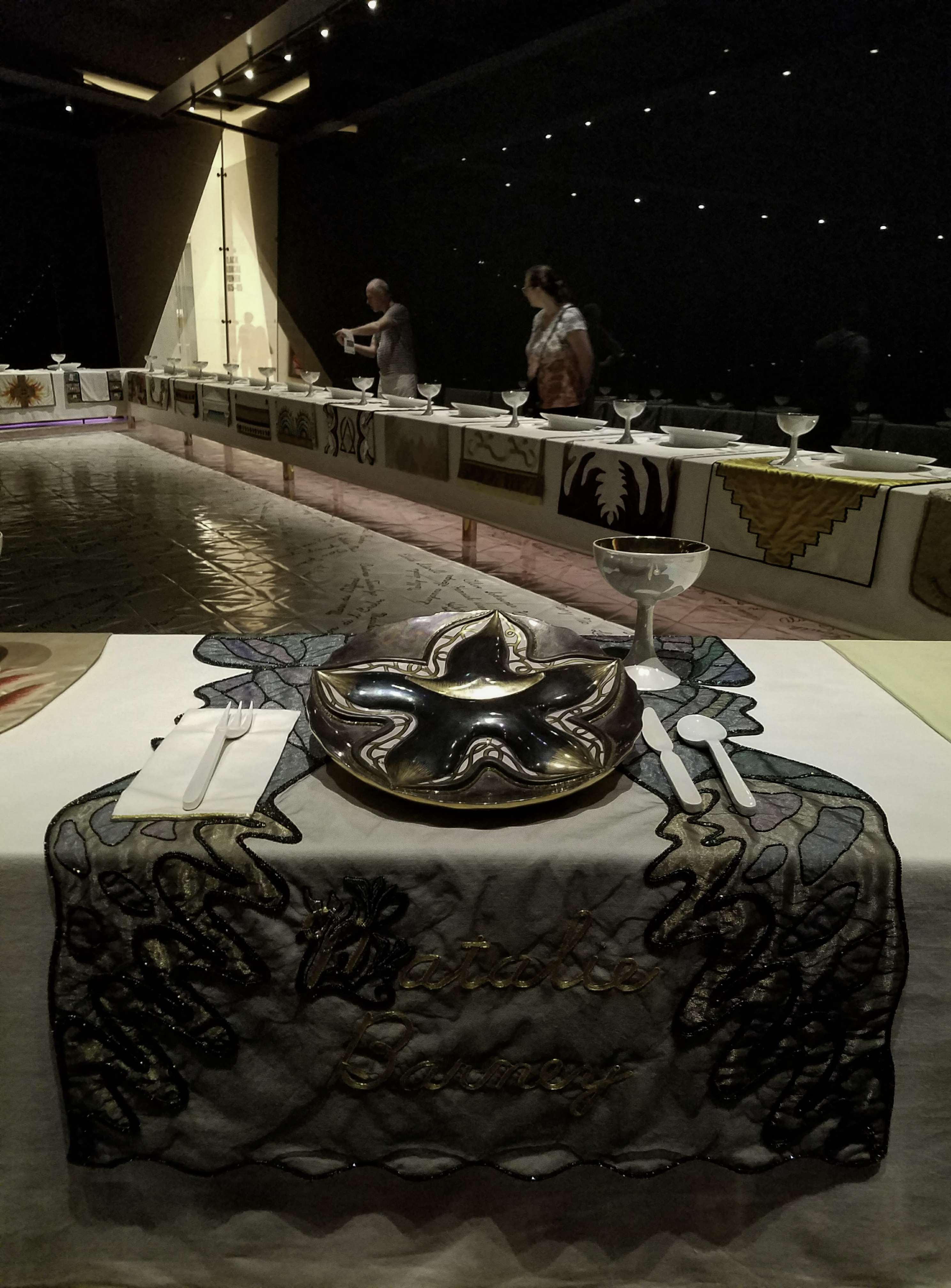 Natalie Barney
Natalie Barney was both a poet and a prose writer, who was famous for her weekly salons, which gathered together many of the twentieth century’s greatest artists and writers from the Western world. She is celebrated for openly living and writing as a lesbian during a time when women’s behavior was closely circumscribed.
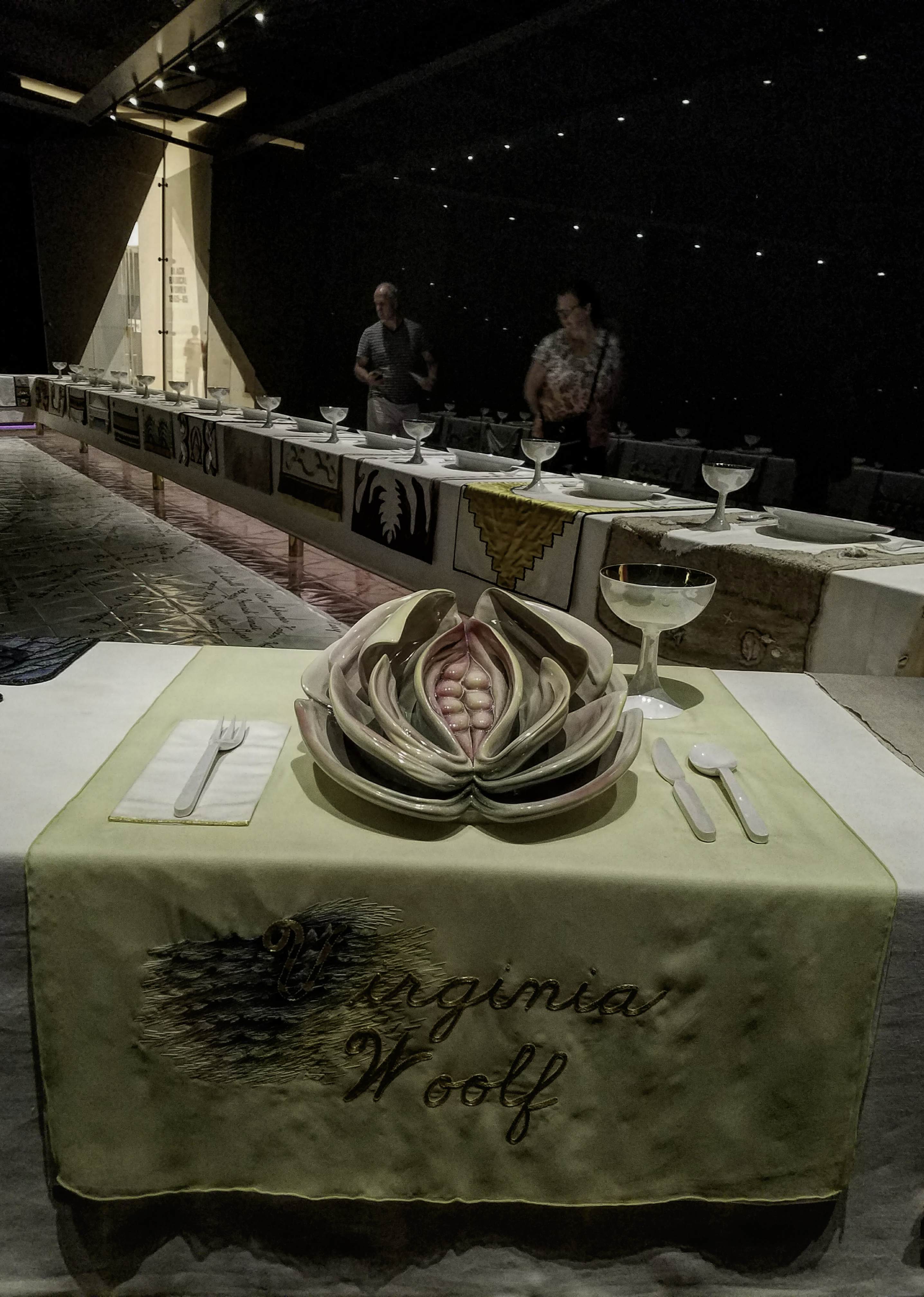 Virginia Woolf
Virginia Woolf is a renowned British novelist associated with the modernist movement in literature; her writing is characterized by experiments in language, narrative, and the treatment of time. Woolf is often considered one of the most innovative writers of the 20th century, best known for fractured narratives and writing in a stream-of-consciousness prose style, in which characters are depicted through their interior monologue; her books were sometimes called psychological novels. In her work, she also discusses the issues and prejudices surrounding women’s writing in the Western world.
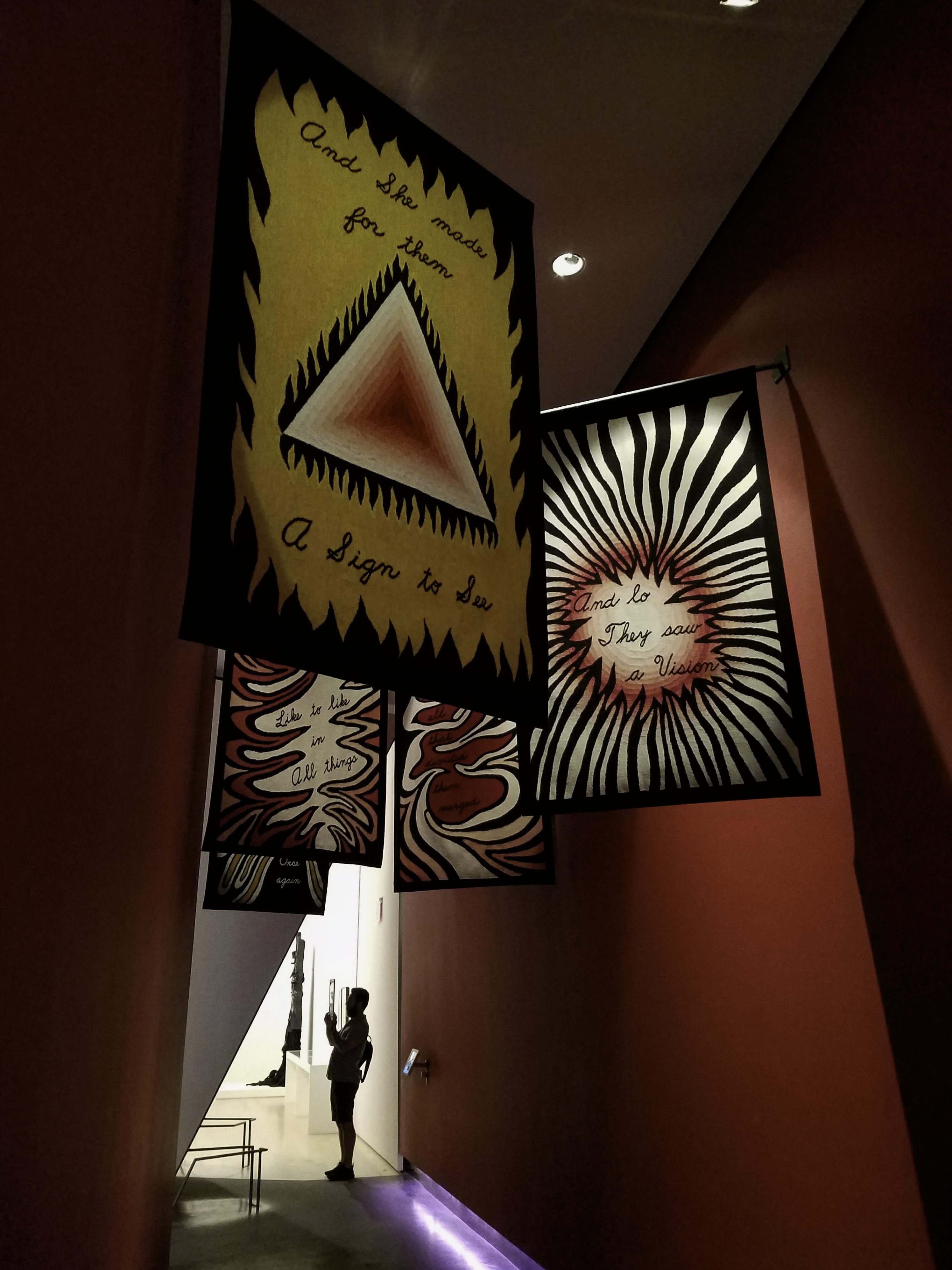
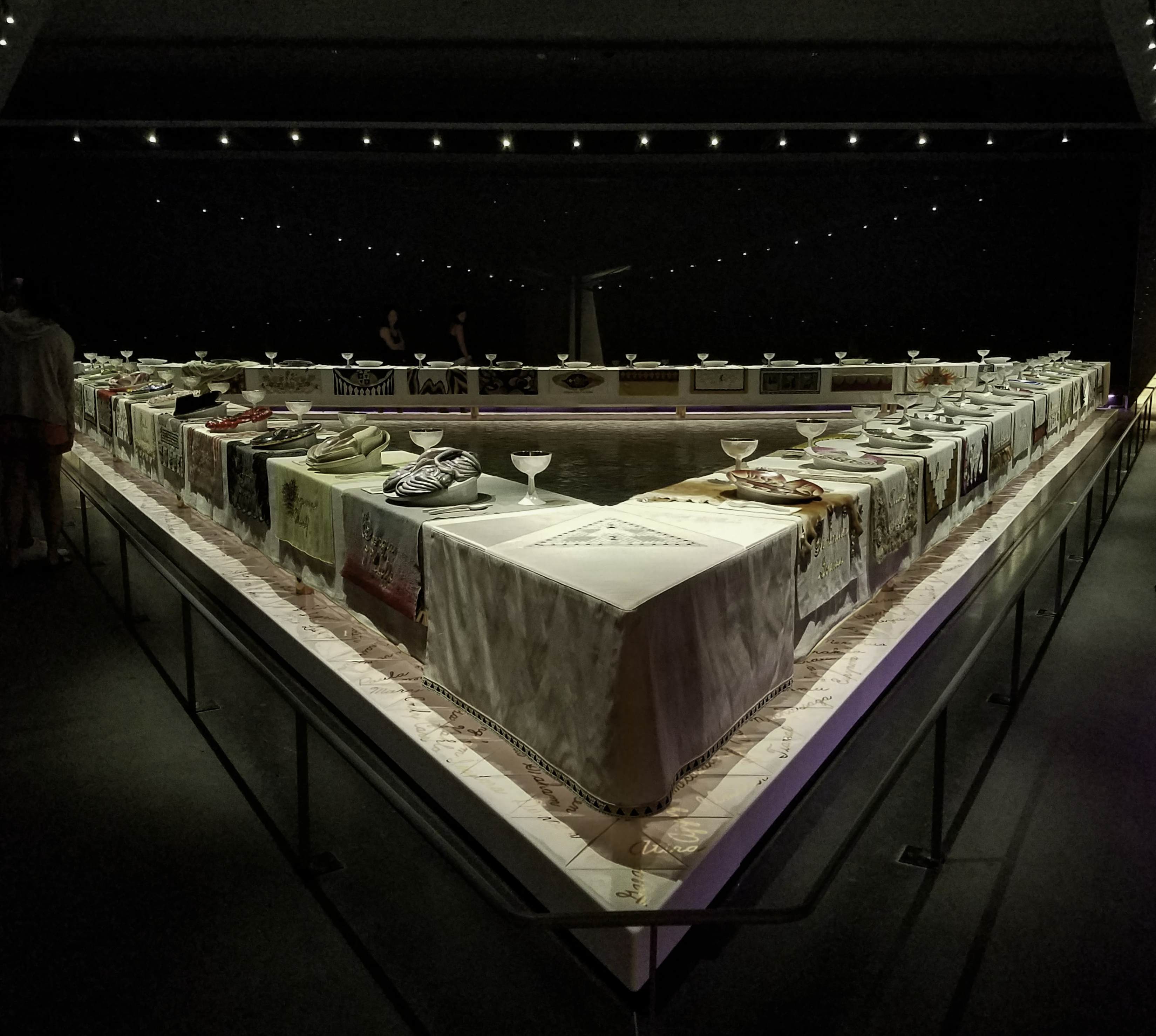
The Dinner Party by Judy Chicago, an important icon of 1970s feminist art and a milestone in twentieth-century art, is presented as the centerpiece around which the Elizabeth A. Sackler Center for Feminist Art is organized. The Dinner Party comprises a massive ceremonial banquet, arranged on a triangular table with a total of thirty-nine place settings, each commemorating an important woman from history.
The settings consist of embroidered runners, gold chalices and utensils, and china-painted porcelain plates with raised central motifs that are based on vulvar and butterfly forms and rendered in styles appropriate to the individual women being honored. The names of another 999 women are inscribed in gold on the white tile floor below the triangular table. This permanent installation is enhanced by rotating Herstory Gallery exhibitions relating to the 1,038 women honored at the table. {source}
Hope you enjoyed your Dinner @ the Brooklyn Museum.
July 22nd, 2017
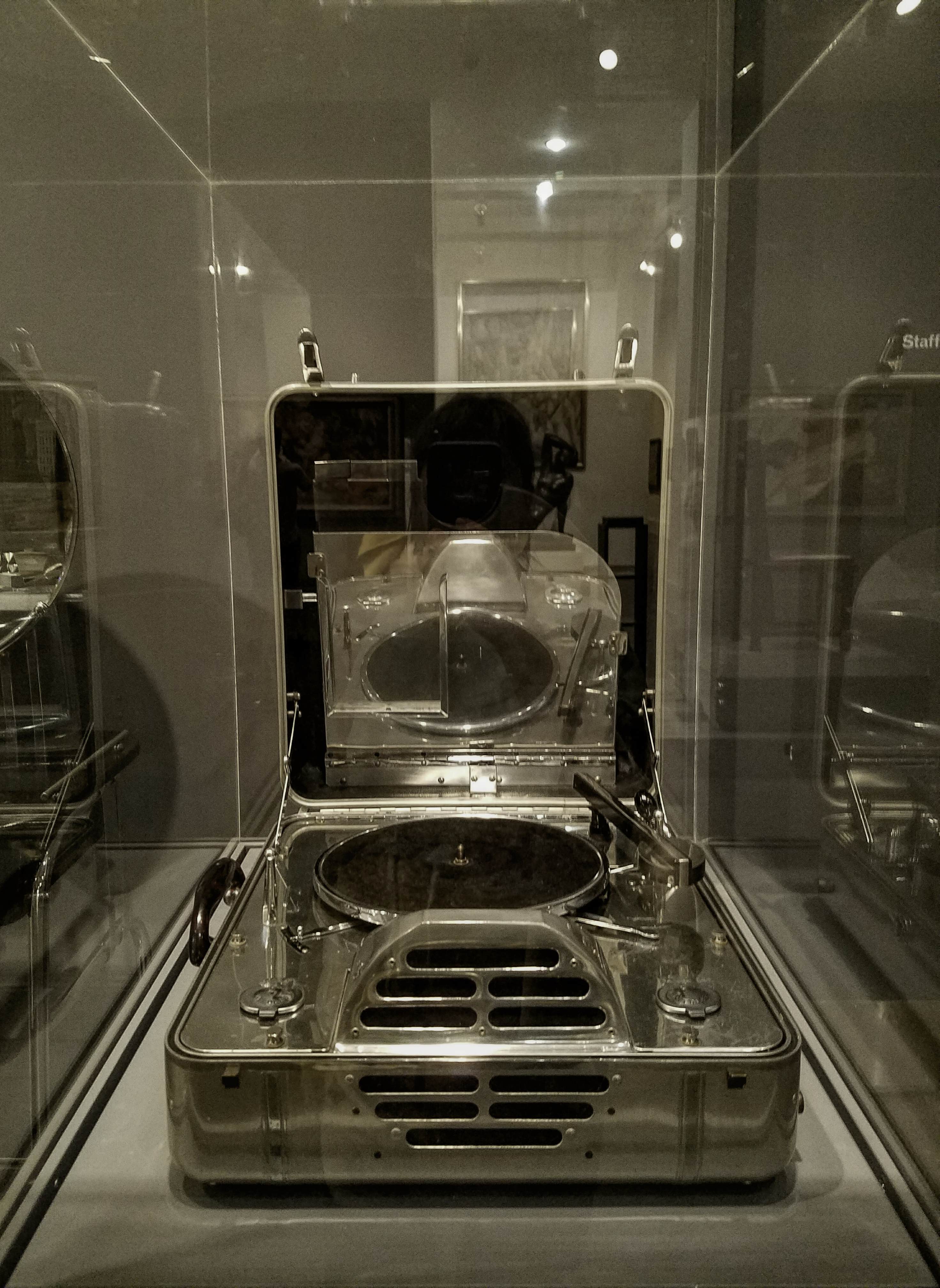
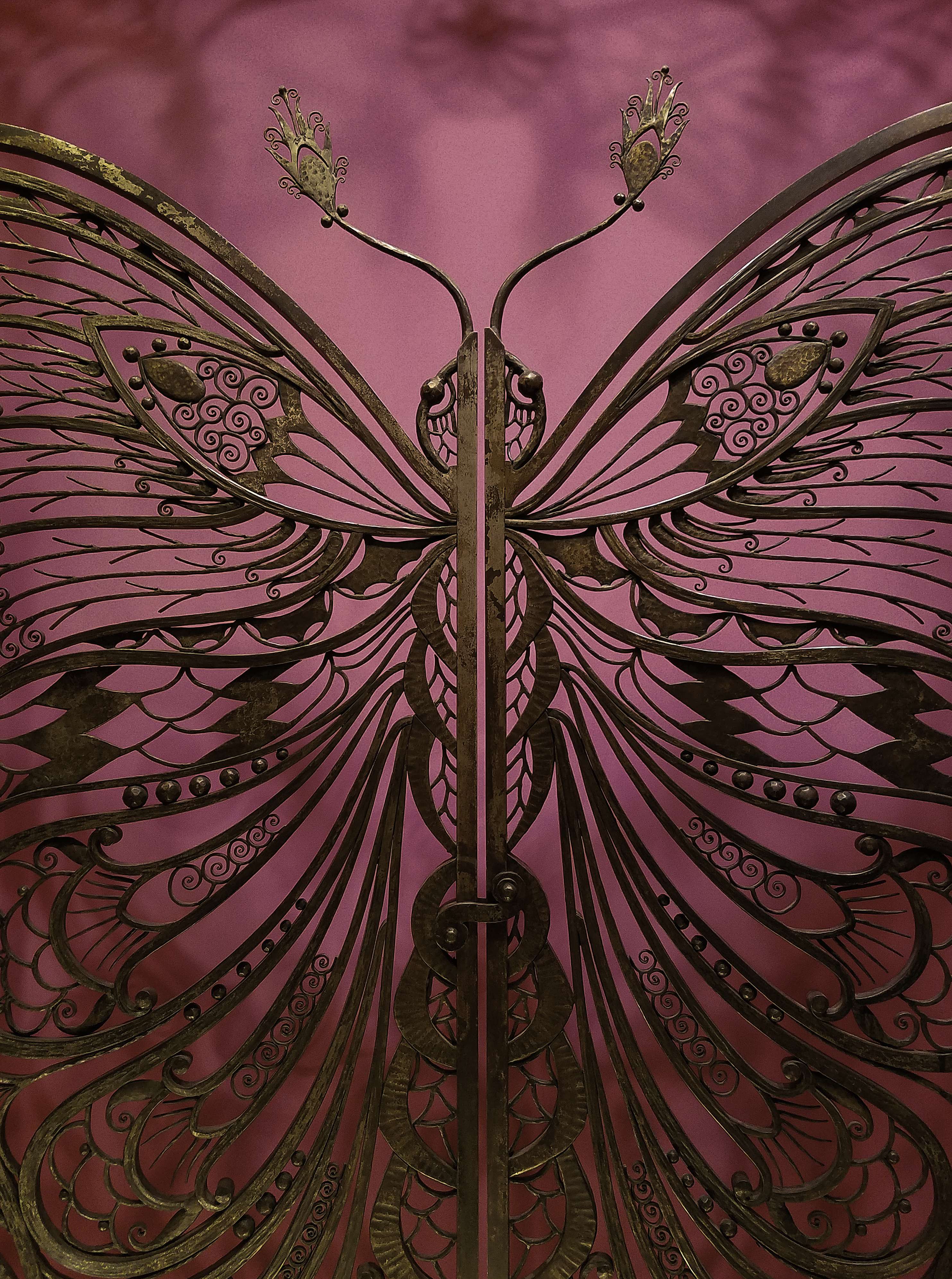
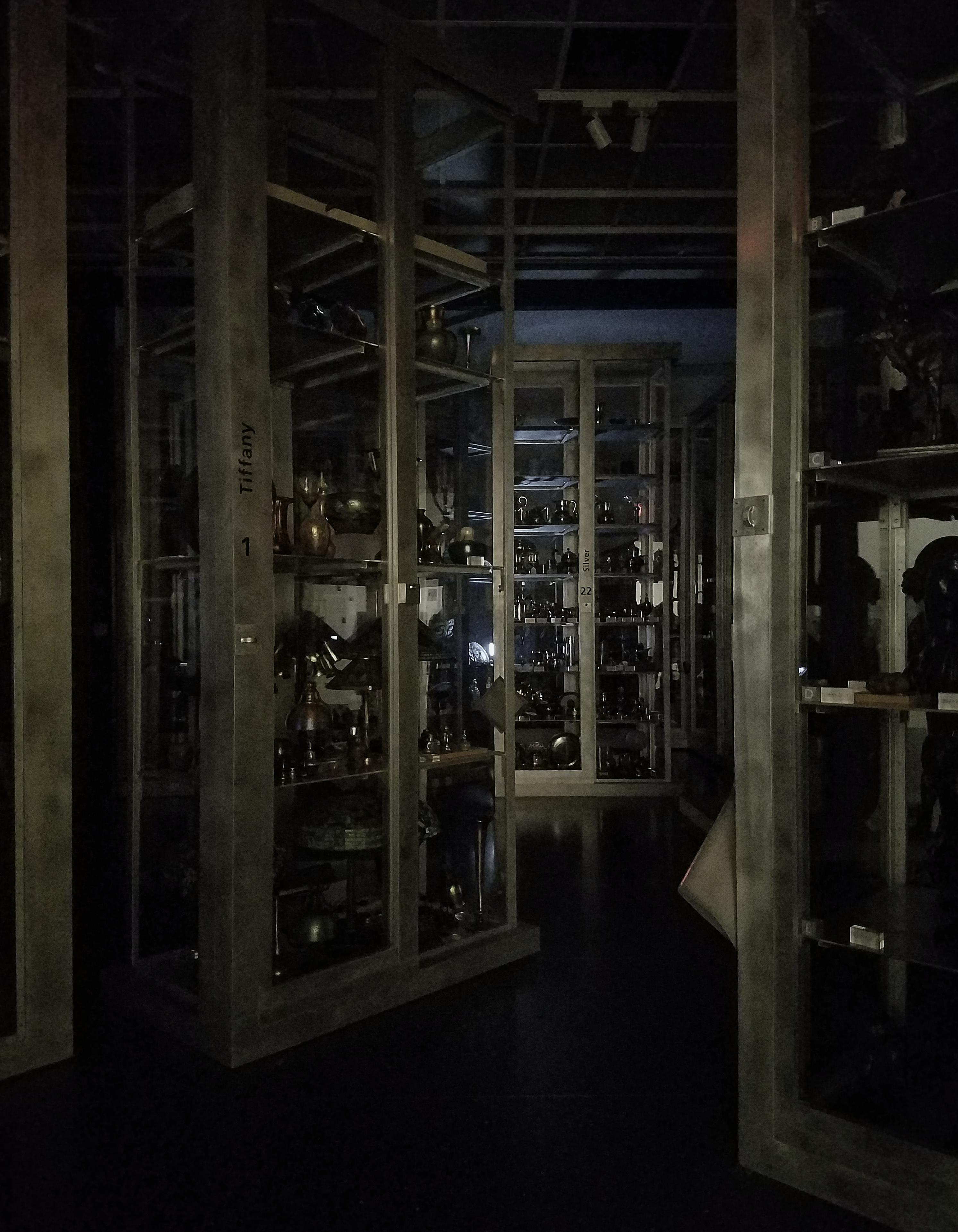
Imagine living in a world where these treasures were household items – not museum objects.
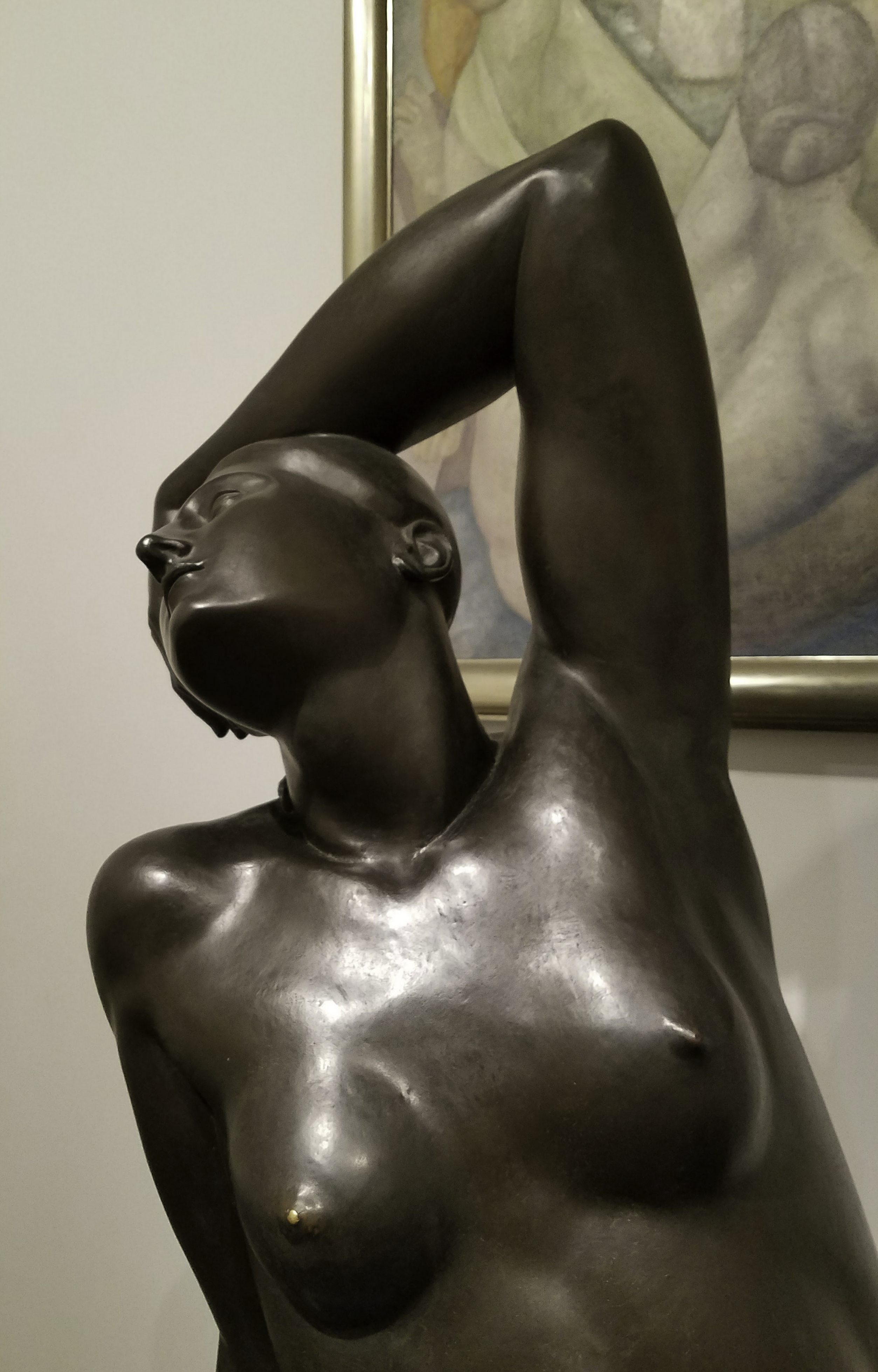
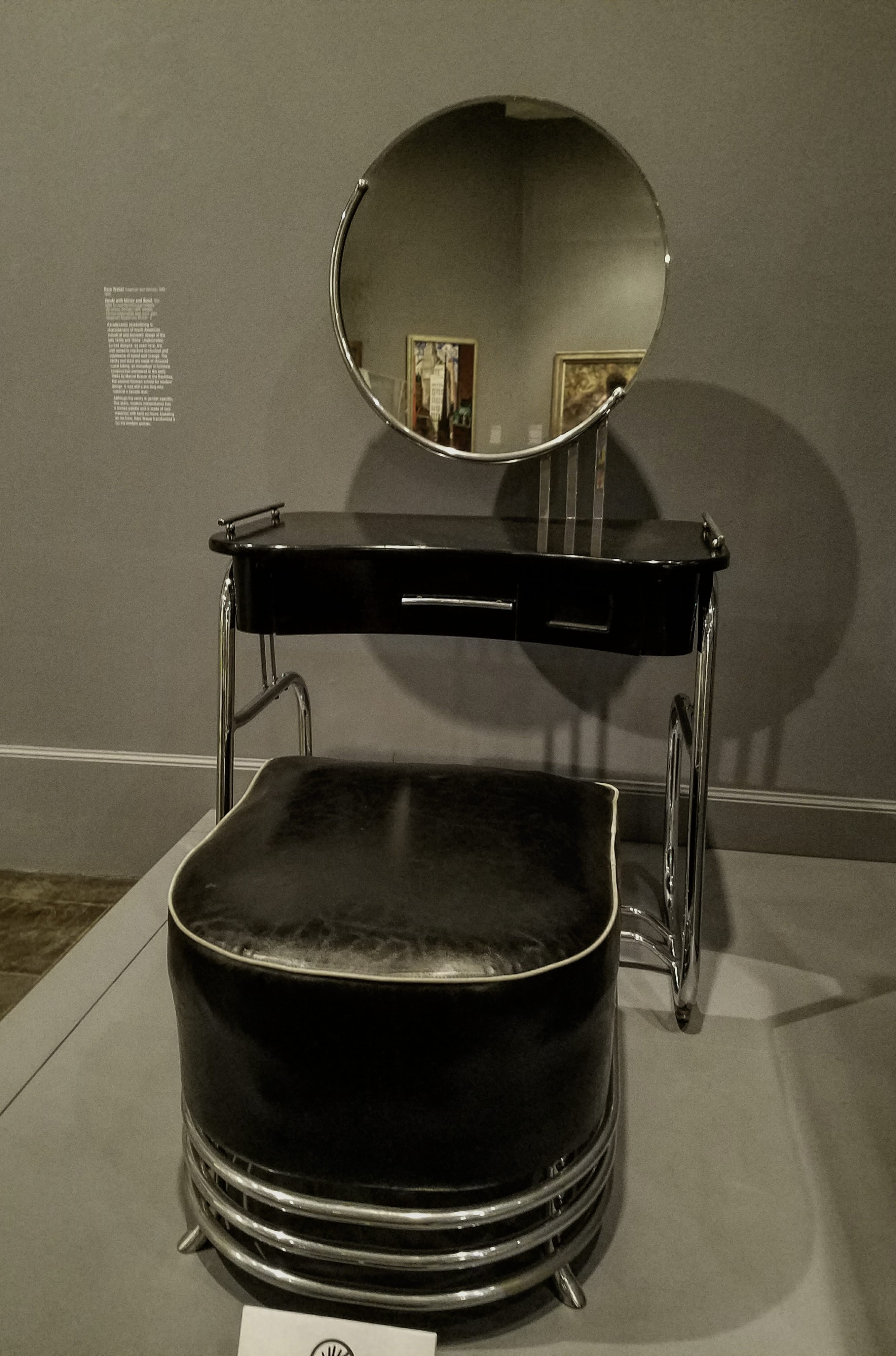
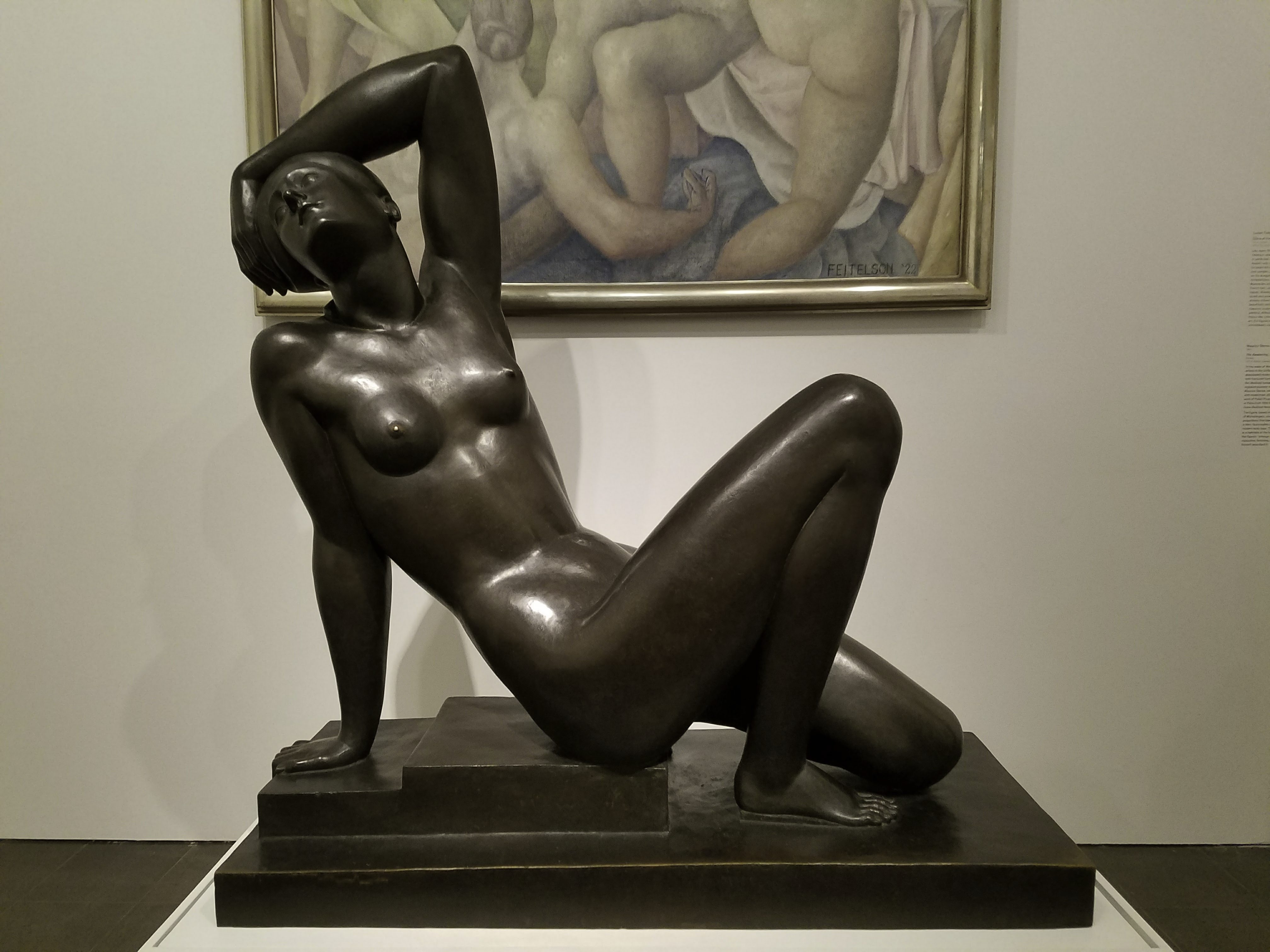
1/ Maurice Sterne
The Awakening, ca. 1926
Bronze
2/ Kem Weber
Vanity with Mirror and Stool, 1934
3/ John Vassos
RCA Victor Special Model K Portable Electric Phonograph, c.a 1935
4/ Emilie Robert
Pair of Gates, ca. 1900 (detail), France
Iron
Brooklyn Museum
July 22nd, 2017
Swaying into December with Grace.
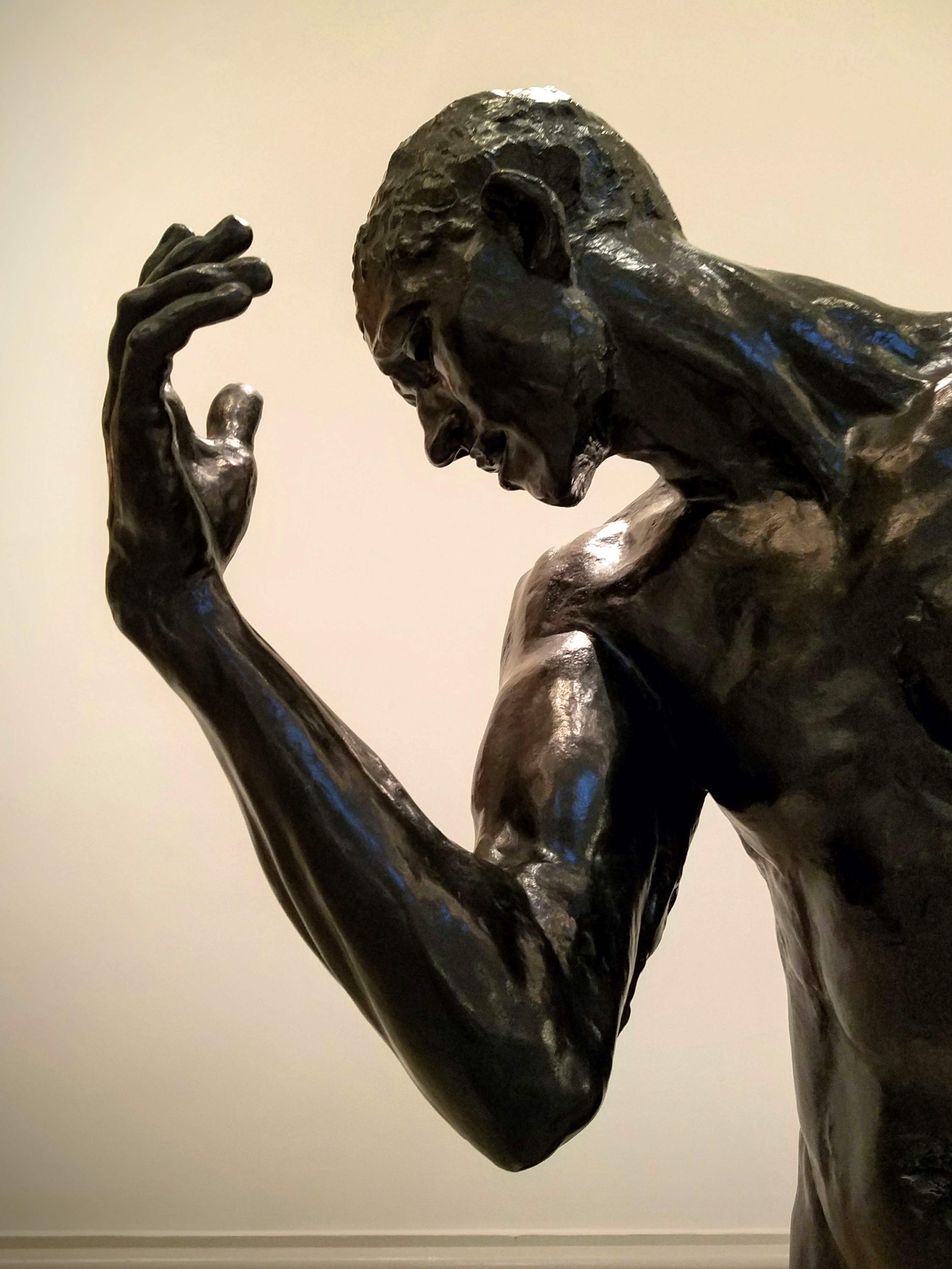
Auguste Rodin
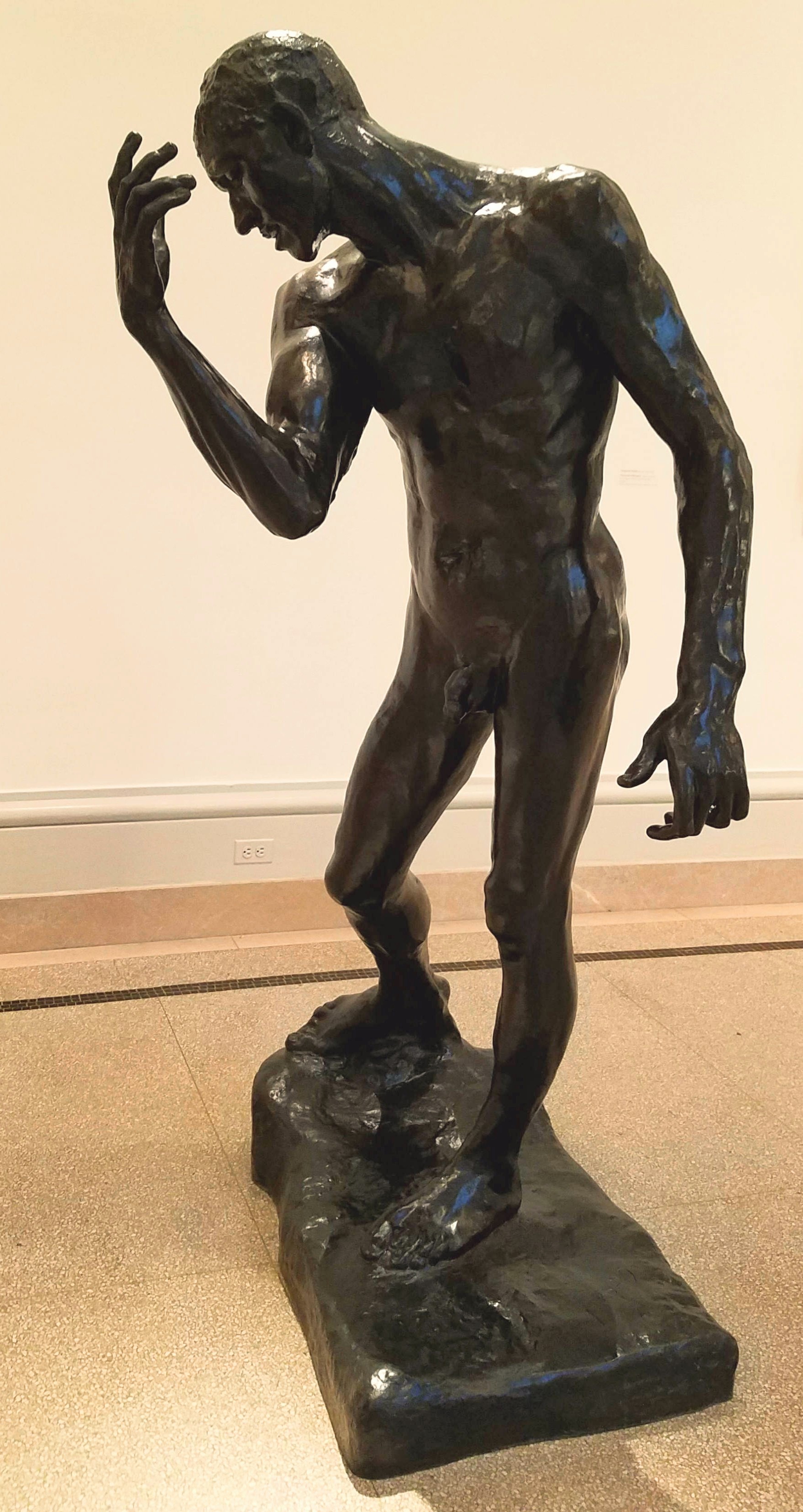
Pierre de Wiessant, Monumental Nude (Pierre de Wiessant, nu monumental), 1886, cast 1983, for The Burghers of Calais.
Bronze
The Burghers of Calais is a memorial to a group of fourteenth-century citizens who offered to sacrifice themselves to save their long-suffering city. It comprises six large figures. For each of four of the monument’s six figures, Rodin also executed a full-scale nude, among them this undraped version of the burgher Pierre de Wiessant. The practice of creating nude figure studies, which allowed artists to refine poses and understand how clothing should drape over the body, derives from the academic tradition that Rodin both embraced and rejected during his career. {source}
The full picture:
Brooklyn Museum
July 22nd, 2017
Who’s the bitchiest of them all?
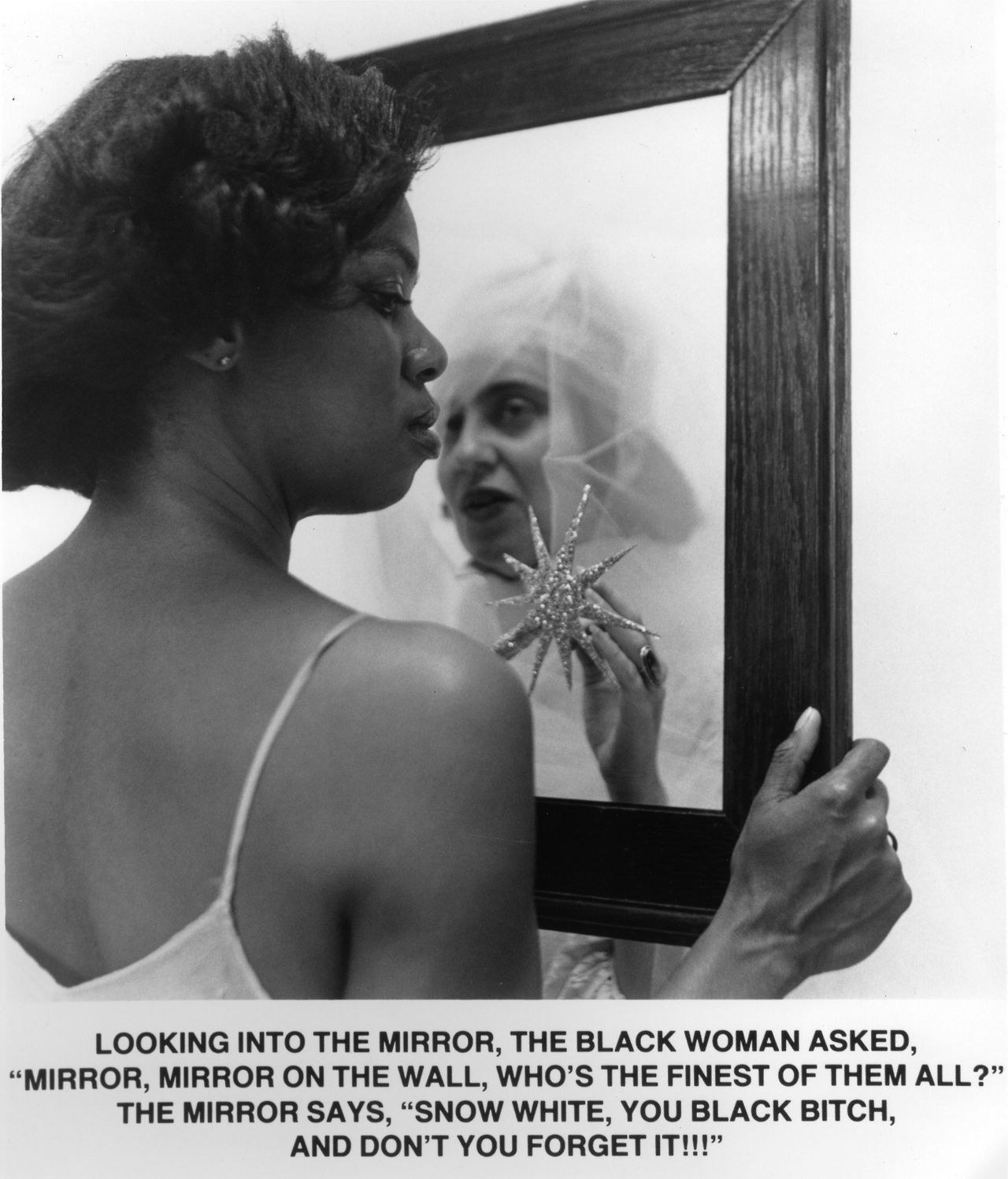
Coupling her sardonic wit with the direct, uncompromising gaze of her subjects, Carrie Mae Weems eviscerates the racism embedded in jokes made at the expense of people of color. This photograph is part of the Ain’t Jokin’ series, one of Weems’s earliest bodies of photo-text works.
Carrie Mae Weems (American, born 1953). Mirror Mirror, 1987–88. Silver print, 24 3⁄4 x 20 3⁄4 in. (62.9 x 52.7 cm). Courtesy of the artist and Jack Shainman Gallery, New York.
© Carrie Mae Weems
We Wanted A Revolution: Black Radical Women 1965-1985
Brooklyn Museum
Julyn 22nd, 2017
Intercontinental, Intercultural, Intemporal, Infinite Blue. My favourite colour.

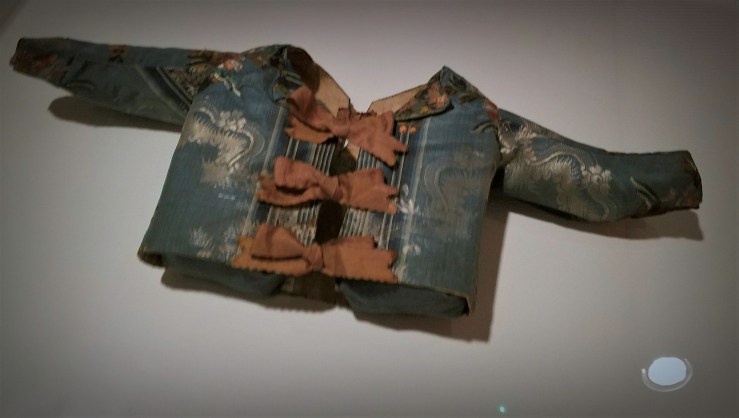 Bodice, ca. 1840-60
Tailleur Filles & Cie, France
Silk, linen, metal
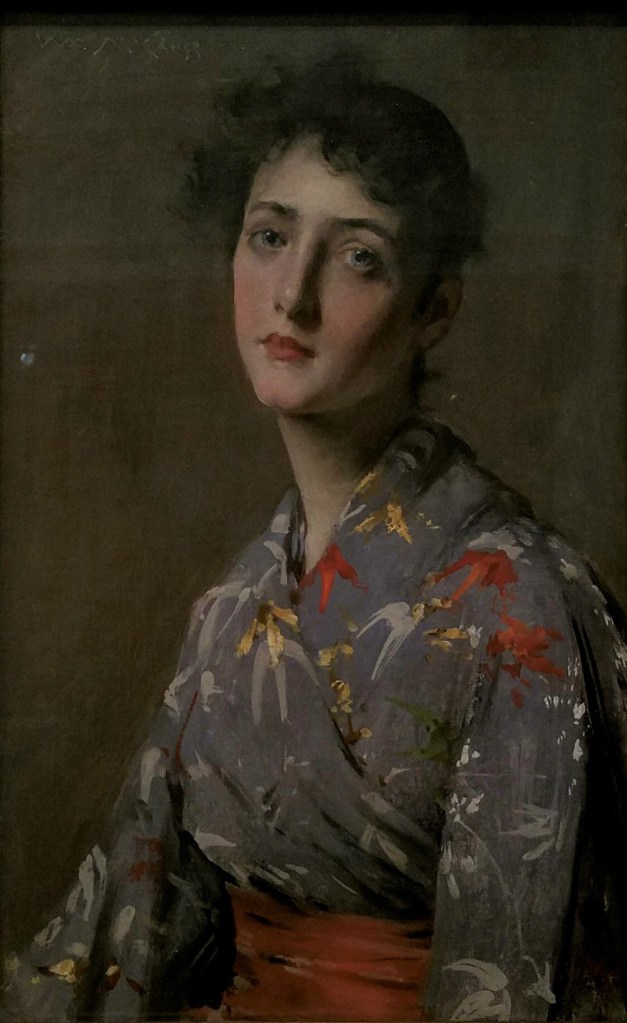 William Merritt Chase
Girl in a Japanese Costume, ca. 1890
Oil on canvas
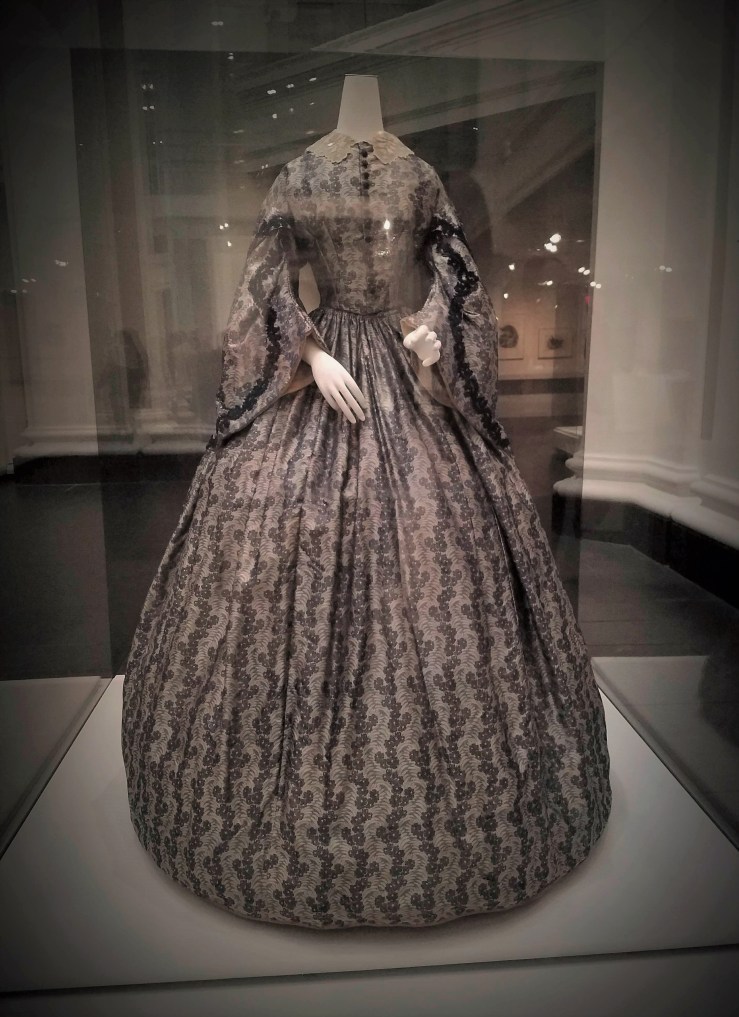 Wedding Dress, ca. 1860
United States
Silk, cotton
Sarah Elizabeth Fish (1824-1901) of Waldoboro, Maine, wore this elegant full-skirted dress, with stylish pagoda sleeves and a blue and silver jacquard pattern, as her wedding dress. The blue colour was probably achieved using an early synthetic organic dye. It was not uncommon for women in eighteenth- and nineteenth- century America and Europe to wear wedding dresses in colours other than the white that is now customary, and to wear them again after the wedding for other special occasions. Blue was a popular wedding dress colour for its strong association with loyalty, purity and virtue; this is echoed today in the traditional ”something blue” that brides may wear.
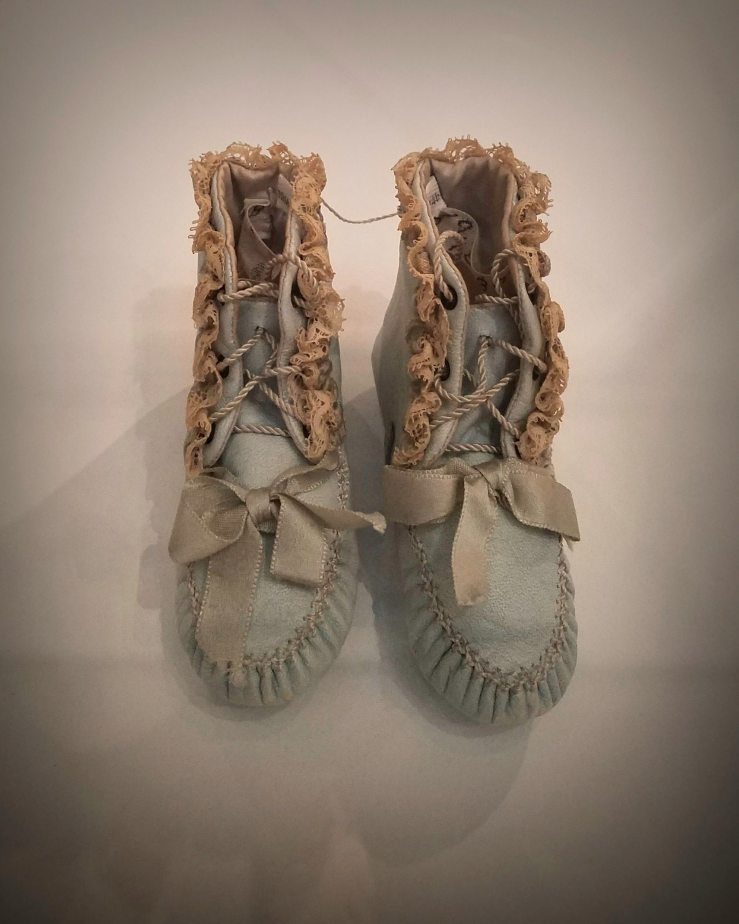 Booties, 1898
Probably France
Leather, silk, linen
Embellished infant’s booties of this type would have been worn at a christening or some other important event. The same baby girl who wore this pale blue kid leather pair also wore a matching pair in pink (not shown), suggesting that the code of blue for boys and pink for girls was not yet firmly established at the turn of the twentieth century. Historically, pink had been favoured as a more vigorous and thus ”masculine” colour, suitable for boys and blue as a passive and thus ”feminine” colour, suitable for girls.
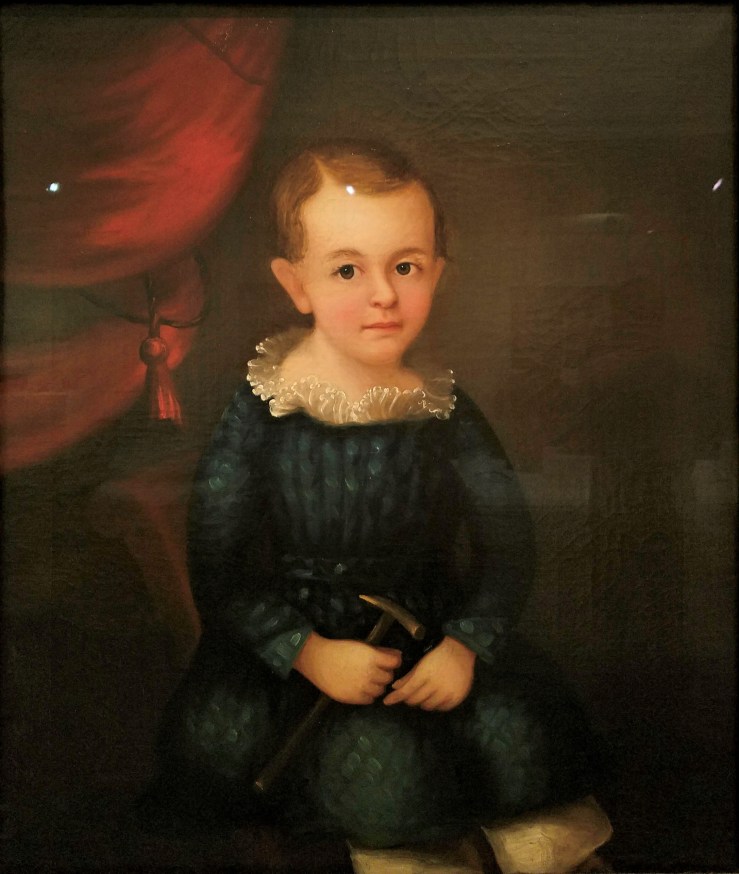 Portrait of a Child of the Harmon Family, ca. 1840s
United States
Oil on canvas
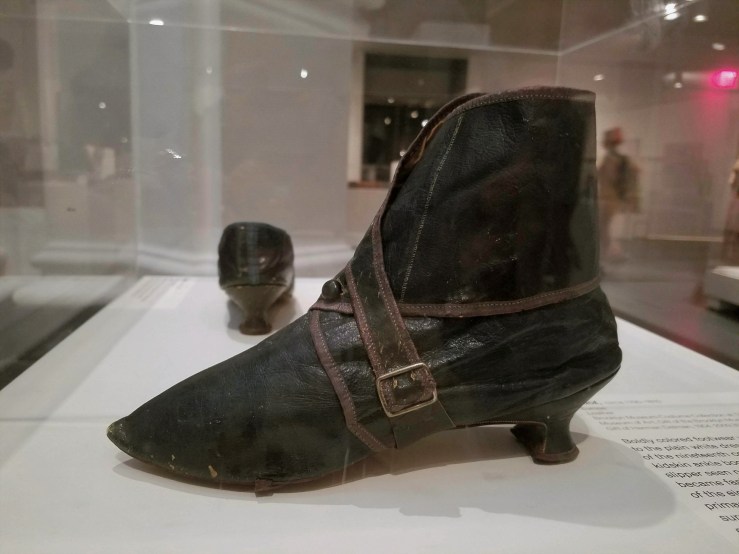 Boot, ca. 1795-1810
Europe
Leather
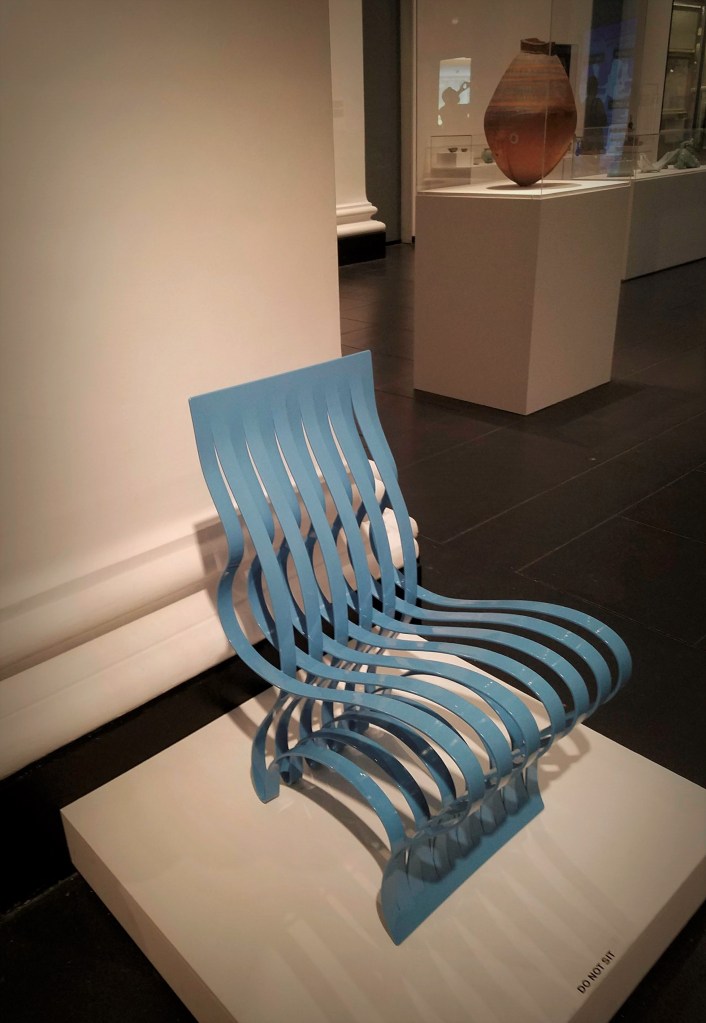 ”Current” Chair, 2004
Vivian Beer
Steel, automotive paint
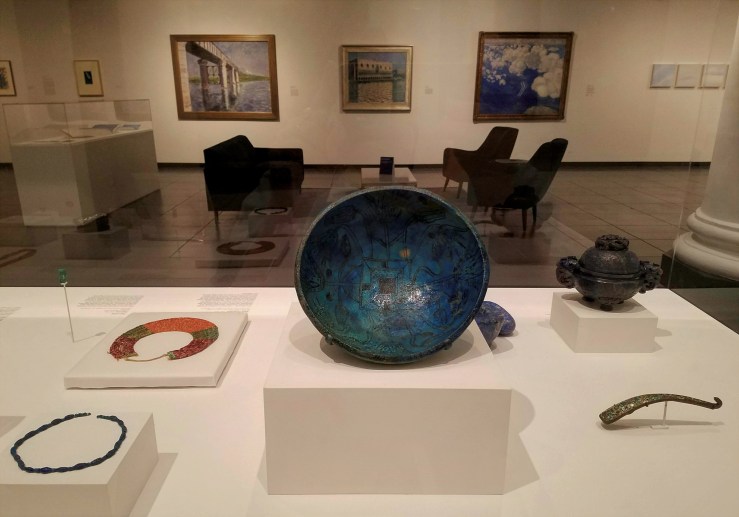 Nun Vessel, ca. 1539-1493 BC
Egypt
Blue faience with black-painted details
In ancient Egyptian origin myths, dark blue and black were colours of the primordial waters that the Egyptians called ”nun”, or nonexistence.
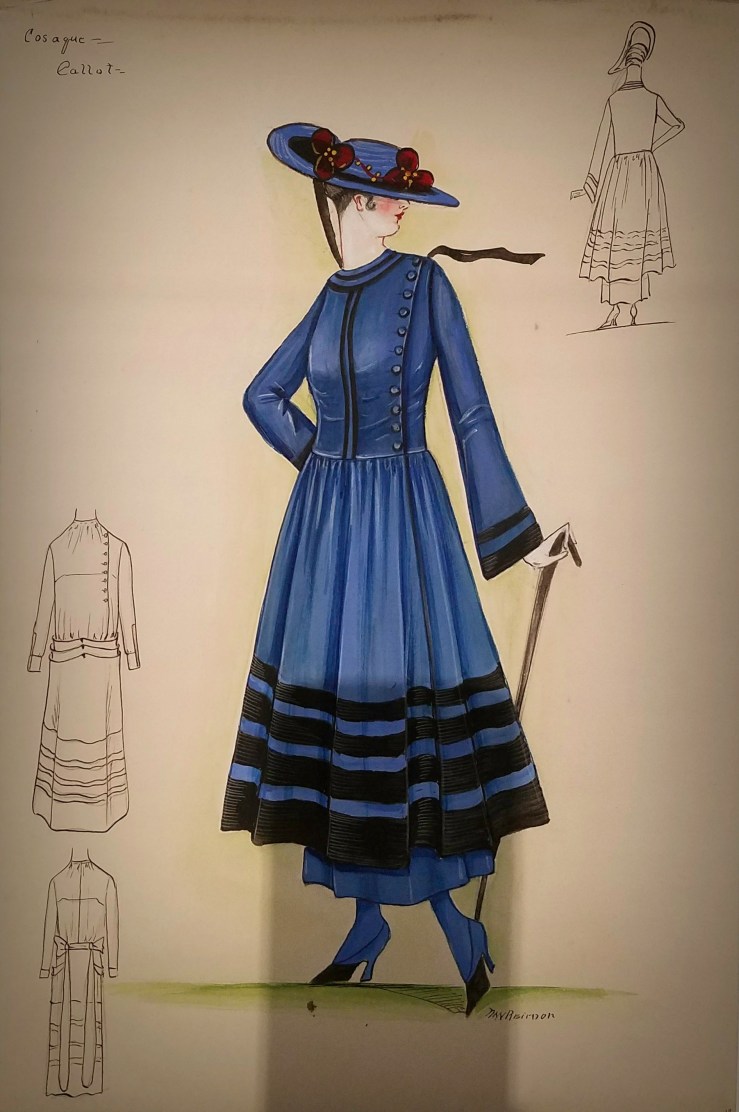 Day Dress 1915. Blue dress with printed fabric
Fashion sketch, Henri Bendel, Inc.
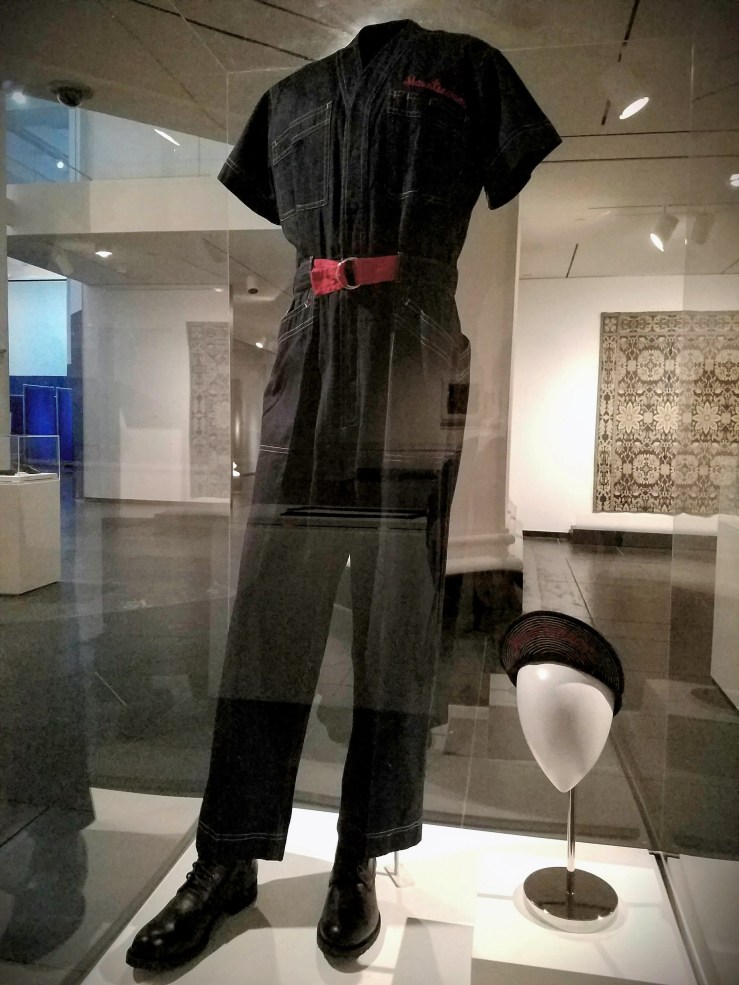 Helen Cookman for Reeves Brothers Inc.
Maintenance Worker’s Uniform and Cap, 1948
United States
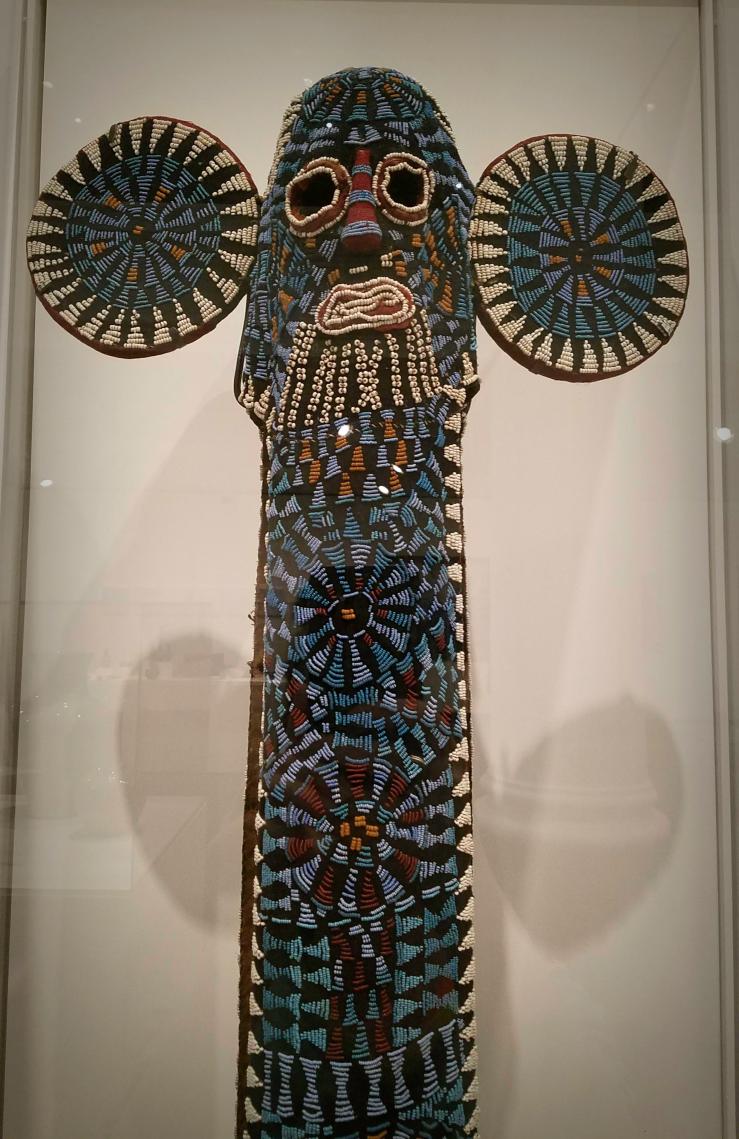 Kuosi Society Elephant Mask, early 20th century
Bamileke artist
Grassfields region, Cameroon
Textile, glass beads, plant fiber
Elephants are often associated with political power in the highly stratified kingdoms of the Cameroon grasslands. Because imported beads were historically rare and costly, beadwork is also associated with high social rank, making this mask a potent symbol of power.
The O’Keeffe exhibition was only one of the wonders waiting to be discovered in the various galleries of the Brooklyn Museum.
Infinite Blue, was an array of objects and works of art featuring blue in every possible shade, size and texture, a visual narrative that would expand over the following months, eventually filling the Museum’s first floor.
Brooklyn Museum
July 22nd, 2017
An icon in the making.  Georgia O’Keeffe
Woman with blue hat, 1916-1917
Watercolour, gouache and graphite on paper
O’Keeffe may have created this watercolour for classroom use. The work demonstrates the application of flat, stylized designs of fashion illustration. In this same period, the magazine Vanity Fair published similar stylized illustrations by O’Keeffe, who was searching for additional ways to turn her art skills into income.
 Hilda Belcher
The Checkered Dress (Portrait of O’Keeffe), 1907
Watercolour and gouache on cream laid paper, with JW watermark, mounted on paperboard
To pose for Hilda Belcher, who had also studied at the Art Students League of New York, O’Keeffe wore a stylish checkered dress that she most likely made for herself, in the black and white palette she would favour throughout her life. This watercolour, with its tour-de-force detailing of the dress, won Belcher membership in the male-dominated New York Water Colour Club. Several years later, a female writer composed a love poem to the then unknown sitter shown in the image; it reads in part:
”Could you know, did you guess/Such a daring rhythmic dress/Gleaming here, darkening there,/Would but render you more rare?”
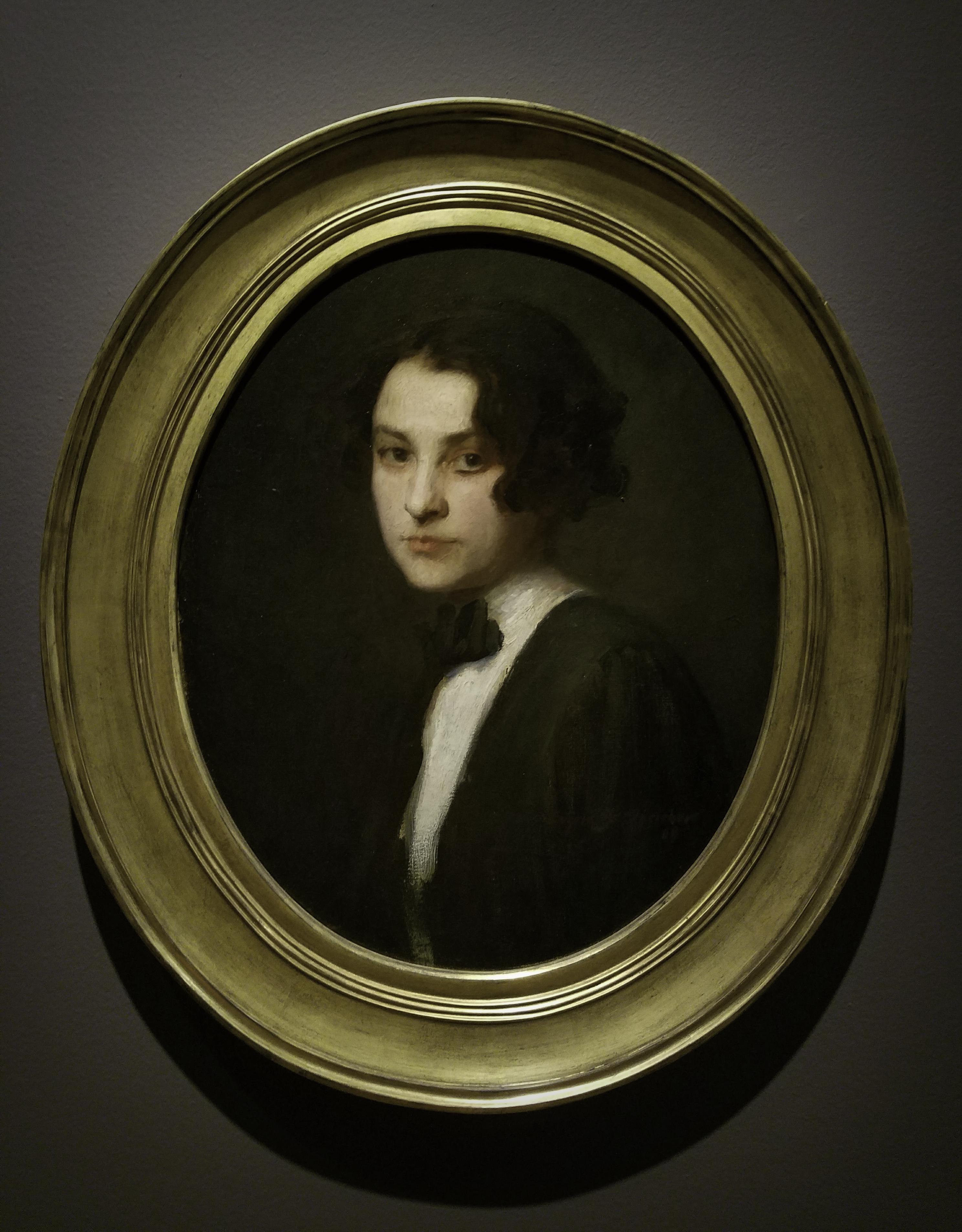 Eugene E. Speicher
Portrait of Georgia O’Keeffe, 1908
Oil on canvas
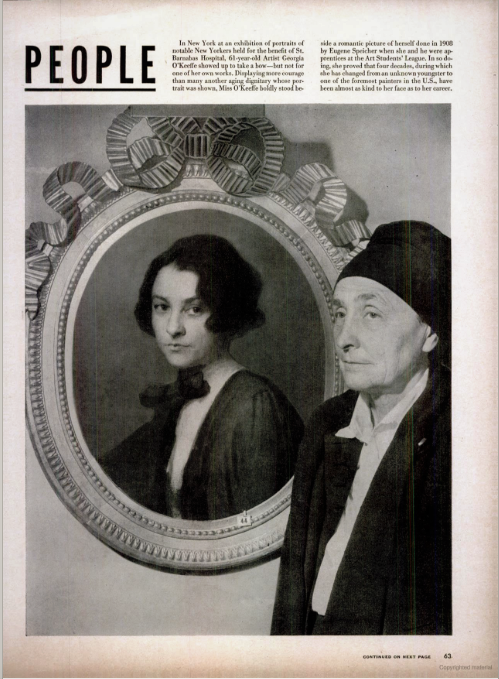
When Eugene Speicher, an older student at the Art Students League, asked O’Keeffe to model for him, she wore a three-piece outfit associated with the so-called New Woman: a white shirtwaist, black skirt and jacket, and black bow at her neck. This combination allowed women to move with greater ease than in conventional Victorian dresses and was a style of reform dress widely endorsed by budding women artists and professionals. In 1948, Life magazine ran an image of the sixty-one-old O’Keeffe posed next to the portrait (in a different frame), noting, ”she has changed from an unknown youngster to one of the foremost painters in the U.S.” Her personal style, however, had remained the same.
Georgia O’Keeffe: Living Modern, Brooklyn Museum
July 22nd, 2017
subjective worldview
Actor, writer, cook and author
Travel experiences & Strasbourg city guide
Writer
joy, happiness, travel, adventure, gratitude
"Rêve onirique & Bulle d'évasion"
makes pretty things on paper
This WordPress.com site is Pacific War era information
Welcome to my curious world of words....
Photographs, music and writing about daily life. Contact: elcheo@swcp.com
Free listening and free download (mp3) chill and down tempo music (album compilation ep single) for free (usually name your price). Full merged styles: trip-hop electro chill-hop instrumental hip-hop ambient lo-fi boombap beatmaking turntablism indie psy dub step d'n'b reggae wave sainte-pop rock alternative cinematic organic classical world jazz soul groove funk balkan .... Discover lots of underground and emerging artists from around the world.
A 365 analogue photography project
Barcelona's Multiverse | Art | Culture | Science
Een digitaal atelier aan de (zee)slag.
‘Doodling Ambiguity’s in Ink.’
Miscellaneous photography
Glimpses along the way on a journey of discovery into symmetry...
 The Humble Fabulist