Meanwhile, New York was doing ‘OK

Thanks to Brooklyn Museum at its curators who had organised an extraordinary exhibition about the work and lifestyle of Georgia O’Keeffe. It was truly extraordinary because, refreshingly and for the first time ever, it focused on her wardrobe, showing some of her signature garments alongside her paintings and photographs. In doing so, the show was successful in capturing the spirit of the woman behind the artist, her steely determination to be in charge of her own life and work, the reinvention of herself as a style icon. I went into the exhibition an avid admirer of the work by one of the most significant artists of the twentieth century. I came out full of new images, knowledge and a better understanding of her intriguing personality. Coming back from Los Angeles, I couldn’t have asked for a smoother landing into the frenzy of New York City. 

Alfred Stieglitz
Georgia O’Keeffe at 291, 1917
Platinum print


Georgia O’Keeffe
Shell and Old Shingle VI, 1926
Oil on canvas


Georgia O’Keeffe
Black Pansy & Forget-Me-Nots (Pansy), 1926
Oil on canvas


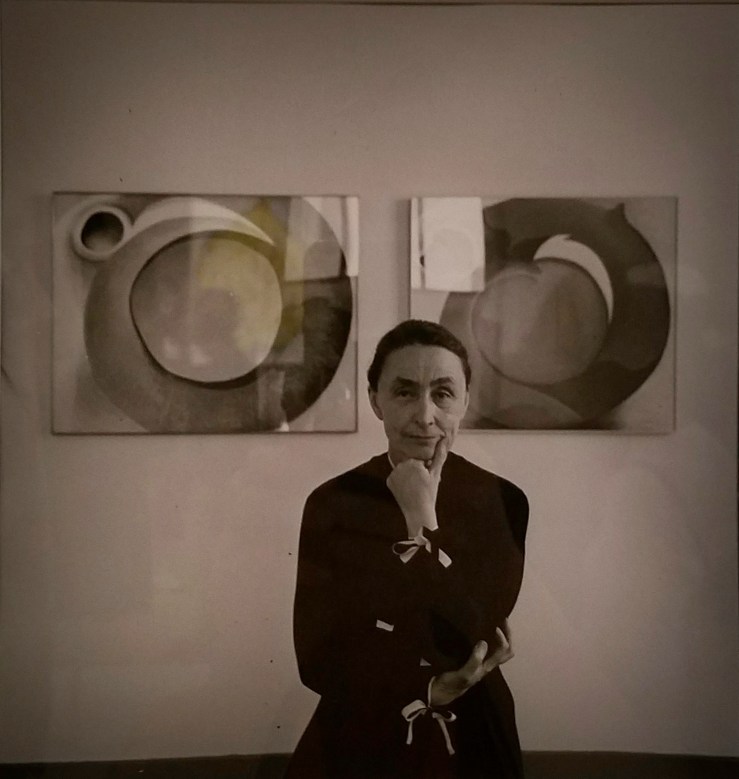
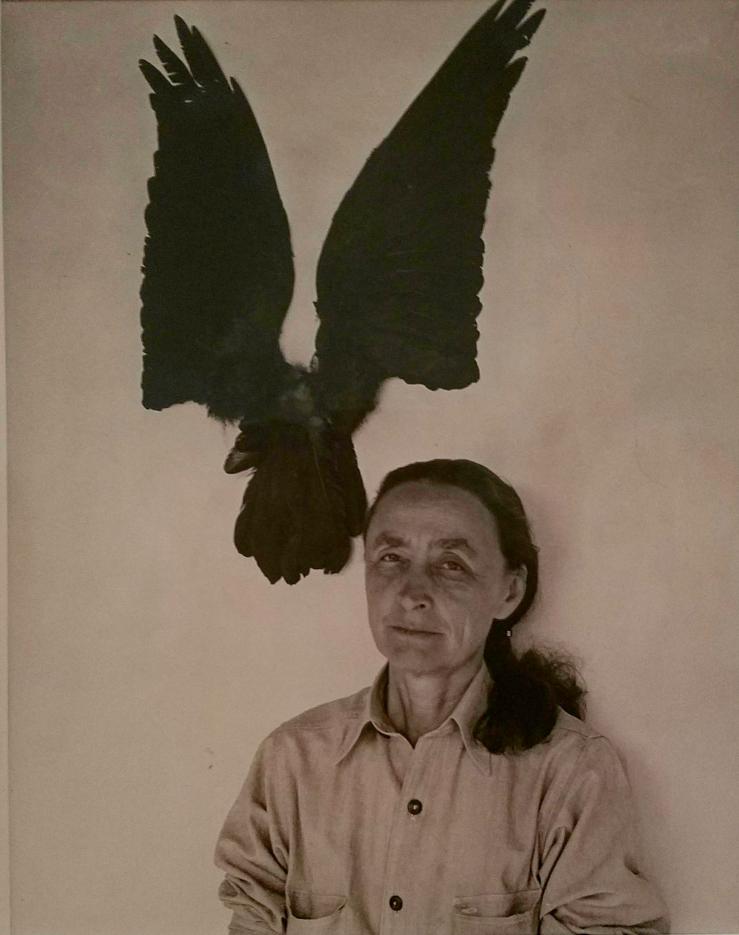
Cecil Beaton
Portrait of Painter Georgia O’Keeffe, 1946
Gelatin silver print

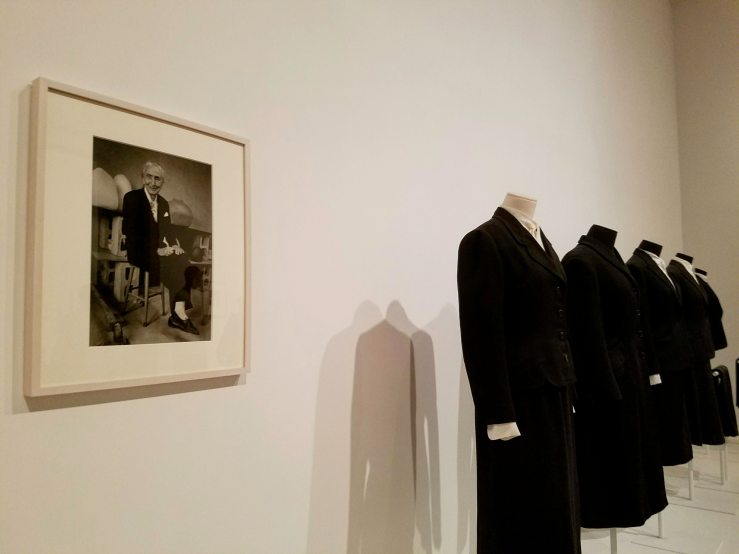
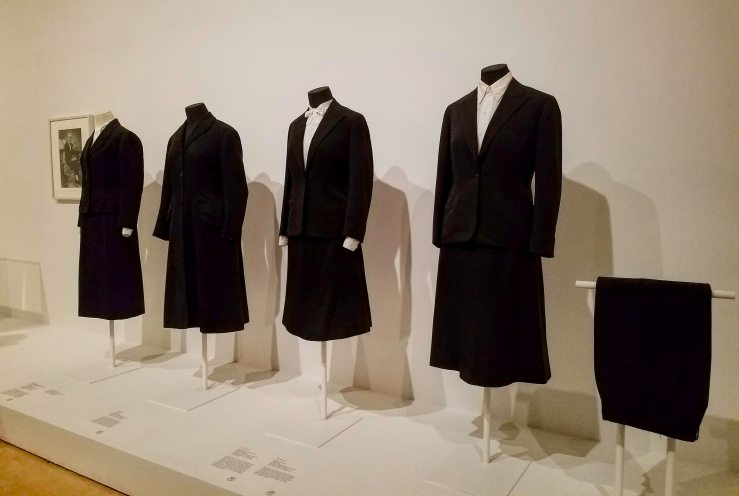
Black remained her favourite colour throughout O’Keeffe’s life. Her reason was described in one article in 1929: ”She wears black almost invariably – not, she says, because she prefers it, but because, if she started picking out colours for dresses, she would have no time for painting.”
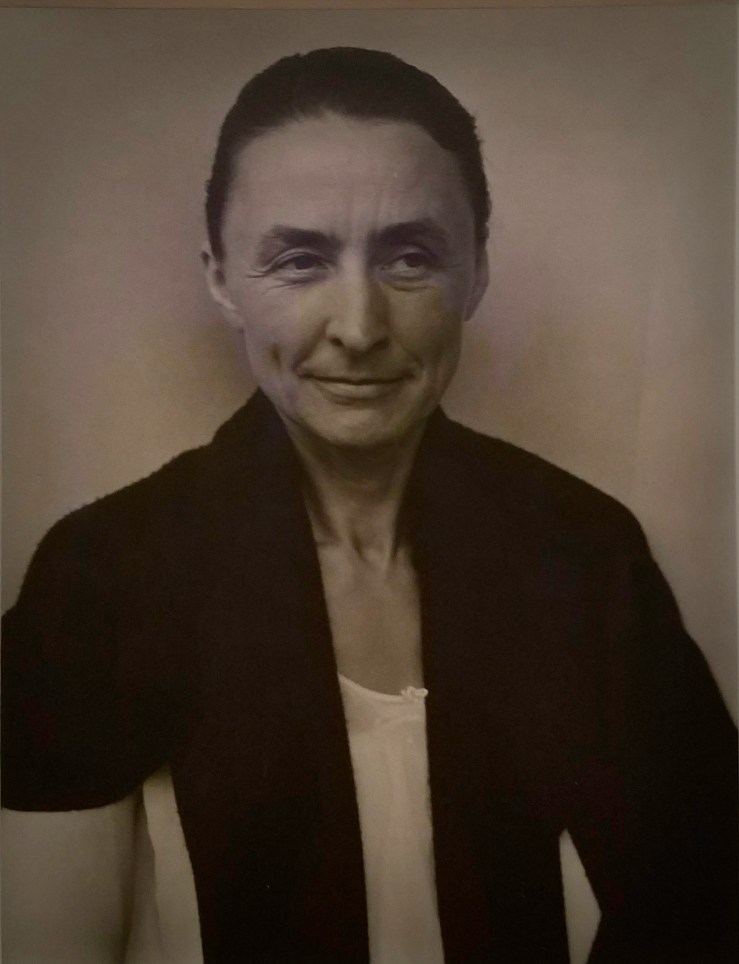

Alfred Stieglitz
Georgia O’Keeffe, 1932
Gelatin silver print

A modernist in dress as well as art, O’Keeffe liked to wear white blouses partially covered with a black sweater to create defined blocks of light and dark. 
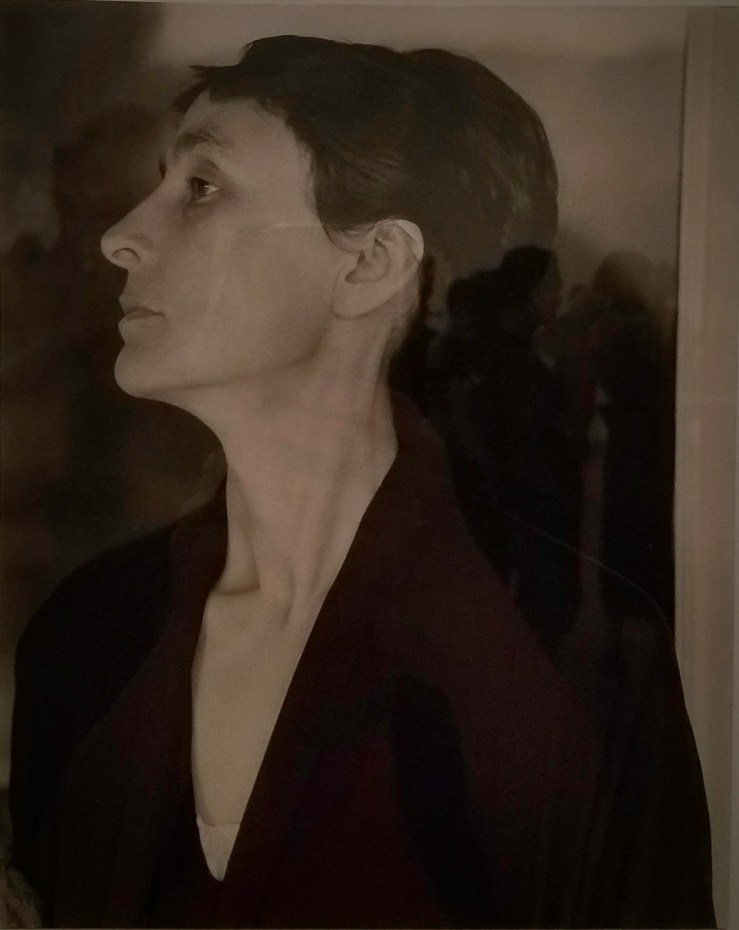

Alfred Stieglitz
Georgia O’Keeffe, probably 1919
Gelatin silver print

O’Keeffe considered her neck and head as integral shapes in arranging her dress. She frequently used the necklines of her blouses as visual framing devices for her long neck, and headdresses or her neatly wound hair to bring closure to her sartorial composition.


Georgia O’Keeffe
Manhattan, 1932
Oil on canvas


Georgia O’Keeffe
Brooklyn Bridge, 1949
Oil on masonite

Just before moving to New Mexico permanently in 1949, O’Keeffe painted this farewell salute to New York, her home for thirty years.


Arnold Newman
Georgia O’Keeffe, Ghost Ranch, N.M., 1968
Dye transfer on paper


Apron, 20th century
Denim

This apron was probably bought off-the-rack, but O’Keeffe added the lower section using her own scraps of denim. Though she had kitchen help much of the time, she was a good cook. She used fruits and vegetables from her own gardens and prepared food as she dressed, simply with few adornments.
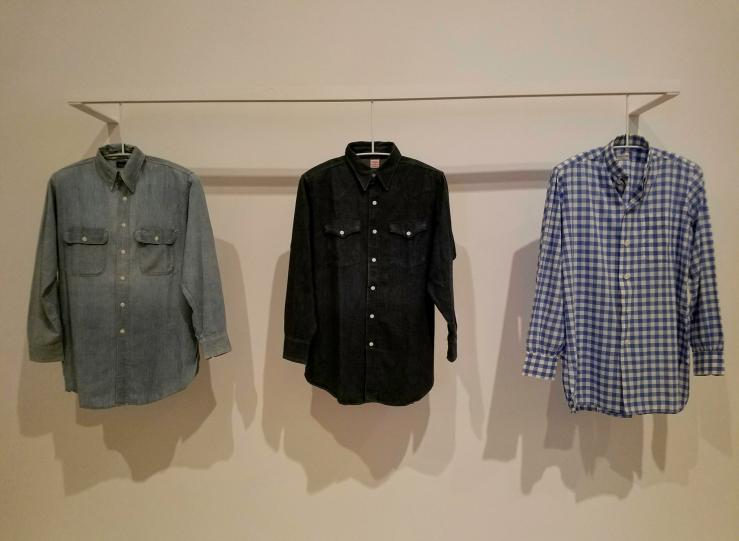
Claudius Lafond jacket & red and purple cotton madras dress, 1950s

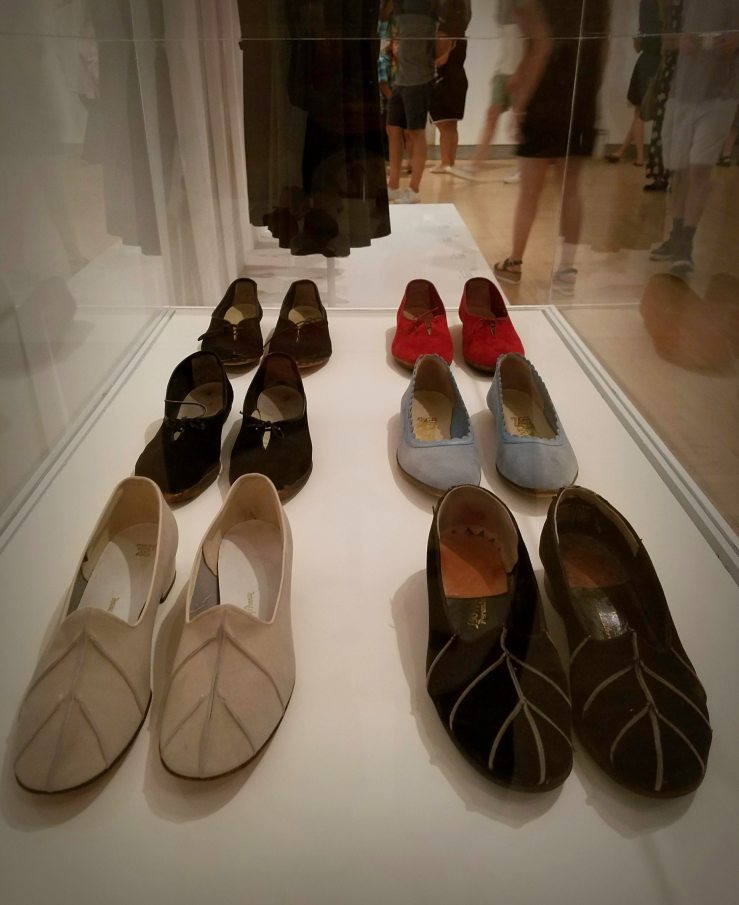
O’Keeffe rejected the synthetic fibers that were popular during and after WWII, such as nylon, acrylic and polyester. When traveling in the 1950s and 1960s, she continued to seek out natural cottons and silks in either a single colour of sometimes with stripes, checks or plaids. She may have bought this heavyweight cotton-work jacket when she went to Franc for the first time, in 1953. She most likely designed the plaid Madras dress for herself. 


Don Worth
Georgia O’Keeffe with Chair, 1958 (printed 1968)
Gelatin silver print

Customarily, O’Keeffe wore black and white when photographers came to visit, but in 1958, she made an exception for Don Worth. She wore her white French work jacket over the red plaid dress, we saw above.
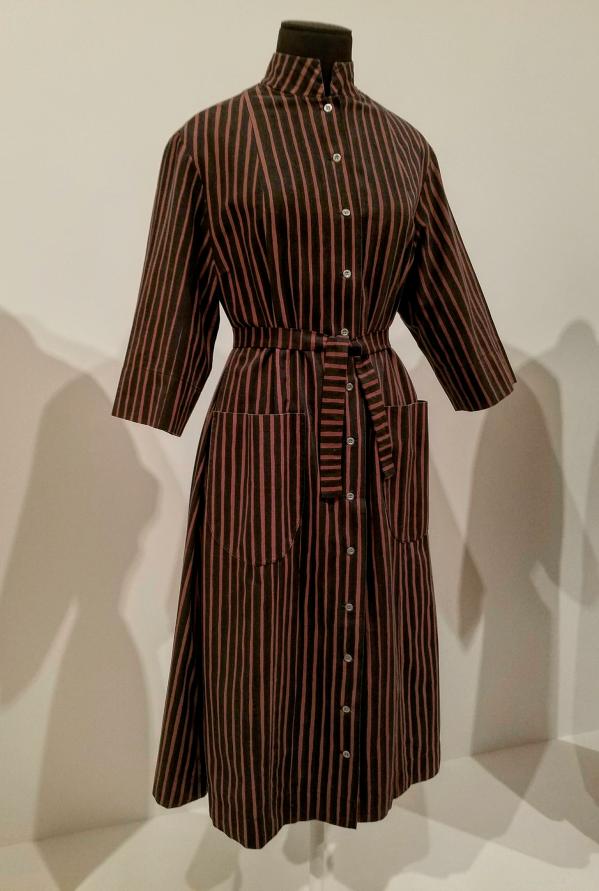

Armi Ratia for Marimekko
”Mother’s Coat” Dress with matching belt, designed mid-1950s.
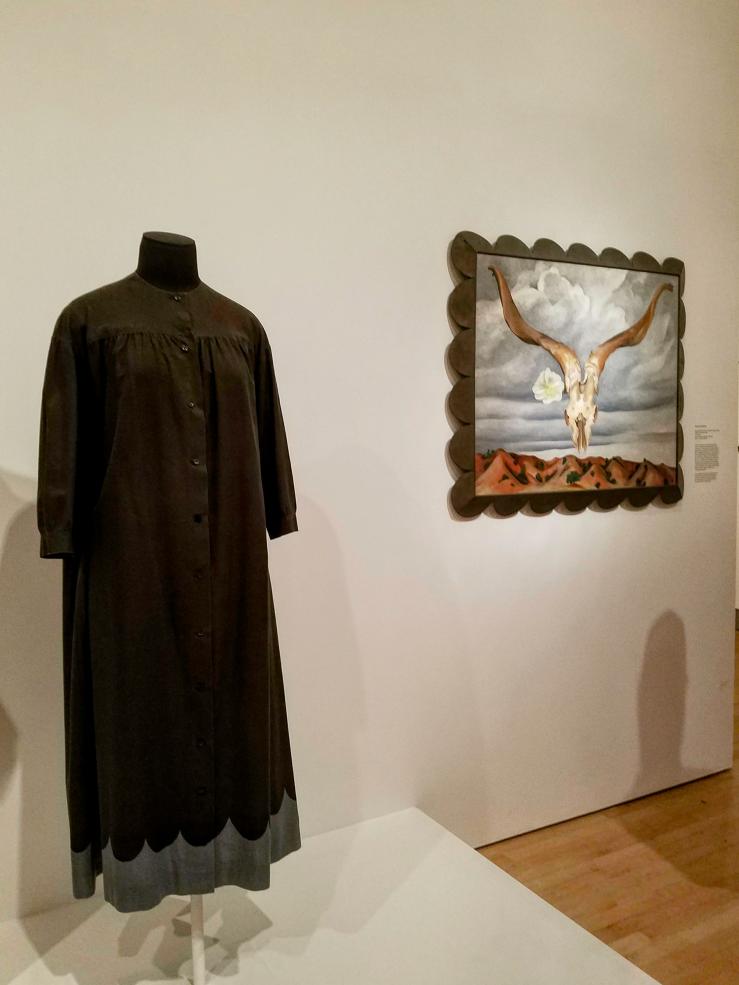

Annika Rimala for Marimekko
”Varjo” Dress, ca. 1963


Georgia O’Keeffe
Ram’s head, White Hollyhock-Hills (Ram’s Head and White Hollyhock, New Mexico), 1935
Oil on canvas


Georgia O’Keeffe
In the Patio IX, ca. 1964
Oil on canvas mounted on panel


Emilio Pucci
”Chute” Dress, ca. 1954

This was one of the first Pucci dresses to be sold in the American market, testifying to O’Keeffe’s interest in and awareness of contemporary fashion.
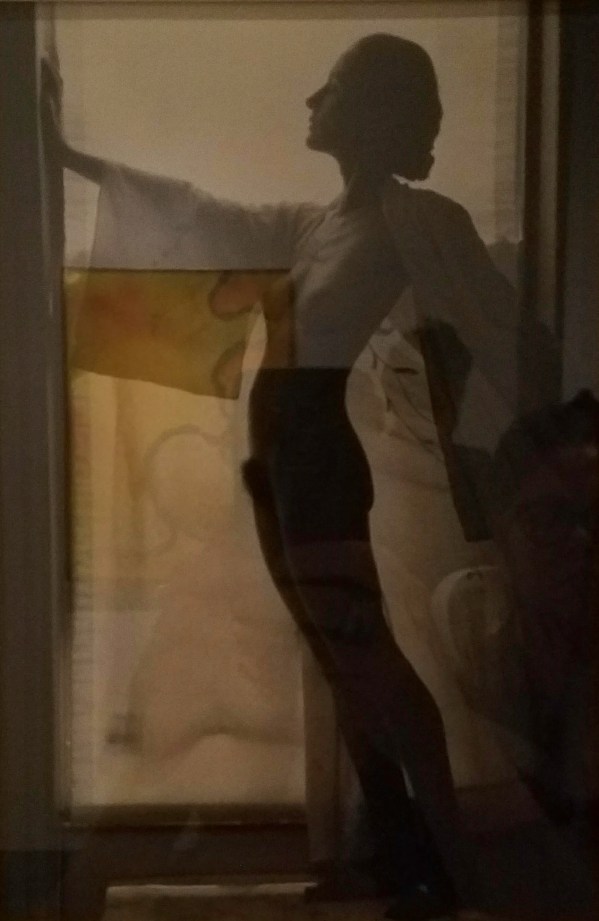

Alfred Stieglitz
Georgia O’Keeffe, 1918
Gelatin silver print


Alfred Stieglitz
Georgia O’Keeffe, 1918
Gelatin silver print


Paul Strand
Georgia O’Keeffe, Texas, 1918
Platinum print

Paul Strand, a young photographer supported and mentored by Stieglitz, was the first to capture O’Keeffe sleepy-eyed and slightly disheveled, wearing a kimono. The fact that kimonos were sleep and bath wear for her gives this photography its frisson; her letters to Strand show that the two were briefly attracted to one another and may have had a short-lived dalliance.


Georgia O’Keeffe
Green, Yellow and Orange, 1960
Oil on canvas


Philippe Halsman
Georgia O’Keeffe, 1967


Philippe Halsman
Georgia O’Keeffe, 1967

Tony Vaccaro
Georgia O’Keeffe with the Cheese, 1960
Gelatin silver print


Ansel Adams
Georgia O’Keeffe, Carmel Highlands, California, 1981 – printed 1982
Gelatin silver print

In 1981, O’Keeffe visited Ansel Adams in California for the last time. They were very dear friends and had known one another for over fifty years. He unfailingly got her to look directly at him and his camera for portraits that characteristically are straightforward and natural, without the mythos that attended photographs of her as a solitary and remote figure of the desert.
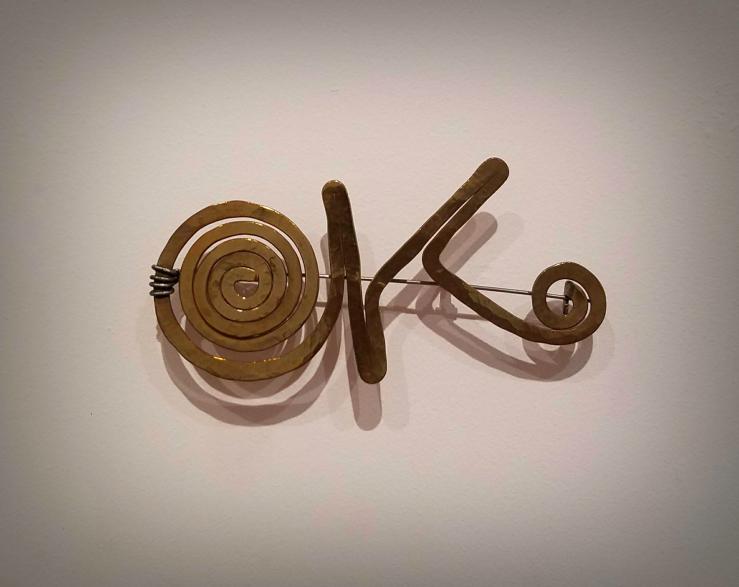

Alexander Calder
Pin, ca 1938
Brass

Sculptor Alexander Calder, who also made hand-wrought metal jewelry, created this brass pin for O’Keeffe. It first appears in a 1938 photograph and, from then on, O’Keeffe wore it often for photo shoots. When her hair turned grey, she found the pin’s copper colour less flattering and, on a trip to India in 1959, she found a craftsman to make her a silver version, which she wore for the rest of her life. She was known to boast that the copy cost her only five dollars.


Georgia O’Keeffe: Living Modern was running in Brooklyn Museum until July 23rd, 2017. I caught it one day before closing.

July 22nd, 2017
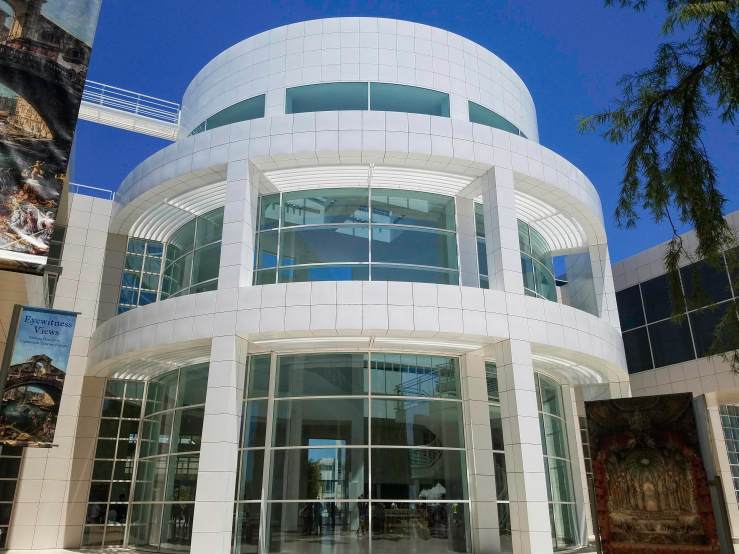
Getty & The Ladies

The rare instance of being a voracious womanizer who “could hardly ever say ‘no’ to a woman, or ‘yes’ to a man”, could momentarily be overlooked.

3/
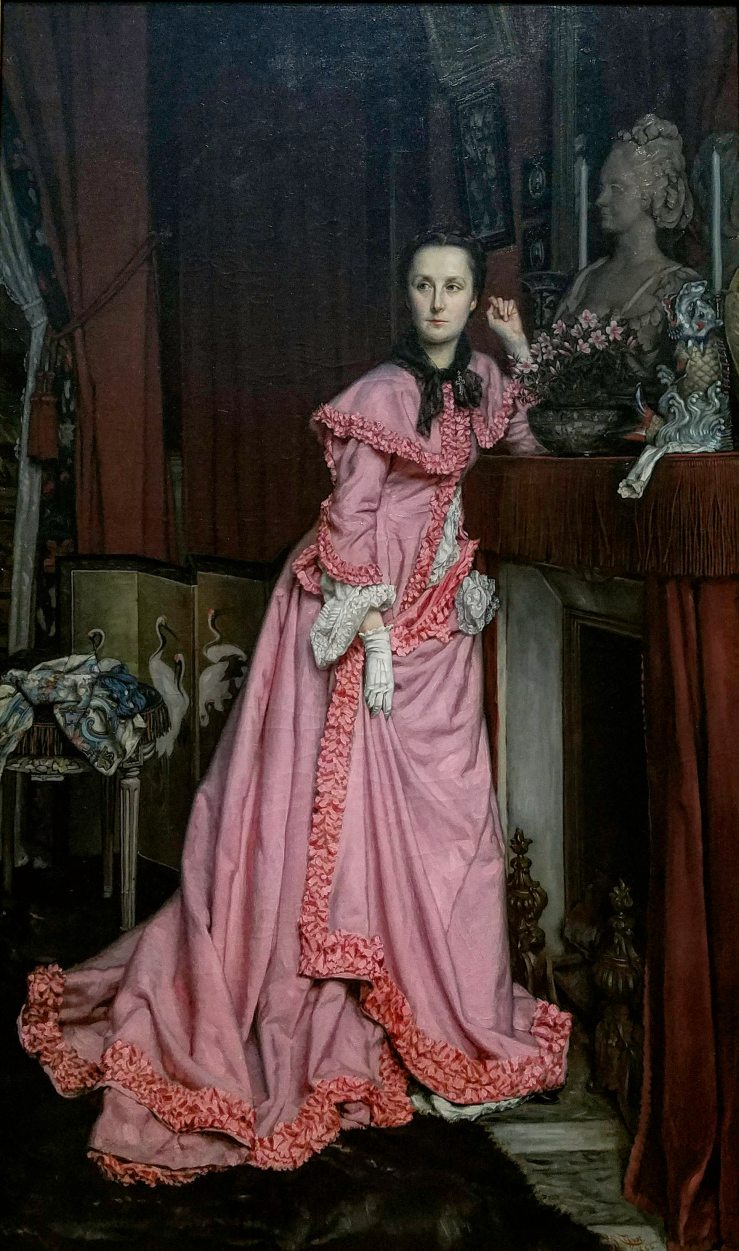
Portrait of the Marquise de Miramon, née Thérèse Feuillant, 1866
James Tissot (1836-1902)
Oil on canvas

4/
Jeanne (Spring), 1881
Édouard Manet (1832-1883)

Oil on canvas

Depicting young actress Jeanne Demarsy as the fashionable embodiment of spring, this portrait was part of an unfinished series of the seasons that Manet undertook at the end of his life. 

5/
Portrait of Jeanne Kéfer, 1885
Fernand Khnopff (1858-1921)
Oil on canvas

6/
Portrait of Princess Leonilla of Sayn-Wittgenstein-Sayn, 1843
Franz Xaver Winterhalter (1805-1873)
Oil on canvas

7/
Mischief and Repose (1895)
John William Godward (1861-1922)
Oil on canvas

The Getty Center

July 18th, 2017

Nude || Not || Naked

Celebrating the human body (but the artist’s daughters seem less than impressed).

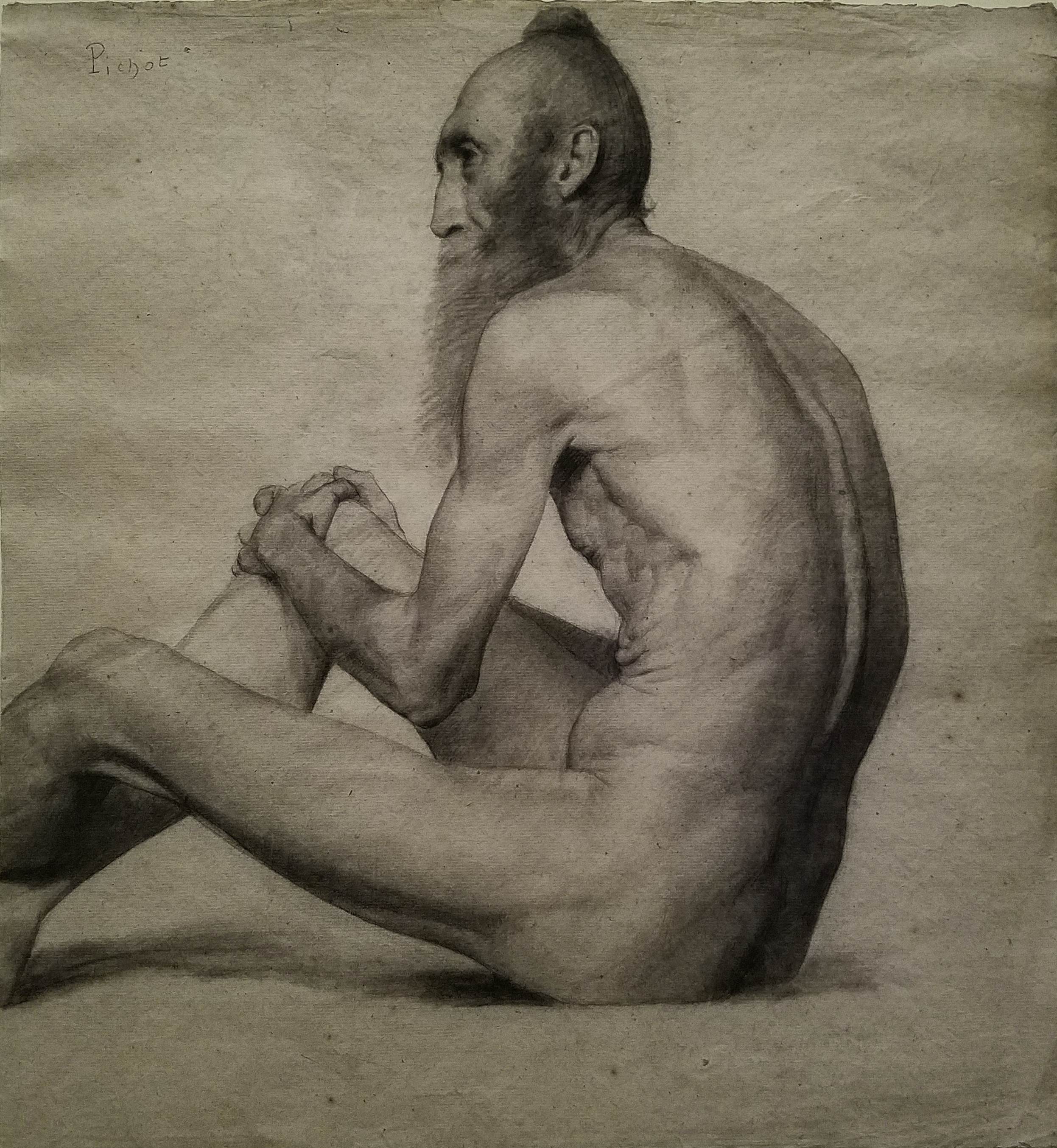
1/
Nude Study of an Indian Man, about 1878-79
Émile-Jules Pichot (1857-1936)
Charcoal and powdered vine charcoal with stumping and lifting

Little is known of Pichot, to whose talents as a draftsman this sheet attests. The drawing’s date, however, can be determined with some precision, for the same gaunt, bearded model (possibly a Hindu ascetic or a Sikh) appears in a drawing by Georges Seurat, a contemporary of Pichot and destined for greatness.

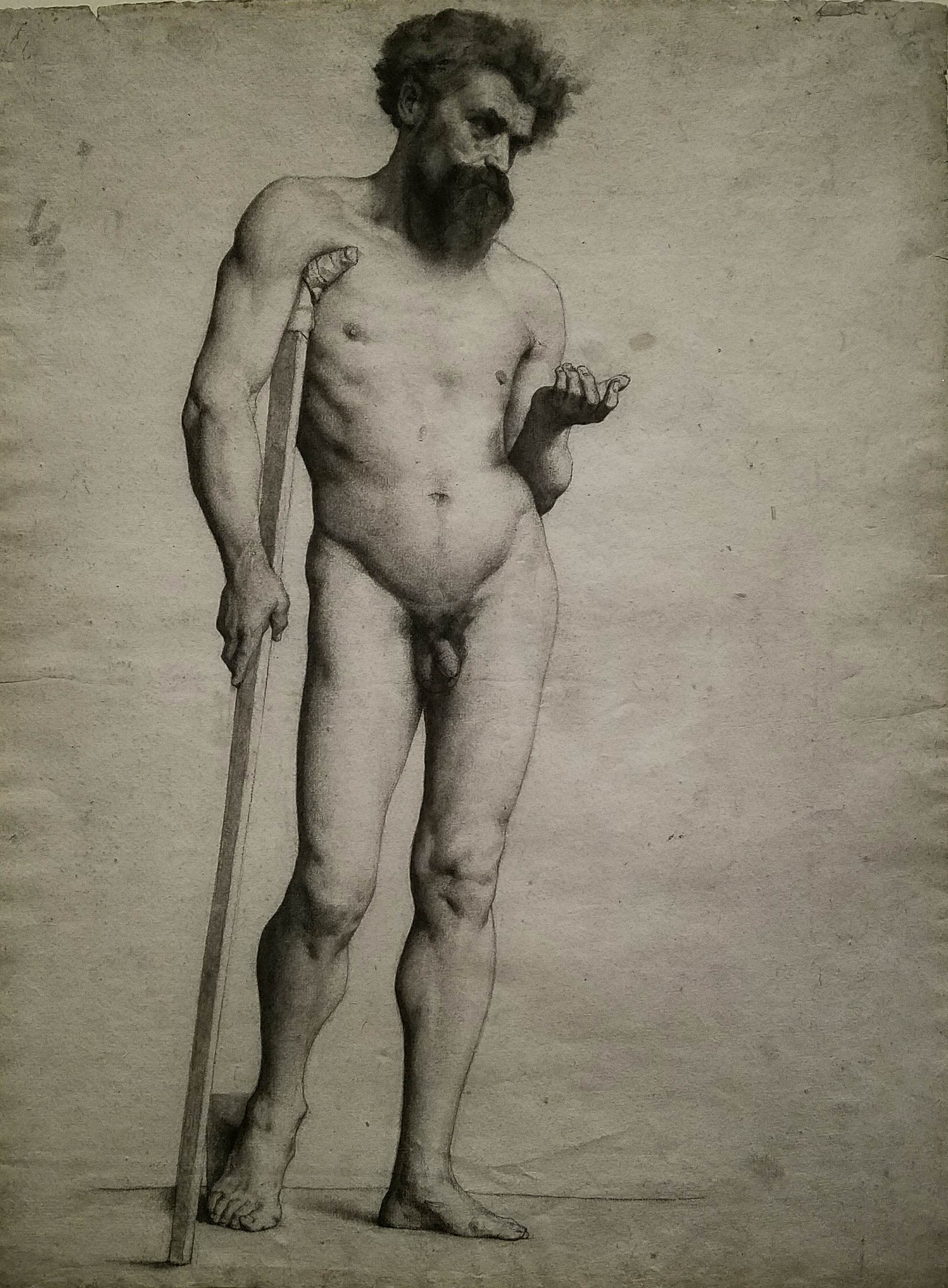
2/
Standing Male Nude, 1866
Gabriel Ferrier (1847-1914)
Charcoal with black chalk

This accomplished nude study executed when the artist was nineteen years old, predicted a bright future for Ferrier in the official art world. Largely forgotten today, he won the French Academy’s prestigious Rome Prize in 1872 and later received prominent commissions, including decorations for the Gare d’Orsay train station (today the Musée d”Orsay).

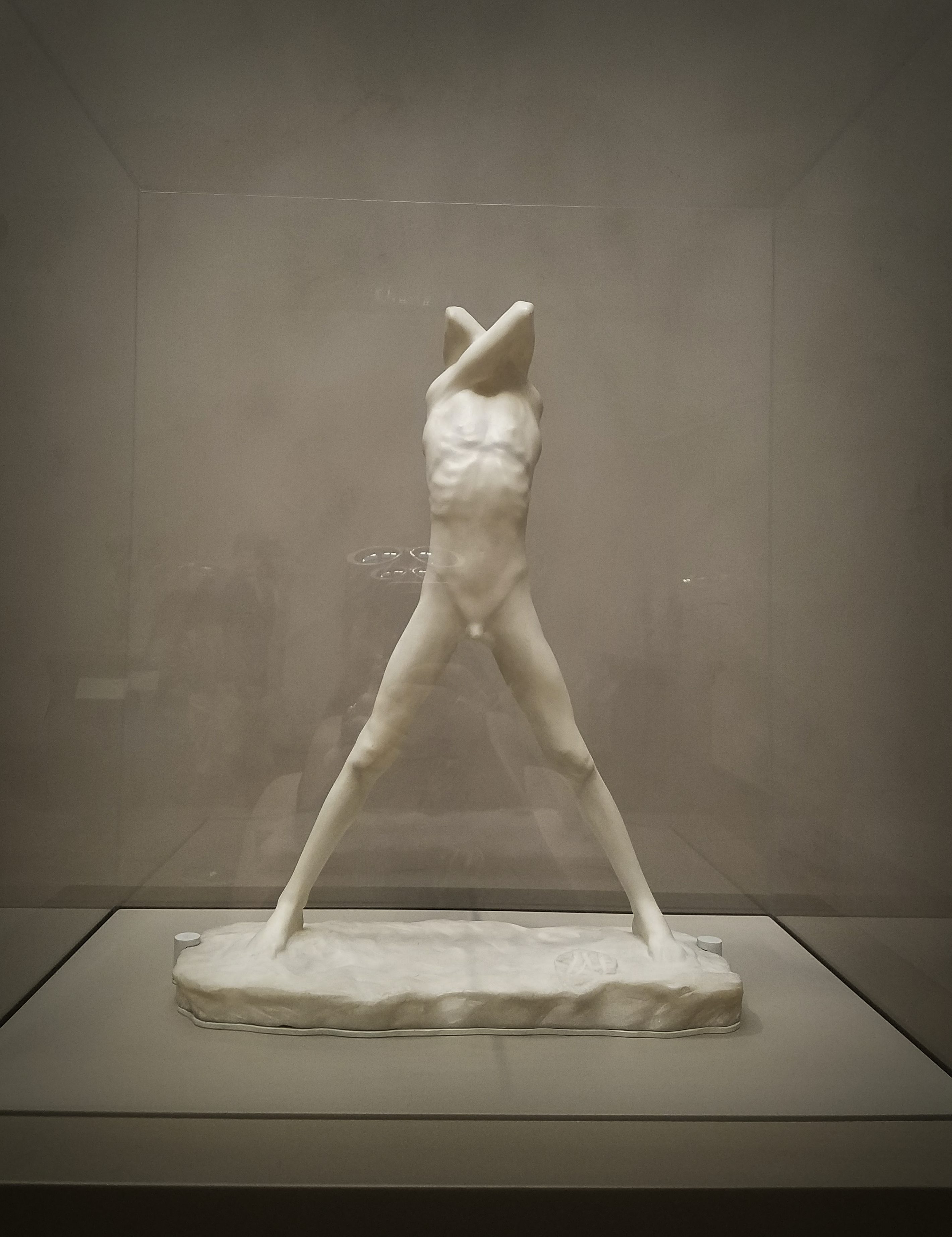
3/
Adolescent I, about 1891
George Minne (1866-1941)
Marble

This nude, emaciated youth defiantly exposes his body while simultaneously crossing his arms in a protective embrace, indicating shame and anguish. Minne was one of the major representatives of a circle of Symbolist artists and writers based in Ghent, Belgium.

4/
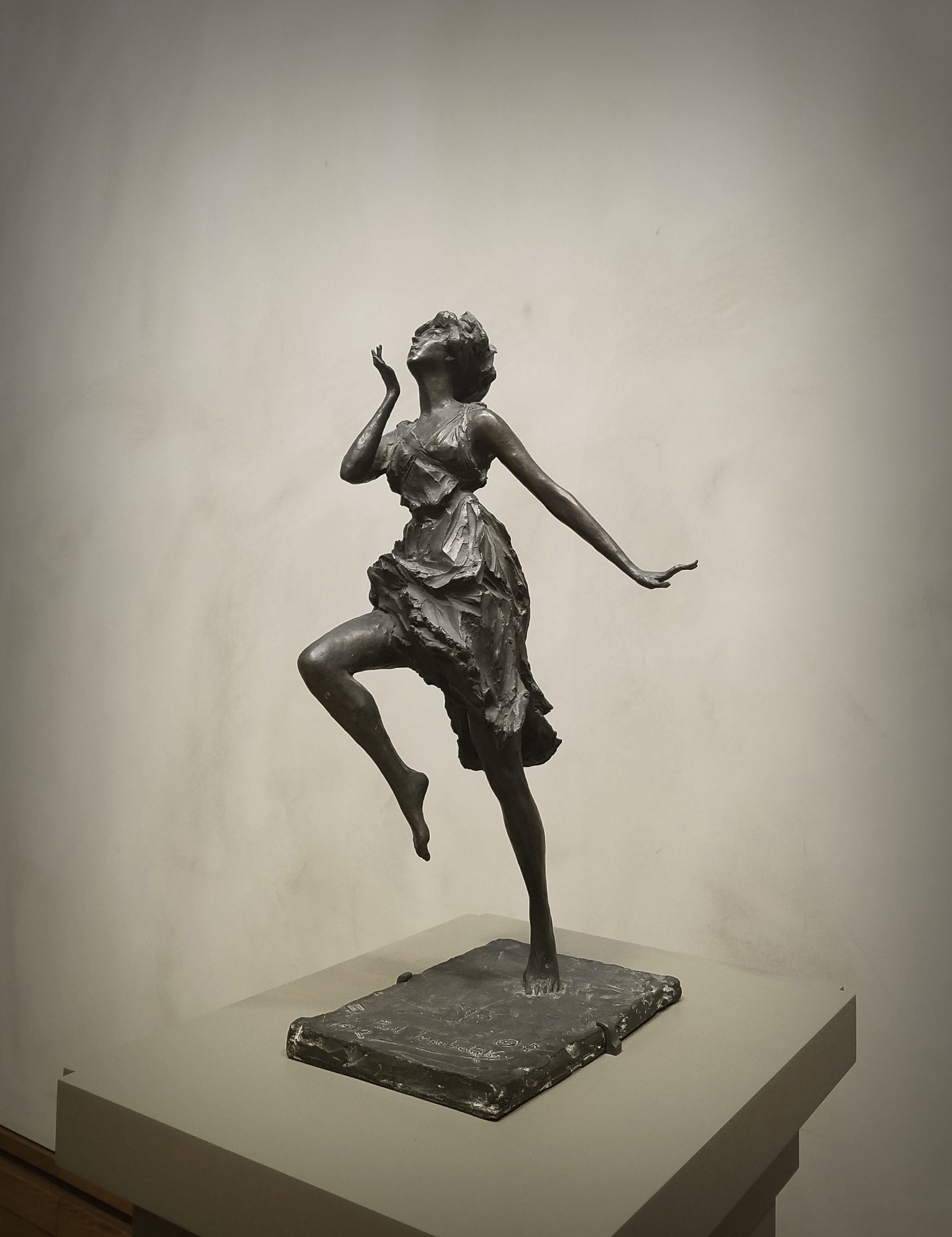
Dancer, 1912
Paolo Troubetzkoy (1866-1938)
Bronze

Countess Thamara Swirskaya (Saint Petersburg, 1890-Los Angeles, 1961), the famous Russian pianist and dancer depicted here, performed throughout Europe and the United States. J. Paul Getty, who purchased this piece in 1933, may have attended one of her shows in the U.S. She posed for this lively composition in 1909 in Paris, where Troubetzkoy, the son of a Russian prince and American mother, lived between 1905 and 1914.

5/
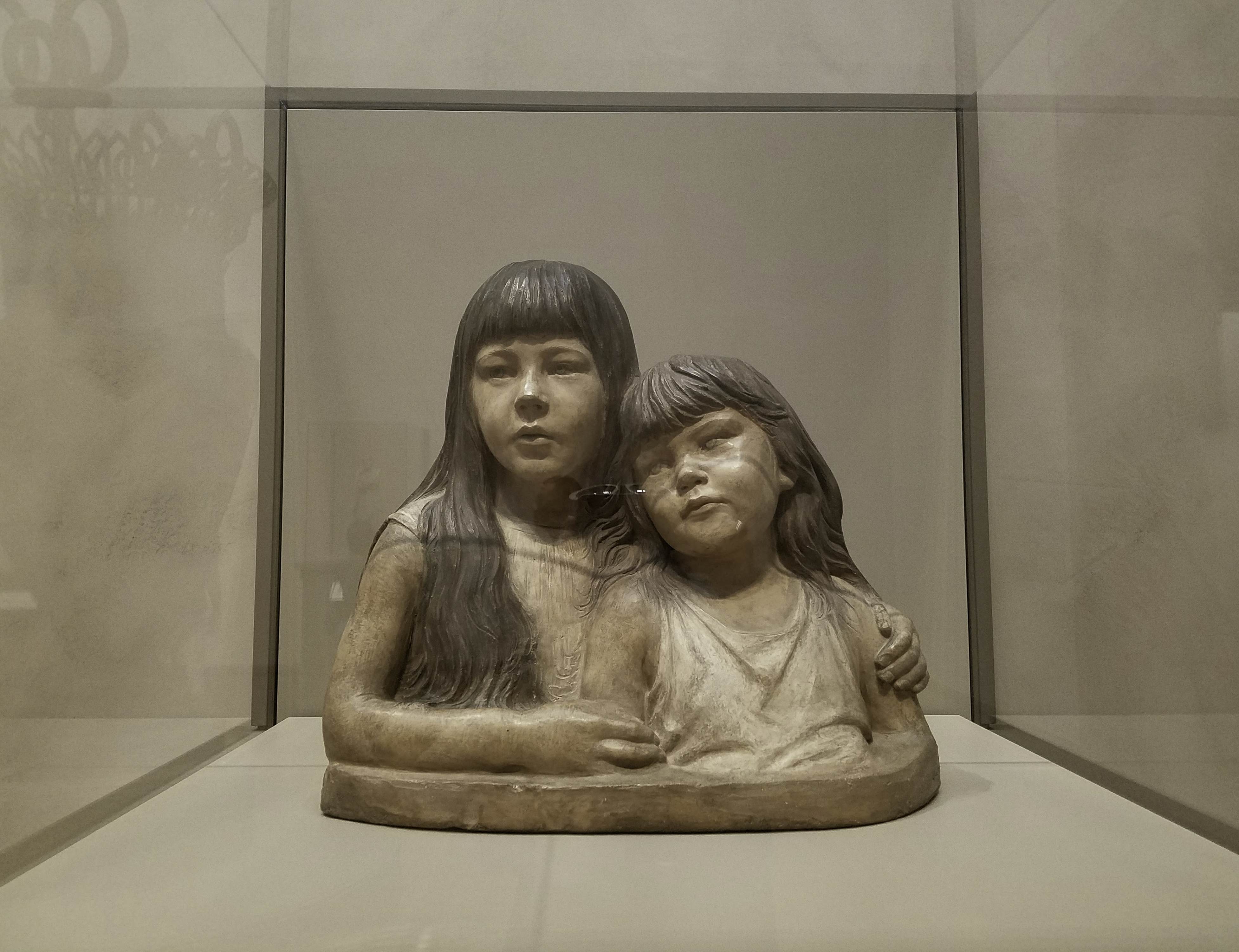
Double Portrait of the Artist’s Daughters, 1889
Adolf von Hildebrand (1847-1921)
Polychrome terracotta

Freestanding double-portrait busts are rare in European sculpture, and this is one of the few known examples. Hildebrand’s termination of the figures above the waist and his use of subtle colours are based on Italian Renaissance portraiture. This sensitive portrayal of the artist’s daughters, Silvia and Bertel, is remarkable among the sculptor’s normally restrained official portraits and monuments.

The Getty Center

July 18th, 2017

”Elementary, my dear Watson”

Under the magnifying glass: A view of the Bay of Naples, Looking Southwest from the Pizzofalcone towards Capo di Posilippo, 1791 by Giovanni Battista Lusieri (1755-1821)

The precision of the figures and architecture – first painstakingly depicted with pencil underdrawing – has led many to speculate that Lusieri used an optical device such as a camera obscura. However, eyewitness accounts of the artist at work do not support this theory. Lusieri painted the view over a period of two years from rooms in the Neapolitan residence of Sir William Hamilton, British envoy to the court of Naples. Hamilton commissioned it to hang in his London home, perhaps to serve as a reminder of this sunny scene when he returned to his often-gloomy homeland. 

Lusieri is getting Sherlocked @ The Getty Center

July 18th, 2017

Taking sides

Do we really have to? I can’t decide.

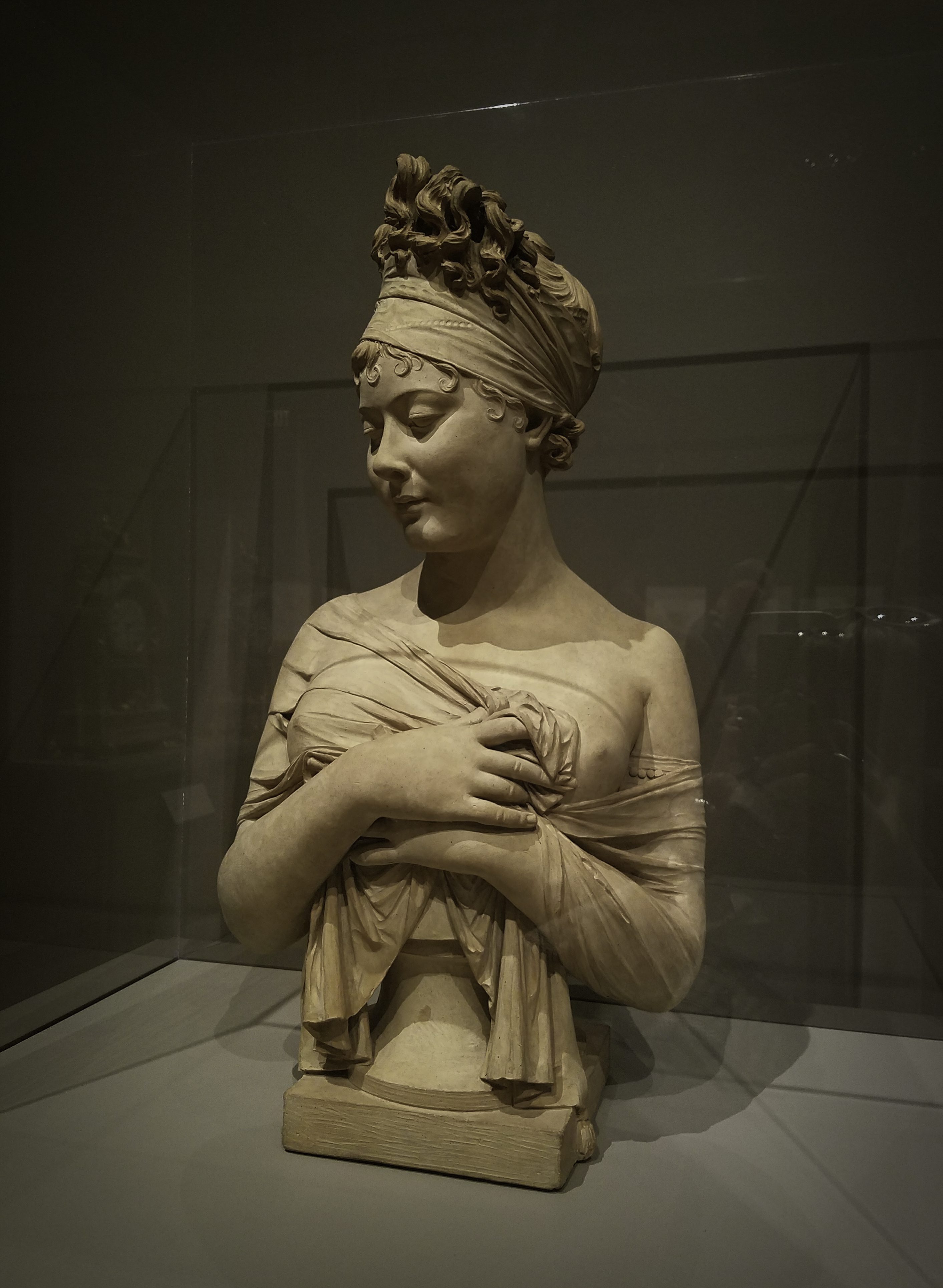
Bust of Juliette Récamier, ca. 1801-2
Joseph Chinard (1756-1813)

Juliette Récamier (French, 1777-1849) was a socialite renowned for her literary circle, but perhaps even more for her beauty. At age fifteen, she married Jacques-Rose Récamier, a banker, thirty years her senior – and her mother’s longstanding lover. Rumor had it that Récamier was, in fact, her natural father and they got married so that she would become his heir(!) Apparently, the marriage was never consummated.

Prince Lucien Bonaparte, Napoleon’s brother, courted her; Prince Augustus of Prussia proposed but she refused to divorce her husband/father; the French Romantic writer François-René de Chateaubriand was a constant visitor of her salon. The courtship never seized; despite advanced age, ill-health and reduced circumstances having lost most of her fortune, Juliette remained as charming as ever.

In this bust, her friend Chinard, a brilliant portraitist, enhanced her charming features by slightly tilting her head, paying attention to details such as her hair and including her arms and delicate hands.

@ The Getty Center

July 18th, 2017

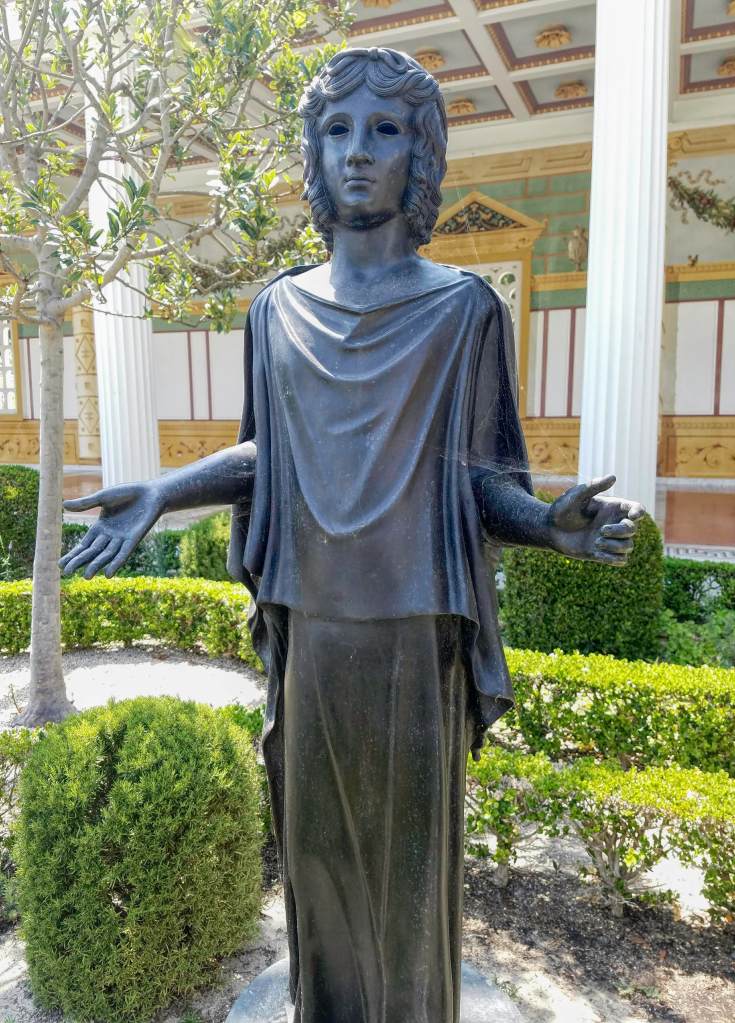
The Getty Villa

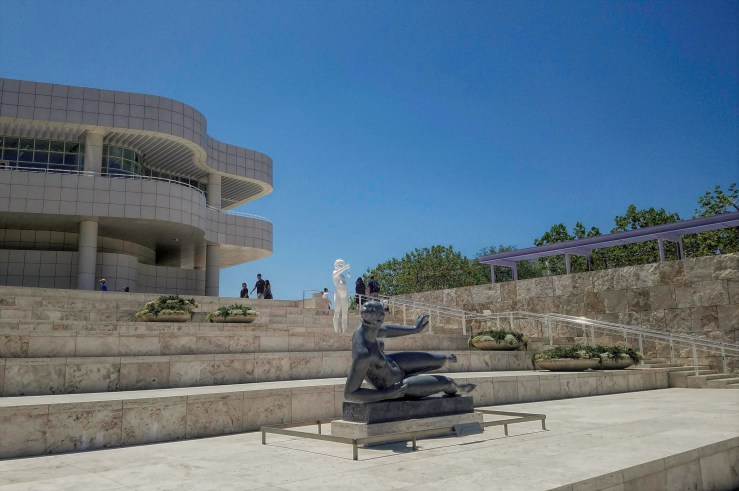
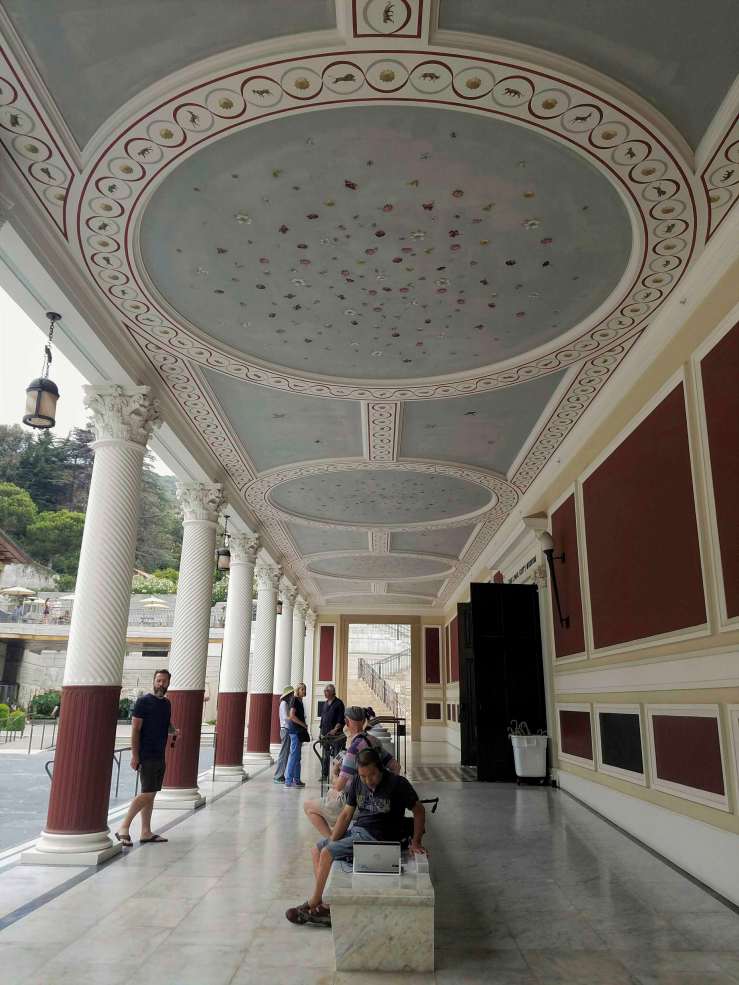
J. Paul Getty purchased his first work of ancient art in 1939 – a small terracotta sculpture. Almost thirty years later, inspired by his growing collection of antiquities of Greek, Roman, and Etruscan art, he announced he would build a museum worthy of such treasures: a recreation of the Villa dei Papiri, a luxurious Roman residence in Herculaneum, Italy that had been buried by the eruption of Mount Vesuvius in 79 A.D.

The Villa dei Papiri (“Villa of the Papyruses”) was rediscovered in the 1750s. The excavation recovered bronze and marble sculptures, wall paintings, colorful stone pavements, and over a thousand papyrus scrolls – hence the name. The Getty villa is a near replica of it, in scale and appearance; even some of the materials used were taken from the Villa dei Papiri. (source)

In other words, the Getty Villa should be seen as a work of art in itself and feature high on your list of ”must-see” museums next time you plan a trip to Southern California. 

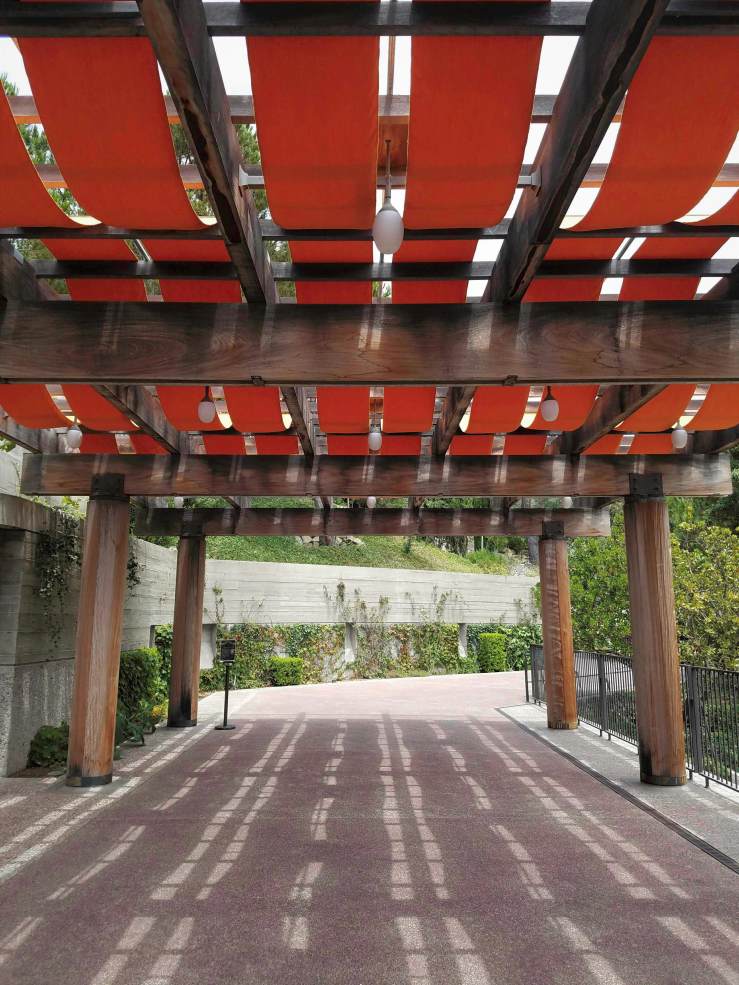
In antiquity, as today, awnings served both a ceremonial and practical purpose. Roman hosts invited guests to dine on outdoor couches protected from the sun by colourful fabric. Tends and awnings throughout towns and cities marked festivals and holidays and provided shade for the audience in open-air arenas and theatres.
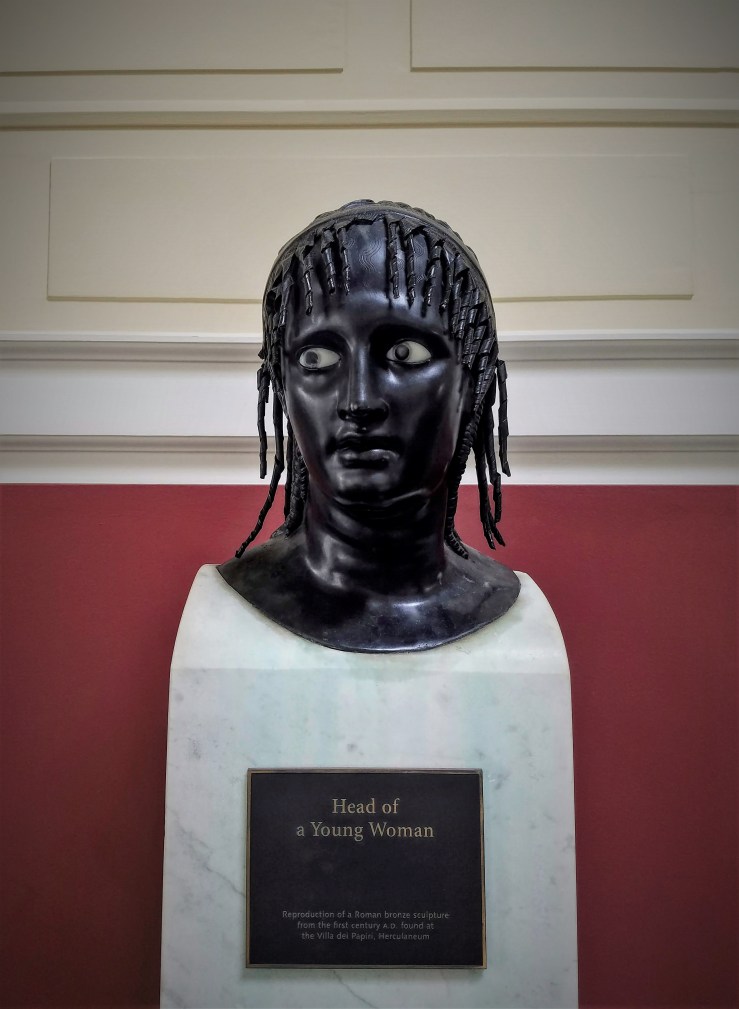
Pair of Altars with Aphrodite and Adonis
Greek, made in Taras, South Italy, 400-375 B.C.


Mixing Vessel with Adonis, Aphrodite and Persephone
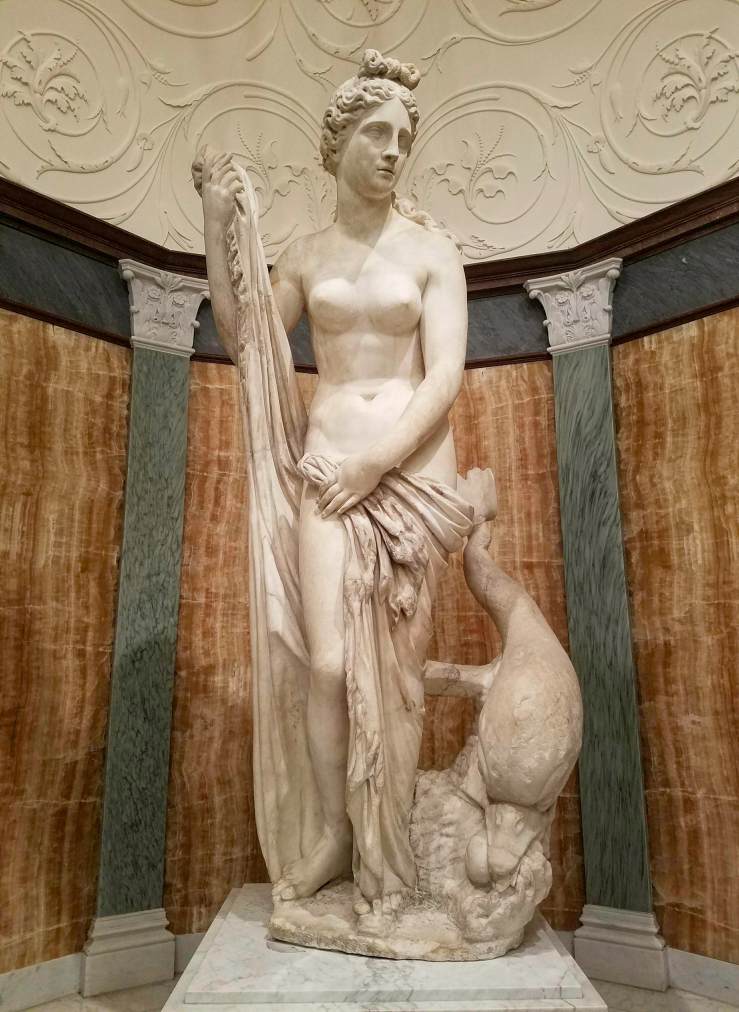
Greek, made in Athens, 390-380 B.C.


Venus
Roman, A.D. 100-200; found in Rome


Muse
Roman, about A.D. 200


Storage Jar with Medusa
Greek, made in Athens, 530-520 B.C.


The Lansdowne Herakles
Roman, about A.D. 125

This sculpture was one of J. Paul Getty’s most prized possessions and inspired him to build this Museum in the style of an ancient Roman villa. The statue, representing the Greek hero Herakles with his lionskin and club, was discovered in 1790 near the villa of the Roman emperor Hadrian at Tivoli, Italy.


Poet as Orpheus with Two Sirens
Greek, made in Taras, South Italy, 350-300 B.C.


Pair of Peacocks
Roman, from Syria, possibly Emesa (present-day Homs), A.D. 400-600


Sadly – and alarmingly – the Getty Villa will remain closed all weekend – Saturday and Sunday, November 10 and 11, 2018 – due to the ongoing wildfires in order to help firefighting efforts by alleviating traffic on the Pacific Coast Highway. The Villa itself is not threatened by the fires.

Here’s hoping to see the end of this destruction, soon.

The Getty Villa

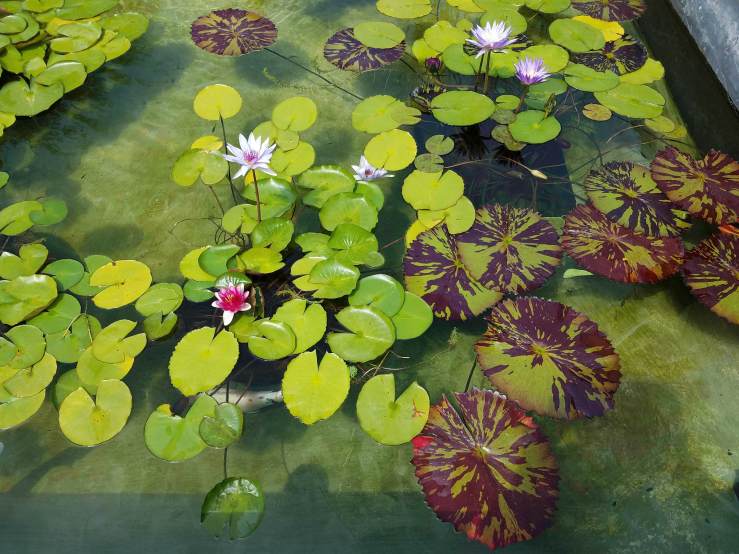
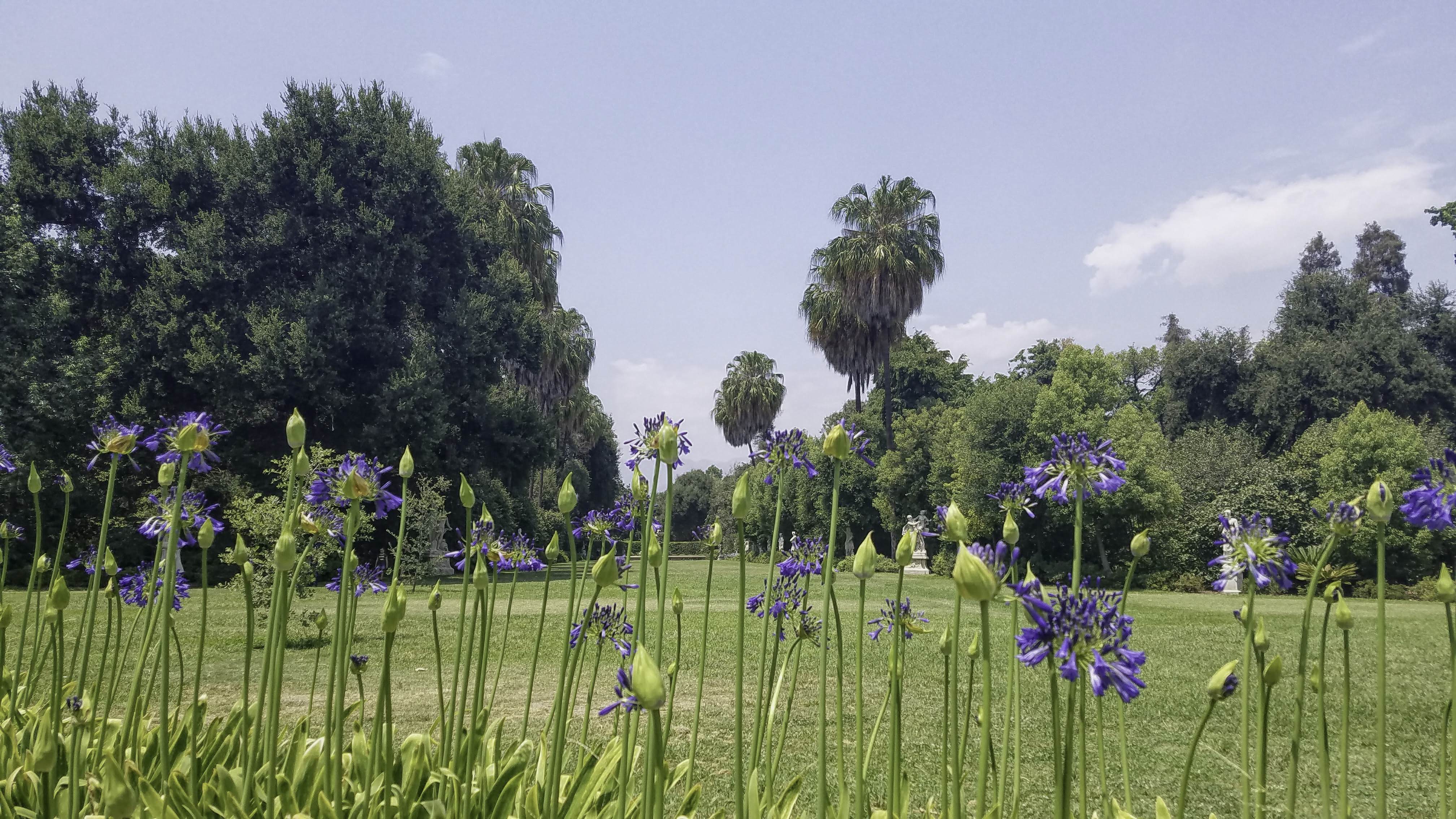
ART NATURE

Credits in sequence:

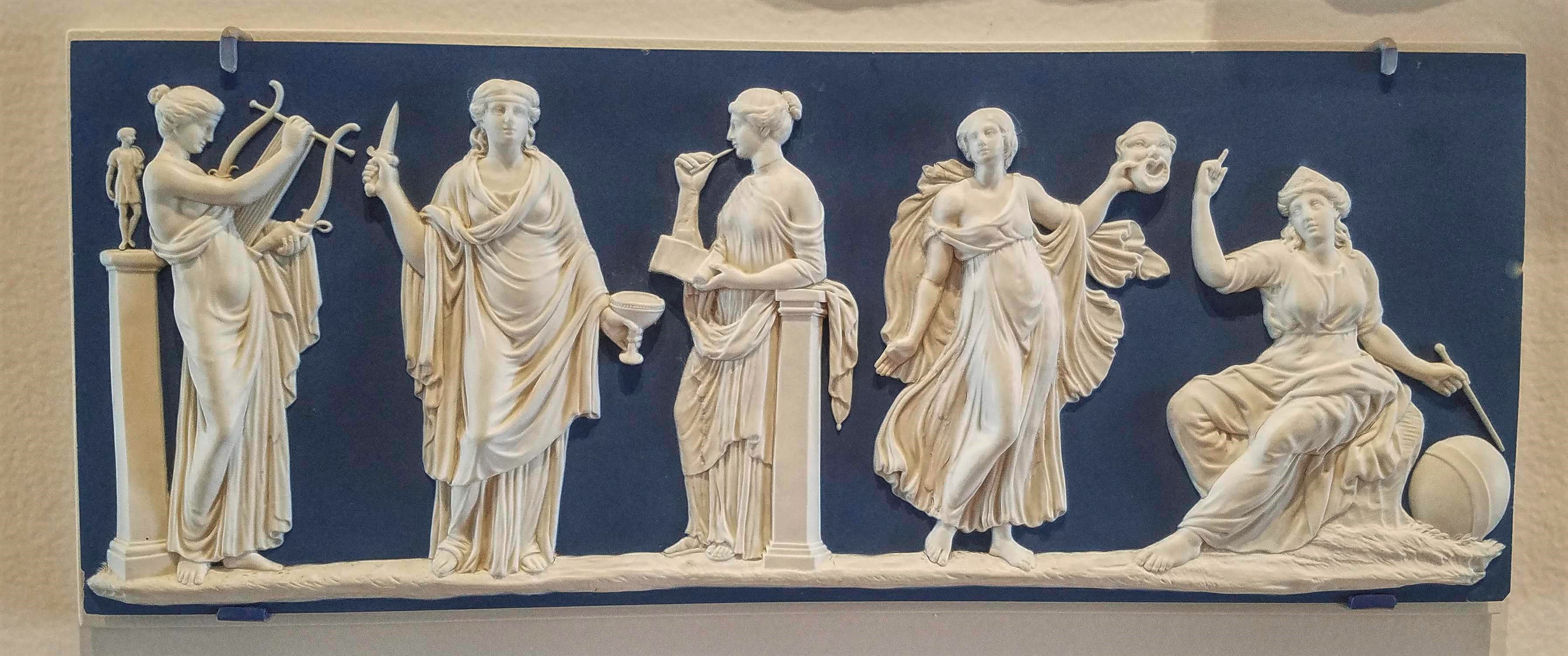
Blue Jasper Plaque with Apollo and the Muses, ca. 1778-80
Manufactured by Wedgwood and Bentley, Stoke-on-Trent, England
\\
The Huntington Gardens
\\
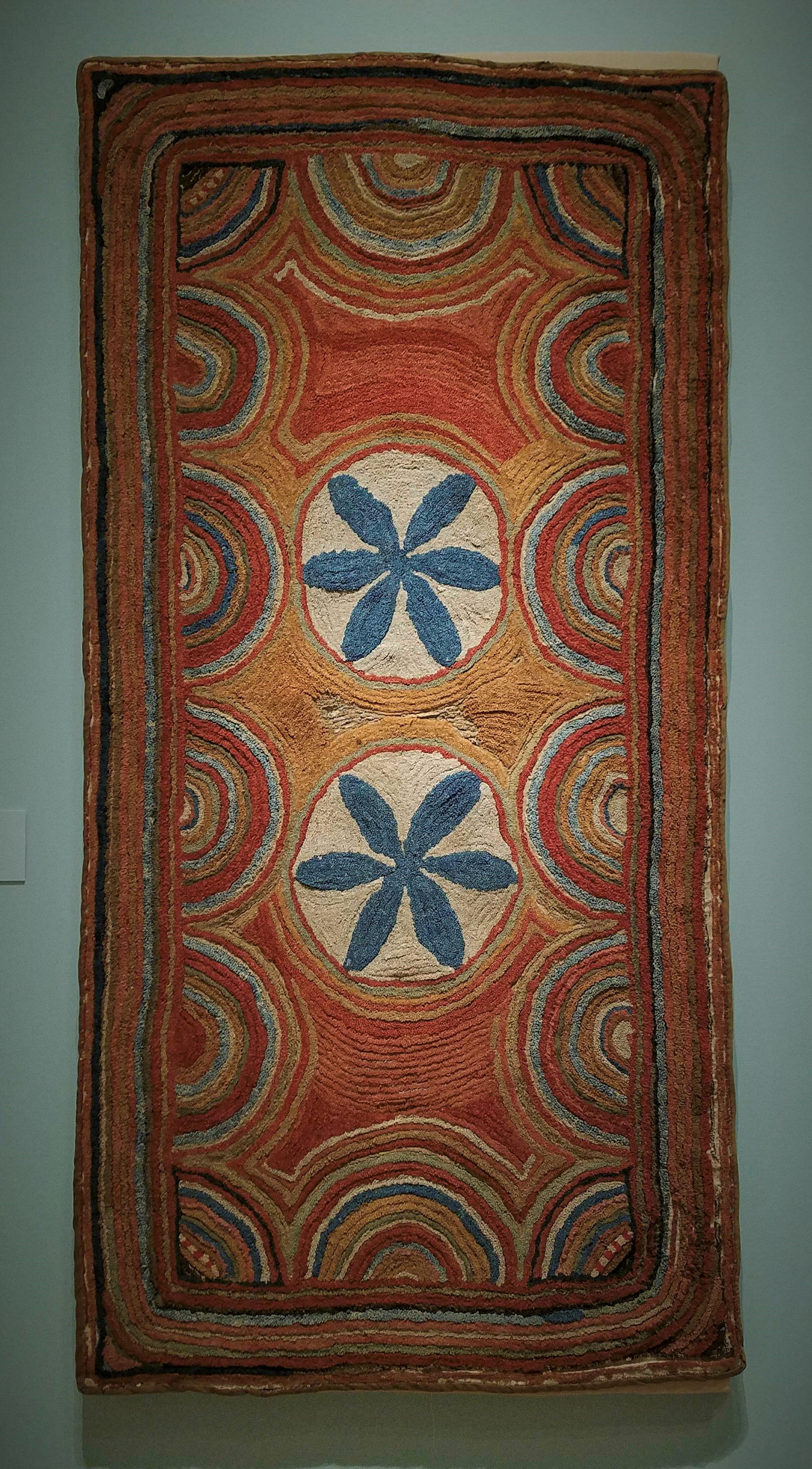
Geometric Hearth Rug, ca. 1800
Attributed to Mary Peters Hewins
\\
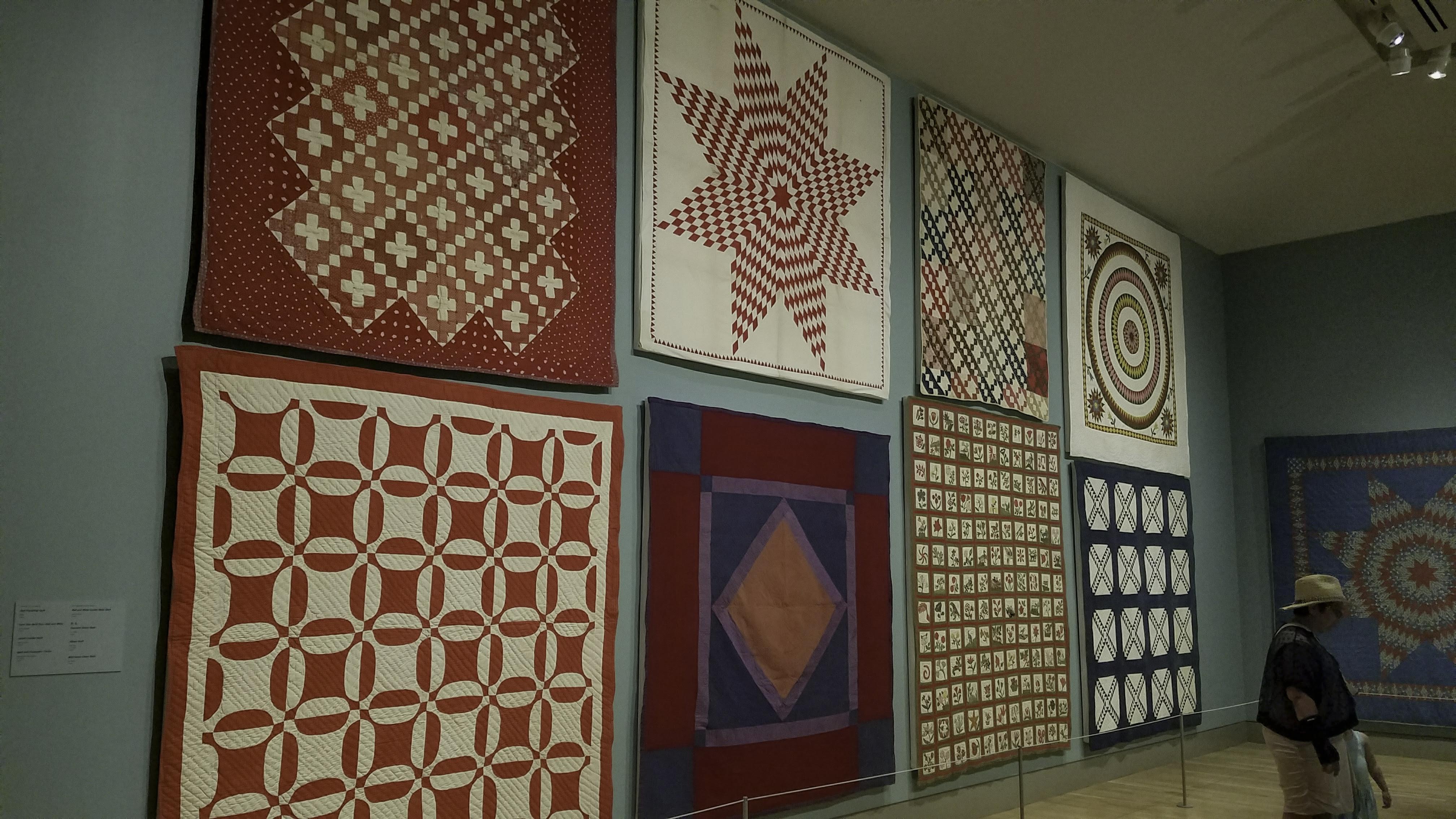
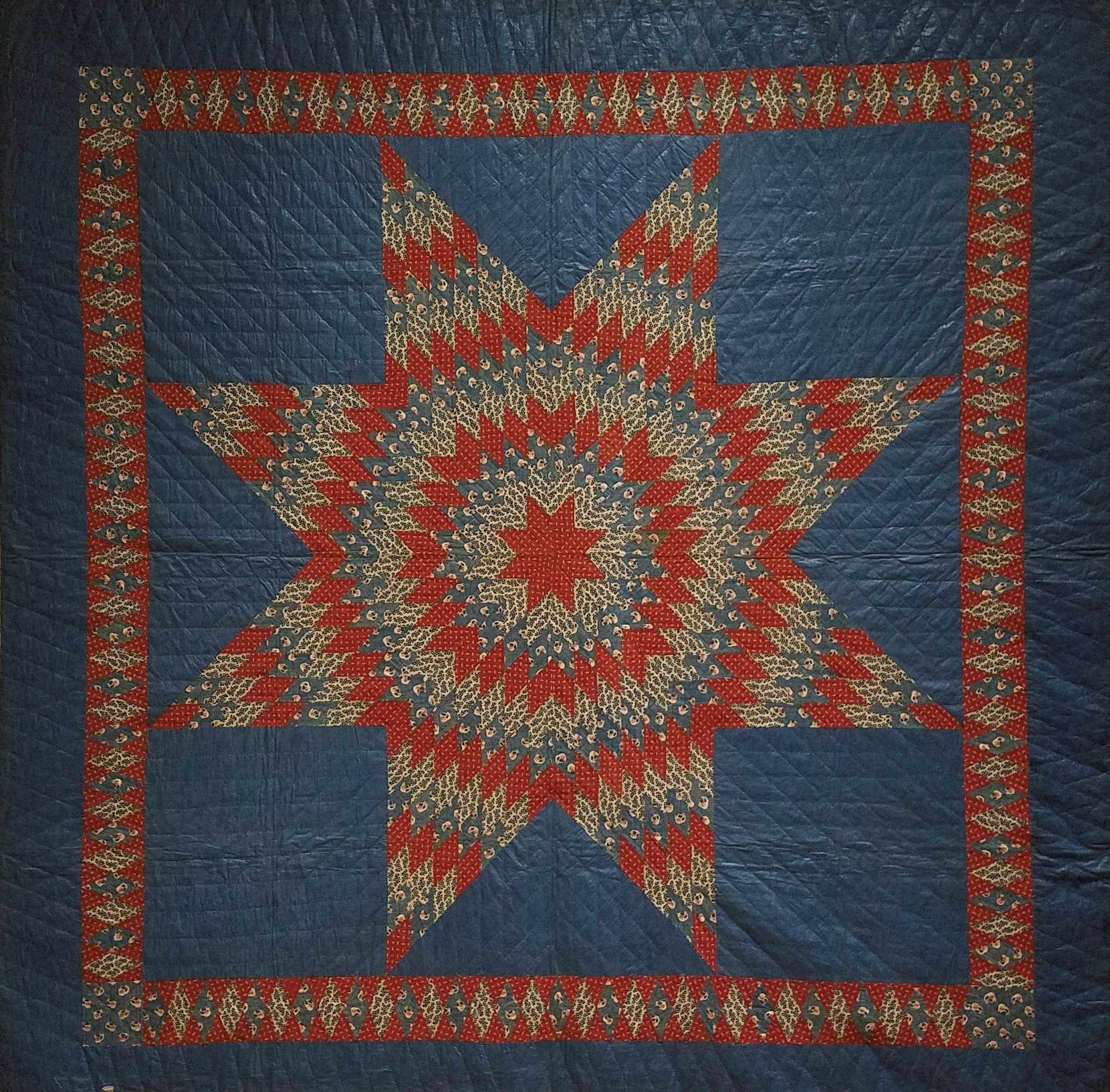
Quilts made between 1850-1896
\\
Drunkard’s Path Quilt, ca. 1880-90
(the large red square one with the yellow pattern)
\\
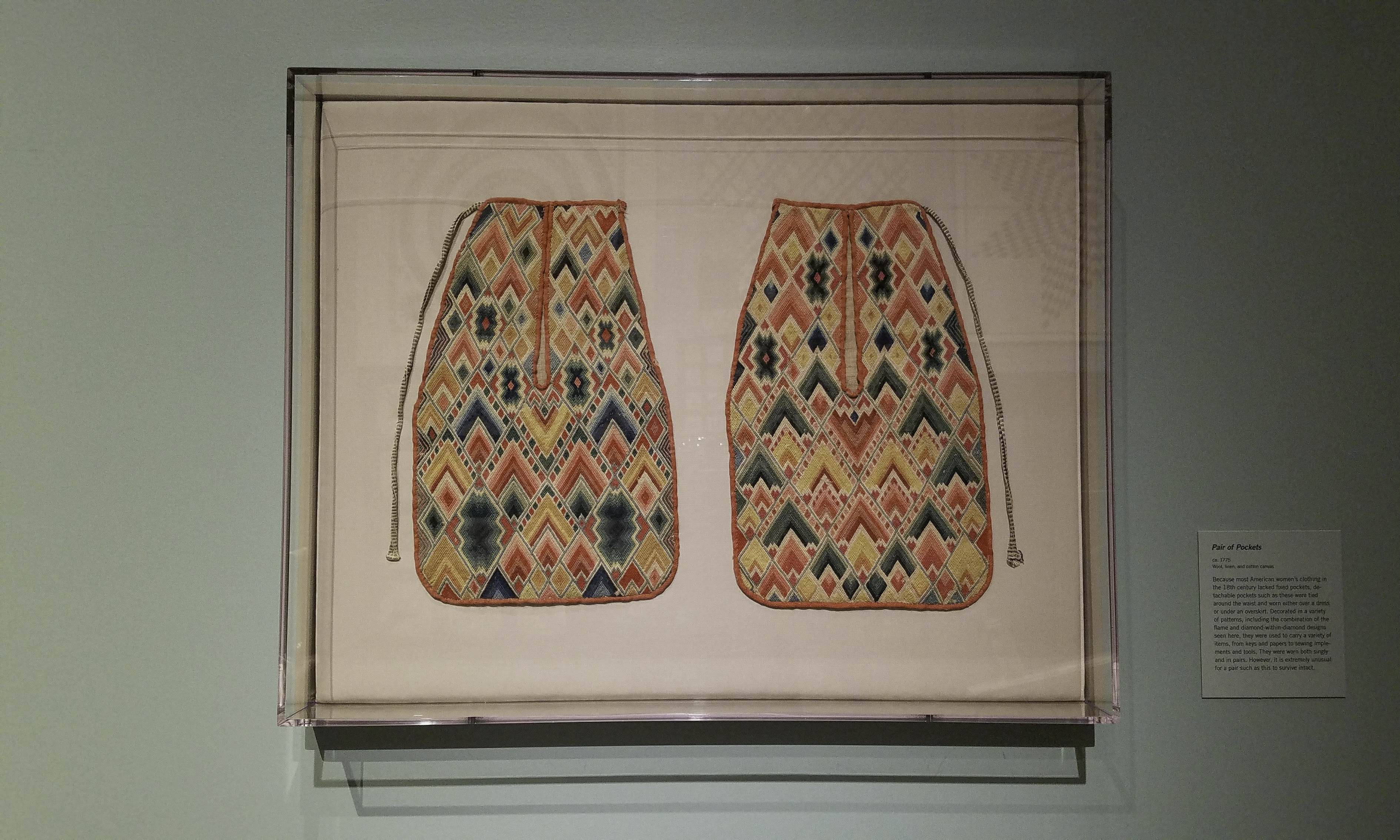
Pair of Pockets, ca. 1775
Because most American women’s clothing in the 18th century lacked fixed pockets, detachable pockets such as these were tied around the waist and worn either over a dress or under an overskirt. They were worn both singly and in pairs. It is extremely unusual for a pair such as this to survive intact. I urgently need two pairs!
\\
Helen E. Hatch
Folk Art Crazy Quilt, 1885

The Huntington

July 16th, 2017

Blue Note

1/
Carrington (Portrait of a Girl in a Blue Jersey), 1912 by Mark Gertler (1891-1939)
Oil and tempera on canvas

Though begun in tempera, this portrait was finished in oils, a more forgiving medium. The switch may have been made from necessity: Gertler often admonished his sitter, fellow art student and object of his unrequited love, Dora Carrington, for her habit of rarely sitting still.

2/
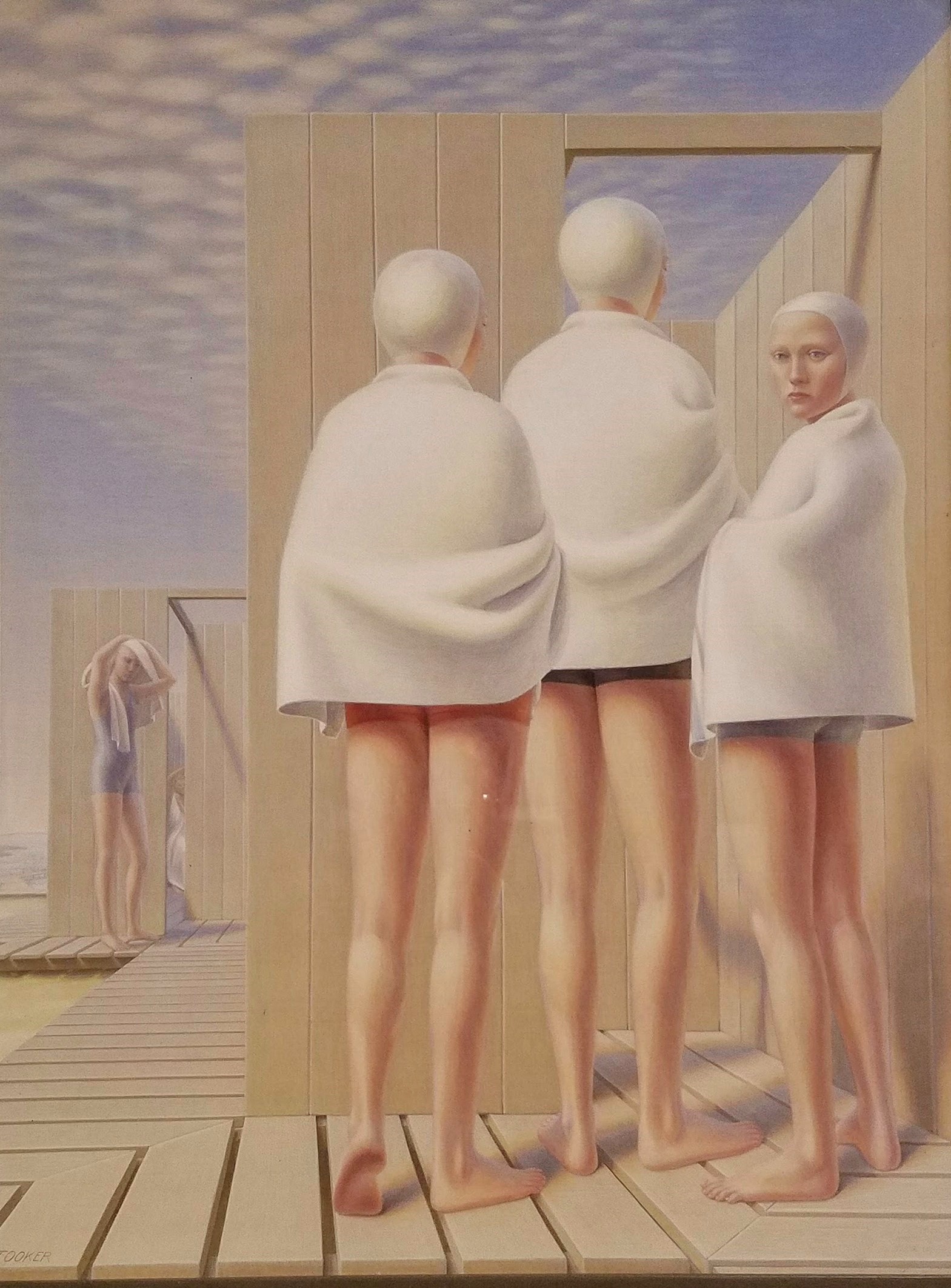
Bathers (Bath Houses), 1950 by George Tooker (1920-2011)
Egg tempera on gessoed board

Tooker used egg tempera, a medium popular among Renaissance painters which underwent a revival in the 1930s and 1940s, to capture exacting details.

3/
The Long Leg, ca. 1930 by Edward Hopper (1882-1967)
Oil on canvas

The Long Leg depicts a sailboat near the Long Point Light at Provincetown, Massachusetts, at about 3 o’clock in the afternoon. The boat sails in a zigzag series of short )and long tacks, or legs. Although the painting portrays a scene of leisure, no people are  visible on the boat or the landscape. Despite (or, perhaps, because of) this absence, this is my all time favourite of all of Hopper’s brilliant works.

The Huntington

July 16th, 2017

The [k]night is dark

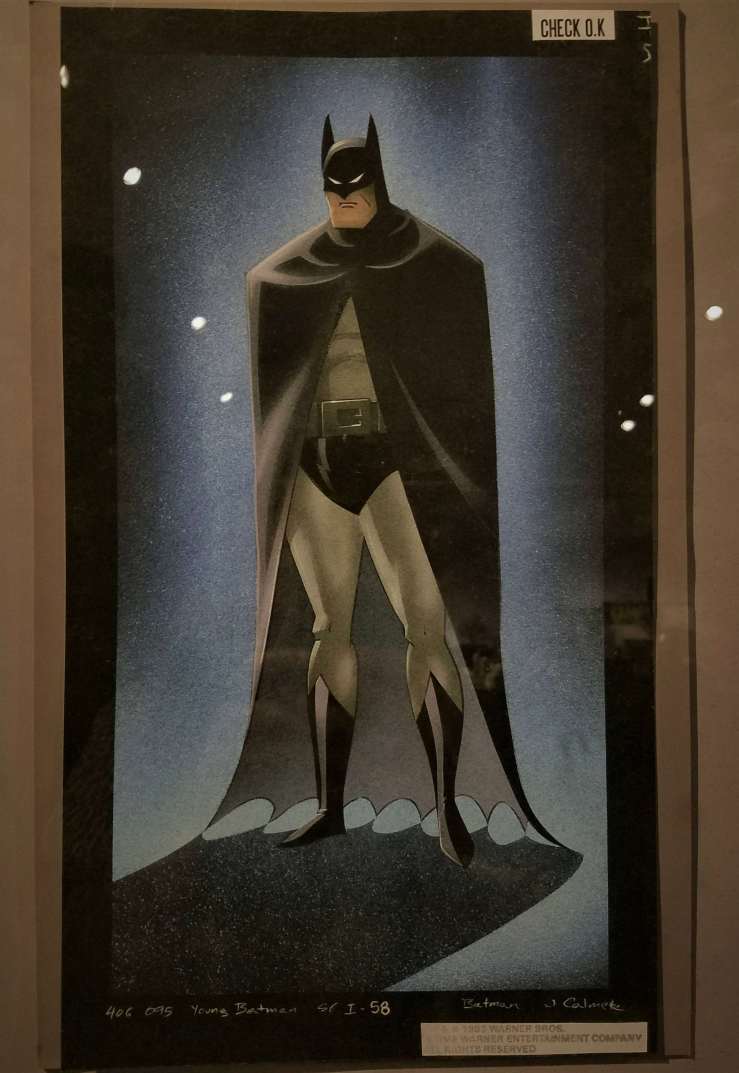
The Animated Series (1992) opening storyboards, drawn by Bruce Timm and coloured by Eric Radomski.

For me, The Animated Series (1992-1995) is the definitive Batman. And the opening title sequence encapsulates the essence of Batman in way that has yet to be surpassed.

*Watch*

#current_mood
#two_days_to_Halloween
#my_batman
#it’s_my_birthday_and_I’ll_try_if_I_want_to

Warner Bros Studio Tour

July 14th, 2017