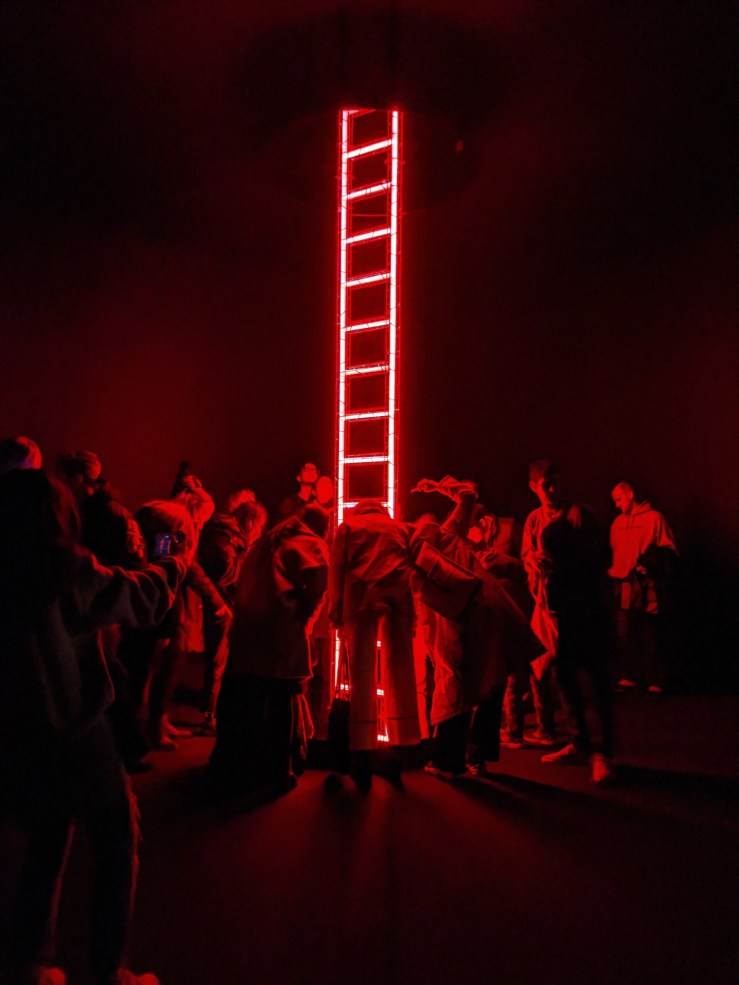
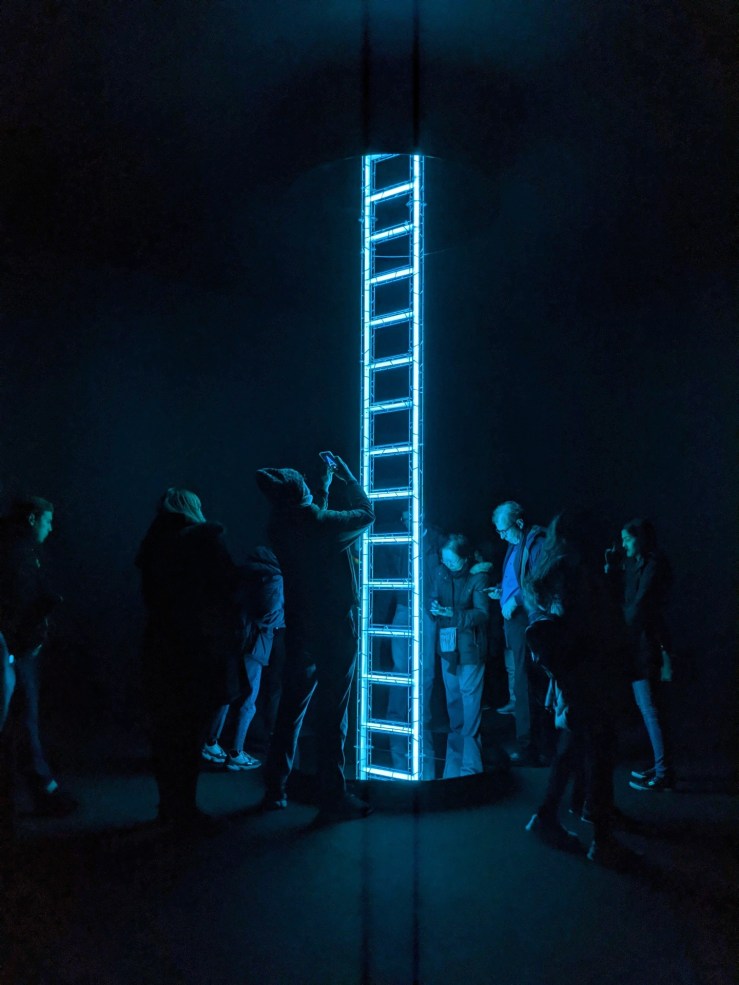
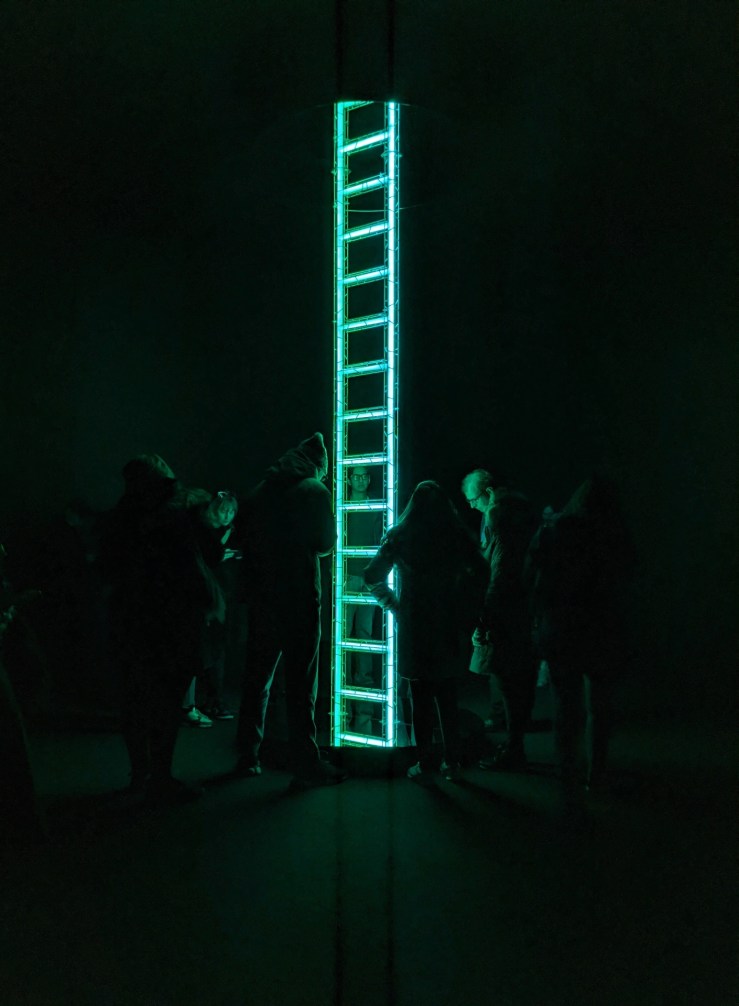
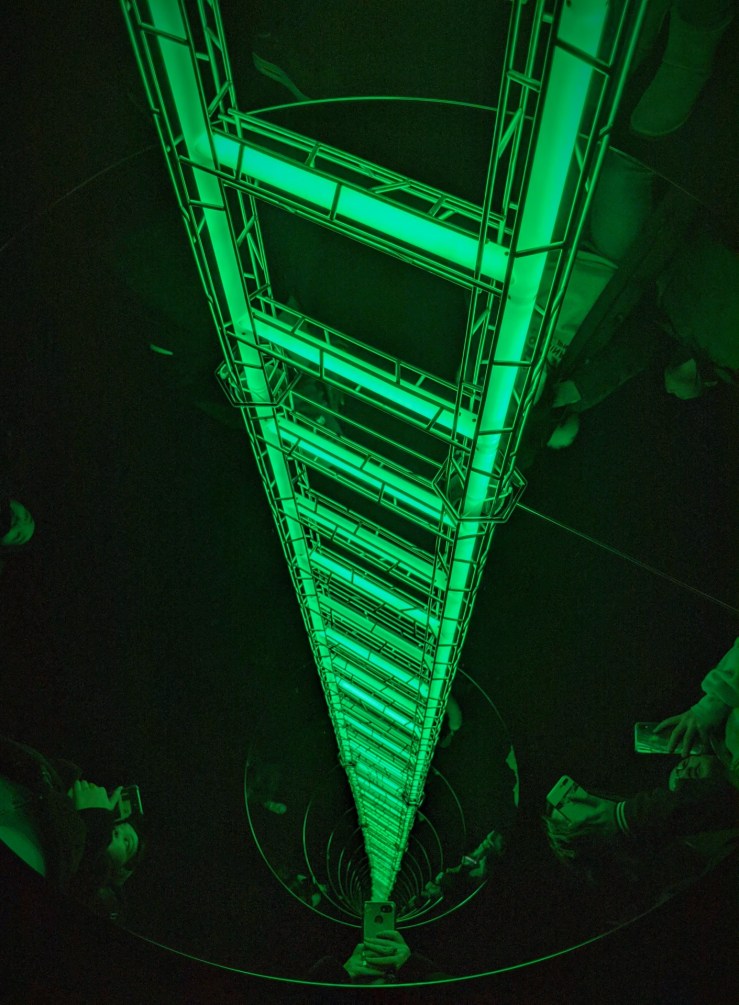
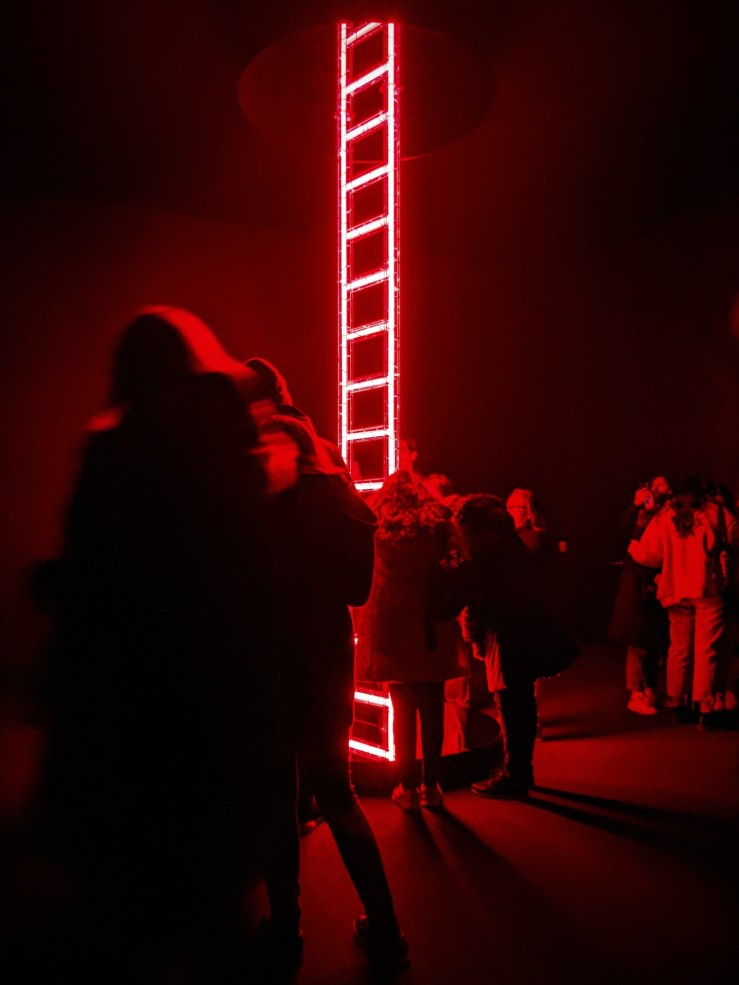
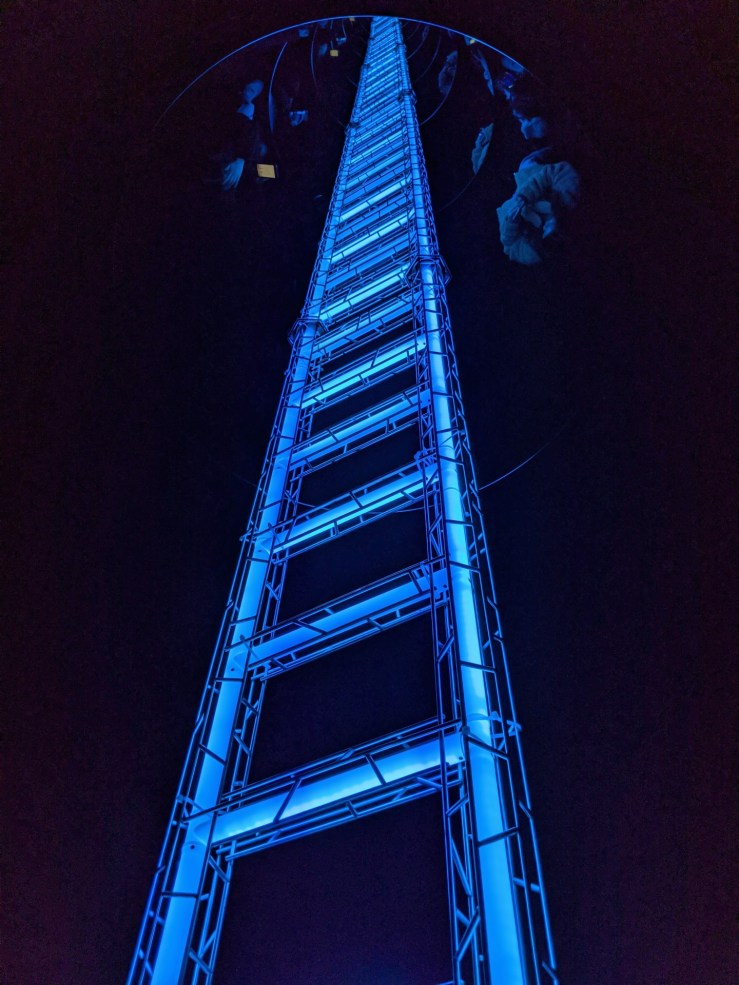
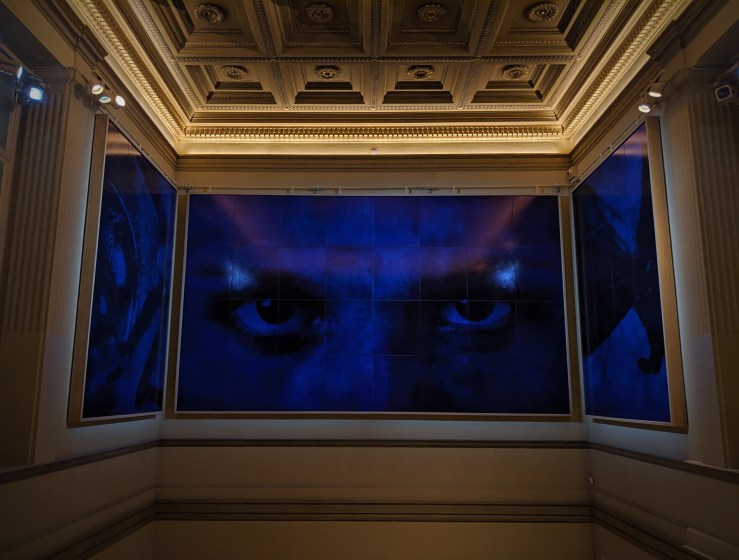
Stretching to infinity with the help of two mirrors – one on the ceiling, another on the floor – and colour changing LED lights. I’m not sure about the ”heaven” part, the effect is more like ”as above so below”, with worshippers debating on which direction is better to take.
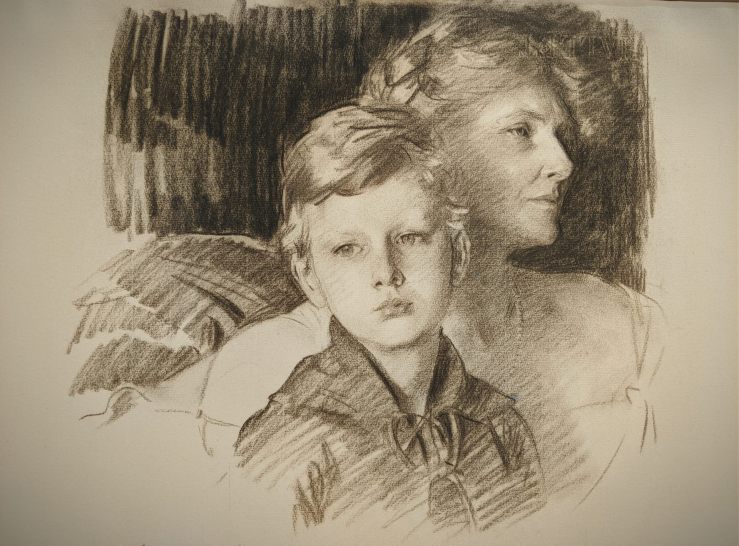
Charlotte Nichols Greene and Her Son Stephen Greene, 1924, Charcoal
Daisy Fellowes, ca. 1920, charcoal
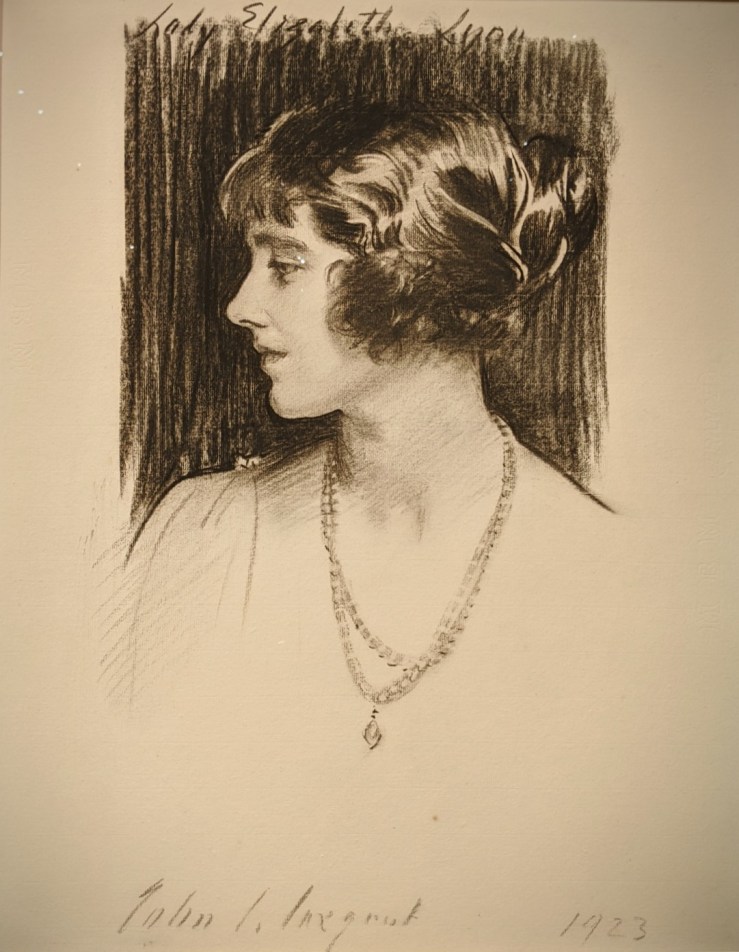
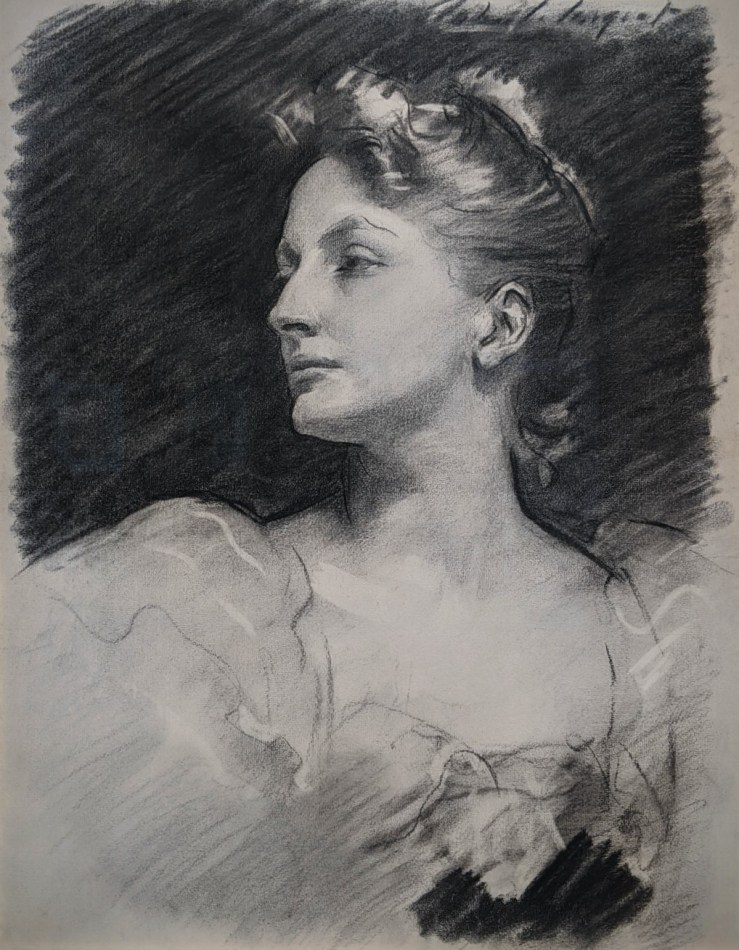
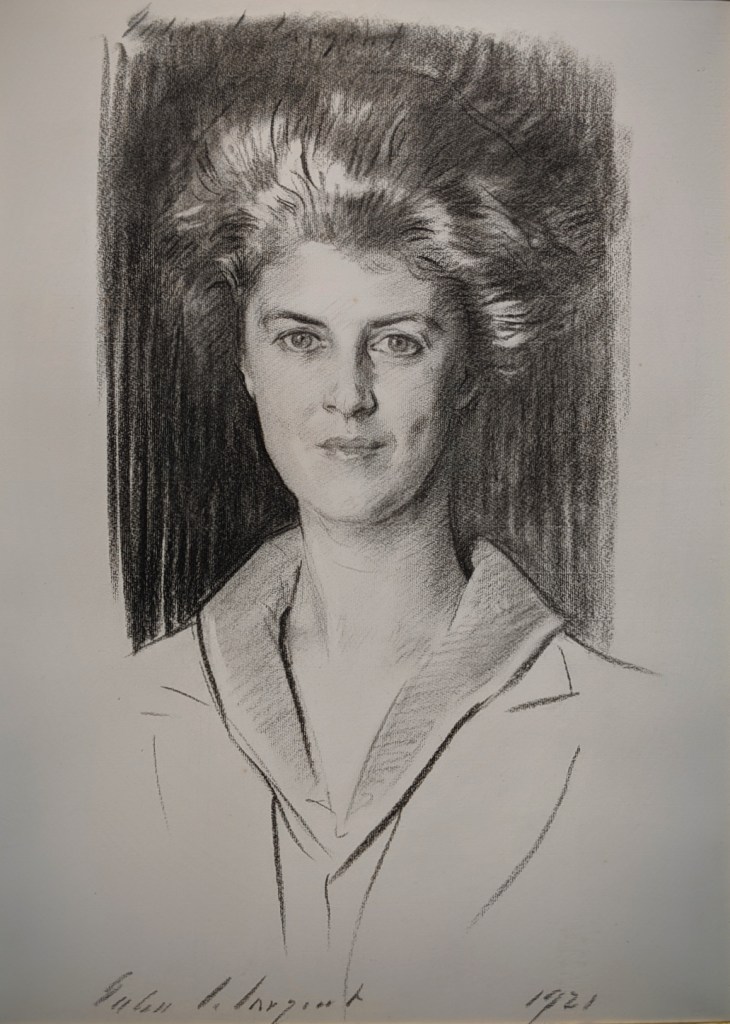
Lady Elizabeth Bowes-Lyon, Later Queen Elizabeth, The Queen Mother, 1923, charcoal
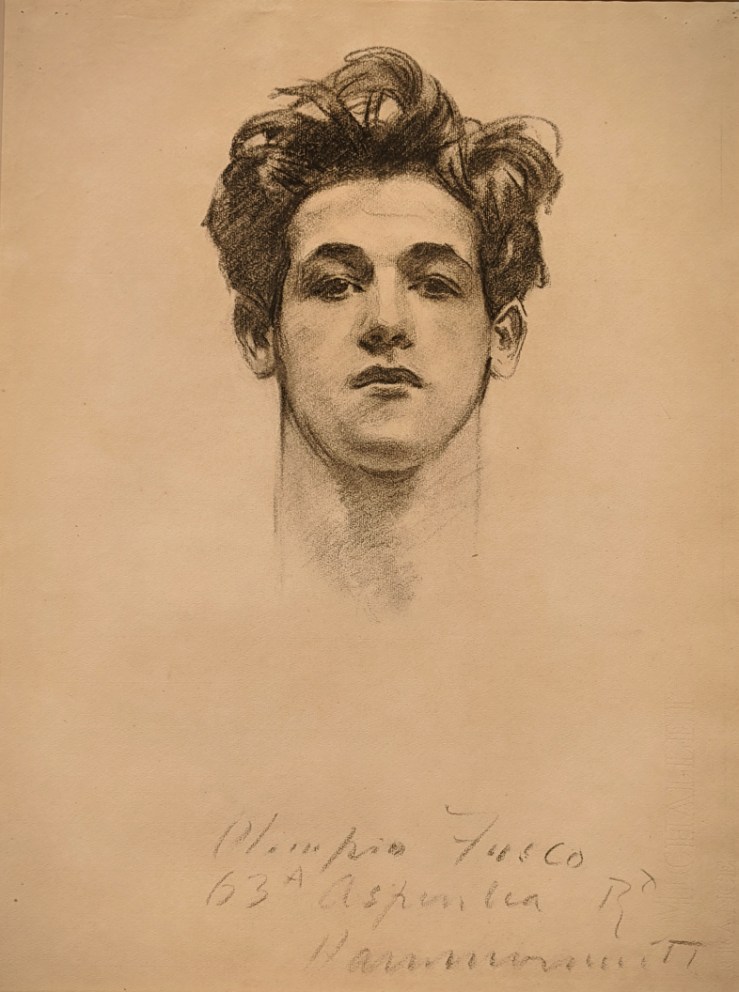
Olimpio Fusco, ca. 1900-1910, charcoal. Olimpio Fusco was likely one of the numerous professional models, often Italians living in London, whom Sargent employed to pose for his mural cycles.
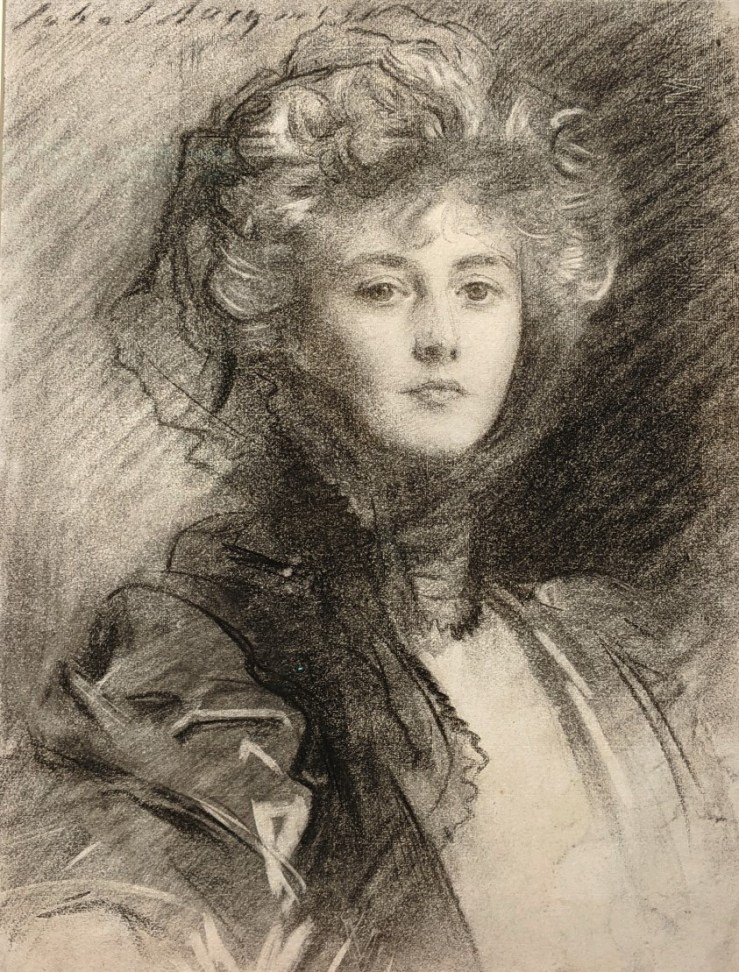
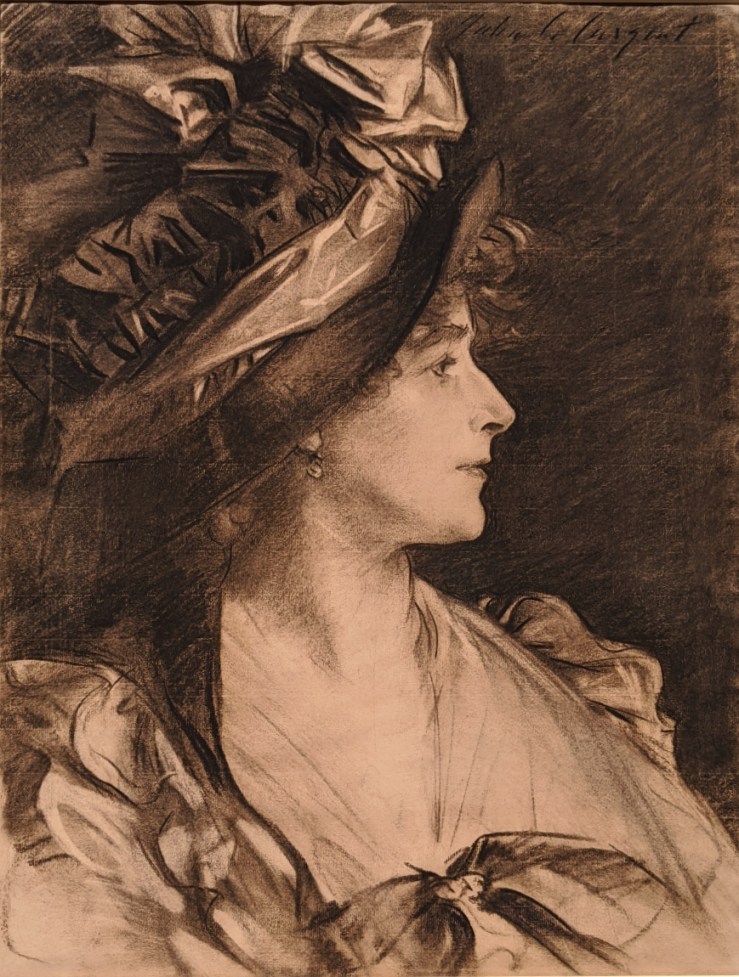
Lady Helen Venetia Vincent, ca. 1905, charcoal
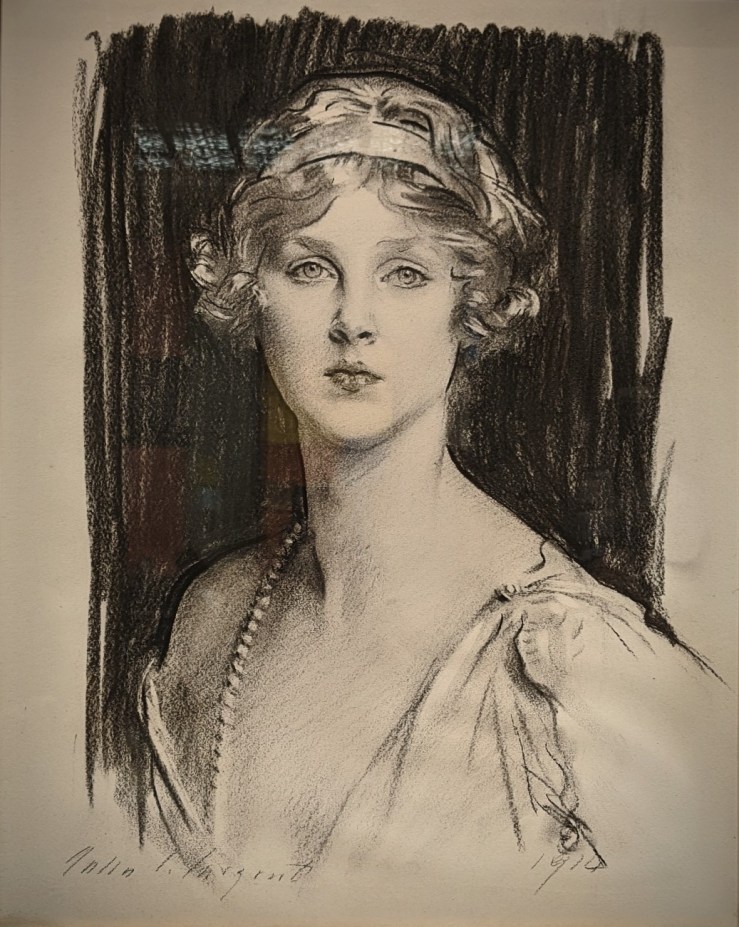
Lady Diana Manners, 1914, Charcoal Lady Diana Manners was the youngest daughter of Violet Lindsay and Henry Manners, eight Duke of Rutland. Her mother, herself an exhibiting artist, was a central figure in the Souls. Along with other children of the Souls, Lady Diana became part of the ”Corrupt Coterie”, a group of aristocrats and intellectuals known for their extravagant parties in the years leading up to WWI. During the war, many members of this group would be killed; Lady Diana served as a nurse and married Alfred Duff Cooper, a fellow survivor, in 1919. Legendary for her beauty, she proved fascinating for authors like Evelyn Waugh and F. Scott Fitzgerald
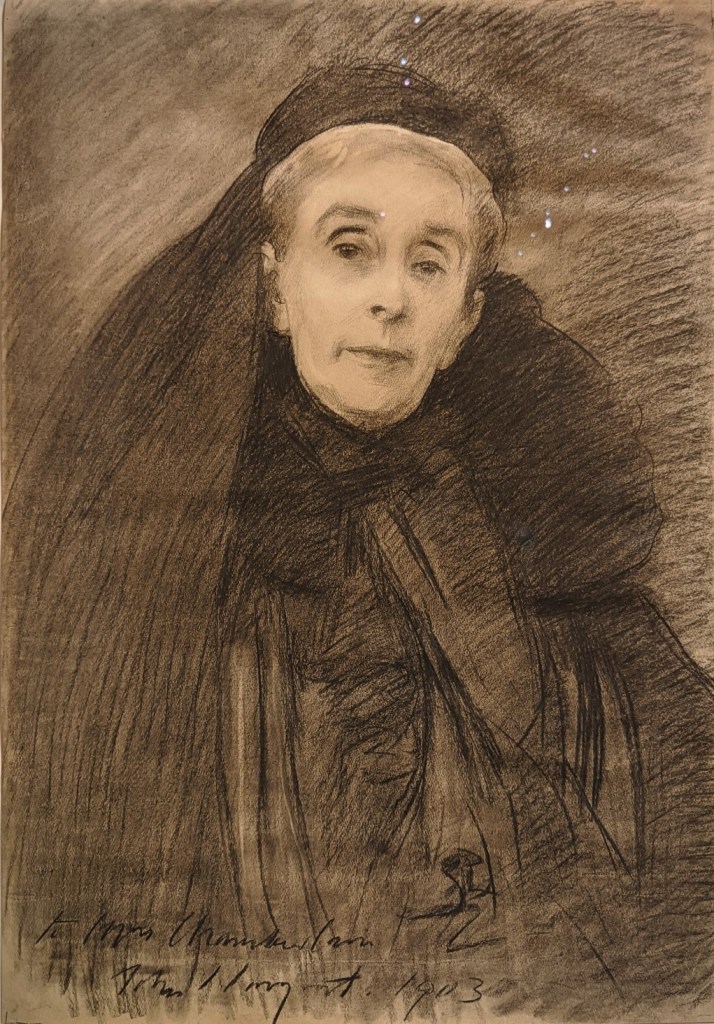
Ellen Peabody Endicott, 1903, Charcoal
Helen Dunham, ca. 1895, charcoal
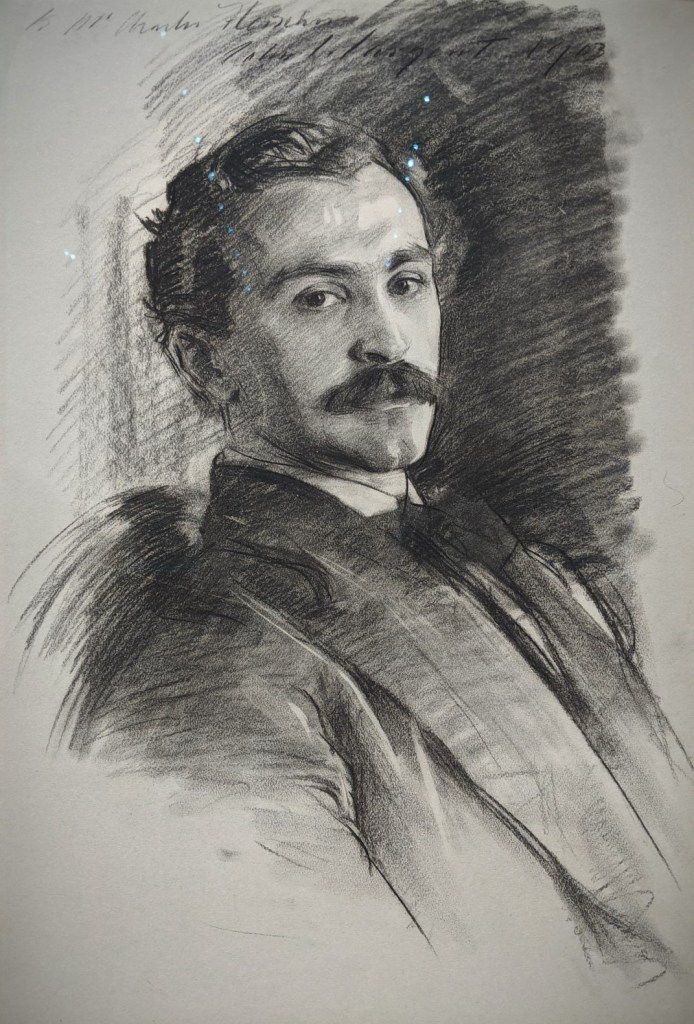
Dr. Charles Fleischer, 1903, charcoal Sargent is said to have thought that Fleischer, with his prominent mustache, bore some resemblance to Edgar Allan Poe, which this relaxed portrait likewise suggests
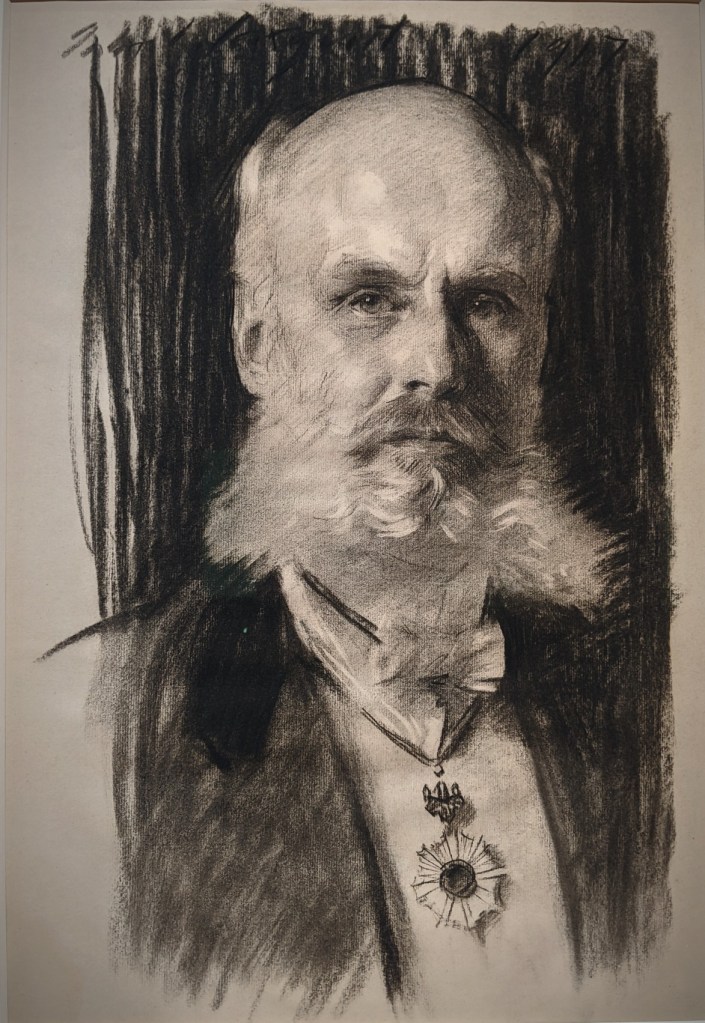
Charles Martin Loeffler, 1917, charcoal and graphite
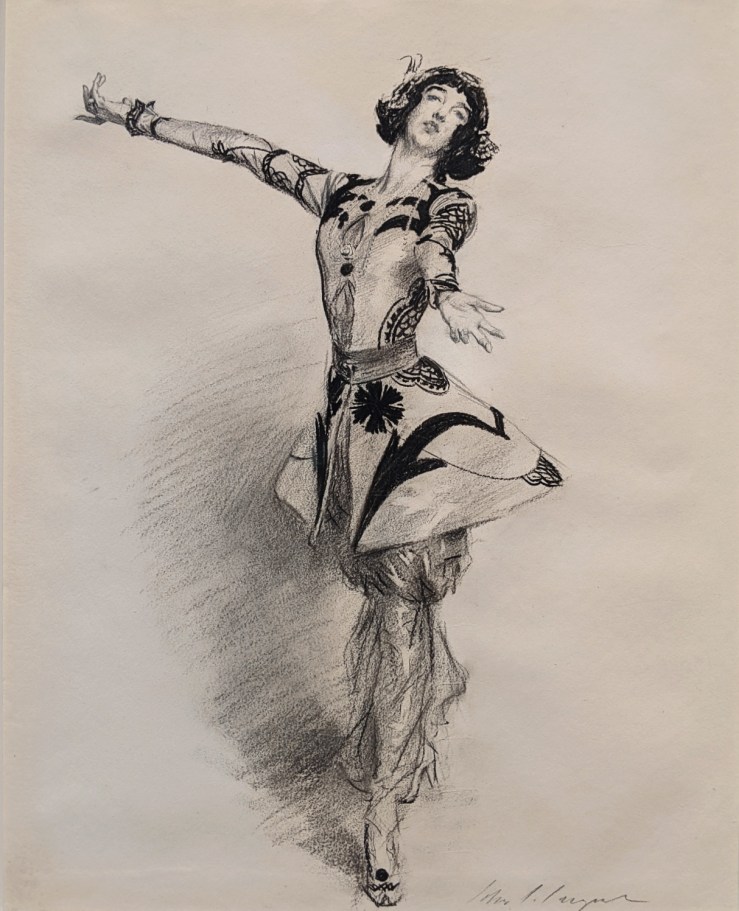
Gertrude Vanderbilt Whitney, ca. 1913, charcoal and graphite In this joyful drawing, Sargent represented her in an outfit thought to have been designed by Bakst, the costume designer for the Ballets Russes. Whitney went on to found the Whitney Museum of American Art in 1930 with her collection of more than five hundred works by contemporary American artists
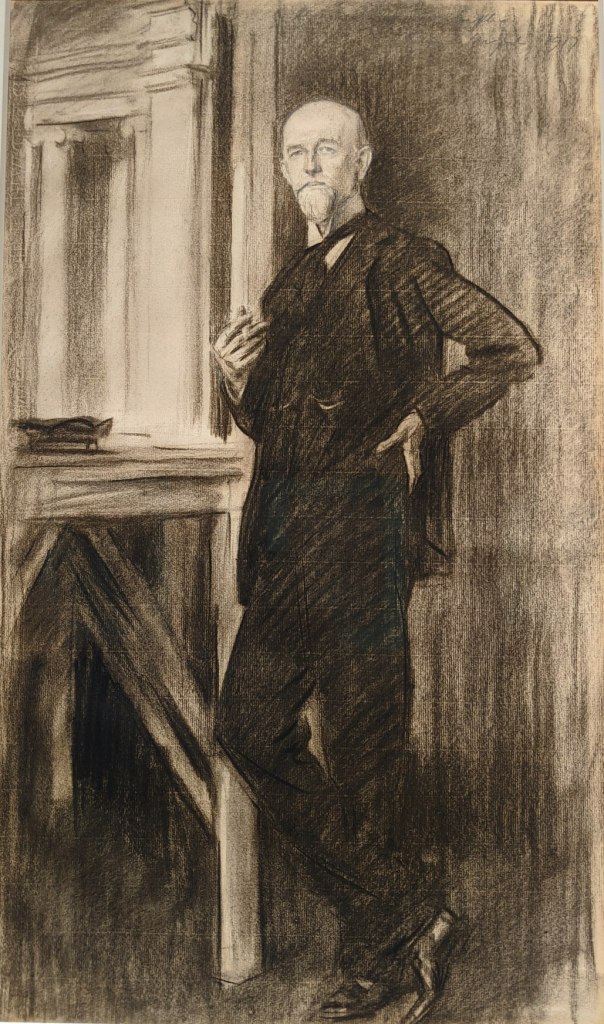
Dr. William Sturgis Bigelow, 1917, charcoal and white chalk
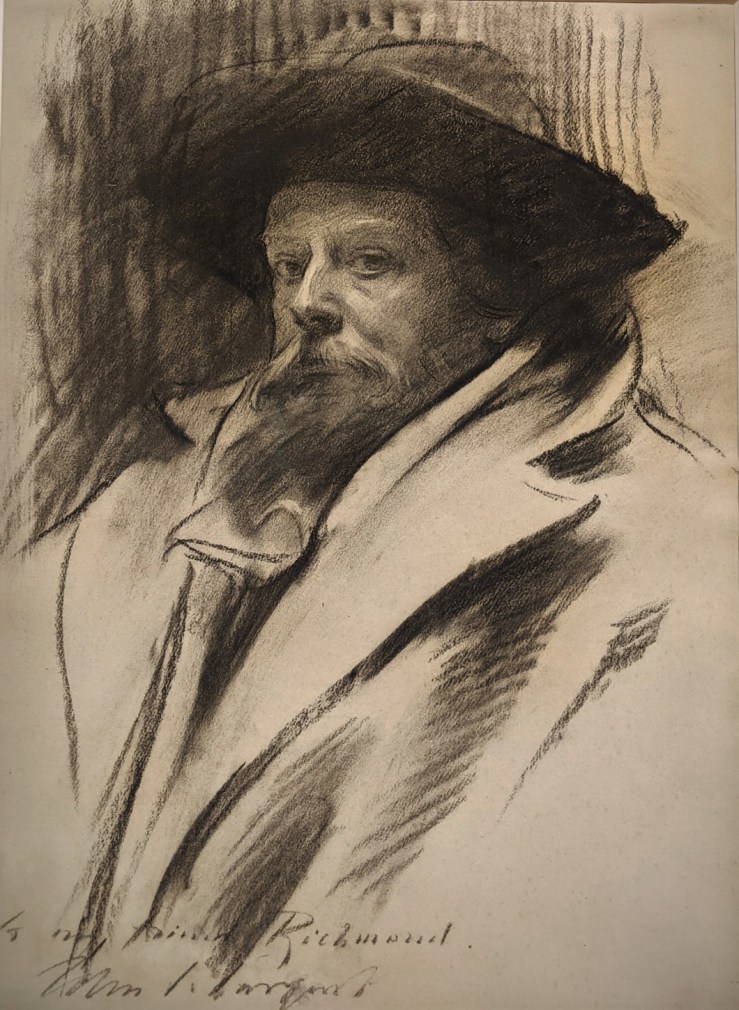
Sir William Blake Richmond, ca. 1910, charcoal The son of portraitist George Richmond, he was named after his father’s friend and mentor, William Blake.
William Adams Delano, 1922, charcoal
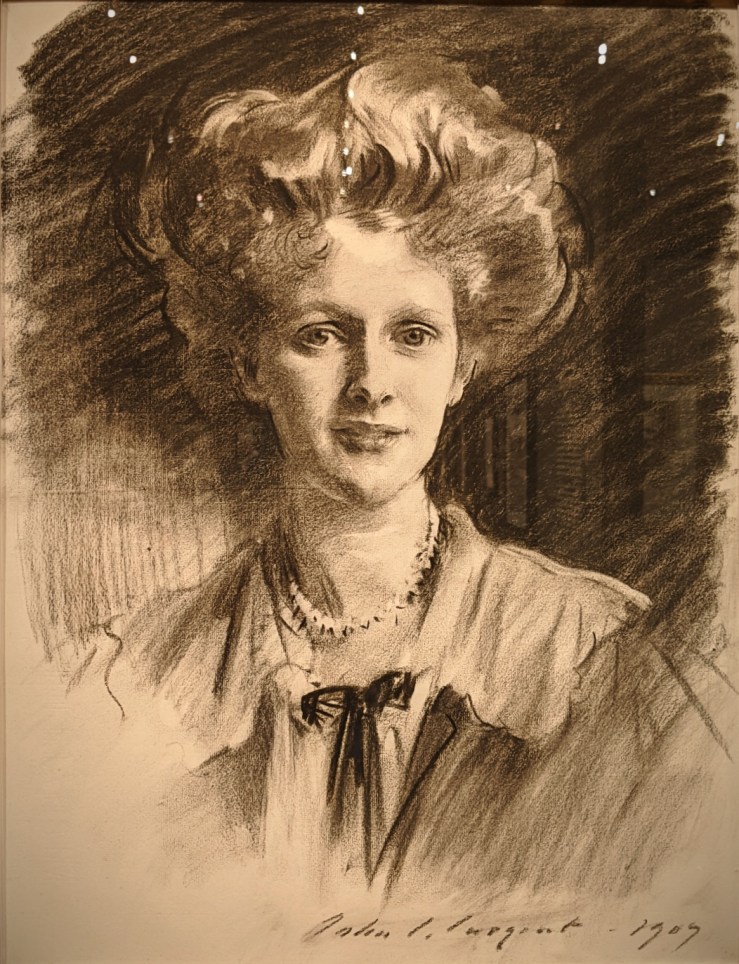
Nancy Astor, 1907, charcoal Nancy Astor was the first woman to take a seat in British Parliament when, in 1919, she ran as a Conservative for the post previously held by her husband in the House of Commons.
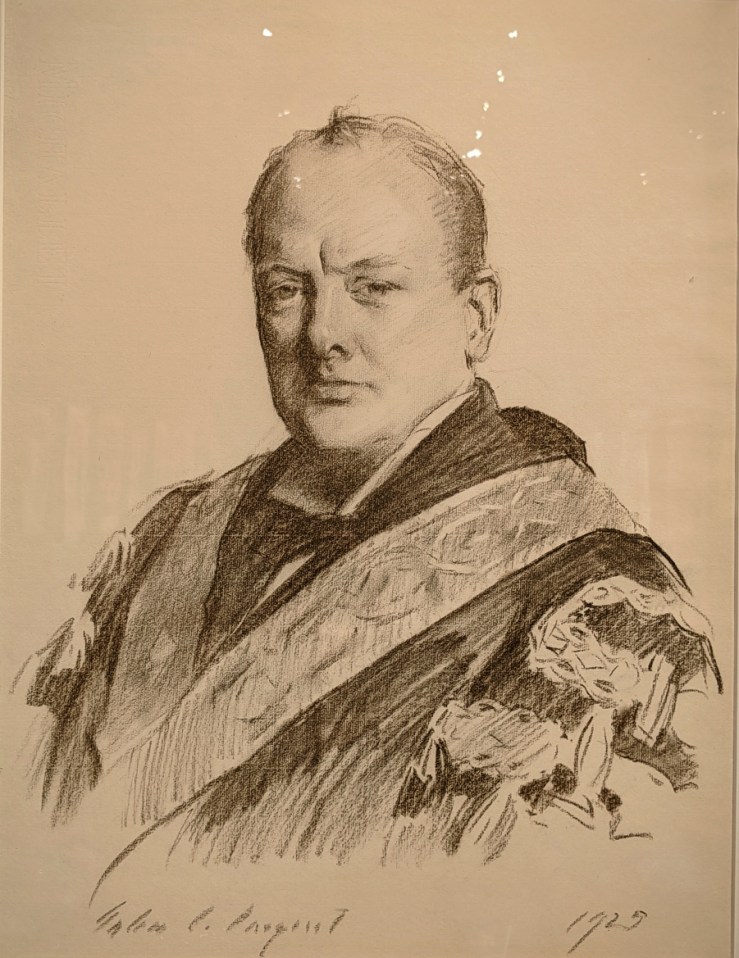
Winston Churchill, 1925, charcoal
Eleonora Randolph Sears, 1921, charcoal A devoted and successful athlete and a pioneering figure in women’s sports. She garnered as many as 240 athletic trophies during her lifetime, winning the US doubles tennis championship four times between 1911 and 1917 and becoming the first female national squash champion in 1928
Gertrude Kingston, ca. 1909, charcoal
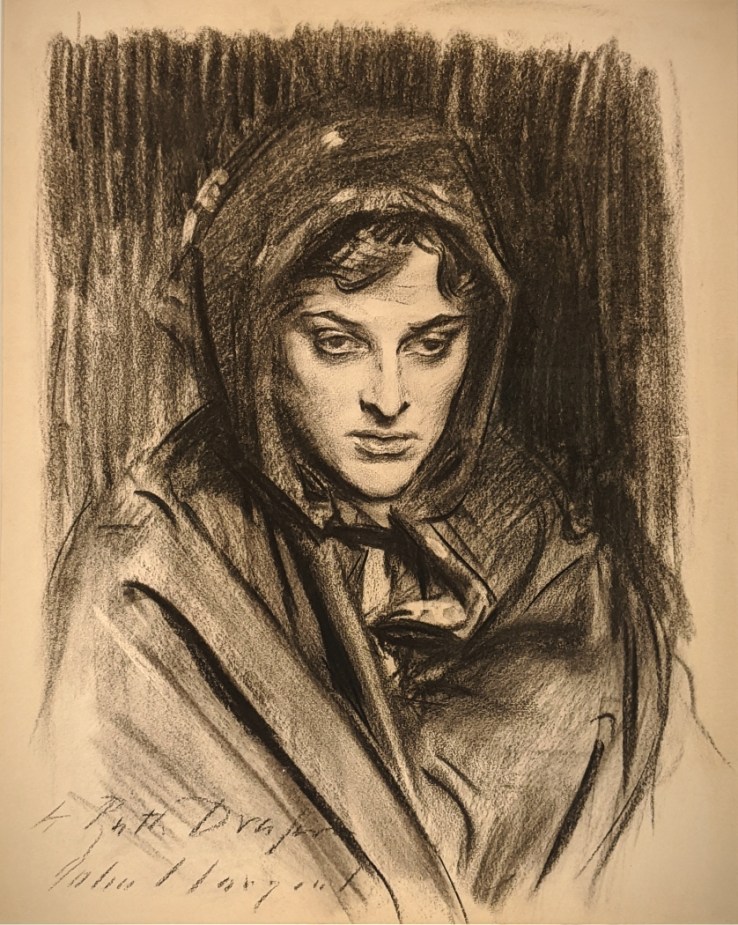
Ruth Draper as a Dalmatian Peasant, 1914, charcoal The American actress Ruth Draper is credited with originating the now-familiar one-woman show. She wrote her own monologues and impersonations, both dramatic and comic, and gained fame in the United States and Europe. Sargent first drew a conventional portrait
John Singer Sargent (1856–1925) was one of the greatest portrait artists of his time. While he is best known for his powerful paintings, he largely ceased painting portraits in 1907 and turned instead to charcoal drawings to satisfy portrait commissions.
The Morgan Library & Museum presented a major exhibition of his beautiful portraits of beautiful people, in charcoal.
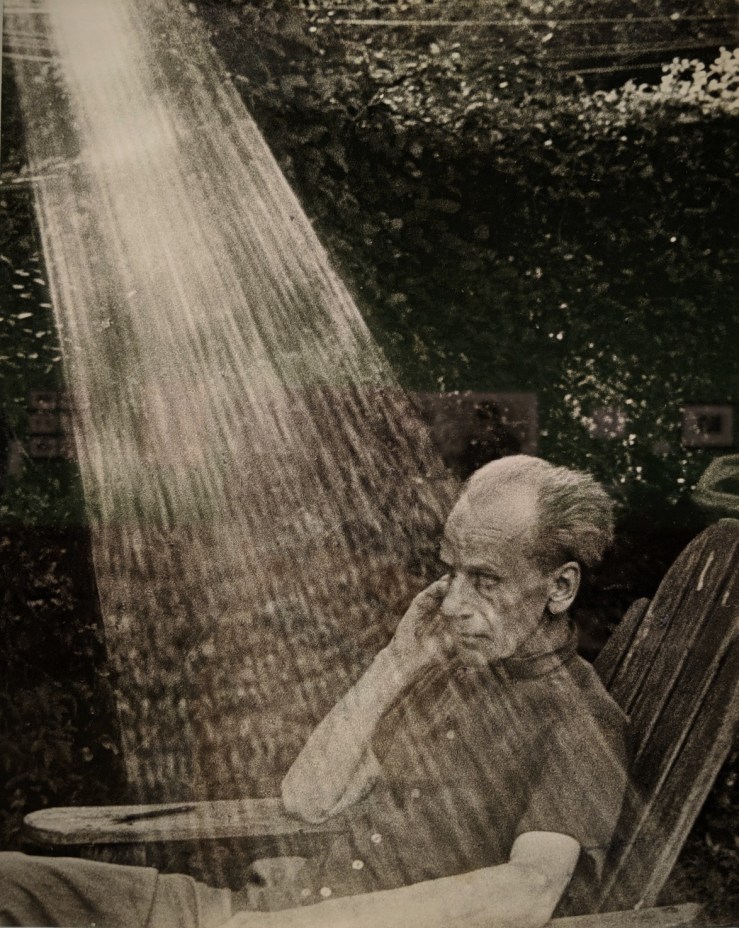
Joseph Cornell in His Backyard, Utopia Parkway, New York, 1969
”It kills me, it’s so good. Let’s pretend I took this, okay?… I used to go to Cornell’s house once a week for I don’t know how long. He would make tea on his ancient, Depression-era stove. He’d turn the gas on, and the flames shot up. He talked a lot, gesturing, in this very fluffy angora sweater he wore. And I’m thinking, I should keep the camera ready in case he goes up. A Flaming Cornell: that’d be amazing! Unfortunately, he never caught on fire. But this portrait is going to upstage the whole exhibit – I may have to set it on fire.” – Duane Michals
From ”Illusions of the Photographer”, an exhibition of the art of Duane Michals, which included this photograph of Joseph Cornell by Hans Namuth and, as far as I was concerned, upstage the whole exhibit, it did.
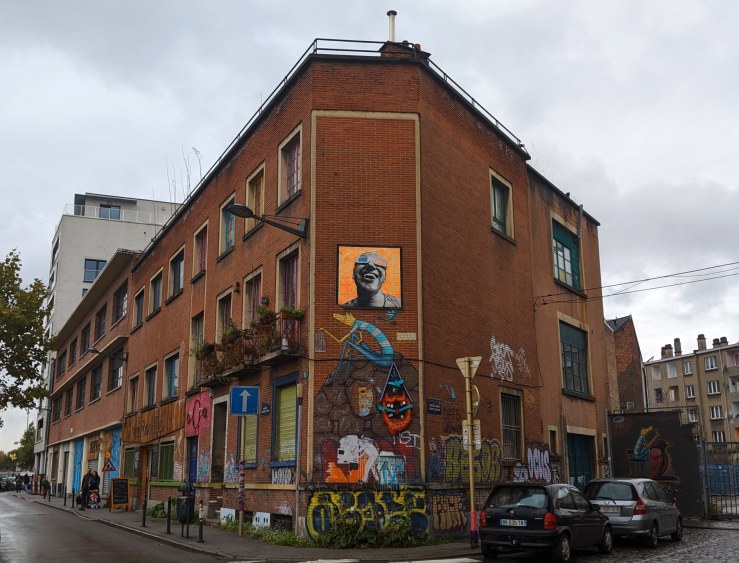
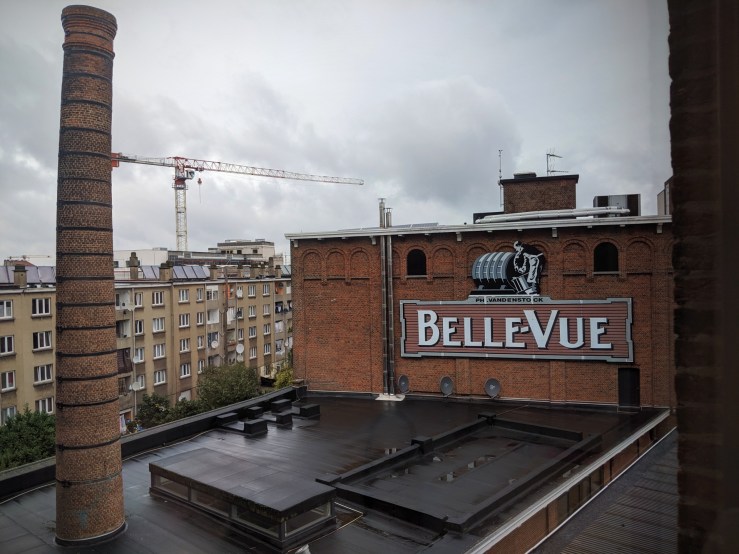
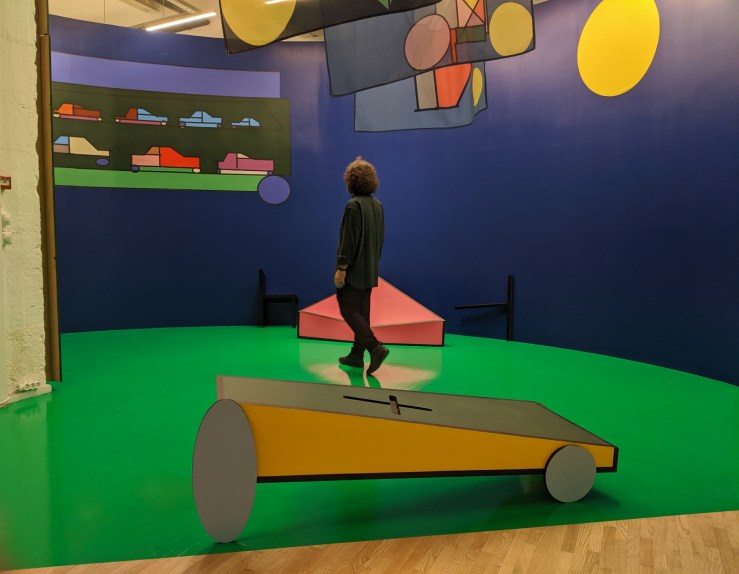
The Millennium Iconoclast Museum of Art. Opened just after we’d left for New York in 2016, Brussels’ newest contemporary museum showcasing works by younger artists mainly, it goes without saying that we couldn’t wait to pay a visit. The renovated red-brick building – a former brewery – is amazing; the art on show not so much, but fun nonetheless.
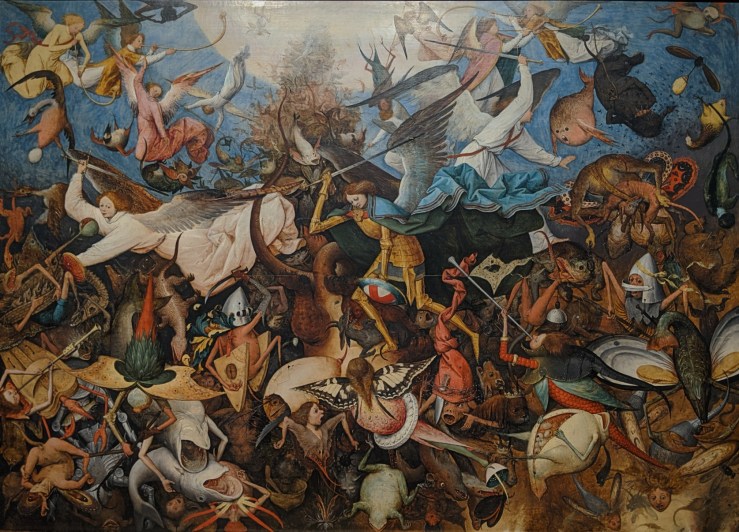
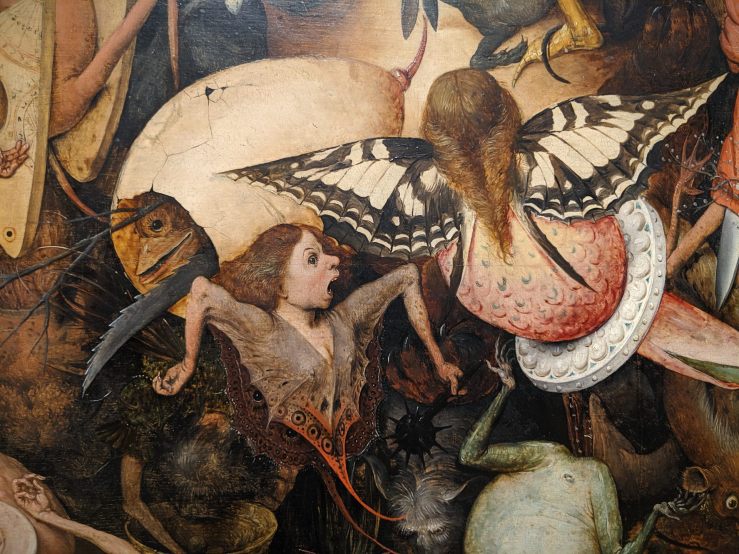
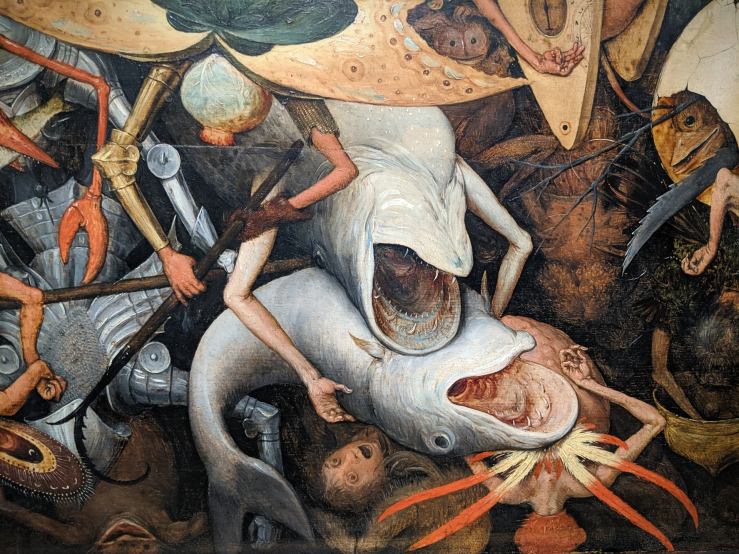
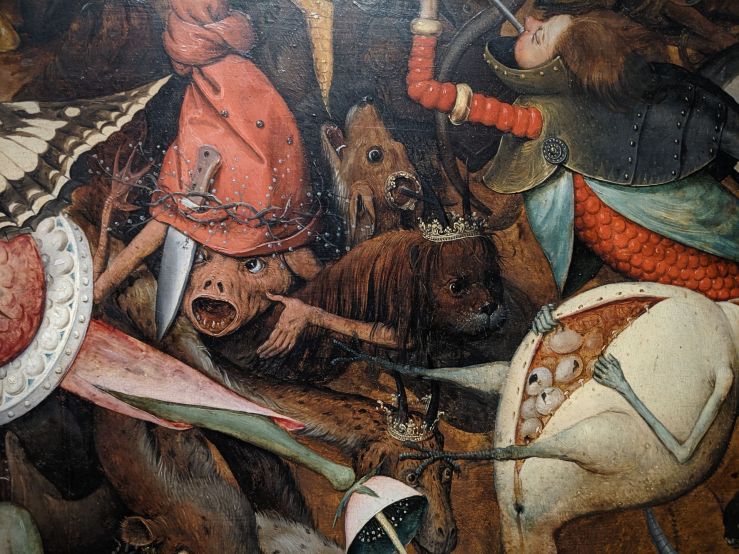
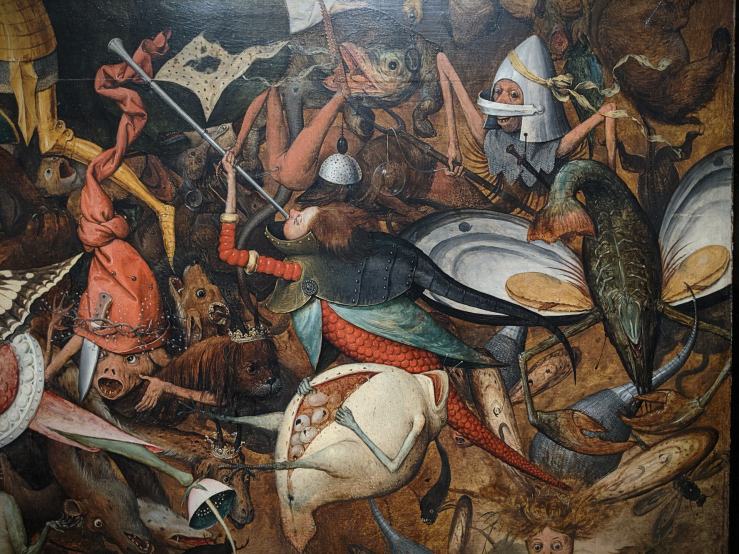
Elaborately worked details define most of the Elder’s paintings but, in The Fall of the Rebel Angels, he manages to surpass even himself! If anyone could encompass an entire cabinet of curiosities in one painting – and have tons of fun in the process, that must be Pieter Bruegel the Elder.
So absorbed was I by all these wonderful details – every little one a work of art in itself, I almost missed the violence the work is supposed to depict, with the fall of Lucifer and his fellow rebel angels, chased away from heaven by Archangel Michael.
Another ”fun” detail: The Fall of the Rebel Angels by Pieter Bruegel the Elder is one of the masterpieces at the Royal Museums of Fine Arts of Belgium. The Royal Museums acquired the painting in 1846 thinking it was the work of his son, Pieter Brueghel the Younger. The work was then attributed to Hieronymus Bosch (1450-1516) until 1898 when the date and signature “MDLXII / Brvegel” were found in the bottom left-hand corner, hidden by the frame.
Thus the painting was finally attributed to its legitimate creator, Bruegel the Elder. [source]
Royal Museums of Fine Arts of Belgium [Musée Oldmasters Museum], Brussels
The Old Masters may be all divine symbolism and biblical images, but who said they couldn’t have fun?
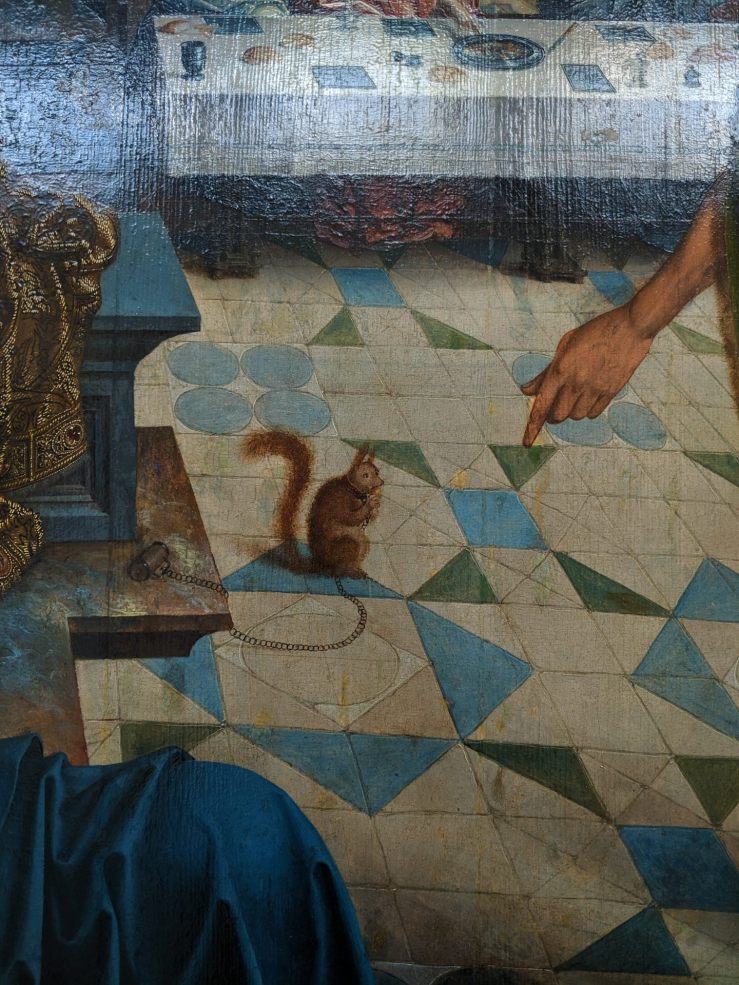
Detail #1: apparently, keeping squirrels as pets is not a new idea.
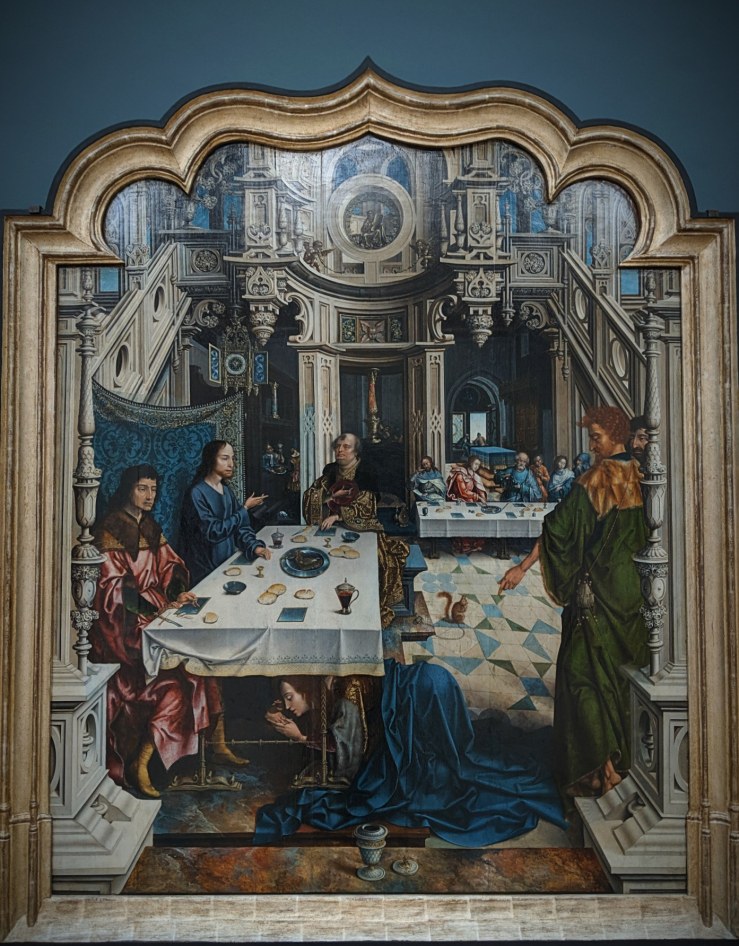
Master of 1518 (Jan van Dornicke?) Triptych of The Abbey of Dielegem
Master of 1518 (Jan van Dornicke?) Triptych of The Abbey of Dielegem [detail]
Master of 1518 (Jan van Dornicke?) Triptych of The Abbey of Dielegem [detail]
Detail #2: the ”Oh, man…” look on the Demon’s face.
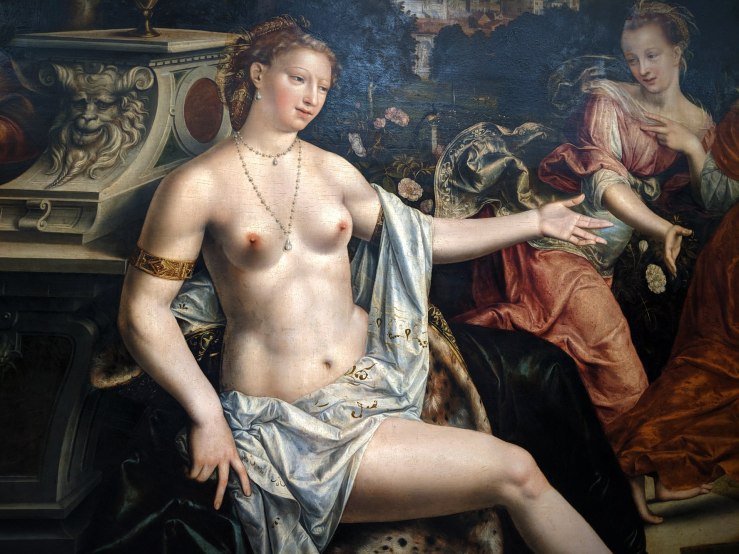
(Suzanne, a married woman, sends her maids away while is she is taking a bath. Once alone, two elders who secretly desire her, make advances. Suzanne refuses, but is later accused of adultery by the very men she refused. She is found guilty and condemned to death).
Jan Massys, Suzanne and the Elders, signed 1567
Jan Massys, Suzanne and the Elders, signed 1567 [detail]
Jan Massys, Suzanne and the Elders, signed 1567 [detail]
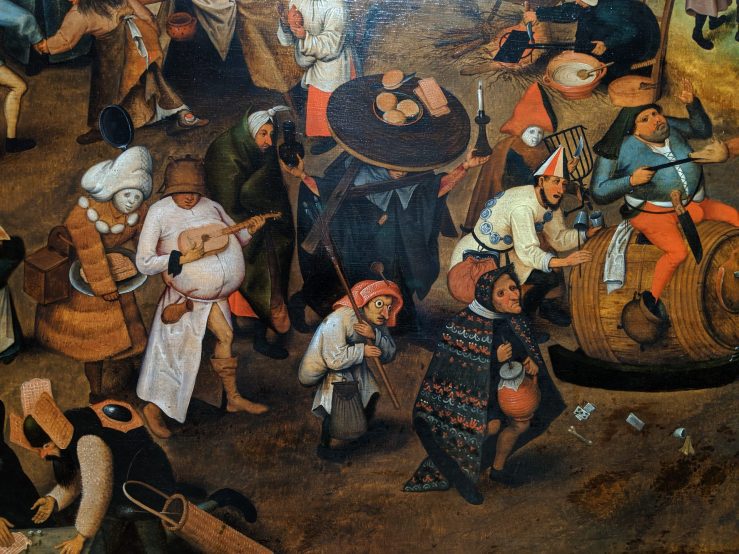
Detail #3: Carnival costume inspiration.
Pieter Brueghel II, The Battle of Carnival and Lent
Pieter Brueghel II, The Battle of Carnival and Lent
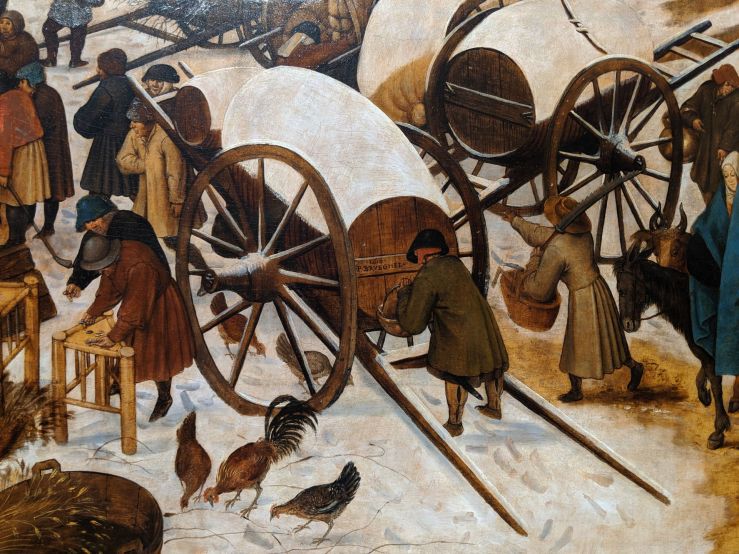
Detail #4: the Younger having fun copying the Elder but, in a bout of originality, appropriates a barrel to sign his work.
Pieter Brueghel II, The Numbering at Bethlehem
Pieter Brueghel II, The Numbering at Bethlehem [detail]
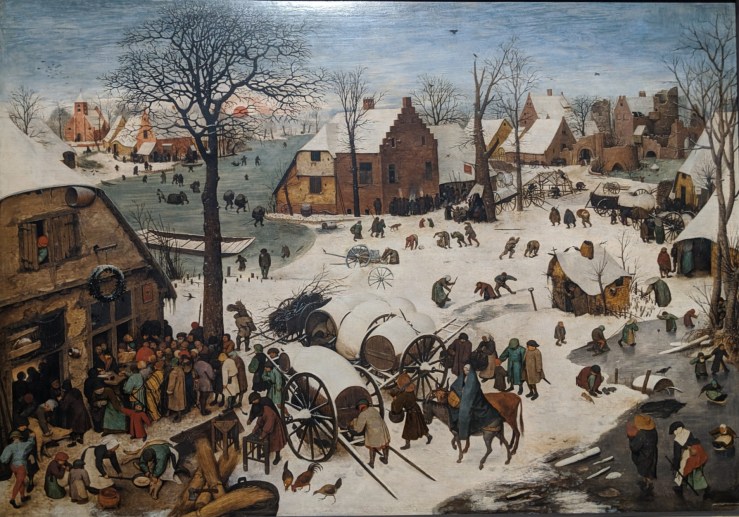
Detail #5: the original. As in most of the Elder’s paintings, there’s so much going on here, you’re bound to discover something new every time you look. This time, the eye lingers over the warm red sun setting far at the background, beyond the dark bare branches of the tree.
Pieter Brueghel I, The Numbering at Bethlehem
Pieter Brueghel I, The Numbering at Bethlehem
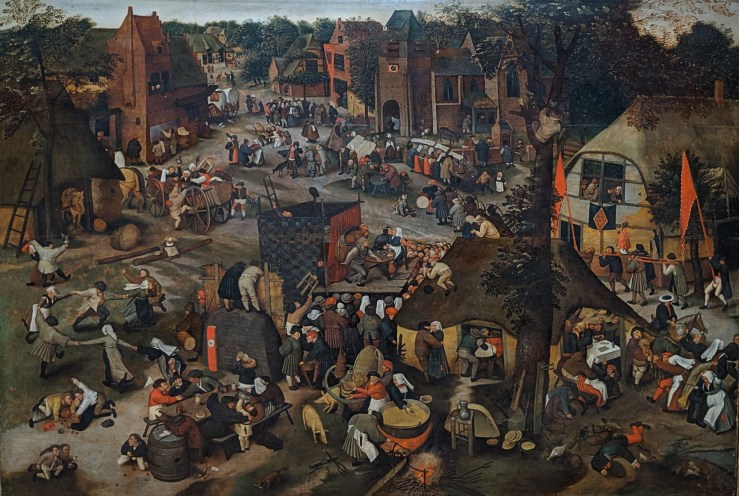
Detail #6: Going commando in the 17th century was the norm, apparently.
Pieter II Brueghel (or workshop of), Fair with theater and procession
Pieter II Brueghel (or workshop of), Fair with theater and procession [detail]
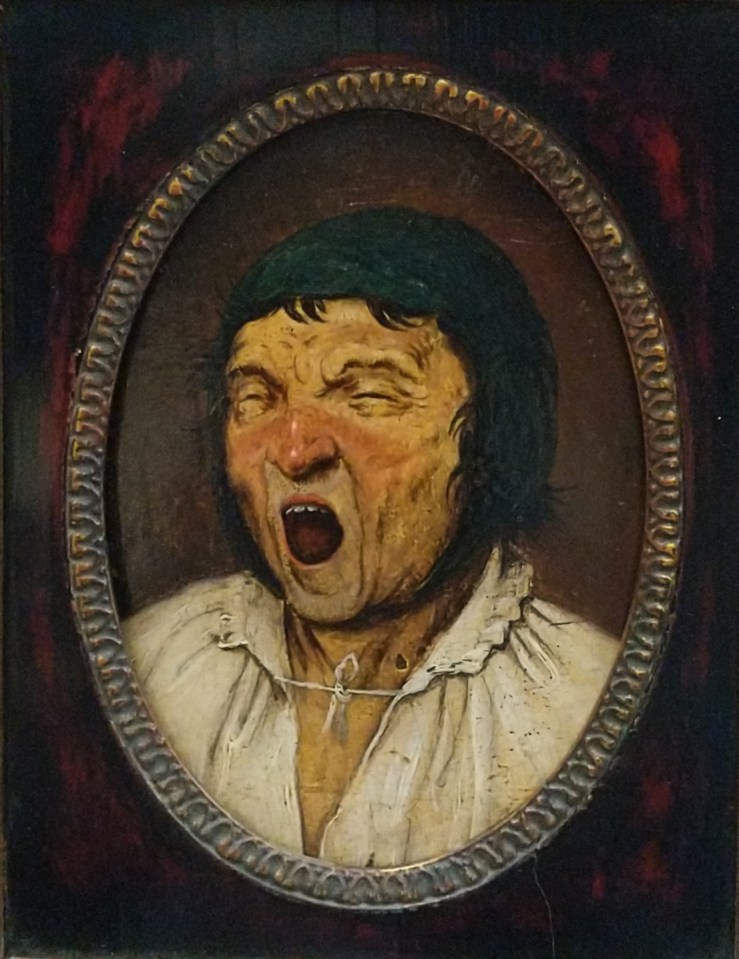
Detail #7: so much to see, so little time… *yawn*
Pieter I Brueghel? (according to), The yawner
Detail #8: what did you see first?
Anonymous master from the Southern Netherlands, Anthropomorphic landscape. Portrait of a woman
Royal Museums of Fine Arts of Belgium [Musée Oldmasters Museum], Brussels
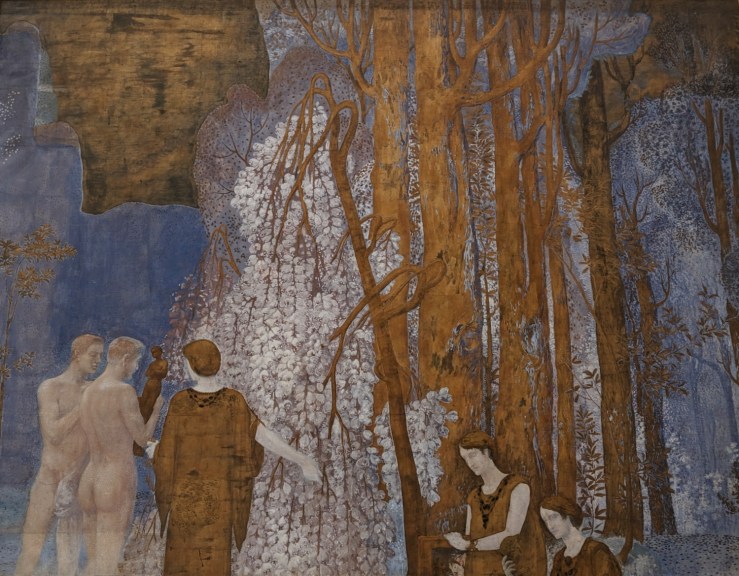
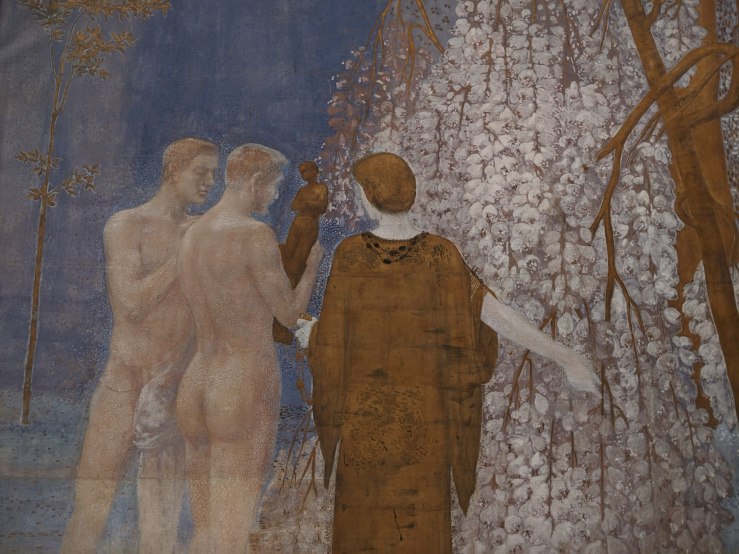
Adorning the Great Hall at the entrance of the Royal Museums of Fine Arts of Belgium, together with its companion ”La Fontaine de l’Inspiration”, it is so striking one simply must stop and stare. These monumental paintings (they measure around 400x500cm) were created by Montald specifically for the Museum, but were both rejected by its acquisitions committee and returned to him – yet, in a symbolic twist of fate, they ended up back were they belonged!
La Barque de l’Ideal, 1907 || Constant Montald
La Barque de l’Ideal, 1907 || Constant Montald [detail]
La Barque de l’Ideal, 1907 || Constant Montald [detail]R
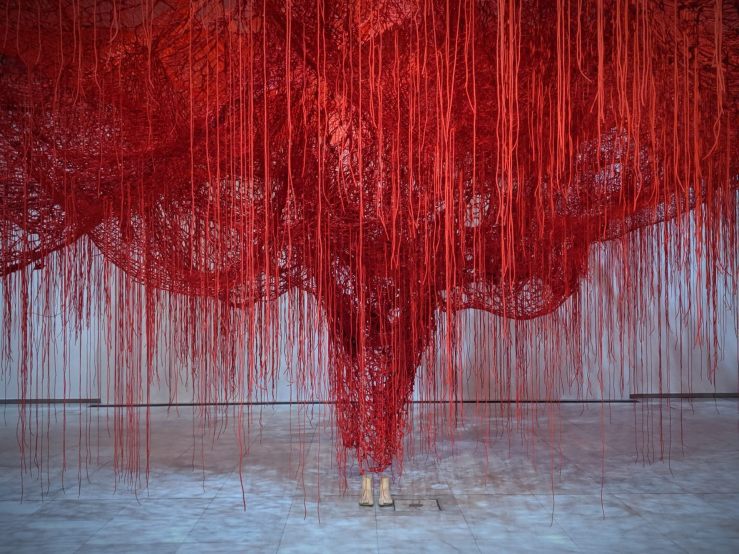
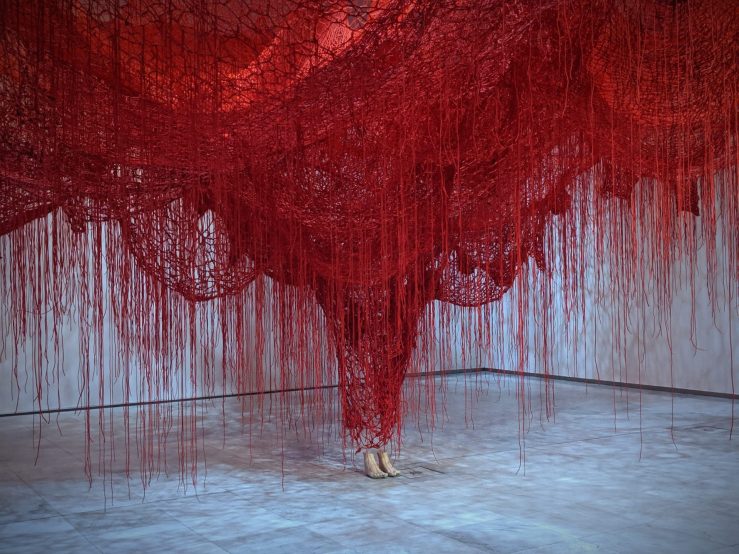
‘‘Chiharu Shiota’s (Osaka, 1972) spectacular installations transform the spaces in which they unfold, and immerse the visitor in the artist’s universe. They combine textile materials such as wool and cotton with various elements, sculpted shapes or used objects.
The artist combines performance, body art and installation in a process that places the body at its center. Her protean artistic practice explores the notions of temporality, movement, memory and dream; and requires both the mental and physical involvement of the spectator. Chiharu Shiota’s highly acclaimed participation in the Venice Biennale, where she represented Japan in 2015, confirmed the international scope of her work.
Me Somewhere Else (2018), a work of great visual strength, occupies a very special place in the artist’s production. Shiota talks about her fight against her illness, and the certainty that her mind will survive her body. “Before I was diagnosed with cancer I thought that if I die, everything about me is going to die; I am going to die, but now I know only my body dies – not my mind. My mind remains somewhere else.”
Free listening and free download (mp3) chill and down tempo music (album compilation ep single) for free (usually name your price). Full merged styles: trip-hop electro chill-hop instrumental hip-hop ambient lo-fi boombap beatmaking turntablism indie psy dub step d'n'b reggae wave sainte-pop rock alternative cinematic organic classical world jazz soul groove funk balkan .... Discover lots of underground and emerging artists from around the world.



















 The Humble Fabulist