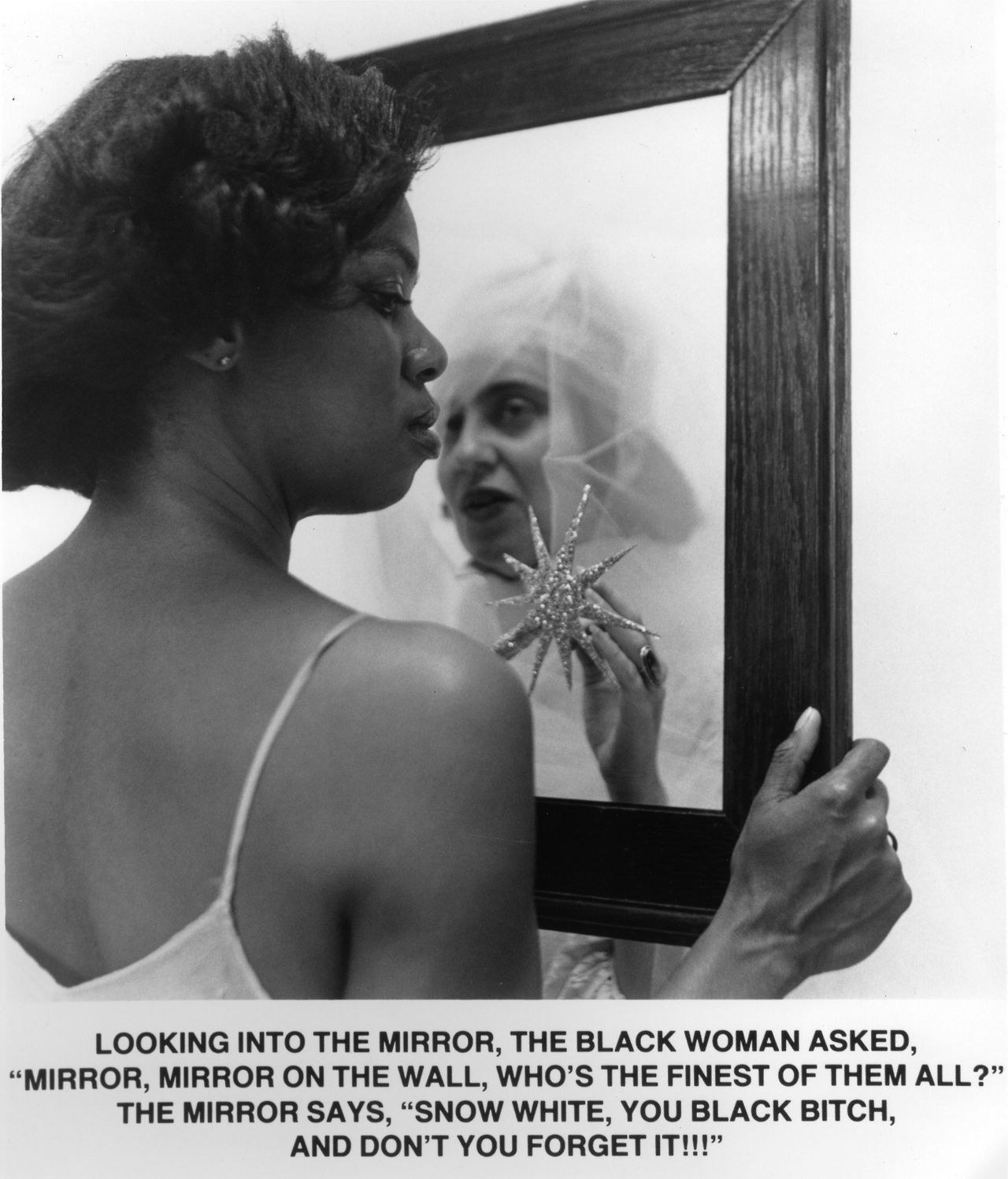
Mirror, mirror on the wall

Who’s the bitchiest of them all?


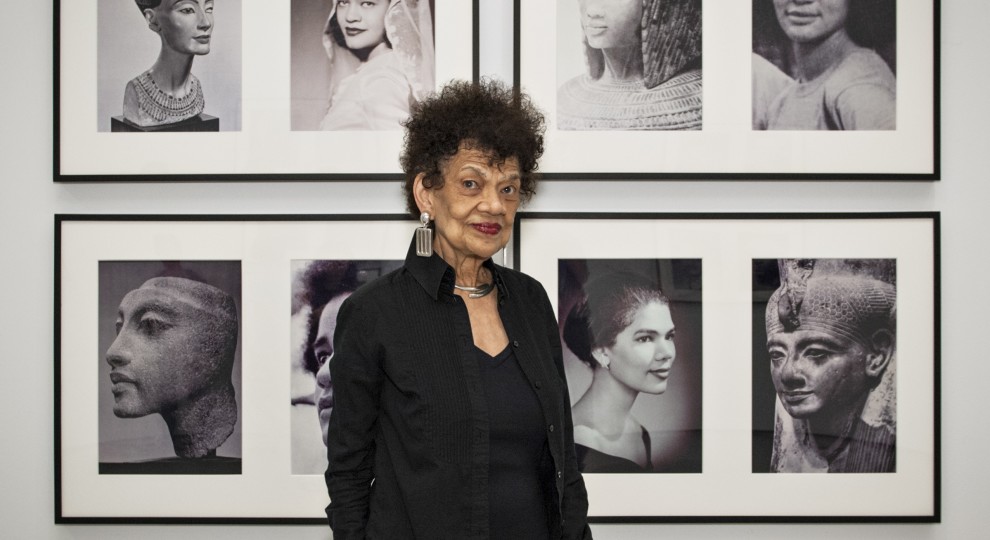
Coupling her sardonic wit with the direct, uncompromising gaze of her subjects, Carrie Mae Weems eviscerates the racism embedded in jokes made at the expense of people of color. This photograph is part of the Ain’t Jokin’ series, one of Weems’s earliest bodies of photo-text works.

Carrie Mae Weems (American, born 1953). Mirror Mirror, 1987–88. Silver print, 24 3⁄4 x 20 3⁄4 in. (62.9 x 52.7 cm). Courtesy of the artist and Jack Shainman Gallery, New York.
© Carrie Mae Weems

We Wanted A Revolution: Black Radical Women 1965-1985
Brooklyn Museum

Julyn 22nd, 2017

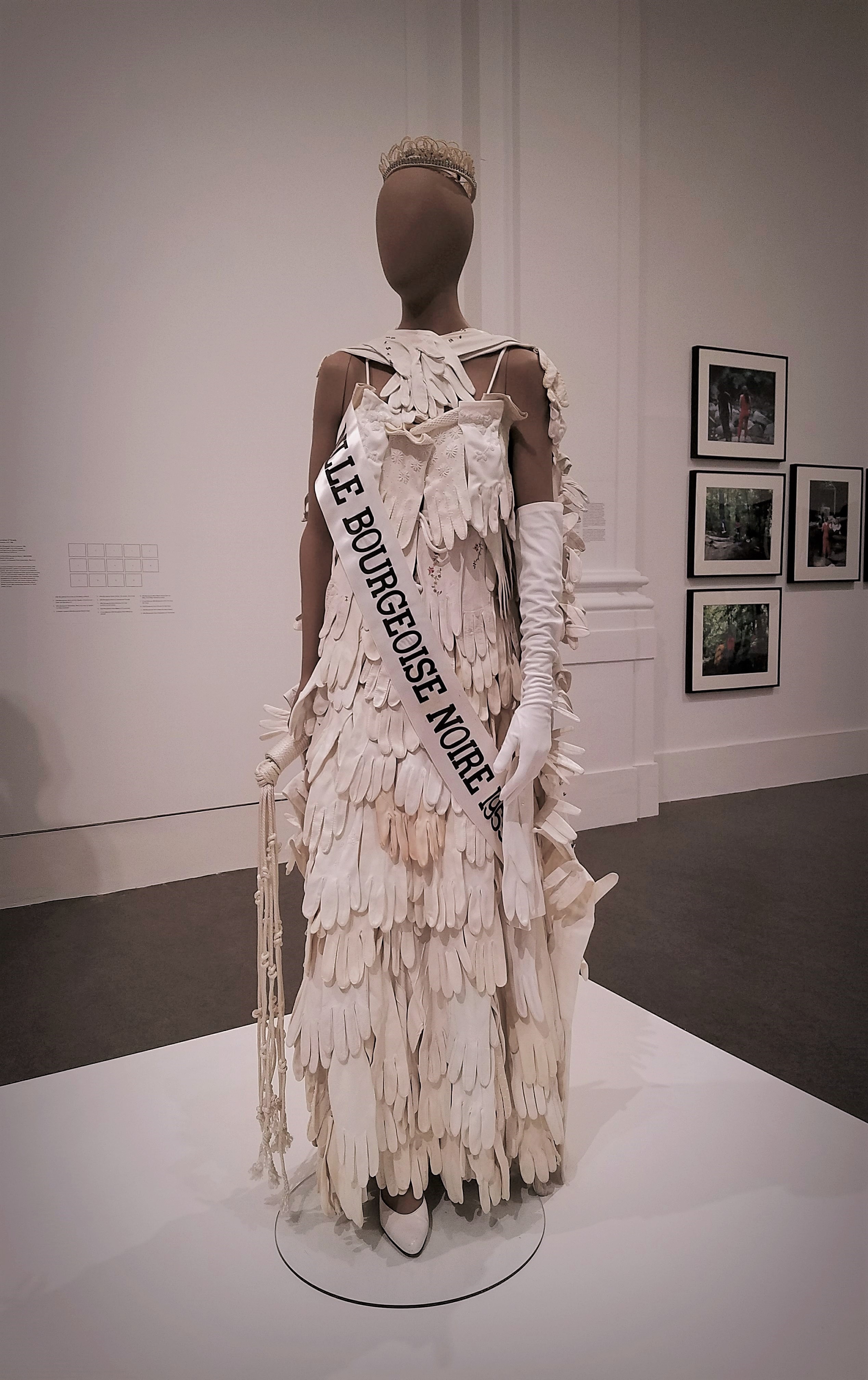
Mlle Bourgeoise Noire || A State of Mind

Even more than the obvious joy of coming up close with works by renowned artists, I enjoy discovering those I had never seen before; especially the work of an artist that has something to say and does so in such a striking way, as Ms. Lorraine O’Grady.

This is her story:

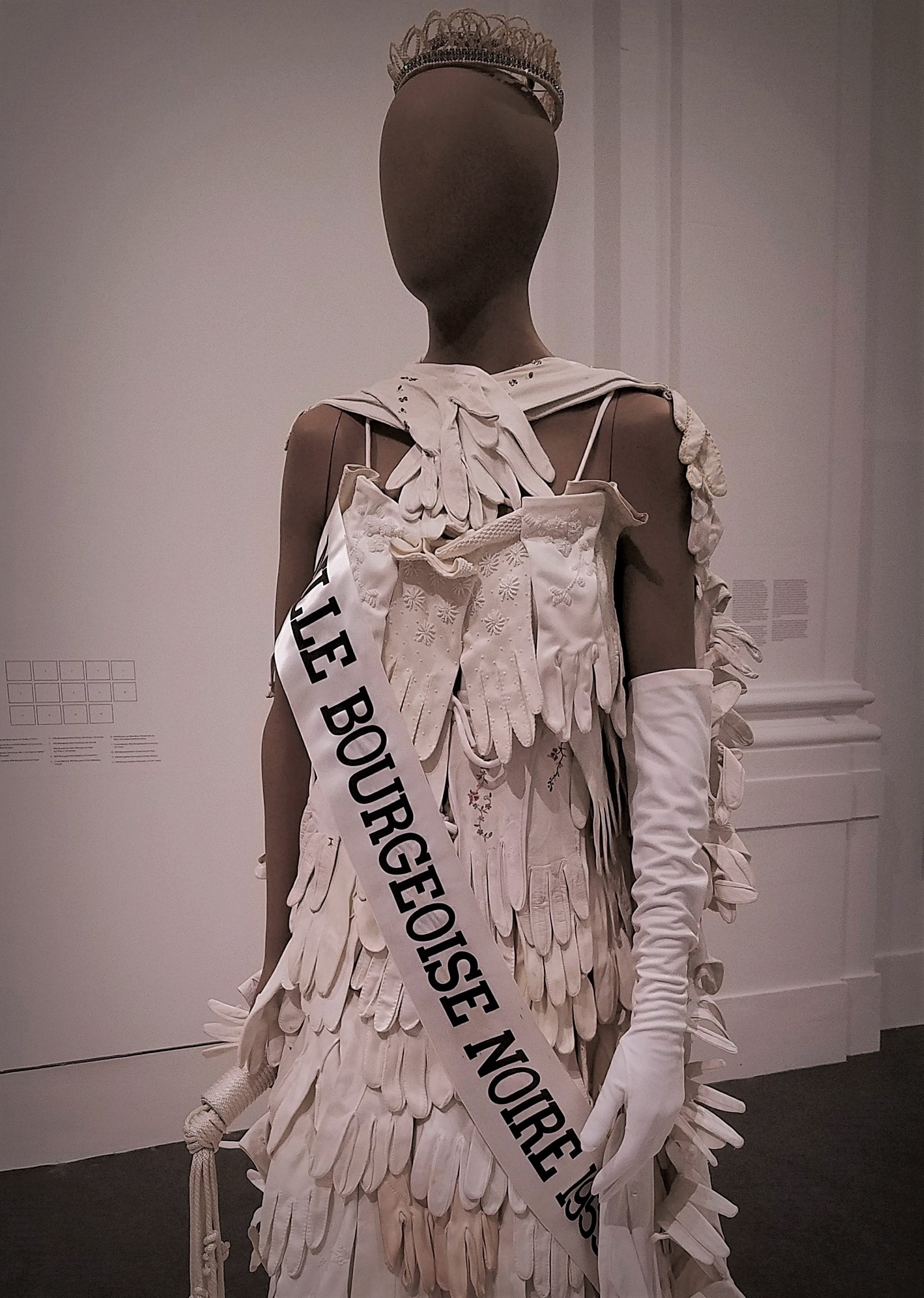
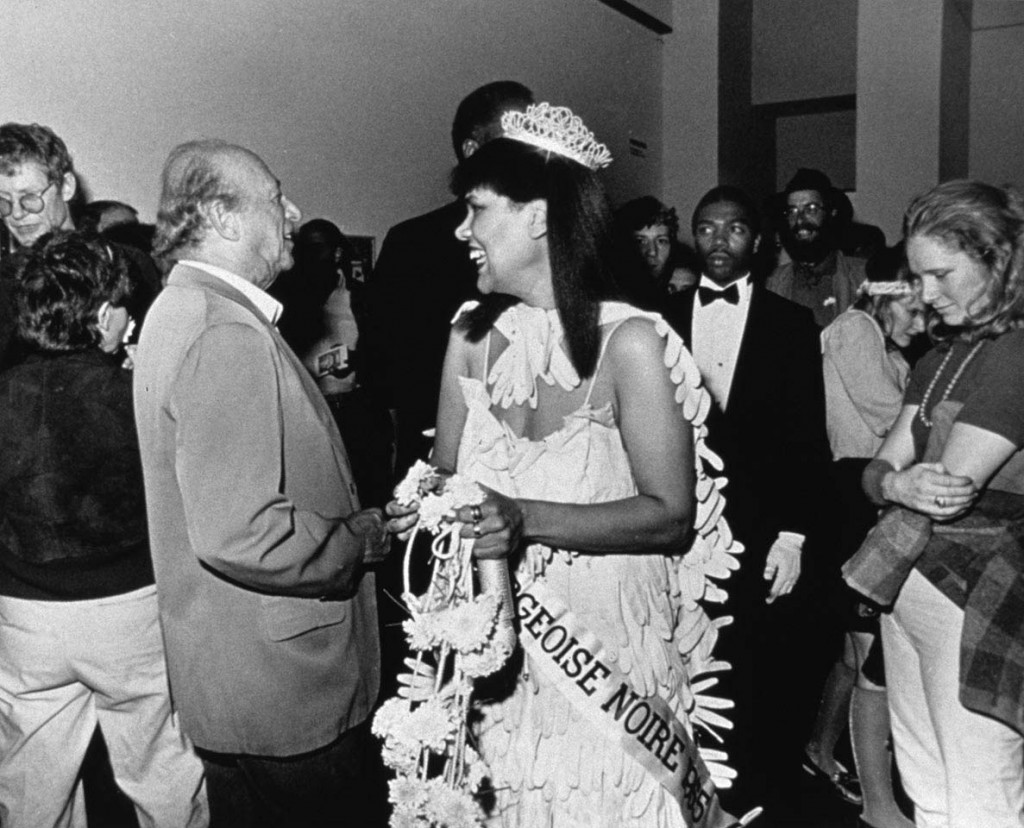
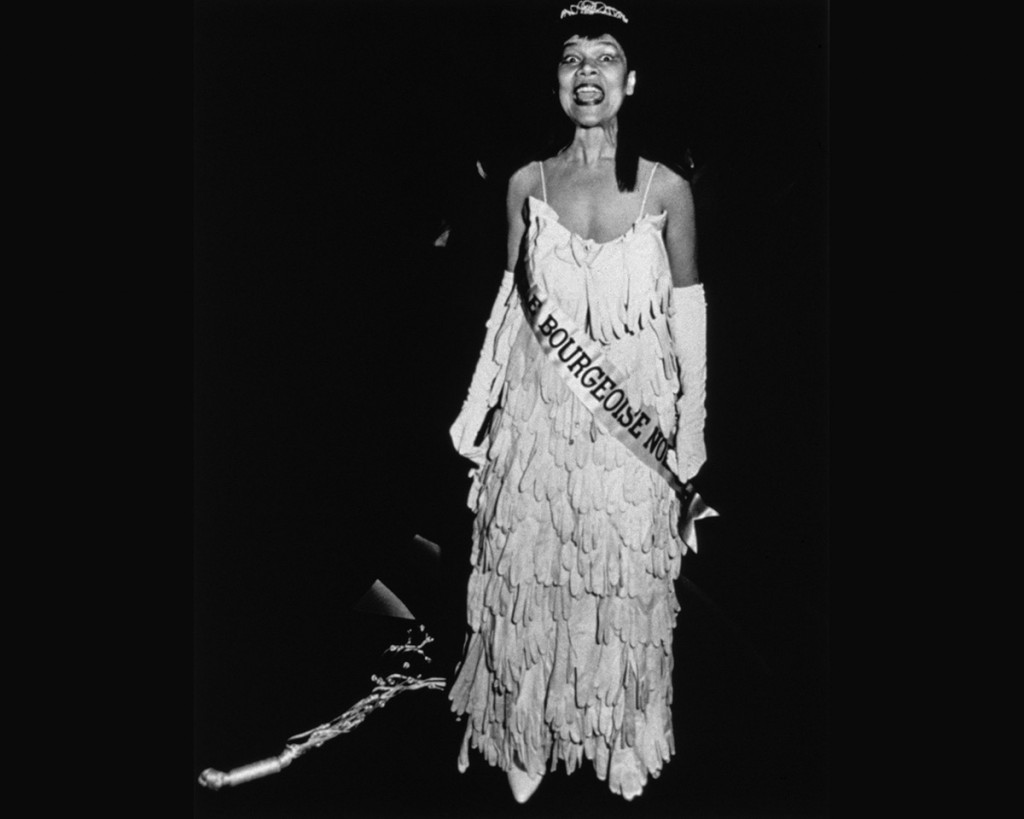
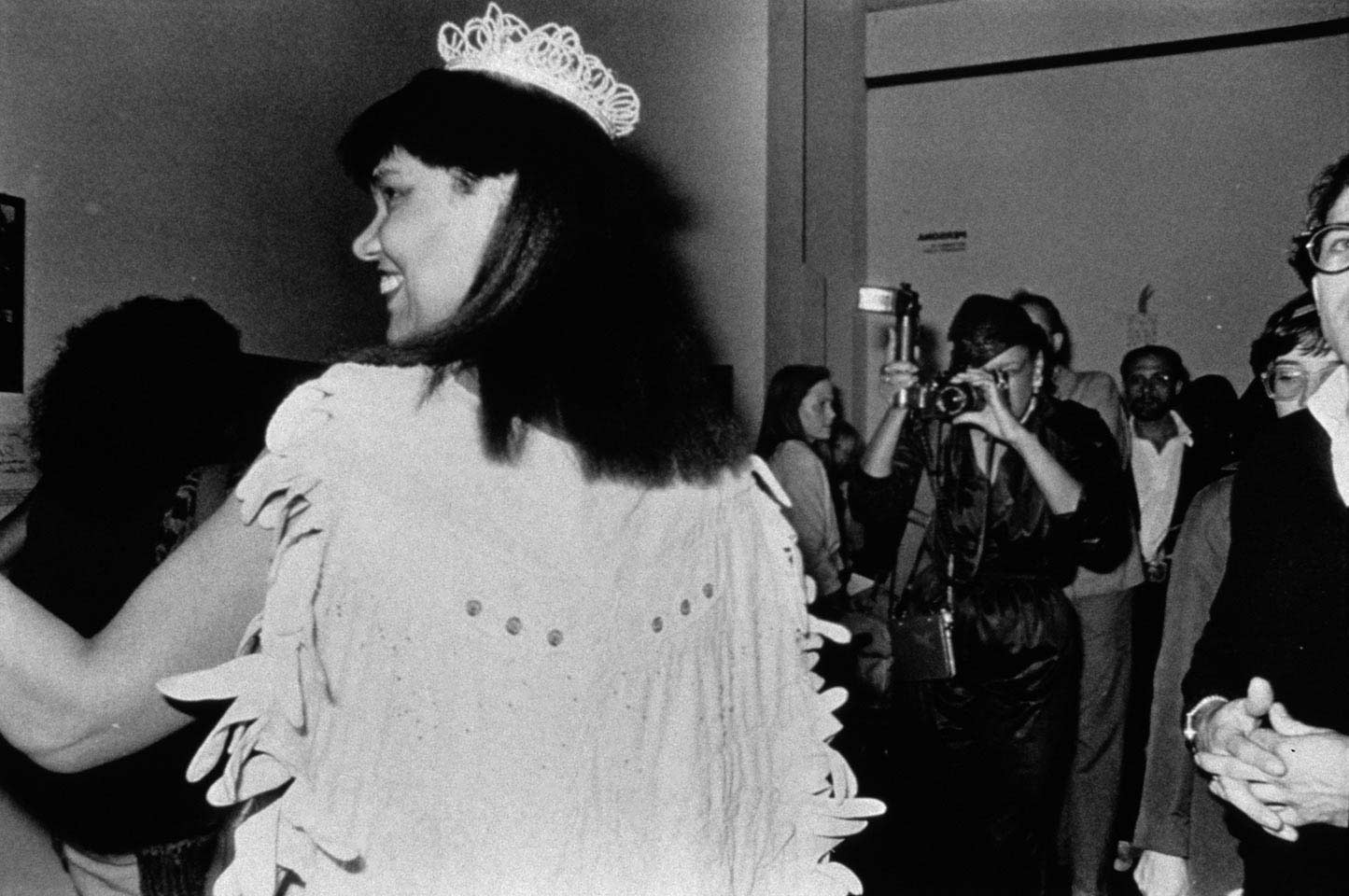
[”In 1980, artist and critic Lorraine O’Grady left her apartment wearing an evening gown and cape made out of 180 pairs of white dinner gloves and carrying a white whip studded with white chrysanthemums. She was going to a party at Just Above Midtown (JAM), an avant-garde art space in Manhattan representing work by African American and other artists of color.”]

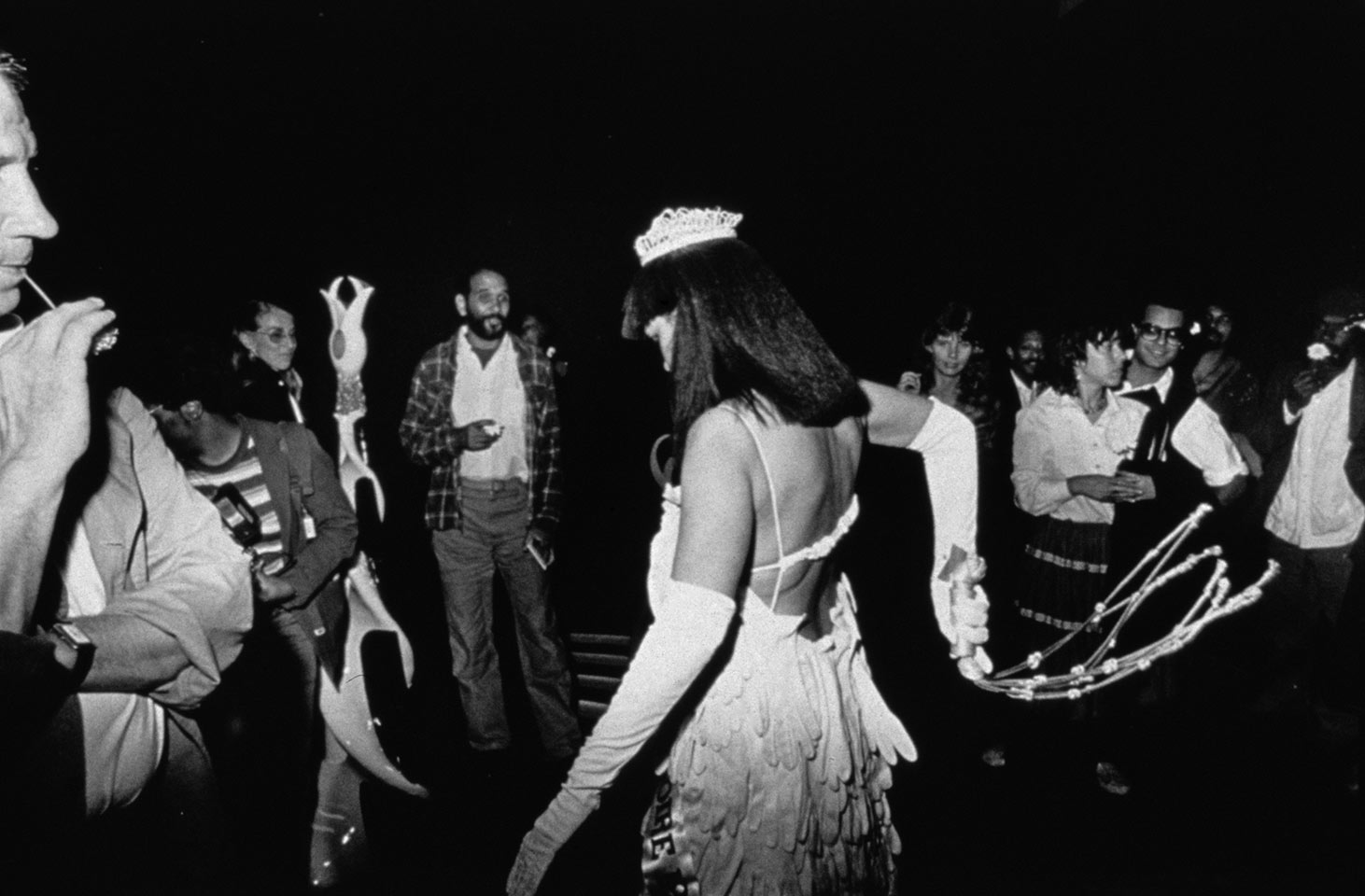
[”At the gallery, O’Grady turned heads. She raised her whip—which she called “the whip-that-made-plantations-move,”referencing the slave drivers on Southern plantations—and gave herself 100 lashes. And she shouted poems of protest—against the exclusion of black people from the mainstream art world in New York, and against black artists who she believed were compromising their identities to make work that was agreeable to white curators and audiences. The white gloves covering her body represented the work growing out of this system as “art with white gloves on.”]

Enough is Enough for Mlle Bourgeoise Noire
Among the poems that Mlle Bourgeoise Noire shouted at the Just Above Midtown (JAM) gallery reception was:

THAT’S ENOUGH!
No more boot-licking…
No more ass-kissing…
No more buttering-up…
No more pos…turing
of super-ass..imilates…
BLACK ART MUST TAKE MORE RISKS!!

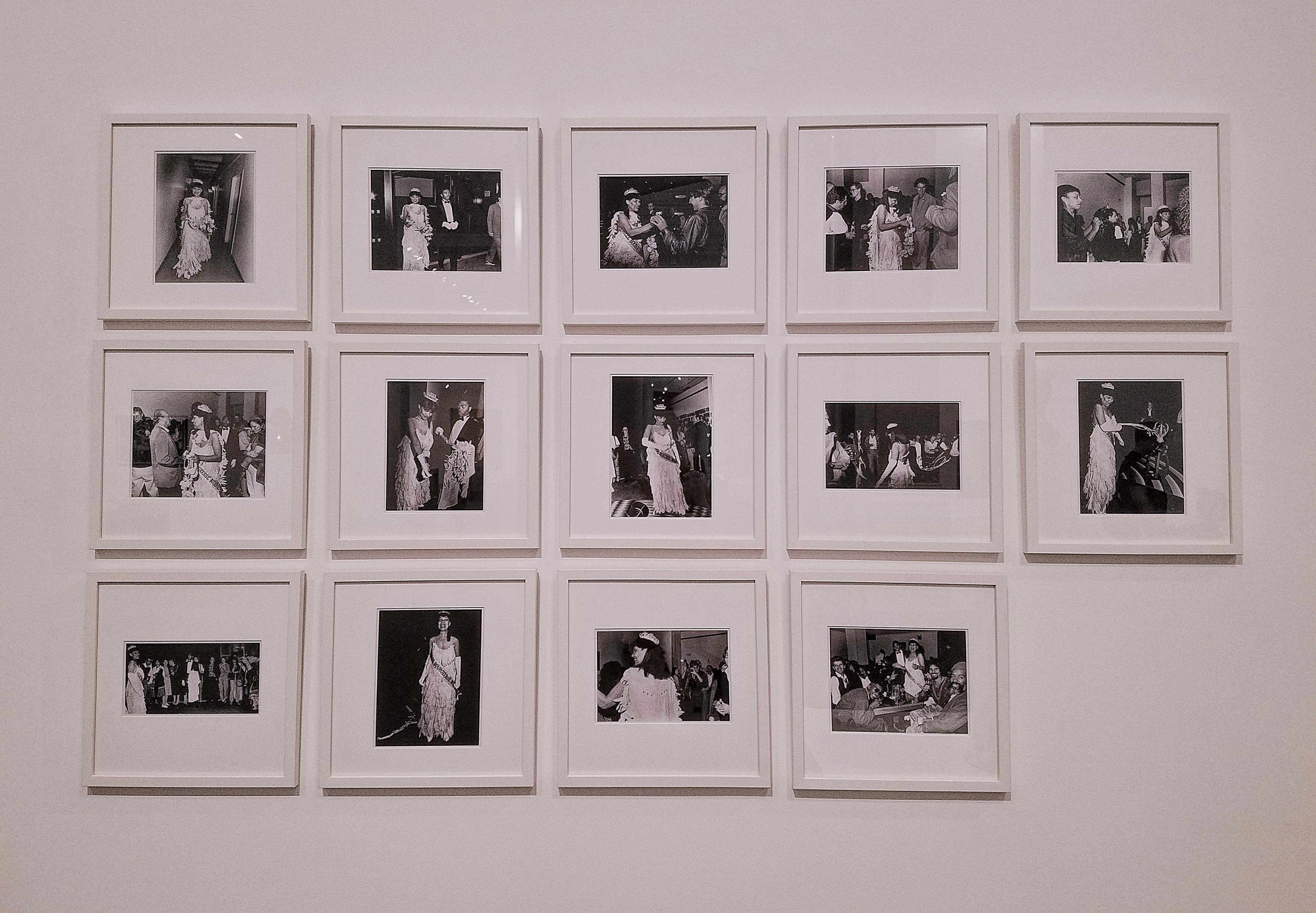
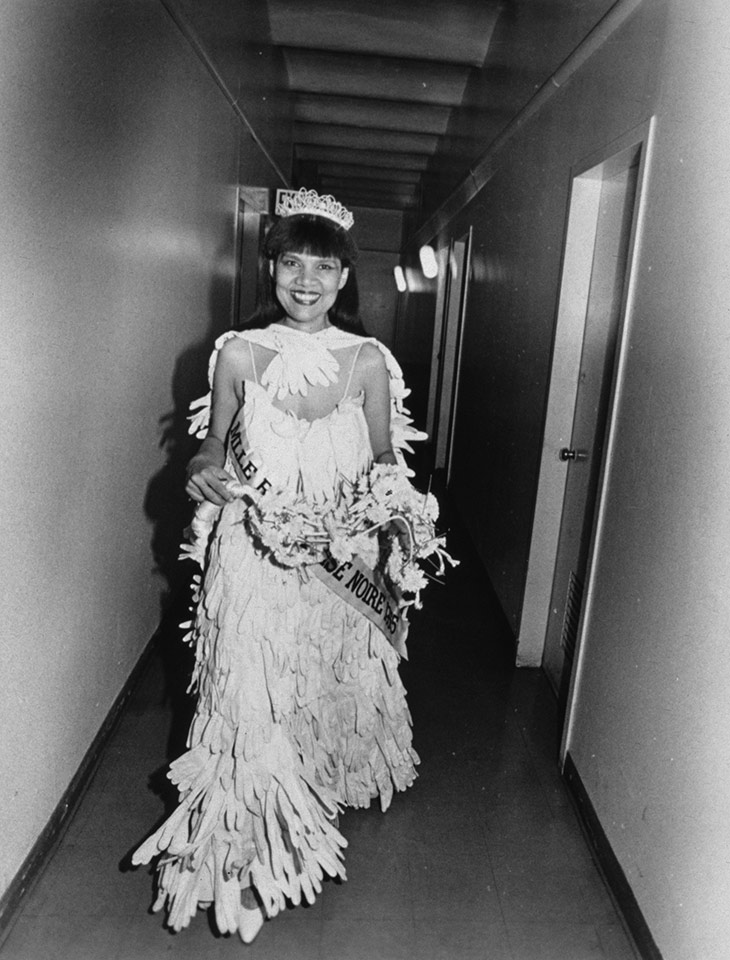
Mlle Bourgeoise Noire leaves the safety of home (New Museum performance, 1981)
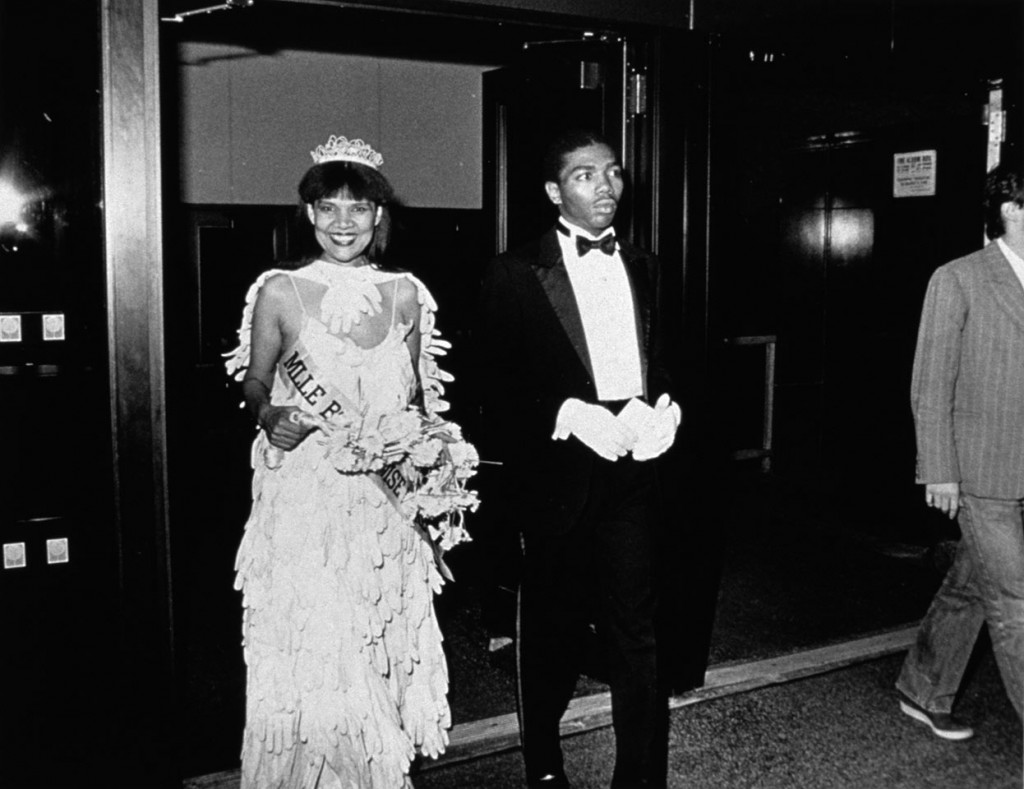
Mlle Bourgeoise Noire and her Master of Ceremonies enter the New Museum
Mlle Bourgeoise Noire continues her tournée
Crowd watches Mlle Bourgeoise Noire whipping herself
Mlle Bourgeoise Noire shouts out her poem
Mlle Bourgeoise Noire leaves the New Museum
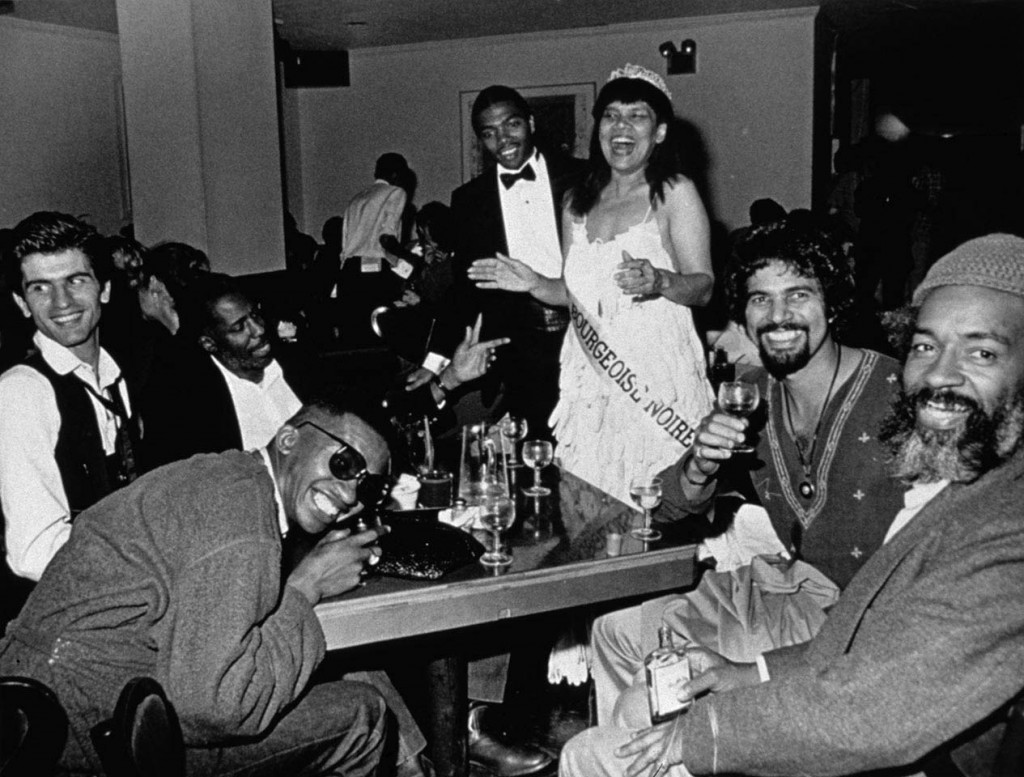
Mlle Bourgeoise Noire celebrates with her friends

[”With this performance, O’Grady introduced a new, fictional persona to the art world: a tempestuous 1950s beauty queen named Mlle Bourgeoise Noire, or Miss Black Middle-Class. She has explained that Mlle Bourgeoise Noire was inspired by the Futurist declaration that art has the power to change the world. The persona was generated out of O’Grady’s anger at the racism and sexism then prevalent in the art world, and her own, complex relationship to race. The daughter of Jamaican immigrants, she was raised in a privileged environment that contrasted with what she described as the “neighboring black working-class culture” and the disadvantaged position of blacks in American society. Through Mlle Bourgeoise Noire, she expressed the conflicts in her own identity, while also, as she stated, “invading art openings to give people a piece of her mind.”]

Lorraine O’Grady / Photograph © Museum of Fine Arts, Boston

The glove dress and b&w photos of Mlle Bourgeoise Noire’s performance, were part of We Wanted a Revolution: Black Radical Women, 1965–85, an exhibition that focused on the work of black women artists. It was on show at the Brooklyn Museum until September 2017.

Black & White highlights from Lorraine O’ Grady’s website. Please view the gallery for more.

Source of Mlle Bourgeoise Noire’s story & poem : MoMA Learning

Brooklyn Museum

July 22nd, 2017


Infinite Blue

Intercontinental, Intercultural, Intemporal, Infinite Blue. My favourite colour.

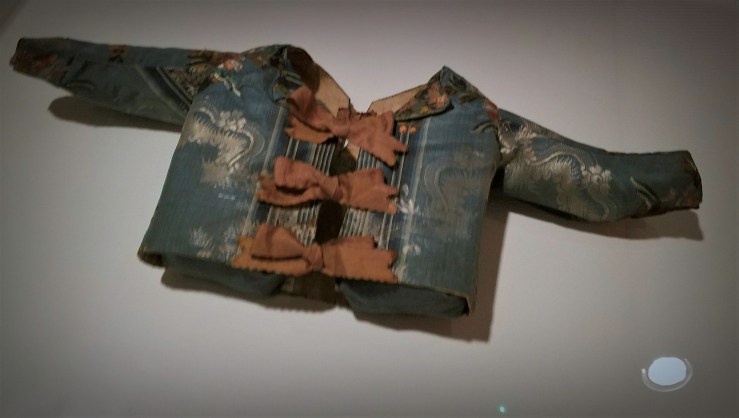
Bodice, ca. 1840-60
Tailleur Filles & Cie, France
Silk, linen, metal


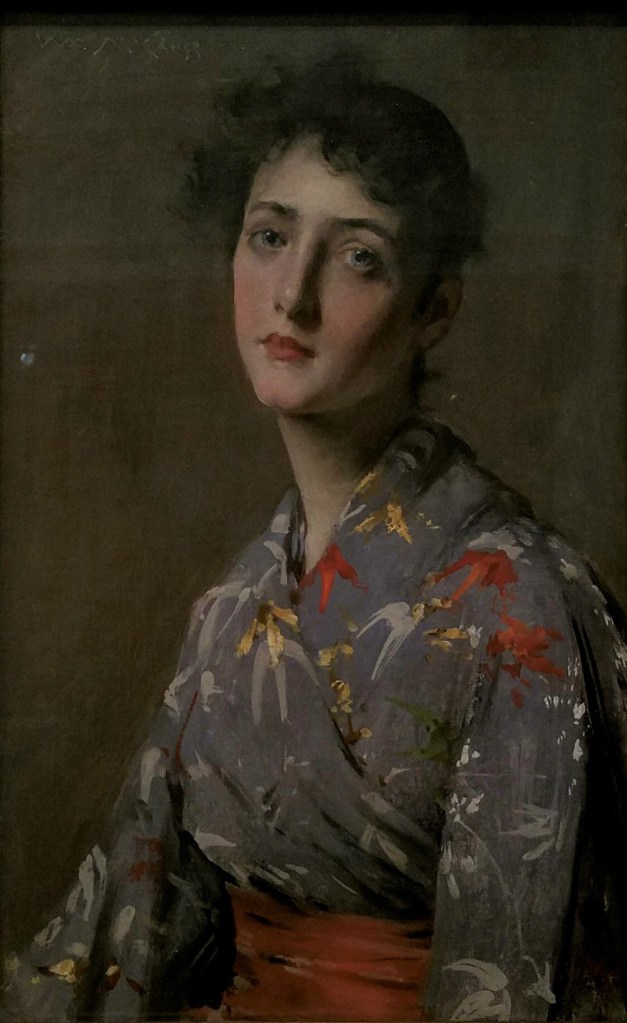
William Merritt Chase
Girl in a Japanese Costume, ca. 1890
Oil on canvas


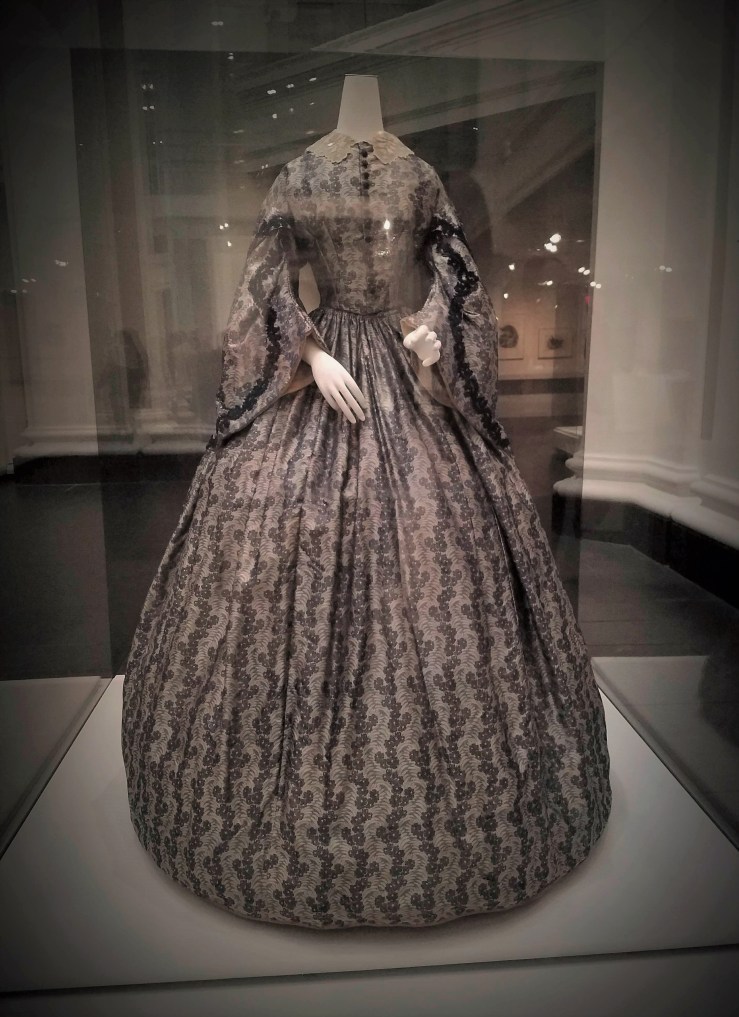
Wedding Dress, ca. 1860
United States
Silk, cotton

Sarah Elizabeth Fish (1824-1901) of Waldoboro, Maine, wore this elegant full-skirted dress, with stylish pagoda sleeves and a blue and silver jacquard pattern, as her wedding dress. The blue colour was probably achieved using an early synthetic organic dye. It was not uncommon for women in eighteenth- and nineteenth- century America and Europe to wear wedding dresses in colours other than the white that is now customary, and to wear them again after the wedding for other special occasions. Blue was a popular wedding dress colour for its strong association with loyalty, purity and virtue; this is echoed today in the traditional ”something blue” that brides may wear.


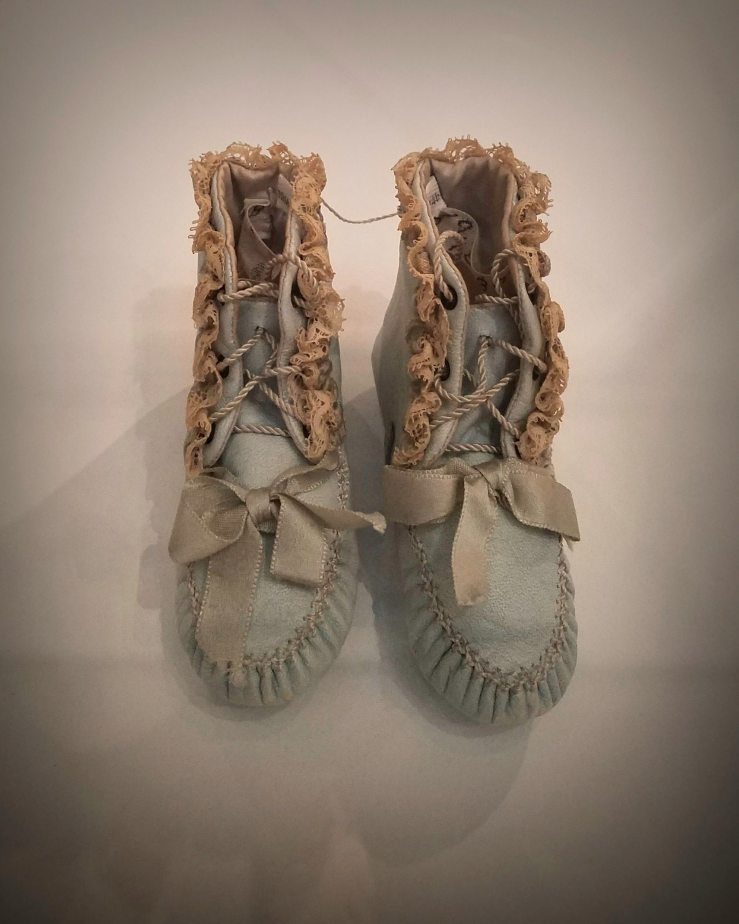
Booties, 1898
Probably France
Leather, silk, linen

Embellished infant’s booties of this type would have been worn at a christening or some other important event. The same baby girl who wore this pale blue kid leather pair also wore a matching pair in pink (not shown), suggesting that the code of blue for boys and pink for girls was not yet firmly established at the turn of the twentieth century. Historically, pink had been favoured as a more vigorous and thus ”masculine” colour, suitable for boys and blue as a passive and thus ”feminine” colour, suitable for girls.


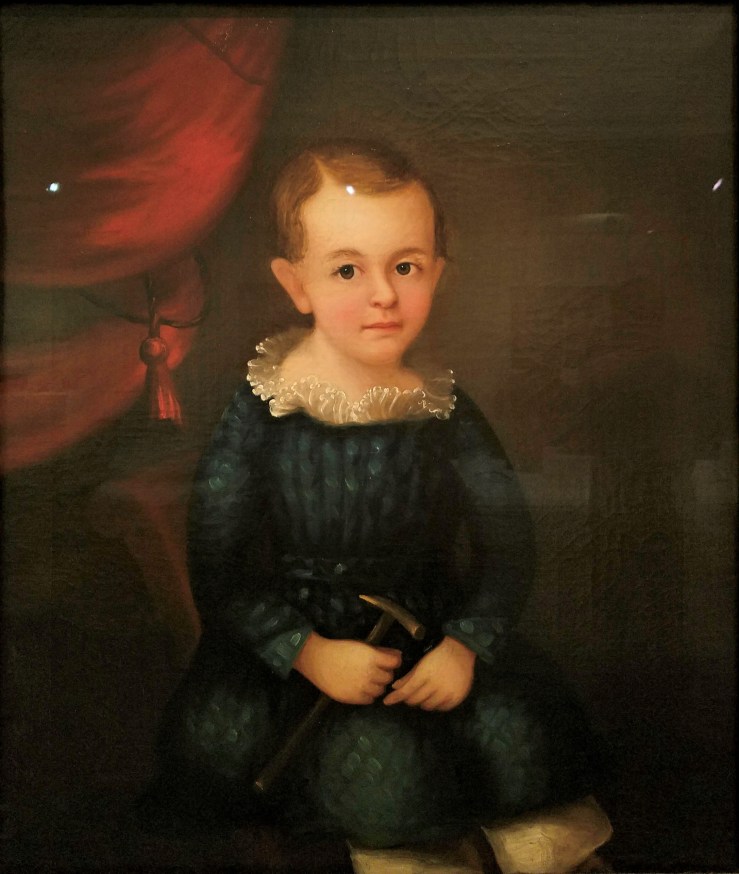
Portrait of a Child of the Harmon Family, ca. 1840s
United States
Oil on canvas


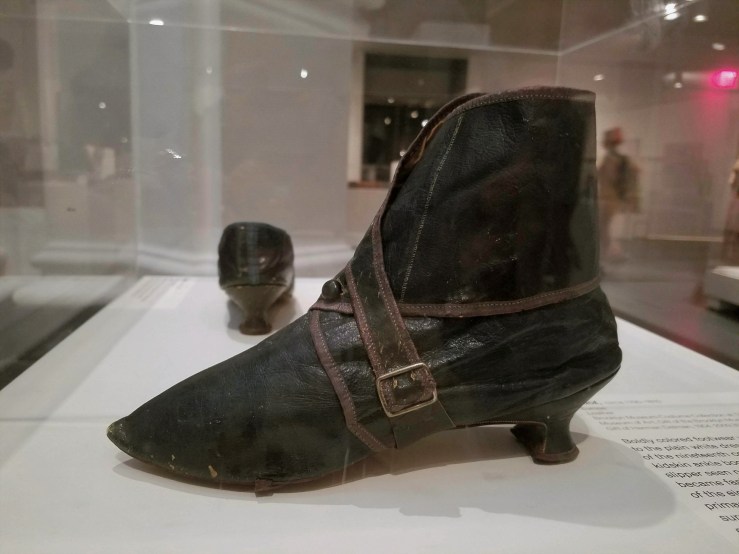
Boot, ca. 1795-1810
Europe
Leather


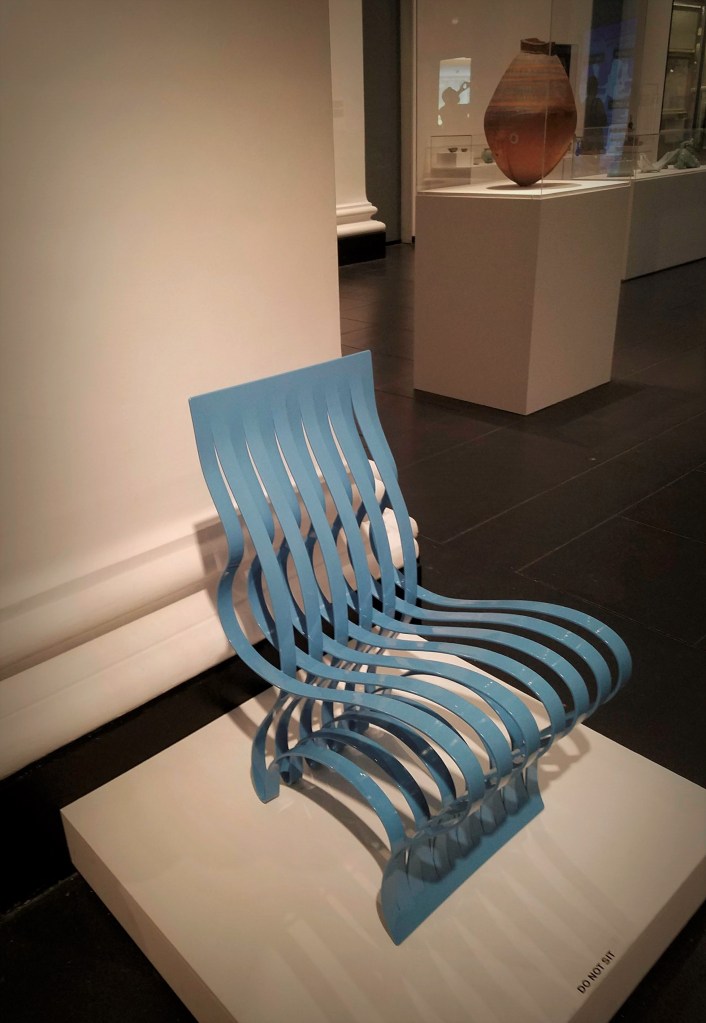
”Current” Chair, 2004
Vivian Beer
Steel, automotive paint


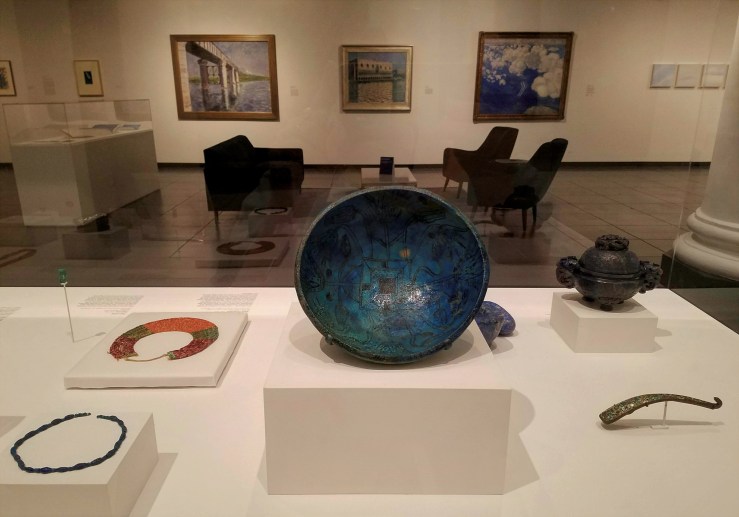
Nun Vessel, ca. 1539-1493 BC
Egypt
Blue faience with black-painted details

In ancient Egyptian origin myths, dark blue and black were colours of the primordial waters that the Egyptians called ”nun”, or nonexistence.


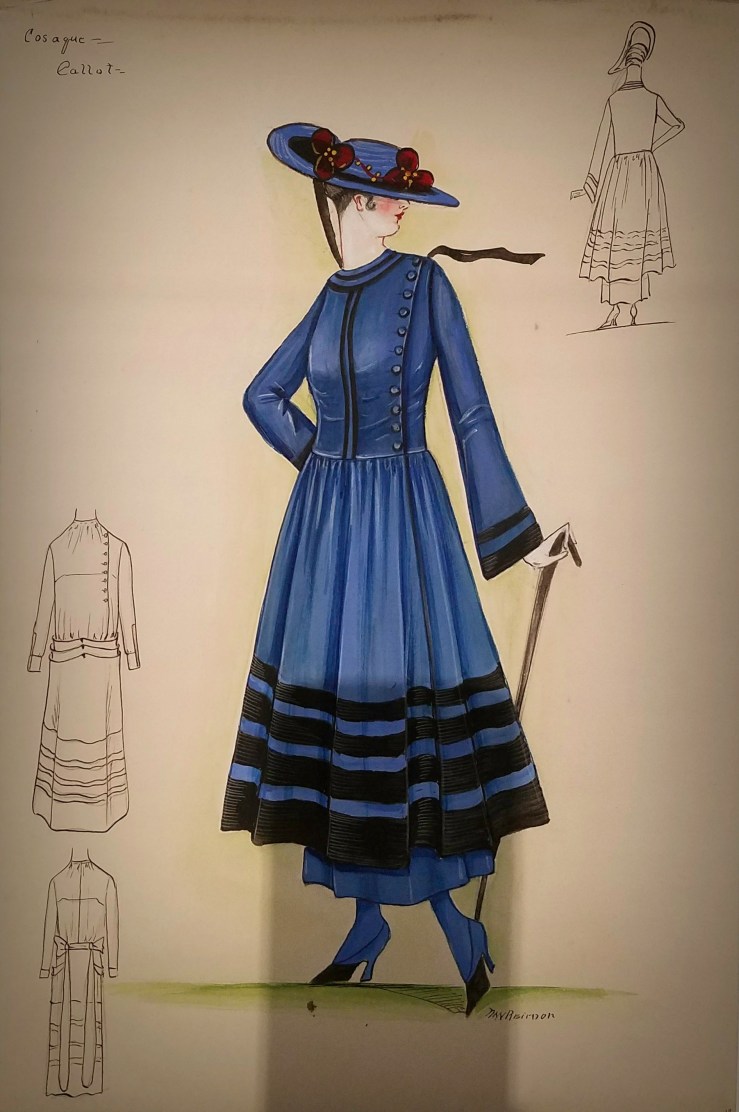
Day Dress 1915. Blue dress with printed fabric
Fashion sketch, Henri Bendel, Inc.


Helen Cookman for Reeves Brothers Inc.
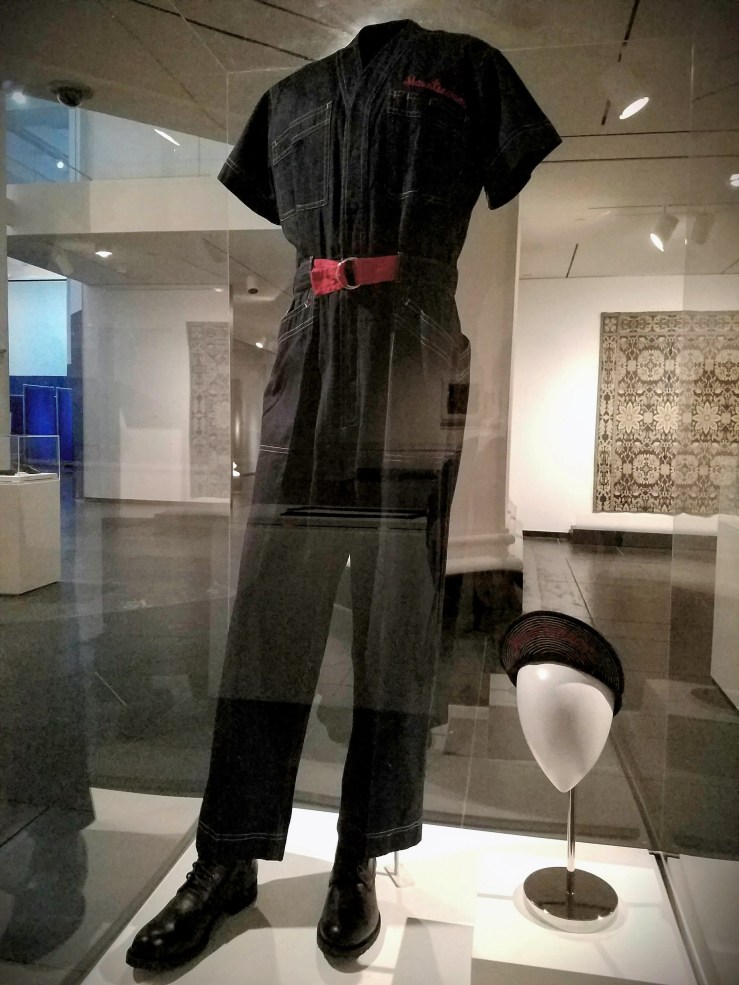
Maintenance Worker’s Uniform and Cap, 1948
United States


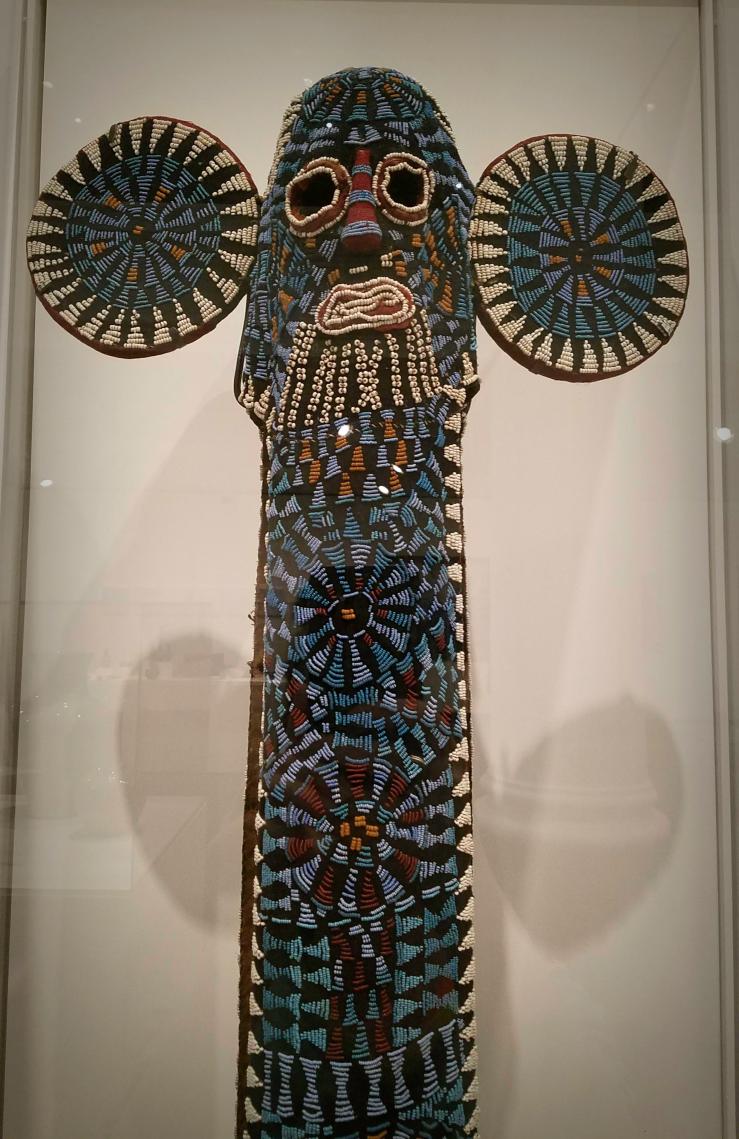
Kuosi Society Elephant Mask, early 20th century
Bamileke artist
Grassfields region, Cameroon
Textile, glass beads, plant fiber

Elephants are often associated with political power in the highly stratified kingdoms of the Cameroon grasslands. Because imported beads were historically rare and costly, beadwork is also associated with high social rank, making this mask a potent symbol of power.


The O’Keeffe exhibition was only one of the wonders waiting to be discovered in the various galleries of the Brooklyn Museum.

Infinite Blue, was an array of objects and works of art featuring blue in every possible shade, size and texture, a visual narrative that would expand over the following months, eventually filling the Museum’s first floor.

Brooklyn Museum

July 22nd, 2017

Georgia before O’Keeffe

An icon in the making. Georgia O’Keeffe 
Woman with blue hat, 1916-1917
Watercolour, gouache and graphite on paper

O’Keeffe may have created this watercolour for classroom use. The work demonstrates the application of flat, stylized designs of fashion illustration. In this same period, the magazine Vanity Fair published similar stylized illustrations by O’Keeffe, who was searching for additional ways to turn her art skills into income. 


Hilda Belcher
The Checkered Dress (Portrait of O’Keeffe), 1907
Watercolour and gouache on cream laid paper, with JW watermark, mounted on paperboard

To pose for Hilda Belcher, who had also studied at the Art Students League of New York, O’Keeffe wore a stylish checkered dress that she most likely made for herself, in the black and white palette she would favour throughout her life. This watercolour, with its tour-de-force detailing of the dress, won Belcher membership in the male-dominated New York Water Colour Club. Several years later, a female writer composed a love poem to the then unknown sitter shown in the image; it reads in part:

”Could you know, did you guess/Such a daring rhythmic dress/Gleaming here, darkening there,/Would but render you more rare?”


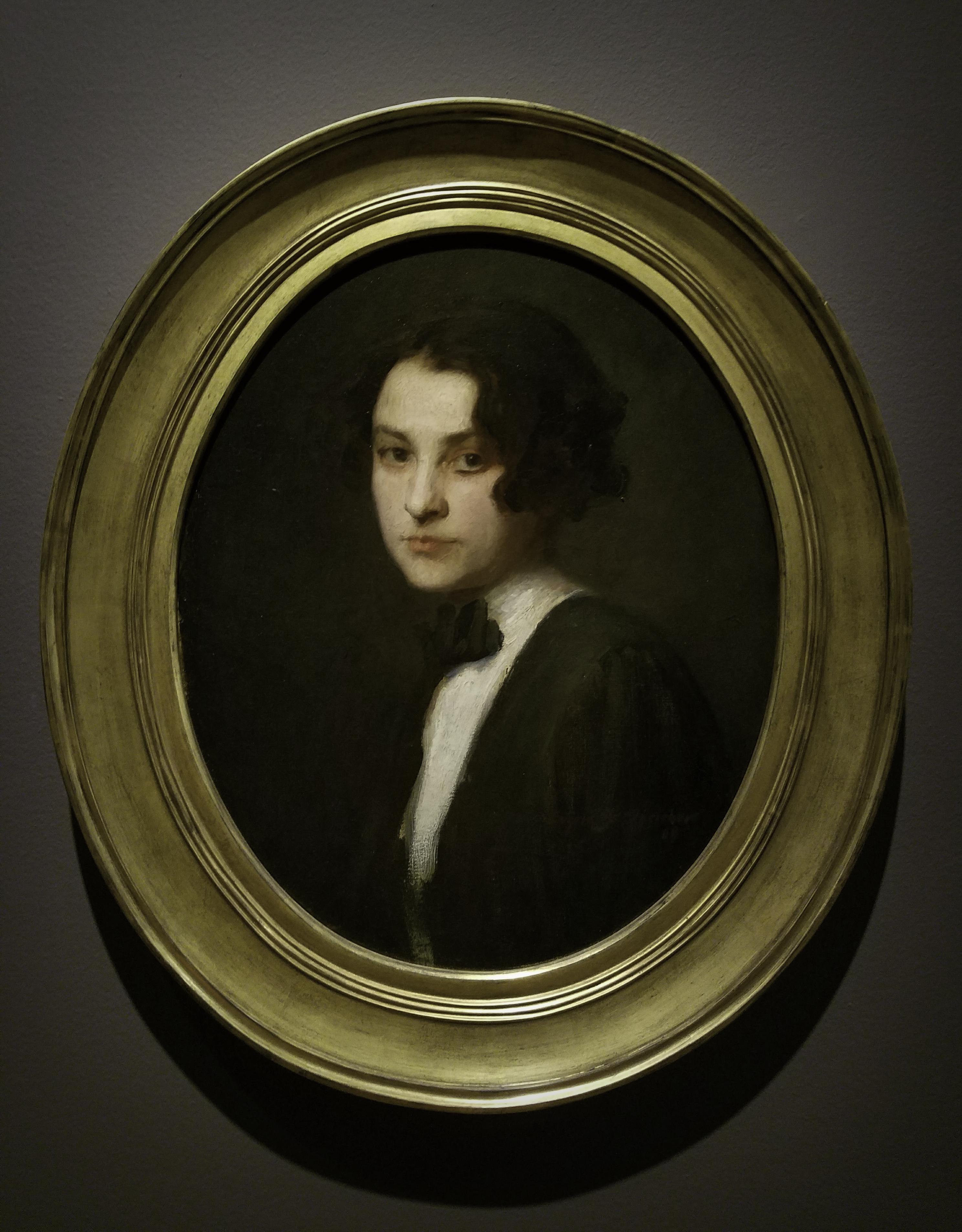
Eugene E. Speicher
Portrait of Georgia O’Keeffe, 1908
Oil on canvas

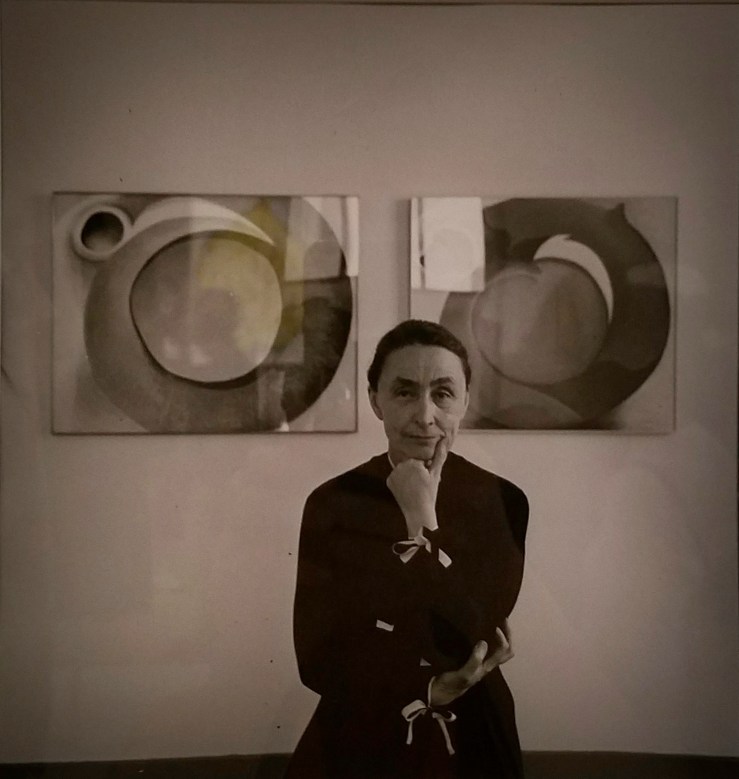
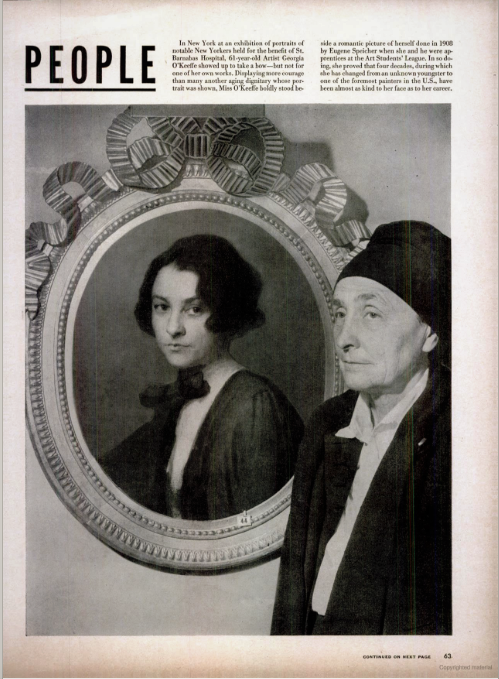
When Eugene Speicher, an older student at the Art Students League, asked O’Keeffe to model for him, she wore a three-piece outfit associated with the so-called New Woman: a white shirtwaist, black skirt and jacket, and black bow at her neck. This combination allowed women to move with greater ease than in conventional Victorian dresses and was a style of reform dress widely endorsed by budding women artists and professionals. In 1948, Life magazine ran an image of the sixty-one-old O’Keeffe posed next to the portrait (in a different frame), noting, ”she has changed from an unknown youngster to one of the foremost painters in the U.S.” Her personal style, however, had remained the same. 


Georgia O’Keeffe: Living Modern, Brooklyn Museum

July 22nd, 2017

Meanwhile, New York was doing ‘OK

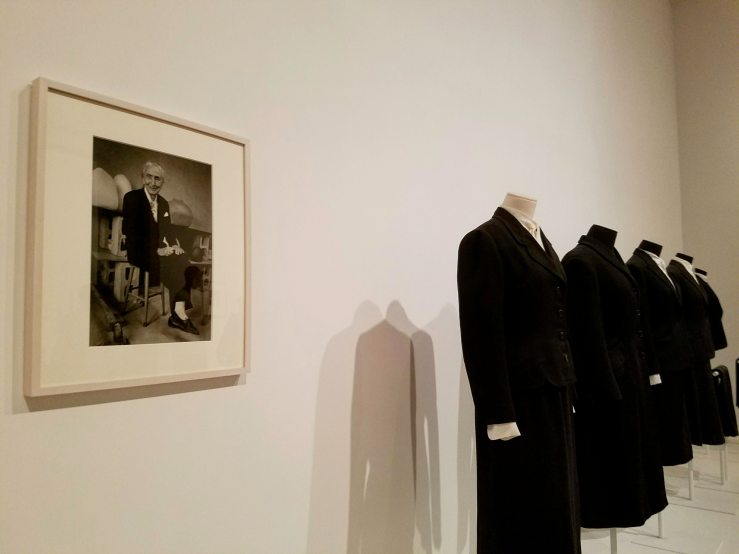
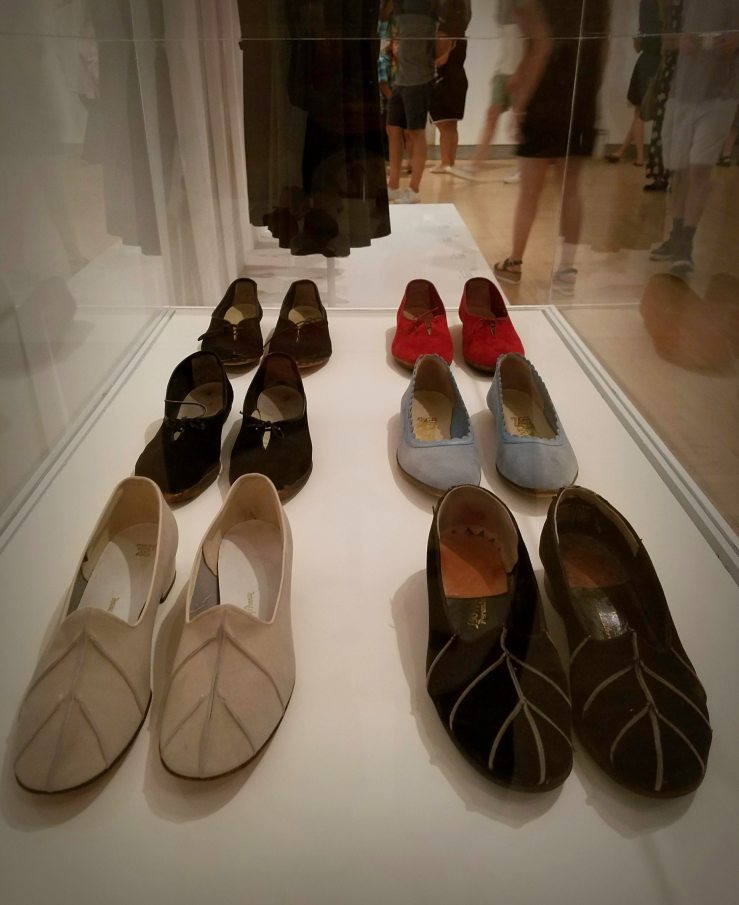
Thanks to Brooklyn Museum at its curators who had organised an extraordinary exhibition about the work and lifestyle of Georgia O’Keeffe. It was truly extraordinary because, refreshingly and for the first time ever, it focused on her wardrobe, showing some of her signature garments alongside her paintings and photographs. In doing so, the show was successful in capturing the spirit of the woman behind the artist, her steely determination to be in charge of her own life and work, the reinvention of herself as a style icon. I went into the exhibition an avid admirer of the work by one of the most significant artists of the twentieth century. I came out full of new images, knowledge and a better understanding of her intriguing personality. Coming back from Los Angeles, I couldn’t have asked for a smoother landing into the frenzy of New York City. 

Alfred Stieglitz
Georgia O’Keeffe at 291, 1917
Platinum print


Georgia O’Keeffe
Shell and Old Shingle VI, 1926
Oil on canvas


Georgia O’Keeffe
Black Pansy & Forget-Me-Nots (Pansy), 1926
Oil on canvas


Cecil Beaton
Portrait of Painter Georgia O’Keeffe, 1946
Gelatin silver print

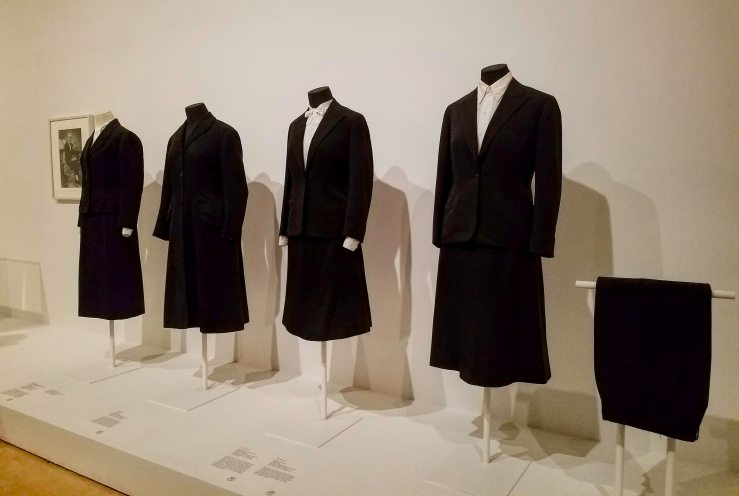
Black remained her favourite colour throughout O’Keeffe’s life. Her reason was described in one article in 1929: ”She wears black almost invariably – not, she says, because she prefers it, but because, if she started picking out colours for dresses, she would have no time for painting.”
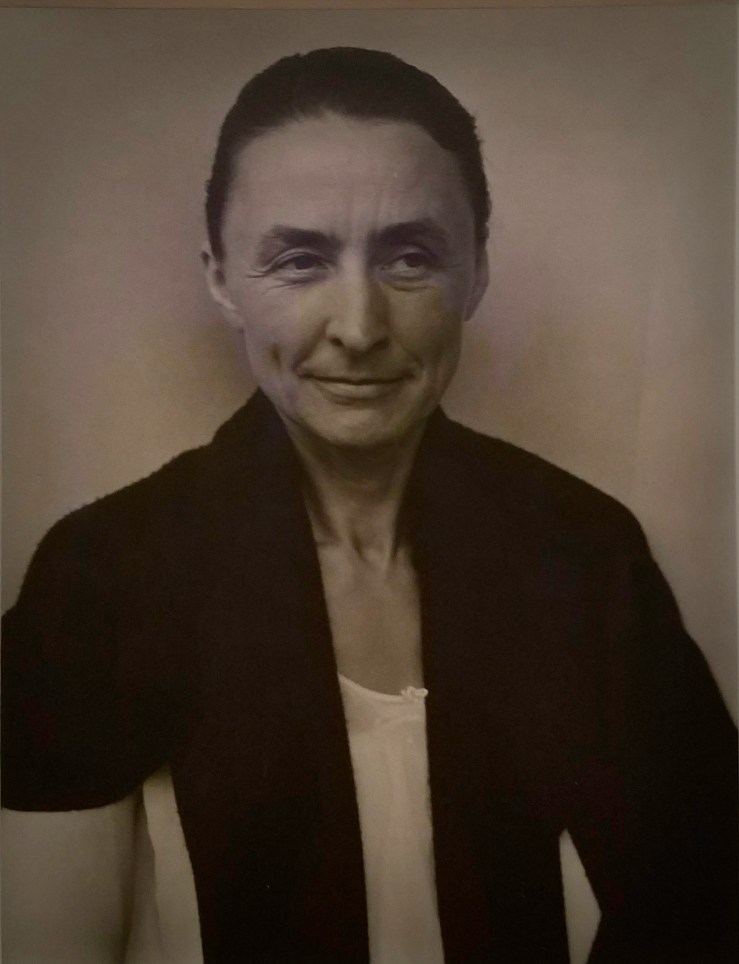

Alfred Stieglitz
Georgia O’Keeffe, 1932
Gelatin silver print

A modernist in dress as well as art, O’Keeffe liked to wear white blouses partially covered with a black sweater to create defined blocks of light and dark. 
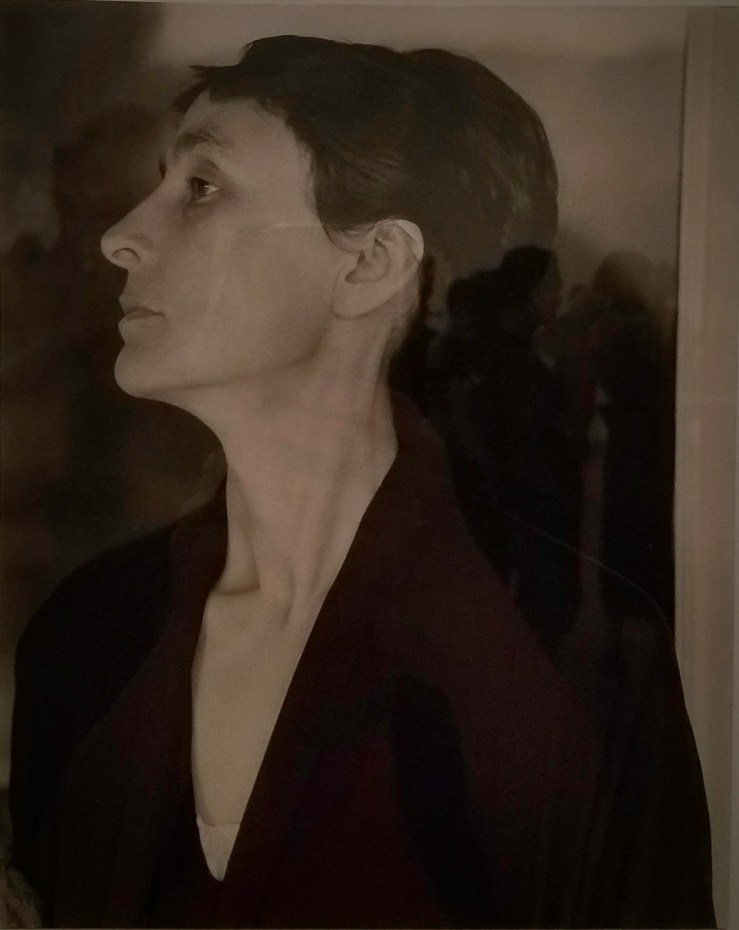

Alfred Stieglitz
Georgia O’Keeffe, probably 1919
Gelatin silver print

O’Keeffe considered her neck and head as integral shapes in arranging her dress. She frequently used the necklines of her blouses as visual framing devices for her long neck, and headdresses or her neatly wound hair to bring closure to her sartorial composition.


Georgia O’Keeffe
Manhattan, 1932
Oil on canvas


Georgia O’Keeffe
Brooklyn Bridge, 1949
Oil on masonite

Just before moving to New Mexico permanently in 1949, O’Keeffe painted this farewell salute to New York, her home for thirty years.


Arnold Newman
Georgia O’Keeffe, Ghost Ranch, N.M., 1968
Dye transfer on paper


Apron, 20th century
Denim

This apron was probably bought off-the-rack, but O’Keeffe added the lower section using her own scraps of denim. Though she had kitchen help much of the time, she was a good cook. She used fruits and vegetables from her own gardens and prepared food as she dressed, simply with few adornments.
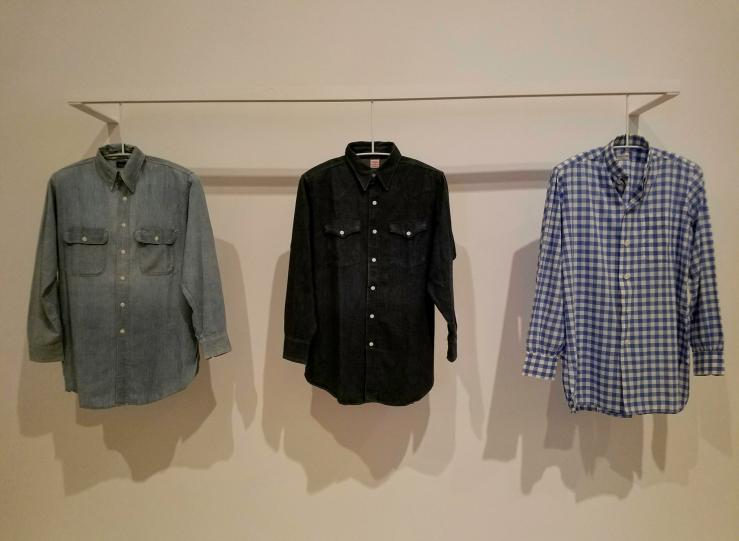
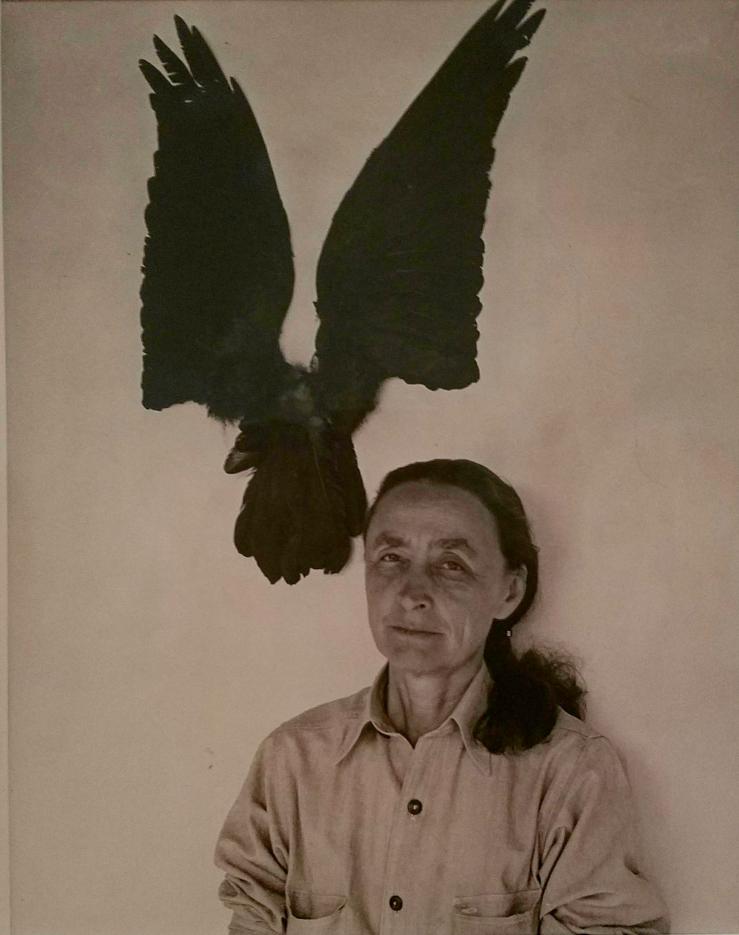
Claudius Lafond jacket & red and purple cotton madras dress, 1950s

O’Keeffe rejected the synthetic fibers that were popular during and after WWII, such as nylon, acrylic and polyester. When traveling in the 1950s and 1960s, she continued to seek out natural cottons and silks in either a single colour of sometimes with stripes, checks or plaids. She may have bought this heavyweight cotton-work jacket when she went to Franc for the first time, in 1953. She most likely designed the plaid Madras dress for herself. 


Don Worth
Georgia O’Keeffe with Chair, 1958 (printed 1968)
Gelatin silver print

Customarily, O’Keeffe wore black and white when photographers came to visit, but in 1958, she made an exception for Don Worth. She wore her white French work jacket over the red plaid dress, we saw above.
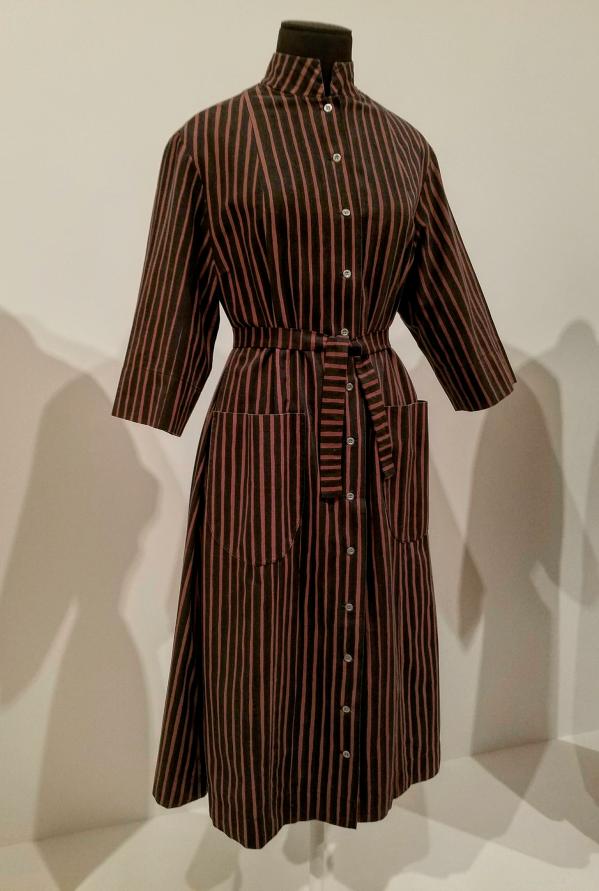

Armi Ratia for Marimekko
”Mother’s Coat” Dress with matching belt, designed mid-1950s.
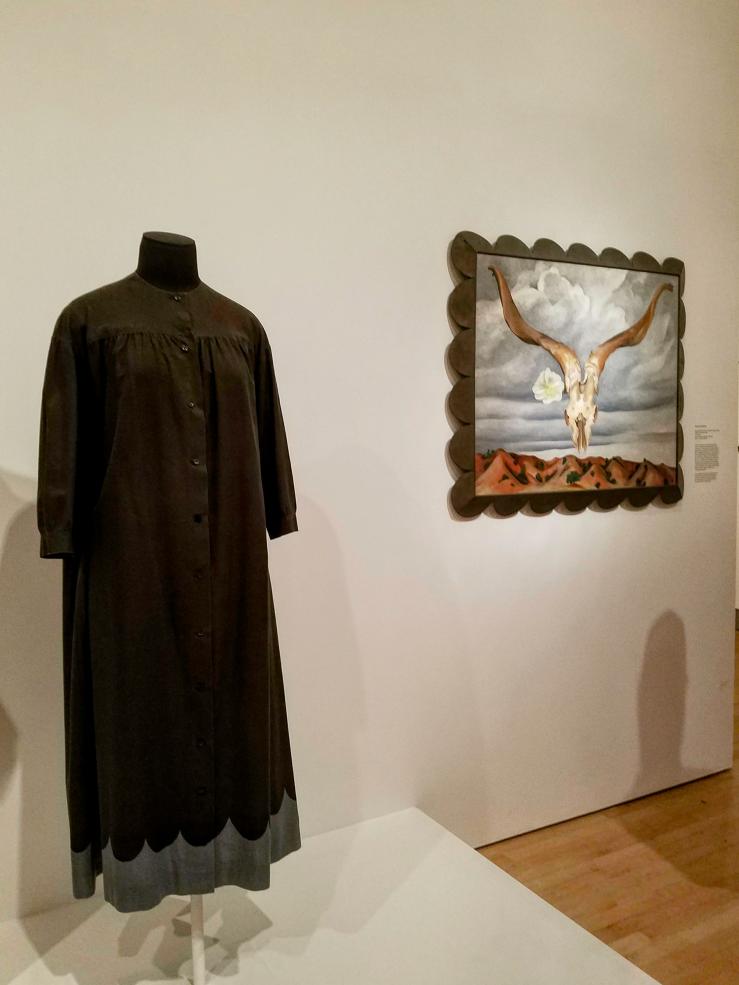

Annika Rimala for Marimekko
”Varjo” Dress, ca. 1963


Georgia O’Keeffe
Ram’s head, White Hollyhock-Hills (Ram’s Head and White Hollyhock, New Mexico), 1935
Oil on canvas


Georgia O’Keeffe
In the Patio IX, ca. 1964
Oil on canvas mounted on panel


Emilio Pucci
”Chute” Dress, ca. 1954

This was one of the first Pucci dresses to be sold in the American market, testifying to O’Keeffe’s interest in and awareness of contemporary fashion.
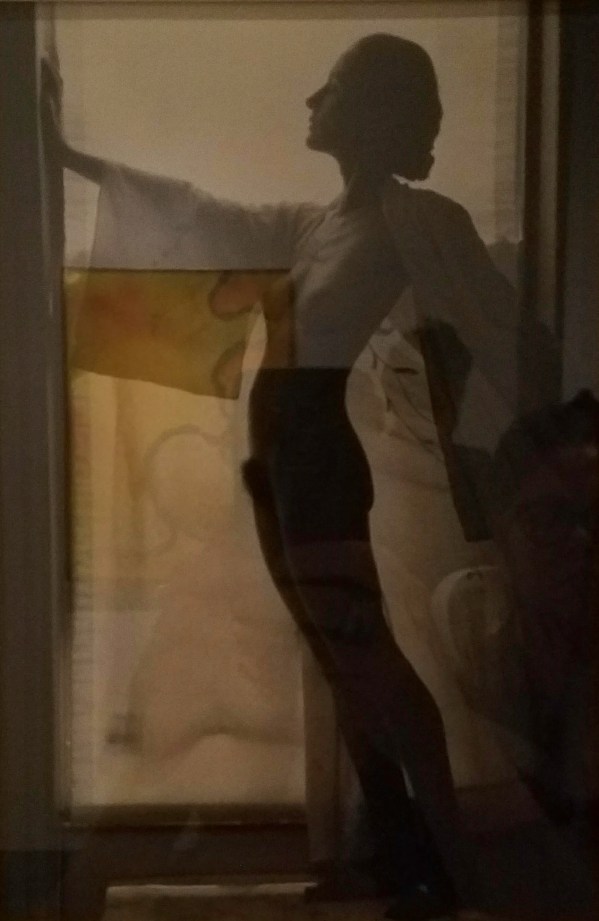

Alfred Stieglitz
Georgia O’Keeffe, 1918
Gelatin silver print


Alfred Stieglitz
Georgia O’Keeffe, 1918
Gelatin silver print


Paul Strand
Georgia O’Keeffe, Texas, 1918
Platinum print

Paul Strand, a young photographer supported and mentored by Stieglitz, was the first to capture O’Keeffe sleepy-eyed and slightly disheveled, wearing a kimono. The fact that kimonos were sleep and bath wear for her gives this photography its frisson; her letters to Strand show that the two were briefly attracted to one another and may have had a short-lived dalliance.


Georgia O’Keeffe
Green, Yellow and Orange, 1960
Oil on canvas


Philippe Halsman
Georgia O’Keeffe, 1967


Philippe Halsman
Georgia O’Keeffe, 1967

Tony Vaccaro
Georgia O’Keeffe with the Cheese, 1960
Gelatin silver print


Ansel Adams
Georgia O’Keeffe, Carmel Highlands, California, 1981 – printed 1982
Gelatin silver print

In 1981, O’Keeffe visited Ansel Adams in California for the last time. They were very dear friends and had known one another for over fifty years. He unfailingly got her to look directly at him and his camera for portraits that characteristically are straightforward and natural, without the mythos that attended photographs of her as a solitary and remote figure of the desert.
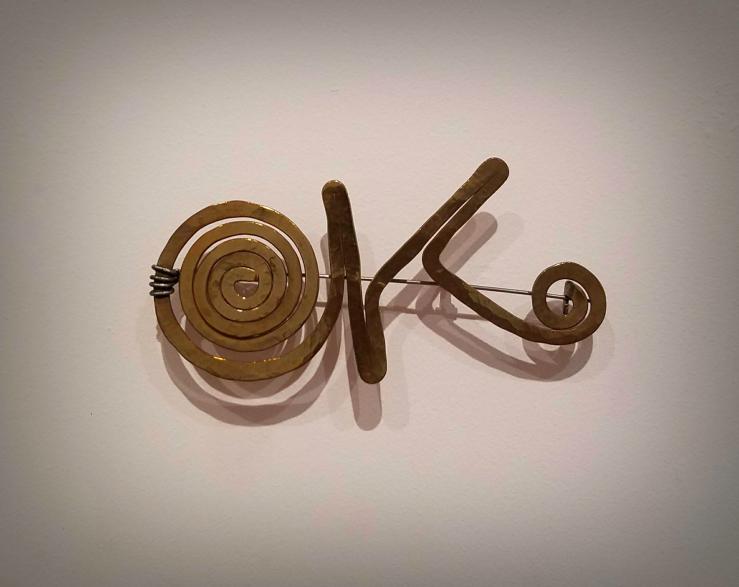

Alexander Calder
Pin, ca 1938
Brass

Sculptor Alexander Calder, who also made hand-wrought metal jewelry, created this brass pin for O’Keeffe. It first appears in a 1938 photograph and, from then on, O’Keeffe wore it often for photo shoots. When her hair turned grey, she found the pin’s copper colour less flattering and, on a trip to India in 1959, she found a craftsman to make her a silver version, which she wore for the rest of her life. She was known to boast that the copy cost her only five dollars.


Georgia O’Keeffe: Living Modern was running in Brooklyn Museum until July 23rd, 2017. I caught it one day before closing.

July 22nd, 2017
Do not go gentle into that good night

Do not go gentle into that good night,
Old age should burn and rave at close of day;
Rage, rage against the dying of the light.

Though wise men at their end know dark is right,
Because their words had forked no lightning they
Do not go gentle into that good night.

Good men, the last wave by, crying how bright
Their frail deeds might have danced in a green bay,
Rage, rage against the dying of the light.

Wild men who caught and sang the sun in flight,
And learn, too late, they grieved it on its way,
Do not go gentle into that good night.

Grave men, near death, who see with blinding sight
Blind eyes could blaze like meteors and be gay,
Rage, rage against the dying of the light.

Dylan Thomas

June 25th, 2017

Green-Wood Cemetery, Brooklyn

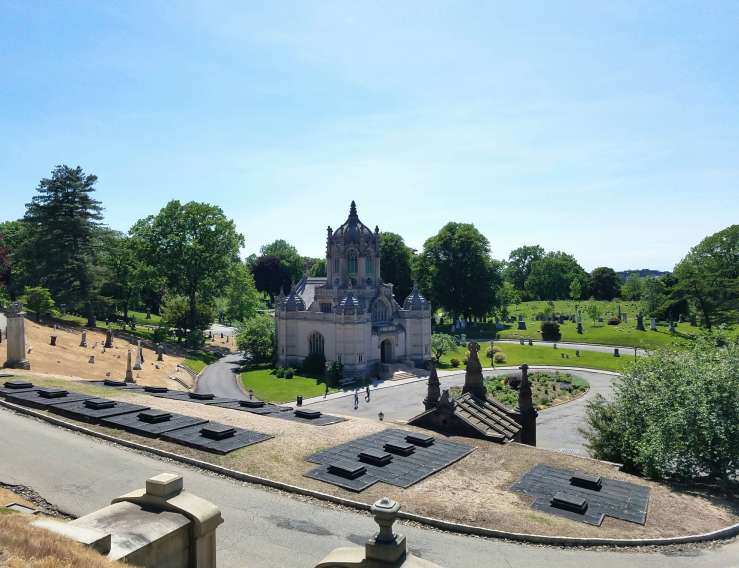
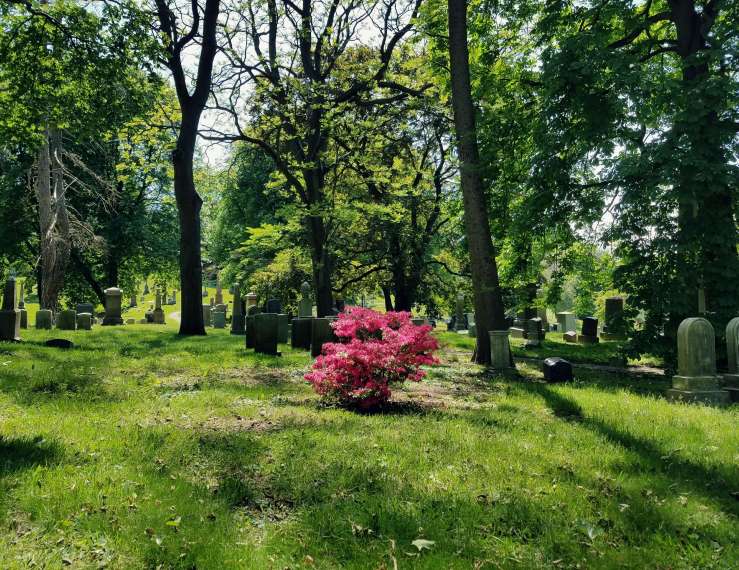
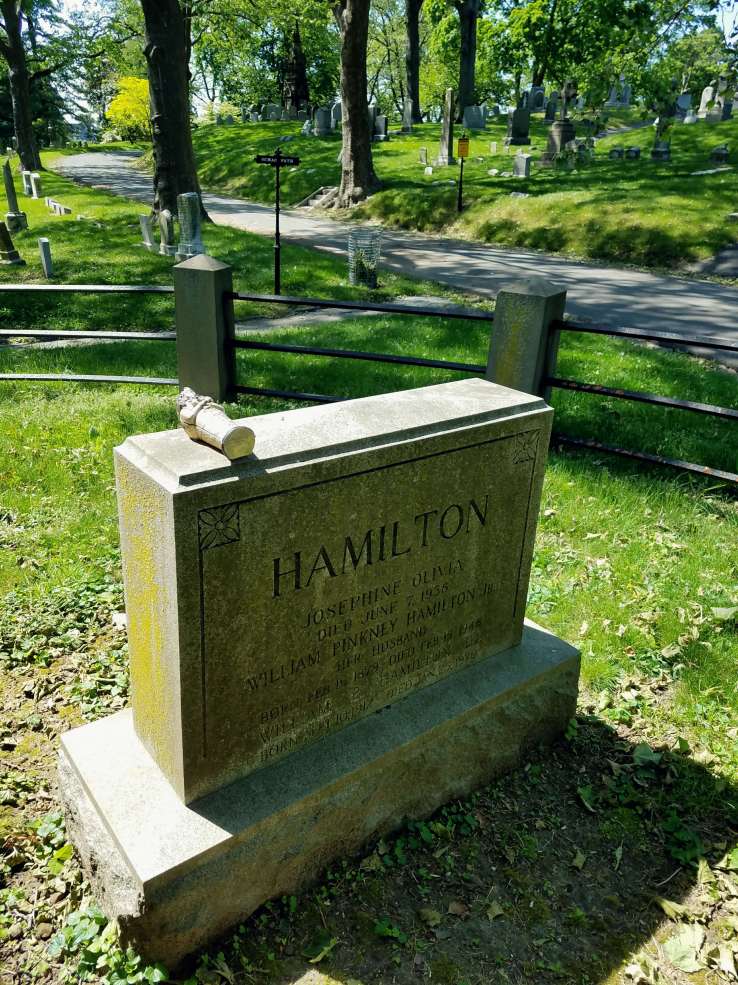
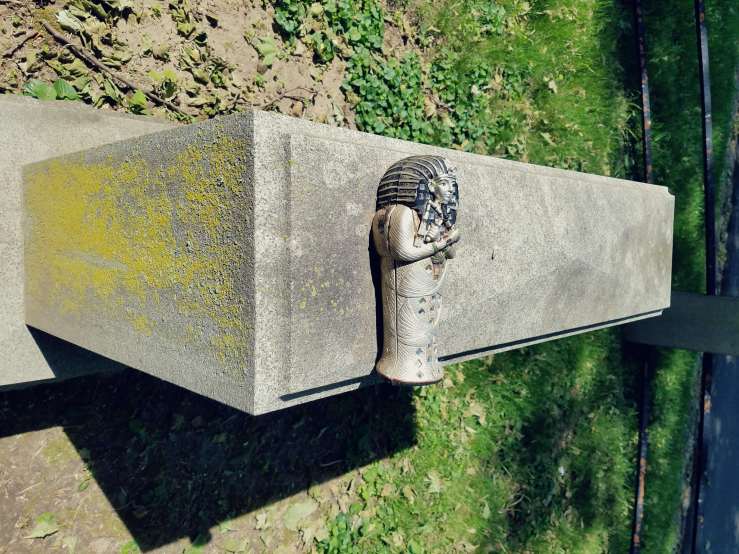
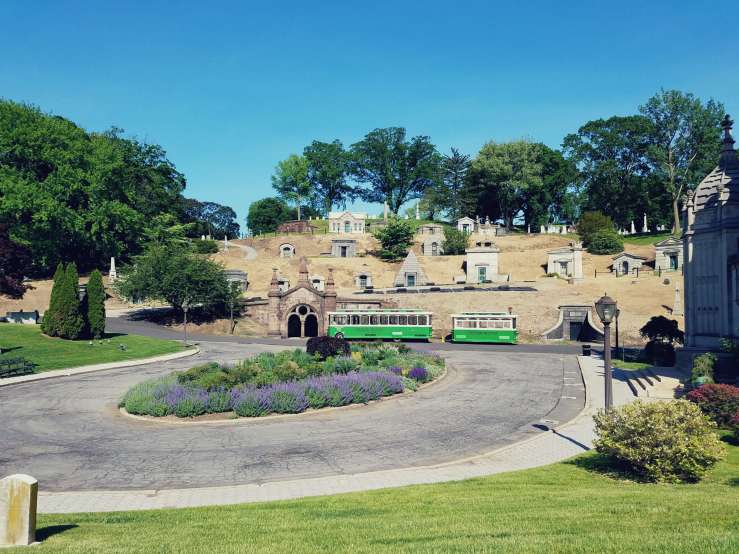
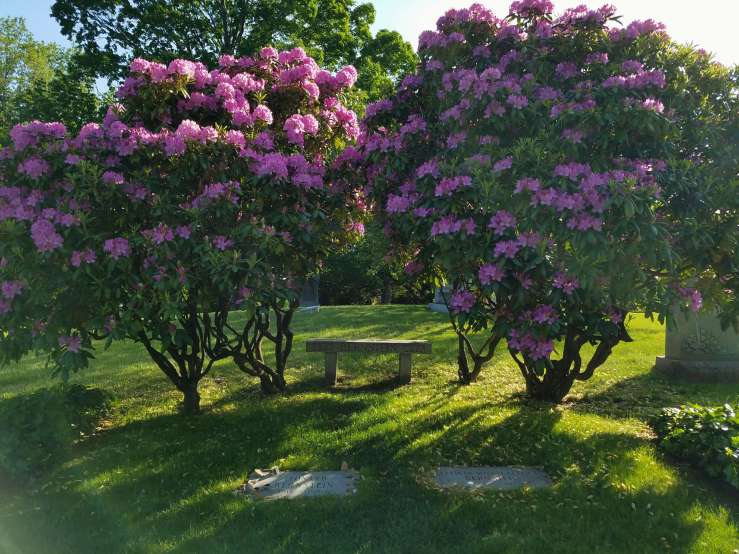
Some cemeteries are functional, others Gothic or haunted; some include beautiful gardens or war Memorials. Then, there is Green-Wood Cemetery; where visitors can take self-guided tours, walk on lanes with names like ”Sweet-Gum Path” or hop on a green trolley driven by an expert guide, watch the sun go down over the calm waters of a lake, take deep breaths of fresh air, admire a magnificent view of Manhattan.

For Green-Wood Cemetery must be the quietest, most tranquil 478 acres of land in New York and, since development here works mostly underground, the largest open space in the City that is in no danger of getting crammed with more tall buildings, any time soon.

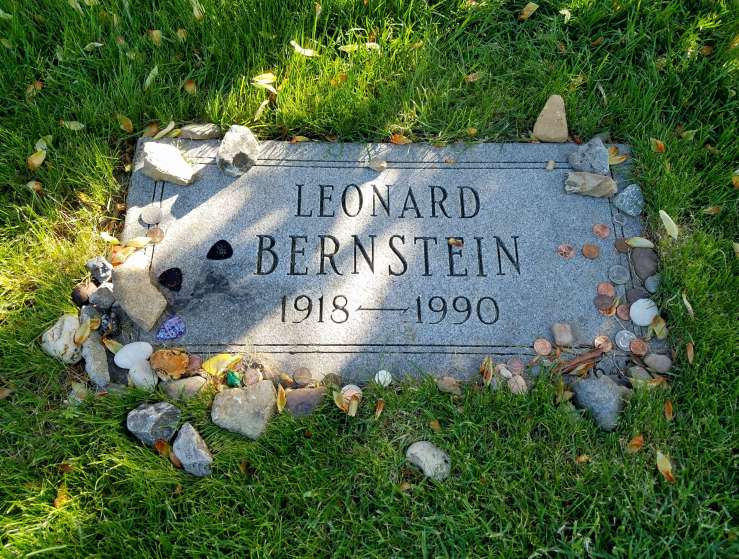
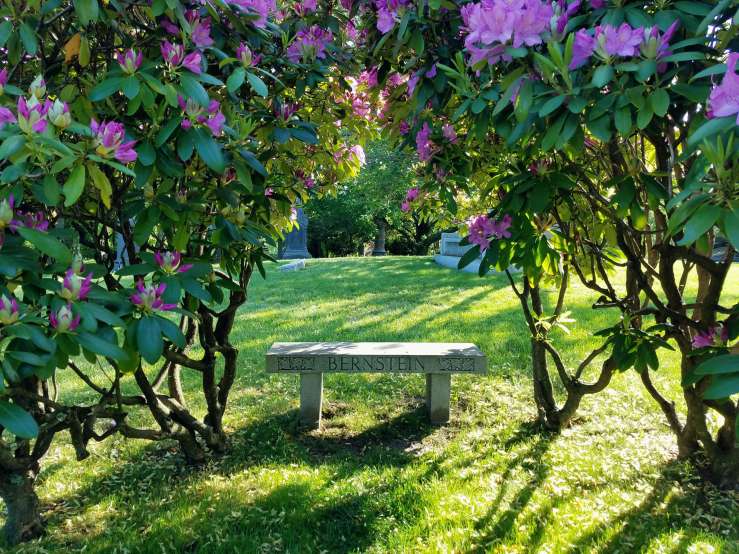
If you need some downtime for quiet contemplation, honour the memory of loved ones, pay your respects to war heroes, notable residents or celebrities (we paid ours to the Bernsteins and Mrs. Marie Dolores Eliza Rosanna Gilbert, Countess of Landsfeld, better known by her stage name Lola Montez) or just take in the views, look no further than Greenwood Heights in Brooklyn.

Green-Wood Cemetery is reached from the Atlantic/Barclays Center stop in Brooklyn – with the R train, direction Bay Ridge. Exit at the 25th Street station. Check the visitors’ page on their website for more info, further directions and opening hours.

May 21st, 2017

The Brooklyn side of life

Why do all my walks in Brooklyn seem to end up in BAM? Because there is always something interesting going on there, that’s why; like that discussion with Alec Baldwin for the promotion of his memoir, Nevertheless. As expected, it was a funny, timely, thoughtful and honest account of his life. Thoroughly enjoyable, but I have yet to read the book.

April 9th, 2017

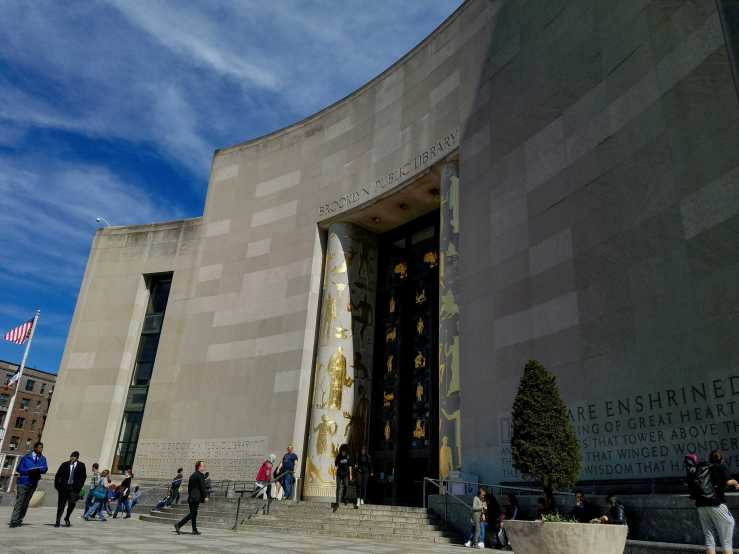
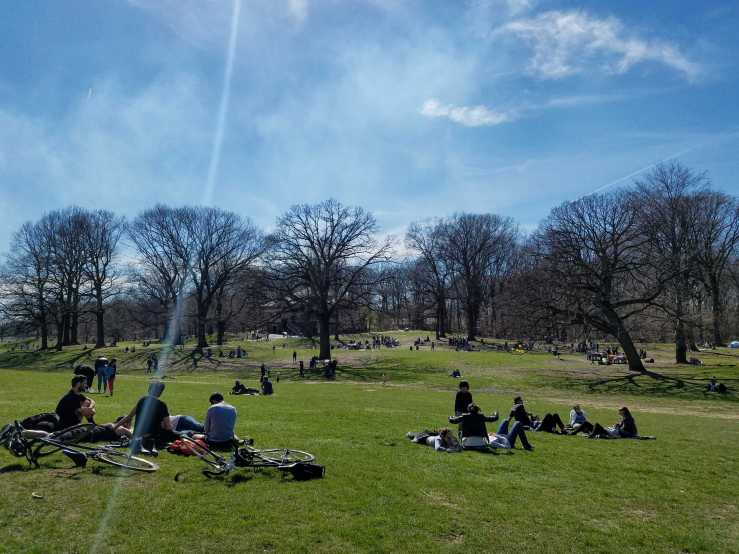
Sunday in Prospect Park

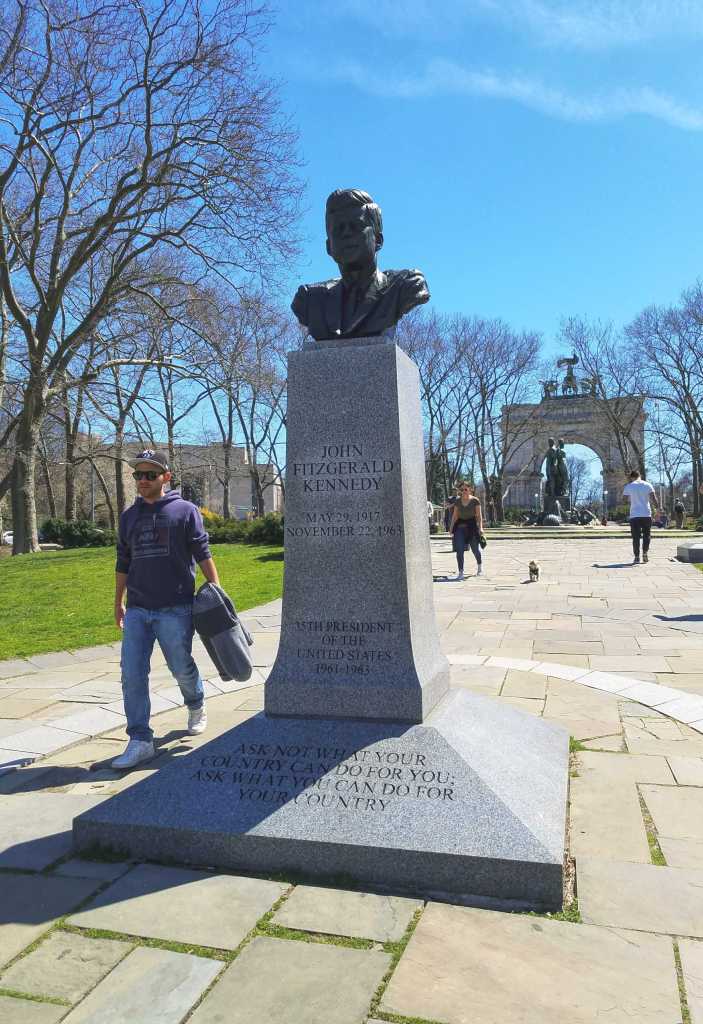
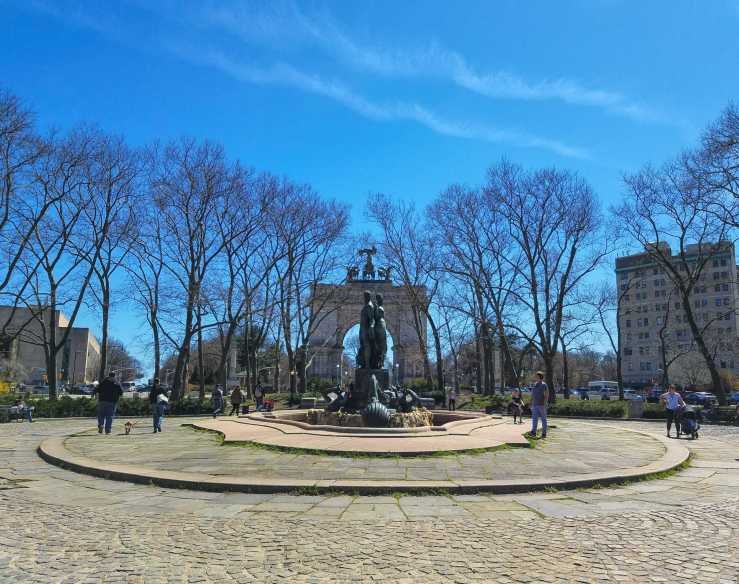
Starting at the Grand Army Plaza, one may expect to see ~

A monument to this gentleman ↓

The Soldiers’ and Sailors’ Arch at the far end ↓

Wisdom and Felicity surrounded by Neptune, Triton and a boy holding a cornucopia (not visible from this angle), aka the Bailey Fountain. Sculpture by Eugene F. Savage, cast in 1931 ↓

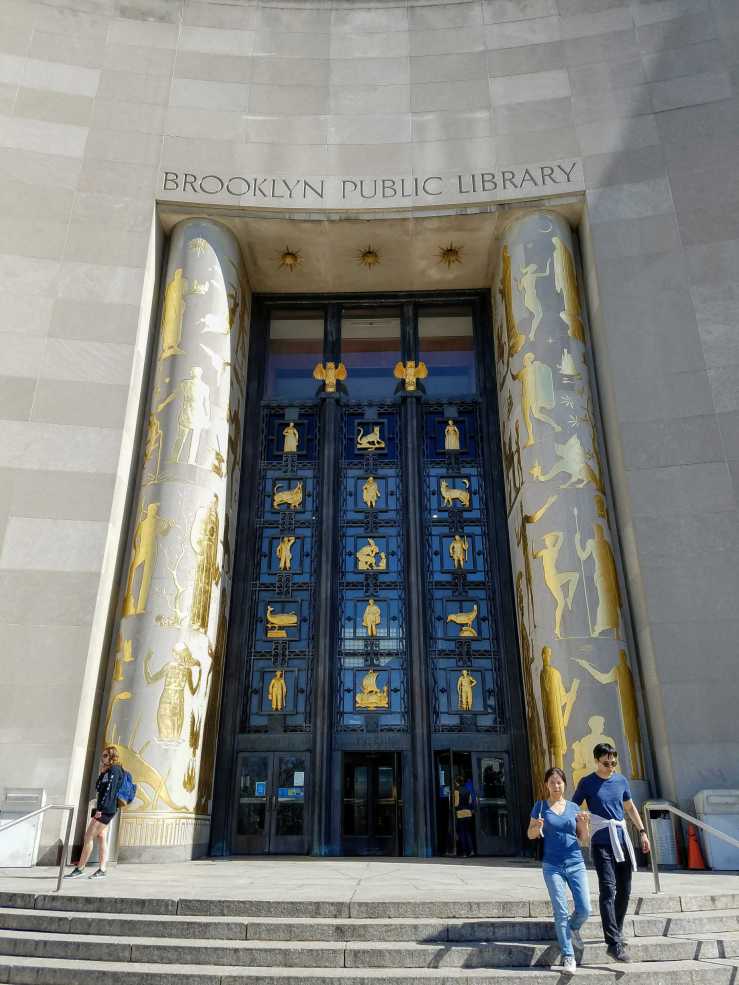
This monumental door of the Brooklyn Public Library, in stark contrast with the, otherwise, minimal concrete facade ↓

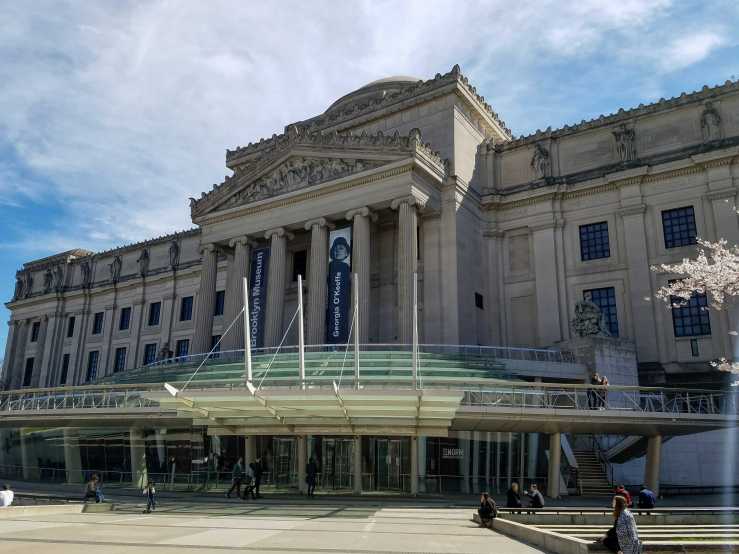
The Brooklyn Museum ↓

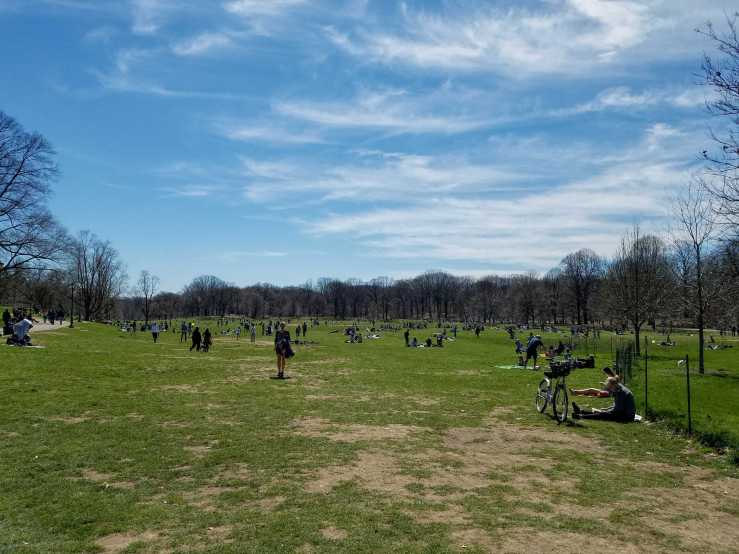
The meadows ↓

The lost ↓♥

And the found ↓

April 9th, 2017

Drawing the line ~ from forgettable to memorable

I’m going back in time. I have to, for if this blog is to continue doubling up as my journal, I can’t be skipping events. Even the not so memorable ones like those two, almost back-to-back performances at BAM.

First, the utterly forgettable performance by Doug Varone and Dancers, emphatically described as: ”Doug Varone and Dancers celebrate 30 years of impassioned choreography with three works representing the past, present, and future of this peerless company.” By the third work I was convinced I’m never watching another Doug Varone performance again. Art is subjective and a matter of chemistry, and unfortunately it didn’t work for me this time.

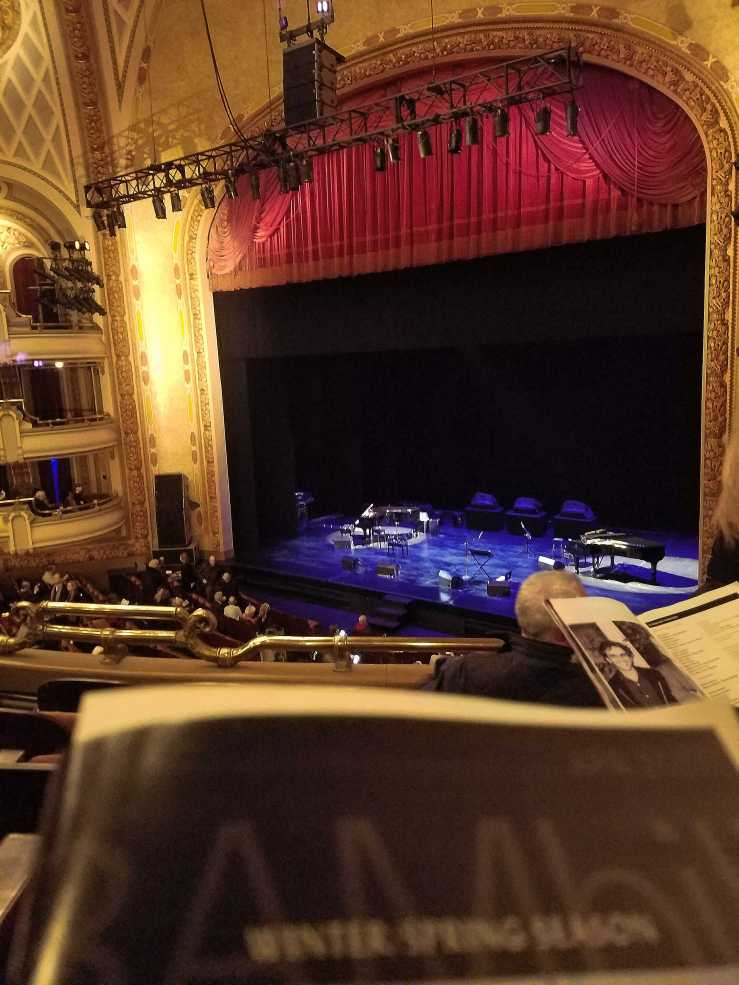
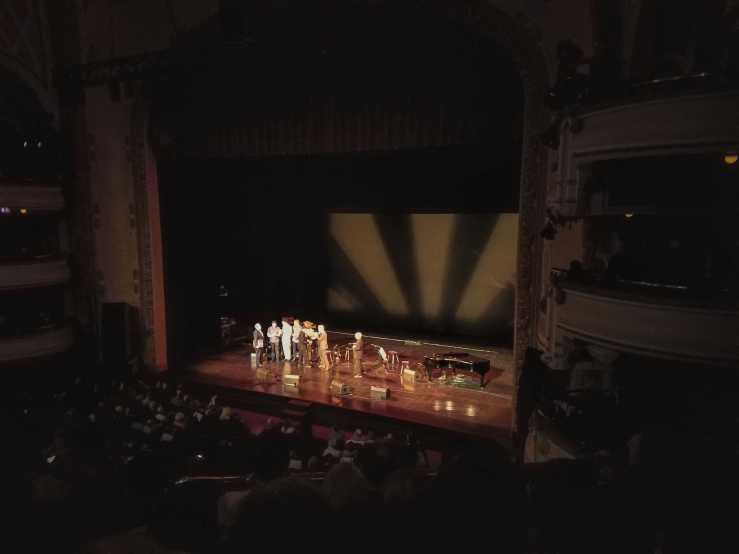
Next, ”A Nonesuch Celebration, a stellar lineup of musical luminaries” that came together ‘‘for one night only to pay tribute to Bob Hurwitz, who for the past three decades has served as the visionary architect of Nonesuch Records”. I had not heard of Mr Hurwitz before, but the idea of watching live performances by (among others) Pat Metheny, Kronos Quartet, k.d. lang and Mandy Patinkin all in one evening, seemed very appealing. I did enjoy myself but it seemed like the hosts were enjoying themselves much more which made me feel a bit awkward, like crashing a private party.

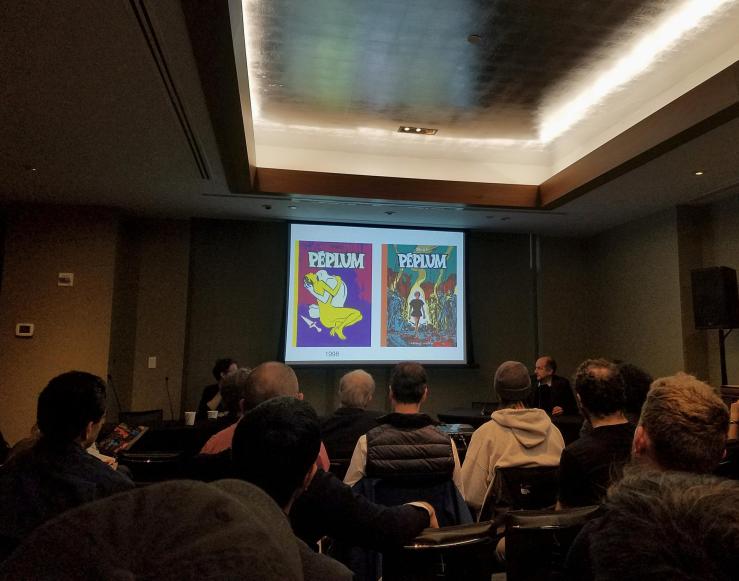
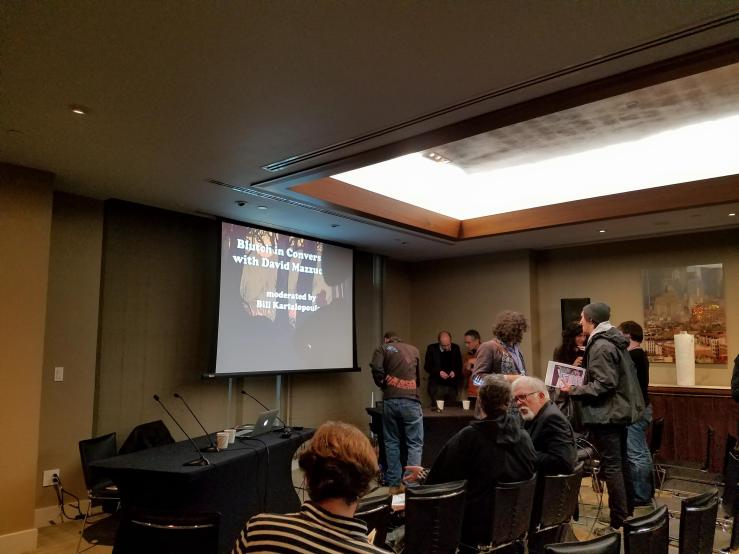
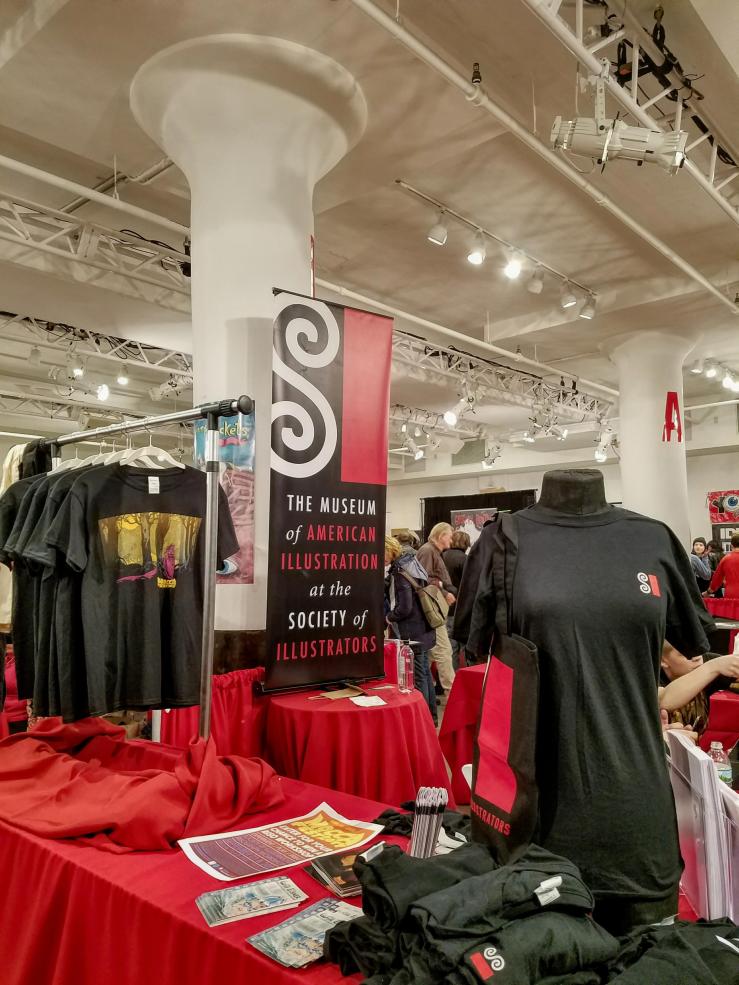
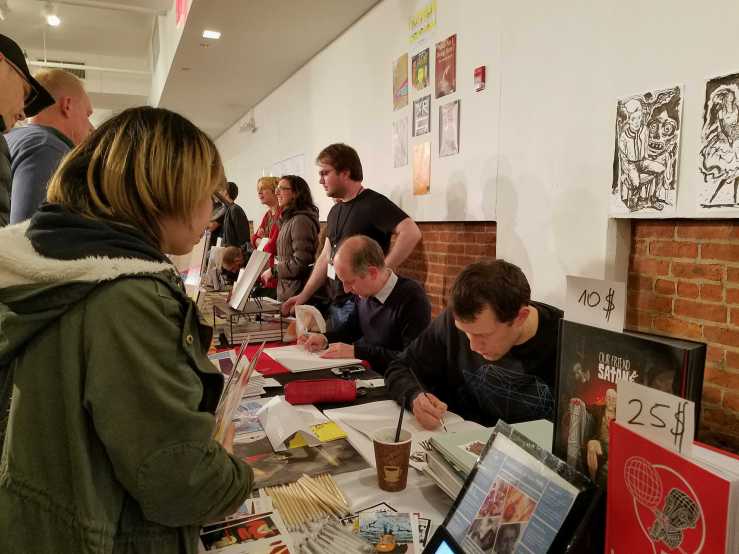
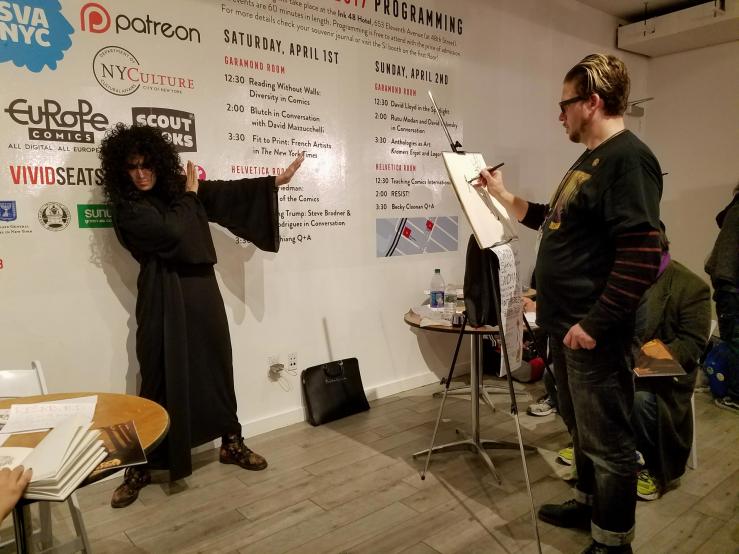
But then, on 1-2 April, it was time for the annual MoCCA Arts Festival. A multimedia event organised by the Society of Illustrators with workshops, film screenings, exhibitions and panels, MoCCA is Manhattan’s largest independent comics, cartoon and animation festival and my first chance to meet two rather brilliant gentlemen, artists and friends: Blutch in Conversation with David Mazzucchelli – and the weekend couldn’t get any better.

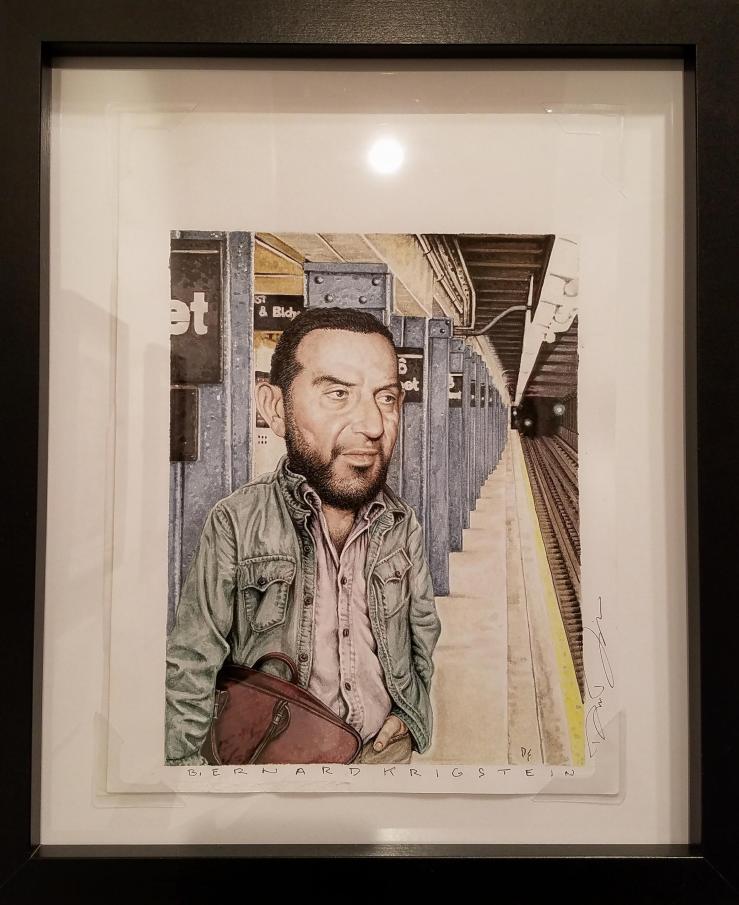
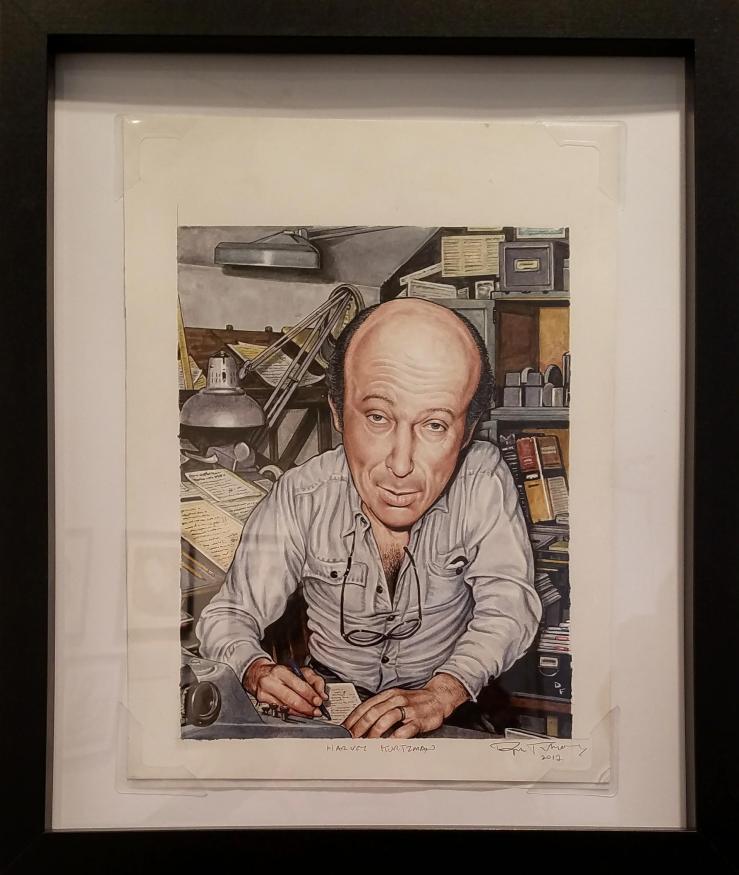
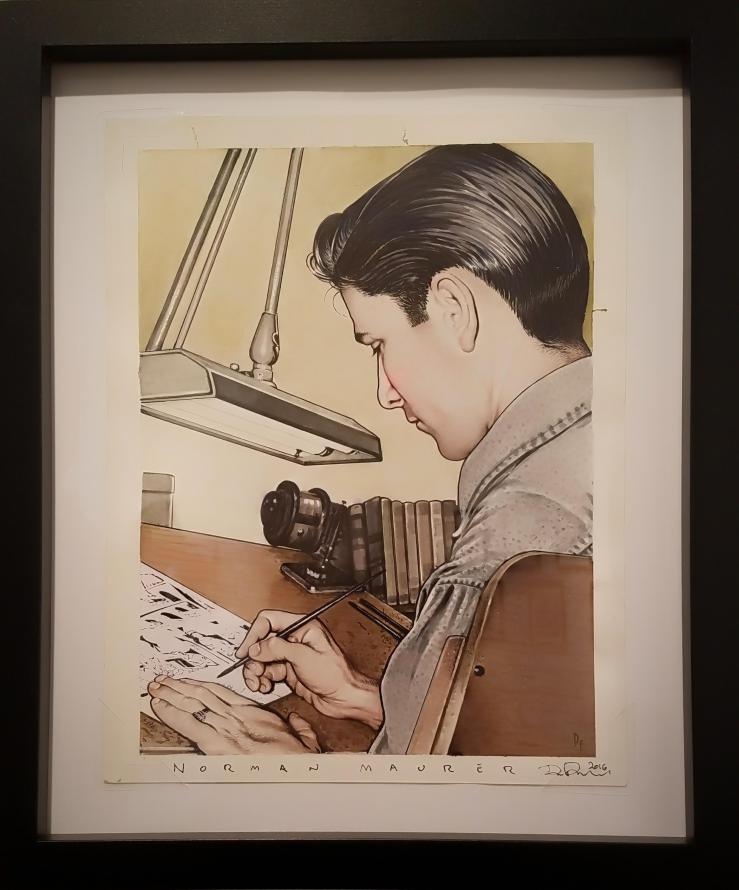
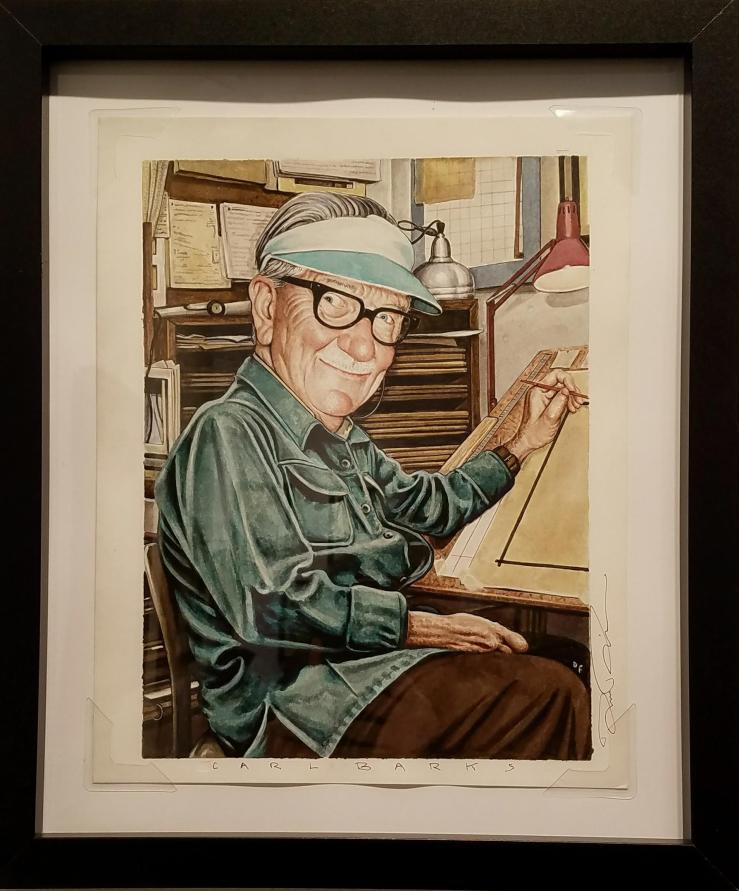
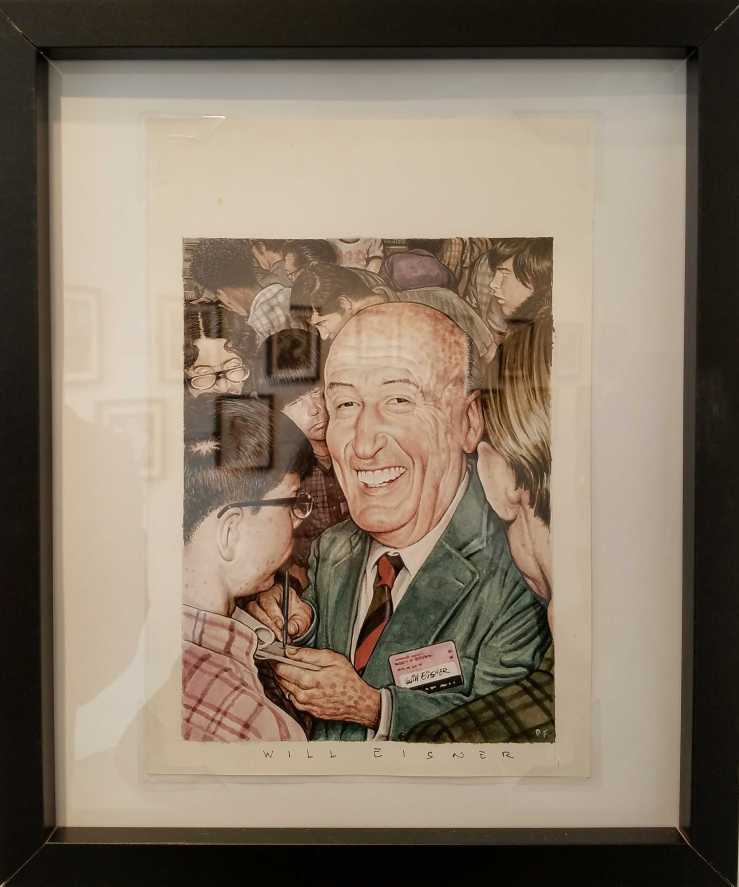
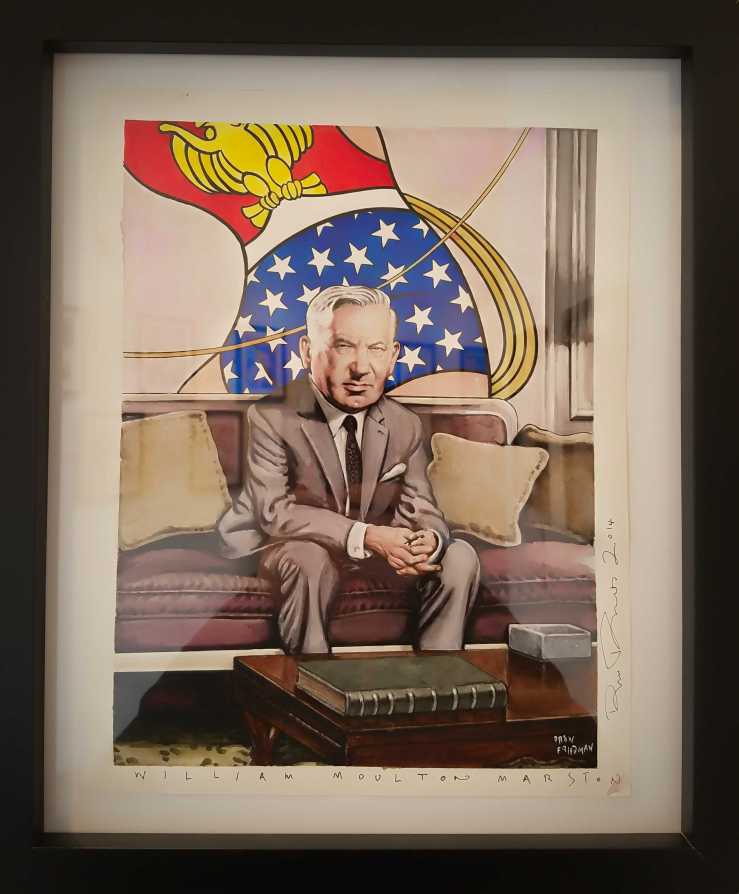
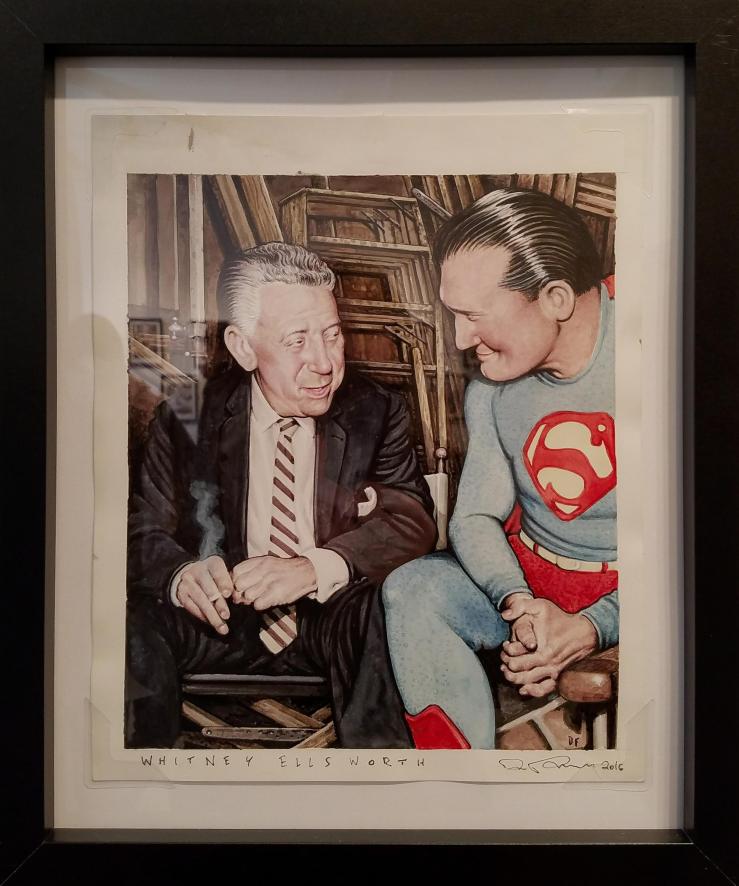
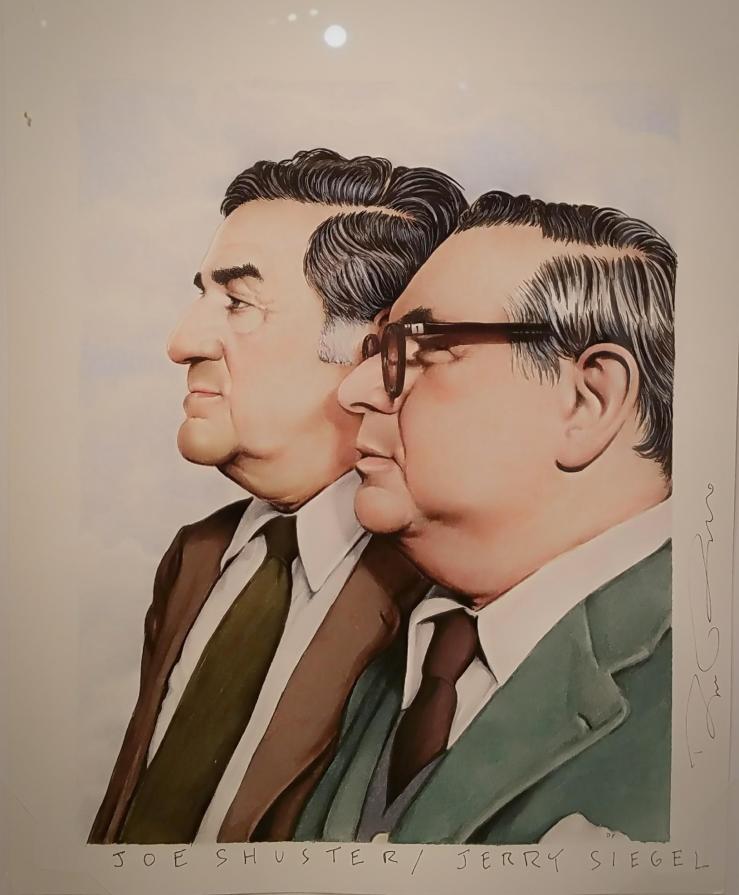
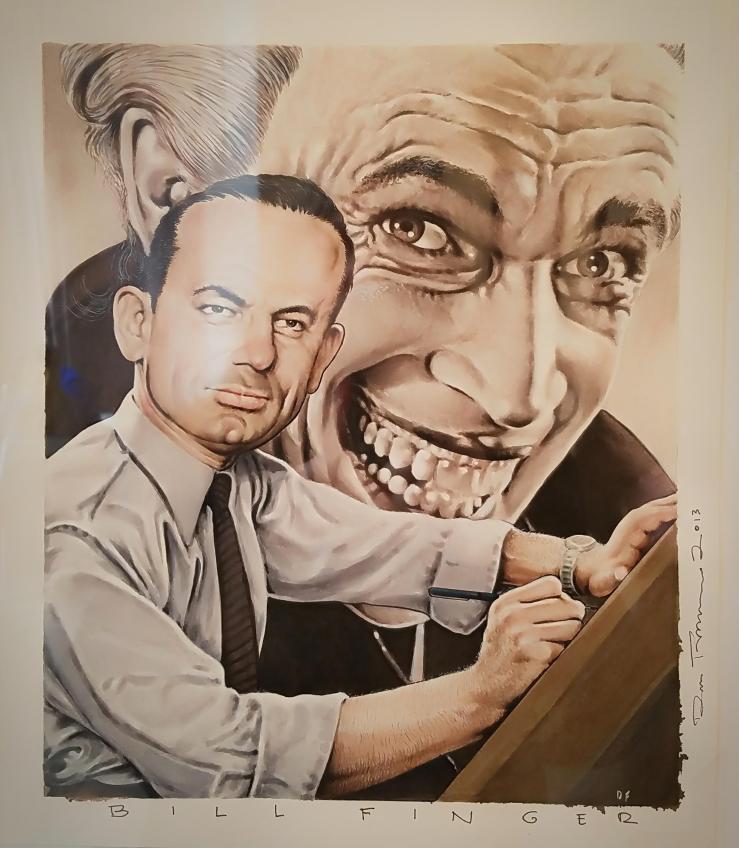
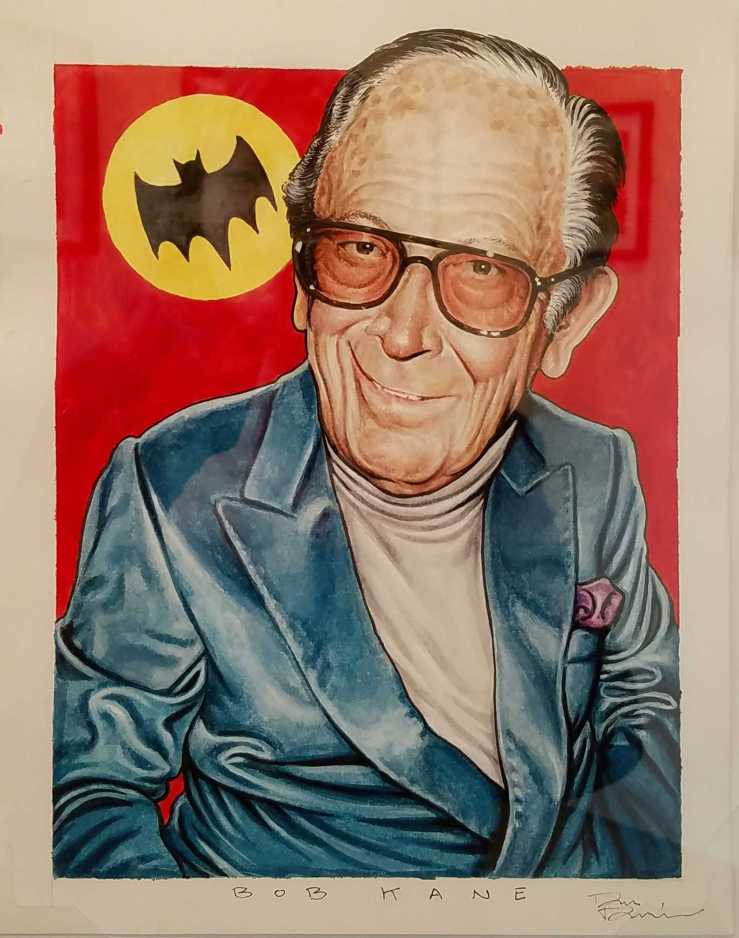
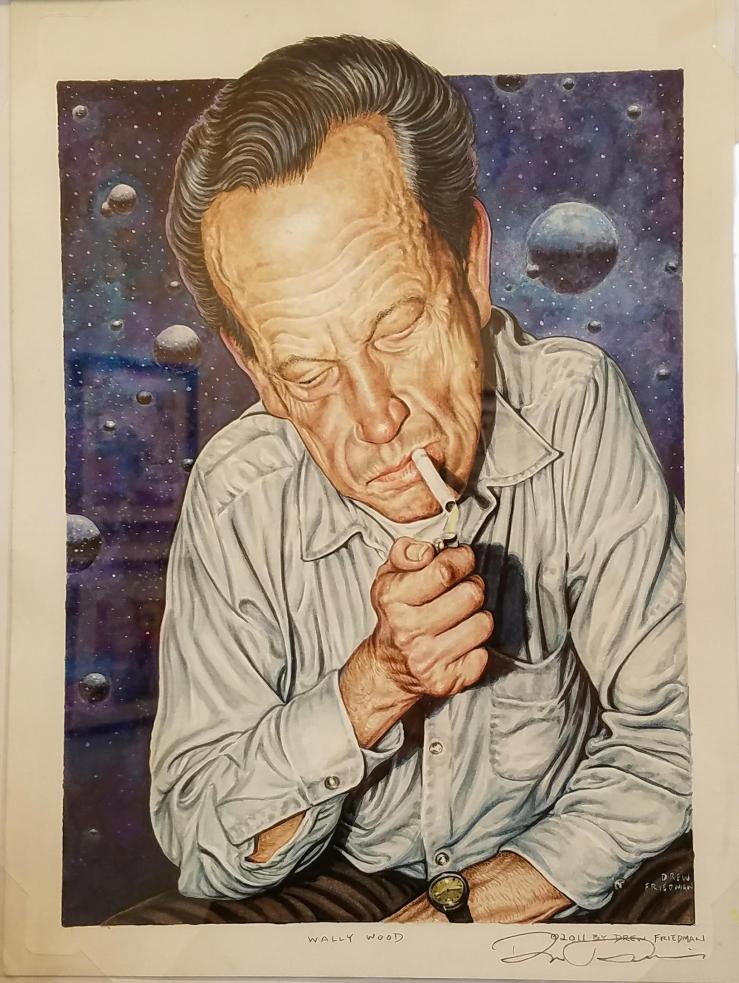
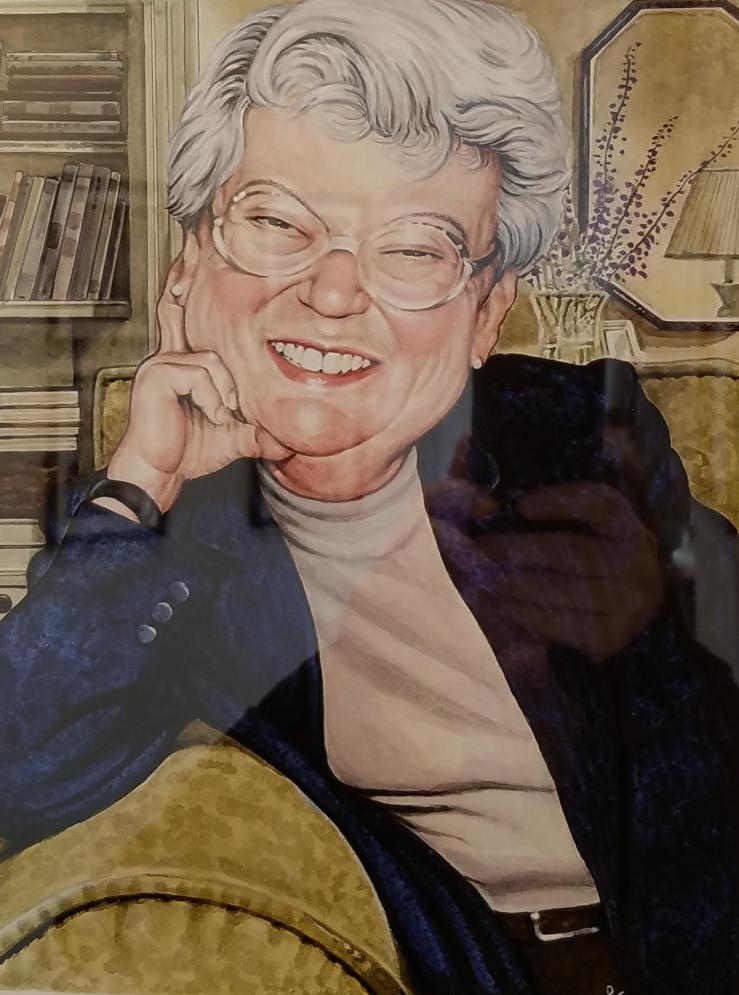
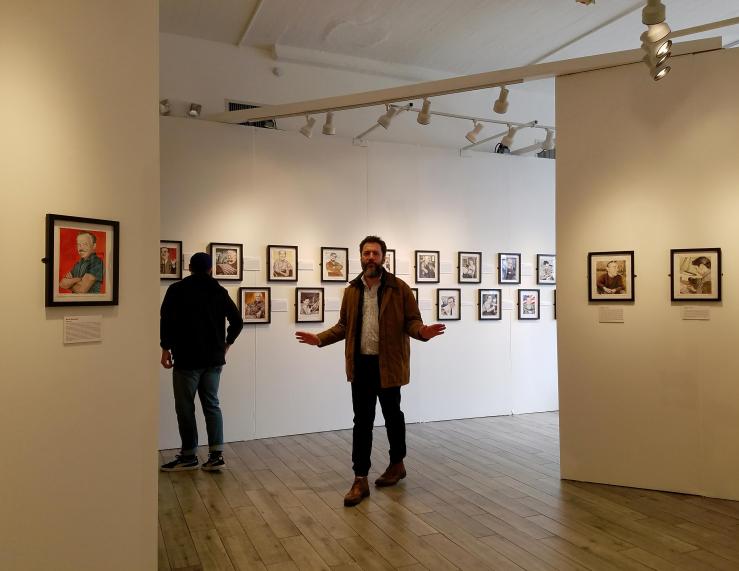
But wait… there’s more! Here come the real superheroes, those early comic book creators from the industry’s early years  (1935-1955), lovingly depicted by their colleague, American cartoonist Drew Friedman in his two recent books Heroes of the Comics and More Heroes of the Comics. 

The Society of Illustrators presented 100 original colour illustrations by the artist, who was also featured as a guest of honour at the MoCCA 2017.

Bernard Krigstein, 1919-1990
He approached comics as a serious art form and his innovative, beautifully composed, almost cinematic use of panels have never been equaled in comics. Following Harvey Kurtzman’s invitation to illustrate one of his EC war stories, Krigstein became a regular contributor to EC, illustrating a total of 47 stories for them, including several pieces for MAD, highlighting his brilliant gift for caricature. 1955’s ”Master Race”, appeared in the debut issue of EC’s ”New Direction” comic Impact and was his masterpiece, a groundbreaking triumph of sequential storytelling.


Harvey Kurtzman (1924-1993)
Cartoonist, writer, editor, satirist and teacher, he was the founder and creator of MAD – as well as Trump, Humbug, Help, etc. Along with his long-time partner, cartoonist Will Elder, he spent almost 30 years producing the lushly painted comic strip ”Little Annie Fanny” for Playboy. Kurtzman has had a huge, almost unmeasurable influence on several generations of cartoonists and humorists, among them Robert Crumb and the (Monty) Pythons.


Norman Maurer (1926-1986)
Born in Brooklyn, he started working in comic books while still a teenager. His marriage to Joan Howard, daughter of Moe Howard of the Three Stooges, in 1947 kicked-off his lifelong association with the comedy team.


Carl Barks (1901-2000)
His cartoon adventures of Donald Duck were published anonymously for decades. Barks drew the Donald Duck story for the front of Walt Disney’s Comics, the most popular post-War II comic book being published. In 1935 he has hired as a full-time writer at the Disney film studios only to quit in 1942 and become a full-time artist for their comic book line – which included the bimonthly Donald Duck. In his later years, Barks would recreate in oil large paintings of his beloved ducks, some of them now fetching hundreds of thousands of dollars.


William Erwin ”Will” Eisner (1917-2005)
Eisner grew up in the Bronx dreaming of someday becoming a successful cartoonist. In 1936, Eisner’s friend from Dewitt Clinton high school, Bob Kane, suggested he sell some of his cartoons to a new tabloid-sized magazine called WOW, What a Magazine!, edited by cartoonist and letterer Jerry Iger. Although Iger was 12 years older than the 19-year old Eisner, they both clicked. They opened together the Eisner-Iger studio in New York, a mass production comic book factory in 1937. It was a great financial success but Eisner, who was more interested in concentrating on his writing and drawing, would sell his interest in the shop in 1939 to pursue an offer to create a syndicated newspaper comics section of his own. His first 16-page The Spirit insert episode ran in 1940.


William Moulton Marston (1893-1947)
Marston’s relatively short life was filled with fascinating, seemingly at first, unrelated accomplishments. He attended Harvard and received a Ph.D in Psychology, became a teacher and briefly, in 1929, the director of public services for Universal Studios in Hollywood. Marston was also a lawyer and inventor, and is credited as the creator of the Systolic Blood Pressure Test, which would help lead to the invention of the modern Polygraph machine. He also authored several self-help books and was a champion of women’s causes, writing that he was convinced that women were ”more honest and reliable than men, and could work faster and more accurately.” He also recognized and wrote of the ”great educational potential” of the new medium of comic books and in the early forties he was hired by publisher Max Gaines to be an ”educational consultant” for National Periodicals and All-American Publications which would soon merge into DC comics. Marston’s wife Elizabeth gave him the idea to create a female superhero in the then male dominated world of comics; he developed the character ”Suprema” soon called ”Wonder Woman” basing her to an extend on his own wife and her appearance on his polyamorous partner, a former student of his who now lived with the couple in an open marriage, named Olive Byrne.


Whitney Ellsworth (1908-1980)
Writer and artist for DC comics, he became their Hollywood liaison. He had a hands-on role in script and production for the 1951 feature Superman and the Mole Men which led directly to 1952’s The Adventures of Superman, starring George Reeves.


Joe Shuster (1914-1992) & Jerry Siegel (1914-1996)
They met at 16 at Glendale high school in Cleveland, Ohio. The two young, shy Jewish teenagers discovered they shared much in common, Siegel dreaming of writing science fiction stories for Pulp magazines and the shy, bespectacled Shuster also sharing a love for science fiction and dreaming of working as a Pulp artist. Siegel conceived a superhero character he called ”The Superman” and together with Shuster’s art, began a frustrating four-year quest to get it published as a comic. Another of their characters, Slam Bradley, debuted in National’s Detective Comics #1 in 1937. In 1938 Max Gaines urged National’s new publishers, Harry Donefeld and Jack Liebowitz to publish Superman, and after four years of submissions and rejections, the character finally debuted as the cover feature for National’s Action Comics #1 in June 1938. It was an instant sensation. By endorsing a check for $130 (the total amount of the check was for more than $400, other monies owed to the team was padded on to no doubt make the signing more enticing), assuring them that they would be the primary artist and writer for Superman and the upcoming syndicated Superman newspaper comic, and without any advice from a lawyer, Siegel & Shuster forever signed away all their rights to a character that would soon become one of the most commercially successful and iconic characters of the 20th century.


Bill Finger (1914-1974)


Bob Kane (1915-1988)
He was the controversial artist who posed for almost half a century as the sole creator of Batman. In 1938, after the character created by Jerry Siegel and Joe Shuster named Superman caused a sensation in Action Comics #1, National sought more super-heroes to add to their roster and Kane soon conceived a character he called ”The Batman”. He showed his flimsy conception drawings to his writer Bill Finger, who he had hired to work for him and Finger suggested specific changes to redesign the character into the now familiar Dark Knight persona. The completed Batman debut finally appeared in Detective Comics #27, in May 1939. It became a hit and was soon starring in his own series, featuring his sidekick ”Robin”, conceived by Finger and artist Jerry Robinson. Kane worked out a cozy deal with National where he would receive sole credit as the writer and artist behind Batman, even though the character was essentially created by Bill Finger


Wally Wood (1927-1981)
“Wally may have been our most troubled artist, but he may have been our most brilliant” – William M. Gaines


Marie Severin (b. 1929)
As EC’s colorist and the only creative woman on staff, and a very moral catholic, she was known for often colouring a particularly gruesome panel dark blue to help tone down the gore. Marie Severin’s older brother John first invited her to work as his colourist at EC in 1949 and soon she was colouring all of their comics, including the notorious horror titles.


Doug  Varone and Dancers, BAM
March 30th, 2017

A Nonesuch Celebration, BAM
April 1st, 2017

MoCCA Arts Festival
April 1st, 2017