The art of having your head in the clouds

Walking into the galleries of the Linde Family Wing for Contemporary Art, I could hardly believe we were still in the same Museum.  Tara Donovan
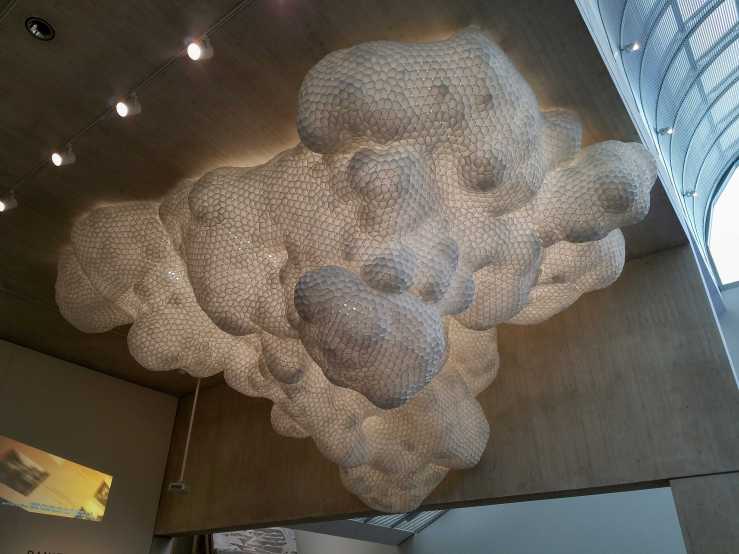
Untitled, 2003
Styrofoam cups, hot glue

This undulating lattice of styrofoam drinking cups with glowing hollows and pliable rims was made to expand into the architecture of this particular space. To discover how they react to light and space in transcendent ways, Donovan experiments with huge volumes of manufactured materials. Clustered with an almost viral repetition, the cups above assume forms that both evoke natural systems and seem to defy the laws of nature. ”My work is mimicking the ways of nature, not necessarily mimicking nature” she notes. Here, it might suggest cellular growth or even the density of molecules in rolling clouds. 


Jonathan Borofsky
I Dreamed I Could Fly, 2000
Acrylic on fiberglass and incandescent lamp

Borofsky’s work is driven by the ideals of equality and harmony. Made especially for the wide open spaces of the Linde Family Wing, these flying figures ”are able to rise up and look down upon the whole planet… [they] see and feel that human beings are all connected together and that we are all one – no divisions and no walls.” 


Always a pleasure to discover a work by Borofsky; you can see two more works we came across in earlier trips, in Philadelphia and Baltimore.

Museum of Fine Arts, Boston
May 2nd, 2017

Museum of Fine Arts (MFA) Boston || Botticelli

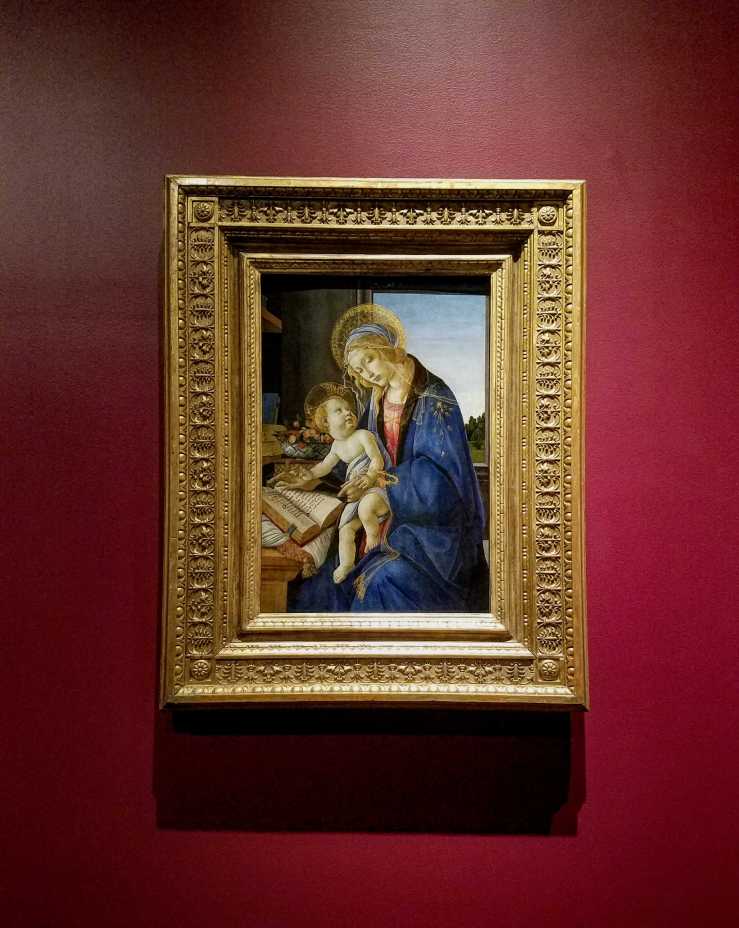
Botticelli and the Search for the Divine” was MFA’s main exhibition during our visit, and the ”largest, most important display of Botticelli’s works in the US” at that. While Botticelli’s subject matter, i.e. religious (Christian) imagery, leaves me unaffected, I can’t but admire his artistic dexterity, no doubt cultivated and enhanced by the support of his patrons, the wealthy Medici family, headed by Lorenzo the Magnificent. And, while his patrons largely dictated what the artist would create, they also provided the means for some of his most emblematic works. For instance, on Virgin and Child (Madonna of the Book), the artist used rare, expensive materials: green pigment from the mineral malachite; pure gold; and, most valuable of all, pulverized lapis lazuli, imported from Afghanistan, for the deep ultramarine of the Virgin’s robe. Materials that the majority of artists could very rarely afford – if at all.

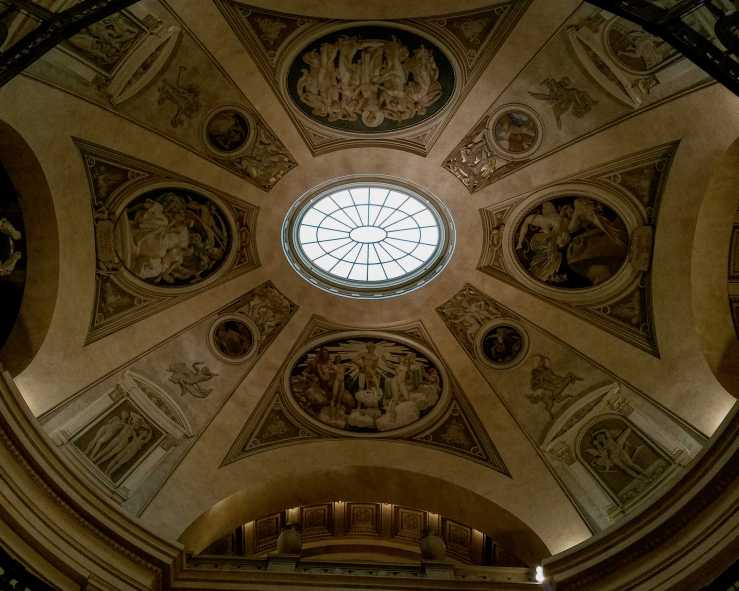
But first, in order to reach the exhibition, one had to walk through the Museum’s Rotunda – in itself a work of art, decorated as it is with John Singer Sargent’s murals.

”In 1916, the MFA’s Trustees invited Sargent to decorate three lunettes in the Rotunda. Sargent offered a counter-proposal, suggesting that the Rotunda’s coffered ceiling be redesigned to allow space for a program of sculptural reliefs representing various classical gods and heroes. Using a scale model, Sargent ultimately decided that the limited daylight coming through the oculus would compromise the reliefs’ visibility from the floor. He did integrate some reliefs into his overall program for the Rotunda, but Sargent instead embarked upon a series of paintings for the space, which was unveiled to great fanfare in 1921, along with his designs for the surrounding balustrades and the casts of Venus and Minerva seen in the niches above.”

Sandro Botticelli, Virgin and Child (Madonna of the Book), ca. 1478–80
Tempera and gold on panel


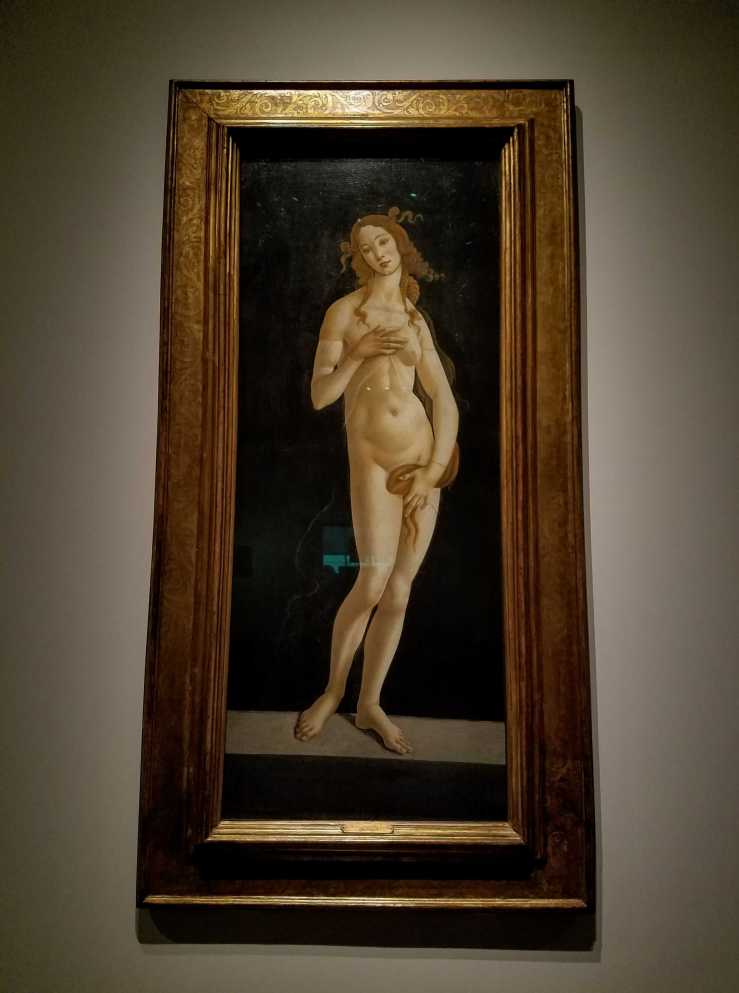
Sandro Botticelli and workshop, Venus, ca. 1484-90. Oil on canvas, transferred from panel.
While this particular Venus (and another, now in Berlin) have been attributed directly to Botticelli in the past, some experts today regard them as painted under the master’s supervision by assistants.


Sandro Botticelli, Minerva and the Centaur, ca. 1482
Tempera on canvas


Sandro Botticelli, Saint Augustine in his Study, ca. 1480
Detached fresco


May 2nd, 2017

The Woodner Collections: Master Drawings from Seven Centuries

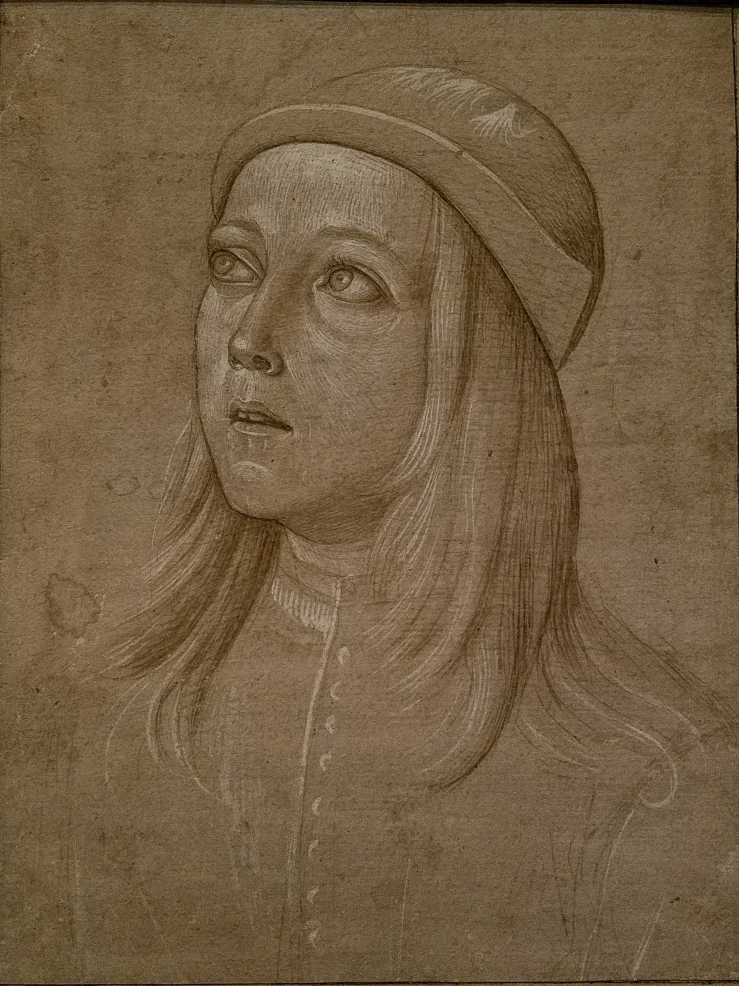
Sheer delight continued with the discovery of these masterpieces dating from the 14th to the 20th century.

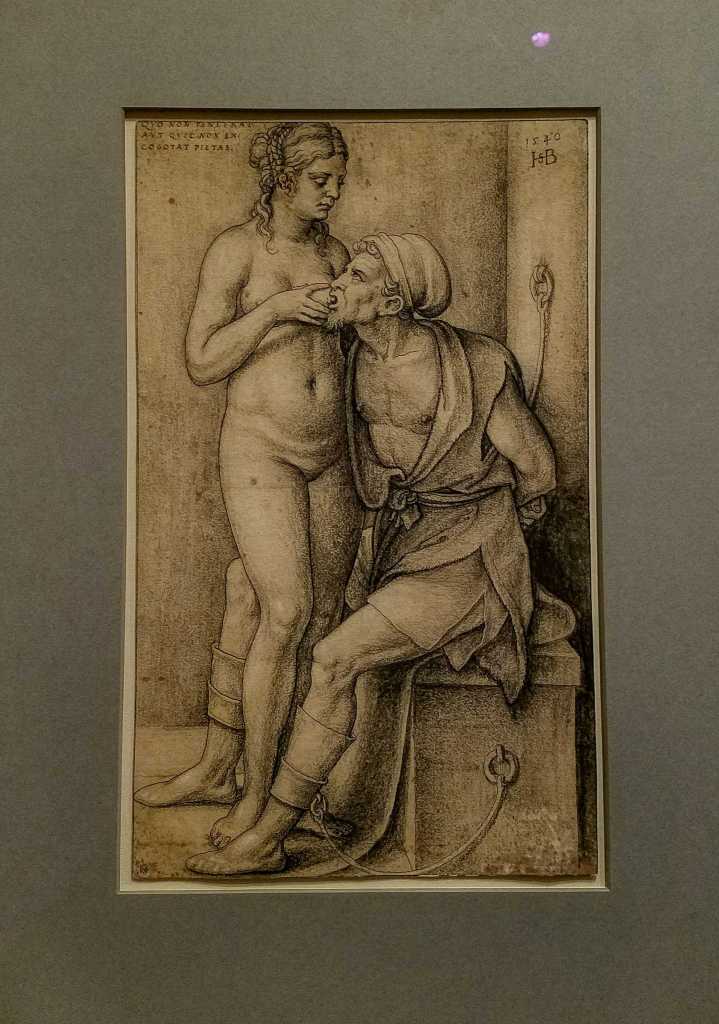
Beham, Sebald, 1500 – 1550, Cimon and Pero (1540), pen and black ink with charcoal heightened with white on heavy laid paper

The story of Cimon and Pero was told by the first-century historian Valerius Maximus in his Memorable Deeds and Sayings. Imprisoned without food or water, the aged Cimon was saved from death by the visits of his daughter Pero, a young mother who nourished him with breast milk. Pero’s selfless act, which came to be known as ”Roman charity”, was regarded as a model of filial piety.

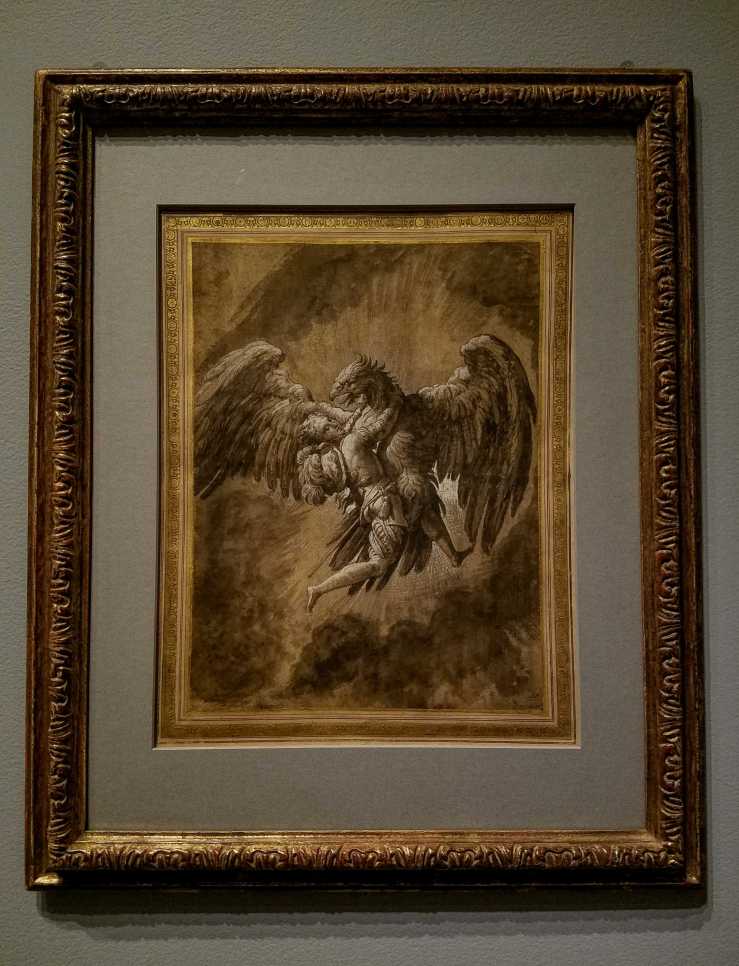
Niccolò dell’Abbate, 1509 or 1512-1571, The Rape of Ganymede (c. 1545), pen and ink with wash and watercolour over traces of chalk, heightened with white on paper washed light brown

Ganymede was a handsome shepherd who was carried off by Zeus (shown here in the form of an eagle) to become cupbearer to the Gods. The youth is usually shown nude or in classical dress, but here he wears the elegant costume of a sixteenth-century courtier.


Federico Barocci, probably 1535-1612, Head of a Bearded Man (1579/1582), chalks on blue paper
Luca Signorelli, 1445/1450 – 1523, Bust of a Youth Looking Upward (c. 1500), chalk, partially indented with a stylus
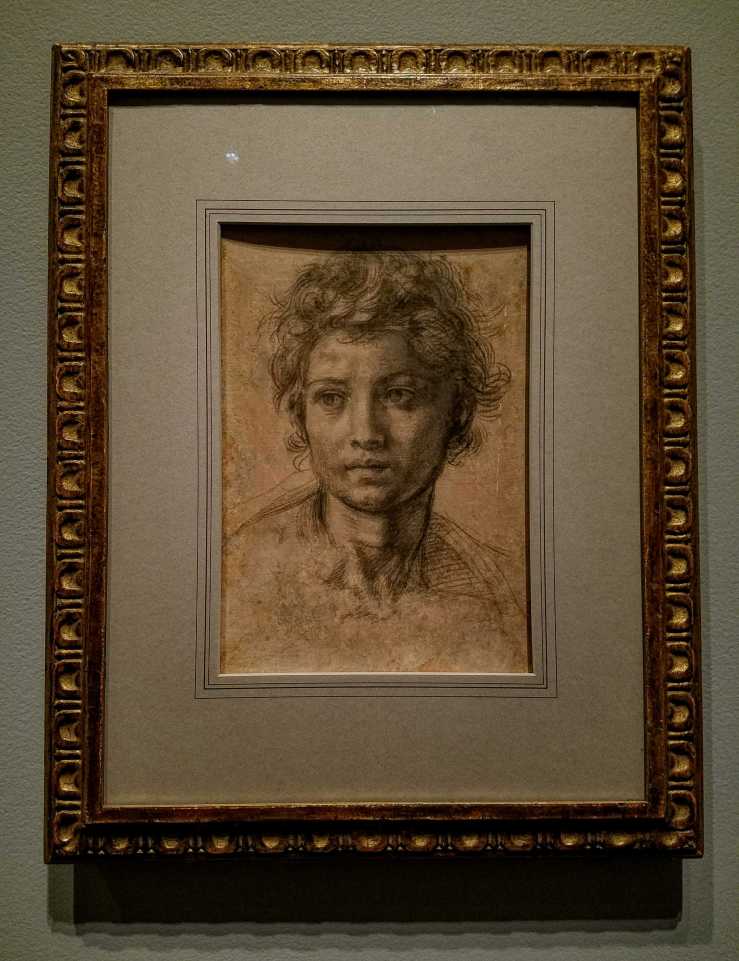
Andrea del Sarto, 1486-1530, Head of Saint John the Baptist (c. 1523), chalk
Jean-Baptiste Greuze, 1725-1805, Bust of an Old Man, probably 1763, chalks with stumping, wetting and erasure

After completing a painting, Greuze often made finished drawings of the heads of some of the individual figures. These ”têtes d’expression” (expressive heads) were intended to be sold and appreciated as independent works of art. 

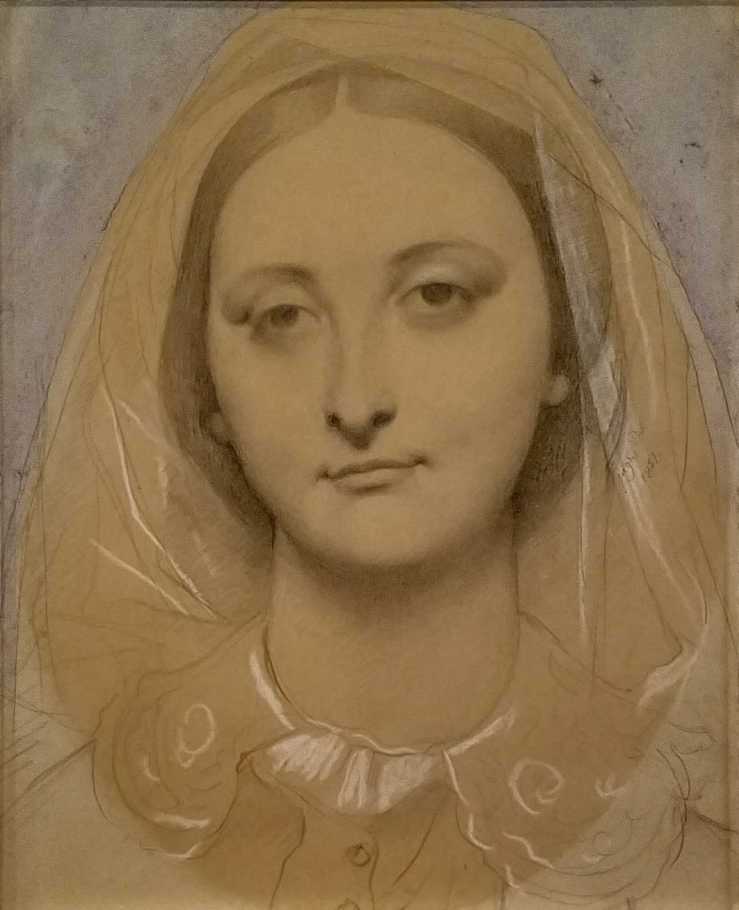
Jean-Auguste-Dominique Ingres, 1780-1867, Mademoiselle Mary de Borderieux (?), 1857, graphite and watercolour with white highlights
Edgar Degas, 1834-1917, Self-Portrait, c. 1855, chalk
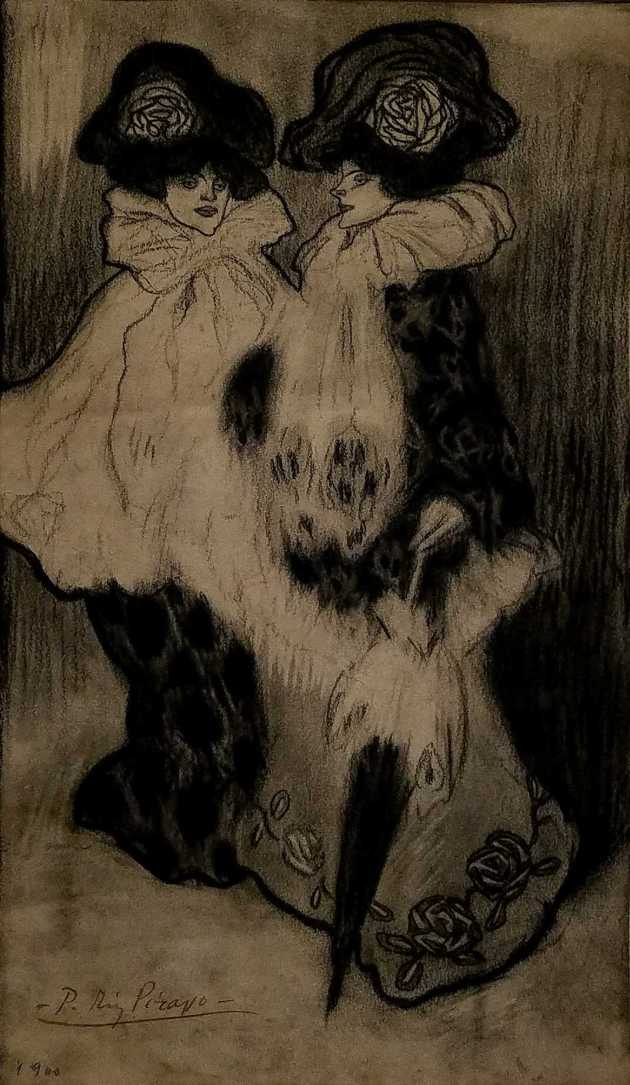
Pablo Picasso, Spanish, 1881 – 1973, Two Fashionable Women, 1900, charcoal
Henry Fuseli, 1741-1825, Satan Defying the Powers of Heaven, late 1790s, graphite, chalk and wash

National Gallery of Art

”Washington, DC—Ian Woodner assembled an extraordinary collection of over 1,000 old master and modern drawings, making him one of the 20th century’s most important collectors. More than 150 works from his collection now reside at the National Gallery of Art in Washington. While Ian Woodner gave some works himself in the 1980s, the majority have been donated by his daughters, Dian and Andrea. His daughters have also made other gifts and have pledged works from their personal collections. The Woodner Collections: Master Drawings from Seven Centuries brings together for the first time the best of Ian Woodner’s collection with some of the works given and promised by Dian and Andrea Woodner. […] 

Some 100 drawings dating from the 14th to the 20th century are presented in an exhibition of masterworks donated by one of the great connoisseurs of the 20th century, Ian Woodner, and his daughters, Dian and Andrea. The Woodner Collections includes drawings executed by outstanding draftsmen such as Leonardo da Vinci, Albrecht Dürer, Raphael, Jean-Auguste-Dominique Ingres, Edgar Degas, and Pablo Picasso, among many others.”

They were on view in the West Building of the National Gallery of Art through July 16, 2017.

April 25th, 2017

The Urban Scene: 1920-1950

What a sheer delight, to walk in the National Gallery of Art and discover these rather brilliant prints depicting urban scenes from the Jazz Age and beyond!

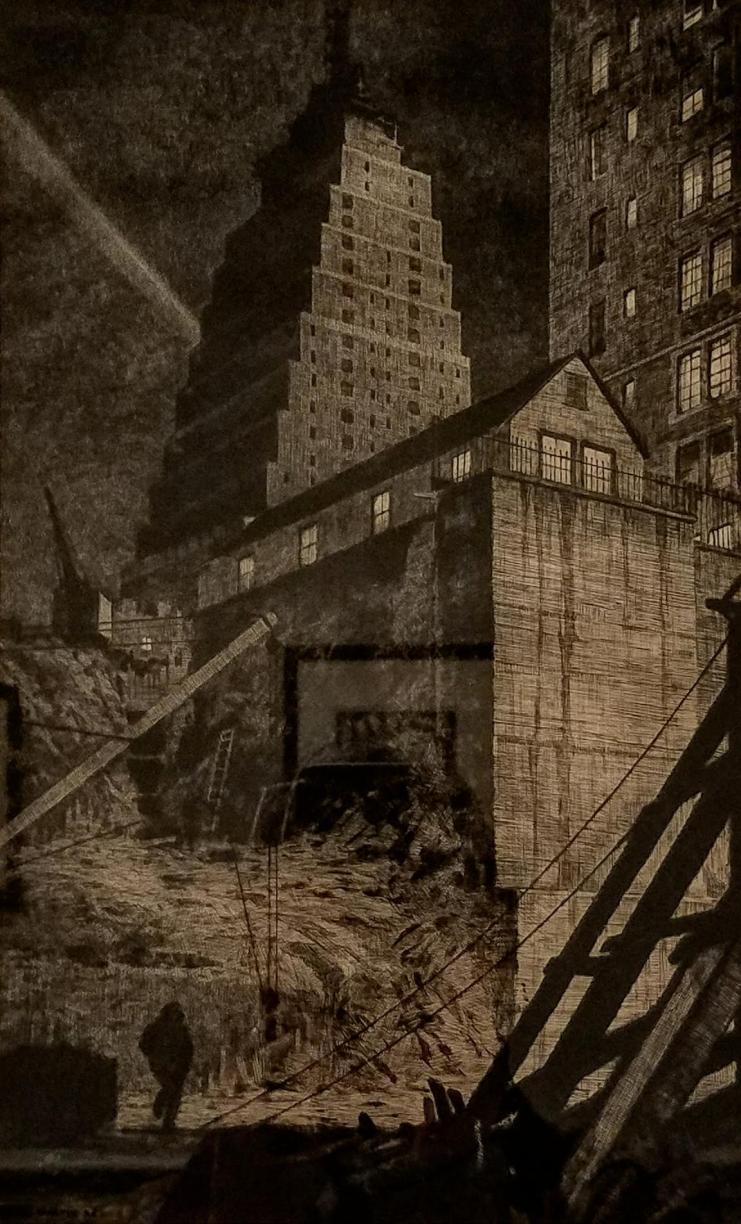
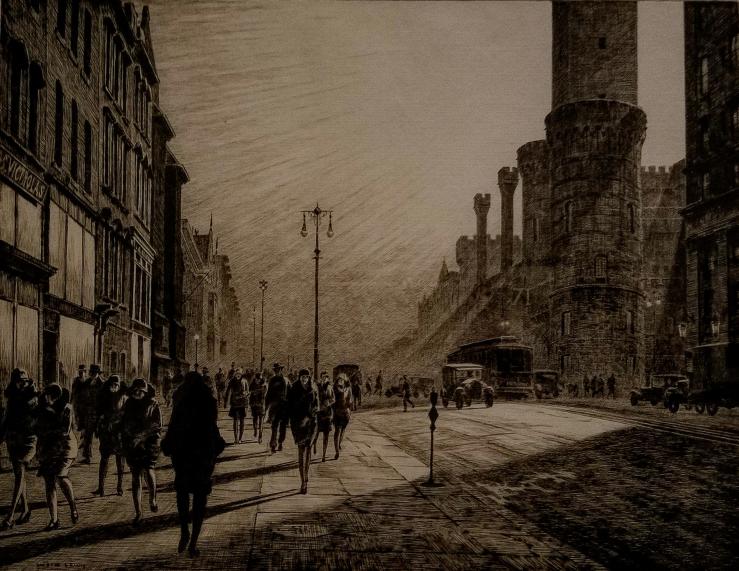
Martin Lewis, Building a Babylon, Tudor City, N.Y.C., 1929, etching and drypoint
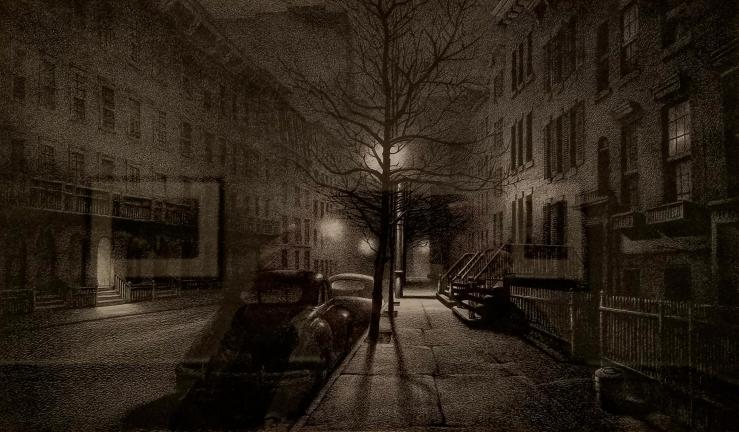
Stow Wengenroth, Quiet Hour, (New York), 1947, lithograph
Robert Riggs, Germantown & Chelten, (Philadelphia), c. 1950, lithograph
John Taylor Arms, West Forty-Second Street, Night, (New York), 1922, aquatint and etching on yellow laid paper
Isac Friedlander, 3 A.M., (New York), 1934, etching
Howard Norton Cook, Looking up Broadway, 1937, lithograph
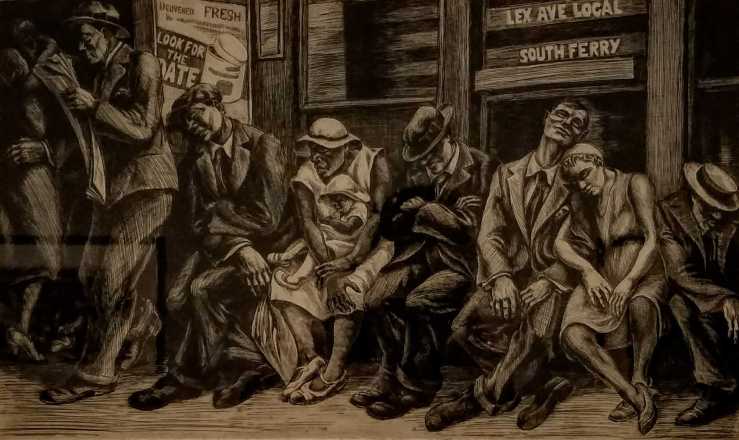
Martin Lewis, Quarter of Nine – Saturday’s Children, (New York), 1929, drypoint
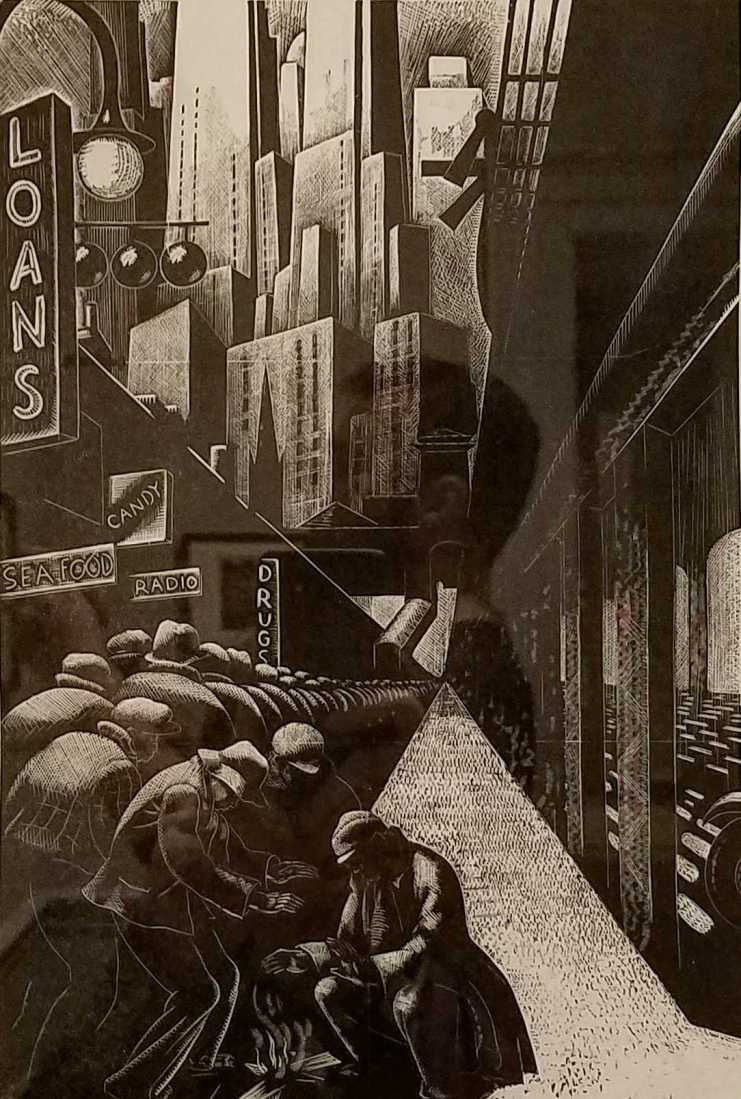
Clare Leighton, Breadline, New York, 1931, wood engraving
Armin Landeck, View of New York, 1932, lithograph

National Gallery of Art

”Washington, DC—American artists of the early 20th century sought to interpret the beauty, power, and anxiety of the modern age in diverse ways. Through depictions of bustling city crowds and breathtaking metropolitan vistas, 25 black-and-white prints on view in The Urban Scene: 1920–1950 will explore the spectacle of urban modernity. Prints by recognized artists such as Louis Lozowick (1892–1973) and Reginald Marsh (1898–1954), as well as lesser-known artists including Mabel Dwight (1875–1955), Gerald Geerlings (1897–1998), Victoria Hutson Huntley (1900–1971), Martin Lewis (1881–1962), and Stow Wengenroth (1906–1978), are included in this exhibition.”

The Urban Scene was on view in the West Building until August 6, 2017.

April 25th, 2017

Inventing Utamaro: A Japanese Masterpiece Rediscovered

A reason big enough to visit the Sackler and a wonderful coincidence these masterpieces were on show during our visit (show ran until July 2017).

”In 2014, the Okada Museum of Art in Hakone, Japan, made an announcement that startled the art world. The new arts center revealed it had discovered a long-lost painting by Kitagawa Utamaro (1753–1806), a legendary but mysterious Japanese artist.Titled Snow at Fukagawa, the immense work is one of three paintings by Utamaro that idealize famous pleasure districts in Edo (now Tokyo). This trio reached the Paris art market in the late 1880s and was quickly dispersed. Museum founder Charles Lang Freer acquired Moon at Shinagawa in 1903. Cherry Blossoms at Yoshiwara passed through several hands in France until the Wadsworth Atheneum Museum of Art in Hartford, Connecticut, purchased it in the late 1950s. And Snow at Fukagawa had been missing for nearly seventy years before it resurfaced in Hakone.

For the first time in nearly 140 years, these paintings reunite in Inventing Utamaro at the Freer|Sackler, the only location to show all three original pieces. Contextualizing them within collecting and connoisseurship at the turn of the twentieth century, the exhibition explores the many questions surrounding the paintings and Utamaro himself.”

Bill Viola: The Moving Portrait @ The National Portrait Gallery, Washington D.C.

The American Art Museum shares its premises with the National Portrait Gallery, both being part of the Smithsonian Institution. First-time visitors may have a hard time distinguishing between the two, but that’s just a minor detail – what’s important is to allow time to enjoy some incredible works of American art, like Bill Viola’s ”The Moving Portrait” exhibit, which was running until May 2017.

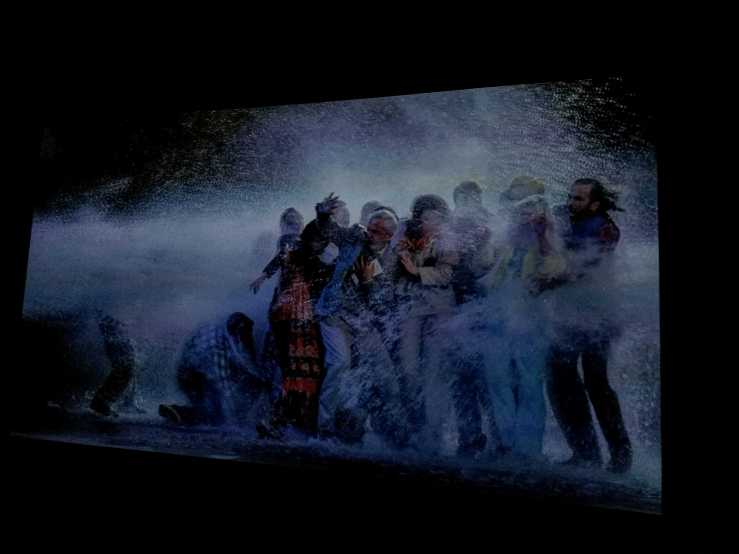
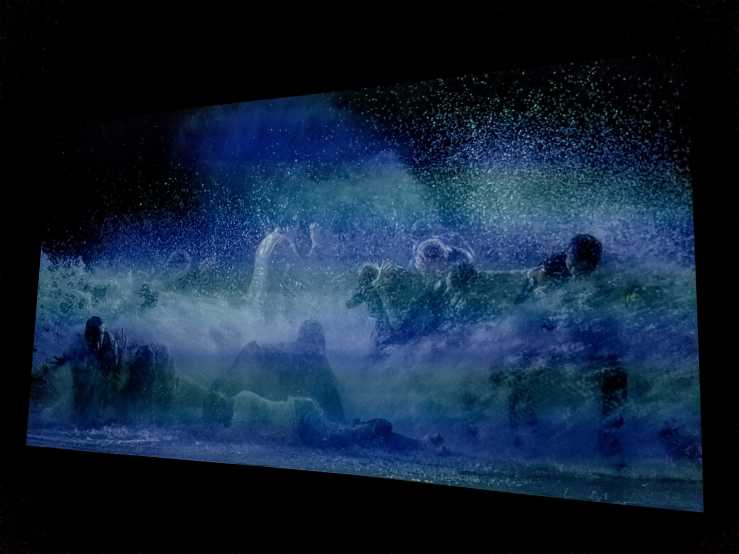
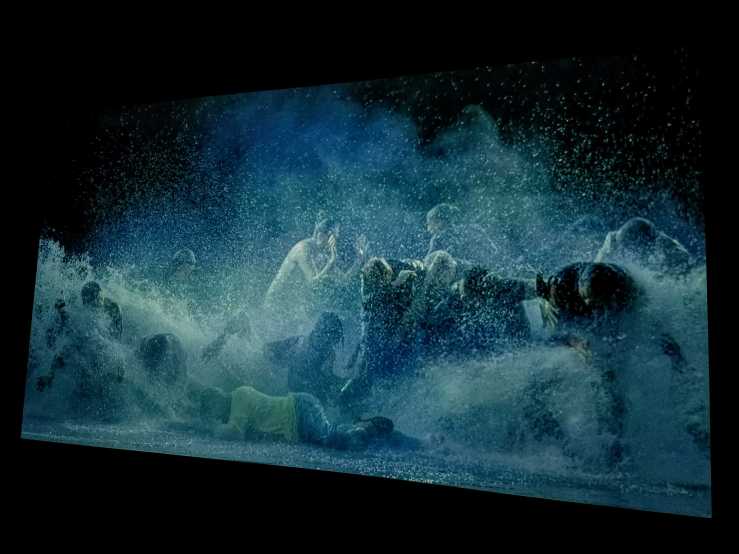
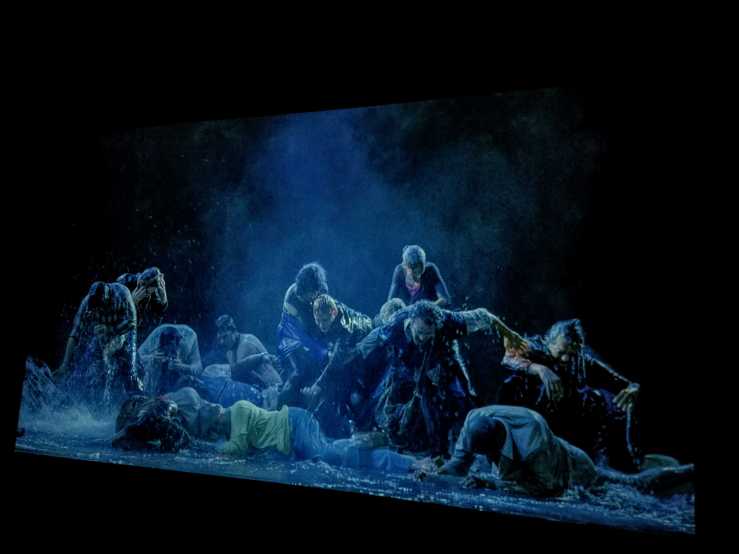
I’ve been admiring Viola’s work for years, his use of video technologies, experimentation with portraiture and the fact that he always seems to submerge his subjects in water, an element present in -almost- his entire body of work. But, it was only recently I learned, coming across an interview on Louisiana Channel, that when Viola was 6 years old he fell into a lake, all the way to the bottom, ”to a place which seemed like paradise”. That’s when he learned that “there’s more than just the surface of life” […] and ”the real things are under the surface”. That explains his fascination with water, also evident in ”The Dreamers”, a video/sound installation of 2013:

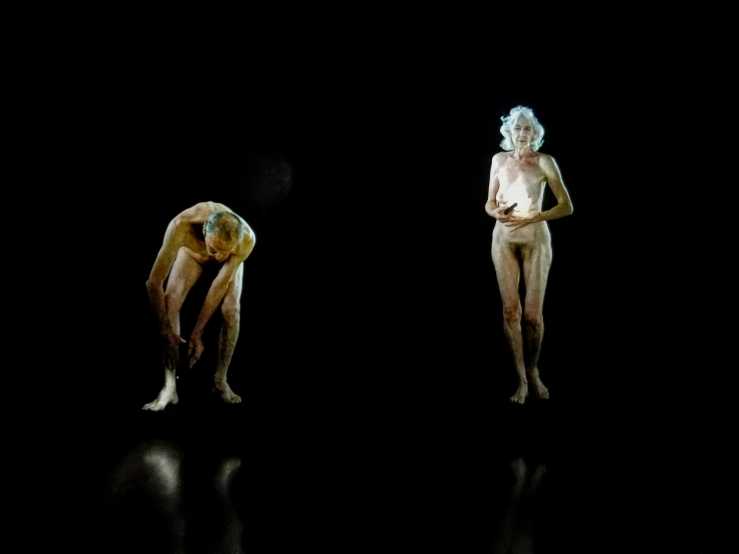
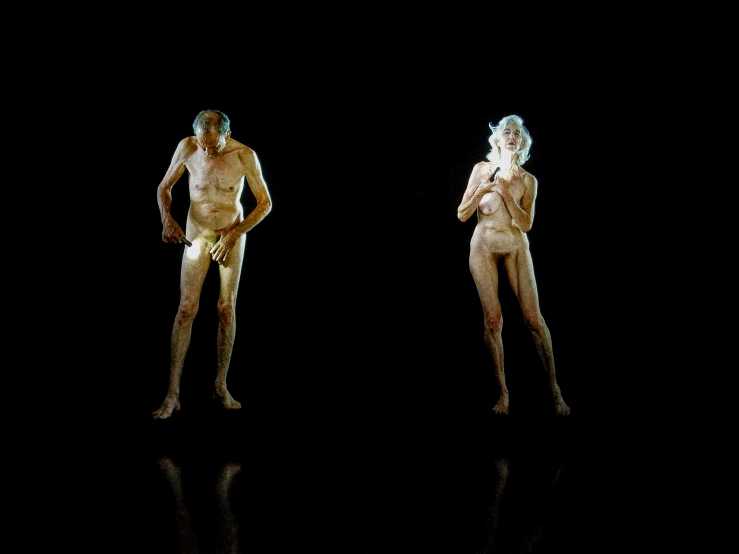
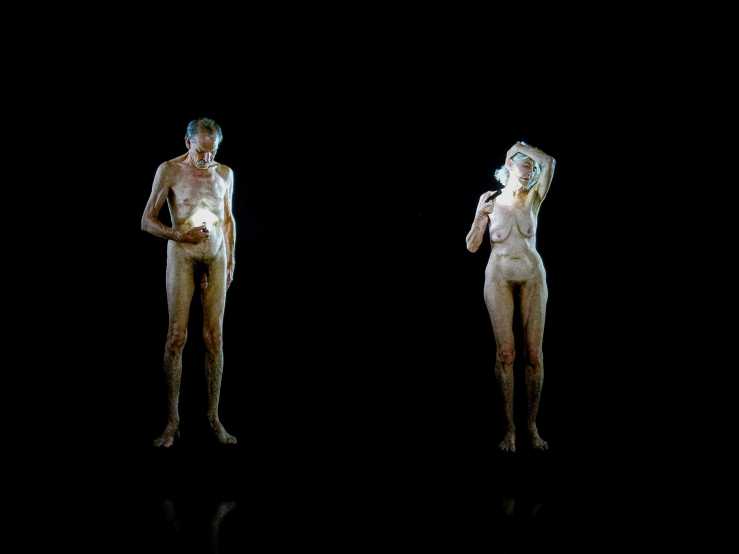
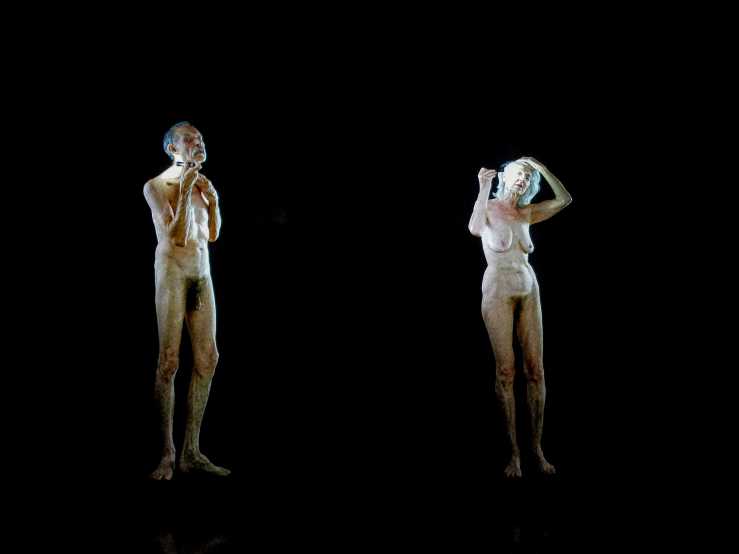
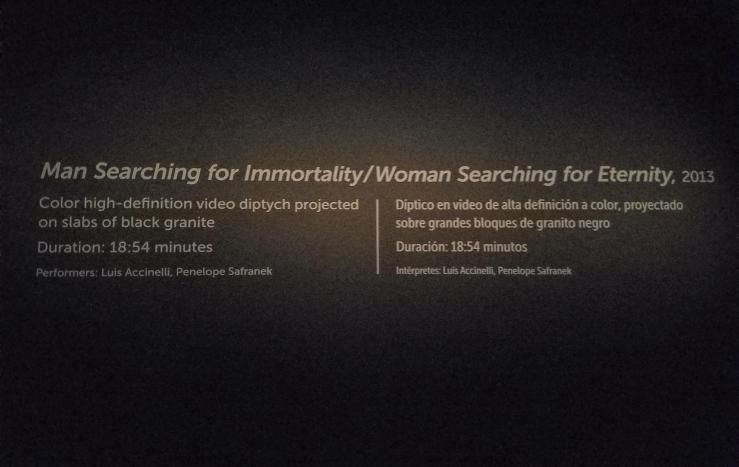
No water present in ”Man Searching for Immortality/Woman Searching for Eternity” (2013), an installation in two frames, showing an elderly man and a woman, naked, inspecting their bodies with a flashlight.

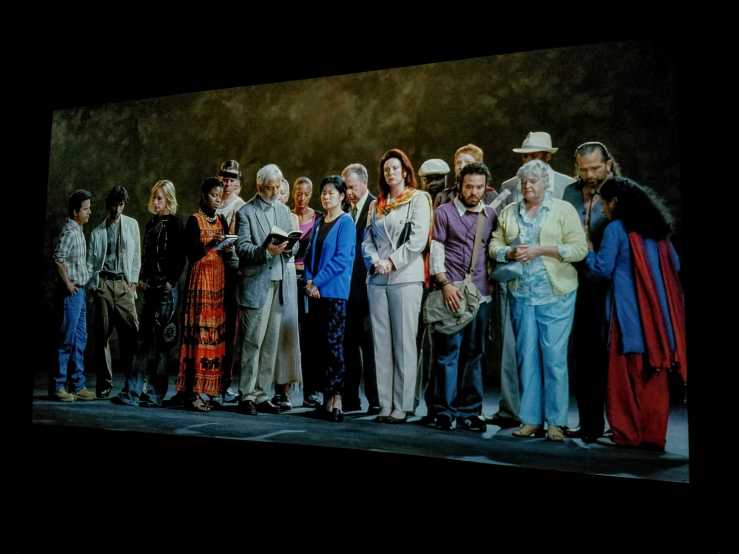
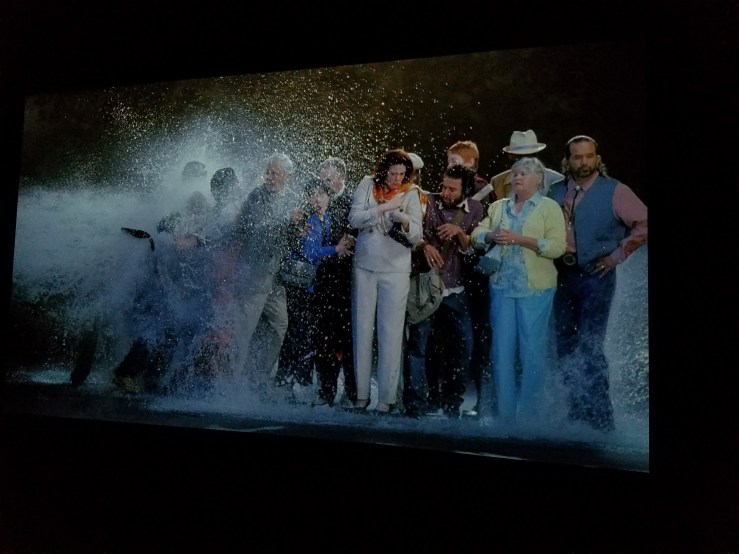
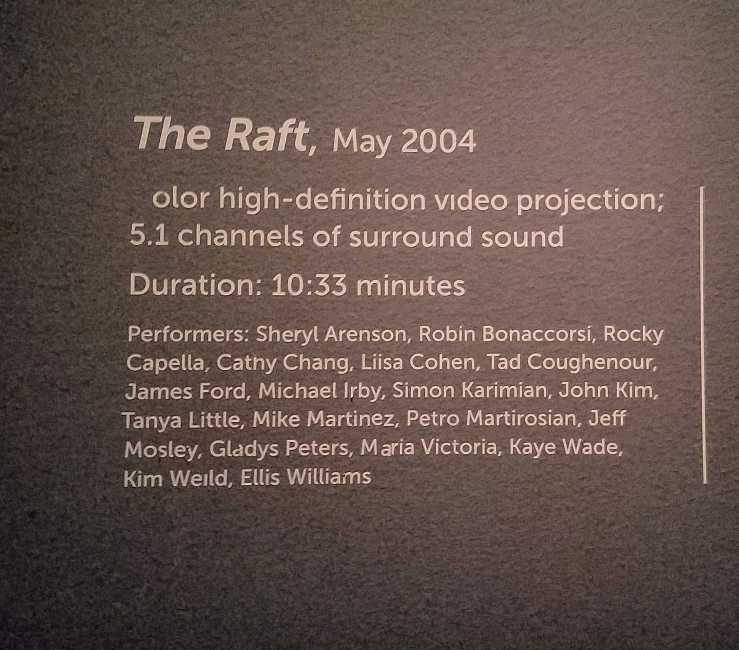
But water is present with all its mighty force in ”The Raft” (2004), in which 19 perfect strangers unsuspectingly gather in a spot, as if waiting for a bus, when suddenly disaster strikes as torrents of water knock them down, leaving them gasping for breath.  

Bill Viola Interview on Louisiana Channel, including views from ”The Raft”:

https://youtu.be/uenrts2YHdI

National Portrait Gallery
Washington, D.C.

April 24th, 2017

Drawing the line ~ from forgettable to memorable

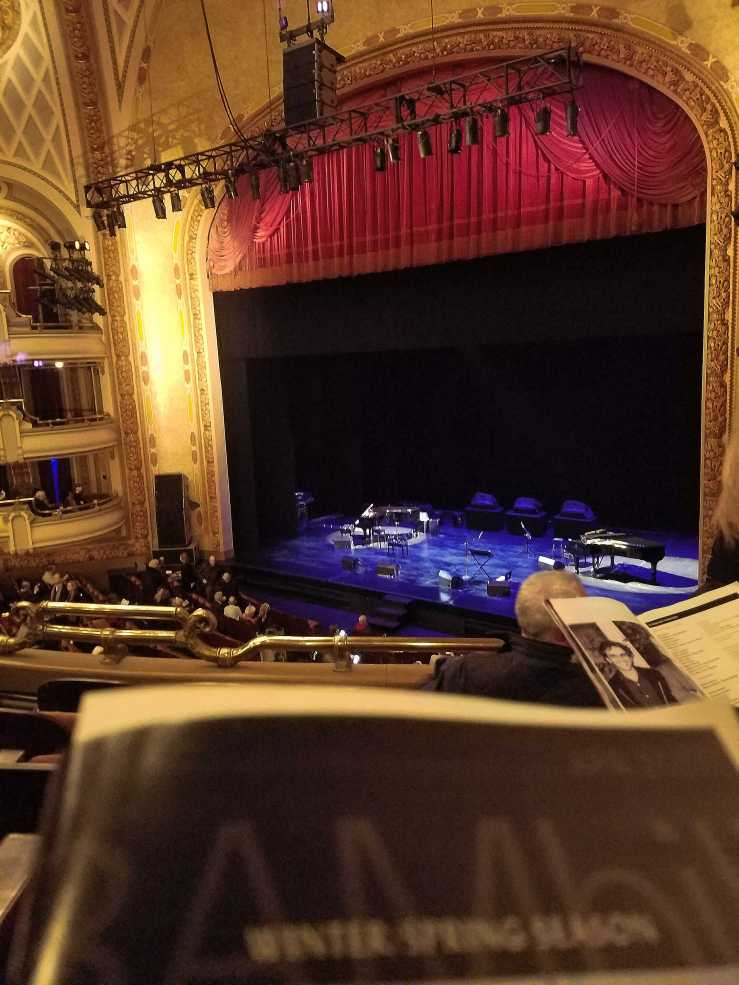
I’m going back in time. I have to, for if this blog is to continue doubling up as my journal, I can’t be skipping events. Even the not so memorable ones like those two, almost back-to-back performances at BAM.

First, the utterly forgettable performance by Doug Varone and Dancers, emphatically described as: ”Doug Varone and Dancers celebrate 30 years of impassioned choreography with three works representing the past, present, and future of this peerless company.” By the third work I was convinced I’m never watching another Doug Varone performance again. Art is subjective and a matter of chemistry, and unfortunately it didn’t work for me this time.

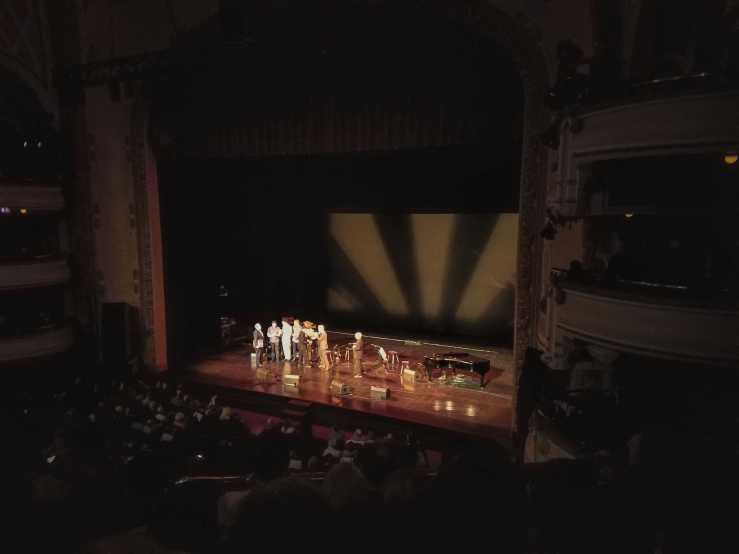
Next, ”A Nonesuch Celebration, a stellar lineup of musical luminaries” that came together ‘‘for one night only to pay tribute to Bob Hurwitz, who for the past three decades has served as the visionary architect of Nonesuch Records”. I had not heard of Mr Hurwitz before, but the idea of watching live performances by (among others) Pat Metheny, Kronos Quartet, k.d. lang and Mandy Patinkin all in one evening, seemed very appealing. I did enjoy myself but it seemed like the hosts were enjoying themselves much more which made me feel a bit awkward, like crashing a private party.
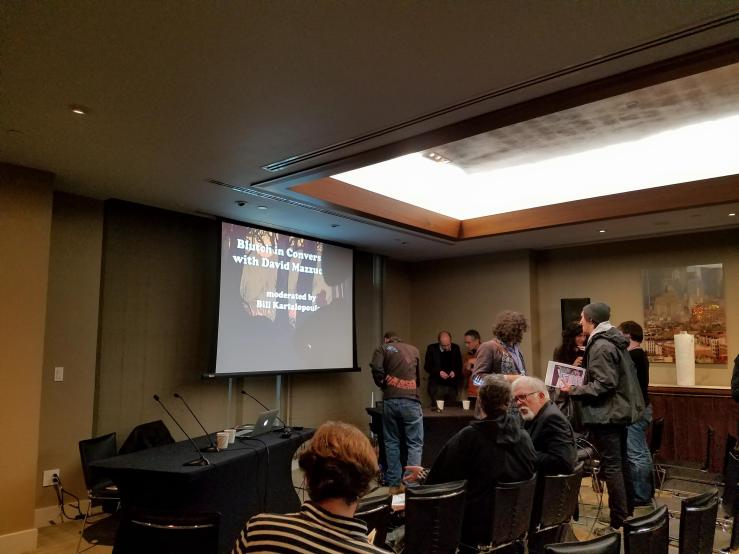
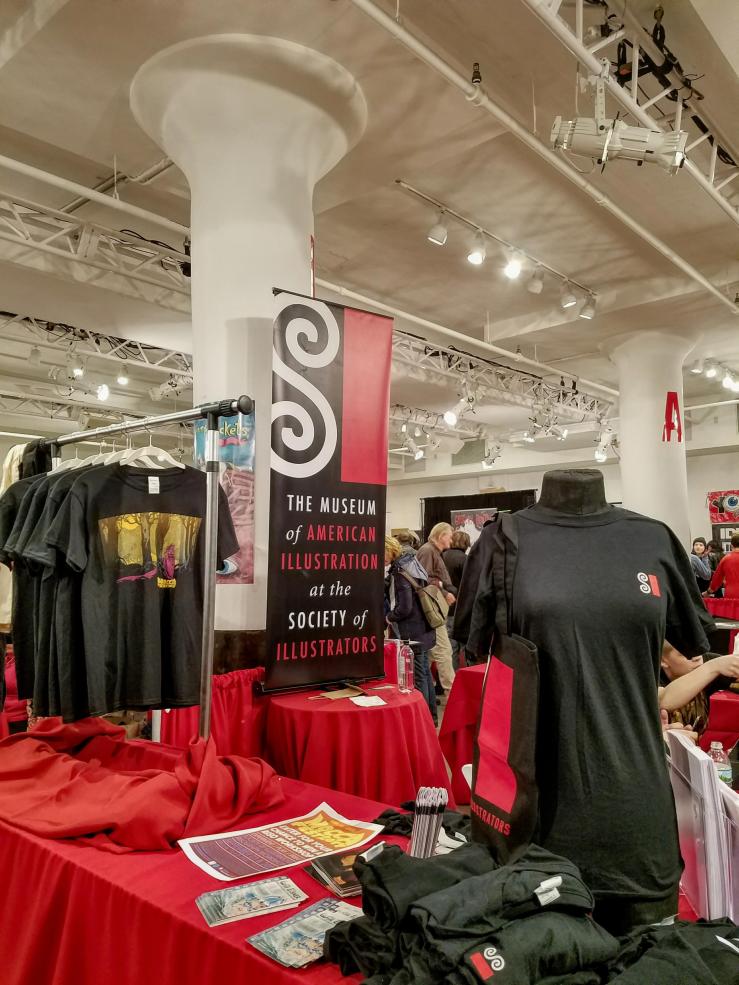
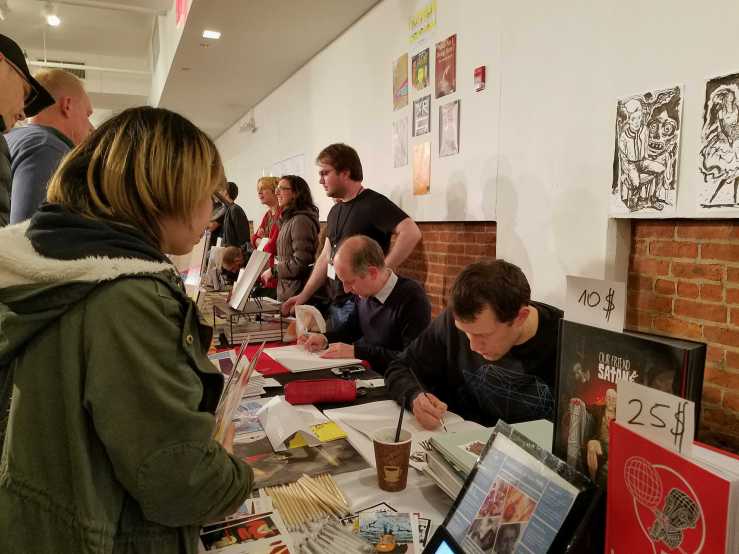
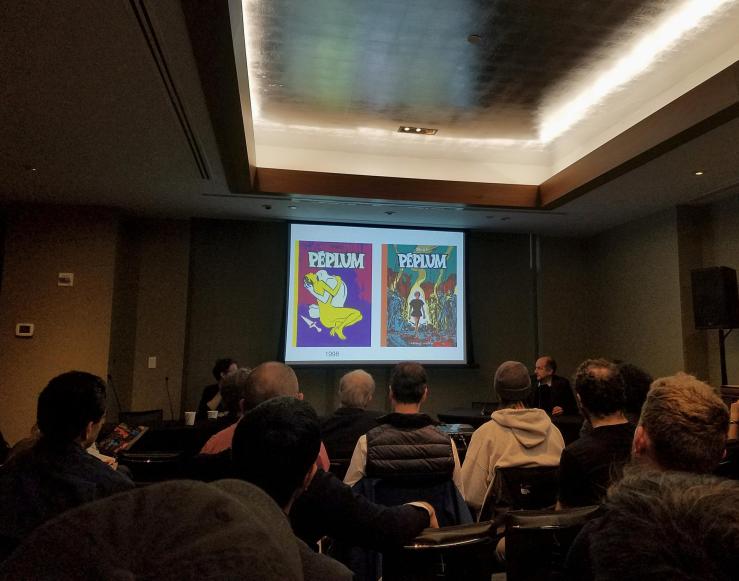
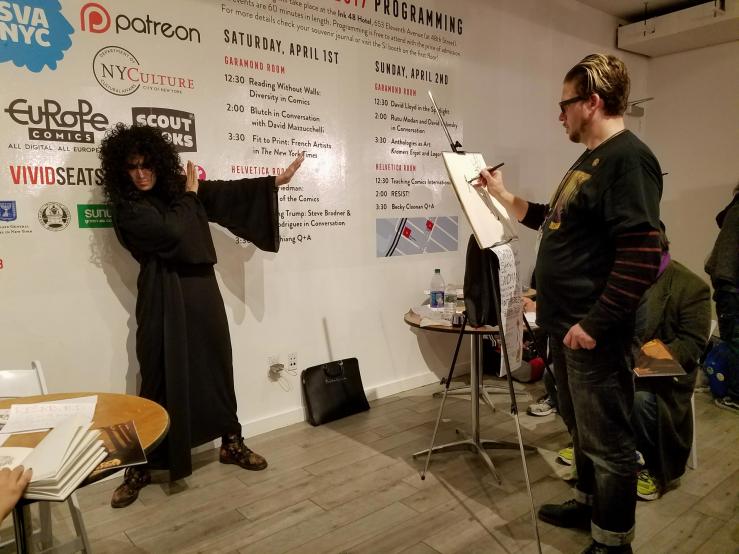
But then, on 1-2 April, it was time for the annual MoCCA Arts Festival. A multimedia event organised by the Society of Illustrators with workshops, film screenings, exhibitions and panels, MoCCA is Manhattan’s largest independent comics, cartoon and animation festival and my first chance to meet two rather brilliant gentlemen, artists and friends: Blutch in Conversation with David Mazzucchelli – and the weekend couldn’t get any better.
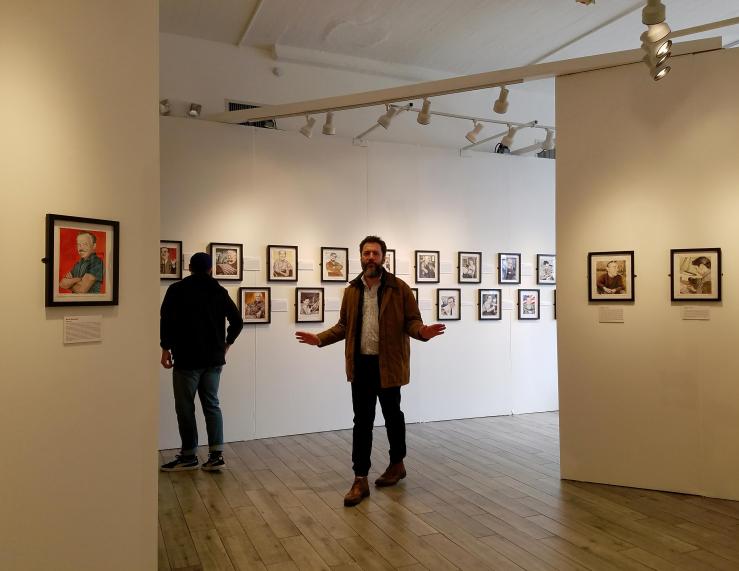
But wait… there’s more! Here come the real superheroes, those early comic book creators from the industry’s early years  (1935-1955), lovingly depicted by their colleague, American cartoonist Drew Friedman in his two recent books Heroes of the Comics and More Heroes of the Comics. 

The Society of Illustrators presented 100 original colour illustrations by the artist, who was also featured as a guest of honour at the MoCCA 2017.
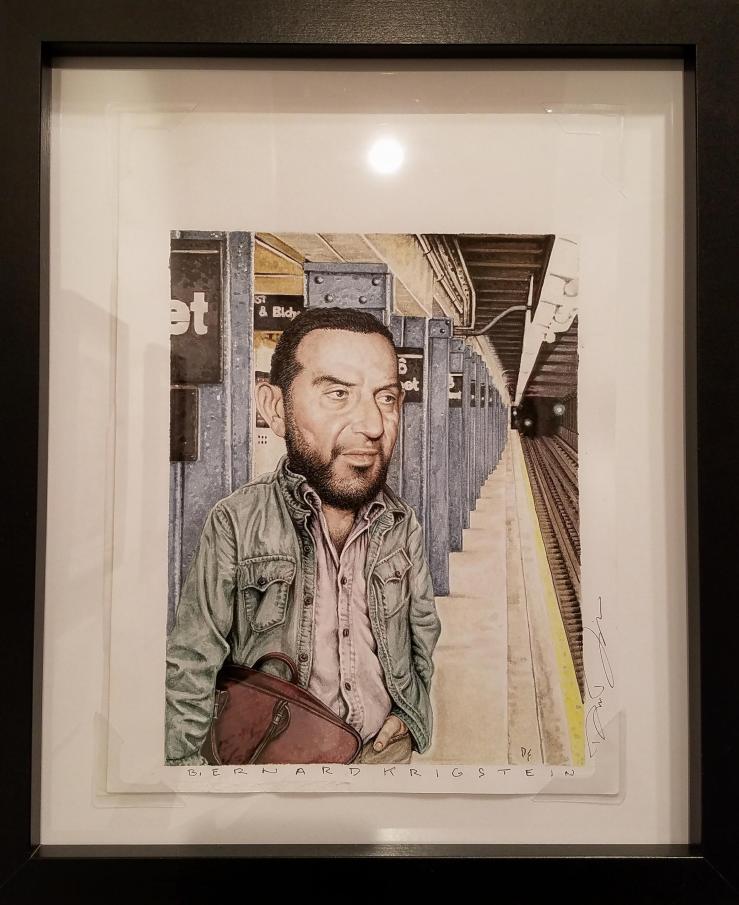
Bernard Krigstein, 1919-1990
He approached comics as a serious art form and his innovative, beautifully composed, almost cinematic use of panels have never been equaled in comics. Following Harvey Kurtzman’s invitation to illustrate one of his EC war stories, Krigstein became a regular contributor to EC, illustrating a total of 47 stories for them, including several pieces for MAD, highlighting his brilliant gift for caricature. 1955’s ”Master Race”, appeared in the debut issue of EC’s ”New Direction” comic Impact and was his masterpiece, a groundbreaking triumph of sequential storytelling.
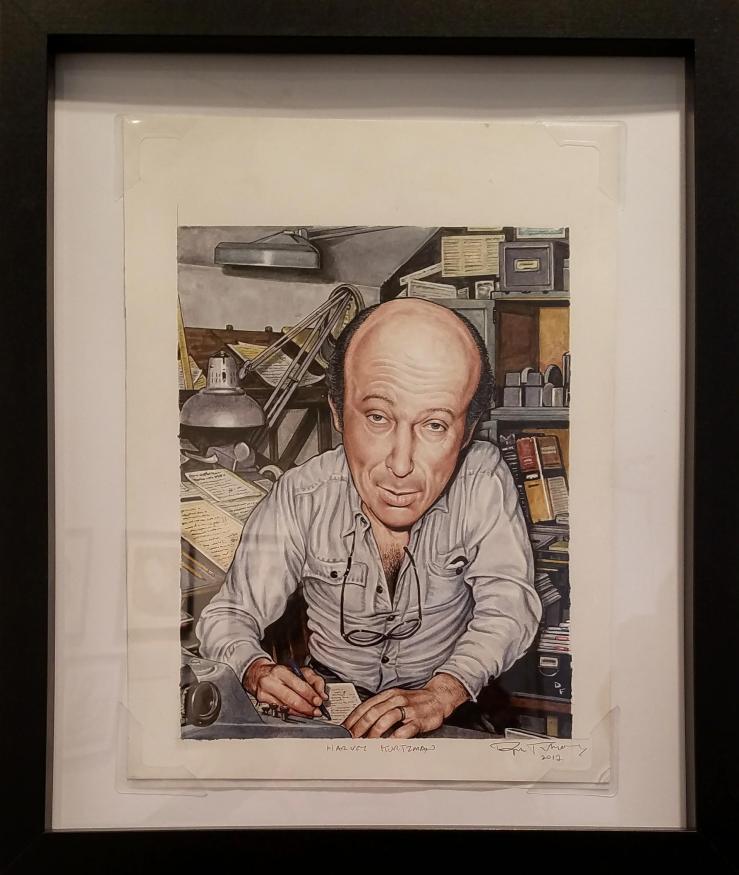

Harvey Kurtzman (1924-1993)
Cartoonist, writer, editor, satirist and teacher, he was the founder and creator of MAD – as well as Trump, Humbug, Help, etc. Along with his long-time partner, cartoonist Will Elder, he spent almost 30 years producing the lushly painted comic strip ”Little Annie Fanny” for Playboy. Kurtzman has had a huge, almost unmeasurable influence on several generations of cartoonists and humorists, among them Robert Crumb and the (Monty) Pythons.
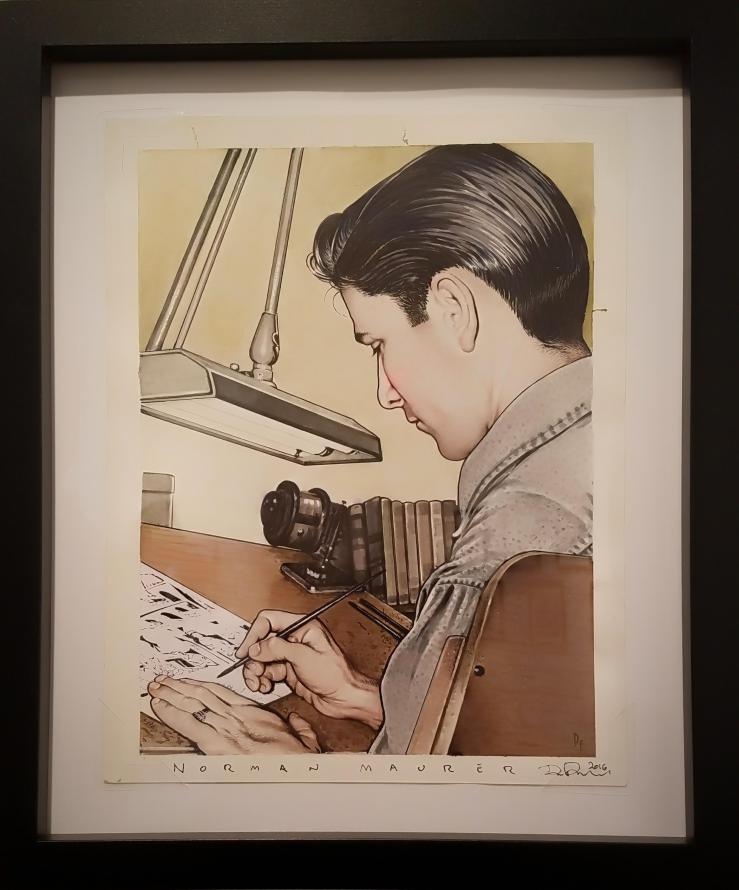

Norman Maurer (1926-1986)
Born in Brooklyn, he started working in comic books while still a teenager. His marriage to Joan Howard, daughter of Moe Howard of the Three Stooges, in 1947 kicked-off his lifelong association with the comedy team.
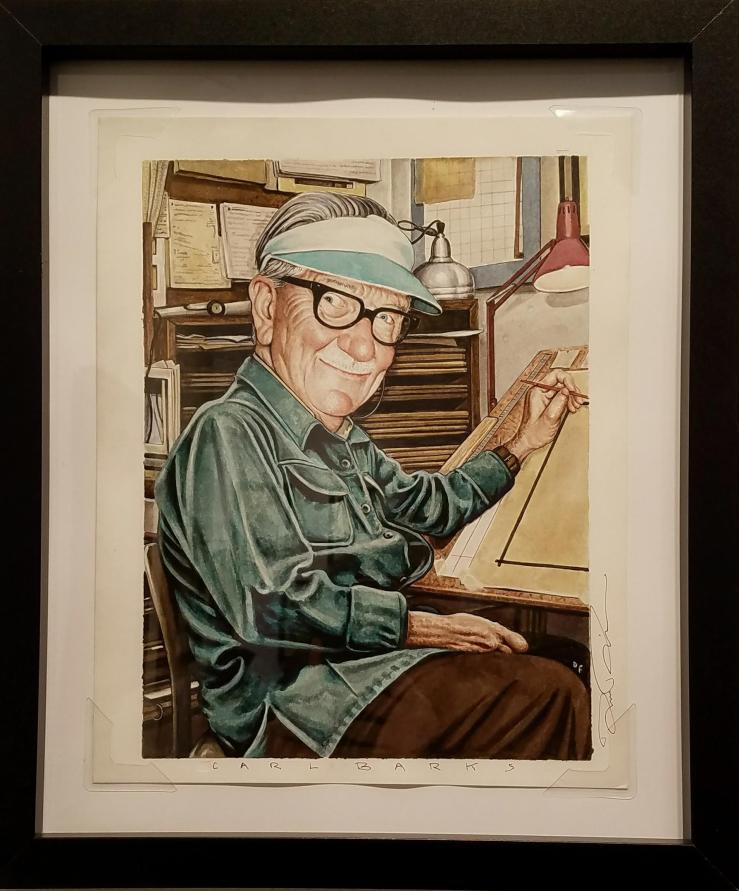

Carl Barks (1901-2000)
His cartoon adventures of Donald Duck were published anonymously for decades. Barks drew the Donald Duck story for the front of Walt Disney’s Comics, the most popular post-War II comic book being published. In 1935 he has hired as a full-time writer at the Disney film studios only to quit in 1942 and become a full-time artist for their comic book line – which included the bimonthly Donald Duck. In his later years, Barks would recreate in oil large paintings of his beloved ducks, some of them now fetching hundreds of thousands of dollars.
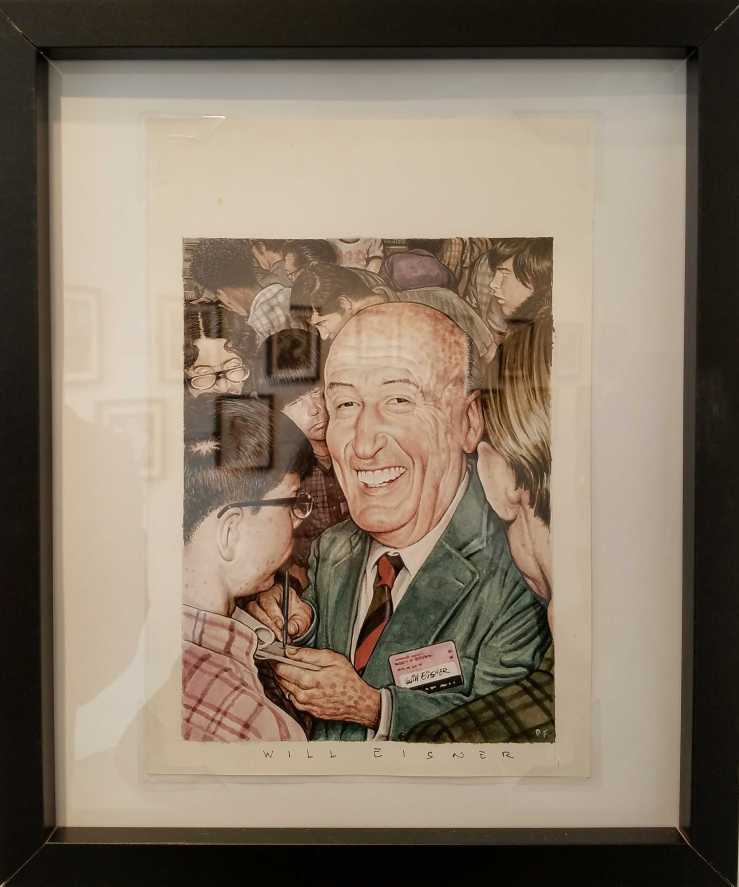

William Erwin ”Will” Eisner (1917-2005)
Eisner grew up in the Bronx dreaming of someday becoming a successful cartoonist. In 1936, Eisner’s friend from Dewitt Clinton high school, Bob Kane, suggested he sell some of his cartoons to a new tabloid-sized magazine called WOW, What a Magazine!, edited by cartoonist and letterer Jerry Iger. Although Iger was 12 years older than the 19-year old Eisner, they both clicked. They opened together the Eisner-Iger studio in New York, a mass production comic book factory in 1937. It was a great financial success but Eisner, who was more interested in concentrating on his writing and drawing, would sell his interest in the shop in 1939 to pursue an offer to create a syndicated newspaper comics section of his own. His first 16-page The Spirit insert episode ran in 1940.
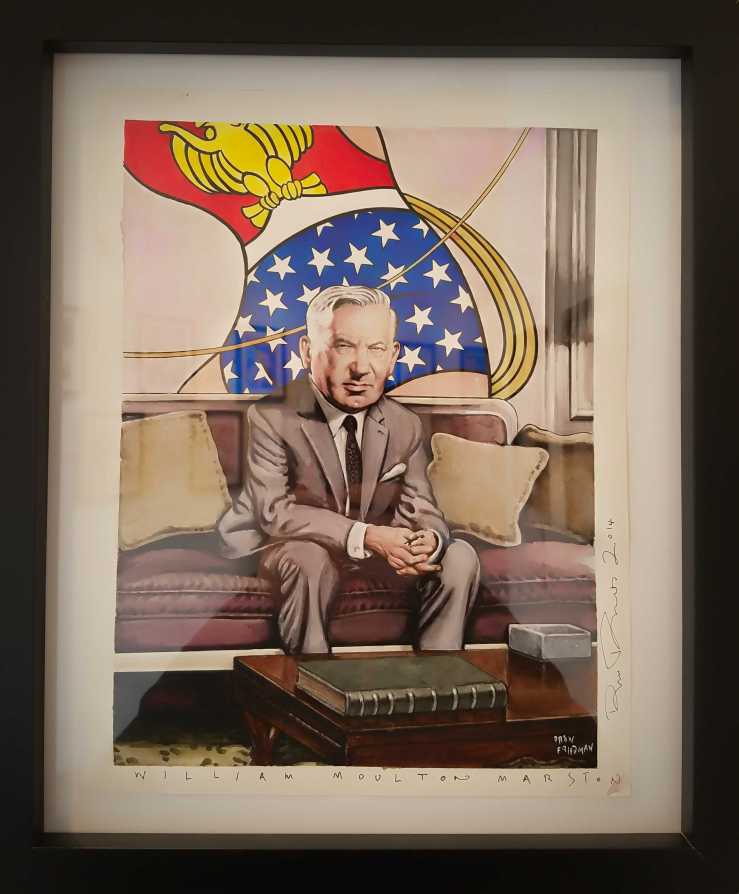

William Moulton Marston (1893-1947)
Marston’s relatively short life was filled with fascinating, seemingly at first, unrelated accomplishments. He attended Harvard and received a Ph.D in Psychology, became a teacher and briefly, in 1929, the director of public services for Universal Studios in Hollywood. Marston was also a lawyer and inventor, and is credited as the creator of the Systolic Blood Pressure Test, which would help lead to the invention of the modern Polygraph machine. He also authored several self-help books and was a champion of women’s causes, writing that he was convinced that women were ”more honest and reliable than men, and could work faster and more accurately.” He also recognized and wrote of the ”great educational potential” of the new medium of comic books and in the early forties he was hired by publisher Max Gaines to be an ”educational consultant” for National Periodicals and All-American Publications which would soon merge into DC comics. Marston’s wife Elizabeth gave him the idea to create a female superhero in the then male dominated world of comics; he developed the character ”Suprema” soon called ”Wonder Woman” basing her to an extend on his own wife and her appearance on his polyamorous partner, a former student of his who now lived with the couple in an open marriage, named Olive Byrne.
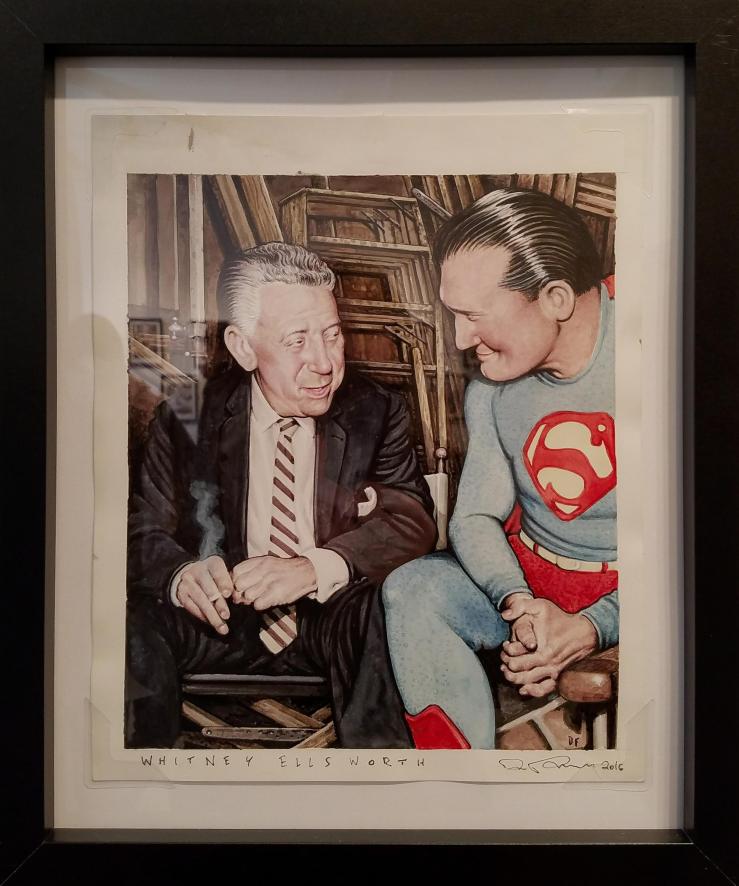

Whitney Ellsworth (1908-1980)
Writer and artist for DC comics, he became their Hollywood liaison. He had a hands-on role in script and production for the 1951 feature Superman and the Mole Men which led directly to 1952’s The Adventures of Superman, starring George Reeves.
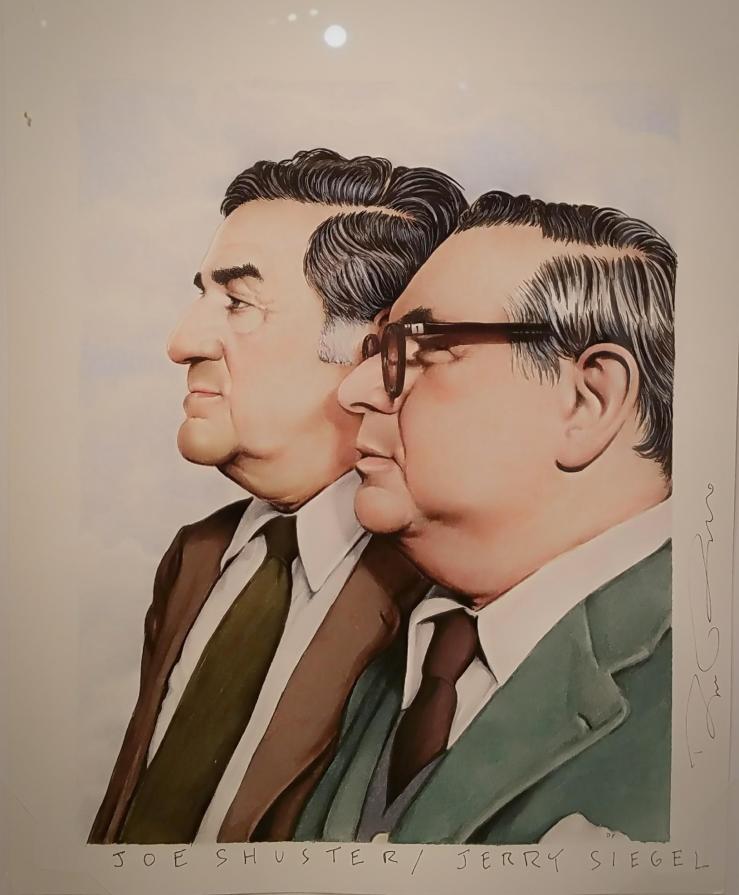

Joe Shuster (1914-1992) & Jerry Siegel (1914-1996)
They met at 16 at Glendale high school in Cleveland, Ohio. The two young, shy Jewish teenagers discovered they shared much in common, Siegel dreaming of writing science fiction stories for Pulp magazines and the shy, bespectacled Shuster also sharing a love for science fiction and dreaming of working as a Pulp artist. Siegel conceived a superhero character he called ”The Superman” and together with Shuster’s art, began a frustrating four-year quest to get it published as a comic. Another of their characters, Slam Bradley, debuted in National’s Detective Comics #1 in 1937. In 1938 Max Gaines urged National’s new publishers, Harry Donefeld and Jack Liebowitz to publish Superman, and after four years of submissions and rejections, the character finally debuted as the cover feature for National’s Action Comics #1 in June 1938. It was an instant sensation. By endorsing a check for $130 (the total amount of the check was for more than $400, other monies owed to the team was padded on to no doubt make the signing more enticing), assuring them that they would be the primary artist and writer for Superman and the upcoming syndicated Superman newspaper comic, and without any advice from a lawyer, Siegel & Shuster forever signed away all their rights to a character that would soon become one of the most commercially successful and iconic characters of the 20th century.
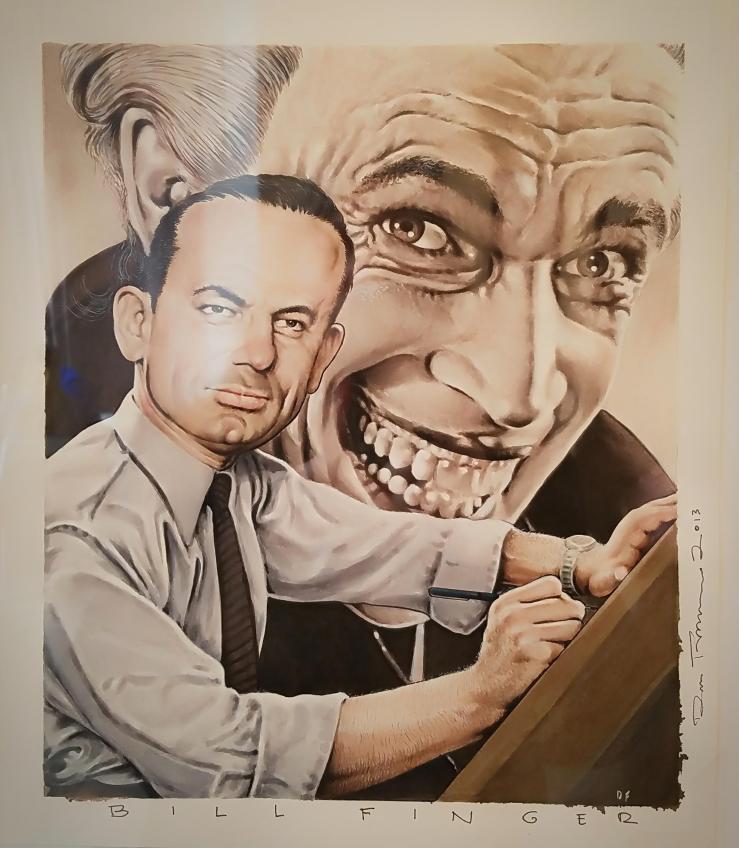

Bill Finger (1914-1974)


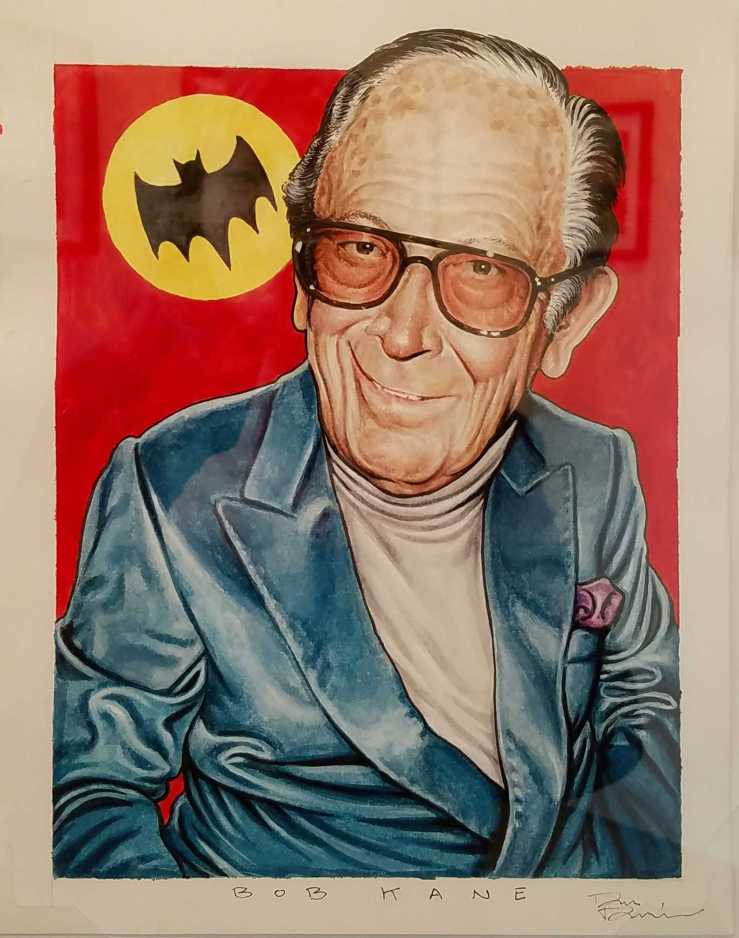
Bob Kane (1915-1988)
He was the controversial artist who posed for almost half a century as the sole creator of Batman. In 1938, after the character created by Jerry Siegel and Joe Shuster named Superman caused a sensation in Action Comics #1, National sought more super-heroes to add to their roster and Kane soon conceived a character he called ”The Batman”. He showed his flimsy conception drawings to his writer Bill Finger, who he had hired to work for him and Finger suggested specific changes to redesign the character into the now familiar Dark Knight persona. The completed Batman debut finally appeared in Detective Comics #27, in May 1939. It became a hit and was soon starring in his own series, featuring his sidekick ”Robin”, conceived by Finger and artist Jerry Robinson. Kane worked out a cozy deal with National where he would receive sole credit as the writer and artist behind Batman, even though the character was essentially created by Bill Finger


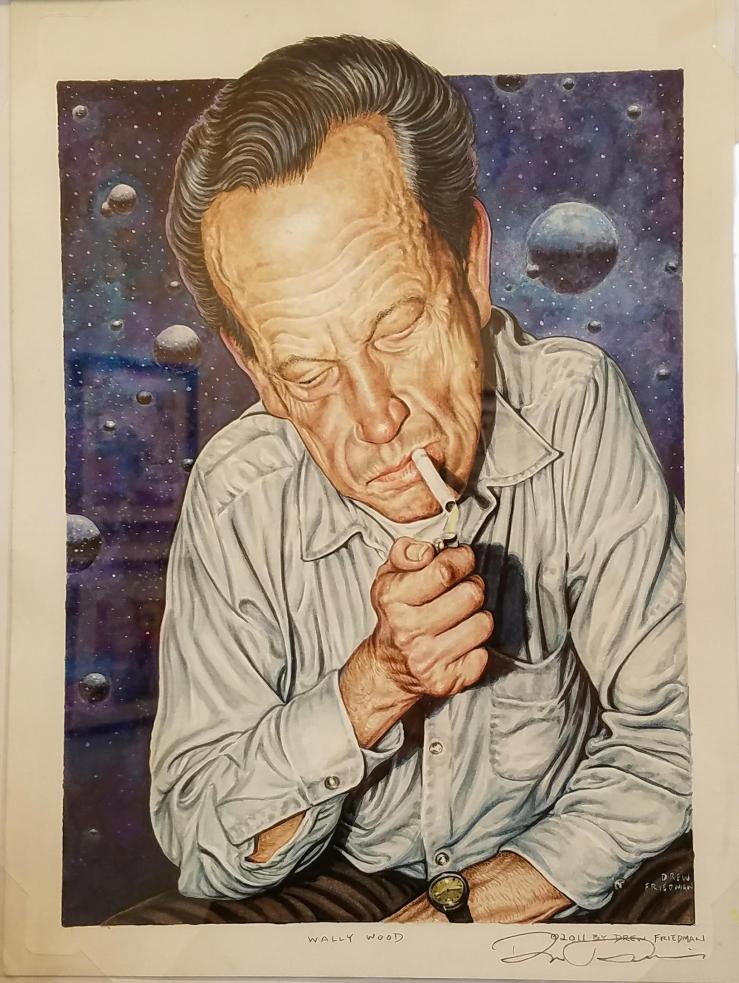
Wally Wood (1927-1981)
“Wally may have been our most troubled artist, but he may have been our most brilliant” – William M. Gaines
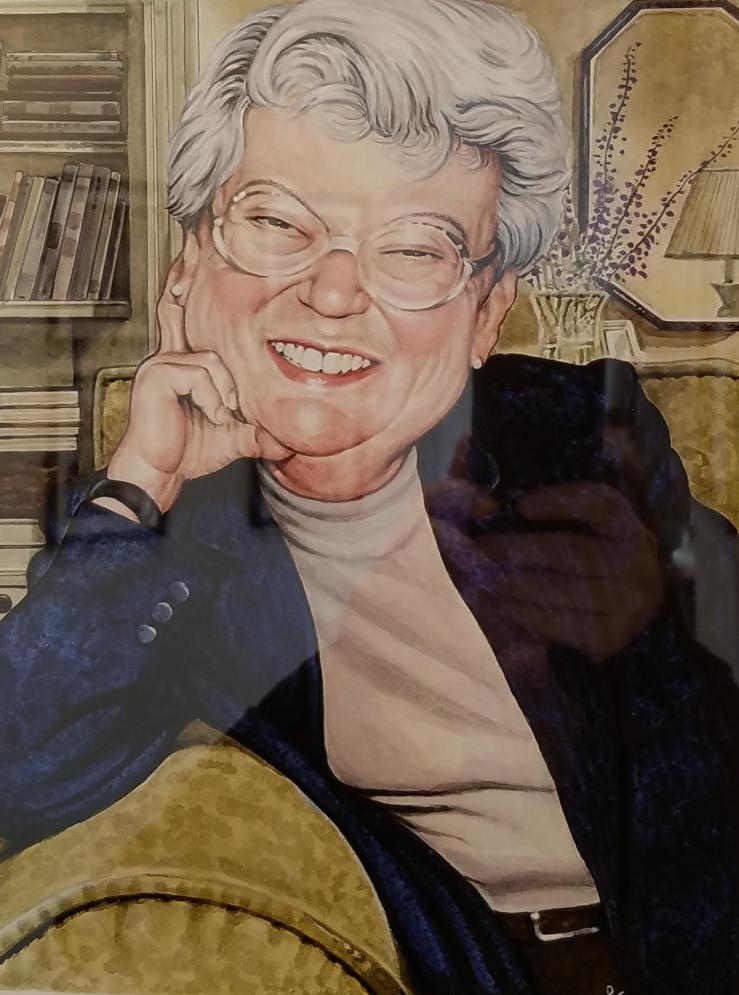

Marie Severin (b. 1929)
As EC’s colorist and the only creative woman on staff, and a very moral catholic, she was known for often colouring a particularly gruesome panel dark blue to help tone down the gore. Marie Severin’s older brother John first invited her to work as his colourist at EC in 1949 and soon she was colouring all of their comics, including the notorious horror titles.
Doug  Varone and Dancers, BAM
March 30th, 2017

A Nonesuch Celebration, BAM
April 1st, 2017

MoCCA Arts Festival
April 1st, 2017

Infinity.dot.Mirror.dot.Rooms@David_Zwirner

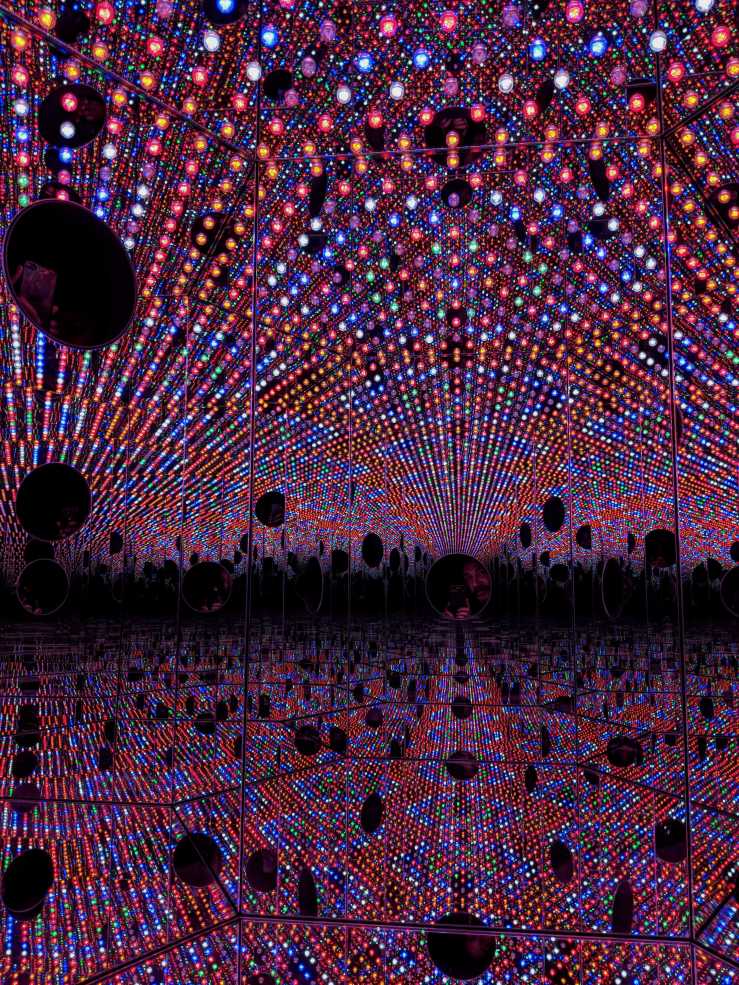
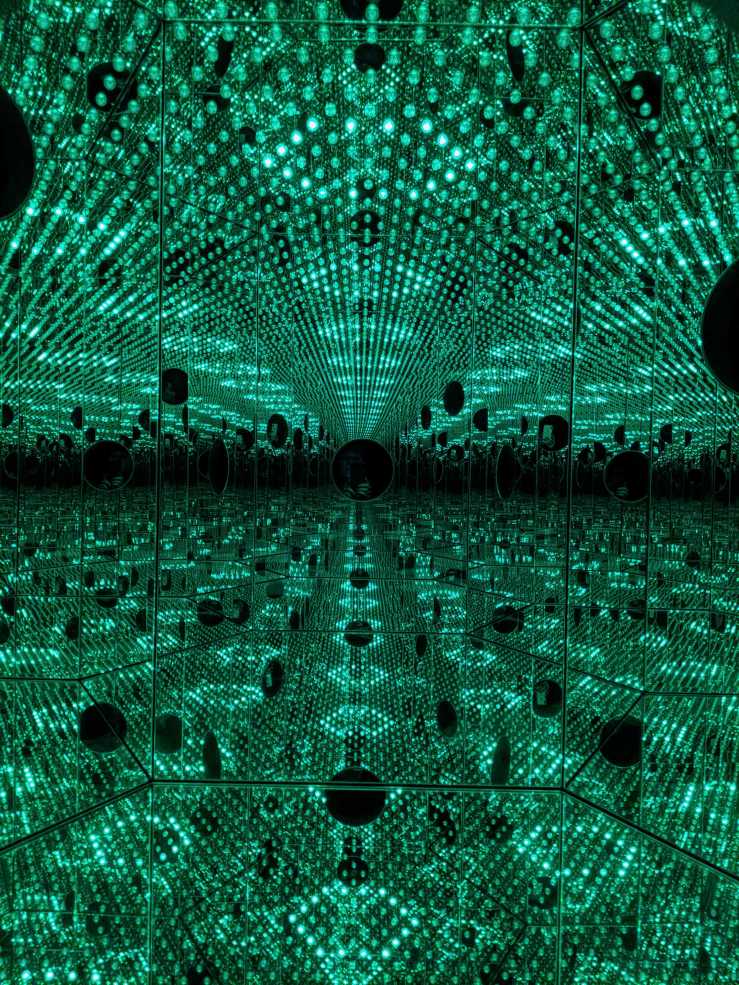
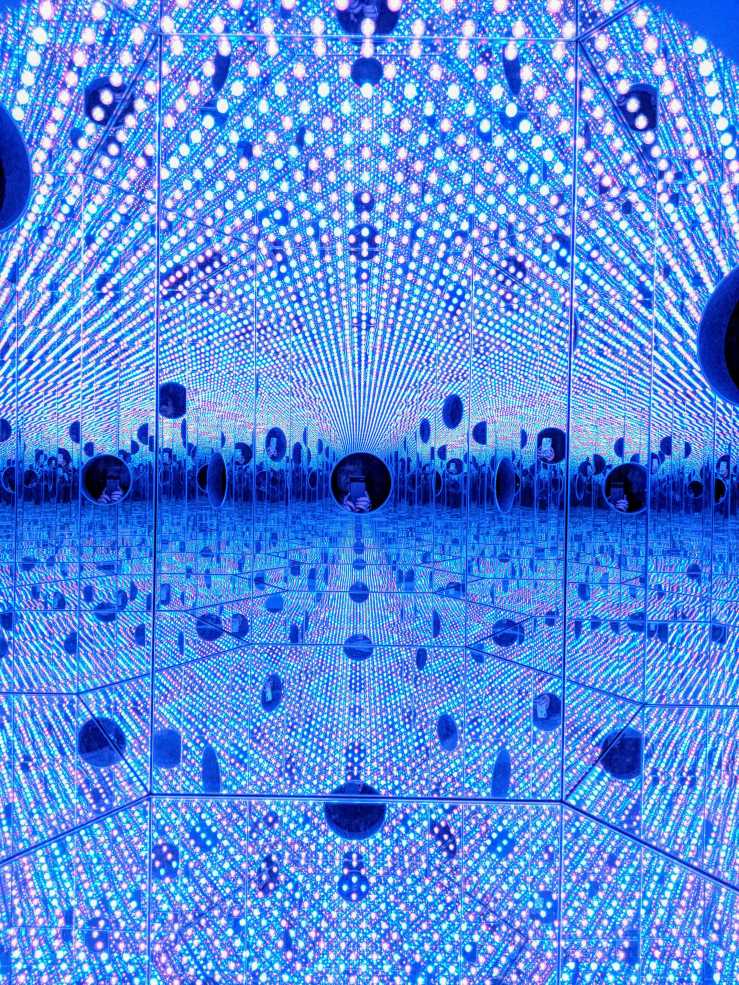
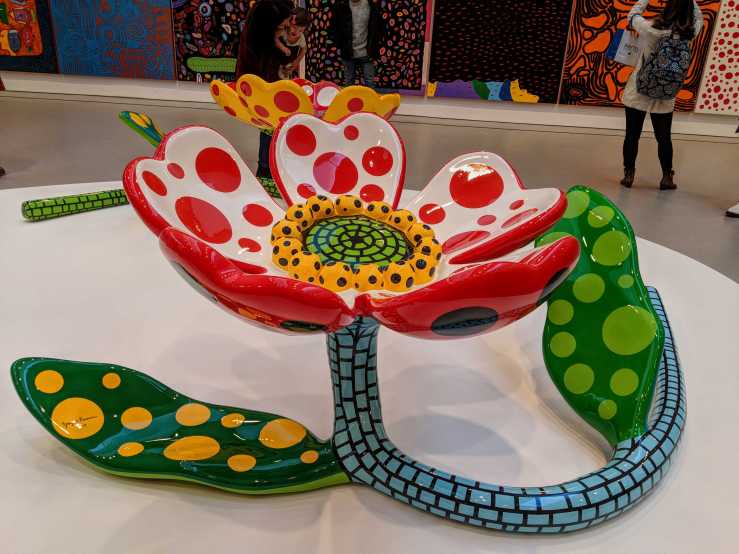
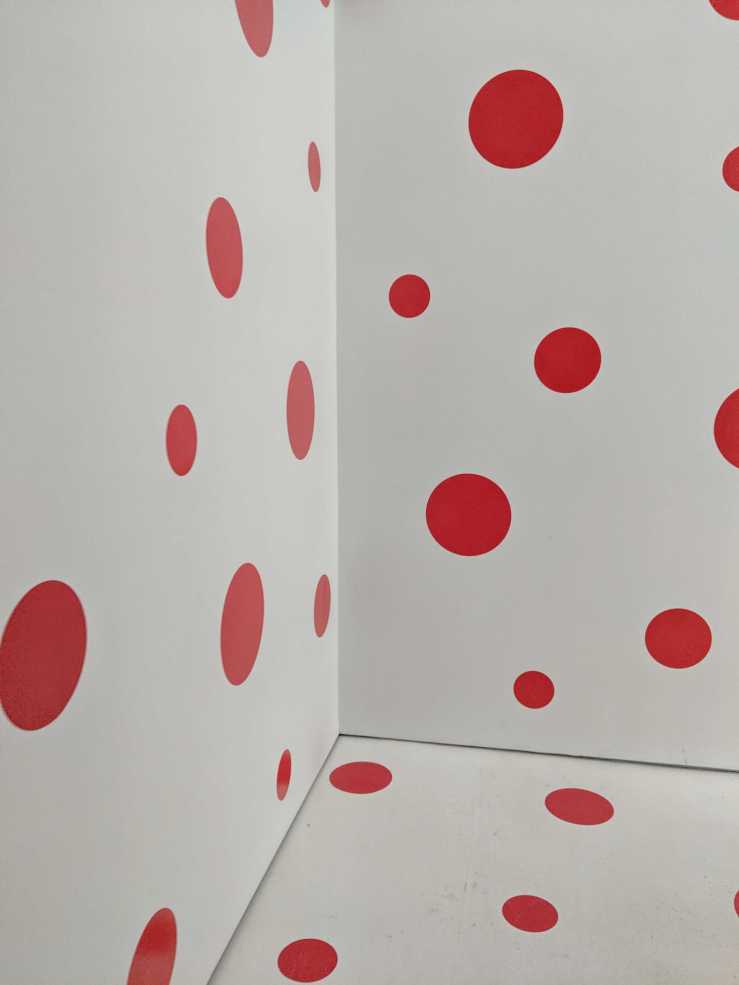
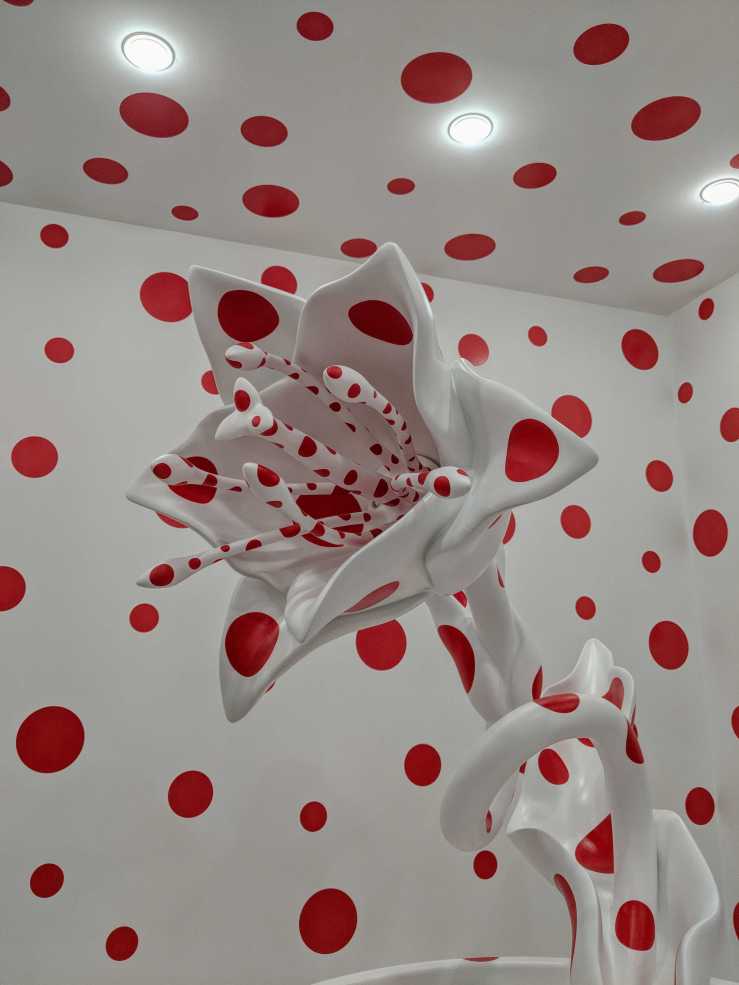
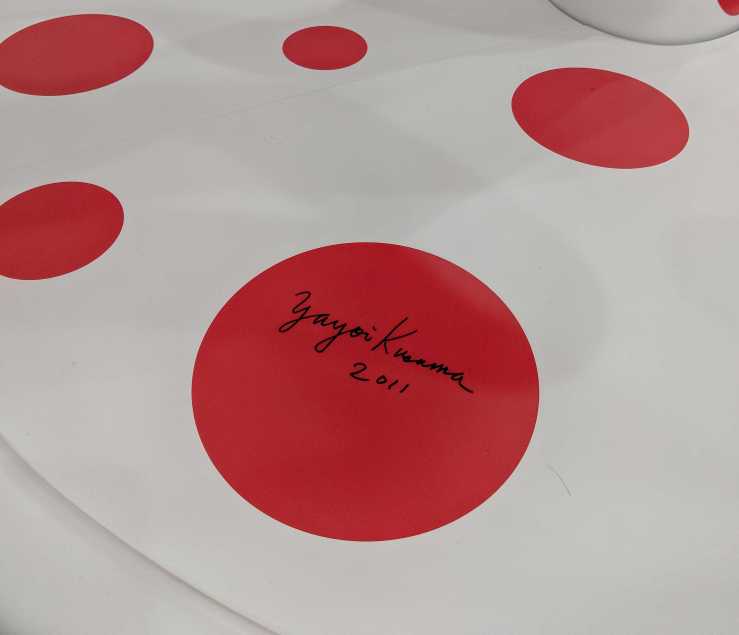
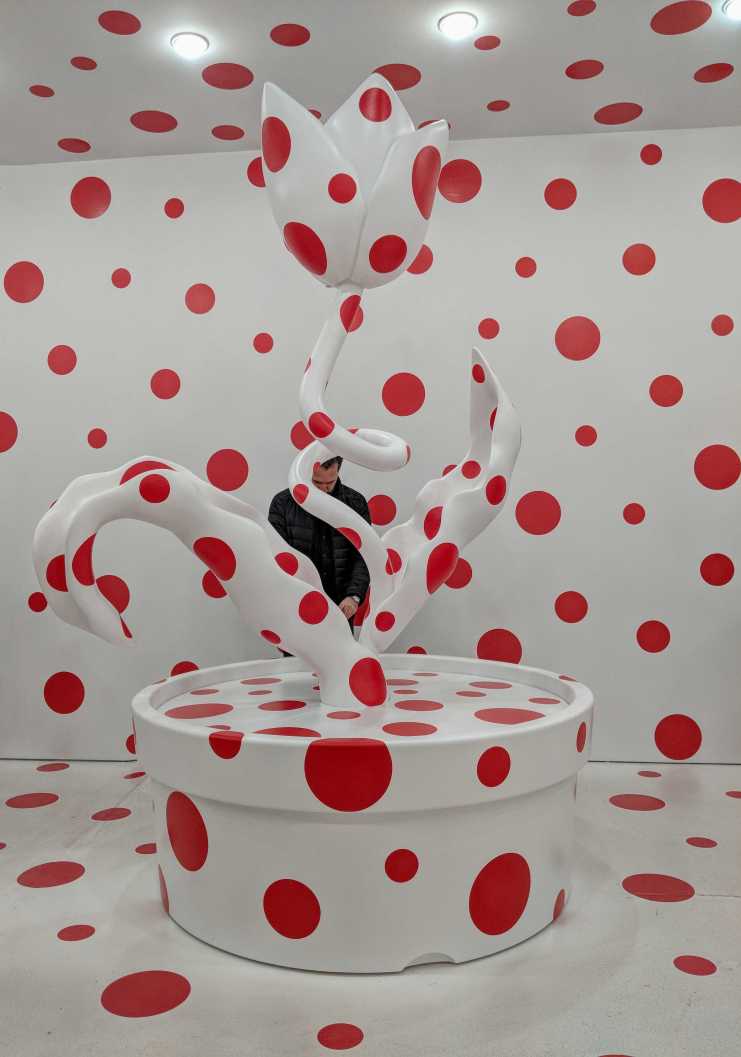
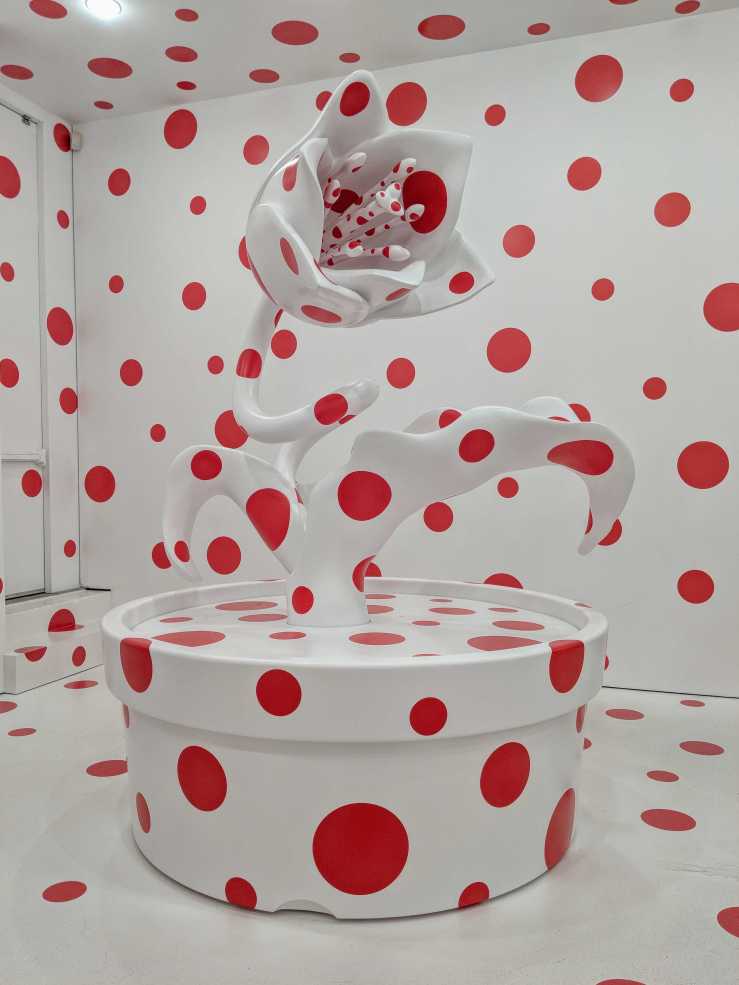
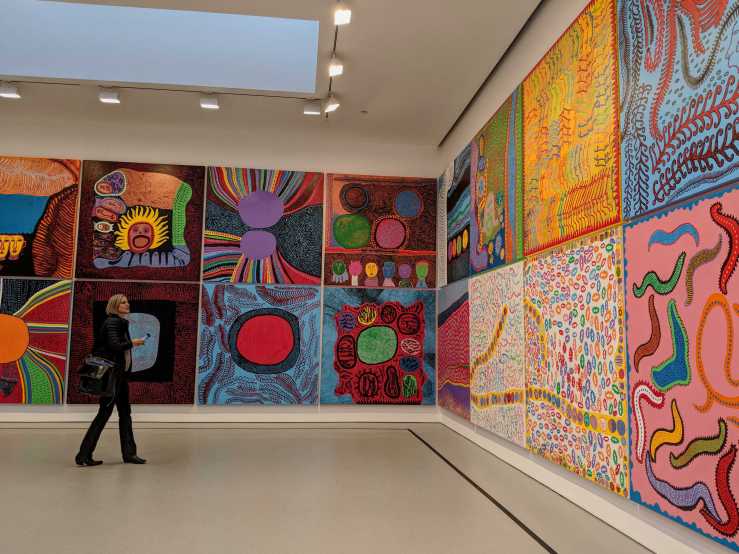
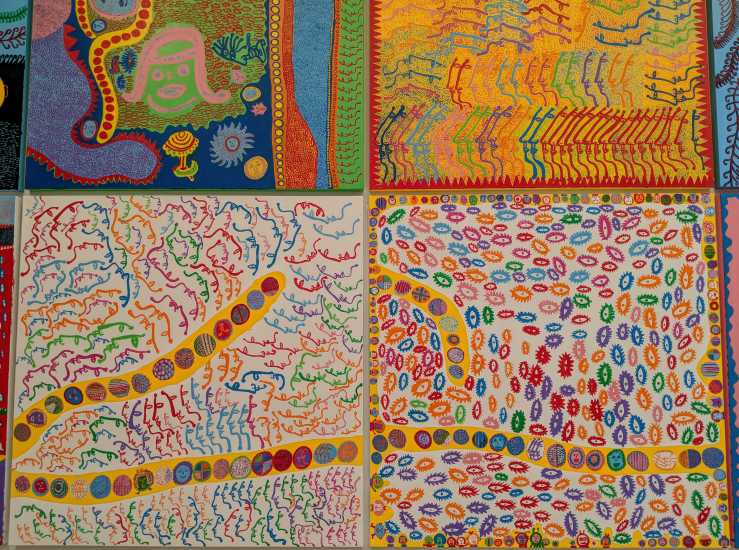
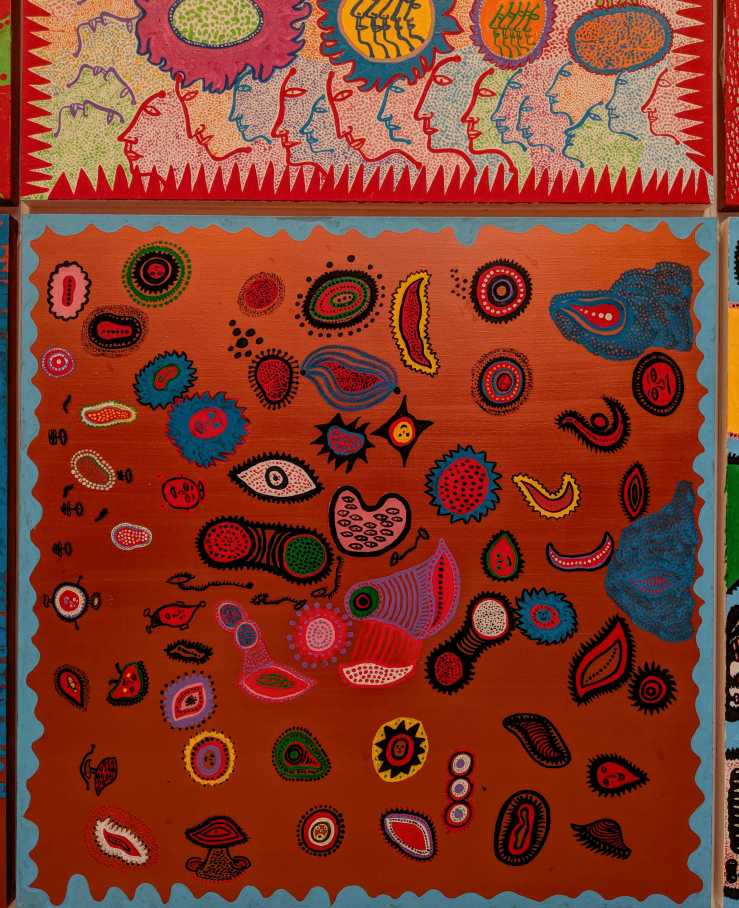
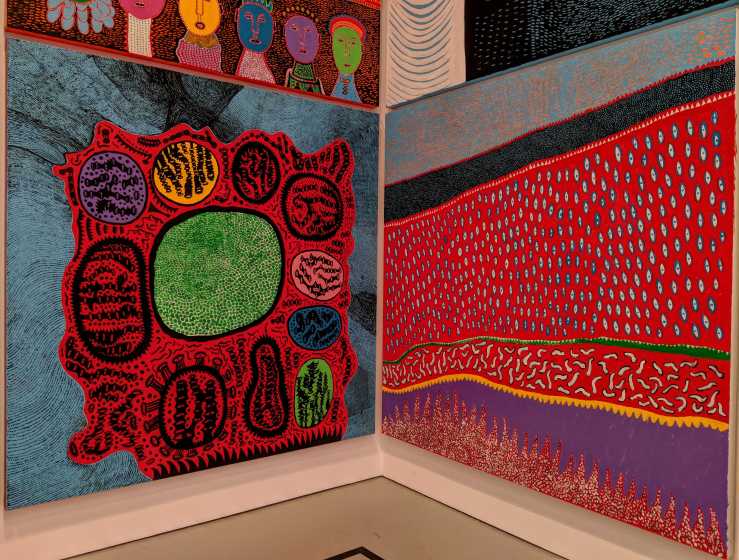
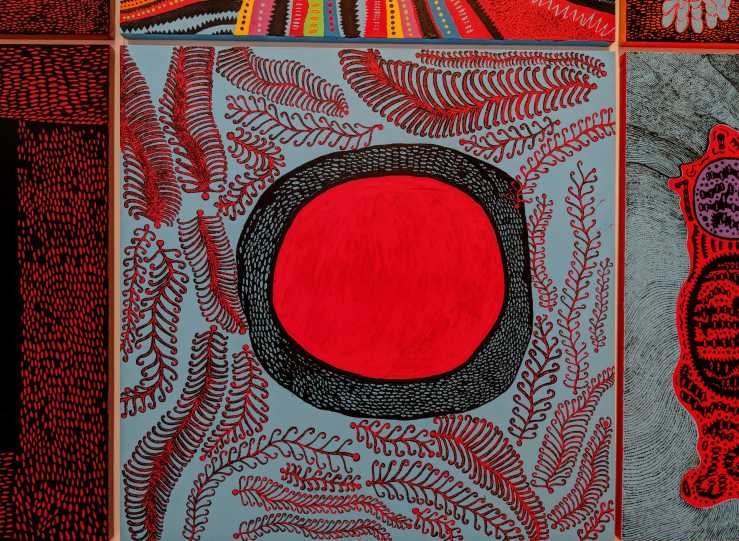
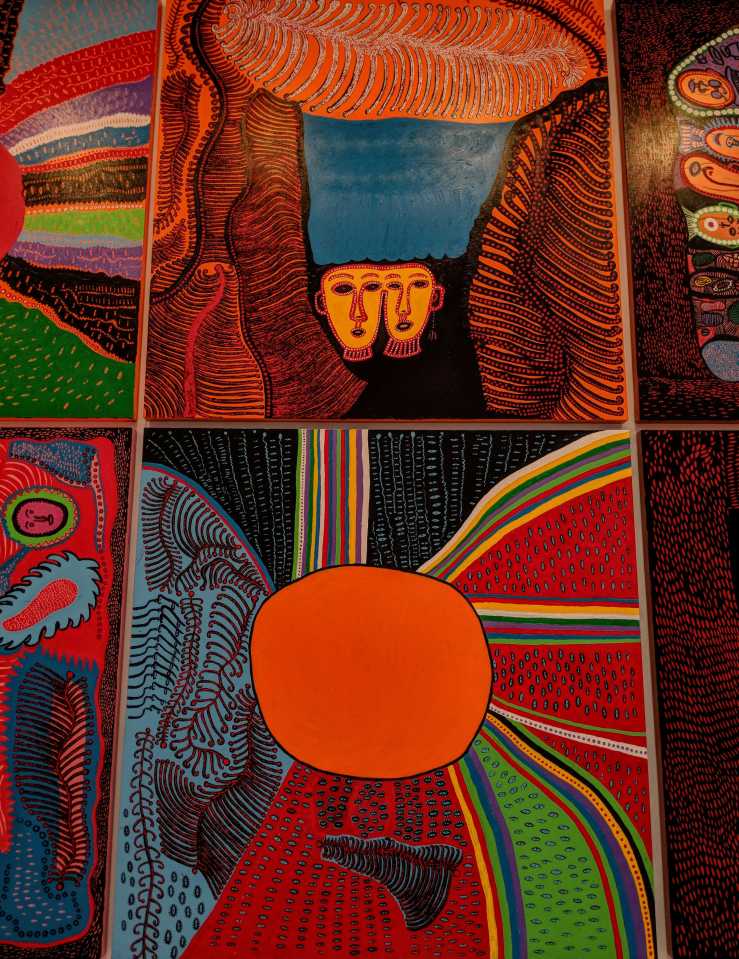
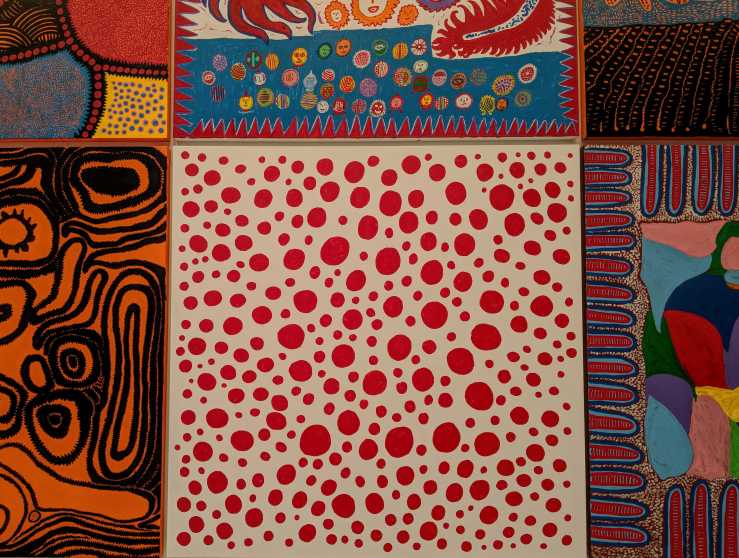
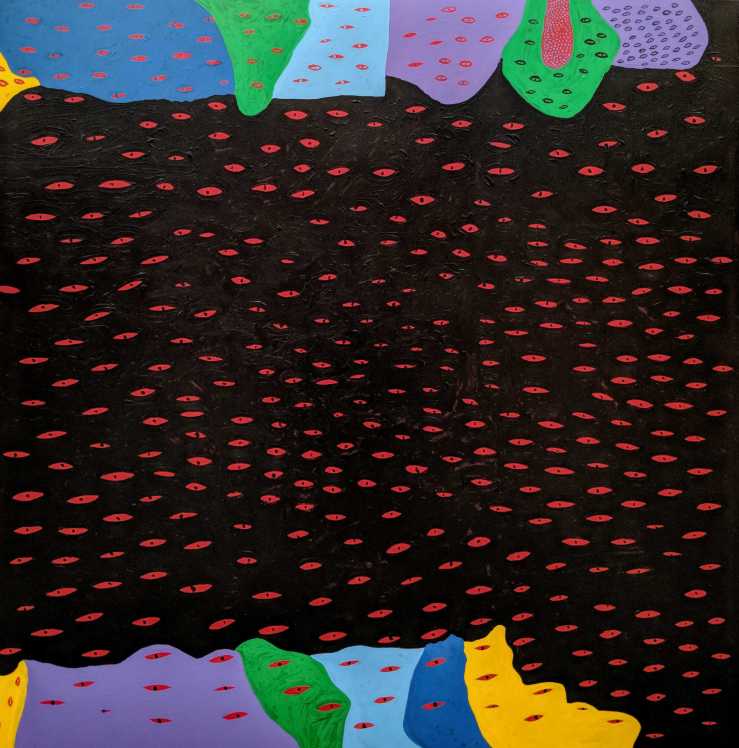
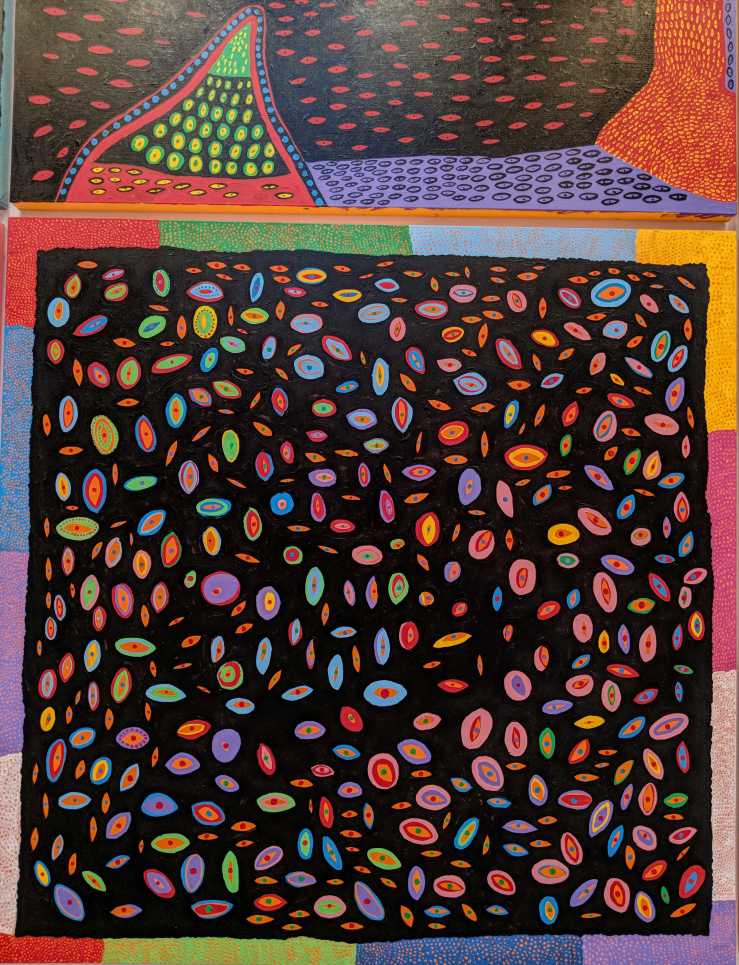
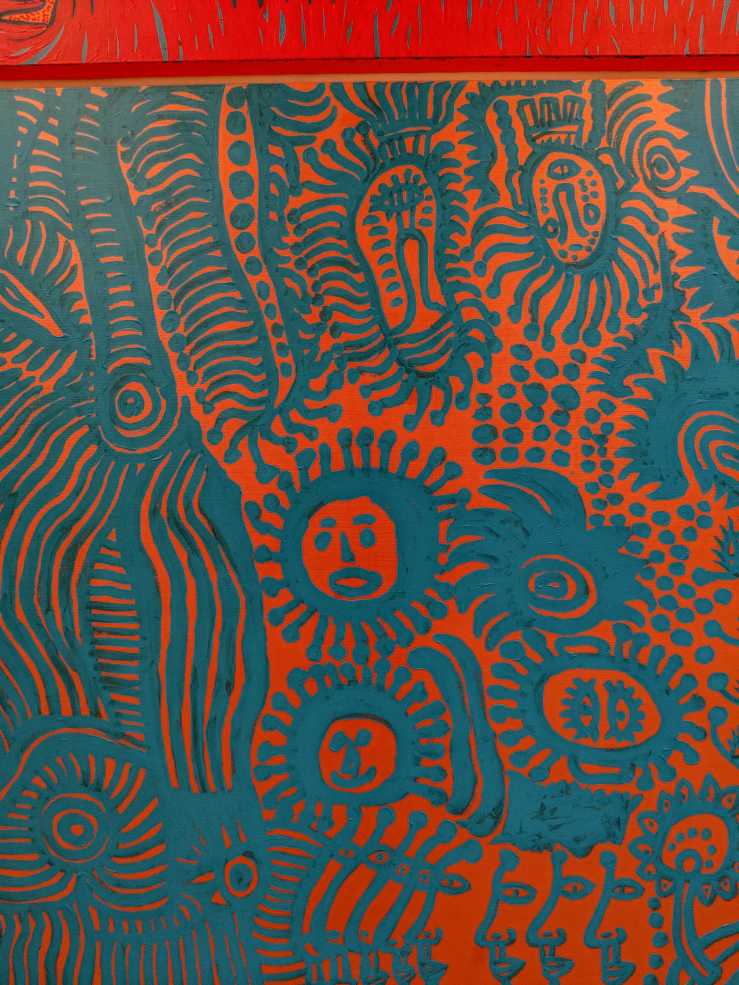
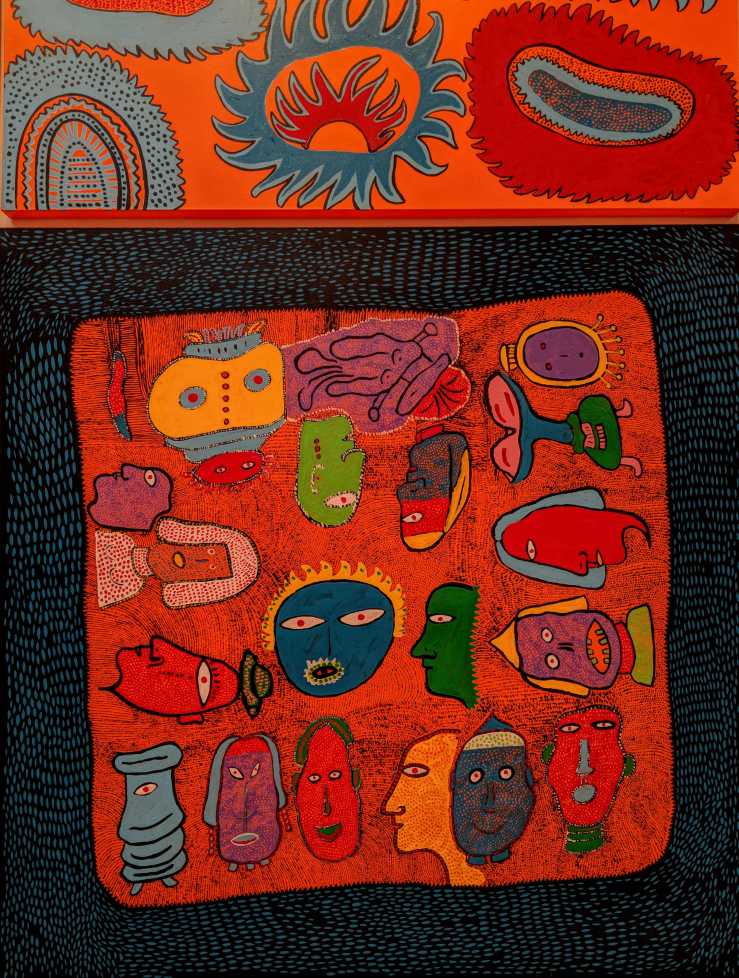
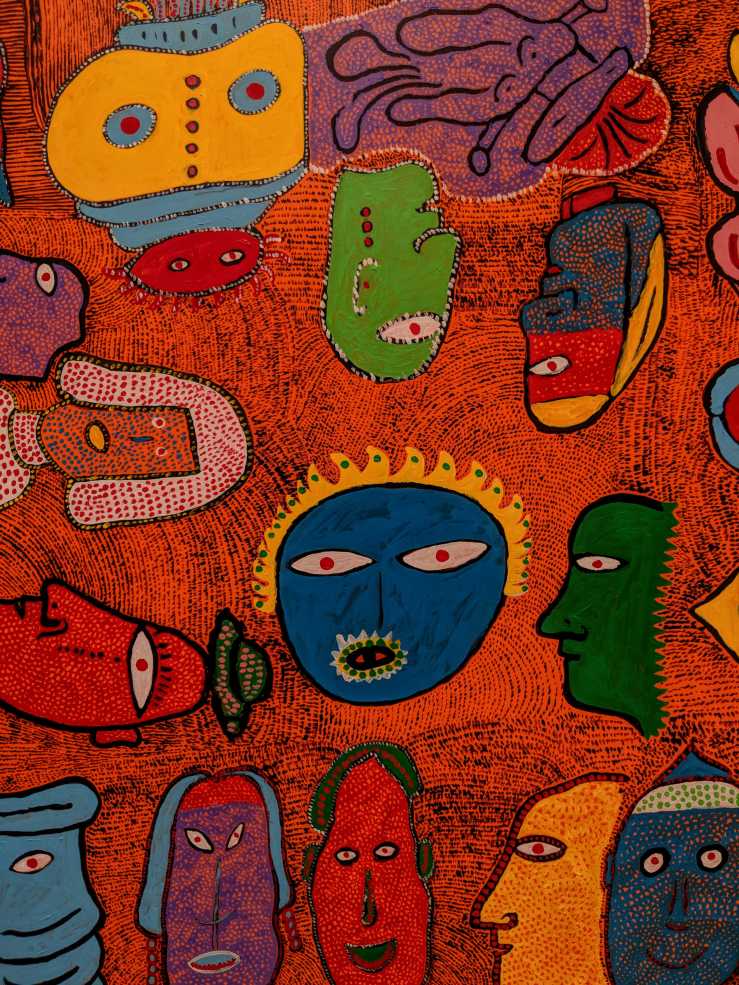
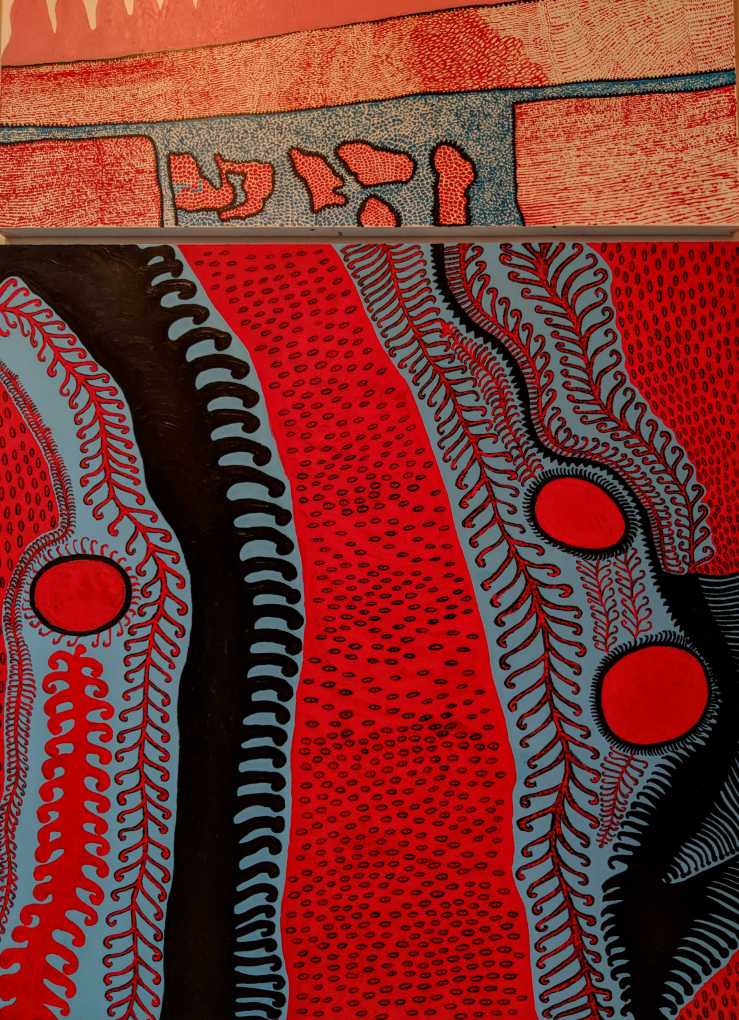
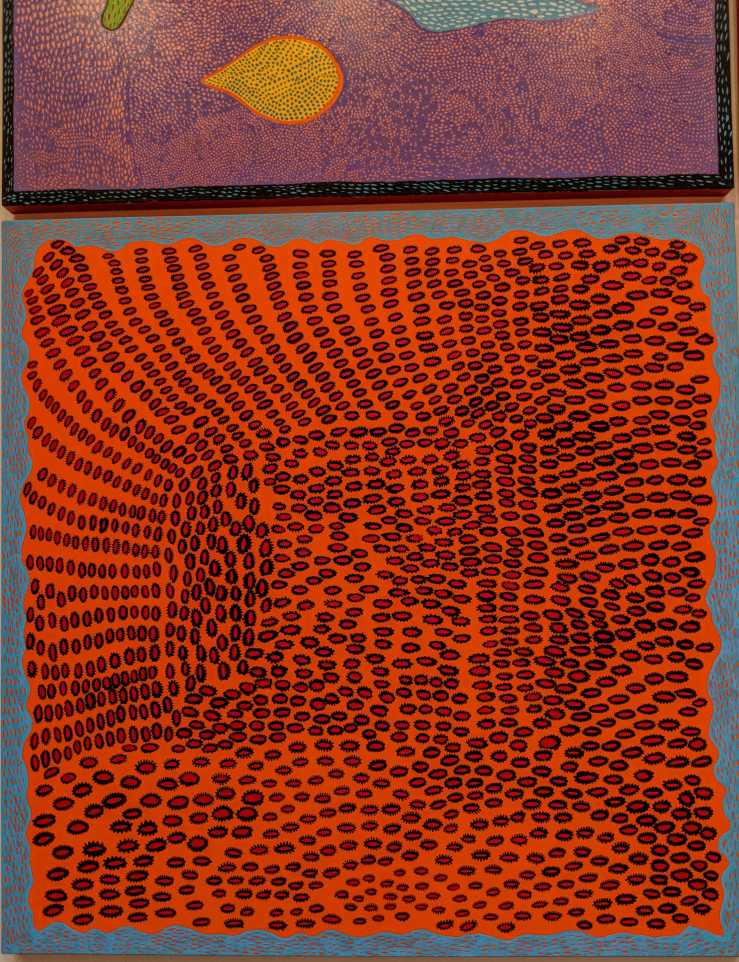
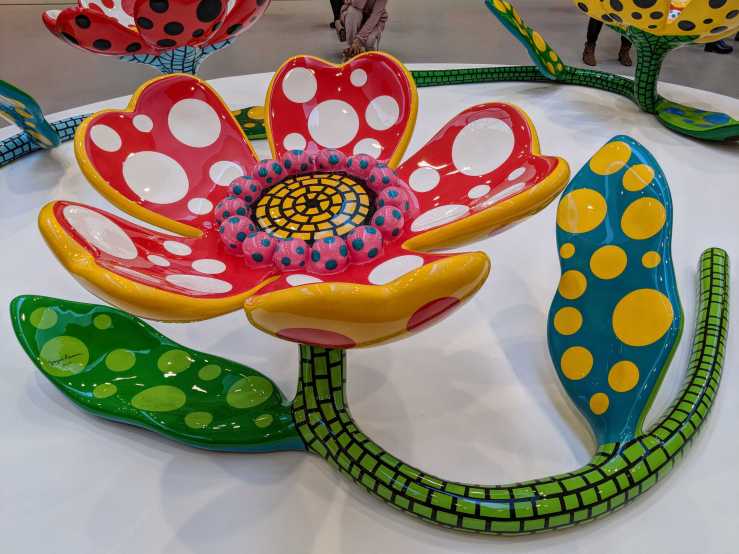
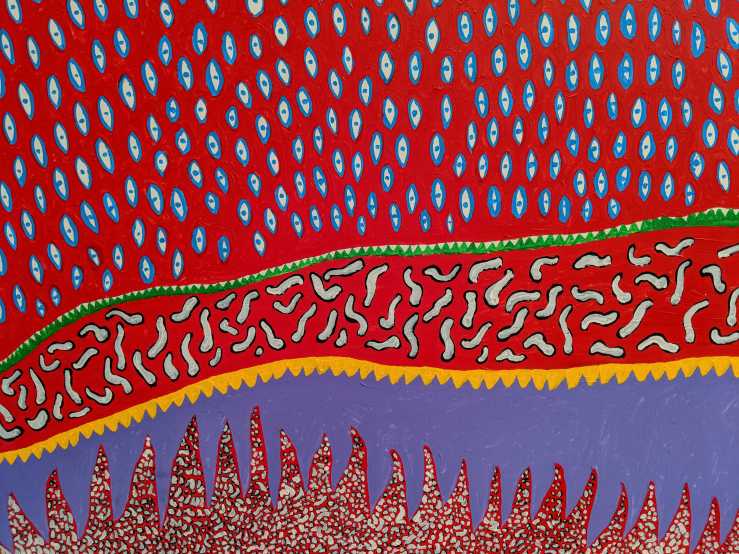
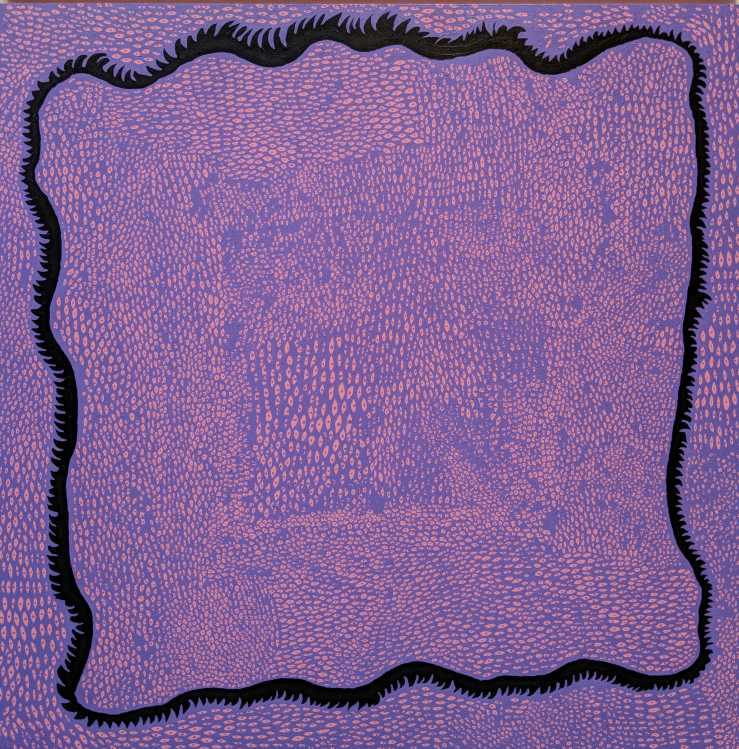
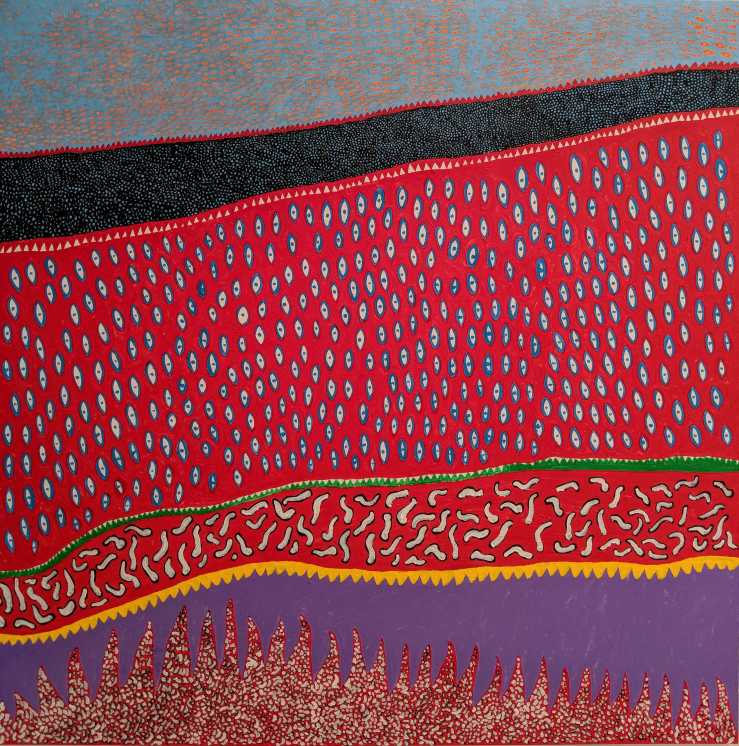
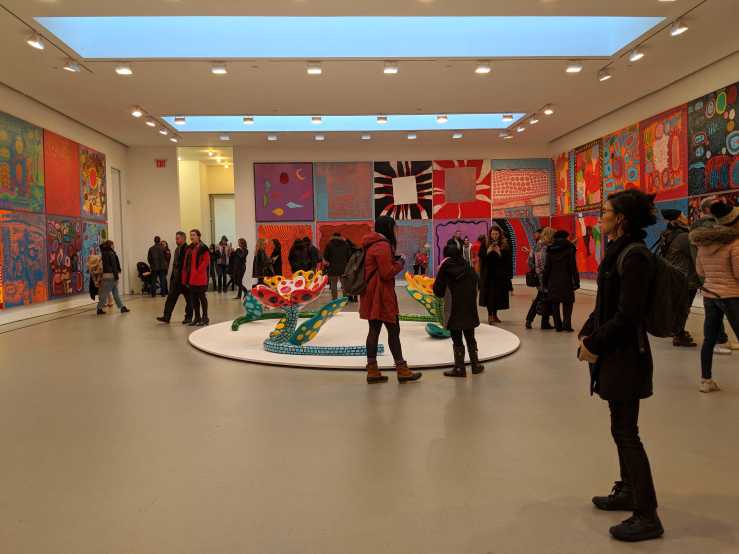
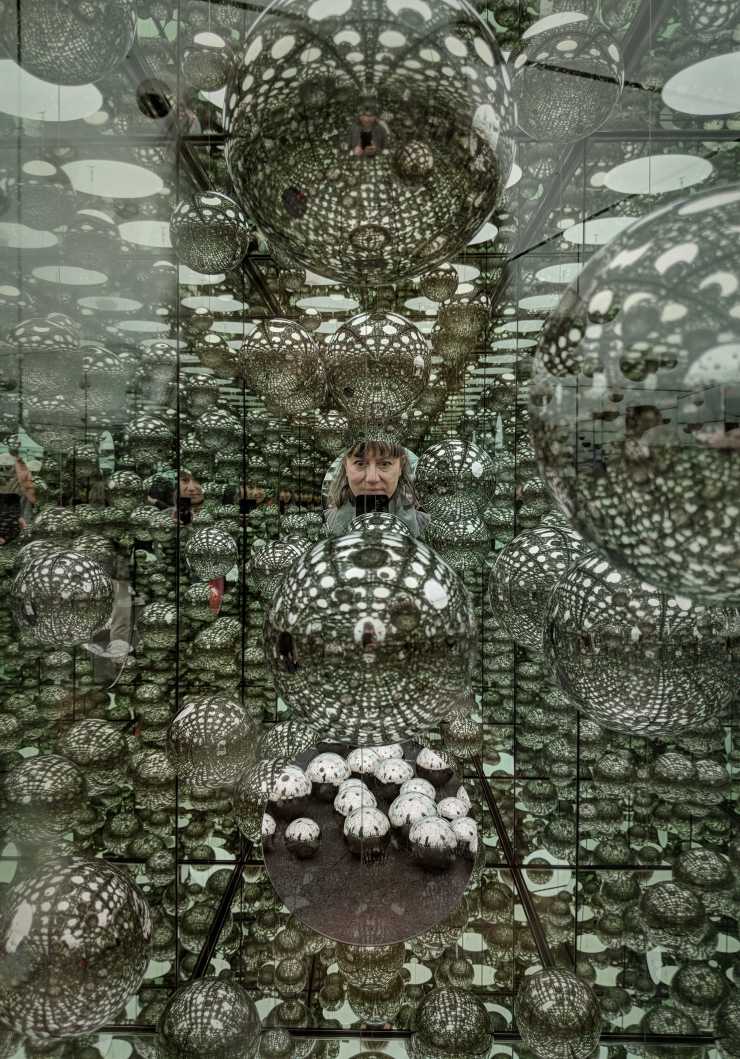
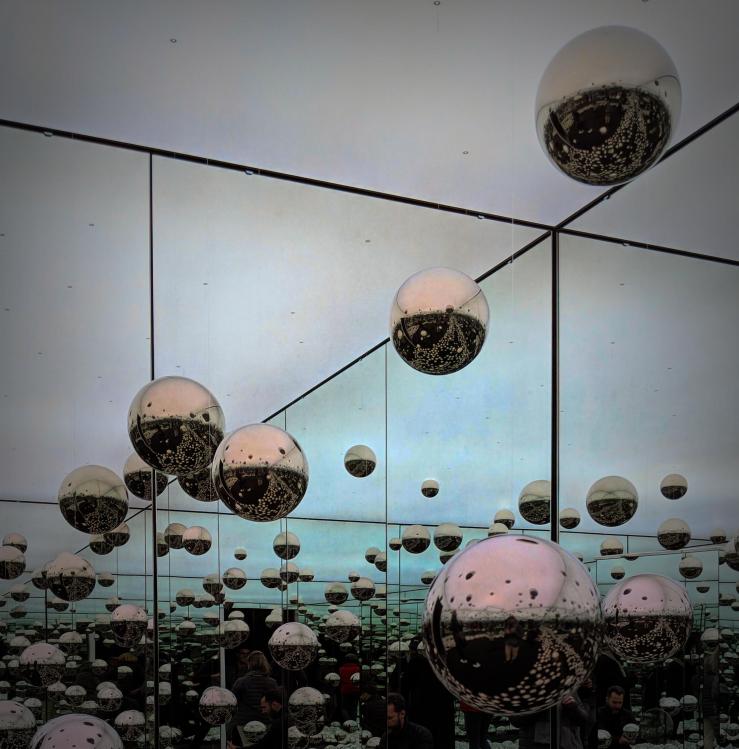
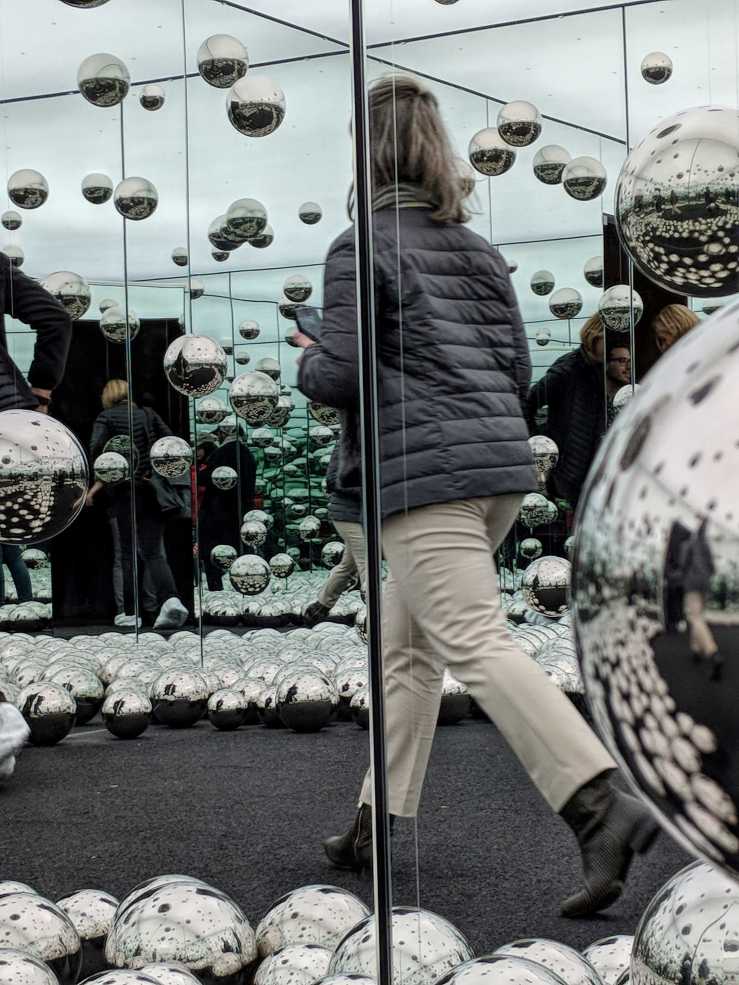
The exhibition in Chelsea featured two new Infinity Mirror Rooms, one which could be seen through a peephole (below) and another, where the viewers could walk in (from which yesterday’s ”teaser” photos). There was also a red and white polka-dotted space and a larger one featuring sixty-six paintings from the artist’s iconic My Eternal Soul series and three large-scale flower sculptures.

Immerse into Yayoi Kusama’s mesmerizing, beautiful chaos. You may even discover a kind of order behind this explosion of colour, this pandemonium of patterns and shapes, this sensory overload.

After a while, it all starts to make sense. 

Festival of Life ran through a limited time only, in David Zwirner Chelsea concurrently with an exhibition of Kusama’s new Infinity Nets paintings, in their uptown location. We never made it to the latter.

December, 6th 2017