You don’t have to be an opera fan to enjoy the theatricality, offered generously in daily live performances, courtesy of the City of New York. Just add your favourite dramatic music.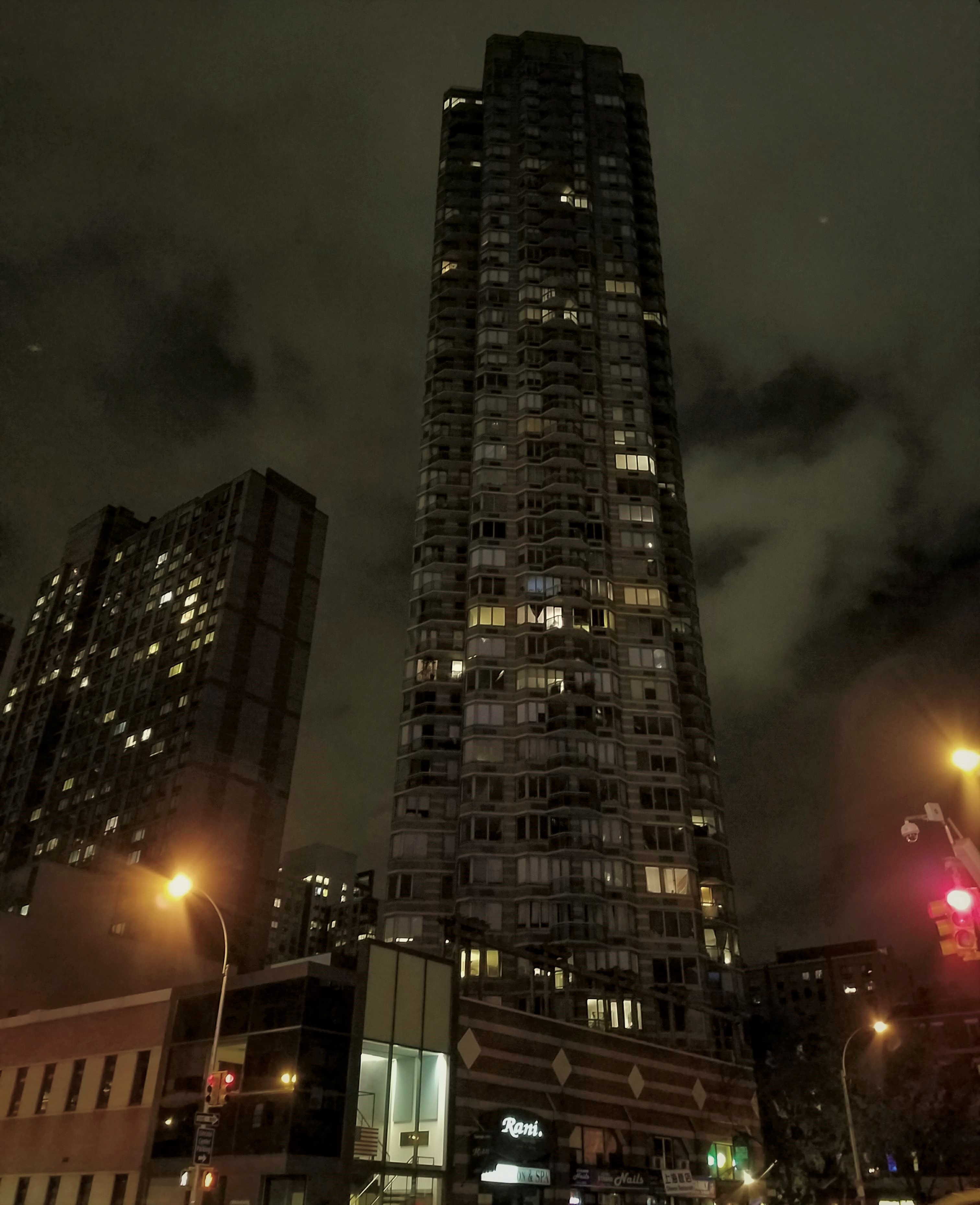
 10th Avenue, Midtown
October 7th, 2017
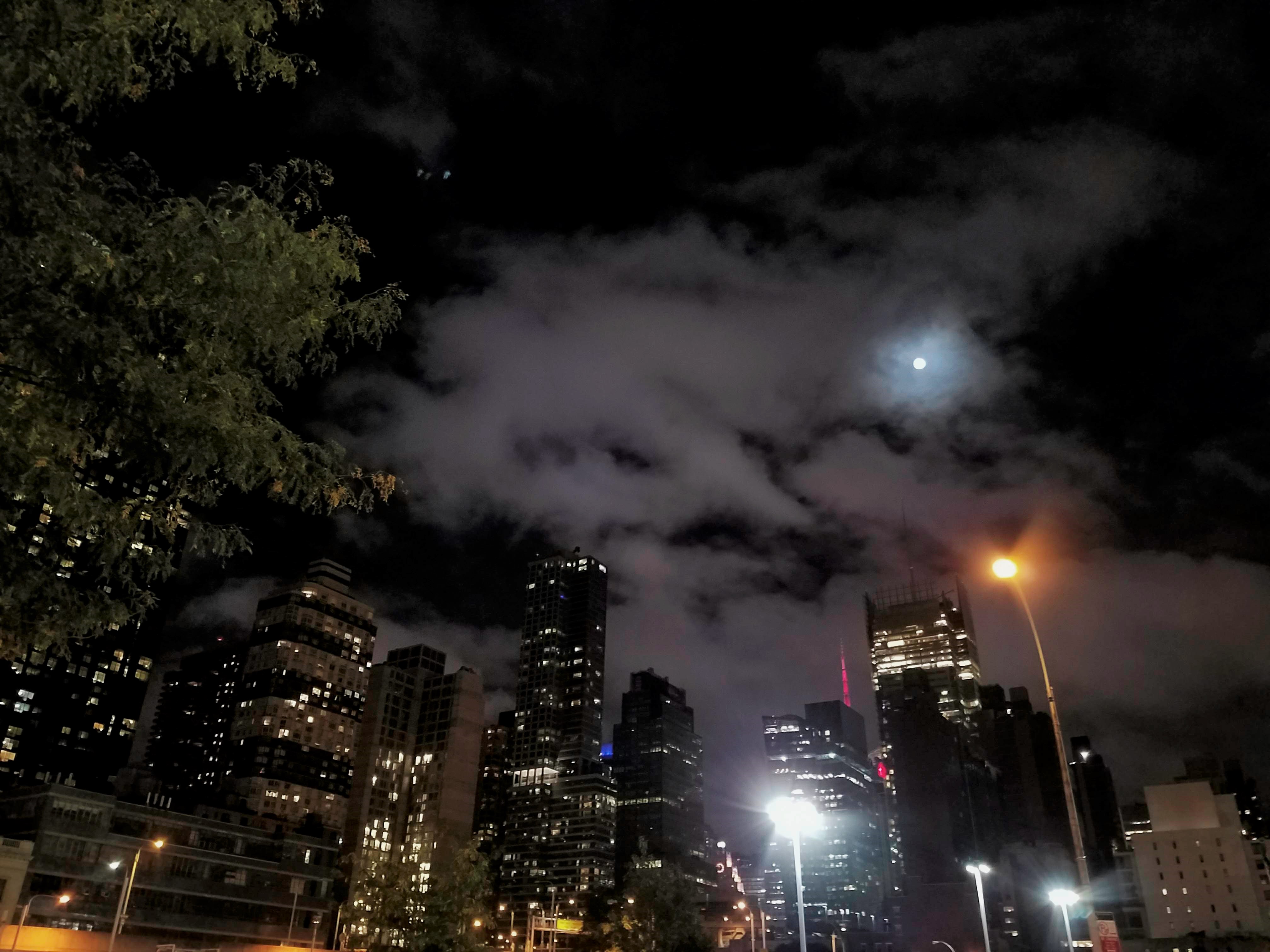
You don’t have to be an opera fan to enjoy the theatricality, offered generously in daily live performances, courtesy of the City of New York. Just add your favourite dramatic music.10th Avenue, Midtown
October 7th, 2017
What could possibly ever top a talk with the rather marvelous and surprisingly funny Mr. Jon Hamm aka the Dapper Mr. Draper? Only another talk with the rather brilliant designer and accomplished gardener, the quietly elegant Mr. Dries Van Noten himself.


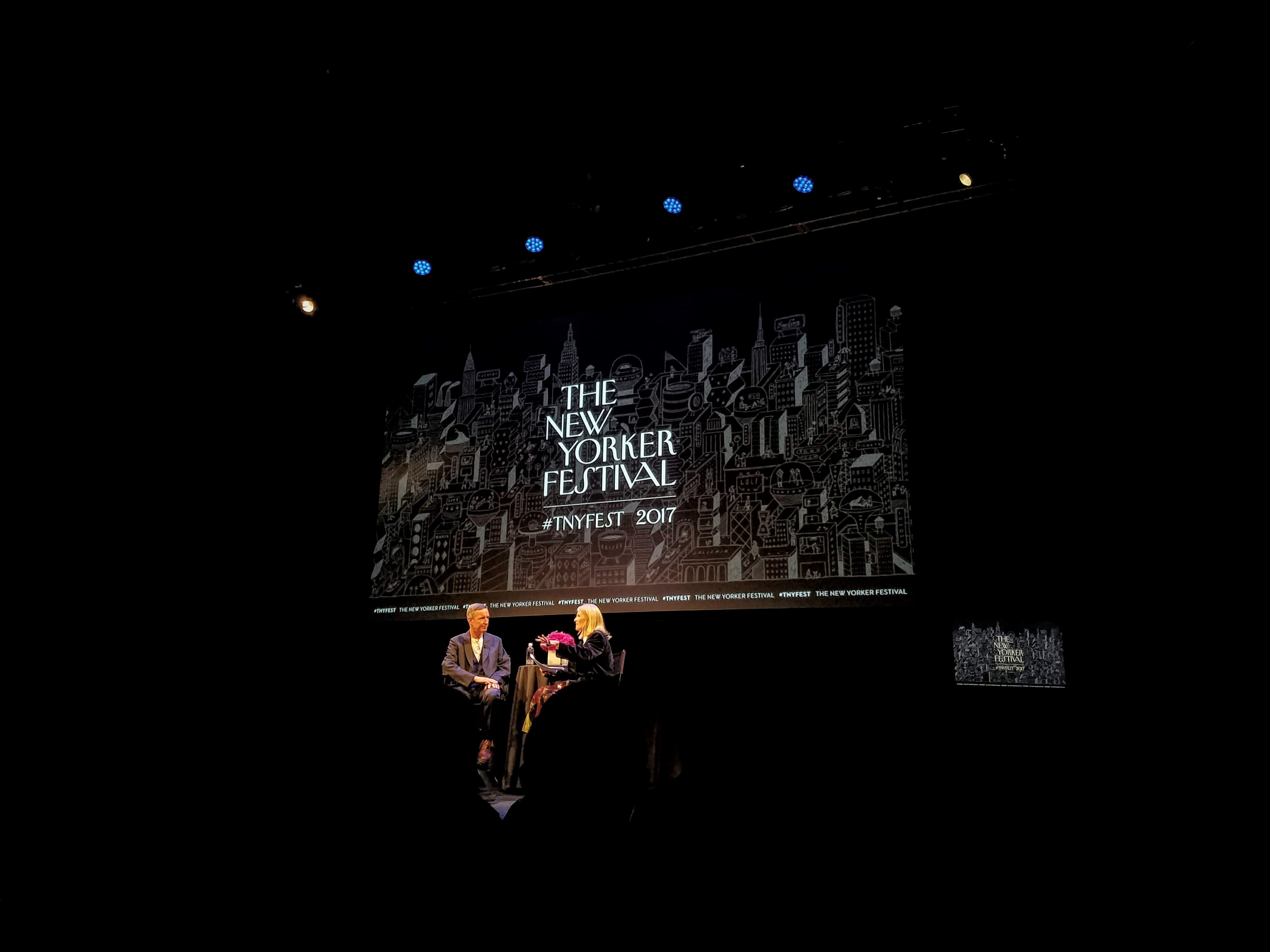
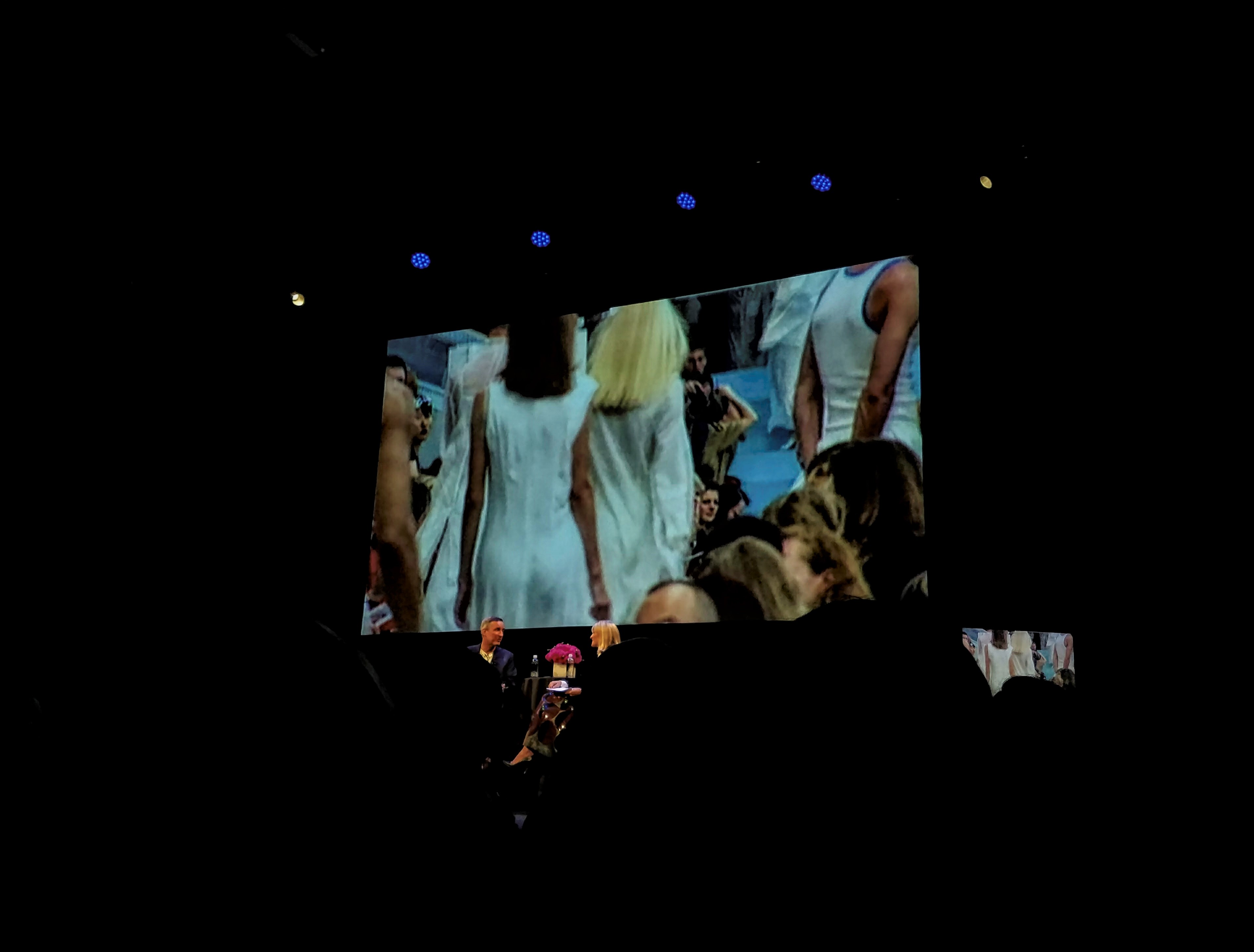

Stimulating as always, The New Yorker Festival, 2017 series.
October 7th & 8th, 2017
The night is young but not for long.
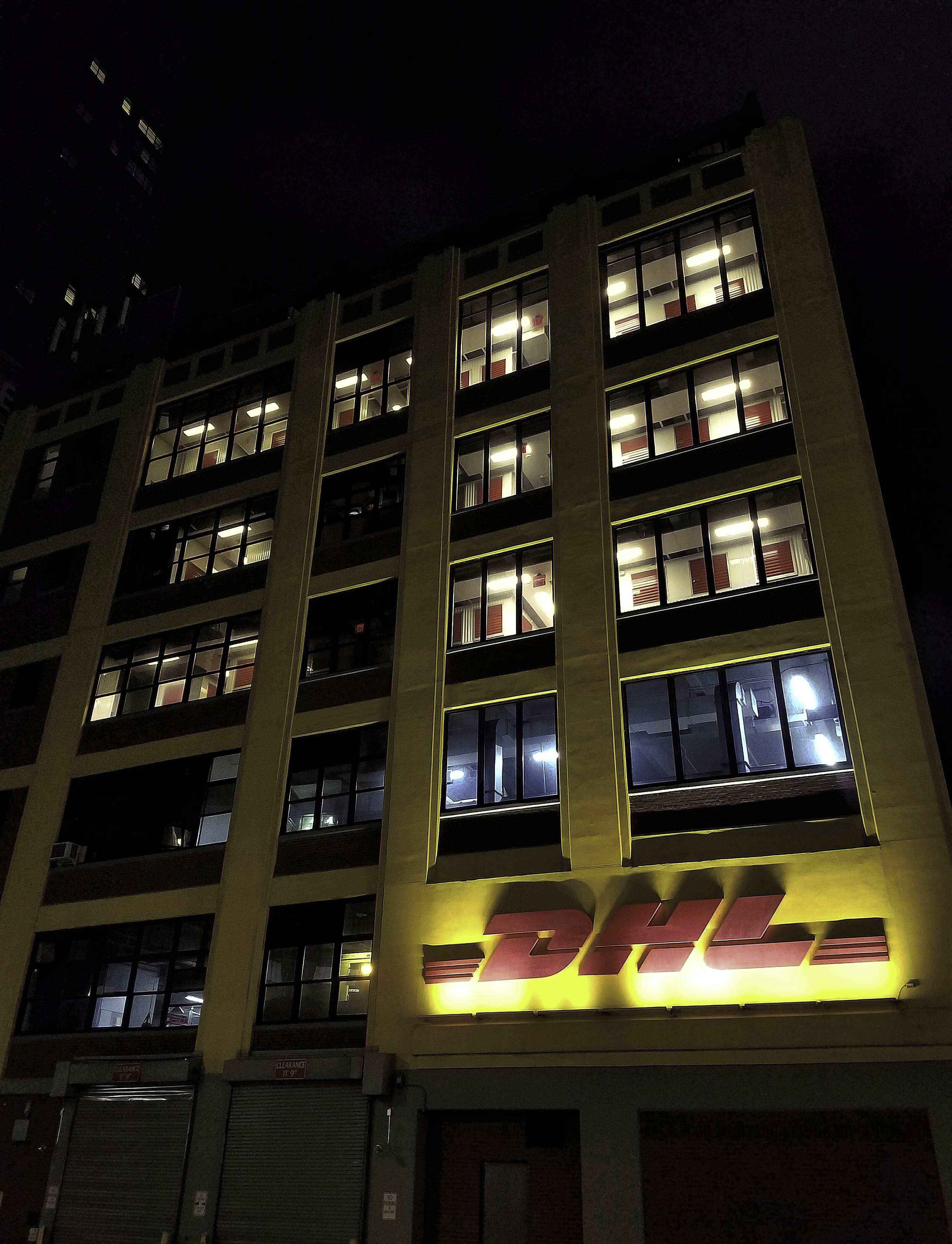
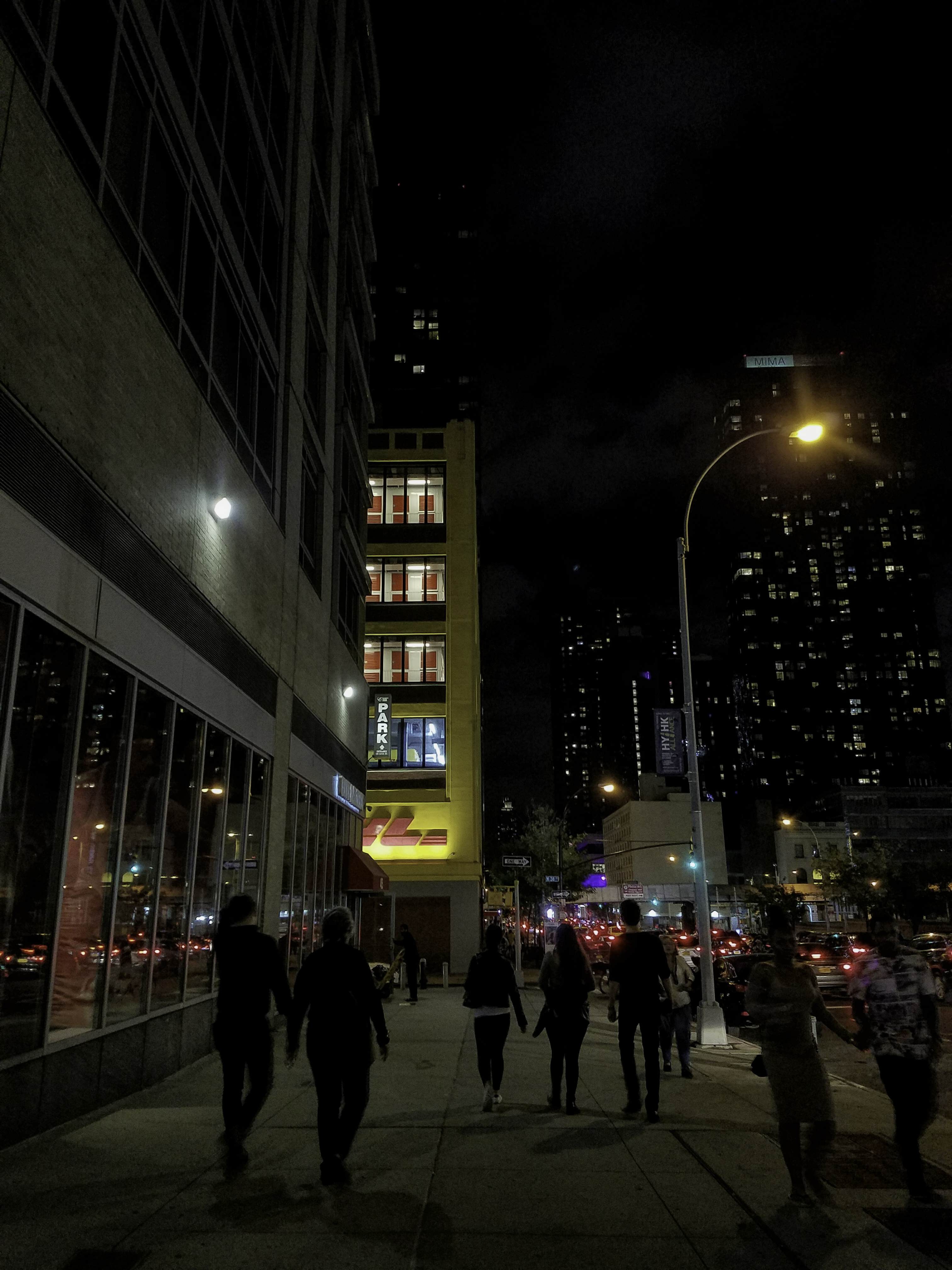 October 7th, 2017
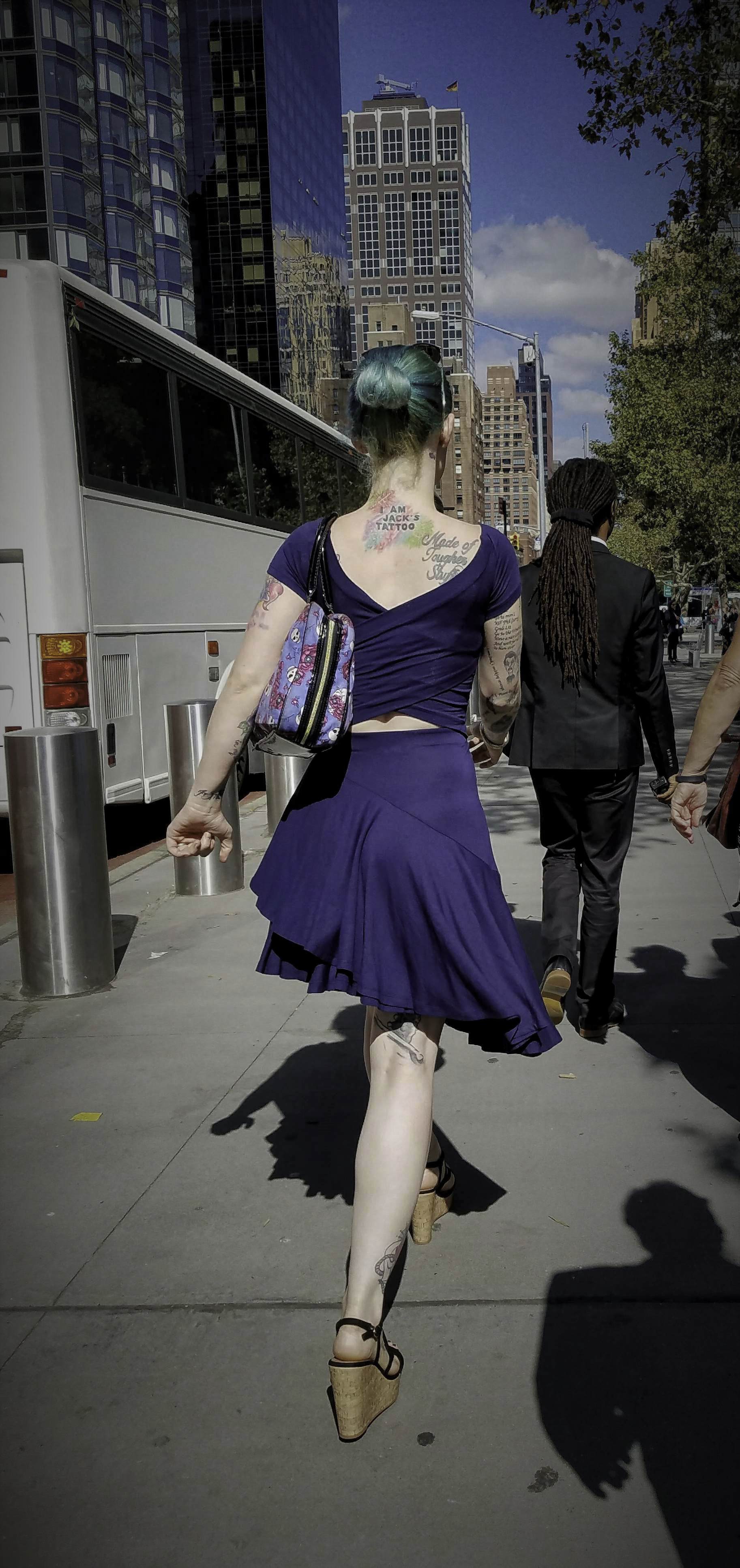
October 3rd, 2017
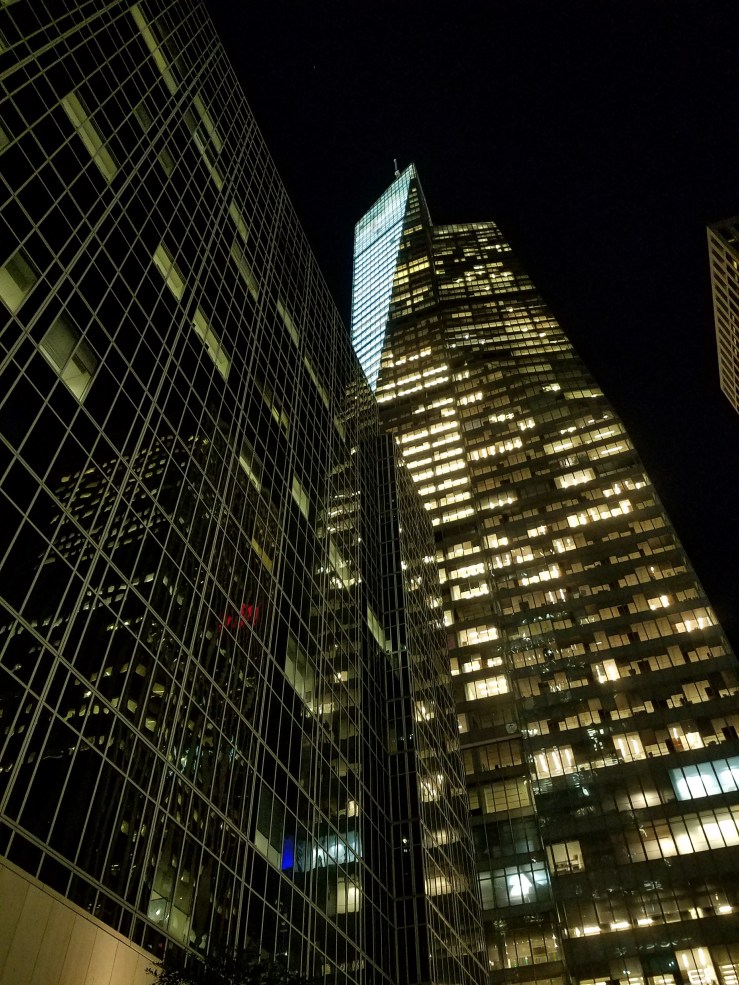
October 3rd, 2017
Running Man
A Night at the Opera, Die Zauberflöte
Casual chic
’70s Greece
Hell’s Kitchen
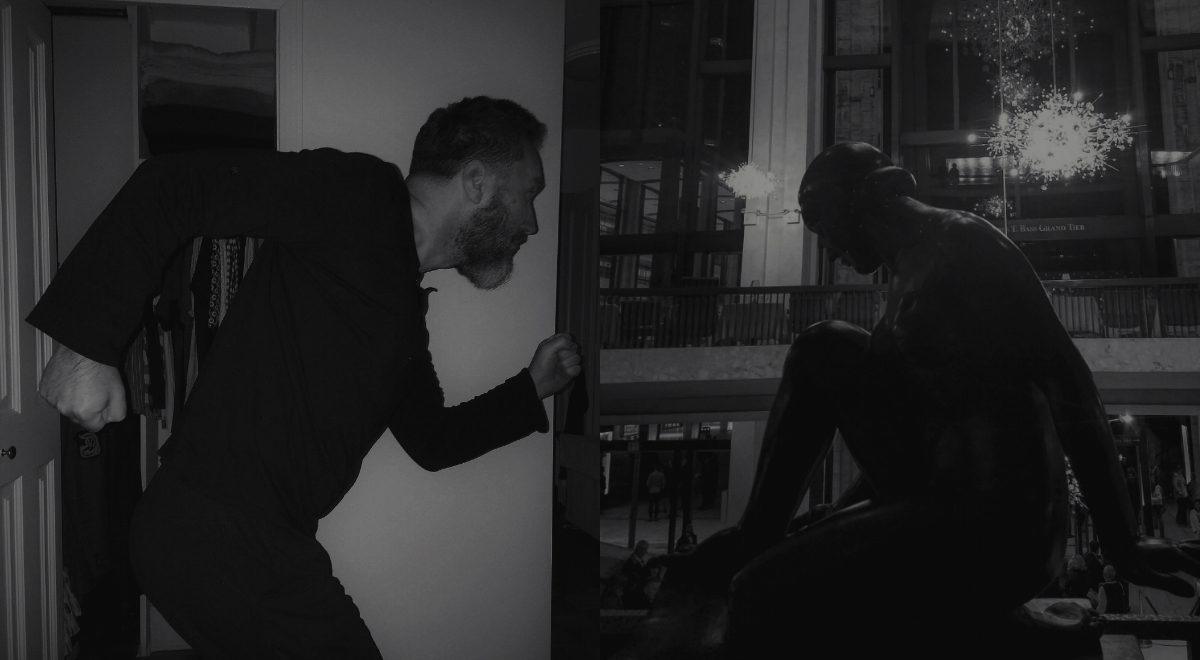 Kneeling Woman
A Monument to Debussy, Aristide Maillol
Bronze
1930-1933 France
Lincoln Center
September 30th, 2017
In 2017, MoMA – jointly with Columbia University – acquired the vast archives of Frank Lloyd Wright, one of the most prolific architects of the 20th century. To mark that acquisition, as well as the 150th anniversary of his birth on June 8, 1867, MoMA presented Frank Lloyd Wright at 150: Unpacking the Archive, an exhibition that comprised some 450 works made from the 1890s through the 1950s and included architectural drawings, models, building fragments, films, print media, furniture, tableware, textiles, paintings, photographs, and scrapbooks. According to its curator, Barry Bergdoll, the show was meant “to announce that Frank Lloyd Wright is open to new interpretations” and that “the archive is here and it’s open.”
Having had a closer look on Mr. Wright’s incredibly detailed, delicate, at once artistically accomplished and architecturally precise designs, I can attest to the show’s success in opening the work of one of America’s – and the world’s – greatest architects, to new interpretations. At least to my, not-so-expert, eyes. 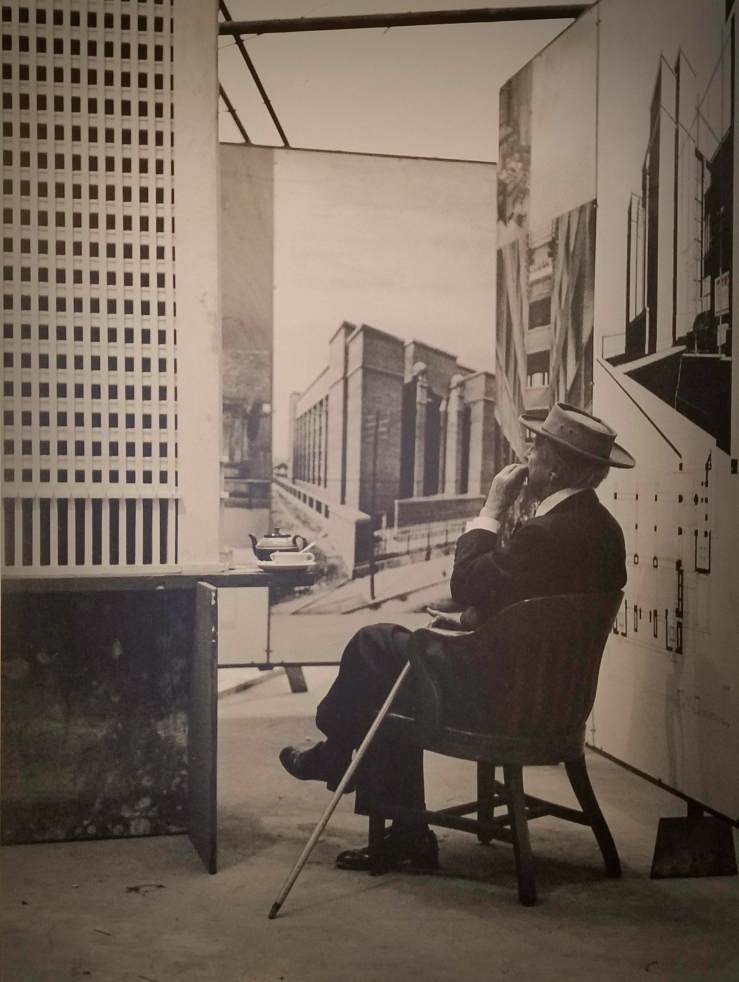
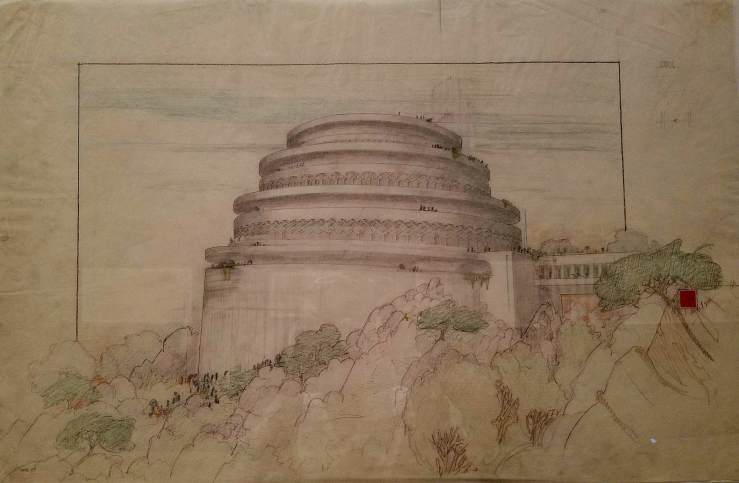 Goron Strong Automobile Objective and Planetarium, Sugarloaf Mountain, Maryland
Project, 1924-25 // Pencil and coloured pencil on tracing paper
This project is often seen as a forerunner of the Guggenheim Museum, built two decades later.
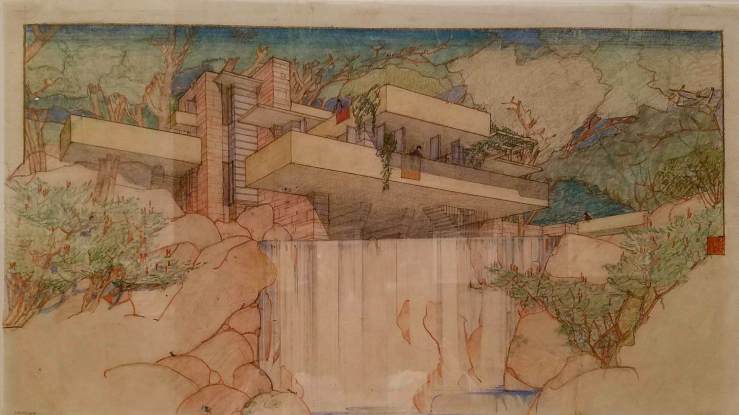 Fallingwater (Kaufmann House), Mill Run, Pennsylvania 1934-37
Pencil and coloured pencil on paper
The bold design of a house over a waterfall for Pittsburgh department store magnate Edgar Kaufmann put Wright back in the public eye at a moment when he was increasingly anxious that his fame had faded. This drawing landed Wright on the cover of Time magazine in 1938 – he was only the third architect ever to receive that honour – and was also displayed that same year in an exhibition at MoMA devoted solely to his unprecedented house design.
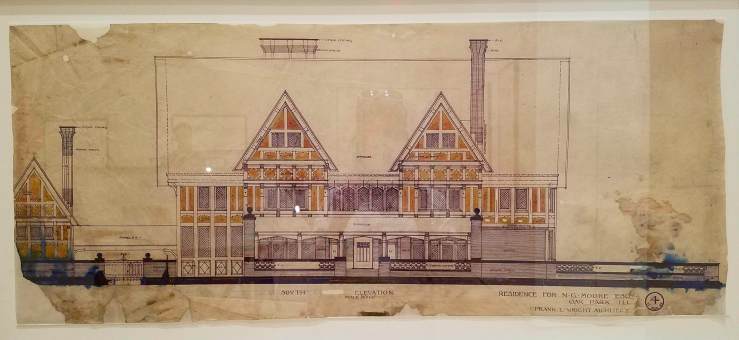 Moore House, Oak Park, Illinois, 1895
Ink on paper
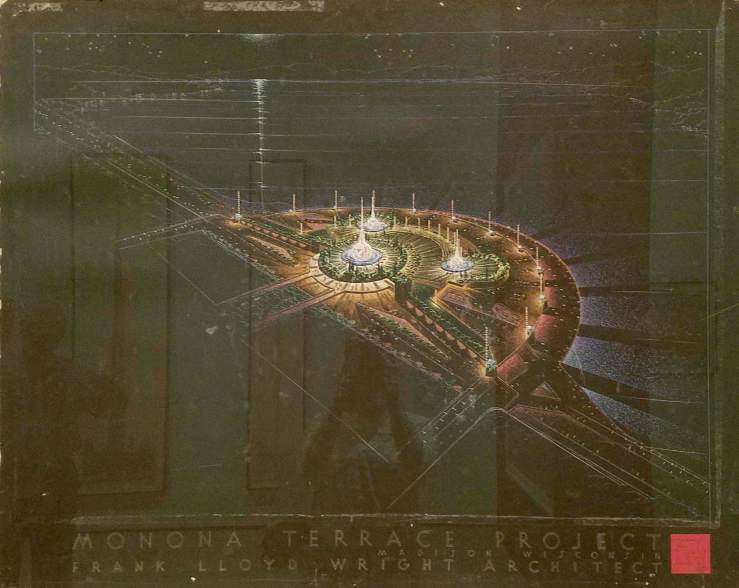 Madison Civic Center (Monona Terrace), Madison, Wisconsin
Project, 1938-59 // Ink and pencil on paper mounted on plywood
Even as Wright reimagined Chicago as a city dominated by a few super-tall skyscrapers but otherwise given over to a prairie landscape, he also designed urban projects – many of the megastructures, such as this one for Monona Terrace, which integrated transportation and infrastructure with public and commercial programmes – with the intention of revitalizing urban cores and engaging the preexisting city and its surroundings. This project was realized decades after Wright’s death.
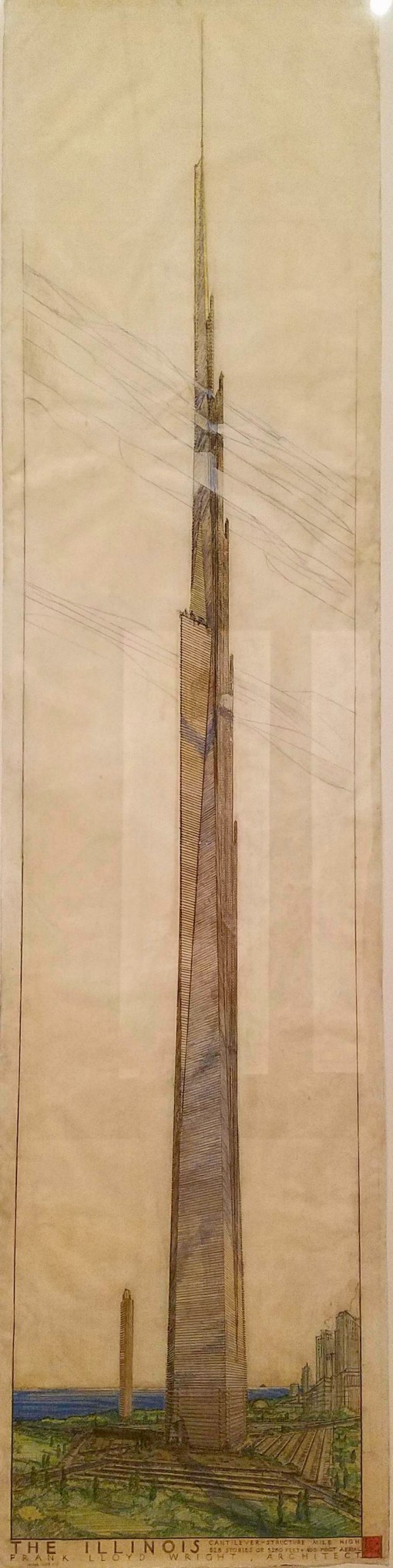 The Mile-High Illinois, Chicago
Project, 1956 // Pencil, coloured pencil and gold ink on tracing paper
In this perspective drawing, Wright inserts his imagined mile-high skyscraper into the lakefront area of Chicago, which he transforms into a green landscape, rendering obsolete many of the city’s older, densely packed towers. The Mile-High becomes a singular object, in dialogue only with another Wright proposal: a tower called the Golden Beacon, visible in the background.
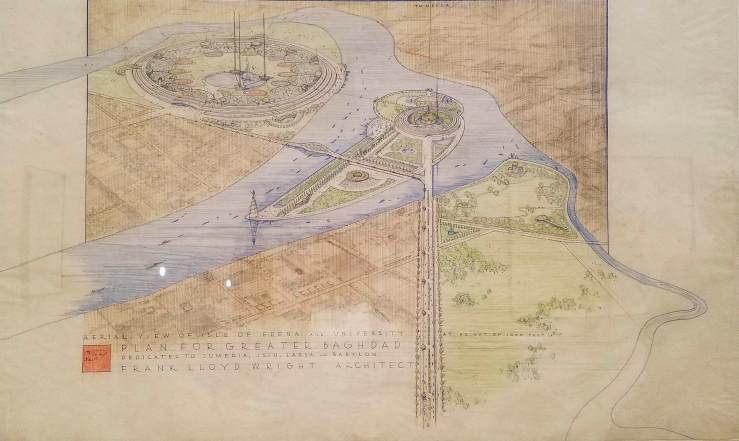 Plan for Greater Baghdad
Project, 1957 // Ink, pencil and coloured pencil on tracing paper
In 1957, Wright, along with a number of ”starchitects” including Alvar Aalto, Le Corbusier and Walter Gropius, was commissioned to design a signature building in Baghdad as part of an Iraqi government programme to bring Western architecture to the capital city. Although asked only to design an opera house, Wright expanded the programme into an entire cultural centre – including a university, two museums, a zoo and various recreational facilities – and moved the site to an island in the Tigris River. Wright’s project, like most of the others, was cancelled after the revolution of 1958.
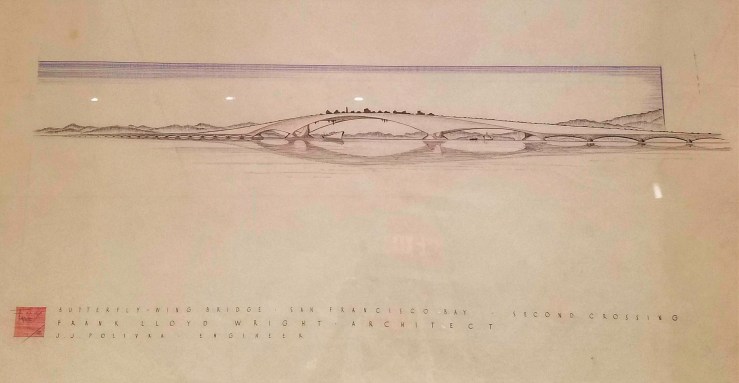 Butterfly Wing Bridge, San Francisco
Project, 1949-53 // Ink, pencil and coloured pencil on tracing paper
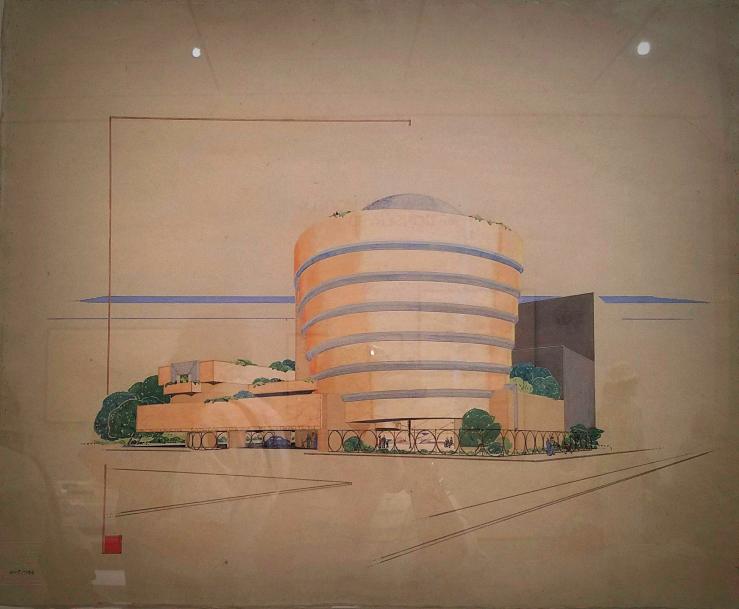
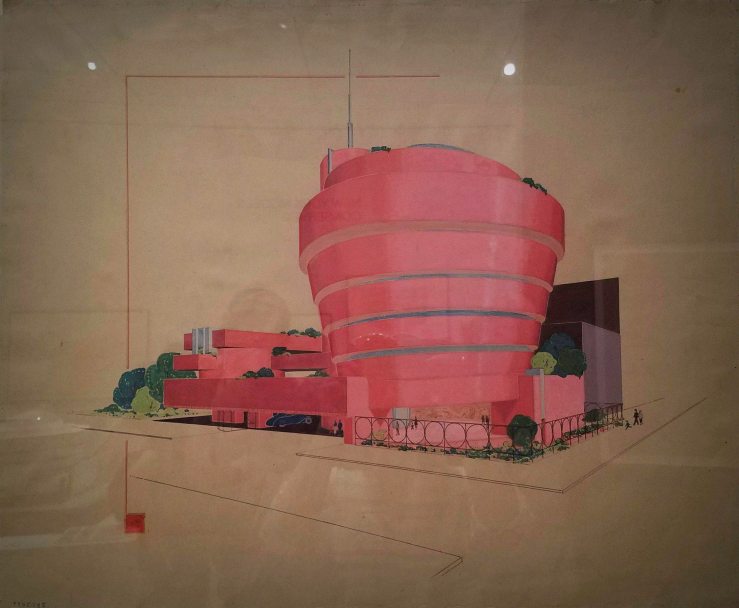 Solomon R. Guggenheim Museum, New York 1943-59
Gouache on paper mounted on board
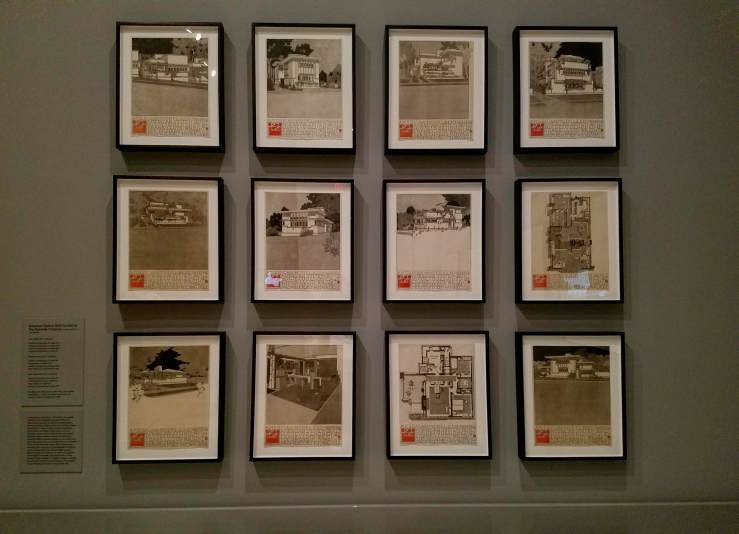 American System-Built Houses for the Richards Company
Project 1915-17
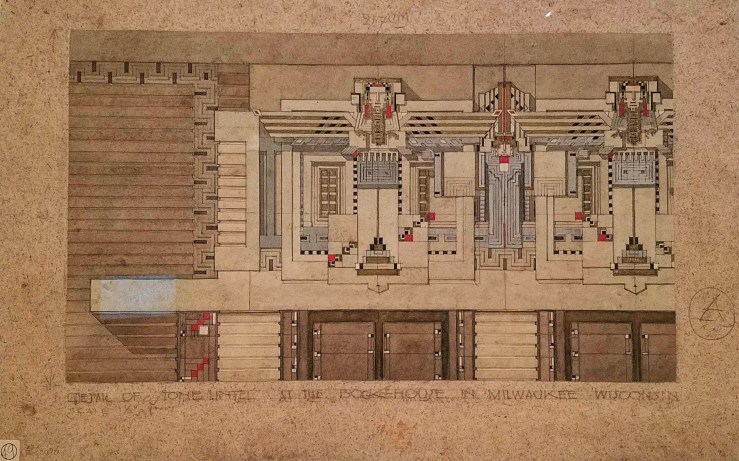 Bogk House, Milwaukee, Wisconsin – 1916-17
Watercolour, gouache, gold paint and graphite on paper mounted on Japanese paper
The two winged figures depicted in this sculptural frieze for the Bogk House recall, in their blocky, geometric forms, Mayan and Aztec motifs, while their wings resemble the eagle imagery prominent in the Pueblo Eagle Dance. The Eagle Dance was one of the most popular ceremonial dances performed at the 1915 Panama-California Exposition in San Diego, which Wright attended and where he encountered theories positing that contemporary American Indians were descendants of a venerable, ancient American civilization.
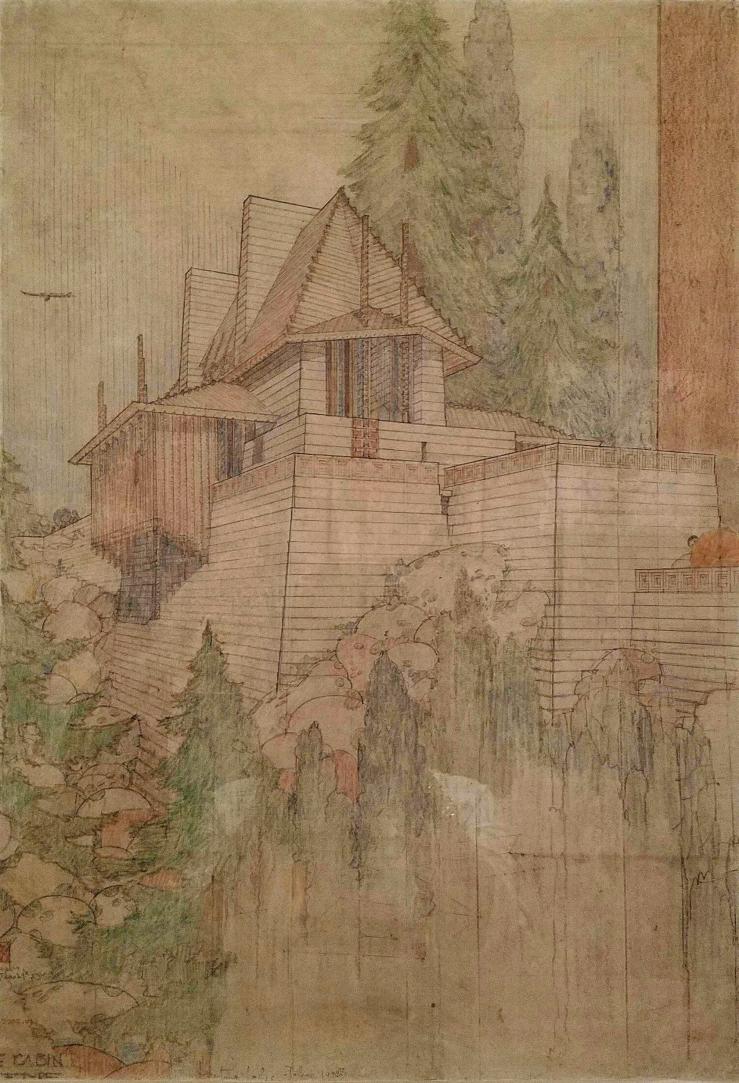 Lake Tahoe Resort, Lake Tahoe, California
Project, 1923-24 // Pencil and coloured pencil on tracing paper
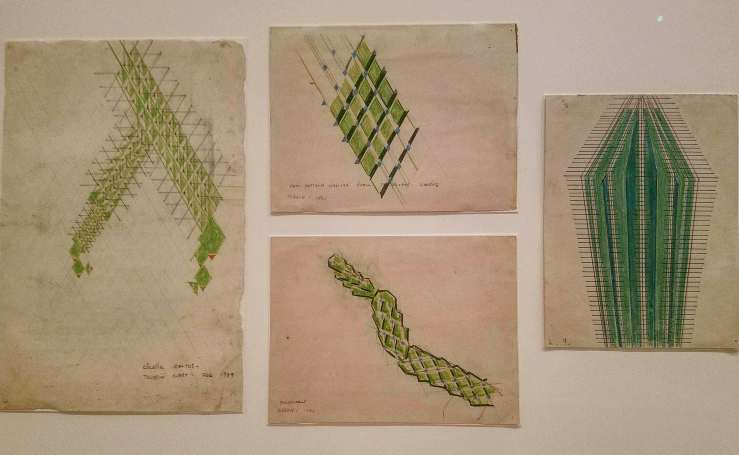
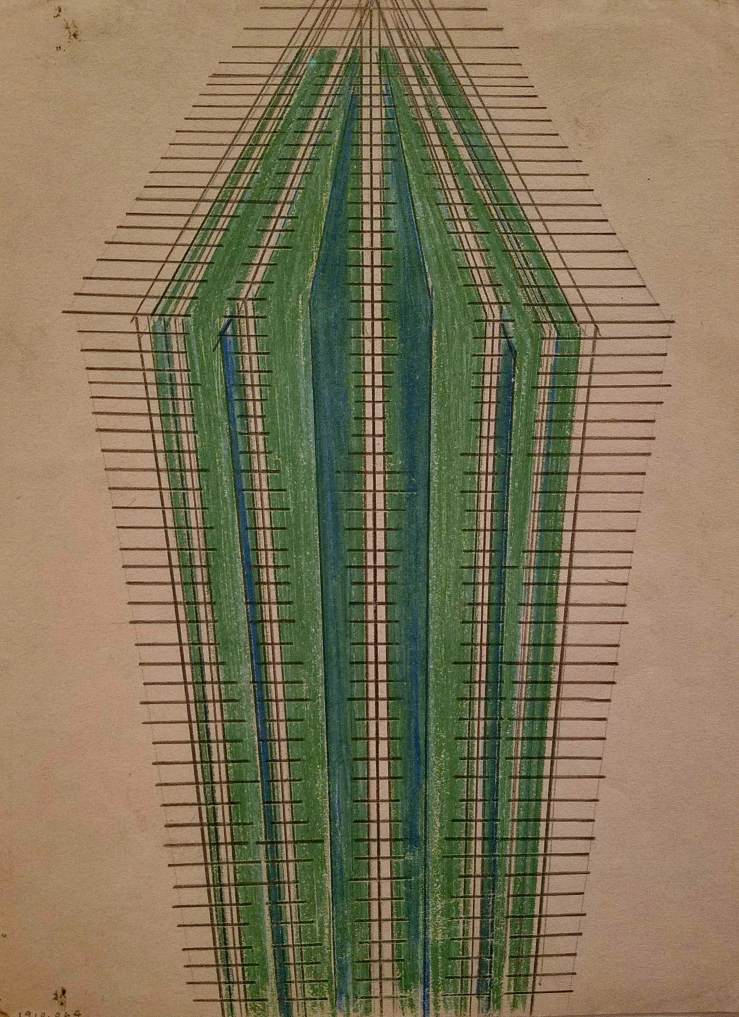
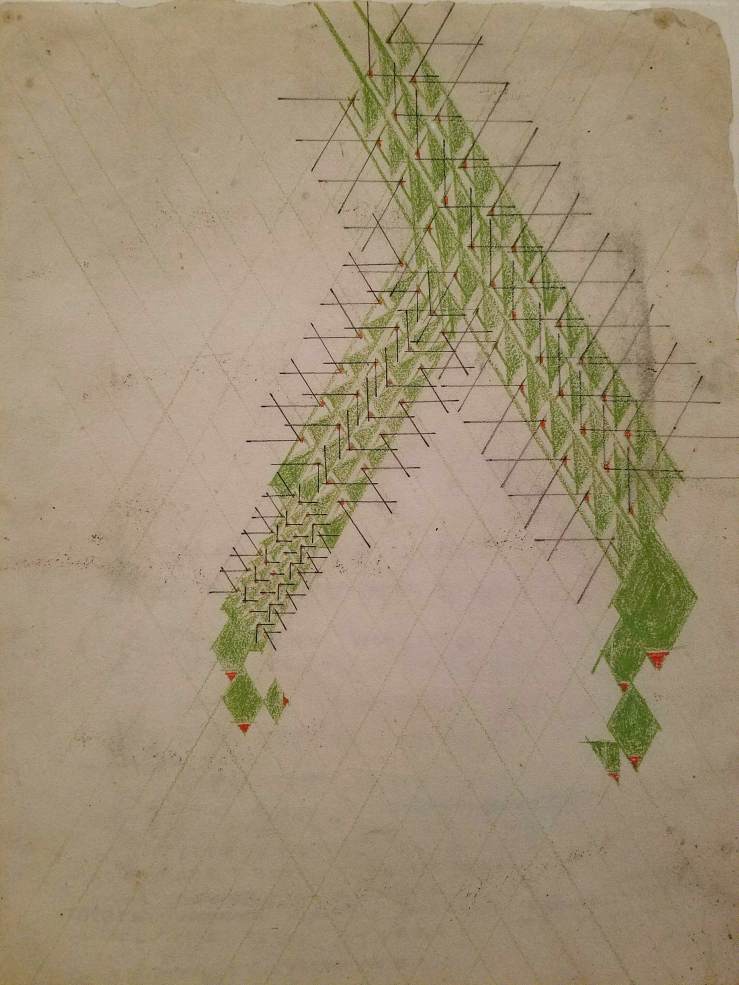
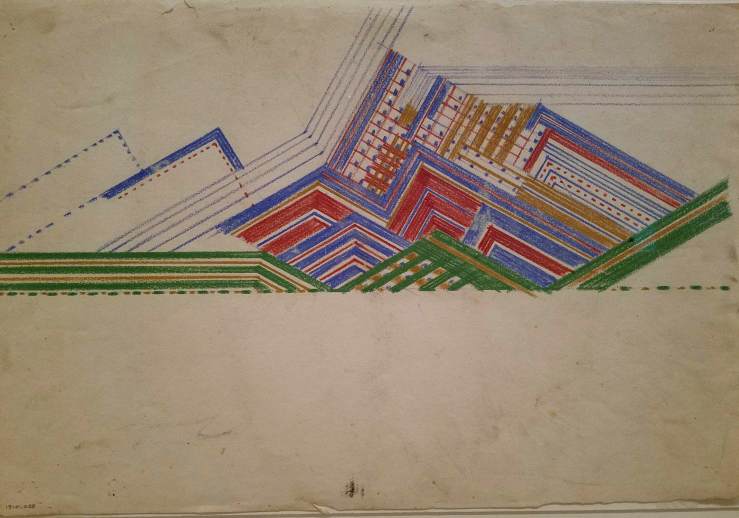 Eugene Masselink (1910-1962)
Pattern studies // Pencil and coloured pencil on paper
Various cacti, rock formations and lichen are distilled into their essential organizing forms in these applied pattern studies, demonstrating the generative relationship between nature and architecture in Wright’s practice. According to Wright, the cellular structure of desert plants, for example, offered lessons in economical construction. Believing the artist should approximate nature through a process of conventionalization or abstraction – seeking underlying geometries rather than outward forms – Wright incorporated such pattern studies into his educational approach at the Taliesin Fellowship. Eugene Masselink, one of Wright’s most talented apprentices, drew these examples.
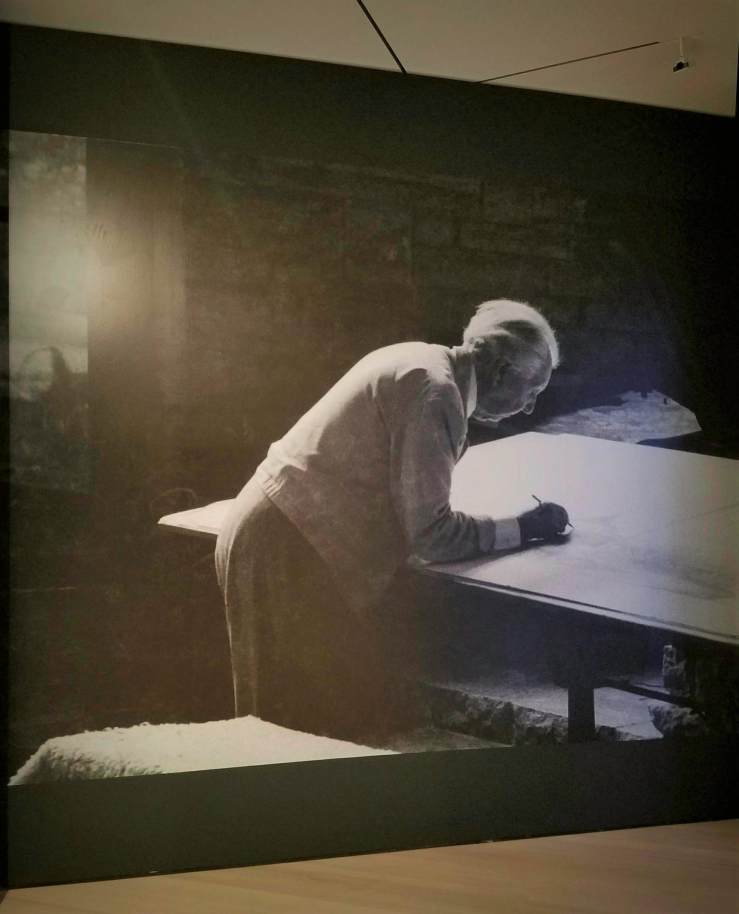
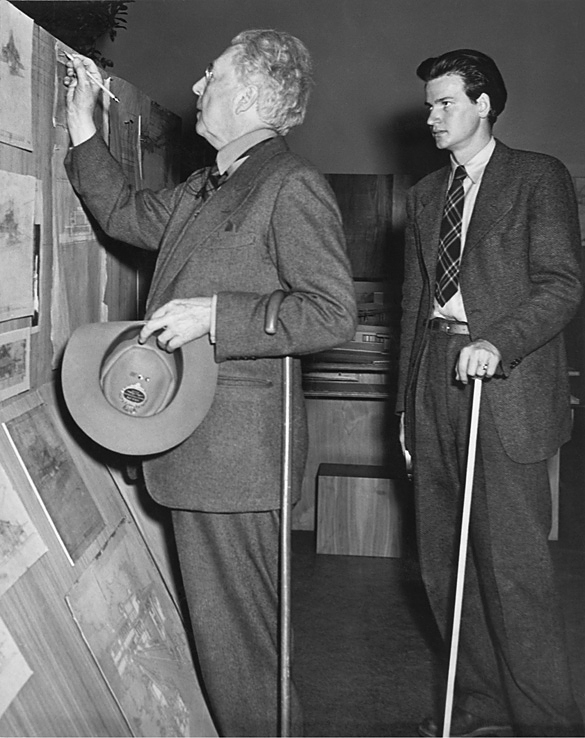 Frank Lloyd Wright and his assistant Eugene Masselink installing the exhibition Frank Lloyd Wright: American Architect at The Museum of Modern Art, November 13, 1940-January 5, 1941. Photographic Archive. The Museum of Modern Art Archives, New York
Photo: Soichi Sunami
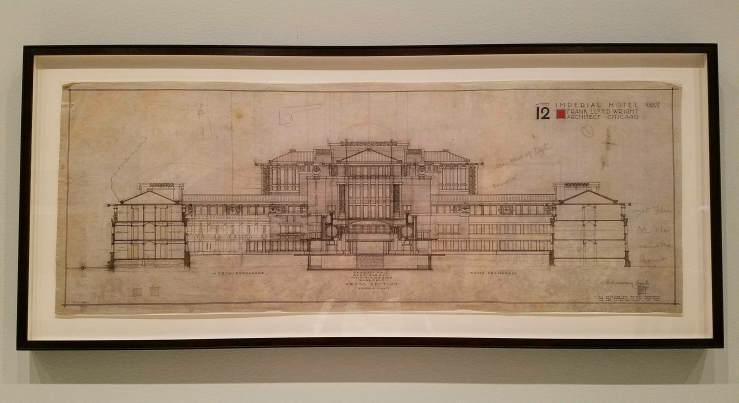 Preliminary scheme for Imperial Hotel, Tokyo 1913-23
Ink and pencil on drafting cloth
The Imperial Hotel in Tokyo took over a decade to build and exerted a profound influence on both Wright’s designs and the architecture of a modernizing Japan.
Having survived the Great Kantō Earthquake in 1923 and the American bombing of the city during World War II, it was finally demolished in 1968 to be replaced with a modern hotel tower.
Portions of the Imperial Hotel, including the grand entrance/lobby and the reflecting pool, were saved and painstakingly relocated to the Meiji Mura Museum, an open-air architectural theme park in Inuyama that contains more than 60 historic, culturally significant buildings from Japan and beyond. [source]
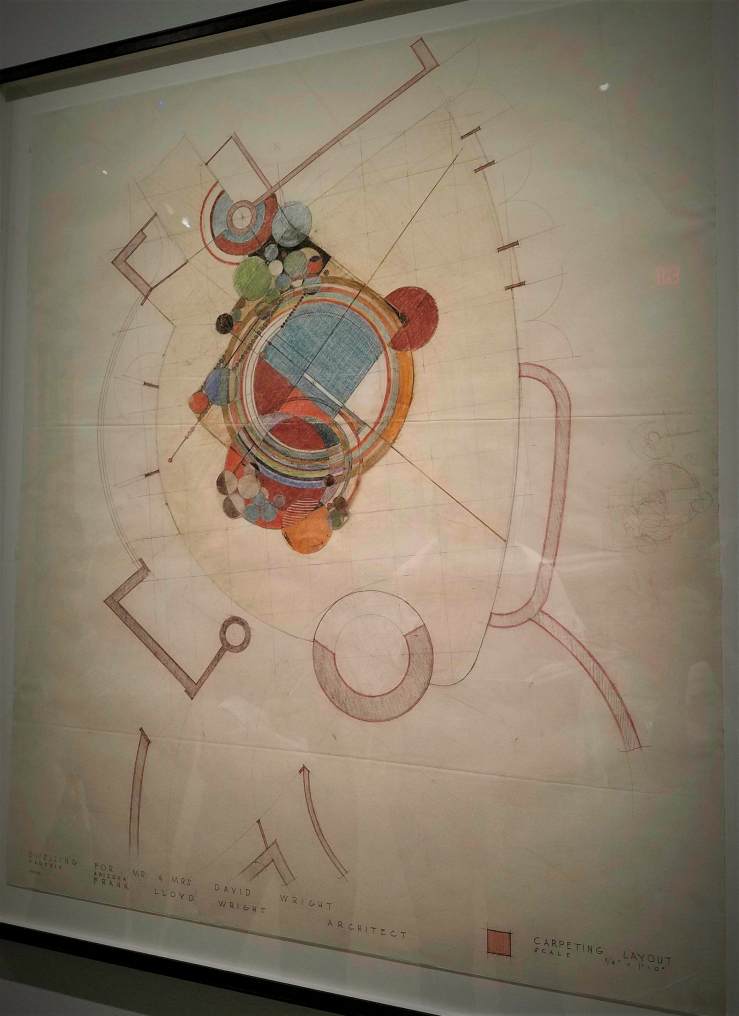
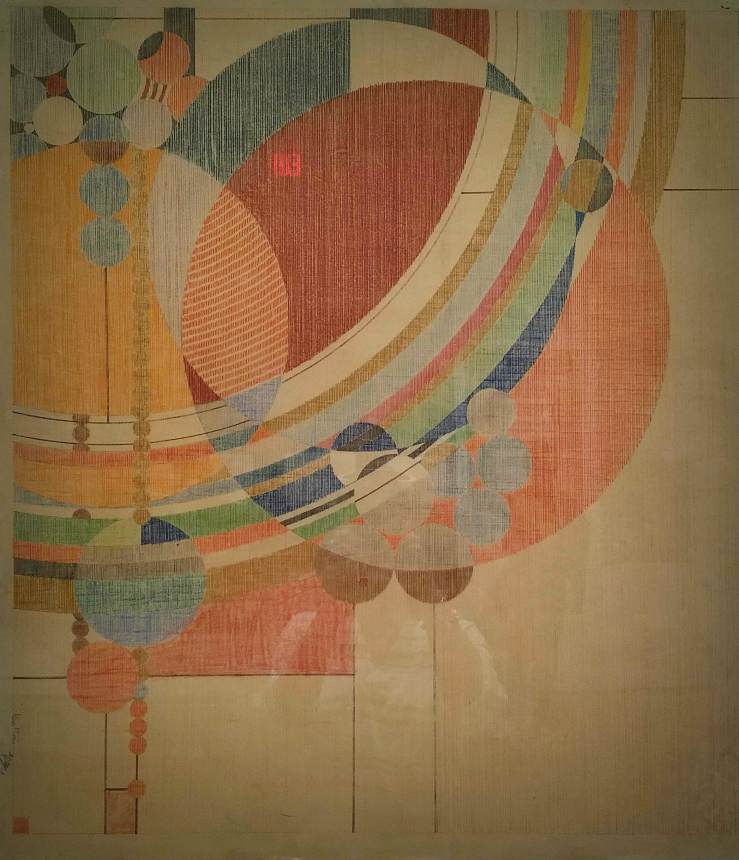 March Balloons, 1955
Drawing based on a cover design for Liberty magazine, c. 1926
From Frank Lloyd Wright at 150: Unpacking the Archive, an exhibition that ran through October 1st, 2017 at MoMA.
September 25th, 2017
@MoMA & beyond
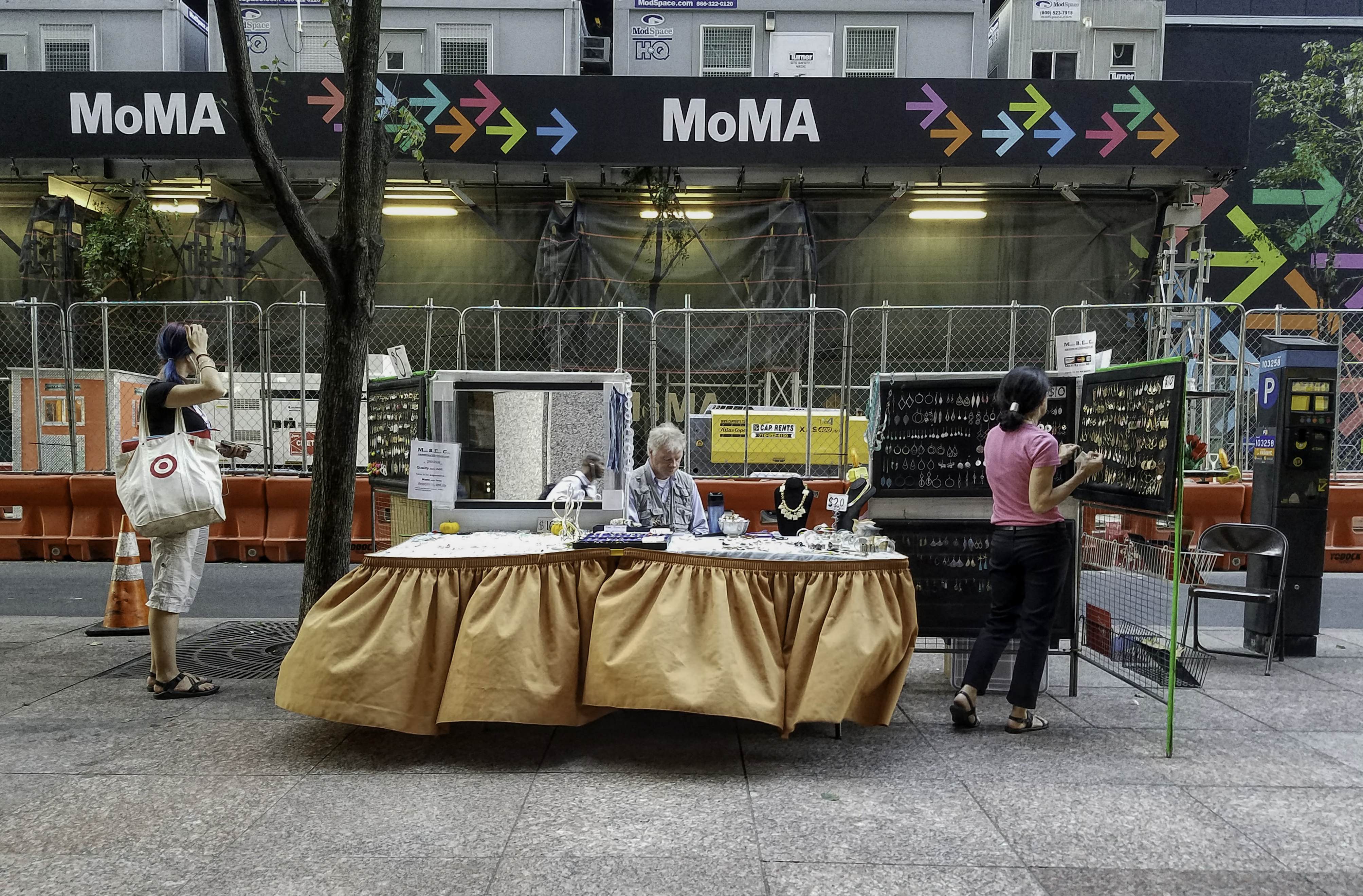
September 25th, 2017
Staring into your soul.
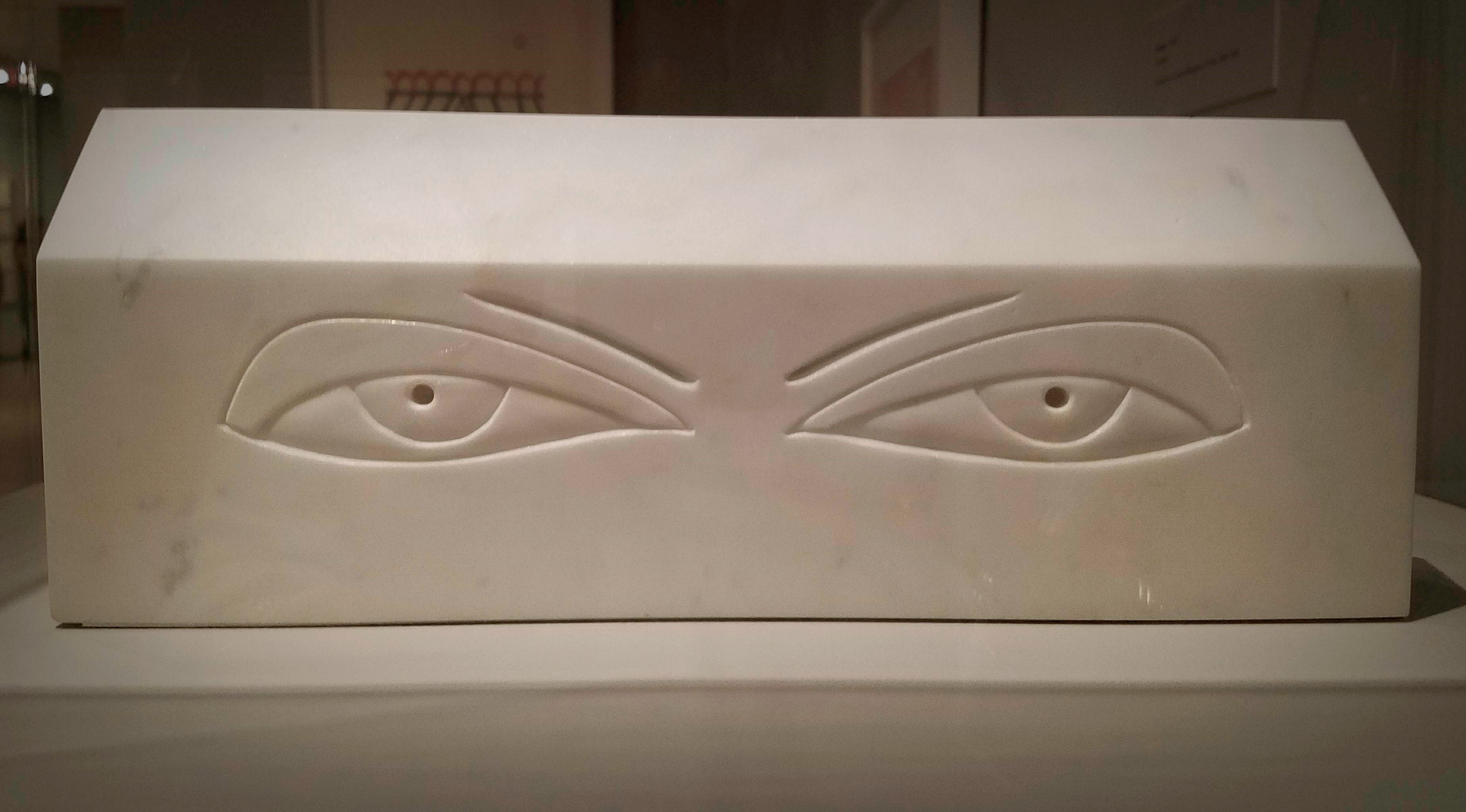 House 1994
Marble
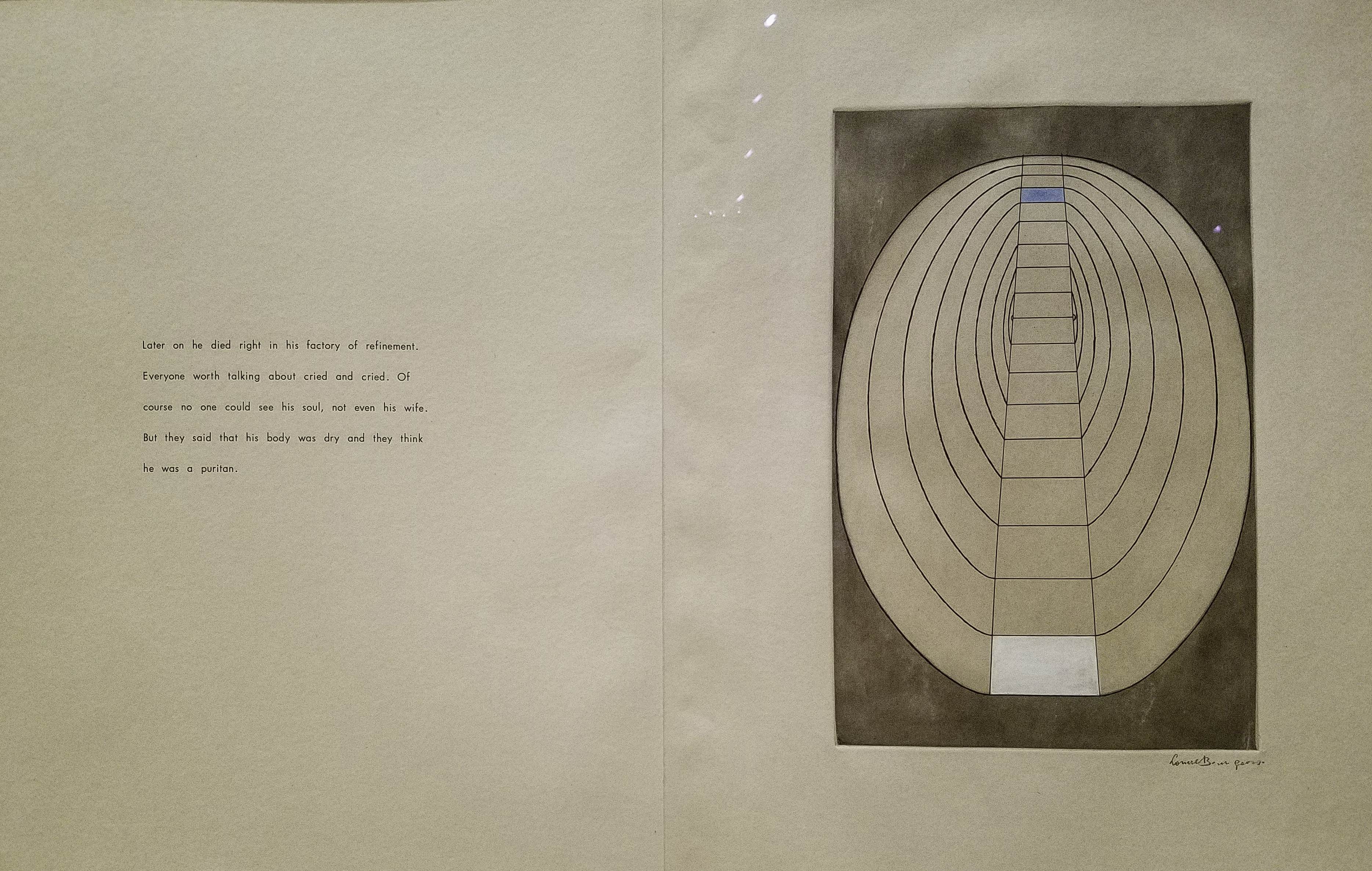
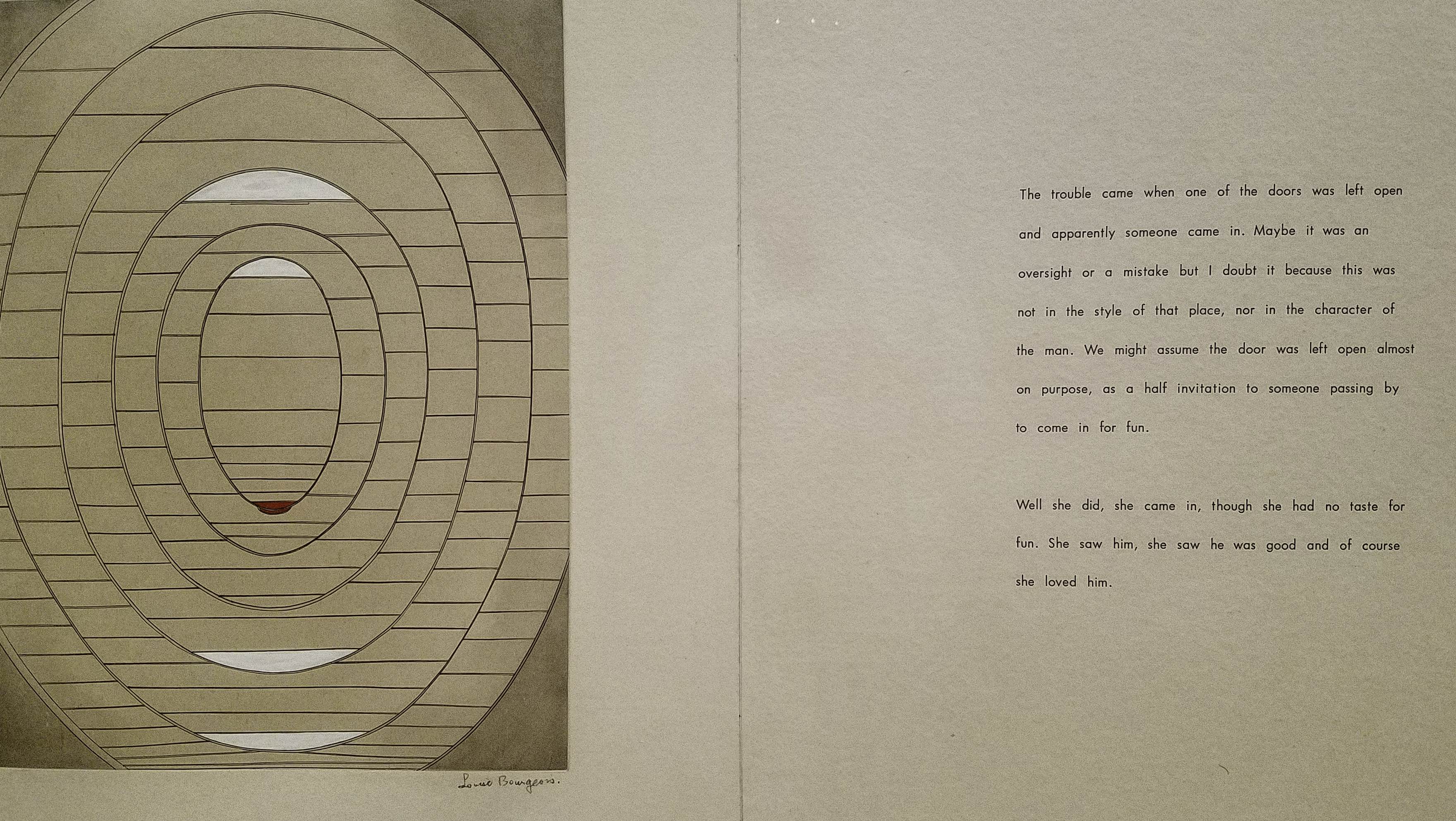 the puritan 1990-97 (text: 1947)
Folio set no. 3: engravings with selective wiping, gouache and watercolour additions
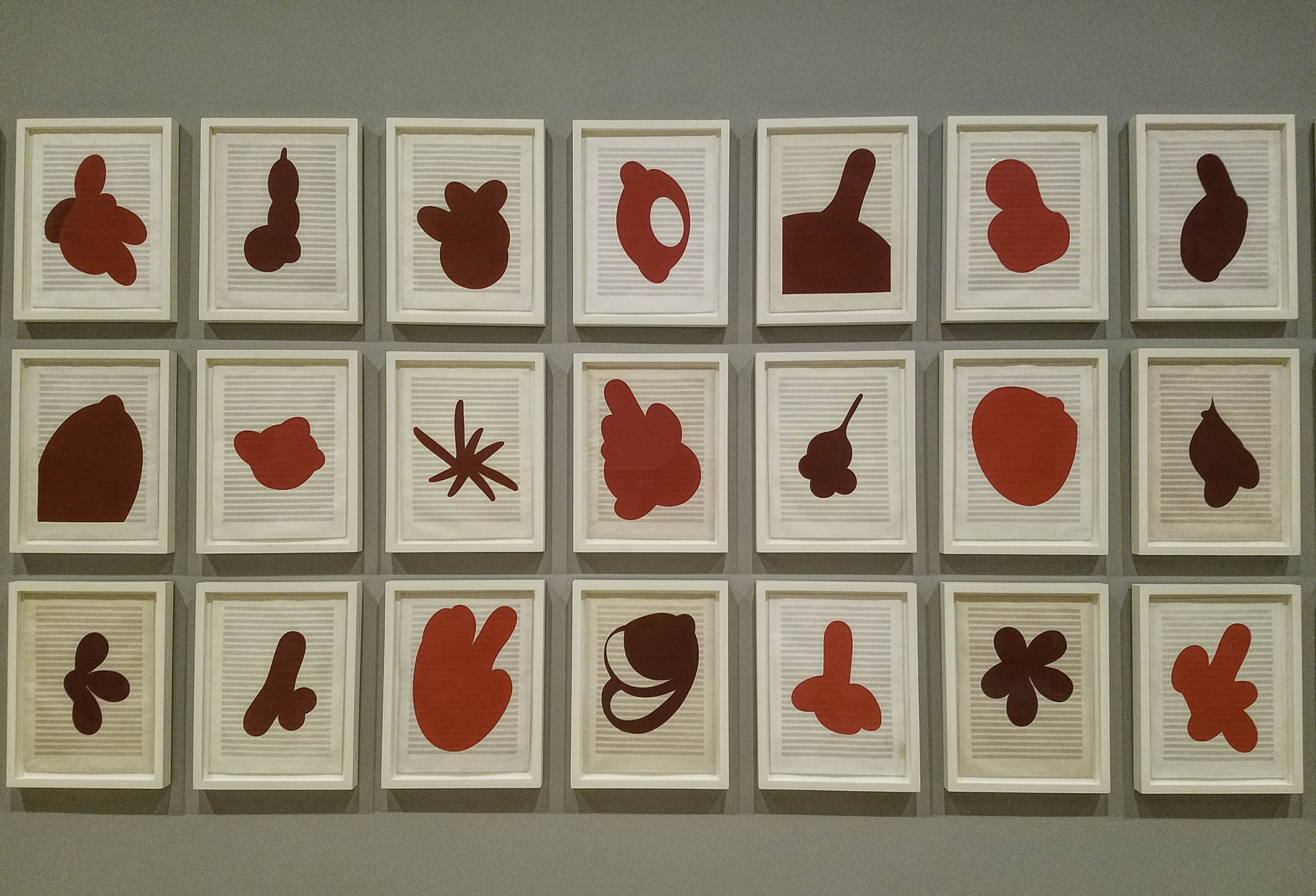 Lullaby 2006
Series of twenty-five screenprints on fabric: title sheet and twenty-four compositions
Bourgeois created shapes by turning and tracing common household objects – scissors, a knife and a candy dish, among them. She published this set herself, under the imprint Lison Editions. Lison, Lise, Lisette, Louison and Louisette were among her childhood nicknames.
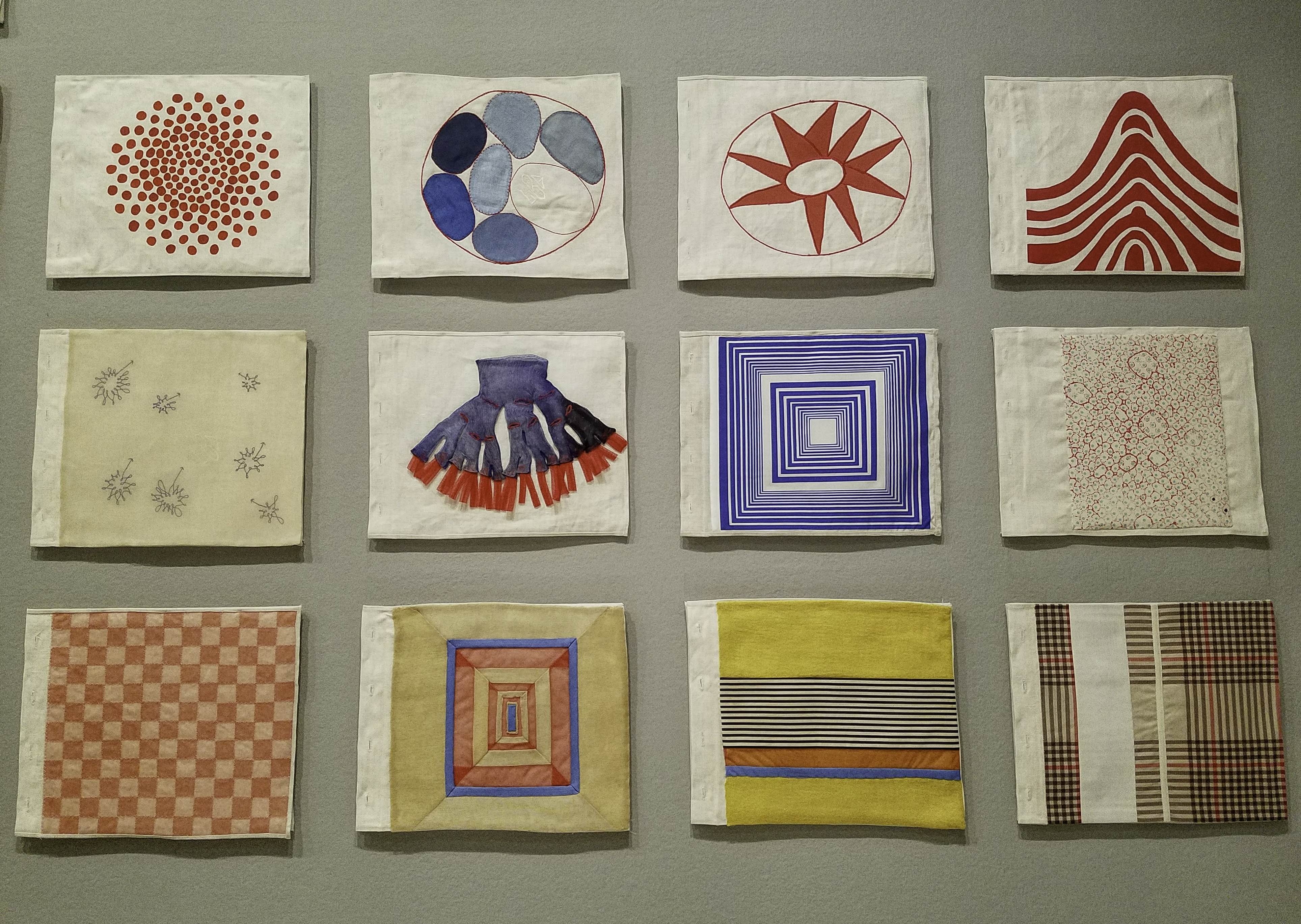
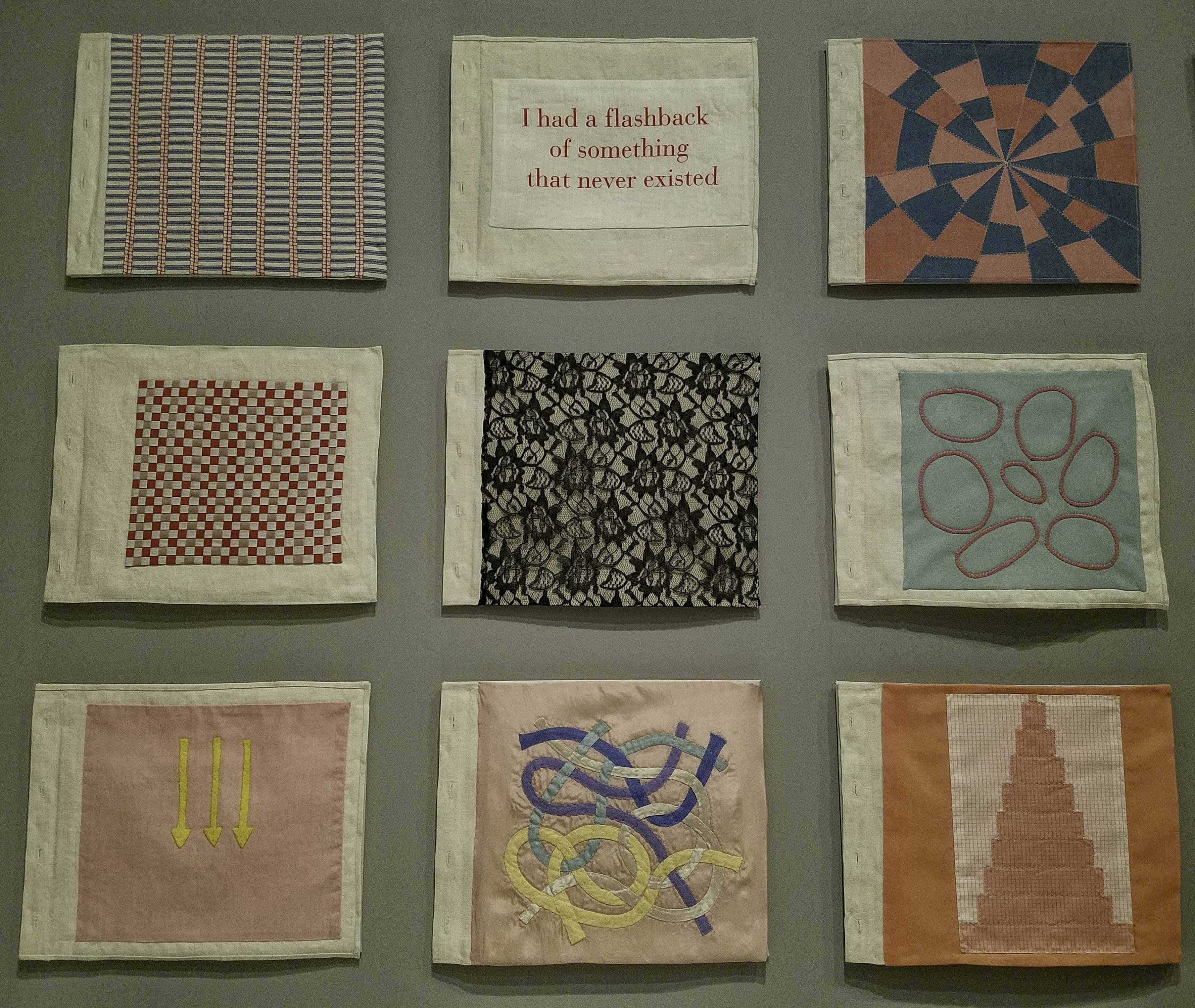 Ode à l’Oubli 2004
Fabric illustrated book with thirty fabric collages and four lithographs
The pages of this book are composed of linen hand towels saved from her trousseau. Many contain the embroidered monogram LBG (Louise Bourgeois Goldwater). Bourgeois later issued and editioned version of this book in twenty-five examples. In that version, the pages are tied together through buttonholes instead of bound so all of the pages can be displayed simultaneously, as seen on this wall.
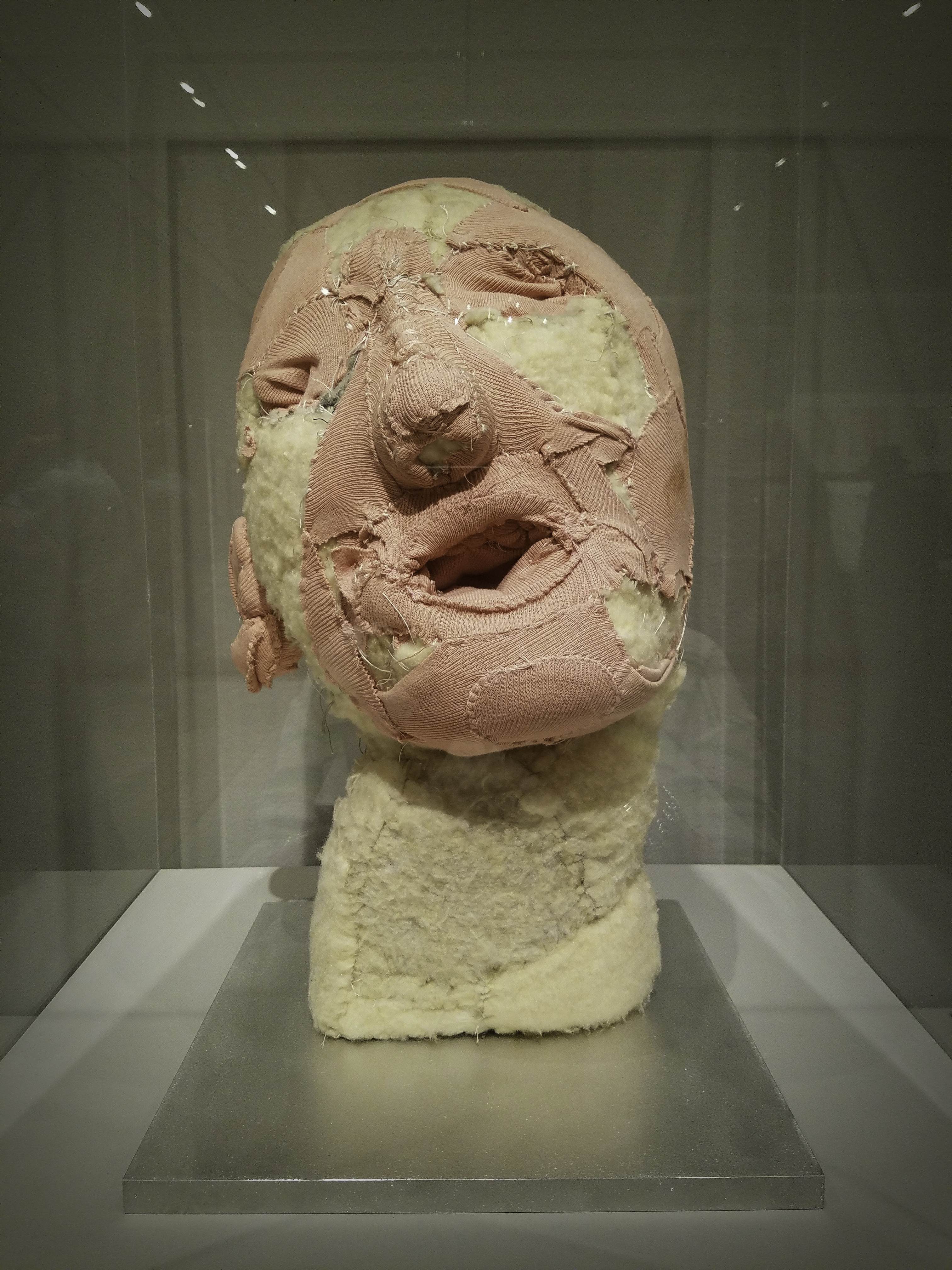 Untitled 1998
Fabric and stainless steel
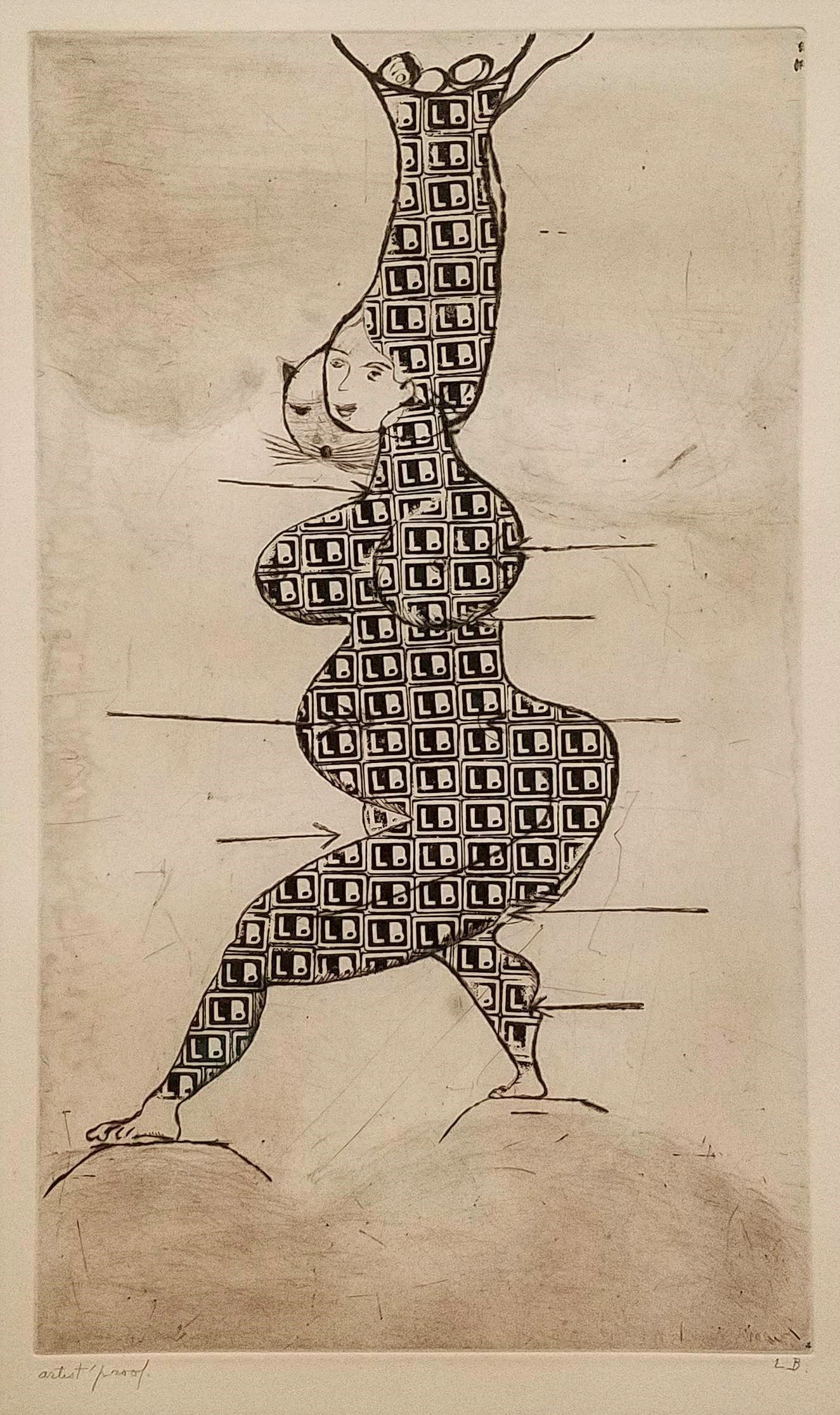 Stamp of Memories I 1993
Drypoint with metal stamp additions
 Sainte Sébastienne 1992
Drypoint
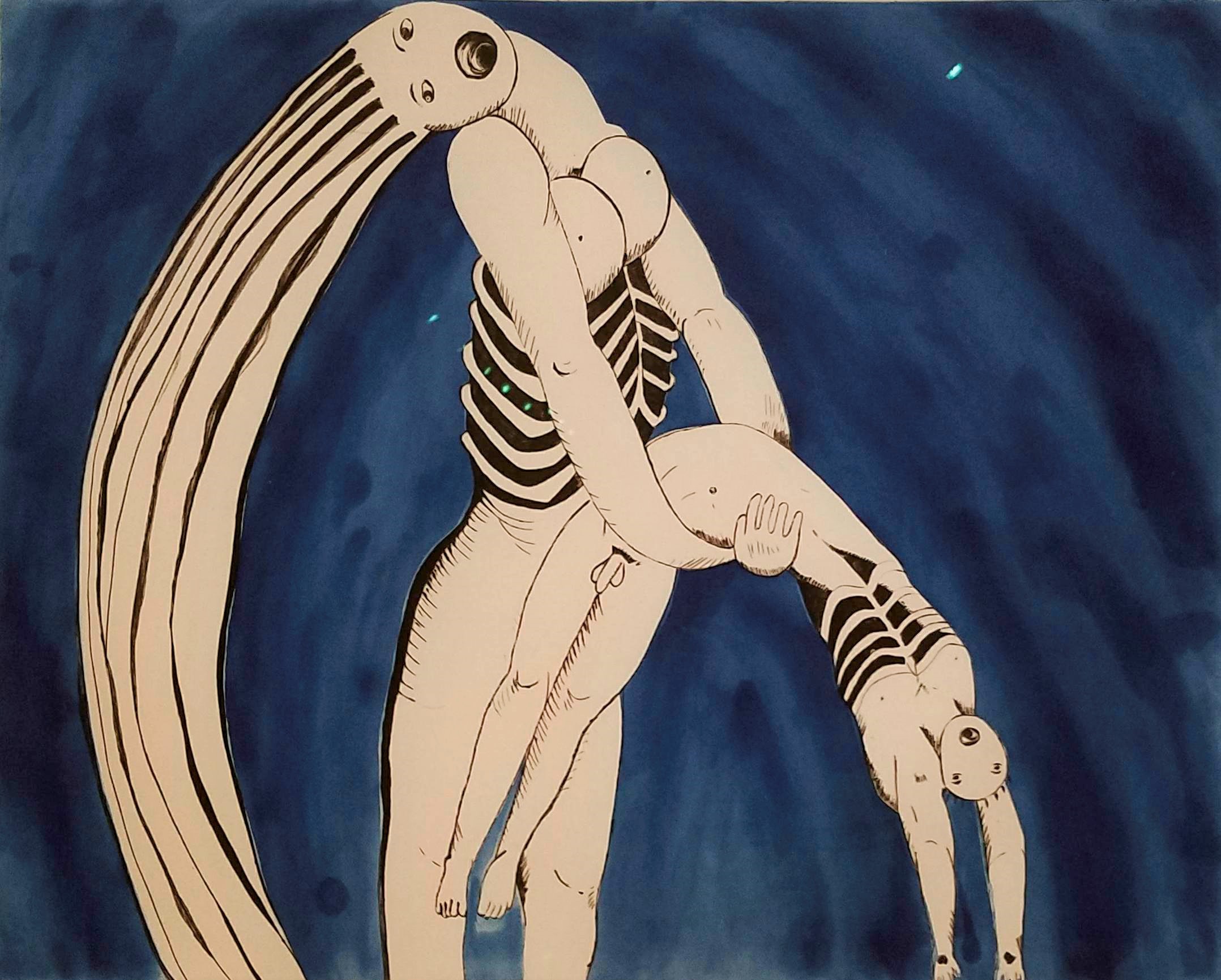
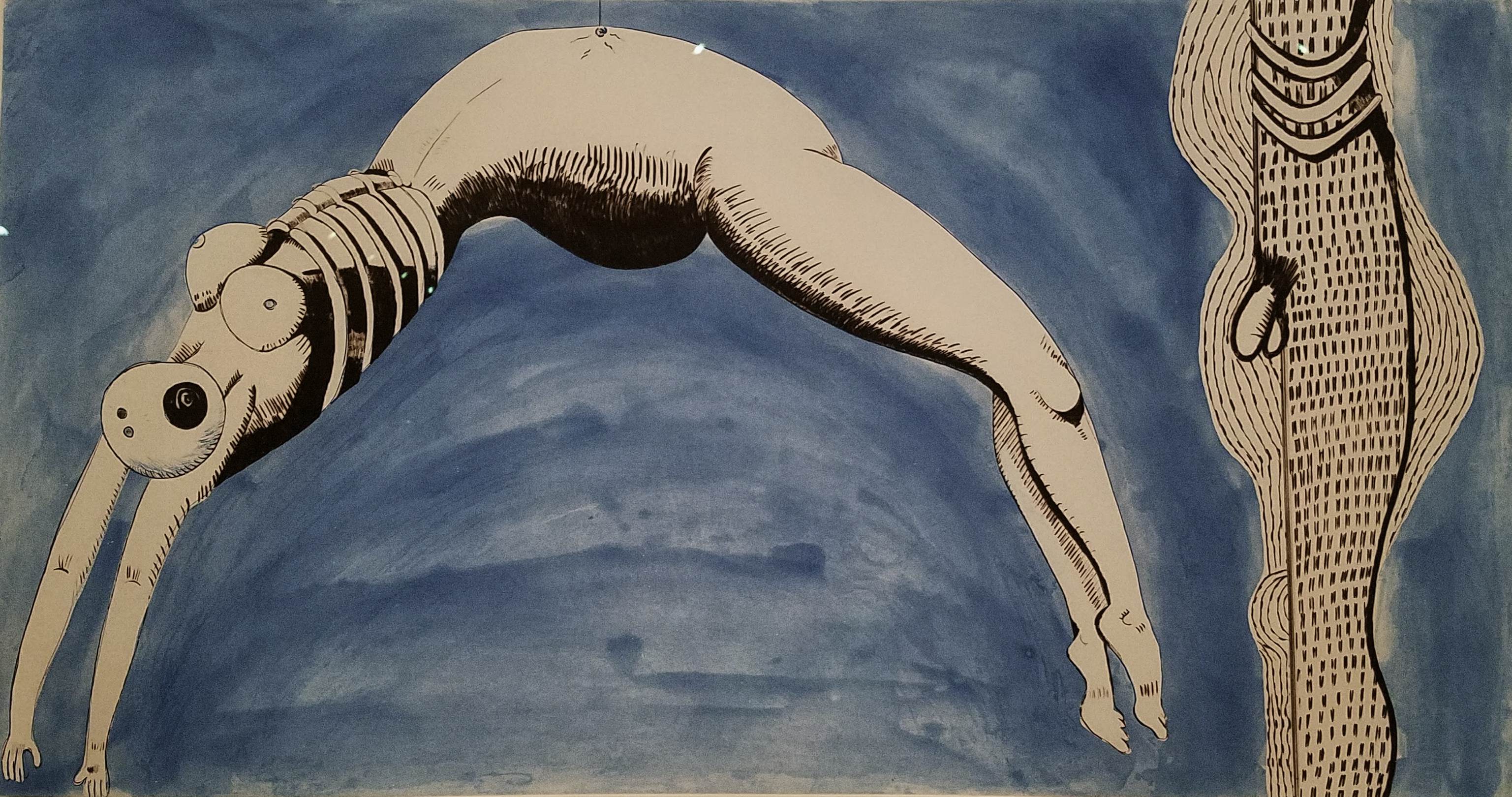
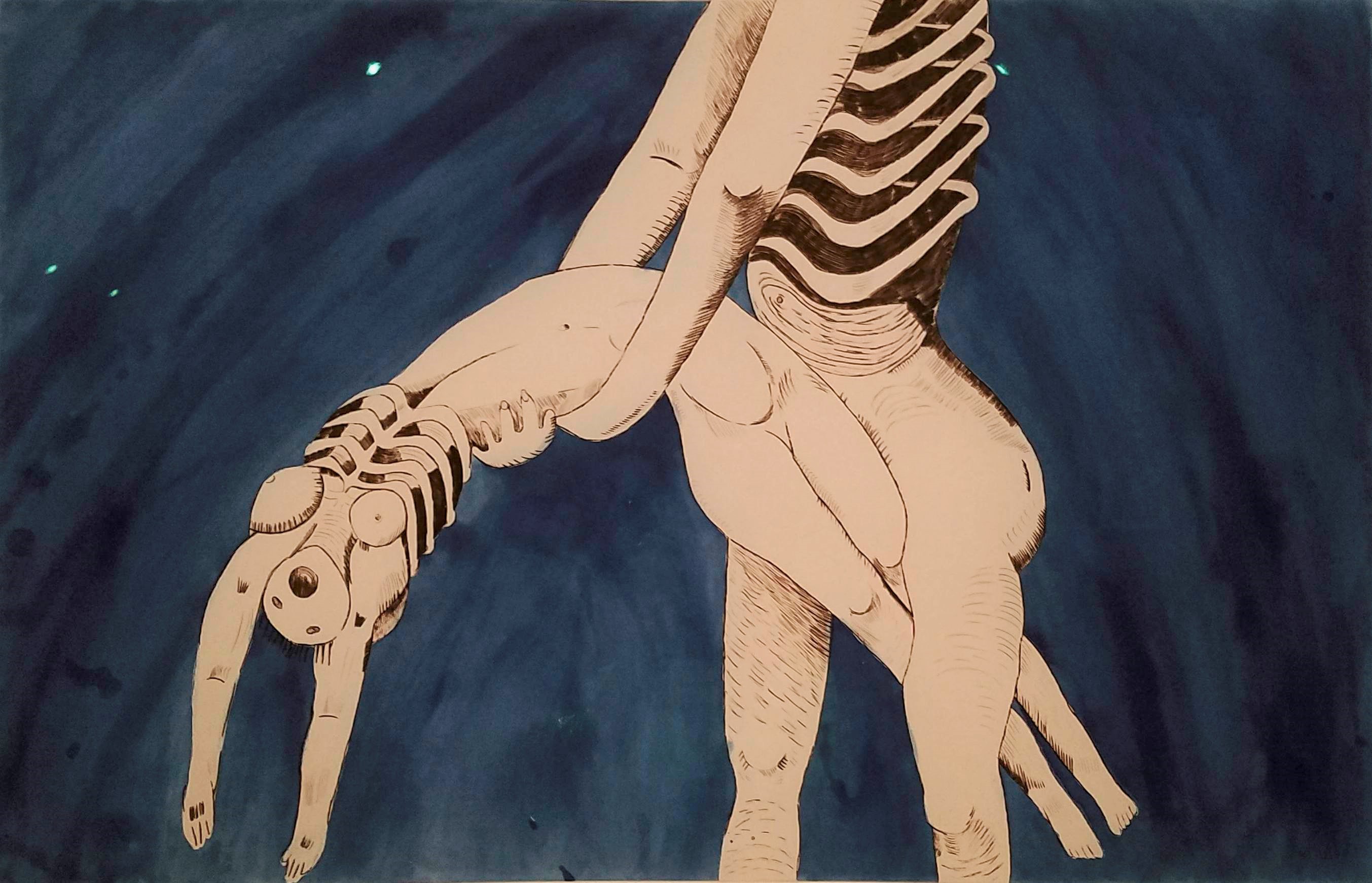 Triptych for the Red Room 1994
Aquatint, drypoint and engraving
“The subject of pain is the business I am in.“ – LB
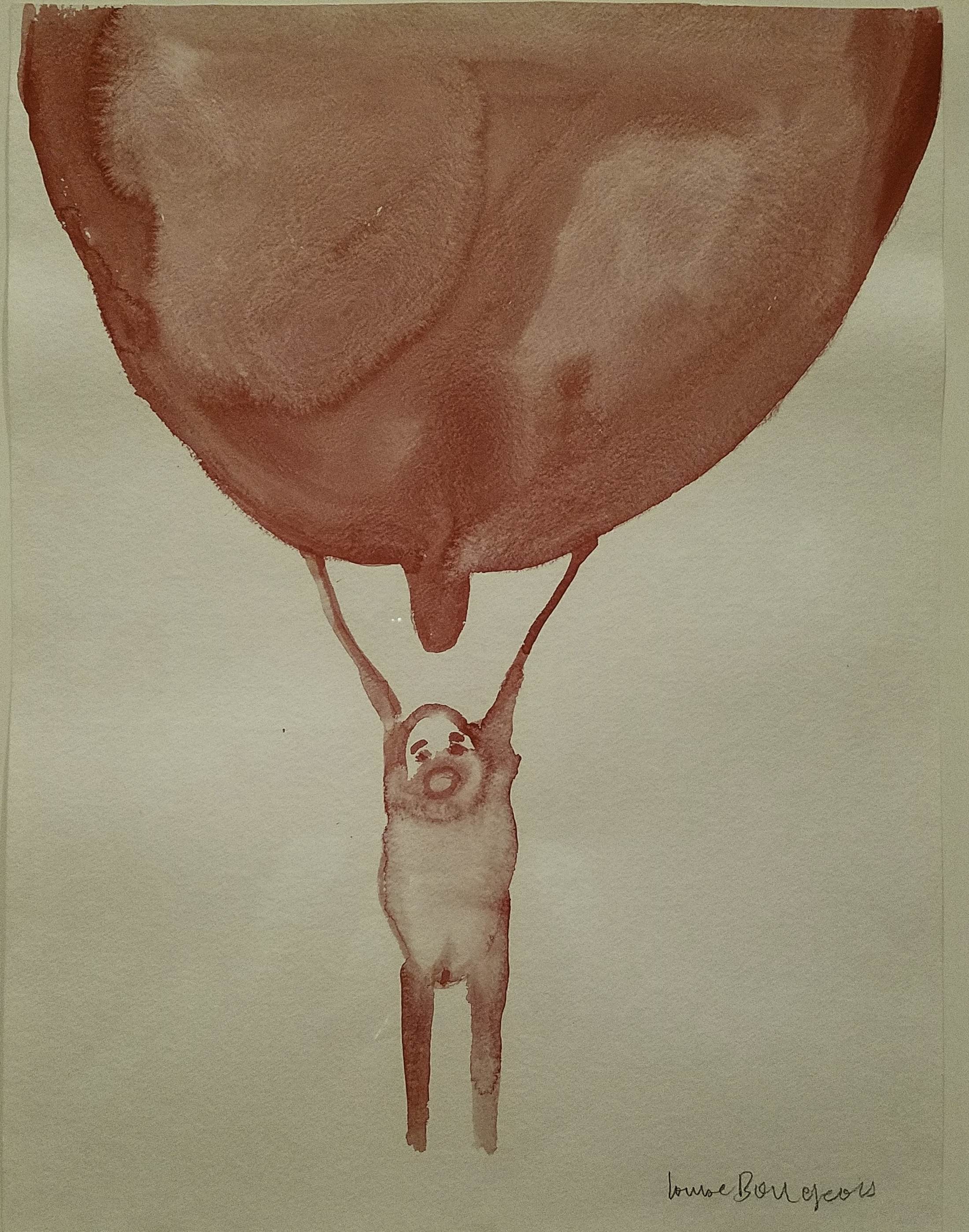 Self Portrait 2007
Gouache on paper
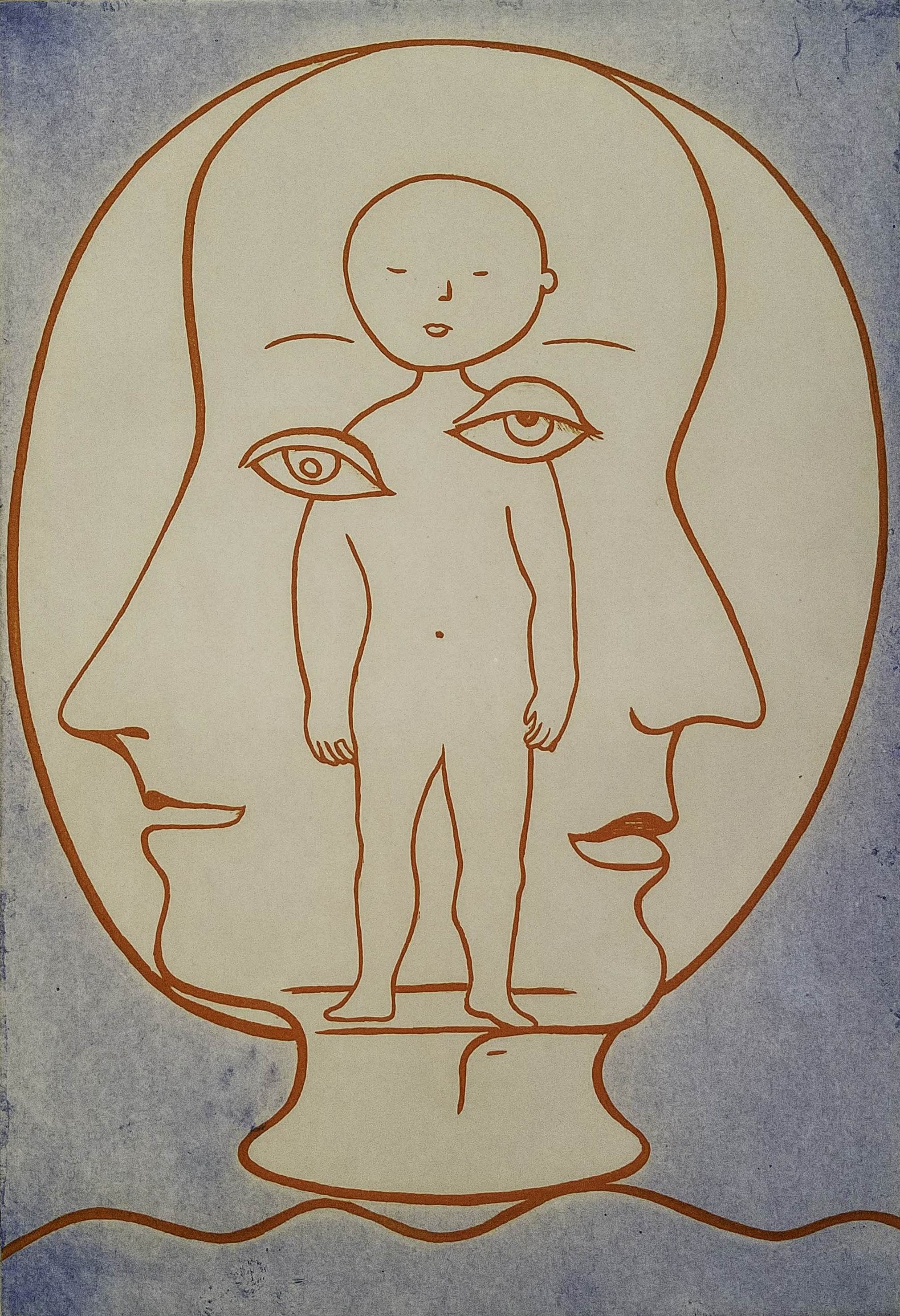 Self Portrait 1990
Drypoint, etching and aquatint
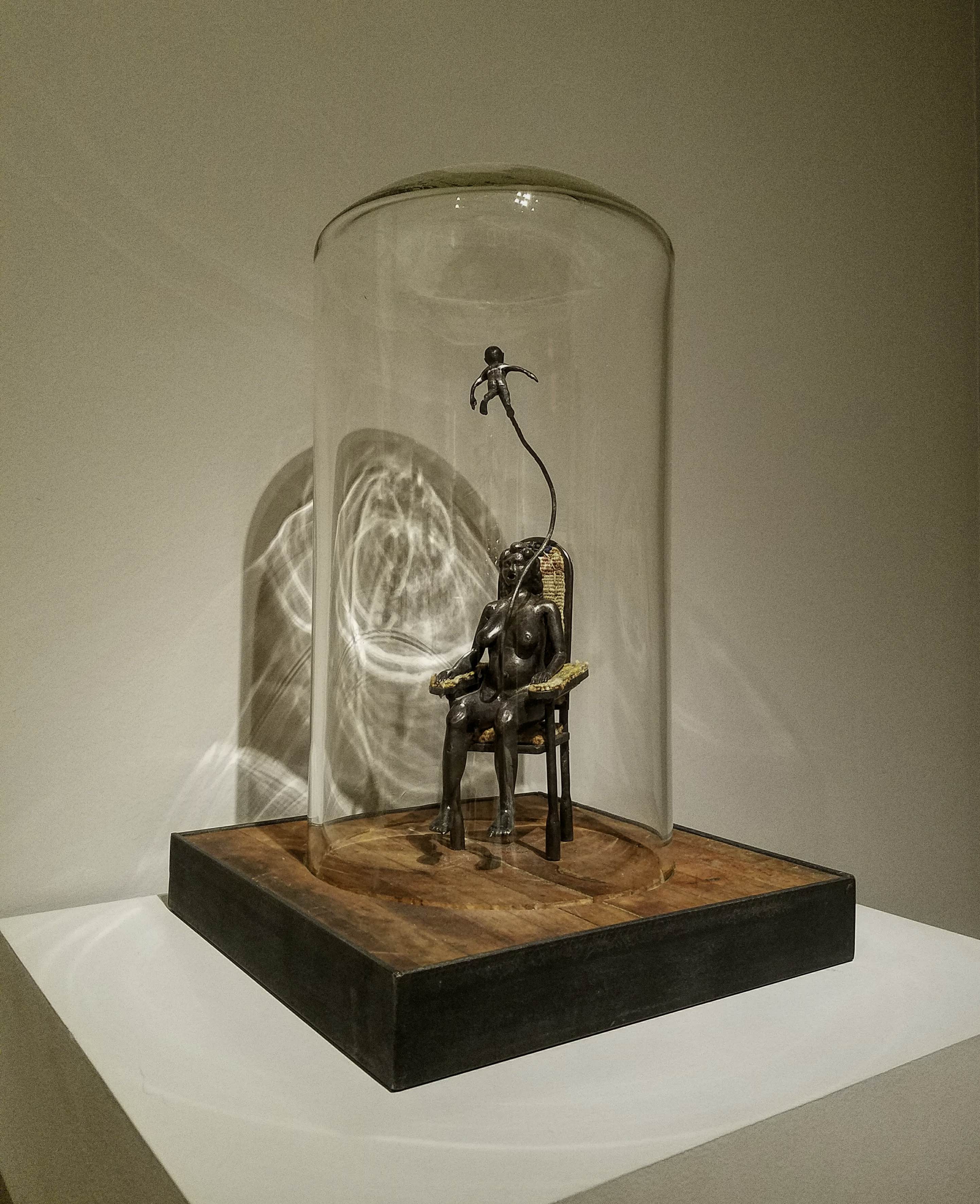 I Redo (interior element) from the installation
I Do, I Undo, I Redo 1999-2000
Steel, glass wood and tapestry
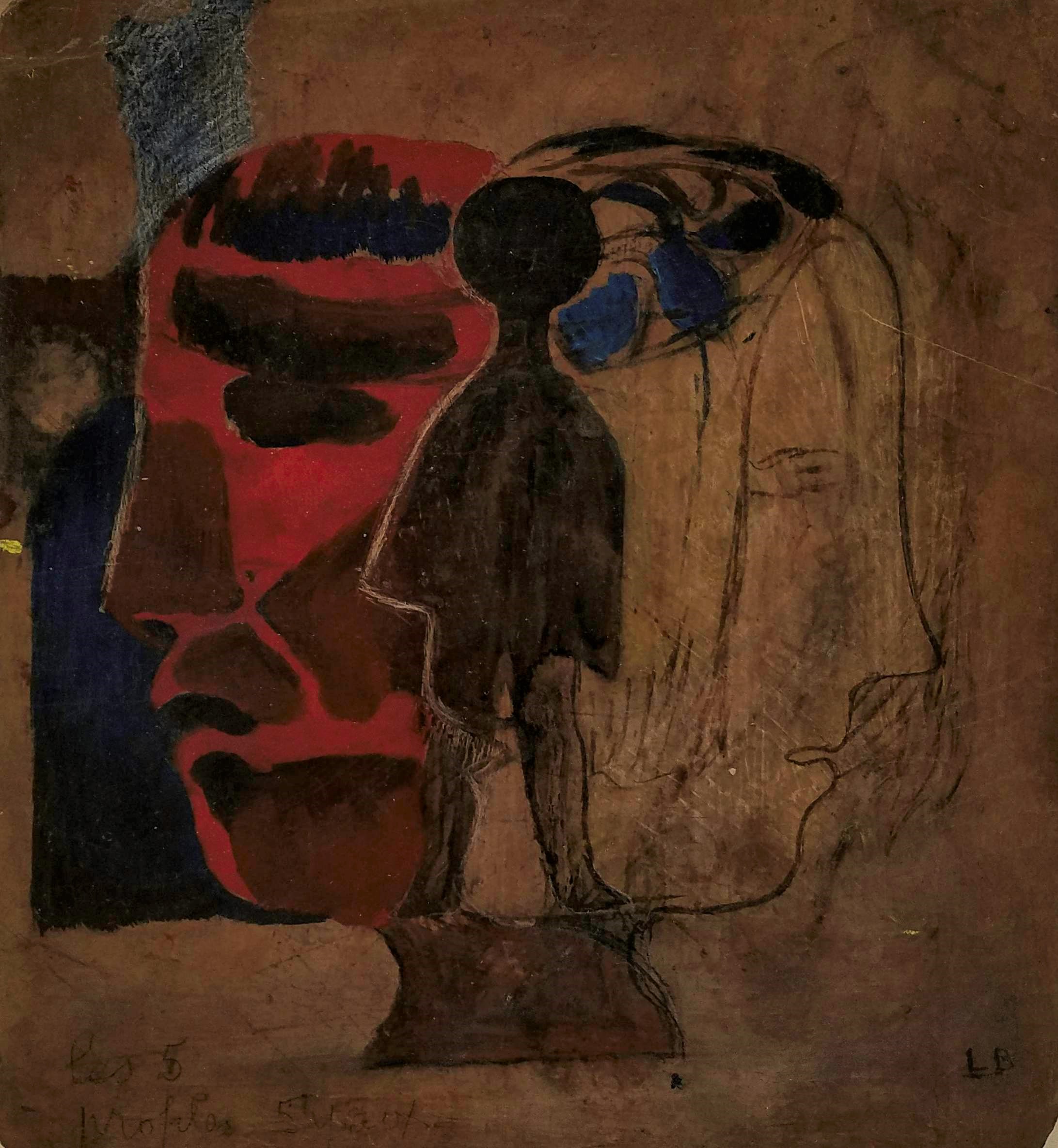 Untitled 1940
Oil and pencil on board
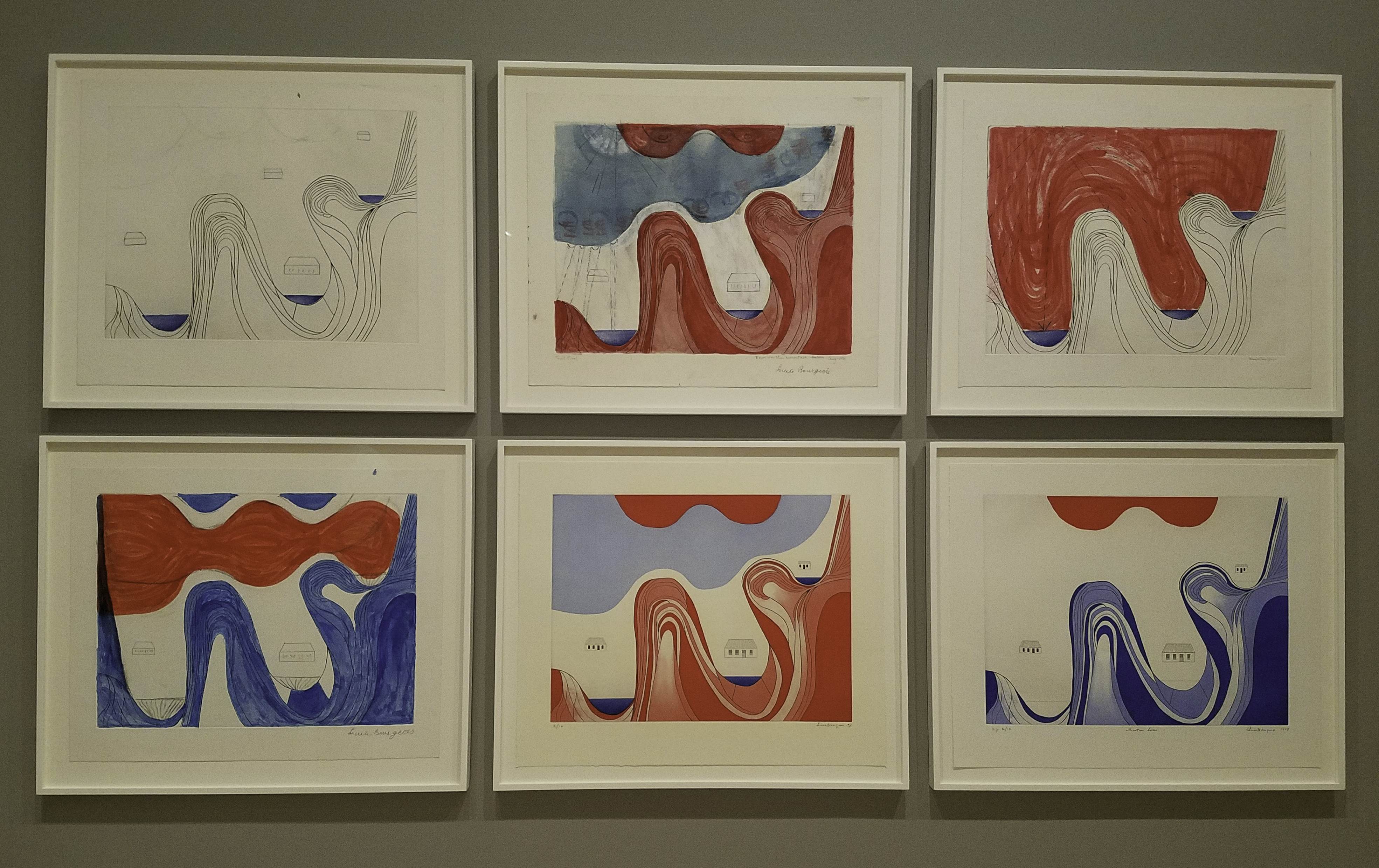
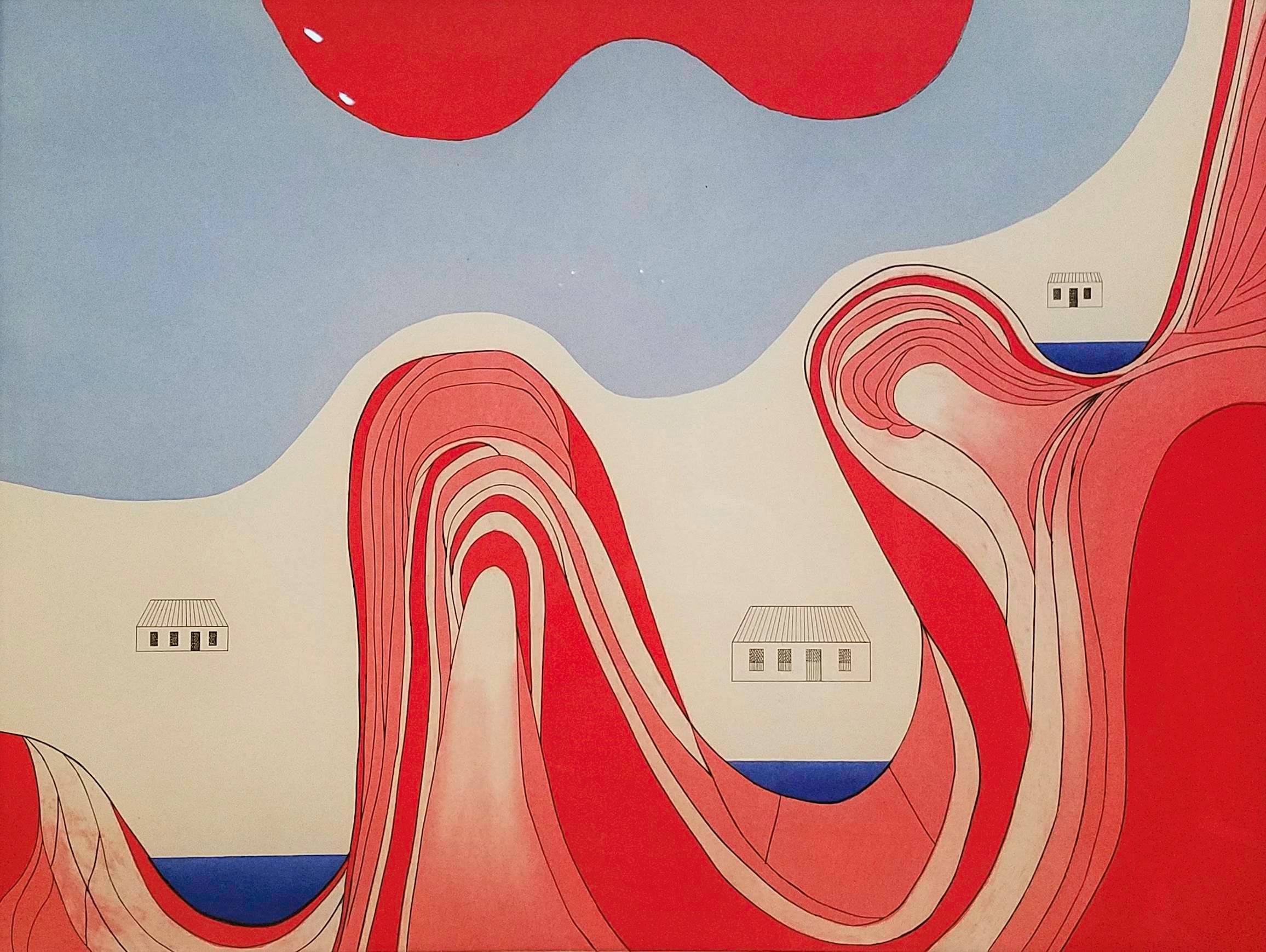
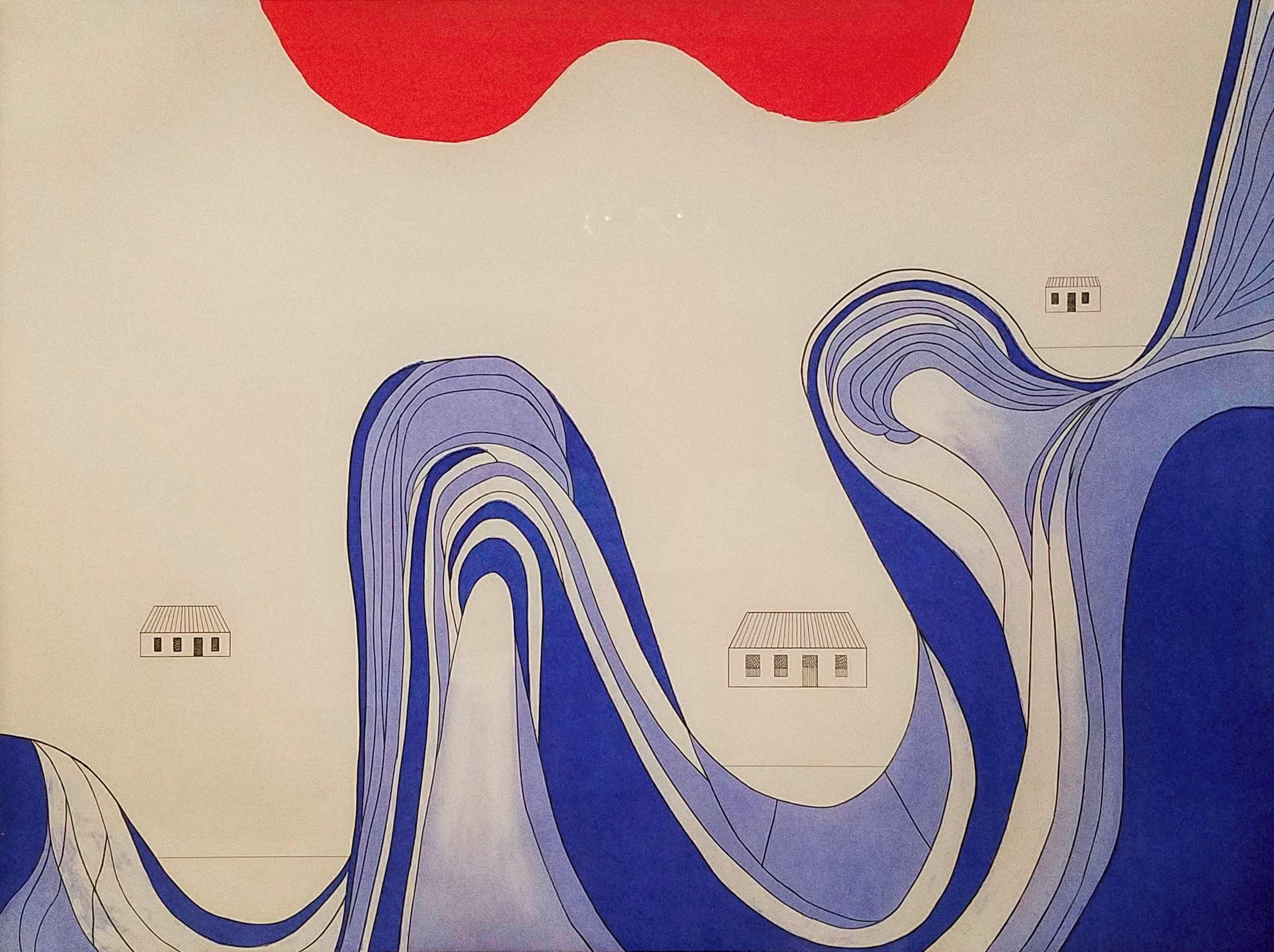 Lacs de Montagne (Mountain Lakes), 1996 & 1997
Engraving and aquatint with watercolour, gouache and ink additions
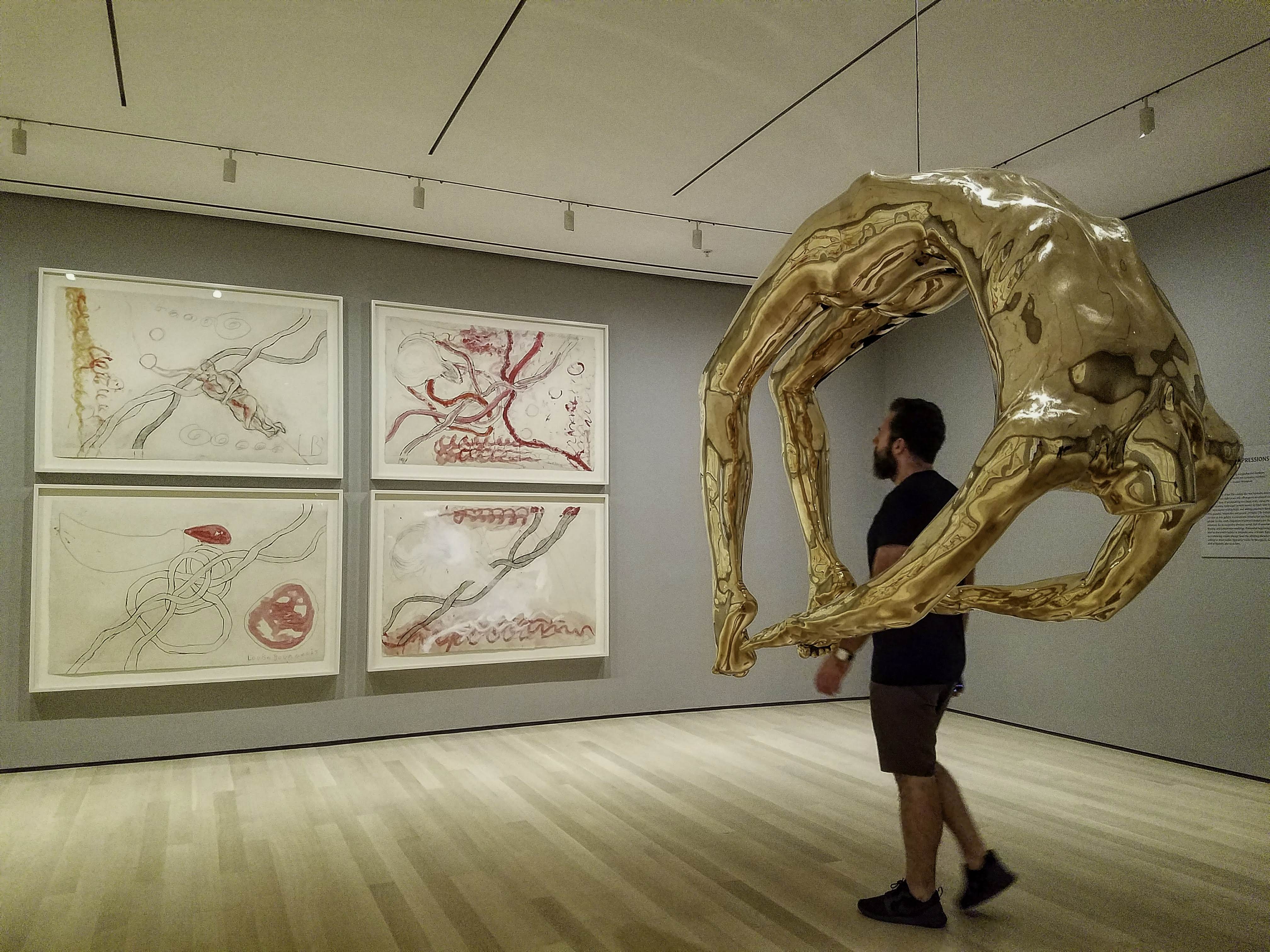 Arch of Hysteria 1993
Bronze, polished patina
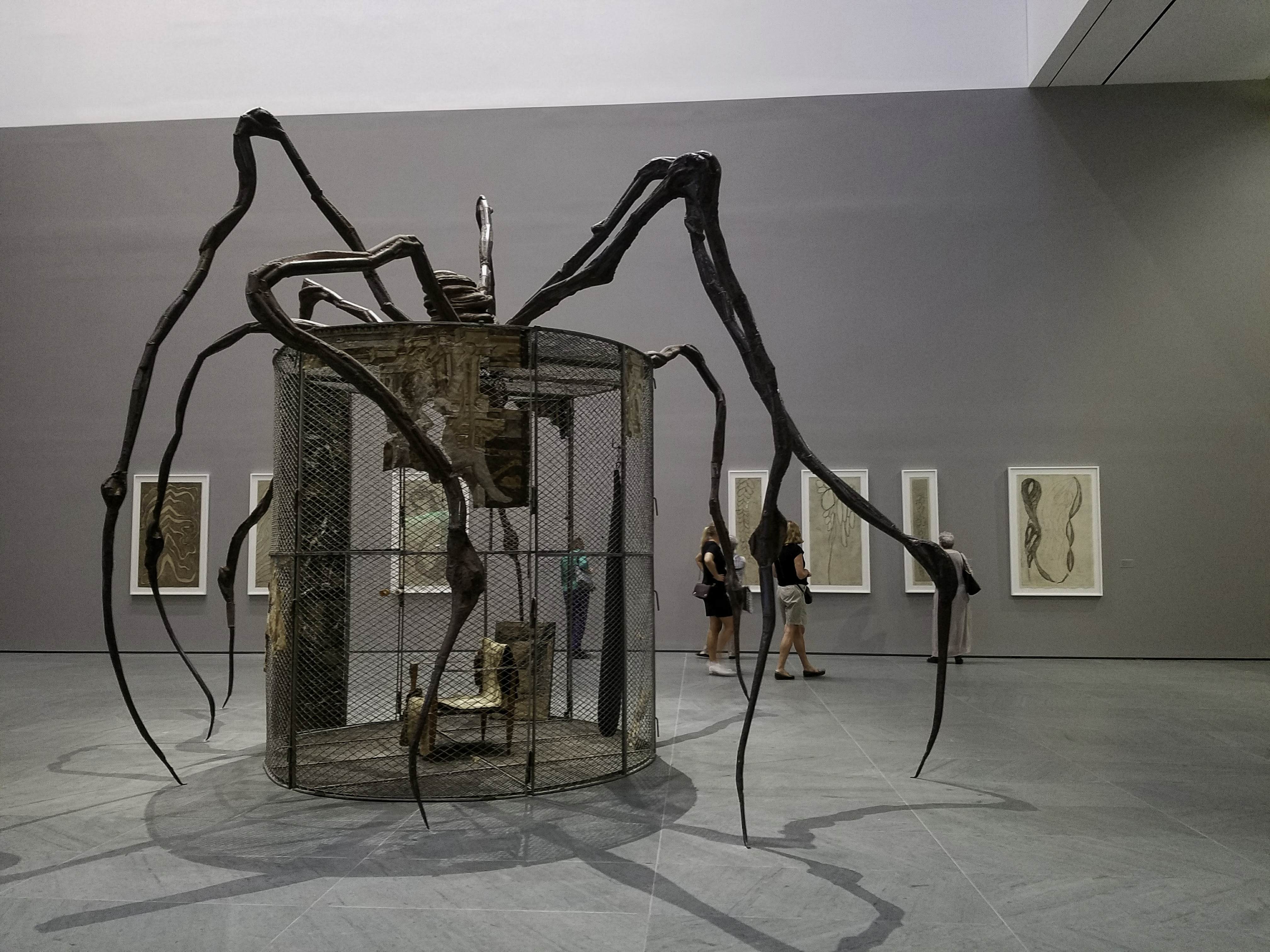
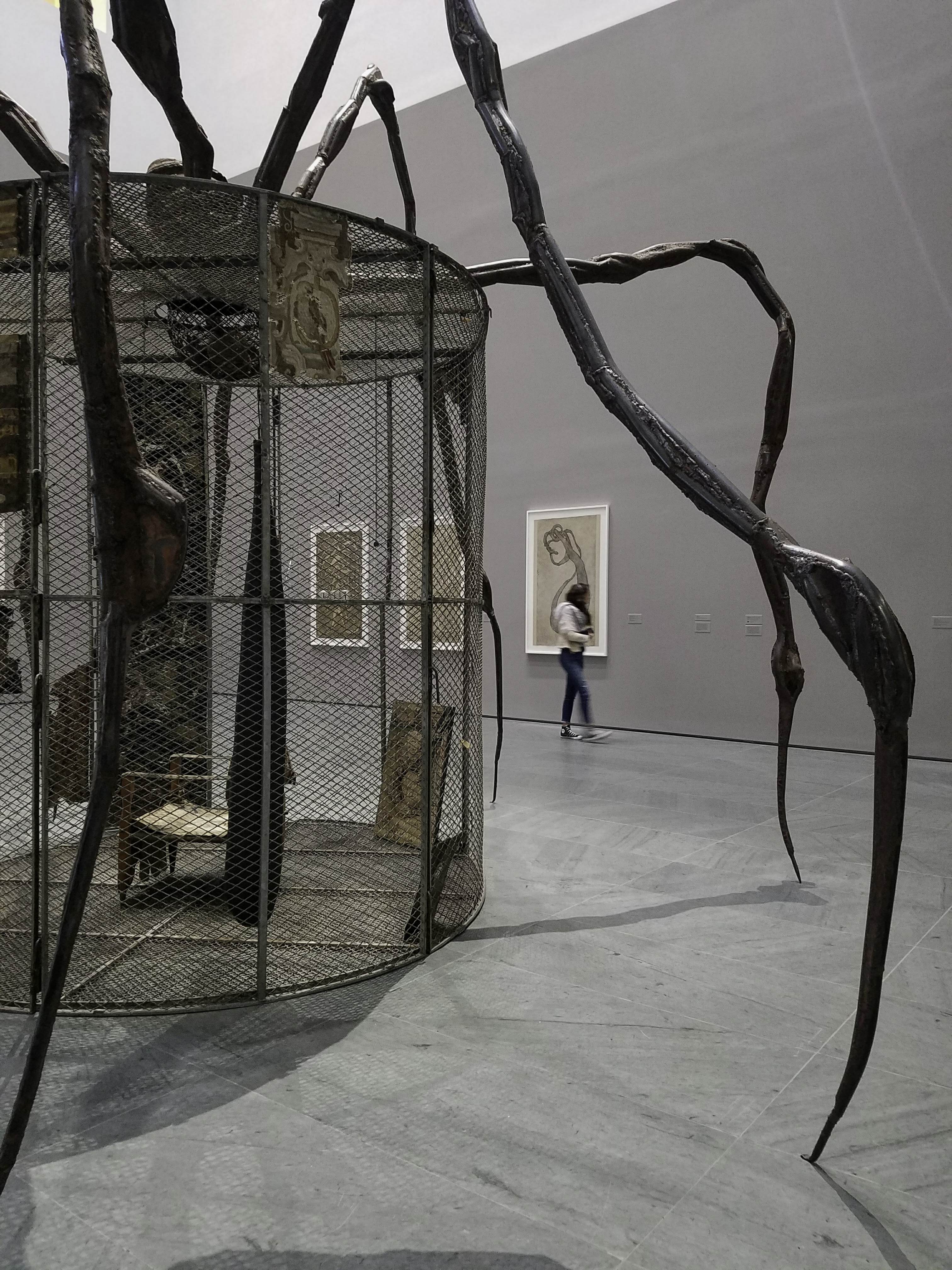
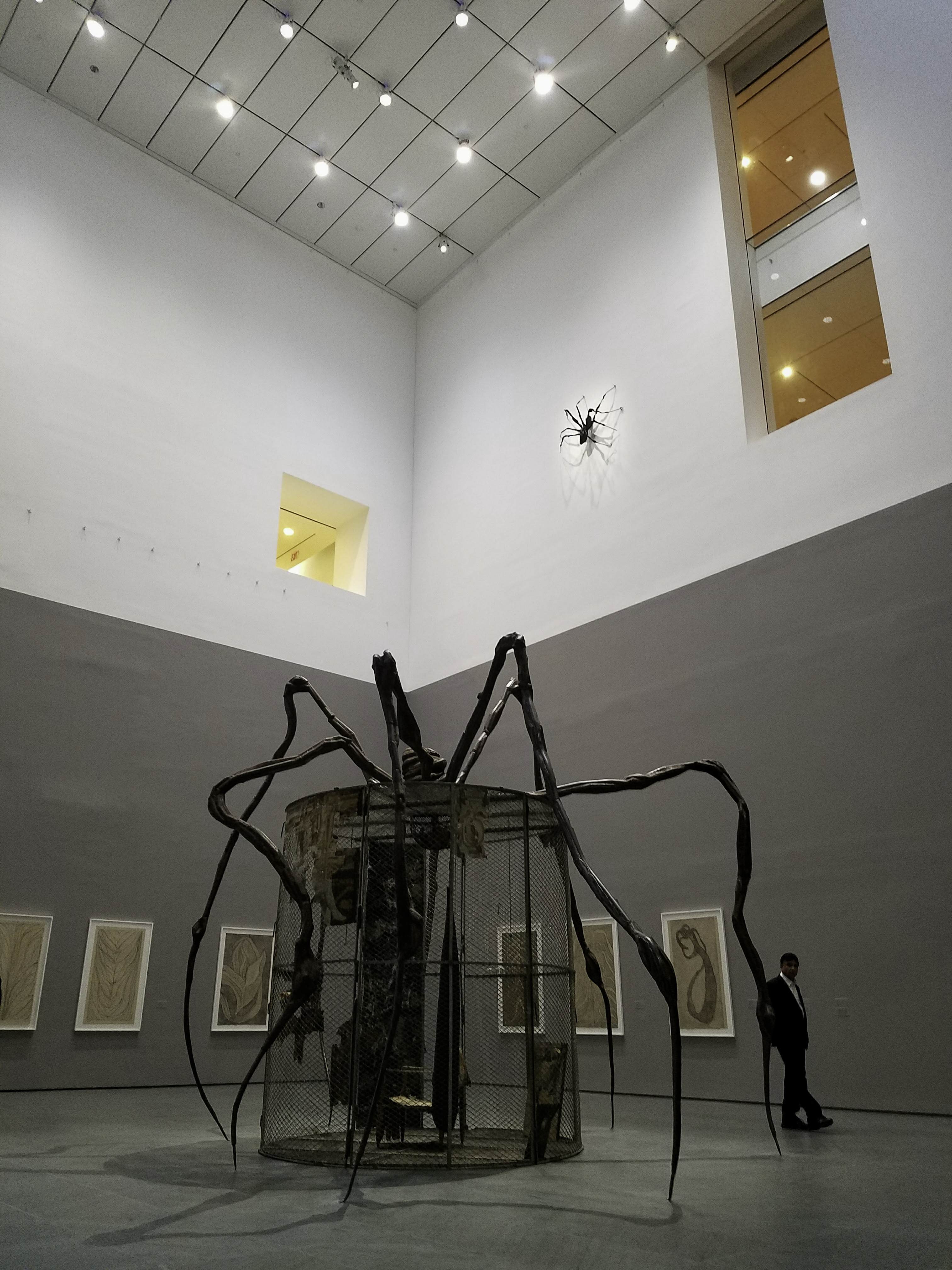 Spider 1997
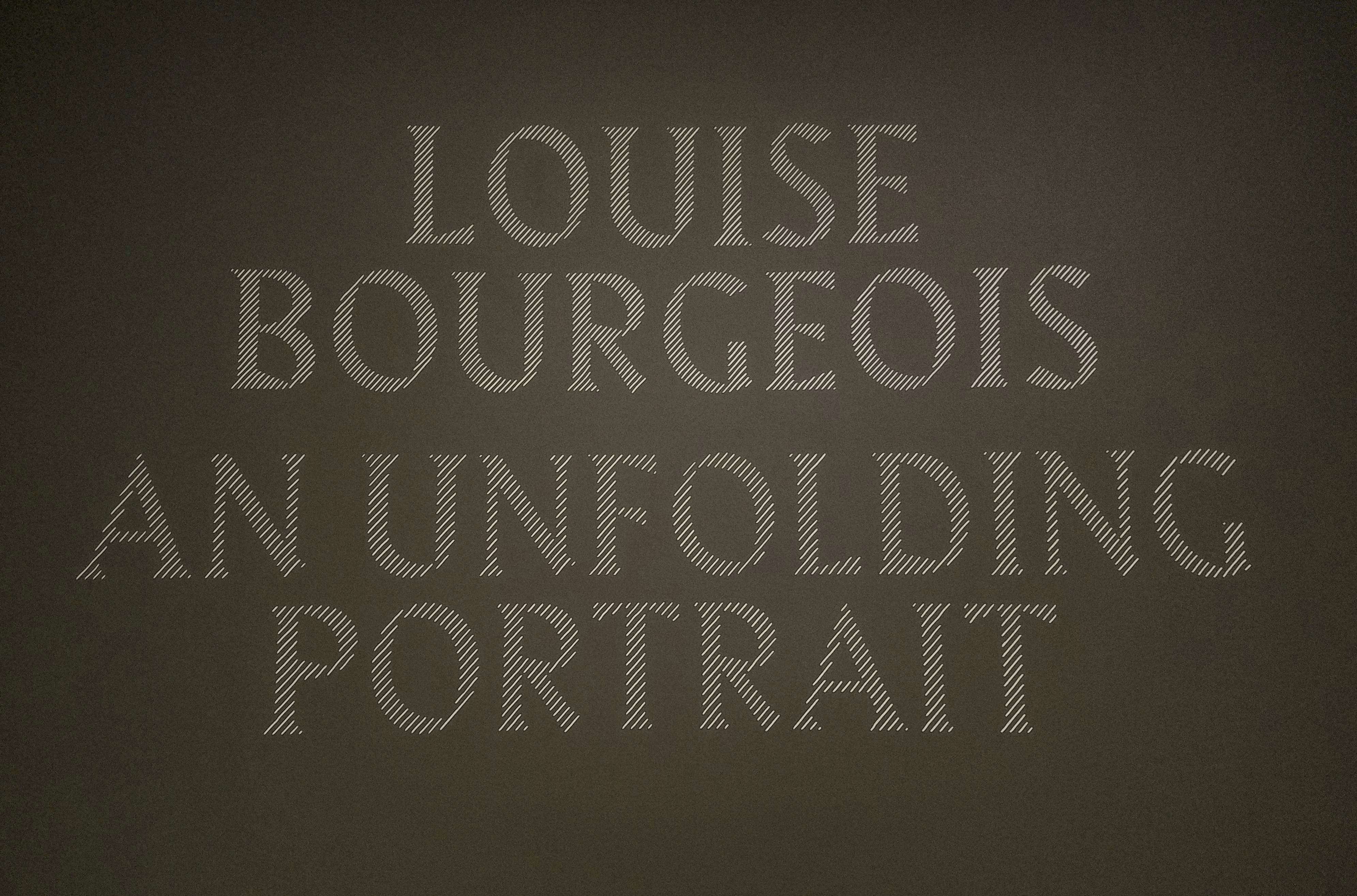
Note from Louise Bourgeois: An Unfolding Portrait, an exhibition that ran at the MoMA, until end January 2018: ”[…] explores the prints, books, and creative process of the celebrated sculptor Louise Bourgeois (1911–2010). Bourgeois’s printed oeuvre, a little-known aspect of her work, is vast in scope and comprises some 1,200 printed compositions, created primarily in the last two decades of her life but also at the beginning of her career, in the 1940s. The Museum of Modern Art has a prized archive of this material, and the exhibition will highlight works from the collection along with rarely seen loans […].”
September 25th, 2017
September 20th, 2017
subjective worldview
Actor, writer, cook and author
Travel experiences & Strasbourg city guide
Writer
joy, happiness, travel, adventure, gratitude
"Rêve onirique & Bulle d'évasion"
makes pretty things on paper
This WordPress.com site is Pacific War era information
Welcome to my curious world of words....
Photographs, music and writing about daily life. Contact: elcheo@swcp.com
Free listening and free download (mp3) chill and down tempo music (album compilation ep single) for free (usually name your price). Full merged styles: trip-hop electro chill-hop instrumental hip-hop ambient lo-fi boombap beatmaking turntablism indie psy dub step d'n'b reggae wave sainte-pop rock alternative cinematic organic classical world jazz soul groove funk balkan .... Discover lots of underground and emerging artists from around the world.
A 365 analogue photography project
Barcelona's Multiverse | Art | Culture | Science
Een digitaal atelier aan de (zee)slag.
‘Doodling Ambiguity’s in Ink.’
Miscellaneous photography
Glimpses along the way on a journey of discovery into symmetry...
 The Humble Fabulist