of the Ninth Avenue International Food Festival. It takes forever to be cleaned but it’s totally worth it! 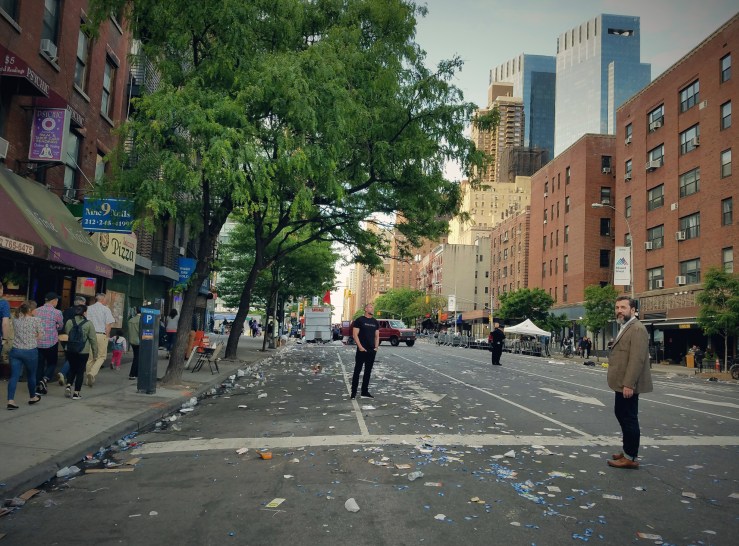 9th Avenue, Hell’s Kitchen
May 20th, 2017
of the Ninth Avenue International Food Festival. It takes forever to be cleaned but it’s totally worth it! 9th Avenue, Hell’s Kitchen
May 20th, 2017
“This Section Contains Explicit Material. Young visitors should be accompanied by an adult.” A sign, elegantly placed at the entrance of the gallery, warning visitors that they were about to step into Japan’s most intimate world. 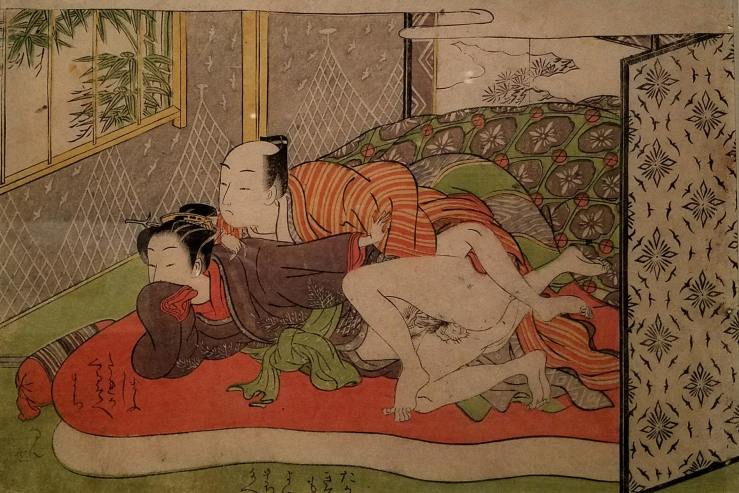
 Ukiyo-e (pictures of the floating world), flourished as an artistic genre during the Edo period. Catering to a clientele drawn from the rising middle classes, ukiyo-e artists focused on subjects closely associated with the fashionable, worldly pleasures of Edo itself, rather than the prescribed themes of Japan’s classical painting schools, traditional patronized by the nobility and samurai elite. The woodblock print, more affordable than paintings and easily reproducible, proliferated in concert with the rise of the ukiyo-e genre. Beauties, wrestlers, actors were typical subjects of ukiyo-e prints, as were erotic scenes known as shunga.
Most master printmakers designed shunga. Varying in style and explicitness, these prints were appreciated privately rather than being displayed on walls.
The examples on view here, by the artist Koryūsai, portray a variety of sexual pairings.
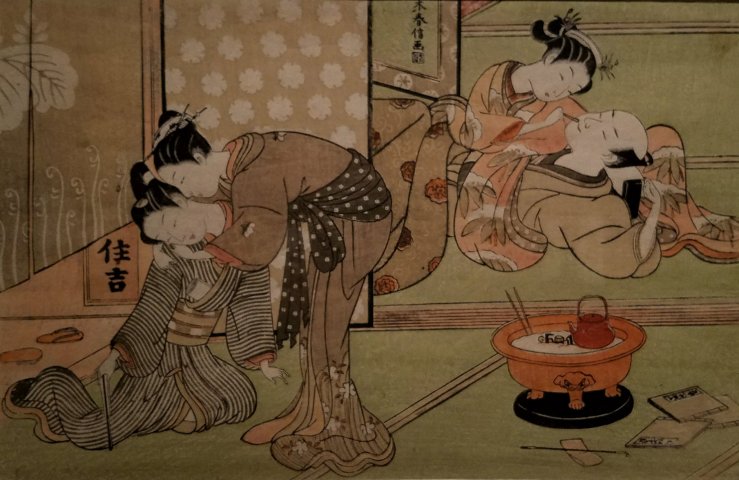 Suzuki Harunobu (1725-1770)
Two Couples in a Brothel, 1769-70
Two separate encounters in a brothel are staggered across this skillfully composed print by Harunobu. In the background, an adult man with a fully shaved pate is having his moustache tweezed by a female prostitute, an act of intimacy. In the foreground, a slightly more mature prostitute attempts to woo a coy young wakashu who fiddles with a folded fan and diffidently resists her embrace.
 Attributed to the Utamaro School
Woman and Wakashu, ca. 1790s
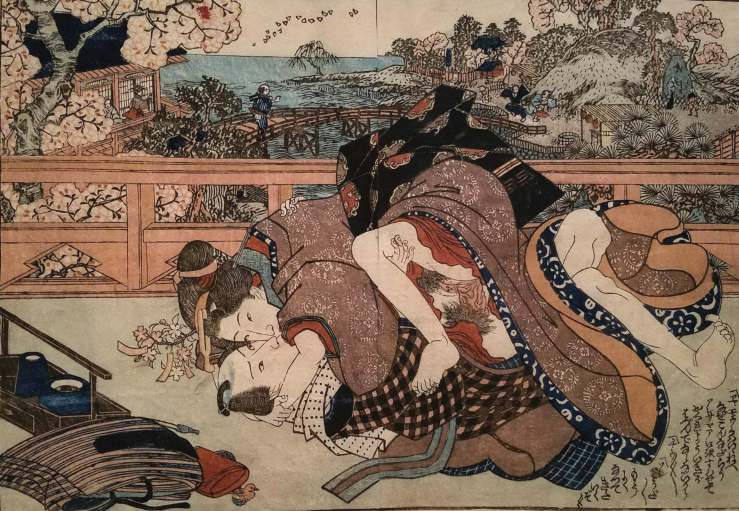 Pages from an unidentified Utagawa-school erotic book, ca. 1850s
Two half-sheets glued together from a printed book with colour illustrations
In this illustration, a prostitute sporting the shaved sot and forelocks of a wakashu takes charge with a male client. Her display of aggressiveness – conventionally gender-coded as a male prerogative – would have been typical of female sex workers, like haori-geisha, who sported the wakashu hairstyle.
 Attributed to Nishikawa Sukenobu (1671-1750)
A Prostitute with a Man, late 17th century
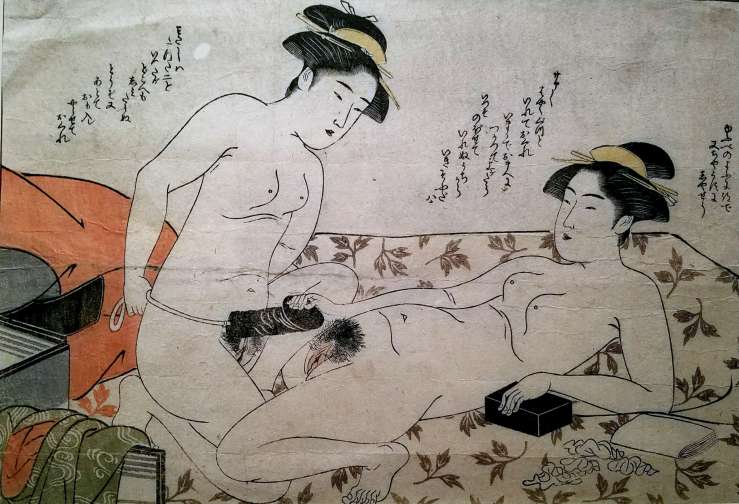 Women Using a Dildo, ca. early 1800s
The two women in this print appear to be ladies-in-waiting of a daimyō’s (feudal lord’s) household. Sequestered in inner chambers where men were not allowed, such women were required to be abstinent but encouraged to engage in self- and mutual-pleasuring for their health.
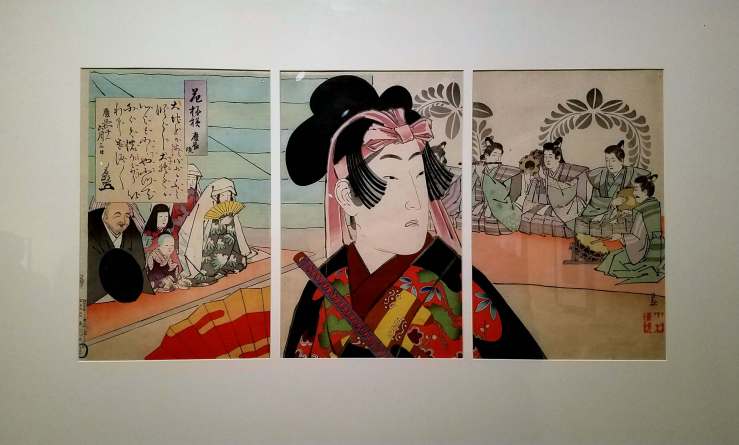


”A Third Gender: Beautiful Youths in Japanese Prints”, has been an enlightening exhibition and a very interesting look into the erotic life of the Edo-period Japan. Multilayered, complicated and, in many ways, much more progressive than one would have thought.
Japan Society, May 19th 2017
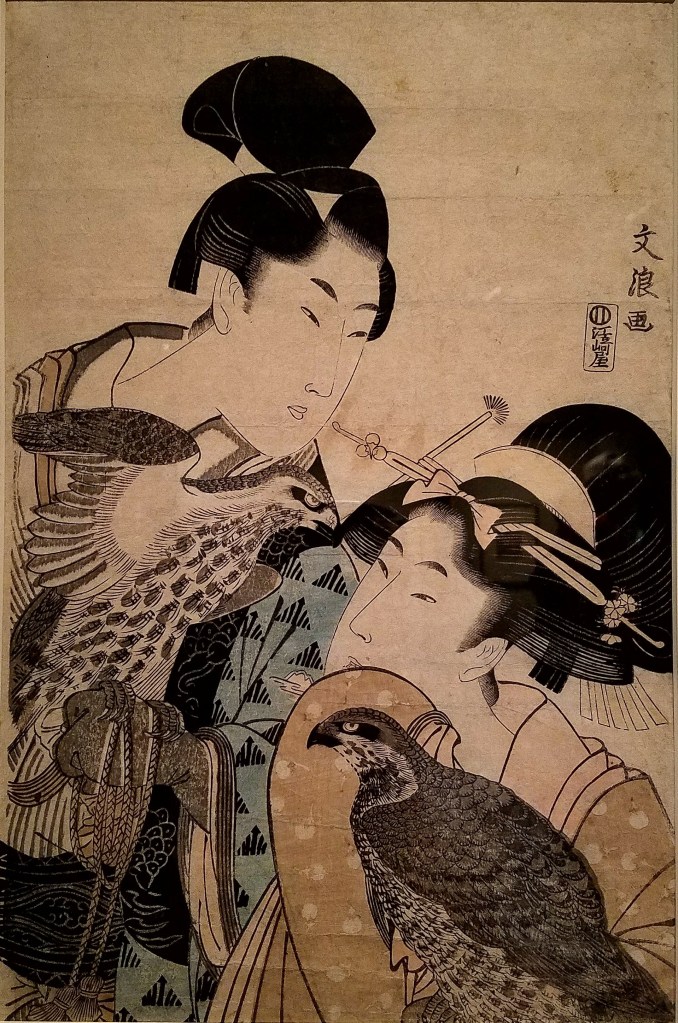
Bunrō (active 1801-1804)
A Wakashu and a Young Woman with Hawks, ca. 1803
The only way I could distinguish between the two was to read the accompanying tag. The Wakashu is wearing a kimono with Mount Fuji motifs.
From”A Third Gender: Beautiful Youths in Japanese Prints”, an exhibition that ran on Japan Society until June 2017.
May 19th, 2017


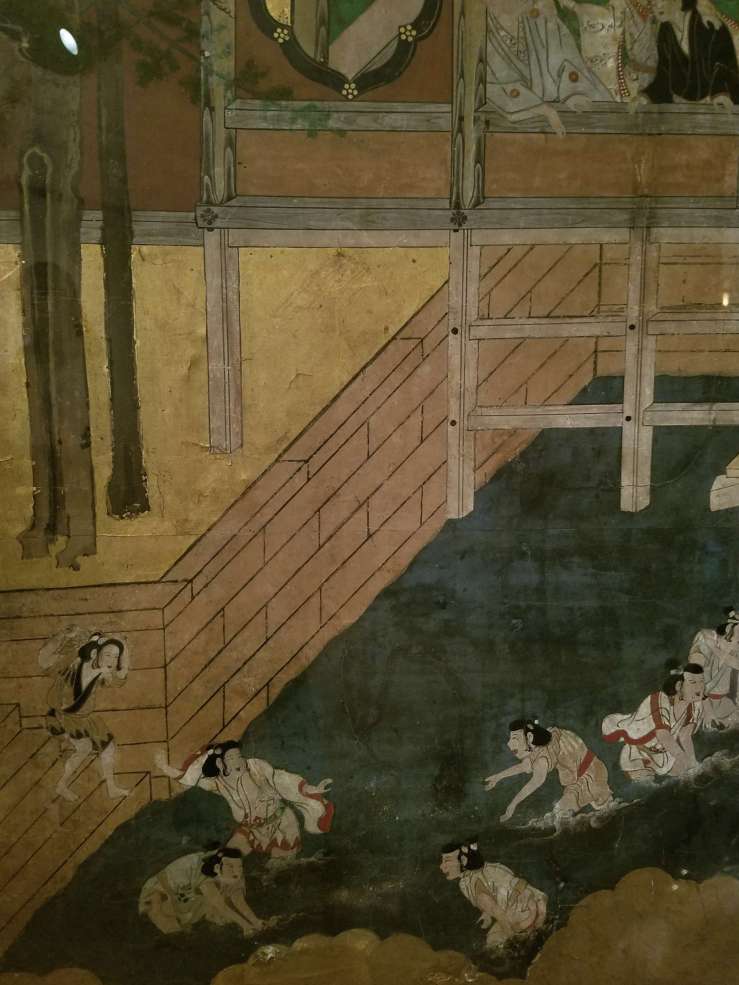
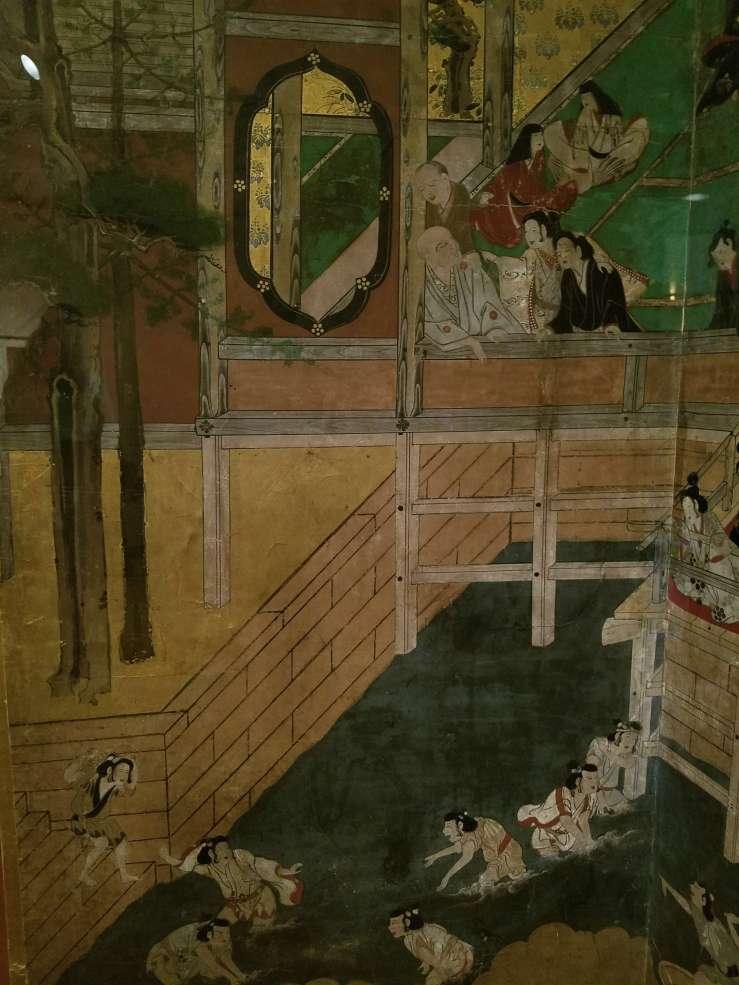
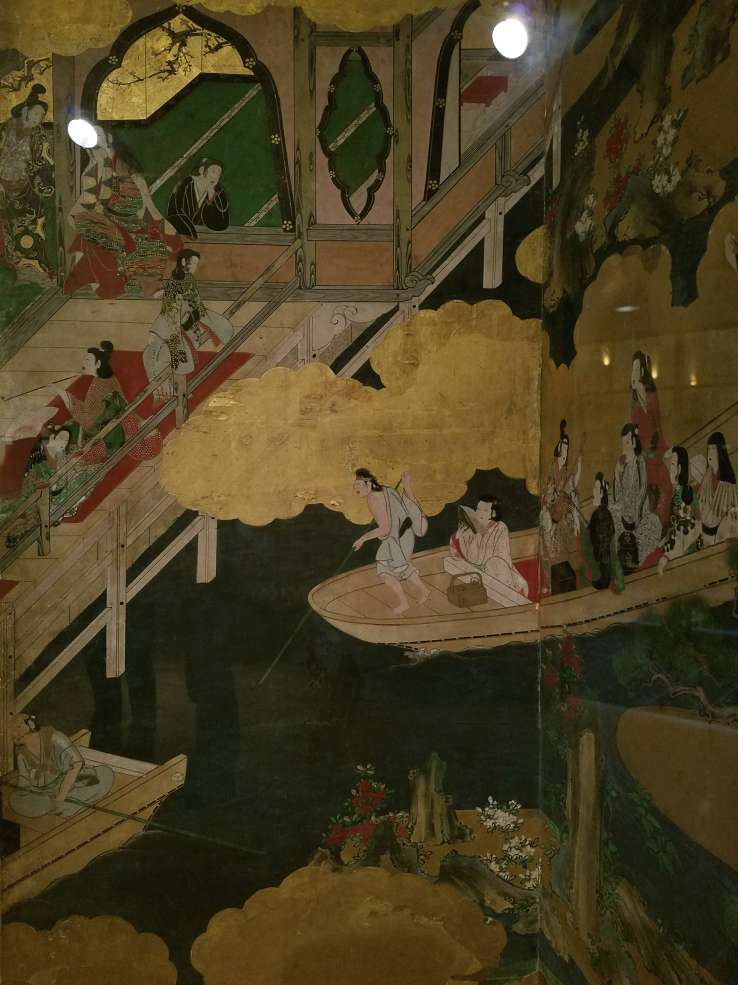
 Six-fold screen, gold and pigment on paper (detail)
Attributed to the Kan-ei Era (1624-1644)
“In this pansexual wonderworld, many beautiful women and wakashu are in the service of only a few men. The boat rowing in from the right carries one such man, who drinks sake while both a wakashu and a woman serenade him on shamisen. A group of wakashu frolic in the water, observed from above by other youths and some female prostitutes. On the gilded expanse to the left, a prostitute and her girl-servant (kamuro) chat up two wakashu while the multistoried pavilion above buzzes with music, drink and conversation between female prostitutes, wakashu and some men. To the right, a Buddhist monk topples over as a group of wakashu playfully hold down his hands and feet and ply him with wine; during the Edo period, monks were supposed to abstain from sex, even though nanshoku – sex between men and wakashu – was considered less karmically precarious than sex with women.”
From ”A Third Gender: Beautiful Youths in Japanese Prints” the first exhibition in North America devoted to the portrayal of wakashu, or beautiful youths—a “third gender” occupying a distinct position in the social and sexual hierarchy of Japan during the Edo period (1603-1868).
May 19th, 2017
 Belle Greene, Librarian
In 1905 Pierpont Morgan hired twenty-six-year-old Belle da Costa Greene (1879-1950) to manage his library. She added to his collections with legendary discernment and went on to become a leading figure in the rare book world. She served as the Morgan’s first director until her retirement in 1948.
This brief tag accompanies Ms. Greene’s photo at The Lower Level. Nowhere else in the museum, was there anything to be found about this formidable woman and her work. Yet without her, there would be no Morgan Library Collection as we know and enjoy it today.
Greene was a young librarian at Princeton University, when her colleague Junius Morgan, who happened to be J. Pierpont Morgan’s nephew, introduced her to his wealthy uncle, who was looking for someone to catalogue his collection.
Child of two African-American parents of mixed ancestry, identified as ”colored” in her birth certificate, Belle knew that she would not be able to reach her dream of becoming a librarian had she been open about her family background. So she hid it and invented a relative in Portugal (the ”da Costa” part of her name) that would explain her darker complexion. She also shortened her real name from Greener to Green, to distance herself from her father, Richard Greener, the first coloured librarian and professor at the University of South Carolina.
Smart, witty, outspoken and sensual with a great sense of style and an extensive designer wardrobe (”Just because I’m a librarian”, she has been known to exclaim, ”doesn’t mean I have to dress like one!”) Belle was equally at ease among the Bohemian crowd as well as the scholarly elite.
Trusted for her expertise and excellent bargaining skills, Green would handle considerable amounts of money buying and selling rare manuscripts, books and art for Mr. Morgan. She went on doing that for forty-three years, first as librarian, then as the first director of the Morgan Library, when it became a public institution.
Belle Green retired in 1948 and died two years later.
***
More about this amazing woman and her life & work can be found in her biography ”An Illuminated Life: Belle da Costa Greene’s Journey from Prejudice to Privilege” by Heidi Ardizzone.
May 7th, 2017
 Roy Lichtenstein
Study for No Thank You!, 1964
That’s what I should have said. Probably. But I figured, if I avoided the rush on Thursday or – worse – Friday afternoon, I could just about manage to make it to destination unscathed. So, the next few weeks I hope to be bewitched, bedazzled and bewildered by the wonders of nature in Yellowstone, the savoury landscape of the Salt Flats in Utah, the coolest urbanity of Portland in Oregon and Seattle in Washington. Now, how about: travelling on Memorial Day weekend – Yes, please…!
May 7th, 2017
Whatever you do, stay inside the circle…! 

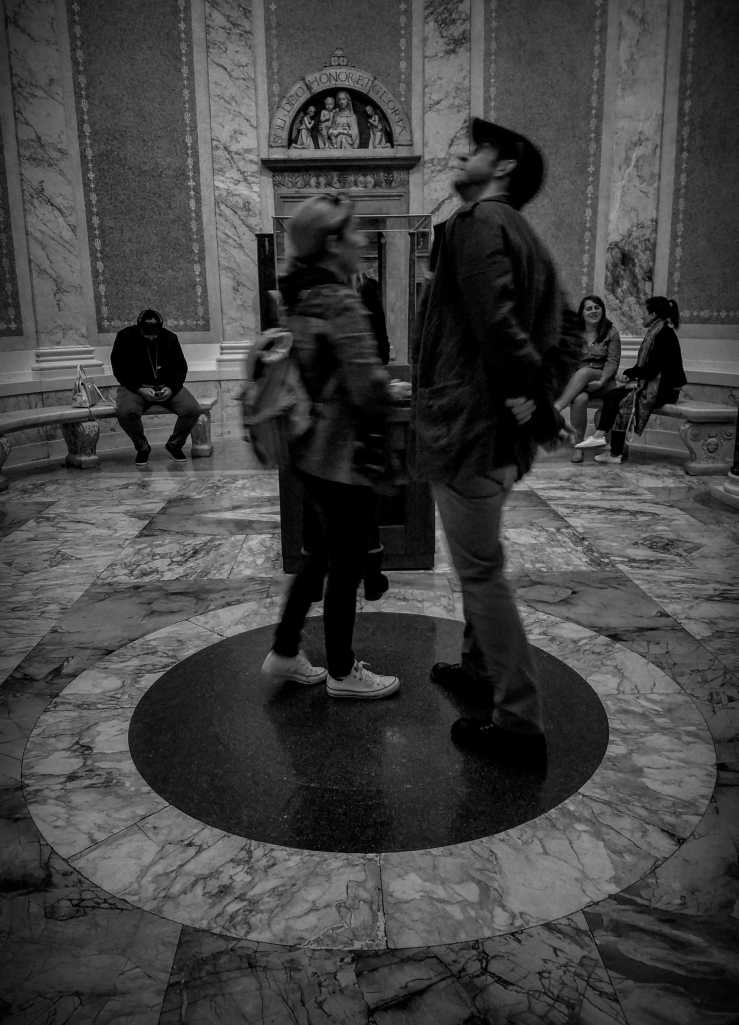
The magical Rotunda @ The Morgan Library & Museum
May 7th, 2017
The Original Library
With its three-story inlaid walnut bookshelves and magnificent ceiling, the East Room was designed as a treasury for Pierpont Morgan’s remarkable collection of rare printed books. The sixteenth-century Netherlandish tapestry over the mantelpiece depicts avarice, one of the seven deadly sins, personified by the mythological King Midas. Two staircases, concealed behind bookcases, provide access to the balconies. Paintings by H. Siddons Mowbray adorn the upper reaches of the room, and the signs of the zodiac are depicted in the ceiling’s hexagonal spandrels. (Morgan was a member of an exclusive dining club that admitted only twelve members at a time—one for each sign of the zodiac—and the arrangement of the signs in his library’s ceiling may carry a hidden meaning related to key events in his personal life.) Allegorical depictions of the arts and sciences alternate with portraits of figures from Socrates to Michelangelo, identifying the library as a place for the preservation of art and ideas.
Literature, Art, and Music from the Middle Ages to the Present
On view in the East Room are examples from The Morgan Library & Museum’s extraordinary collection of medieval illuminated manuscripts, rare printed books and bindings, and handwritten manuscripts of great writers, artists, and composers from the Renaissance to the present day. While some of the items on view were purchased by Pierpont Morgan, others have been acquired in the century since his death. Selections are changed regularly, but a seminal work is always on view: one of the Morgan’s three copies of a Bible printed by Johannes Gutenberg in 1455. With Gutenberg’s Bible, the painstaking process of copying books by hand gave way to an innovative new technology—movable type—that facilitated the exchange of art and ideas in all spheres of human endeavor.

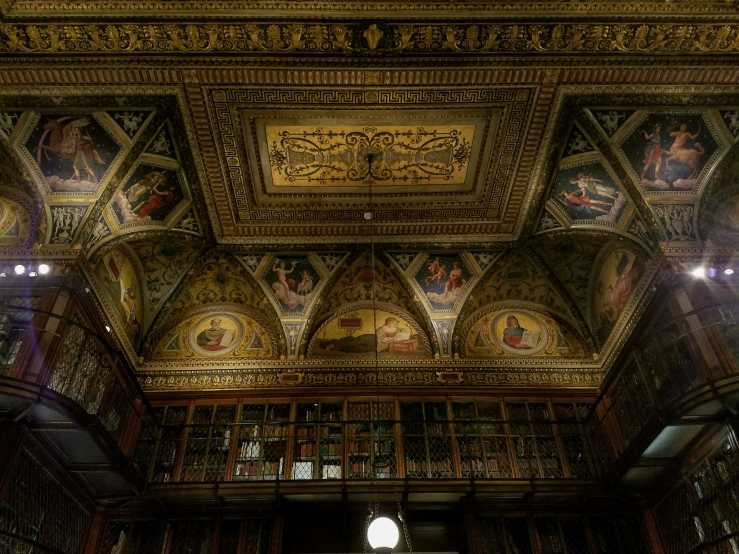
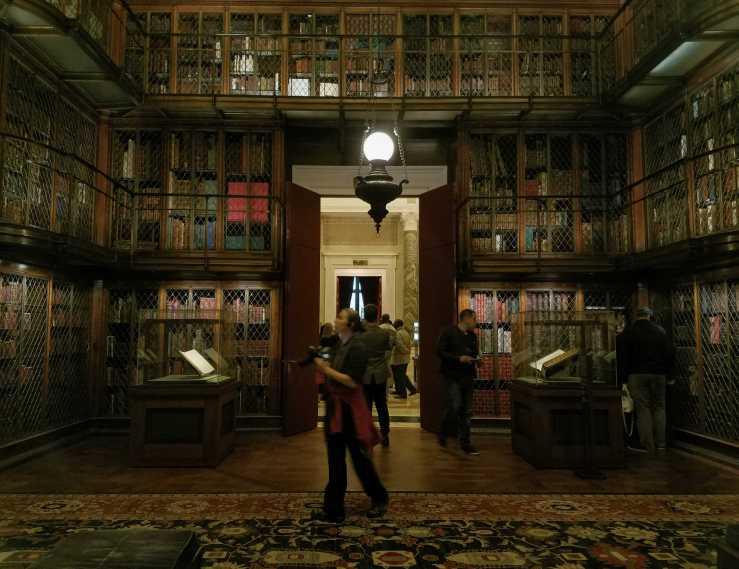
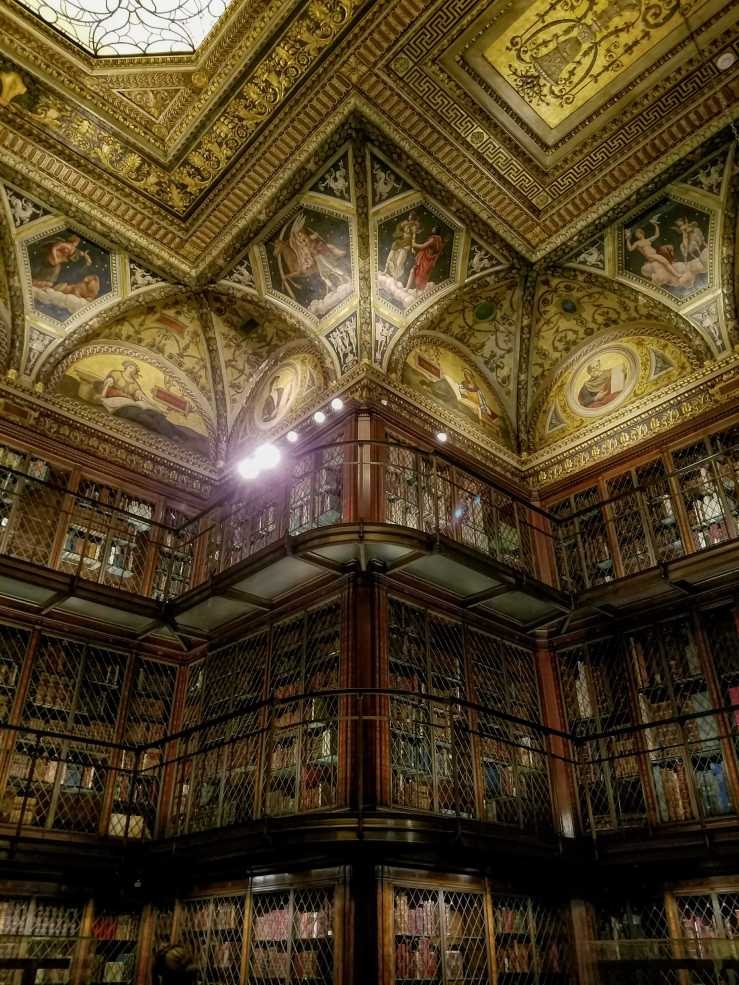
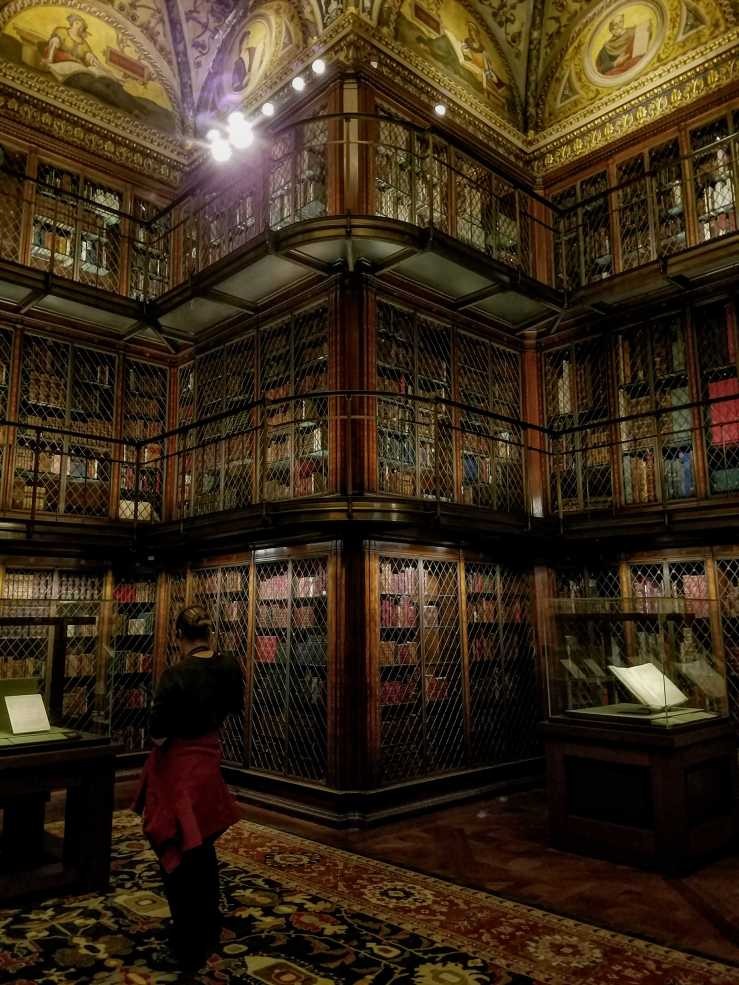
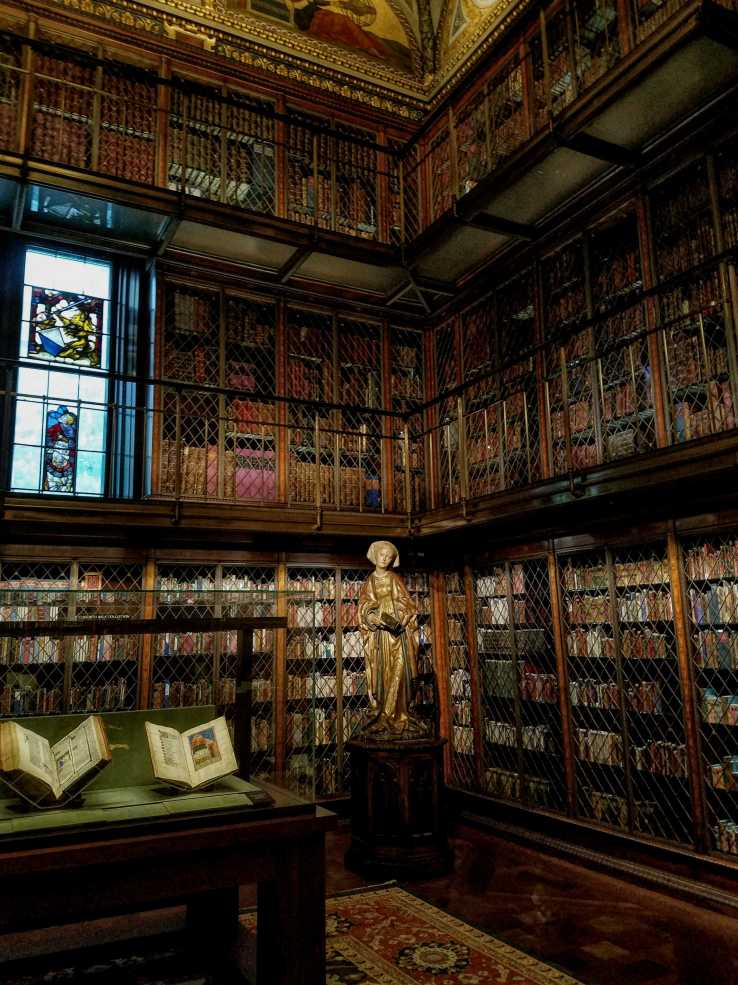


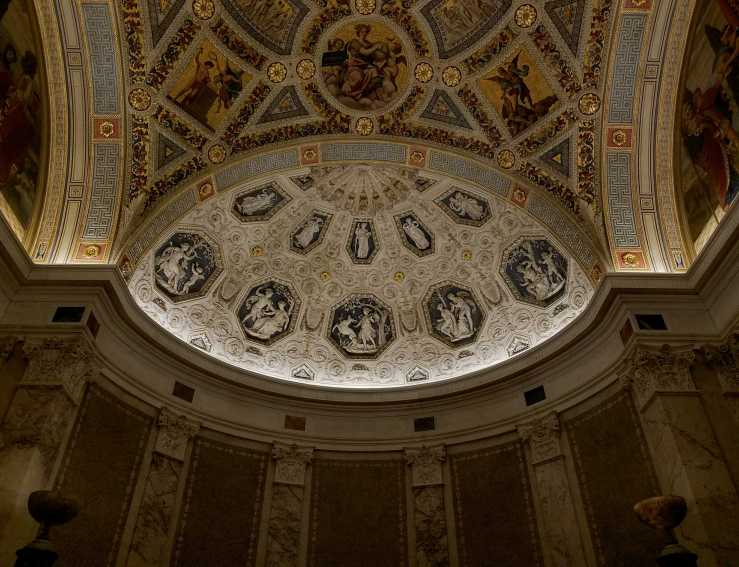 Taking another look at The North Room, before leaving.
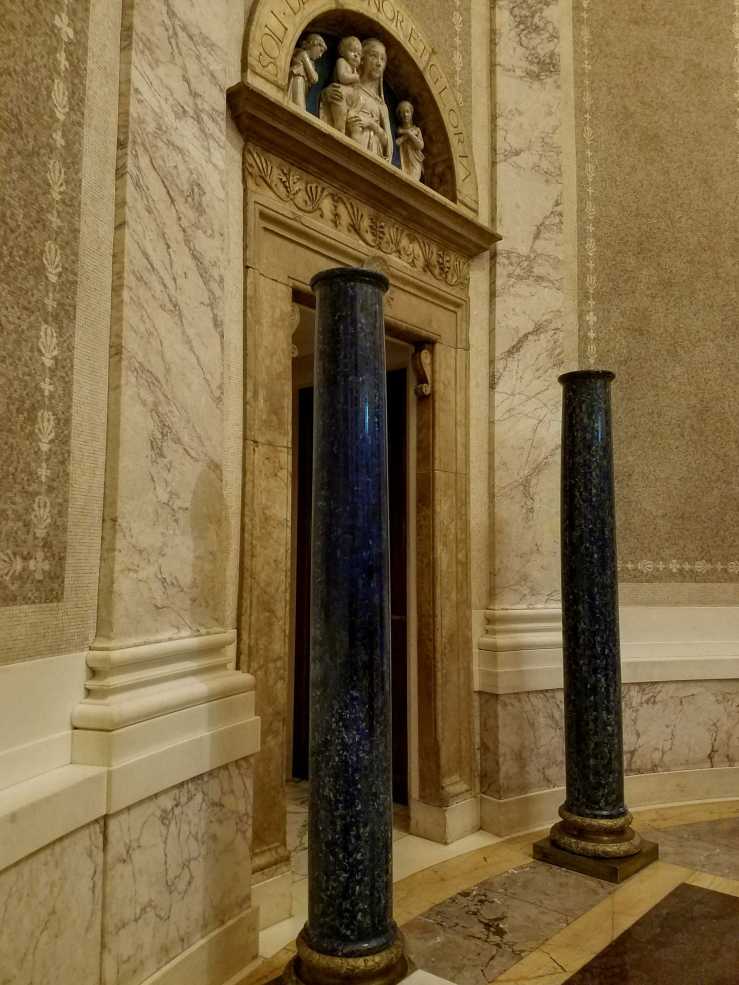
 The Rotunda

This portrait of Mrs. Morgan was on view at the Lower Level (and not in one of the rooms surrounding Mr. Morgan’s library, as I would have expected).  John Singer Sargent, Florence 1856-1925 London
Portrait of Mrs. J.P. Morgan, Jr.
This spirited portrait depicts Jane Morgan (neé Jane Norton Grew, 1868-1925), the wife of Pierpont Morgan’s son, J.P. Morgan, Jr. (1867-1943). Although the portrait is inscribed 1906, it appears that Mrs. Morgan sat for Sargent in 1904-5, when she was still living with her husband in London. The Morgans returned to New York in 1906. The following year Sargent declined the opportunity to depict Pierpont Morgan. Shortly thereafter he relinquished his practice as the leading portrait painter of high society in order to focus on landscapes and murals.
May 7th, 2017
The West Room, Mr. Morgan’s Study
During the last years of his life, Pierpont Morgan spent a great deal of time in his richly appointed private study, away from the Wall Street offices of his banking firm. In this lush but intimate room, among some of his favorite works of art, Morgan worked, relaxed, and met with art dealers and business associates. It was here that he gathered a group of bankers in 1907 to orchestrate a dramatic resolution to a national financial panic. Low shelves containing rare printed volumes line the study’s walls. To the left of the massive fireplace, Morgan’s impressive manuscript collection was once secured in a vault lined with solid steel. The red silk wall covering (a reproduction of the deteriorated original) contains the insignia of the Chigi, a great Sienese banking family, and much of the furniture was commissioned by Morgan in the Renaissance style. Pierpont Morgan’s portrait hangs over the fifteenth-century mantelpiece, and that of his son, J. P. Morgan, Jr., is displayed between the west windows.
 [right] Hans Memling (Flemish, 1433/40–1494)
Portrait of a Man with a Pink, ca. 1475
Oil on panel
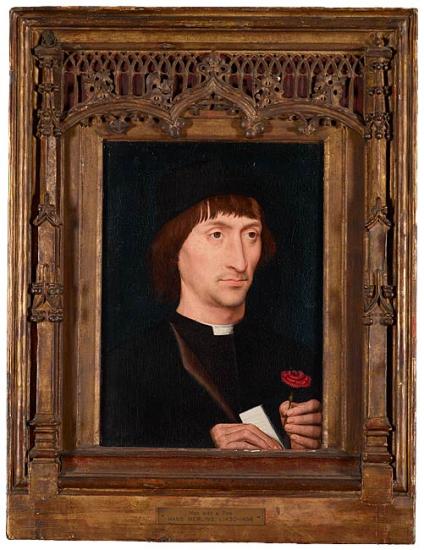
This is one of the finest paintings in the Morgan collection. The sitter may have been a member of the Italian merchant colony in Bruges, where Memling was the leading painter. The pink, or carnation, in the young man’s hand is likely a symbol of betrothal, suggesting that the painting may be one of a pair of wedding portraits.
[left] Workshop of Domenico Tintoretto (Italian, 1560-1635)
Portrait of a Man, ca. 1600
Oil on canvas
The unidentified subject of this portrait, painted in Venice in the workshop of Domenico Tintoretto, son of the more famous Jacopo, is believed to be a Moorish Ambassador to the Venetian court.
 Frank Owen Salisbury (British, 1874–1962)
Portrait of J. P. Morgan, Jr. (1867–1943) in a Cambridge Robe, 1934
This portrait depicts J.P. Morgan, Jr., Pierpont Morgan’s son and founder of this institution, wearing the robes of a Doctor of Laws, an honorary degree conferred by Cambridge University in 1919. The degree was a gesture of gratitude to the younger Morgan, who, as head of the firm J.P. Morgan & Co., provided financial support to the Allies during the First World War. Commissioned by J.P. Morgan, Jr., 1934.
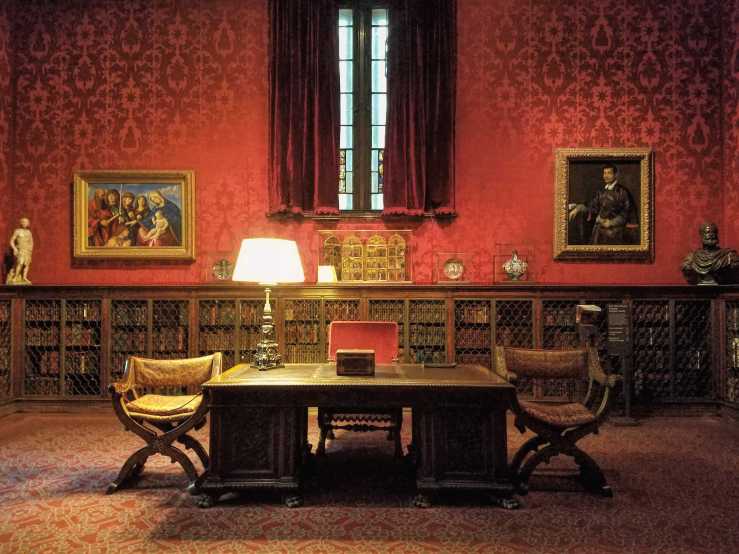
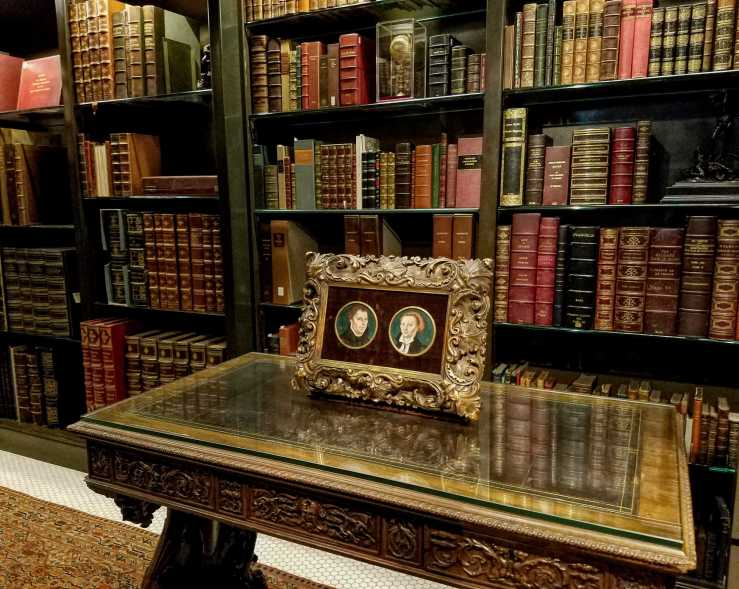

A glimpse into The East Room, the original library, more photos of which we will see tomorrow.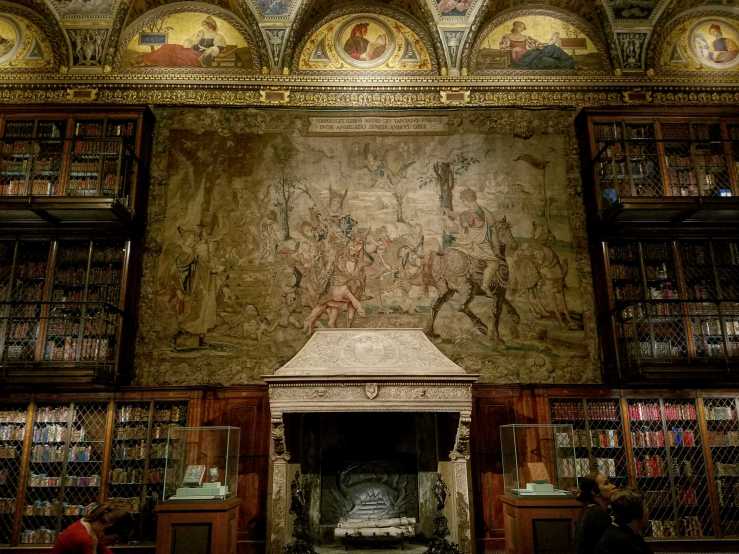

The Morgan Library & Museum houses one of the finest collections of music manuscripts in the country. In addition to a large collection of musicians’ letters and first editions of scores and librettos, it has the world’s largest collection of Mahler manuscripts and substantial holdings of Brahms, Chopin, Debussy, Mozart, Schubert, and Richard Strauss. The collection spans six centuries and many countries. The Morgan’s holdings of material relating to the lives and works of the dramatist William S. Gilbert and the composer Arthur S. Sullivan form the most extensive archive of its kind in the world.
 Maurice Ravel (1875-1937)
Sonatine, 1903
Ravel’s Sonatine began life as a single-movement work. Only later did he add the second and third movements. Despite its many corrections, it is evident from the printer’s annotations in blue that this manuscript was used by the publisher Durand for its 1905 edition of the complete piece. Note that Ravel’s anagram at the top of the page, Verla, was crossed through and replaced with his proper name. 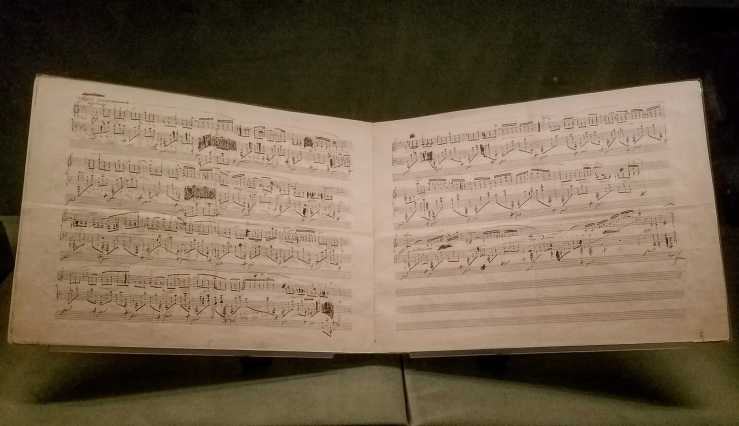 Frédéric Chopin (1810-1849)
Nocturne in C Minor, op. 48, no. 1, 1841
The slow, dreamlike quality of the nocturne (night music) is a characterized by a simple, lyrical melody that becomes increasingly florid. The form, as developed for the solo piano, gained popularity in the early decades of the nineteenth century with the works of the Irish composer John Field. But it was Chopin who brought the nocturne to the height of its expression, and it is Chopin’s nocturnes that are best remembered.
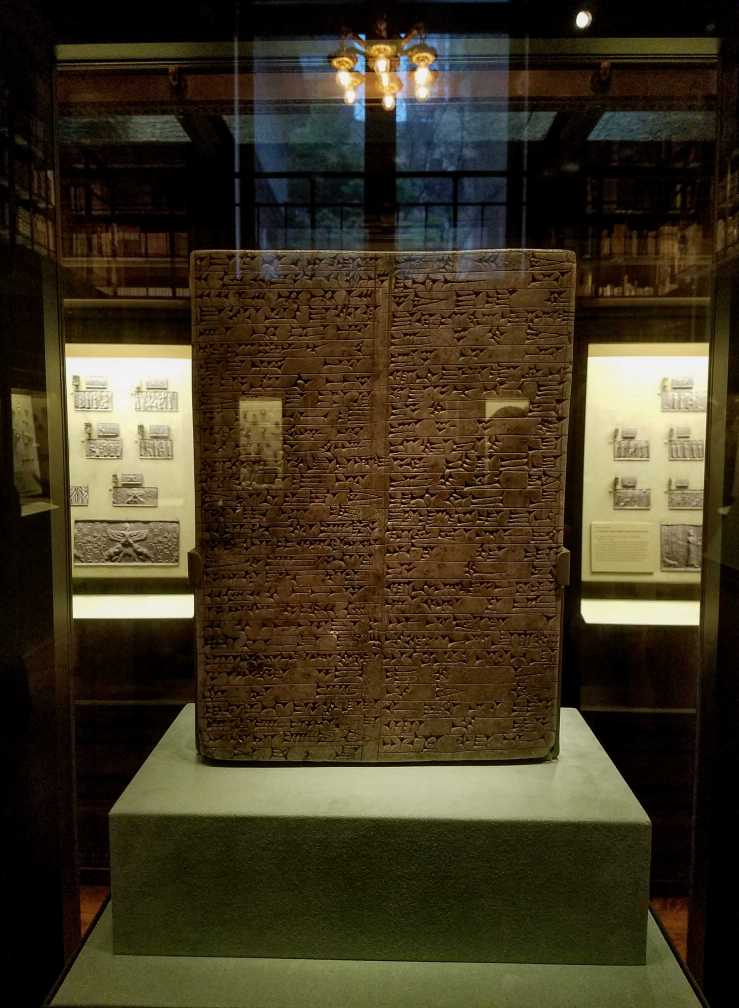 Ancient Near Eastern Seals & Tablets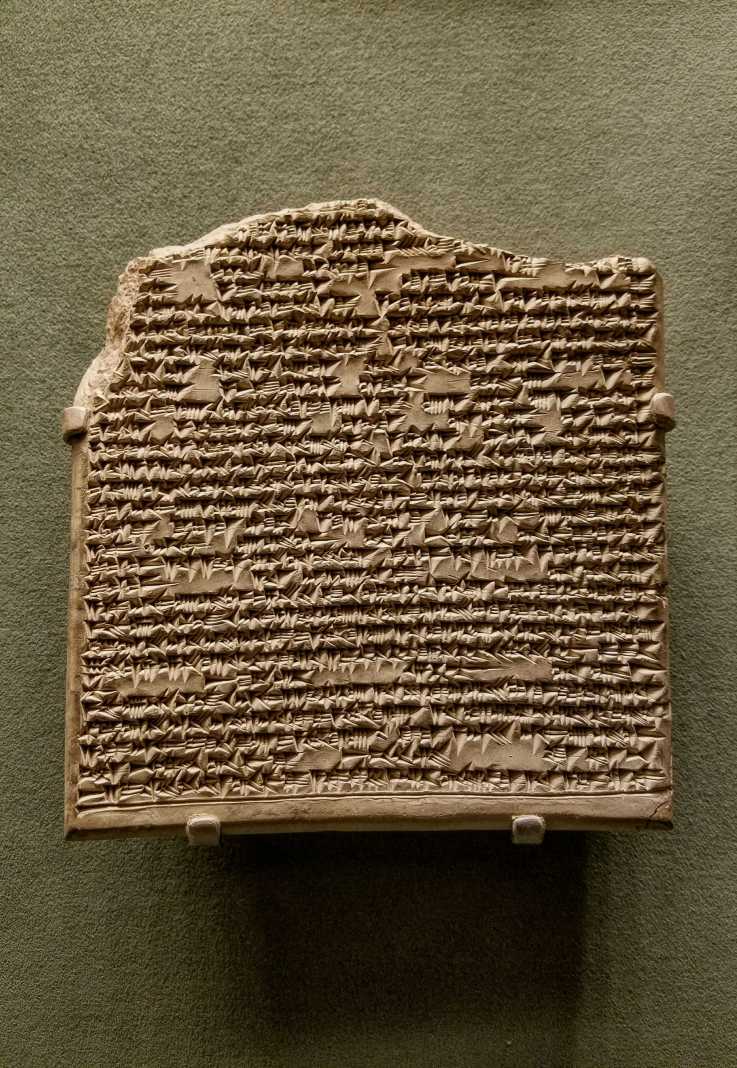
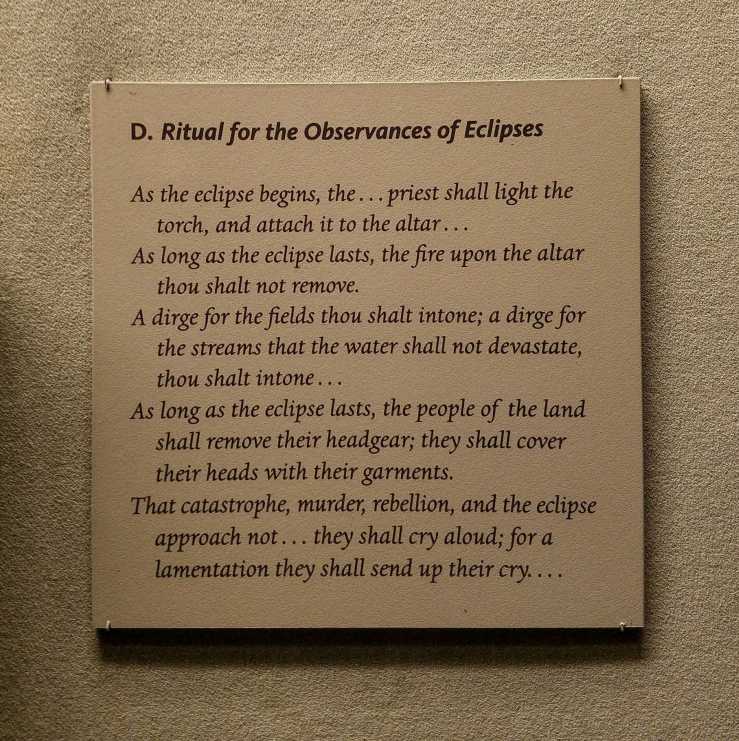
May 7th, 2017
subjective worldview
Actor, writer, cook and author
Travel experiences & Strasbourg city guide
Writer
joy, happiness, travel, adventure, gratitude
"Rêve onirique & Bulle d'évasion"
makes pretty things on paper
This WordPress.com site is Pacific War era information
Welcome to my curious world of words....
Photographs, music and writing about daily life. Contact: elcheo@swcp.com
Free listening and free download (mp3) chill and down tempo music (album compilation ep single) for free (usually name your price). Full merged styles: trip-hop electro chill-hop instrumental hip-hop ambient lo-fi boombap beatmaking turntablism indie psy dub step d'n'b reggae wave sainte-pop rock alternative cinematic organic classical world jazz soul groove funk balkan .... Discover lots of underground and emerging artists from around the world.
A 365 analogue photography project
Barcelona's Multiverse | Art | Culture | Science
Een digitaal atelier aan de (zee)slag.
‘Doodling Ambiguity’s in Ink.’
Miscellaneous photography
Glimpses along the way on a journey of discovery into symmetry...


 The Humble Fabulist