Delirium || The Art of the Symbolist Book @ The Morgan Library

Midtown Manhattan may seem too professional, flat, boring, touristy, UN-y, with nothing much moving after hours besides FDNY ladders and Mount Sinai ambulances – sirens full blast, but it has its share of interesting spots. Keep an open mind, look beyond the luxury shop windows of Fifth or Madison Avenues or the Broadway theatre district, and you may be surprised. And quite positively at that.

Take a look inside The Morgan Library, for instance, one of Midtown’s gems both architecturally and as an exhibition space.

What began as an intimate palazzo-like structure intended to serve as the private library of financier Pierpont Morgan, became today’s complex of buildings of different styles, covering half a city block.

Mr. Morgan’s library was designed by Charles Follen McKim and built between 1902 and 1906, next to his residence. Later, as his collections grew, an Annex was added in 1928. More recently, in 1988, Mr. Morgan’s brownstone residence was added to the complex, followed by a garden in 1991, which united the three buildings. And, finally, there came the largest expansion yet with (surprise!) a Renzo Piano steel and glass design creating new spaces and connecting everything together.

The images that follow are from ”Delirium: The Art of the Symbolist Book”, an exhibition that featured works by authors and artists from the Symbolist movement.
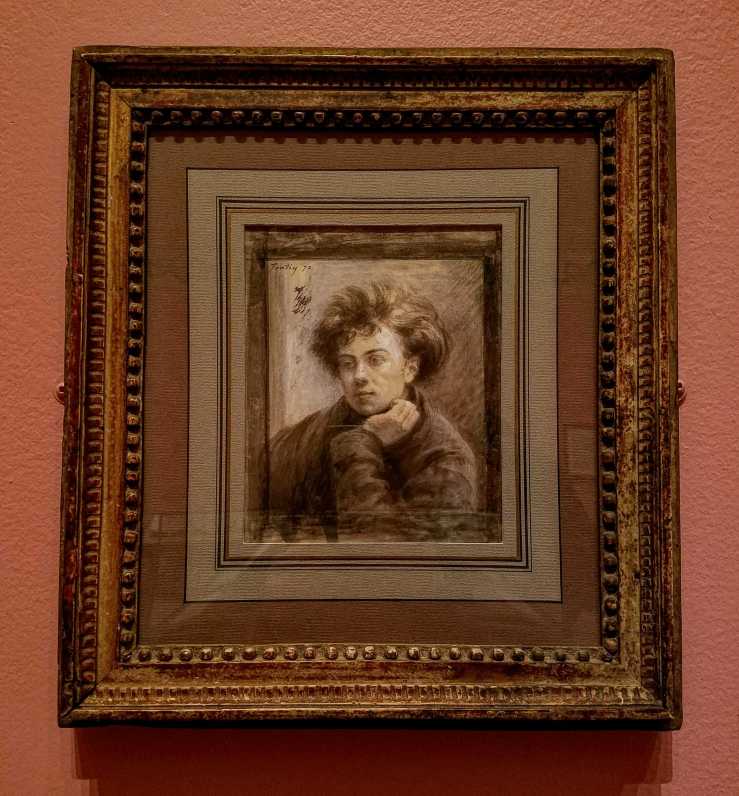
Henri Fantin-Latour (1836-1904)
Portrait of Arthur Rimbaud, 1872
Watercolour and white opaque wash over black chalk on paperboard


Odilon Redon (1840-1916)
Centaure lisant, ca. 1885
Charcoal sprayed with fixative on wove paper 
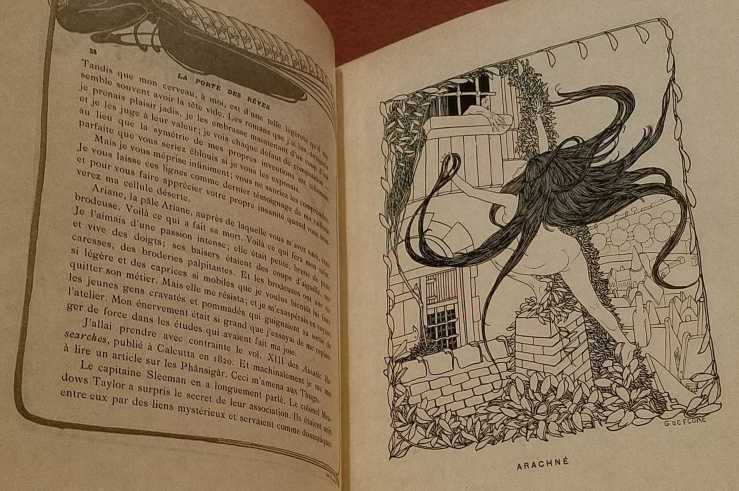

Marcel Schwob (1867-1905)
Georges de Feure, artist (1868-1943)
La porte des rêves

Edgar Allan Poe’s influence on Symbolist literature was most explicit in its prose. In Schwob’s Arachné, a man’s desire to possess his beloved leads him to strangle her to absorb her soul, exhaled in her dying breath. Things backfire. Transformed into a spidery creature, she uses his rope to ensnare him, confining his body and silencing his speech. Schwob’s fiction reflects a coterie of misogyny in the Symbolist movement. These authors explored the sinister artifice and automaton-like qualities of women as femmes fatales. Publisher Octave Uzanne, who relished the movement’s darker side, enlisted de Feure to illustrate Schwob’s fantastic tales for a livre de luxe. The artist’s elaborate ornamental borders, which manifest a stylistic progression from Symbolist decoration to Art Nouveau, were the only elements the writer praised.


Odilon Redon (1840-1916)
L’homme-arbre, ca. 1895
Charcoal and graphite pencil on paper


”Delirium” was but a fraction of what was to be discovered that day. The Morgan and its treasures will monopolize The Humble Fabulist’s upcoming pages. They are totally worth it, I promise!

The Morgan Library & Museum

May 7th, 2017

The art of having your head in the clouds

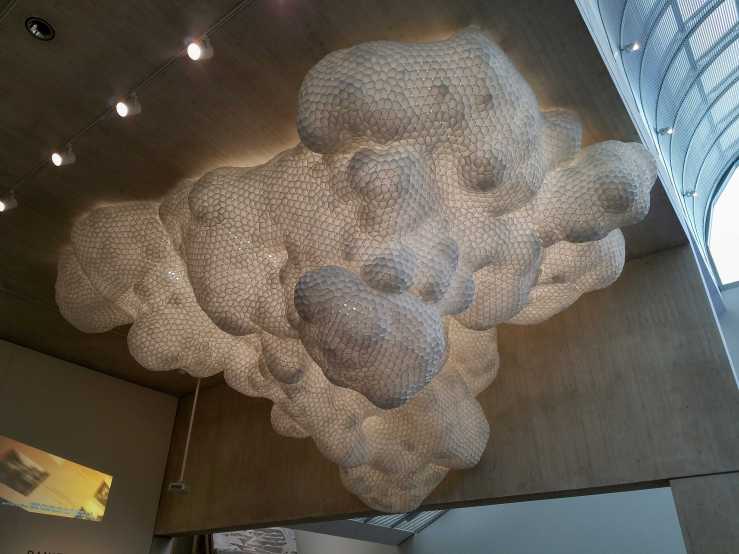
Walking into the galleries of the Linde Family Wing for Contemporary Art, I could hardly believe we were still in the same Museum.  Tara Donovan
Untitled, 2003
Styrofoam cups, hot glue

This undulating lattice of styrofoam drinking cups with glowing hollows and pliable rims was made to expand into the architecture of this particular space. To discover how they react to light and space in transcendent ways, Donovan experiments with huge volumes of manufactured materials. Clustered with an almost viral repetition, the cups above assume forms that both evoke natural systems and seem to defy the laws of nature. ”My work is mimicking the ways of nature, not necessarily mimicking nature” she notes. Here, it might suggest cellular growth or even the density of molecules in rolling clouds. 


Jonathan Borofsky
I Dreamed I Could Fly, 2000
Acrylic on fiberglass and incandescent lamp

Borofsky’s work is driven by the ideals of equality and harmony. Made especially for the wide open spaces of the Linde Family Wing, these flying figures ”are able to rise up and look down upon the whole planet… [they] see and feel that human beings are all connected together and that we are all one – no divisions and no walls.” 


Always a pleasure to discover a work by Borofsky; you can see two more works we came across in earlier trips, in Philadelphia and Baltimore.

Museum of Fine Arts, Boston
May 2nd, 2017

Museum of Fine Arts (MFA) Boston || Botticelli

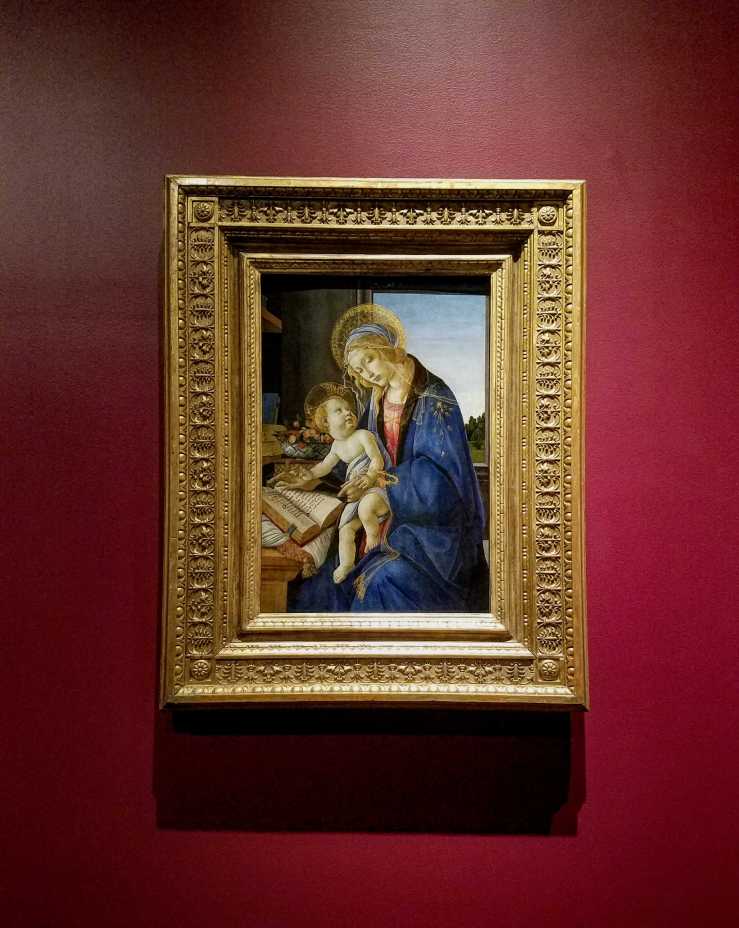
Botticelli and the Search for the Divine” was MFA’s main exhibition during our visit, and the ”largest, most important display of Botticelli’s works in the US” at that. While Botticelli’s subject matter, i.e. religious (Christian) imagery, leaves me unaffected, I can’t but admire his artistic dexterity, no doubt cultivated and enhanced by the support of his patrons, the wealthy Medici family, headed by Lorenzo the Magnificent. And, while his patrons largely dictated what the artist would create, they also provided the means for some of his most emblematic works. For instance, on Virgin and Child (Madonna of the Book), the artist used rare, expensive materials: green pigment from the mineral malachite; pure gold; and, most valuable of all, pulverized lapis lazuli, imported from Afghanistan, for the deep ultramarine of the Virgin’s robe. Materials that the majority of artists could very rarely afford – if at all.

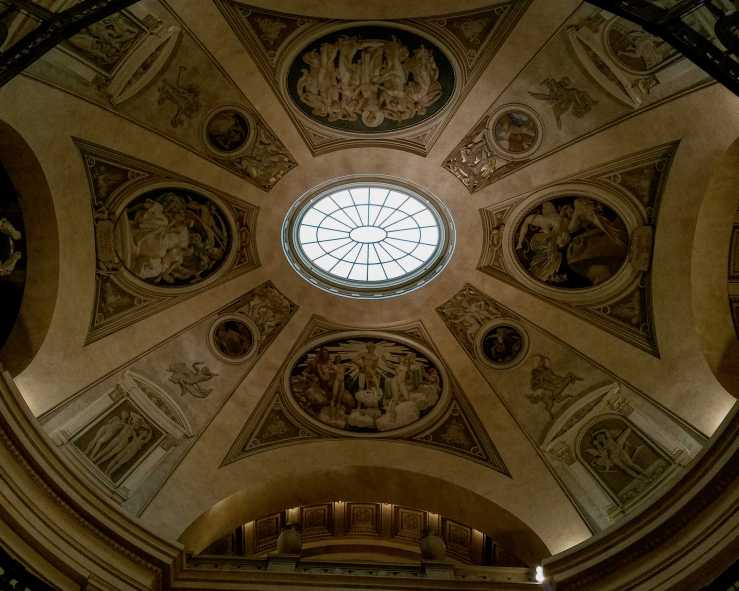
But first, in order to reach the exhibition, one had to walk through the Museum’s Rotunda – in itself a work of art, decorated as it is with John Singer Sargent’s murals.

”In 1916, the MFA’s Trustees invited Sargent to decorate three lunettes in the Rotunda. Sargent offered a counter-proposal, suggesting that the Rotunda’s coffered ceiling be redesigned to allow space for a program of sculptural reliefs representing various classical gods and heroes. Using a scale model, Sargent ultimately decided that the limited daylight coming through the oculus would compromise the reliefs’ visibility from the floor. He did integrate some reliefs into his overall program for the Rotunda, but Sargent instead embarked upon a series of paintings for the space, which was unveiled to great fanfare in 1921, along with his designs for the surrounding balustrades and the casts of Venus and Minerva seen in the niches above.”

Sandro Botticelli, Virgin and Child (Madonna of the Book), ca. 1478–80
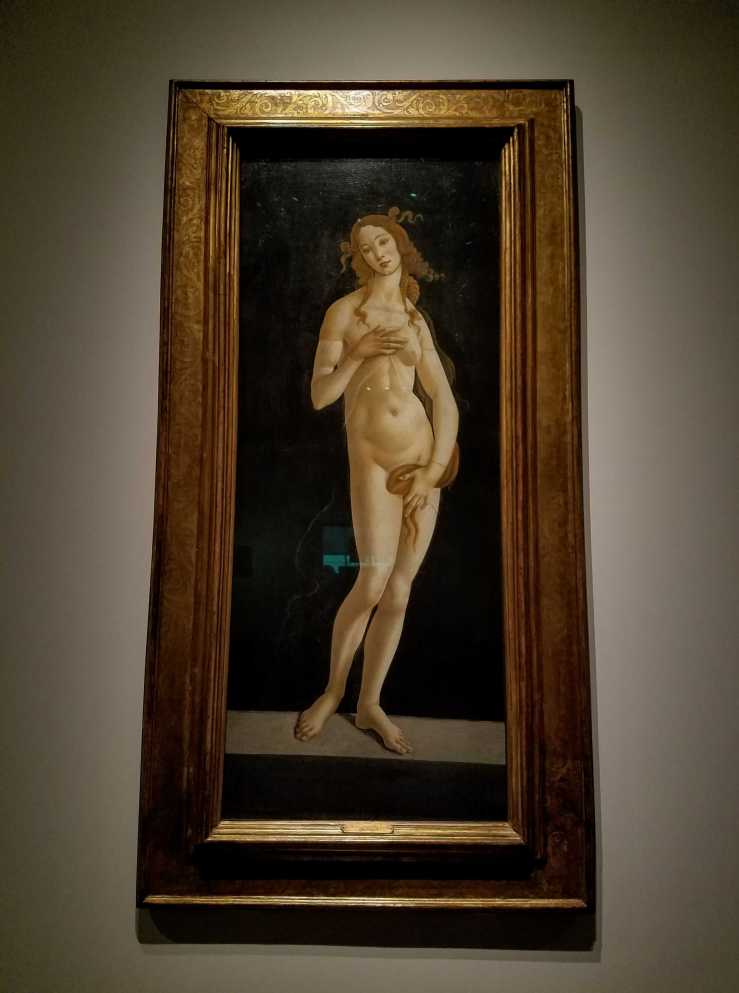
Tempera and gold on panel


Sandro Botticelli and workshop, Venus, ca. 1484-90. Oil on canvas, transferred from panel.
While this particular Venus (and another, now in Berlin) have been attributed directly to Botticelli in the past, some experts today regard them as painted under the master’s supervision by assistants.


Sandro Botticelli, Minerva and the Centaur, ca. 1482
Tempera on canvas


Sandro Botticelli, Saint Augustine in his Study, ca. 1480
Detached fresco


May 2nd, 2017

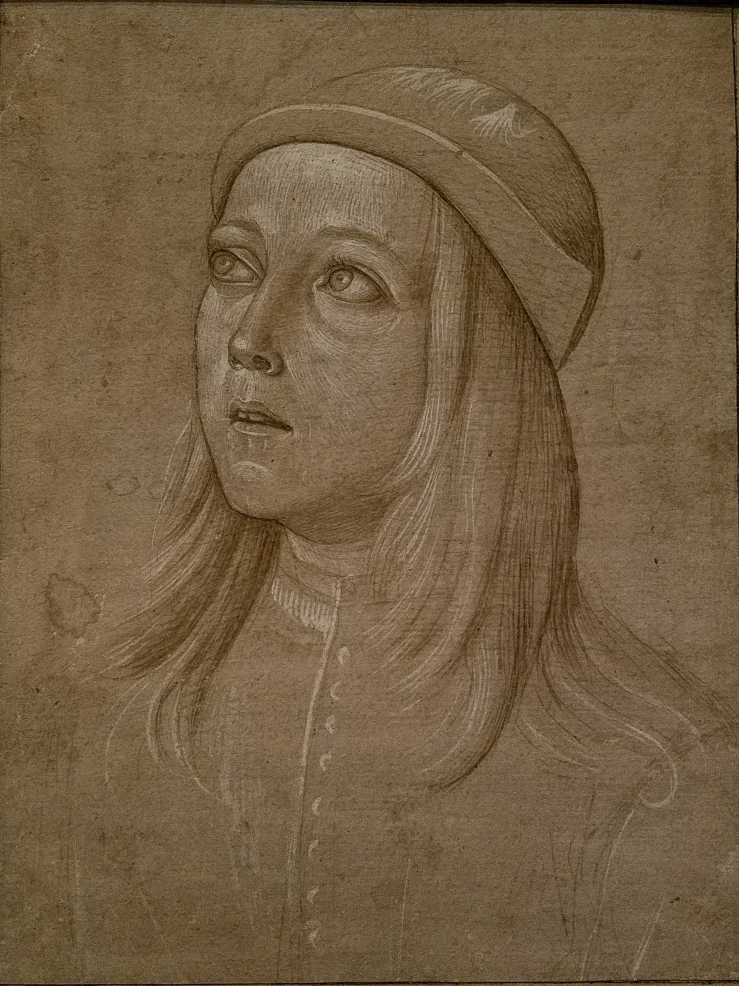
The Woodner Collections: Master Drawings from Seven Centuries

Sheer delight continued with the discovery of these masterpieces dating from the 14th to the 20th century.

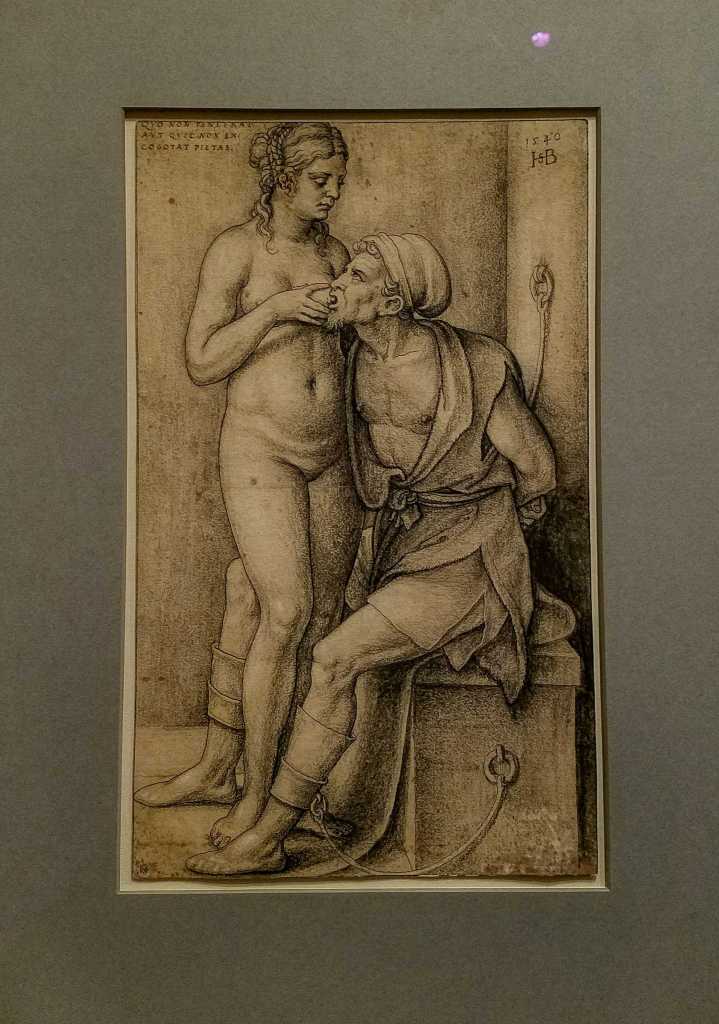
Beham, Sebald, 1500 – 1550, Cimon and Pero (1540), pen and black ink with charcoal heightened with white on heavy laid paper

The story of Cimon and Pero was told by the first-century historian Valerius Maximus in his Memorable Deeds and Sayings. Imprisoned without food or water, the aged Cimon was saved from death by the visits of his daughter Pero, a young mother who nourished him with breast milk. Pero’s selfless act, which came to be known as ”Roman charity”, was regarded as a model of filial piety.

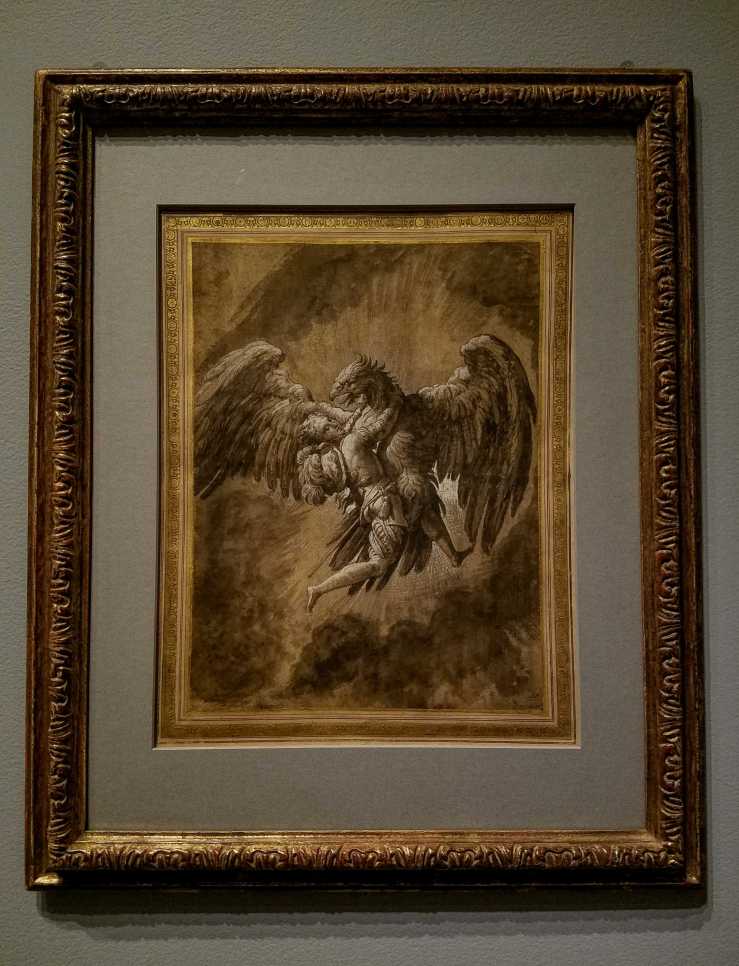
Niccolò dell’Abbate, 1509 or 1512-1571, The Rape of Ganymede (c. 1545), pen and ink with wash and watercolour over traces of chalk, heightened with white on paper washed light brown

Ganymede was a handsome shepherd who was carried off by Zeus (shown here in the form of an eagle) to become cupbearer to the Gods. The youth is usually shown nude or in classical dress, but here he wears the elegant costume of a sixteenth-century courtier.


Federico Barocci, probably 1535-1612, Head of a Bearded Man (1579/1582), chalks on blue paper
Luca Signorelli, 1445/1450 – 1523, Bust of a Youth Looking Upward (c. 1500), chalk, partially indented with a stylus
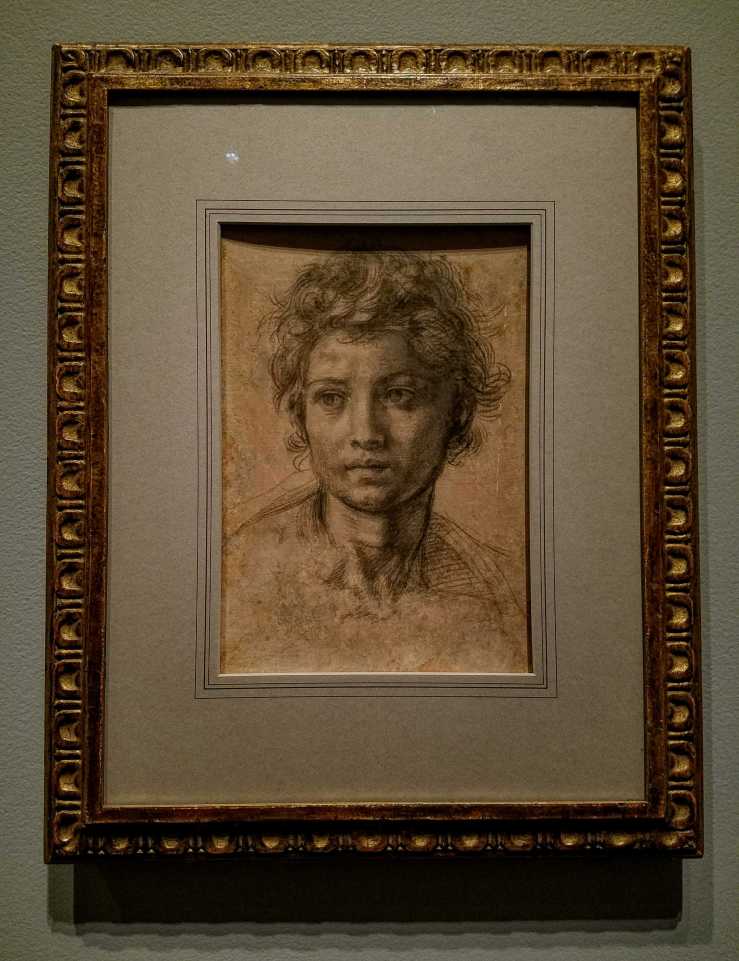
Andrea del Sarto, 1486-1530, Head of Saint John the Baptist (c. 1523), chalk
Jean-Baptiste Greuze, 1725-1805, Bust of an Old Man, probably 1763, chalks with stumping, wetting and erasure

After completing a painting, Greuze often made finished drawings of the heads of some of the individual figures. These ”têtes d’expression” (expressive heads) were intended to be sold and appreciated as independent works of art. 

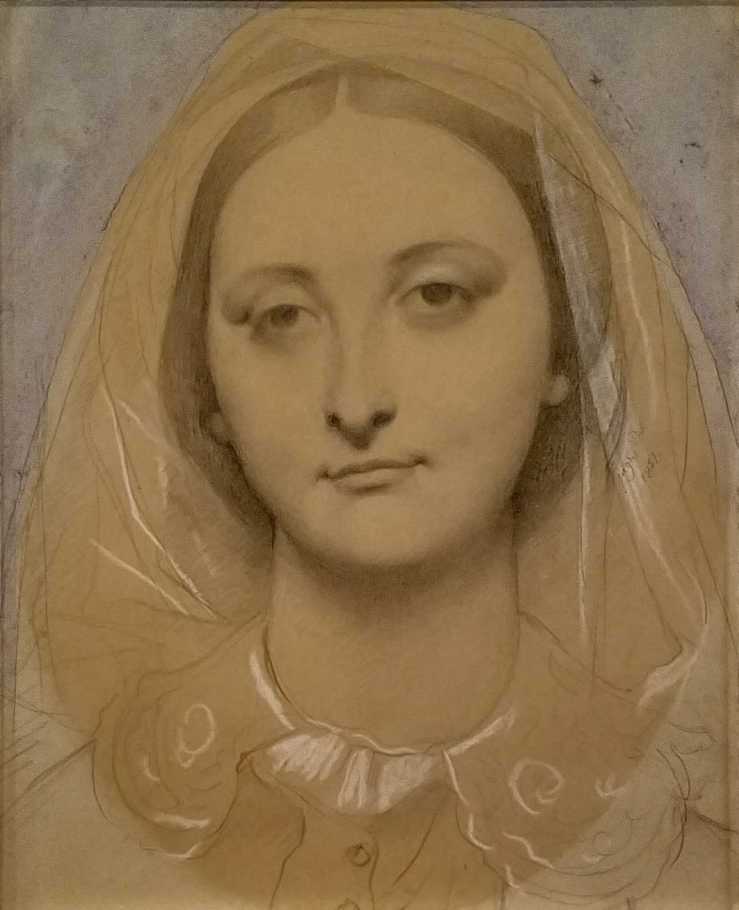
Jean-Auguste-Dominique Ingres, 1780-1867, Mademoiselle Mary de Borderieux (?), 1857, graphite and watercolour with white highlights
Edgar Degas, 1834-1917, Self-Portrait, c. 1855, chalk
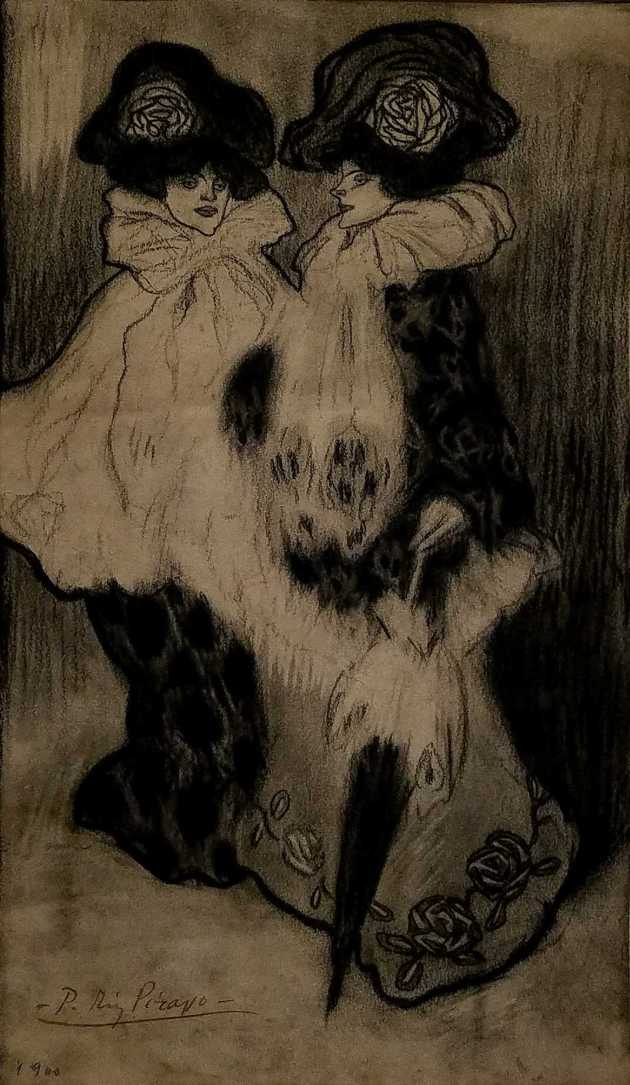
Pablo Picasso, Spanish, 1881 – 1973, Two Fashionable Women, 1900, charcoal
Henry Fuseli, 1741-1825, Satan Defying the Powers of Heaven, late 1790s, graphite, chalk and wash

National Gallery of Art

”Washington, DC—Ian Woodner assembled an extraordinary collection of over 1,000 old master and modern drawings, making him one of the 20th century’s most important collectors. More than 150 works from his collection now reside at the National Gallery of Art in Washington. While Ian Woodner gave some works himself in the 1980s, the majority have been donated by his daughters, Dian and Andrea. His daughters have also made other gifts and have pledged works from their personal collections. The Woodner Collections: Master Drawings from Seven Centuries brings together for the first time the best of Ian Woodner’s collection with some of the works given and promised by Dian and Andrea Woodner. […] 

Some 100 drawings dating from the 14th to the 20th century are presented in an exhibition of masterworks donated by one of the great connoisseurs of the 20th century, Ian Woodner, and his daughters, Dian and Andrea. The Woodner Collections includes drawings executed by outstanding draftsmen such as Leonardo da Vinci, Albrecht Dürer, Raphael, Jean-Auguste-Dominique Ingres, Edgar Degas, and Pablo Picasso, among many others.”

They were on view in the West Building of the National Gallery of Art through July 16, 2017.

April 25th, 2017

Natural History Course

Walking through the immensity of the Museum of Natural History, in Upper West Side. Every room another wonder of our Cosmos.

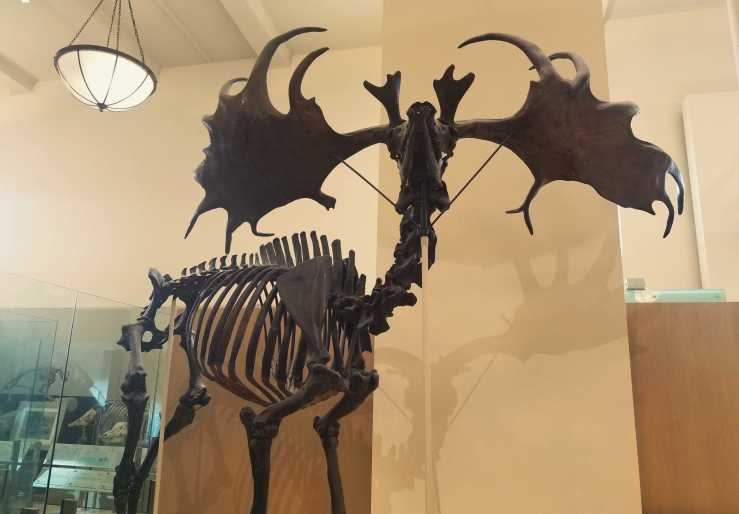
Megaloceros

Megaloceros (Greek: μεγάλος – megalos + κέρας – keras, meaning “Great Horn”) may be the largest deer ever to have lived. It belongs to the group called artiodactyls (Greek: άρτιος – ártios + δάκτυλος – dáktylos, meaning ‘even finger/toe’) – hoofed mammals that usually have an even number of toes. Generally, only male artiodactyls have antlers. In living deer, they are used during the mating season for wrestling with other males and attracting females. Then, they are shed. This means that Megaloceros regrew its enormous antlers every year!

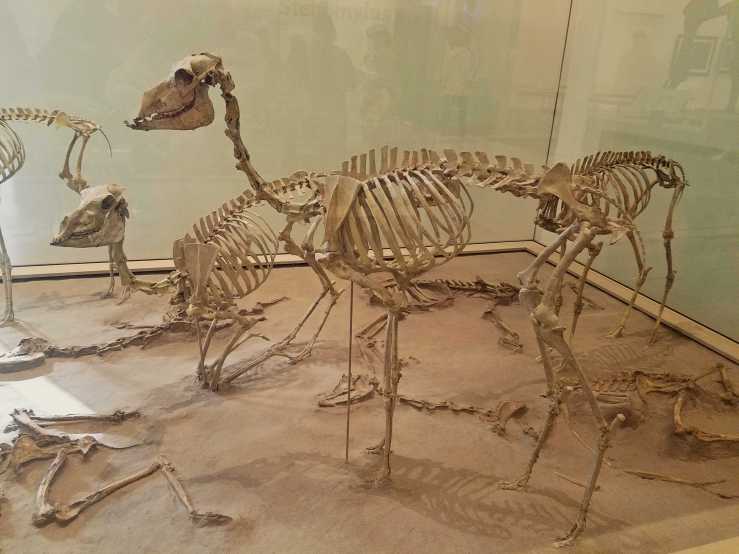
Stenomylus hitchcocki

Stenomylus (Greek στενός – stenos “narrow” and μύλος – milos [latin: mola] “molar” meaning ”narrow tooth”. This group of camel skeletons was buried in dune sand in western Nebraska 22 million years ago. These individuals are only some of the numerous completely preserved camel skeletons that were found together at a site in Agate Springs National Monument. Stenomylus lived in a region where dune fields extended widely. It was relatively primitive in its body skeleton, but had the more advanced feature of very high-crowned teeth – presumably to cope with sand-laden food, which rapidly wears down the teeth. 

If I understood correctly, ”hitchcocki” was added in honour of Dr. Edward Hitchcock, a geologist and President of Amherst College, whose Ichnology Collection of dinosaur footprints and tracks is invaluable (read more about it here).


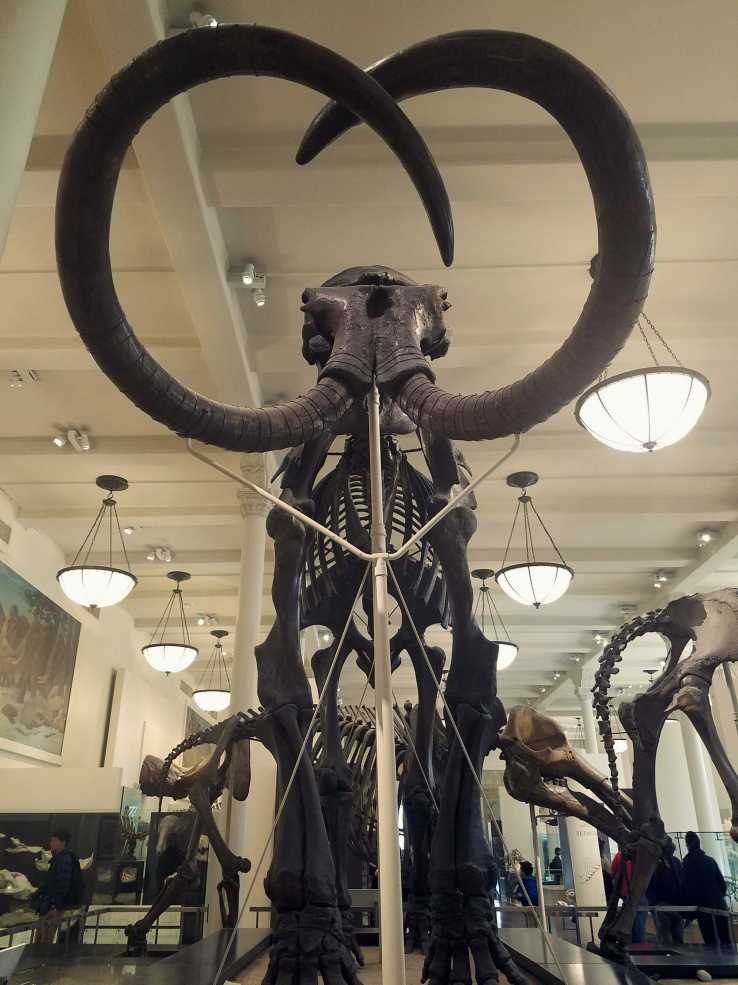
Mammuthus

Mammoths were widespread during the Ice Ages. Some had woolly fur to keep them warm. This is a ”non-woolly” mammoth that lived in southern parts of the United States, which were not covered by glaciers. Like living elephants, Mammoths had trunks. We can’t see it on this skeleton, because soft parts are rarely preserved as fossils. But we can see where the trunk was attached, at the large single opening high on the front of the skull. The Greek myth of one-eyed giants, the Cyclops, may have arisen when ancient people found fossil provoscidean skulls and mistook this nostril opening for an eye socket. Most mammoths died out by 11.000 years ago but a few somewhat dwarfed forms persisted until about 3.000 years ago on remote arctic islands.

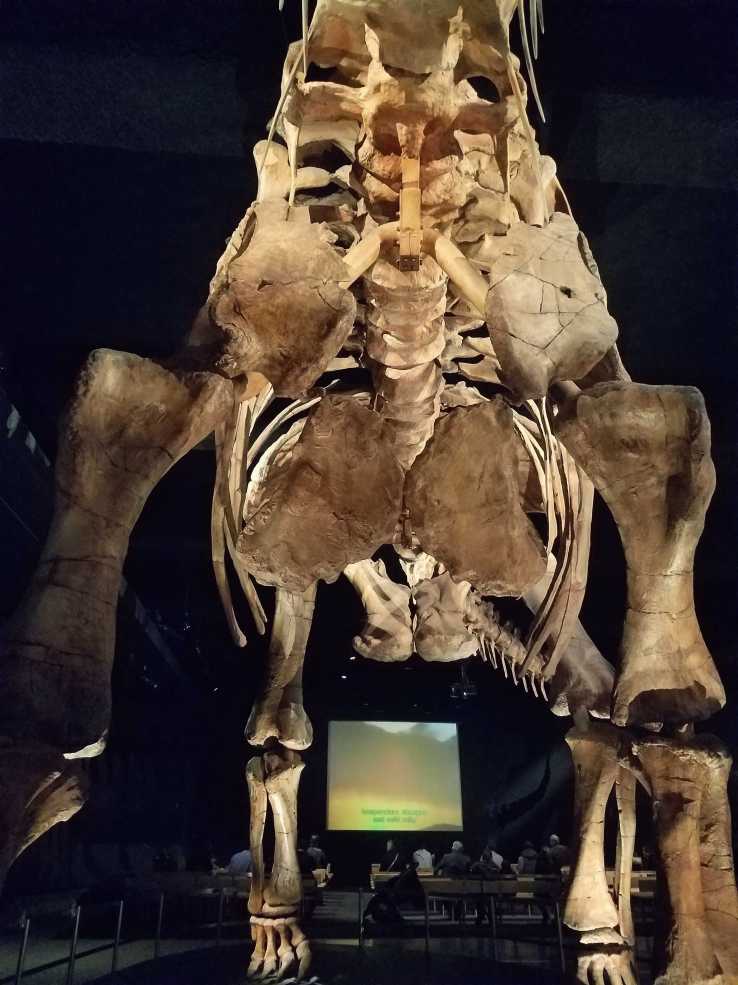
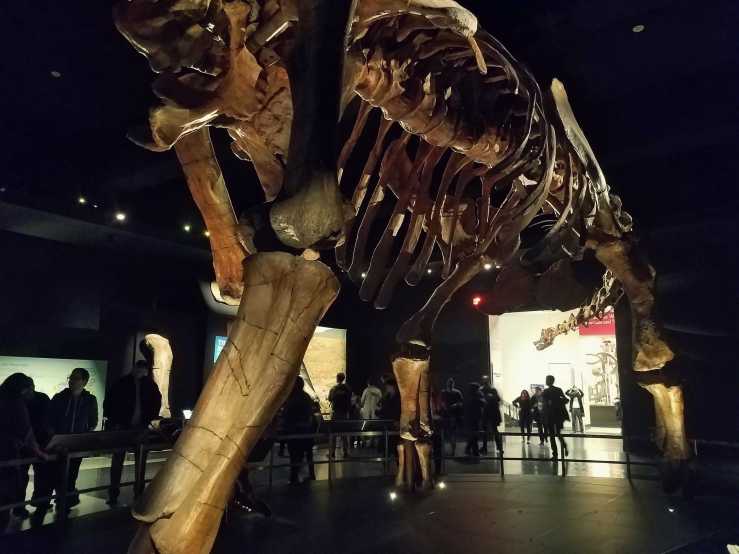
Titanosauria
(click on photo for a panoramic view and caption)

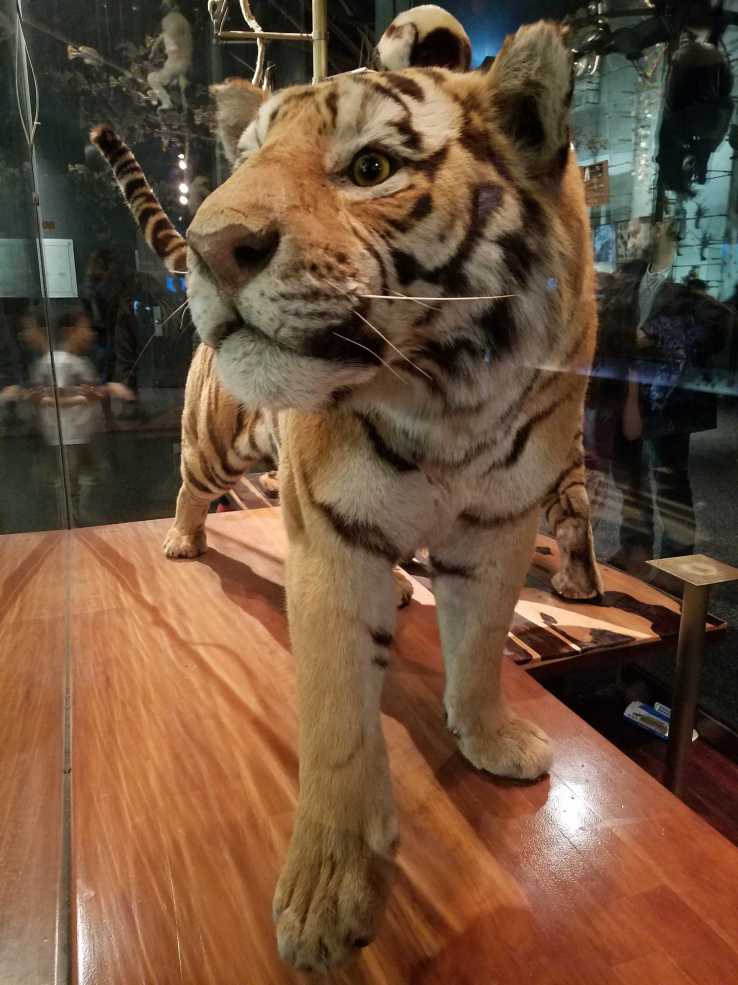
This stuffed beauty
(although I instinctively dislike stuffed animals)

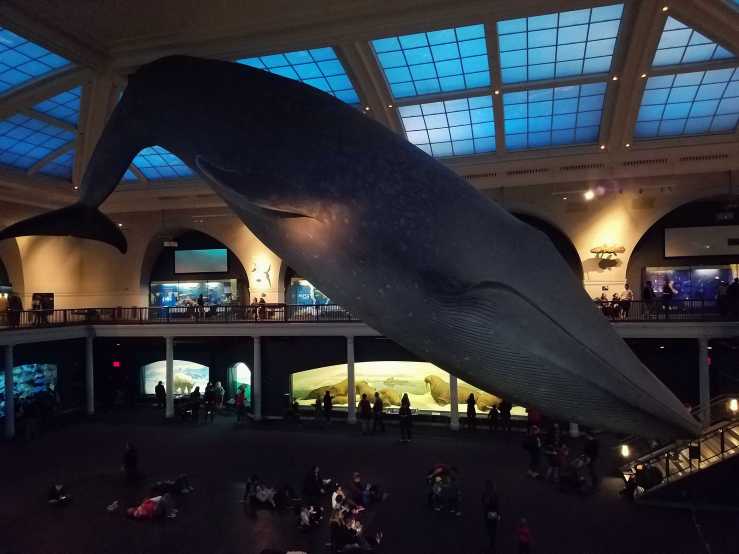
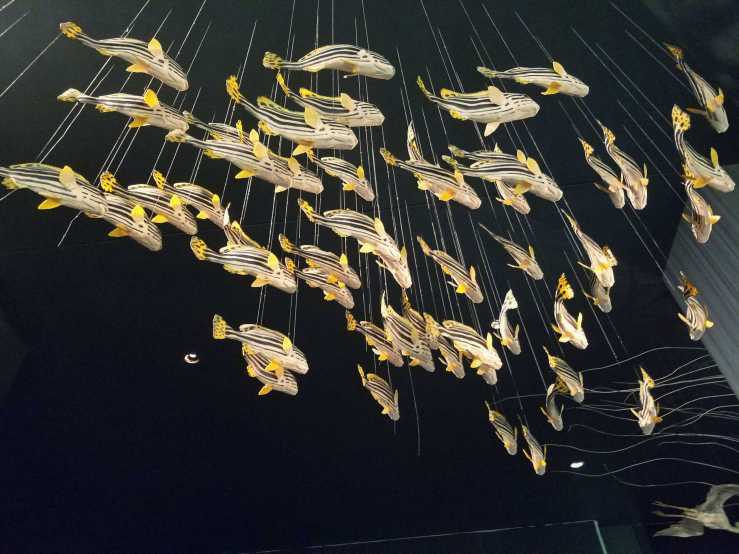
Creatures of the sea hanging in mid-air
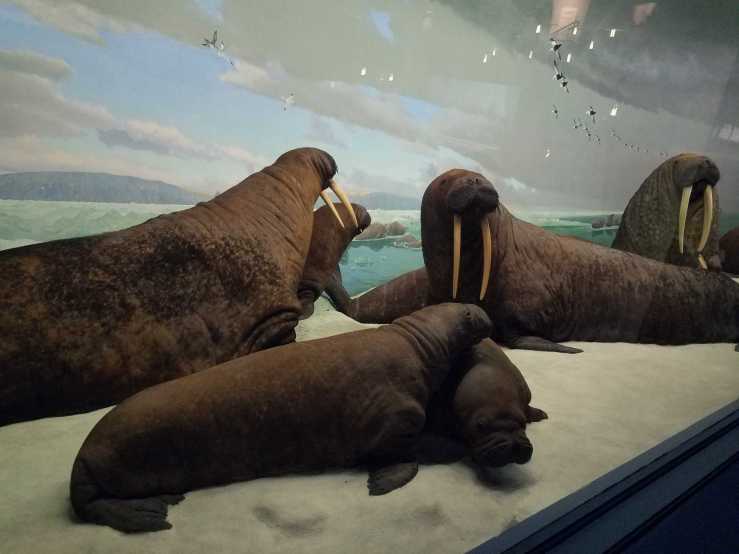
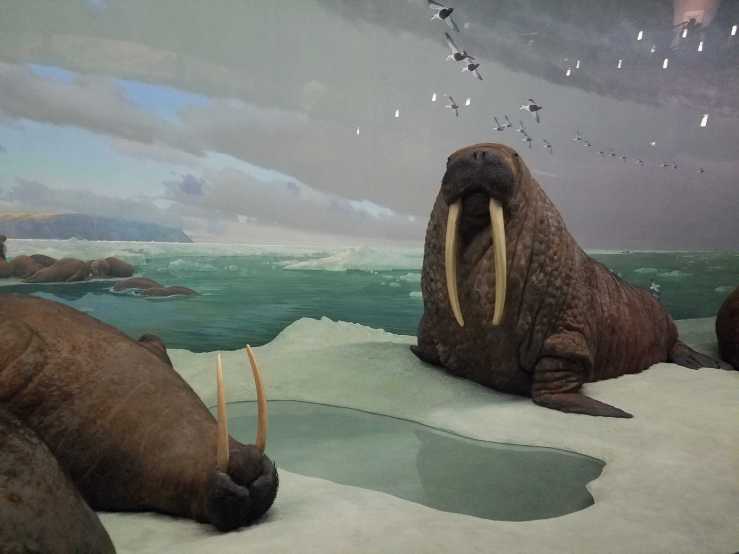
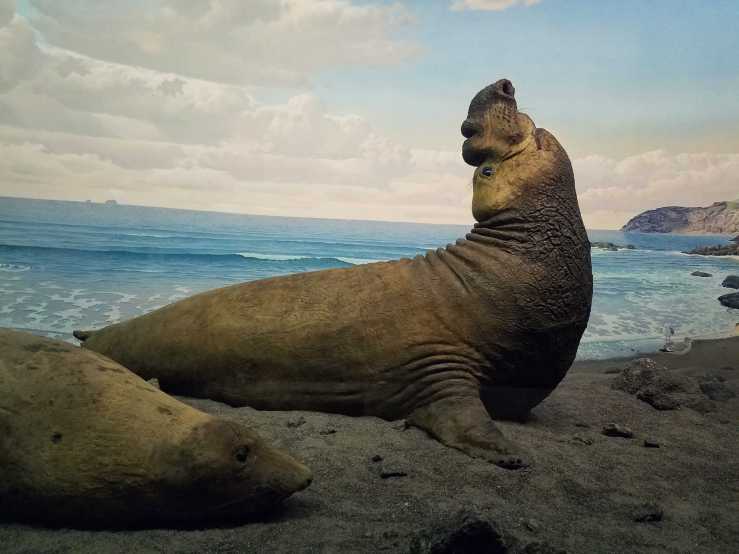
And those that came from the cold

American Museum of Natural History

November 13th, 2016