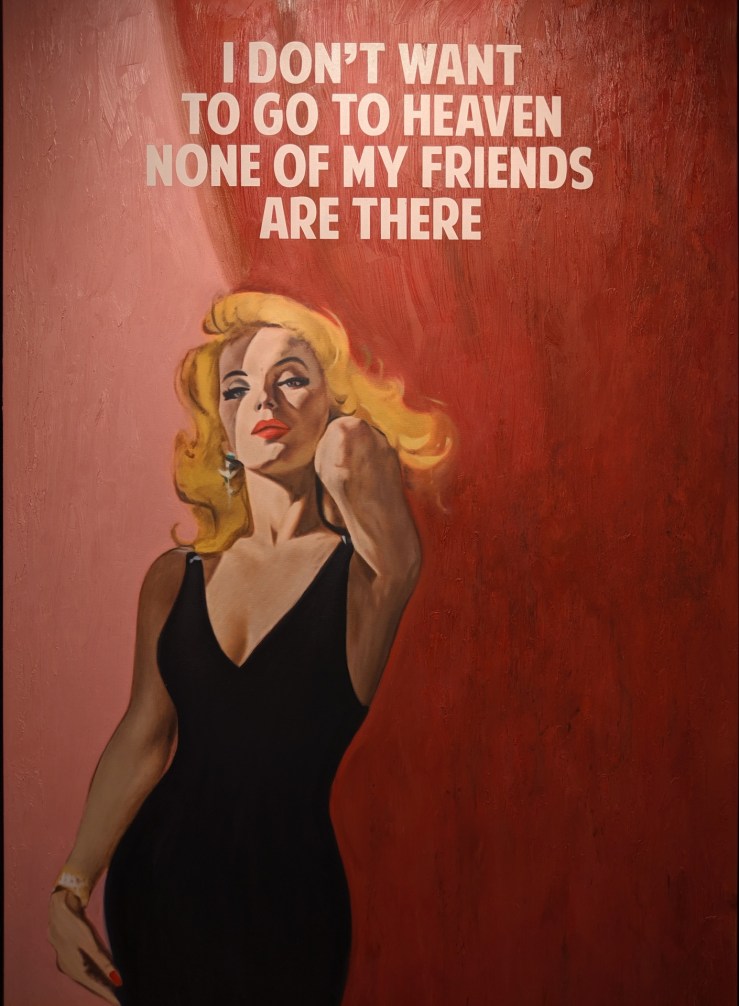
The Connor Brothers @ Chase Contemporary
Gallery hopping, Chelsea, NYC
September 21st, 2019
In Japanese

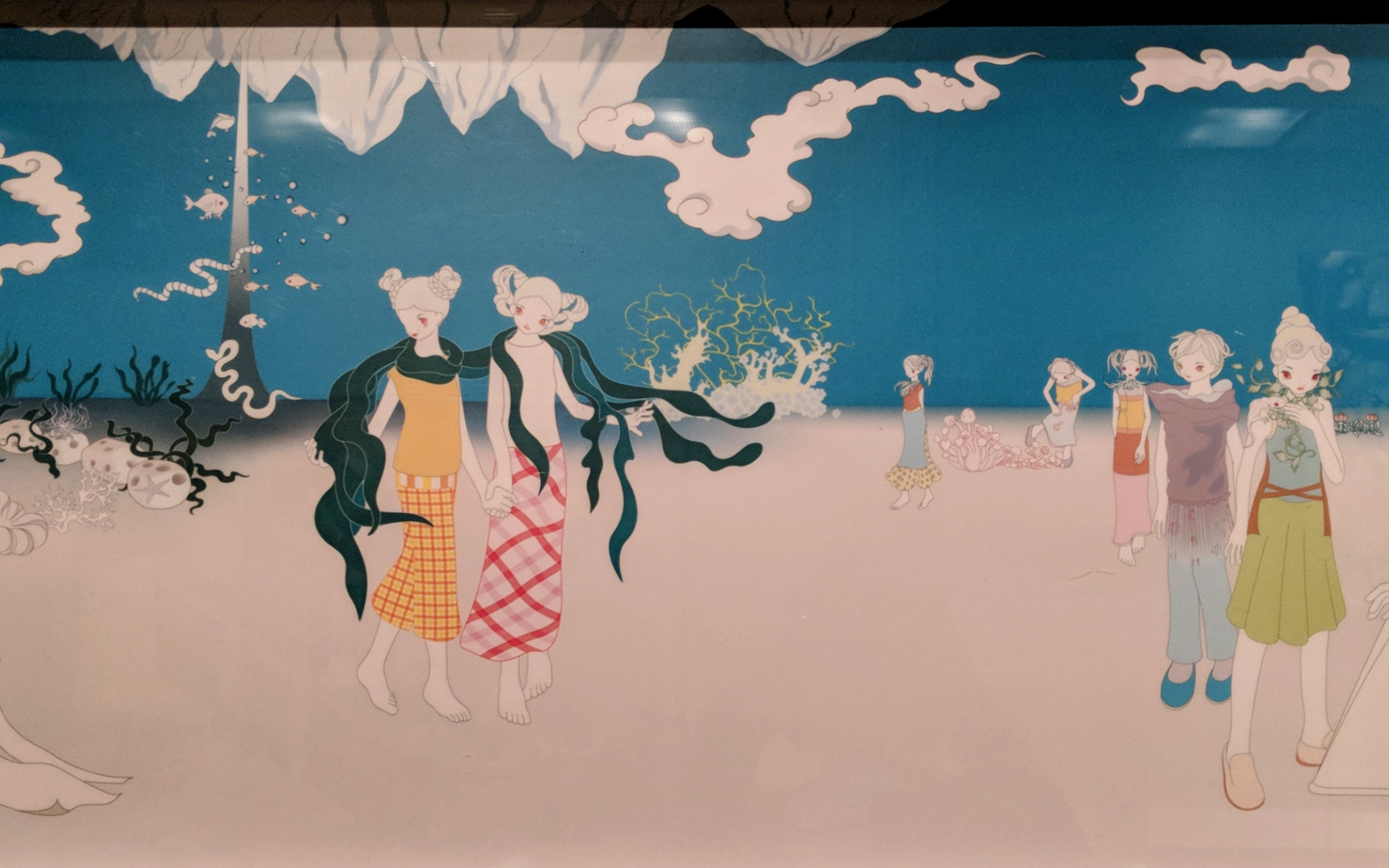


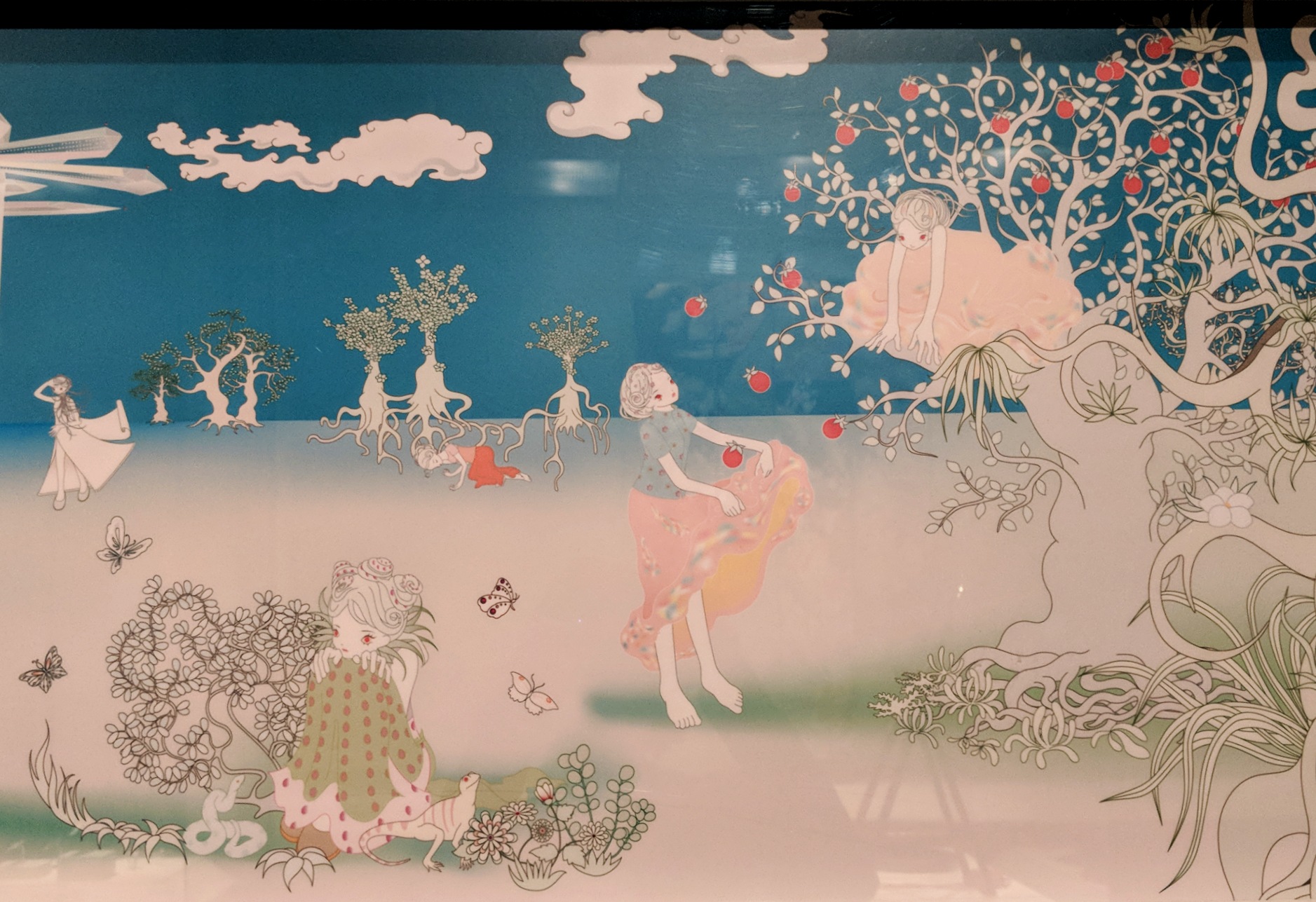
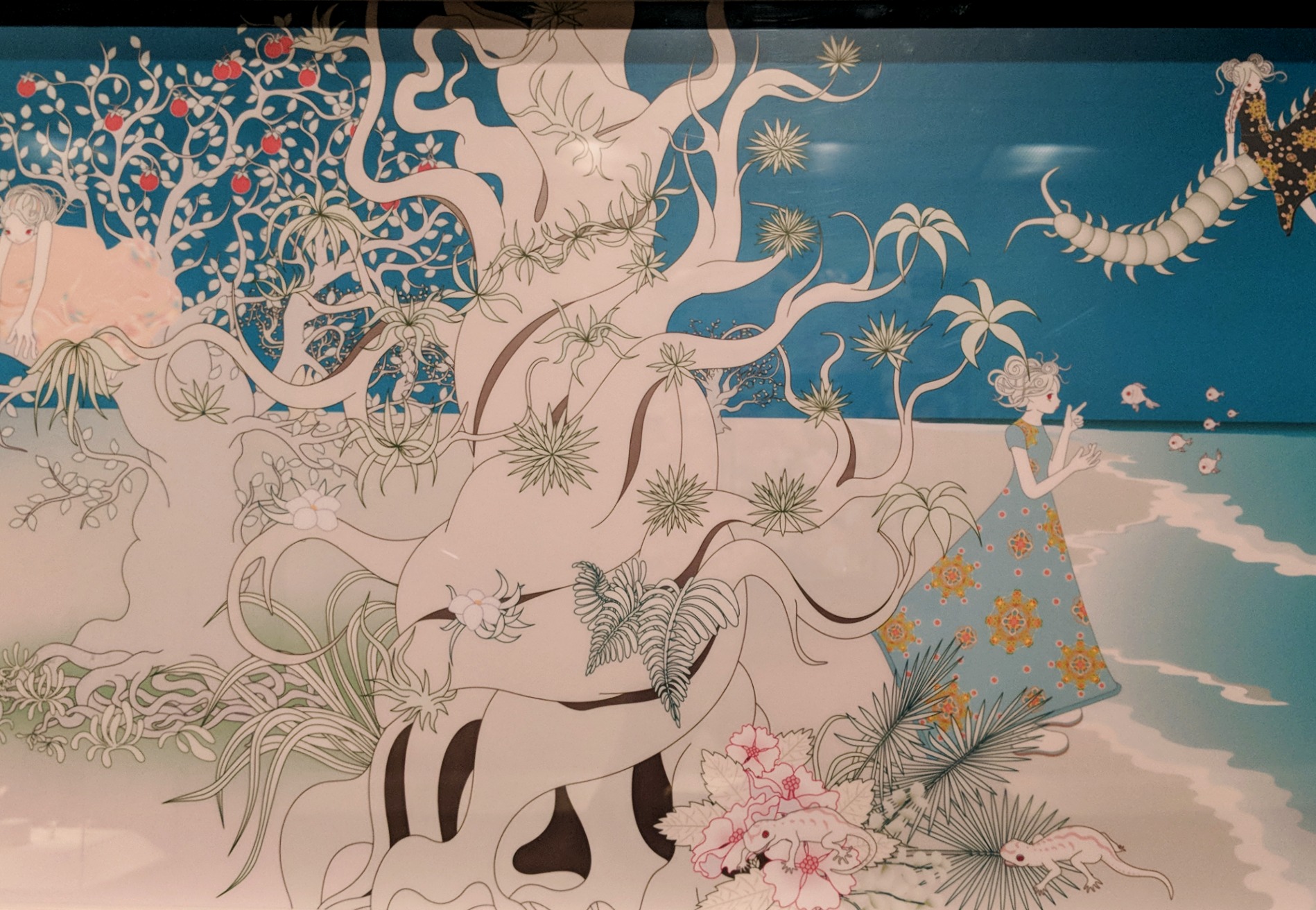
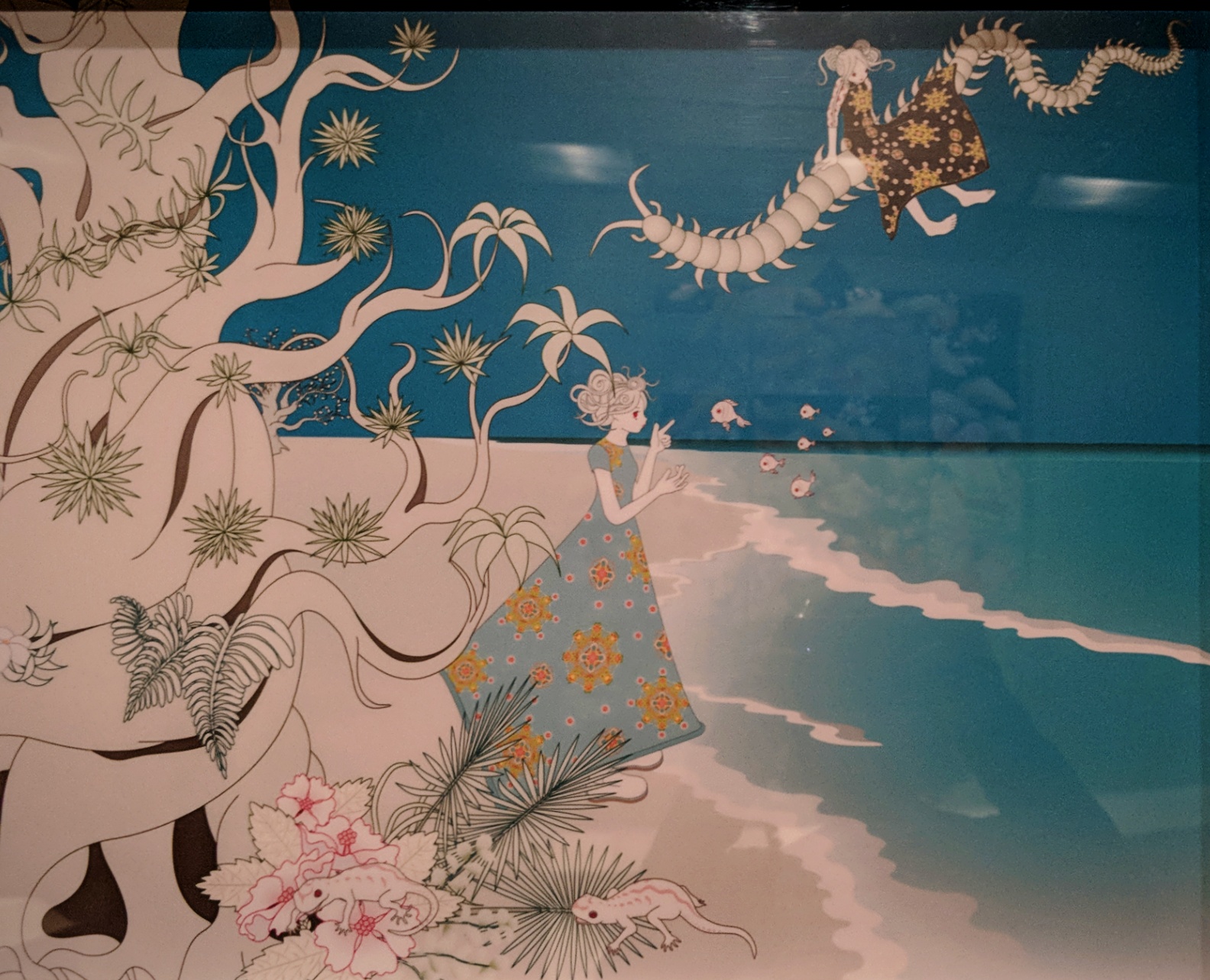
Red-Eyed Tribe, 2000
Digital ink-jet print
Chiho Aoshima, b. 1974
With no formal training in art, Chiho Aoshima made her debut as an artist with a series of digital prints that were created by her masterful use of Adobe Illustrator. Originally designed as an advertisement for an Issey Miyake fashion show, this work features red-eyed nymphs in a fantasy land.
”A member of Takashi Murakami’s Kaikai Kiki collective, Chiho Aoshima is part of a group of young Japanese artists whose work investigates-and indeed is fueled by-Japan’s obsession-inducing anime and manga culture. Aoshima uses Macintosh illustration software to produce cartoon-like images that merge traditional elements of Japanese art with the latest computer design techniques. This large digital print appropriates the traditional Japanese handscroll format to create a surreal landscape of biomorphic shapes, flying caterpillars and inverted mountains. Aoshima’s world is inhabited by red-eyed females in contemporary (circa 2000) Japanese fashions, infusing the cult of cuteness with a slightly more sinister subtext.”
The digital print is 19 5/8 x 138 in. (49.8 x 350.5 cm). You can see it in full length here.
Source: SAM Collection
June 15th, 2018
Staring into your soul.
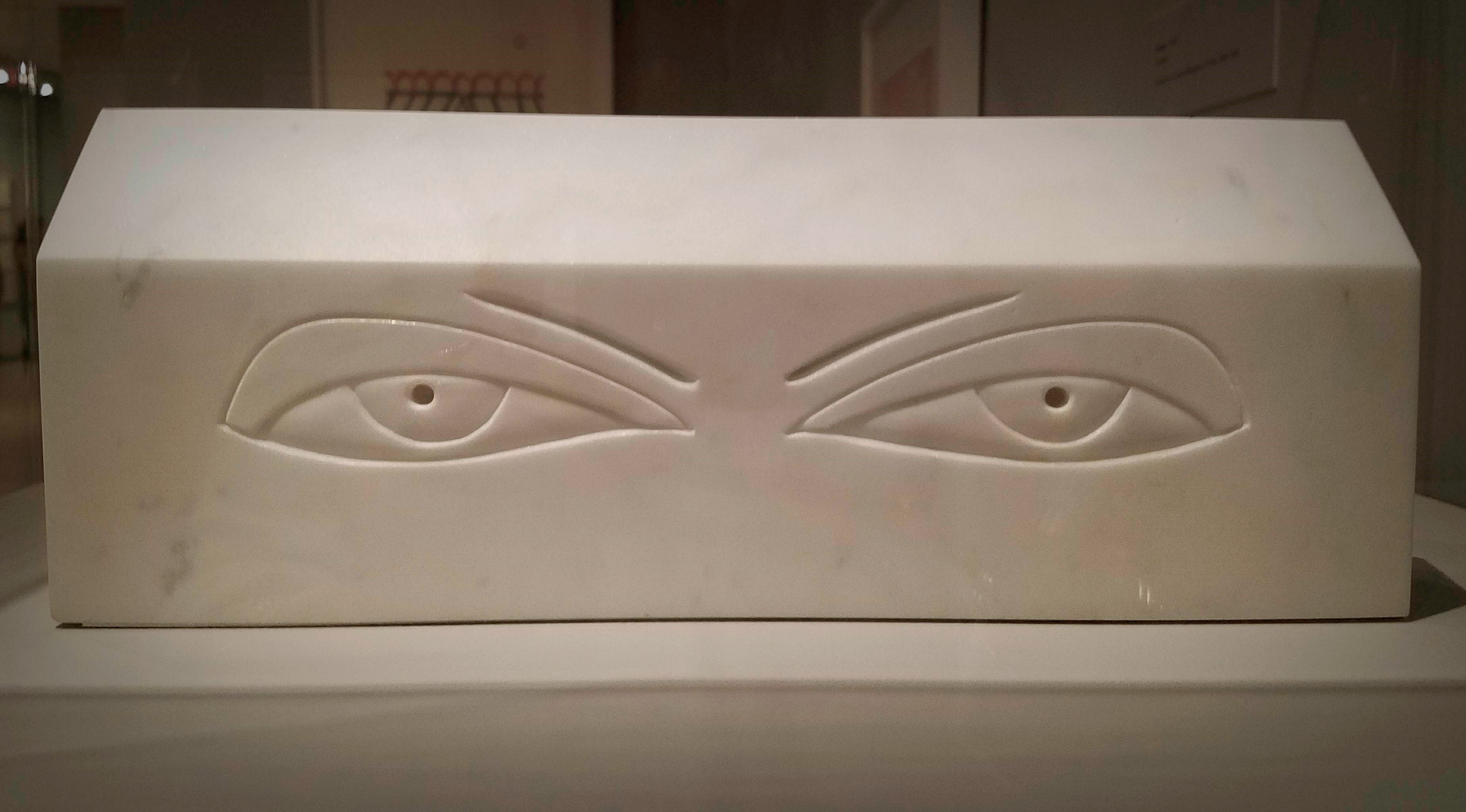 House 1994
Marble
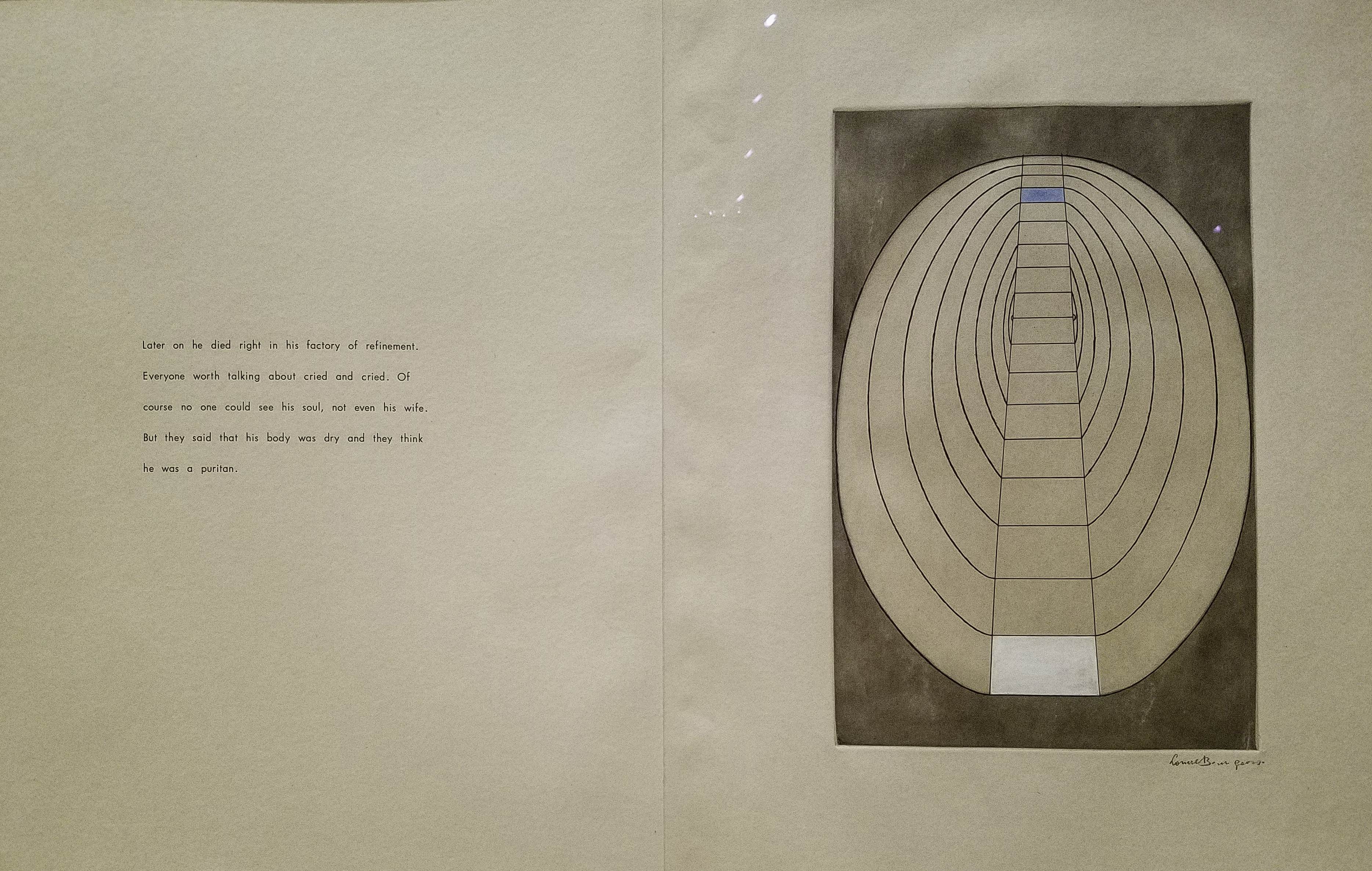
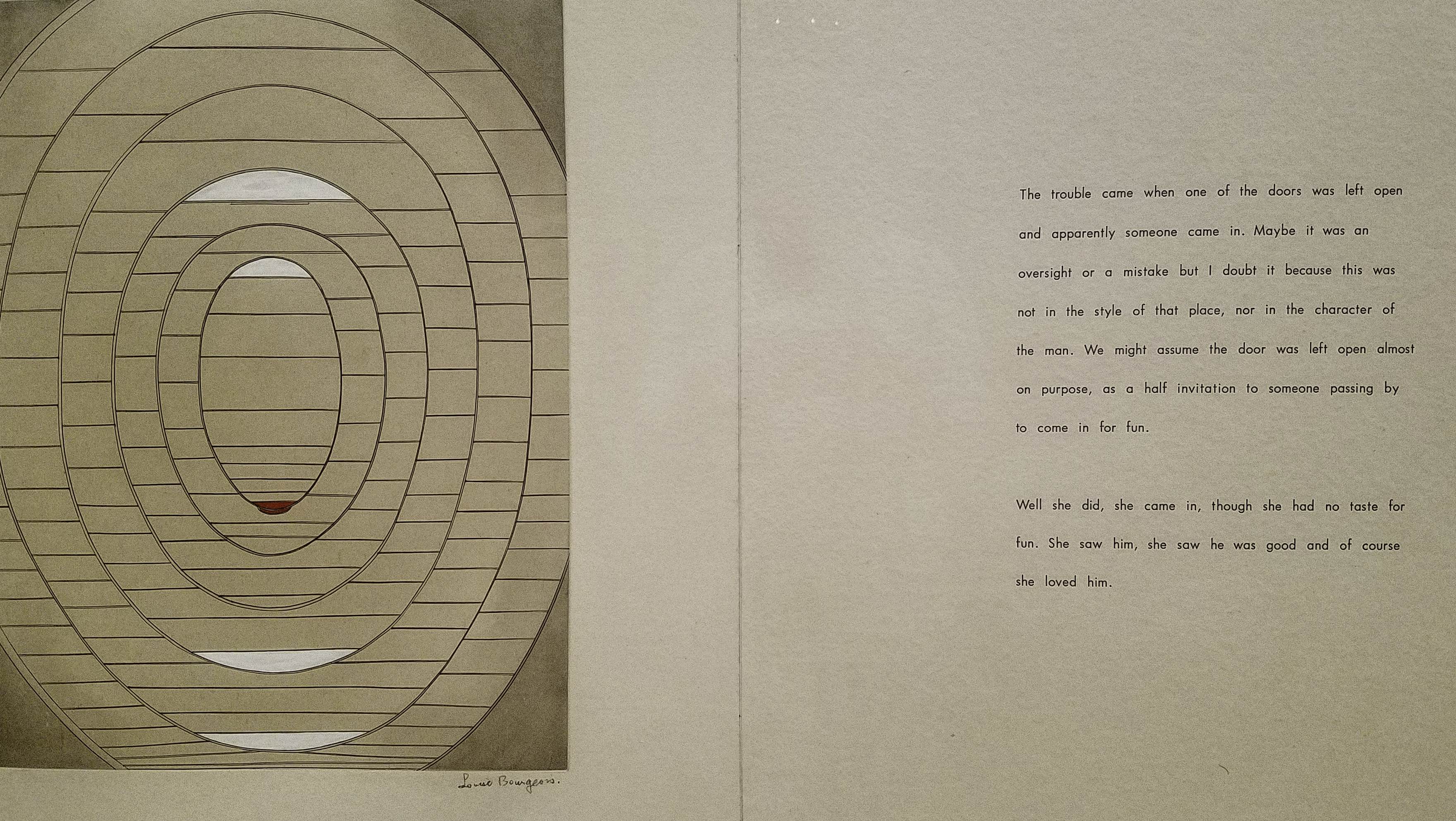 the puritan 1990-97 (text: 1947)
Folio set no. 3: engravings with selective wiping, gouache and watercolour additions
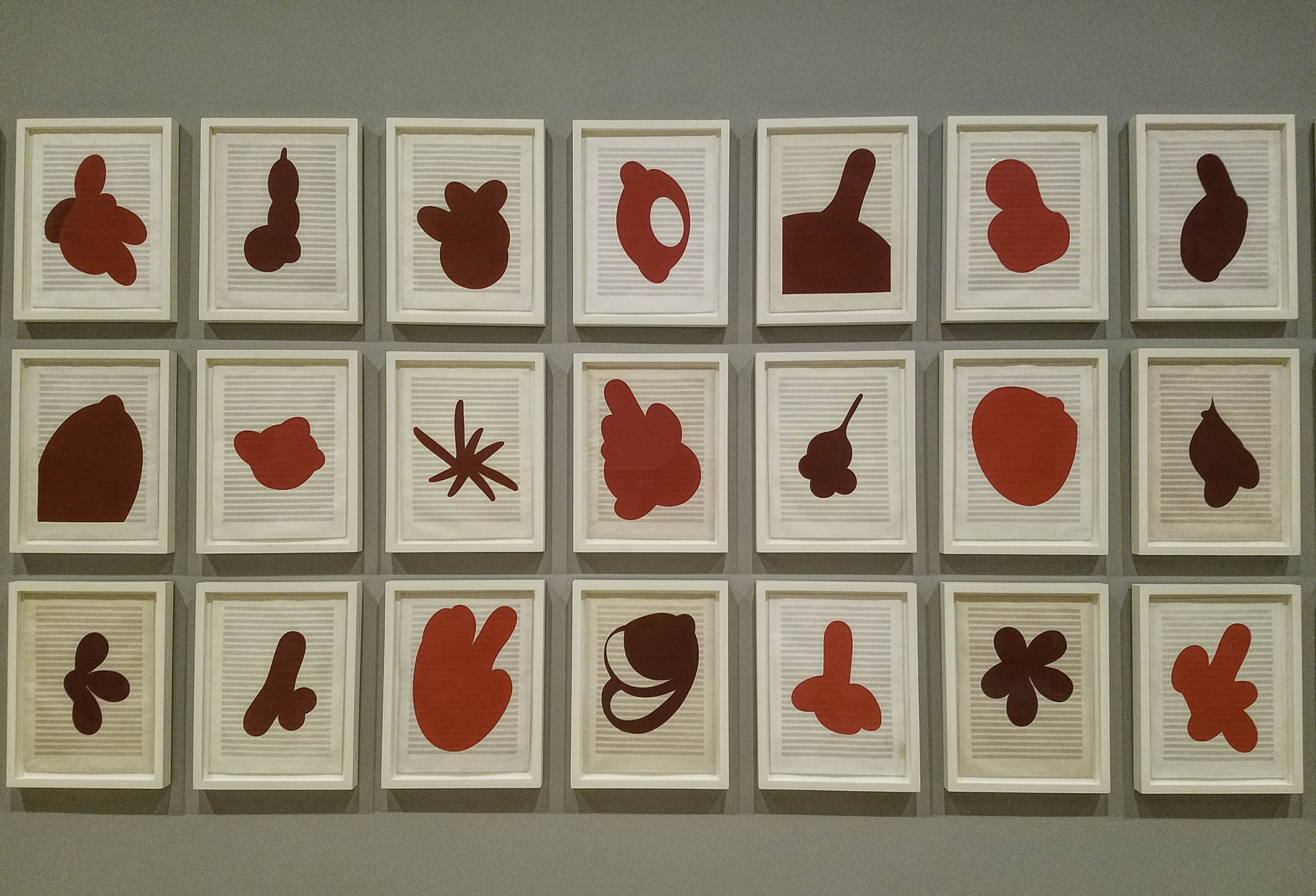 Lullaby 2006
Series of twenty-five screenprints on fabric: title sheet and twenty-four compositions
Bourgeois created shapes by turning and tracing common household objects – scissors, a knife and a candy dish, among them. She published this set herself, under the imprint Lison Editions. Lison, Lise, Lisette, Louison and Louisette were among her childhood nicknames.
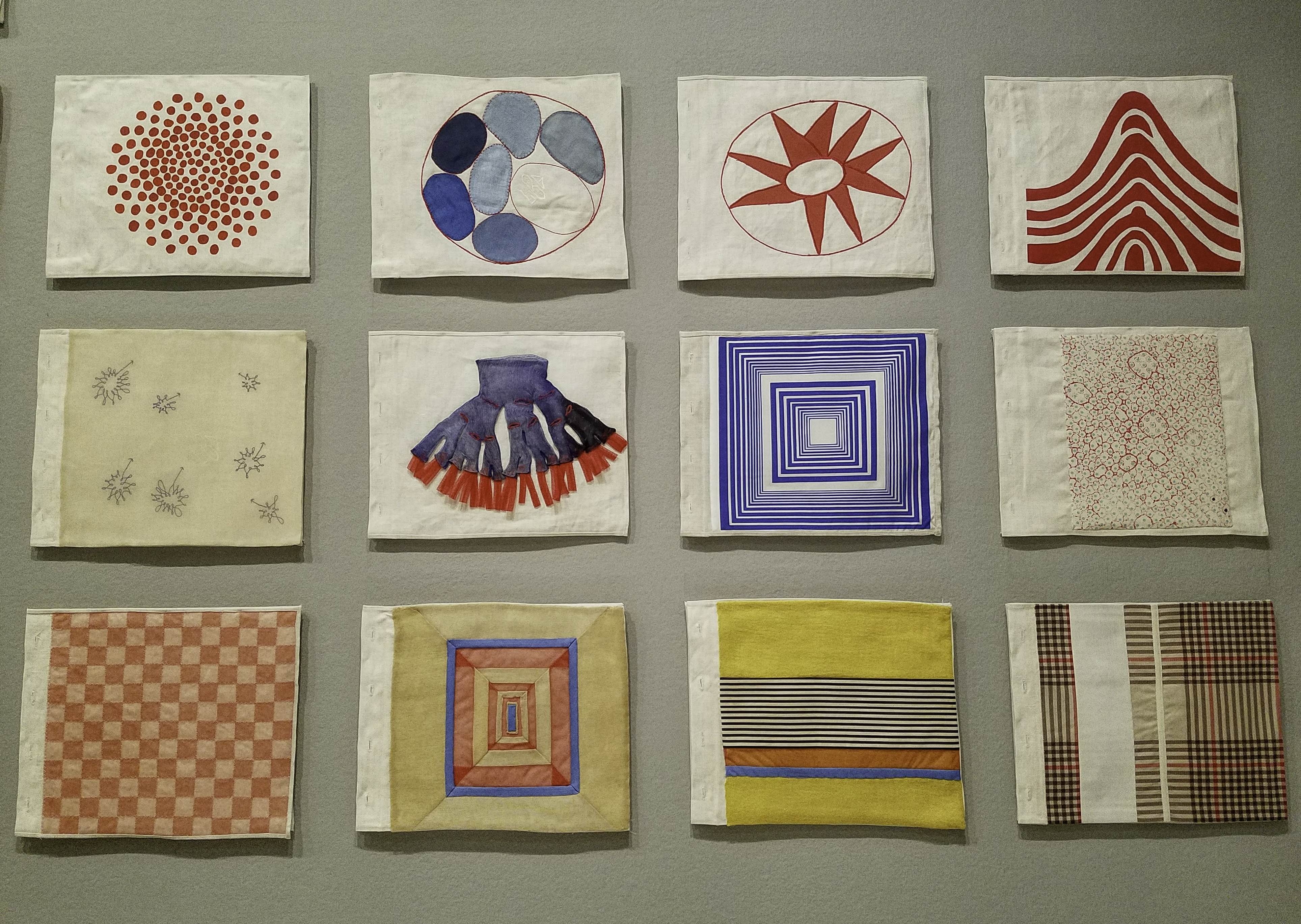
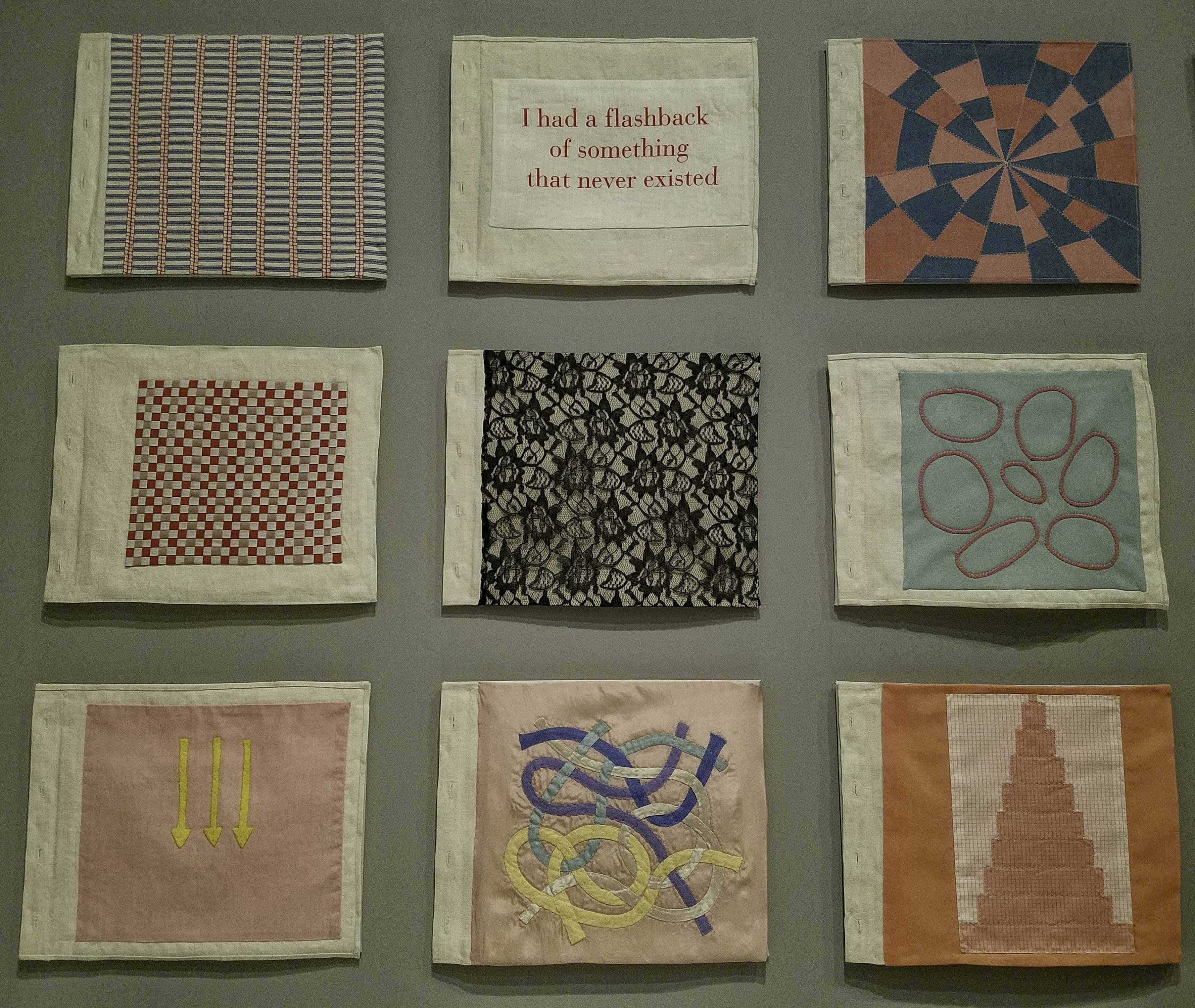 Ode à l’Oubli 2004
Fabric illustrated book with thirty fabric collages and four lithographs
The pages of this book are composed of linen hand towels saved from her trousseau. Many contain the embroidered monogram LBG (Louise Bourgeois Goldwater). Bourgeois later issued and editioned version of this book in twenty-five examples. In that version, the pages are tied together through buttonholes instead of bound so all of the pages can be displayed simultaneously, as seen on this wall.
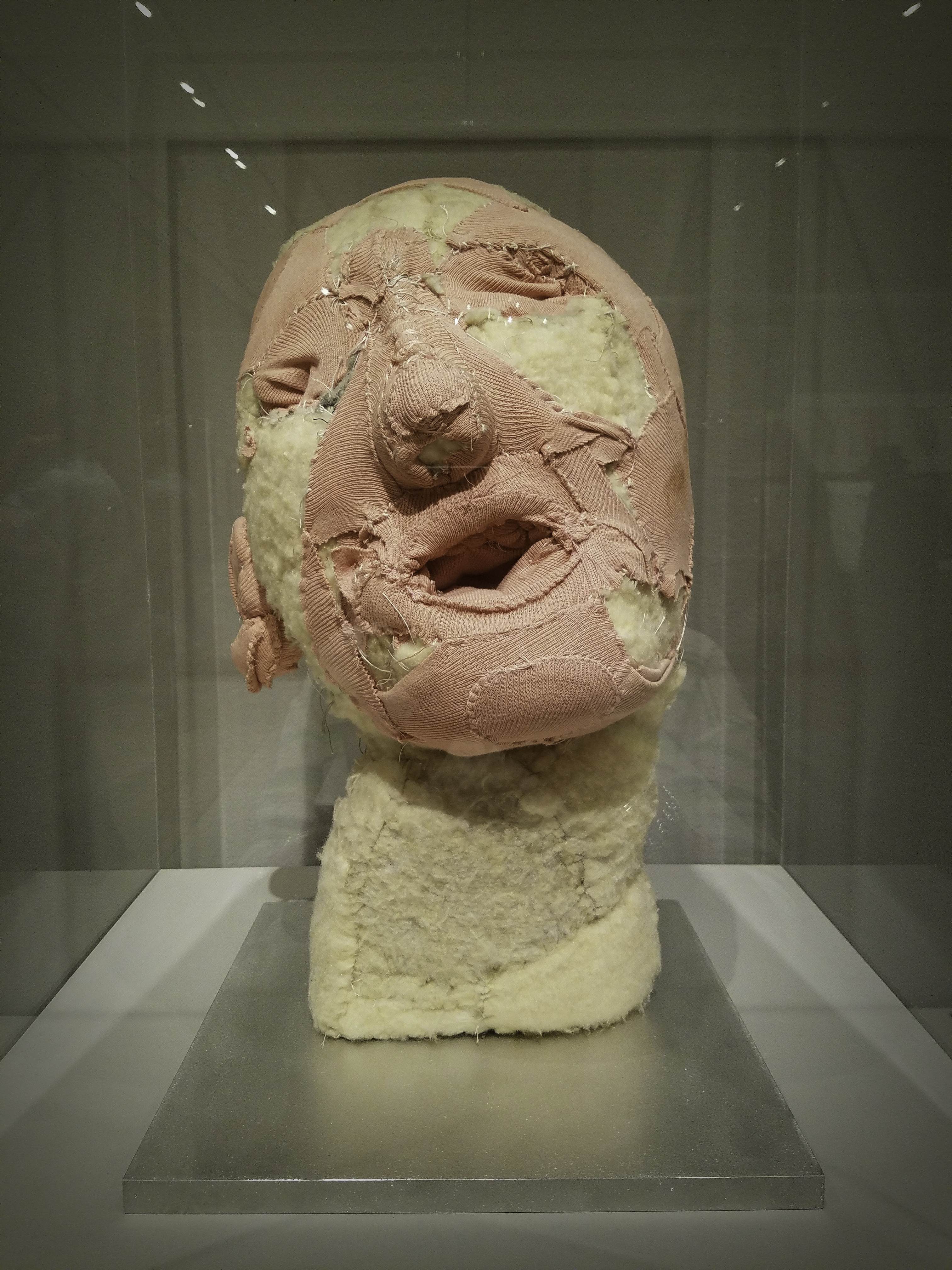 Untitled 1998
Fabric and stainless steel
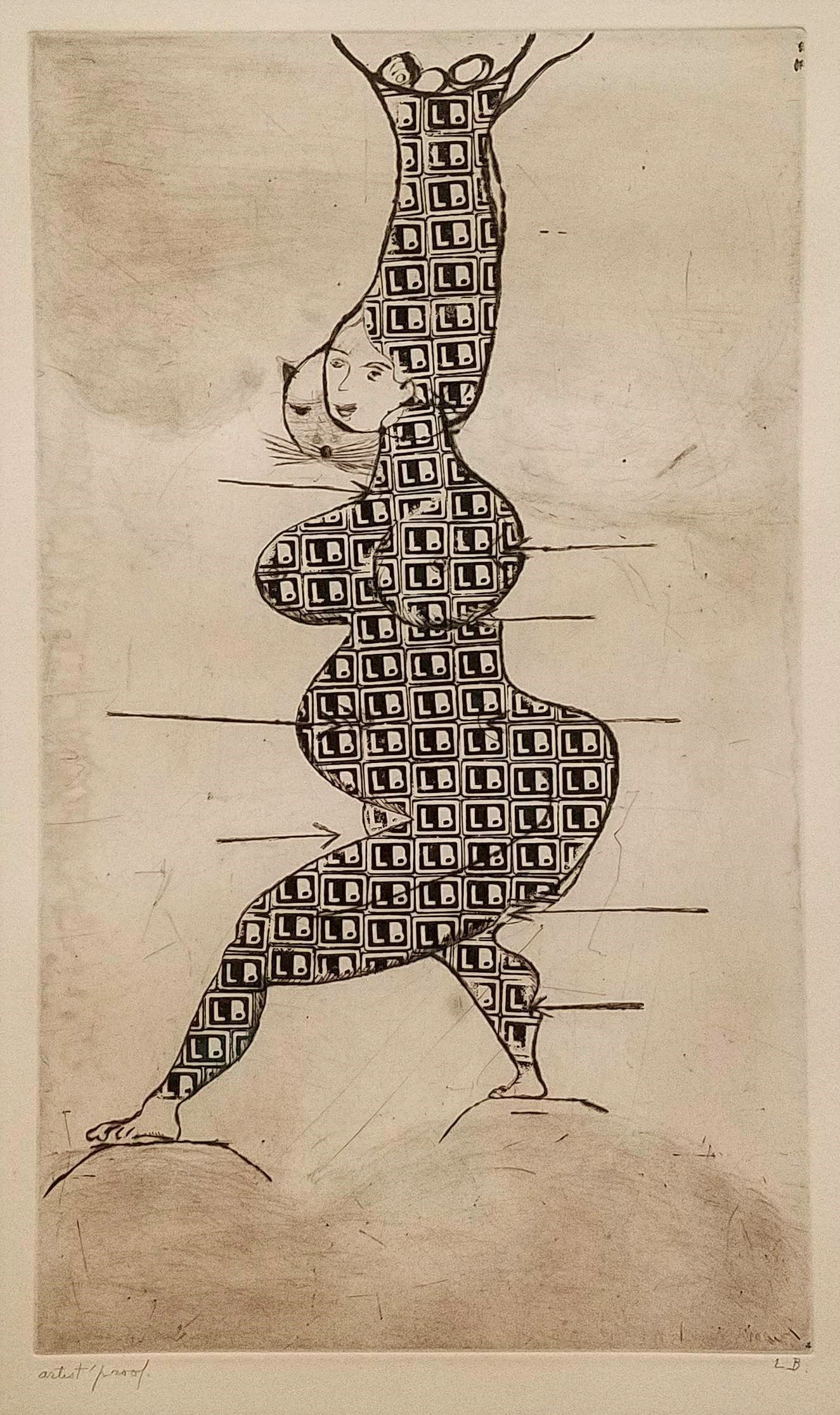 Stamp of Memories I 1993
Drypoint with metal stamp additions
 Sainte Sébastienne 1992
Drypoint
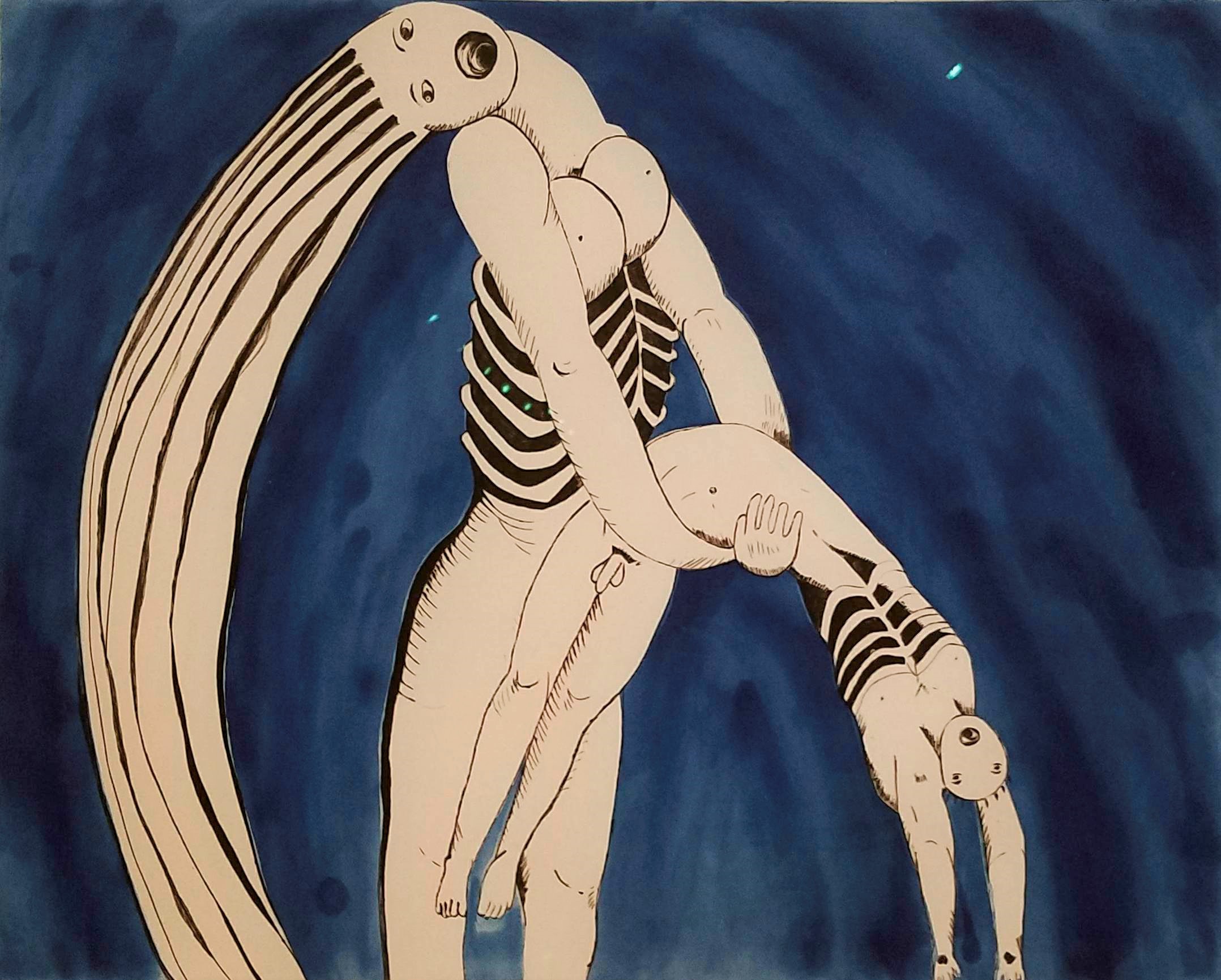
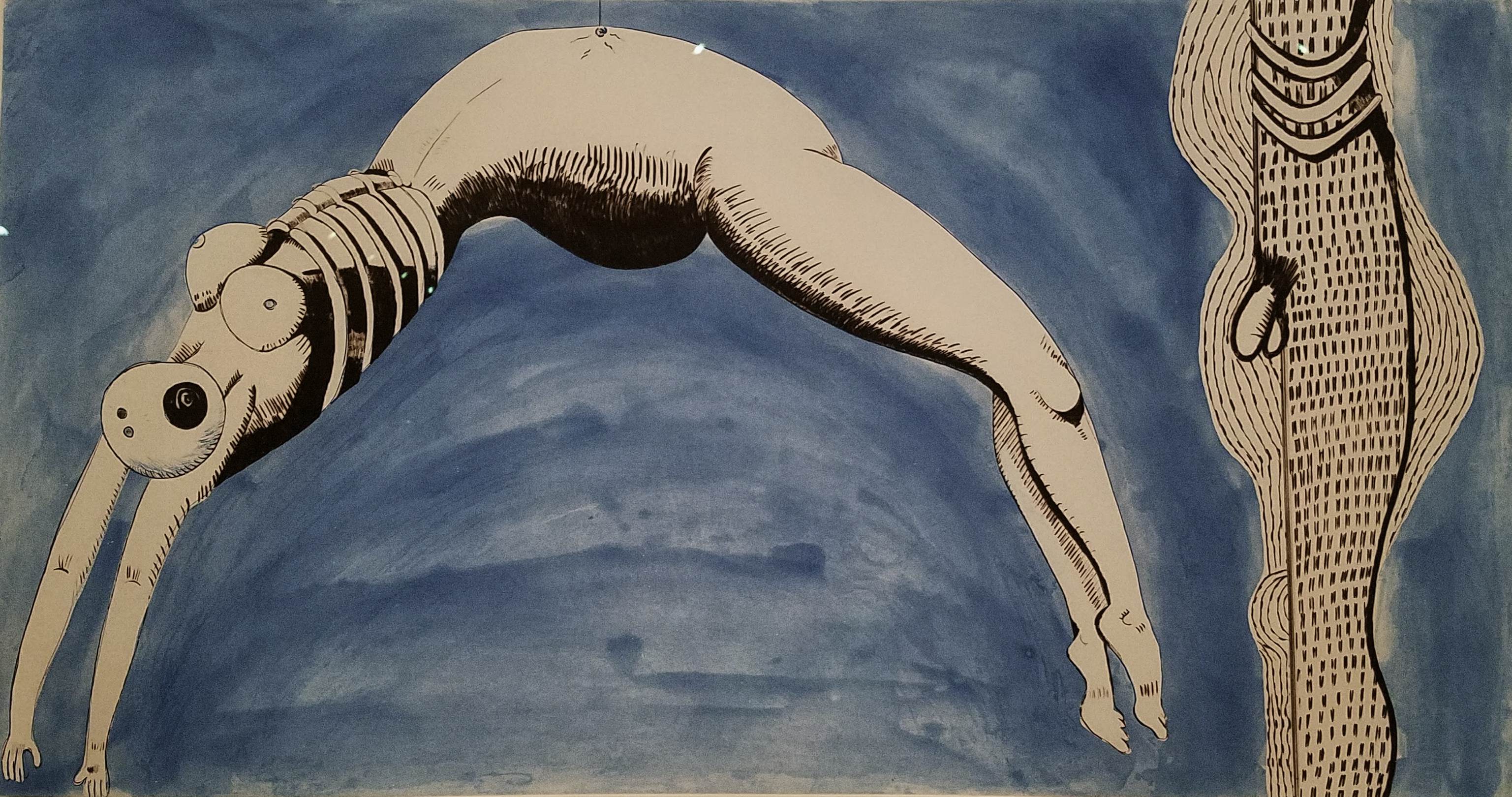
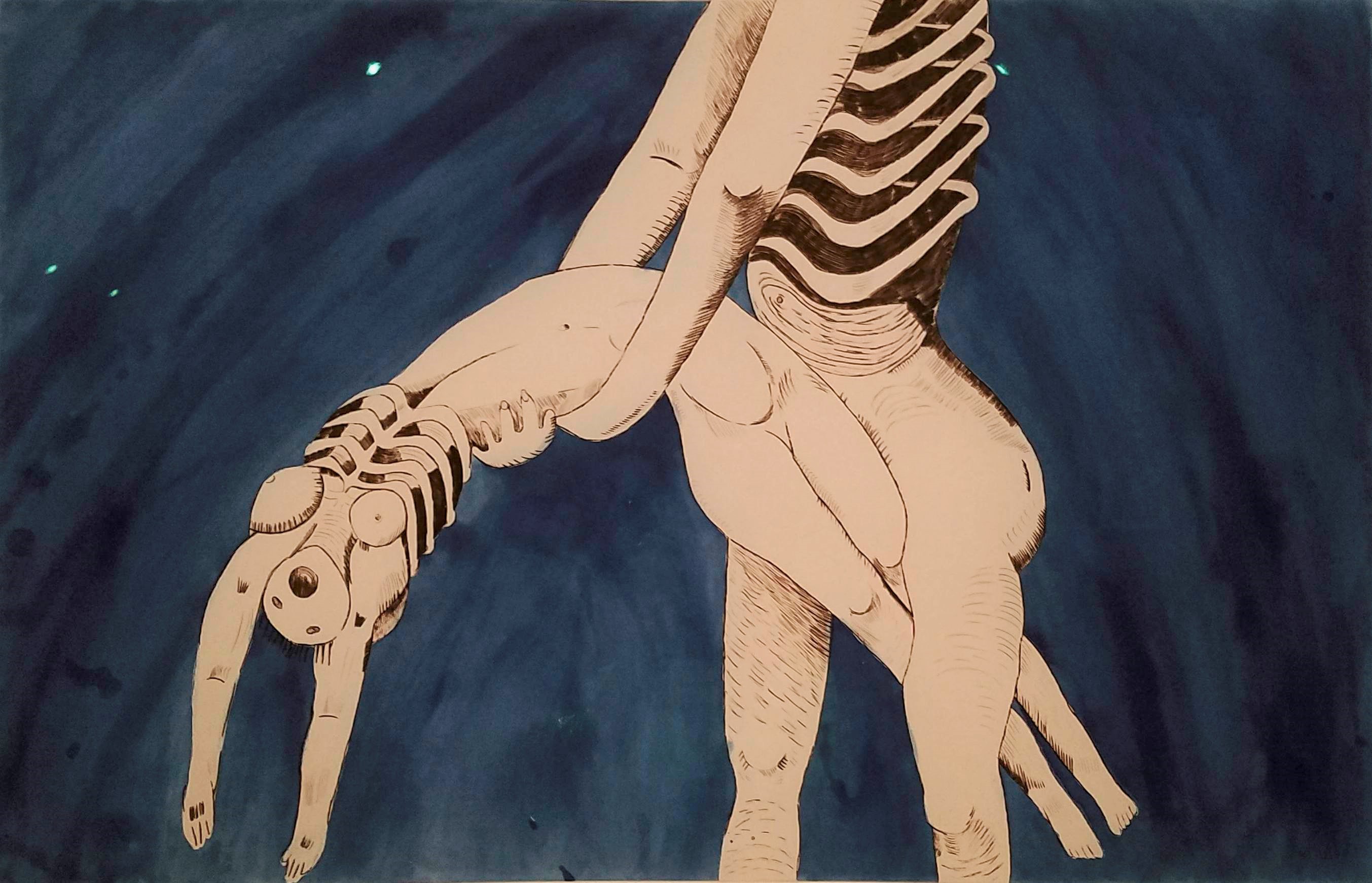 Triptych for the Red Room 1994
Aquatint, drypoint and engraving
“The subject of pain is the business I am in.“ – LB
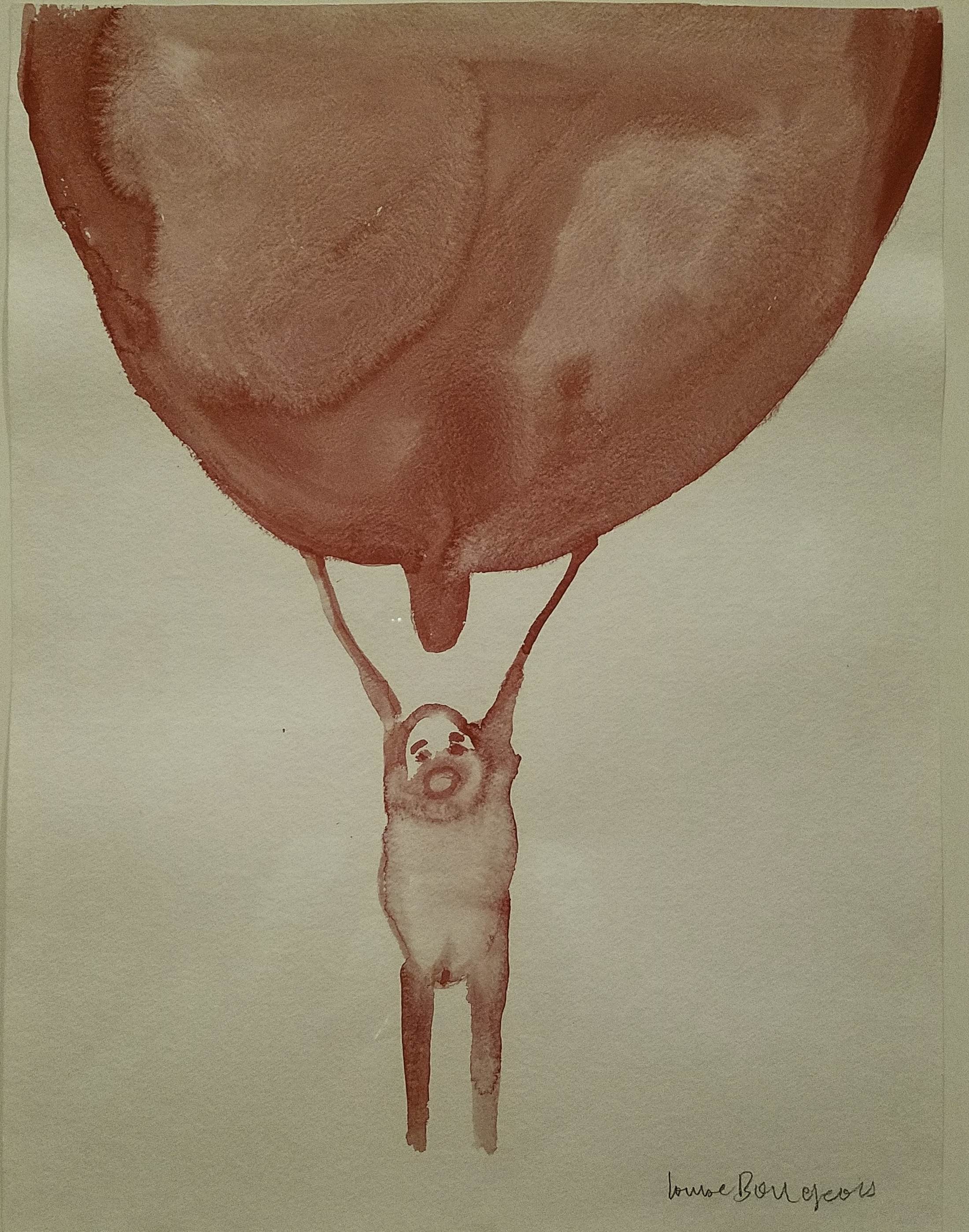 Self Portrait 2007
Gouache on paper
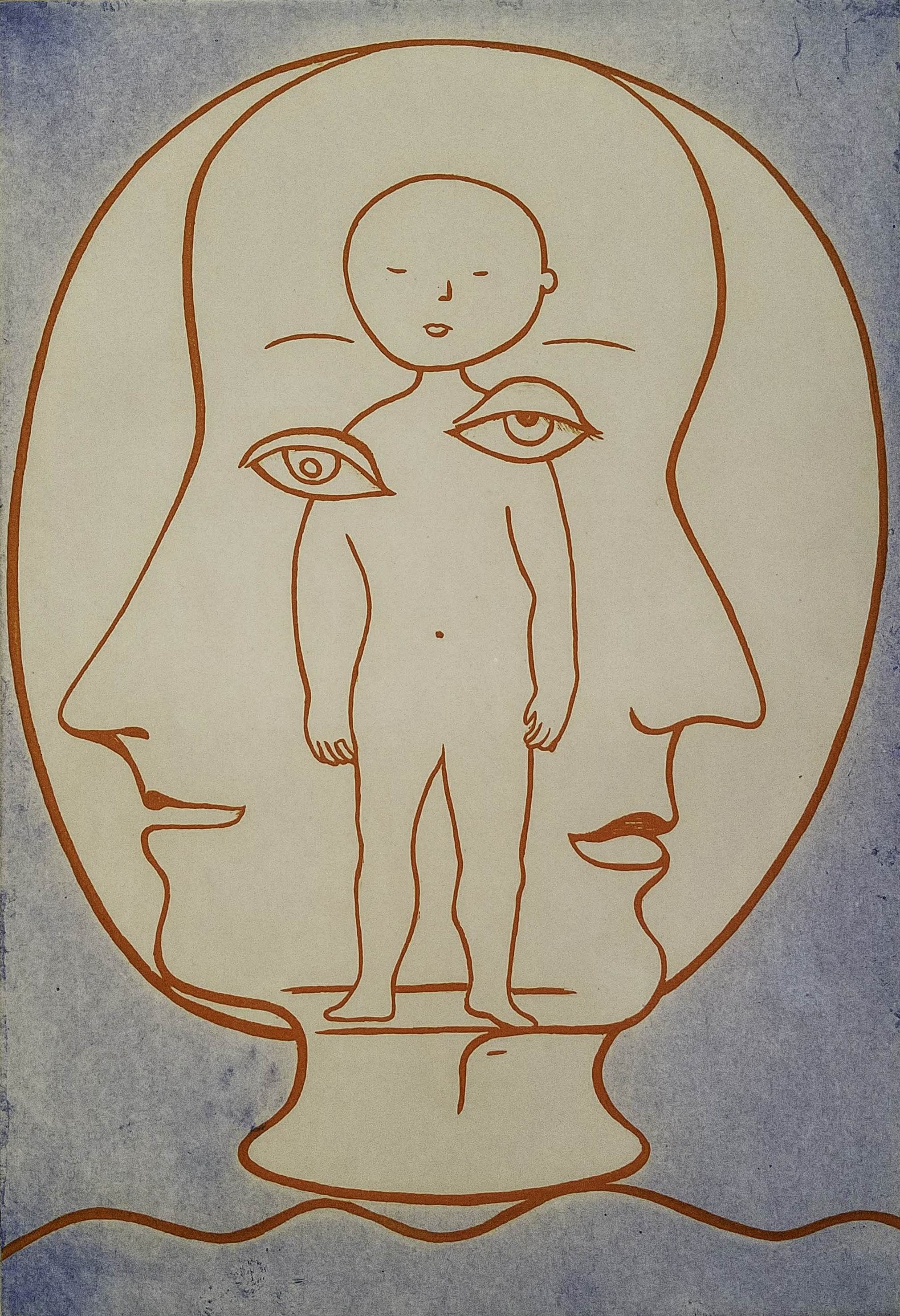 Self Portrait 1990
Drypoint, etching and aquatint
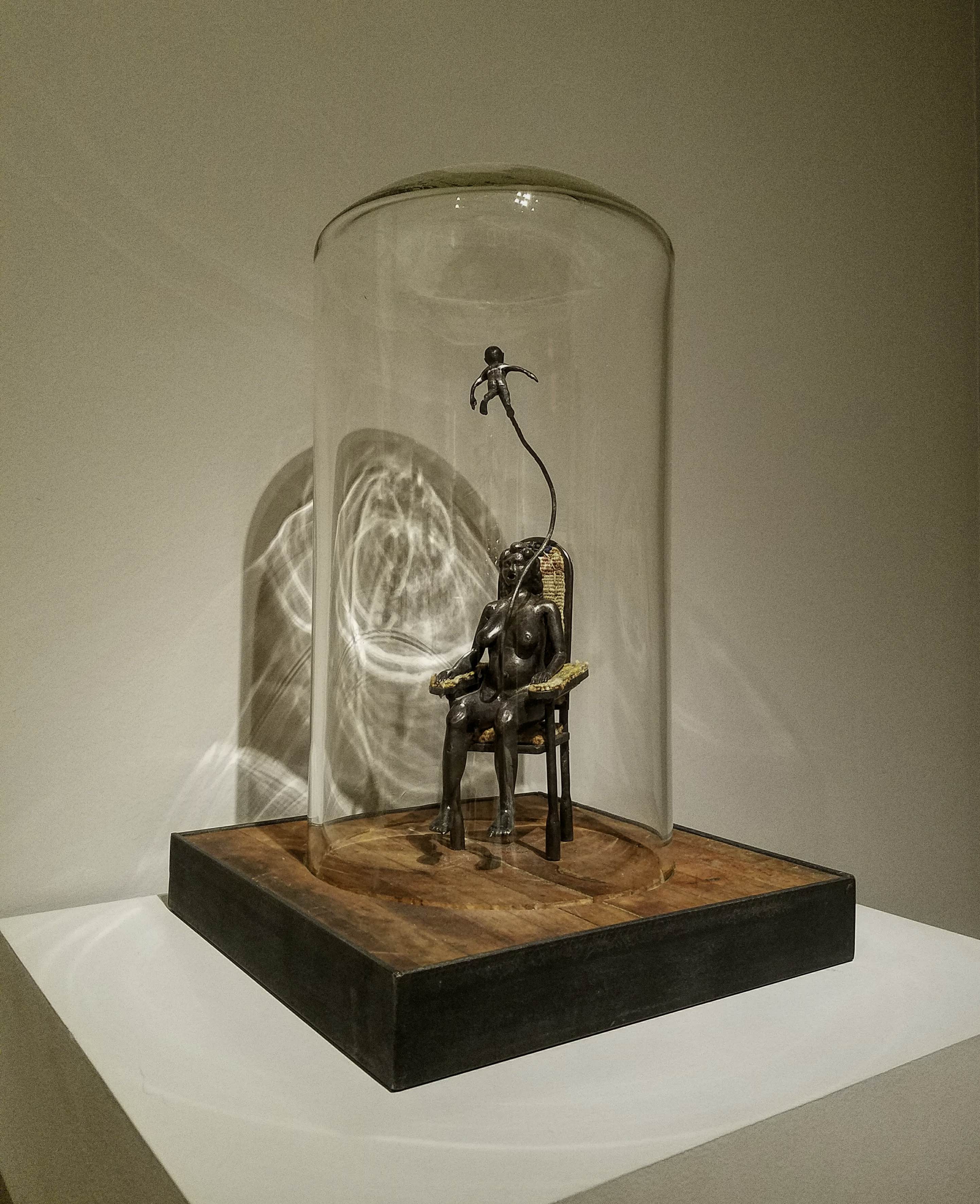 I Redo (interior element) from the installation
I Do, I Undo, I Redo 1999-2000
Steel, glass wood and tapestry
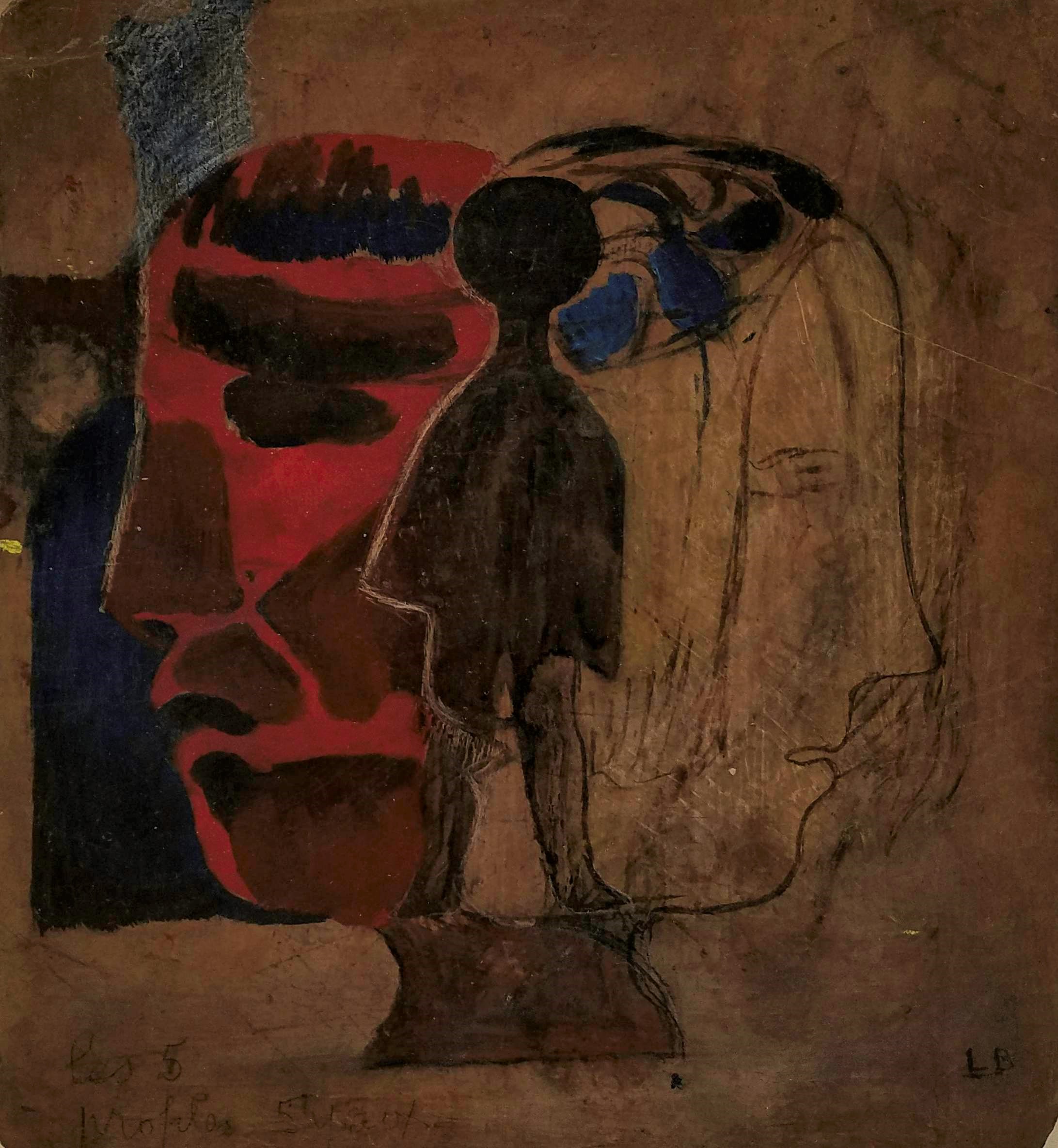 Untitled 1940
Oil and pencil on board
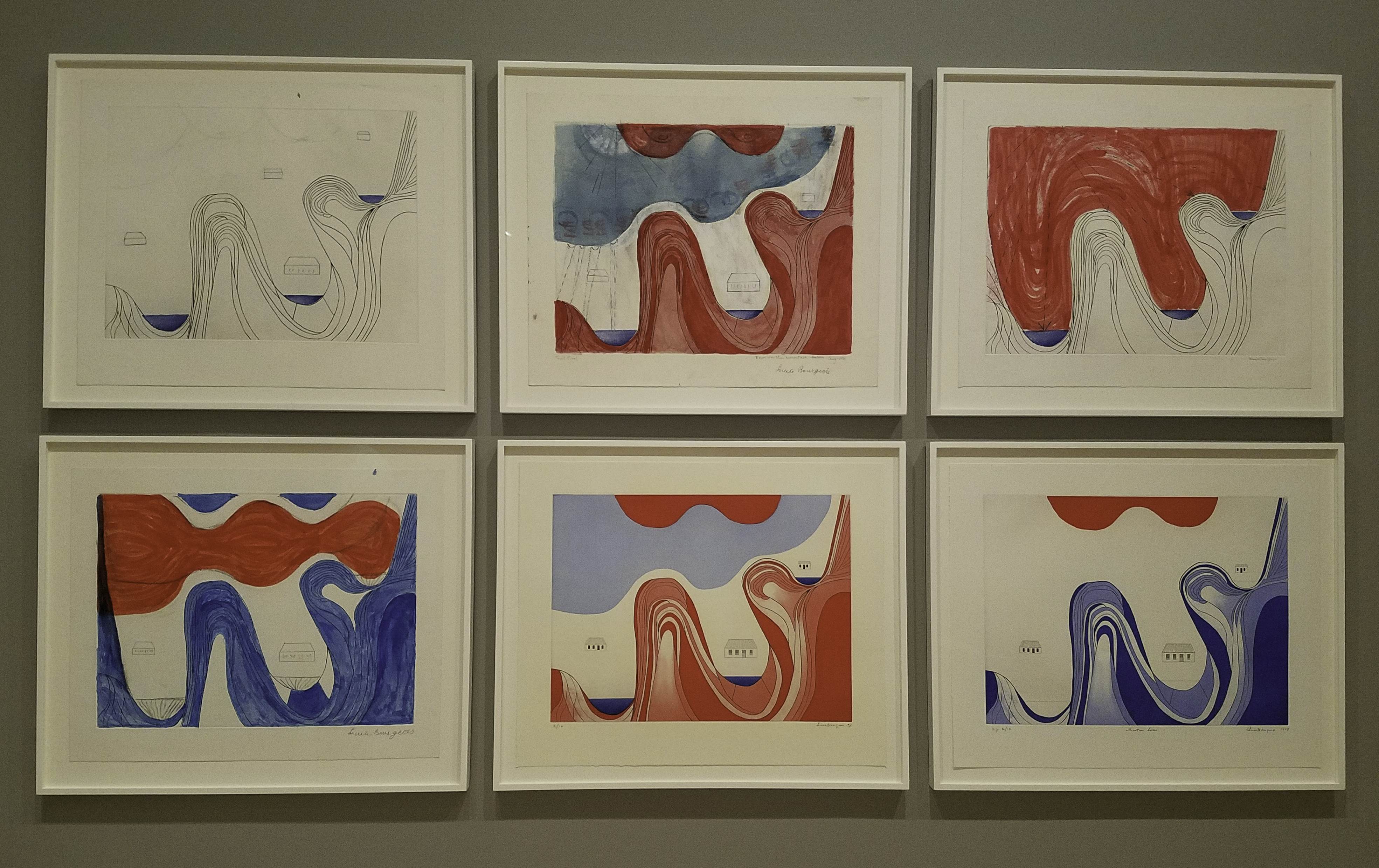
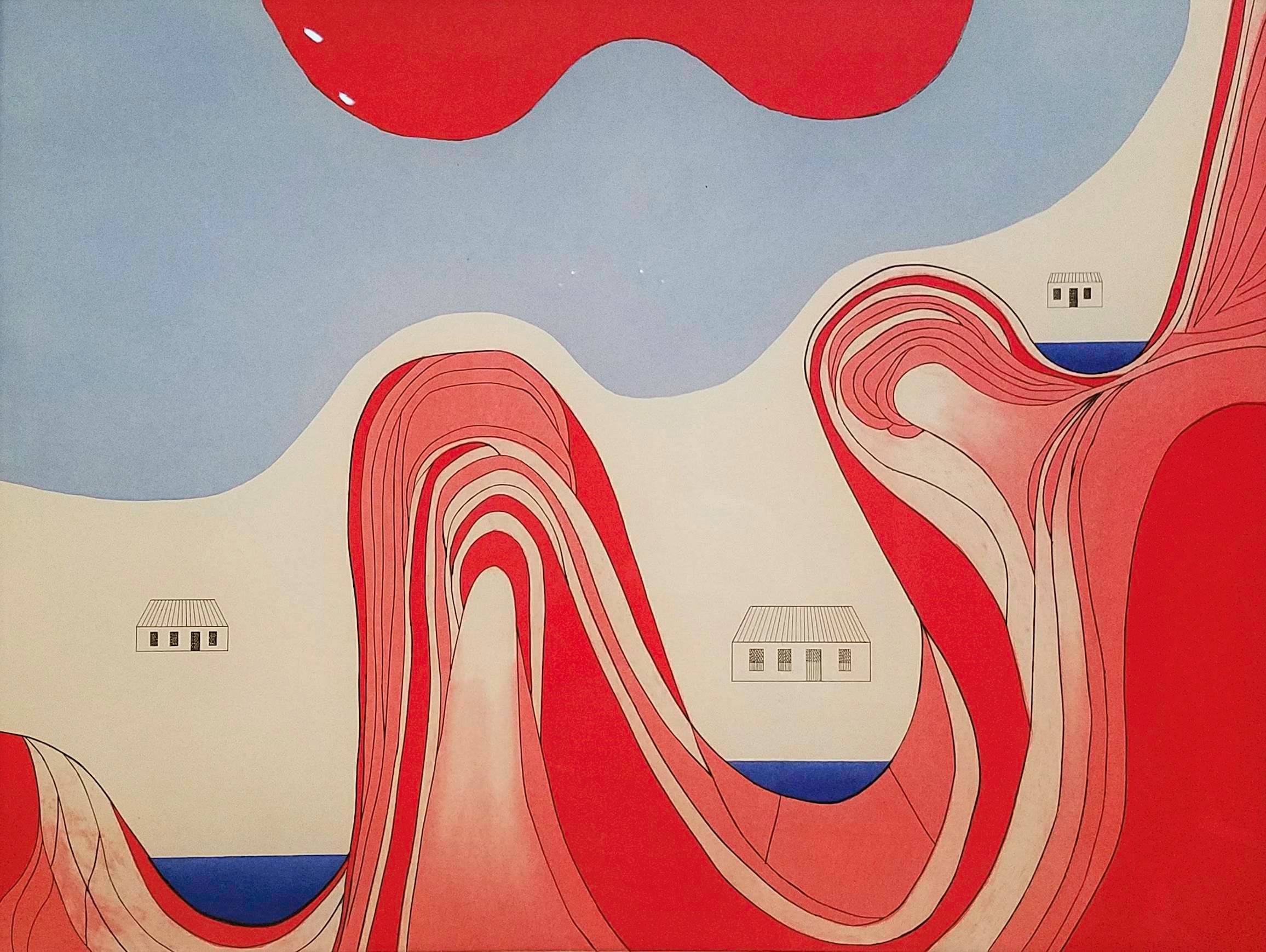
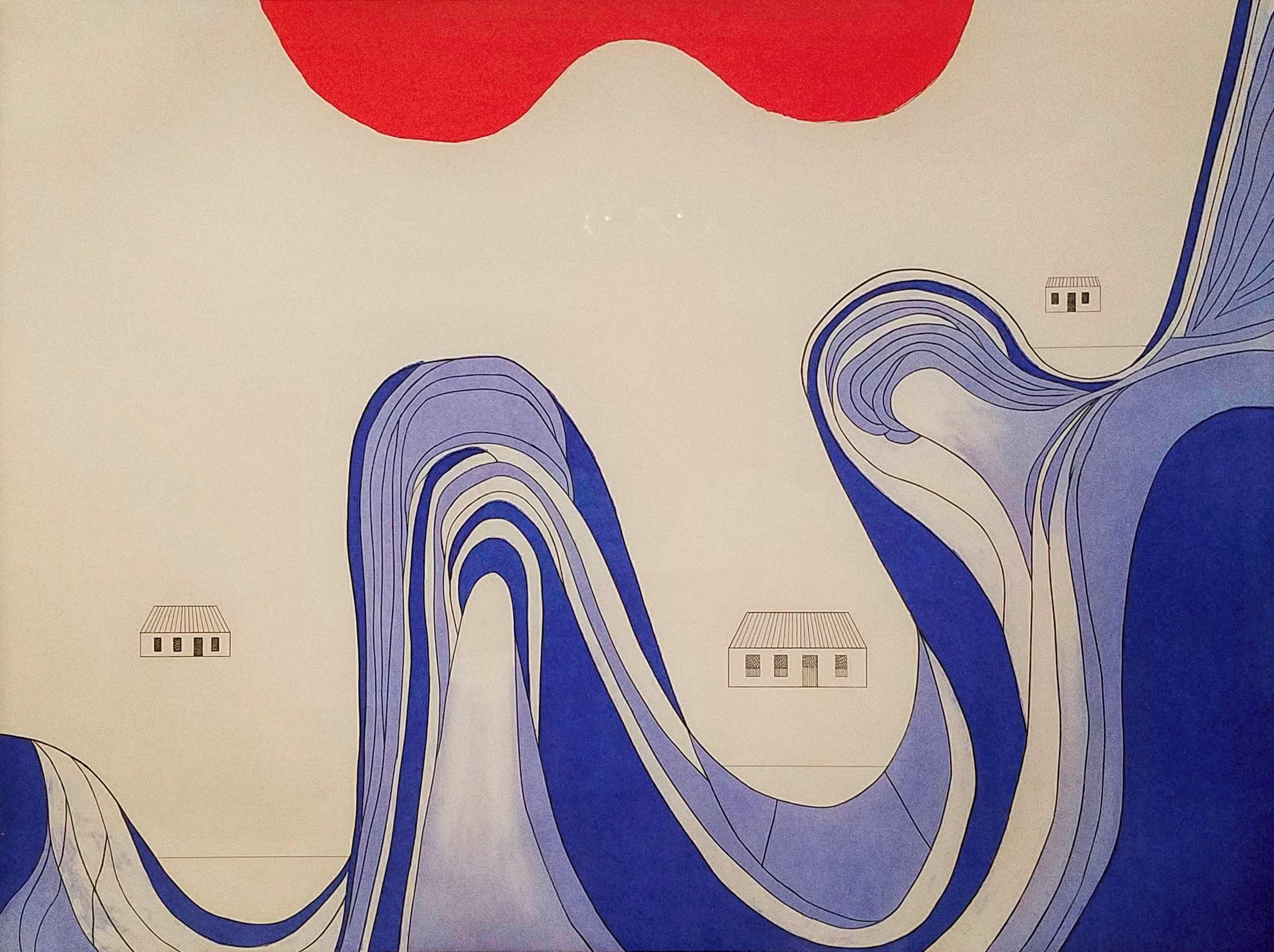 Lacs de Montagne (Mountain Lakes), 1996 & 1997
Engraving and aquatint with watercolour, gouache and ink additions
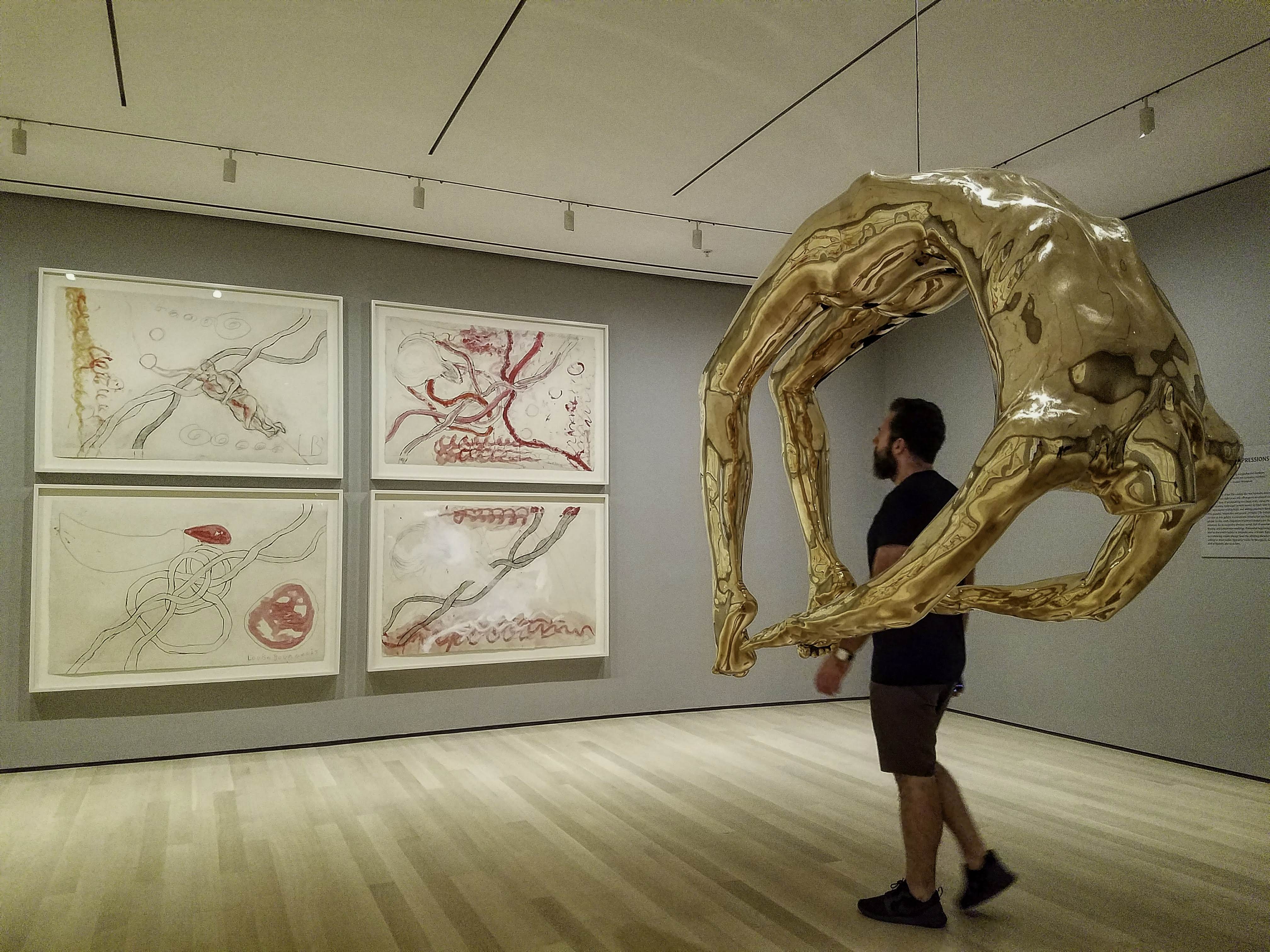 Arch of Hysteria 1993
Bronze, polished patina
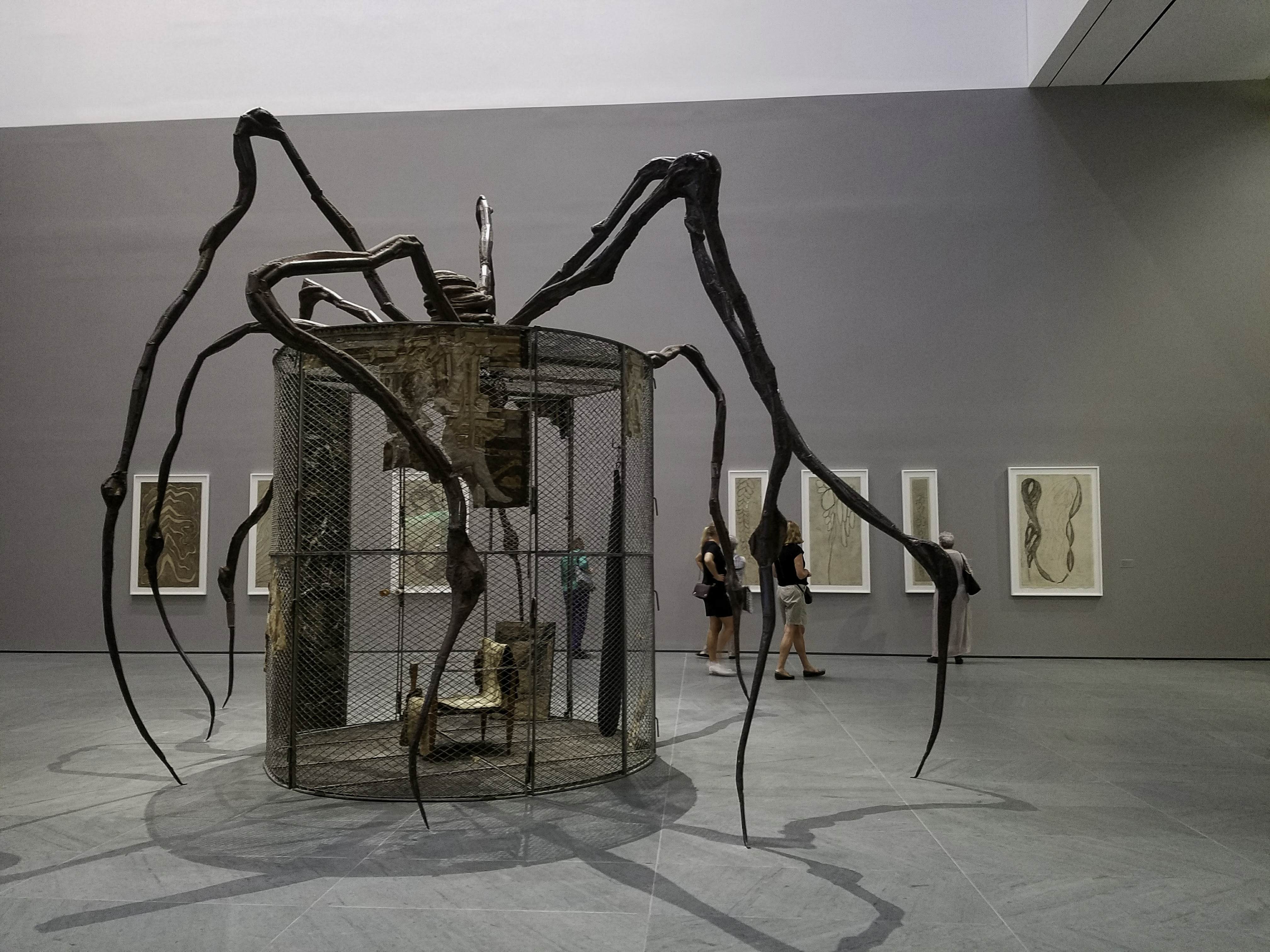
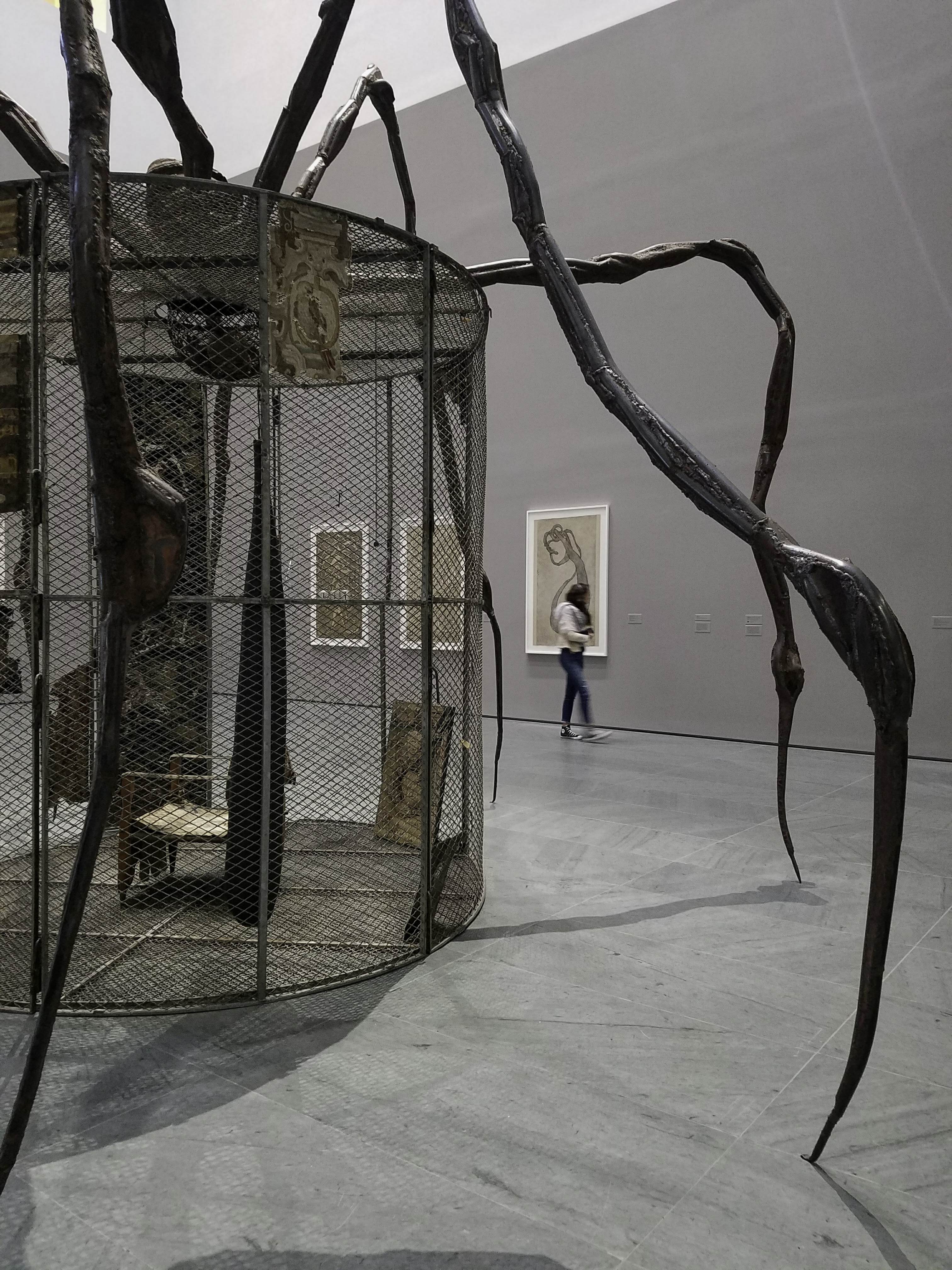
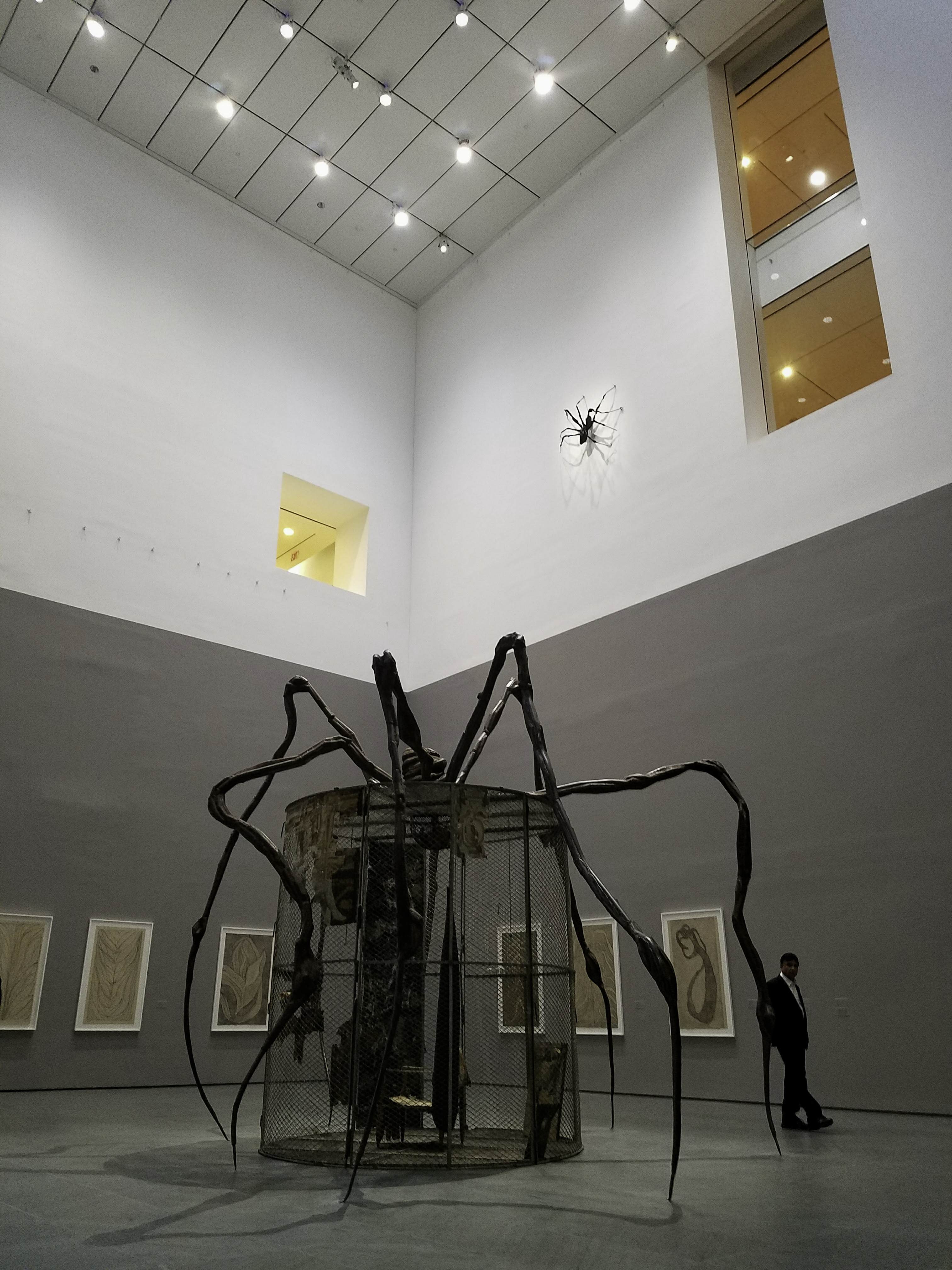 Spider 1997
Note from Louise Bourgeois: An Unfolding Portrait, an exhibition that ran at the MoMA, until end January 2018: ”[…] explores the prints, books, and creative process of the celebrated sculptor Louise Bourgeois (1911–2010). Bourgeois’s printed oeuvre, a little-known aspect of her work, is vast in scope and comprises some 1,200 printed compositions, created primarily in the last two decades of her life but also at the beginning of her career, in the 1940s. The Museum of Modern Art has a prized archive of this material, and the exhibition will highlight works from the collection along with rarely seen loans […].”
September 25th, 2017

Bunrō (active 1801-1804)
A Wakashu and a Young Woman with Hawks, ca. 1803
The only way I could distinguish between the two was to read the accompanying tag. The Wakashu is wearing a kimono with Mount Fuji motifs.
From”A Third Gender: Beautiful Youths in Japanese Prints”, an exhibition that ran on Japan Society until June 2017.
May 19th, 2017
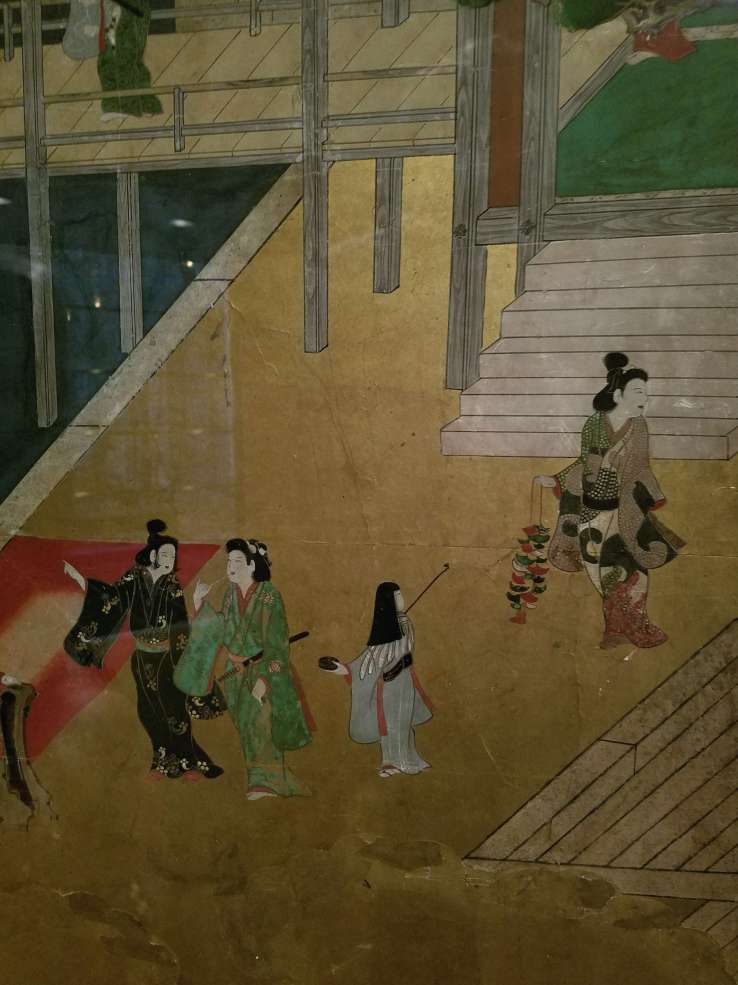

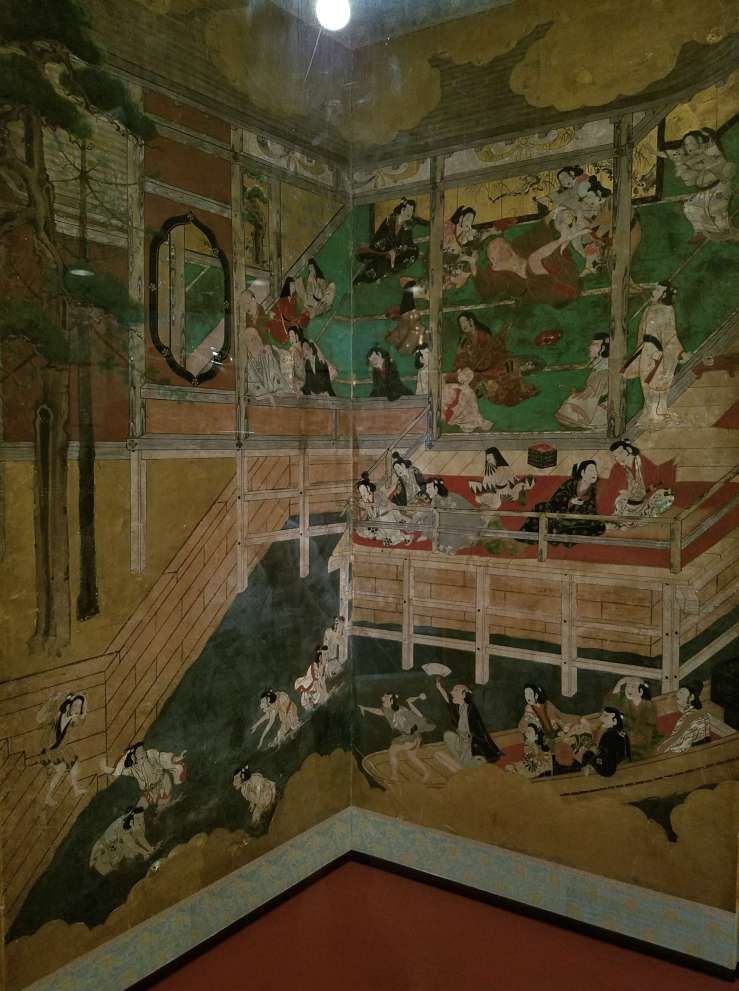

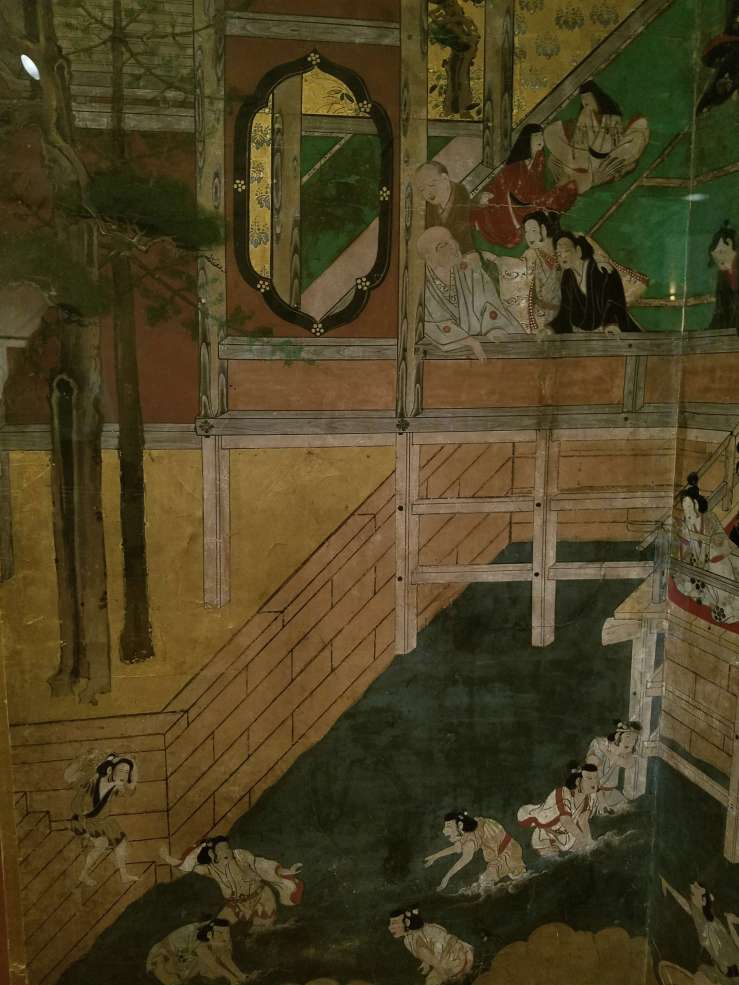

 Six-fold screen, gold and pigment on paper (detail)
Attributed to the Kan-ei Era (1624-1644)
“In this pansexual wonderworld, many beautiful women and wakashu are in the service of only a few men. The boat rowing in from the right carries one such man, who drinks sake while both a wakashu and a woman serenade him on shamisen. A group of wakashu frolic in the water, observed from above by other youths and some female prostitutes. On the gilded expanse to the left, a prostitute and her girl-servant (kamuro) chat up two wakashu while the multistoried pavilion above buzzes with music, drink and conversation between female prostitutes, wakashu and some men. To the right, a Buddhist monk topples over as a group of wakashu playfully hold down his hands and feet and ply him with wine; during the Edo period, monks were supposed to abstain from sex, even though nanshoku – sex between men and wakashu – was considered less karmically precarious than sex with women.”
From ”A Third Gender: Beautiful Youths in Japanese Prints” the first exhibition in North America devoted to the portrayal of wakashu, or beautiful youths—a “third gender” occupying a distinct position in the social and sexual hierarchy of Japan during the Edo period (1603-1868).
May 19th, 2017
What a sheer delight, to walk in the National Gallery of Art and discover these rather brilliant prints depicting urban scenes from the Jazz Age and beyond!

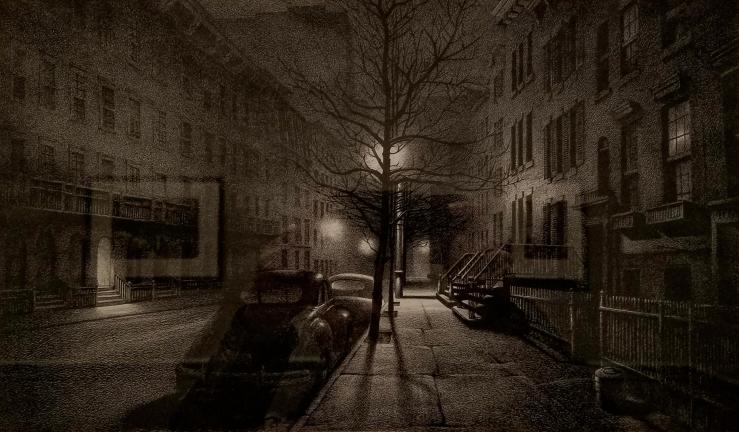
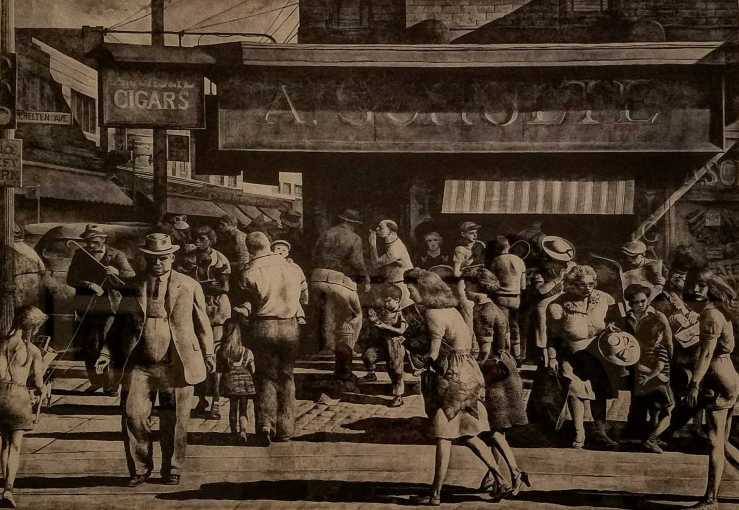

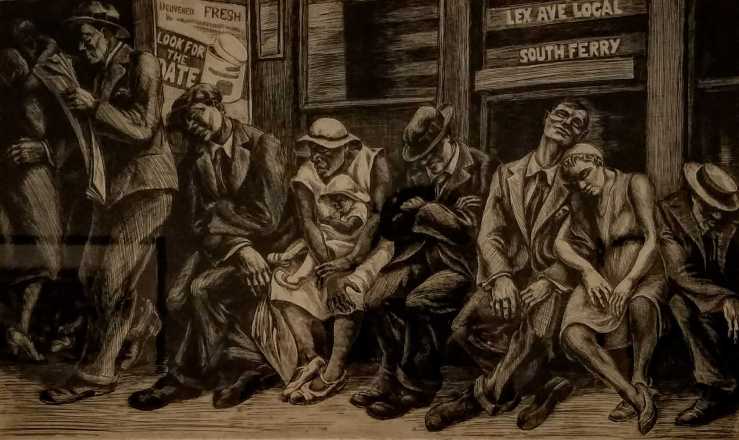
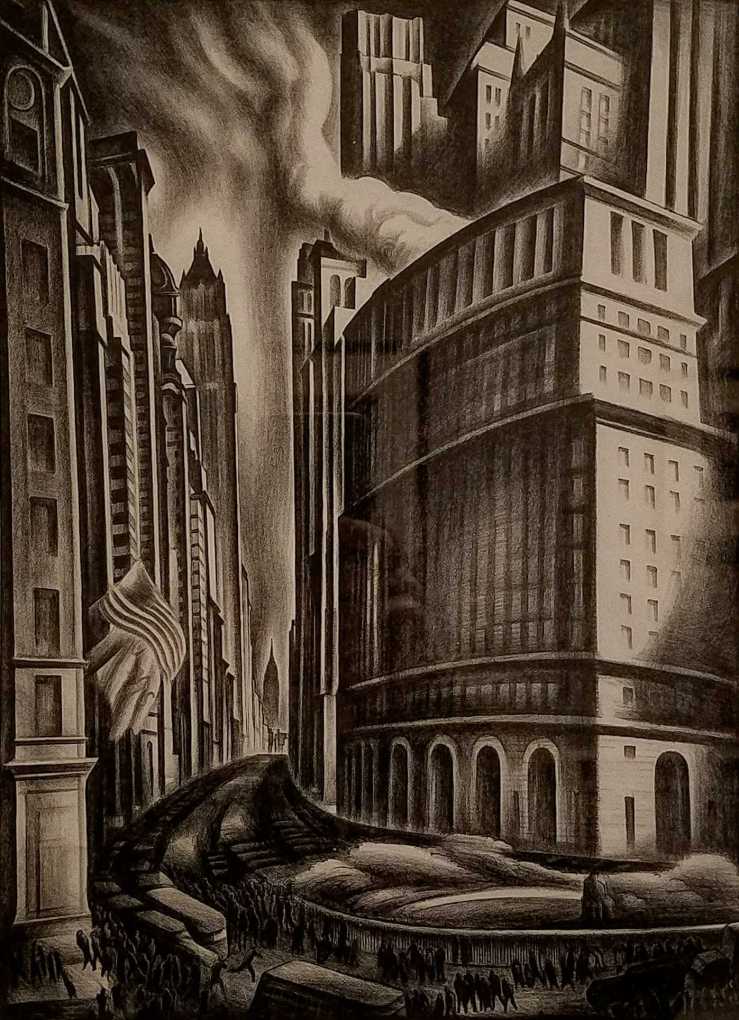


”Washington, DC—American artists of the early 20th century sought to interpret the beauty, power, and anxiety of the modern age in diverse ways. Through depictions of bustling city crowds and breathtaking metropolitan vistas, 25 black-and-white prints on view in The Urban Scene: 1920–1950 will explore the spectacle of urban modernity. Prints by recognized artists such as Louis Lozowick (1892–1973) and Reginald Marsh (1898–1954), as well as lesser-known artists including Mabel Dwight (1875–1955), Gerald Geerlings (1897–1998), Victoria Hutson Huntley (1900–1971), Martin Lewis (1881–1962), and Stow Wengenroth (1906–1978), are included in this exhibition.”
The Urban Scene was on view in the West Building until August 6, 2017.
April 25th, 2017
Looking at those little wonders of skill and craftsmanship that are the works of Henri-Charles Guérard, on show at the New York Public Library, is a pure pleasure and an excellent introduction to the artist. But the fact that felines (and other animals) were featured prominently in his work, warmed me up to the person too.
Here are the three stages of a Cat on a Newspaper:


A Cat’s head sealing an announcement by the Black-and-White Society:

And a mouse:
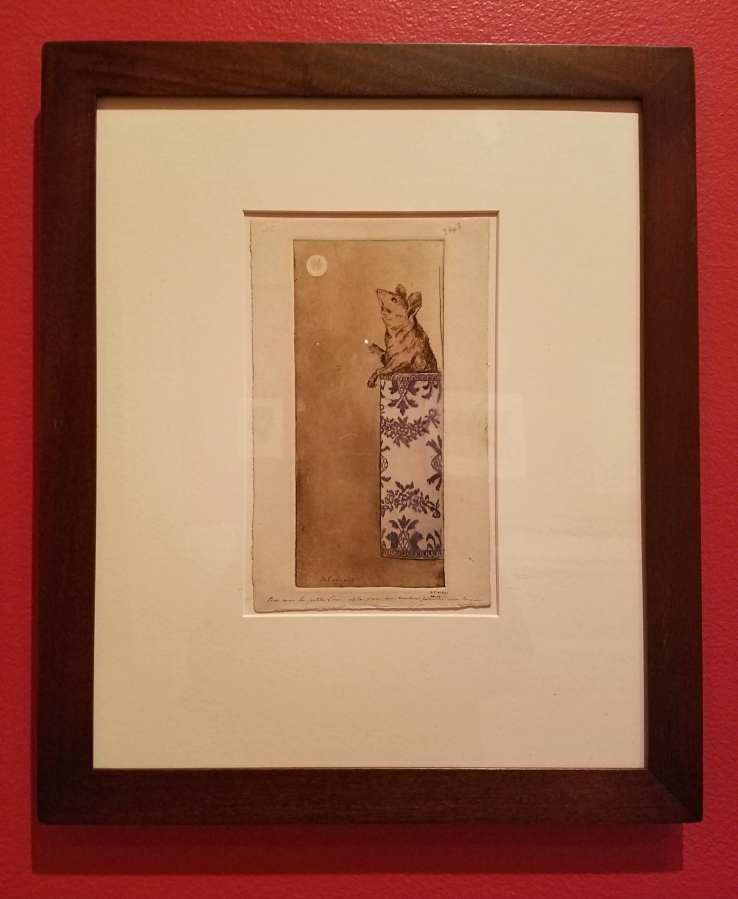
Accompanying caption: [Although Westerners generally have an aversion to rats, the creatures play an important role in Japanese culture, for the rat, or nazumi, is thought to be the messenger of the god Daikoku. It is said, moreover, that if rats eat the New Year cakes, there will be a good harvest. Guérard’s endearing treatment of this rodent climbing out of a vase decorated with Japanese motifs seems more closely aligned with Japanese than Western sentiments.]
A small consolation to weary New Yorkers, little impressed at the thought of having to share their homes, parks and subway with millions of them creatures…
A Curious Hand: The Prints of Henri-Charles Guérard (1846-1897)
New York, NY, 10018
November 27th, 2016
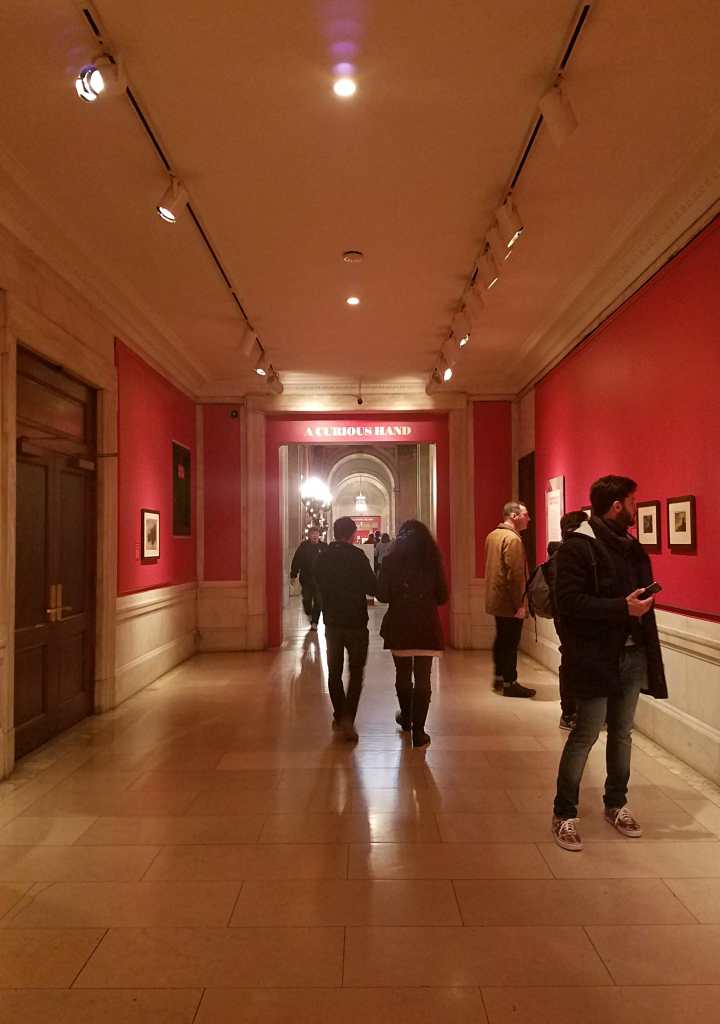
These and a lot more from ”the engraver of curiosity par excellence” can be viewed at the Stephen A. Schwarzman Building until February 26th, 2017.
Don’t go in a rush, the exhibition is more extensive than one might expect; although this was supposed to be an added bonus to my visit, it quickly became apparent that it merits a lot more attention than a mere skimming through.
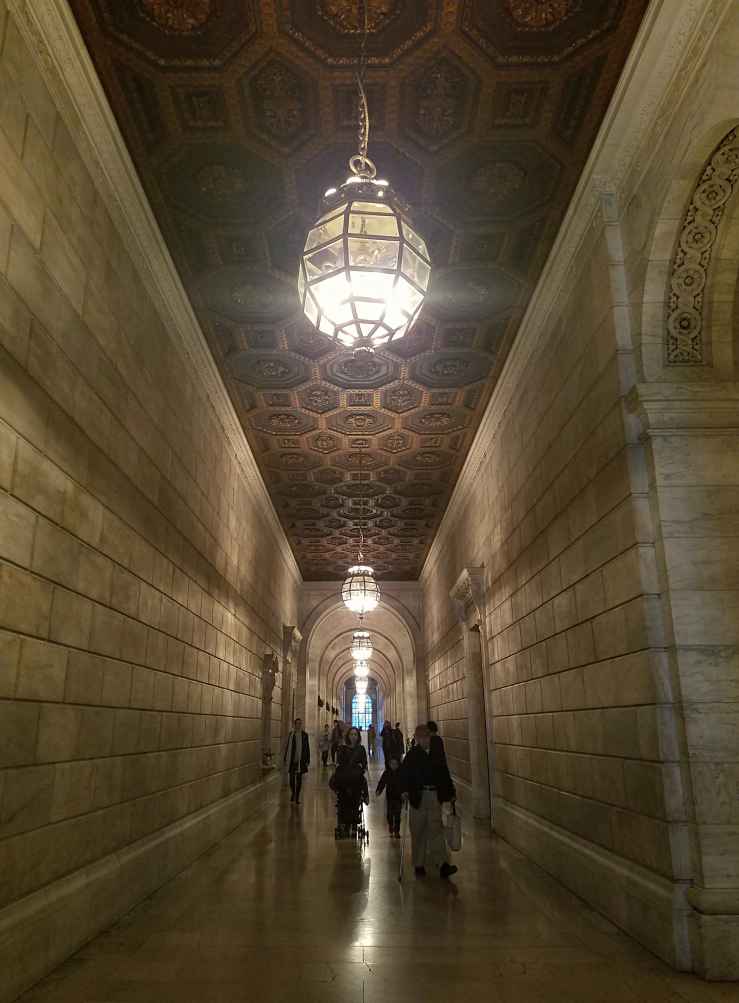

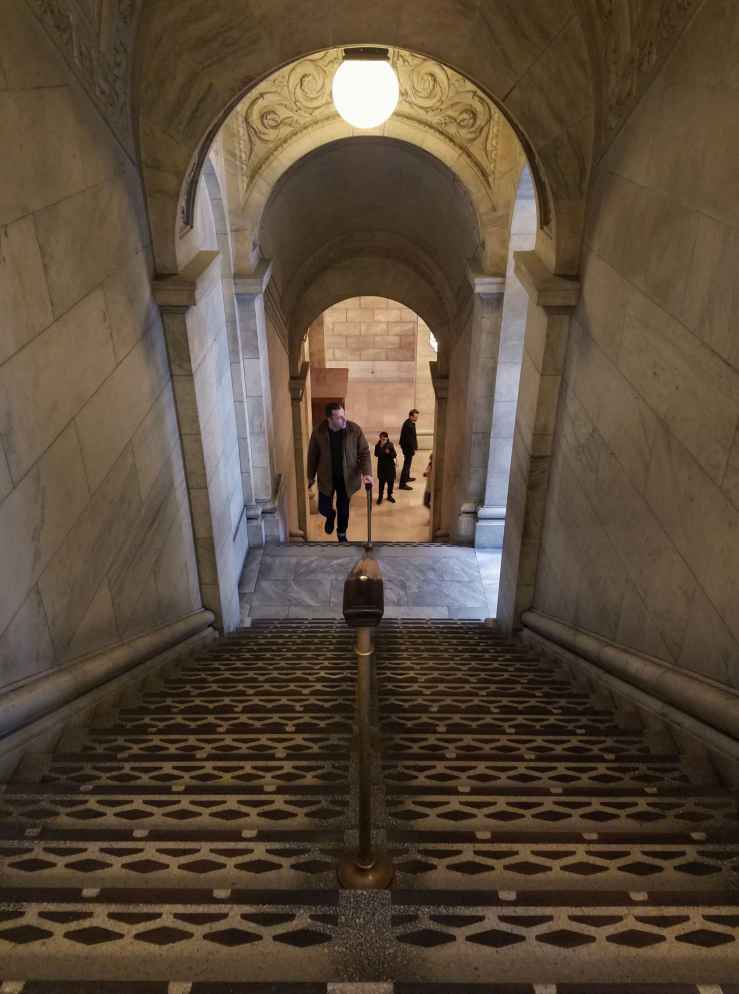

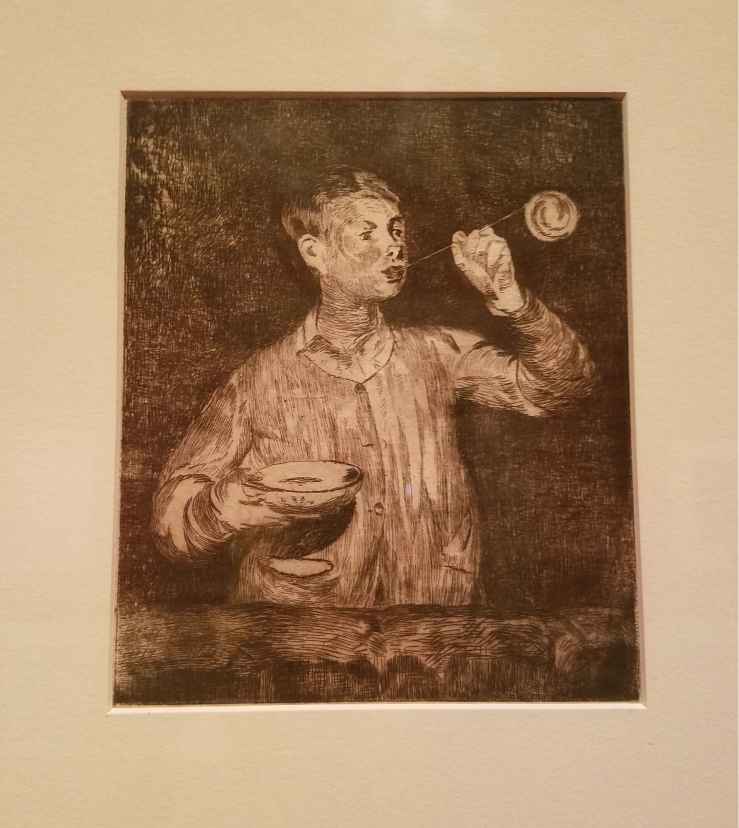
[Beginning in the 1870s, Guérard assisted Édouard Manet with biting and pulling his prints, and their working relationship eventually blossomed into a friendship. In 1879, Guérard married Eva Gonzalès, Manet’s favourite pupil, who died in childbirth in 1883 shortly after Manet’s own death. Manet was not only a friend and colleague of Guérard’s but also an important source of inspiration.]

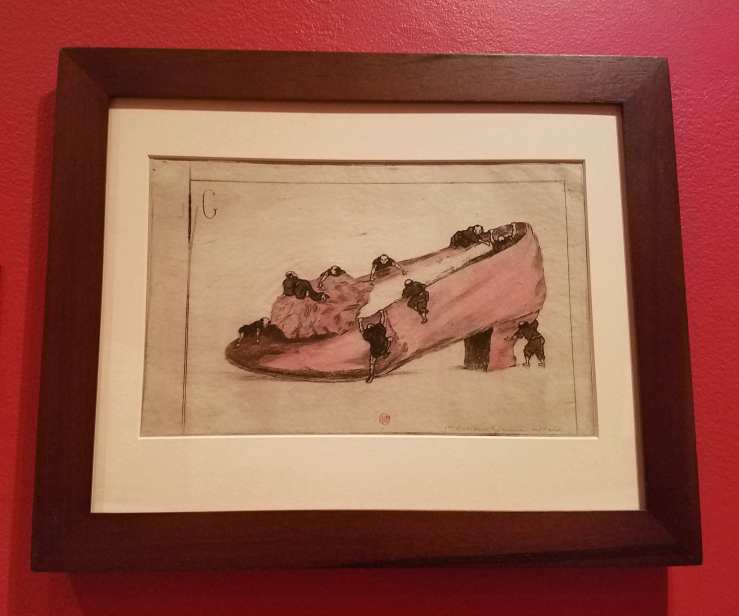
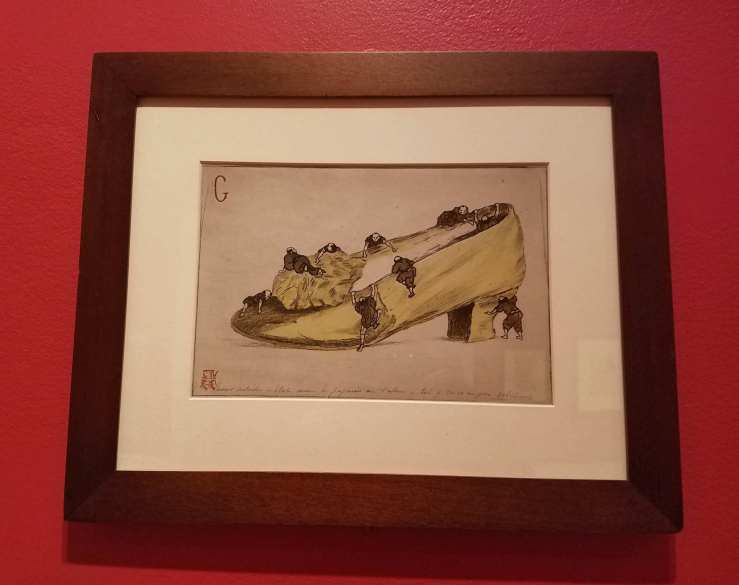
[The image, which shows a troop of tiny Japanese men climbing energetically over a woman’s shoe of Western style, captures the droll and occasionally baffling behaviour of the figures in Hokusai manga. Women’s feet and, especially, their shoes have long been fetishized in both the West and the East, and the conduct of the ”assailants”, which includes a figure clambering on the slipper’s ruffled pompom, is suggestive. The impression shown here reveal Guérard experimenting with jaunty colours, one hot pink, the other bright yellow.]
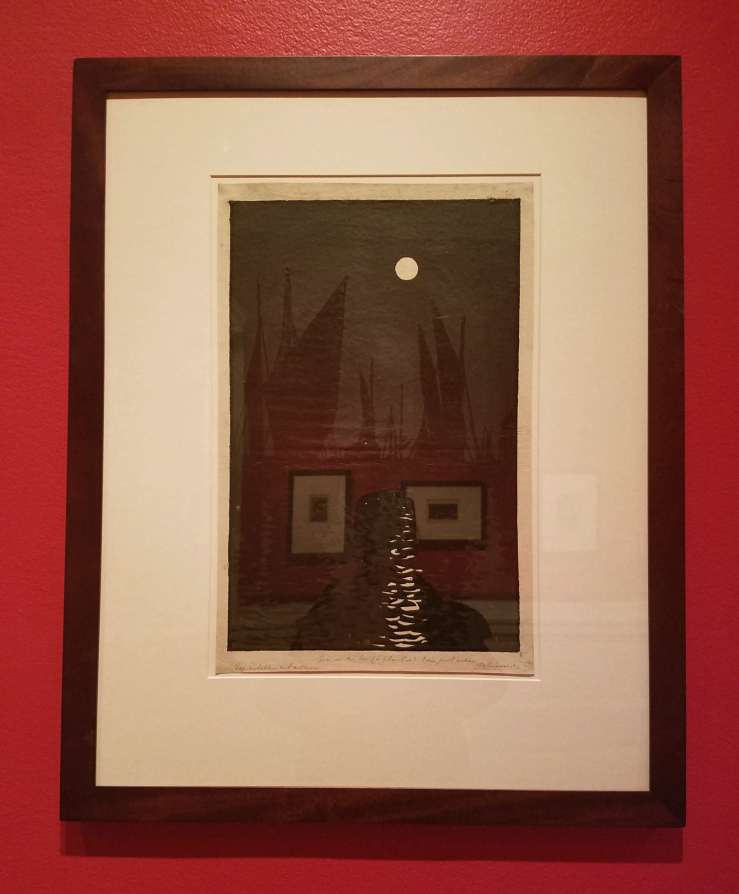


[Guérard designed these multipurpose sheets for menus or notecards. They exhibit a whimsical mashup of Western and Japanese art and include a number of his favourite motifs, including the monkey spilling ink, the marionette, Japanese masks, and even his dog, Azor. References to cooking, including the buffoonish figure in an apron and the men wearing chef’s hats, make the connection to menus.]
All notes are from the accompanying captions and brochure (available also on-line).
New York, NY, 10018
November 27th, 2016
subjective worldview
Actor, writer, cook and author
Travel experiences & Strasbourg city guide
Writer
joy, happiness, travel, adventure, gratitude
"Rêve onirique & Bulle d'évasion"
makes pretty things on paper
This WordPress.com site is Pacific War era information
Welcome to my curious world of words....
Photographs, music and writing about daily life. Contact: elcheo@swcp.com
Free listening and free download (mp3) chill and down tempo music (album compilation ep single) for free (usually name your price). Full merged styles: trip-hop electro chill-hop instrumental hip-hop ambient lo-fi boombap beatmaking turntablism indie psy dub step d'n'b reggae wave sainte-pop rock alternative cinematic organic classical world jazz soul groove funk balkan .... Discover lots of underground and emerging artists from around the world.
A 365 analogue photography project
Barcelona's Multiverse | Art | Culture | Science
Een digitaal atelier aan de (zee)slag.
‘Doodling Ambiguity’s in Ink.’
Miscellaneous photography
Glimpses along the way on a journey of discovery into symmetry...
 The Humble Fabulist