Out of the Box

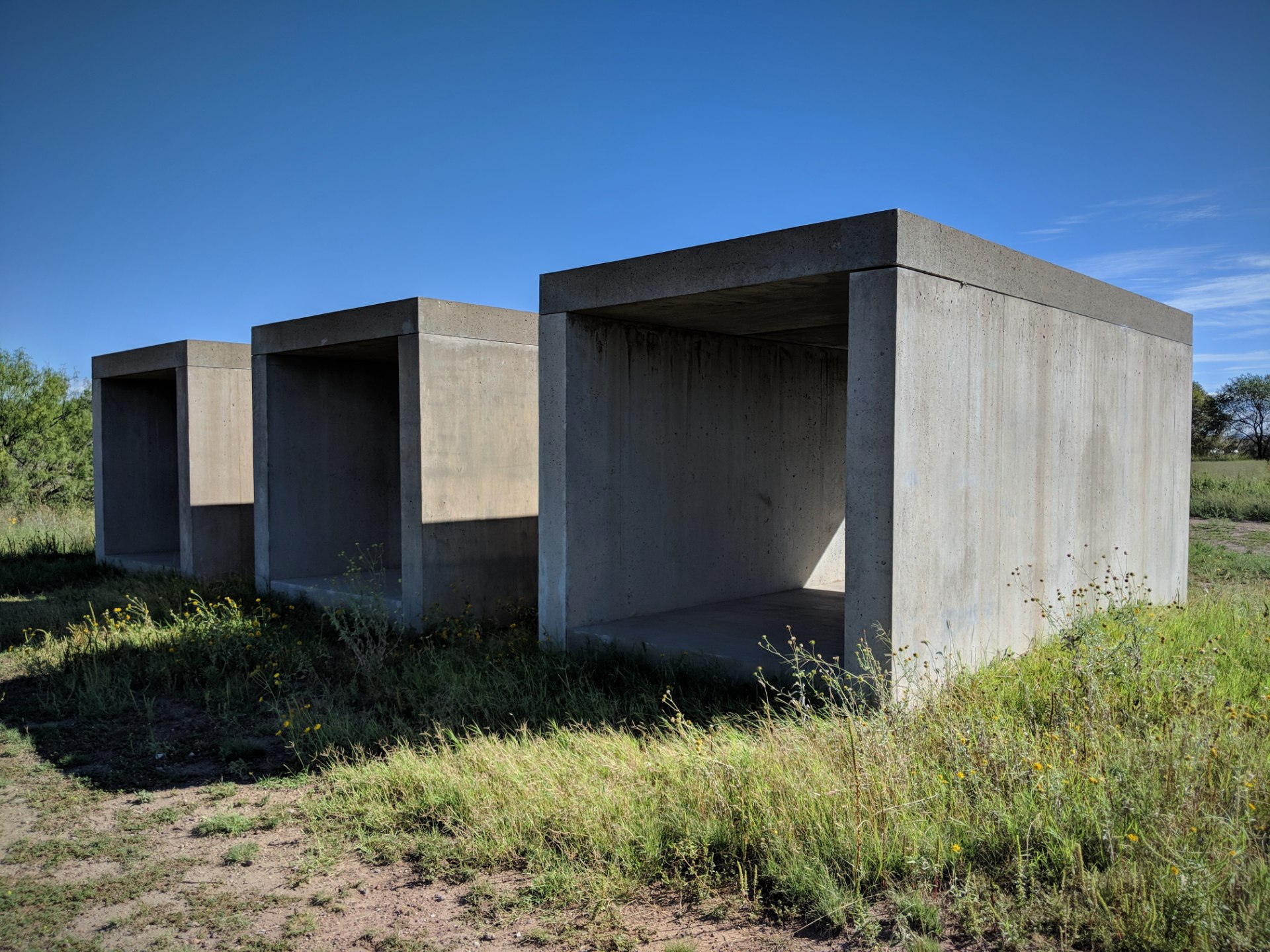
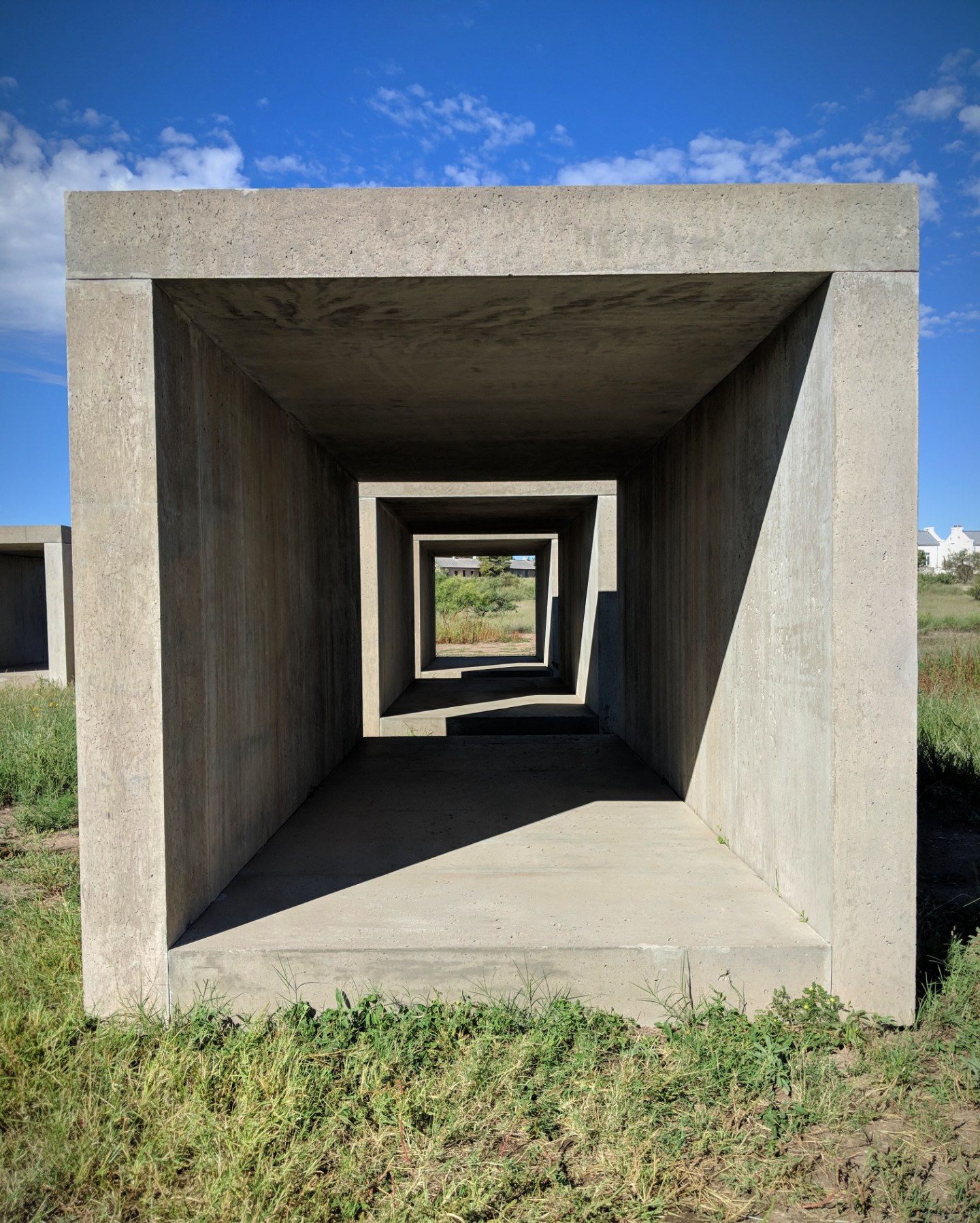
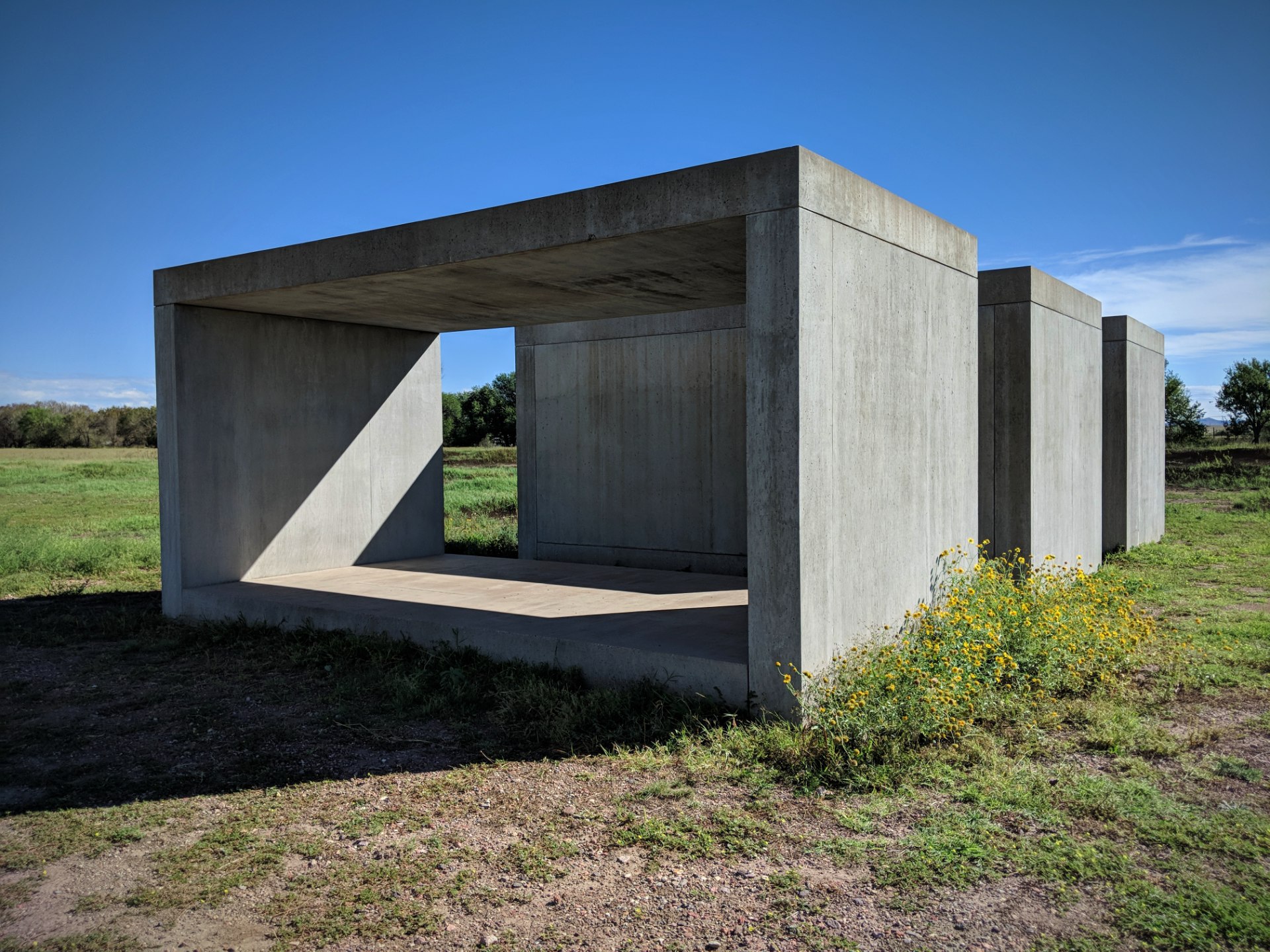
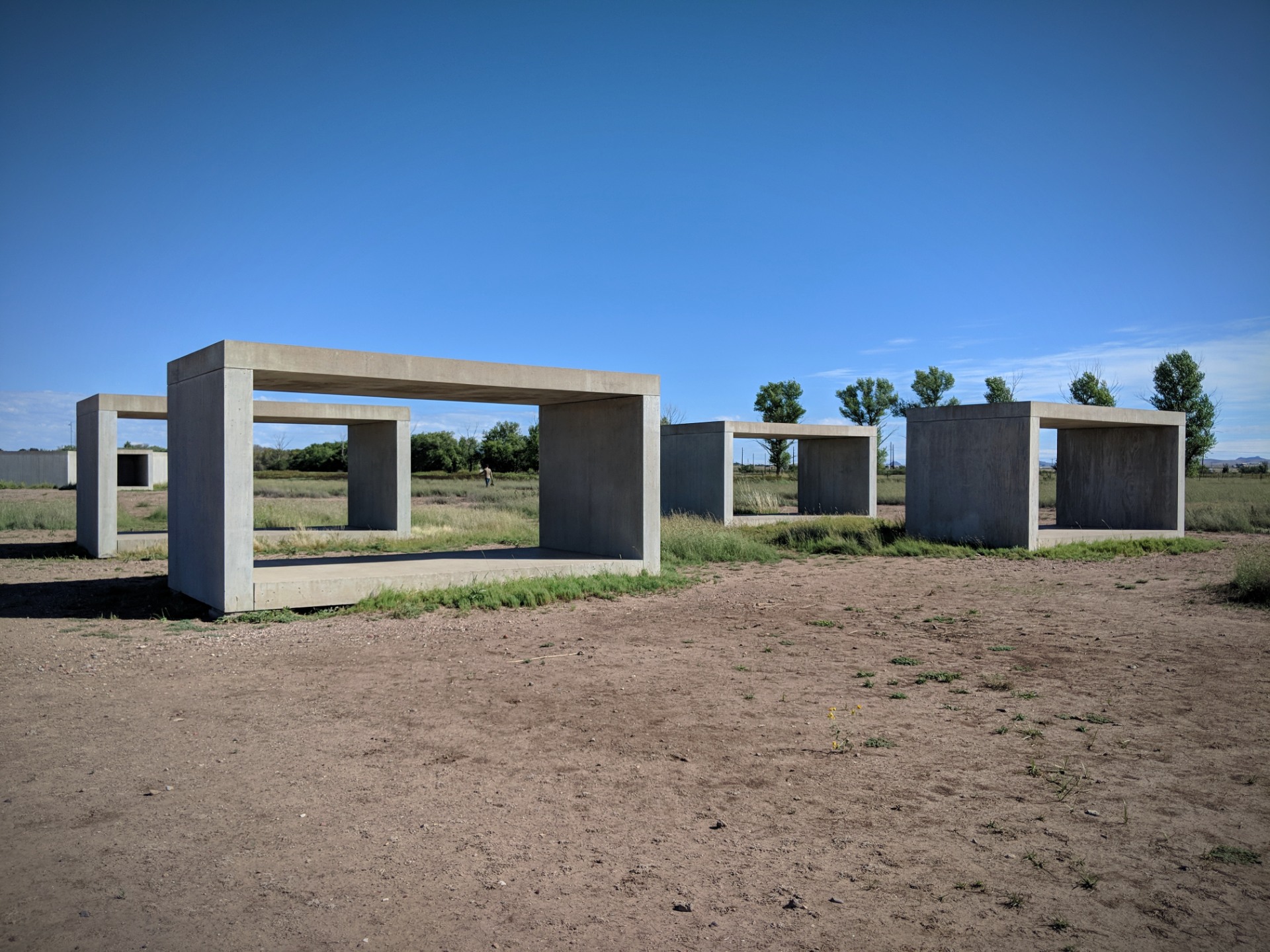
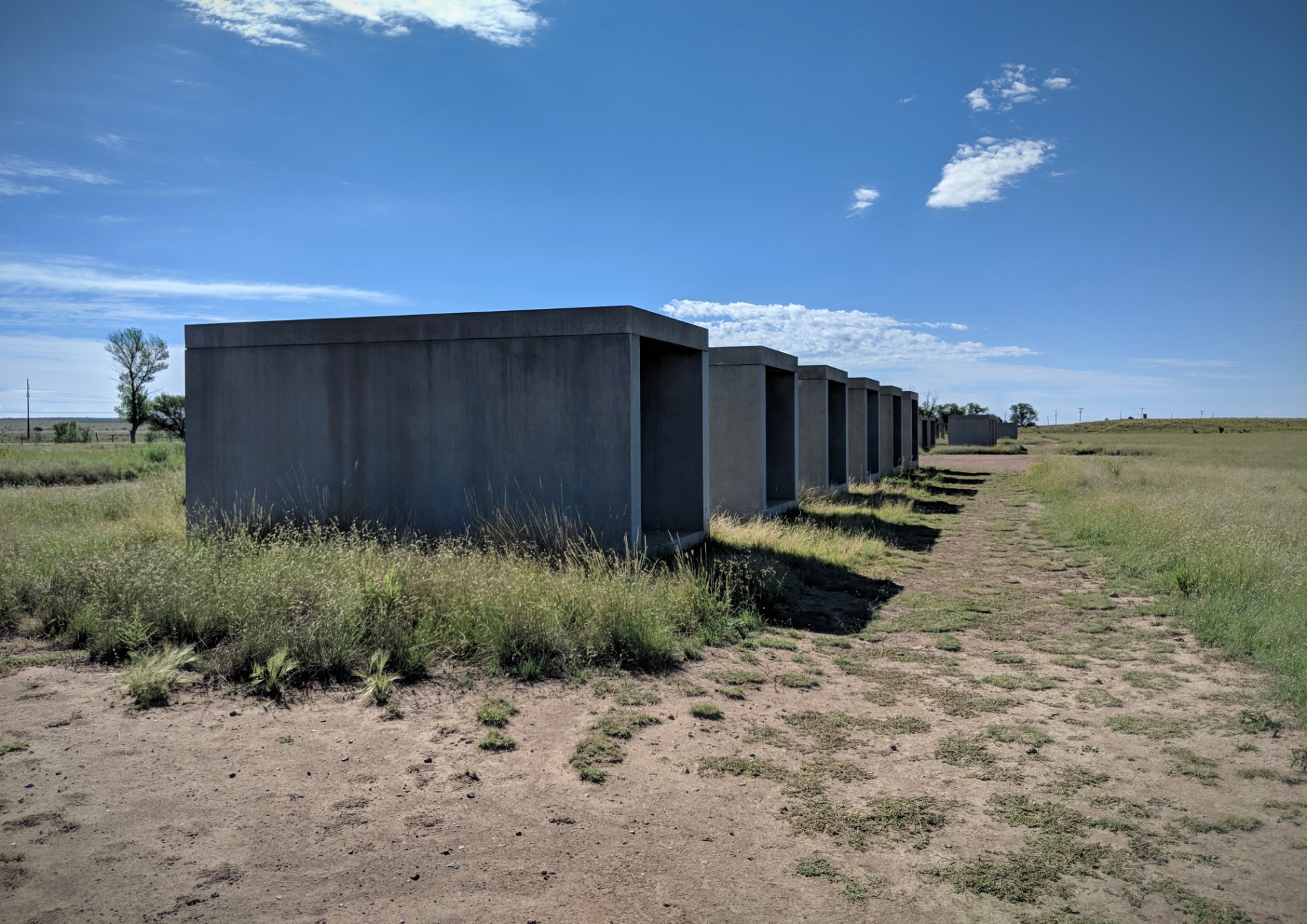
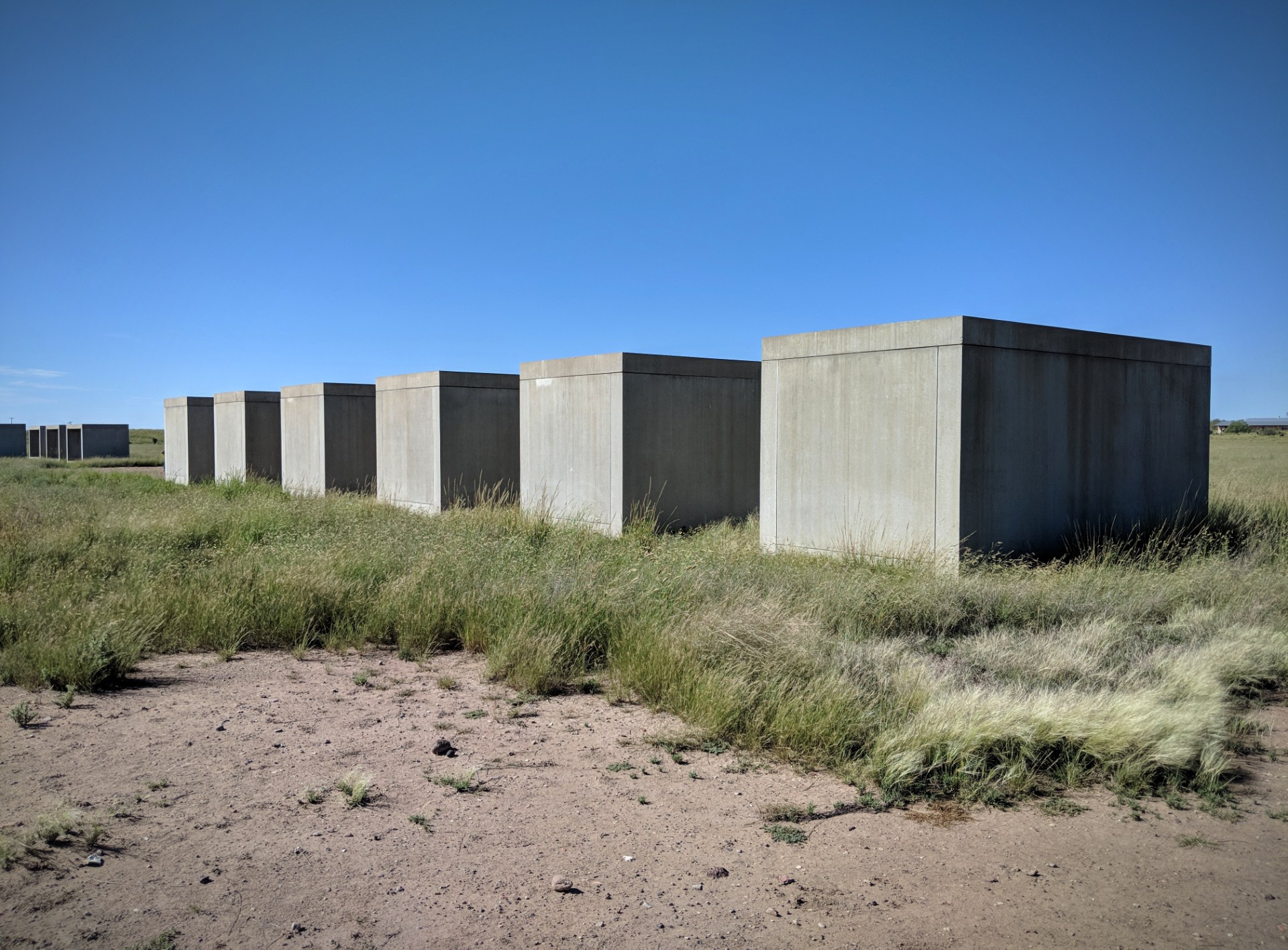
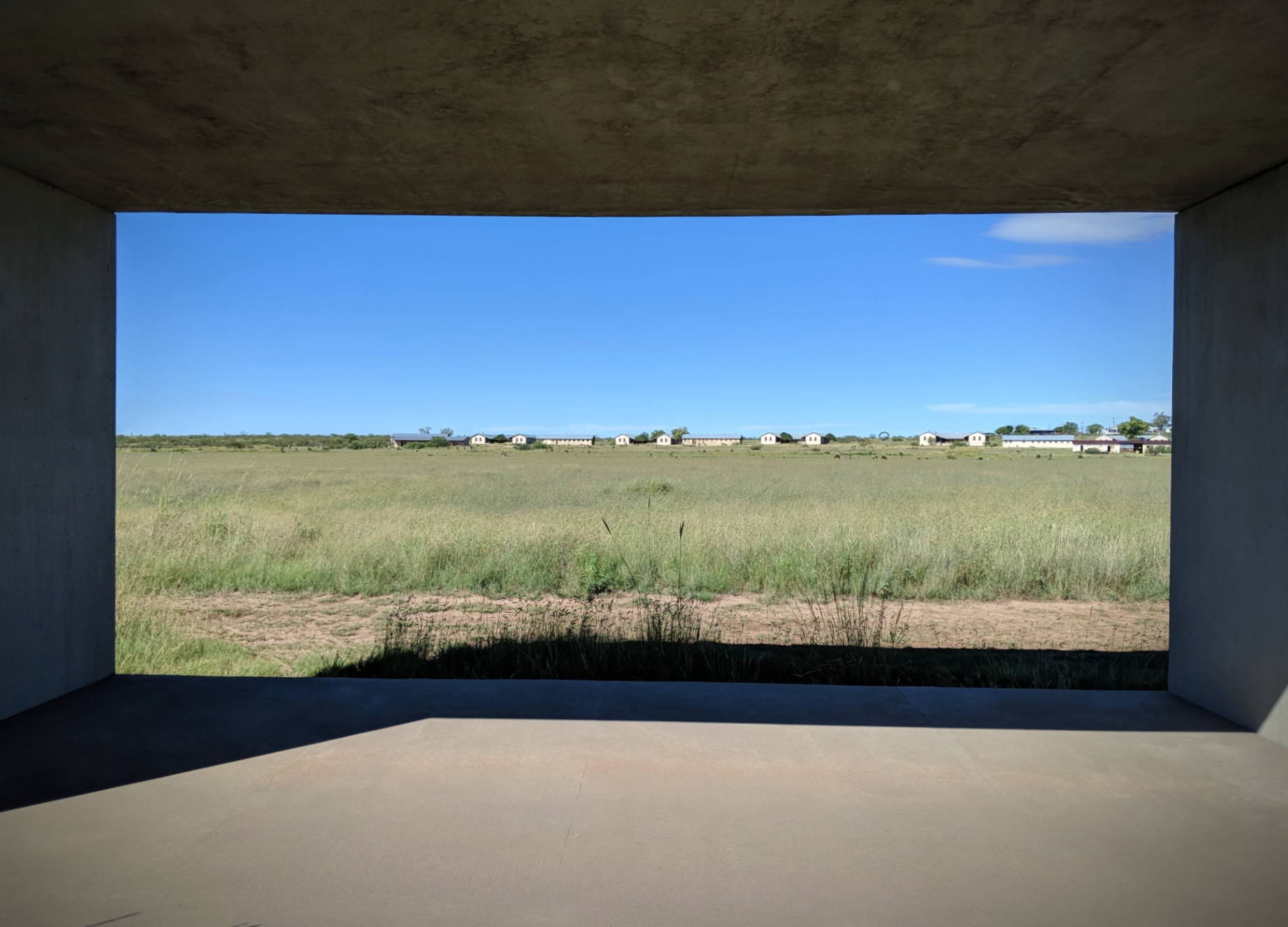
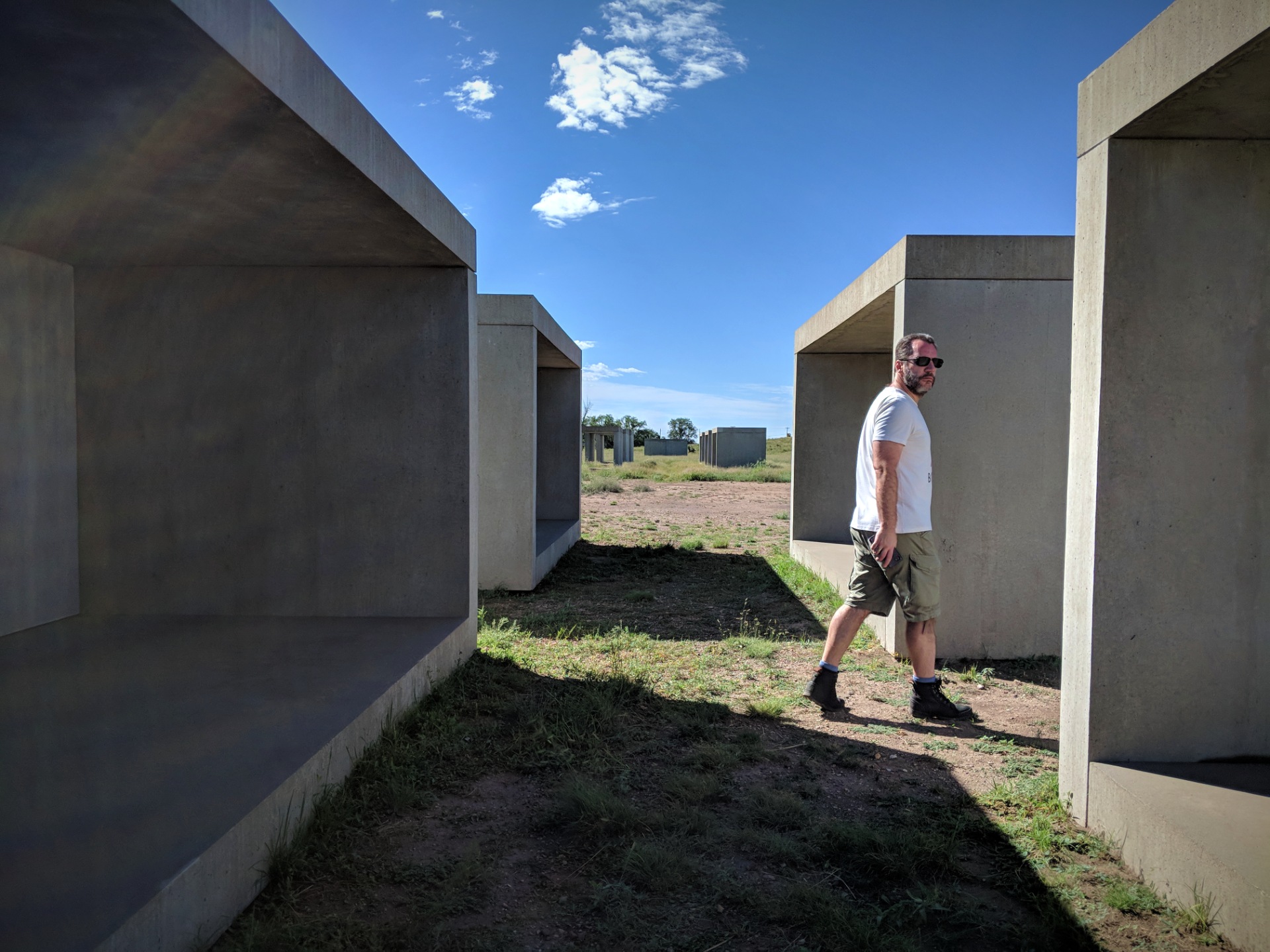
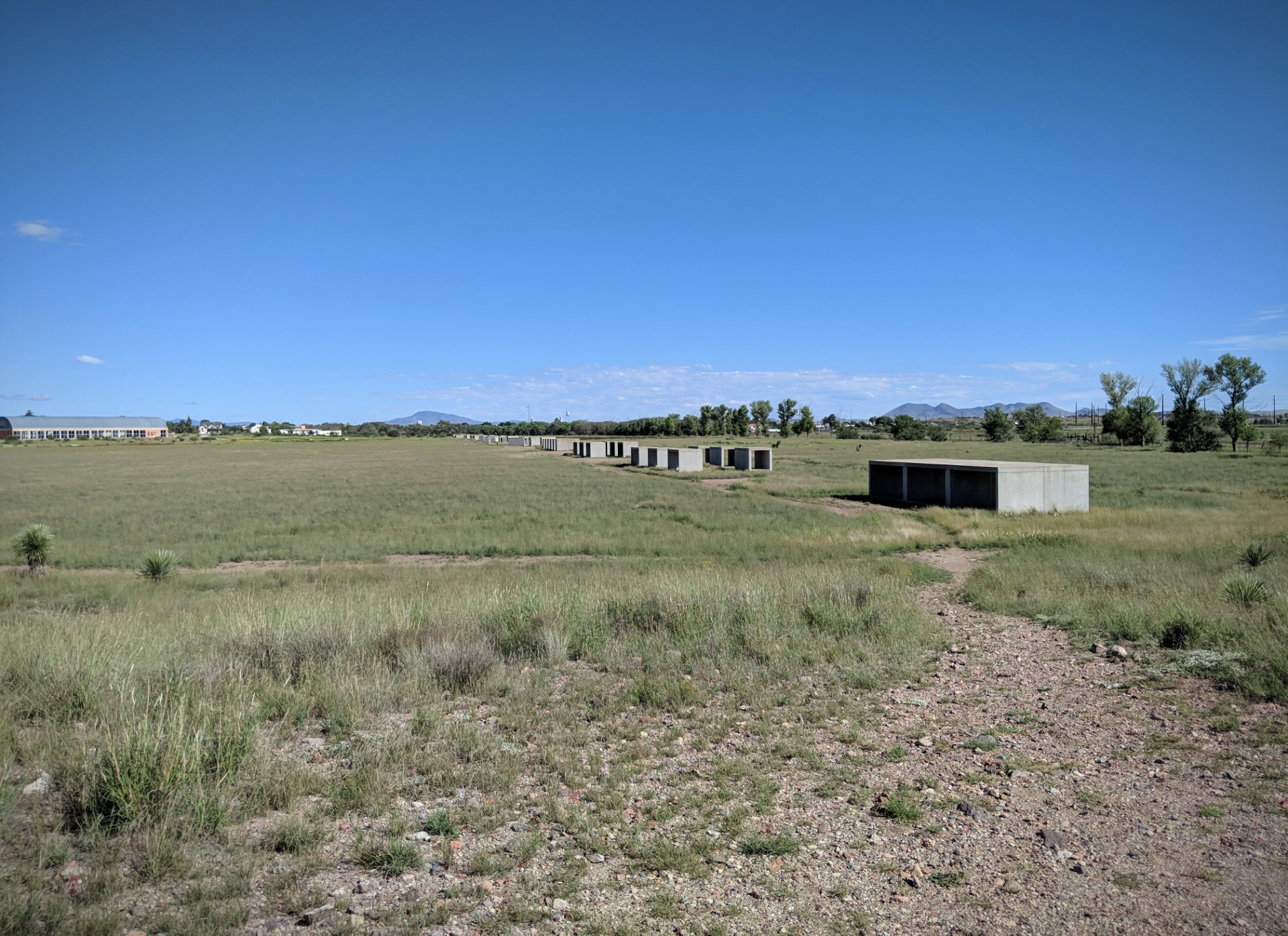
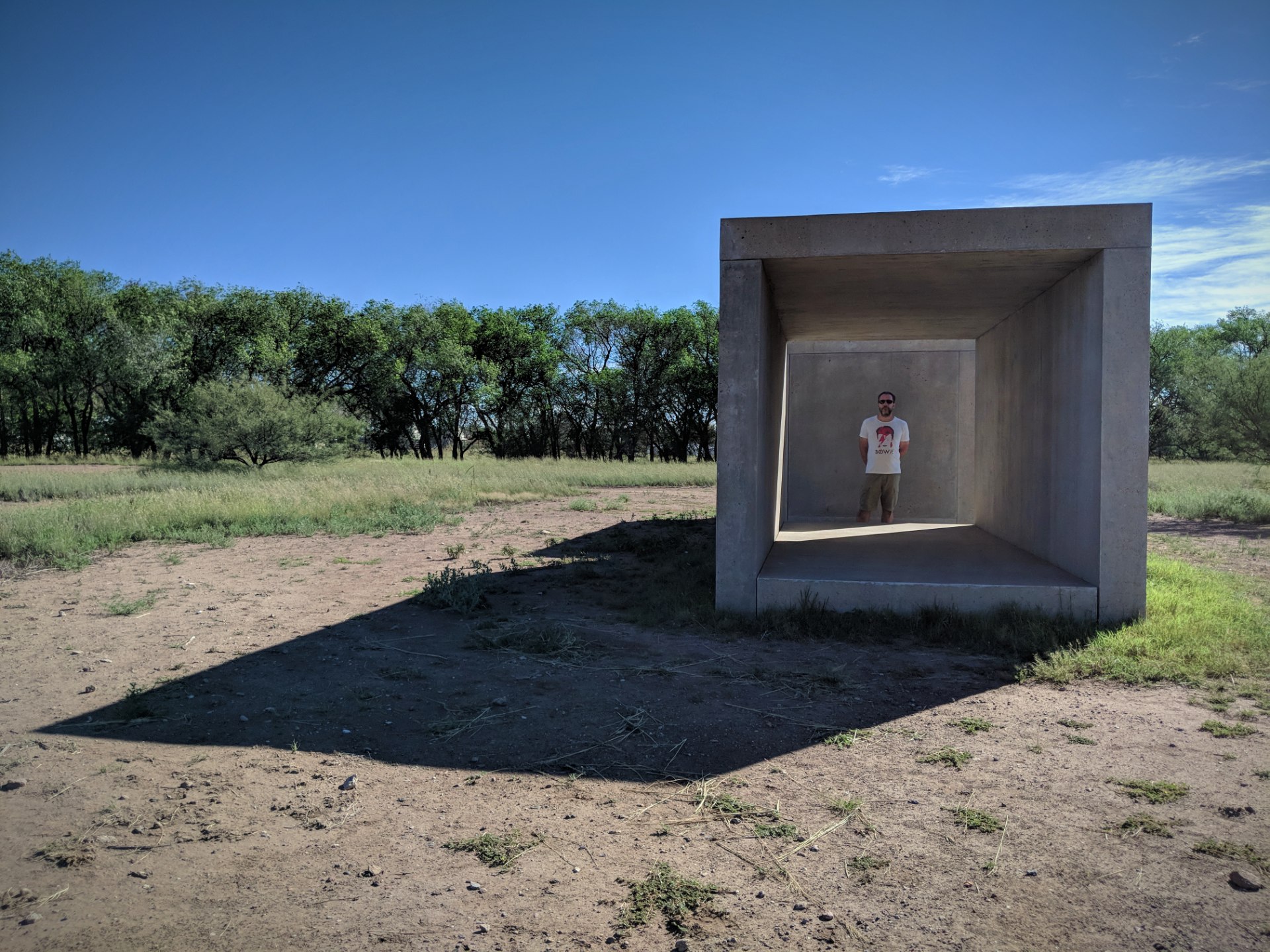
15 untitled works in concrete, 1980–1984

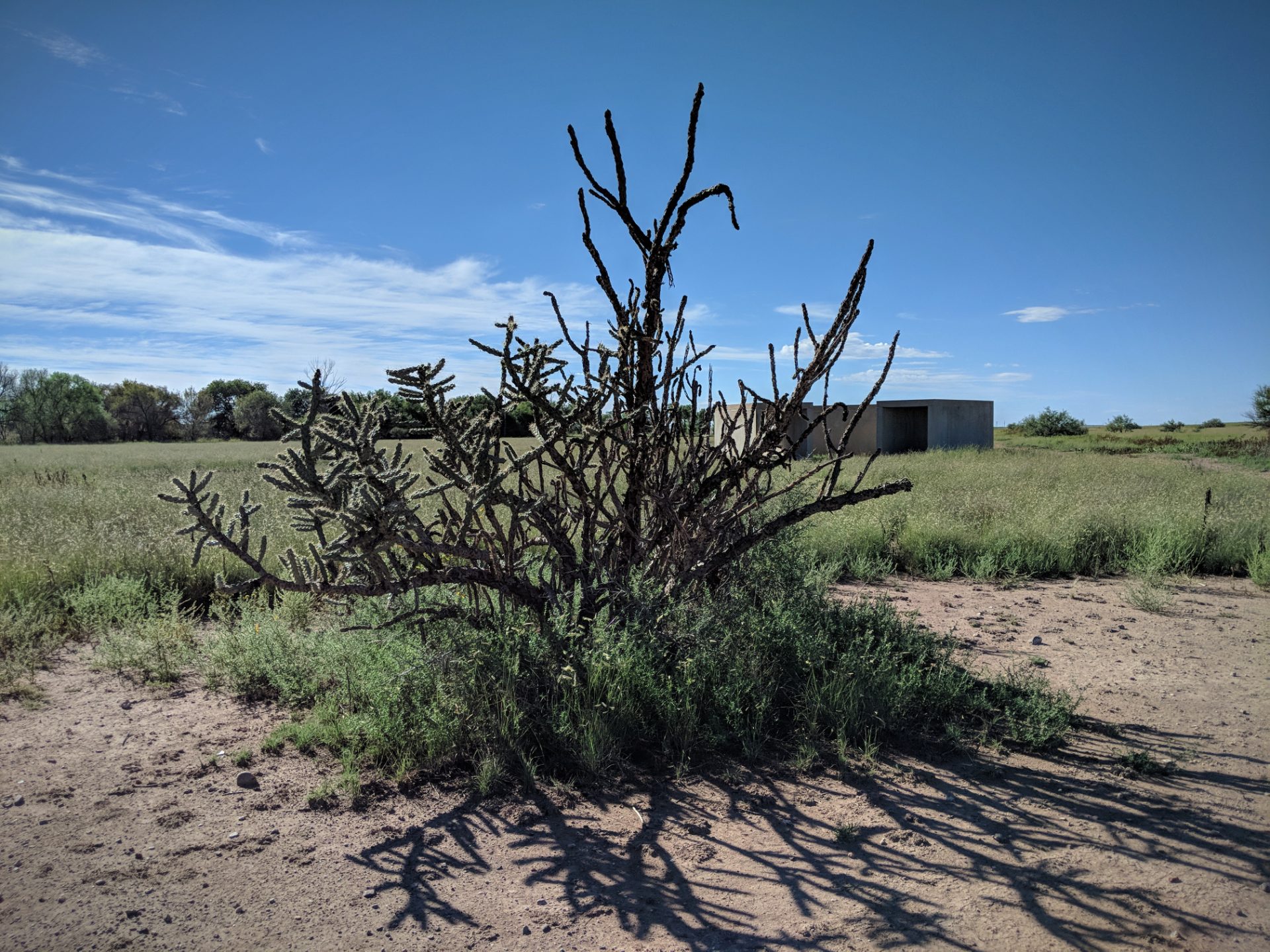
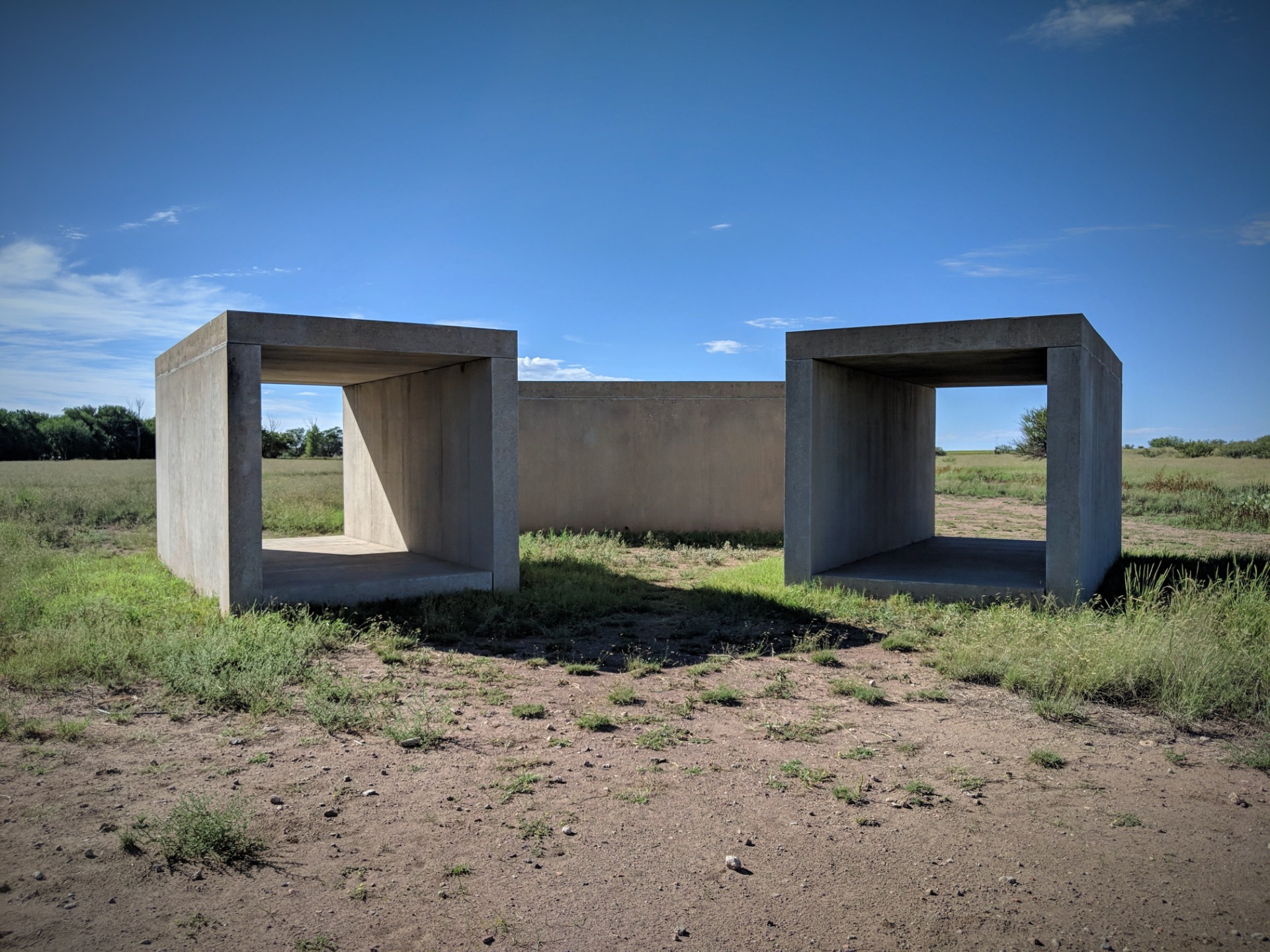
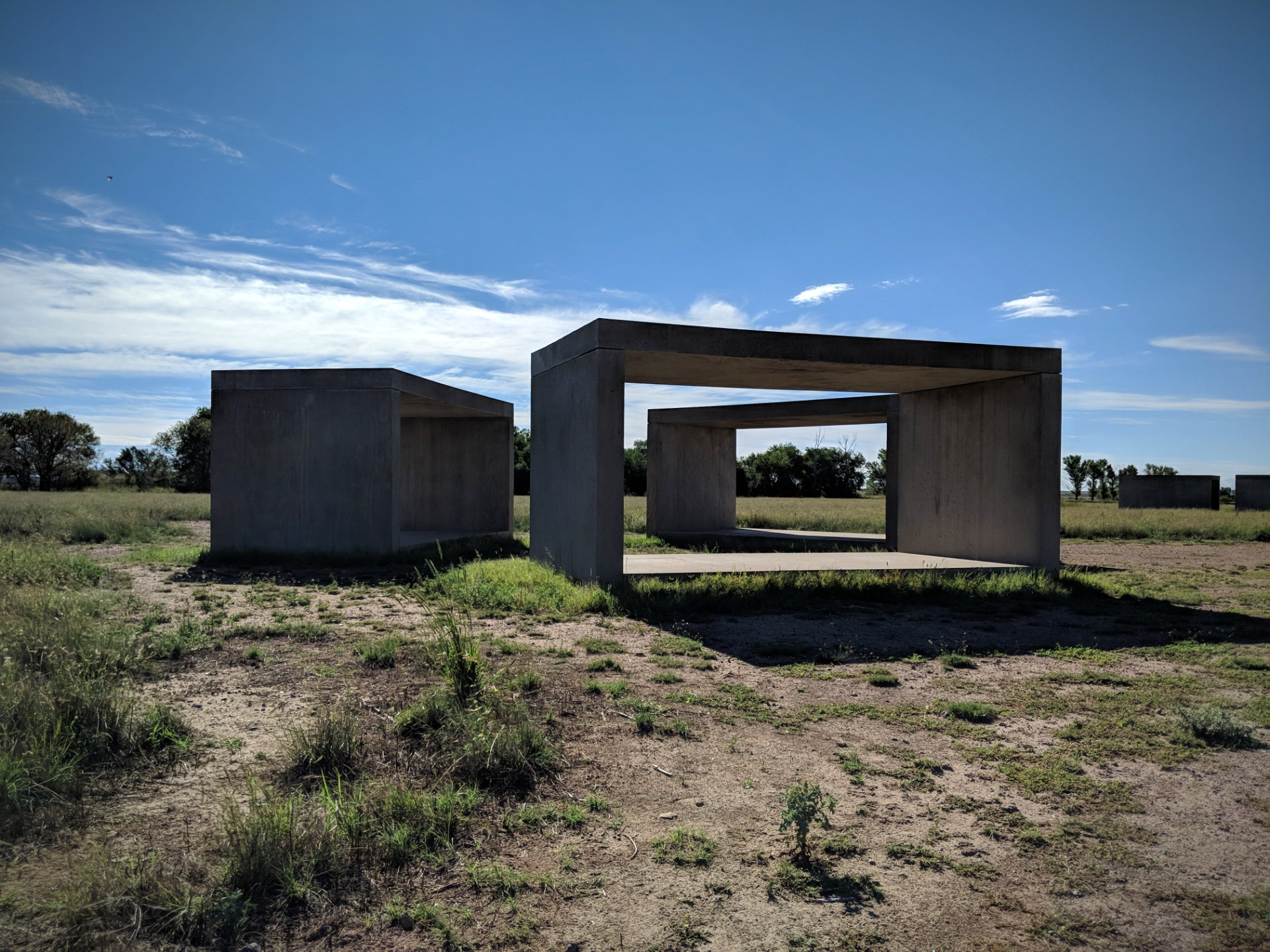
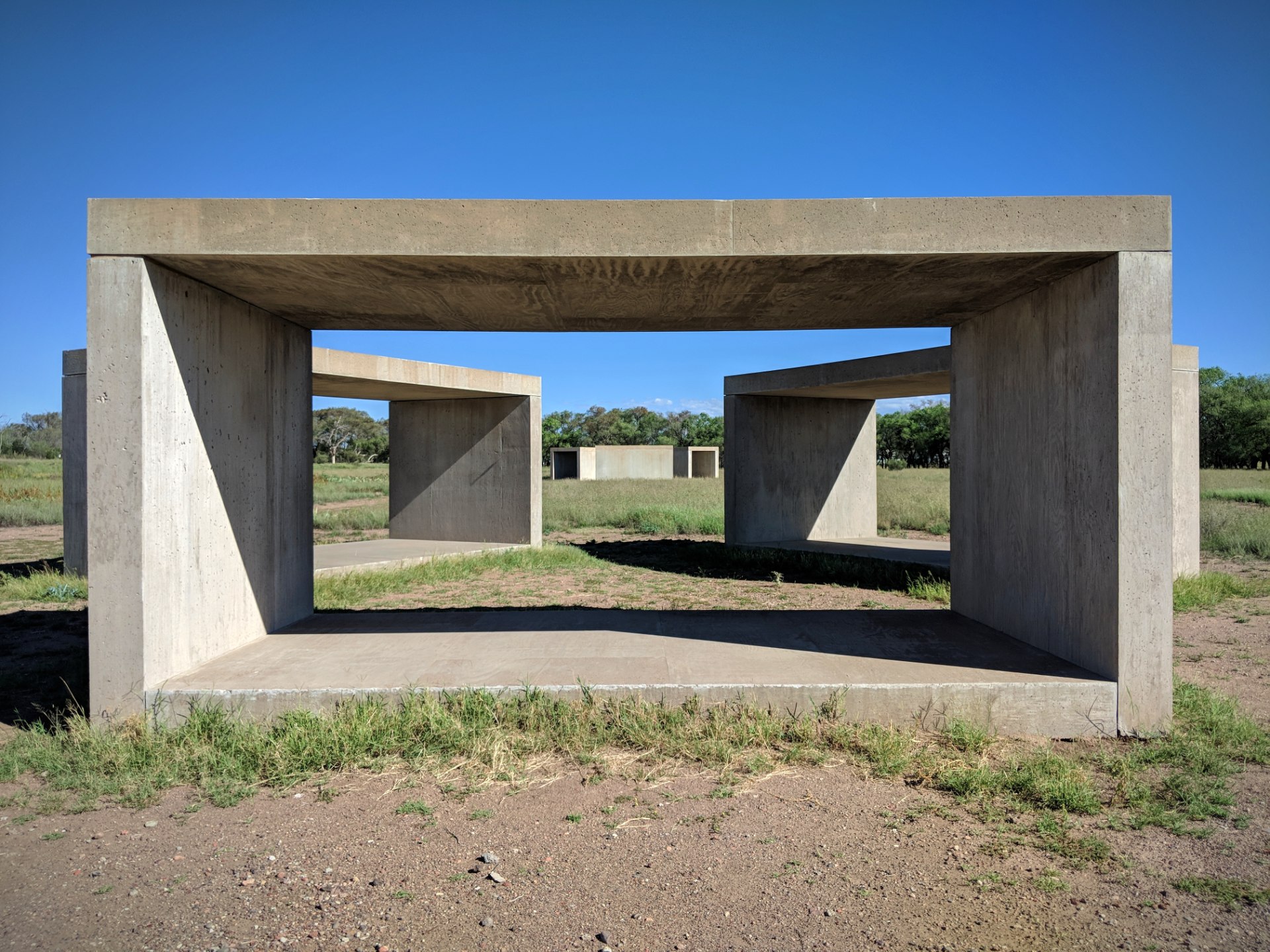
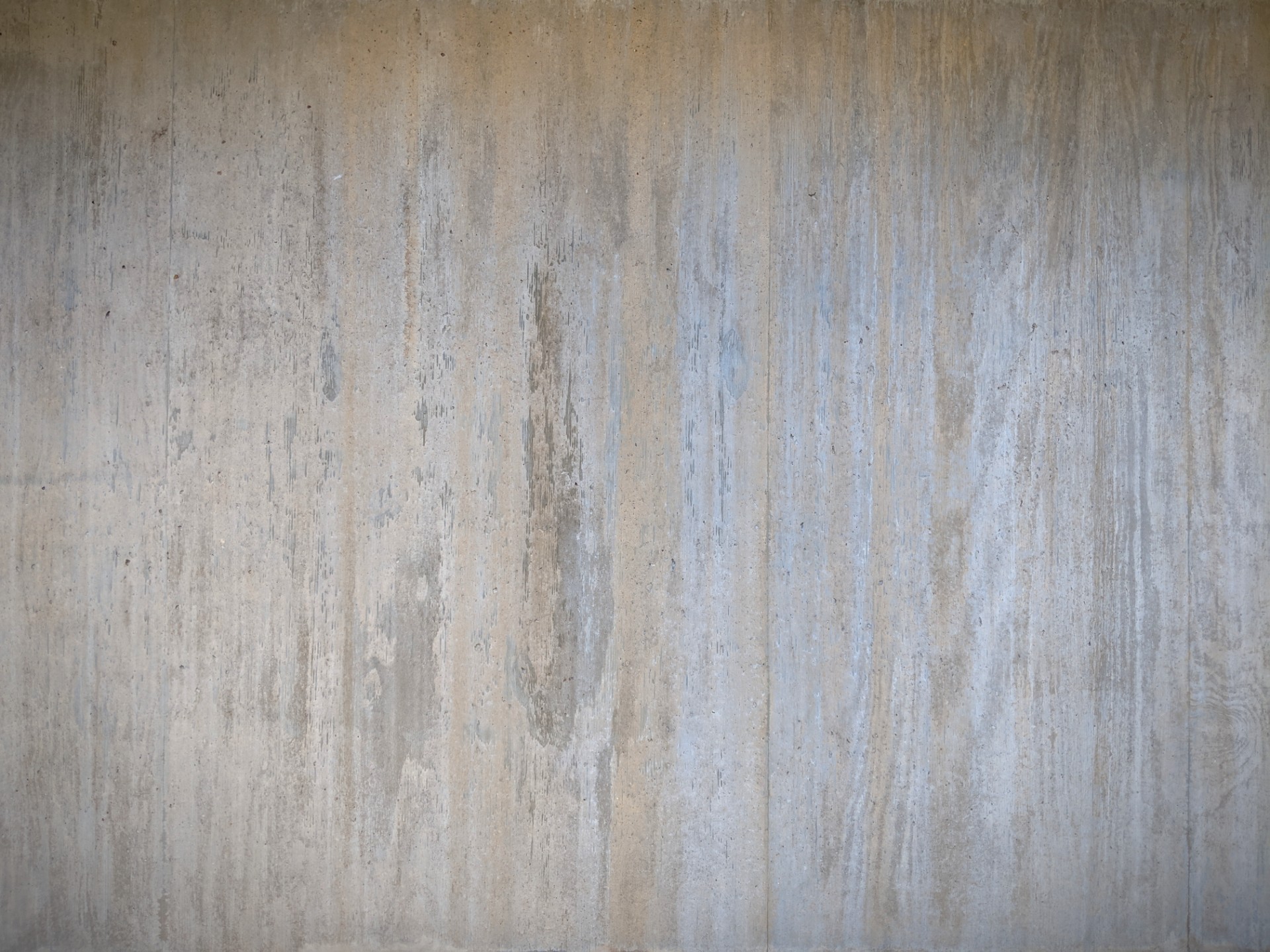
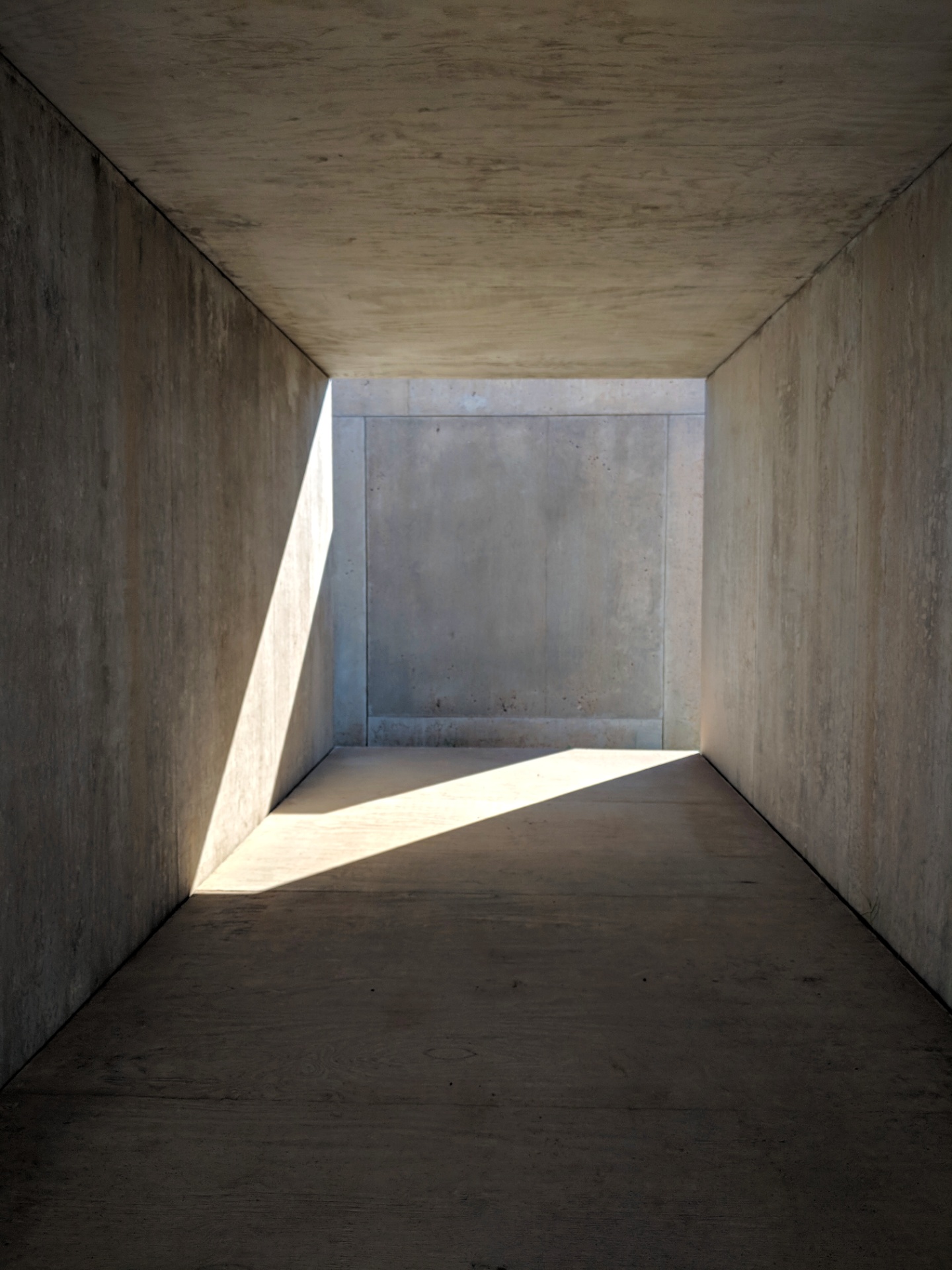
“The fifteen concrete works by Donald Judd that run along the border of Chinati’s property were the first works to be installed at the museum and were cast and assembled on the site over a four-year period, from 1980 through 1984. The individual units that comprise each work have the same measurements of 2.5 x 2.5 x 5 meters, and are made from concrete slabs that are each 25 centimeters thick. Funding for the project was provided by the Dia Art Foundation.”

Are they only fifteen…? One loses count after the first pair or three… It took us an hour to complete the walk; looking back, they stretch as far as the eye can see. And, despite their, well… concreteness, they seem lightweight, blending into the landscape as if they sprouted from the earth, growing organically, effortlessly, in their own time. Nowhere does there seem to be so fitting a place for these squares than here – Judd knew exactly what he was doing.
The Arena, 1980–1987

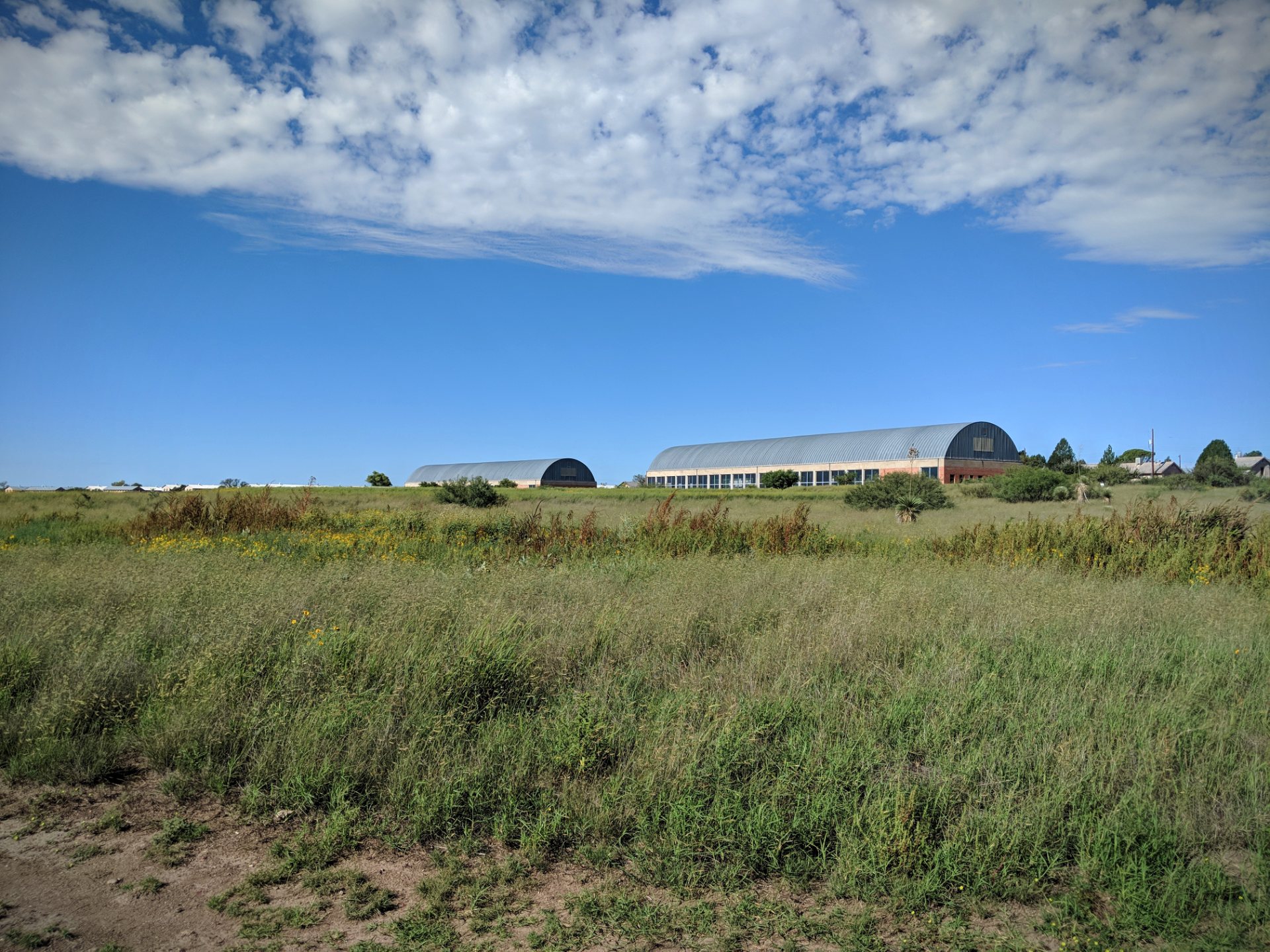
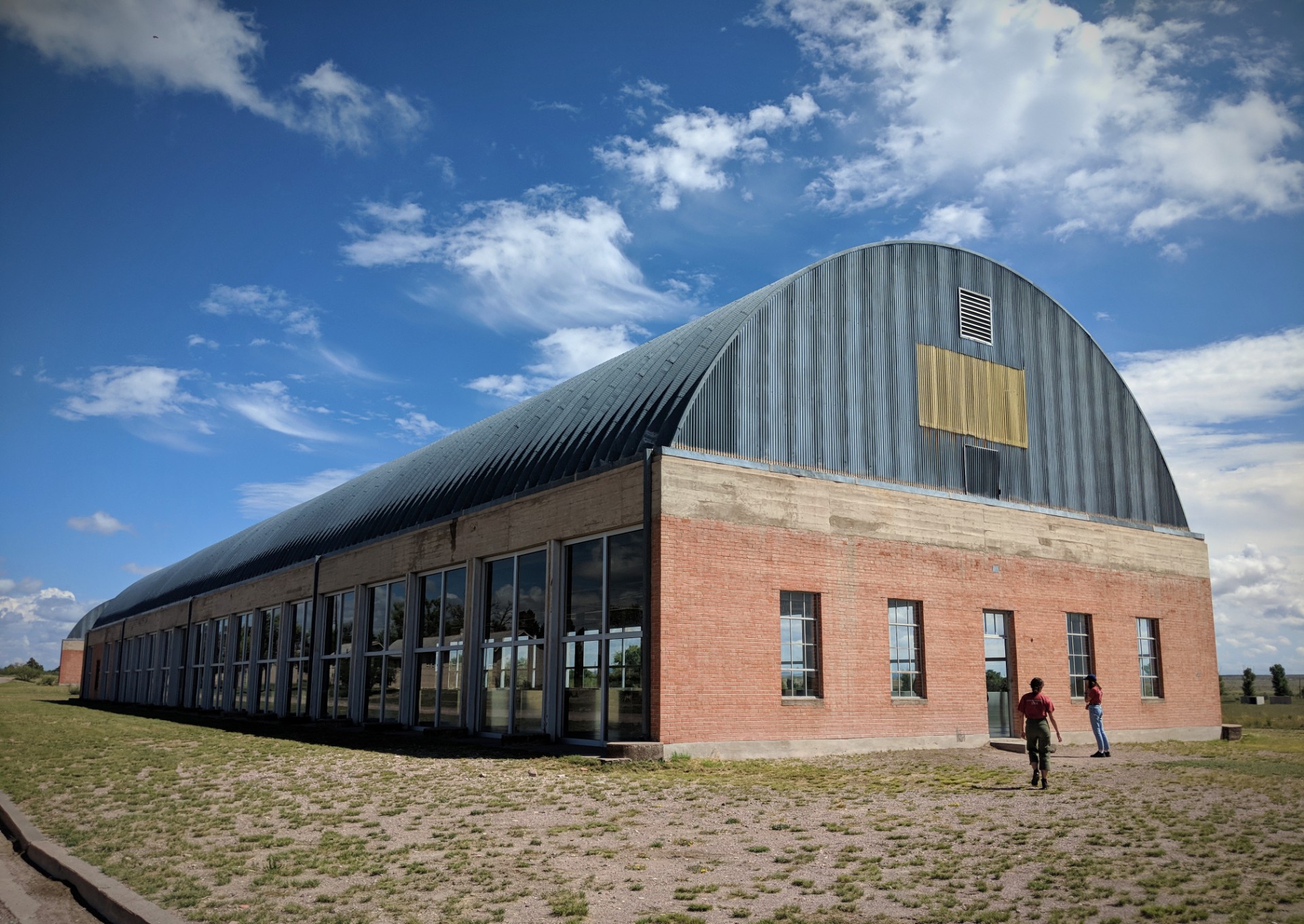
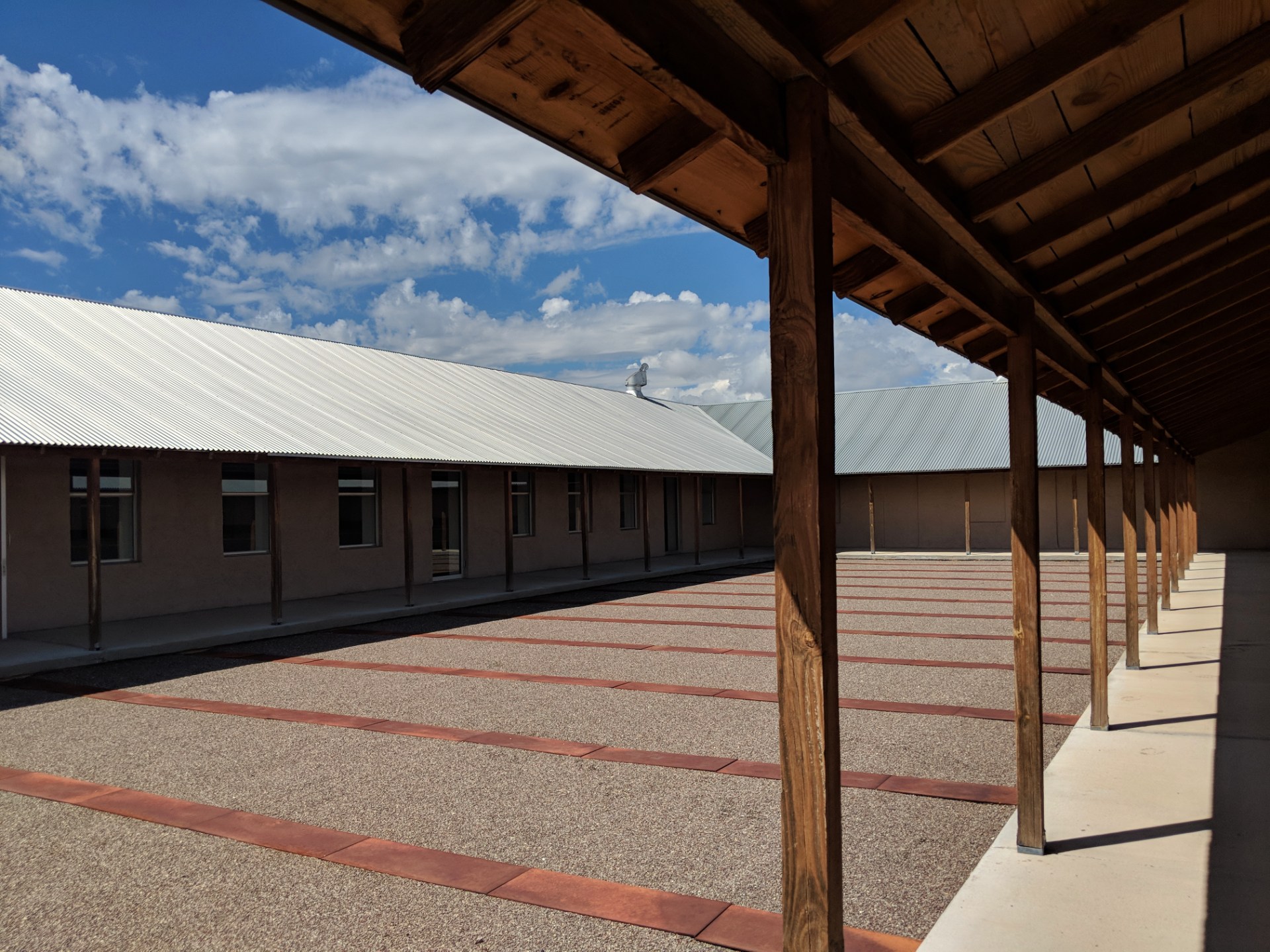
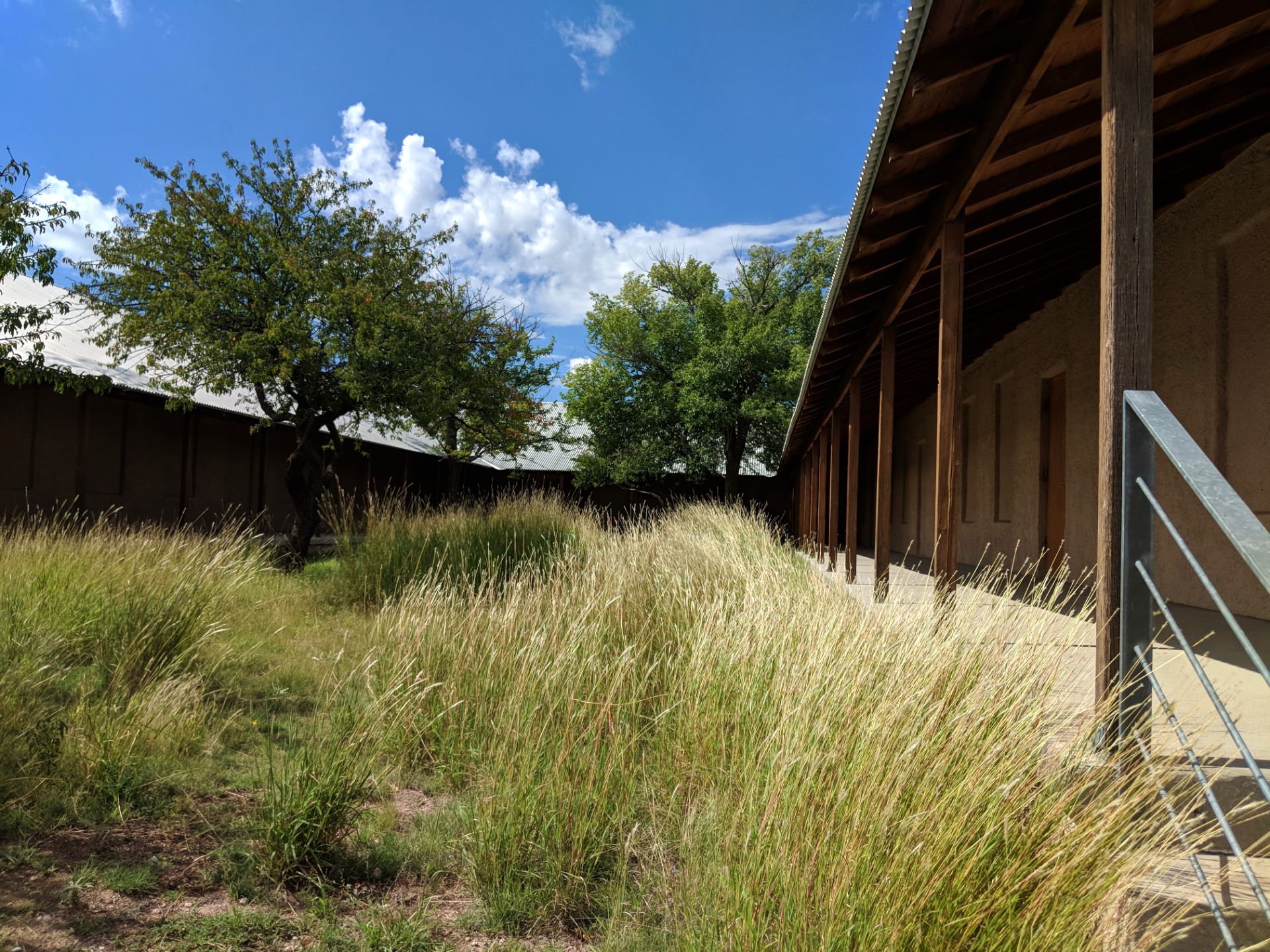
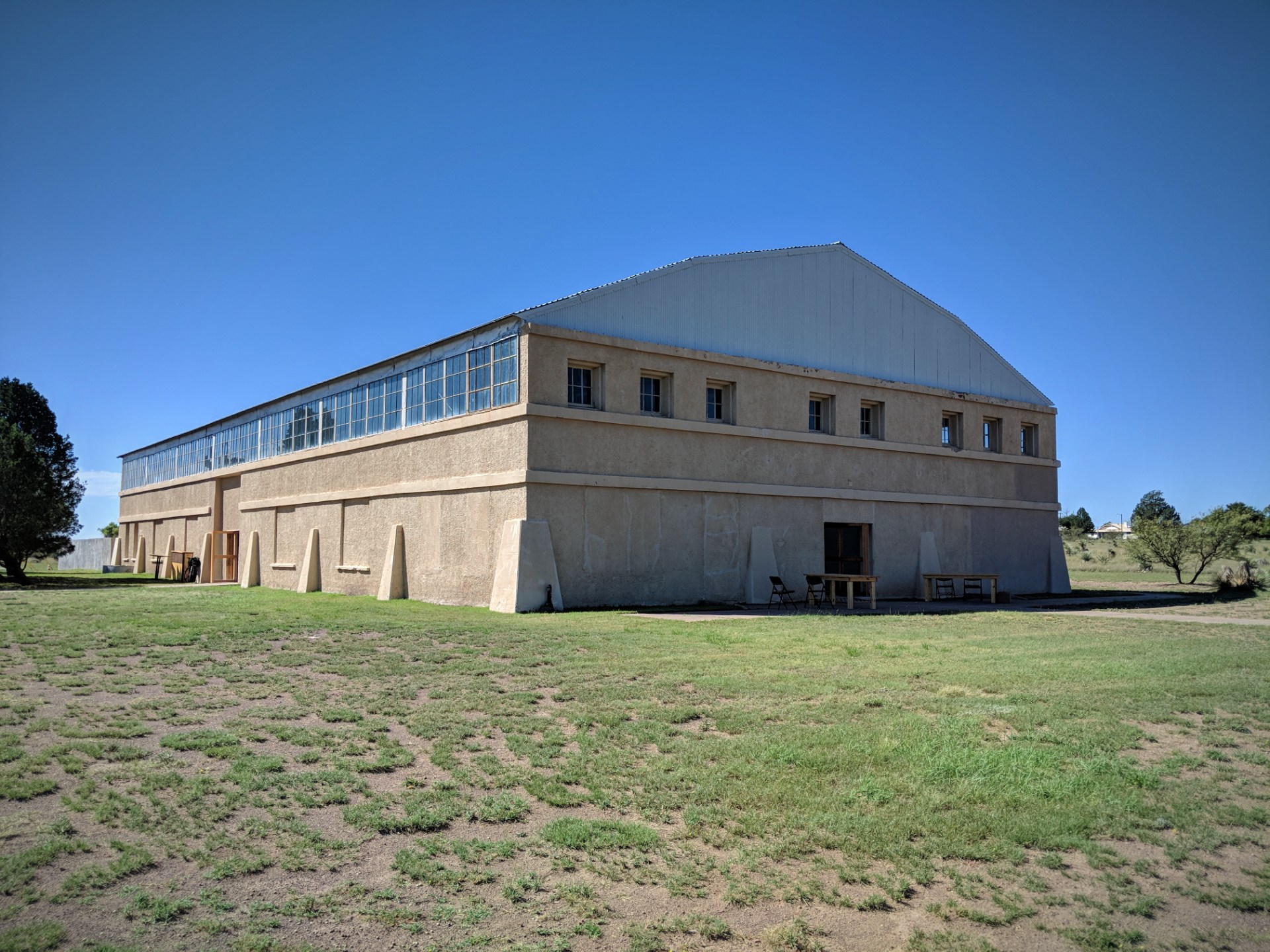
“The Arena was built in the 1930s as a gymnasium for the soldiers at Fort D.A. Russell. After the fort closed in 1946, the gym floor was torn up for the wood, and sand was laid to provide an indoor arena for horses. In the mid-1980s, Judd restored the building, which was largely dilapidated. Judd left the long strips of concrete that had originally supported the wooden floor, and filled the intervening spaces with gravel. For practical considerations, Judd poured a large concrete area by the kitchen at the south end, and a smaller area at the north end of the building’s interior. These two areas comprise half of the total area of the building. Judd also added a sleeping loft and designed the outer courtyard, which includes areas for eating, bathing, and a barbecue.”↓↓
Robert Irwin
untitled (dawn to dusk), 2016

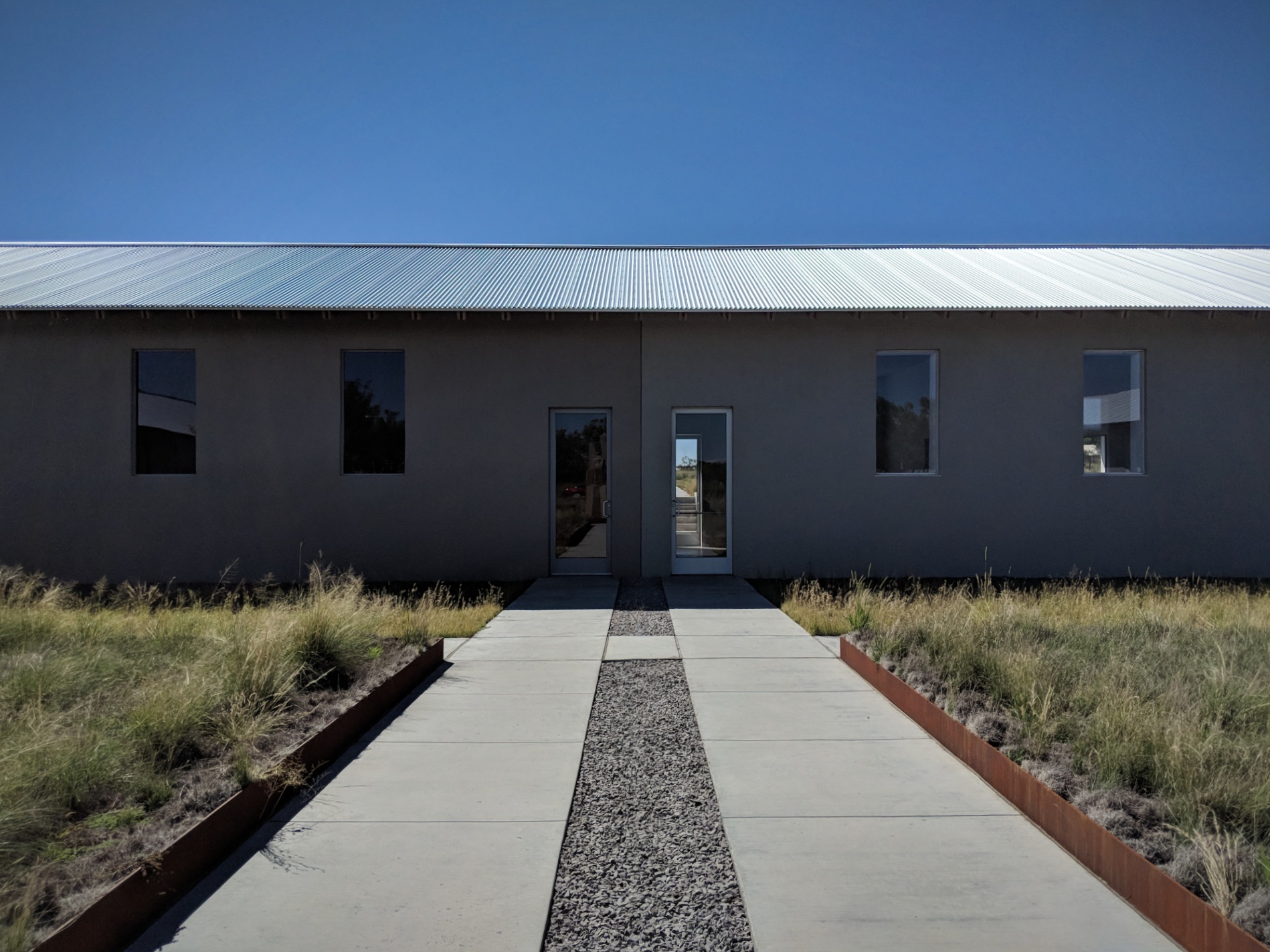
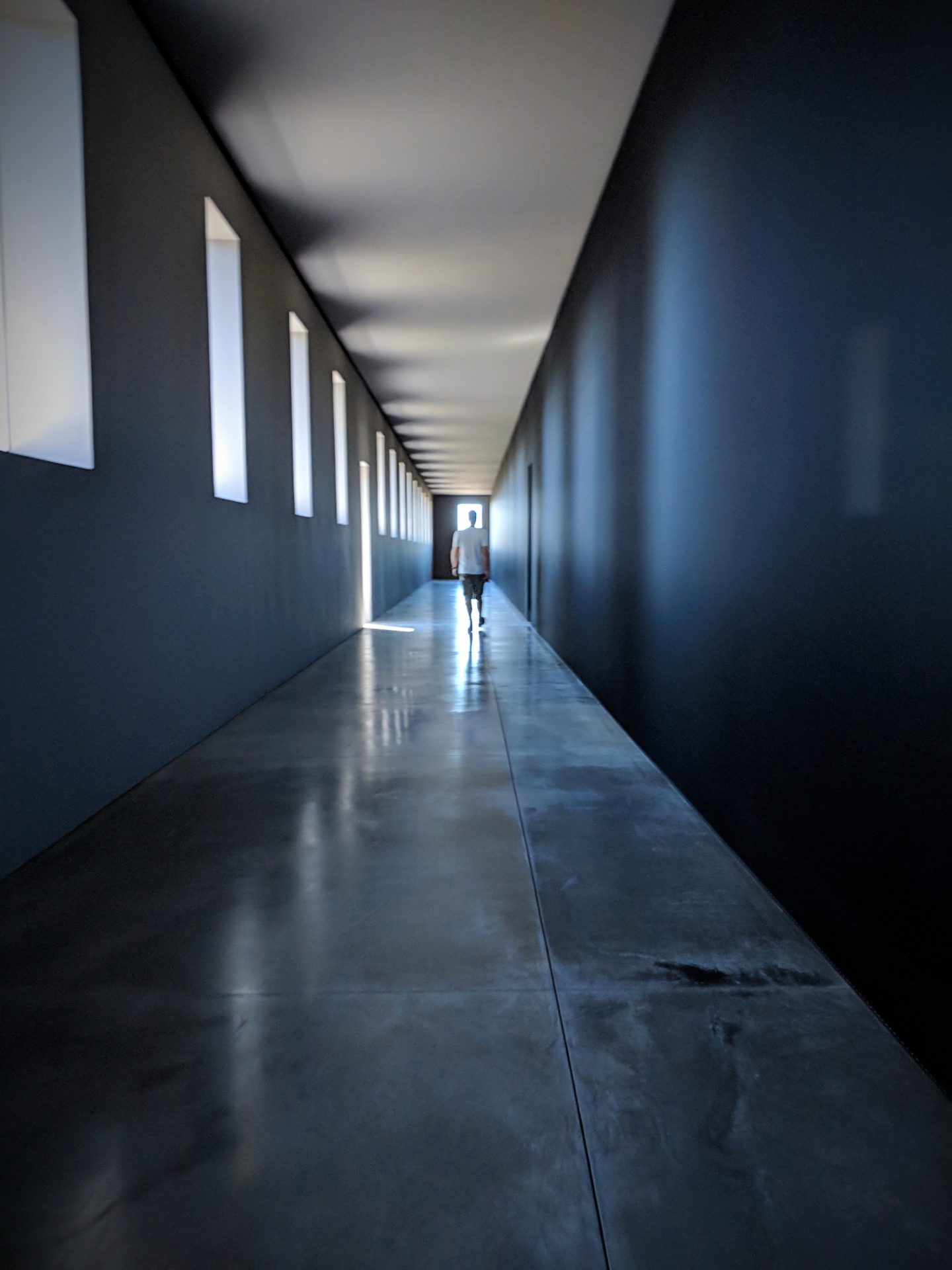
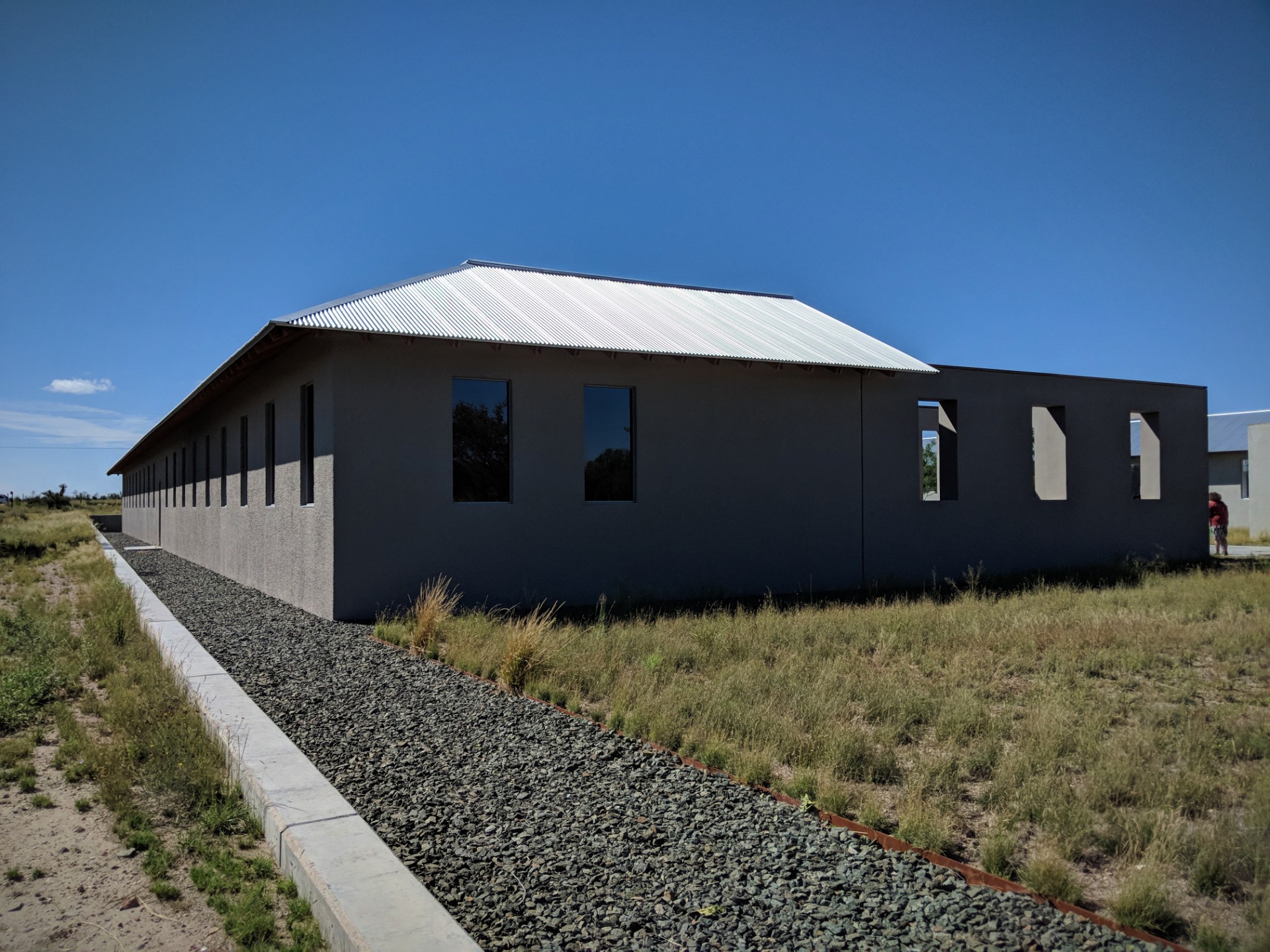
“In July 2016, the Chinati Foundation opened a new large-scale artwork by Robert Irwin. It is the only permanent, freestanding structure conceived and designed by Irwin as a total work of art.

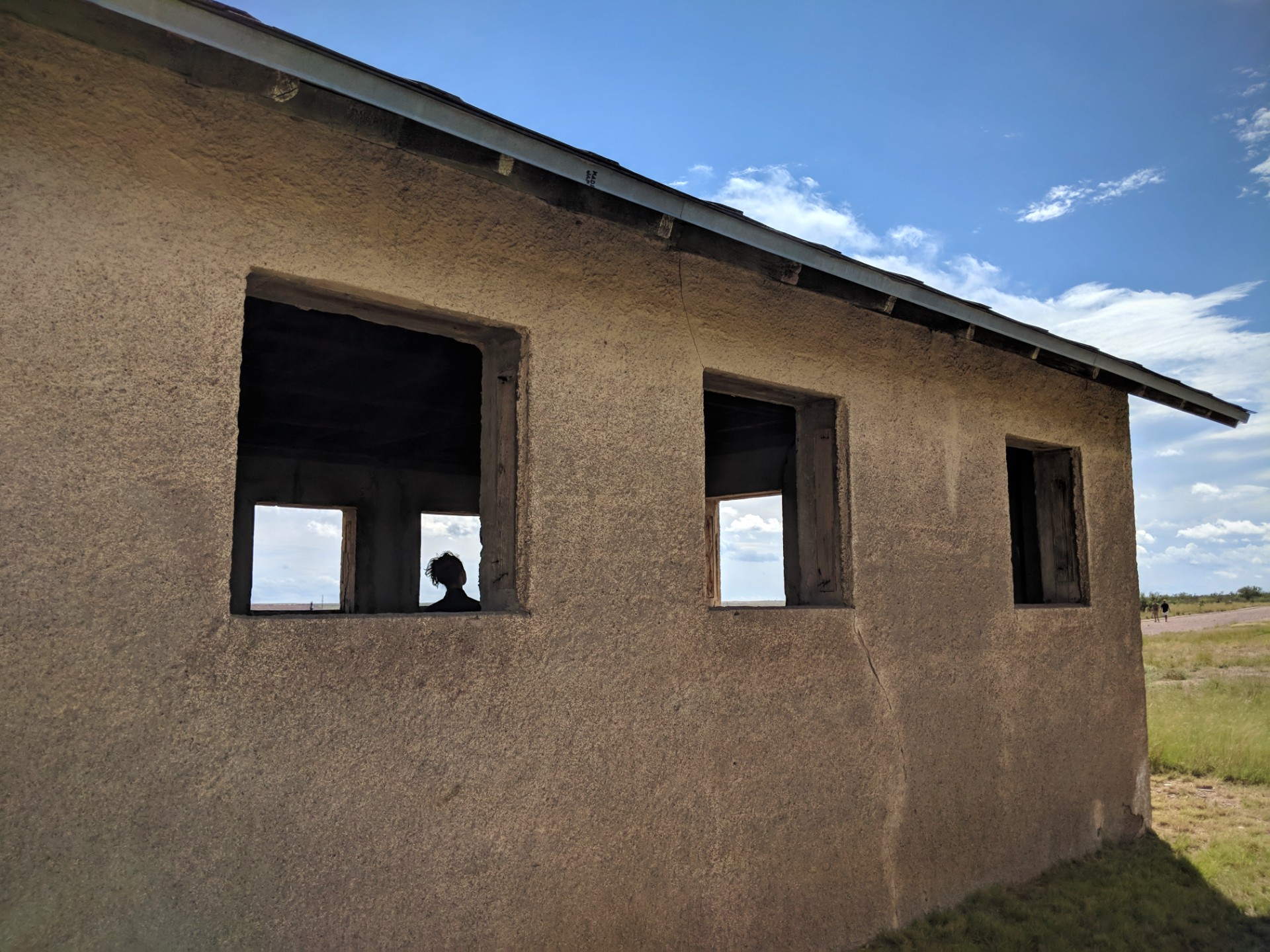
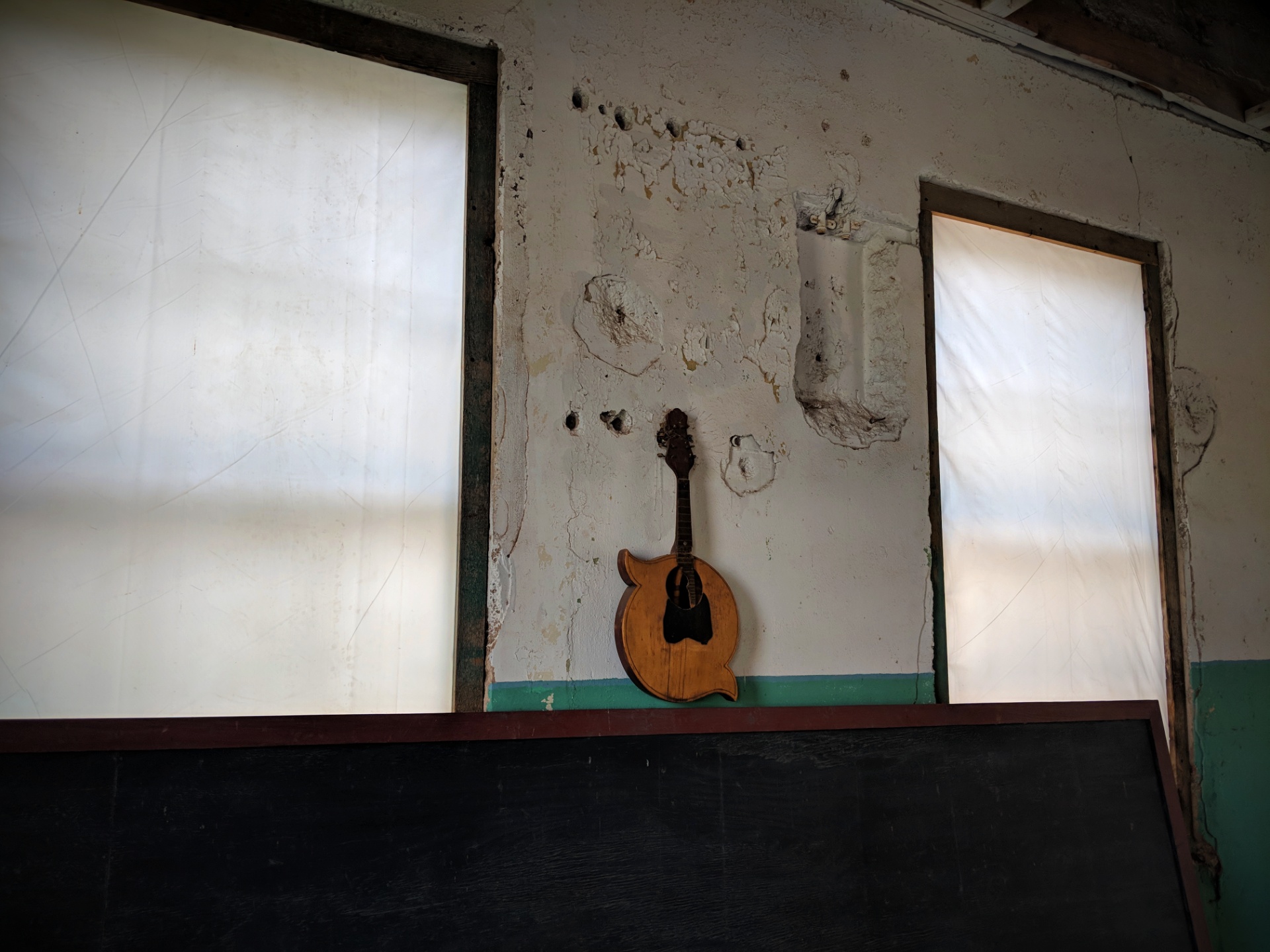
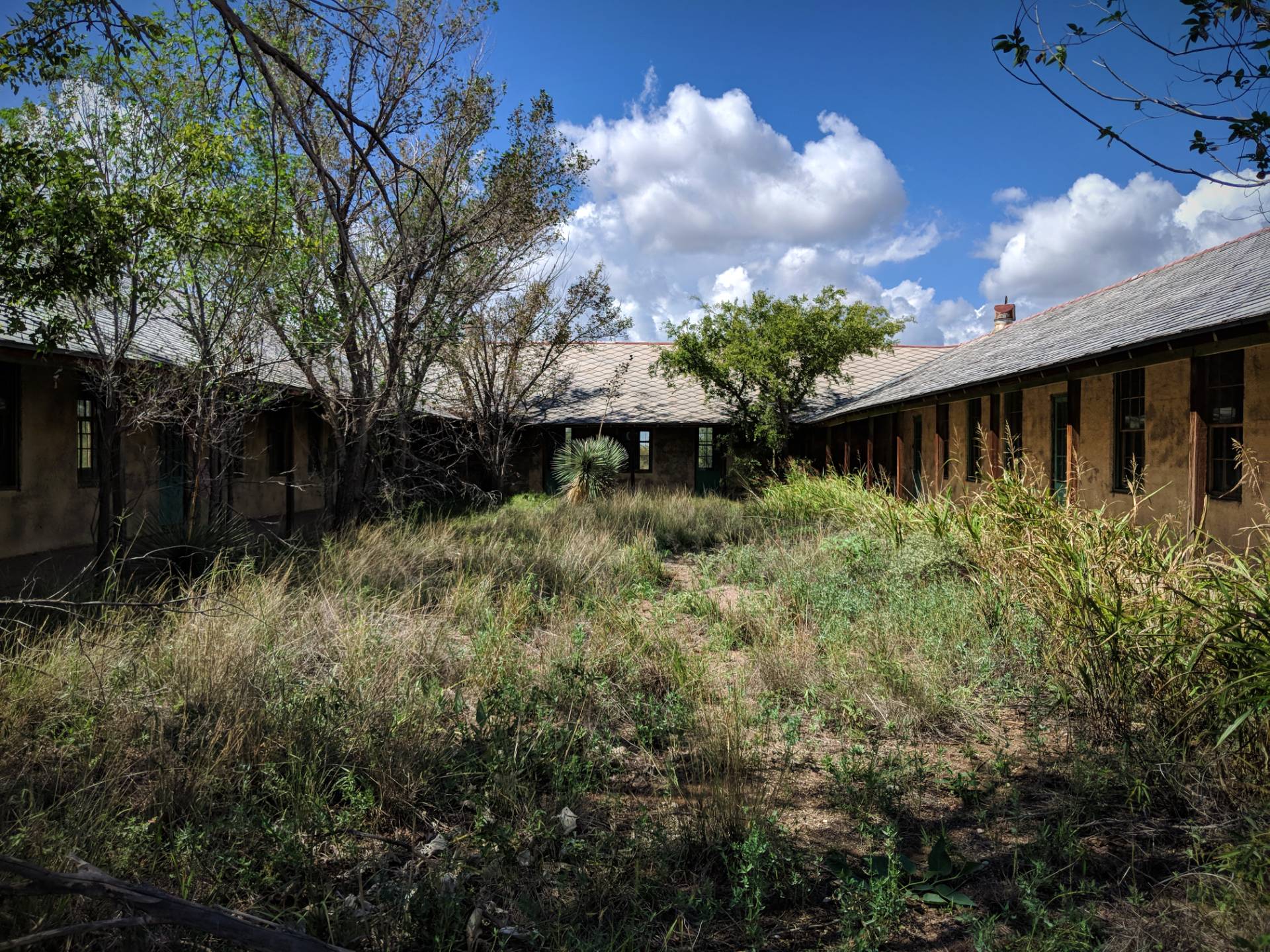
Irwin had been developing and refining a design for the long-abandoned former army hospital site since 1999. Situated adjacent to the museum’s campus, the site was a C-shaped concrete structure, lined on all sides with a long sequence of windows that surrounded a central courtyard.

The building is formally divided in half, with one side dark, the other light. Inside, transparent scrim walls are stretched taut from floor to ceiling in black or white respectively, bisecting each long wing and capturing the always-changing natural light. The connecting corridor has a progression of scrim walls that sequentially cross and fill the space, with an enfilade of doors for passage.”↓↓
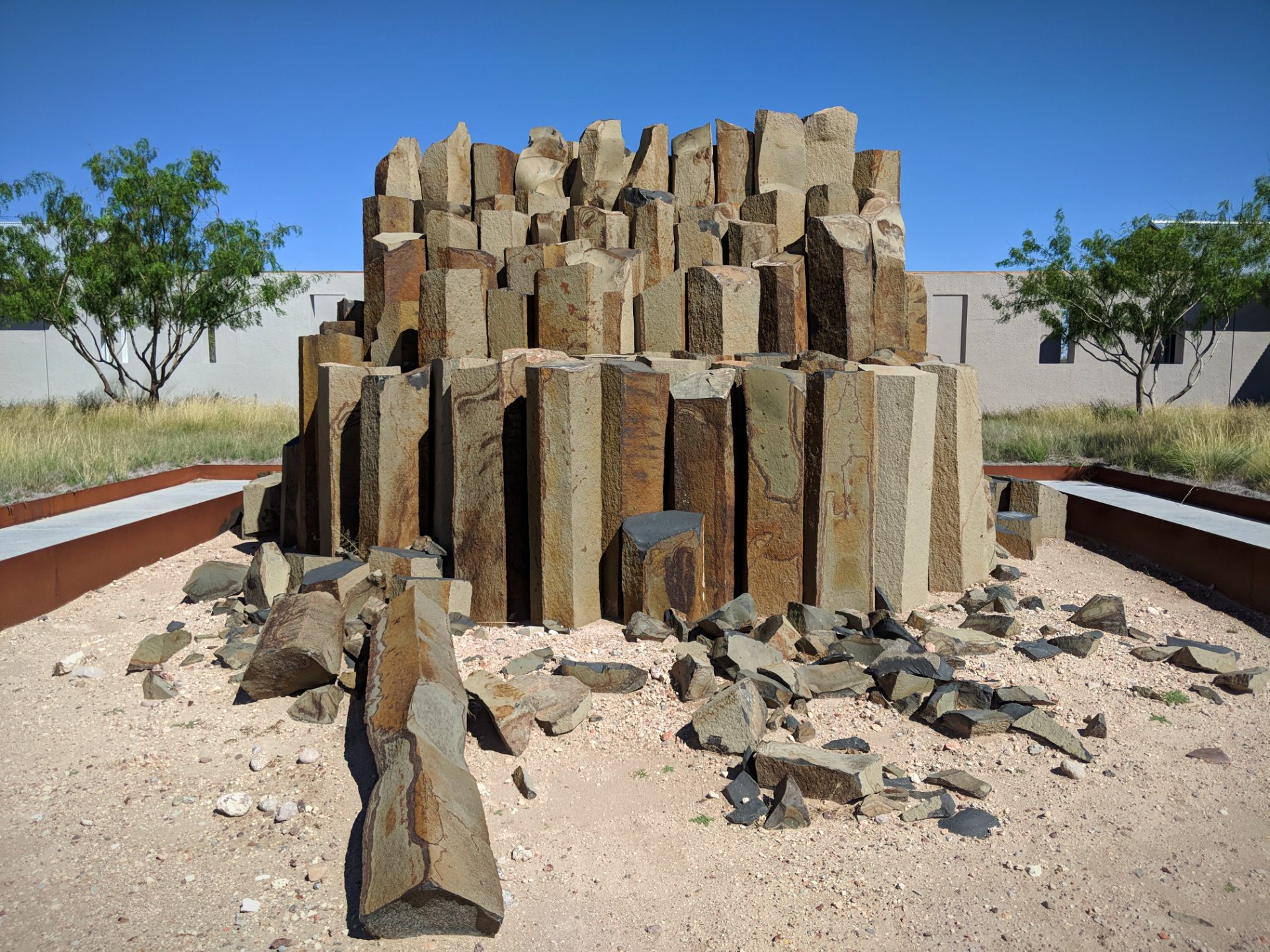
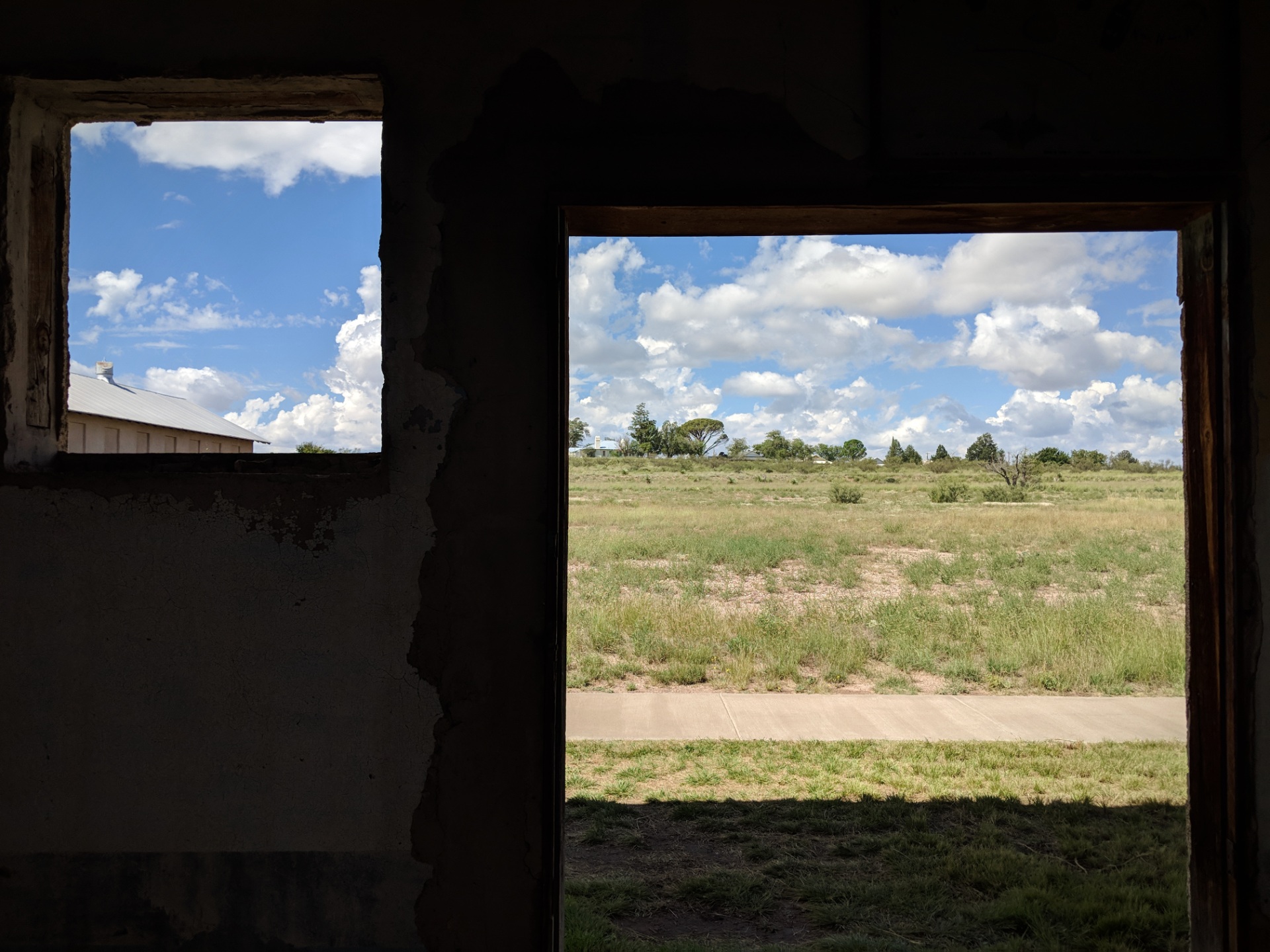
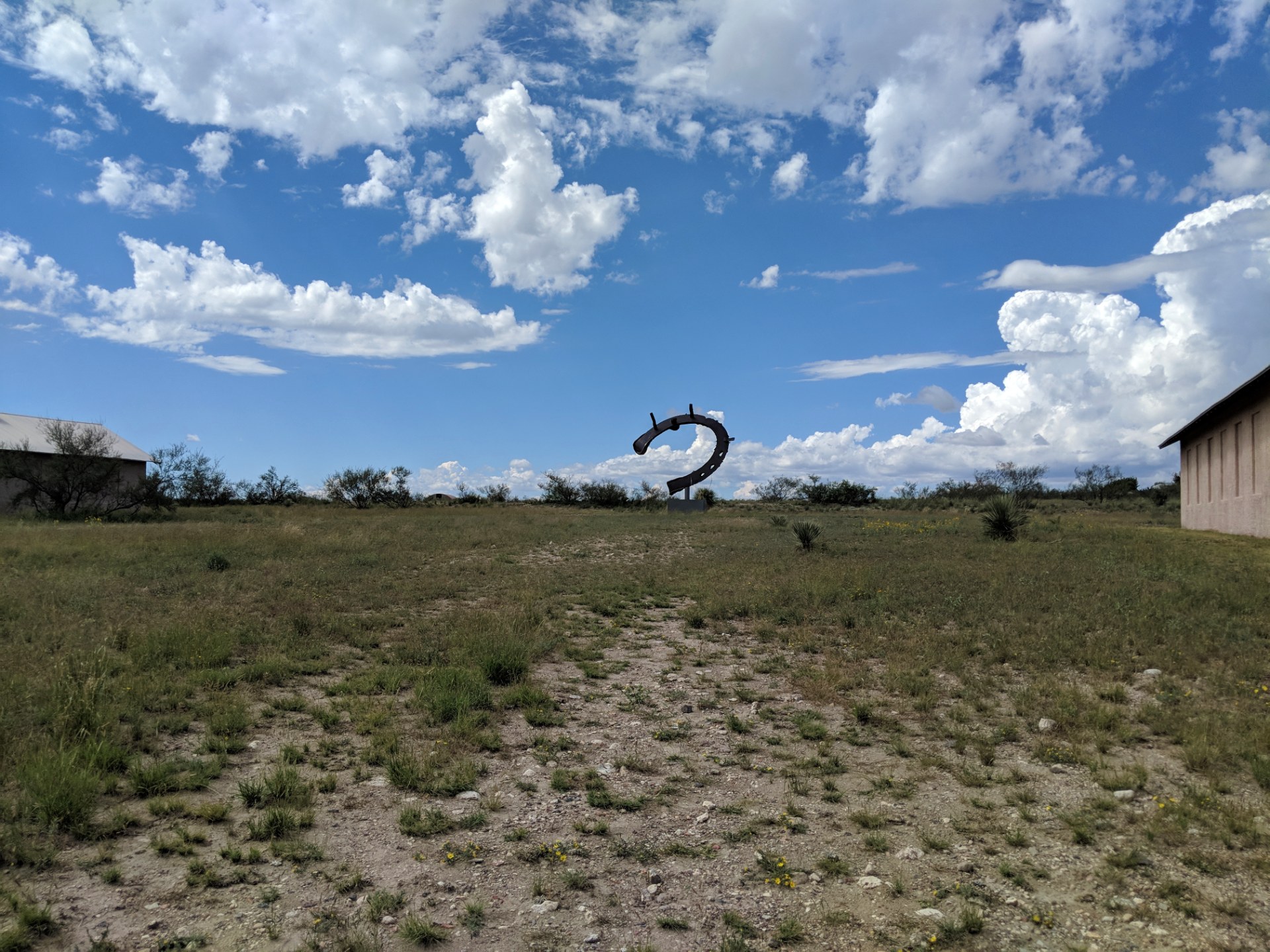
It has been one of the most rewarding, unforgettable ”museum walks” we could have ever hoped for. Not the most comfortable perhaps, as a large part of it involves field walking, with rattlesnakes and cacti being an integral part of the ecosystem, extra-ordinary nonetheless.

**

Dress appropriately: boots, long thick trousers and long sleeves will do the trick.
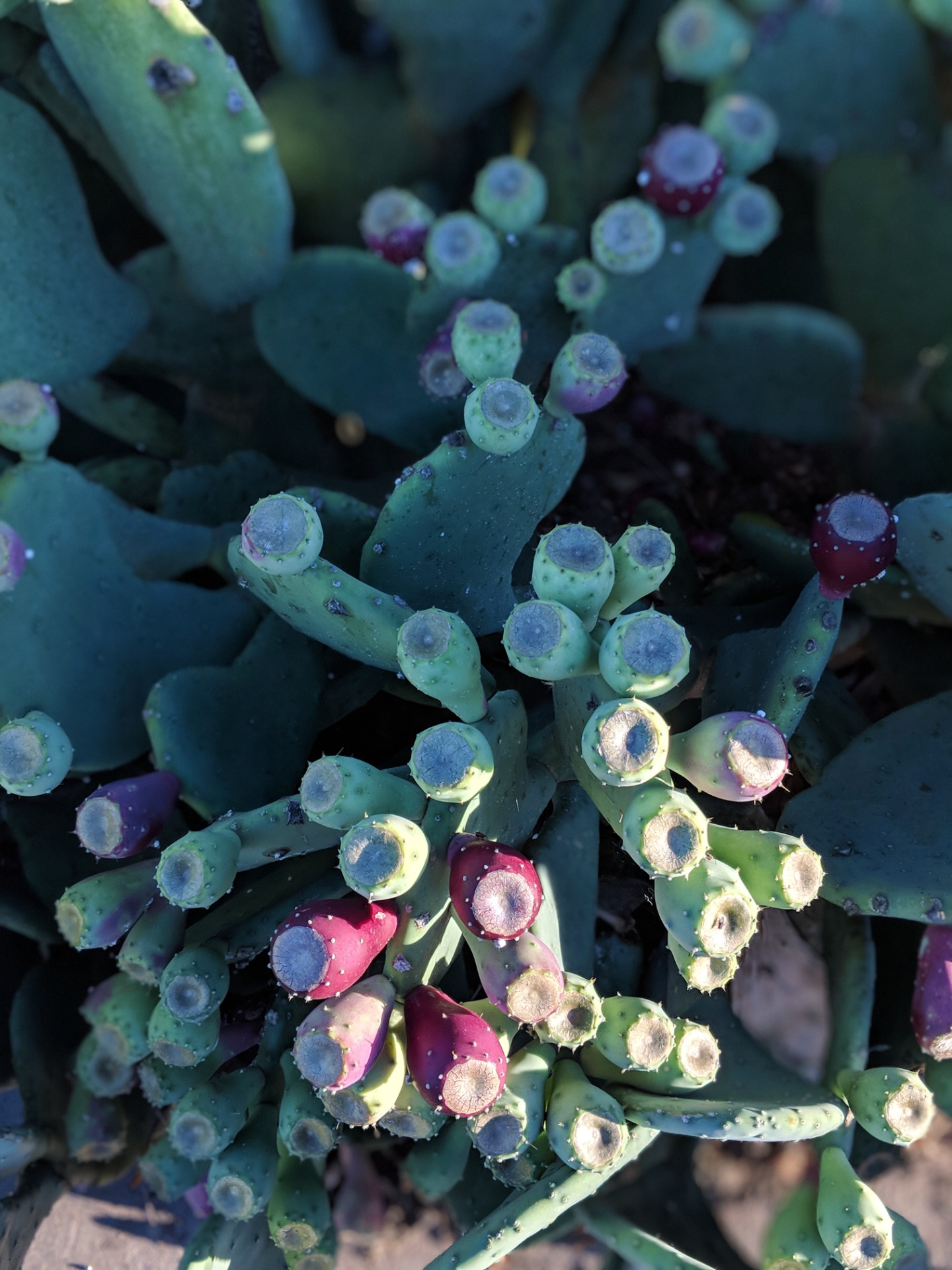
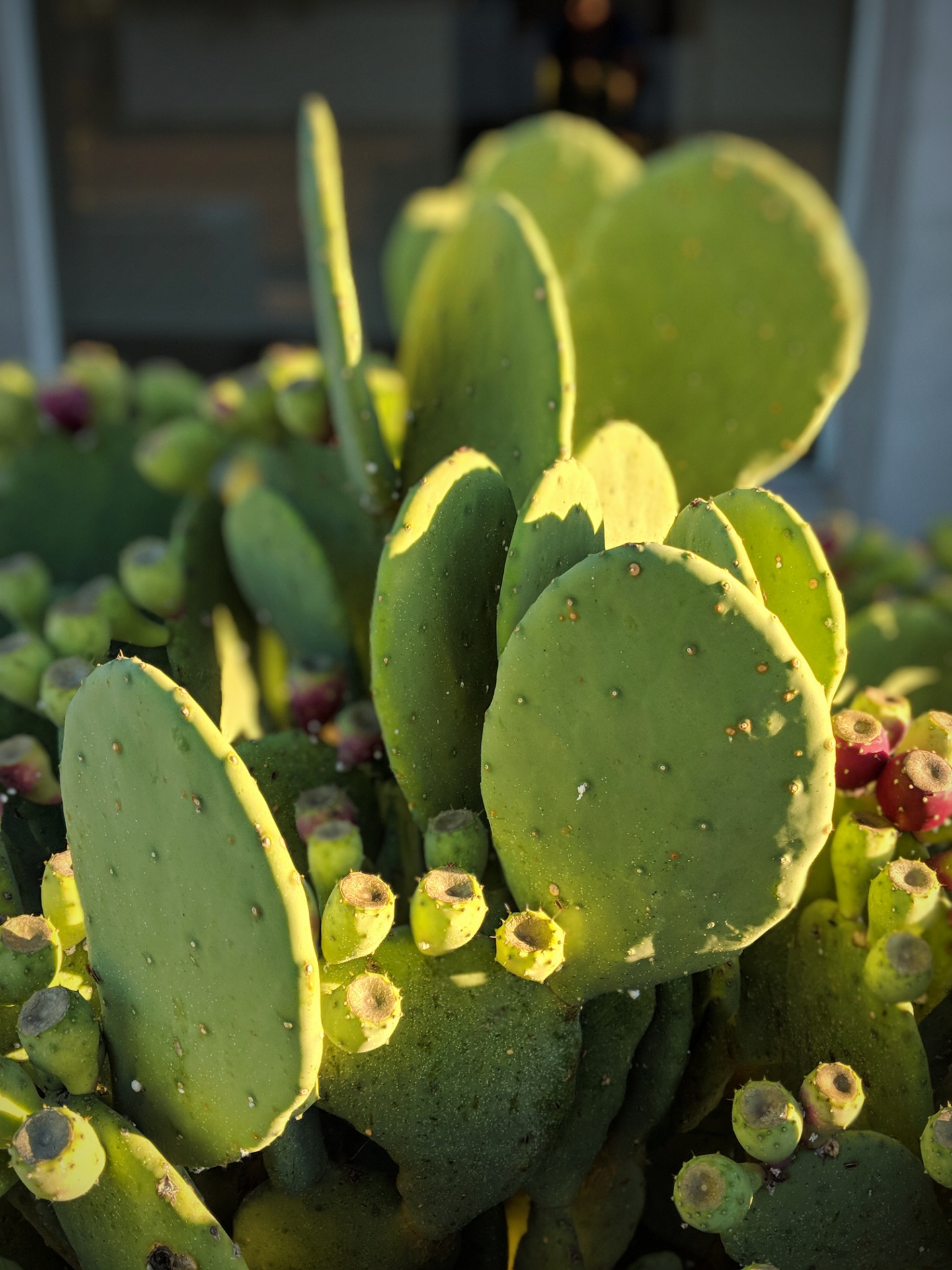
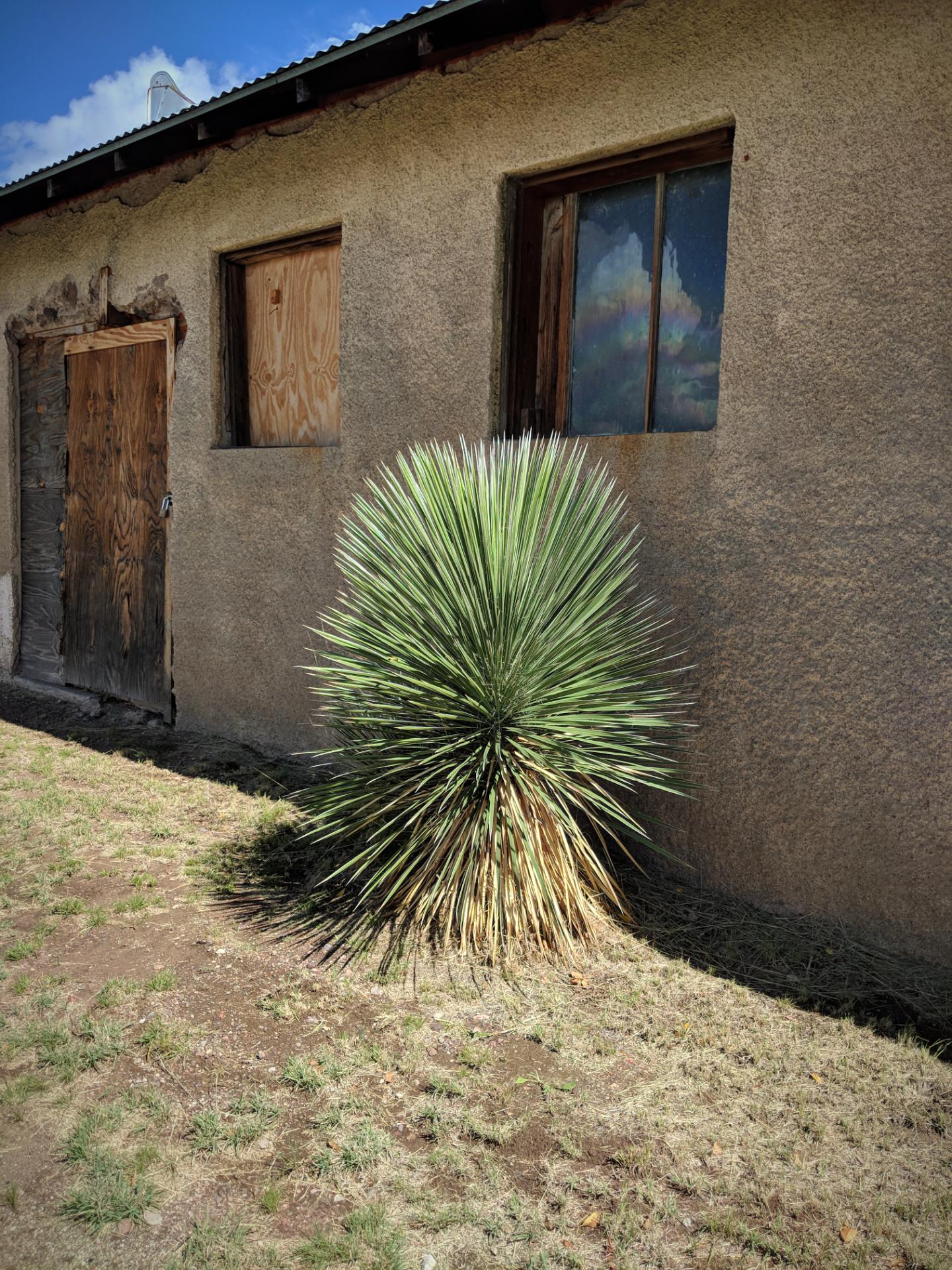
Beware of what you don’t see: some cacti have two kinds of thorns, those you see and can avoid touching but also those tiny, hair-like, invisible ones called glochids that will stick to your skin even if you don’t touch the cacti and will sting and itch for days. Worse yet, they will stick to the fabric of whatever you happen to be wearing and will only go away after a couple of machine washes.

The Chinati Foundation – Marfa, TX

October 7th, 2018
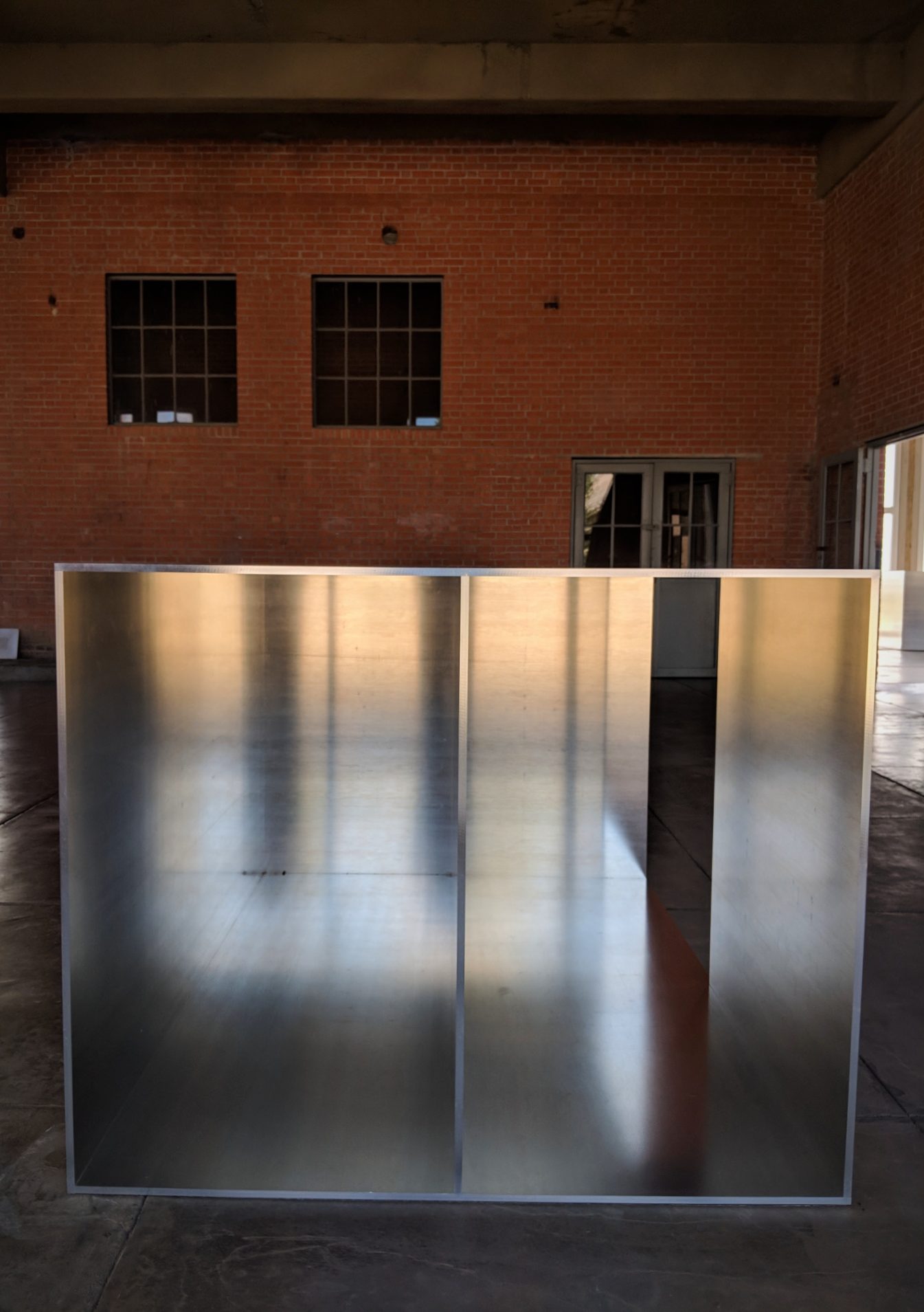
The Chinati Foundation || Marfa

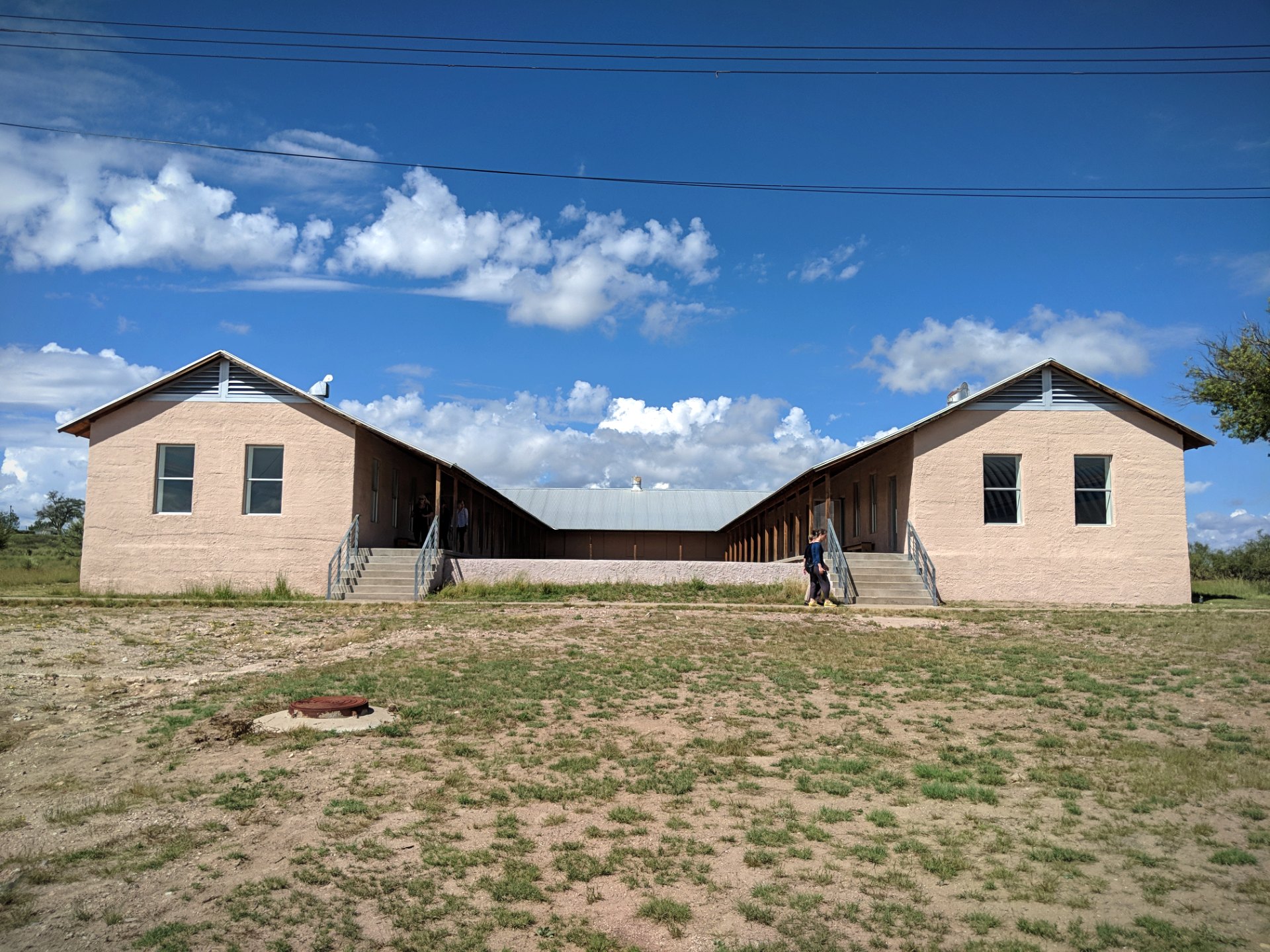
Marfa, a tiny and remote desert town of only about 2.000 people in West Texas, is the most unlikely  cultural centre for contemporary art I could think of. Yet, it is full of art galleries, cool shops that look like art galleries, cool artists that live and work in said art galleries, calling Marfa their home. And in the centre of it all is The Chinati Foundation/La Fundación Chinati, a contemporary art museum founded by Donald Judd.

It was in the early 1970s when Judd decided he wanted out of New York and its art scene, too constrictive for his projects, and look for a place where his work could be installed and never be moved again. In other words, he needed space.

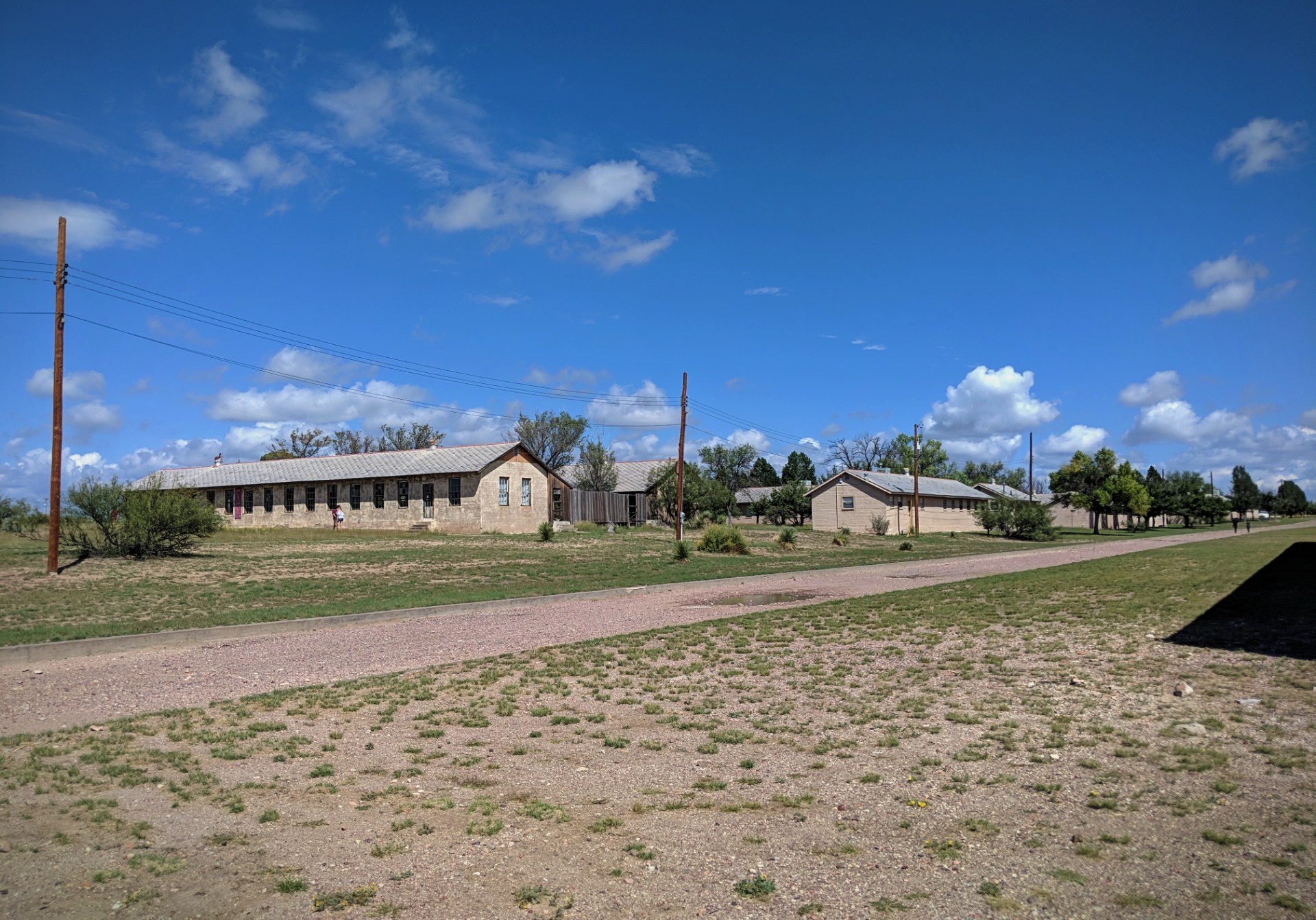
Judd rented a house in 1971 in Marfa, took one look around and bid farewell to New York forever. He began to purchase properties in 1973, which would include living quarters, studios and ranches where his work would be permanently installed, every move leading to the purchase of a 340 acres of land on the site of former Fort D.A. Russell, in 1978.

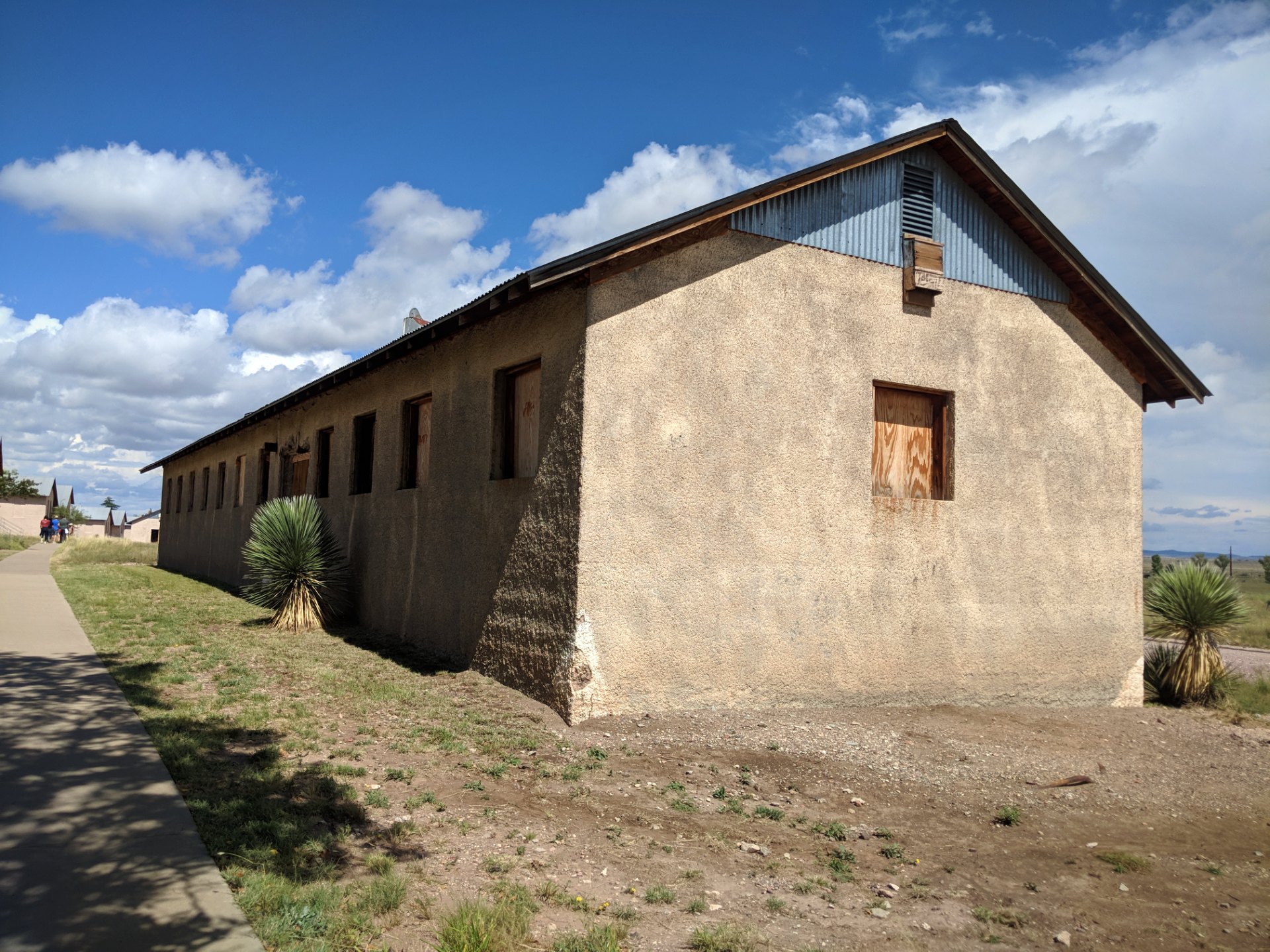
The Chinati Foundation opened to the public in 1987 as a museum hosting permanent collections of works by Donald Judd as well as by his friends, Dan Flavin and John Chamberlain (with 25 sculptures in a renovated wool warehouse in downtown Marfa). Judd later expanded the collection to include works by Claes Oldenburg and Coosje van Bruggen, Richard Long, Roni Horn, David Rabinowitch, Ilya Kabakov, and Ingólfur Arnarsson. Following Judd’s death in 1994, the museum completed additional projects: an installation of poems by Carl Andre (1995); a gallery of paintings by John Wesley (2004); and Robert Irwin’s untitled (dawn to dusk) (2016).

The Chinati Foundation is open year-round, but if you love mingling with the art crowd – or are fond of crowds in general – you may want to time your visit to coincide with the Chinati Weekend, an annual weekend-long event, the one time of year when all installations are open for self-guided viewing and the museum presents special exhibitions, talks, and performances, all free to the public.

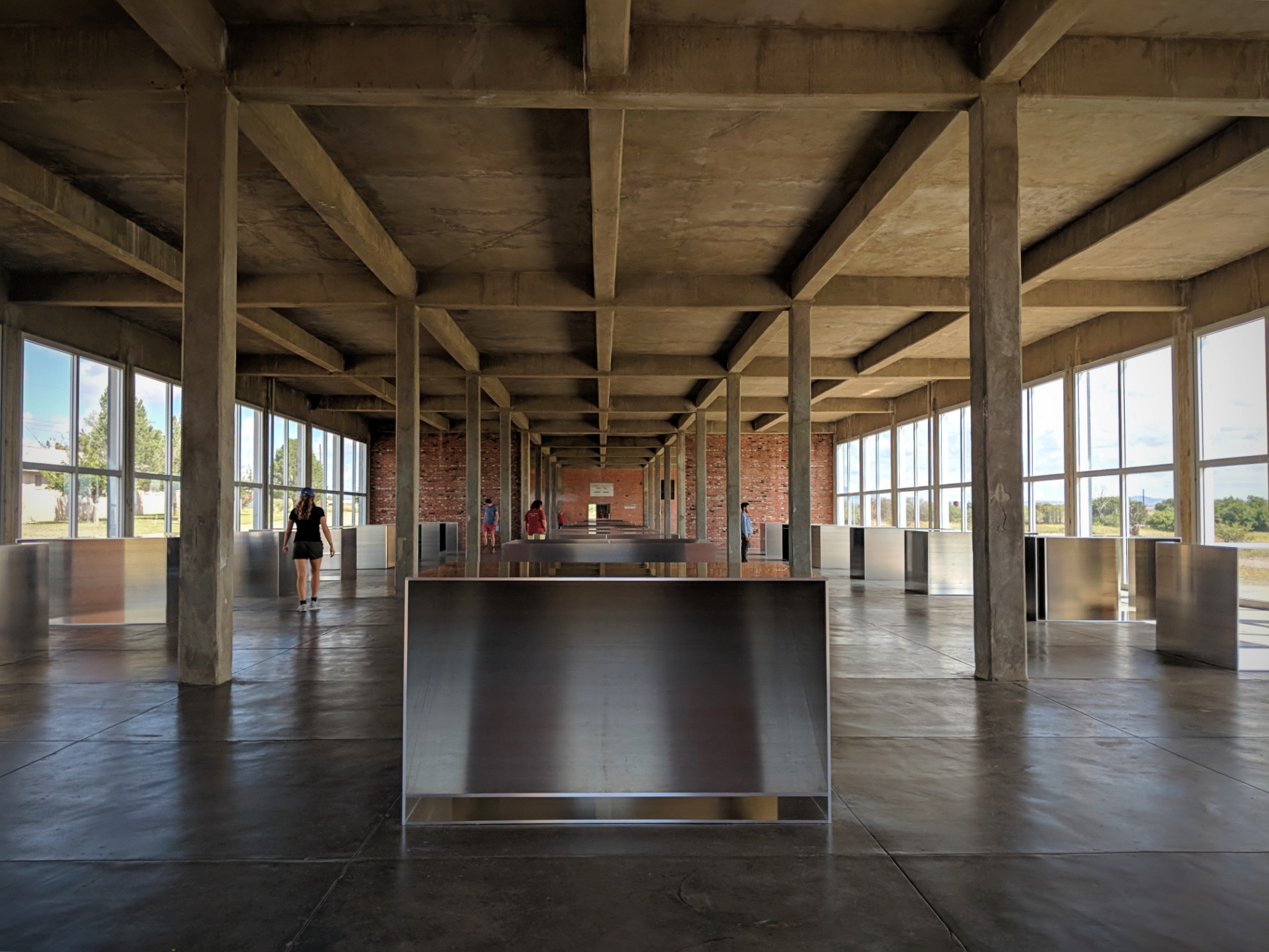
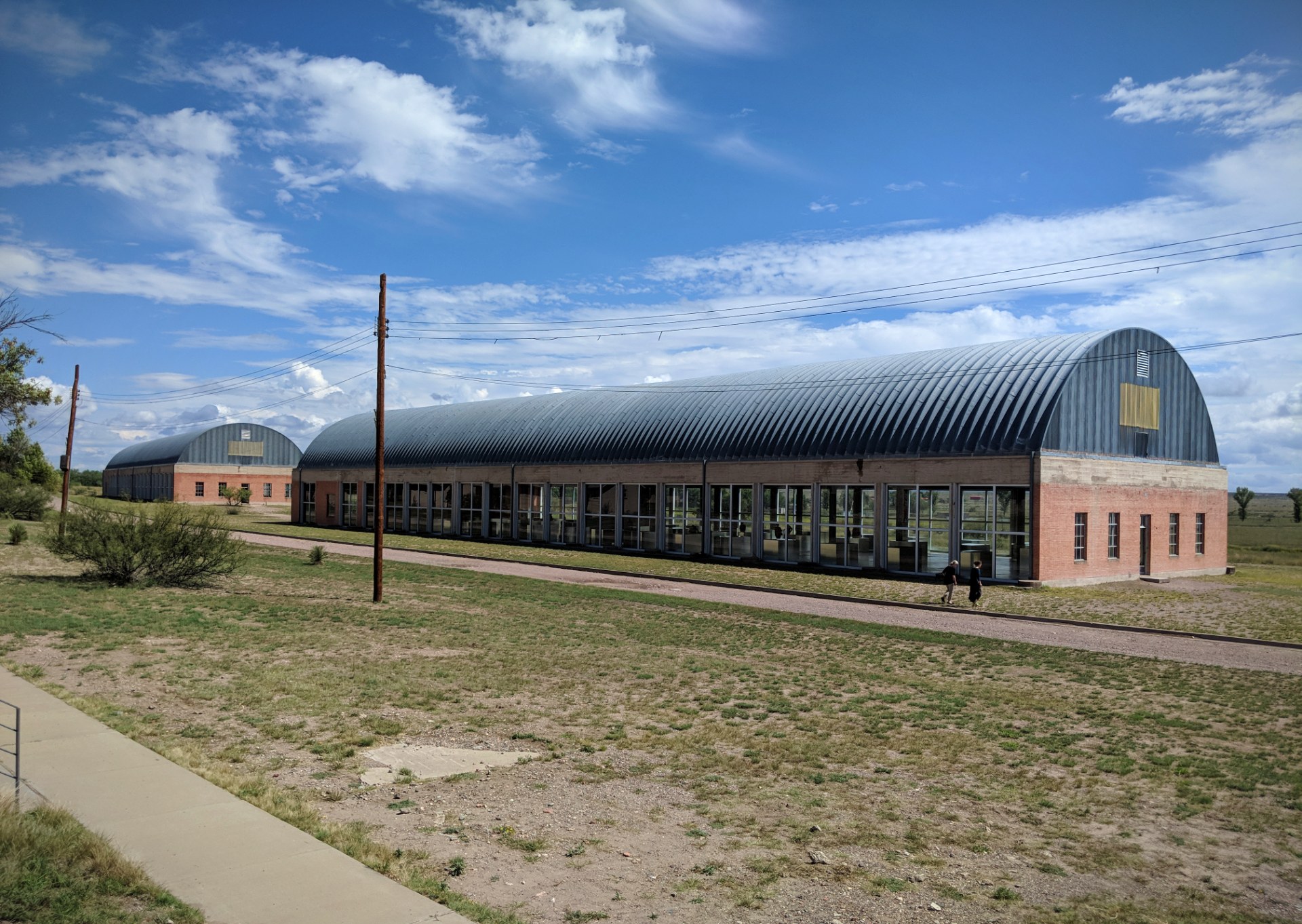
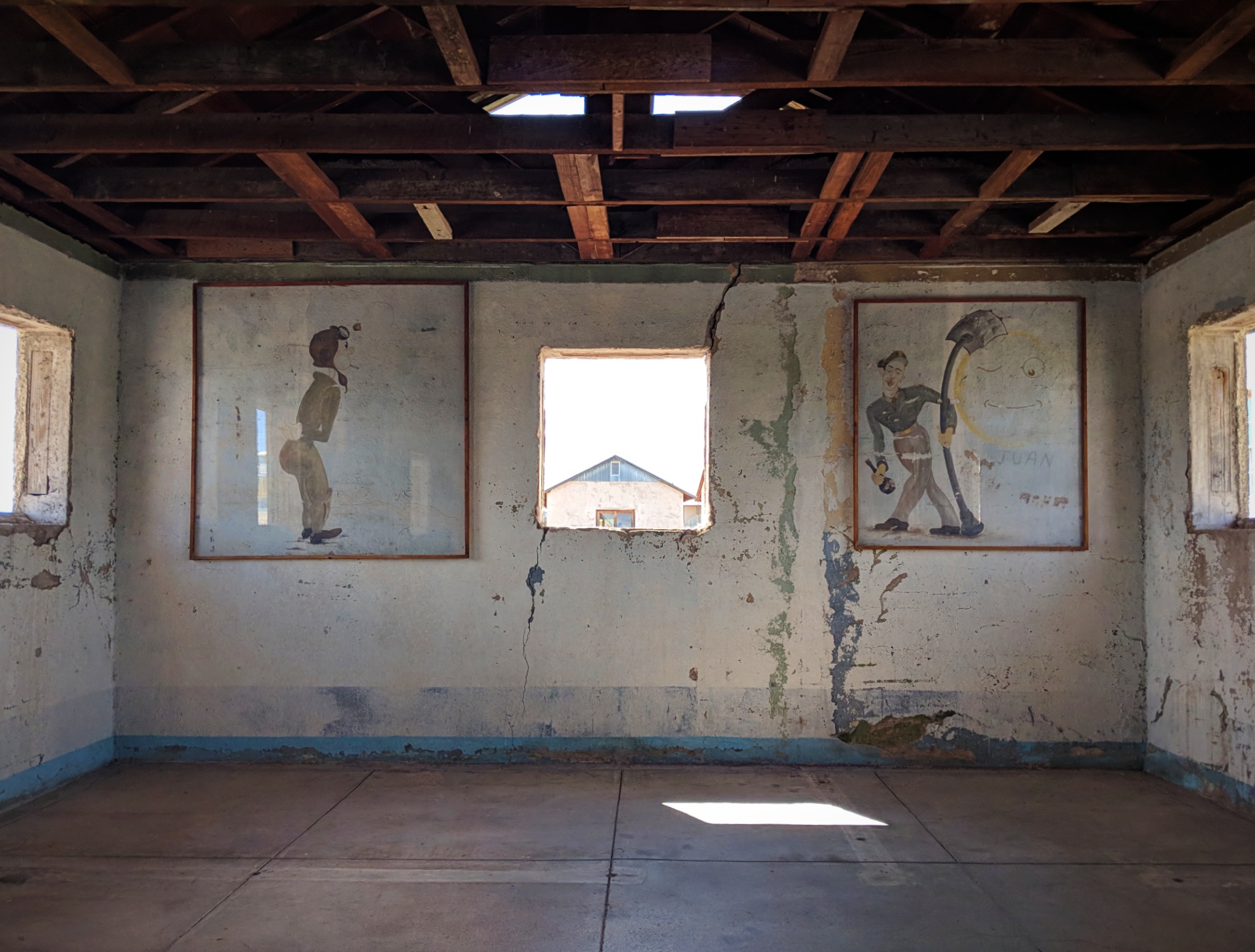
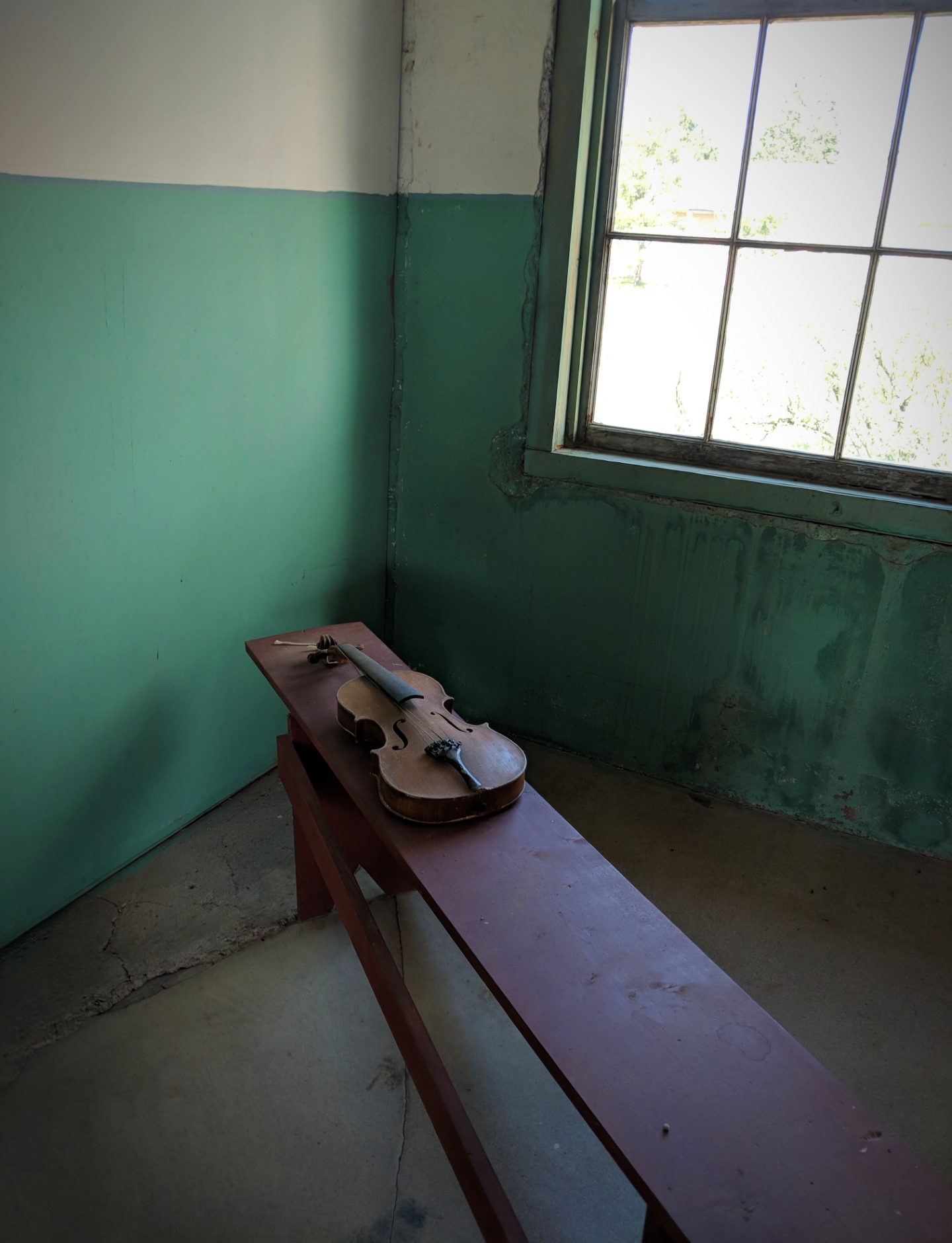
Photography in the galleries is not permitted ”to preserve the quality of experience for all visitors”, but there is always a way to sneak-a-pic, as a keepsake. I was also fascinated by the character and monumental size of the buildings themselves, all which house permanent art installations. Needless to mention, we needed two days to see everything.

Marfa, TX

October 6th, 2018
Chasing Games

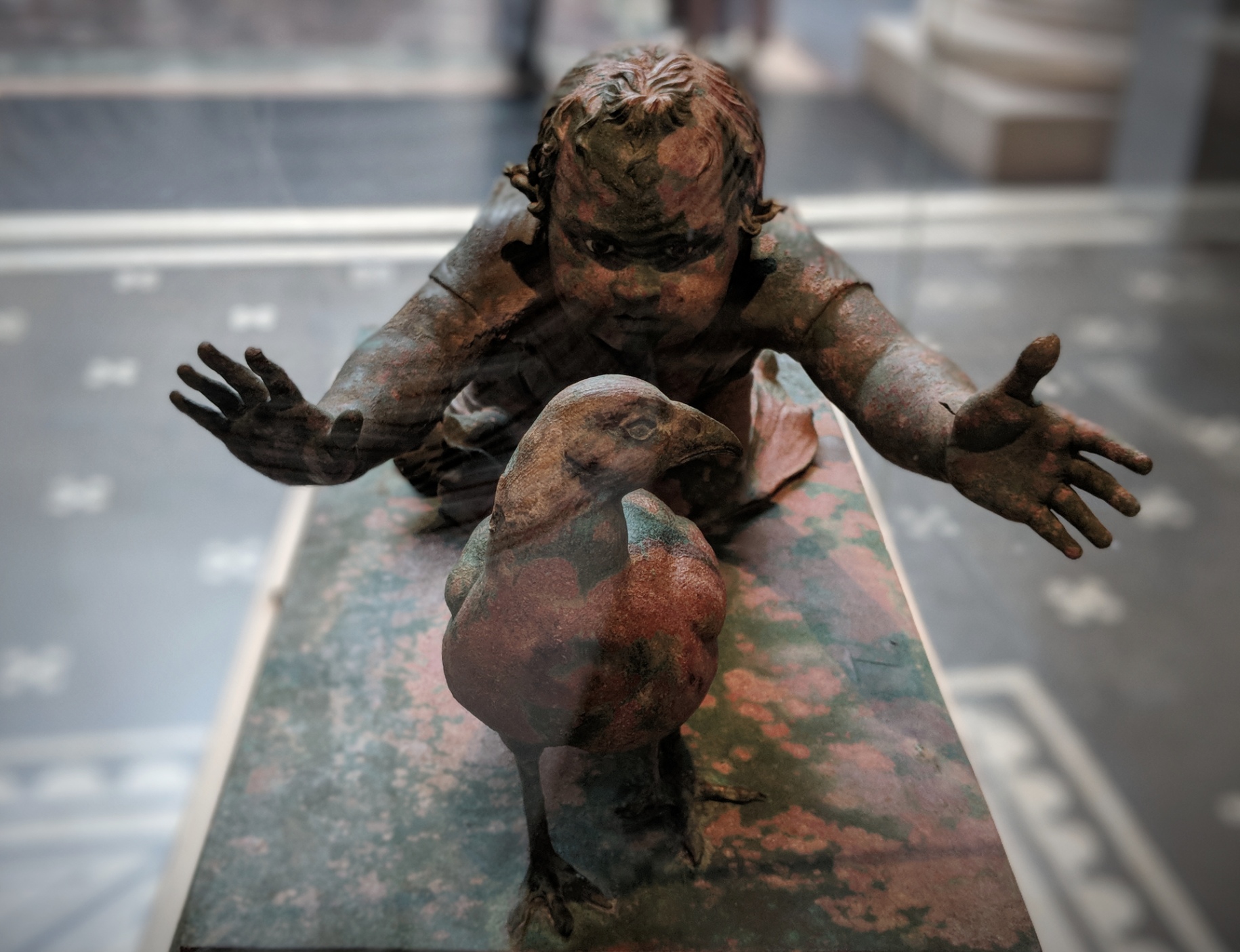
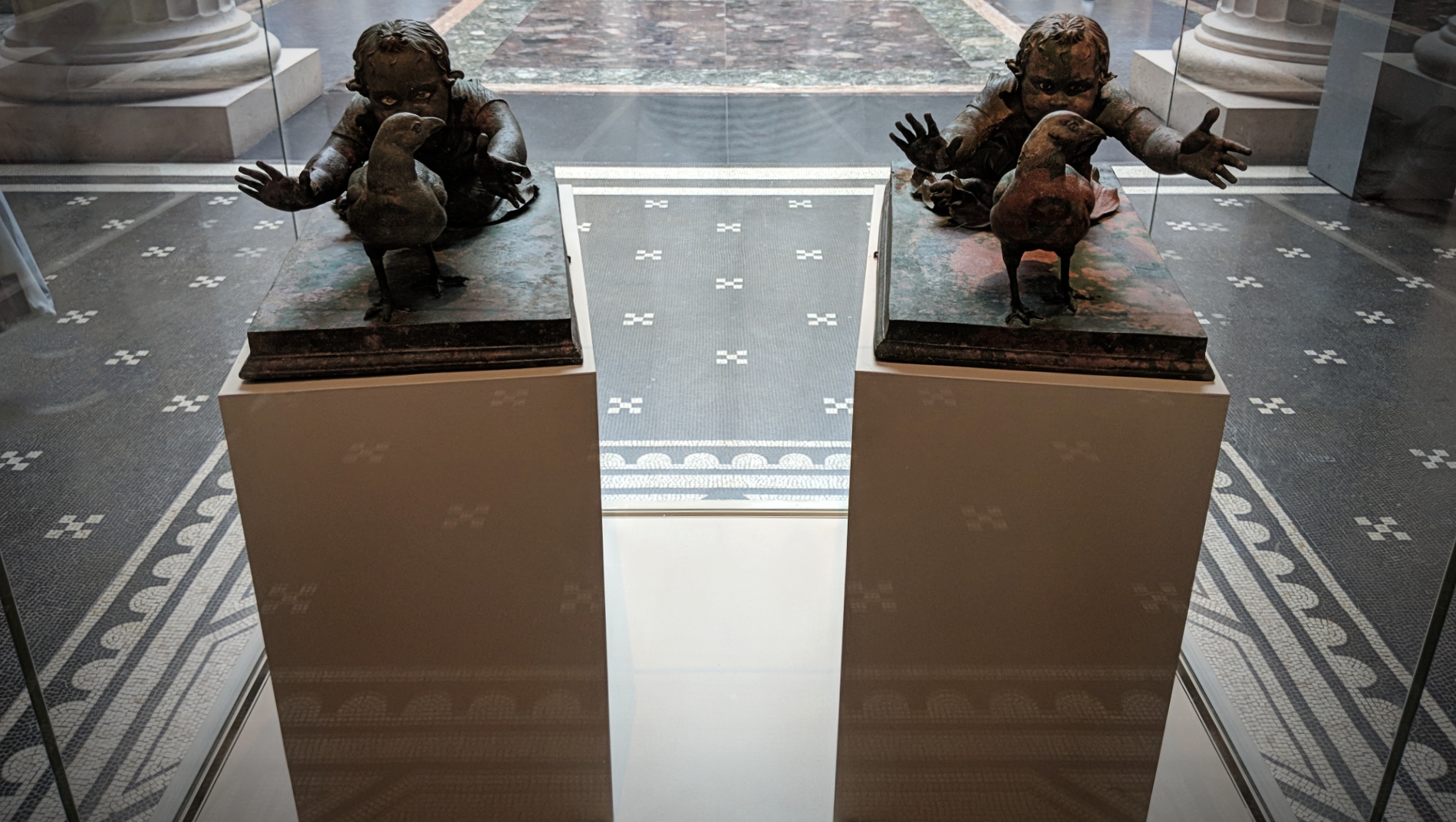
Let the kids go chasing partridges in the Met while grown ups enjoy a wild-goose chase in Mad Ave.

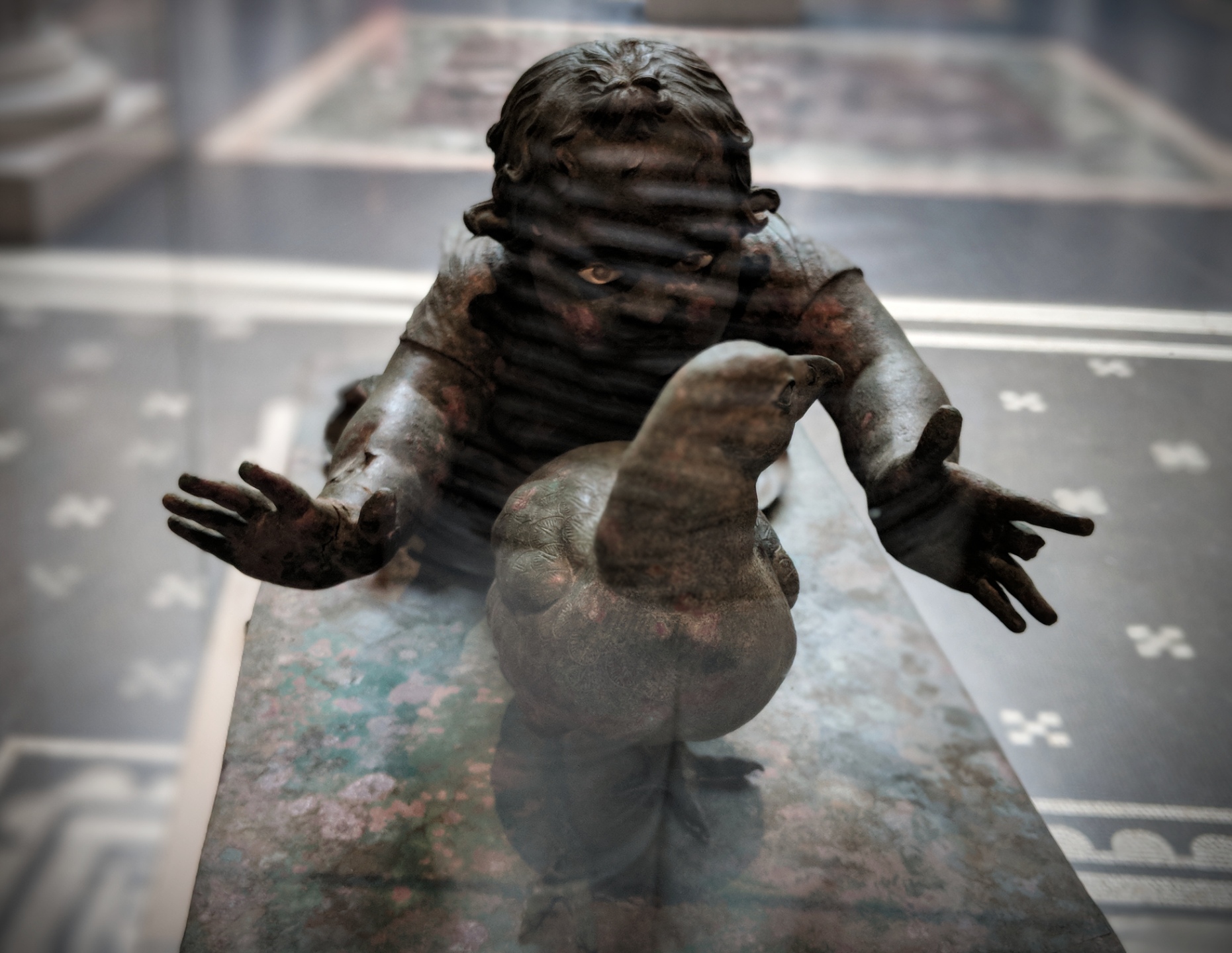
Two bronze statues of girls chasing partridges
Roman, Early Imperial, late 1st century b.c. or early 1st century a.d. 

Children playing with animals became a popular genre type in  Greek and Roman art. These sculptures are remarkable for their large size, excellent state of preservation and careful workmanship. This is the only known symmetrically pendant pair of bronze sculptures, perfectly preserved down to the plinth. 

The Metropolitan Museum of Art & window-shopping on Madison Avenue

August 19th, 2018 (with many thanks to M. – mvschulze, for spotting my unintentional time travel to 2028… wouldn’t that be fun though!)
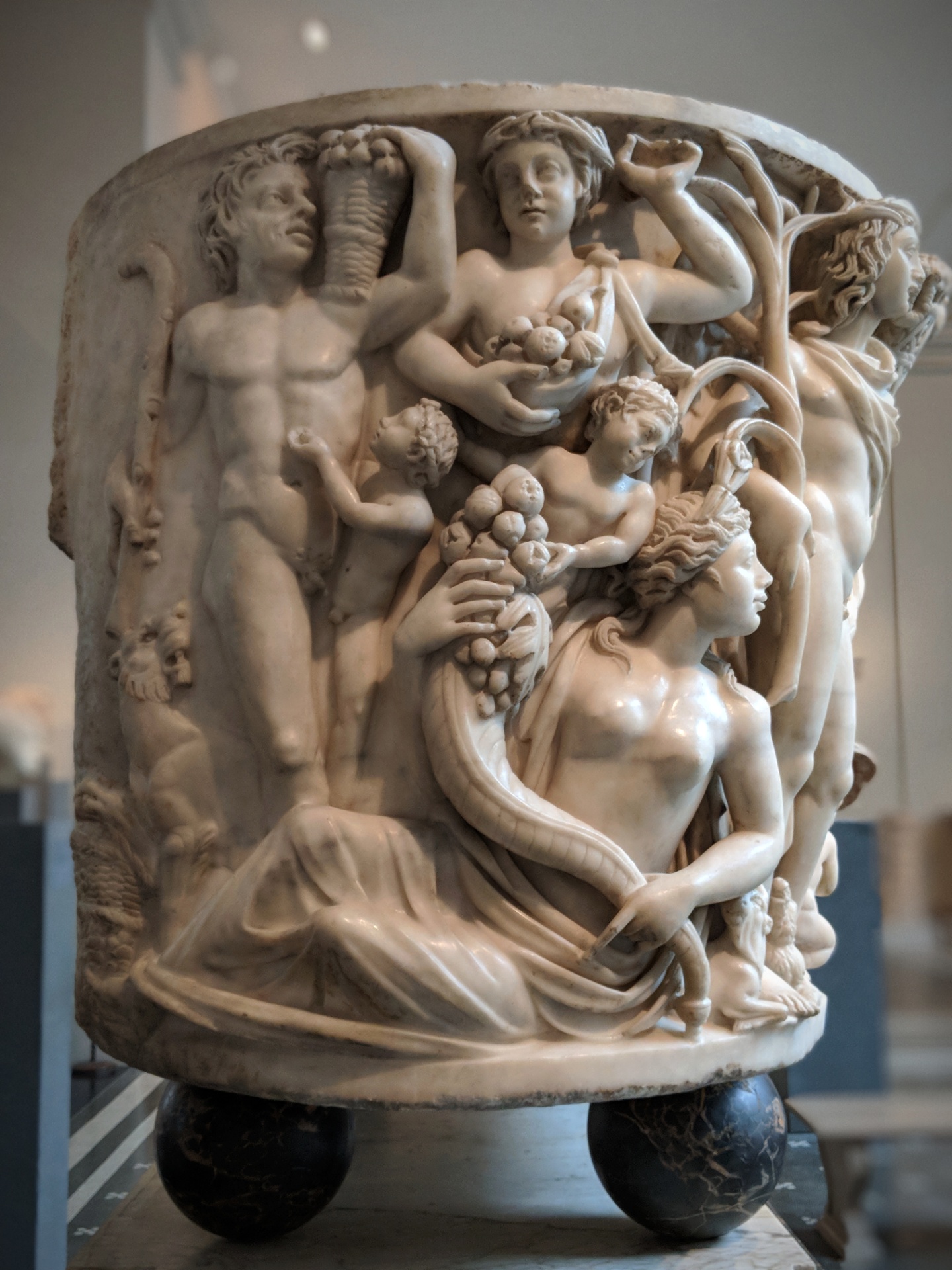
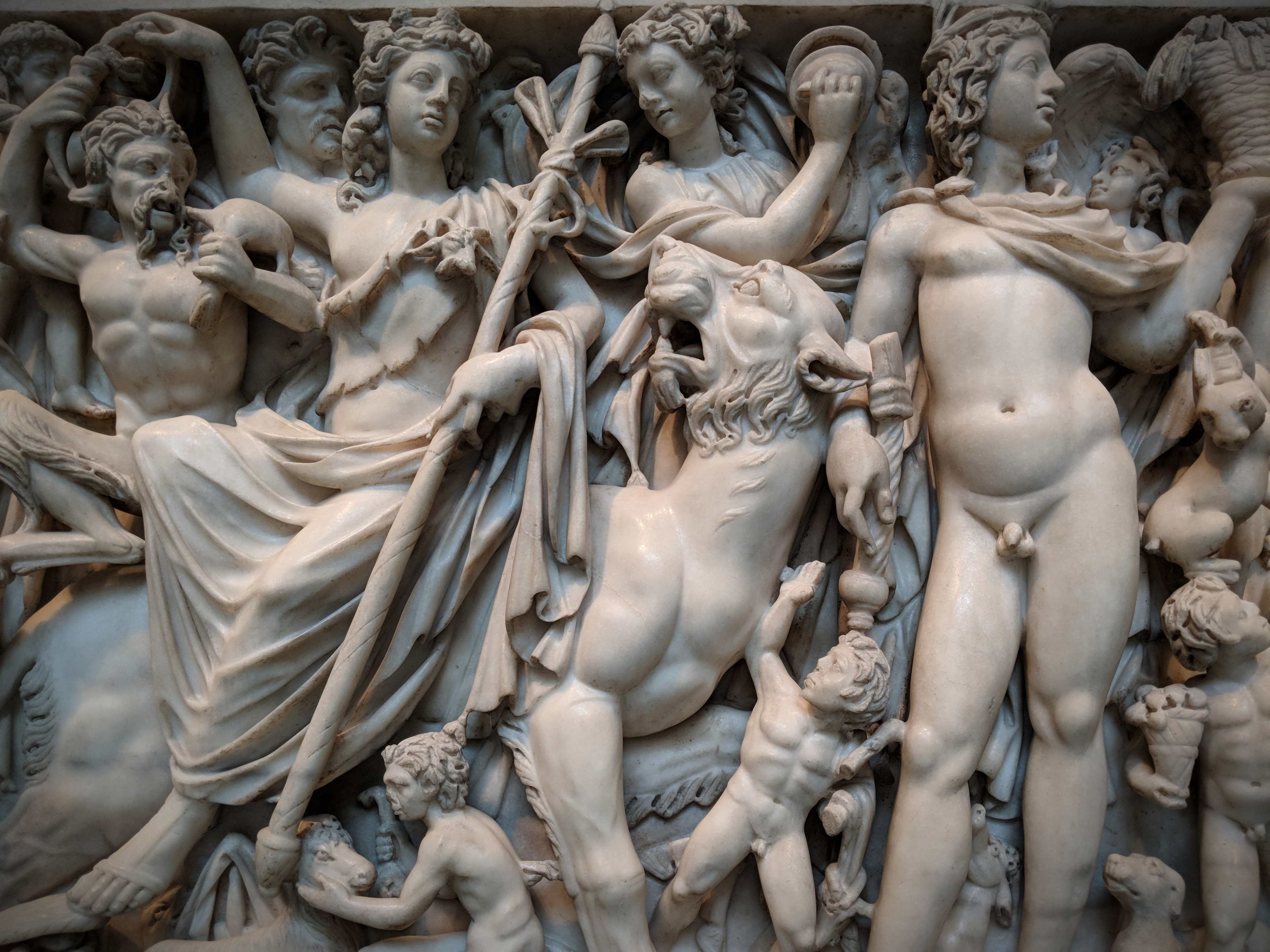
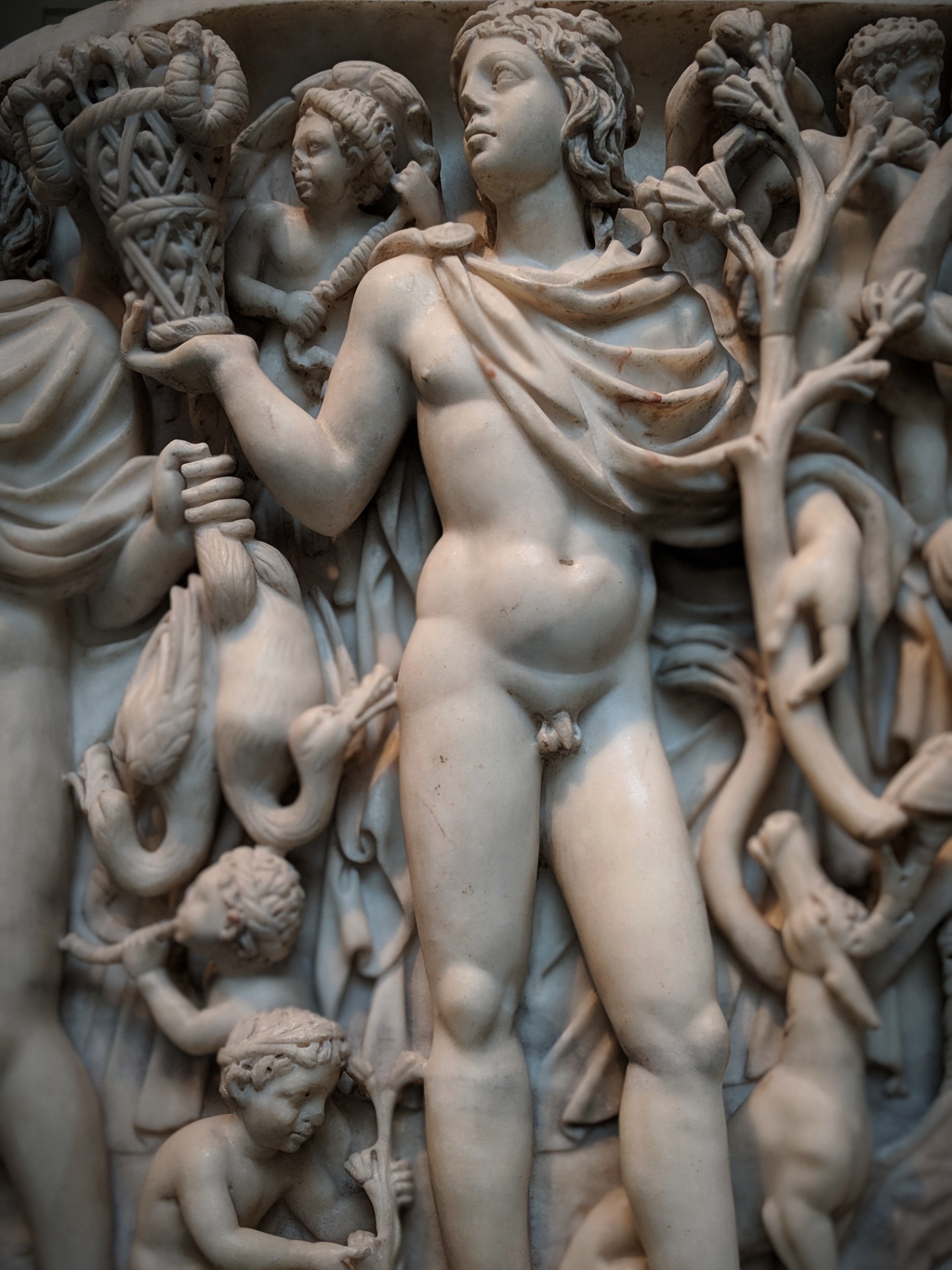
Carving Gods and Nobles

In noble materials
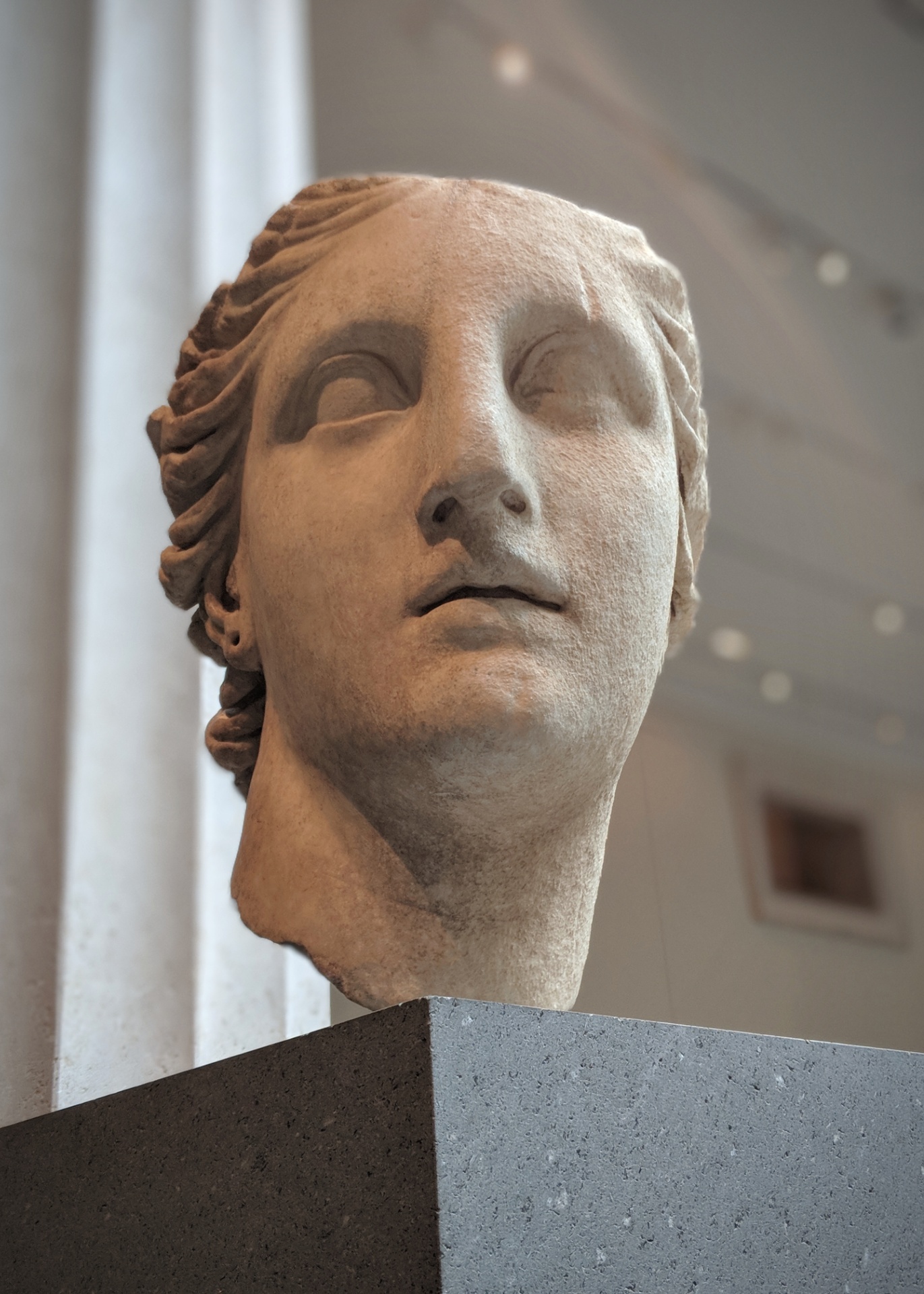
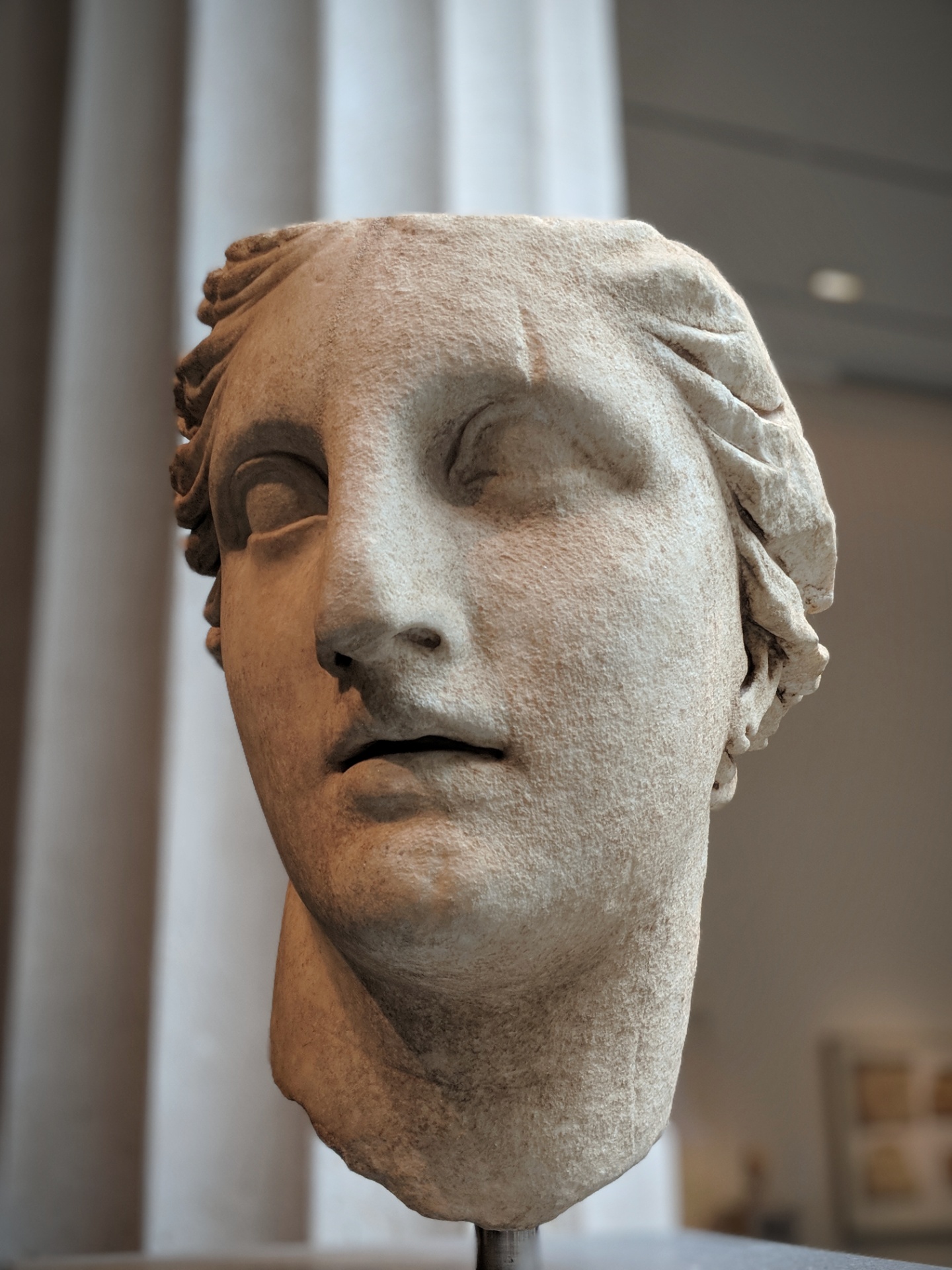
Marble head of Athena
Greek, Hellenistic, ca. 200 b.c. 

The goddess originally wore a helmet of marble or bronze, added separately. The ears are pierced for metal earrings. The head comes from an over-life-sized statue that possibly represented the goddess striding forward. The statue may have stood outdoors, as a monumental votive image of the warrior goddess in her role as protectress of a city rather than within a temple as a cult statue.

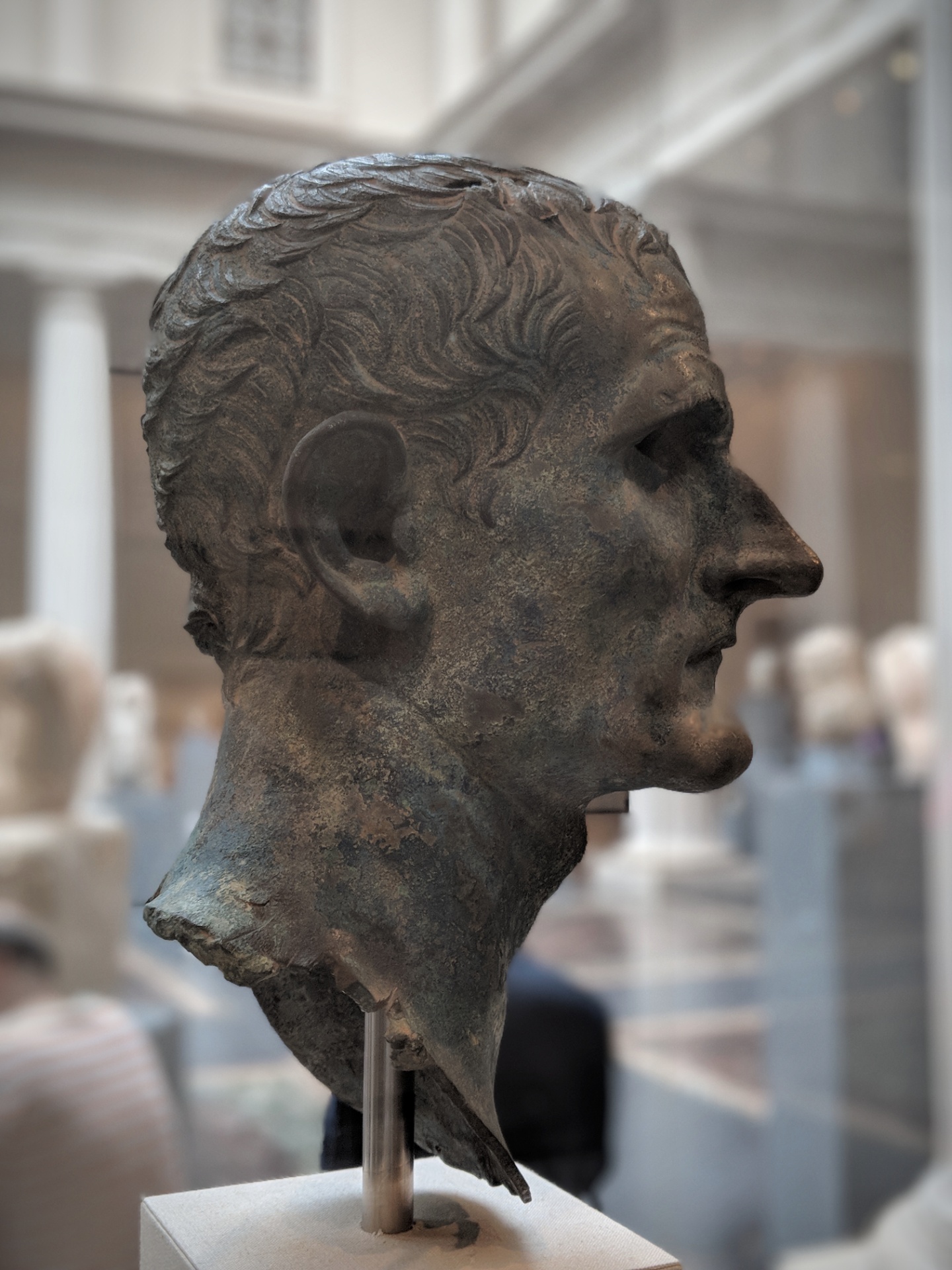
Bronze portrait of a man
Roman, Late Republican or Early Imperial, ca. 1st century b.c.

In the early first century b.c. Greek artists were fashioning portraits of Roman patrons that presented a straightforward image of their subjects in a veristic style. This phenomenon existed across the ever-expanding Roman world, but the finest and largest group of such portraits in marble survives on the Cycladic island of Delos, which was an important commercial centre in the Late Republican period and home to numerous Roman merchants. 

The portrait exhibited here is a good example of the veristic style, which appealed to Roman citizens who valued individuality. Bronze was the preferred medium for Roman honorific statues because of its ability to achieve the closest possible fidelity to nature. 

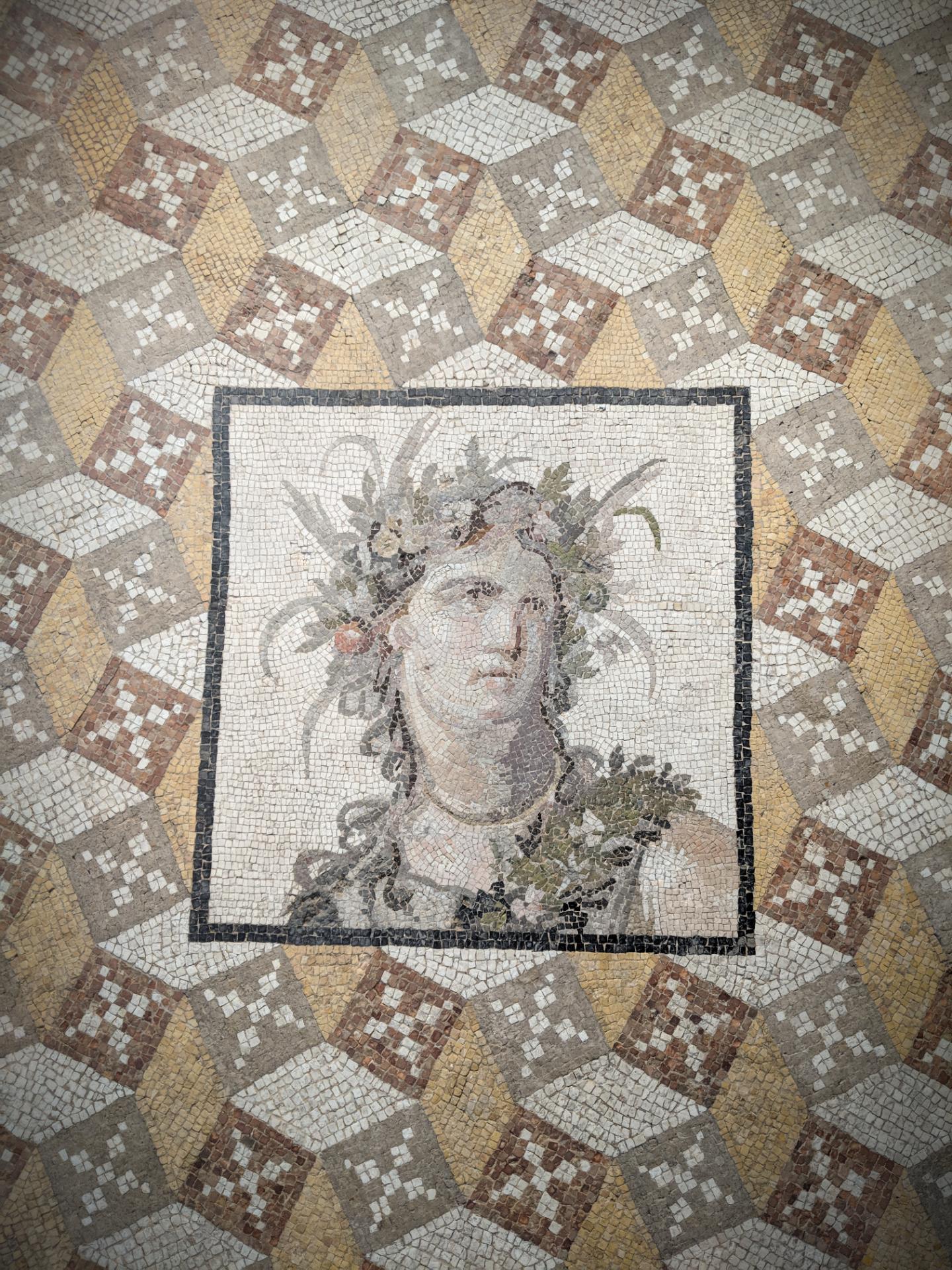
Mosaic floor panel
Roman, Imperial, 2nd century a.d.
Stone, tile and glass
Excavated from a villa at Daphne near Antioch (modern Antakya, Turkey), the metropolis of Roman Syria

The rectangular panel represents the entire decorated area of a floor and was found together with another mosaic (now in the Baltimore Museum of Art) in an olive grove at Daphne-Harbiye in 1937. In Roman times, Daphne was a popular holiday resort, used by the wealthy citizens and residents of Antioch as a place of rest and refuge from the heat and noise of the city. 

The Metropolitan Museum of Art

August 19th, 2018
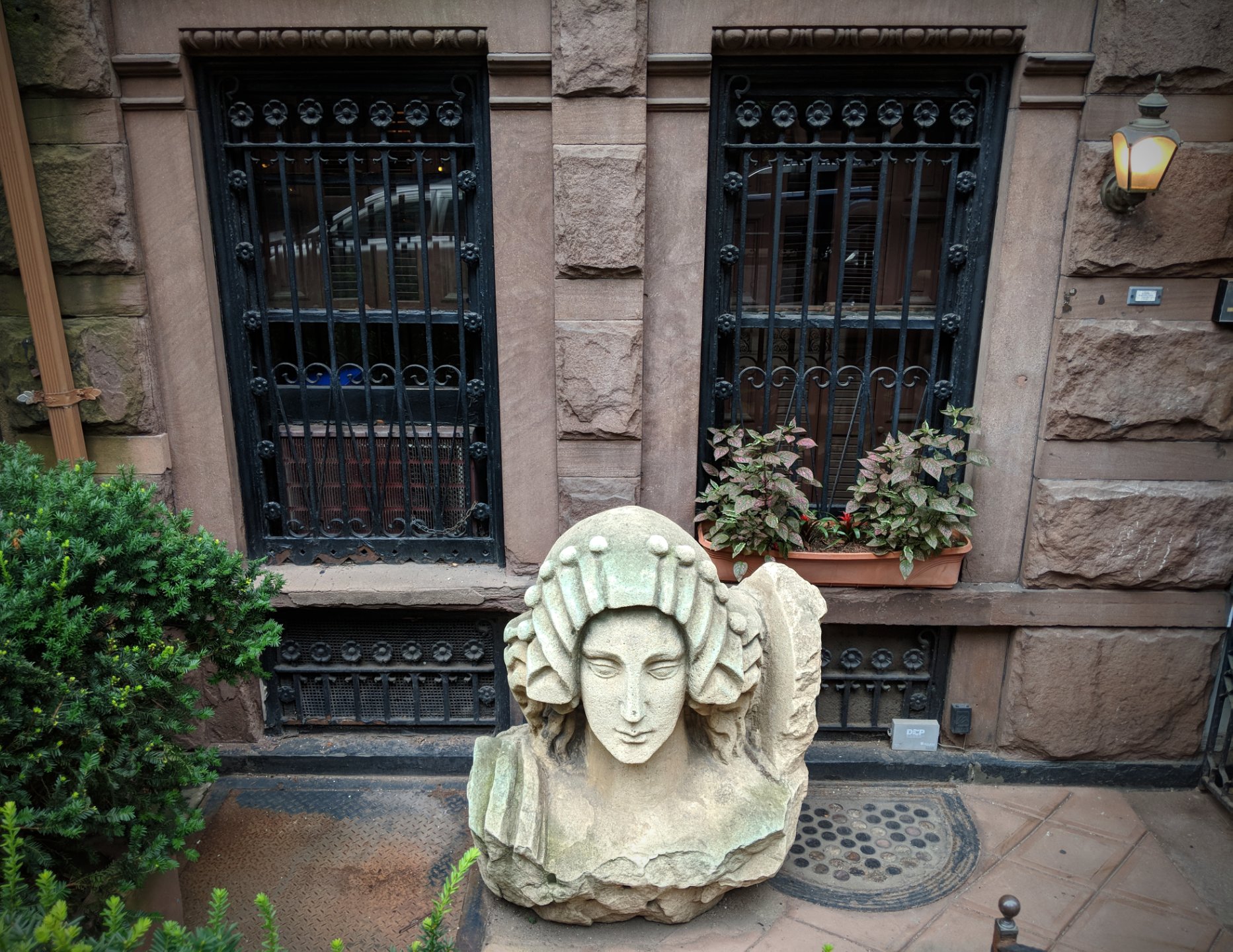
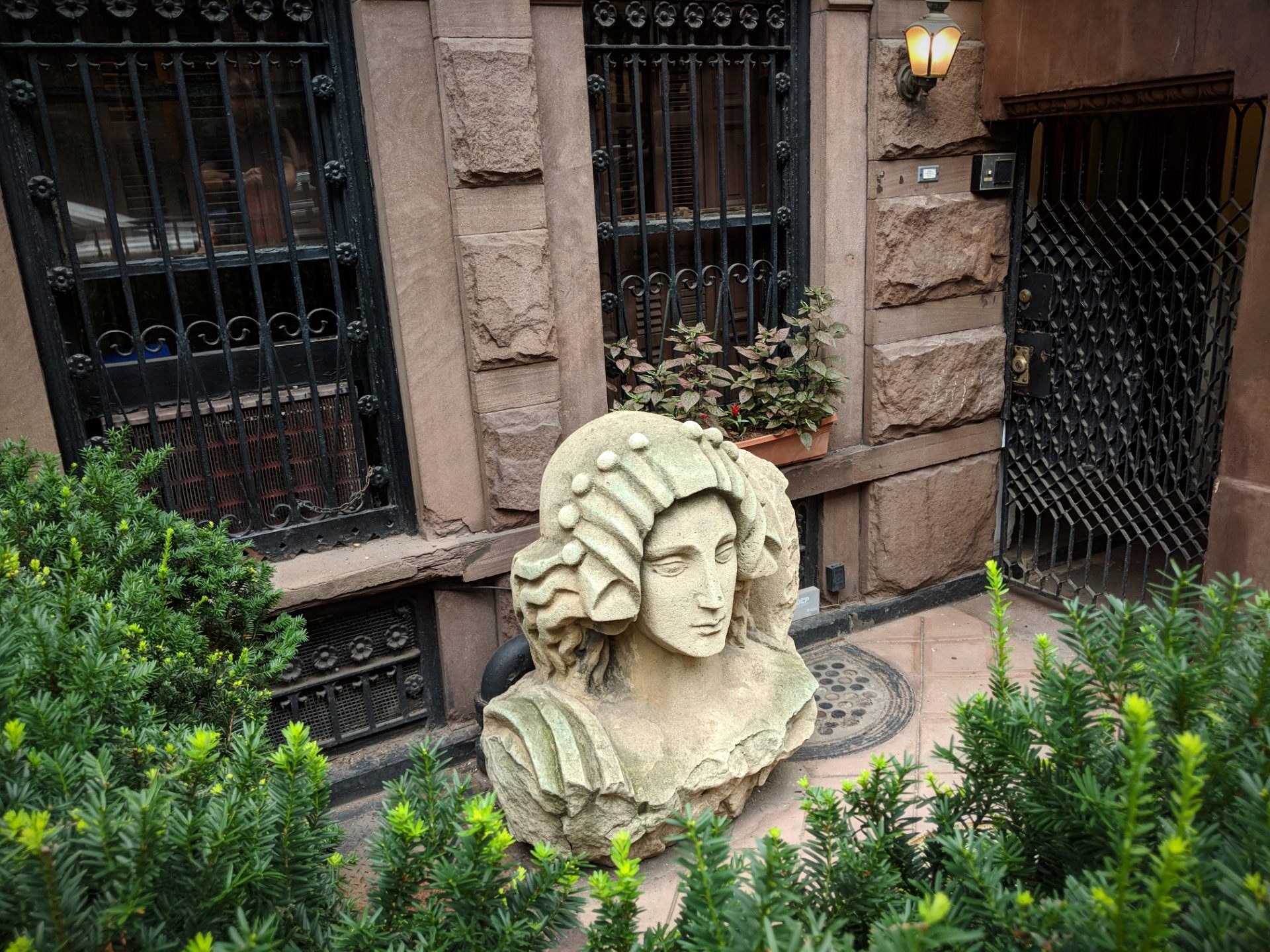
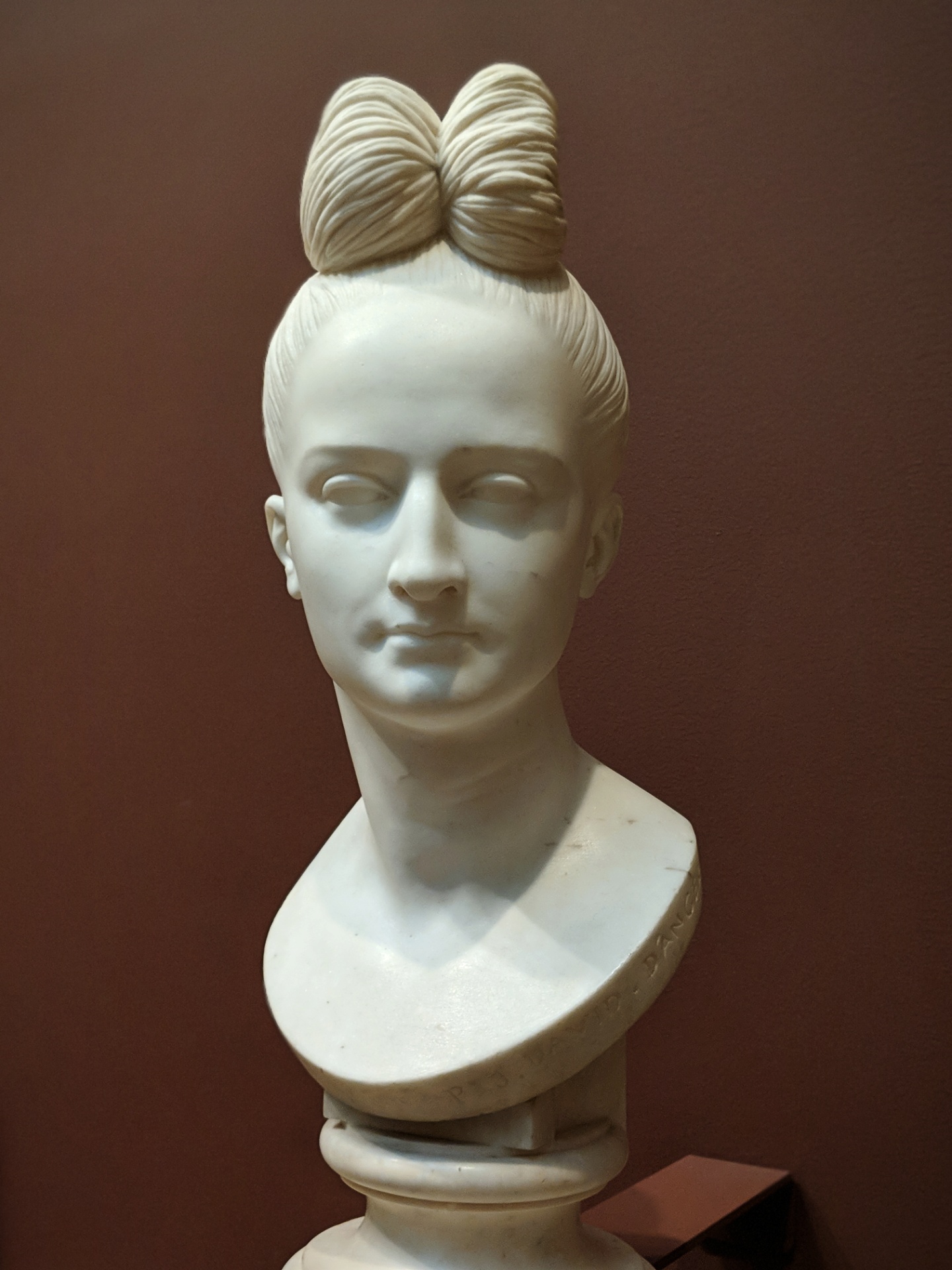
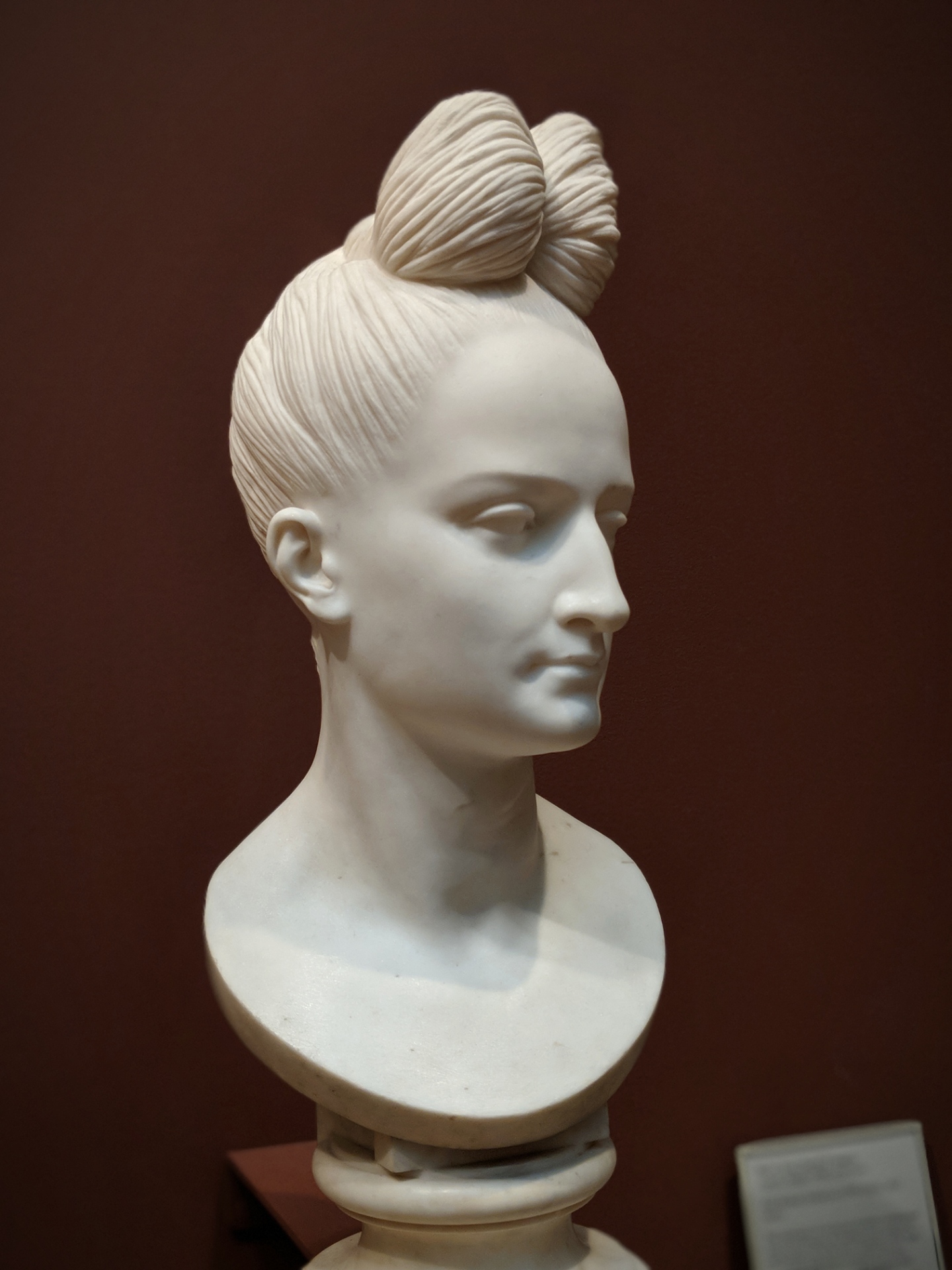
Hair Styles for the Zoom Era: Tie the Knot

No hair stylist? No problem!

Pierre Jean David d’Angers (1788-1856)
Ann Buchan Robinson, 1831
Marble

This masterpiece of carving was probably commissioned from David d’Angers, the leading portrait sculptor of the Romantic era, by the sitter’s husband, a New York entrepreneur with business connections in France. Formal purity is paramount: nothing distracts from the transition between smooth skin and the swept up coils of an extraordinary hairstyle that was the height of fashion about 1830. The tilt of the head and slightly pouted lips impart refined lifelikeness to the portrait. Robinson’s idealized serenity is typical of David d’Angers’s female portrait busts; those depicting men tend to reveal far more about the sitters’ inner personality. 

Lent to the Metropolitan Museum of Art by the Museum of the City of New York

August 19th, 2018
To Be Looked At (from the Other Side of the Glass) with One Eye, Close to, for Almost an Hour

Thus spoke Marcel, and we obliged (for five minutes).

Looking for ”almost an hour” would have a hallucinatory effect similar to Marc Chagall’s experience, some years earlier.

Marcel Duchamp
To Be Looked At (from the Other Side of the Glass) with One Eye, Close to, for Almost an Hour, 1918
Oil, silver leaf, lead wire, magnifying lens on glass (cracked) mounted between panes of glass in a standing metal frame, on painted wood base

”The title of this work, which Duchamp said he ”intended to sound like an oculist’s prescription” tells the viewer exactly how to look at it. But peering through the convex lens embedded in the work’s glass ”for almost an hour” would have a hallucinatory effect, the view being dwarfed, flipped and otherwise distorted. Meanwhile the viewer patiently following the title’s instructions is him-or herself put on display for anyone else walking by. 

Duchamp called this his ”small glass”, to distinguish it from his famous Large Glass of 1915-23. He made the work in Buenos Aires, Argentina, where he had fled earlier in 1918 to escape the oppressive atmosphere of the United States during World War I. When he shipped it back to New York, the glass cracked in transit, en effect that delighted him.”

Marc Chagall
I and the Village, 1911
Oil on canvas

@MoMA

August 8th, 2018
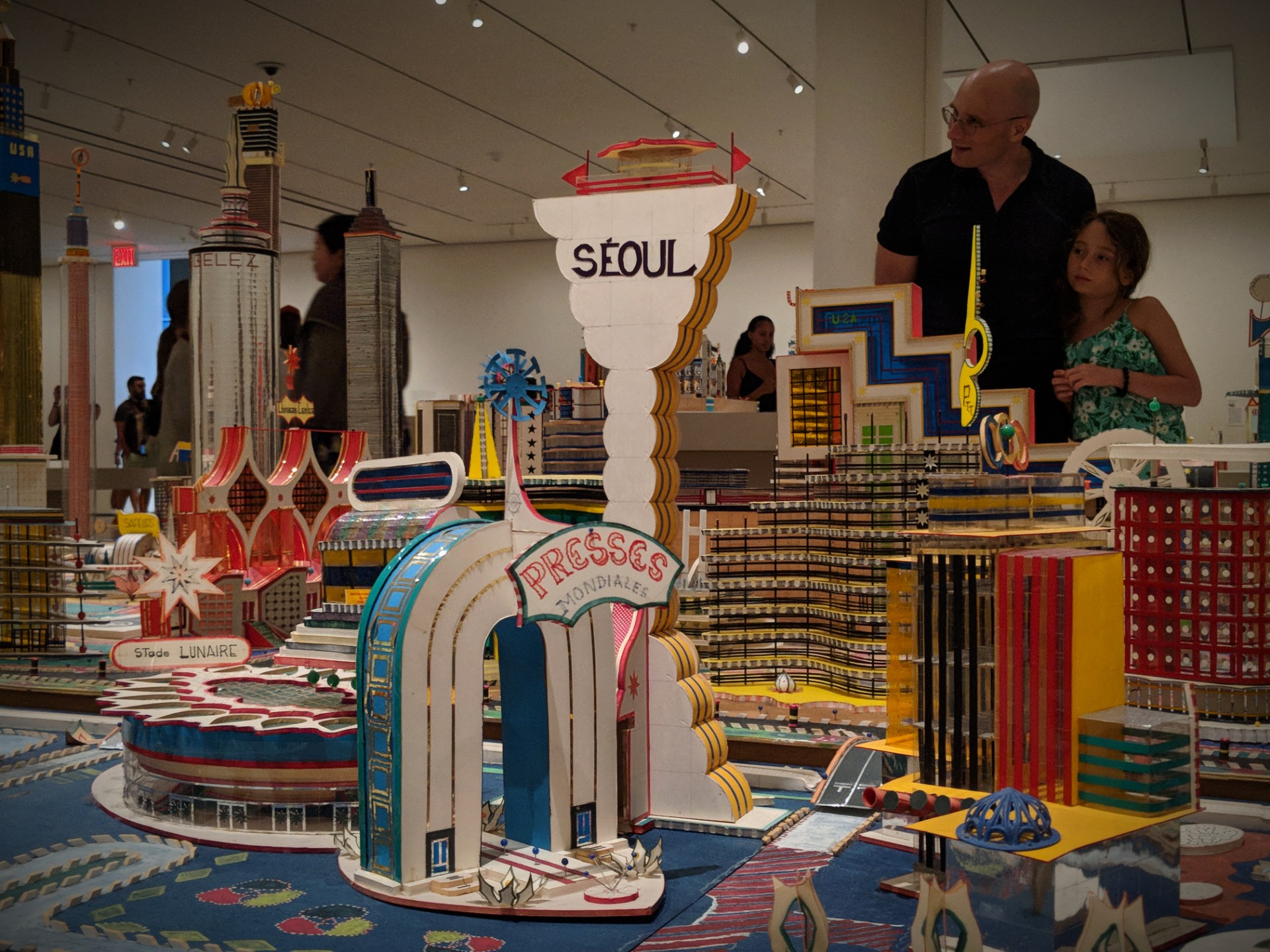
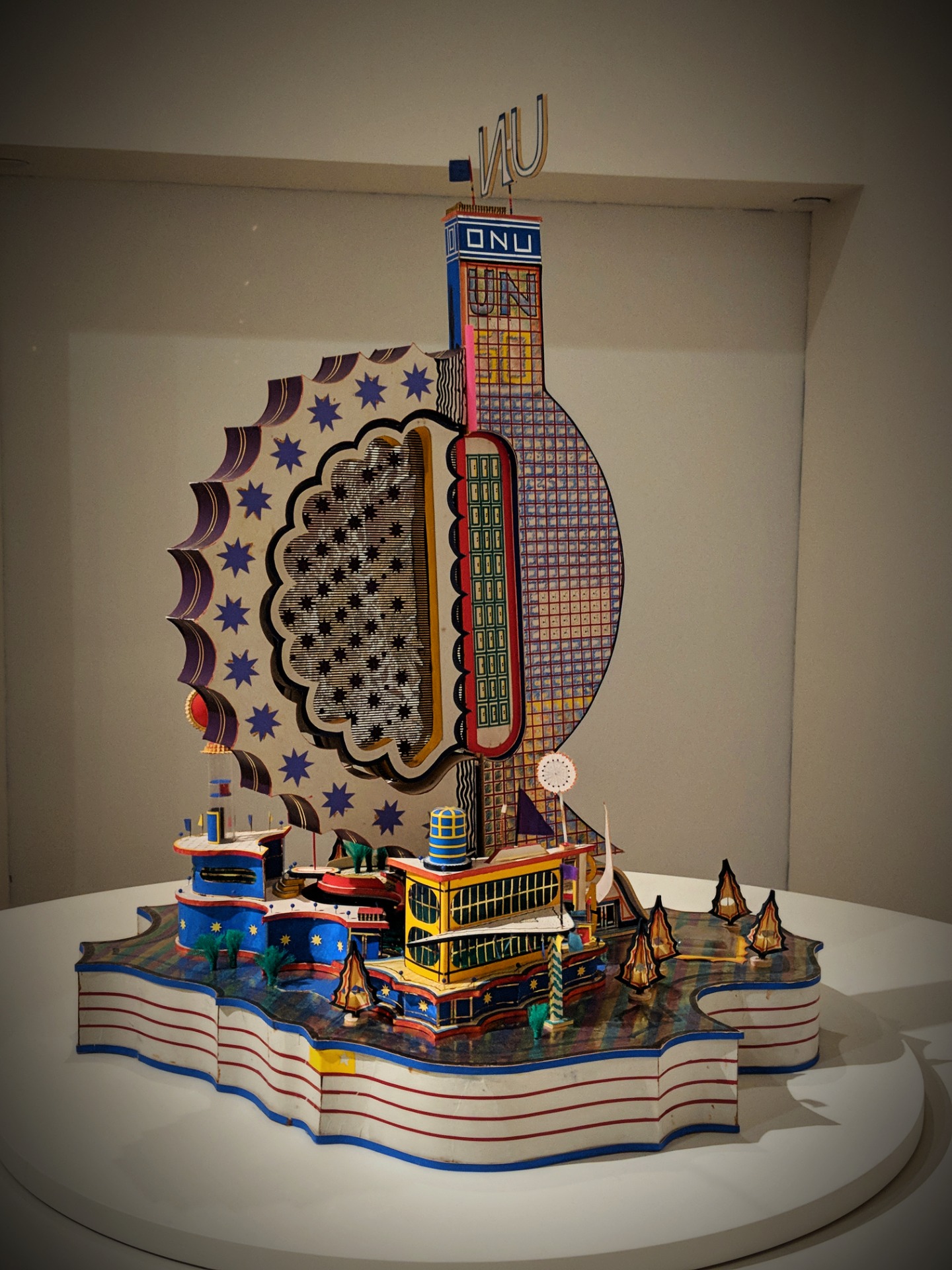
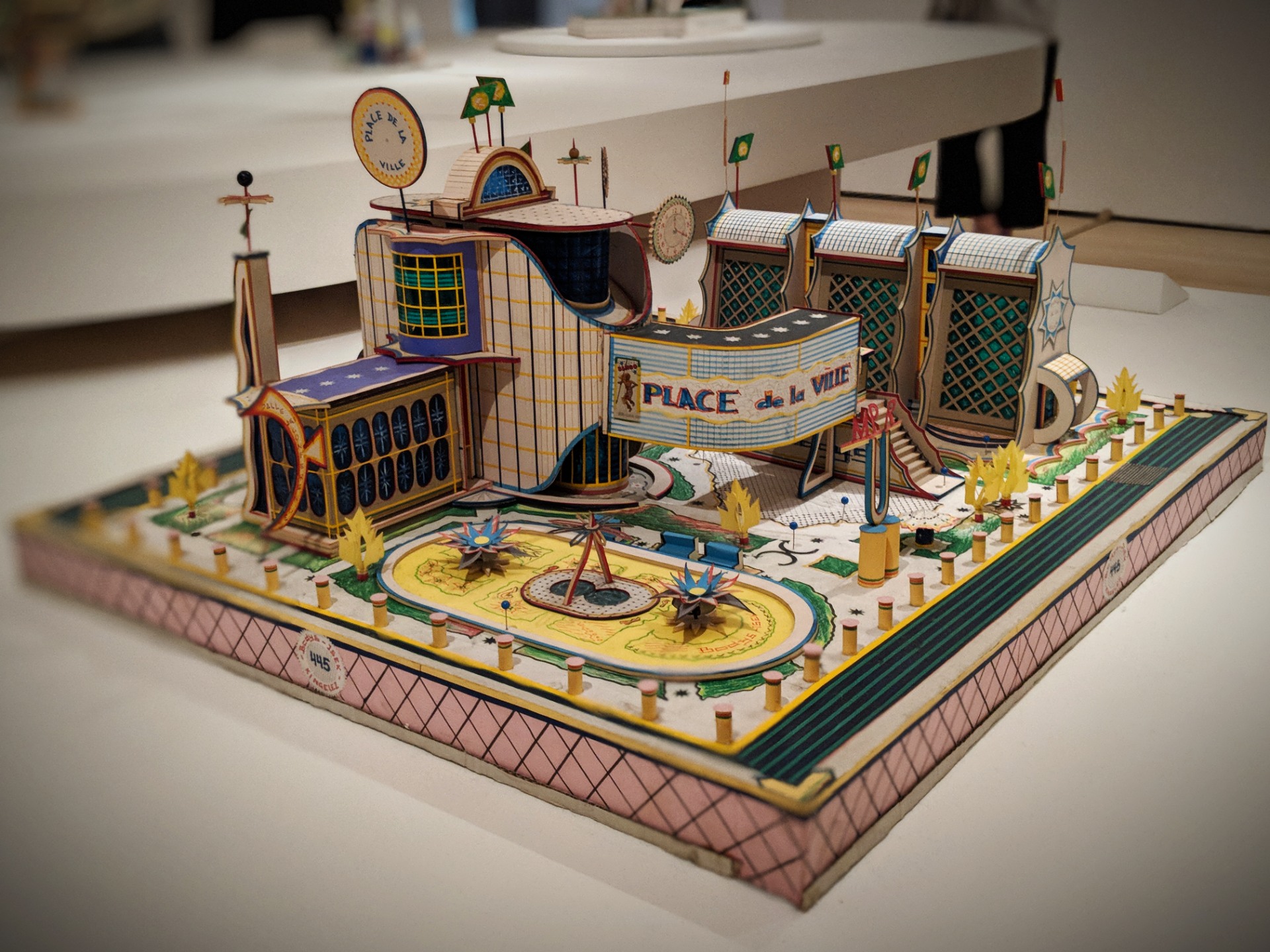
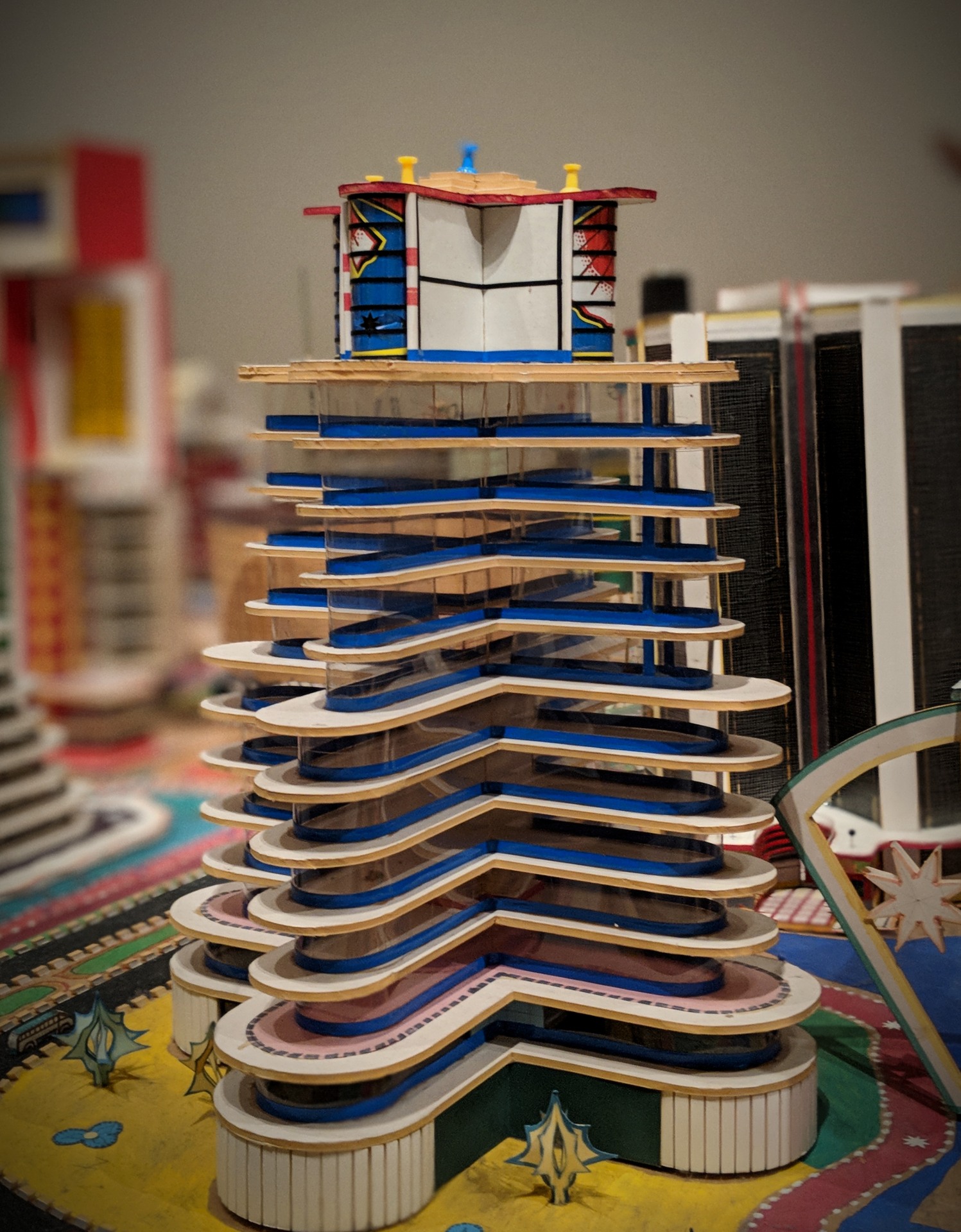
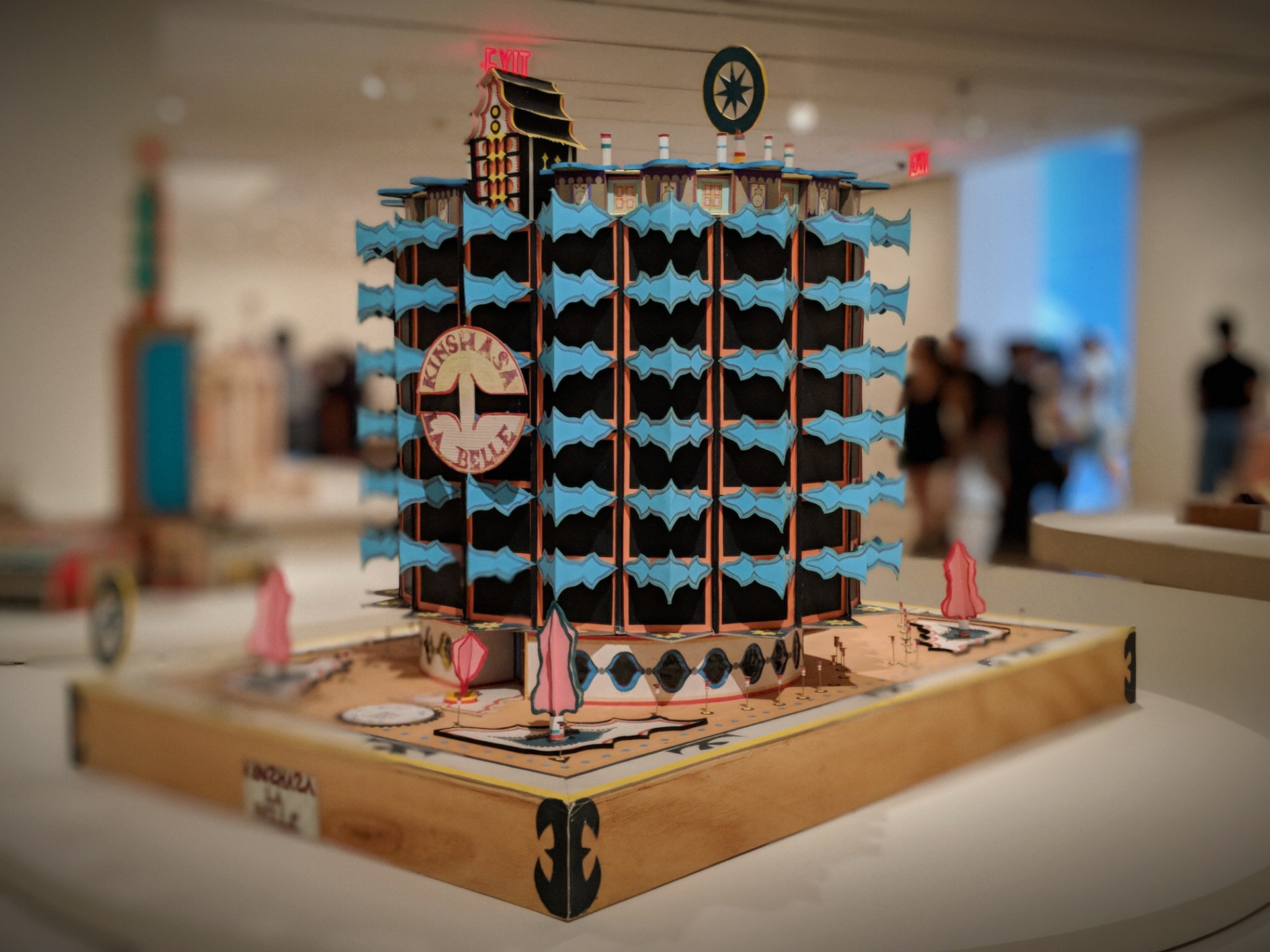
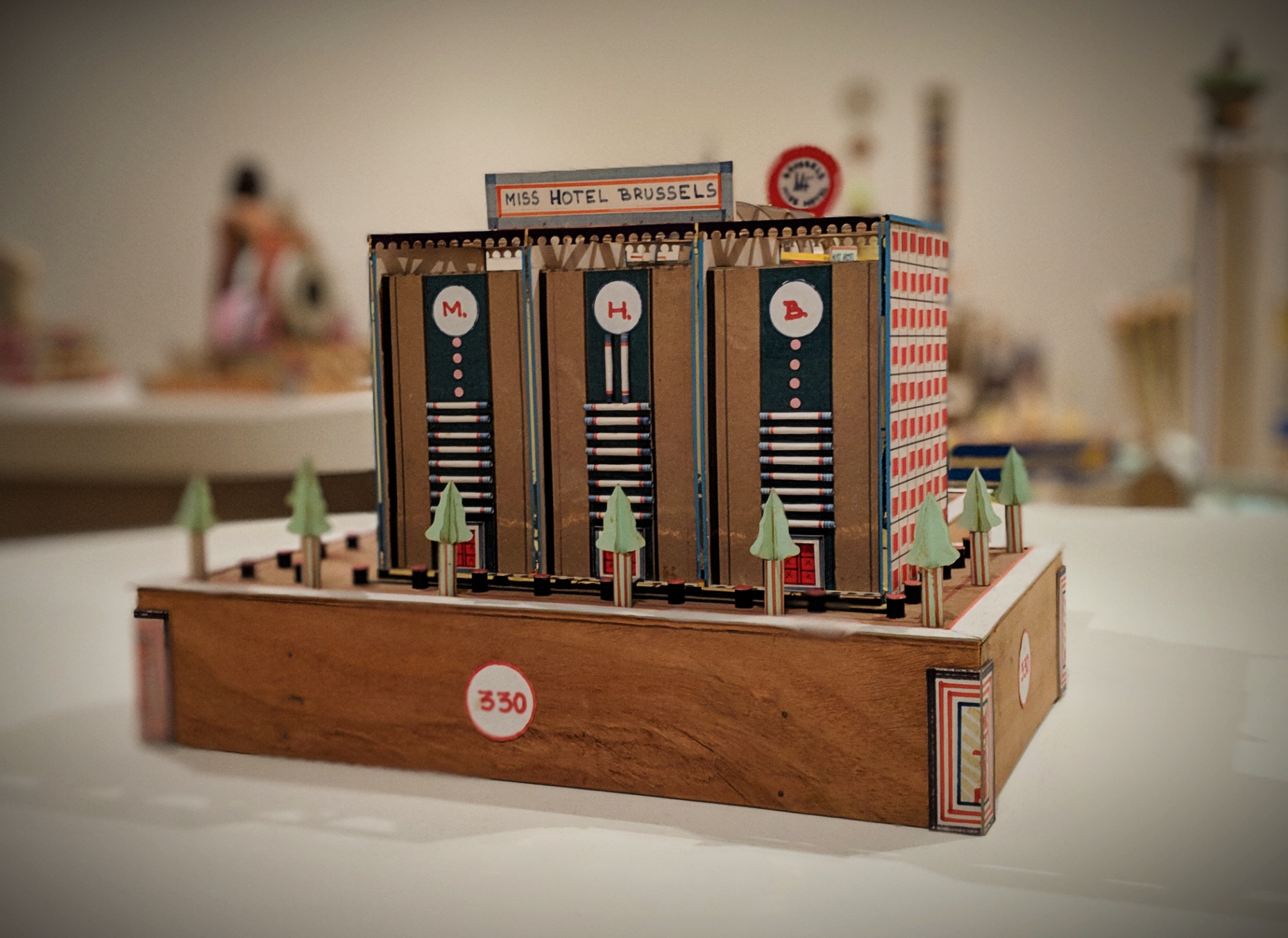
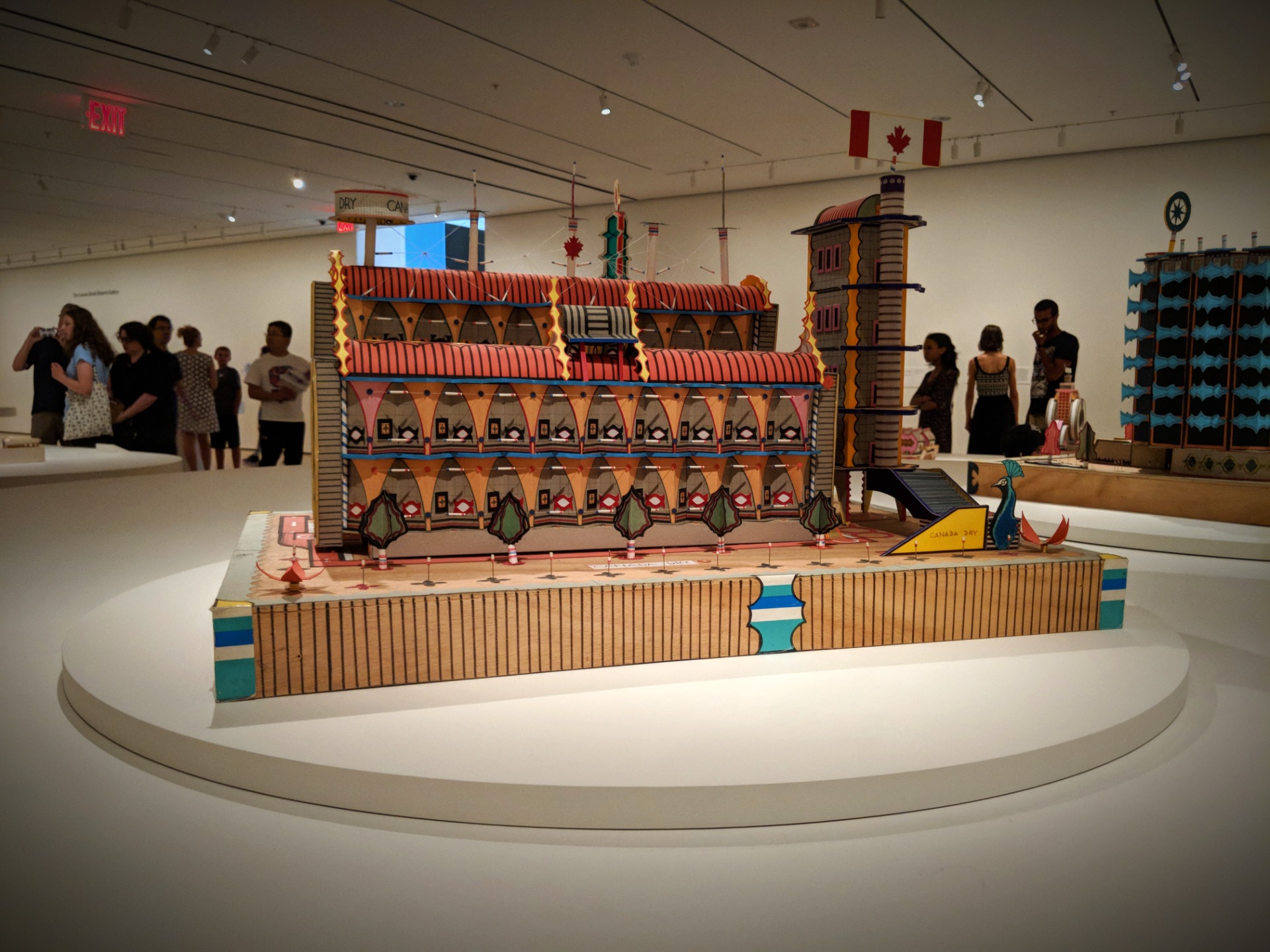
Bodys Isek Kingelez || City Dreams @MoMA

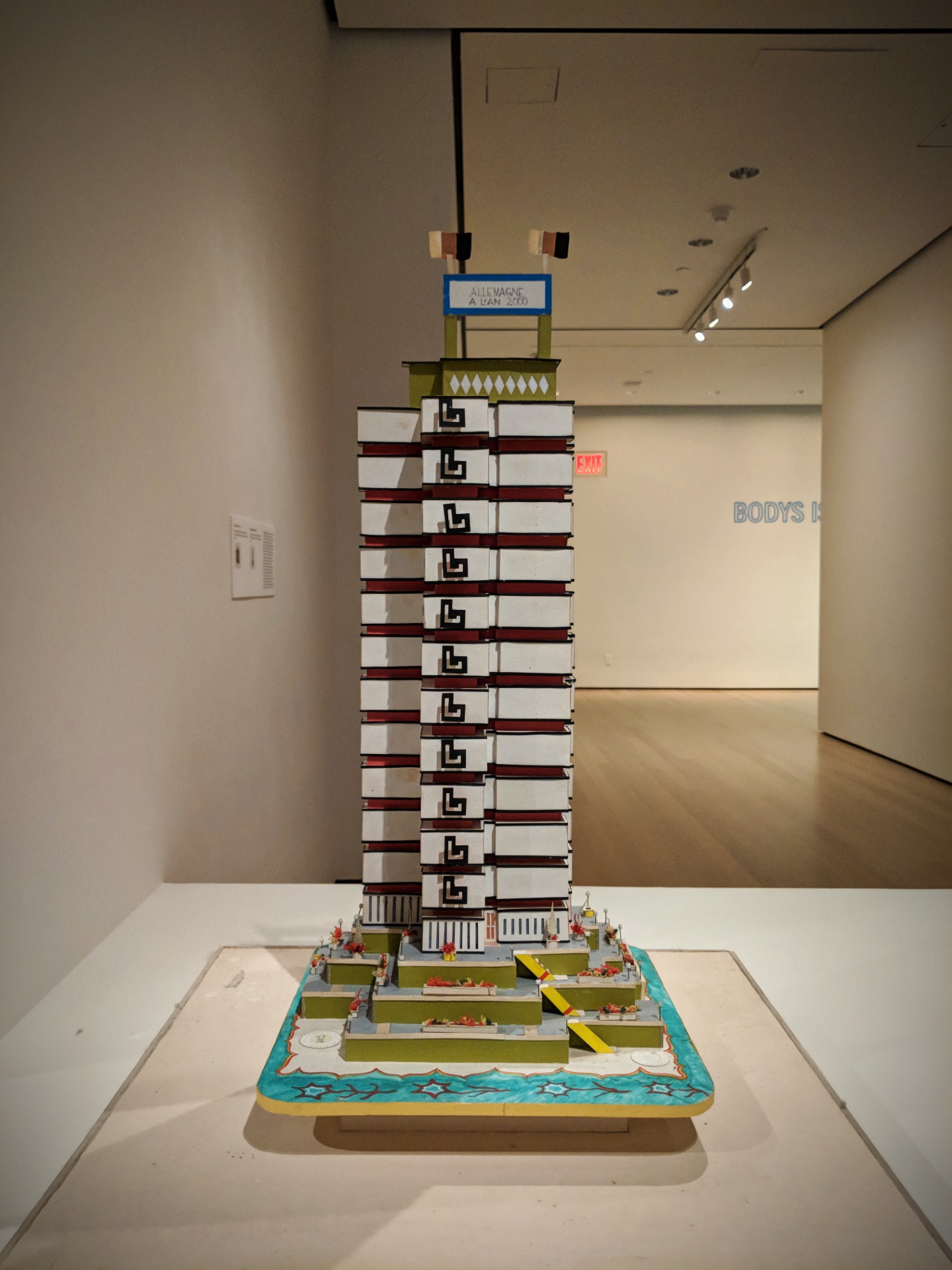
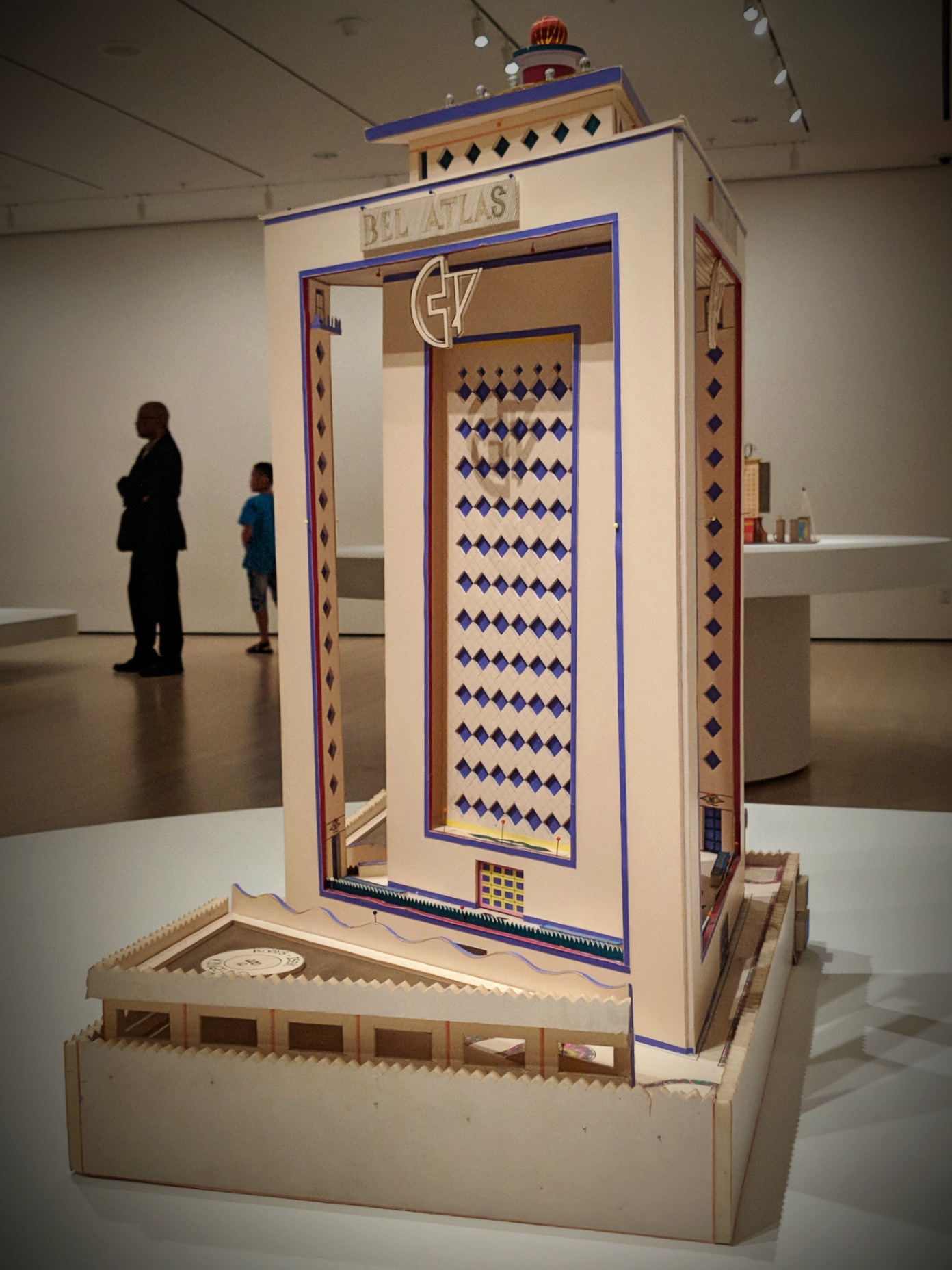
I first became aware of the work of Bodys Isek Kingelez, captivated by his intricate, colourful maquettes, at the retrospective that was presented at MoMA during the second half of 2018. There is a joyous, optimistic quality about these toy-like cities that brought a smile to the child in me; but make no mistake – these tiny sculptures, made from modest materials like glue and paper, straws and bottles, soda cans and bottle caps, are no toys. They are a delicate body of artwork, visions of utopian cities, images of a better world. Like, for example, the U.N. (1995), made in commemoration of the 50th anniversary of the United Nations, reflecting the artist’s belief in a world of democracy, peace, and cooperation. Or his Ville Fantôme (1996), a peaceful city in which doctors and police are unecessary.

An extract from the artist’s bio (for more info click on his name):

”Visionary artist Bodys Isek Kingelez created dazzling, intricate architectural sculptures that he called “extreme maquettes.” Born in the agricultural village of Kimbembele Ihunga in the Belgian Congo (now the Democratic Republic of the Congo) in 1948, he came of age in a period of enormous political and social transformation. In 1970, he relocated to Kinshasa—the capital of the newly independent nation renamed Zaire—to pursue a university education. After his studies, motivated by a desire to make a civic contribution to his country, Kingelez worked briefly as a secondary school teacher. However, he soon became “obsessed with the idea of getting my hands on some scissors, a Gillette razor, and some glue and paper…” and began to create sculptures that took the form of buildings, constructed from modest materials like paper, cardboard, and repurposed commercial packaging, and embellished with push-pins, straws, elaborate hand-applied designs, and more. It was through these sculptures that he felt he could help shape “a better, more peaceful world.” The technical excellence of Kingelez’s early work led to his hiring as a restorer at the National Museums Institute of Zaire, where he repaired traditional objects in the collection until he devoted himself to art making full-time in the early 1980s.”


“Art is the grandest adventure of them all…art is a high form of knowledge, a vehicle for individual renewal that contributes to a better collective future.” – Bodys Isek Kingelez (1948–2015)

MoMA, New York

July 28th, 2018
Train of Thought

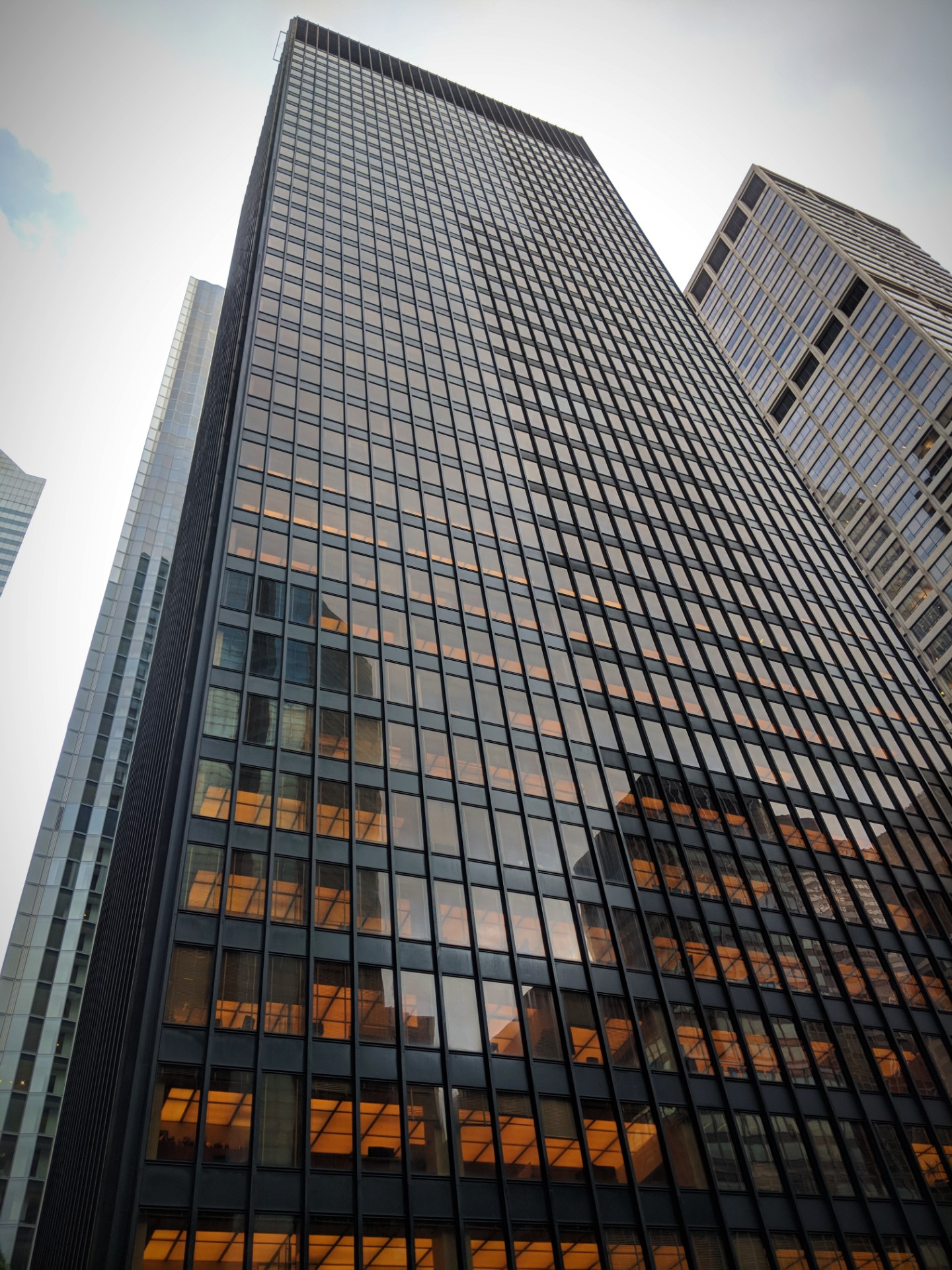
Seagram Building on Park Avenue
David Hammons || Untitled (Night Train) 1989 || Glass, silicone glue and coal (detail)
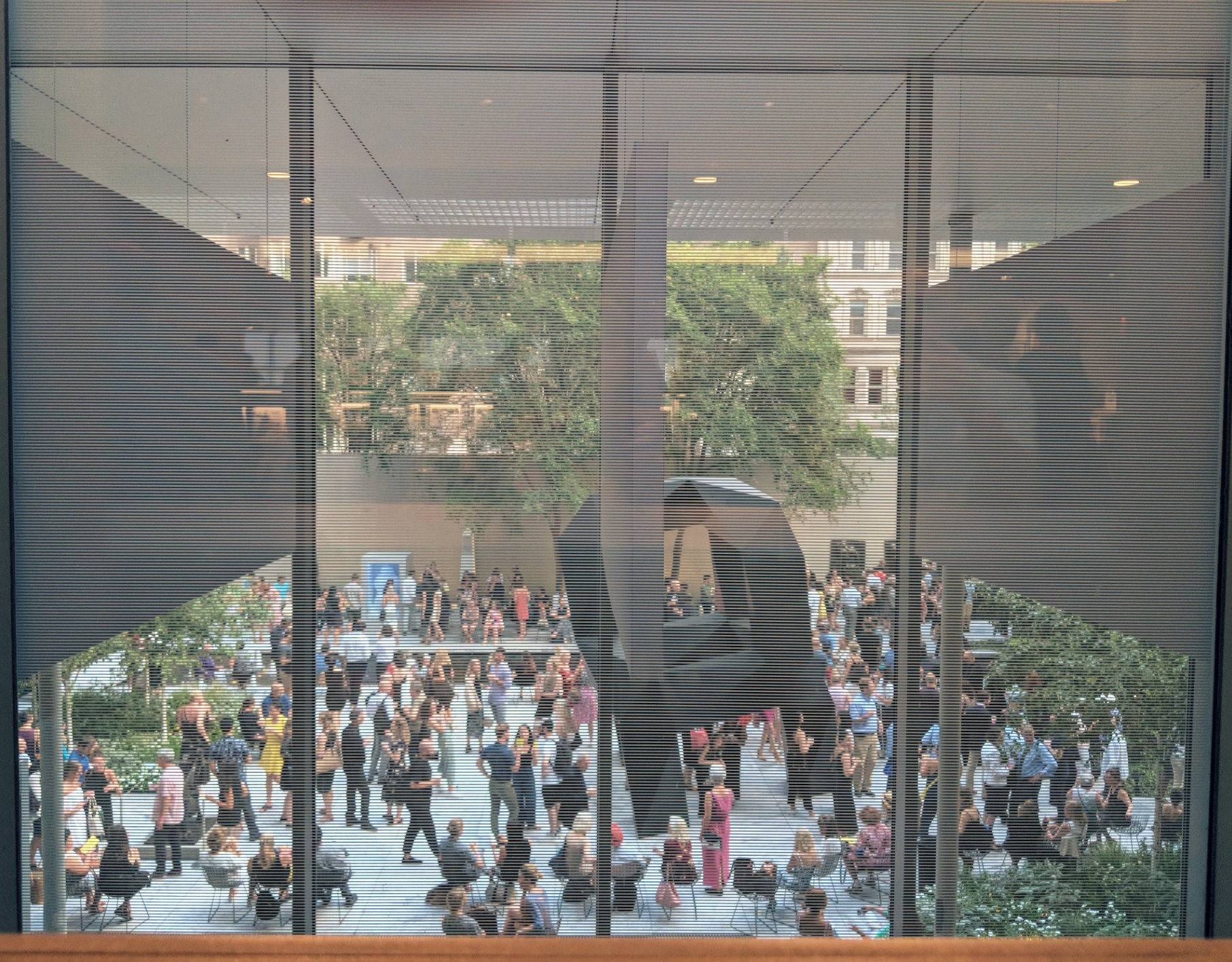
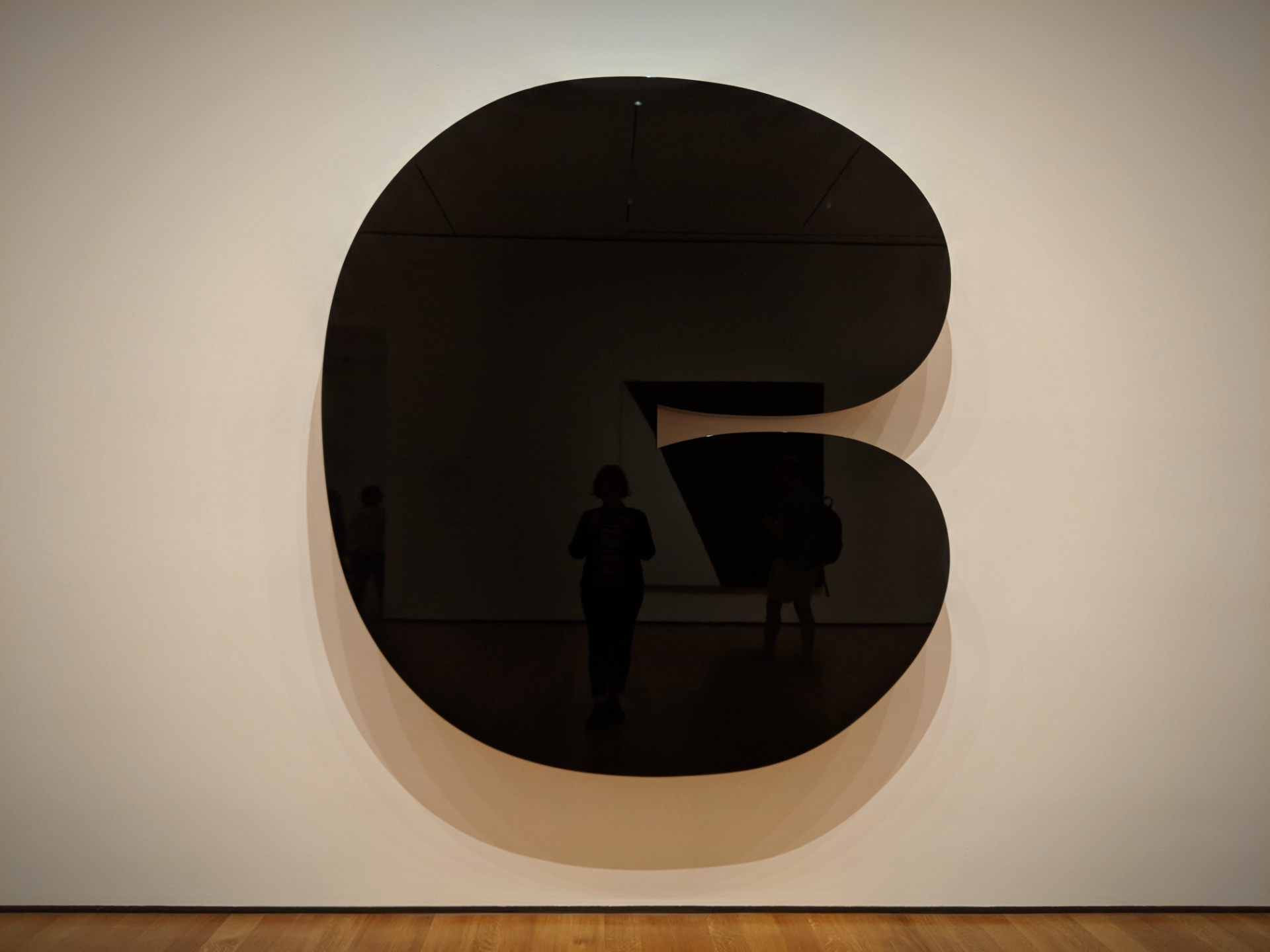
Ellsworth Kelly || Black Form II, 2012 || Painted aluminum
David Hammons || Untitled (Night Train) 1989 || Glass, silicone glue and coal

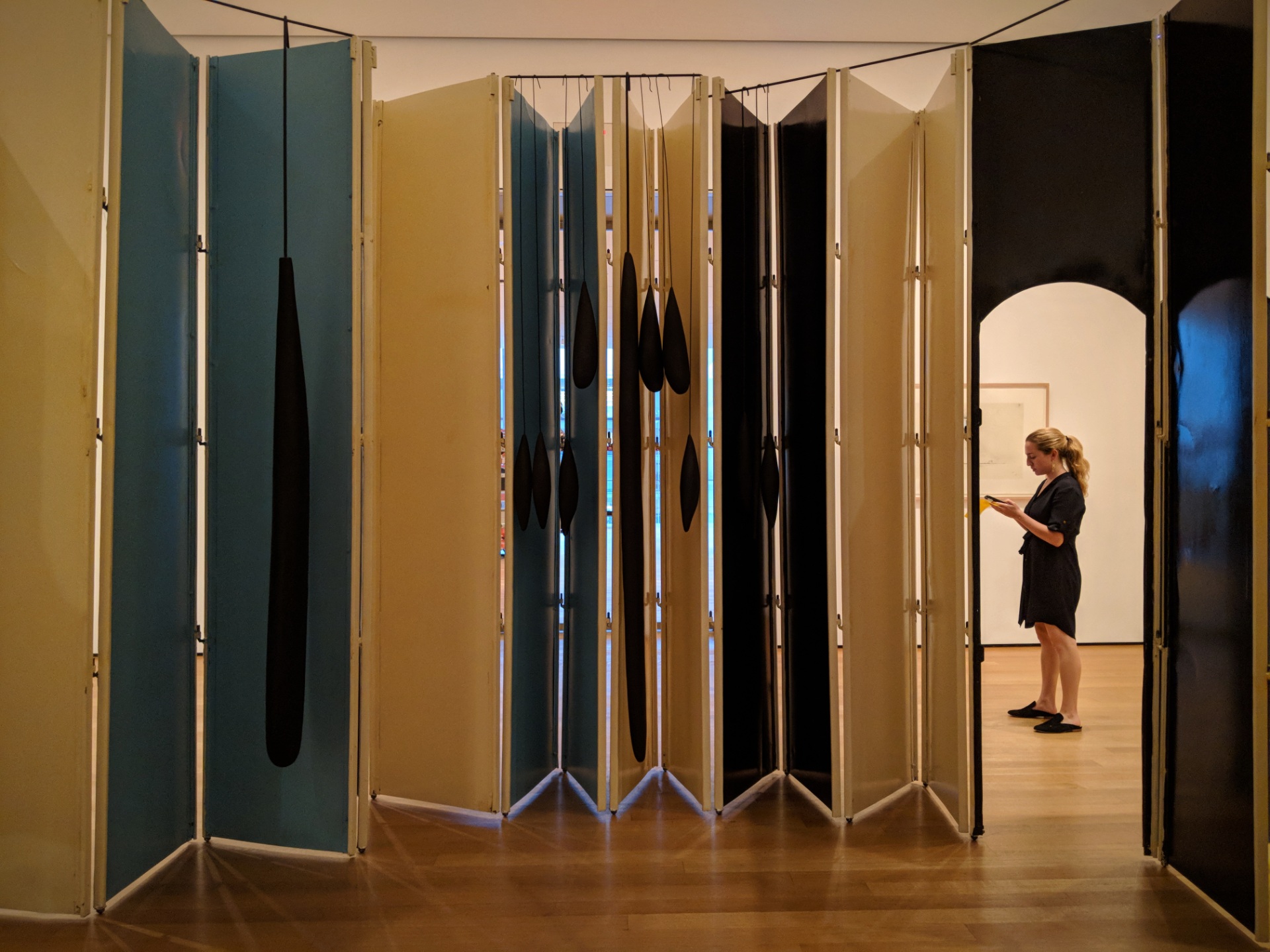
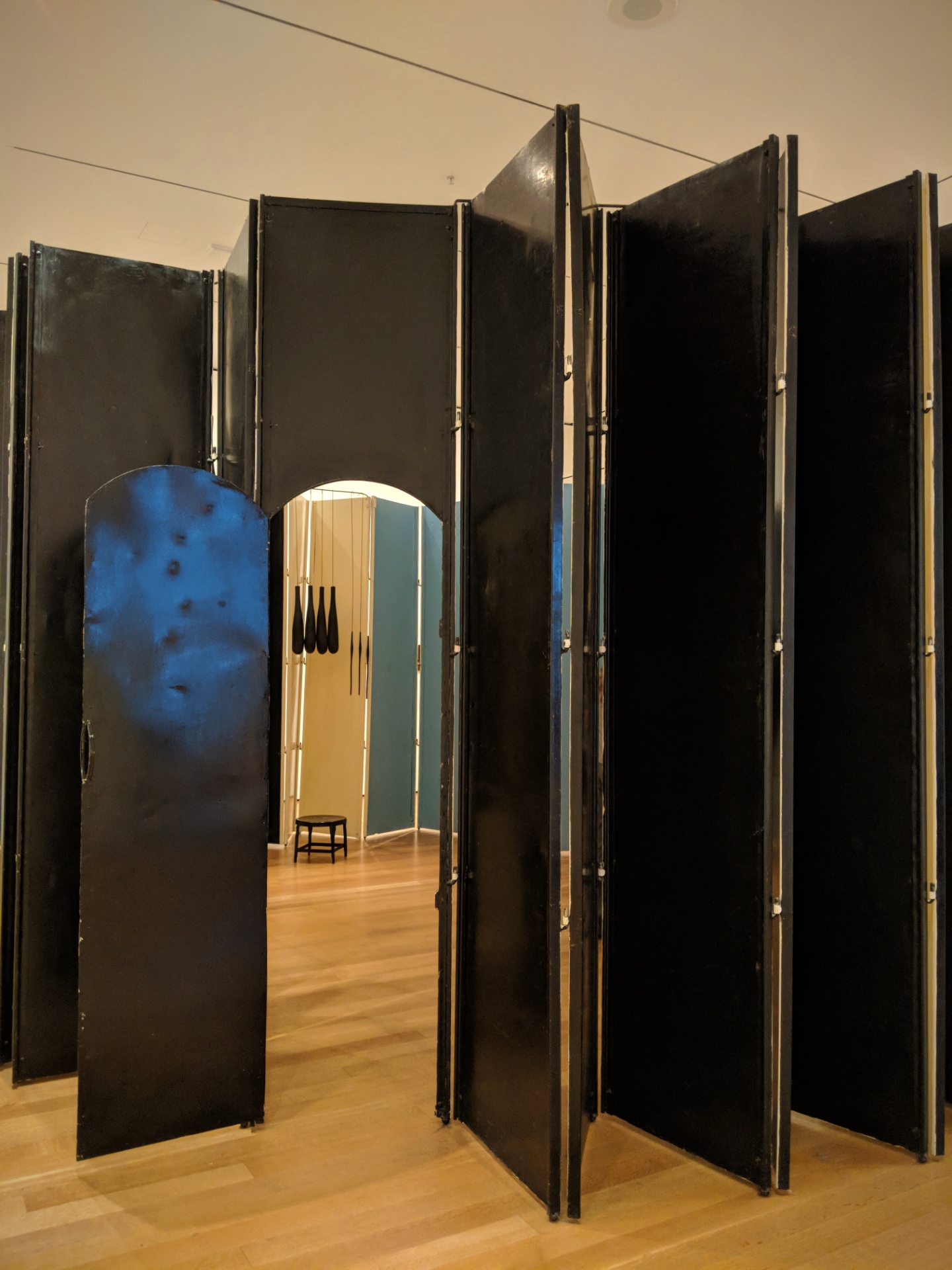
Louise Bourgeois || Articulated Lair, 1986 || Painted steel, rubber and metal


@MoMA, Midtown Manhattan

July 24th, 2018