Sol LeWitt’s Wall Drawings: Bold, Bright, Beholding

Second day in Mass MoCA, because it would have been impossible to absorb so much art, all at once!… (tickets were valid for two consecutive days then, this may have changed post-Covid).
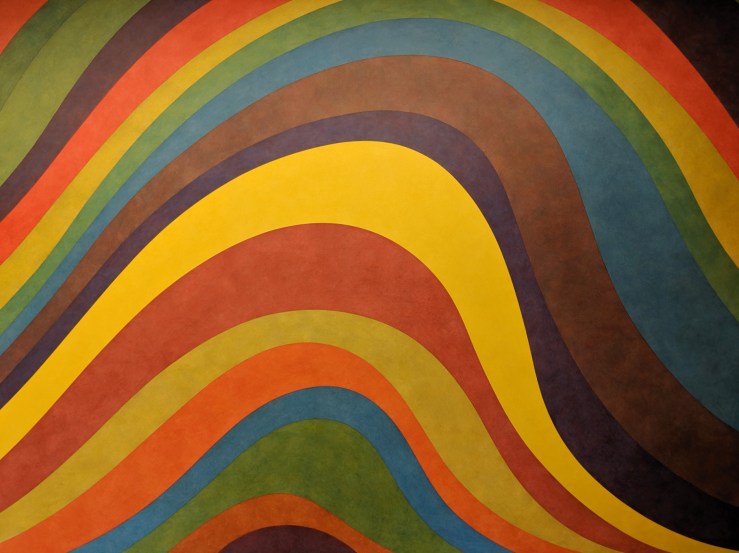
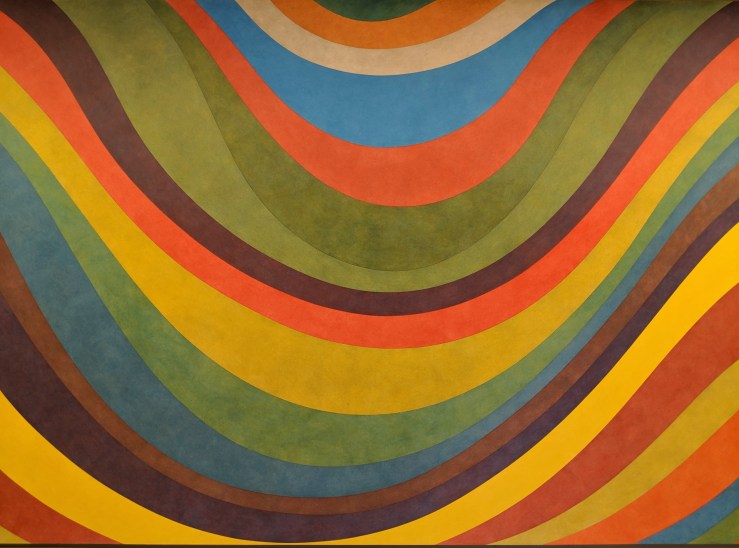
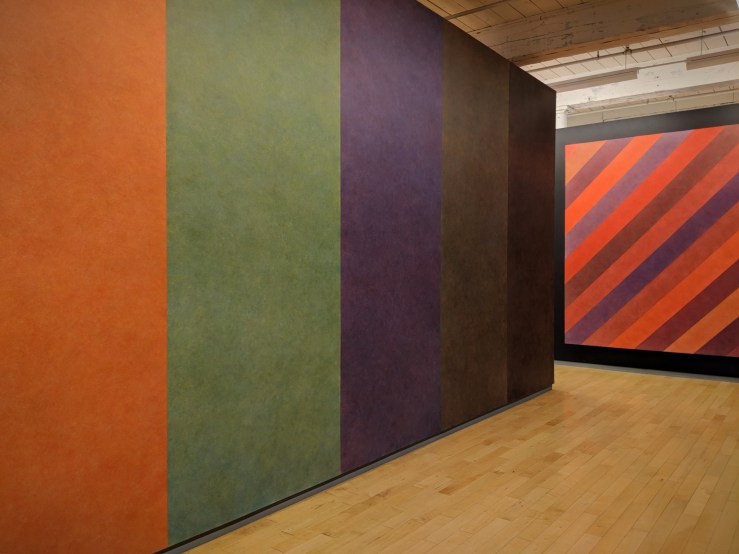
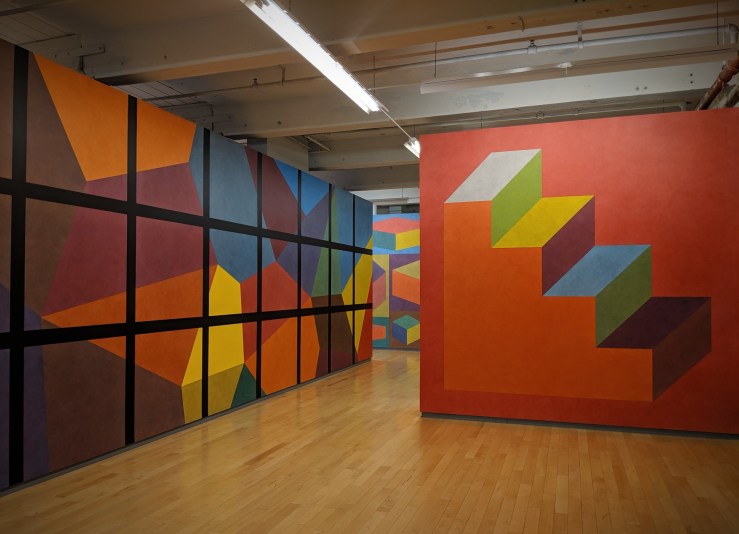
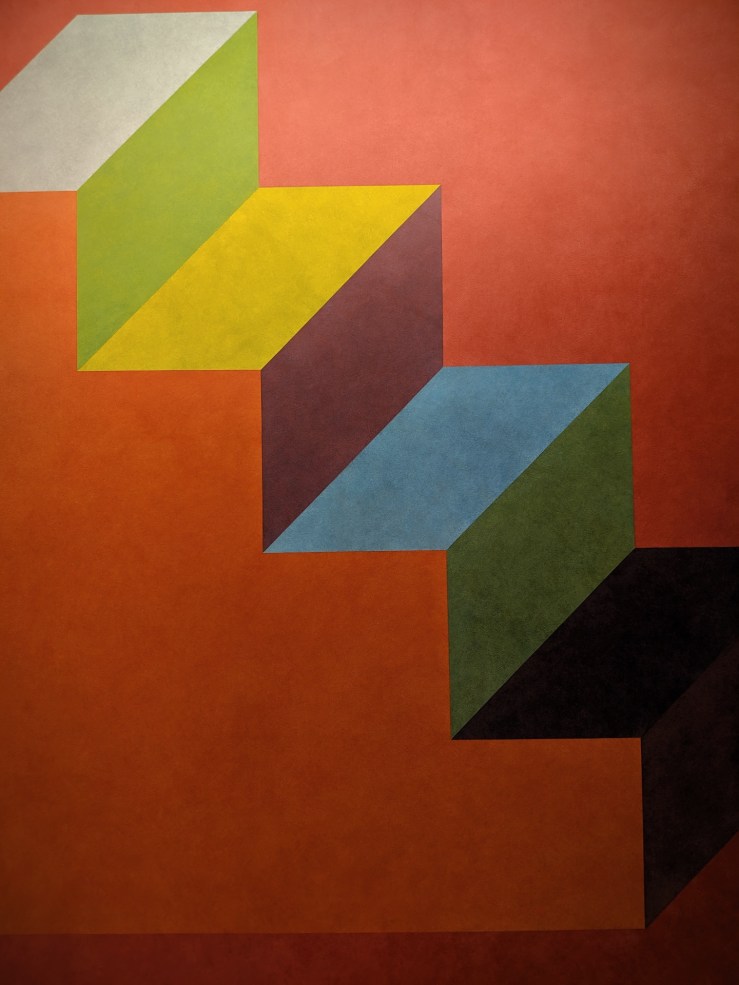
…”Each wall drawing begins as a set of instructions or a simple diagram to be followed in executing the work. As the exhibition makes clear, these straightforward instructions yield an astonishing—and stunningly beautiful—variety of work that is at once simple and highly complex, rigorous, and sensual. The drawings in the exhibition range from layers of straight lines meticulously drawn in black graphite pencil lead, to rows of delicately rendered wavy lines in colored pencil; from bold black-and-white geometric forms, to bright planes in acrylic paint arranged like the panels of a folding screen; from sensuous drawings created by dozens of layers of transparent washes, to a tangle of vibratory orange lines on a green wall, and much more. Forms may appear to be flat, to recede in space, or to project into the viewer’s space, while others meld to the structure of the wall itself, like gauze.” [source]

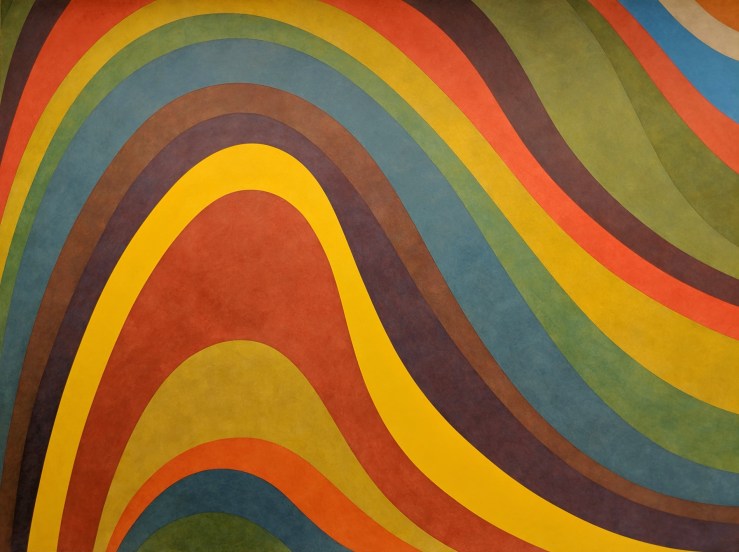
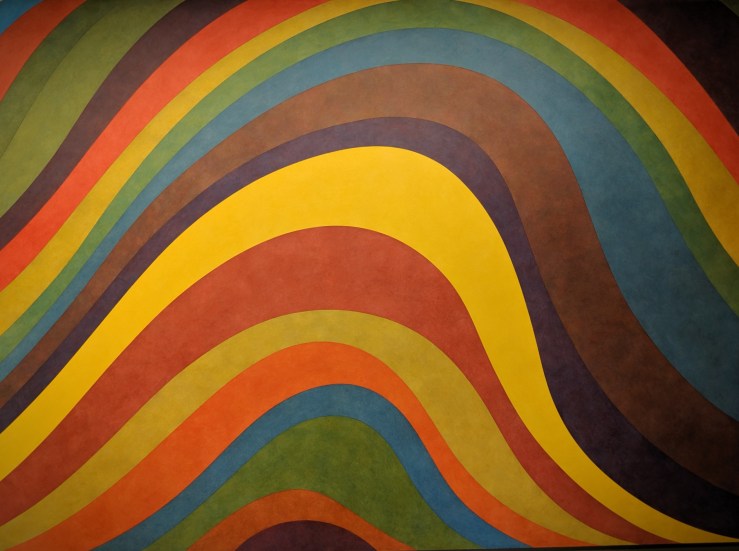
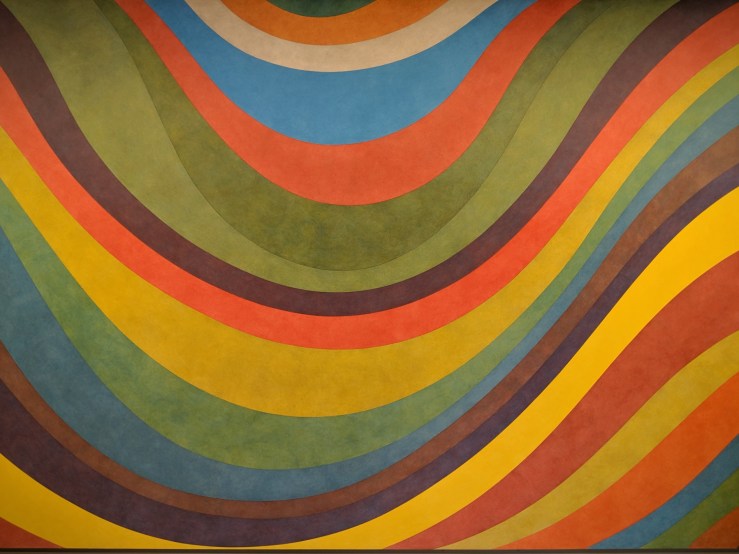
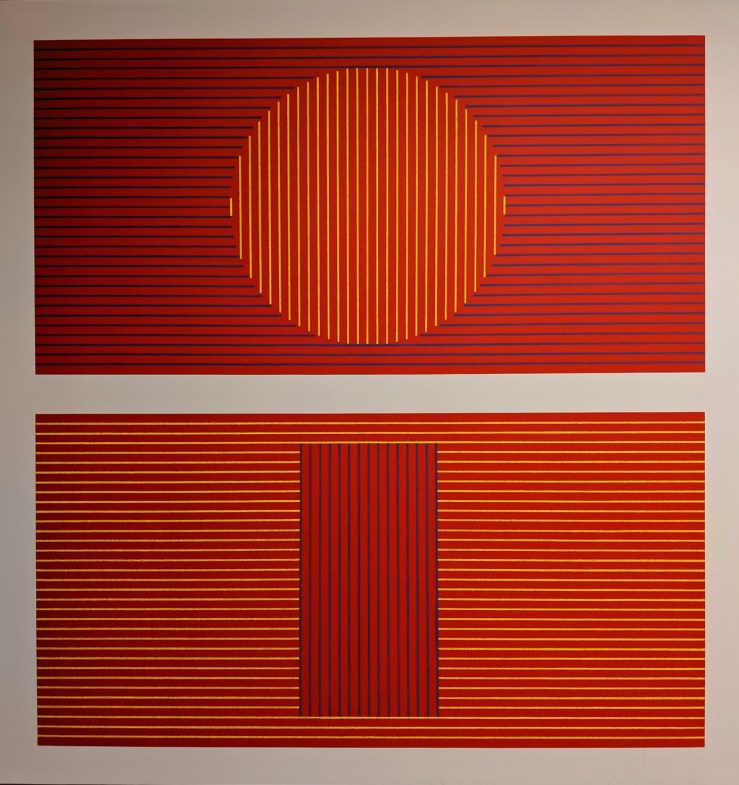
Images of wall drawings:

793A – Irregular wavy color bands
340 – One of a Six-part drawing
396 – A black five-pointed star, a yellow six-pointed star, a red seven-pointed star, and a blue eight-pointed star
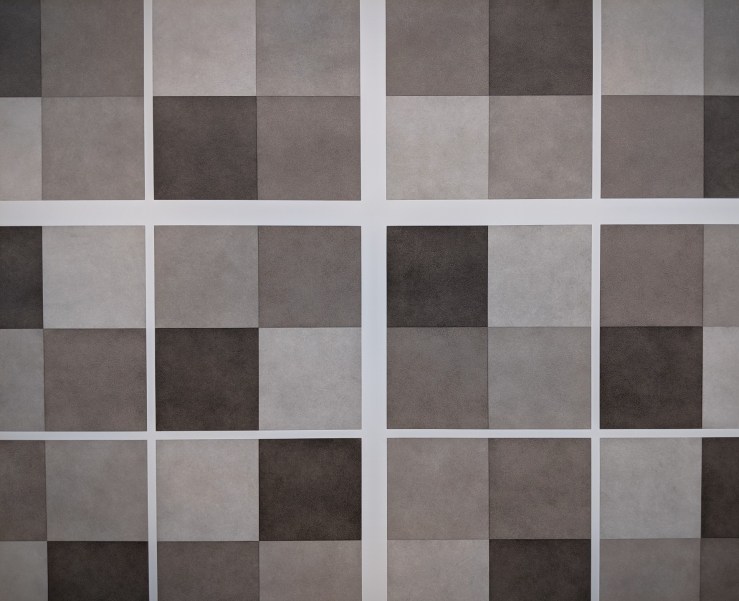
414 – Drawing Series IV (A) with India ink washes (detail of 24 drawings)
527 – Two flat-topped pyramids with color ink washes superimposed
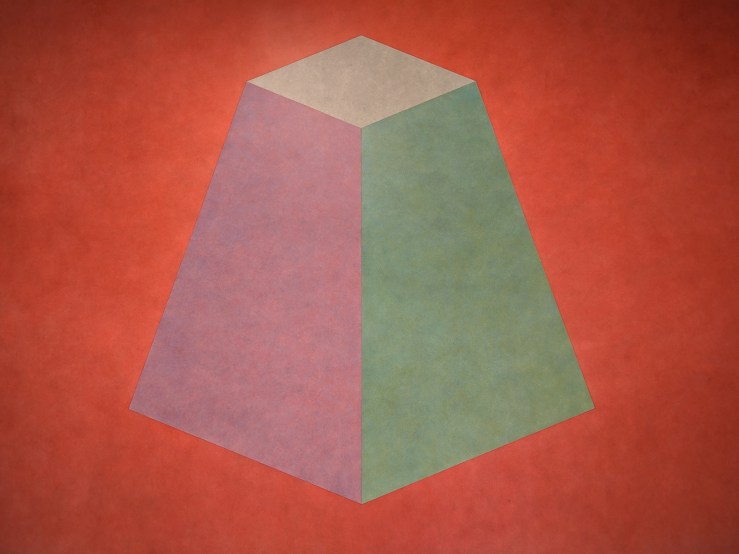
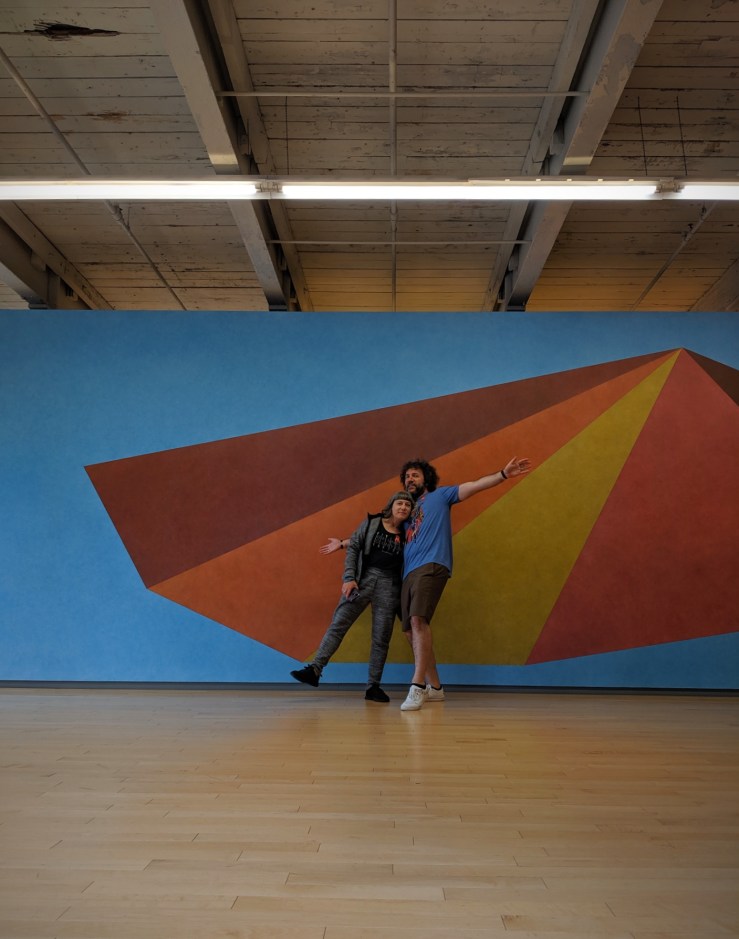
439 – Asymmetrical pyramid with color ink washes superimposed (plus us in playful mood, trying to agree which wall would work best in our home)

Sol LeWitt: A Wall Drawing Retrospective

On view through 2043

MASS MoCA, North Adams, MA

September 2nd, 2019
Sol LeWitt’s Wall Drawings: Straight Lines, Continuous Forms

It occupies nearly an acre of specially built interior walls that are installed—per LeWitt’s own specifications—over three stories of a historic mill building situated at the heart of MASS MoCA’s 19th-century, former factory campus. A landmark collaboration of MASS MoCA, Yale University Art Gallery, the Williams College Museum of Art, and the Sol Lewitt estate, over 60 artists and art students spent six months rendering 105 large-scale wall drawings spanning the artist’s storied career.

Sol LeWitt: A Wall Drawing Retrospective

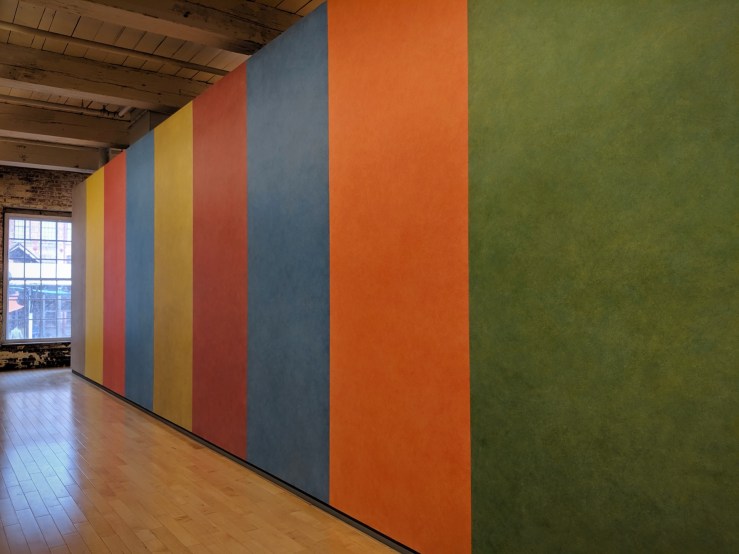
Images of wall drawings 422, 610, 681, 692

On view through 2043

MASS MoCA, North Adams, MA

September 1st, 2019

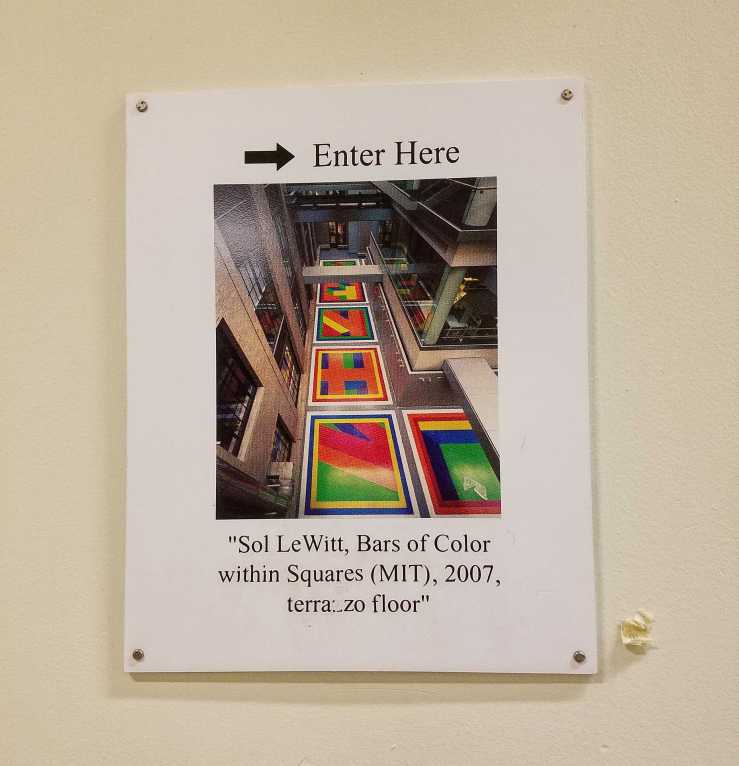
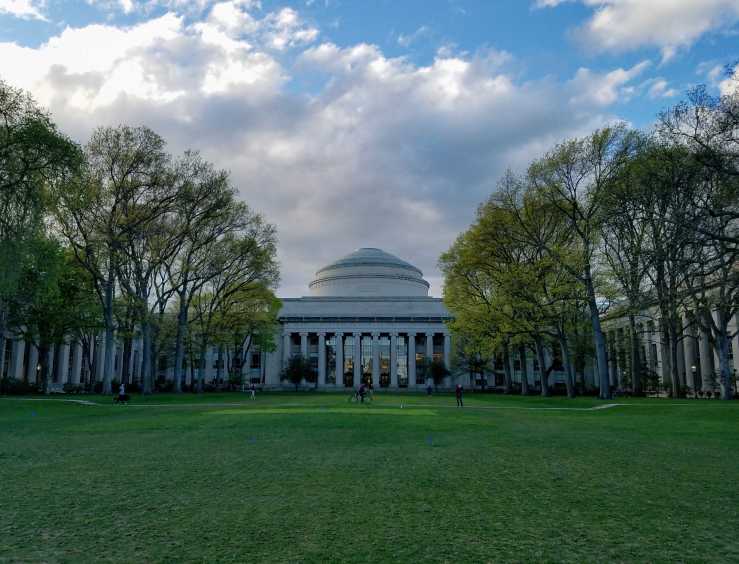
The Massachusetts Institute of Technology

Affectionately, MIT.

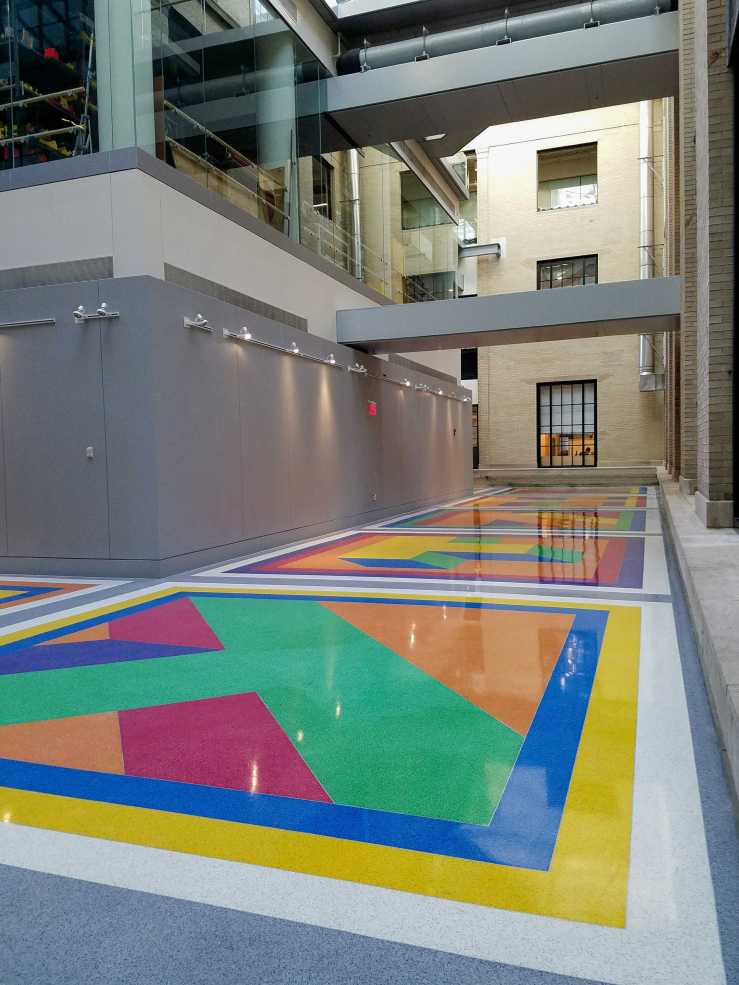
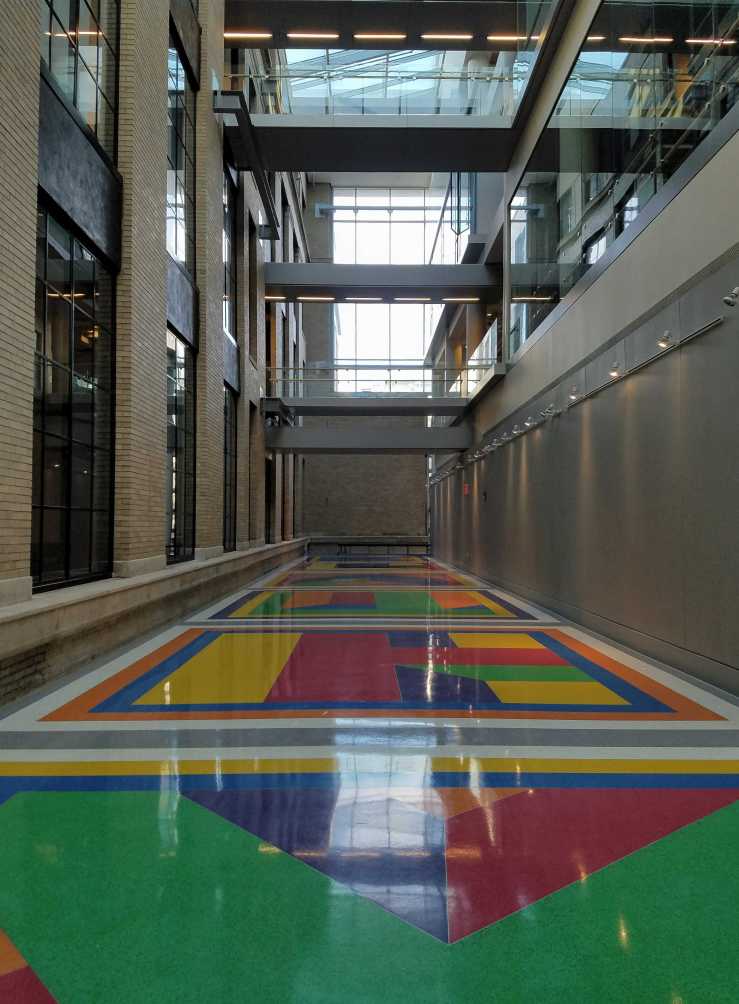
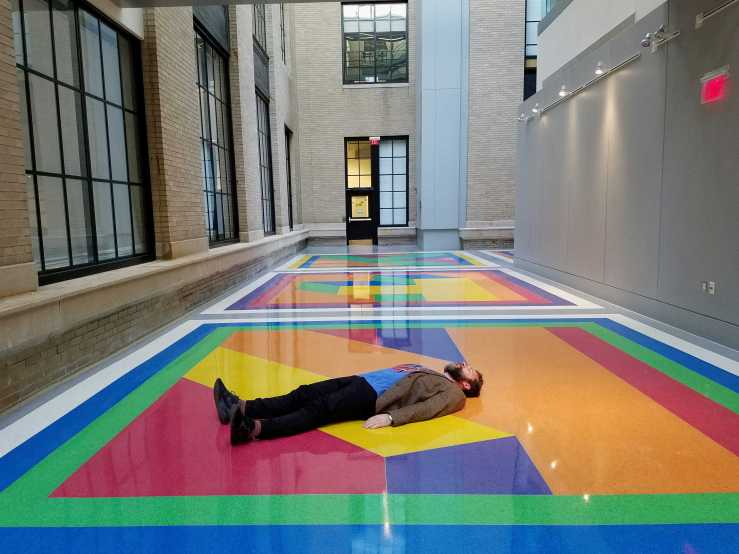
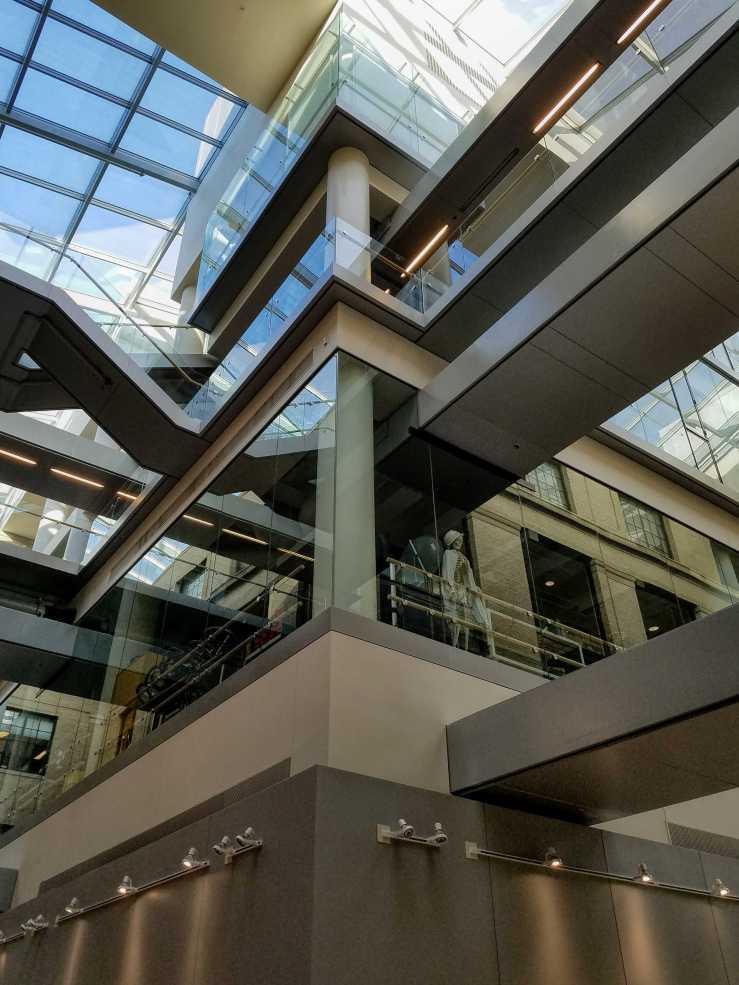
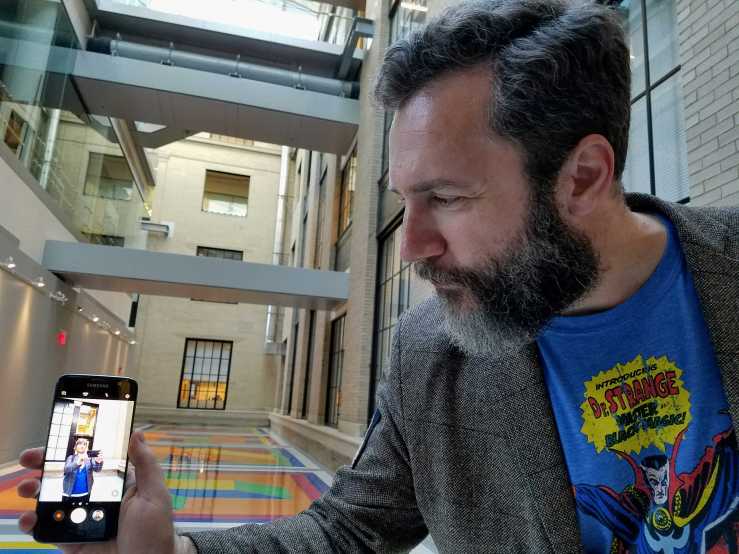
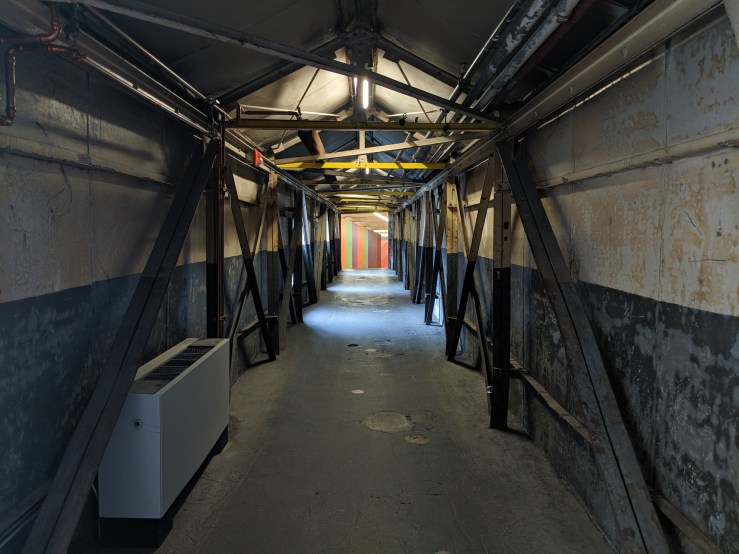
Where the art of uncovering the mysteries of physical sciences meets with the determination and positive energy of the bright young things of today, groomed to become some of the most distinguished scientists and entrepreneurs of tomorrow. The MIT is not only infusing knowledge into the minds of students, it is educating game-changers. If the MIT were a car, it would have been a Tesla. In fact, I wouldn’t have been surprised had I’d seen one roaming about the premises. I was more taken aback by the monumental work by Sol LeWitt covering an entire corridor. Universities don’t get any cooler than this.

Sentences on Conceptual Art, by Sol Lewitt

  1. Conceptual artists are mystics rather than rationalists. They leap to conclusions that logic cannot reach.
  2. Rational judgements repeat rational judgements.
  3. Irrational judgements lead to new experience.
  4. Formal art is essentially rational.
  5. Irrational thoughts should be followed absolutely and logically.
  6. If the artist changes his mind midway through the execution of the piece he compromises the result and repeats past results.
  7. The artist’s will is secondary to the process he initiates from idea to completion. His wilfulness may only be ego.
  8. When words such as painting and sculpture are used, they connote a whole tradition and imply a consequent acceptance of this tradition, thus placing limitations on the artist who would be reluctant to make art that goes beyond the limitations.
  9. The concept and idea are different. The former implies a general direction while the latter is the component. Ideas implement the concept.
  10. Ideas can be works of art; they are in a chain of development that may eventually find some form. All ideas need not be made physical.
  11. Ideas do not necessarily proceed in logical order. They may set one off in unexpected directions, but an idea must necessarily be completed in the mind before the next one is formed.
  12. For each work of art that becomes physical there are many variations that do not.
  13. A work of art may be understood as a conductor from the artist’s mind to the viewer’s. But it may never reach the viewer, or it may never leave the artist’s mind.
  14. The words of one artist to another may induce an idea chain, if they share the same concept.
  15. Since no form is intrinsically superior to another, the artist may use any form, from an expression of words (written or spoken) to physical reality, equally.
  16. If words are used, and they proceed from ideas about art, then they are art and not literature; numbers are not mathematics.
  17. All ideas are art if they are concerned with art and fall within the conventions of art.
  18. One usually understands the art of the past by applying the convention of the present, thus misunderstanding the art of the past.
  19. The conventions of art are altered by works of art.
  20. Successful art changes our understanding of the conventions by altering our perceptions.
  21. Perception of ideas leads to new ideas.
  22. The artist cannot imagine his art, and cannot perceive it until it is complete.
  23. The artist may misperceive (understand it differently from the artist) a work of art but still be set off in his own chain of thought by that misconstrual.
  24. Perception is subjective.
  25. The artist may not necessarily understand his own art. His perception is neither better nor worse than that of others.
  26. An artist may perceive the art of others better than his own.
  27. The concept of a work of art may involve the matter of the piece or the process in which it is made.
  28. Once the idea of the piece is established in the artist’s mind and the final form is decided, the process is carried out blindly. There are many side effects that the artist cannot imagine. These may be used as ideas for new works.
  29. The process is mechanical and should not be tampered with. It should run its course.
  30. There are many elements involved in a work of art. The most important are the most obvious.
  31. If an artist uses the same form in a group of works, and changes the material, one would assume the artist’s concept involved the material.
  32. Banal ideas cannot be rescued by beautiful execution.
  33. It is difficult to bungle a good idea.
  34. When an artist learns his craft too well he makes slick art.
  35. These sentences comment on art, but are not art.

First published in 0-9 (New York), 1969, and Art-Language (England), May 1969


May 3rd, 2017