Midsummer acts with a view to Winter Solstice
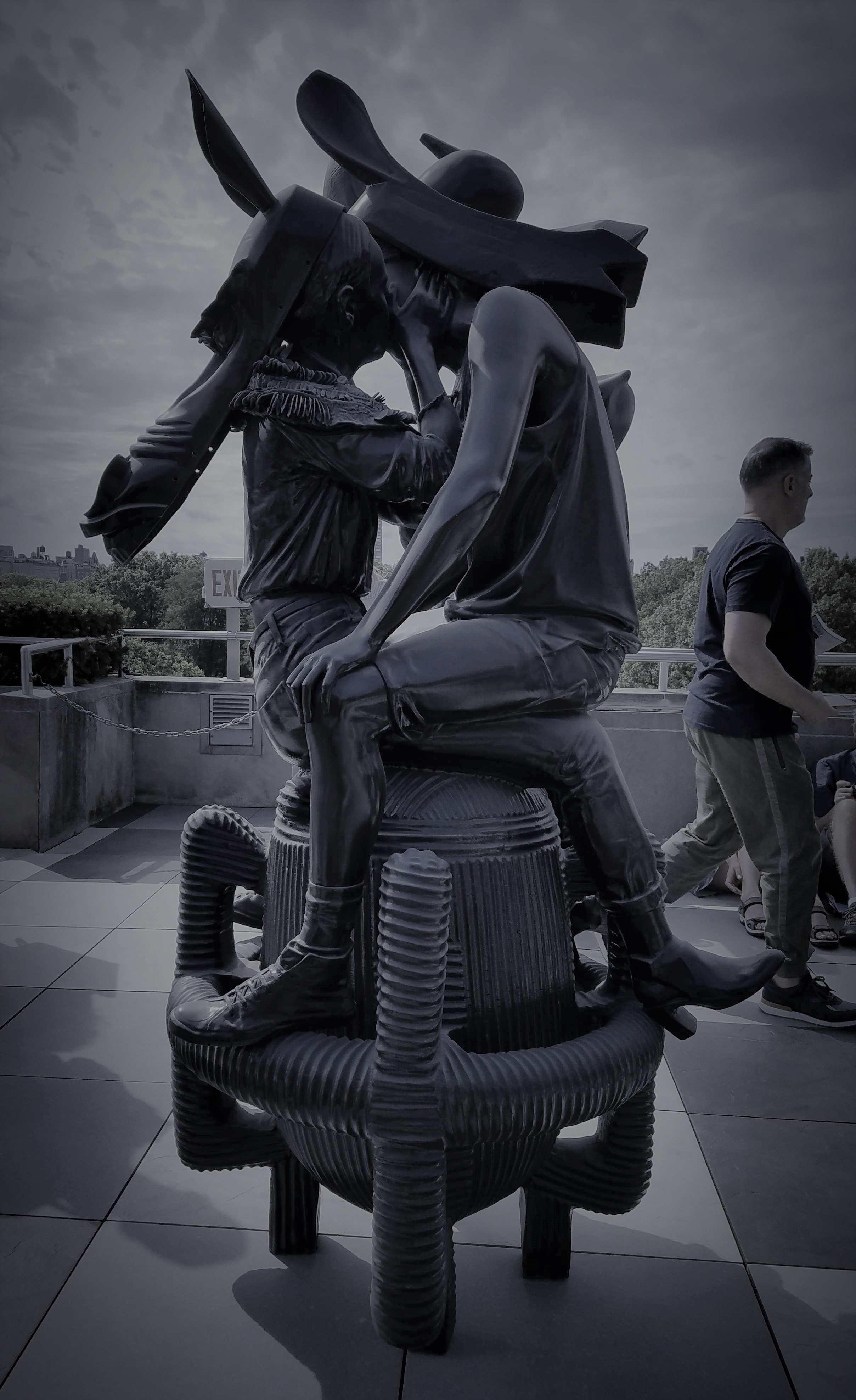
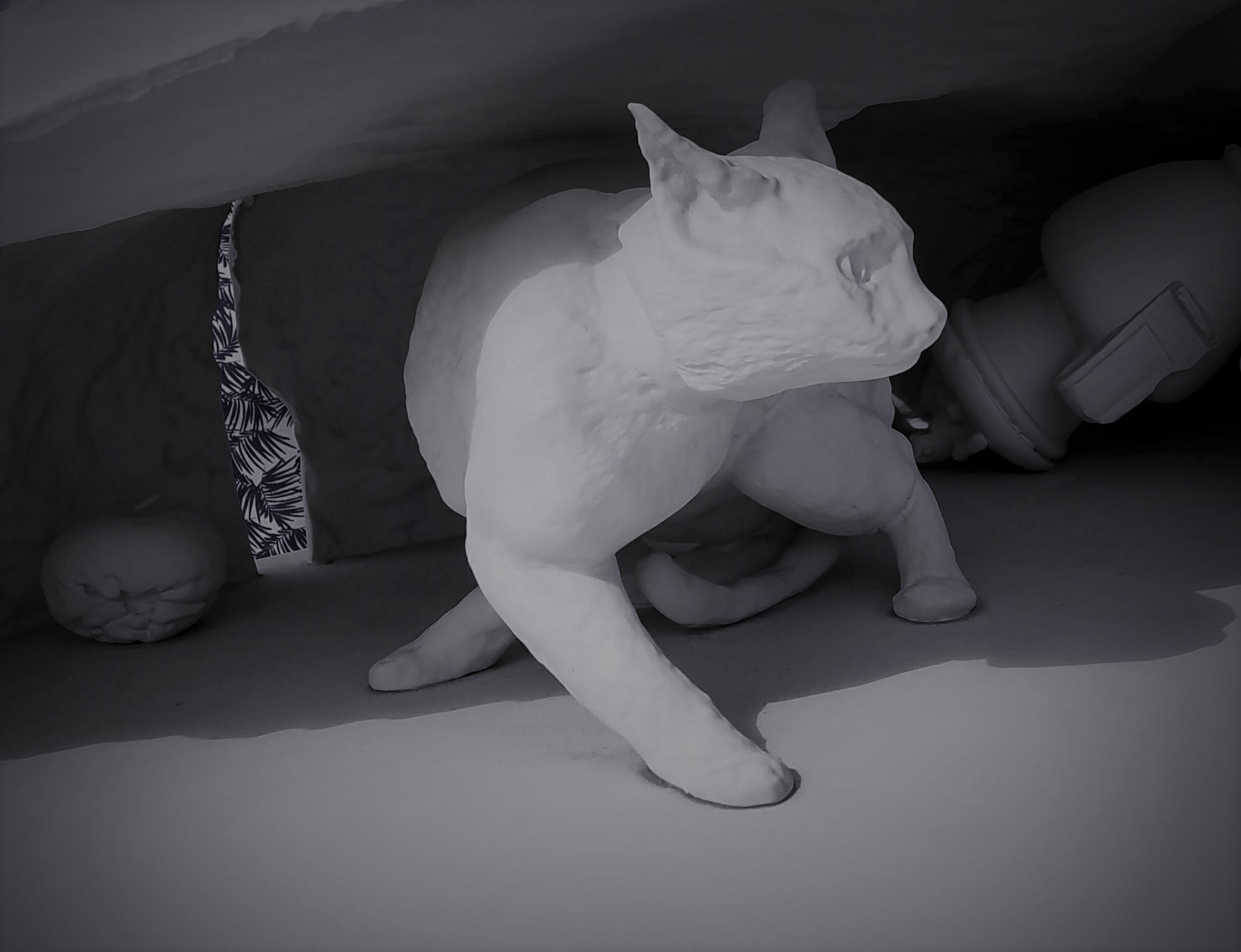
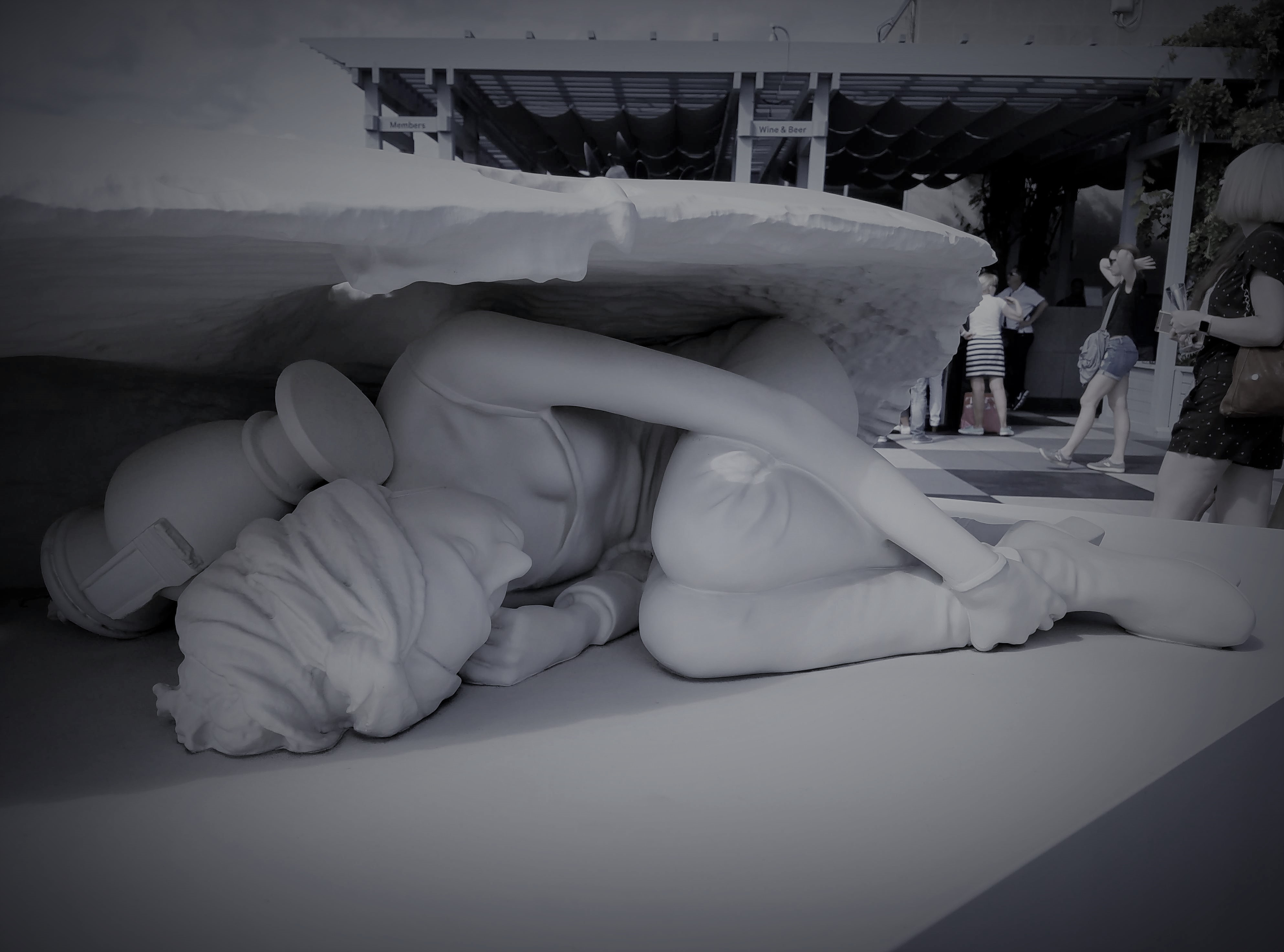
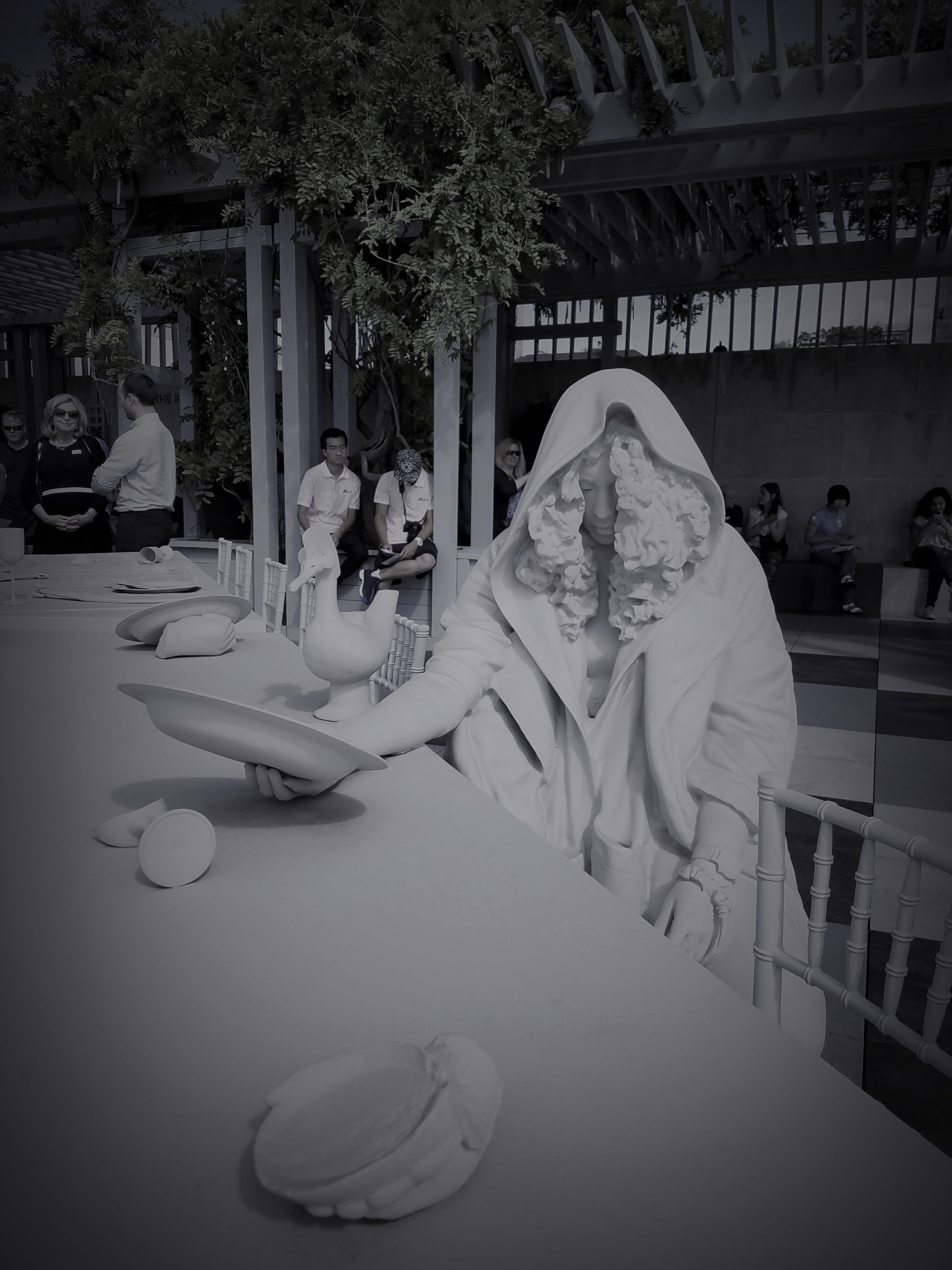
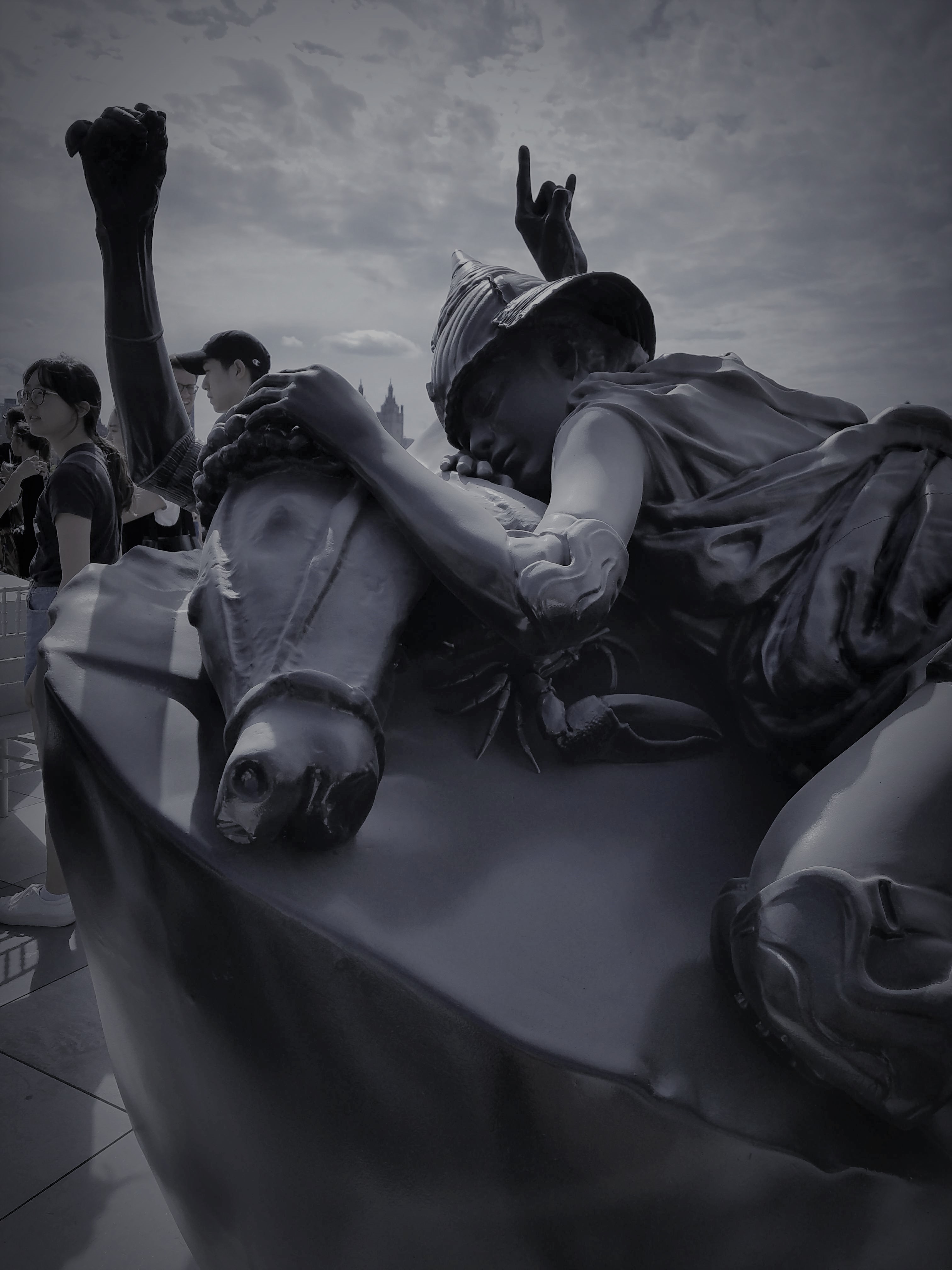
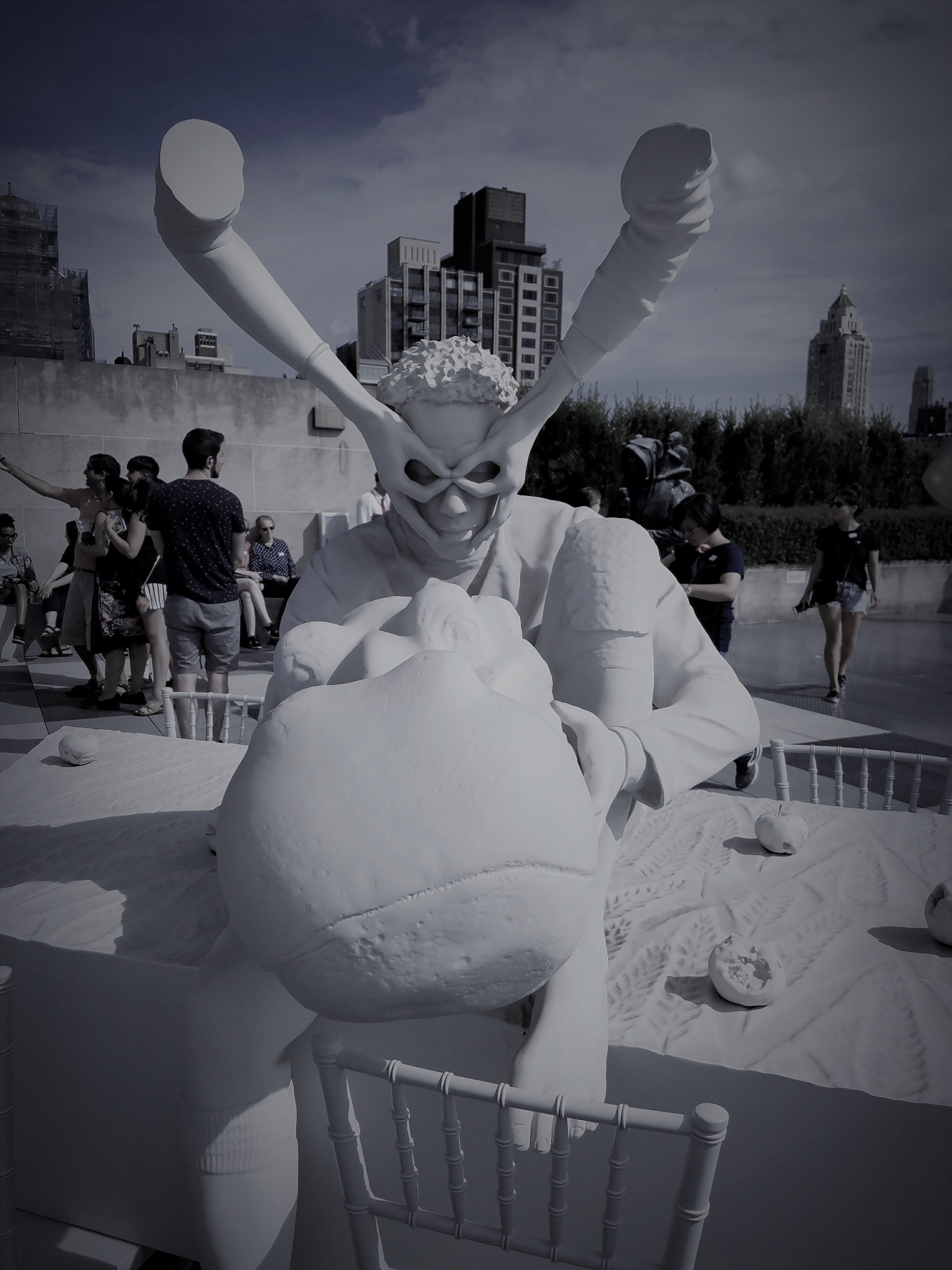
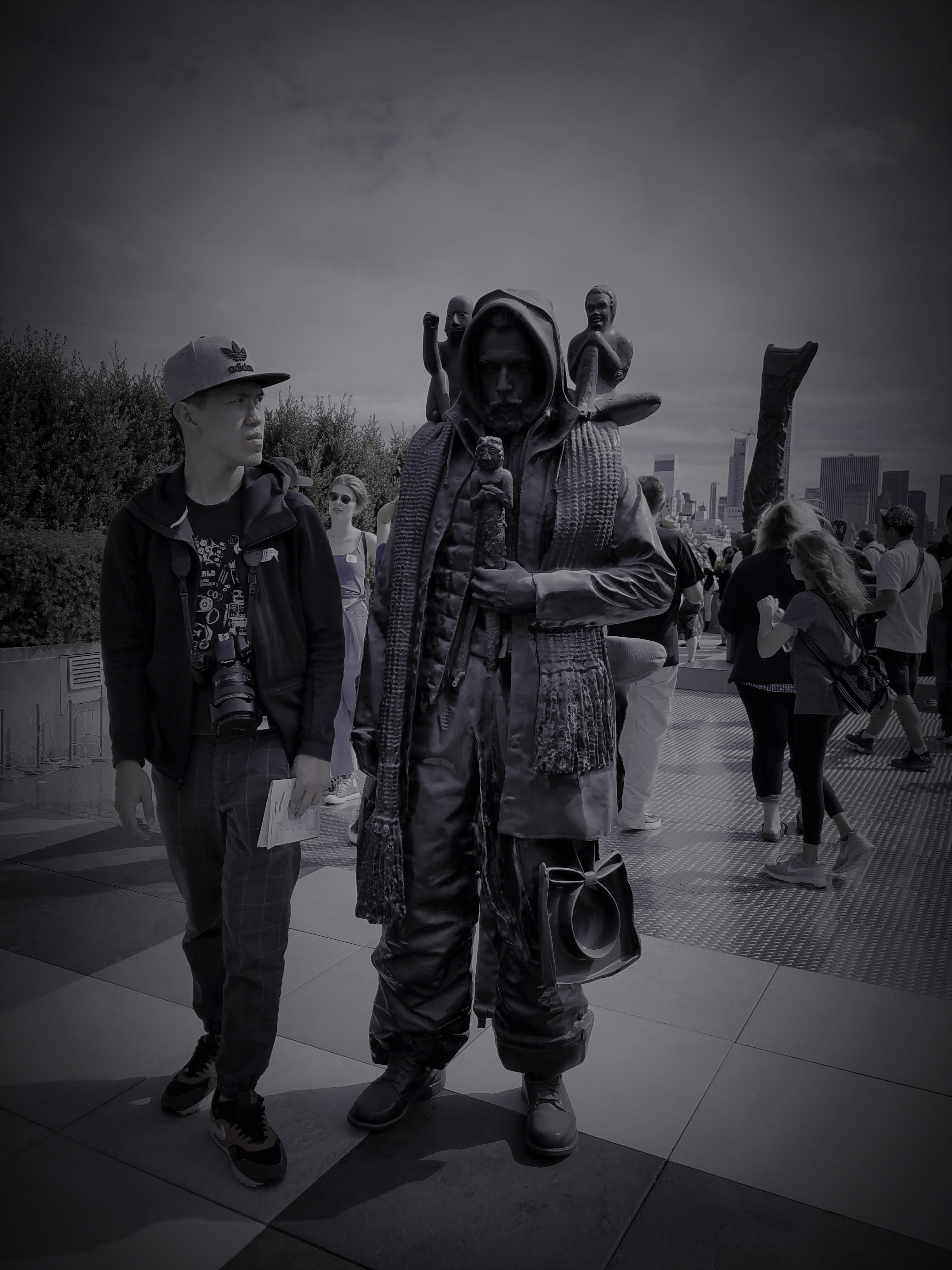
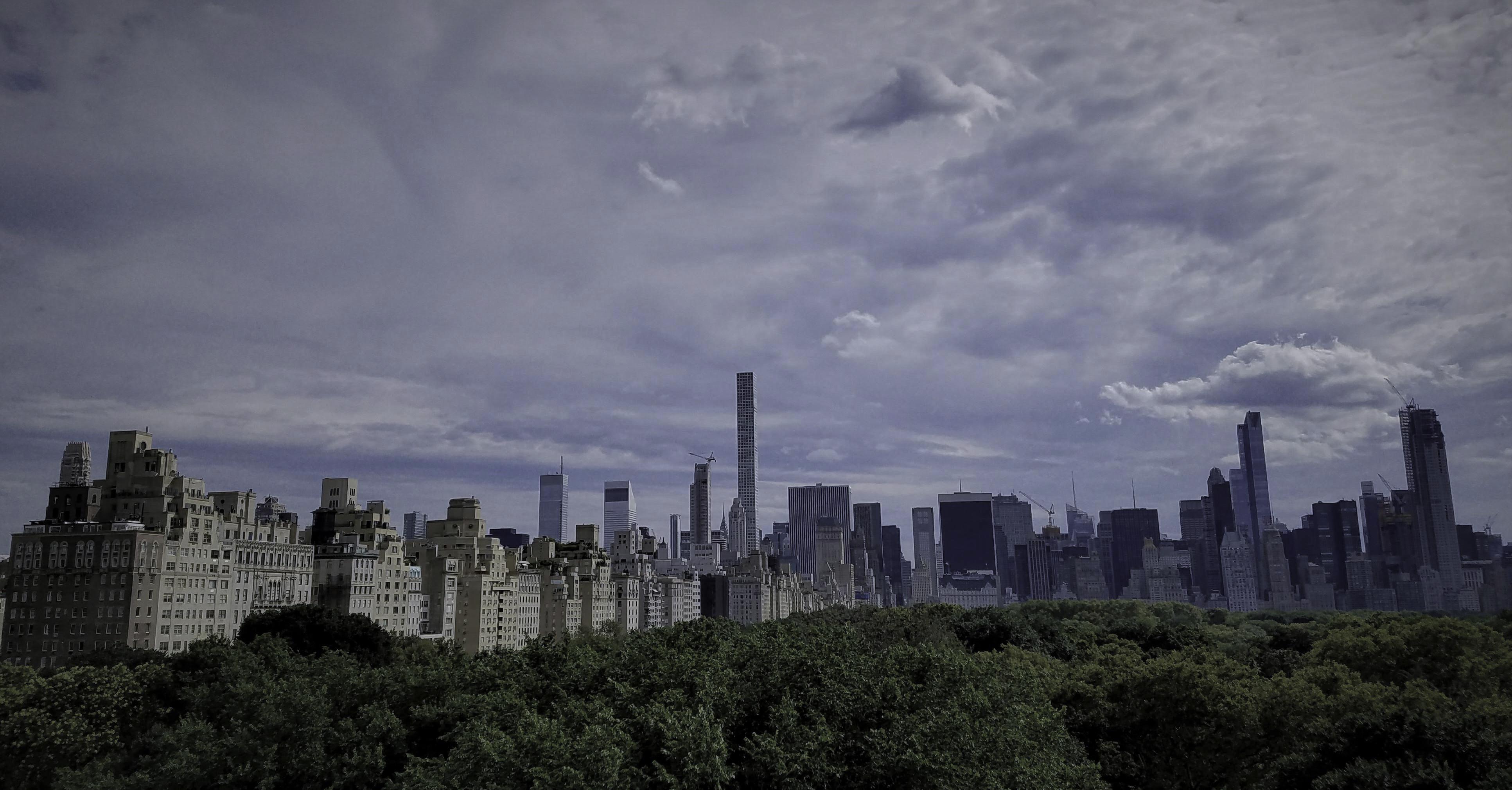
The Roof Garden Commission: Adrián Villar Rojas, The Theater of Disappearance
The Metropolitan Museum of Art
5th Avenue
August 6th, 2017
Midsummer acts with a view to Winter Solstice
The Roof Garden Commission: Adrián Villar Rojas, The Theater of Disappearance
The Metropolitan Museum of Art
5th Avenue
August 6th, 2017
One of my favourite paintings, is on view @The_Met. Both mythical and realistic, surreal yet, somehow, familiar. I feel like it would take me many moon phases – or may be forever – to complete a full circle around the lush wooded rim. I feel like I’ve been there many times before; I go there often – in my dreams. Almost always in twilight, instances before it turns completely dark.
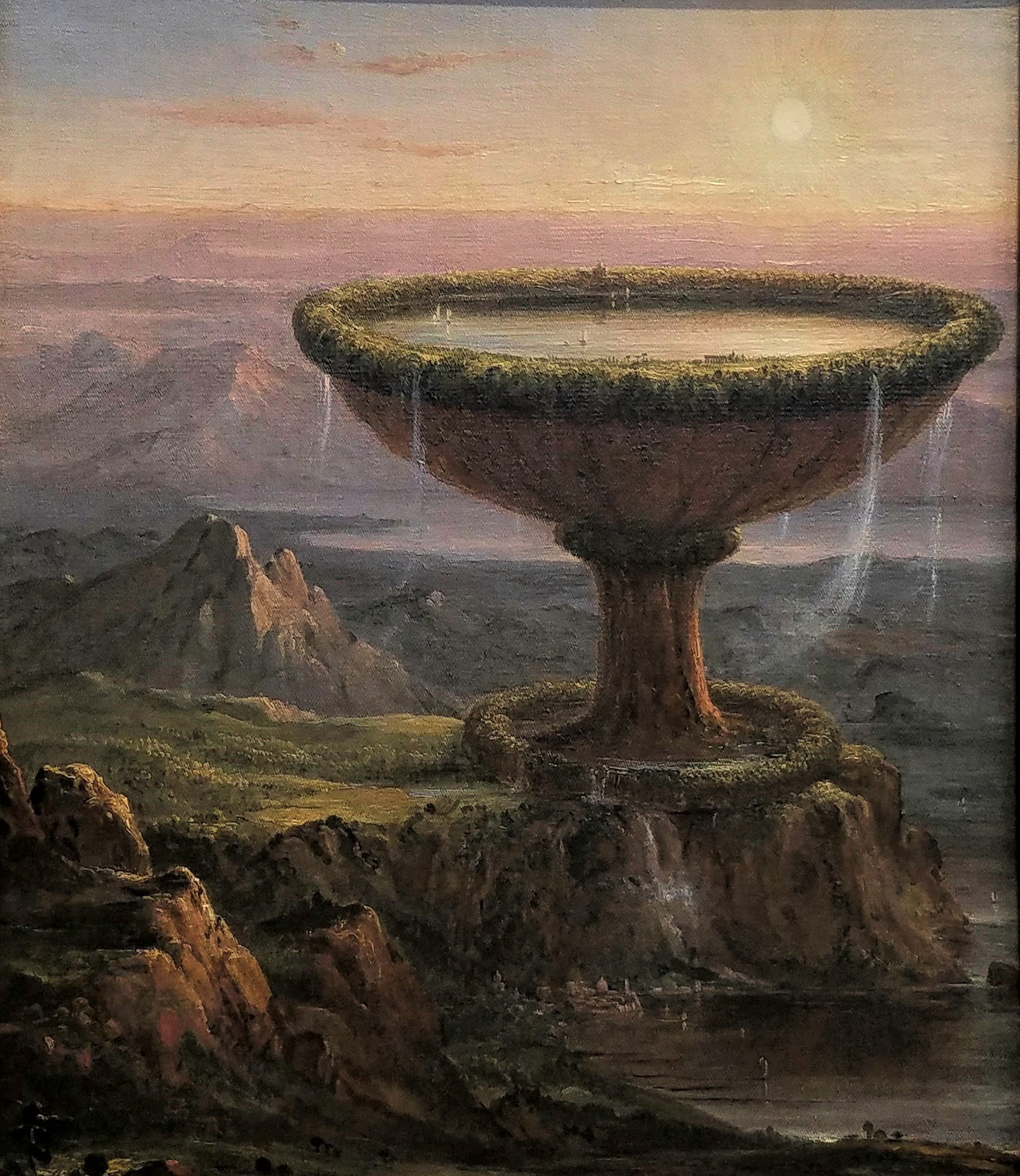 The Titan’s Goblet, 1833
Thomas Cole (1801–1848)
Oil on canvas
August 6th, 2017
Looking for Rei…

1/
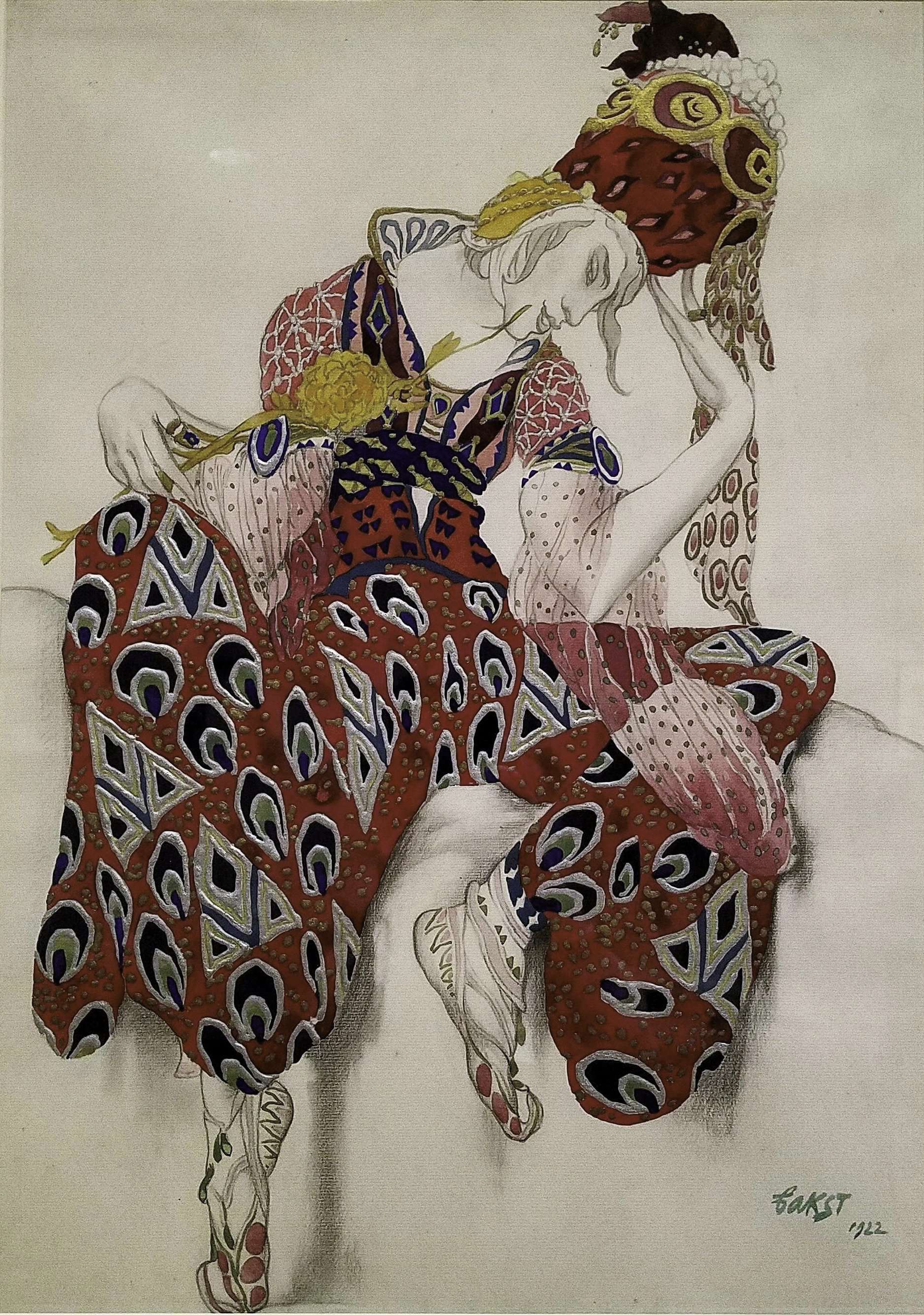
Costume Design by Léon Bakst for Vaslav Nijinsky in the Role of Iksender in the Ballet “La Péri” (The Flower of Immortality), 1922 (first performed in Paris, 1912). Watercolour and gold and silver paints over graphite
With his distinct Eurasian features, Nijinski effortlessly portrayed protagonists of various ethnicities, such as Iksender in La Péri, set in Iran. However he never actually performed as Iksender, because Diaghilev cancelled the entire production when Nijinski’s female counterpart could not match his talent in dance.
2/
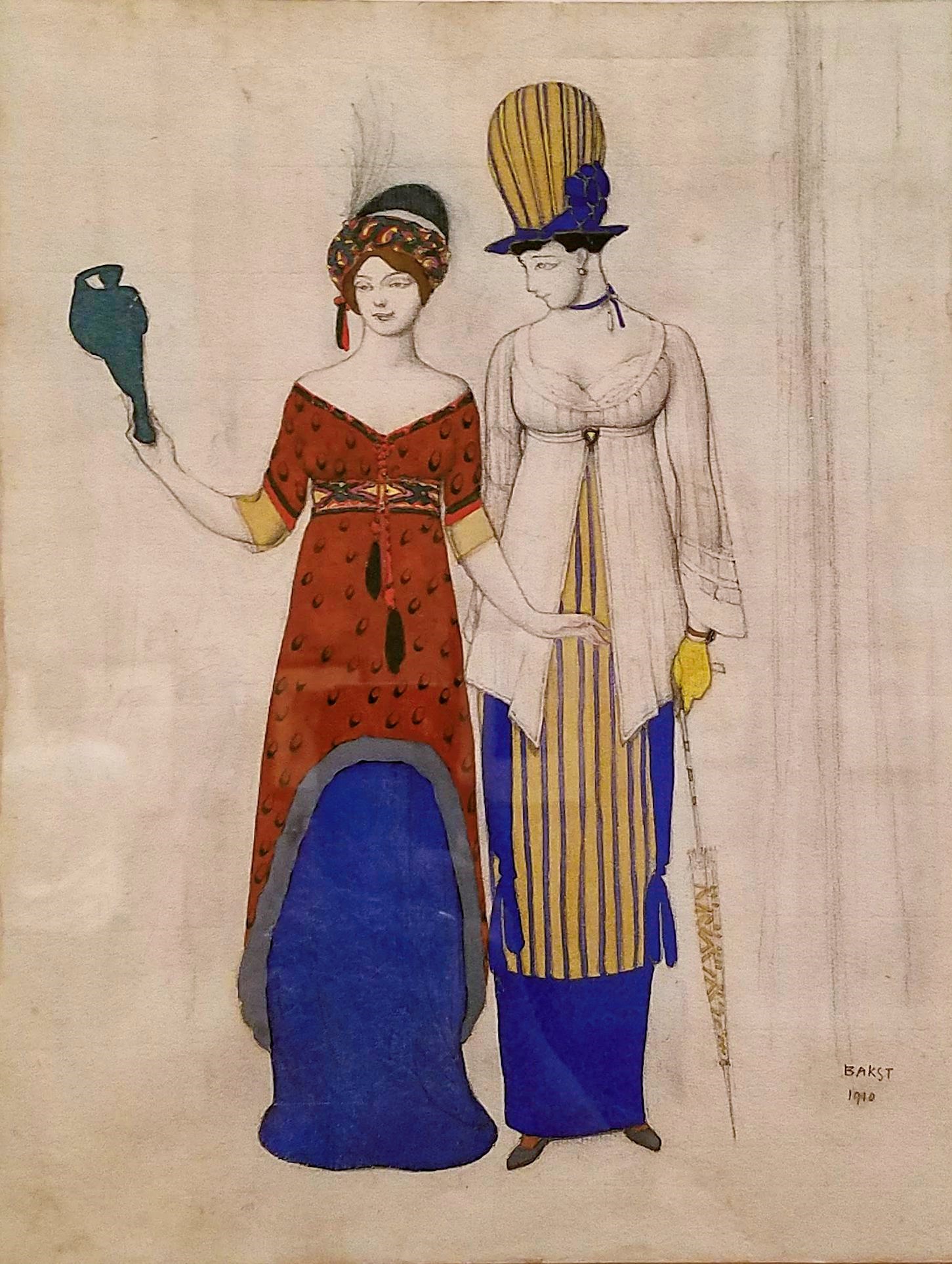
‘Fantaisie sur le costume moderne‘: Two female haute couture figures, 1910. Graphite, brush and watercolour and gouache
Although better known for his costume and stage designs for the Ballets Russes directed by Diaghilev and the performances of Ida Rubinstein, Bakst was also influential in fashion design during the early decades of the 20th century, and designed garments himself. The designs in this drawing show the bold, sensuous colour, characteristic of his style, with geometric patterns and rich textures.
3/
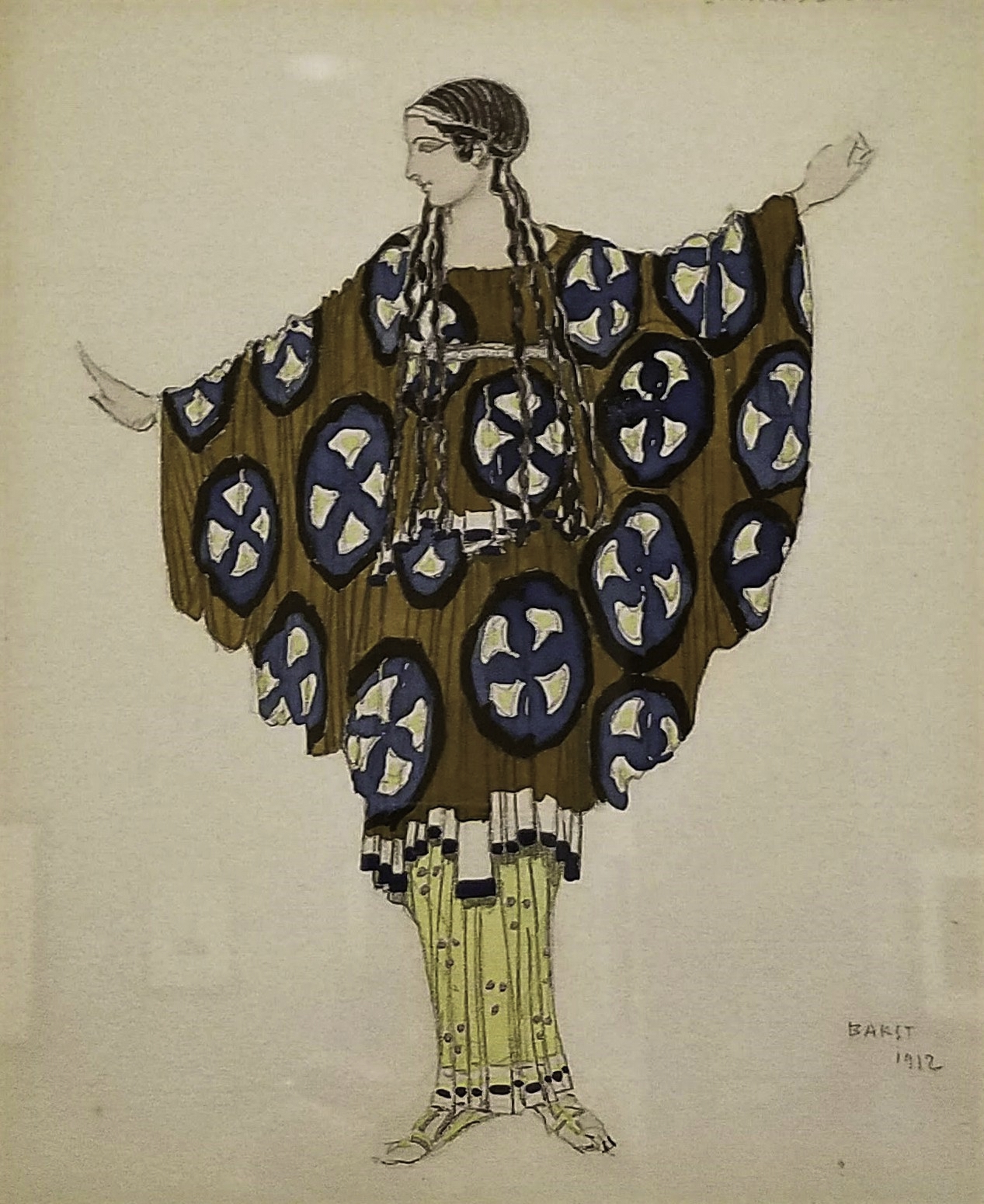
Costume Design for a Woman from the Village, for the Ballet ‘Daphnis and Chloé‘, performed at the Théâtre du Châtelet in Paris, 1912. Watercolour and graphite
This ballet by Fokine was first performed at the Théâtre du Châtelet in Paris in 1912, as part of the repertoire of the Ballets Russes for the season. The costume designs for the ballet were inspired by Ancient Greece, and Bakst drew inspiration from ancient vases, both for the costumes and the poses and movements of dancers
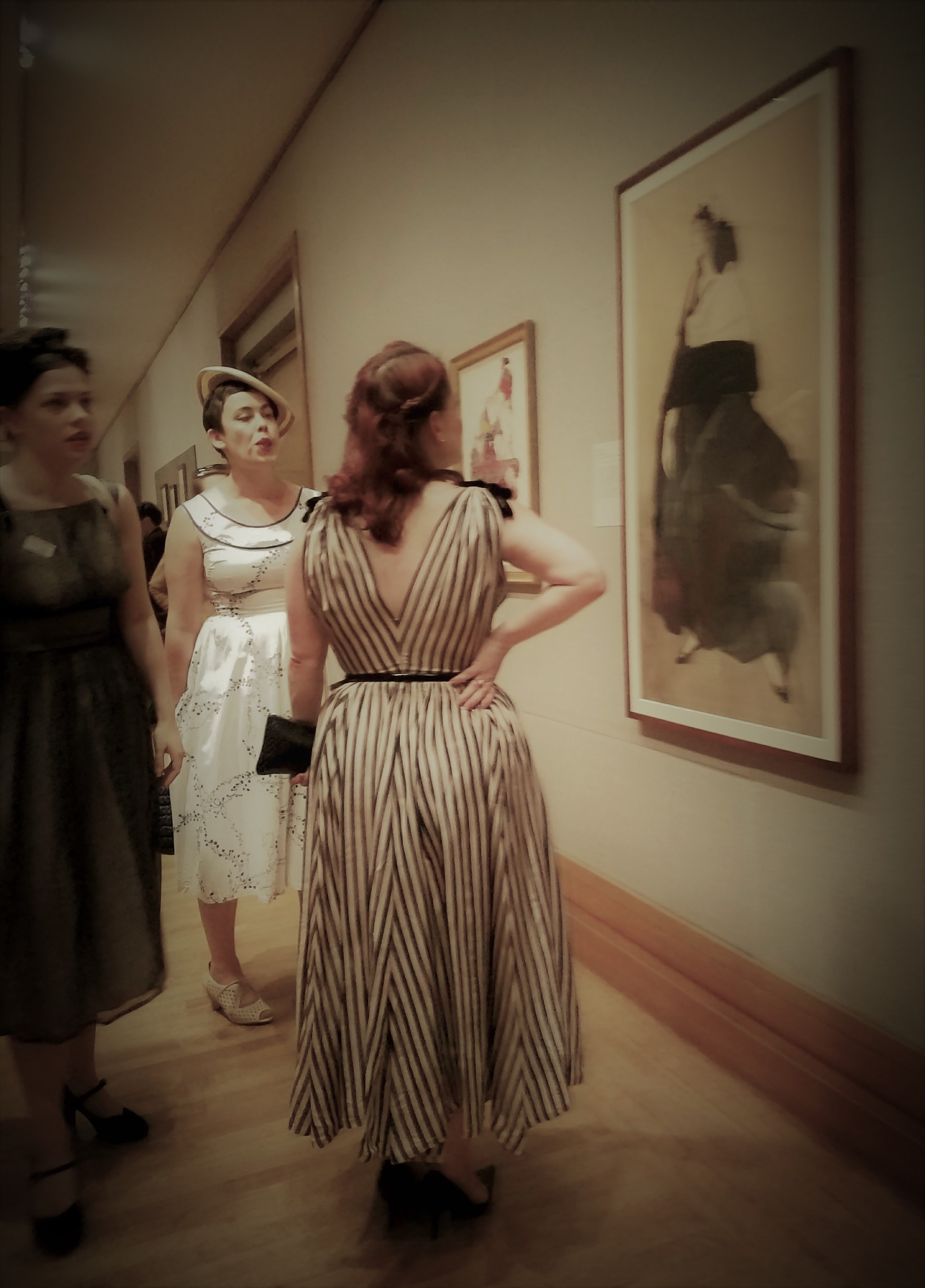
4/Ida’s stylish fans in mutual admiration.
5/
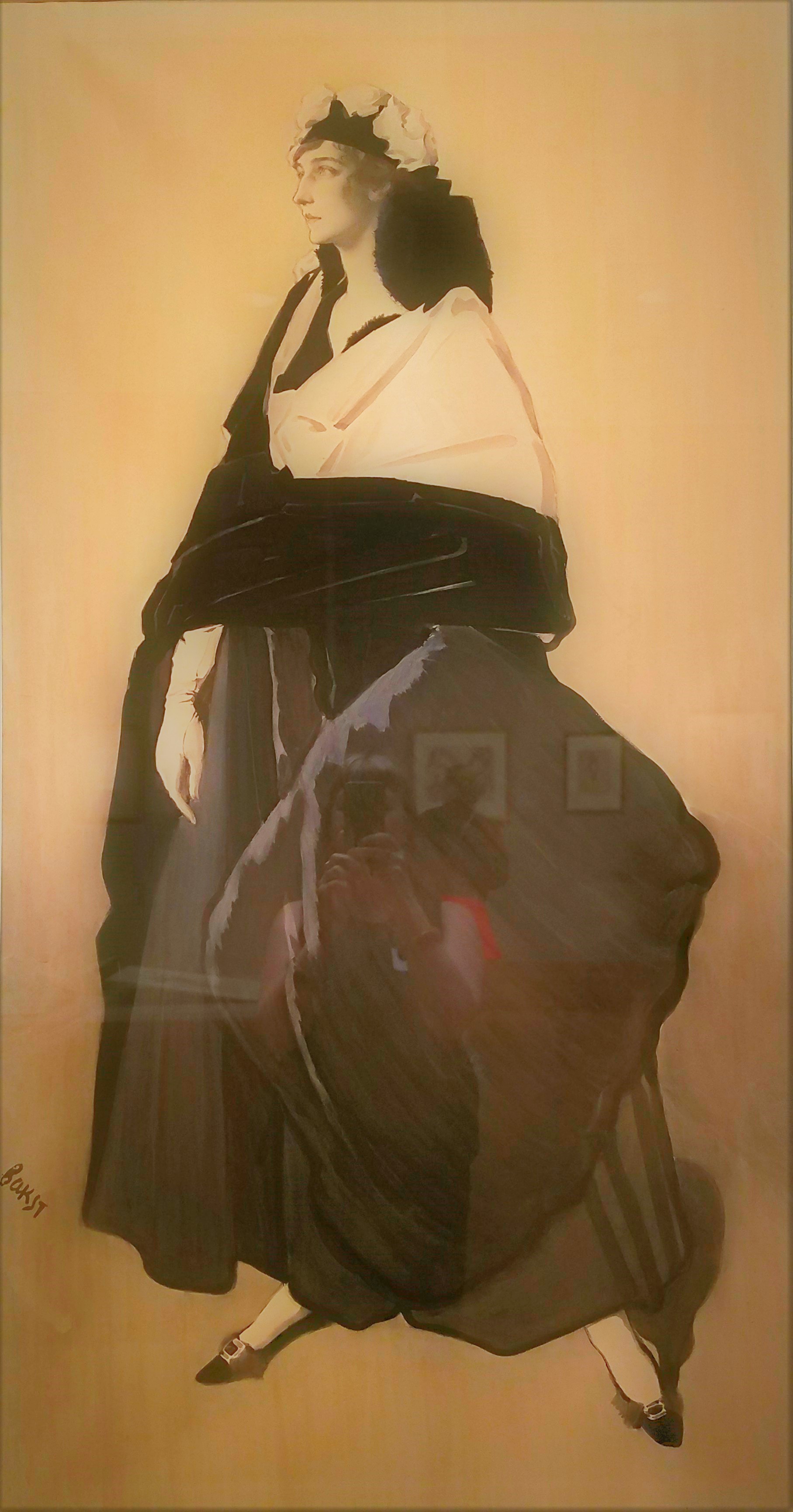
Mme Ida Rubinstein, 1917. Watercolour, gouache, and graphite on paper, mounted on canvas
Bakst was a gifted portrait artist and captured the likeness of many of his friends and colleagues. In this almost life-size watercolour, he depicts the Russian heiress Ida Rubinstein, who danced with the Ballets Russes for two seasons after an introduction by her teacher, the choreographer Mikhail Fokine.
6/
Design for the Set of the Ballet ‘Narcisse’, premiered at the Théâtre de Monte Carlo, 1911. Watercolour, gouache, and charcoal
Bakst designed this impressive decor for Narcisse, a one-act ballet about the Greek mythological figure Narcissus, who falls in love with his own reflection in a pool of water. The story is set at the shrine of Pomona, a mythological goddess associated with the abundance of nature. The rich green landscape Bakst created echoes the sensibilities of the Art Nouveau style.
***
Images from ”Performance as Escape: Léon Bakst and the Ballets Russes”, an exhibition featuring a small selection of costume and set designs by Léon Bakst for the Ballets Russes, we happened upon on our way to The Met’s 2017 blockbuster, Rei Kawakubo/Comme des Garçons: Art of the In-Between.
You can see photos from that show, in nine sections, by going to the Search button at the end of the page and simply typing ”Rei Kawakubo”.
August 6th, 2017
Sometime ago I mentioned how much I enjoy wandering about the period rooms at the Metropolitan, so painstakingly reconstructed by the museum curators that they compete in authenticity and splendour with the original ones. Today, let’s go for another walk to see some of the objects high on my imaginary wish list (and a couple of no-nos).
The pianoforte: Pianoforte, New York City, 1810-15
Patented by John Geib and Son. Case attributed to the workshop of Duncan Phyfe (1768-1844). Mahogany, rosewood, satinwood, ivory, gilded gesso, brass with white pine, maple, ash
The Square Piano (when more is too much – too complicated for my wish list, yet very impressive woodwork):  Square Piano
Robert Nunns and John Clark (active 1833-58)
New York City, 1853
Rosewood, mother-of-pearl and tortoiseshell
{Lavish decoration and opulent materials distinguish this extraordinary piano…. Its immense scale and excessive decoration make it quite unlike the small and economical upright pianos that became fixtures of middle-class parlours in the second half of the nineteenth century.}
The Four Seasons cabinet: 
 Cabinet
Herter Brothers (active 1864-1906)
New York City, ca. 1869
Rosewood, maple ebonized wood, porcelain plaques, oil on panel, brass
{This rich and imposing cabinet is from a ten-piece parlour suite made by Herter Brothers in 1869 for Jay Gould’s house on Fifth Avenue. Incorporating a design vocabulary taken from the architecture of the day, it is a tour de force of cabinetmaking, combining sophisticated marquetry, assured carving and delicately modeled ceramic plaques depicting the Four Seasons.}
The Étagère in Rococo Revival style: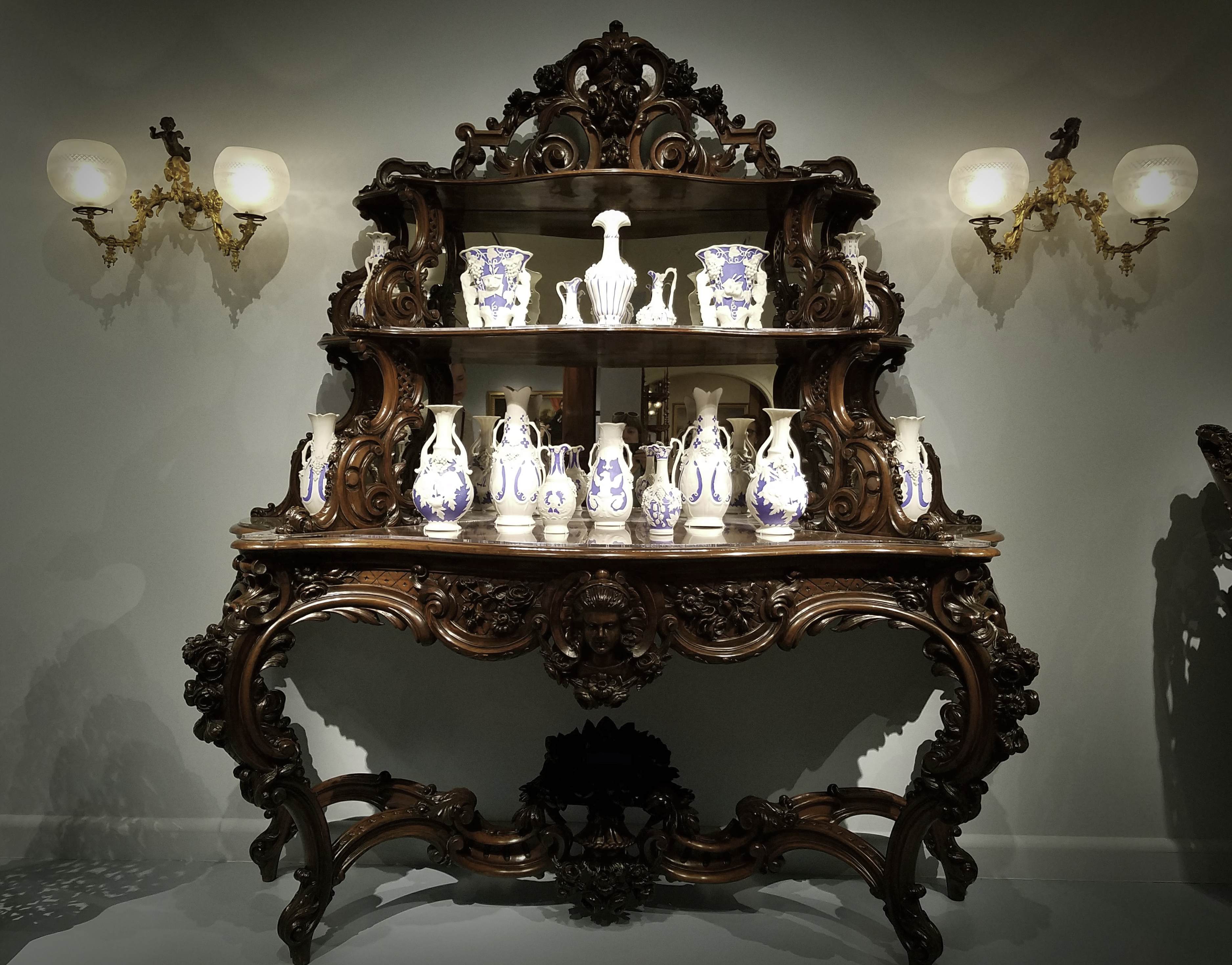 Alexander Roux (active 1843-86)
New York City, ca. 1855
Rosewood, chestnut, poplar, bird’s-eye maple veneer
A Girl’s best friend (not just diamonds):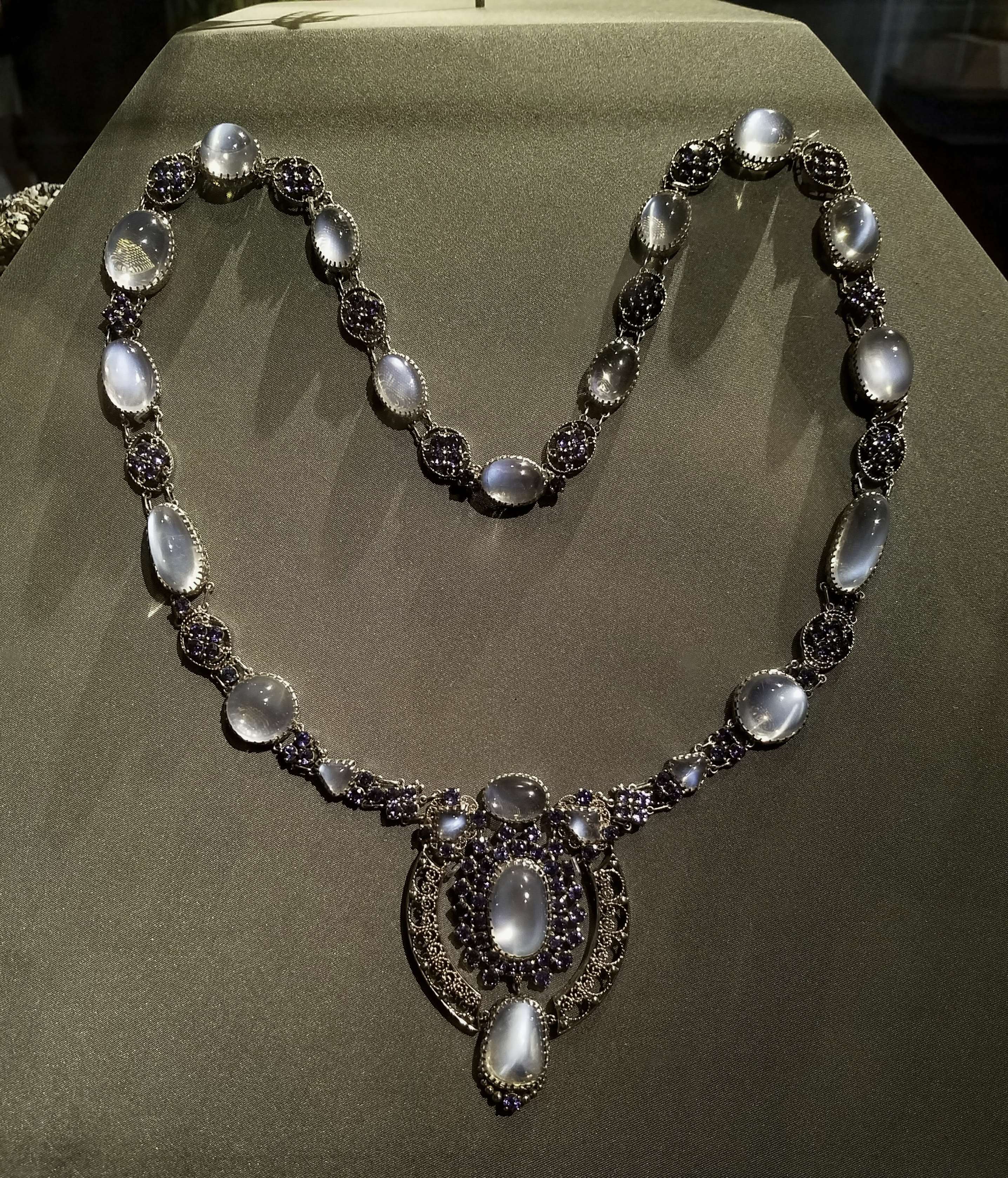 Necklace with Pendant, ca. 1910
Louis Comfort Tiffany
Tiffany and Company
Moonstones, Montana sapphires, platinum
The Gilded Kennel (with the mark of Marie-Antoinette, no less):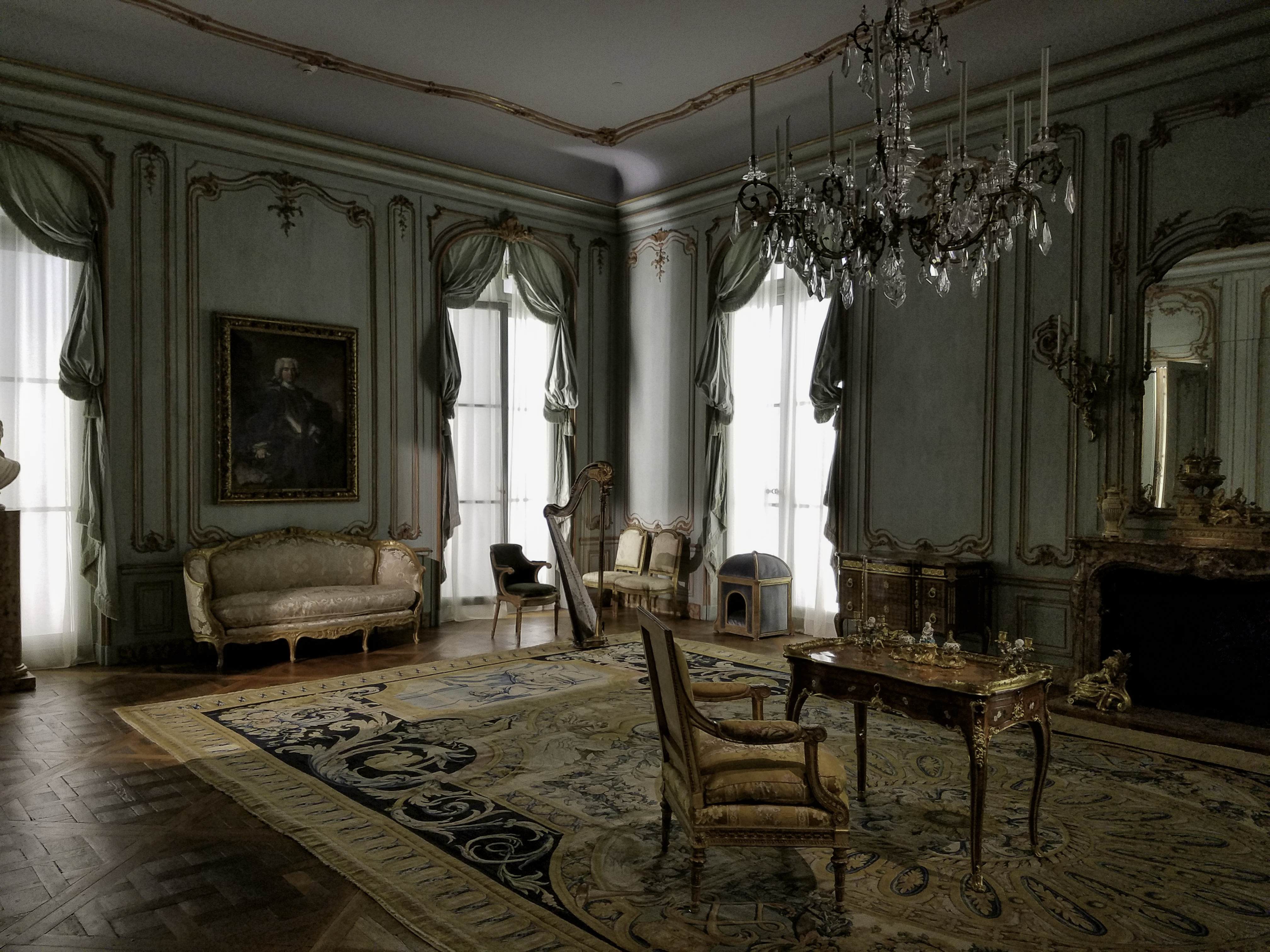 Kennel
Gilded beech and pine. Signed by Claude Sené (1724-1792): stamped with the mark of Marie-Antoinette’s garde-meuble. French, ca. 1775-80
The Copper Lamp: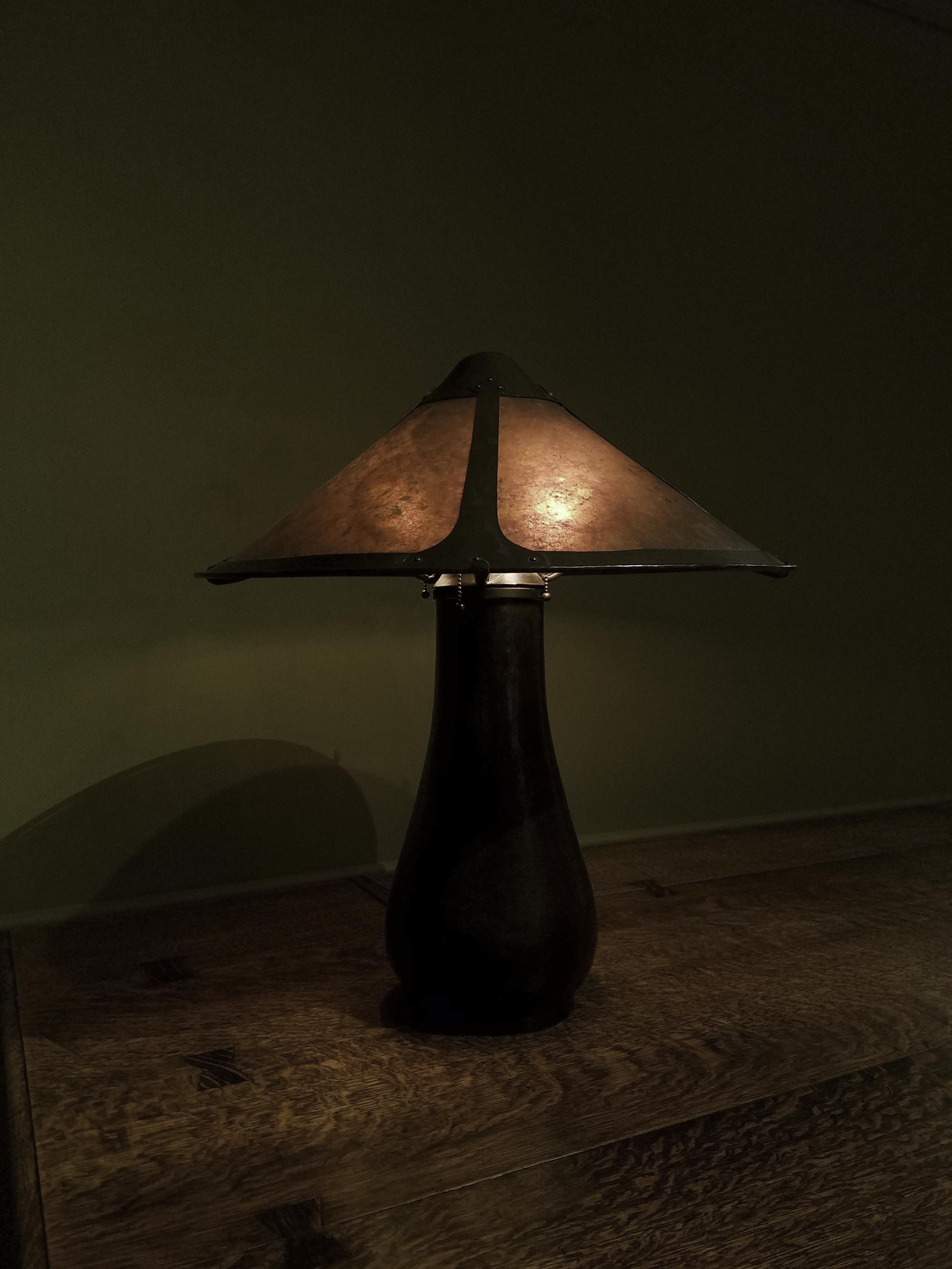 Dirk Van Erp (1859-1933)
San Francisco, California, ca. 1912-15
Copper base, mica and copper shade
The dressing room (gown included):  Worsham-Rockefeller Dressing Room
New York City, 1881-82
George A. Schastey & Co. (1873-97)
{In 1881, Arabella Worsham then-mistress of railroad magnate Collis P. Huntington, hired the cabinetmaking and decorating Firm George A. Schastey & Co. to create a series of distinctive artistic interiors for her townhouse at 4 West 54th Street. The resulting decor, including that found in this dressing room, was the height of cosmopolitan style in the early 1880s and emblematic of Worsham’s quest to fashion her identity as a wealthy, prominent woman of taste.}
The octagon table: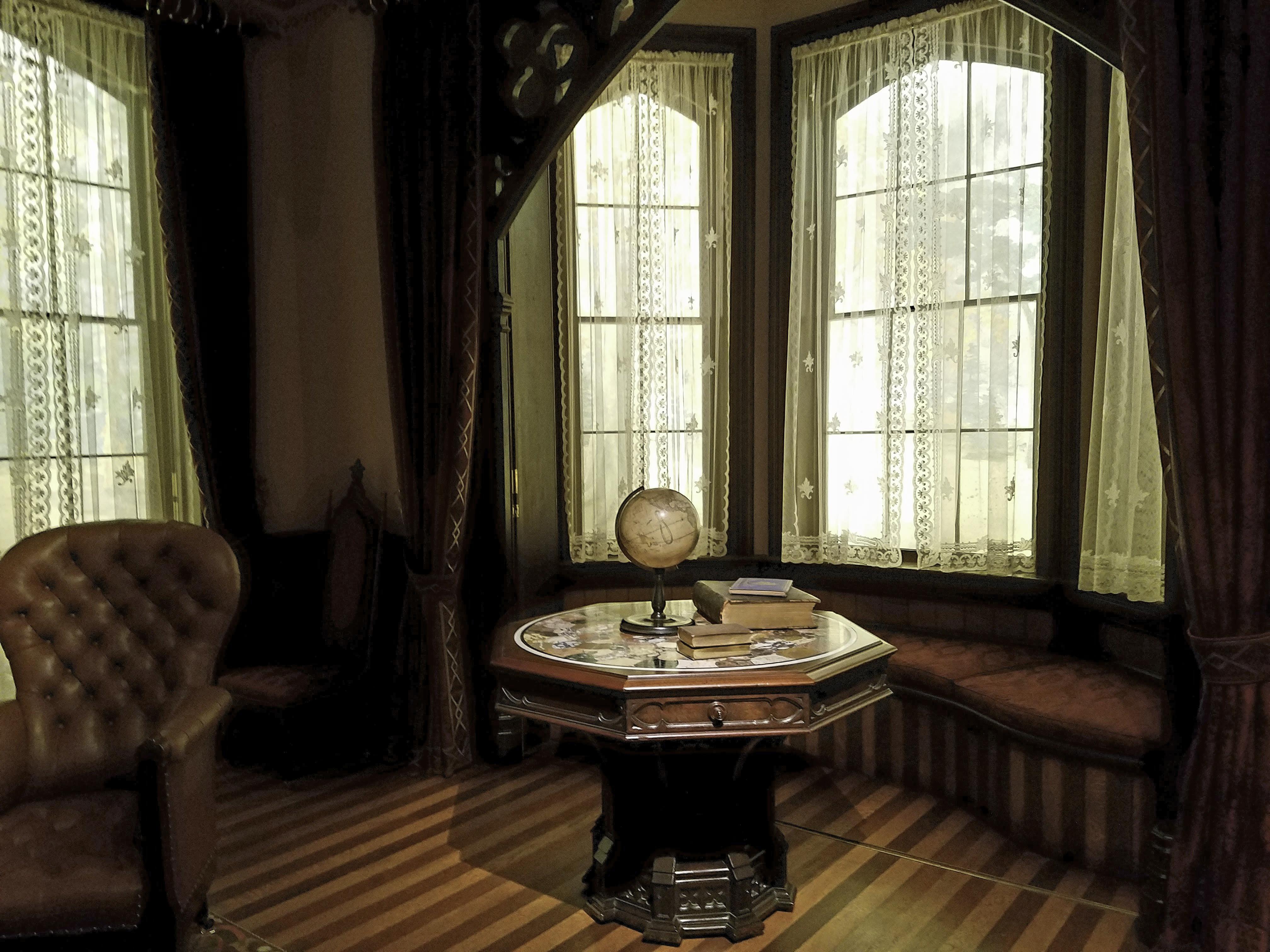 Probably New York City, about 1860
Walnut, marble
The Richard and Gloria Manney Greek Revival Parlour: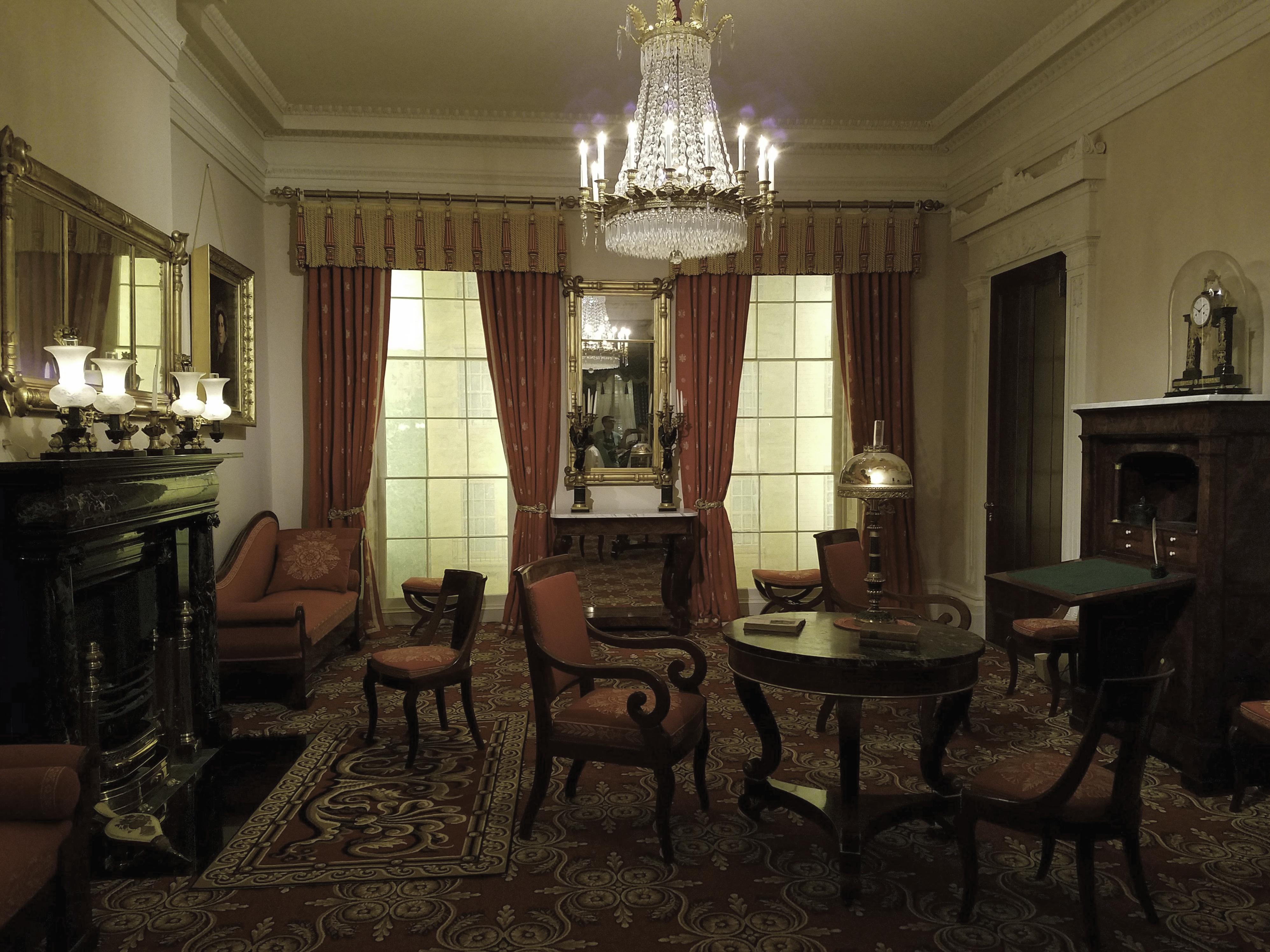
The Richard and Gloria Manney John Henry Belter Rococo Revival Parlour: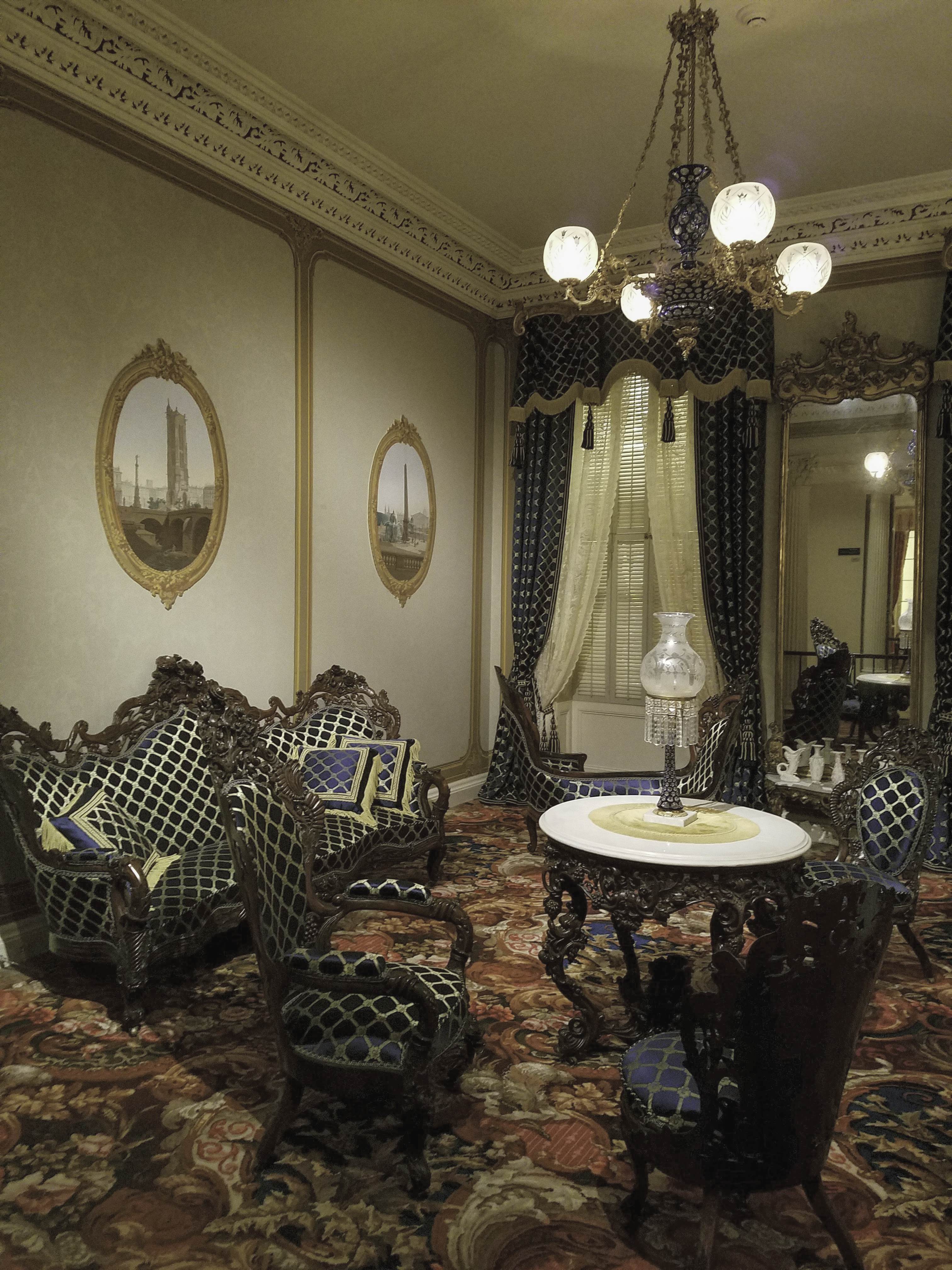
The Working Girl’s table: Worktable
Salem, Massachusetts, 1800-1810
Mahogany, mahogany veneer, ivory with white pine, maple
{Worktables were one of few gender-specific pieces of furniture used in the home. Women relied on them for storing sewing supplies and for conducting correspondence, as such tables often contained a hinged writing surface in a drawer.}
The Richmond Room, 1810-11: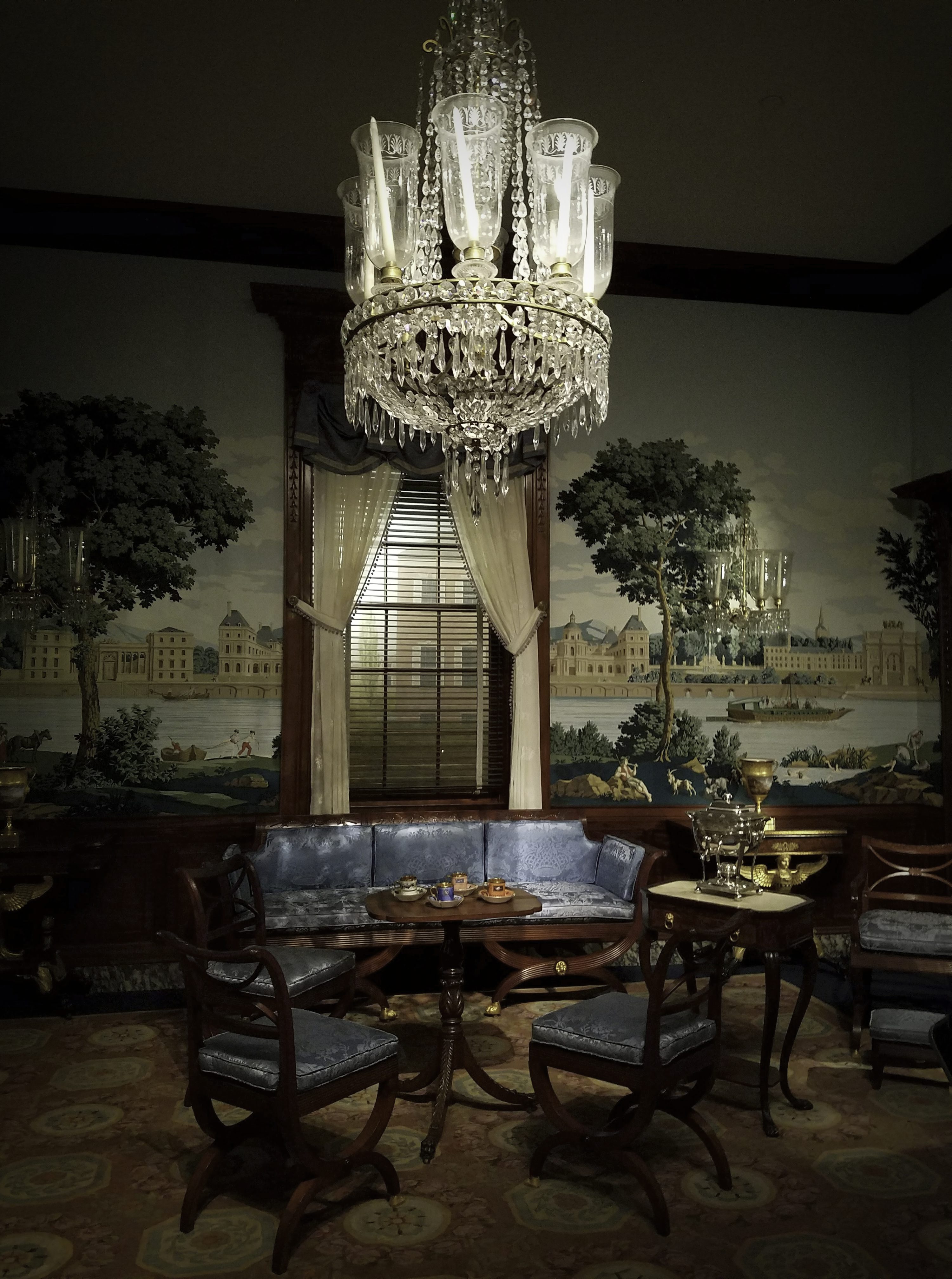
The yellow chairs and the sleek Federal era sofa: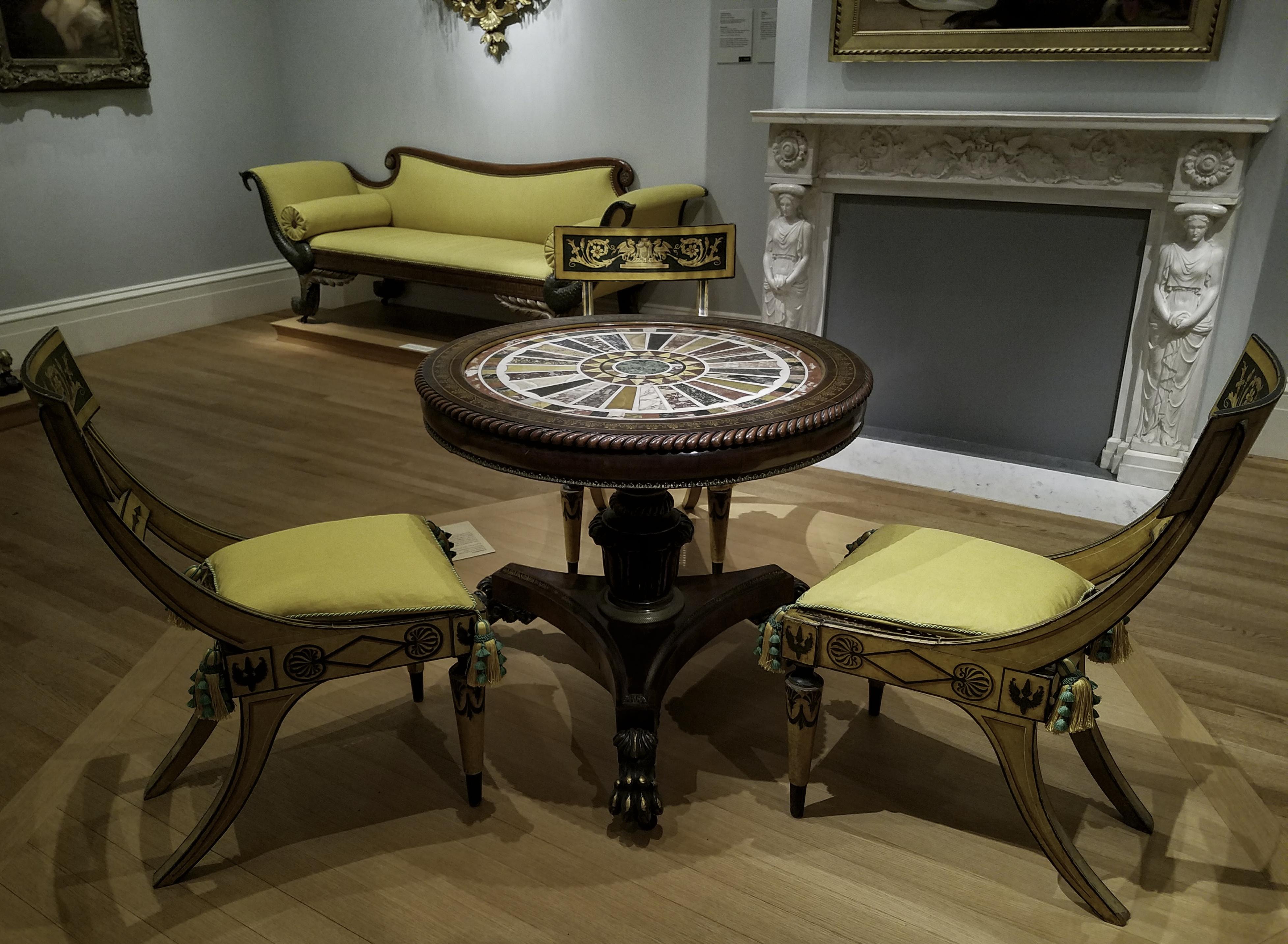 Side Chairs
Attributed to the workshop of John Finlay (1777-1851) and Hugh Finlay (1781-1830)
Baltimore, ca. 1815-25
Maple with painted and gilded decoration
{Originally part of a large set, these brilliantly conceived and handsomely executed chairs derive their broad, deeply curved crest tablets and sweeping rear stiles from the ancient Greek klismos form.}
Center Table
Labeled by Anthony G. Quervelle (1789-1856)
Philadelphia, ca. 1830
Mahogany, marble and brass with painted decoration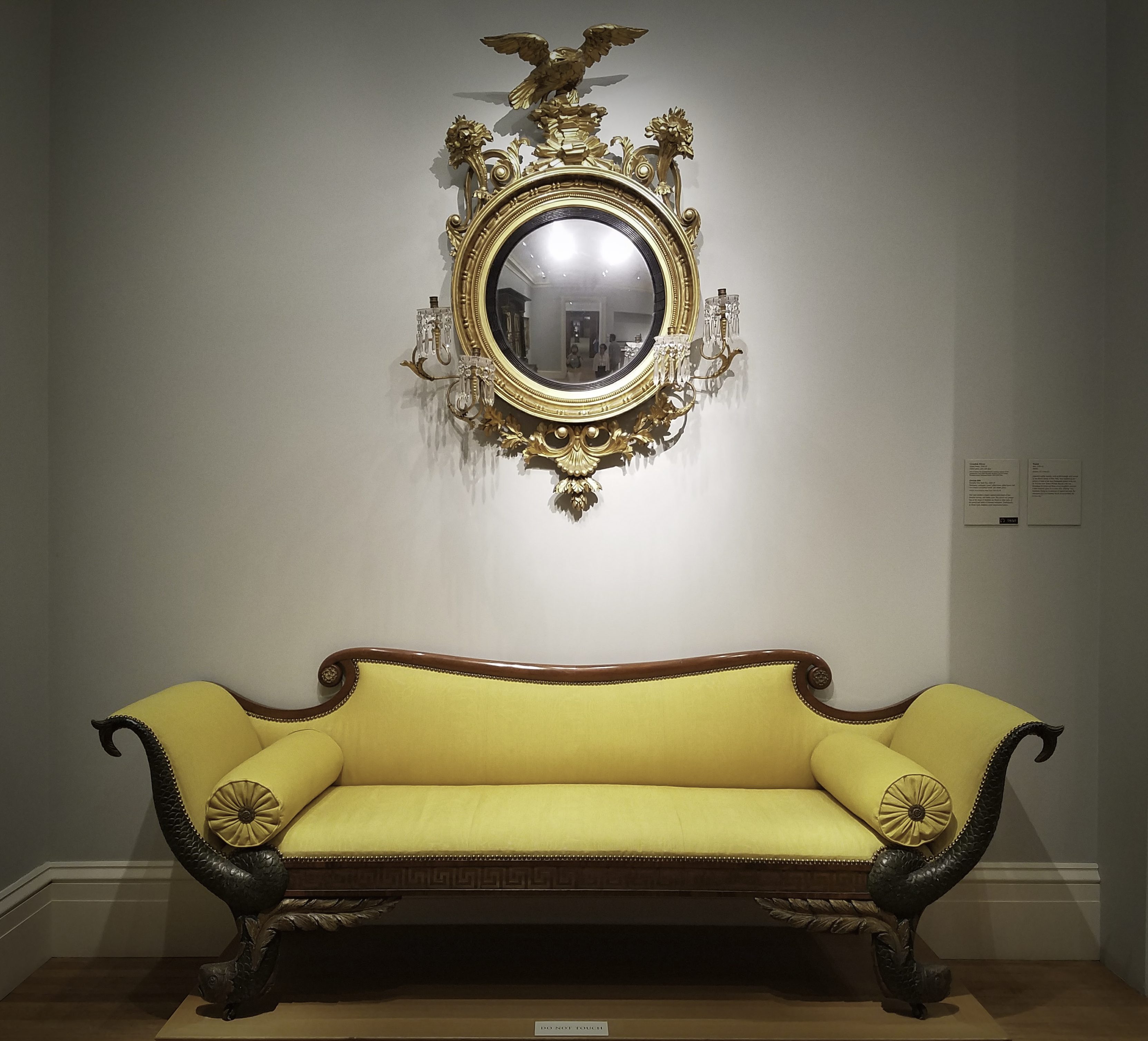
The Art Nouveau mantelpiece: 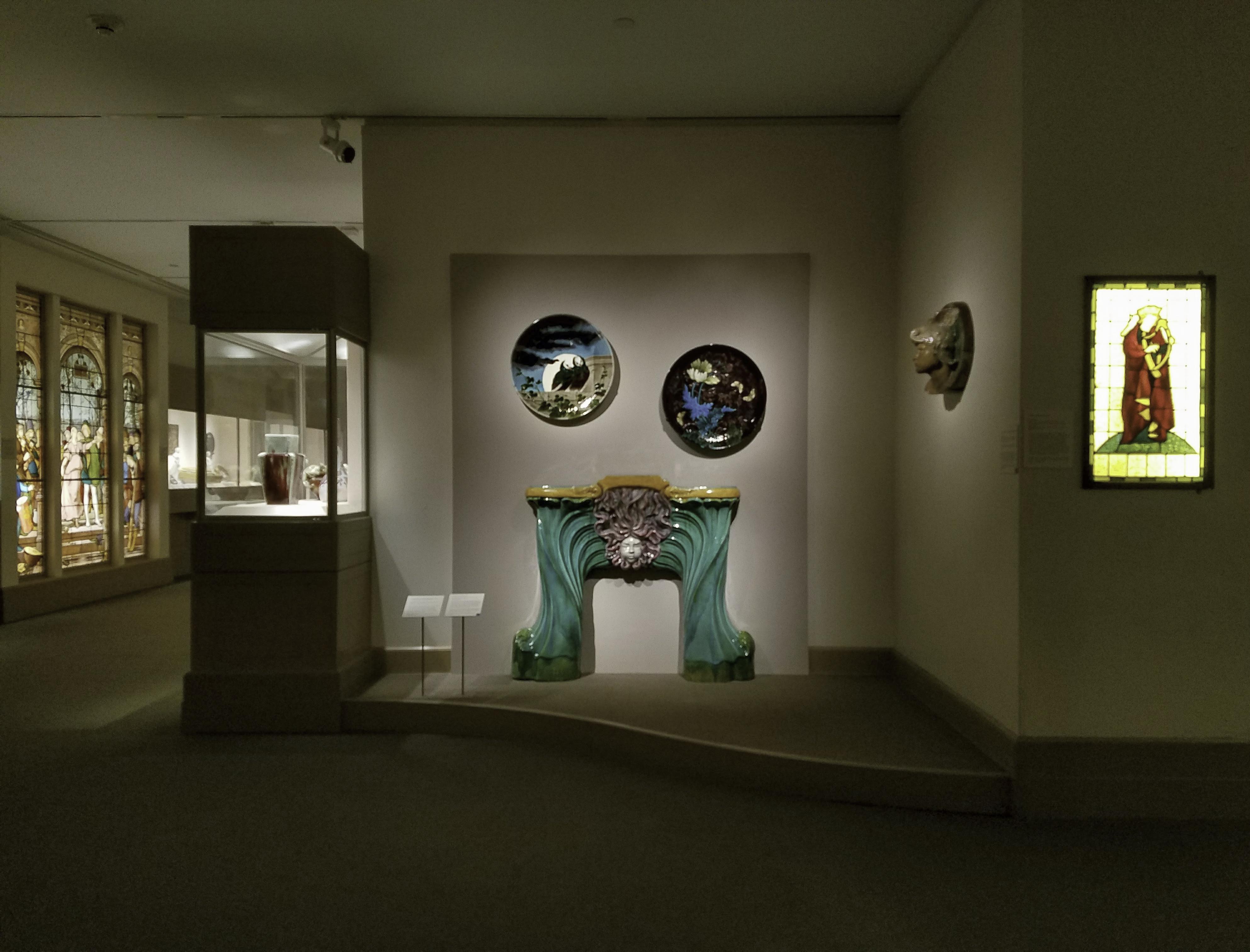 Attributed to Jean-Désiré Muller (French, 1877–1952)
Glazed stoneware, ca. 1900
The Minimal-Tidy-Closet-I-will-Never-Have-But-Always-Dream-Of: 
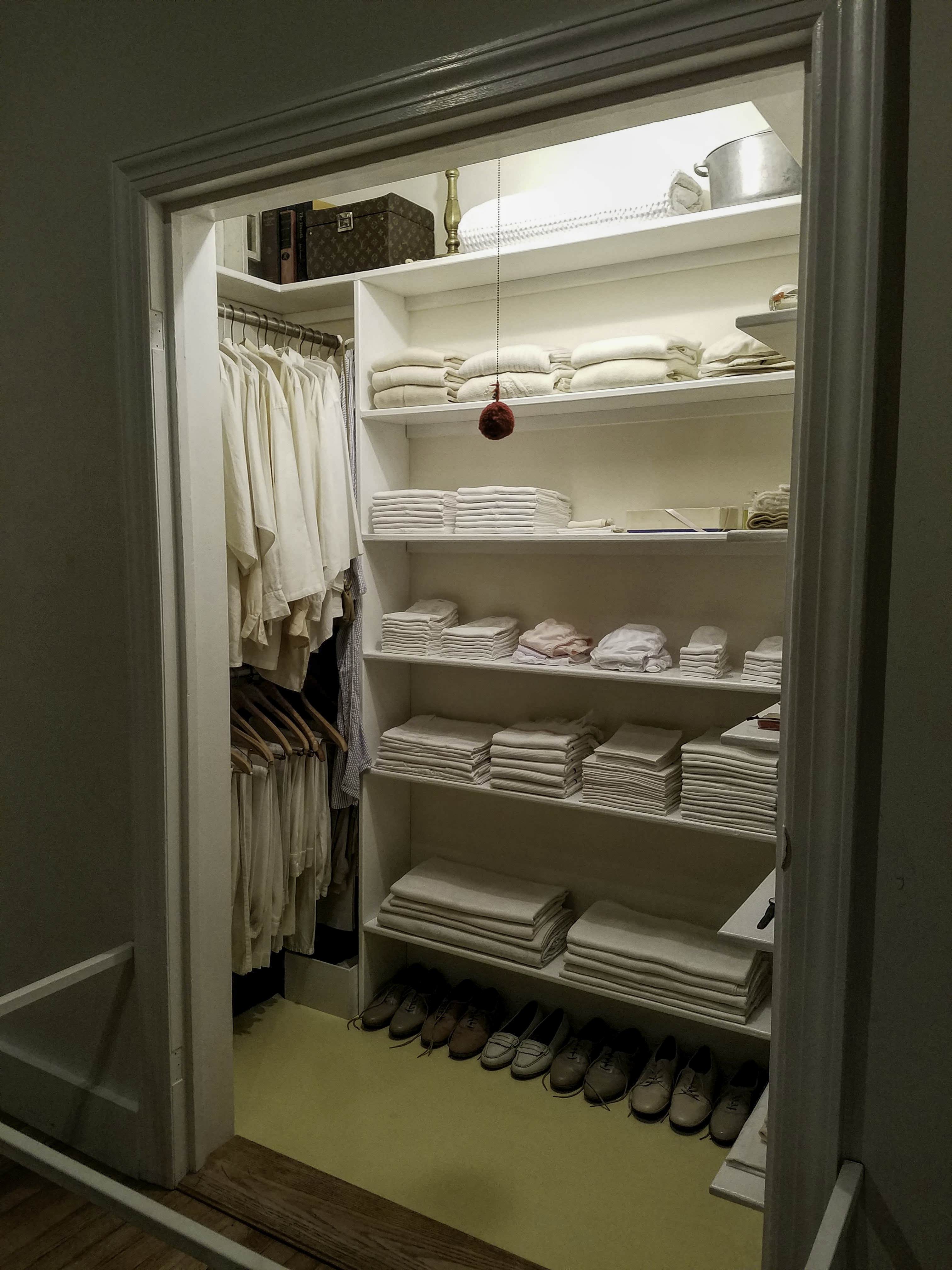
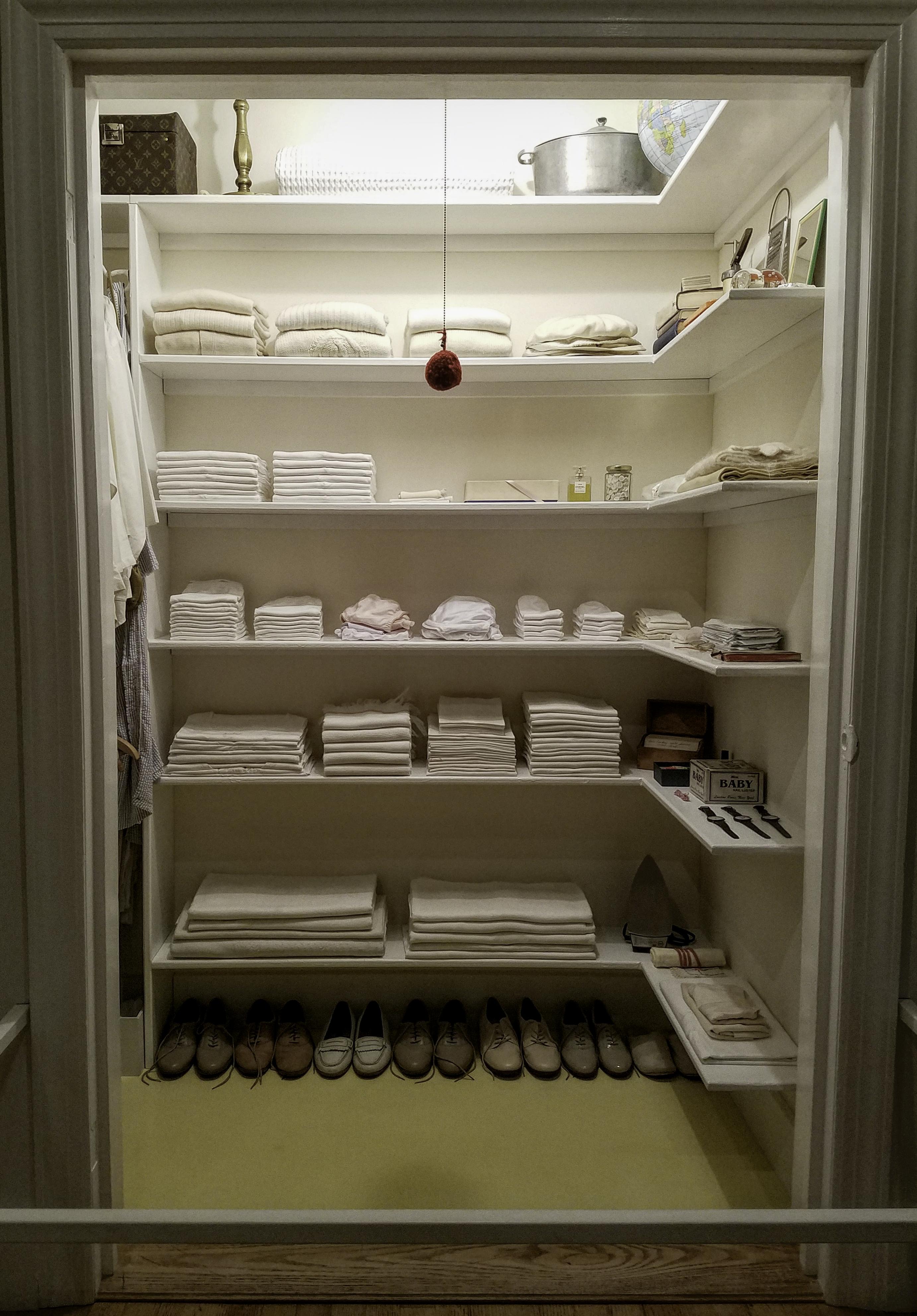 Sara Berman’s Closet
{The meticulously organized, modest closet in which Sara Berman (1920–2004)—an immigrant who traveled from Belarus to Palestine to New York—kept her all-white apparel and accessories both contained her life and revealed it. Inspired by the beauty and meaning of Berman’s closet, the artists Maira and Alex Kalman (who are also Berman’s daughter and grandson) have recreated the closet and its contents as an art installation.
This exhibition represents Berman’s life from 1982 to 2004, when she lived by herself in a small apartment in Greenwich Village. In her closet Berman lovingly organized her shoes, clothes, linens, beauty products, luggage, and other necessities. Although the clothing is of various tints—including cream, ivory, and ecru—it gives the impression of being all white.}
And, finally, his made-to-order Little Red Hood’s cloak: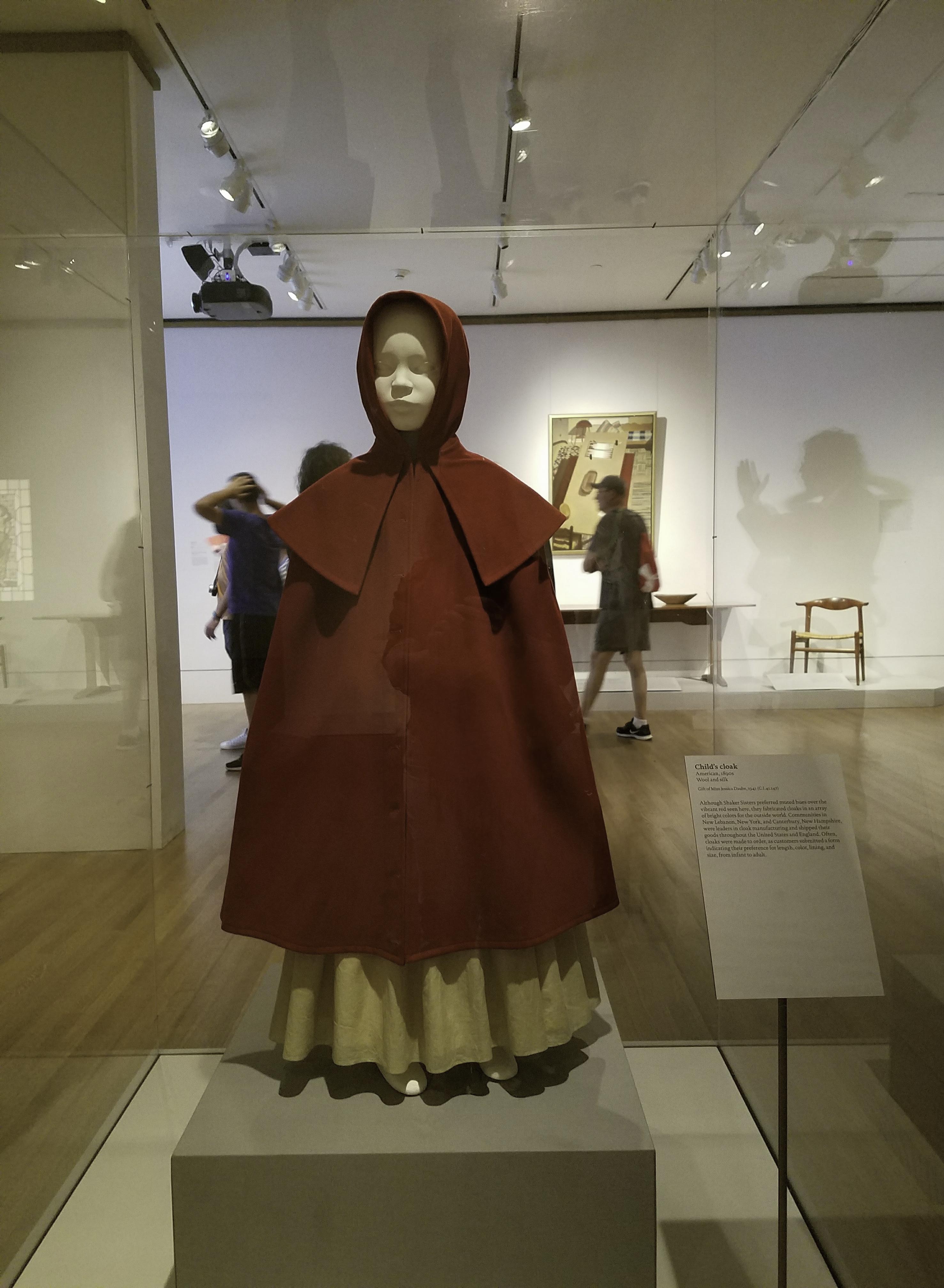 Child’s cloak
American, 180s
Wool and silk
The Metropolitan Museum of Art
July 2nd, 2017
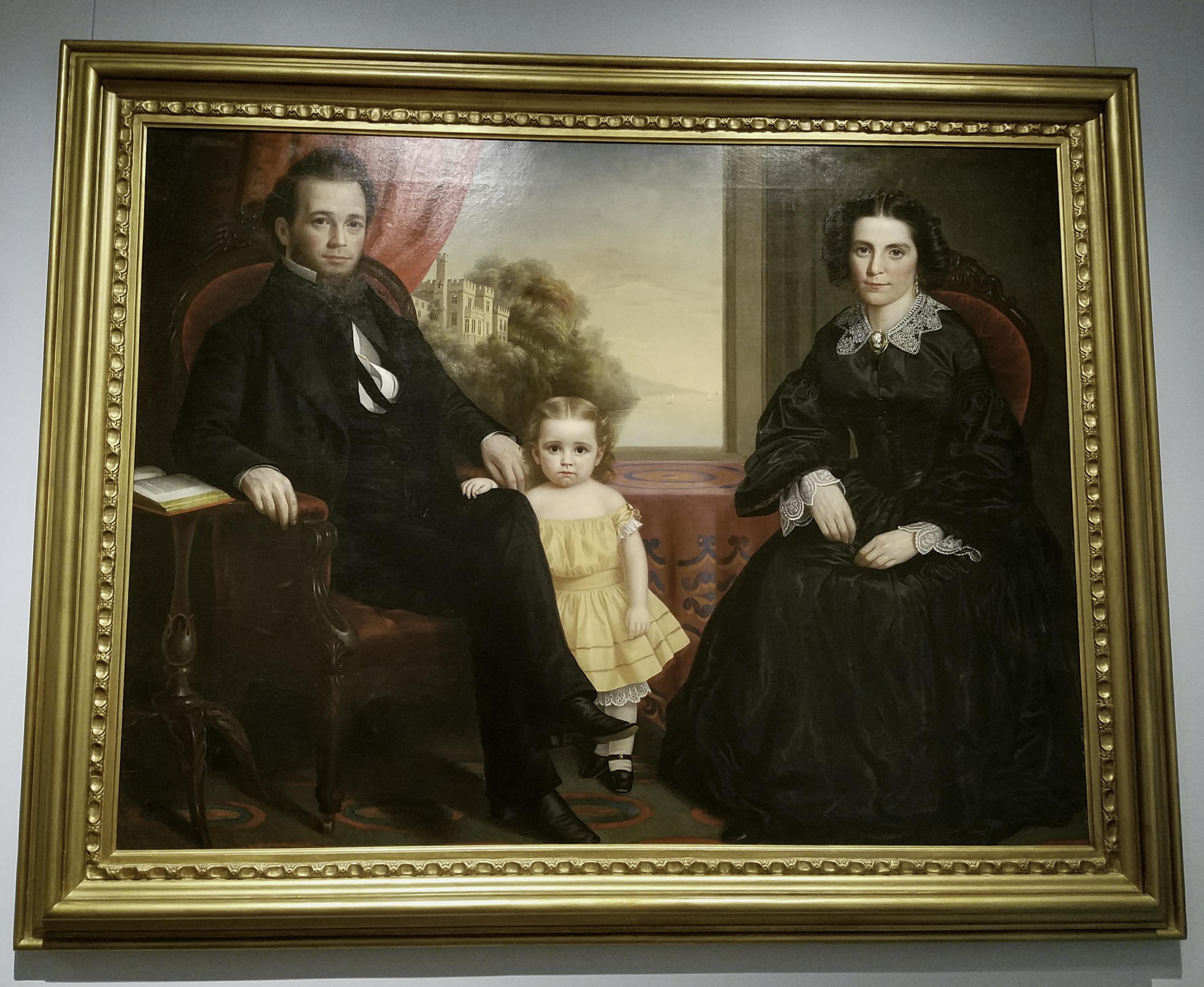
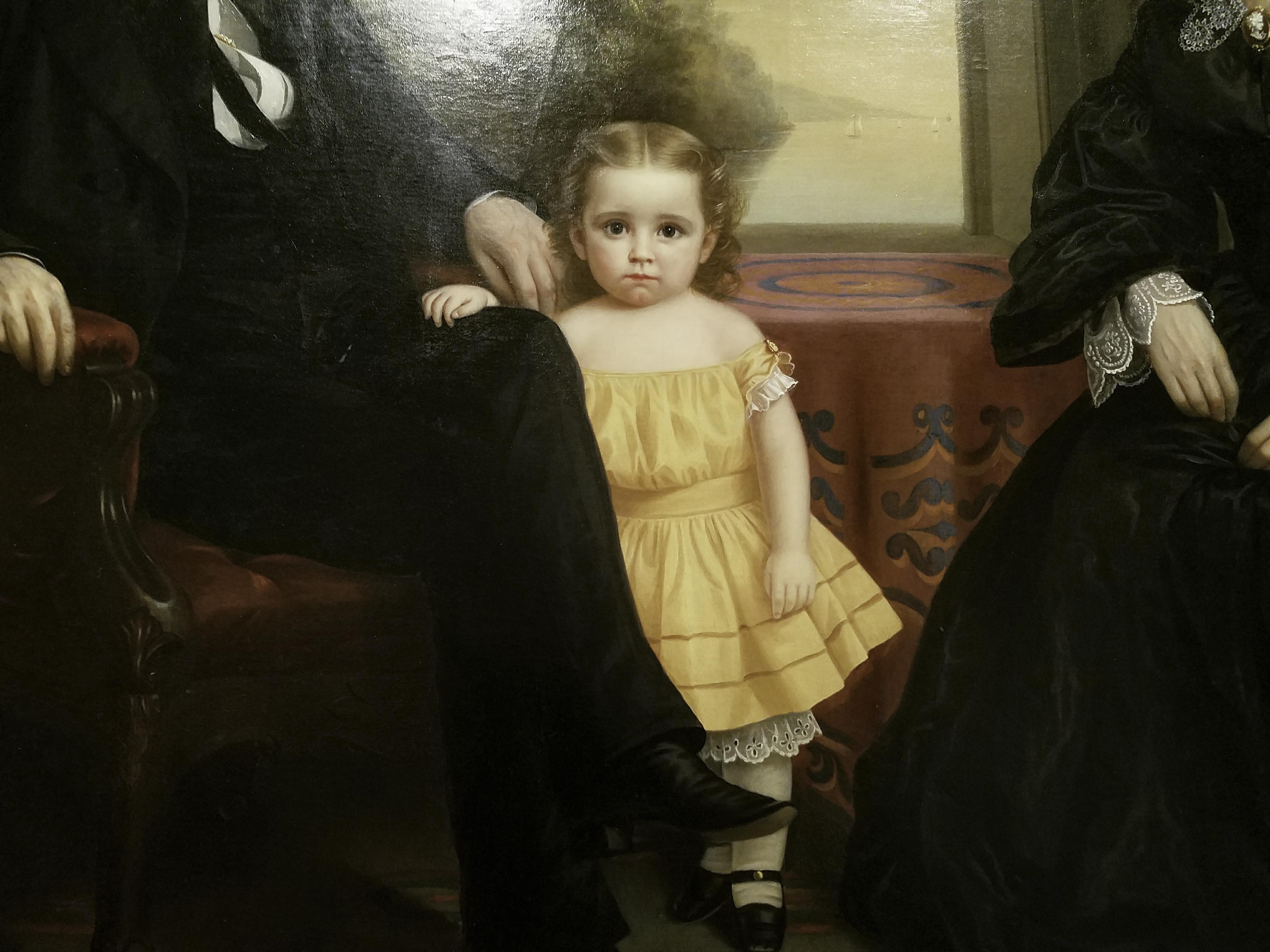
“Look at her”, said my companion, “this must be the saddest little girl in the world!”
“He is right”, I thought, captivated by the palette, contrasting colours, their facial expressions and composition of the painting.
Until I read the description on the wall and, for a moment there, it was I who seemed to be the saddest little girl in the world…
Unknown Artist
A Family Group, ca. 1850
Oil on canvas
{”This painting of an unidentified family bears the hallmarks of high-style portraits produced in New York during the antebellum era: saturated colours; attentiveness to details of costume, coiffure and jewellery; accurate facial depictions. The setting is a richly appointed Rococo Revival parlour. Seen through the window is a castellated Gothic Revival villa, possibly the family’s home, perched on a cliff overlooking the Hudson River. While it is similar to many designed by architects such as Alexander Jackson Davis during the period, it may be the home they aspired to, rather than their actual house. Details suggest that the child is deceased: the woman wears a cameo brooch carved with Orheus holding his lyre, a reference to the myth of Orpheus’ attempt to rescue his beloved Eurydice from the underworld; the possibly phantom house (a castle in the sky?); and the adults are wearing sombre black clothing.”}
The Metropolitan Museum of Art
July 2nd, 2017
a museum in the city ⇔ a city in the museum Greek Revival facade of Martin E. Thompson’s Branch Bank of the United States, at the American Wing Court. For a photo of the original building, please go to {NYC Design}.
July 2nd, 2017
Shines from within, pure, timeless, immortal. No makeup, no cosmetics – not even a whole face – required.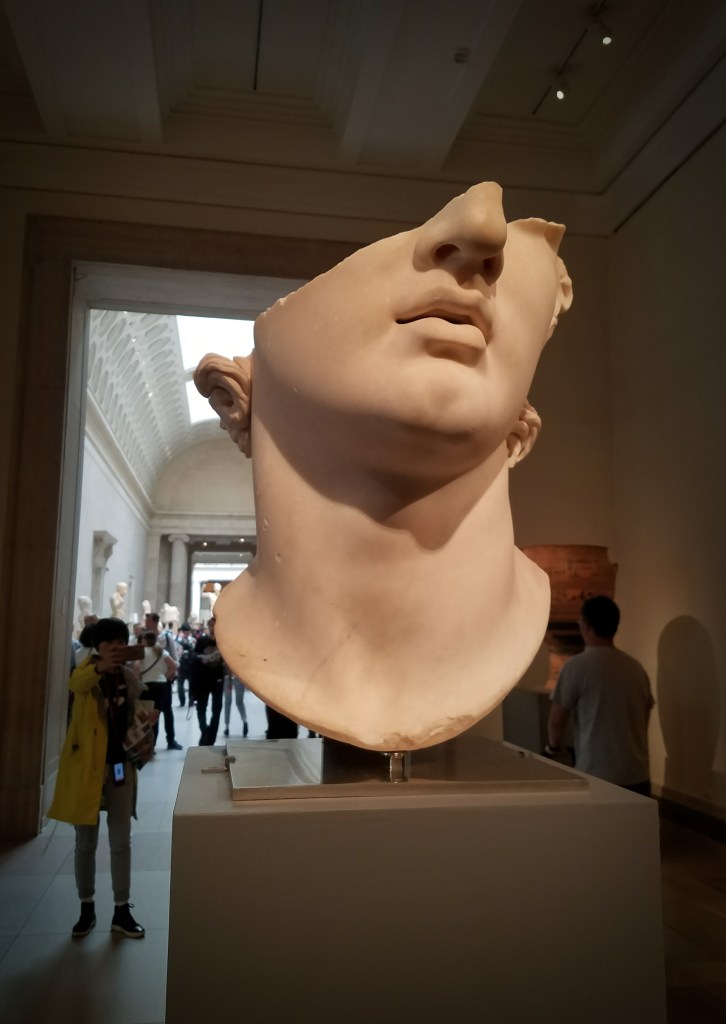
Fragmentary colossal marble head of a youth
Greek, Hellenistic period, 2nd century B.C.
Discovered at Pergamon, on upper terrace of gymnasium, 1879
Although this extraordinary head has long been known, its function and importance have only recently been understood. The youth, with long curling locks and a brooding expression, was originally part of a draped bust set into a marble roundel almost four feet in diameter. It is probably among the earliest known sculptures of this type (imagines clipeatae) in marble and over life-size in scale. It would have been one of several that adorned the walls of a particularly grand space in the gymnasium of ancient Pergamon. He may represent a young god or possibly Alexander the Great. Even in its damaged condition, the head exemplifies the combination of sensitivity and presence characteristic of the finest Hellenistic Pergamene sculpture.
The Metropolitan Museum of Art
May 28th, 2017
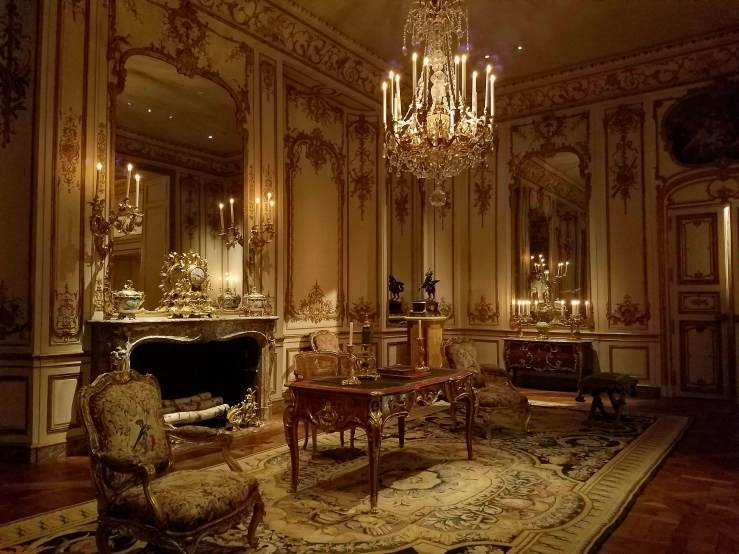
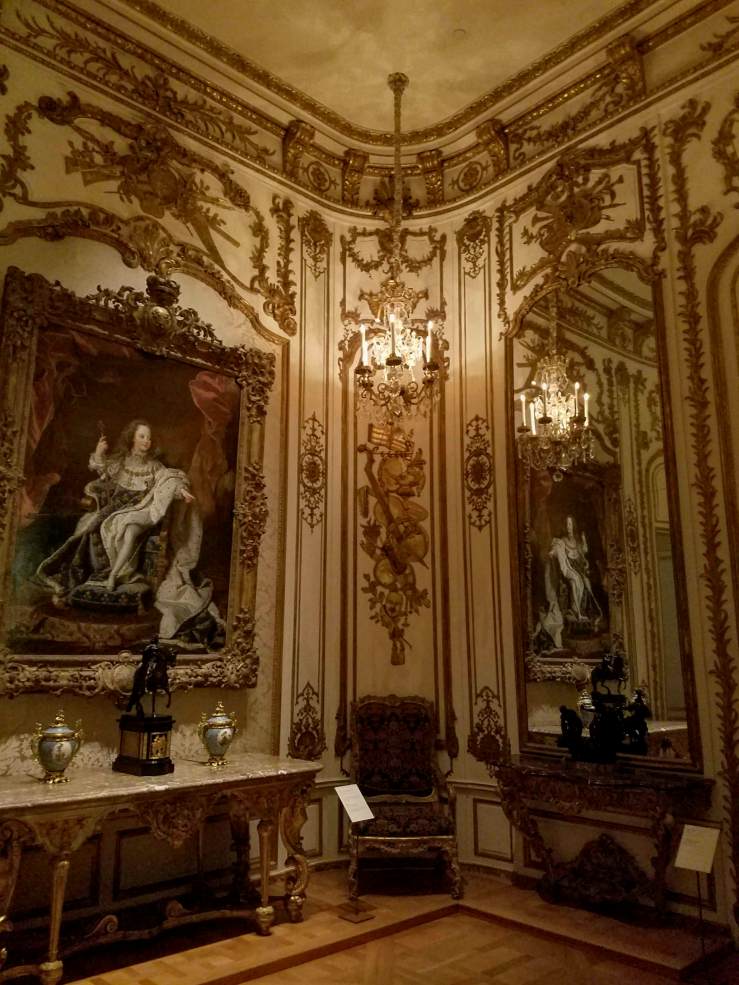
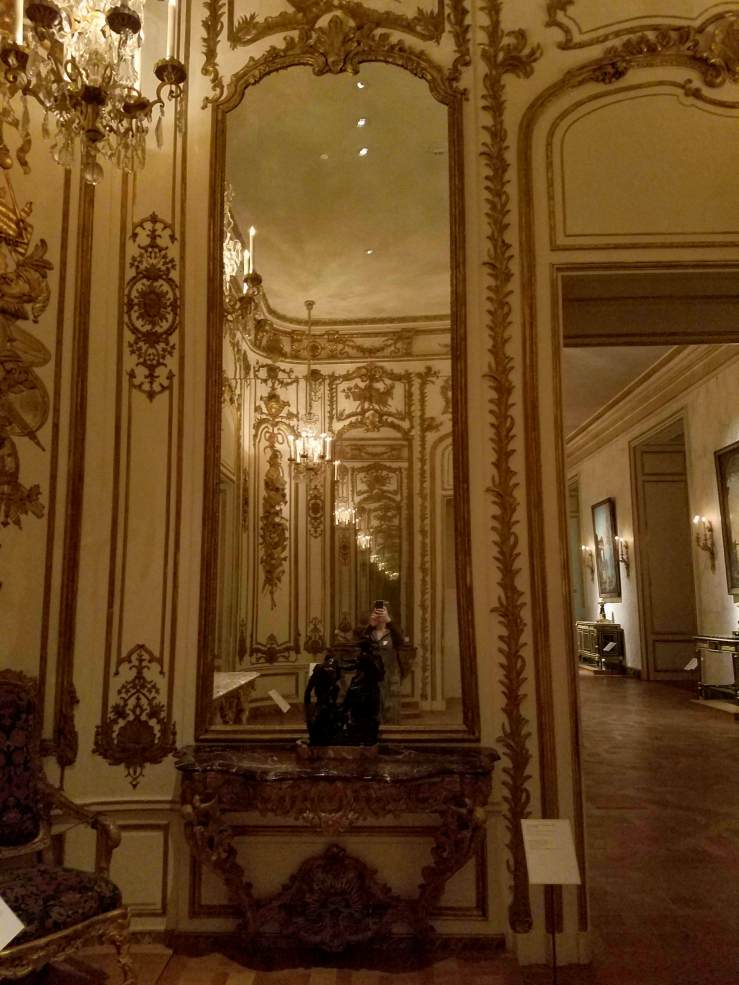
Sometimes I like to wander in and out of the period rooms, so elegant and opulent, so meticulously arranged down to the last detail, and imagine how it would be to live in places like these:  Formal Reception Room from the Hôtel de Tessé at 1, quai Voltaire, Paris.
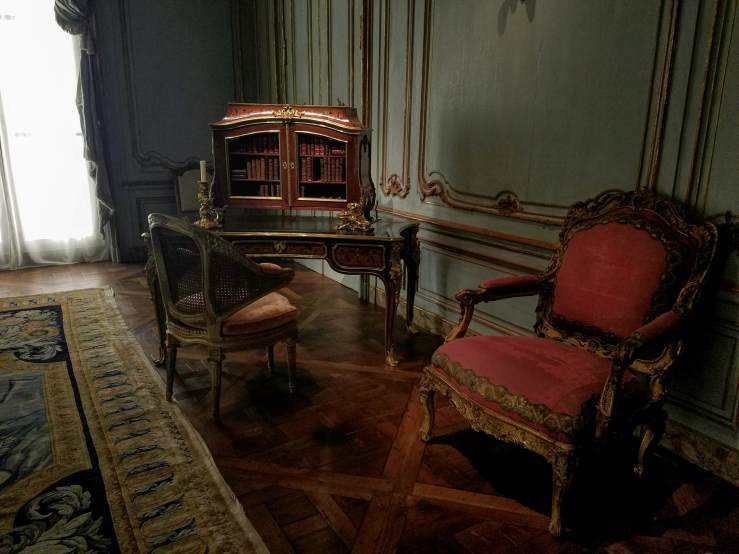
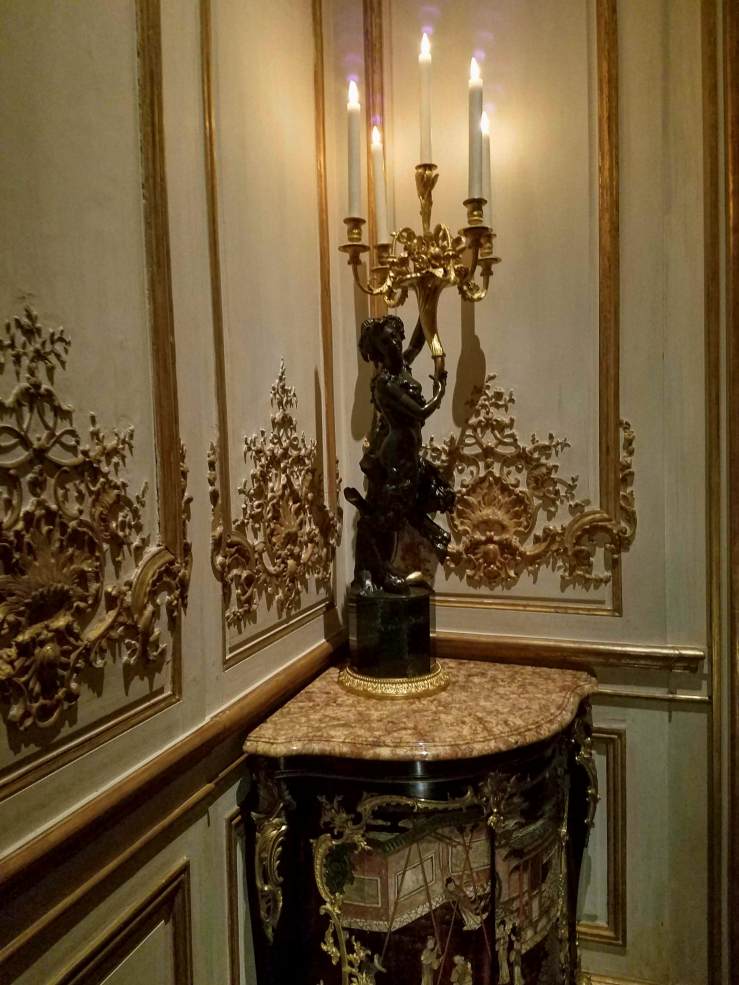
 Room from the Hôtel de Varengeville at 217, boulevard Saint-Germain, Paris.
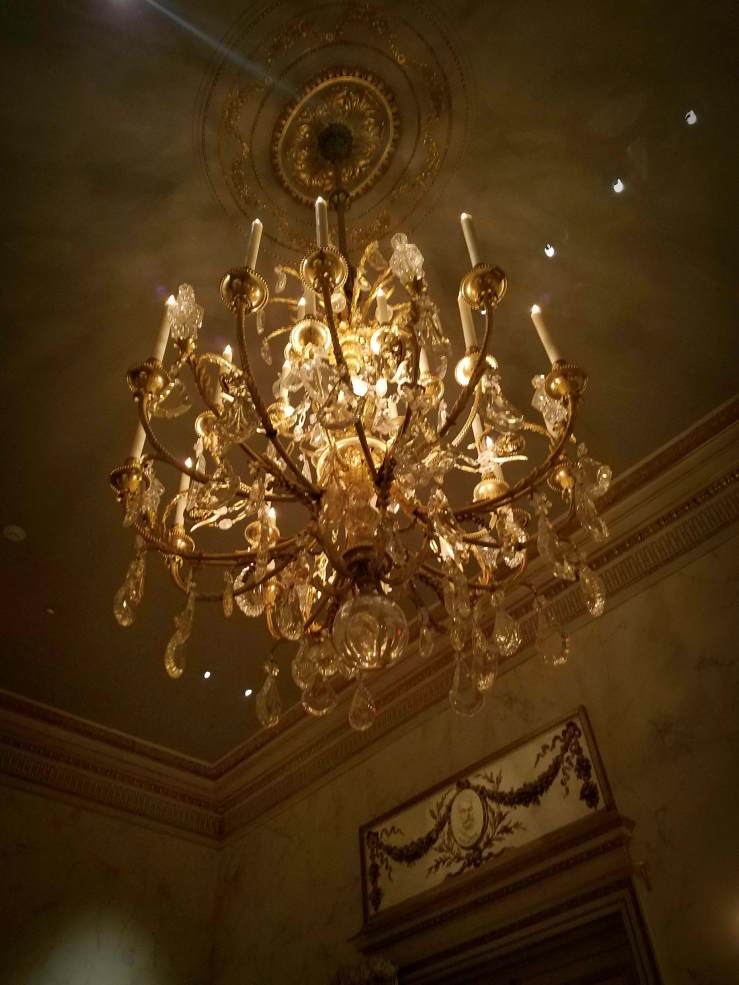
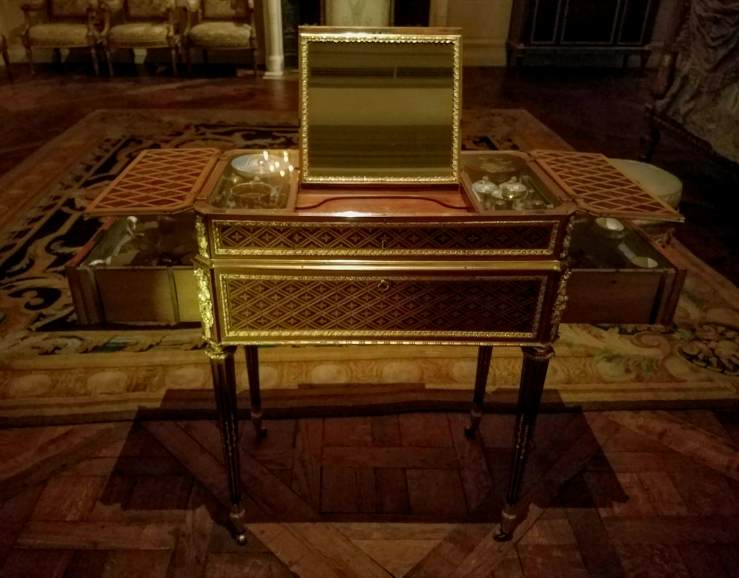
 The Lauzun Room (Hôtel Lauzun at 17, quai d’Anjou, Ile Saint-Louis).

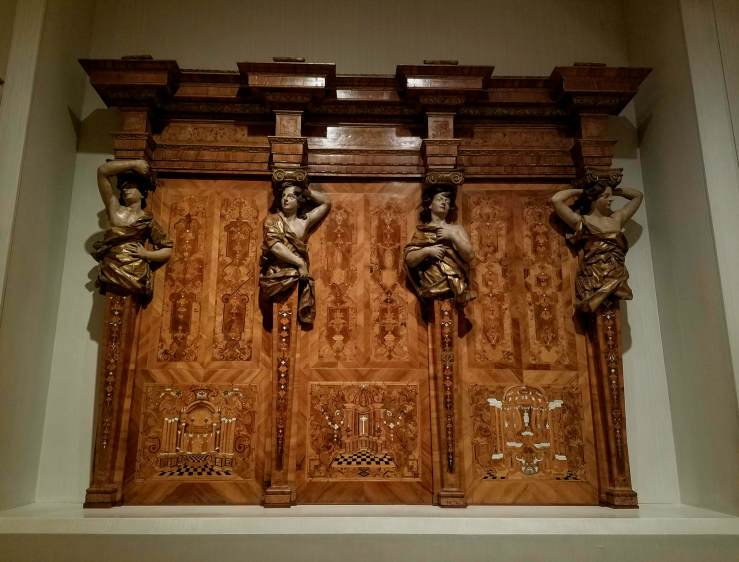 Back Panels of Choir Stalls
From choir stalls made by the cabinetmaker Johan Justus Schacht with the help of twenty-one assistants for the church of the Carthusian monastery in Mainz.
Panels: oak veneered with walnut, boxwood, rosewood, ebony, maple and other woods, ivory, green-stained horn and pewter.
Figures: carved and painted limewood
Mainz, 1723-26 with additions from 1787
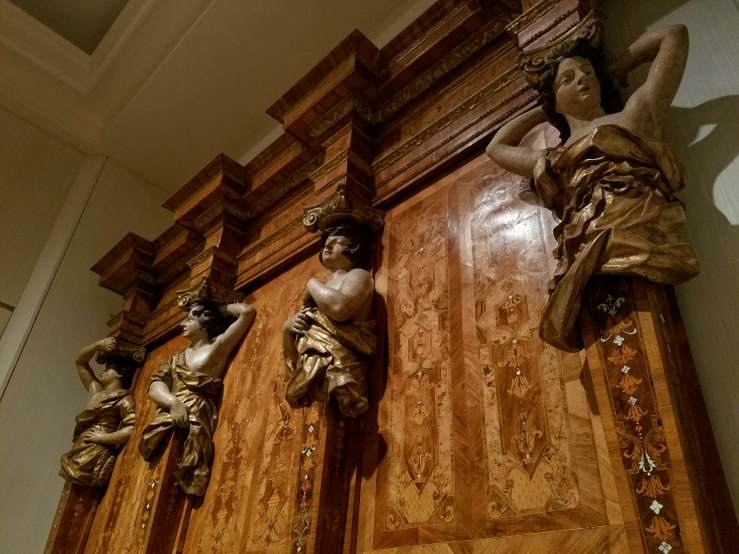

Would my dreams be any different under this canopy?
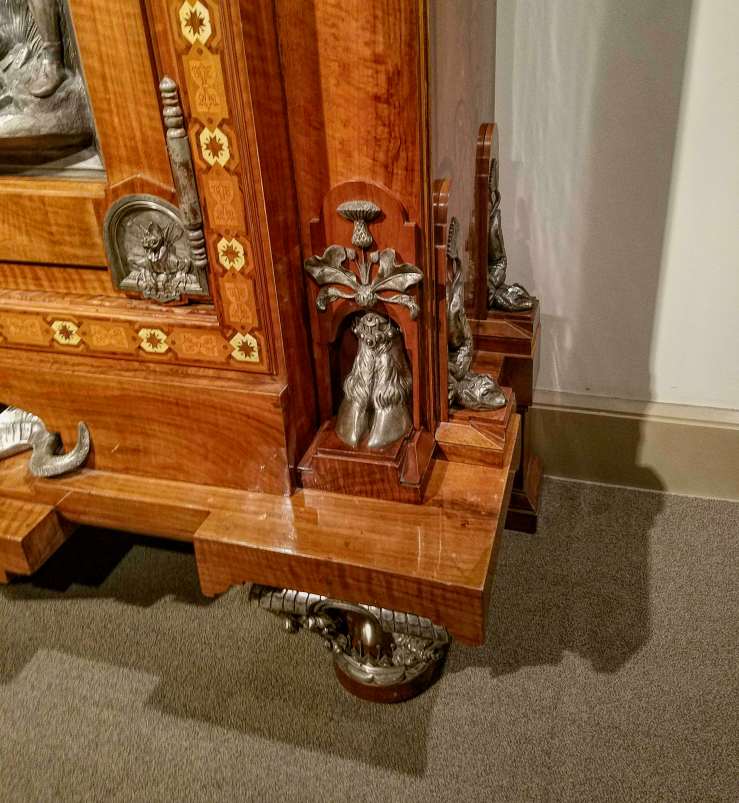
This armoire had me wondering how much more detail could one squeeze on a single piece of furniture: 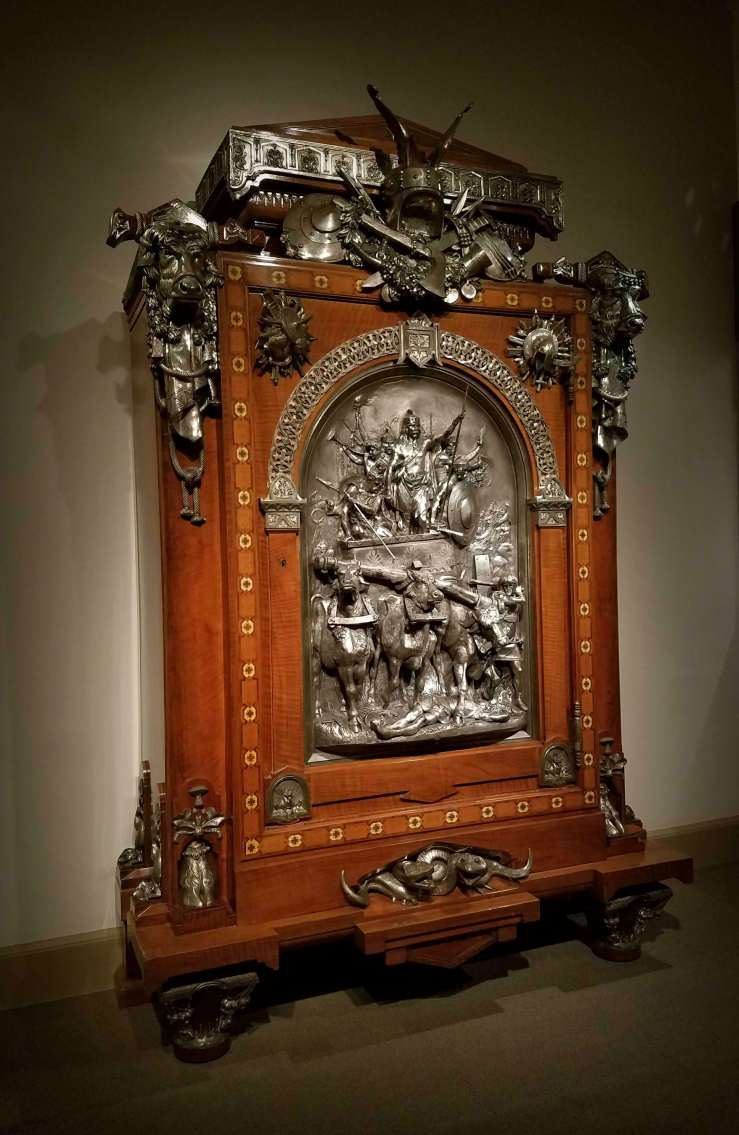 Armoire
Oak veneered with walnut and marquetry woods and set with silvered-bronze mounts
Design by Jean Brandley (active 1855-67)
Woodwork by Charles-Guillaume Diehl (1811-about 1885)
Mounts by Emmanuel Frémiet (1824-1910)
French (Paris), 1867
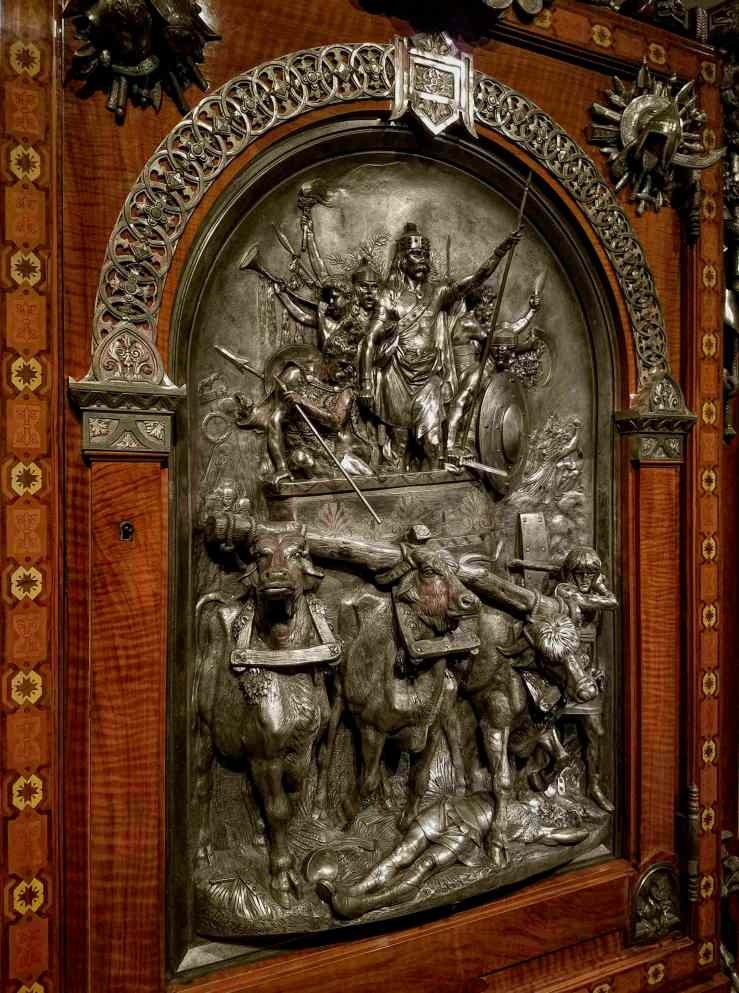
The central plaque of this ”Merovingian” armoire depicts the victory of the troops of King Merovech over the forces of Attila the Hun in 451. The prototype, a medal cabinet made for the Paris Exposition Universelle of 1867, is in the Musée d’Orsay, Paris. This armoire was commissioned by the cabinetmaker Diehl for his country house at Lagny.


 Secrétaire à abattant
Walnut, parcel-ebonized and inlaid with various woods; mounted with gilt bronze; leather, glass, brass
Austrian, ca. 1815-20, with later additions.
Pair of side chairs
Attributed to Josef Danhauser (1780-1829)
Beech and pine wood, cherry wood veneer and ebonized mahogany; covered in silk not original to chair
Austrian (Vienna), ca. 1815-20
The Metropolitan Museum of Art
May 28th, 2017
In 2017, Irving Penn (1917–2009) would have been one hundred years old. To mark the occasion, The Metropolitan Museum of Art hosted ”Irving Penn: Centennial”, in collaboration with The Irving Penn Foundation. It was the most comprehensive retrospective to date of the work of the great American photographer.
Here are some photos of the photos (and reflections thereof) which I hope you’ll enjoy :-


Image titles:
1/ Irving Penn: Centennial
2-3/ Roleiflex 3.5 E3 Twin-Lens Reflex Camera with 75 mm Carl Zeiss Planar Lens, 1961-64. Irving Penn acquired this camera in 1964 and used it and other similar models for portrait sittings for the next four decades. It is topped with a modified Hasselblad chimney viewfinder and mounted on a Tiltall pan/tilt head above a table tripod of the artist’s own design.
4/Carl Erickson and Elise Daniels, New York, 1947
5/Charles James, New York, 1948
6/Marcel Duchamp, New York, 1948
7/Alfred Hitchcock, New York, 1947
8/Dusek Brothers, New York, ca. 1948
9/Ballet Society, New York, 1948
10/The Tarot Reader (Bridget Tichenor and Jean Patchett), New York, 1949
11/Black and White Fashion with Handbag (Jean Patchett), New York, 1950
12/Vogue covers: Between 1943 and 2004 Penn produced photographs for 165 Vogue magazine covers, more than any other artist to date.
13/Vogue Fashion Photography (Jean Patchett), New York, 1949
14/Woman with Roses (Lisa Fonssagrives-Penn in Lafaurie Dress), Paris, 1950
15/Girl Drinking (Mary Jane Russell), New York, 1949
16/Man Lighting Girl’s Cigarette (Jean Patchett), New York, 1949
17/Many Skirted Indian Woman, Cuzco, 1948
18/Cuzco Children, 1948
19/Butcher, London, 1950
20/Facteur (Mailman), Paris, 1950
21/Yves Saint Laurent, Paris, 1957
22/Francis Bacon, London, 1962
23/Cecil Beaton, London, 1950
24/Cat Woman, New Guinea, 1970
25/Two Guedras, Morocco, 1971
26/Four Guedras, Morocco, 1971
27/Not an Irvin Penn image but the type of background he would frequently use, New York, 2017
28/Birgitta Klercker – Long Hair with Bathing Suit, New York, 1966
29/Clockwise from left: Ingmar Bergmann, Stockholm, 1964 – Alvin Ailey, New York, 1971 – S. J. Perelman, New York, 1962 – Tom Wolfe, New York, 1966
30/Truman Capote, New York, 1965
31/Justice Ruth Bader Ginsburg, New York, 1993
32/Three Poppies ‘Arab Chief’, New York, 1969
33/Girl with Tobacco on Tongue (Mary Jane Russell), New York, 1951
May 28th, 2017
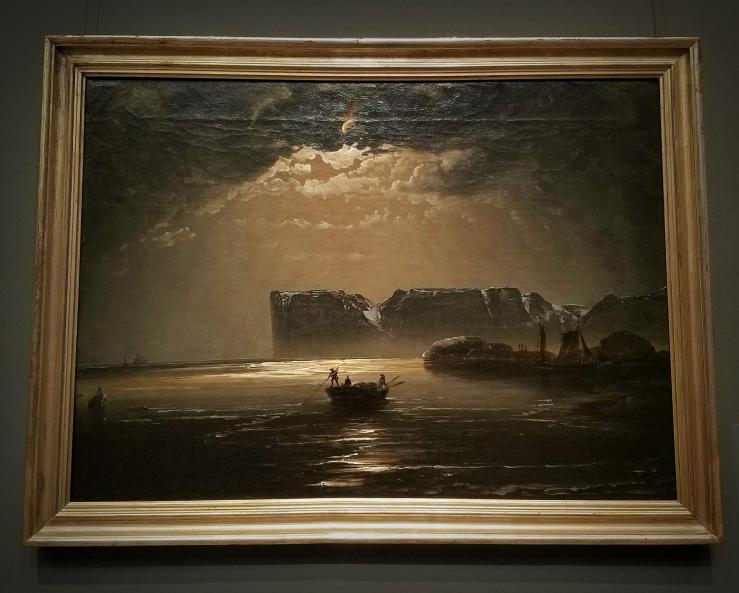 The North Cape by Moonlight, 1848
Oil on canvas

 Finnmark Landscape, ca. 1860
Oil on canvas
 Seascape, 1870s
Oil on wood
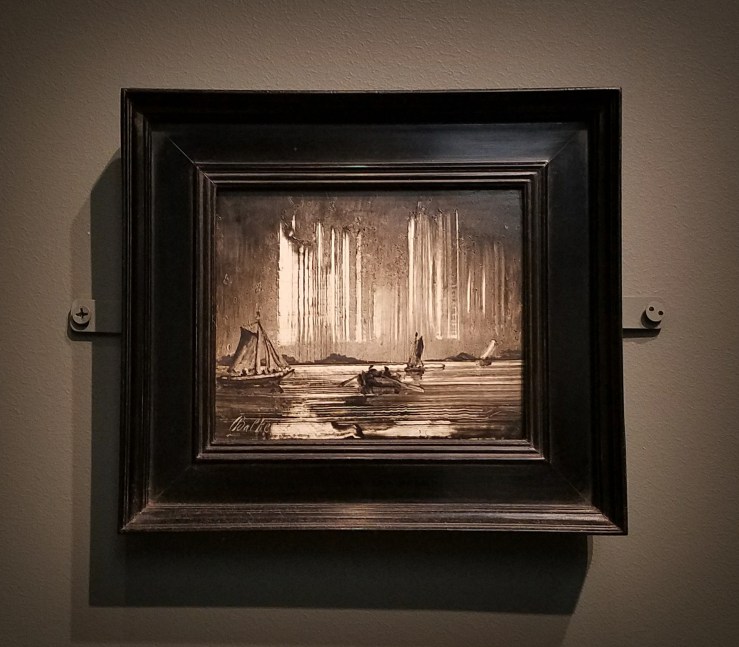 Northern Lights, 1870s
Oil on wood
To produce this striking image, Balke first applied a thin layer of paint for the sky and then a thicker one for the water. Subsequently, he removed paint with a serrated device to reveal the white ground layer, producing the effects of the lights. Finally, he added details such as the coastline and boats with a brush.
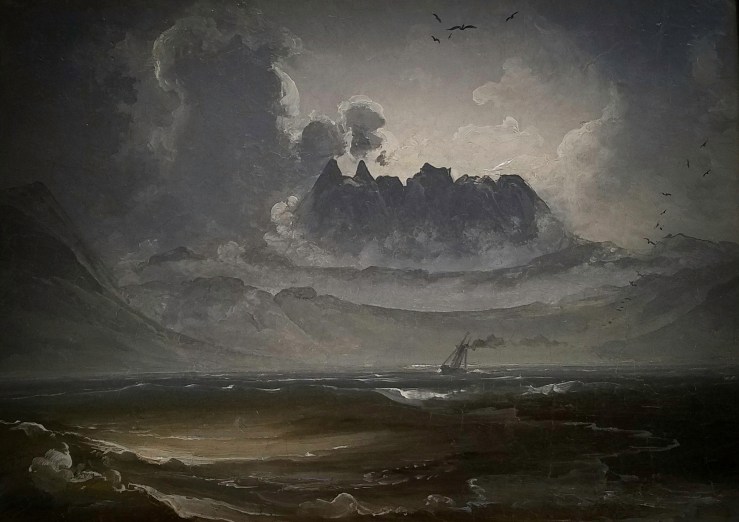
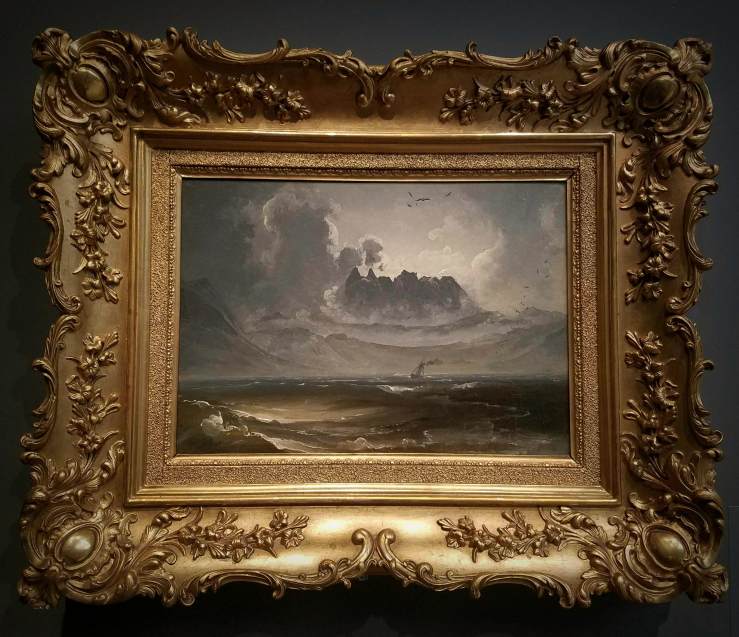 Seascape, ca. 1845
Oil on canvas, mounted on masonite
Majestic mountains and immense, churning clouds are indifferent to the course of a steamer chugging along the coast, trailed by gulls. This work, a tour de force of Balke’s ability to dematerialize form through the use of a limited palette, strikes a balance between painterly effect and a poetic vision that aspires to the Sublime.
 Moonlit View of Stockholm, ca. 1850
Oil on panel
Incredibly, I had to cross the Atlantic to see these wonderfully poetic works and even learn about the existence of this artist.
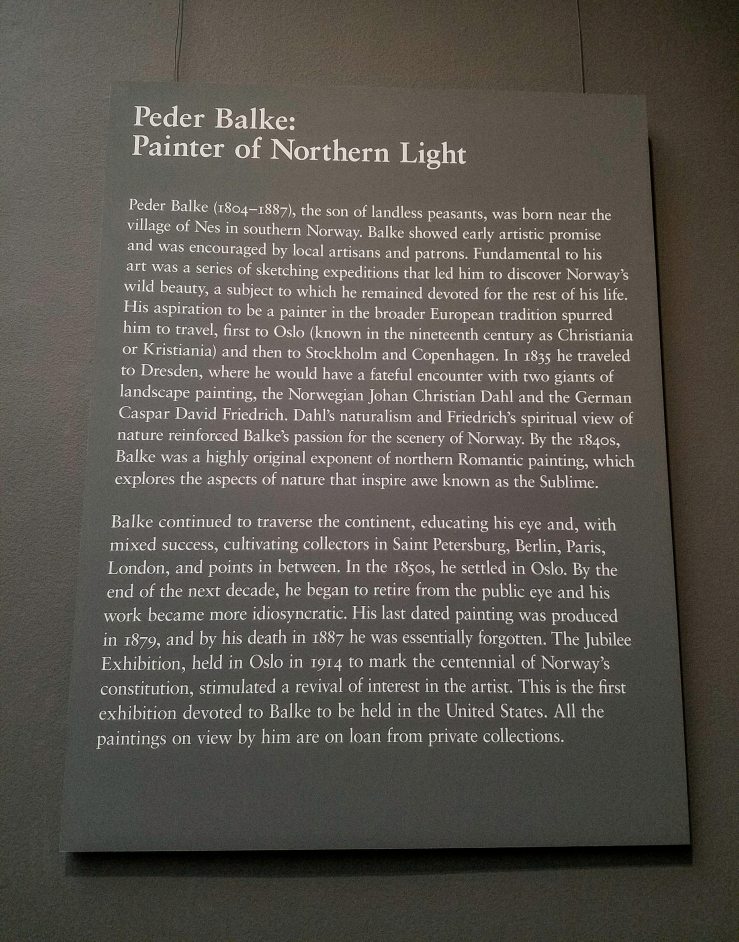
Images from an exhibition of 17 paintings by Peder Balke, presented at The Met in 2017.
May 28th, 2017
subjective worldview
Actor, writer, cook and author
Travel experiences & Strasbourg city guide
Writer
joy, happiness, travel, adventure, gratitude
"Rêve onirique & Bulle d'évasion"
makes pretty things on paper
This WordPress.com site is Pacific War era information
Welcome to my curious world of words....
Photographs, music and writing about daily life. Contact: elcheo@swcp.com
Free listening and free download (mp3) chill and down tempo music (album compilation ep single) for free (usually name your price). Full merged styles: trip-hop electro chill-hop instrumental hip-hop ambient lo-fi boombap beatmaking turntablism indie psy dub step d'n'b reggae wave sainte-pop rock alternative cinematic organic classical world jazz soul groove funk balkan .... Discover lots of underground and emerging artists from around the world.
A 365 analogue photography project
Barcelona's Multiverse | Art | Culture | Science
Een digitaal atelier aan de (zee)slag.
‘Doodling Ambiguity’s in Ink.’
Miscellaneous photography
Glimpses along the way on a journey of discovery into symmetry...
 The Humble Fabulist