
RISD Museum, Providence, RI
November 23rd, 2018


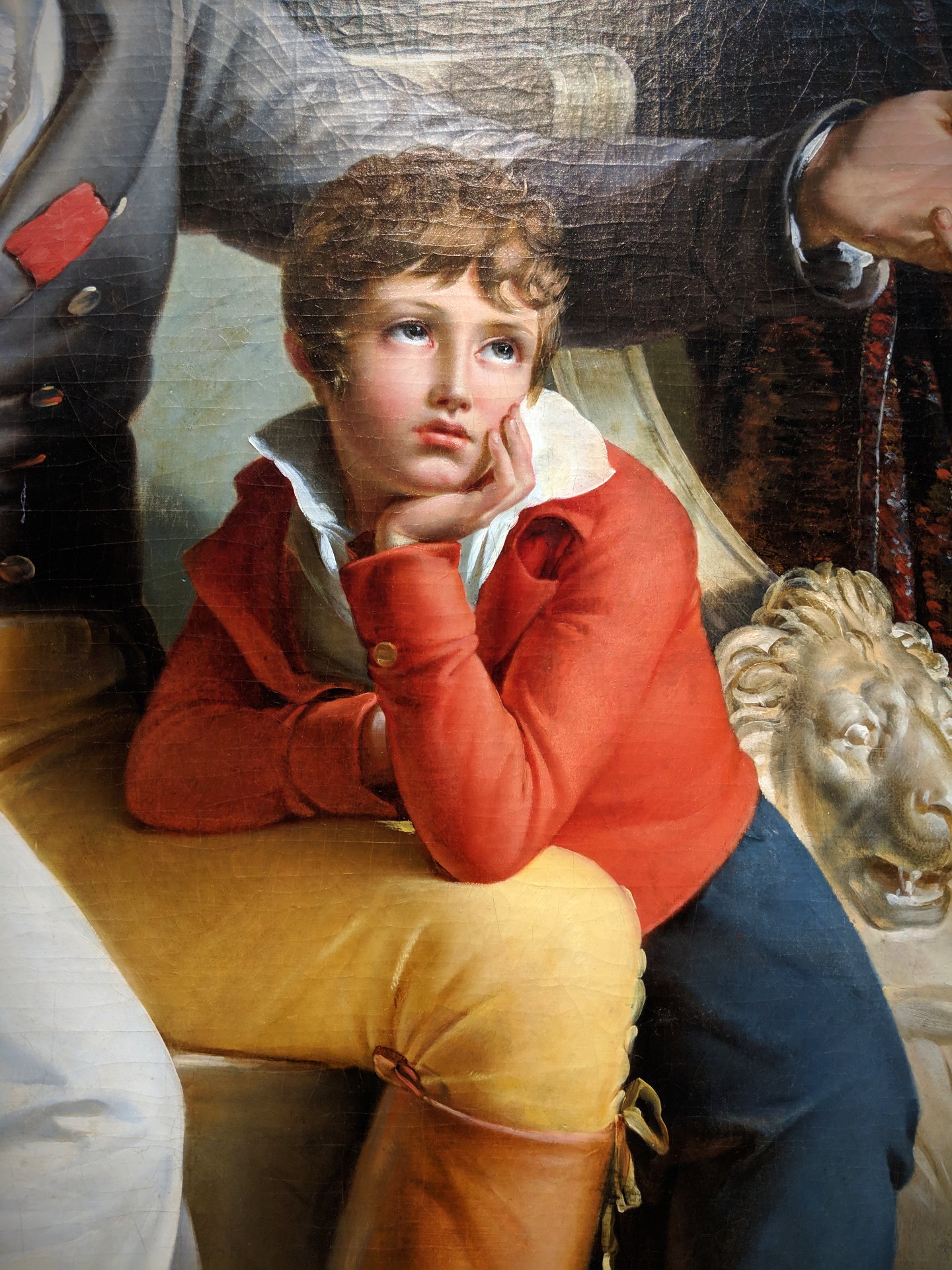 Jacques-Luc Barbier-Walbonne (1769-1860)
Portrait of Antoine-Georges-François de Chabaud-Latour and His Family, 1806
Oil on canvas
Portraiture and history painting come together in this tribute to family devotion. Tenderly instructing his daughter and son, Antoine-Georges-François de Chabaud-Latour gestures toward a monument to his own father, a distinguished military man and engineer. The carved epitaph—he lived and died without reproach—provides a lesson in virtue for the following generations. Chabaud-Latour’s wife, Juliette, stands beside him, nursing their infant son, demonstrating the importance of maternal strength to the future of family and nation. The portrait is situated in the landscape of Nîmes in southern France, home to both the artist and the Chabaud-Latour family. – Museum label
… and a bit of eye-rolling demonstrating that kids will forever be kids (and that boredom is a privilege).
RISD Museum, Providence, RI
November 23rd, 2018
The Buddha, a little shy hippopotamus and a dream robe.
 Japan
Japan
Buddha Mahavairocana (Dainichi Nyorai), ca. 1150-1200
Cryptomeria wood
This sculpture was originally the main figure of worship in a temple, surrounded by other Buddhas, bodhisattvas, and guardian figures. Visitors would have come to pray or attend rituals and sutra readings performed by monks. The RISD Museum acquired the statue in the 1930s. Records state it was the principal image of Rokuon-ji, a Shingon sub-temple in Hyogo Prefecture, along Japan’s Inland Sea. Legend has it that the temple was destroyed by fire hundreds of years ago but that the statue was stored in a nearby farmhouse until 1933, when it was brought to the U.S. by the Japanese art dealer Yamanaka. The largest wooden Japanese sculpture in the United States, it was constructed from 11 hollowed and carved pieces of wood. Its simple surfaces and serene expression are representative of the late Heian Period.
 Egypt
Egypt
Middle Kingdom to Second Intermediate Period, Dynasty 11-13
Hippopotamus, 2040-1638 BCE
Faience
 China
China
Robe, 1800s
Silk tapestry weave (kesi) with handpainted decoration and applied compound-weave ribbon

RISD Museum, Providence, RI
November 23rd, 2018

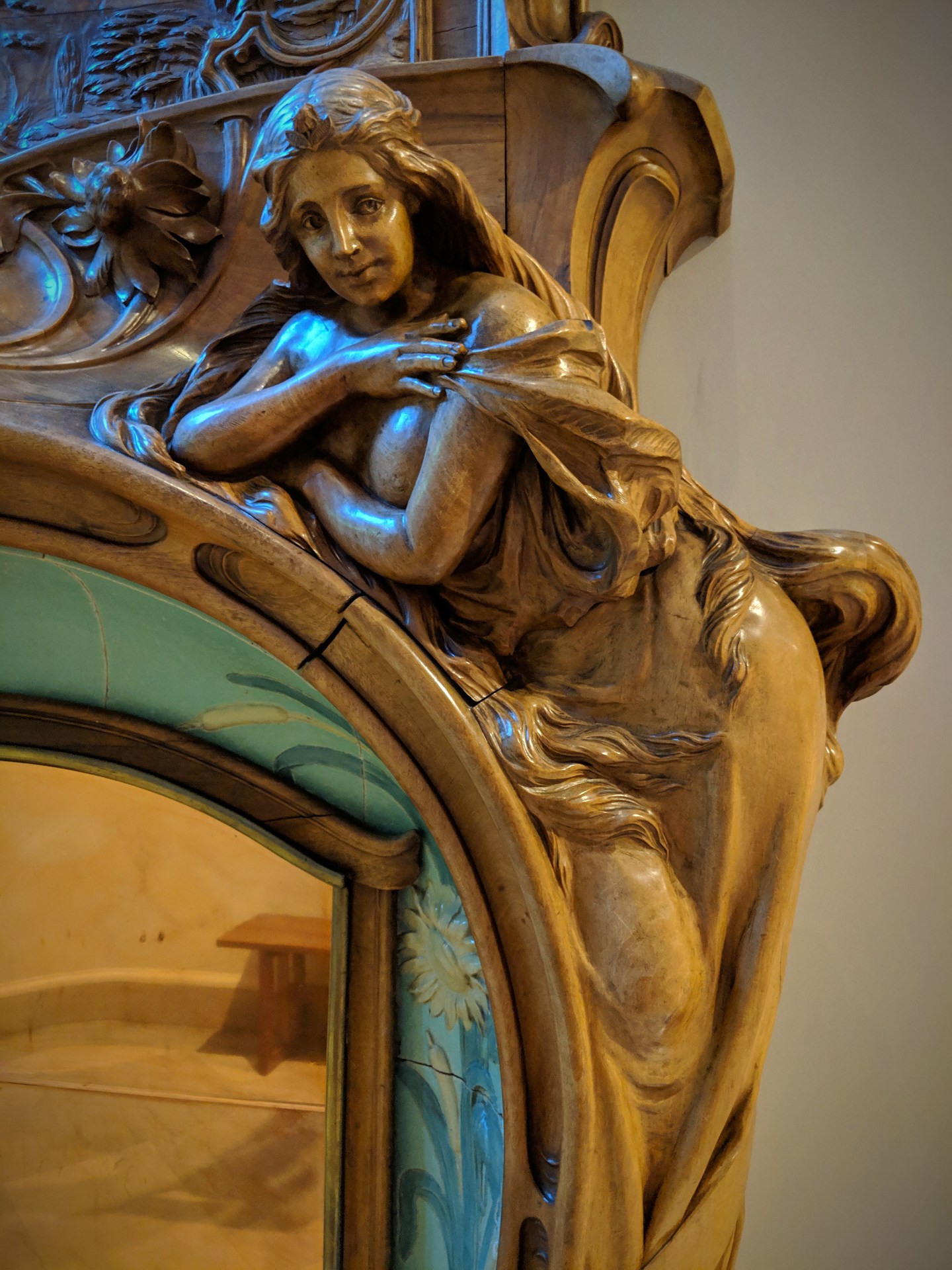


Art:
Hugnet Frères, ca. 1900
Fireplace Surround, 1900
Walnut, ceramic tiles and copper
**
Raymond Duchamp-Villon (1876-1918)
Seated Woman, 1914; cast 1915
Bronze with gold-washed patine
RISD Museum, Providence, RI
November 23rd, 2018
Imagine visiting Rome and coming back home with a micromosaic tabletop as a souvenir; being sister, wife, and mother to three different emperors; or an average woman going about her daily handwork with a ”globustisch” as your workstation.
Nothing average about the objects.
 Micromosaic Tabletop with Nine Views of Rome, ca. 1830-1850
Glass tesserae with marble, lapis lazuli and malachite
Marble tables with elaborate decorations of inlaid precious stones and micro-mosaic pictures were among the most prized souvenirs available to 19th-century tourists. This table-top features nine vignettes of Rome’s chief attractions: the Pantheon, Tomb of Cecilia Metella, Temple of Vesta, Forum, Coliseum, Arch of Titus, Castel Sant’Angelo, and Capitoline Hill, with St. Peter’s Basilica in the center.
Each micro-mosaic vignette is composed of remarkably thin rods of brightly colored glass (smalti filati) cut into tiny pieces (tesserae), and arranged with as many as 1,400 tesserae per inch. Greek patterns and borders of malachite and lapis lazuli complete the composition. This table top was probably made in the mosaic studio at St. Peter’s Basilica, which had been in operation since the late 16th century. Tourists would purchase the table top in Italy, then commission a local furniture-maker to construct an appropriate base after returning from their travels.
 Portrait of Agrippina the Younger, ca. 40 CE
Marble (from Paros) heaed, 18th-century coloured marble bust
Agrippina the Younger (AD 15 – 59) was a powerful woman: the sister, wife, and mother to three different emperors. According to ancient authors, Agrippina’s brother Caligula sent her into exile for involvement in a conspiracy in AD 39. Her uncle Claudius recalled her from banishment and married her in AD 49. Agrippina is said to have poisoned Claudius so that her son Nero might become emperor. The empress ruled in Nero’s name while he was young, but he eventually turned against her, ordering assassins to murder her. While Agrippina is said to have written an autobiography, it has not survived. Her portraits provide the only remaining clues as to how she wished to be represented during her lifetime. These depict her with a slightly protruding upper lip and chin that are reminiscent of Caligula’s portraits. Of the RISD version, only the head is ancient.
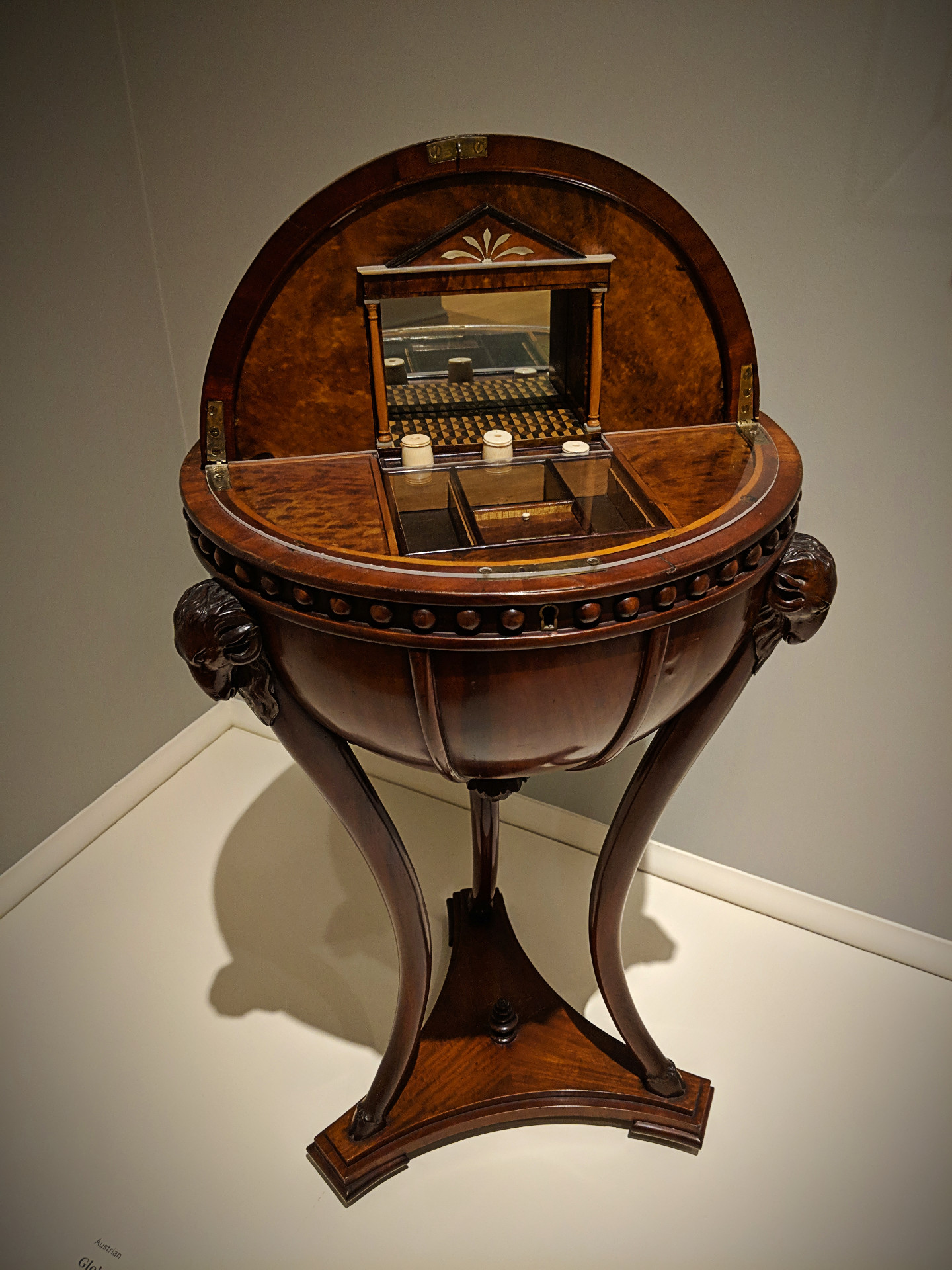 Globe Table (Globustisch), 1810-1820
Mahogany, burl mahogany, oak, ebony and boxwood with brass, mirror, ivory, mother of pearl, pewter, tortoiseshell, painted faux tortoiseshell, engravings and velvet
Fashioned from a profusion of costly materials, this table spotlights the virtuosic skills of its makers. Designed to provide a space for sewing and other handwork, the upper half of the burled mahogany globe rotates into the lower half to reveal ivory bobbins and compartments for materials.
Neoclassical style is seen in the three curved legs topped with ram heads, as well as the interior replica of a Greek temple with a geometric inlaid floor. Engravings of the Roman goddesses Minerva and Flora flank the mirrored back, reflecting the owner’s education and appreciation of the ancient world.
RISD Museum, Providence, RI
November 23rd, 2018
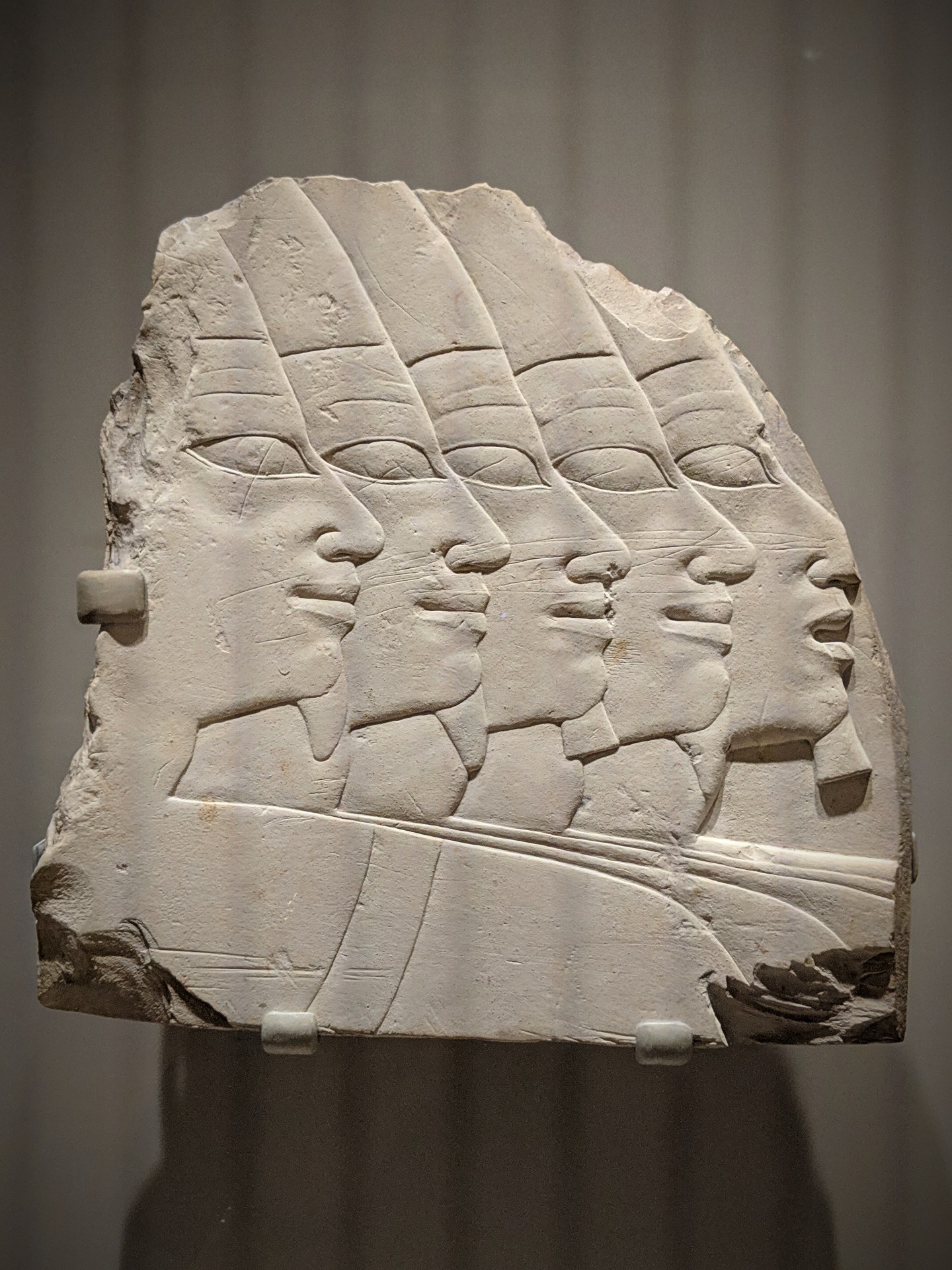 Fragment of Relief with Captives, 1525-1504 BCE
Limestone
Egyptian, Dynasty 18, Reign of Amenhotep I – From the Karnak Temple Complex
This fragment was once part of a temple relief depicting King Amenhotep I grasping bound captives by the hair. The seemingly identical appearance of the bearded captives functioned as visual shorthand for foreign enemies of the Egyptian state. Closer inspection, however, reveals some individualized features, including different beard styles.
RISD Museum, Providence, RI
November 23rd, 2018

James Montford, b. 1951
Holocaust Blankets with Smallpox, 2015
Cotton and wool blankets, vinyl lettering
Holocaust Blankets with Smallpox is part of a larger body of work focused on the notion of who “owns” the use of the word holocaust. . . . I see this as being part of a longstanding tradition in art of addressing inequality, injustice, and intolerance, reaching as far back as Goya’s time-honored painting The Third of May 1808. As a Black Indian, the oppression I have experienced is due, in part, to the ongoing power we subscribe to hate words. I created this work to present a multilayered approach to the demystification of racial, ethnic, and gender-based discrimination.
–James Montford
RISD Museum, Providence, RI
November 23rd, 2018
The artwork was created during President Obama’s re-election campaign [description below and on gloves (zoom to read)]. If ”politics were more scary and hideous than ever” then, which words would better describe the situation today?

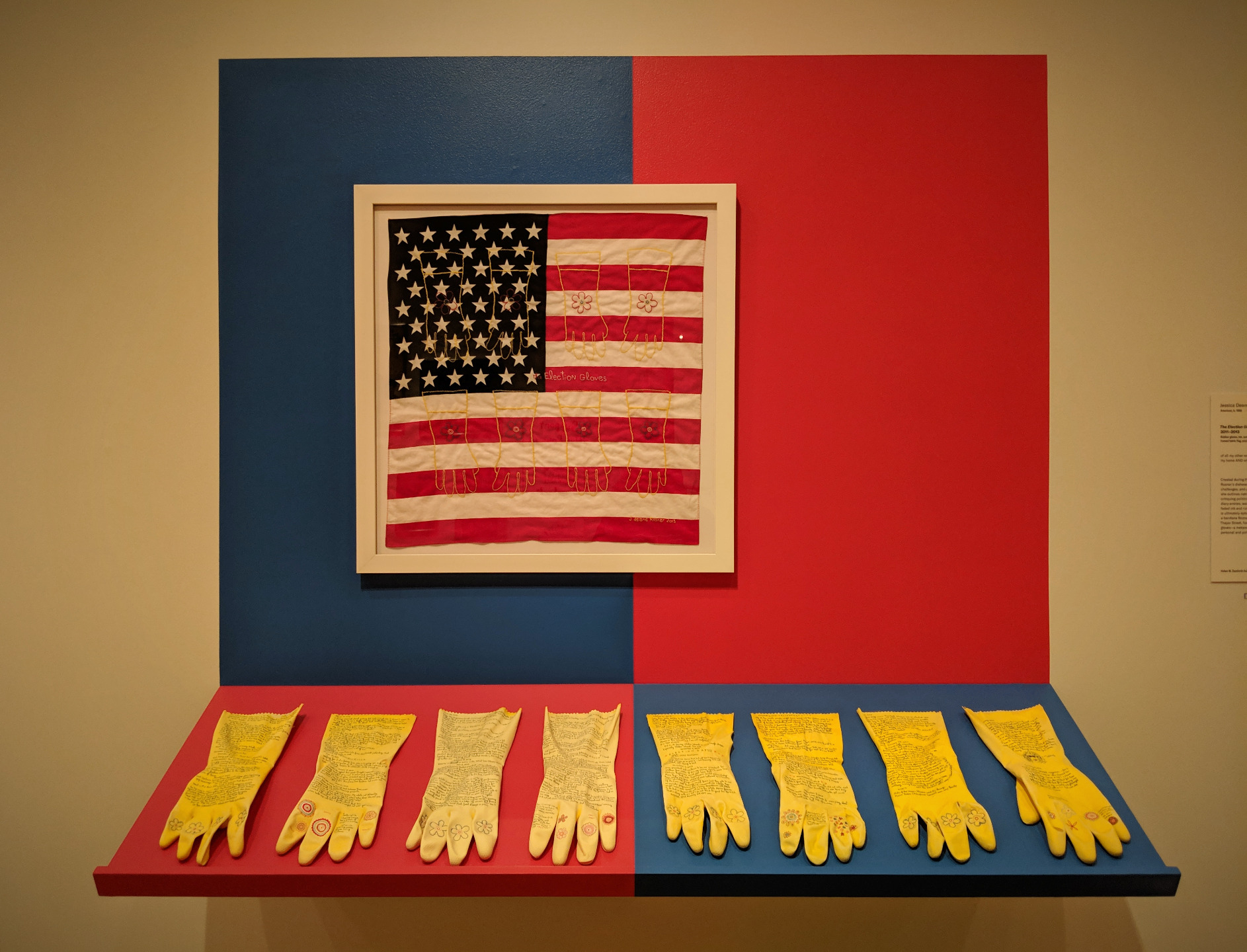


Jessica Deane Rosner
The Election Gloves, 2011-2013
“You would think that worrying about who is going to lead our country would make all other concerns vanish or at least fade to a pale gray. But, for me, a huge crisis only piles on top of all my other worries. I find myself anxious about cleaning my home AND what happens if Roe v. Wade is overturned.” –Jessica Deane Rosner
Created during President Obama’s re-election campaign, Rosner’s dishwashing gloves recount her daily chores, creative challenges, and personal anxieties on one side. On the other, she outlines national and international headlines, sometimes critiquing political affairs. This text, initially written in detailed diary entries, was edited and rewritten on the gloves. The faded ink and rubber deterioration remind us that everything is ultimately ephemeral. The more permanent-looking flag, a bandana Rosner bought at the Army/Navy Surplus on Thayer Street, features simplified versions of the dishwashing gloves—a metanarrative on the interconnectedness of personal and political obligations.
Paired with:
Dr. Martens
Men’s Shoes with Flag
Pattern, ca. 1990
RISD Museum, Providence, RI
November 23rd, 2018
…
[fill in the blank]

RISD Museum, Providence, RI
November 23rd, 2018
My Providence! What airy hosts
 Turn still thy gilded vanes;
What winds of elf that with grey ghosts
People thine ancient lanes!
– from ”Providence”, a poem by H.P. Lovecraft


 A fanlight’s gleam, a knocker’s blow,
A glimpse of Georgian brick—
The sights and sounds of long ago
Where fancies cluster thick.
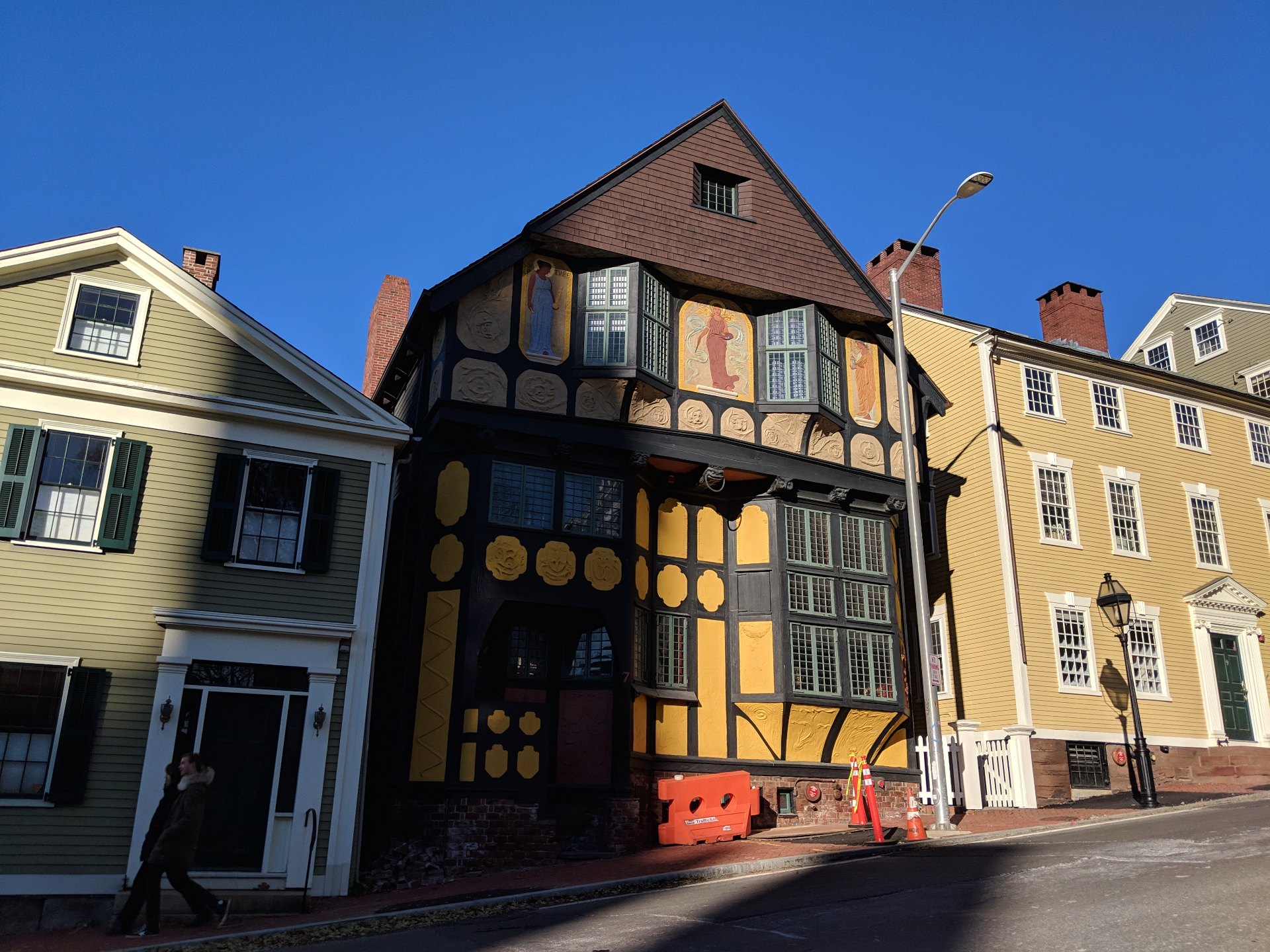
From the ”Superman” Building to the Fleur-de-Lys that Lovecraft despised – and made sure to tell the world, when he wrote in ”The Call of Cthulu”:
”Wilcox still lived alone in the Fleur-de-Lys Building in Thomas Street, a hideous Victorian imitation of seventeenth century Breton Architecture which flaunts its stuccoed front amidst the lovely colonial houses on the ancient hill, and under the very shadow of the finest Georgian steeple in America, I found him at work in his rooms, and at once conceded from the specimens scattered about that his genius is indeed profound and authentic.”
The spirit of H.P. Lovecraft is alive, in Providence.
November 23rd, 2018
subjective worldview
Actor, writer, cook and author
Travel experiences & Strasbourg city guide
Writer
joy, happiness, travel, adventure, gratitude
"Rêve onirique & Bulle d'évasion"
makes pretty things on paper
This WordPress.com site is Pacific War era information
Welcome to my curious world of words....
Photographs, music and writing about daily life. Contact: elcheo@swcp.com
Free listening and free download (mp3) chill and down tempo music (album compilation ep single) for free (usually name your price). Full merged styles: trip-hop electro chill-hop instrumental hip-hop ambient lo-fi boombap beatmaking turntablism indie psy dub step d'n'b reggae wave sainte-pop rock alternative cinematic organic classical world jazz soul groove funk balkan .... Discover lots of underground and emerging artists from around the world.
A 365 analogue photography project
Barcelona's Multiverse | Art | Culture | Science
Een digitaal atelier aan de (zee)slag.
‘Doodling Ambiguity’s in Ink.’
Miscellaneous photography
Glimpses along the way on a journey of discovery into symmetry...
 The Humble Fabulist