San Francisco is… Coit Tower & The Views

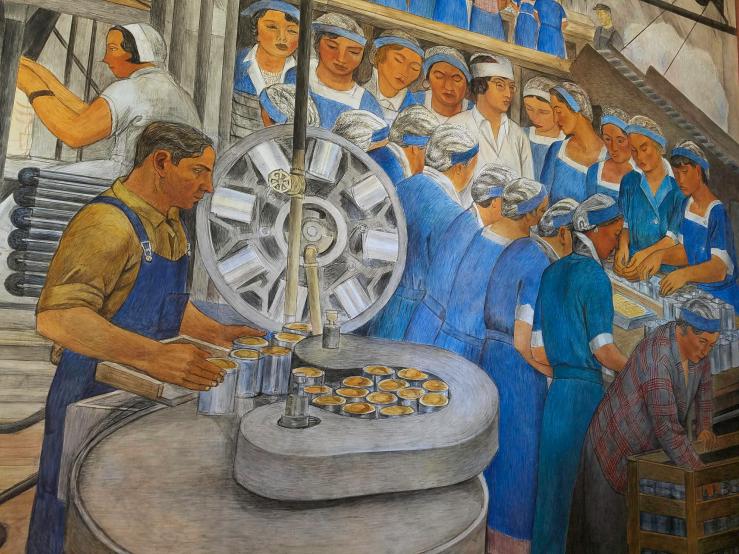
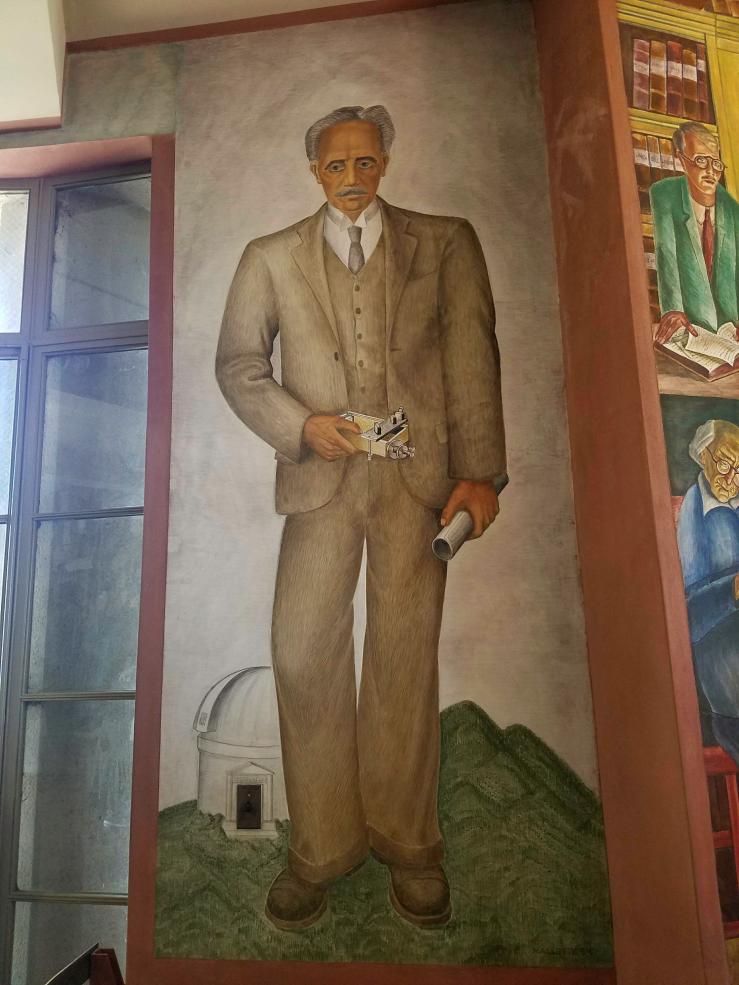
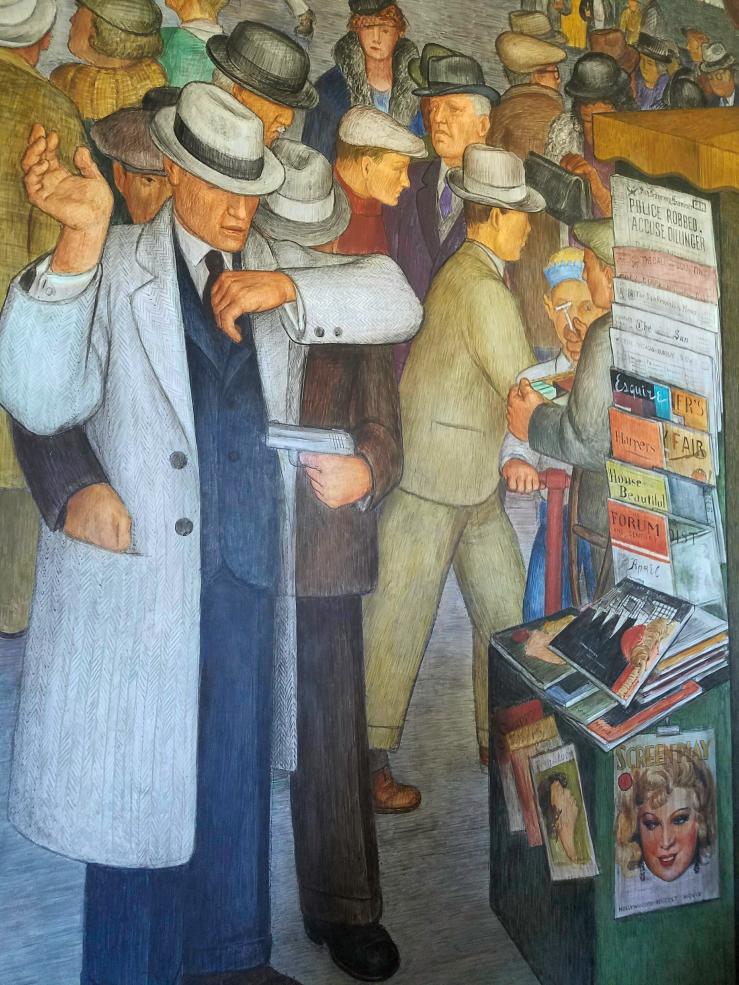
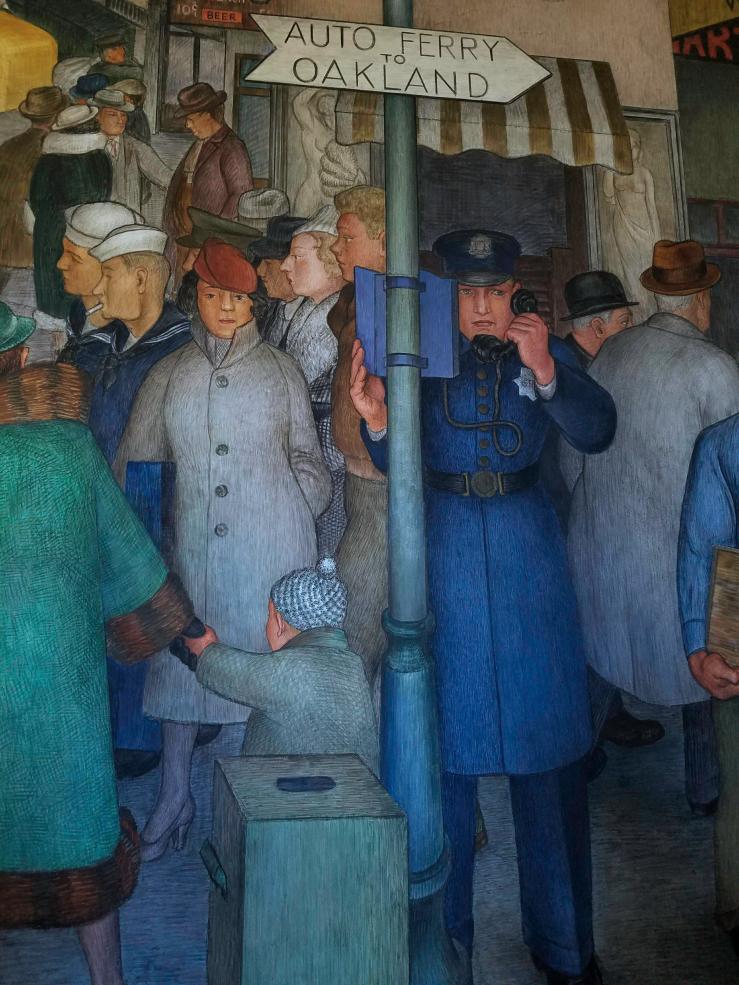
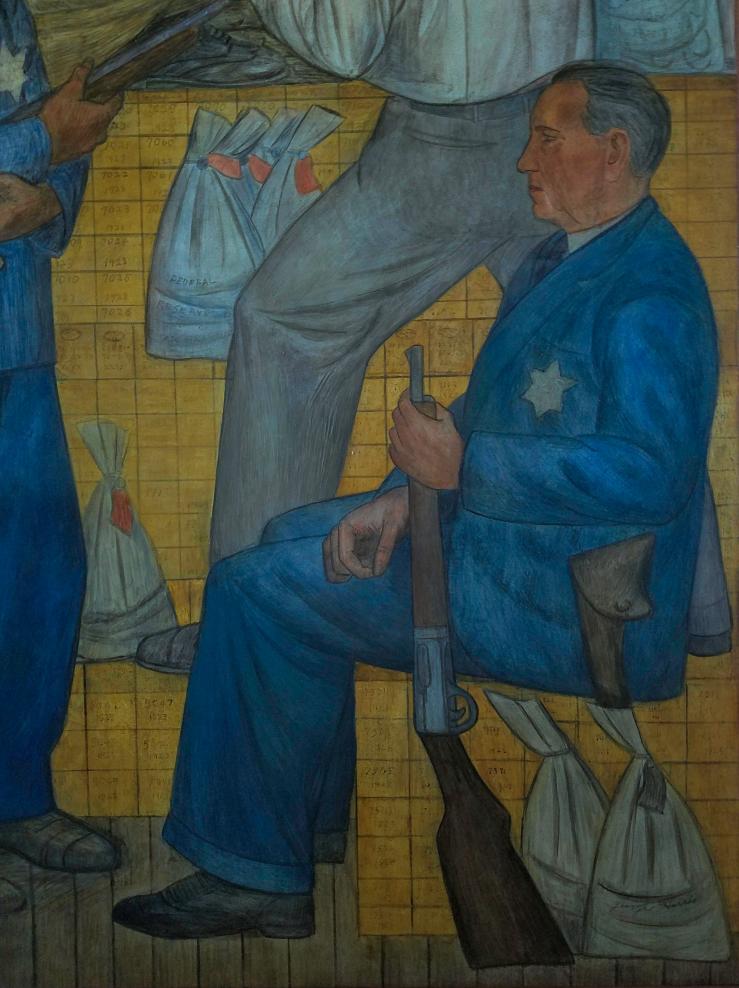
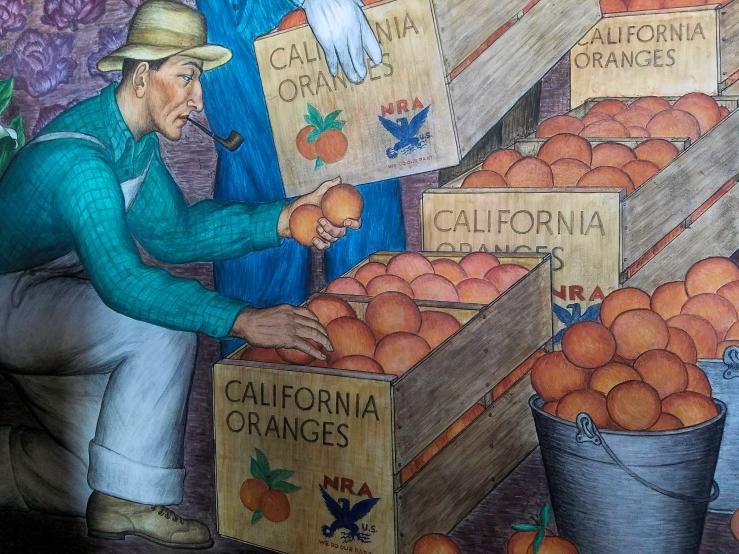
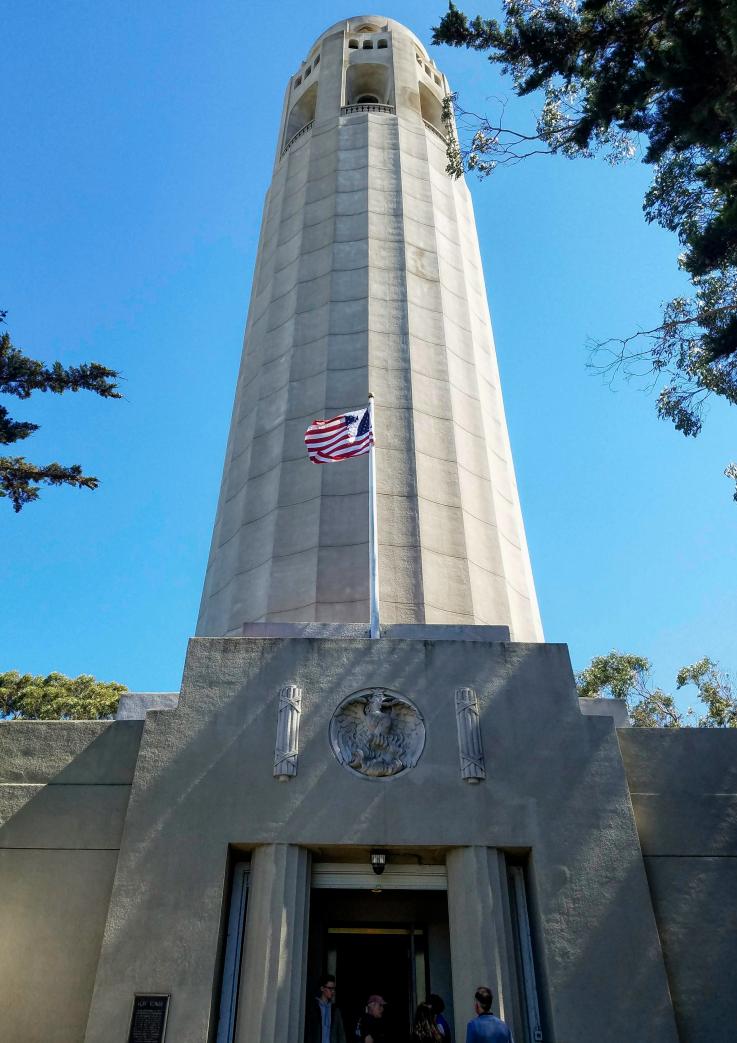
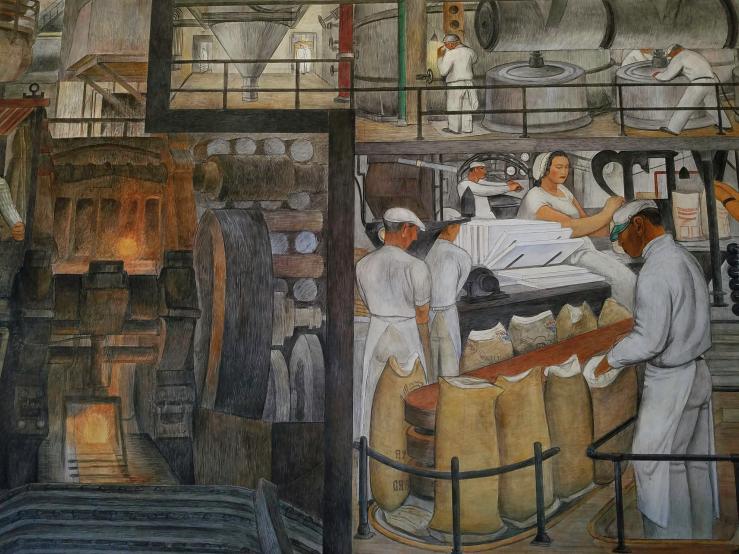
So what if the line went round and round, forming a complete circle at the base of the tower. There was so much to see during the hour we waited to reach the lift that, for once, I didn’t feel the pain. For the entire ground floor is adorned with floor to ceiling murals painted in 1934 by a group of artists employed by the Public Works of Art Project, a precursor to the Works Progress Administration (WPA).

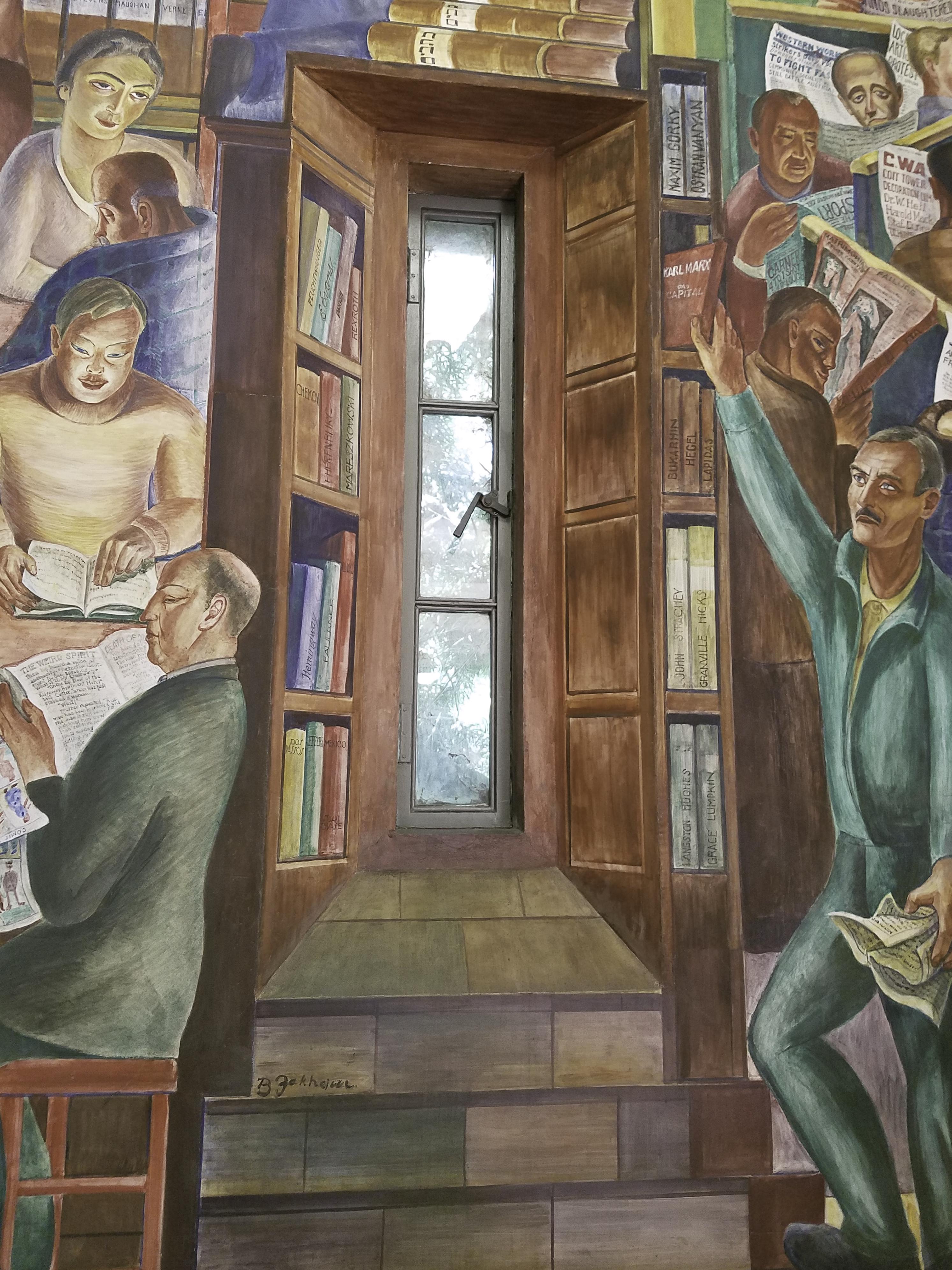
They depict life in California during the Depression, with emphasis on the theme of industry and commerce and distinctive touches of leftist political ideas, clearly evident; like on Bernard Zakheim’s “Library” which depicts fellow artist John Langley Howard reaching for a copy of Karl Marx’s ”Das Kapital” (spelled here ”Das Capital”).  Touches one is familiar with in Europe, but rather unusual in the States. Perhaps it is true, after all, San Francisco may well be a very European city.

The Tower & details the Murals Industries of California
Ralph Stackpole


Industries of California
Ralph Stackpole


Newsgathering
Suzanne Scheuer


Library
Bernard B. Zakheim


City Life
Victor Arnautoff


City Life
Victor Arnautoff


Scientist-Inventor
Mallette Harold Dean


City Life
Victor Arnautoff


City Life
Victor Arnautoff


Banking and Law
George Harris


California
Maxine Albro


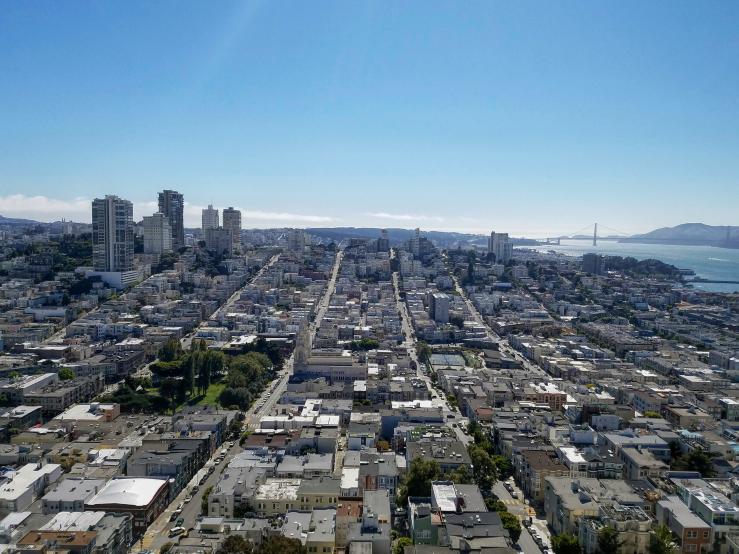
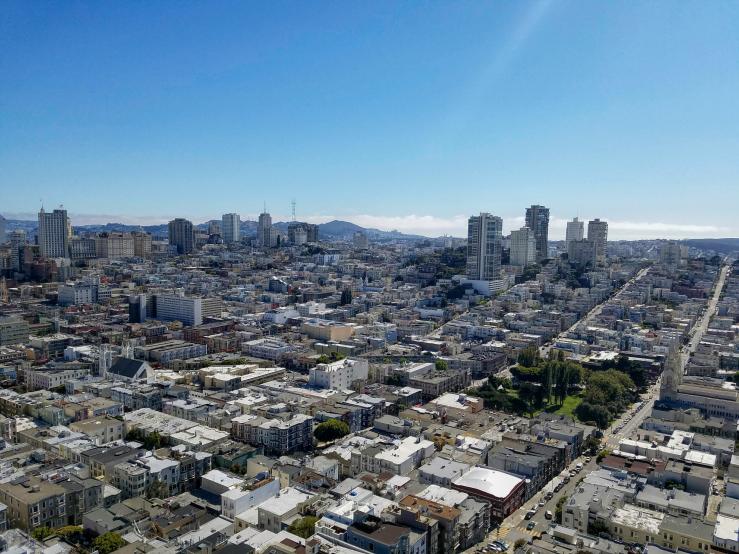
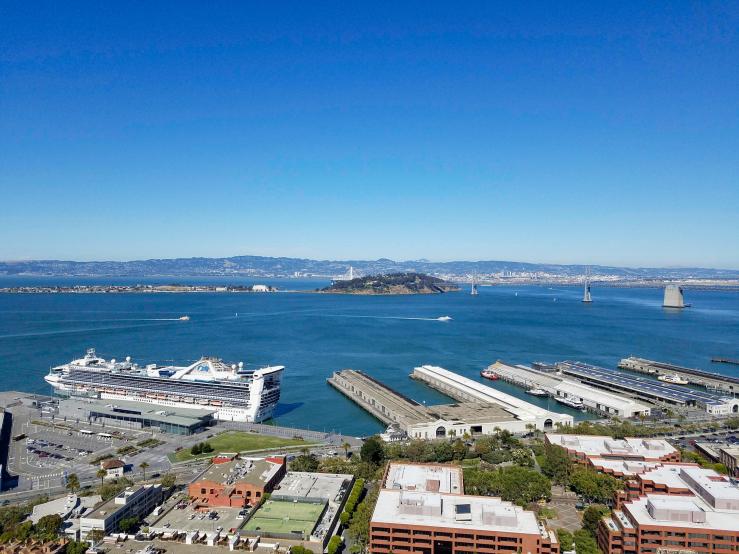
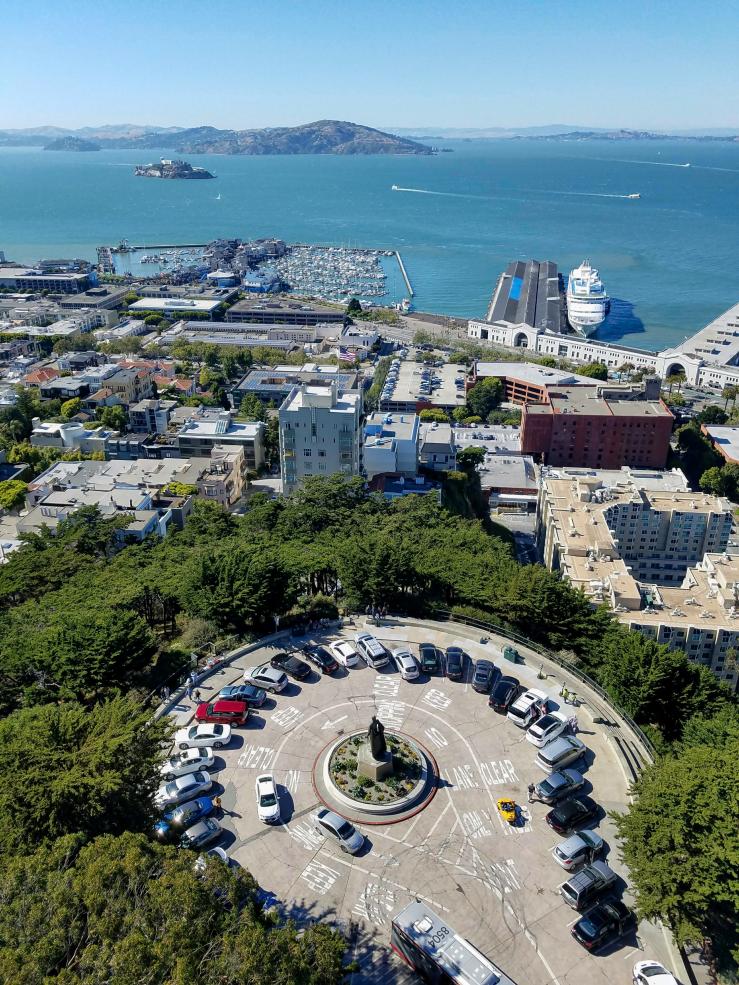
The (360°) views

You can buy tickets on-line in advance and skip the lines. But where is the fun in that?

Coit Tower

July 5th, 2017

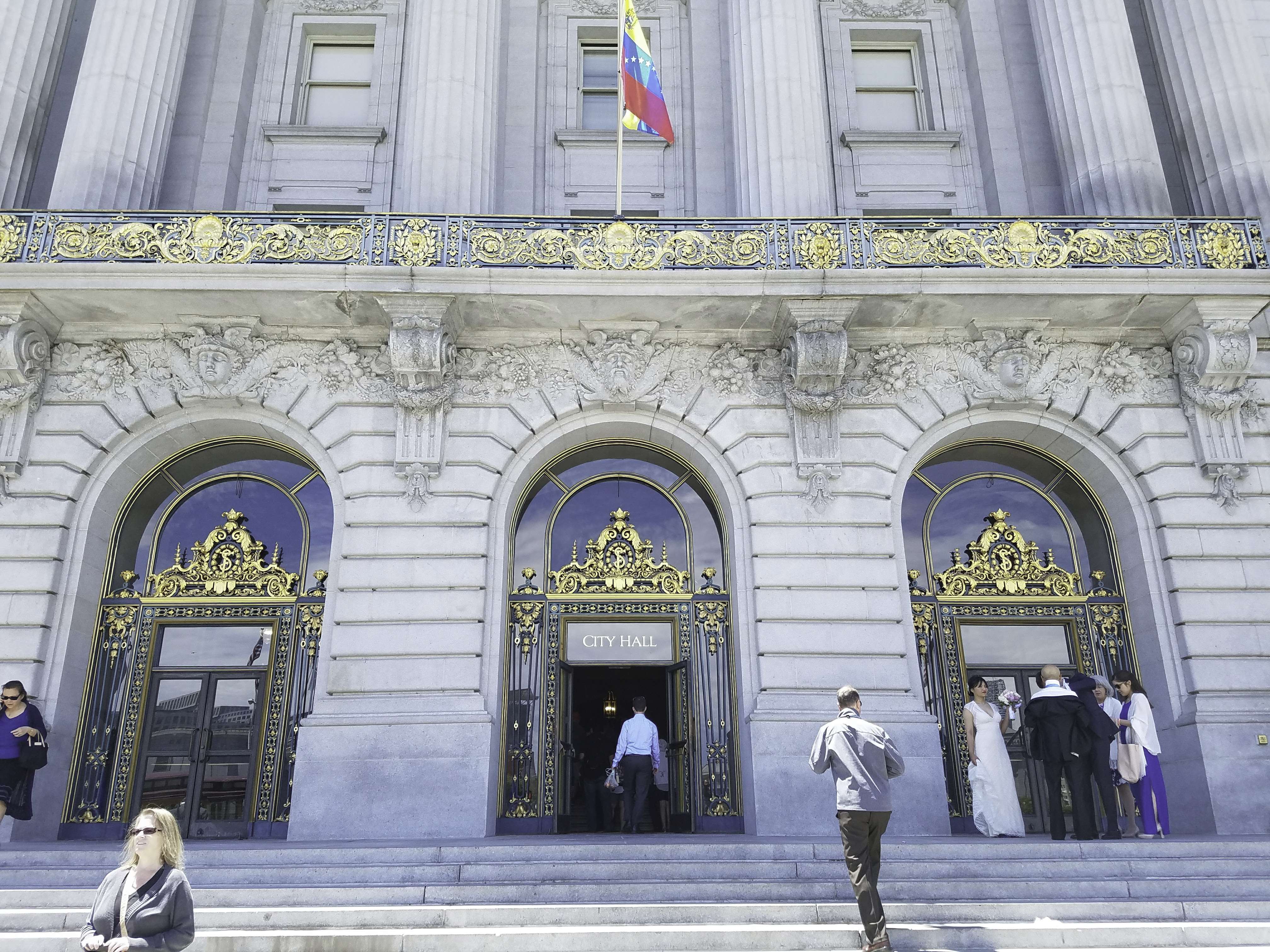
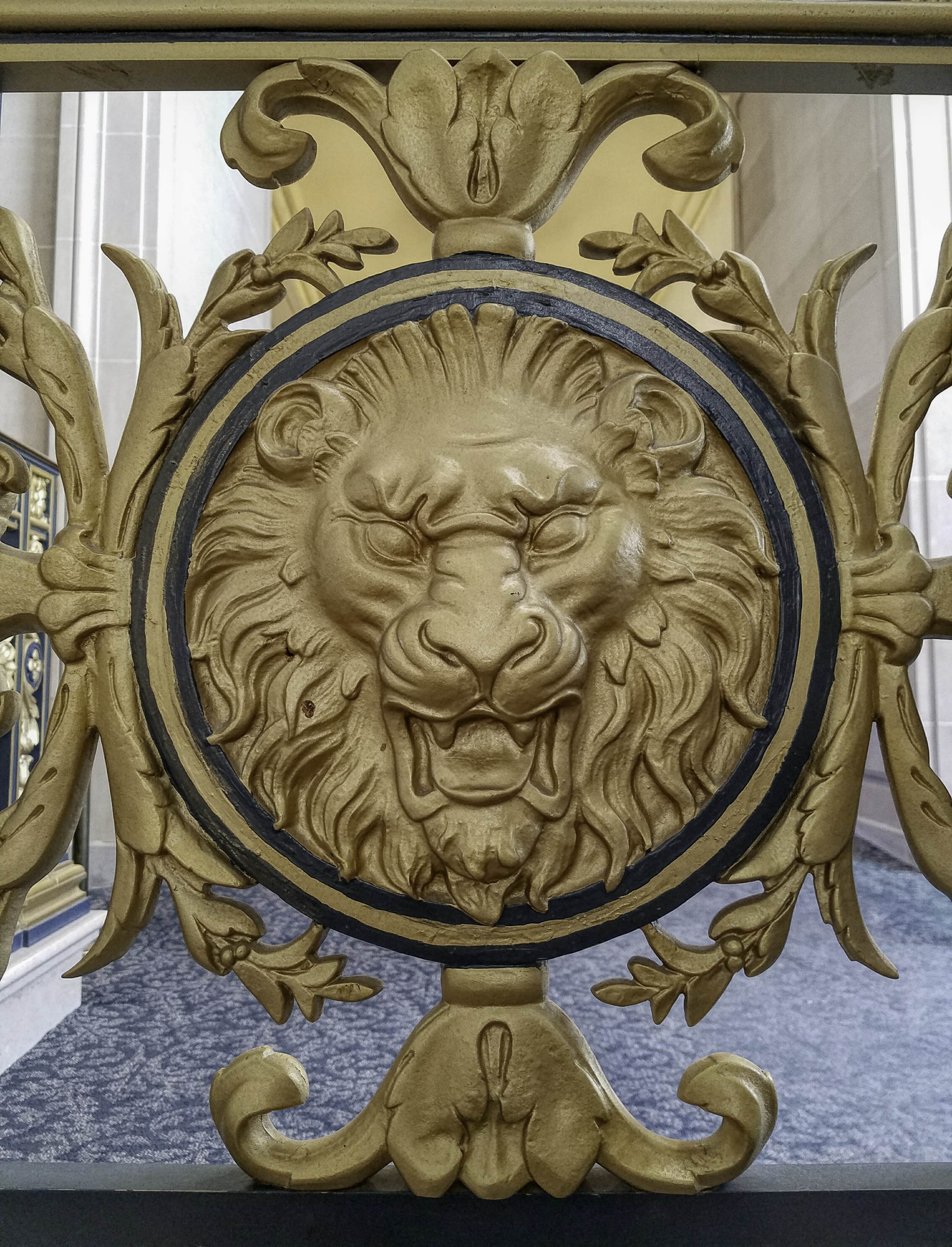
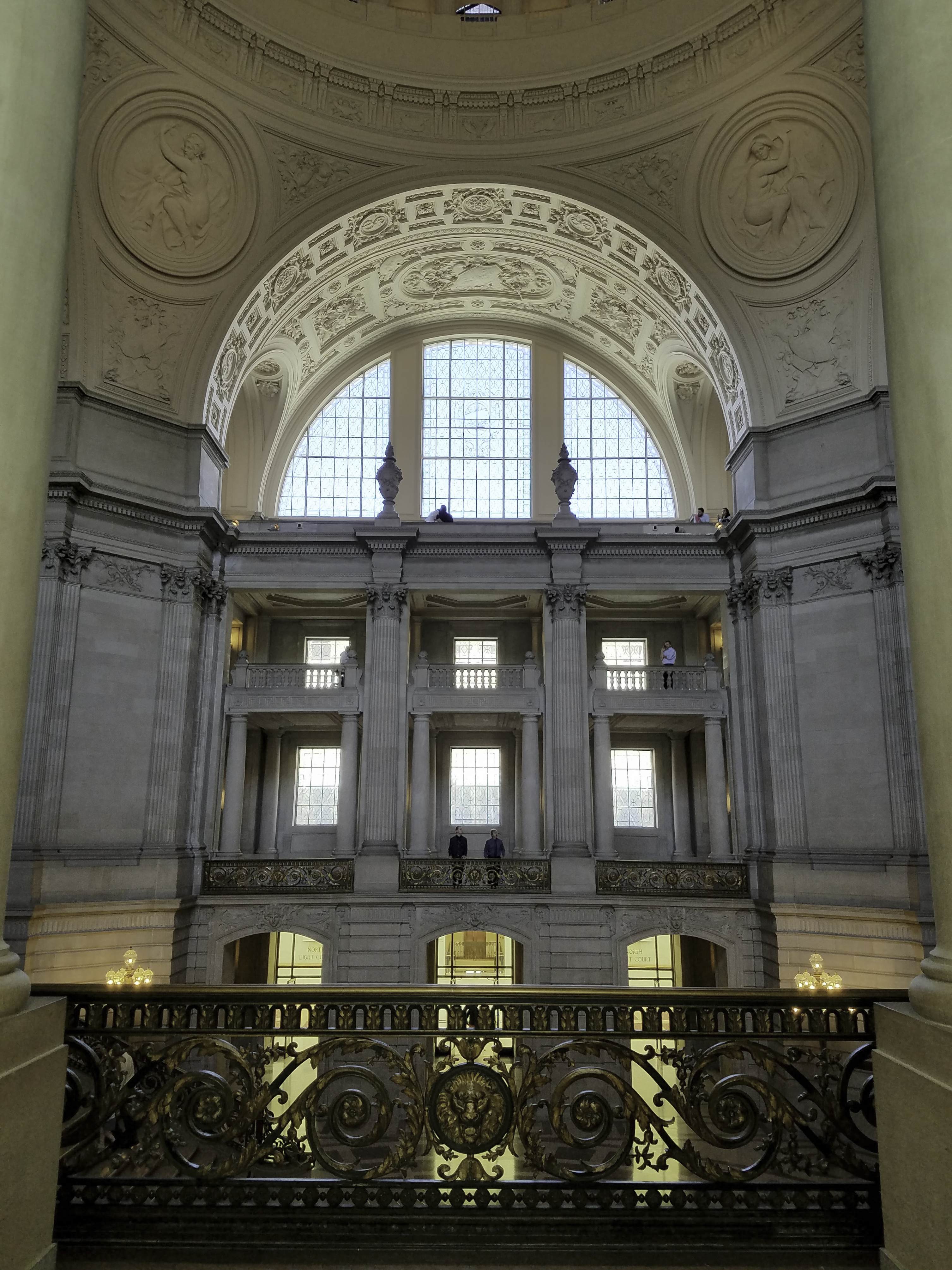
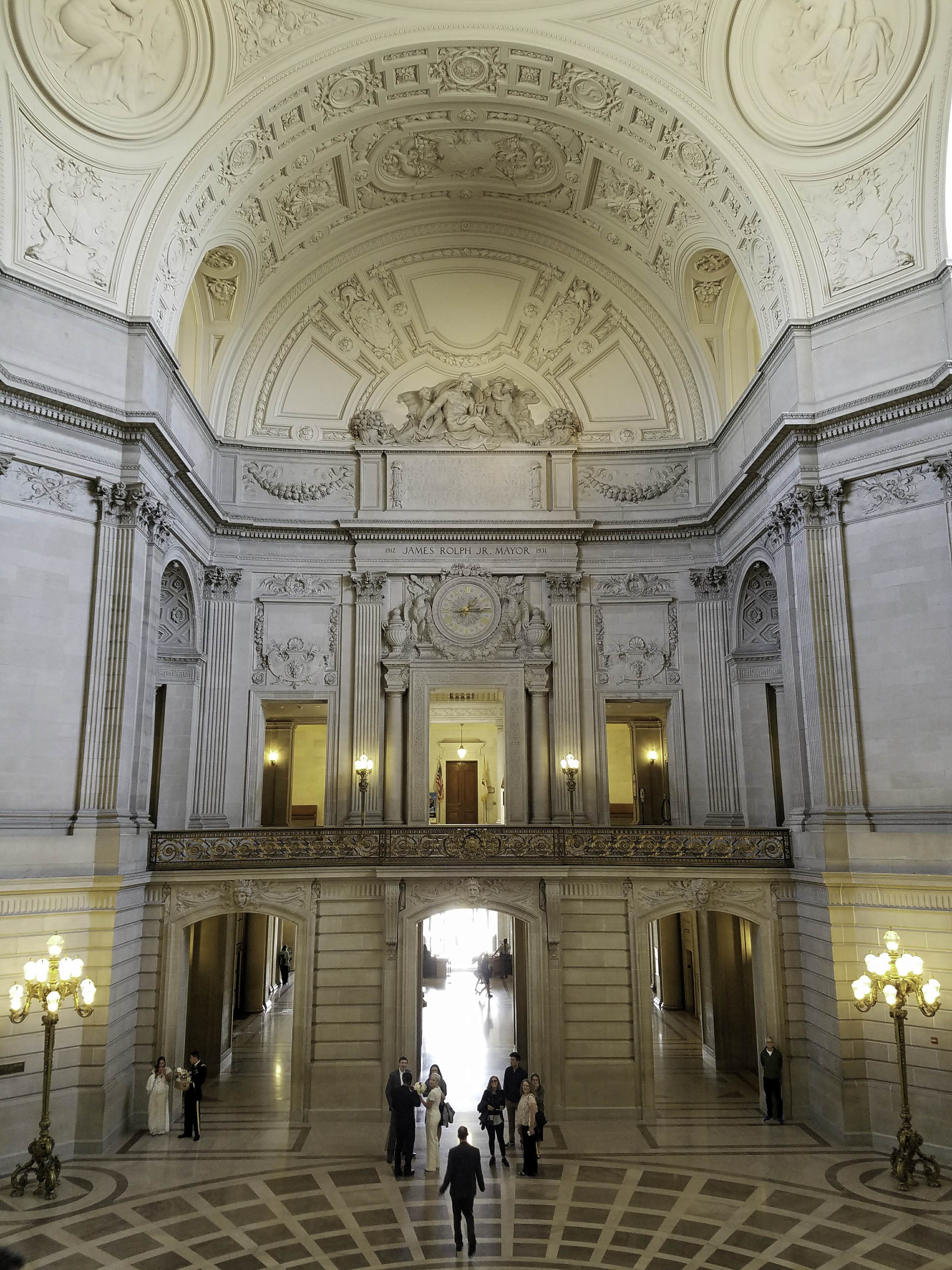
San Francisco is… three weddings in the City Hall

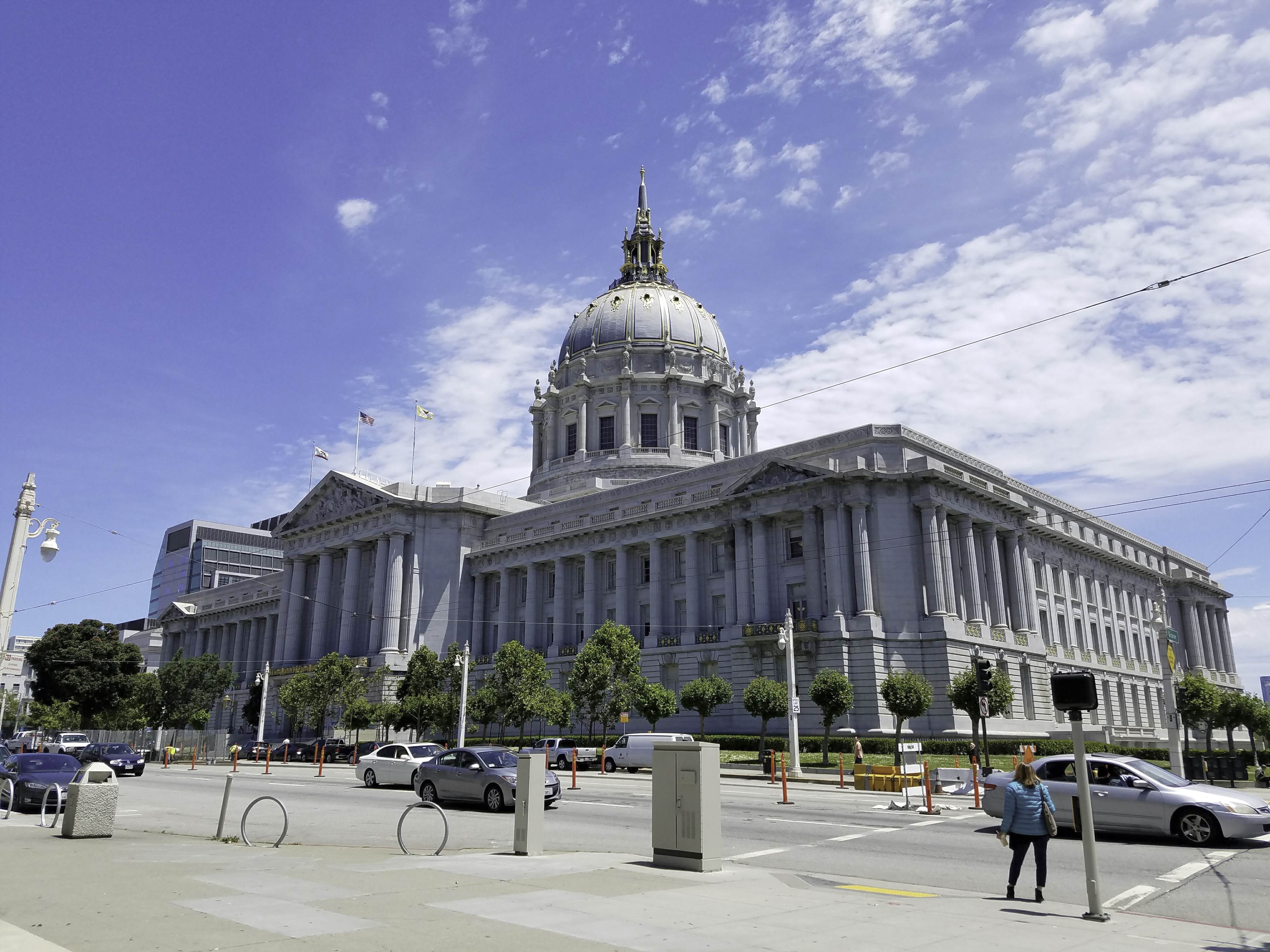
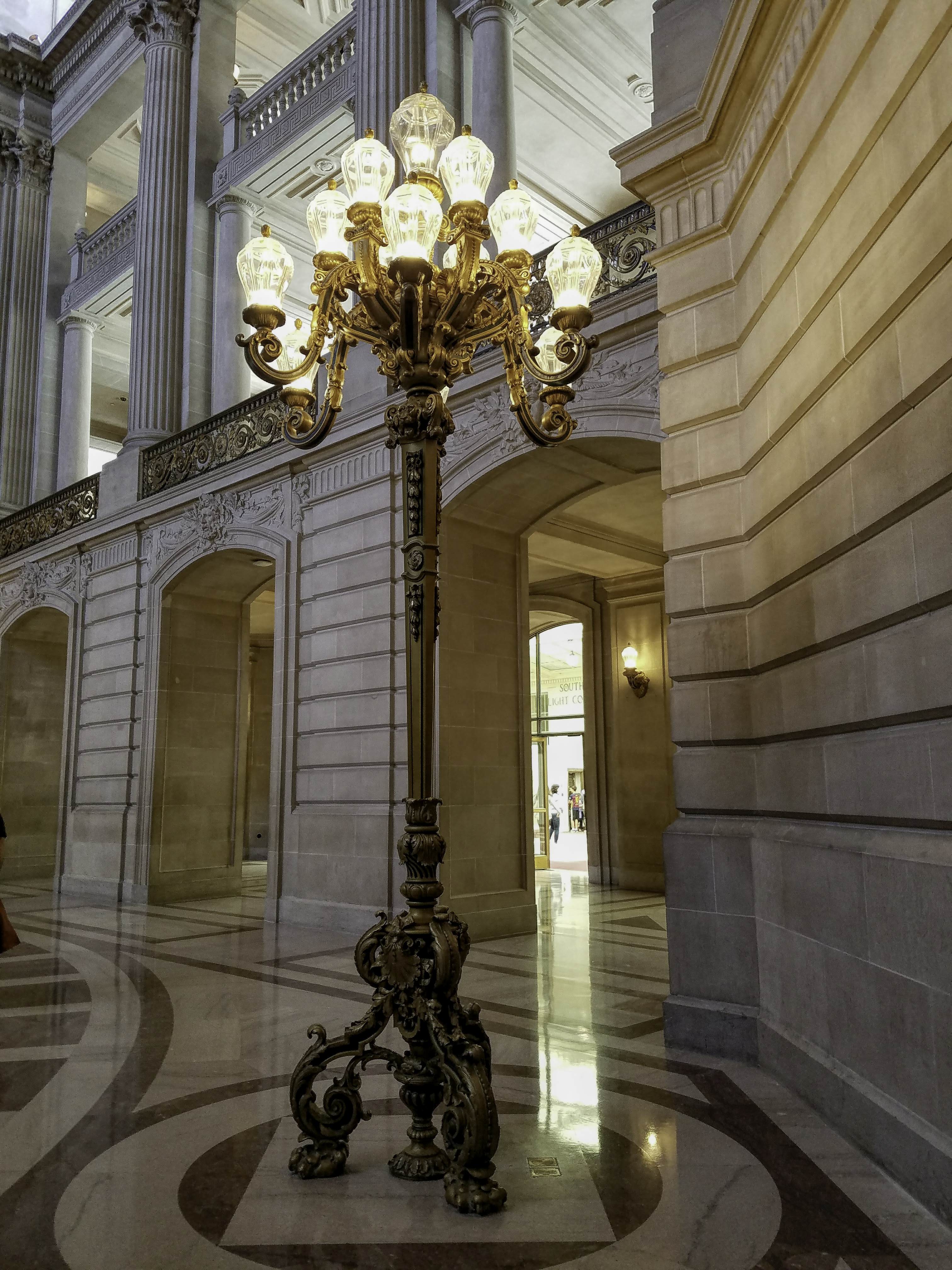
And that’s only the ones we witnessed during the time we spend in the City Hall – just over an hour. Looking at the vast open space of the central rotunda with the grand staircase, I’m not surprised they are on a tight schedule. Who wouldn’t want to get married under this magnificent dome! Marilyn Monroe and Joe Di Maggio did it in 1954. A number of gay couples were finally able to wed in 2004 when Gavin Newsom, then mayor of the city, made history by issuing same sex marriage licences. On the day we visited, the rotunda echoed with cheers. It was a happy day. 

Completely destroyed in the Great Earthquake of 1906, reconstruction began in 1913 and the new building was ready in 1915, in good time for the World’s Fair of the same year. Designed by architect Arthur Brown, Jr. in the Beaux-Arts style, it suffered severe damages yet again, when struck by another earthquake in 1989. Repairs and reinforcements were completed ten years later, making the building earthquake proof. I’m just glad we didn’t have to find out how resistant the structure has become.

The City Hall

July 5th, 2017

San Francisco is… Bullitt!

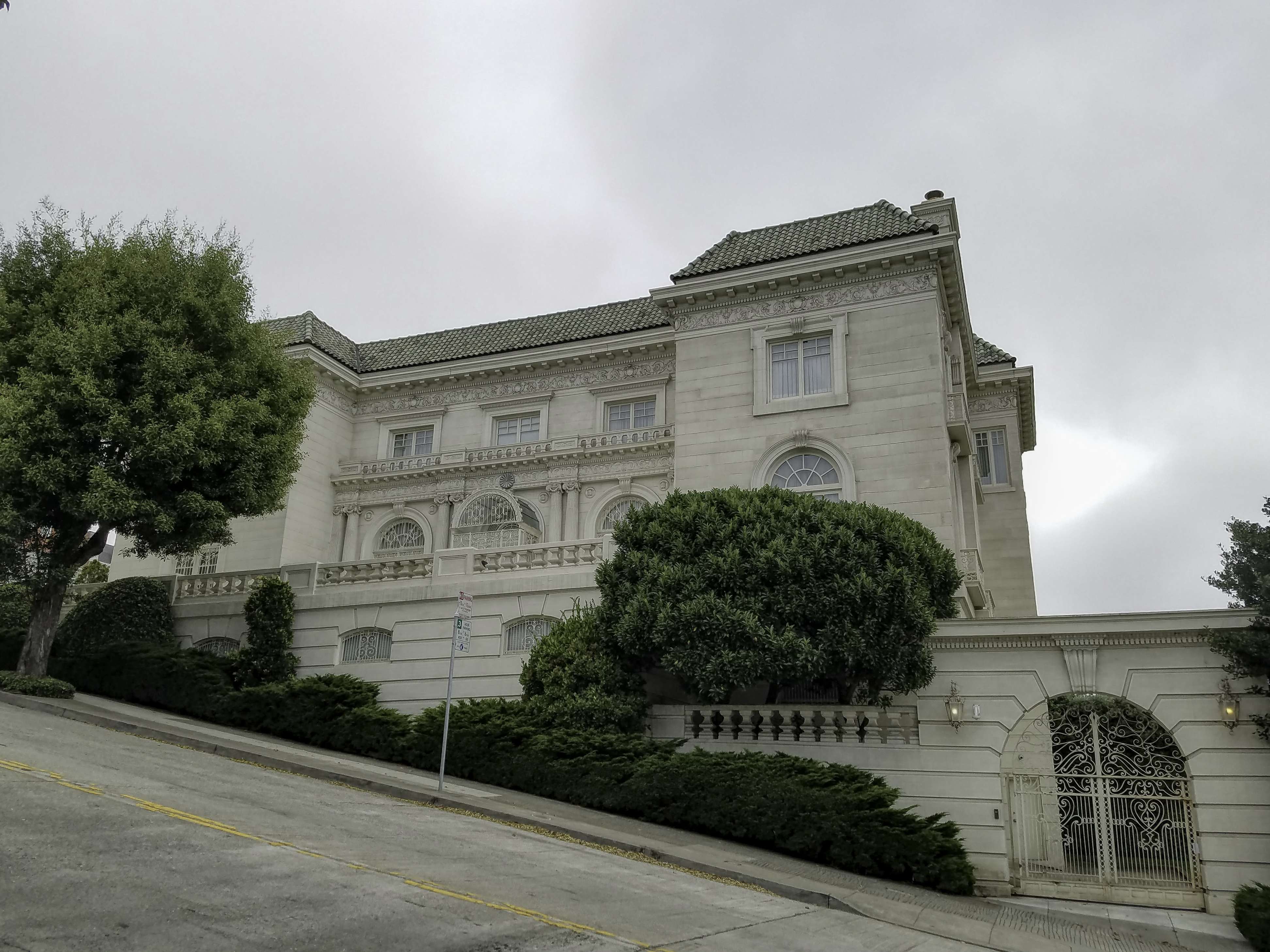
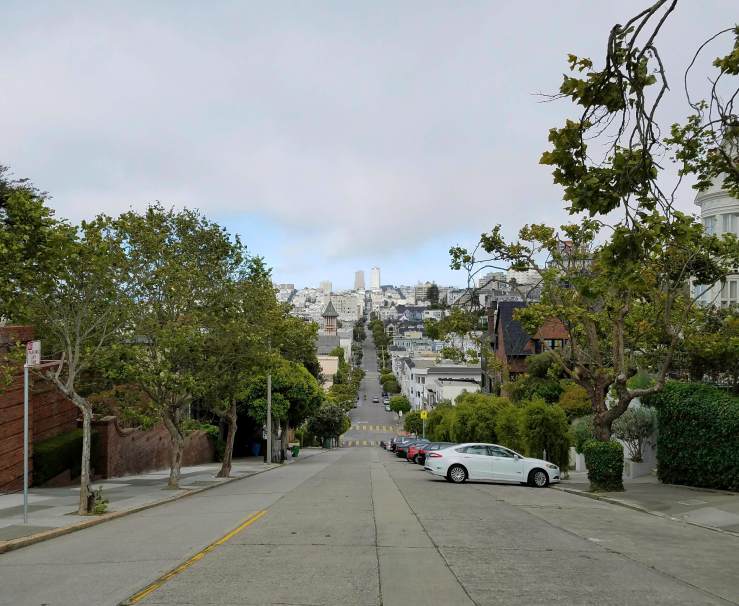
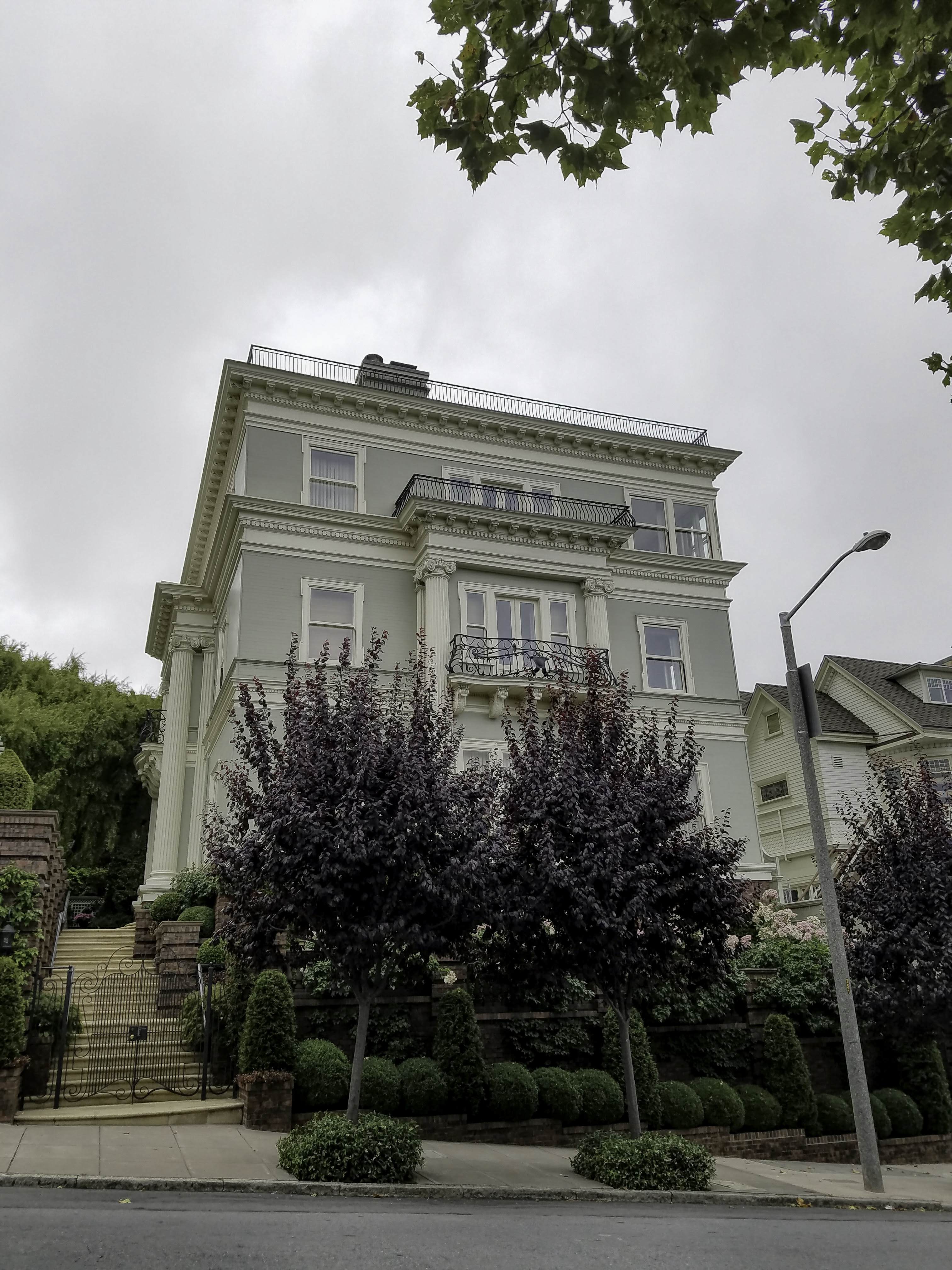
We watched Bullitt in preparation of the trip, just a few days before departure, so I was very excited to have spotted one of the filming locations very close to Alamo Square where we were staying. A brief 35 minute walk via Divisadero St. and its rather wonderful mansions, or 1.6 miles according to my web map.  What could be easier? Well, walking 35 minutes uptown hilly Manhattan, that’s what. For I still had to get to grips with the steepest streets I had ever encountered in a city, the very same that sent the cars flying in one of the most exciting car chases in film history(skip to 3:15 and buckle up).

We did make it, with a few extra huffs and puffs, to the gorgeous mansion atop the hill, where police detective Lieutenant Frank Bullitt (Steve McQueen) meets District Attorney Walter Chalmers (Robert Vaughn) at a reception at Chalmer’s residence.

A break for some extra cheesy pizza to treat ourselves, because what comes up must come down… and then all the way up again.

 Walking towards the mansion in the corner of Divisadero St. & Vallejo St., down to Lombard St. at Cow Hollow for a pizza and then back to Alamo Square Park to watch the 4th of July fireworks.

July 4th, 2017

San Francisco is… postcard-perfect

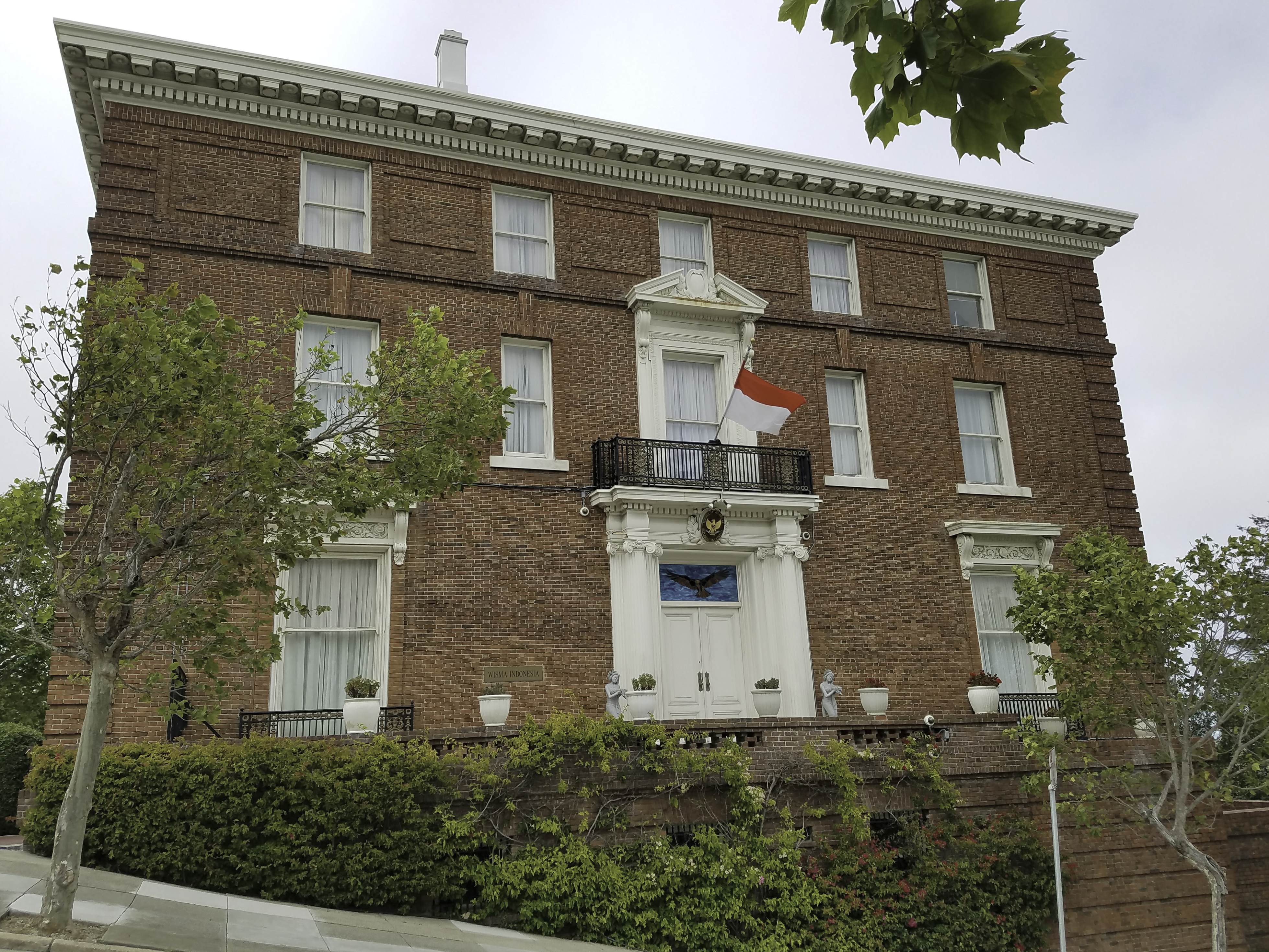
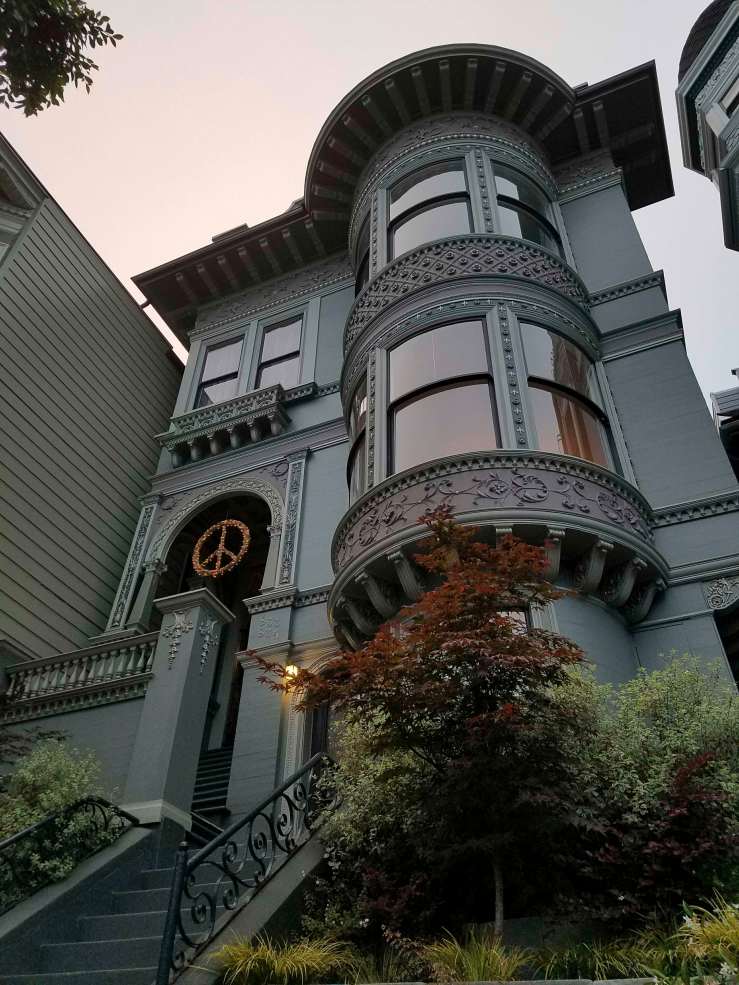
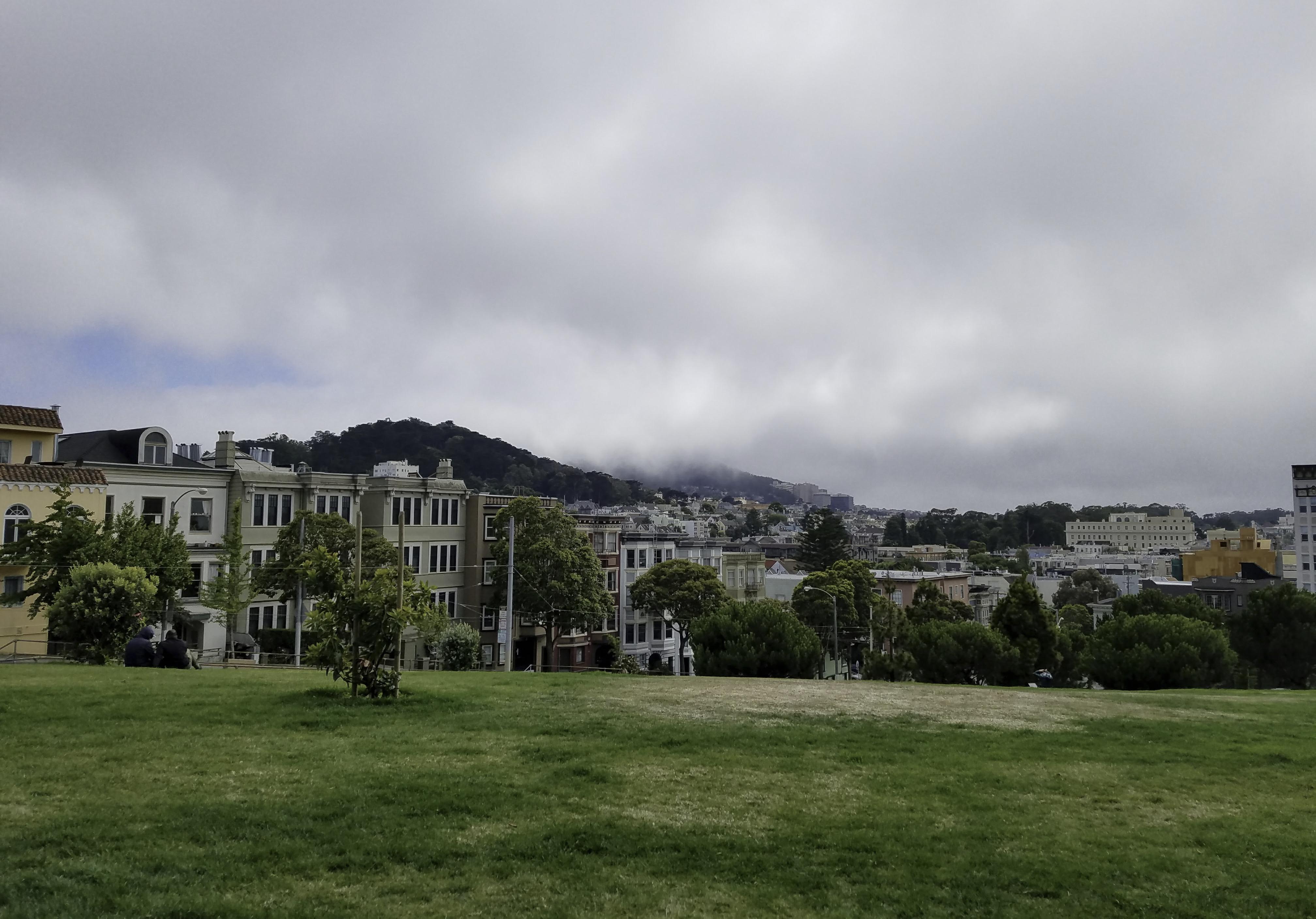
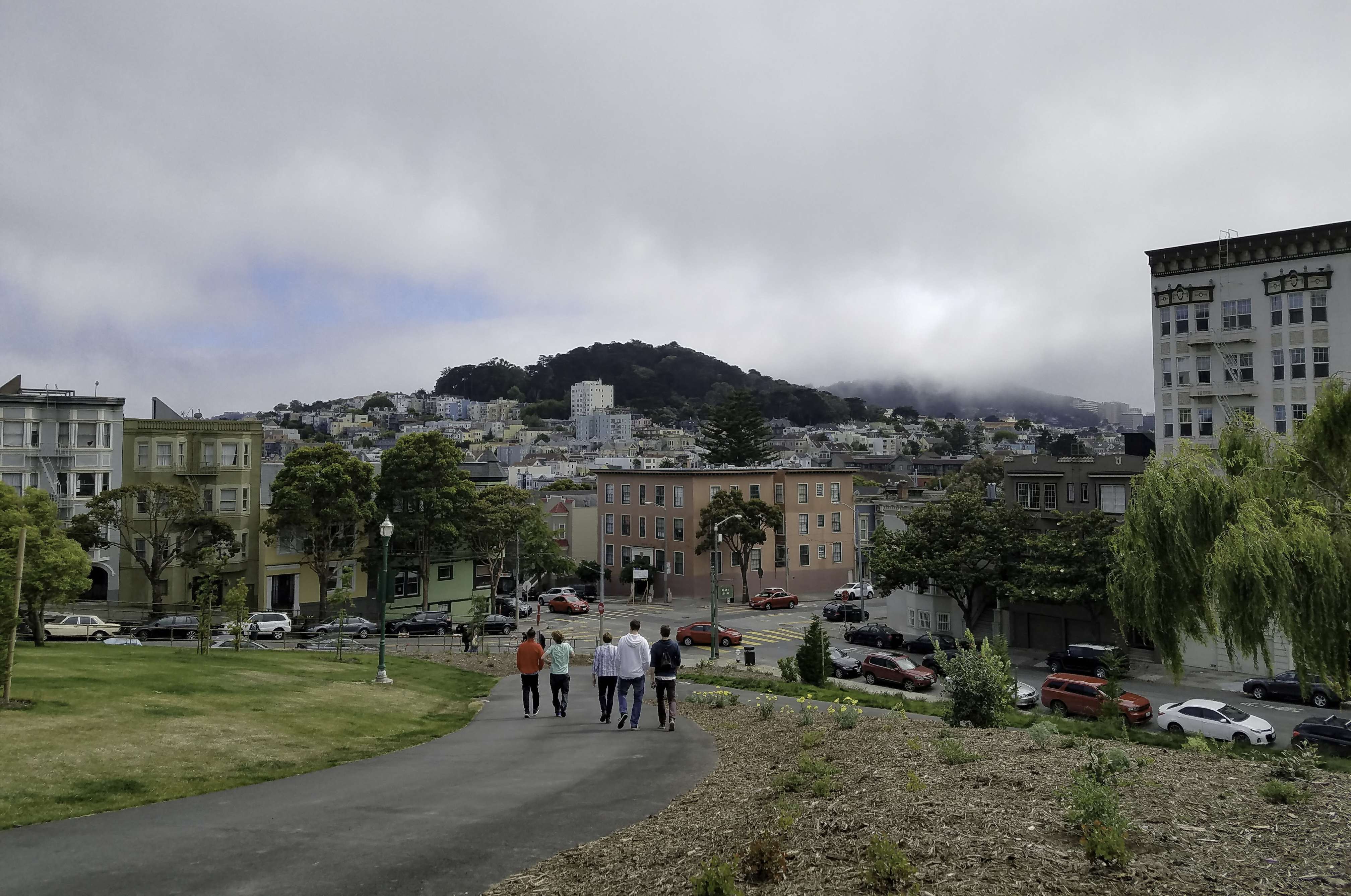
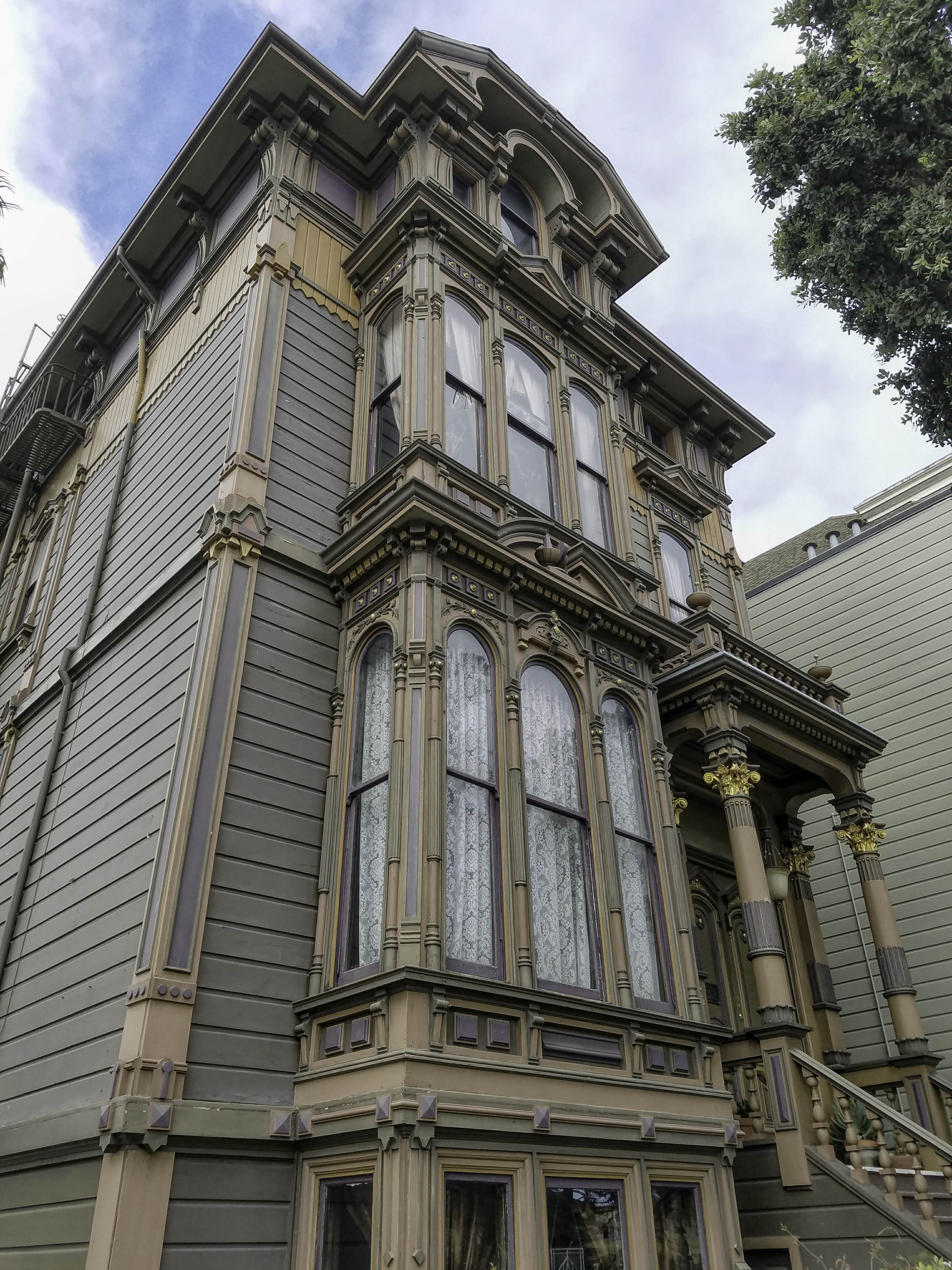
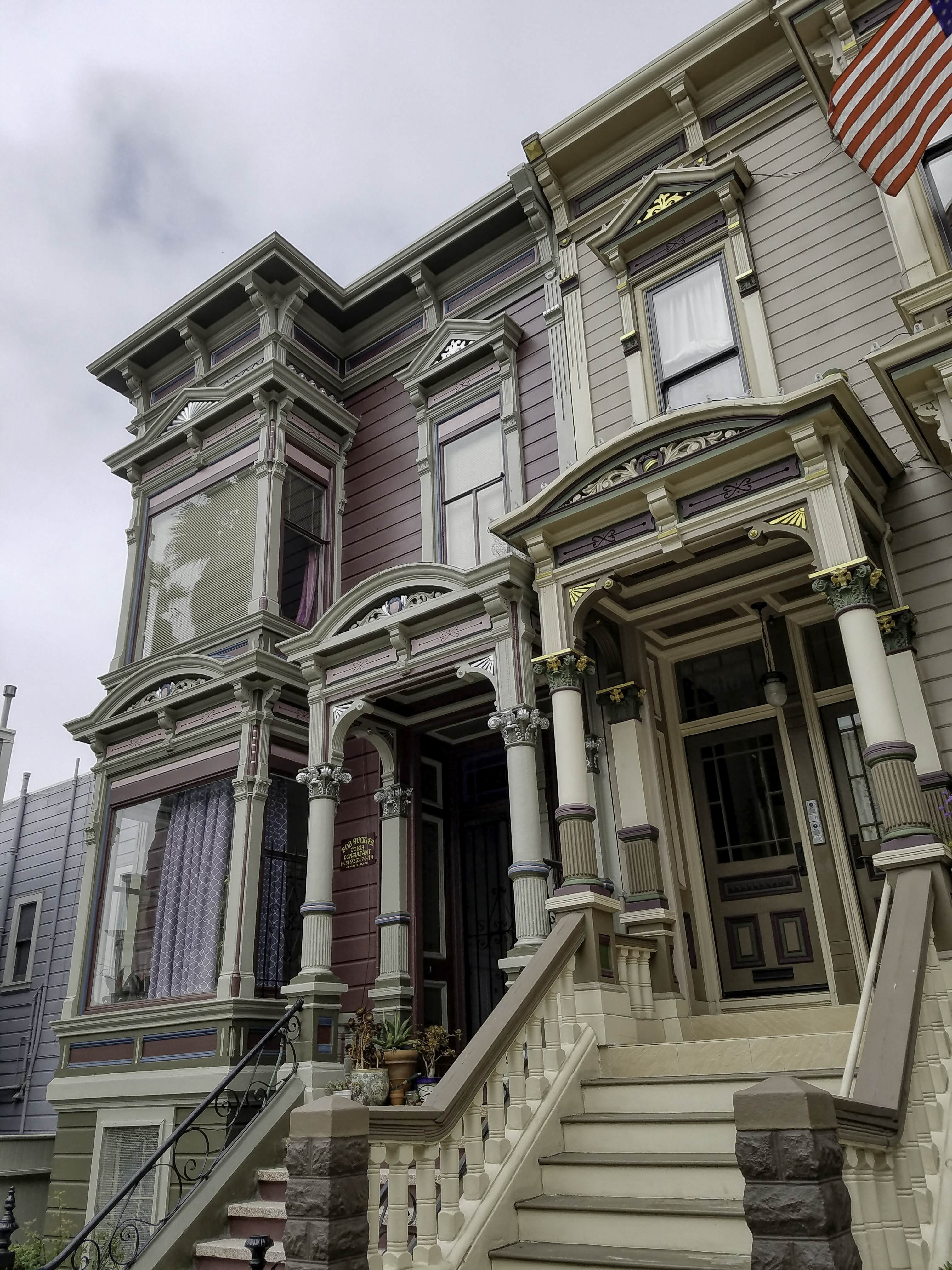
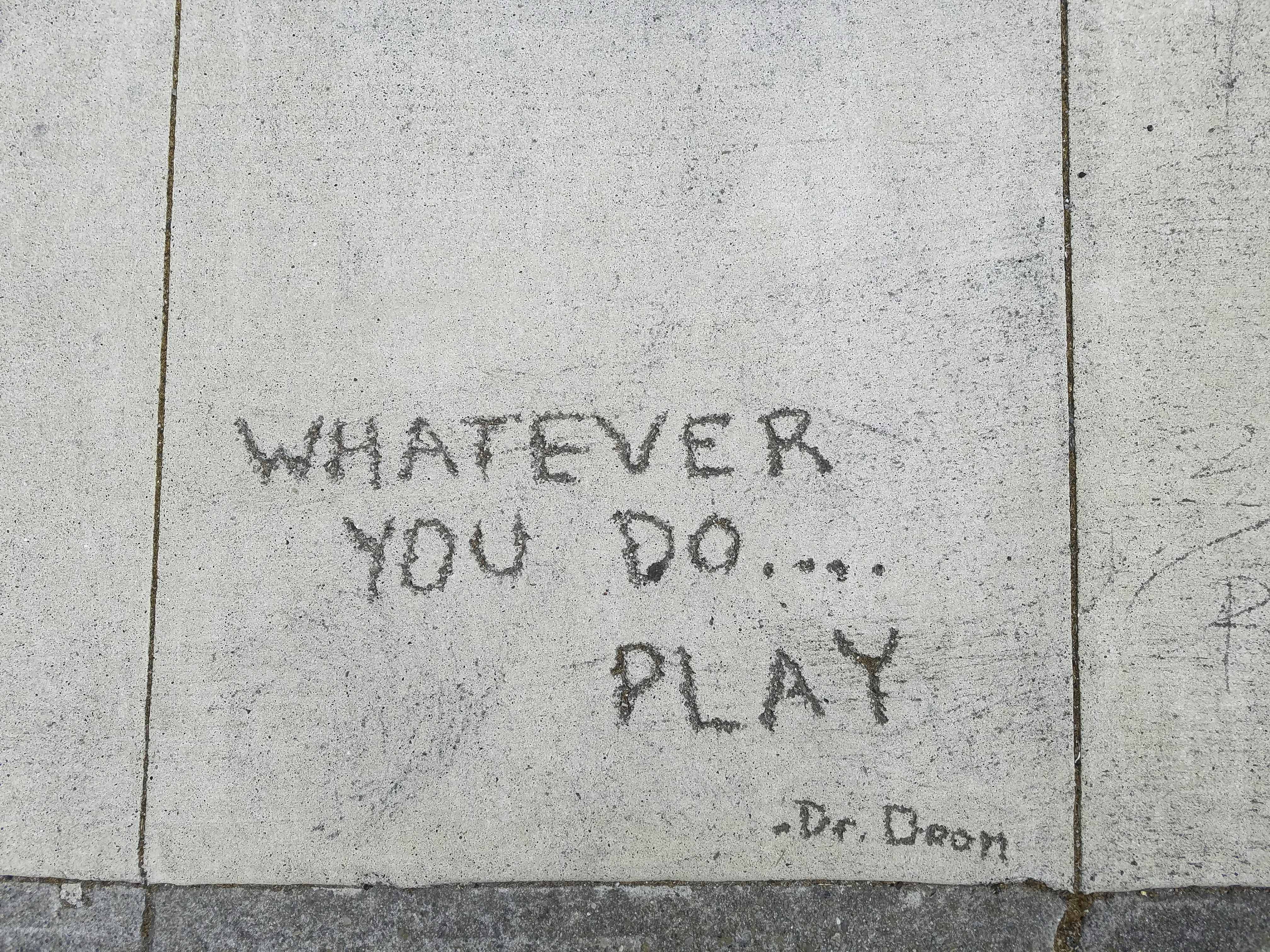
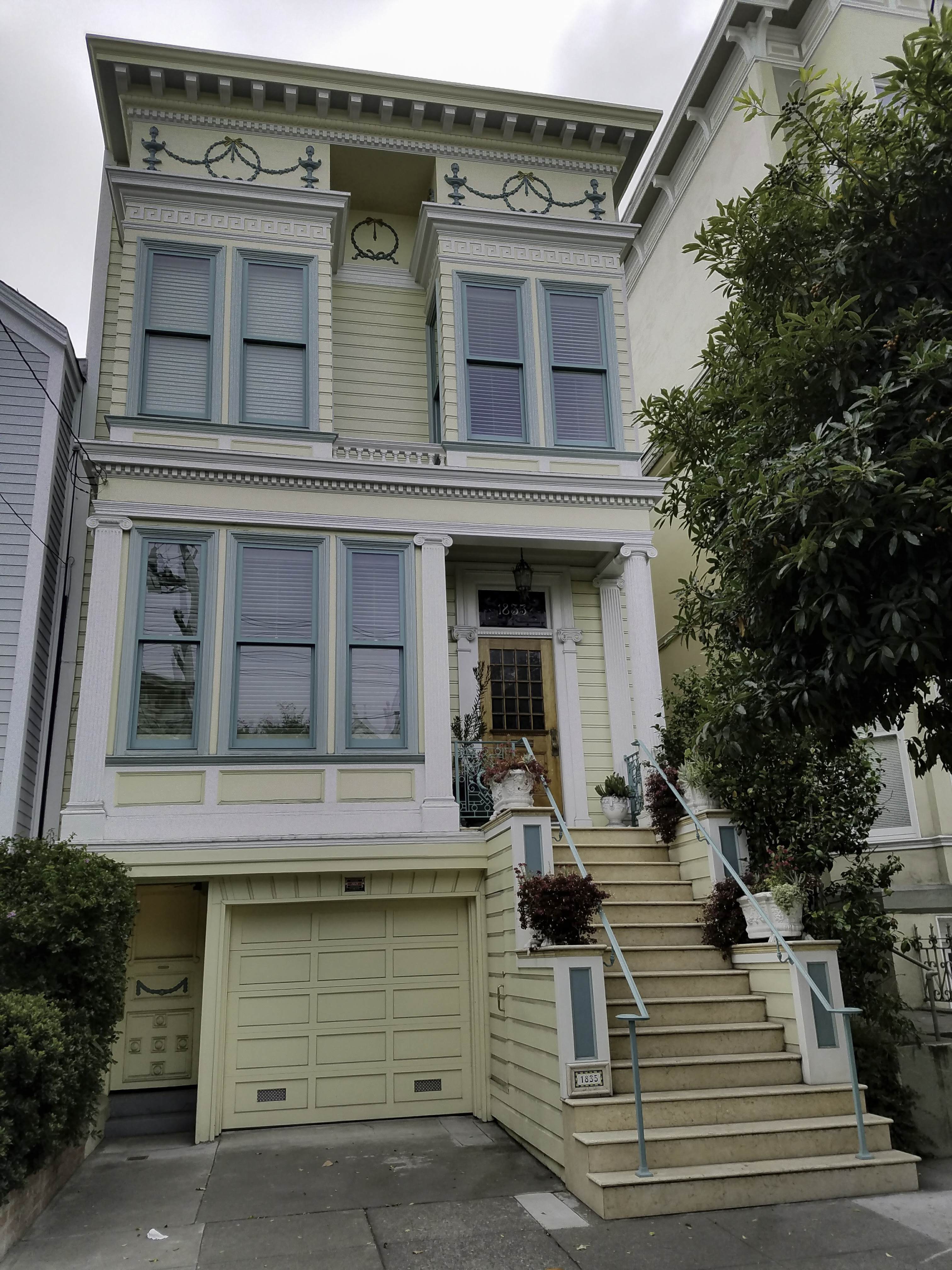
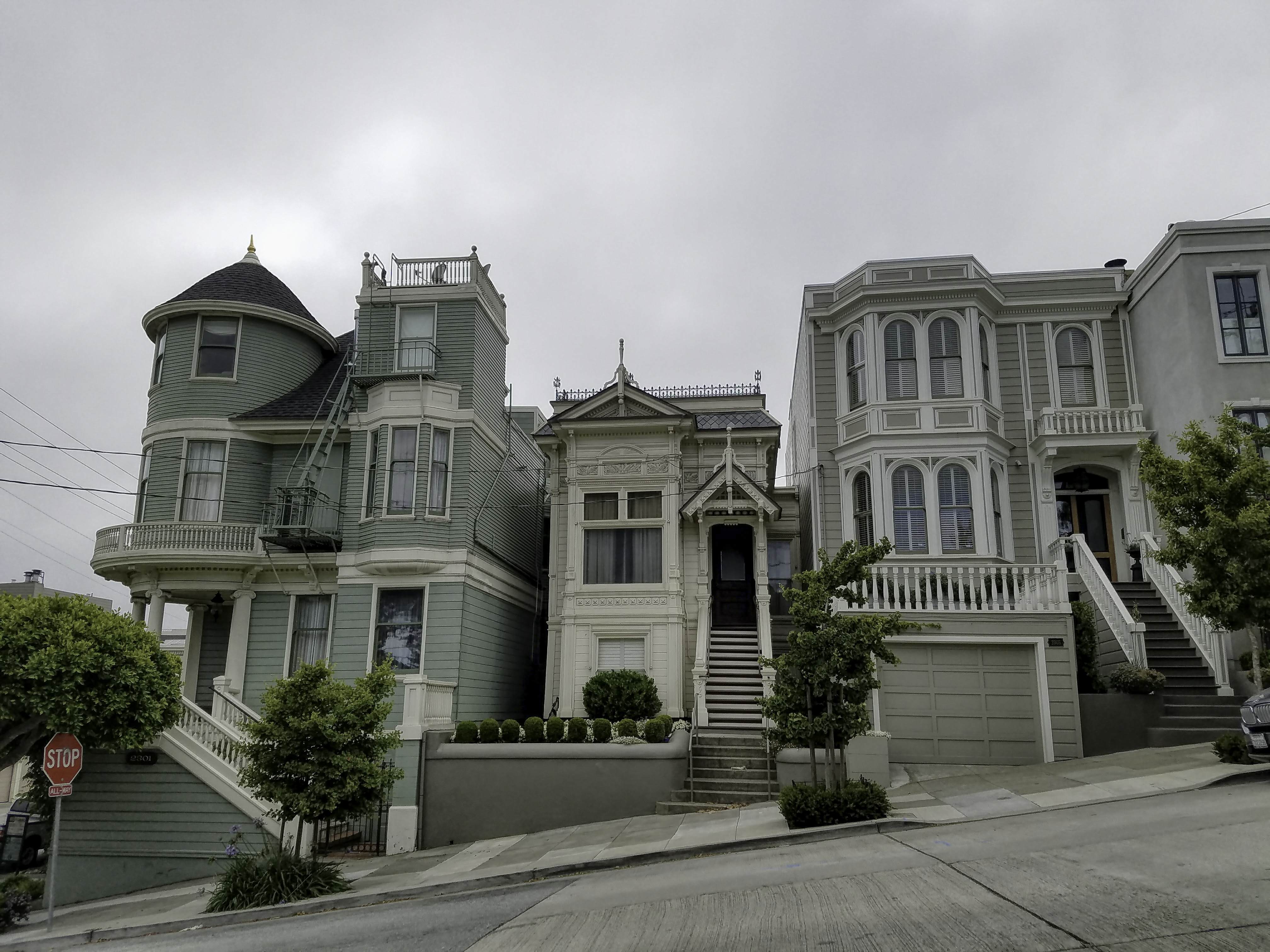
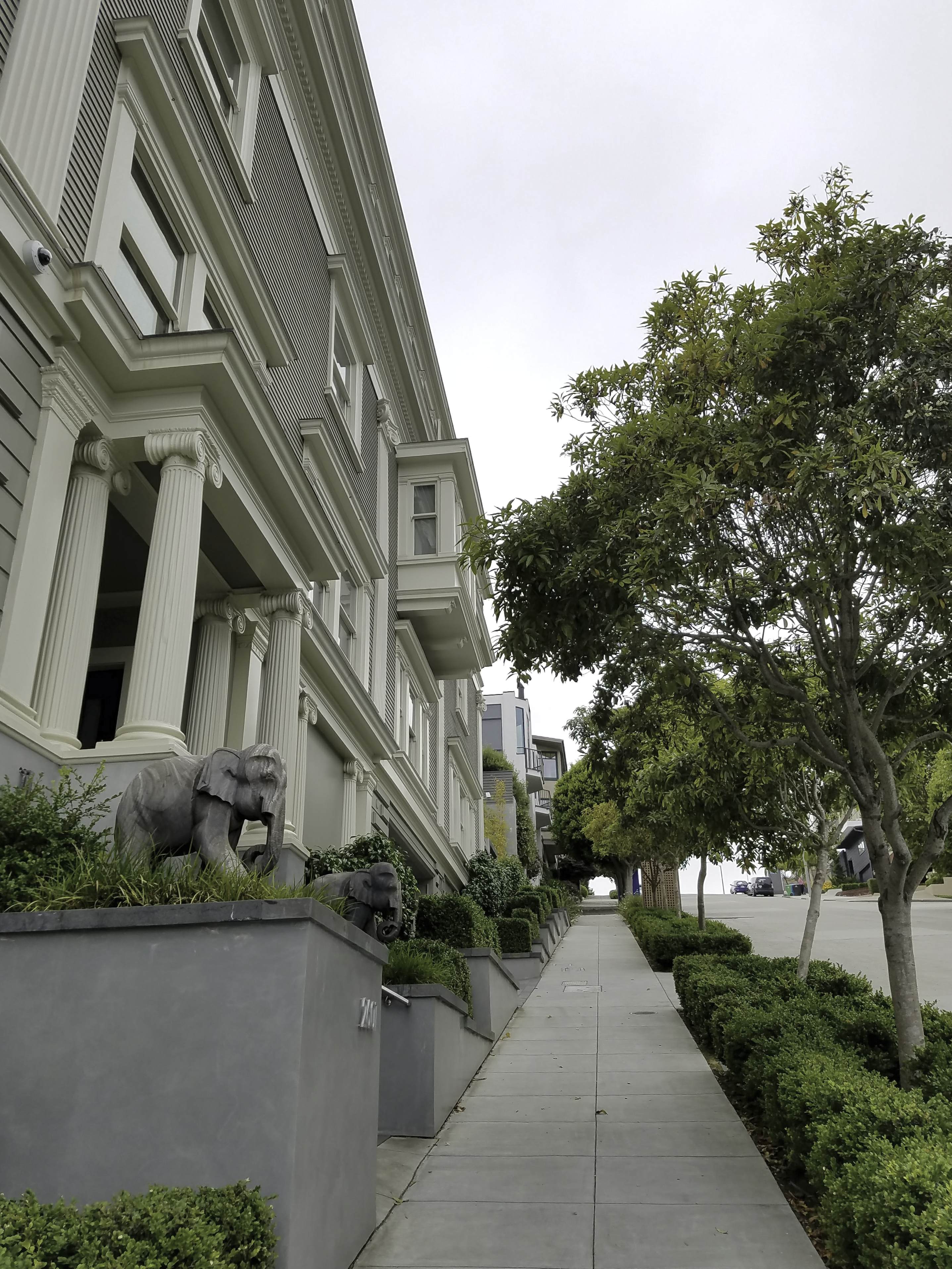
First port of call was Alamo Square with its incredibly charming, perfectly aligned pastel Painted Ladies; so perfectly pastel and aligned, I thought I had walked into a Wes Anderson film. Beyond them, San Francisco Downtown was beckoning. Excited as we were to discover it, it would have to wait because the Painted Ladies were only the start. For street after street, mansion after mansion, this entire district of San Francisco seemed to be a giant postcard.

It was a cool day with low clouds coming up from the East. Partly cloudy and grey but not dull at all. My eyes had yet to adjust to the light – so much different than in New York: similarly bright, but the dominant hues were blue, instead of the orange-yellow ones my eyes have been accustomed to. And, instead of being reflected on glass buildings, here the light was generously diffused, making objects seem sharper, colours brighter and the grass greener. Even on a cloudy day.

I would also have to adjust to the temperature, surprisingly cool – and I mean sweater and a light jacket cool – even in July. One tends to dream of sunshine and hot days on the beach when thinking of California, not this cool-summer-continental, one has learned to expect in Northern Europe.  

Walking from Alamo Square to the Pacific Heights, via Divisadero St. and its environs

July 4th, 2017

“Cabin crew, please take your seats for landing”

Ladies & Gentlemen, welcome to San Francisco!

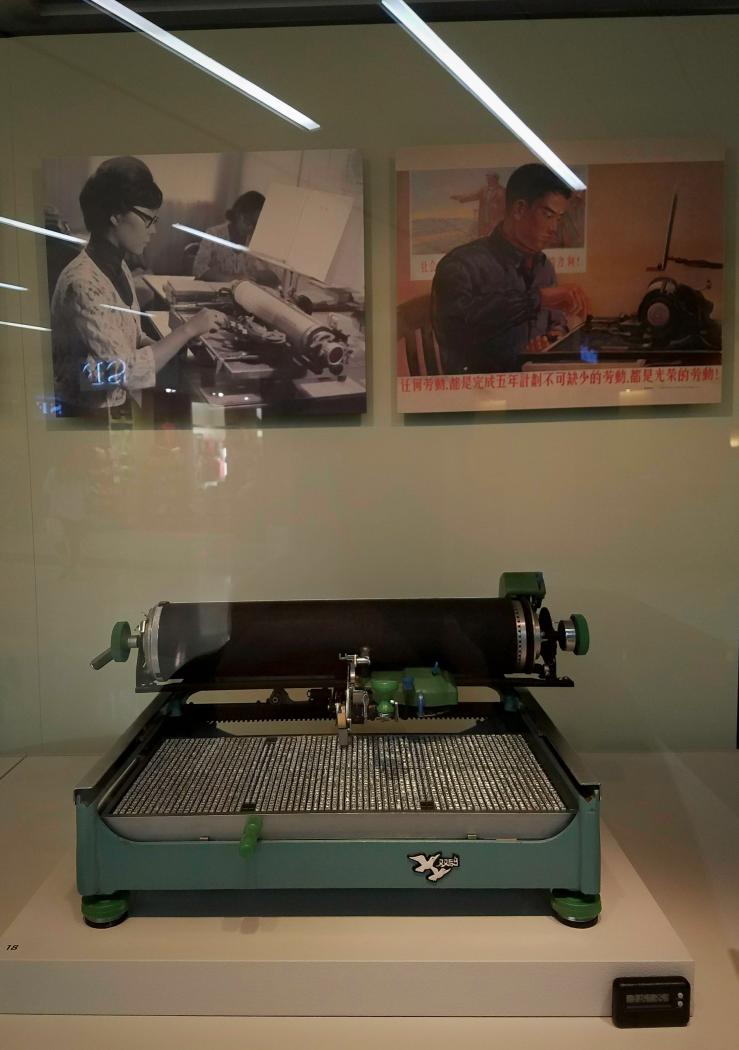
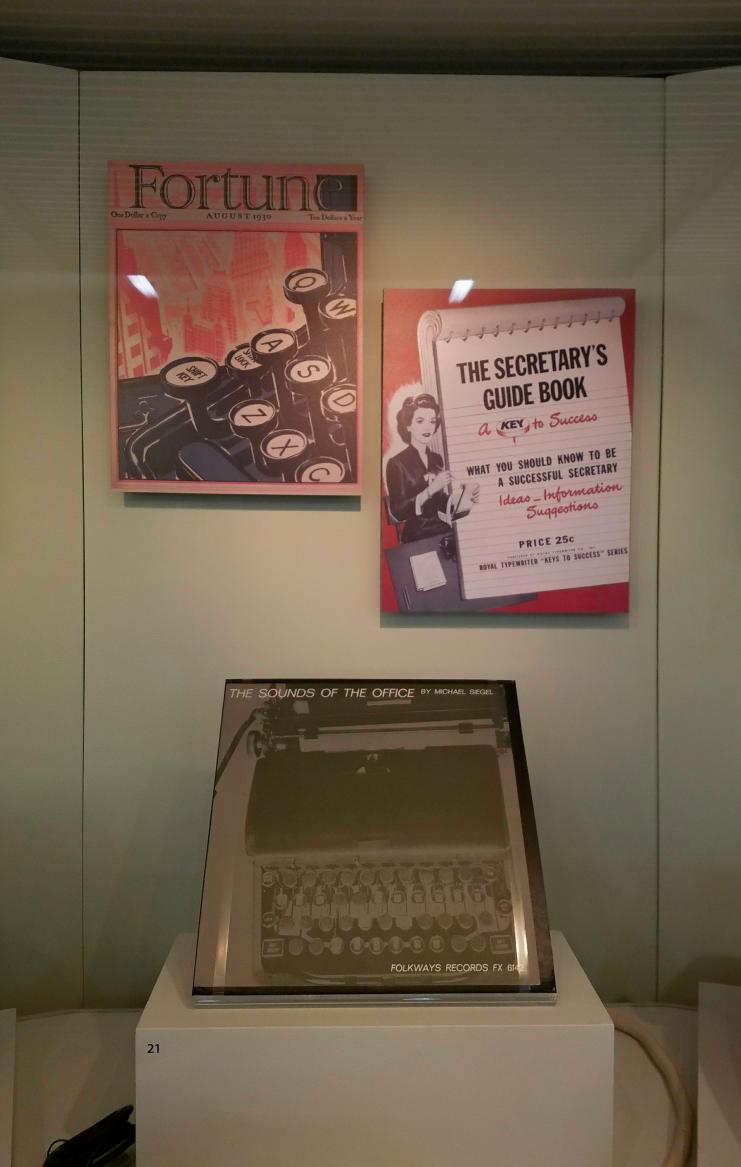
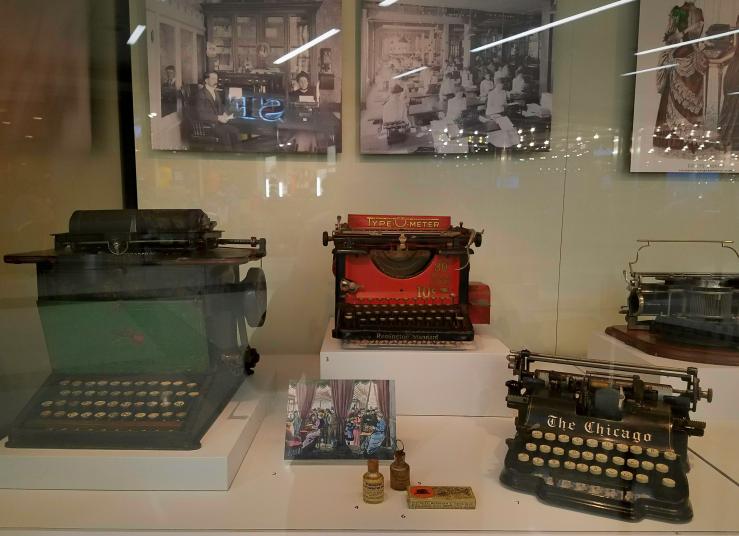
You know you’re in the right place when -on touch down- you’re greeted with a display of some of the most iconic antique typewriters ever produced. Japanese Typewriters

Chinese and Japanese script are logographic and utilize characters that represent elements of words or meanings. Chinese is one of the most ancient forms of active writing, with over 80.000 characters identified throughout different eras and regions of China. Modern Chinese is simplified. Around 3.500 characters are defined in the List of Frequently Used Characters in Chinese, with approximately 2.500 in Common-use Character lists published by the Chinese government.

In 1915, Japanese printer and inventor Kyota Sugimoto (1882-1972) patented a typewriter that printed in both Chinese and Japanese. Manufactured by the Nippon Typewriter Company, the machine featured a large, sliding tray to room for 2.450 individual type-slugs. 


The Chinese typewriter

Typing in Chinese or Japanese on a flatbed typewriter is a complex procedure. Operators of these machines must familiarize themselves with the location of more than 2.000 type-slugs, and most early typists averaged twenty to thirty characters per minute. Typing speed substantially increased with the arrangement of type-beds by operators to suit their individual needs. In the early 1950s, the New Typing Method introduced ”radiating compound” organization to Chinese typists. Depending on subject matter, associated characters were arranged around central, primary characters in radiating patterns. Typists were responsible for their own layouts, and organization differed dramatically. For instance, a layout for a government office would be quite different than for a factory, with names of officials substituted for company names and technical terms.

Throughout the 1950s, most Chinese language typewriters were manufactured in Japan. The Chinese government restructured typewriter production under the new communist regime and in 1964, the Shanghai Chinese Typewriter Manufacturers Association introduced a flatbed typewriter. Based on the Japanese typewriter produced by Nippon Typewriter Co. in Tokyo, the revitalized machine was branded the Double Pigeon DHY and made by Shanghai Calculator & Typewriter. Available with either ribbon-or roller-inking mechanisms, the DHY was the iconic typewriting machine of the People’s Republic of China and was manufactured until 1992.


Olivetti Design

The Valentine is perhaps the most iconic Olivetti typewriter, envisioned by designer Ettore Sottsass (1917-2007) as an inexpensive and simple-yet-stylish portable.


Royal Quiet De Luxe with carrying case, 1949
Royal Typewriter Company, Inc. Hartfort, Connecticut


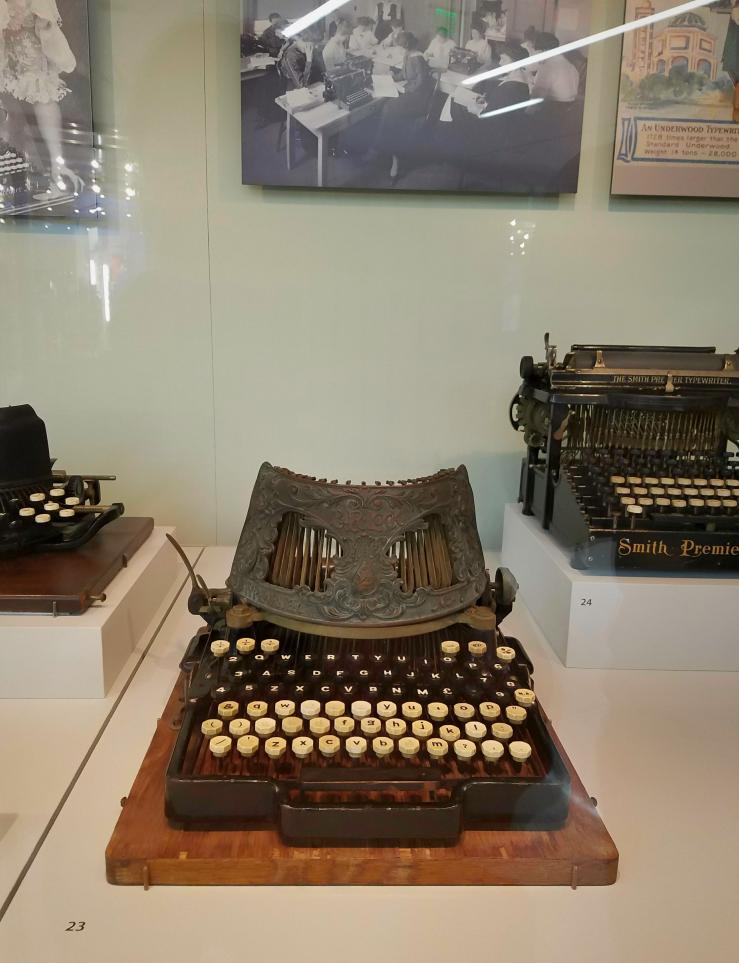
Bar-Lock No. 6, 1895
Columbia Typewriter Company, New York

Double Keyboards

Modern typewriters use a shift-key mechanism to select upper- and lower-case characters. Many models introduced during early typewriter production utilized a double-keyboard arrangement, with two banks of keys organized by upper and lower cases. Initially, makers of double-keyboard machines promoted their potential speed and efficiency. The Smith Premier was the best-selling typewriter of this group and advertised ”a key for every character”. Like the Sholes & Glidden Type Writer and early Remington models, the Smith Premier was an upstroke machine and did not print within the user’s view – its carriage had to be lifted to reveal the paper and printed text.


Williams No. 1, 1895
The Williams Typewriter Company, New York


Crandall New Model, c. 1890
Crandall Machine Company, Groton, New York


Chicago No. 2, 1905
Chicago Writing Machine Co.


Underwood Standard Portable Typewriter with hand-lettered case, 1926
owned by Orson Welles
Underwood Typewriter Company, New York

Typescript for Citizen Kane, 1941


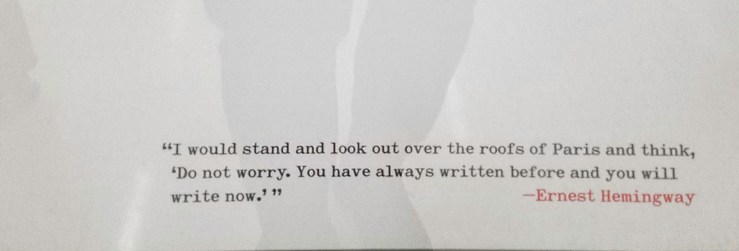
Royal Model P, 1932
owned by Ernest Hemingway
Royal Typewriter Co., Inc. New York

Our amazing trip to the West Coast had just began in the best way possible – in San Francisco International Airport.

July 4th, 2017

Love you too, Son…!

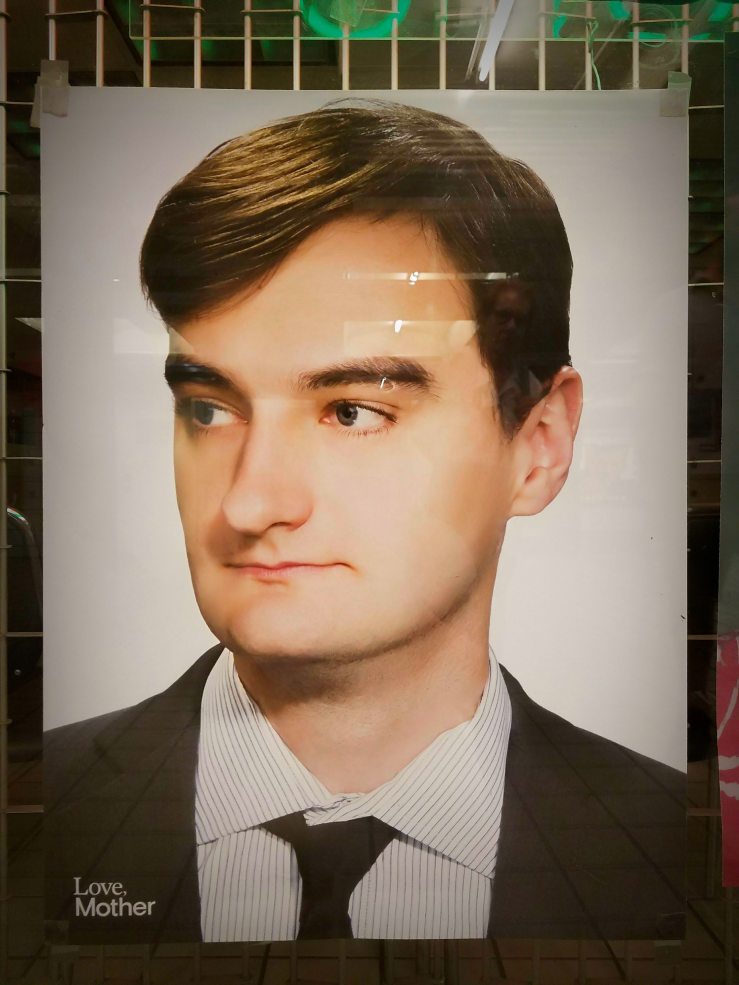
This poster on the window of a barber shop in Port Authority Subway, kept poking me; something about his sideways glance, unintentionally funny face and the ”Love, Mother” logo made me smile, every time.

Both the barber shop and the poster are gone now, but not without a trace: a brief search returned an interesting post on ”Jeremiah’s Vanishing New York” website as well as what ”this sideways glance” was all about.

July 2nd, 2017


My imaginary wish list

Sometime ago I mentioned how much I enjoy wandering about the period rooms at the Metropolitan, so painstakingly reconstructed by the museum curators that they compete in authenticity and splendour with the original ones. Today, let’s go for another walk to see some of the objects high on my imaginary wish list (and a couple of no-nos).

The pianoforte:Pianoforte, New York City, 1810-15
Patented by John Geib and Son. Case attributed to the workshop of Duncan Phyfe (1768-1844). Mahogany, rosewood, satinwood, ivory, gilded gesso, brass with white pine, maple, ash


The Square Piano (when more is too much – too complicated for my wish list, yet very impressive woodwork): Square Piano
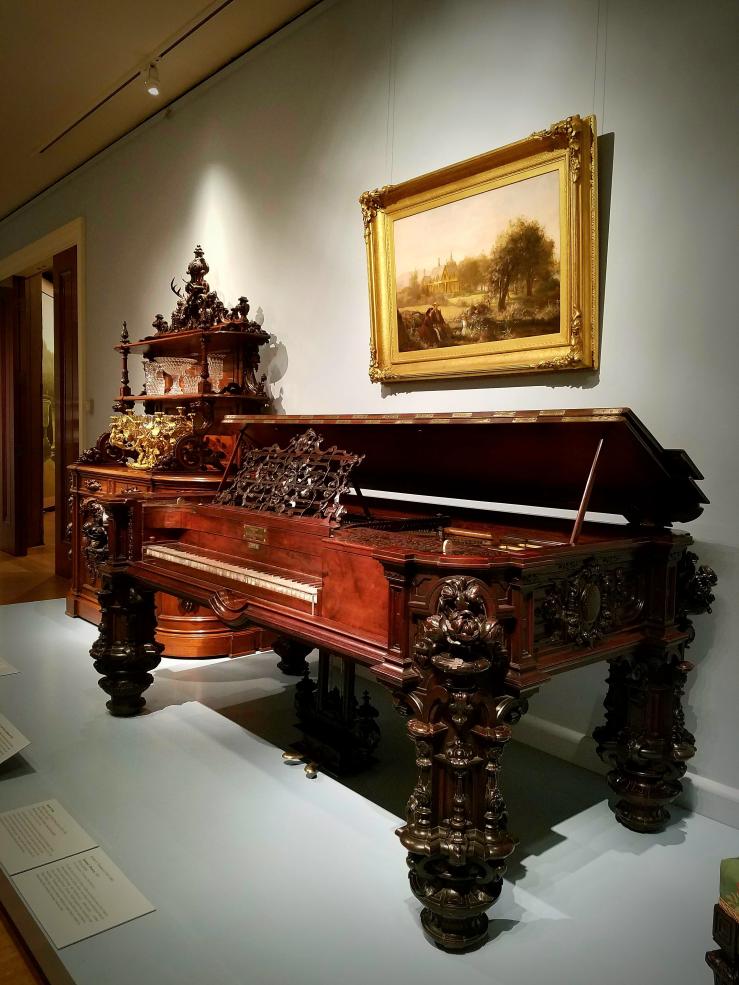
Robert Nunns and John Clark (active 1833-58)
New York City, 1853
Rosewood, mother-of-pearl and tortoiseshell

{Lavish decoration and opulent materials distinguish this extraordinary piano…. Its immense scale and excessive decoration make it quite unlike the small and economical upright pianos that became fixtures of middle-class parlours in the second half of the nineteenth century.}


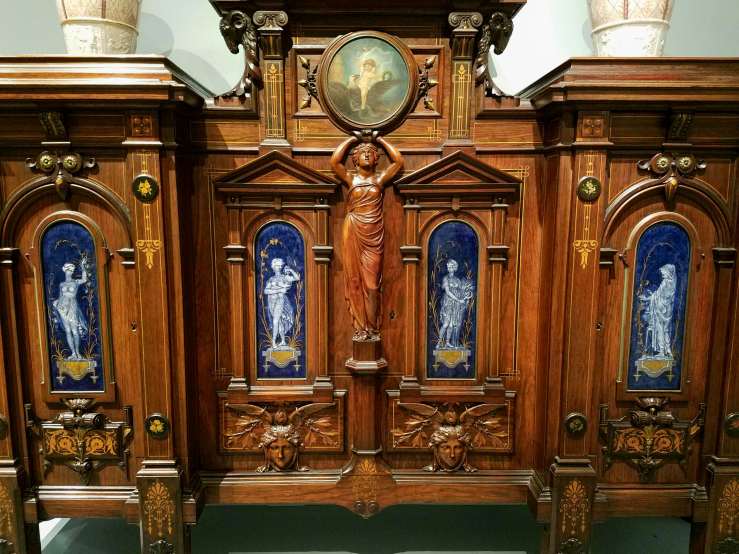
The Four Seasons cabinet: Cabinet
Herter Brothers (active 1864-1906)
New York City, ca. 1869
Rosewood, maple ebonized wood, porcelain plaques, oil on panel, brass

{This rich and imposing cabinet is from a ten-piece parlour suite made by Herter Brothers in 1869 for Jay Gould’s house on Fifth Avenue. Incorporating a design vocabulary taken from the architecture of the day, it is a tour de force of cabinetmaking, combining sophisticated marquetry, assured carving and delicately modeled ceramic plaques depicting the Four Seasons.}


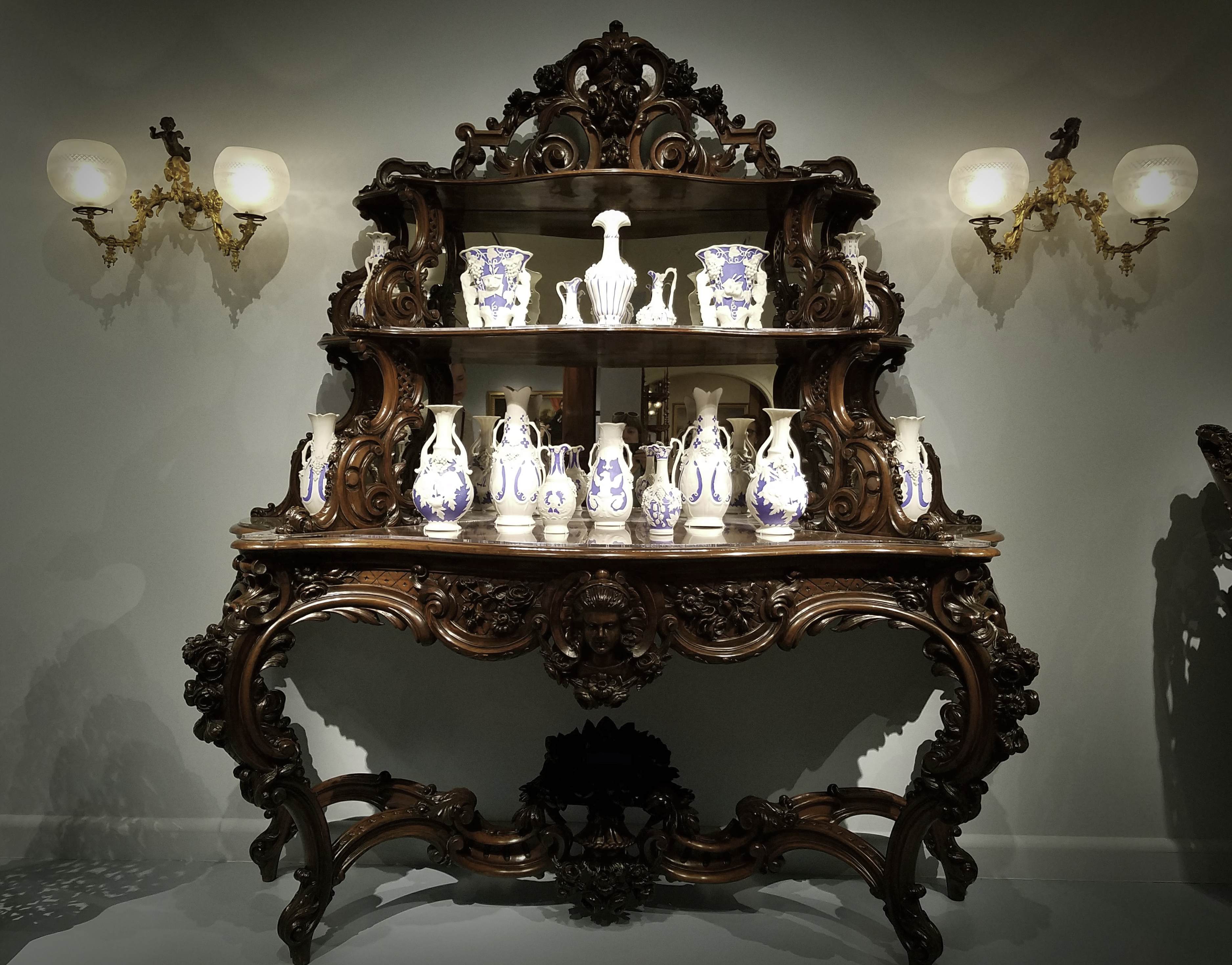
The Étagère in Rococo Revival style: Alexander Roux (active 1843-86)
New York City, ca. 1855
Rosewood, chestnut, poplar, bird’s-eye maple veneer


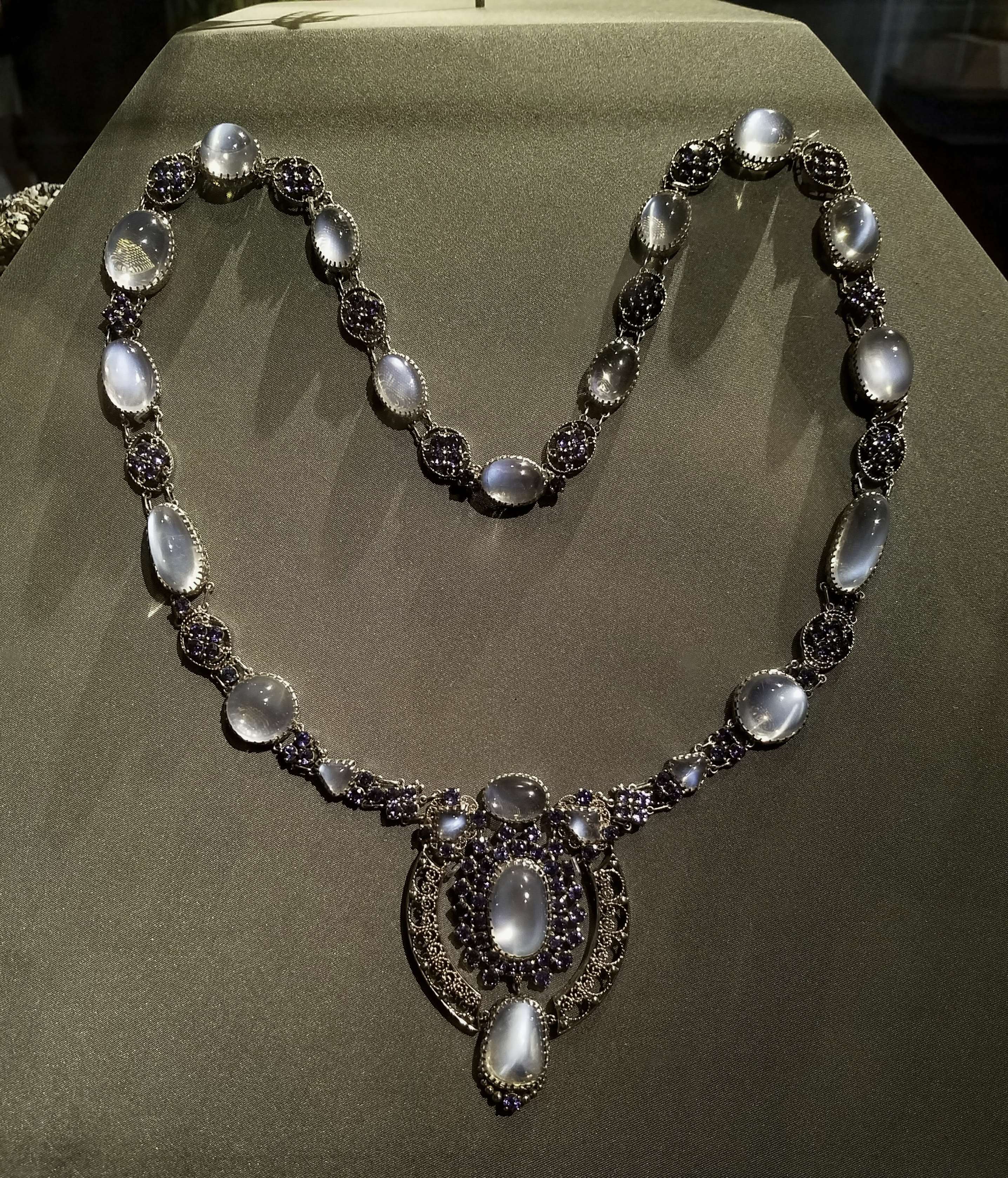
A Girl’s best friend (not just diamonds): Necklace with Pendant, ca. 1910
Louis Comfort Tiffany
Tiffany and Company
Moonstones, Montana sapphires, platinum


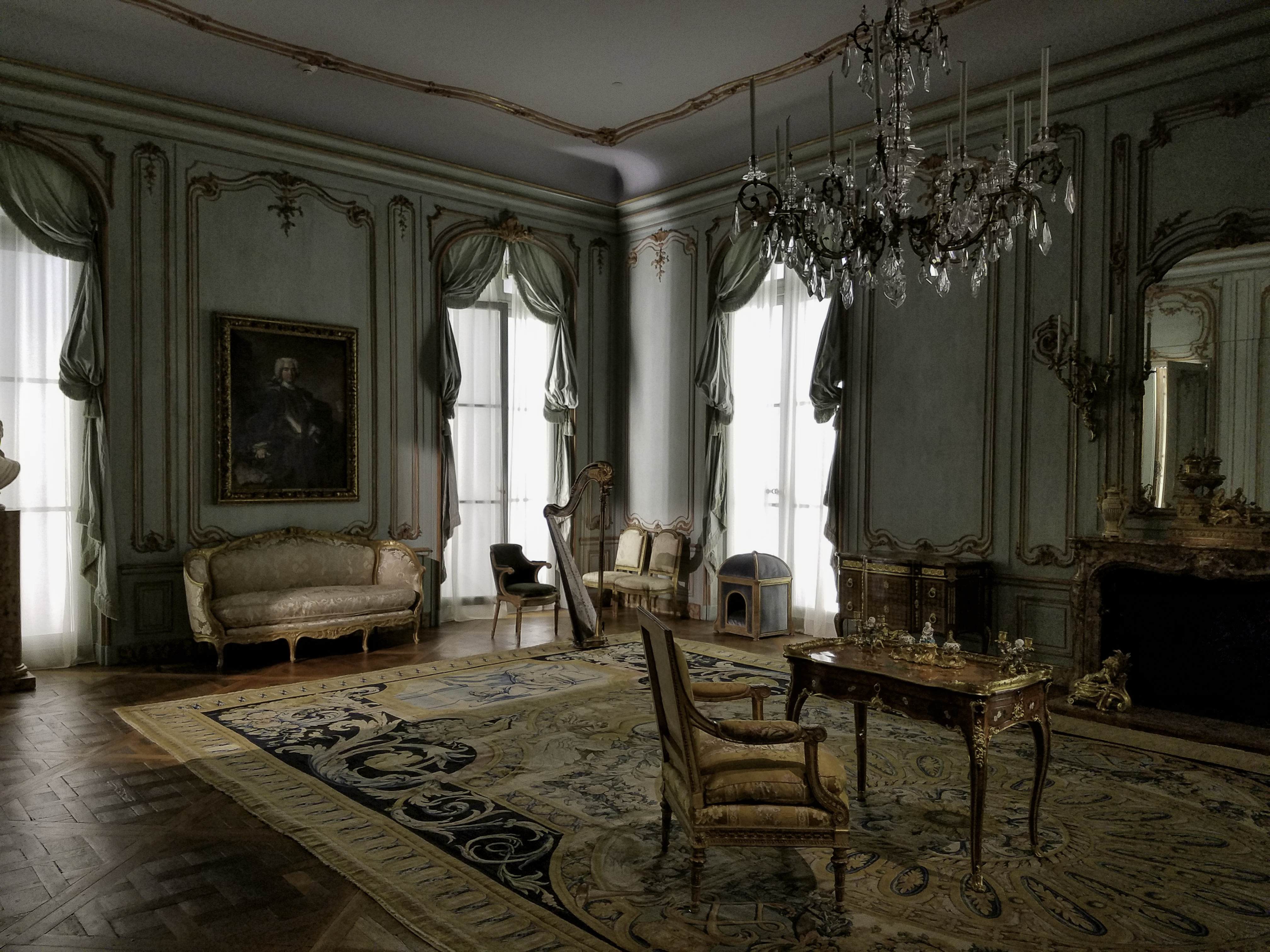
The Gilded Kennel (with the mark of Marie-Antoinette, no less): Kennel
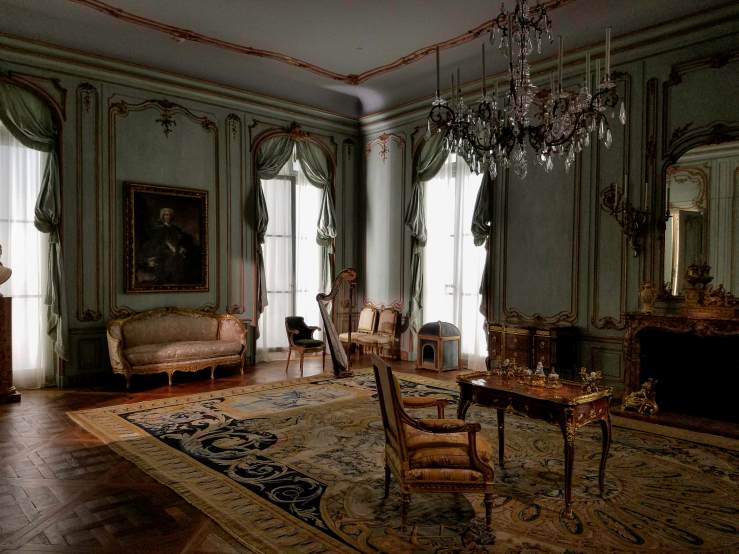
Gilded beech and pine. Signed by Claude Sené (1724-1792): stamped with the mark of Marie-Antoinette’s garde-meuble. French, ca. 1775-80


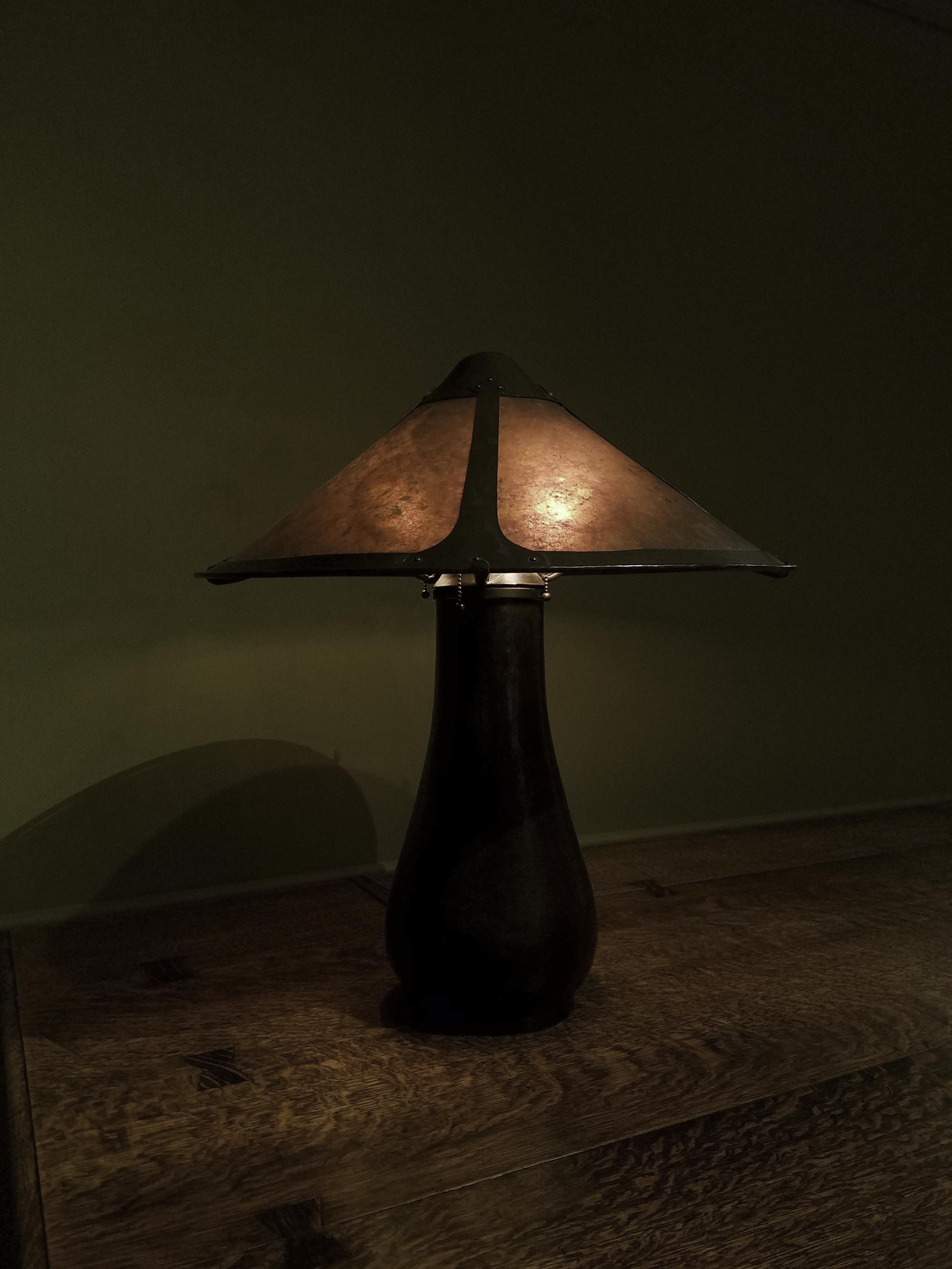
The Copper Lamp: Dirk Van Erp (1859-1933)
San Francisco, California, ca. 1912-15
Copper base, mica and copper shade


The dressing room (gown included): Worsham-Rockefeller Dressing Room
New York City, 1881-82
George A. Schastey & Co. (1873-97)

{In 1881, Arabella Worsham then-mistress of railroad magnate Collis P. Huntington, hired the cabinetmaking and decorating Firm George A. Schastey & Co. to create a series of distinctive artistic interiors for her townhouse at 4 West 54th Street. The resulting decor, including that found in this dressing room, was the height of cosmopolitan style in the early 1880s and emblematic of Worsham’s quest to fashion her identity as a wealthy, prominent woman of taste.}


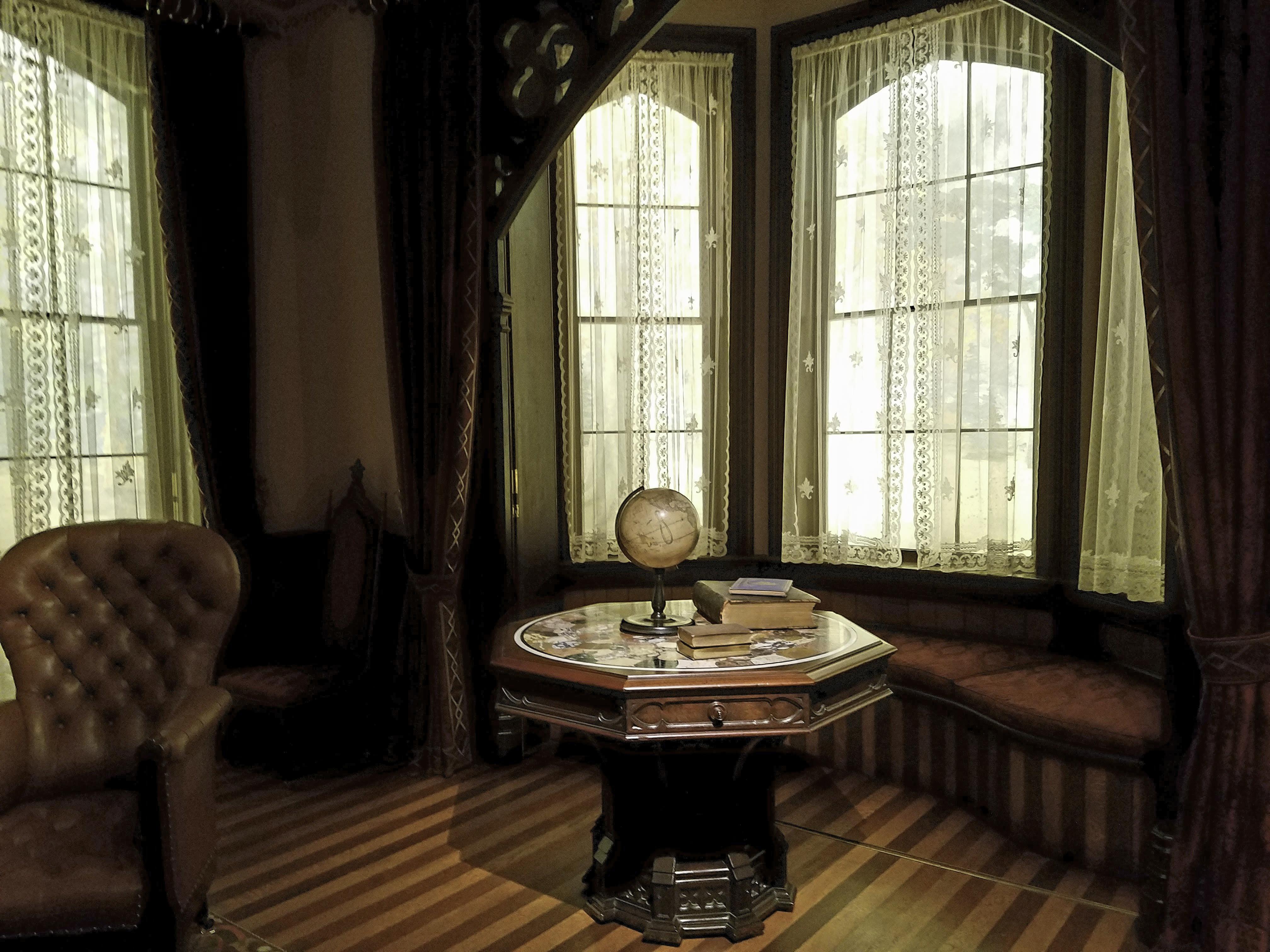
The octagon table:Probably New York City, about 1860
Walnut, marble


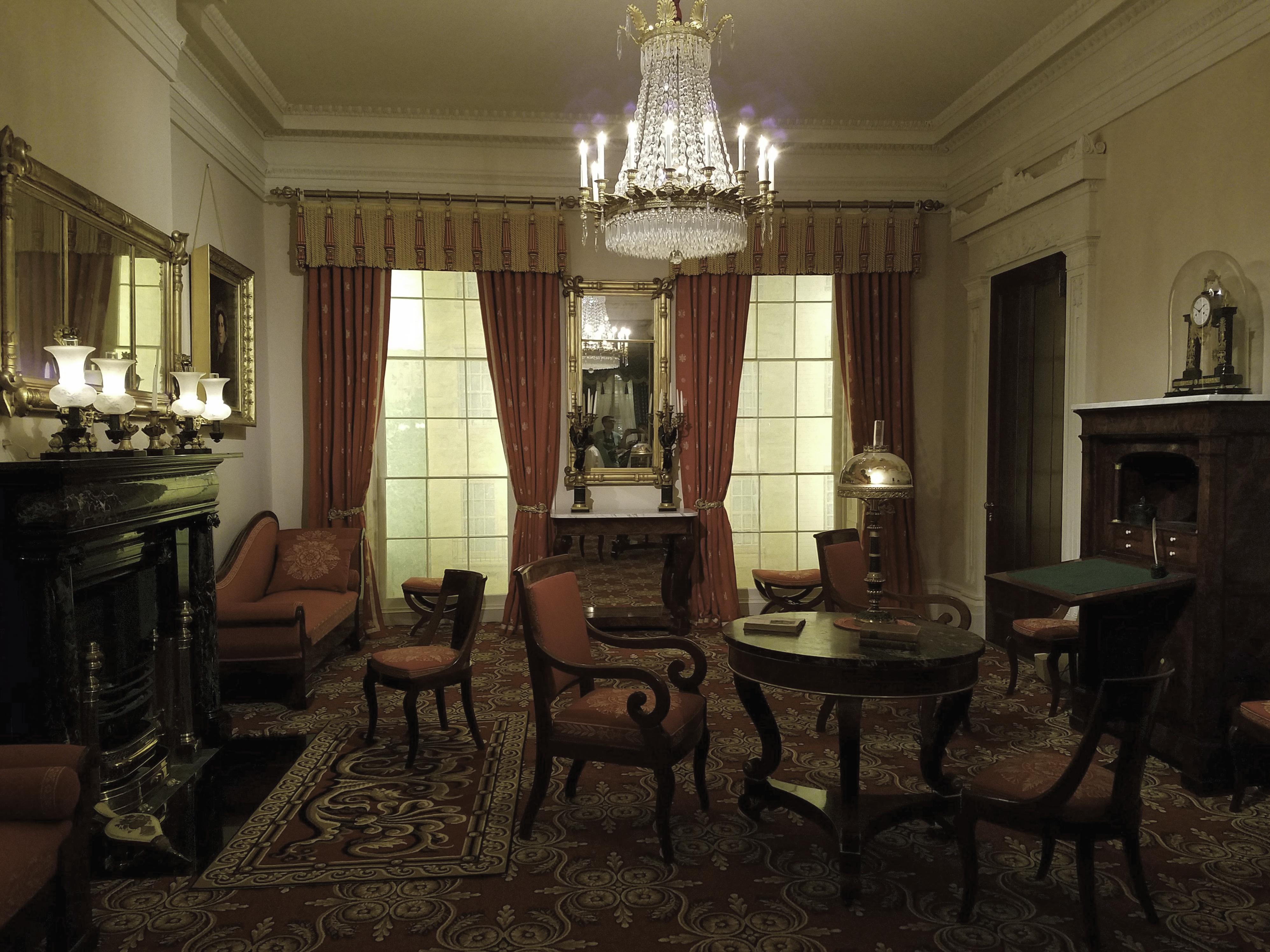
The Richard and Gloria Manney Greek Revival Parlour:

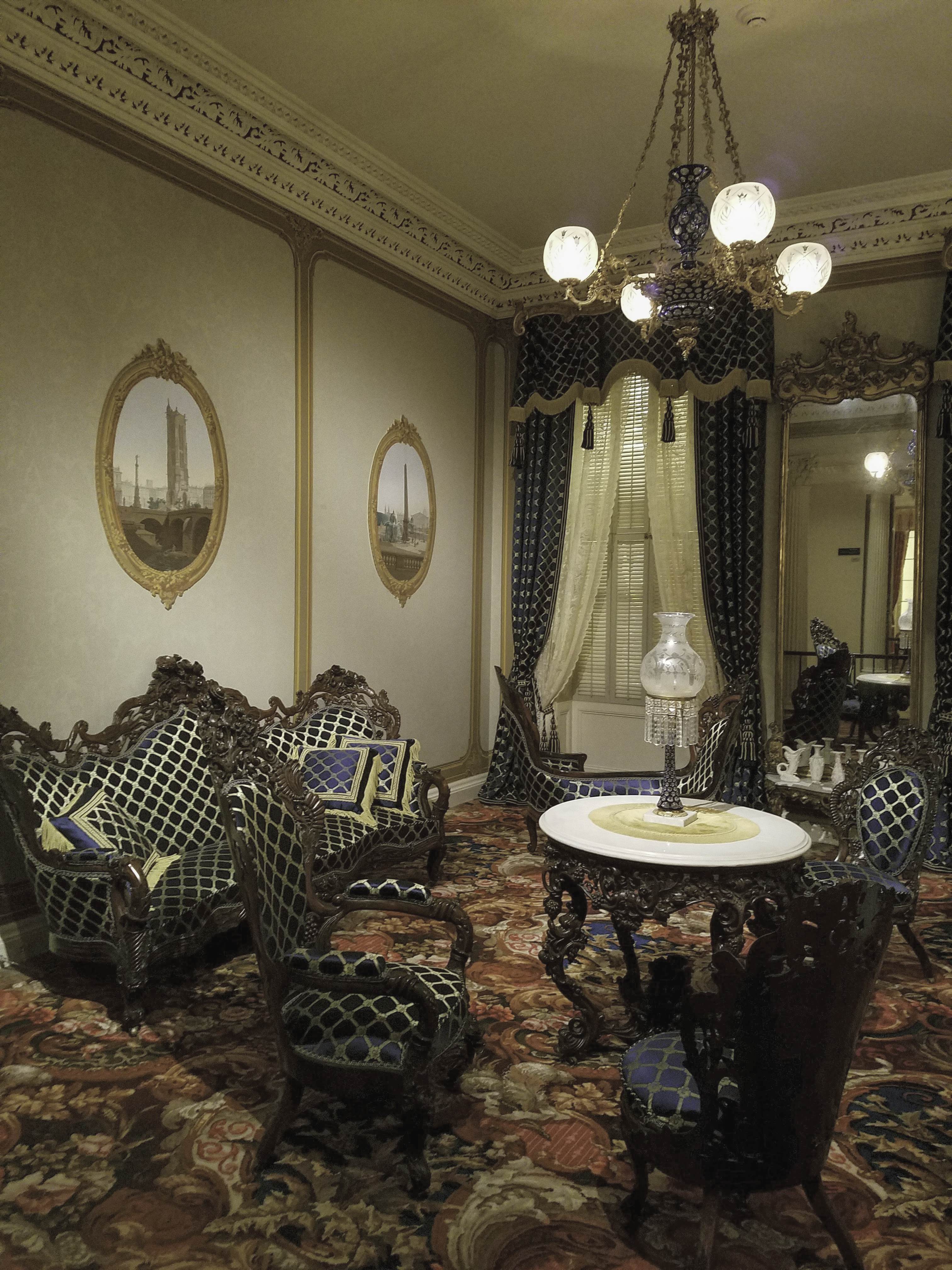
The Richard and Gloria Manney John Henry Belter Rococo Revival Parlour:

The Working Girl’s table:Worktable
Salem, Massachusetts, 1800-1810
Mahogany, mahogany veneer, ivory with white pine, maple

{Worktables were one of few gender-specific pieces of furniture used in the home. Women relied on them for storing sewing supplies and for conducting correspondence, as such tables often contained a hinged writing surface in a drawer.}


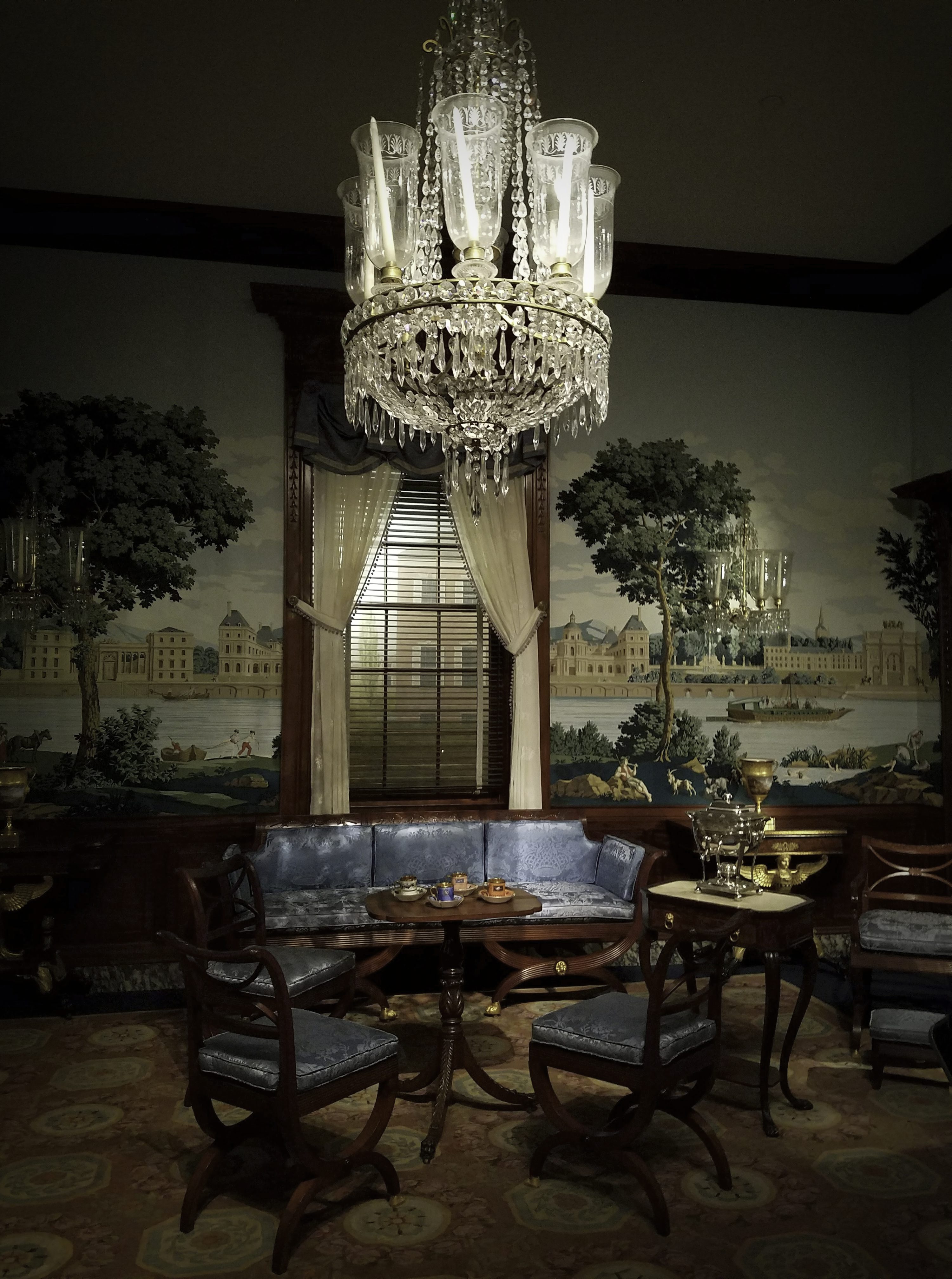
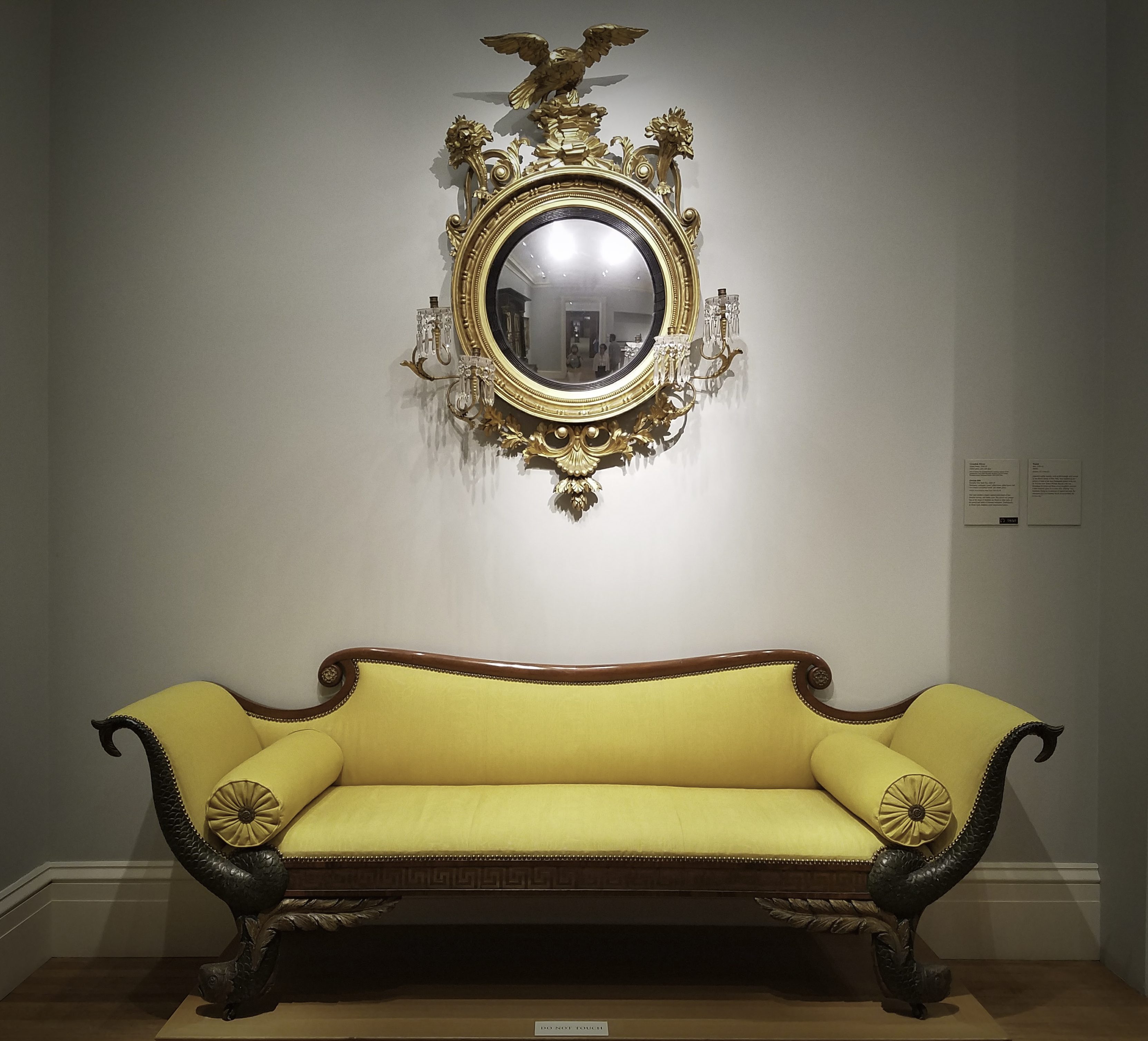
The Richmond Room, 1810-11:

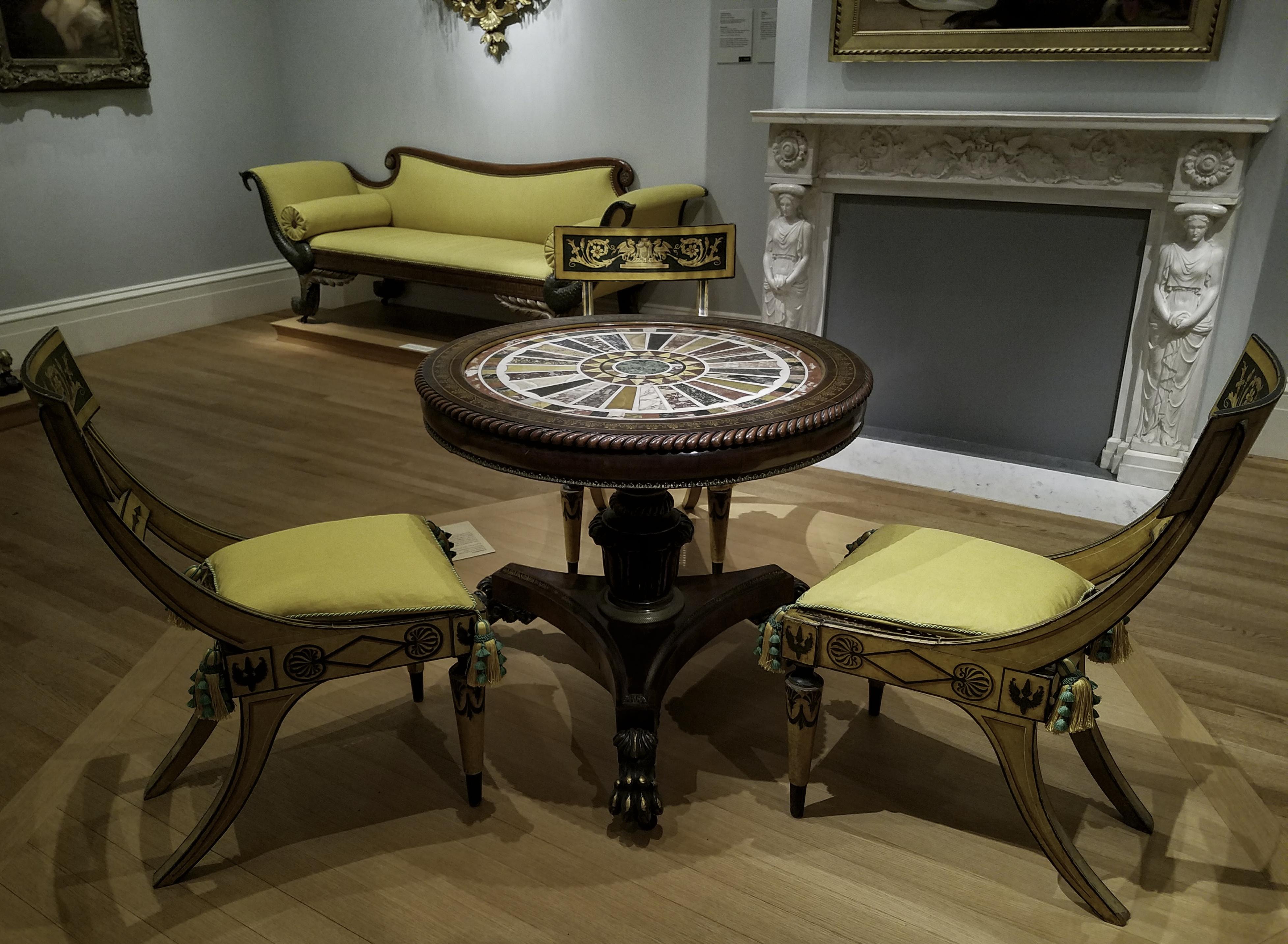
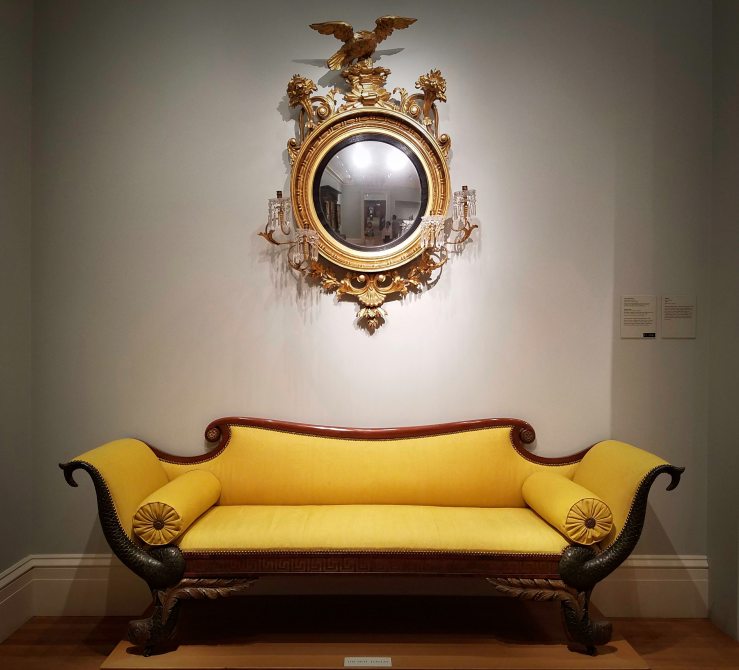
The yellow chairs and the sleek Federal era sofa:Side Chairs
Attributed to the workshop of John Finlay (1777-1851) and Hugh Finlay (1781-1830)
Baltimore, ca. 1815-25
Maple with painted and gilded decoration

{Originally part of a large set, these brilliantly conceived and handsomely executed chairs derive their broad, deeply curved crest tablets and sweeping rear stiles from the ancient Greek klismos form.}

Center Table
Labeled by Anthony G. Quervelle (1789-1856)
Philadelphia, ca. 1830
Mahogany, marble and brass with painted decoration
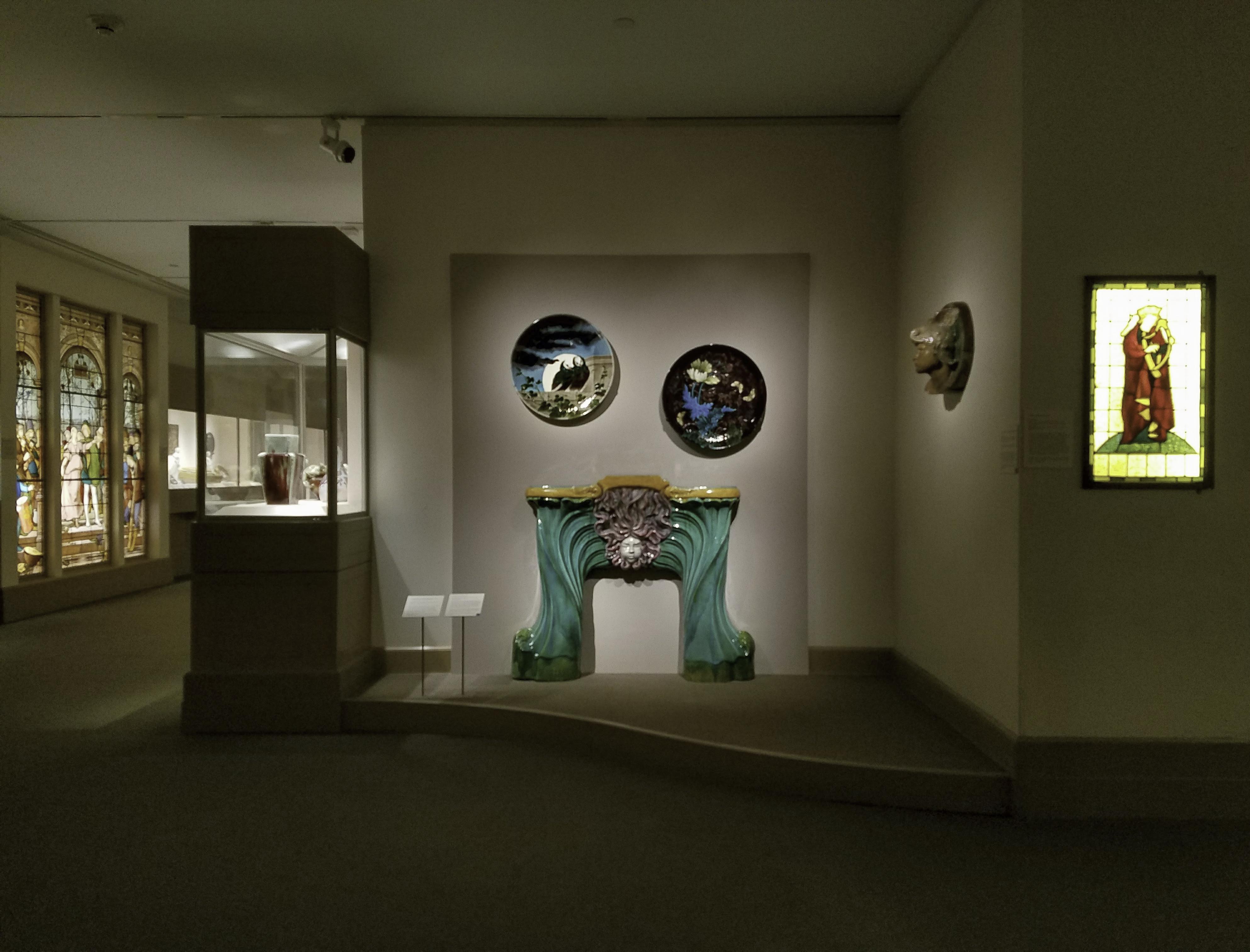
The Art Nouveau mantelpiece: Attributed to Jean-Désiré Muller (French, 1877–1952)
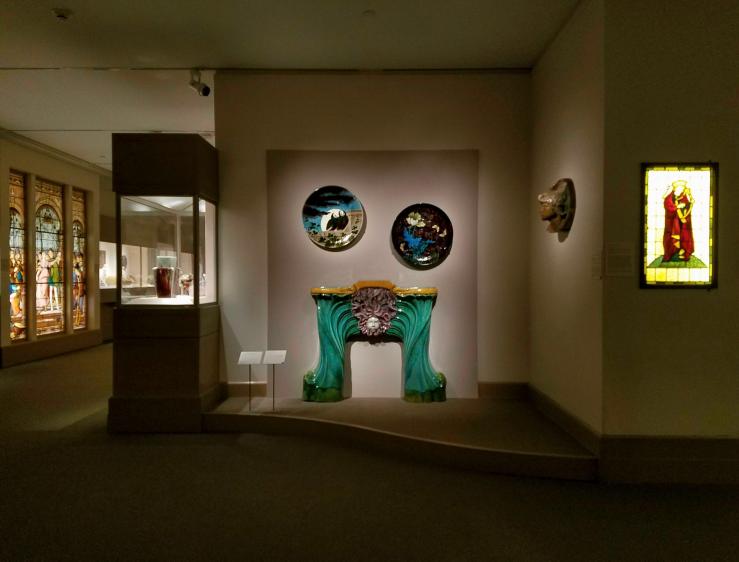
Glazed stoneware, ca. 1900

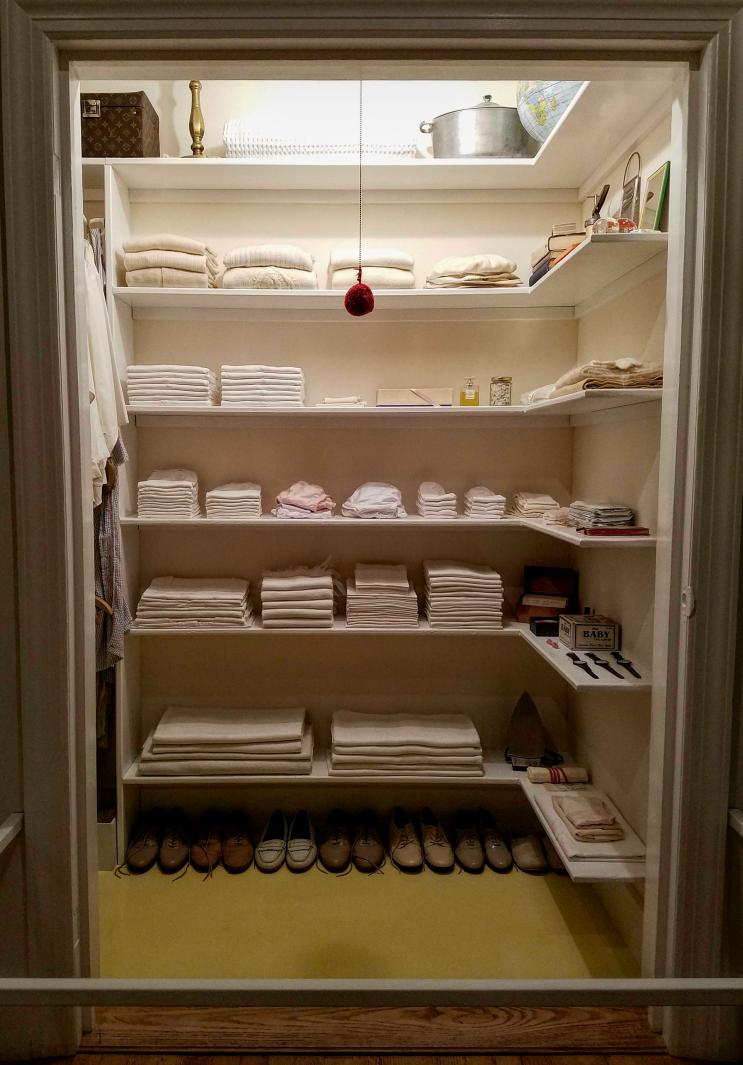
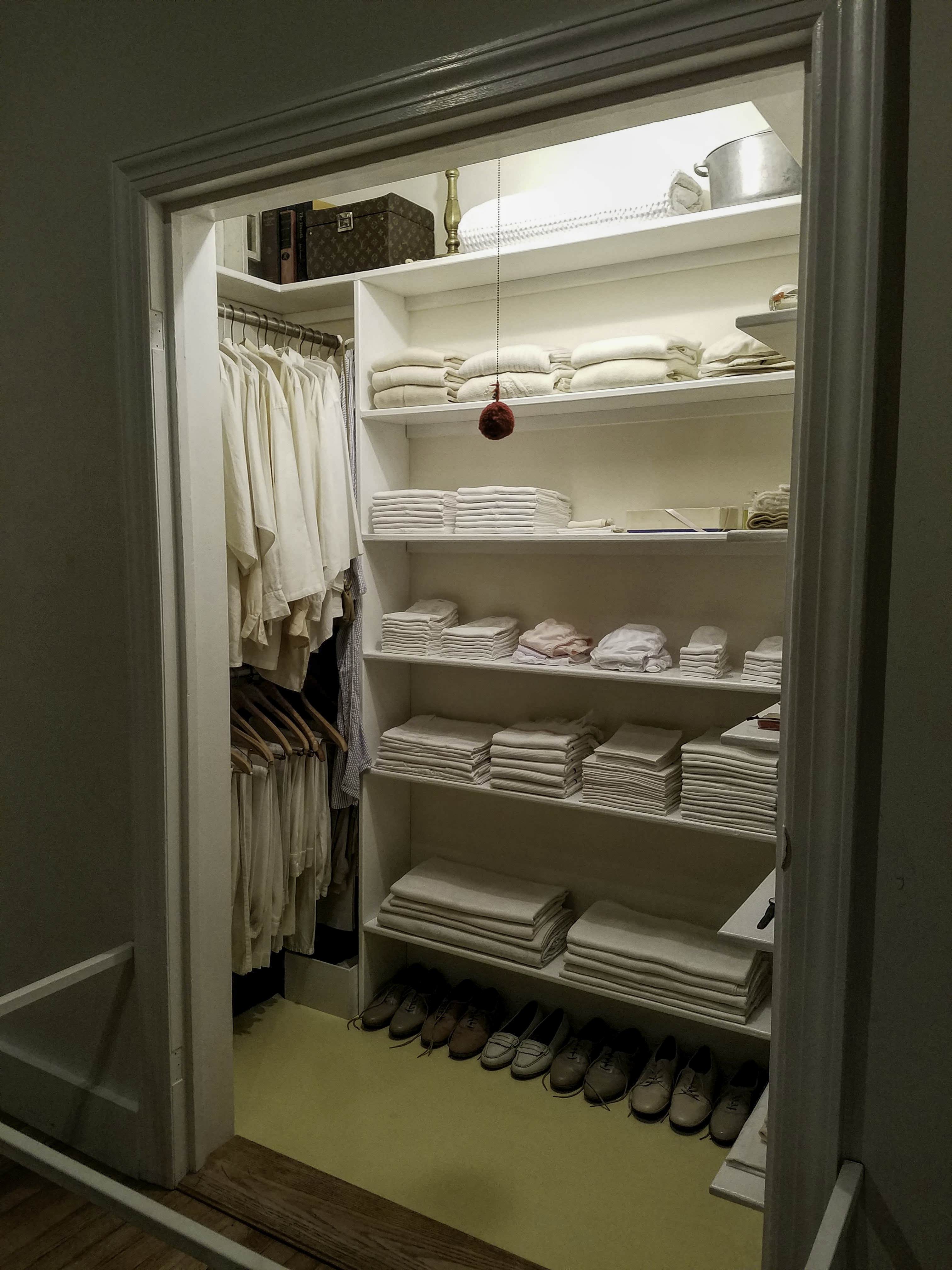
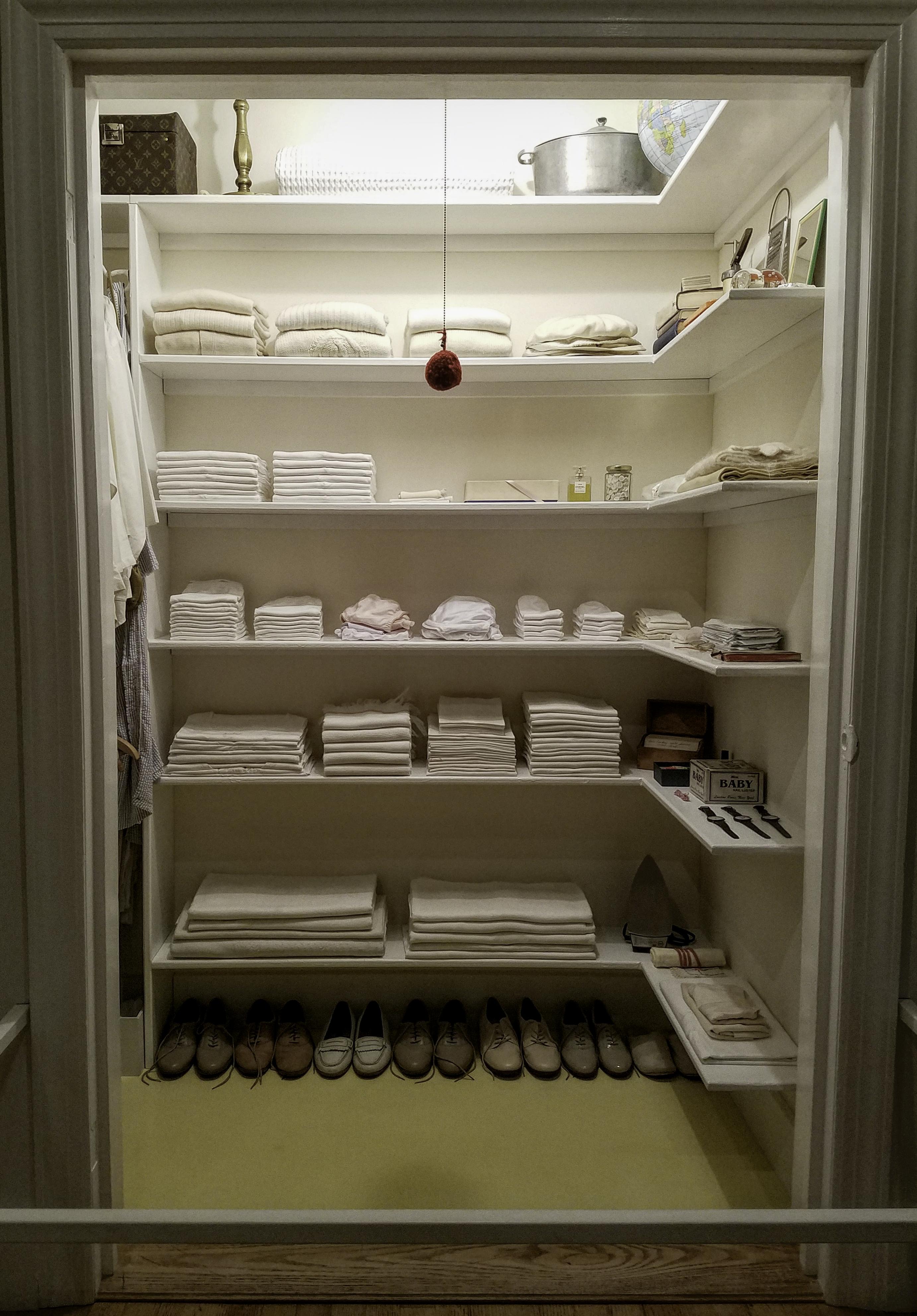
The Minimal-Tidy-Closet-I-will-Never-Have-But-Always-Dream-Of:  Sara Berman’s Closet
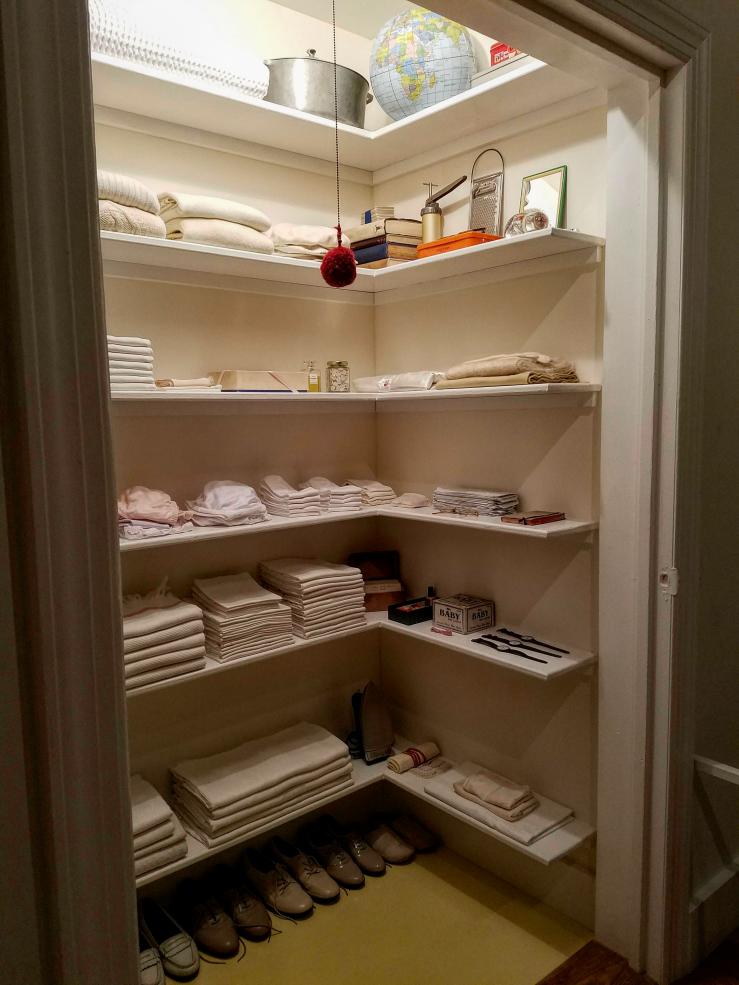
{The meticulously organized, modest closet in which Sara Berman (1920–2004)—an immigrant who traveled from Belarus to Palestine to New York—kept her all-white apparel and accessories both contained her life and revealed it. Inspired by the beauty and meaning of Berman’s closet, the artists Maira and Alex Kalman (who are also Berman’s daughter and grandson) have recreated the closet and its contents as an art installation.

This exhibition represents Berman’s life from 1982 to 2004, when she lived by herself in a small apartment in Greenwich Village. In her closet Berman lovingly organized her shoes, clothes, linens, beauty products, luggage, and other necessities. Although the clothing is of various tints—including cream, ivory, and ecru—it gives the impression of being all white.}

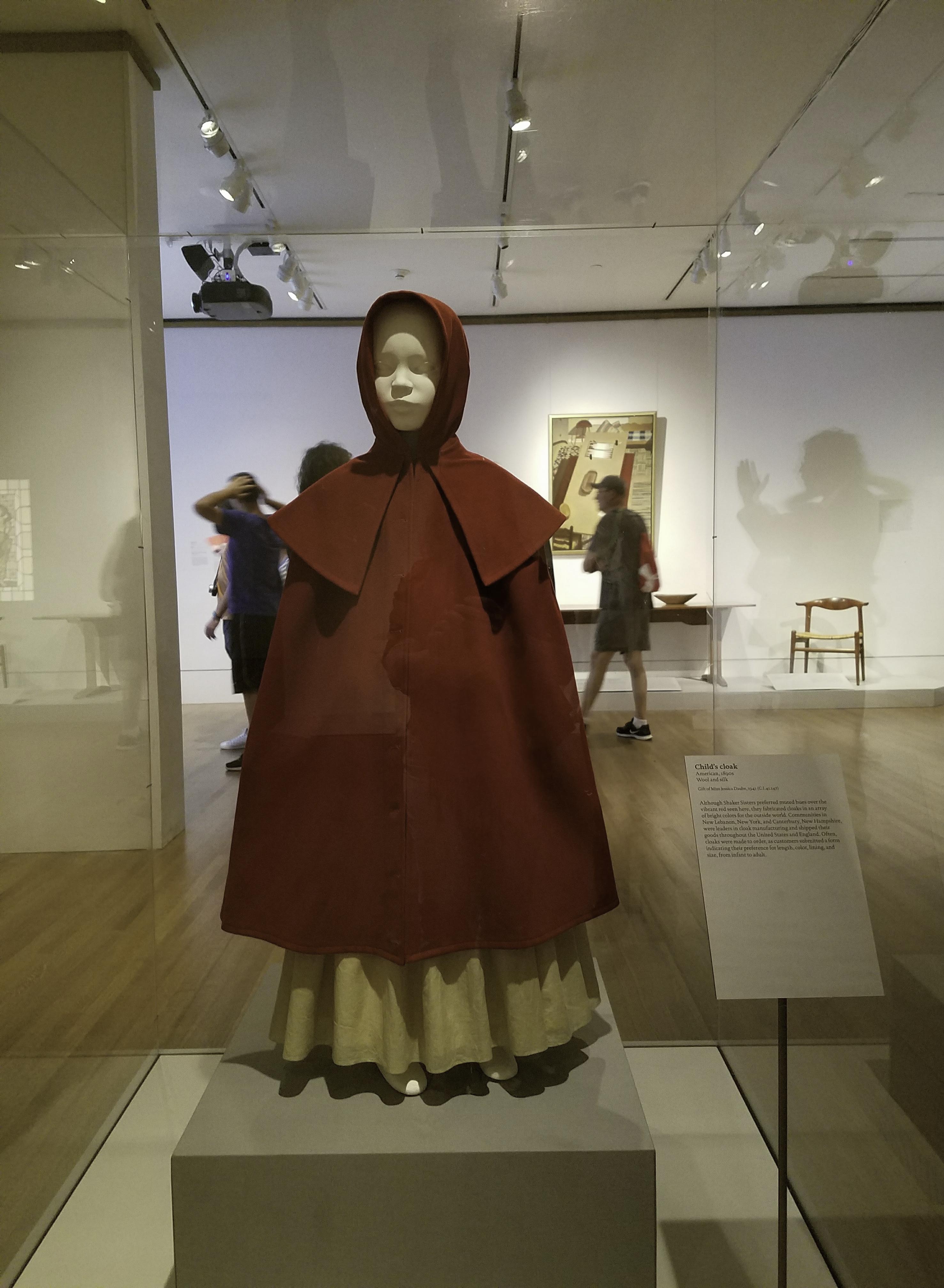
And, finally, his made-to-order Little Red Hood’s cloak:Child’s cloak
American, 180s
Wool and silk

The Metropolitan Museum of Art

July 2nd, 2017
The saddest little girl

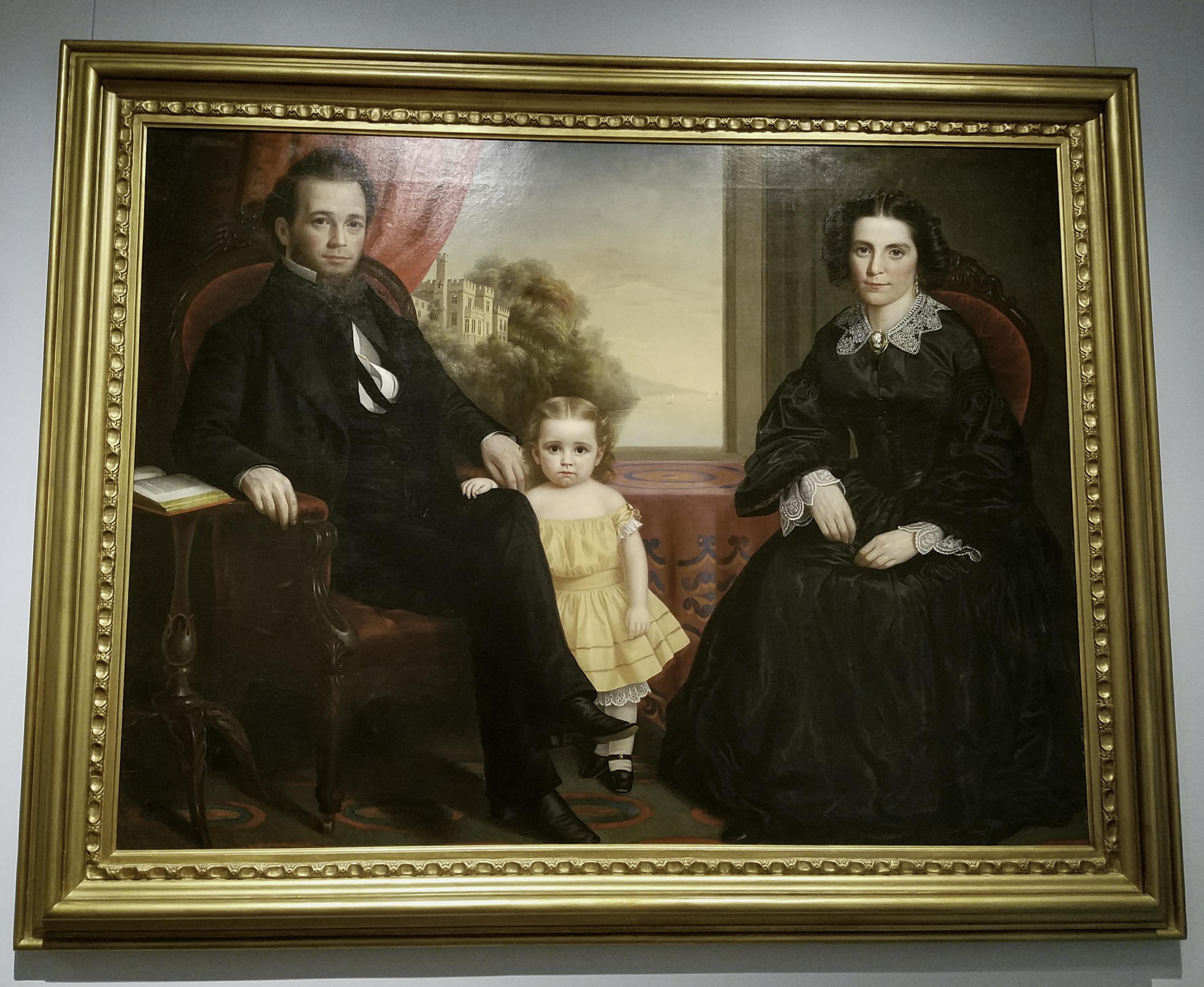
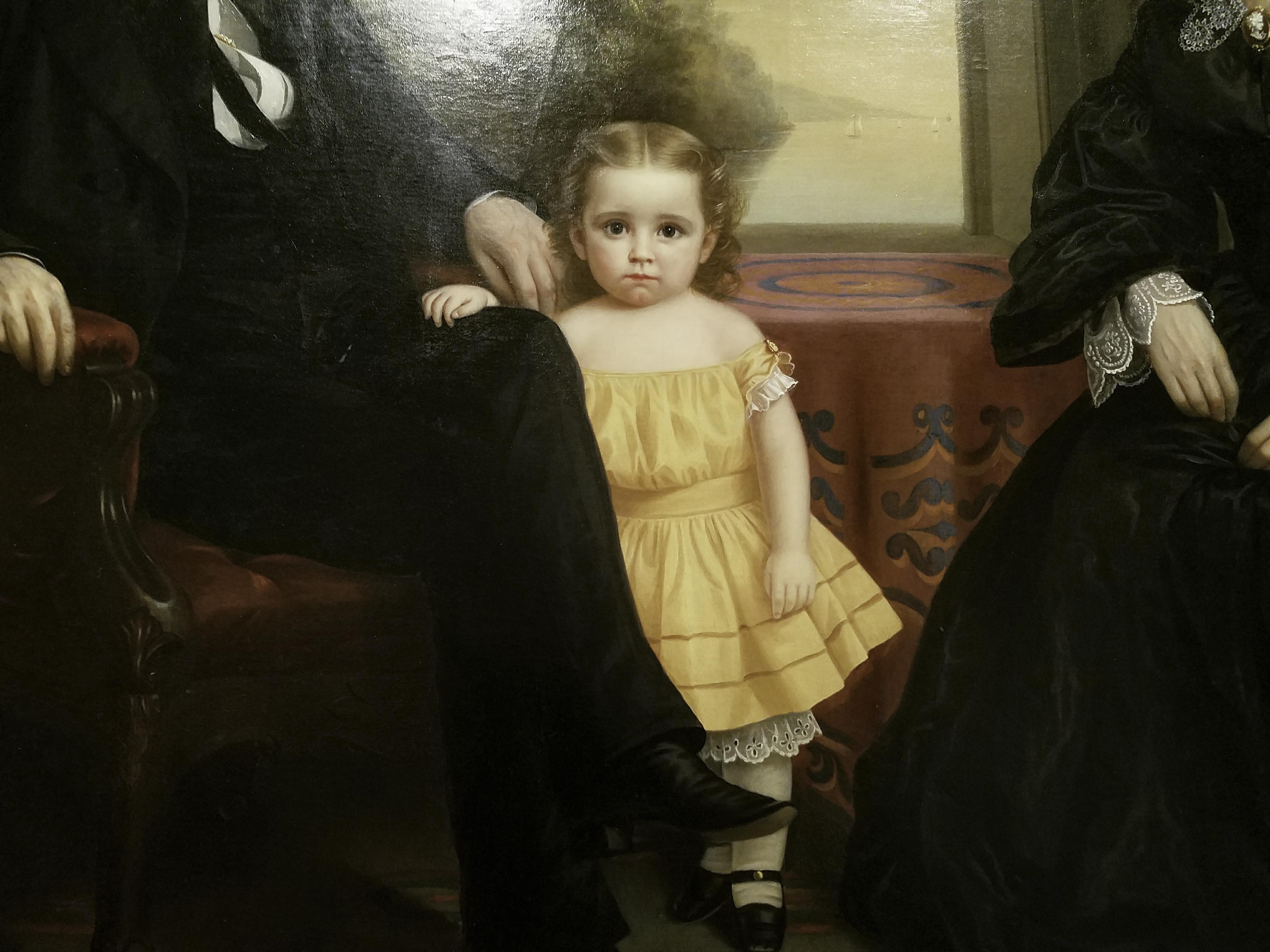
“Look at her”, said my companion, “this must be the saddest little girl in the world!”
“He is right”
, I thought, captivated by the palette, contrasting colours, their facial expressions and composition of the painting.

Until I read the description on the wall and, for a moment there, it was I who seemed to be the saddest little girl in the world…

Unknown Artist
A Family Group, ca. 1850
Oil on canvas

{”This painting of an unidentified family bears the hallmarks of high-style portraits produced in New York during the antebellum era: saturated colours; attentiveness to details of costume, coiffure and jewellery; accurate facial depictions. The setting is a richly appointed Rococo Revival parlour. Seen through the window is a castellated Gothic Revival villa, possibly the family’s home, perched on a cliff overlooking the Hudson River. While it is similar to many designed by architects such as Alexander Jackson Davis during the period, it may be the home they aspired to, rather than their actual house. Details suggest that the child is deceased: the woman wears a cameo brooch carved with Orheus holding his lyre, a reference to the myth of Orpheus’ attempt to rescue his beloved Eurydice from the underworld; the possibly phantom house (a castle in the sky?); and the adults are wearing sombre black clothing.”}

The Metropolitan Museum of Art

July 2nd, 2017
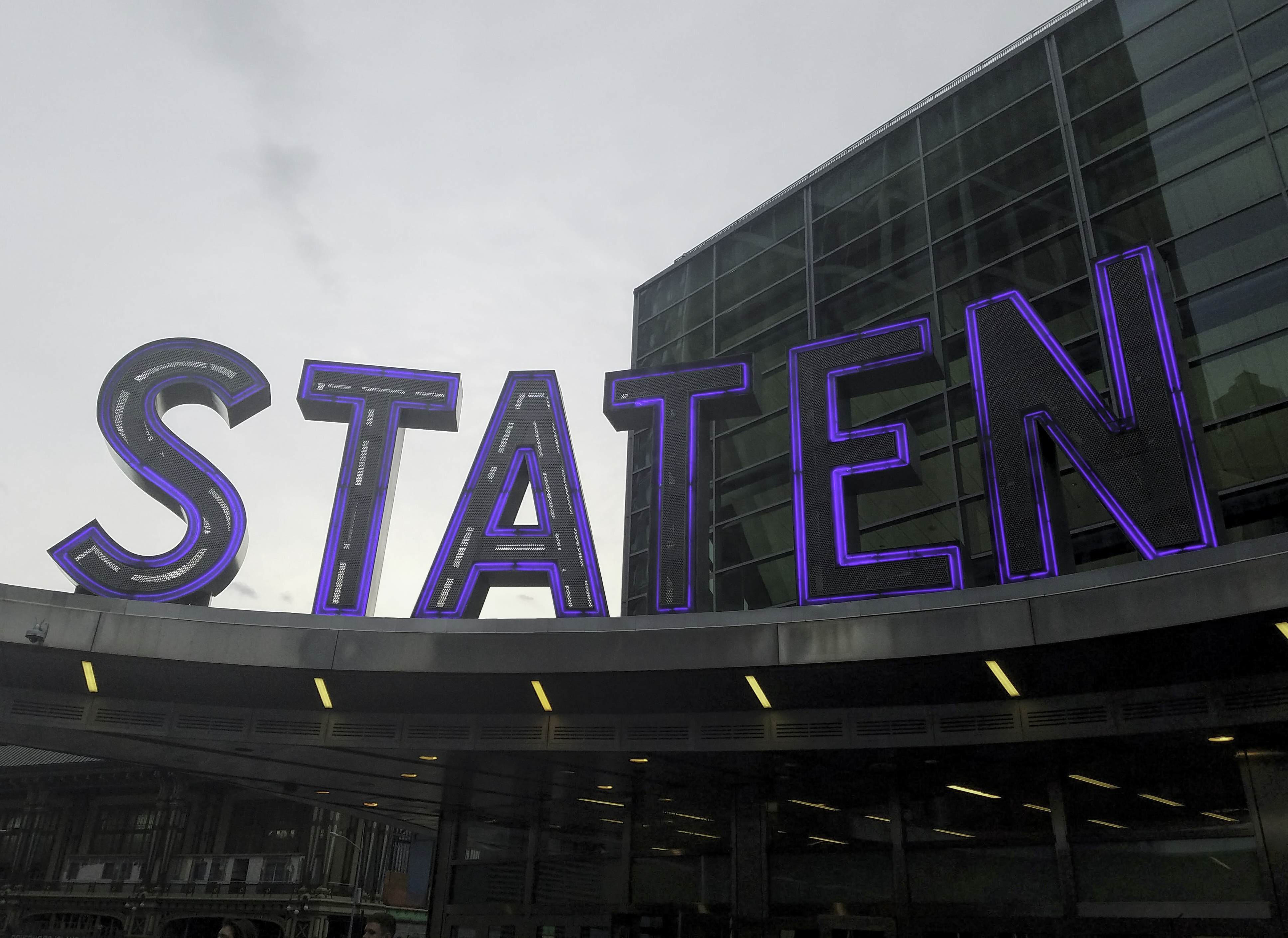
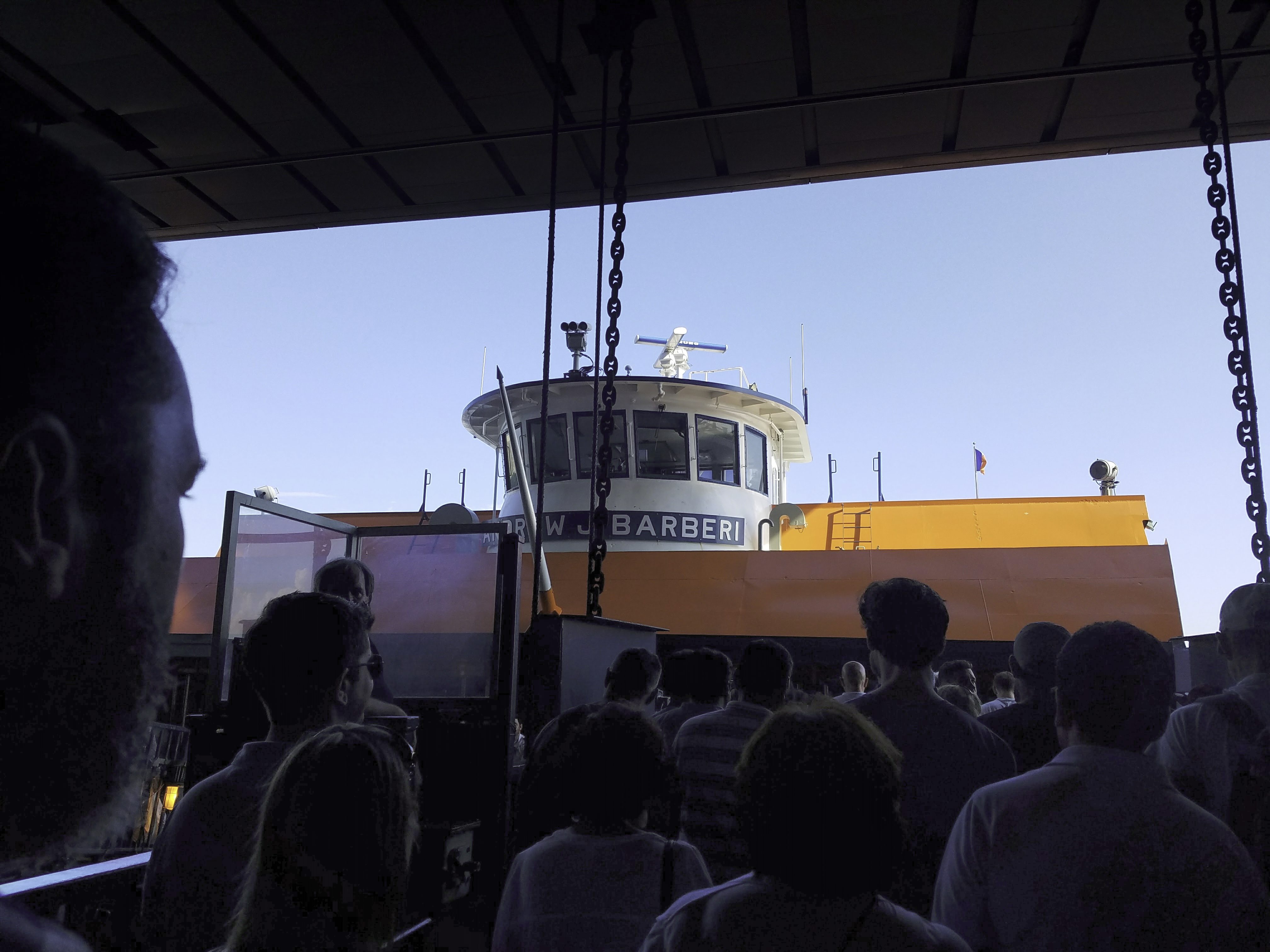
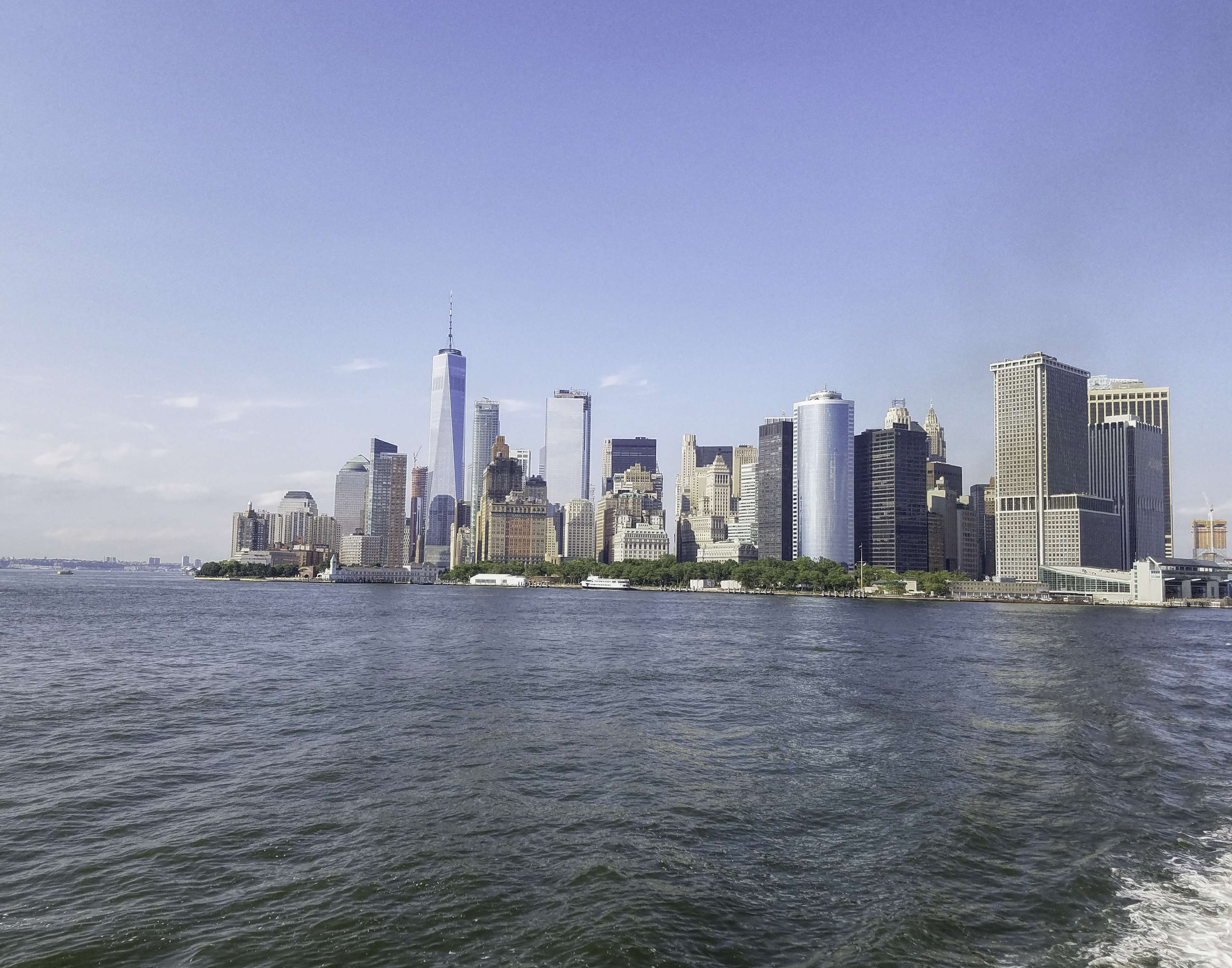
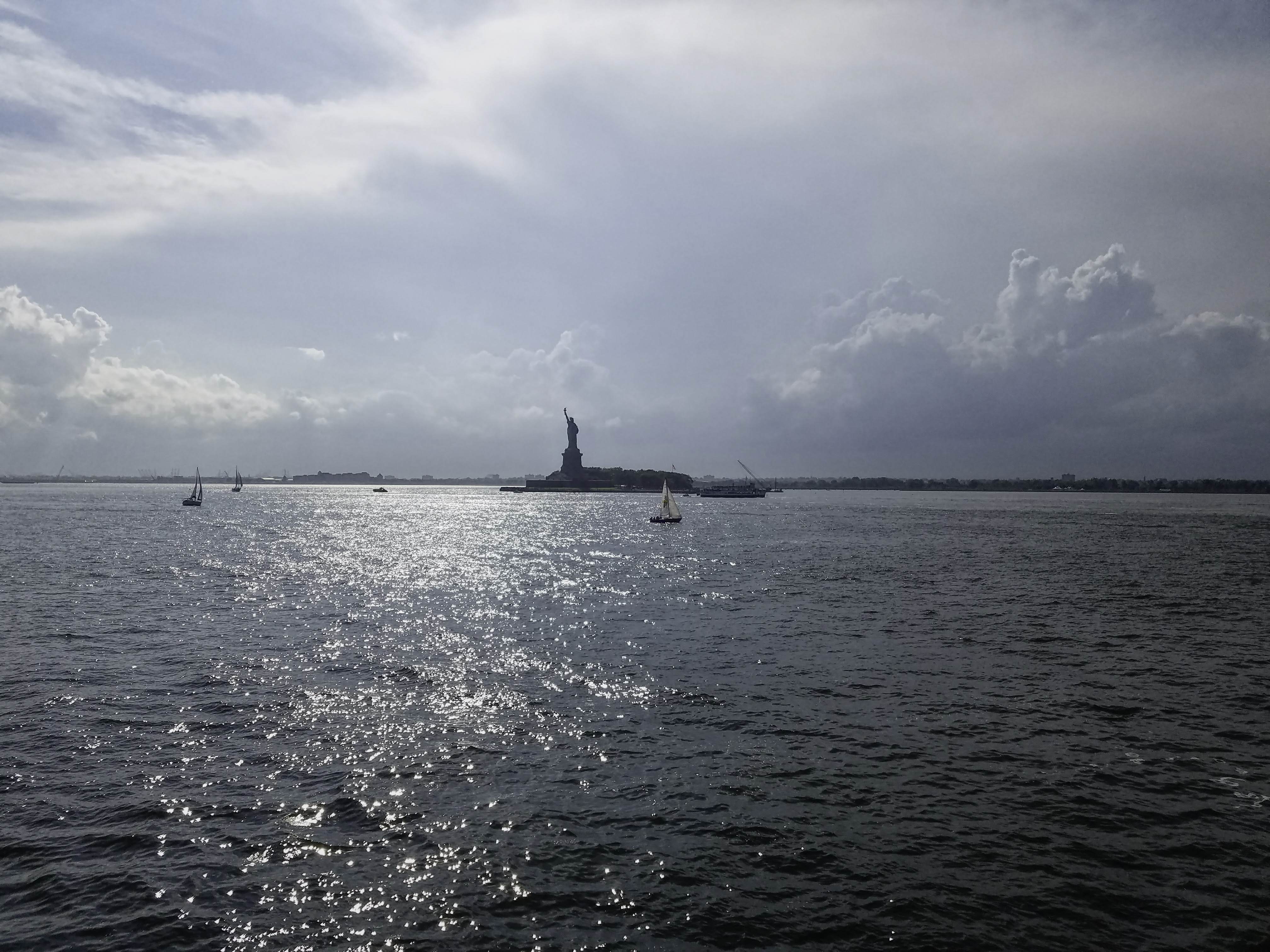
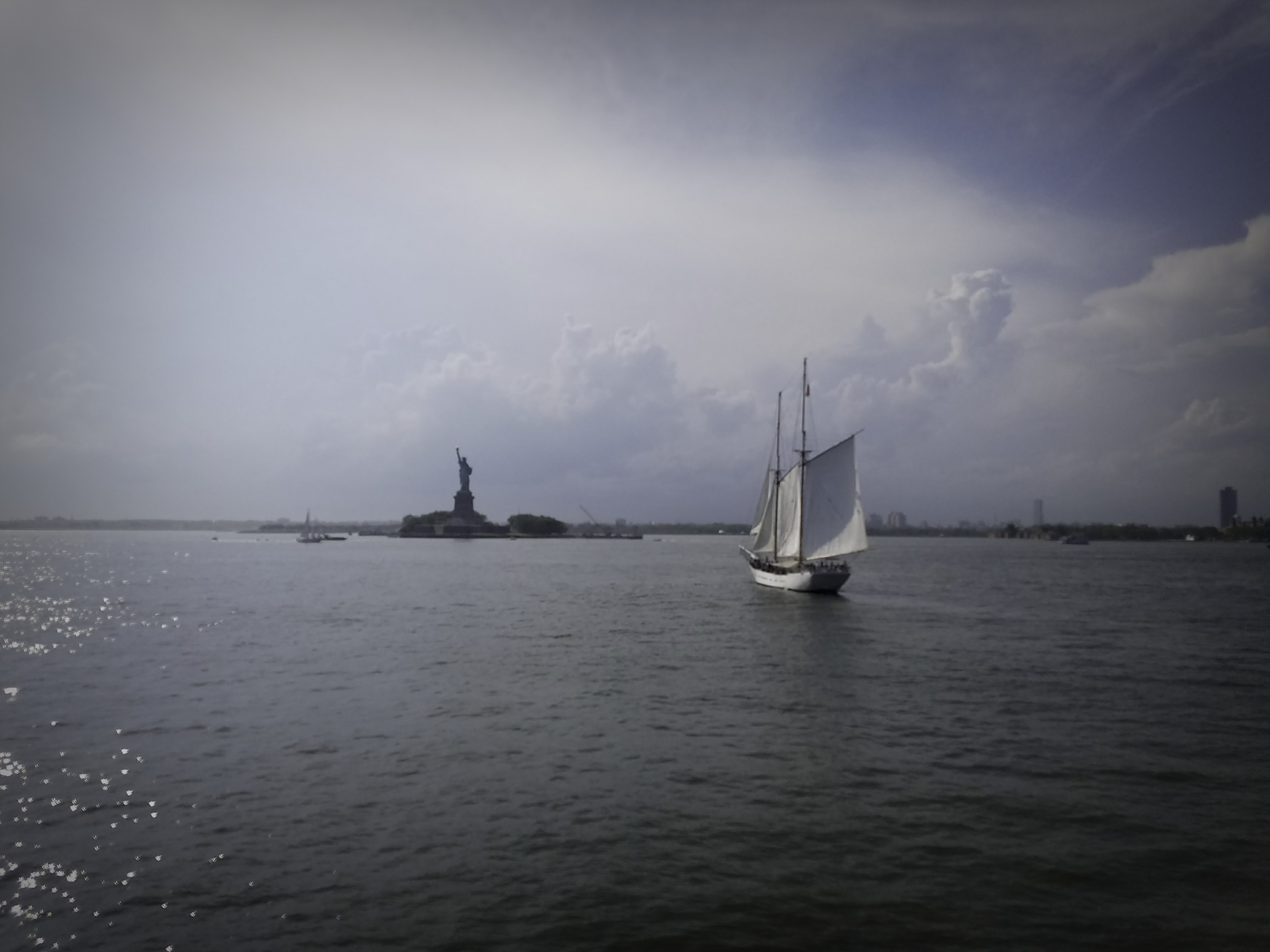
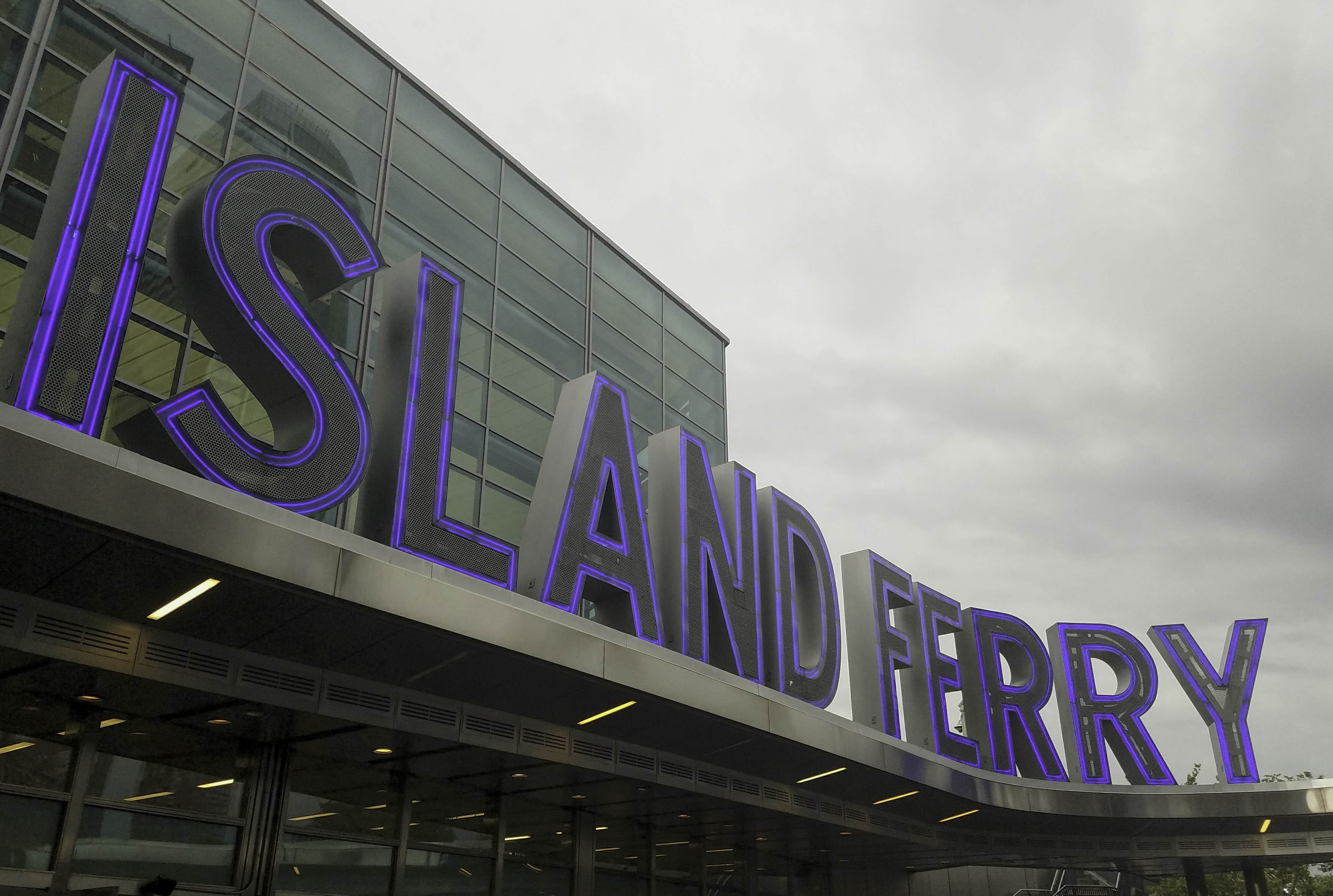
Staten Island Ferry

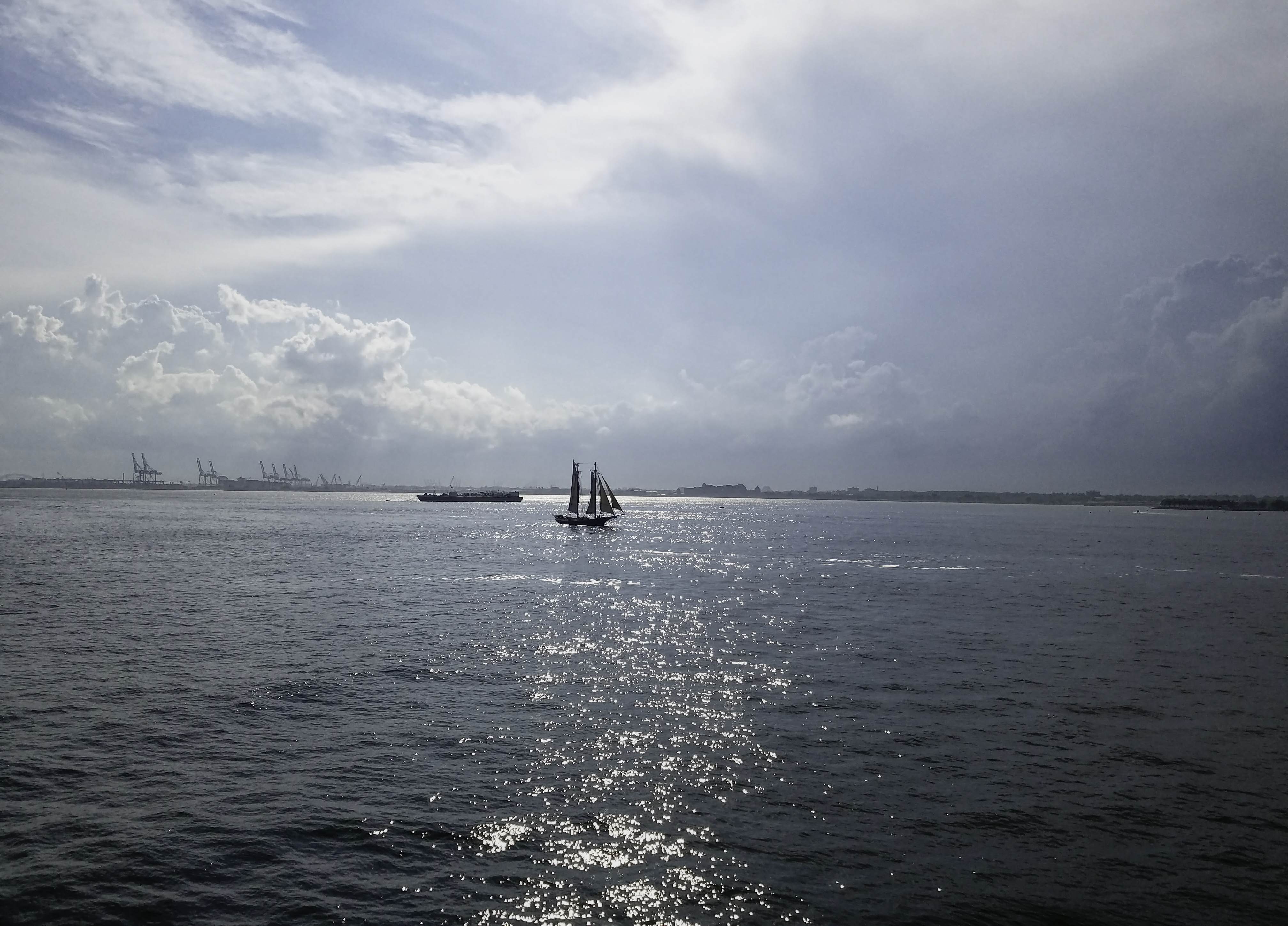
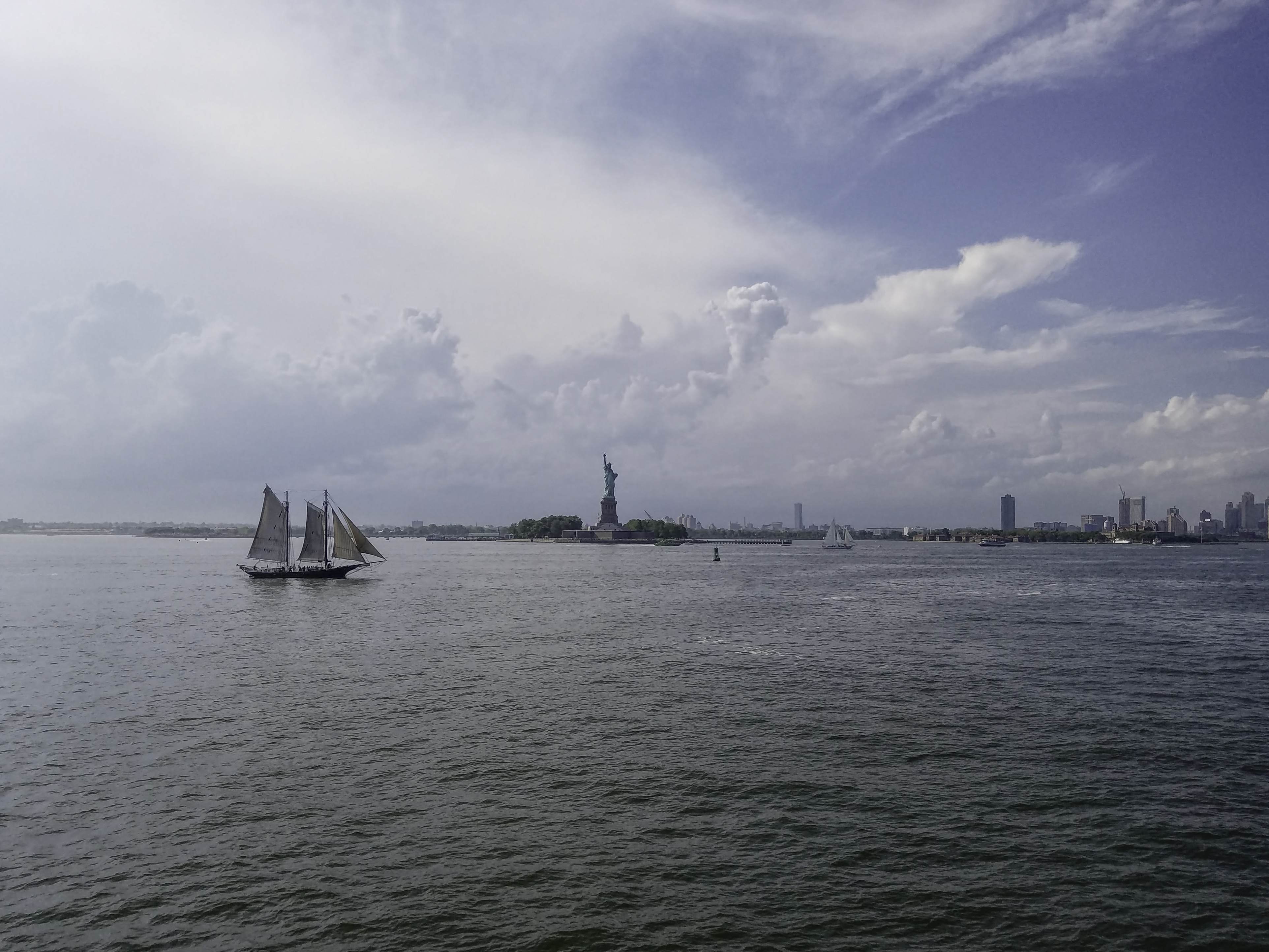
For those of us who live and work in Manhattan and don’t have to commute, a boat trip to Staten Island is one of those short cruises one usually reserves for visiting family or friends: it is free, runs on a 24/7 basis, offers dreamy vistas of Manhattan, New York harbour and the Statue of Liberty – and is totally fun!

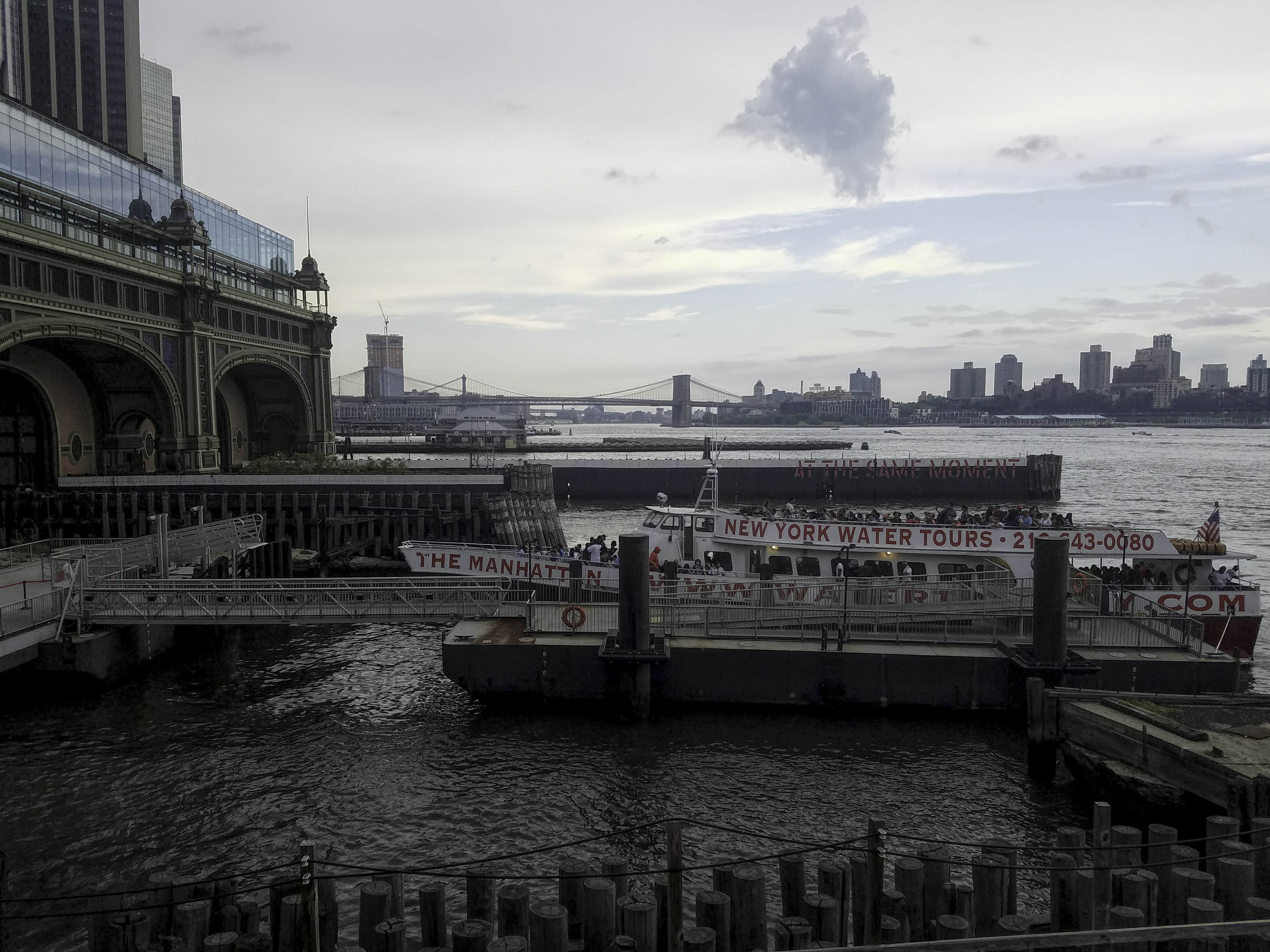
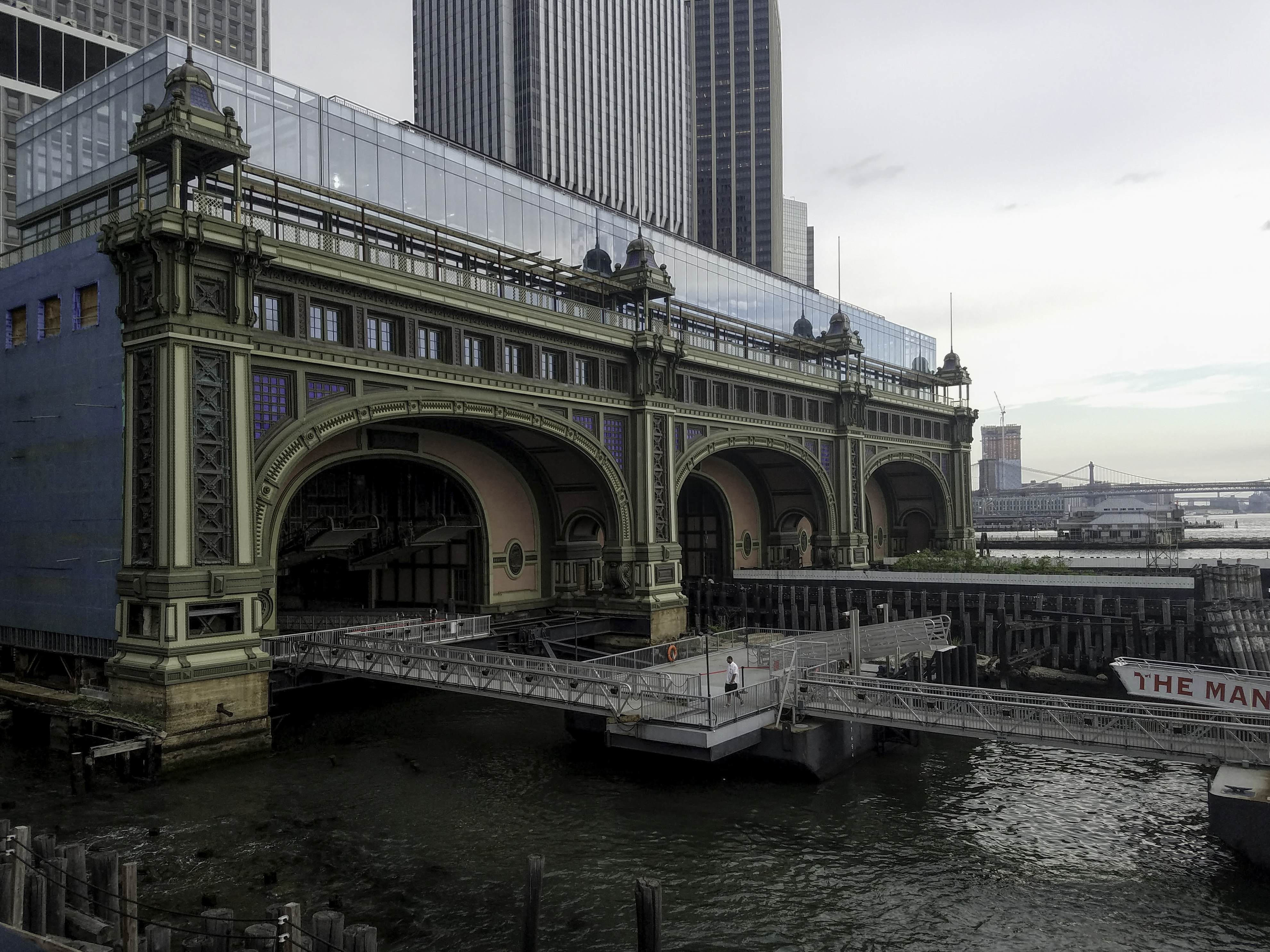
The ferry departs from Whitehall Terminal at the southernmost tip of Manhattan and the crossing to Staten Island takes about 25 minutes. If you do not plan to explore Staten Island itself, you can just line up for the next ferry back and continue on foot along the Battery Park Esplanade for even more gorgeous views.

July 1st, 2017