I’m going back in time. I have to, for if this blog is to continue doubling up as my journal, I can’t be skipping events. Even the not so memorable ones like those two, almost back-to-back performances at BAM.
First, the utterly forgettable performance by Doug Varone and Dancers, emphatically described as: ”Doug Varone and Dancers celebrate 30 years of impassioned choreography with three works representing the past, present, and future of this peerless company.” By the third work I was convinced I’m never watching another Doug Varone performance again. Art is subjective and a matter of chemistry, and unfortunately it didn’t work for me this time.
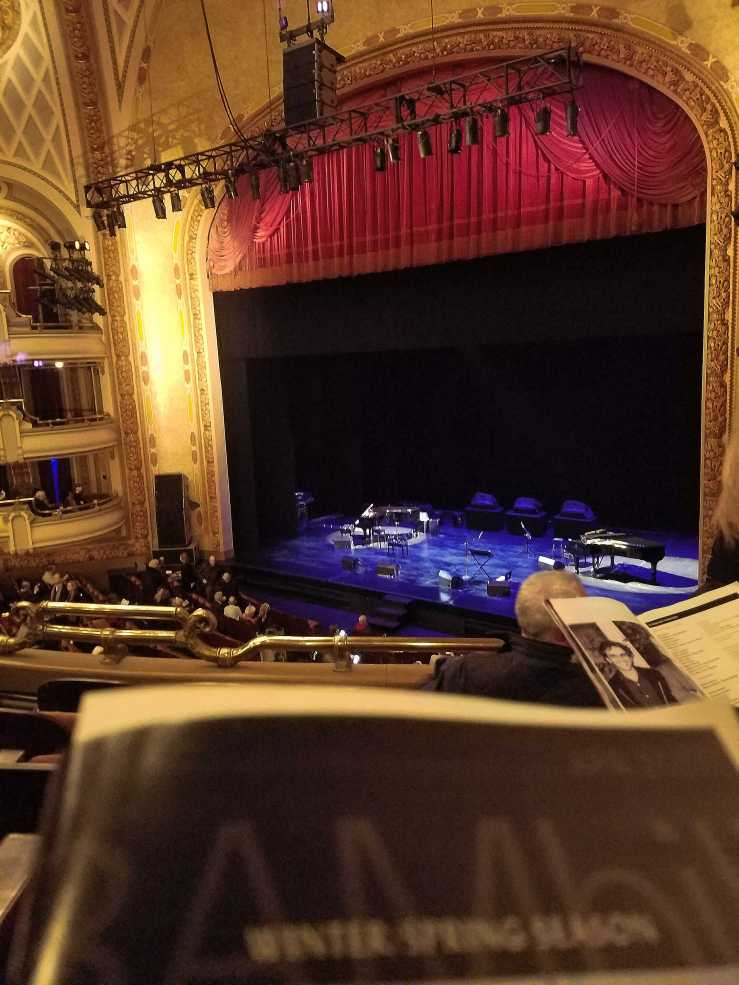
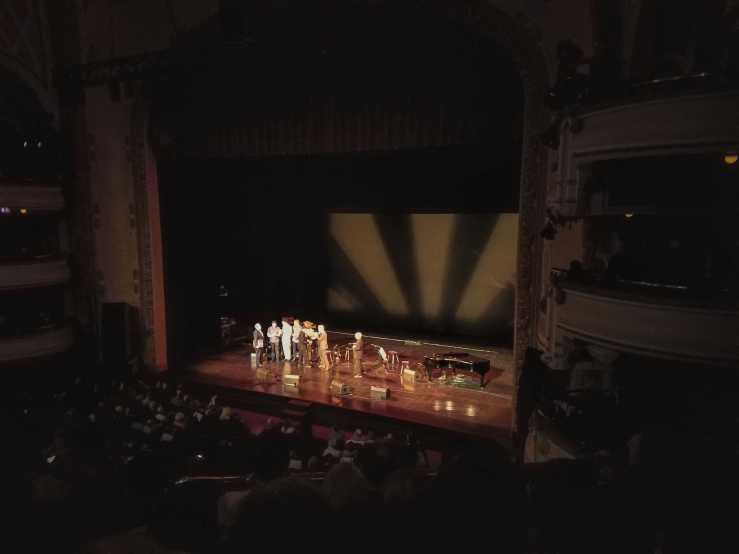
Next, ”A Nonesuch Celebration, a stellar lineup of musical luminaries” that came together ‘‘for one night only to pay tribute to Bob Hurwitz, who for the past three decades has served as the visionary architect of Nonesuch Records”. I had not heard of Mr Hurwitz before, but the idea of watching live performances by (among others) Pat Metheny, Kronos Quartet, k.d. lang and Mandy Patinkin all in one evening, seemed very appealing. I did enjoy myself but it seemed like the hosts were enjoying themselves much more which made me feel a bit awkward, like crashing a private party.
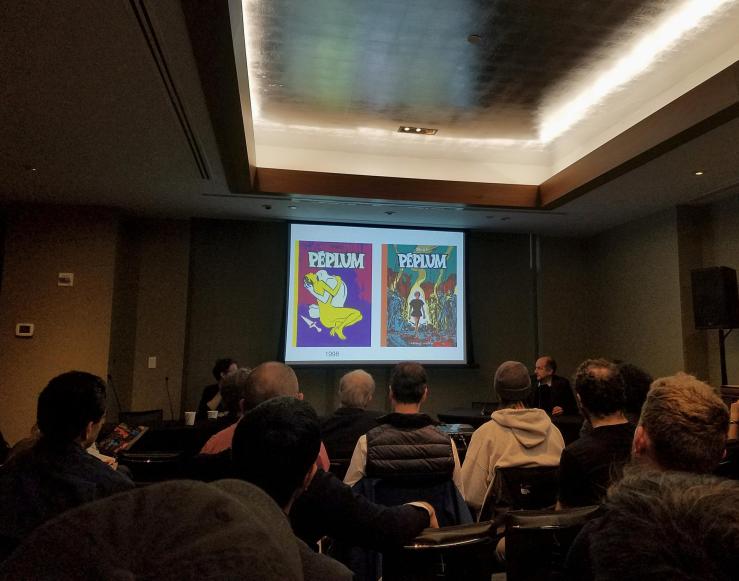
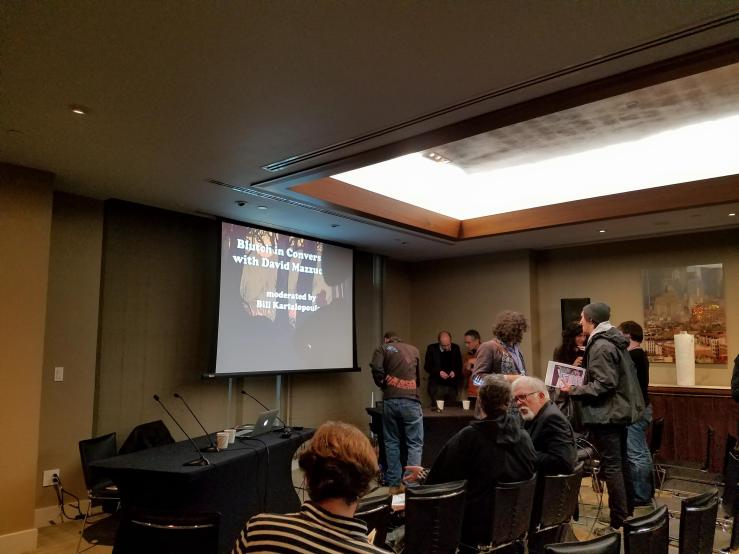
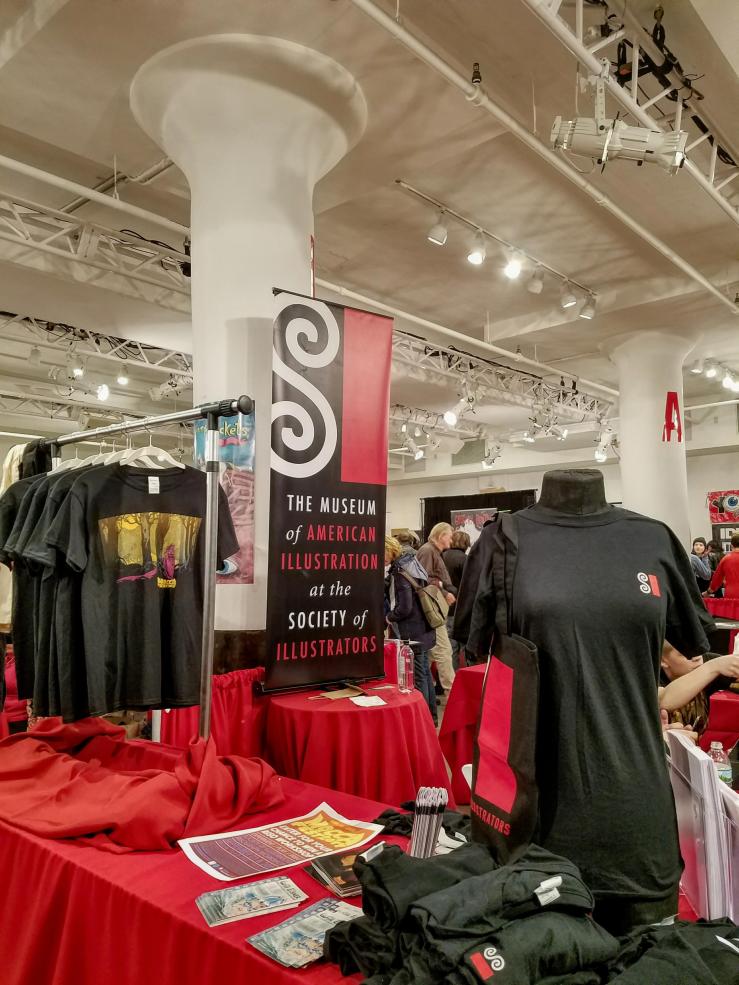
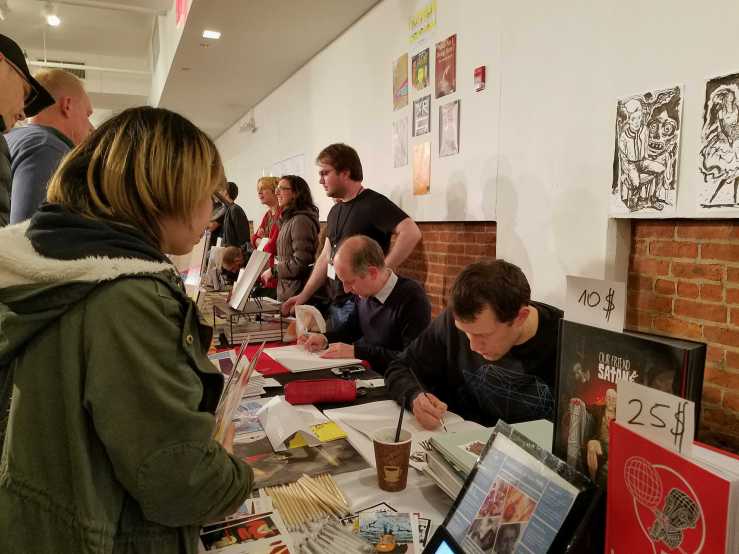
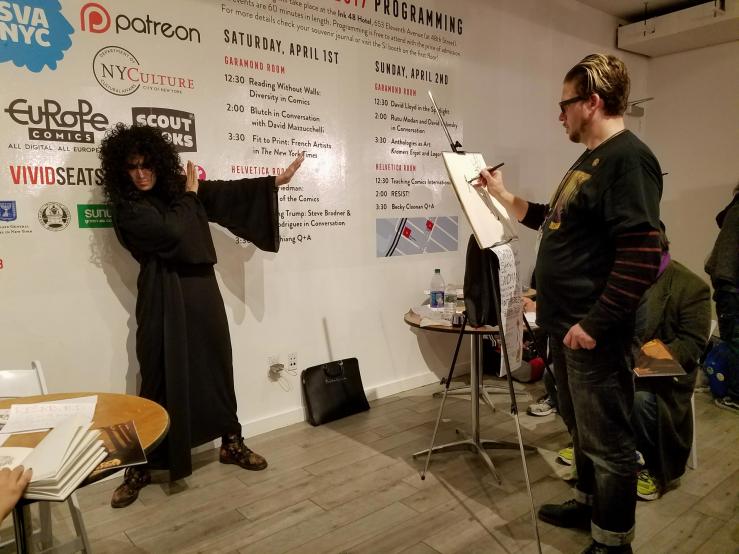
 But then, on 1-2 April, it was time for the annual MoCCA Arts Festival. A multimedia event organised by the Society of Illustrators with workshops, film screenings, exhibitions and panels, MoCCA is Manhattan’s largest independent comics, cartoon and animation festival and my first chance to meet two rather brilliant gentlemen, artists and friends: Blutch in Conversation with David Mazzucchelli – and the weekend couldn’t get any better.
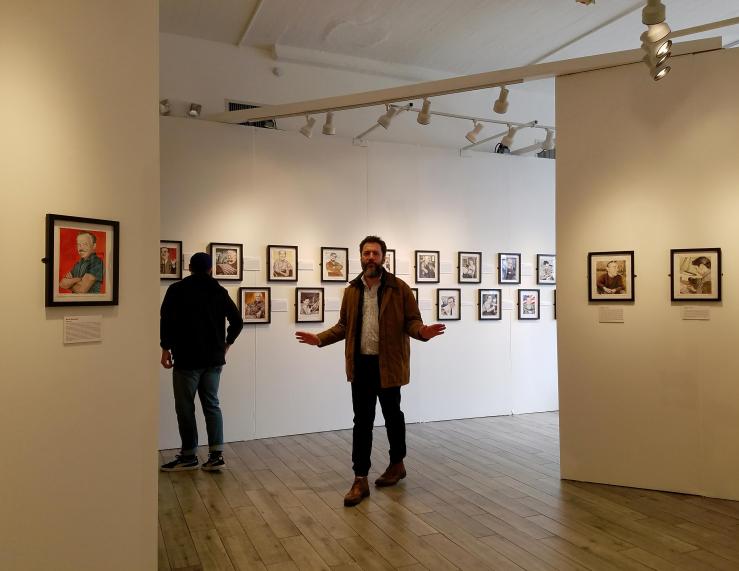
 But wait… there’s more! Here come the real superheroes, those early comic book creators from the industry’s early years (1935-1955), lovingly depicted by their colleague, American cartoonist Drew Friedman in his two recent books Heroes of the Comics and More Heroes of the Comics.
The Society of Illustrators presented 100 original colour illustrations by the artist, who was also featured as a guest of honour at the MoCCA 2017.
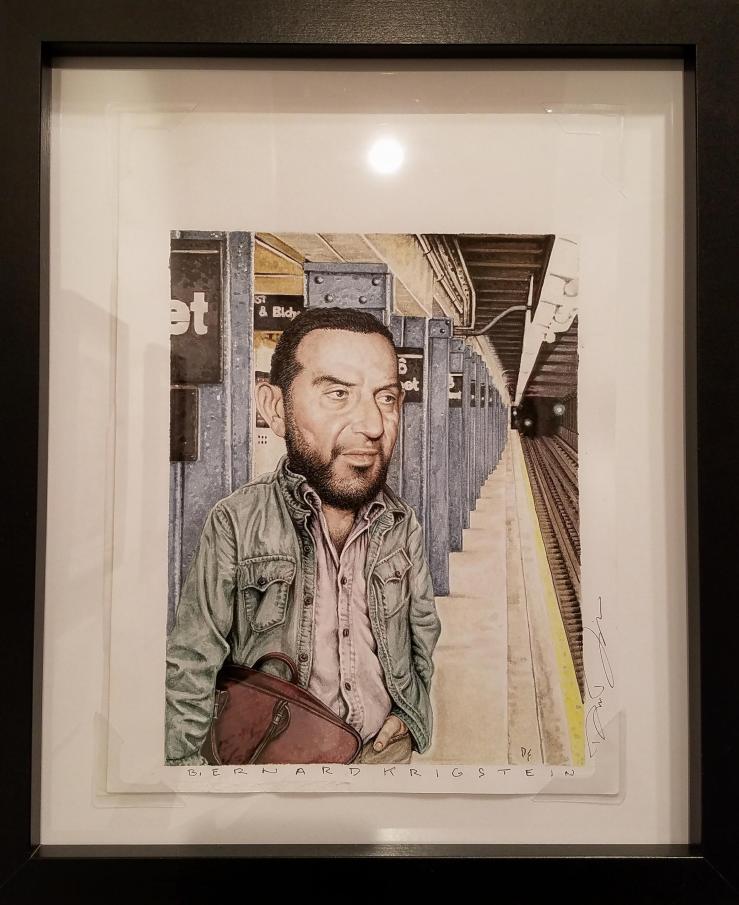 Bernard Krigstein, 1919-1990
He approached comics as a serious art form and his innovative, beautifully composed, almost cinematic use of panels have never been equaled in comics. Following Harvey Kurtzman’s invitation to illustrate one of his EC war stories, Krigstein became a regular contributor to EC, illustrating a total of 47 stories for them, including several pieces for MAD, highlighting his brilliant gift for caricature. 1955’s ”Master Race”, appeared in the debut issue of EC’s ”New Direction” comic Impact and was his masterpiece, a groundbreaking triumph of sequential storytelling.
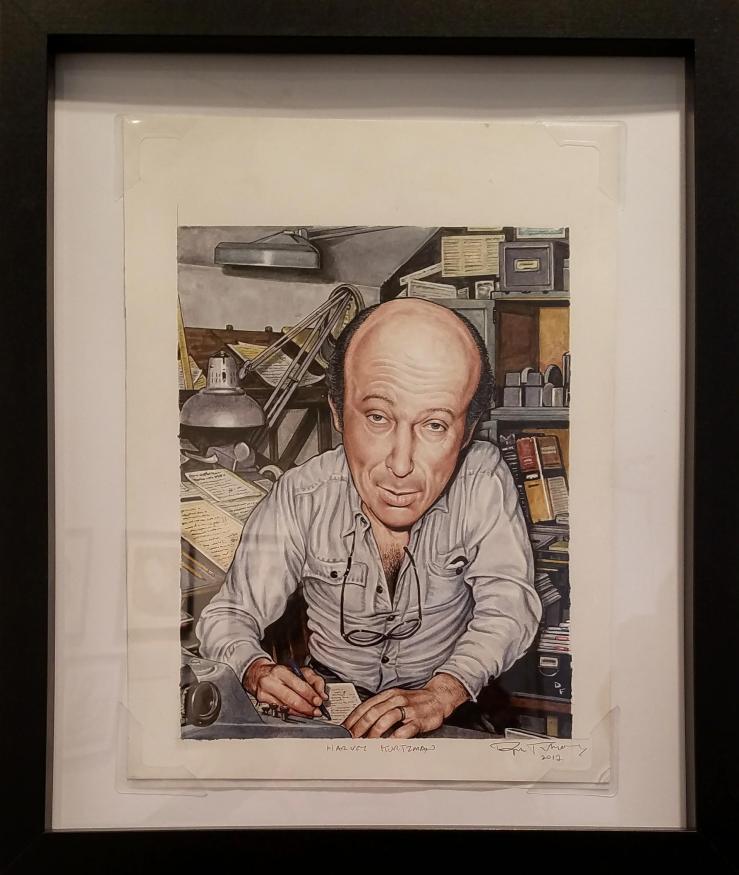 Harvey Kurtzman (1924-1993)
Cartoonist, writer, editor, satirist and teacher, he was the founder and creator of MAD – as well as Trump, Humbug, Help, etc. Along with his long-time partner, cartoonist Will Elder, he spent almost 30 years producing the lushly painted comic strip ”Little Annie Fanny” for Playboy. Kurtzman has had a huge, almost unmeasurable influence on several generations of cartoonists and humorists, among them Robert Crumb and the (Monty) Pythons.
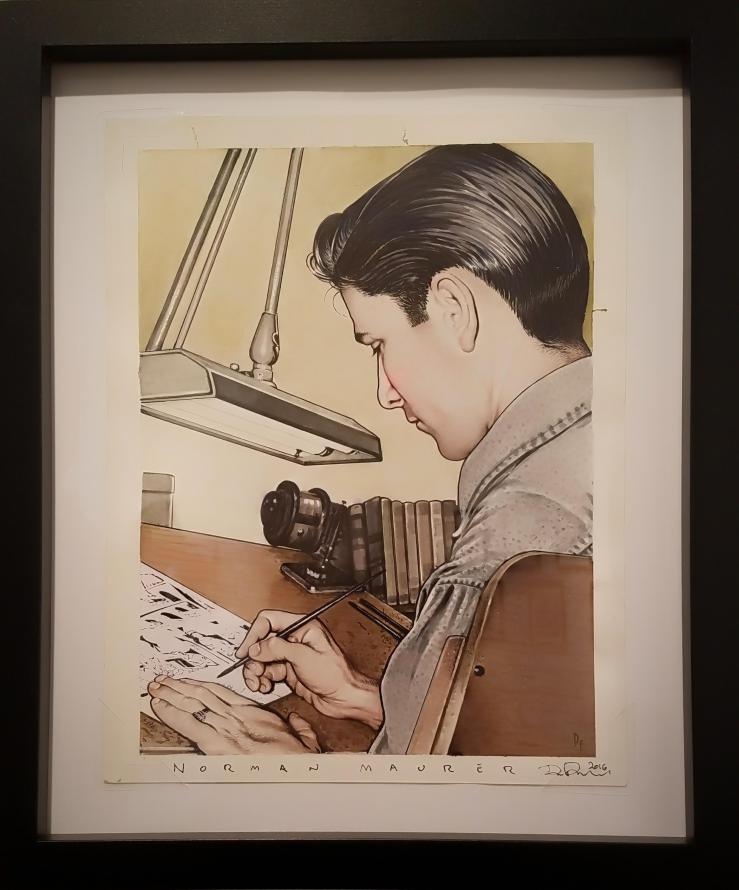 Norman Maurer (1926-1986)
Born in Brooklyn, he started working in comic books while still a teenager. His marriage to Joan Howard, daughter of Moe Howard of the Three Stooges, in 1947 kicked-off his lifelong association with the comedy team.
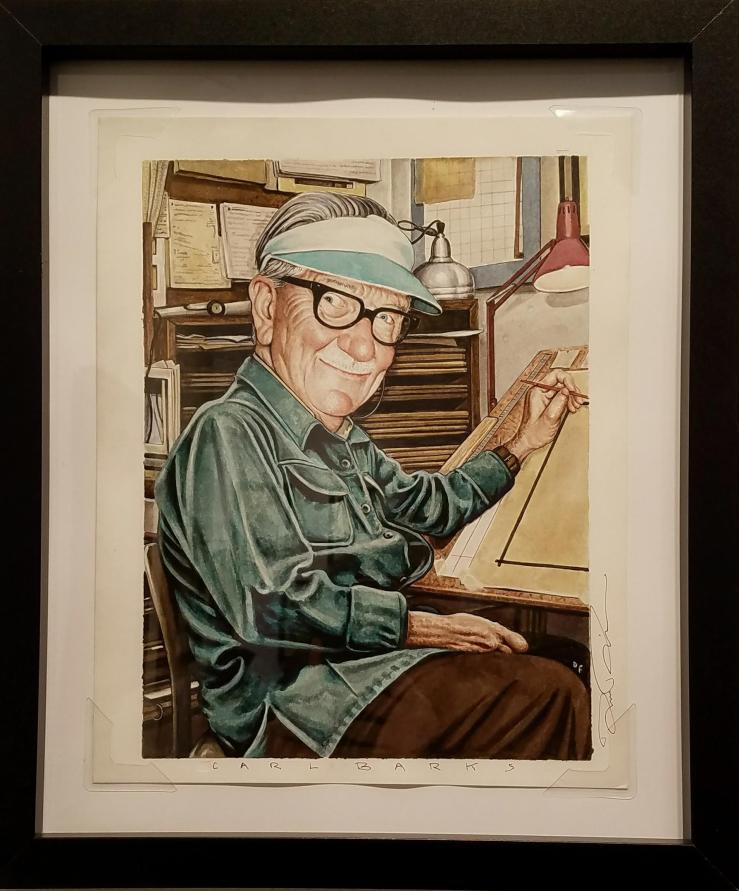 Carl Barks (1901-2000)
His cartoon adventures of Donald Duck were published anonymously for decades. Barks drew the Donald Duck story for the front of Walt Disney’s Comics, the most popular post-War II comic book being published. In 1935 he has hired as a full-time writer at the Disney film studios only to quit in 1942 and become a full-time artist for their comic book line – which included the bimonthly Donald Duck. In his later years, Barks would recreate in oil large paintings of his beloved ducks, some of them now fetching hundreds of thousands of dollars.
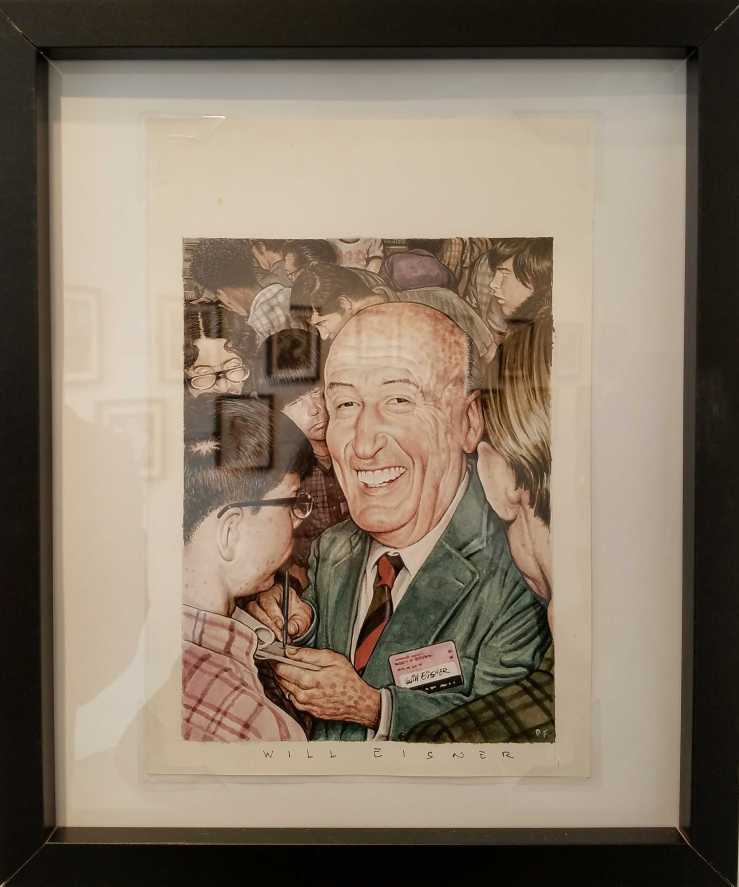 William Erwin ”Will” Eisner (1917-2005)
Eisner grew up in the Bronx dreaming of someday becoming a successful cartoonist. In 1936, Eisner’s friend from Dewitt Clinton high school, Bob Kane, suggested he sell some of his cartoons to a new tabloid-sized magazine called WOW, What a Magazine!, edited by cartoonist and letterer Jerry Iger. Although Iger was 12 years older than the 19-year old Eisner, they both clicked. They opened together the Eisner-Iger studio in New York, a mass production comic book factory in 1937. It was a great financial success but Eisner, who was more interested in concentrating on his writing and drawing, would sell his interest in the shop in 1939 to pursue an offer to create a syndicated newspaper comics section of his own. His first 16-page The Spirit insert episode ran in 1940.
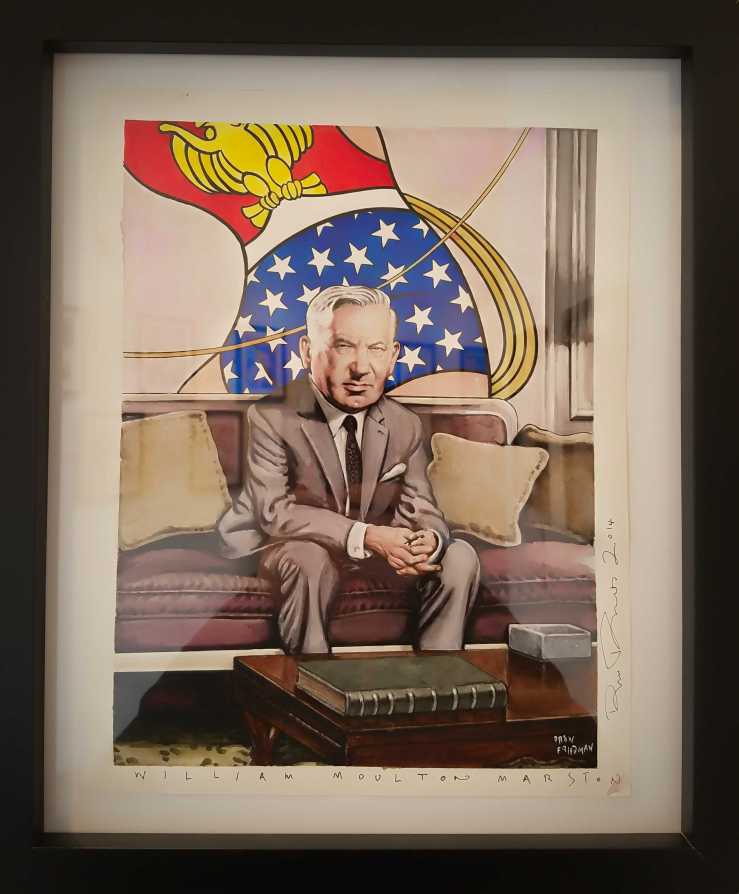 William Moulton Marston (1893-1947)
Marston’s relatively short life was filled with fascinating, seemingly at first, unrelated accomplishments. He attended Harvard and received a Ph.D in Psychology, became a teacher and briefly, in 1929, the director of public services for Universal Studios in Hollywood. Marston was also a lawyer and inventor, and is credited as the creator of the Systolic Blood Pressure Test, which would help lead to the invention of the modern Polygraph machine. He also authored several self-help books and was a champion of women’s causes, writing that he was convinced that women were ”more honest and reliable than men, and could work faster and more accurately.” He also recognized and wrote of the ”great educational potential” of the new medium of comic books and in the early forties he was hired by publisher Max Gaines to be an ”educational consultant” for National Periodicals and All-American Publications which would soon merge into DC comics. Marston’s wife Elizabeth gave him the idea to create a female superhero in the then male dominated world of comics; he developed the character ”Suprema” soon called ”Wonder Woman” basing her to an extend on his own wife and her appearance on his polyamorous partner, a former student of his who now lived with the couple in an open marriage, named Olive Byrne.
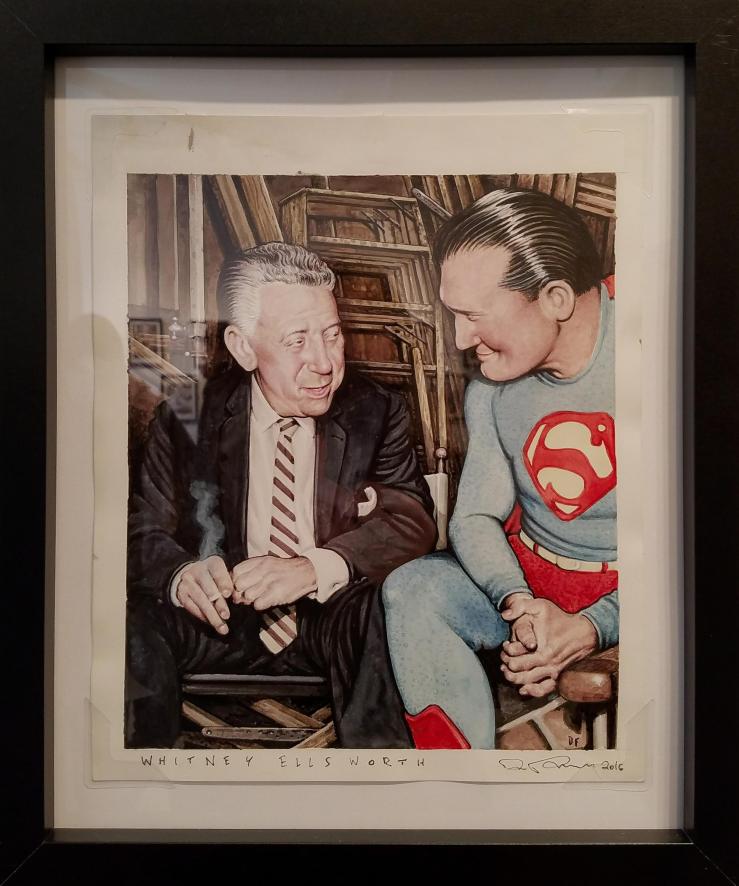 Whitney Ellsworth (1908-1980)
Writer and artist for DC comics, he became their Hollywood liaison. He had a hands-on role in script and production for the 1951 feature Superman and the Mole Men which led directly to 1952’s The Adventures of Superman, starring George Reeves.
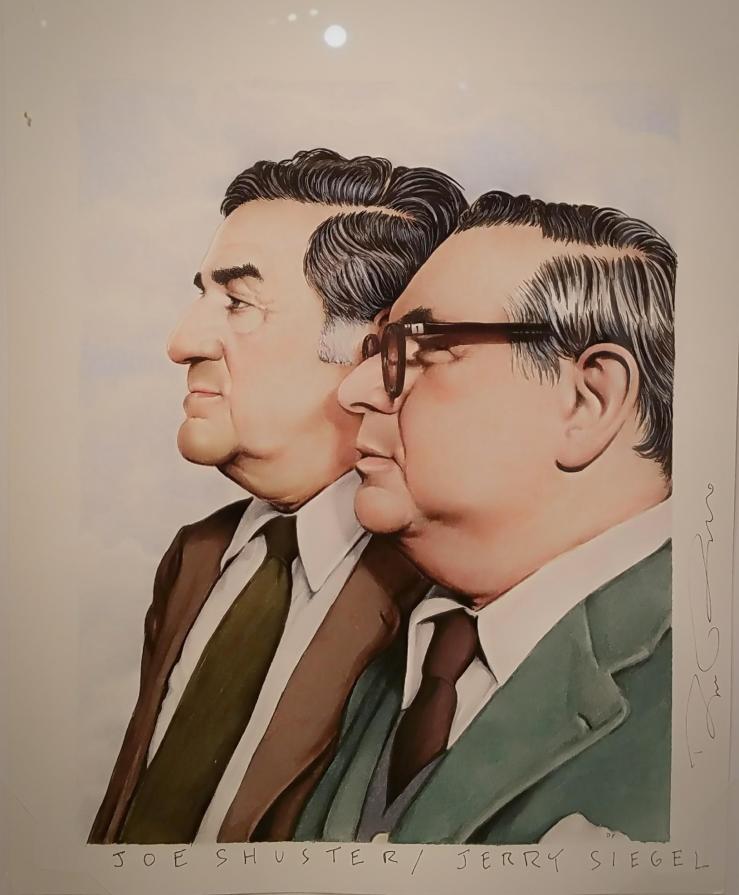 Joe Shuster (1914-1992) & Jerry Siegel (1914-1996)
They met at 16 at Glendale high school in Cleveland, Ohio. The two young, shy Jewish teenagers discovered they shared much in common, Siegel dreaming of writing science fiction stories for Pulp magazines and the shy, bespectacled Shuster also sharing a love for science fiction and dreaming of working as a Pulp artist. Siegel conceived a superhero character he called ”The Superman” and together with Shuster’s art, began a frustrating four-year quest to get it published as a comic. Another of their characters, Slam Bradley, debuted in National’s Detective Comics #1 in 1937. In 1938 Max Gaines urged National’s new publishers, Harry Donefeld and Jack Liebowitz to publish Superman, and after four years of submissions and rejections, the character finally debuted as the cover feature for National’s Action Comics #1 in June 1938. It was an instant sensation. By endorsing a check for $130 (the total amount of the check was for more than $400, other monies owed to the team was padded on to no doubt make the signing more enticing), assuring them that they would be the primary artist and writer for Superman and the upcoming syndicated Superman newspaper comic, and without any advice from a lawyer, Siegel & Shuster forever signed away all their rights to a character that would soon become one of the most commercially successful and iconic characters of the 20th century.
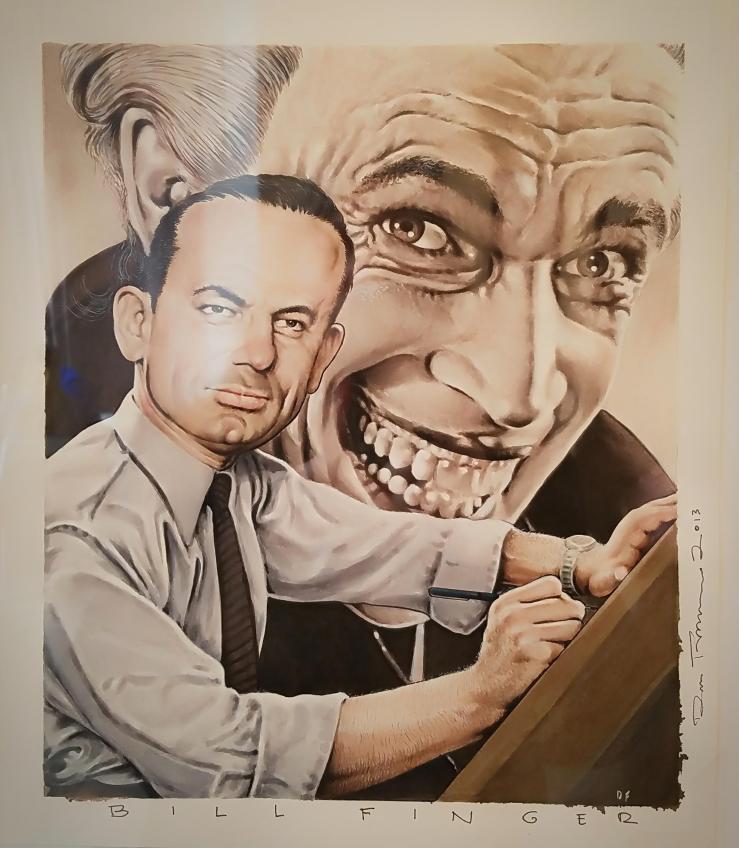 Bill Finger (1914-1974)
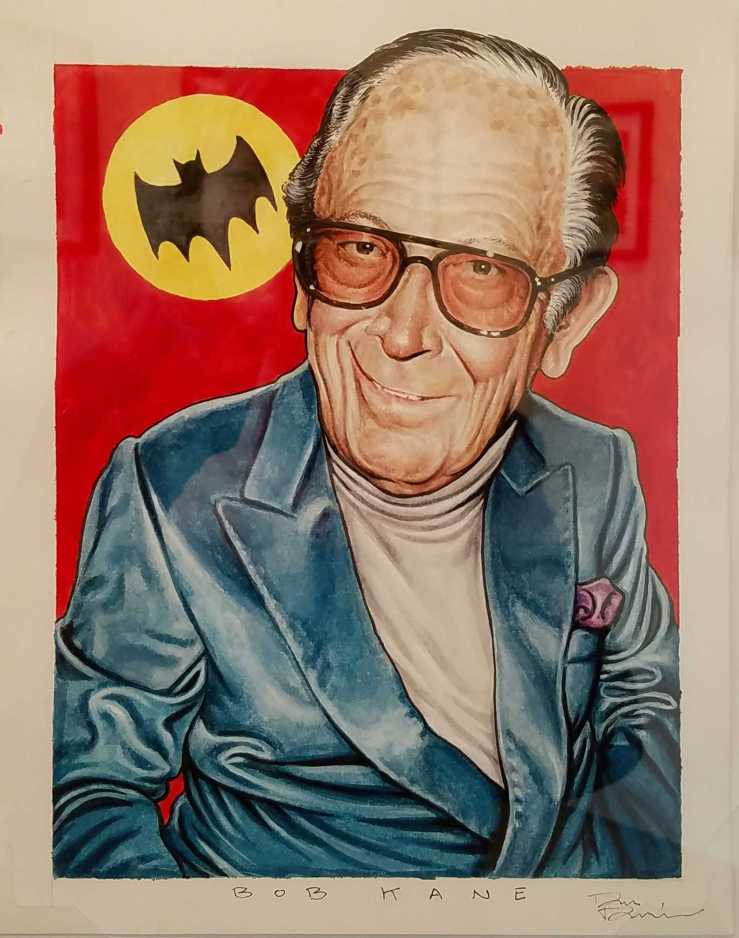 Bob Kane (1915-1988)
He was the controversial artist who posed for almost half a century as the sole creator of Batman. In 1938, after the character created by Jerry Siegel and Joe Shuster named Superman caused a sensation in Action Comics #1, National sought more super-heroes to add to their roster and Kane soon conceived a character he called ”The Batman”. He showed his flimsy conception drawings to his writer Bill Finger, who he had hired to work for him and Finger suggested specific changes to redesign the character into the now familiar Dark Knight persona. The completed Batman debut finally appeared in Detective Comics #27, in May 1939. It became a hit and was soon starring in his own series, featuring his sidekick ”Robin”, conceived by Finger and artist Jerry Robinson. Kane worked out a cozy deal with National where he would receive sole credit as the writer and artist behind Batman, even though the character was essentially created by Bill Finger.
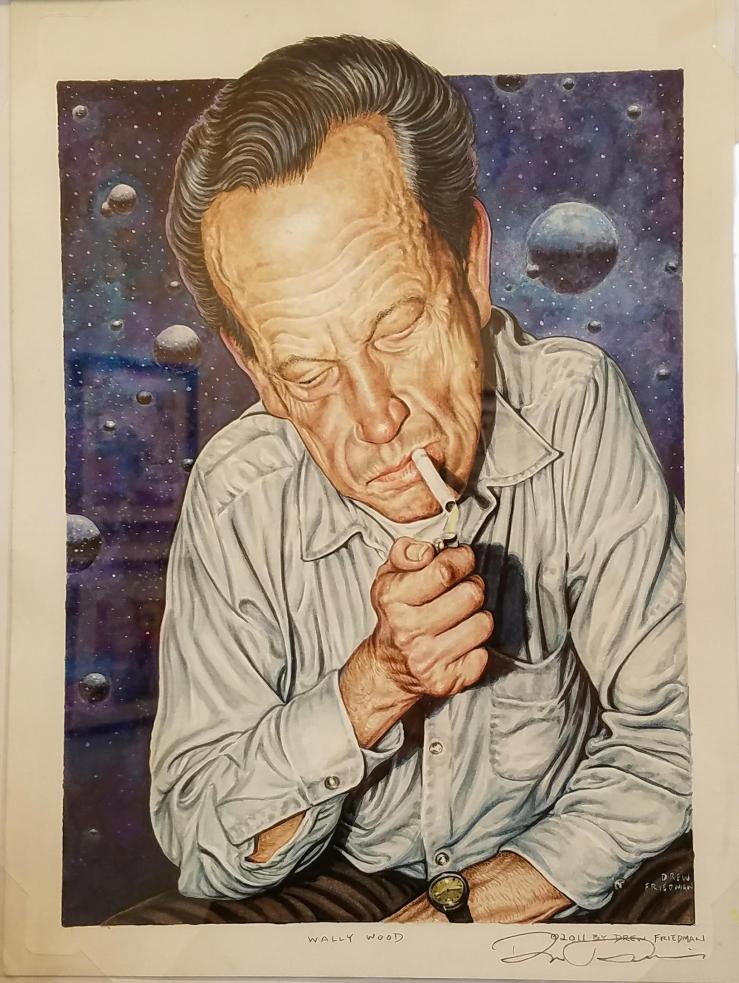 Wally Wood (1927-1981)
“Wally may have been our most troubled artist, but he may have been our most brilliant” – William M. Gaines
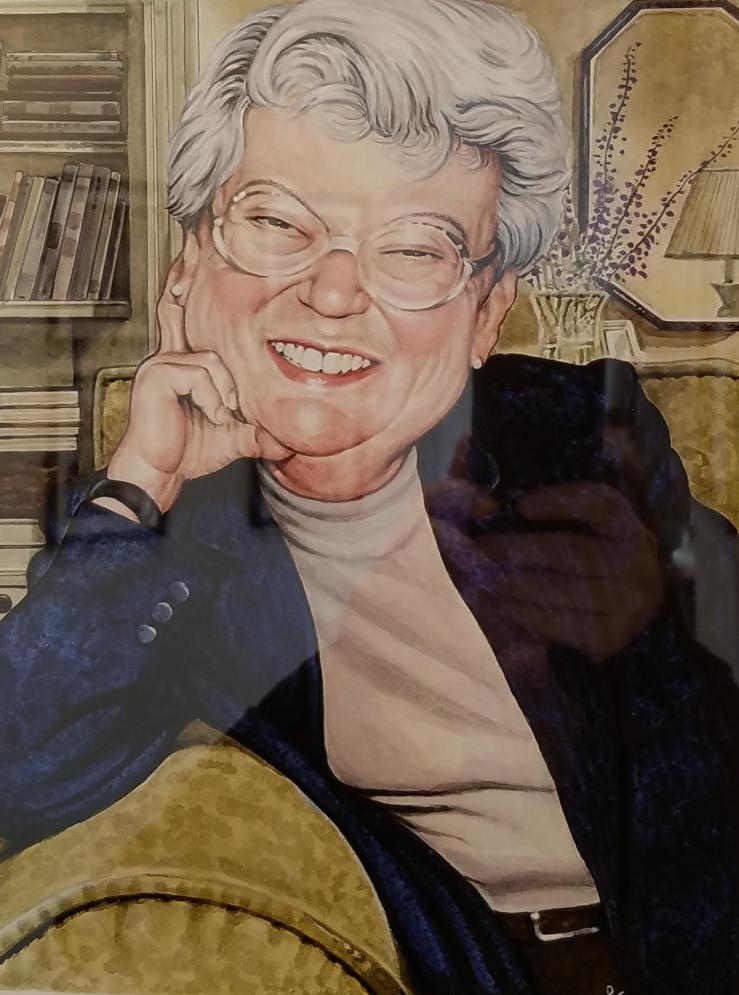 Marie Severin (b. 1929)
As EC’s colorist and the only creative woman on staff, and a very moral catholic, she was known for often colouring a particularly gruesome panel dark blue to help tone down the gore. Marie Severin’s older brother John first invited her to work as his colourist at EC in 1949 and soon she was colouring all of their comics, including the notorious horror titles.
Doug Varone and Dancers, BAM
March 30th, 2017
A Nonesuch Celebration, BAM
April 1st, 2017
MoCCA Arts Festival
April 1st, 2017








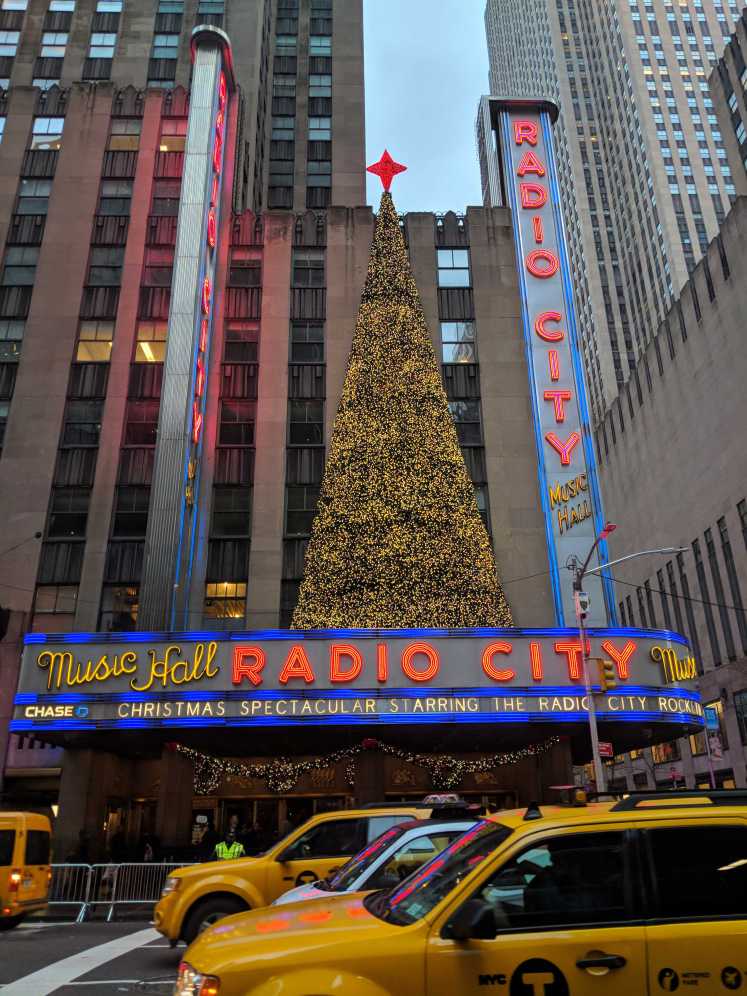 Starting point, a view over the Grand Foyer.
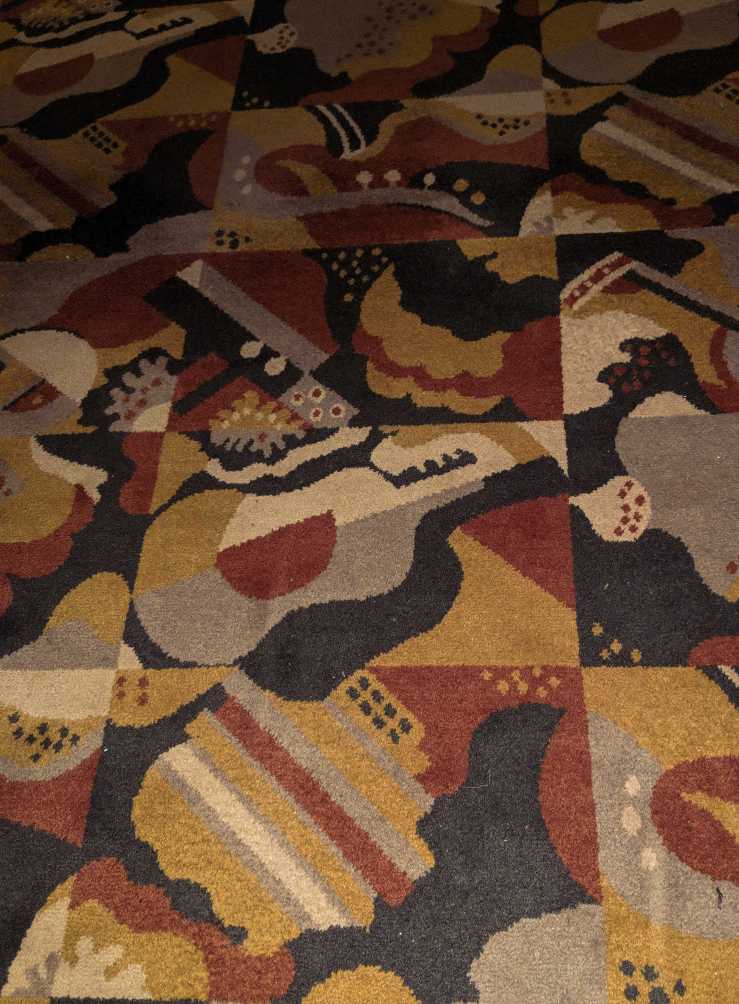
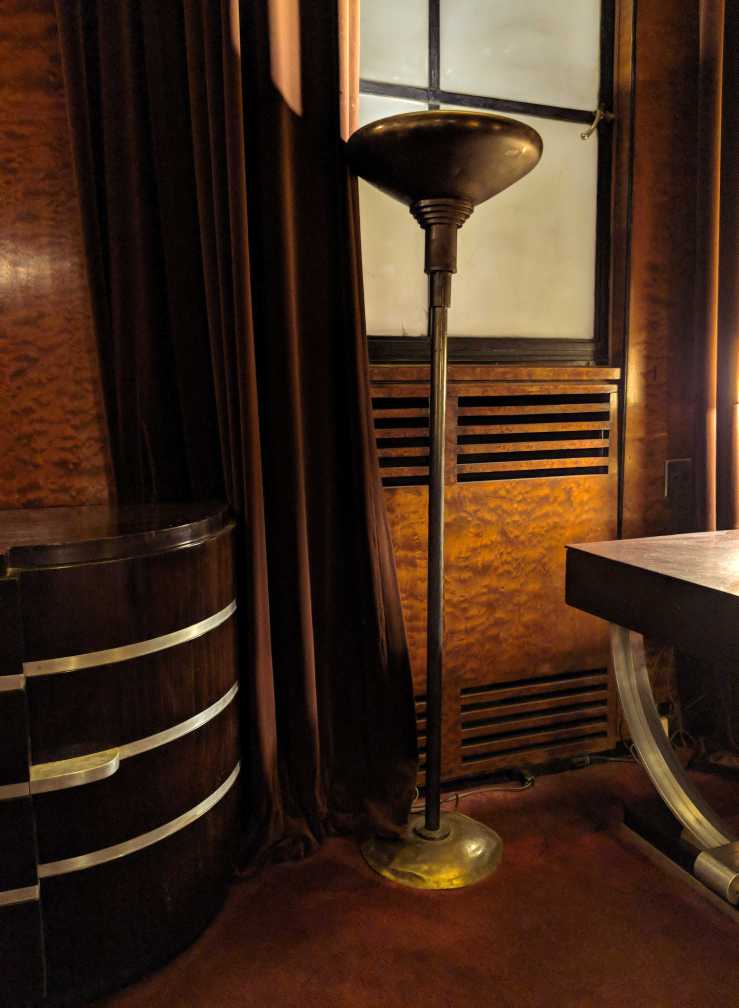
 Art Deco elements are omnipresent, floor to ceiling: the carpet we are walking on was designed by Ruth Reeves in 1932 to form a tile collage, each tile an abstract depiction of a musical instrument. Reeves had studied with French painter Fernand Léger in Paris in the early 1920s. Léger’s influence is evident in Reeves’ innovative design – so innovative that it looks every bit as modern today as at the time it was conceived, 85 years ago.
 Radio City’s interior designers Edward Durell Stone and Donald Deskey spared no expense nor effort to make the place as grand and stylish as possible. That is evident everywhere and restrooms are no exception. Here we are at the Ladies’ lounge, adjacent to the restroom on the third level, with a ”Panther” Mural of 1932, by Jenry Billings at its centre. Stylistically leaning towards Surrealism, still very much in place in an Art Deco environment.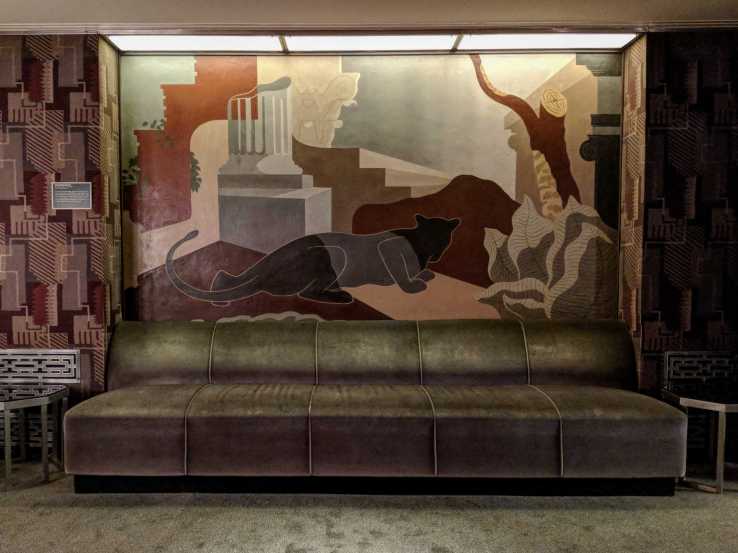
 A ”Wild West” Mural, by Edward Buk Ulreich graces the Gentlemen’s lounge.
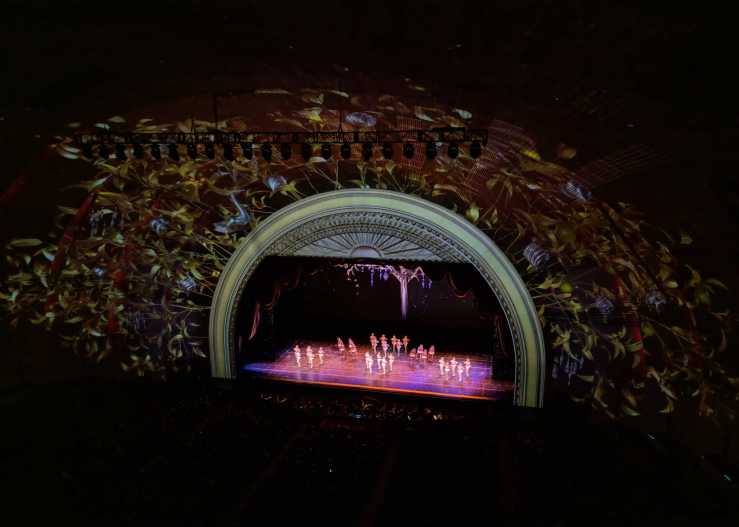
 The period leading to Christmas and New Year is the high season for the Rockettes who regularly go through their grueling routine of high kicks and tapping up to seven times a day and still do it with precision, impeccable style and – most difficult of all – a radiant smile (albeit a teary one at the end of the day). Here, we steal glimpses of one of their routines from the balcony.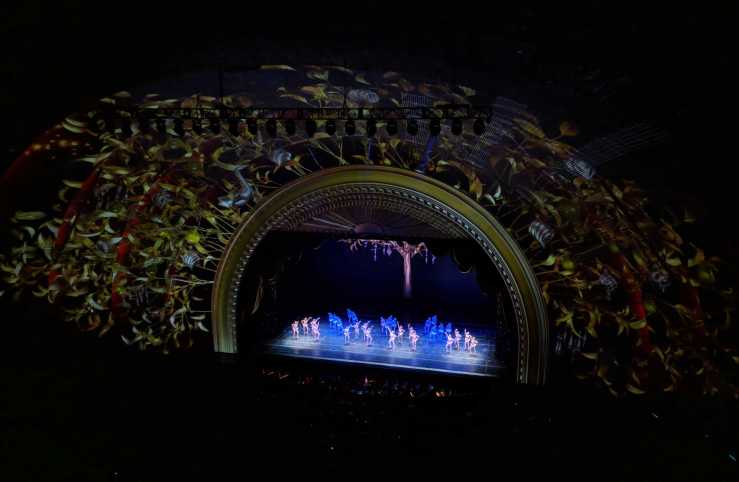








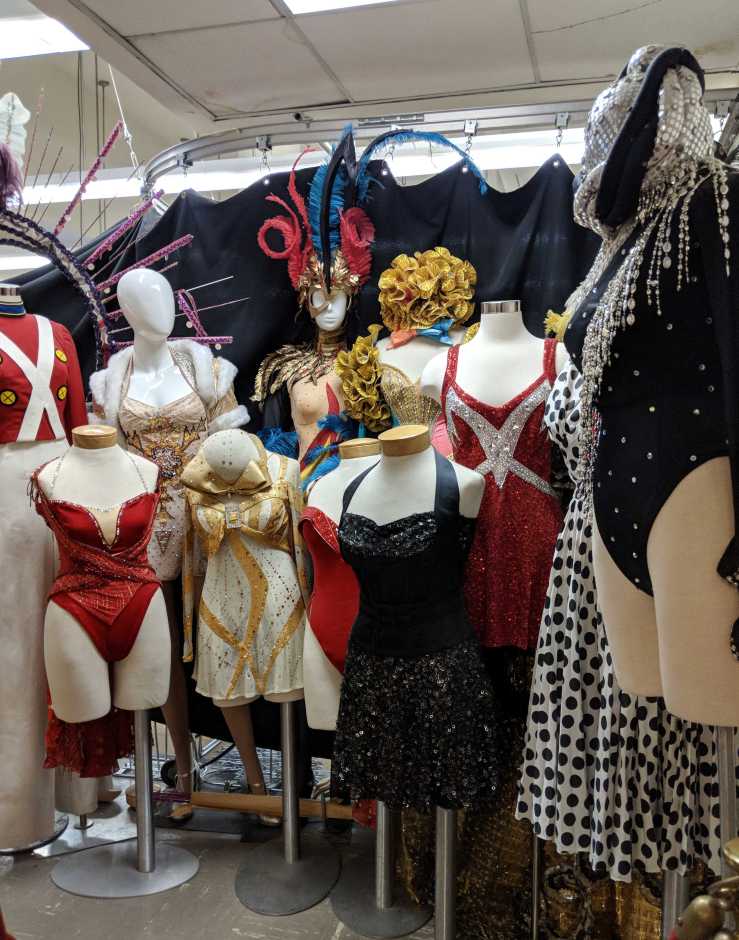
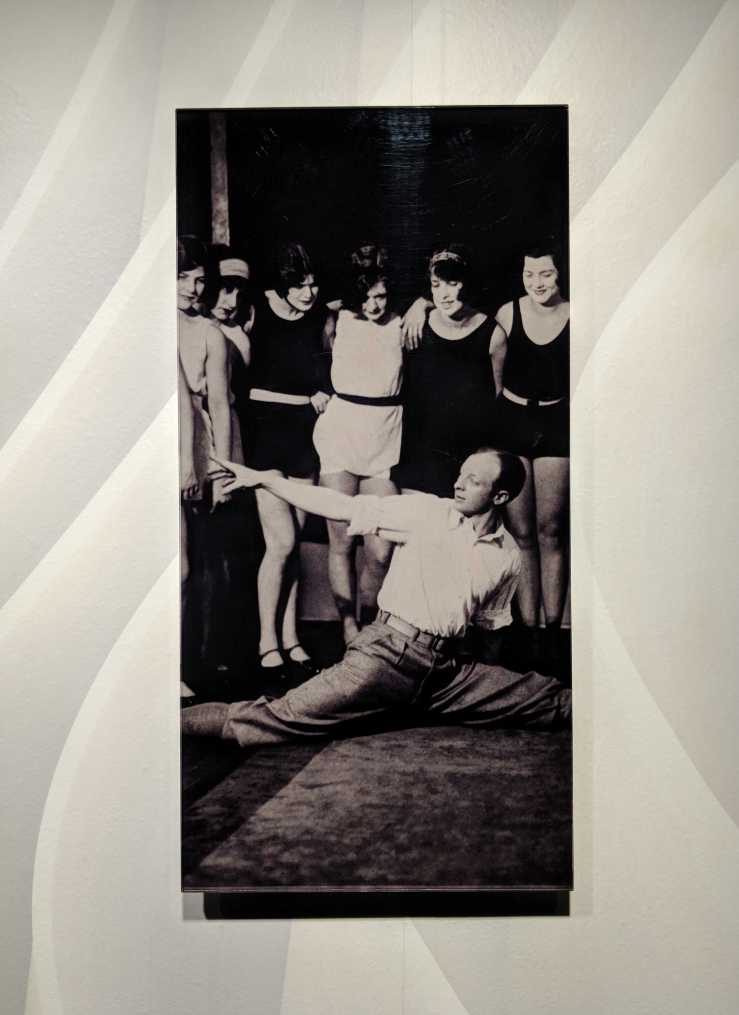
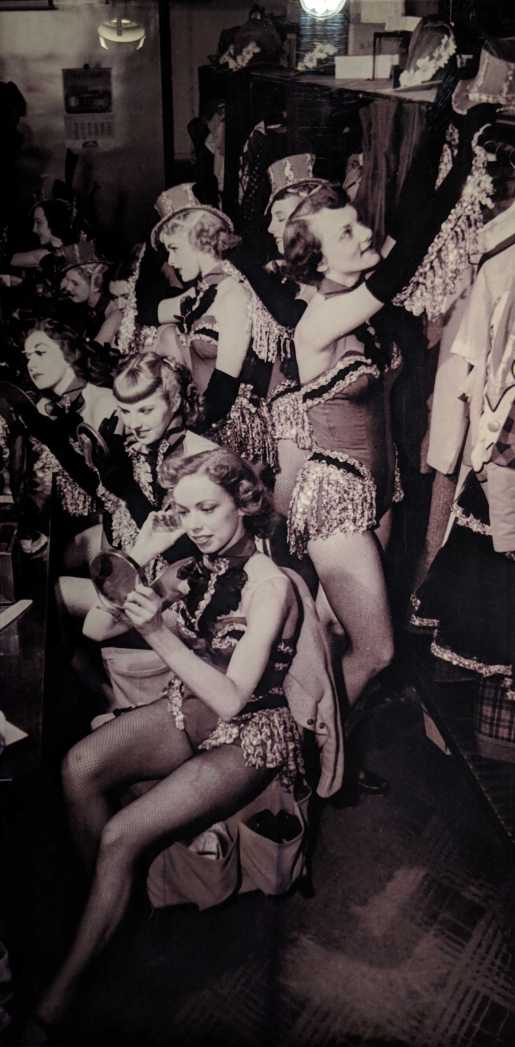

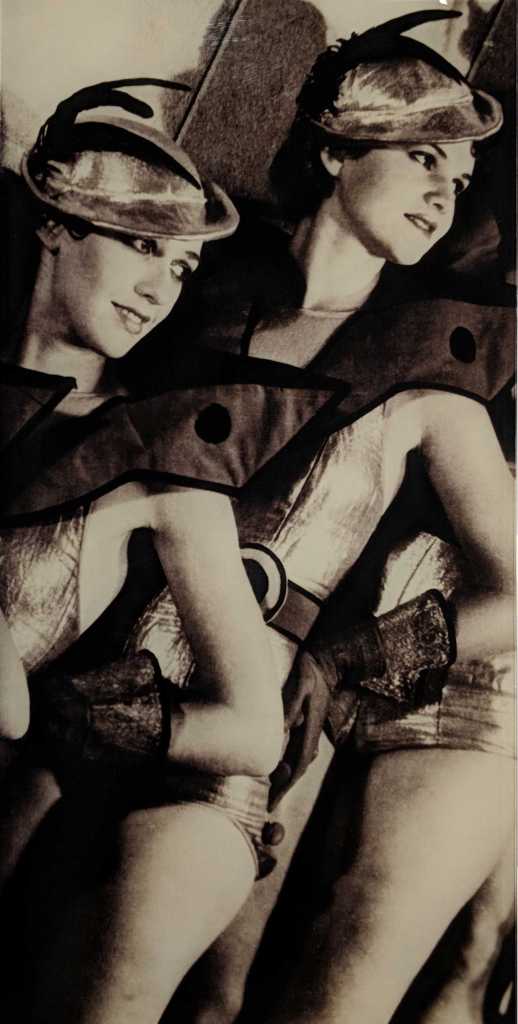


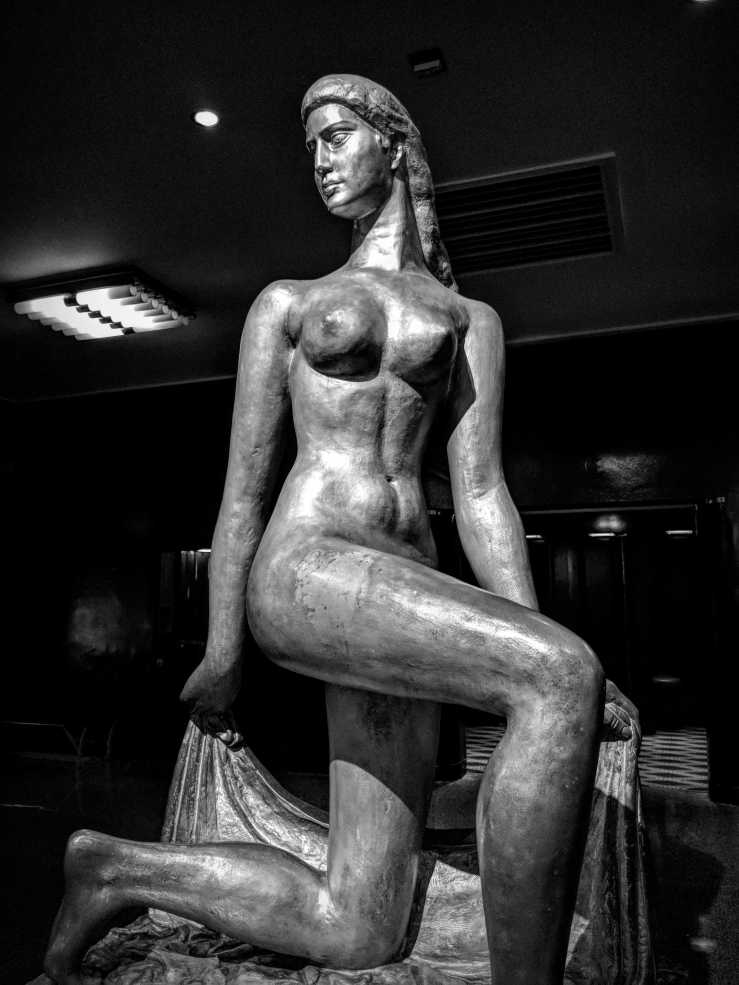
 The Spirit of Dance, Aluminium Sculpture, 1932 – by William Zorach. This was one of three statues removed from the Music Hall just before its opening, because they were considered risqué. They were later reinstalled after several months, following strong criticism.
 The Phantasmagoria of the Theater by Louis Bouche, at the main lounge of Radio City Music Hall.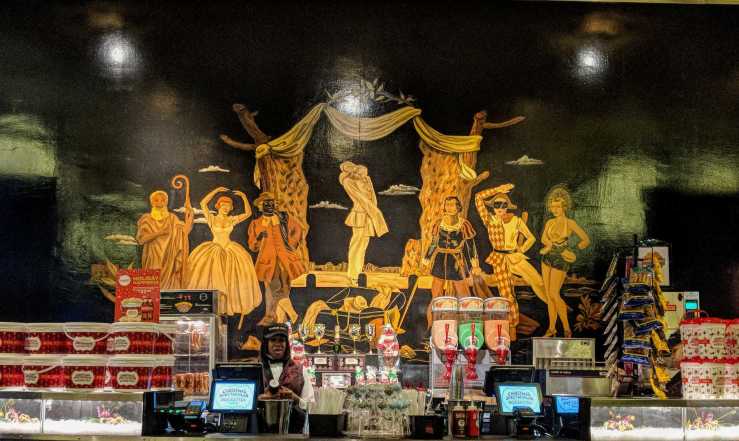
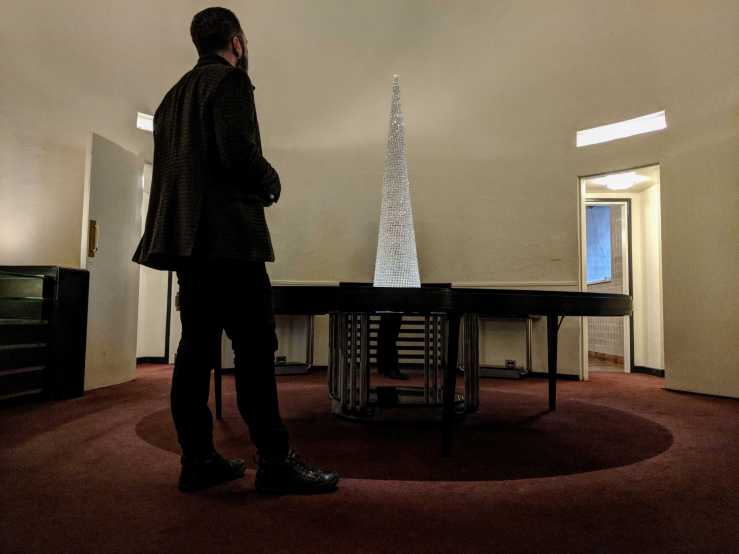
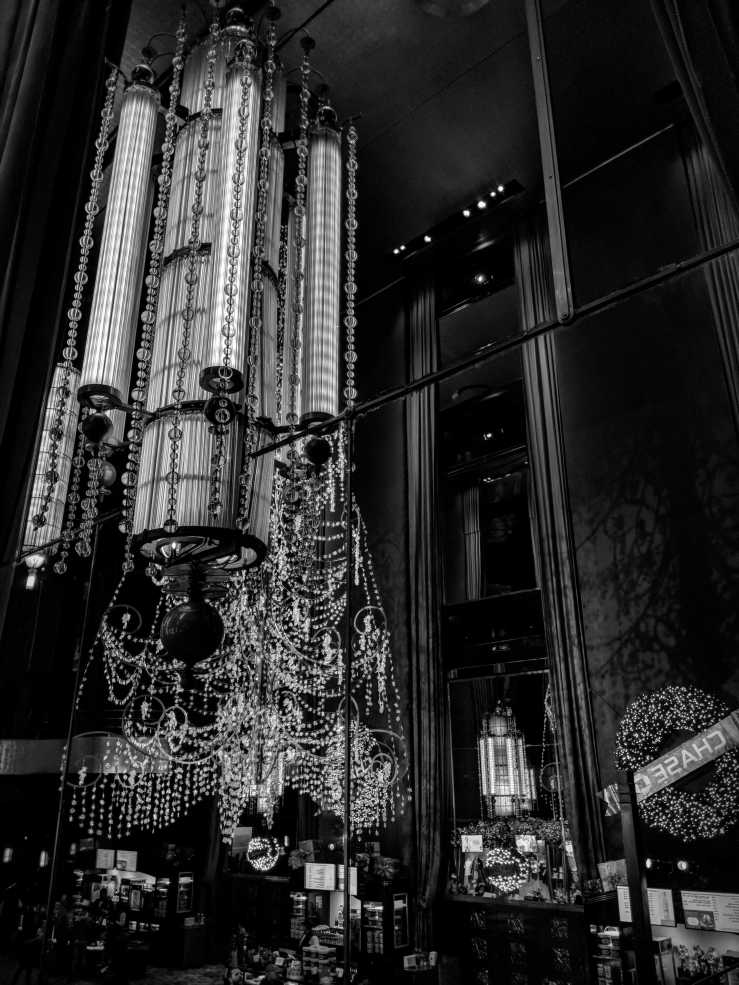
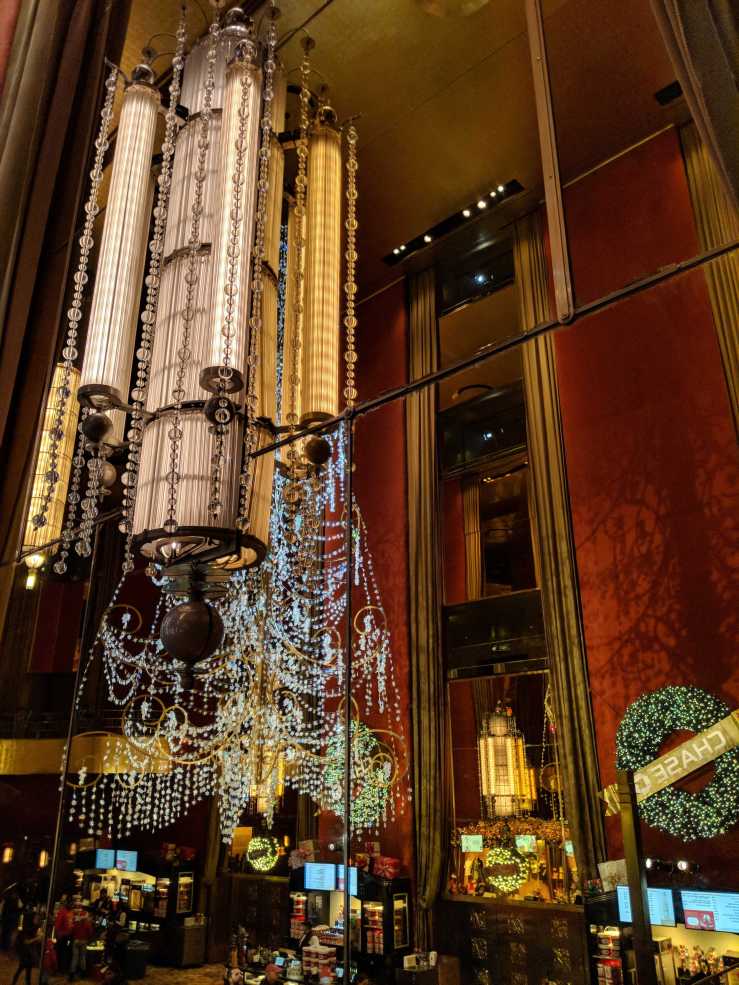
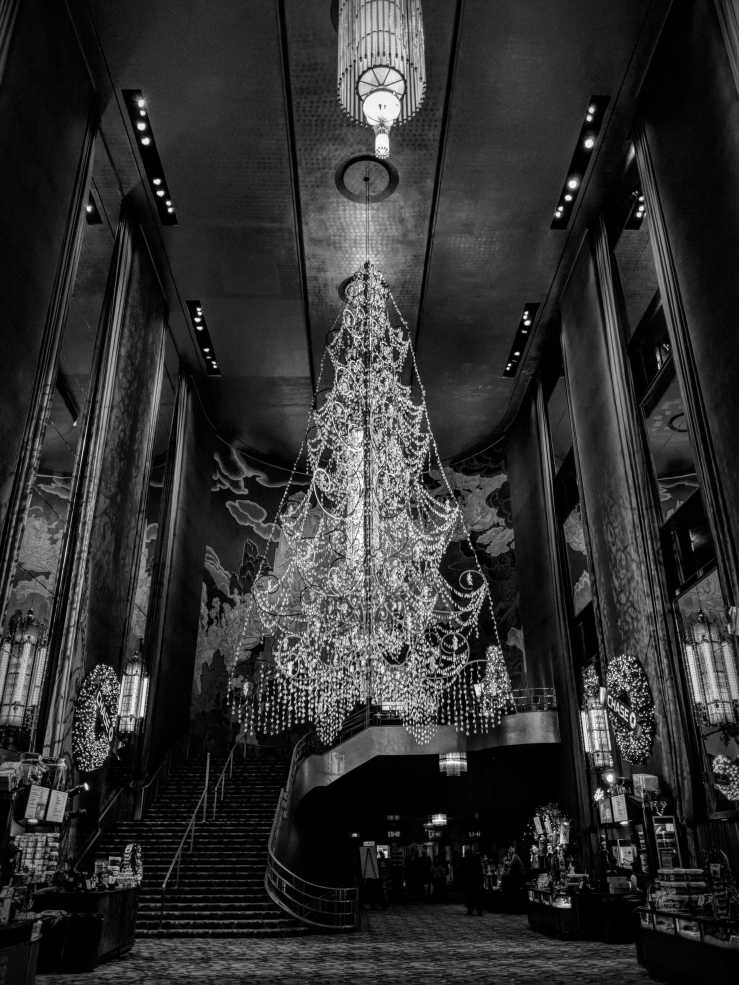
 The crystal Christmas Tree stealing the limelight from the chandeliers and Ezra A. Winter’s epic mural that overlooks the grand foyer. ”The Fountain of Youth”, 1932, is one of the first commissions for the Music Hall and depicts a legend from the Oregon Indians about the beginning of time.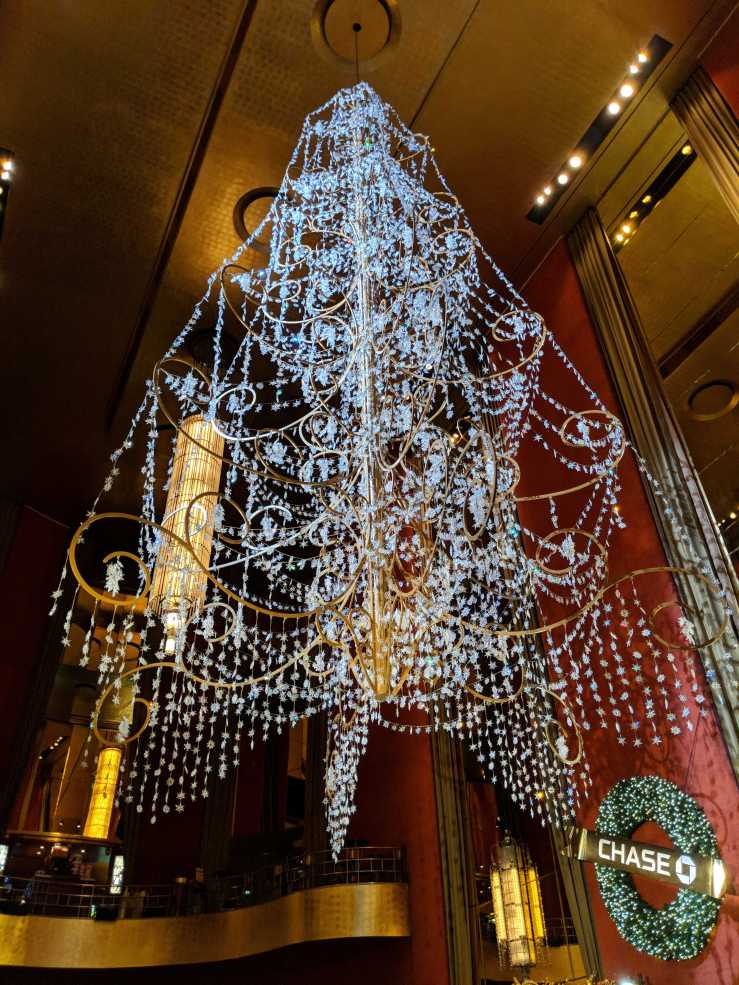



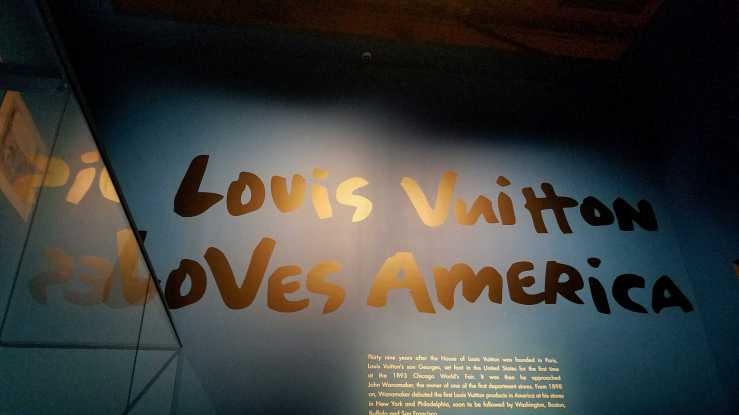
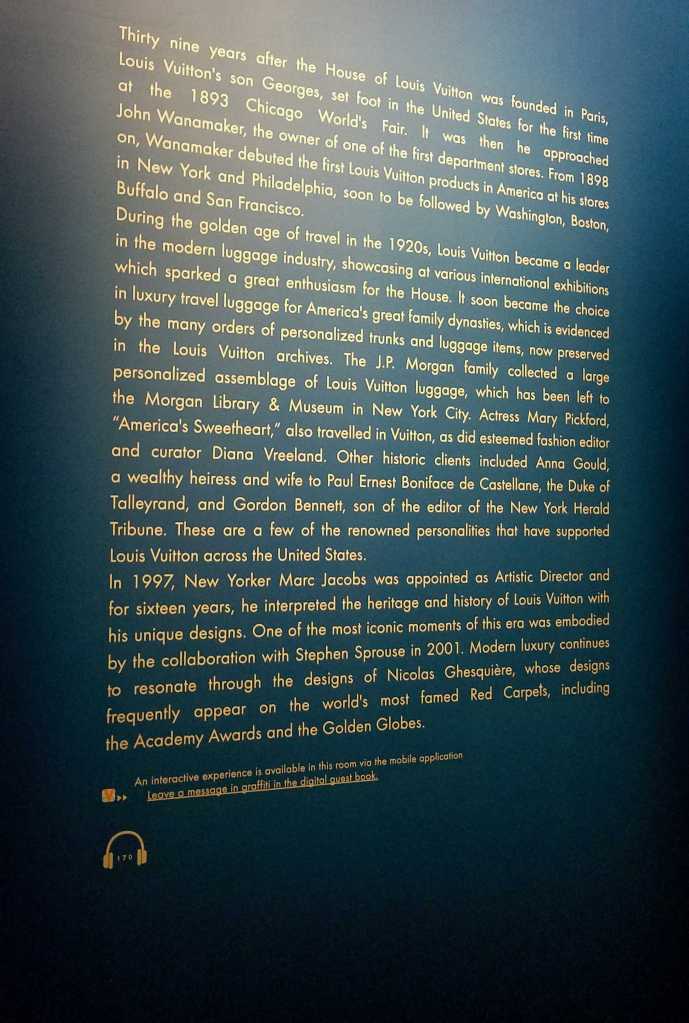
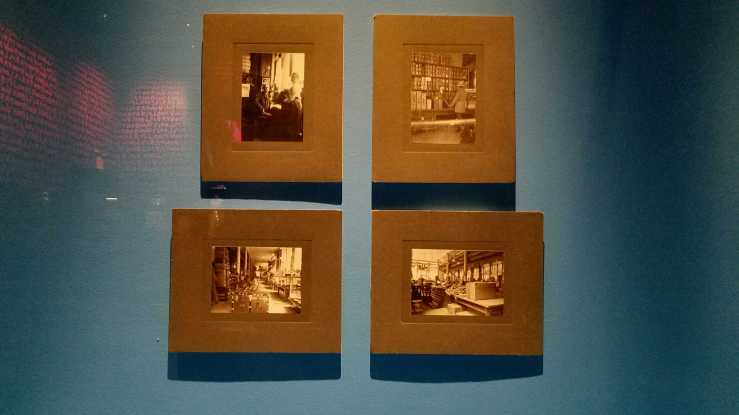
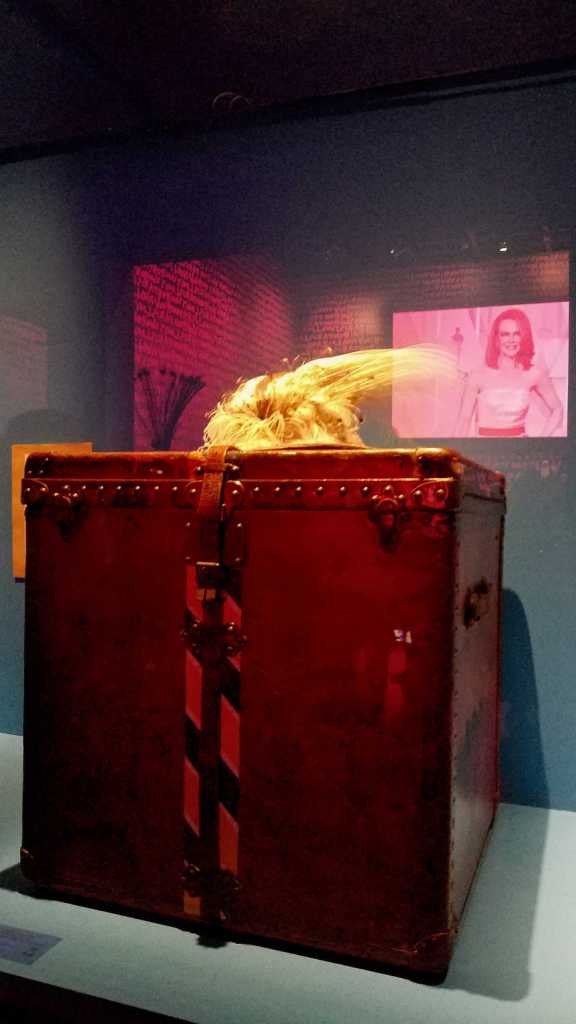 Hat trunk in leather, once belonging to Marjorie Merriweather Post
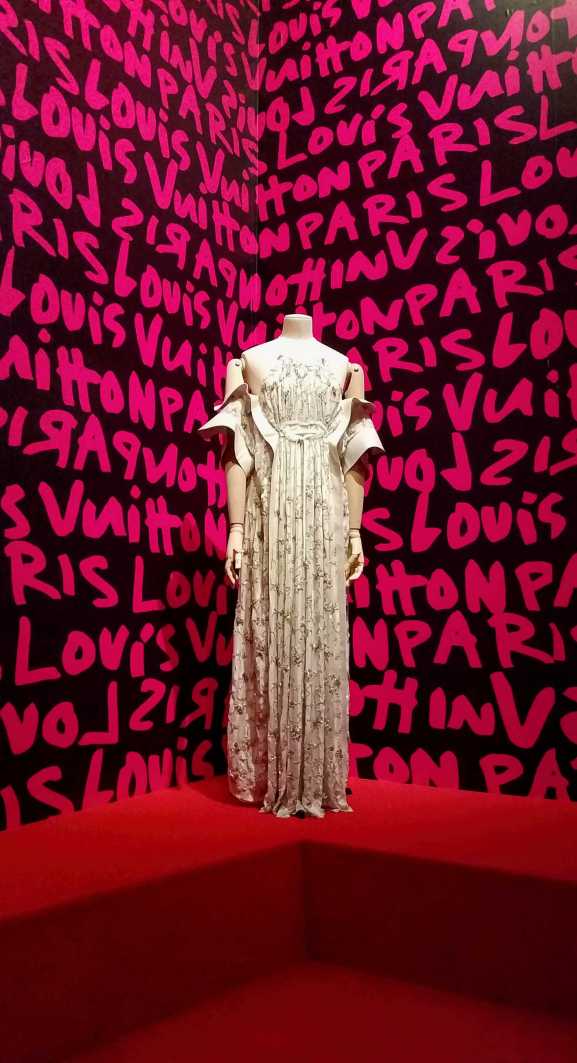 Nicolas Ghesquière embroidered dress worn by Emma Stone at the 2017 British Film Institute Festival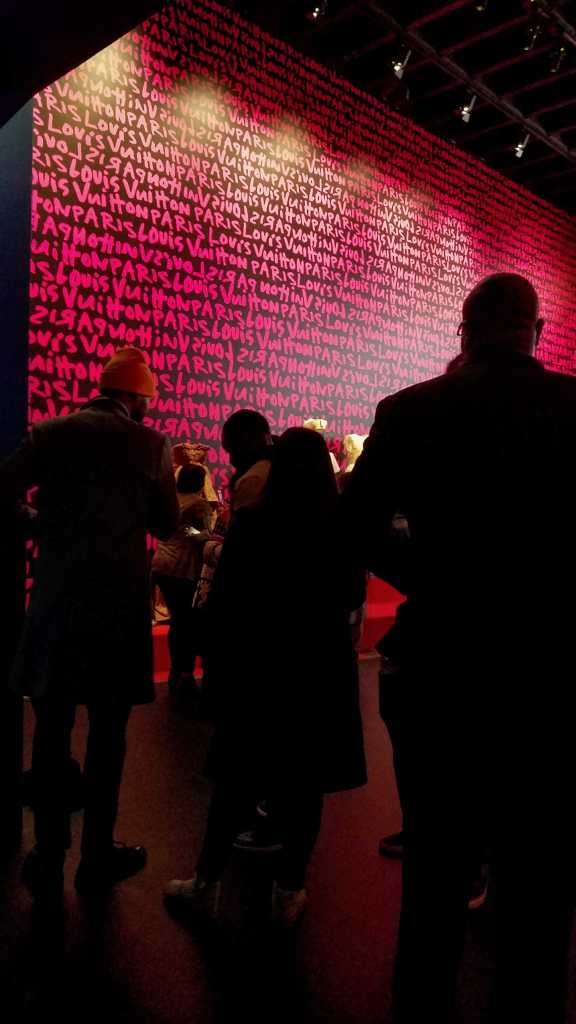
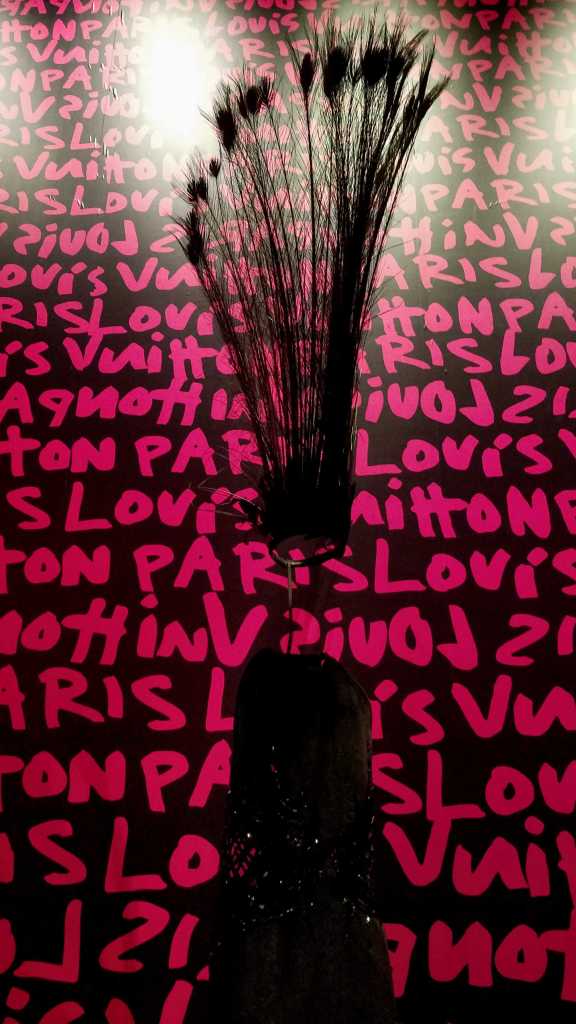 Marc Jacobs feathers headpiece
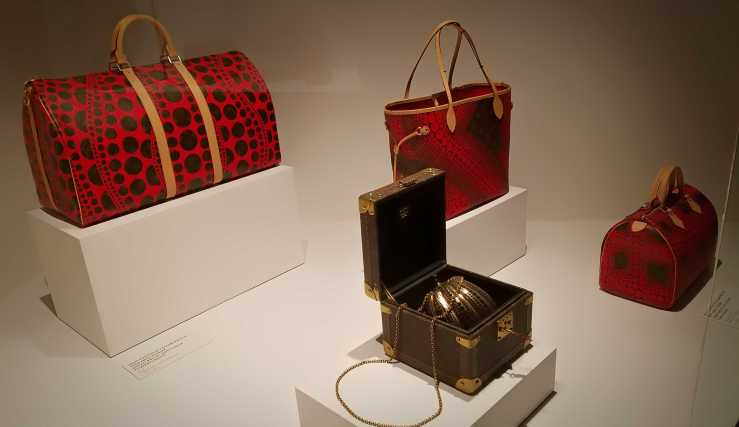 Yayoi Kusama
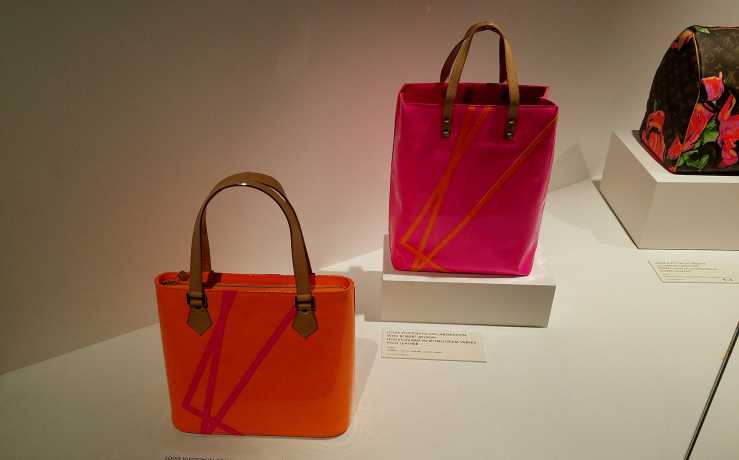 Robert Wilson
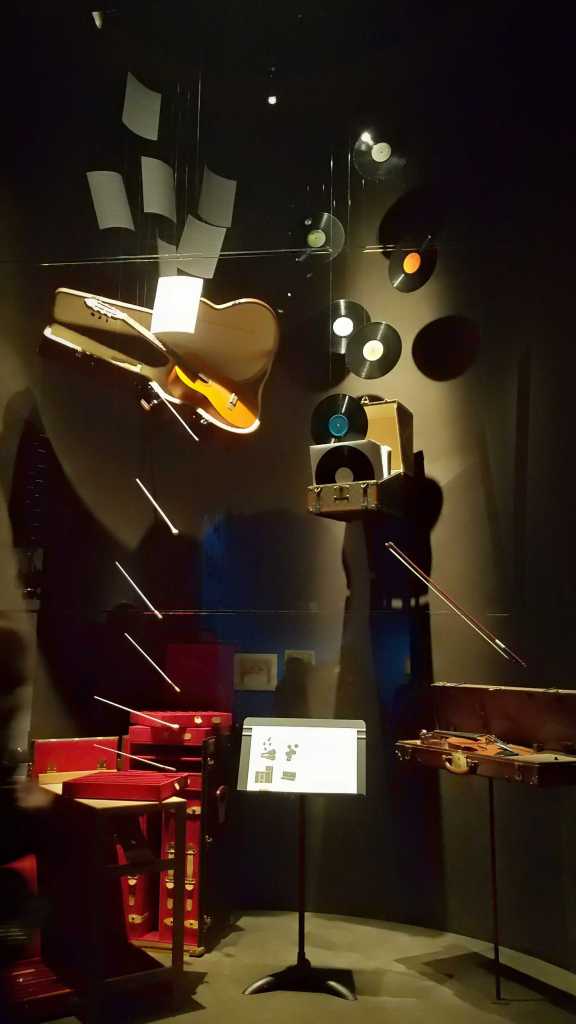 The Music Room
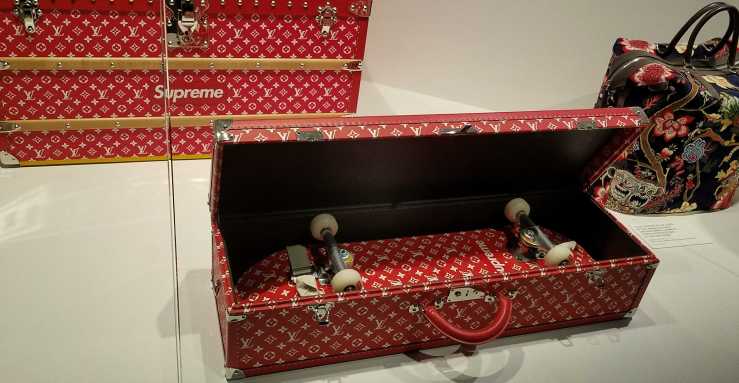 Supreme
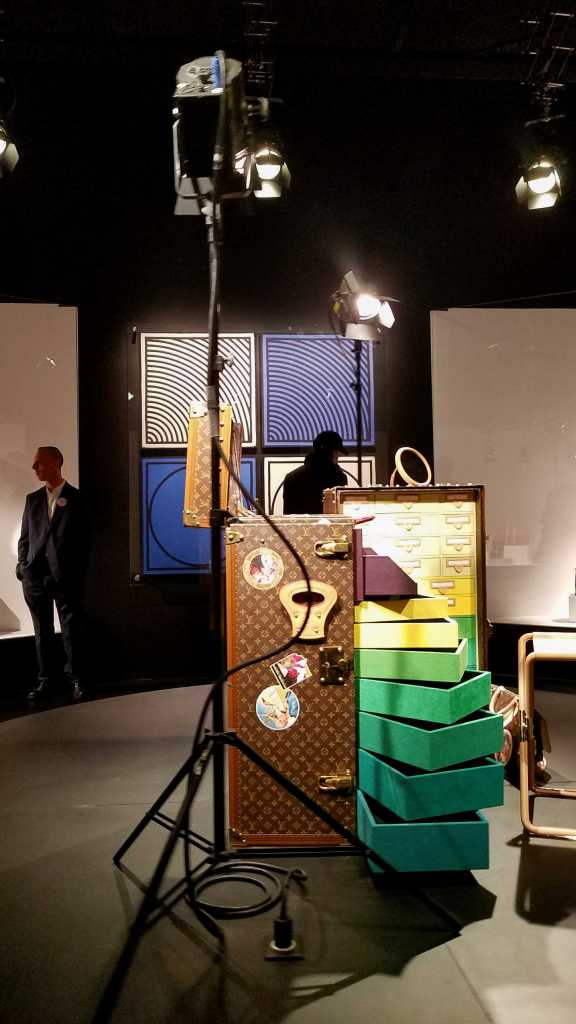 Cindy Sherman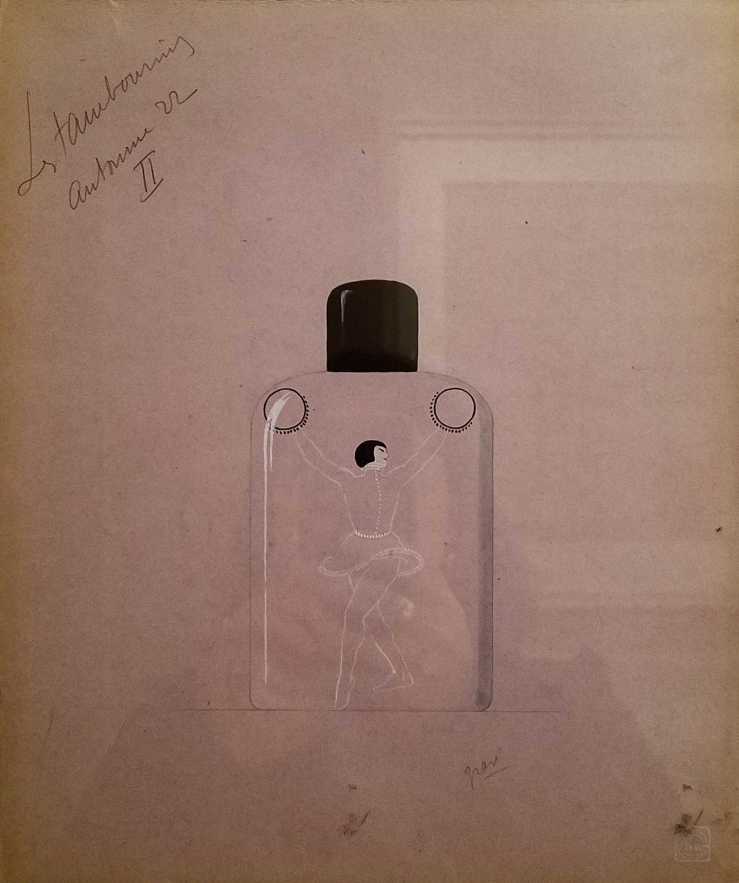
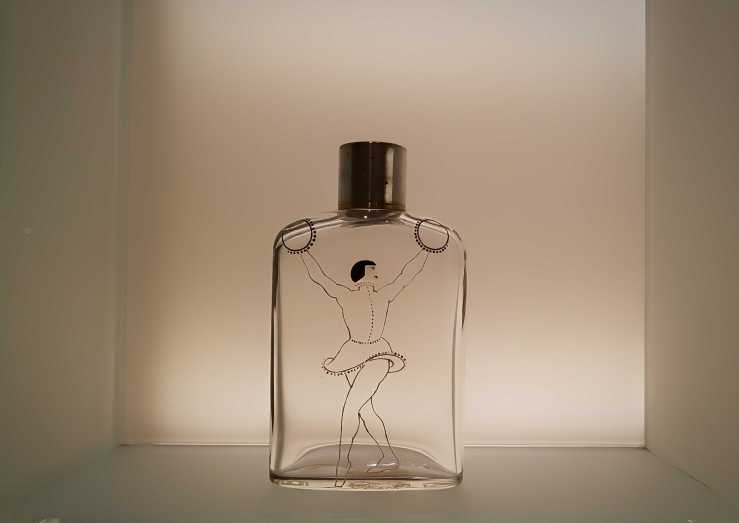
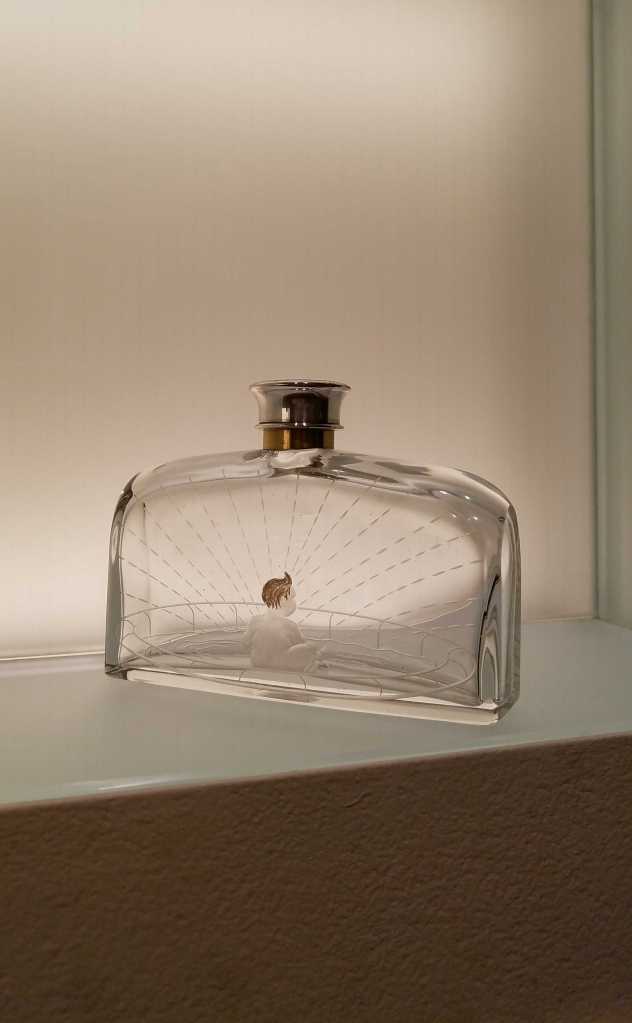
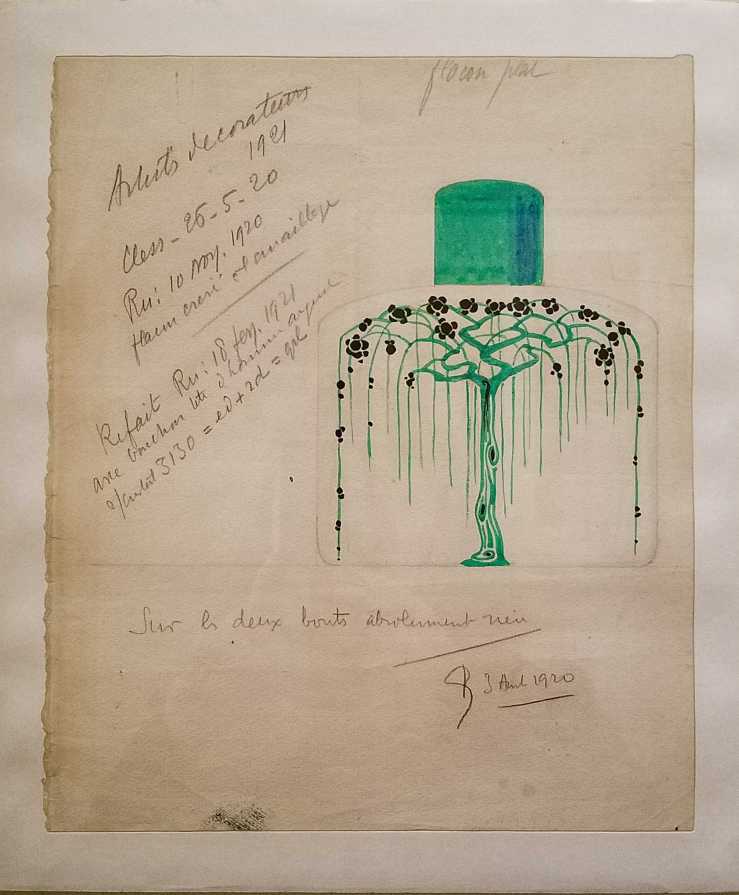
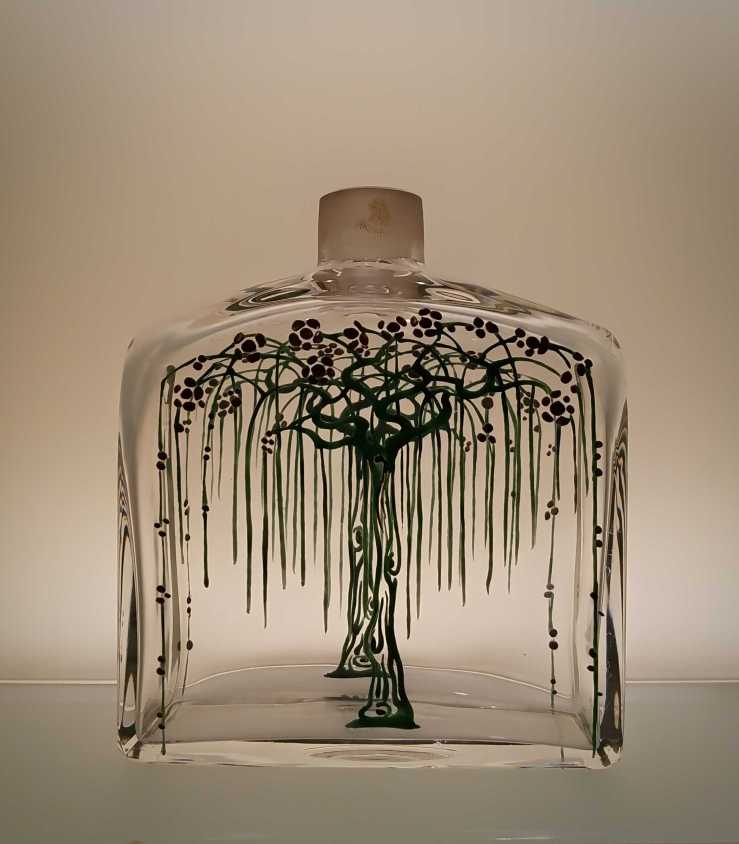 L’Arbre pleureur, enameled crystal perfume bottle; design by Camille Cless-Brothier, 1922.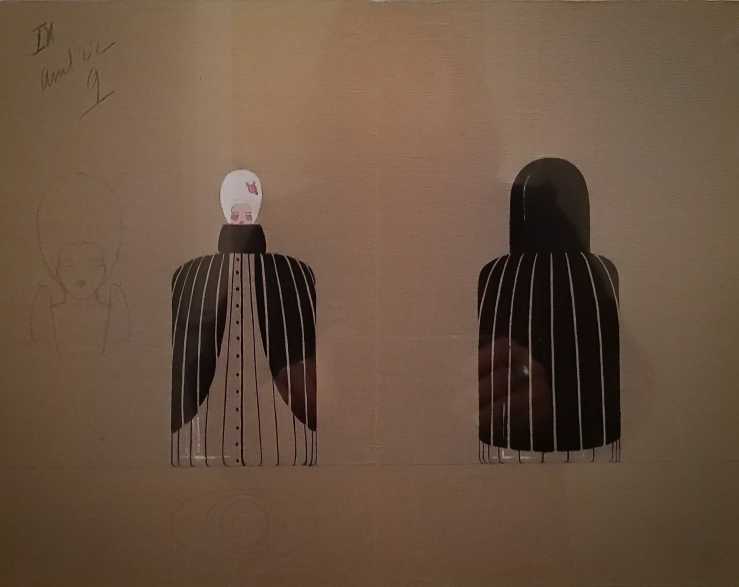
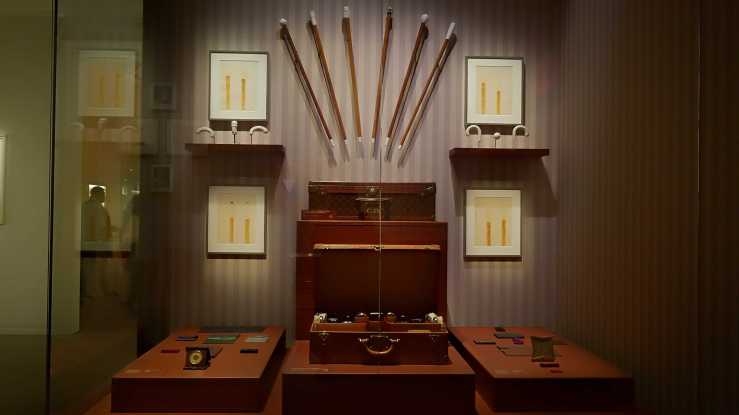
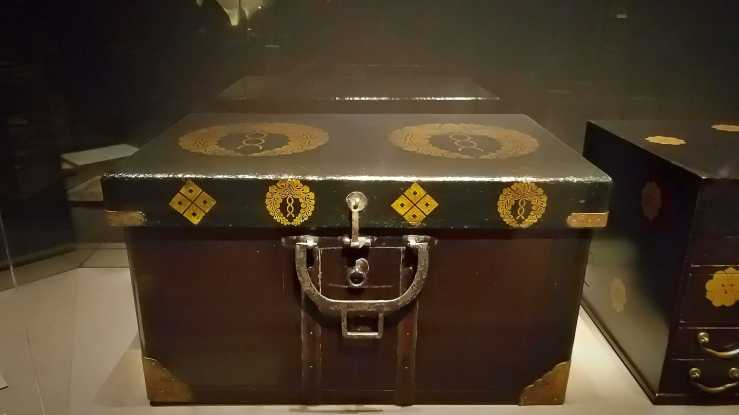 Portable chest (hasami-bako) in black lacquered wood with gold lacquer patterned using the hiramaki-e technique, Edo period, late 18th and 19th century
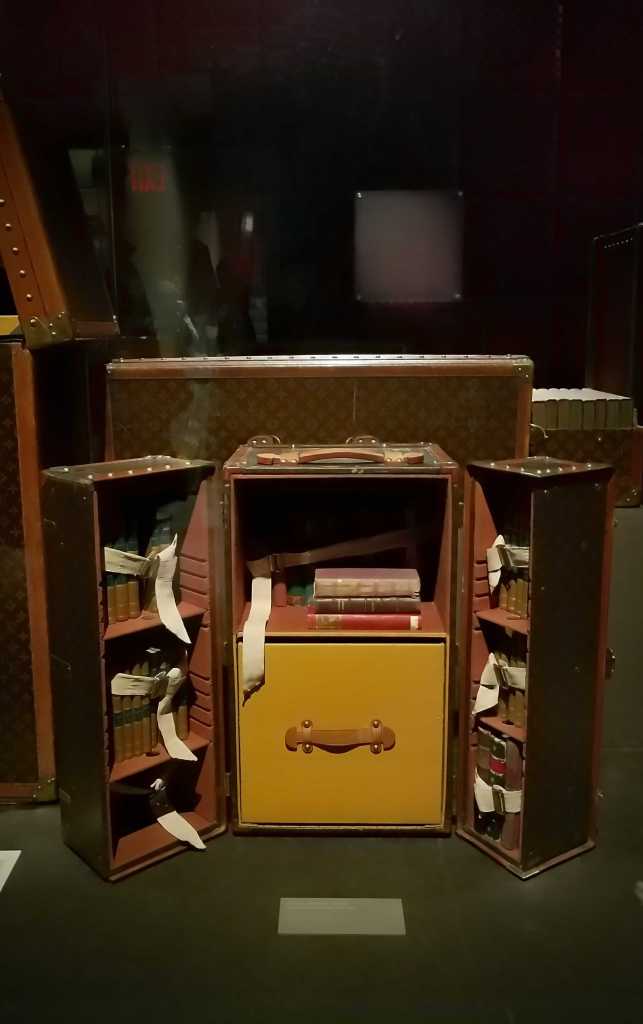 Ideale Library trunk in monogram canvas, 1927
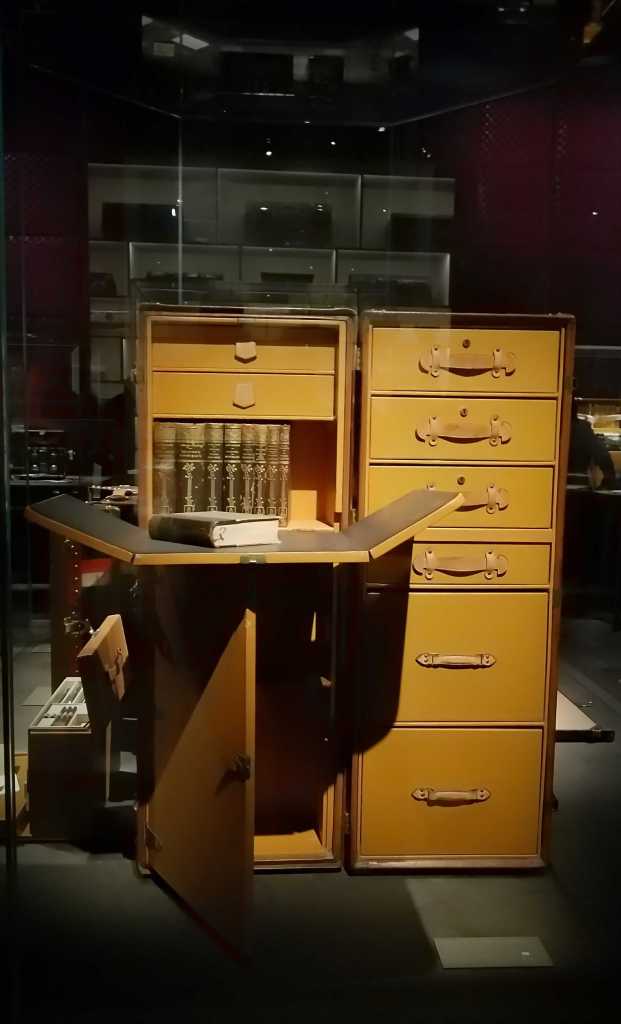 Desk trunk in natural cowhide, once belonging to Frank J. Gould, 1928
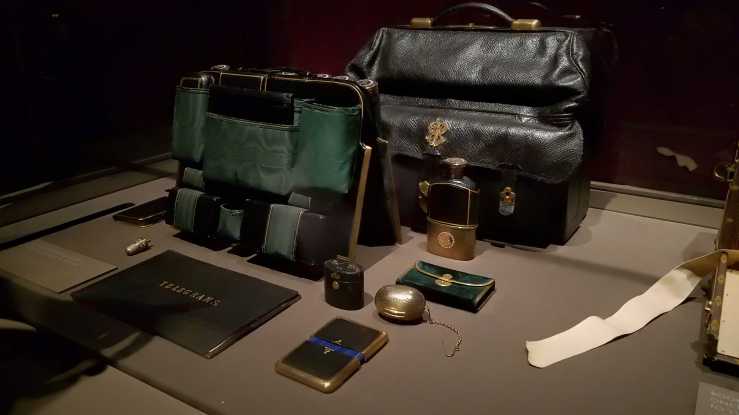 Jenner & Knewstub Berry’s fitted travel bag in leather, ca. 1864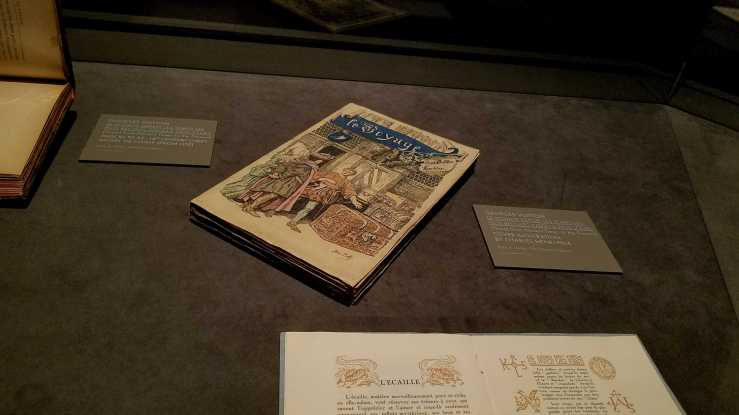
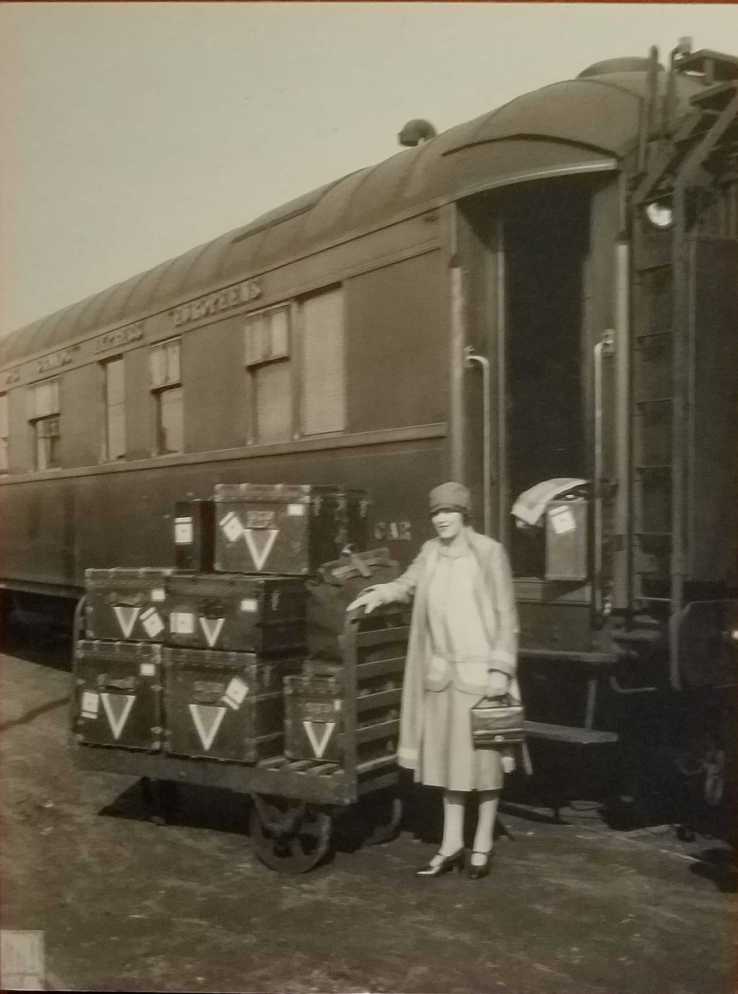
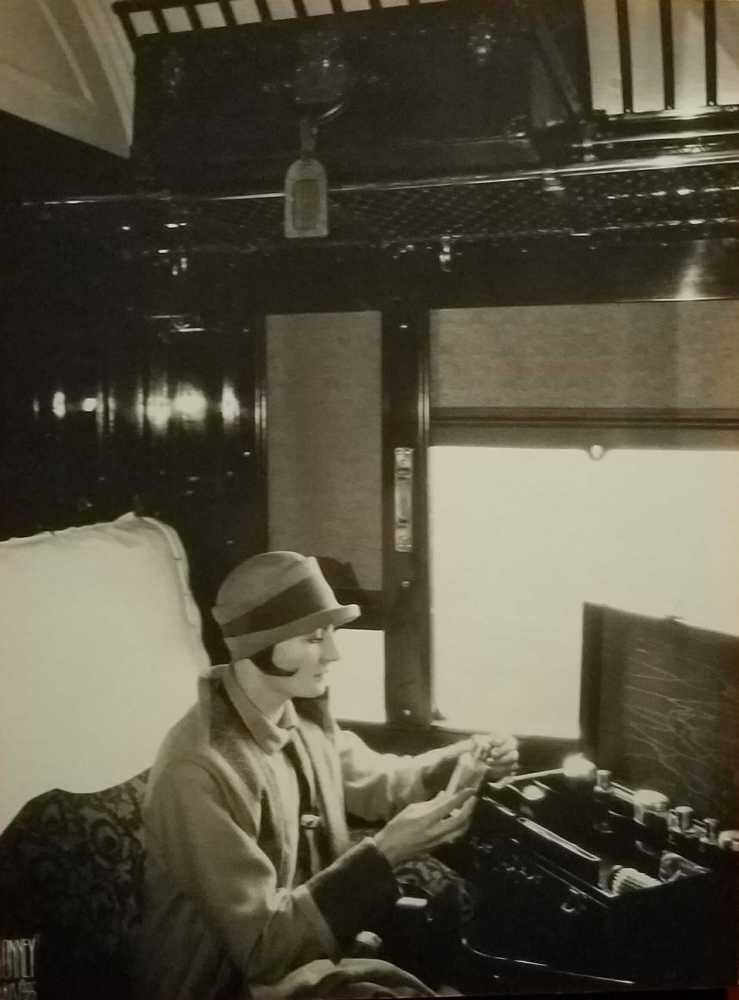
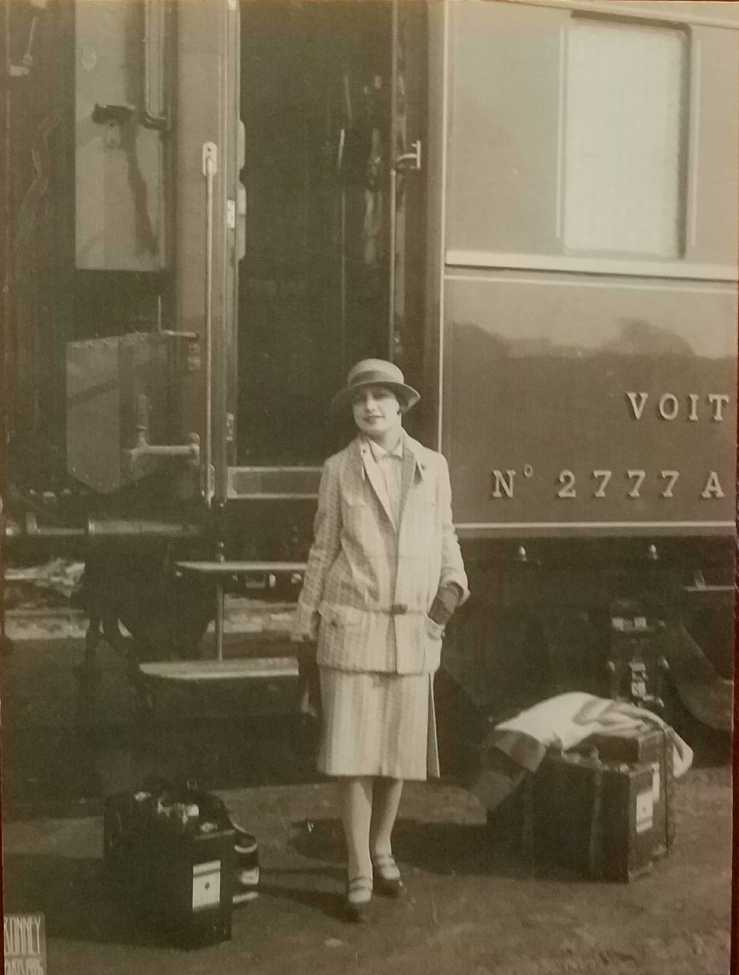
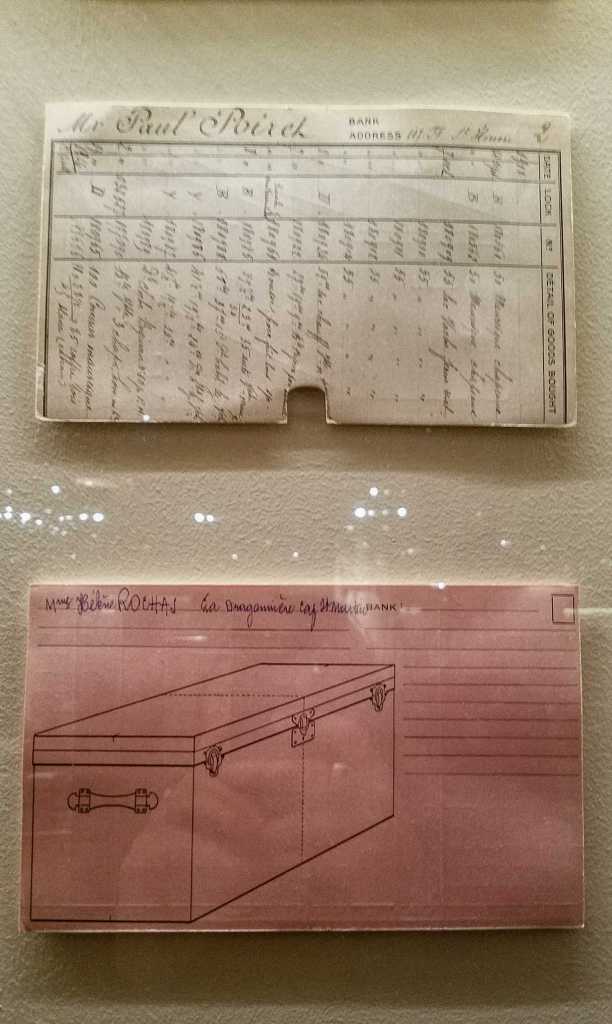
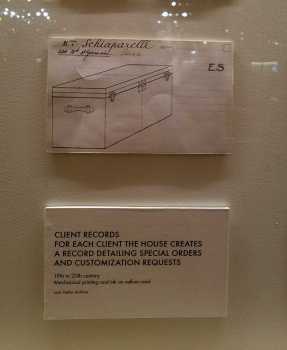 Client records. For each client the house creates a record detailing special orders and customization requests, 19th to 20th century
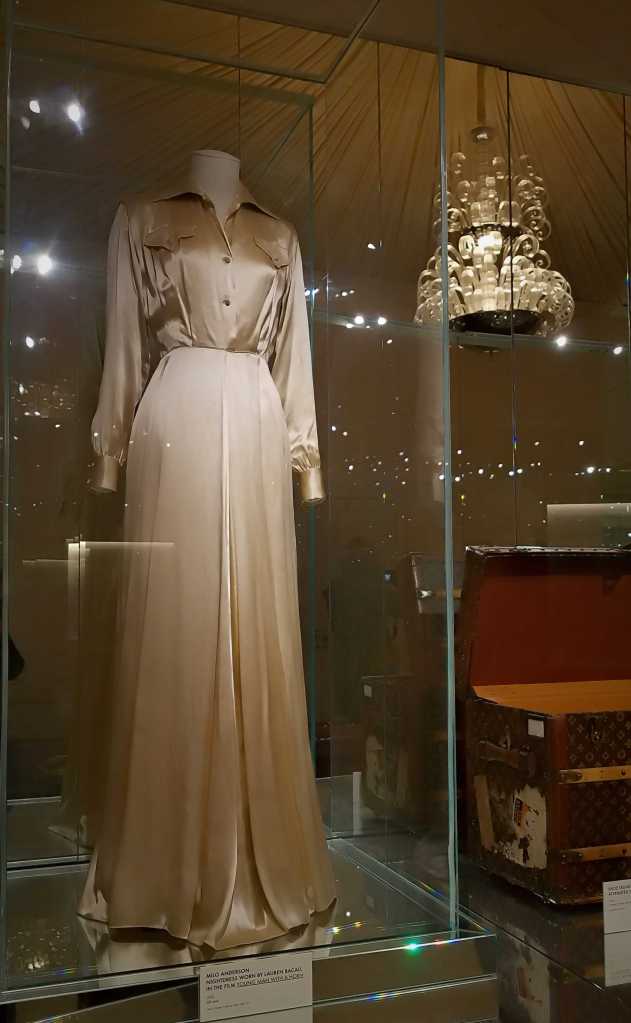 Milo Anderson, silk satin nightdress worn by Lauren Bacall in ”Young man with a horn”, 1950
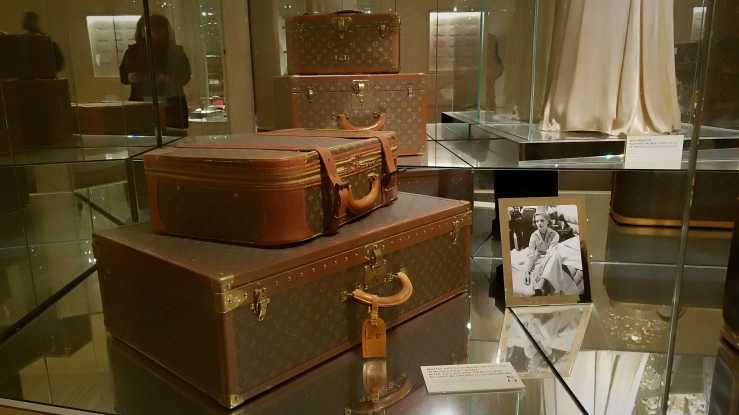 Brettes hat/shoe trunk, vanity case in monogram canvas
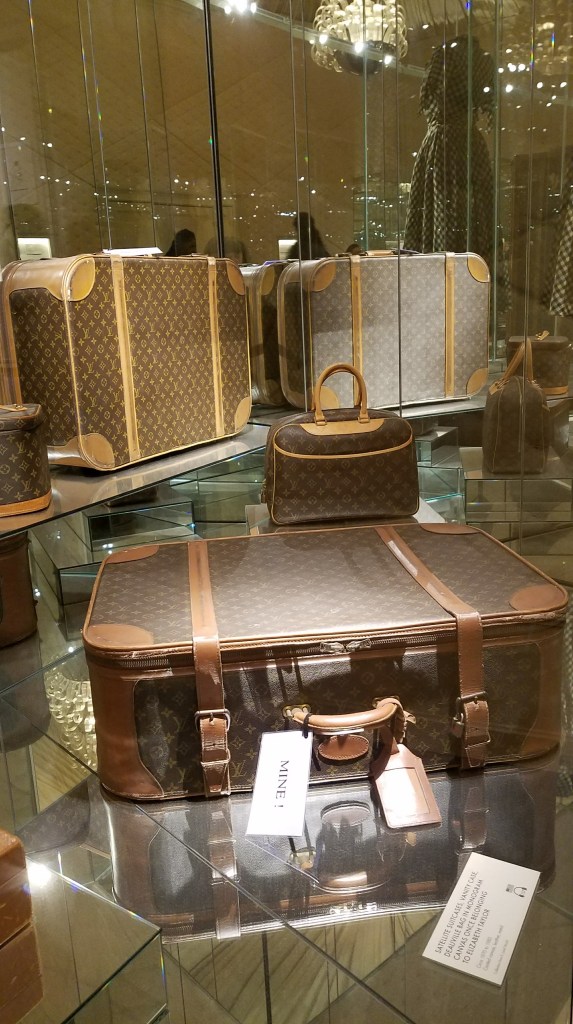 Satellite suitcases, vanity case, Deauville bag in monogram canvas once belonging to Elizabeth Taylor
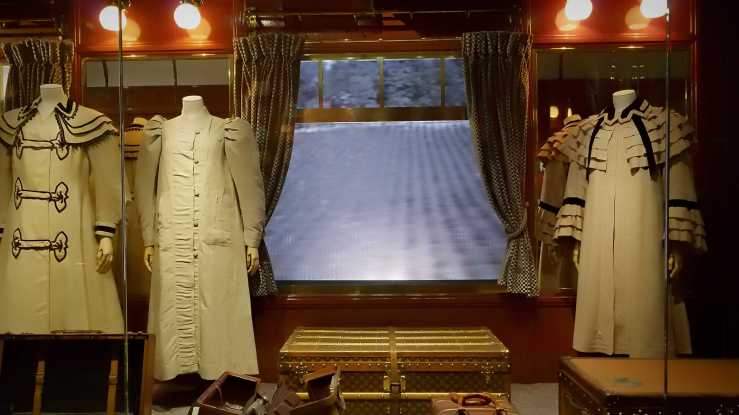
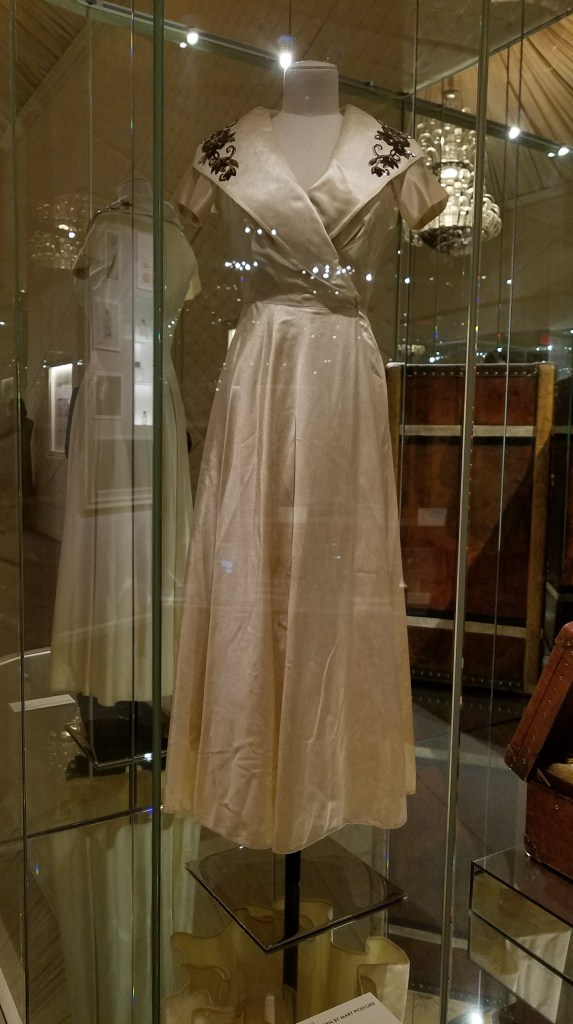 Jeanne Lanvin hostess dress, worn by Mary Pickford, Winter 1948-49
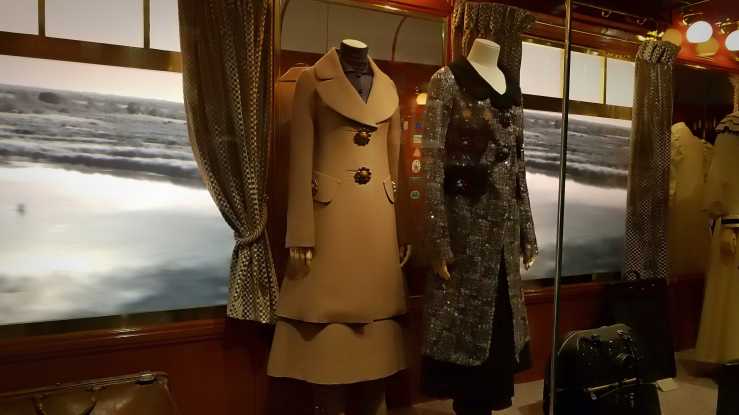
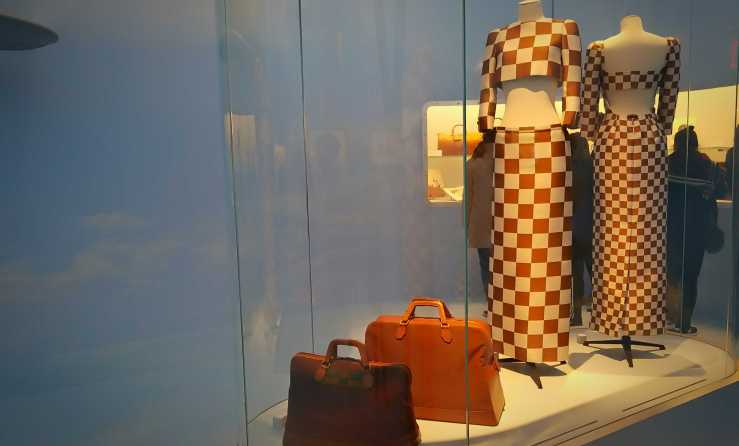 Louis Vuitton by Marc Jacobs long dress and cropped jacket with long skirt, S/S 2013
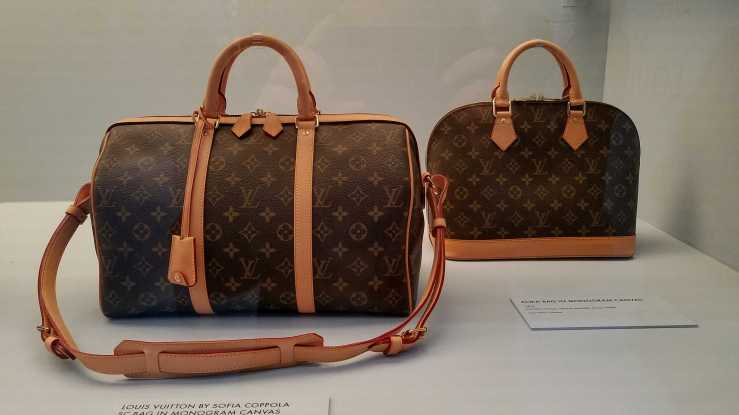 Louis Vuitton by Sofia Coppola, SC Bag in monogram canvas, 2009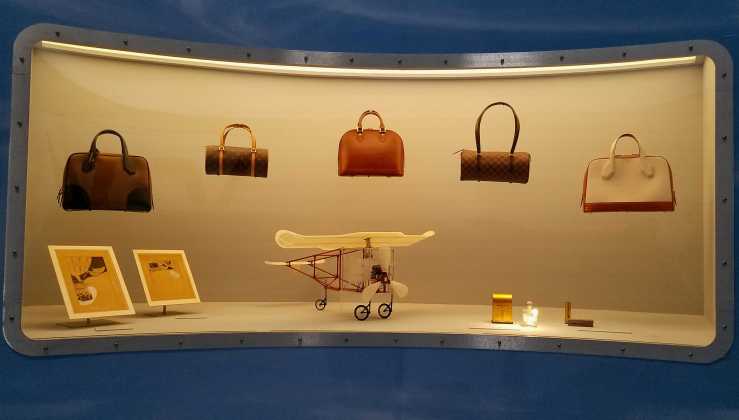
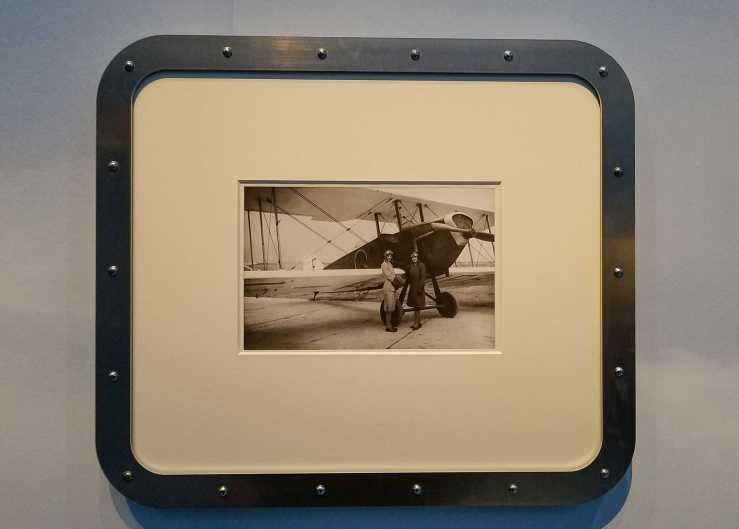 Boris Lipnitzki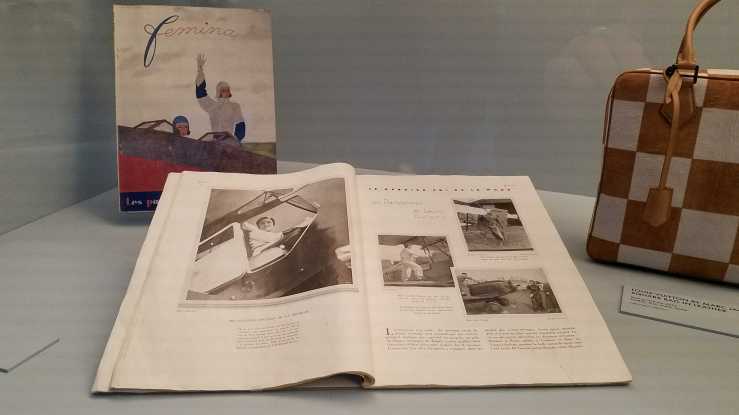
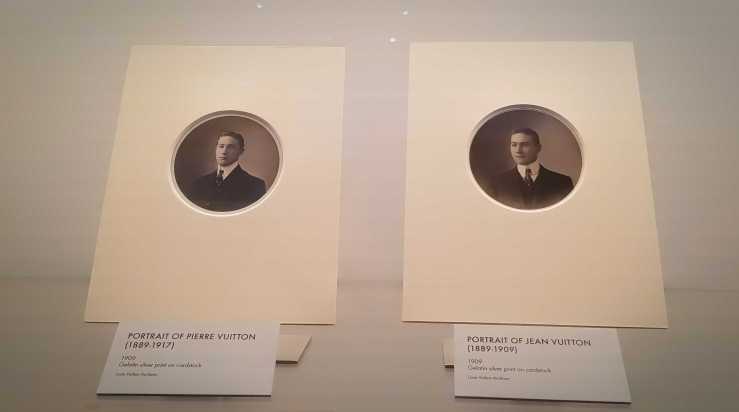
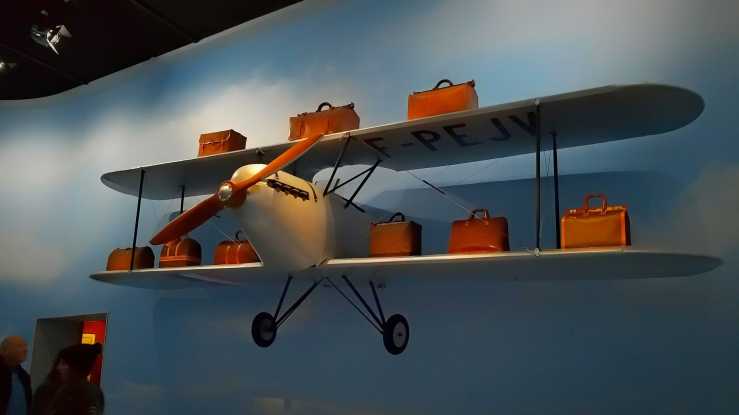
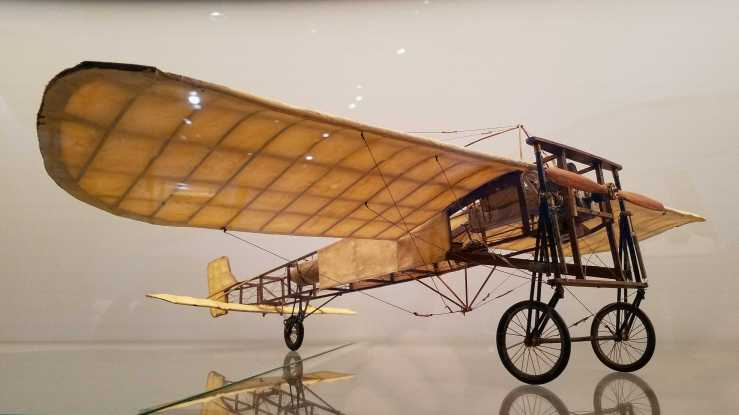 Model of the Blériot XI airplane, 20th century
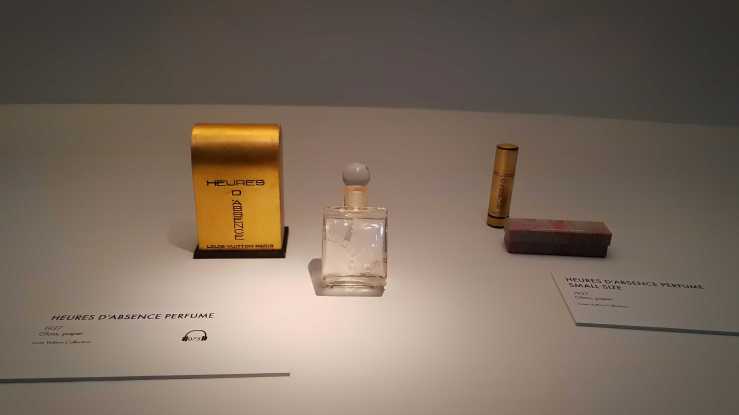 Heures d’absence perfume, 1927
 The Humble Fabulist