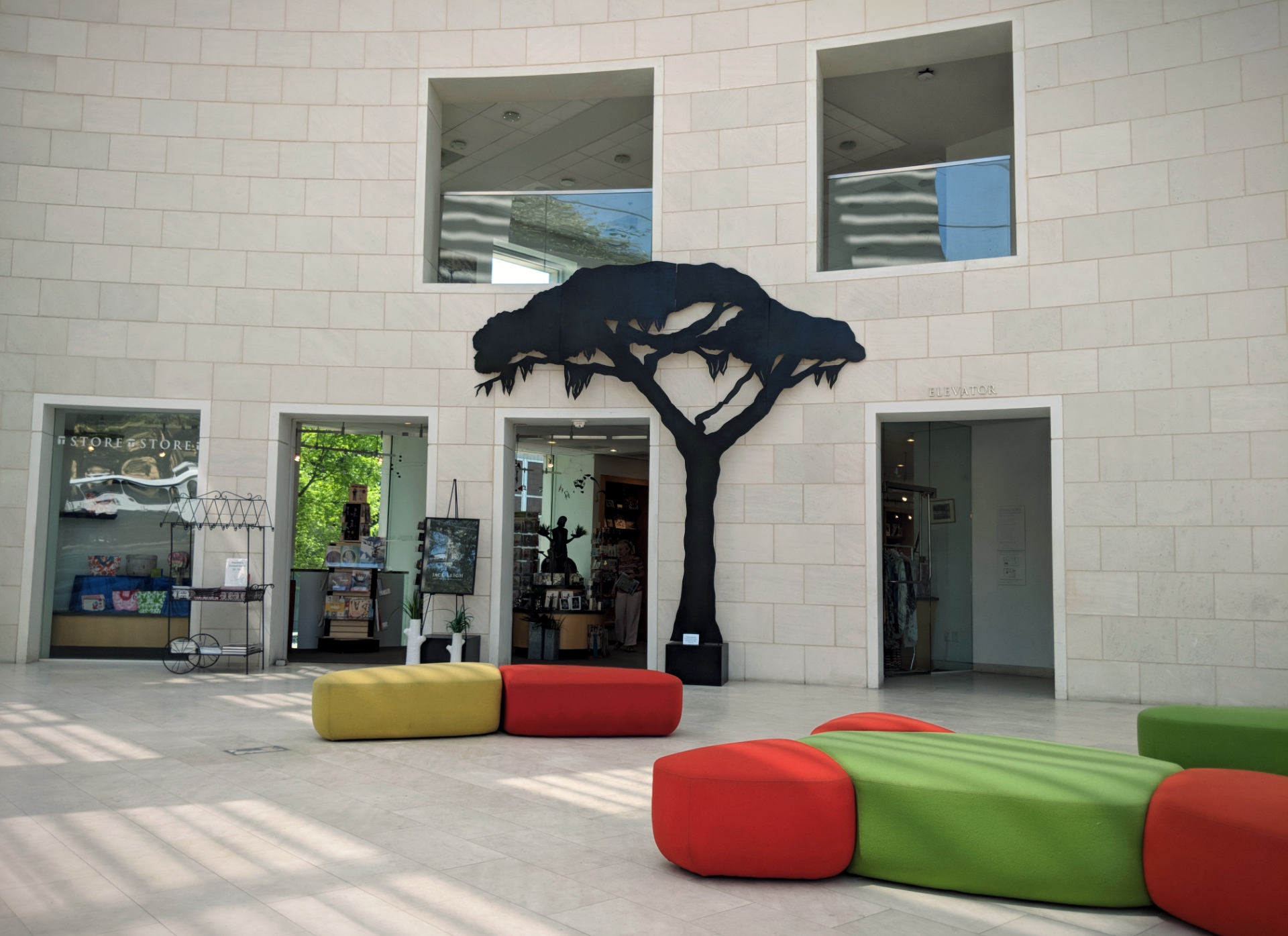
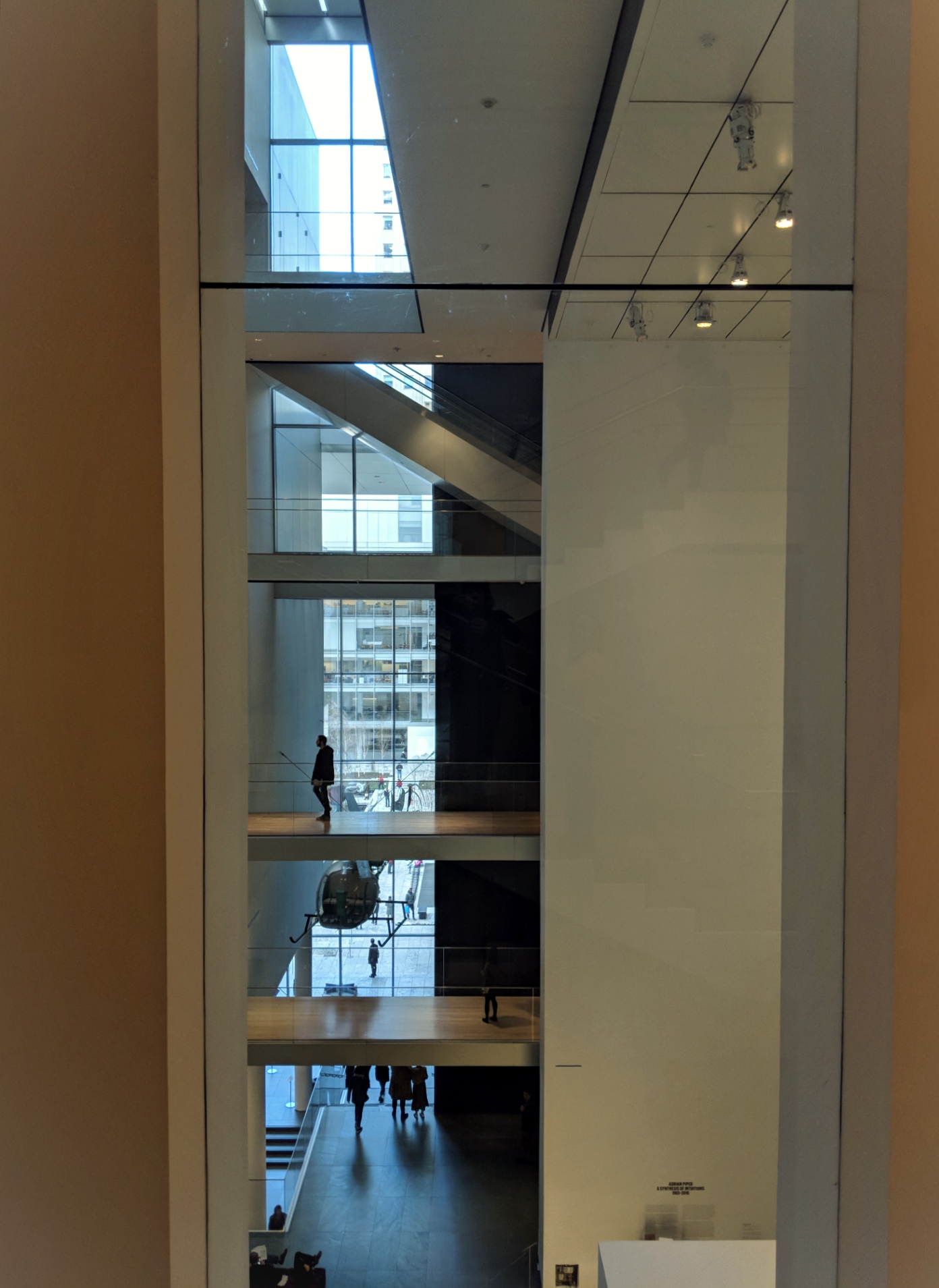
Part two of our Telfair Museums round, just across the street from the Telfair Academy is the most recent addition to the group, the Jepson Center. Designed by architect Moshe Safdie (see also the National Gallery of Canada), this sleek art space was opened to the public in 2006. It is home to Savannah’s famous Bird Girl and, on the day of our visit, some pretty powerful works attempting to address the region’s atrocious past relationship with slavery through contemporary art.


 Adolfo Alvarado (b. 1982)
Piece, 2018
Mixed media
 Adolfo Alvarado (b. 1982)
Tweet Tweet, 2018
Mixed media


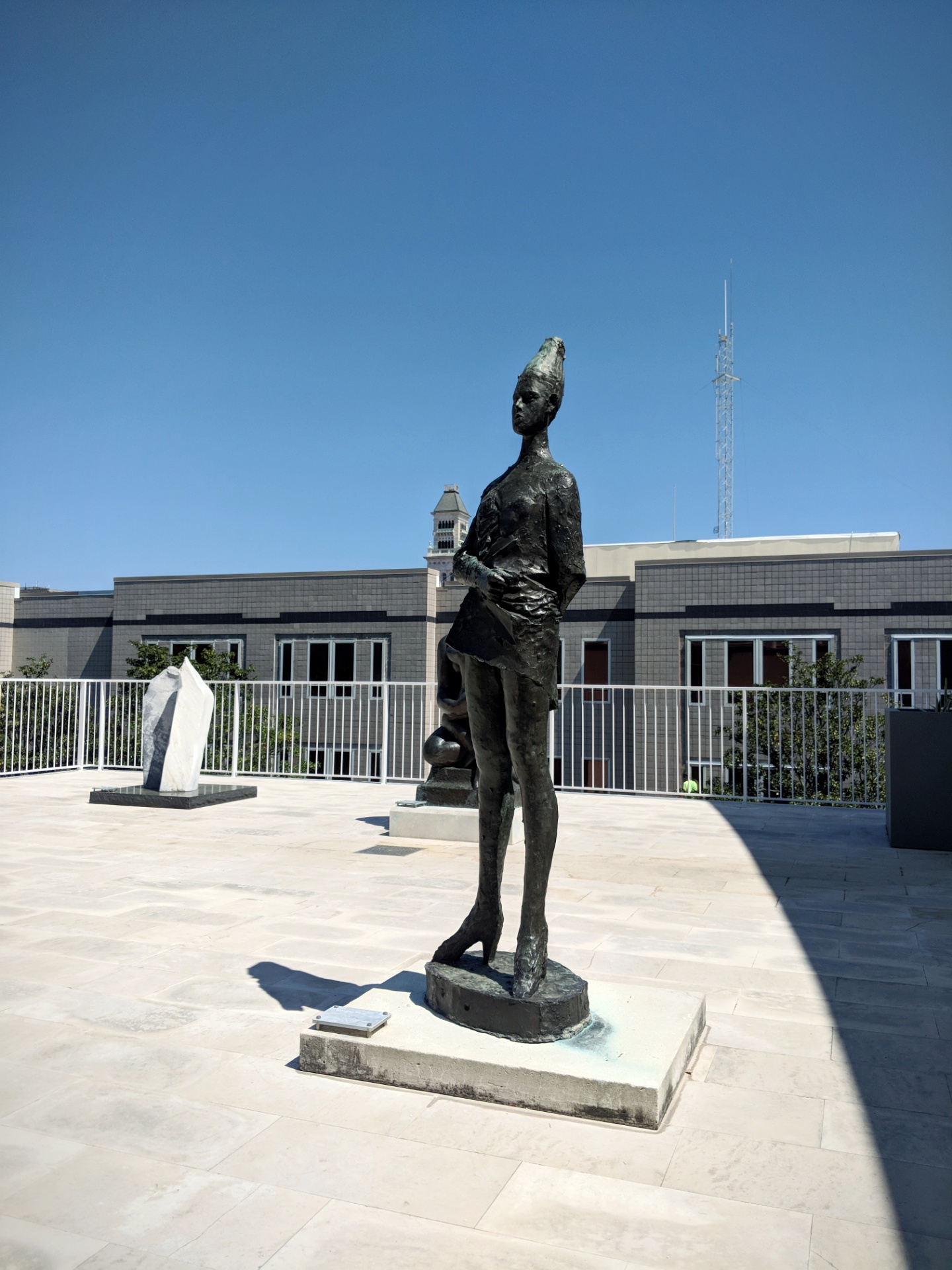
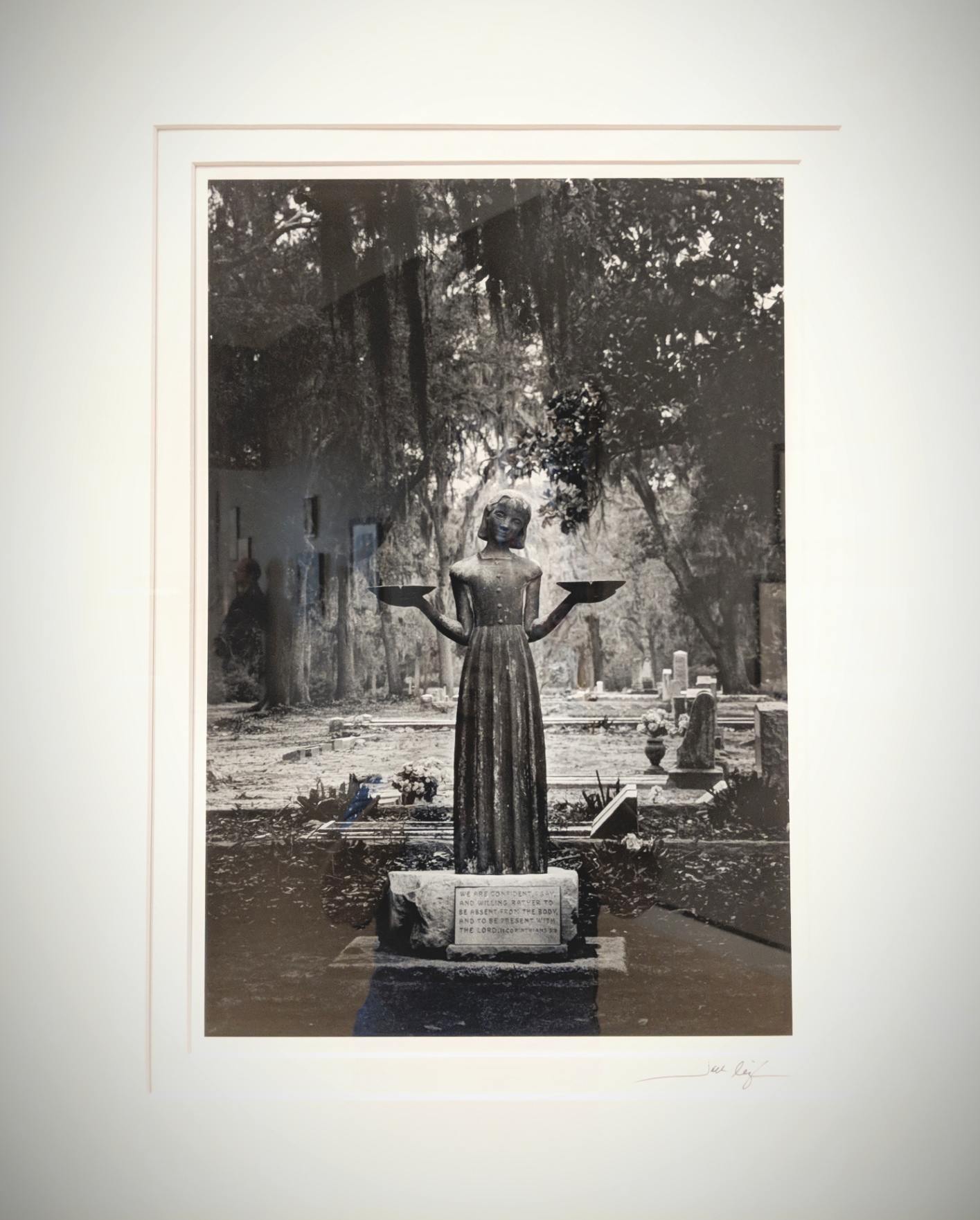 “Midnight in the Garden of Good and Evil”, the 1994 publication of John Berendt’s bestselling novel with Jack Leigh’s cover photograph featuring Silvia Shaw Judson’s Bird Girl sculpture from Bonaventure cemetery, brought a tidal wave of tourism to Savannah. Devotees of the book flocked to Bonaventure, some trampling the gravesite, which resulted to the removal of Judson’s sculpture to Telfair Museums.
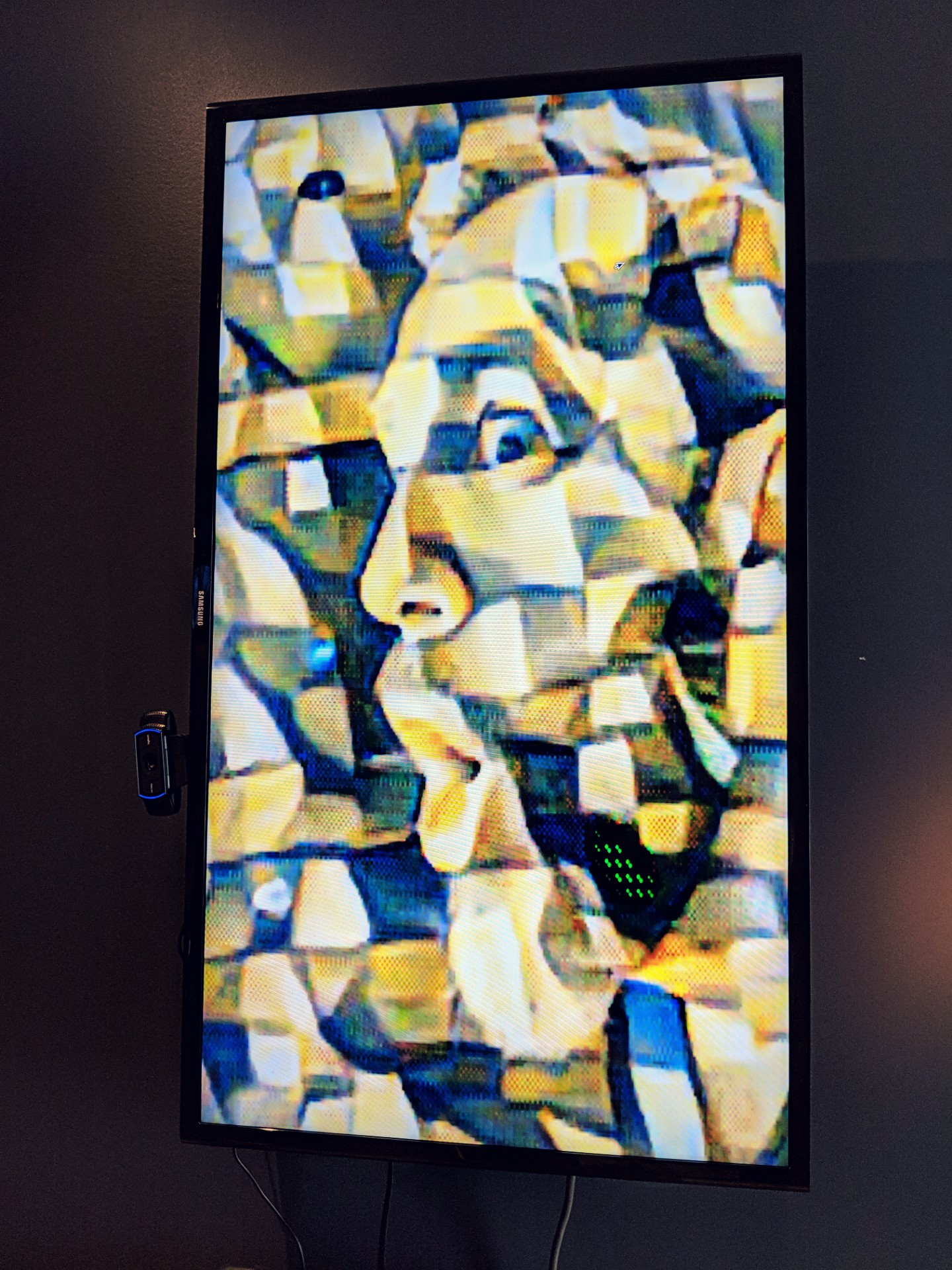 Gene Kogan
Cubist Mirror, 2016
Interactive installation (people standing in front of it, can see themselves as a cubist painting)

 Wangshu Sun
Dream of Wings, 2017
Interactive virtual reality installation (people sitting in the chair, open their arms and dream they can fly)

 Paul Stephen Benjamin (b. 1966)
God Bless America, 2016
Three-channel video installation, 54 video monitors, DVDs, cables and cords

 Paul Stephen Benjamin (b. 1966)
H.Res 194, 2017
Black Light, Black T8 Fixture 32W, Black Cords
”I’m curious about the relationship of the colour black and ”blackness”. What is its visual aspect?”
Benjamin’s new site-specific black light work H.Res 194 connects the medium of black lights with the subject of House Resolution 194, titled ”Apologizing for the enslavement and racial segregation of African-Americans” and passed on July 29, 2008 by the 110th Congress. H.Res 194 suggests that shining a light, literally and conceptually, on a difficult past by acknowledging something through gesture, even if symbolic, is a positive step to change and grow as a nation.


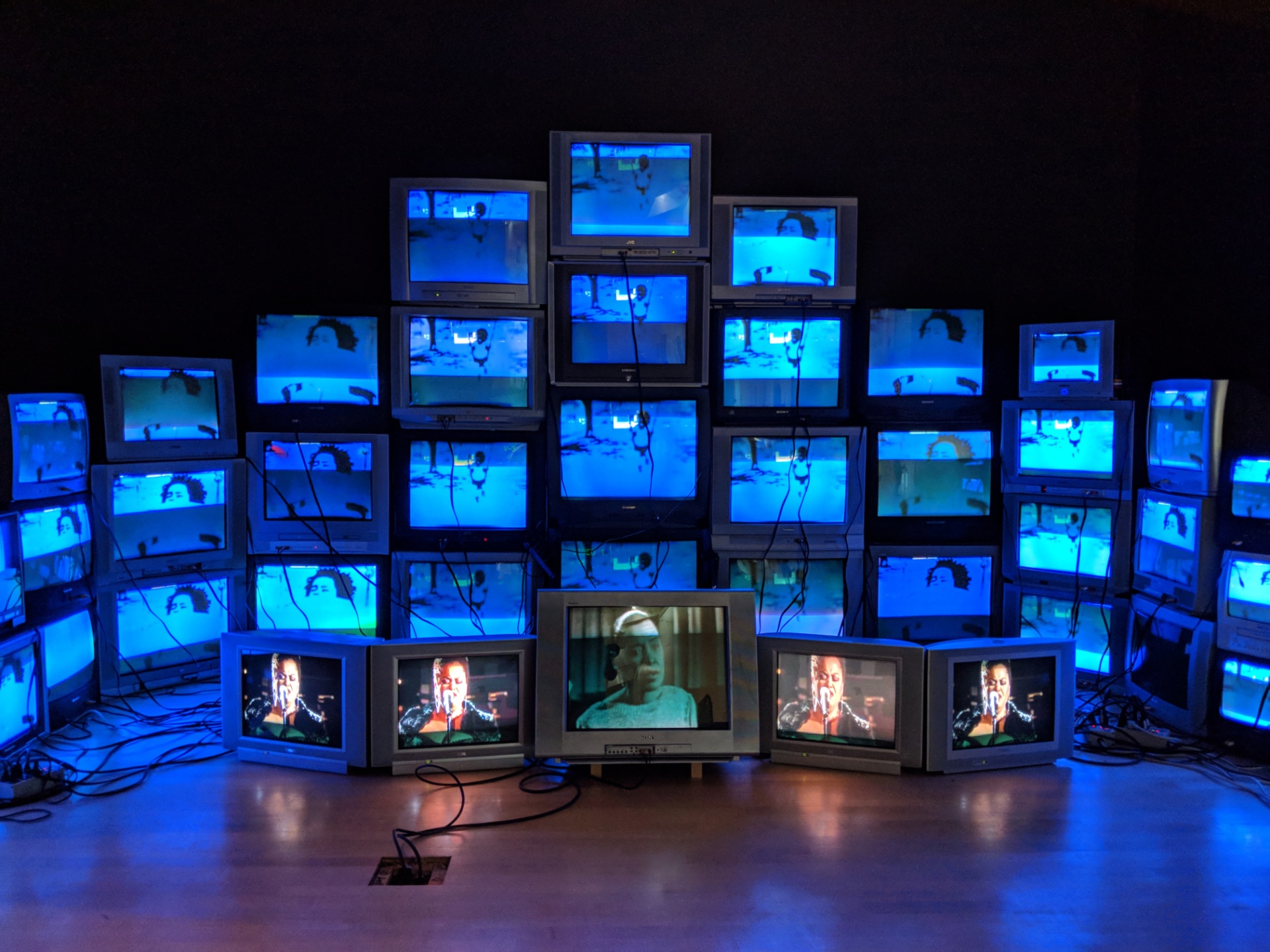 Paul Stephen Benjamin (b. 1966)
Summer Breeze, 2016/17
Three-channel video installation, 40 video monitors, DVDs, cables and cords
Summer Breeze shows performances of the song ”Strange Fruit” by two leading African American vocalists: Billie Holiday and Jill Scott.
Strange Fruit is a poem written by Abel Meeropol, under the pseudonym Lewis Allan, a New York City poet, educator and social activist of Jewish descent, as a response to his viewing a photograph of the lynching of J. Thomas Shipp and Abraham S. Smith, taken by Lawrence Beitler on Augus 7, 1930, which became the most iconic photograph of lynching in America.


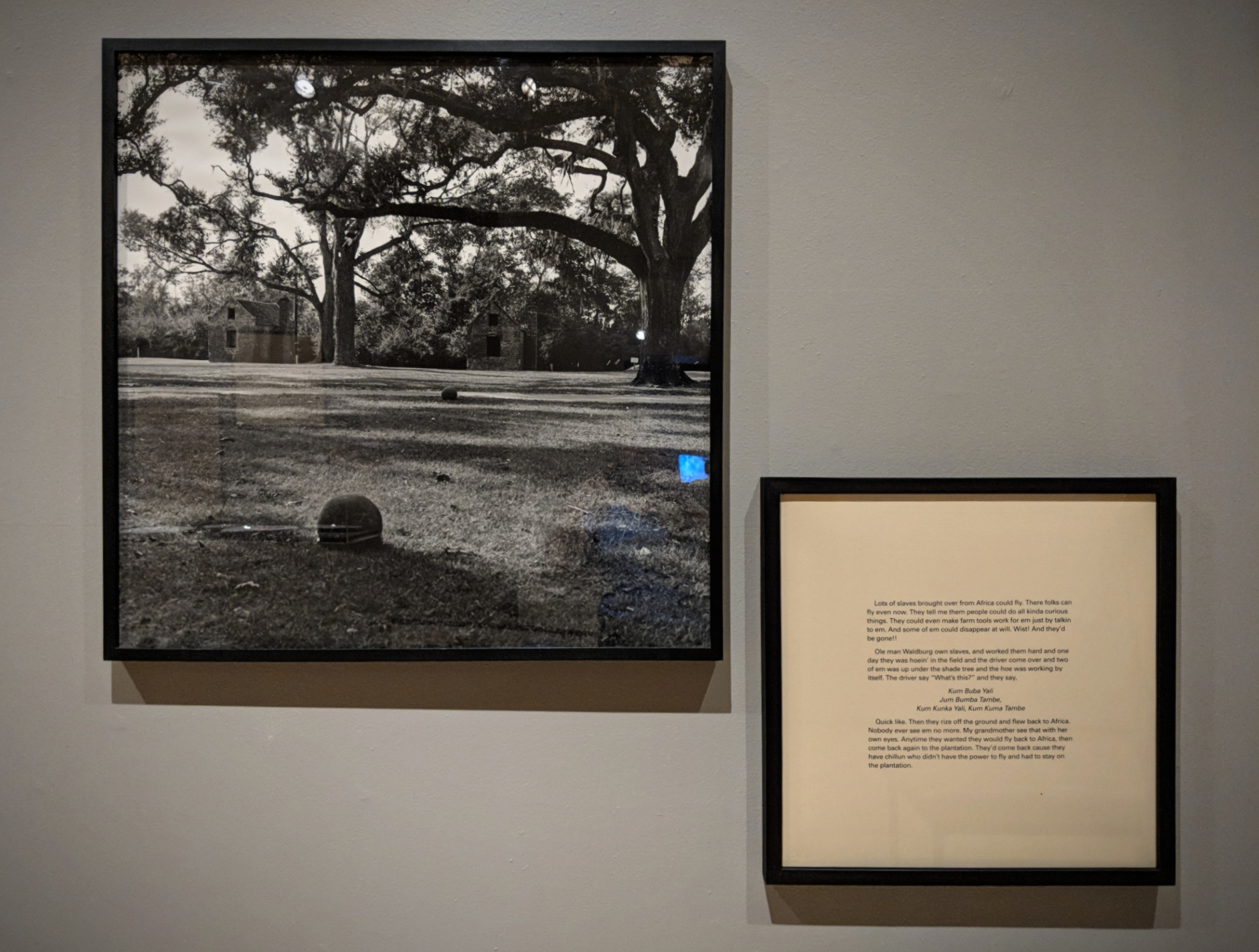
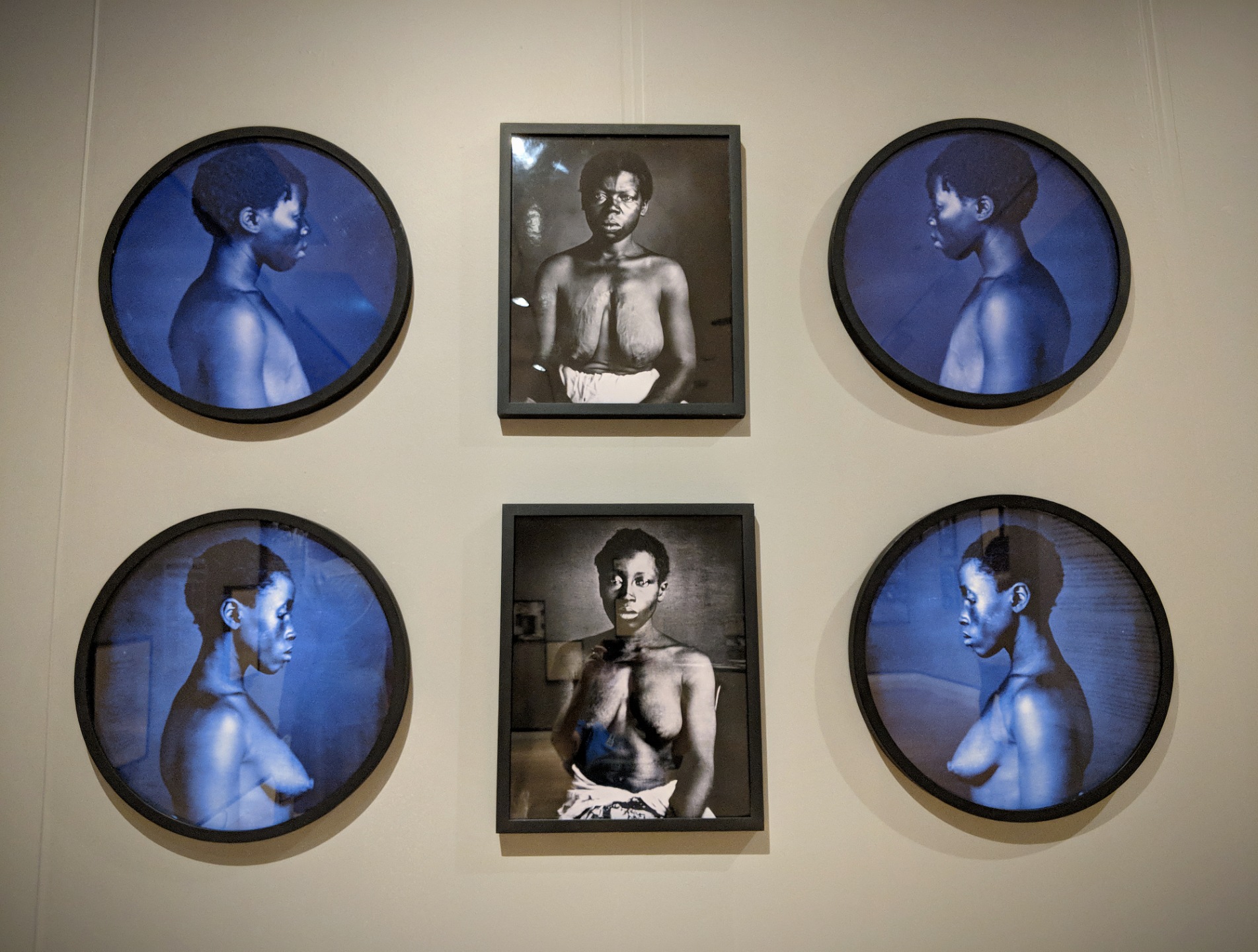
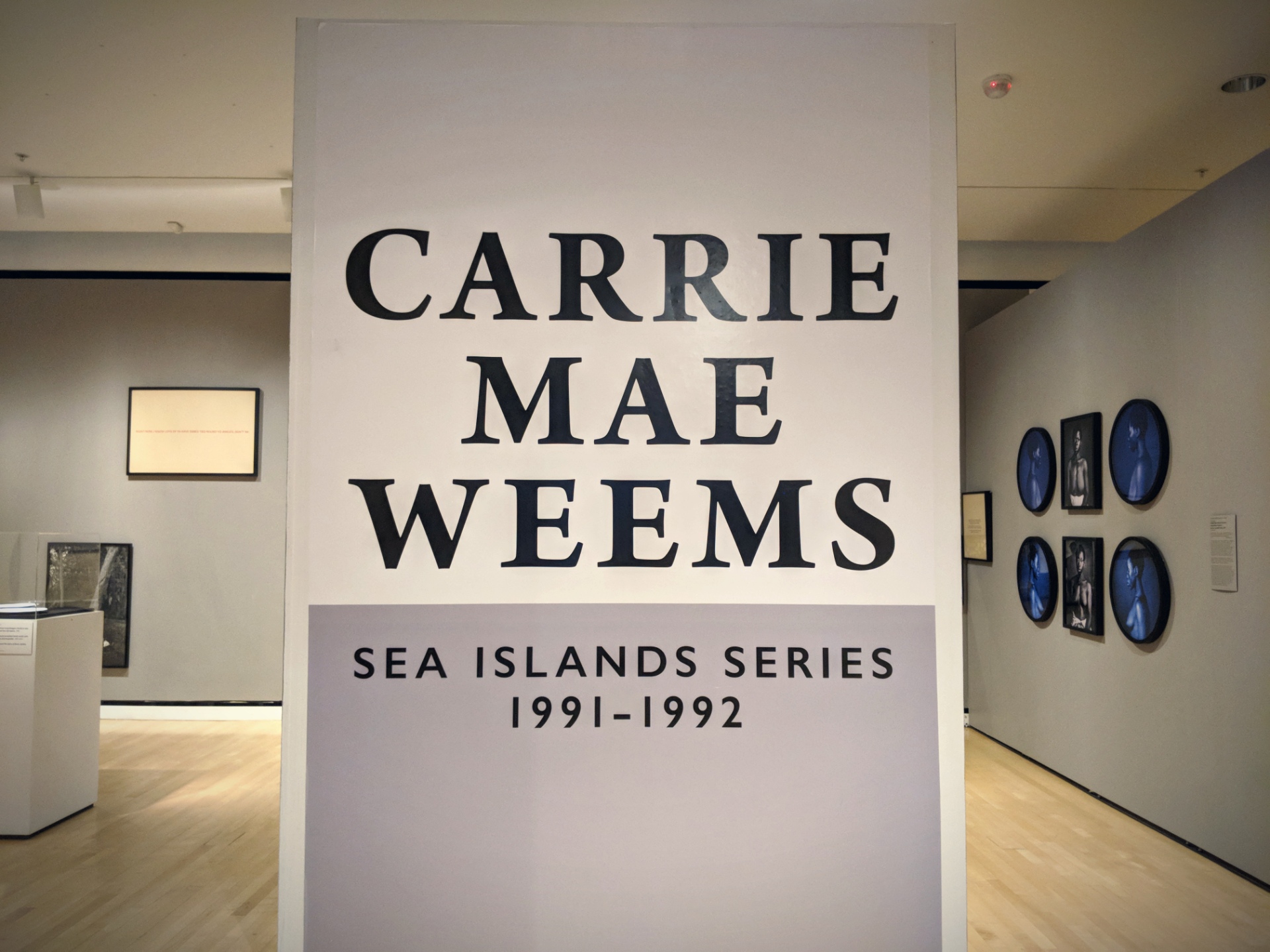
 In 1850, Swiss-American biologist Louis Agassiz (1807-1873) commissioned a series of photographs for his study of ”races”. Agassiz intended to use these portraits as visual evidence to support his racist theories of the inferiority of Africans and to prepare a taxonomy of the enslaved population. He commissioned photographer Joseph T. Zealy (1812-1893) of Columbia, South Carolina, to produce a series of daguerreotypes of slaves.
Weems discovered Agassiz’s images in museum and university archives and appropriated them for her own use in 1992. In this series, Weems exposes how photography has played a key role throughout history in shaping and supporting racism, stereotyping and social injustice.

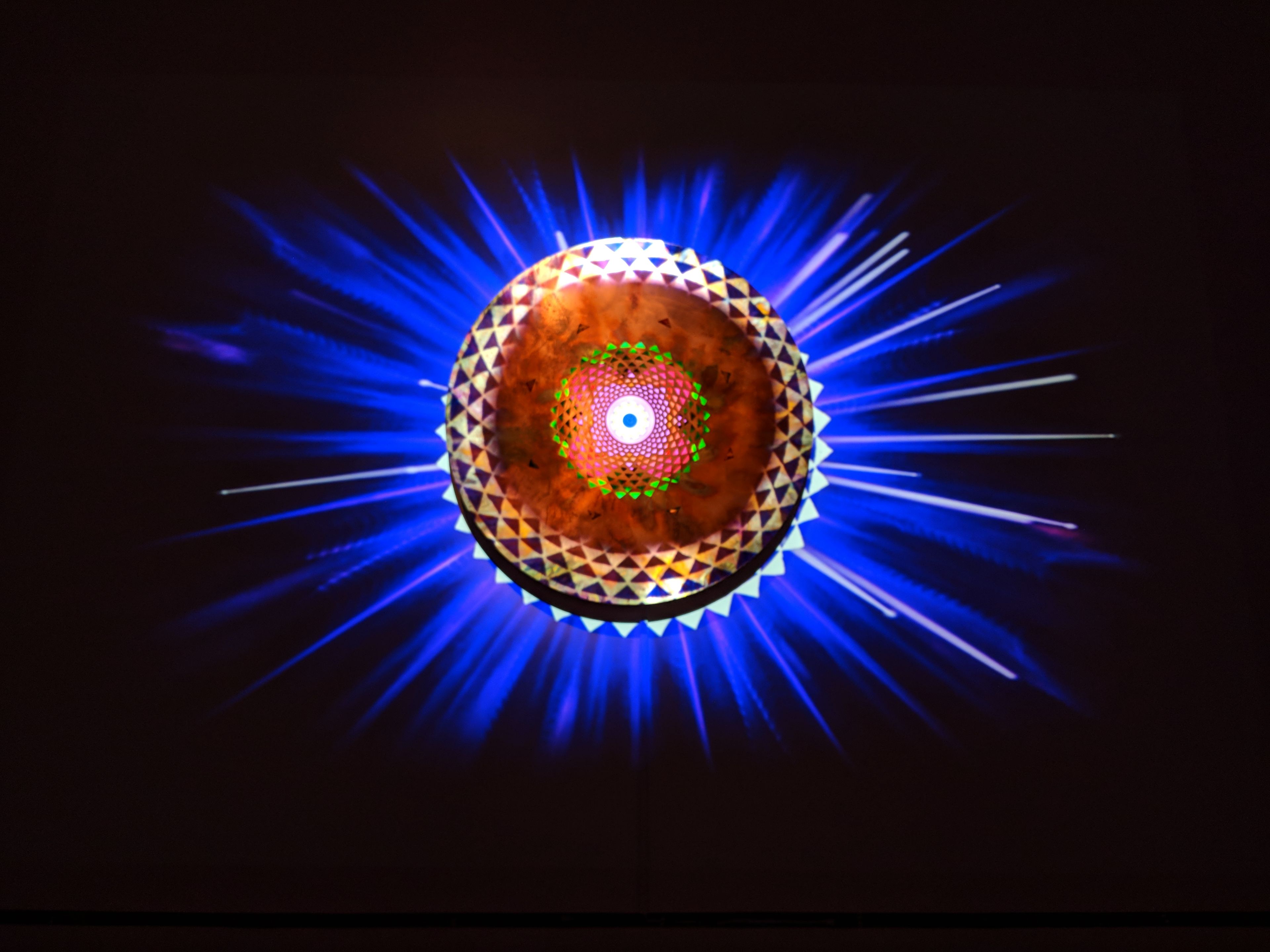 Radiance, by Teri Yarbrow and Max Almy with Josephine Leong
Immersive virtual reality mandalas

We thought it best to leave the third site, Owens-Thomas House & Slave Quarters, for another day; three museums in a row seemed like an overkill and, besides, tickets not only give access to all three sites, but they also remain valid for a week.
Jepson Center, Savannah GA
April 3rd, 2018









 The Humble Fabulist