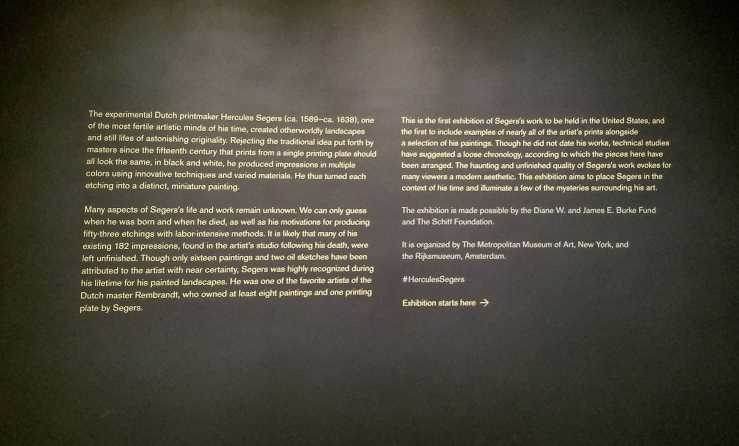
Parallel to Seurat’s Circus Sideshow, The Met was showing works by the Dutch printmaker and painter Hercules Seg(h)ers (ca. 1589 – ca. 1638). Very little is known about his life but his dreamy landscapes, innovative techniques such as lift-ground etching which would only be employed by others 150 years later, impressions in multiple colours contrary to the existing traditions that wanted them to look alike – in black and white, all speak for themselves.
And if that was not impressive enough, the curators’ notes disclosed that Segers very seldom depicted actual places; his incredibly detailed landscapes are all places he had never been to and only knew from prints made after Pieter Bruegel the Elder’s designs. So, for all their detail and realism, Segers’ landscapes were mostly products of his beautiful mind. No wonder he was the favourite artist of the much younger but no less experimental printmaker of the time, Rembrandt van Rijn, who owned eight paintings and one printing plate by Segers.
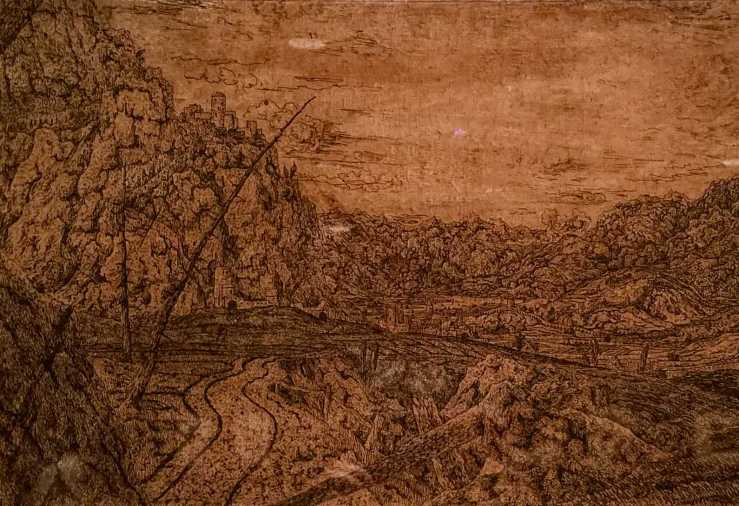 Mountain Valley with Dead Pine Trees and a City in the Background, ca. 1622-25
Line etching printed on light brown ground, varnished; unique impression
Influenced by the work of earlier Netherlandish landscapists, most notably prints after drawings by Pieter Bruegel the Elder, Segers often rendered broad Alpine valleys, as in this example. Bruegel was known for creating vast, comprehensible spaces that invited the viewer to fancifully wander. While here Segers included elements typical of Bruegel’s scenes – a path leading from the foreground into a distant valley, dotted with villages and castles – he flattened the landscape and used a variety of patterns to distinguish the rocks, the grassy hills, and the path. One of the artist’s larger etchings, this print exists in only one known impression.
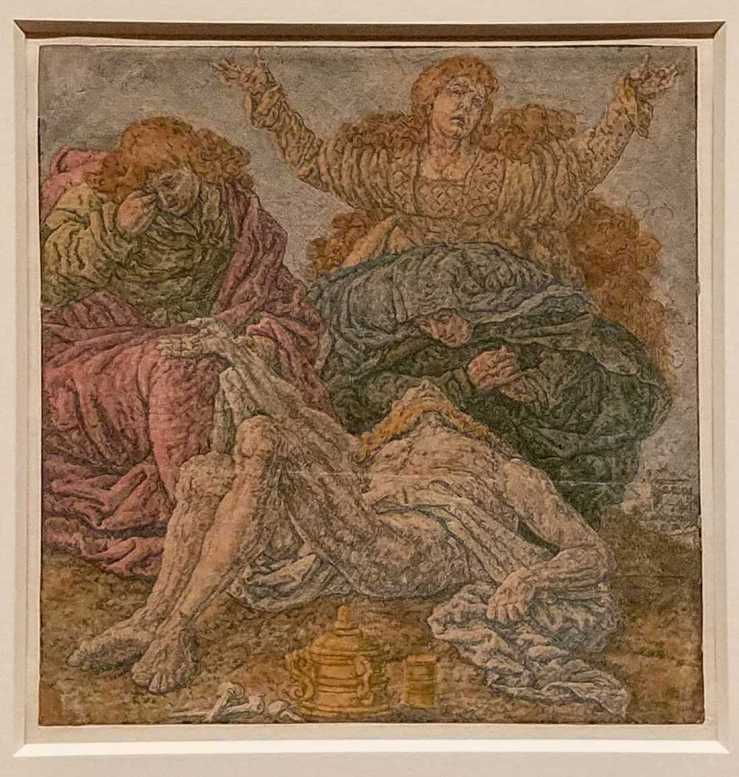 After Hans Baldung
The Lamentation of Christ, ca. 1630-33
Line etching printed with tone and blue highlights on a cream-tinted ground, coloured with brush
This poignant depiction, one of the artist’s few biblical subjects, copies a woodcut created more than a century earlier by Hans Baldung. Segers closely replicated the figure group but removed the suggestions of the cross behind them, adding instead a small cluster of buildings on the bottom right. The artist overpainted this impression with opaque watercolour and oil paint, making it his most colourful etching.
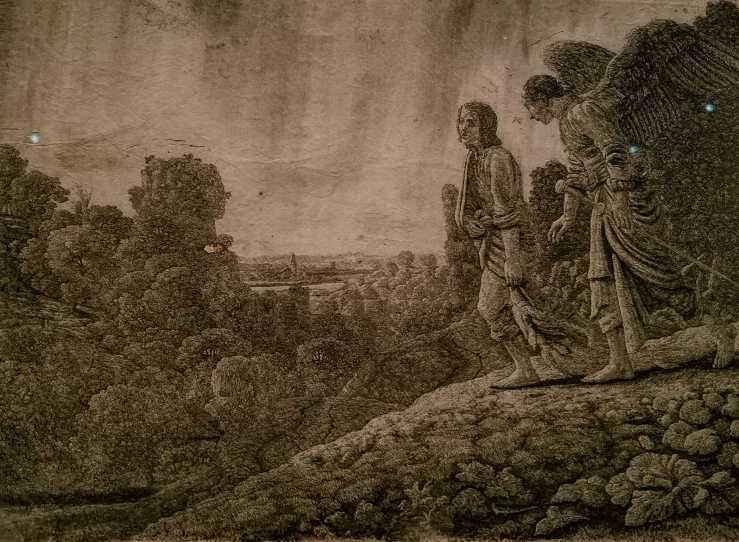 Tobias and the Angel, ca. 1630-33
Line etching printed in olive-green with tone and highlights; first state of six
Tobias and the Angel, one of Segers’ final prints, was inspired by an engraving by Hendrick Goudt after Adam Elsheimer. Segers copied the two figures, including the large fish dragged along by Tobias, but enlarged them so that their silhouettes stand out against the sky.
 Hercules Segers with Rembrandt van Rijn
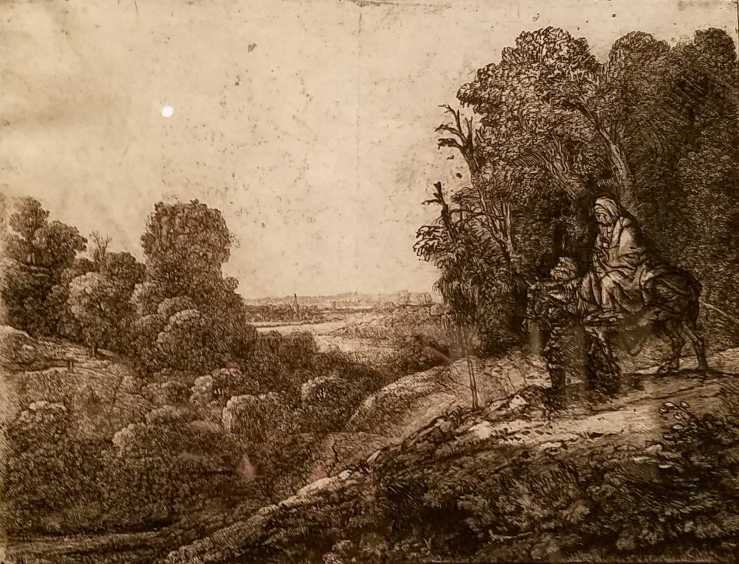
The Flight into Egypt, ca. 1652
Line etching, drypoint, burin; sixth state of six
Rembrandt came into possession of Segers’ etching plate by about 1652 and altered the subject to the Flight into Egypt. He scraped away the large figures and added Joseph and Mary, as well as sketchy trees. In the second state, Rembrandt’s addition of rich drypoint lines almost obscures the subject.
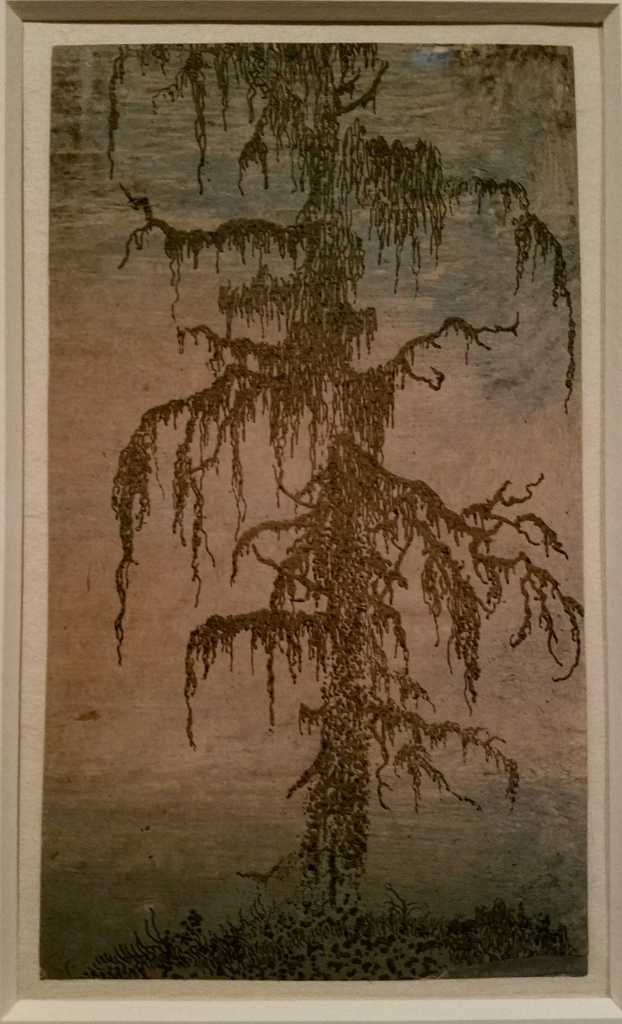 The Mossy Tree, ca. 1625-30
Lift-ground etching printed in green on a light pink ground, coloured with brush; unique impression
The Mossy Tree is one of Segers’ most striking and iconic prints, due to its loose, almost calligraphic lines, which convey the unruly nature of moss. Linked together solely with thin lines, the branches seem to float before the delicately coloured background. The artist original printed the tree in green ink, though it has turned brown over time.
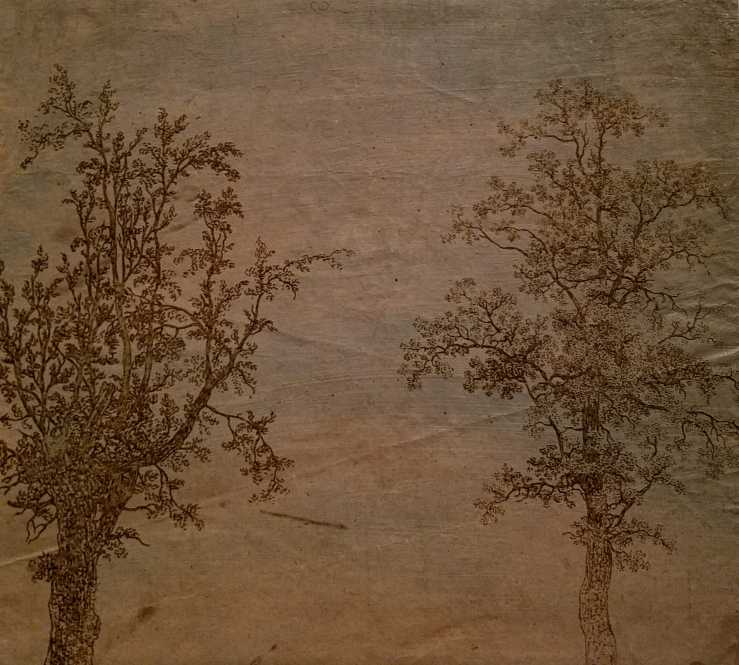 The Two Trees (An Alder and an Ash), ca. 1625-30
Lift-ground etching printed in green on a light pink ground, coloured with brush; unique impression.
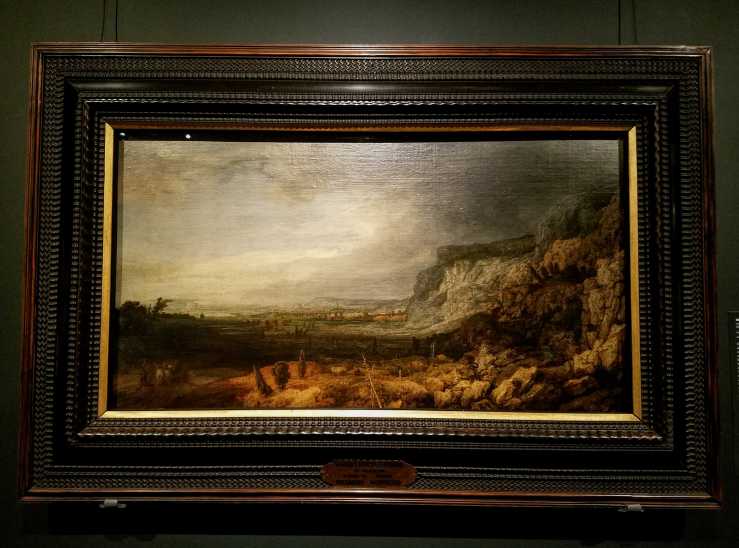 Mountain Landscape with a Distant View, ca. 1620-25
Oil on canvas laid down on panel
Once attributed to Rembrandt, this painting was assigned to Segers in 1871, though it was still considered to have been retouched by the younger master. The palette and the dramatic mood relate to Rembrandt’s work, but recent study of the painting has determined that the reworking was carried out instead by an unknown 17th-century painter. This ambitious landscape, Segers’ largest, suffered in the 17th century due to a large hole in the upper right, which was patched with a new canvas. Subsequently, both the mountains in the background and a large section of the sky were overpainted, and Segers’ brush marks abruptly stop at the edge of the patch. The nervous white highlights on the rocks in the foreground are typical of Segers’ paintings.
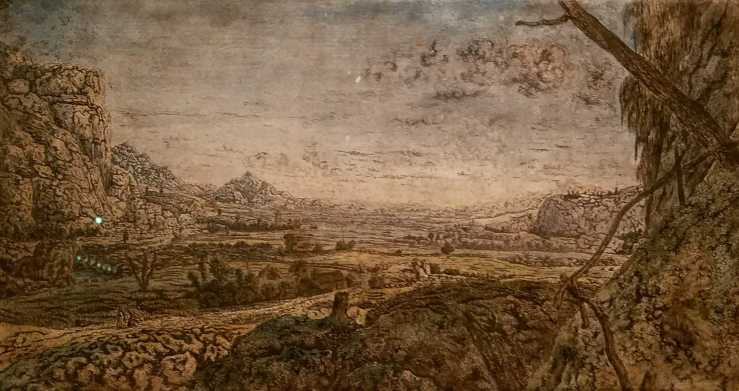 Mountain Valley with Fence Fields, ca. 1625-30
Line etching and drypoint printed in blue with plate tone, coloured with brush; second state of two
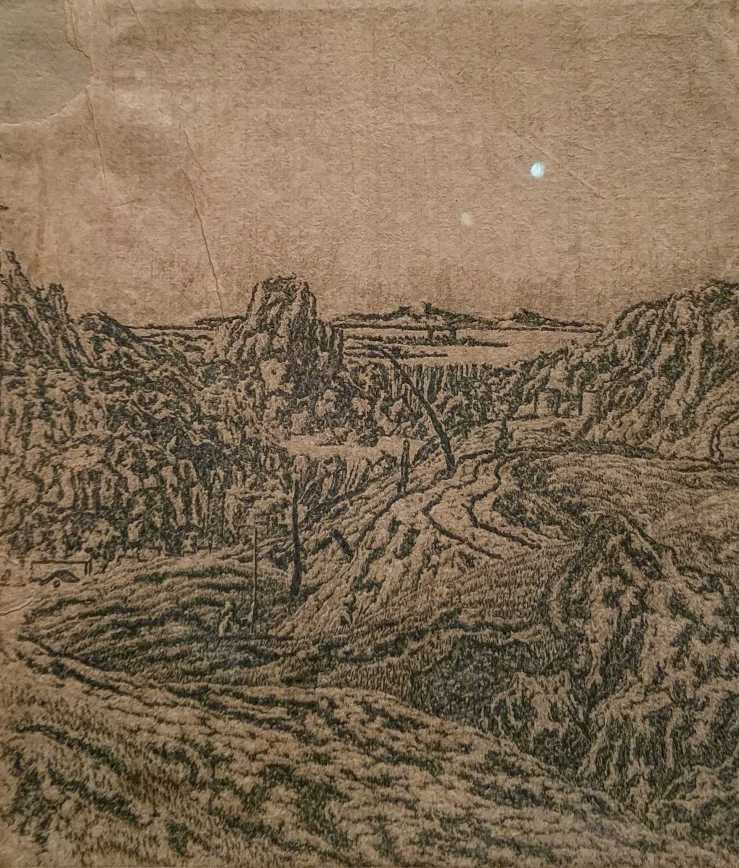 The Enclosed Valley, ca. 1625-30
Line etching printed on linen with a tinted ground, coloured with brush. Twenty-two impressions of this print have survived.
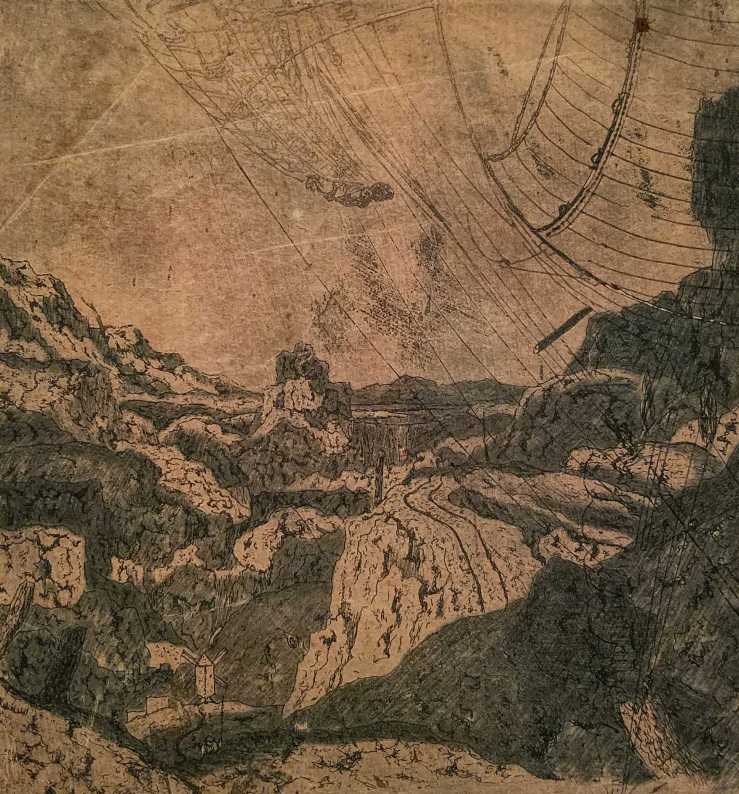 The Enclosed Valley, ca. 1625-30
Line etching printed on linen with a tinted ground, coloured with brush. Twenty-two impressions of this print have survived.
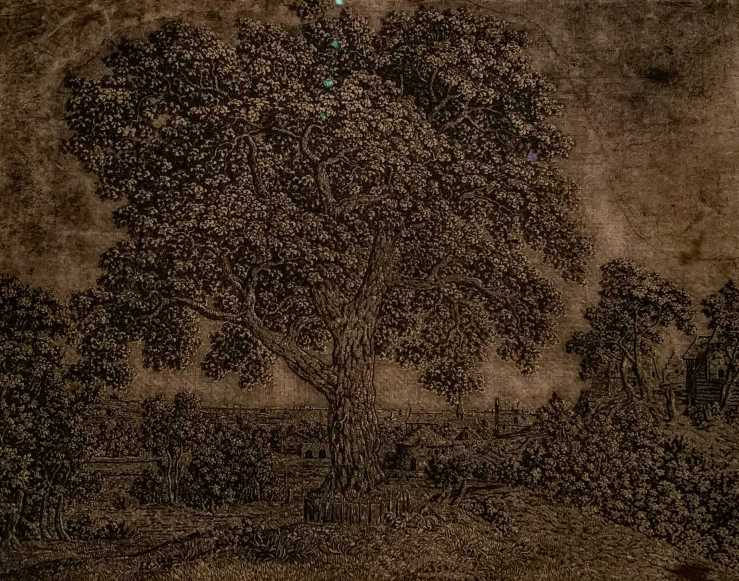 The Large Tree, ca. 1628-29
Line etching printed with tone and highlights, black chalk
A majestic oak dominates a landscape abundant with foliage. A town and a body of water populated by sailboats can be seen in the distance.
Here, Segers’ three-tone process yields subtle gradiations of black and grey and enhances the play of light in the foliage. To create this etching, the artist covered the printing plate with dense pattern of intersecting lines, which are clearly visible in the sky. To preserve parts of the sky and the white highlights, he used stopping-out varnish, which prevents the acid that incises the lines into the metal from ”biting” farther into the plate. But the solvent in the varnish reacted with the etching ground, resulting in the fine line that curves around the top of the foliage. Segers may have meant to paint impressions of the print in order to hide this line, though neither of the two existing examples is painted.
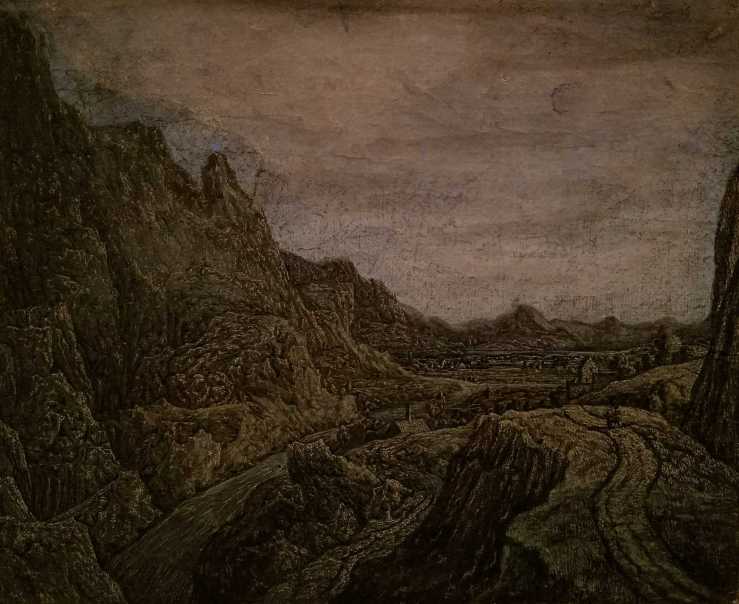 Distant View with a Road and Mossy Branches, ca. 1622-25
Segers printed this etching with various coloured inks and grounds. Using fabric and paper, he also created counterproofs and a maculature.
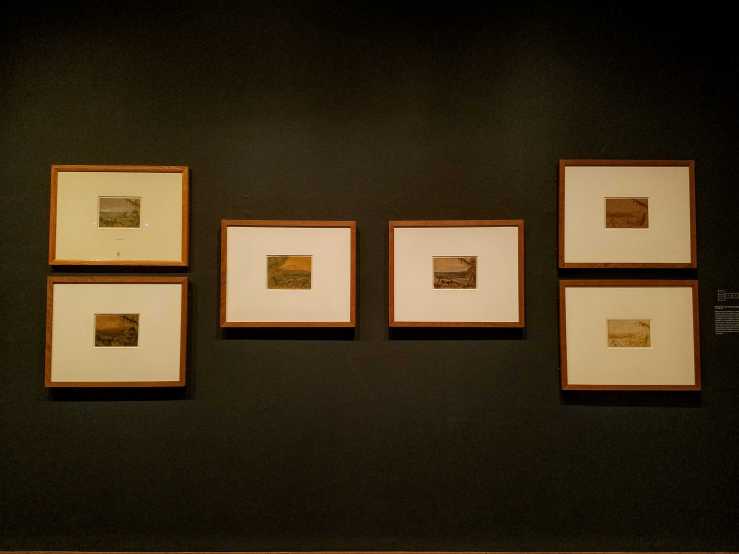
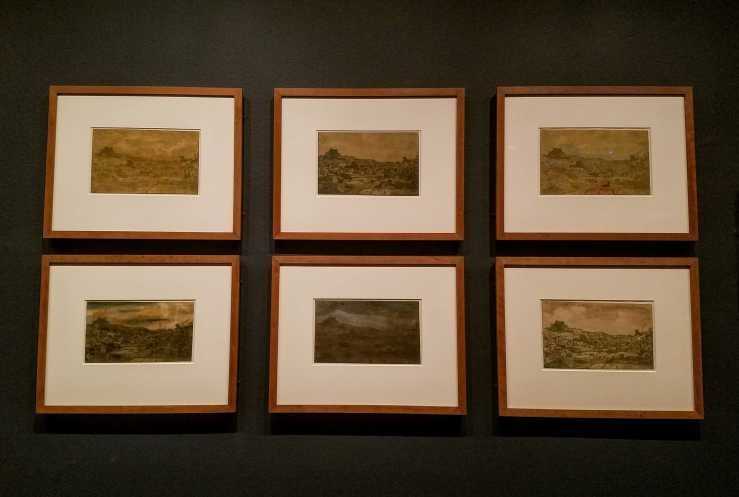
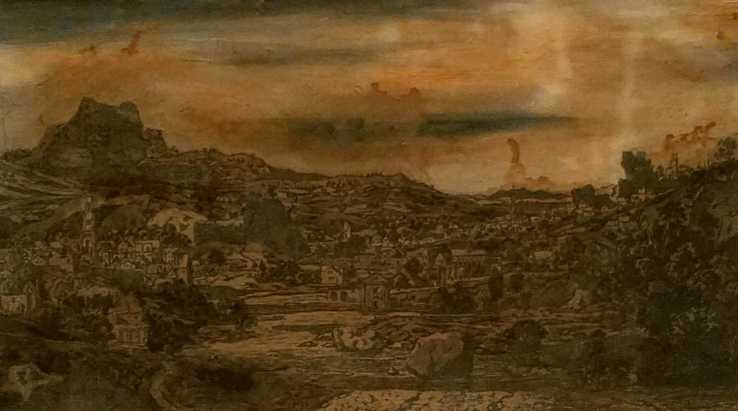 Impressions of Valley with a River and a Town with Four Towers, ca. 1626-27 etching.
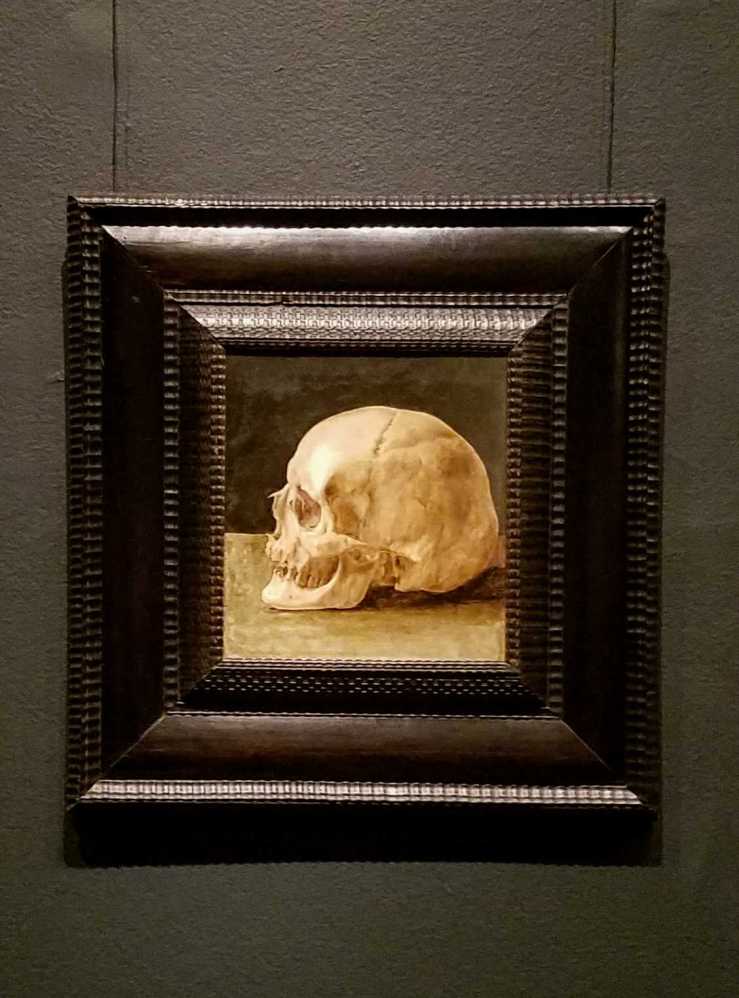 Skull on a Ledge
Undated
Oil on canvas
Possibly Segers
The Mysterious Landscapes of Hercules Segers
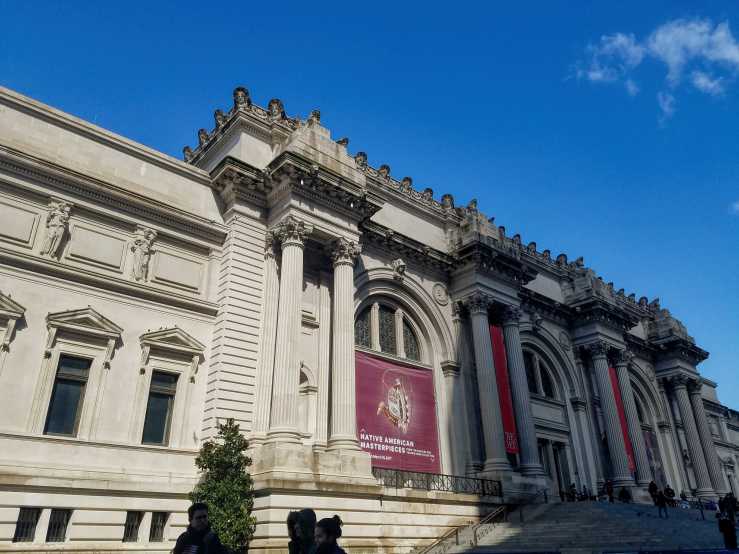
The Metropolitan Museum of Art, February 13 – May 21, 2017
March 19th, 2017
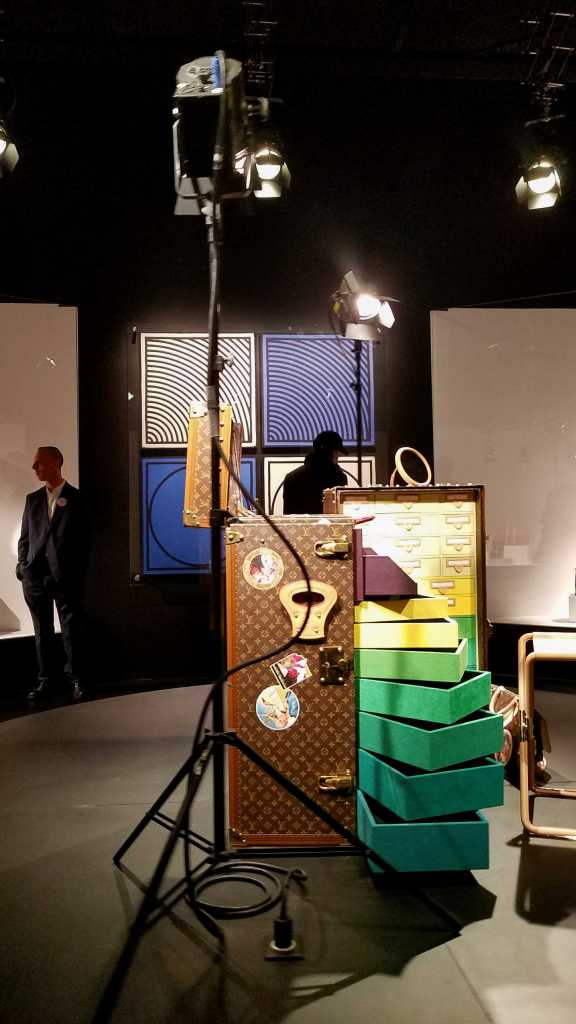
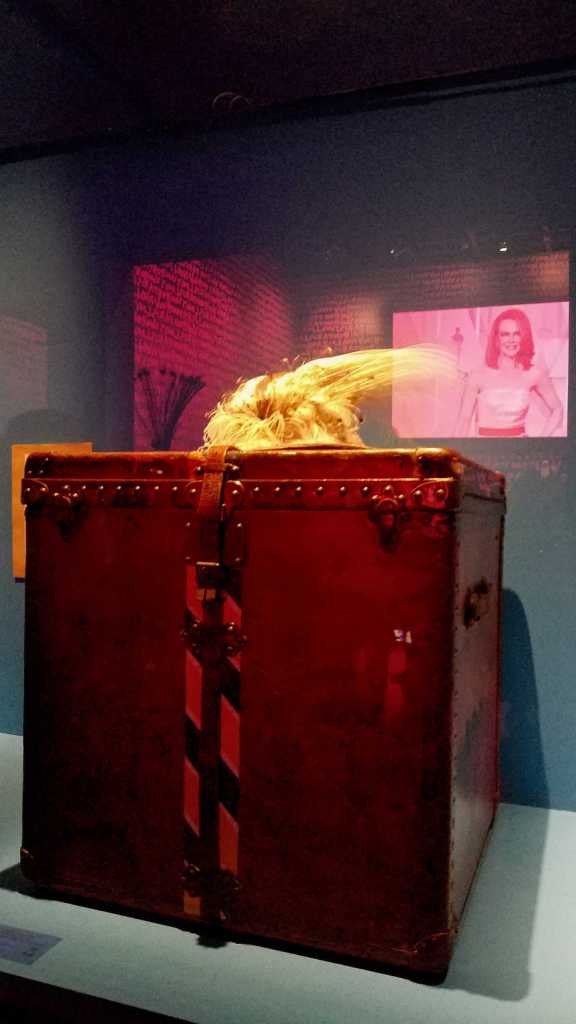 Hat trunk in leather, once belonging to Marjorie Merriweather Post
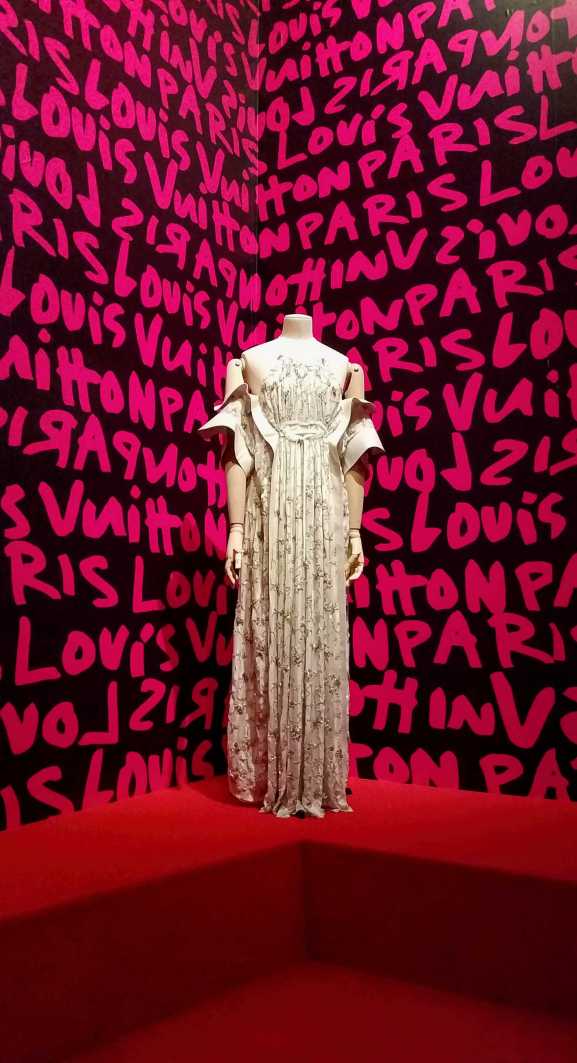 Nicolas Ghesquière embroidered dress worn by Emma Stone at the 2017 British Film Institute Festival
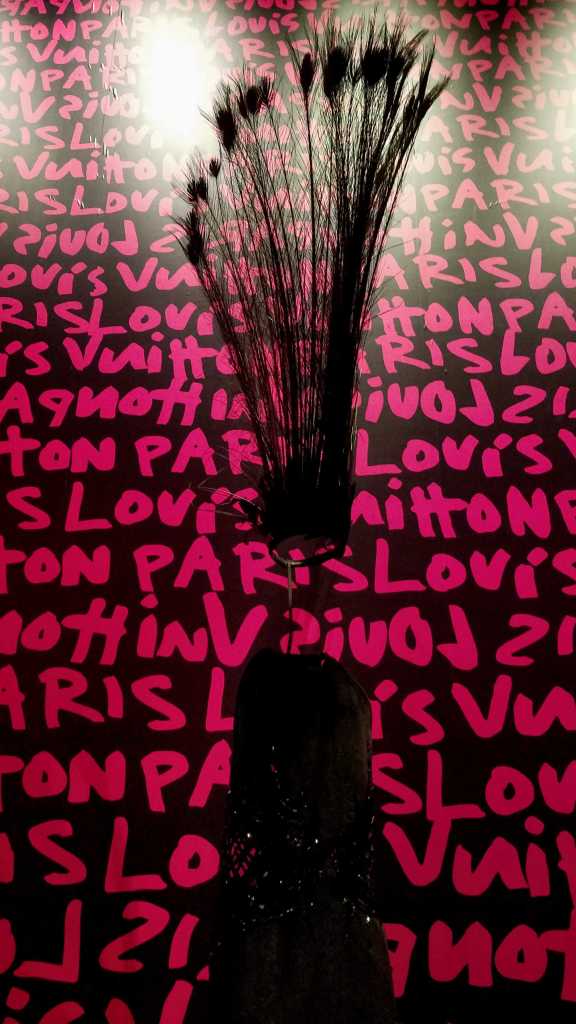 Marc Jacobs feathers headpiece
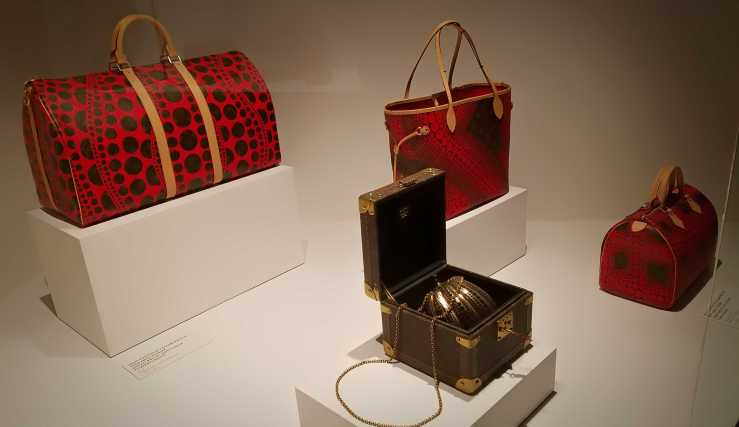 Yayoi Kusama
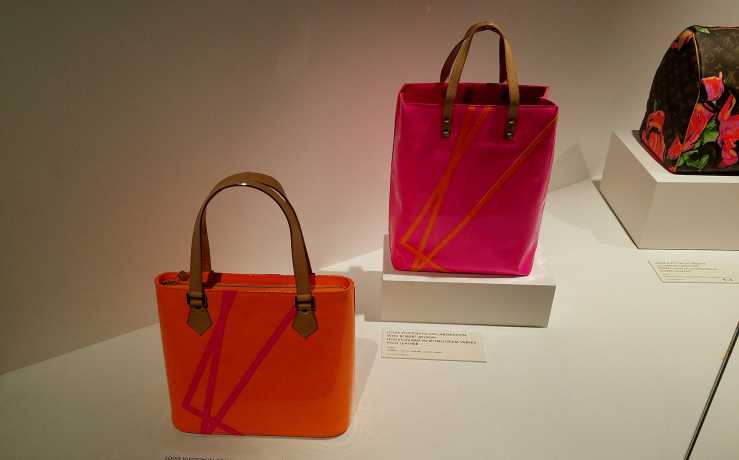 Robert Wilson
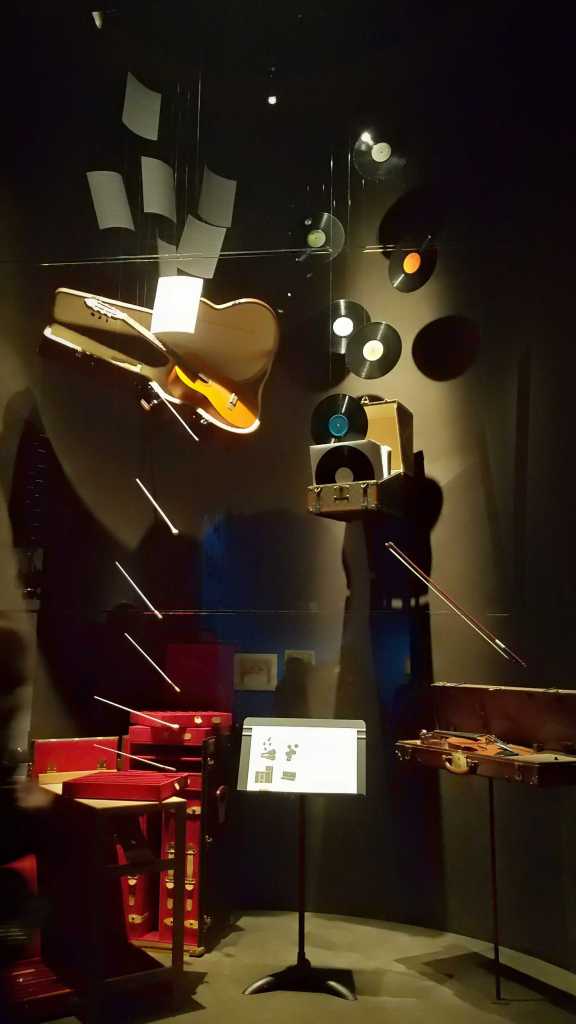 The Music Room
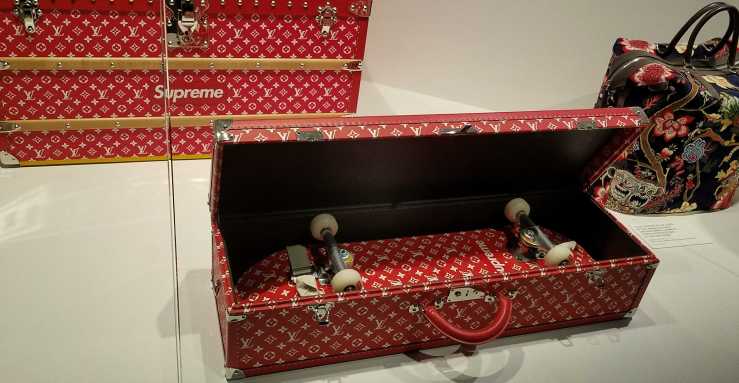 Supreme
 Cindy Sherman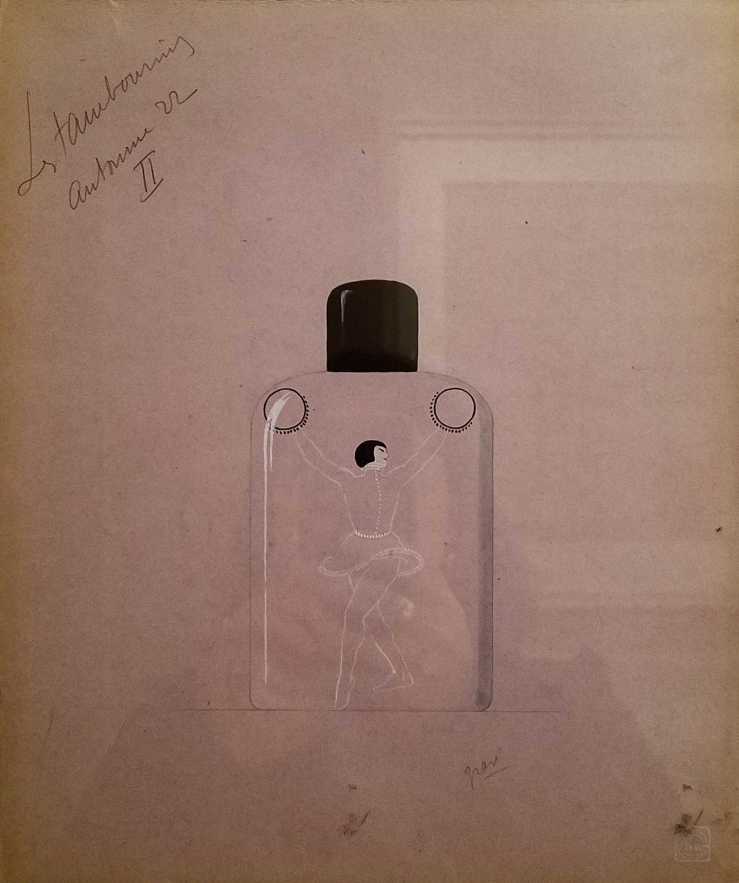
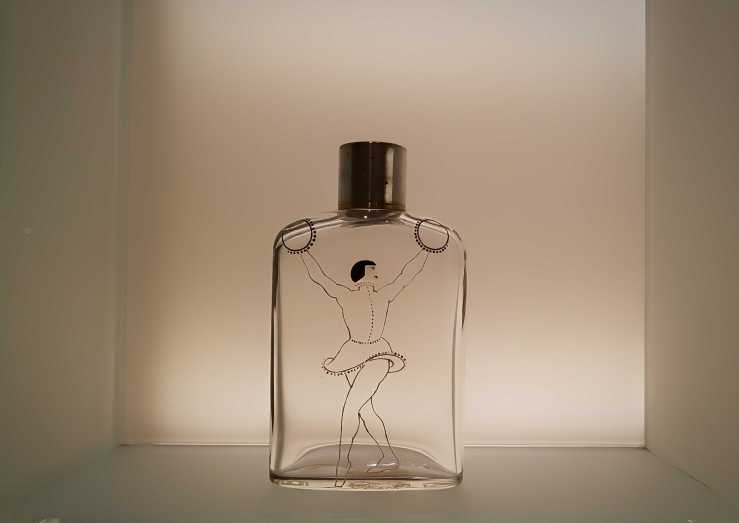
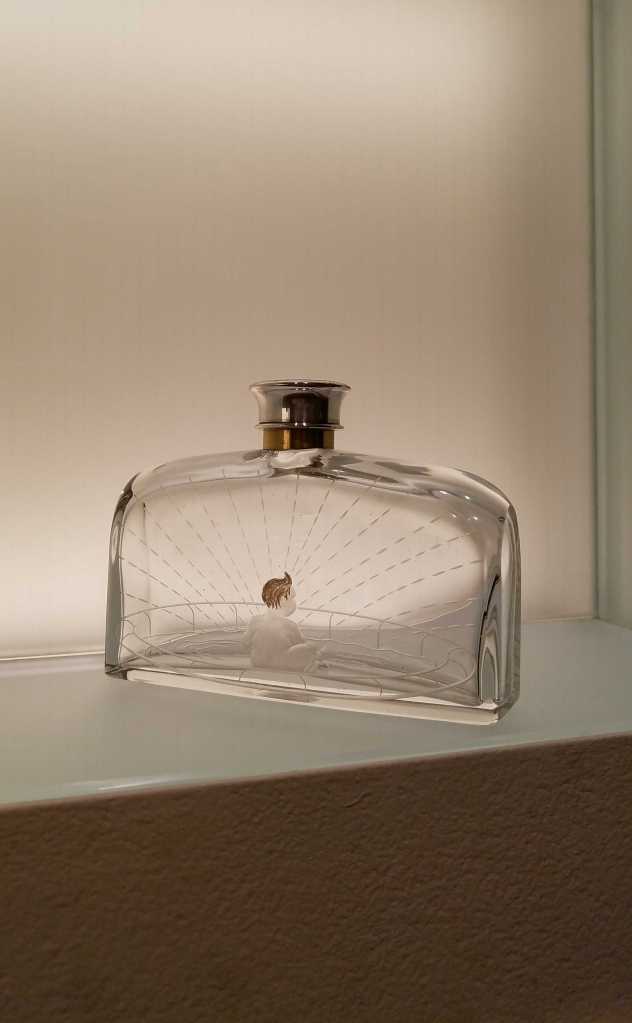
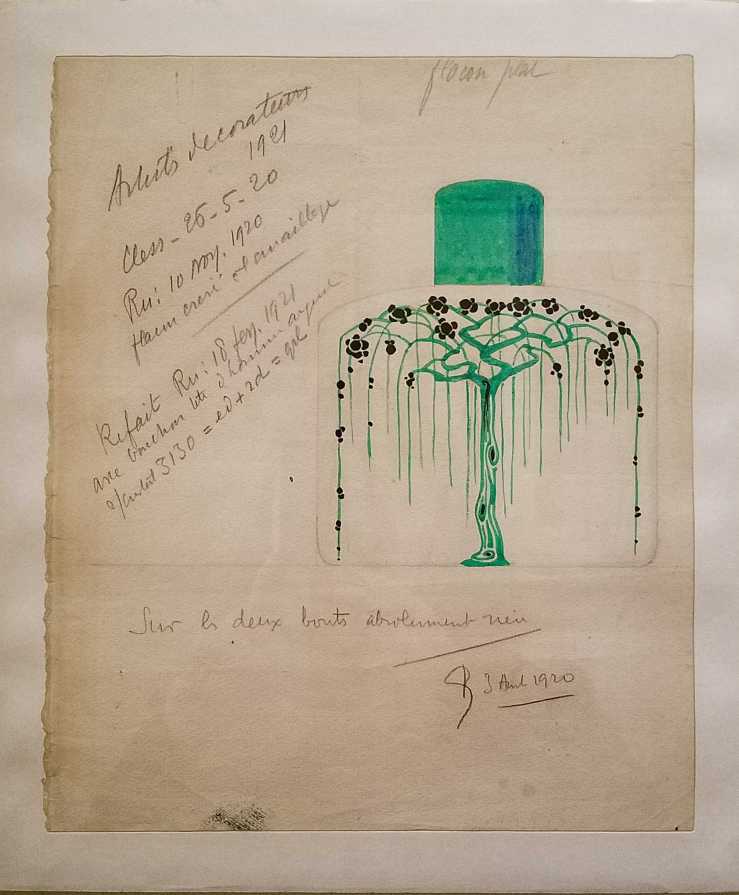
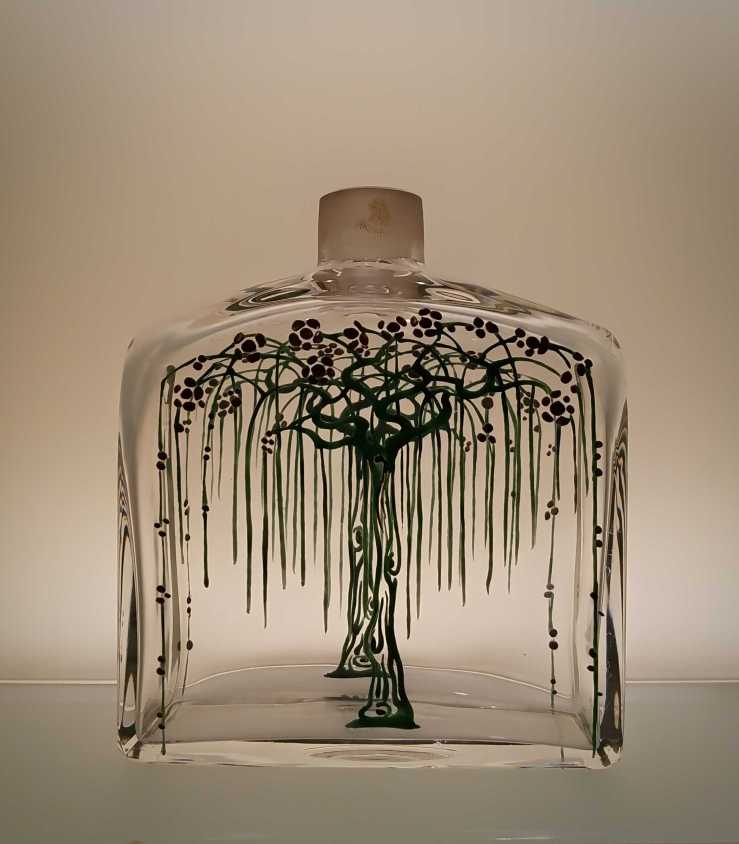 L’Arbre pleureur, enameled crystal perfume bottle; design by Camille Cless-Brothier, 1922.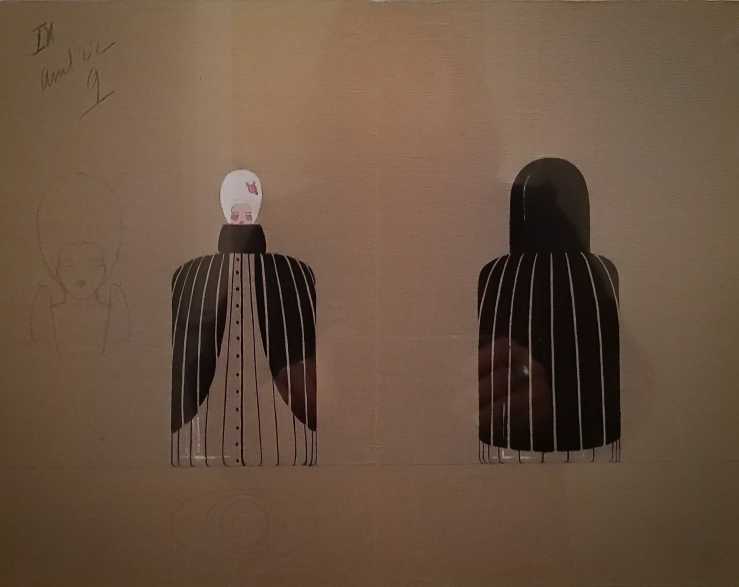
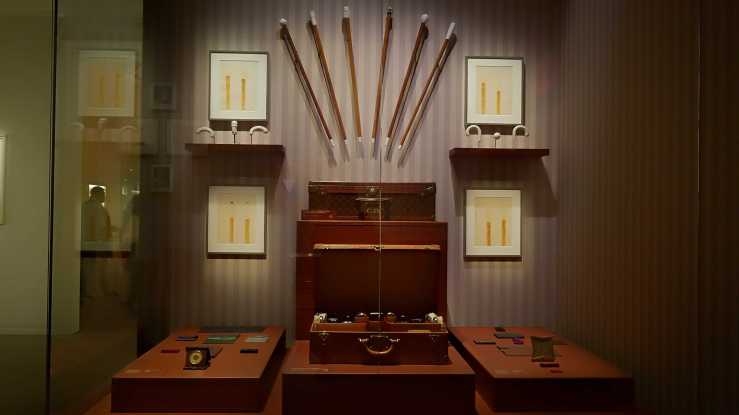
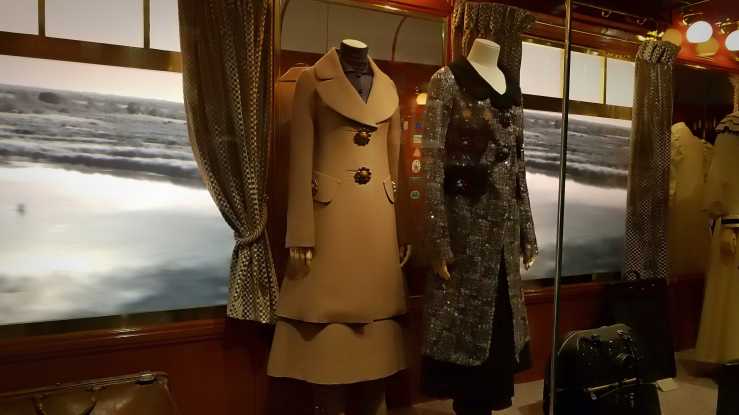
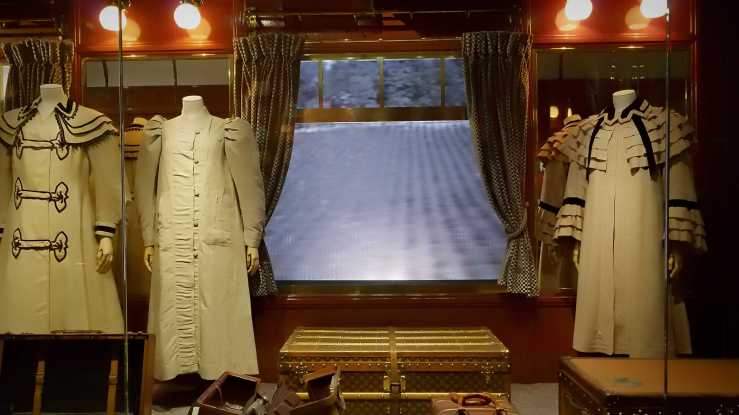
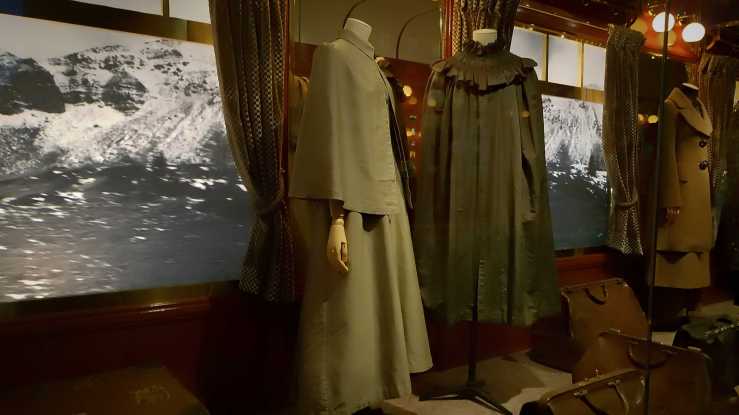
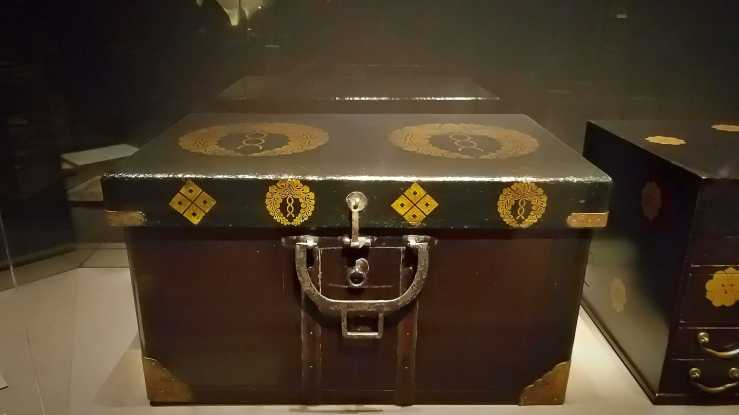 Portable chest (hasami-bako) in black lacquered wood with gold lacquer patterned using the hiramaki-e technique, Edo period, late 18th and 19th century
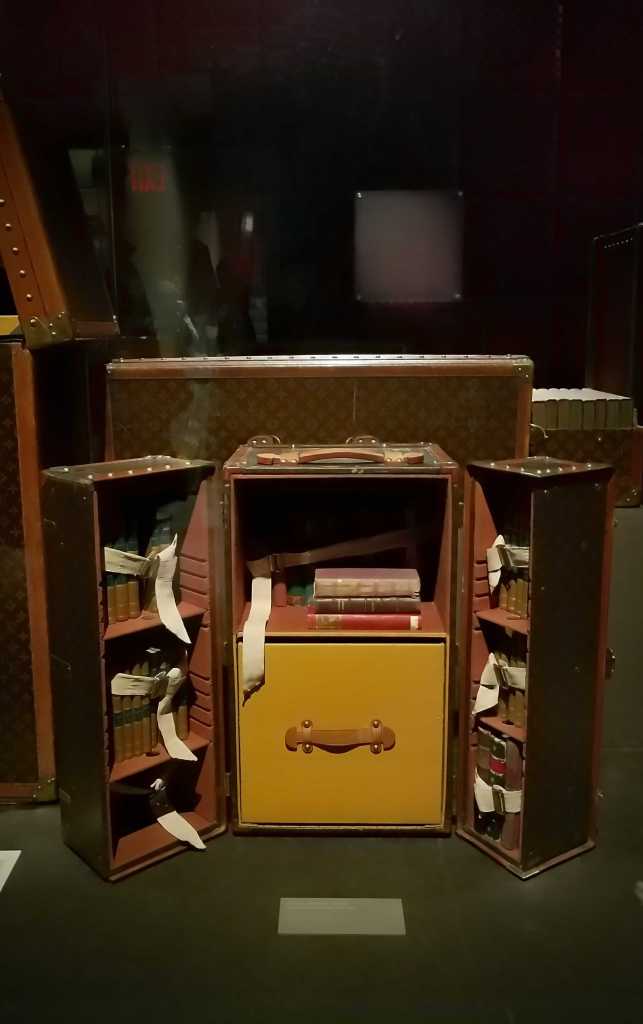 Ideale Library trunk in monogram canvas, 1927
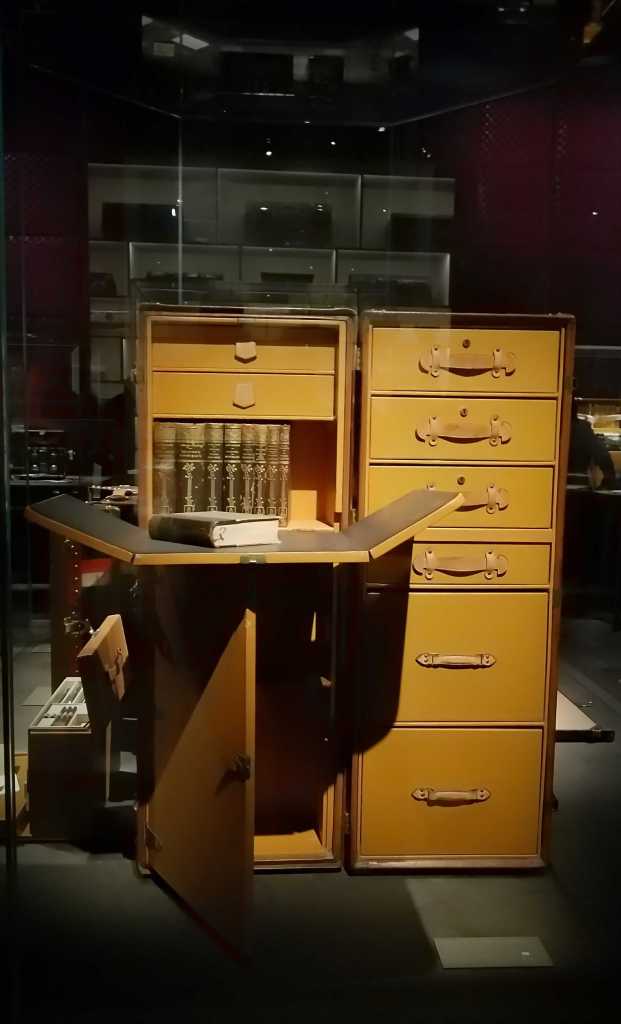 Desk trunk in natural cowhide, once belonging to Frank J. Gould, 1928
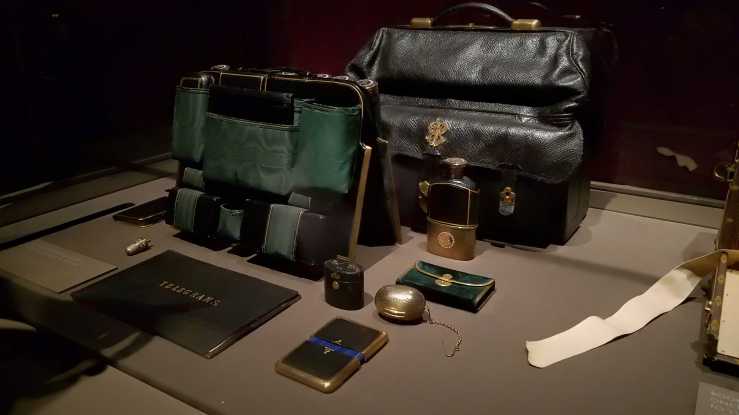 Jenner & Knewstub Berry’s fitted travel bag in leather, ca. 1864
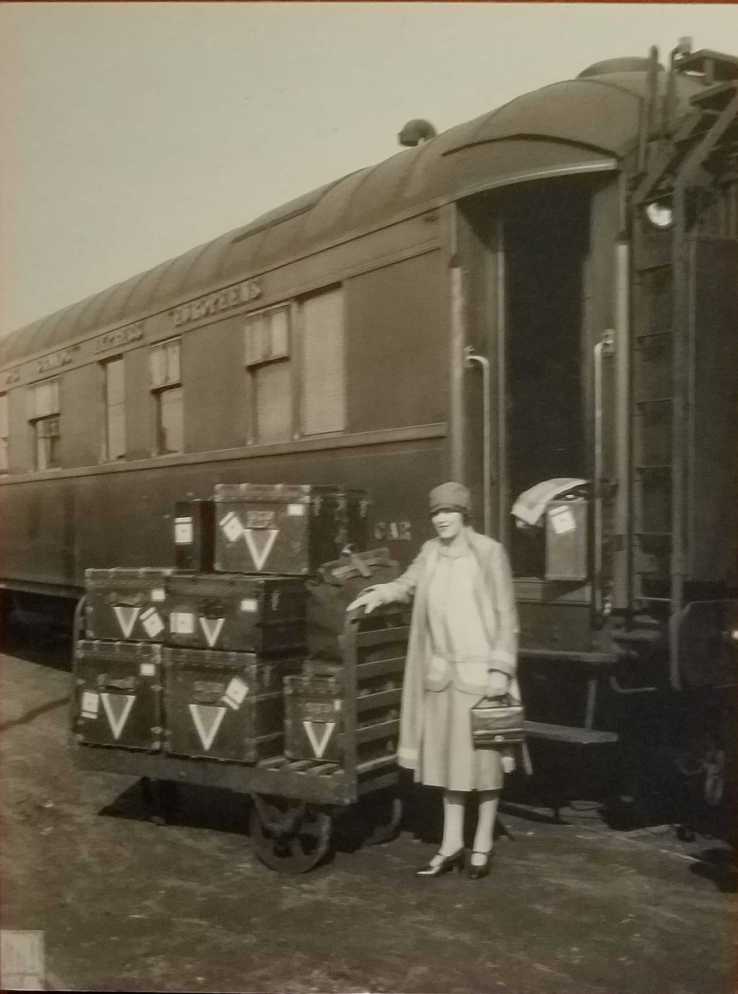
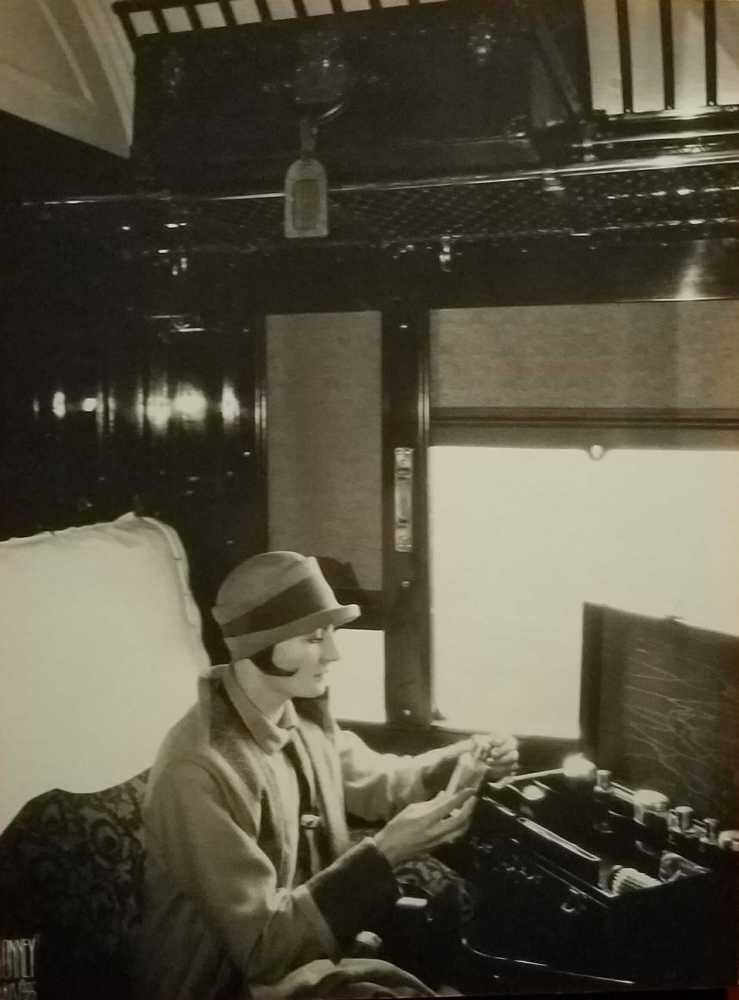
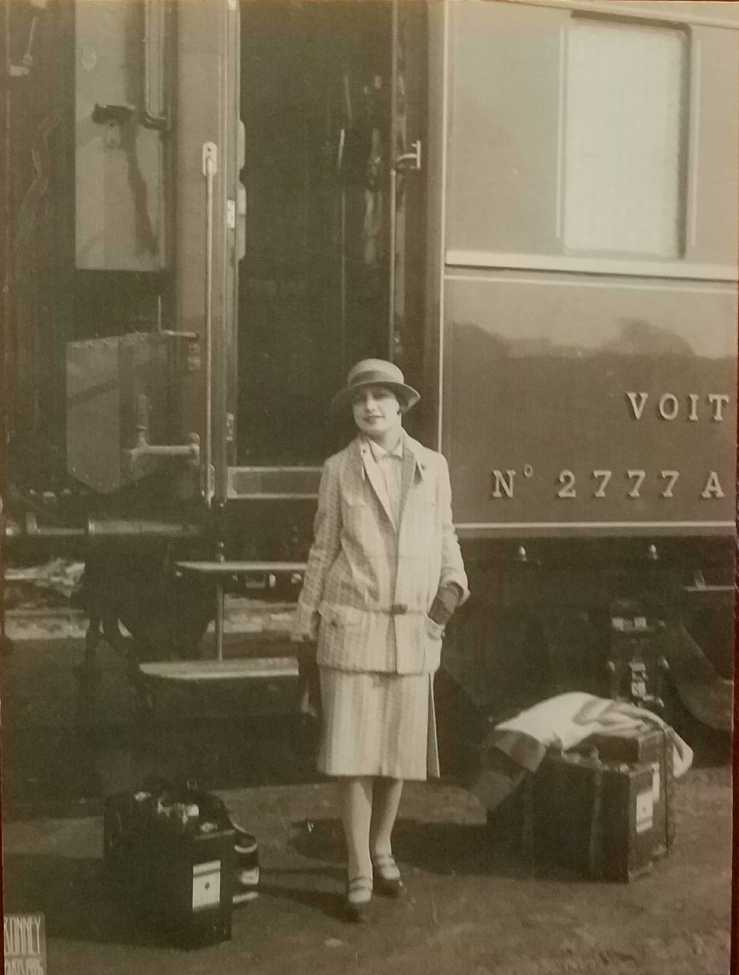
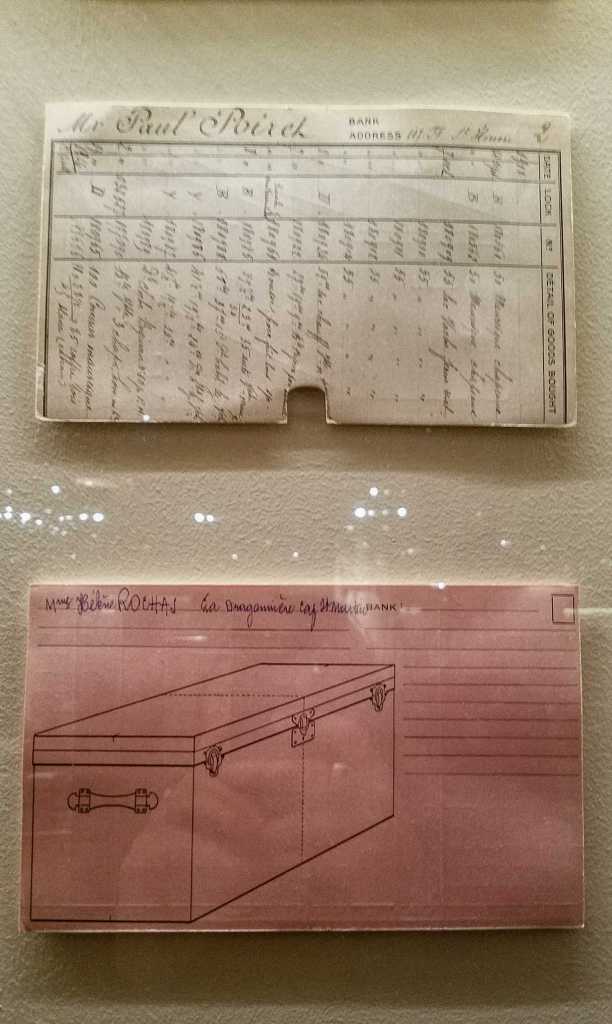
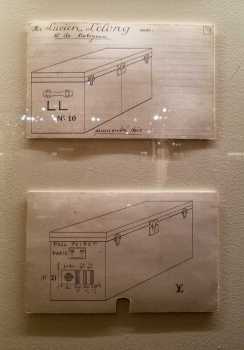
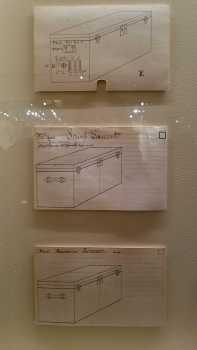
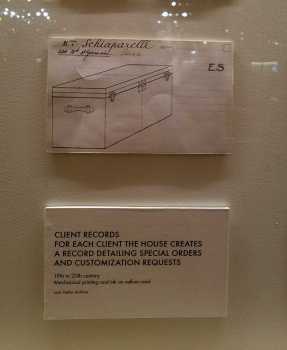 Client records. For each client the house creates a record detailing special orders and customization requests, 19th to 20th century
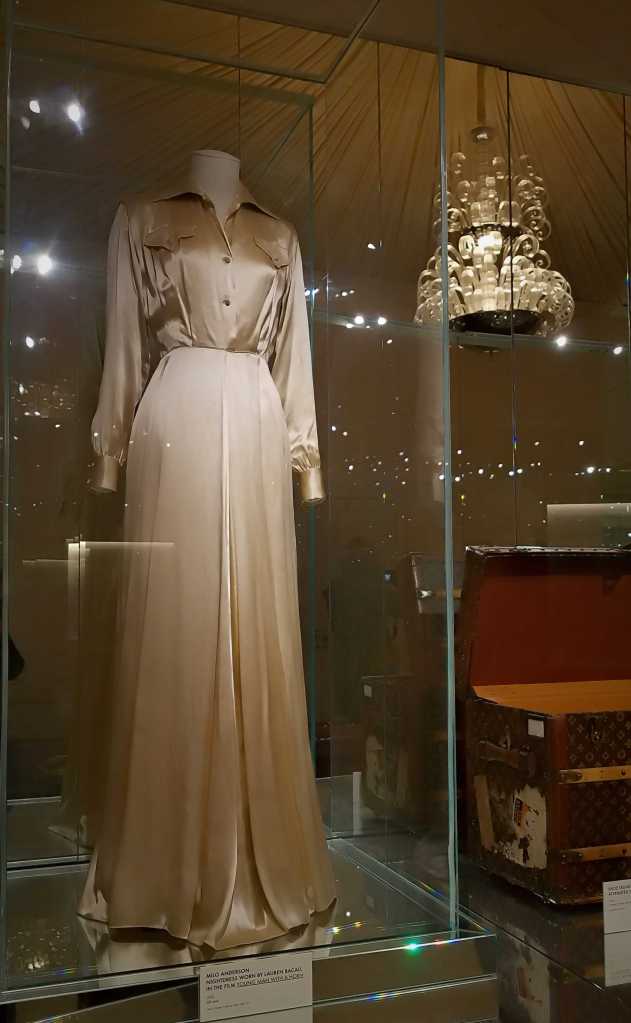 Milo Anderson, silk satin nightdress worn by Lauren Bacall in ”Young man with a horn”, 1950
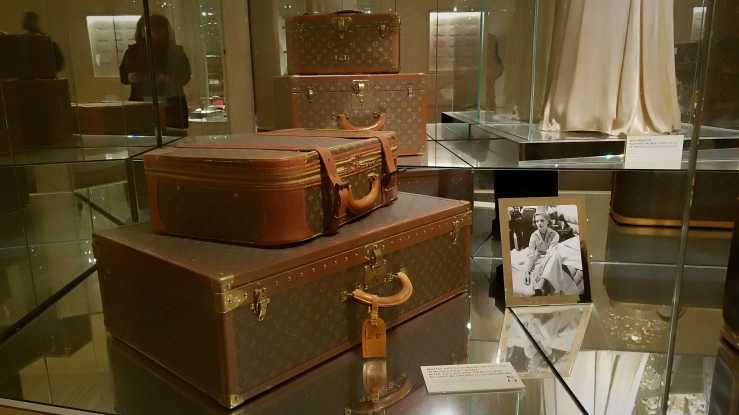 Brettes hat/shoe trunk, vanity case in monogram canvas
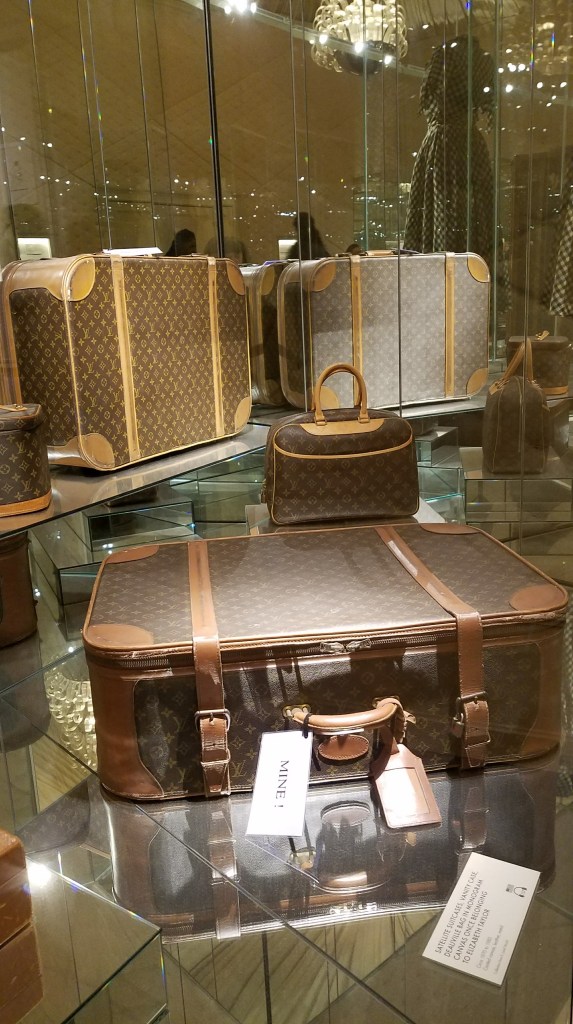 Satellite suitcases, vanity case, Deauville bag in monogram canvas once belonging to Elizabeth Taylor
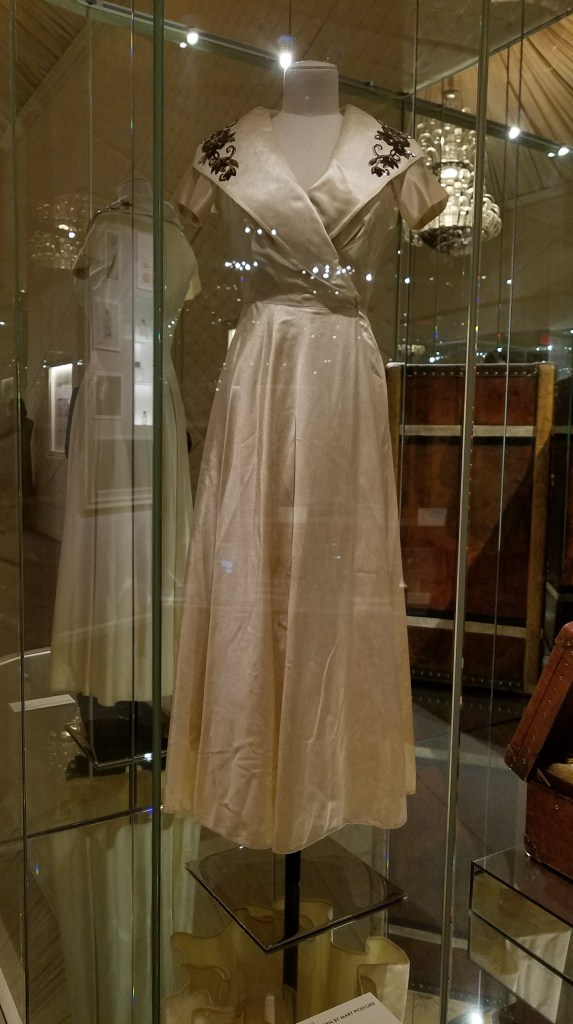 Jeanne Lanvin hostess dress, worn by Mary Pickford, Winter 1948-49
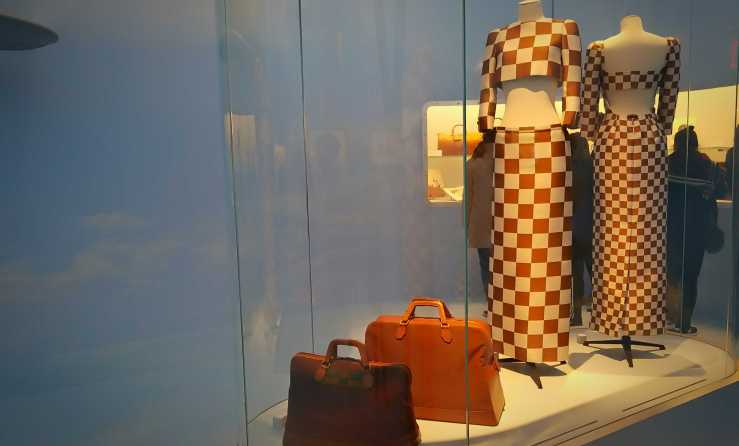 Louis Vuitton by Marc Jacobs long dress and cropped jacket with long skirt, S/S 2013
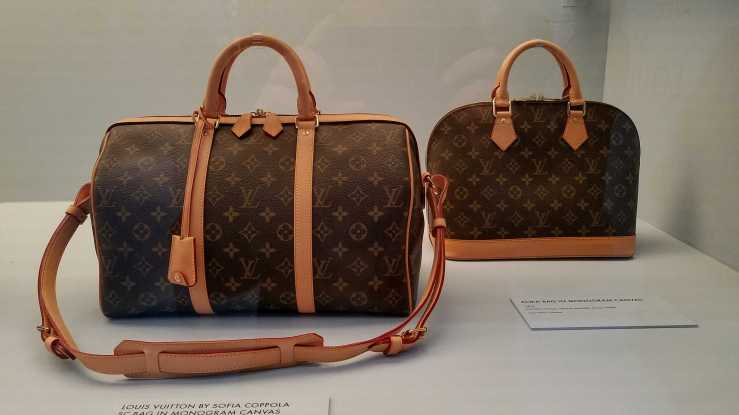 Louis Vuitton by Sofia Coppola, SC Bag in monogram canvas, 2009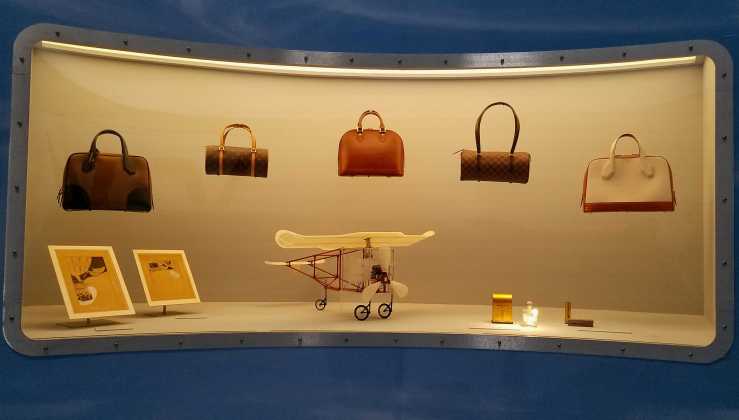
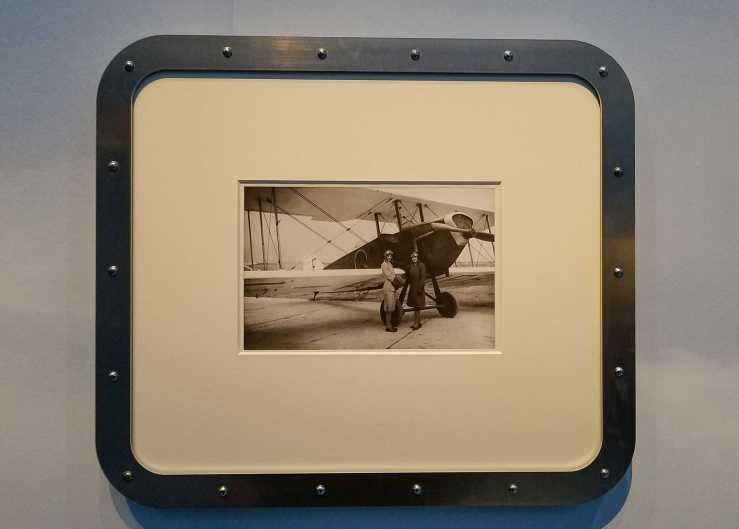 Boris Lipnitzki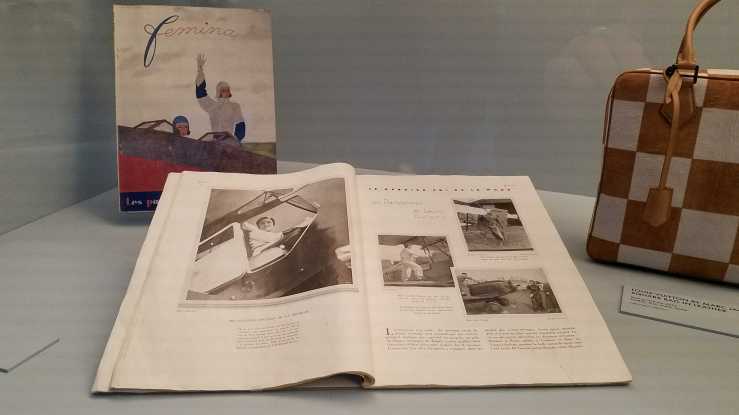
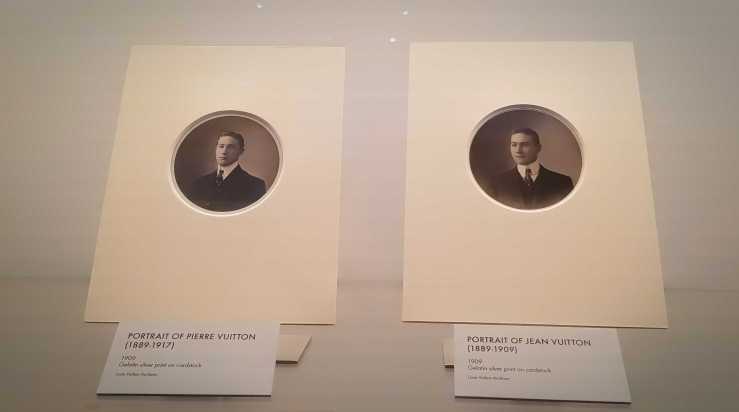
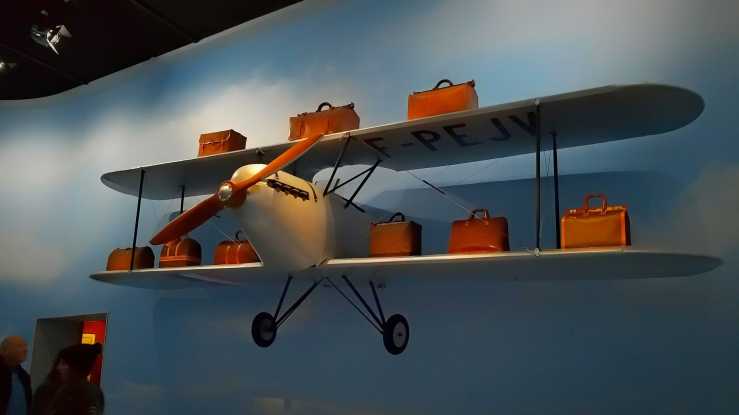
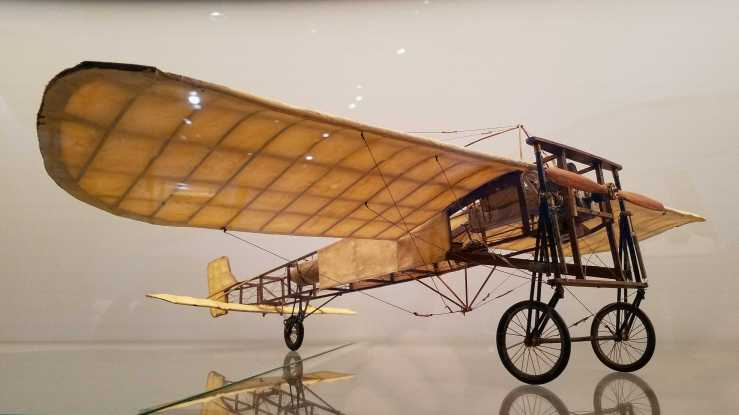 Model of the Blériot XI airplane, 20th century
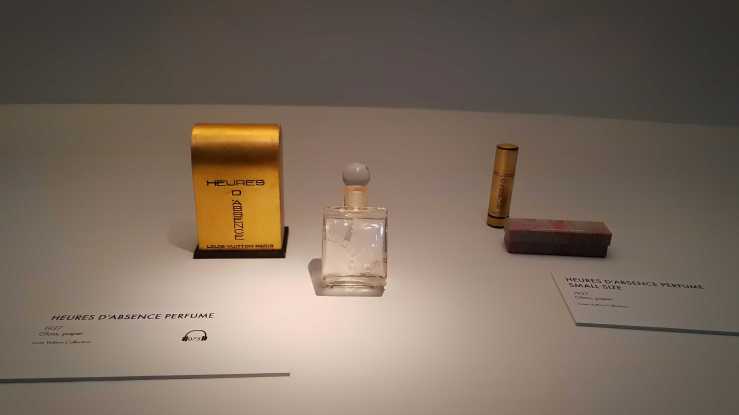 Heures d’absence perfume, 1927
 Chauffeur’s kit in vuittonite canvas, 1910
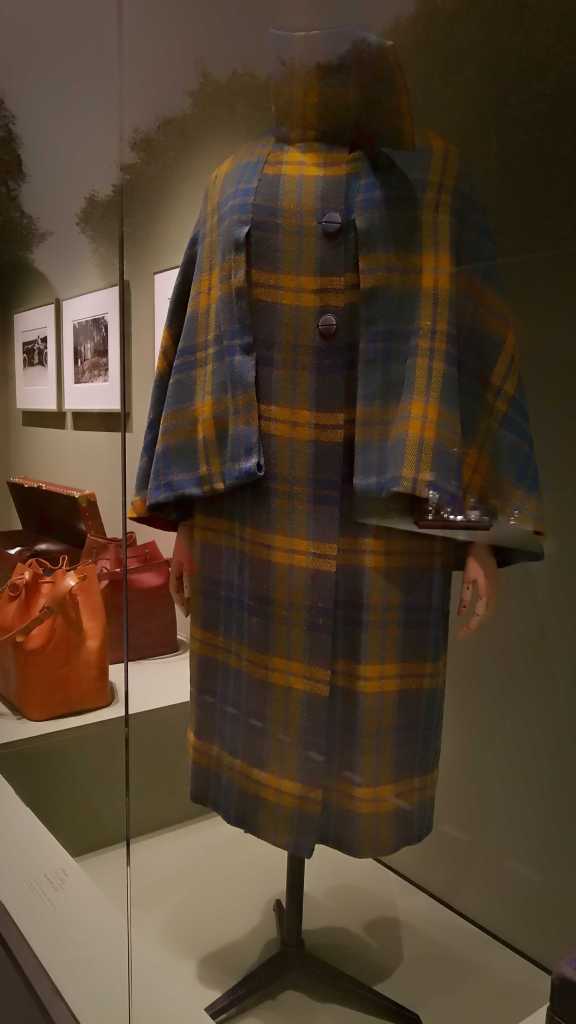 Dornac, 100 à l’heure travelling coat in Scottish wool twill, ca. 1923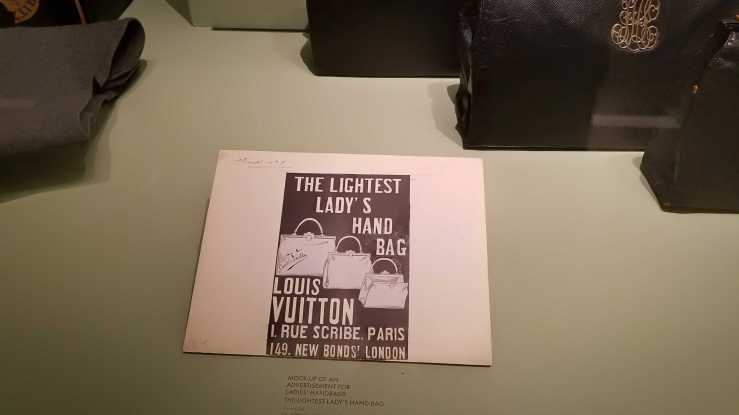
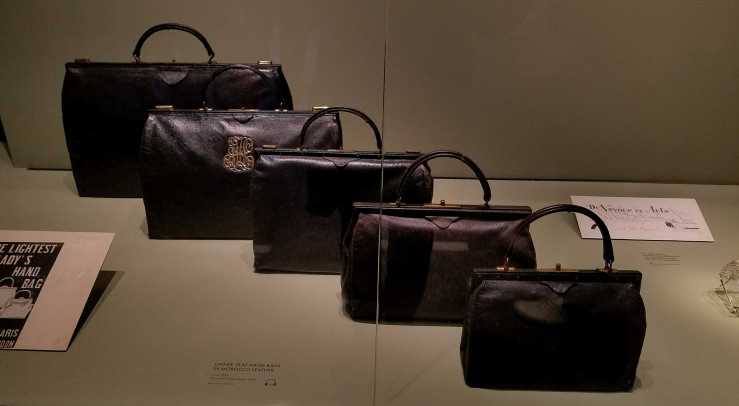 Ladies’ flat hand bags in Morocco leather, ca. 1910
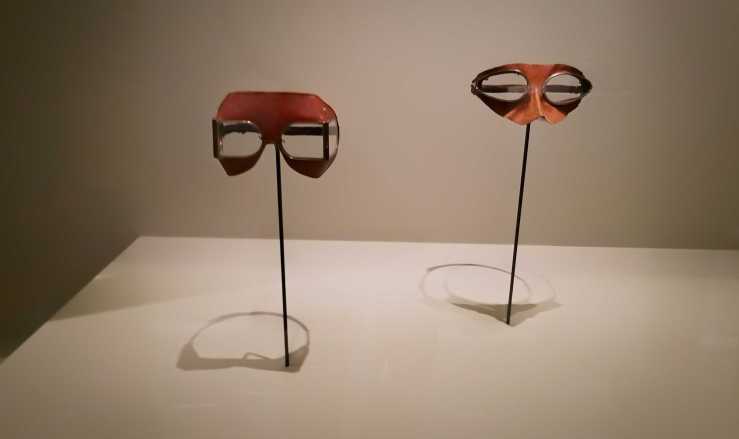 Driving googles, ca. 1900
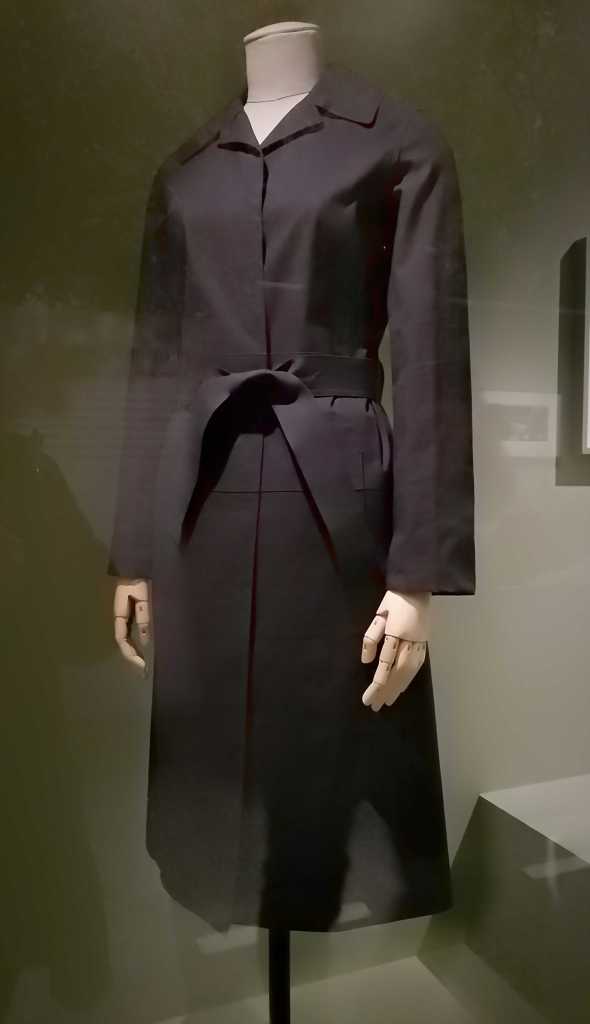 Louis Vuitton by Marc Jacobs coated cotton coat, F/W 1998-99
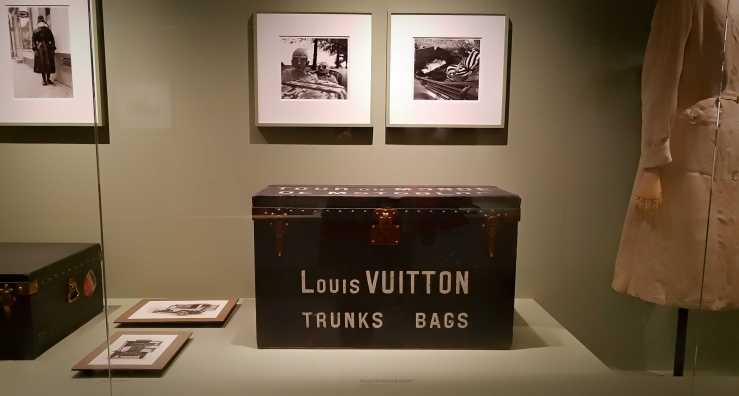 Special car trunk for motobloc vehicles in vuittonite canvas, ca. 1908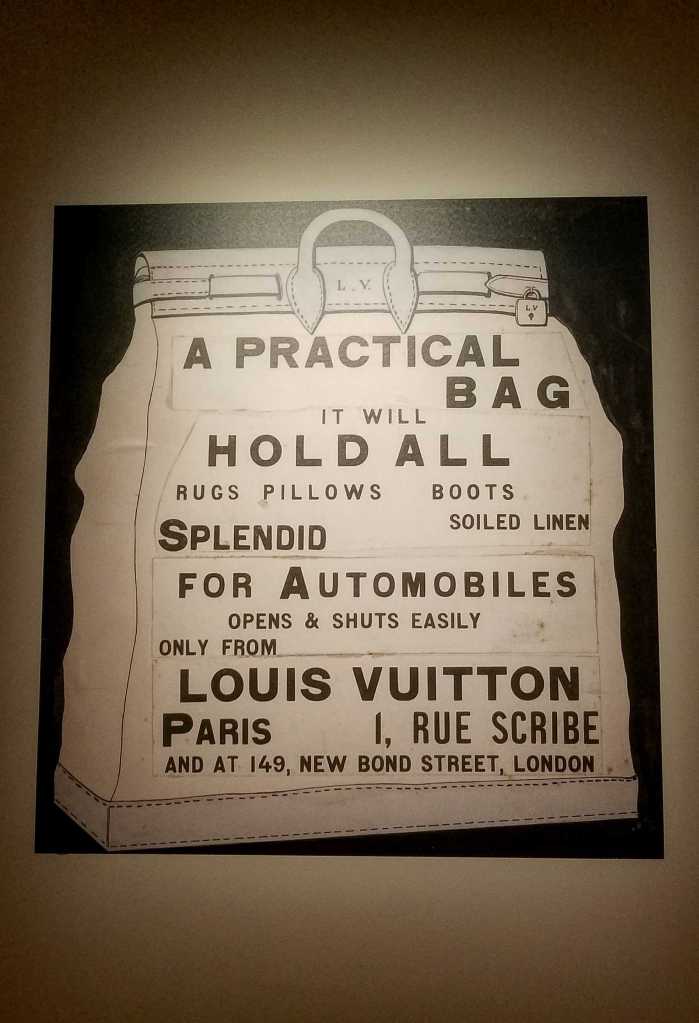
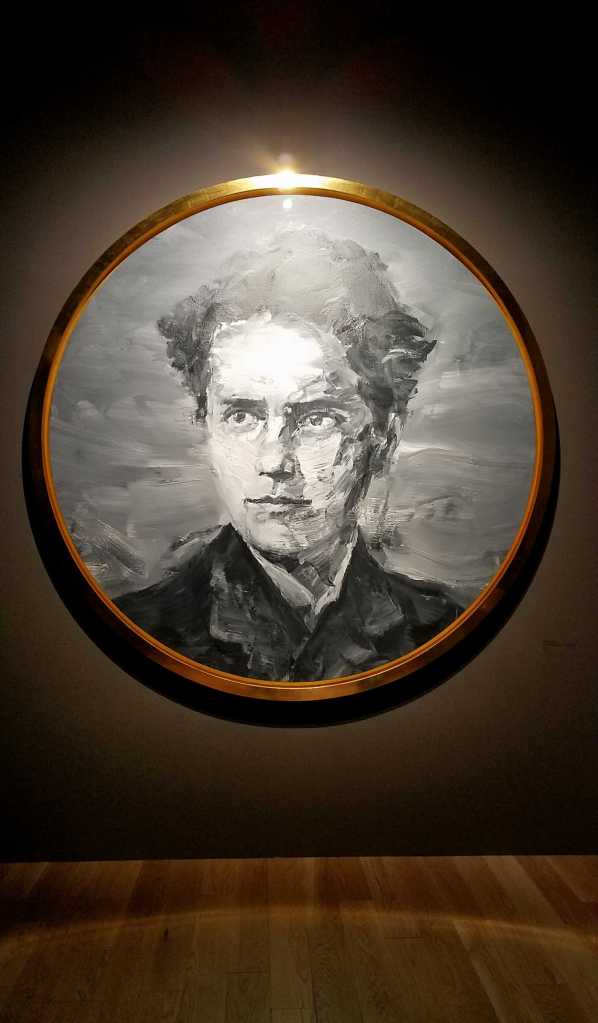 Yan Pei-Ming
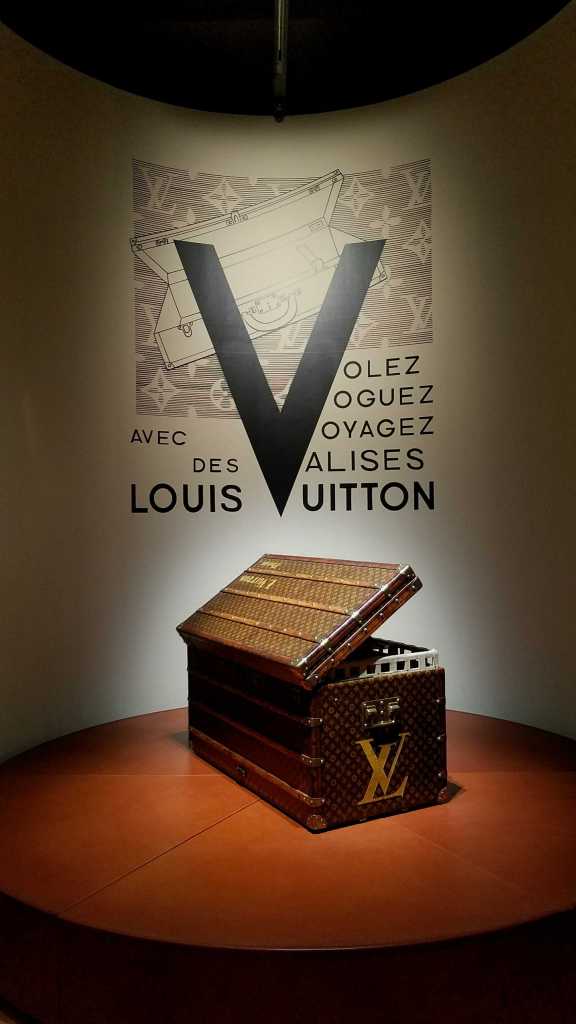 In 1906, a reference catalogue precisely inventoried items and luggage from Louis Vuitton. The trunks that would make the House a success were already there.
 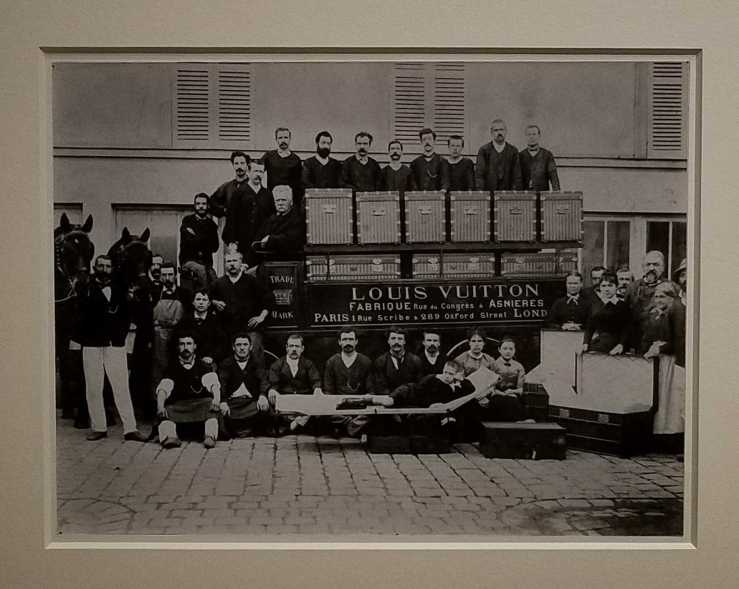 Louis, Georges and Gaston-Louis Vuitton posing with craftsmen in the courtyard of the Asnières-sur-Seine workshops, ca. 1888
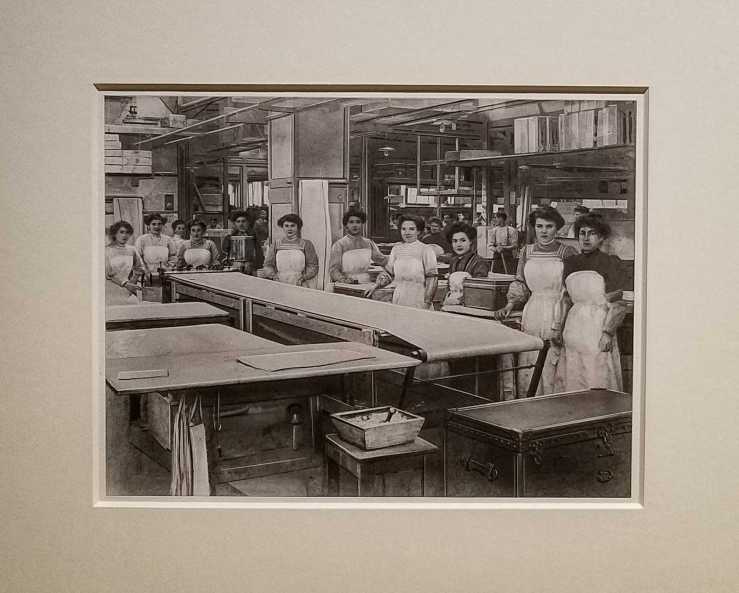 Collage workshop at Asnières-sur-Seine, ca. 1903
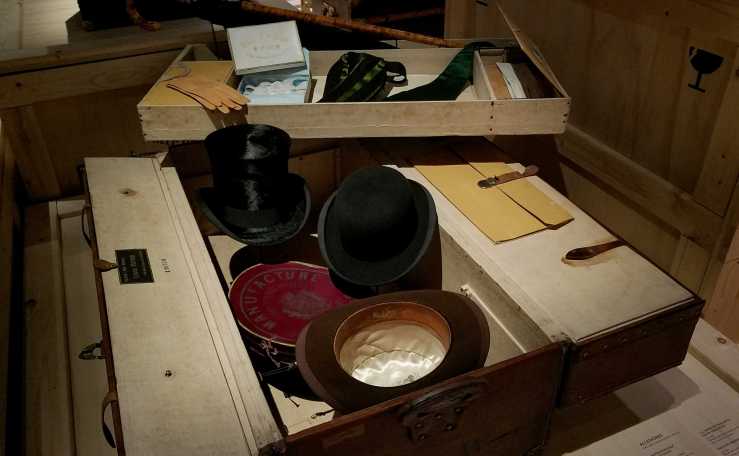 Ideale trunk in natural cowhide, ca. 1903 with accessories from the 1900s
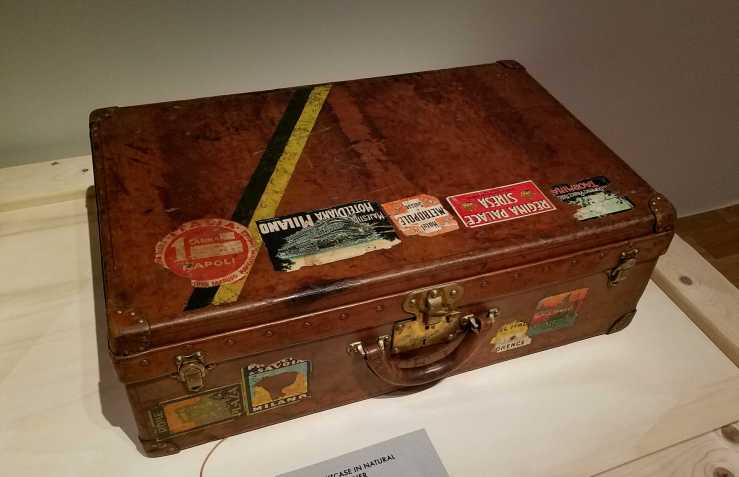 Paris suitcase in natural cowhide leather, 1914
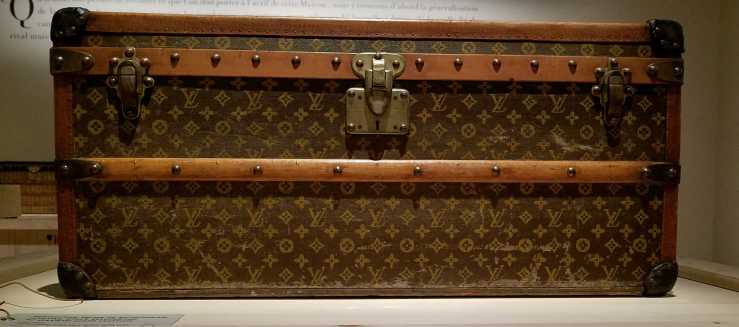 Restrictive trunk in monogram canvas, once belonging to Gaston-Louis Vuitton, ca. 1925
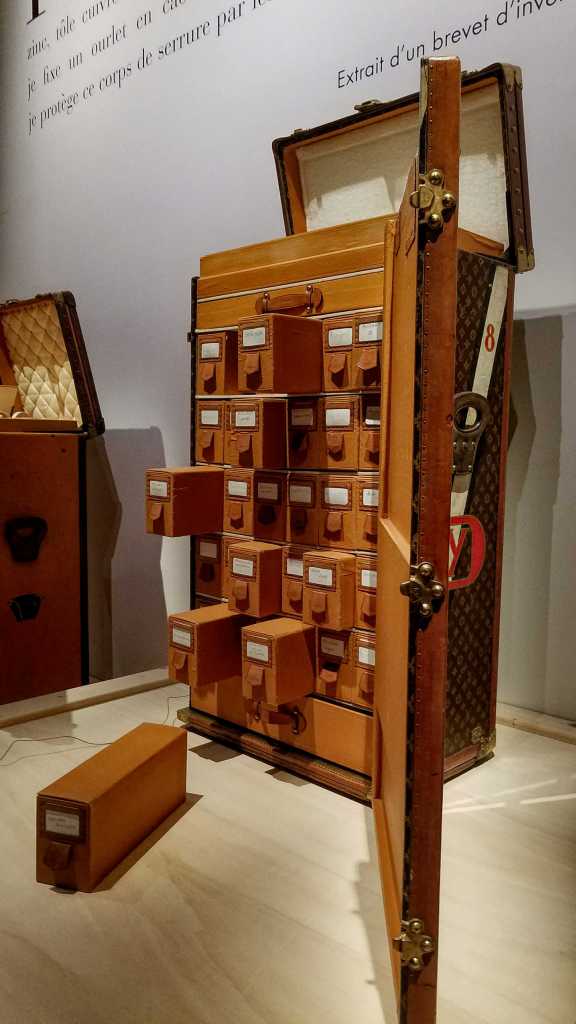 Shoe trunk for thirty pairs of shoes in monogram canvas, once belonging to Yvonne Printemps, 1926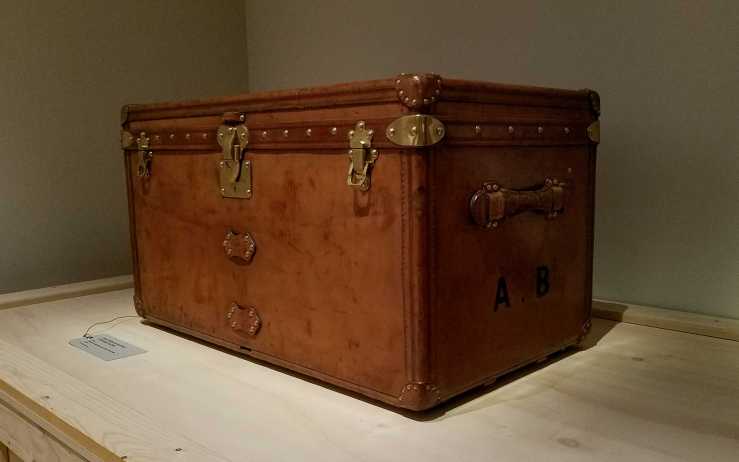
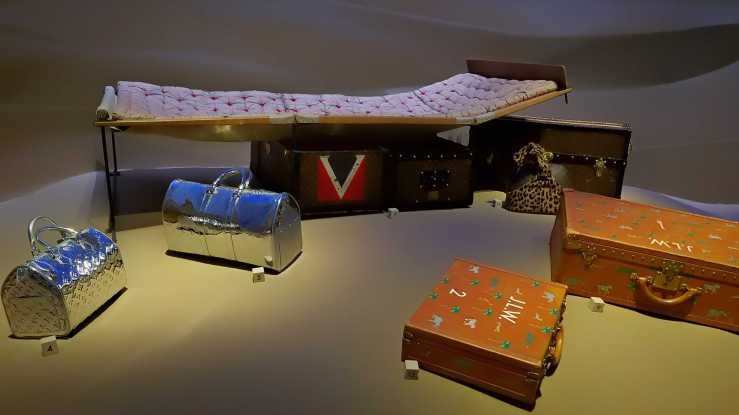 Bed trunk in damier canvas once belonging to Gaston-Louis Vuitton, 1892
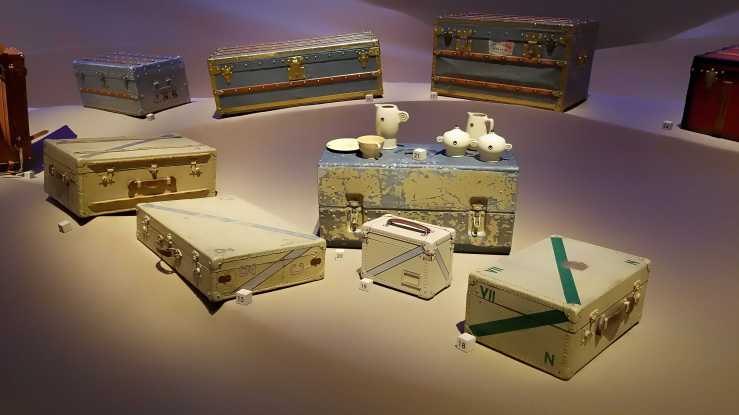 Back to front:
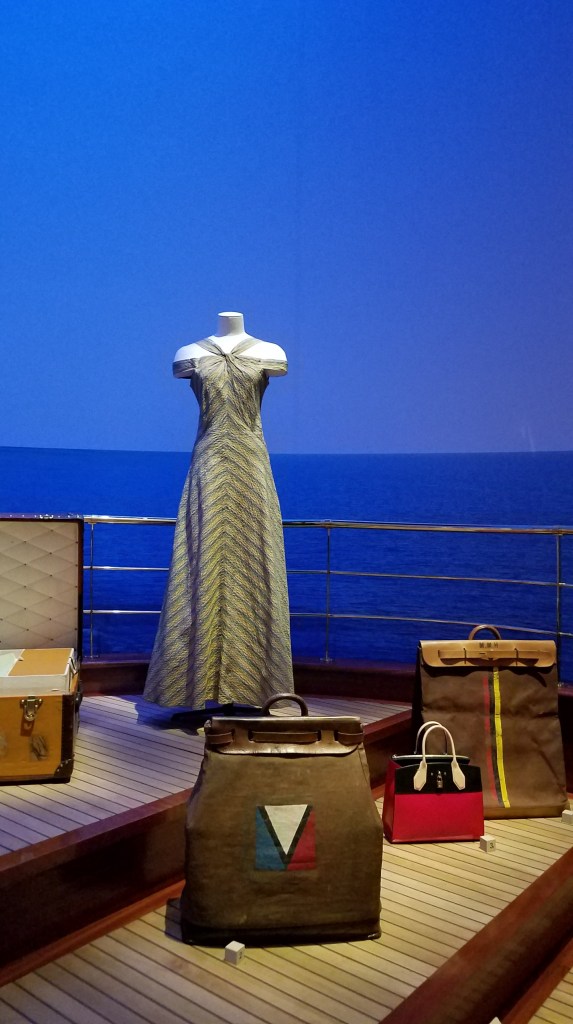
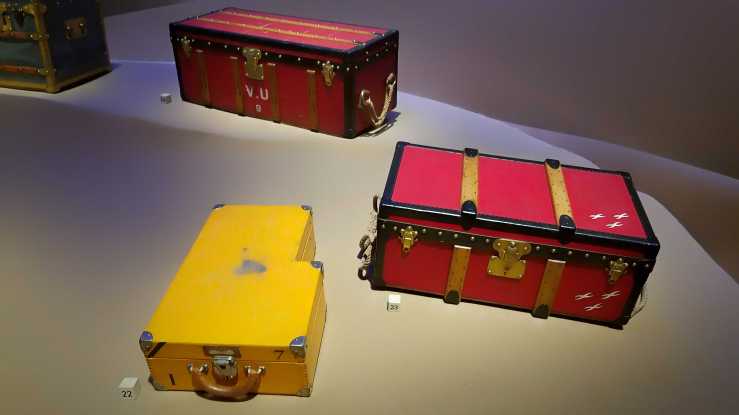 Special car trunk in coated canvas, custom-made for the Black Journey, 1924
 Steamer bag in cotton canvas once belonging to Gaston-Louis Vuitton, ca. 1901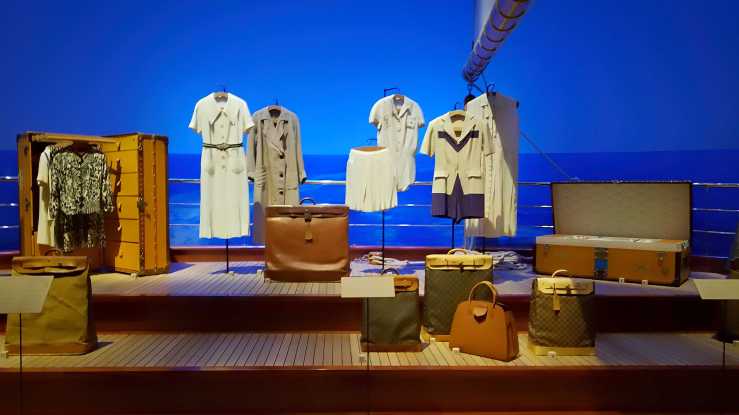
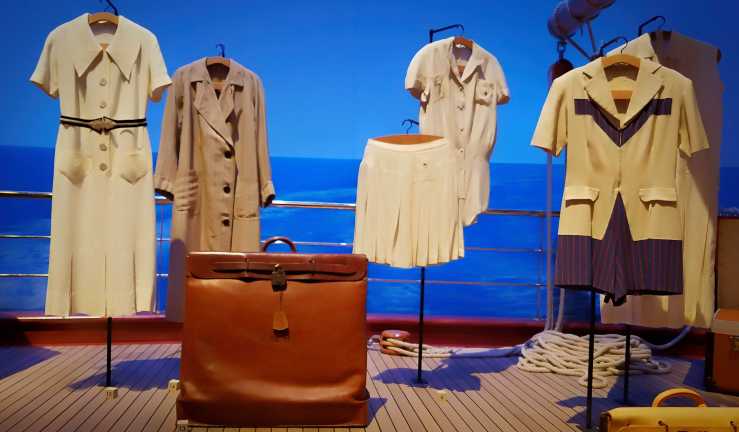 Tennis shorts once-piece, ca. 1930
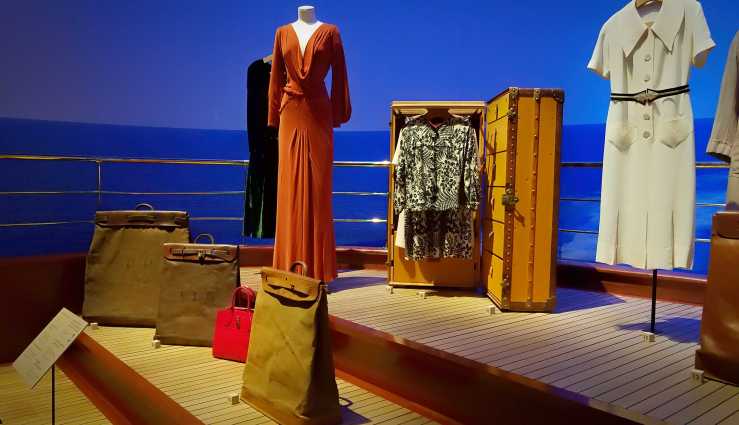 Ensemble in crêpe de chine with a black and ivory pattern, ca. 1935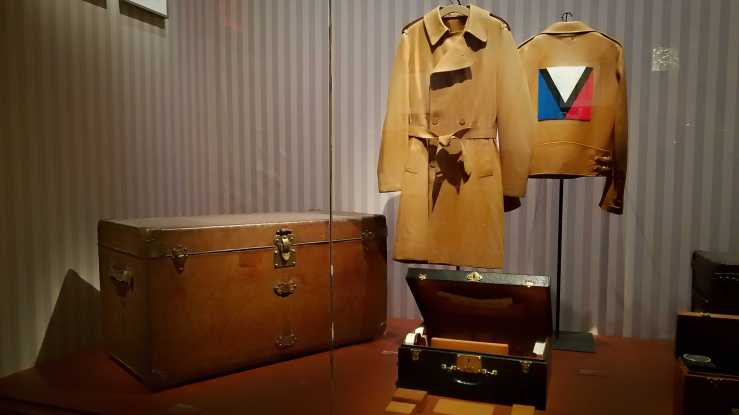

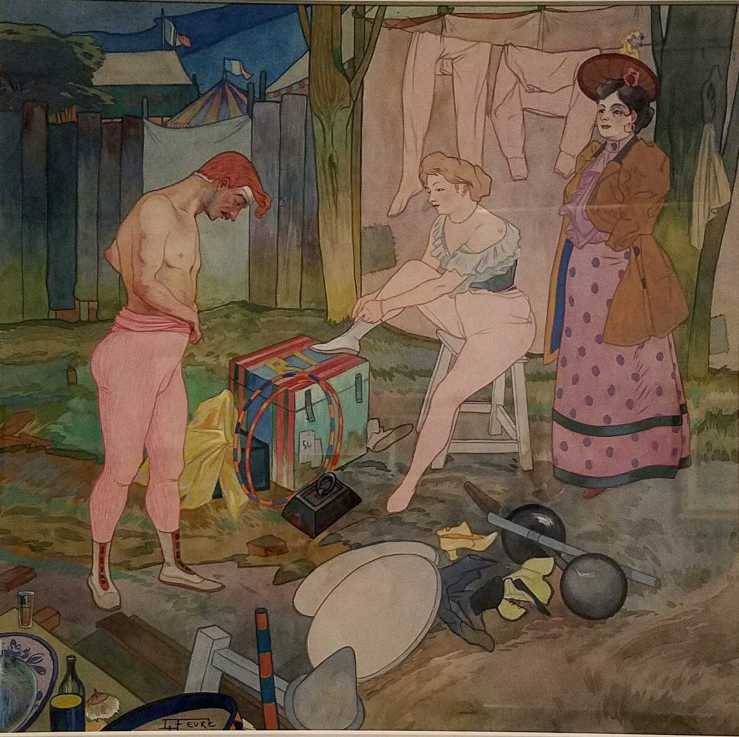 Georges de Feure. The Corvi Circus (Le Cirque Corvi), ca. 1893
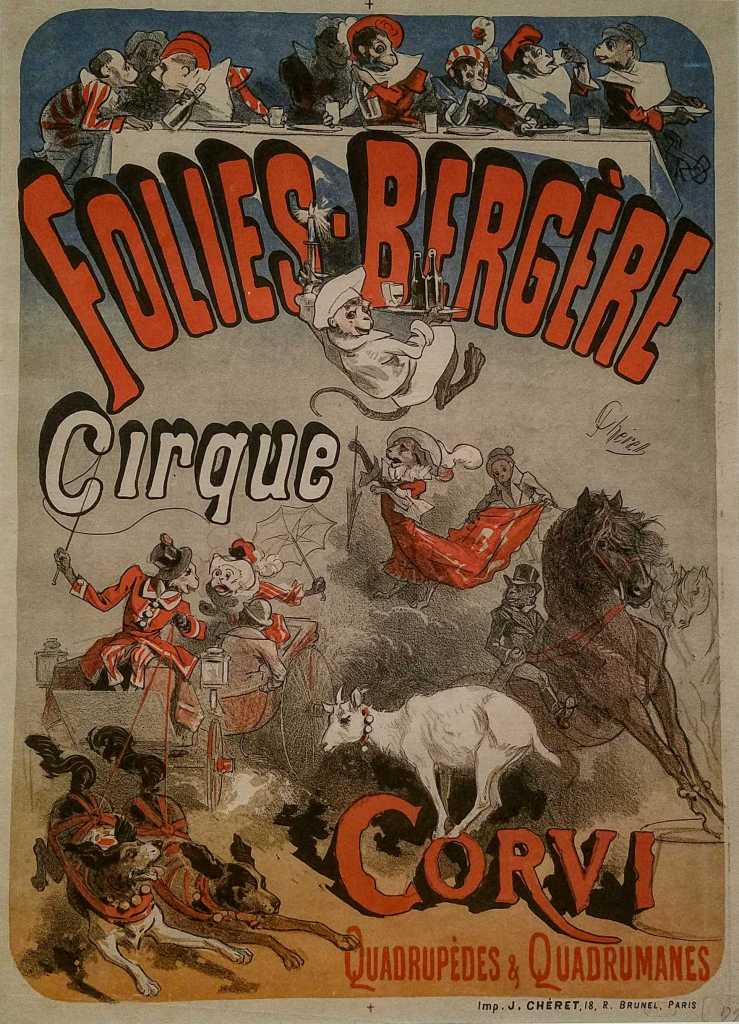 Jules Chéret. Folies-Bergère: Corvi Circus, 1881. Colour lithograph
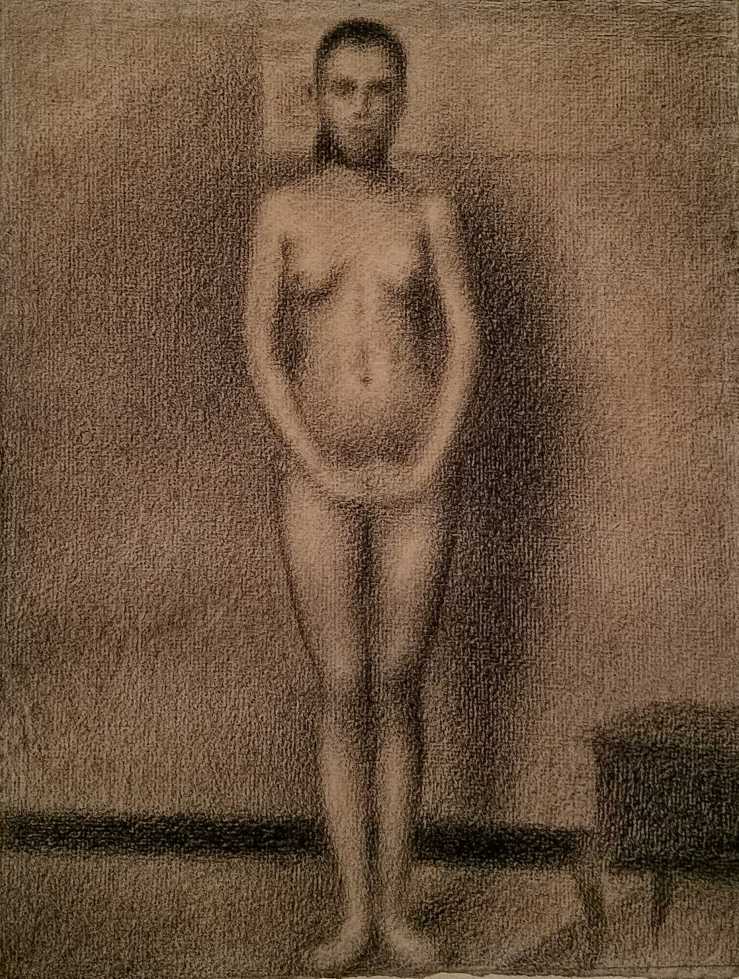
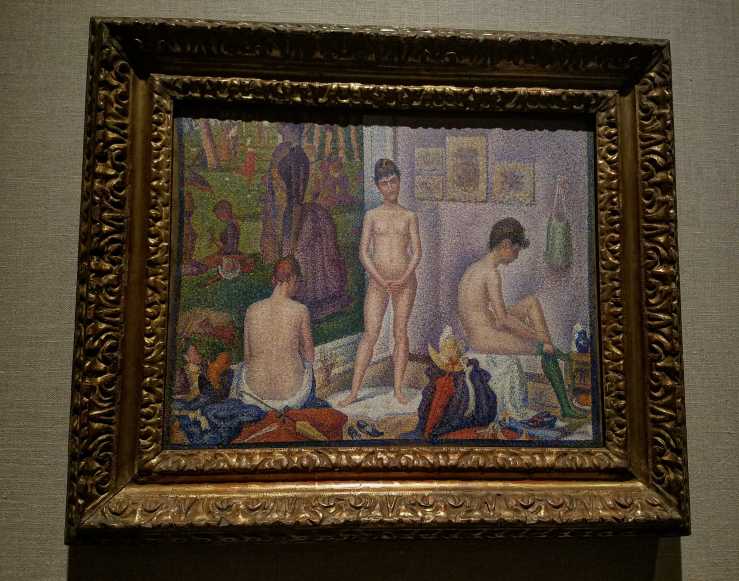
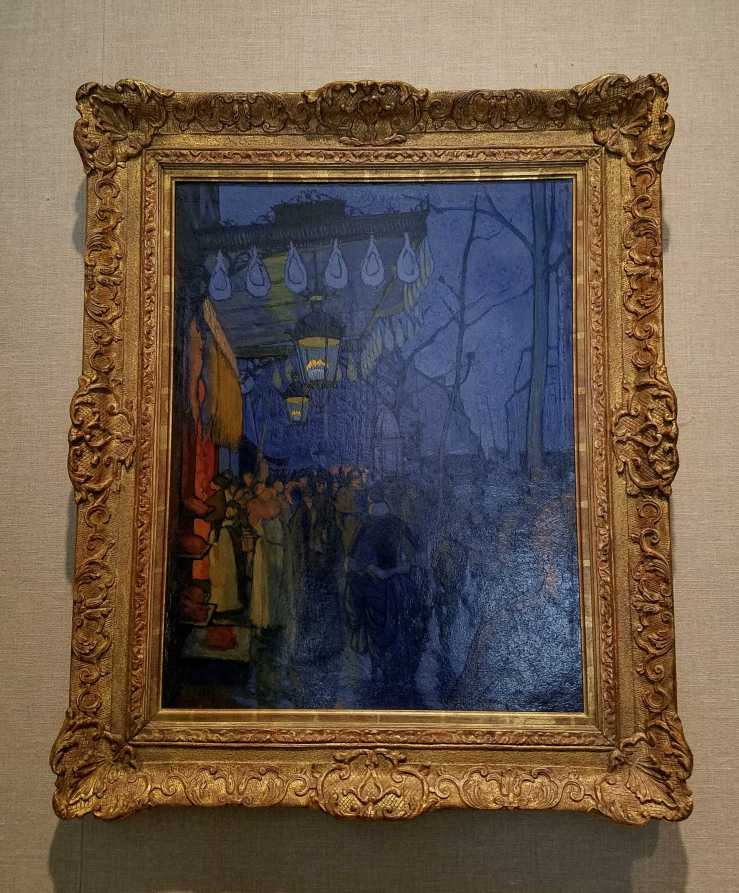 Louis Anquetin. Avenue de Clichy (Street – Five O’ Clock in the Evening), 1887
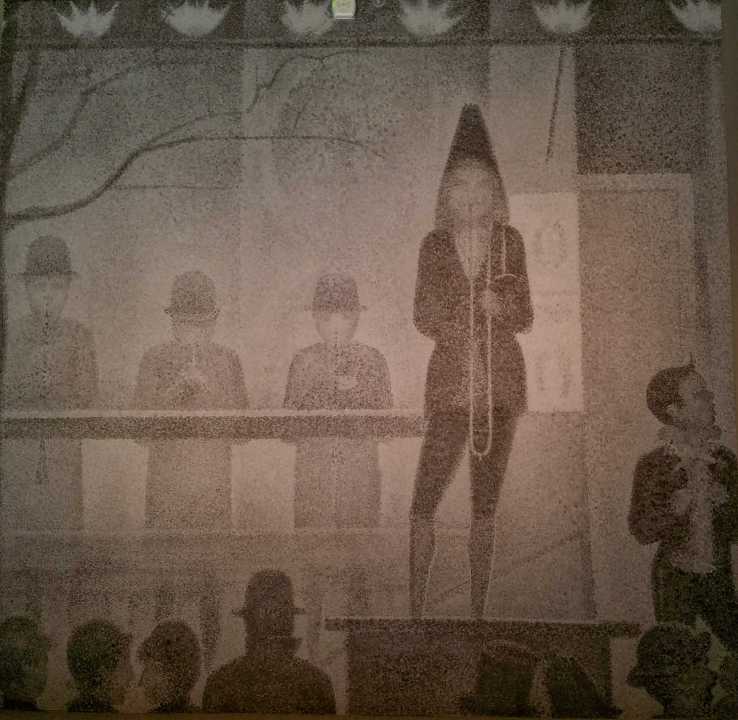
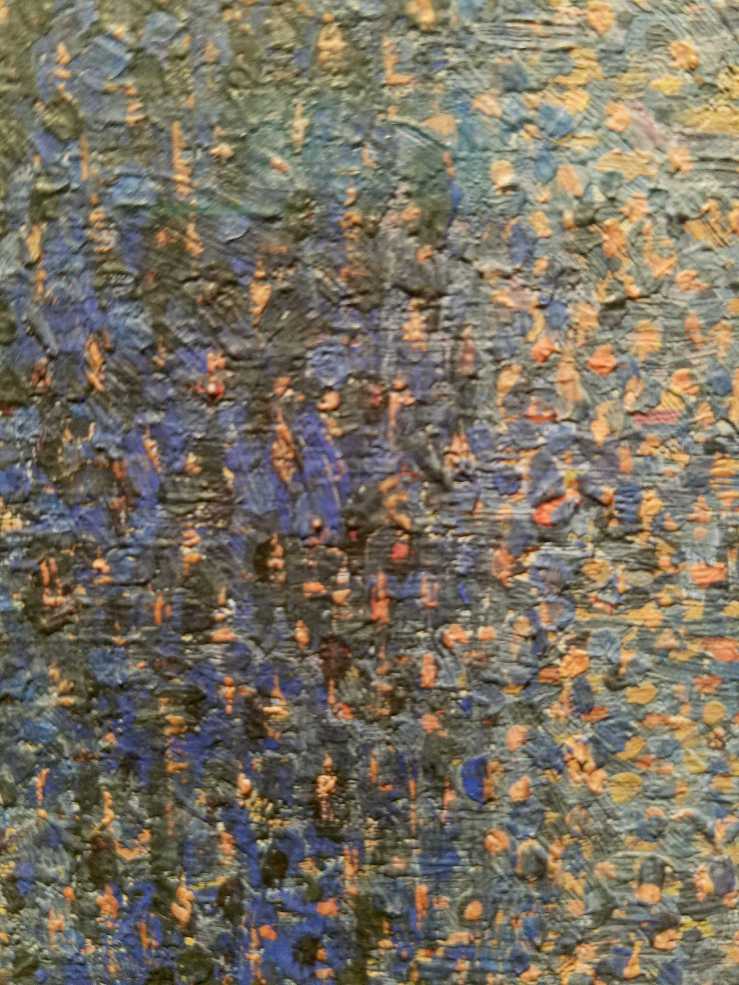
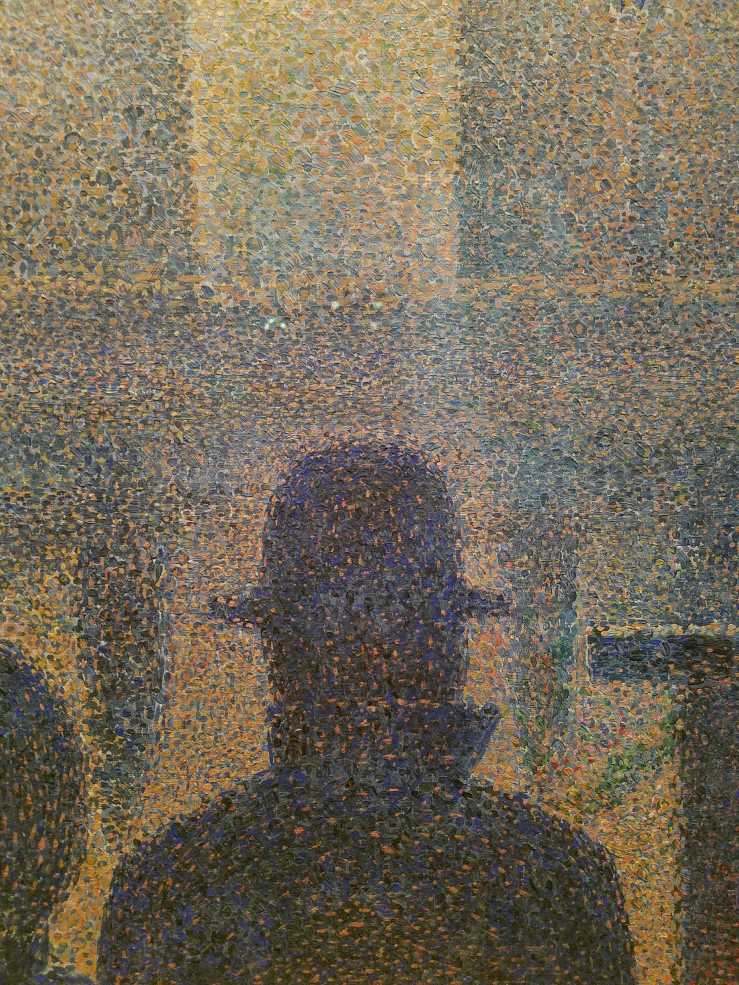
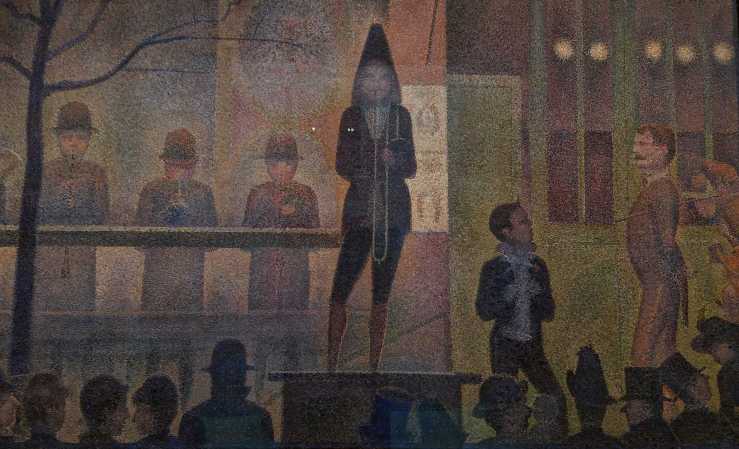 Georges Seurat. Circus Sideshow (Parade de cirque), 1887 – 88. Oil on canvas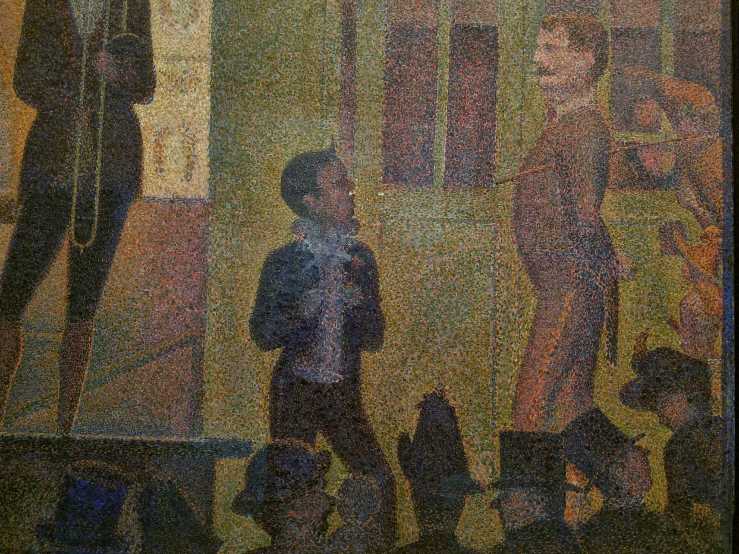
 The Humble Fabulist