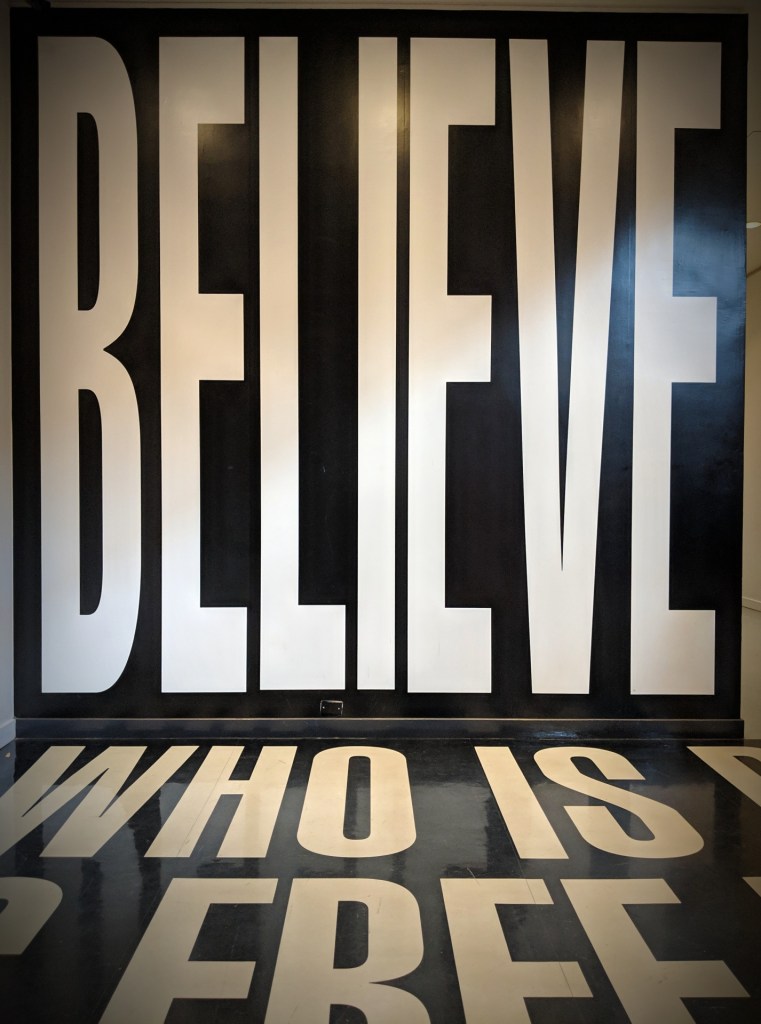
Believe Anything

Then again, don’t.

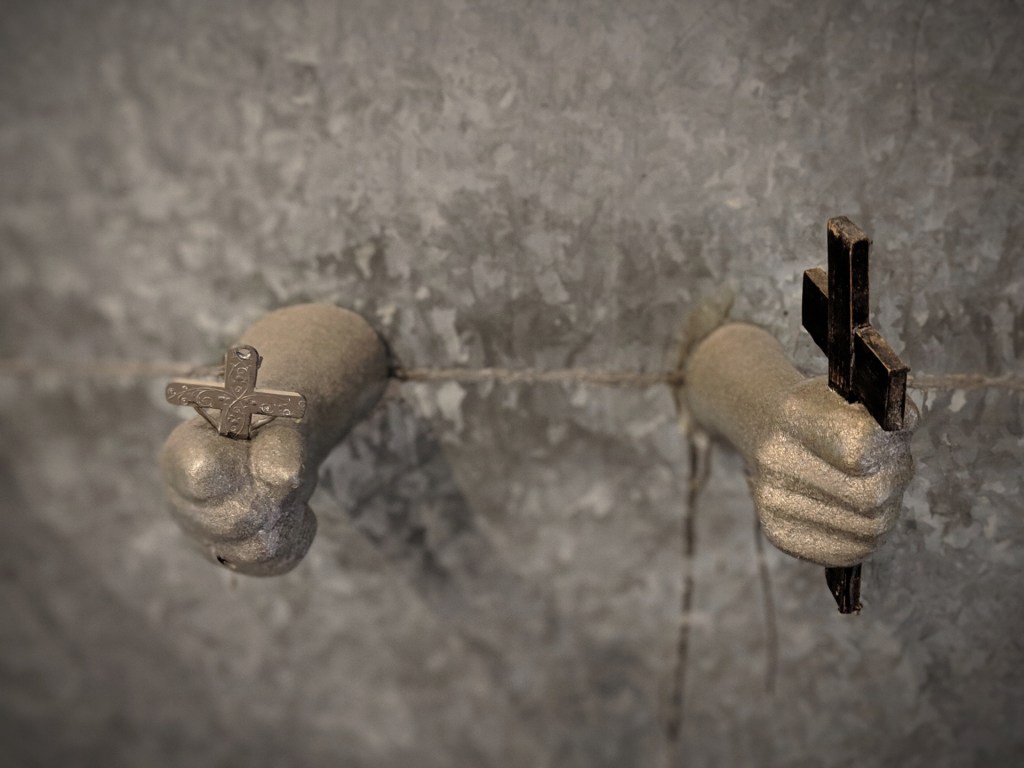
Barbara Kruger Belief + Doubt [detail] || 2012 || Vinyl

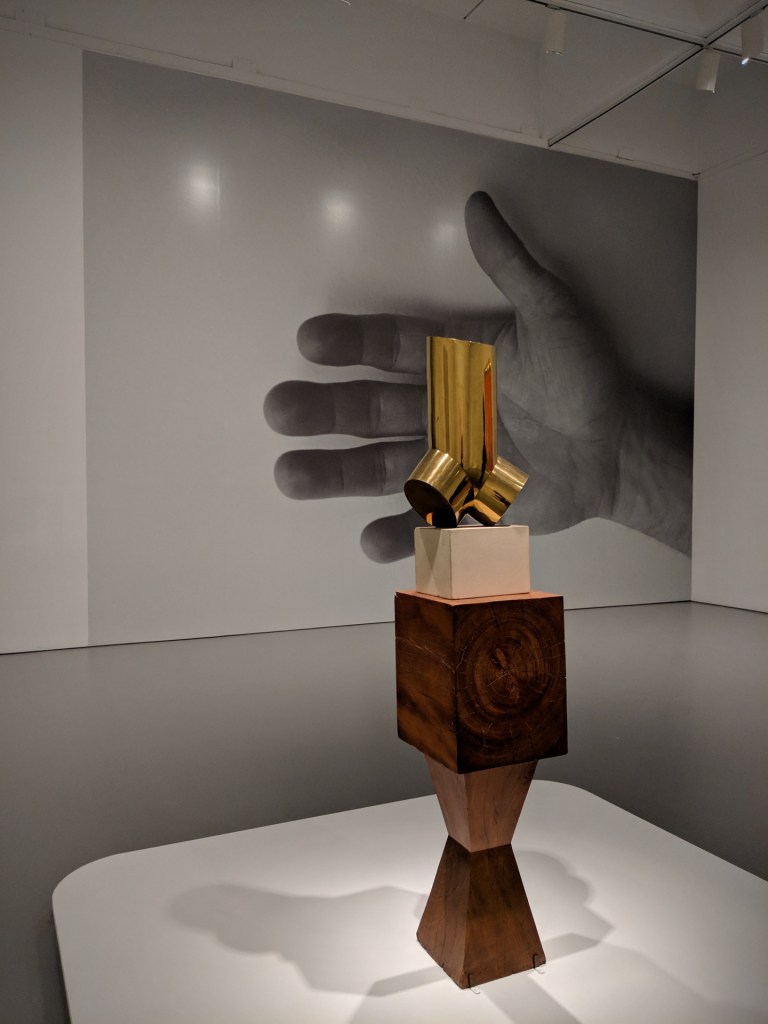
Background: Felix Gonzales-Torres || Untitled (For Jeff) || 1992
Foreground: Constantin Brancusi || Torso of a Young Man || 1924

During his relatively brief career, Felix Gonzales-Torres expanded the language of Conceptual art by rethinking the reproduction, circulation, and presentation of artwork. ”Untitled” (For Jeff) belongs to the artist’s Billboard series which consists of works displayed simultaneously in multiple locations around a city. Collectively, the series creates a viewing community that spans several neighbourhoods and demographic groups. Dedicated to Jeff, a healthcare worker who cared for the artist’s dying partner, this particular work publicly addresses the AIDS crisis of the early 1990s.


Robert Barry || Steel Disc Suspended 1/8 in. Above Floor || 1967

Hung from a nearly transparent nylon string, the steel disc becomes a mere tool to demarcate the small, blank space beneath it. The artist’s aim is to make the void palpable, to create a presence from absence, and to overcome the materialization of ideas.


Socket Looking Incredulous || Presence from Absence || Is this art? || I think it’s time to leave the Hirshhorn…

The Hirshhorn, Washington D.C.

March 18th, 2019

HeartBeat

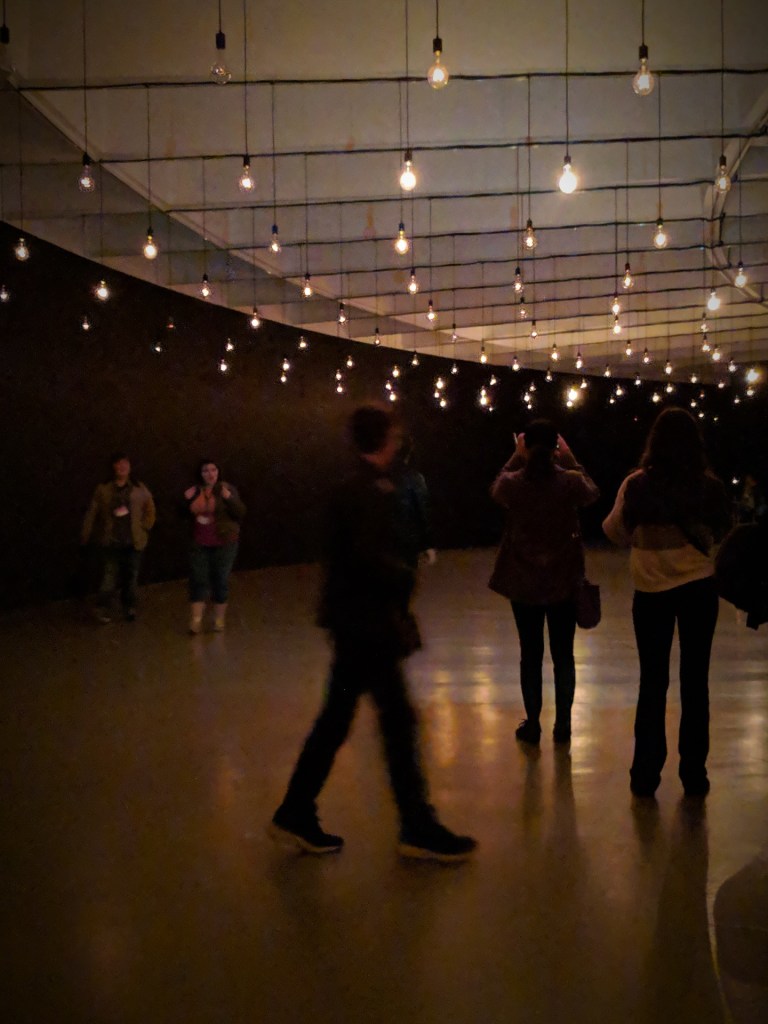
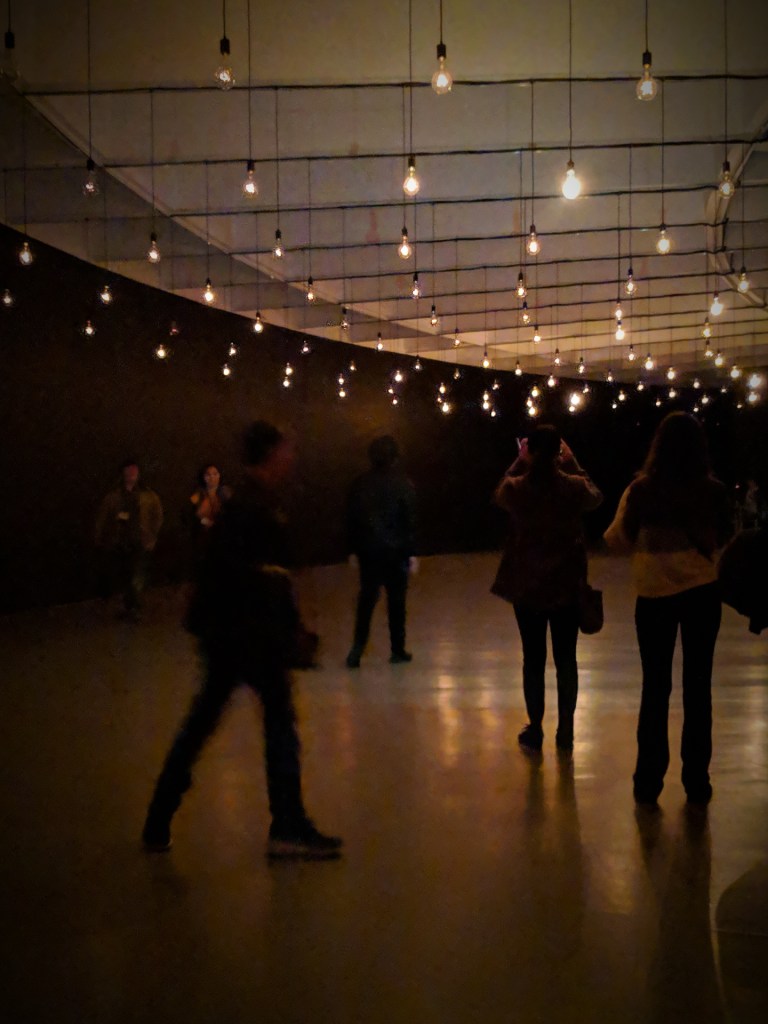
The third work from Rafael Lozano-Hemmer’s Pulse series, the Pulse Room (2006) rounded out the exhibition, featuring hundreds of clear, incandescent light bulbs hanging from the ceiling in even rows, pulsing with the heartbeats of past visitors. Visitors could add their heartbeat to the installation by touching a sensor, which transmitted the pulse to the first bulb. Additional heartbeats continued to register on the first bulb, advancing earlier recordings ahead one bulb at a time. The sound of the collected heartbeats joined the light display to amplify the physical impact of the installation.

(More about the artist and his works in the last two posts).

Pulse was on view at The Hirshhorn from November 2018 to April 2019.

March 18th, 2019

WaveLength

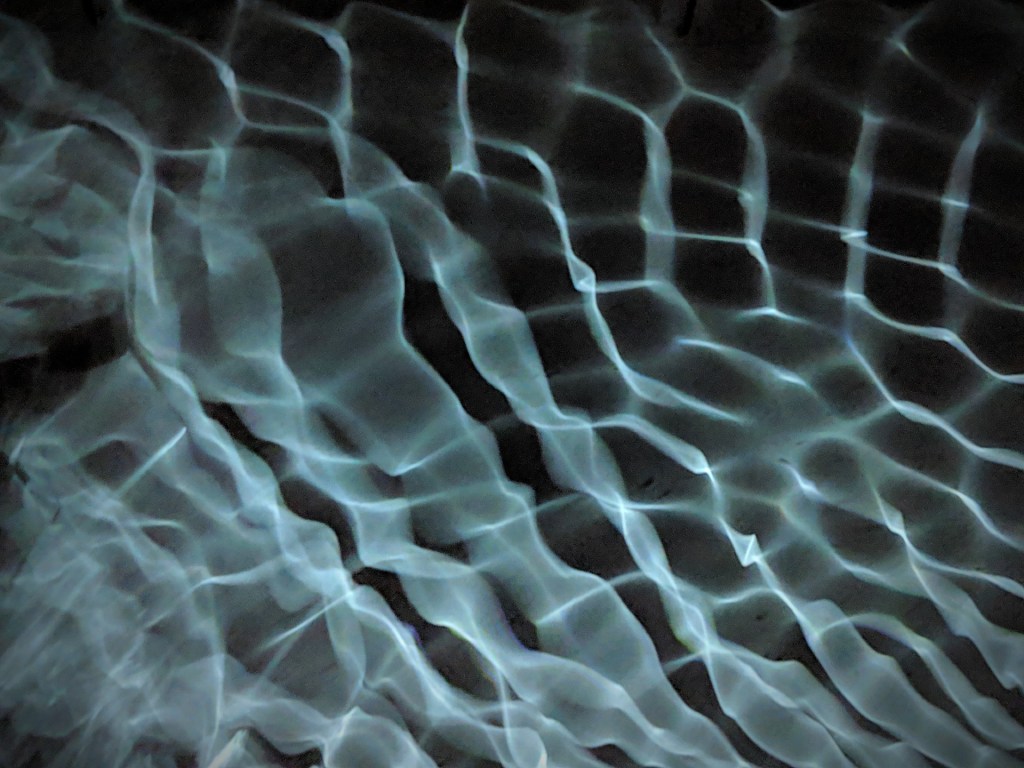
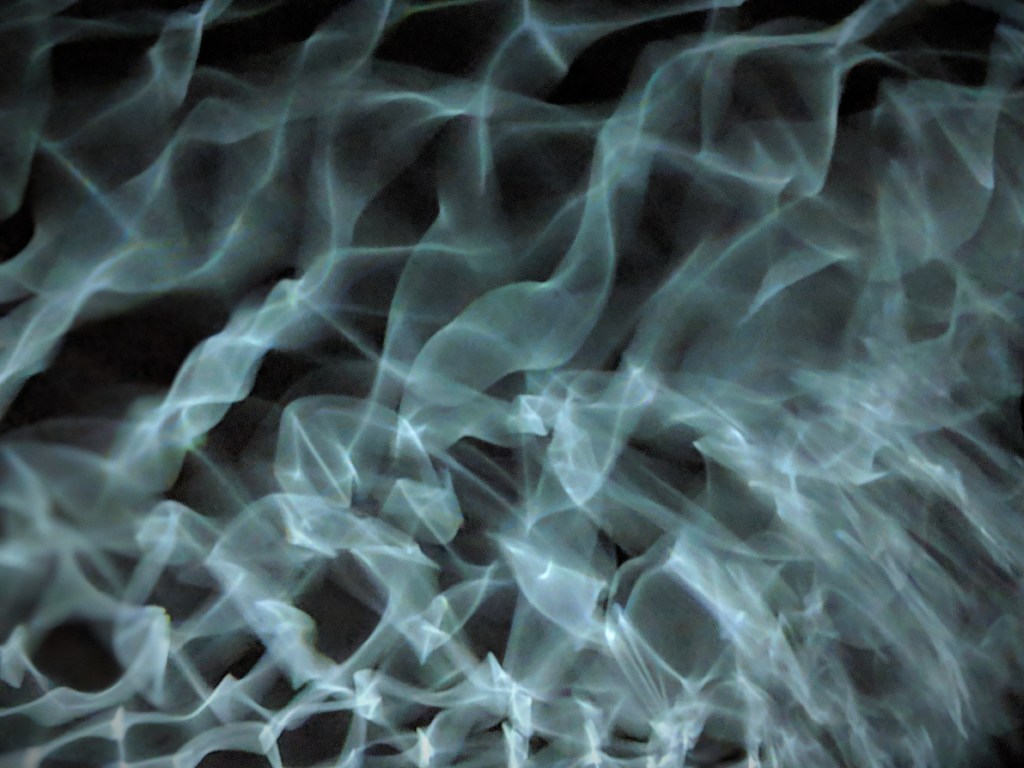
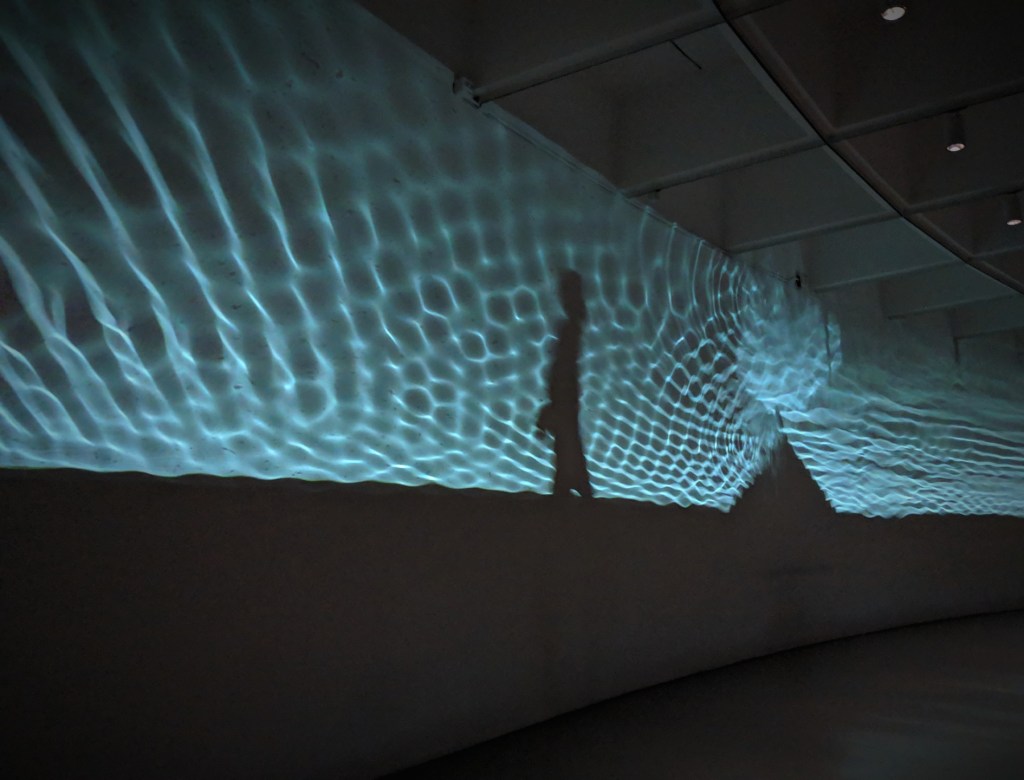
The second work from Rafael Lozano-Hemmer’s Pulse series, Pulse Tank (2008), which premiered at Prospect.1, New Orleans Biennial, was updated and expanded for the exhibition at the Hirshhorn. Sensors turned viewers’ pulse into ripples on illuminated water tanks, creating ever-changing patterns that were reflected on the gallery walls.

(More about the artist and his works in yesterday’s post).

Pulse was on view at The Hirshhorn from November 2018 to April 2019.

March 18th, 2019

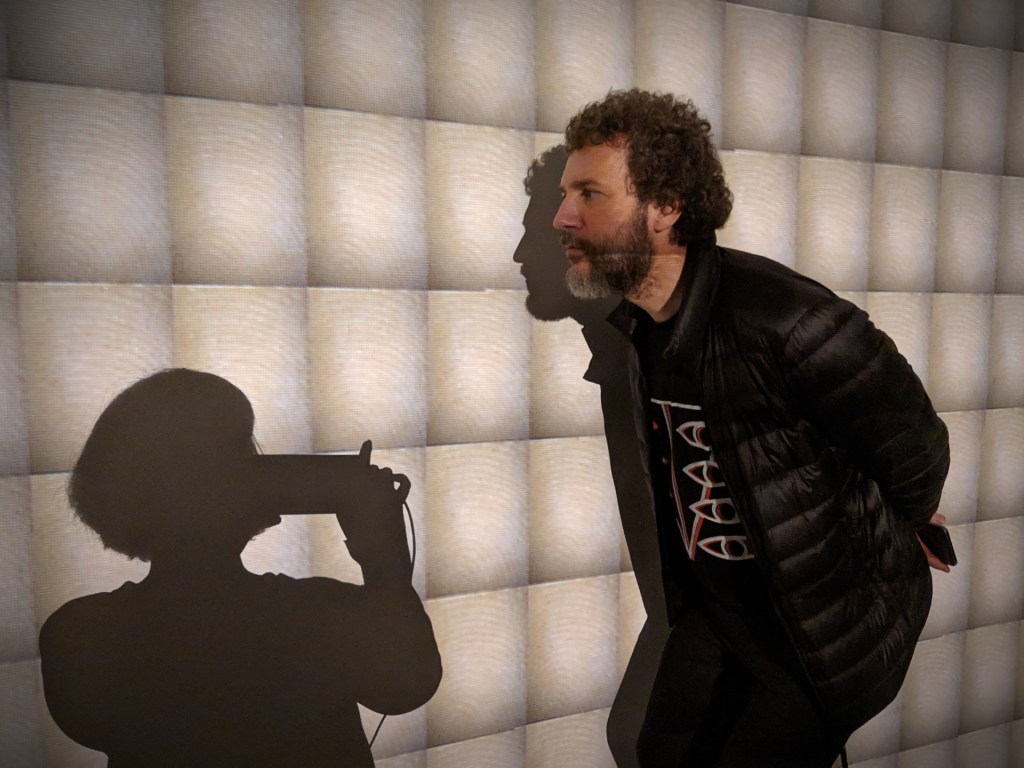
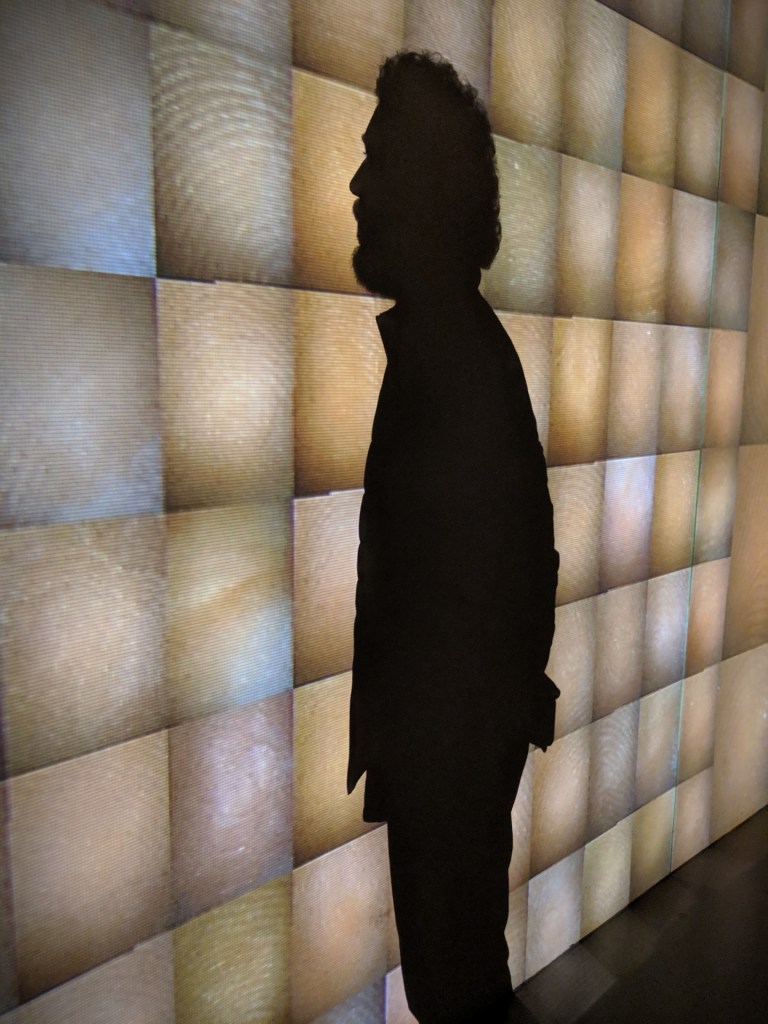
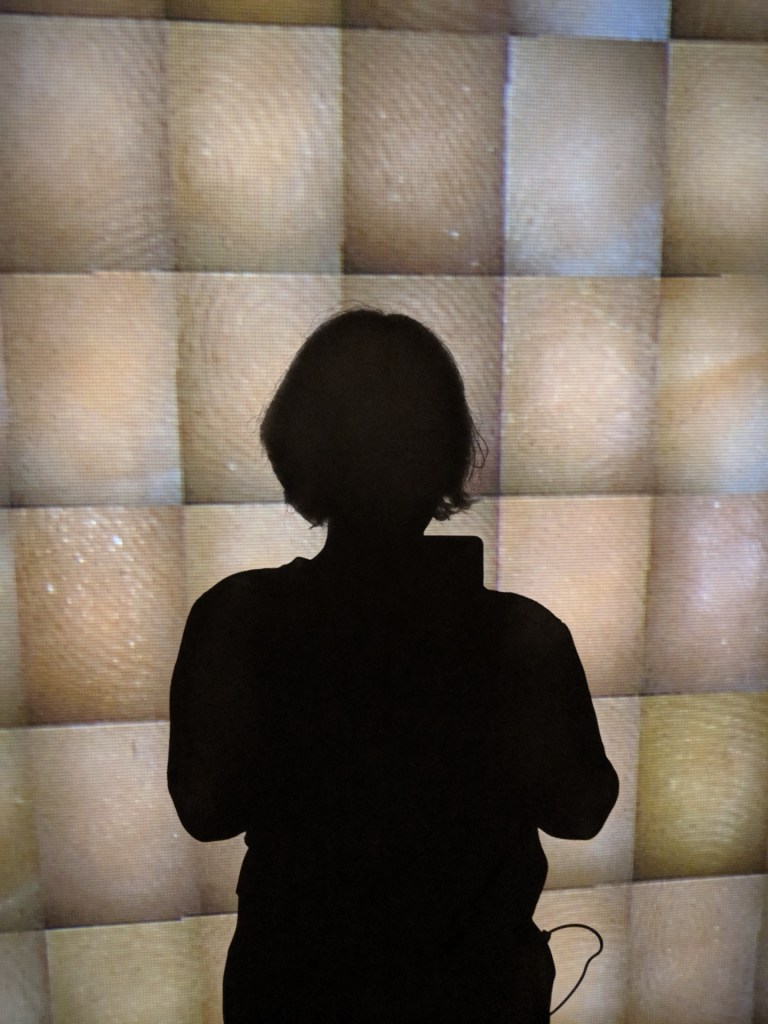
The Pulse of a Shadow

Playing with Rafael Lozano-Hemmer’s artwork.

In the Hirshhorn’s largest interactive technology exhibition to date, three major installations from Rafael Lozano-Hemmer’s Pulse series came together for the artist’s DC debut. A Mexican Canadian artist known for straddling the line between art, technology, and design, Lozano-Hemmer filled the Museum’s entire Second Level with immersive environments that used heart-rate sensors to create kinetic and audiovisual experiences from visitors’ own biometric data. Over the course of six months, Pulse animated the vital signs of hundreds of thousands of participants.

With Lozano-Hemmer’s trademark sensitivities to audience engagement and architectural scale, each installation captured biometric signatures and visualized them as repetitive sequences of flashing lights, panning soundscapes, rippling waves, and animated fingerprints. These intimate “portraits,” or “snapshots,” of electrical activity were then added to a live archive of prior recordings to create an environment of syncopated rhythms. At a time when biometry is increasingly used for identification and control, this data constituted a new way of representing both anonymity and community.

The exhibition began with Pulse Index (2010), which was presented at its largest scale to date. The work recorded participants’ fingerprints at the same time that it detected their heart rates, displaying data from the last 10,000 users on a scaled grid of massive projections. 

Pulse was on view at The Hirshhorn from November 2018 to April 2019.

March 18th, 2019

SpookArt

Georg Baselitz || Zero Ende, 2013 || Patinated bronze
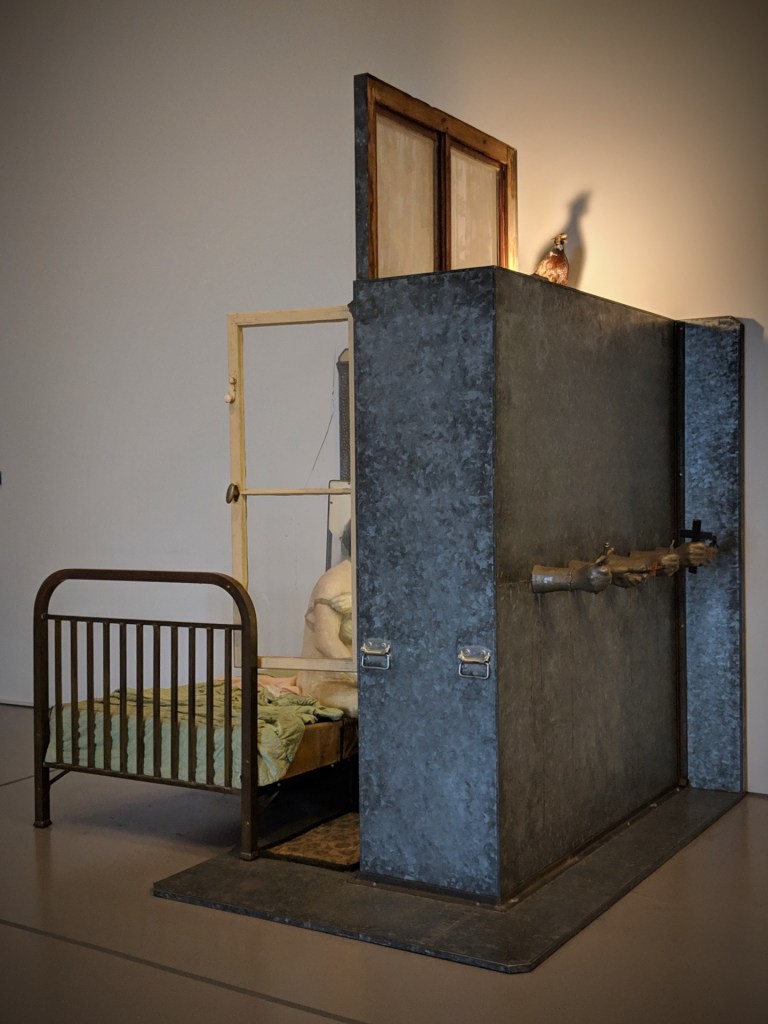
Edward Kienholz and Nancy Reddin Kienholz || In The Infield Was Patty Peccavi, 1981
Metal, resin, cloth, wood, glass, paper, photomechanical reproduction, electric lights, stuffed bird, and paint

One of the first collaborations between the two artists, In The Infield Was Patty Peccavi depicts a pregnant woman looking through a window lit by a high-intensity headlamp, which spirals in front of her. Described by Nancy Reddin Kienholz as addressing religious attitudes toward birth control, the woman looking into a void evokes hope, despair, and anxiety, even as she faces a future of limited choices.

The Hirshhorn, Washington D.C.

March 18th, 2019
”Through blue-tinted glass”

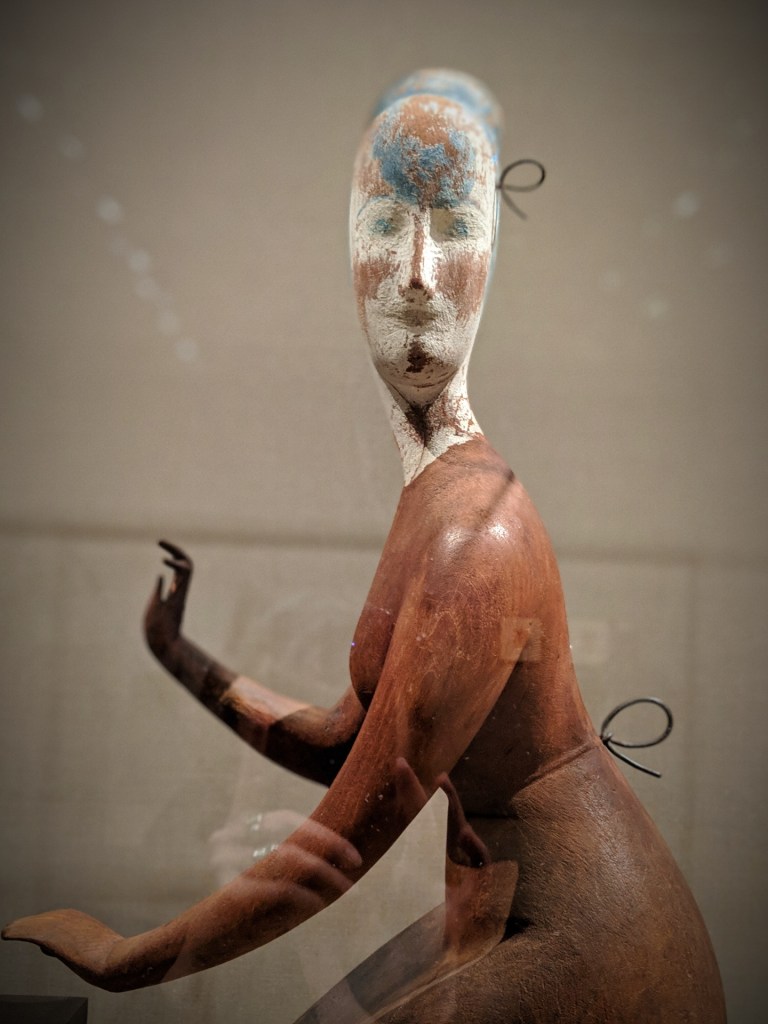
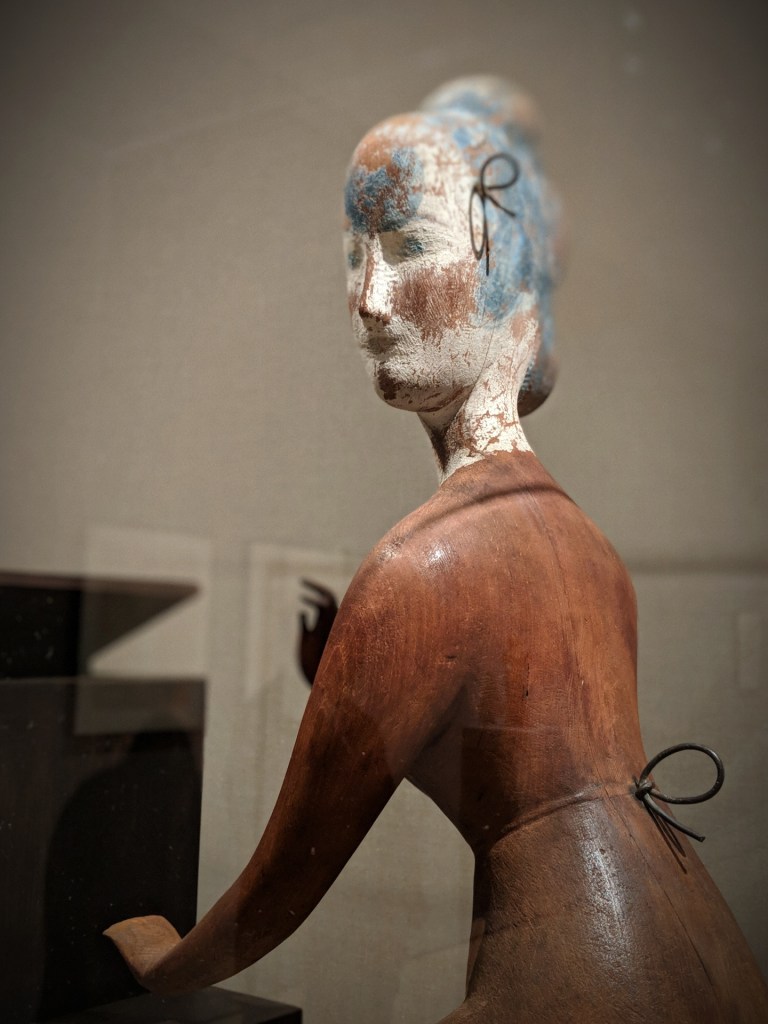
Elie Nadelman (American, born Poland, 1882–1946)
Woman at the Piano, c. 1917 (detail)
Stained and painted wood
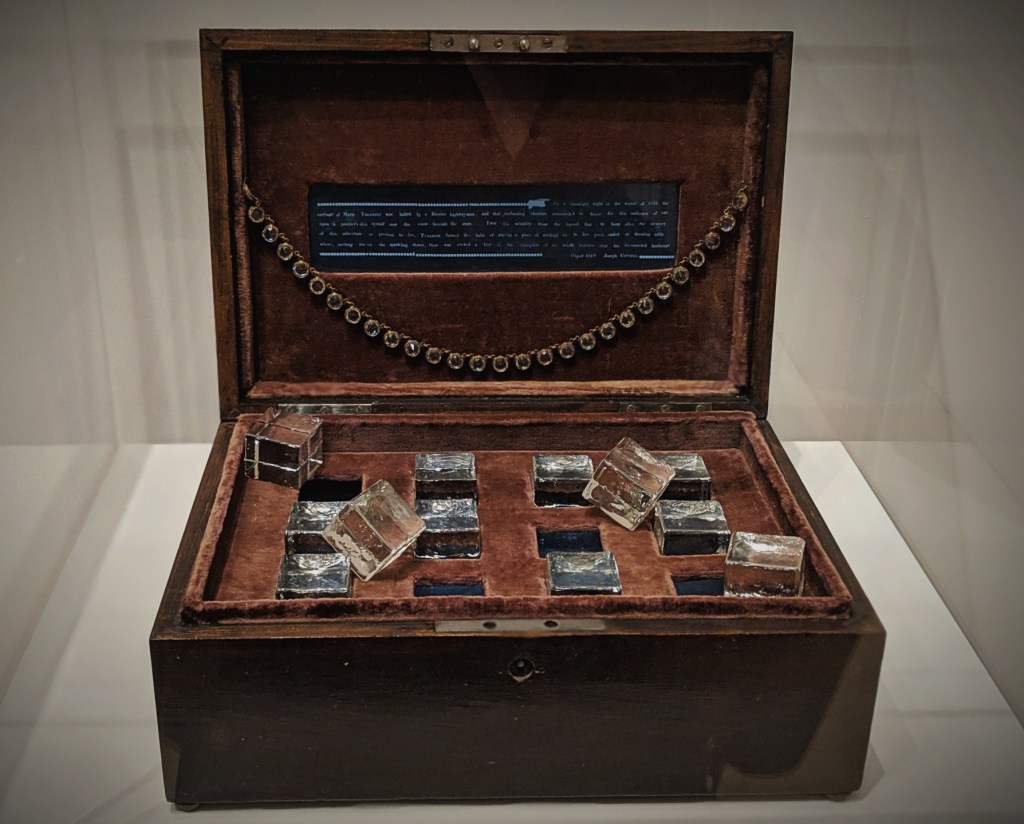
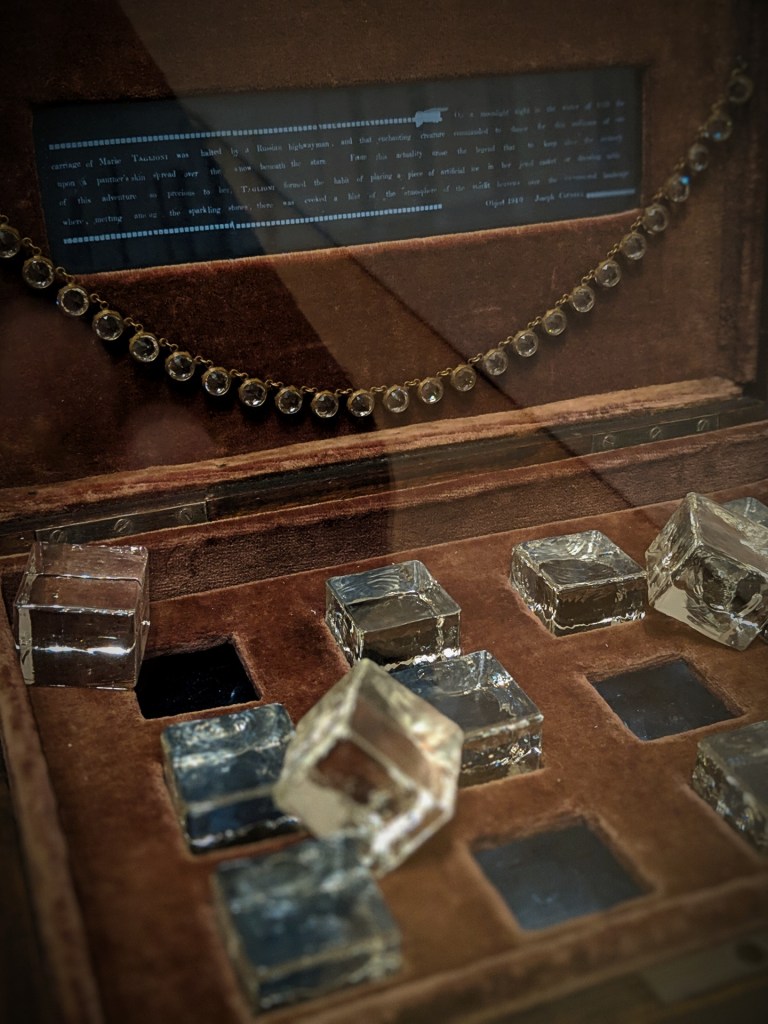
Joseph Cornell
Taglioni’s Jewel Casket, 1940
Joseph Cornell
Taglioni’s Jewel Casket, 1940
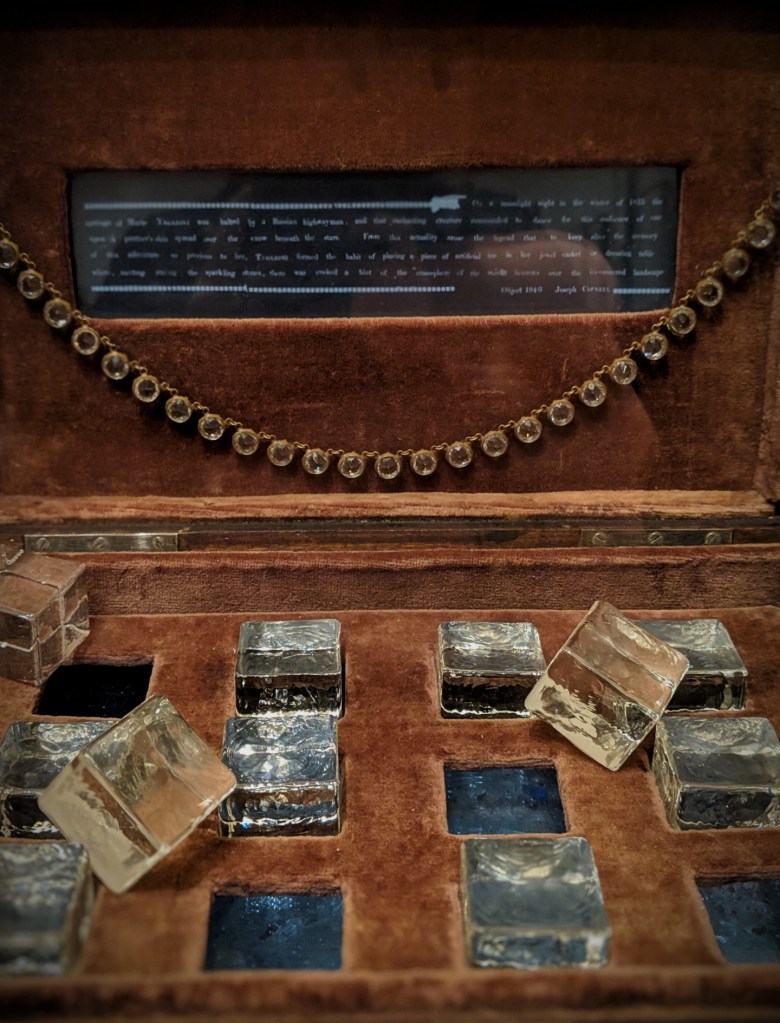
Joseph Cornell
Taglioni’s Jewel Casket, 1940
Elie Nadelman (American, born Poland, 1882–1946)
Woman at the Piano, c. 1917 (detail)
Stained and painted wood

The first of dozens of works that Cornell made in honor of famous ballerinas, this box pays homage to Marie Taglioni, an acclaimed nineteenth-century dancer of Italian origin, who, according to the legend inscribed in the box’s lid, kept an imitation ice cube in her jewelry box to commemorate the time she danced in the snow at the behest of a Russian highwayman. The box is infused with erotic undertones—both in the tactile nature of the glass cubes, velvet, and rhinestone necklace (purchased at a Woolworth’s dime store in New York) and in the incident itself, in which Taglioni reportedly performed on an animal skin placed across a snowy road. Adding to the intimacy of this delicate construction, the glass cubes were designed to be removed, revealing a hidden recess below that contains two beaded necklaces and rhinestone chips placed on a mirrored surface and seen through blue-tinted glass. [source: MoMA]

Lincoln Kirstein’s Modern

MoMA, Mar-Jun 2019

March 15th, 2019
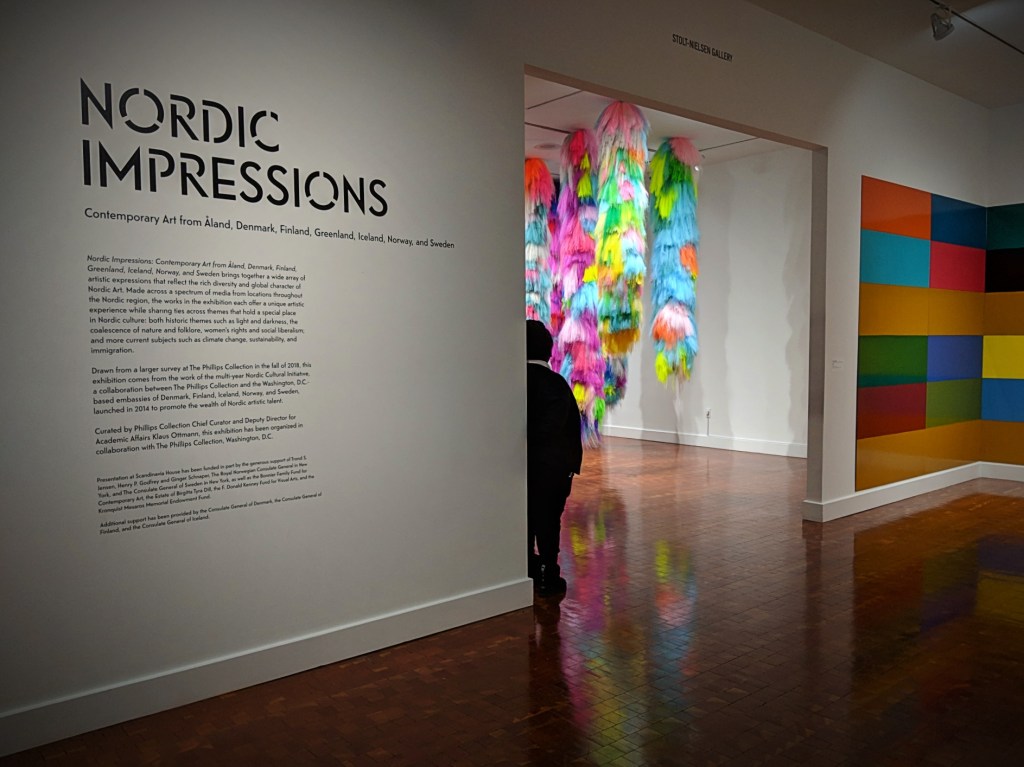
NORDIC IMPRESSIONS

CONTEMPORARY ART FROM ÅLAND, DENMARK, FINLAND, GREENLAND, ICELAND, NORWAY, AND SWEDEN

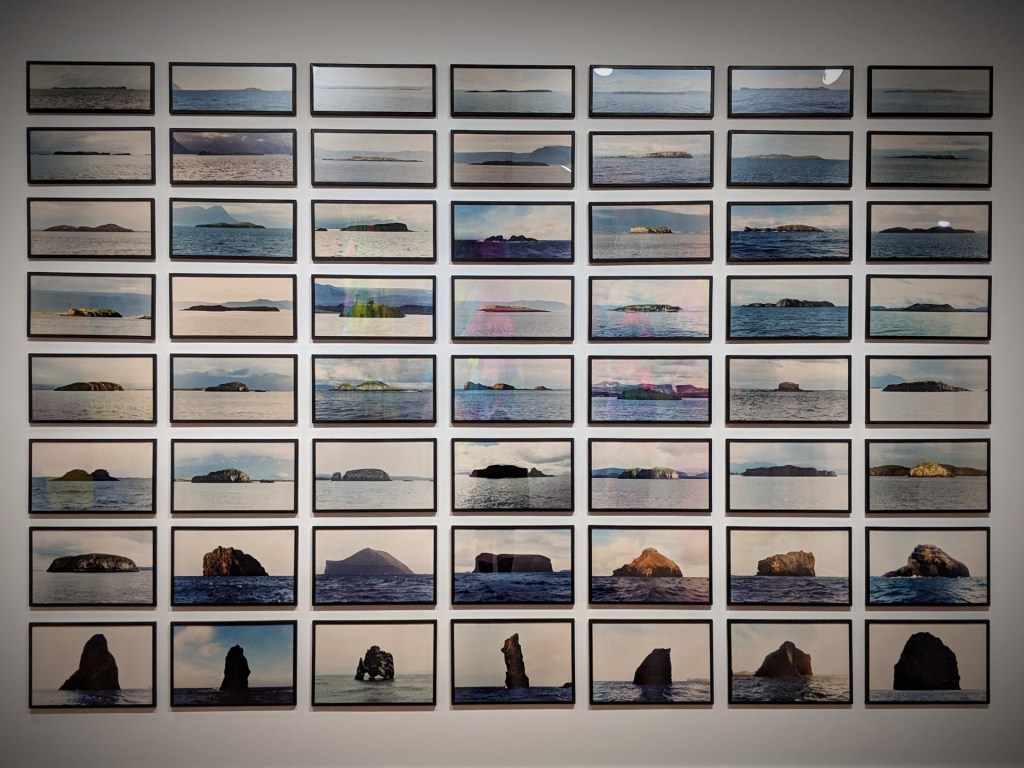
Ólafur Elíasson (b. 1967, Denmark)
The Island Series, 1997
56 framed C-prints

For The Island Series, Eliasson photographed the islands that surround Iceland. Sequenced according to island size, the photographs are reminiscent of the faithful depictions of nature – and its elements of water, sky, light, and colour – by the 19th-century Danish Golden Age painters.


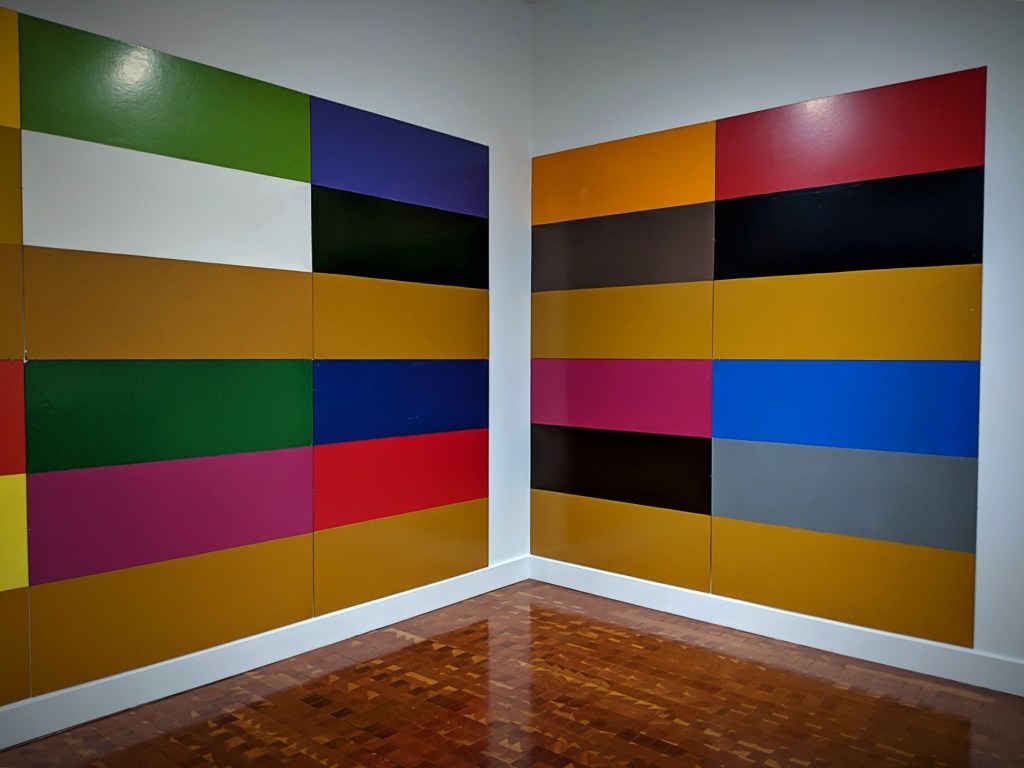
Poul Gernes (b. 1925, Denmark; d. 1996, Sweden)
Untitled, 1965
Enamel on masonite

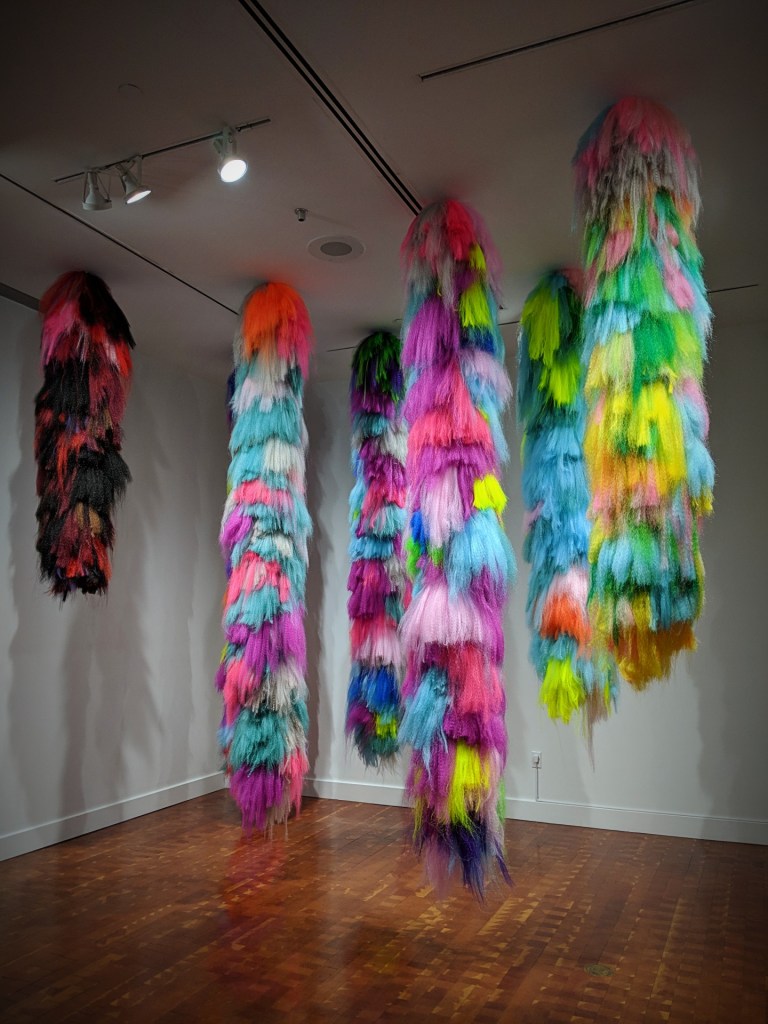
Hrafnhildur Arnardóttir / Shoplifter (b. 1969, Iceland)
Nervelings I-V, 2018
Synthetic hair and rope

Brooklyn-based artist Hrafnhildur Arnardóttir, who goes by Shoplifter, experiments with artificial hair that she dyes into a rainbow of hypernatural colours and arranges into organic sculptures or massive landscapes.


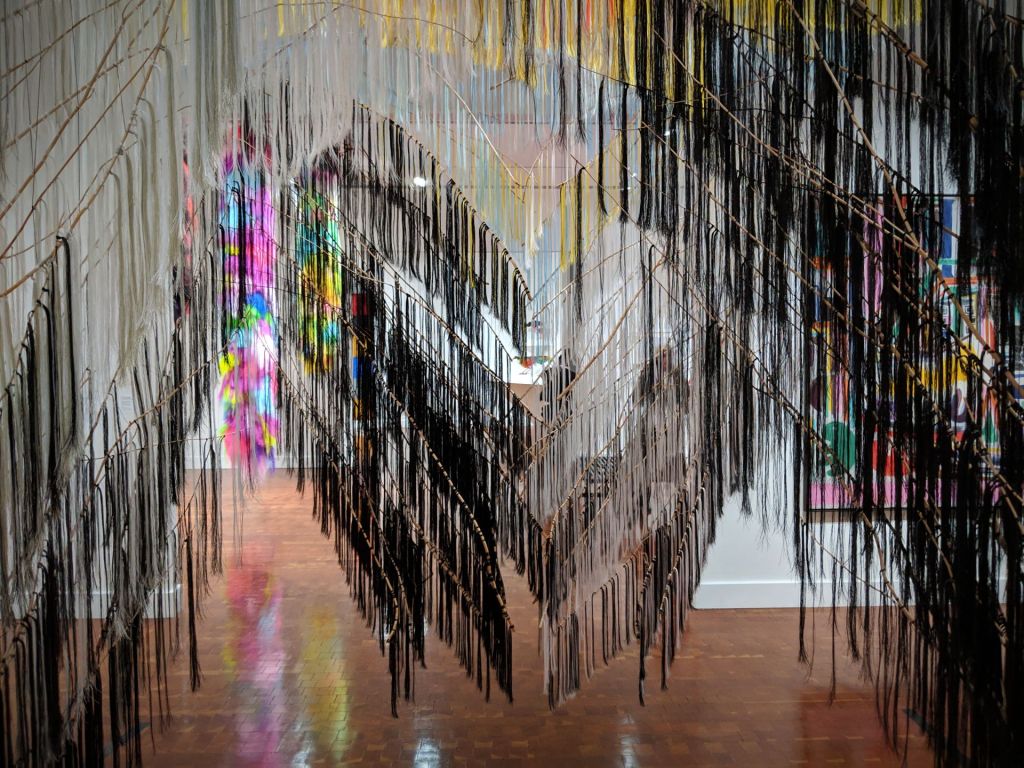
Outi Pieski (b. 1973, Finland)
Crossing Paths, 2014
Wood and threads

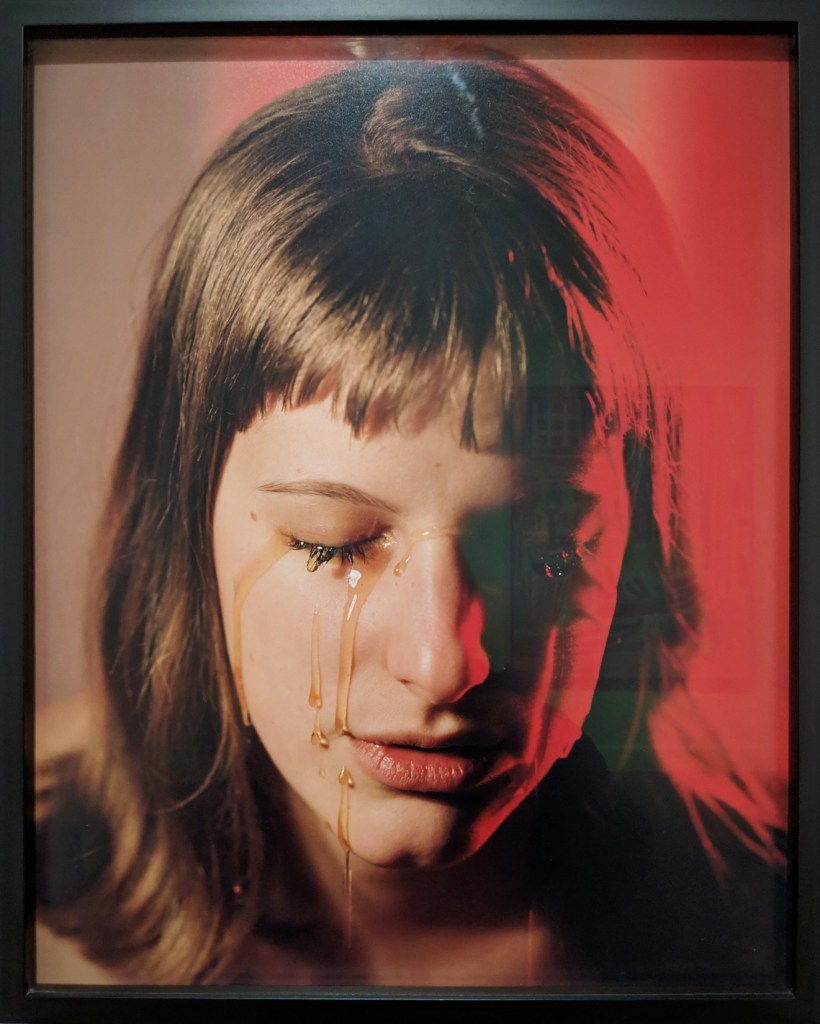
Torbjørn Rødland (b. 1970, Norway)
Golden Tears, 2002
Colour coupler (chromogenic) print mounted on aluminum

Eggert Pétursson (b. 1956, Iceland)
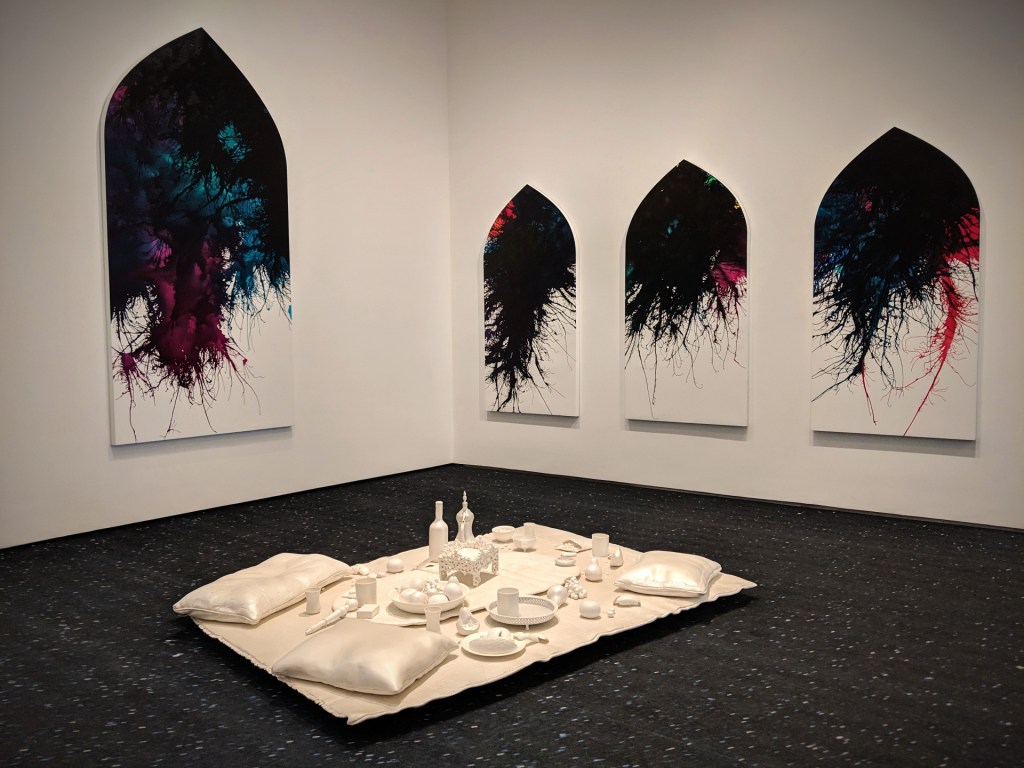
Untitled, 2012-2013
Oil on canvas

Henry Wuorila-Stenberg (b. 1949, Finland)
Self-Portrait, 2015
Charcoal on paper

Tori Wrånes (b. 1978, Norway)
Ancient Baby
PANAM plaque embedded in the walkway
Library Way

One of the 96 bronze plaques on East 41st Street, between Madison and Fifth Avenues.


From an exhibition at Scandinavia House on 58 Park Avenue, February through June 2019.

March 5th, 2019
The New York Earth Room

250 cubic yards of earth (197 cubic meters)
3,600 square feet of floor space (335 square meters)
22 inch depth of material (56 centimeters)
Total weight of sculpture: 280,000 lbs. (127,300 kilos)

In a loft at 141 Wooster Street, Manhattan

And a glimpse of ”The Broken Kilometer”, 1979.  Located at 393 West Broadway in New York City, is composed of 500 highly polished, round, solid brass rods, each measuring two meters in length and five centimeters (two inches) in diameter. The 500 rods are placed in five parallel rows of 100 rods each. The sculpture weighs 18 3/4 tons and would measure 3,280 feet if all the elements were laid end-to-end. 

”The New York Earth Room” and ”The Broken Kilometer” are works by Walter De Maria, both managed by Dia: Photography is not permitted, but you can find better images and notes on the Dia: website

February 17th, 2019
Food for thought (in quarantine)

Art:

1/Cornelia Parker (British, b. 1956)
Mass (Colder Darker Matter), 1997
Burnt wood, wire and string

Proposing that matter is never destroyed but merely transformed, Cornelia Parker challenges the way we experience destruction. Mass (Colder Darker Matter) is made  from the charred remains of a Texas Baptist church that was struck by lightning.

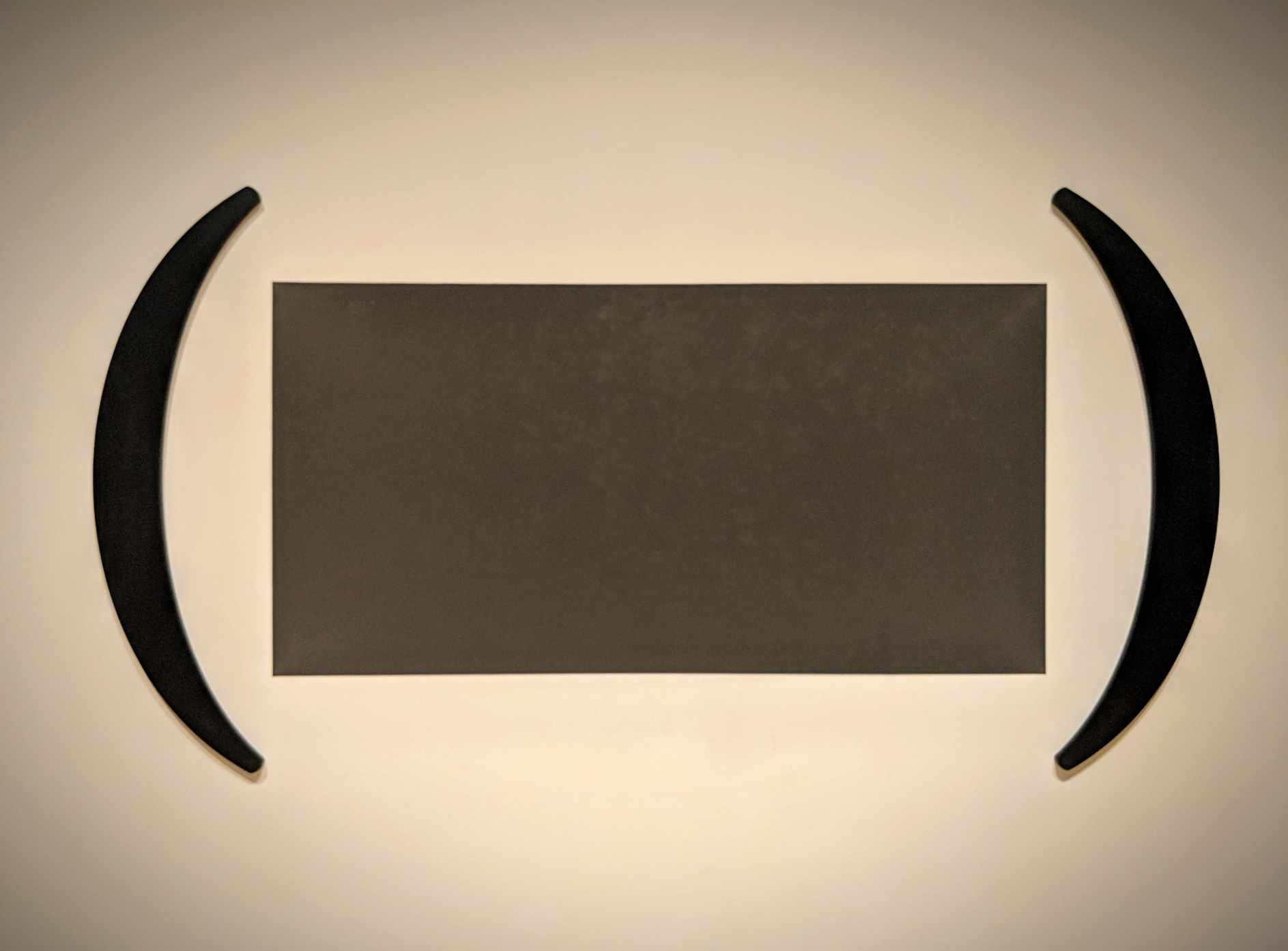
2/Horacio Zabala (Argentine, b. 1943)
Hipótesis para Phoenix (Hypothesis for Phoenix), 2016
Acrylic on wall, enamel paint on wood

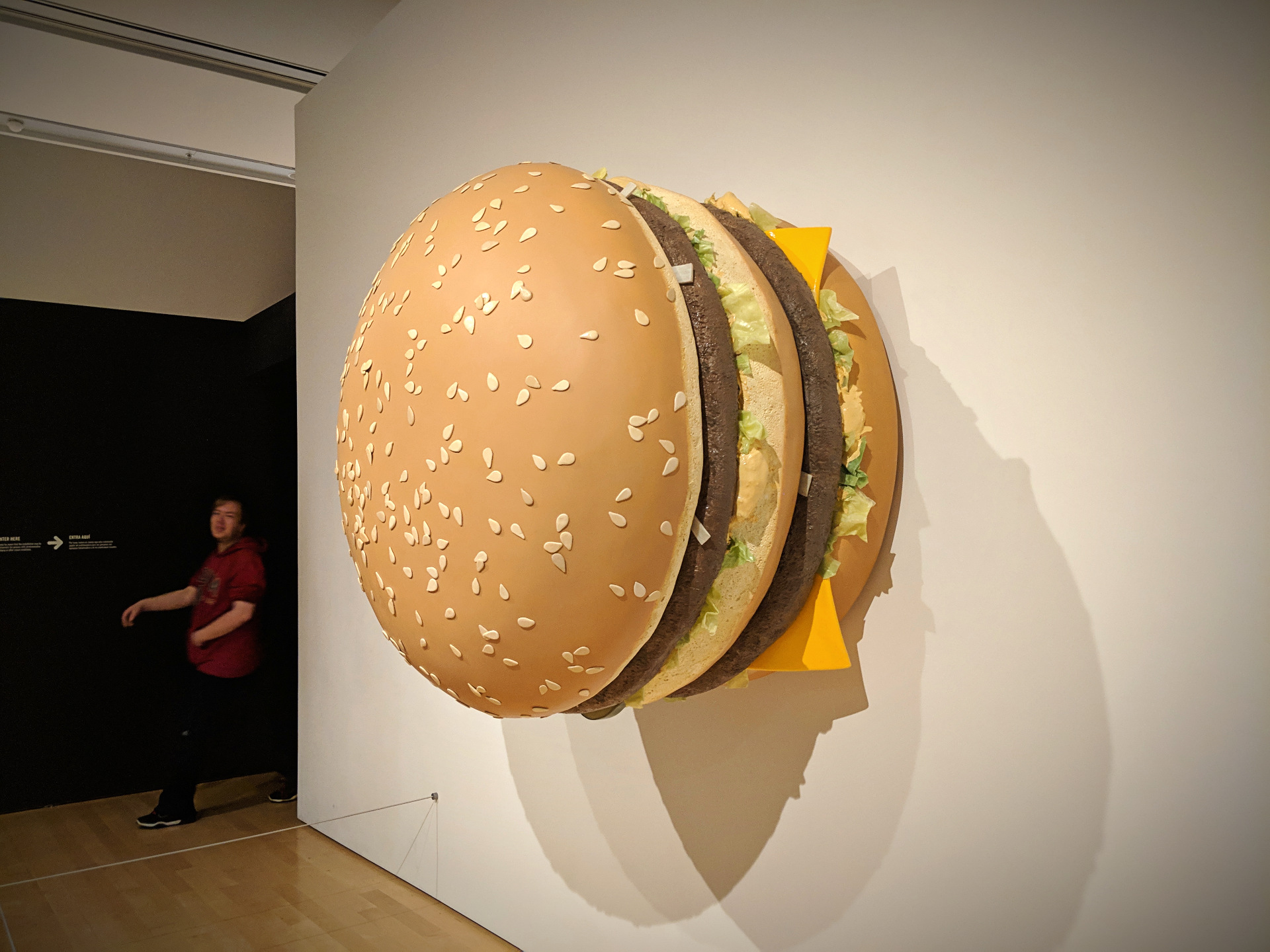
3/Tom Friedman (American, b. 1965)
Big Big Mac, 2013
Styrofoam and paint

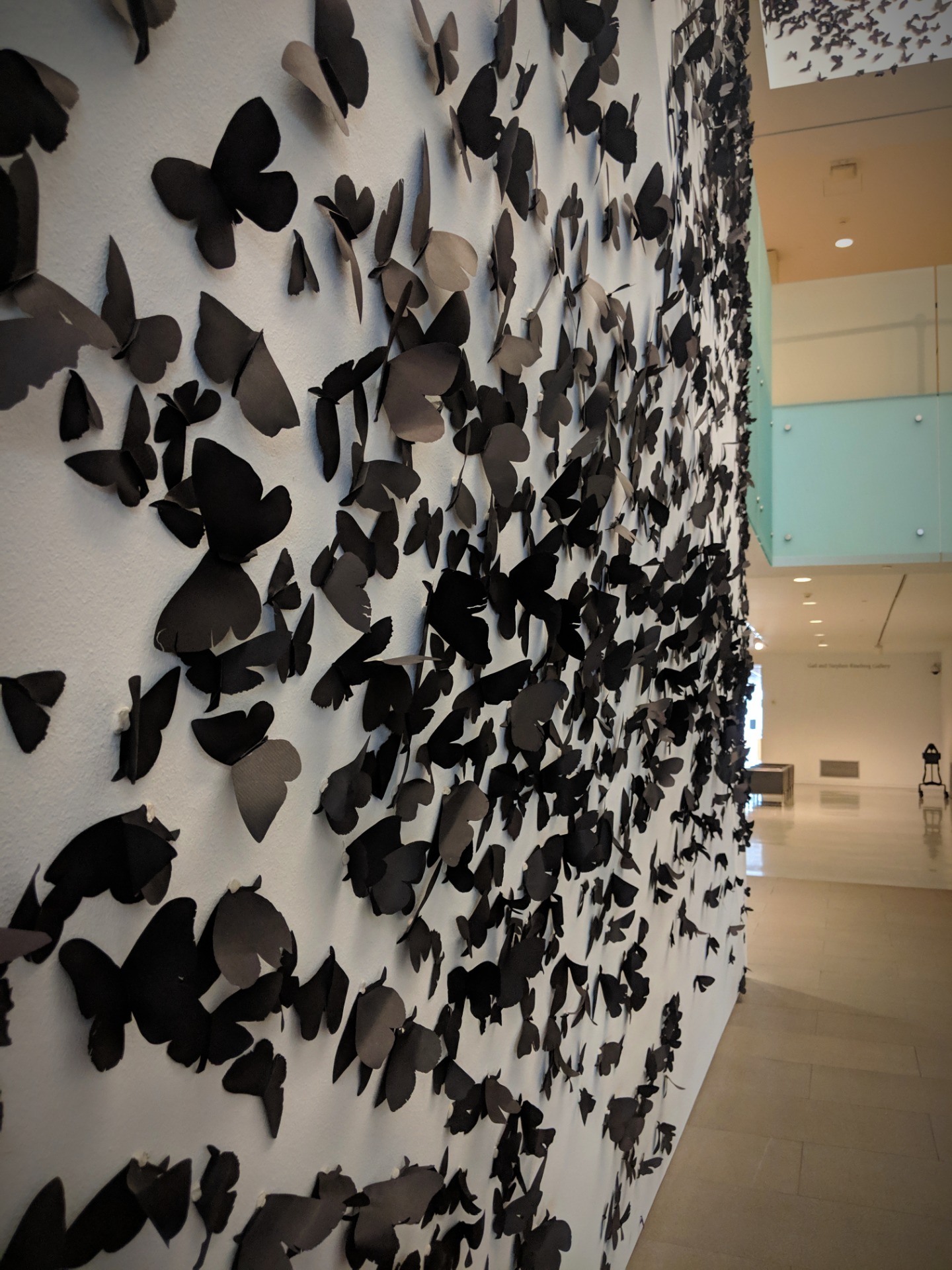
4/Black Cloud (Nube negra), 2007
Carlos Amorales (Mexican, b. 1970)
25.000 paper moths and butterflies

Inspired by the annual migration of monarch butterflies from Canada to Mexico, Carlos Amorales conceived Black Cloud as a ”plague” of moths that swarm through museum spaces.

Phoenix Art Museum

January 30th, 2019