MoMA PS1 + 1 (The Art is in the details)

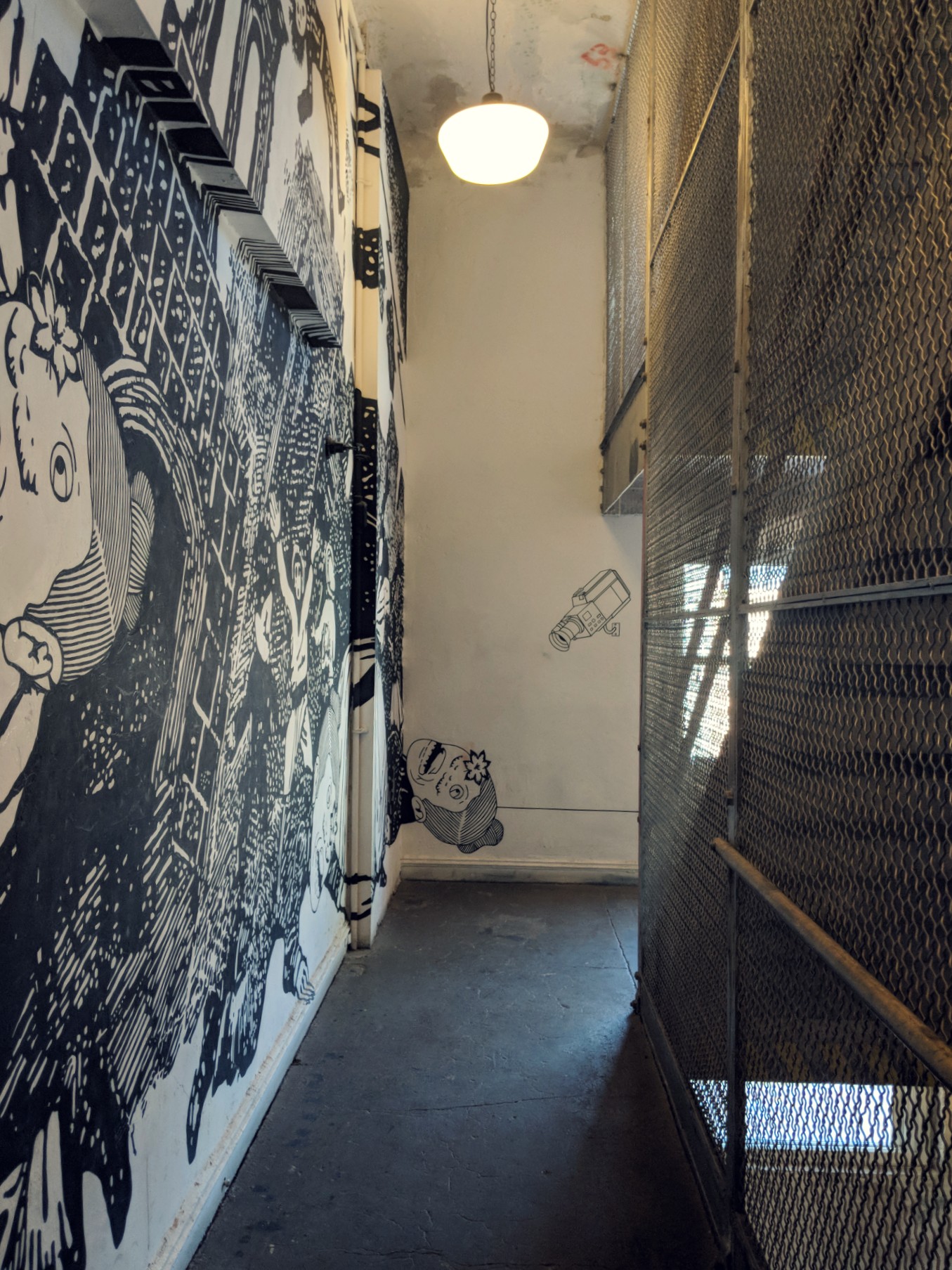
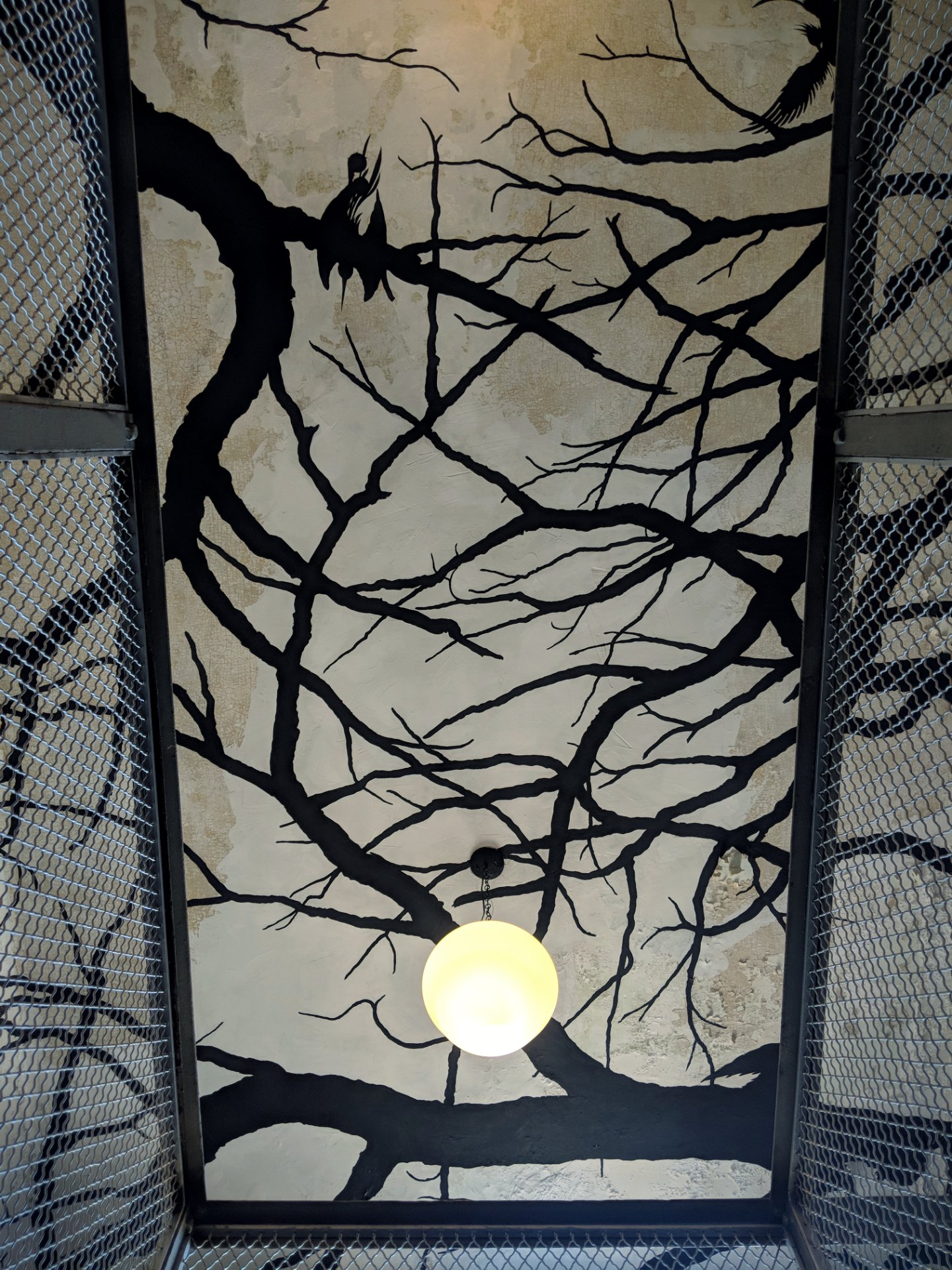
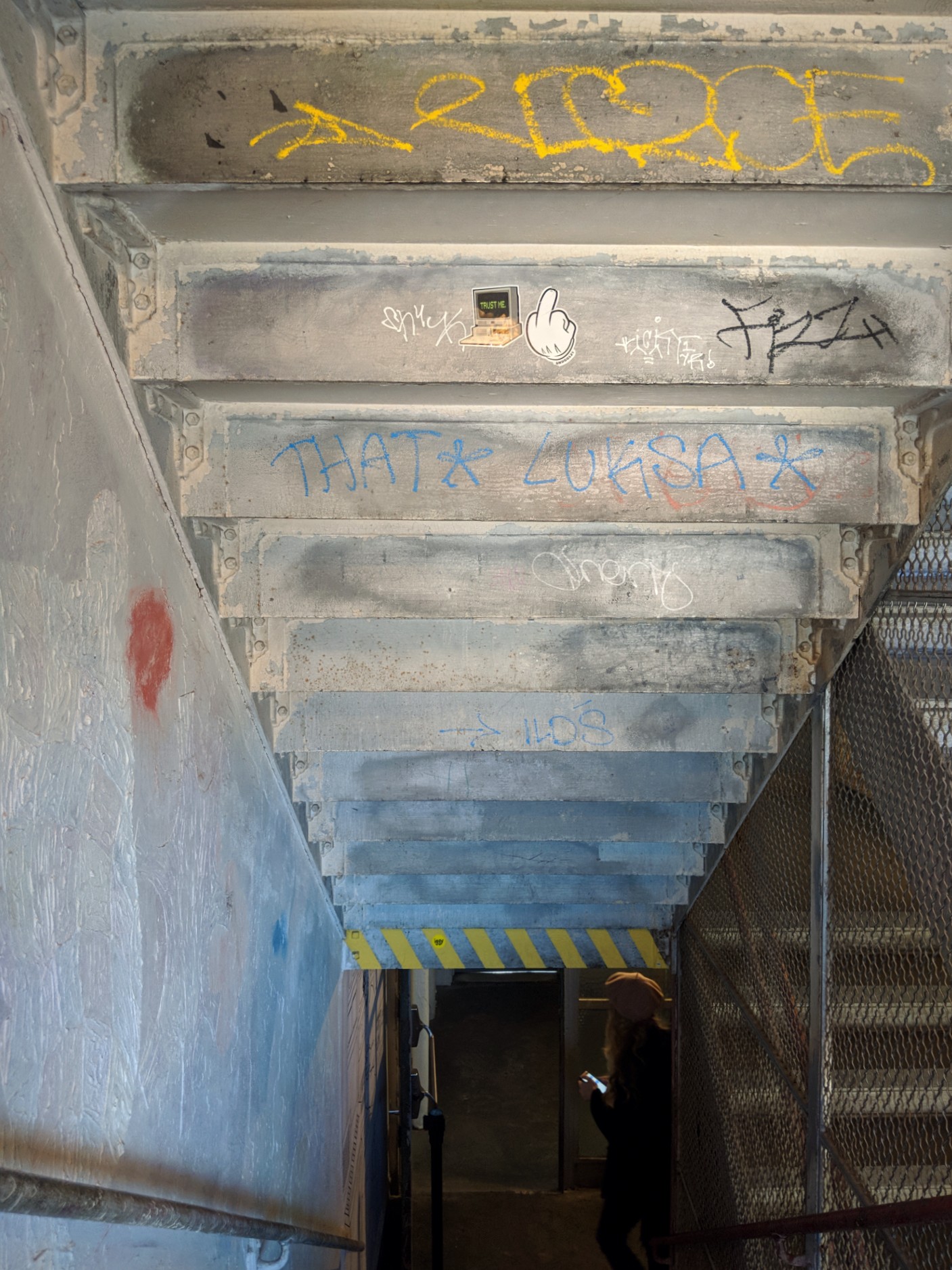
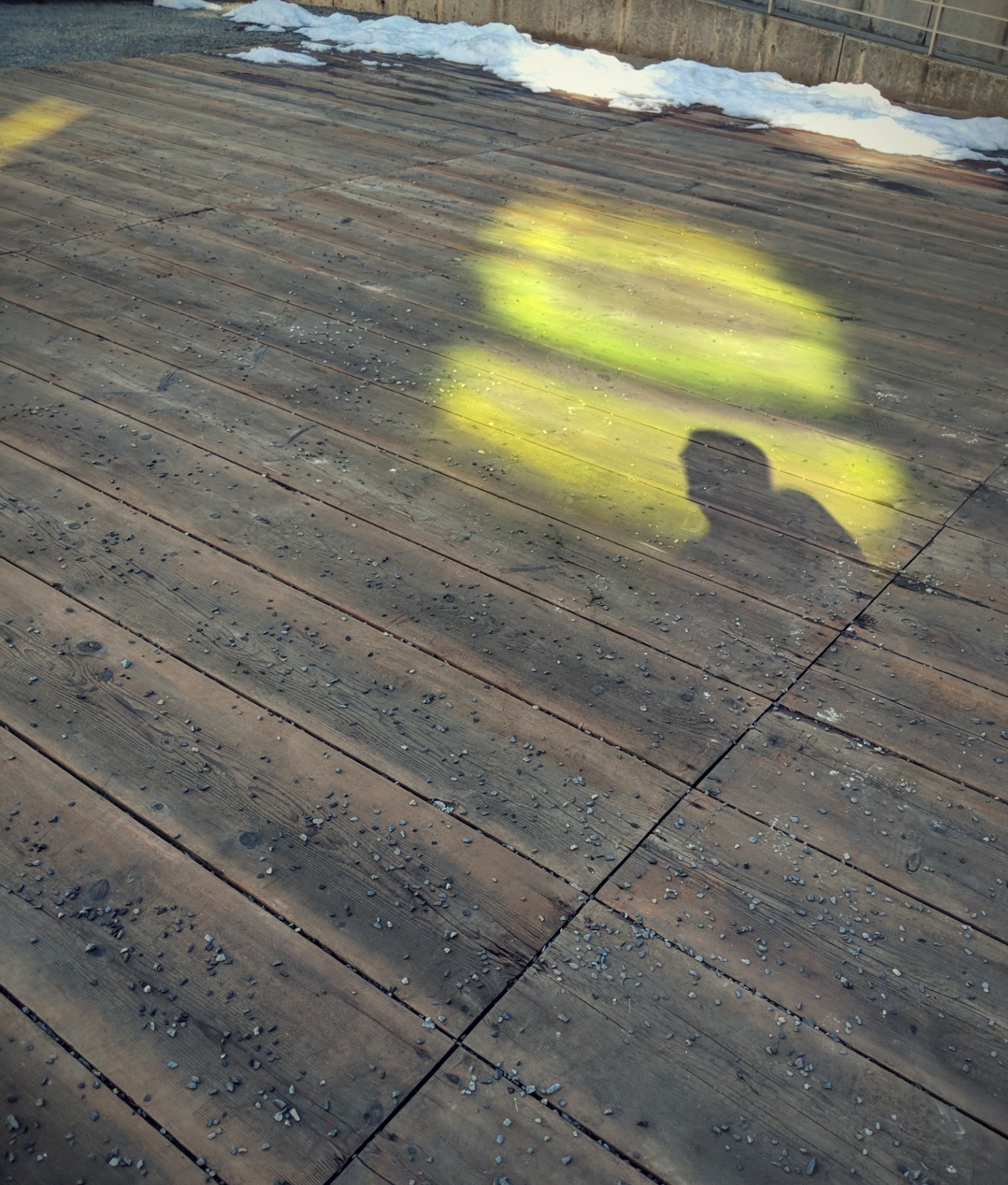
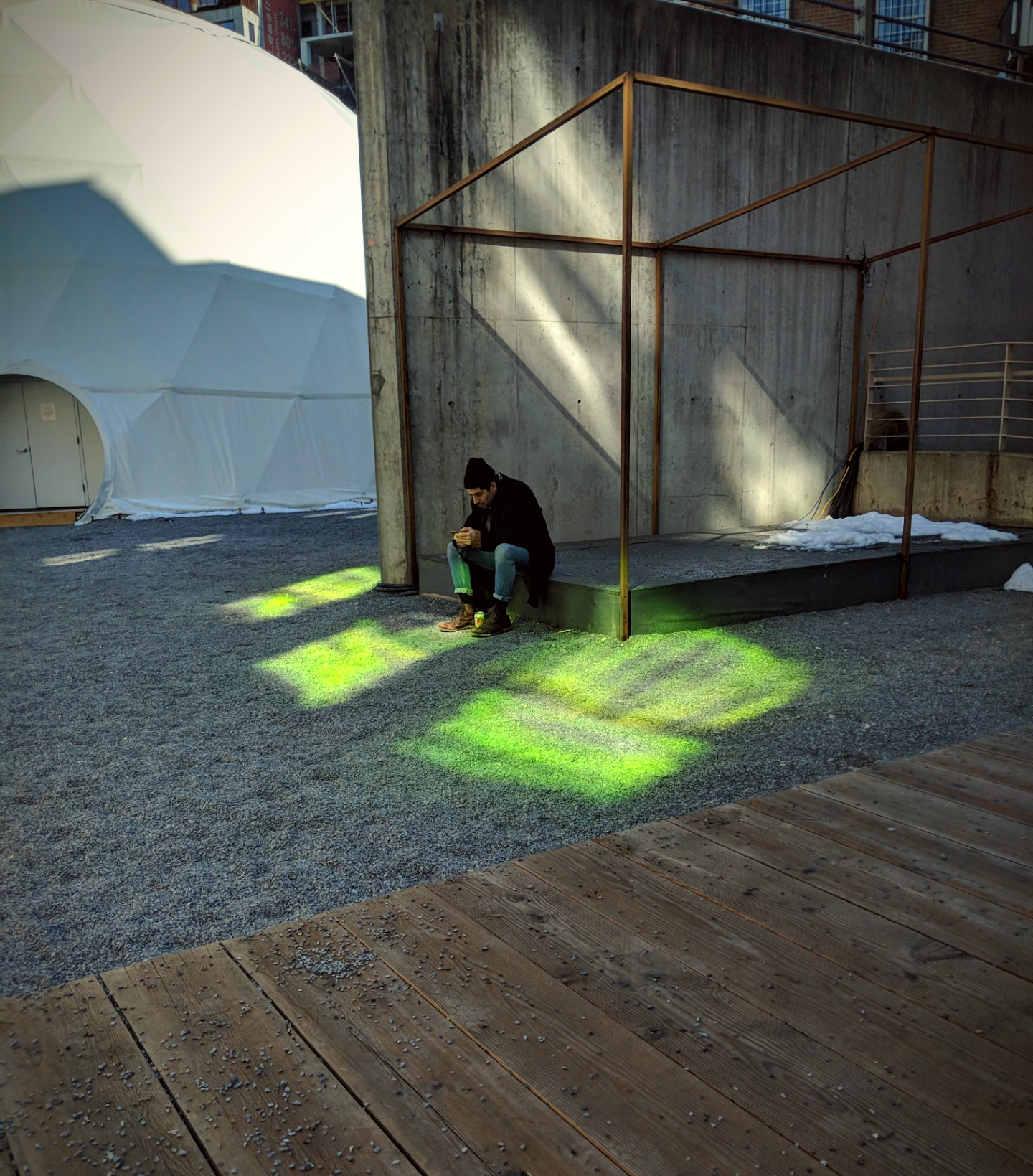
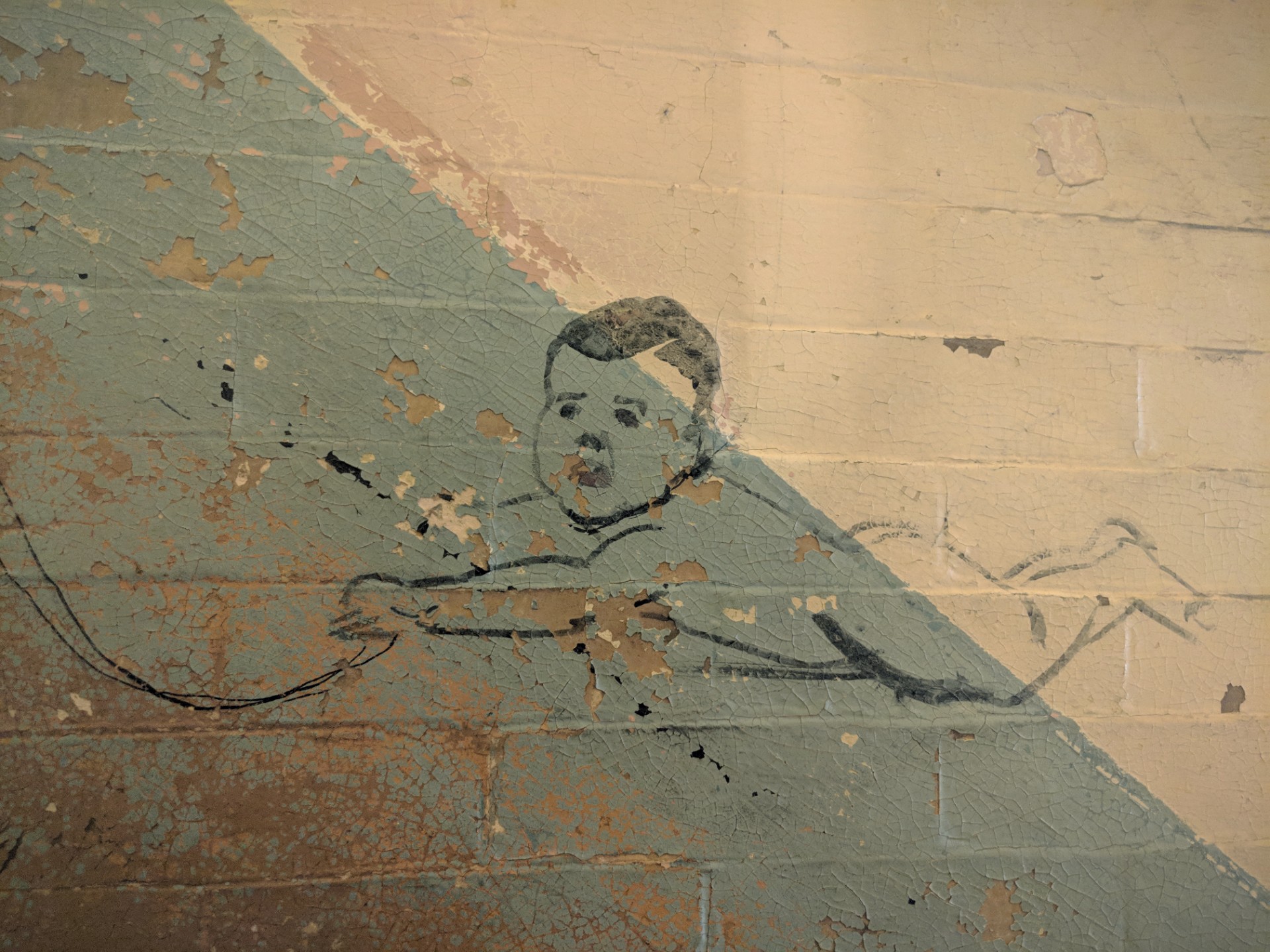
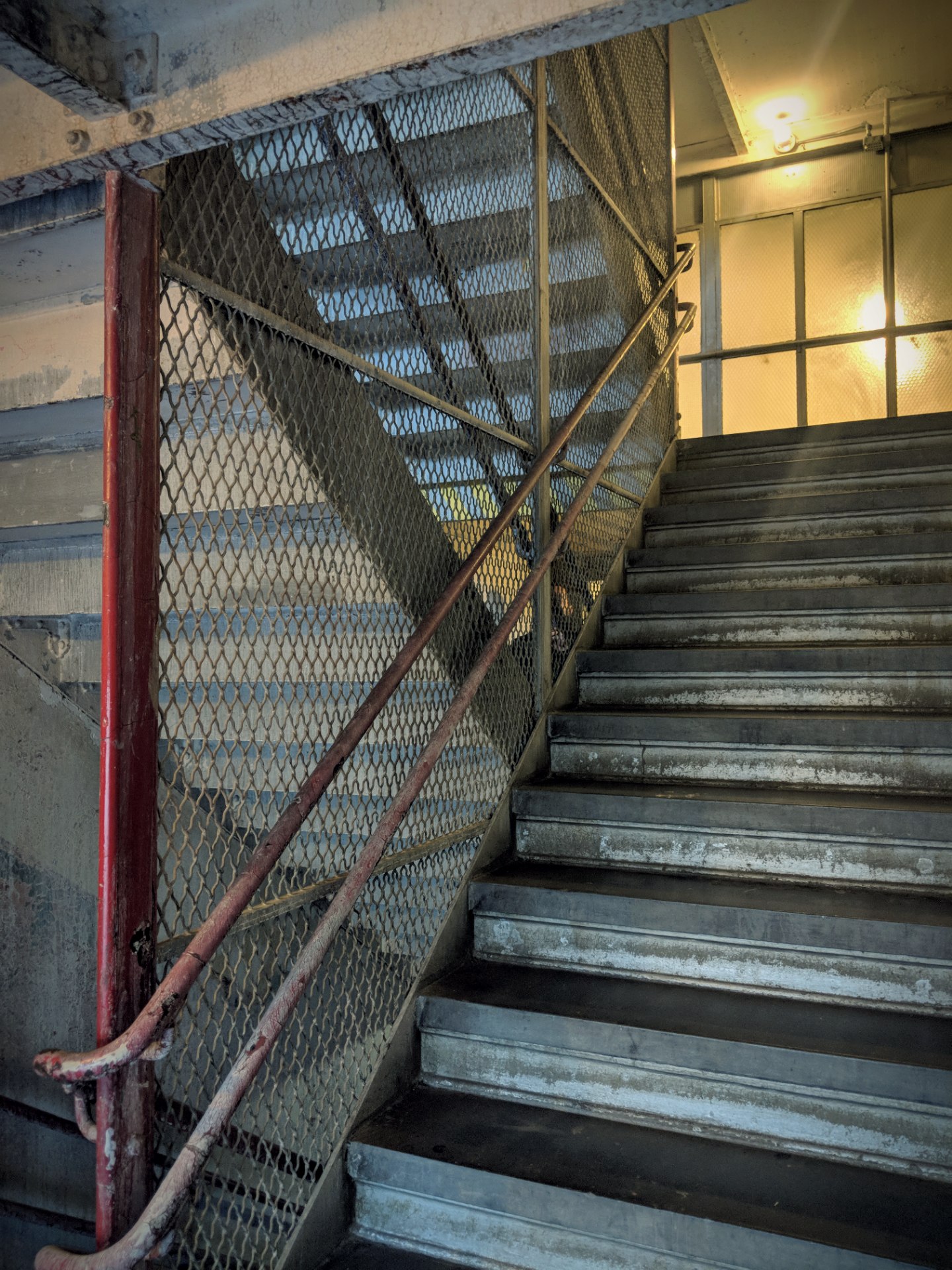
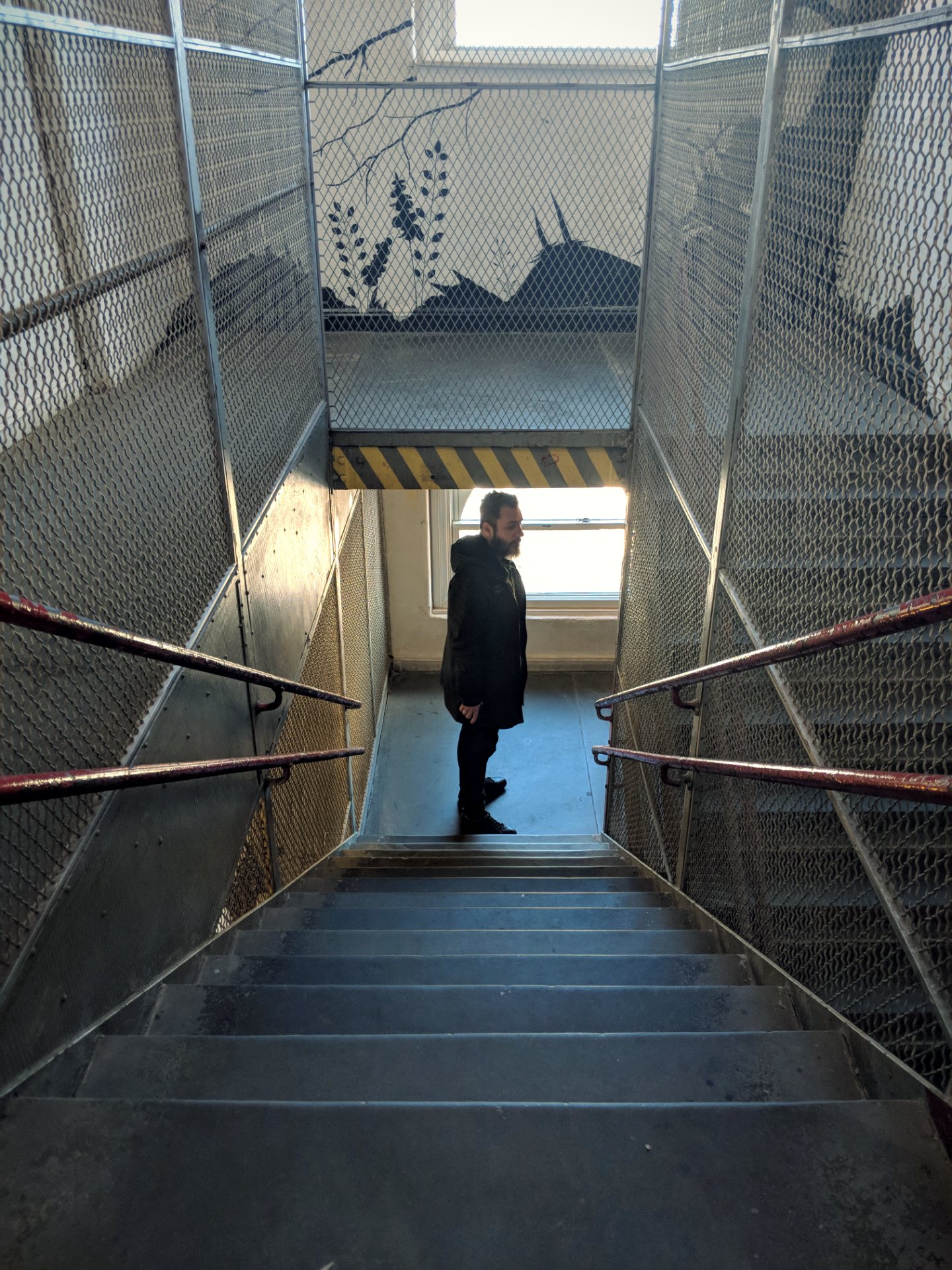
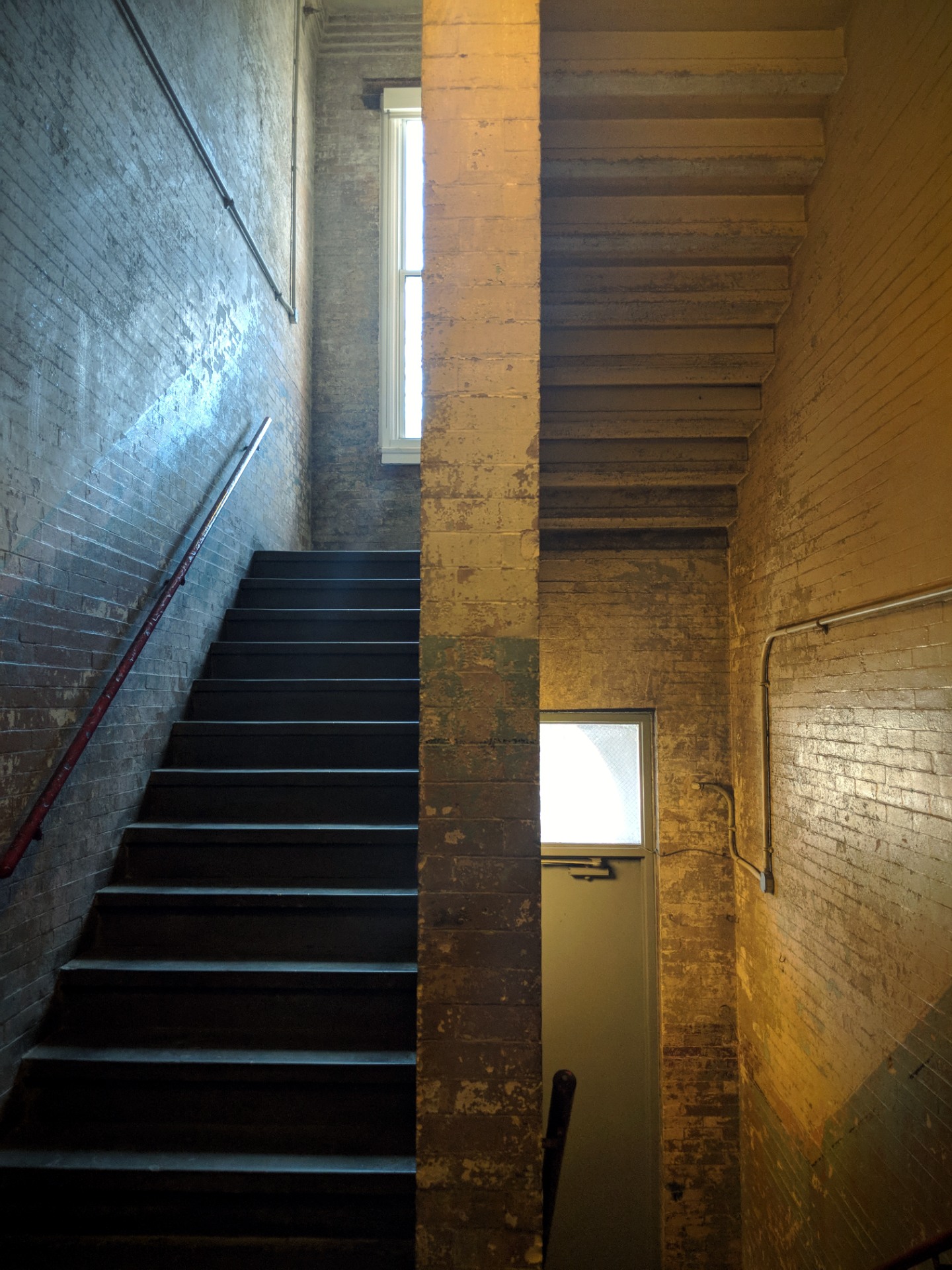
The Art is in the stairwells, meeting face-to-face with Abigail Lazkoz’s agonizing Cameramen; walking In the Woods, deep into Ernesto Caivano’s dark, magical forest; bathed in nature’s ephemeral reflections, outside in the courtyard.

Stairwell art:

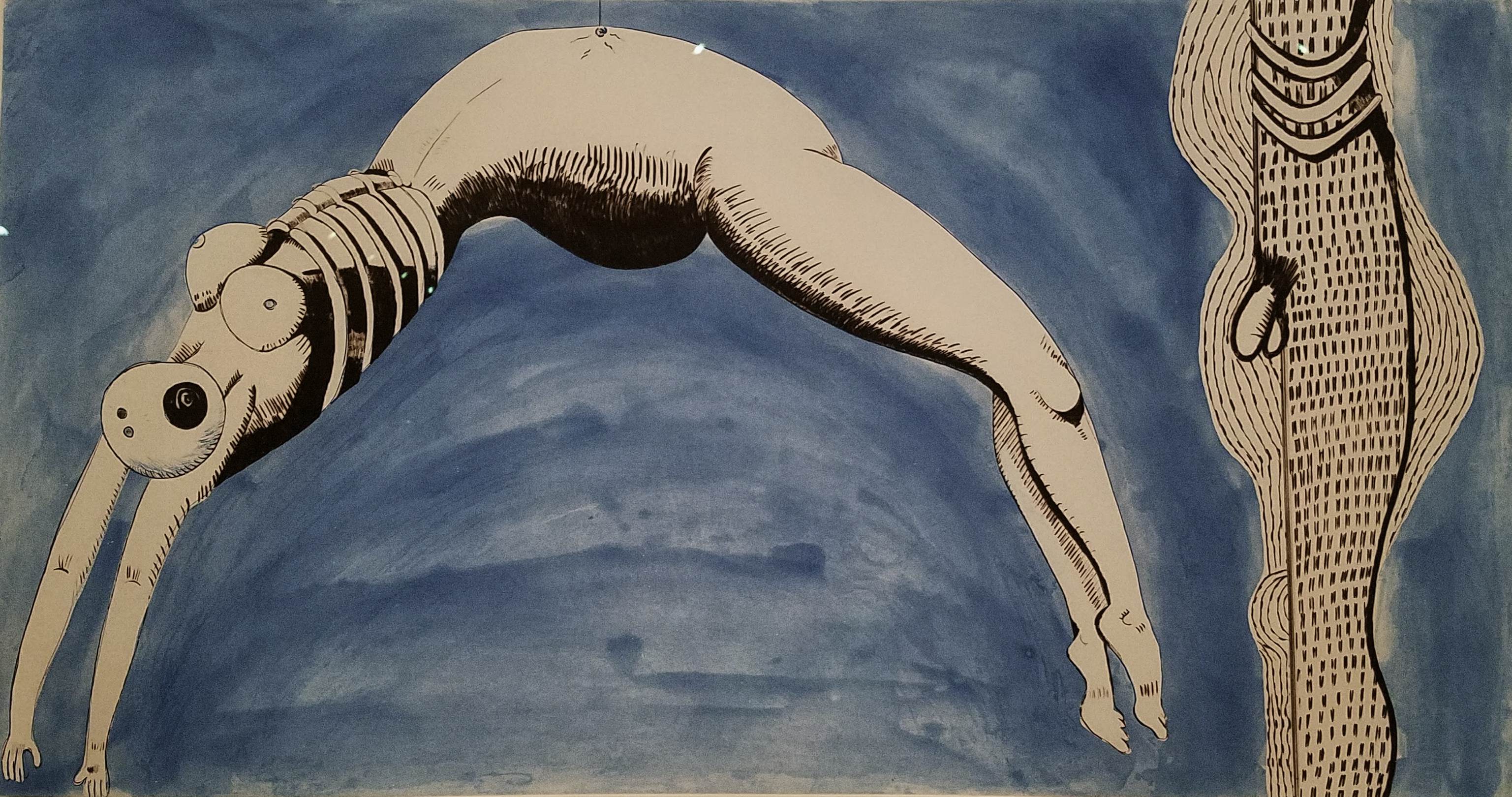
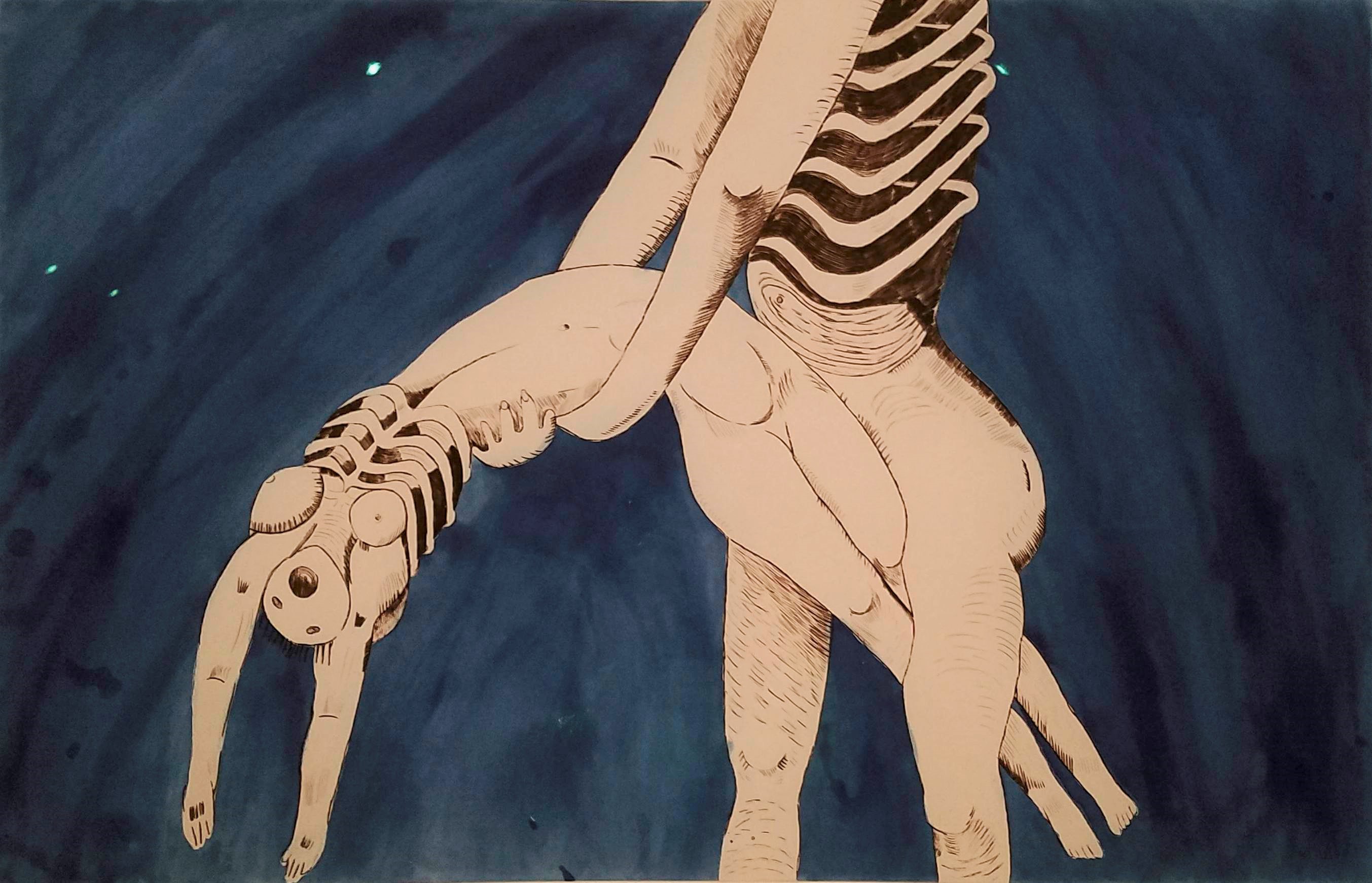
Abigail Lazkoz: Cameraman

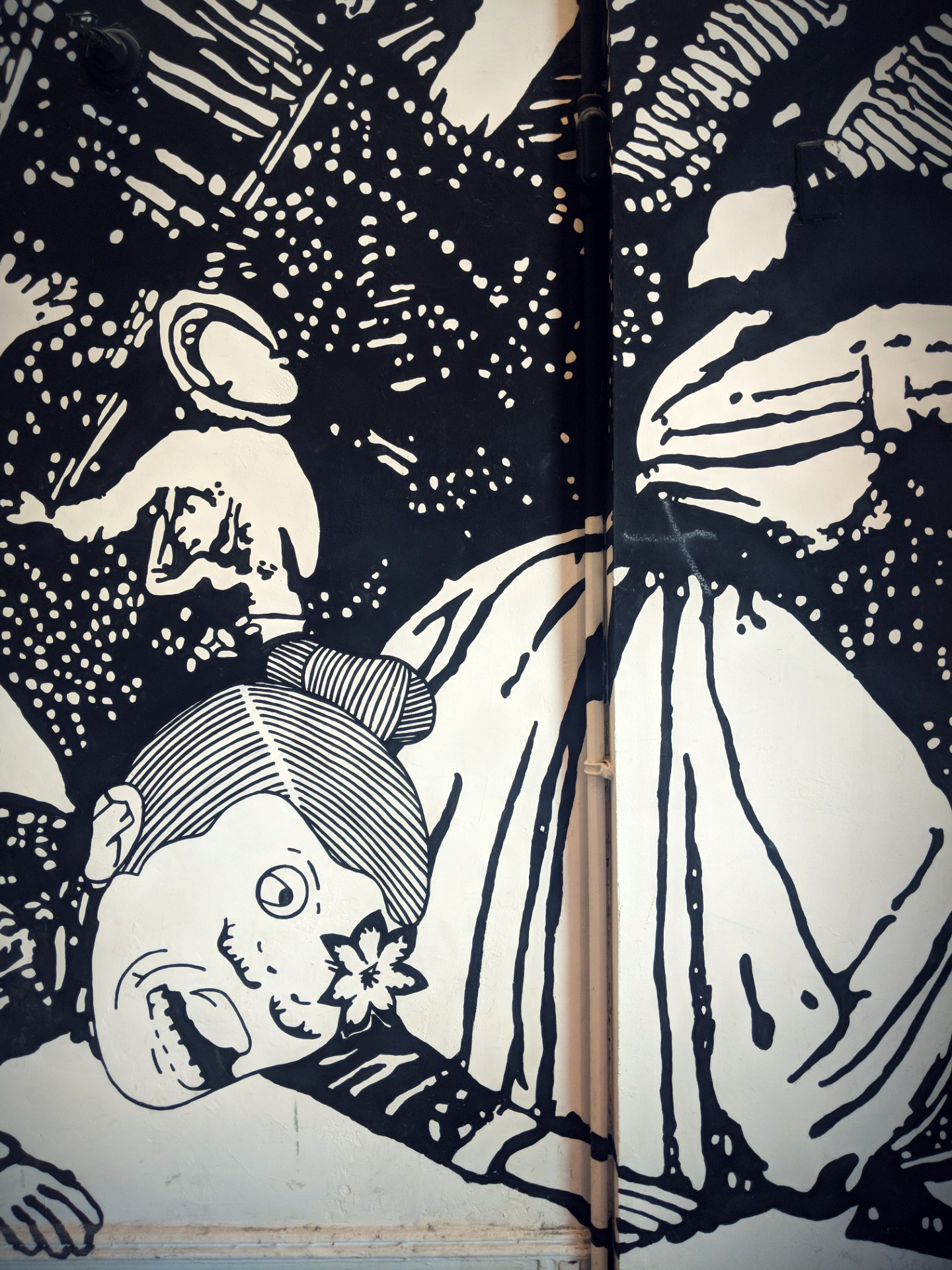
Abigail Lazkoz created the series Cameramen in 2002 and displayed it for the first time in MoMA PS1’s exhibition Greater New York 2005. The work consists of three large-scale drawings that reinterpret Jose Guadaulpe Posada’s 1914 engraving Se Aproxima el Fin del Mundo Las Profecias Se Cumplen Temblores, Erupciones, Guerras, Pestes, Hambres E Incendios. La Celebre Madre Matiana (The end of the World is Near, Prophecies Come True, Earthquakes, Eruptions, Wars Diseases, Famine, and Fires).

**

Ernesto Caivano: In the Woods

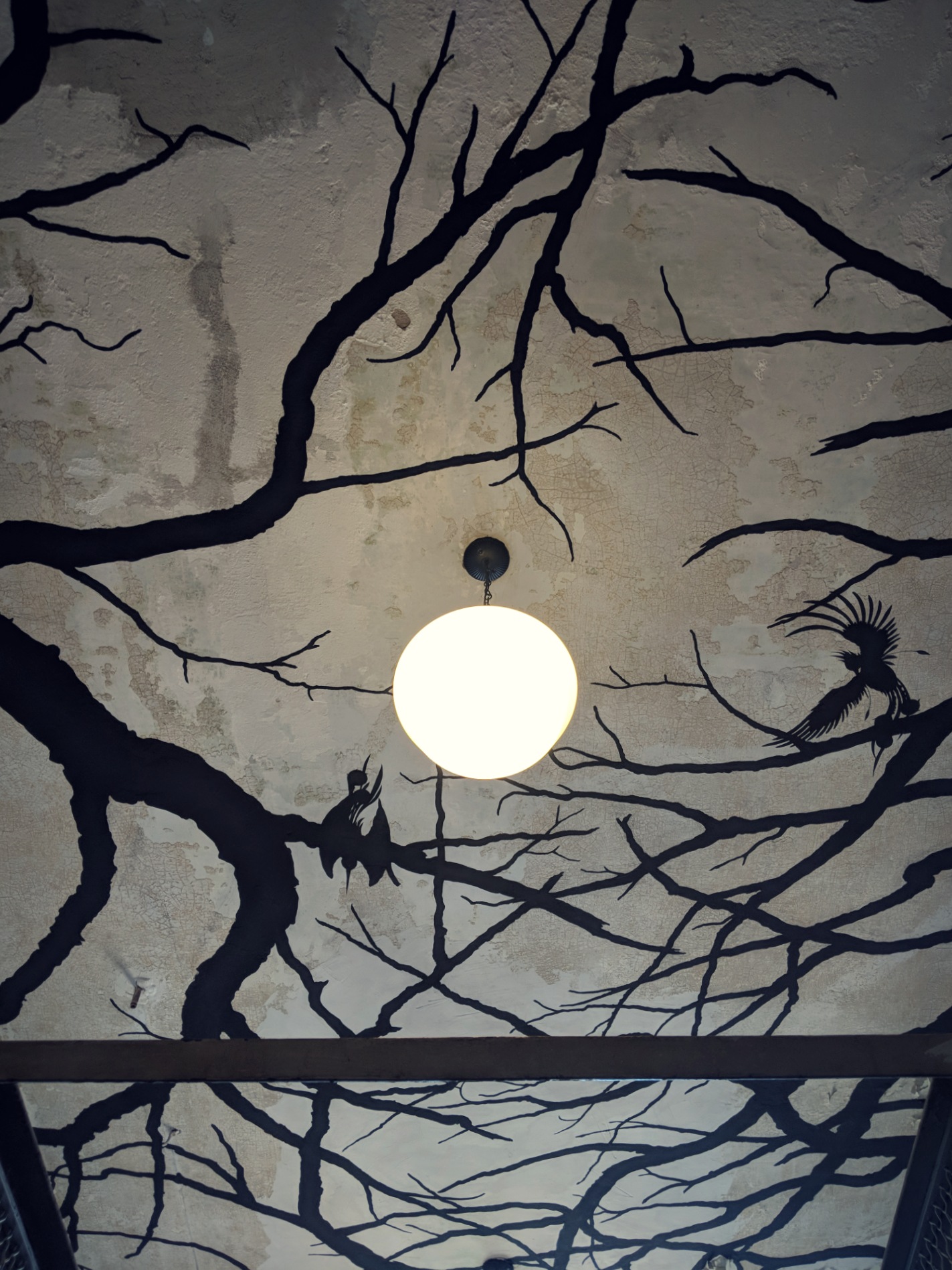
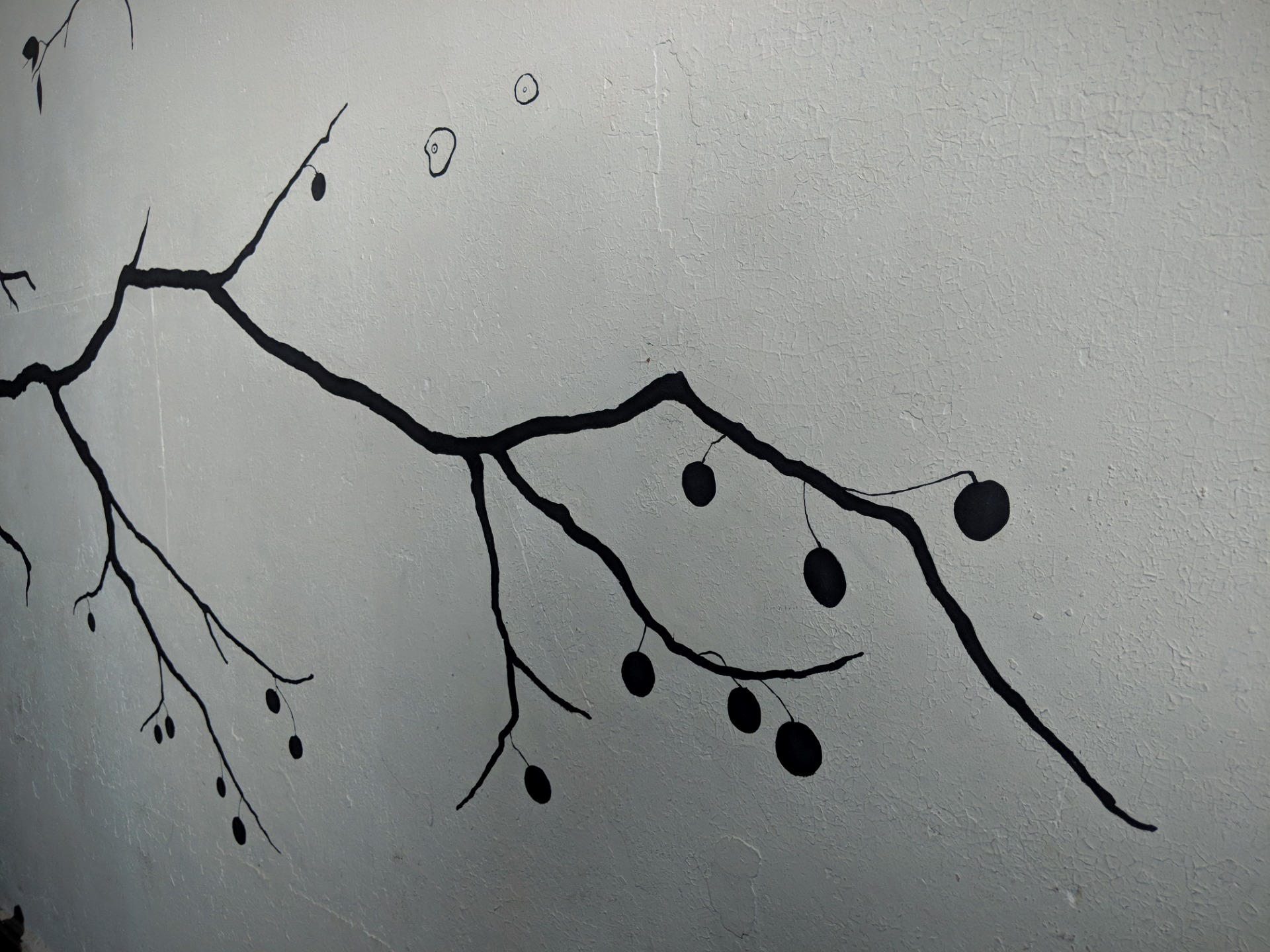
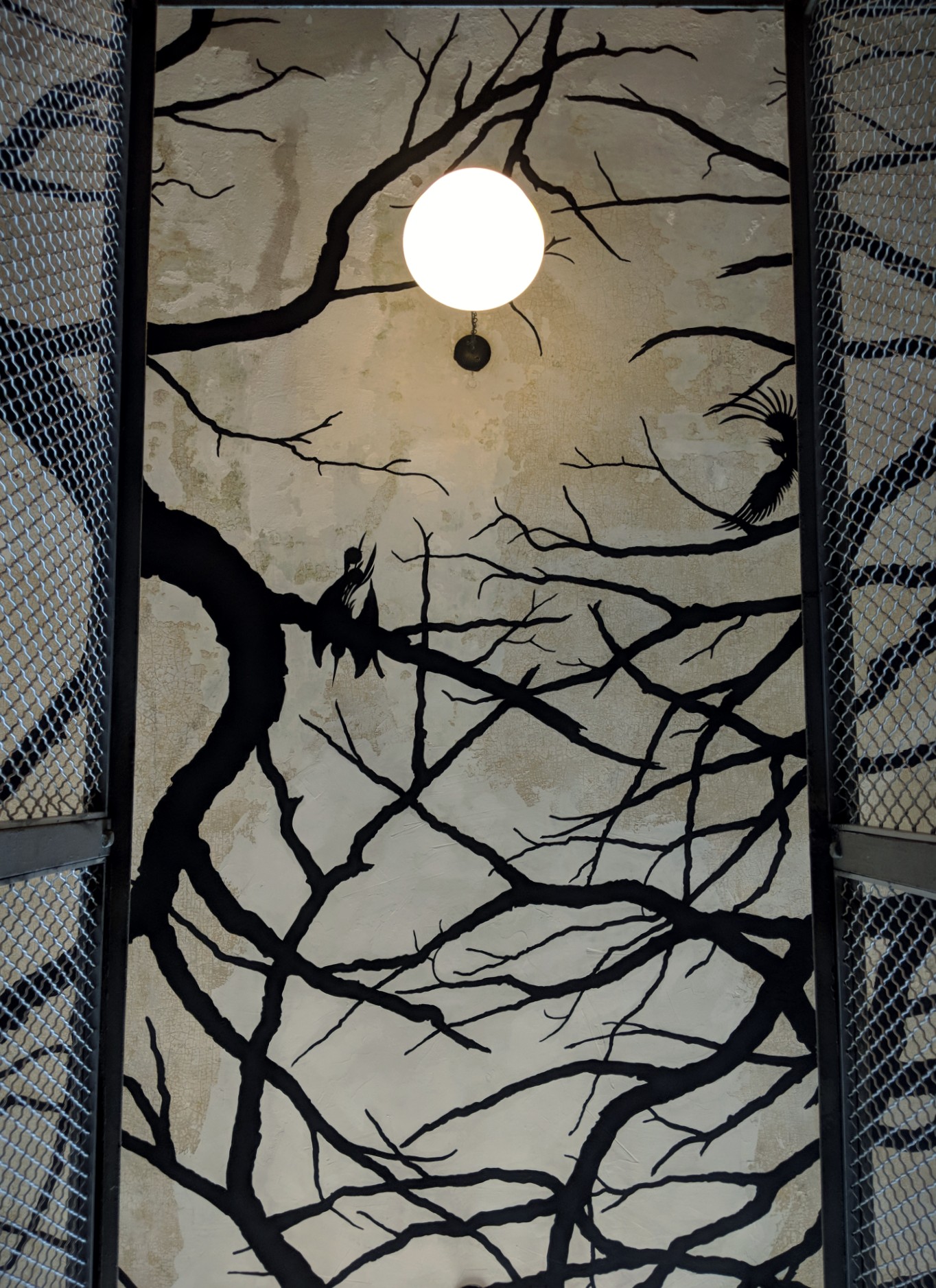
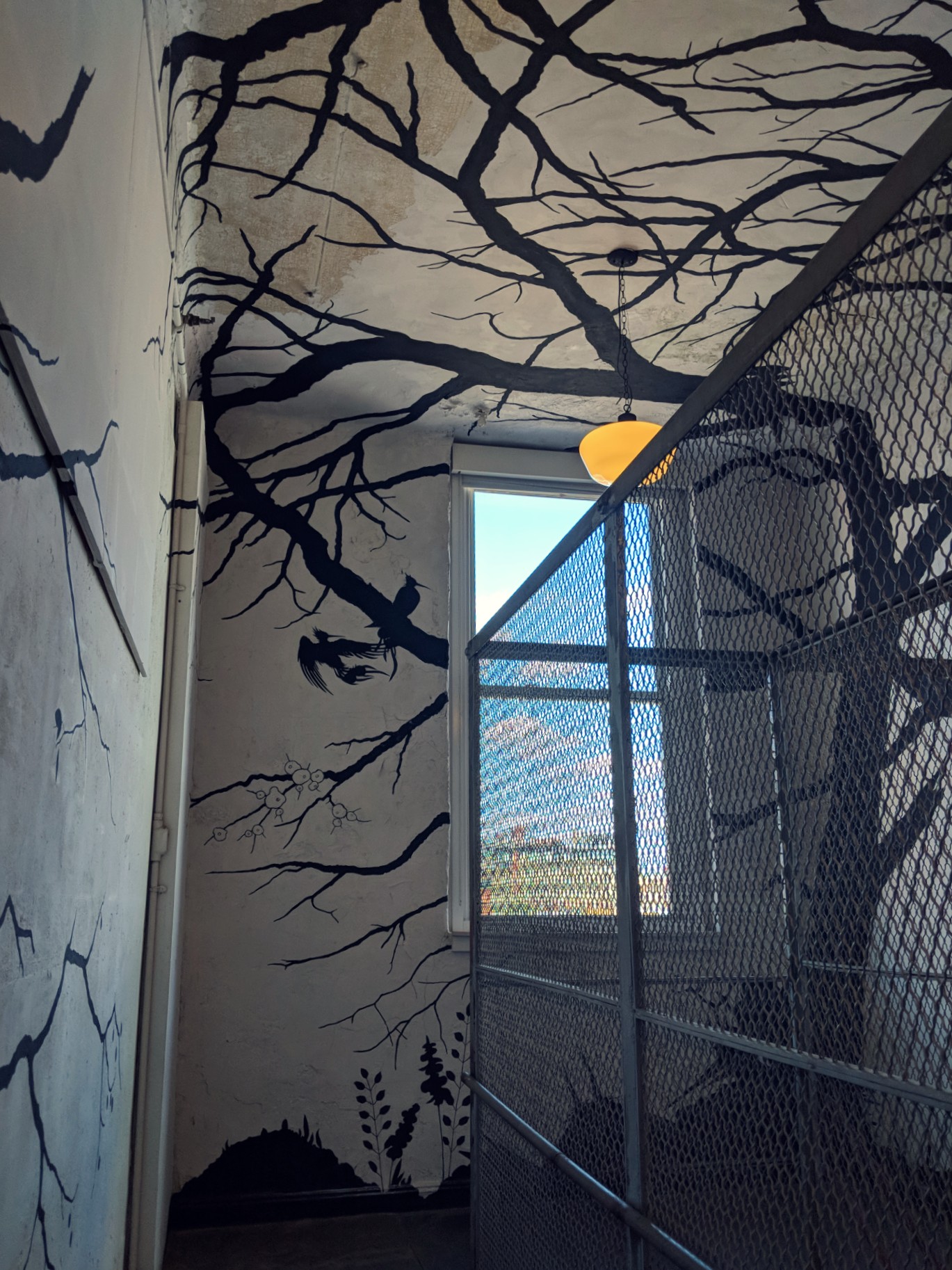
For MoMA PS1’s stairwell A, Ernesto Caivano created a wall mural based on an ongoing story he developed over three years called After the Woods. While After the Woods consists of drawings and paper sculptures, In the Woods is composed of black latex paint and gouache to create a dense visual web of images composing Caivano’s larger-than-life sized environment. The exaggerated scale of the piece creates a total experience for the viewer, allowing an escape into this imaginary world. Naked and gnarled tree branches wind around the walls and sprout up and out onto the ceiling, entangling the viewer in their dark and magical embrace.

March 24th, 2018

MoMA PS1 || Part I (The Building as a work of Art)

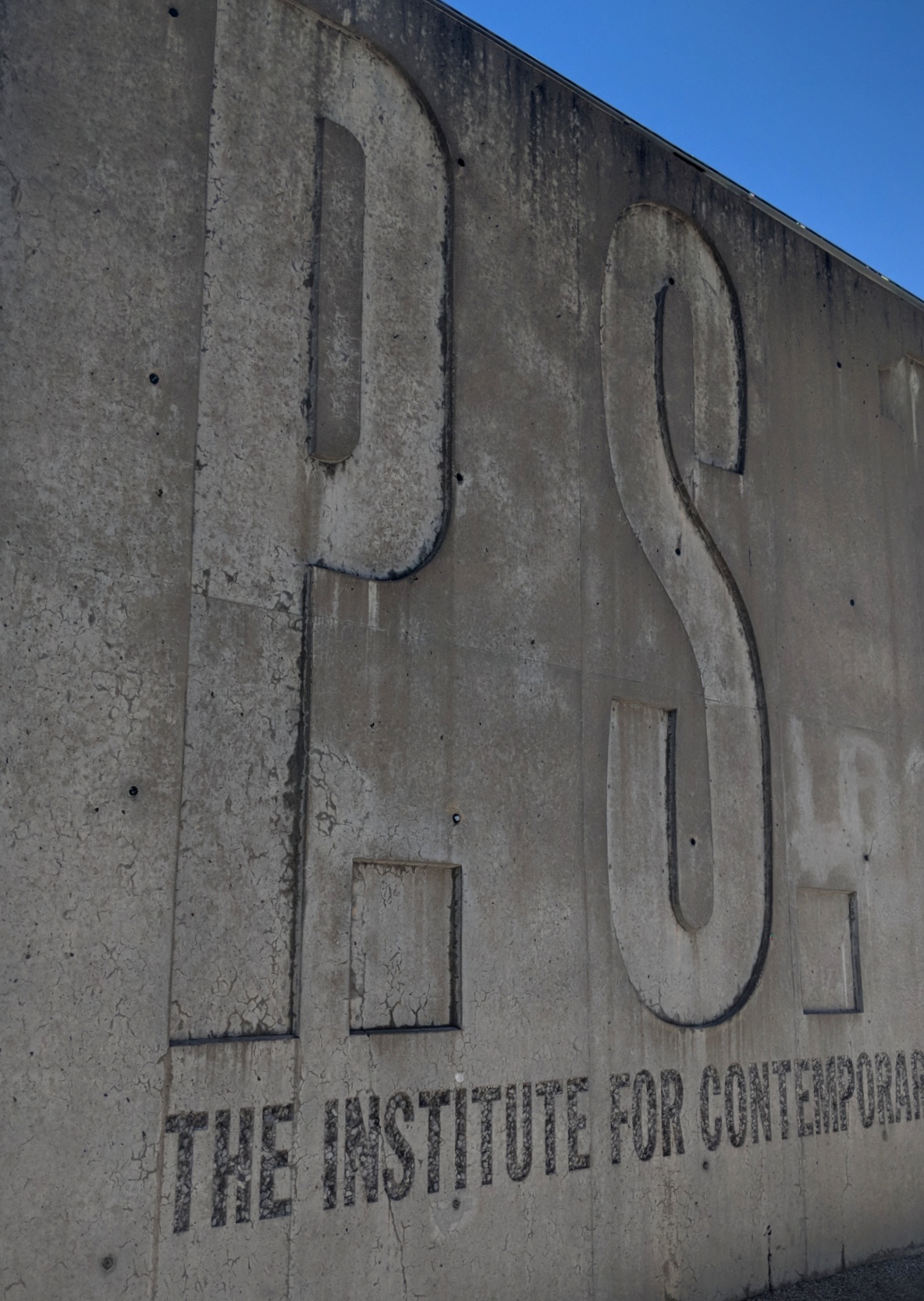
MoMA PS1, one of the oldest and largest nonprofit contemporary art institutions in the United States, was founded in 1971 by Alanna Heiss as the Institute for Art and Urban Resources Inc., an organization devoted to organizing exhibitions in underutilized and abandoned spaces across New York City.

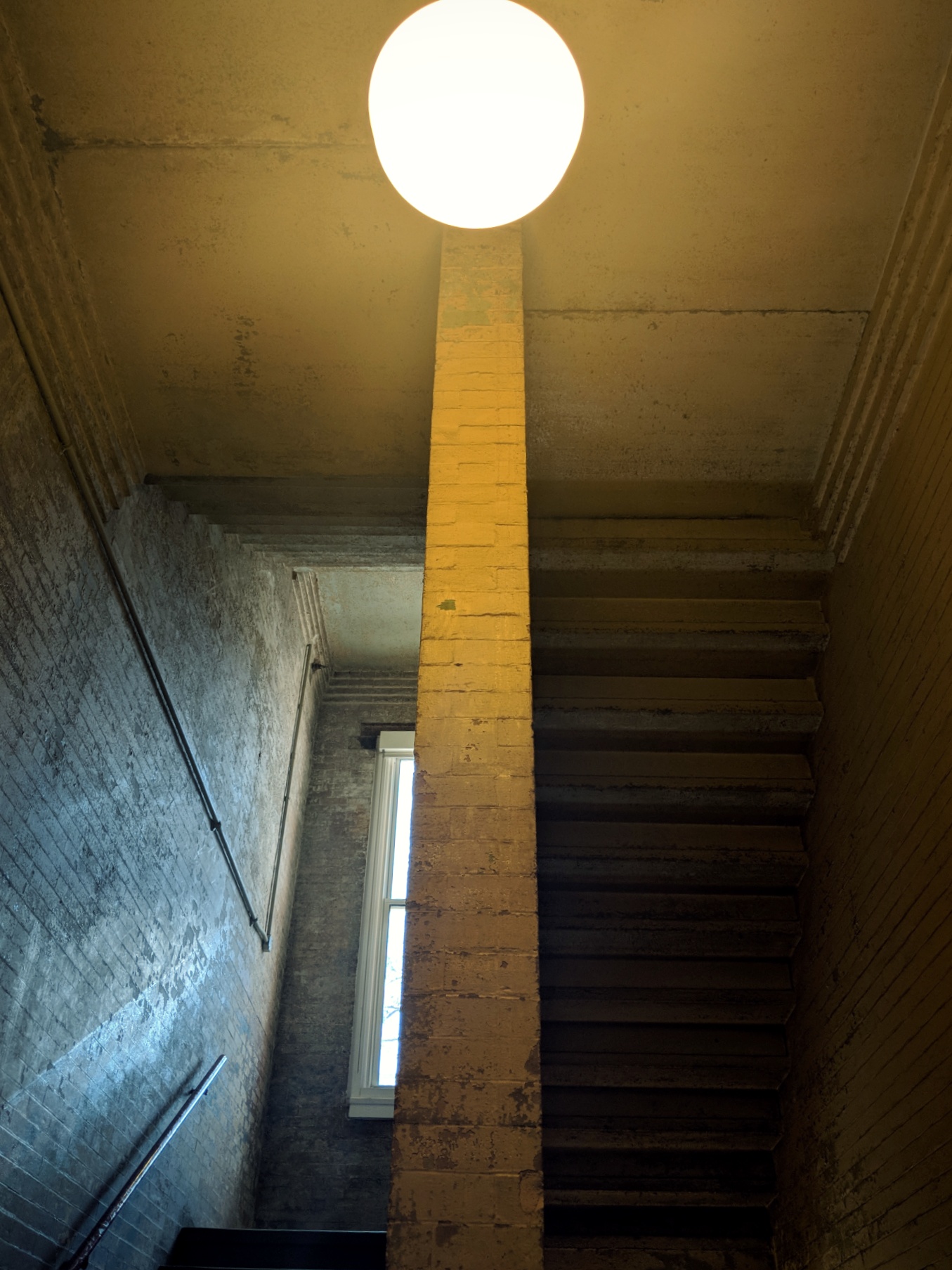
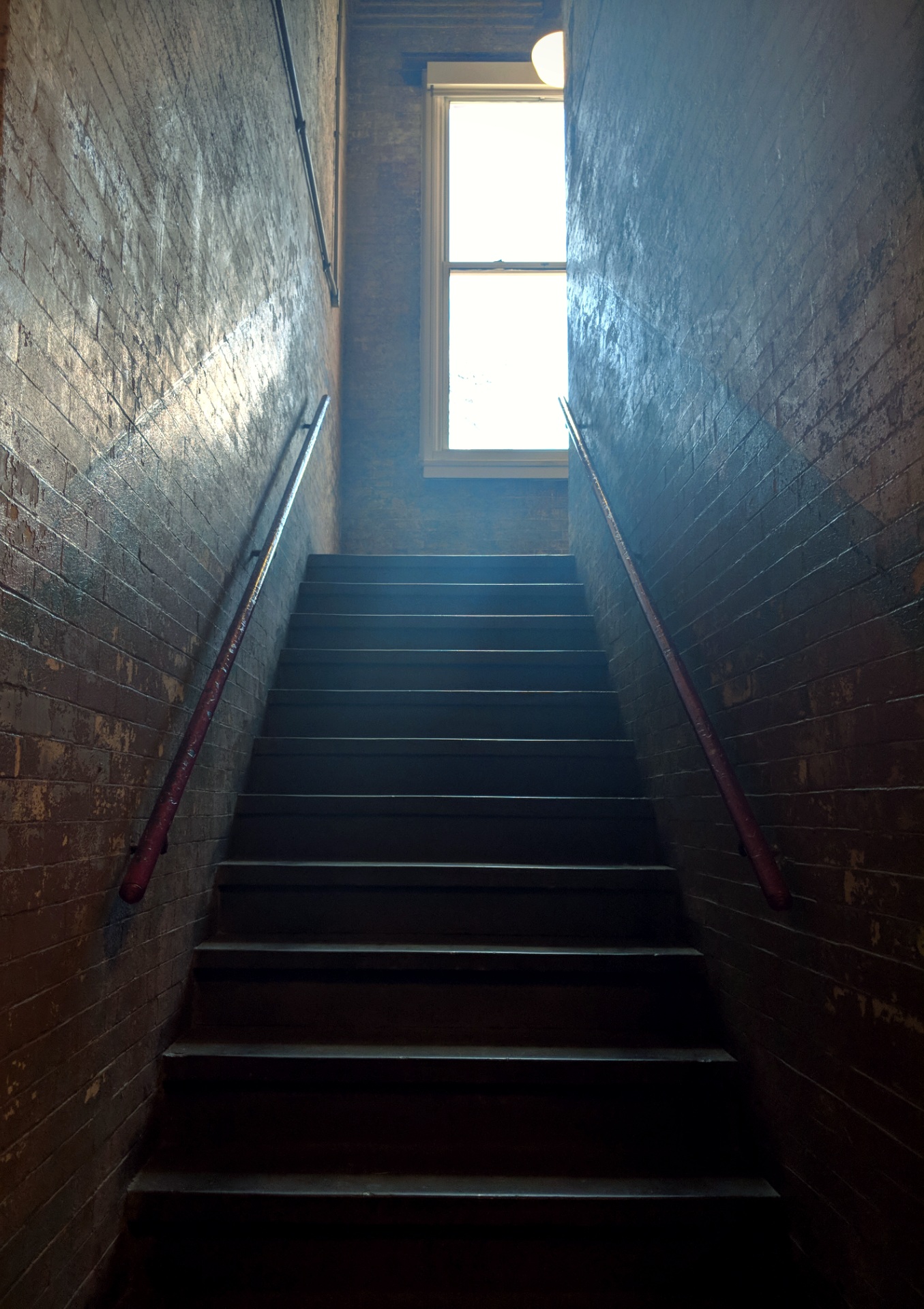
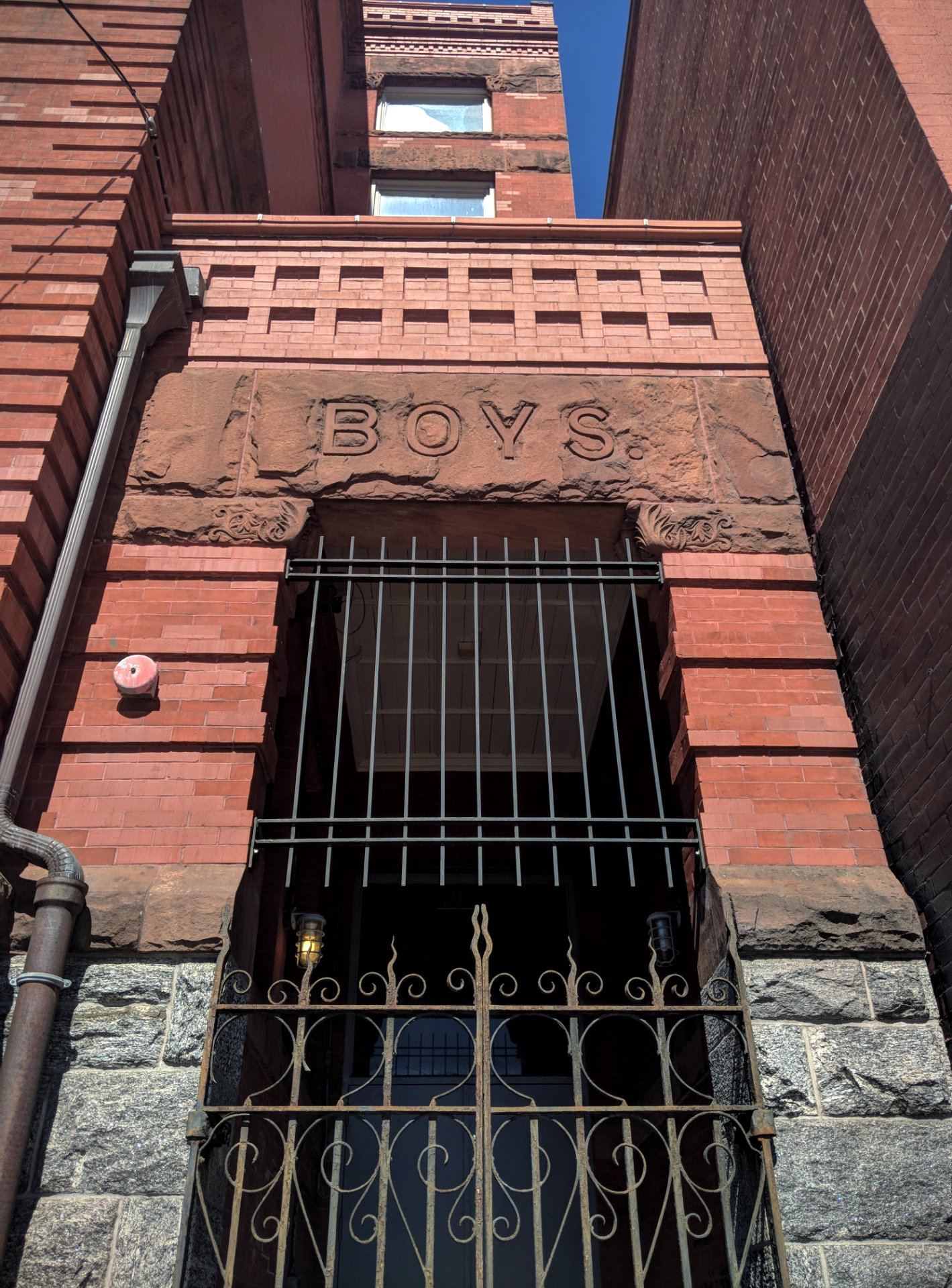
In 1976, Heiss opened the P.S. 1 Contemporary Art Center in a deserted Romanesque Revival public school building, exponentially increased the organization’s exhibition and studio capacity. This building, dating from 1892, served as the first school in Long Island City until 1963, when the First Ward school it housed was closed due to low attendance and the building was turned into a warehouse.

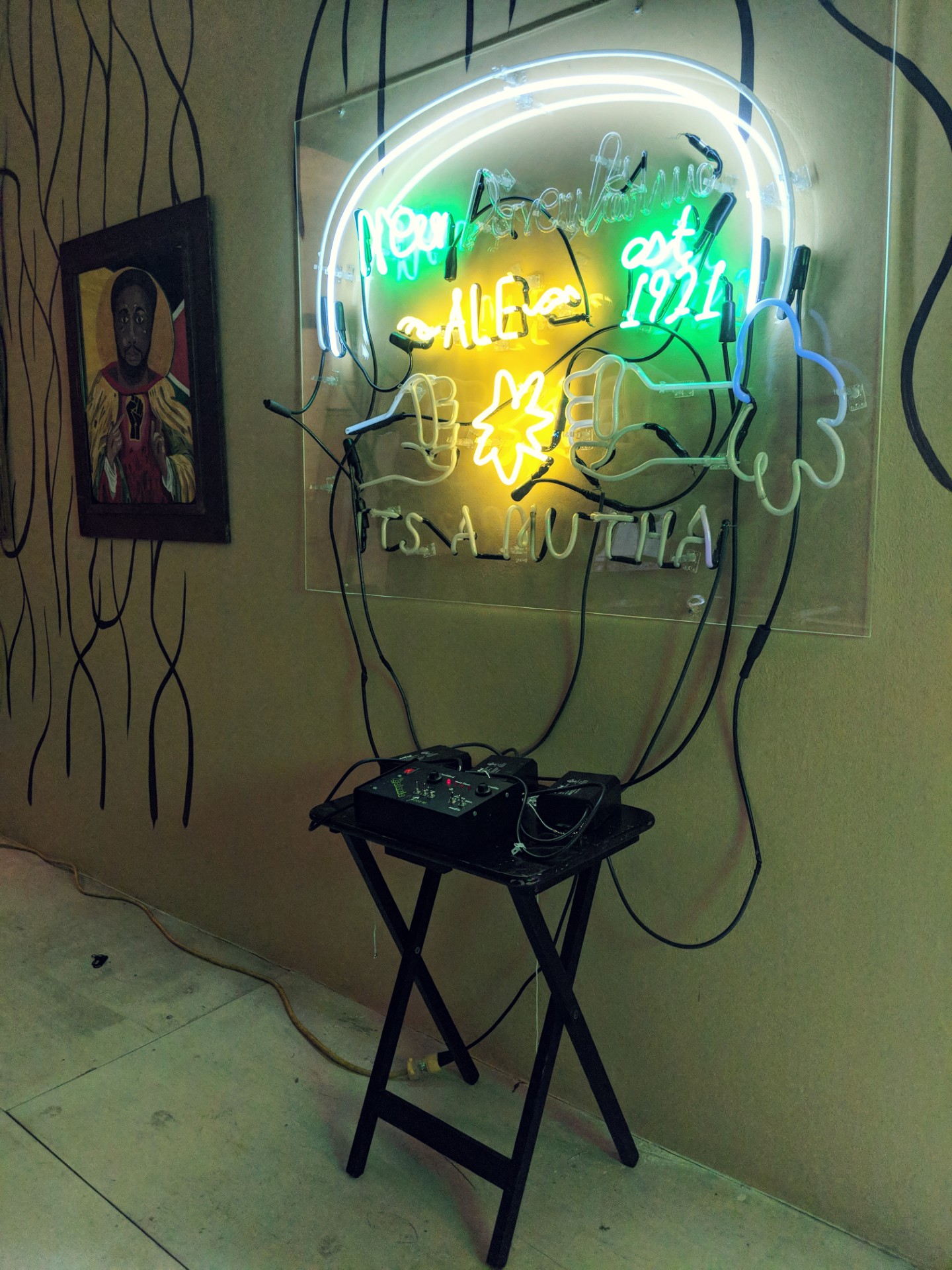
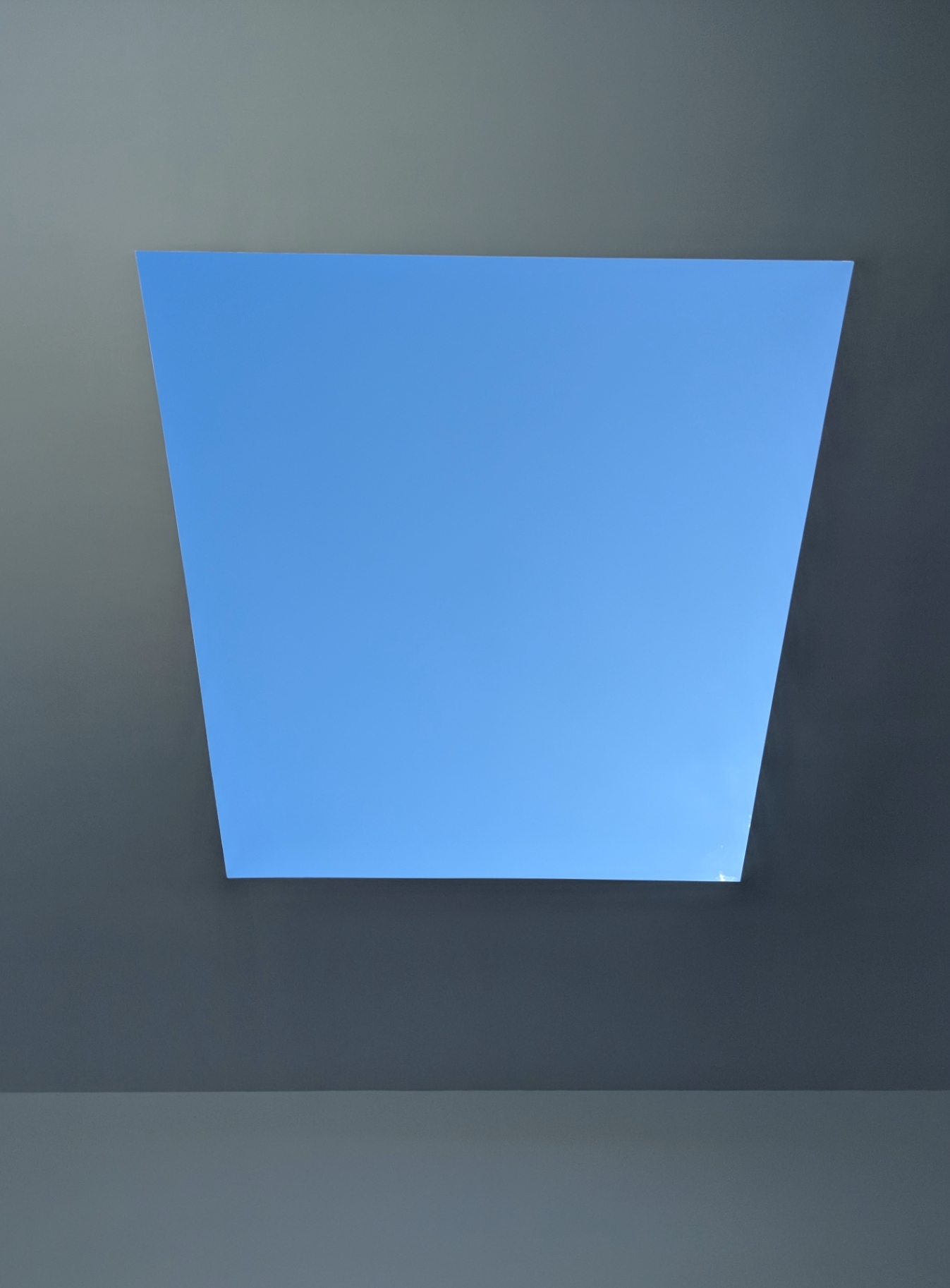
Site-specific art includes James Turrell’s Meeting, one of his famous Skyspaces.

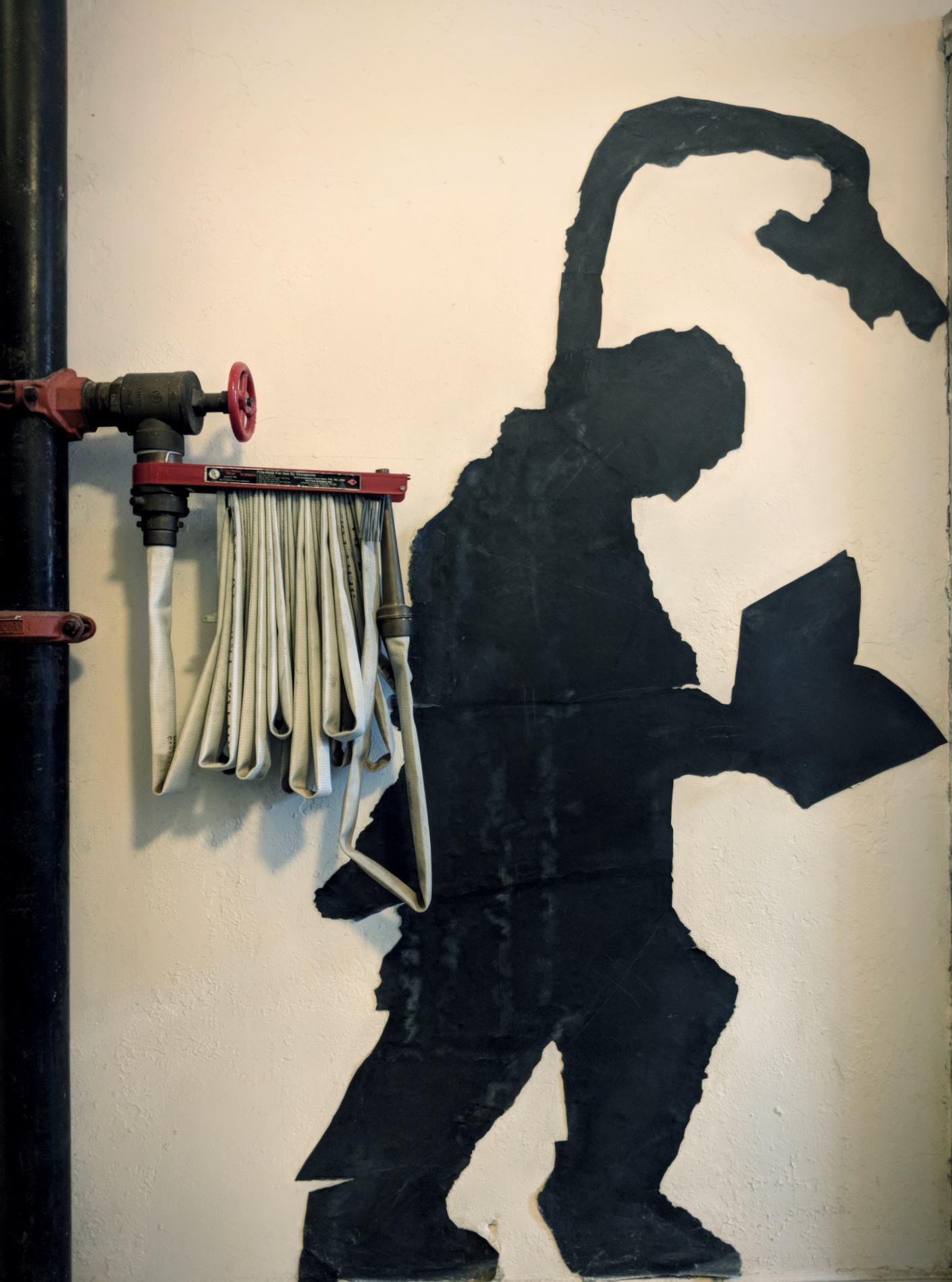
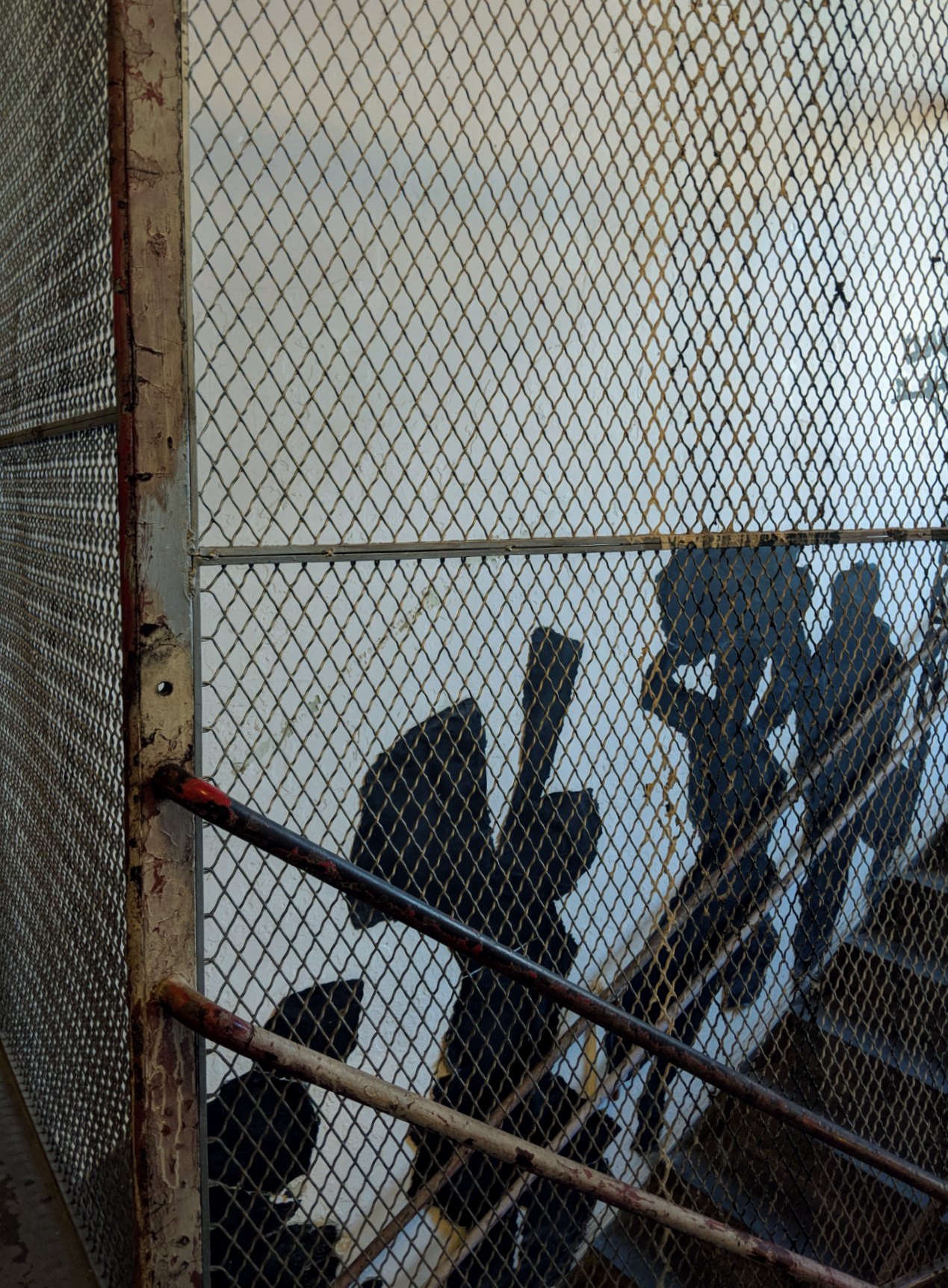
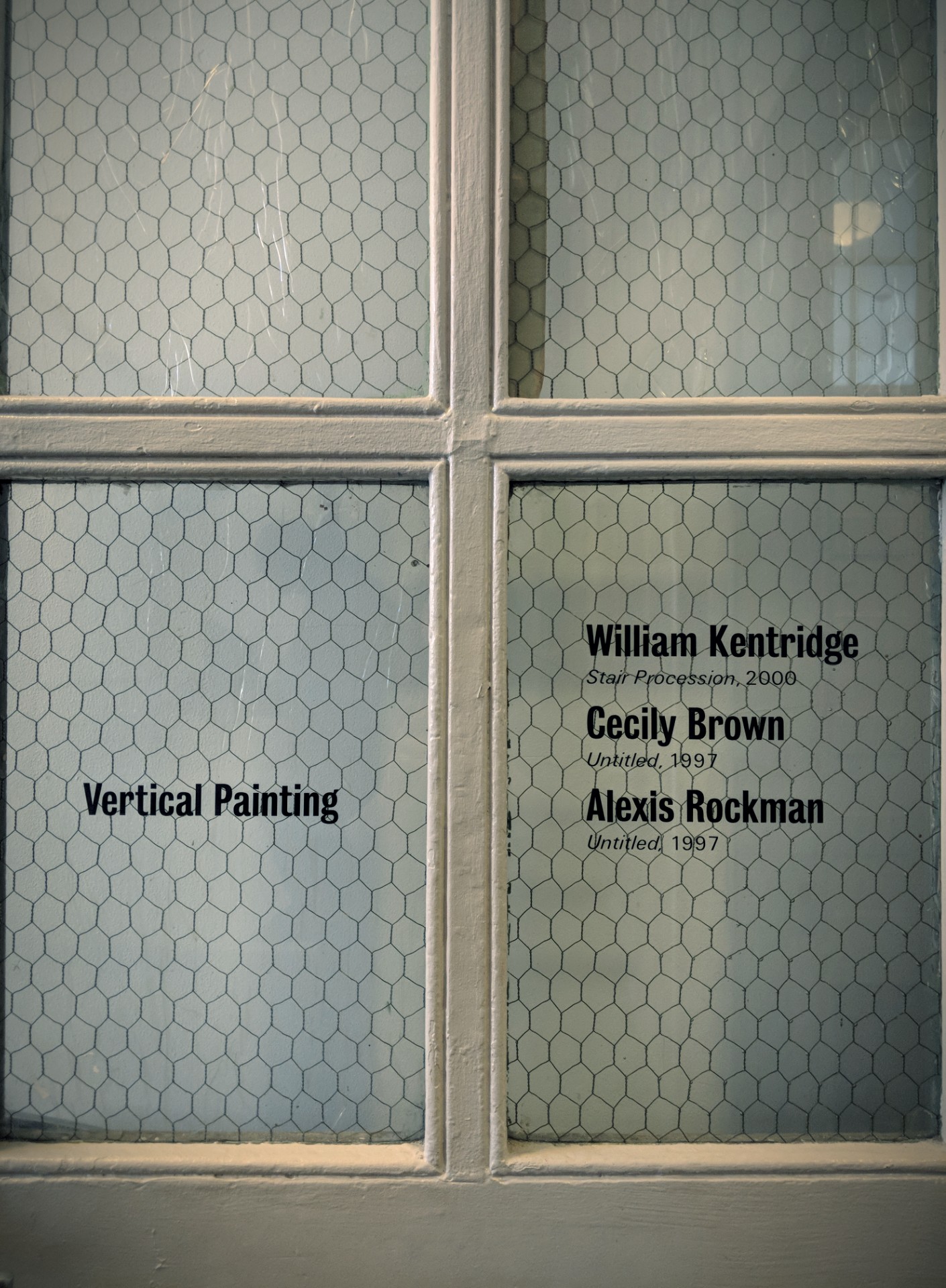
Staircase art by:
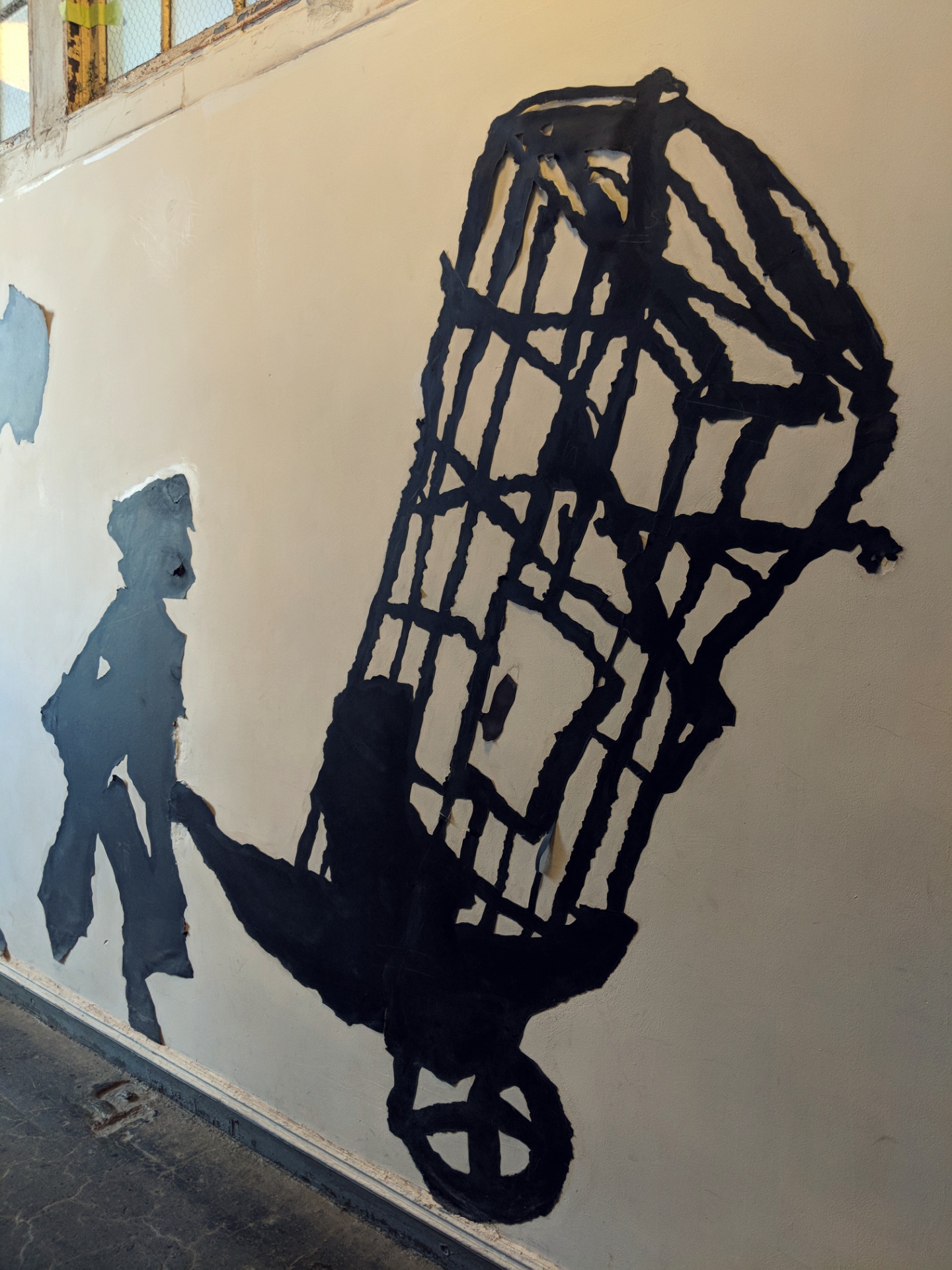
William Kentridge || Stair Procession
Ernesto Caivano || In the Woods

March 24th, 2018


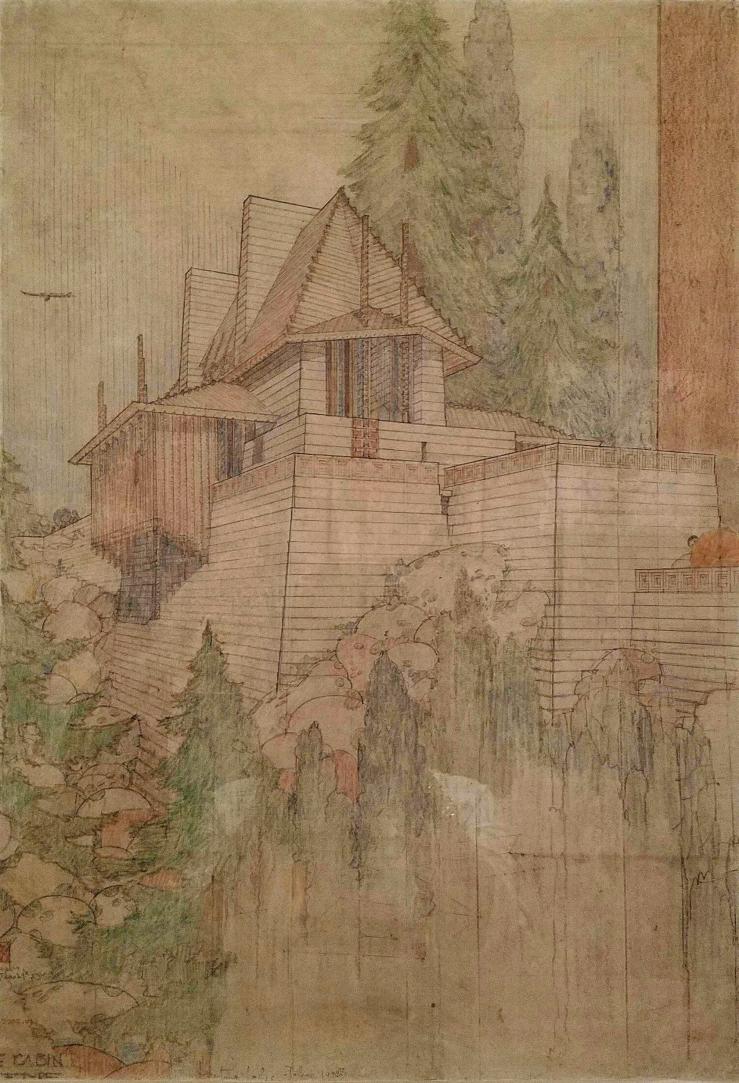
Frank Lloyd Wright at 150: Unpacking the Archive

In 2017, MoMA – jointly with Columbia University – acquired the vast archives of Frank Lloyd Wright, one of the most prolific architects of the 20th century. To mark that acquisition, as well as the 150th anniversary of his birth on June 8, 1867, MoMA presented Frank Lloyd Wright at 150: Unpacking the Archive, an exhibition that comprised some 450 works made from the 1890s through the 1950s and included architectural drawings, models, building fragments, films, print media, furniture, tableware, textiles, paintings, photographs, and scrapbooks. According to its curator, Barry Bergdoll, the show was meant “to announce that Frank Lloyd Wright is open to new interpretations” and that “the archive is here and it’s open.”

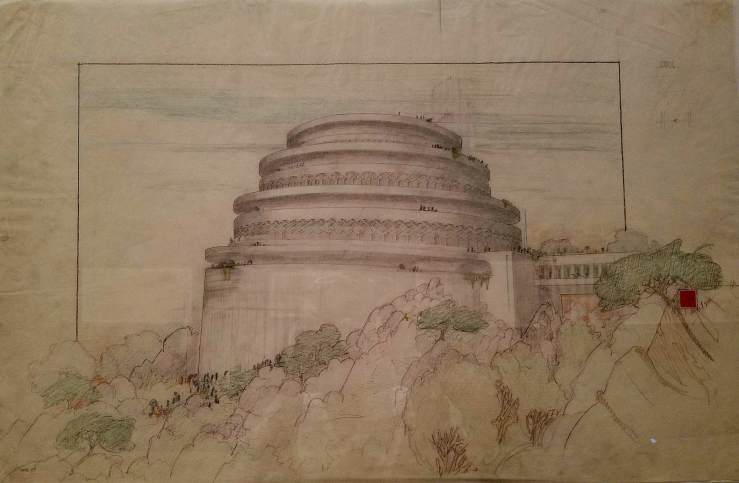
Having had a closer look on Mr. Wright’s incredibly detailed, delicate, at once artistically accomplished and architecturally precise designs, I can attest to the show’s success in opening the work of one of America’s – and the world’s – greatest architects, to new interpretations. At least to my, not-so-expert, eyes.  Goron Strong Automobile Objective and Planetarium, Sugarloaf Mountain, Maryland
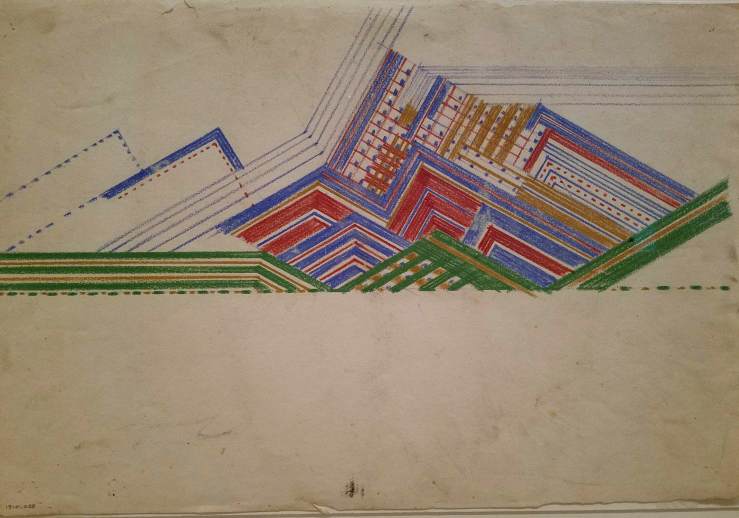
Project, 1924-25 // Pencil and coloured pencil on tracing paper

This project is often seen as a forerunner of the Guggenheim Museum, built two decades later.
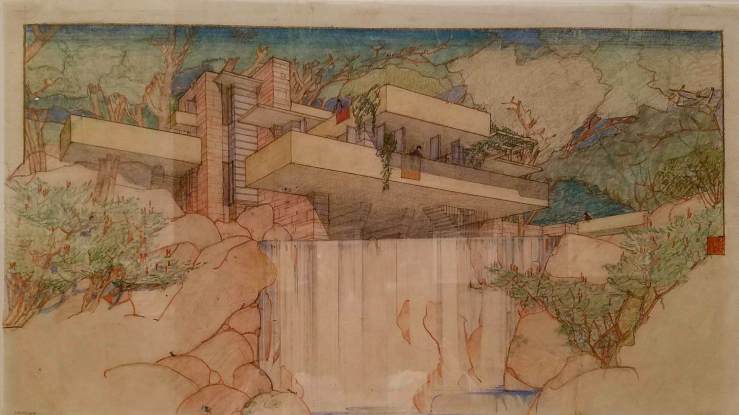

Fallingwater (Kaufmann House), Mill Run, Pennsylvania 1934-37
Pencil and coloured pencil on paper

The bold design of a house over a waterfall for Pittsburgh department store magnate Edgar Kaufmann put Wright back in the public eye at a moment when he was increasingly anxious that his fame had faded. This drawing landed Wright on the cover of Time magazine in 1938 – he was only the third architect ever to receive that honour – and was also displayed that same year in an exhibition at MoMA devoted solely to his unprecedented house design.
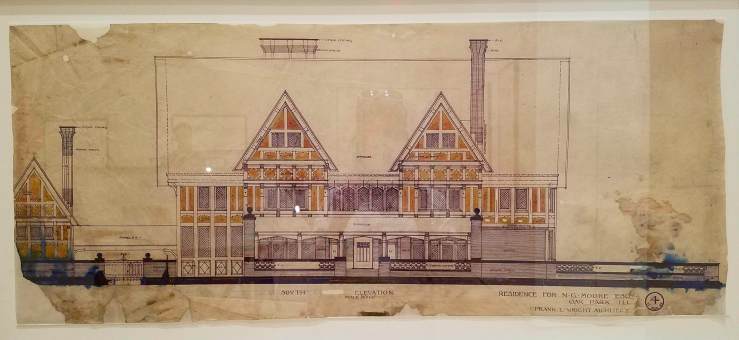

Moore House, Oak Park, Illinois, 1895
Ink on paper
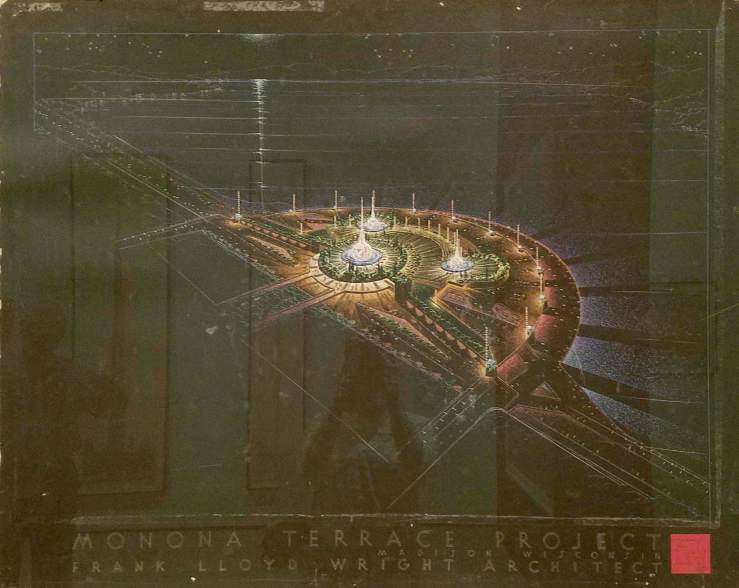

Madison Civic Center (Monona Terrace), Madison, Wisconsin
Project, 1938-59 // Ink and pencil on paper mounted on plywood

Even  as Wright reimagined Chicago as a city dominated by a few super-tall skyscrapers but otherwise given over to a prairie landscape, he also designed urban projects – many of the megastructures, such as this one for Monona Terrace, which integrated transportation and infrastructure with public and commercial programmes – with the intention of revitalizing urban cores and engaging the preexisting city and its surroundings. This project was realized decades after Wright’s death.
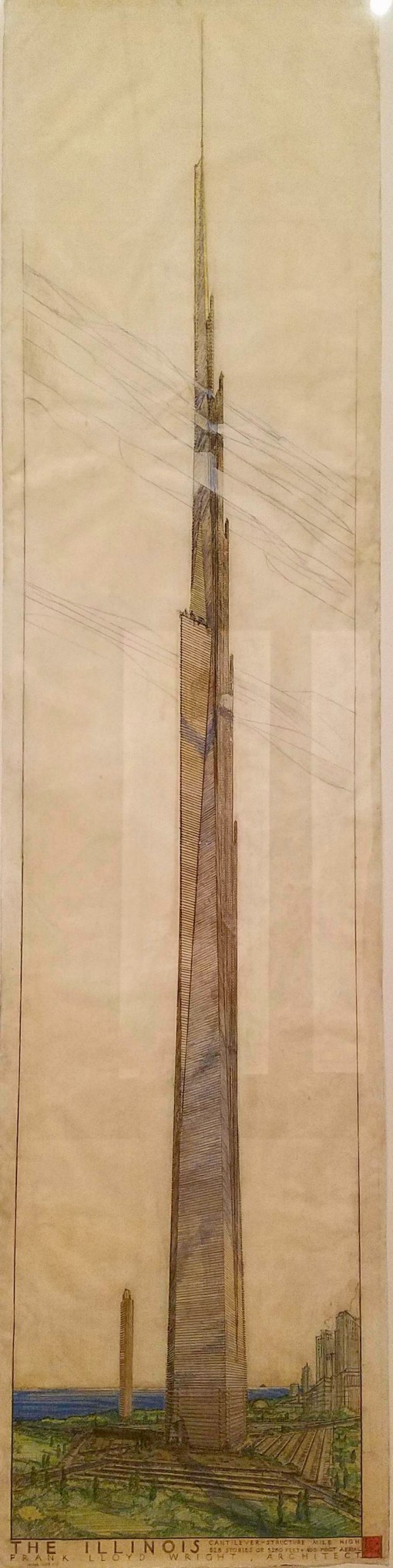

The Mile-High Illinois, Chicago
Project, 1956 // Pencil, coloured pencil and gold ink on tracing paper

In this perspective drawing, Wright inserts his imagined mile-high skyscraper into the lakefront area of Chicago, which he transforms into a green landscape, rendering obsolete many of the city’s older, densely packed towers. The Mile-High becomes a singular object, in dialogue only with another Wright proposal: a tower called the Golden Beacon, visible in the background.
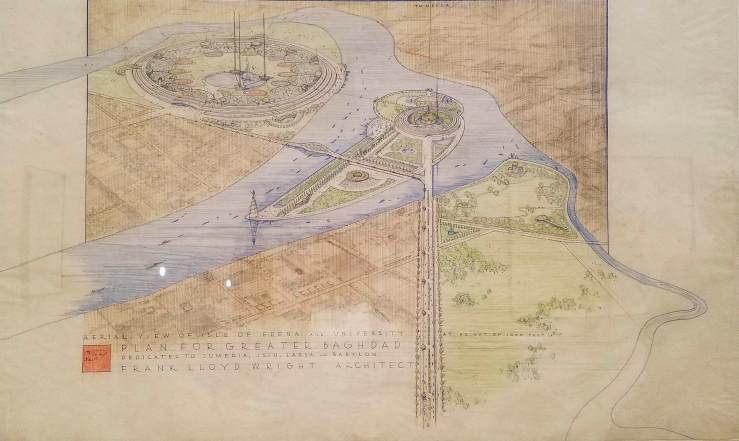

Plan for Greater Baghdad
Project, 1957 // Ink, pencil and coloured pencil on tracing paper

In 1957, Wright, along with a number of ”starchitects” including Alvar Aalto, Le Corbusier and Walter Gropius, was commissioned to design a signature building in Baghdad as part of an Iraqi government programme to bring Western architecture to the capital city. Although asked only to design an opera house, Wright expanded the programme into an entire cultural centre – including a university, two museums, a zoo and various recreational facilities – and moved the site to an island in the Tigris River. Wright’s project, like most of the others, was cancelled after the revolution of 1958.
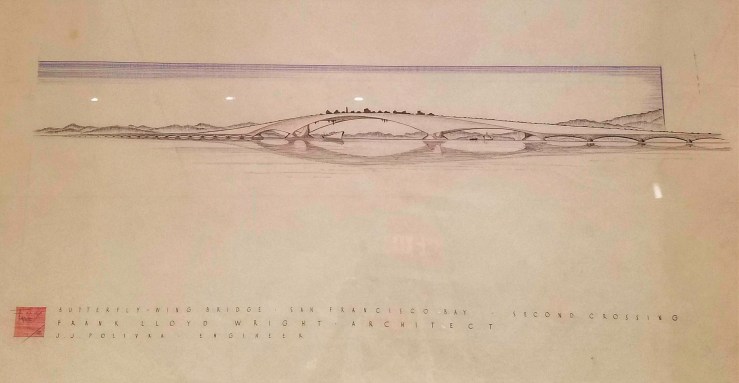

Butterfly Wing Bridge, San Francisco
Project, 1949-53 // Ink, pencil and coloured pencil on tracing paper
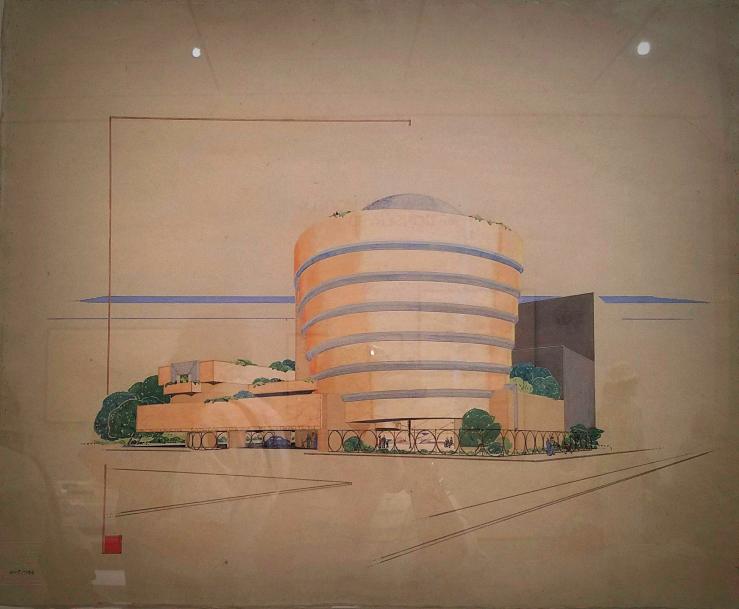

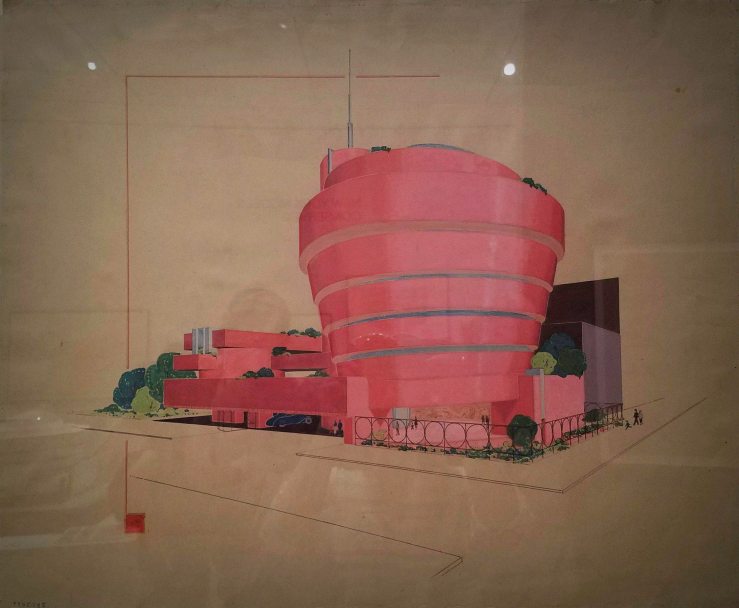
Solomon R. Guggenheim Museum, New York 1943-59
Gouache on paper mounted on board


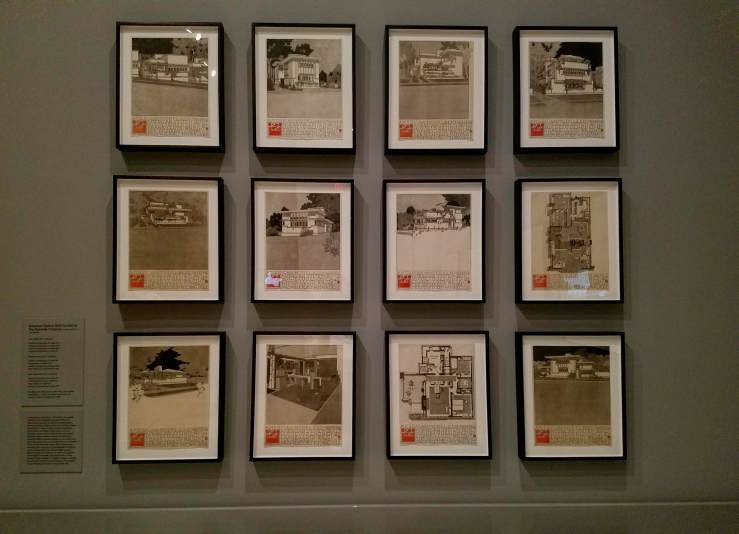
American System-Built Houses for the Richards Company
Project 1915-17


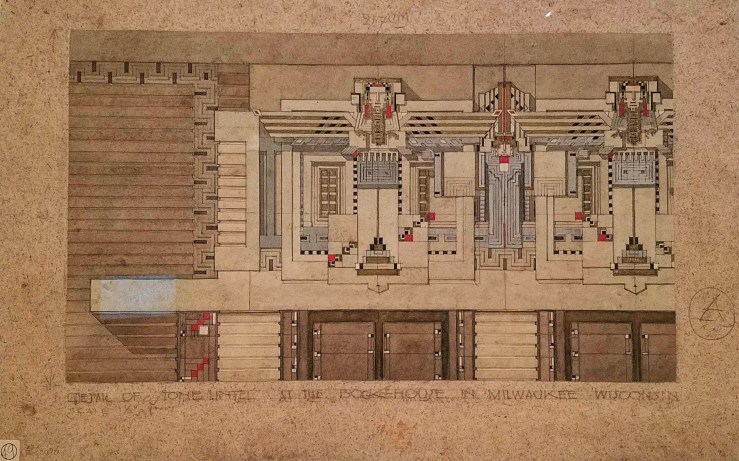
Bogk House, Milwaukee, Wisconsin – 1916-17
Watercolour, gouache, gold paint and graphite on paper mounted on Japanese paper

The two winged figures depicted in this sculptural frieze for the Bogk House recall, in their blocky, geometric forms, Mayan and Aztec motifs, while their wings resemble the eagle imagery prominent in the Pueblo Eagle Dance. The Eagle Dance was one of the most popular ceremonial dances performed at the 1915 Panama-California Exposition in San Diego, which Wright attended and where he encountered theories positing that contemporary American Indians were descendants of a venerable, ancient American civilization.


Lake Tahoe Resort, Lake Tahoe, California
Project, 1923-24 // Pencil and coloured pencil on tracing paper

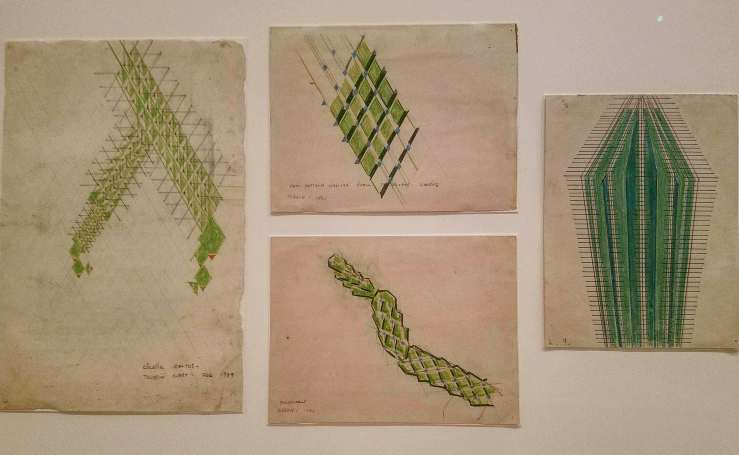
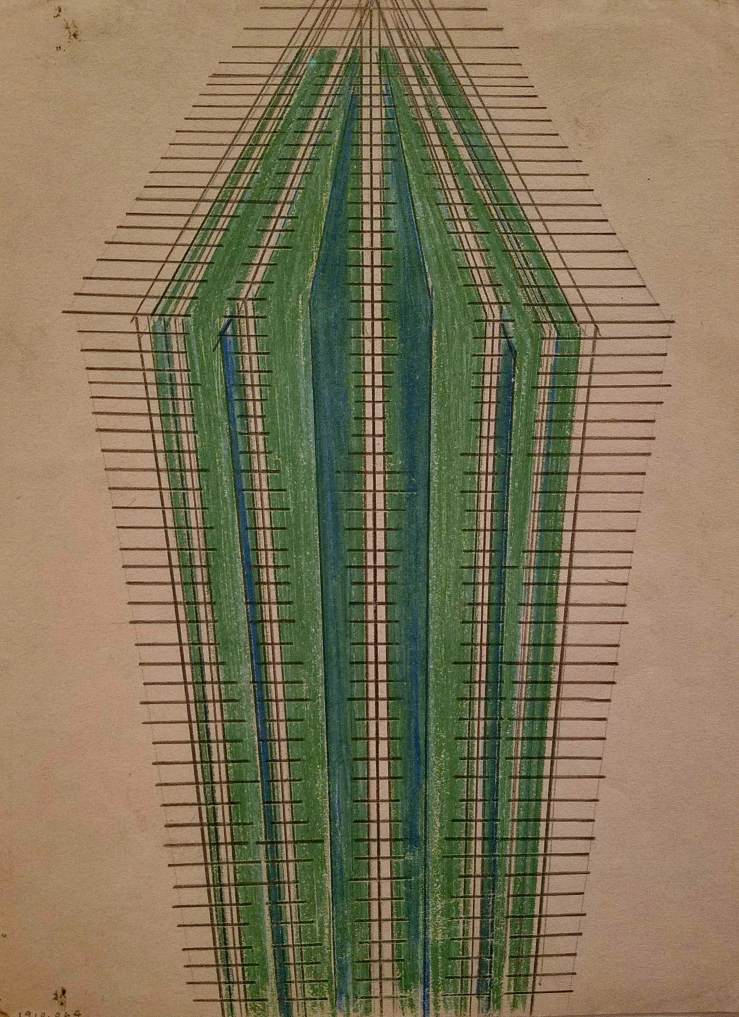
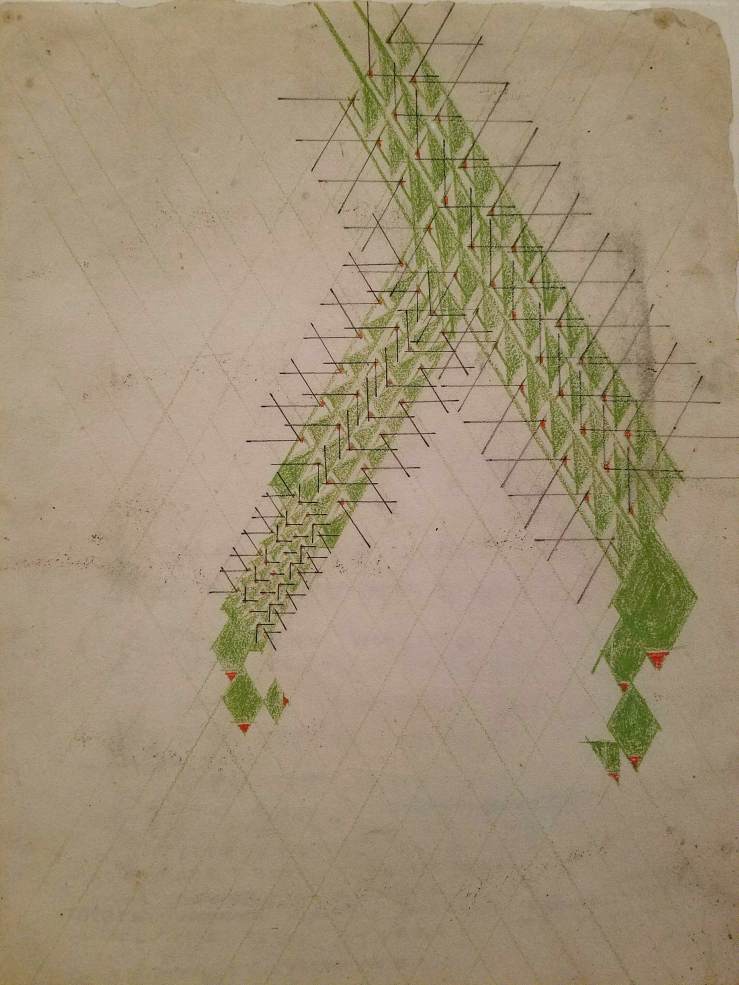
Eugene Masselink (1910-1962)
Pattern studies // Pencil and coloured pencil on paper

Various cacti, rock formations and lichen are distilled into their essential organizing forms in these applied pattern studies, demonstrating the generative relationship between nature and architecture in Wright’s practice. According to Wright, the cellular structure of desert plants, for example, offered lessons in economical construction. Believing the artist should approximate nature through a process of conventionalization or abstraction – seeking underlying geometries rather than outward forms – Wright incorporated such pattern studies into his educational approach at the Taliesin Fellowship. Eugene Masselink, one of Wright’s most talented apprentices, drew these examples.
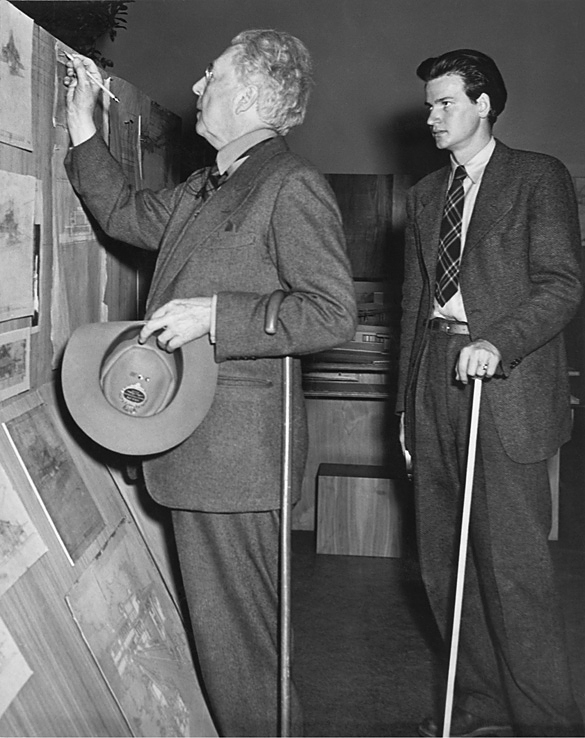
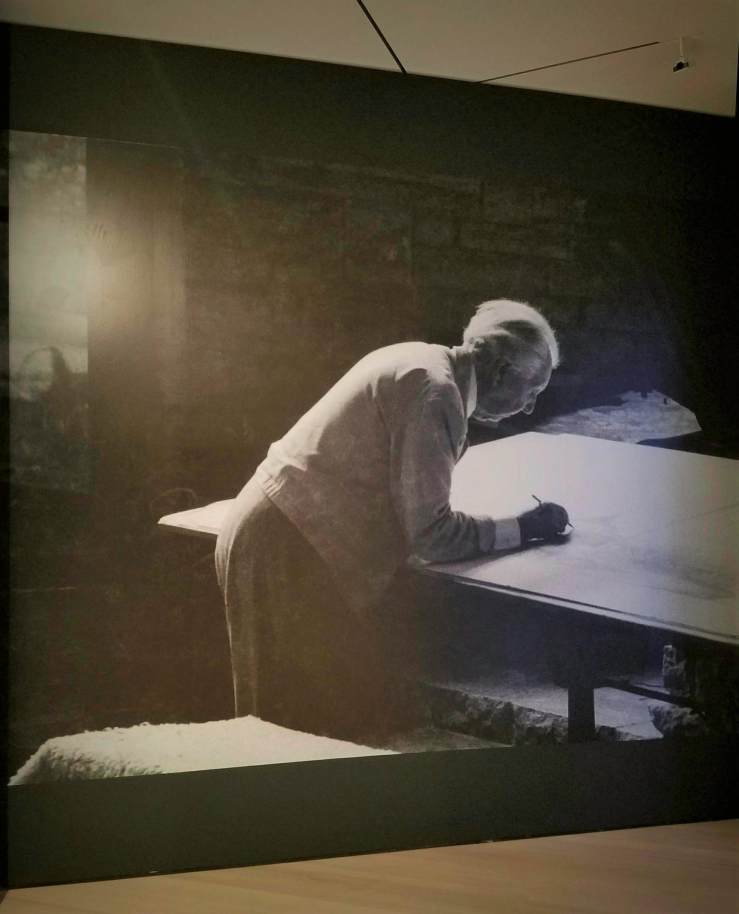
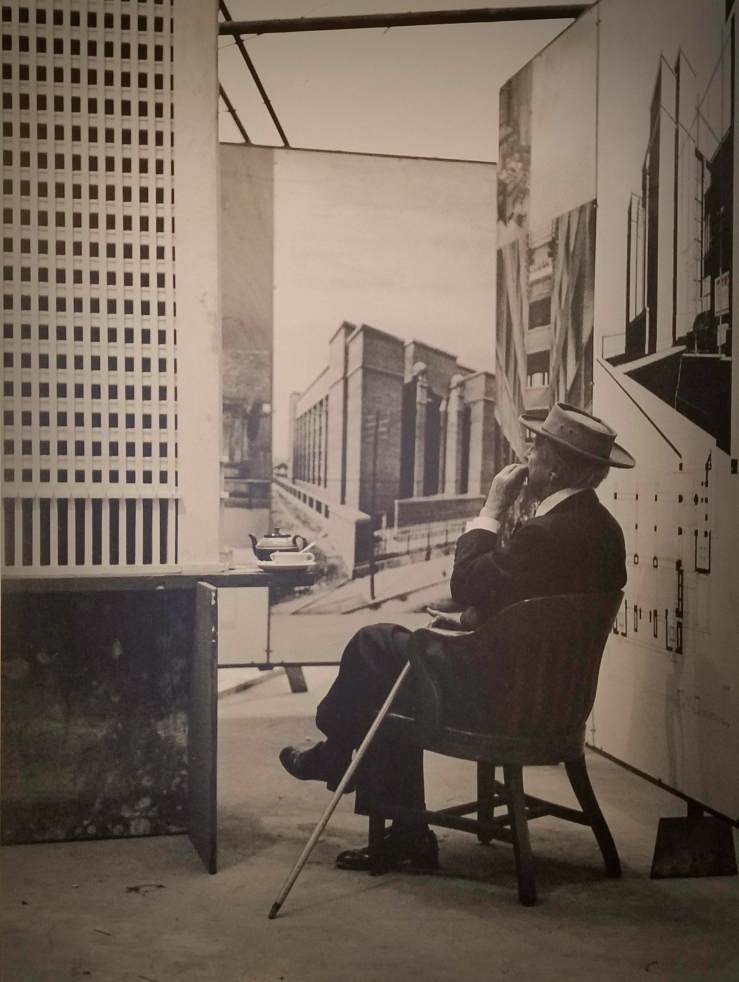
Frank Lloyd Wright and his assistant Eugene Masselink installing the exhibition Frank Lloyd Wright: American Architect at The Museum of Modern Art, November 13, 1940-January 5, 1941. Photographic Archive. The Museum of Modern Art Archives, New York
Photo: Soichi Sunami
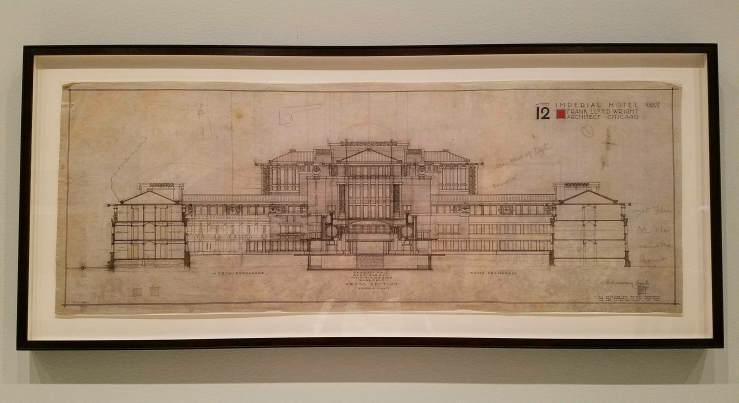

Preliminary scheme for Imperial Hotel, Tokyo 1913-23
Ink and pencil on drafting cloth

The Imperial Hotel in Tokyo took over a decade to build and exerted a profound influence on both Wright’s designs and the architecture of a modernizing Japan.

Having survived the Great Kantō Earthquake in 1923 and the American bombing of the city during World War II, it was finally demolished in 1968 to be replaced with a modern hotel tower.

Portions of the Imperial Hotel, including the grand entrance/lobby and the reflecting pool, were saved and painstakingly relocated to the Meiji Mura Museum, an open-air architectural theme park in Inuyama that contains more than 60 historic, culturally significant buildings from Japan and beyond. [source]
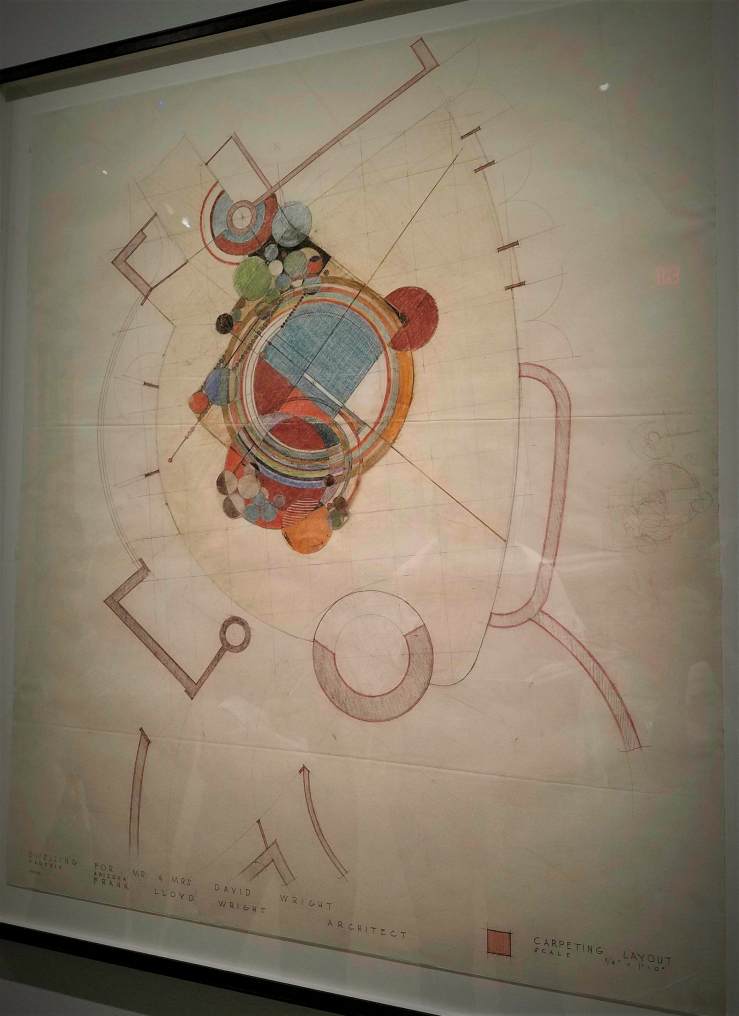
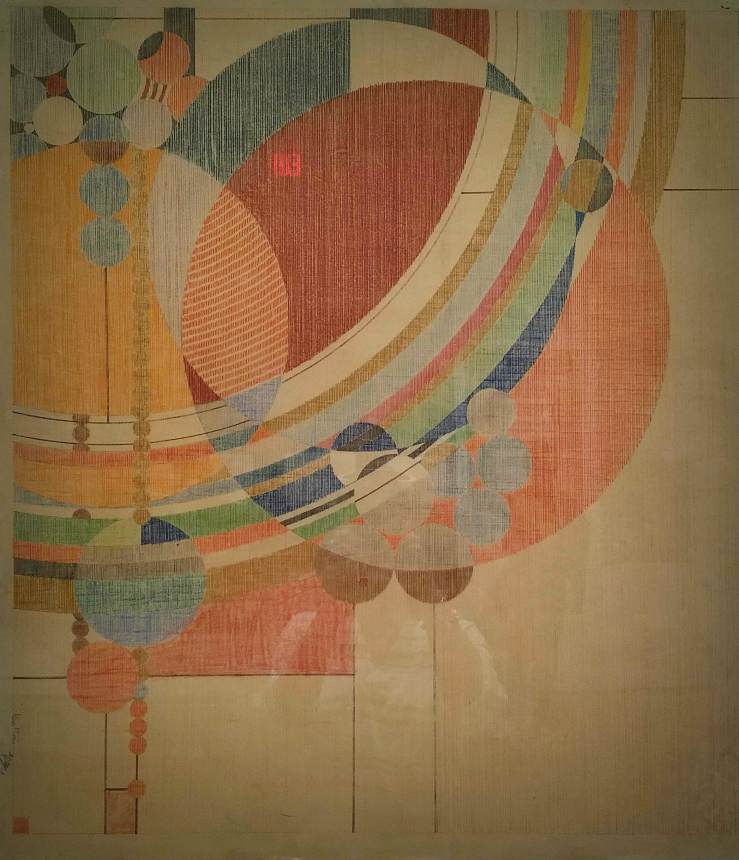
March Balloons, 1955
Drawing based on a cover design for Liberty magazine, c. 1926


From Frank Lloyd Wright at 150: Unpacking the Archive, an exhibition that ran through October 1st, 2017 at MoMA.

September 25th, 2017
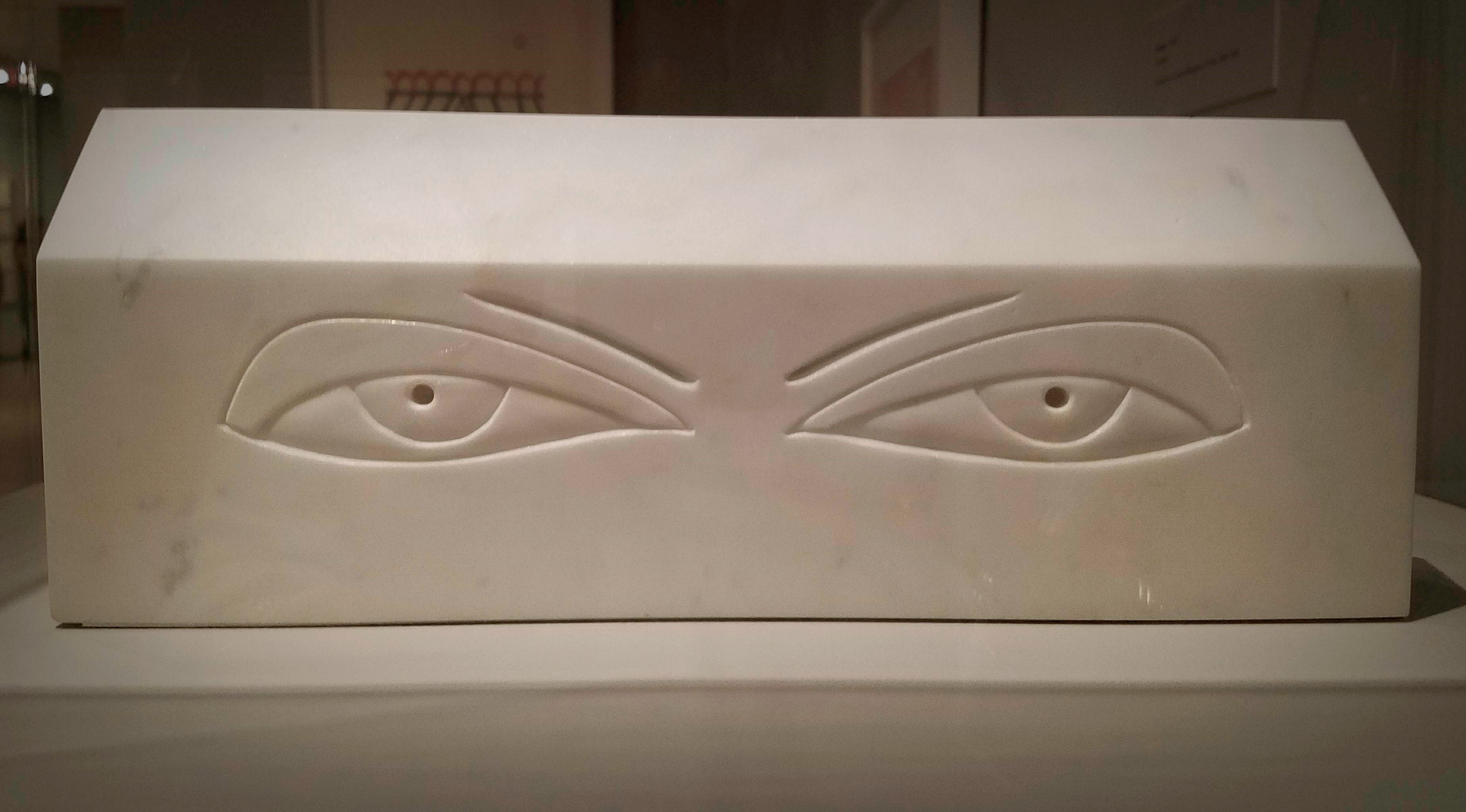
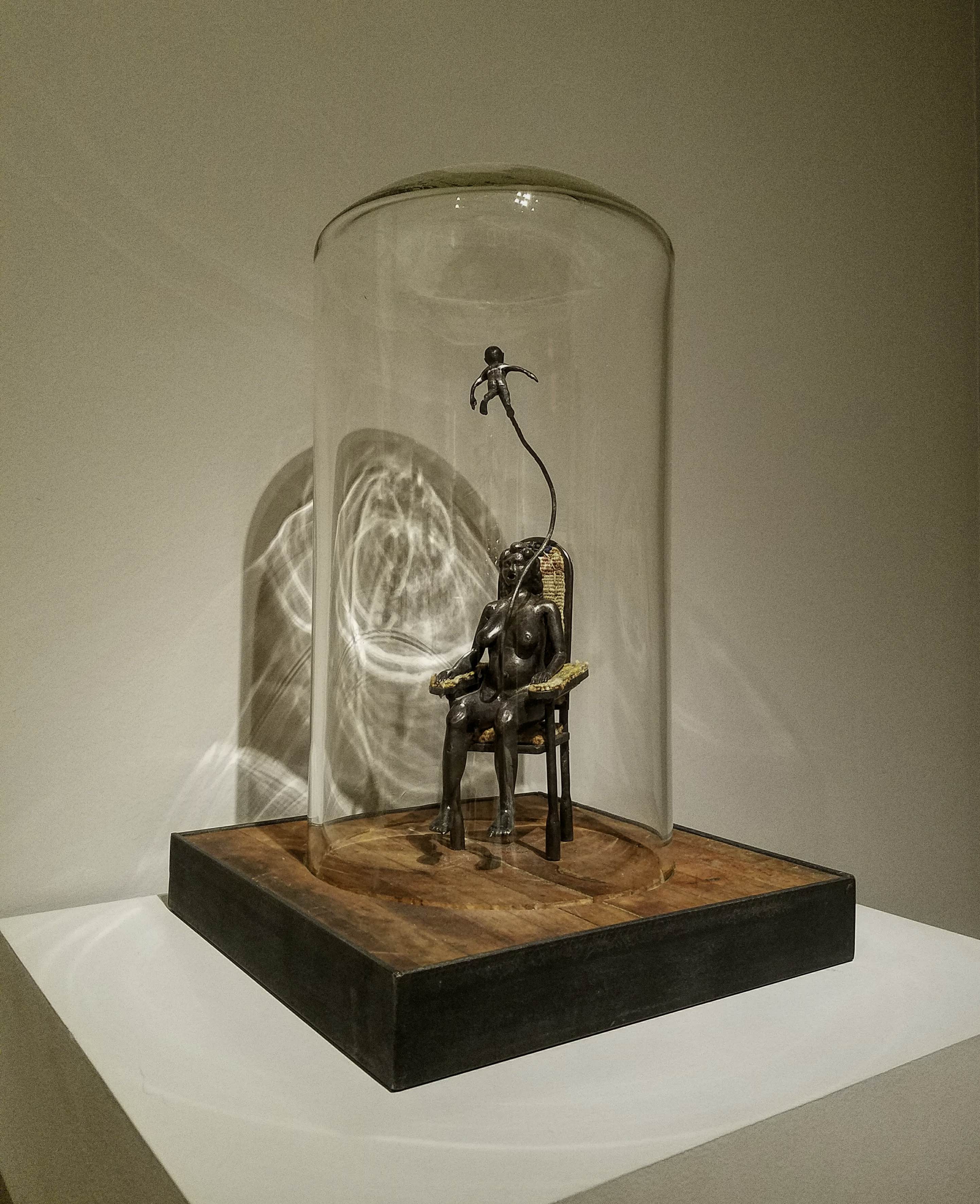
The Idiosyncratic Eyes of Mme Bourgeois

Staring into your soul.

House 1994
Marble


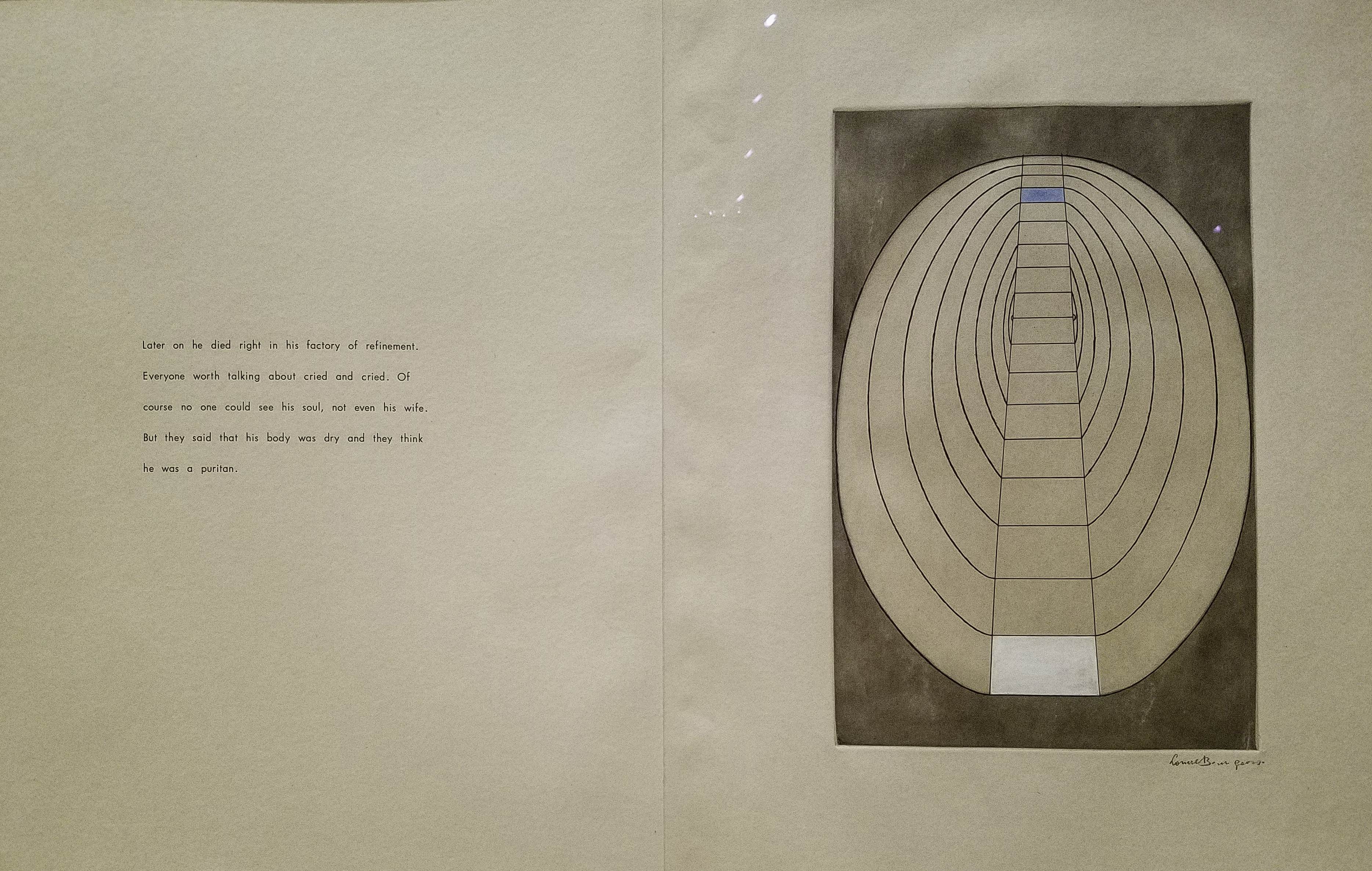
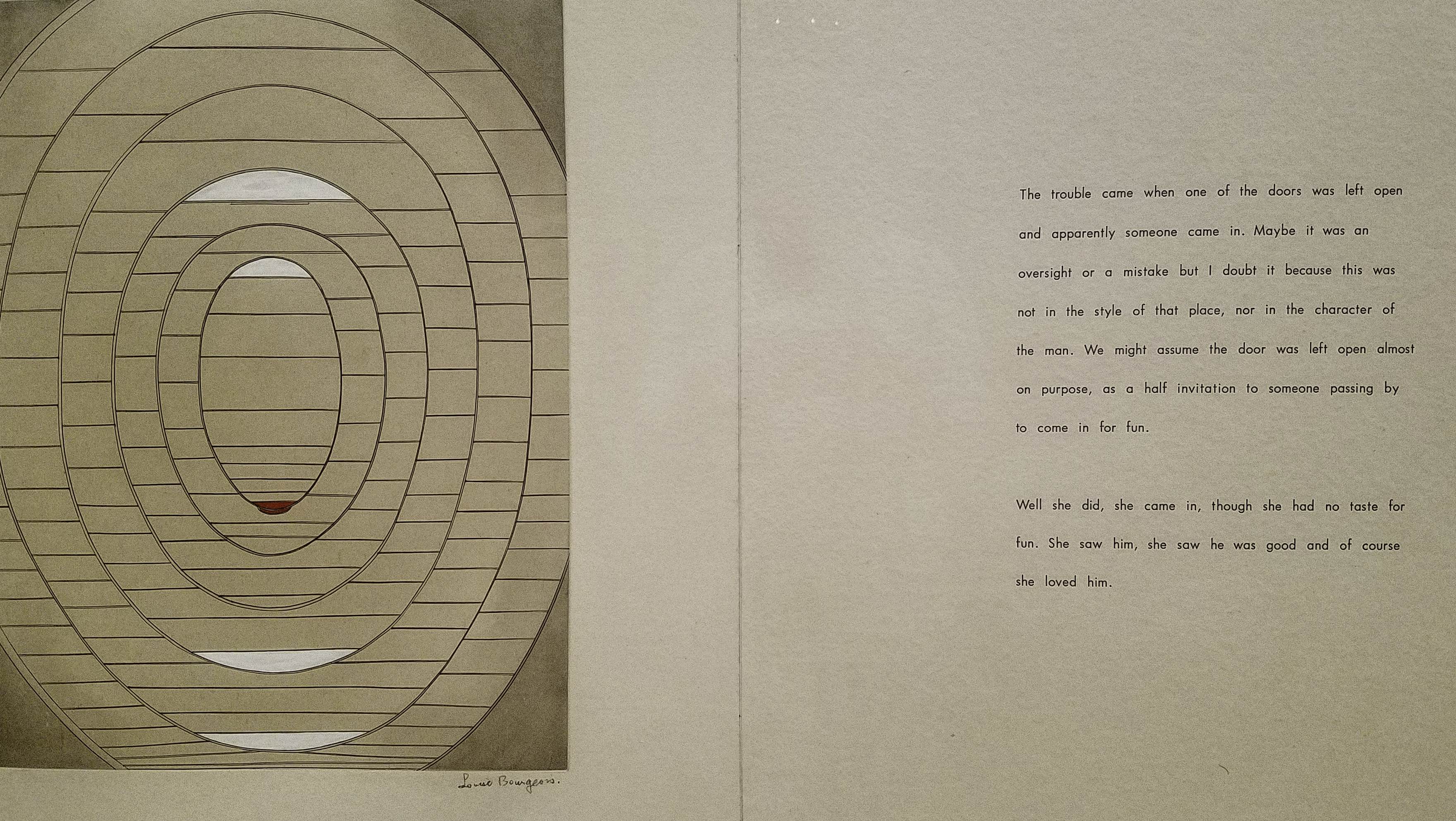
the puritan 1990-97 (text: 1947)
Folio set no. 3: engravings with selective wiping, gouache and watercolour additions


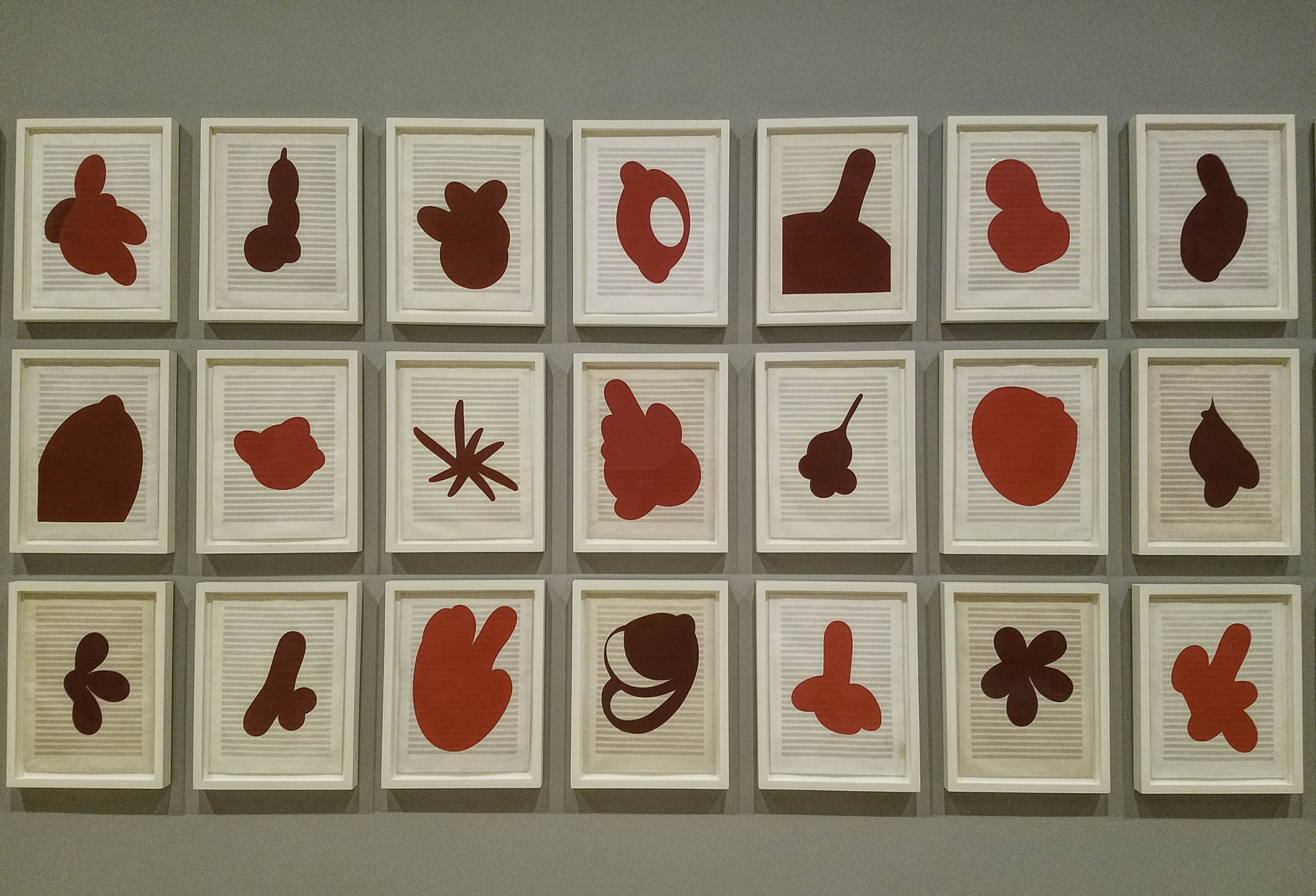
Lullaby 2006
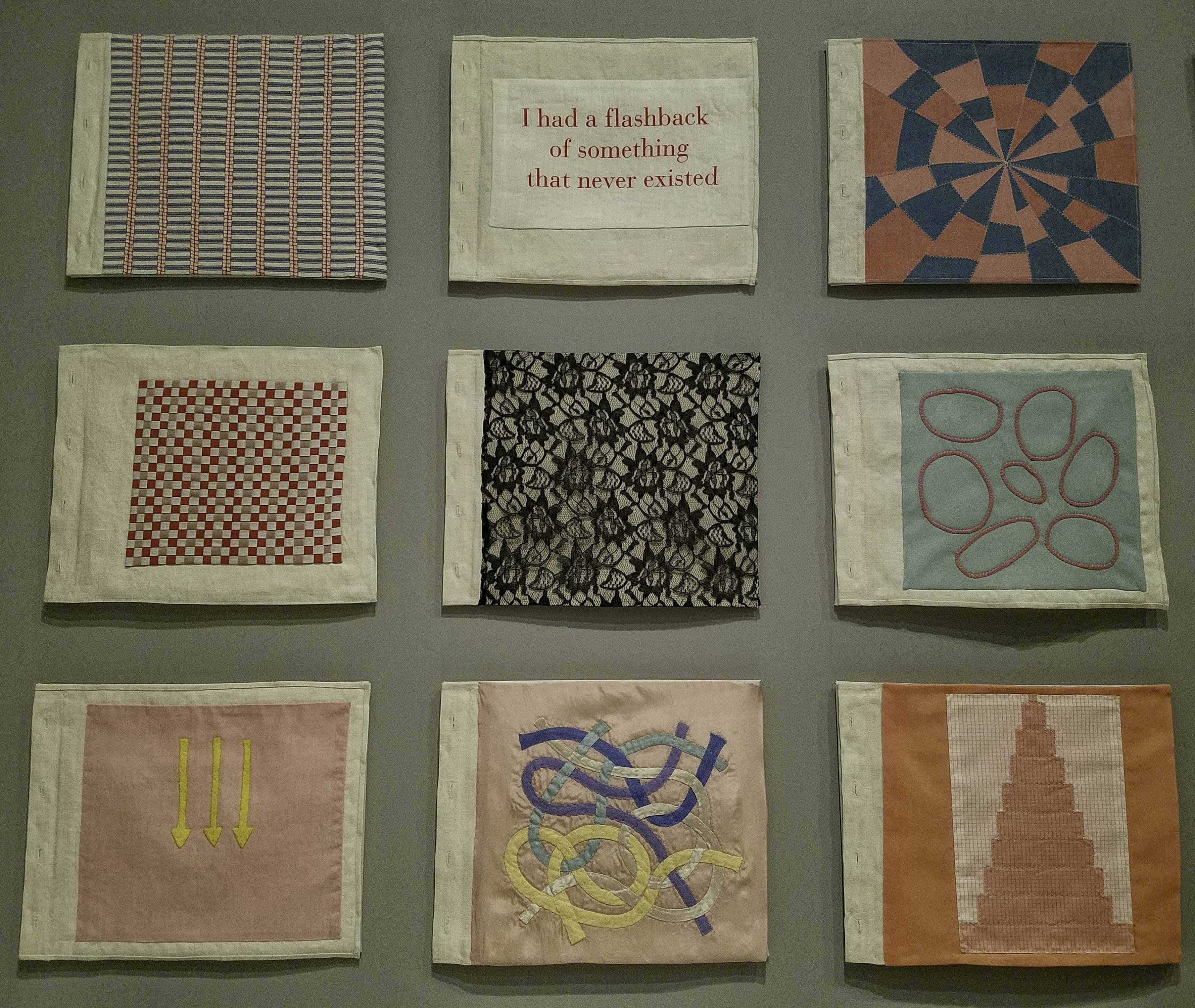
Series of twenty-five screenprints on fabric: title sheet and twenty-four compositions

Bourgeois created shapes by turning and tracing common household objects – scissors, a knife and a candy dish, among them. She published this set herself, under the imprint Lison Editions. Lison, Lise, Lisette, Louison and Louisette were among her childhood nicknames.


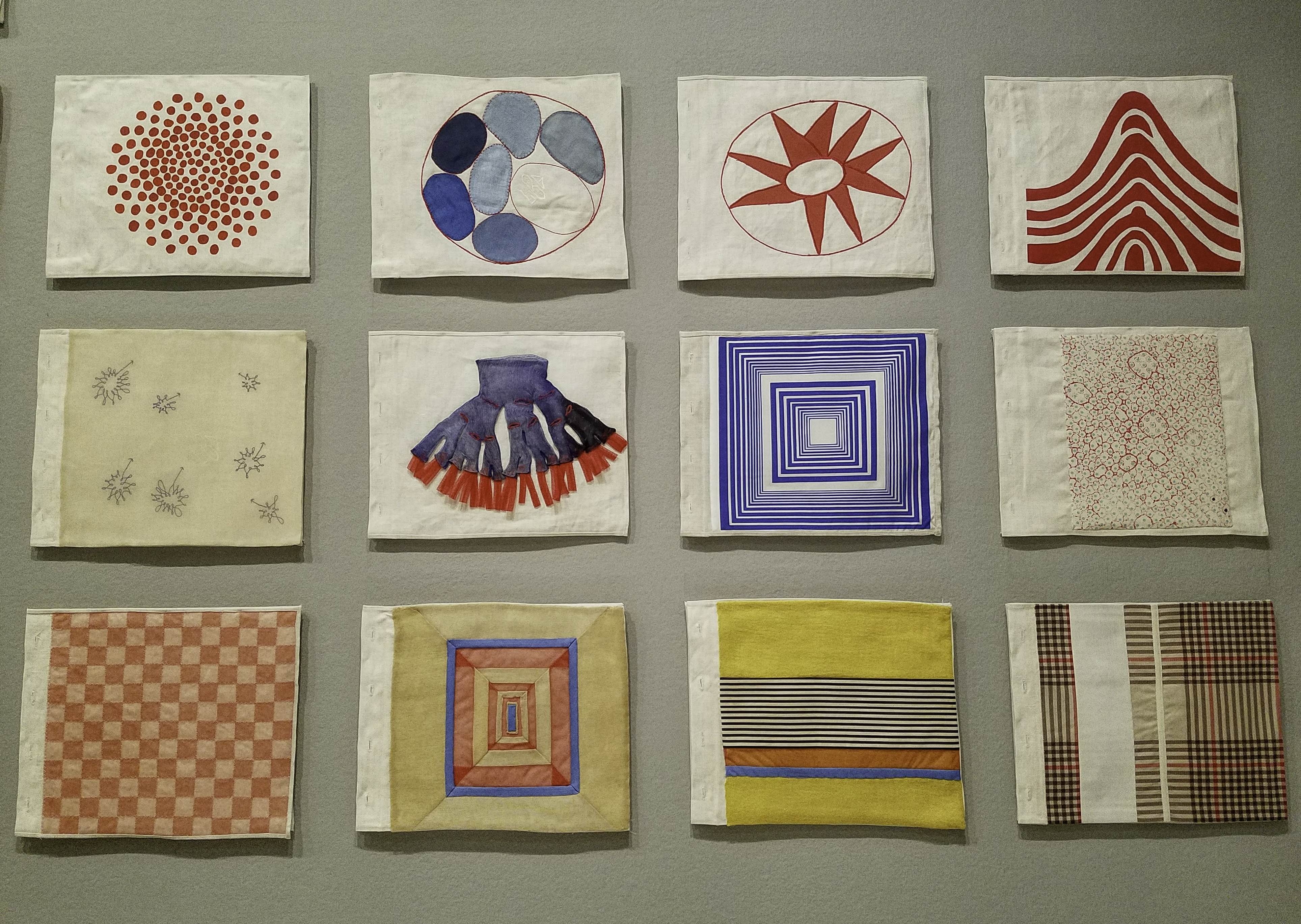
Ode à l’Oubli 2004
Fabric illustrated book with thirty fabric collages and four lithographs

The pages of this book are composed of linen hand towels saved from her trousseau. Many contain the embroidered monogram LBG (Louise Bourgeois Goldwater). Bourgeois later issued and editioned version of this book in twenty-five examples. In that version, the pages are tied together through buttonholes instead of bound so all of the pages can be displayed simultaneously, as seen on this wall.


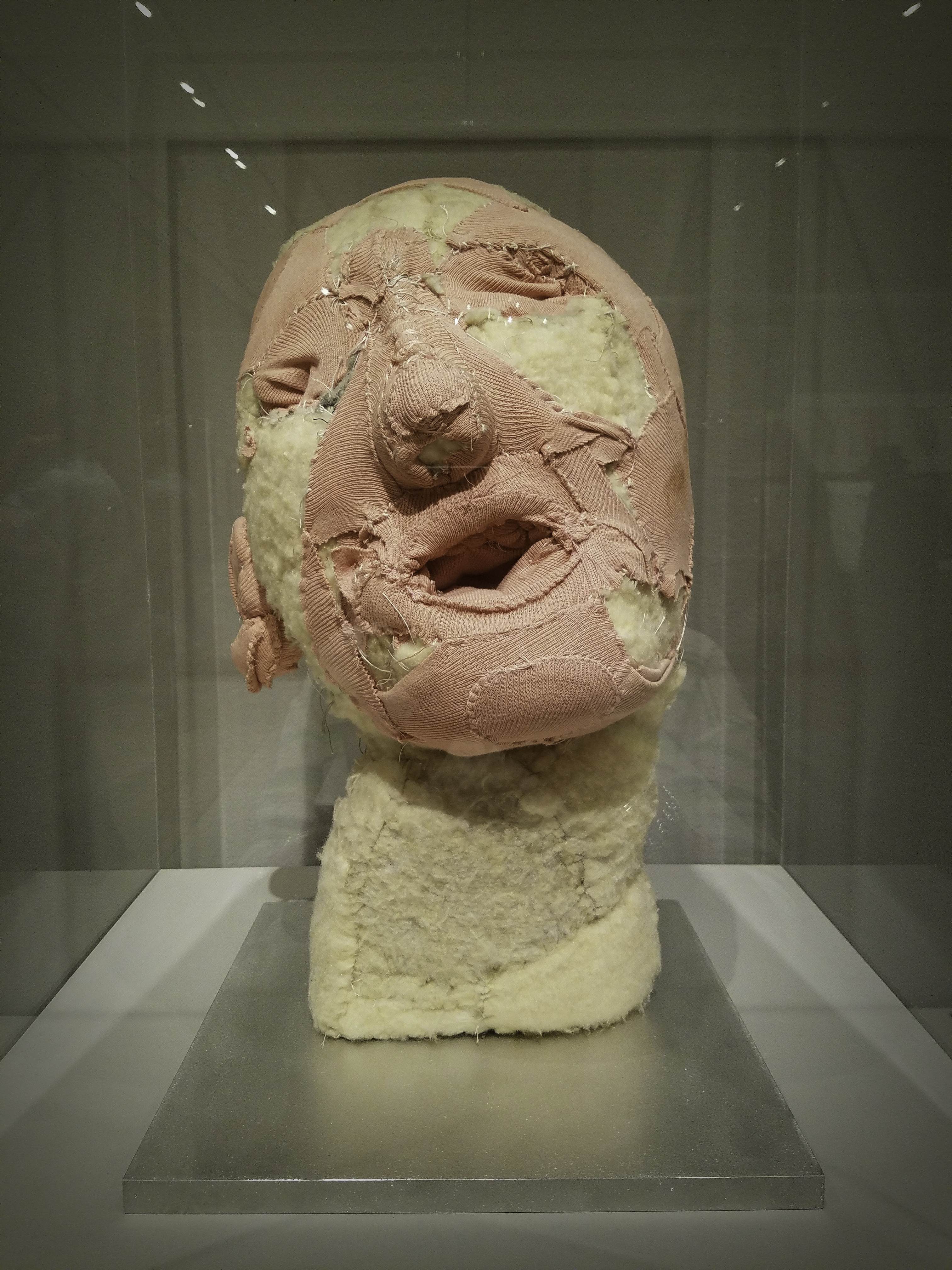
Untitled 1998
Fabric and stainless steel


Stamp of Memories I 1993
Drypoint with metal stamp additions


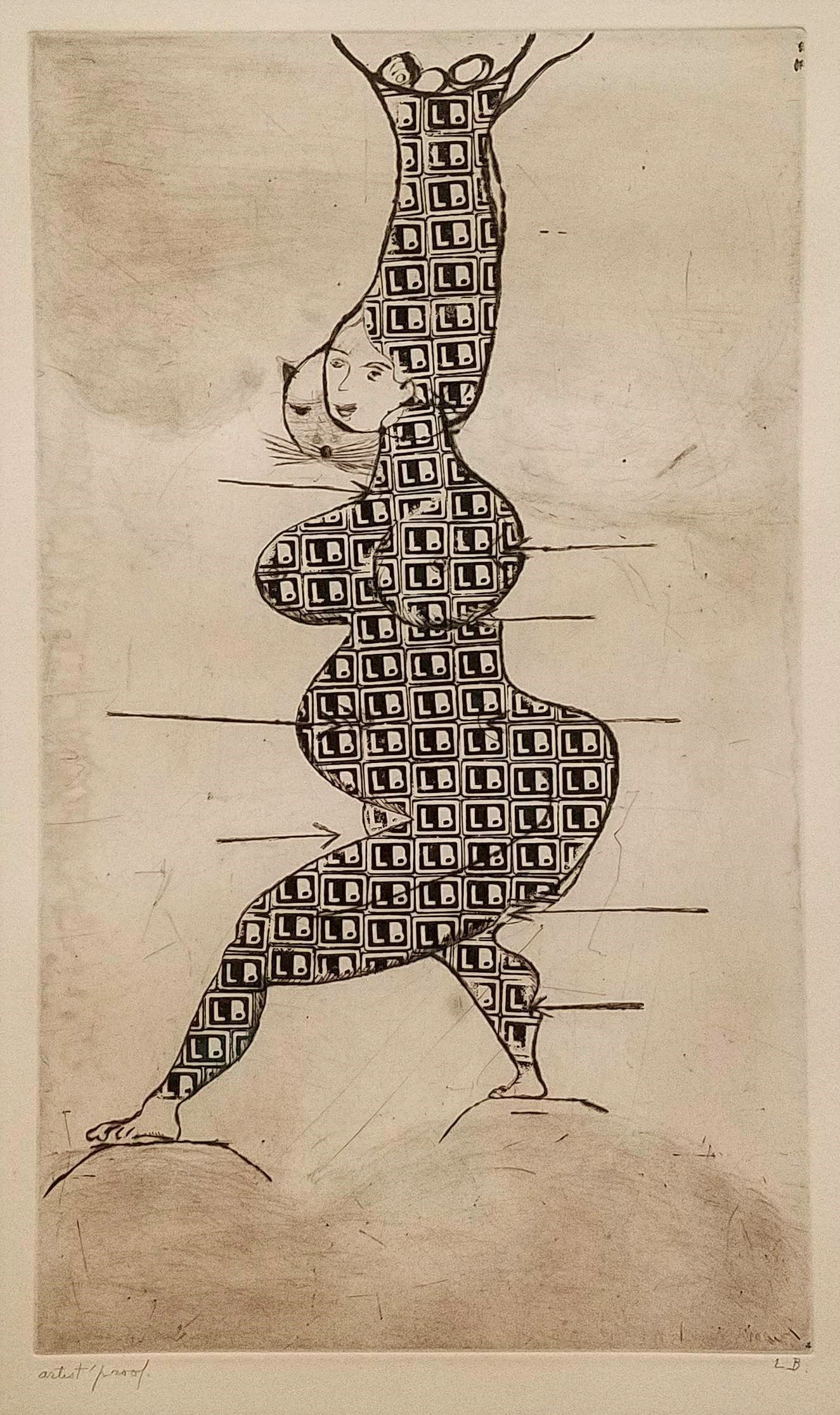
Sainte Sébastienne 1992
Drypoint


Triptych for the Red Room 1994
Aquatint, drypoint and engraving

The subject of pain is the business I am in.“ – LB


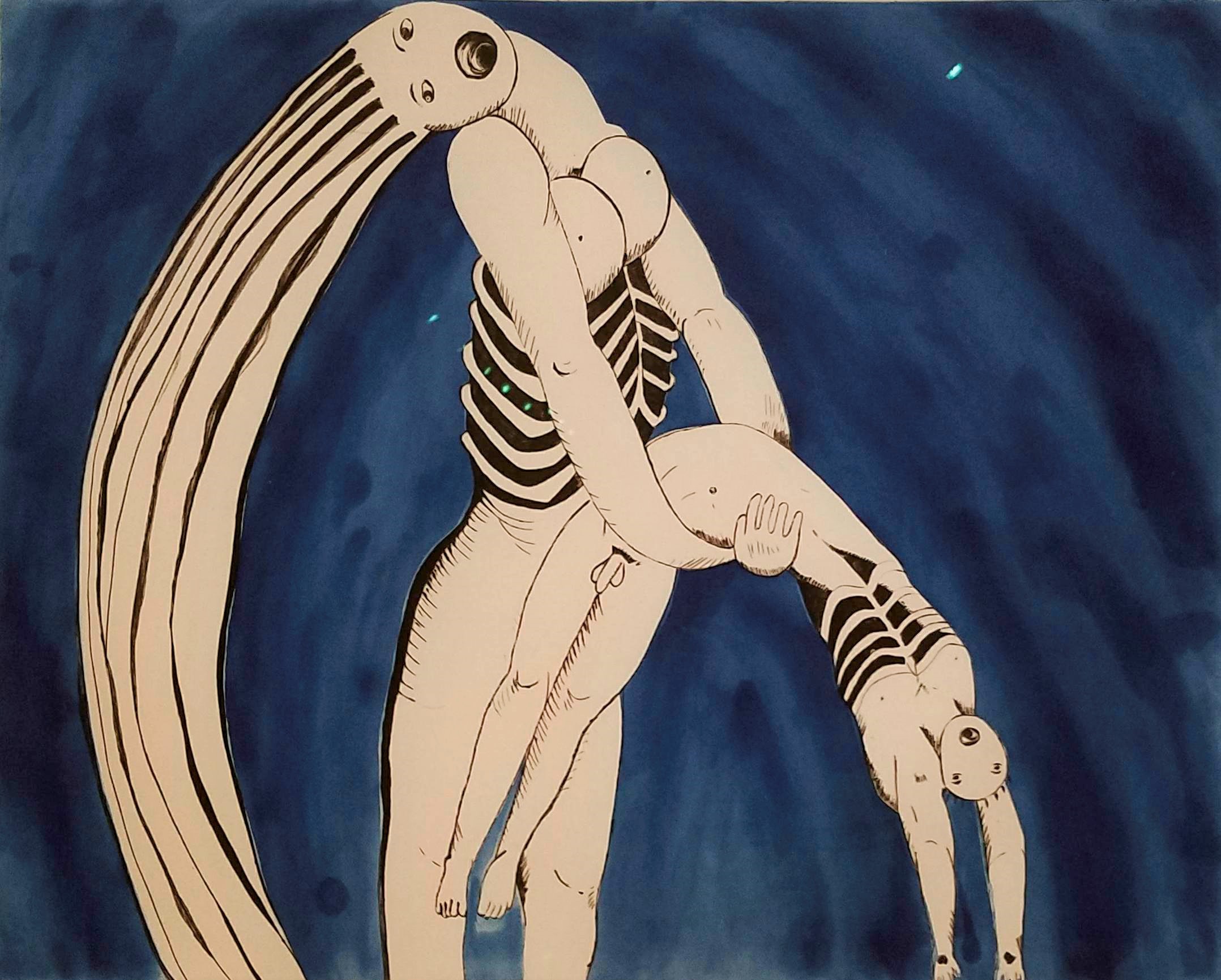
Self Portrait 2007
Gouache on paper


Self Portrait 1990
Drypoint, etching and aquatint


I Redo (interior element) from the installation
I Do, I Undo, I Redo 1999-2000
Steel, glass wood and tapestry


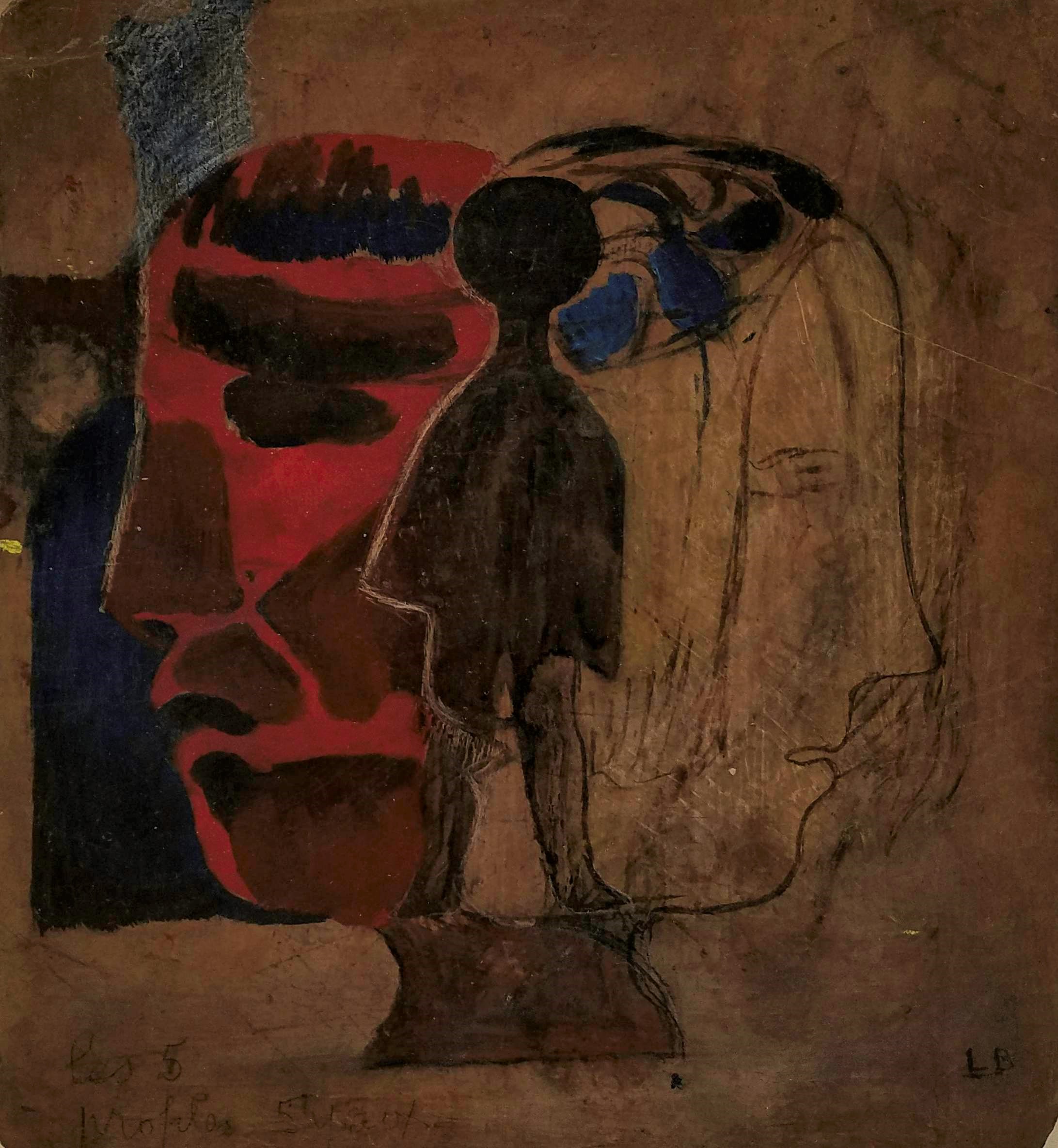
Untitled 1940
Oil and pencil on board


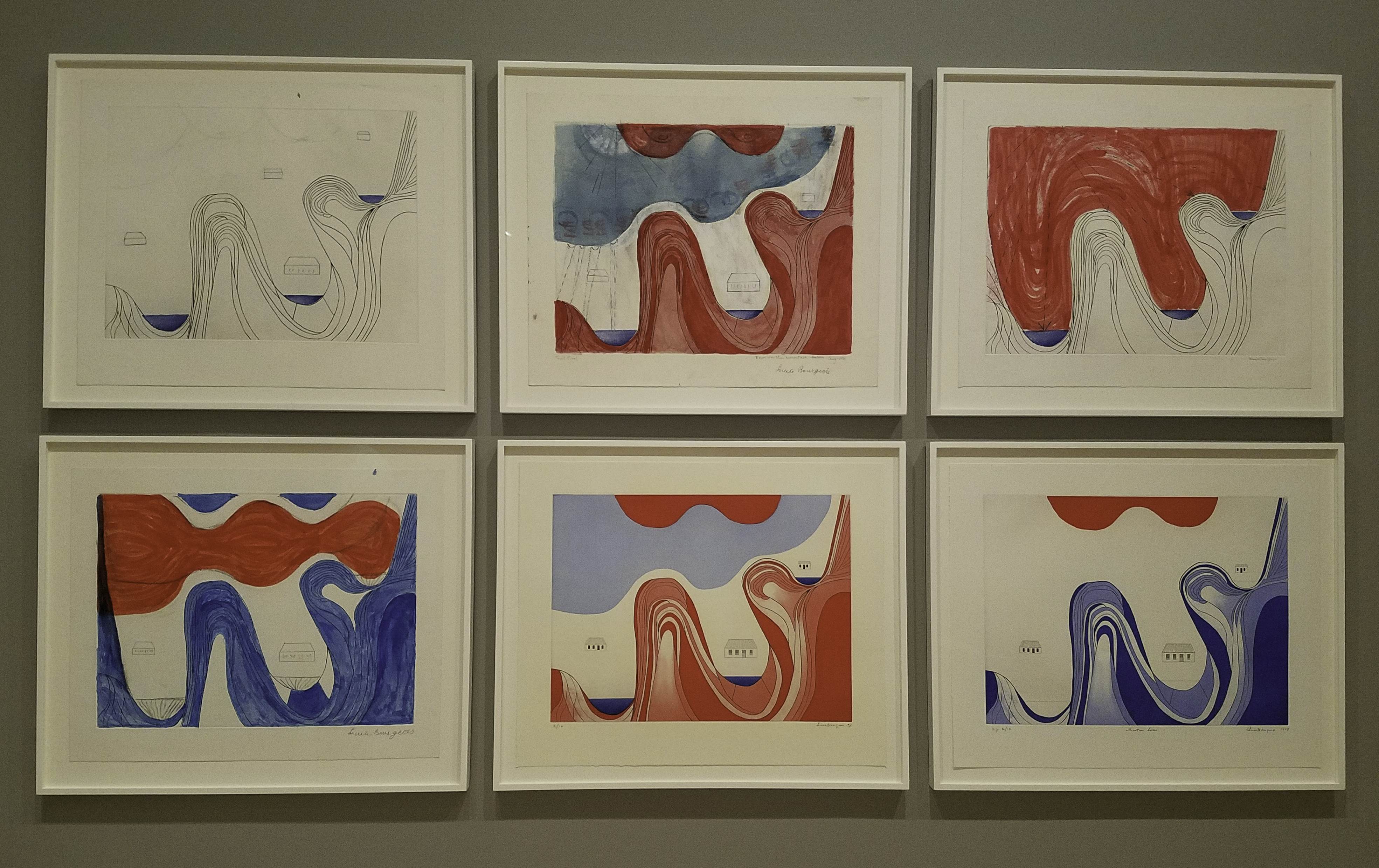
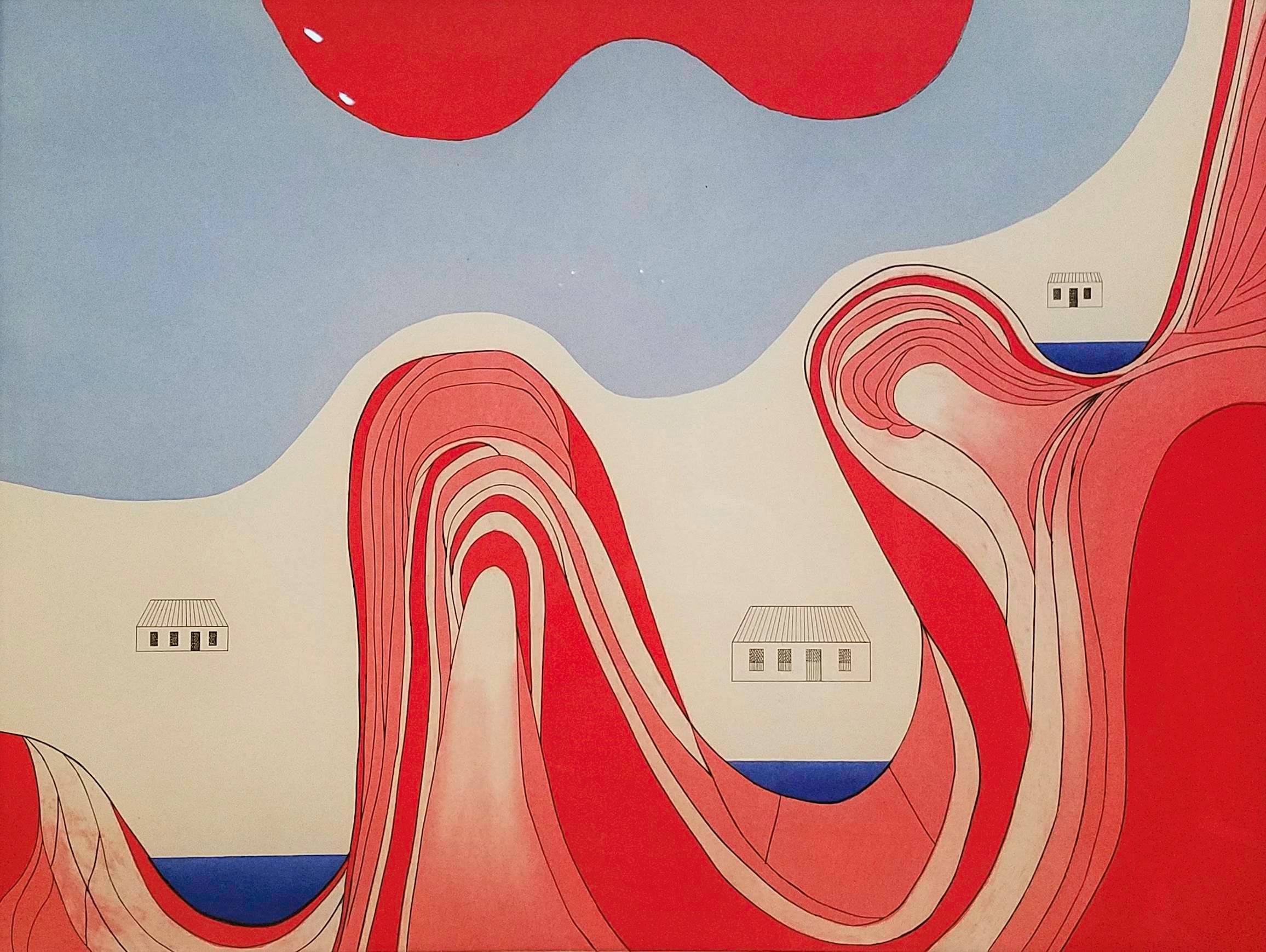
Lacs de Montagne (Mountain Lakes), 1996 & 1997
Engraving and aquatint with watercolour, gouache and ink additions


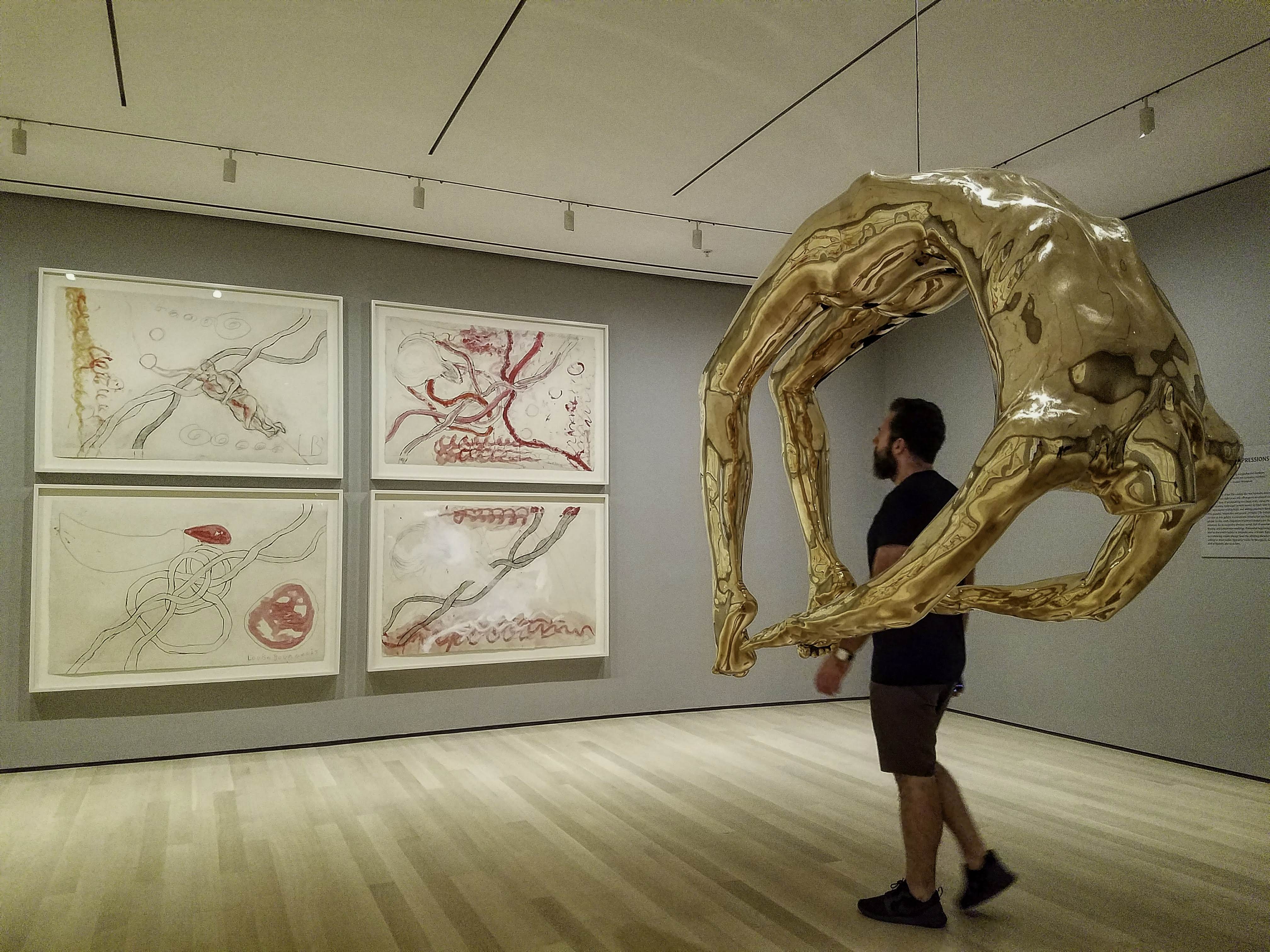
Arch of Hysteria 1993
Bronze, polished patina


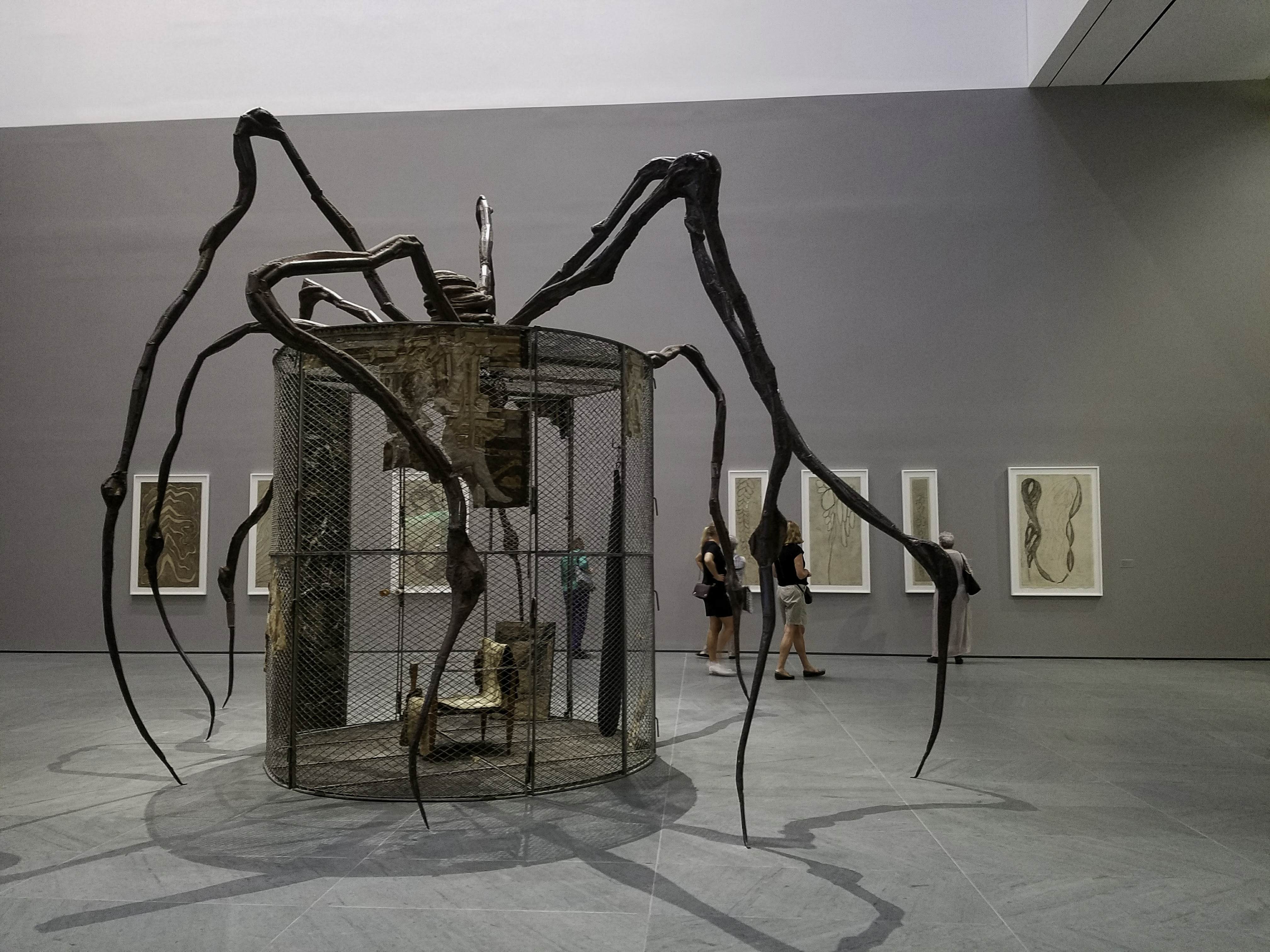
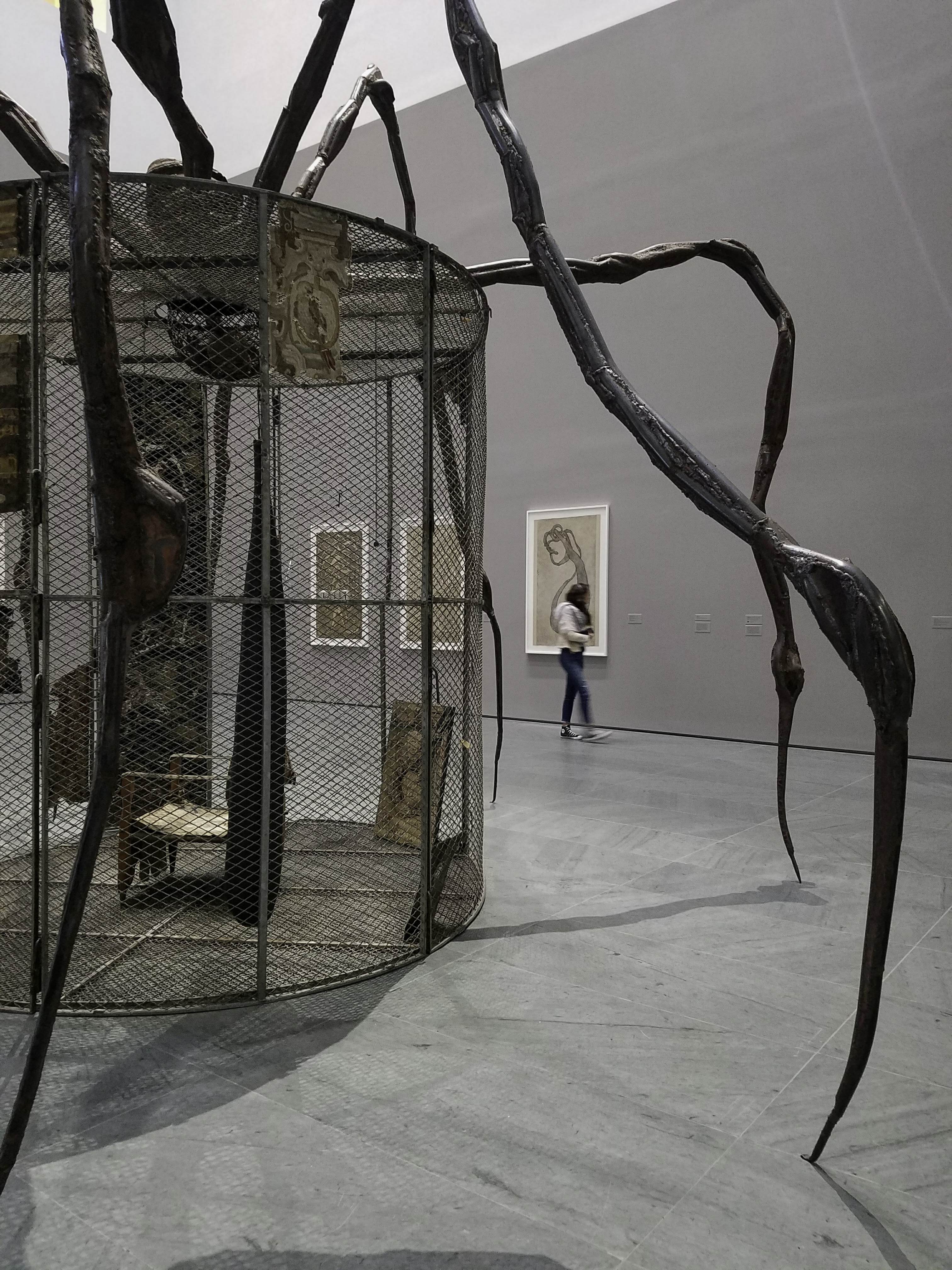
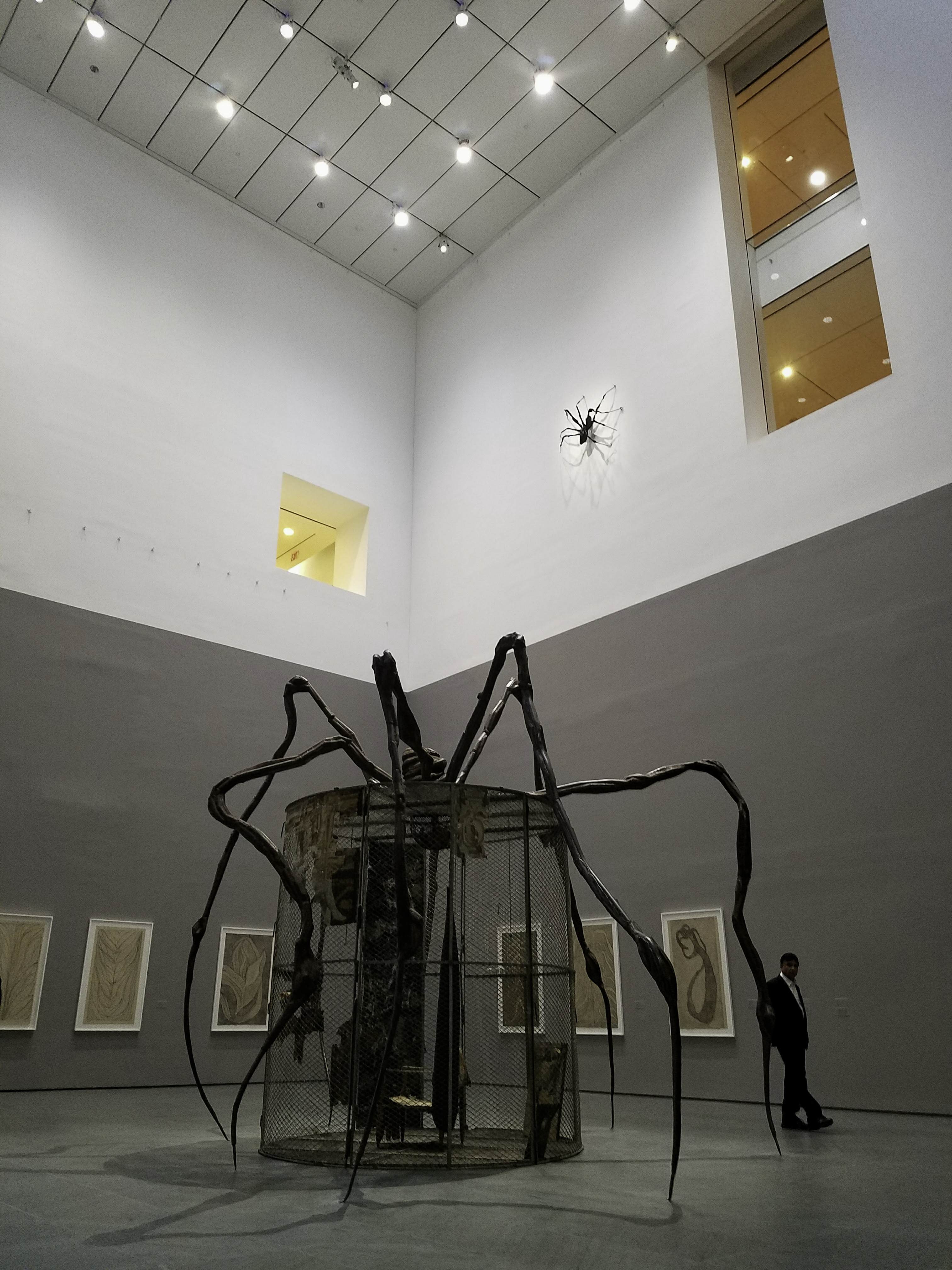
Spider 1997


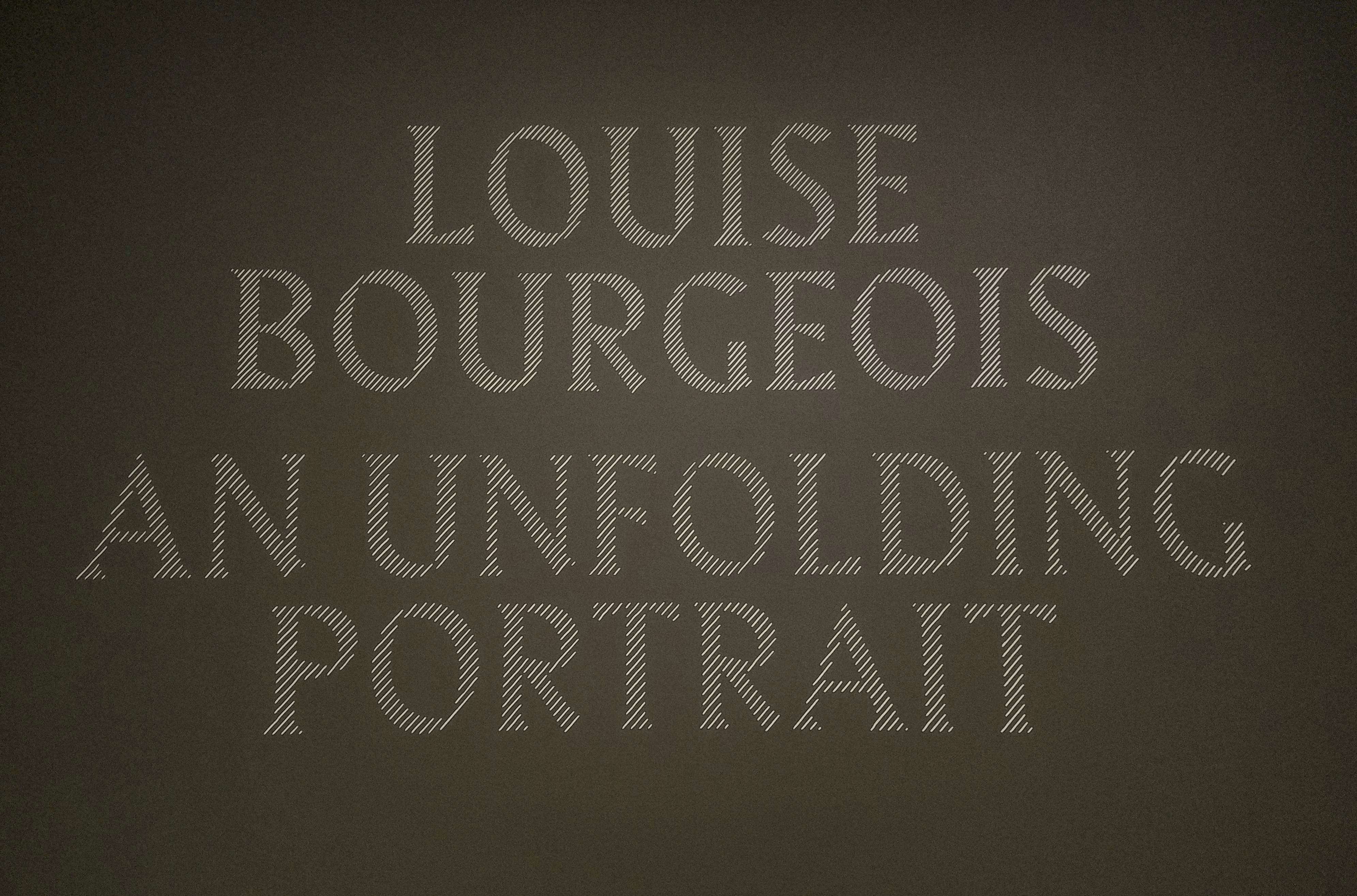
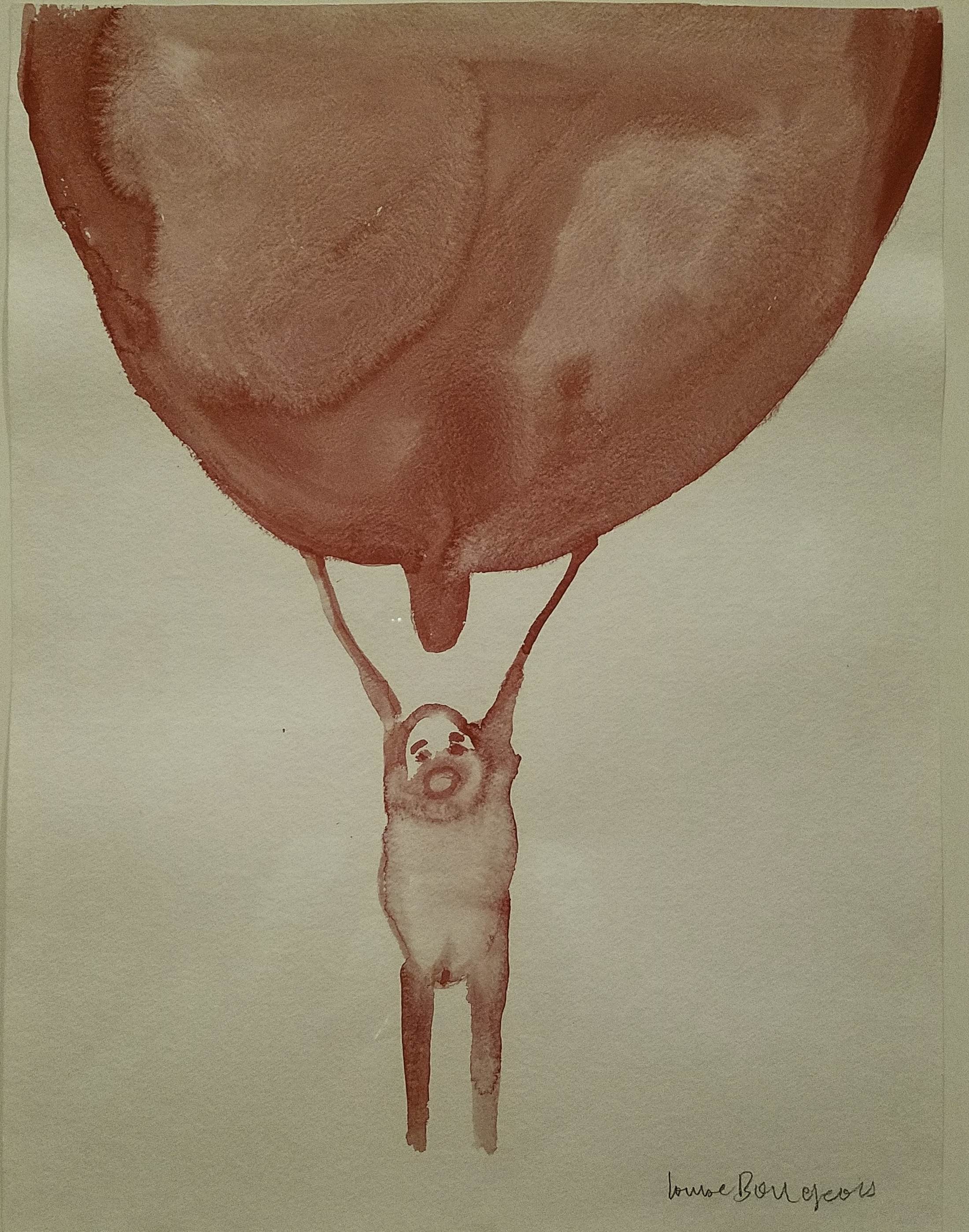
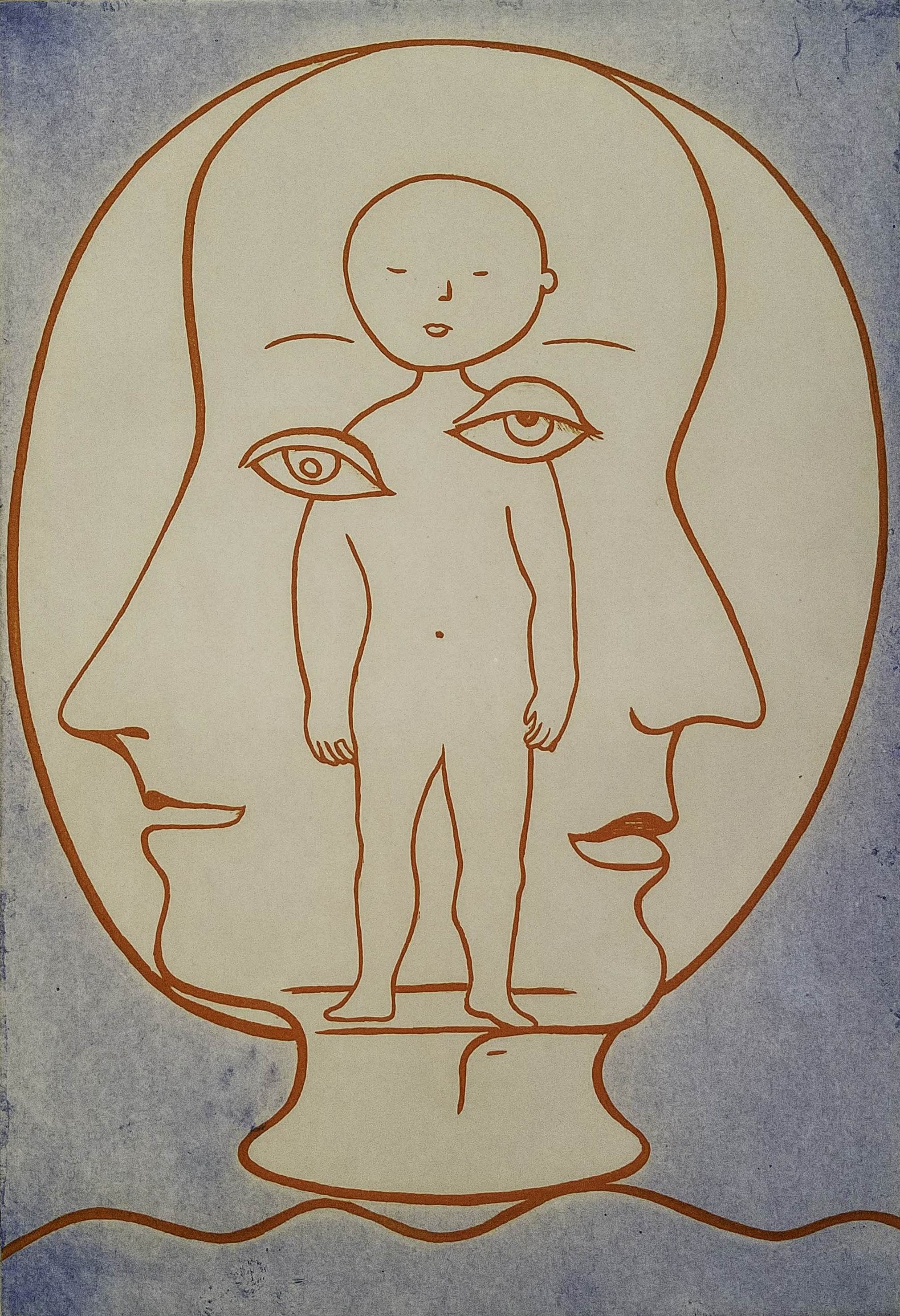
Note from Louise Bourgeois: An Unfolding Portrait, an exhibition that ran at the MoMA, until end January 2018: ”[…] explores the prints, books, and creative process of the celebrated sculptor Louise Bourgeois (1911–2010). Bourgeois’s printed oeuvre, a little-known aspect of her work, is vast in scope and comprises some 1,200 printed compositions, created primarily in the last two decades of her life but also at the beginning of her career, in the 1940s. The Museum of Modern Art has a prized archive of this material, and the exhibition will highlight works from the collection along with rarely seen loans […].”

September 25th, 2017
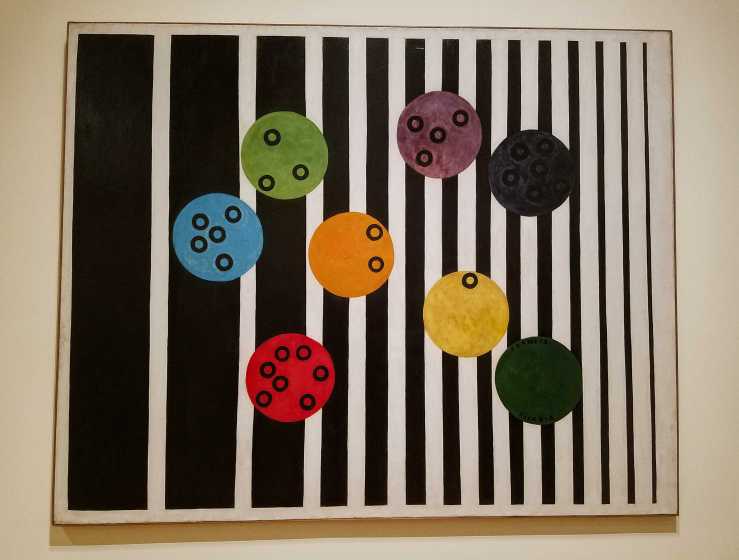
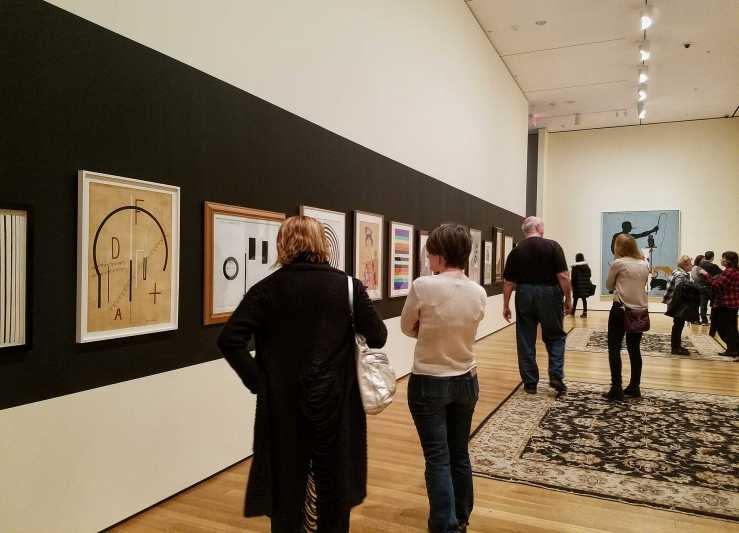
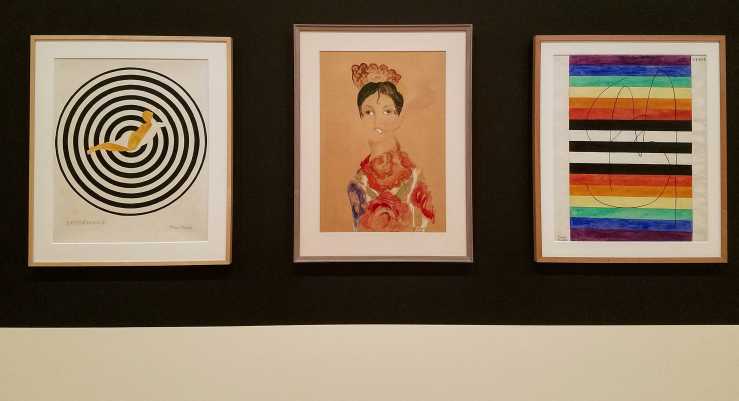
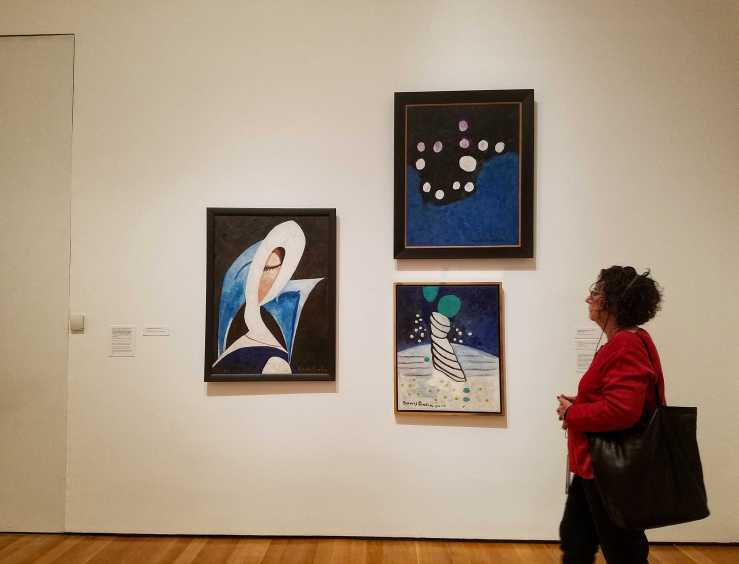
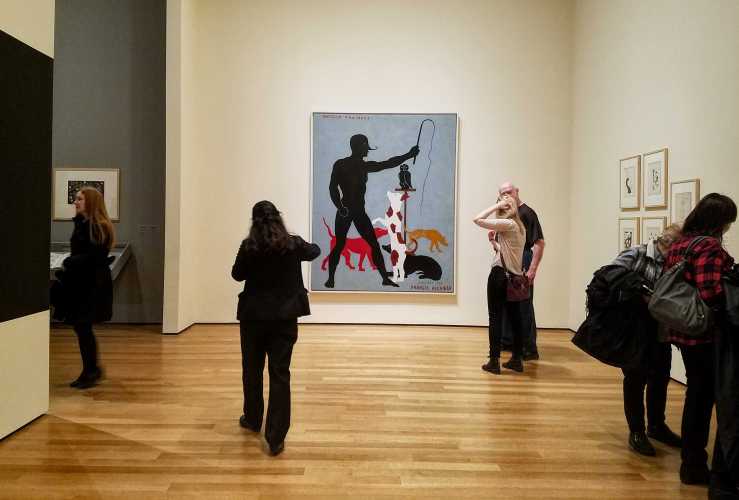
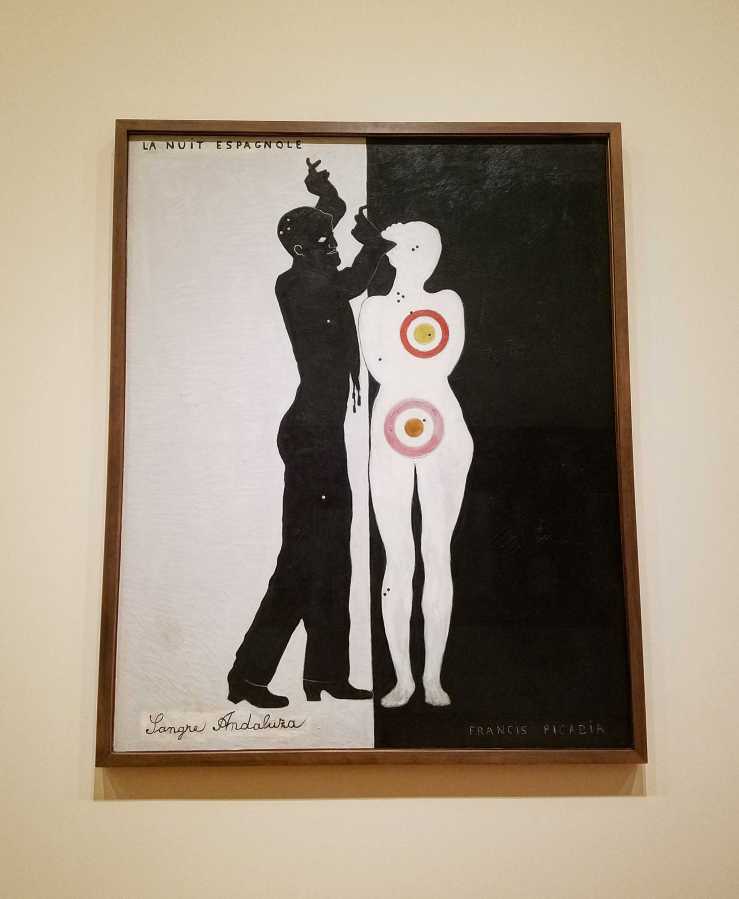
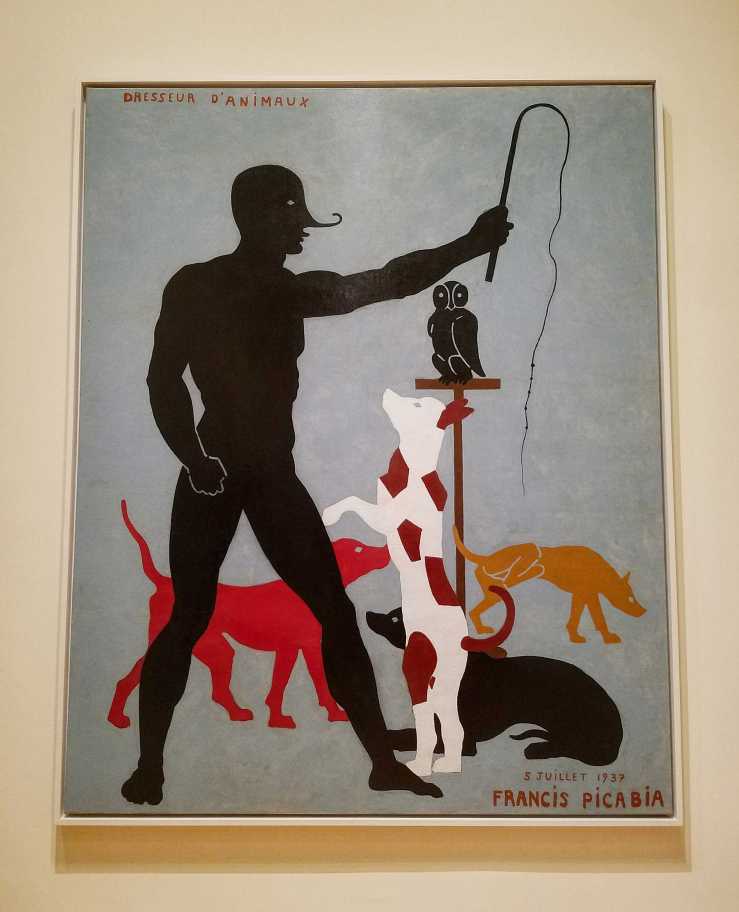
The Shapeshifting Master of Modern Art~ Francis Picabia @ MoMA [part 5]

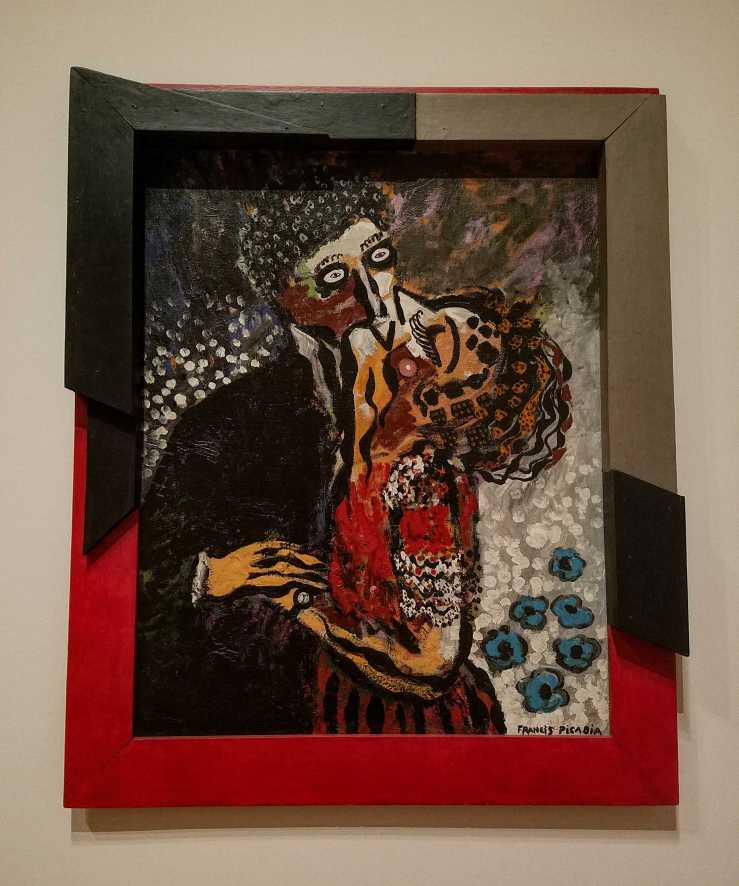
The Kiss (Le Baiser) c. 1925-26. Oil and enamel paint on canvas in a frame likely by Pierre Legrain
Idyll (Idylle) c. 1925-27. Oil and enamel paint on wood
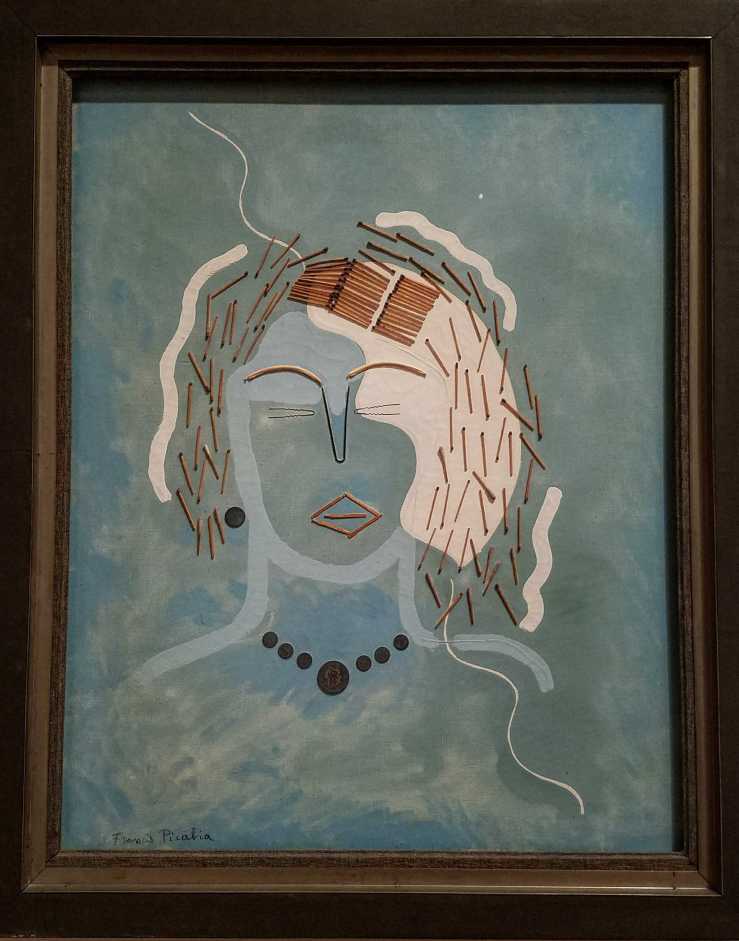
Woman with Matches [II] (Portrait of a Woman on a Blue Background) (La Femme aux allumettes [II] [Portrait de femme sur fond bleu]) c. 1924-25. Oil, enamel paint, matches, coins, curlers and hairpins on canvas
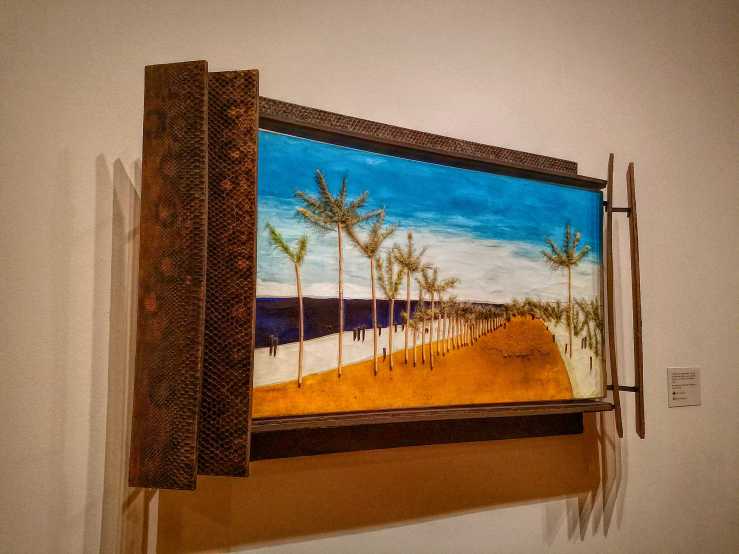
Promenade des Anglais (Midi) c. 1924-25. Oil, enamel paint, feathers, pasta and leather on canvas, in a snakeskin frame by Pierre Legrain

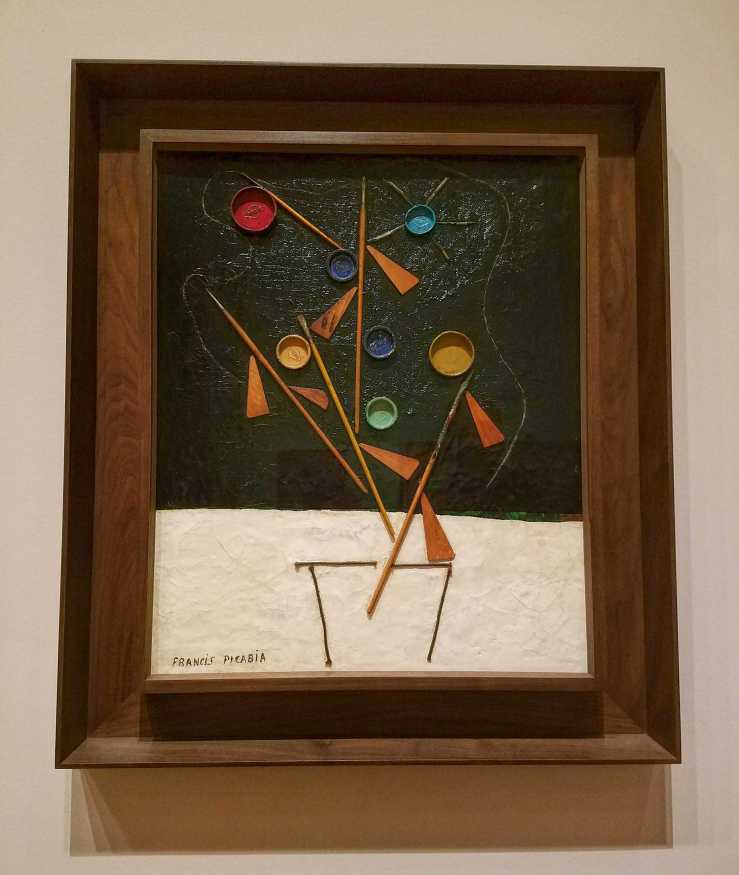
Painting (Flowerpot) (Peinture [Pot de fleurs]) c. 1924-25. Enamel paint, Ripolin paint-can lids, brushes, wooden stretcher wedges, string and quill toothpicks on canvas
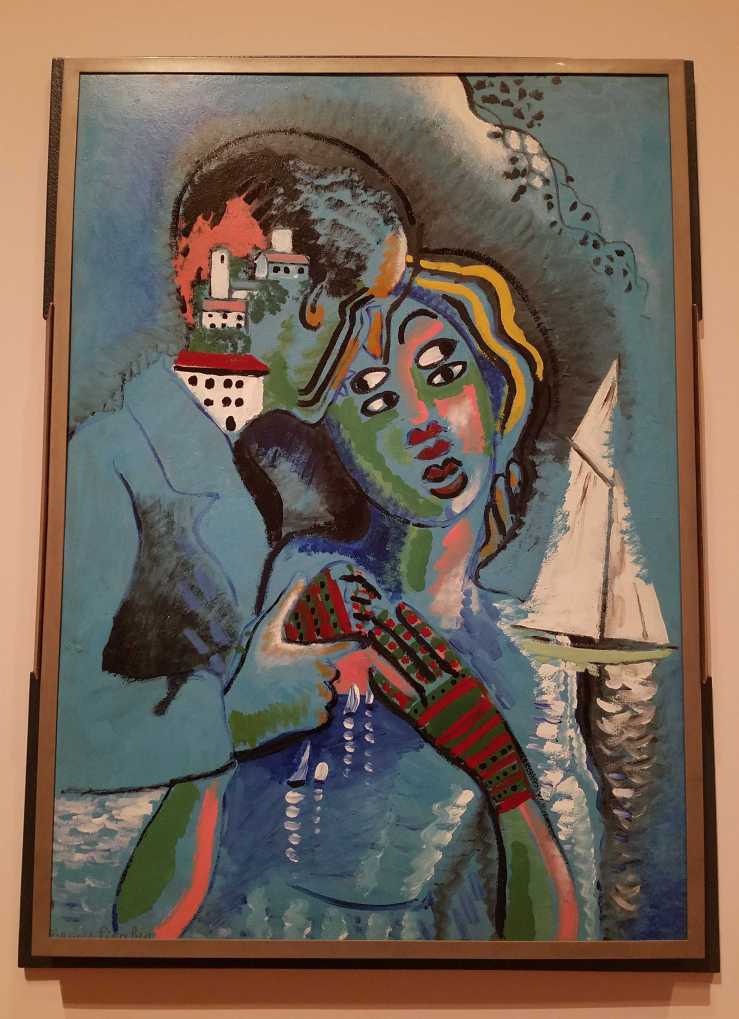
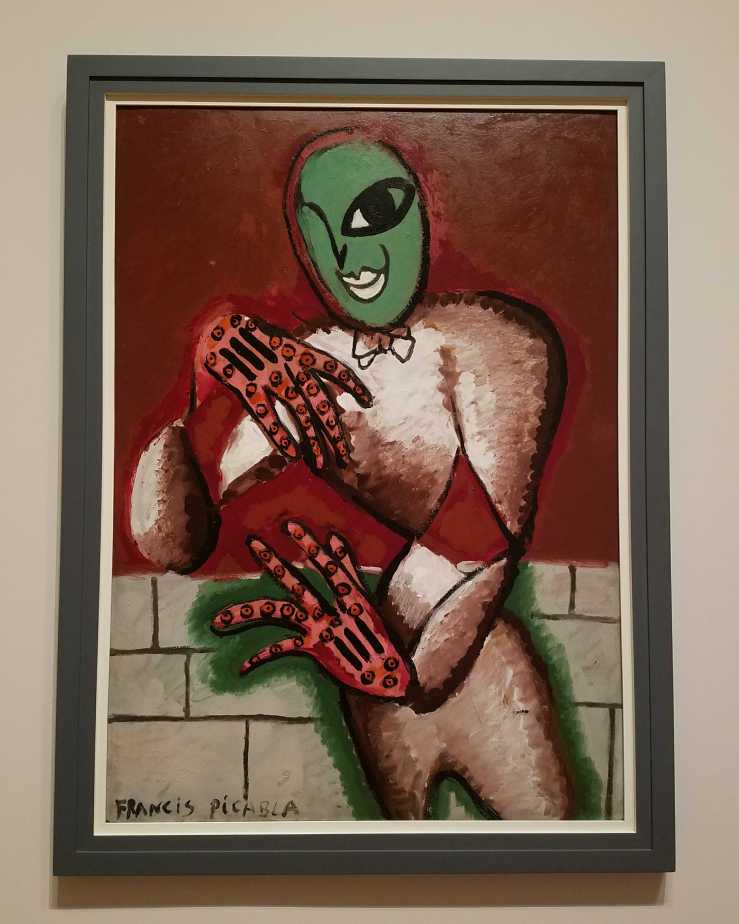
Woman with Monocle (La Femme au monocle). Alternative title: Woman with Pink Gloves (Man with Gloves) (La Femme aux gants roses [L’Homme aux gants]) c. 1925-26. Oil and enamel paint on board
From the accompanying tag: ”In 1926, the review ‘This Quarter’ reproduced thirteen of Picabia’s ‘Monster’ paintings, including this one, which bore the title ‘Woman with Pink Gloves’. By the time of the painting’s first known exhibition in 1956 however, it had acquired the title ‘Man with Gloves’. The work is displayed here with both titles restored. Although neither necessarily originated with Picabia, both speak to the androgynous character of his wasp-waisted, white-suited figure. With its green face, single oversized eye, and pustule-pink hands presumably clad in driving gloves, it is one of Picabia’s quintessential Côte d’Azur Monsters. The Surrealist André Breton was one of its early owners.”

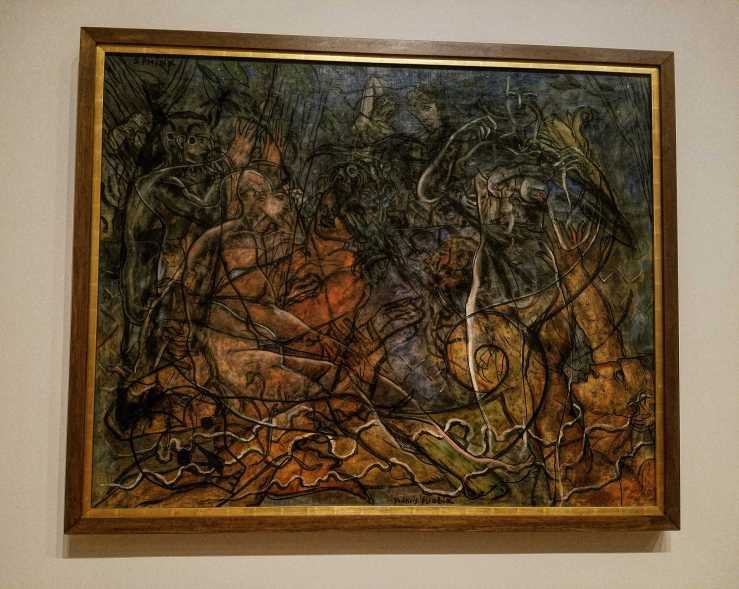
Sphinx, 1929. Oil on canvas
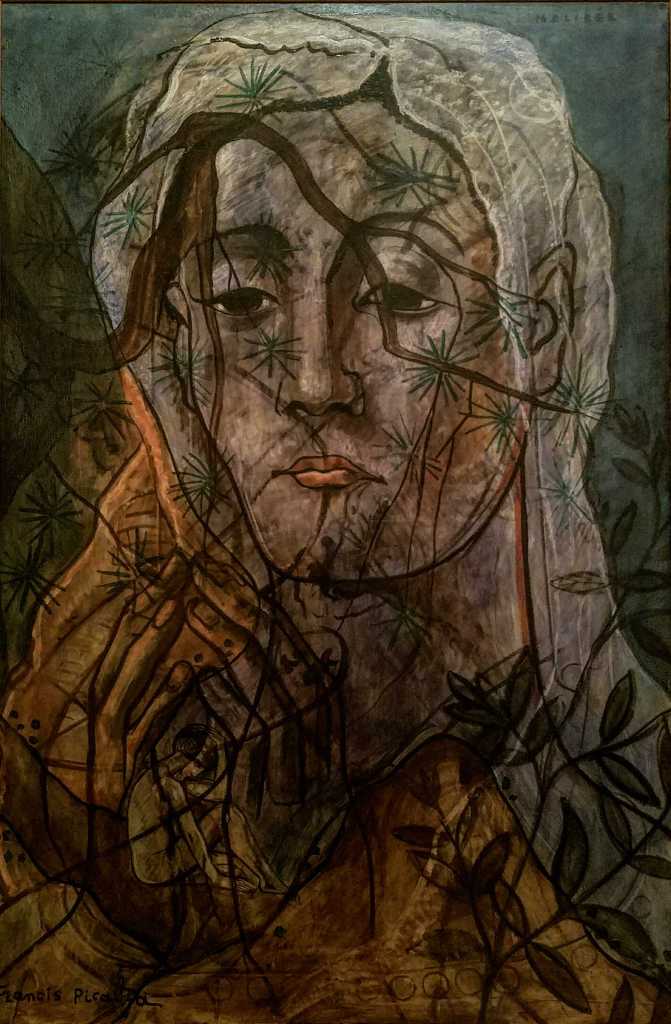
Μélibée, 1930. Oil on canvas
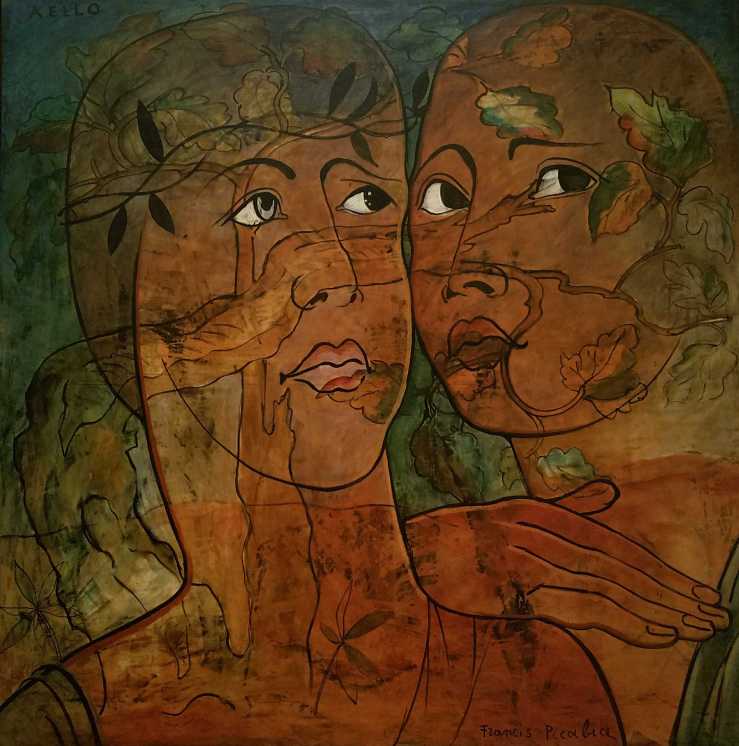
Aello, 1930. Oil on canvas
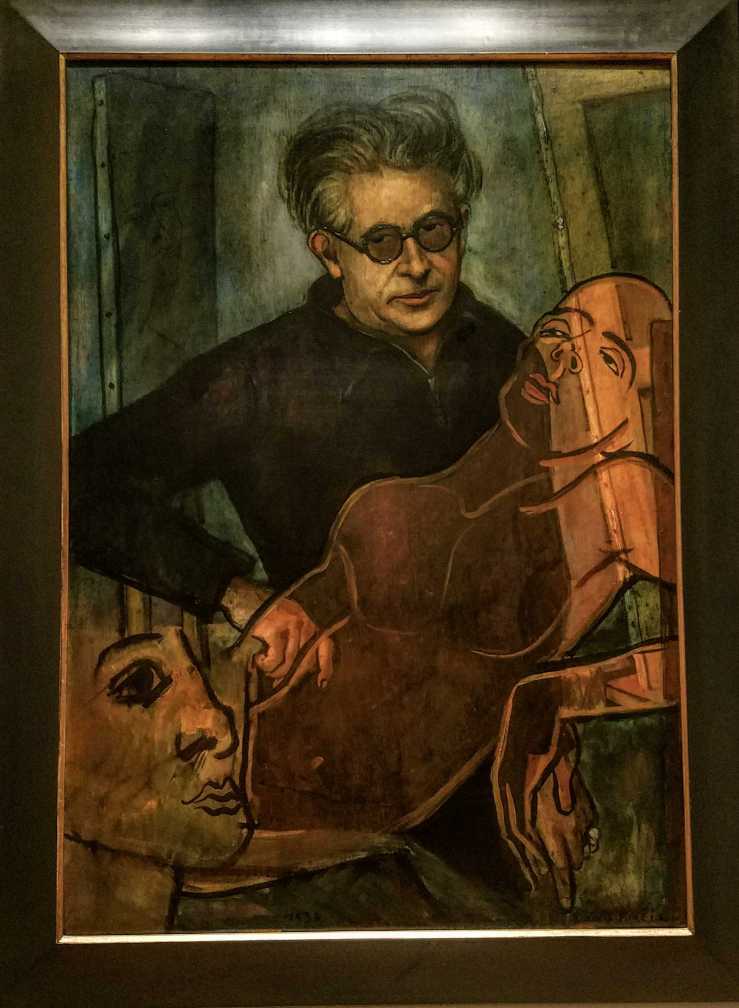
Portrait of the Artist (Portrait de l’artiste), 1934. Oil on wood

From the accompanying tag: ”This work began as a portrait of Picabia painted by the German artist Bruno Eggert in 1934. Eggert gave it to Picabia, who then added his own touches: a pair of dark-tinted glasses on his nose, a face in the lover left corner, a transparent female body across the picture, the edge of a stretcher in the upper right corner. He also signed and dated the work. Here, Picabia adopted another artist’s work as the support for his own, with over-painting used to assert rather than deny.”

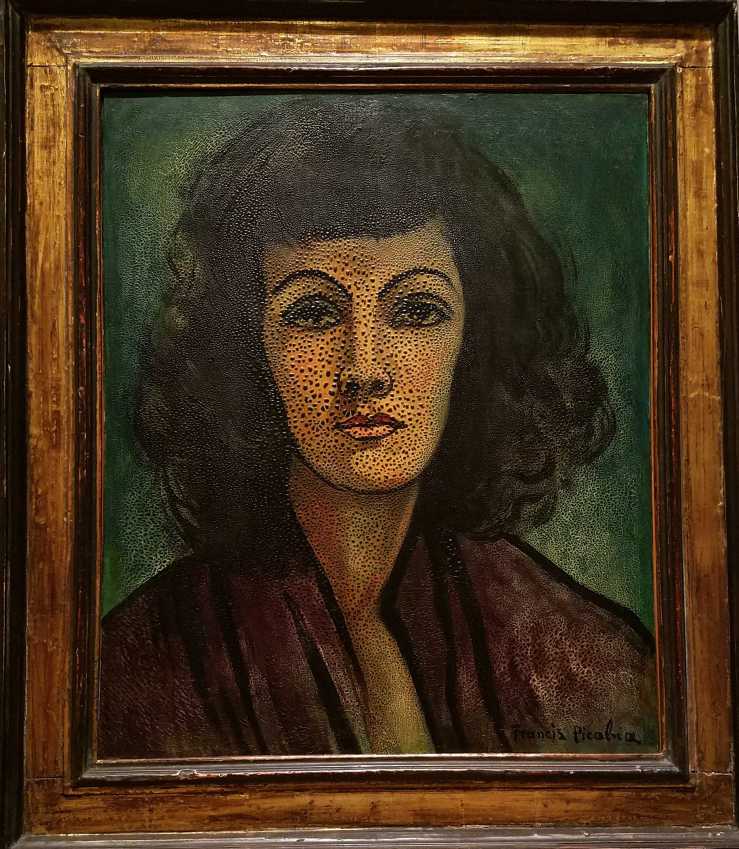
Portrait of a Woman (Portrait de femme), 1935-37. Oil on canvas
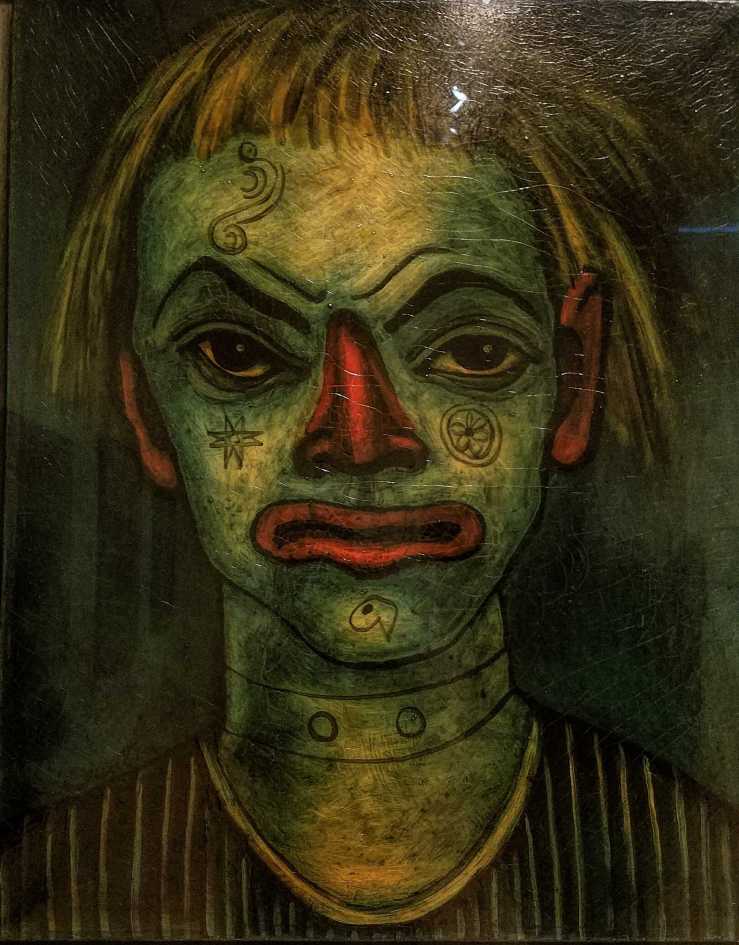
Fratellini Clown (Le Clown Fratellini), 1937-38. Oil on canvas

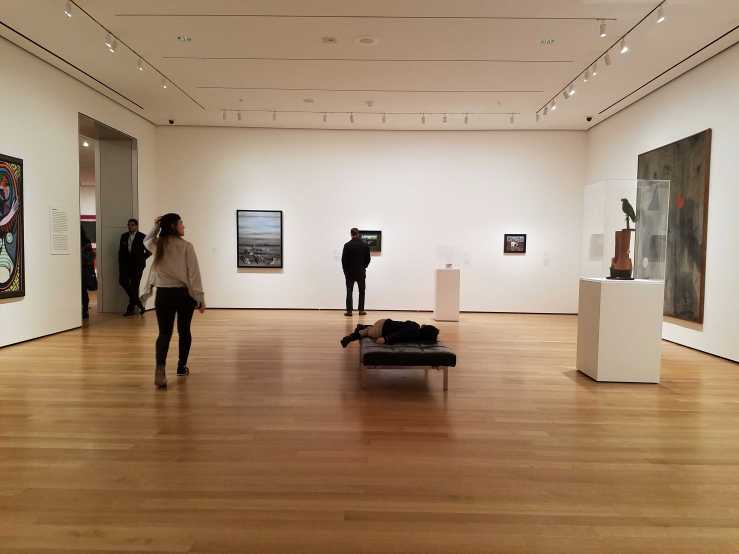
Part 5 concludes our round of Francis Picabia’s retrospective at MoMA.

Connecting the pieces:

January 30th, 2017
Our Heads Are Round so Our Thoughts Can Change Direction ~ Francis Picabia @ MoMA [part 4]

”You are all indicted, stand up! It is impossible to talk to you unless you are standing up.
Stand up as you would for the Marseillaise or God Save the King.

Stand up, as if the Flag were before you. Or as if you were in the presence of Dada, which signifies Life, and which accuses you of loving everything out of snobbery if only it is expensive enough.

One dies a hero’s death or an idiot’s death – which comes to the same thing. The only word that has more than a day-to-day value is the word Death. You love death – the death of others.

Kill them! Let them die! Only money does not die; it only goes away for a little while.

That is God! That is someone to respect: someone you can take seriously! Money is the prie-Dieu of entire families. Money for ever! Long live money! The man who has money is a man of honour.

Honour can be bought and sold like the arse. The arse, the arse, represents life like potato-chips, and all you who are serious-minded will smell worse than cow’s shit.

Dada alone does not smell: it is nothing, nothing, nothing.
It is like your hopes: nothing
like your paradise: nothing
like your idols: nothing
like your heroes: nothing
like your artists: nothing
like your religions: nothing.

Hiss, shout, kick my teeth in, so what? I shall still tell you that you are half-wits. In three months my friends and I will be selling you our pictures for a few francs.”

Manifeste Cannibale Dada

by Francis Picabia
27th March 1920


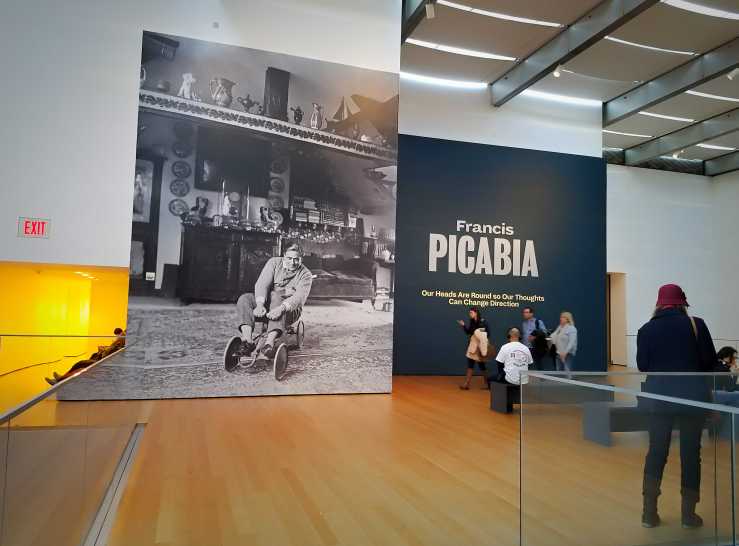
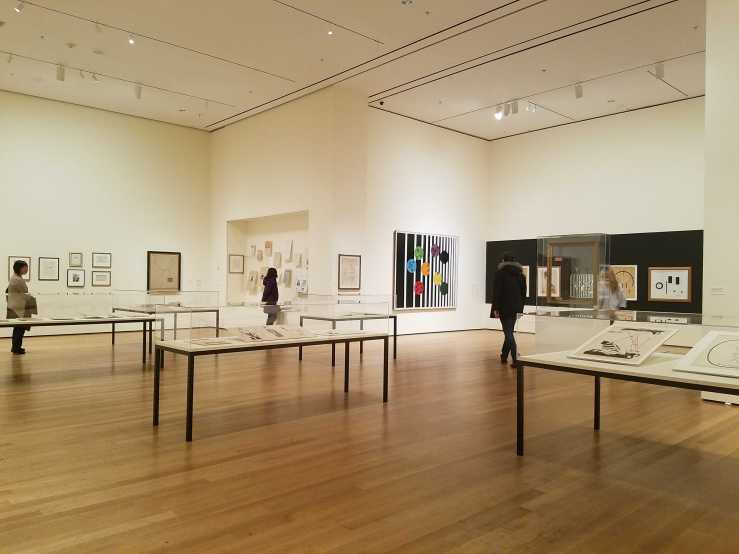
The work of Francis Picabia will remain our theme this week, as we follow the artist’s style shifts through the galleries of MoMA.

Connecting the pieces:

January 30th, 2017
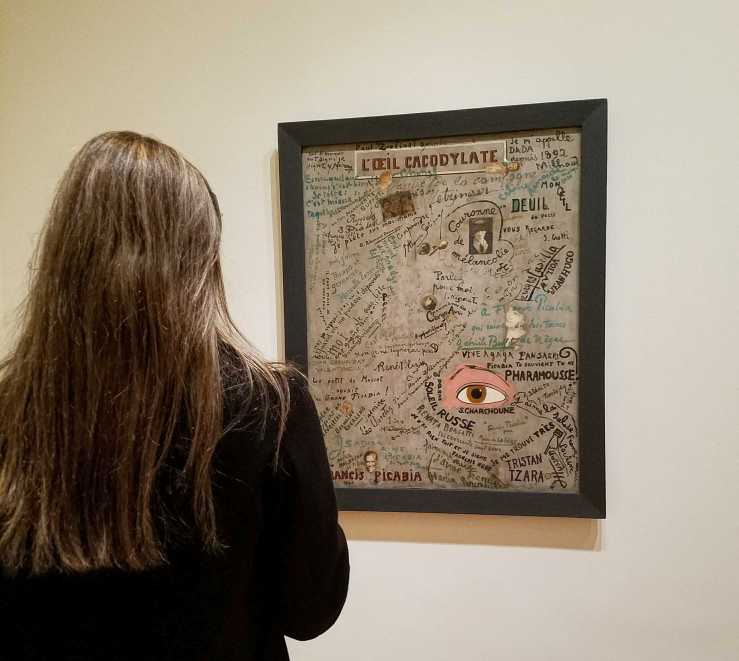
My Cacodylic Eye ~ Francis Picabia @ MoMA [part 3]

Picabia began this painting as a joke, to entertain himself and his friends at a time when he was suffering from an eye infection and his doctor prescribed something called sodium cacodylate. How effective it was we may never know, considering its toxicity which can cause irritation to the gastrointestinal tract, respiratory tract, skin, and eyes! – not to mention its garlic-like smell.

Perhaps to ease his discomfort during what must have been a very irritating period, the artist painted an eye on a canvas and asked friends who visited him to leave their mark around it.

The result is a unique collage of signatures, pictures and dedications but, more significantly, a record of Picabia’s circle of friends:

Marthe Chenal wrote: Ecrire quelque chose, c’est bien !! Se taire, c’est mieux !! ~ Write something, it’s good !! To be silent is better!!

Jean Crotti : MON OEIL EN DEUIL de verre vous regarde – which, in free translation, could mean: MY MOURNING glass EYE is watching you.

Raymond Dorgelès : Non je n’en reste pas baba et je jure chez Picabia que ne n’aime pas Dada ~ No I do not remain baba and I swear at Picabia’s that does not like Dada.

Isadora Duncan : Isadora aime FRANCIS de tout son âme ~ Isadora loves Francis with all her soul.

Darius Milhaud : Je m’appelle DADA depuis 1892 ~ My name is DADA since 1892.

Clément Pansaers : Vive agaga Pansaers. Picabia te souviens-tu de Pharamousse ? – Live agaga Pansaers. Picabia do you remember Pharamousse?

Francis Poulenc : J’aime la salade ~ I love salad.

Hugo François : Je n’ai rien fait et je signe ~ I didn’t do anything and I sign.

Over 50 signatures complete the picture including those of his wife, Gabrièle Buffet, his close friends Man Ray and Marcel Duchamp – the latter signing as his alter ego, Rrose Sélavy (Éros c’est la vie)  – and it is here Rrose received a second R for the first time; Tristan Tzara, Ezra Pound; Suzanne Duchamp (Marcel’s sister) wrote: Quand on me prend au dépourvu MOI = Je suis bête – When I’m caught off guard ME = I’m stupid.

It goes on and on, giving shape to truly collective creation.

L’Oeil Cacodylate (The Cacodylic Eye)
Oil on canvas, and a collage of photographs, postcards and cut papers
1921


The work of Francis Picabia will remain our theme for next few days, as we follow the artist’s style shifts through the galleries of MoMA.

Connecting the pieces:

January 30th, 2017
”If you want to have clean ideas, change them like shirts” ~ Francis Picabia @ MoMA [part 2]

Francis Picabia ~ ”Our heads are round so our thoughts can change direction”
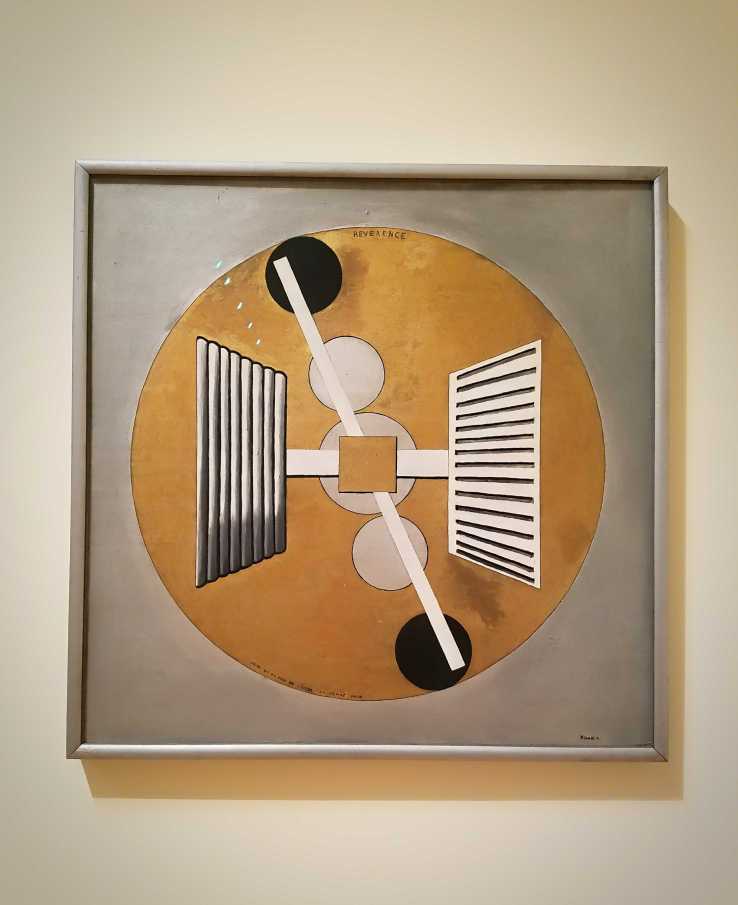
Reverence (Révérence), 1915. Oil and metallic paint on board
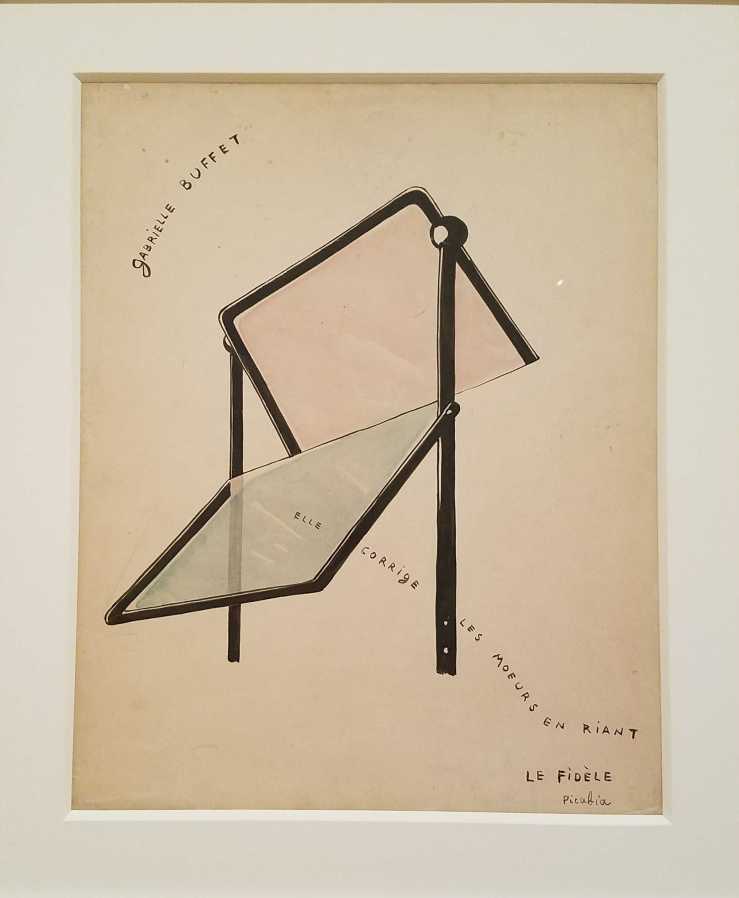
Gabrielle Buffet, She Corrects Manners By Laughing (Gabrielle Buffet, elle corrige les moeurs en riant), 1915. Ink, watercolour, pencil on board
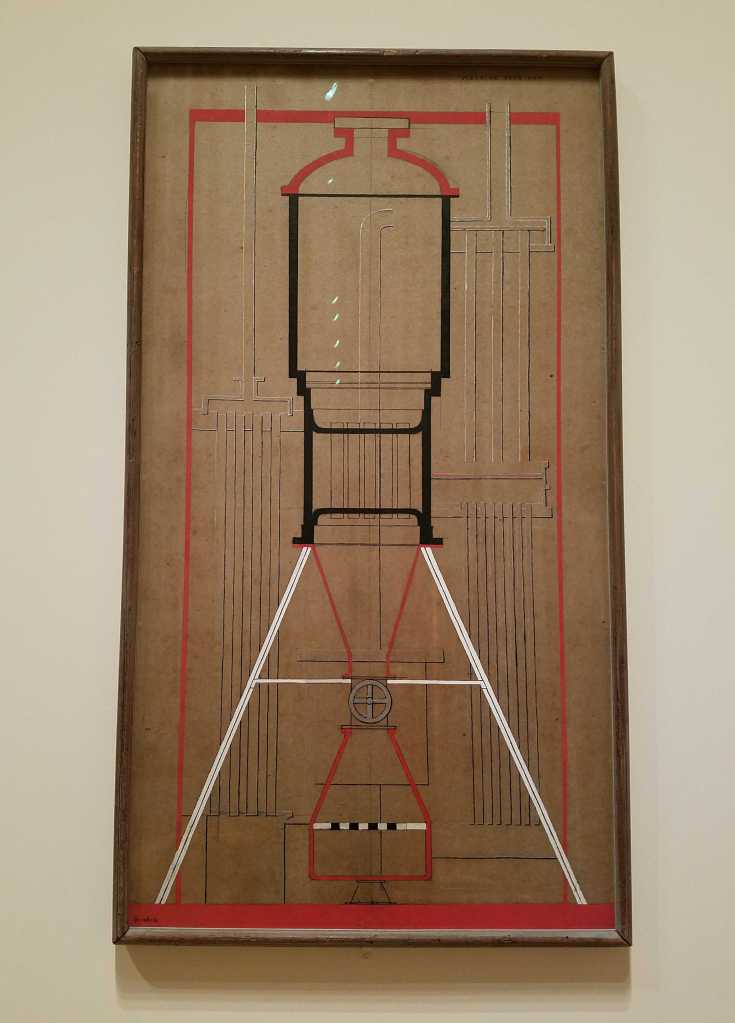
Machine Without a Name (Machine sans nom), 1915. Gouache, metallic paint, ink, pencil on board
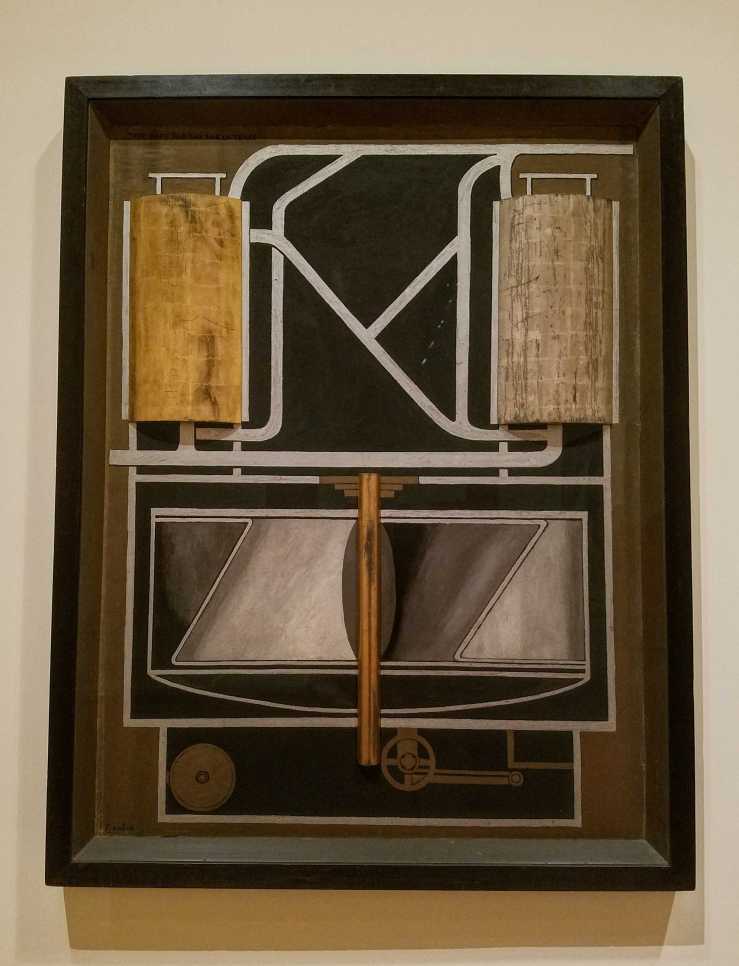
Very Rare Picture on the Earth (Très rare tableau sur la terre), 1915. Oil and metallic paint on board, silver and gold leaf on wood, with artist’s painted frame
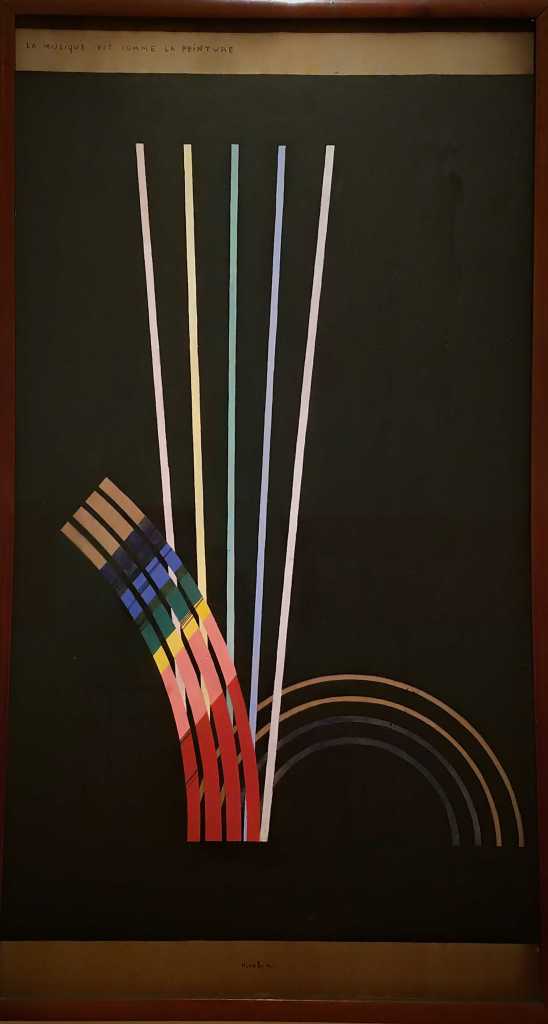
Music is Like Painting (La Musique est comme la peinture), 1915. Watercolour, gouache, ink on board
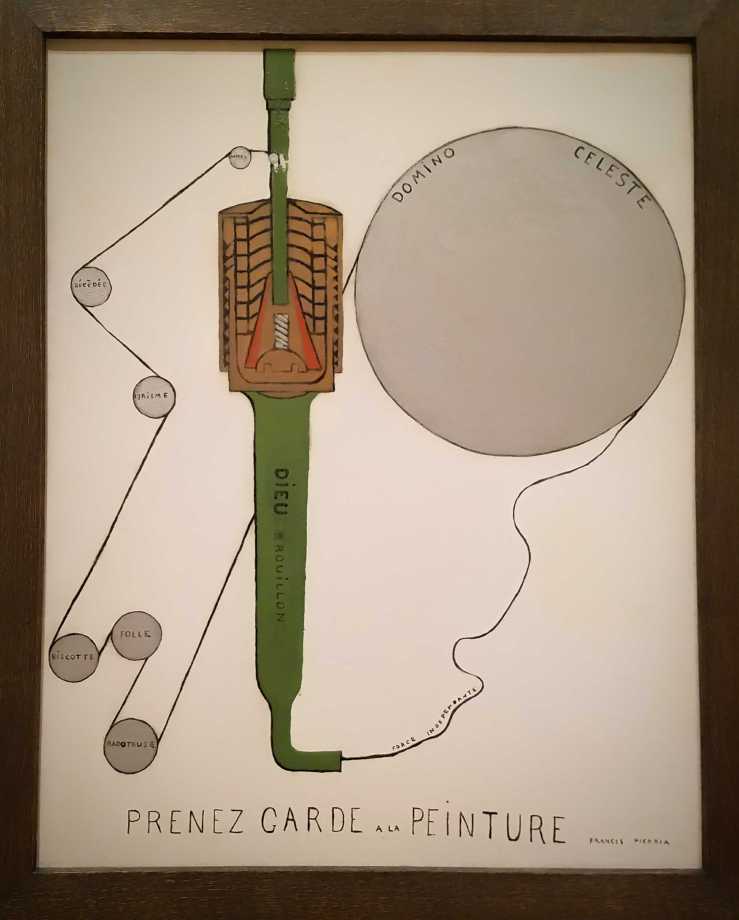
Watch Out for Painting (Prenez garde à la peinture), c. 1919. Oil, enamel paint, metallic paint on canvas
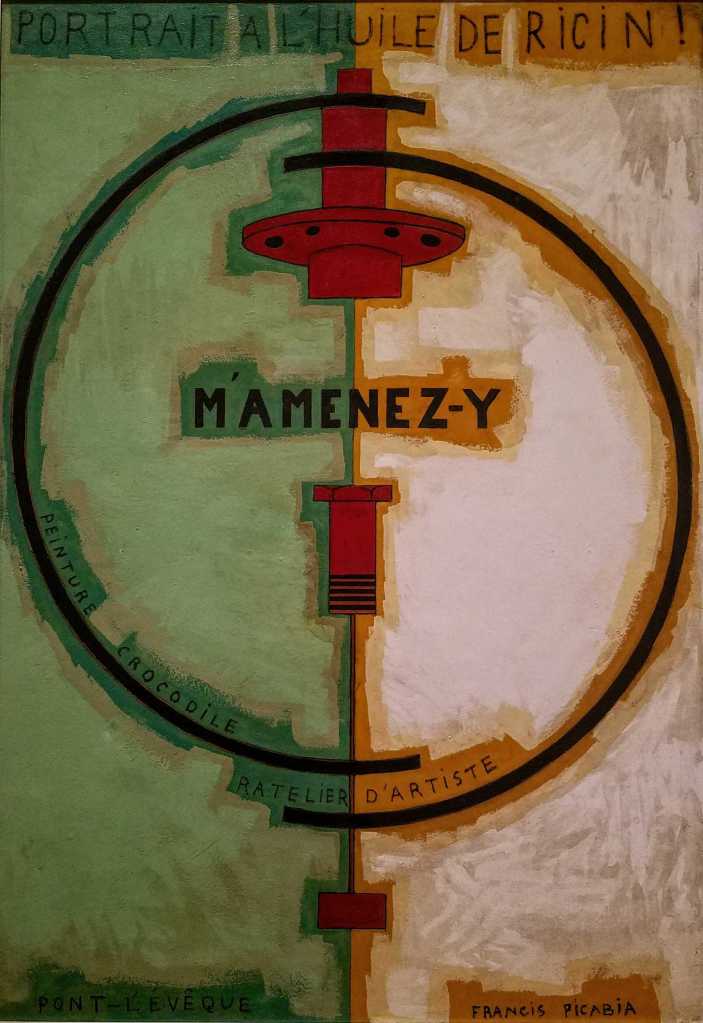
Bring Me There (M’Amenez-y), 1919-20. Oil and enamel paint on board
Francis Picabia ~ ”Our heads are round so our thoughts can change direction”
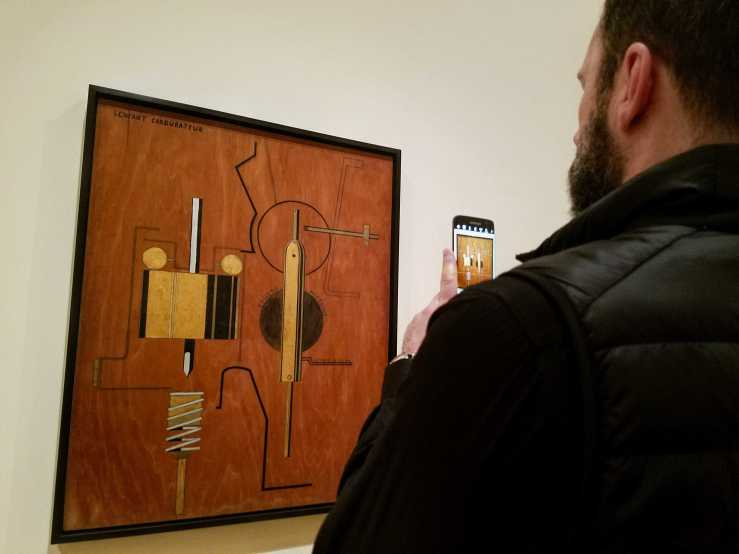
Capturing The Child Carburetor (L’Enfant carburateur), 1919. Oil, enamel paint, metallic paint, gold leaf, pencil, crayon on wood
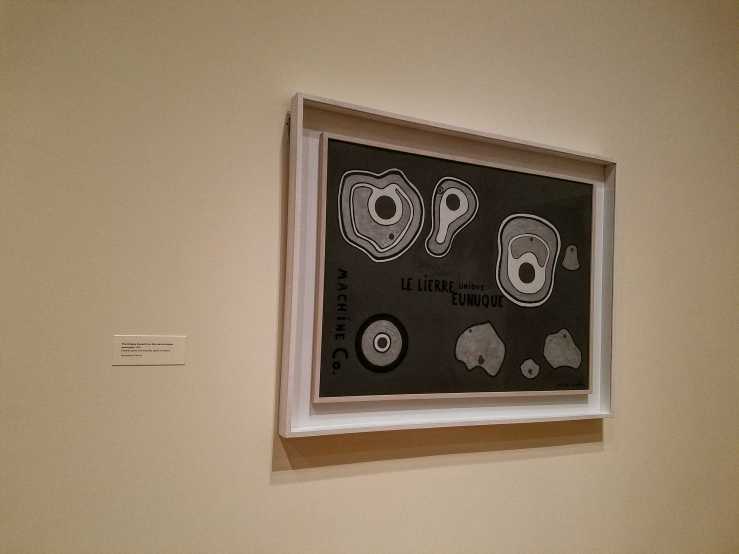
The Unique Eunuch Ivy (La Lierre unique eunuque), 1920. Enamel paint and metallic paint on board

The work of Francis Picabia will remain our theme for next few days, as we follow the artist’s style shifts through the galleries of MoMA.

Connecting the pieces: Rediscovering Francis Picabia @ MoMA [part 1]

January 30th, 2017