European Painting 1550–1700 and Hanoverian Silver hang on damask-covered walls in the William I. Koch Gallery, nothing less for a space designed to resemble a grand hall of a European palace. Looking at the round tables, I thought it must double up as an event space. And, while, it is difficult to appreciate the art individually (too much, too high, some maneuvering necessary to avoid hitting the tables), seen as a whole everything seems to work. Besides… … it leads to the Monet gallery. The MFA boasts one of the largest collections of Claude Monet’s work outside France, with a whole gallery dedicated to the artist! Below, just two of the works I particularly enjoy – the first, for its virtuosity and splendid kimono and the second, for its hazy, dreamy mood: Claude Monet
La Japonaise (Camille Monet in Japanese Costume), 1876
Oil on canvas
Claude Monet
Rouen Cathedral, Façade, 1894
Oil on canvas
Sleep my child and peace attend thee, All through the night Guardian angels God will send thee, All through the night – [Verses from a Welsh lullaby translated into English]Hans Memling Christ Blessing, 1481 Oil on panel
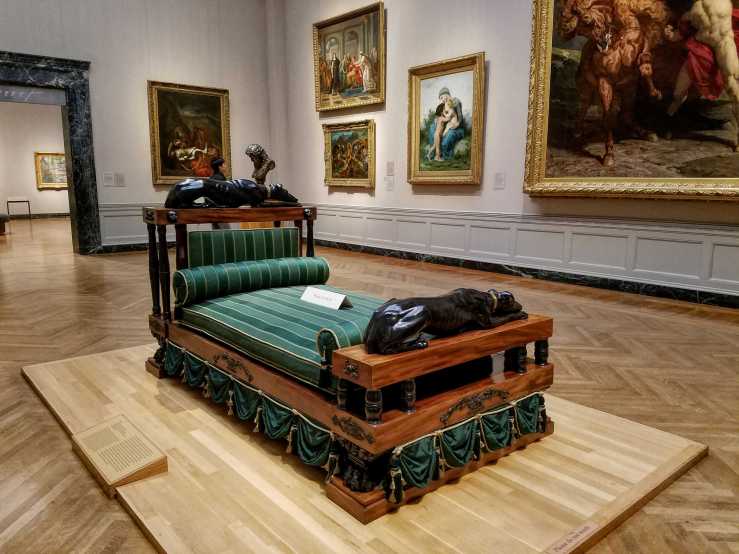
Bed England (London), ca. 1800-10 Oak and pine veneered with mahogany, ebonized pine, patinated bronze, gilded metal, modern upholsteryThis bed is among the most original pieces of English Regency furniture. Dominant in English interiors from about 1800 to 1830, the Regency style perpetuated the classical taste of the late 18th century but was more academic and archaeologically correct. This bed closely resembles furnishings designed by Thomas Hope – collector, connoisseur and a pivotal figure in the classical revival of Regency England- for one of his residences. Its architectural form and bronze mounts derive from ancient and Renaissance models. The greyhounds, however, are inspired by medieval tomb sculpture and exemplify the more romantic interpretation of historical sources characteristic of Hope’s influential furniture designs. The bed may have been used for resting – a day bed – or for sleeping.
Sweet (day)dreams from the Museum of Fine Arts, Boston
Go hand in hand. See, for instance, how beautifully these works complement each other –
From the powerful painting by Maynard Dixon, giving shape to fear,
Maynard Dixon, Shapes of Fear, 1930-32, oil on canvas
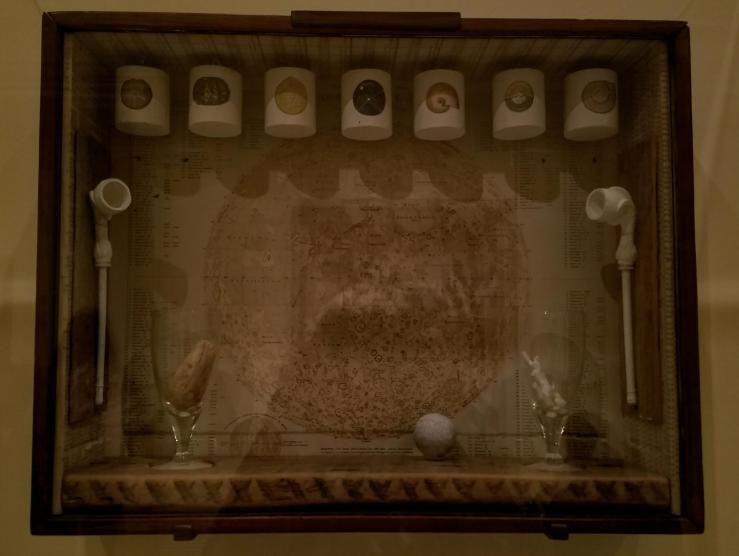
to the subdued and delicate works by Joseph Cornell, who took his fear of this world and placed it inside wooden boxes, each one containing a mini universe,
Joseph Cornell, Soap Bubble Set, 1949-50, glasses, pipes, printed paper and other media in a glass-fronted wood box
or his magical homages to Tamara Toumanova, Cornell’s way of expressing his great affection for the world of Romantic Ballet.
Joseph Cornell, Untitled (Marine Fantasy with Tamara Toumanova), c. 1940, collage and tempera on paperboardJoseph Cornell, Untitled (Tamara Toumanova), c. 1940, collage with tempera on paperboard
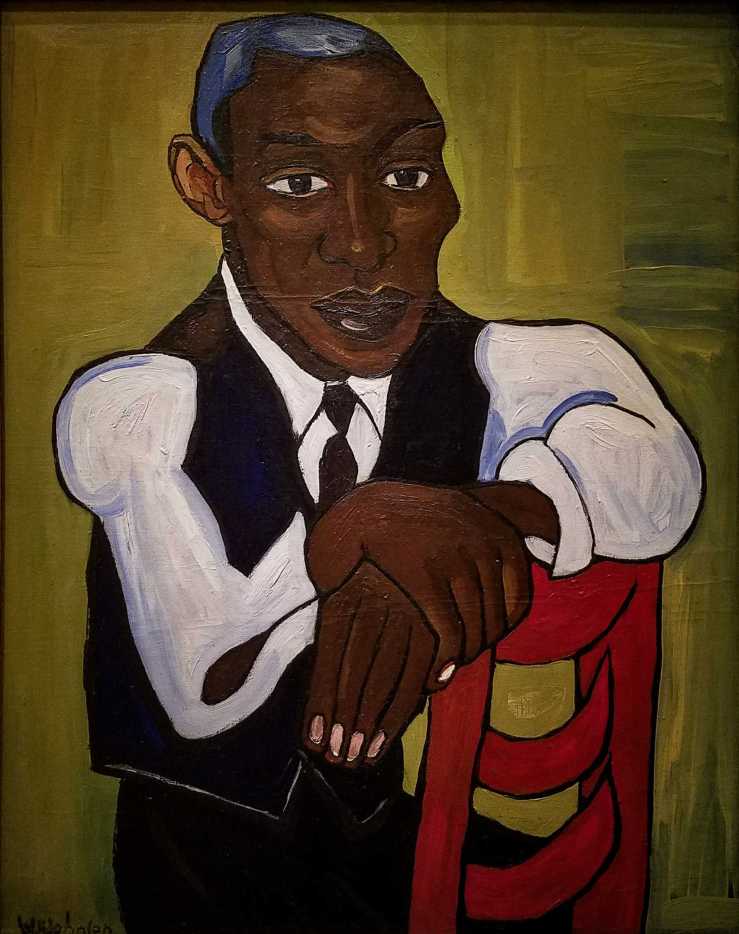
William H. Johnson, Man in a Vest, 1939-40, oil on canvas
“And even if I have studied for many years and all over the world, . . . I have still been able to preserve the primitive in me. . . . My aim is to express in a natural way what I feel, what is in me, both rhythmically and spiritually, all that which in time has been saved up in my family of primitiveness and tradition, and which is now concentrated in me.” — William H. Johnson
With its minimal palette of contrasting colours and clean, simple lines Man in a Vest expresses brilliantly Mr Johnson’s quote, don’t you find?
My, oh, my… those fans! This is one of the most exquisite quilts I have ever seen! I wonder if I could borrow it for a day or two…
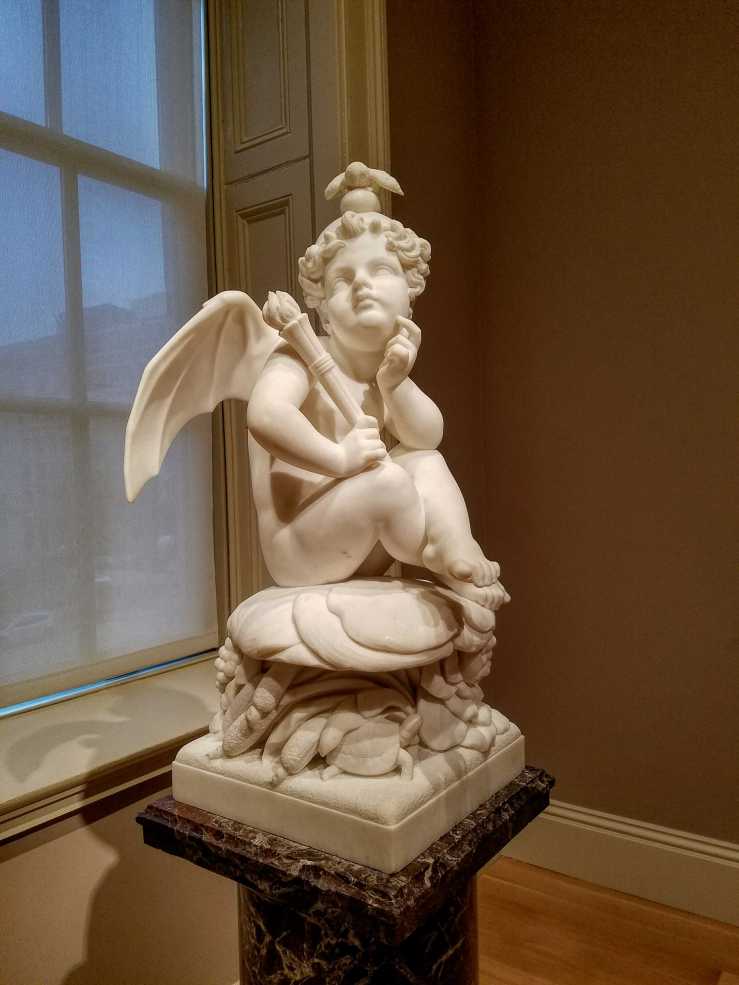
Harriet Hosmer, Will o’ the Wisp, modeled 1858, marbleResidents of Bourbon County, Kentucky – Fan Quilt, Mt. Carmel – 1893 – cotton, wool, silk, velvet, lace, ribbon, silk thread, paint, chromolithographic paper decals and canvasResidents of Bourbon County, Kentucky – Fan Quilt, Mt. Carmel – 1893 (detail)
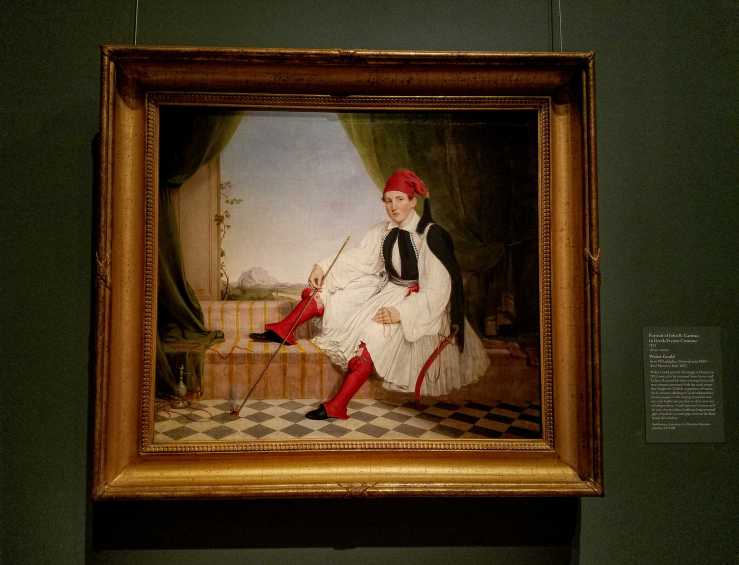
If not the quilt, how about this Greek Evzone costume?
Walter Gould, Portrait of John B. Carmac in Greek Evzone Costume, 1853, oil on canvas
”Walter Gould painted this image in Florence in 1853, soon after he returned from Greece and Turkey. He posed his sitter wearing Greek military costume associated with the crack troops that fought the Turkish occupation of Greece. Such costumes alluding to Greek independence became popular with visiting American tourists, who fondly saw parallels to their own war of independence. Gould portrays Carmac as if he were a local resident, holding a long-stemmed pipe; a hookah, or water pipe, rests on the floor beside the window.”
I seem to be in need of some counseling!
John Rogers, The Council of War, modeled c. 1873, painted plaster
A breath of fresh spring air from the Smithsonian American Art Museum in D.C., in spite of the 6-10 inches snow accumulations we have been warned to expect today in New York City!
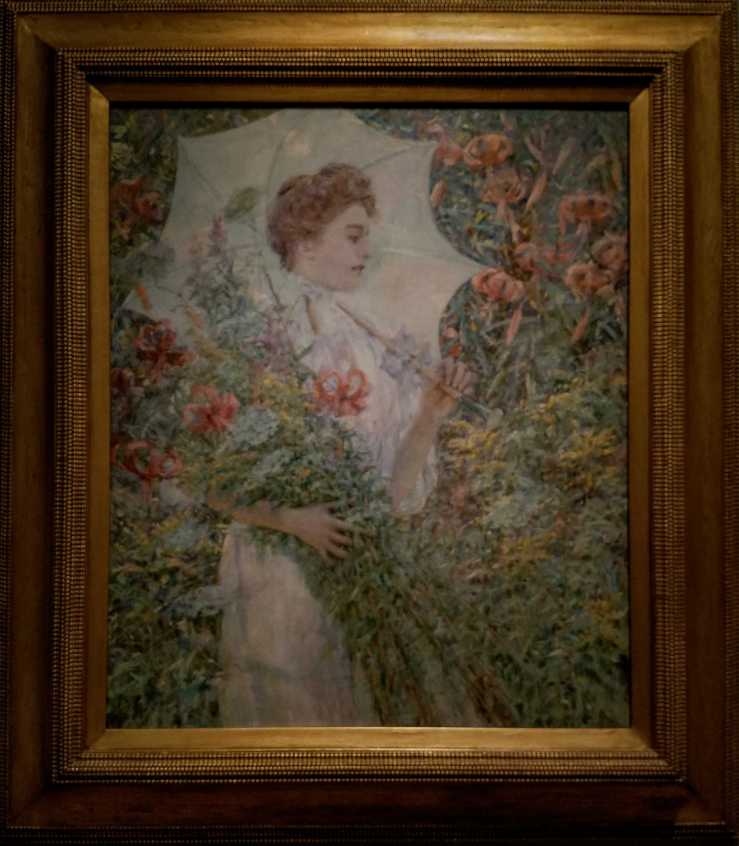
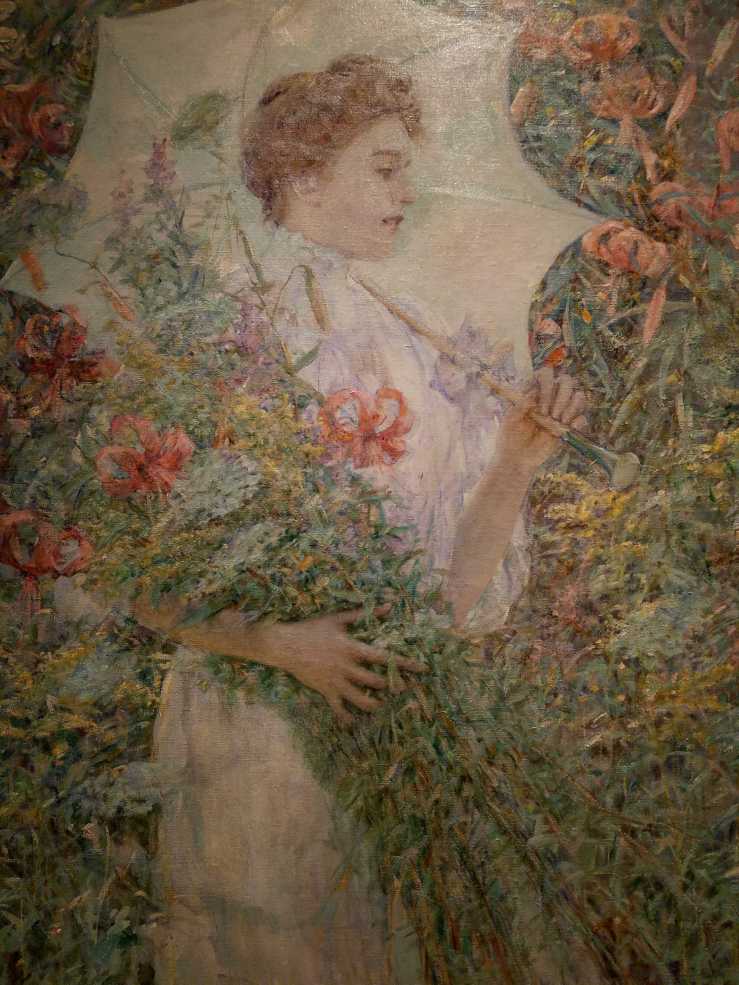
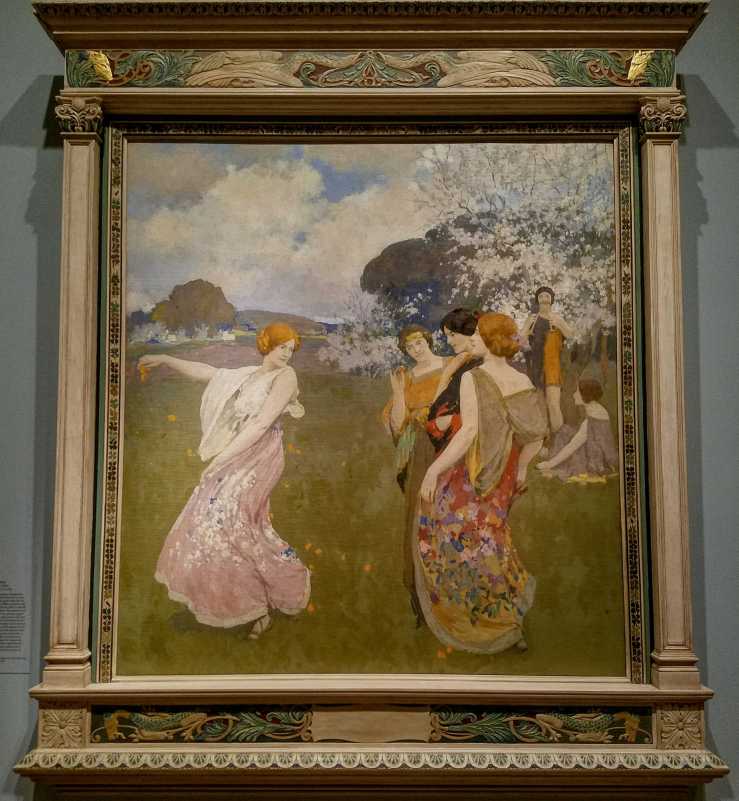
Kenyon Cox, An Eclogue, 1890, oil on canvasRobert Reid, The White Parasol, c. 1907, oil on canvasRobert Reid, The White Parasol, c. 1907, oil on canvas (detail)Arthur F. Mathews, Spring Dance, c. 1917, oil on canvas
”Arthur Mathews led a group of progressive Californians who believed that fine art and design served the public good. After the San Francisco earthquake of 1906, he and his wife, Lucia, also a designer, led the effort to rebuild the city’s fine public spaces. The pastoral scene in Spring Dance evokes civic murals created for museums, libraries and concert halls. But Mathews had more on his mind than ancient Greece or Rome. His Arcadia is the luminous landscape of California, and the planes of color and the graceful postures of the dancers show the artist is also looking across the Pacific to Japan for inspiration. The ornate frame is a reproduction of the original. It repeats the colors in the painting, reflecting Mathews’ commitment to designing complementary furniture, art and architecture to create an aesthetic whole.”
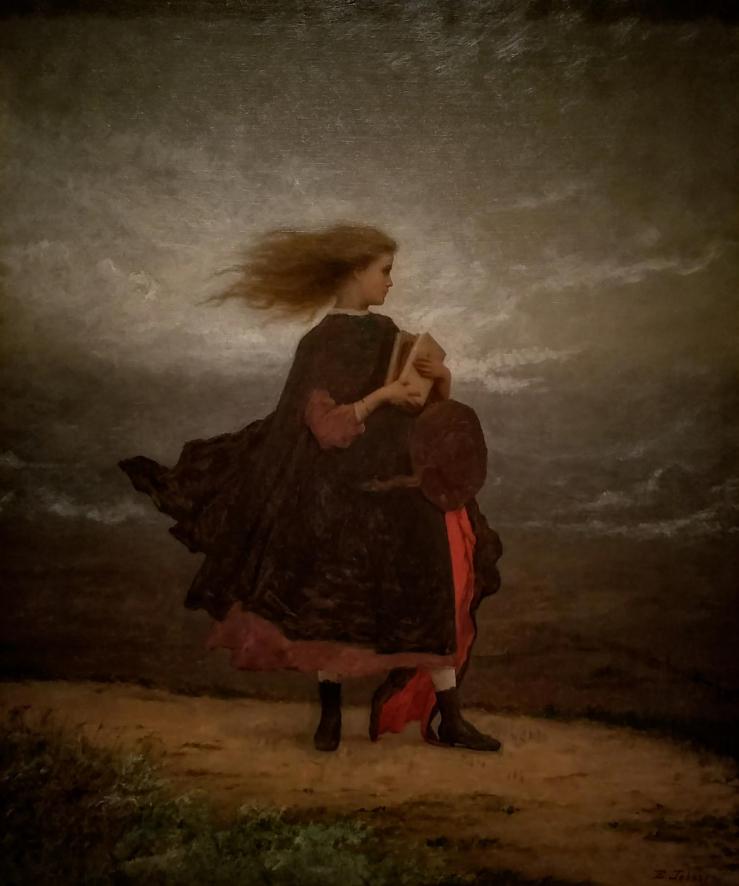
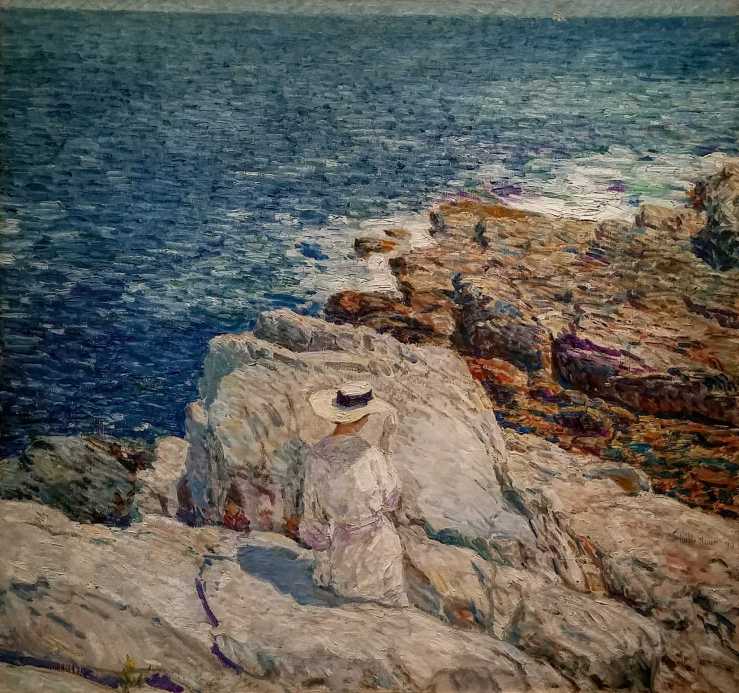
Eastman Johnson, The Girl I Left Behind Me, c. 1870, oil on canvasChilde Hassam, The South Ledges, Appledore, 1913, oil on canvas
”Childe Hassam spent many summers on Appledore Island off the coast of Maine. Every year, he and a circle of musicians, writers and other artists gathered as an informal colony based at the home of his friend, the poet Celia Thaxter. In Thaxter’s gardens and on the rocky beaches, Hassam used the flickering brushwork and brilliant colors he had adopted in France to capture the dappled light of Appledore’s brief summer. This painting evokes the leisurely, seasonal rhythms of America’s privileged families in the last years before the Great War. A beautifully dressed woman shields her face from the sun; she looks down and away, as if absorbed in the song of a sandpiper, the island bird that inspired Celia Thaxter’s most famous children’s poem.”
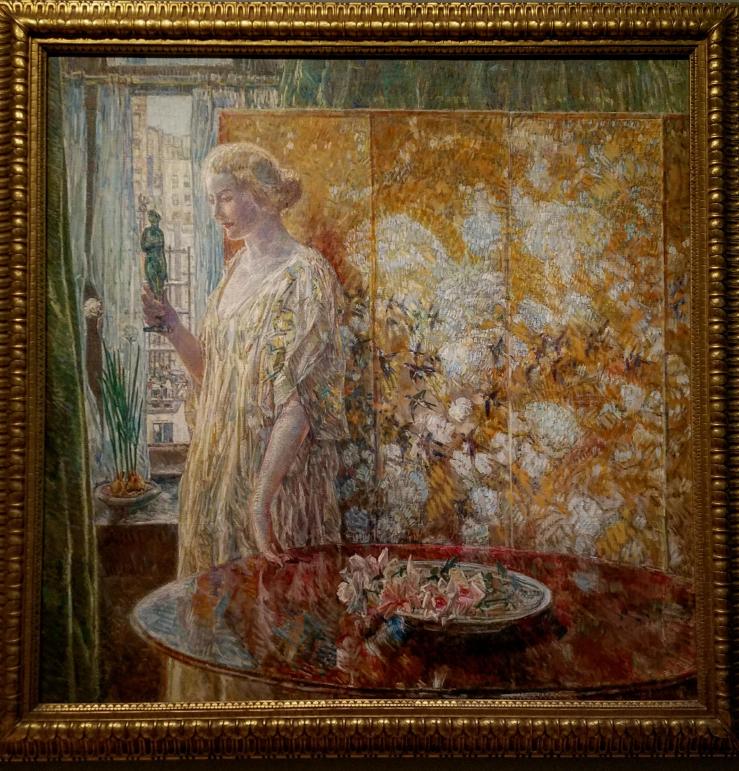
Childe Hassam, Tanagra (The Builders, New York), 1918, oil on canvas
”In Tanagra (The Builders, New York), Childe Hassam painted a complex image of modern life. At the turn of the twentieth century, the skyscraper symbolized all that was dynamic and powerful in America. Architects praised the new towers as symbols of mankind’s reach for the heavens. If the skyscraper represents worldly ambition, the other vertical elements in the painting – the lilies, the Hellenistic figurine, the panels of a beautiful oriental screen – suggest delight in the sophisticated cultural aspirations of American Society.
But as the United States grew in power and prestige, the workers who provided the nation’s muscle also seemed to threaten Hassam’s orderly and prosperous world. The artist had built his career picturing New York’s moneyed class; the art, music and fine manners surrounding what Hassam called a ”blond Aryan girl” are a world apart from the immigrants laboring to build the city’s future.”
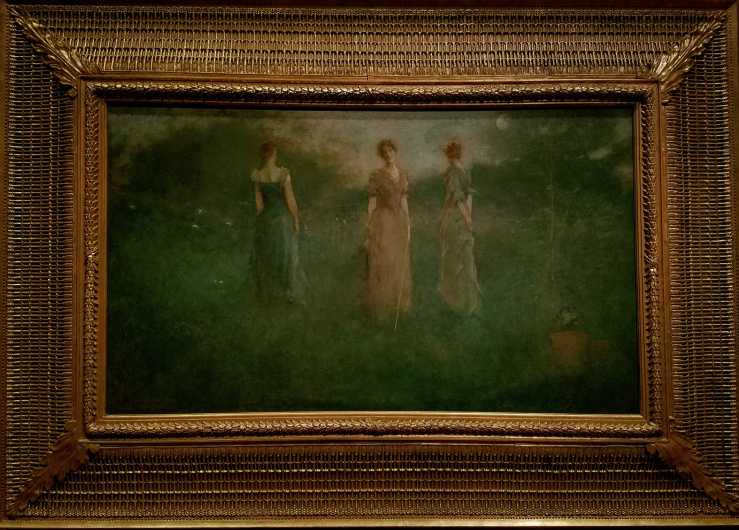
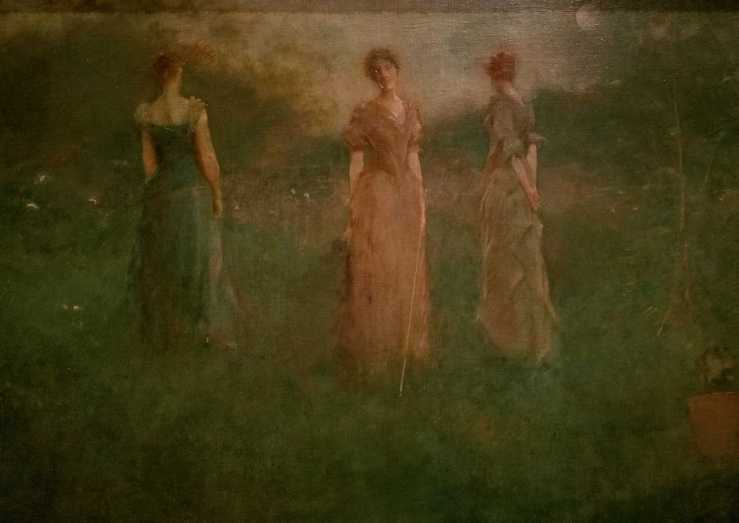
Thomas Wilmer Dewing, In the Garden, 1892-94, oil on canvasThomas Wilmer Dewing, In the Garden, 1892-94, oil on canvas (detail)John La Farge, Wreath of Flowers, 1866, oil on canvas
Sheer delight continued with the discovery of these masterpieces dating from the 14th to the 20th century.
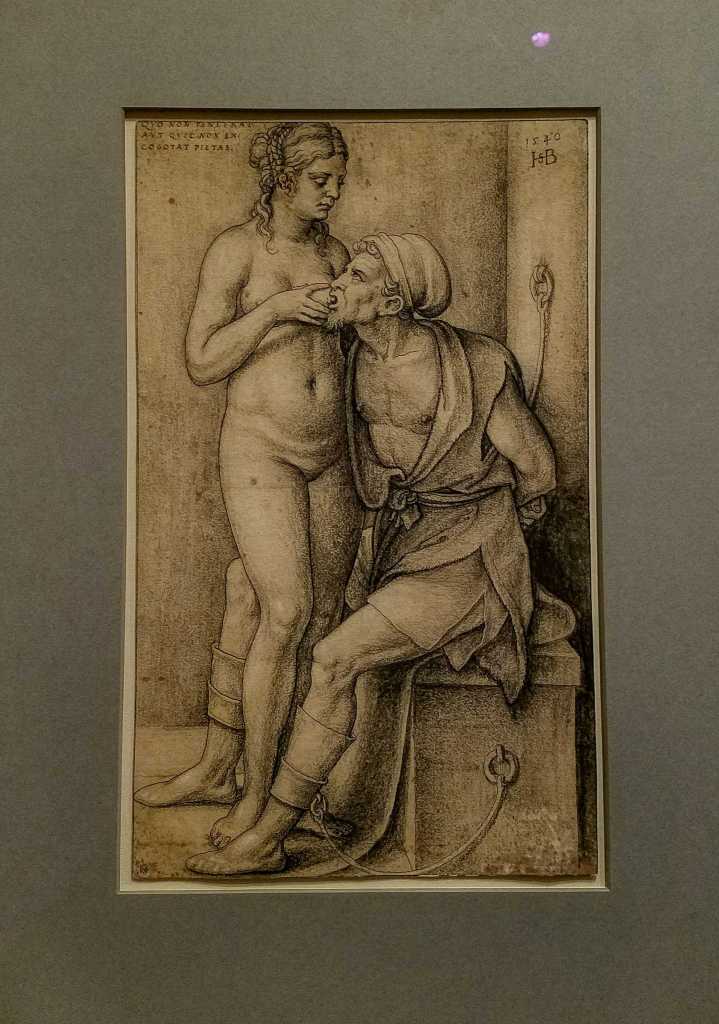
Beham, Sebald, 1500 – 1550, Cimon and Pero (1540), pen and black ink with charcoal heightened with white on heavy laid paper
The story of Cimon and Pero was told by the first-century historian Valerius Maximus in his Memorable Deeds and Sayings. Imprisoned without food or water, the aged Cimon was saved from death by the visits of his daughter Pero, a young mother who nourished him with breast milk. Pero’s selfless act, which came to be known as ”Roman charity”, was regarded as a model of filial piety.
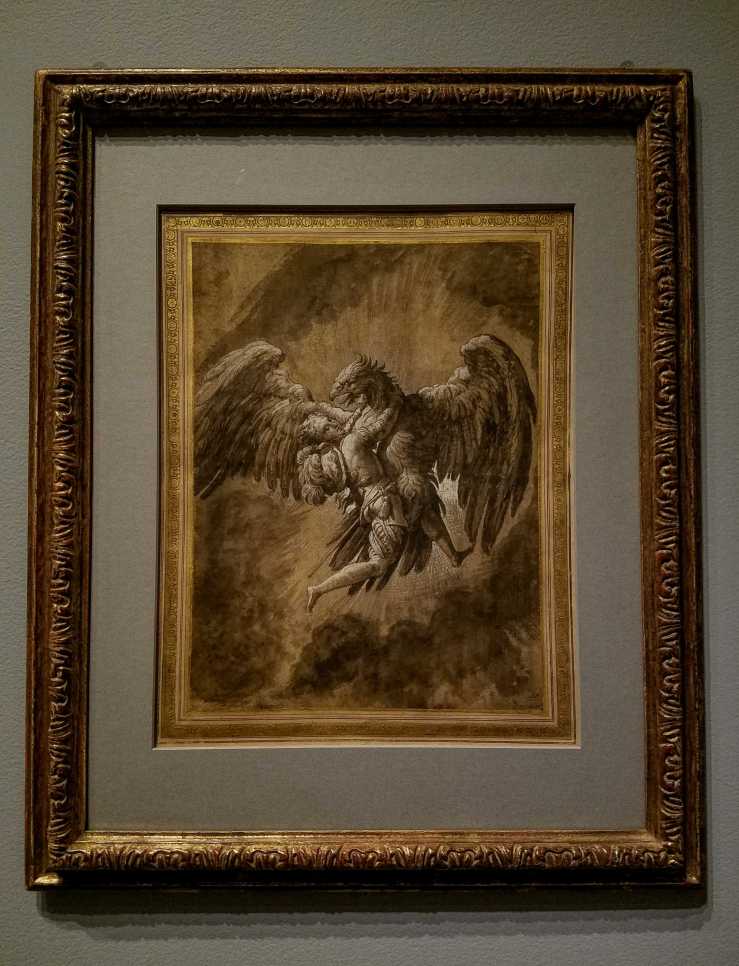
Niccolò dell’Abbate, 1509 or 1512-1571, The Rape of Ganymede (c. 1545), pen and ink with wash and watercolour over traces of chalk, heightened with white on paper washed light brown
Ganymede was a handsome shepherd who was carried off by Zeus (shown here in the form of an eagle) to become cupbearer to the Gods. The youth is usually shown nude or in classical dress, but here he wears the elegant costume of a sixteenth-century courtier.
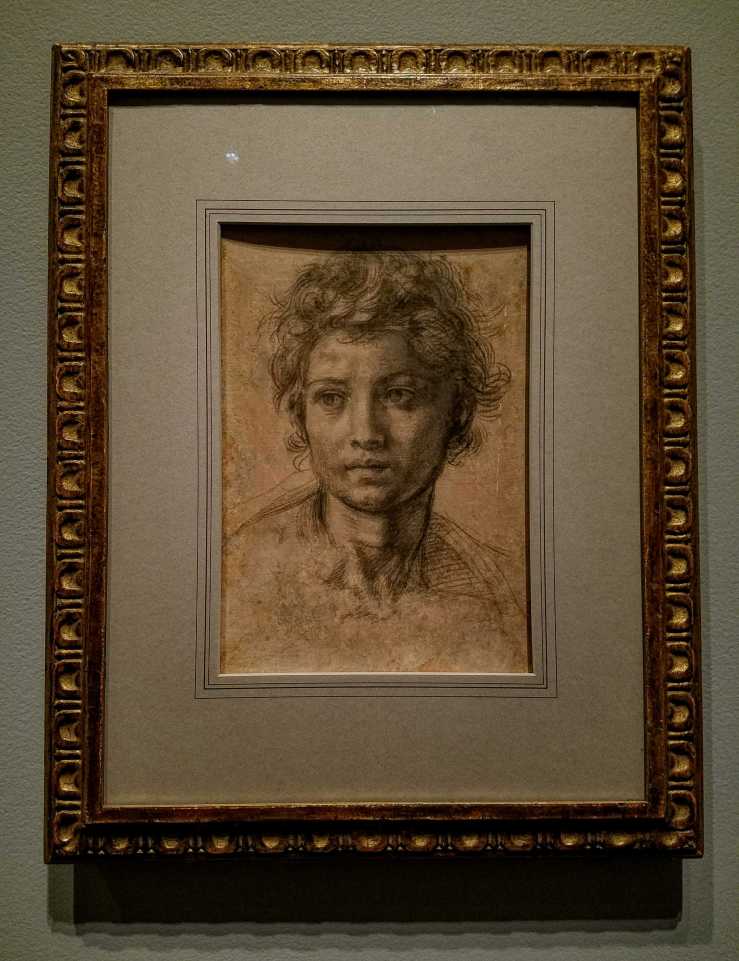
Federico Barocci, probably 1535-1612, Head of a Bearded Man (1579/1582), chalks on blue paperLuca Signorelli, 1445/1450 – 1523, Bust of a Youth Looking Upward (c. 1500), chalk, partially indented with a stylusAndrea del Sarto, 1486-1530, Head of Saint John the Baptist (c. 1523), chalkJean-Baptiste Greuze, 1725-1805, Bust of an Old Man, probably 1763, chalks with stumping, wetting and erasure
After completing a painting, Greuze often made finished drawings of the heads of some of the individual figures. These ”têtes d’expression” (expressive heads) were intended to be sold and appreciated as independent works of art.
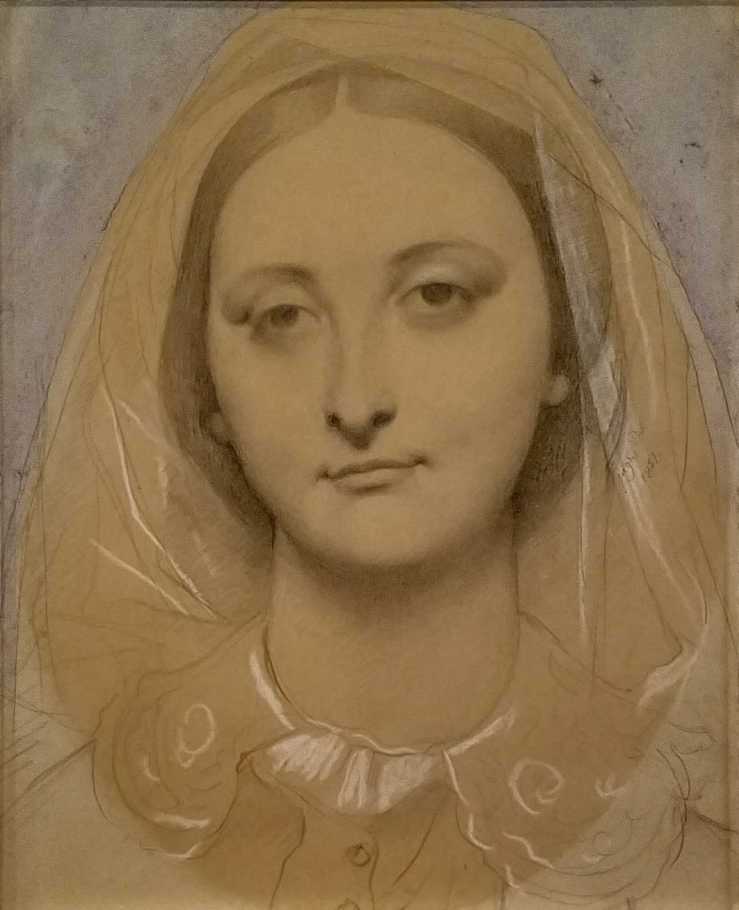
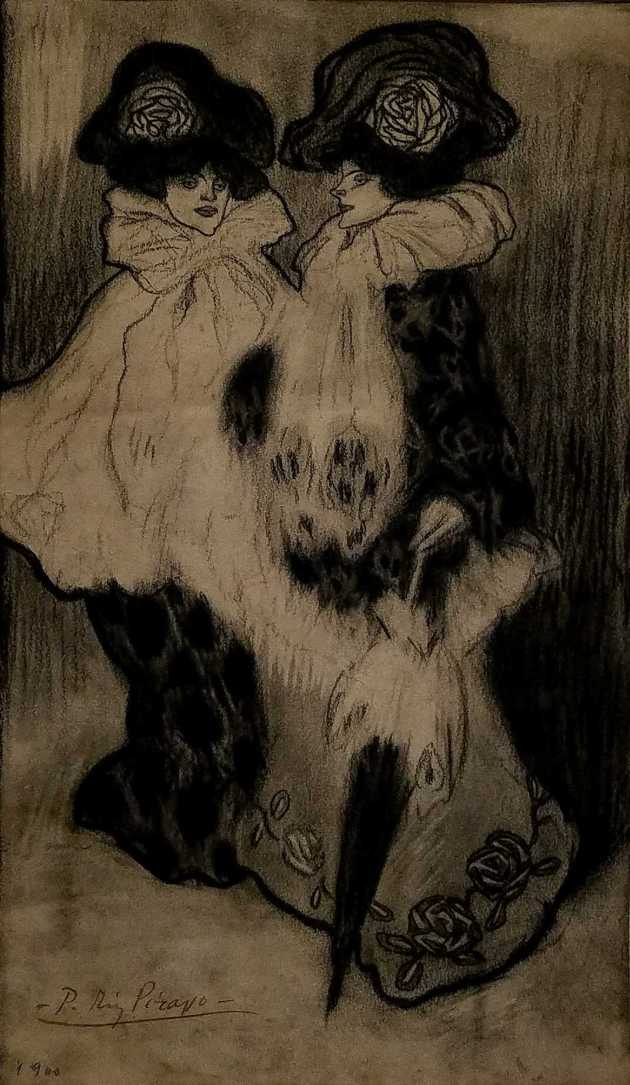
Jean-Auguste-Dominique Ingres, 1780-1867, Mademoiselle Mary de Borderieux (?), 1857, graphite and watercolour with white highlightsEdgar Degas, 1834-1917, Self-Portrait, c. 1855, chalkPablo Picasso, Spanish, 1881 – 1973, Two Fashionable Women, 1900, charcoalHenry Fuseli, 1741-1825, Satan Defying the Powers of Heaven, late 1790s, graphite, chalk and wash
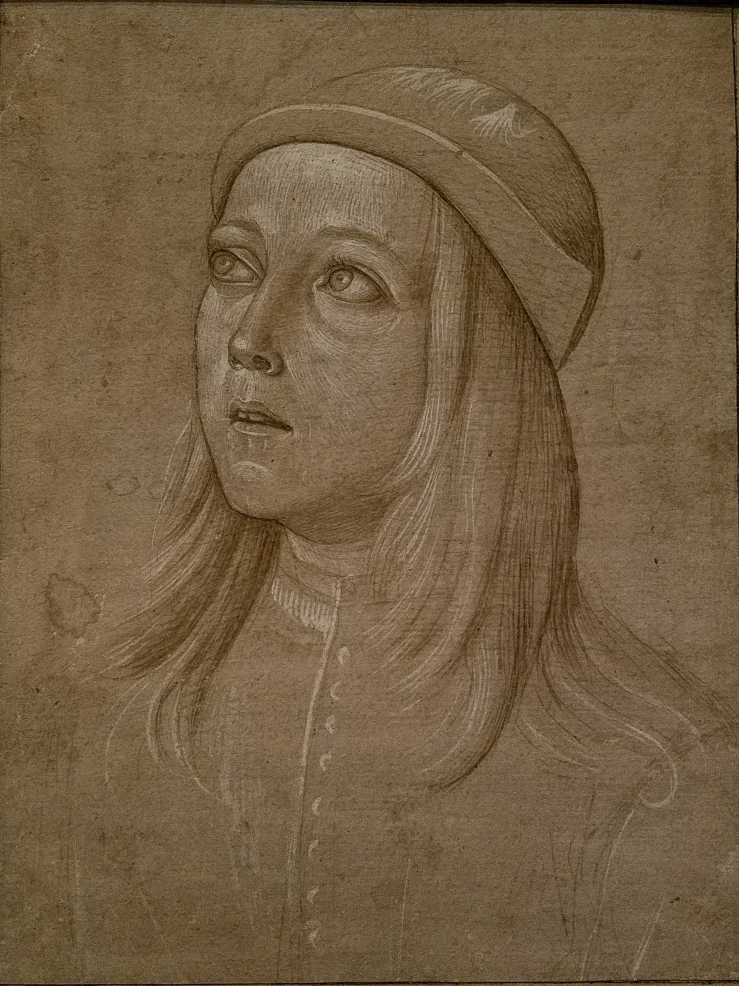
”Washington, DC—Ian Woodner assembled an extraordinary collection of over 1,000 old master and modern drawings, making him one of the 20th century’s most important collectors. More than 150 works from his collection now reside at the National Gallery of Art in Washington. While Ian Woodner gave some works himself in the 1980s, the majority have been donated by his daughters, Dian and Andrea. His daughters have also made other gifts and have pledged works from their personal collections. The Woodner Collections: Master Drawings from Seven Centuries brings together for the first time the best of Ian Woodner’s collection with some of the works given and promised by Dian and Andrea Woodner. […]
Some 100 drawings dating from the 14th to the 20th century are presented in an exhibition of masterworks donated by one of the great connoisseurs of the 20th century, Ian Woodner, and his daughters, Dian and Andrea. The Woodner Collections includes drawings executed by outstanding draftsmen such as Leonardo da Vinci, Albrecht Dürer, Raphael, Jean-Auguste-Dominique Ingres, Edgar Degas, and Pablo Picasso, among many others.”
They were on view in the West Building of the National Gallery of Art through July 16, 2017.
A reason big enough to visit the Sackler and a wonderful coincidence these masterpieces were on show during our visit (show ran until July 2017).
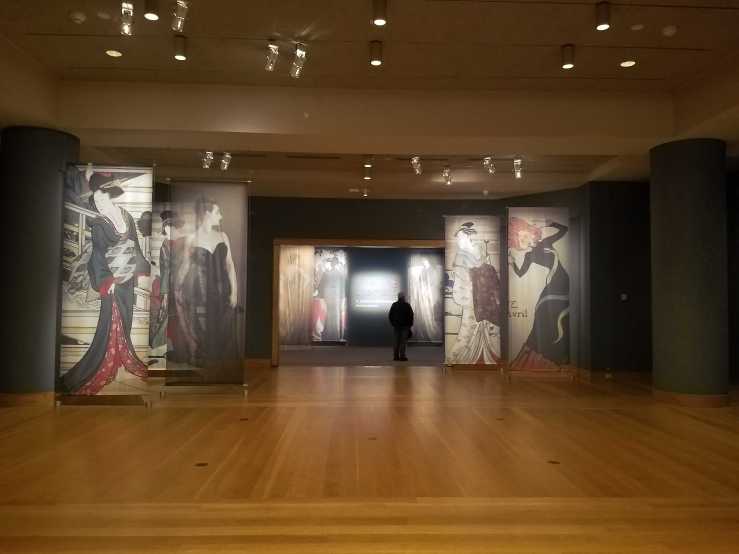
”In 2014, the Okada Museum of Art in Hakone, Japan, made an announcement that startled the art world. The new arts center revealed it had discovered a long-lost painting by Kitagawa Utamaro (1753–1806), a legendary but mysterious Japanese artist.Titled Snow at Fukagawa, the immense work is one of three paintings by Utamaro that idealize famous pleasure districts in Edo (now Tokyo). This trio reached the Paris art market in the late 1880s and was quickly dispersed. Museum founder Charles Lang Freer acquired Moon at Shinagawa in 1903. Cherry Blossoms at Yoshiwara passed through several hands in France until the Wadsworth Atheneum Museum of Art in Hartford, Connecticut, purchased it in the late 1950s. And Snow at Fukagawa had been missing for nearly seventy years before it resurfaced in Hakone.
For the first time in nearly 140 years, these paintings reunite in Inventing Utamaro at the Freer|Sackler, the only location to show all three original pieces. Contextualizing them within collecting and connoisseurship at the turn of the twentieth century, the exhibition explores the many questions surrounding the paintings and Utamaro himself.”
Moon at Shinagawa (also known as Moonlight Revelry at Dozō Sagami); Kitagawa Utamaro (1753–1806); Japan, Edo period, ca. 1788; painting mounted on panel; color on paper; Freer Gallery of Art, Gift of Charles Lang FreerCherry Blossoms at Yoshiwara; Kitagawa Utamaro (1753–1806); Japan, Edo period, ca. 1793; painting mounted on panel; color on paper; Wadsworth Atheneum Museum of Art, Hartford, Connecticut; The Ella Gallup Sumner and Mary Catlin Sumner Collection Fund, 1957.17
Snow at Fukagawa; Kitagawa Utamaro (1753–1806); Japan, Edo period, ca. 1802–6; hanging scroll; color on paper; Okada Museum of Art, Hakone, Japan
Photography was not permitted in this part of the gallery.
Images and text from the the Freer | Sackler website.
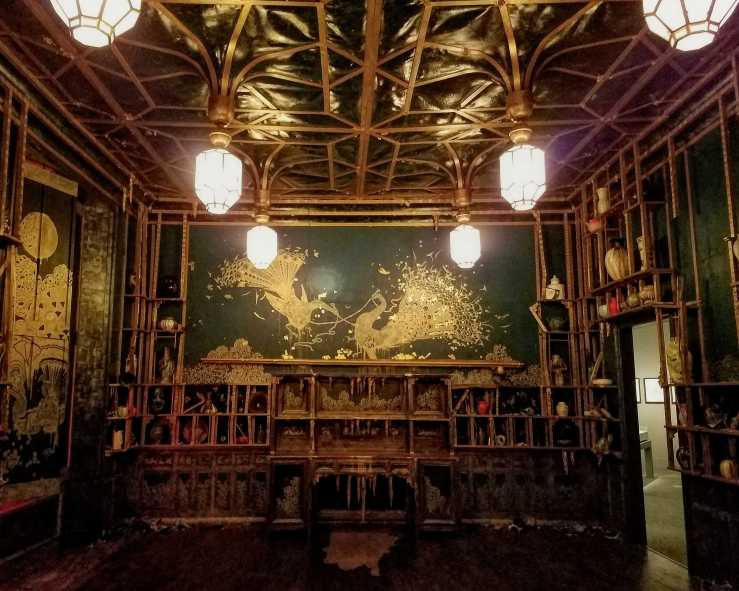
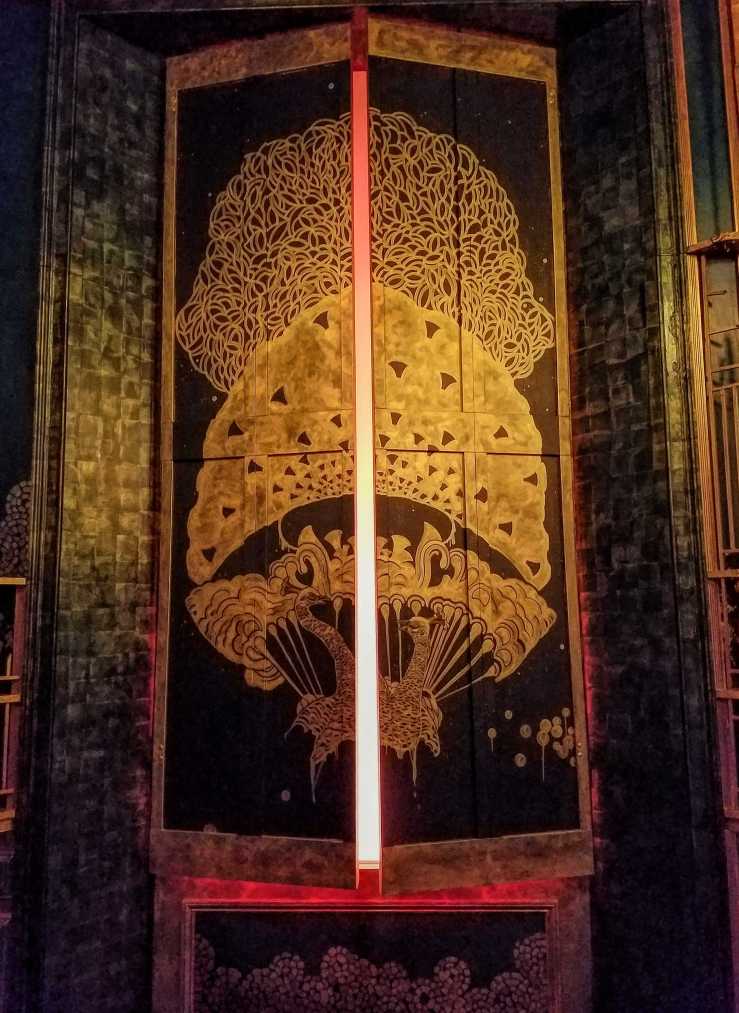
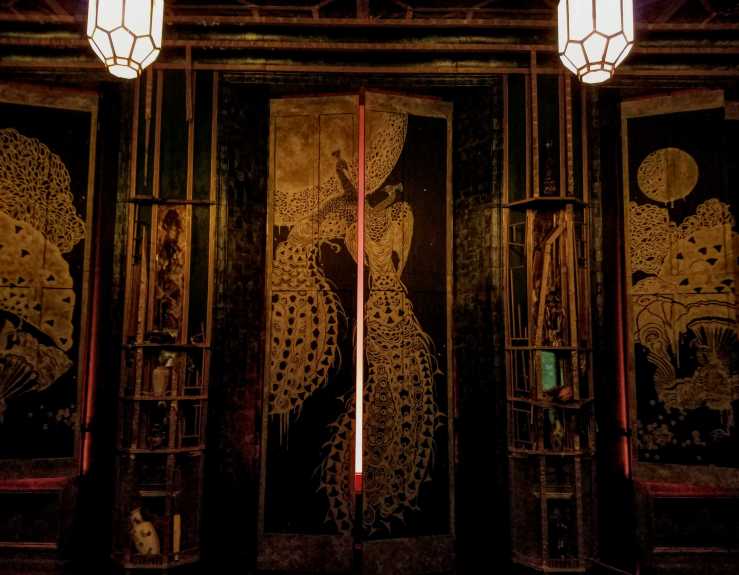
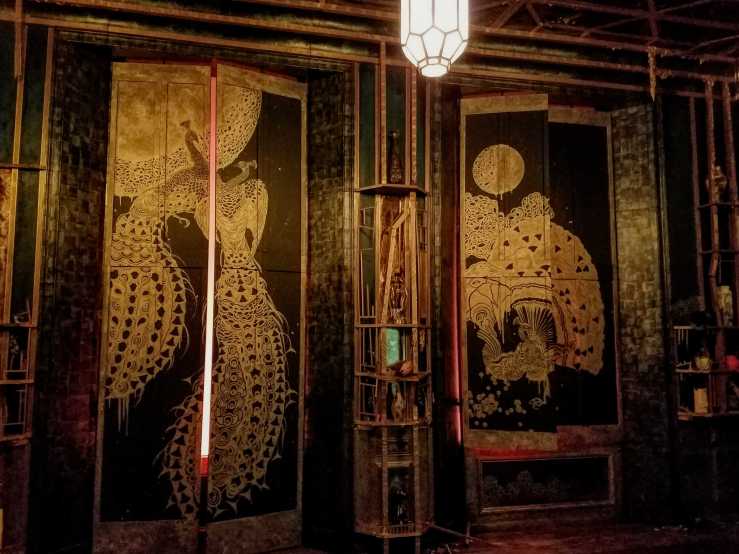
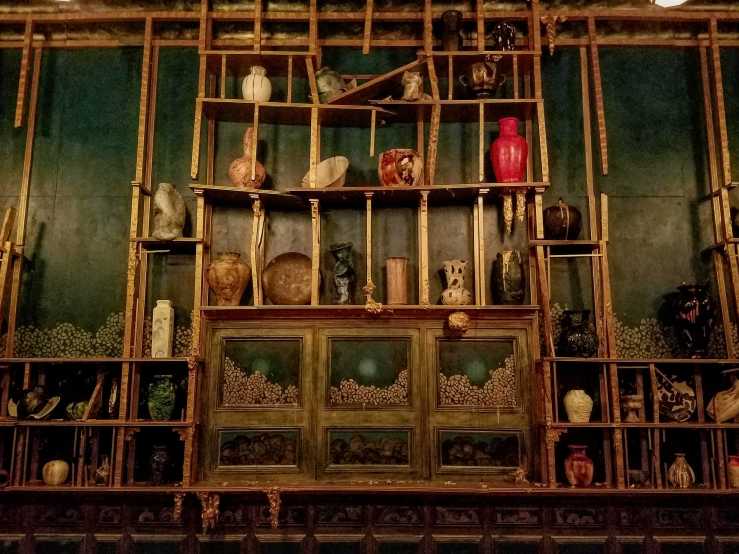
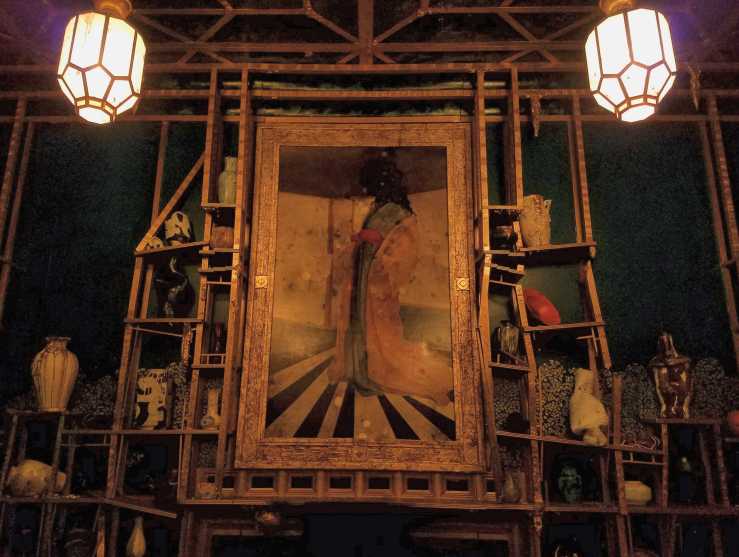
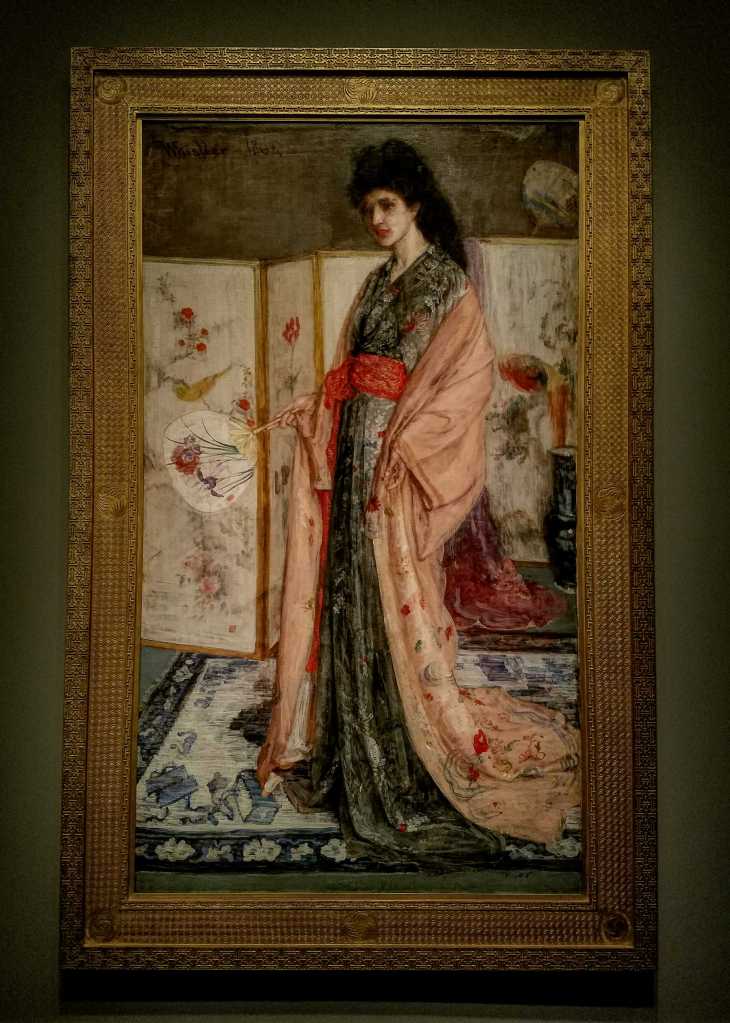
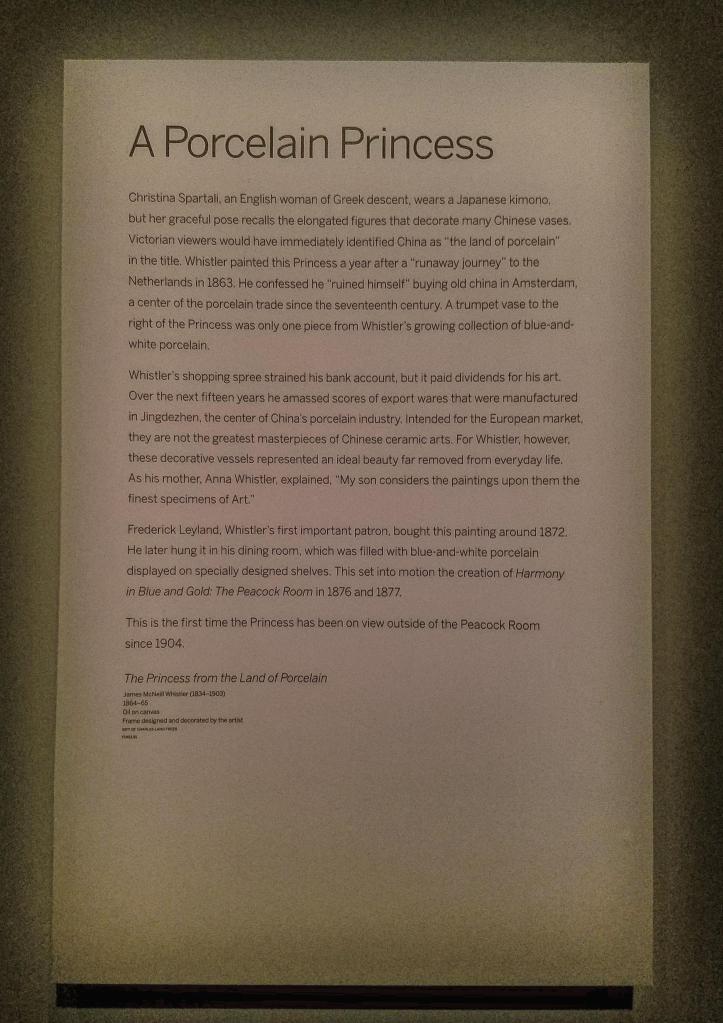
Together with the Freer Gallery of Art, they form the Smithsonian Museums of Asian Art with permanent collections and temporary exhibitions of Asian or Asian-influenced art, bridging the differences of cultures in a unique way.As unique as ”The Peacock Room”, a magnificent example of cross-cultural art:
”Before the Peacock Room became a work of art by James McNeill Whistler, it was the dining room in the London mansion of Frederick Leyland. Its shelves were designed to showcase the British shipping magnate’s collection of Chinese blue-and-white porcelain. Whistler completely redecorated the room in 1876 and 1877 as a “harmony in blue and gold.” Leyland was far from pleased with the transformation and the artist’s fee. He quarrelled with Whistler, but he kept the room intact.
Charles Lang Freer purchased the room in 1904. He had it taken apart, shipped across the Atlantic, and reassembled in his home in Detroit, Michigan. There, he gradually filled its shelves with ceramics collected from Syria, Iran, Japan, China, and Korea. For Freer, the Peacock Room embodied his belief that “all works of art go together, whatever their period.”
Whistler’s extravagant interior has been on permanent display since the Freer Gallery of Art opened in 1923. Located between galleries of Chinese and American art, the Peacock Room remains a place where Asia meets America.”
Illusions, before 1901, oil on canvas Henry Brown Fuller (1867-1934)
Elizabeth Winthrop Chanler (Mrs. John Jay Chapman), 1893, oil on canvas John Singer Sargent (1856-1925)
According to the artist, twenty-six-year-old Elizabeth Chanler had ”the face of the Madonna and the eyes of a child.” This portrait shows a beautiful, well-bred woman who has learned to be strong. When Elizabeth was still a girl, her mother died, leaving her to help care for seven younger brothers and sisters.
Sargent has portrayed her in the elegant interior of his London studios decorated with two paintings that frame the circumstances of Elizabeth’s life: a Madonna and Child, and a figure of an old woman copied from a portrait by Frans Hals. Perhaps the artist wished to show Elizabeth as a woman who, despite early hardships, was neither maiden nor matron. Sargent was often dismissed by his contemporaries as a ”society portraitist”, but his paintings never fail tot convey the human story behind the image.
Free listening and free download (mp3) chill and down tempo music (album compilation ep single) for free (usually name your price). Full merged styles: trip-hop electro chill-hop instrumental hip-hop ambient lo-fi boombap beatmaking turntablism indie psy dub step d'n'b reggae wave sainte-pop rock alternative cinematic organic classical world jazz soul groove funk balkan .... Discover lots of underground and emerging artists from around the world.
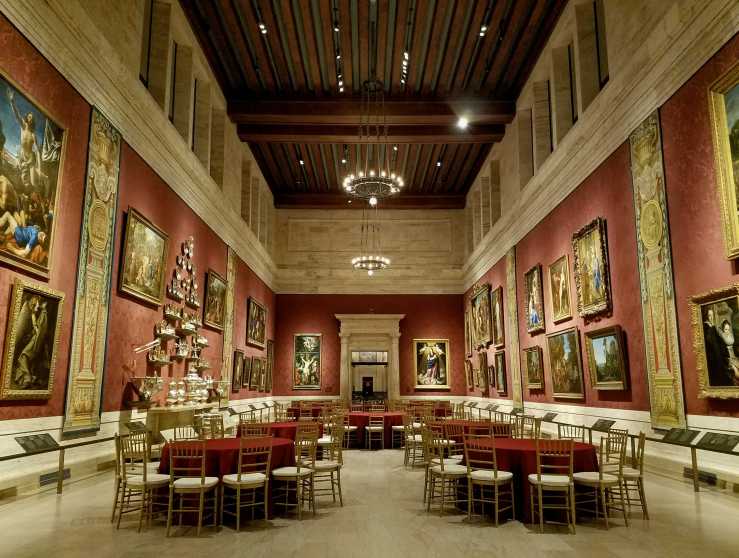 … it leads to the Monet gallery. The MFA boasts one of the largest collections of Claude Monet’s work outside France, with a whole gallery dedicated to the artist! Below, just two of the works I particularly enjoy – the first, for its virtuosity and splendid kimono and the second, for its hazy, dreamy mood:
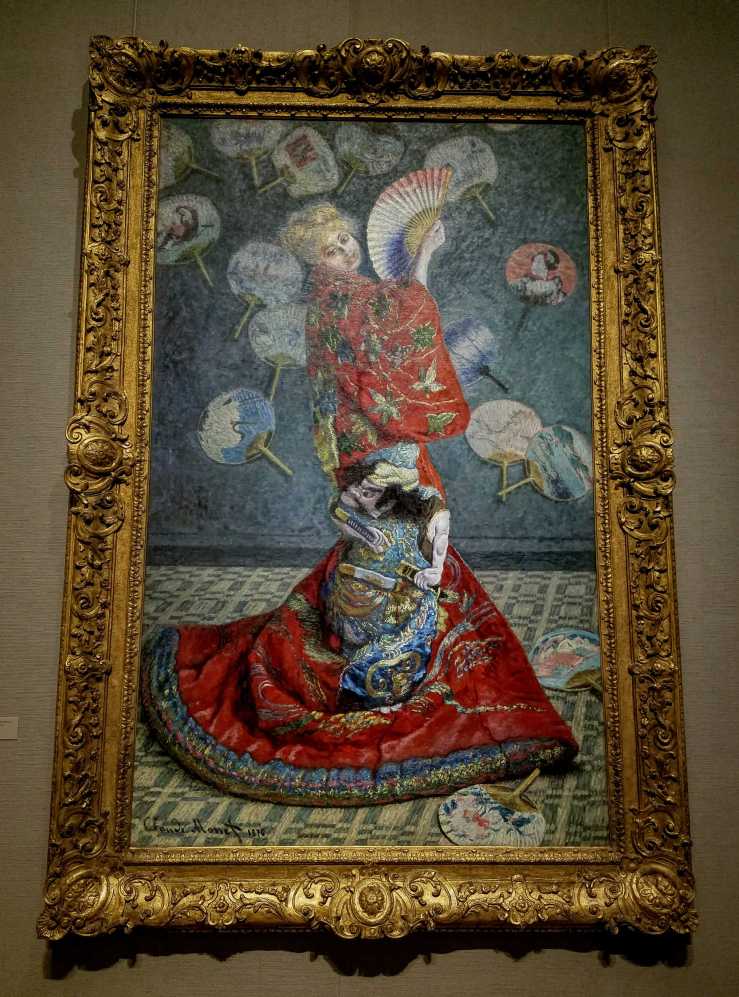 Claude Monet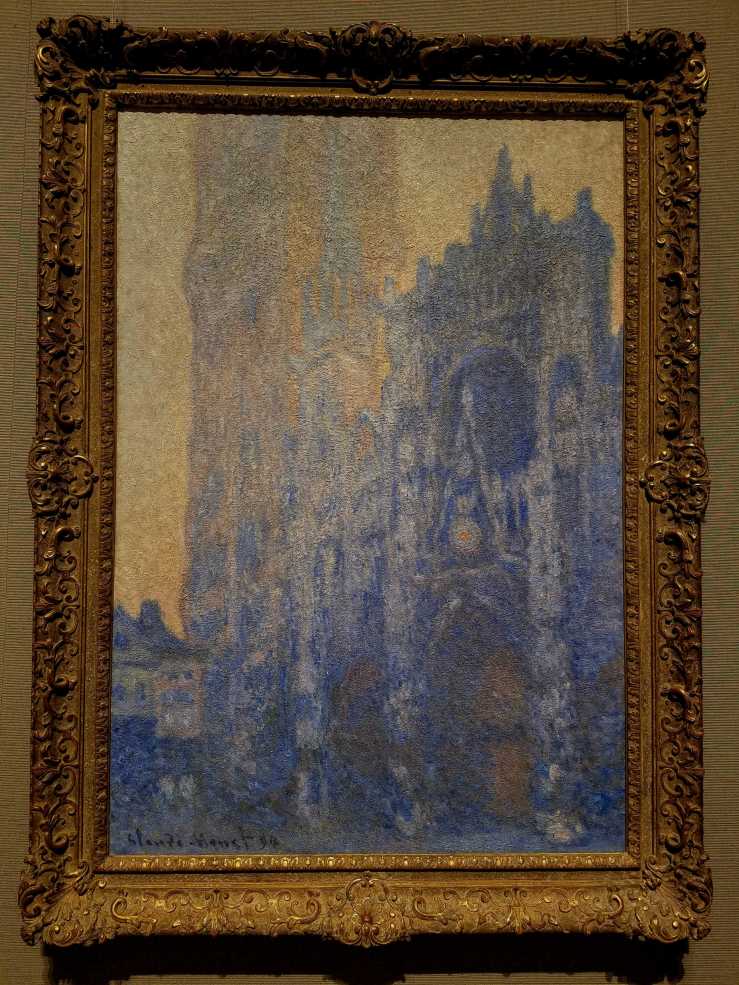
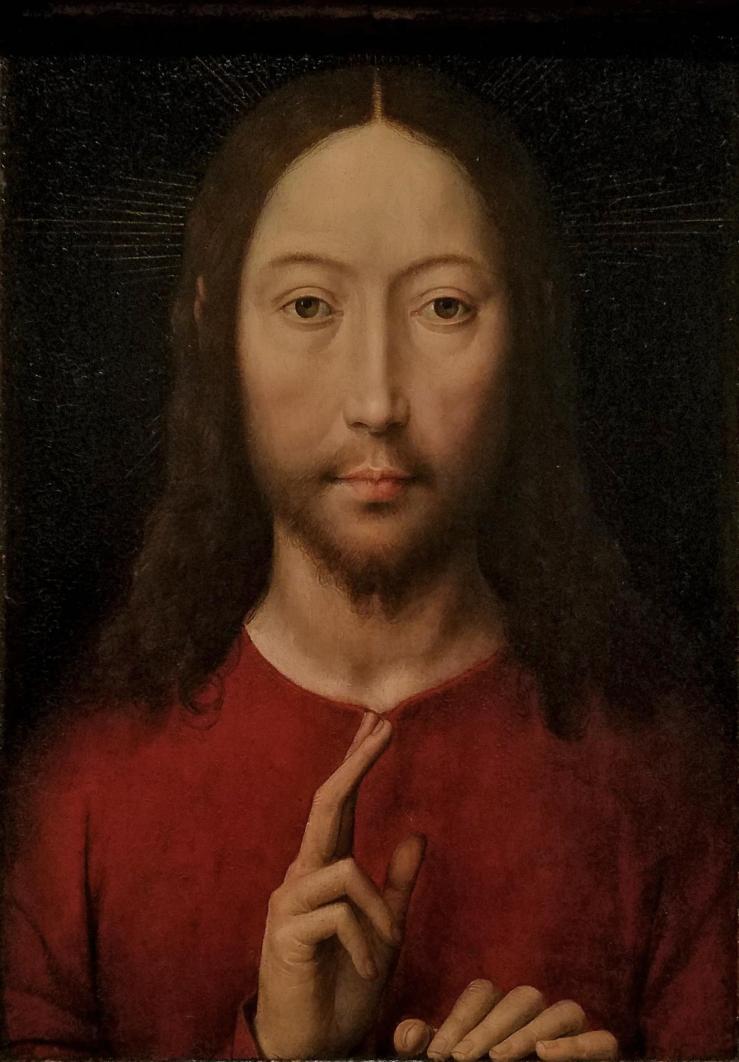 Hans Memling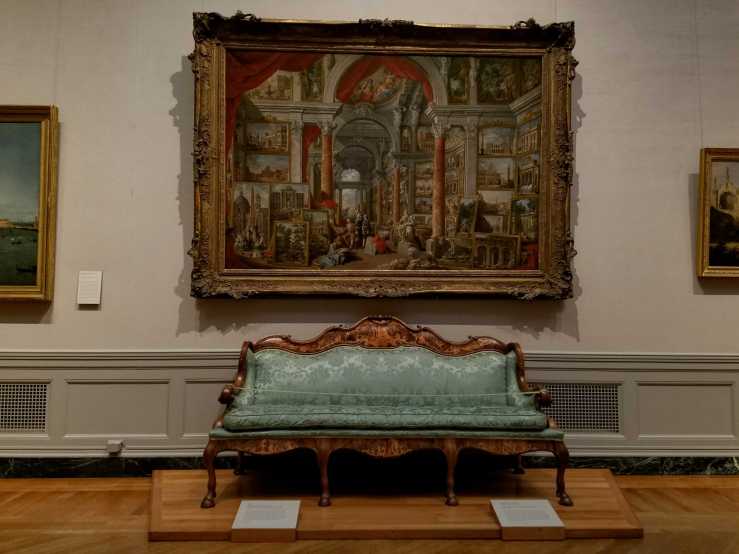

 Bed
Bed  This bed is among the most original pieces of English Regency furniture. Dominant in English interiors from about 1800 to 1830, the Regency style perpetuated the classical taste of the late 18th century but was more academic and archaeologically correct. This bed closely resembles furnishings designed by Thomas Hope – collector, connoisseur and a pivotal figure in the classical revival of Regency England- for one of his residences. Its architectural form and bronze mounts derive from ancient and Renaissance models. The greyhounds, however, are inspired by medieval tomb sculpture and exemplify the more romantic interpretation of historical sources characteristic of Hope’s influential furniture designs. The bed may have been used for resting – a day bed – or for sleeping.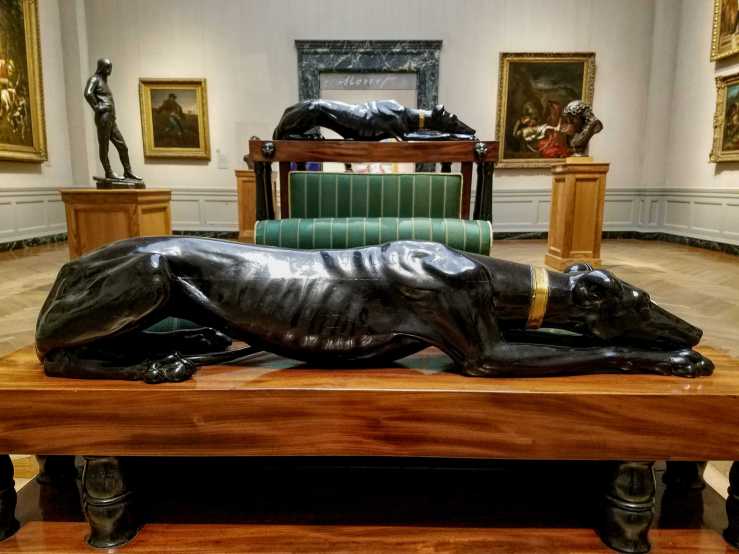

















 As unique as ”The Peacock Room”, a magnificent example of cross-cultural art: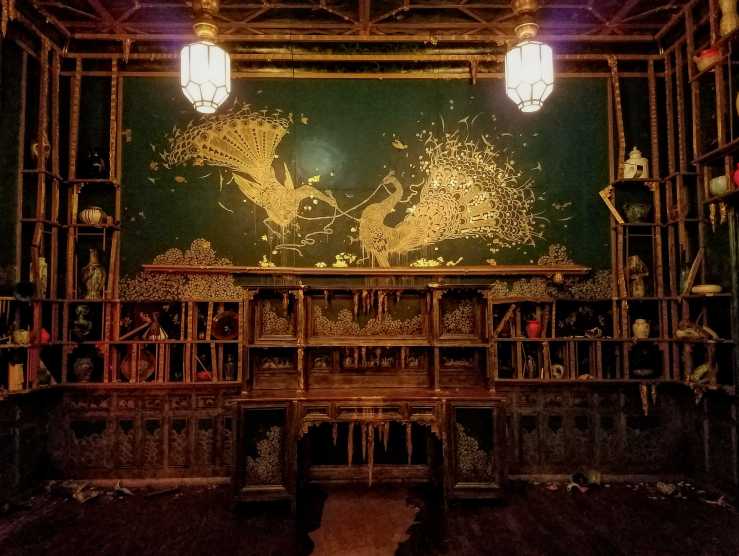
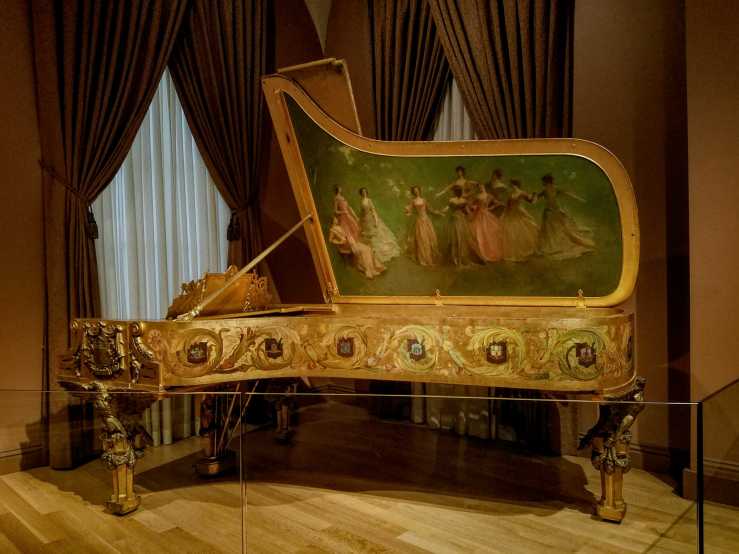

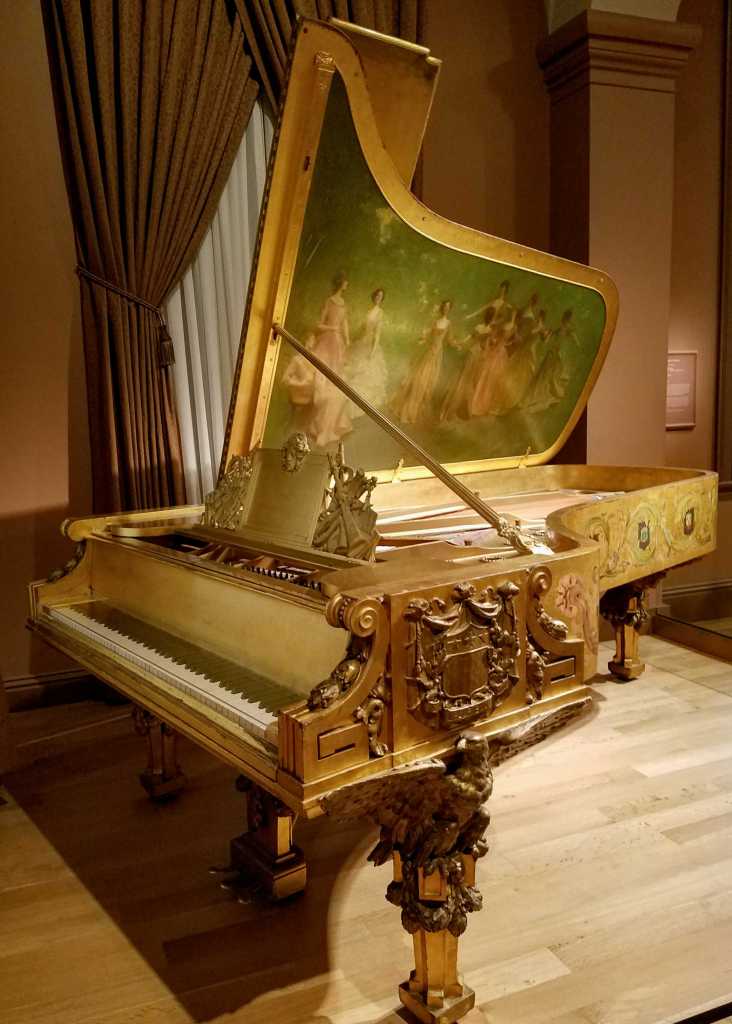

 Nude Seated at Her Dressing Table, 1909, oil on canvas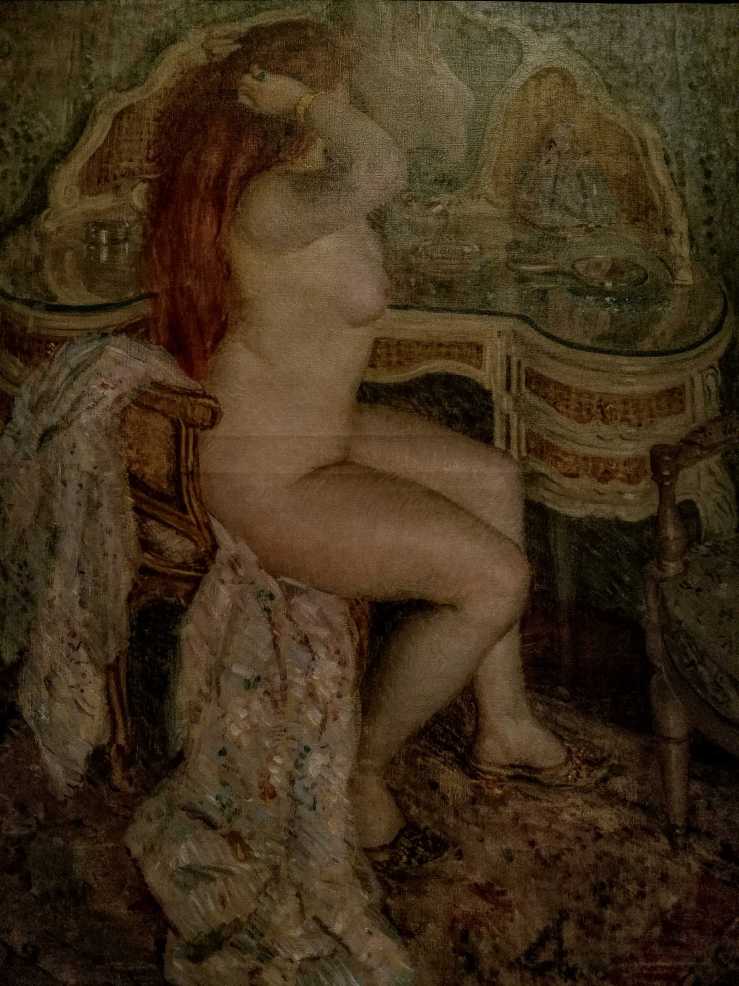
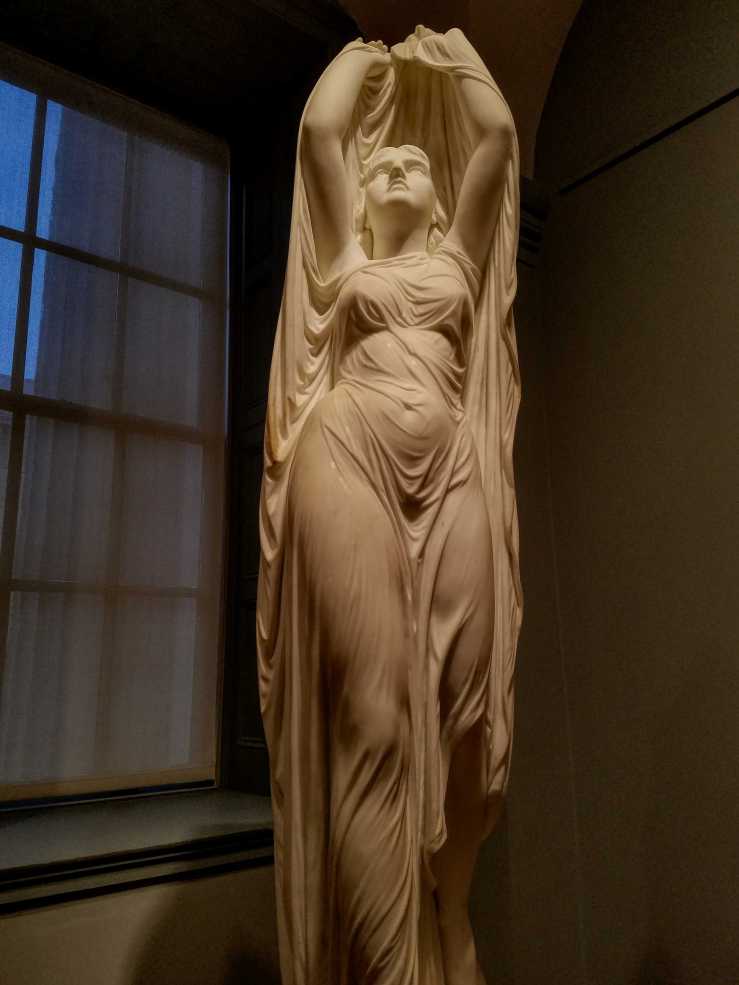 Undine, modeled about 1880, carved 1884, marble
 Illusions, before 1901, oil on canvas
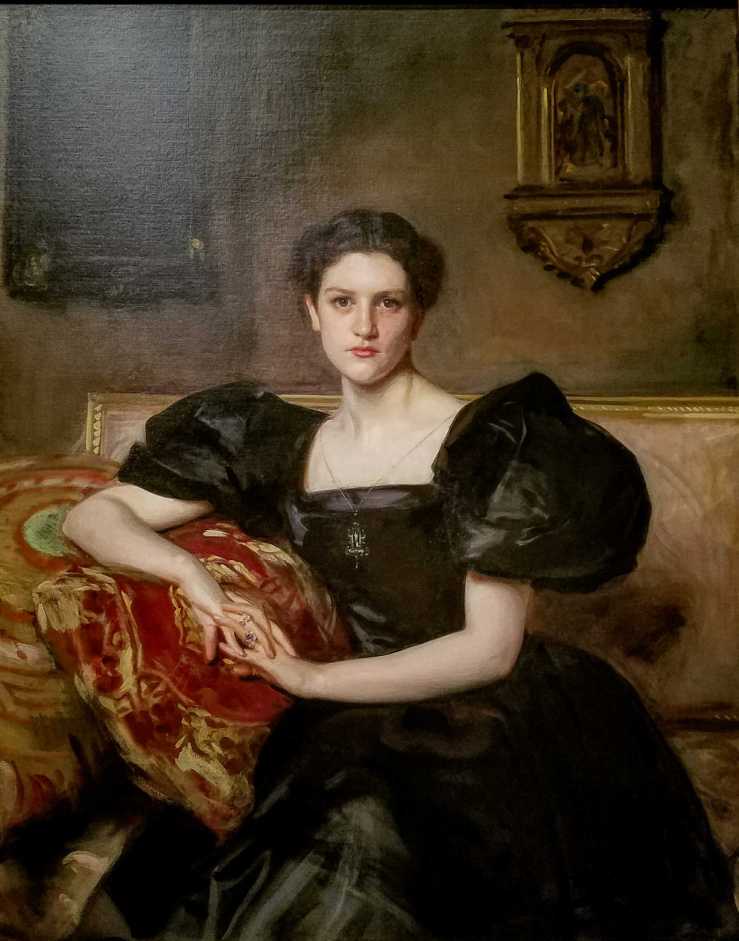 Elizabeth Winthrop Chanler (Mrs. John Jay Chapman), 1893, oil on canvas
 The Humble Fabulist