At the lower level of the lobby at the Metropolitan Opera House.


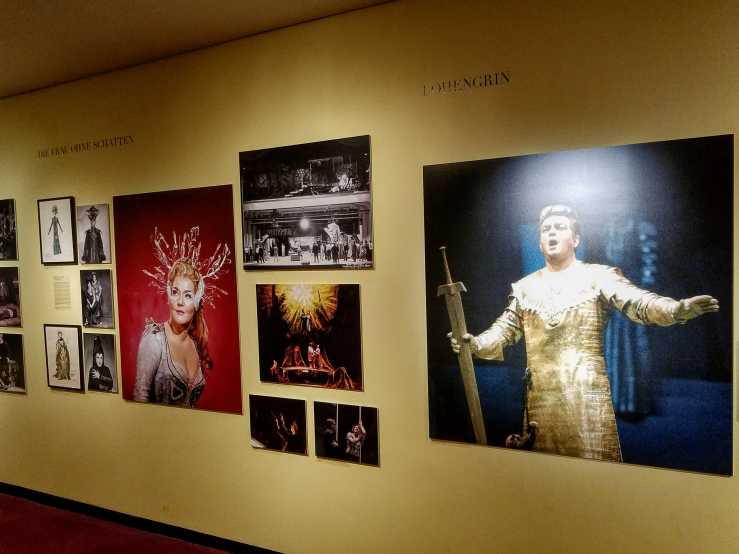


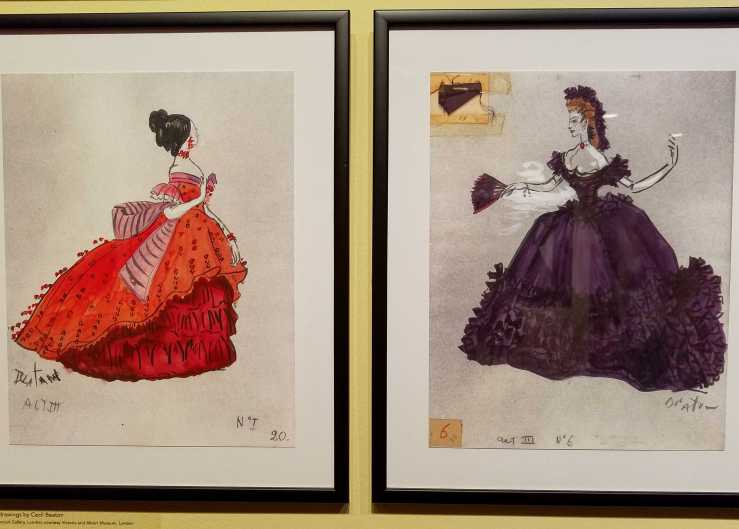
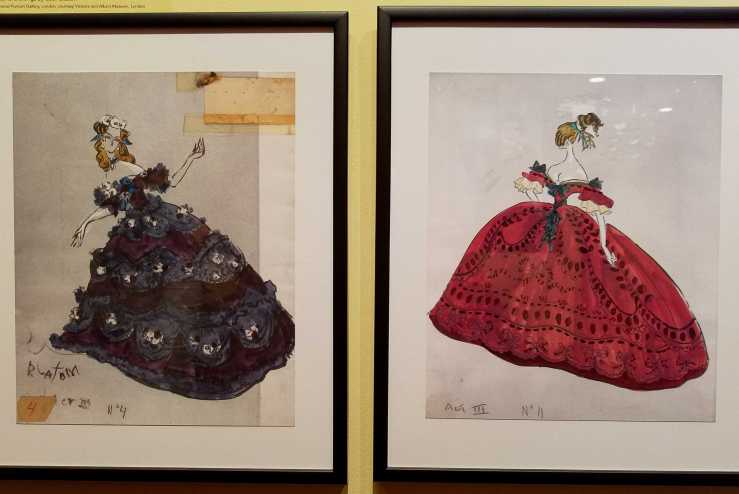


 Cecil Beaton photographed his La Traviata costume designs for the September 15, 1966 issue of Vogue magazine.


Metropolitan Opera House
May 14th, 2017
At the lower level of the lobby at the Metropolitan Opera House. Cecil Beaton photographed his La Traviata costume designs for the September 15, 1966 issue of Vogue magazine.
Metropolitan Opera House
May 14th, 2017
Under Marc Chagall’s murals and the iconic ”sputnik” chandeliers. Donated by the Republic of Austria as a gesture of thanks for the American initiative to mobilize the Marshall Plan, an aid to Western Europe to help rebuild its economy after the end of World World II, the ”sputniks” were designed by Hans Harald Rath for the historic glassware company Lobmeyr and were installed in 1966. 11 of them are in the lobby and 21 light up the auditorium. 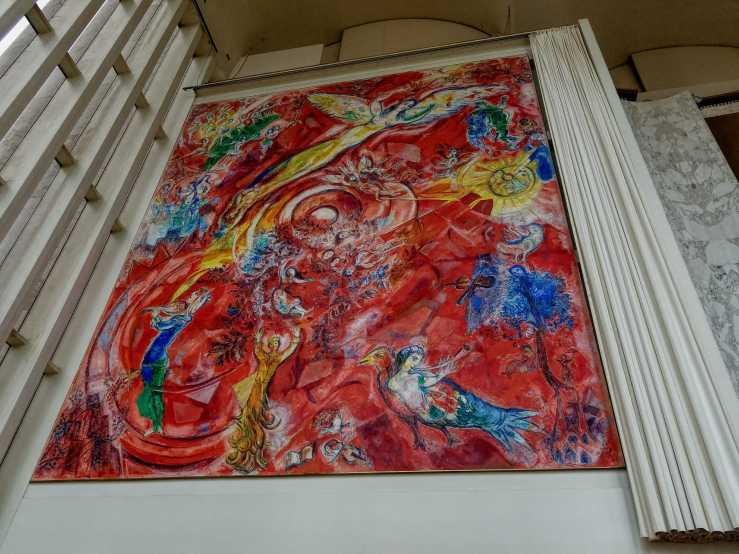
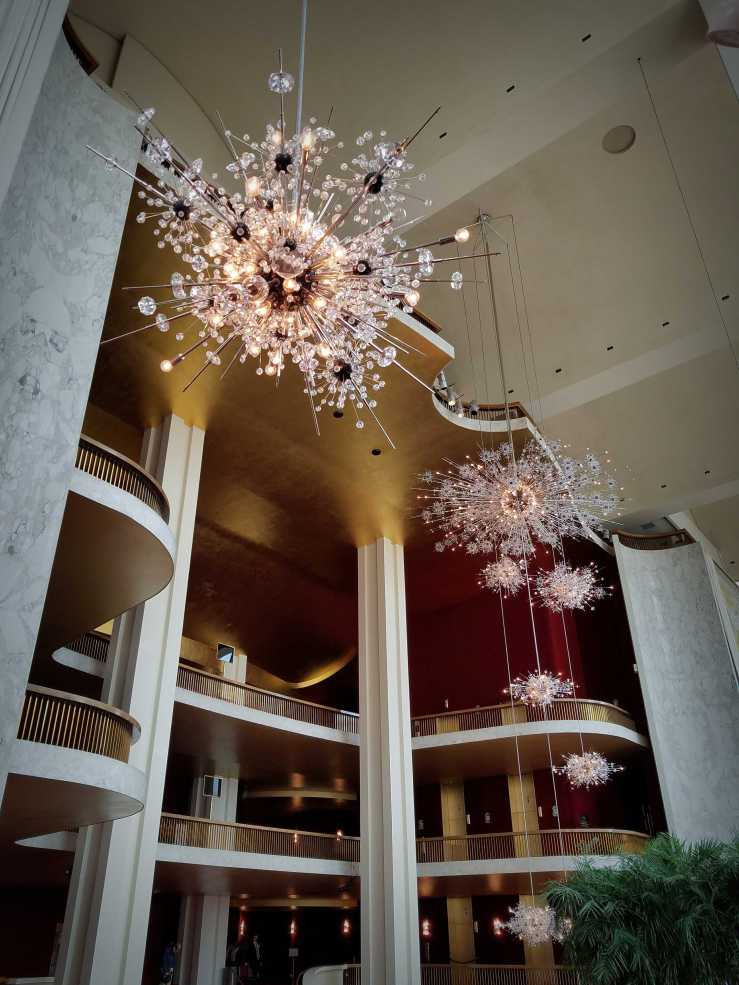


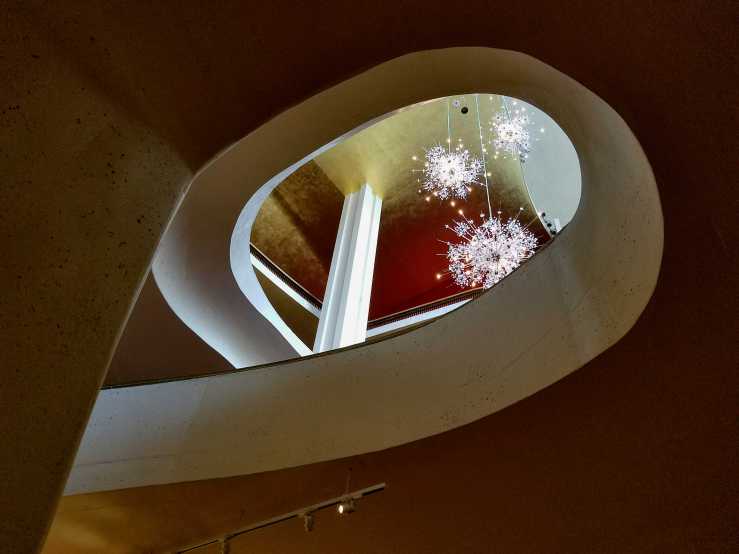


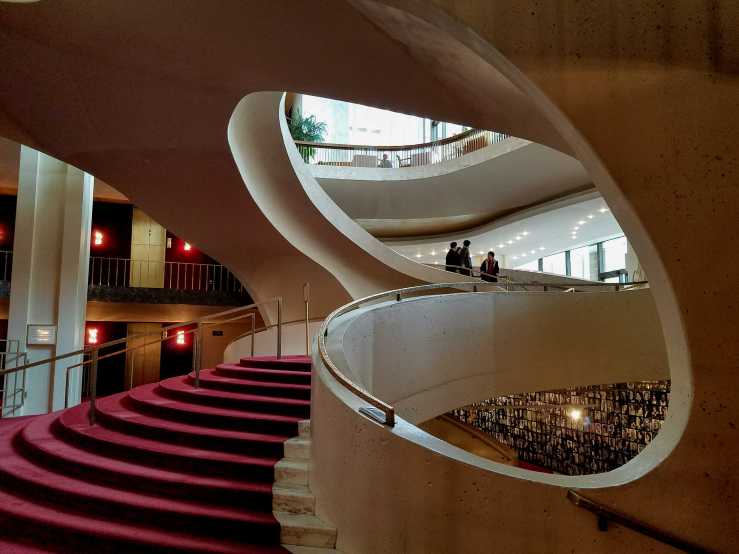


Metropolitan Opera House
Lincoln Center
May 14th, 2017
 Belle Greene, Librarian
In 1905 Pierpont Morgan hired twenty-six-year-old Belle da Costa Greene (1879-1950) to manage his library. She added to his collections with legendary discernment and went on to become a leading figure in the rare book world. She served as the Morgan’s first director until her retirement in 1948.
This brief tag accompanies Ms. Greene’s photo at The Lower Level. Nowhere else in the museum, was there anything to be found about this formidable woman and her work. Yet without her, there would be no Morgan Library Collection as we know and enjoy it today.
Greene was a young librarian at Princeton University, when her colleague Junius Morgan, who happened to be J. Pierpont Morgan’s nephew, introduced her to his wealthy uncle, who was looking for someone to catalogue his collection.
Child of two African-American parents of mixed ancestry, identified as ”colored” in her birth certificate, Belle knew that she would not be able to reach her dream of becoming a librarian had she been open about her family background. So she hid it and invented a relative in Portugal (the ”da Costa” part of her name) that would explain her darker complexion. She also shortened her real name from Greener to Green, to distance herself from her father, Richard Greener, the first coloured librarian and professor at the University of South Carolina.
Smart, witty, outspoken and sensual with a great sense of style and an extensive designer wardrobe (”Just because I’m a librarian”, she has been known to exclaim, ”doesn’t mean I have to dress like one!”) Belle was equally at ease among the Bohemian crowd as well as the scholarly elite.
Trusted for her expertise and excellent bargaining skills, Green would handle considerable amounts of money buying and selling rare manuscripts, books and art for Mr. Morgan. She went on doing that for forty-three years, first as librarian, then as the first director of the Morgan Library, when it became a public institution.
Belle Green retired in 1948 and died two years later.
***
More about this amazing woman and her life & work can be found in her biography ”An Illuminated Life: Belle da Costa Greene’s Journey from Prejudice to Privilege” by Heidi Ardizzone.
May 7th, 2017
 Roy Lichtenstein
Study for No Thank You!, 1964
That’s what I should have said. Probably. But I figured, if I avoided the rush on Thursday or – worse – Friday afternoon, I could just about manage to make it to destination unscathed. So, the next few weeks I hope to be bewitched, bedazzled and bewildered by the wonders of nature in Yellowstone, the savoury landscape of the Salt Flats in Utah, the coolest urbanity of Portland in Oregon and Seattle in Washington. Now, how about: travelling on Memorial Day weekend – Yes, please…!
May 7th, 2017
Whatever you do, stay inside the circle…! 

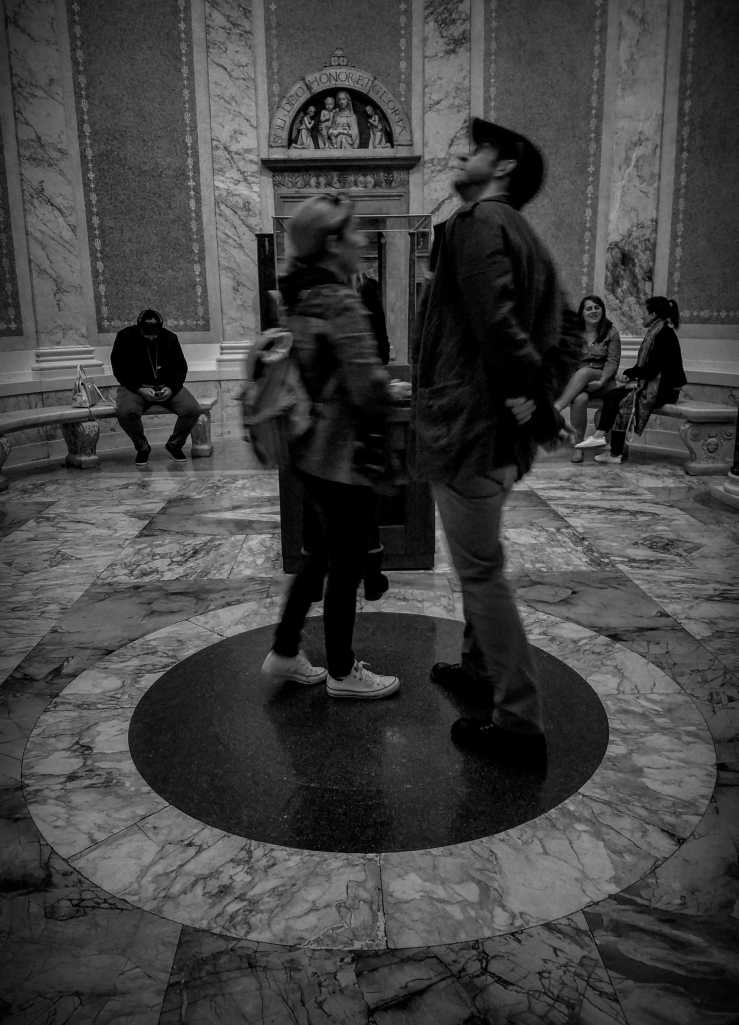
The magical Rotunda @ The Morgan Library & Museum
May 7th, 2017
The Original Library
With its three-story inlaid walnut bookshelves and magnificent ceiling, the East Room was designed as a treasury for Pierpont Morgan’s remarkable collection of rare printed books. The sixteenth-century Netherlandish tapestry over the mantelpiece depicts avarice, one of the seven deadly sins, personified by the mythological King Midas. Two staircases, concealed behind bookcases, provide access to the balconies. Paintings by H. Siddons Mowbray adorn the upper reaches of the room, and the signs of the zodiac are depicted in the ceiling’s hexagonal spandrels. (Morgan was a member of an exclusive dining club that admitted only twelve members at a time—one for each sign of the zodiac—and the arrangement of the signs in his library’s ceiling may carry a hidden meaning related to key events in his personal life.) Allegorical depictions of the arts and sciences alternate with portraits of figures from Socrates to Michelangelo, identifying the library as a place for the preservation of art and ideas.
Literature, Art, and Music from the Middle Ages to the Present
On view in the East Room are examples from The Morgan Library & Museum’s extraordinary collection of medieval illuminated manuscripts, rare printed books and bindings, and handwritten manuscripts of great writers, artists, and composers from the Renaissance to the present day. While some of the items on view were purchased by Pierpont Morgan, others have been acquired in the century since his death. Selections are changed regularly, but a seminal work is always on view: one of the Morgan’s three copies of a Bible printed by Johannes Gutenberg in 1455. With Gutenberg’s Bible, the painstaking process of copying books by hand gave way to an innovative new technology—movable type—that facilitated the exchange of art and ideas in all spheres of human endeavor.

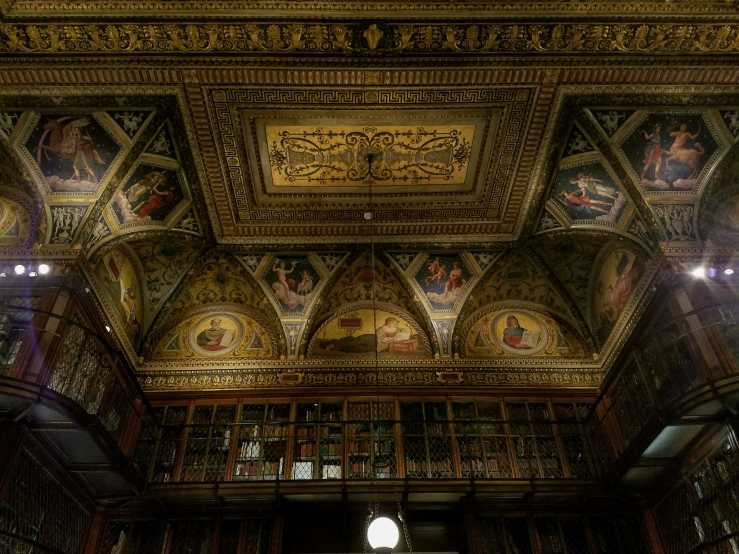
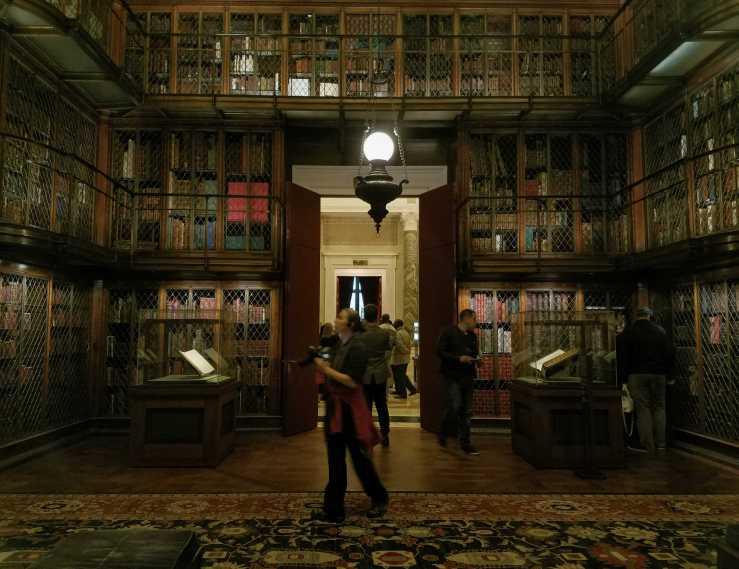
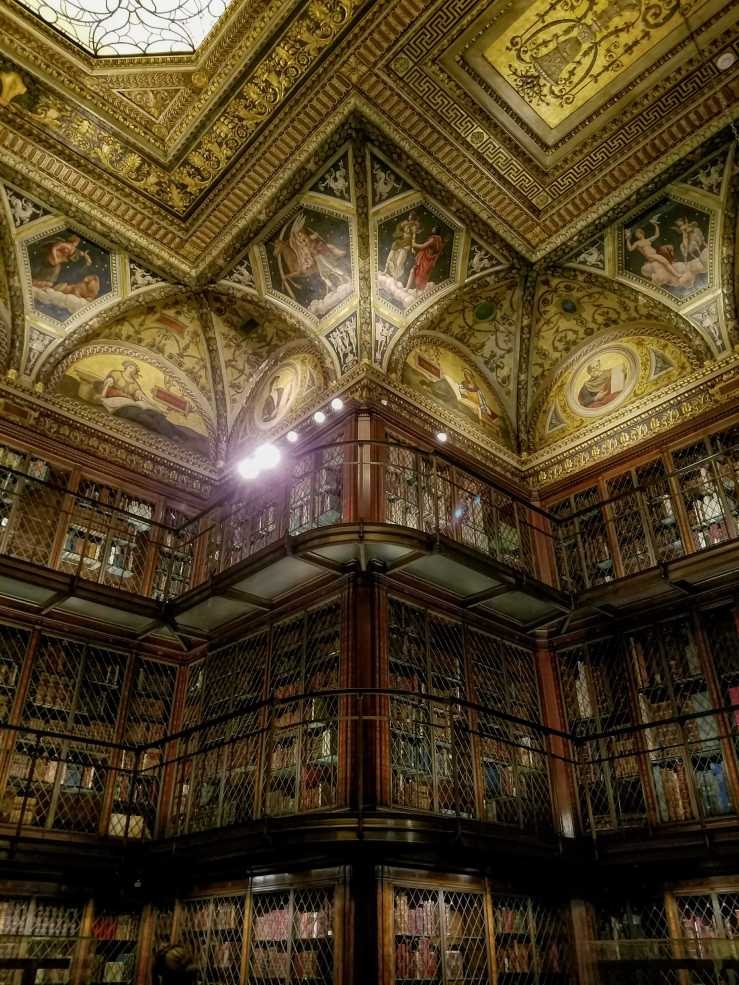
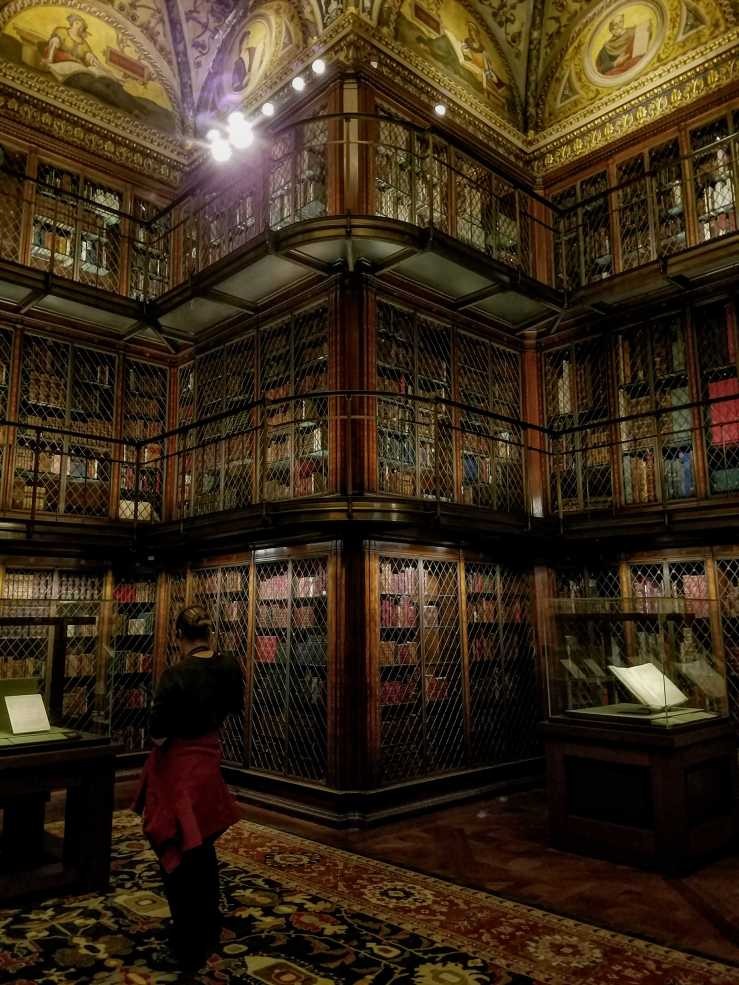
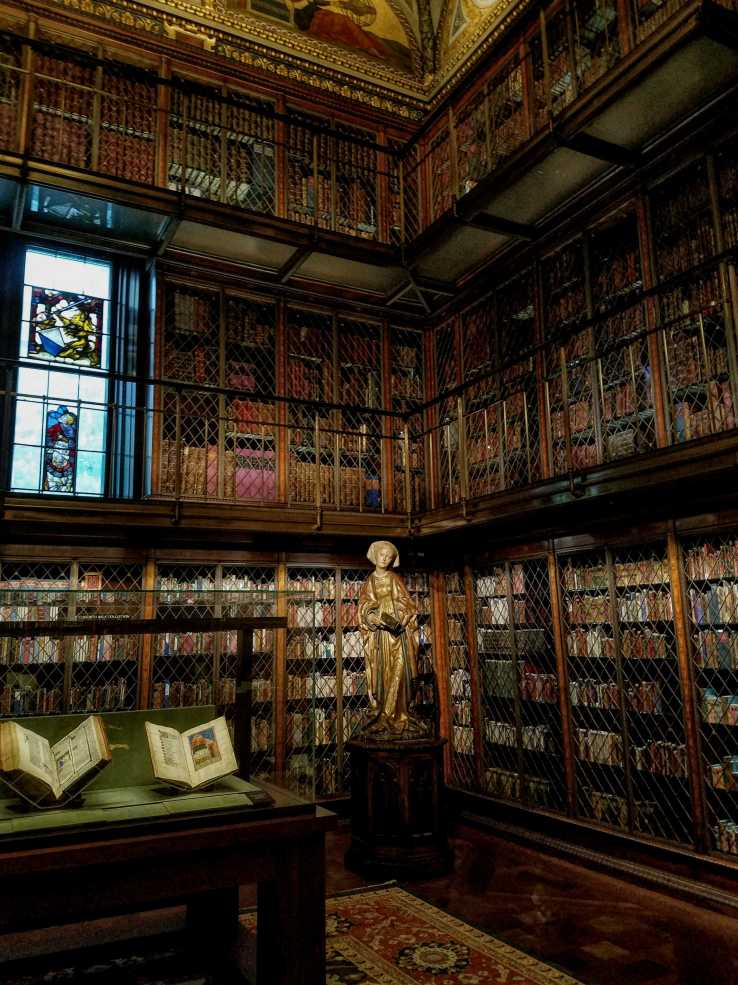


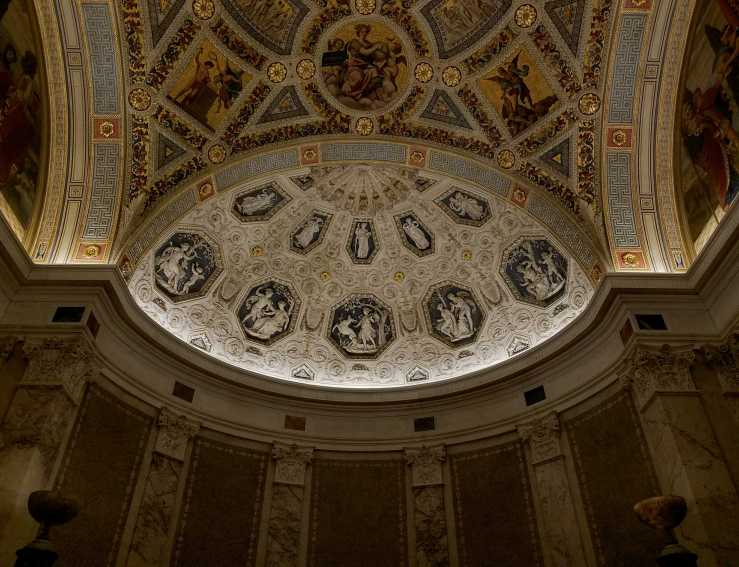 Taking another look at The North Room, before leaving.
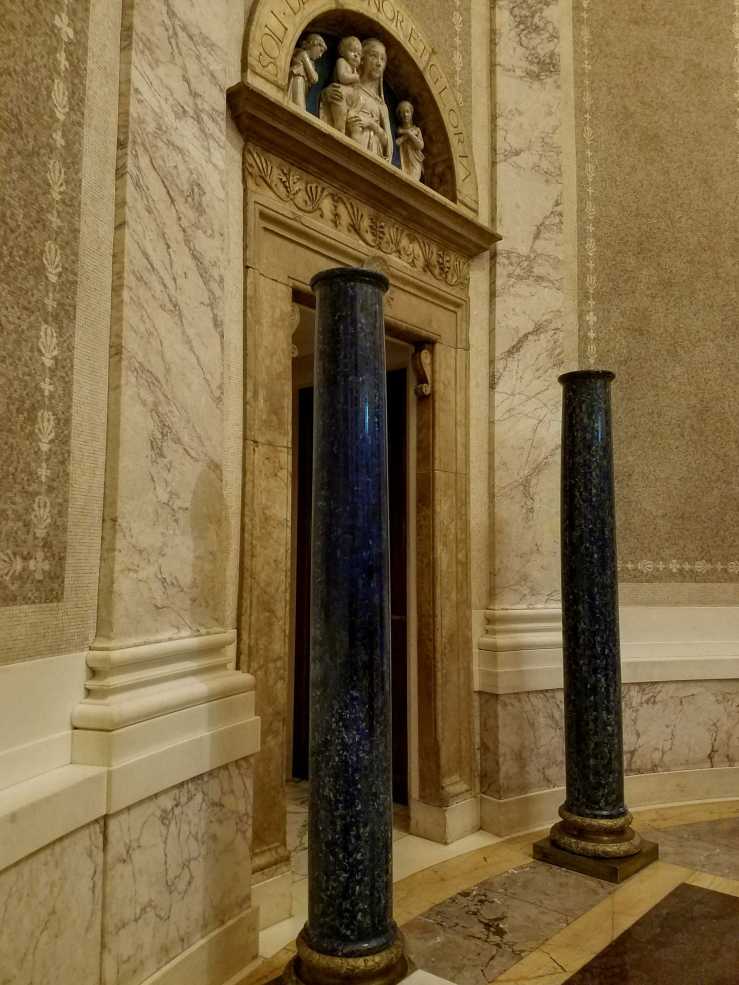
 The Rotunda

This portrait of Mrs. Morgan was on view at the Lower Level (and not in one of the rooms surrounding Mr. Morgan’s library, as I would have expected).  John Singer Sargent, Florence 1856-1925 London
Portrait of Mrs. J.P. Morgan, Jr.
This spirited portrait depicts Jane Morgan (neé Jane Norton Grew, 1868-1925), the wife of Pierpont Morgan’s son, J.P. Morgan, Jr. (1867-1943). Although the portrait is inscribed 1906, it appears that Mrs. Morgan sat for Sargent in 1904-5, when she was still living with her husband in London. The Morgans returned to New York in 1906. The following year Sargent declined the opportunity to depict Pierpont Morgan. Shortly thereafter he relinquished his practice as the leading portrait painter of high society in order to focus on landscapes and murals.
May 7th, 2017
The West Room, Mr. Morgan’s Study
During the last years of his life, Pierpont Morgan spent a great deal of time in his richly appointed private study, away from the Wall Street offices of his banking firm. In this lush but intimate room, among some of his favorite works of art, Morgan worked, relaxed, and met with art dealers and business associates. It was here that he gathered a group of bankers in 1907 to orchestrate a dramatic resolution to a national financial panic. Low shelves containing rare printed volumes line the study’s walls. To the left of the massive fireplace, Morgan’s impressive manuscript collection was once secured in a vault lined with solid steel. The red silk wall covering (a reproduction of the deteriorated original) contains the insignia of the Chigi, a great Sienese banking family, and much of the furniture was commissioned by Morgan in the Renaissance style. Pierpont Morgan’s portrait hangs over the fifteenth-century mantelpiece, and that of his son, J. P. Morgan, Jr., is displayed between the west windows.
 [right] Hans Memling (Flemish, 1433/40–1494)
Portrait of a Man with a Pink, ca. 1475
Oil on panel
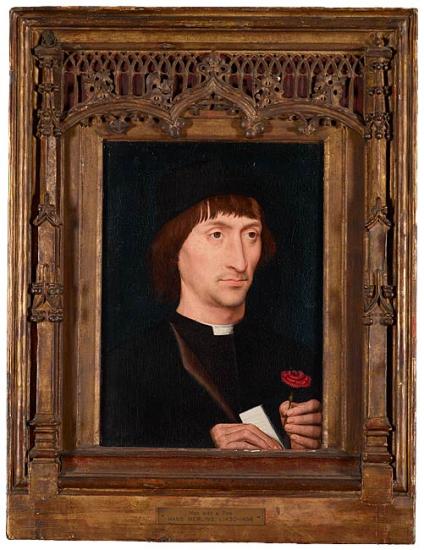
This is one of the finest paintings in the Morgan collection. The sitter may have been a member of the Italian merchant colony in Bruges, where Memling was the leading painter. The pink, or carnation, in the young man’s hand is likely a symbol of betrothal, suggesting that the painting may be one of a pair of wedding portraits.
[left] Workshop of Domenico Tintoretto (Italian, 1560-1635)
Portrait of a Man, ca. 1600
Oil on canvas
The unidentified subject of this portrait, painted in Venice in the workshop of Domenico Tintoretto, son of the more famous Jacopo, is believed to be a Moorish Ambassador to the Venetian court.
 Frank Owen Salisbury (British, 1874–1962)
Portrait of J. P. Morgan, Jr. (1867–1943) in a Cambridge Robe, 1934
This portrait depicts J.P. Morgan, Jr., Pierpont Morgan’s son and founder of this institution, wearing the robes of a Doctor of Laws, an honorary degree conferred by Cambridge University in 1919. The degree was a gesture of gratitude to the younger Morgan, who, as head of the firm J.P. Morgan & Co., provided financial support to the Allies during the First World War. Commissioned by J.P. Morgan, Jr., 1934.
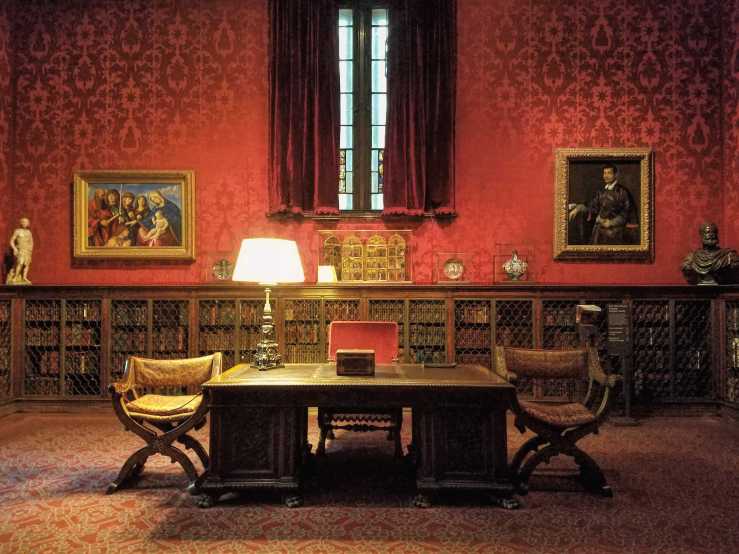
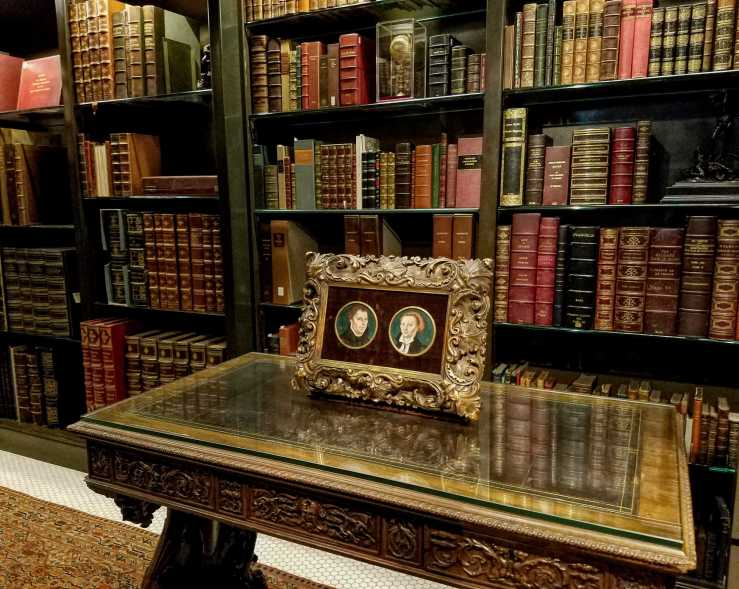

A glimpse into The East Room, the original library, more photos of which we will see tomorrow.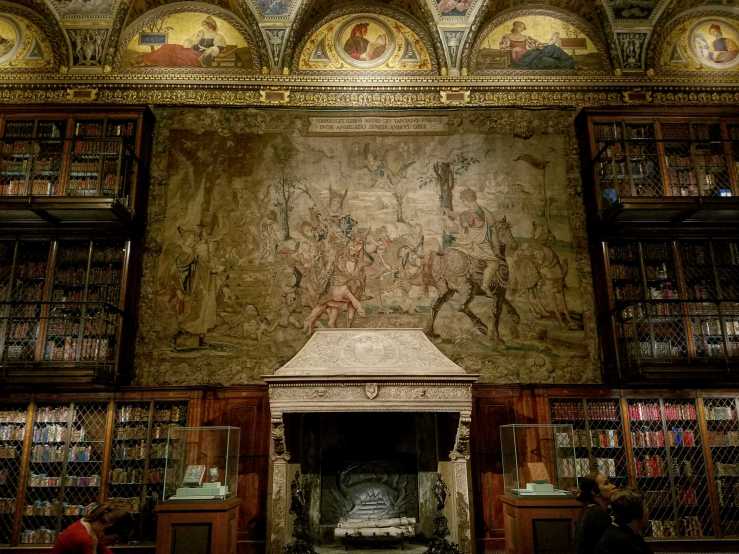

The Morgan Library & Museum houses one of the finest collections of music manuscripts in the country. In addition to a large collection of musicians’ letters and first editions of scores and librettos, it has the world’s largest collection of Mahler manuscripts and substantial holdings of Brahms, Chopin, Debussy, Mozart, Schubert, and Richard Strauss. The collection spans six centuries and many countries. The Morgan’s holdings of material relating to the lives and works of the dramatist William S. Gilbert and the composer Arthur S. Sullivan form the most extensive archive of its kind in the world.
 Maurice Ravel (1875-1937)
Sonatine, 1903
Ravel’s Sonatine began life as a single-movement work. Only later did he add the second and third movements. Despite its many corrections, it is evident from the printer’s annotations in blue that this manuscript was used by the publisher Durand for its 1905 edition of the complete piece. Note that Ravel’s anagram at the top of the page, Verla, was crossed through and replaced with his proper name. 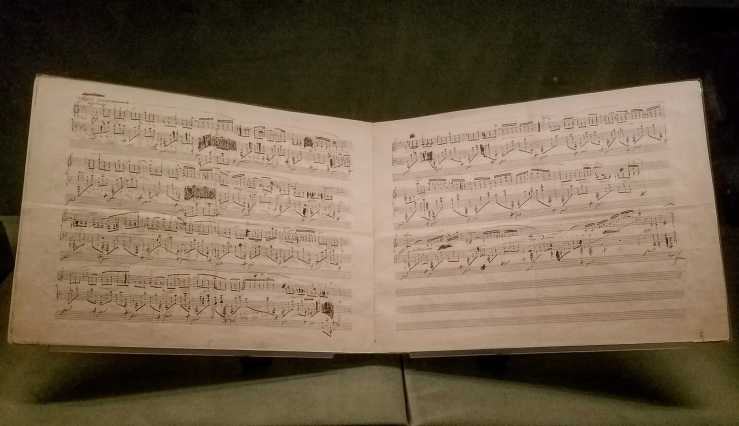 Frédéric Chopin (1810-1849)
Nocturne in C Minor, op. 48, no. 1, 1841
The slow, dreamlike quality of the nocturne (night music) is a characterized by a simple, lyrical melody that becomes increasingly florid. The form, as developed for the solo piano, gained popularity in the early decades of the nineteenth century with the works of the Irish composer John Field. But it was Chopin who brought the nocturne to the height of its expression, and it is Chopin’s nocturnes that are best remembered.
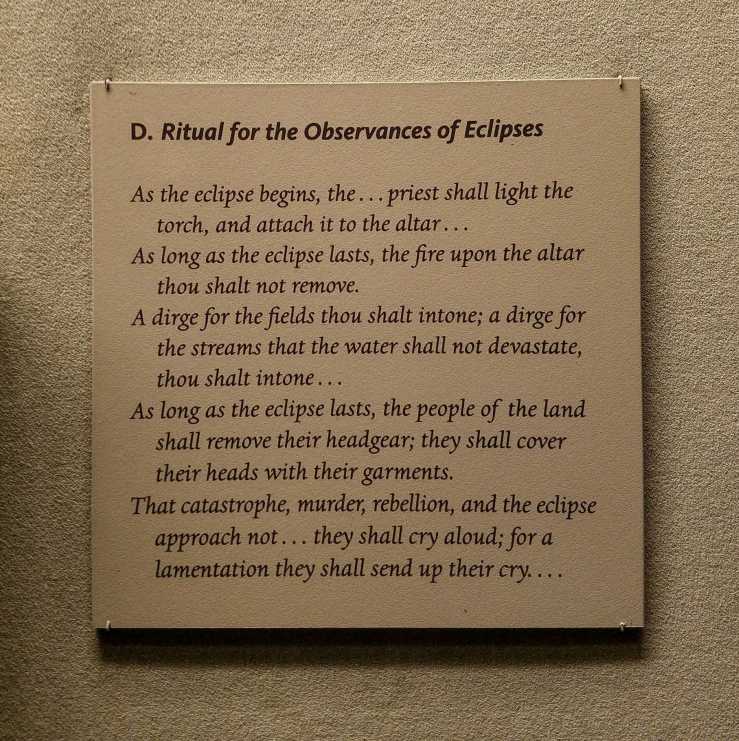
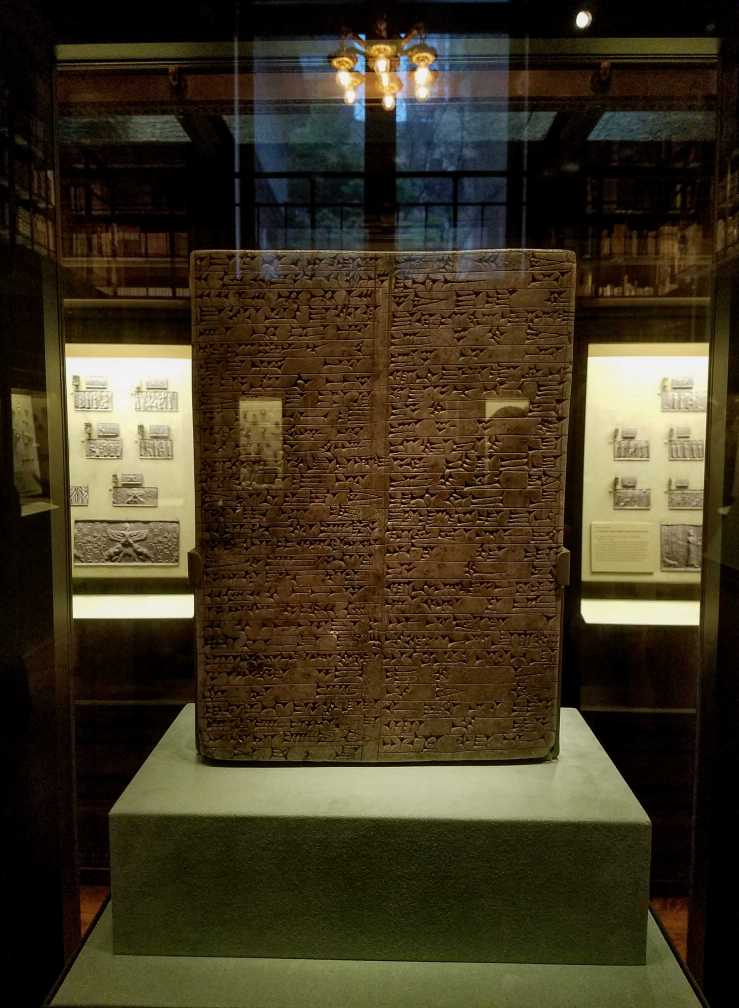 Ancient Near Eastern Seals & Tablets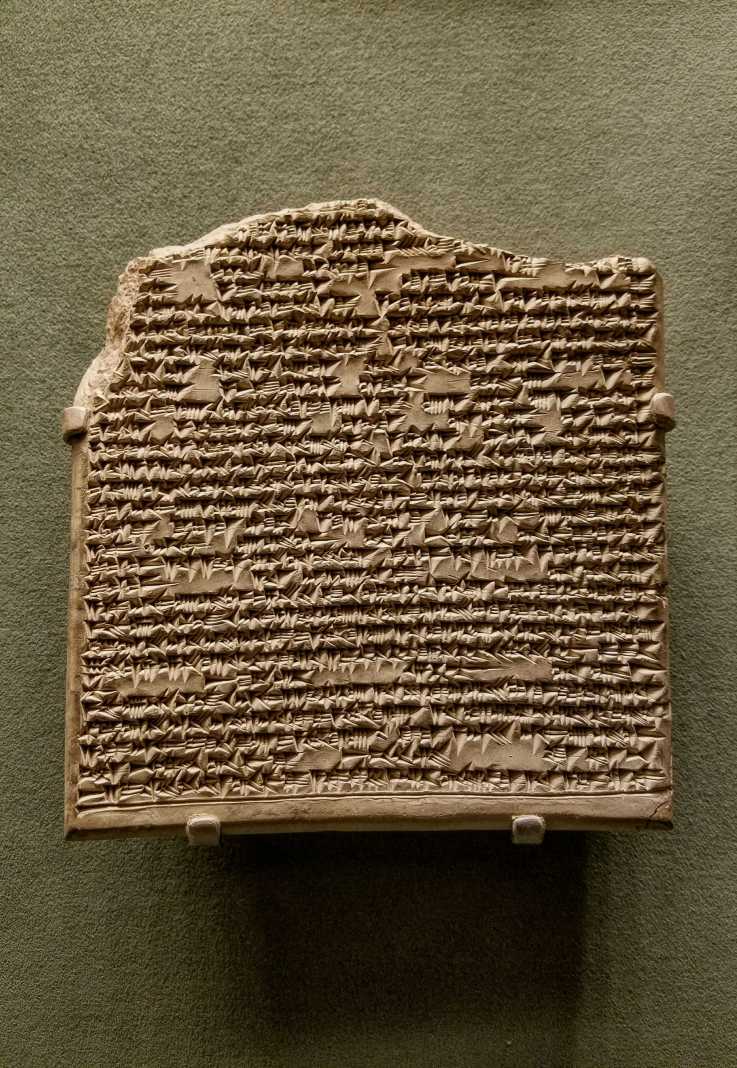
May 7th, 2017
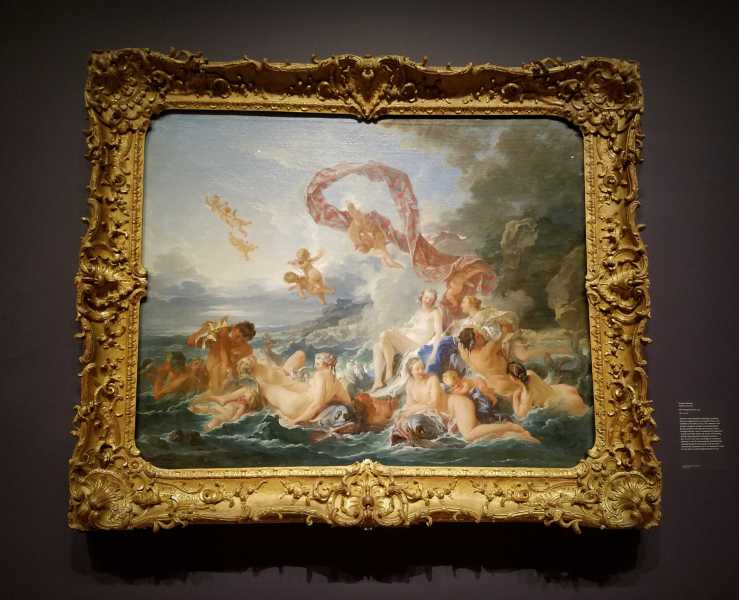
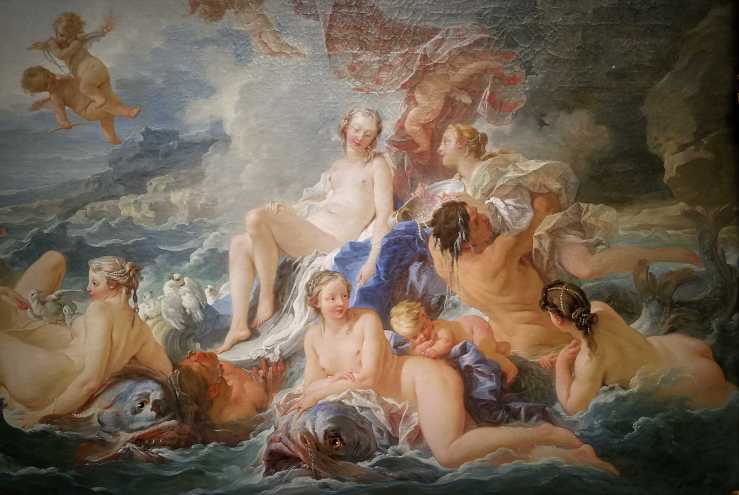
 Painting in its original frame and details
François Boucher, French, 1703-1770
The Triumph of Venus, 1740
Oil on canvas
 And a professional photo by Cecilia Heisser / Nationalmuseum
Boucher’s most beautiful mythological painting, still in its original frame, was med for Tessin and exhibited at the Salon of 1740. The ambitious composition comprises complex interlocking figural groups modeled with supreme assurance. Venus emerges from the waves, accompanied by languorous nereids and robust tritons; the nereid at left resting with her eyes closed and stroking the neck of a dove is one of the most carnal figures in Boucher’s repertory. It was the most expensive painting Tessin acquired during his Paris sojourn and one of his most prized acquisitions, but it was among the works he was driven to sell to King Frederick I in 1749.
From ”Treasures from the Nationalmuseum of Sweden: The Collections of Count Tessin”, an exhibition that ran through May 14, 2017.
May 7th, 2017
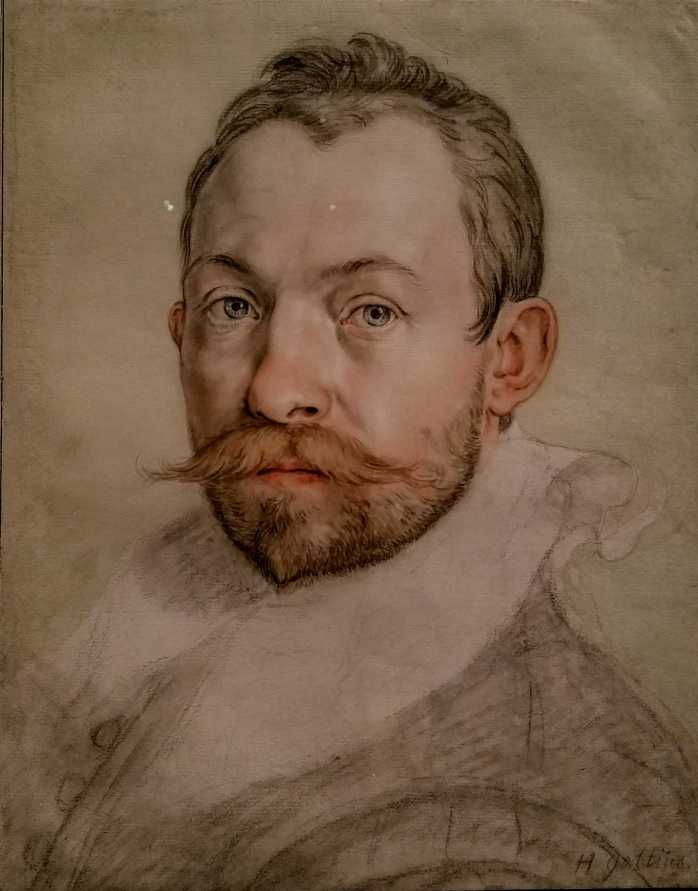 Hendrick Goltzius, Netherlandish, 1558-1617
Self-Portrait, ca. 1590-91
Black, red and white chalk with watercolours
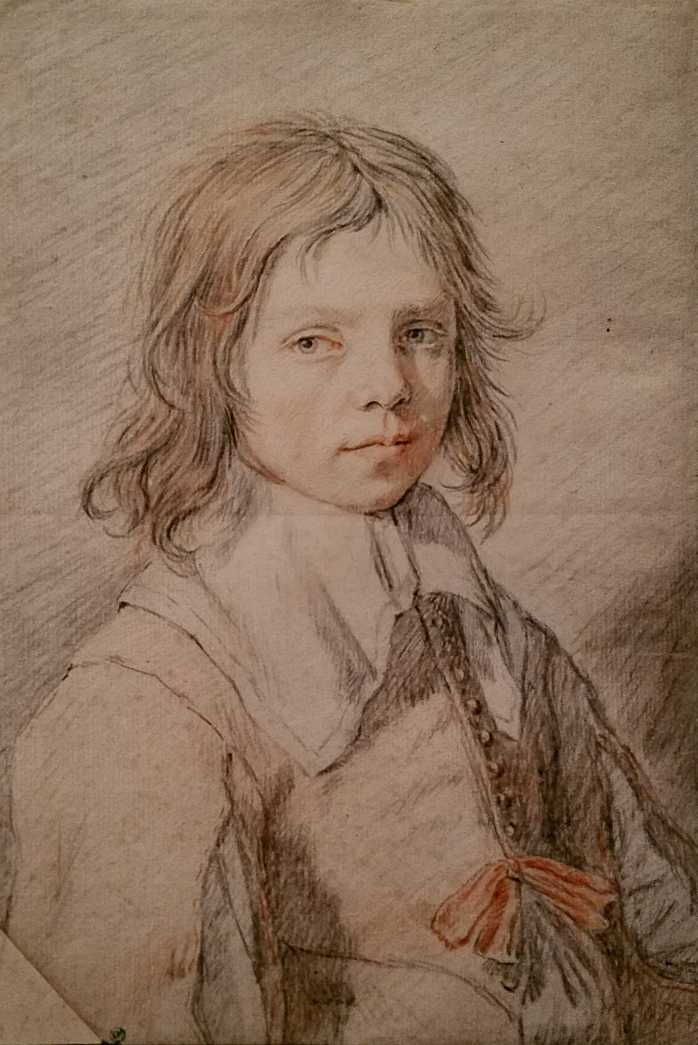 Jan de Bray, Dutch, ca. 1627-1697
Portrait of a Boy, in Half Length, ca. 1660
Black, red and while chalk
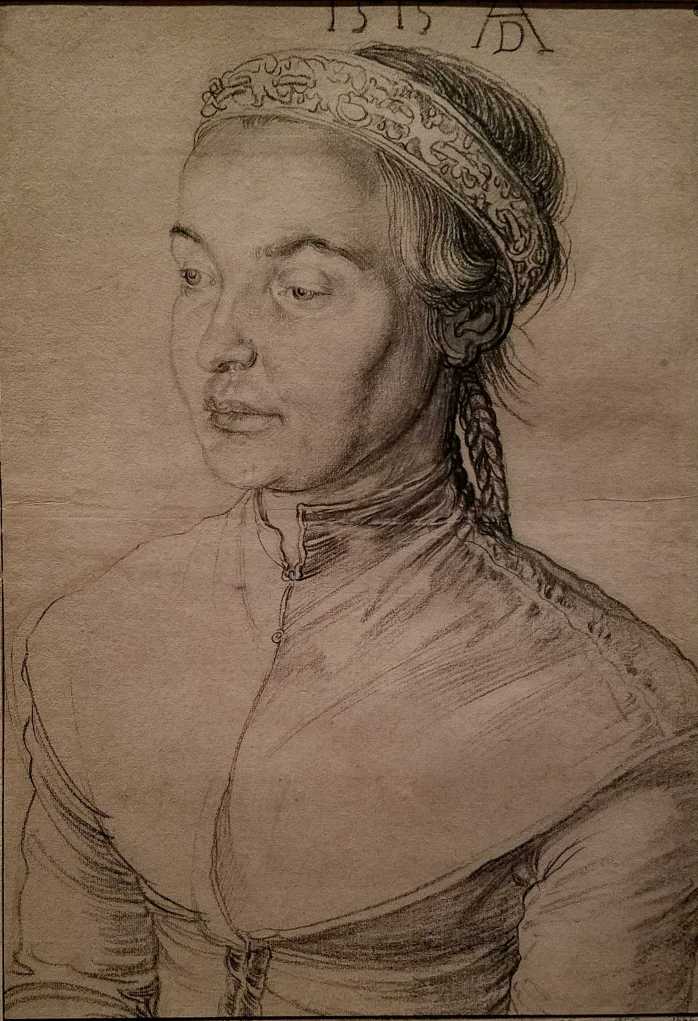 Albrecht Dürer, German, 1471-1528
Portrait of a Young Woman with Braided Hair, 1515
Black chalk and charcoal
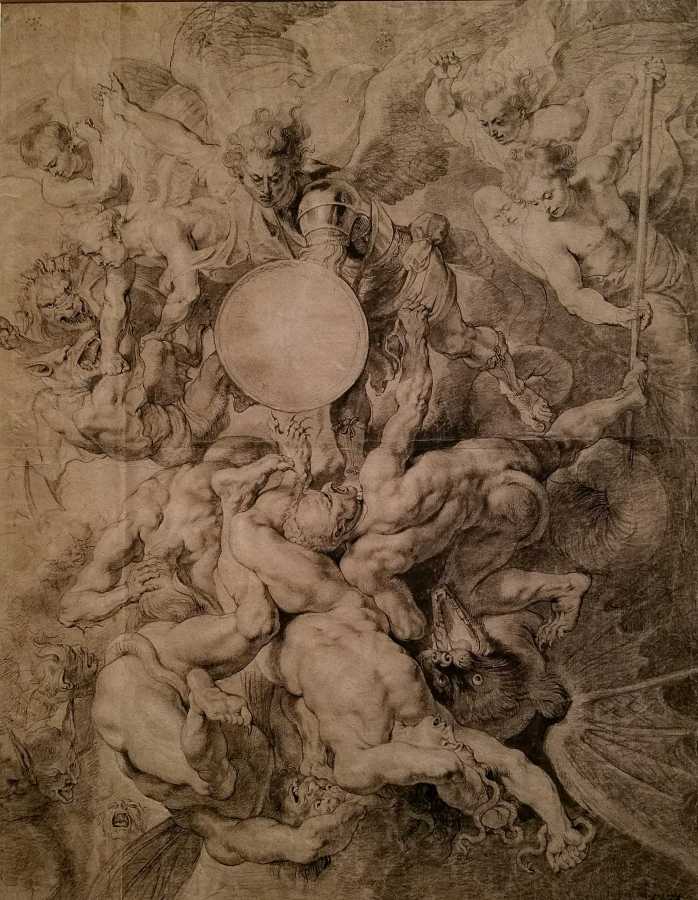 Attributed to Anthony van Dyck, Flemish, 1599-1641
The Fall of the Rebel Angels, ca. 1617-18
Black and white chalk, with pen and black and dark brown ink and black wash, incised for transfer
The exquisite drawing of the Archangel Michael battling Satan and the rebel angels was made after a painting by Peter Paul Rubens, now lost, and served as the model for an engraving by Lucas Vorsterman the Elder.
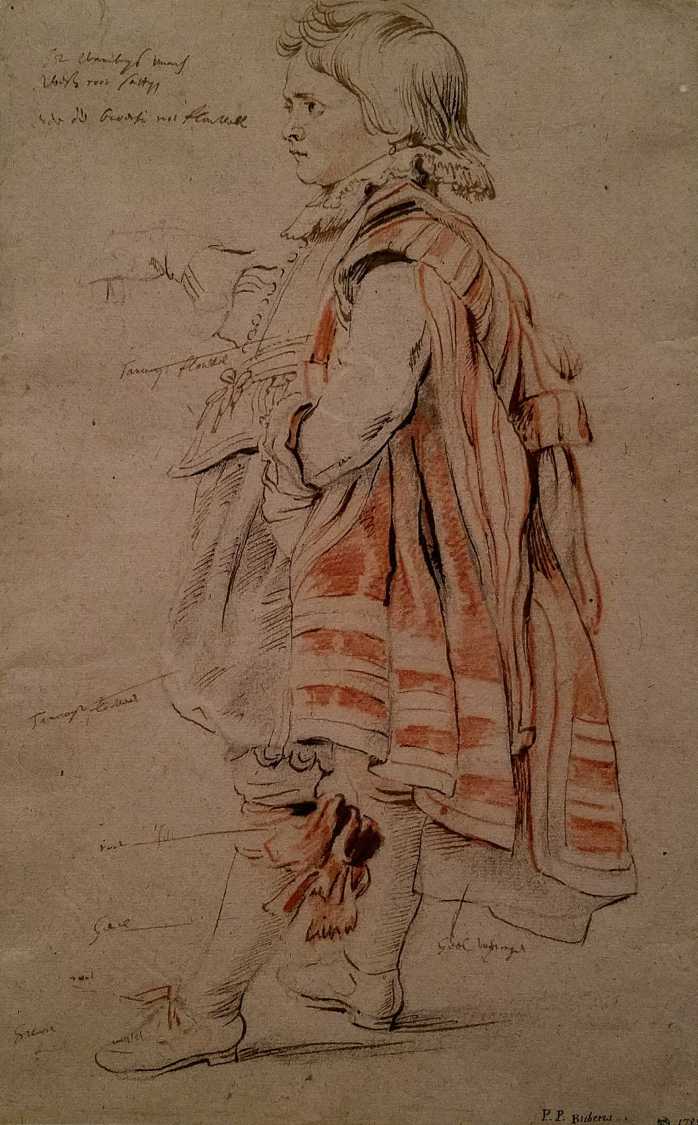 Peter Paul Rubens, Flemish, 1577-1640
Robin, the Dwarf of the Earl of Arundel, 1620
Red and black chalk, with pen and brown ink, and traces of white chalk
 Anthony van Dyck, Flemish, 1599-1641
Profile of a Young Woman with Her Left Arm Extended, A Study for Moses and the Brazen Serpent, ca. 1618-20
Black and white chalk on grayish brown paper
Van Dyck adopted from Rubens the practice of making life drawings as a final preparation for key figures in his paintings at this early moment of his career. His style was so close to that of Rubens that this drawing was long believed to be by Rubens himself.
 Antoine Coypel, French, 1661-1722
Young Woman, 1690s
Black, red and white chalk, peach and pink pastel with touches of blue pastel, on brown paper
Unlike most eighteen-century studies made from a live model, the sitter depicted here looks directly at the viewer with a bold frankness.
 Attributed to Nicolò dell’Abate, Italian, 1509/12-1571
Frog Man, ca. 1560
Pen and brown ink and wash on tan paper, cut to the outline of the figure and laid down
The drawing is an example of the marvels of invention that characterized theatre at the Renaissance court. The Frog Man is a frog catcher, a man dressed up with a frog’s head mask and clothing of lily pads who would lure frogs into his net with the sounds of his pipes. He is analogous to Papageno, the well-known bird catcher of Mozart’s Magic Flute of a later century.
From ”Treasures from the Nationalmuseum of Sweden: The Collections of Count Tessin”, an exhibition that ran through May 14, 2017.
May 7th, 2017

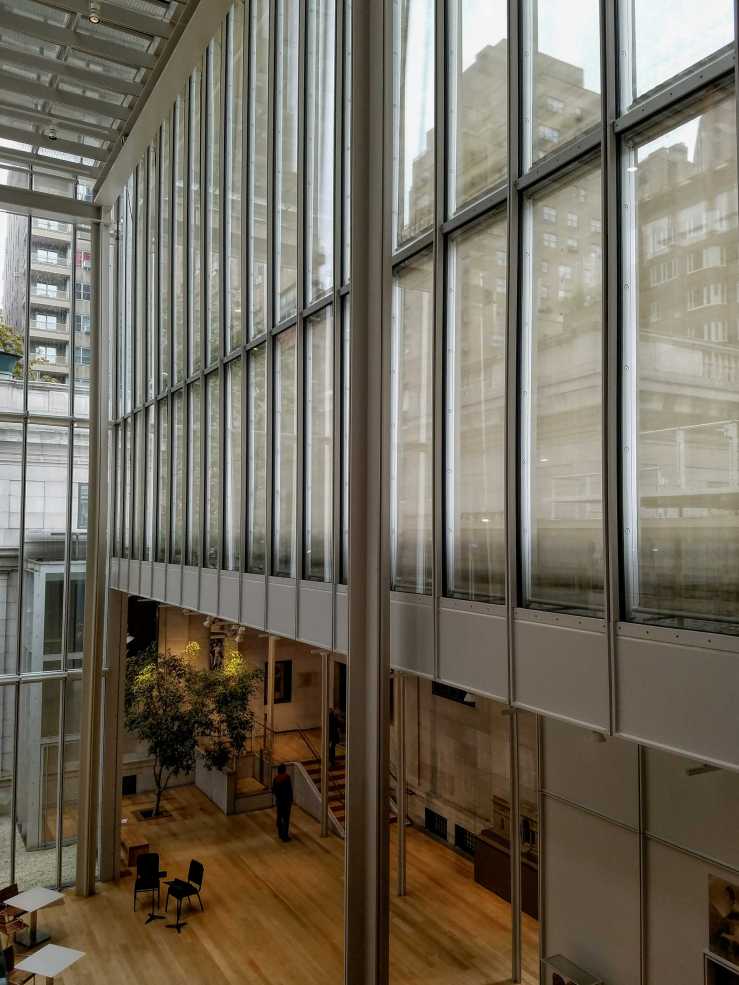
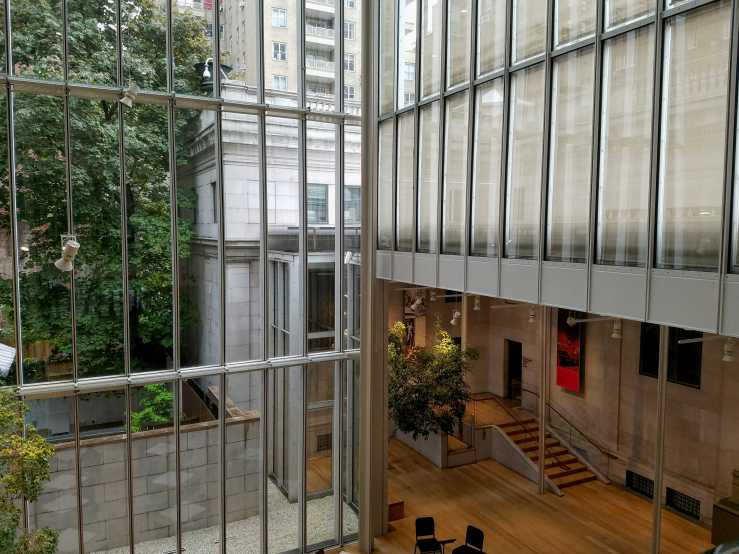
 Otis Allen Bullard (1816-1853)
Emily Elizabeth, Austin and Lavinia Dickinson
Oil on canvas, ca. 1840
This portrait of Emily Dickinson (left) with her brother Austin (centre) and sister Lavinia (right) was painted by Otis Allen Bullard in early 1840, when Emily was nine years old. Her short auburn hair is striking and it is fitting that this early image of the poet shows her holding a book and a flower, though it is unclear whether the book is an illustrated publication or Dickinson’s own album of pressed botanical specimens, which she had likely started the year before. The intimate bond between Dickinson and her siblings portrayed here is one that lasted until her death at age fifty-five in 1886.
 Emily Dickinson (1830-1886)
”Honey grows every where”
Fragment transcribed by Mabel Loomis Todd, ca. 1890s
Amherst College archives holds nearly nine hundred transcriptions of Dickinson’s manuscripts made by Mabel Loomis Todd and her assistants during the 1890s. No piece of Dickinson’s writing was too small, as illustrated by Todd’s attempt to turn this slim piece of paper with barely legible handwriting into something worthy of publication.
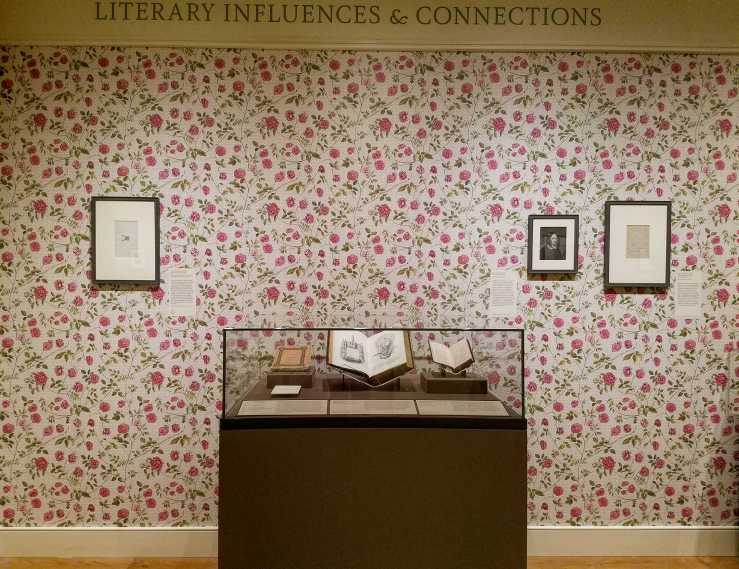 The entire gallery was lined with floral wallpaper from Emily Dickinson’s bedroom in Amherst.
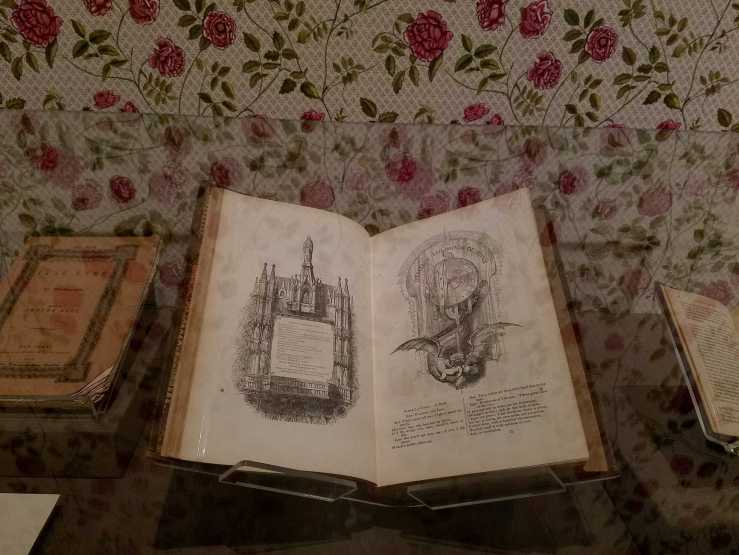 William Shakespeare (1564-1616)
Shakespeare’s Plays
New York: Harper & Brothers, 1847 [i.e. 1844-47]
The Dickinson family owned at least six different editions of books by and about William Shakespeare. This volume is typical of the wave of illustrated editions of his works published throughout the nineteenth century. Dickinson mentions Shakespeare by name in thirteen of her letters on one poem, but traces of his influence can be detected throughout her writing. Her friend and future editor Thomas Wentworth Higginson made a note after visiting Dickinson in 1870: ”After long disuse of her eyes she read Shakespeare & thought why is any other book needed?”
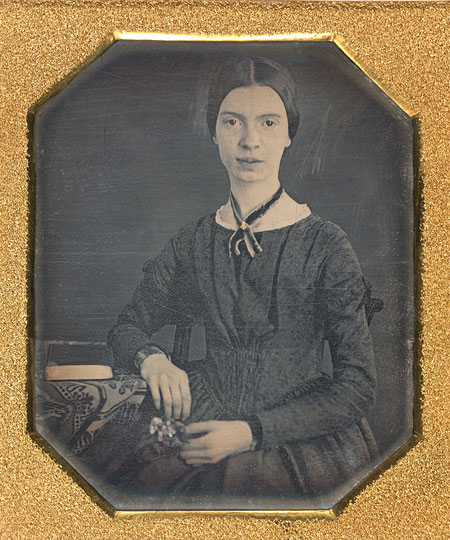
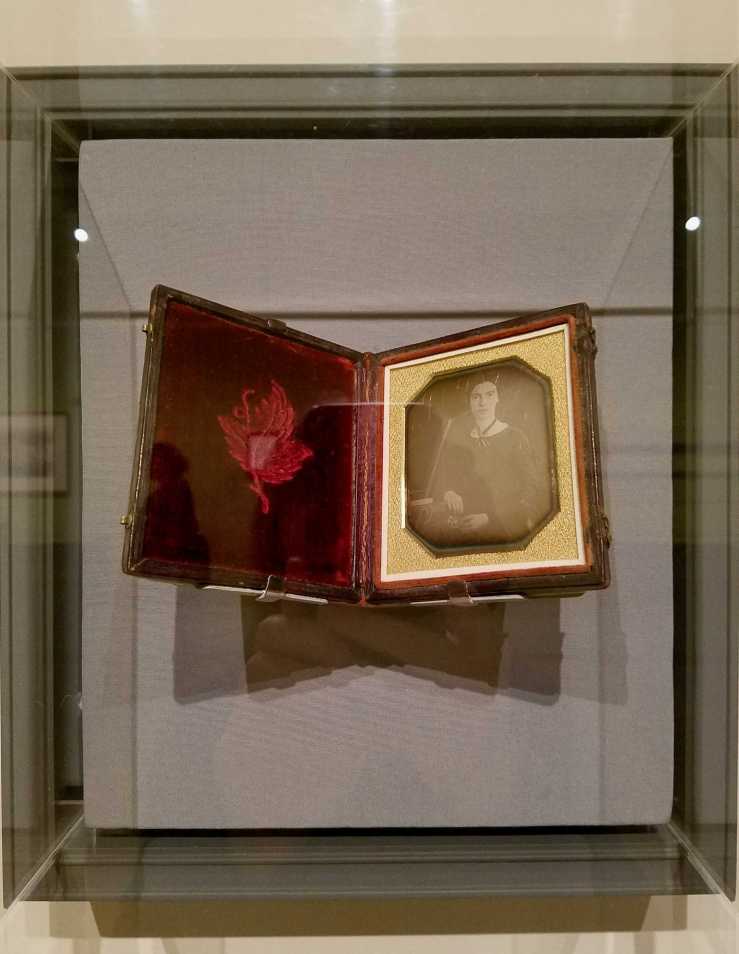 Photographer unknown
Emily Dickinson
Daguerreotype, ca. 1847
This iconic portrait of Emily Dickinson – with her steady gaze and dark hair – is the only authenticated photograph of the poet. It was likely made in Amherst between December 1846 and late March 1847, when Dickinson was sixteen years old. Dickinson’s name was never inscribed on the daguerreotype, but its authenticity is based on the provenance of the item: Lavinia Dickinson gave it to a relative, Wallace Keep, and it remained in the family until 1956 when it was donated to Amherst College. It is not clear why Lavinia gave away such an important keepsake of her sister.

From ”I’m Nobody! Who are you? The Life and Poetry of Emily Dickinson”, an exhibition that ran through May 28, 2017.
One of the most popular and enigmatic American writers of the nineteenth century, Emily Dickinson (1830–1886) wrote almost 1,800 poems. Nevertheless, her work was essentially unknown to contemporary readers since only a handful of poems were published during her lifetime and a vast trove of her manuscripts was not discovered until after her death in 1886.
May 7th, 2017
subjective worldview
Actor, writer, cook and author
Travel experiences & Strasbourg city guide
Writer
joy, happiness, travel, adventure, gratitude
"Rêve onirique & Bulle d'évasion"
makes pretty things on paper
This WordPress.com site is Pacific War era information
Welcome to my curious world of words....
Photographs, music and writing about daily life. Contact: elcheo@swcp.com
Free listening and free download (mp3) chill and down tempo music (album compilation ep single) for free (usually name your price). Full merged styles: trip-hop electro chill-hop instrumental hip-hop ambient lo-fi boombap beatmaking turntablism indie psy dub step d'n'b reggae wave sainte-pop rock alternative cinematic organic classical world jazz soul groove funk balkan .... Discover lots of underground and emerging artists from around the world.
A 365 analogue photography project
Barcelona's Multiverse | Art | Culture | Science
Een digitaal atelier aan de (zee)slag.
‘Doodling Ambiguity’s in Ink.’
Miscellaneous photography
Glimpses along the way on a journey of discovery into symmetry...
 The Humble Fabulist